Sovereign Over All

1 Naaman, commander of the army of the king of Syria, was a great man with his master and in high favor, because by him the LORD had given victory to Syria. He was a mighty man of valor, but he was a leper. Now the Syrians on one of their raids had carried off a little girl from the land of Israel, and she worked in the service of Naaman’s wife. She said to her mistress, “Would that my lord were with the prophet who is in Samaria! He would cure him of his leprosy.” So Naaman went in and told his lord, “Thus and so spoke the girl from the land of Israel.” And the king of Syria said, “Go now, and I will send a letter to the king of Israel.”

So he went, taking with him ten talents of silver, six thousand shekels of gold, and ten changes of clothing. And he brought the letter to the king of Israel, which read, “When this letter reaches you, know that I have sent to you Naaman my servant, that you may cure him of his leprosy.” And when the king of Israel read the letter, he tore his clothes and said, “Am I God, to kill and to make alive, that this man sends word to me to cure a man of his leprosy? Only consider, and see how he is seeking a quarrel with me.”

But when Elisha the man of God heard that the king of Israel had torn his clothes, he sent to the king, saying, “Why have you torn your clothes? Let him come now to me, that he may know that there is a prophet in Israel.” So Naaman came with his horses and chariots and stood at the door of Elisha’s house. 10 And Elisha sent a messenger to him, saying, “Go and wash in the Jordan seven times, and your flesh shall be restored, and you shall be clean.” 11 But Naaman was angry and went away, saying, “Behold, I thought that he would surely come out to me and stand and call upon the name of the LORD his God, and wave his hand over the place and cure the leper. 12 Are not Abana and Pharpar, the rivers of Damascus, better than all the waters of Israel? Could I not wash in them and be clean?” So he turned and went away in a rage. 13 But his servants came near and said to him, “My father, it is a great word the prophet has spoken to you; will you not do it? Has he actually said to you, ‘Wash, and be clean’?” 14 So he went down and dipped himself seven times in the Jordan, according to the word of the man of God, and his flesh was restored like the flesh of a little child, and he was clean.

15 Then he returned to the man of God, he and all his company, and he came and stood before him. And he said, “Behold, I know that there is no God in all the earth but in Israel; so accept now a present from your servant.” 2 Kings 5:1-15 ESV

Elisha appears to have been a prophet to the people because, at this point in the narrative, his interactions with the kings of Israel have been few and far between. Yet, he has provided a poor widow from Zarephath with a miraculous supply of oil that allowed her and her two young sons to escape poverty and avoid possible enslavement. Next, he rewarded the Shunammite woman’s hospitality by replacing the sorrow of her barrenness with the joy of motherhood. But years later, when that young son unexpectedly died, the prophet intervened again, raising him back to life and restoring his mother’s joy.

Then there’s the story of the poisoned stew. A young prophet inadvertently and innocently added wild gourds to a stew that Elisha’s servant had prepared, not knowing that they were poisonous. This deadly concoction could have resulted in the deaths of all the prophets who ate it, but Elisha intervened, purifying the contents and protecting the lives of God’s messengers.

All of these stories are meant to reveal God’s interest in and interactions with His people. The average Israelite had to live in a land permeated by idolatry and under the judgment of God. On two separate occasions, God brought famine on the land because of the apostasy of its godless kings. Yet, the stories of Elijah and Elisha reveal how God stepped into the lives of his people, graciously providing them with sustenance in the midst of His divine judgment. These stories are meant to showcase the mercy and love of God. Despite the ongoing unfaithfulness of Israel’s kings, the God of Israel remained committed to the covenant promises He had made to His people.

Chapter five contains another story that illustrates God’s sovereign hand over not only Israel, but also all the nations. While the kings of Israel continued to abuse their power by leading the people into idolatry and apostasy, God operated behind the scenes, demonstrating His unparalleled sovereignty over faithless kings, false gods, and even those outside the flock of Israel.

Suddenly, in chapter five, the author expands the scope of his narrative by including the plight of a Syrian general who suffered from the debilitating and potentially deadly disease known as leprosy. The inclusion of this story was intended to shock and surprise the Jewish audience to whom the author originally wrote. Their attention would have been piqued as soon as they read, “Naaman, commander of the army of the king of Syria, was a great man with his master and in high favor, because by him the LORD had given victory to Syria” (2 Kings 5:1 ESV). Why would the God of Israel have given this pagan idol worshiper a victory of any kind? This would have made no sense, and to make matters worse, this non-Hebrew is described as “a mighty man of valor” (2 Kings 5:1 ESV) who had led raids into Israel and captured and enslaved a young Jewish girl. To the Jewish reader, the only positive aspect of this story would have been that Naaman had leprosy.

Over the centuries, the Syrians had enjoyed a love-hate relationship with the nation of Israel. Ever since God had divided the country, creating the northern kingdom of Israel and the southern kingdom of Judah, the Syrians had made a habit of playing one against the other. Treaties had been signed and then broken. Alliances had been made, only to have been reneged upon. Syria had repeatedly taken advantage of the discord between Israel and Judah, choosing to align itself with one or the other based on what could be gained from the arrangement.

The Syrians were not to be trusted. They were self-promoting opportunists who regularly switched sides and deftly manipulated the strained relationship between Israel and Judah to their advantage. Yet, here is an unexpected and shocking story of a Syrian general who receives healing from the prophet of God. The mention of Yahweh providing this pagan Syrian general with victories in battle is yet another reference to His sovereignty over all nations.

Everything about this story is intended to reveal God’s sovereign hand. He is described as the source behind Syria’s victories, even over the nation of Israel. Not only that, one of those successful raids resulted in the capture of a young Jewish girl. But providentially, that same young girl ended up serving Naaman’s wife. Like Moses being adopted into Pharaoh’s family or Joseph serving in Pharaoh’s court, this young, unidentified Jewish girl found herself as a slave in the home of one of the most powerful men in Syria. Her plight, while difficult, had been God-ordained.

Because of her providential presence in Naaman’s household, she had become aware of his leprosy and was able to tell her mistress about a possible solution to his problem.

“I wish my master would go to see the prophet in Samaria. He would heal him of his leprosy.” – 2 Kings 5:3 NLT

Despite her predicament, she was still a faithful follower of Yahweh, and she believed that her God had the power to provide healing, even to the pagan commander who had enslaved her. Not only does this young girl display strong faith, but she also reveals a kind and compassionate heart. Rather than rejoicing over her captor’s plight, she expresses her desire that he be healed, even declaring her wish that he could meet the prophet of God.

Once again, God’s sovereignty is revealed through the somewhat strange chain of events that ensue. Naaman goes to Ben-Hadad II, the king of Syria, and receives permission to visit the city of Samaria. The king even provides Naaman with a letter of introduction to Jehoram, the king of Israel. In an attempt to guarantee Jehoram’s assistance, Ben-Hadad II sends 750 pounds of silver, 150 pounds of gold, and 10 changes of royal apparel. Don’t miss the irony in all of this. At the suggestion of a young Israelite slave girl, a pagan Syrian general has made an appeal to his pagan Syrian king. And that idol-worshiping Syrian king has sent a sizeable tribute to an apostate Israelite king, begging that he help his leprosy-stricken general get healing from the God of Israel. You can’t make this stuff up.

When Naaman presented his letter of introduction and the generous gifts from King Ben-hadad, he was met with both surprise and suspicion. Jehoram thinks the whole thing is a setup.

“Am I God, that I can give life and take it away? Why is this man asking me to heal someone with leprosy? I can see that he’s just trying to pick a fight with me.” – 2 Kings 5:7 NLT

It never seems to cross Jehoram’s mind to seek the aid of Yahweh or His prophet. He simply panics, assuming the whole thing is a clever ploy by Ben-Hadad to justify military action in the guise of revenge. However, while Jehoram decided to exclude God from the equation, Elisha became aware of what was happening and contacted the king.

“Why are you so upset? Send Naaman to me, and he will learn that there is a true prophet here in Israel.” – 2 Kings 5:8 NLT

Once again, God’s prophet came to the rescue. But what happens next is almost humorous. The famous general from Syria had to get in his chariot and, along with his retinue, make his way to Elisha’s humble home. But before Naaman could get there, the prophet sent a messenger to meet him with a rather strange set of instructions.

“Go and wash yourself seven times in the Jordan River. Then your skin will be restored, and you will be healed of your leprosy.” – 2 Kings 5:10 NLT

But the proud military commander, who was used to having all his subordinates report to him, was offended that Elisha didn’t bother to meet him. He had expected a bit of theatrics to accompany his healing.

“I expected him to wave his hand over the leprosy and call on the name of the LORD his God and heal me! – 2 Kings 5:11 NLT

But to Naaman’s disappointment, Elisha’s only instructions had been to bathe seven times in the Jordan River. This sounded ridiculous to the general, and he made his frustration known in no uncertain terms.

Aren’t the rivers of Damascus, the Abana and the Pharpar, better than any of the rivers of Israel? Why shouldn’t I wash in them and be healed?” – 2 Kings 5:12 NLT

But as Naaman was preparing to walk away in a huff, one of his own servants convinced him to follow the prophet’s instructions. After all, what did he have to lose? Yes, the whole bathing-in-the-Jordan thing would be a blow to his pride, but it might result in the healing he so desperately needed. So, Naaman took the advice of his servant and obeyed the command of the prophet. When he came up out of the water the seventh time, he was completely cleansed of his leprosy. In fact, the author describes the condition of his skin as that of a young child, with no scars, scabs, or lesions of any kind. Naaman the Syrian had experienced a miracle, and he clearly recognized that it had been the work of Yahweh, the God of Israel.

“Now I know that there is no God in all the world except in Israel. – 2 Kings 5:15 NLT

That’s an amazing admission to come from the lips of a pagan Syrian general who had spent his entire life worshiping Baal. Likely, he had often petitioned his god for healing from his condition, but his requests had remained unheeded because they had gone unheard. His leprosy had been real, but his god was not. Yet, here was Naaman standing before Yahweh’s prophet, healed and whole, and declaring his belief in the one true God of Israel.

English Standard Version (ESV) The Holy Bible, English Standard Version. ESV® Permanent Text Edition® (2016). Copyright © 2001 by Crossway Bibles, a publishing ministry of Good News Publishers.

New Living Translation (NLT) Holy Bible, New Living Translation, copyright © 1996, 2004, 2015 by Tyndale House Foundation. Used by permission of Tyndale House Publishers Inc., Carol Stream, Illinois 60188. All rights reserved.

Impure Water and An Impious People

15 Now when the sons of the prophets who were at Jericho saw him opposite them, they said, “The spirit of Elijah rests on Elisha.” And they came to meet him and bowed to the ground before him. 16 And they said to him, “Behold now, there are with your servants fifty strong men. Please let them go and seek your master. It may be that the Spirit of the LORD has caught him up and cast him upon some mountain or into some valley.” And he said, “You shall not send.” 17 But when they urged him till he was ashamed, he said, “Send.” They sent therefore fifty men. And for three days they sought him but did not find him. 18 And they came back to him while he was staying at Jericho, and he said to them, “Did I not say to you, ‘Do not go’?”

19 Now the men of the city said to Elisha, “Behold, the situation of this city is pleasant, as my lord sees, but the water is bad, and the land is unfruitful.” 20 He said, “Bring me a new bowl, and put salt in it.” So they brought it to him. 21 Then he went to the spring of water and threw salt in it and said, “Thus says the LORD, I have healed this water; from now on neither death nor miscarriage shall come from it.” 22 So the water has been healed to this day, according to the word that Elisha spoke.

23 He went up from there to Bethel, and while he was going up on the way, some small boys came out of the city and jeered at him, saying, “Go up, you baldhead! Go up, you baldhead!” 24 And he turned around, and when he saw them, he cursed them in the name of the LORD. And two she-bears came out of the woods and tore forty-two of the boys. 25 From there he went on to Mount Carmel, and from there he returned to Samaria. 2 Kings 2:15-25 ESV

After Elijah’s miraculous departure, Elisha was forced to retrace his steps alone. When he arrived at the Jordan River, he used Elijah’s cloak to part the waters, then passed through the river on dry ground. Whether Elisha realized it or not, he was reliving the experience of the Israelites when they first arrived in the land of Canaan centuries earlier, and he was playing the part of Joshua. When the time came for the Israelites to occupy the land God had given them as an inheritance, they were under new leadership. Moses had died, and Joshua was his God-appointed successor. Joshua had inherited the responsibility of leading the nation of Israel across the Jordan River and into the Promised Land. He was old enough to remember that, 40 years earlier, Moses had failed in his first attempt to persuade the people to take possession of the land. So, God promised to give the new leader of His people a sign that He would be with him.

The LORD said to Joshua, “Today I will begin to exalt you in the sight of all Israel, that they may know that, as I was with Moses, so I will be with you. – Joshua 3:7 ESV

God knew that the people would be reluctant to follow Joshua. That’s why He shared the plan He had put in place to solidify Joshua’s role as Israel’s leader.

“Behold, the ark of the covenant of the LORD of all the earth is passing over before you into the Jordan. Now therefore take twelve men from the tribes of Israel, from each tribe a man. And when the soles of the feet of the priests bearing the ark of the LORD, the LORD of all the earth, shall rest in the waters of the Jordan, the waters of the Jordan shall be cut off from flowing, and the waters coming down from above shall stand in one heap.” – Joshua 3:11-13 ESV

And God’s plan worked to perfection. The waters of Jordan parted, and the people of Israel walked across on dry ground. With their new leader going before them, the nation of Israel left the wilderness behind and began the first part of their God-ordained mission to possess the land He had graciously given them.

Elisha’s crossing of the Jordan mirrors that momentous occasion. Elijah, the former spiritual leader of Israel, was gone, and Elisha, his unproven and inexperienced replacement, required evidence to solidify his role as the prophet of God. In a strange case of déjà vu, Elisha found himself mimicking the actions of Joshua once again. The first city the Israelites encountered after crossing the Jordan was Jericho, and that is precisely where Elisha headed. He was met by 50 prophets of God who acknowledged that a transfer of power and leadership had taken place.

…they said, “The spirit of Elijah rests on Elisha.” And they came to meet him and bowed to the ground before him. – 2 Kings 2:15 ESV

But you can sense their reluctance to accept Elisha as Elijah’s replacement. They offered to send a search party to look for Elijah. After all, the prophet had a reputation for disappearing for long periods and then reappearing unannounced. Perhaps he wasn’t really gone for good. While Elisha tried to talk them out of this vain quest, they persisted, and their search party came back empty-handed.

It’s essential to recall that the city of Jericho was destroyed by Joshua and the Israelites. It was the very first victory that they had experienced as part of their conquest of the land of Canaan. God had told Joshua, “See, I have given Jericho into your hand, with its king and mighty men of valor” (Joshua 6:2 ESV). And He had given Joshua a rather bizarre strategy for conquering Jericho.

“You shall march around the city, all the men of war going around the city once. Thus shall you do for six days. Seven priests shall bear seven trumpets of rams’ horns before the ark. On the seventh day you shall march around the city seven times, and the priests shall blow the trumpets. And when they make a long blast with the ram’s horn, when you hear the sound of the trumpet, then all the people shall shout with a great shout, and the wall of the city will fall down flat…” – Joshua 6:3-5 ESV

But as strange as God’s tactics may have sounded to Joshua and the people, the results were hard to refute. The walls fell, the entire city was destroyed, and Joshua placed the city of Jericho under a perpetual curse.

“May the curse of the LORD fall on anyone
    who tries to rebuild the town of Jericho.
At the cost of his firstborn son,
    he will lay its foundation.
At the cost of his youngest son,
    he will set up its gates.” – Joshua 6:26 NLT

This is a crucial point to consider because when Elisha arrived at Jericho, not only had it been rebuilt, but it was also occupied by 50 prophets of Yahweh. They even give the city their Goodhousekeeping Seal of Approval: “This town is located in pleasant surroundings, as you can see” (2 Kings 2:19 NLT). The only problem they had with Jericho was its lack of clean water.

“But the water is bad, and the land is unproductive.” – 2 Kings 2:19 NLT

In Joshua’s day, the city of Jericho represented the pagan nations that occupied the land of Canaan. It was well-fortified and well-defended, but it proved to be no match for the God of Israel. He had literally leveled the entire city, and His new leader had “burned the city with fire, and everything in it” (Joshua 6:24 ESV).

Now, centuries later, the city of Jericho had been rebuilt and reoccupied, but not by Canaanites. The people of Israel had made themselves at home in the very city Joshua had cursed, and the prophets of God seemed to have blessed their decision. Yet, the city and the surrounding land were unproductive and unfruitful. It was a town without a pure water supply. The revival of Jericho had been incomplete and insufficient; it was occupied but lacking in vitality and fruitfulness. Once again, the city had become a symbol of all that was wrong in the land of promise.

When Elisha crossed over the Jordan, he had entered into enemy territory, just as Joshua and the people of Israel had centuries earlier. However, this time, the Israelites were the enemy, not the Canaanites. Under the leadership of wicked kings like Jeroboam and Ahab, the people of Israel had become disobedient and idolatrous. As a result, they were under a curse, having long ago replaced God, their only source of sustenance and refreshment, with the false gods of Canaan.

Yahweh, in a demonstration of His covenant faithfulness, led Elisha to restore their source of physical water, but He was really calling the people back to Himself. He was reminding them that He was the only viable and reliable source of salvation and sustenance. The prophet Jeremiah would later describe the spiritual condition of Israel in stark terms.

O LORD, the hope of Israel,
    all who forsake you shall be put to shame;
those who turn away from you shall be written in the earth,
    for they have forsaken the LORD, the fountain of living water. – Jeremiah 17:13 ESV

Elisha purified the water source and made it clear to the people that this was an act of God.

“This is what the LORD says: I have purified this water. It will no longer cause death or infertility. – 2 Kings 2:21 NLT

Yahweh validated Elisha’s ministry, but, more importantly, He vindicated His own status as the One true God. The author clarifies that while the water had been made pure, the people remained stained by sin. The next event the author describes is intended to provide a stark contrast to the water’s purification. As Elisha made his way from Jericho to Bethel, he was confronted by a crowd of “small boys” (2 Kings 2:23 ESV). This description can be a bit misleading. In Hebrew, the phrase is qāṭān naʿar and carries a wide range of possible meanings. The word qāṭān can be translated as “small, little, or young.” The word naʿar was used to refer to a child, a servant, or even a young man. Therefore, based on the rather harsh actions of Elijah, it seems more likely that he encountered a group of young adolescent males rather than a group of small boys.

These “juvenile delinquents” confronted the prophet of God, mocking and making fun of him. The shouted, “Go up, you baldhead! Go up, you baldhead!” (2 Kings 2:23 ESV). Their disrespectful treatment of someone who was obviously their elder was a sign of their rebellious hearts. The content of their taunt suggests that they recognized Elisha as a prophet of God. Their shouts of “go up” appear to be a reference to Elijah’s dramatic departure by the fiery chariot. Not only do they harass Elisha, but they mock his predecessor’s divine departure. They sarcastically challenge Elisha to leave their land just as Elijah had done.

The actions of these young men symbolize the spiritual condition of the nation of Israel. They show disdain and dishonor for the prophet of God, and display no fear of Elisha and no respect for Yahweh. From the oldest to the youngest, the entire nation had become hard-hearted and resistant to the leadership of God’s anointed prophet. The next generation of Israelites had been infected by the apostasy and idolatry of their parents. So, Elisha issued a curse on these young men that resulted in a very unpleasant demonstration of divine judgment.

Then two bears came out of the woods and mauled forty-two of them. – 2 Kings 2:24 NLT

This time, there was no gracious act of mercy from God. Earlier, Elisha had made impure water clean. This time, he judged the impure actions of the insubordinate and impious young men, providing the people of Israel with a sobering reminder of not only Yahweh’s power but also His expectation of faithfulness and holiness. As the prophet of God, Elisha would be an instrument of refreshment and renewal, but he would also serve as God’s divine agent of judgment and condemnation. Yahweh wanted His people to return to Him in humility and repentance. He longed to restore and refresh His people, but He was prepared to discipline them should they refuse to repent.

English Standard Version (ESV) The Holy Bible, English Standard Version. ESV® Permanent Text Edition® (2016). Copyright © 2001 by Crossway Bibles, a publishing ministry of Good News Publishers.

New Living Translation (NLT) Holy Bible, New Living Translation, copyright © 1996, 2004, 2015 by Tyndale House Foundation. Used by permission of Tyndale House Publishers Inc., Carol Stream, Illinois 60188. All rights reserved.

The Pervasive and Powerful Presence of God

1 When Israel went out from Egypt,
    the house of Jacob from a people of strange language,
Judah became his sanctuary,
    Israel his dominion.

The sea looked and fled;
    Jordan turned back.
The mountains skipped like rams,
    the hills like lambs.

What ails you, O sea, that you flee?
    O Jordan, that you turn back?
O mountains, that you skip like rams?
    O hills, like lambs?

Tremble, O earth, at the presence of the LORD,
    at the presence of the God of Jacob,
who turns the rock into a pool of water,
    the flint into a spring of water. Psalm 114:1-8 ESV

This psalm commemorates two significant events in the history of the nation of Israel. Both entail miraculous interventions by Yahweh that symbolize His power and provision for His chosen people. The first goes all the way back to their final days in Egypt, when God delivered them from 400 years of captivity and helped them escape from their Egyptian overlords by providing a way of escape across the Red Sea.

When the Israelites escaped from Egypt—
    when the family of Jacob left that foreign land—
the land of Judah became God’s sanctuary,
    and Israel became his kingdom.

The Red Sea saw them coming and hurried out of their way! – Psalm 114:1-3 NLT

In these verses, the psalmist summarizes God’s miraculous deliverance and its stunning outcome. The Book of Exodus provides additional details that would have been familiar to every Israelite.

Then Moses raised his hand over the sea, and the Lord opened up a path through the water with a strong east wind. The wind blew all that night, turning the seabed into dry land. So the people of Israel walked through the middle of the sea on dry ground, with walls of water on each side!

When all the Israelites had reached the other side, the Lord said to Moses, “Raise your hand over the sea again. Then the waters will rush back and cover the Egyptians and their chariots and charioteers.” So as the sun began to rise, Moses raised his hand over the sea, and the water rushed back into its usual place. The Egyptians tried to escape, but the Lord swept them into the sea. Then the waters returned and covered all the chariots and charioteers—the entire army of Pharaoh. Of all the Egyptians who had chased the Israelites into the sea, not a single one survived. – Exodus 14:21-22, 26-28 NLT

The story of Yahweh’s parting of the Red Sea and His defeat of the Egyptian army had been passed down for generations. It was a well-known and oft-told tale that provided the Israelites with comfort and confidence. The same God who had delivered their ancestors was with them and remained just as powerful and prepared to rescue them in their time of need.

In fact, the psalmist highlights that Yahweh’s deliverance had established Israel as His chosen possession.

the land of Judah became God’s sanctuary,
    and Israel became his kingdom. – Psalm 114:2 NLT

Yahweh’s plan had been to return His people to the land He had given them as their inheritance. Centuries earlier, Yahweh warned Abraham that his descendants would end up as slaves in a foreign land, but that He would deliver them.

“You can be sure that your descendants will be strangers in a foreign land, where they will be oppressed as slaves for 400 years. But I will punish the nation that enslaves them, and in the end they will come away with great wealth. (As for you, you will die in peace and be buried at a ripe old age.) After four generations your descendants will return here to this land, for the sins of the Amorites do not yet warrant their destruction.” – Genesis 15:13-16 NLT

Yahweh later reiterated that promise to Abraham.

“This is the everlasting covenant: I will always be your God and the God of your descendants after you. And I will give the entire land of Canaan, where you now live as a foreigner, to you and your descendants. It will be their possession forever, and I will be their God.” – Genesis 17:7-8 NLT

In delivering Abraham’s descendants from their captivity in Egypt, Yahweh fulfilled His promise. He led them from Egypt all the way to Canaan, and along the way, He established Himself as their God and King. At Mount Sinai, He gave them His Law and the plans for the Tabernacle. He intended to live among them, dwelling in the Holy of Holies within the Tabernacle. His Law was designed to set them apart as His holy people, providing them with a code of conduct that set them apart from all the other nations. But because He knew they would fail to live up to His holy standards, Yahweh provided them with the sacrificial system to provide atonement and forgiveness for their sins.

When the people of Israel left Mount Sinai and began the final phase of their journey to Canaan, Yahweh warned them:

“You have seen what I did to the Egyptians. You know how I carried you on eagles’ wings and brought you to myself. Now if you will obey me and keep my covenant, you will be my own special treasure from among all the peoples on earth; for all the earth belongs to me. And you will be my kingdom of priests, my holy nation.” – Exodus 19:4-6 NLT

Yahweh expected His chosen people to live differently from all the other nations. He had set them apart for a reason. The Tabernacle was to be His earthly throneroom, where He would rule as King in their midst. His Law was perfect and holy, providing His people with a non-negotiable code of conduct based on divine righteousness, not man-made laws.

But there is a second miracle Yahweh performed for His people. After their 40-year journey across the wilderness, the Israelites faced another body of water that served as a barrier to their future. They would have to cross the Jordan River to enter the promised land, and, as before, God stepped in.

The water of the Jordan River turned away. – Psalm 114:3 NLT

The Book of Joshua fills in the details of this miraculous event.

So the people left their camp to cross the Jordan, and the priests who were carrying the Ark of the Covenant went ahead of them. It was the harvest season, and the Jordan was overflowing its banks. But as soon as the feet of the priests who were carrying the Ark touched the water at the river’s edge, the water above that point began backing up a great distance away at a town called Adam, which is near Zarethan. And the water below that point flowed on to the Dead Sea until the riverbed was dry. Then all the people crossed over near the town of Jericho.

Meanwhile, the priests who were carrying the Ark of the Lord’s Covenant stood on dry ground in the middle of the riverbed as the people passed by. They waited there until the whole nation of Israel had crossed the Jordan on dry ground. – Joshua 3:14-17 NLT

The Ark of the Covenant served as Yahweh’s literal throne in the Tabernacle. Its lid was known as the Mercy Seat, above which the Shekinah glory of God dwelt. As the priests stood in the middle of the riverbed carrying the Ark of the Covenant, the presence of God held back the waters of the Jordan and allowed the people to walk across on dry ground.

In a few short verses, the psalmist summarizes Yahweh’s unforgettable demonstrations of His power and provision for His people.

The mountains skipped like rams,
    the hills like lambs!
What’s wrong, Red Sea, that made you hurry out of their way?
    What happened, Jordan River, that you turned away?
Why, mountains, did you skip like rams?
    Why, hills, like lambs? – Psalm 114:4-6 NLT

The mountains is probably a reference to Mount Sinai, where Yahweh appeared in smoke, fire, thunder, and lightning.

On the morning of the third day, thunder roared and lightning flashed, and a dense cloud came down on the mountain. There was a long, loud blast from a ram’s horn, and all the people trembled. Moses led them out from the camp to meet with God, and they stood at the foot of the mountain. All of Mount Sinai was covered with smoke because the Lord had descended on it in the form of fire. The smoke billowed into the sky like smoke from a brick kiln, and the whole mountain shook violently. – Exodus 19:16-18 NLT

The mountain shook because of Yahweh’s presence. The waters of the Red Sea and the Jordan River had parted at the presence of Israel’s God. Creation was subject to the will of the Almighty. His divine presence made the mountains shake and the waters part. To drive home his point, the psalmist adds one last proof of Yahweh’s power.

Tremble, O earth, at the presence of the Lord,
    at the presence of the God of Jacob.
He turned the rock into a pool of water;
    yes, a spring of water flowed from solid rock. – Psalm 114:7-8 NLT

During their days in the wilderness, the Israelites made a habit of complaining about the difficulty of their journey. At one point, they ran out of water and voiced their displeasure to Moses, who took the matter up with Yahweh. In response, God provided a solution.

“Walk out in front of the people. Take your staff, the one you used when you struck the water of the Nile, and call some of the elders of Israel to join you. I will stand before you on the rock at Mount Sinai. Strike the rock, and water will come gushing out. Then the people will be able to drink.” So Moses struck the rock as he was told, and water gushed out as the elders looked on.” – Exodus 17:5-6 NLT

But the text goes on to reveal that thirst was not the Israelites’ real problem; it was their lack of faith.

Moses named the place Massah (which means “test”) and Meribah (which means “arguing”) because the people of Israel argued with Moses and tested the Lord by saying, “Is the Lord here with us or not?” – Exodus 17:7 NLT

In their minds, the lack of water proved that Yahweh was not present. He must have abandoned them along the way. But Yahweh was there, and He proved it by providing water from a rock. That is why the psalmist ends his song by stating, “Tremble, O earth, at the presence of the LORD, at the presence of the God of Jacob” (Psalm 114:7 NLT). 

At the presence of Yahweh, mountains shake, the seas part, and water flows from a rock. The earth trembles at His presence, but why don’t we? What prevents us from sensing His nearness and responding in awe at His holiness? Why do we find it so difficult to believe that God is in our midst? The psalmist recounts the physical evidence of God’s power and provision in the lives of the Israelites. He uses the lyrics of his song to remind others of Yahweh’s all-pervasive presence. In our times of greatest need, Yahweh is there. Whether we face uncrossable seas, vast tracts of wilderness, a lack of resources, or unconquerable enemies, Yahweh is with us and for us. His presence remains even when the conditions of life point to His seeming absence. And, like the earth itself, we need to learn how to tremble at the presence of the LORD. He is great and greatly to be praised.

Father, You are always with me, whether I can sense it or not. My circumstances are a lousy barometer of Your presence because they deceive me into believing You are not there or You simply do not care. But difficulties are not evidence of Your absence, they are opportunities to experience Your presence. The Red-Sea moments of life are designed to reveal the unseen presence of the One who can part seas, shake mountains, and provide life-giving water from a lifeless rock. Nothing is too difficult for You. So forgive me for doubting Your presence. Far too often, I have followed the lead of the Israelites and said, “Is the Lord here with us or not?” But I want to live in faithful expectatoin of your presence and in constant awe of Your power. Amen

English Standard Version (ESV) The Holy Bible, English Standard Version. ESV® Permanent Text Edition® (2016). Copyright © 2001 by Crossway Bibles, a publishing ministry of Good News Publishers.

New Living Translation (NLT) Holy Bible, New Living Translation, copyright © 1996, 2004, 2015 by Tyndale House Foundation. Used by permission of Tyndale House Publishers Inc., Carol Stream, Illinois 60188. All rights reserved.
They Had Their Work Cut Out For Them

1 The sons of Reuben the firstborn of Israel (for he was the firstborn, but because he defiled his father’s couch, his birthright was given to the sons of Joseph the son of Israel, so that he could not be enrolled as the oldest son; though Judah became strong among his brothers and a chief came from him, yet the birthright belonged to Joseph), the sons of Reuben, the firstborn of Israel: Hanoch, Pallu, Hezron, and Carmi. The sons of Joel: Shemaiah his son, Gog his son, Shimei his son, Micah his son, Reaiah his son, Baal his son, Beerah his son, whom Tiglath-pileser king of Assyria carried away into exile; he was a chief of the Reubenites. And his kinsmen by their clans, when the genealogy of their generations was recorded: the chief, Jeiel, and Zechariah, and Bela the son of Azaz, son of Shema, son of Joel, who lived in Aroer, as far as Nebo and Baal-meon. He also lived to the east as far as the entrance of the desert this side of the Euphrates, because their livestock had multiplied in the land of Gilead. 10 And in the days of Saul they waged war against the Hagrites, who fell into their hand. And they lived in their tents throughout all the region east of Gilead.

11 The sons of Gad lived over against them in the land of Bashan as far as Salecah: 12 Joel the chief, Shapham the second, Janai, and Shaphat in Bashan. 13 And their kinsmen according to their fathers’ houses: Michael, Meshullam, Sheba, Jorai, Jacan, Zia and Eber, seven. 14 These were the sons of Abihail the son of Huri, son of Jaroah, son of Gilead, son of Michael, son of Jeshishai, son of Jahdo, son of Buz. 15 Ahi the son of Abdiel, son of Guni, was chief in their fathers’ houses, 16 and they lived in Gilead, in Bashan and in its towns, and in all the pasturelands of Sharon to their limits. 17 All of these were recorded in genealogies in the days of Jotham king of Judah, and in the days of Jeroboam king of Israel.

18 The Reubenites, the Gadites, and the half-tribe of Manasseh had valiant men who carried shield and sword, and drew the bow, expert in war, 44,760, able to go to war. 19 They waged war against the Hagrites, Jetur, Naphish, and Nodab. 20 And when they prevailed over them, the Hagrites and all who were with them were given into their hands, for they cried out to God in the battle, and he granted their urgent plea because they trusted in him. 21 They carried off their livestock: 50,000 of their camels, 250,000 sheep, 2,000 donkeys, and 100,000 men alive. 22 For many fell, because the war was of God. And they lived in their place until the exile.

23 The members of the half-tribe of Manasseh lived in the land. They were very numerous from Bashan to Baal-hermon, Senir, and Mount Hermon. 24 These were the heads of their fathers’ houses: Epher, Ishi, Eliel, Azriel, Jeremiah, Hodaviah, and Jahdiel, mighty warriors, famous men, heads of their fathers’ houses.’ 25 But they broke faith with the God of their fathers, and whored after the gods of the peoples of the land, whom God had destroyed before them. 26 So the God of Israel stirred up the spirit of Pul king of Assyria, the spirit of Tiglath-pileser king of Assyria, and he took them into exile, namely, the Reubenites, the Gadites, and the half-tribe of Manasseh, and brought them to Halah, Habor, Hara, and the river Gozan, to this day. – 1 Chronicles 5:1-26 ESV

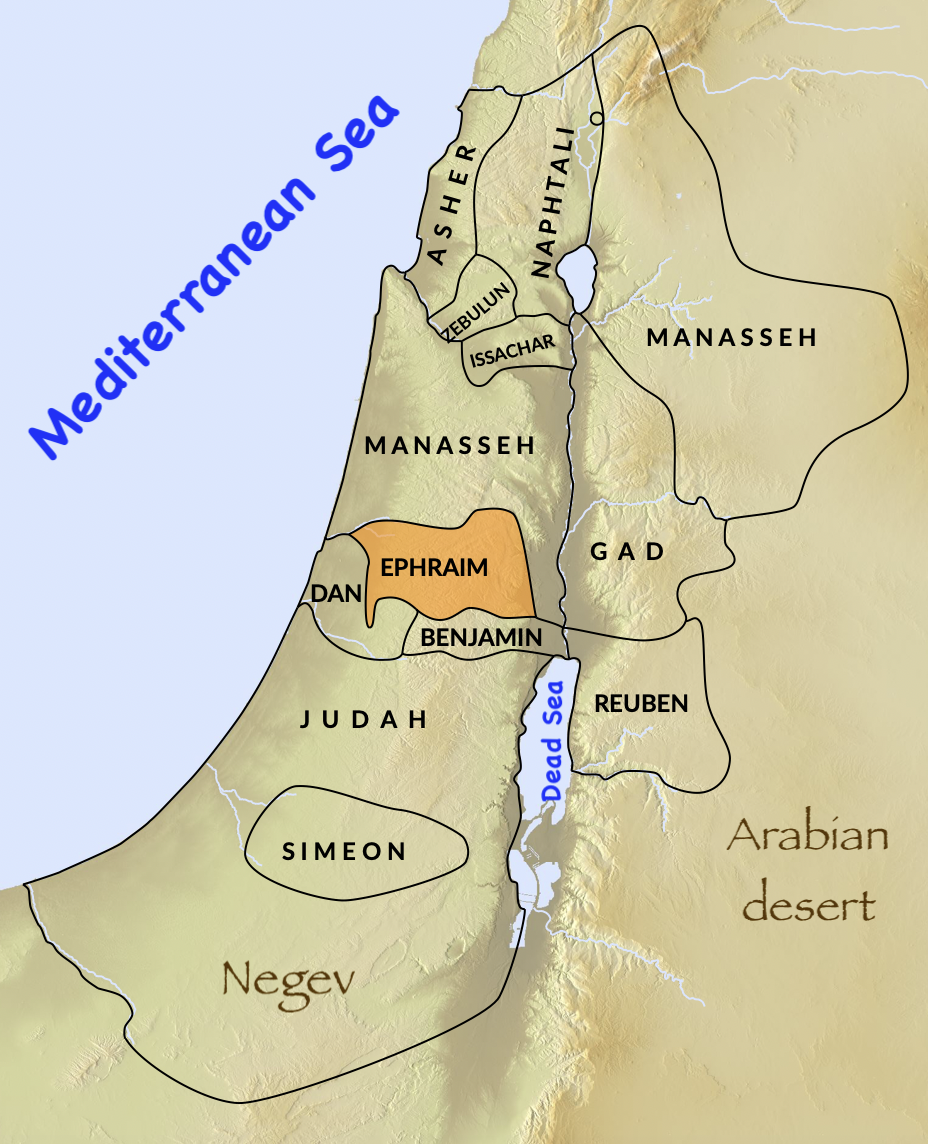
This chapter covers the descendants of the three tribes of Israel that settled on the east side of the Jordan River, outside the designated borders of the promised land. The region in which they settled is often referred to as the Transjordan. Prior to beginning the conquest and occupation of the land of Canaan as God had commanded, the tribes of Reuben, Gad, and Manasseh asked for permission to settle east of the Jordan on fertile land that was perfect for raising their many flock and herds.

The tribes of Reuben and Gad owned vast numbers of livestock. So when they saw that the lands of Jazer and Gilead were ideally suited for their flocks and herds, they came to Moses, Eleazar the priest, and the other leaders of the community. They said, “Notice the towns of Ataroth, Dibon, Jazer, Nimrah, Heshbon, Elealeh, Sibmah, Nebo, and Beon. The Lord has conquered this whole area for the community of Israel, and it is ideally suited for all our livestock. If we have found favor with you, please let us have this land as our property instead of giving us land across the Jordan River.” – Numbers 32:1-5 NLT

Angered by the self-centered nature of their request, Moses gave them an emphatic “No!” as his answer.

“The Lord was angry with Israel and made them wander in the wilderness for forty years until the entire generation that sinned in the Lord’s sight had died. But here you are, a brood of sinners, doing exactly the same thing! You are making the Lord even angrier with Israel. If you turn away from him like this and he abandons them again in the wilderness, you will be responsible for destroying this entire nation!” – Numbers 32:13-15 NLT

Moses feared that if he gave in to their request, they would get comfortable and refuse to assist their brothers in conquering the land of Canaan. This would leave the remainder of the tribes at a distinct disadvantage. However, the elders of the three tribes assured Moses that they would play their part in the conquest of Canaan.

“We simply want to build pens for our livestock and fortified towns for our wives and children. Then we will arm ourselves and lead our fellow Israelites into battle until we have brought them safely to their land. Meanwhile, our families will stay in the fortified towns we build here, so they will be safe from any attacks by the local people. We will not return to our homes until all the people of Israel have received their portions of land. But we do not claim any of the land on the other side of the Jordan. We would rather live here on the east side and accept this as our grant of land.” – Numbers 32:16-19 NLT

While these three tribes refused their inheritance in the land of promise, the chronicler included them in his genealogical listing, along with the rest of the tribes of Israel. Their decision to settle outside the borders of the promised land did not forfeit their right to be called the children of God. It also did not protect them from facing God’s judgment and being conquered by foreign invaders. They too ended up as slaves but not to the Babylonians.

…these tribes were unfaithful to the God of their ancestors. They worshiped the gods of the nations that God had destroyed. So the God of Israel caused King Pul of Assyria (also known as Tiglath-pileser) to invade the land and take away the people of Reuben, Gad, and the half-tribe of Manasseh as captives. The Assyrians exiled them to Halah, Habor, Hara, and the Gozan River, where they remain to this day. – 1 Chronicles 5:25-26 NLT

The inference is that these tribes never returned to the land of promise. Unlike the remaining tribes, the Reubenites, Gadites, and the half-tribe of Manasseh ended up becoming slaves to the Assyrians. Their defeat and deportation took place hundreds of years before the fall of the kingdom of Judah. There is no biblical record of any of the descendants of these tribes returning to the promised land. This closing statement in chapter 5 is meant to remind the returning Israelites of the unique nature of their restoration to the land by God. They were no more deserving than the other three tribes, but God had allowed them to escape their captivity in Babylon and experience the joy of returning to their homeland.

The tribe of Reuben receives special attention because of the actions of their patriarch. He is listed as “the firstborn of Israel” (1 Chronicles 5:1) because he was the oldest son of Jacob. But Reuben had forfeited his rights as the eldest son because “he dishonored his father by sleeping with one of his father’s concubines” and, as a result, “his birthright was given to the sons of his brother Joseph” (1 Chronicles 5:1 NLT). While the chronicler provides little in the way of details, it’s likely his audience was very familiar with the sordid story. The Book of Genesis fills in the gaps.

Then Jacob traveled on and camped beyond Migdal-eder. While he was living there, Reuben had intercourse with Bilhah, his father’s concubine, and Jacob soon heard about it. – Genesis 35:21-22 NLT

Even before the law was given by God, Reuben’s behavior was deemed unacceptable by the prevailing social standards. It seems that his actions were motivated by more than sexual desire. By sleeping with his father’s concubine, Reuben was issuing a direct challenge to his father’s authority and attempting to assert his right to serve as the head of the family. But his act of indiscretion brought down the wrath of his father and the loss of his rights as the firstborn son.

“Reuben, you are my firstborn, my strength,
    the child of my vigorous youth.
    You are first in rank and first in power.
But you are as unruly as a flood,
    and you will be first no longer.
For you went to bed with my wife;
    you defiled my marriage couch.” – Genesis 49:3-4 NLT

The chronicler provides the ramifications of this “curse” issued by Jacob.

For this reason, Reuben is not listed in the genealogical records as the firstborn son. The descendants of Judah became the most powerful tribe and provided a ruler for the nation, but the birthright belonged to Joseph. – 1 Chronicles 5:1-2 NLT

“…because of his sin (v. 1) God passed him over. God blessed Joseph with the double portion of the birthright. He did this by elevating Joseph’s two sons, Ephraim and Manasseh, to equality among Jacob’s other sons, Joseph’s brothers.” – Thomas L. Constable, Notes on 1 Chronicles

Despite his egregious sin, Reuben’s tribe was allowed to settle in the region of Gilead and enjoy the bounty of the land and victories over their enemies.

The tribe of Gad also settled east of the Jordan, sharing the land of Gilead with the Reubenites and expanding their territory into Bashan. They too enjoyed God’s blessings in the form of military success and agricultural abundance.

While these three tribes settled in land outside the borders of the promised land, they were not immune from conflict. They too were seen as foreign invaders by the land’s current occupants and were forced to wage war with their enemies. The chronicler points out that “There were 44,760 capable warriors in the armies of Reuben, Gad, and the half-tribe of Manasseh. They were all skilled in combat and armed with shields, swords, and bows. They waged war against the Hagrites, the Jeturites, the Naphishites, and the Nodabites” (1 Chronicles 5:18-19 NLT). Their occupation of land outside the borders of the designated inheritance did not relieve them of the need to do battle with the enemies of God. The constant conflict they faced led them to trust in the Lord for His assistance. While they could boast of having a large and well-trained army, they knew they were powerless without God’s help. 

The chronicler points out one such occasion when they turned to Yahweh for help.

They cried out to God during the battle, and he answered their prayer because they trusted in him. So the Hagrites and all their allies were defeated. – 1 Chronicles 5:20 NLT

God knew no boundaries. He was not the God of the promised land; He was the God of the people of Israel, and that included the tribes of Reuben, Gad, and Manasseh. Little did these three tribes know that they had settled in land that was always meant to be part of the inheritance God had promised Abraham.

So the Lord made a covenant with Abram that day and said, “I have given this land to your descendants, all the way from the border of Egypt to the great Euphrates River— the land now occupied by the Kenites, Kenizzites, Kadmonites, Hittites, Perizzites, Rephaites, Amorites, Canaanites, Girgashites, and Jebusites.” – Genesis 15:18-21 NLT

God later confirmed this promise with Moses.

“I will fix your boundaries from the Red Sea to the Mediterranean Sea, and from the eastern wilderness to the Euphrates River.” – Exodus 23:31 NLT

God had always planned for the land of Israel to extend all the way to the Euphrates River. But at no point in Israel’s history have their borders included this vast tract of land now occupied by Jordan, Syria, Lebanon, and Iraq. Even during the reigns of David and Solomon, when the borders of Israel expanded greatly, they never included these vast regions. But the day will come when God will complete what He began and fulfill all that He promised to Abraham.

In the meantime, the newly arrived remnant of God’s chosen people needed to be reminded that their ancestors had conquered large portions of Canaan and it was still their rightful possession. But like the tribes of Reuben, Gad, and Manasseh, they would have to trust God if they wanted to enjoy the full scope of their promised inheritance. They were back in the land but the battle was far from over. There was work to be done and they would need to rely upon God if they wanted to see their borders expanded, their homes and towns restored, and their nation renewed.

English Standard Version (ESV)
The Holy Bible, English Standard Version. ESV® Permanent Text Edition® (2016). Copyright © 2001 by Crossway Bibles, a publishing ministry of Good News Publishers.

New Living Translation (NLT)
Holy Bible, New Living Translation, copyright © 1996, 2004, 2015 by Tyndale House Foundation. Used by permission of Tyndale House Publishers Inc., Carol Stream, Illinois 60188. All rights reserved.

Cleansing Is Always the Key to Blessing

1 These are the stages of the people of Israel, when they went out of the land of Egypt by their companies under the leadership of Moses and Aaron. Moses wrote down their starting places, stage by stage, by command of the Lord, and these are their stages according to their starting places. They set out from Rameses in the first month, on the fifteenth day of the first month. On the day after the Passover, the people of Israel went out triumphantly in the sight of all the Egyptians, while the Egyptians were burying all their firstborn, whom the Lord had struck down among them. On their gods also the Lord executed judgments.

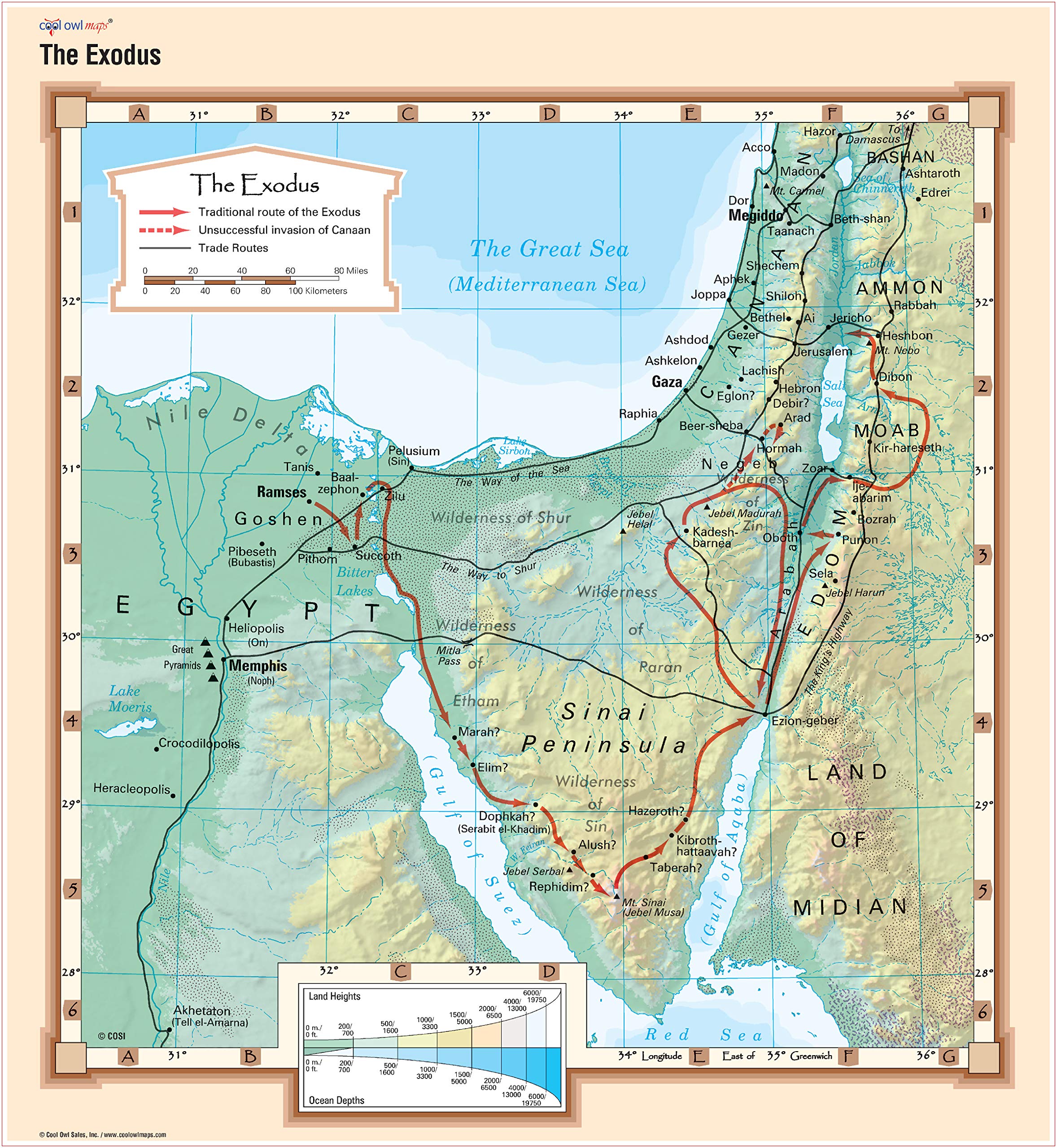
So the people of Israel set out from Rameses and camped at Succoth. And they set out from Succoth and camped at Etham, which is on the edge of the wilderness. And they set out from Etham and turned back to Pi-hahiroth, which is east of Baal-zephon, and they camped before Migdol. And they set out from before Hahiroth and passed through the midst of the sea into the wilderness, and they went a three days’ journey in the wilderness of Etham and camped at Marah. And they set out from Marah and came to Elim; at Elim there were twelve springs of water and seventy palm trees, and they camped there. 10 And they set out from Elim and camped by the Red Sea. 11 And they set out from the Red Sea and camped in the wilderness of Sin. 12 And they set out from the wilderness of Sin and camped at Dophkah. 13 And they set out from Dophkah and camped at Alush. 14 And they set out from Alush and camped at Rephidim, where there was no water for the people to drink. 15 And they set out from Rephidim and camped in the wilderness of Sinai. 16 And they set out from the wilderness of Sinai and camped at Kibroth-hattaavah. 17 And they set out from Kibroth-hattaavah and camped at Hazeroth. 18 And they set out from Hazeroth and camped at Rithmah. 19 And they set out from Rithmah and camped at Rimmon-perez. 20 And they set out from Rimmon-perez and camped at Libnah. 21 And they set out from Libnah and camped at Rissah. 22 And they set out from Rissah and camped at Kehelathah. 23 And they set out from Kehelathah and camped at Mount Shepher. 24 And they set out from Mount Shepher and camped at Haradah. 25 And they set out from Haradah and camped at Makheloth. 26 And they set out from Makheloth and camped at Tahath. 27 And they set out from Tahath and camped at Terah. 28 And they set out from Terah and camped at Mithkah. 29 And they set out from Mithkah and camped at Hashmonah. 30 And they set out from Hashmonah and camped at Moseroth. 31 And they set out from Moseroth and camped at Bene-jaakan. 32 And they set out from Bene-jaakan and camped at Hor-haggidgad. 33 And they set out from Hor-haggidgad and camped at Jotbathah. 34 And they set out from Jotbathah and camped at Abronah. 35 And they set out from Abronah and camped at Ezion-geber. 36 And they set out from Ezion-geber and camped in the wilderness of Zin (that is, Kadesh). 37 And they set out from Kadesh and camped at Mount Hor, on the edge of the land of Edom.

38 And Aaron the priest went up Mount Hor at the command of the Lord and died there, in the fortieth year after the people of Israel had come out of the land of Egypt, on the first day of the fifth month. 39 And Aaron was 123 years old when he died on Mount Hor.

40 And the Canaanite, the king of Arad, who lived in the Negeb in the land of Canaan, heard of the coming of the people of Israel.

41 And they set out from Mount Hor and camped at Zalmonah. 42 And they set out from Zalmonah and camped at Punon. 43 And they set out from Punon and camped at Oboth. 44 And they set out from Oboth and camped at Iye-abarim, in the territory of Moab. 45 And they set out from Iyim and camped at Dibon-gad. 46 And they set out from Dibon-gad and camped at Almon-diblathaim. 47 And they set out from Almon-diblathaim and camped in the mountains of Abarim, before Nebo. 48 And they set out from the mountains of Abarim and camped in the plains of Moab by the Jordan at Jericho; 49 they camped by the Jordan from Beth-jeshimoth as far as Abel-shittim in the plains of Moab.

50 And the Lord spoke to Moses in the plains of Moab by the Jordan at Jericho, saying, 51 “Speak to the people of Israel and say to them, When you pass over the Jordan into the land of Canaan, 52 then you shall drive out all the inhabitants of the land from before you and destroy all their figured stones and destroy all their metal images and demolish all their high places. 53 And you shall take possession of the land and settle in it, for I have given the land to you to possess it. 54 You shall inherit the land by lot according to your clans. To a large tribe you shall give a large inheritance, and to a small tribe you shall give a small inheritance. Wherever the lot falls for anyone, that shall be his. According to the tribes of your fathers you shall inherit. 55 But if you do not drive out the inhabitants of the land from before you, then those of them whom you let remain shall be as barbs in your eyes and thorns in your sides, and they shall trouble you in the land where you dwell. 56 And I will do to you as I thought to do to them.” Numbers 33:1-56 ESV

After doing to rapid-fire recounting of Israel’s trek from Egypt to the banks of the Jordan River, Moses prepares the people of God for their next big task. They are almost at the end of their four-decade-long journey, but they are far from done.  After more than 40 years in the wilderness, they stand on the eastern bank of the Jordan River waiting for God’s command to cross over and begin their conquest and occupation of the land of promise. The day they had long been waiting for had finally arrived. There had been a lengthy delay, but now it was time to enjoy what God had promised so long ago.

But as with most things associated with God, the blessing was tied to a requirement. He had one last instruction to give them before they took possession of the land, and it was a fairly significant one. They must drive out all the people who were living there. On top of that, they had to destroy all the idols and pagan shrines erected to the gods of the land. They were to smash every vestige of idol worship they found. In other words, God expected them to clean up before they settled down.

Sounds simple enough doesn’t it? But if you’re the least bit familiar with the story of the Israelites, they didn’t exactly follow God’s instructions to the letter; they took a few liberties. It’s almost as if the enemy (Satan) was standing there just as he had been in the garden of Eden, asking the question, “Surely, God has not said…”

I can just hear Satan whispering in their ears, “You don’t have to get rid of ALL the idols, just most of them.” Or maybe he worded his temptation this way: “You might want to leave one of the pagan shrines intact, just in case Yahweh doesn’t come through for you.”

As far as God’s command to rid the land of all its occupants, Satan probably did his best to convince the Israelites just how politically incorrect and insensitive this might appear to the rest of the people in the region. They probably thought to themselves, “We don’t want to get off on the wrong foot with our new neighbors, do we?”

And God seemed to know that the people would have second thoughts about His command, so He warned them what would happen if they failed to obey.

“But if you fail to drive out the people who live in the land, those who remain will be like splinters in your eyes and thorns in your sides. They will harass you in the land where you live. And I will do to you what I had planned to do to them.” – Numbers 33:55-56 NLT

“Disobey me,” God says, “and you will live to regret it.” This was not a suggestion, but a command. God expected them to follow His requirements without delay or deviation. He had a good reason for what He was asking them to do, and He knew exactly what would happen if they chose to disobey Him. If the Israelites failed to remove the land’s occupants, their enemies would become a constant threat and a thorn in their side. They would never learn to live amicably together. So, cleansing was critical for spiritual survival.

In his commentary on the Book of Numbers, Dr. Thomas Constable writes, “The repetition of ‘all’ (Numbers 33:52) stresses the importance of completely clearing the land of its inhabitants and their religious paraphernalia. God wanted to clean up the land spiritually and to make it a ‘holy land.’ The land was a gift from God to His first-born son, Israel (Numbers 33:53). God warned the Israelites what would happen to them if they were not completely obedient (Numbers 333:55-56). The Canaanites would be a constant source of irritation to them, and God would deal with His people as He planned to deal with the Canaanites.”

God wanted to purify the land spiritually and make it holy. That reminds me of what God wants to do with my life. He wants to clean it up spiritually and set it apart for His use. He is about removing anything in my life that might defile or defeat me. In essence, He wants to clean house.

But I tend to hang on to certain remnants of my past. I want to give the enemy some footholds in my life where he can live in peace. I want to maintain some of the idols that were there before God came to occupy the land because I find them comforting. They bring me a little bit of peace and assurance. But God wants to purge my life of any vestiges of the past. He wants to make all things new.

To receive all the blessings the promised land had to offer, the people were going to have to obey God fully. The same thing is true for us today. To enjoy all the blessings our new life in Christ offers, we must obey God fully. God makes this clear in His Word.

…throw off your old evil nature and your former way of life, which is rotten through and through, full of lust and deception. – Ephesians 4:22 NLT

Don’t lie to one another. You’re done with that old life. It’s like a filthy set of ill-fitting clothes you’ve stripped off and put in the fire. – Colossians 3:9 MSG

The night is almost gone; the day of salvation will soon be here. So don’t live in darkness. Get rid of your evil deeds. Shed them like dirty clothes. Clothe yourselves with the armor of right living, as those who live in the light. We should be decent and true in everything we do, so that everyone can approve of our behavior. Don’t participate in wild parties and getting drunk, or in adultery and immoral living, or in fighting and jealousy. But let the Lord Jesus Christ take control of you, and don’t think of ways to indulge your evil desires. – Romans 13:12-14 NLT

God was looking for a change in the lives of the Israelites. He wanted to purge and purify them, and that process began with a thorough cleansing of the land. His desire was to rid the landscape of their lives of any and all vestiges of the past.

Like the Israelites, we must take our set-apart status seriously.  We must remove all the idols and false gods that might draw us away from full reliance upon Him. If we do, we will be blessed. If we don’t, we will always find ourselves doing battle with past enemies and tempted to worship the false gods of our former life. Cleansing is always the key to blessing.

English Standard Version (ESV) The Holy Bible, English Standard Version. ESV® Permanent Text Edition® (2016). Copyright © 2001

New Living Translation (NLT) Holy Bible, New Living Translation, copyright © 1996, 2004, 2015 by Tyndale House Foundation. Used by permission of Tyndale House Publishers Inc., Carol Stream, Illinois 60188. All rights reserved.
A Seer With Poor Insight

1 Then the people of Israel set out and camped in the plains of Moab beyond the Jordan at Jericho. And Balak the son of Zippor saw all that Israel had done to the Amorites. And Moab was in great dread of the people, because they were many. Moab was overcome with fear of the people of Israel. And Moab said to the elders of Midian, “This horde will now lick up all that is around us, as the ox licks up the grass of the field.” So Balak the son of Zippor, who was king of Moab at that time, sent messengers to Balaam the son of Beor at Pethor, which is near the River in the land of the people of Amaw, to call him, saying, “Behold, a people has come out of Egypt. They cover the face of the earth, and they are dwelling opposite me. Come now, curse this people for me, since they are too mighty for me. Perhaps I shall be able to defeat them and drive them from the land, for I know that he whom you bless is blessed, and he whom you curse is cursed.”

So the elders of Moab and the elders of Midian departed with the fees for divination in their hand. And they came to Balaam and gave him Balak’s message. And he said to them, “Lodge here tonight, and I will bring back word to you, as the Lord speaks to me.” So the princes of Moab stayed with Balaam. And God came to Balaam and said, “Who are these men with you?” 10 And Balaam said to God, “Balak the son of Zippor, king of Moab, has sent to me, saying, 11 ‘Behold, a people has come out of Egypt, and it covers the face of the earth. Now come, curse them for me. Perhaps I shall be able to fight against them and drive them out.’” 12 God said to Balaam, “You shall not go with them. You shall not curse the people, for they are blessed.” 13 So Balaam rose in the morning and said to the princes of Balak, “Go to your own land, for the Lord has refused to let me go with you.” 14 So the princes of Moab rose and went to Balak and said, “Balaam refuses to come with us.”

15 Once again Balak sent princes, more in number and more honorable than these. 16 And they came to Balaam and said to him, “Thus says Balak the son of Zippor: ‘Let nothing hinder you from coming to me, 17 for I will surely do you great honor, and whatever you say to me I will do. Come, curse this people for me.’” 18 But Balaam answered and said to the servants of Balak, “Though Balak were to give me his house full of silver and gold, I could not go beyond the command of the Lord my God to do less or more. 19 So you, too, please stay here tonight, that I may know what more the Lord will say to me.” 20 And God came to Balaam at night and said to him, “If the men have come to call you, rise, go with them; but only do what I tell you.” 21 So Balaam rose in the morning and saddled his donkey and went with the princes of Moab. Numbers 22:1-21 ESV

God was leading the people of Israel ever closer to the borders of Canaan. The day was drawing nearer when they would be expected to cross over the Jordan River and begin their conquest of the land God promised to them as their rightful inheritance. All the battles in which they had recently been engaged had been meant to prepare them for the confrontations they would face in the conquest of their new homeland. While God had designated Canaan as their future home, it would not come without a fight or apart from faith in His power and providence.

News of the Israelites’ recent victory over the Amorites had begun to spread and the surrounding nations began to grow wary of this new kid on the block. The reputation of the Israelites had begun to change. They were no longer viewed as just a large but seemingly harmless group of former slaves and sheep herders. They had proved themselves to be a formidable fighting force that could easily overwhelm the small nation-states that occupied Canaan and the surrounding lands. With their conquest of the Amorites, the Israelites had become a real and present danger.

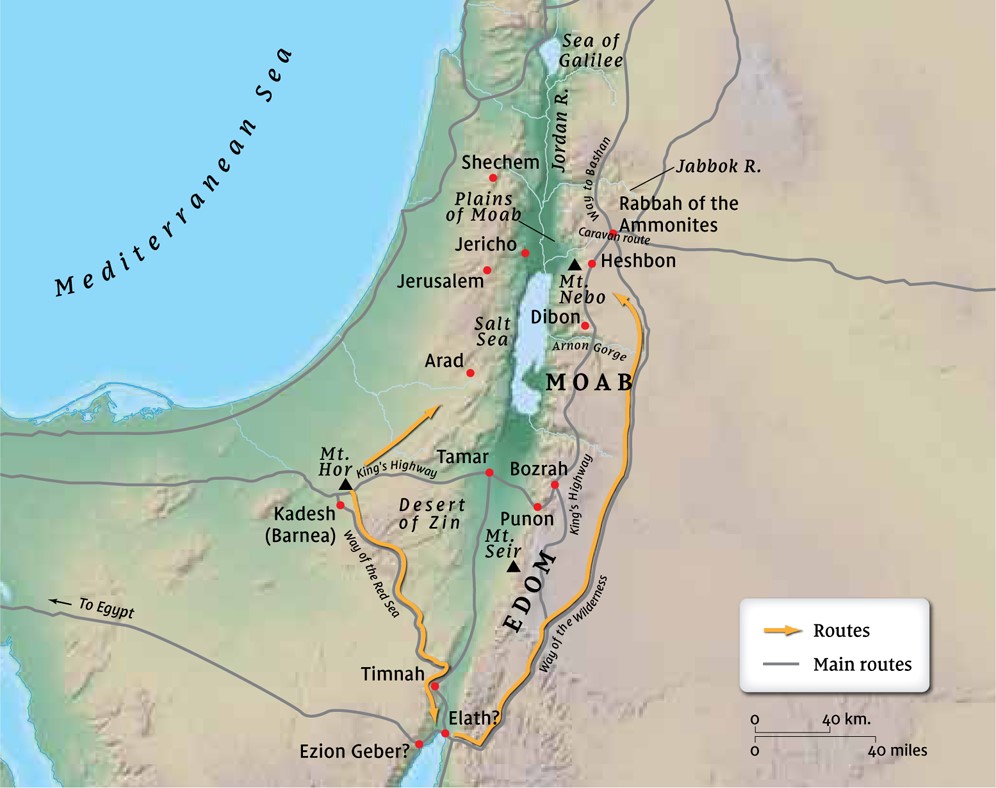
The Jordan River formed the eastern border of the land of Canaan, so when the Israelites set up camp on the plains of Moab, they were within “spitting distance” of the promised land. But news of their arrival soon reached the ears of Balak, the king of Moab, and he was not pleased.

Balak son of Zippor, the Moabite king, had seen everything the Israelites did to the Amorites. And when the people of Moab saw how many Israelites there were, they were terrified. The king of Moab said to the elders of Midian, “This mob will devour everything in sight, like an ox devours grass in the field!” – Numbers 22:2-4 NLT

The Israelites had descended upon Moab like a plague of locusts and Balak feared the worst. He realized that a group this large would require a source of food and envisioned them plundering the surrounding farms, orchards, and vineyards to fill their stomachs. Motivated by his growing sense of dread, Balak reached out to the elder of nearby Midian in an attempt to form an alliance against their newfound enemy.

When the Israelites had first appeared within the borders of Moab, the Moabites had extended a degree of tolerance, accepting payment in return for food and water. They probably assumed the Israelites would move on to greener pastures. But when Balak heard that the Israelites had set up camp on the plains, he became more than a bit concerned about the long-term implications of this latest report.

Unwilling to take on the Israelites in a head-to-head battle, he came up with a less risky plan. He sent for a diviner named Balaam. This man was some sort of pagan magician or soothsayer, and he had a reputation for his ability to pronounce curses. This led Balak to send emissaries to Balaam with the following message:

“Please come and curse these people for me because they are too powerful for me. Then perhaps I will be able to conquer them and drive them from the land. I know that blessings fall on any people you bless, and curses fall on people you curse.” – Numbers 22:6 NLT

Nowhere in the text does it indicate that Balaam was a worshiper of Yahweh, the God of the Israelites. However, he was believed to have supernatural abilities that allowed him to pronounce blessings and curses at will. Balak wanted this powerful “wizard” to work his magic and call down a curse upon the host of Israelites camping on his doorstep.

Balak is not specific regarding the nature of the curse he has in mind, but it seems that he was hoping for some kind of spell that might weaken the Israelite forces and make their defeat easier. In a sense, he was looking for a miracle, and he was willing to pay for it. No doubt, Balak believed that Balaam would invoke the assistance of some kind of deity or supernatural power. He seemed to understand that the defeat of the Israelites would require divine intervention.

When the envoys delivered the money and Balak’s message to Balaam, this so-called diviner agreed to consider the king’s proposition. But first, he asked for time to consult “the Lord” (Numbers 22:8 ESV). What’s interesting about this statement, is that Balaam used the proper name of Israel’s God – יְהֹוָה (Yᵊhōvâ). This doesn’t mean that Balaam was a worshiper of Jehovah, but may simply indicate that he knew the name of Israel’s God and was going to begin by seeking that deity’s permission to issue the curse. Rather than pit one god against another, Balaam was going to attempt to turn Israel’s God against them. But Balaam never got a chance to solicit an opinion from Jehovah because God came calling on him.

That night God came to Balaam and asked him, “Who are these men visiting you?” – Numbers 22:9 NLT

God was already aware of the situation but He went ahead and asked Balaam to summarize what was going on, beginning with the identity and mission of the visitors. This nocturnal encounter must have caught Balaam by surprise. There’s even a question of whether Balaam had ever intended to seek a word from Jehovah. It seems much more likely that Balaam would have returned to the messengers with some story he had concocted overnight. But instead, God showed up and provided this self-proclaimed prophet with a message meant solely for him.

“Do not go with them. You are not to curse these people, for they have been blessed!” – Numbers 22:12 NLT

Balaam was to show these men the door, and God made it crystal clear that the last thing Balaam should consider doing was to issue a curse upon the people of Israel. It’s not that God feared Balaam’s curse, but that Balaam needed to know that Israel was under God’s blessing. It was Balaam who needed to be afraid because God had promised to curse anyone who treated Abraham’s descendants with contempt.

I will bless those who bless you and curse those who treat you with contempt. All the families on earth will be blessed through you.” – Genesis 12:3 NLT

Even a fake curse would be met with God’s vengeance. If Balaam had decided to make a quick buck by going with the men and pronouncing a curse on the Israelites, he would have come to regret it.

Balaam didn’t take this word from Jehovah lightly. He may have been a false prophet but he recognized a real prophecy when He heard one. So, the next morning, he delivered to Balak’s messengers some disappointing news.

“Go on home! The Lord will not let me go with you.” – Numbers 22:13 NLT

But when the envoys returned with the bad news, Balak refused to accept it. Desperate for divine help, he sent an even larger contingent of dignitaries to persuade Balaam, and they were armed with an even greater offer of reward. Yet, Balaam remained adamant and refused to accept their bribe.

“Even if Balak were to give me his palace filled with silver and gold, I would be powerless to do anything against the will of the Lord my God. But stay here one more night, and I will see if the Lord has anything else to say to me.” – Numbers 22:18-19 NLT

At this point, it appears as if Balaam has had a “come-to-Jesus-moment.” He now refers to Jehovah as “my God.” Something has happened. This pagan prognosticator has suddenly realized that Jehovah is the one true God. Unlike all the other times Balaam had sought divine help, on this occasion, he had received an actual answer. Jehovah, the God of Israel had spoken, and Balaam was not about to risk angering an actual, bonified deity.

As before, Balaam invites the men to spend the night and agrees to seek additional insight from Jehovah. During the night, God spoke to Balaam again.

That night God came to Balaam and told him, “Since these men have come for you, get up and go with them. But do only what I tell you to do.” – Numbers 22:20 NLT

And having heard from the Lord, Balaam did just as he was told.

the next morning Balaam got up, saddled his donkey, and started off with the Moabite officials. – Numbers 22:21 NLT

Yet, as the next verse points out, “God was angry that Balaam was going…” (Numbers 22:22 NLT). This pseudo-prophet was about to learn a painful lesson on the sovereignty and omniscience of Jehovah. The God of the Israelites was not some figment of man’s imagination but the all-powerful, all-knowing God of the universe. He had peered into Balaam’s heart and knew exactly what this pride-filled and profit-hungry man was thinking. Balaam was still hoping to cash in on this opportunity and was already formulating a plan to give Balak what he wanted while lining his own pockets.

English Standard Version (ESV) The Holy Bible, English Standard Version. ESV® Permanent Text Edition® (2016). Copyright © 2001

New Living Translation (NLT) Holy Bible, New Living Translation, copyright © 1996, 2004, 2015 by Tyndale House Foundation. Used by permission of Tyndale House Publishers Inc., Carol Stream, Illinois 60188. All rights reserved.

Divine On-the-Job Training

21 Then Israel sent messengers to Sihon king of the Amorites, saying, 22 “Let me pass through your land. We will not turn aside into field or vineyard. We will not drink the water of a well. We will go by the King’s Highway until we have passed through your territory.” 23 But Sihon would not allow Israel to pass through his territory. He gathered all his people together and went out against Israel to the wilderness and came to Jahaz and fought against Israel. 24 And Israel defeated him with the edge of the sword and took possession of his land from the Arnon to the Jabbok, as far as to the Ammonites, for the border of the Ammonites was strong. 25 And Israel took all these cities, and Israel settled in all the cities of the Amorites, in Heshbon, and in all its villages. 26 For Heshbon was the city of Sihon the king of the Amorites, who had fought against the former king of Moab and taken all his land out of his hand, as far as the Arnon. 27 Therefore the ballad singers say,

“Come to Heshbon, let it be built;
    let the city of Sihon be established.
28 For fire came out from Heshbon,
    flame from the city of Sihon.
It devoured Ar of Moab,
    and swallowed the heights of the Arnon.
29 Woe to you, O Moab!
    You are undone, O people of Chemosh!
He has made his sons fugitives,
    and his daughters captives,
    to an Amorite king, Sihon.
30 So we overthrew them;
    Heshbon, as far as Dibon, perished;
    and we laid waste as far as Nophah;
    fire spread as far as Medeba.”

31 Thus Israel lived in the land of the Amorites. 32 And Moses sent to spy out Jazer, and they captured its villages and dispossessed the Amorites who were there. 33 Then they turned and went up by the way to Bashan. And Og the king of Bashan came out against them, he and all his people, to battle at Edrei. 34 But the Lord said to Moses, “Do not fear him, for I have given him into your hand, and all his people, and his land. And you shall do to him as you did to Sihon king of the Amorites, who lived at Heshbon.” 35 So they defeated him and his sons and all his people, until he had no survivor left. And they possessed his land. Numbers 21:21-35 ESV

This is the Numbers’ version of the story of Israel’s unfortunate confrontation with the Sihon, the king of the Amorites. It’s also recorded in Deuteronomy 2, but in this rendition, Moses reveals that “Israel settled in all the cities of the Amorites, in Heshbon, and in all its villages” (Numbers 21:25 ESV). Not only did they conquer the Amorites, but they confiscated their cities and villages and moved into them. For the first time since leaving Egypt 39 years earlier, the Israelites found themselves living in real houses and enjoying all the amenities of a semi-settled existence.

On this occasion, they refused to walk away from a fight as they had in Edom because the territory of the Amorites provided the only access point to the land of promise. The Amorites were attempting to block the Israelites’ way to their inheritance, and while Moses tried to reason with Sihon, he soon discovered that brute force would be the only negotiating tool that would get the king’s attention.

God provided the Israelites with a decisive victory over the Amorites, and Moses made it clear that the land Israel conquered and confiscated had originally belonged to the Moabites. This is significant because, according to Deuteronomy 2, God had commanded the Israelites to avoid any conflict with the Moabites and had forbidden them from attempting to occupy any of their land. The territory of the Moabites was off-limits and under a divine ban.

“Do not bother the Moabites, the descendants of Lot, or start a war with them. I have given them Ar as their property, and I will not give you any of their land.” – Deuteronomy 2:9 NLT

But it appears that God provided Moses with a special dispensation regarding these cities and villages because Sihon had stolen them from the Moabites. These lands had transferred hands and, technically, no longer belonged to the Moabites.

Heshbon had been the capital of King Sihon of the Amorites. He had defeated a former Moabite king and seized all his land as far as the Arnon River. – Numbers 21:26 NLT

This transfer of ownership officially rendered the land open for conquest and occupation. But Moses points out that the Israelites went as far as the border of the Ammonites and no further. This is because the Israelites had been forbidden from taking any land belonging to the Ammonites or Moabites. These two people groups were the descendants of the two sons born to Lot through his incestuous relationship with his own daughters (Genesis 19:34-38).

But God had been explicit when issuing His prohibition about Moabite and Ammonite land.

“Do not bother the Moabites, the descendants of Lot, or start a war with them. I have given them Ar as their property, and I will not give you any of their land.” – Deuteronomy 2:9 NLT

“Today you will cross the border of Moab at Ar and enter the land of the Ammonites, the descendants of Lot. But do not bother them or start a war with them. I have given the land of Ammon to them as their property, and I will not give you any of their land.” – Deuteronomy 19:18-19 NLT

The land occupied by the Moabites and Ammonites was not part of the inheritance God had promised to Abraham, so there was really no need for Israel to get comfortable on this side of the river. Their land lay to the west and would be theirs soon enough.

But for the time being, God allowed them to live in the cities and villages they had taken from the Amorites. Moses relates the lyrics of a so-called “Song of Heshbon,” a ballad that had been composed by the Amorites commemorating Sihon’s defeat of the Moabites.

“Come to Heshbon and let it be rebuilt!
    Let the city of Sihon be restored.
A fire flamed forth from Heshbon,
    a blaze from the city of Sihon.
It burned the city of Ar in Moab;
    it destroyed the rulers of the Arnon heights.
What sorrow awaits you, O people of Moab!
    You are finished, O worshipers of Chemosh!
Chemosh has left his sons as refugees,
    his daughters as captives of Sihon, the Amorite king.
We have utterly destroyed them,
    from Heshbon to Dibon.
We have completely wiped them out
    as far away as Nophah and Medeba.” – Numbers 21:27-29 NLT

This little ditty provided justification for Israel’s occupation of the former Moabite cities because they had originally been stolen and occupied by the Amorites. So, technically, Israel had not violated God’s decree. Notice that Moses is very specific with his wording.

Thus Israel lived in the land of the Amorites.” – Numbers 21:31 ESV

God allowed Israel to continue their conquest of additional Amorite-occupied land, and He also provided them with decisive victories over the kingdom of Bashan.

“So the Lord our God handed King Og and all his people over to us, and we killed them all. Not a single person survived. We conquered all sixty of his towns—the entire Argob region in his kingdom of Bashan. Not a single town escaped our conquest. These towns were all fortified with high walls and barred gates. We also took many unwalled villages at the same time. We completely destroyed the kingdom of Bashan, just as we had destroyed King Sihon of Heshbon. We destroyed all the people in every town we conquered—men, women, and children alike. But we kept all the livestock for ourselves and took plunder from all the towns. – Deuteronomy 3:3-7 NLT

Israel’s wandering days were over, and with these battles, God was giving them on-the-job training, preparing them for the day when they crossed over the Jordan River and began their conquest of the land of Canaan. These victories on the east side of the Jordan were less about land acquisition than they were about providing the Israelites with much-needed military experience. They were learning how to conduct urban warfare as well as developing tactical strategies and honing their skills as warriors. Their access to well-fortified cities provided them with protection from their growing list of enemies. Until God gave them their marching orders to cross the Jordan, they would live on the east side and fine-tune their fighting skills.

English Standard Version (ESV) The Holy Bible, English Standard Version. ESV® Permanent Text Edition® (2016). Copyright © 2001

New Living Translation (NLT) Holy Bible, New Living Translation, copyright © 1996, 2004, 2015 by Tyndale House Foundation. Used by permission of Tyndale House Publishers Inc., Carol Stream, Illinois 60188. All rights reserved.

When Our Fears Get the Best of Us

Then Moses and Aaron fell on their faces before all the assembly of the congregation of the people of Israel. And Joshua the son of Nun and Caleb the son of Jephunneh, who were among those who had spied out the land, tore their clothes and said to all the congregation of the people of Israel, “The land, which we passed through to spy it out, is an exceedingly good land. If the Lord delights in us, he will bring us into this land and give it to us, a land that flows with milk and honey. Only do not rebel against the Lord. And do not fear the people of the land, for they are bread for us. Their protection is removed from them, and the Lord is with us; do not fear them.” 10 Then all the congregation said to stone them with stones. But the glory of the Lord appeared at the tent of meeting to all the people of Israel.

11 And the Lord said to Moses, “How long will this people despise me? And how long will they not believe in me, in spite of all the signs that I have done among them? 12 I will strike them with the pestilence and disinherit them, and I will make of you a nation greater and mightier than they.” – Numbers 14:5-12 ESV

We all suffer from it on occasion – worst-case-scenario syndrome. The symptoms are easily recognizable: fear, doubt, a growing sense of panic, and visions of all kinds of disasters happening; one bad thing leading to another. Usually, it starts with a fairly pedestrian situation; one that is negative, but not catastrophic. But before we know it, we’ve conjured up images of all kinds of future mishaps and mayhem. Our minds begin to play tricks on us, causing us to imagine all kinds of negative outcomes as we conjecture what will inevitably happen next. We start playing out a variety of circumstances in our minds, wondering what will happen if…

That’s exactly what the Israelites suffered from in this story as they stood on the edge of the promised land, weighing out the two disparate reports given by the 12 spies. When these men had returned from their investigatory trek through Canaan, they had delivered a report that was equal parts good news and bad news. The land was wildly abundant and fertile, and they had even brought back samples as proof. But while Canaan was bountiful and rich, it was also filled with “giants” who would surely pose a formidable threat to the Israelites.

The spies reported that the land that God had promised to Israel as their inheritance was already occupied and its current residents would be far from pushovers. They were powerful, plentiful, well-armed, and safely ensconced in their fortified cities, and that part of the report was all the people of Israel heard.

Ten of the spies were convinced that any attempt to conquer the land of Canaan would end in disaster, so they launched a campaign of misinformation, blowing the negative elements of their report out of proportion and drawing conclusions that were NOT based on fact. Instead of trusting God, they decided to trust their very fertile imaginations, stirring up the people with outlandish claims and false accusations against God Himself.

“Why is the Lord taking us to this country only to have us die in battle? Our wives and our little ones will be carried off as plunder! Wouldn’t it be better for us to return to Egypt?” – Numbers 14:3 NLT

In a matter of minutes, these people had turned a bit of bad news into a forecast of complete disaster, and they had actually accused God of attempted murder. These men had whipped themselves into a frenzy of fright and faithlessness and infected the entire community. Suddenly, the God who had freed them from slavery in Egypt through a series of miraculous plagues, and who had cared for them all throughout their journey to the promised land, was too weak to take care of them anymore. Their troubles were greater than their God, and the symptoms of worst-case-scenario syndrome began to appear throughout the camp.

Yet, Moses, Aaron, Caleb, and Joshua tried to put a stop to it by begging the people to trust God.

“The land we traveled through and explored is a wonderful land! And if the Lord is pleased with us, he will bring us safely into that land and give it to us. It is a rich land flowing with milk and honey. Do not rebel against the Lord, and don’t be afraid of the people of the land. They are only helpless prey to us! They have no protection, but the Lord is with us! Don’t be afraid of them!” – Numbers 14:7-9 NLT

But the people continued to respond with fear and anger, even threatening to stone Moses, his brother, and the two spies. Consumed by their lurid visions of wanton destruction, they refused to listen to what Moses and the others had to say. So, God intervened. As the people quaked in their sandals over the prospect of facing the nations of Canaan, the Lord showed up and gave them something far more formidable to fear.

Then the glorious presence of the Lord appeared to all the Israelites at the Tabernacle. – Numbers 14:10 NLT

God showed up in all His glory, and He was far from pleased. He informed Moses that He was determined to wipe out the entire nation and start all over again. Despite all He had done for them, they had dared to treat Him with contempt. They had hurled accusations against Him, declaring Him to be uncaring and unsympathetic to their plight. They had displayed a staggering degree of ingratitude for all His past mercies and miracles, and He declared that He had had enough.

“How long will these people treat me with contempt? Will they never believe me, even after all the miraculous signs I have done among them? I will disown them and destroy them with a plague. Then I will make you into a nation greater and mightier than they are!” – Numbers 14:11-12 NLT

God had run out of patience with these ungrateful and disobedient people, and this was not the first time. Back at Mount Sinai, God had also been prepared to wipe out the people of Israel for their audacity to worship the golden calf (Exodus 32). And on that occasion, He told Moses, “I have seen how stubborn and rebellious these people are. Now leave me alone so my fierce anger can blaze against them, and I will destroy them. Then I will make you, Moses, into a great nation” (Numbers 32:9-10 NLT).

Despite their egregious and ungrateful rejection of His love, mercy, and provision, God spared the nation of Israel. But here, months later, He vows once again to destroy them and start all over again with Moses. As before, He declares that He will simply make for Himself a new nation. His decision to give the Israelites favored-nation status had nothing to do with them. They had not earned their designation as His chosen people. And He would have been perfectly just and right in doing so. After all, He had been the one who had chosen them in the first place. They had done nothing to earn His favor or to deserve His affection. Moses would later remind the people that their privileged position as the apple of God’s eye was completely undeserved and the result of God’s love, grace, and mercy.

“For you are a people holy to the LORD your God. The LORD your God has chosen you to be a people for His prized possession out of all peoples on the face of the earth. The LORD did not set His affection on you and choose you because you were more numerous than the other peoples, for you were the fewest of all peoples. But because the LORD loved you and kept the oath He swore to your fathers, He brought you out with a mighty hand and redeemed you from the house of slavery, from the hand of Pharaoh king of Egypt.” – Deuteronomy 7:6-8 BSB

God had set them apart as His people, not because they were a great and powerful nation, but because He was a covenant-keeping God. According to Moses, their unique relationship with God was totally undeserved and fully God’s doing.

God had miraculously delivered them from their bondage in Egypt. He had led them across the wilderness and brought them safely to the shores of the Jordan River. He had kept their sandals from wearing out. He had supplied them with water, manna, and quail to eat. He had guided and protected them along the way. But now that it was time for them to do their part and enter and conquer the land, they had reneged on their end of the agreement. Moses had made their God-ordained instructions perfectly clear.

“When the LORD your God brings you into the land that you are entering to possess, and He drives out before you many nations—the Hittites, Girgashites, Amorites, Canaanites, Perizzites, Hivites, and Jebusites, seven nations larger and stronger than you – and when the LORD your God has delivered them over to you to defeat them, then you must devote them to complete destruction. Make no treaty with them and show them no mercy.”  – Deuteronomy 7:1-2 BSB

But they had decided to reject God’s command and go with their guts. They had determined that their will was more reliable than God’s and believed a return to Egypt was preferable to certain defeat in Canaan.

When we face difficult times, it’s easy to succumb to worst-case-scenario syndrome; it’s almost natural. We begin to doubt and fear, and we blow things out of proportion. Our vision gets blurry. Our memory gets sketchy. We tend to forget things; like God’s track record of goodness in our lives. We become weak and prone to fear, instead of faith. Worry replaces worship. Even little things get blown way out of proportion, and the usual outcome is rebellion.

We refuse to believe, trust, and obey God, and so we fail to experience His power in our lives. We miss out on the blessings. Like the Israelites, we stand on the edge of the promises of God but never get to enjoy them.

But there is a cure for worst-case-scenario syndrome. It’s called trust. Trust is turning our belief in God into action. It is stepping out and relying on God’s goodness. It is resting on His power even in the presence of problems. God doesn’t promise us a life free from trouble but He does promise to see us through them. He promises us strength. He promises us joy and contentment. He promises us His presence. He will see us through. But to experience all those things, the Israelites were going to have to turn their fear into faith and follow God. Little did they know that their best chance at surviving the worst-case-scenario syndrome wasn’t a return to Egypt but a greater reliance upon God.

Just when the Israelites were ready to give up, God showed up in all His glory because that’s what He does. And, as the prophet Isaiah reminds us, only the presence of God can calm our fears and turn the worst-case scenario into an opportunity to see Him work.

Strengthen the weak hands,
    and make firm the feeble knees.
Say to those who have an anxious heart,
    “Be strong; fear not!
  Behold, your God
    will come with vengeance,
  with the recompense of God.
    He will come and save you.” – Isaiah 35:3-4 ESV

English Standard Version (ESV) The Holy Bible, English Standard Version. ESV® Permanent Text Edition® (2016). Copyright © 2001

New Living Translation (NLT) Holy Bible, New Living Translation, copyright © 1996, 2004, 2015 by Tyndale House Foundation. Used by permission of Tyndale House Publishers Inc., Carol Stream, Illinois 60188. All rights reserved.

Boot Camp for the Coming Battle

21 Then Israel sent messengers to Sihon king of the Amorites, saying, 22 “Let me pass through your land. We will not turn aside into field or vineyard. We will not drink the water of a well. We will go by the King’s Highway until we have passed through your territory.” 23 But Sihon would not allow Israel to pass through his territory. He gathered all his people together and went out against Israel to the wilderness and came to Jahaz and fought against Israel. 24 And Israel defeated him with the edge of the sword and took possession of his land from the Arnon to the Jabbok, as far as to the Ammonites, for the border of the Ammonites was strong. 25 And Israel took all these cities, and Israel settled in all the cities of the Amorites, in Heshbon, and in all its villages. 26 For Heshbon was the city of Sihon the king of the Amorites, who had fought against the former king of Moab and taken all his land out of his hand, as far as the Arnon. 27 Therefore the ballad singers say,

“Come to Heshbon, let it be built;
    let the city of Sihon be established.
28 For fire came out from Heshbon,
    flame from the city of Sihon.
It devoured Ar of Moab,
    and swallowed[f] the heights of the Arnon.
29 Woe to you, O Moab!
    You are undone, O people of Chemosh!
He has made his sons fugitives,
    and his daughters captives,
    to an Amorite king, Sihon.
30 So we overthrew them;
    Heshbon, as far as Dibon, perished;
    and we laid waste as far as Nophah;
    fire spread as far as Medeba.”

31 Thus Israel lived in the land of the Amorites. 32 And Moses sent to spy out Jazer, and they captured its villages and dispossessed the Amorites who were there. 33 Then they turned and went up by the way to Bashan. And Og the king of Bashan came out against them, he and all his people, to battle at Edrei. 34 But the Lord said to Moses, “Do not fear him, for I have given him into your hand, and all his people, and his land. And you shall do to him as you did to Sihon king of the Amorites, who lived at Heshbon.” 35 So they defeated him and his sons and all his people, until he had no survivor left. And they possessed his land. Numbers 21:21-35 ESV

This is the Numbers’ version of the story of Israel’s unfortunate confrontation with the Sihon, the king of the Amorites. It’s also recorded in Deuteronomy 2, but in this rendition, Moses reveals that “Israel settled in all the cities of the Amorites, in Heshbon, and in all its villages” (Numbers 21:25 ESV). Not only did they conquer the Amorites, but they confiscated their cities and villages and moved into them. For the first time since leaving Egypt 39 years earlier, the Israelites found themselves living in real houses and enjoying all the amenities of a semi-settled existence.

On this occasion, they refused to walk away from a fight as they had in Edom because the territory of the Amorites provided the only access point to the land of promise. The Amorites were attempting to block the Israelites’ way to their inheritance. And while Moses tried to reason with Sihon, he soon discovered that brute force would be the only negotiating tool that got the king’s attention.

God provided the Israelites with a decisive victory over the Amorites, and Moses makes it clear that the land Israel conquered and confiscated had originally belonged to the Moabites. This is significant because, according to Deuteronomy 2, God had commanded the Israelites to avoid any conflict with the Moabites and had forbidden them from attempting to occupy any of their land. The territory of the Moabites was off-limits and under a divine ban.

“Do not bother the Moabites, the descendants of Lot, or start a war with them. I have given them Ar as their property, and I will not give you any of their land.” – Deuteronomy 2:9 NLT

But it appears that God provided Moses with a special dispensation regarding these cities and villages because Sihon had stolen them from the Moabites. These lands had transferred hands and, technically, no longer belonged to the Moabites.

Heshbon had been the capital of King Sihon of the Amorites. He had defeated a former Moabite king and seized all his land as far as the Arnon River. – Numbers 21:26 NLT

This transfer of ownership officially rendered the land open for conquest and occupation. But Moses points out that the Israelites went as far as the border of the Ammonites and no further. This is because the Israelites had been forbidden from taking any land belonging to the Ammonites or Moabites. These two people groups were the descendants of the two sons born to Lot through his incestuous relationship with his own daughters (Genesis 19:34-38).

But God had been explicit when issuing His prohibition about Moabite and Ammonite land.

“Do not bother the Moabites, the descendants of Lot, or start a war with them. I have given them Ar as their property, and I will not give you any of their land.” – Deuteronomy 2:9 NLT

“Today you will cross the border of Moab at Ar and enter the land of the Ammonites, the descendants of Lot. But do not bother them or start a war with them. I have given the land of Ammon to them as their property, and I will not give you any of their land.” – Deuteronomy 19:18-19 NLT

The land occupied by the Moabites and Ammonites was not part of the inheritance God had promised to Abraham. So, there was really no need for Israel to get comfortable on this side of the river. Their land lay to the west and would be theirs soon enough.

But for the time being, God allowed them to live in the cities and villages they had taken from the Amorites. And Moses relates the lyrics of a so-called “Song of Heshbon,” a ballad that had been composed by the Amorites commemorating Sihon’s defeat of the Moabites.

“Come to Heshbon and let it be rebuilt!
    Let the city of Sihon be restored.
A fire flamed forth from Heshbon,
    a blaze from the city of Sihon.
It burned the city of Ar in Moab;
    it destroyed the rulers of the Arnon heights.
What sorrow awaits you, O people of Moab!
    You are finished, O worshipers of Chemosh!
Chemosh has left his sons as refugees,
    his daughters as captives of Sihon, the Amorite king.
We have utterly destroyed them,
    from Heshbon to Dibon.
We have completely wiped them out
    as far away as Nophah and Medeba.” – Numbers 21:27-29 NLT

This little ditty provided justification for Israel’s occupation of the former Moabite cities because they had originally been stolen and occupied by the Amorites. So, technically, Israel had not violated God’s decree.

Notice that Moses is very specific with his wording.

Thus Israel lived in the land of the Amorites.” – Numbers 21:31 ESV

And God allowed Israel to continue their conquest of additional Amorite-occupied land. He also provided them with decisive victories over the kingdom of Bashan.

“So the Lord our God handed King Og and all his people over to us, and we killed them all. Not a single person survived. We conquered all sixty of his towns—the entire Argob region in his kingdom of Bashan. Not a single town escaped our conquest. These towns were all fortified with high walls and barred gates. We also took many unwalled villages at the same time. We completely destroyed the kingdom of Bashan, just as we had destroyed King Sihon of Heshbon. We destroyed all the people in every town we conquered—men, women, and children alike. But we kept all the livestock for ourselves and took plunder from all the towns. – Deuteronomy 3:3-7 NLT

Israel’s wandering days were over. And with these battles, God was giving them on-the-job training, preparing them for the day when they crossed over the Jordan River and began their conquest of the land of Canaan. These victories on the east side of the Jordan were less about land acquisition than they were about providing the Israelites with much-needed military experience. They were learning how to conduct urban warfare. They were developing tactical strategies and honing their skills as warriors. And their access to well-fortified cities provided them with protection from their growing list of enemies. Until God gave them their marching orders to cross the Jordan, they would live on the east side and fine-tune their fighting skills.

English Standard Version (ESV) The Holy Bible, English Standard Version. ESV® Permanent Text Edition® (2016). Copyright © 2001

New Living Translation (NLT) Holy Bible, New Living Translation, copyright © 1996, 2004, 2015 by Tyndale House Foundation. Used by permission of Tyndale House Publishers Inc., Carol Stream, Illinois 60188. All rights reserved.

The Fruit of Repentance

1 In the fifteenth year of the reign of Tiberius Caesar, Pontius Pilate being governor of Judea, and Herod being tetrarch of Galilee, and his brother Philip tetrarch of the region of Ituraea and Trachonitis, and Lysanias tetrarch of Abilene, during the high priesthood of Annas and Caiaphas, the word of God came to John the son of Zechariah in the wilderness. And he went into all the region around the Jordan, proclaiming a baptism of repentance for the forgiveness of sins. As it is written in the book of the words of Isaiah the prophet,

“The voice of one crying in the wilderness:
‘Prepare the way of the Lord,
    make his paths straight.
Every valley shall be filled,
    and every mountain and hill shall be made low,
and the crooked shall become straight,
    and the rough places shall become level ways,
and all flesh shall see the salvation of God.’”

He said therefore to the crowds that came out to be baptized by him, “You brood of vipers! Who warned you to flee from the wrath to come? Bear fruits in keeping with repentance. And do not begin to say to yourselves, ‘We have Abraham as our father.’ For I tell you, God is able from these stones to raise up children for Abraham. Even now the axe is laid to the root of the trees. Every tree therefore that does not bear good fruit is cut down and thrown into the fire.”

10 And the crowds asked him, “What then shall we do?” 11 And he answered them, “Whoever has two tunics is to share with him who has none, and whoever has food is to do likewise.” 12 Tax collectors also came to be baptized and said to him, “Teacher, what shall we do?” 13 And he said to them, “Collect no more than you are authorized to do.” 14 Soldiers also asked him, “And we, what shall we do?” And he said to them, “Do not extort money from anyone by threats or by false accusation, and be content with your wages.” Luke 3:1-14 ESV

Once again, Luke establishes a firm timeline in order to prove the historical veracity of Jesus’ life and ministry. The last chapter ended with the statement: “And Jesus increased in wisdom and in stature and in favor with God and man” (Luke 2:52 ESV). Luke’s last biographical entry concerning Jesus portrayed Him as a 12-year-old boy. But now, Luke has fast-forwarded nearly two decades and he establishes the timeline by providing a list of key historical figures with whom his readers would have been familiar.

In the fifteenth year of the reign of Tiberius Caesar, when Pontius Pilate was governor of Judea, and Herod was tetrarch of Galilee, and his brother Philip was tetrarch of the region of Iturea and Trachonitis, and Lysanias was tetrarch of Abilene, during the high priesthood of Annas and Caiaphas – Luke 3:1-2 NLT

Luke doesn’t provide the specific year in which John the Baptist began his ministry, but by listing these seven historical figures, he narrows down the possibilities. The fifteenth year of the reign of Tiberius Caesar would have been somewhere around A.D.29. The last year of Pontius Pilate’s governorship of Judea was A.D. 37. Herod Antipas was deposed as the tetrarch of Galilee in A.D. 39. His brother Philip, who was tetrarch of Iturea and Trachonitis, died in A.D. 34. Annas and Caiaphas, his son-in-law, shared the tile of high priest until the spring of A.D. 37. The only name on the list for which there is little historical record is that of Lysanias, the tetrarch of Abilene.

So, it would seem that somewhere between the A.D. 26 and the spring of A.D. 37, “the word of God came to John the son of Zechariah in the wilderness” (Luke 3:2 ESV). After a long delay, John received his official marching orders from God. Luke doesn’t reveal how this information was conveyed to John, but he does clarify the nature of John’s assignment.

He went into all the region around the Jordan River, preaching a baptism of repentance for the forgiveness of sins. – Luke 3:3 NLT

John’s ministry and message had been given to him by God and it was in direct fulfillment of the words of Isaiah, written centuries earlier.

“The voice of one crying in the wilderness:
‘Prepare the way of the Lord,
    make his paths straight.
Every valley shall be filled,
    and every mountain and hill shall be made low,
and the crooked shall become straight,
    and the rough places shall become level ways,
and all flesh shall see the salvation of God.’” – Luke 3:4-6 ESV

Luke appears to be quoting from Isaiah 40:3-5, using the Septuagint (the Greek translation of the Old Testament). By utilizing this prophetic passage, Luke is establishing that John was the divine fulfillment of this promise. He had come to prepare the way for the salvation of God. And to do so, he was given the task of “proclaiming a baptism of repentance for the forgiveness of sins” (Luke 3:3 ESV). As a prophet himself, John had been commissioned by God to call the people of Israel to repentance. The word “repentance” (metanoia) carries the idea of changing one’s mind. While we tend to think of repentance as an alteration in behavior or conduct, the New Testament concept of repentance conveys, first and foremost, a change in perspective or outlook. 

With the fulfillment of the Isaiah 40 passage, something new was about to happen in Israel. The old way of doing things was going away. Something new had come. And John’s job was to call the people to embrace a new way of thinking about everything, from the nature of the kingdom of God to the character of the Messiah, and even the means for achieving a right standing before God. Nothing was going to remain the same. With the launch of John’s ministry and the imminent arrival of the long-awaited Messiah, God was preparing to bring a radically new form of salvation – like nothing they had ever seen before.

John’s call to repentance and his offer of baptism was eagerly embraced by the crowds who flocked to see him in the wilderness. But it seems that John had suspicions concerning the sincerity of those who were verbally declaring their readiness to repent. He sensed that they were simply going through the motions, declaring with their lips that they were willing to change but with no intent to do so. In a sense, they were hedging their bets, desiring to receive forgiveness for their sins, but with no plans to change the way they lived their lives. So, John blasts them for their hypocrisy.

“You offspring of vipers! Who warned you to flee from the coming wrath? Therefore produce fruit that proves your repentance, and don’t begin to say to yourselves, ‘We have Abraham as our father.’ For I tell you that God can raise up children for Abraham from these stones! Even now the ax is laid at the root of the trees, and every tree that does not produce good fruit will be cut down and thrown into the fire.” – Luke 3:7-9 NLT

Whether John realized it or not, he was demanding that these people do something that was utterly impossible. He was calling them to “produce fruit that proves your repentance.” In other words, he was requiring that they change their behavior. And for centuries, that had been the call of every prophet of God.

“Yet even now,” the Lord says,
“return to me with all your heart—
with fasting, weeping, and mourning.
Tear your hearts,
not just your garments.”
Return to the Lord your God,
for he is merciful and compassionate,
slow to anger and boundless in loyal love—often relenting from calamitous punishment. – Joel 2:12-13 NLT

But no generation of Israelites had ever been effective in fulfilling this command. Even the prophet Isaiah would record God’s words of condemnation concerning the Israelites less-than-sincere attempts at behavior modification.

“These people say they are mine. They honor me with their lips, but their hearts are far from me. And their worship of me is nothing but man-made rules learned by rote.” – Isaiah 29:13 NLT

Their hearts weren’t in it. And by demanding that the crowds show genuine fruit that proves their repentance, John was asking them to do the impossible. In reality, the Jews who came to hear John preach were of the opinion that they were God’s chosen people. As descendants of Abraham, they believed themselves to be honorary citizens of God’s kingdom. But John reveals that their prideful dependence upon their status as Abraham’s seed was not going to save them. What they failed to recognize was that God had made them out of nothing. He had formed the nation of Israel from a single man and his barren wife. And John drops the not-so-flattering bombshell: “God is able from these stones to raise up children for Abraham” (Luke 3:8 ESV).

Something new was about to happen, and John was trying to prepare the people for what God had in store for them. It would no longer be business as usual. Their half-hearted attempts at giving up their old ways were no longer going to cut it. God was done waiting for His rebellious people to return to Him in true repentance and contrition. He was no longer willing to allow those who bore His name to drag His reputation in the dirt by their ungodly behavior. God knew that the only hope of changing their behavior would come with a change in their hearts.

The prophet Ezekiel had recorded the words of God pronouncing His divine plan to one day do for the Israelites what they could never have accomplished on their own.

“Therefore, give the people of Israel this message from the Sovereign LORD: I am bringing you back, but not because you deserve it. I am doing it to protect my holy name, on which you brought shame while you were scattered among the nations. I will show how holy my great name is—the name on which you brought shame among the nations. And when I reveal my holiness through you before their very eyes, says the Sovereign LORD, then the nations will know that I am the LORD. For I will gather you up from all the nations and bring you home again to your land.

“Then I will sprinkle clean water on you, and you will be clean. Your filth will be washed away, and you will no longer worship idols. And I will give you a new heart, and I will put a new spirit in you. I will take out your stony, stubborn heart and give you a tender, responsive heart. And I will put my Spirit in you so that you will follow my decrees and be careful to obey my regulations.” – Ezekiel 36:22-27 NLT

But at this point in the inaugural days of John’s ministry, he is calling the people to display the fruit of true repentance. And when they ask him for examples of what that might look like, he gets very specific.

“The person who has two tunics must share with the person who has none, and the person who has food must do likewise.” – Luke 3:11 NLT

To the tax collectors who came seeking to be baptized, John said, “Collect no more than you are required to” (Luke 3:13 NLT). Soldiers were told, “Take money from no one by violence or by false accusation, and be content with your pay” (Luke 3:14 NLT). Everyone, regardless of their status in life, was expected to change the way they lived. But this would prove to be a pointless endeavor. They didn’t have what it takes to produce true and lasting heart change. In fact, their hearts remained as stony and stubborn as ever. 

For generations, the people of Israel had attempted to please God by keeping His laws, and when they failed to live up to His holy standards, they took advantage of His sacrificial system so that they could receive atonement and forgiveness. But this cycle of sin and sacrifice had produced no lasting change in their behavior. But all that was about to change. God was preparing to introduce a new means of atonement that would produce lasting heart change and the ability to display the fruit of righteousness.

English Standard Version (ESV) The Holy Bible, English Standard Version. ESV® Permanent Text Edition® (2016). Copyright © 2001 by Crossway Bibles, a publishing ministry of Good News Publishers.

New Living Translation (NLT) Holy Bible, New Living Translation, copyright © 1996, 2004, 2015 by Tyndale House Foundation. Used by permission of Tyndale House Publishers Inc., Carol Stream, Illinois 60188. All rights reserved.

The Message (MSG)Copyright © 1993, 1994, 1995, 1996, 2000, 2001, 2002 by Eugene H. Peterson