The Inescapable, Unavoidable Will of God

28 Now the rest of the acts of Josiah and all that he did, are they not written in the Book of the Chronicles of the Kings of Judah? 29 In his days Pharaoh Neco king of Egypt went up to the king of Assyria to the river Euphrates. King Josiah went to meet him, and Pharaoh Neco killed him at Megiddo, as soon as he saw him. 30 And his servants carried him dead in a chariot from Megiddo and brought him to Jerusalem and buried him in his own tomb. And the people of the land took Jehoahaz the son of Josiah, and anointed him, and made him king in his father’s place.

31 Jehoahaz was twenty-three years old when he began to reign, and he reigned three months in Jerusalem. His mother’s name was Hamutal the daughter of Jeremiah of Libnah. 32 And he did what was evil in the sight of the Lord, according to all that his fathers had done. 33 And Pharaoh Neco put him in bonds at Riblah in the land of Hamath, that he might not reign in Jerusalem, and laid on the land a tribute of a hundred talents of silver and a talent of gold. 34 And Pharaoh Neco made Eliakim the son of Josiah king in the place of Josiah his father, and changed his name to Jehoiakim. But he took Jehoahaz away, and he came to Egypt and died there. 35 And Jehoiakim gave the silver and the gold to Pharaoh, but he taxed the land to give the money according to the command of Pharaoh. He exacted the silver and the gold of the people of the land, from everyone according to his assessment, to give it to Pharaoh Neco.

36 Jehoiakim was twenty-five years old when he began to reign, and he reigned eleven years in Jerusalem. His mother’s name was Zebidah the daughter of Pedaiah of Rumah. 37 And he did what was evil in the sight of the Lord, according to all that his fathers had done. 

1 In his days, Nebuchadnezzar king of Babylon came up, and Jehoiakim became his servant for three years. Then he turned and rebelled against him. And the Lord sent against him bands of the Chaldeans and bands of the Syrians and bands of the Moabites and bands of the Ammonites, and sent them against Judah to destroy it, according to the word of the Lord that he spoke by his servants the prophets. Surely this came upon Judah at the command of the Lord, to remove them out of his sight, for the sins of Manasseh, according to all that he had done, and also for the innocent blood that he had shed. For he filled Jerusalem with innocent blood, and the Lord would not pardon. – 2 Kings 23:28-24:4 ESV

In his ongoing attempt to redeem the spiritual soul of the nation, King Josiah had bitten off more than he could chew. His many reforms and his ongoing battle against idolatry and apostasy were more than enough to keep him busy. But as the king of a powerful nation, he also had the responsibility to keep abreast of all the military and political machinations taking place in the region. At his point in history, the Assyrians were still the dominant force in the region, but the Babylonians were beginning to exert their formidable influence. They were an up-and-coming superpower that posed a real threat to Assyria’s global empire.

Josiah received word that the Egyptian army was on its way to Carchemish on the Euphrates River, where they were to join Assyrian forces in a battle against the upstart Babylonians. For some reason, Josiah made the fateful decision to oppose this military alliance between Egypt and Assyria.

After Josiah had finished restoring the Temple, King Neco of Egypt led his army up from Egypt to do battle at Carchemish on the Euphrates River, and Josiah and his army marched out to fight him. But King Neco sent messengers to Josiah with this message:

“What do you want with me, king of Judah? I have no quarrel with you today! I am on my way to fight another nation, and God has told me to hurry! Do not interfere with God, who is with me, or he will destroy you.” – 2 Chronicles 23:20-21 NLT

Perhaps Josiah was hoping that the Babylonians would bring an end to Assyria’s longstanding stranglehold on the region. Long after the Assyrians had called off their siege of Jerusalem, they remained a constant threat to Judah. So, Josiah rallied his troops and intercepted the Egyptian army as it made its way to Carchemish. But King Neco, the Pharaoh of Egypt, warned Josiah not to interfere, claiming to have a divine mandate from God.

But Josiah refused to listen to Neco, to whom God had indeed spoken, and he would not turn back. Instead, he disguised himself and led his army into battle on the plain of Megiddo. – 2 Chronicles 23:22 NLT

Josiah refused to believe that Yahweh was behind this unholy alliance between the Egyptians and the Assyrians. He couldn’t see any reason why God would direct the pagan king of the Egyptians to join forces with the already powerful and deadly kingdom of Assyrian. It made no sense. But Josiah failed to understand that God was orchestrating His sovereign will and raising up the nation of Babylon as His agent of judgment against Assyria for its role in the destruction of the northern kingdom of Israel. And Josiah was also unaware that God was preparing to use Babylon to destroy the nation of Judah.
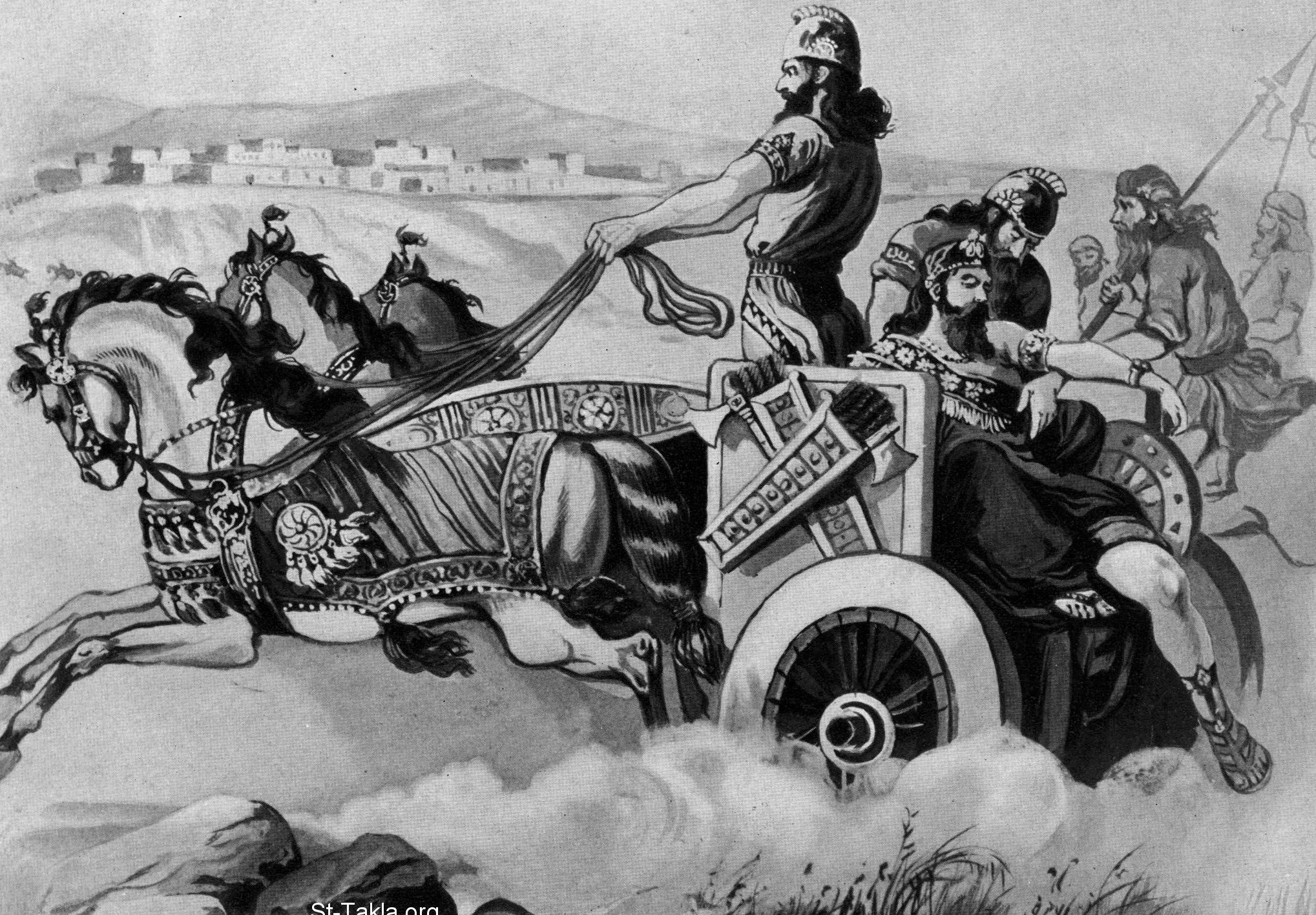
Ignorant of God’s plans, King Josiah decided to take matters into his own hands and led his troops into battle against the Egyptians. They intercepted the Egyptian army at a place called Megiddo and in the ensuing battle, King Josiah was killed. The author of 2 Kings states that “Pharaoh Neco killed him at Megiddo, as soon as he saw him” (2 Kings 23:29 ESV). But in 2 Chronicles 35, we’re told that Josiah had disguised himself. It seems that Josiah’s little ploy to hide his kingly identity failed. King Neco recognized Josiah instantly and ordered his death.

But the enemy archers hit King Josiah with their arrows and wounded him. He cried out to his men, “Take me from the battle, for I am badly wounded!” – 2 Chronicles 35:23 NLT

The wounded king was placed in another chariot and returned to the city of Jerusalem, where he died. After giving their fallen king a state funeral, the people chose Jehoahaz as his replacement. This choice seems a bit odd because Jehoahaz was Josiah’s middle son and, therefore, not the next in line to the throne. But it seems that the people were looking for a king who would bring back the old way of life to which they had grown accustomed. They missed the days of Manasseh and were regretting all the reforms that Josiah had instituted in Judah. So, they chose the son of Josiah who represented their best chance at bringing back the good old days. And it appears that picked just the right man for the job.

He did what was evil in the Lord’s sight, just as his ancestors had done. – 2 Kings 23:32 NLT

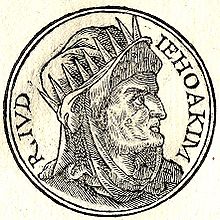
But Jehoahaz’s reign would be short-lived. The people failed to take into account that King Neco might have something to say about who took Josiah’s place on the throne of Judah. Just three months into his reign, Jehoahaz was deposed by the Pharaoh and taken captive to Egypt, where he died. Neco filled the vacancy with Eliakim, the older brother of Jehoahaz, and changed his name to Jehoiakim. This young man became little more than a vassal to the Pharaoh and was forced to make an annual tribute payment to the Egyptians. To do this, he imposed a debilitating tax on the people of Judah. The prophet provides a brief but sobering summary of the sad state of affairs in the southern kingdom of Judah after the death of Josiah.
Do not weep for the dead king or mourn his loss.
    Instead, weep for the captive king being led away!
    For he will never return to see his native land again.

For this is what the Lord says about Jehoahaz, who succeeded his father, King Josiah, and was taken away as a captive: “He will never return. He will die in a distant land and will never again see his own country.” – Jeremiah 22:10-12 NLT

With Josiah’s death, the period of reformation in Judah came to an abrupt end. He had been the heart and soul behind all the changes that had taken place. And without him, the people would revert to their old ways. Virtually overnight, the conditions in Judah took a dramatic turn for the worse. Judah was now a vassal state, ruled by a puppet king who answered to the Pharaoh of Egypt. Josiah’s attempt to stop the Egyptians from joining forces with the Assyrians had failed. In 605 BC, just four years after Josiah’s death, these two armies would be defeated by the Babylonians at the Battle of Carchemish. This unexpected victory by the Babylonians over the Egyptians and Assyrians would prove to be a game-changing event in the history of the middle east. It was catapult Nebuchadnezzar, the king of Babylon, into the role of the most powerful ruler on earth. With his defeat of the Assyrians, Nebuchadnezzar took over all the lands they had conquered, dramatically increasing the size and influence of his empire.

Eventually, the Babylonians would rest control of Judah from the hands of King Neco of Egypt. And Jehoiakim would find himself answering to yet another, more powerful, king. But as we will see, Jehoiakim will try to resist his new overlord, refusing to submit to his authority. Like his father, Josiah, Jehoiakim fails to see the sovereign hand of God behind all that is taking place. He is short-sighted in his outlook, and intent on making the most of his less-than-ideal circumstances. And the prophet Jeremiah records God’s stinging condemnation of Jehoiakim’s arrogant and self-centered approach to leadership.

And the Lord says, “What sorrow awaits Jehoiakim,
    who builds his palace with forced labor.
He builds injustice into its walls,
    for he makes his neighbors work for nothing.
    He does not pay them for their labor.
He says, ‘I will build a magnificent palace
    with huge rooms and many windows.
I will panel it throughout with fragrant cedar
    and paint it a lovely red.’
But a beautiful cedar palace does not make a great king!
    Your father, Josiah, also had plenty to eat and drink.
But he was just and right in all his dealings.
    That is why God blessed him.
He gave justice and help to the poor and needy,
    and everything went well for him.
Isn’t that what it means to know me?”
    says the Lord.
“But you! You have eyes only for greed and dishonesty!
    You murder the innocent,
    oppress the poor, and reign ruthlessly.” – Jeremiah 22:13-17 NLT

Unlike his reform-minded father, Jehoiakim had no heart for God. He was a self-obsessed man who used his power and position to improve his own lot in life while allowing the nation of Judah to continue its slide into apostasy. When Neco was forced to abandon his hold on Judah, Jehoiakim saw it as an opportunity to assert his independence. But he failed to understand the gravity of his situation. He had no clue that Nebuchadnezzar and the Babylonians had been chosen by God to bring judgment against the nation of Judah. In attempting to resist the Babylonians, Jehoiakim was actually opposing the will of God. And he would pay dearly for his obstinance. For three years, God would send the Babylonians, Arameans, Moabites, and Ammonites against the rebellious nation of Judah. And the author leaves no doubt as to the purpose behind these raids.

These disasters happened to Judah because of the Lord’s command. He had decided to banish Judah from his presence because of the many sins of Manasseh. – 2 Kings 24:3 NLT

Little did Jehoiakim know that he was facing the beginning of the end. The coming judgment of Judah was imminent and unavoidable.

English Standard Version (ESV) The Holy Bible, English Standard Version. ESV® Permanent Text Edition® (2016). Copyright © 2001 by Crossway Bibles, a publishing ministry of Good News Publishers.

New Living Translation (NLT) Holy Bible, New Living Translation, copyright © 1996, 2004, 2015 by Tyndale House Foundation. Used by permission of Tyndale House Publishers Inc., Carol Stream, Illinois 60188. All rights reserved.

The Message (MSG)Copyright © 1993, 1994, 1995, 1996, 2000, 2001, 2002 by Eugene H. Peterson
Zeal is No Excuse for Disobedience

1 Now Ahab had seventy sons in Samaria. So Jehu wrote letters and sent them to Samaria, to the rulers of the city, to the elders, and to the guardians of the sons of Ahab, saying, “Now then, as soon as this letter comes to you, seeing your master’s sons are with you, and there are with you chariots and horses, fortified cities also, and weapons, select the best and fittest of your master’s sons and set him on his father’s throne and fight for your master’s house.” But they were exceedingly afraid and said, “Behold, the two kings could not stand before him. How then can we stand?” So he who was over the palace, and he who was over the city, together with the elders and the guardians, sent to Jehu, saying, “We are your servants, and we will do all that you tell us. We will not make anyone king. Do whatever is good in your eyes.” Then he wrote to them a second letter, saying, “If you are on my side, and if you are ready to obey me, take the heads of your master’s sons and come to me at Jezreel tomorrow at this time.” Now the king’s sons, seventy persons, were with the great men of the city, who were bringing them up. And as soon as the letter came to them, they took the king’s sons and slaughtered them, seventy persons, and put their heads in baskets and sent them to him at Jezreel. When the messenger came and told him, “They have brought the heads of the king’s sons,” he said, “Lay them in two heaps at the entrance of the gate until the morning.” Then in the morning, when he went out, he stood and said to all the people, “You are innocent. It was I who conspired against my master and killed him, but who struck down all these? 10 Know then that there shall fall to the earth nothing of the word of the Lord, which the Lord spoke concerning the house of Ahab, for the Lord has done what he said by his servant Elijah.” 11 So Jehu struck down all who remained of the house of Ahab in Jezreel, all his great men and his close friends and his priests, until he left him none remaining.

12 Then he set out and went to Samaria. On the way, when he was at Beth-eked of the Shepherds, 13 Jehu met the relatives of Ahaziah king of Judah, and he said, “Who are you?” And they answered, “We are the relatives of Ahaziah, and we came down to visit the royal princes and the sons of the queen mother.” 14 He said, “Take them alive.” And they took them alive and slaughtered them at the pit of Beth-eked, forty-two persons, and he spared none of them.

15 And when he departed from there, he met Jehonadab the son of Rechab coming to meet him. And he greeted him and said to him, “Is your heart true to my heart as mine is to yours?” And Jehonadab answered, “It is.” Jehu said, “If it is, give me your hand.” So he gave him his hand. And Jehu took him up with him into the chariot. 16 And he said, “Come with me, and see my zeal for the Lord.” So he had him ride in his chariot. 17 And when he came to Samaria, he struck down all who remained to Ahab in Samaria, till he had wiped them out, according to the word of the Lord that he spoke to Elijah. 2 Kings 10:1-17 ESV

Jehu was methodical and ruthless in carrying out God’s judgment against the house of Ahab. After killing King Jehoram and ordering the execution of the queen-mother, Jezebel, he turned his attention to Ahab’s 70 male descendants. Jehu knew that as long as any of them remained alive, his hopes of consolidating the kingdom under his rule would be in jeopardy. These boys and young men were under the care and protection of royal guardians who served in Ahab’s administration. More than likely, they had answered to Jezebel. But now that she was out of the picture, Jehu issued a challenge to these protectors of Ahab’s dynasty.

“…select the best qualified of your master’s sons to be your king, and prepare to fight for Ahab’s dynasty.” – 2 Kings 10:3 NLT

Jehu proposed that they do battle for control of the kingdom. He and his allies would go up against the chosen heir of Ahab and the forces of Israel, and whoever was left standing would become the next king of the northern kingdom. But his offer was quickly rejected. The elders and officials of Samaria recognized that Jehu had the upper hand and any attempt to defeat him in battle would be ill-advised and ill-fated.

So, these men informed Jehu that they had no intentions of protecting or promoting the heirs of Ahab. But he demanded that they prove their loyalty by beheading all 70 of Ahab’s sons. The next day, the elders and officials of Samaria showed up in Jezreel and presented to Jehu their rather macabre coronation gift. He ordered that the 70 heads be placed in two piles beside the city gate, as a gruesome reminder of God’s divine judgment against the house of Ahab. No one who entered or exited the city of Jezreel could miss the message this hideous sight was meant to convey.

But the next morning, Jehu called the nervous citizens of Jezreel together. These people were caught in the middle of a violent and deadly change in administrations. For more than 30 years they had lived under the rule of Ahab and Jezebel. But almost overnight, their way of life had come to an abrupt end. They had witnessed the assassination of their king, the violent death of his mother, and the annihilation of every living male heir to the throne. They had no way of knowing what kind of king Jehu would be. So, in an effort to assuage their fear and apprehension, Jehu took full responsibility for the death of King Jehoram but then vowed that he would avenge the deaths of Ahab’s sons. This rather disingenuous display of righteous indignation was intended to win over the hearts of the people. But he failed to admit that he had been the one who ordered their executions. In his zeal to carry out the command of God, Jehu overstepped his authority. Rather than simply punishing the house of Ahab as God had ordered, Jehu used his newfound power to enact a bloody purging that spread far beyond his original assignment.

Jehu killed all who were left of Ahab’s relatives living in Jezreel and all his important officials, his personal friends, and his priests. So Ahab was left without a single survivor. – 2 Kings 10:11 NLT

We are not told the motivation behind Jehu’s actions, but we are given God’s response to it. Over in the book of Hosea, God provides a glimpse into His displeasure with Jehu’s overzealous and bloody purge. In the opening verses of the book, the prophet Hosea has just discovered that he is a new father. His wife, Gomer, a former prostitute, has given birth to a son. And God informs Hosea that he is to call the boy Jezreel.

And the Lord said to him, “Call his name Jezreel, for in just a little while I will punish the house of Jehu for the blood of Jezreel, and I will put an end to the kingdom of the house of Israel. And on that day I will break the bow of Israel in the Valley of Jezreel.” – Hosea 1:4-5 ESV

The entire book of Hosea is meant to display the unfaithfulness of Israel through the relationship between the prophet and his unfaithful wife. The name given to their son was meant to be a permanent reminder of Jehu’s ungodly actions that day in Jezreel. He had decided to do God’s will his way. By taking the lives of the elders and officials of Samaria, Jehu had overstepped his God-given authority. He had exceeded his role as an instrument of God’s judgment against the house of Ahab. Innocent people had died unnecessarily and he would pay for his costly mistake.

In a sense, Jehu was obedient to the command of God. He had been anointed by the prophet of God and given the task of eliminating the house of Ahab. And he did as he had been told. He killed King Jehoram. He ordered the death of Jezebel. He orchestrated the executions of all of Ahab’s heirs. He had even taken it upon himself to kill King Ahaziah of Judah because he was the grandson of Jezebel. The tentacles of Jezebel’s influence had reached all the way into the southern kingdom, infecting Judah and its people.

At one point, Jehu had an unexpected encounter with some of these royal relatives of Jezebel from Judah. Unaware of all that had transpired in Israel, they were on their way to visit the queen-mother. But when Jehu discovered their identity, he ordered their immediate executions.

“We are relatives of King Ahaziah. We are going to visit the sons of King Ahab and the sons of the queen mother.”

“Take them alive!” Jehu shouted to his men. And they captured all forty-two of them and killed them at the well of Beth-eked. None of them escaped. – 2 Kings 10:14 NLT

His determination to eliminate every last vestige of Ahab’s influence was comprehensive and commendable. He left no stone unturned. This dedicated servant of God did what he had been anointed to do.

…he struck down all who remained to Ahab in Samaria, till he had wiped them out, according to the word of the Lord that he spoke to Elijah. – 2 Kings 10:17 ESV

But in doing so, he had gone above and beyond his official commission, ordering the deaths of the innocent. While Jehu could justify his actions by claiming that the elders and officials had murdered the sons of Ahab, they had only done so because he had given them no other choice. Jehu had delegated to these men a responsibility that had been given to him alone. It was he who should have taken the lives of the 70 sons of Ahab. It was he who should have executed Jezebel. But he had ordered her death by commanding her servants to throw her down from the window of the palace. Jehu had used his newfound power and authority in ways that God had not ordered or ordained. He had chosen to accomplish God’s will according to his ways. And no amount of zeal, enthusiasm, or good intentions can justify disobedience.

Hundreds of years later, the apostle Paul would commend the nation of Israel for its enthusiasm toward the things of God. But he would also point out that their zeal was misplaced and misdirected. In their energetic effort to please God, they were actually living in disobedience to His will and in violation of His ways.

I know what enthusiasm they have for God, but it is misdirected zeal. For they don’t understand God’s way of making people right with himself. Refusing to accept God’s way, they cling to their own way of getting right with God by trying to keep the law. – Romans 10:2-3 NLT

Zeal is never an excuse for disobedience.


English Standard Version (ESV) The Holy Bible, English Standard Version. ESV® Permanent Text Edition® (2016). Copyright © 2001 by Crossway Bibles, a publishing ministry of Good News Publishers.

New Living Translation (NLT) Holy Bible, New Living Translation, copyright © 1996, 2004, 2015 by Tyndale House Foundation. Used by permission of Tyndale House Publishers Inc., Carol Stream, Illinois 60188. All rights reserved.

The Message (MSG)Copyright © 1993, 1994, 1995, 1996, 2000, 2001, 2002 by Eugene H. Peterson


No Match For Yahweh

16 In the fifth year of Joram the son of Ahab, king of Israel, when Jehoshaphat was king of Judah, Jehoram the son of Jehoshaphat, king of Judah, began to reign. 17 He was thirty-two years old when he became king, and he reigned eight years in Jerusalem. 18 And he walked in the way of the kings of Israel, as the house of Ahab had done, for the daughter of Ahab was his wife. And he did what was evil in the sight of the Lord. 19 Yet the Lord was not willing to destroy Judah, for the sake of David his servant, since he promised to give a lamp to him and to his sons forever.

20 In his days Edom revolted from the rule of Judah and set up a king of their own. 21 Then Joram passed over to Zair with all his chariots and rose by night, and he and his chariot commanders struck the Edomites who had surrounded him, but his army fled home. 22 So Edom revolted from the rule of Judah to this day. Then Libnah revolted at the same time. 23 Now the rest of the acts of Joram, and all that he did, are they not written in the Book of the Chronicles of the Kings of Judah? 24 So Joram slept with his fathers and was buried with his fathers in the city of David, and Ahaziah his son reigned in his place.

25 In the twelfth year of Joram the son of Ahab, king of Israel, Ahaziah the son of Jehoram, king of Judah, began to reign. 26 Ahaziah was twenty-two years old when he began to reign, and he reigned one year in Jerusalem. His mother’s name was Athaliah; she was a granddaughter of Omri king of Israel. 27 He also walked in the way of the house of Ahab and did what was evil in the sight of the Lord, as the house of Ahab had done, for he was son-in-law to the house of Ahab.

28 He went with Joram the son of Ahab to make war against Hazael king of Syria at Ramoth-gilead, and the Syrians wounded Joram. 29 And King Joram returned to be healed in Jezreel of the wounds that the Syrians had given him at Ramah, when he fought against Hazael king of Syria. And Ahaziah the son of Jehoram king of Judah went down to see Joram the son of Ahab in Jezreel, because he was sick. 2 Kings 8:16-29 ESV

At this point in the narrative, the author provides a brief summary of the dynastic legacies of the two divided kingdoms. While much of his time has been spent dealing with the interactions between the two prophets of God and the kings of Israel, he now gives an overview of the most recent lines of succession in both kingdoms.

Due to the extended emphasis he has given to the northern kingdom of Israel, the author seems compelled to step back and revisit the somewhat complex and overlapping nature of the two kingly lines. It was back in 1 Kings 15 that we were first introduced to Jehoshaphat, the king of Judah. He had succeeded his father Asa to the throne. But from 1 Kings 16 to 2 Kings 8, the vast majority of the content focuses on Israel, detailing King Ahab’s rise to power, his wicked reign, and the long line of kings who followed in his footsteps. But the author wants his readers to know that things had not fared any better in the southern kingdom. While Jehoram was ruling in Israel, a young man with the very same name was reigning in Judah. He was the son of Jehoshaphat and he served for five years as his father’s coregent. He would reign an additional eight years once the crown was his alone. But his reign would be marked by apostasy just like the kings of Israel.

Jehoram followed the example of the kings of Israel and was as wicked as King Ahab, for he had married one of Ahab’s daughters. So Jehoram did what was evil in the Lord’s sight. – 2 Kings 8:18 NLT

Jehoram had married into the ungodly and wicked family of King Ahab, taking as his wife, Athaliah, a young woman who would prove to be just as evil as her mother, Jezebel. In fact, 2 Kings 11 will chronicle how she rose to power, crowning herself the queen of Judah after having slaughtered all her sons who were legitimate heirs to the throne.

This woman had an obvious influence over Jehoram. His less-than-stellar choice of a marriage partner proved to be a contributing factor in the downward spiral of his reign. Yet, the author reminds his readers that there was a greater power at work behind the scenes. Despite Jehoram’s wickedness and stubborn refusal to honor the God of Abraham, Isaac, and Jacob, Yahweh was keeping the promise He had made to King David.

Yet the Lord was not willing to destroy Judah, for the sake of David his servant, since he promised to give a lamp to him and to his sons forever. – 2 Kings 8:19 ESV

God was faithfully preserving the line of David, but not because they deserved it. It was because He had a much longer-term plan in place that He was going to fulfill. That is what He had told David long before Solomon ascended to the throne after him.

“When your days are fulfilled and you lie down with your fathers, I will raise up your offspring after you, who shall come from your body, and I will establish his kingdom. He shall build a house for my name, and I will establish the throne of his kingdom forever. I will be to him a father, and he shall be to me a son. When he commits iniquity, I will discipline him with the rod of men, with the stripes of the sons of men, but my steadfast love will not depart from him, as I took it from Saul, whom I put away from before you. And your house and your kingdom shall be made sure forever before me. Your throne shall be established forever.” – 2 Samuel 7:12-16 ESV

This promise was partially fulfilled in Solomon. He would go on to build the temple of God in Jerusalem. But while was blessed by God with great wisdom and wealth, he would prove to be unfaithful in his later years, succumbing to the influence of his many pagan wives and their false gods. It would be because of his apostasy that God eventually split his kingdom in two, creating the northern kingdom of Israel and leaving Solomon’s son, Rehoboam, the southern kingdom of Judah.

With each successive king of Judah, the problem seemed to worsen. Now Jehoram was king over and his apostasy deserved God’s divine judgment. But rather than destroy Jehoram, God graciously disciplined him by causing the neighboring nations of Edom and Libnah to revolt. His entire reign was marked by warfare.

And the Lord stirred up against Jehoram the anger of the Philistines and of the Arabians who are near the Ethiopians. And they came up against Judah and invaded it and carried away all the possessions they found that belonged to the king’s house, and also his sons and his wives, so that no son was left to him except Jehoahaz, his youngest son. – 2 Chronicles 21:16-17 ESV

And his final days in office would be excruciatingly painful due to a divinely-ordained  disease that eventually took his life.

…after all this the Lord struck him in his bowels with an incurable disease. In the course of time, at the end of two years, his bowels came out because of the disease, and he died in great agony. – 2 Chronicles 21:18-19 ESV

Upon his death, his son, Ahaziah, ascended to the throne. This 21-year-old king proved to be just as wicked as his father. “He also walked in the way of the house of Ahab and did what was evil in the sight of the Lord, as the house of Ahab had done” (2 Kings 8:27 ESV). But this should come as no surprise because he was the grandson of Ahab. Wickedness was in his DNA. The fact that his mother was the daughter of Ahab ensured that Ahaziah maintained a close and, ultimately, deadly relationship with the northern kingdom. He would join King Jehoram of Israel in an ill-fated attack on the Syrian stronghold of Ramoth-gilead. King Jehoram was eventually wounded in that battle and forced to return to Jezreel in order to recuperate. And King Ahaziah would make a fateful decision to visit his uncle. But little did he know that this was all part of God’s providential plan for bringing an end to his wicked reign.

But it was ordained by God that the downfall of Ahaziah should come about through his going to visit Joram. – 2 Chronicles 22:7 ESV

God was in control. The kings of Israel and Judah could sit on their royal thrones, issue decrees, flaunt their power and revel in their sovereign authority, but they were no match for Yahweh. Ultimately, their wickedness would come head-to-head with His holiness. Their rebellion would result in His judgment. The sovereign will of God would be done.

English Standard Version (ESV) The Holy Bible, English Standard Version. ESV® Permanent Text Edition® (2016). Copyright © 2001 by Crossway Bibles, a publishing ministry of Good News Publishers.

New Living Translation (NLT) Holy Bible, New Living Translation, copyright © 1996, 2004, 2015 by Tyndale House Foundation. Used by permission of Tyndale House Publishers Inc., Carol Stream, Illinois 60188. All rights reserved.

The Message (MSG)Copyright © 1993, 1994, 1995, 1996, 2000, 2001, 2002 by Eugene H. Peterson


The Bearer of Bad News

1 At that time Abijah the son of Jeroboam fell sick. And Jeroboam said to his wife, “Arise, and disguise yourself, that it not be known that you are the wife of Jeroboam, and go to Shiloh. Behold, Ahijah the prophet is there, who said of me that I should be king over this people. Take with you ten loaves, some cakes, and a jar of honey, and go to him. He will tell you what shall happen to the child.”

Jeroboam’s wife did so. She arose and went to Shiloh and came to the house of Ahijah. Now Ahijah could not see, for his eyes were dim because of his age. And the Lord said to Ahijah, “Behold, the wife of Jeroboam is coming to inquire of you concerning her son, for he is sick. Thus and thus shall you say to her.”

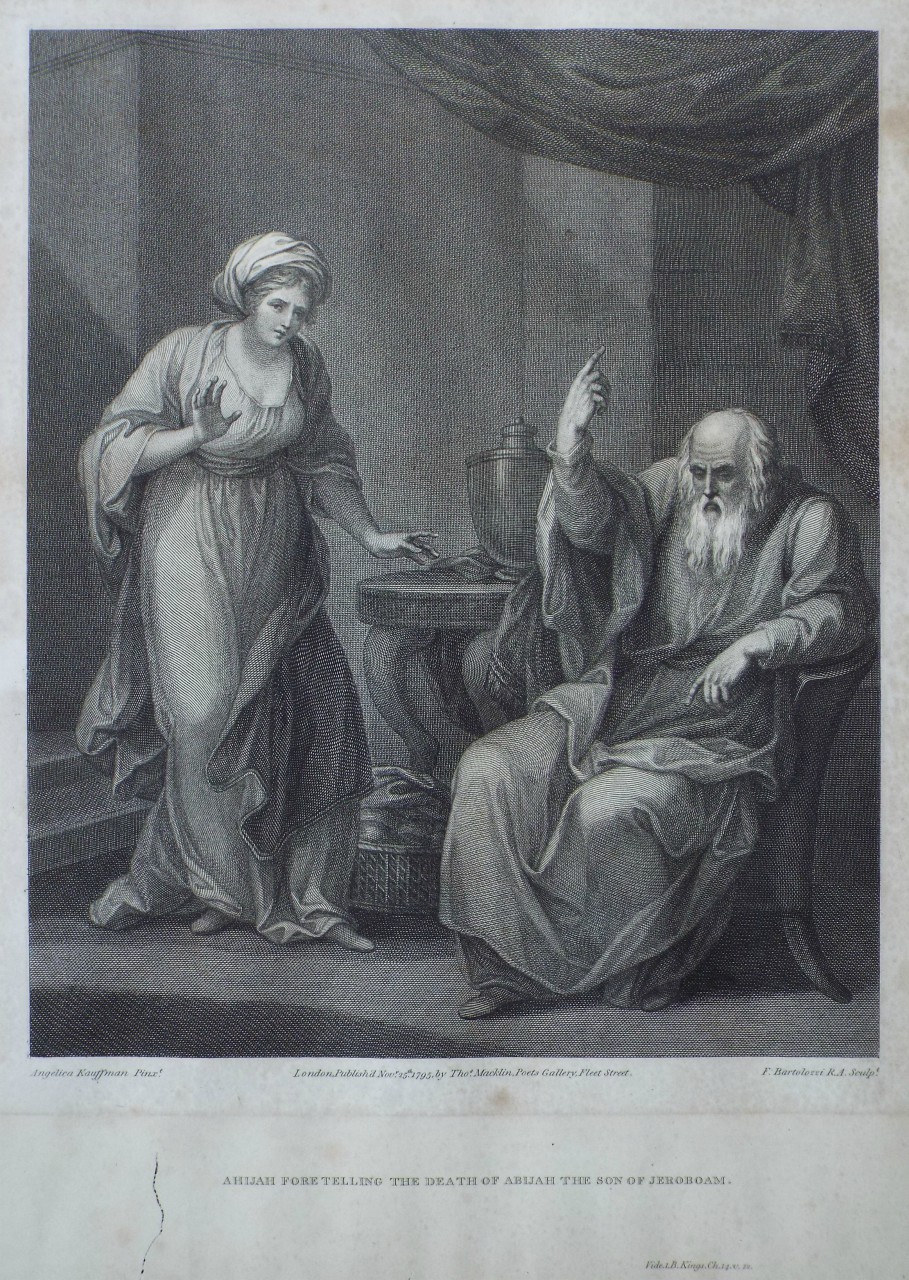
When she came, she pretended to be another woman. But when Ahijah heard the sound of her feet, as she came in at the door, he said, “Come in, wife of Jeroboam. Why do you pretend to be another? For I am charged with unbearable news for you. Go, tell Jeroboam, ‘Thus says the Lord, the God of Israel: “Because I exalted you from among the people and made you leader over my people Israel and tore the kingdom away from the house of David and gave it to you, and yet you have not been like my servant David, who kept my commandments and followed me with all his heart, doing only that which was right in my eyes, but you have done evil above all who were before you and have gone and made for yourself other gods and metal images, provoking me to anger, and have cast me behind your back, 10 therefore behold, I will bring harm upon the house of Jeroboam and will cut off from Jeroboam every male, both bond and free in Israel, and will burn up the house of Jeroboam, as a man burns up dung until it is all gone. 11 Anyone belonging to Jeroboam who dies in the city the dogs shall eat, and anyone who dies in the open country the birds of the heavens shall eat, for the Lord has spoken it.”’ 12 Arise therefore, go to your house. When your feet enter the city, the child shall die. 13 And all Israel shall mourn for him and bury him, for he only of Jeroboam shall come to the grave, because in him there is found something pleasing to the Lord, the God of Israel, in the house of Jeroboam. 14 Moreover, the Lord will raise up for himself a king over Israel who shall cut off the house of Jeroboam today. And henceforth, 15 the Lord will strike Israel as a reed is shaken in the water, and root up Israel out of this good land that he gave to their fathers and scatter them beyond the Euphrates, because they have made their Asherim, provoking the Lord to anger. 16 And he will give Israel up because of the sins of Jeroboam, which he sinned and made Israel to sin.”

17 Then Jeroboam’s wife arose and departed and came to Tirzah. And as she came to the threshold of the house, the child died. 18 And all Israel buried him and mourned for him, according to the word of the Lord, which he spoke by his servant Ahijah the prophet. 1 Kings 14:1-18 ESV

God had spoken His word of judgment against the false gods of Israel, and He had used a young, unnamed prophet to deliver it. This unidentified servant of God had spoken his divine message directly to the altar itself. In the presence of King Jeroboam and the people of Israel, he had addressed the sacred site itself, the place they had set up to worship and seek the favor of their man-made god. This shrine was located in the city of Bethel, in the southern region of the land belonging to the ten tribes. And Jeroboam had constructed a second altar just like it in the northern city of Dan. In order to keep his people from returning to Judah to offer sacrifices to Yahweh at the temple in Jerusalem, he had provided them with two new and more convenient worship sites. But these alternate sites and the altars they contained were adorned with golden calves, the man-made symbols of Jeroboam’s made-up gods. So, God had His prophet deliver a stinging indictment against one of these pseudo-sacred sites.

“O altar, altar! This is what the Lord says: A child named Josiah will be born into the dynasty of David. On you he will sacrifice the priests from the pagan shrines who come here to burn incense, and human bones will be burned on you.” – 1 Kings 13:2 NLT

Even these inanimate places of worship would be judged by God for the role they played in Israel’s apostasy. These carefully constructed sites made of handcrafted stones would end up desecrated and dishonored. And the golden idols to which they were dedicated would be exposed for what they were: lifeless and powerless lumps of metal. The psalmist sardonically described the utter futility of these false gods.

Their idols are merely things of silver and gold,
    shaped by human hands.
They have mouths but cannot speak,
    and eyes but cannot see.
They have ears but cannot hear,
    and noses but cannot smell.
They have hands but cannot feel,
    and feet but cannot walk,
    and throats but cannot make a sound.
And those who make idols are just like them,
as are all who trust in them. – Psalm 115:4-8 NLT

And because Jeroboam had been the one responsible for the creation of these altars and the gods they contained, he too would experience the judgment of God. While he had been forced to stand and watch as the prophet destroyed one of his sacred shrines, he had walked away unscathed. He was still the king and his life went on just as it had before. After ordering the reconstruction of the altar, Jeroboam went about his business and soon forgot all that had happened at Bethel. But God had not forgotten the sins of Jeroboam.

Somewhere along the way, Jeroboam’s wife gave birth to a son, ensuring that he would have an heir to his throne who would perpetuate his dynasty. But this joy was soon overshadowed by the news that Jeroboam’s son had become seriously ill. Concerned for his son’s health and his dynasty’s future, Jeroboam sent his wife to ask the prophet Ahijah for a divine prognosis. He wanted to know if his son would live or die.

Even though she had disguised herself to avoid being recognized as the king’s wife, the old and blind prophet knew who she was as soon as she walked in the door. Ahijah had been given a divine “heads-up,” informing him of her visit and its purpose.

“Jeroboam’s wife will come here, pretending to be someone else. She will ask you about her son, for he is very sick. Give her the answer I give you.” – 1 Kings 14:5 NLT

And as soon as this worried and grieving mother walked in the door, she was met with devastating news. Before she could speak a word, the prophet delivered a message of divine judgment against the house of Jeroboam. The woman who had delivered to Jeroboam an heir to his throne would now be charged with delivering to him a message of his dynasty’s destruction.

“Give your husband, Jeroboam, this message from the Lord, the God of Israel:…I will bring disaster on your dynasty and will destroy every one of your male descendants, slave and free alike, anywhere in Israel. I will burn up your royal dynasty as one burns up trash until it is all gone. – 1 Kings 14:7, 10 NLT

And the prophet made sure she understood that her husband’s reign had been a gift from God. It had been God who had “ripped the kingdom away from the family of David” and given it to Jeroboam (1 Kings 14:8 NLT). And Jeroboam had returned the favor by turning his back on God and causing the ten northern tribes to worship false gods. Just as God had predicted the future destruction of Jeroboam’s altars, He now decreed the destruction of Jeroboam’s heirs.

“The members of Jeroboam’s family who die in the city will be eaten by dogs, and those who die in the field will be eaten by vultures. I, the Lord, have spoken.” – 1 Kings 14:11 NLT

And much to his wife’s dismay, it would all begin with the death of his son.

“Go on home, and when you enter the city, the child will die. – 1 Kings 14:12 NLT

It’s impossible to fathom the level of grief this woman felt upon hearing this devastating news. In just a matter of minutes, she had been informed that her entire world was about to collapse. Her husband’s kingdom was going to be destroyed and her young son was going to die. And the prophet had made it painfully clear that it was all her husband’s fault. The message she had been given to deliver to Jeroboam left no doubts as to his culpability and sole responsibility for all that was about to happen.

“…you have not been like my servant David, who obeyed my commands and followed me with all his heart and always did whatever I wanted. You have done more evil than all who lived before you. You have made other gods for yourself and have made me furious with your gold calves.” – 1 Kings 14:8-9 NLT

But while this poor woman was still trying to process all that she had heard, Ahijah continued to deliver more bad news.

“In addition, the Lord will raise up a king over Israel who will destroy the family of Jeroboam. This will happen today, even now! – 1 Kings 14:14 NLT

Jeroboam’s sin was going to have long-lasting consequences. His decision to lead the people of Israel into apostasy would be replicated by his successors, creating a lengthy lineage of spiritual adulterers among God’s chosen people. He had set the tone for their future rebellion, ensuring their eventual removal from the land of promise and their exile “beyond the Euphrates River” (1 Kings 14:15 NLT). Centuries later, God would use the nation of Assyria as His agents of judgment against the people of Israel. In 722 BC, this pagan nation conquered the northern kingdom and turned the chosen people of God into slaves. But it would be 210 years before this devastating event took place. In the meantime, the kings of Israel would follow the pattern established by Jeroboam, leading the people of God into increasing rebellion and wickedness.

But at this point in the story, Jeroboam remains on the throne of Israel. For the moment, God allows him to maintain his kingdom, but the die has been cast. The damage has been done and the judgment of God has been decreed.

And when Jeroboam’s poor wife returned home, the message of the prophet was confirmed.

“…as she came to the threshold of the house, the child died.” – 1 Kings 14:17 ESV

The judgment of God had begun.

English Standard Version (ESV) The Holy Bible, English Standard Version. ESV® Permanent Text Edition® (2016). Copyright © 2001 by Crossway Bibles, a publishing ministry of Good News Publishers.

New Living Translation (NLT) Holy Bible, New Living Translation, copyright © 1996, 2004, 2015 by Tyndale House Foundation. Used by permission of Tyndale House Publishers Inc., Carol Stream, Illinois 60188. All rights reserved.

The Message (MSG)Copyright © 1993, 1994, 1995, 1996, 2000, 2001, 2002 by Eugene H. Peterson

Emptied From Vessel to Vessel.

“Cursed is he who does the work of the Lord with slackness, and cursed is he who keeps back his sword from bloodshed.

“Moab has been at ease from his youth
    and has settled on his dregs;
he has not been emptied from vessel to vessel,
    nor has he gone into exile;
so his taste remains in him,
    and his scent is not changed.

“Therefore, behold, the days are coming, declares the Lord, when I shall send to him pourers who will pour him, and empty his vessels and break his jars in pieces. Then Moab shall be ashamed of Chemosh, as the house of Israel was ashamed of Bethel, their confidence.

“How do you say, ‘We are heroes
    and mighty men of war’?
The destroyer of Moab and his cities has come up,
    and the choicest of his young men have gone down to slaughter,
    declares the King, whose name is the Lord of hosts.
The calamity of Moab is near at hand,
    and his affliction hastens swiftly.
Grieve for him, all you who are around him,
    and all who know his name;
say, ‘How the mighty scepter is broken,
    the glorious staff.’

“Come down from your glory,
    and sit on the parched ground,
    O inhabitant of Dibon!
For the destroyer of Moab has come up against you;
    he has destroyed your strongholds.
Stand by the way and watch,
    O inhabitant of Aroer!
Ask him who flees and her who escapes;
    say, ‘What has happened?’
Moab is put to shame, for it is broken;
    wail and cry!
Tell it beside the Arnon,
    that Moab is laid waste.” Jeremiah 48:10-20 ESV

The heading of this particular blog post comes from a line found within God’s expanded oracle against Moab.

“Moab has been at ease from his youth
    and has settled on his dregs;
he has not been emptied from vessel to vessel…” – Jeremiah 48:11 ESV

This somewhat obscure lines is a reference to the very common practice in that day of pouring wine from one container into another in order to remove the sediments. The object was to allow the wine to sit undisturbed for a period of time, causing the sediment to settle to the bottom of the vessel. Then the contents were carefully poured into yet another vessel, allowing the impurities and dregs to remain behind. All the effort was expended in order to arrive at a sediment-free product. That is the image that God uses to describe Moab, a city known for its wine production. The wine has been allowed to settle, but there has been no one to disturb the vessel and pour its contents. In other words, God had allowed Moab to remain trouble-free for a prolonged period of time. Their geographic location had kept them off the radar screen of the various nations that had invaded Canaan over the centuries. The city of Moab was like a young child who had gotten away with all kinds of chicanery, receiving no punishment or discipline for any of the evil things they had done. But all that was about to change. The judgment of God was going to catch up with them.

Their days of complacency and casual comfort were going to come to a screeching halt.

“But the time is coming soon,” says the Lord,
    “when I will send men to pour him from his jar.
They will pour him out,
    then shatter the jar!” – Jeremiah 48:12 NLT

The jar was going to be smashed, contents and all. Over the centuries, the people of Moab had grown comfortable and complacent, trusting in their false god, Chemosh. They had been no reason to doubt that their god was all-powerful and had done a great job of protecting them from their enemies. But God had bad news for them.

“At last Moab will be ashamed of his idol Chemosh,
    as the people of Israel were ashamed of their gold calf at Bethel.” – Jeremiah 48:13 NLT

Here, God refers to an event from Israel’s history. After King Solomon had proven to be unfaithful to God, the nation of Israel was split in two, with the northern tribes forming the nation of Israel, and two of the southern tribes forming the nation of Judah. King Jeroboam, who had been the newly appointed king of Israel, out of fear that the people of Israel would want to return to Jerusalem in order to worship Yahweh at the temple, decided to make his own gods, build his own shrines, and appoint his own priests.

So on the advice of his counselors, the king made two gold calves. He said to the people, “It is too much trouble for you to worship in Jerusalem. Look, Israel, these are the gods who brought you out of Egypt!”

He placed these calf idols in Bethel and in Dan—at either end of his kingdom. But this became a great sin, for the people worshiped the idols, traveling as far north as Dan to worship the one there. 1 Kings 12:28-30 NLT

That shrine would remain in place for generations, until King Josiah of Judah, during many of his ongoing reforms, had it destroyed.

The king also tore down the altar at Bethel—the pagan shrine that Jeroboam son of Nebat had made when he caused Israel to sin. He burned down the shrine and ground it to dust… – 2 Kings 23:15 NLT

But from the time of Jeroboam until Josiah, the people of Israel had worshiped the golden calves that Jeroboam had erected there. And it had taken the intervention of God to bring this idolatrous practice to a close. Now, He was going to do the same thing to the god of the Moabites. They were going to learn that their much-beloved god was not match for Yahweh, the God of Israel. Chemosh would be hauled off as just another piece of booty by the Babylonian troops.

And not only would the Moabites be ashamed by the ineptitude of their god, they would find out that their once mighty army was also no match for the judgment of God.

“You used to boast, ‘We are heroes,
    mighty men of war.’
But now Moab and his towns will be destroyed.
    His most promising youth are doomed to slaughter,” – Jeremiah 48:14-15 NLT

The cities of Moab would fall. The god of Moab would be taken as property. The mighty men of Moab would be scattered and slaughtered. And the allies of Moab would be left to cry over the fate of their former neighbor. And God sarcastically taunts the people of Dibon as well, telling them:

“Come down from your glory
    and sit in the dust, you people of Dibon,
for those who destroy Moab will shatter Dibon, too. – Jeremiah 48:18 NLT

They would be humbled and humiliated by God. Every city in Moab and all the surrounding regions would feel the full force of God’s wrath and judgment. And the devastation would be so comprehensive and complete that it would leave everyone simply asking, “What has happened there?” It will be beyond belief, like nothing anyone could have ever imagined. But God will provide the answer to the question:

“Moab lies in ruins, disgraced;
    weep and wail!
Tell it by the banks of the Arnon River:
    Moab has been destroyed!” – Jeremiah 48:20 NLT

Moab would be emptied of people, possessions and pride. Like wine poured out and its vessel smashed, Moab would find the hand of the Lord heavy and their treatment by Him devastatingly complete. God would hold nothing back. His justice and judgment would be fully meted out and no one, including the might warriors of Moab or their almighty god, Chemosh would stand in His way.

English Standard Version (ESV)
The Holy Bible, English Standard Version. ESV® Permanent Text Edition® (2016). Copyright © 2001 by Crossway Bibles, a publishing ministry of Good News Publishers.

New Living Translation (NLT)
Holy Bible, New Living Translation, copyright © 1996, 2004, 2015 by Tyndale House Foundation. Used by permission of Tyndale House Publishers Inc., Carol Stream, Illinois 60188. All rights reserved.

Copyright © 1993, 1994, 1995, 1996, 2000, 2001, 2002 by Eugene H. Peterson

Who Can Stand Before God?

Are you better than Thebes
    that sat by the Nile,
with water around her,
    her rampart a sea,
    and water her wall?
Cush was her strength;
    Egypt too, and that without limit;
    Put and the Libyans were her helpers.

Yet she became an exile;
    she went into captivity;
her infants were dashed in pieces
    at the head of every street;
for her honored men lots were cast,
    and all her great men were bound in chains.
You also will be drunken;
    you will go into hiding;
you will seek a refuge from the enemy.
All your fortresses are like fig trees
    with first-ripe figs—
if shaken they fall
    into the mouth of the eater.
Behold, your troops
    are women in your midst.
The gates of your land
    are wide open to your enemies;
    fire has devoured your bars.

Draw water for the siege;
    strengthen your forts;
go into the clay;
    tread the mortar;
    take hold of the brick mold!
There will the fire devour you;
    the sword will cut you off.
    It will devour you like the locust.
Nahum 3:8-15a ESV


Nahum is unrelenting in his description of Nineveh’s fall. You would think that, by now, he had made his point. But he is far from done. He continues to drive home the point that mighty Nineveh would fall, because God had ordained it. He even reminds them that the fall of great nations was not an uncommon thing to happen in that day and age. He uses the great city of Thebes as an example. Thebes had been the capital of upper Egypt and was similar to Nineveh in that it was surrounded by a protective barrier of water. But this powerful and well-protected city fell at the hands of the Sargon and the Assyrians in 663 B.C. And the Prophet Jeremiah predicted its coming destruction by the Babylonians:

The Lord of hosts, the God of Israel, said: “Behold, I am bringing punishment upon Amon of Thebes, and Pharaoh and Egypt and her gods and her kings, upon Pharaoh and those who trust in him. I will deliver them into the hand of those who seek their life, into the hand of Nebuchadnezzar king of Babylon and his officers” – Jeremiah 46:25-26 ESV

If Thebes could fall, so could Nineveh. And while Thebes had plenty of allies to assist her, they would prove helpless to provide her with adequate defense. Her superior forces, formidable defenses and more-than-adequate alliances, would prove to be insufficient. And the same would be true for Nineveh. In a sense, Nahum is warning the Assyrians that it is futile to put their trust in material or earthly things. It was King David who wrote, “Some trust in chariots and some in horses, but we trust in the name of the LORD our God” (Psalm 20:7 ESV). Nothing is an adequate defense against the wrath of God. Large armies, impregnable defenses, powerful allies, deep moats, massive walls, and the most state-of-the-art weapons are no match for God.

Nahum goes on to describe in graphic detail the fate of Thebes. The city fell and its people were captured and taken into exile. Innocent babies were murdered in its streets. Its powerful and prominent citizens were sold as slaves. And Nahum warns that the same fate is in store for the people of Nineveh. When the Medes and Babylonians show up and lay siege to the city, the Assyrians will spend their days drinking in order to escape the fear of destruction. They will seek places to hide within the walls of the city. But Nahum compares their fortifications to over-ripe fruit hanging on a tree. One shake of the trunk and the fruit falls to the ground. In other words, Nineveh was ripe for the picking. He compares the mighty Assyrian warriors to weak and defenseless women, incapable of standing up to the forces of the Medes and Babylonians. In the end, their wall and gates would be as if they were non-existent. The enemy troops will swarm into the city as if the gates had been opened wide to receive them.

All of this would have been difficult for the Assyrians to believe. Even the Jews to whom Nahum was writing this oracle would have had a difficult time believing that what he was saying would actually happen. He was describing the fall of the most powerful nation in the world at that time. No one had been able to stand up to the Assyrians. There were no powers comparable to them. The thought of their capital city being defeated by anyone was hard to believe. But Nahum was a prophet of God. He spoke on behalf of God. And what he was saying, while difficult to comprehend and even more difficult to believe, was going to happen. It was God-ordained, not wishful thinking. It was not a matter of if, but when.

What is amazing about what Nahum is predicting regarding Nineveh and the nation of Assyria is not only that it will happen just as he says it will, but that the Assyrian Empire will disappear off the face of the earth. A nation that had existed for more than 2,000 years, will suddenly vanish from the scene. It will become a historical footnote. And the once great city of Nineveh will become a heap of rubble and a lost kingdom. It would not be until 1842 that the remains of the city were discovered. When God decided to destroy Nineveh, He would do so in a no-holds-barred fashion. They would not live to repeat their sins of the past. They would not rise from the ashes to fight another day. Their destruction would be comprehensive and complete.

They would prepare for the siege. They could make more bricks and fortify their defenses. But it would all prove hopeless in the face of God’s wrath. No amount of chariots, soldiers, allies, walls, or military strategies would save them.

Nahum wants his readers to understand that Yahweh is a great and mighty God. He is all-powerful and no one can stand against Him. He wants the people of Judah to fear and reverence God, to show Him the glory and honor He deserves. There is a story in the book of 1 Samuel about the return of the Ark of the Covenant which had been captured in battle by the Philistines. God had punished them by sending a plaque on them as long as they held the ark. So, in fear of God’s continued vengeance, they returned it to the Israelites. And when the men of Beth-shemesh saw it, they made the mistake of looking inside the ark. For doing so, 70 of them were stuck dead. And their response was, “Who is able to stand before the Lord, this holy God? And to whom shall he go up away from us?” (1 Samuel 6:20 ESV). The Philistines had not been able to stand before God. The disobedient men of Beth-shemesh had not been able to stand before God. And they had suffered the consequences.

But there is another passage, found in the book of Malachi, that also speaks of man’s inability to stand before God. It tells of a time when God shows up on the scene, but not to judge, but to refine. He will appear to the people of Israel, not as a burning fire of judgment, but a refining fire that will purge them once and for all of their sins.

“But who will be able to endure it when he comes? Who will be able to stand and face him when he appears? For he will be like a blazing fire that refines metal, or like a strong soap that bleaches clothes. He will sit like a refiner of silver, burning away the dross. He will purify the Levites, refining them like gold and silver, so that they may once again offer acceptable sacrifices to the Lord. Then once more the Lord will accept the offerings brought to him by the people of Judah and Jerusalem, as he did in the past.” – Malachi 3:2-4 NLT

God is a mighty, all-consuming fire. But His fire is not just destructive in nature. It can be purifying and redeeming. God would consume the Assyrians in His wrath. But there is a day coming when He will refine the people of Israel in His mercy and grace. He will keep the promises He made to Abraham, Isaac and Jacob. He will fulfill His covenant with His people. And in spite of their sin and rebellion, in spite of their rejection of His Son as their Messiah and Savior, He will redeem a remnant of the people of Israel as His own. When God decides to judge, who can stand before Him? When God determines to redeem, who can stand before Him? He is the sovereign God of the universe. He does as He sees fit. He accomplishes what He desires. And no one can stand before Him. The book of Revelation tells of the coming day of judgment, when God will accomplish His final will concerning those who have refused to bend the knee to Him and acknowledge Him as God.

Then the kings of the earth and the great ones and the generals and the rich and the powerful, and everyone, slave and free, hid themselves in the caves and among the rocks of the mountains, calling to the mountains and rocks, “Fall on us and hide us from the face of him who is seated on the throne, and from the wrath of the Lamb, for the great day of their wrath has come, and who can stand?” – Revelation 6:14-16 ESV

No one can stand before God. No one can stand up to God and live to tell about it. His will will be done. His kingdom will come. His Son will reign. And His chosen people will be there to reign at His side.

English Standard Version (ESV)
The Holy Bible, English Standard Version. ESV® Permanent Text Edition® (2016). Copyright © 2001 by Crossway Bibles, a publishing ministry of Good News Publishers.

New Living Translation (NLT)
Holy Bible, New Living Translation, copyright © 1996, 2004, 2015 by Tyndale House Foundation. Used by permission of Tyndale House Publishers Inc., Carol Stream, Illinois 60188. All rights reserved.

The Message (MSG)Copyright © 1993, 1994, 1995, 1996, 2000, 2001, 2002 by Eugene H. Peterson

Our Great God.

An oracle concerning Nineveh. The book of the vision of Nahum of Elkosh.

The Lord is a jealous and avenging God;
    the Lord is avenging and wrathful;
the Lord takes vengeance on his adversaries
    and keeps wrath for his enemies.
The Lord is slow to anger and great in power,
    and the Lord will by no means clear the guilty.
His way is in whirlwind and storm,
    and the clouds are the dust of his feet.
He rebukes the sea and makes it dry;
    he dries up all the rivers;
Bashan and Carmel wither;
    the bloom of Lebanon withers.
The mountains quake before him;
    the hills melt;
the earth heaves before him,
    the world and all who dwell in it.

Who can stand before his indignation?
    Who can endure the heat of his anger?
His wrath is poured out like fire,
    and the rocks are broken into pieces by him.
Nahum 1:1-6 ESV

Nahum was an unknown man from an unknown town. Other than what we read about him in the book that bears his name, we know very little about him. He was simply Naham of Elkosh, but the one thing that sets him apart from all his peers is that he was chosen by God to be a prophet. Nahum was most likely a contemporary of Jonah. We have some idea of when he penned this information, because he mentions the fall of Thebes in chapter three, verse 8. Historically, we know that took place in 663 B.C. So his writing had to have taken place after that. Most of this book predicts the fall of the Assyrian capital of Nineveh, which occurred in 612 B.C., when Nineveh fell to a combined force of Medes, Babylonians, and Scythians. So, that puts the date of his prophecy and writing somewhere between 663 and 612 B.C. Most scholars put the date closer to 660 and 650 B.C. So, it is likely that Nahum prophesied during the reign of King Manasseh of Judah.

Nahum was a Jew and, while the majority of his message concerned the Assyrians and their capital city of Nineveh, it was intended for the Jewish people. It is interesting to note that Jonah was given a message of judgment for the people of Nineveh, but God spared them when they repented. Jonah was required by God to take that message directly into the heart of enemy territory, within the walls of the city of Nineveh itself. And he did so under great duress, having tried to escape from the task by running from God. And even when he saw that the people of Nineveh repented and God spared them from judgment, he was angry with God, and even accused God of evil. But at virtually the very same time, Nahum was writing an oracle concerning the Assyrians and their great capital city. He also had a word of warning from God concerning them. But his was very descriptive and specific as to exactly what was going to happen to them.

This message, while dealing with the coming fall of Nineveh, was meant to bring comfort to the people of the southern kingdom of Judah. The Assyrians were a powerful force in the region, having already conquered the northern kingdom of Israel in 722 B.C. The Assyrian troops remained in the area and had conquered many Judean cities and had even besieged Jerusalem, the capital of Judah in 701 B.C. While their efforts to take the city had failed, their presence had left its mark on the people of Judah. They were scared and demoralized. They felt it was only a matter of time before they were the next victims of the all-powerful Assyrians.

It is interesting to note that God had been warning the people of Judah that their destruction would come, and that He would use the Assyrians to accomplish it. He had warned of this very thing to King Ahaz of Judah through the prophet, Isaiah.

“The Lord will bring upon you and upon your people and upon your father’s house such days as have not come since the day that Ephraim departed from Judah—the king of Assyria!” – Isaiah 7:17 ESV

Unless the people of Judah repented of their rebellion against God, He would send judgment upon them. He would use godless nations like the Assyrians and Babylonians to harass and defeat them. But God also assured the people of Judah that He would bring justice to those same pagan nations.

“What sorrow awaits Assyria, the rod of my anger.
    I use it as a club to express my anger.
I am sending Assyria against a godless nation,
    against a people with whom I am angry.
Assyria will plunder them,
    trampling them like dirt beneath its feet.
But the king of Assyria will not understand that he is my tool;
    his mind does not work that way.
His plan is simply to destroy,
    to cut down nation after nation.
He will say,
    ‘Each of my princes will soon be a king.
We destroyed Calno just as we did Carchemish.
    Hamath fell before us as Arpad did.
    And we destroyed Samaria just as we did Damascus.
Yes, we have finished off many a kingdom
    whose gods were greater than those in Jerusalem and Samaria.
So we will defeat Jerusalem and her gods,
    just as we destroyed Samaria with hers.’” – Isaiah 10:5-11 NLT

Ultimately, the book of Nahum is a book about the sovereignty of God. He is in control of all things, including all nations and kings. He has the power to lift up and tear down. He can make a nation great, like He had done for Judah, and He can bring a nation to its knees. As Daniel wrote:

…he has all wisdom and power. He controls the course of world events; he removes kings and sets up other kings. – Daniel 2:20-21 NLT

While God had sovereignly used Assyria to punish the sins of Israel, He would also hold them accountable for their own sins and for their pride and arrogance. The Assyrians would not acknowledge God as the source of their strength or power. They would never acknowledge that they were instruments in His hands. Instead, they would see themselves as all-powerful and a force to be reckoned in the world of their day. They were arrogant and self-assured, believing themselves to be invincible. But God had other plans for the nation of Assyrian. The prophet, Zephaniah would make those plans perfectly clear:

And the Lord will strike the lands of the north with his fist,
    destroying the land of Assyria.
He will make its great capital, Nineveh, a desolate wasteland,
    parched like a desert.
The proud city will become a pasture for flocks and herds,
    and all sorts of wild animals will settle there.
The desert owl and screech owl will roost on its ruined columns,
    their calls echoing through the gaping windows.
Rubble will block all the doorways,
    and the cedar paneling will be exposed to the weather.
This is the boisterous city,
    once so secure.
“I am the greatest!” it boasted.
    “No other city can compare with me!”
But now, look how it has become an utter ruin,
    a haven for wild animals.
Everyone passing by will laugh in derision
    and shake a defiant fist. – Zephaniah 2:13-15 NLT

The Assyrians were mighty warriors. And their military exploits were well-known and well-chronicled. They were brutal in battle and unmerciful to all those they conquered. Nahum graphically describes this powerful and fearful nation:

She is crammed with wealth
    and is never without victims.
Hear the crack of whips,
    the rumble of wheels!
Horses’ hooves pound,
    and chariots clatter wildly.
See the flashing swords and glittering spears
    as the charioteers charge past!
There are countless casualties,
    heaps of bodies—
so many bodies that
    people stumble over them. – Nahum 3:1-3 NLT

They had left a wake of destruction in their path. They had swept through that region of the world, reeking havoc and decimating city after city. But Nahum also assures the people of Judah that God is also a great power.

The Lord is a jealous God,
    filled with vengeance and rage.
He takes revenge on all who oppose him
    and continues to rage against his enemies! – Nahum 1:2 NLT

He too, is a force to be reckoned with. He may be slow to get angry, but that does not mean His anger will go unchecked forever. And He has the power to back up His anger with action. He will ultimately deal with the guilty and justly mete out exactly what they deserve.

The Lord is slow to get angry, but his power is great,
    and he never lets the guilty go unpunished.

He displays his power in the whirlwind and the storm.
    The billowing clouds are the dust beneath his feet. – Nahum 1:3 NLT

God could and did use nations to accomplish His divine will. He had used Assyria to conquer Israel. He would eventually use Babylon to conquer Judah. But God was not dependent upon these nations. He had all of creation at His disposal. He could wipe out entire armies with a word. He could use the forces of nature to defeat the forces of Assyrian or any other nation.

At his command the oceans dry up,
    and the rivers disappear.
The lush pastures of Bashan and Carmel fade,
    and the green forests of Lebanon wither. – Nahum 1:4 NLT

Nahum is about to utter an oracle against Nineveh and the nation of Assyria. And he reminds the people of Judah that their God is great. He is all-powerful. He stands in judgment over all nations, and is equipped to enact justice against any and all, at any time.

Who can stand before his fierce anger?
    Who can survive his burning fury?
His rage blazes forth like fire,
    and the mountains crumble to dust in his presence. – Nahum 1:6 NLT

The news of the day was filled with stories of the atrocities being committed by the Assyrians. Conversations at the water wells of Judah were all about what was going on in the surrounding regions. News of destruction and devastation was everywhere. The people had begun to fear the Assyrians. But Nahum wanted them to know that they need not fear their enemies. Their God was still in control. It was He they should fear. It was His power they should be talking about. It was His sovereignty they should be concerned with.

English Standard Version (ESV)
The Holy Bible, English Standard Version. ESV® Permanent Text Edition® (2016). Copyright © 2001 by Crossway Bibles, a publishing ministry of Good News Publishers.

New Living Translation (NLT)
Holy Bible, New Living Translation, copyright © 1996, 2004, 2015 by Tyndale House Foundation. Used by permission of Tyndale House Publishers Inc., Carol Stream, Illinois 60188. All rights reserved.

The Message (MSG)Copyright © 1993, 1994, 1995, 1996, 2000, 2001, 2002 by Eugene H. Peterson

Finger-Pointing Prayers.

Then Joshua tore his clothes and fell to the earth on his face before the ark of the Lord until the evening, he and the elders of Israel. And they put dust on their heads. And Joshua said, “Alas, O Lord God, why have you brought this people over the Jordan at all, to give us into the hands of the Amorites, to destroy us? Would that we had been content to dwell beyond the Jordan!  O Lord, what can I say, when Israel has turned their backs before their enemies! For the Canaanites and all the inhabitants of the land will hear of it and will surround us and cut off our name from the earth. And what will you do for your great name?” – Joshua 7:6-9 ESV

The nation of Israel had survived 40 years of wandering in the wilderness on their way to the land that God had promised them. Once they set foot in Canaan, the land of promise, they had experienced an extraordinary victory over the city of Jericho. God had delivered this walled city into their hands in a miraculous fashion that clearly revealed it was a divinely ordained victory. Under God’s direction, Joshua had led the people around the walls of Jericho in a grand processional for six straight days. On the seventh day they marched around the circumference of the city seven times. At the end of their last lap, seven priests blew seven trumpets, the people shouted, and the walls fell. Not exactly your run-of-the-mill military engagement. But that’s because it was God’s doing. Nobody could claim credit for the victory but Him.

But the joy of the victory was to be short-lived. Because the next city to be attacked was Ai, a much smaller town that should have been a breeze compared to Jericho. The problem was that “the people of Israel broke faith in regards to the devoted things” (Joshua 7:1 ESV). Just prior to their final “victory lap” around Jericho, Joshua had warned the people “the city and all that is within it shall be devoted to the Lord for destruction” (Joshua 6:17 ESV). But a single individual would choose to ignore Joshua’s warning and take some of the forbidden plunder for himself. Achan ended up stashing a costly cloak, 200 shekels of silver, and a bar of gold weighing 50 shekels in his tent. As a result of his sin, the Israelites would suffer an unexpected and humiliating defeat at the hands of the people of Ai. Routed and demoralized, “the hearts of the people melted and became as water” (Joshua 7:5 ESV). And it is within that bleak context that Joshua, the God-appointed heir to Moses’ mantle as leader, brought his case before God. His was a very blunt and bleak prayer. It reflects Joshua’s confusion over what had just happened. He began his prayer by asking, “Why?!”

“Why have you brought this people over the Jordan at all?” He was looking for an explanation. He wanted answers. What he had just witnessed made no sense to him. They had gone from overwhelming victory to inexplicable defeat. At this point, Joshua had not idea why this tragedy had happened. He didn’t get it. He didn’t like it. And as far as he was concerned, God had some explaining to do. Had it been God’s plan to release them from captivity in Egypt and drag them across the wilderness for 40 years, only to allow them to suffer defeat at the hands of the Amorites? Joshua even sarcastically commented that it would have been better had they just been content to stay in Egypt. In essence, Joshua questioned God’s integrity and intentions. When he couldn’t explain his less-than-acceptable circumstances, he was quick to blame God. Not only that, he jumped to the worse-case-scenario, automatically assuming that all was lost. Once every other nation caught wind of their defeat, the days of Israel’s existence as a nation would be numbered. It would be just a matter of time before they were just a memory.

This passage is seldom used as a model for prayer. Joshua’s brutally honest verbal fusillade is rarely held up as a healthy example of proper prayer etiquette. And yet, God answered Joshua. He didn’t reprimand him. He didn’t respond with a haughty, “Who do you think you’re talking to, young man?!” Seeing Joshua lying face first in the dirt with his clothes torn as a sign of mourning, God simply said, “Get up!” Then He asked for an explanation for Joshua’s actions. “Why have you fallen on your face?” (Joshua 7:10 ESV). But before Joshua could respond, God gave His own answer. He provided an explanation for what had just happened. “Israel has sinned; they have transgressed my covenant that I commanded them; they have taken some of the devoted things; they have stolen and lied and put them among their own belongings. Therefore the people of Israel cannot stand before their enemies. They turn their backs before their enemies, because they have become devoted for destruction. I will be with you no more, unless you destroy the devoted things from among you” (Joshua 7:11-12 ESV). God was more than willing to accept responsibility for Israel’s defeat, but He would NOT accept blame for their sin. Joshua could question God’s intentions and motives, but he should never have questioned His integrity. There was and always is a very good reason and explanation for what God does and for what He allows. He is never out of control, caught off guard, mistaken, or ever unjust in His interactions with men. Whether we like or understand the circumstances of our lives, God is sovereignly overseeing each moment. Joshua’s prayer was based on ignorance. He was pointing fingers at God, questioning His intentions and doubting His integrity. But little did he know that sin had entered the camp. Because they had failed to keep God’s command to devote all the plunder to destruction, God was forced to devote them to destruction. Their circumstances were self-inflicted, but God ordained. It was not wrong for Joshua to ask God, “Why?” But it was wrong for him to doubt God’s character. There was a perfectly good reason for their defeat, and it had nothing to do with God’s power or His failure to keep His promises. Our prayers should always begin with what we know about God. His character is unquestionable. His integrity is unshakeable. His intentions are always justifiable. It is perfectly okay to ask God why, but it is safe to say that any blame to be had will never be His. We must always be willing to say along with David, you are “justified in your words and blameless in your judgment” (Psalm 51:4 ESV).