The Almighty and Accountability

In the twenty-sixth year of Asa king of Judah, Elah the son of Baasha began to reign over Israel in Tirzah, and he reigned two years. But his servant Zimri, commander of half his chariots, conspired against him. When he was at Tirzah, drinking himself drunk in the house of Arza, who was over the household in Tirzah, 10 Zimri came in and struck him down and killed him, in the twenty-seventh year of Asa king of Judah, and reigned in his place.

11 When he began to reign, as soon as he had seated himself on his throne, he struck down all the house of Baasha. He did not leave him a single male of his relatives or his friends. 12 Thus Zimri destroyed all the house of Baasha, according to the word of the LORD, which he spoke against Baasha by Jehu the prophet, 13 for all the sins of Baasha and the sins of Elah his son, which they sinned and which they made Israel to sin, provoking the LORD God of Israel to anger with their idols. 14 Now the rest of the acts of Elah and all that he did, are they not written in the Book of the Chronicles of the Kings of Israel? 1 Kings 16:8-14 ESV

Being the heir to a king in Israel could be a dangerous occupation, particularly if your father was under God’s judgment. There was Nadab, the son of Jeroboam, who was assassinated in the second year of his reign. Baasha, his murderer, took his place on the throne of Israel, and Baasha secured his kingdom by having the entire extended family of Jeroboam executed. That way, there would be no heirs to try to reclaim the throne.

Twenty-four years later, Baasha’s son, Elah, ascended to the throne after his father’s death. But he, too, would enjoy a reign of only two years before being assassinated by Zimri, one of his own military officers. And Zimri also took drastic measures to protect his newfound power and position.

Zimri immediately killed the entire royal family of Baasha, leaving him not even a single male child. – 1 Kings 16:11 NLT

Both Jeroboam and Baasha were under the judgment of God. In Jeroboam’s case, God had placed his entire lineage under a curse because he had led the northern tribes of Israel to worship false gods.

“You have done more evil than all who lived before you. You have made other gods for yourself and have made me furious with your gold calves. And since you have turned your back on me, I will bring disaster on your dynasty and will destroy every one of your male descendants, slave and free alike, anywhere in Israel. I will burn up your royal dynasty as one burns up trash until it is all gone.” – 1 Kings 14:9-10 NLT

And though Baasha was not a descendant of Jeroboam, he would find himself under a similar curse because he had chosen to follow Jeroboam’s example.

“I lifted you out of the dust to make you ruler of my people Israel, but you have followed the evil example of Jeroboam. You have provoked my anger by causing my people Israel to sin. So now I will destroy you and your family, just as I destroyed the descendants of Jeroboam son of Nebat. The members of Baasha’s family who die in the city will be eaten by dogs, and those who die in the field will be eaten by vultures.” – 1 Kings 16:2-4 NLT

Yahweh had elevated these two men from obscurity to places of power and great influence. But rather than respond in gratitude and reverence, they let their success go to their heads. They lost sight of the fact that they had been placed on the throne by God and that it was He who deserved their honor, worship, and faithfulness. It was the prophet, Daniel, who told King Nebuchadnezzar of Babylon, “Praise the name of God forever and ever, for he has all wisdom and power. He controls the course of world events; he removes kings and sets up other kings” (Daniel 2:20-21 NLT). The psalmist, Asaph,  wrote, “it is God who executes judgment, putting down one and lifting up another” (Psalm 75:7 ESV).

Power is intoxicating, and it has a highly attractive quality to it that, once tasted, can become addictive and habit-forming. As has been made abundantly clear, the position of king was highly coveted in Israel. Since Jeroboam, who was a relative nobody, had been able to enjoy his 15 minutes of fame and fortune, everyone believed the position was open to anyone with enough drive and ambition to take it. Baash deemed himself a far better candidate than Nadab, so he took matters into his hands, eliminated the competition, and crowned himself king. But in doing so, he failed to realize that he was nothing more than an instrument in the hands of God. The Almighty had used him to bring judgment against the house of Jeroboam. Baasha would have enjoyed a long and fruitful reign if he had only recognized the hand of God in his life and given Him the glory and honor He so richly deserved. But Baasha became blinded by his own glory.

The history of the kings of Judah and Israel has come a long way since the day when Solomon asked God for “an understanding mind” (1 Kings 3:9 ESV). As the newly crowned king of the still united nation of Israel, Solomon was aware of his shortcomings. He knew he was young and ill-prepared to rule over the vast kingdom his father had built. And, faced with the formidable task of following in his father’s footsteps, Solomon had sought the assistance of God.

“I am like a little child who doesn’t know his way around. And here I am in the midst of your own chosen people, a nation so great and numerous they cannot be counted! Give me an understanding heart so that I can govern your people well and know the difference between right and wrong. For who by himself is able to govern this great people of yours?” – 1 Kings 3:7-9 NLT

Notice that Solomon understood that the people of Israel were God’s chosen people, not his. He was simply a figurehead, serving on behalf of God and according to His sovereign will. At the early stages of his reign, Solomon seemed quite aware of his place on the depth chart. He had no delusions of grandeur and showed no signs of an overinflated sense of self-worth. He was humble, submissive, and fully aware of his need for God’s help. But over his four-decades-long reign, Solomon grew increasingly more self-reliant and obsessed with the trappings of power and success. He began to seek fulfillment and satisfaction in all the wrong places and, ultimately, he was forced to confess that his quest had left him unfulfilled and dissatisfied.

I became greater than all who had lived in Jerusalem before me, and my wisdom never failed me. Anything I wanted, I would take. I denied myself no pleasure. I even found great pleasure in hard work, a reward for all my labors. But as I looked at everything I had worked so hard to accomplish, it was all so meaningless—like chasing the wind. There was nothing really worthwhile anywhere. – Ecclesiastes 2:9-11 NLT

In essence, Solomon had become an idol factory. He manufactured all kinds of substitutes for God, hoping to discover meaning and purpose for his life. In the early days of his reign, he turned to God. But as the years progressed, he began to seek help and hope in all the wrong places.

I also tried to find meaning by building huge homes for myself and by planting beautiful vineyards. I made gardens and parks, filling them with all kinds of fruit trees. I built reservoirs to collect the water to irrigate my many flourishing groves. I bought slaves, both men and women, and others were born into my household. I also owned large herds and flocks, more than any of the kings who had lived in Jerusalem before me. I collected great sums of silver and gold, the treasure of many kings and provinces. I hired wonderful singers, both men and women, and had many beautiful concubines. I had everything a man could desire! – Ecclesiastes 2:4-8 NLT

He had it all, but he had nothing. Surrounded by all the trappings of success, Solomon discovered that his life was empty and he was trapped in an existential maze with no hope of finding the exit. He was lost. Yet the answer to his problem was all around him. It was God who had given him wisdom and wealth. His fame and fortune were the handiwork of Yahweh. But Solomon had begun to read his own press clippings and assumed that his greatness was his own doing. He lost sight of God, and that ultimately led him to seek help from his menagerie of false gods. That decision would have long-lasting ramifications, resulting in the division of his kingdom and the rise of men like Rehoboam, Jeroboam, Nadab, Abijah, Baasha, and Zimri.

The pattern established by Solomon continued for generations. Each successive king seemed to lose sight of his calling and, in time, lost touch with God. They each became guilty of making substitutes for God, a fact that the author of 1 Kings makes painfully clear.

So Zimri destroyed the dynasty of Baasha as the LORD had promised through the prophet Jehu. This happened because of all the sins Baasha and his son Elah had committed, and because of the sins they led Israel to commit. They provoked the anger of the LORD, the God of Israel, with their worthless idols. – 1 Kings 16:12-13 NLT

Late in his life, long after his meaningless quest for significance had left him empty-handed, Solomon came to a painful yet necessary epiphany.

Then I realized that these pleasures are from the hand of God. For who can eat or enjoy anything apart from him? God gives wisdom, knowledge, and joy to those who please him. But if a sinner becomes wealthy, God takes the wealth away and gives it to those who please him. This, too, is meaningless—like chasing the wind. – Ecclesiastes 2:24-26 NLT

He allowed God to become obscured by the pleasures and trappings of success. He spent his entire life pursuing wealth, treasures, fame, and influence. But in doing so, he turned His back on the very one who had made it all possible. It was God who had placed Solomon on the throne. It was God who had blessed Solomon with wisdom and wealth. And it was God who took it all away and gave it to someone else. Now, years later, the pattern continued to repeat itself, providing further proof of the validity of Asaph’s words: “It is God who executes judgment, putting down one and lifting up another.”

English Standard Version (ESV) The Holy Bible, English Standard Version. ESV® Permanent Text Edition® (2016). Copyright © 2001 by Crossway Bibles, a publishing ministry of Good News Publishers.

New Living Translation (NLT) Holy Bible, New Living Translation, copyright © 1996, 2004, 2015 by Tyndale House Foundation. Used by permission of Tyndale House Publishers Inc., Carol Stream, Illinois 60188. All rights reserved.
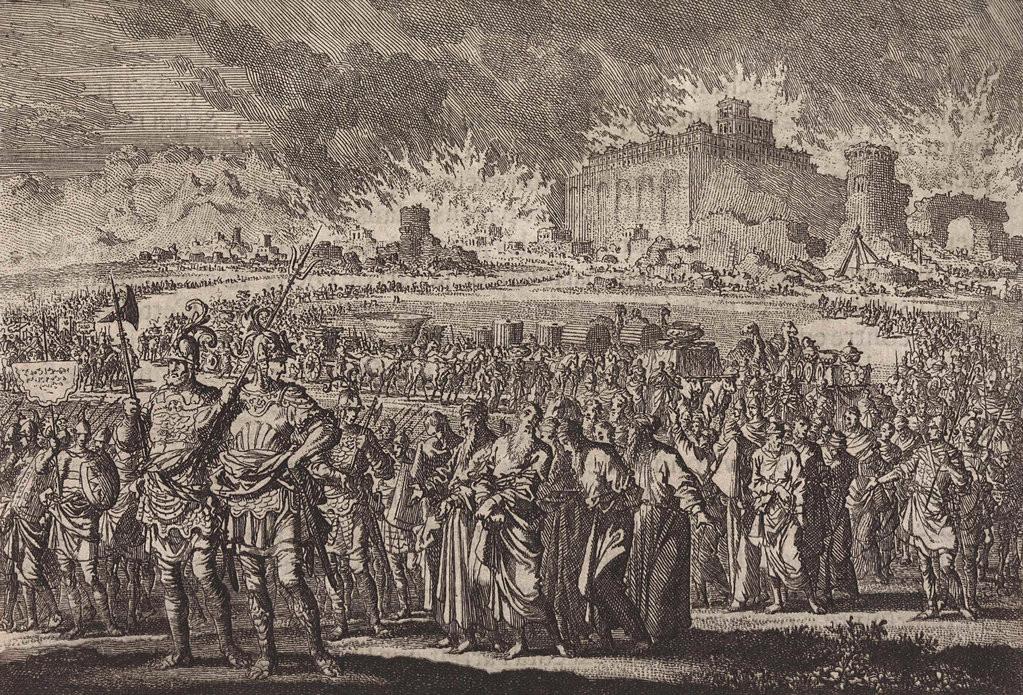
Be Careful What You Ask For

10 So Samuel told all the words of the Lord to the people who were asking for a king from him. 11 He said, “These will be the ways of the king who will reign over you: he will take your sons and appoint them to his chariots and to be his horsemen and to run before his chariots. 12 And he will appoint for himself commanders of thousands and commanders of fifties, and some to plow his ground and to reap his harvest, and to make his implements of war and the equipment of his chariots. 13 He will take your daughters to be perfumers and cooks and bakers. 14 He will take the best of your fields and vineyards and olive orchards and give them to his servants. 15 He will take the tenth of your grain and of your vineyards and give it to his officers and to his servants. 16 He will take your male servants and female servants and the best of your young men and your donkeys, and put them to his work. 17 He will take the tenth of your flocks, and you shall be his slaves. 18 And in that day you will cry out because of your king, whom you have chosen for yourselves, but the Lord will not answer you in that day.”

19 But the people refused to obey the voice of Samuel. And they said, “No! But there shall be a king over us, 20 that we also may be like all the nations, and that our king may judge us and go out before us and fight our battles.” 21 And when Samuel had heard all the words of the people, he repeated them in the ears of the Lord. 22 And the Lord said to Samuel, “Obey their voice and make them a king.” Samuel then said to the men of Israel, “Go every man to his city. – 1 Samuel 8:10-22 ESV

Samuel had grown old, his sons had gone bad, and the people had lost confidence. With Samuel’s judgeship coming to an end, the Israelites were not thrilled with the prospect of his two wicked sons serving in his absence. Both of them had proven to be wicked men who used their authority for personal gain. It’s also important to note that they failed to meet the qualifications to serve as judges over the people of Israel. The time-tested pattern for assignment to this lofty position was the call of God.

After the death of Joshua, the God-appointed leader who succeeded Moses and led the people in their conquest of the land of Canaan, the Israelites turned their backs of God.

…the people of Israel did what was evil in the sight of the Lord and served the Baals. And they abandoned the Lord, the God of their fathers, who had brought them out of the land of Egypt. They went after other gods, from among the gods of the peoples who were around them, and bowed down to them. And they provoked the Lord to anger. – Judges 2:11-12 ESV

Without godly leadership, the Israelites struggled to remain faithful to the covenant commitment to God. Instead, they worshiped the gods of the Canaanites, including Baal and Ashtaroth. As a result of their spiritual infidelity, God removed His hand of protection and allowed their enemies to defeat and demoralize them.

So the anger of the Lord was kindled against Israel, and he gave them over to plunderers, who plundered them. And he sold them into the hand of their surrounding enemies, so that they could no longer withstand their enemies. – Judges 2:14 ESV

But God used these periods of divine abandonment to get the attention of the Israelites. When they would cry out to Him for help, He would raise up a judge to deliver them.

Then the Lord raised up judges, who saved them out of the hand of those who plundered them. – Judges 2:16 ESV

Whenever the Lord raised up judges for them, the Lord was with the judge, and he saved them from the hand of their enemies all the days of the judge. For the Lord was moved to pity by their groaning because of those who afflicted and oppressed them. – Judges 2:18 ESV

These judges were ordinary men and women whom God chose and equipped to serve in a temporary leadership role. Their tenure was tied to their lifespan; as long as they remained alive, they continued to serve as a judge over Israel. But with their death, their judgeship ended. This is an important point that distinguishes the role of a judge from that of a king. Judges were not to set up kingdoms or establish dynasties. They could not pass on their title to their sons or daughters. Yet, that is exactly what Samuel had attempted to do.

When Samuel became old, he made his sons judges over Israel. – 1 Samuel 8:1 ESV

Judges were never to serve as kings either. They were not to set up a government or establish a standing army. Judges never had palaces, a civil service administration, or a bloated bureaucracy funded by tax-payer dollars. When the people of Israel attempted to persuade Gideon to turn his judgeship into a royal dynasty, he turned them down.

“I will not rule over you, and my son will not rule over you; the Lord will rule over you.” – Judges 8:23 ESV

But now, with Samuel too old to serve and his sons unqualified to replace him, the people of Israel raised the prospect of a king once again. In fact, they demanded it, saying, “Give us a king to judge us” (1 Samuel 8:6 ESV). Samuel was incensed, yet God told him to comply with their demands. He would give them what they asked for but their wish would be accompanied by serious consequences. The idea of a king ruling over them was appealing because they thought it would solve all their problems. But they were about to discover that their solution would be far from trouble-free.

You might say that the Israelites were about to learn the law of unintended consequences. They were about to get what they asked for but would soon learn the painful lesson that the cure is sometimes worse than the poison. The old adage, “Be careful what you ask for” comes to mind. God made it painfully clear that their request would produce questionable outcomes.

“The king will draft your sons and assign them to his chariots and his charioteers, making them run before his chariots. Some will be generals and captains in his army, some will be forced to plow in his fields and harvest his crops, and some will make his weapons and chariot equipment. The king will take your daughters from you and force them to cook and bake and make perfumes for him. He will take away the best of your fields and vineyards and olive groves and give them to his own officials. He will take a tenth of your grain and your grape harvest and distribute it among his officers and attendants. He will take your male and female slaves and demand the finest of your cattle and donkeys for his own use. He will demand a tenth of your flocks, and you will be his slaves.” – 1 Samuel 8:11-17 NLT

This is anything but a rousing endorsement for kingship. But God wanted them to know that their rejection of Him as King would cost them dearly. If they were ready to put their hopes in a human king, they would find his humanity to be one of his greatest flaws. It was Lord Acton, a British historian, who once said, “Power tends to corrupt; absolute power corrupts absolutely.”

That is the lesson God is attempting to teach the Israelites. They are about to get a king “like all the nations” (1 Samuel 8:3 ESV). In other words, this king will rule and reign like every other earthly king; he will not be a godly king who serves selflessly and sacrificially. He won’t have the best interests of the people in mind. Unlike God, this human king will be self-serving and obsessed with his own success. He will tax, conscript, confiscate, and force compliance to his will. No one will be able to refuse his demands or stop his kingdom-building efforts. And when the people have had enough and turn to God for relief, He will refuse to rescue them.

But God’s words fell on deaf ears. The people remained committed to their cause and repeated their earlier demands.

“Even so, we still want a king,” they said. “We want to be like the nations around us. Our king will judge us and lead us into battle.” – 1 Samuel 8:19-20 NLT

Having warned them of the unexpected consequences of their request, God agreed to their demands, telling Samuel, “Do as they say, and give them a king” (1 Samuel 8:22 NLT). Essentially, the people were rejecting God’s rule and reign over them, yet He was revealing His sovereign control over the matter. He would be the one to choose their king and they would get exactly what they asked for – and more. They could resist God’s rule but would never escape His sovereign will.

English Standard Version (ESV) The Holy Bible, English Standard Version. ESV® Permanent Text Edition® (2016). Copyright © 2001 by Crossway Bibles, a publishing ministry of Good News Publishers.

New Living Translation (NLT) Holy Bible, New Living Translation, copyright © 1996, 2004, 2015 by Tyndale House Foundation. Used by permission of Tyndale House Publishers Inc., Carol Stream, Illinois 60188. All rights reserved.

Barren, But Not Forgotten

There was a certain man of Ramathaim-zophim of the hill country of Ephraim whose name was Elkanah the son of Jeroham, son of Elihu, son of Tohu, son of Zuph, an Ephrathite. He had two wives. The name of the one was Hannah, and the name of the other, Peninnah. And Peninnah had children, but Hannah had no children. ­

Now this man used to go up year by year from his city to worship and to sacrifice to the Lord of hosts at Shiloh, where the two sons of Eli, Hophni and Phinehas, were priests of the Lord. On the day when Elkanah sacrificed, he would give portions to Peninnah his wife and to all her sons and daughters. But to Hannah he gave a double portion, because he loved her, though the Lord had closed her womb. And her rival used to provoke her grievously to irritate her, because the Lord had closed her womb. So it went on year by year. As often as she went up to the house of the Lord, she used to provoke her. Therefore Hannah wept and would not eat. And Elkanah, her husband, said to her, “Hannah, why do you weep? And why do you not eat? And why is your heart sad? Am I not more to you than ten sons?” 1 Samuel 1:1-8 ESV

The book of 1 Samuel is part of a two-book set that includes 2 Samuel. At one point, these two books were actually one book that was divided when the Hebrew Bible was translated into Greek. This Greek translation took place in the third and second century B.C. and was known as the Septuagint, which comes from the Latin word for “seventy.” Tradition holds that 70 Hebrew scholars translated the original book into Greek because it had become the dominant language in Israel during those days.

The men who painstakingly translated the original Hebrew text into Greek made the determination to split the original book into two segments, calling them 1 and 2 Kingdoms. It wasn’t until 400 A.D. that Jerome used the designation “Samuel” when he provided a Latin translation of the entire Bible called the Vulgate. Since then, the two-book format has remained as well as the title of “Samuel,” a nod to one of the primary characters in the two books. While the lives of the first two kings of Israel will appear in these books, Samuel the prophet anointed them both, making him a central character in the narrative. For many centuries, it was believed that Samuel was also the author of two books, but that idea has come under fire because much of the content covers the time after Samuel’s death (1 Samuel 25-2 Samuel 24).

Both books chronicle a time that took place at the tail-end of the period of the judges. Eli, a priest of God, who will appear in verse 9, had judged Israel for 40 years (1 Samuel 4:18). As the story unfolds, this overweight and irresponsible man will come to represent all that is wrong with Israel.

The opening chapters of 1 Samuel provide the fascinating story of Ei’s downfall and his replacement by Samuel, the man whom God had divinely ordained to take his place. God steps into the scene of rampant disobedience and moral decay that was so clearly portrayed in the book of Judges and graciously provides a much-needed wake-up call to the people. The first two chapters of this book present a series of contrasts: Eli and Samuel, Hannah and Peninnah, and the sons of Eli and the son of Hannah. God seems to be setting the stage for change. After 350 years of moral decline and spiritual apathy, God is about to do something great.

Despite all the spiritual decadence that seemed to mark the people of God during the period of the judges, we see in these two chapters that not everyone had abandoned God. The first two verses introduce the reader to an unknown and unlikely character whose role in God’s plans for the nation of Israel may be difficult to comprehend or reconcile.

Hannah is the wife of a man named Elkanah, a Levite who still faithfully sacrifices to Yahweh each year at the Tabernacle in Shiloh. Elkanah is a direct descendant of Kohath, one of the sons of Levi (1 Chronicles 6:16-30), but he lives in one of the Levitical cities located within the territory allotted to the tribe of Ephraim.

This man, a member of the tribe of Levi and part of the clan of Kohath was responsible for caring for the objects associated with the Tabernacle.

This is the service of the sons of Kohath in the tent of meeting: the most holy things. – Numbers 4:4 ESV

During Israel’s days of wilderness wandering, when the Tabernacle had to be transported from one place to another, the Kohathites were tasked with carrying the Ark of the Covenant, the Table of Showbread, and other holy items. But once Israel entered the promised land, the Tabernacle was erected in Shiloh and the role of the Kohathites was greatly diminished. But the text tells us that Elkanah continued to travel to Shiloh once a year on the Day of Atonement to offer sacrifices at the Tabernacle. This man remained faithful to God and obedient to keep the designated feast days outlined in the Mosaic Law.

But Elkanah was a bigamist. This man of God had taken two wives, a not uncommon practice in that day, but one that was in direct violation of God’s ordained will.

Therefore a man shall leave his father and his mother and hold fast to his wife, and they shall become one flesh. – Genesis 2:24 ESV

Nowhere in Scripture does God condone the practice of bigamy and in almost all cases where God’s people engaged in it, the outcomes are less than ideal. The lives of the patriarchs give ample testimony to the risky nature of this worldly and purely sin-prone practice.

As this story shows, Hannah is a barren woman with a heavy heart. She cannot provide her husband with any offspring and finds herself in competition with her counterpart, Peninnah. The text makes the conflict abundantly clear: “Peninnah had children, but Hannah had no children” (1 Samuel 1:2 ESV). Hannah follows in the footsteps of other barren women, like Sarah, the wife of Abraham, and Rebekah, the wife of Isaac.

To make matters worse, Peninnah regularly flouted her fruitfulness in the face of Hannah.

…her rival used to provoke her grievously to irritate her, because the Lord had closed her womb. – 1 Samuel 1:6 ESV

This went on year after year, yet Hannah continued to worship God. She would accompany her husband and Peninnah to Shiloh each year to offer sacrifices at the Tabernacle. According to the Law of Moses, the Israelites were allowed to consume a portion of the meat associated with certain sacrifices. The text states the Elkanah gave “portions to Peninnah his wife and to all her sons and daughters” (1 Samuel 1:4 ESV). But to Hannah, he gave “a double portion, because he loved her, though the Lord had closed her womb” (1 Samuel 1:5 ESV). Yet, this generous expression of love did little to assuage Hannah’s feelings of uselessness due to her infertility. She was frustrated by her inability to return his love by providing him with a son. 

Therefore Hannah wept and would not eat. – 1 Samuel 1:7 ESV

She was unconsolable; her grief was unbearable. But Peninnah, despite his deep affection for Hannah, was unable to understand the depth or the source of her sorrow. But God did.

Peninnah and Hannah are provided as contrasts to Hophni and Phinehas, the two sons of Eli. Like their father, these two men represent everything that is wrong with Israel. As priests of God, they should have lived lives that were set apart for God but they lived immoral lives marked by greed, corruption, sexual promiscuity, and a total disregard for the laws of God. The text describes them as worthless men who did not know God (1 Samuel 2:12). As will soon become obvious, they were worthless in the eyes of God.  They obviously knew who God was but they did not recognize or acknowledge His authority over them. They operated according to their own will, with no fear of God, as evidenced by their blatant abuse of the sacrificial system. They used their positions as God’s priests for personal gain and to satisfy their own desires. And their father Eli did nothing to stop them, probably because he enjoyed some of the benefits of their unethical practices.

But as is always the case, God steps in. He delivers. He takes an obscure woman named Hannah, who just happened to be barren and abused, and uses her to bring about His redemptive plan for the people of Israel. God reveals His strength through her weakness. He takes her moment of need and uses it to show His one-of-a-kind ability to provide for that need and so much more.

Verse 7 reveals Hannah as inconsolable and incapable of enjoying the gracious gift of for provided by her loving husband. But she has a loving God who hears her cries and feels her pain, and He will soon intervene on her behalf. He has a plan for her life that will overshadow the depth of her sorrow. Her life will stand in stark contrast to the two “men of God” who have been set apart for His service but who have chosen to serve themselves. The barren woman will become the fruit-bearer whose seed will begin a new chapter in God’s plans for His chosen people. The era of the judges is coming to a close and the time of the kings is near.

English Standard Version (ESV) The Holy Bible, English Standard Version. ESV® Permanent Text Edition® (2016). Copyright © 2001 by Crossway Bibles, a publishing ministry of Good News Publishers.

New Living Translation (NLT) Holy Bible, New Living Translation, copyright © 1996, 2004, 2015 by Tyndale House Foundation. Used by permission of Tyndale House Publishers Inc., Carol Stream, Illinois 60188. All rights reserved.
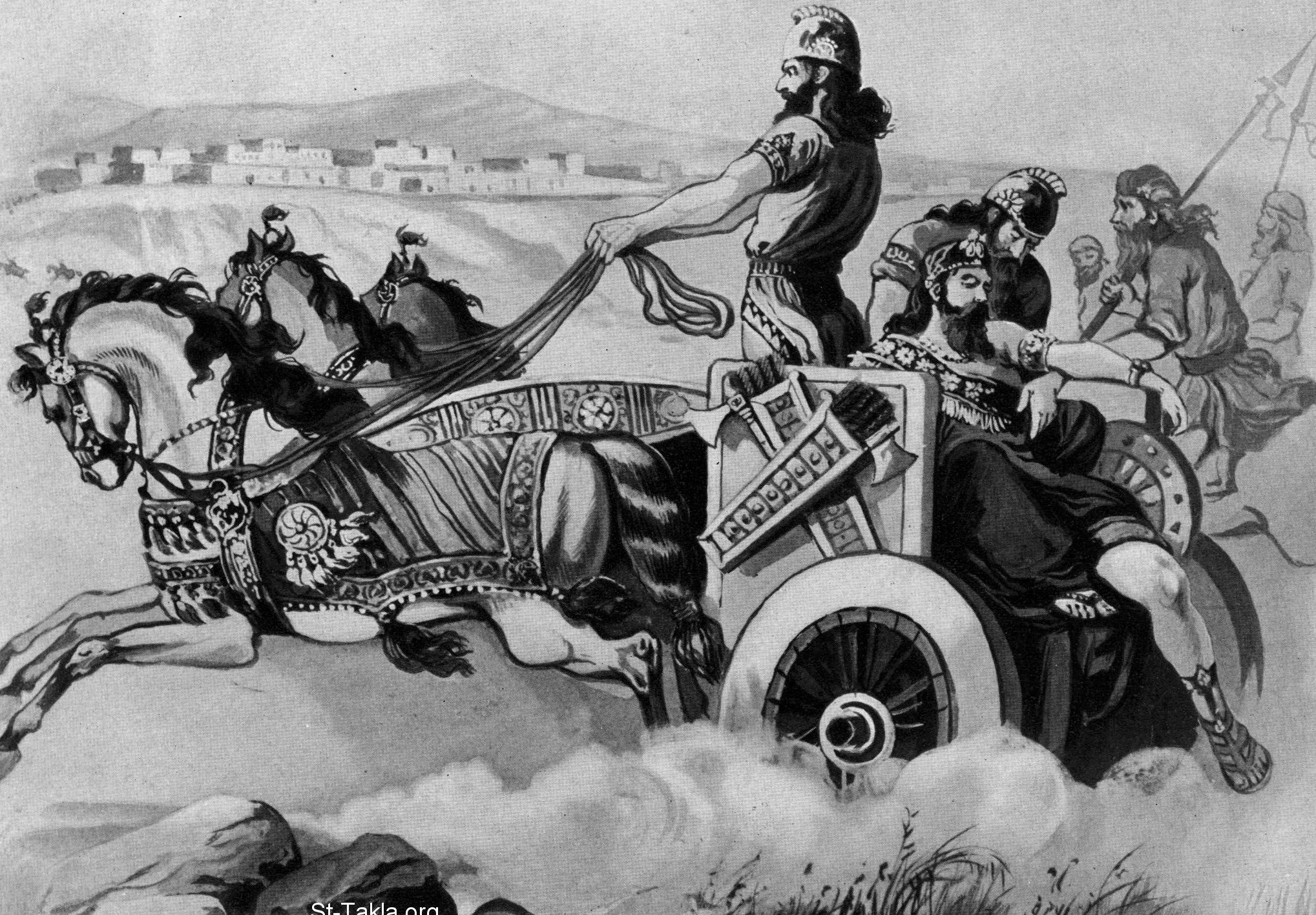
You Won’t, But I Will

11 “For thus says the Lord God: Behold, I, I myself will search for my sheep and will seek them out. 12 As a shepherd seeks out his flock when he is among his sheep that have been scattered, so will I seek out my sheep, and I will rescue them from all places where they have been scattered on a day of clouds and thick darkness. 13 And I will bring them out from the peoples and gather them from the countries, and will bring them into their own land. And I will feed them on the mountains of Israel, by the ravines, and in all the inhabited places of the country. 14 I will feed them with good pasture, and on the mountain heights of Israel shall be their grazing land. There they shall lie down in good grazing land, and on rich pasture they shall feed on the mountains of Israel. 15 I myself will be the shepherd of my sheep, and I myself will make them lie down, declares the Lord God. 16 I will seek the lost, and I will bring back the strayed, and I will bind up the injured, and I will strengthen the weak, and the fat and the strong I will destroy. I will feed them in justice.

17 “As for you, my flock, thus says the Lord God: Behold, I judge between sheep and sheep, between rams and male goats. 18 Is it not enough for you to feed on the good pasture, that you must tread down with your feet the rest of your pasture; and to drink of clear water, that you must muddy the rest of the water with your feet? 19 And must my sheep eat what you have trodden with your feet, and drink what you have muddied with your feet?

20 “Therefore, thus says the Lord God to them: Behold, I, I myself will judge between the fat sheep and the lean sheep. 21 Because you push with side and shoulder, and thrust at all the weak with your horns, till you have scattered them abroad, 22 I will rescue my flock; they shall no longer be a prey. And I will judge between sheep and sheep. 23 And I will set up over them one shepherd, my servant David, and he shall feed them: he shall feed them and be their shepherd. 24 And I, the Lord, will be their God, and my servant David shall be prince among them. I am the Lord; I have spoken. Ezekiel 34:11-24 ESV

God has leveled His indictment against the leaders of Judah. From the priests and prophets to the king and his court, they all stand before God guilty of malfeasance. Not only have they neglected their God-ordained duties, but they have used their roles for personal profit and self-advancement. Personally responsible for the physical and spiritual well-being of God’s flock, these men had left the people of Judah in a weakened and vulnerable state. God describes them as scattered and defenseless. And, repeatedly, God accuses His undershepherds of failing to do anything about it.

“…my sheep have been scattered without a shepherd, and they are easy prey for any wild animal. They have wandered through all the mountains and all the hills, across the face of the earth, yet no one has gone to search for them. – Ezekiel 34:5-6 NLT

“…you abandoned my flock and left them to be attacked by every wild animal. And though you were my shepherds, you didn’t search for my sheep when they were lost.” – Ezekiel 34:8 NLT

These men were guilty of abandonment and neglect. They were so self-absorbed with their own well-being that they failed to provide for the ones under their care. And because of their poor job performance, God declares the prophets, priests, and king to be His enemies.

I now consider these shepherds my enemies, and I will hold them responsible for what has happened to my flock. I will take away their right to feed the flock, and I will stop them from feeding themselves.” – Ezekiel 34:10 NLT

And God emphatically declares His intentions to step in and rectify the problem these men have created.

I will rescue my flock from their mouths; the sheep will no longer be their prey.” – Ezekiel 34:10 NLT

Four times in verse 10, God states, “I will.” He will not stand back and watch this travesty of leadership any longer. He will get involved intimately and personally. He offers His personal promise to do what the shepherds should have been doing all along.

In the next 14 verses of Ezekiel 34, God continues to use that same phrase, stating 21 more times that He is about to engage His divine powers on behalf of his neglected and disenfranchised sheep.

His use of the sheep metaphor is quite telling. Sheep are not the brightest of animals. They have a herd mentality and rarely think for themselves. They tend to wander, are virtually defenseless, susceptible to disease, easily frightened, injury-prone, and without proper care, can become filthy, matted, and insect-infested. That’s why they need a shepherd.

Throughout the Old Testament, God refers to His people as sheep and their leaders as shepherds. God appoints leaders to shepherd His flock. He expects them to care for and protect His people. But instead, they tended to fend for themselves and take advantage of the people, leading them into sin and causing them to stumble spiritually. Their lousy leadership was devastating to the nation, and it is chronicled in sordid detail in the history of Israel’s kings. Far too many of them proved to be godless men who led the people astray and caused them to seek sustenance and safety from false gods.

Even the spiritual leaders proved to be more harmful than helpful to the well-being of the people. And God was going to hold them all accountable. Ezekiel 34 is God’s indictment against the shepherds of Israel who had failed to do their jobs. He tells them, “You have not taken care of the weak. You have not tended the sick or bound up the injured. You have not gone looking for those who have wandered away and are lost. Instead, you have ruled them with harshness and cruelty” (Ezekiel 34:4 NLT).

They had failed to do their job. They had left the sheep defenseless and helpless. So, God said He would step in and do what the shepherds had failed to do. Over and over again He says, “I will…” He will search, rescue, feed, care for, tend, bandage, judge, and set over them a true shepherd who will care for them properly.

At the point Ezekiel penned these words from God, the northern kingdom of Israel had been non-existent for hundreds of years. It had fallen to the Assyrians centuries earlier. And, just recently, the southern kingdom of Judah had fallen to the Babylonians. Nebuchadnezzar and his forces had ended their long siege of Jerusalem by breaking through the walls and completely destroying the capital city of Judah. The temple was demolished, the city looted, and the people were taken back to Babylon as captives. Those who didn’t end up as slaves fled for their lives. That is why God describes them as scattered and wandering “through all the mountains and all the hills, across the face of the earth” (Ezekiel 34:8 NLT).

But repeatedly declares that He is ready, willing, and able to do something about their plight. In the final verse of this chapter, God emphatically states His relationship with His sheep.

“You are my flock, the sheep of my pasture. You are my people, and I am your God.” – Ezekiel 43:31 NLT

The psalmists understood this unique relationship between God and His people.

Please listen, O Shepherd of Israel,
    you who lead Joseph’s descendants like a flock. – Psalm 80:1 NLT

Acknowledge that the Lord is God!
    He made us, and we are his.
    We are his people, the sheep of his pasture. – Psalm 100:3 NLT

And as their shepherd, God promises to do what all good shepherds do: Care for His flock. They had been scattered to the four winds, but He would search for them until He found them. Then He would oversee their return to the land of promise where they will enjoy peace and prosperity once again.

Yes, I will give them good pastureland on the high hills of Israel. There they will lie down in pleasant places and feed in the lush pastures of the hills. I myself will tend my sheep and give them a place to lie down in peace, says the Sovereign Lord. – Ezekiel 34:14-15 NLT

God is promising a future day when His scattered, skittish, and scarred sheep will find themselves living in the rich pasturelands of Canaan again. It is an image of complete restoration, both physically and spiritually. They will once again be the sheep of His pasture.

The prophet, Micah, echoes this powerful promise from God.

“Someday, O Israel, I will gather you;
    I will gather the remnant who are left.
I will bring you together again like sheep in a pen,
    like a flock in its pasture.
Yes, your land will again
    be filled with noisy crowds! – Micah 2:12 NLT

And Micah takes this powerful prophecy one step further when he writes:

“In that coming day,” says the Lord,
“I will gather together those who are lame,
    those who have been exiles,
    and those whom I have filled with grief.
Those who are weak will survive as a remnant;
    those who were exiles will become a strong nation.
Then I, the Lord, will rule from Jerusalem
    as their king forever.”
As for you, Jerusalem,
    the citadel of God’s people,
your royal might and power
    will come back to you again.
The kingship will be restored
    to my precious Jerusalem. – Micah 4:6-8 NLT

But in the midst of all this good news, God delivered a bit of bad news.

I will judge between one animal of the flock and another, separating the sheep from the goats.” – Ezekiel 34:17 NLT

It’s hard not to see the foreboding nature of this statement. The warning of separation is meant to convey judgment. Jesus Himself used this same imagery when speaking of the final judgment in His Olivette discourse.

“But when the Son of Man comes in his glory, and all the angels with him, then he will sit upon his glorious throne. All the nations will be gathered in his presence, and he will separate the people as a shepherd separates the sheep from the goats. He will place the sheep at his right hand and the goats at his left. – Matthew 25:31-33 NLT

But in Ezekiel 34, the separation seems to be a statement of judgment against the underperforming shepherds of Israel. He accuses them of having kept the best pastures for themselves. In their zeal for self-promotion and personal gain, they had taken advantage of the people, leaving them in a neglected and weakened state. So, God warns them “I will surely judge between the fat sheep and the scrawny sheep. For you fat sheep pushed and butted and crowded my sick and hungry flock until you scattered them to distant lands” (Ezekiel 34:20-21 NLT).

Then with the sheep restored and the shepherds judged, God promises to give them a new shepherd, a man cut from the same cloth as King David.

“I will set over them one shepherd, my servant David. He will feed them and be a shepherd to them. And I, the Lord, will be their God, and my servant David will be a prince among my people. I, the Lord, have spoken!” – Ezekiel 34:23-24 NLT

In the midst of all the turmoil surrounding Judah’s fall, God promises that a day is coming when the people of Israel will be restored and enjoy the protection of a king who, like David, will shepherd them just as David did.

He chose David his servant
    and took him from the sheepfolds;
from following the nursing ewes he brought him
    to shepherd Jacob his people,
    Israel his inheritance.
With upright heart he shepherded them
    and guided them with his skillful hand. – Psalm 78:70-72 ESV

God will make it happen.

English Standard Version (ESV) The Holy Bible, English Standard Version. ESV® Permanent Text Edition® (2016). Copyright © 2001

New Living Translation (NLT) Holy Bible, New Living Translation, copyright © 1996, 2004, 2015 by Tyndale House Foundation. Used by permission of Tyndale House Publishers Inc., Carol Stream, Illinois 60188. All rights reserved.

Scattered Sheep and Shoddy Shepherds

1 The word of the Lord came to me: “Son of man, prophesy against the shepherds of Israel; prophesy, and say to them, even to the shepherds, Thus says the Lord God: Ah, shepherds of Israel who have been feeding yourselves! Should not shepherds feed the sheep? You eat the fat, you clothe yourselves with the wool, you slaughter the fat ones, but you do not feed the sheep. The weak you have not strengthened, the sick you have not healed, the injured you have not bound up, the strayed you have not brought back, the lost you have not sought, and with force and harshness you have ruled them. So they were scattered, because there was no shepherd, and they became food for all the wild beasts. My sheep were scattered; they wandered over all the mountains and on every high hill. My sheep were scattered over all the face of the earth, with none to search or seek for them.

“Therefore, you shepherds, hear the word of the Lord: As I live, declares the Lord God, surely because my sheep have become a prey, and my sheep have become food for all the wild beasts, since there was no shepherd, and because my shepherds have not searched for my sheep, but the shepherds have fed themselves, and have not fed my sheep, therefore, you shepherds, hear the word of the Lord: 10 Thus says the Lord God, Behold, I am against the shepherds, and I will require my sheep at their hand and put a stop to their feeding the sheep. No longer shall the shepherds feed themselves. I will rescue my sheep from their mouths, that they may not be food for them. Ezekiel 34:1-10 ESV

While every Israelite was personally responsible for their own sin, God placed blame on the nation’s leadership and held them culpable for the sorry spiritual state of the His chosen people. The civic and religious leaders of Judah had played an undeniable role in the nation’s demise. According to God, these powerful and influential men were guilty of using their positions of authority to mislead and abuse those under their care. Rather than serving as loving shepherds for God’s flock, they had used their God-given authority for personal gain.

Yahweh, the Good Shepherd, accused these men of fleecing His flock. When they should have been protecting God’s people, they had chosen to use their roles for personal profit and self-promotion. And God warns them that He will hold them responsible for their abuse of power.

What sorrow awaits you shepherds who feed yourselves instead of your flocks. Shouldn’t shepherds feed their sheep? – Ezekiel 34:2 NLT

God is unsparing in His assessment of their crimes. Using the shepherding metaphor to full advantage, God accuses them of neglect, abuse, cruelty, and dereliction of duty.

“You drink the milk, wear the wool, and butcher the best animals, but you let your flocks starve. You have not taken care of the weak. You have not tended the sick or bound up the injured. You have not gone looking for those who have wandered away and are lost. Instead, you have ruled them with harshness and cruelty.” – Ezekiel 34:4 NLT

But who are these shiftless shepherds? Throughout the Old Testament, the term “shepherd” is used to refer to kings, governors, priests, and even prophets. Since God is addressing His chosen people, His reference to shepherds would include the king and his royal court, as well as all the civic and religious leaders of Israel. Anyone in a position of authority would have been included in God’s indictment.

Earlier in his book, Ezekiel recorded God’s displeasure with the self-proclaimed prophets of Judah who were purporting to speak for God but were actually propagating false messages that contradicted the words of Ezekiel.

“…these prophets of yours are like jackals digging in the ruins. They have done nothing to repair the breaks in the walls around the nation. They have not helped it to stand firm in battle on the day of the Lord. Instead, they have told lies and made false predictions.” – Ezekiel 13:4-6 NLT

The people viewed these men as spiritual leaders and took their words as having come from God. But their messages were nothing but lies, intended to deceive and designed to provide false hope. They were nothing more than snake-oil salesmen promoting a self-concocted product offering beguiling but completely bogus benefits.

But the prophets weren’t the only ones whom God held responsible. The priests also played a role in the nation’s spiritual freefall. The very ones who should have been promoting obedience and modeling faithfulness were guilty of gross misconduct and failure to fulfill their God-given role. The prophet Hosea recorded God’s stinging rebuke of the priestly order and His intention to punish them for their catastrophic abuse of power.

“My people are being destroyed
    because they don’t know me.
Since you priests refuse to know me,
    I refuse to recognize you as my priests.
Since you have forgotten the laws of your God,
    I will forget to bless your children.
The more priests there are,
    the more they sin against me.
They have exchanged the glory of God
    for the shame of idols.

“When the people bring their sin offerings, the priests get fed.
    So the priests are glad when the people sin!
‘And what the priests do, the people also do.’
    So now I will punish both priests and people
    for their wicked deeds.” – Hosea 4:6-9 NLT

The prophet Malachi provides God’s clear explanation of the priestly role and His blunt assessment of those responsible for carrying it out.

“The words of a priest’s lips should preserve knowledge of God, and people should go to him for instruction, for the priest is the messenger of the Lord of Heaven’s Armies. But you priests have left God’s paths. Your instructions have caused many to stumble into sin. You have corrupted the covenant I made with the Levites…” – Malachi 2:7-8 NLT

As the spiritual leaders of His people, God held the priests and prophets responsible for the well-being of the flock. They were the teachers and truth-tellers, the guides responsible for leading and feeding the sheep of God’s flock. But they had dropped the ball. Rather than model righteousness and promote holiness, they had led the way in wickedness and unfaithfulness. When God had made His covenant with the tribe of Levi, setting them apart for their role as the priestly order, He declared, “they did not lie or cheat; they walked with me, living good and righteous lives, and they turned many from lives of sin” (Malachi 2:6 NLT). But all that had changed. Over time, the priests had become corrupt and used their God-ordained roles to promote sin rather than sanctification, and God would hold them accountable.

But there’s one more group of shepherds whom God must expose and excoriate. At the top of the leadership pyramid sat the king and all his royal counselors. As the designated head of state, the king was ultimately responsible for the well-being of the nation. His position as supreme ruler meant that the buck stopped with him. His role as God’s vice-regent provided him with great authority but it came with significant responsibility. The king was to serve as the primary example of submission to God. His power and authority had been delegated to him by God and it was to be used to provide protection and promote godliness. Yet, all throughout the history of the kings of Israel and Judah, there appears a recurring theme. The vast majority of the kings “did what was evil in the Lord’s sight” (2 Kings 15:9 NLT). They promoted idolatry, encouraged wickedness, and modeled unfaithfulness.

King David had encouraged Solomon, his son and heir to the throne, to remain faithful to God. His ascension to the kingship would require obedience to God.

“Observe the requirements of the LORD your God, and follow all his ways. Keep the decrees, commands, regulations, and laws written in the Law of Moses so that you will be successful in all you do and wherever you go. If you do this, then the LORD will keep the promise he made to me. He told me, ‘If your descendants live as they should and follow me faithfully with all their heart and soul, one of them will always sit on the throne of Israel.’” – 1 Kings 2:3-4 NLT

Yet, Solomon had proved to be far from faithful. While he started out well, he ended his reign by promoting idolatry and causing the people to sin against God. As a result, God divided his kingdom in half, creating the northern kingdom of Israel and the southern kingdom of Judah. And both kingdoms demonstrated a propensity for unfaithfulness. The sins of the kings resulted in God’s judgment of the people and their scattering among the nations.

“…my sheep have been scattered without a shepherd, and they are easy prey for any wild animal. They have wandered through all the mountains and all the hills, across the face of the earth, yet no one has gone to search for them. – Ezekiel 34:5-6 NLT

God accuses His shepherds of abandonment. Not only had they been the cause of their sin, but they had also done nothing to restore them to God’s fold when they had become scattered. And God declares His intention to hold these men responsible for their actions. And, more than that, He promises to step in and do what they should have done all along.

“I now consider these shepherds my enemies, and I will hold them responsible for what has happened to my flock. I will take away their right to feed the flock, and I will stop them from feeding themselves. I will rescue my flock from their mouths; the sheep will no longer be their prey.” – Ezekiel 34:10 NLT

English Standard Version (ESV) The Holy Bible, English Standard Version. ESV® Permanent Text Edition® (2016). Copyright © 2001

New Living Translation (NLT) Holy Bible, New Living Translation, copyright © 1996, 2004, 2015 by Tyndale House Foundation. Used by permission of Tyndale House Publishers Inc., Carol Stream, Illinois 60188. All rights reserved.

Control Over Kings and Countries

20 In the eleventh year, in the first month, on the seventh day of the month, the word of the Lord came to me: 21 “Son of man, I have broken the arm of Pharaoh king of Egypt, and behold, it has not been bound up, to heal it by binding it with a bandage, so that it may become strong to wield the sword. 22 Therefore thus says the Lord God: Behold, I am against Pharaoh king of Egypt and will break his arms, both the strong arm and the one that was broken, and I will make the sword fall from his hand. 23 I will scatter the Egyptians among the nations and disperse them through the countries. 24 And I will strengthen the arms of the king of Babylon and put my sword in his hand, but I will break the arms of Pharaoh, and he will groan before him like a man mortally wounded. 25 I will strengthen the arms of the king of Babylon, but the arms of Pharaoh shall fall. Then they shall know that I am the Lord, when I put my sword into the hand of the king of Babylon and he stretches it out against the land of Egypt. 26 And I will scatter the Egyptians among the nations and disperse them throughout the countries. Then they will know that I am the Lord.” Ezekiel 30:20-26 ESV

Less than four months after receiving the first divine oracle concerning Egypt, Ezekiel was given another installment. The first part came in “the tenth year, in the tenth month, on the twelfth day of the month” (Ezekiel 29:1 ESV). This one arrived “in the eleventh year, in the first month, on the seventh day of the month” (Ezekiel 30:30 ESV). The New Living Translation places the date of this second oracle as “January 7, during the tenth year of King Jehoiachin’s captivity” (Ezekiel 30:20 NLT). Thomas L. Constable calculated the date in question to be April 29. But both agree that it took place in the year 587 B.C.

In this oracle, God informs Ezekiel that the king of Egypt has suffered a debilitating wound that has left him incapable of wielding a sword or putting up a fight. This divinely inflicted wound, while not life-threatening, would prove to be decisive.

“Son of man, I have broken the arm of Pharaoh, the king of Egypt. His arm has not been put in a cast so that it may heal. Neither has it been bound up with a splint to make it strong enough to hold a sword. – Ezekiel 30:21 NLT

Pharaoh’s arm, a symbol of his power, had been broken by God but never set, so it had healed properly. Unable to grasp a sword, Pharaoh was reduced to a state of impotence and defenselessness. As the sovereign ruler over the mighty nation of Egypt, he was reduced to a weakened and helpless state. This imagery was meant to be symbolic in nature, using the king as the representative of the kingdom. Many scholars believe this passage is a reference to Egypt’s debilitating defeat at the Battle of Carchemish.

As the Babylonians continued to assert their will in that part of the world, the Egyptians attempted to play the spoiler, clandestinely assisting nations like the Assyrians and Israelites in their efforts to oppose Nebuchadnezzar’s advances. In 612 B.C., the Assyrian capital of Nineveh had fallen to Babylonian forces. Unwilling to admit defeat, the Assyrians moved their capital to Haran. But two years later, that capital suffered the same fate. Still refusing to capitulate, the Assyrians moved their headquarters to Carchemish, some 38 miles east of Haran.

As Pharaoh Neco and his Egyptian forces made their way to Carchemish to fight alongside the Assyrians, King Josiah of Judah decided to stand in his way. This would prove to be an unwise decision on Josiah’s part, resulting in his death from wounds suffered during the battle. The story is recorded in the book of 2 Chronicles.

After Josiah had finished restoring the Temple, King Neco of Egypt led his army up from Egypt to do battle at Carchemish on the Euphrates River, and Josiah and his army marched out to fight him. But King Neco sent messengers to Josiah with this message:

“What do you want with me, king of Judah? I have no quarrel with you today! I am on my way to fight another nation, and God has told me to hurry! Do not interfere with God, who is with me, or he will destroy you.”

But Josiah refused to listen to Neco, to whom God had indeed spoken, and he would not turn back. Instead, he disguised himself and led his army into battle on the plain of Megiddo. But the enemy archers hit King Josiah with their arrows and wounded him. He cried out to his men, “Take me from the battle, for I am badly wounded!”

So they lifted Josiah out of his chariot and placed him in another chariot. Then they brought him back to Jerusalem, where he died. – 2 Chronicles 35:20-24 NLT

This battle at Megiddo delayed Neco’s arrival in Carchemish. And with Josiah’s death, Neco found himself embroiled in the local politics of Judah. Jehoahaz, the son of Josiah, had ascended to the throne, but his reign only lasted three months before Neco had him imprisoned and replaced with one another of Josiah’s sons. Neco ended up pocketing a sizeable fortune in gold and silver in the form of tribute from Judah, but his eventual arrival in Carchemish proved too little, too late. Nebuchadnezzar had already defeated the Assyrians and, when the Egyptians arrived on the scene, they too were soundly routed. The battle of Carchemish brought about the end of the Assyrian Empire and reduced Egypt to a second-rate power in the region.

Now, some 25 years later, God warns that He is going to do a number of Egypt again. This time, He will break both arms, including the recently healed one.

“…this is what the Sovereign Lord says: I am the enemy of Pharaoh, the king of Egypt! I will break both of his arms—the good arm along with the broken one—and I will make his sword clatter to the ground. I will scatter the Egyptians to many lands throughout the world.” – Ezekiel 30:23-23 NLT

The Egyptians had failed to learn their lesson. Despite their weakened state, they continued to try to exert their will in the region. But God wants Ezekiel to know that the Egyptian’s hope of regaining their former stature was a pipe dream. He was going to use Nebuchadnezzar to end their centuries-long role as major players on the world stage.

“…when I put my sword in the hand of Babylon’s king and he brings it against the land of Egypt, Egypt will know that I am the Lord.” – Ezekiel 30:25 NLT

God describes Egypt’s defeat as a mortal blow, not just a couple of broken arms. Without any way to defend themselves against the Babylonians, the Egyptians would suffer a devastating defeat that would render them “mortally wounded, groaning in pain” (Ezekiel 30:24 NLT).

Like the Israelites and the people of Judah, the Egyptians would find themselves scattered to the four winds. Some would end up as captives in Babylon, while others would seek refuge in foreign lands where they would live as refugees and outcasts.

I will scatter the Egyptians among the nations, dispersing them throughout the earth.” – Ezekiel 30:26 NLT

Their defeat will be God’s doing, as will be their dispersion among the nations. This great and powerful nation would fall as a result of God’s sovereign, omnipotent will. Each of these nations; the Egyptians, Assyrians, and Babylonians, were instruments in the hand of God. They served at His pleasure and were nothing more than bit players in the drama of His providential and irrepressible plan.

And, as always, God informs Ezekiel that. with their fall, the Egyptians will know beyond a shadow of a doubt that He is Lord. They will recognize that their defeat was His doing. And when they find themselves scattered to the four winds, living as helpless and hopeless exiles in foreign lands, their recognition of God’s Lordship will be confirmed.

“I will scatter the Egyptians among the nations, dispersing them throughout the earth. Then they will know that I am the Lord.” – Ezekiel 30:26 NLT

As the prophet Daniel so aptly put it, God “controls the course of world events; he removes kings and sets up other kings” (Daniel 2:21 NLT). Neco, Nebuchadnezzar, and even Josiah, lived their lives according to the will of God Almighty. They ruled at His discretion. Their countries flourished only as long as He deemed it necessary and critical to the accomplishment of His overarching plan. Their rise and fall was up to His sovereign will. Nothing happens on earth that is outside the providential plan of Yahweh.

In their hearts humans plan their course, but the LORD establishes their steps. – Proverbs 16:9 NIV

English Standard Version (ESV) The Holy Bible, English Standard Version. ESV® Permanent Text Edition® (2016). Copyright © 2001

New Living Translation (NLT) Holy Bible, New Living Translation, copyright © 1996, 2004, 2015 by Tyndale House Foundation. Used by permission of Tyndale House Publishers Inc., Carol Stream, Illinois 60188. All rights reserved.

The Priority of the Gospel

1 First of all, then, I urge that supplications, prayers, intercessions, and thanksgivings be made for all people, for kings and all who are in high positions, that we may lead a peaceful and quiet life, godly and dignified in every way. This is good, and it is pleasing in the sight of God our Savior, who desires all people to be saved and to come to the knowledge of the truth. For there is one God, and there is one mediator between God and men, the man Christ Jesus, who gave himself as a ransom for all, which is the testimony given at the proper time. For this I was appointed a preacher and an apostle (I am telling the truth, I am not lying), a teacher of the Gentiles in faith and truth.

I desire then that in every place the men should pray, lifting holy hands without anger or quarreling; likewise also that women should adorn themselves in respectable apparel, with modesty and self-control, not with braided hair and gold or pearls or costly attire, 10 but with what is proper for women who profess godliness—with good works. 11 Let a woman learn quietly with all submissiveness. 12 I do not permit a woman to teach or to exercise authority over a man; rather, she is to remain quiet. 13 For Adam was formed first, then Eve; 14 and Adam was not deceived, but the woman was deceived and became a transgressor. 15 Yet she will be saved through childbearing—if they continue in faith and love and holiness, with self-control. – 1 Timothy 2:1-15 ESV

This chapter is chock-full of verses around which men have built entire doctrines or teachings regarding the church. And in many cases, they have ignored the context while focusing on a single concept or idea. But we have to remember that Paul is giving Timothy, his young disciple, instructions regarding his ministry among the people in Ephesus. The focus of this entire chapter is on the gospel and the environment in which it thrives and spreads best. There are things that can hurt or hinder the spread of the gospel. There are activities or circumstances that can cause the message of the good news of Jesus Christ to be difficult to understand. There are also things that believers can do that can end up discrediting their role as messengers of the gospel. Paul’s primary emphasis in this chapter is the salvation of others. Everything else he deals with becomes the context in which the salvation of others functions best.

He begins with an admonition to pray. Paul did not view prayer as a magic formula or secret weapon given to believers but as intimate communication with God. Every child of God is provided with the privilege of being able to speak with their Heavenly Father, at any time and from any place.

As the church, we are the people of God and, as such, we should always have a God-ward focus in our thinking. Paul tells Timothy to pray for all people. But pray for what?

Ask God to help them; intercede on their behalf, and give thanks for them. – 1 Timothy 2:1 NLT

In the original Greek, Paul actually lists four different aspects of prayer: requests, prayers, intercession, and thanksgiving. Each word was carefully chosen and designed to illustrate the rich depth that should mark our communication with God.

“Requests” is the Greek word deeseis and it carries a sense of determination and earnestness based on an awareness of the other person’s needs. As believers, we understand the needs of all men, whether we know them or not. They need Jesus.

The word “prayers” is the Greek word proseuchas, and it is a more general description that covers prayers of all kinds. Its focus is on God, not the one for whom we are praying. We are to lift up all men before God, placing them in His hands and under His care, trusting that He knows what they need.

“Intercession” (enteuxeis) seems to cover the specific requests we bring to God on behalf of others. When we become aware of a specific need or circumstance in someone else’s life, we boldly bring it before the throne of God.

Finally, “thanksgiving” (eucharistias) reminds us that our prayers are to be filled with expressions of gratitude to God. But in this context, Paul is suggesting that our prayers of thanksgiving concern those for whom we are praying – and that includes all men and not just some. Again, the focus is on God. To be able to thank God for someone whom we would normally feel unthankful is to express trust in the sovereignty of God. It is to confess that He is in charge and has a purpose for that person’s presence in our life.

Prayer is not meant to be formulaic or ritualistic. It is to be marked by a variety and intensity of style and content, with the focus always on God.

Paul goes on to instruct Timothy to include kings and all authority figures in his prayers. These people are sometimes the most difficult individuals for whom to pray. But Paul instructs Timothy to pray that God would use these people to help create an atmosphere in which believers might “live peaceful and quiet lives marked by godliness and dignity” (1 Timothy 2:2 NLT) and that the gospel might prosper and spread.

But why? Because God wants all people to be saved and to come to a knowledge of the truth. His desire is that all men hear the good news that “there is only one God and one Mediator who can reconcile God and humanity—the man Christ Jesus. He gave his life to purchase freedom for everyone” (1 Timothy 2:5-6 NLT). So, we are to pray that God would use political leaders to foster an atmosphere conducive to spreading the gospel message.

But there are certain things that can hinder our prayers and destroy our witness as believers. Paul mentions anger and controversy. Jesus warned us that “if you are presenting a sacrifice at the altar in the Temple and you suddenly remember that someone has something against you, leave your sacrifice there at the altar. Go and be reconciled to that person. Then come and offer your sacrifice to God” (Matthew 5:23-24 NLT).

Disunity can derail our prayer lives but so can our actions. And our behavior among those for whom we are praying can have a powerful impact on whether they eventually embrace the salvation we know they need. Our outward actions can derail our efforts to share the gospel by contradicting the very message of the gospel’s life-transforming power.

Paul addresses an issue that continues to be a problem in the church today: The immodesty of dress among Christian women. He writes, “I want women to be modest in their appearance” (1 Timothy 2:9 NLT). This wasn’t just Paul’s personal preference but reflects his instructions as an apostle of and spokesman for God. The women in the church at Ephesus were sending mixed messages. On the one hand, they were spreading the gospel. But some of them were so interested in how they looked and focused on drawing attention to themselves, that they were actually doing more harm than good. Good looks had replaced good behavior as the point of emphasis in their lives. They had become focused on the externals, rather than the condition of their own hearts.

The next issue Paul addressed with Timothy remains a hot-button topic even today. It dealt with the role of women in the assembly of the church, and it had to do with order and headship. But as with every other topic in this chapter, it had to do with the spread of the gospel. Anything we do that hinders or hurts the gospel message is to be avoided at all costs. In this case, the female members of the Ephesian church had discovered a new-found freedom in Christ but it had led to license and was creating disorder within the local body of Christ. Paul insisted that there must be order and decorum in the church. There was a God-given structure to the body of Christ, with Christ himself serving as the head. God had given to men the responsibility of serving in a place of authority and responsibility, both within the local church and the home.

This had nothing to do with value or worth but with divine order and human responsibility. The real issue here seems to be a woman taking on inappropriate authority not given to her by God. Ultimately, Paul’s concern was the spread of the gospel. Again, disunity and anger seem to be at the core of Paul’s message. If those outside the church were to look inside and see a lack of unity and the presence of disharmony, their interest in the gospel might be negatively impacted. Yet, Paul insisted that God had provided an order and authority structure to the body of Christ. In God’s grand scheme, men were to lead the church. They were responsible to God for teaching the Scriptures. This in no way implies that women are incapable or unqualified to teach God’s Word. It has to do with authority and responsibility, not capability.

God had placed men in the role of teachers and leaders within the local church. When this order was ignored or violated, it caused disunity and discord. Paul seems to be saying that order within the church and the spread of the Gospel should take precedence over the need to look good or to be seen as a person of power and influence. It was important that men be able to “pray with holy hands lifted up” – free from controversy and anger. The goal is always to be the spread of the gospel. Whether male or female, our greatest concern should be that others come to a saving knowledge of Jesus Christ. Our need to be noticed, in charge, seen as attractive, powerful, influential, and even as spiritual – has to take a backseat to God’s non-negotiable command to make disciples. That should be the focus of our prayers and the emphasis of our lives.

English Standard Version (ESV) The Holy Bible, English Standard Version. ESV® Permanent Text Edition® (2016). Copyright © 2001

New Living Translation (NLT) Holy Bible, New Living Translation, copyright © 1996, 2004, 2015 by Tyndale House Foundation. Used by permission of Tyndale House Publishers Inc., Carol Stream, Illinois 60188. All rights reserved.

The Light On the Horizon

22 And over the people who remained in the land of Judah, whom Nebuchadnezzar king of Babylon had left, he appointed Gedaliah the son of Ahikam, son of Shaphan, governor. 23 Now when all the captains and their men heard that the king of Babylon had appointed Gedaliah governor, they came with their men to Gedaliah at Mizpah, namely, Ishmael the son of Nethaniah, and Johanan the son of Kareah, and Seraiah the son of Tanhumeth the Netophathite, and Jaazaniah the son of the Maacathite. 24 And Gedaliah swore to them and their men, saying, “Do not be afraid because of the Chaldean officials. Live in the land and serve the king of Babylon, and it shall be well with you.” 25 But in the seventh month, Ishmael the son of Nethaniah, son of Elishama, of the royal family, came with ten men and struck down Gedaliah and put him to death along with the Jews and the Chaldeans who were with him at Mizpah. 26 Then all the people, both small and great, and the captains of the forces arose and went to Egypt, for they were afraid of the Chaldeans.

27 And in the thirty-seventh year of the exile of Jehoiachin king of Judah, in the twelfth month, on the twenty-seventh day of the month, Evil-merodach king of Babylon, in the year that he began to reign, graciously freed Jehoiachin king of Judah from prison. 28 And he spoke kindly to him and gave him a seat above the seats of the kings who were with him in Babylon. 29 So Jehoiachin put off his prison garments. And every day of his life he dined regularly at the king’s table, 30 and for his allowance, a regular allowance was given him by the king, according to his daily needs, as long as he lived. – 2 Kings 25:22-30 ESV

The scene in Jerusalem was one of utter destruction and devastation. The once-formidable walls of the city had been reduced to rubble. The massive doors that stood at the gates into Jerusalem had been torn from their hinges and burned. The homes of both the rich and the poor had been destroyed, leaving the city virtually uninhabitable. Even the king’s royal palace had been ransacked and turned into a smoldering ruin. And the Babylonians had not spared the house of God either. It had become a place of refuge for many trying to flee from the bloodthirsty Babylonians, but they found no help or hope within the walls of the temple they had long neglected.

The Babylonians killed Judah’s young men, even chasing after them into the Temple. They had no pity on the people, killing both young men and young women, the old and the infirm. – 2 Chronicles 36:17 NLT

The grand house that Solomon had constructed, the long-standing symbol of God’s presence and power among His people, was desecrated and then destroyed.

The king took home to Babylon all the articles, large and small, used in the Temple of God, and the treasures from both the Lord’s Temple and from the palace of the king and his officials. Then his army burned the Temple of God… – 2 Chronicles 36:18 NLT

And none of this should have come as a surprise to the people of Judah. On the very day that Solomon had consecrated the newly opened temple, God had warned him:

“I have answered your prayer and your request for help that you made to me. I have consecrated this temple you built by making it my permanent home; I will be constantly present there. You must serve me with integrity and sincerity, just as your father David did. Do everything I commanded and obey my rules and regulations. Then I will allow your dynasty to rule over Israel permanently, just as I promised your father David, ‘You will not fail to have a successor on the throne of Israel.’

“But if you or your sons ever turn away from me, fail to obey the regulations and rules I instructed you to keep, and decide to serve and worship other gods, then I will remove Israel from the land I have given them, I will abandon this temple I have consecrated with my presence, and Israel will be mocked and ridiculed among all the nations. This temple will become a heap of ruins; everyone who passes by it will be shocked and will hiss out their scorn, saying, ‘Why did the Lord do this to this land and this temple?’ Others will then answer, ‘Because they abandoned the Lord their God, who led their ancestors out of Egypt. They embraced other gods whom they worshiped and served. That is why the Lord has brought all this disaster down on them.’” – 2 Kings 9:3-9 NLT

More than three-and-a-half centuries had passed since God had issued that warning to King Solomon. And during that time, the majority of the kings of Judah had chosen to abandon Yahweh for the false gods of the nations around them. They had led the nation into idolatry and apostasy and now, as the people of Judah made their way in chains to Babylon, they could look over their shoulders and see the fiery fulfillment of God’s words to Solomon.

As Nebuchadnezzar and his forces departed Judah, they left a destroyed city and decimated populace behind.

King Nebuchadnezzar took all of Jerusalem captive, including all the commanders and the best of the soldiers, craftsmen, and artisans—10,000 in all. Only the poorest people were left in the land. – 2 Kings 24:14 NLT

And he appointed a man named Gedaliah as governor over the greatly diminished and demoralized citizenry of Jerusalem. There would no longer be a king to rule over Judah. Gedaliah was a Jew, but not a descendant of Solomon. He had no royal blood and would wield no kingly authority. He served at the behest of Nebuchadnezzar and was under the watchful eye of the ever-present Babylonian garrison. His was a thankless job that was more managerial than magisterial. And in time, he would come to be seen as nothing more than a puppet of the occupying Babylonian forces.

The commanders of Judah’s army who had fled from the city of Jerusalem when the walls were breached, returned when they heard that Gedaliah had been appointed governor. But they didn’t like the pro-Babylonian rhetoric that Gedaliah was spouting.

Gedaliah vowed to them that the Babylonian officials meant them no harm. “Don’t be afraid of them. Live in the land and serve the king of Babylon, and all will go well for you,” he promised. – 2 Kings 25:24 NLT

This compromising stance would ultimately cost Gedaliah his life. One of the former military commanders, a man named Ishmael, orchestrated the assassination of Gedaliah. It’s not exactly clear what Ishmael had hoped to accomplish by the murder of the Babylonian-appointed governor. But it seems obvious that this was an act of rebellion against the occupying forces. Along with Gedaliah and his Jewish officials, Ishmael murdered members of the Babylonian garrison, and this resulted in a swift reprisal from Nebuchadnezzar. Ishmael’s attempt to drive the Babylonians out of Judah backfired on him. Instead, “all the people of Judah, from the least to the greatest, as well as the army commanders, fled in panic to Egypt, for they were afraid of what the Babylonians would do to them” (2 Kings 25:26 NLT).

This scene is intended to convey a strong sense of irony. The disobedient people of God were returning to the very place from which He had free them centuries earlier. While some of their friends and family members had been deported to Babylon as slaves, this remnant of God’s chosen people would seek refuge in the land where their forefathers had been captives for more than 400 years.

Once again, all of this had been predicted by God. Centuries earlier, as the people of Israel stood on the shore of the River Jordan, preparing to enter the land of promise, God had given them a word of warning through Moses. He had told them that if they would faithfully obey Him, they would experience His blessings. But if they chose to disobey God, Moses warned them that they would experience “long-lasting afflictions and severe, enduring illnesses. He will infect you with all the diseases of Egypt that you dreaded, and they will persistently afflict you. Moreover, the Lord will bring upon you every kind of sickness and plague not mentioned in this scroll of commandments, until you have perished” (Deuteronomy 28:59-61 NLT).

And Moses had been very specific when outlining the devastating nature of the curses they would encounter should they failed to “fear this glorious and awesome name, the Lord your God” (Deuteronomy 28:58 NLT).

The Lord will scatter you among all nations, from one end of the earth to the other. There you will worship other gods that neither you nor your ancestors have known, gods of wood and stone. Among those nations you will have no rest, nor will there be a place of peaceful rest for the soles of your feet, for there the Lord will give you an anxious heart, failing eyesight, and a spirit of despair. Your life will hang in doubt before you; you will be terrified by night and day and will have no certainty of surviving from one day to the next. In the morning you will say, ‘If only it were evening!’ And in the evening you will say, ‘I wish it were morning!’ because of the things you will fear and the things you will see. Then the Lord will make you return to Egypt by ship, over a route I said to you that you would never see again. There you will sell yourselves to your enemies as male and female slaves, but no one will buy you.” – Deuteronomy 28:64-68 NLT

Some 850 years after God had redeemed the people of Israel from their captivity in Egypt, a remnant of their still rebellious descendants would return. But it’s interesting to note that these poor disheveled exiles will find no hope in Egypt. They won’t even be able to sell themselves as slaves. They will become paupers and aliens living outside the land of promise and under the curse of the God they had chosen to reject.

But despite all the dire imagery portrayed in this closing chapter of the book of 2 Kings, there is a silver lining on the dark cloud of Judah’s history. The author ends his book with a new king ascending to the throne of Babylon. These closing verses seem to be a mirror image of the scene found in the book of Genesis that preceded Israel’s 400-year enslavement in Egypt. Exodus 1:8 records, “Now there arose a new king over Egypt, who did not know Joseph.” This new Pharaoh came to power and, having no first-hand knowledge of Joseph and the people of Israel, decided that they were a threat to his administration. So, he launched a campaign to afflict and enslave them. This would lead to four centuries worth of unprecedented misery and maltreatment.

But when Evil-merodach replaced Nebuchadnezzar as the ruler over the Babylonian empire, he made a decision to release King Jehoiachin of Judah from his enslavement. He released him from prison and “spoke kindly to Jehoiachin and gave him a higher place than all the other exiled kings in Babylon” (2 Kings 25:28 NLT). For the remainder of his life in Babylonian, Jehoiachin lived like a king. He was given royal robes to wear and allowed to dine at Evil-merodach’s table.

But why is this important? Because it foreshadows something highly significant. Back in the book that bears his name, the prophet Jeremiah pronounced a curse on Jehoiachin, who was also known as Coniah.

“Why is this man Jehoiachin like a discarded, broken jar?
    Why are he and his children to be exiled to a foreign land?
O earth, earth, earth!
    Listen to this message from the Lord!
This is what the Lord says:
‘Let the record show that this man Jehoiachin was childless.
    He is a failure,
for none of his children will succeed him on the throne of David
    to rule over Judah.’”– Jeremiah 22:28-30 NLT

And yet, if we fast-forward to the gospel of Matthew, we find the following words in his genealogy of Jesus.

Josiah was the father of Jehoiachin and his brothers (born at the time of the exile to Babylon).
After the Babylonian exile:
Jehoiachin was the father of Shealtiel.
Shealtiel was the father of Zerubbabel.
Zerubbabel was the father of Abiud.
Abiud was the father of Eliakim.
Eliakim was the father of Azor.
Azor was the father of Zadok.
Zadok was the father of Akim.
Akim was the father of Eliud.
Eliud was the father of Eleazar.
Eleazar was the father of Matthan.
Matthan was the father of Jacob.
Jacob was the father of Joseph, the husband of Mary.
Mary gave birth to Jesus, who is called the Messiah. – Matthew 1:11-16 NLT

Here, in the genealogy of Jesus, we find the name of the Jehoiachin. The very man who was told that none of his children would succeed him as king is listed as a progenitor of the King of kings. Of Jehoiachin’s seven sons, not one of them would ascend to the throne of David. But Jesus would. God would graciously reverse the curse, producing a royal heir who would reign in righteousness and deliver His people from their enslavement to sin and death.

Notice one more name in the lineage of Jesus: Zerubbabel. This descendant of Jehoiachin would later become the governor of Judea when the exiles returned from their captivity in Babylon. And the prophet Haggai would pronounce a blessing on Zerubbabel that foreshadowed a great reversal of fortunes for the people of God.

“Speak to Zerubbabel, governor of Judah, saying, I am about to shake the heavens and the earth, and to overthrow the throne of kingdoms. I am about to destroy the strength of the kingdoms of the nations, and overthrow the chariots and their riders. And the horses and their riders shall go down, every one by the sword of his brother. On that day, declares the Lord of hosts, I will take you, O Zerubbabel my servant, the son of Shealtiel, declares the Lord, and make you like a signet ring, for I have chosen you, declares the Lord of hosts.” – Haggai 2:21-23 NLT

The book of 2 Kings ends on a positive note because God’s will concerning the people of Israel was far from done. The story of the redemption of His chosen people and the restoration of the world He created was not yet over. The Messiah, the Savior of the world, would one day come. And His arrival would usher in a new day and a new hope for the people of God and the nations of the world.

English Standard Version (ESV) The Holy Bible, English Standard Version. ESV® Permanent Text Edition® (2016). Copyright © 2001 by Crossway Bibles, a publishing ministry of Good News Publishers.

New Living Translation (NLT) Holy Bible, New Living Translation, copyright © 1996, 2004, 2015 by Tyndale House Foundation. Used by permission of Tyndale House Publishers Inc., Carol Stream, Illinois 60188. All rights reserved.

The Message (MSG)Copyright © 1993, 1994, 1995, 1996, 2000, 2001, 2002 by Eugene H. Peterson

Just As the Lord Had Promised

1 And in the ninth year of his reign, in the tenth month, on the tenth day of the month, Nebuchadnezzar king of Babylon came with all his army against Jerusalem and laid siege to it. And they built siegeworks all around it. So the city was besieged till the eleventh year of King Zedekiah. On the ninth day of the fourth month the famine was so severe in the city that there was no food for the people of the land. Then a breach was made in the city, and all the men of war fled by night by the way of the gate between the two walls, by the king’s garden, and the Chaldeans were around the city. And they went in the direction of the Arabah. But the army of the Chaldeans pursued the king and overtook him in the plains of Jericho, and all his army was scattered from him. Then they captured the king and brought him up to the king of Babylon at Riblah, and they passed sentence on him. They slaughtered the sons of Zedekiah before his eyes, and put out the eyes of Zedekiah and bound him in chains and took him to Babylon.

In the fifth month, on the seventh day of the month—that was the nineteenth year of King Nebuchadnezzar, king of Babylon—Nebuzaradan, the captain of the bodyguard, a servant of the king of Babylon, came to Jerusalem. And he burned the house of the Lord and the king’s house and all the houses of Jerusalem; every great house he burned down. 10 And all the army of the Chaldeans, who were with the captain of the guard, broke down the walls around Jerusalem. 11 And the rest of the people who were left in the city and the deserters who had deserted to the king of Babylon, together with the rest of the multitude, Nebuzaradan the captain of the guard carried into exile. 12 But the captain of the guard left some of the poorest of the land to be vinedressers and plowmen.

13 And the pillars of bronze that were in the house of the Lord, and the stands and the bronze sea that were in the house of the Lord, the Chaldeans broke in pieces and carried the bronze to Babylon. 14 And they took away the pots and the shovels and the snuffers and the dishes for incense and all the vessels of bronze used in the temple service, 15 the fire pans also and the bowls. What was of gold the captain of the guard took away as gold, and what was of silver, as silver. 16 As for the two pillars, the one sea, and the stands that Solomon had made for the house of the Lord, the bronze of all these vessels was beyond weight. 17 The height of the one pillar was eighteen cubits, and on it was a capital of bronze. The height of the capital was three cubits. A latticework and pomegranates, all of bronze, were all around the capital. And the second pillar had the same, with the latticework.

18 And the captain of the guard took Seraiah the chief priest and Zephaniah the second priest and the three keepers of the threshold; 19 and from the city he took an officer who had been in command of the men of war, and five men of the king’s council who were found in the city; and the secretary of the commander of the army, who mustered the people of the land; and sixty men of the people of the land, who were found in the city. 20 And Nebuzaradan the captain of the guard took them and brought them to the king of Babylon at Riblah. 21 And the king of Babylon struck them down and put them to death at Riblah in the land of Hamath. So Judah was taken into exile out of its land. – 2 Kings 25:1-21 ESV

Zedekiah, formerly known as Mattaniah, received his new name and his right to rule over Judah from King Nebuchadnezzar of Babylon. He replaced his nephew, Jehoiachin, who had surrendered to the Babylonians in order to end the siege of Jerusalem. And rather than allowing Jehoiachin’s son, Coniah, to become king, Nebuchadnezzar chose Mattaniah, who became a vassal of the Babylonian state. But Mattaniah’s new role and newly acquired Babylonian name did not make him amenable to Nebuchadnezzar’s plans for Judah. So, he decided to rebel against the Babylonians. But in doing so, Zedekiah was actually rebelling against the will of God. The prophet Jeremiah had warned Zedekiah to submit to the Babylonians as divinely ordained agents of judgment.

“This is what the Lord of Heaven’s Armies, the God of Israel, says: With my great strength and powerful arm I made the earth and all its people and every animal. I can give these things of mine to anyone I choose. Now I will give your countries to King Nebuchadnezzar of Babylon, who is my servant. I have put everything, even the wild animals, under his control. All the nations will serve him, his son, and his grandson until his time is up. Then many nations and great kings will conquer and rule over Babylon. So you must submit to Babylon’s king and serve him; put your neck under Babylon’s yoke! I will punish any nation that refuses to be his slave, says the Lord. I will send war, famine, and disease upon that nation until Babylon has conquered it.” – Jeremiah 27:4-8 NLT

But King Zedekiah was getting bad advice from false prophets who were telling him, “The king of Babylon will not conquer you” ( Jeremiah 27:14 NLT). Yet Jeremiah warned the king not to listen to these men.

“This is what the Lord says: ‘I have not sent these prophets! They are telling you lies in my name, so I will drive you from this land. You will all die—you and all these prophets, too.’” – Jeremiah 27:15 NLT

These charlatans had even prophesied that all the golden articles plundered from the temple would soon be returned. They assured the king that everything was going to be okay. But Jeremiah had let Zedekiah know the painful truth. It was actually going to get much worse.

“For the Lord of Heaven’s Armies has spoken about the pillars in front of the Temple, the great bronze basin called the Sea, the water carts, and all the other ceremonial articles. King Nebuchadnezzar of Babylon left them here when he exiled Jehoiachin son of Jehoiakim, king of Judah, to Babylon, along with all the other nobles of Judah and Jerusalem. Yes, this is what the Lord of Heaven’s Armies, the God of Israel, says about the precious things still in the Temple, in the palace of Judah’s king, and in Jerusalem: ‘They will all be carried away to Babylon and will stay there until I send for them,’ says the Lord. ‘Then I will bring them back to Jerusalem again.’” – Jeremiah 27:19-22 NLT

But all these warnings fell on deaf ears.

“…neither King Zedekiah nor his attendants nor the people who were left in the land listened to what the Lord said through Jeremiah.” – Jeremiah 37:2 NLT

Yet, Zedekiah would have the audacity to ask Jeremiah to pray that God would reverse His plans to destroy the city. He had become encouraged and emboldened by the sudden arrival of the Egyptian army. It seems that their unexpected appearance had caused the Babylonians to call off their siege of Jerusalem. Zedekiah must have seen this as a good sign and proof that the false prophets had been right all along. So, he asked Jeremiah to seek confirmation from Yahweh that the city of Jerusalem had been spared. But Jeremiah would not tell Zedekiah what he was hoping to hear.

“This is what the Lord says: Do not fool yourselves into thinking that the Babylonians are gone for good. They aren’t! Even if you were to destroy the entire Babylonian army, leaving only a handful of wounded survivors, they would still stagger from their tents and burn this city to the ground!” – Jeremiah 37:9-10 NLT

Infuriated by the prophet’s message, Zedekiah would eventually have the prophet flogged and imprisoned, falsely accusing him of treason. But undeterred by this treatment, Jeremiah would later give the king another ultimatum.

“This is what the Lord God of Heaven’s Armies, the God of Israel, says: ‘If you surrender to the Babylonian officers, you and your family will live, and the city will not be burned down. But if you refuse to surrender, you will not escape! This city will be handed over to the Babylonians, and they will burn it to the ground.’” – Jeremiah 37:17-18 NLT

In the ninth year of Zedekiah’s reign, his worst fears were realized. The Babylonians returned. And for two long years, they laid siege to the capital. In time, conditions inside the walls of Jerusalem would become so bad that the people began to starve to death. When the Babylonians eventually breached the walls of the city, King Zedekiah and some of his troops attempted a nighttime escape. But as soon as they got outside the walls of Jerusalem, Zedekiah’s men abandoned him, leaving him completely defenseless and an easy target for the Babylonians.

They captured the king and took him to the king of Babylon at Riblah, where they pronounced judgment upon Zedekiah. They made Zedekiah watch as they slaughtered his sons. Then they gouged out Zedekiah’s eyes, bound him in bronze chains, and led him away to Babylon. – 2 Kings 25:6 NLT

Zedekiah suffered a fate worse than death. He was forced to watch the execution of his own sons, then was blinded and led away in captivity, never to see the city of Jerusalem again. But had he been able to look upon the devastating scene taking place on Mount Zion, he would have been appalled. The great city of David was aflame and in every quarter of the capital, the Babylonians were enacting a reign of terror. Those who were not killed were taken captive, soon to be transported as slaves to Babylon. And King Nebuchadnezzar ordered the systematic destruction of all the city’s infrastructure. The walls were torn down. The royal palace and all the administrative buildings were destroyed. There wasn’t a single house left standing, including the house of God. The Babylonians plundered every last item of value from the temple, just as the prophet Jeremiah had said they would.

The Babylonians broke up the bronze pillars in front of the Lord’s Temple, the bronze water carts, and the great bronze basin called the Sea, and they carried all the bronze away to Babylon. They also took all the ash buckets, shovels, lamp snuffers, ladles, and all the other bronze articles used for making sacrifices at the Temple. The captain of the guard also took the incense burners and basins, and all the other articles made of pure gold or silver. – 2 Kings 25:13-15 NLT

Then they burned the temple to the ground. For the Jews, this scene would have been incomprehensible. For them, the temple was the symbol of God’s power and presence. To watch it being plundered and then go up in flames would have been inconceivable. But Jeremiah had warned them that this would happen.

“‘Don’t be fooled into thinking that you will never suffer because the Temple is here. It’s a lie! Do you really think you can steal, murder, commit adultery, lie, and burn incense to Baal and all those other new gods of yours, and then come here and stand before me in my Temple and chant, “We are safe!”—only to go right back to all those evils again? Don’t you yourselves admit that this Temple, which bears my name, has become a den of thieves? Surely I see all the evil going on there. I, the Lord, have spoken!’” – Jeremiah 7:9-11 NLT

They had placed their hope in a building rather than in the one for whom it was built. And God had warned them that He would destroy the temple because they had turned it into an idol – a replacement for Him.

“I will now destroy this Temple that bears my name, this Temple that you trust in for help, this place that I gave to you and your ancestors. – Jeremiah 7:14 NLT

And not only did God commission Nebuchadnezzar to destroy the temple, but He also ordained the execution of those men who had been responsible for its care and for the spiritual well-being of the people. And with the smoke of the city rising up behind them, the disheveled and demoralized citizens of Judah began their long march to Babylon and back into captivity.

English Standard Version (ESV) The Holy Bible, English Standard Version. ESV® Permanent Text Edition® (2016). Copyright © 2001 by Crossway Bibles, a publishing ministry of Good News Publishers.

New Living Translation (NLT) Holy Bible, New Living Translation, copyright © 1996, 2004, 2015 by Tyndale House Foundation. Used by permission of Tyndale House Publishers Inc., Carol Stream, Illinois 60188. All rights reserved.

The Message (MSG)Copyright © 1993, 1994, 1995, 1996, 2000, 2001, 2002 by Eugene H. Peterson

The Inescapable, Unavoidable Will of God

28 Now the rest of the acts of Josiah and all that he did, are they not written in the Book of the Chronicles of the Kings of Judah? 29 In his days Pharaoh Neco king of Egypt went up to the king of Assyria to the river Euphrates. King Josiah went to meet him, and Pharaoh Neco killed him at Megiddo, as soon as he saw him. 30 And his servants carried him dead in a chariot from Megiddo and brought him to Jerusalem and buried him in his own tomb. And the people of the land took Jehoahaz the son of Josiah, and anointed him, and made him king in his father’s place.

31 Jehoahaz was twenty-three years old when he began to reign, and he reigned three months in Jerusalem. His mother’s name was Hamutal the daughter of Jeremiah of Libnah. 32 And he did what was evil in the sight of the Lord, according to all that his fathers had done. 33 And Pharaoh Neco put him in bonds at Riblah in the land of Hamath, that he might not reign in Jerusalem, and laid on the land a tribute of a hundred talents of silver and a talent of gold. 34 And Pharaoh Neco made Eliakim the son of Josiah king in the place of Josiah his father, and changed his name to Jehoiakim. But he took Jehoahaz away, and he came to Egypt and died there. 35 And Jehoiakim gave the silver and the gold to Pharaoh, but he taxed the land to give the money according to the command of Pharaoh. He exacted the silver and the gold of the people of the land, from everyone according to his assessment, to give it to Pharaoh Neco.

36 Jehoiakim was twenty-five years old when he began to reign, and he reigned eleven years in Jerusalem. His mother’s name was Zebidah the daughter of Pedaiah of Rumah. 37 And he did what was evil in the sight of the Lord, according to all that his fathers had done. 

1 In his days, Nebuchadnezzar king of Babylon came up, and Jehoiakim became his servant for three years. Then he turned and rebelled against him. And the Lord sent against him bands of the Chaldeans and bands of the Syrians and bands of the Moabites and bands of the Ammonites, and sent them against Judah to destroy it, according to the word of the Lord that he spoke by his servants the prophets. Surely this came upon Judah at the command of the Lord, to remove them out of his sight, for the sins of Manasseh, according to all that he had done, and also for the innocent blood that he had shed. For he filled Jerusalem with innocent blood, and the Lord would not pardon. – 2 Kings 23:28-24:4 ESV

In his ongoing attempt to redeem the spiritual soul of the nation, King Josiah had bitten off more than he could chew. His many reforms and his ongoing battle against idolatry and apostasy were more than enough to keep him busy. But as the king of a powerful nation, he also had the responsibility to keep abreast of all the military and political machinations taking place in the region. At his point in history, the Assyrians were still the dominant force in the region, but the Babylonians were beginning to exert their formidable influence. They were an up-and-coming superpower that posed a real threat to Assyria’s global empire.

Josiah received word that the Egyptian army was on its way to Carchemish on the Euphrates River, where they were to join Assyrian forces in a battle against the upstart Babylonians. For some reason, Josiah made the fateful decision to oppose this military alliance between Egypt and Assyria.

After Josiah had finished restoring the Temple, King Neco of Egypt led his army up from Egypt to do battle at Carchemish on the Euphrates River, and Josiah and his army marched out to fight him. But King Neco sent messengers to Josiah with this message:

“What do you want with me, king of Judah? I have no quarrel with you today! I am on my way to fight another nation, and God has told me to hurry! Do not interfere with God, who is with me, or he will destroy you.” – 2 Chronicles 23:20-21 NLT

Perhaps Josiah was hoping that the Babylonians would bring an end to Assyria’s longstanding stranglehold on the region. Long after the Assyrians had called off their siege of Jerusalem, they remained a constant threat to Judah. So, Josiah rallied his troops and intercepted the Egyptian army as it made its way to Carchemish. But King Neco, the Pharaoh of Egypt, warned Josiah not to interfere, claiming to have a divine mandate from God.

But Josiah refused to listen to Neco, to whom God had indeed spoken, and he would not turn back. Instead, he disguised himself and led his army into battle on the plain of Megiddo. – 2 Chronicles 23:22 NLT

Josiah refused to believe that Yahweh was behind this unholy alliance between the Egyptians and the Assyrians. He couldn’t see any reason why God would direct the pagan king of the Egyptians to join forces with the already powerful and deadly kingdom of Assyrian. It made no sense. But Josiah failed to understand that God was orchestrating His sovereign will and raising up the nation of Babylon as His agent of judgment against Assyria for its role in the destruction of the northern kingdom of Israel. And Josiah was also unaware that God was preparing to use Babylon to destroy the nation of Judah.

Ignorant of God’s plans, King Josiah decided to take matters into his own hands and led his troops into battle against the Egyptians. They intercepted the Egyptian army at a place called Megiddo and in the ensuing battle, King Josiah was killed. The author of 2 Kings states that “Pharaoh Neco killed him at Megiddo, as soon as he saw him” (2 Kings 23:29 ESV). But in 2 Chronicles 35, we’re told that Josiah had disguised himself. It seems that Josiah’s little ploy to hide his kingly identity failed. King Neco recognized Josiah instantly and ordered his death.

But the enemy archers hit King Josiah with their arrows and wounded him. He cried out to his men, “Take me from the battle, for I am badly wounded!” – 2 Chronicles 35:23 NLT

The wounded king was placed in another chariot and returned to the city of Jerusalem, where he died. After giving their fallen king a state funeral, the people chose Jehoahaz as his replacement. This choice seems a bit odd because Jehoahaz was Josiah’s middle son and, therefore, not the next in line to the throne. But it seems that the people were looking for a king who would bring back the old way of life to which they had grown accustomed. They missed the days of Manasseh and were regretting all the reforms that Josiah had instituted in Judah. So, they chose the son of Josiah who represented their best chance at bringing back the good old days. And it appears that picked just the right man for the job.

He did what was evil in the Lord’s sight, just as his ancestors had done. – 2 Kings 23:32 NLT

But Jehoahaz’s reign would be short-lived. The people failed to take into account that King Neco might have something to say about who took Josiah’s place on the throne of Judah. Just three months into his reign, Jehoahaz was deposed by the Pharaoh and taken captive to Egypt, where he died. Neco filled the vacancy with Eliakim, the older brother of Jehoahaz, and changed his name to Jehoiakim. This young man became little more than a vassal to the Pharaoh and was forced to make an annual tribute payment to the Egyptians. To do this, he imposed a debilitating tax on the people of Judah. The prophet provides a brief but sobering summary of the sad state of affairs in the southern kingdom of Judah after the death of Josiah.

Do not weep for the dead king or mourn his loss.
    Instead, weep for the captive king being led away!
    For he will never return to see his native land again.

For this is what the Lord says about Jehoahaz, who succeeded his father, King Josiah, and was taken away as a captive: “He will never return. He will die in a distant land and will never again see his own country.” – Jeremiah 22:10-12 NLT

With Josiah’s death, the period of reformation in Judah came to an abrupt end. He had been the heart and soul behind all the changes that had taken place. And without him, the people would revert to their old ways. Virtually overnight, the conditions in Judah took a dramatic turn for the worse. Judah was now a vassal state, ruled by a puppet king who answered to the Pharaoh of Egypt. Josiah’s attempt to stop the Egyptians from joining forces with the Assyrians had failed. In 605 BC, just four years after Josiah’s death, these two armies would be defeated by the Babylonians at the Battle of Carchemish. This unexpected victory by the Babylonians over the Egyptians and Assyrians would prove to be a game-changing event in the history of the middle east. It was catapult Nebuchadnezzar, the king of Babylon, into the role of the most powerful ruler on earth. With his defeat of the Assyrians, Nebuchadnezzar took over all the lands they had conquered, dramatically increasing the size and influence of his empire.

Eventually, the Babylonians would rest control of Judah from the hands of King Neco of Egypt. And Jehoiakim would find himself answering to yet another, more powerful, king. But as we will see, Jehoiakim will try to resist his new overlord, refusing to submit to his authority. Like his father, Josiah, Jehoiakim fails to see the sovereign hand of God behind all that is taking place. He is short-sighted in his outlook, and intent on making the most of his less-than-ideal circumstances. And the prophet Jeremiah records God’s stinging condemnation of Jehoiakim’s arrogant and self-centered approach to leadership.

And the Lord says, “What sorrow awaits Jehoiakim,
    who builds his palace with forced labor.
He builds injustice into its walls,
    for he makes his neighbors work for nothing.
    He does not pay them for their labor.
He says, ‘I will build a magnificent palace
    with huge rooms and many windows.
I will panel it throughout with fragrant cedar
    and paint it a lovely red.’
But a beautiful cedar palace does not make a great king!
    Your father, Josiah, also had plenty to eat and drink.
But he was just and right in all his dealings.
    That is why God blessed him.
He gave justice and help to the poor and needy,
    and everything went well for him.
Isn’t that what it means to know me?”
    says the Lord.
“But you! You have eyes only for greed and dishonesty!
    You murder the innocent,
    oppress the poor, and reign ruthlessly.” – Jeremiah 22:13-17 NLT

Unlike his reform-minded father, Jehoiakim had no heart for God. He was a self-obsessed man who used his power and position to improve his own lot in life while allowing the nation of Judah to continue its slide into apostasy. When Neco was forced to abandon his hold on Judah, Jehoiakim saw it as an opportunity to assert his independence. But he failed to understand the gravity of his situation. He had no clue that Nebuchadnezzar and the Babylonians had been chosen by God to bring judgment against the nation of Judah. In attempting to resist the Babylonians, Jehoiakim was actually opposing the will of God. And he would pay dearly for his obstinance. For three years, God would send the Babylonians, Arameans, Moabites, and Ammonites against the rebellious nation of Judah. And the author leaves no doubt as to the purpose behind these raids.

These disasters happened to Judah because of the Lord’s command. He had decided to banish Judah from his presence because of the many sins of Manasseh. – 2 Kings 24:3 NLT

Little did Jehoiakim know that he was facing the beginning of the end. The coming judgment of Judah was imminent and unavoidable.

English Standard Version (ESV) The Holy Bible, English Standard Version. ESV® Permanent Text Edition® (2016). Copyright © 2001 by Crossway Bibles, a publishing ministry of Good News Publishers.

New Living Translation (NLT) Holy Bible, New Living Translation, copyright © 1996, 2004, 2015 by Tyndale House Foundation. Used by permission of Tyndale House Publishers Inc., Carol Stream, Illinois 60188. All rights reserved.

The Message (MSG)Copyright © 1993, 1994, 1995, 1996, 2000, 2001, 2002 by Eugene H. Peterson