The Non-Negotiable Nature of Faithfulness

1 Now the Philistines fought against Israel, and the men of Israel fled before the Philistines and fell slain on Mount Gilboa. 2 And the Philistines overtook Saul and his sons, and the Philistines struck down Jonathan and Abinadab and Malchi-shua, the sons of Saul. 3 The battle pressed hard against Saul, and the archers found him, and he was wounded by the archers. 4 Then Saul said to his armor-bearer, “Draw your sword and thrust me through with it, lest these uncircumcised come and mistreat me.” But his armor-bearer would not, for he feared greatly. Therefore Saul took his own sword and fell upon it. 5 And when his armor-bearer saw that Saul was dead, he also fell upon his sword and died. 6 Thus Saul died; he and his three sons and all his house died together. 7 And when all the men of Israel who were in the valley saw that the army had fled and that Saul and his sons were dead, they abandoned their cities and fled, and the Philistines came and lived in them.

8 The next day, when the Philistines came to strip the slain, they found Saul and his sons fallen on Mount Gilboa. 9 And they stripped him and took his head and his armor, and sent messengers throughout the land of the Philistines to carry the good news to their idols and to the people. 10 And they put his armor in the temple of their gods and fastened his head in the temple of Dagon. 11 But when all Jabesh-gilead heard all that the Philistines had done to Saul, 12 all the valiant men arose and took away the body of Saul and the bodies of his sons, and brought them to Jabesh. And they buried their bones under the oak in Jabesh and fasted seven days.

13 So Saul died for his breach of faith. He broke faith with the Lord in that he did not keep the command of the Lord, and also consulted a medium, seeking guidance. 14 He did not seek guidance from the Lord. Therefore the Lord put him to death and turned the kingdom over to David the son of Jesse. – 1 Chronicles 10:1-14 ESV

For nine chapters the chronicler has painstakingly presented the genealogies of the 12 tribes of Israel. His intent was to remind his readers of their unique and rich heritage as God’s chosen people. They may have felt like aliens and strangers in the land of promise, but he wanted them to understand their one-of-a-kind status as the people of God. But they also needed to grasp the reality that their return from exile was due to the grace and mercy of God. The Almighty had kept His word and done exactly as He had promised through Jeremiah the prophet.

“For the Lord says, ‘Only when the seventy years of Babylonian rule are over will I again take up consideration for you. Then I will fulfill my gracious promise to you and restore you to your homeland. For I know what I have planned for you,’ says the Lord. ‘I have plans to prosper you, not to harm you. I have plans to give you a future filled with hope.” – Jeremiah 29:10-11 NLT

Jeremiah wrote the letter containing this promise from God while living in the wasteland that was once the capital city of Jerusalem. The people of Judah who had been left behind after the Babylonian invasion had gone on with their lives. They had a puppet king who had been placed on the throne of David by King Nebuchadnezzar of Babylon. While many of their cities had been destroyed and a large portion of their population had been exiled to Babylon, they went on with life as usual.

Jeremiah’s letter was hand-delivered to “the elders who were left among the exiles, to the priests, to the prophets, and to all the other people who were exiled in Babylon” (Jeremiah 29:1 NLT). Jeremiah informed these exiled Judahites that God had a plan for them but he also warned them not to listen to the “prophets of good news” who were filling their heads with lies.

“You say, ‘The Lord has raised up prophets of good news for us here in Babylon.’ But just listen to what the Lord has to say about the king who occupies David’s throne and all your fellow countrymen who are still living in this city of Jerusalem and were not carried off into exile with you. The Lord of Heaven’s Armies says, ‘I will bring war, starvation, and disease on them. I will treat them like figs that are so rotten they cannot be eaten. I will chase after them with war, starvation, and disease. I will make all the kingdoms of the earth horrified at what happens to them. I will make them examples of those who are cursed, objects of horror, hissing scorn, and ridicule among all the nations where I exile them. For they have not paid attention to what I said to them through my servants the prophets whom I sent to them over and over again,’ says the Lord. ‘And you exiles have not paid any attention to them either,’ says the Lord.  ‘So pay attention to the Lord’s message, all you exiles whom I have sent to Babylon from Jerusalem.’” – Jeremiah 29:15-20 NLT)

One of those false prophets was a man named Shemaiah, who responded to Jeremiah’s letter with a letter of his own, addressed to Zephaniah, a priest living in Jerusalem. In his missive, Shemaiah accuses Jeremiah of being the false prophet and demands that Zephaniah carry out his duties as a priest and have Jeremiah put “in the stocks with an iron collar around his neck” (Jeremiah 29:26 NLT).

Zephaniah and his fellow false prophets had been trying to convince the exiled people of Judah that their time in Babylon would be short-lived. They refuted Jeremiah’s claim that God was going to leave His people in captivity for 70 years. For them, this was unthinkable and unacceptable. So they delivered a much more user-friendly message that promised a quick deliverance and restoration.

All of this is vital to understanding what is going on in chapter 10. The 70 years had passed and the remnant had returned to the land. In chapter 9, the chronicler describes a reinstituted priesthood and a revitalized sacrificial system at the Temple in Jerusalem. This mention of the holy city reminds the people of their duty to worship God and Him alone. Jerusalem is also the city where the king resides. It is the place where David and Solomon had their palaces and conducted their reigns as the kings of Israel. After seven decades, Zedekiah, the puppet king who served at the behest of Nebuchadnezzar, was long gone. In fact, the Babylonians were no longer in control of Judah at this point in the story; they had been defeated by the Persian Empire. So, when the exiles returned to the land, there was no king ruling in Judah.

In chapter 10, the chronicler gives his audience a refresher course in their own history, reminding them how they got to this less-than-promising point. He starts out by revisiting the unflattering demise of Saul. He juxtaposes the reign of Saul with that of David and he does so by concentrating on Saul’s death. Chapter ten is a virtually word-for-word account of 1 Samuel 31. Both passages provide a stark contrast between the life of Saul and that of David, the man after God’s own heart. Saul had been appointed Israel’s first king as a result of the people’s demand to be ruled by a leader like all the other nations had. They were tired of God’s plan of using judges as temporary deliverers and rulers. They demanded to have a king and God obliged them. He gave them someone who had all the outward characteristics of a leader but who lacked the integrity and character that true godly leadership requires.

Solomon was the king after the people’s heart. His name means “he who was requested.” But Saul had a problem; he refused to obey God and His prophet Samuel. Unlike David, Saul was not a man after God’s own heart. In fact, he really didn’t have a heart for God at all. He refused to listen to God and was prone to do things his own way. This led to God refusing to listen to Saul. God even chose David as Saul’s successor long before his life and his kingdom had come to an end.

The writer makes it clear that Saul died because of his own trespasses. He sinned against God by refusing to obey His commands. In recounting Saul’s story, the chronicler is telling the story of the people of Israel. Their nearly 70 years in exile had been for similar reasons. They had also failed to listen to God and obey His commands. In fact, the very fact that Saul was ever on the throne, to begin with, was due to their stubborn demand for a king. Rather than being satisfied with God as their sovereign ruler, they insisted that they be given a human king.

The following chapters will contrast the faithfulness of David with the unfaithfulness of Saul. David was God’s choice for Israel and he proved to be a flawed, yet faithful leader. Despite his own sinfulness, David remained committed to God and, as a result, his reign was blessed. The book of First Chronicles makes a repeated tie between blessing and faithfulness and judgment and disobedience. His message is timeless and applicable to all generations of God’s people. God is a holy God who demands that His followers live holy lives. But the good news is that He is not expecting us to manufacture this holiness on our own. He supplies all we need through the presence of His Holy Spirit and the guidance of His written Word. Like David, we can live faithful lives and enjoy the blessings of God. We can live in obedience. We can be a people after God’s own heart because He has equipped us to do just that.

The chronicler’s recounting of Saul’s disobedience and subsequent death is intended to be a wake-up call. Israel’s first king “died because he was unfaithful to the Lord” (1 Chronicles 10:13 NLT). Saul had been allowed to lead the people of God according to the will of God, but he had chosen to do things his own way. This sad tale was meant to encourage the returning exiles to avoid the same fate that Saul suffered. They had been given a unique opportunity to restart their relationship with Yahweh. He had graciously returned them to the land and allowed them to rebuild the Temple, reinstitute the sacrificial system, and begin their lives again – in the land of promise. But to experience the full extent of God’s blessings, they would need to be obedient and remain faithful at all costs. They could not afford to make the same mistake their ancestors had made.

Nearly 70 years earlier, Jeremiah had sent a letter to the exiles in Babylon, proclaiming God’s promise to restore them to the land. In that very same letter, he provided them with another message from God that called for faithfulness, obedience, worship, and reliance.

“When you seek me in prayer and worship, you will find me available to you. If you seek me with all your heart and soul, I will make myself available to you.” – Jeremiah 29:13-14 NLT

Saul was the poster boy for unfaithfulness. His life was a sad and sobering reminder of what happens when God’s anointed becomes self-absorbed and self-reliant. The people of Judah had a choice to make and God had made that choice perfectly clear.

“…if my people who are called by my name will humble themselves and pray and seek my face and turn from their wicked ways, I will hear from heaven and will forgive their sins and restore their land.” – 2 Chronicles 7:14 NLT

They were back in the land but the work of restoration was far from done. They were still the chosen people of God but they needed to live out that identity through acts of faithfulness and obedience. God had plans to prosper them, not harm them; He had plans to give them a future filled with hope (Jeremiah 29:11). But their faithfulness was a non-optional requirement.

English Standard Version (ESV)
The Holy Bible, English Standard Version. ESV® Permanent Text Edition® (2016). Copyright © 2001 by Crossway Bibles, a publishing ministry of Good News Publishers.

New Living Translation (NLT)
Holy Bible, New Living Translation, copyright © 1996, 2004, 2015 by Tyndale House Foundation. Used by permission of Tyndale House Publishers Inc., Carol Stream, Illinois 60188. All rights reserved.
They Had Their Work Cut Out For Them

1 The sons of Reuben the firstborn of Israel (for he was the firstborn, but because he defiled his father’s couch, his birthright was given to the sons of Joseph the son of Israel, so that he could not be enrolled as the oldest son; 2 though Judah became strong among his brothers and a chief came from him, yet the birthright belonged to Joseph), 3 the sons of Reuben, the firstborn of Israel: Hanoch, Pallu, Hezron, and Carmi. 4 The sons of Joel: Shemaiah his son, Gog his son, Shimei his son, 5 Micah his son, Reaiah his son, Baal his son, 6 Beerah his son, whom Tiglath-pileser king of Assyria carried away into exile; he was a chief of the Reubenites. 7 And his kinsmen by their clans, when the genealogy of their generations was recorded: the chief, Jeiel, and Zechariah, 8 and Bela the son of Azaz, son of Shema, son of Joel, who lived in Aroer, as far as Nebo and Baal-meon. 9 He also lived to the east as far as the entrance of the desert this side of the Euphrates, because their livestock had multiplied in the land of Gilead. 10 And in the days of Saul they waged war against the Hagrites, who fell into their hand. And they lived in their tents throughout all the region east of Gilead.

11 The sons of Gad lived over against them in the land of Bashan as far as Salecah: 12 Joel the chief, Shapham the second, Janai, and Shaphat in Bashan. 13 And their kinsmen according to their fathers’ houses: Michael, Meshullam, Sheba, Jorai, Jacan, Zia and Eber, seven. 14 These were the sons of Abihail the son of Huri, son of Jaroah, son of Gilead, son of Michael, son of Jeshishai, son of Jahdo, son of Buz. 15 Ahi the son of Abdiel, son of Guni, was chief in their fathers’ houses, 16 and they lived in Gilead, in Bashan and in its towns, and in all the pasturelands of Sharon to their limits. 17 All of these were recorded in genealogies in the days of Jotham king of Judah, and in the days of Jeroboam king of Israel.

18 The Reubenites, the Gadites, and the half-tribe of Manasseh had valiant men who carried shield and sword, and drew the bow, expert in war, 44,760, able to go to war. 19 They waged war against the Hagrites, Jetur, Naphish, and Nodab. 20 And when they prevailed over them, the Hagrites and all who were with them were given into their hands, for they cried out to God in the battle, and he granted their urgent plea because they trusted in him. 21 They carried off their livestock: 50,000 of their camels, 250,000 sheep, 2,000 donkeys, and 100,000 men alive. 22 For many fell, because the war was of God. And they lived in their place until the exile.

23 The members of the half-tribe of Manasseh lived in the land. They were very numerous from Bashan to Baal-hermon, Senir, and Mount Hermon. 24 These were the heads of their fathers’ houses: Epher, Ishi, Eliel, Azriel, Jeremiah, Hodaviah, and Jahdiel, mighty warriors, famous men, heads of their fathers’ houses.’ 25 But they broke faith with the God of their fathers, and whored after the gods of the peoples of the land, whom God had destroyed before them. 26 So the God of Israel stirred up the spirit of Pul king of Assyria, the spirit of Tiglath-pileser king of Assyria, and he took them into exile, namely, the Reubenites, the Gadites, and the half-tribe of Manasseh, and brought them to Halah, Habor, Hara, and the river Gozan, to this day. – 1 Chronicles 5:1-26 ESV

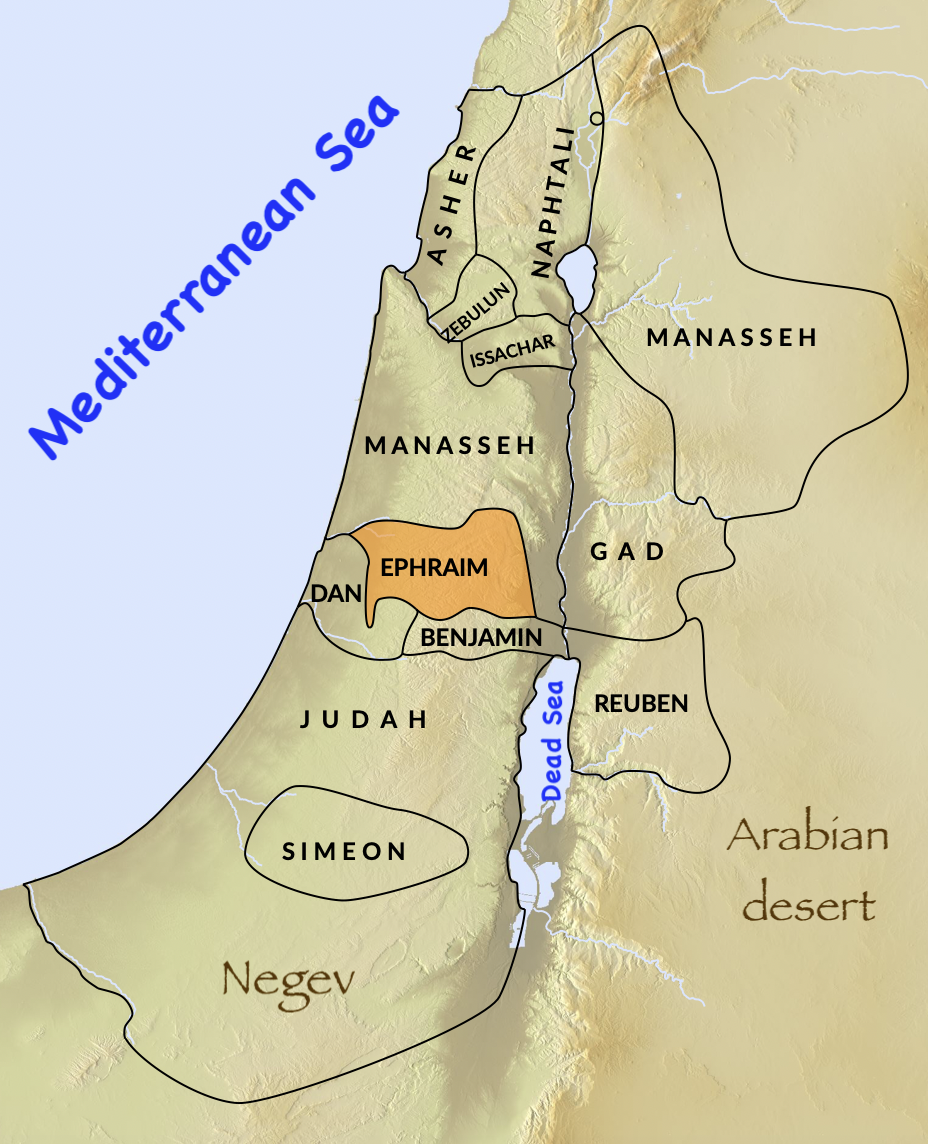
This chapter covers the descendants of the three tribes of Israel that settled on the east side of the Jordan River, outside the designated borders of the promised land. The region in which they settled is often referred to as the Transjordan. Prior to beginning the conquest and occupation of the land of Canaan as God had commanded, the tribes of Reuben, Gad, and Manasseh asked for permission to settle east of the Jordan on fertile land that was perfect for raising their many flock and herds.

The tribes of Reuben and Gad owned vast numbers of livestock. So when they saw that the lands of Jazer and Gilead were ideally suited for their flocks and herds, they came to Moses, Eleazar the priest, and the other leaders of the community. They said, “Notice the towns of Ataroth, Dibon, Jazer, Nimrah, Heshbon, Elealeh, Sibmah, Nebo, and Beon. The Lord has conquered this whole area for the community of Israel, and it is ideally suited for all our livestock. If we have found favor with you, please let us have this land as our property instead of giving us land across the Jordan River.” – Numbers 32:1-5 NLT

Angered by the self-centered nature of their request, Moses gave them an emphatic “No!” as his answer.

“The Lord was angry with Israel and made them wander in the wilderness for forty years until the entire generation that sinned in the Lord’s sight had died. But here you are, a brood of sinners, doing exactly the same thing! You are making the Lord even angrier with Israel. If you turn away from him like this and he abandons them again in the wilderness, you will be responsible for destroying this entire nation!” – Numbers 32:13-15 NLT

Moses feared that if he gave in to their request, they would get comfortable and refuse to assist their brothers in conquering the land of Canaan. This would leave the remainder of the tribes at a distinct disadvantage. However, the elders of the three tribes assured Moses that they would play their part in the conquest of Canaan.

“We simply want to build pens for our livestock and fortified towns for our wives and children. Then we will arm ourselves and lead our fellow Israelites into battle until we have brought them safely to their land. Meanwhile, our families will stay in the fortified towns we build here, so they will be safe from any attacks by the local people. We will not return to our homes until all the people of Israel have received their portions of land. But we do not claim any of the land on the other side of the Jordan. We would rather live here on the east side and accept this as our grant of land.” – Numbers 32:16-19 NLT

While these three tribes refused their inheritance in the land of promise, the chronicler included them in his genealogical listing, along with the rest of the tribes of Israel. Their decision to settle outside the borders of the promised land did not forfeit their right to be called the children of God. It also did not protect them from facing God’s judgment and being conquered by foreign invaders. They too ended up as slaves but not to the Babylonians.

…these tribes were unfaithful to the God of their ancestors. They worshiped the gods of the nations that God had destroyed. So the God of Israel caused King Pul of Assyria (also known as Tiglath-pileser) to invade the land and take away the people of Reuben, Gad, and the half-tribe of Manasseh as captives. The Assyrians exiled them to Halah, Habor, Hara, and the Gozan River, where they remain to this day. – 1 Chronicles 5:25-26 NLT

The inference is that these tribes never returned to the land of promise. Unlike the remaining tribes, the Reubenites, Gadites, and the half-tribe of Manasseh ended up becoming slaves to the Assyrians. Their defeat and deportation took place hundreds of years before the fall of the kingdom of Judah. There is no biblical record of any of the descendants of these tribes returning to the promised land. This closing statement in chapter 5 is meant to remind the returning Israelites of the unique nature of their restoration to the land by God. They were no more deserving than the other three tribes, but God had allowed them to escape their captivity in Babylon and experience the joy of returning to their homeland.

The tribe of Reuben receives special attention because of the actions of their patriarch. He is listed as “the firstborn of Israel” (1 Chronicles 5:1) because he was the oldest son of Jacob. But Reuben had forfeited his rights as the eldest son because “he dishonored his father by sleeping with one of his father’s concubines” and, as a result, “his birthright was given to the sons of his brother Joseph” (1 Chronicles 5:1 NLT). While the chronicler provides little in the way of details, it’s likely his audience was very familiar with the sordid story. The Book of Genesis fills in the gaps.

Then Jacob traveled on and camped beyond Migdal-eder. While he was living there, Reuben had intercourse with Bilhah, his father’s concubine, and Jacob soon heard about it. – Genesis 35:21-22 NLT

Even before the law was given by God, Reuben’s behavior was deemed unacceptable by the prevailing social standards. It seems that his actions were motivated by more than sexual desire. By sleeping with his father’s concubine, Reuben was issuing a direct challenge to his father’s authority and attempting to assert his right to serve as the head of the family. But his act of indiscretion brought down the wrath of his father and the loss of his rights as the firstborn son.

“Reuben, you are my firstborn, my strength,
    the child of my vigorous youth.
    You are first in rank and first in power.
But you are as unruly as a flood,
    and you will be first no longer.
For you went to bed with my wife;
    you defiled my marriage couch.” – Genesis 49:3-4 NLT

The chronicler provides the ramifications of this “curse” issued by Jacob.

For this reason, Reuben is not listed in the genealogical records as the firstborn son. The descendants of Judah became the most powerful tribe and provided a ruler for the nation, but the birthright belonged to Joseph. – 1 Chronicles 5:1-2 NLT

“…because of his sin (v. 1) God passed him over. God blessed Joseph with the double portion of the birthright. He did this by elevating Joseph’s two sons, Ephraim and Manasseh, to equality among Jacob’s other sons, Joseph’s brothers.” – Thomas L. Constable, Notes on 1 Chronicles

Despite his egregious sin, Reuben’s tribe was allowed to settle in the region of Gilead and enjoy the bounty of the land and victories over their enemies.

The tribe of Gad also settled east of the Jordan, sharing the land of Gilead with the Reubenites and expanding their territory into Bashan. They too enjoyed God’s blessings in the form of military success and agricultural abundance.

While these three tribes settled in land outside the borders of the promised land, they were not immune from conflict. They too were seen as foreign invaders by the land’s current occupants and were forced to wage war with their enemies. The chronicler points out that “There were 44,760 capable warriors in the armies of Reuben, Gad, and the half-tribe of Manasseh. They were all skilled in combat and armed with shields, swords, and bows. They waged war against the Hagrites, the Jeturites, the Naphishites, and the Nodabites” (1 Chronicles 5:18-19 NLT). Their occupation of land outside the borders of the designated inheritance did not relieve them of the need to do battle with the enemies of God. The constant conflict they faced led them to trust in the Lord for His assistance. While they could boast of having a large and well-trained army, they knew they were powerless without God’s help. 

The chronicler points out one such occasion when they turned to Yahweh for help.

They cried out to God during the battle, and he answered their prayer because they trusted in him. So the Hagrites and all their allies were defeated. – 1 Chronicles 5:20 NLT

God knew no boundaries. He was not the God of the promised land; He was the God of the people of Israel, and that included the tribes of Reuben, Gad, and Manasseh. Little did these three tribes know that they had settled in land that was always meant to be part of the inheritance God had promised Abraham.

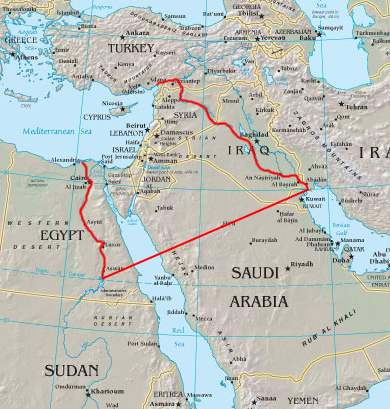
So the Lord made a covenant with Abram that day and said, “I have given this land to your descendants, all the way from the border of Egypt to the great Euphrates River— the land now occupied by the Kenites, Kenizzites, Kadmonites, Hittites, Perizzites, Rephaites, Amorites, Canaanites, Girgashites, and Jebusites.” – Genesis 15:18-21 NLT

God later confirmed this promise with Moses.

“I will fix your boundaries from the Red Sea to the Mediterranean Sea, and from the eastern wilderness to the Euphrates River.” – Exodus 23:31 NLT

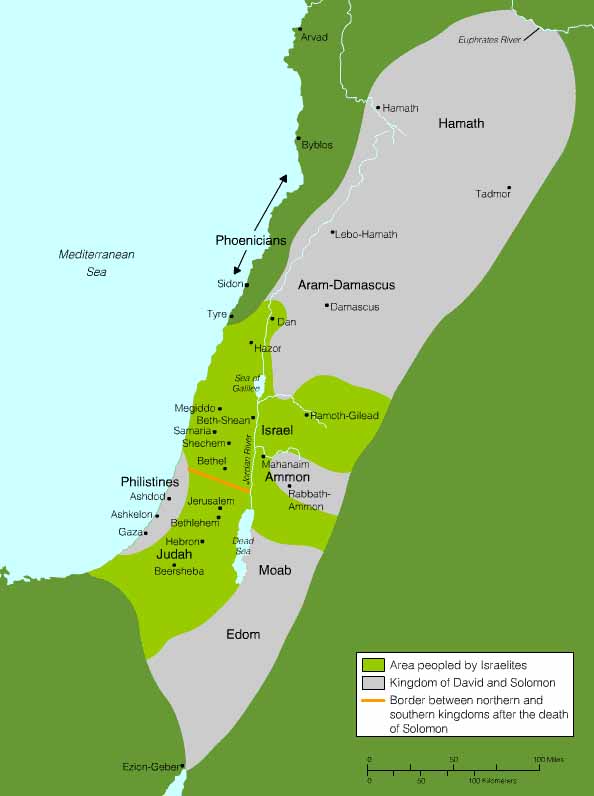
God had always planned for the land of Israel to extend all the way to the Euphrates River. But at no point in Israel’s history have their borders included this vast tract of land now occupied by Jordan, Syria, Lebanon, and Iraq. Even during the reigns of David and Solomon, when the borders of Israel expanded greatly, they never included these vast regions. But the day will come when God will complete what He began and fulfill all that He promised to Abraham.

In the meantime, the newly arrived remnant of God’s chosen people needed to be reminded that their ancestors had conquered large portions of Canaan and it was still their rightful possession. But like the tribes of Reuben, Gad, and Manasseh, they would have to trust God if they wanted to enjoy the full scope of their promised inheritance. They were back in the land but the battle was far from over. There was work to be done and they would need to rely upon God if they wanted to see their borders expanded, their homes and towns restored, and their nation renewed.

English Standard Version (ESV)
The Holy Bible, English Standard Version. ESV® Permanent Text Edition® (2016). Copyright © 2001 by Crossway Bibles, a publishing ministry of Good News Publishers.

New Living Translation (NLT)
Holy Bible, New Living Translation, copyright © 1996, 2004, 2015 by Tyndale House Foundation. Used by permission of Tyndale House Publishers Inc., Carol Stream, Illinois 60188. All rights reserved.
Cleansing Is Always the Key to Blessing

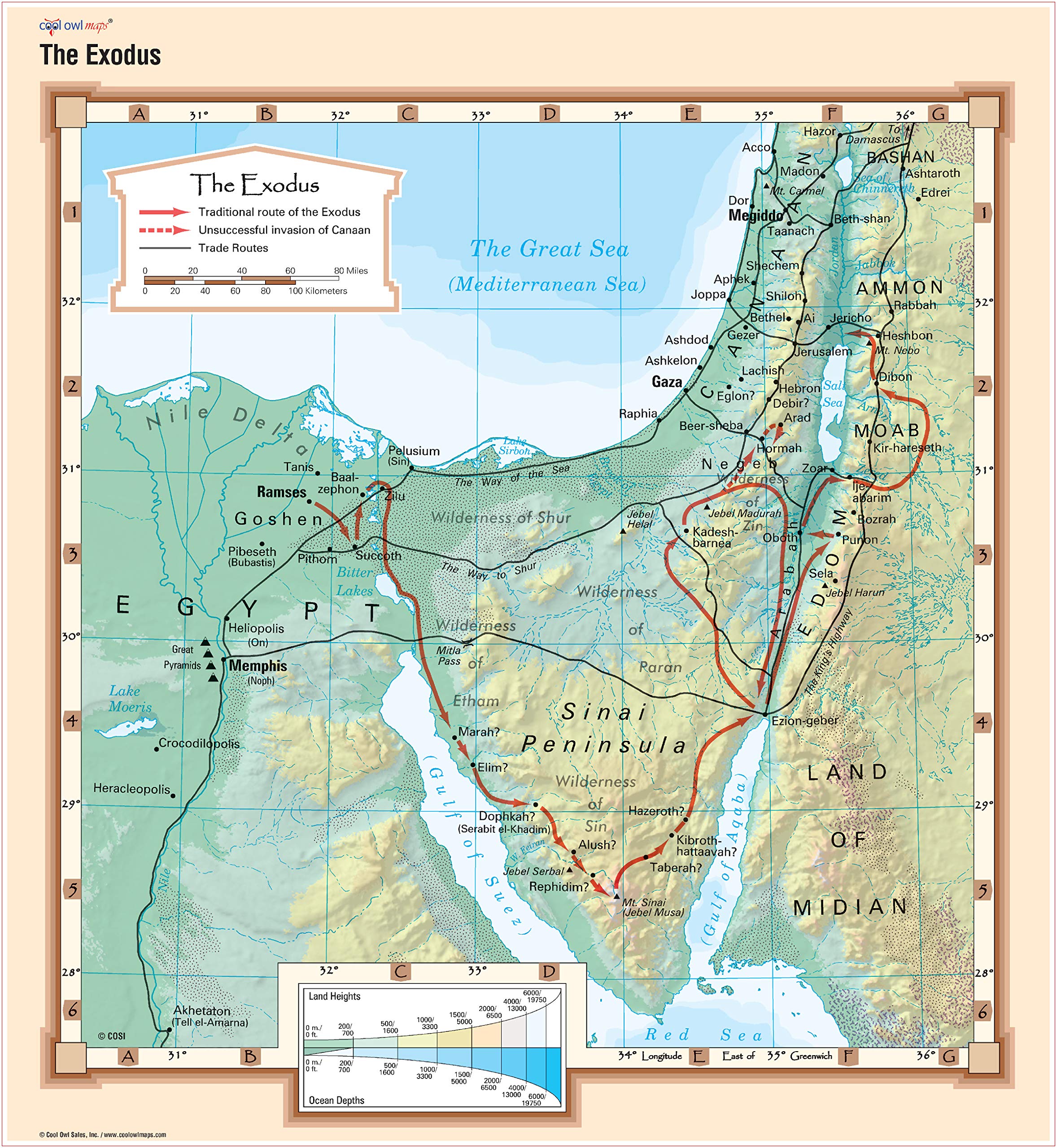
1 These are the stages of the people of Israel, when they went out of the land of Egypt by their companies under the leadership of Moses and Aaron. 2 Moses wrote down their starting places, stage by stage, by command of the Lord, and these are their stages according to their starting places. 3 They set out from Rameses in the first month, on the fifteenth day of the first month. On the day after the Passover, the people of Israel went out triumphantly in the sight of all the Egyptians, 4 while the Egyptians were burying all their firstborn, whom the Lord had struck down among them. On their gods also the Lord executed judgments.

5 So the people of Israel set out from Rameses and camped at Succoth. 6 And they set out from Succoth and camped at Etham, which is on the edge of the wilderness. 7 And they set out from Etham and turned back to Pi-hahiroth, which is east of Baal-zephon, and they camped before Migdol. 8 And they set out from before Hahiroth and passed through the midst of the sea into the wilderness, and they went a three days’ journey in the wilderness of Etham and camped at Marah. 9 And they set out from Marah and came to Elim; at Elim there were twelve springs of water and seventy palm trees, and they camped there. 10 And they set out from Elim and camped by the Red Sea. 11 And they set out from the Red Sea and camped in the wilderness of Sin. 12 And they set out from the wilderness of Sin and camped at Dophkah. 13 And they set out from Dophkah and camped at Alush. 14 And they set out from Alush and camped at Rephidim, where there was no water for the people to drink. 15 And they set out from Rephidim and camped in the wilderness of Sinai. 16 And they set out from the wilderness of Sinai and camped at Kibroth-hattaavah. 17 And they set out from Kibroth-hattaavah and camped at Hazeroth. 18 And they set out from Hazeroth and camped at Rithmah. 19 And they set out from Rithmah and camped at Rimmon-perez. 20 And they set out from Rimmon-perez and camped at Libnah. 21 And they set out from Libnah and camped at Rissah. 22 And they set out from Rissah and camped at Kehelathah. 23 And they set out from Kehelathah and camped at Mount Shepher. 24 And they set out from Mount Shepher and camped at Haradah. 25 And they set out from Haradah and camped at Makheloth. 26 And they set out from Makheloth and camped at Tahath. 27 And they set out from Tahath and camped at Terah. 28 And they set out from Terah and camped at Mithkah. 29 And they set out from Mithkah and camped at Hashmonah. 30 And they set out from Hashmonah and camped at Moseroth. 31 And they set out from Moseroth and camped at Bene-jaakan. 32 And they set out from Bene-jaakan and camped at Hor-haggidgad. 33 And they set out from Hor-haggidgad and camped at Jotbathah. 34 And they set out from Jotbathah and camped at Abronah. 35 And they set out from Abronah and camped at Ezion-geber. 36 And they set out from Ezion-geber and camped in the wilderness of Zin (that is, Kadesh). 37 And they set out from Kadesh and camped at Mount Hor, on the edge of the land of Edom.

38 And Aaron the priest went up Mount Hor at the command of the Lord and died there, in the fortieth year after the people of Israel had come out of the land of Egypt, on the first day of the fifth month. 39 And Aaron was 123 years old when he died on Mount Hor.

40 And the Canaanite, the king of Arad, who lived in the Negeb in the land of Canaan, heard of the coming of the people of Israel.

41 And they set out from Mount Hor and camped at Zalmonah. 42 And they set out from Zalmonah and camped at Punon. 43 And they set out from Punon and camped at Oboth. 44 And they set out from Oboth and camped at Iye-abarim, in the territory of Moab. 45 And they set out from Iyim and camped at Dibon-gad. 46 And they set out from Dibon-gad and camped at Almon-diblathaim. 47 And they set out from Almon-diblathaim and camped in the mountains of Abarim, before Nebo. 48 And they set out from the mountains of Abarim and camped in the plains of Moab by the Jordan at Jericho; 49 they camped by the Jordan from Beth-jeshimoth as far as Abel-shittim in the plains of Moab.

50 And the Lord spoke to Moses in the plains of Moab by the Jordan at Jericho, saying, 51 “Speak to the people of Israel and say to them, When you pass over the Jordan into the land of Canaan, 52 then you shall drive out all the inhabitants of the land from before you and destroy all their figured stones and destroy all their metal images and demolish all their high places. 53 And you shall take possession of the land and settle in it, for I have given the land to you to possess it. 54 You shall inherit the land by lot according to your clans. To a large tribe you shall give a large inheritance, and to a small tribe you shall give a small inheritance. Wherever the lot falls for anyone, that shall be his. According to the tribes of your fathers you shall inherit. 55 But if you do not drive out the inhabitants of the land from before you, then those of them whom you let remain shall be as barbs in your eyes and thorns in your sides, and they shall trouble you in the land where you dwell. 56 And I will do to you as I thought to do to them.” – Numbers 33:1-56 ESV

After doing to rapid-fire recounting of Israel’s trek from Egypt to the banks of the Jordan River, Moses prepares the people of God for their next big task. They are almost at the end of their four-decade-long journey, but they are far from done.  After more than 40 years in the wilderness, they stand on the eastern bank of the Jordan River waiting for God’s command to cross over and begin their conquest and occupation of the land of promise. The day they had long been waiting for had finally arrived. There had been a lengthy delay, but now it was time to enjoy what God had promised so long ago.

But as with most things associated with God, the blessing was tied to a requirement. He had one last instruction to give them before they took possession of the land, and it was a fairly significant one. They must drive out all the people who were living there. On top of that, they had to destroy all the idols and pagan shrines erected to the gods of the land. They were to smash every vestige of idol worship they found. In other words, God expected them to clean up before they settled down.

Sounds simple enough doesn’t it? But if you’re the least bit familiar with the story of the Israelites, they didn’t exactly follow God’s instructions to the letter; they took a few liberties. It’s almost as if the enemy (Satan) was standing there just as he had been in the garden of Eden, asking the question, “Surely, God has not said…”

I can just hear Satan whispering in their ears, “You don’t have to get rid of ALL the idols, just most of them.” Or maybe he worded his temptation this way: “You might want to leave one of the pagan shrines intact, just in case Yahweh doesn’t come through for you.”

As far as God’s command to rid the land of all its occupants, Satan probably did his best to convince the Israelites just how politically incorrect and insensitive this might appear to the rest of the people in the region. They probably thought to themselves, “We don’t want to get off on the wrong foot with our new neighbors, do we?”

And God seemed to know that the people would have second thoughts about His command, so He warned them what would happen if they failed to obey.

“But if you fail to drive out the people who live in the land, those who remain will be like splinters in your eyes and thorns in your sides. They will harass you in the land where you live. And I will do to you what I had planned to do to them.” – Numbers 33:55-56 NLT

“Disobey me,” God says, “and you will live to regret it.” This was not a suggestion, but a command. God expected them to follow His requirements without delay or deviation. He had a good reason for what He was asking them to do, and He knew exactly what would happen if they chose to disobey Him. If the Israelites failed to remove the land’s occupants, their enemies would become a constant threat and a thorn in their side. They would never learn to live amicably together. So, cleansing was critical for spiritual survival.

In his commentary on the Book of Numbers, Dr. Thomas Constable writes, “The repetition of ‘all’ (Numbers 33:52) stresses the importance of completely clearing the land of its inhabitants and their religious paraphernalia. God wanted to clean up the land spiritually and to make it a ‘holy land.’ The land was a gift from God to His first-born son, Israel (Numbers 33:53). God warned the Israelites what would happen to them if they were not completely obedient (Numbers 333:55-56). The Canaanites would be a constant source of irritation to them, and God would deal with His people as He planned to deal with the Canaanites.”

God wanted to purify the land spiritually and make it holy. That reminds me of what God wants to do with my life. He wants to clean it up spiritually and set it apart for His use. He is about removing anything in my life that might defile or defeat me. In essence, He wants to clean house.

But I tend to hang on to certain remnants of my past. I want to give the enemy some footholds in my life where he can live in peace. I want to maintain some of the idols that were there before God came to occupy the land because I find them comforting. They bring me a little bit of peace and assurance. But God wants to purge my life of any vestiges of the past. He wants to make all things new.

To receive all the blessings the promised land had to offer, the people were going to have to obey God fully. The same thing is true for us today. To enjoy all the blessings our new life in Christ offers, we must obey God fully. God makes this clear in His Word.

…throw off your old evil nature and your former way of life, which is rotten through and through, full of lust and deception. – Ephesians 4:22 NLT

Don’t lie to one another. You’re done with that old life. It’s like a filthy set of ill-fitting clothes you’ve stripped off and put in the fire. – Colossians 3:9 MSG

The night is almost gone; the day of salvation will soon be here. So don’t live in darkness. Get rid of your evil deeds. Shed them like dirty clothes. Clothe yourselves with the armor of right living, as those who live in the light. We should be decent and true in everything we do, so that everyone can approve of our behavior. Don’t participate in wild parties and getting drunk, or in adultery and immoral living, or in fighting and jealousy. But let the Lord Jesus Christ take control of you, and don’t think of ways to indulge your evil desires. – Romans 13:12-14 NLT

God was looking for a change in the lives of the Israelites. He wanted to purge and purify them, and that process began with a thorough cleansing of the land. His desire was to rid the landscape of their lives of any and all vestiges of the past.

Like the Israelites, we must take our set-apart status seriously.  We must remove all the idols and false gods that might draw us away from full reliance upon Him. If we do, we will be blessed. If we don’t, we will always find ourselves doing battle with past enemies and tempted to worship the false gods of our former life. Cleansing is always the key to blessing.

English Standard Version (ESV) The Holy Bible, English Standard Version. ESV® Permanent Text Edition® (2016). Copyright © 2001

New Living Translation (NLT) Holy Bible, New Living Translation, copyright © 1996, 2004, 2015 by Tyndale House Foundation. Used by permission of Tyndale House Publishers Inc., Carol Stream, Illinois 60188. All rights reserved.

A New Leader But the Same Old People

12 The Lord said to Moses, “Go up into this mountain of Abarim and see the land that I have given to the people of Israel. 13 When you have seen it, you also shall be gathered to your people, as your brother Aaron was, 14 because you rebelled against my word in the wilderness of Zin when the congregation quarreled, failing to uphold me as holy at the waters before their eyes.” (These are the waters of Meribah of Kadesh in the wilderness of Zin.) 15 Moses spoke to the Lord, saying, 16 “Let the Lord, the God of the spirits of all flesh, appoint a man over the congregation 17 who shall go out before them and come in before them, who shall lead them out and bring them in, that the congregation of the Lord may not be as sheep that have no shepherd.” 18 So the Lord said to Moses, “Take Joshua the son of Nun, a man in whom is the Spirit, and lay your hand on him. 19 Make him stand before Eleazar the priest and all the congregation, and you shall commission him in their sight. 20 You shall invest him with some of your authority, that all the congregation of the people of Israel may obey. 21 And he shall stand before Eleazar the priest, who shall inquire for him by the judgment of the Urim before the Lord. At his word they shall go out, and at his word they shall come in, both he and all the people of Israel with him, the whole congregation.” 22 And Moses did as the Lord commanded him. He took Joshua and made him stand before Eleazar the priest and the whole congregation, 23 and he laid his hands on him and commissioned him as the Lord directed through Moses. – Numbers 27:12-23 ESV

The day Moses had been dreading had finally arrived. He had known for some time that he would not be leading the people of Israel into the land of Canaan. Due to Moses’ uncharacteristic actions in the wilderness of Zin, God had determined to ban his servant from entering the promised land.

“Because you did not trust me enough to demonstrate my holiness to the people of Israel, you will not lead them into the land I am giving them!” – Numbers 20:12 NLT

In a moment of extreme frustration with the constantly whining Israelites, Moses had snapped and disobeyed the command of God.

“You and Aaron must take the staff and assemble the entire community. As the people watch, speak to the rock over there, and it will pour out its water. You will provide enough water from the rock to satisfy the whole community and their livestock.” – Numbers 20:8 NLT

Rather than speaking to the rock as God had ordered him to do, Moses lashed out in anger and repeatedly struck the rock with his staff. His anger and frustration with the people had caused him to disobey and dishonor God in the eyes of the people. It appears that Moses’ real crime was that he attempted to rob God of glory by claiming responsibility for producing the miracle.

“Listen, you rebels!” he shouted. “Must we bring you water from this rock?”– Numbers 20:10 NLT

His attempt to inflate his own identity in the eyes of the people cost him dearly. While his impromptu actions successfully produced water from the rock and probably earned him a bit of respect from the people, his little stunt resulted in his permanent ban from the land of promise; he would never have the pleasure of entering God’s rest. Instead, he would die in the wilderness, just as Miriam and Aaron had.

So, with the Israelites on the verge of entering Canaan, God informed Moses that his days on this earth had come to an end. His debt had come due. But before taking Moses’ life, God gave His servant one more chance to see the land of promise from a distance. God led Moses up a mountain and allowed him to take in the view.

“Climb one of the mountains east of the river, and look out over the land I have given the people of Israel. After you have seen it, you will die like your brother, Aaron, for you both rebelled against my instructions in the wilderness of Zin. When the people of Israel rebelled, you failed to demonstrate my holiness to them at the waters.” – Numbers 27:12-14 NLT

For nearly four decades, this land had been the focus of Moses’ life. Ever since he had led the people out of Egypt, his life’s mission had been to guide them to this very spot. But now, as he looked out over the fertile valley below, he was doing so for the very last time. He would not be going in and it was time to turn over his leadership responsibilities to someone else.

Ever the consummate leader, Moses begged God to appoint the right man for the task. He knew from firsthand experience just how stubborn and headstrong the people could be and they would never make it without strong leadership.

“O Lord, you are the God who gives breath to all creatures. Please appoint a new man as leader for the community. Give them someone who will guide them wherever they go and will lead them into battle, so the community of the Lord will not be like sheep without a shepherd.”– Nmbers 27:16-17 NLT

This request from Moses reveals a great deal about his heart. Despite all the difficulties the people of Israel had caused him over the last forty years, Moses cared deeply for them. He knew that, without strong leadership, they would never make it. As difficult as the last four decades had been, their conquering of the land of Canaan would pose a far greater test of their resolve and faithfulness. The next leader would need to be able to do battle with the rebellion-prone Israelites as well as the occupants of the land.

While Moses had been required to lead the people across the wilderness, his replacement would be tasked with leading them into battle. Their conquest of Canaan would be difficult and fraught with danger, and these people who had made a habit of whining about the lack of water and food would certainly find the thought of military service distasteful. So, they were going to need a man who was equal parts warrior and shepherd. He would have to be both a fighting man and a kind-hearted guide who could lead the people with patience and care.

But Moses’ concerns were unnecessary because God already had a man in mind. He suggested Joshua, one of the two men who had been part of the 12-man contingent of spies who had reconnoitered the land 40 years earlier. Joshua and Caleb had been the voices of reason among the fearful and disheartened men who recommended that the people not enter the land of promise. While the majority of the spies had deemed the land unconquerable and to be avoided at all costs, Joshua and Caleb had provided a dissenting opinion:

Two of the men who had explored the land, Joshua son of Nun and Caleb son of Jephunneh, tore their clothing. They said to all the people of Israel, “The land we traveled through and explored is a wonderful land! And if the Lord is pleased with us, he will bring us safely into that land and give it to us. It is a rich land flowing with milk and honey. Do not rebel against the Lord, and don’t be afraid of the people of the land. They are only helpless prey to us! They have no protection, but the Lord is with us! Don’t be afraid of them!” – Numbers 14:6-9 NLT

While the people eventually rejected the counsel of Joshua and Caleb, these two men had powerfully declared their faith in God and demonstrated their belief in His power and goodness. Despite the odds, they had called the people to trust and obey their sovereign God. Four decades later, God chose Joshua to be Moses’ successor.

“Take Joshua son of Nun, who has the Spirit in him, and lay your hands on him. Present him to Eleazar the priest before the whole community, and publicly commission him to lead the people.” – Numbers 27:18-19 NLT

“This spirit was not something that now came upon Joshua, or was temporary (such as the coming of the spirit on the elders in 11:17, 25-26); it already existed in Joshua and was the basis of God’s choice of him. Deut. 34:9 applies the phrase ‘full of the spirit of Wisdom’ to Joshua, confirming the thought here.” – Timothy R. Ashley, The Book of Numbers.

Joshua was God’s man for the moment. He had been chosen by God long before this day arrived, and the Spirit of God had been preparing him for the next phase of Israel’s journey.

But God’s relationship with Joshua would be different than the one He had with Moses. While God had interacted with Moses face-to-face, Joshua received his instructions through the high priest and the use of “the Urim—one of the sacred lots cast before the Lord” (Numbers 27:21 NLT). This new method of communication would feature built-in safeguards, allowing Eleazar, the high priest, to act as a source of confirmation for all decisions. This would prevent Joshua from acting on his own and risking the wrath of God.

Having received God’s plan for his replacement and knowing that he would soon be breathing his last breath on Earth, Moses descended from the mountain and went about preparing Joshua for his new role.

So Moses did as the Lord commanded. He presented Joshua to Eleazar the priest and the whole community. Moses laid his hands on him and commissioned him to lead the people, just as the Lord had commanded through Moses. – Numbers 27:22-23 NLT

With new leadership called and commissioned, it was time to begin the final phase of the mission. This generation of Israelites was about to do what their mothers and fathers had failed to do: Enter the land of promise. This had been the goal all along. It had always been God’s intention for the wilderness to be a means to this end. From the moment they left Egypt and began their long trek to the Jordan River, the Israelites had been on a journey to the land of promise. Now, their inheritance lay across the river and all they had to do was step out in faith and take it as their own. But as Joshua would soon discover, that would be easier said than done. As Moses’ God-appointed replacement, he had his work cut out for him and his reliance upon God was about to be sorely tested.

English Standard Version (ESV) The Holy Bible, English Standard Version. ESV® Permanent Text Edition® (2016). Copyright © 2001

New Living Translation (NLT) Holy Bible, New Living Translation, copyright © 1996, 2004, 2015 by Tyndale House Foundation. Used by permission of Tyndale House Publishers Inc., Carol Stream, Illinois 60188. All rights reserved.
The Sometimes Painful Path to the Promise

14 Moses sent messengers from Kadesh to the king of Edom: “Thus says your brother Israel: You know all the hardship that we have met: 15 how our fathers went down to Egypt, and we lived in Egypt a long time. And the Egyptians dealt harshly with us and our fathers. 16 And when we cried to the Lord, he heard our voice and sent an angel and brought us out of Egypt. And here we are in Kadesh, a city on the edge of your territory. 17 Please let us pass through your land. We will not pass through field or vineyard, or drink water from a well. We will go along the King’s Highway. We will not turn aside to the right hand or to the left until we have passed through your territory.” 18 But Edom said to him, “You shall not pass through, lest I come out with the sword against you.” 19 And the people of Israel said to him, “We will go up by the highway, and if we drink of your water, I and my livestock, then I will pay for it. Let me only pass through on foot, nothing more.” 20 But he said, “You shall not pass through.” And Edom came out against them with a large army and with a strong force. 21 Thus Edom refused to give Israel passage through his territory, so Israel turned away from him.

22 And they journeyed from Kadesh, and the people of Israel, the whole congregation, came to Mount Hor. 23 And the Lord said to Moses and Aaron at Mount Hor, on the border of the land of Edom, 24 “Let Aaron be gathered to his people, for he shall not enter the land that I have given to the people of Israel, because you rebelled against my command at the waters of Meribah. 25 Take Aaron and Eleazar his son and bring them up to Mount Hor. 26 And strip Aaron of his garments and put them on Eleazar his son. And Aaron shall be gathered to his people and shall die there.” 27 Moses did as the Lord commanded. And they went up Mount Hor in the sight of all the congregation. 28 And Moses stripped Aaron of his garments and put them on Eleazar his son. And Aaron died there on the top of the mountain. Then Moses and Eleazar came down from the mountain. 29 And when all the congregation saw that Aaron had perished, all the house of Israel wept for Aaron thirty days. – Numbers 20:14-29 ESV

The Israelites were nearing their final destination and as they approached the borders of Canaan, God began to clean house. Chapter 20 opens with the death of Miriam. But the end of the chapter records the death of her brother, Aaron, the high priest of Israel. He too was disciplined by God for his part in the events at Meribah. God had accused both Aaron and Moses of treating Him disrespectfully before the people.

“Because you did not believe in me, to uphold me as holy in the eyes of the people of Israel, therefore you shall not bring this assembly into the land that I have given them.” – Numbers 20:12 ESV

While Moses had been the one to strike the rock three times in anger, Aaron had done nothing to stop his brother from disobeying God’s command. God had clearly communicated His orders to both men.

“You and Aaron must take the staff and assemble the entire community. As the people watch, speak to the rock over there, and it will pour out its water. You will provide enough water from the rock to satisfy the whole community and their livestock.” – Numbers 20:8 NLT

But Moses and Aaron were fed up with the constant bickering and complaining of the people. Despite God’s precise instructions, they decided to use this God-ordained miracle as an opportunity to teach the people a lesson.

Then he and Aaron summoned the people to come and gather at the rock. “Listen, you rebels!” he shouted. “Must we bring you water from this rock?” Then Moses raised his hand and struck the rock twice with the staff, and water gushed out. So the entire community and their livestock drank their fill. – Numbers 20:10-11 NLT

Moses, speaking on behalf of himself and his brother, tried to leave the impression that they were the ones who would meet the Israelite’s needs by providing water from the rock. In essence, they tried to rob God of glory. Then, by striking the rock rather than speaking to it, Moses violated the command of God. And God would hold both men accountable for their actions.

It was on the southern border of the land of Edom that God delivered the devastating news to Aaron and Moses.

“He will not enter the land I am giving the people of Israel, because the two of you rebelled against my instructions concerning the water at Meribah.” – Numbers 20:24 NLT

In a rather sobering ceremony atop Mount Hor, Moses took the priestly robes off of Aaron and gave them to Aaron’s son, Eleazar. It appears from the text that Aaron did not get to live out the rest of his life wandering in the wilderness but died on top of the mountain while Moses and Eleazar looked on. They descended the mountain without him and the people of Israel mourned his death for 30 days.

Now Moses was alone. For nearly 40 years he had led the people of Israel with the help of his brother and sister, but their deaths had left him with the sole responsibility of getting the people of Israel to the land of Canaan. But Moses knew that he was never going to set foot in the land because of his role in the affair at Meribah. Like Aaron, he would be denied access to the land of promise and breathe his last breath in the wilderness.

But Moses continued to fulfill the duties God had given to him some four decades earlier. He mourned the loss of his brother but then set about leading the people of Israel to the border of Canaan. To do so, he had attempted to take a shortcut through the land of Edom.

Edom was located on the southernmost border of Canaan and was occupied by distant relatives of the Israelites. The Edomites were the descendants of Esau, the firstborn son of Isaac and the twin brother of Jacob. When Esau had been cheated out of his birthright by Jacob, he decided to relocate his family to another part of Canaan.

Esau took his wives, his children, and his entire household, along with his livestock and cattle—all the wealth he had acquired in the land of Canaan—and moved away from his brother, Jacob. There was not enough land to support them both because of all the livestock and possessions they had acquired. So Esau (also known as Edom) settled in the hill country of Seir. – Genesis 36:6-8 NLT

Once there, Esau’s descendants prospered and developed a thriving kingdom. During the four centuries that the Israelites were in Egypt, the Edomites lived under a long line of kings (Genesis 36:31) and enjoyed a measure of peace and prosperity.

So, when Moses sent emissaries to the king of Edom seeking permission to pass through their territory, he expected a favorable response.

“This is what your relatives, the people of Israel, say: You know all the hardships we have been through. Our ancestors went down to Egypt, and we lived there a long time, and we and our ancestors were brutally mistreated by the Egyptians. But when we cried out to the Lord, he heard us and sent an angel who brought us out of Egypt. Now we are camped at Kadesh, a town on the border of your land. Please let us travel through your land. We will be careful not to go through your fields and vineyards. We won’t even drink water from your wells. We will stay on the king’s road and never leave it until we have passed through your territory.”– Numbers 20:14-17 NLT

The kingdom of Edom covered a large swath of land and without the right of safe passage through its territory, Moses and the people of Israel would be forced to take a much longer route around it. But no matter how hard Moses pleaded, the king of Edom refused to grant access to their land; he even threatened them with war if they tried. As a further deterrent, the king of Edom “mobilized his army and marched out against them with an imposing force” (Numbers 20:20 NLT). 

Rejected by their own kin, the Israelites were forced to reverse course and take the long detour around Edom. What’s interesting to consider is that the Israelites had always been led by the pillar of cloud by day and the pillar of fire by night. God had used these two phenomena to guide His people throughout their four-decade-long journey. So, was Moses’ attempt to take a shortcut through Edom an unauthorized decision on his part? Had the cloud of God’s presence led him to this point or were his negotiations with Edom something he had come up with on his own? Was Moses trying to shorten the distance to Canaan by taking an unauthorized path through the land of Edom?

It seems unlikely that God would have chosen to use the Edomites to help His chosen people reach the land He had promised to provide for them. These two nations remained in constant conflict with one another long after Israel conquered and occupied the land of Canaan. The book of Obadiah describes God’s anger against Edom for the way it took advantage of Israel’s later misfortunes when the Babylonians conquered them and left the land desolate and depopulated.

“Because of the violence you did
    to your close relatives in Israel,
you will be filled with shame
    and destroyed forever.
When they were invaded,
    you stood aloof, refusing to help them.
Foreign invaders carried off their wealth
    and cast lots to divide up Jerusalem,
    but you acted like one of Israel’s enemies.

“You should not have gloated
    when they exiled your relatives to distant lands.
You should not have rejoiced
    when the people of Judah suffered such misfortune.
You should not have spoken arrogantly
    in that terrible time of trouble.
You should not have plundered the land of Israel
    when they were suffering such calamity.
You should not have gloated over their destruction
    when they were suffering such calamity.
You should not have seized their wealth
    when they were suffering such calamity.
You should not have stood at the crossroads,
    killing those who tried to escape.
You should not have captured the survivors
    and handed them over in their terrible time of trouble.” – Obadiah 10-14 ESV

The Israelites received no assistance from their distant relatives and were forced to travel southeasterly toward the Arabian desert. This unexpected setback must have disappointed Moses and it’s clear from the next chapter that it left the people of Israel far from pleased.

From Mount Hor they set out by the way to the Red Sea, to go around the land of Edom. And the people became impatient on the way. – Numbers 21:4 ESV

This was yet another test for God’s people. Their entrance into the land would not be easy and God was not done teaching them the lessons they needed to learn before that day arrived. Their impatience and disappointment with the unexpected detour around Edom left them disappointed and disgruntled, proving that they were not yet ready to enter His rest.

It seems that God knew that, had His stubborn and rebellion-prone people been warmly greeted by their Edomite relatives, they would have been tempted to settle down, intermarry, and forget all about the promised land. But that was not part of God’s plan. Edom was not their destination, so God continued to purge their leadership and purify their hearts in preparation for the day when He would lead them into their promised inheritance. He had something far better in store for His chosen people.

English Standard Version (ESV) The Holy Bible, English Standard Version. ESV® Permanent Text Edition® (2016). Copyright © 2001

New Living Translation (NLT) Holy Bible, New Living Translation, copyright © 1996, 2004, 2015 by Tyndale House Foundation. Used by permission of Tyndale House Publishers Inc., Carol Stream, Illinois 60188. All rights reserved.

God Cares For His Own

8 Then the Lord spoke to Aaron, “Behold, I have given you charge of the contributions made to me, all the consecrated things of the people of Israel. I have given them to you as a portion and to your sons as a perpetual due. 9 This shall be yours of the most holy things, reserved from the fire: every offering of theirs, every grain offering of theirs and every sin offering of theirs and every guilt offering of theirs, which they render to me, shall be most holy to you and to your sons. 10 In a most holy place shall you eat it. Every male may eat it; it is holy to you. 11 This also is yours: the contribution of their gift, all the wave offerings of the people of Israel. I have given them to you, and to your sons and daughters with you, as a perpetual due. Everyone who is clean in your house may eat it. 12 All the best of the oil and all the best of the wine and of the grain, the firstfruits of what they give to the Lord, I give to you. 13 The first ripe fruits of all that is in their land, which they bring to the Lord, shall be yours. Everyone who is clean in your house may eat it. 14 Every devoted thing in Israel shall be yours. 15 Everything that opens the womb of all flesh, whether man or beast, which they offer to the Lord, shall be yours. Nevertheless, the firstborn of man you shall redeem, and the firstborn of unclean animals you shall redeem. 16 And their redemption price (at a month old you shall redeem them) you shall fix at five shekels in silver, according to the shekel of the sanctuary, which is twenty gerahs. 17 But the firstborn of a cow, or the firstborn of a sheep, or the firstborn of a goat, you shall not redeem; they are holy. You shall sprinkle their blood on the altar and shall burn their fat as a food offering, with a pleasing aroma to the Lord. 18 But their flesh shall be yours, as the breast that is waved and as the right thigh are yours. 19 All the holy contributions that the people of Israel present to the Lord I give to you, and to your sons and daughters with you, as a perpetual due. It is a covenant of salt forever before the Lord for you and for your offspring with you.” – Numbers 18:8-19 ESV

After having dealt decisively with the rebellious leaders of Israel, God reiterates the priestly duties of Aaron and his sons. Despite the demands of Korah and his dissatisfied co-conspirators, God had not budged one inch. He had not compromised His sovereign will that the priesthood belonged to Aaron and his offspring, and this chapter opened with God reiterating His instructions to Aaron.

Then the Lord said to Aaron: “You, your sons, and your relatives from the tribe of Levi will be held responsible for any offenses related to the sanctuary. But you and your sons alone will be held responsible for violations connected with the priesthood.” – Numbers 18:1 NLT

With the privilege of service in God’s house came the burden of responsibility. God was going to hold Aaron and his sons accountable for any sins the people might commit in conjunction with the Tabernacle or the sacrificial system. Maintaining the holiness of the Tabernacle and every object it contained was up to these men. As His servants and the peoples’ mediators, they were required to follow God’s strict and stringent rules concerning their own moral purity.

God wanted Aaron to consider the priesthood as a gift that should be carefully maintained and painstakingly protected. Purity was essential, and adherence to God’s commands concerning the Tabernacle was to be non-negotiable.

“I am giving you the priesthood as your special privilege of service.” – Numbers 18:7 NLT

This incredible gift of the priesthood came with unparalleled blessings. The amazing thing about serving God is how He graciously blesses His servants. Aaron and his sons would enjoy the fruit of their labors in the form of a “portion of all the most holy offerings—including the grain offerings, sin offerings, and guilt offerings” (Numbers 18:9 NLT). All their dietary needs would be met as they feasted on the gifts given by the people as sacrifices to God.

As part of the requirements for offerings and sacrifices, the people could only bring the best of the best. They had to bring the firstfruits – “the best of the olive oil, new wine, and grain” (Numbers 18:12 NLT). No damaged goods or expired fruit were allowed.

“All the sacred offerings and special offerings presented to me when the Israelites lift them up before the altar also belong to you. I have given them to you and to your sons and daughters as your permanent share. Any member of your family who is ceremonially clean may eat of these offerings.” – Numbers 18:11 NLT

Any gifts given by the people to God would automatically become the property of the priests. Once an offering was made and accepted, a portion of the sacrifice would be reserved for the priests. This included the meal, sin, and trespass offerings. In this way, the priests and their families would always have ample food to eat. As part of God’s plan, the tribe of the Levites would inherit no property within the land of Canaan. While they would be allotted small portions of land within the territories of all the other tribes, their grazing and cultivating land would be limited in size. As a result, the amount of crops they could grow and the number of flocks and herds they could maintain would be restricted. This made them completely dependent upon the gracious provision of God, who would willingly share a portion of the gifts given to Him by the people.

“All the first crops of their land that the people present to the Lord belong to you. Any member of your family who is ceremonially clean may eat this food.” – Numbers 18:13 NLT

They would enjoy the luxury of good food thanks to the goodness of their generous God, and He reminded Aaron of the significance of this arrangement.

“Everything in Israel that is specially set apart for the Lord also belongs to you.” – Numbers 18:14 NLT

God even made provision for the dedication of the firstborn, both human and animal. Technically, every firstborn male child belonged to God. And when that child’s parents dedicated him to God, they could offer a special redemption price to buy his freedom.

“When the firstborn of all living things were offered to God, they became, in part, the property of the priests, God’s representatives. When people or animals were redeemed, the priests received the payment (the redemption price). When a firstborn animal was sacrificed, the priest received a portion. The contributions from all these offerings helped compensate the priests for not being allowed to own land (15-20).” –  Bridgeway Bible Commentary

That redemption price became yet another means by which God provided for the priests of Israel. He would provide a multitude of ways to meet their needs but certain animals were off-limits and intended for God’s use only. They could not be redeemed or paid for.

“However, you may not redeem the firstborn of cattle, sheep, or goats. They are holy and have been set apart for the Lord. Sprinkle their blood on the altar, and burn their fat as a special gift, a pleasing aroma to the Lord.” – Numbers 18:17 NLT

Yet God still allowed His priests to enjoy a portion of the meat from these sacrificial animals.

“The meat of these animals will be yours, just like the breast and right thigh that are presented by lifting them up as a special offering before the altar. Yes, I am giving you all these holy offerings that the people of Israel bring to the Lord. They are for you and your sons and daughters, to be eaten as your permanent share.” – Numbers 18:18-19 NLT

God refers to this arrangement as a covenant of salt. This helps to convey its longevity and perseverance. Salt was a preservative used to prolong the viability of meats, and by declaring His arrangement with the priest in these terms, God was stating His intentions to meet their needs for generations to come. He was faithful and could be relied upon to feed and care for His priests. They had nothing to worry about.

“It is a covenant of salt forever before the Lord for you and for your offspring with you.” – Numbers 18:19 NLT

God cares for His own. He had set the Levites apart and restricted their access to land but they would not suffer any deficiency or lack. God had promised Aaron, “You shall have no inheritance in their land, neither shall you have any portion among them. I am your portion and your inheritance among the people of Israel” (Numbers 18:20 ESV). In a sense, the land was of far less value than the presence and provision of God. As the servants of God, the Levites would find their rest in Him. He would be their provider and sustainer, allowing them to enjoy the bounty of the gifts given to Him by the people. In return for their faithful service, they would experience His constant grace and goodness in the form of meat, grain, wine, and oil.

…the Lord set apart the tribe of Levi to carry the Ark of the Lord’s Covenant, and to stand before the Lord as his ministers, and to pronounce blessings in his name. These are their duties to this day. That is why the Levites have no share of property or possession of land among the other Israelite tribes. The Lord himself is their special possession, as the Lord your God told them.) – Deuteronomy 10:8-9 NLT

As these men faithfully fulfilled the duties assigned to them by God, would discover the joy of the invitation recorded by David in Psalm 34.

Taste and see that the Lord is good.
    Oh, the joys of those who take refuge in him!
Fear the Lord, you his godly people,
    for those who fear him will have all they need. – Psalm 34:8-9 NLT

Their inheritance was God, who would prove to be of far greater value than any land they could ever own.

English Standard Version (ESV) The Holy Bible, English Standard Version. ESV® Permanent Text Edition® (2016). Copyright © 2001

New Living Translation (NLT) Holy Bible, New Living Translation, copyright © 1996, 2004, 2015 by Tyndale House Foundation. Used by permission of Tyndale House Publishers Inc., Carol Stream, Illinois 60188. All rights reserved.
Never Again

25 “Therefore thus says the Lord God: Now I will restore the fortunes of Jacob and have mercy on the whole house of Israel, and I will be jealous for my holy name. 26 They shall forget their shame and all the treachery they have practiced against me, when they dwell securely in their land with none to make them afraid, 27 when I have brought them back from the peoples and gathered them from their enemies’ lands, and through them have vindicated my holiness in the sight of many nations. 28 Then they shall know that I am the Lord their God, because I sent them into exile among the nations and then assembled them into their own land. I will leave none of them remaining among the nations anymore. 29 And I will not hide my face anymore from them, when I pour out my Spirit upon the house of Israel, declares the Lord God.” – Ezekiel 39:25-29 ESV

In verse 25, God singles out the patriarch, Jacob, for special attention, and God makes it a point to use Jacob’s old name. Jacob was the son of Isaac and the grandson of Abraham, whose name (yaʿăqōḇ) means “heel-holder” or “supplanter.” According to the Gesenius’ Hebrew-Chaldee Lexicon, it can also mean “layer of snares.” And Jacob lived up to his name. He was a deceiver, an old-fashioned con artist who repeatedly used his uncanny ability to manipulate others for self-promotion. He somehow convinced his slightly older twin brother, Esau, to sell his birthright for a bowl of stew. Later on, with advice from his mother, Jacob tricked his own father into giving him the blessing of the firstborn that rightfully belonged to Esau. Years later, Jacob would use further subterfuge against his unsuspecting father-in-law in order to build his own flock while decimating the flock of Laban.

It was not long after leaving the land of Haran where he had lived as part of Laban’s family for 20 years, that Jacob received his new name from God.

“Your name shall no longer be called Jacob, but Israel, for you have striven with God and with men, and have prevailed.” – Genesis 32:28 ESV

At this encounter with God, Jacob received far more than a new name; he was given a new identity. Just moments earlier, he had been engaged in a wrestling match with an unidentified “man” who he later recognized as none other than God.

“I have seen God face to face, and yet my life has been delivered.” – Genesis 32:30 ESV

Jacob had literally wrestled with God, who had appeared to him in human form. But Jacob had not bested God. There was no cry of “uncle” from the lips of God. Jacob had tried to manipulate God by demanding a blessing from Him, but the blessing had been Jacob’s all along. No manipulation was necessary. Jacob didn’t need to try and manhandle God to get what he wanted. It was already his. So, based on the context, Jacob’s new name, Israel, would be best translated “let God rule.” The Almighty was placing on Jacob an expectation of willful submission to His sovereign authority.

The new name given to Jacob is Israel, and the explanation following is that Jacob has struggled with God, and with men have succeeded. There is a play on sound in yiśrā’ēl (“Israel”) and śāritā (“you have struggled”). The original meaning of Israel is much debated (“God rules?”, “God heals?”, “God judges?”), as is the relationship between yiśrā’ēl and the verb śārâ (“struggled”). Uncertaintly about the meaning of śārâ is engendered by the fact that it occurs only one other time in the OT, Hos. 12:4. Hosea’s reference to Jacob, “he strove with [śārâ ‘et] God.” The ancient versions disagreed on the meaning of śāritā in Gen. 32:29. LXX, Vulg., and Pesh. derive it from srr (Aramaic), “be strong.” Aquila and Symm. derive it from śārâr, “to rule.” As already noted, Targ. Onqelos attempts to eliminate the idea of a mortal engaged in combat with God: “For you are great [or: ‘a prince,’ reading sar for śāritā] before the Lord and among men, therefore you have prevailed.

It seems that in Gen. 32 one must interpret Israel as “El will rule or strive,” or “Let El rule,” rather than as “he has striven with El. For one thing, it is very unusual for the theophoric element in a personal name to serve as anything but subject. Up to this point in Jacob’s life Jacob may well have been called “Israjacob,” “Jacob shall rule” or “let Jacob rule.” In every confrontation he has emerged as the victor; over Esau, over Isaac, over Laban, and even more startingly over this “man.” – Victor P. Hamilton, Genesis

In verse 25 of Ezekiel 39, God uses both names to drive home an important point.

“Now I will restore the fortunes of Jacob and have mercy on the whole house of Israel.” – Ezekiel 39:25 ESV

The “fortunes of Jacob” refers to God’s promise of a land, a seed, and a blessing. It was the same promise given to Abraham and Isaac.

“I am the Lord, the God of your grandfather Abraham, and the God of your father, Isaac. The ground you are lying on belongs to you. I am giving it to you and your descendants. Your descendants will be as numerous as the dust of the earth! They will spread out in all directions—to the west and the east, to the north and the south. And all the families of the earth will be blessed through you and your descendants.” – Genesis 28:13-14 NLT

Jacob, the deceiver, and manipulator, had been graciously given the promise of the inheritance offered to Abraham and Isaac, and he had done nothing to deserve it. In fact, his progeny had continued to follow his deceptive practices, living in open rebellion against God. They feigned obedience through the observance of His required feasts and festivals but, all the while, their lives were marked by idolatry and immorality. Yet, God promises to restore their fortunes by returning them to the land and restoring them to a right relationship with Himself.

And God states that He will “have mercy on the whole house of Israel.” By using Jacob’s new name, God is including all 12 tribes of Israel, the descendants of Jacob’s 12 sons. Even though the kingdom of Israel was divided immediately after the reign of King Solomon and remained two separate kingdoms for centuries, God announces that there will be a grand reunion and reunification of His chosen people. He will show mercy to them all and, for the first time since their inception as a nation, they will “let God rule.”

“For I will gather you up from all the nations and bring you home again to your land.

“Then I will sprinkle clean water on you, and you will be clean. Your filth will be washed away, and you will no longer worship idols. And I will give you a new heart, and I will put a new spirit in you. I will take out your stony, stubborn heart and give you a tender, responsive heart. And I will put my Spirit in you so that you will follow my decrees and be careful to obey my regulations.” – Ezekiel 36:24-27 NLT

“I will give them hearts that recognize me as the LORD. They will be my people, and I will be their God, for they will return to me wholeheartedly.” – Jeremiah 24:7 NLT

God has punished His people for their sins. The audience to whom Ezekiel spoke and for whom he penned the words of this book were experiencing the reality of God’s judgment. They were living as exiles in Babylon, as divine punishment for their failure to “let God rule.” And even when future generations of Israelites find themselves graciously relocated and restored to the land of promise, they will fully recognize how undeserving they are of this marvelous act of mercy from God.

“They will accept responsibility for their past shame and unfaithfulness after they come home to live in peace in their own land, with no one to bother them.” – Ezekiel 39:26 NLT

God states that He will vindicate His holiness in the sight of many nations. How does He intend to do that? By making the unholy holy. By transforming His unrighteous and disobedient children into faithful sons and daughters of God. And this miraculous transformation of His people will allow Him to take up residence among them – for eternity.

“I will unify them into one nation on the mountains of Israel. One king will rule them all; no longer will they be divided into two nations or into two kingdoms. They will never again pollute themselves with their idols and vile images and rebellion, for I will save them from their sinful apostasy. I will cleanse them. Then they will truly be my people, and I will be their God.” – Ezekiel 37:22-23 NLT

“I will make a covenant of peace with them, an everlasting covenant. I will give them their land and increase their numbers, and I will put my Temple among them forever. I will make my home among them. I will be their God, and they will be my people. And when my Temple is among them forever, the nations will know that I am the LORD, who makes Israel holy.” – Ezekiel 37:26-28 NLT

There is a day coming when God will restore the fortunes of Jacob and have mercy on the whole house of Israel. God’s people will no longer suffer division, dispersion, attack, or mistreatment. They will no longer be apostate, idolatrous, and immoral. And they will never have to fear falling from God’s grace again.

“And I will never again turn my face from them, for I will pour out my Spirit upon the people of Israel. I, the Sovereign Lord, have spoken!” – Ezekiel 39:29 NLT

English Standard Version (ESV) The Holy Bible, English Standard Version. ESV® Permanent Text Edition® (2016). Copyright © 2001

New Living Translation (NLT) Holy Bible, New Living Translation, copyright © 1996, 2004, 2015 by Tyndale House Foundation. Used by permission of Tyndale House Publishers Inc., Carol Stream, Illinois 60188. All rights reserved.

Divine Payback

1 The word of the Lord came to me: 2 “Son of man, set your face against Mount Seir, and prophesy against it, 3 and say to it, Thus says the Lord God: Behold, I am against you, Mount Seir, and I will stretch out my hand against you, and I will make you a desolation and a waste. 4 I will lay your cities waste, and you shall become a desolation, and you shall know that I am the Lord. 5 Because you cherished perpetual enmity and gave over the people of Israel to the power of the sword at the time of their calamity, at the time of their final punishment, 6 therefore, as I live, declares the Lord God, I will prepare you for blood, and blood shall pursue you; because you did not hate bloodshed, therefore blood shall pursue you. 7 I will make Mount Seir a waste and a desolation, and I will cut off from it all who come and go. 8 And I will fill its mountains with the slain. On your hills and in your valleys and in all your ravines those slain with the sword shall fall. 9 I will make you a perpetual desolation, and your cities shall not be inhabited. Then you will know that I am the Lord.

10 “Because you said, ‘These two nations and these two countries shall be mine, and we will take possession of them’—although the Lord was there— 11 therefore, as I live, declares the Lord God, I will deal with you according to the anger and envy that you showed because of your hatred against them. And I will make myself known among them, when I judge you. 12 And you shall know that I am the Lord.

“I have heard all the revilings that you uttered against the mountains of Israel, saying, ‘They are laid desolate; they are given us to devour.’ 13 And you magnified yourselves against me with your mouth, and multiplied your words against me; I heard it. 14 Thus says the Lord God: While the whole earth rejoices, I will make you desolate. 15 As you rejoiced over the inheritance of the house of Israel, because it was desolate, so I will deal with you; you shall be desolate, Mount Seir, and all Edom, all of it. Then they will know that I am the Lord.” – Ezekiel 35:1-15 ESV

In the last chapter, God delivered the good news regarding Israel’s eventual restoration to the land of Canaan. He announced that in the distant future, He will return His people to their former land where will enjoy the blessings of His presence and His gracious provision for all their needs. This as-yet-to-be-fulfilled prophecy includes their reoccupation of the northern kingdom of Israel as well as the southern kingdom of Judah. But God will not stop there. He intends to expand the land of promise back to the original boundaries He had promised to Abraham and had articulated to Moses as the people prepared to conquer Canaan.

“I will send terror ahead of you to drive out the Hivites, Canaanites, and Hittites. But I will not drive them out in a single year, because the land would become desolate and the wild animals would multiply and threaten you. I will drive them out a little at a time until your population has increased enough to take possession of the land. And I will fix your boundaries from the Red Sea to the Mediterranean Sea, and from the eastern wilderness to the Euphrates River. I will hand over to you the people now living in the land, and you will drive them out ahead of you.” – Exodus 23:28-31 NLT

But when the people were preparing to enter the land for the very first time, God gave them strict instructions to not take any land from the Edomites, who were the direct descendants of Esau, the son of Isaac and the twin brother of Jacob.

Give these orders to the people: “You will pass through the country belonging to your relatives the Edomites, the descendants of Esau, who live in Seir. The Edomites will feel threatened, so be careful. Do not bother them, for I have given them all the hill country around Mount Seir as their property, and I will not give you even one square foot of their land.” – Deuteronomy 2:4-5 NLT

But now, centuries later, as God delivers His news of future restoration, He informs Ezekiel that the rules of the game will be drastically different. He gives Ezekiel a message to deliver to Mount Seir, but the recipient is really the Edomites, the people who occupied the land of Seir.

While God had chosen Isaac’s son, Jacob over his brother Esau to be the son of the promise, God had awarded Esau’s descendants the land of Seir as their homeland.

He had done the same for the descendants of Esau who lived in Seir, for he destroyed the Horites so they could settle there in their place. The descendants of Esau live there to this day. – Deuteronomy 2:22 NLT

All during the reigns of David and Solomon, the Edomites had occupied the land of Seir. This region just south and east of the Dead Sea remained under Edomite control even after God had divided Israel into two kingdoms. And during the Babylonian occupation of Judah and while Ezekiel and his fellow Jews lived in exile in Babylon, the Edomites maintained their control of the land.

Over the centuries, the descendants of Jacob and the descendants of Esau had endured an ongoing love-hate relationship. They were like the Hatfields and McCoys, blood relatives who just couldn’t get along, and this fraternal conflict was predicted by God even before the two patriarchs of these people groups were born. While Isaac’s wife, Rebekah, was carrying Jacob and Esau in her womb, God informed her, “The sons in your womb will become two nations. From the very beginning, the two nations will be rivals. One nation will be stronger than the other; and your older son will serve your younger son” (Genesis 25:23 NLT).

This conflict that began in the womb continued after the birth of the two boys and expanded into an internecine battle between their descendants. Bad blood existed between the Israelites and Edomites for generations, and even when the nation of Judah was under attack by the Babylonians, the Edomites would take advantage of Judah’s vulnerable state by conducting raids against their towns and villages. So, there was no love loss between the two nations.

But for God to fulfill His promise of future restoration as outlined in chapter 34, He reveals that even the Edomites will have to relinquish their land. It belonged to His chosen people, the descendants of Jacob. So, He gives Ezekiel as far-from-promising message for the Edomites.

“I am your enemy, O Mount Seir,
    and I will raise my fist against you
    to destroy you completely.
I will demolish your cities
    and make you desolate.
Then you will know that I am the Lord.” – Ezekiel 35:3-4 NLT

They had aligned themselves against God’s chosen people and now they would pay the price for their misguided decision. From God’s perspective, the Edomites were guilty of piling on. While He was bringing judgment against His chosen people, the descendants of Esau decided to exploit the situation for their own advantage.

“Your eternal hatred for the people of Israel led you to butcher them when they were helpless, when I had already punished them for all their sins.” – Ezekiel 35:5 NLT

God had not ordered them to do this. It was not part of His disciplinary protocol for the rebellious people of Judah. The Edomites had acted on their own accord and sought to enrich themselves at Judah’s expense. And the day was coming when they would be held accountable for their mistake. The land God had graciously given them would be taken away and awarded to the people of Israel.

Their real crime was their open disdain for God. As the descendants of Abraham and Isaac, they should have understood the sovereignty and power of Yahweh. They should have had an awe and respect for Him but, instead, they flaunted their will right in His face. They arrogantly declared, “The lands of Israel and Judah will be ours. We will take possession of them. What do we care that the Lord is there!” (Ezekiel 35:10 NLT). And God states that their hubris will be their undoing.

“I will make myself known to Israel by what I do to you.” – Ezekiel 35:11 NLT

Some day in the future, the descendants of Jacob will recognize the greatness of God when they watch Him destroy the Edomites and make the land of Seir part of the inheritance of Israel. At this point in human history, the nation of Edom no longer exists. They would eventually fall to the Babylonians, then to the Medo-Persians, and, ultimately to the Hasmoneans in 126 B.C.

But to date, the land of Edom remains outside of Israel’s control. It is not currently a part of the modern state of Israel but lies within the borders of southwestern Jordan, located between the Dead Sea and the Gulf of Aqaba. But God is not done yet. His plan is far from finished and His promise to restore His people to the land will one day be accomplished. Their enemies will be defeated. The land will become theirs, “from the Red Sea to the Mediterranean Sea, and from the eastern wilderness to the Euphrates River” (Exodus 23:31 NLT). 

English Standard Version (ESV) The Holy Bible, English Standard Version. ESV® Permanent Text Edition® (2016). Copyright © 2001

New Living Translation (NLT) Holy Bible, New Living Translation, copyright © 1996, 2004, 2015 by Tyndale House Foundation. Used by permission of Tyndale House Publishers Inc., Carol Stream, Illinois 60188. All rights reserved.

Less Is More

1 The Lord spoke to Moses, saying, 2 “Command the people of Israel, and say to them, When you enter the land of Canaan (this is the land that shall fall to you for an inheritance, the land of Canaan as defined by its borders), 3 your south side shall be from the wilderness of Zin alongside Edom, and your southern border shall run from the end of the Salt Sea on the east. 4 And your border shall turn south of the ascent of Akrabbim, and cross to Zin, and its limit shall be south of Kadesh-barnea. Then it shall go on to Hazar-addar, and pass along to Azmon. 5 And the border shall turn from Azmon to the Brook of Egypt, and its limit shall be at the sea.

6 “For the western border, you shall have the Great Sea and its coast. This shall be your western border.

7 “This shall be your northern border: from the Great Sea you shall draw a line to Mount Hor. 8 From Mount Hor you shall draw a line to Lebo-hamath, and the limit of the border shall be at Zedad. 9 Then the border shall extend to Ziphron, and its limit shall be at Hazar-enan. This shall be your northern border.

10 “You shall draw a line for your eastern border from Hazar-enan to Shepham. 11 And the border shall go down from Shepham to Riblah on the east side of Ain. And the border shall go down and reach to the shoulder of the Sea of Chinnereth on the east. 12 And the border shall go down to the Jordan, and its limit shall be at the Salt Sea. This shall be your land as defined by its borders all around.”

13 Moses commanded the people of Israel, saying, “This is the land that you shall inherit by lot, which the Lord has commanded to give to the nine tribes and to the half-tribe. 14 For the tribe of the people of Reuben by fathers’ houses and the tribe of the people of Gad by their fathers’ houses have received their inheritance, and also the half-tribe of Manasseh. 15 The two tribes and the half-tribe have received their inheritance beyond the Jordan east of Jericho, toward the sunrise.” – Numbers 34:1-15 ESV

As the people prepared to enter the land of promise, Moses provided them with the boundary markers that would establish their future territory. But it is important to note that the description given by Moses is distinctly different than the one God had originally given to Abram at the point of his calling. The borders that Moses outlines in this passage are far more restrictive than the ones God proposed to Abram.  At that point in time, God had designated a far larger area as the future homeland for Abram’s descendants.

“To your offspring I give this land, from the river of Egypt to the great river, the river Euphrates…” – Genesis 15:18 ESV

The two primary boundary markers that God gave Abram were “the river of Egypt,” which most likely refers to the Nile, to “the river Euphrates,” which extends from the southern border of modern-day Turkey all the way to the Persian Gulf.

God had a much larger geographic region in mind when He made His original promise to Abram. But centuries later, by the time the descendants of Abram were ready to cross over the Jordan and occupy the land, the boundaries had shrunk significantly.

Moses provided a detailed description of the eastern, western, southern, and northern boundaries of the Israelite’s future homeland. At this point in their history, there were not ready or equipped to conquer and occupy the much larger region promised by God to Abram. Their army was far too small to attempt a conquest of the original promised land. Even though the nation was comprised of 12 tribes, there were not enough soldiers to take on the armies of “the Kenites, the Kenizzites, the Kadmonites, the Hittites, the Perizzites, the Rephaim, the Amorites, the Canaanites, the Girgashites and the Jebusites” (Genesis 15:19-21 NLT).

In a sense, God was starting small, but He had every intention of sticking to His original promise if the people of Israel proved obedient and successful at accomplishing His will. The reduced boundaries were not a sign of God reneging on His promise. He was not going back on His word. He was simply asking the people of Israel to prove their willingness to be faithful and obedient.

The borders of the land, while greatly reduced, would prove more than enough territory for the 12 tribes of Israel. In fact, as Moses points out, two and a half of the tribes would end up locating outside those boundaries.

“This territory is the homeland you are to divide among yourselves by sacred lot. The Lord has commanded that the land be divided among the nine and a half remaining tribes. The families of the tribes of Reuben, Gad, and half the tribe of Manasseh have already received their grants of land  on the east side of the Jordan River, across from Jericho toward the sunrise.” – Numbers 34:13-15 NLT

Technically, according to the original description given by God to Abram, the land occupied by the tribes of Reuben, Gad, and half the tribe of Manasseh was in the land of promise. But their land allotments would be considered separate from the rest of the tribes. Yet, one day, God would extend Israel’s borders under the leadership of King David. Then, when his son, Solomon came to power, the kingdom would expand even further. God would slowly extend the borders of Israel but because of the nation’s disobedience, He would one day spit the kingdom in half and dramatically reduce their land holdings and influence in the region.

But at the point at which Moses was preparing the send the people into the land for the very first time, they were faced with the formidable and seemingly insurmountable task of conquering a vast expanse of enemy-occupied territory. Yet Moses reminded them that the land was as good as theirs.

“This shall be your land as defined by its borders all around.” – Numbers 34:15 ESV

It was theirs but they would have to do their part. According to God, it belonged to them but it wouldn’t come without a fight. It was Jesus who declared the need for follow-through in the life of God’s people.

“…a servant who knows what the master wants, but isn’t prepared and doesn’t carry out those instructions, will be severely punished. But someone who does not know, and then does something wrong, will be punished only lightly. When someone has been given much, much will be required in return; and when someone has been entrusted with much, even more will be required.” – Luke 12:47-48 NLT

The Israelites had their marching orders and a detailed map of their battle zone. Now it was time to exhibit faith and fight for what was rightfully theirs.

English Standard Version (ESV) The Holy Bible, English Standard Version. ESV® Permanent Text Edition® (2016). Copyright © 2001

New Living Translation (NLT) Holy Bible, New Living Translation, copyright © 1996, 2004, 2015 by Tyndale House Foundation. Used by permission of Tyndale House Publishers Inc., Carol Stream, Illinois 60188. All rights reserved.

Zeal for the Lord

1 After the plague, the Lord said to Moses and to Eleazar the son of Aaron, the priest, 2 “Take a census of all the congregation of the people of Israel, from twenty years old and upward, by their fathers’ houses, all in Israel who are able to go to war.” 3 And Moses and Eleazar the priest spoke with them in the plains of Moab by the Jordan at Jericho, saying, 4 “Take a census of the people, from twenty years old and upward,” as the Lord commanded Moses. The people of Israel who came out of the land of Egypt were:

5 Reuben, the firstborn of Israel; the sons of Reuben: of Hanoch, the clan of the Hanochites; of Pallu, the clan of the Palluites; 6 of Hezron, the clan of the Hezronites; of Carmi, the clan of the Carmites. 7 These are the clans of the Reubenites, and those listed were 43,730. 8 And the sons of Pallu: Eliab. 9 The sons of Eliab: Nemuel, Dathan, and Abiram. These are the Dathan and Abiram, chosen from the congregation, who contended against Moses and Aaron in the company of Korah, when they contended against the Lord 10 and the earth opened its mouth and swallowed them up together with Korah, when that company died, when the fire devoured 250 men, and they became a warning. 11 But the sons of Korah did not die.

12 The sons of Simeon according to their clans: of Nemuel, the clan of the Nemuelites; of Jamin, the clan of the Jaminites; of Jachin, the clan of the Jachinites; 13 of Zerah, the clan of the Zerahites; of Shaul, the clan of the Shaulites. 14 These are the clans of the Simeonites, 22,200.

15 The sons of Gad according to their clans: of Zephon, the clan of the Zephonites; of Haggi, the clan of the Haggites; of Shuni, the clan of the Shunites; 16 of Ozni, the clan of the Oznites; of Eri, the clan of the Erites; 17 of Arod, the clan of the Arodites; of Areli, the clan of the Arelites. 18 These are the clans of the sons of Gad as they were listed, 40,500.

19 The sons of Judah were Er and Onan; and Er and Onan died in the land of Canaan. 20 And the sons of Judah according to their clans were: of Shelah, the clan of the Shelanites; of Perez, the clan of the Perezites; of Zerah, the clan of the Zerahites. 21 And the sons of Perez were: of Hezron, the clan of the Hezronites; of Hamul, the clan of the Hamulites. 22 These are the clans of Judah as they were listed, 76,500.

23 The sons of Issachar according to their clans: of Tola, the clan of the Tolaites; of Puvah, the sclan of the Punites; 24 of Jashub, the clan of the Jashubites; of Shimron, the clan of the Shimronites. 25 These are the clans of Issachar as they were listed, 64,300.

26 The sons of Zebulun, according to their clans: of Sered, the clan of the Seredites; of Elon, the clan of the Elonites; of Jahleel, the clan of the Jahleelites. 27 These are the clans of the Zebulunites as they were listed, 60,500.

28 The sons of Joseph according to their clans: Manasseh and Ephraim. 29 The sons of Manasseh: of Machir, the clan of the Machirites; and Machir was the father of Gilead; of Gilead, the clan of the Gileadites. 30 These are the sons of Gilead: of Iezer, the clan of the Iezerites; of Helek, the clan of the Helekites; 31 and of Asriel, the clan of the Asrielites; and of Shechem, the clan of the Shechemites; 32 and of Shemida, the clan of the Shemidaites; and of Hepher, the clan of the Hepherites. 33 Now Zelophehad the son of Hepher had no sons, but daughters. And the names of the daughters of Zelophehad were Mahlah, Noah, Hoglah, Milcah, and Tirzah. 34 These are the clans of Manasseh, and those listed were 52,700.

35 These are the sons of Ephraim according to their clans: of Shuthelah, the clan of the Shuthelahites; of Becher, the clan of the Becherites; of Tahan, the clan of the Tahanites. 36 And these are the sons of Shuthelah: of Eran, the clan of the Eranites. 37 These are the clans of the sons of Ephraim as they were listed, 32,500. These are the sons of Joseph according to their clans.

38 The sons of Benjamin according to their clans: of Bela, the clan of the Belaites; of Ashbel, the clan of the Ashbelites; of Ahiram, the clan of the Ahiramites; 39 of Shephupham, the clan of the Shuphamites; of Hupham, the clan of the Huphamites. 40 And the sons of Bela were Ard and Naaman: of Ard, the clan of the Ardites; of Naaman, the clan of the Naamites. 41 These are the sons of Benjamin according to their clans, and those listed were 45,600.

42 These are the sons of Dan according to their clans: of Shuham, the clan of the Shuhamites. These are the clans of Dan according to their clans. 43 All the clans of the Shuhamites, as they were listed, were 64,400.

44 The sons of Asher according to their clans: of Imnah, the clan of the Imnites; of Ishvi, the clan of the Ishvites; of Beriah, the clan of the Beriites. 45 Of the sons of Beriah: of Heber, the clan of the Heberites; of Malchiel, the clan of the Malchielites. 46 And the name of the daughter of Asher was Serah. 47 These are the clans of the sons of Asher as they were listed, 53,400.

48 The sons of Naphtali according to their clans: of Jahzeel, the clan of the Jahzeelites; of Guni, the clan of the Gunites; 49 of Jezer, the clan of the Jezerites; of Shillem, the clan of the Shillemites. 50 These are the clans of Naphtali according to their clans, and those listed were 45,400.

51 This was the list of the people of Israel, 601,730. – Numbers 26:1-51 ESV

Chapter 25 of the book of Numbers contains a watershed moment. It details a pivotal point in the lives of the Israelites and in their relationship with God. They stood on the brink of the Promised Land, after 40 years of wandering in the wilderness – their punishment for having doubted God and having listened to the negative report of the spies (Numbers 14:26-31). They were poised to enter the land of promise after years of wandering and waiting. God had just ordained a blessing on their behalf out of the mouth of Balaam, who had been hired to curse them Numbers 24). And while all this was happening, the people were busy aligning themselves with the daughters of Moab. The Expositors Bible Commentary has this to say about this important point in time:

The issue is that of apostasy from the Lord by participation in the debased, sexually centered Canaanite religious rites of Baal worship—that which would become the bane of Israel’s experience in the land. This chapter is an end and a beginning. It marks the end of the first generation; it also points to the beginning of a whole new series of wicked acts that will finally lead to Israel’s punishment…

The whole scene is reminiscent of what happened when the Law was given to Moses on Mount Sinai. While God was blessing them with the giving of the Law, the people were busy creating a golden calf that they could worship. In other words, they were turning away from God and choosing to replace Him with a god of their own making.

And Numbers 25 reveals the people of Israel doing the same thing all over again. Verse two makes it clear that this was not just about sex, it was about religion.

It started when the women invited the men to their sex-and-religion worship. They ate together and then worshiped their gods. – Numbers 25:2 NLT

Rather than remain set apart as God had commanded, the people were intimately joining themselves with the people of the land. They were violating the commands of God in order to enjoy the sensual and sexual pleasures all around them. And it’s likely that the people justified their actions.

We’re just trying to fit in!,” some probably said. “We’re just being ecumenical!,” others claimed. “We don’t want to be judgmental,” a few might have suggested. Rationalization reigned and the people brought dishonor to the name of God. So God brought a plague on them. He ordered the execution of all those who led this rebellion against His authority. But this thing was so out of hand that one of the Israelites had the audacity to bring one of the Midianite women into camp, right in front of Moses and the people as they wept in front of the tabernacle. He took her straight into his tent. No shame. No remorse. He was totally controlled by his sensual desires.

But one man took action. His name was Phinehas. With spear in hand, Phinehas followed the man into his tent and executed him and his Midianite accomplice. His actions halted the plague that God had sent on the people. And God acknowledges that it was the actions of this one man that spared the lives of the people of Israel. “Phinehas son of Eleazar and grandson of Aaron the priest has turned my anger away from the Israelites by displaying passionate zeal among them on my behalf. So I have stopped destroying all Israel as I had intended to do in my anger” (Numbers 25:11 NLT). Phinehas was motivated by a passionate zeal for God. He was not going to let the name of God get dragged through the mud. The literal translation is “he was zealous with my zeal.”

The emphasis on zeal is meant to stress his passion. The word “zeal” means a “passionate intensity to protect or preserve divine or social institutions.” Phinehas didn’t just stand by and watch. He acted. He couldn’t contain himself. And the Israelites are fortunate he couldn’t contain himself. Because it was his quick response that saved their lives. And that one man’s actions made a dramatic difference in the lives of the Israelites.

That sets up the events of chapter 26. After the plague eliminated 24,000 of the Israelites, God ordered Moses to take a census of the people.

“From the whole community of Israel, record the names of all the warriors by their families. List all the men twenty years old or older who are able to go to war.” – Numbers 26:2 NLT

God was preparing them to cross the border and begin their conquest of the land of Canaan. But he wanted them to know just how many warriors they had to work with. So, Moses and Eleazar canvassed each tribe in order to determine the size of Israel’s fighting force and the number came to 601,730 men. And it would appear that, because of the plague, that number was far less than it had been. It’s impossible to know if all 24,000 who died as a result of the plague had been males older than 20 years of age. But it seems likely that a good portion of the deceased would have been eligible for combat.

Yet, despite the disobedience of the people and the devastating results of the plague, God was providing Moses and Eleazar with the assurance they needed to move forward. If God could conquer the enemy of apostasy with the help of one man, He could certainly deliver the land of Canaan into the hands of the Israelites with more than 600,000 men.

But as will become clear, there was more to this census than determining the size of Israel’s army. These numbers would be used to determine the land allotment once the people entered Canaan. God had increased the number of Israelites dramatically since the day more than 400 years earlier when Jacob and his 70 family members had fled to Egypt to escape the famine in Canaan. God had kept His promise to Abraham and had created a great nation from his son, Isaac. Now, that nation stood poised and prepared to take possession of their inheritance. More than 600,000 strong, they were a formidable force and, with God’s help, they would conquer and dispossess all those godless nations that had taken up residence in the land of promise. But like Phinehas, they would need to display a zeal for the Lord and a willingness to obey His commands. If they did, nothing would be impossible for them.

English Standard Version (ESV) The Holy Bible, English Standard Version. ESV® Permanent Text Edition® (2016). Copyright © 2001

New Living Translation (NLT) Holy Bible, New Living Translation, copyright © 1996, 2004, 2015 by Tyndale House Foundation. Used by permission of Tyndale House Publishers Inc., Carol Stream, Illinois 60188. All rights reserved.