Jehovah-Rapha

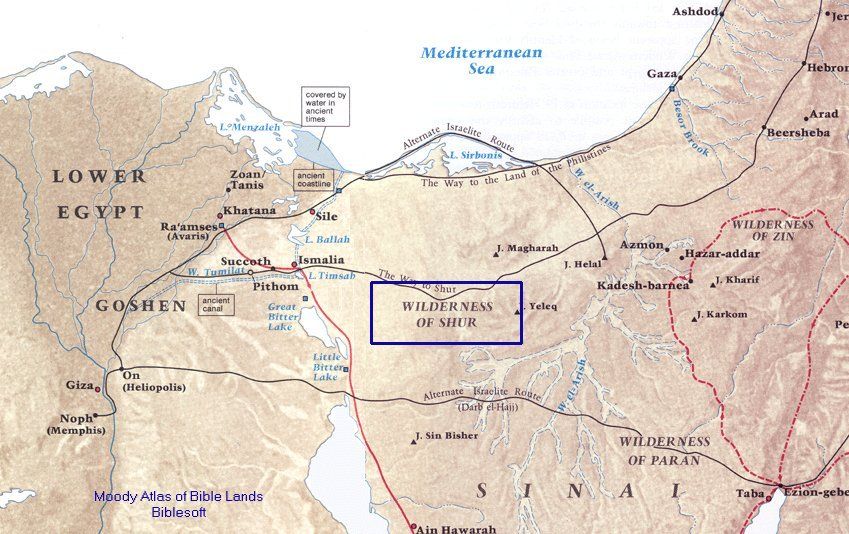
22 Then Moses made Israel set out from the Red Sea, and they went into the wilderness of Shur. They went three days in the wilderness and found no water. 23 When they came to Marah, they could not drink the water of Marah because it was bitter; therefore it was named Marah. 24 And the people grumbled against Moses, saying, “What shall we drink?” 25 And he cried to the Lord, and the Lord showed him a log, and he threw it into the water, and the water became sweet.

There the Lord made for them a statute and a rule, and there he tested them, 26 saying, “If you will diligently listen to the voice of the Lord your God, and do that which is right in his eyes, and give ear to his commandments and keep all his statutes, I will put none of the diseases on you that I put on the Egyptians, for I am the Lord, your healer.”

27 Then they came to Elim, where there were twelve springs of water and seventy palm trees, and they encamped there by the water. – Exodus 15:22-27 ESV

YHWHrāp̄ā’ – “The LORD Who Heals.”The Hebrew word, rāp̄ā’ has many connotations, including “rāp̄ā’ “to cause to cure, heal, physician, repair, make whole” (Strong’s Exhaustive Concordance). Throughout the Old Testament, it is used in a variety of ways. In Genesis 20, Moses describes the occasion when the prayer of Abraham resulted in the healing of a pagan king named Abimelech.

Then Abraham prayed to God, and God healed [rāp̄ā’] Abimelech, and also healed [rāp̄ā’] his wife and female slaves so that they bore children. For the LORD had closed all the wombs of the house of Abimelech because of Sarah, Abraham’s wife. – Genesis 20:17-18 ESV

The context is important because Abraham had “ journeyed toward the territory of the Negeb and lived between Kadesh and Shur, and he sojourned in Gerar” (Genesis 20:1 ESV). While in Gerar, Abraham convinced his wife Sarah to pass herself off as his sister. His reasoning was simple. He believed that if it was discovered Sarah was his wife, one of the polygamous Gerarites might kill him so he could claim her as his own. Abraham had tried this ploy before and it had failed miserably (Genesis 13:10-20).

This instance did not fair any better. Abimelech, the king of Gerar, believing Sarah to be a single, unmarried woman, took her to be his wife. But that night he had a dream in which God threatened him with death.

“Behold, you are a dead man because of the woman whom you have taken, for she is a man’s wife.” – Genesis 20:3 ESV

The Gerarites, while polygamous, did respect the sanctity of marriage. So, Abimelech was appalled to hear that he had taken a married man’s wife into his harem. He was also petrified to hear a disembodied voice warn him of his pending death and that of all his people. Abimelech pleaded his innocence, claiming to have acted on the words of Abraham. He had been told that the woman was unmarried and, fortunately, had not yet touched her. God assured Abimelech that He was aware of the circumstances and had a way for the king to make things right.

“Yes, I know that you have done this in the integrity of your heart, and it was I who kept you from sinning against me. Therefore I did not let you touch her. Now then, return the man’s wife, for he is a prophet, so that he will pray for you, and you shall live. But if you do not return her, know that you shall surely die, you and all who are yours.” – Genesis 20:6-7 ESV

There is no indication that Abimelech was suffering any kind of malady. God did not strike him with a deadly disease or life-threatening illness. But he was facing the loss of his life and he would not be alone. The fate of his entire family and, possibly, that of his nation, was in the hands of the very man who had lied to him.

When Abimelech approached Abraham, he expressed his consternation at having been put in this predicament by Abraham’s deceitfulness. He begged to know what had possessed Abraham to do such a thing. Faced with the blunt-force anger of Abimelech, Abraham didn’t sugarcoat his answer.

I did it because I thought, ‘There is no fear of God at all in this place, and they will kill me because of my wife.’ Besides, she is indeed my sister, the daughter of my father though not the daughter of my mother, and she became my wife.” – Genesis 20:11-12 ESV

Abraham had been in the wrong. Not only was he guilty of deceitfulness but he had failed to trust the faithfulness of Yahweh. For the second time in his life, Abraham displayed his distrust of Yahweh’s protection and provision. But God was watching over His disobedient and distrustful servant. He protected Sarah and preserved the purity of the woman who would ultimately bear Abraham the son who would fulfill all the covenant promises (Genesis 12:1-3).

There is so much going on in this story. In an effort to assuage God’s anger and persuade Abraham to pray for him, Abimelech showered Abraham with 1,000 pieces of silver, as well as sheep, oxen, and male and female servants. Abraham was going to walk away a rich man. But not only that. Abraham would leave the scene with his marriage and his wife’s purity intact. God had healed what was on the verge of being broken. He had graciously repaired what Abraham had damaged. Had God not intervened and interrupted Abimelech’s sleep with a dream, the king would have ultimately consummated his relationship with Sarah. It was just a matter of time. But Jehovah-Rapha stepped in and made whole that which was fractured and falling apart. God cleaned up the mess that Abraham had made.

But God also “healed” [rāp̄ā’] Abimelech and his family. God graciously called off His plan to take Abimelech’s life. Abimelech was not sick, but he was under a curse. His fate was sealed unless he obeyed the words of Yahweh. But because he did, he experienced wholeness instead of brokenness. He was given the gift of life rather than death. God had protected Sarah from being sexually violated by a pagan. He had protected Abraham from becoming a single man with no hope of seeing the promises of God fulfilled. He had protected Abimelech from touching Sarah and from having to suffer death for a sin he had committed in ignorance.

Throughout this story, God’s grace and mercy are on full display. None of the actors in this dark drama deserved what they received. But the LORD Who Heals stepped in and remedied the situation and preserved the integrity of His own plan and the lives of those who were integral to its fulfillment.

Back to the story in Exodus. Moses was attempting to lead the people of Israel from Egypt to the Promised Land. But along the way, they experienced various trials and difficulties. One of the first took place at Marah, an oasis in the desert that contained bitter, undrinkable water. The people had been walking for three days and the joy of their miraculous deliverance from the Egyptians and their inexplicable crossing of the Red Sea on dry ground had worn off. They were tired, thirsty, and in a far-from-happy mood. They complained to Moses and he took the issue to God, who quickly responded and gave Moses a solution.

the Lord showed him a log, and he threw it into the water, and the water became sweet. – Exodus 15:25 ESV

God “healed” the waters. He performed another miracle and transformed the bitter water into sweet, refreshing, life-giving water. But the water was not the only thing that was bitter. The Hebrew word is mar and it can also refer to discontentment. The people of Israel were bitter about their circumstances; they didn’t like the way things were turning out. Their miraculous crossing of the Red Sea had turned into an unpleasant and weariness-producing crossing of a trackless and waterless desert, and they were not in a good mood.

God’s solution to the problem was a simple one. He instructed Moses to take an ʿēṣ and throw it into the water. The Hebrew word is fascinating because it is the same word used in the opening chapters of the Book of Genesis.

…out of the ground the Lord God made to spring up every tree [ʿēṣ] that is pleasant to the sight and good for food. The tree [ʿēṣ] of life was in the midst of the garden, and the tree [ʿēṣ] of the knowledge of good and evil. – Genesis 2:9 ESV

More than a 162 times in the Old Testament, the word ʿēṣ is translated as “tree.” There is no reason not to translate it the same way here. The text doesn’t give the variety of tree that was used, but the outcome is quite clear. When Moses threw the tree in the water, it produced life. The bitter water was transformed. What had been undrinkable and incapable of sustaining life was divinely altered and imbued with life-giving properties. That which was unacceptable became acceptable.

There was more to this miraculous transformation than the Israelites realized. They were content to have their thirst quenched but God had so much more He wanted them to see. Moses writes, “It was there at Marah that the Lord set before them the following decree as a standard to test their faithfulness to him” (Exodus 15:25 NLT).

God wasn’t content to satisfy their craving for water. He wanted to teach them a lesson about faithfulness and trust. He knew they would get thirsty again. Temporary solutions to temporal problems never produce eternal results. As long as they focused their attention on their physical needs they would never learn the spiritual lessons God wanted them to learn. So, along with the water, God gave Moses a message to deliver to his bitterness-prone people.

“If you will listen carefully to the voice of the Lord your God and do what is right in his sight, obeying his commands and keeping all his decrees, then I will not make you suffer any of the diseases I sent on the Egyptians; for I am the Lord who heals you.” – Exodus 15:26 NLT

It’s important to note that God threatens His people with disease if they fail to obey while referring to Himself as their healer. At this moment, they are healthy, whole, and no longer suffering from thirst. But He is warning them that a fate worse than thirst awaits them if they refuse to “do what is right in His sight.” This would not be the last time they complained about a lack of water. There would also be occasions when they grumbled about their less-than-satisfactory diet and their unhappiness with the manna that God provided for them.

What they failed to realize was that their complaining was a source of disobedience. They didn’t trust God. They allowed their circumstances to determine their view of God and dictate the degree of their adoration toward Him.

What’s important to note in this story is that there was water, but it was undrinkable. Their problem wasn’t a lack of something, but it was that the solution to their need was “bitter.” It was plentiful but undrinkable. It wasn’t that the water was non-existent but that it was worthless in its current condition. And this non-potable water contained a powerful lesson for the Israelites.

The Hebrew word translated as “bitter” is מַר (mar), which can also be translated as “angry” or “discontented.” Little did the Israelites know that the water was a symbol of their own spiritual condition. Despite all God had done to set them free from their bondage in Egypt, they were a bitter and discontented people. In a sense, they were unusable. Instead of displaying gratitude for all that God had done, they quickly resorted to anger and blame, and their blatant displays of dissatisfaction were evidence that their hearts were bitter and in need of change.

So, God took this opportunity to teach the Israelites a much-needed lesson on how He was going to transform the bitter condition of their hearts. Hundreds of years later, the prophet Ezekiel would record the following promise that God made to His people.

“I will give you a new heart, and I will put a new spirit in you. I will take out your stony, stubborn heart and give you a tender, responsive heart. And I will put my Spirit in you so that you will follow my decrees and be careful to obey my regulations.” – Ezekiel 3626-27 NLT

From the very beginning, God revealed His desire to transform the hearts of His people. Their real problem had never been slavery; they suffered from a heart condition that left them bitter, angry, and discontented. Their 400-year separation from God had reduced them to a state of spiritual stagnation and impurity. They had become polluted by the culture and robbed of their ability to be a source of life to the nations around them. So, God was going to intervene and, over time, begin His miraculous plan of heart transformation.

God used a tree to transform bitter water into a life-giving source of sustenance. He had just proven, yet again, that He could meet all their needs. Thousands of years later, God would use another tree to heal the sins of mankind. The apostle Peter spoke of the life-transforming and spiritual-healing properties of this tree when he addressed the religious leaders of Israel.

“The God of our fathers raised Jesus, whom you killed by hanging him on a tree. God exalted him at his right hand as Leader and Savior, to give repentance to Israel and forgiveness of sins.” – Acts 5:30-31 ESV

Peter would later deliver the same message to a gathering of Gentiles.

“They put him to death by hanging him on a tree, but God raised him on the third day and made him to appear, not to all the people but to us who had been chosen by God as witnesses, who ate and drank with him after he rose from the dead. And he commanded us to preach to the people and to testify that he is the one appointed by God to be judge of the living and the dead. To him all the prophets bear witness that everyone who believes in him receives forgiveness of sins through his name.” – Acts 10:39-43 ESV

Jehovah-Rapha is The LORD Who Heals. But He wants to do far more than heal our temporal and physical problems. He can provide for all our needs and is more than willing to do so, but His greatest desire is to heal our hearts and restore us to a relationship with Him so that will satisfy our thirst for true life and meaning.

“If anyone thirsts, let him come to me and drink. Whoever believes in me, as the Scripture has said, ‘Out of his heart will flow rivers of living water.’” – John 7:37-38 ESV

English Standard Version (ESV) The Holy Bible, English Standard Version. ESV® Permanent Text Edition® (2016). Copyright © 2001 by Crossway Bibles, a publishing ministry of Good News Publishers.

New Living Translation (NLT) Holy Bible, New Living Translation, copyright © 1996, 2004, 2015 by Tyndale House Foundation. Used by permission of Tyndale House Publishers Inc., Carol Stream, Illinois 60188. All rights reserved.

New English Translation (NET)NET Bible® copyright ©1996-2017 by Biblical Studies Press, L.L.C. http://netbible.com All rights reserved.

Things Are About to Get Serious

1 On the third new moon after the people of Israel had gone out of the land of Egypt, on that day they came into the wilderness of Sinai. They set out from Rephidim and came into the wilderness of Sinai, and they encamped in the wilderness. There Israel encamped before the mountain, while Moses went up to God. The Lord called to him out of the mountain, saying, “Thus you shall say to the house of Jacob, and tell the people of Israel: ‘You yourselves have seen what I did to the Egyptians, and how I bore you on eagles’ wings and brought you to myself. Now therefore, if you will indeed obey my voice and keep my covenant, you shall be my treasured possession among all peoples, for all the earth is mine; and you shall be to me a kingdom of priests and a holy nation.’ These are the words that you shall speak to the people of Israel.”

So Moses came and called the elders of the people and set before them all these words that the Lord had commanded him. All the people answered together and said, “All that the Lord has spoken we will do.” And Moses reported the words of the people to the Lord. And the Lord said to Moses, “Behold, I am coming to you in a thick cloud, that the people may hear when I speak with you, and may also believe you forever.” – Exodus 19:1-9 ESV

Three months after leaving the land of Egypt, the people of Israel arrived at “the mountain of God” in the wilderness of Sinai. This event marks a major turning point in the story of God’s people. For them, it was just another trip from one obscure place in the wilderness to another. As they continued their long journey from Egypt to Canaan they made several stops along the way, and each had been marked by its own unique and memorable moment of divine intervention.

Three days into their journey, the people became anxious because their provision of water was running low. At Marah, in the middle of the wilderness of Shur, they discovered a water source, but it was unfit for consumption. So, frustrated by this unacceptable situation, they turned their anger on Moses. But God intervened and miraculously transformed the bitter water at Marah into a refreshing, life-giving source of sustenance. And it was there that God gave them a command:

“If you will diligently obey the Lord your God, and do what is right in his sight, and pay attention to his commandments, and keep all his statutes, then all the diseases that I brought on the Egyptians I will not bring on you, for I, the Lord, am your healer.” – Exodus 15:26 NLT

At this point in their relationship with Yahweh, He had given them no written commands to obey. They had simply been instructed to follow His lead as the pillar of cloud guided them through the wilderness. But the bitter water at Marah had been a test to see if they would trust God. Their fear and frustration at finding the water to be undrinkable gave evidence that they didn’t trust God to provide for all their needs.

And their tendency to doubt God’s capacity to provide continued as they entered the wilderness of Sin. There they angrily vocalized their concern over their diminishing bread supply, and God had responded by providing “bread from heaven” (Exodus 16:4 ESV) along with a daily diet of quail. And that miracle was accompanied by a strict set of rules from God.

“This is what the Lord has commanded: ‘Gather of it, each one of you, as much as he can eat. You shall each take an omer, according to the number of the persons that each of you has in his tent.’” And the people of Israel did so. They gathered, some more, some less. – Exodus 16:16-17 ESV

And the people were forbidden from hoarding any of the bread. God would provide exactly what they needed for each day – nothing more, nothing less. But on the sixth day, they were commanded to gather twice as much so that they would have enough for the seventh day, a day that God had deemed as “a day of solemn rest, a holy Sabbath to the Lord” (Exodus 16:23 ESV).  But when that seventh day arrived, some of the people disobeyed God’s command and went out in search of manna, only to find that none was available. And God expressed His anger in no uncertain terms.

“How long will you refuse to keep my commandments and my laws? See! The Lord has given you the Sabbath; therefore on the sixth day he gives you bread for two days. Remain each of you in his place; let no one go out of his place on the seventh day.” – Exodus 16:28-29 ESV

Not long after this, at a place called Rephidim, the people’s lack of faith got exposed again. Unable to find a source of water in this arid region, the Israelites expressed their dissatisfaction with Moses, even accusing him of trying to kill them. But God graciously intervened again, providing them with life-giving water from a rock.

Now, the people find themselves encamped at the base of a mountain in the middle of the Sinai wilderness. To them, this was just another mountain in the middle of nowhere. But for Moses, it was a return to a very familiar place and a reminder of the promise he had received from God. It was at this very spot that Moses had seen the burning bush and heard the voice of God. That divine encounter had been a game-changer for Moses, transforming him from a reclusive shepherd of sheep to God’s divine agent of deliverance. There, at Mount Sinai, Moses had received his commission to deliver the people of Israel from their captivity in Egypt and lead them to the land of promise. And God had assured Moses that he would one day return to that very spot with the people of Israel in tow.

I will be with you, and this shall be the sign for you, that I have sent you: when you have brought the people out of Egypt, you shall serve God on this mountain.” – Exodus 3:12 ESV

Now that promise was being fulfilled. Upon their arrival at Sinai, the people set up camp at the base of the mountain, while Moses made his way to the top. He somehow knew that he had another divine appointment with God Almighty. And, as before, Moses heard the voice of God calling to him.

“Thus you will tell the house of Jacob, and declare to the people of Israel: ‘You yourselves have seen what I did to Egypt and how I lifted you on eagles’ wings and brought you to myself.  And now, if you will diligently listen to me and keep my covenant, then you will be my special possession out of all the nations, for all the earth is mine, and you will be to me a kingdom of priests and a holy nation.’ These are the words that you will speak to the Israelites.” – Exodus 19:3-6 NLT

God gave Moses a message for the people of Israel. He wanted them to understand the significance of what He had done for them. It was essential that they grasp the greatness of the gift they had received. Their deliverance had not been their own doing. The plagues that had come upon their captors were manifestations of God’s divine judgment. The people of Israel were now free people but they owed that freedom to God. And they also owed Him their allegiance and obedience.

God was preparing to set them apart as His kingdom of priests and a holy nation. But that lofty position came with conditions. Any hope they had of enjoying status as His special possession was tied directly to their willingness to live according to His will. This entire message from God is a conditional statement that communicates God’s uncompromising expectation of the people of Israel. The if-then nature of God’s message is meant to communicate that their special status as His chosen people will come with non-negotiable conditions.

God was setting the people of Israel apart. From this point forward, they would be distinctively different than all the other nations of the earth. They were to become God’s people, living according to God’s will and in keeping with His commands. God refers to them as “a holy nation.”

The word “holy” is קָדוֹשׁ (qāḏôš) in Hebrew, and it can mean “sacred, separate, or set apart.” God was letting the Israelites know that their deliverance from Egypt had a purpose. There was a reason why God had set them free and its significance was far greater than they currently realized. God had great things in store for them, but it was going to require that they embrace their distinctiveness and readily adopt God’s standards of behavior. Moral purity and conformity to His will would be mandatory.

Little did they know that God was about to give them His non-negotiable rules of conduct. They loved the idea of becoming a kingdom of priests and a holy nation but had no way of understanding the burden that would accompany that lofty status. So, when Moses returned from the mountaintop and delivered God’s message to the people, they eagerly and enthusiastically replied, “All that the Lord has spoken we will do” (Exodus 19:8 ESV).

What would happen next would be a game-changing moment for the people of Israel. Nothing they had witnessed up to this point had prepared them for what they were about to experience at Mount Sinai. The plagues, the parting of the Red Sea, manna, water from a rock, the defeat of the Amalekites – nothing would come close to the spectacle they were about to witness from their vantage point in the valley of Sinai. God was about to reveal Himself in all His terrifying and jaw-dropping glory. The familiar pillar of cloud that had led them through the wilderness was going to transform itself into a dense and foreboding storm cloud, accompanied by flashing lightning and loud thunder. God was about to make Himself known and it would be an unforgettable experience.

English Standard Version (ESV) The Holy Bible, English Standard Version. ESV® Permanent Text Edition® (2016). Copyright © 2001

New Living Translation (NLT) Holy Bible, New Living Translation, copyright © 1996, 2004, 2015 by Tyndale House Foundation. Used by permission of Tyndale House Publishers Inc., Carol Stream, Illinois 60188. All rights reserved.

From Bitter to Better

22 Then Moses made Israel set out from the Red Sea, and they went into the wilderness of Shur. They went three days in the wilderness and found no water. 23 When they came to Marah, they could not drink the water of Marah because it was bitter; therefore it was named Marah. 24 And the people grumbled against Moses, saying, “What shall we drink?” 25 And he cried to the Lord, and the Lord showed him a log, and he threw it into the water, and the water became sweet.

There the Lord made for them a statute and a rule, and there he tested them, 26 saying, “If you will diligently listen to the voice of the Lord your God, and do that which is right in his eyes, and give ear to his commandments and keep all his statutes, I will put none of the diseases on you that I put on the Egyptians, for I am the Lord, your healer.”

27 Then they came to Elim, where there were twelve springs of water and seventy palm trees, and they encamped there by the water. – Exodus 15:22-27 ESV

With their miraculous crossing of the Red Sea, the Israelites were putting a four-century-long season of their life behind them. As the waters of the sea closed behind them, it was as if God closed a lengthy chapter of their existence that had been marked by slavery and persecution. They must have issued a collective sigh of relief as they realized that their days of suffering had finally come to an end. For the first time in centuries, they were a free people and on their way to the land that God had promised as their inheritance. None of them had ever set foot in Canaan before. More than 400 years earlier, their patriarch, Jacob, had entered Egypt of his own free will, bringing along the 70 members of his clan so that they could find refuge from the global famine that had left the land of Canaan a virtual wasteland.

But now, Jacob’s descendants, whose numbers had greatly expanded during their time in Egypt, were returning to the land that he had left. The promise God had made to Abraham was coming true.

“Know for certain that your offspring will be sojourners in a land that is not theirs and will be servants there, and they will be afflicted for four hundred years. But I will bring judgment on the nation that they serve, and afterward they shall come out with great possessions. – Genesis 15:13-14 ESV

And God had reconfirmed that promise to Jacob as he and his family were making their way to Egypt.

“I am God, the God of your father. Do not be afraid to go down to Egypt, for there I will make you into a great nation. I myself will go down with you to Egypt, and I will also bring you up again, and Joseph’s hand shall close your eyes.” – Genesis 46:3-4 ESV

Jacob and his sons all died while living in Egypt. The only time his 12 sons returned to Canaan was in order to bury his body alongside those of Abraham and Isaac. But the brothers were unable to remain in Canaan because the famine had not yet ended. So, they returned to Egypt where they lived out their lifetimes in the land of Goshen.

But now, their numerous descendants were making the long journey home. But after their four-hundred-year stint in Egypt, the Israelites had grown accustomed to their surroundings. They had acclimated to the land and the ways of its people. Over time, they had forgotten the God of their fathers and adopted the Egyptian gods as their own. Canaan had become a distant memory and the promises of Yahweh had long been forgotten as each successive generation became increasingly more “Egyptianized.”

But all that was about to change. Their long-forgotten God had not forgotten them. He had just miraculously delivered them from bondage and was now leading them to their future home in Canaan. And as the scene of their emancipation and the Egyptian army’s annihilation faded into the distance, the people followed the pillar of cloud into the wilderness of Shur. Little did they know that this was going to be the beginning of a new chapter in their collective story. They were entering a new phase of their existence in which they would come to know and understand their “new” God. The ten plagues they had witnessed in Egypt had just been the opening act of His self-revelatory drama.

As they made their way to Canaan, they were going to get a steady dose of divine revelation as God displayed His glory and power. But He would also reveal the expectations He had for His chosen people. He had redeemed them for a reason. They had been set free so that they might live according to His will and display His glory and greatness to the rest of the nations.

The wilderness was to be their classroom, where they learned the painful truth about their own character and discovered the unflinching holiness and unwavering faithfulness of their God. And those lessons began immediately.

Just three days after leaving the Red Sea, they found themselves facing their first test in God’s school of spiritual enlightenment.

They traveled in this desert for three days without finding any water. When they came to the oasis of Marah, the water was too bitter to drink. – Exodus 15:22-23 NLT

Shur was not a desert as much as it was an open expanse of land, and water would have been a constant need for the Israelites. So, during their first three days of travel, the Israelites found no source of potable water. This would have been a serious concern for a group their size. How could they remain alive without water? They knew that their sizeable flocks and herds would quickly diminish if a viable source of water was not found soon.

This unexpected predicament caused the people to turn their anger against Moses. Just as they had done when they found themselves backed up against the sea with the Egyptian army bearing down on them, the people of Israel took out their fear and frustration on God’s appointed leader.

“What are we going to drink?” they demanded. – Exodus 15:24 NLT

And by this time, Moses must have been questioning why he ever agreed to lead this ungrateful and easily disgruntled band of hotheads. As God’s spokesman, he became the target of the people’s wrath. When they became unhappy with their circumstances, they took their complaints to Moses and his brother, Aaron. These two elderly men had shown up in Egypt with lofty promises of emancipation and relocation. They had declared themselves to be the official representatives of Yahweh, the God of Abraham, Isaac, and Jacob, and they had come to lead God’s people out of Egypt and back to the land of promise.

So, when things didn’t go well, the people held Moses and on as responsible. And when Moses felt the heat, he turned to God for help.

So Moses cried out to the Lord for help, and the Lord showed him a piece of wood. Moses threw it into the water, and this made the water good to drink. – Exodus 15:25 NLT

What’s important to note in this story is that there was water, but it was undrinkable. Their problem wasn’t a lack of something, but it was that the solution to their need was “bitter.” It was plentiful but undrinkable. It wasn’t that the water was non-existent but that it was worthless in its current condition. And this non-potable water contained a powerful lesson for the Israelites.

The Hebrew word translated as “bitter” is מַר (mar), which can also be translated as “angry” or “discontented.” Little did the Israelites know that the water was a symbol of their own spiritual condition. Despite all God had done to set them free from their bondage in Egypt, they were a bitter and discontented people. In a sense, they were unusable. Instead of displaying gratitude for all that God had done, they quickly resorted to anger and blame. And their blatant displays of dissatisfaction were evidence that their hearts were bitter and in need of change.

So, God took this opportunity to teach the Israelites a much-needed lesson on how He was going to transform the bitter condition of their hearts. He had Moses take a particular piece of wood and throw it into the bitter water. This act of faith on Moses’ part had an immediate effect, transforming the bitter, worthless water into a refreshing and live-giving source of sustenance for the people of God and all their livestock. The bitterness was removed.

Hundreds of years later, the prophet Ezekiel would record the following promise that God made to His people.

“I will give you a new heart, and I will put a new spirit in you. I will take out your stony, stubborn heart and give you a tender, responsive heart. And I will put my Spirit in you so that you will follow my decrees and be careful to obey my regulations.” – Ezekiel 3626-27 NLT

From the very beginning, God revealed His desire to transform the hearts of His people. Their real problem had never been slavery. They suffered from a heart condition that had left them bitter, angry, and discontented. Their 400-year separation from God had reduced them to a state of spiritual stagnation and impurity. They had become polluted by the culture and robbed of their ability to be a source of life to the nations around them. So, God was going to intervene and, over time, begin His miraculous plan of heart transformation.

One of the things that Moses makes clear is this event at Marah had been a test of their faithfulness. God wanted to know if they were going to trust Him or would they continue to display their distrust through bitter displays of discontentment and dissatisfaction. So, He had Moses give them a warning.

“If you will listen carefully to the voice of the Lord your God and do what is right in his sight, obeying his commands and keeping all his decrees, then I will not make you suffer any of the diseases I sent on the Egyptians; for I am the Lord who heals you.” – Exodus 15:26 NLT

God had used an ordinary piece of wood to transform bitter water into a life-giving source of sustenance. He had just proven, yet again, that He could meet all their needs. And all He was asking in return was that they live in obedience to His commands. If they did, they could expect to see more miraculous evidence of His provision, but they would also experience protection from His judgment. Obedience would bring blessing. Disobedience would result in curses. This would become a recurring theme in their relationship with God. He could both heal and hurt. He could bless and curse. And all He asked of His people was that they could trust and obey so that He could turn them into a life-giving source of sustenance to the nations of the world.

English Standard Version (ESV) The Holy Bible, English Standard Version. ESV® Permanent Text Edition® (2016). Copyright © 2001

New Living Translation (NLT) Holy Bible, New Living Translation, copyright © 1996, 2004, 2015 by Tyndale House Foundation. Used by permission of Tyndale House Publishers Inc., Carol Stream, Illinois 60188. All rights reserved.