Live Like Who You Are

Put to death therefore what is earthly in you: sexual immorality, impurity, passion, evil desire, and covetousness, which is idolatry. On account of these the wrath of God is coming. In these you too once walked, when you were living in them. But now you must put them all away: anger, wrath, malice, slander, and obscene talk from your mouth. Do not lie to one another, seeing that you have put off the old self with its practices 10 and have put on the new self, which is being renewed in knowledge after the image of its creator. 11 Here there is not Greek and Jew, circumcised and uncircumcised, barbarian, Scythian, slave, free; but Christ is all, and in all.  Colossians 3:5-11 ESV

How were the believers in Colossae supposed to set their minds on things that are above, not on things that are on earth? Was Paul suggesting that they be so heavenly-minded that they were no earthly good? Paul has just challenged them to adopt a Christ-focused perspective that highlights the eternal aspect of their relationship with Him. Christ is seated at the right hand of His Father in heaven, and one day He will return. His presence at His Father’s side demonstrates that He successfully completed His initial earthly mission. The apostle Peter spoke of Jesus’ exaltation when he addressed the crowds at Pentecost.

“God raised Jesus from the dead, and we are all witnesses of this. Now he is exalted to the place of highest honor in heaven, at God’s right hand. And the Father, as he had promised, gave him the Holy Spirit to pour out upon us…” – Acts 2:32-33 NLT

Jesus’ death was efficacious or effective. It accomplished the will of His heavenly Father and requires no supplemental aids or add-ons to increase its efficacy. And Paul assured the believers in Rome that, because Jesus died and rose again, they would enjoy eternal life with Him.

We are sure of this because Christ was raised from the dead, and he will never die again. Death no longer has any power over him. When he died, he died once to break the power of sin. But now that he lives, he lives for the glory of God. So you also should consider yourselves to be dead to the power of sin and alive to God through Christ Jesus. – Romans 6:9-11 NLT

Paul picks up the same them with the believers in Colossae. He wants them to live according to their new status as spiritually transformed and adopted children of God. Jesus didn’t die so that they might have their best life now but so that they might enjoy glorified life forever. But Paul knew that this future-focused mindset was difficult to maintain while living in the present. That’s why he provides them with some practical guidance for navigating life in a fallen world. He is expanding the theme he began back in chapter two.

Therefore, as you received Christ Jesus the Lord, so walk in him, rooted and built up in him and established in the faith – Colossians 2:6-7 ESV

For Paul, it was always about faith. He firmly believed and persistently taught that faith was the means by which we are saved and sanctified. And Jesus Christ is to be the sole focus of that faith. It is through Christ that we have access to the Father. It is because of Christ that we have the assurance of eternal life. It is thanks to Christ that we have the indwelling presence of the Spirit of God. And look closely at what Paul told the Roman believers: “consider yourselves to be dead to the power of sin and alive to God through Christ Jesus” (Romans 6:11 NLT).

Their union with Christ equipped them with unprecedented power to live godly lives – even in the ungodly environment of Rome. And the same thing was true for the Colossian Christians. Paul has already told them, “You have died with Christ, and he has set you free from the spiritual powers of this world. So why do you keep on following the rules of the world…” (Colossians 2:20 NLT).

Paul was constantly admonishing believers for their tendency to regress in their faith. They seemed to have no problem believing that Jesus could save them but they had difficulty trusting that He could keep them saved. So, they kept reverting to their old lifestyles based on human effort and self-righteousness.

So now that you know God (or should I say, now that God knows you), why do you want to go back again and become slaves once more to the weak and useless spiritual principles of this world? – Galatians 4:9 NLT

Paul was calling for complete separation from and dependence upon the things of this world. If Jesus was to be the believer’s sole source of salvation and sustenance, why were they continually turning to the world for satisfaction, fulfillment, significance, and hope? Their actions were in direct conflict with their calling and expressed commitment to Jesus Christ. Their behavior was not accurately reflecting their belief in a transformed life. That is why Paul demands that they do an about-face, turning their backs on their former way of life and seeking things above.

So put to death the sinful, earthly things lurking within you. Have nothing to do with sexual immorality, impurity, lust, and evil desires. Don’t be greedy, for a greedy person is an idolater, worshiping the things of this world. – Colossians 3:5 NLT

Paul was well aware of the fact that his flock in Colossae was struggling with the ongoing presence of their sinful natures. And Paul was not exempt from this internal battle between godliness and wickedness. In his letter to the Romans, he divulged his own struggle with indwelling sin.

I have discovered this principle of life—that when I want to do what is right, I inevitably do what is wrong. I love God’s law with all my heart. But there is another power within me that is at war with my mind. This power makes me a slave to the sin that is still within me. Oh, what a miserable person I am! Who will free me from this life that is dominated by sin and death? – Romans 7:21-24 NLT

But Paul answered his own pleading question, joyfully declaring, “Thank God! The answer is in Jesus Christ our Lord” (Romans 7:25 NLT). The solution to the problem of indwelling sin is Jesus. Because of Jesus, we have been given the gift of the Holy Spirit, who empowers us to say no to sin and yes to God. His divine presence provides us with all we need to put to death the sinful, earthly things lurking within us. That is why Paul told the Galatian church, “So I say, let the Holy Spirit guide your lives. Then you won’t be doing what your sinful nature craves” (Galatians 5:16 NLT). Then he went on to say, “Those who belong to Christ Jesus have nailed the passions and desires of their sinful nature to his cross and crucified them there” (Galatians 5:24 NLT).

Because of their relationship with Christ, their former sinful habits had been nailed to the cross with Him. But every believer knows how easy it is to breathe life into those old, dead habits and “resurrect” them once again. So, Paul demands that they “put to death” those things. But how? Is he suggesting that this is an ongoing, daily action? Is it the fate of every Christian to live their entire earthly life in a daily struggle to put to death sin? The answer is found in the grammar of Paul’s statement. When he states, “put to death,” he uses the Aorist Active Imperative (AAM) tense. The action described by the verb indicates that it is a past event. It has already taken place. Paul is stating that our old sinful habits have already been put to death – on the cross. So, we must constantly return them to their rightful place – on the cross. Our present action is based on a past reality.

The action Paul is commanding is to be the natural result of belief. If we truly believe that Jesus “canceled the record of the charges against us and took it away by nailing it to the cross” (Colossians 2:14 NLT), then we should confidently return those sinful habits right where they belong: to the cross. They are dead to us. They no longer possess power over us. but Paul has to remind the Colossians that their new life in Christ was meant to reflect a new way of living.

You used to do these things when your life was still part of this world. But now is the time to get rid of anger, rage, malicious behavior, slander, and dirty language. – Colossians 3:7-8 NLT

They had been cleansed by the blood of Jesus Christ. They had clothed in His righteousness. But, metaphorically,  they were constantly going back to the closet of sin and picking out old, soiled garments to wear. That’s why Paul had to remind them that they had “put off the old self with its practices” (Colossians 3:9 ESV) and had “put on the new self, which is being renewed in knowledge after the image of its creator” (Colossians 3:10 ESV). But that past action required constant repeating in the present. They were guilty of reaching back into the closet and selecting one of their old, comfortably-fitting sins to wear out in public. 

Paul is describing the ongoing nature of sanctification or spiritual growth. The Christian life is not meant to be static or stagnant. Once saved, always saved doesn’t mean that there is no ongoing transformation that takes place in the believer’s life. Peter indicates that believers are to “grow into a full experience of salvation” (1 Peter 2:2 NLT). Paul told the Ephesians that they were to be “growing in every way more and more like Christ” (Ephesians 4:15 NLT).

Growth in Christlikeness is non-optional for the believer. One of the primary roles of the Holy Spirit is to assist Christians in their knowledge of Christ and their ongoing transformation into His likeness. And this transformation is for all believers, regardless of their ethnic or cultural background. Each is to individually experience the Spirit’s transformative power so that, together, we might reflect that nature of Christ and bring glory to God the Father.

…you yourselves like living stones are being built up as a spiritual house, to be a holy priesthood, to offer spiritual sacrifices acceptable to God through Jesus Christ. – 1 Peter 2:5 ESV

English Standard Version (ESV) The Holy Bible, English Standard Version. ESV® Permanent Text Edition® (2016). Copyright © 2001 by Crossway Bibles, a publishing ministry of Good News Publishers.

New Living Translation (NLT) Holy Bible, New Living Translation, copyright © 1996, 2004, 2015 by Tyndale House Foundation. Used by permission of Tyndale House Publishers Inc., Carol Stream, Illinois 60188. All rights reserved.

New English Translation (NET)NET Bible® copyright ©1996-2017 by Biblical Studies Press, L.L.C. http://netbible.com All rights reserved.
 

The Mysterious Ministry of Spiritual Maturity

24 Now I rejoice in my sufferings for your sake, and in my flesh I am filling up what is lacking in Christ’s afflictions for the sake of his body, that is, the church, 25 of which I became a minister according to the stewardship from God that was given to me for you, to make the word of God fully known, 26 the mystery hidden for ages and generations but now revealed to his saints. 27 To them God chose to make known how great among the Gentiles are the riches of the glory of this mystery, which is Christ in you, the hope of glory. 28 Him we proclaim, warning everyone and teaching everyone with all wisdom, that we may present everyone mature in Christ. 29 For this I toil, struggling with all his energy that he powerfully works within me. – Colossians 1:24-29 ESV

As a faithful minister of the gospel of Jesus Christ, there were times when Paul found his ministry to be difficult, but he was pleased to be able to suffer on behalf of His Lord and Savior. He viewed the trials and tribulations that accompanied his mission to be in keeping with the suffering experienced by Christ as He carried out His own earthly mission. Paul was well-acquainted with suffering. In fact, he wrote his letter to the Colossians while under house arrest in Rome, awaiting trial before the Emperor. He was able to share with the believers in Corinth a long and far from exhaustive list of painful encounters he had endured as a messenger of the gospel.

I have worked harder, been put in prison more often, been whipped times without number, and faced death again and again. Five different times the Jewish leaders gave me thirty-nine lashes. Three times I was beaten with rods. Once I was stoned. Three times I was shipwrecked. Once I spent a whole night and a day adrift at sea. I have traveled on many long journeys. I have faced danger from rivers and from robbers. I have faced danger from my own people, the Jews, as well as from the Gentiles. I have faced danger in the cities, in the deserts, and on the seas. And I have faced danger from men who claim to be believers but are not. I have worked hard and long, enduring many sleepless nights. I have been hungry and thirsty and have often gone without food. I have shivered in the cold, without enough clothing to keep me warm.  – 2 Corinthians 11:23-27 NLT

But Paul wasn’t complaining about his lot in life. No, far from it. He was expressing his right to be treated as a legitimate spokesman for Jesus Christ. Like His Savior, Paul had faced a barrage of persecutions and personal attacks and, on top of all that, he had been forced to carry “the daily burden of my concern for all the churches” (2 Corinthians 11:28 NLT). He was a faithful shepherd and caretaker for the flock of Jesus Christ who took his role seriously and faced persecution joyfully.

I rejoice in my sufferings for your sake…” – Colossians 1:24 ESV

Paul saw his sufferings as an opportunity to experience in some small measure “Christ’s afflictions” (Colossians 1:24 ESV). He was eternally grateful for the pain that Jesus endured on his behalf so that he might be freed “from this life that is dominated by sin and death” (Romans 7:24 NLT). And Paul was more than willing to suffer “for the sake of his body, that is, the church” (Colossians 1:24 ESV). It was the least he could do.

Paul understood that he had been made a minister of the gospel and given the responsibility of sharing the good news of Jesus Christ to the Gentile world. His job, while far from easy, was accompanied by great joy because he was able to witness firsthand the transformative nature of the message of salvation. Paul states that his message to the Gentiles was a mystery to God’s chosen people, the Israelites. The people of Israel had no concept that their long-awaited Messiah would be the Savior of the entire world, not just their own people. Even the disciples of Jesus had found it difficult to watch Him minister to Samaritans, Syrophoenicians, and even Romans. They had no category in their concept of the Messiah that accommodated a ministry to the Gentiles and yet, Jesus had told them, “I am the good shepherd; I know my own sheep, and they know me, just as my Father knows me and I know the Father. So I sacrifice my life for the sheep. I have other sheep, too, that are not in this sheepfold. I must bring them also. They will listen to my voice, and there will be one flock with one shepherd” (John 10:14-16 NLT).

This mystery had remained hidden for generations and had not been revealed until after the death, burial, and resurrection of Jesus. Even on the day of Pentecost, when the Holy Spirit came upon the disciples, they began to minister to those who had gathered in Jerusalem for the annual feast. And the crowd was made up of  “Jews, devout men from every nation under heaven” (Acts 2:5 ESV). Luke goes on to describe them as “Parthians and Medes and Elamites and residents of Mesopotamia, Judea and Cappadocia, Pontus and Asia, Phrygia and Pamphylia, Egypt and the parts of Libya belonging to Cyrene, and visitors from Rome, both Jews and proselytes, Cretans and Arabians” (Acts 2:9-11 ESV).

The crowd consisted of native Jews as well as converts to Judaism from a wide range of nations and ethnic groups. And when they heard the gospel message presented by Peter, they responded en masse.

So those who received his word were baptized, and there were added that day about three thousand souls. – Acts 2:41 ESV

Many of those individuals who had made the pilgrimage to Jerusalem for the feast of Pentecost would return to their native countries, carrying the gospel message with them. And the apostle Paul would later join their forces and proclaim the good news of Jesus Christ throughout the Gentile world. On his missionary journeys, he would encounter converts to Christianity who had heard the message of salvation by faith alone in Christ alone from their converted friends and neighbors. As Paul later told the believers in Ephesus, the mystery of Gentiles being grafted into the family tree of Abraham had been revealed and was making an impact on the world.

God gave me the special responsibility of extending his grace to you Gentiles. As I briefly wrote earlier, God himself revealed his mysterious plan to me. As you read what I have written, you will understand my insight into this plan regarding Christ. God did not reveal it to previous generations, but now by his Spirit he has revealed it to his holy apostles and prophets. – Ephesians 3:2-5 NLT

God had always intended to redeem people from every tribe, nation, and tongue. His Son would be the Messiah of Israel, but as God had promised Abraham, his offspring would prove to be a blessing to the “nations.”

And I will make of you a great nation, and I will bless you and make your name great, so that you will be a blessing. I will bless those who bless you, and him who dishonors you I will curse, and in you all the families of the earth shall be blessed.” – Genesis 12:2-3 ESV

Jesus, a son of Abraham, had been the fulfillment of that promise. Paul made that point perfectly clear to the Gentile believers in Galatia.

Know then that it is those of faith who are the sons of Abraham. And the Scripture, foreseeing that God would justify the Gentiles by faith, preached the gospel beforehand to Abraham, saying, “In you shall all the nations be blessed.” So then, those who are of faith are blessed along with Abraham, the man of faith. – Galatians 3:9-11 ESV

It was through Christ, a Jew, that “the blessing of Abraham might come to the Gentiles, so that we might receive the promised Spirit through faith” (Galatians 3:14 ESV). And Paul was proudly declaring that message of hope to the Gentile world and gladly enduring suffering in order to do so. It was his privilege and honor. Jesus had died to make salvation possible, so the least Paul could do was suffer to make it available and accessible. And Paul wanted the Colossian believers to know that their hope was based on the reality of Christ’s presence within them. He had died, been raised to life, and now was seated at the right hand of God the Father. But following His ascension, Jesus had sent the Spirit of God to indwell His followers. In that sense, Jesus would not only be with them, but in them.

“I will ask the Father, and he will give you another Advocate, who will never leave you. He is the Holy Spirit, who leads into all truth. The world cannot receive him, because it isn’t looking for him and doesn’t recognize him. But you know him, because he lives with you now and later will be in you.” – John 14:16-17 NLT

Paul’s life mission was to proclaim this life-altering mystery of  “Christ in you, the hope of glory” (Colossians 1:28 ESV). And he did so, “struggling with all his energy,” knowing that “he powerfully works within me” (Colossians 1:29 ESV). And Paul’s ministry and message were comprised of both warnings and teachings. There were dangers to be avoided and lessons to be learned. There were false teachers who could undermine the hope of the gospel and there were constant temptations that could derail and diminish the witness of God’s people. Paul’s goal for the Colossian believers was nothing less than spiritual maturity. He would not settle for mediocrity or partial transformation. Since glorification was the ultimate goal of salvation, Paul remained committed to the ongoing sanctification of all those under his care. His lifelong objective was to one day be able to “present everyone mature in Christ” (Colossians 1:28 ESV). That lofty goal will never be achieved in the believer’s lifetime but we have a firm promise from God that it will take place one day.

Dear friends, we are already God’s children, but he has not yet shown us what we will be like when Christ appears. But we do know that we will be like him, for we will see him as he really is. And all who have this eager expectation will keep themselves pure, just as he is pure. – 1 John 3:2-3 NLT

According to Paul, it is inevitable and unavoidable because it is the work of God.

And I am certain that God, who began the good work within you, will continue his work until it is finally finished on the day when Christ Jesus returns. – Philippians 1:6 NLT

English Standard Version (ESV) The Holy Bible, English Standard Version. ESV® Permanent Text Edition® (2016). Copyright © 2001 by Crossway Bibles, a publishing ministry of Good News Publishers.

New Living Translation (NLT) Holy Bible, New Living Translation, copyright © 1996, 2004, 2015 by Tyndale House Foundation. Used by permission of Tyndale House Publishers Inc., Carol Stream, Illinois 60188. All rights reserved.

New English Translation (NET)NET Bible® copyright ©1996-2017 by Biblical Studies Press, L.L.C. http://netbible.com All rights reserved.


Put Off and Drink Up!

1 So put away all malice and all deceit and hypocrisy and envy and all slander. Like newborn infants, long for the pure spiritual milk, that by it you may grow up into salvation— if indeed you have tasted that the Lord is good. 1 Peter 2:1-3 ESV

In light of the fact that his readers had been “born again to a living hope through the resurrection of Jesus Christ from the dead” (1 Peter 1:3 ESV), and called to be holy just as God is holy (1 Peter 1:15), Peter expected them to live lives in keeping with their status as God’s chosen people. As sons and daughters of God, their behavior was to reflect the character of their Heavenly Father. God had paid an extremely high price to ransom them from the empty life they had inherited from their ancestors (1 Peter 1:18). He had sent His Son to die on their behalf. On the cross, the sinless Savior had offered up His life as the unblemished Lamb, providing them with forgiveness of sins and a guarantee of “a priceless inheritance—an inheritance that is kept in heaven for you, pure and undefiled, beyond the reach of change and decay” (1 Peter 1:4 NLT).

But the recipients of Peter’s letter were wrestling with the realities of living in a culture that stood opposed to everything in which they believed. Their minds filled with doubt and despair as they struggled to reconcile their circumstances with their faith. The “good news” they had so eagerly embraced had resulted in some far-from-great outcomes. And while many of their trials were external in nature, they were also suffering from unexpected internal battles that left them demoralized and even doubting their salvation. Peter referred to these inner temptations as “worldly desires that wage war against your very souls” (1 Peter 2:11 NLT).

These inner and outer battles were beginning to take their toll. The congregation to whom Peter wrote was experiencing a sense of disappointment and despair. When they had placed their faith in Jesus Christ, they had done so with an expectation that the good news would produce positive results. But now, they were having to endure unprecedented and unexpected troubles on both an individual and corporate level. That’s why Peter went out of his way to assure them of the unwavering faithfulness of God’s promises because they were backed by the reliability of God’s Word.

…you have been born again, but not to a life that will quickly end. Your new life will last forever because it comes from the eternal, living word of God. – 1 Peter 1:23 NLT

Regardless of what was happening around them, they could count on God. He would do His part and fulfill every promise He had made. But they had their part to play as well. Peter encouraged them to stay focused and fix their hope on God and the reliability of His redemptive plan.

…prepare your minds for action and exercise self-control. Put all your hope in the gracious salvation that will come to you when Jesus Christ is revealed to the world. – 1 Peter 1:13 NLT

But they were not to be content with waiting on the return of Christ and their eventual glorification. They were to take positive, tangible steps that would set them apart as God’s chosen people – His “temporary residents and foreigners” living in exile on earth (1 Peter 2:11 NLT). So he provided them with a formidable and seemingly impossible challenge:

get rid of all evil behavior. Be done with all deceit, hypocrisy, jealousy, and all unkind speech. – 1 Peter 2:1 NLT

The apostle Paul gave a similar admonition to the believers in Ephesus.

Get rid of all bitterness, rage, anger, harsh words, and slander, as well as all types of evil behavior. – Ephesians 4:31 NLT

And he would provide the believers in Colossae with a slightly abridged version of the same list of off-limit behaviors.

…get rid of anger, rage, malicious behavior, slander, and dirty language. Don’t lie to each other, for you have stripped off your old sinful nature and all its wicked deeds. – Colossians 3:8-9 NLT

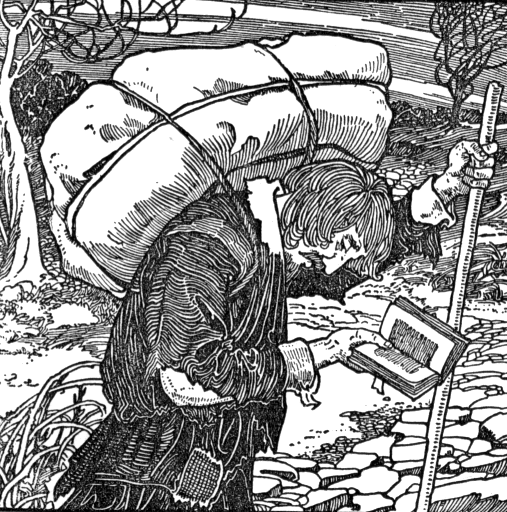
Both Peter and Paul were advising their readers to put aside” or cast off those things that might hinder their spiritual walk. They were to be viewed as unnecessary burdens that weigh down and encumber one’s spiritual journey. Like the character, Christian, in John Bunyan’s classic tale, The Pilgrim’s Progress, believers too often journey through life still bearing heavy loads that were meant to be discarded when they came to faith in Christ. Peter describes these burdens as “evil behavior” and then gets specific by mentioning deceit, hypocrisy, jealousy, and unkind speech. These particular behaviors are attitudes and actions that can do serious and irreparable damage to a church. They can destroy and sense of community and stand in direct opposition to the “brotherly love” Peter mentioned in chapter 1.

Once again, Paul used similar language to encourage the Ephesian believers to put off the old and put on the new.

…put off your old self, which belongs to your former manner of life and is corrupt through deceitful desires, and to be renewed in the spirit of your minds, and to put on the new self, created after the likeness of God in true righteousness and holiness. – Ephesians 4:22-24 ESV

Their new life in Christ should be accompanied by new attitudes and desires. Peter puts it in the terms of “cravings.”

Like newborn babies, you must crave pure spiritual milk – 1 Peter 2:2 NLT

Peter’s use of the image of a hungry infant longing for milk is powerful. It conveys the ideas of dependency and desire. In using it, he portrays his readers as innocent, helpless, and totally reliant upon the care of another. Since they had been “born again to a living hope” (1 Peter 1:3 ESV) “through the living and abiding word of God” (1 Peter 1:23 ESV), their lives depended upon the ongoing provision of their Heavenly Father. He had brought about their new birth and He would sustain their new spiritual life. But for them to grow, they would need to crave or long for the right form of nutrition. And contained in Peter’s admonition is the idea that they must develop a taste for the pure spiritual milk of God’s Word. Even newborn babies instinctively learn to appreciate the benefits of their mother’s milk. In time, they develop an understanding that there is only one source that can satisfy their hunger. And the same should be true of every believer concerning the spiritual benefits of God’s Word.

Initially, a baby has no awareness of the nutritional value of milk. He simply eats because he’s hungry. But in time, his body begins to benefit from the nutrients it receives through each feeding, and  it grows – slowly and, sometimes, imperceptibly. And Peter promises that a steady diet of God’s Word results in a believer’s spiritual growth.

by it you may grow up into salvation – 1 Peter 2:2 ESV

In Peter’s mind, spiritual growth in the life of the believer was as natural as the physical growth of an infant. It was a normal sign of healthy maturity.  He even picked up on this same theme in his second letter.

…grow in the grace and knowledge of our Lord and Savior Jesus Christ… – 2 Peter 3:18 ESV

Peter’s reference to the milk of God’s Word is not meant to suggest a simpler, easy-to-digest diet of spiritual pablum. In other words, this is not intended as an indictment of their spiritual status. This passage is sometimes linked to the following statement from the apostle Paul written to the church in Corinth.

Dear brothers and sisters, when I was with you I couldn’t talk to you as I would to spiritual people. I had to talk as though you belonged to this world or as though you were infants in Christ. I had to feed you with milk, not with solid food, because you weren’t ready for anything stronger. And you still aren’t ready, for you are still controlled by your sinful nature. – 1 Corinthians 3:1-3 NLT

Paul was criticizing the believer in Corinth for their lack of spiritual growth. They had not grown or matured in their faith. Their desire for the “meatier” things of God”s Word had never developed. But that is not what Peter is suggesting. He is not exposing a lock of spiritual growth among his audience. He is simply encouraging them to live their lives in total dependence upon the soul-nourishing milk of God’s Word.

Peter’s goal for his audience was their ongoing spiritual maturity, fueled by constant feeding on the truth of Scripture and the promises of God it contains. At their salvation, they had gotten a taste of God’s goodness. Now, it was time to drink in all the goodness that God’s imperishable seed could provide.

English Standard Version (ESV) The Holy Bible, English Standard Version. ESV® Permanent Text Edition® (2016). Copyright © 2001 by Crossway Bibles, a publishing ministry of Good News Publishers.

New Living Translation (NLT) Holy Bible, New Living Translation, copyright © 1996, 2004, 2015 by Tyndale House Foundation. Used by permission of Tyndale House Publishers Inc., Carol Stream, Illinois 60188. All rights reserved.

New English Translation (NET)NET Bible® copyright ©1996-2017 by Biblical Studies Press, L.L.C. http://netbible.com All rights reserved.


Never Give Up On Growing Up

23 Now may the God of peace himself sanctify you completely, and may your whole spirit and soul and body be kept blameless at the coming of our Lord Jesus Christ. 24 He who calls you is faithful; he will surely do it.

25 Brothers, pray for us.

26 Greet all the brothers with a holy kiss.

27 I put you under oath before the Lord to have this letter read to all the brothers.

28 The grace of our Lord Jesus Christ be with you. 1 Thessalonians 5:23-28 ESV

Like Peter and the other apostles, Paul had a strong expectation that the believers to whom he wrote would grow up in their salvation (1 Peter 2:2). Spiritual immaturity or stagnancy in their faith was unacceptable. He told the believers in Colossae that his preaching of Christ was intended to bring about salvation and sanctification.

Him we proclaim, warning everyone and teaching everyone with all wisdom, that we may present everyone mature in Christ. – Colossians 1:28 ESV

In his letter to the church in Ephesus, he told them that his responsibility as an apostle was to “to equip God’s people to do his work and build up the church, the body of Christ” (Ephesians 4:12 NLT). And then he added that this work of building up the body of Christ had a lofty end goal or objective:

This will continue until we all come to such unity in our faith and knowledge of God’s Son that we will be mature in the Lord, measuring up to the full and complete standard of Christ. – Ephesians 4:13 NLT

The work would never be done. Full spiritual maturity would never be achieved – at least, not in this lifetime. And Paul expressed to the Galatians his intention to keep pouring into them until they bore the likeness of Christ.

Oh, my dear children! I feel as if I’m going through labor pains for you again, and they will continue until Christ is fully developed in your lives. – Galatians 4:19 NLT

You might say that Paul was a man possessed. He could not bear the thought of any believer failing to experience the fulness of salvation offered to them in Jesus Christ. And this included their sanctification, the divine process by which believers are transformed into the likeness of Christ through the power of God’s indwelling Spirit.

So, as he begins to wrap up his letter to the believers in Thessalonica, Paul let’s them know of his desire for their holiness. It was his life’s passion and his constant prayer to God on their behalf.

Now may the God of peace himself make you completely holy… – 1 Thessalonians 5:23 NET

Paul knew that spiritual maturity was the work of God, not men. That does not mean we do not play a part, but that the work of sanctification is impossible without divine assistance. Paul has already told the Thessalonians that their sanctification was God’s will for them (1 Thessalonians 4:3), but now he reminds them that it is also God’s work. Only God can transform sinners into saints. Only He can replace their hearts of stone with hearts of flesh (Ezekiel 36:26).  Only He can radically alter their old natures, transforming them into new creations (2 Corinthians 5:17).

That is why Paul was constantly asking God to do what only He could do to bring about the spiritual maturity of His children.

I pray for you constantly, asking God, the glorious Father of our Lord Jesus Christ, to give you spiritual wisdom and insight so that you might grow in your knowledge of God. I pray that your hearts will be flooded with light so that you can understand the confident hope he has given to those he called—his holy people who are his rich and glorious inheritance. – Ephesians 1:16-18 NLT

Only God has the power to save and sanctify. And only God is capable of securing the spirits, souls, and bodies of His saints, so that they might remain “blameless until our Lord Jesus Christ comes again” (1 Thessalonians 5:23 NLT). By his use of the word “blameless,” Paul is not suggesting the possibility of achieving a state of sinless perfection in this life. He is simply reiterating a point he had made earlier in his letter. Their ability to one day stand before God “without fault” or “free from blame” would be the work of God.

May he…make your hearts strong, blameless, and holy as you stand before God our Father when our Lord Jesus comes again with all his holy people. – 1 Thessalonians 3:13 NLT

The ability to maintain a life marked by righteousness and holiness is a gift from God, just as salvation is. No one can save themselves and no one can preserve their saved state through self-effort. It is the work of God. And Paul assures the Thessalonians that God can be trusted to do what only He can do.

God will make this happen, for he who calls you is faithful. – 1 Thessalonians 5:24 NLT

God could be counted on to do His part. But they had a role to play as well. Paul has made that point perfectly clear throughout his letter. They would need to maintain their commitment to “serve the living and true God” (1 Thessalonians 1:9 ESV). They must continue to “walk in a manner worthy of God” (1 Thessalonians 2:12 ESV). He expected to hear that they were “standing fast in the Lord” (1 Thessalonians 3:8 ESV). And they could not afford to let up on their commitment to “live in holiness and honor—not in lustful passion like the pagans” (1 Thessalonians 4:4 ESV).

Their sanctification was a joint effort, powered by God, but requiring their willing and eager participation. If God’s will was their sanctification, they were going to have to adopt His will as their very own. It was essential that they make Christlikeness their primary passion and lifelong objective. And there was to be no goal less than full maturity in Christ. This meant that their sanctification would not be complete until they died and went to be with the Lord, or they lived long enough to see Him return at the Rapture for His church. Either way, the commitment to spiritual maturity and their ongoing transformation into the likeness of Christ was to remain their highest priority.

The apostle Peter reminds us that, because of our faith in Christ, we have been given all that we need to live godly lives. We lack nothing.

By his divine power, God has given us everything we need for living a godly life. We have received all of this by coming to know him, the one who called us to himself by means of his marvelous glory and excellence. And because of his glory and excellence, he has given us great and precious promises. These are the promises that enable you to share his divine nature and escape the world’s corruption caused by human desires. – 1 Peter 1:3-4 NLT

And the apostle John provides us with further assurance of our completed transformation into the likeness of Christ.

…we are already God’s children, but he has not yet shown us what we will be like when Christ appears. But we do know that we will be like him, for we will see him as he really is. – 1 John 3:2 NLT

Paul closes his letter with a request. He asks the Thessalonians for their prayers of intercession on the behalf of himself and the rest of his ministry partners. The work of sharing the Gospel required divine assistance. Paul coveted their prayer because he knew that he was in the midst of a spiritual battle “against evil rulers and authorities of the unseen world, against mighty powers in this dark world, and against evil spirits in the heavenly places” (Ephesians 6:12 NLT).

Finally, Paul asks that they express his love to all the members of the congregation and to make sure that his letter is read to everyone. And then he closes with a final blessing, asking that the grace of the Lord Jesus Christ be upon them. For Paul, the unmerited favor of God was a truly remarkable gift that never ceased to amaze and delight him. It was the key to salvation, sanctification and, ultimately, the glorification of all believers.

English Standard Version (ESV)
The Holy Bible, English Standard Version. ESV® Permanent Text Edition® (2016). Copyright © 2001 by Crossway Bibles, a publishing ministry of Good News Publishers.

New Living Translation (NLT)
Holy Bible, New Living Translation, copyright © 1996, 2004, 2015 by Tyndale House Foundation. Used by permission of Tyndale House Publishers Inc., Carol Stream, Illinois 60188. All rights reserved.

The Message (MSG)Copyright © 1993, 1994, 1995, 1996, 2000, 2001, 2002 by Eugene H. Peterson

No Greater Joy

The elder to the beloved Gaius, whom I love in truth.

Beloved, I pray that all may go well with you and that you may be in good health, as it goes well with your soul. For I rejoiced greatly when the brothers came and testified to your truth, as indeed you are walking in the truth. I have no greater joy than to hear that my children are walking in the truth. – 3 John 1:1-4 ESV

Of the three letters that John penned, this one appears to be the most personal in nature. It is addressed to someone called Gaius, an individual for whom John held strong affection. He refers to him as “beloved” Gaius. The Greek word John used is agapētos and it means “well-loved.” We know nothing about the relationship between these two men, but Gaius was obviously someone whom John loved dearly.

During the 1st-Century, Gaius was a common Greek name, and there are a number of men mentioned in the New Testament who share that appellation. But we have no way of knowing who this particular individual was or the nature of his relationship to John. It is likely that he lived somewhere in Asia Minor and had a connection to the local congregation to whom John wrote in his second letter.

In his salutation to Gaius, John utilizes the same wording he used in his second letter to address “the elect lady and her children.” He describes Gaius as someone “whom I love in truth” (3 John 1:1 ESV). Four times in four verses, John will bring up the topic of truth, something he addressed in his second letter as well. John is not simply saying, “I love you, and that’s the truth!” He is making a theological statement. In his second letter, he qualified his greeting to the local congregation to whom he wrote by adding, “because of the truth that abides in us and will be with us forever” (2 John 1:1 ESV).

It was God’s love for sinful humanity, as displayed in the gracious gift of His Son, that made it possible for John to love others. He was able to love because God had first loved him (1 John 4:19). God had showered John with His unconditional love and poured out His Spirit upon him, providing him with the capacity to share that love with others. And John’s love for Gaius went well beyond mere brotherly love. It was the love of one redeemed and forgiven sinner for another. They shared a common faith in Jesus Christ and had been adopted into the same family by God the Father. Paul describes this unique, shared relationship this way:

…you received God’s Spirit when he adopted you as his own children. Now we call him, “Abba, Father.” For his Spirit joins with our spirit to affirm that we are God’s children. And since we are his children, we are his heirs. In fact, together with Christ we are heirs of God’s glory. – Romans 8:15-17 NLT

So, John wanted Gaius to know that their mutual love for one another was based on the truth of God’s love for them. God had loved them enough to send His Son to die for them. And John’s love for Gaius extended to his desire that his brother and friend experience health and wholeness, both physically and spiritually.

I pray that all may go well with you and that you may be in good health, as it goes well with your soul – 3 John 1:2 ESV

For John, spiritual well-being superseded physical health and prosperity. He knew that growth in godliness was not a guarantee of physical comfort and ease. A life of Christlikeness was sometimes accompanied by pain and suffering. John had heard Jesus Himself declare the reality of hardship for those who place their faith in Christ.

Here on earth you will have many trials and sorrows. But take heart, because I have overcome the world. – John 16:33 NLT

And he was probably familiar with the words of Paul and Barnabas, spoken to the saints in Lystra, Iconium, and Antioch of Pisidia. As these two men had traveled through these regions, visiting the local church, “they strengthened the believers. They encouraged them to continue in the faith, reminding them that we must suffer many hardships to enter the Kingdom of God” (Acts 14:22 NLT).

John knew that suffering and sorrow were a common feature of the walk of faith. But he let Gaius know that he was praying for his health. He had no wish to see his friend suffer hardship. So, he made it a habit to ask God to protect and prosper Gaius physically and spiritually.

But John was especially grateful to hear of Gaius’ spiritual growth. He had rejoiced greatly upon receiving news that Gaius was “walking in the truth” (3 John 1:3 ESV). This young man’s life was marked by a commitment to the truth of the Gospel. It permeated every area of his life. His faith in Christ, marked by his belief in the death, burial, and resurrection of Jesus, was all-encompassing. His behavior was consistent with his professed belief in the saving work of Jesus Christ.

And John let Gaius know just how much this pleased him.

I have no greater joy than to hear that my children are walking in the truth. – 3 John 1:4 ESV

Paul expressed a similar sentiment to the believers in Philippi:

…complete my joy by being of the same mind, having the same love, being in full accord and of one mind. Do nothing from selfish ambition or conceit, but in humility count others more significant than yourselves. Let each of you look not only to his own interests, but also to the interests of others. – Philippians 2:2-4 ESV

Gaius was living out his faith in tangible ways that others could see. His belief in Christ was radically altering his behavior. And this brought great joy to his friend and shepherd. As an apostle of Jesus Christ and an elder who had oversight for the body of Christ, John found great satisfaction when he witnessed believers living out their faith in daily life. He expressed this sentiment to the local congregation to whom he wrote his second letter.

How happy I was to meet some of your children and find them living according to the truth, just as the Father commanded. – 2 John 1:4 NLT

While John could not guarantee Gaius a life free from trouble and marked by physical health and prosperity, he could encourage his friend to continue in the faith, allowing the truth of the Gospel to saturate and sanctify his every thought and deed.

English Standard Version (ESV)
The Holy Bible, English Standard Version. ESV® Permanent Text Edition® (2016). Copyright © 2001 by Crossway Bibles, a publishing ministry of Good News Publishers.

New Living Translation (NLT)
Holy Bible, New Living Translation, copyright © 1996, 2004, 2015 by Tyndale House Foundation. Used by permission of Tyndale House Publishers Inc., Carol Stream, Illinois 60188. All rights reserved.

The Message (MSG)Copyright © 1993, 1994, 1995, 1996, 2000, 2001, 2002 by Eugene H. Peterson

Fulness of Joy

12 Though I have much to write to you, I would rather not use paper and ink. Instead I hope to come to you and talk face to face, so that our joy may be complete.

13 The children of your elect sister greet you. – 2 John 1:12-13 ESV

Despite its abbreviated length, this letter packs a punch. John wasted no time or words in getting to the point he wanted to make. In fact, he indicated that, while there had been other topics he wanted to address with them, he had chosen to dedicate this letter to a single subject. And he let them know that it was his desire to come and visit them in person. It must have been difficult for John, Paul, and the other apostles to attempt to minister to so many churches spread over such a great distance.

These small and isolated congregations often lacked local leadership and were filled with people who had little knowledge of what it meant to live as a Christian. Beyond their initial exposure to the Gospel message and their acceptance of it, they had probably received scant details regarding their ongoing sanctification. That’s why these letters were so vital to the spiritual well-being of these local gatherings of new converts to Christianity. There was no completed canon of Scripture. There were no books available at the local Christian bookstore. They had no access to podcasts or online sermons and studies. Every day, they would find themselves bombarded by everything from false doctrine to the insults of their pagan friends and family members. The motivation to give in to temptation and to give up on the promises found in the Gospel would have been intense.

And the enemy knew that the compromise of their faith would be just as effective as their complete repudiation of it. A diminishment or diluting of their belief in the deity of Jesus would be just as damaging as if they denied Him altogether. That is why John wrote his letter. Finding himself physically separated from this fledgling congregation, he took advantage of the primary communications media of his day: The letter.

He penned a loving but stern warning to a group of people who he recognized as children in the faith. They were spiritual newborns who needed to be cared for and protected so they could reach full spiritual maturity. This was the same message that Peter expressed in one of his letters:

Like newborn babies, you must crave pure spiritual milk so that you will grow into a full experience of salvation. Cry out for this nourishment… – 1 Peter 2:2 NLT

Both Peter and John recognized that everyone enters the faith as a spiritual infant, immature and ill-prepared for the journey ahead of them. Yes, they have the indwelling presence of the Holy Spirit, but they require feeding and instruction. That is why Jesus commissioned His disciples to “Teach these new disciples to obey all the commands I have given you” (Matthew 28:20 NLT). And beyond the initial group of men whom Jesus had sent, He had raised up other leaders to shepherd His flock. And the apostle Paul describes the job description of these individuals.

Now these are the gifts Christ gave to the church: the apostles, the prophets, the evangelists, and the pastors and teachers. Their responsibility is to equip God’s people to do his work and build up the church, the body of Christ. – Ephesians 4:11-12 NLT

But despite the efforts of these Christ-commissioned leaders, the spiritual maturity of the church is not automatic or guaranteed. Paul expressed his concern for the lack of spiritual growth among the believers in Corinth, describing them as infants in Christ, rather than healthy, mature adults.

Dear brothers and sisters, when I was with you I couldn’t talk to you as I would to spiritual people. I had to talk as though you belonged to this world or as though you were infants in Christ. I had to feed you with milk, not with solid food, because you weren’t ready for anything stronger. And you still aren’t ready, for you are still controlled by your sinful nature. – 1 Corinthians 3:1-3 NLT

Spiritual growth is non-optional. Just as parents expect their child to grow into a fully functioning adult, so God expects His children to mature in their faith until, as Paul put it, “we all come to such unity in our faith and knowledge of God’s Son that we will be mature in the Lord, measuring up to the full and complete standard of Christ” (Ephesians 4:13 NLT).

But the sad reality is that some who claim to be followers of Christ fail to grow up. They remain spiritual infants, stunted in their growth and unable to contribute to the well-being of the body of Christ. The author of Hebrews had strong words for those who choose to remain in a state of spiritual infancy.

You have been believers so long now that you ought to be teaching others. Instead, you need someone to teach you again the basic things about God’s word. You are like babies who need milk and cannot eat solid food. – Hebrews 5:12 NLT

John cared deeply for those to whom he wrote. He knew that they were susceptible to false teaching and faulty doctrine. And the enemy was attacking the foundational elements of their faith: The deity of Jesus and the reality of the resurrection. If those pillars of the faith fell, there would be nothing to support their further growth in godliness. That is why John was so adamant that they have nothing to do with those who taught lies concerning Jesus. They needed to remain committed to the truth. It was the key to their future glorification, but also to their present sanctification.

The enemy continues to attack the church by disseminating falsehood. He cannot stop anyone from coming to faith in Christ, but he can hinder their efforts to grow up into Christ. He does so by turning Jesus into nothing more than a good man whose life is worth emulating. He presents Jesus as an icon of virtue and a model for righteousness. Idolizing Jesus is fully acceptable. But worshiping Him as God is not. Seeing Jesus as a saint-like figure who did good deeds is preferable to recognizing Him as the Savior who died for the sins of man.

But John wanted his readers to know that the lies of the enemy, while subtle, were sinister and deadly. They needed to wake up and grow up. They needed to be alert to the dangers all around them. The promises concerning the Gospel were true, but the enemy was going to do everything in his power to confuse truth with lies. But John started out his letter by reminding his audience that the truth “abides in us and will be with us forever” (2 John 1:2 ESV). And he ended his letter by stating his desire to see them face to face so “that our joy may be complete” (2 John 1:12 ESV).

These words echo what John wrote in his first letter. The fulness of joy John described and desired was available only through a persistent and unwavering trust in the truth about Jesus.

We proclaim to you the one who existed from the beginning, whom we have heard and seen. We saw him with our own eyes and touched him with our own hands. He is the Word of life. This one who is life itself was revealed to us, and we have seen him. And now we testify and proclaim to you that he is the one who is eternal life. He was with the Father, and then he was revealed to us. We proclaim to you what we ourselves have actually seen and heard so that you may have fellowship with us. And our fellowship is with the Father and with his Son, Jesus Christ. We are writing these things so that you may fully share our joy. – 1 John 4:1-4 NLT

The believers to whom John wrote had never seen Jesus. They had never had the pleasure of hearing Him teach or watching Him perform miracles. They had not been there when He rose from the dead and appeared to the disciples. But John wanted them to know that everything they had heard about Jesus was true. And he wanted them to experience the same degree of joy that he and the other disciples had felt when they saw their Savior in His resurrected state.

John knew that fulness of joy was directly tied to faith in Jesus. He would have recalled the words of Jesus

“Remain in me, and I will remain in you. For a branch cannot produce fruit if it is severed from the vine, and you cannot be fruitful unless you remain in me. Yes, I am the vine; you are the branches. Those who remain in me, and I in them, will produce much fruit. For apart from me you can do nothing. – John 15:4-5 NLT

And John’s emphasis on fulness of joy was borrowed from the lips of Jesus Himself.

“I have told you these things so that you will be filled with my joy. Yes, your joy will overflow! – John 15:11 NLT

John knew that the key to joy was a commitment to the truth as proclaimed by Jesus. He was the vine and they were the branches. And as long as they remained in Him, they would produce much fruit. They would mature and grow, as the life-transforming power of God flowed through them and out from them to all those around them.

English Standard Version (ESV)
The Holy Bible, English Standard Version. ESV® Permanent Text Edition® (2016). Copyright © 2001 by Crossway Bibles, a publishing ministry of Good News Publishers.

New Living Translation (NLT)
Holy Bible, New Living Translation, copyright © 1996, 2004, 2015 by Tyndale House Foundation. Used by permission of Tyndale House Publishers Inc., Carol Stream, Illinois 60188. All rights reserved.

The Message (MSG)Copyright © 1993, 1994, 1995, 1996, 2000, 2001, 2002 by Eugene H. Peterson

Boys to Men

1 But I, brothers, could not address you as spiritual people, but as people of the flesh, as infants in Christ. I fed you with milk, not solid food, for you were not ready for it. And even now you are not yet ready, for you are still of the flesh. For while there is jealousy and strife among you, are you not of the flesh and behaving only in a human way? – 1 Corinthians 3:1-3 ESV

11 And he gave the apostles, the prophets, the evangelists, the shepherds and teachers, 12 to equip the saints for the work of ministry, for building up the body of Christ, 13 until we all attain to the unity of the faith and of the knowledge of the Son of God, to mature manhood, to the measure of the stature of the fullness of Christ, 14 so that we may no longer be children, tossed to and fro by the waves and carried about by every wind of doctrine, by human cunning, by craftiness in deceitful schemes. 15 Rather, speaking the truth in love, we are to grow up in every way into him who is the head, into Christ, 16 from whom the whole body, joined and held together by every joint with which it is equipped, when each part is working properly, makes the body grow so that it builds itself up in love. – Ephesians 4:11-16 ESV

Spiritual maturity. Among those who consider themselves Christians, there are few who would argue over the fact that spiritual growth is a non-negotiable biblical mandate. We can all relate to Paul’s use of infancy and adulthood as a comparative example of our Christian experience. When someone comes to faith in Christ, they display the characteristics of a child: Innocent faithfulness, trusting reliance, and a natural need to be led and fed. But it is only normal to expect infants to grow and mature into the next phase of life. We anticipate growth. As parents, we encourage and help facilitate it. And, as Christians, we understand that our spiritual maturity follows a similar pattern. It begins with new birth, the God-ordained and Spirit-empowered transformation of one who was dead into new life.

…even when we were dead in our trespasses, [God] made us alive together with Christ—by grace you have been saved… – Ephesians 2:5 ESV

And you, who were dead in your trespasses and the uncircumcision of your flesh, God made alive together with him, having forgiven us all our trespasses… – Colossians 2:13 ESV

Jesus told Nicodemus, a fully mature man who was a proud member of the party of the Pharisees: “Truly, truly, I say to you, unless one is born again he cannot see the kingdom of God” (John 3:3 ESV). Jesus’ analogy went over the head of this learned religious leader and he responded, “How can a man be born when he is old? Can he enter a second time into his mother’s womb and be born?” (John 3:4 ESV). He missed the point altogether. Unaware of his own state of spiritual death, Nicodemus could not understand what Jesus meant by new birth. But everyone who comes to faith in Christ is born again or made new. Or as Paul put it, “if anyone is in Christ, he is a new creation. The old has passed away; behold, the new has come” (2 Corinthians 5:17 ESV).

It is the new birth, made possible by the death, burial, and resurrection of Christ, that makes it possible for believers to “walk in newness of life” (Romans 6:4 ESV). Or as Paul later described it, “the new way of the Spirit” (Romans 7:6 ESV). The new birth is to lead to new life. Just as we view the birth of a baby as the beginning of life, to be followed by the normal and natural marks of ever-increasing maturity, so God sees our new birth in Christ as the beginning of a life marked by spiritual growth. Which is why Peter, under the inspiration of the Holy Spirit, provided the following directive to followers of Christ: “Like newborn infants, long for the pure spiritual milk, that by it you may grow up into salvation…” (1 Peter 2:2 ESV).

We are to grow. It’s expected. And the lack of growth is to be viewed as unnatural and abnormal. It is not what God intended for us. In fact, Peter reminds us, “By his divine power, God has given us everything we need for living a godly life. We have received all of this by coming to know him, the one who called us to himself by means of his marvelous glory and excellence” (2 Peter 1:3 NLT). He has provided us with new birth and a new nature. He has placed His Holy Spirit within us and placed us in the body of Christ. He has given us His Word to teach us, the Spirit to lead us, and the family of God to care for us. God has given us everything we need to live the life to which He has called us. And that life is to be marked by ever-increasing evidence of spiritual maturity.

Look closely at Paul’s words to the believers in Ephesus. He told them that Christ had given “gifts” to the church, in the form of apostles, prophets, evangelists, pastors, and teachers. These divinely gifted individuals were “gifted” to the church by Christ and given the responsibility to “equip God’s people to do his work and build up the church” (Ephesians 4:12 NLT). And Paul infers that their job would not be complete “until we all come to such unity in our faith and knowledge of God’s Son that we will be mature in the Lord, measuring up to the full and complete standard of Christ” (Ephesians 4:13 NLT). Talk about job security.

None of us are there yet. We have not yet arrived to the full and complete standard of Christ. But then, neither had Paul. He openly confessed, “I don’t mean to say that I have already achieved these things or that I have already reached perfection. But I press on to possess that perfection for which Christ Jesus first possessed me” (Philippians 3:12 NLT). While Paul fully understood that he stood before God as fully righteous because he bore the righteousness of Christ, he also knew that there were areas of his life that did not measure up to that reality. His old nature still had a habit of showing up and causing him to act in spiritually immature ways. His flesh was constantly doing battle with the Spirit within him. He made this painfully clear in Romans 7.

And I know that nothing good lives in me, that is, in my sinful nature. I want to do what is right, but I can’t. I want to do what is good, but I don’t. I don’t want to do what is wrong, but I do it anyway. But if I do what I don’t want to do, I am not really the one doing wrong; it is sin living in me that does it. – Romans 7:18-20 NLT

But while this internal battle was an ever-present reality for Paul, he also understood that his old nature had been crucified with Christ on the cross, which is why he could say, “It is no longer I who live, but Christ lives in me. So I live in this earthly body by trusting in the Son of God, who loved me and gave himself for me” (Galatians 2:20 NLT).

Like Paul, we have been sanctified, set apart by God for His use. He has placed His Spirit within us and placed us within the body of Christ. He has provided us with a host of gifted individuals whose sole responsibility it is to equip and prepare us for the work of building up the body of Christ. And Paul makes God’s objective in all this quite clear: “Then we will no longer be immature like children. We won’t be tossed and blown about by every wind of new teaching. We will not be influenced when people try to trick us with lies so clever they sound like the truth” (Ephesians 4:14 NLT).

Maturity in place of childishness. Spiritual stability rather than the easy manipulability that too often accompanies immaturity. It is not that God doesn’t expect immaturity. It is normal and natural. It has its place. But He has provided all that is required for our spiritual growth and development. God has given us all we need for living godly lives. But we must avail ourselves of His gifts and graces. We must rely upon His Spirit. We must take advantage of the wisdom provided by His Word. We must submit to the authority of those He has placed in our lives as our spiritual fathers and mothers, tasked with the responsibility of equipping us for the work of the ministry.

Boys do not become men in isolation. They require care, discipline, instruction, and love. Infants left to themselves will grow, but not for long. And the same is true for believers. Any man or woman who attempts to grow more like Christ apart from the body of Christ will find themselves tossed and blown by every wind of new teaching. Their lives will be marked by jealousy and strife, immaturity and instability. And rather than being the spiritual people God has called them to be, they will be immature, stunted in their growth and stuck in the early stages of spiritual infancy.

English Standard Version (ESV) The Holy Bible, English Standard Version. ESV® Permanent Text Edition® (2016). Copyright © 2001 by Crossway Bibles, a publishing ministry of Good News Publishers.

New Living Translation (NLT) Holy Bible, New Living Translation, copyright © 1996, 2004, 2015 by Tyndale House Foundation. Used by permission of Tyndale House Publishers Inc., Carol Stream, Illinois 60188. All rights reserved.

The Message (MSG) Copyright © 1993, 1994, 1995, 1996, 2000, 2001, 2002 by Eugene H. Peterson


Faith and Love

But now that Timothy has come to us from you, and has brought us the good news of your faith and love and reported that you always remember us kindly and long to see us, as we long to see you — for this reason, brothers, in all our distress and affliction we have been comforted about you through your faith. For now we live, if you are standing fast in the Lord. For what thanksgiving can we return to God for you, for all the joy that we feel for your sake before our God, 10 as we pray most earnestly night and day that we may see you face to face and supply what is lacking in your faith? – 1 Thessalonians 3:6-10 ESV

In time, Timothy had returned from his assignment in Thessalonica, where he had been sent by Paul to establish and exhort the believers in their faith. At his reunion with Paul, Timothy provided a report concerning the state of the churches in Thessalonica, and Paul deemed what he heard as “good news.” Timothy shared details regarding their faith and love – pistis and agapē – two characteristics that Paul deemed indispensable to the Christian life. The writer of Hebrews stressed that “it is impossible to please God without faith. Anyone who wants to come to him must believe that God exists and that he rewards those who sincerely seek him” (Hebrews 11:6 NLT). Faith begins the Christian’s spiritual journey, but it does not end there. Faith is to be a permanent fixture of the believer’s life from the moment of conversion to the future day of glorification. Paul himself wrote, “The righteous shall live by faith” (Romans 1:17 ESV). And in the original Greek, that phrase actually reads, “The one who by faith is righteous shall live.” Faith is the fuel of the Christian life. It provides new life in Christ and makes possible the abundant life that He promised.

As the author of Hebrews makes clear, faith is a belief in the existence of God. But there’s more. It is a belief that this existent God is a rewarder of those who sincerely seek Him. In other words, those who sincerely seek Him and Him alone will be rewarded with the joy of finding Him. But in his letter to the Romans, Paul wrote:

For ever since the world was created, people have seen the earth and sky. Through everything God made, they can clearly see his invisible qualities – his eternal power and divine nature. So they have no excuse for not knowing God. – Romans 1:20 NLT

While God has revealed His invisible attributes through all that He has made, most men have chosen to worship chosen the creation rather than the creator. They had an awareness of God’s presence, but rather than seeking Him, they turned their attention to things made by Him. And the apostle John reminds us that “No one has ever seen God, but the one and only Son, who is Himself God and is at the Father’s side, has made Him known” (John 1:18 BSB). And Paul describes Jesus as “the image of the invisible God” (Colossians 1:15 ESV), who made God not only knowable but approachable. And yet, Paul also reveals that many who have heard about Jesus, still refuse to believe in Jesus. And their disbelief results in a spiritual blindness to the reality of who He is and what He has come to offer.

Satan, who is the god of this world, has blinded the minds of those who don’t believe. They are unable to see the glorious light of the Good News. They don’t understand this message about the glory of Christ, who is the exact likeness of God. – 2 Corinthians 4:4 NLT

They don’t believe. The Greek word is apistos and it means “not belief.” It is a lack of faith and trust in who Jesus is and the salvation He came to offer.

But for those who do believe in the salvation offered by God through His Son, forgiveness of sin and a restored relationship with God are the reward. But God expects that belief to last well beyond the point of conversion. Placing your faith in Christ is not a singular event, but a lifelong experience. The Christian life is a journey on which the believer’s faith will be tested all along the way. And when Paul heard that the believers in Thessalonica were exhibiting faith amid difficulty, he was encouraged. Their faith was a living faith. They were exhibiting a belief in the promises of God that did not waver in the face of difficulties. They were not allowing the presence of trials to diminish their trust in God. Their perseverance in the face of difficulties made Paul proud because it reflected their adherence to his teachings.

And I am convinced that nothing can ever separate us from God’s love. Neither death nor life, neither angels nor demons, neither our fears for today nor our worries about tomorrow—not even the powers of hell can separate us from God’s love.  No power in the sky above or in the earth below—indeed, nothing in all creation will ever be able to separate us from the love of God that is revealed in Christ Jesus our Lord. – Romans 8:38-39 NLT

They fully believed that they were loved by God and didn’t allow their less-than-ideal circumstances to diminish that belief. And their unwavering belief in God’s love for them manifested itself in a selfless love for others. That was the second characteristic Timothy highlighted. He reported to Paul that the Thessalonian believers loved well. But the text is very specific as to what kind of love they exhibited. The Greek word is agapē, and it refers to a specific kind of love. Timothy could have used the Greek word philadelphia, which refers to a love between brothers or friends. No, he specifically used agapē, which carried a much more powerful connotation. Within Christianity, it came to be associated with the love of Christ. It was a selfless, sacrificial kind of love that exhibited a lay-it-all-on-the-line kind of quality that demanded nothing in return. This kind of love is unconditional and not reciprocal. It doesn’t require the one who is loved to return the favor. It doesn’t demand that the one to be loved be lovely or loveable. In fact, Paul tells us that “God showed his great love for us by sending Christ to die for us while we were still sinners” (Romans 5:8 NLT). And the apostle John would have us remember that this kind of sacrificial and undeserved love is exactly what we received from God.

This is real love – not that we loved God, but that he loved us and sent his Son as a sacrifice to take away our sins. – 1 John 4:10 NLT

The Thessalonian believers loved in the same way they had been loved by God: Sacrificially and selflessly. And this brought Paul great joy. It provided him with comfort as he faced his own set of trials and troubles. News of their faith and love was exactly what he needed to hear. And he responded to this encouraging report by telling them, “It gives us new life to know that you are standing firm in the Lord” (1 Thessalonians 3:8 NLT).  News of their faith and love was like a tonic for Paul. It made all his hard work well worth the effort. For Paul, there was nothing more revitalizing to his own faith than to hear that his spiritual children were growing in godliness. And the two characteristics that best illustrated their growth were persevering faith and selfless love.

Yet, in spite of the good news delivered by Timothy, Paul longed to see his brothers and sisters in Christ again. And he assured them, “we pray most earnestly night and day that we may see you face to face and supply what is lacking in your faith” (1 Thessalonians 3:10 ESV). Notice the motivation behind Paul’s desire to return. He wants to fill in any gaps that might exist in their faith. For Paul, faith was dynamic, not static. It was to be living and ever-increasing. That is why James wrote, “faith by itself isn’t enough. Unless it produces good deeds, it is dead and useless” (James 2:17 NLT). Both Paul and James knew that true saving faith would result in true life change. And they also understood that faith would have a tendency to ebb and flow, based on the circumstances of life. There would be those days when a believer found holes in his faith – those gaps where the seed of doubt tends to take root and, in time, turns into full-grown disbelief. So, Paul wanted to fill in the gaps. He wanted to bring confident assurance to their faith, by increasing their knowledge of God and improving their understanding of and reliance upon His promises. And this desire by Paul to pour into the lives of believers is reflected in his prayer for the congregations in Colossae.

We ask God to give you complete knowledge of his will and to give you spiritual wisdom and understanding. Then the way you live will always honor and please the Lord, and your lives will produce every kind of good fruit. All the while, you will grow as you learn to know God better and better.

We also pray that you will be strengthened with all his glorious power so you will have all the endurance and patience you need. – Colossians 1:9-11 NLT

English Standard Version (ESV) The Holy Bible, English Standard Version. ESV® Permanent Text Edition® (2016). Copyright © 2001 by Crossway Bibles, a publishing ministry of Good News Publishers.

New Living Translation (NLT) Holy Bible, New Living Translation, copyright © 1996, 2004, 2015 by Tyndale House Foundation. Used by permission of Tyndale House Publishers Inc., Carol Stream, Illinois 60188. All rights reserved.

The Message (MSG) Copyright © 1993, 1994, 1995, 1996, 2000, 2001, 2002 by Eugene H. Peterson

A Call to Older Men

1 But as for you, teach what accords with sound doctrine. Older men are to be sober-minded, dignified, self-controlled, sound in faith, in love, and in steadfastness. – Titus 2:1-2 ESV

Paul has spent a significant portion of his letter warning Titus about the dangers of those who were promoting their man-made doctrines among the churches on Crete. These individuals were blatantly adding to the simplicity of the gospel message and contradicting the teaching of Paul and the other apostles of Jesus Christ. And one of the reasons these false teachers were making an impact was because of the spiritual immaturity of the congregations. As Paul concluded a few verses earlier in his letter, the believers on Crete were not sound in the faith.

So, Paul turns his attention to Titus, tasking his with the job of teaching “what accords with sound doctrine” (Titus 2:1 ESV). Notice that Paul is not asking Titus to teach sound doctrine. He seems to know that Titus has been faithful to promote what is in keeping with the teachings of Jesus and His apostles. But what Paul wants Timothy to do is to teach what “accords with” sound teaching. The Greek word Paul used carries the idea of reflecting or demonstrating. In other words, Paul is asking Titus to teach the Cretan believers what Christ-like behavior looks like. He wants Titus to make it clear to these people what true doctrine looks like when it’s lived out on a daily basis. 

This is in direct response to the false teaching that had begun to infect and influence the church. They were promoting everything from license to legalism. Some were demanding that any and all behavior was acceptable because they believed the spiritual and the physical were two completely separate realms. These individuals taught that what we do in our flesh makes no difference. As you can only imagine, this false doctrine would lead to some abhorrent behavior that was in direct contradiction to the Word of God.

These people were often referred to as antinomians, which literally means “anti-law.” They took the teachings of Paul regarding our freedom from the Mosaic Law and turned them into permission to practice moral license. But Paul addressed this misconception in his first letter to the believers in Corinth.

You say, “I am allowed to do anything”—but not everything is good for you. And even though “I am allowed to do anything,” I must not become a slave to anything. You say, “Food was made for the stomach, and the stomach for food.” (This is true, though someday God will do away with both of them.) But you can’t say that our bodies were made for sexual immorality. They were made for the Lord, and the Lord cares about our bodies. – 1 Corinthians 6:12-13 NLT

But right alongside the antinomians came the legalists, the party of the circumcision, who were teaching that strict adherence to the Mosaic Law was mandatory for any and all professing believers, whether they were Jews or Gentiles. These people taught a strict code based on abstinence and adherence. Paul addressed this false teaching to the Colossian church.

“Don’t handle! Don’t taste! Don’t touch!”? Such rules are mere human teachings about things that deteriorate as we use them. These rules may seem wise because they require strong devotion, pious self-denial, and severe bodily discipline. But they provide no help in conquering a person’s evil desires. – Colossians 2:21-23 NLT

So, with these two diametrically opposed brands of false teaching bombarding the local churches on Crete, Paul commanded Titus to provide the people with clear instructions on what proper Christian behavior should look like. And what should stand out to us is the simple, practical nature of Paul’s examples.

Paul begins with the mature males in the church, using the Greek word, presbytēs. It was a common word typically used to refer to someone who was more advanced in years. They were not necessarily elderly, but simply older. For Paul, these men were essential to the overall health of the church. And he states that they were to be “sober-minded, dignified, self-controlled, sound in faith, in love, and in steadfastness” (Titus 1:2 ESV). Each of these terms is packed with meaning, and they are not to be taken lightly.

The first descriptor Paul uses is nēphalios, which is translated as “sober-minded.” Some translations use the word “temperate” which is probably much closer to the original meaning. The original Greek word meant “abstaining from wine, either entirely or at least from its immoderate use.” And this meaning seems to fit the context. In the very next verse, Paul states that the older women were not to be “slaves to much wine.” It would seem that over-indulgence had become a problem in the churches on Crete. License had led some to drink wine to access. Any belief in moderation had been abandoned for the pursuit of personal pleasure. But in his letter to the believers in Galatia, Paul listed drunkenness among the works of the flesh and temperance among the fruit of the Spirit.

The second attribute or characteristic Paul requires of all older men in the body of Christ was semnos, which conveys the idea of being venerated for their character. They were to be looked up to for the way they lived their lives. These men were to be examples to the rest of the congregation, emulating the character of Christ and leading the younger men in the church to aspire to follow their example. It could have been that these older, more mature believers were setting the wrong example, having chosen to follow the teaching of the antinomians. Perhaps they were leading the way in licentious behavior and causing their younger brothers and sisters in Christ to stumble. But Paul demands that their behavior be Christ-like in every way.

Next, Paul emphasizes their need to be self-controlled. That particular translation of the Greek word sōphrōn is somewhat misleading. It seems to convey the idea that this character quality is completely up to the individual to pull off. But we know that Paul firmly believed in the role of the Holy Spirit in assisting us in our pursuit of Christ-like behavior. In fact, he told the believers in Galatia: “the Holy Spirit produces this kind of fruit in our lives: love, joy, peace, patience, kindness, goodness, faithfulness, gentleness, and self-control” (Galatians 5:22-23 NLT). Paul clearly taught that self-control was only possible when one was under the Spirit’s control. 

…let the Holy Spirit guide your lives. Then you won’t be doing what your sinful nature craves. – Galatians 5:16 NLT

The Greek word has to do with curbing one’s desires and impulses. It is the mark of someone who is not controlled by his emotions, physical appetites, or sinful desires. And it listed in the qualities required of an elder found in chapter 1.

These are all characteristics that should accompany physical maturity. But Paul doesn’t stop there. He adds a few more qualities that should reflect spiritual maturity or godliness. He states that these older men should be “sound in faith, in love, and in steadfastness” (Titus 2:2 ESV). The Greek word that is translated as “sound” has to do with wholeness or completeness. It was often used to refer to a person being sound of body or in good health. Paul is insisting that older Christian men should be whole or healthy when it comes to their faith in God and His gospel message, their love for God and His children, and their patient endurance as they wait for His Son’s return.

Paul held these older men to a higher standard and, more than likely, he included himself as one of them. He worked hard to ensure that his life was an example to the younger men in his life, including Titus and Timothy. Paul was able to say to the believers in Corinth, “you should imitate me, just as I imitate Christ” (1 Corinthians 11:1 NLT). He told the Philippian believers, “pattern your lives after mine, and learn from those who follow our example” (Philippians 3:17 NLT). He went on to tell them, “What you have learned and received and heard and seen in me—practice these things” (Philippians 4:9 ESV).

Paul was demanding of these men what he demanded of himself. But this was not some form of legalism or license. He was not promoting another form of rule-keeping or behavior modification. For Paul, this was all about living out his faith in everyday life. It was to permeate every area of his life. His belief was to result in changed behavior. And he knew that this was true of each and every person who professed to be a follower of Christ.

The reason older men are singled out first is that they were the pool from which the elders of the church were to come. The Greek word used for older men is presbytēs and the word for elder is presbyteros. Paul had charged Titus with the task of finding and appointing elders in all the churches on Crete. But where was he going to find such individuals if there were no older men who met the standards? The truth is, the church should never be in short supply of elders, because it is filled with older men whose lives reflect the characteristics of an elder. Godly leadership should be readily available and easily accessible because the older men of the church are sound in faith, in love, and in steadfastness.

English Standard Version (ESV) The Holy Bible, English Standard Version. ESV® Permanent Text Edition® (2016). Copyright © 2001 by Crossway Bibles, a publishing ministry of Good News Publishers.s

New Living Translation (NLT) Holy Bible, New Living Translation, copyright © 1996, 2004, 2015 by Tyndale House Foundation. Used by permission of Tyndale House Publishers Inc., Carol Stream, Illinois 60188. All rights reserved.

The Message (MSG) Copyright © 1993, 1994, 1995, 1996, 2000, 2001, 2002 by Eugene H. Peterson

Acting Like Infants.

But I, brothers, could not address you as spiritual people, but as people of the flesh, as infants in Christ. I fed you with milk, not solid food, for you were not ready for it. And even now you are not yet ready, for you are still of the flesh. For while there is jealousy and strife among you, are you not of the flesh and behaving only in a human way? For when one says, “I follow Paul,” and another, “I follow Apollos,” are you not being merely human?

What then is Apollos? What is Paul? Servants through whom you believed, as the Lord assigned to each. I planted, Apollos watered, but God gave the growth. So neither he who plants nor he who waters is anything, but only God who gives the growth. He who plants and he who waters are one, and each will receive his wages according to his labor. For we are God’s fellow workers. You are God’s field, God’s building. – 1 Corinthians 3:1-9 ESV

There is nothing particularly wrong with acting like a child – if you are one. But we all know how awkward it is to be around someone who refuses to act their age. Watching a grown man behave like a teenager is painful and extremely disappointing. It’s obvious to all that something is wrong with his behavior. He has refused to grow up and own up to the responsibilities that come with adulthood. And his immature actions usually end up impacting every area of his life. The same can be said for spiritual immaturity. It’s not it’s wrong. Every believer starts out as a spiritual infant in Christ. We begin the journey of faith as metaphorical newborns who require what Paul refers to as the “milk” of God’s Word. This is normal and natural. It is to be expected. It was Peter who wrote, “Like newborn infants, long for the pure spiritual milk, that by it you may grow up into salvation” (1 Peter 2:2 ESV). There is a time in every believer’s life when their spiritual diet must be simple and easily digestible. But as they grow, they are to move on to the “meat” of the Word. They are to grow up into salvation, learning to grasp the depth of God’s love, the significance of His grace, their complete dependence upon His strength, and the full weight of His call to holiness. The author of the book of Hebrews had some strong words to say to the recipients of is letter:

You have been believers so long now that you ought to be teaching others. Instead, you need someone to teach you again the basic things about God’s word. You are like babies who need milk and cannot eat solid food. For someone who lives on milk is still an infant and doesn’t know how to do what is right. – Hebrews 5:12-13 NLT

They were stuck on the basics, the elemental principles of God’s Word. They knew that Jesus was the Son of God and that He had died for their sins. They understood that they were completely dependent upon Him for salvation. They had believed that by placing their faith in Him they would be restored to a right relationship with God. But their knowledge of God’s Word had not gone beyond that point. Their grasp of all that God had done and all that He had in store for them remained limited and so their behavior remained so as well. Paul had given the Ephesian believers a goal to “be mature in the Lord, measuring up to the full and complete standard of Christ” (Ephesians 4:13 NLT). They were to grow in Christ-likeness, becoming increasingly more like Him in their daily conduct. And the result of this spiritual growth would be clearly evident.

Then we will no longer be immature like children. We won’t be tossed and blown about by every wind of new teaching. We will not be influenced when people try to trick us with lies so clever they sound like the truth. Instead, we will speak the truth in love, growing in every way more and more like Christ, who is the head of his body, the church. – Ephesians 4:14-15 NLT

The problem with the believers in Corinth was that their behavior was revealing their spiritual immaturity. They were bickering and boasting, fighting and fuming over who was more spiritual and who had the best leader. Paul said, “there is jealousy and strife among you” and that was proof that they were “of the flesh and behaving only in a human way” (1 Corinthians 3:3 ESV). They were acting like children, arguing over things that didn’t matter and that only revealed their lack of understanding of the ways of God. They were making much of men rather than much of God. They misunderstood that these men were merely messengers, acting on behalf of God. This led Paul to ask them, “who is Apollos? Who is Paul? We are only God’s servants through whom you believed the Good News. Each of us did the work the Lord gave us” (1 Corinthians 3:5 ESV). They were nothing more than instruments in the hand of God. Any value they had came from God’s decision to use them to accomplish His will. In a subsequent letter to the Corinthians, Paul would state:

You see, we don’t go around preaching about ourselves. We preach that Jesus Christ is Lord, and we ourselves are your servants for Jesus’ sake. For God, who said, “Let there be light in the darkness,” has made this light shine in our hearts so we could know the glory of God that is seen in the face of Jesus Christ. We now have this light shining in our hearts, but we ourselves are like fragile clay jars containing this great treasure. This makes it clear that our great power is from God, not from ourselves. – 2 Corinthians 4:5-7 NLT

A more mature believer has a growing awareness that God is the source of all that we enjoy regarding our faith. It was He who called us, not a man. It was His Son who died for us. It was His Spirit who opened our eyes so that we could understand the truth of the gospel. It is His Word that provides us with insight into His nature and daily guidance for our journey of faith. And it is God who gave us apostles, prophets, evangelists, pastors and teachers “to equip God’s people to do his work and build up the church, the body of Christ” (Ephesians 4:12 NLT). And Paul reminded the believers in Corinth that he, Cephas and Apollos were nothing more than “God’s fellow workers” and they were “God’s field, God’s building” (1 Corinthians 3:9 ESV). Growing believers have a growing understanding of and appreciation for God’s work in their lives. They grow in their appreciation for His love and mercy. They grow in their gratitude for His unfailing forgiveness. They grow in their desire to please Him, not in order to earn His love, but because they are loved. They grow in their dependence upon Him. They grow in their desire for Him. They grow in their hunger for His Word. They grow in their trust in His promises. They grow into their salvation. And all this growth shows up in their behavior.