More Than Daniel Prayed For

20 While I was speaking and praying, confessing my sin and the sin of my people Israel, and presenting my plea before the Lord my God for the holy hill of my God, 21 while I was speaking in prayer, the man Gabriel, whom I had seen in the vision at the first, came to me in swift flight at the time of the evening sacrifice. 22 He made me understand, speaking with me and saying, “O Daniel, I have now come out to give you insight and understanding. 23 At the beginning of your pleas for mercy a word went out, and I have come to tell it to you, for you are greatly loved. Therefore consider the word and understand the vision.

24 “Seventy weeks are decreed about your people and your holy city, to finish the transgression, to put an end to sin, and to atone for iniquity, to bring in everlasting righteousness, to seal both vision and prophet, and to anoint a most holy place. 25 Know therefore and understand that from the going out of the word to restore and build Jerusalem to the coming of an anointed one, a prince, there shall be seven weeks. Then for sixty-two weeks it shall be built again with squares and moat, but in a troubled time. 26 And after the sixty-two weeks, an anointed one shall be cut off and shall have nothing. And the people of the prince who is to come shall destroy the city and the sanctuary. Its end shall come with a flood, and to the end there shall be war. Desolations are decreed. 27 And he shall make a strong covenant with many for one week, and for half of the week he shall put an end to sacrifice and offering. And on the wing of abominations shall come one who makes desolate, until the decreed end is poured out on the desolator.” – Daniel 9:20-27 ESV

As a result of Daniel’s prayer, God responded. He sent the angel Gabriel to provide Daniel with “insight and understanding.” Gabriel told Daniel, “The moment you began praying, a command was given. And now I am here to tell you what it was, for you are very precious to God. Listen carefully so that you can understand the meaning of your vision” (Daniel 9:23 NLT). This was Daniel’s second encounter with God’s heavenly messenger and, this time, Gabriel proceeded to give Daniel insight into events surrounding the end times.

As Daniel listened intently, Gabriel outlined a chronological framework regarding the future of Jerusalem. Daniel did not know that his vision had long-term implications, dealing with events that would take place far into the future and involve the coming of the Messiah. As Daniel had read the writings of Jeremiah, he was reminded that God was about to restore Israel to the land after their 70 years of exile in Babylon. But He had far more in store for the nation of Israel.

He was going to restore peace and righteousness to the world with the return of His Son at the end of the age. The same God of mercy, grace, and forgiveness to whom Daniel prayed was the one who would fulfill all His promises regarding the end of the age and the coming of His Son’s Eternal Kingdom.

Verse 24 contains the full outline of the prophecy.

“A period of seventy sets of seven has been decreed for your people and your holy city to finish their rebellion, to put an end to their sin, to atone for their guilt, to bring in everlasting righteousness, to confirm the prophetic vision, and to anoint the Most Holy Place.” – Daniel 9:24 NLT

The term “weeks” is better translated “sevens,” thus Gabriel outlines a period of seventy sets of seven. Verse 25 describes a period of sixty-nine sevens and verse 26 describes what happens between the sixty-ninth and the seventieth seventh. Then verse 27 outlines the events surrounding the final seventieth-seventh. All of this cryptic-sounding talk of weeks and numbers must have left Daniel’s head spinning. He had no way of comprehending its meaning but Gabriel made it clear that it all had to do the prophetic vision of Israel’s future.

Daniel had just finished confessing the sins of his people and, now, Gabriel was letting him know that the day was coming when the rebellious Israelites would finish their rebellion. But this dramatic change in their behavior would not come as a result of their own effort but by the gracious hand of God. He would put an end to their sin, atone for their guilt, and bring in everlasting righteousness. The day was coming when God would do for the people of Israel what they could never have done for themselves.

The prophet Ezekiel recorded God’s promise of this epic and future transformation in the lives of His chosen people.

“For I will gather you up from all the nations and bring you home again to your land. Then I will sprinkle clean water on you, and you will be clean. Your filth will be washed away, and you will no longer worship idols. And I will give you a new heart, and I will put a new spirit in you. I will take out your stony, stubborn heart and give you a tender, responsive heart. And I will put my Spirit in you so that you will follow my decrees and be careful to obey my regulations. And you will live in Israel, the land I gave your ancestors long ago. You will be my people, and I will be your God.” – Ezekiel 36:24-28 NLT

God had great plans for the nation of Israel and for the world in general. In less than three years, He would orchestrate the return of a remnant of His people to the land of Israel, but that would be just the beginning of His master plan. Daniel was anxious to know that his people would be returning to Judah but God wanted His faithful servant to understand that He had something far greater in store for them.

To make sense of this prophecy, it is essential to understand the seventy-sevens as referring to years and not weeks. When you consider that Daniel understood the prophecy of Jeremiah as dealing with a literal 70-year span in which the Israelites would be captives in Babylon, it only makes sense to see the seventy-sevens (490) as a period of years. With the fall the Jerusalem at the hands of the Babylonians, the city suffered under the hand of Gentiles for 70 years. In the same way, Jerusalem would have to endure another 490 years under Gentile rule.

In a way, Daniel was receiving a good news-bad news message. He had just been reminded that the 70 years of Babylonian captivity were about to come to an end. That was the good news. But now he was being told that another period of Gentile oppression was in Israel’s future. Yet this prophesy is anything but clear. Daniel had no way of understanding the ramifications of what Gabriel was saying. When Gabriel said, “Now listen and understand,” Daniel must have been expecting a detailed and precise explanation of his vision. But, instead, he heard, “Seven sets of seven plus sixty-two sets of seven will pass from the time the command is given to rebuild Jerusalem until a ruler—the Anointed One—comes. Jerusalem will be rebuilt with streets and strong defenses, despite the perilous times.” (Daniel 9:25 NLT).

What did it all mean? When would it all happen? Daniel likely understood that Gabriel was speaking in terms of years and not weeks but nothing else would have made sense to him. Then, Gabriel added another confusing aspect to the vision.

“After this period of sixty-two sets of seven, the Anointed One will be killed, appearing to have accomplished nothing, and a ruler will arise whose armies will destroy the city and the Temple. The end will come with a flood, and war and its miseries are decreed from that time to the very end. – Daniel 9:26 NLT

None of this would have sounded like good news to Daniel. Despite his experience with interpreting dreams, this explanation was far from encouraging. Destruction, floods, war, misery – none of this came across as favorable or faith-inducing. Then Gabriel described the cessation of the sacrificial system and the desecration of God’s house. This would have been worse than anything Daniel had experienced six decades earlier. He had lived through the fall of Jerusalem and now he was being told that something far more devastating lay in Israel’s future.

Daniel is told that after a period of 434 years, an “anointed one” will appear on the scene. This “prince” or ruler will rebuild Jerusalem and make a treaty with the people of Israel.

The ruler will make a treaty with the people for a period of one set of seven… – Daniel 9:27 NLT

Midway through this seven-year treaty, this ruler will break his agreement and outlaw the sacrificial system. On top of that, he will desecrate the Temple of God by setting up a false God within the Holy of Holies. Jesus spoke of this very event.

“The day is coming when you will see what Daniel the prophet spoke about—the sacrilegious object that causes desecration standing in the Holy Place.” (Reader, pay attention!)” – Matthew 24:15 NLT

The apostle Paul also addressed this end times event when writing to the church in Thessalonica.

Don’t let anyone deceive you in any way, for that day will not come until the rebellion occurs and the man of lawlessness is revealed, the man doomed to destruction. He will oppose and will exalt himself over everything that is called God or is worshiped, so that he sets himself up in God’s temple, proclaiming himself to be God. – 2 Thessalonians 2:3-4 NLT

The apostle John was also given a vision of this as-yet-to-happen event which he recorded in the Book of Revelation.

People worshiped the dragon because he had given authority to the beast, and they also worshiped the beast and asked, “Who is like the beast? Who can wage war against it?”

The beast was given a mouth to utter proud words and blasphemies and to exercise its authority for forty-two months. It opened its mouth to blaspheme God, and to slander his name and his dwelling place and those who live in heaven. It was given power to wage war against God’s holy people and to conquer them. And it was given authority over every tribe, people, language and nation. All inhabitants of the earth will worship the beast—all whose names have not been written in the Lamb’s book of life, the Lamb who was slain from the creation of the world. – Revelation 13:5-8 NLT

At the point at which Daniel heard the words of Gabriel, he had no way of knowing the full extent of the vision’s meaning. He didn’t realize the significance of what he had seen and the long-term ramifications of its meaning and message. There were future events on the horizon that would dramatically alter the political, social, and religious landscape of the world – for eternity. God was going to return the exiles to the land of promise, but He had far greater things in store for His people and the nations of the world.

Daniel was not given a play-by-play explanation of the vision. He was not provided with a detailed timeline or the identities of any of the major players in the divine drama that would unfold in the future. God simply wanted Daniel to know that there was a plan in place and it would happen on time and in just the way God had ordained.

English Standard Version (ESV) The Holy Bible, English Standard Version. ESV® Permanent Text Edition® (2016). Copyright © 2001 by Crossway Bibles, a publishing ministry of Good News Publishers.

New Living Translation (NLT) Holy Bible, New Living Translation, copyright © 1996, 2004, 2015 by Tyndale House Foundation. Used by permission of Tyndale House Publishers Inc., Carol Stream, Illinois 60188. All rights reserved.

New English Translation (NET)NET Bible® copyright ©1996-2017 by Biblical Studies Press, L.L.C. http://netbible.com All rights reserved.
A Difficult Assignment

As I urged you when I was going to Macedonia, remain at Ephesus so that you may charge certain persons not to teach any different doctrine, nor to devote themselves to myths and endless genealogies, which promote speculations rather than the stewardship from God that is by faith. The aim of our charge is love that issues from a pure heart and a good conscience and a sincere faith. Certain persons, by swerving from these, have wandered away into vain discussion, desiring to be teachers of the law, without understanding either what they are saying or the things about which they make confident assertions.

Now we know that the law is good, if one uses it lawfully, understanding this, that the law is not laid down for the just but for the lawless and disobedient, for the ungodly and sinners, for the unholy and profane, for those who strike their fathers and mothers, for murderers, 10 the sexually immoral, men who practice homosexuality, enslavers, liars, perjurers, and whatever else is contrary to sound doctrine, 11 in accordance with the gospel of the glory of the blessed God with which I have been entrusted. – 1 Timothy 1:3-11 ESV

The book of Acts records that Timothy accompanied Paul on his third missionary journey, including a lengthy stay in the city of Ephesus. During their time there, Timothy was able to witness his mentor ministering to the Jewish residents of this prosperous Roman city. And, as usual, Paul’s efforts met with mixed results.

Paul went to the synagogue and preached boldly for the next three months, arguing persuasively about the Kingdom of God. But some became stubborn, rejecting his message and publicly speaking against the Way. So Paul left the synagogue and took the believers with him. Then he held daily discussions at the lecture hall of Tyrannus. This went on for the next two years, so that people throughout the province of Asia—both Jews and Greeks—heard the word of the Lord. – Acts 19:8-10 NLT

Timothy had a front-row seat to Paul’s zealous preaching and teaching ministry in the bustling environs of this cosmopolitan melting pot. And he must have been awestruck by Paul’s supernatural ability to do the inexplicable and impossible.

God gave Paul the power to perform unusual miracles. When handkerchiefs or aprons that had merely touched his skin were placed on sick people, they were healed of their diseases, and evil spirits were expelled. – Acts 19:11-12 NLT

Timothy would have recalled a particular incident in Ephesus involving seven Jewish brothers who tried to emulate Paul’s Spirit-imbued power by attempting to cast out a demon. They seemed to believe that they could replicate Paul’s miraculous crowd-drawing power by simply mimicking his words.

They tried to use the name of the Lord Jesus in their incantation, saying, “I command you in the name of Jesus, whom Paul preaches, to come out!” – Acts 19:13 NLT

But they were in for a rude awakening. The demon they tried to cast out questioned their identity and credentials.

“I know Jesus, and I know Paul, but who are you?” – Acts 19:15 NLT

Then Luke records the rather Monty Python-esque scene that transpired.

…the man with the evil spirit leaped on them, overpowered them, and attacked them with such violence that they fled from the house, naked and battered. – Acts 19:16 NLT

But this incident had a sobering effect on the city. Luke reports that news of the demonic attack “spread quickly all through Ephesus, to Jews and Greeks alike. A solemn fear descended on the city, and the name of the Lord Jesus was greatly honored. Many who became believers confessed their sinful practices” (Acts 19:17-18 NLT). 

The impressionable young Timothy would have been deeply impacted by these events. He stood back and watched as the gospel message radically transformed the lives of the people in Ephesus. This city was a hotbed of sorcery and witchcraft, and the gospel message began to make an impact on those who embraced these pagan practices.

A number of them who had been practicing sorcery brought their incantation books and burned them at a public bonfire. – Acts 19:19 NLT

While many were coming to faith in Christ, others in the city saw Paul and his companions as a threat to their religion and their way of life. After Paul sent Timothy on to Macedonia, a riot broke out in the city of Ephesus, spurred on by the guild of the local silversmiths who had seen a dramatic decrease in their sale of idols. They enlisted the other craftsmen in town and launched a crusade against Paul.

“…this man Paul has persuaded many people that handmade gods aren’t really gods at all. And he’s done this not only here in Ephesus but throughout the entire province! Of course, I’m not just talking about the loss of public respect for our business. I’m also concerned that the temple of the great goddess Artemis will lose its influence and that Artemis—this magnificent goddess worshiped throughout the province of Asia and all around the world—will be robbed of her great prestige!” – Acts 19:26-27 NLT

Eventually, Paul was forced to leave Ephesus for the region of Macedonia. But all of these events would have had a dramatic impact on the life of Timothy. When he eventually returned to Ephesus, he knew he was facing an uphill battle. And Paul’s letter to him was intended to provide encouragement and support in the midst of a hostile environment. Paul had given Timothy a very difficult assignment.

When I left for Macedonia, I urged you to stay there in Ephesus and stop those whose teaching is contrary to the truth. – 1 Timothy 1:3 NLT

Paul’s emphasis was on the state of the local church in Ephesus. It had become infiltrated by men who were promoting doctrines that contradicted the words of Jesus and the teachings of Paul. The apostle reminded Timothy of the purpose of his ministry:  “…that all believers would be filled with love that comes from a pure heart, a clear conscience, and genuine faith” (1 Timothy 1:5 NLT). But things in Ephesus had taken a turn for the worse. The influence of the false teachers had already begun to take effect, leaving the believers in Ephesus focusing on the wrong things.

The purpose of my instruction is that all believers would be filled with love that comes from a pure heart, a clear conscience, and genuine faith.

…some people have missed this whole point. They have turned away from these things and spend their time in meaningless discussions. – 1 Timothy 1:6 NLT

And it was Timothy’s job to confront these false teachers and to correct the misguided members of the local congregation who were buying into their rhetoric. These purveyors of manmade doctrines wanted “to be known as teachers of the law of Moses,,” but Paul said, “they don’t know what they are talking about” (1 Timothy 1:7 NLT). They were making stuff up as they went along and yet billed themselves as experts in the law of Moses.

In the early days of the church, it was easy for anyone to set themselves up as an expert. There were no seminaries and no established criteria for examining anyone’s leadership credentials. Just about anyone could declare themselves a spokesman for Jesus Christ and promote their own agenda and dogma. But Paul warned Timothy that the basis for judging sound teaching was “the gospel of the glory of the blessed God” (1 Timothy 1:11 ESV). If anyone taught anything that contradicted the gospel of Jesus Christ, they were to be avoided like the plague. This was a pervasive problem in the early church. In fact, Paul warned the believers in Galatia about this very thing.

You are following a different way that pretends to be the Good News but is not the Good News at all. You are being fooled by those who deliberately twist the truth concerning Christ.

Let God’s curse fall on anyone, including us or even an angel from heaven, who preaches a different kind of Good News than the one we preached to you. I say again what we have said before: If anyone preaches any other Good News than the one you welcomed, let that person be cursed. – Galatians 1:6-9 NLT

He accused the believers in Corinth of succumbing to the same false rhetoric.

You happily put up with whatever anyone tells you, even if they preach a different Jesus than the one we preach, or a different kind of Spirit than the one you received, or a different kind of gospel than the one you believed. – 2 Corinthians 11:4 NLT

So, Paul repeated the same warning to Timothy, preparing him to do battle with the flagrant falsehoods being propagated by the self-proclaimed teachers of the gospel. They were to be exposed for what they were – liars and deceivers. And their false teaching was to be rejected and replaced with the pure and life-transforming power of the gospel.

English Standard Version (ESV) The Holy Bible, English Standard Version. ESV® Permanent Text Edition® (2016). Copyright © 2001

New Living Translation (NLT) Holy Bible, New Living Translation, copyright © 1996, 2004, 2015 by Tyndale House Foundation. Used by permission of Tyndale House Publishers Inc., Carol Stream, Illinois 60188. All rights reserved.

You Had Your Chance

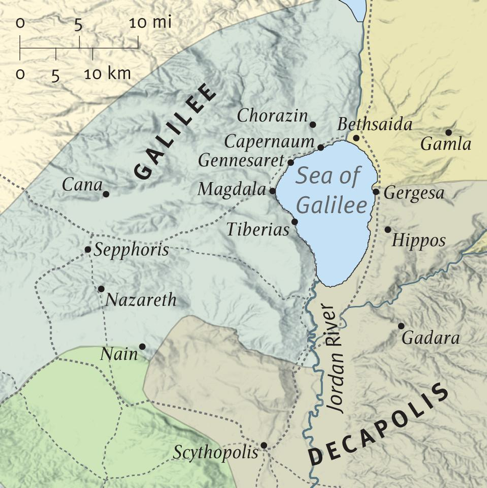
20 Then he began to denounce the cities where most of his mighty works had been done, because they did not repent. 21 “Woe to you, Chorazin! Woe to you, Bethsaida! For if the mighty works done in you had been done in Tyre and Sidon, they would have repented long ago in sackcloth and ashes. 22 But I tell you, it will be more bearable on the day of judgment for Tyre and Sidon than for you. 23 And you, Capernaum, will you be exalted to heaven? You will be brought down to Hades. For if the mighty works done in you had been done in Sodom, it would have remained until this day. 24 But I tell you that it will be more tolerable on the day of judgment for the land of Sodom than for you.” – Matthew 11:20-24 ESV

The cities of Chorazin, Bethsaida, and Capernaum were located on the northern shore of the Sea of Galilee, and they hold the unenviable distinction of having been condemned and cursed by Jesus Himself. But why? What possessed Jesus to issue His stinging statements against these Galilean cities, and why did He choose to do it at this time in His ministry?

Matthew provides a partial answer when he records that these three cities were “where most of his [Jesus] mighty works had been done” (Matthew 11:20 ESV). In other words, Jesus had done a great many miracles in the vicinity of these cities, but, in spite of personally witnessing the power of Jesus on display, the residents of these cities “did not repent” (Matthew 11:20 ESV). They had been eye-witnesses to the miraculous nature of Jesus’ ministry, and they had heard the message of repentance uttered by John the Baptist and Jesus Himself. But they had refused to accept that call, choosing instead to display a stubborn resistance to the message accompanying the miracles of Jesus. They loved what their eyes were seeing, but rejected what their ears were hearing.

These verses mark a watershed moment in the life and ministry of Jesus. Up to this point, He has spent most of His time ministering in and around this region of Israel. His base of operations had been located in the city of Capernaum. He had preached His sermon on the mount not far from there. The miracle of the feeding of the 5,000 took place not far from Bethsaida. The people living in and around these three cities had been privileged to witness His works and hear His words but had failed to grasp the truth that Jesus was the Messiah.

These verses provide a link back to Jesus’ commissioning of the 12 disciples found in chapter 10. Just prior to sending them out on their first missionary journey, Jesus had told them:

“Go nowhere among the Gentiles and enter no town of the Samaritans, but go rather to the lost sheep of the house of Israel. And proclaim as you go, saying, ‘The kingdom of heaven is at hand.’ Heal the sick, raise the dead, cleanse lepers, cast out demons.” – Matthew 10:5-8 ESV

Not only had Jesus limited their ministry to the Jews, but He had told them to focus their attention on those who would receive them and their message.

“And whatever town or village you enter, find out who is worthy in it and stay there until you depart. As you enter the house, greet it.  And if the house is worthy, let your peace come upon it, but if it is not worthy, let your peace return to you. And if anyone will not receive you or listen to your words, shake off the dust from your feet when you leave that house or town. Truly, I say to you, it will be more bearable on the day of judgment for the land of Sodom and Gomorrah than for that town.” – Matthew 10:11-15 ESV

Notice what Jesus told His disciples. If the residents of a city or home refused to receive them or listen to their words, they were to “shake off the dust” from their feet.

To shake the dust off represented, on one level, shaking off the uncleanness from one’s feet. At another level, however, it is similar to a prophetic sign, representing the termination of all fellowship with those individuals or localities that have rejected the messengers along with their message of the coming kingdom of heaven. This in essence constitutes a sign of eschatological judgment, as confirmed in the following verse. (NET Bible study notes)

Accepting the miracles performed by the disciples while rejecting their call to repentance would be unacceptable. Physical restoration without spiritual regeneration would not be enough. As Jesus later told the Pharisee, Nicodemus:  “Truly, truly, I say to you, unless one is born again he cannot see the kingdom of God” (John 3:3 ESV).

Jesus makes it clear that repentance is key to any hope of spiritual regeneration. They must change their minds and embrace their need of a Savior. Their status as God’s chosen people would not be enough to save them. Their confident assumption that their Hebrew heritage was enough was going to have to change. But Jesus knew that wasn’t going to happen. In fact, He asserts that the predominantly Gentile cities of Tyre and Sidon would fare better on the day of judgment than these three Jewish communities. Jesus had gone out of His way to take the message of the kingdom to His own people. He performed the majority of His miracles in their presence. He displayed His power among them and declared the coming of His kingdom to them. But they refused to listen. And just to make sure His audience understood the severity of His words, Jesus compared them to the infamous city of Sodom. According to Jesus, the wicked inhabitants of Sodom would have repented if they been seen only a fraction of the mighty works of God done among the cities of Chorazin, Bethsaida, and Capernaum.

Jesus would eventually remove Himself from Galilee and make His way to Tyre and Sidon (see Mark 7:24). He would perform miracles there, including casting out a demon from a young Gentile girl whose mother was a Syrophoenician. Mark records that when the woman begged Jesus to help her, He responded, “Let the children be fed first, for it is not right to take the children’s bread and throw it to the dogs” (Mark 7:27 ESV). But the woman, nonplussed by His response, simply said, “Yes, Lord; yet even the dogs under the table eat the children’s crumbs” (Mark 7:28 ESV).

And, amazed by the woman’s faith, Jesus told the woman, “For this statement you may go your way; the demon has left your daughter” (Mark 7:29 ESV). The woman believed, and her daughter was healed. She did not defend her status or become offended that Jesus had compared her to a dog. She simply expressed her belief that, in spite of her lowly status as a non-Jew, Jesus would extend mercy and grace to her. And He did.

One of the things that Jesus was looking for from those to whom He ministered was a recognition of their need. That is why He tended to minister to those who came to them with their disabilities, pains, brokenness, and extreme sense of unworthiness. That is why Jesus had said:

“Healthy people don’t need a doctor – sick people do. I have come to call not those who think they are righteous, but those who know they are sinners.” – Mark 2:17 NLT

A major aspect of repentance is the acknowledgment of sin and the need for salvation – a salvation outside of oneself. The people who came to Jesus for physical healing did so because they had either exhausted all other avenues or their ailment was beyond the scope of human help. They were forced to turn to Jesus in the hope that He could do something about their problem. But the same would be true for those who suffered from the disease and destruction caused by sin. That is why Jesus would offer what has become known as the Great Invitation, which we will cover tomorrow,

“Come to me, all of you who are weary and carry heavy burdens, and I will give you rest.” – Matthew 11:28 NLT

The city of Capernaum was filled with God-fearing Jews who believed they were the chosen people of God and so, in no need of a Savior. But Jesus asked them rhetorically, “will you be exalted to heaven?” And, just in case they failed to understand that the question was rhetorical, He clarified the answer for them.

“You will be brought down to Hades. For if the mighty works done in you had been done in Sodom, it would have remained until this day.” – Matthew 11:23 ESV

They would end up rejecting His message and His offer of salvation. And the result would be judgment and eternal punishment. Their refusal to accept Him as Messiah would have dire consequences. They would remain unrepentant and sadly, unforgiven.

And from this moment on, Jesus would begin to take His message to the Gentiles. He had come to His own, but His own had rejected Him (John 1:11). So, now He would expand His ministry and message to those outside the household of Israel.

English Standard Version (ESV) The Holy Bible, English Standard Version. ESV® Permanent Text Edition® (2016). Copyright © 2001 by Crossway Bibles, a publishing ministry of Good News Publishers.

New Living Translation (NLT)
Holy Bible, New Living Translation, copyright © 1996, 2004, 2015 by Tyndale House Foundation. Used by permission of Tyndale House Publishers Inc., Carol Stream, Illinois 60188. All rights reserved.

The Message (MSG)Copyright © 1993, 1994, 1995, 1996, 2000, 2001, 2002 by Eugene H. Peterson

Good News and Bad News.

Then I saw another angel flying directly overhead, with an eternal gospel to proclaim to those who dwell on earth, to every nation and tribe and language and people. And he said with a loud voice, “Fear God and give him glory, because the hour of his judgment has come, and worship him who made heaven and earth, the sea and the springs of water.”

Another angel, a second, followed, saying, “Fallen, fallen is Babylon the great, she who made all nations drink the wine of the passion of her sexual immorality.”

And another angel, a third, followed them, saying with a loud voice, “If anyone worships the beast and its image and receives a mark on his forehead or on his hand, 10 he also will drink the wine of God’s wrath, poured full strength into the cup of his anger, and he will be tormented with fire and sulfur in the presence of the holy angels and in the presence of the Lamb. 11 And the smoke of their torment goes up forever and ever, and they have no rest, day or night, these worshipers of the beast and its image, and whoever receives the mark of its name.”

12 Here is a call for the endurance of the saints, those who keep the commandments of God and their faith in Jesus.

13 And I heard a voice from heaven saying, “Write this: Blessed are the dead who die in the Lord from now on.” “Blessed indeed,” says the Spirit, “that they may rest from their labors, for their deeds follow them!” Revelation 14:6-13 ESV

John is shown yet another vision or scene. He starts out this section with the familiar “then I saw”, which in Greek is kai eidon. It signals a change in content marked by a change in what John is seeing. He sees “another” angel, which means another of the same kind. This is another and different angel other than the seven introduced in verse 2, and it will be the first of six angels introduced in the rest of this chapter. This angel is described by John as flying in mid-heaven and proclaiming “an eternal gospel.” When we hear the term “gospel”, we most often associate with good news and the proclamation of salvation made possible through Jesus Christ. But in this context, it has to do with God’s coming salvation, but His judgment as well. It is eternal in that the impact of its message is ageless and not restricted by time. It was good news to the believers living in John’s day and remains good news to all of us hearing its message today. The angel is proclaiming the good news “to those who dwell on earth, to every nation and tribe and language and people” (Revelation 14:6 ESV). He is flying through mid-heaven, so evidently, as he circumnavigates the globe, all on earth will hear what he has to say. And the content of his message is very specific, leaving no doubt as to what God demands.

“Fear God and give him glory, because the hour of his judgment has come, and worship him who made heaven and earth, the sea and the springs of water.” – Revelation 14:7 ESV

He calls on the people of earth to fear God. They are to reverence Him for who He is. He is God Almighty, the God of the universe and the creator of all things. In his book of Ecclesiastes, Solomon wrote of the kind of fear this angel was demanding.

13 The end of the matter; all has been heard. Fear God and keep his commandments, for this is the whole duty of man. 14 For God will bring every deed into judgment, with every secret thing, whether good or evil. – Ecclesiastes 12:13-14 ESV

Notice that the fear of God is accompanied by obedience to His commands. This angel is letting the inhabitants of the world know God demands obeisance and obedience, reverence and submission to His will. And that will require that they give Him glory, repenting of their wrong perceptions regarding Him. They must turn from worshiping the Antichrist and acknowledge God as the one true God, who alone is worthy of glory and honor. They must worship Him alone as their God. And the motivation for their worship is His coming judgment. And as we will see in the remaining chapters of John’s book, there will be those who hear and heed this message, bowing down before God in worship.

Who will not fear, O Lord,
    and glorify your name?
For you alone are holy.
    All nations will come
    and worship you,
for your righteous acts have been revealed. – Revelation 15:4 ESV

But there will also be those who refuse to listen to the angel’s message, rejecting his call to worship the one true God.

…and they cursed the name of God who had power over these plagues. They did not repent and give him glory. – Revelation 16:9 ESV

People gnawed their tongues in anguish and cursed the God of heaven for their pain and sores. They did not repent of their deeds. – Revelation 16:11 ESV

…and they cursed God for the plague of the hail, because the plague was so severe. – Revelation 16:21 ESV

As has been the case throughout the centuries, the good news regarding God and His offer of salvation from the wrath to come will be rejected by many. They will curse Him rather than repent and turn to Him. Instead of worshiping and glorifying Him, they will utter blasphemous curses against Him.

This angel is followed by a second one who is proclaiming yet another message.

“Fallen, fallen is Babylon the great, she who made all nations drink the wine of the passion of her sexual immorality.” – Revelation 14:8 ESV

This is a message of premonition, revealing what is about to happen. As of the moment John heard this angel’s message, Babylon had not yet fallen. But it would. It was inevitable and unavoidable. God was going to judge Babylon. And that begs the question: What exactly does the angel mean by “Babylon”? Is it the literal city of Babylon or a more figurative reference to something else? The answer is probably, “Yes.” It appears that during the period of the tribulation, the ancient city of Babylon will be restored and reassert itself as a global player during the end times. It will also become synonymous with the political and religious powers of the day. Throughout the Scriptures, the name, “Babylon” has become closely associated with ungodliness and rebellion against God, ever since the fall of Babel (Genesis 11:1-9).

God announces the coming destruction of Babylon. Not only will the city itself be destroyed, but all that it represents, including the religious and political systems that arise out of the city. The angel describes Babylon as an immoral woman, who has seduced the people of the world, enticing them to commit spiritual adultery against God. Chapter 17 will deal with the guilt and well-deserved destruction of Babylon in greater detail.

“Come, I will show you the judgment of the great prostitute who is seated on many waters, with whom the kings of the earth have committed sexual immorality, and with the wine of whose sexual immorality the dwellers on earth have become drunk.” – Revelation 17:1-2 ESV

Then John sees yet another angel, whose message is directed at all those who chose to take the mark of the beast or Antichrist and worship him. And it is difficult to see the content of this message as good news, because the angel clearly states to all who bear the mark of the beast, “he also will drink the wine of God’s wrath, poured full strength into the cup of his anger, and he will be tormented with fire and sulfur in the presence of the holy angels and in the presence of the Lamb” (Revelation 14:10 ESV). As bad as this sounds, it is not a reference to hell or the Lake of Fire. This is going to be some form of temporal punishment meted out by God on all those who rejected His offer of salvation and turned to the Antichrist as their false messiah. These people will suffer unparalleled pain and suffering and it will be in the very presence of Christ and the holy angels. Their suffering will take place while they are forced to look on the one who offered His life as a sacrifice for their sins. But they rejected Him.

John is told that their torment will be eternal, “forever and ever.” They will have no rest from their punishment. And this stands in direct contrast to the statement made by Jesus. “Come to me, all who labor and are heavy laden, and I will give you rest” (Matthew 11:28 ESV). Jesus came to earth, offering weary sinners with eternal rest and comfort. And the first angel offered them a form of rest, complete with “springs of water”, but they refused. Now, they will “have no rest, day or night.”

But this angel has a call to all of those who have placed their faith in Christ during the great tribulation. This includes the 144,000. They are to remain faithful to the end. All of this is to be good news to them, because it reveals that their God is going to deal justly and righteously with all the injustice in the world. Their suffering will soon end. Their persecution as a result of their faith will be eliminated once and for all. The tables will turn. So, they are called to endure. To remain strong and not lose faith. God is going to act on their behalf.

Finally, John hears a voice from heaven, proclaiming a message to all those who will suffer and die during the great tribulation. He is told to put this message in writing, so that it will last.

“Write this: Blessed are the dead who die in the Lord from now on.” “Blessed indeed,” says the Spirit, “that they may rest from their labors, for their deeds follow them!” – Revelation 14:13 ESV

This is both a warning and a blessing. John is being told, in no uncertain terms, that there will be many believers who die in the remaining days of the great tribulation. They will die as a result of their faith in Jesus. Their faithfulness to Him will merit the wrath of the Antichrist. Their refusal to accept the mark of the beast and to worship the Antichrist will bring about not only their persecution but, ultimately, their deaths. But they are told that they will be blessed. They will receive rest from their labors. This is not saying these believers will receive blessing or salvation because of their labors. It is not promoting a kind of works-salvation. It is simply saying that their efforts to remain faithful on this earth during the dark days of the tribulation will be followed by the blessing of eternal rest. Their good deeds will follow them in the sense that they are the proof of their salvation. Jesus refers to this in His Olivet Discourse.

34 “Then the King will say to those on his right, ‘Come, you who are blessed by my Father, inherit the kingdom prepared for you from the foundation of the world. 35 For I was hungry and you gave me food, I was thirsty and you gave me drink, I was a stranger and you welcomed me, 36 I was naked and you clothed me, I was sick and you visited me, I was in prison and you came to me.’ 37 Then the righteous will answer him, saying, ‘Lord, when did we see you hungry and feed you, or thirsty and give you drink? 38 And when did we see you a stranger and welcome you, or naked and clothe you? 39 And when did we see you sick or in prison and visit you?’ 40 And the King will answer them, ‘Truly, I say to you, as you did it to one of the least of these my brothers, you did it to me.’ – Matthew 25:24-40 ESV

These believers, living during the final days of the tribulation, will exhibit their faith through acts of kindness to others. They will reveal their transformed hearts through clear signs of transformed living. Even at the risk of great persecution, they will show love to others. It is not their acts of kindness that will save them, but those acts will be the proof that they have been saved. And their visible expressions of love for others will be tangible proof of their love for Christ.

English Standard Version (ESV) The Holy Bible, English Standard Version. ESV® Permanent Text Edition® (2016). Copyright © 2001

New Living Translation (NLT) Holy Bible, New Living Translation, copyright © 1996, 2004, 2015 by Tyndale House Foundation. Used by permission of Tyndale House Publishers Inc., Carol Stream, Illinois 60188. All rights reserved.

The Message (MSG)  Copyright © 1993, 1994, 1995, 1996, 2000, 2001, 2002 by Eugene H. Peterson


Day 35 – Matthew 11:2-19; Luke 7:18-35

Trusting God’s Plan.

Matthew 11:2-19; Luke 7:18-35

“But the Pharisees and experts in religious law rejected God’s plan for them, for they had refused John’s baptism.” – Luke 7:30 NLT

John sits in a prison cell, on the orders of Herod Antipas. His crime? Speaking out against the leader’s immoral relationship with his own brother’s wife, Herodias. She had been incensed by John’s remarks and arranged to have him imprisoned. From his cell, John sends two of his own disciples to ask Jesus an interesting question. ” Are you the Messiah we’ve been expecting, or should we keep looking for someone else?” (Luke 7:19 NLT). Was John’s question an indication of a lagging faith or a growing impatience? Was he beginning to doubt whether Jesus truly was the Messiah, based on his own imprisonment? Or was he simply wondering when Jesus was going to begin acting like a Messiah and usher in His kingdom? The passage does not tell us what was going on in John’s mind, but based on the tone of his question, it seems as if John is struggling with both doubt and impatience. After all, he is sitting in a prison cell and Jesus is traveling around the countryside drawing crowds, but also drawing the anger and animosity of the nation’s religious leadership. If John is suffering from a case of doubt, who can blame him? While he had been chosen by God as the one to pave the way for the Messiah, he did not have a in-depth knowledge of just how Jesus’ ministry would unfold. I don’t think John is wrestling with his imprisonment as much as he is with his expectations of just what should be happening outside the walls of his prison cell. Like all Jews, he had an image of what the coming of the Messiah would look like. He had preconceived ideas of what Jesus should be doing and he was probably wondering just what was going on.

When the two disciples arrived and presented John’s question to Jesus, Luke tells us that “at that very time, Jesus cured many people of their diseases, illnesses, and evil spirits, and he restored sight to many who were blind” (Luke 7:21 NLT). Then Jesus told John’s disciples to go back and tell him what they had seen. But He adds a point of clarification: “the Good News is being preached to the poor. And tell him, ‘God blesses those who do not turn away because of me.'” (Luke 7:22-23 NLT). Jesus seems to be assuring John that His miracles were evidence of His authority and power, and that His message of Good News spoke of His agenda. Then Jesus encourages John to stay faithful in the face of adversity. There were going to be bumps along the road. Not everyone was going to believe in Jesus’ or His message, just as not everyone believed in or took advantage of John’s baptism. In refusing John’s baptism, the Pharisees and experts in religious law were really rejecting God’s plan for them And that seems to be the real message of these two passages. Jesus compares the generation to which He came to children playing a game. They argue and bicker over everything. They can’t agree with one another. The people to whom John had been sent and to whom Jesus was ministering were cynical and skeptical of this new message. They were attracted to Jesus’ miracles, but didn’t know quite what to do with His message. He tended to challenge them and raise the bar of expectation for them. He seemed to be making it harder, not easier. Jesus challenged the status quo and made them uncomfortable in their self-satisfied little worlds.

For John and all those who heard the message of Jesus, it tended to make no sense at times. It was confusing and seemingly contradictory to all that they had come to know about how to have a relationship with God. Jesus’ message was about faith in who He claimed to be – the Son of God, sent directly from the throne of God with a message of repentance and a plan of salvation for restoring man’s marred relationship with God. And the wisdom of what Jesus was saying would be proved true in time – for John and all those who chose to have faith in Him. “But wisdom is shown to be right by the lives of those who follow it” (Luke 7:35 NLT). John would be executed long before Jesus was tried, crucified, buried and raised again. But the disciples of Jesus would see the wisdom of Jesus’ message proved true. They would see their own lives radically changed. They would witness a literal revolution that would spread throughout the known world in a very short period of time, as the Gospel of Jesus Christ, powered by the Holy Spirit, exploded onto the scene and into the lives of men at Pentecost. So Jesus encourages patience and faith. Give Him time to do what He came to do, in the manner in which He came to do it. Things would never be the same again.

Father, Your way is right. Your Son’s methodology, while radical and hard to understand at the time, was prove true and right. He knew exactly what He was doing, because He was doing exactly what You sent Him to do. How easy it is for us to question Your ways even today. When things don’t seem to be turning out quite like we expected, we tend to lose faith and begin to doubt. Help us to remember that wisdom, Your wisdom, is shown to be right by the lives of those who follow it. If we give You time, Your ways will always work out for our good and Your glory. Amen.

Ken Miller

Grow Pastor & Minister to Men
kenm@christchapelbc.org

Day 33 – Luke 6:20-49

Say What?

Luke 6:20-49

“But to you who are willing to listen, I say, love your enemies! Do good to those who hate you. Bless those who curse you. Pray for those who hurt you.” – Luke 6:27-28 NLT

Whenever I read some of the message of Jesus, I can almost hear those in His audience looking around at each other with confused looks on their faces, and shrugging their shoulders, as if to say, “What is He talking about?” Most of us have heard these messages a thousand times and we have grown used to them. But those in Jesus’ audience on the day He delivered these words would have been shocked at what they were hearing. Some of what He said probably sounded like nonsense. How in the world could the poor be blessed by God? For those in the crowd who were hungry because of a lack of food or funds, Jesus’ talk of blessing and satisfaction would have contradicted their experience. If you happened to be in sorrow that day due to the circumstances surrounding your life, having Jesus tell you that a time of laughter was on its way would have sounded hollow. Oh, and it gets better. “What blessings await you when people hate you and exclude you and mock you and curse you as evil because you follow the Son of Man. When that happens, be happy!” (Luke 6:22-23 NLT). Now let’s be honest. Think about just how ridiculous that sounds. Now imagine how it must have sounded to the common Jew sitting listening to Jesus speak that day. They were already hated, excluded, mocked and cursed in so many ways. Their own religious leaders looked down on them. Yet here is Jesus promising them more of the same if they would simply follow Him.

Then Jesus really confused them. He began to contradict their long-held concepts regarding prosperity and righteousness. Their faith system had taught them that the blessings of God were materialistic in nature. To be wealthy and prosperous was a sure sign of God’s blessing. Yet Jesus pronounces a series of woes on the rich, fat and happy of His day. He paints a completely different picture on how to view these things. Basically, Jesus says that those who find their fulfillment, happiness and satisfaction in the things of this world, instead of in God, will someday be sorely disappointed. The tables will be turned. The justice of God will set all things right. This message would have been a shock to the system of His hearers. All they had been taught and believed would have been turned on its head by Jesus’ words.

And then He really rocked their boat by giving them a whole new way of relating to their enemies. For the Jews, enemies were everywhere. They were then, as they are now, a despised people. They were under the iron-fisted rule Rome. Their entire history had been one of constant wars, living as a conquered people, putting up with oppression, captivity and the degradation of living as little more than slaves in their own land. But Jesus tells them to love their enemies, to do good to those who hated them, to bless those who cursed them, to pray for those who hurt them. This was radical stuff. Not only that, it was impossible. These requirements would have seemed onerous and off-setting to the Jews in Jesus’ audience. His suggestion to turn the other cheek would have sounded ridiculous and repulsive to their middle eastern sensibilities.

But what Jesus was doing was clarifying the standard by which God judges. Jesus tells them, “If you love only those who love you, why should you get credit for that? Even sinners love those who love them!” (Luke 6: 32 NLT). Doing good to those who return the favor takes no special capability. Anyone can pull that off. What Jesus is suggesting is impossible. It goes against our very nature as human beings. But it is the very nature of God. Which is why Jesus told them, “You must be compassionate, just as your Father is compassionate” (Luke 6:36 NLT). He is the standard. And what God wants from His people is godliness, not just more humanness. Our humanness is what got us into trouble in the first place. It is our very humanity that will be the death of humanity. In his letter to the Ephesians, Paul tells them “Imitate God, therefore in everything you do, because you are his dear children. Live a life filled with love, following the example of Christ” (Ephesians 5:1-2 NLT). What Jesus is describing for His listeners is the life of a believer. But He was still in His incarnate or earthly state. He had yet to die, be resurrected or ascend back to heaven. The Holy Spirit had yet to be given. The lifestyle He was describing WAS impossible. Apart from a relationship with Christ, none of these things would be possible. Later on in His ministry Jesus would say, “Yes, I am the vine; you are the branches. Those who remain in me, and I in them, will produce much fruit. For apart from me you can do nothing” (John 15:5 NLT). But those who placed their faith in Jesus Christ would be given the power to pull off what Jesus was saying. Their live would be marked by a new set of rules, new power, a new nature, and new capacity for living in the difficult surroundings of this fallen world. Jesus closes out his message with a promise. Those who would listen to His teaching and follow Him, all the way to the cross, would have a firm foundation on which to stand amidst the storms of life. They would receive the power to thrive in this world and live a distinctively different life just like the one Jesus describes in this passage. And we who are in Christ today, are the recipients and beneficiaries of that promise.

Father, even today, some of what Jesus said sounds so impossible. But never let me forget that all of this is only possible through Your grace and mercy. I need Your power to pull it off. If I try to do it in my own strength I will fail. But with You all things are possible and apart from Christ I can do nothing. Amen.

Ken Miller

Grow Pastor & Minister to Men
kenm@christchapelbc.org

Day 32 – Matthew 5-7:29

The Narrow Gate.

Matthew 5-7:29

“You can enter God’s Kingdom only through the narrow gate. The highway to hell is broad, and its gate is wide for the many who would choose that way. But the gateway to life is very narrow and the road is difficult and only a few ever find it.” – Matthew 5:13-14 NLT

This is what is typically referred to as the Sermon on the Mount. Jesus finds Himself surrounded by a crowd of people, so He takes advantage of the situation and uses it as an opportunity to instruct them about His views regarding the Kingdom of God. It is important to keep in mind that His audience would have already had an understanding about God’s Kingdom and their part in it. More than likely, the majority in the crowd that day were Jews and they would have seen themselves as already members of God’s Kingdom as descendants of Abraham. They were God’s chosen people. They had the Law, given to them by God through Moses. They had the Temple, where they believed God dwelt and there they regularly offered their sacrifices and offerings. They saw themselves as set apart and different from the so-called pagans of the world, who worshiped false gods. If you would have asked them, they would have said that they were a blessed people. Not that they necessarily enjoyed their lives or were satisfied with how things had turned out for them, but they would have had a nationalistic pride in being Jews.

Then along comes Jesus. In this sermon or message, He turns much of their world upside down. He does a data dump on them that would have left most of them reeling and wondering what this was all about. In fact, Matthew tells us, “the crowds were amazed at his teaching, for he taught with real authority – quite unlike their teachers of religious law” (Matthew 7:29 NLT). Jesus blew them away. He addressed everything, including their perspective on the blessings of God to the true meaning of the law and how to interpret it. Jesus upped the ante. He raised the bar and increased the standard. But what Jesus was sharing was not a list of things to do. He was not describing a new set of laws to keep. He was presenting a new way of life. His audience had lived their lives under the oppressive requirements of the law. They were stuck under a system that required them to keep the law in order to have a right relationship with God. But it was impossible. And yet, it would appear that Jesus is only adding the burden. He tells them to, “let you good deeds shine out for all to see” (Matthew 5:16 NLT) and “unless your righteousness is better than the righteousness of the teachers of religious law and the Pharisees, you will never enter the Kingdom of Heaven!” (Matthew 5:20 NLT). Talk about a shock to the system. Then Jesus went on to tell them that God’s standard for righteousness was even greater than they understood the law to be. Anger was just as bad as murder. Lust was equivalent with adultery. Rather than hate your enemy, you must love and pray for him. And when it came to things like prayer, fasting, and giving – you were to do it in secret, so no one could see what you were doing and be impressed with your efforts. In other words, righteousness was to come from the heart, and was not to be done for show. Which was a far cry from the way things were done in that day. Rather than seeking the accolades and appreciation of men, you were to look to God for your reward. He was to be your focus. Rather than worry about money, materialism and the things of this world. your focus was to be on God and His Kingdom. You were to trust Him for all your needs. You were to make His Kingdom and rule your highest priority. Your life was to be known for its fruitfulness. Not self-effort, but the fruit that is produced through you by God. Your actions should be an indicator and identifier of who you were and who you belonged to. “Yes, just as you can identify a tree by its fruit, so you can identify people by their actions” (Matthew 7:20 NLT).

This entire sermon was an attempt by Jesus to get the people in His audience to recognize their need for what He came to offer. Jesus did not come to abolish or do away with the law, but to fulfill it. He came to keep it in its entirety. He came to obey His Father completely. He was going to do what no man alive could ever do. He would be the righteousness of God. He would be the one to completely satisfy the just demands and requirements of God by keeping His law down to the last detail. In doing so, He would qualify as a worthy sacrifice for the sins of man. He would be able to be that spotless, sinless sacrifice to pay for the penalty required for man’s sinfulness and rebellion against a holy God. And in so doing, He would provide a way for men to live out what He was laying out in the Sermon on the Mount. The contents of this message were no less impossible for the people of His audience to keep than was the original law. He is painting a picture of life made available through faith in Him. That is why He says, “You can enter God’s Kingdom only through the narrow gate” (Matthew 7:13 NLT). Later on Jesus would make it clear when He said, “Yes, I am the gate. Those who come in through me will be saved. They will come and go freely and will find good pastures. The thief’s purpose is to steal and kill and destroy. My purpose is to give them a rich and satisfying life.” (John 10:9-10 NLT). What Jesus was describing in this message was the rich and satisfying life He came to offer. But it was only going to be available through faith in Him. It was only going to be made possible through His death and resurrection. This was a description of Kingdom life, made possible through the sacrifice of the Son of God. It would be life with a new perspective, a new foundation, a new purpose and a new source of strength.

Father, rather than lower Your standards, You provided a solution to our problem. We were unable to keep Your righteous standards and live our lives in faithful obedience to Your law. So You sent Your Son to do what we could never do. And in doing so, You made it possible for us to live the life you expected us to live all along. You have given us the capacity and the power to live just as Jesus described it in this passage. Sacrificially, selflessly, humbly, obediently, faithfully, dependently, and happily. All because of the life Jesus Christ lived and the death He died. Thank You. Amen.

Ken Miller

Grow Pastor & Minister to Men
kenm@christchapelbc.org