The Power to Revive and Restore

17 After this the son of the woman, the mistress of the house, became ill. And his illness was so severe that there was no breath left in him. 18 And she said to Elijah, “What have you against me, O man of God? You have come to me to bring my sin to remembrance and to cause the death of my son!” 19 And he said to her, “Give me your son.” And he took him from her arms and carried him up into the upper chamber where he lodged, and laid him on his own bed. 20 And he cried to the LORD, “O LORD my God, have you brought calamity even upon the widow with whom I sojourn, by killing her son?” 21 Then he stretched himself upon the child three times and cried to the LORD, “O LORD my God, let this child’s life come into him again.” 22 And the LORD listened to the voice of Elijah. And the life of the child came into him again, and he revived. 23 And Elijah took the child and brought him down from the upper chamber into the house and delivered him to his mother. And Elijah said, “See, your son lives.” 24 And the woman said to Elijah, “Now I know that you are a man of God, and that the word of the LORD in your mouth is truth.” – 1 Kings 17:17-24 ESV
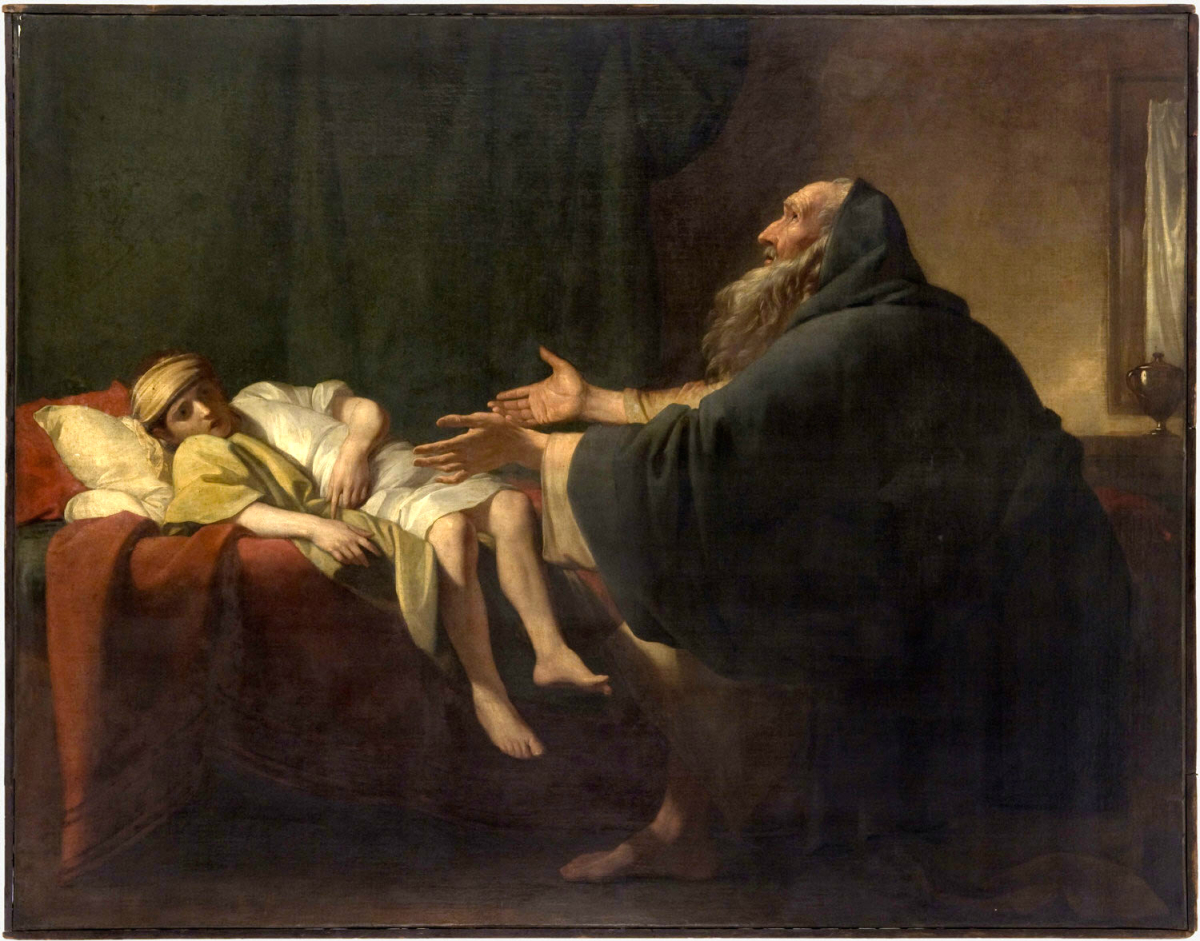
God used Elijah to deliver His message of judgment against King Ahab and his foreign queen, Jezebel. In marrying this princess from Sidon, Ahab had also adopted her false god, Baal, and built a temple for its worship. He also erected a shrine to honor Asherah, the moon-goddess and supposed mother of this pagan deity. Angered by these blatant acts of rebellion and apostasy, God had sent Elijah to tell the royal couple that their kingdom would suffer under a great drought. Their disrespect and disregard for God had brought His discipline.

But after Elijah successfully delivered his message, God sent him away. He ended up at a cave, where God graciously and miraculously arranged for ravens to provide all the food he needed to survive. But eventually, Elijah became a victim of the very drought he predicted. Soon, the brook dried up, and the daily deliveries of bread and meat no longer appeared. So, God sent Elijah to the Sidonian town of Zarephath, where he took up residence with a poor widow and her son. She, too, was suffering from the effects of the drought. But, once again, Yahweh proved Himself to be the one true God by causing her meager supply of flour and oil to miraculously multiply and never run out.

In the midst of a drought and severe famine, she had more than enough to sustain herself, her son, and God’s prophet. Through it all, Elijah learned to trust God for all His needs. But even more importantly, Elijah discovered that his God was greater than the gods of Ahab and Jezebel. While Baal, the so-called fertility god, was powerless to stop the drought or reverse the effects of the famine, Yahweh turned “a handful of flour in a jar and a little oil in a jug” (1 Kings 17:12 ESV) into a never-ending food supply for Elijah and his gracious hostess.

Then suddenly, the story takes a dramatic turn for the worse. The woman’s young son dies unexpectedly. Faced with this devastating change in her circumstances, the woman vented all her anger and frustration on the prophet of God.

“O man of God, what have you done to me? Have you come here to point out my sins and kill my son?” – 1 Kings 17:18 NLT

It seems that the woman had falsely assumed that her son’s death was a form of divine retribution for a former sin she had committed. Perhaps by this time, Elijah had shared the details of his encounter with Ahab and Jezebel, explaining that he had been the one to predict the drought as a punishment for their sin. So, when her son suddenly died, she would have naturally reasoned that God was using the prophet to deliver yet another judgment for sin – that of her own.

But ignoring her despair-driven accusation, Elijah took the lifeless body of her son and placed it on his own bed. Then Elijah turned his attention to God. But notice the tone of His prayer. He seems to echo the words of the widow, passing the blame up the food chain and questioning the goodness and graciousness of God.

“O LORD my God, why have you brought tragedy to this widow who has opened her home to me, causing her son to die?” – 1 Kings 17:20 NLT

Elijah’s response reveals his firm belief that God is sovereign over all things, but he is perplexed and confused by the seeming injustice of it all. In his frustration, He accuses God of doing something wicked. The Hebrew word is rāʿaʿ, which is most often translated as “evil.” The boy’s death makes no sense to Elijah; it seems unnecessary and completely nonproductive. When Elijah first met the woman, she had been fully expecting her son to die of starvation because of the drought. But God had intervened and provided more than enough food to keep all three of them alive. So, to Elijah, the boy’s death seemed pointless and, if anything, it appeared to be an act of cruelty.

But while Elijah was having a difficult time understanding the ways of God, he remained convinced of the power of God. Three times, he lay across the dead body of the boy and cried out, “O LORD my God, please let this child’s life return to him” (1 Kings 17:21 NLT). And the fact that Elijah repeated this process three separate times demonstrates both his persistence and dependence upon God.

It’s important to consider that Elijah had no precedent on which to base his prayer. He was asking Yahweh to do the impossible – to raise a dead body back to life. There is no indication that Elijah had ever seen or heard of God doing such a thing. Elijah was not basing his request on some past miracle recorded in the Hebrew scriptures. The Pentateuch, the first five books of the Bible, contains no instance of God raising the dead back to life. So, Elijah was asking God to do something that had never been done before. His request was a tremendous act of faith.

In a classic example of understatement, the author simply records, “The LORD heard Elijah’s prayer, and the life of the child returned, and he revived!” (1 Kings 17:22 NLT). One can only imagine Elijah’s shock and surprise when the lifeless body of the boy was suddenly reanimated. Two times, nothing had happened. But on the third try, God chose to intervene and answer Elijah’s prayer. We’re not told why God didn’t answer Elijah’s prayer the first time. Perhaps it was a test of Elijah’s faith to see if he would continue to ask and believe even when his request went unanswered. But God had heard, and He ultimately answered, and in a truly remarkable way. Elijah’s unbridled excitement and enthusiasm were on display as he announced the news to the boy’s grieving mother.

“See, your son lives.” – 1 Kings 17:23 ESV

It would be easy to misread this statement and assume that Elijah is saying something like, “See, I told you so!” It almost appears as if he is chastising the woman for her lack of faith. But at no point in the story did Elijah tell the woman that her son would live. He had no way of knowing whether God would answer his prayer or not. At least two times, God failed to do so. But when God had finally provided the miracle for which Elijah was asking, the prophet couldn’t contain his enthusiasm. The New Living Translation provides a much more accurate rendering of Elijah’s response.

“Look!” he said. “Your son is alive!” – 1 Kings 17:23 NLT

No one was as shocked as Elijah, and his joy overflowed in a display of emotional celebration. He most likely walked into the room, carrying the boy in his arms, and then handed him over to the smothering embrace of his overjoyed mother. And, through tears mixed with laughter, the woman managed to express her gratitude to the prophet by declaring her belief in his God.

“Now I know for sure that you are a man of God, and that the LORD truly speaks through you.” – 1 Kings 17:24 NLT

While Yahweh had been keeping the widow and her son alive, she must have had her doubts about Elijah and his God. But now, as she clutched her resurrected son in her arms, she finally recognized and confessed the sovereignty of God and the authority of His prophet. Her son had been dead but was now alive. Her devastating loss had been miraculously reversed with the return of her son. Her sorrow had been turned to joy.

It is easy to overlook the fact that this miracle took place in an obscure village in the region of Sidon. While Jezebel had brought her false god from Sidon to the land of Israel, Elijah had brought the God of Israel to the land of Sidon. The arrival of Baal had been accompanied by drought and famine. But when Yahweh made His appearance in the pagan land of the Sidonians, He had turned a widow’s poverty into plenty and had replaced death with life. In doing so, He had proved Himself to be the one and only God of the universe.

And God intended this powerful lesson to prepare His prophet for all that was about to happen. Elijah didn’t know it yet, but the most significant test of his faith was in his future. After three years of a debilitating and devastating famine, God was going to send Elijah back to the land of Israel to go face-to-face with the king and queen and toe-to-toe with their false god. If Yahweh could revive the dead son of the Sidonian widow, He was powerful enough to restore the stagnant spiritual state of the people of Israel. But would Elijah continue to believe in Yahweh’s power when the odds were stacked against him and the forces of evil threatened his very existence? Only time would tell.

English Standard Version (ESV) The Holy Bible, English Standard Version. ESV® Permanent Text Edition® (2016). Copyright © 2001 by Crossway Bibles, a publishing ministry of Good News Publishers.

New Living Translation (NLT) Holy Bible, New Living Translation, copyright © 1996, 2004, 2015 by Tyndale House Foundation. Used by permission of Tyndale House Publishers Inc., Carol Stream, Illinois 60188. All rights reserved.

A Remnant Returns

1 Now these were the people of the province who came up out of the captivity of those exiles whom Nebuchadnezzar the king of Babylon had carried captive to Babylonia. They returned to Jerusalem and Judah, each to his own town. 2 They came with Zerubbabel, Jeshua, Nehemiah, Seraiah, Reelaiah, Mordecai, Bilshan, Mispar, Bigvai, Rehum, and Baanah.

The number of the men of the people of Israel: 3 the sons of Parosh, 2,172. 4 The sons of Shephatiah, 372. 5 The sons of Arah, 775. 6 The sons of Pahath-moab, namely the sons of Jeshua and Joab, 2,812. 7 The sons of Elam, 1,254. 8 The sons of Zattu, 945. 9 The sons of Zaccai, 760. 10 The sons of Bani, 642. 11 The sons of Bebai, 623. 12 The sons of Azgad, 1,222. 13 The sons of Adonikam, 666. 14 The sons of Bigvai, 2,056. 15 The sons of Adin, 454. 16 The sons of Ater, namely of Hezekiah, 98. 17 The sons of Bezai, 323. 18 The sons of Jorah, 112. 19 The sons of Hashum, 223. 20 The sons of Gibbar, 95. 21 The sons of Bethlehem, 123. 22 The men of Netophah, 56. 23 The men of Anathoth, 128. 24 The sons of Azmaveth, 42. 25 The sons of Kiriath-arim, Chephirah, and Beeroth, 743. 26 The sons of Ramah and Geba, 621. 27 The men of Michmas, 122. 28 The men of Bethel and Ai, 223. 29 The sons of Nebo, 52. 30 The sons of Magbish, 156. 31 The sons of the other Elam, 1,254. 32 The sons of Harim, 320. 33 The sons of Lod, Hadid, and Ono, 725. 34 The sons of Jericho, 345. 35 The sons of Senaah, 3,630.

36 The priests: the sons of Jedaiah, of the house of Jeshua, 973. 37 The sons of Immer, 1,052. 38 The sons of Pashhur, 1,247. 39 The sons of Harim, 1,017.

40 The Levites: the sons of Jeshua and Kadmiel, of the sons of Hodaviah, 74. 41 The singers: the sons of Asaph, 128. 42 The sons of the gatekeepers: the sons of Shallum, the sons of Ater, the sons of Talmon, the sons of Akkub, the sons of Hatita, and the sons of Shobai, in all 139.

43 The temple servants: the sons of Ziha, the sons of Hasupha, the sons of Tabbaoth, 44 the sons of Keros, the sons of Siaha, the sons of Padon, 45 the sons of Lebanah, the sons of Hagabah, the sons of Akkub, 46 the sons of Hagab, the sons of Shamlai, the sons of Hanan, 47 the sons of Giddel, the sons of Gahar, the sons of Reaiah, 48 the sons of Rezin, the sons of Nekoda, the sons of Gazzam, 49 the sons of Uzza, the sons of Paseah, the sons of Besai, 50 the sons of Asnah, the sons of Meunim, the sons of Nephisim, 51 the sons of Bakbuk, the sons of Hakupha, the sons of Harhur, 52 the sons of Bazluth, the sons of Mehida, the sons of Harsha, 53 the sons of Barkos, the sons of Sisera, the sons of Temah, 54 the sons of Neziah, and the sons of Hatipha.

55 The sons of Solomon’s servants: the sons of Sotai, the sons of Hassophereth, the sons of Peruda, 56 the sons of Jaalah, the sons of Darkon, the sons of Giddel, 57 the sons of Shephatiah, the sons of Hattil, the sons of Pochereth-hazzebaim, and the sons of Ami.

58 All the temple servants and the sons of Solomon’s servants were 392.

59 The following were those who came up from Tel-melah, Tel-harsha, Cherub, Addan, and Immer, though they could not prove their fathers’ houses or their descent, whether they belonged to Israel: 60 the sons of Delaiah, the sons of Tobiah, and the sons of Nekoda, 652. 61 Also, of the sons of the priests: the sons of Habaiah, the sons of Hakkoz, and the sons of Barzillai (who had taken a wife from the daughters of Barzillai the Gileadite, and was called by their name). 62 These sought their registration among those enrolled in the genealogies, but they were not found there, and so they were excluded from the priesthood as unclean. 63 The governor told them that they were not to partake of the most holy food, until there should be a priest to consult Urim and Thummim.

64 The whole assembly together was 42,360, 65 besides their male and female servants, of whom there were 7,337, and they had 200 male and female singers. 66 Their horses were 736, their mules were 245, 67 their camels were 435, and their donkeys were 6,720.

68 Some of the heads of families, when they came to the house of the Lord that is in Jerusalem, made freewill offerings for the house of God, to erect it on its site. 69 According to their ability they gave to the treasury of the work 61,000 darics of gold, 5,000 minas of silver, and 100 priests’ garments.

70 Now the priests, the Levites, some of the people, the singers, the gatekeepers, and the temple servants lived in their towns, and all the rest of Israel in their towns. – Ezra 2:1-70 ESV

This lengthy list makes for a rather boring read but serves an important purpose for the author. King Cyrus had issued a decree directed at a very particular audience.

“Any of his people among you may go up to Jerusalem in Judah and build the temple of the Lord, the God of Israel, the God who is in Jerusalem.” – Ezra 1:3 NLT

The decree was intended for the people of Judah alone and Cyrus goes on to describe the qualifying candidates as “survivors.” Only those who are the descendants of the original exiles from Judah may be considered for repatriation. Seven decades had passed since Nebuchadnezzar’s forces had invaded Judah and taken tens of thousands of the citizens of Judah captive. It is unlikely that many of those individuals were still alive after 70 years, so the king’s directive was aimed at any who could claim to be a direct descendant of one of the former captives. The text clarifies that these people could claim hereditary rights and return to Jerusalem and Judah “each to his own town” (Ezra 2:1 ESV).

Ezra’s mention of “the province” is likely a reference to Judah. Those who would be allowed to return to Judah to restore the city of Jerusalem and rebuild the Temple of Yahweh had to show proof of citizenship.  This required some kind of census to determine the validity of each person’s qualifications for return. However, it appears that the candidates were chosen by family units. Once the selection process was completed, the “42,360 people returned to Judah, in addition to 7,337 servants and 200 singers, both men and women” (Ezra 2:64-65 NLT).

God has spoken, a decree has been issued, the leaders have been chosen, and the people selected. Now the return to the Land of Promise could begin. Under the leadership of Sheshbazzar and his nephew, Zerubbabel, the grandson of King Jehoiachin, a relatively tiny remnant of Jews begin their journey back to Judah all the way from Babylon where they have lived in God-imposed exile for 70 years. Few, if any of these would have been a part of the original group who were captured and taken prisoner to Babylon. Those individuals could have still been alive, but like Daniel, they would have been advanced in years and unable to endure the rigors of the long, arduous trip back to Judah. So these were descendants of the original Jews taken captive by Nebuchadnezzar. They had lived all their lives in a foreign land, but now they were headed to their ancestral homeland. Despite the sins of their fathers, God was going to restore them to the land He had given the people of Israel centuries earlier.

This would have been a rag-tag group. Some were commoners, some the descendants of priests or Levites, and some were the sons and grandsons of servants who worked in the Temple or served King Solomon. The only thing they had in common was their Jewish ancestry. They were descendants of the chosen people of God.

It’s interesting to note that God did allow some who could not prove their Jewish ancestry. A small group of individuals were given the right to return to the land even though they couldn’t prove they were descendants of Israel.

Obviously, there were tens of thousands of Jews who chose to remain in Babylon. We’ll never know their reasons for staying, but we can only guess that some feared the trip, while others refused to abandon the comforts of their lives in Babylon. There were probably many who had grown accustomed to living in captivity. The thought of making the long and difficult journey to Judah only to live in abject poverty was less than appealing. So, the number of those who chose to return was relatively small. These people were tasked with rebuilding the city of Jerusalem and the Temple, so it’s a wonder that anyone signed up for this assignment. How would this small, rag-tag group of individuals be able to accomplish such a formidable task, all while facing intense opposition from the land’s current inhabitants?

Their strength would not be found in their numbers but in their God. It was He who would give them success. The prophet Jeremiah expressed this reality in a prayer.

“O Sovereign Lord! You made the heavens and earth by your strong hand and powerful arm. Nothing is too hard for you!” – Jeremiah 32:17 NLT

God confirmed the truth of Jeremiah’s claim.

“I am the Lord, the God of all the peoples of the world. Is anything too hard for me?” –Jeremiah 32:27 NLT

God was going to use this remnant to accomplish His will. He was going to use the weak to reveal His power. He was going to accomplish the impossible through the improbable, and He is still doing so today. Our success lies not in our strength, but in our God. It is He who accomplishes the task and wins the battles, not us. God doesn’t need great numbers to do great things, He just needs a few.

Jesus only needed a few loaves and fishes to feed a huge crowd. He takes our insufficiencies and accomplishes the impossible and improbable. The apostle Paul reminds us that God operates in a counter-cultural, out-of-the-ordinary way to carry out His divine will.

God chose things the world considers foolish in order to shame those who think they are wise. And he chose things that are powerless to shame those who are powerful. God chose things despised by the world, things counted as nothing at all, and used them to bring to nothing what the world considers important. As a result, no one can ever boast in the presence of God. – 1 Corinthians 1:27-29 NLT

Nothing is impossible for Him. He can take a remnant and do the impossible and improbable through them. He can take what is weak and reveal His strength through them. That way no one can ever boast in their success or self-sufficiency. The people of God are never to take glory from God. The Israelites had nothing to offer God except their willingness to return to the land He had given them. He was raising up a remnant who would accomplish His will to repopulate the land, rebuild the city of Jerusalem, and restore the Temple. All for His glory.

English Standard Version (ESV)
The Holy Bible, English Standard Version. ESV® Permanent Text Edition® (2016). Copyright © 2001 by Crossway Bibles, a publishing ministry of Good News Publishers.

New Living Translation (NLT)
Holy Bible, New Living Translation, copyright © 1996, 2004, 2015 by Tyndale House Foundation. Used by permission of Tyndale House Publishers Inc., Carol Stream, Illinois 60188. All rights reserved.

The Message (MSG)Copyright © 1993, 1994, 1995, 1996, 2000, 2001, 2002 by Eugene H. Peterson

A Reliable Rock of Escape

15 David saw that Saul had come out to seek his life. David was in the wilderness of Ziph at Horesh. 16 And Jonathan, Saul’s son, rose and went to David at Horesh, and strengthened his hand in God. 17 And he said to him, “Do not fear, for the hand of Saul my father shall not find you. You shall be king over Israel, and I shall be next to you. Saul my father also knows this.” 18 And the two of them made a covenant before the Lord. David remained at Horesh, and Jonathan went home.

19 Then the Ziphites went up to Saul at Gibeah, saying, “Is not David hiding among us in the strongholds at Horesh, on the hill of Hachilah, which is south of Jeshimon? 20 Now come down, O king, according to all your heart’s desire to come down, and our part shall be to surrender him into the king’s hand.” 21 And Saul said, “May you be blessed by the Lord, for you have had compassion on me. 22 Go, make yet more sure. Know and see the place where his foot is, and who has seen him there, for it is told me that he is very cunning. 23 See therefore and take note of all the lurking places where he hides, and come back to me with sure information. Then I will go with you. And if he is in the land, I will search him out among all the thousands of Judah.” 24 And they arose and went to Ziph ahead of Saul.

Now David and his men were in the wilderness of Maon, in the Arabah to the south of Jeshimon. 25 And Saul and his men went to seek him. And David was told, so he went down to the rock and lived in the wilderness of Maon. And when Saul heard that, he pursued after David in the wilderness of Maon. 26 Saul went on one side of the mountain, and David and his men on the other side of the mountain. And David was hurrying to get away from Saul. As Saul and his men were closing in on David and his men to capture them, 27 a messenger came to Saul, saying, “Hurry and come, for the Philistines have made a raid against the land.” 28 So Saul returned from pursuing after David and went against the Philistines. Therefore that place was called the Rock of Escape. 29 And David went up from there and lived in the strongholds of Engedi. – 1 Samuel 23:15-29  ESV

Verse 14 of this same chapter states that Saul sought David every day. He was on a relentless, obsessive mission to destroy David because he knew that as long as David was alive, his crown was in jeopardy. He had even warned his son, Jonathan, “For as long as the son of Jesse lives on the earth, neither you nor your kingdom shall be established” (1 Samuel 20:31 ESV).

It seems that Jonathan had taken those words to heart. He risked the wrath of his father and his own life by covertly arranging to see David one more time. And at that reunion with his best friend, he disclosed to David, “My father will never find you! You are going to be the king of Israel, and I will be next to you, as my father, Saul, is well aware” (1 Samuel 23:17 NLT). Jonathan had seen the handwriting on the wall. He somehow knew that David was to be the next king and that it would be the will and work of God. The text tells us that Jonathan “strengthened his [David’s] hand in God” (1 Samuel 23:16 ESV). He encouraged David to trust God. Not even his father, Saul, was going to be able to stop what God had ordained. Jonathan knew his father was in the wrong and would eventually fail in his attempt to thwart the will of God. It had become increasingly clear to him that Saul’s obsession to put David to death was not only uncalled for but would prove to be unsuccessful. These words from his best friend and the rightful heir to the throne had to have encouraged David greatly. Jonathan was abdicating any right he had to be the next king because he believed David to be God’s choice for the role.

It is interesting how God sometimes uses others to reveal information concerning us that has escaped our notice. All David seemed to know was that Saul was out to kill him. It would seem that he had not yet put two and two together and arrived at the conclusion that Saul’s obsessive-compulsive behavior toward him did have a reason. Saul knew David was God’s choice to be the next king. It took Jonathan to add up the facts and present David with what should have been an obvious conclusion: He was God’s choice to be the next king of Israel.

Jonathan assured David that even Saul was well aware of this fact. We’re not given insight into David’s reaction to this news, but it had to have been an epiphany for him, a light-bulb-illuminating-over-the-head moment. Suddenly, it all began to make sense. The anointing, spear-throwing, raging, and running all began to come together into a clear picture of what God was doing. The last time the two of them had met, David had asked  Jonathan, “What have I done? What is my guilt? And what is my sin before your father, that he seeks my life?” (1 Samuel 20:1 ESV). Now he knew the answer. He was Saul’s God-appointed replacement. No wonder Saul was acting the way he was.

But even with this eye-opening, riddle-solving news, David’s lot in life didn’t undergo any kind of remarkable change. Jonathan would return home and David would find himself still living as a wanted man. In fact, it wouldn’t take long for reality to set back in as David’s location in the wilderness of Ziph was disclosed to Saul by the area’s residents. They ratted David out, informing Saul of his whereabouts, and promising to turn him over to the king.

To get an idea of what David was thinking at this stage of his life, all we have to do is turn to Psalm 54, which was written at this very time. In this psalm, David bears his heart to God. He calls on God to save him, and he promises to offer sacrifices to God when He does finally provide him with deliverance.

O God, save me by your name,
    and vindicate me by your might.
O God, hear my prayer;
    give ear to the words of my mouth.

For strangers have risen against me;
    ruthless men seek my life;
    they do not set God before themselves. Selah

Behold, God is my helper;
    the Lord is the upholder of my life.
He will return the evil to my enemies;
    in your faithfulness put an end to them.

With a freewill offering I will sacrifice to you;
    I will give thanks to your name, O Lord, for it is good.
For he has delivered me from every trouble,
and my eye has looked in triumph on my enemies. – Psalm 54:1-7 ESV

One of the revealing statements in this psalm is David’s conclusion that those who were seeking him and those who would betray him “do not set God before themselves.” The New Living Translation phrases it this way: “They care nothing for God.” Saul and the Ziphites were operating outside of and opposed to the will of God. Yet, they were still instruments in His sovereign hands. Despite their efforts to thwart His divine plan for David, God would use them to accomplish His purposes.

David describes them as strangers, ruthless, and enemies; and he refers to their actions as evil. David realized that this was a spiritual battle between those who care nothing for God and God Himself. So David calls on God to do what only He can do. He pleads with God to save and vindicate him, to avenge and deliver him, to hear and help him. David knew that his life was in God’s hands. God had anointed him and it would be God who would have to protect and deliver him.

David would receive yet another timely example of God’s ability to deliver. When Saul heard that David and his men had relocated to the wilderness of Moan, he set out in hot pursuit. The passage tells us, “Saul and David were now on opposite sides of a mountain. Just as Saul and his men began to close in on David and his men, an urgent message reached Saul that the Philistines were raiding Israel again” (1 Samuel 23:26-27 NLT).

Just in the nick of time, God stepped in. It would be tempting to write this off as nothing more than a very timely coincidence. But for David, it would have been the very well-timed, miraculous intervention of God. Just when Saul and his men were closing in, God stepped in and provided a way of escape, and God would use the enemies of Israel to deliver the next king of Israel. The Philistines had chosen that particular moment in time to raid Israel, forcing Saul to abandon his pursuit of David and return home. The name of that place became known as the Rock of Escape. God had become a rock of escape for David, protecting him from his enemies and providing a miraculous, perfectly timed deliverance from his enemies. But notice that God did not eliminate Saul. He did not provide a permanent victory over Saul by allowing David to kill him in battle. He simply removed the immediate threat and gave David a glimpse of His capacity to save. God was not interested in removing the difficulties from David’s life as much as He was in getting David to trust the One for whom no problem was too difficult.

Saul was not going to go away, but neither was God. David’s life was not going to be problem-free, but David was going to learn that nothing that happened in his life was free from God’s all-seeing eye. Which is why David, years later, would later be able to write these words:

You are my rock and my fortress.
    For the honor of your name, lead me out of this danger.
Pull me from the trap my enemies set for me,
    for I find protection in you alone.
I entrust my spirit into your hand.
    Rescue me, Lord, for you are a faithful God. – Psalm 31:3-5 NLT

English Standard Version (ESV) The Holy Bible, English Standard Version. ESV® Permanent Text Edition® (2016). Copyright © 2001 by Crossway Bibles, a publishing ministry of Good News Publishers.

New Living Translation (NLT) Holy Bible, New Living Translation, copyright © 1996, 2004, 2015 by Tyndale House Foundation. Used by permission of Tyndale House Publishers Inc., Carol Stream, Illinois 60188. All rights reserved.

Delivered, Dedicated, and Destined

21 The man Elkanah and all his house went up to offer to the Lord the yearly sacrifice and to pay his vow. 22 But Hannah did not go up, for she said to her husband, “As soon as the child is weaned, I will bring him, so that he may appear in the presence of the Lord and dwell there forever.” 23 Elkanah her husband said to her, “Do what seems best to you; wait until you have weaned him; only, may the Lord establish his word.” So the woman remained and nursed her son until she weaned him. 24 And when she had weaned him, she took him up with her, along with a three-year-old bull, an ephah of flour, and a skin of wine, and she brought him to the house of the Lord at Shiloh. And the child was young. 25 Then they slaughtered the bull, and they brought the child to Eli. 26 And she said, “Oh, my lord! As you live, my lord, I am the woman who was standing here in your presence, praying to the Lord. 27 For this child I prayed, and the Lord has granted me my petition that I made to him. 28 Therefore I have lent him to the Lord. As long as he lives, he is lent to the Lord.”

And he worshiped the Lord there. – 1 Samuel 1:21-28 ESV

If Samuel is the author of the first 24 chapters of the book that bears his name (which many scholars believe him to be), then he certainly undersells the miraculous nature of his birth. He simply records, “Elkanah knew Hannah his wife, and the Lord remembered her” (1 Samuel 1:19 ESV). There is no mention of God’s divine intervention. Of course, it is implied because Hannah had asked God to hear her prayer and end her barrenness. And Eli the priest had matter-of-factly stated, “Go in peace, and the God of Israel grant your petition that you have made to him” (1 Samuel 1:17 ESV). But Samuel cuts to the chase, leaving out any details about his mother’s miraculous pregnancy and his own improbable birth.

…in due time Hannah conceived and bore a son, and she called his name Samuel, for she said, “I have asked for him from the Lord.” – 1 Samuel 1:20 ESV

It is Samuel’s mother who provides the supernatural context of her conception and her son’s birth. She named the boy Samuel and this name was meant to reflect the gracious nature of God’s miraculous gift. She prayed and God heard. She asked and God answered. It is difficult to understand the exact meaning of the name Samuel. But one of the most logical explanations is that it derives from the Hebrew word for “name” (shem) and the Hebrew word for God (el). Thus “Samuel” means “name of God.”

Then why did Hannah associate her son’s name with the phrase, “I have asked for him from the Lord?” She appears to be using a figure of speech known as a paronomasia. The name Samuel is very similar in sound to the Hebrew word for “ask” (šā’al), which is pronounced shaw-el. So it would appear that Hannah was using a play on words that was meant to honor the role of Yahweh in the birth of her son.

Yet, Samuel fast-forwards through the nine months of Hannah’s pregnancy and then skips over the first few years of his own life. He picks up the story at the point at which he was weaned and able to be taken to the Tabernacle for Hannah to fulfill the vow she had made to the Lord. In the meantime, Elkanah made yearly trips to the Tabernacle to pay the offering associated with the vow, as determined by the Mosaic Law.

The Lord spoke to Moses, saying, “Speak to the people of Israel and say to them, If anyone makes a special vow to the Lord involving the valuation of persons…If the person is from a month old up to five years old, the valuation shall be for a male five shekels of silver, and for a female the valuation shall be three shekels of silver. – Leviticus 27:1-2, 6 ESV

Likely, Samuel was between 18 months and 5 years of age when he was weaned off his mother’s milk and able to live off solid food. It was then that Hannah and Elkanah took Samuel to the Tabernacle to dedicate him to the service of the Lord. It’s interesting to note that Elkanah had assumed responsibility for his wife’s vow.

Elkanah and all his house went up to offer to the Lord the yearly sacrifice and to pay his vow. – 1 Samuel 1:21 ESV

As the head of his household, Elkanah had the God-given authority to renege on his wife’s vow.

…on the day that her husband comes to hear of it, he opposes her, then he makes void her vow that was on her, and the thoughtless utterance of her lips by which she bound herself. And the Lord will forgive her. – Numbers 30:8 ESV

But he had chosen to honor Hannah’s commitment and was fully on board with the plan to turn over their infant son to Eli the priest. So, as soon as Samuel was weaned Hannah “took him up with her, along with a three-year-old bull, an ephah of flour, and a skin of wine, and she brought him to the house of the Lord at Shiloh” (1 Samuel 1:24 ESV), and Samuel adds the note “And the child was young” (1 Samuel 1:24 ESV).

Samuel provides few details concerning this momentous and, obviously, difficult moment in the life of Hannah and Elkanah. It could not have been easy for them to hand over their infant son to Eli, knowing that they would not have the joy of raising him under their own roof. From this moment on, Samuel would belong to the Lord. Hannah had made a vow to God and she was determined to keep it no matter the cost.

“O Lord of Heaven’s Armies, if you will look upon my sorrow and answer my prayer and give me a son, then I will give him back to you. He will be yours for his entire lifetime, and as a sign that he has been dedicated to the Lord, his hair will never be cut.” – 1 Samuel 1:11 NLT

Not only had she dedicated her son to full-time service in the Tabernacle, but she obligated him to keep the Nazirite vow. This lifetime commitment is outlined in the Book of Numbers.

And the Lord spoke to Moses, saying, “Speak to the people of Israel and say to them, When either a man or a woman makes a special vow, the vow of a Nazirite, to separate himself to the Lord, he shall separate himself from wine and strong drink. He shall drink no vinegar made from wine or strong drink and shall not drink any juice of grapes or eat grapes, fresh or dried. All the days of his separation he shall eat nothing that is produced by the grapevine, not even the seeds or the skins.

“All the days of his vow of separation, no razor shall touch his head. Until the time is completed for which he separates himself to the Lord, he shall be holy. He shall let the locks of hair of his head grow long.” – Numbers 6:1-5 ESV

From this moment forward, Samuel belonged to God and was essentially a slave to Eli and his two sons, Hophne and Phinehas. Little did Hannah know that she was turning over the welfare of her son to two “worthless” men who “did not know the Lord” (1 Samuel 2:12 ESV). Everything was not as it seemed in the Tabernacle and the high priest’s household. But from Hannah’s perspective, she was dedicating her son to Yahweh, whom she trusted completely. She had every confidence that he son was in good hands because he had been a gift from God Himself.

Having offered the appropriate sacrifices, Hannah made her intentions known to Eli, the priest.

“For this child I prayed, and the Lord has granted me my petition that I made to him. Therefore I have lent him to the Lord. As long as he lives, he is lent to the Lord.” – 1 Samuel 1:27-28 ESV

Chapter 1 ends with the statement, “he worshiped the Lord there” (1 Samuel 1:27 ESV). This appears to be a reference to Samuel, who immediately began to learn the ins and outs of worship and the everyday activities of the priestly caste. His new life had begun and he would soon find himself immersed in a very different environment than the one into which he had been born. As for Hannah, God graciously blessed her with five more children to take the place of Samuel.

…the Lord visited Hannah, and she conceived and bore three sons and two daughters. And the boy Samuel grew in the presence of the Lord. – 1 Samuel 2:21 ESV

God began the process of preparing Samuel for a life dedicated to His service. This young boy would grow up to be a central figure in the history of the nation of Israel, anointing its first two kings and providing wise counsel during their reigns. God had a plan and Samuel was to be an integral part of its implementation.

English Standard Version (ESV) The Holy Bible, English Standard Version. ESV® Permanent Text Edition® (2016). Copyright © 2001 by Crossway Bibles, a publishing ministry of Good News Publishers.

New Living Translation (NLT) Holy Bible, New Living Translation, copyright © 1996, 2004, 2015 by Tyndale House Foundation. Used by permission of Tyndale House Publishers Inc., Carol Stream, Illinois 60188. All rights reserved.

The God Who Hears

9 After they had eaten and drunk in Shiloh, Hannah rose. Now Eli the priest was sitting on the seat beside the doorpost of the temple of the Lord. 10 She was deeply distressed and prayed to the Lord and wept bitterly. 11 And she vowed a vow and said, “O Lord of hosts, if you will indeed look on the affliction of your servant and remember me and not forget your servant, but will give to your servant a son, then I will give him to the Lord all the days of his life, and no razor shall touch his head.”

12 As she continued praying before the Lord, Eli observed her mouth. 13 Hannah was speaking in her heart; only her lips moved, and her voice was not heard. Therefore Eli took her to be a drunken woman. 14 And Eli said to her, “How long will you go on being drunk? Put your wine away from you.” 15 But Hannah answered, “No, my lord, I am a woman troubled in spirit. I have drunk neither wine nor strong drink, but I have been pouring out my soul before the Lord. 16 Do not regard your servant as a worthless woman, for all along I have been speaking out of my great anxiety and vexation.” 17 Then Eli answered, “Go in peace, and the God of Israel grant your petition that you have made to him.” 18 And she said, “Let your servant find favor in your eyes.” Then the woman went her way and ate, and her face was no longer sad.

19 They rose early in the morning and worshiped before the Lord; then they went back to their house at Ramah. And Elkanah knew Hannah his wife, and the Lord remembered her. 20 And in due time Hannah conceived and bore a son, and she called his name Samuel, for she said, “I have asked for him from the Lord.” – 1 Samuel 1:9-20 ESV

The Book of Judges paints a bleak picture of the spiritual state of Israel. It portrays a cycle of sin, judgment, repentance, and rescue that repeats itself relentlessly during the nation’s early days living within the land of promise. After the death of Joshua, the man who had led them in their conquest of Canaan, the Israelites displayed a fickle and faithless relationship with Yahweh. This great leader, appointed by Yahweh Himself, had left them with a somber charge.

“Now therefore fear the Lord and serve him in sincerity and in faithfulness. Put away the gods that your fathers served beyond the River and in Egypt, and serve the Lord. And if it is evil in your eyes to serve the Lord, choose this day whom you will serve, whether the gods your fathers served in the region beyond the River, or the gods of the Amorites in whose land you dwell. But as for me and my house, we will serve the Lord.”  – Joshua 24:14-15 ESV

Encouraged by Joshua’s impassioned plea, the people vowed to remain faithful to Yahweh.

“Far be it from us that we should forsake the Lord to serve other gods…Therefore we also will serve the Lord, for he is our God.” – Joshua 24:17, 18 ESV

Yet, Joshua knew his people well and responded with a less-than-flattering assessment of their ability to keep their commitment.

“You are not able to serve the Lord, for he is a holy God. He is a jealous God; he will not forgive your transgressions or your sins.” – Joshua 24:19 ESV

Joshua’s statement proved to be prophetic. In two separate places in the Book of Judges, the text provides the following assessment of the people of Israel.

In those days there was no king in Israel. Everyone did what was right in his own eyes. – Judges 17:6 ESV

It was in this difficult and decadent environment that Hannah had been born. Yet, she is portrayed as a godly woman who still worships the God of her forefathers. Despite her barrenness and heavy heart, she has not abandoned her God. Even amid her pain and sorrow, she continues to believe in His presence and power. Verse 9 portrays this disconsolate woman standing before the gate of the Tabernacle, bearing her heart to Yahweh.

She has reached the end of her rope. The shame and social stigma associated with her ailment have left her in a desperate state, and she makes a vow to Yahweh.

“O Lord of Heaven’s Armies, if you will look upon my sorrow and answer my prayer and give me a son, then I will give him back to you. He will be yours for his entire lifetime, and as a sign that he has been dedicated to the Lord, his hair will never be cut.” – 1 Samuel 1:11 NLT

Hannah is not making a rash or poorly thought-out vow; she has had plenty of time to consider her situation and decided that this agreement with the Almighty is her only option. In exchange for the ability to bear her husband a son, Hannah is willing to dedicate the child to the service of Yahweh.

Hannah prays to God, pouring out her soul (1 Samuel 1:15) in an impassioned plea that demonstrates the desperation she feels. If God will only hear and answer her cry, she will give the child back to God as an expression of her gratitude for His gracious gift. if And the text tells us that God heard and answered her prayer, providing Hannah with the desire of her heart: A son.

This child, Samuel, would grow up to be Israel’s last judge and one of the few decent judges they ever had. His birth came at a time when Israel was in dire need of godly leadership, as will be demonstrated in the following verses. God has witnessed the moral situation in Israel. He has heard the cries of this beleaguered and belittled woman and He steps in, at just the right time.

But another character in the story has a different reaction to Hannah’s suffering and pain, mistaking her anguish for drunkenness. Eli, the priest, is sitting at the Tabernacle’s gate and witnesses Hannah’s silent prayer as she pours out her heart to the Lord. From his vantage point, he can see her lips move but hears no sound. This leads him to draw the rather strange conclusion that she must be filled with alcohol rather than pain. Put off by what he believes to be her blatant display of public intoxication, he confronts her.

“Must you come here drunk?” he demanded. “Throw away your wine!” – 1 Samuel 1:14 NLT

This self-righteous religious leader has a lot of gall. He takes no opportunity to discern her circumstances but, instead, he accuses her of coming to the Tabernacle in a state of inebriation. Appalled by the priest’s assertion, Hannah defends her integrity and explains her strange behavior.

“Oh no, sir!” she replied. “I haven’t been drinking wine or anything stronger. But I am very discouraged, and I was pouring out my heart to the Lord. Don’t think I am a wicked woman! For I have been praying out of great anguish and sorrow.” – 1 Samuel 1:15-16 NLT

Almost as if to gloss over his social faux pas, Eli encourages Hannah to go on her way and assures her that God will answer her prayer. He doesn’t even bother to discern the nature of her problem. But based on Eli’s status as a priest of God, Hannah took his words to heart and assumed he had received a word from God. Yet there is nothing in the text that indicates that Eli’s words were God-ordained. It does not appear that Eli had any idea his words were prophetic in nature.

Yet, God had heard Hannah’s prayer and sovereignly orchestrated Eli’s statement. He was at work behind the scenes preparing the way for a miracle. He was going to take this obscure woman named Hannah and use her to bring about His redemptive plan for the people of Israel. He will reveal His strength through her weakness. He will use her moment of need to show His one-of-a-kind ability to intervene and do the impossible.

Hannah walked away from her encounter with Eli with a bounce in her step. She took his words to heart and trusted that God had heard and would surely act. Little did she know that God was going to do far more than she could have ever imagined; He was going to meet the greater need sof the people of Israel.

God was in control and was working His divine plan to perfection, orchestrating events and individuals in such a way that His will would be accomplished. Like every other book in the Old Testament, the book of 1 Samuel provides a glimpse into the character of God. It is a book of theology, not just history. More than just a collection of isolated and independent stories, it is a revelation of who God is and how He interacts with His chosen people.

English Standard Version (ESV) The Holy Bible, English Standard Version. ESV® Permanent Text Edition® (2016). Copyright © 2001 by Crossway Bibles, a publishing ministry of Good News Publishers.

New Living Translation (NLT) Holy Bible, New Living Translation, copyright © 1996, 2004, 2015 by Tyndale House Foundation. Used by permission of Tyndale House Publishers Inc., Carol Stream, Illinois 60188. All rights reserved.

Called, Commissioned, and Confident

11 For I would have you know, brothers, that the gospel that was preached by me is not man’s gospel. 12 For I did not receive it from any man, nor was I taught it, but I received it through a revelation of Jesus Christ. 13 For you have heard of my former life in Judaism, how I persecuted the church of God violently and tried to destroy it. 14 And I was advancing in Judaism beyond many of my own age among my people, so extremely zealous was I for the traditions of my fathers. 15 But when he who had set me apart before I was born, and who called me by his grace, 16 was pleased to reveal his Son to me, in order that I might preach him among the Gentiles, I did not immediately consult with anyone; 17 nor did I go up to Jerusalem to those who were apostles before me, but I went away into Arabia, and returned again to Damascus.

18 Then after three years I went up to Jerusalem to visit Cephas and remained with him fifteen days. 19 But I saw none of the other apostles except James the Lord’s brother. 20 (In what I am writing to you, before God, I do not lie!) 21 Then I went into the regions of Syria and Cilicia. 22 And I was still unknown in person to the churches of Judea that are in Christ. 23 They only were hearing it said, “He who used to persecute us is now preaching the faith he once tried to destroy.” 24 And they glorified God because of me. – Galatians 1:11-24 ESV

Paul will spend a great deal of time in this letter defending his apostleship so that he might validate his message of justification by faith alone in Christ alone. Some were questioning his right to claim apostleship and were attempting to undermine his credibility. But Paul had no doubts about his calling or the commission he had received directly from the lips of Christ. So he provided his readers with a brief history of his salvation story. Likely, they were already familiar with the story, but perhaps this rendition provided them with some extra added details. He began by clarifying that the message he preached had not been given to him by any man. Paul had not learned it from any human teacher and he had not been led to faith by any particular individual. In fact, he had been personally witnessed to by Jesus Himself. On that fateful day on the road leading to Damascus, Paul had an intimate encounter with Jesus, the resurrected Christ. He had been struck blind by the very one he had been on a rampage to discredit and whose disciples he had been out to destroy.

The truly amazing thing about Paul’s testimony was the radical nature of his transformation. One day he had been on his way to the city of Damascus to arrest any Christians he found there, and then just days after his conversion, he was proclaiming Christ in the synagogues of the region.

And immediately he proclaimed Jesus in the synagogues, saying, “He is the Son of God.” And all who heard him were amazed and said, “Is not this the man who made havoc in Jerusalem of those who called upon this name? And has he not come here for this purpose, to bring them bound before the chief priests?” But Saul increased all the more in strength, and confounded the Jews who lived in Damascus by proving that Jesus was the Christ. – Acts 9:19-22 ESV

Even the Jews who heard him preach in the synagogues of Damascus were shocked at the undeniable transformation that had taken place. Paul, the persecutor, had become a proclaimer of the gospel of Jesus Christ. The self-appointed exterminator of Christianity had become its divinely commissioned defender and proponent. There was nothing that could explain this radical change in his life other than the power of God.

Up until that point, Paul had not met a single apostle of Jesus and had received no instruction of any kind. He had simply had a divine encounter with Jesus, and then he spent three years in Arabia. We’re not told exactly where Paul went or what he did while he was there, but it is likely that Paul, a student of the Old Testament Scriptures, spent his time reviewing all that he knew in light of what he had just experienced. His understanding of the Word of God was to be radically changed by the new revelation he had received from Jesus. It could be that Jesus did for Paul what He had done for the two disciples along the road to Emmaus when He appeared to them immediately after His resurrection.

And beginning with Moses and all the Prophets, he interpreted to them in all the Scriptures the things concerning himself. – Luke 24:27 ESV

And after Jesus had left them standing by the roadside, they said to one another,

“Did not our hearts burn within us while he talked to us on the road, while he opened to us the Scriptures?” – Luke 24:32 ESV

Whatever happened during those three years in Arabia, Paul was to return a dramatically changed man. He went immediately to Jerusalem, where he met with Peter and James, but he did not go to seek their approval or to get their permission. He was virtually unknown to the believers in Jerusalem, but his conversion had become the talk of the town.

“He who used to persecute us is now preaching the faith he once tried to destroy.” – Galatians 1:23 ESV

Paul was a changed man. He not only had a new calling, but he also enjoyed a radically new nature. His heart had been transformed. His passions and pursuits had been redeemed by God. Paul confessed that God, “who had set me apart before I was born, and who called me by his grace, was pleased to reveal his Son to me” (Galatians 1:15-16 ESV). Paul knew that his conversion was God’s handiwork from beginning to end. His change of heart could not have been explained any other way, and because his salvation was the work of God, what he preached was the word of God concerning salvation through His Son.

It would seem that Paul’s greatest defense of his gospel message was his gospel transformation. The dramatic and virtually overnight change in the trajectory of his life was the greatest testimony to the validity of his message.

Far too often, what Christians proclaim about the gospel is not present in their own lives. They tell others of its transformational power, and yet their lives reveal little of that power at work. They talk of having a personal relationship with Jesus Christ, the risen Lord, but their knowledge of Him has grown little since the day they first met Him. They can easily recall the day they came to faith in Christ, but they have a difficult time providing examples of how they are living by faith on a day-by-day basis.

Paul’s strongest proof of his message’s authenticity was his personal story of life change. The gospel was believable because his life made it visible. The transformative work of God in his life was the greatest proof of the gospel’s power and veracity. When Paul showed up in Jerusalem, he was relatively unknown to any of the believers there, including the apostles. But everyone had heard the details of his conversion story.

“The one who used to persecute us is now preaching the very faith he tried to destroy!” – Galatians 1:23 NLT

This former Pharisee, who had worked directly for the high priest and the Sanhedrin of the Jews, had undergone an inexplicable change of heart. Now, rather than persecuting and arresting Christians, Paul was one of them. And the three years he had spent in Arabia had brought the Christians in Jerusalem a much-welcomed respite from the arrests and threats to their safety. It’s doubtful that the Jewish religious leaders gave up their attacks on the fledgling churches in Judea, but their greatest proponent had dramatically changed the religious landscape by changing teams. Paul was now a follower of Christ, and he states that the Christians in Jerusalem “glorified God because of me” (Galatians 1:24 ESV).

English Standard Version (ESV) The Holy Bible, English Standard Version. ESV® Permanent Text Edition® (2016). Copyright © 2001

New Living Translation (NLT) Holy Bible, New Living Translation, copyright © 1996, 2004, 2015 by Tyndale House Foundation. Used by permission of Tyndale House Publishers Inc., Carol Stream, Illinois 60188. All rights reserved.

Well-Placed Hope

11 By faith Sarah herself received power to conceive, even when she was past the age, since she considered him faithful who had promised. 12 Therefore from one man, and him as good as dead, were born descendants as many as the stars of heaven and as many as the innumerable grains of sand by the seashore. – Hebrews 11:11-12 ESV

The line, “even when she was past the age” is a bit of an understatement. Sarah, Abraham’s wife, was way past the age of conception. She was almost 90 years old and, on top of that, she was barren. Genesis 18 records that  “Abraham and Sarah were old, advanced in years. The way of women had ceased to be with Sarah” (Genesis 18:11 ESV). In other words, her birthing days were well behind her.

Genesis also reveals that when Sarah and Abraham were given news from God that the would have a son, they both expressed doubt. When God told Abraham that he would become the father of a great nation, Abraham’s response was, “O Lord God, what will you give me, for I continue childless, and the heir of my house is Eliezer of Damascus?” (Genesis 15:2 ESV).

Abraham was painfully aware of his wife’s barrenness and could see no way that God could produce a great nation through a woman incapable of producing eggs capable of fertilization. The only solution to the problem that Abraham could see was to use one of his household servants as his heir.

Sarah’s solution was a bit more creative. She came up with the “brilliant” idea to give her Egyptian maidservant for Abraham to impregnate.

“Behold now, the Lord has prevented me from bearing children. Go in to my servant; it may be that I shall obtain children by her.” – Genesis 16:2 ESV

And, like any red-blooded male, Abraham gladly took Sarah up on her offer. He offered no arguments or shared no reservations concerning her plan. Yet, God had wasn’t buying Sarah’ poorly conceived Plan B. Once again, He informed Abraham what He intended to do.

“I will bless her [Sarah], and moreover, I will give you a son by her. I will bless her, and she shall become nations; kings of peoples shall come from her.” – Genesis 17:6 ESV

And what was Abraham’s response to God’s announcement? He laughed at the very though of something so obviously impossible and improbable. Basically, he questioned the viability of God’s plan a.

“Shall a child be born to a man who is a hundred years old? Shall Sarah, who is ninety years old, bear a child?” – Genesis 17:17 ESV

But God confirmed His promise and assured Abraham that the impossible really would happen. Sometime later, when God appeared to Abraham at the Oaks of Mamre, God gave him exciting news. “I will surely return to you about this time next year, and Sarah your wife shall have a son” (Genesis 18:10 ESV). And Sarah, eavesdropping at the door to the tent, “laughed to herself, saying, ‘After I am worn out, and my lord is old, shall I have pleasure?’” (Genesis 17:12 ESV).

Like her husband, Sarah had doubts, reservations, and a bit of a hard time seeing how any of this was going to happen. The circumstances surrounding her life seemed to strongly contradict what God was saying.

And yet, Hebrews says, “By faith Sarah herself received power to conceive.” This seems like a gross exaggeration of the facts. Both Abraham and Sarah laughed at the news of God’s plan. Both came up with alternative options, their plan B’s designed to help God out. And yet it says that Sarah had faith. I think the problem is that we tend to put the emphasis on Sarah’s faith, rather than the object of her faith. It says that by faith she received the power to conceive. All Sarah could do was trust the power of God. Her faith did not bring the power into existence or make the results of that power produce the intended results.

She had to stop trying to do things on her own and simply rest in the power of God’s promise. She had to take her eyes off the circumstances – her old age and barren condition – and trust God. It was by faith that Sarah had to wait for the miracle of conception and the fulfillment of God’s promise.

Remember how this chapter started out.

Now faith is the assurance of things hoped for, the conviction of things not seen. –  Genesis 11:1 ESV

Sarah had longed and hoped for a child for decades. She had desperately desired to have a baby but had been forced to give up on that dream because of her condition. But when God promised to give her and Abraham a child, she had one recourse: to take what God said by faith.

She was forced to trust God. She had tried doing things her way and it had terribly backfired. God was going to do what He had promised to do and He would notaccept any alternative solution, no matter how well-intentioned. Eleazar and Ishmael would not suffice. Adoption was not an option. Sarah was going to have to trust God. And so it says, “By faith Sarah herself received power to conceive.”

Sarah had to come to grips with the fact that God was faithful and rely on the truth that He was all-powerful. He had the character and the capacity to back up what He said. And it says she “considered him faithful who had promised.”

After all her conniving, doubting, whining, and self-sufficient planning, Sarah determined to trust God. She decided to put her faith in the one who had promised. And in God’s perfect timing, “The Lord visited Sarah as he had said, and the Lord did to Sarah as he had promised. And Sarah conceived and bore Abraham a son in his old age at the time of which God had spoken to him” (Genesis 21:1-2 ESV).

She placed her faith in God and He came through.

And Sarah said, ‘God has made laughter for me; everyone who hears will laugh over me.’ And she said, ‘Who would have said to Abraham that Sarah would nurse children? Yet I have borne him a son in his old age.’” – Genesis 21:6-7 ESV

Sarah’s faith did not make any of this happen. Her faith was simply a confidence and conviction that the one who promised it would happen had the power to make it happen. She put her hopes in His hands. She put her fears and doubts on His shoulders. She quit worrying and started believing. She stopped trying to take matters into her own hands and left them in the highly capable and powerful hands of God.

Our problem is not that we don’t believe what God has promised, it is that we somehow think He needs our help in bringing it about. Faith is about giving up and resting on God’s faithfulness and sufficiency. It is about reliance upon His power, instead of our own. It involves putting our hope in God rather than allowing the circumstances surrounding us to suck the hope out of us. Faith is less a commodity than it is a state of being. It is a place to which we come when we are ready to take God at His word and rest in the reality of His power to do what He has promised.

Therefore from one man [and woman], and him as good as dead, were born descendants as many as the stars of heaven and as many as the innumerable grains of sand by the seashore. – Hebrews 11:12 ESV

English Standard Version (ESV) The Holy Bible, English Standard Version. ESV® Permanent Text Edition® (2016). Copyright © 2001

New Living Translation (NLT) Holy Bible, New Living Translation, copyright © 1996, 2004, 2015 by Tyndale House Foundation. Used by permission of Tyndale House Publishers Inc., Carol Stream, Illinois 60188. All rights reserved.

A Glimpse of God’s Goodness

12 Moses said to the Lord, “See, you say to me, ‘Bring up this people,’ but you have not let me know whom you will send with me. Yet you have said, ‘I know you by name, and you have also found favor in my sight.’ 13 Now therefore, if I have found favor in your sight, please show me now your ways, that I may know you in order to find favor in your sight. Consider too that this nation is your people.” 14 And he said, “My presence will go with you, and I will give you rest.” 15 And he said to him, “If your presence will not go with me, do not bring us up from here. 16 For how shall it be known that I have found favor in your sight, I and your people? Is it not in your going with us, so that we are distinct, I and your people, from every other people on the face of the earth?”

17 And the Lord said to Moses, “This very thing that you have spoken I will do, for you have found favor in my sight, and I know you by name.” 18 Moses said, “Please show me your glory.” 19 And he said, “I will make all my goodness pass before you and will proclaim before you my name ‘The Lord.’ And I will be gracious to whom I will be gracious, and will show mercy on whom I will show mercy. 20 But,” he said, “you cannot see my face, for man shall not see me and live.” 21 And the Lord said, “Behold, there is a place by me where you shall stand on the rock, 22 and while my glory passes by I will put you in a cleft of the rock, and I will cover you with my hand until I have passed by. 23 Then I will take away my hand, and you shall see my back, but my face shall not be seen.” – Exodus 33:12-23 ESV

Moses was perplexed and personally concerned about God’s decision to remove His presence from the people of Israel. As the one commissioned to lead these “stiff-necked people” (Exodus 33:3) to the promised land, Moses knew that, without God’s presence, his mission was doomed. God had declared His intention to vacate the premises because He knew the Israelites were going to continue their stiff-necked ways. Thousands of them had died as a result of their recent act of rebellion, so God told them, “You are a stubborn and rebellious people. If I were to travel with you for even a moment, I would destroy you” (Exodus 33:5 NLT).

Yet, He had ordered Moses to fulfill his original commission by leading the remaining Israelites to their final destination: “a land flowing with milk and honey” (Exodus 33:3 ESV). Moses was expected to take this ragtag remnant of fickle Yahweh followers the rest of the way to Canaan but without the benefit of God’s presence. But the thought of trying to complete his task without God’s presence proved to be too much for Moses. So, he took his concerns to the Lord.

This time, rather than ascending back to the top of Mount Sinai, Moses entered the Tent of Meeting, “which was outside the camp” (Exodus 33:5 ESV). The text introduces this special meeting place just before Moses begins his conversation with God.

Whenever Moses went out to the tent, all the people would rise up, and each would stand at his tent door, and watch Moses until he had gone into the tent. When Moses entered the tent, the pillar of cloud would descend and stand at the entrance of the tent, and the Lord would speak with Moses. – Exodus 33:8-9 ESV

This tent had served as a temporary “tabernacle” or sanctuary in which Moses would meet with God. It was located outside the camp and used as a kind of divine “phone booth” where Moses could communicate directly with God. Once the Tabernacle was constructed, this temporary tent of meeting would no longer be needed. But at this moment, with the Tabernacle yet to be built, Moses entered went outside the camp and entered the tent of meeting.

Moses had taken God’s announcement that He was removing His presence quite personally. From the moment God had commissioned him for this job, Moses had expressed his lack of qualifications.

“Who am I that I should go to Pharaoh and bring the children of Israel out of Egypt?” – Exodus 3:11 ESV

Yet God had assured Moses, “I will be with you” (Exodus 33:12 ESV). And even when Moses had continued to express his strong doubts, God had told him, “Now therefore go, and I will be with your mouth and teach you what you shall speak” (Exodus 4:12 ESV). But now, Moses was afraid that God was reneging on His promise. He had known all along that he was not up to the task, so the thought of leading the people of Israel on his own was more than he could stand. This led him to express his concern and consternation to Yahweh.

“See, you say to me, ‘Bring up this people,’ but you have not let me know whom you will send with me.” – Exodus 33:12 ESV

Moses begins his debate with a less-than-accurate statement. He claims that God has failed to identify the one who will be accompanying him to Canaan. God had clearly stated, “I will send an angel before you, and I will drive out the Canaanites, the Amorites, the Hittites, the Perizzites, the Hivites, and the Jebusites” (Exodus 33:2 ESV). But Moses wasn’t satisfied; he wanted more information. In a way, Moses was expressing his dissatisfaction with God’s alternative plan. He wasn’t content to have an angel serve as God’s proxy or stand-in. He wanted God Himself.

This led Moses to pull out his trump card. He appealed to the special relationship he enjoyed with Yahweh.

“…you have said, ‘I know you by name, and you have also found favor in my sight.’” – Exodus 33:12 ESV

In a way, Moses was saying, “You say you love me, now prove it.” He was appealing to God’s lovingkindness and faithfulness. Moses had grown to appreciate the nature of God and was counting on Yahweh’s unwavering commitment to protecting His own reputation.

“…if I have found favor in your sight, please show me now your ways, that I may know you in order to find favor in your sight. Consider too that this nation is your people.” – Exodus 33:13 ESV

Moses was pulling on God’s heartstrings. In a rather transparent attempt to “guilt” God, Moses appealed to His sense of righteousness. Didn’t God want to do the right thing? If Moses had found favor with God, wouldn’t God want to be favorable to Moses? Moses was trying to capitalize on his unique relationship with Yahweh, in the hopes of getting Him to reconsider His earlier decision.

Having heard Moses’ plea, God gave the answer Moses wanted to hear: “My presence will go with you, and I will give you rest” (Exodus 33:14 ESV). Yet even that positive affirmation was not quite enough for Moses. He wanted God to know just how important His presence was for this mission to be successful.

“If you don’t personally go with us, don’t make us leave this place. How will anyone know that you look favorably on me—on me and on your people—if you don’t go with us? For your presence among us sets your people and me apart from all other people on the earth.” – Exodus 33:15-16 NLT

Essentially, Moses was threatening to stay right where he was. If he had to stay the rest of his life in the wilderness of Sinai, where he was confident of God’s presence, he was willing to do so. Moses was willing to give up the promised land for the promise of God’s presence, power, and provision. Occupying the land of Canaan would be pointless because it was the presence of God that set the people of Israel apart from all the other nations on earth. Real estate or a relocation to a different spot on the map would not differentiate God’s people. Moses understood that it was God alone who made the people of Israel a holy nation. And God provided Moses with the further assurance he needed.

“I will indeed do what you have asked, for I look favorably on you, and I know you by name.” – Exodus 33:17 NLT

God would go with them. His presence would continue to dwell among them. But, almost pushing his luck, Moses made one more bold and daring request.

“Then show me your glorious presence.” – Exodus 33:18 NLT

Moses was asking for more. We know that when Moses entered the tent of meeting, “the pillar of cloud would descend and stand at the entrance of the tent” (Exodus 33:9 ESV). This tangible and visible sign of God’s presence hovered over the tent as Moses spoke with God, but Moses wanted a greater demonstration of God’s presence. He wanted to see God Himself – in all His glory.

And as proof of Moses’ favorable status, Yahweh agreed to give His servant a glimpse of His glory.

“I will make all my goodness pass before you, and I will call out my name, Yahweh, before you. For I will show mercy to anyone I choose, and I will show compassion to anyone I choose. But you may not look directly at my face, for no one may see me and live.” – Exodus 33:19-20 NLT

What makes this concession so important is that God had already revealed Himself to Moses on more than one occasion. The first had taken place years earlier at the very same location in Sinai. Somewhere near Mount Sinai, Moses heard the voice of God speaking to him from the midst of a burning bush, which caused him to draw near. But “Moses hid his face, for he was afraid to look at God” (Exodus 3:6 ESV).

For more than a year, Moses had also witnessed the presence of God in the form of the pillar of cloud by day and the pillar of fire by night. Then there was the more recent occasion when he, Aaron, Nadab, Abihu, and seventy of the elders of Israel shared a meal with God.

…they beheld God, and ate and drank. – Exodus 24:11 ESV

So, why was Moses requesting to see God’s glory? Notice that he did not ask for permission to see God’s face. He seems to have known better. The Hebrew word for “glory” is כָּבוֹד (kāḇôḏ), and it refers to God’s honor, splendor, or majesty. In a sense, Moses was asking to see more of God. Having feared the possible loss of God’s presence, Moses longed to see another manifestation of His glory and majesty. It is as if Moses was saying, “Show me more of Yourself!” And God’s response to Moses’ request was succinct.

“I will make all my goodness pass before you and will proclaim before you my name ‘The Lord.’” – Exodus 33:19 ESV

It is unclear what Moses was hoping to see. But God is quite clear and highly specific when He describes what aspect of His glory that He will allow His servant to observe. It will be the fulness of His goodness.

“In this instance, at least, God’s glory is his goodness. It is not his power, his majesty, or his awesomeness that will pass by Moses, but his goodness. And Moses has already seen a lot of that. God has mercifully sustained his people in Egypt. That’s his goodness. God has dramatically delivered his people from their captors. That’s his goodness. God has graciously provided for his people in the wilderness and protected them. That’s his goodness. God has graciously entered into a covenant with his people at Sinai. That’s his goodness.” – Victor P. Hamilton, Exodus

God agreed to let Moses get a glimpse of His goodness, and He summarizes exactly what His goodness entails.

“I will be gracious to whom I will be gracious, and will show mercy on whom I will show mercy.” – Exodus 33:19 ESV

To “see” God is to glimpse His goodness in the form of His grace and mercy. Moses, Aaron, and the rest of the people of Israel had seen God’s goodness repeatedly. Most recently, it had shown up in God mercifully sparing them from judgment. Despite what had happened at Sinai, they were alive and still able to worship and obey God. And God demonstrated His grace and mercy in how He revealed His goodness to Moses.

“…while my glory passes by I will put you in a cleft of the rock, and I will cover you with my hand until I have passed by. Then I will take away my hand, and you shall see my back, but my face shall not be seen.” – Exodus 33:22-23 ESV

God spared Moses” life by answering his request in this way. Had Moses seen the face of God, his life would have ended in death. But that day, Moses got a glimpse of God’s goodness and lived to tell about it. As the glory of God “passed by,” Moses was covered by the protective power of God’s goodness. The all-powerful and holy God of the universe placed His hand over His servant to protect him from certain death. Moses got to see the “back” of God, but the good news was that God was not leaving. Not only would He not abandon them., but He would renew His covenant commitment to them.

English Standard Version (ESV) The Holy Bible, English Standard Version. ESV® Permanent Text Edition® (2016). Copyright © 2001

New Living Translation (NLT) Holy Bible, New Living Translation, copyright © 1996, 2004, 2015 by Tyndale House Foundation. Used by permission of Tyndale House Publishers Inc., Carol Stream, Illinois 60188. All rights reserved.

Doubting God’s Presence

1 All the congregation of the people of Israel moved on from the wilderness of Sin by stages, according to the commandment of the Lord, and camped at Rephidim, but there was no water for the people to drink. 2 Therefore the people quarreled with Moses and said, “Give us water to drink.” And Moses said to them, “Why do you quarrel with me? Why do you test the Lord?” 3 But the people thirsted there for water, and the people grumbled against Moses and said, “Why did you bring us up out of Egypt, to kill us and our children and our livestock with thirst?” 4 So Moses cried to the Lord, “What shall I do with this people? They are almost ready to stone me.” 5 And the Lord said to Moses, “Pass on before the people, taking with you some of the elders of Israel, and take in your hand the staff with which you struck the Nile, and go. 6 Behold, I will stand before you there on the rock at Horeb, and you shall strike the rock, and water shall come out of it, and the people will drink.” And Moses did so, in the sight of the elders of Israel. 7 And he called the name of the place Massah and Meribah, because of the quarreling of the people of Israel, and because they tested the Lord by saying, “Is the Lord among us or not?” – Exodus 17:1-7 ESV

Since leaving Egypt, the Israelites have displayed a clear pattern of behavior when encountering what they believe to be unexpected and undesirable difficulties. As soon as things take a perceived turn for the worse, they express their disapproval to Moses and Aaron. At Marah, they discovered that the water was undrinkable, so they took their dissatisfaction with the situation to the two brothers.

So the people murmured against Moses, saying, “What can we drink?” – Exodus 15:24 NLT

Rather than reprimand them for their mistreatment of His appointed leaders, God miraculously transformed the bitter water of Marah into fresh drinking water. But He also gave them a warning about their ongoing behavior. He demanded that they begin to do what is right and obey His commands or they could find themselves suffering some of the same plagues that befell the Egyptians. His constant care for them came with conditions.

Not long after that event, as the people made their way through the desolate wilderness of Sin, their supply of unleavened bread ran out, and their growing hunger caused them to lash out in frustration yet again.

The entire company of Israelites murmured against Moses and Aaron in the wilderness. The Israelites said to them, “If only we had died by the hand of the Lord in the land of Egypt, when we sat by the pots of meat, when we ate bread to the full, for you have brought us out into this wilderness to kill this whole assembly with hunger!” – Exodus 16:2-3 NLT

Once again, God intervened and performed yet another miracle. He provided them with quail each evening and a bread-like substance every morning that would supply all their nutritional requirements for the rest of their journey. But just days later, when the people arrived at a place called Rephidim, they found another reason to complain. There was no water. It seems that the water they had gathered at Marah had run out and now Moses and Aaron had led them to yet another desolate and dry spot that provided no hope of quenching their thirst. So…

…the people were very thirsty there for water, and they murmured against Moses and said, “Why in the world did you bring us up from Egypt—to kill us and our children and our cattle with thirst?” – Exodus 17:3 NLT

In each successive encounter, their complaints become increasingly darker and more desperate. Their inflammatory rhetoric reflects their growing disillusionment with the entire enterprise. They expressed their regret of having ever left Egypt and accused Moses and Aaron of leading them on a virtual death march into the God-forsaken wilderness.

The further they got from Egypt and the closer they got to Canaan, they began to second-guess the leadership of Moses and the reliability of Yahweh. Despite all that God had done for them, they questioned the very nature of His “deliverance” by declaring it to be headed to certain failure. In their minds, each difficulty they faced provided further evidence that this problem-plagued trip to the promised land had been a huge mistake.

Driven by thirst and fear, they accused Moses of trying to kill them. Their deliverer had become their executioner. But what they failed to understand was that Moses was simply following directions. He was being guided by the pillar of cloud by day and the pillar of fire by night. These manifestations of God’s presence were always with them and had been guiding them all along the way. Their arrival in Marah had not been a mistake. God had led them to a place where the water was undrinkable. He had known all along that their bread would eventually run out and their hunger would cause them to question His goodness.

God was not lost. He had not become disoriented in the trackless wilderness of Sin. He knew exactly where He was going and what He was doing. He was testing His people to see if they would trust Him. He was placing them in situations that were designed to expose their doubts and fears. And here at Rephidim, He provided them with yet another test of their confidence in Him. There was no water. But the pillar of cloud remained at the head of their column. As they made camp, the divine presence of God was visible for all to see. He had not left them or forsaken them.

But the people had their doubts. They could not understand why this God of Moses and Aaron would allow them to suffer. If this Yahweh was so powerful and great and if He truly was with them, why did they keep ending up in less-than-satisfactory situations? Did He not know that Rephadim had no water source? But rather than take their questions and concerns to God, they turned on Moses and Aaron, and their anger was so intense that Moses feared for his life.

“What will I do with this people?—a little more and they will stone me!” – Exodus 17:4 NLT

But, once again, God intervened. He gave Moses the following instructions:

“Go over before the people; take with you some of the elders of Israel and take in your hand your staff with which you struck the Nile and go. I will be standing before you there on the rock in Horeb, and you will strike the rock, and water will come out of it so that the people may drink.” – Exodus 17:5-6 NLT

God could have acted on His own, but He chose to use His servant Moses as the means of addressing their perceived problem. As the elders looked on, the pillar of cloud moved from the camp and repositioned itself above a particular rock. In a desert filled with rocks, this relocation of God’s divine presence provided Moses with a clear indication as to which rock he was to strike. Not just any rock would do. In fact, God clearly indicates that His presence will reside over “the rock” in Horeb.

This rock had already been set apart by God as the source of their sustenance. He had known all along that Rephidim would be an arid region devoid of water. But “the rock” was already in place and ready to deliver what the people needed. So, when Moses obeyed the command of the Lord and struck the rock, water poured from it in a steady stream. That ordinary-looking rock became a source of life-giving refreshment in the midst of a barren wilderness. And it became a symbol of God’s salvation that, centuries later, the apostle Paul would use as a foreshadowing of Jesus

I don’t want you to forget, dear brothers and sisters, about our ancestors in the wilderness long ago. All of them were guided by a cloud that moved ahead of them, and all of them walked through the sea on dry ground. In the cloud and in the sea, all of them were baptized as followers of Moses. All of them ate the same spiritual food, and all of them drank the same spiritual water. For they drank from the spiritual rock that traveled with them, and that rock was Christ. Yet God was not pleased with most of them, and their bodies were scattered in the wilderness. – 1 Corinthians 10:1-5 NLT

This divine deliverance would be repeated multiple times during the peoples’ wilderness journey. God delivering water from a rock would become a symbol of His providential care and life-sustaining power. Even in the midst of a waterless desert, God could provide salvation from the most unlikely of sources. But would the people trust Him? Would they stop judging His character based on the nature of their surroundings?

God knew that the real problem with the people was not a lack of water, but a lack of trust. Despite the pillar of cloud, the manna and quail, and the miracle at Marah, the Israelites continued to doubt the presence of God.

…they tested the Lord by saying, “Is the Lord among us or not?” – Exodus 17:7 ESV

And to commemorate this place of testing, Moses gave it two different names: Massah and Meribah. Massah means “place of testing” and Meribah means “place of murmuring or discontentment.” It was a place of testing because the people tested the patience of God. But it was also a place where God tested the faith of His people and, sadly, they failed. Rather than recalling God’s past provision in times of difficulty, they murmured and complained. Instead of trusting in God’s proven ability to provide for all their needs, they allowed present circumstances to raise doubts about His power and presence.

Reluctantly and rather slowly, they were learning to trust in God. He was sufficient to supply all their needs. There was no circumstance too dire, no enemy too great, or difficulty too large that God could not overcome. But that lesson would take years for the Israelites to learn.

English Standard Version (ESV) The Holy Bible, English Standard Version. ESV® Permanent Text Edition® (2016). Copyright © 2001

New Living Translation (NLT) Holy Bible, New Living Translation, copyright © 1996, 2004, 2015 by Tyndale House Foundation. Used by permission of Tyndale House Publishers Inc., Carol Stream, Illinois 60188. All rights reserved.

Food for Thought

1 They set out from Elim, and all the congregation of the people of Israel came to the wilderness of Sin, which is between Elim and Sinai, on the fifteenth day of the second month after they had departed from the land of Egypt. 2 And the whole congregation of the people of Israel grumbled against Moses and Aaron in the wilderness, 3 and the people of Israel said to them, “Would that we had died by the hand of the Lord in the land of Egypt, when we sat by the meat pots and ate bread to the full, for you have brought us out into this wilderness to kill this whole assembly with hunger.”

4 Then the Lord said to Moses, “Behold, I am about to rain bread from heaven for you, and the people shall go out and gather a day’s portion every day, that I may test them, whether they will walk in my law or not. 5 On the sixth day, when they prepare what they bring in, it will be twice as much as they gather daily.” 6 So Moses and Aaron said to all the people of Israel, “At evening you shall know that it was the Lord who brought you out of the land of Egypt, 7 and in the morning you shall see the glory of the Lord, because he has heard your grumbling against the Lord. For what are we, that you grumble against us?” 8 And Moses said, “When the Lord gives you in the evening meat to eat and in the morning bread to the full, because the Lord has heard your grumbling that you grumble against him—what are we? Your grumbling is not against us but against the Lord.”

9 Then Moses said to Aaron, “Say to the whole congregation of the people of Israel, ‘Come near before the Lord, for he has heard your grumbling.’” 10 And as soon as Aaron spoke to the whole congregation of the people of Israel, they looked toward the wilderness, and behold, the glory of the Lord appeared in the cloud. 11 And the Lord said to Moses, 12 “I have heard the grumbling of the people of Israel. Say to them, ‘At twilight you shall eat meat, and in the morning you shall be filled with bread. Then you shall know that I am the Lord your God.’”

13 In the evening quail came up and covered the camp, and in the morning dew lay around the camp. 14 And when the dew had gone up, there was on the face of the wilderness a fine, flake-like thing, fine as frost on the ground. 15 When the people of Israel saw it, they said to one another, “What is it?” For they did not know what it was. And Moses said to them, “It is the bread that the Lord has given you to eat. 16 This is what the Lord has commanded: ‘Gather of it, each one of you, as much as he can eat. You shall each take an omer, according to the number of the persons that each of you has in his tent.’” 17 And the people of Israel did so. They gathered, some more, some less. 18 But when they measured it with an omer, whoever gathered much had nothing left over, and whoever gathered little had no lack. Each of them gathered as much as he could eat. – Exodus 16:1-18 ESV

In the wilderness of Shur, God had answered the Israelites’ bitter discontentment over their lack of water by graciously and miraculously transforming the bitter water of Marah into a safe and plentiful source of refreshment. In doing so, He had proven His ability to care for any and all of their needs. They had been given a powerful lesson in the providential provision of their God, but it had come with a condition.

“If you will diligently listen to the voice of the Lord your God, and do that which is right in his eyes, and give ear to his commandments and keep all his statutes, I will put none of the diseases on you that I put on the Egyptians, for I am the Lord, your healer.” – Exodus 15:26 ESV

In return for God’s gracious provision, the Israelites were expected to “do that which is right in his eyes.” God was demanding that they live in obedience to His revealed will. Up to this point, He had not articulated any of His commandments or statutes, but that day was quickly coming. As they made their way to the land of Canaan, the Lord would begin to reveal His will for them, and these incidents in the wilderness were designed to test their readiness to hear and obey what He had to say. The Hebrew word יָשָׁר (yāšār) can be translated as “right” or “pleasing, correct, proper, or upright.” It conveys the idea of doing that which is righteous in the eyes of God.

God described Himself as their “healer” or physician. He was the only one who could restore them to full spiritual health. The Hebrew word רָפָא (rāp̄ā’) was used to describe one who makes another whole or complete. God was in the process of transforming His spiritually deficient people into a nation of committed followers who would live in obedience to His sovereign will for them.

And He repeatedly showered them with undeserved grace and mercy in order to prove His love for them. In fact, when they left Marah and headed toward the wilderness of Sin, He led them to a place called Elim, “where there were twelve springs of water and seventy palm trees, and they encamped there by the water” (Exodus 15:27 ESV). Had they only trusted God and followed His leading, they would have arrived at Elim and found an ample source of water to meet their needs. The events at Marah would never have had to happen. But this was all part of the learning process they would have to go through as they made their way to Canaan. God was testing the degree of their faithfulness and assessing the level of their commitment to live according to His will.

So, as they made their way south, they eventually arrived at the wilderness of Sin, which Moses describes as lying “between Elim and Sinai” (Exodus 16:1 ESV). This point of reference will become important as the story unfolds because it will be at Sinai that the people receive the full complement of God’s law. But before they ever reach the base of Mount Sinai, they will have to answer for their less-than-righteous response to the situation in Sin.

For the third time since leaving Egypt, the Israelites will reveal their propensity for vocalizing their dissatisfaction. After completing the long and difficult journey from Shur to Sin, the people find another reason to complain.

…the whole congregation of the people of Israel grumbled against Moses and Aaron in the wilderness. – Exodus 16:2 ESV

This time, their complaint had to do with their lack of food. After nearly two months of traveling through some rather inhospitable places, the unleavened bread the people had brought with them from Egypt must have run out. This basic staple to their diet was essential for their survival and they began to worry that they were going to starve to death in the wilderness. Their overly dramatic portrayal of their circumstances conveys the degree of their concern and their lack of faith in God.

“If only we had died by the hand of the Lord in the land of Egypt, when we sat by the pots of meat, when we ate bread to the full, for you have brought us out into this wilderness to kill this whole assembly with hunger!” – Exodus 16:3 NLT

This melodramatic outburst from the people did not phase God. He simply responded by telling Moses, “I am going to rain bread from heaven for you, and the people will go out and gather the amount for each day, so that I may test them” (Exodus 16:4 NLT).

He had heard their complaint and He was going to address it in a miraculous way. But the key would be whether they were willing to obey the conditions that came with His provision. He was going to graciously “rain bread from heaven” so that they would have more than enough to eat each day. But would they do the right thing and follow God’s commands? Would their greed get the best of them? Whether they realized it or not, this was a divine test of their faith and faithfulness.

Moses gathered the people together and informed them of God’s plan to meet their perceived problem. Moses also let them know that their grumbling, while directed at him and Aaron, had really been an expression of dissatisfaction with God.

“…the Lord has heard your grumbling that you grumble against him—what are we? Your grumbling is not against us but against the Lord.” – Exodus 16:8 ESV

The people had a bad habit of shooting the messenger. But Moses wanted them to understand that God took their complaints seriously personally. They were a blatant display of disrespect for the very one who had delivered them from their captivity in Egypt.

As Moses and Aaron addressed the people, God appeared before them in the pillar of cloud. Somehow, God manifested His presence in a visual and audible way. Perhaps the people saw flashes of lightning and the sound of thunder emanating from the cloud. But whatever the case, they knew that God was near. And from the cloud, Moses heard God say, “During the evening you will eat meat, and in the morning you will be satisfied with bread, so that you may know that I am the Lord your God’” (Exodus 16:12 NLT).

God had decided to address their need by providing two different sources of sustenance. First, He would provide them with meat in the form of quail that would appear every evening in such vast quantities that the Israelites could catch as many as they wanted. Then, in the morning, God would cause a bread-like substance to appear on the ground. This would happen every day for six days, and the people were told to “Gather of it, each one of you, as much as he can eat. You shall each take an omer, according to the number of the persons that each of you has in his tent” (Exodus 16:16 ESV). And Moses makes it clear that if the people followed God’s instructions, no one would go without.

Once again, God proved Himself to be their faithful provider. He could and would meet all their needs, but He demanded that they trust and obey Him.  He wanted them to replace their complaints with willing compliance to His will. He would provide for them. He would graciously sustain them. They would never face a need that He could not meet. But His provision must be accompanied by their adherence to His commands. They were going to learn to do things His way or suffer the consequences. Providing His people with bread and meat was no problem for God. But convincing His people to comply with His commands was going to be another matter altogether.

Moses would later remind the Israelites of the lesson found in the miracle of the manna.

“Yes, he humbled you by letting you go hungry and then feeding you with manna, a food previously unknown to you and your ancestors. He did it to teach you that people do not live by bread alone; rather, we live by every word that comes from the mouth of the LORD.” – Deuteronomy 8:3 NLT

English Standard Version (ESV) The Holy Bible, English Standard Version. ESV® Permanent Text Edition® (2016). Copyright © 2001

New Living Translation (NLT) Holy Bible, New Living Translation, copyright © 1996, 2004, 2015 by Tyndale House Foundation. Used by permission of Tyndale House Publishers Inc., Carol Stream, Illinois 60188. All rights reserved.