Render Unto Caesar

15 Then the Pharisees went and plotted how to entangle him in his words. 16 And they sent their disciples to him, along with the Herodians, saying, “Teacher, we know that you are true and teach the way of God truthfully, and you do not care about anyone’s opinion, for you are not swayed by appearances 17 Tell us, then, what you think. Is it lawful to pay taxes to Caesar, or not?” 18 But Jesus, aware of their malice, said, “Why put me to the test, you hypocrites? 19 Show me the coin for the tax.” And they brought him a denarius 20 And Jesus said to them, “Whose likeness and inscription is this?” 21 They said, “Caesar’s.” Then he said to them, “Therefore render to Caesar the things that are Caesar’s, and to God the things that are God’s.” 22 When they heard it, they marveled. And they left him and went away. –  Matthew 22:15-22 ESV

render_unto_caesar1.jpg

It’s probably safe to say that none of us actually enjoy paying our taxes. We see it as a necessary evil and a burdensome obligation. We do it because it’s required by law and carries stiff penalties for those who fail to comply. Throughout history, taxation has had a long and less-than-popular reputation. Even in Jesus’ day, the topic of taxes was a hot topic among the population of ancient Palestine.

The Romans levied heavy taxes on the Jews, and the Jewish tax collectors added their own exorbitant fees. Then there was the Temple tax that every Jew had to pay, which, in actuality, was used to support the lavish lifestyles of the priests themselves. These men lived in luxury while the average Jew struggled to make ends meet.

In his book, The Message and the Kingdom, Richard Horsley describes the elegant lifestyles enjoyed by these government-appointed tax collectors.

“…impressive archeological remains of their Jerusalem residences show how elegant their lifestyle had become. In spacious structures unhesitantly dubbed ‘mansions’ by the archeologists who uncovered them in the 1970’s, we can get a glimpse of a lavish life in mosaic floored reception rooms and dining rooms with elaborate painted and carved stucco wall decorations and with a wealth of fine tableware, glassware, carved stone table tops, and other interior furnishings and elegant peristyles.” – Richard Horsley, The Message and the Kingdom

This staggering combination of tax obligations was overwhelming to the Jewish people, making everyday life unbearable and the very mention of taxes intolerable. Palestine was a veritable powder keg waiting to ignite, and, according to the Jewish historian Josephus, the Romans’ refusal to lessen the tax burdens was the eventual cause of the Jewish War and the Siege of Jerusalem in 70 AD.

The Roman taxation of Palestine was a hot-button topic among the Jews, the religious leaders used it in an attempt to put Jesus on the spot. They were always looking for an opportunity to incite Jesus into saying something that might violate their own laws or portray Him as a political threat to the Roman occupiers. They were certain that it was only a matter of time before He said something that got Him into trouble with the people or with the Roman authorities. If they could get Him to say something the people would disagree with, He would lose His popularity and His growing following. If they could trick Him into saying something that could be taken as divisive or revolutionary by the Romans, then they could enlist the government’s aid in getting rid of Him. So they sent some “spies pretending to be honest men” (Luke 20:20 NLT).

In other words, they didn’t come dressed as priests, Pharisees, or religious leaders. They disguised themselves as average Jews, hoping to blend in with the crowd and catch Jesus off-guard and unprepared. Their question was well-planned and had a clear motivation behind it. “They tried to get Jesus to say something that could be reported to the Roman governor so he would arrest Jesus” (Luke 20:20 NLT). After attempting to butter Him up with false flattery, they asked their question: “Tell us, then, what you think. Is it lawful to pay taxes to Caesar, or not?” (Matthew 22:17 ESV).
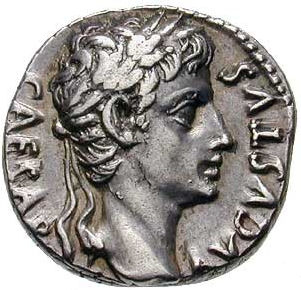
Render-Unto-CaesarBut Matthew makes it clear that Jesus saw through their ruse. He knew they were trying to trick Him and even accused them of hypocrisy. But despite His awareness of their less-than-sincere motives, He chose to answer their question. He asked for a Roman coin, which would have carried the image of Caesar, a fact that He got them to verify. Then He told them, “Therefore render to Caesar the things that are Caesar’s, and to God the things that are God’s” (Matthew 22:21 ESV).

The simple interpretation of this passage would be that Jesus was encouraging civil obedience. The people of God must be good citizens and set the right example, even in the case of a corrupt and oppressive government. But there appears to be a much more significant point to Jesus’ statement.

Interestingly, he emphasized Caesar’s image on the coin. The Roman emperor was considered a god by his own people. So, Jesus told them to give back to Caesar the coin bearing his image. It was stamped with his likeness and, therefore, belonged to him. But Jesus also stated that they were to give to God what belonged to God. Don’t miss Jesus’ logic.

In the book of Genesis, we read, “So God created human beings in his own image. In the image of God he created them; male and female he created them” (Genesis 1:27 NLT). Every good Jew would have known this story and understood what Jesus was saying. Men and women are made in the image of God. In a sense, they are stamped with His likeness, therefore, they belong to Him.

Jesus taught that people should give themselves to God and His kingdom instead of worrying about the temporal things of this world, like money and taxes. In His Sermon on the Mount, Jesus said, “So don’t worry about these things, saying, ‘What will we eat? What will we drink? What will we wear?’ These things dominate the thoughts of unbelievers, but your heavenly Father already knows all your needs. Seek the Kingdom of God above all else, and live righteously, and he will give you everything you need” (Matthew 6:31-33 NLT). For the average Jew, paying taxes to Caesar was a burden because it made it difficult to afford the necessities of life, like food and clothing. Yet, Jesus told them not to worry about those kinds of things because their Heavenly Father was fully capable of providing all that they needed. He had done it for their ancestors as they wandered in the wilderness, providing them with water from a rock, quail they could easily catch with their hands, and Manna that miraculously appeared each day with the morning dew.

The Romans and high taxes weren’t the problem. It was the people’s failure to honor and revere God. They saw themselves as victims rather than as citizens of the Kingdom of God. The Romans could levy taxes on the Jew’s property and possessions, but they could not touch their identity as the image-bearers of God and His chosen people. They had been handpicked by God and redeemed out of slavery in Egypt. They were His people – His prized possession. He had told them, “For you are a holy people, who belong to the LORD your God. Of all the people on earth, the LORD your God has chosen you to be his own special treasure” (Deuteronomy 7:6 NLT).

These people had been oppressed and burdened before, and God had rescued them. And while, in Jesus’ day, they were suffering oppression under Roman rule, it had far less to do with taxes than it did with sin. God wanted to rescue and redeem them from slavery to sin and death, which is why He had sent His Son. But their minds were elsewhere. They saw their burdens as earthly, not spiritual. They wanted a Messiah to rescue them from the taxes and tyranny of the Romans. But Jesus had come to rescue them from a life enslaved to sin and the death sentence that came with it.

Jesus wanted these people to give God what was rightfully His – their lives. He wanted them to turn over their lives to the very one who could save them. Jesus stood before them as the Son of God and their Messiah. He was the solution to their problem, but they failed to recognize Him as such. Jesus had not come to foment insurrection, but to provide salvation. He had not come to lead a revolt against Rome, but to provide restoration with God. His was a spiritual revolution, not an earthly one. And He subtly reminded His listeners that God, in whose image they were made, required what was due Him. Just as Caesar would punish any and all who refused to pay his mandatory tax, God would punish all those who refused to give Him what rightfully belonged to Him.

God had warned the people of Israel what would happen if they failed to render unto Him what was rightfully His. “Understand, therefore, that the Lord your God is indeed God. He is the faithful God who keeps his covenant for a thousand generations and lavishes his unfailing love on those who love him and obey his commands. But he does not hesitate to punish and destroy those who reject him” (Deuteronomy 7:9-10 NLT).

The last part of verse 21 reflects what Jesus had been trying to convey.

“…give to God what belongs to God.” – Matthew 22:21 NLTIf

If Caesar wanted his coins back, return them to him. But it was God alone who deserved man’s respect and honor. Because we bear His image, we belong to Him. And Jesus was demanding that the people of Israel give God what was rightfully His: Their lives and their unwavering devotion.

At the heart of this entire exchange is man’s love affair with money and materialism. In His Sermon on the Mount, Jesus warned about the dangers of a divided love.

“Don’t store up treasures here on earth, where moths eat them and rust destroys them, and where thieves break in and steal. Store your treasures in heaven, where moths and rust cannot destroy, and thieves do not break in and steal. Wherever your treasure is, there the desires of your heart will also be. – Matthew 6:19-21 NLT

He knew that the people were inordinately tied to the treasures of this world and, as a result, they had a divided allegiance. So, He warned them:

“No one can serve two masters. For you will hate one and love the other; you will be devoted to one and despise the other. You cannot serve God and be enslaved to money. – Matthew 6:24 NLT

The religious leaders of Israel were enslaved to money, materialism, power, and prestige. They may have faithfully worshiped at the altar of Yahweh, but the real focus of their devotion and desire was earthly treasures. They did not love the Roman government but were willing to do business with the enemy because they benefited greatly from the relationship. Their greatest fear was that Jesus would disrupt their symbiotic and self-serving relationship with the Romans. They had a bird’s nest on the ground, and this upstart Rabbi from Nazareth threatened to destroy it all. That’s why Caiaphas, the high priest, would later tell his fellow members of the Sanhedrin that Jesus’ death was preferable to the nation’s demise at the hands of the Romans.

“You don’t realize that it’s better for you that one man should die for the people than for the whole nation to be destroyed.” – John 11:50 NLT

Caiaphas was out to preserve the status quo, and if it required the death of one man, then it would be well worth it. But what Caiaphas failed to realize was that his words were really prophetic.

He did not say this on his own; as high priest at that time he was led to prophesy that Jesus would die for the entire nation. And not only for that nation, but to bring together and unite all the children of God scattered around the world. – John 11:51-52 NLT

As “the image of the invisible God” (Colossians 1:15), Jesus would eventually give back to God what was rightfully His. He would sacrifice His own life on behalf of sinful mankind and satisfy the just demands of a holy God by offering His body as the ultimate tribute. Through the willing sacrifice of His life, Jesus would render unto God what was rightfully His.

For in him all the fullness of God was pleased to dwell, and through him to reconcile to himself all things, whether on earth or in heaven, making peace by the blood of his cross. – Colossians 1:19-20 NLT

Jesus’ command to “render unto Caesar” is accompanied by an even more important imperative: “Give to God what belongs to God.” That is the heart of His answer and the message He desires every true disciple to hear. Those who place their faith in Jesus become God’s treasured possession. Not only were they made in His image but they were redeemed out of slavery to death and sin.

God bought you with a high price. So you must honor God with your body. – 1 Corinthians 6:20 NLT

For you know that God paid a ransom to save you from the empty life you inherited from your ancestors. And it was not paid with mere gold or silver, which lose their value. It was the precious blood of Christ, the sinless, spotless Lamb of God. – 1 Peter 1:18-19 NLT

God sacrificed His Son so that sinners could receive forgiveness, redemption, and righteousness. But this gracious gift comes with a “tax” or obligation to render unto God what is rightfully His: Our allegiance and willing obedience to bear His image to the world. Paul provided Titus with a powerful reminder of what it means to give to God what is rightfully His.

…we are instructed to turn from godless living and sinful pleasures. We should live in this evil world with wisdom, righteousness, and devotion to God, while we look forward with hope to that wonderful day when the glory of our great God and Savior, Jesus Christ, will be revealed. He gave his life to free us from every kind of sin, to cleanse us, and to make us his very own people, totally committed to doing good deeds.

You must teach these things and encourage the believers to do them. – Titus 2:12-15 NLT

English Standard Version (ESV)
The Holy Bible, English Standard Version. ESV® Permanent Text Edition® (2016). Copyright © 2001 by Crossway Bibles, a publishing ministry of Good News Publishers.

New Living Translation (NLT)
Holy Bible, New Living Translation, copyright © 1996, 2004, 2015 by Tyndale House Foundation. Used by permission of Tyndale House Publishers Inc., Carol Stream, Illinois 60188. All rights reserved.

Driven by Greed

22 But God’s anger was kindled because he went, and the angel of the Lord took his stand in the way as his adversary. Now he was riding on the donkey, and his two servants were with him. 23 And the donkey saw the angel of the Lord standing in the road, with a drawn sword in his hand. And the donkey turned aside out of the road and went into the field. And Balaam struck the donkey, to turn her into the road. 24 Then the angel of the Lord stood in a narrow path between the vineyards, with a wall on either side. 25 And when the donkey saw the angel of the Lord, she pushed against the wall and pressed Balaam’s foot against the wall. So he struck her again. 26 Then the angel of the Lord went ahead and stood in a narrow place, where there was no way to turn either to the right or to the left. 27 When the donkey saw the angel of the Lord, she lay down under Balaam. And Balaam’s anger was kindled, and he struck the donkey with his staff. 28 Then the Lord opened the mouth of the donkey, and she said to Balaam, “What have I done to you, that you have struck me these three times?” 29 And Balaam said to the donkey, “Because you have made a fool of me. I wish I had a sword in my hand, for then I would kill you.” 30 And the donkey said to Balaam, “Am I not your donkey, on which you have ridden all your life long to this day? Is it my habit to treat you this way?” And he said, “No.”

31 Then the Lord opened the eyes of Balaam, and he saw the angel of the Lord standing in the way, with his drawn sword in his hand. And he bowed down and fell on his face. 32 And the angel of the Lord said to him, “Why have you struck your donkey these three times? Behold, I have come out to oppose you because your way is perverse before me. 33 The donkey saw me and turned aside before me these three times. If she had not turned aside from me, surely just now I would have killed you and let her live.” 34 Then Balaam said to the angel of the Lord, “I have sinned, for I did not know that you stood in the road against me. Now therefore, if it is evil in your sight, I will turn back.” 35 And the angel of the Lord said to Balaam, “Go with the men, but speak only the word that I tell you.” So Balaam went on with the princes of Balak.

36 When Balak heard that Balaam had come, he went out to meet him at the city of Moab, on the border formed by the Arnon, at the extremity of the border. 37 And Balak said to Balaam, “Did I not send to you to call you? Why did you not come to me? Am I not able to honor you?” 38 Balaam said to Balak, “Behold, I have come to you! Have I now any power of my own to speak anything? The word that God puts in my mouth, that must I speak.” 39 Then Balaam went with Balak, and they came to Kiriath-huzoth. 40 And Balak sacrificed oxen and sheep, and sent for Balaam and for the princes who were with him.

41 And in the morning Balak took Balaam and brought him up to Bamoth-baal, and from there he saw a fraction of the people. Numbers 22:22-41 ESV

Balak, the king of Moab, had summoned a well-known seer named Balaam and requested that he pronounce a curse on the people of Israel. But this pagan “wizard” had received a surprise visit from Yahweh, the God of the Israelites, forbidding him to say or do anything that might harm His chosen people.

“You shall not go with them. You shall not curse the people, for they are blessed.” – Numbers 22:12 ESV

Balaam obeyed God’s warning and informed Balak’s servants. “the Lord has refused to let me go with you” (Numbers 22:14 ESV). But Balak persisted, sending another contingent of dignitaries with offers of financial reward to sweeten the deal. But, once again, Balaam refused, saying, “Though Balak were to give me his house full of silver and gold, I could not go beyond the command of the Lord my God to do less or more” (Numbers 22:18 ESV). Yet Balaam offered to consult with Yahweh a second time to see if he could negotiate a different outcome. His actions would seem to indicate that he was tempted by Balak’s generous offer of remuneration.

It seems that Balaam’s efforts paid off because God responded differently the second time, telling him, “If the men have come to call you, rise, go with them; but only do what I tell you” (Numbers 22:20 ESV). The next morning, Balaam eagerly mounted his donkey to make the return trip to Moab. At this point, it would appear that Balaam was following the will of God. But something interesting happens along the way.

Somehow, Balaam had construed God’s command to go to Moab with permission to curse the Israelites. As he made his way from Pethor to Moab, Balaam must have been considering the financial windfall that awaited him when he reached Moab. He would conjure up the appropriate curse and cash in on King Balak’s fear of the Israelites. But God had other plans. Balaam appears to believe that he still might come out of this a very rich man because the text tells us that God was not happy with Balaam – even after giving him permission to go with the servants of Balak.

But God was furious that Balaam was going, so he sent the angel of the LORD to stand in the road to block his way. – Numbers 22:22 NLT

What was the cause of God’s anger? After all, it was God who told Balaam, “Since these men have come for you, get up and go with them” (Numbers 22:20 NLT). It would appear that Balaam was simply following the Lord’s instructions. But there was more going on in Balaam’s heart and mind than meets the eye. God knew that Balaam had concocted a plan that would allow him to profit from this unique once-in-a-lifetime situation.

Balaam was greedy and hoped to make money by cursing the people of God. He was a false prophet who thought he could turn a profit by disobeying God. The apostle Peter provides some much-needed insight into Balaam’s motivation that helps to explain God’s anger. Speaking of the false prophets of his own day, Peter states,They have wandered off the right road and followed the way of Balaam son of Beor, who loved to earn money by doing wrong. But Balaam was stopped from his mad course when his donkey rebuked him with a human voice” (2 Peter 2:15-16 NLT).

Balaam’s problem was that of greed. He was attempting to line his own pockets by masquerading as a prophet of God. This pagan diviner was little more than a con man who had made a healthy income posing as a spiritual sage who could level curses – for a price. But Balaam was in for a surprise. Jehovah, the God of the Israelites, whom he hoped to curse, had his number. God knew exactly what was going on in Balaam’s heart. The apostle Paul warned Timothy about the ever-present danger of letting the love of money influence one’s behavior.

…the love of money is the root of all kinds of evil. And some people, craving money, have wandered from the true faith and pierced themselves with many sorrows. 1 Timothy 6:10 NLT

God permitted Balaam to go with the servants of Balak, but only as a test, and since God already knew the content of Balaam’s heart, this test was meant for Balaam’s enlightenment. This prideful man was about to get a much-needed lesson about God’s holiness and his own sinfulness.

As Balaam and his escorts made their way to visit Balak, God sent an angel with a sword to block their path, but they were unaware of the divine messenger’s presence. Perhaps Balaam was so blinded by greed that he was unable to see the servant of God standing right in front of him, sword in hand. Yet the donkey on which Balaam rode saw the angel and made a detour from the roadway to a nearby field. Angered by the donkey’s actions, Balaam tried to force the animal back to the road by beating it with a stick but the petrified beast made its way to a narrow path between two walls. When the angel reappeared blocking the way once again, the animal attempted to flee, pressing Balaam’s leg against one of the stone walls. Once again, Balaam beat the donkey in anger. Then something remarkable happened. The donkey spoke.

“What have I done to you, that you have struck me these three times?” – Numbers 22:28 ESV

Rather than reacting in shock at hearing his donkey speak, Balaam defended his actions, saying, “Because you have made a fool of me. I wish I had a sword in my hand, for then I would kill you” (Numbers 22:29 ESV). It seems that Balaam was so angry and spiritually insensitive that it didn’t even register to him that he was having a conversation with an animal.

Then the Lord opened Balaam’s eyes, and he saw the angel of the Lord standing in the roadway with a drawn sword in his hand. Balaam bowed his head and fell face down on the ground before him. – Numbers 22:31 NLT

With Balaam cowering at his feet, the angel told Balaam, “I have come to block your way because you are stubbornly resisting me” (Numbers 22:32 NLT). Speaking as an official agent of Jehovah, the angel revealed the nature of his mission. He was there to prevent Balaam from carrying out his plan. A more accurate translation of the angel’s words might be: “The path you are taking is a reckless one.” Balaam had made the decision to go against the revealed will of God – all for a little financial gain. The angel had been sent by God to prevent Balaam from carrying out his ill-conceived plan.

Sadly, the donkey had more insight than the diviner. The man who was supposed to have special access to the gods had failed to see an armed angel of Yahweh standing right in front of him. But once his eyes were opened to the danger he faced, Balaam appears to have repented.

“I have sinned. I did not realize you were standing in the road to block my way. I will go back home if you are against my going.” – Numbers 22:34 NLT

But the only sin that Balaam seems to have confessed was his failure to see the angel standing in his way. He confessed the sin of ignorance. He never acknowledged his greed or admitted his plan to disobey the will of God. Balaam offered to turn back, but only because the angel had disclosed the reckless nature of his plan. Everything about Balaam’s intentions was wrong. He was greedy. His whole reason for going with the servants of Balak was to figure out a way to fulfill the request of the king of the Moabites and make himself rich.

Despite Balaam’s insincere confession, the angel gave him permission to continue his journey, using the very same words that God had spoken the night before.

“Go with these men, but say only what I tell you to say.” – Numbers 22:35 NLT

Balaam had his marching orders and they required Balaam to speak only when spoken to by God. He was not to add his two cents or dare to utter a word that had not been given to him by Yahweh. This would prove to be another test for the materialistic-minded and headstrong Balaam.

King Balak was relieved to see that Balaam had arrived and questioned his guest about his lengthy delay. He couldn’t understand why Balaam had not jumped at the chance to pad his bank account with the sizeable reward he had offered to pay.

“Didn’t I send you an urgent invitation? Why didn’t you come right away?” Balak asked Balaam. “Didn’t you believe me when I said I would reward you richly?” – Numbers 22:37 NLT

Even Balak seemed to know about Balaam’s love affair with money. But with the words of the angel still fresh in his mind, Balaam informed Balak that his lips were sealed. Any hope of him issuing a curse was off the table unless he received permission from Jehovah.

“Look, now I have come, but I have no power to say whatever I want. I will speak only the message that God puts in my mouth.” – Numbers 22:38 NLT

The situation will become increasingly difficult for Balaam. He knew exactly what Balak wanted him to do, but he also knew that he could do nothing without Yawheh’s permission. As he joined King Balak in his camp, he could look out over the plains of Moab and see the host of Israelites that appeared like locusts in a field. Balaam likely had no love for these unwanted interlopers, and as he gazed at their vast numbers, he probably saw dollar signs. He couldn’t resist thinking about the rich reward that lay within reach if he could simply figure out a way to do what Balak wanted. The temptation to disobey the will of God was fueled by greed for great gain. He could become a rich man if he would only fulfill the wishes of Balak, but it would risk disobeying and angering Yahweh, the God of the Israelites. The choice was Balaam’s but God would have the final say.

English Standard Version (ESV) The Holy Bible, English Standard Version. ESV® Permanent Text Edition® (2016). Copyright © 2001

New Living Translation (NLT) Holy Bible, New Living Translation, copyright © 1996, 2004, 2015 by Tyndale House Foundation. Used by permission of Tyndale House Publishers Inc., Carol Stream, Illinois 60188. All rights reserved.

Under New Management

12 The Lord said to Moses, “Go up into this mountain of Abarim and see the land that I have given to the people of Israel. 13 When you have seen it, you also shall be gathered to your people, as your brother Aaron was, 14 because you rebelled against my word in the wilderness of Zin when the congregation quarreled, failing to uphold me as holy at the waters before their eyes.” (These are the waters of Meribah of Kadesh in the wilderness of Zin.) 15 Moses spoke to the Lord, saying, 16 “Let the Lord, the God of the spirits of all flesh, appoint a man over the congregation 17 who shall go out before them and come in before them, who shall lead them out and bring them in, that the congregation of the Lord may not be as sheep that have no shepherd.” 18 So the Lord said to Moses, “Take Joshua the son of Nun, a man in whom is the Spirit, and lay your hand on him. 19 Make him stand before Eleazar the priest and all the congregation, and you shall commission him in their sight. 20 You shall invest him with some of your authority, that all the congregation of the people of Israel may obey. 21 And he shall stand before Eleazar the priest, who shall inquire for him by the judgment of the Urim before the Lord. At his word they shall go out, and at his word they shall come in, both he and all the people of Israel with him, the whole congregation.” 22 And Moses did as the Lord commanded him. He took Joshua and made him stand before Eleazar the priest and the whole congregation, 23 and he laid his hands on him and commissioned him as the Lord directed through Moses.  Numbers 27:12-23 ESV

The day Moses had been dreading had finally arrived. He had known for some time that he would not be leading the people of Israel into the land of Canaan. Because of Moses’ uncharacteristic actions in the wilderness of Zin, God had determined to ban his servant from entering the promised land.

“Because you did not trust me enough to demonstrate my holiness to the people of Israel, you will not lead them into the land I am giving them!” – Numbers 20:12 NLT

In a moment of extreme frustration with the constantly-whining Israelites, Moses had snapped and disobeyed the command of God.

“You and Aaron must take the staff and assemble the entire community. As the people watch, speak to the rock over there, and it will pour out its water. You will provide enough water from the rock to satisfy the whole community and their livestock.” – Numbers 20:8 NLT

Rather than speaking to the rock as God had ordered him to do, Moses lashed out in anger and repeatedly struck the rock with his staff. His anger and frustration with the people had caused him to disobey and dishonor God in the eyes of the people. It appears that Moses’ real crime was that he attempted to rob God of glory by claiming responsibility for producing the miracle.

“Listen, you rebels!” he shouted. “Must we bring you water from this rock?”– Numbers 20:10 NLT

His attempt to inflate his own identity in the eyes of the people cost him dearly. While he produced water from the rock and probably gained a bit of respect from the people, his little stunt resulted in a permanent ban from the land of promise. He would never have the pleasure of entering God’s rest. Instead, he would die in the wilderness, just as Miriam and Aaron had.

So, with the Israelites on the verge of entering Canaan, God informed Moses that his days on this earth had come to an end. His debt had come due. But before taking Moses’ life, God gave His servant one more chance to see the land of promise from a distance. God led Moses up a mountain and allowed him to take in the view.

“Climb one of the mountains east of the river, and look out over the land I have given the people of Israel. After you have seen it, you will die like your brother, Aaron, for you both rebelled against my instructions in the wilderness of Zin. When the people of Israel rebelled, you failed to demonstrate my holiness to them at the waters.” – Numbers 27:12-14 NLT

For nearly four decades, this land had been the focus of Moses’ life. Ever since he had led the people out of Egypt, his life’s mission had been to guide them to this very spot. But now, as he looked out over the fertile valley below, he was doing so for the very last time. He would not be going in and it was time to turn over the leadership responsibilities to someone else.

Ever the consummate leader, Moses begged God to find the right man for the task. He knew from firsthand experience just how stubborn and headstrong the people could be and they would never make it without strong leadership.

“O Lord, you are the God who gives breath to all creatures. Please appoint a new man as leader for the community. Give them someone who will guide them wherever they go and will lead them into battle, so the community of the Lord will not be like sheep without a shepherd.”– Nmbers 27:16-17 NLT

While Moses had been required to lead the people across the wilderness, his replacement would be tasked with leading them into battle. The days ahead would be difficult and fraught with danger. The people who had made a habit of whining about the lack of food water and food would certainly find the thought of military service distasteful. So, they were going to need a man who was equal parts warrior and shepherd. He would have to be both a fighting man and a kind-hearted guide who could lead the people with patience and care.

And God already had a man in mind. He suggested Joshua, one of the two men who had been part of the 12-man contingent of spies who had reconnoitered the land 40 years earlier. Joshua and Caleb had been the voices of reason among the fearful and disheartened men who recommended that the people not enter the land of promise. They had deemed it unconquerable and, therefore, to be avoided at all costs. But Joshua and Caleb had provided a dissenting opinion:

Two of the men who had explored the land, Joshua son of Nun and Caleb son of Jephunneh, tore their clothing. They said to all the people of Israel, “The land we traveled through and explored is a wonderful land! And if the Lord is pleased with us, he will bring us safely into that land and give it to us. It is a rich land flowing with milk and honey. Do not rebel against the Lord, and don’t be afraid of the people of the land. They are only helpless prey to us! They have no protection, but the Lord is with us! Don’t be afraid of them!” – Numbers 14:6-9 NLT

And while the people rejected the counsel of Joshua and Caleb, these two men had powerfully declared their faith in God. They demonstrated a belief in God’s power and goodness and called the people to trust and obey.

Four decades later, God chose Joshua to be Moses’ successor.

“Take Joshua son of Nun, who has the Spirit in him, and lay your hands on him. Present him to Eleazar the priest before the whole community, and publicly commission him to lead the people. – Numbers 27:18-19 NLT

“This spirit was not something that now came upon Joshua, or was temporary (such as the coming of the spirit on the elders in 11:17, 25-26); it already existed in Joshua and was the basis of God’s choice of him. Deut. 34:9 applies the phrase ‘full of the spirit of Wisdom’ to Joshua, confirming the thought here.” – Timothy R. Ashley, The Book of Numbers.

Joshua was God’s man for the moment. He had been chosen by God long before this day arrived, and the Spirit of God had been preparing him for the next phase of Israel’s journey.

But God’s relationship with Joshua would be different than the one He had with Moses. While God had interacted with Moses face-to-face, Joshua would receive his instructions through the high priest and the use of “the Urim—one of the sacred lots cast before the Lord” (Numbers 27:21 NLT). This new method of communication would feature built-in safeguards, allowing Eleazar, the high priest, to act as a source of confirmation for all decisions. This would prevent Joshua from acting on his own and risking the wrath of God.

So Moses did as the Lord commanded. He presented Joshua to Eleazar the priest and the whole community. Moses laid his hands on him and commissioned him to lead the people, just as the Lord had commanded through Moses. – Numbers 27:22-23 NLT

With new leadership called and commissioned, it was time to begin the final phase of the mission. This generation of Israelites was about to do what their mothers and fathers had failed to do: Enter the land of promise. This had been the goal all along. The wilderness had always been intended to be a means to this end. It was never to have been their home. Their inheritance lay across the Jordan River and waited for them to step out in faith and take it as their own.

English Standard Version (ESV) The Holy Bible, English Standard Version. ESV® Permanent Text Edition® (2016). Copyright © 2001

New Living Translation (NLT) Holy Bible, New Living Translation, copyright © 1996, 2004, 2015 by Tyndale House Foundation. Used by permission of Tyndale House Publishers Inc., Carol Stream, Illinois 60188. All rights reserved.


It Pays to Obey

1 “And if you faithfully obey the voice of the Lord your God, being careful to do all his commandments that I command you today, the Lord your God will set you high above all the nations of the earth. And all these blessings shall come upon you and overtake you, if you obey the voice of the Lord your God. Blessed shall you be in the city, and blessed shall you be in the field. Blessed shall be the fruit of your womb and the fruit of your ground and the fruit of your cattle, the increase of your herds and the young of your flock. Blessed shall be your basket and your kneading bowl. Blessed shall you be when you come in, and blessed shall you be when you go out.

“The Lord will cause your enemies who rise against you to be defeated before you. They shall come out against you one way and flee before you seven ways. The Lord will command the blessing on you in your barns and in all that you undertake. And he will bless you in the land that the Lord your God is giving you. The Lord will establish you as a people holy to himself, as he has sworn to you, if you keep the commandments of the Lord your God and walk in his ways. 10 And all the peoples of the earth shall see that you are called by the name of the Lord, and they shall be afraid of you. 11 And the Lord will make you abound in prosperity, in the fruit of your womb and in the fruit of your livestock and in the fruit of your ground, within the land that the Lord swore to your fathers to give you. 12 The Lord will open to you his good treasury, the heavens, to give the rain to your land in its season and to bless all the work of your hands. And you shall lend to many nations, but you shall not borrow. 13 And the Lord will make you the head and not the tail, and you shall only go up and not down, if you obey the commandments of the Lord your God, which I command you today, being careful to do them, 14 and if you do not turn aside from any of the words that I command you today, to the right hand or to the left, to go after other gods to serve them. Deuteronomy 28:1-14 ESV

Obedience has its benefits. Ten times in 14 verses, the words blessed, bless, and blessing occur. And while God had the Levites begin this solemn ceremony by reciting a list of 12 curses, the next words out their mouths were all about the goodness and graciousness of God that accompanies obedience to Him.

This section opens up with the qualifying statement, “if you faithfully obey…” In Hebrew, it is actually one word: shama`. And that one word carries the connotation of hearing with the intention of obeying. God’s commands were not to go in one ear and out the other. They were to be carefully heard and faithfully obeyed. To hear God’s law but disregard it would not only be disobedience but a sign of disrespect for God. To reject His holy and righteous law would be to reject Him. And such behavior would result in curses. But for the one who faithfully heard and obeyed, there would be unprecedented blessings.

But there is a second qualifying statement that accompanies this list of blessings. Not only were the Israelites to faithfully obey God’s law, but they were also to be “careful to do” all that He had commanded. In Hebrew, that little phrase is shamar `asah, and it adds another level of commitment to the Israelites’ observance of God’s law. The first word carries the idea of keeping or guarding. It paints a word picture of someone building a hedge of thorns around something in order to protect it. They were to keep and preserve God’s law like a beloved garden or a flock of lambs.

But the second word, `asah, adds an important next step. It means “to work” or “ to do.” What good would it be to build a hedge around a garden but to never work that garden so that it produced fruit? What a waste of time it would be to place your sheep in a fold you have built to protect them, but then fail to care for them. God wanted His people to guard His law as if it was their most precious possession. But He also wanted them to do what it said. He wanted them to do the work of keeping His law.

And if they did, they would reap the rewards that come with obedience. And God went out of His way to clarify just how great their reward would be.

“…the Lord your God will set you high above all the nations of the earth.” – Deuteronomy 28:1 ESV

God would make the people of Israel the most exalted nation on all the earth. And this promise of prominence is repeated in these verses for added emphasis.

“The Lord will cause your enemies who rise against you to be defeated before you.” – Deuteronomy 28:7 ESV

“The Lord will establish you as a people holy to himself…” – Deuteronomy 29:9 ESV

“And all the peoples of the earth shall see that you are called by the name of the Lord, and they shall be afraid of you.” – Deuteronomy 28:10 ESV

“And you shall lend to many nations, but you shall not borrow. And the Lord will make you the head and not the tail…” – Deuteronomy 28:12-13 ESV

Prominence, power, prosperity, and a preferred position as His holy possession. All of it would be theirs if they would only obey His law. And God gave them a long list of practical outcomes that would accompany their obedience. They would experience His blessings in every area of their lives. Whether they lived in the city or the country, His blessings would find them. His blessings would take the form of fruitful families, flocks, and farms. When they sat down to eat, there would always be plenty of food. When they traveled, the blessings of God would go with them.

In battle, they would always be victorious. In farming, they would always be productive. In business, they would always be prosperous. Their families and flocks would be large. Their reputation as a holy people, set apart by God, would spread and their success would be proof that their God was both great and good. Even the pagan nations would marvel at the many blessings enjoyed by the people of Israel. The kinds of outcomes described in these verses were exactly what the pagan nations looked for from their own gods. They saw their false gods as the distributors of everything from rain and sunshine to fruitfulness and prosperity. Their worship was a constant exercise in attempting to placate and please their fickle and penurious gods. So, when they witness all the blessings coming to the Israelites, they would automatically know the source was divine. And they would be jealous.

But there is a caveat that runs throughout these verses, and it must not be overlooked. The blessings of God were directly tied to the obedience of His people.

if you faithfully obey…” – vs. 1

if you obey the voice of the Lord your God…” – vs. 2

if you keep the commandments of the Lord your God and walk in his ways.” – vs. 9

if you obey the commandments of the Lord your God.” – vs. 13

if you do not turn aside from any of the words that I command you today…” – vs. 14

This was a conditional covenant. They had to do their part. If they wanted to enjoy the blessings of God, they were going to have to hear and obey His law. Obedience was the key to His blessings. And obedience was going to require that they trust Him. Because everything was going to cause them to doubt the veracity of God’s word and the reality of His blessings. They would be tempted to take shortcuts. They would find themselves wanting to compromise their convictions and to copy the behavior of their pagan neighbors. God’s law would eventually become burdensome to them. All His rules and regulations would begin to feel stifling and restrictive. And the enemy would begin to cause them to question God’s will, filling their minds with the same question he raised to Eve in the garden: “Did God actually say…?” (Genesis 3:1).

That is why Moses had them write the law on stones and build a memorial. It’s why they were to conduct this ceremony between Mount Elba and Mount Gerizim. They were to remember exactly what God said and never forget it. They were to teach God’s law to their children. They were to memorize it, memorialize it, and make every effort to live by it. Otherwise, they would find themselves disobeying it. And disobedience would result in curses, not blessings.

And this section ends with a description of the greatest form of disobedience: Idolatry. If the people turned their away from God’s law, they would end up pursuing other gods. Failure to obey God ultimately leads to unfaithfulness to God. Rejection of God’s law leads to spiritual adultery. But why would God’s people turn to a false god when the one true God was the only source of blessing? Because their disobedience would lead to curses, which would cause them to seek the help of false gods. They would turn to the gods of their enemies rather than willingly obey the God of their ancestors. And as the Bible painstakingly reveals, that would be the less-than-flattering fate of the people of God.

English Standard Version (ESV) The Holy Bible, English Standard Version. ESV® Permanent Text Edition® (2016). Copyright © 2001 by Crossway Bibles, a publishing ministry of Good News Publishers.

New Living Translation (NLT) Holy Bible, New Living Translation, copyright © 1996, 2004, 2015 by Tyndale House Foundation. Used by permission of Tyndale House Publishers Inc., Carol Stream, Illinois 60188. All rights reserved.

The Message (MSG) Copyright © 1993, 1994, 1995, 1996, 2000, 2001, 2002 by Eugene H. Peterson

Obedience Brings Blessing

1 “You shall therefore love the Lord your God and keep his charge, his statutes, his rules, and his commandments always. And consider today (since I am not speaking to your children who have not known or seen it), consider the discipline of the Lord your God, his greatness, his mighty hand and his outstretched arm, his signs and his deeds that he did in Egypt to Pharaoh the king of Egypt and to all his land, and what he did to the army of Egypt, to their horses and to their chariots, how he made the water of the Red Sea flow over them as they pursued after you, and how the Lord has destroyed them to this day, and what he did to you in the wilderness, until you came to this place, and what he did to Dathan and Abiram the sons of Eliab, son of Reuben, how the earth opened its mouth and swallowed them up, with their households, their tents, and every living thing that followed them, in the midst of all Israel. For your eyes have seen all the great work of the Lord that he did.

“You shall therefore keep the whole commandment that I command you today, that you may be strong, and go in and take possession of the land that you are going over to possess, and that you may live long in the land that the Lord swore to your fathers to give to them and to their offspring, a land flowing with milk and honey. 10 For the land that you are entering to take possession of it is not like the land of Egypt, from which you have come, where you sowed your seed and irrigated it, like a garden of vegetables. 11 But the land that you are going over to possess is a land of hills and valleys, which drinks water by the rain from heaven, 12 a land that the Lord your God cares for. The eyes of the Lord your God are always upon it, from the beginning of the year to the end of the year. – Deuteronomy 11:1-12 ESV

Moses has issued a call to the people of Israel: “change your hearts and stop being stubborn” (Deuteronomy 10:16 NLT). And this was preceded by the reminder that “the Lord chose your ancestors as the objects of his love. And he chose you, their descendants, above all other nations, as is evident today” (Deuteronomy 10:15 NLT). 

And what would their change of heart look like? Moses describes it in terms of obedience.

You must love the Lord your God and always obey his requirements, decrees, regulations, and commands. – Deuteronomy 11:1 NLT

Rather than stubbornly refusing to do what God had called them to do, they could prove their love for Him through their willful obedience. But God was not interested in watching His people simply go through the motions. He was not asking for heartless adherence to His commands. As we have seen before, God takes no delight in worship that lacks true reverence.

“These people say they are mine. They honor me with their lips, but their hearts are far from me. And their worship of me is nothing but man-made rules learned by rote.” – Isaiah 29:13 NLT

Moses wanted the people to understand that God loved them and He expected them to return that love through faithful obedience to His will for them. God was not demanding some form of stringent legalism, but a display of surrender to His will motivated by love for who He was.

“What is more pleasing to the LORD: your burnt offerings and sacrifices or your obedience to his voice? Listen! Obedience is better than sacrifice, and submission is better than offering the fat of rams.” – 1 Samuel 15:22 NLT

Of all people, the Israelites should have had a healthy fear of and respect for God. After all, He had demonstrated His power and proven His faithfulness time and time again. And the people of Israel had no reason to doubt Him or cause to disobey Him. But Moses emphasizes the fact that the children of the Israelites had not been around when many of the mighty acts of God had taken place.

They didn’t see the miraculous signs and wonders he performed in Egypt against Pharaoh and all his land.” – vs. 3

They didn’t see what the Lord did to the armies of Egypt and to their horses and chariots—how he drowned them in the Red Sea…” – vs. 4

Your children didn’t see how the Lord cared for you in the wilderness until you arrived here.” – vs. 5

They didn’t see what he did to Dathan and Abiram…” – vs. 6

They had not had the benefit of watching God display His mighty power on their behalf. Their young eyes had not had the privilege of witnessing God’s deliverance or seeing His judgment. But the same could not be said of their parents.

But you have seen the Lord perform all these mighty deeds with your own eyes!” – Deuteronomy 11:7 NLT

They had no excuse. They couldn’t plead ignorance or claim to have no memory of God’s past miracles. Which is why Moses warned them to use their knowledge of God’s past power and provision to motivate their future obedience.

“Therefore, be careful to obey every command I am giving you today…” – Deuteronomy 11:8 NLT

And Moses made it clear that their heartfelt obedience to God would bring the blessings of God. Doing exactly what God had commanded would provide them with strength. It would result in victories over their enemies. Ongoing obedience would preserve their place in the land, securing their inheritance for generations to come. The land would yield its harvest, and God would be the one who provided the rain necessary to produce the crops. Unlike their days of captivity in Egypt, their gardens would not be watered by means of irrigation, but by means of the sovereign hand of God. And this would be in keeping with the promise He had made to them.

“If you follow my decrees and are careful to obey my commands, I will send you the seasonal rains. The land will then yield its crops, and the trees of the field will produce their fruit. Your threshing season will overlap with the grape harvest, and your grape harvest will overlap with the season of planting grain. You will eat your fill and live securely in your own land.” – Leviticus 26:3-5 NLT

God was demanding allegiance but also dependence. He wanted His people to rely upon Him for all their needs. He was not interested in seeing how powerful and resourceful they could be. He wanted to display His strength on their behalf. He desired to meet their every physical and spiritual need.

Moses stressed that the land they were about to enter was “a land that the Lord your God cares for. He watches over it through each season of the year!” (Deuteronomy 11:12 NLT). It was His land, and they were His people. The cities and towns belonged to Him. Every sheep, goat, and bull were His property.

“For all the animals of the forest are mine, and I own the cattle on a thousand hills.” – Psalm 50:10 NLT

And God was offering to share His bounty with His people. He was pledging to bless them from the vast riches of His wealth. If they would only love and obey Him. Moses had already told them what God desired of them.

“…to fear the Lord your God, to walk in all his ways, to love him, to serve the Lord your God with all your heart and with all your soul, and to keep the commandments and statutes of the Lord.” – Deuteronomy 10:12-13 ESV

Now he was assuring them that their heartfelt obedience would come with substantial benefits. Obedience that is motivated by love and accompanied by a humble trust in and reliance upon God’s will, always results in His blessings.

English Standard Version (ESV) The Holy Bible, English Standard Version. ESV® Permanent Text Edition® (2016). Copyright © 2001 by Crossway Bibles, a publishing ministry of Good News Publishers.

New Living Translation (NLT) Holy Bible, New Living Translation, copyright © 1996, 2004, 2015 by Tyndale House Foundation. Used by permission of Tyndale House Publishers Inc., Carol Stream, Illinois 60188. All rights reserved.

The Message (MSG) Copyright © 1993, 1994, 1995, 1996, 2000, 2001, 2002 by Eugene H. Peterson


Hear and Obey!

1 “Now this is the commandment—the statutes and the rules—that the Lord your God commanded me to teach you, that you may do them in the land to which you are going over, to possess it, that you may fear the Lord your God, you and your son and your son’s son, by keeping all his statutes and his commandments, which I command you, all the days of your life, and that your days may be long. Hear therefore, O Israel, and be careful to do them, that it may go well with you, and that you may multiply greatly, as the Lord, the God of your fathers, has promised you, in a land flowing with milk and honey.

“Hear, O Israel: The Lord our God, the Lord is one. You shall love the Lord your God with all your heart and with all your soul and with all your might. And these words that I command you today shall be on your heart. You shall teach them diligently to your children, and shall talk of them when you sit in your house, and when you walk by the way, and when you lie down, and when you rise. You shall bind them as a sign on your hand, and they shall be as frontlets between your eyes. You shall write them on the doorposts of your house and on your gates.” – Deuteronomy 6:1-9 ESV

God had given the people of Israel His commands, and every single one of those divine regulations were to be treated with reverence and fear. They were not up for debate and were to be protected from any form of tampering or alteration. And God had given ample incentive for the people to keep His commands. If the Israelites would obediently and faithfully follow them, they would enjoy the blessings of God. If they chose to disobey them, they would experience very real and painful curses. The very kinds of curses God brought on the Egyptians would fall upon the people of God.

But God’s commands, while holy, righteous, and just, were nothing more than a set of rules if the people of God refused to hear and obey them. The long list of God-ordained imperatives that Moses had shared with the people was passive and, for the most part, powerless. God’s commands could not change anyone. They were intended to regulate human actions and attitudes but were powerless to change the human heart, from which all human behavior flows. The book of Proverbs has much to say about the heart.

Guard your heart above all else, for it determines the course of your life. – Proverbs 4:23 NLT

Listen, my son, and be wise, and guide your heart on the right course. – Proverbs 23:19 BSB

Laws, even those given by God, exist outside the human heart, and while they can influence and motivate a man’s actions, they cannot alter the true condition of his heart. Jesus Himself painted a bleak image of the condition of the fallen human heart.

“But the words you speak come from the heart—that’s what defiles you. For from the heart come evil thoughts, murder, adultery, all sexual immorality, theft, lying, and slander. These are what defile you.” – Matthew 15:18-10 NLT

Notice that each item on the list Jesus provides lines up with one of the commands of God. While God had clearly placed prohibitions on murder, adultery, immorality, theft, and lying, it had not resulted in their eradication. Man’s sin problem is an internal one, and cannot be controlled by externally based rules. No amount of regulations and restrictions on human behavior will ever remedy the problem of sin.

God would later say of His own people:

“These people say they are mine. They honor me with their lips, but their hearts are far from me. And their worship of me is nothing but man-made rules learned by rote.” – Isaiah 29:13 NLT

They knew the rules. They could even quote them from memory. But they had a heart problem. And, hundreds of years later, Jesus would use this very passage to level a charge of hypocrisy against the religious leaders of His day. He accused them of corrupting the clear commands of God by watering them down with their own set of man-made regulations.

“You hypocrites! Isaiah was right when he prophesied about you, for he wrote, ‘These people honor me with their lips, but their hearts are far from me. Their worship is a farce, for they teach man-made ideas as commands from God.’” – Matthew 15:7-9 NLT

So, as Moses continued his preparation of the people of Israel to enter the land of promise, he reiterated the necessity for them to treat God’s commands with reverence. And he seemed to understand that, while he could not change their hearts, he could give them ample motivation to obey God’s laws.

These are the commands, decrees, and regulations that the Lord your God commanded me to teach you. You must obey them in the land you are about to enter and occupy, and you and your children and grandchildren must fear the Lord your God as long as you live. If you obey all his decrees and commands, you will enjoy a long life. – Deuteronomy 6:1-2 NLT

If they wanted to enjoy long and prosperous lives, they were going to have to obey God’s commands. Moses was making an appeal to their hearts. He was attempting to speak to them as parents and to get them to understand that their decisions, whether to obey God were going to have long-lasting implications.

Two different times in these verses, Moses states, “Hear therefore, O Israel.” The Hebrew word he used is shama` and it carries the idea of hearing or listening, but with the intent to obey. Verse four begins with the same phrase, “Hear, O Israel” and then continues with the words, “The Lord our God, the Lord is one.” Verses 4-9 came to be known as the Shema prayer and was prayed daily by the Hebrew people. In fact, on one occasion, Jesus was approached by a scribe who asked Him, “Which commandment is the most important of all?” (Mark 12:28 ESV). And Jesus responded by quoting the Shema prayer.

Hear, O Israel: The Lord our God, the Lord is one. And you shall love the Lord your God with all your heart and with all your soul and with all your mind and with all your strength.” – Mark 12:29 ESV).

Hearing and obeying are inseparable partners when it comes to God’s laws. It is not enough to hear what God commands. He demands obedience. And notice that God expects that obedience to flow from the heart. It is to be an obedience based on love and obeisance. There is to be an obedience that flows from a reverent awe of God and a passionate desire to please Him for all He has done.

And Moses made it clear that the law of God was not to be seen as some external list of rules regulating behavior, but he told the Israelites “these words that I command you today shall be on your heart” (Deuteronomy 6:6 ESV). 

They were to become a permanent part of their daily lives. The Israelites were to teach them to their children. They were to surround themselves with God’s commands, allowing His holy code of conduct to permeate every area of their lives. While men tend to view all laws as restrictive in nature, the Ten Commandments were to be seen as coming from a loving God who knew what was best for His children. He wasn’t trying to be a cosmic kill-joy, arbitrarily limiting the behavior of His people. He was providing them with a divine list of carefully crafted rules that were meant to improve their lives, not inhibit their joy.

Moses wanted the people to hear what God was saying. But more importantly, he wanted them to apply the words of God to their hearts so that their behavior would flow from the inside-out. When Moses said, “Hear, O Israel” he was calling them to carefully discern the intent behind God’s laws and to see them as expressions of His love for them. If the people of Israel could grasp just how much God loved them, they would be more prone to return that love with all their heart, soul, and might.

But if all they heard was a list of restrictive rules, they would tend to respond in disobedience or, at best, a heartless obedience lacking in love and marred by hypocrisy.

English Standard Version (ESV) The Holy Bible, English Standard Version. ESV® Permanent Text Edition® (2016). Copyright © 2001 by Crossway Bibles, a publishing ministry of Good News Publishers.

New Living Translation (NLT) Holy Bible, New Living Translation, copyright © 1996, 2004, 2015 by Tyndale House Foundation. Used by permission of Tyndale House Publishers Inc., Carol Stream, Illinois 60188. All rights reserved.

The Message (MSG) Copyright © 1993, 1994, 1995, 1996, 2000, 2001, 2002 by Eugene H. Peterson


Loving Those Who Lead.

Obey your leaders and submit to them, for they are keeping watch over your souls, as those who will have to give an account. Let them do this with joy and not with groaning, for that would be of no advantage to you. Pray for us, for we are sure that we have a clear conscience, desiring to act honorably in all things. I urge you the more earnestly to do this in order that I may be restored to you the sooner. – Hebrews 13:17-19 ESV

In our culture, we tend to view leadership through a distorted lens. We aspire to leadership. We see it as something to be sought after and as kind of a reward for a job well done. Leaders are the successful ones, the over-achievers who have earned the right to be followed and all the benefits that come with their title. For many of us, leaders are not so much to be followed as envied. We covet their corner office and exorbitant salaries. We grow jealous of their prestige and power. And we dream of the day when it’s our time to lead.This mentality, while mostly visible in the secular arena, can even makes its way into the church, the body of Christ. But disrespect for leadership among God’s people is nothing new. Moses found himself constantly questioned and blamed for everything. His own brother and sister tried to force him to share his power and authority with them. The prophets of God were all ignored, disliked, and treated like social outcasts – all because their message was not what the people wanted to hear. Jesus Himself was a victim of leadership loathing Himself. As long as He performed miracles, handed out free meals, and talked of a new kingdom, the people flocked to hear him. But as soon as He started talking about suffering, taking up your cross and dying to self, the crowds thinned out dramatically. When He entered into Jerusalem riding on a donkey, fresh off the heels of His raising of Lazarus from the dead, the people celebrated with great gusto. But when He was arrested, everybody scurried into the darkened corners, including His twelve disciples.

The author of Hebrews knew that people can be fickle when it comes to leadership, even in the church. So he encouraged his readers to do three things: Obey, submit and pray. He knew that leadership was difficult and virtually impossible if those being led refused to follow. He also knew that reluctant or disgruntled followers could make the life of any leader miserable. Gossips, grumblers and discontented followers can become a cancer, spreading discord and disunity throughout the body. So he encouraged his readers to obey and submit. The Greek word for obey is peithō and it means “to listen to, obey, yield to, comply with.” But it also carries the idea of trust and confidence. As believers, we are to place our trust and confidence in those whom God has placed in leadership over us. We are to see them as hand-picked by Him. And we are to submit to them. The Greek word he uses is hypeikō and it means “to yield to authority and admonition.” But it also means to stop resisting. When we submit to and obey the leadership God has placed over us, we are ultimately placing our faith in Him. We are trusting that He knows what He is doing and is working through those He has placed in authority over us.

Finally, we are to pray for those who lead us. It is easy to complain about leadership. We won’t always agree with what they are doing or where they are leading us. But rather than question our leaders, we are to pray for them. Theirs is not an easy job. And we must never lose sight of the fact that they will one day answer to God for how they have led. Leaders in the church answer to a higher authority – God Himself. They will have to give an account for how they have cared for the flock of God. It was Peter who warned the elders of the local church to “Care for the flock that God has entrusted to you. Watch over it willingly, not grudgingly – not for what you will get out of it, but because you are eager to serve God” (1 Peter 5:2 NLT). Paul told the elders of the church in Ephesus, “Pay careful attention to yourselves and to all the flock, in which the Holy Spirit has made you overseers, to care for the church of God, which he obtained with his own blood” (Acts 20:28 ESV).

Leading the church of God is not easy. Shepherding the flock of God is a big responsibility. Do some Godly leaders lead in a less-than-godly way? Certainly. Do all pastors, teachers, elders and deacons always lead in the way that God would have them? Sadly, the answer is no. Moses was far from perfect. David had his flaws and failings. Solomon was wise, but not always the brightest bulb in the box when it came to leadership. But God had placed each of them where they were. Praying for our leaders is the best way to ensure that they become godly leaders. Obeying and submitting to them as having been placed over us by God is an expression of our faith in God. But we must never forget that godly followers are just as important as godly leaders.

Proverbs 28

Law-Lovers.

“God detests the prayers of a person who ignores the law.” – Proverbs 28:9 NLT

The verse above contains a pretty serious statement. It should grab out attention and make us question what it means to ignore the law. What law is he talking about? And what does it mean to ignore it? You and I certainly don’t want to find ourselves in the position where God detests our prayers. We don’t want to find ourselves crying out to God only to have Him refuse to hear or answer our prayers because of the fact that we have ignored His law. This Proverb, while a collection of independent wise sayings, does have somewhat of a theme. Most of the verses can be tied right back to the Ten Commandments, the original Law of God given on Mount Sinai to Moses during the days of the Exodus. Here they are:

  1. You must not have any other god but me.
  2. You must not make for yourself an idol of any kind or an image of anything in the heavens of on the earth or in the sea.
  3. You must not misuse the name of the Lord your God.
  4. Remember to observe the Sabbath day by keeping it holy.
  5. Honor your father and mother.
  6. You must not murder.
  7. You must not commit adultery.
  8. You must not steal.
  9. You must not testify falsely against your neighbor.
  10. You must not covet.

If you notice, the first four regulate our relationship with God, while the last six deal with our human relationships. Now if you go back to Proverbs 28, you will see that most, if not all, of these verses have to do with our outlook on the law of God and its impact on our relationships with others. Throughout this Proverb you see contrasted the wicked and the righteous or godly. One group rejects the law of God while the other embraces and obeys it. “To reject the law is to praise the wicked; to obey the law is to fight them” (Proverbs 28:4 NLT). God’s law is the standard for all life on this planet. How we treat Him and how we relate to one another is contained in the law. It gives us the basis for all our interactions. Without a standard, everyone does what is in their own best interests and according to their own set of self-centered rules. It leads to corruption, graft, greed, abuse, neglect of the poor, and justification of all kinds of harmful actions. We are warned, “Those who trust their own insight are foolish, but anyone who walks in wisdom is safe” (Proverbs 28:26 NLT). To walk in wisdom is to live your life according to God’s terms, in obedience to His law or standard for life. God cares deeply about our human relationships. He wants us to treat one another with care, concern, respect, dignity, love, and honor – because all mankind is made in His image. But when we reject God’s law and disrespect our parents, murder out of hatred or for personal gain, take another man’s wife, steal what belongs to someone else, discredit another human being, or desire what they have more than we desire a relationship with them, we are fools. We lack wisdom because we are rejecting the conditions for life given to us by God Himself. It results in “moral rot” as described in verse 2. It leads to abuse and oppression. It becomes contagious, leading even good people to do bad things. It causes men to justify their actions and to reject accountability for the wrongs they commit.

The Ten Commandments begin with four statements about honoring God. We are to treat Him with respect, dignity, and honor at all times. As Proverbs 1:7 says, “Start with God – the first step in learning is bowing down to God; only fools thumb their noses at such wisdom and learning” (Proverbs 1:7 MSG). Our relationships with men are all based on and dependent upon our relationship with God. Wise rulers are those who know God and honor Him with their lives. They live according to His rules and don’t rule based on their own set of subjective standards. Wise parents are those whose households are God-honoring, where He is lifted up and held as the standard for life. Wise young people obey the law because they love God. Wise vendors don’t try and take advantage of their customers in order to make a buck, because they love God and know that dishonesty is dishonoring to Him. The wise commit sins, but immediately confess them to God, because they know He sees and they value their relationship with Him more than any pleasure their sin may provide.

Loving the law is simply loving God. It is obeying His Word because you trust Him. It is doing what He says because You recognize that He knows best.

Father, You did not leave us here to do whatever we want to do according to our own set of subjective standards. That is what leads us to sin and causes us to harm one another. You have provided us with Your standard for living and You have given us the rules for governing our relationships with one another. But it all begins with our relationship with You. Help us to trust You more, and to rely on the fact that Your law is good, holy and right. Amen.

Ken Miller

Grow Pastor & Minister to Men
kenm@christchapelbc.org