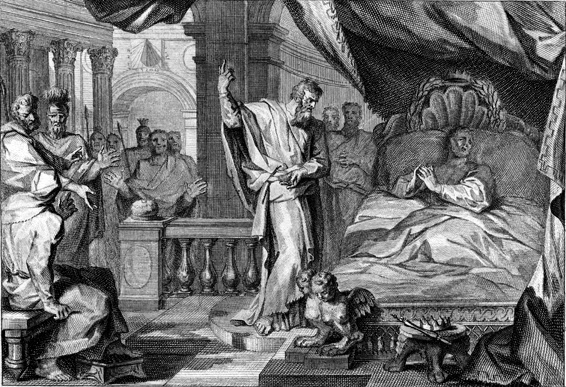
Nothing Is Too Difficult for God

1 In those days Hezekiah became sick and was at the point of death. And Isaiah the prophet the son of Amoz came to him and said to him, “Thus says the LORD, ‘Set your house in order, for you shall die; you shall not recover.’” Then Hezekiah turned his face to the wall and prayed to the LORD, saying, “Now, O LORD, please remember how I have walked before you in faithfulness and with a whole heart, and have done what is good in your sight.” And Hezekiah wept bitterly. And before Isaiah had gone out of the middle court, the word of the LORD came to him: “Turn back, and say to Hezekiah the leader of my people, Thus says the LORD, the God of David your father: I have heard your prayer; I have seen your tears. Behold, I will heal you. On the third day you shall go up to the house of the LORD, and I will add fifteen years to your life. I will deliver you and this city out of the hand of the king of Assyria, and I will defend this city for my own sake and for my servant David’s sake.” And Isaiah said, “Bring a cake of figs. And let them take and lay it on the boil, that he may recover.”

And Hezekiah said to Isaiah, “What shall be the sign that the LORD will heal me, and that I shall go up to the house of the LORD on the third day?” And Isaiah said, “This shall be the sign to you from the LORD, that the LORD will do the thing that he has promised: shall the shadow go forward ten steps, or go back ten steps?” 10 And Hezekiah answered, “It is an easy thing for the shadow to lengthen ten steps. Rather let the shadow go back ten steps.” 11 And Isaiah the prophet called to the LORD, and he brought the shadow back ten steps, by which it had gone down on the steps of Ahaz. 2 Kings 20:1-11 ESV

Hezekiah was a good man who remained faithful to Yahweh throughout his tenure as Judah’s king. This made him a rather rare commodity among the other kings of Judah and Israel. Most of these men displayed a passion for idols and a propensity for godless behavior that brought God’s judgment upon them. Many of Hezekiah’s peers and predecessors had been nothing more than apostate idol worshipers. Yet, the author of 2 Kings saved his most glowing assessment for King Hezekiah.

He trusted in the LORD, the God of Israel, so that there was none like him among all the kings of Judah after him, nor among those who were before him. – 2 Kings 18:5 ESV

Hezekiah had instituted a series of religious reforms in Judah that were meant to restore the people’s devotion to and confidence in Yahweh. He repaired and cleansed the Temple of God that had been allowed to fall into a state of disrepair. He reinstituted Temple worship by recommissioning the priests and Levites. He also called for the reinstatement of the Feast of Unleavened Bread and the celebration of Passover,  both of which had long been neglected. These annual celebrations had been commissioned by God and were intended to be reminders of God’s deliverance of the people of Israel from their captivity in Egypt. But when Hezekiah issued a royal decree that the nation of Judah gather in Jerusalem to re-commemorate these two God-ordained festivals, some of the people responded with derision and refused to attend. Many of those who did come to Jerusalem had failed to follow God’s requirements concerning purification.

Most of those who came from Ephraim, Manasseh, Issachar, and Zebulun had not purified themselves. But King Hezekiah prayed for them, and they were allowed to eat the Passover meal anyway, even though this was contrary to the requirements of the Law. For Hezekiah said, “May the LORD, who is good, pardon those who decide to follow the LORD, the God of their ancestors, even though they are not properly cleansed for the ceremony.” And the LORD listened to Hezekiah’s prayer and healed the people. – 2 Chronicles 30:18-20 NLT

Yet all of Hezekiah’s reforms and his determination to restore the nation’s dedication to Yahweh did not prevent him from encountering difficulties during his reign. His faithfulness to God did not inoculate his kingship from potential trials or guarantee him a trouble-free kingdom. In fact, even this godly and faithful king found himself having to deal with the threat of destruction at the hands of the Assyrians.

However, when the enemy showed up outside the gates of Jerusalem, Hezekiah didn’t rail against God, accusing the Almighty of having abandoned His people. The king didn’t waste time listing all of his reforms or recounting all his efforts to restore the worship of Yahweh to Judah. No, he simply prayed that God would intervene on their behalf, and He did. God had not prevented the enemy from showing up, but He did miraculously cause them to go away. In the midst of their greatest trial, when all looked hopeless and they found themselves helpless, Hezekiah and the people of Judah had their faith reinvigorated by the power and presence of God.

While God miraculously delivered His people from the threat of annihilation by the Assyrians, that was not the only difficulty Hezekiah faced. The author states that “in those days” or around the same time that the Assyrian threat was taking place, the king of Judah became deathly ill. Just when the kingdom was facing its most difficult trial, Hezekiah was given devastating news from the prophet of God: “Set your affairs in order, for you are going to die. You will not recover from this illness” (2 Kings 20:1 NLT).

Once again, Hezekiah didn’t respond in anger or resentment. He didn’t lash out at God in disappointment or hurl accusations of divine dereliction of duty. He simply prayed, turning his face to the wall and calling out to his God: “Remember, O LORD, how I have always been faithful to you and have served you single-mindedly, always doing what pleases you” (2 Kings 20:3 NLT). Then he simply wept. 

Hezekiah wasn’t bragging or boasting. He wasn’t insinuating that God was somehow obligated to heal him. He was simply asking that God not forget his efforts to remain faithful. Hezekiah did not ask to be restored; he begged to be remembered. Due to the nature of his illness and God’s decree that it was terminal, he probably had his eternal state in mind when asking God to remember him. He was hoping that he had done enough to earn God’s favor and to secure entrance into His Kingdom. But his cries for Yahweh’s mercy did not go unheard or unheeded. He received an immediate and encouraging response.

“I have heard your prayer and seen your tears. I will heal you, and three days from now you will get out of bed and go to the Temple of the LORD. I will add fifteen years to your life, and I will rescue you and this city from the king of Assyria. I will defend this city for my own honor and for the sake of my servant David.” – 2 Kings 20:5-6 NLT

God gave Hezekiah an additional 15 years to lead the people of Judah. On top of that, God assured Hezekiah that He would protect the city of Jerusalem from the Assyrian threat. He would miraculously eliminate the enemy outside the gates of the city and the illness inside Hezekiah’s body. And when the king asked Isaiah if he could provide any proof that these things would actually take place, God graciously obliged by providing a miracle.

he brought the shadow back ten steps, by which it had gone down on the steps of Ahaz. – 2 Kings 20:11 ESV

Evidently, right before the eyes of the king and all those in his royal bedroom, the sun appeared to reverse itself. The shadow that had advanced ten steps suddenly went in the opposite direction, in direct violation of natural order. God’s particular choice of this sign was intended to demonstrate His ability to do the impossible. If He could cause the shadow to reverse its course, He could also reverse the effects of Hezekiah’s illness and the outcome of the Assyrian siege.

Nothing is too difficult for God. The one who spoke light into existence (Genesis 1:3) could command it to do His bidding. The one who created the sun was fully capable of controlling its shadow. The one who gave Hezekiah life could prolong it. And the one who gave kings the authority to conceive and implement plans could easily redirect or reverse those plans to suit His sovereign will. The shadow reversed. The king was healed. The Assyrians gave up their siege of Jerusalem.

God graciously displayed His power over sickness, nature, and the nations of the world, and Hezekiah was given 15 more years to prove his faithfulness to Yahweh. But as will soon become evident, his new lease on life will produce some unexpected outcomes. The glory of his former faithfulness will see its shadow reversed as the king struggles with pride and the seductive influence of success.

English Standard Version (ESV) The Holy Bible, English Standard Version. ESV® Permanent Text Edition® (2016). Copyright © 2001 by Crossway Bibles, a publishing ministry of Good News Publishers.

New Living Translation (NLT) Holy Bible, New Living Translation, copyright © 1996, 2004, 2015 by Tyndale House Foundation. Used by permission of Tyndale House Publishers Inc., Carol Stream, Illinois 60188. All rights reserved.

Drought, Doubt, and Deliverance

1 Now Elijah the Tishbite, of Tishbe in Gilead, said to Ahab, “As the LORD, the God of Israel, lives, before whom I stand, there shall be neither dew nor rain these years, except by my word.” And the word of the LORD came to him: “Depart from here and turn eastward and hide yourself by the brook Cherith, which is east of the Jordan. You shall drink from the brook, and I have commanded the ravens to feed you there.” So he went and did according to the word of the LORD. He went and lived by the brook Cherith that is east of the Jordan. And the ravens brought him bread and meat in the morning, and bread and meat in the evening, and he drank from the brook. And after a while the brook dried up, because there was no rain in the land.

Then the word of the LORD came to him, “Arise, go to Zarephath, which belongs to Sidon, and dwell there. Behold, I have commanded a widow there to feed you.” 10 So he arose and went to Zarephath. And when he came to the gate of the city, behold, a widow was there gathering sticks. And he called to her and said, “Bring me a little water in a vessel, that I may drink.” 11 And as she was going to bring it, he called to her and said, “Bring me a morsel of bread in your hand.” 12 And she said, “As the LORD your God lives, I have nothing baked, only a handful of flour in a jar and a little oil in a jug. And now I am gathering a couple of sticks that I may go in and prepare it for myself and my son, that we may eat it and die.” 13 And Elijah said to her, “Do not fear; go and do as you have said. But first make me a little cake of it and bring it to me, and afterward make something for yourself and your son. 14 For thus says the LORD, the God of Israel, ‘The jar of flour shall not be spent, and the jug of oil shall not be empty, until the day that the LORD sends rain upon the earth.’” 15 And she went and did as Elijah said. And she and he and her household ate for many days. 16 The jar of flour was not spent, neither did the jug of oil become empty, according to the word of the LORD that he spoke by Elijah. 1 Kings 17:1-16 ESV

Almost as if out of nowhere, a new character appears on the scene. His sudden and unexpected arrival seems intended to accentuate the divine nature of his mission. No background story or biographical information is provided, other than his name and the identity of his hometown.

His introduction into the narrative is timed to coincide with the rise to power of King Ahab and his Sidonian queen, Jezebel. With this new power couple ruling over the northern kingdom of Israel, the spiritual state of the ten northern tribes has reached an all-time low. The author ended chapter 16 with an unflattering description of their influence over the nation.

…he [Ahab] took for his wife Jezebel the daughter of Ethbaal king of the Sidonians, and went and served Baal and worshiped him. He erected an altar for Baal in the house of Baal, which he built in Samaria. And Ahab made an Asherah. Ahab did more to provoke the LORD, the God of Israel, to anger than all the kings of Israel who were before him. – 1 Kings 16:31-33 ESV

To claim that Ahab had managed to anger God more than any of his predecessors is a significant statement. He was following in the footsteps of some world-class, all-star-quality apostates. But when it came to wickedness and unfaithfulness, Ahab set the new gold standard. He became the proverbial poster boy for all that is wicked and ungodly, while his wife managed to earn herself a permanent spot in the spiritual hall of infamy.

In the middle of their sin-fueled and self-absorbed reign, God decides to deliver a message to them, utilizing an obscure and unknown man named Elijah. This will not be the first time God has sent a prophet to deliver a message to a wayward and rebellious king. When Jeroboam had made the fateful decision to replace Yahweh with his own false gods, an unnamed prophet appeared on the scene with a dire message for the king, and he demonstrated God’s anger by destroying one of the altars Jeroboam had dedicated to his false god. Later on, Jeroboam sent his wife to consult with another prophet of God, in hopes of getting a prognosis regarding his young son’s illness. But what he got was bad news. He was told that his son would die and that every one of his male heirs would face the same fate before they could inherit the throne. In other words, any hopes of establishing a dynasty would be destroyed.

As the seventh king to reign over the northern kingdom of Israel, Ahab would not be the first to receive a message from God. But, in his case, the prophet would play a more pronounced and prolonged role in his life. The sins of Ahab and his wife were so egregious that God made his prophet a permanent fixture in their kingdom.

Elijah’s very first encounter with the king and queen was far from favorable. He stood before this powerful couple and boldly proclaimed, “As the LORD, the God of Israel, lives, before whom I stand, there shall be neither dew nor rain these years, except by my word” (1 Kings 17:1 ESV). That took guts and a fair amount of faith. He was claiming to have the God-given authority to withhold rain from the kingdom of Israel. Any way you look at it, this had to come across as a less-than-veiled threat to Ahab and Jezebel. But before they had time to cut this arrogant upstart down to size, God gave him instructions to get out of town.

“Depart from here and turn eastward and hide yourself by the brook Cherith, which is east of the Jordan. – 1 Kings 17:3 ES

Elijah had done his job, but now it was time for God to prepare him for the next phase of his assignment. Before sending his prophet back into the mouth of the lion’s den, God planned to equip him for what was to come. He was determined to make Elijah a faithful and obedient messenger, strong enough to handle all the vitriol and violence that was about to come his way. Standing up to Ahab and Jezebel was not going to be easy, so God graciously eased Elijah into his new role with a hands-on experience that would teach him to trust and obey.

While in God’s preparatory school for prophets, Elijah was miraculously fed and cared for; he received a twice-daily ration of bread and meat, delivered to his cave by ravens. And outside the cave was a ready source of clean, pure water. But in time, “the brook dried up, because there was no rain in the land” (1 Kings 17:7 ESV). In other words, Elijah’s prediction of drought had come true, and he suffered just like everyone else. Without rain, there was no harvest, so that meant there was no more bread or meat for the ravens to deliver. Elijah’s little oasis in the wilderness had become a death trap. So, God gave him new instructions.

“Go and live in the village of Zarephath, near the city of Sidon. I have instructed a widow there to feed you.” – 1 Kings 17:8 NLT

This would have been a long and arduous journey under normal conditions, but the presence of drought made it even more so. Interestingly, God sent Elijah to a city in the region of Sidon, the very kingdom over which Jezebel’s father was king. Elijah was being sent to the same place Ahab had acquired a queen and her false god, Baal. Zarephath lay between Tyre and Sidon, two of the most prominent Phoenician cities. But as the story makes clear, the drought had made its way all the way to the coast of the Mediterranean Sea.

God provided Elijah with scant details about what to do when he arrived in Zarephath. The prophet had no food and received no word from God regarding when and how it would come, if it did at all. So, when Elijah encountered a widow gathering sticks, he decided to throw himself on her mercy. He asked for a drink of water and a morsel of bread. But then he discovered that this woman’s state was worse than his own.

“I swear by the LORD your God that I don’t have a single piece of bread in the house. And I have only a handful of flour left in the jar and a little cooking oil in the bottom of the jug. I was just gathering a few sticks to cook this last meal, and then my son and I will die.” – 1 Kings 17:12 NLT

The drought had taken its toll, leaving the woman with no food with which to feed herself or her young son.  It shouldn’t be overlooked that Baal, the god of the Phoenicians, was considered a fertility god. He was the provider of bountiful blessings, whether in the form of crops or children. Yet, this woman was living in a drought and watching her young son starve to death. There was nothing bountiful taking place in Zarephath, and Jezebel’s god was nowhere to be found.

Then, God gave Elijah a message to deliver to the woman.

“Don’t be afraid! Go ahead and do just what you’ve said, but make a little bread for me first. Then use what’s left to prepare a meal for yourself and your son. For this is what the LORD, the God of Israel, says: There will always be flour and olive oil left in your containers until the time when the LORD sends rain and the crops grow again!” – 1 Kings 17:13-14 NLT

While the god of the Phoenicians had failed to provide, the God of Israel would meet her needs and preserve the lives of both her and her son. Even in a time of drought, God would miraculously provide flour and oil in abundance until He decided to open up the skies and end the drought.

The woman faithfully obeyed the word of the prophet, and There was always enough flour and olive oil left in the containers, just as the LORD had promised through Elijah” (1 Kings 17:16 NLT). God graciously provided for this Sidonian widow and her son, and He continued to meet the needs of His prophet. But more importantly, God was teaching Elijah that He could be trusted. He was greater than the fertility god of the Phoenicians. He was more powerful than the false deity of Ahab and Jezebel. The brook may have dried up, but the resources of God remained unending and plentiful. The ravens may have stopped showing up, but the miracle-working power of God remained undiminished. Elijah was learning the vital truth that no circumstance is too difficult for Yahweh, and the days ahead would provide further confirmation of that fact.

English Standard Version (ESV) The Holy Bible, English Standard Version. ESV® Permanent Text Edition® (2016). Copyright © 2001 by Crossway Bibles, a publishing ministry of Good News Publishers.

New Living Translation (NLT) Holy Bible, New Living Translation, copyright © 1996, 2004, 2015 by Tyndale House Foundation. Used by permission of Tyndale House Publishers Inc., Carol Stream, Illinois 60188. All rights reserved.

To Be Known By God

To the choirmaster. A Psalm of David.

1 O LORD, you have searched me and known me!
You know when I sit down and when I rise up;
you discern my thoughts from afar.
You search out my path and my lying down
and are acquainted with all my ways.
Even before a word is on my tongue,
behold, O LORD, you know it altogether.
You hem me in, behind and before,
and lay your hand upon me.
Such knowledge is too wonderful for me;
it is high; I cannot attain it.

Where shall I go from your Spirit?
Or where shall I flee from your presence?
If I ascend to heaven, you are there!
If I make my bed in Sheol, you are there!
If I take the wings of the morning
and dwell in the uttermost parts of the sea,
10 even there your hand shall lead me,
and your right hand shall hold me.
11 If I say, “Surely the darkness shall cover me,
and the light about me be night,”
12 even the darkness is not dark to you;
the night is bright as the day,
for darkness is as light with you.

13 For you formed my inward parts;
you knitted me together in my mother’s womb.
14 I praise you, for I am fearfully and wonderfully made.
Wonderful are your works;
my soul knows it very well.
15 My frame was not hidden from you,
when I was being made in secret,
intricately woven in the depths of the earth.
16 Your eyes saw my unformed substance;
in your book were written, every one of them,
the days that were formed for me,
when as yet there was none of them.

17 How precious to me are your thoughts, O God!
How vast is the sum of them!
18 If I would count them, they are more than the sand.
I awake, and I am still with you.

19 Oh that you would slay the wicked, O God!
O men of blood, depart from me!
20 They speak against you with malicious intent;
your enemies take your name in vain.
21 Do I not hate those who hate you, O LORD?
And do I not loathe those who rise up against you?
22 I hate them with complete hatred;
I count them my enemies.

23 Search me, O God, and know my heart!
Try me and know my thoughts!
24 And see if there be any grievous way in me,
and lead me in the way everlasting! – Psalm 139:1-24 ESV

In this well-known psalm, David shares his amazement at Yahweh’s attributes of omnipresence, omnipotence, and omniscience. But this is not an academic paper dealing with deep doctrinal issues regarding God’s nature; it is a song that praises Yahweh’s all-pervasive presence in his life.

David is blown away by the knowledge that the all-powerful God of the universe has not only chosen to have a relationship with him, but knows everything about him. Yahweh is infinite, yet intimate. The God who is powerful enough to have spoken the universe into existence uses His unparalleled strength to intercede on David’s behalf. And the God whose knowledge is limitless knows David better than he knows himself.

David was genuinely awe-struck by God, yet strangely drawn to Him. This psalm reflects his well-balanced outlook on Yahweh’s sheer immensity and surprising familiarity. David knew God, and more importantly, he knew he was known by God. That was enough to prompt David to compose this song of praise.

He begins with a simple prayer of admission, stating his understanding that Yahweh was aware of everything about him.

O LORD, you have examined my heart
and know everything about me.
You know when I sit down or stand up.
You know my thoughts even when I’m far away.
You see me when I travel
and when I rest at home.– Psalm 139:1-3 NLT

There were no secrets with God. David’s life was an open book to the Almighty, with no areas off-limits or hidden from His all-seeing eyes. David understood how futile it was to try to keep God in the dark. He knew from past experience that a life of hiddenness was hopeless before the all-seeing eyes of Yahweh. When he had committed adultery with Bathsheba and then had her husband killed so he could marry her, the prophet Nathan let David know that God had seen it all.

The LORD, the God of Israel, says: I anointed you king of Israel and saved you from the power of Saul. I gave you your master’s house and his wives and the kingdoms of Israel and Judah. And if that had not been enough, I would have given you much, much more. Why, then, have you despised the word of the LORD and done this horrible deed? For you have murdered Uriah the Hittite with the sword of the Ammonites and stolen his wife. From this time on, your family will live by the sword because you have despised me by taking Uriah’s wife to be your own.” – 2 Samuel 12:7-10 NLT

David thought he had successfully covered his tracks, but while he may have fooled others, he had failed to hide his sin from the one who mattered most. However, this psalm suggests that David viewed this as a positive rather than a negative experience. His attempt to conceal his sin resulted in guilt and condemnation. He could try to ignore it, but Yahweh could not and would not. David’s sin had to be exposed so his relationship with Yahweh could be restored.

When David states, “You know everything I do” (Psalm 139:3 NLT), he isn’t complaining or accusing Yahweh of being a busybody and know-it-all; he is expressing amazement at Yahweh’s omniscience. What he says next can come across as comforting or concerning, depending on how you take it.

You know what I am going to say
even before I say it, LORD.– Psalm 139:4 NLT

God is not relegated to the role of an external observer with limited capacity to discern what is happening. He knows the heart, mind, and soul of a man. It’s as if He has X-ray vision and can peer inside the darkest recesses of the human psyche, ascertaining the hidden motives, thoughts, and intentions. Yahweh knew David so well that He could predict David’s words before David had even formed them. This thought may disturb or frighten us because it sounds invasive and intrusive, but David found it comforting.

Even if he wanted to hide something from God, he couldn’t; it was impossible. Yahweh could see into his heart and mind. His thoughts and actions were completely exposed to God, and David believed that Yahweh was with him, even when life’s circumstances took a turn for the worse.

Even when I walk
through the darkest valley,
I will not be afraid,
for you are close beside me.– Psalm 23:4 NLT

David knew that God was all-knowing, all-powerful, and always present. He knew that God was always there, and that God knew every single detail of his life, including what he was thinking and what he was going to say, even before the words came out of his mouth. David also understood that God had a plan for his life and that God was working that plan each and every day, regardless of what David’s circumstances might have looked like. This prompted David to write, “Such knowledge is too wonderful for me, too great for me to understand!” (Psalm 139:6 NLT

Yet, we can find this news about God both encouraging and scary. The fact that God knows everything about us can be either intimidating or comforting. David was prone to the latter. He understood that, along with God’s divine attributes of omniscience (He knows everything), omnipotence (He is all-powerful), and omnipresence (He is everywhere at once), God was also all-loving, always faithful, and a God who keeps all His promises all the time. The fact that God knew all of David’s thoughts didn’t scare him; it provided him with peace.

David might not have fully comprehended the reality of God’s all-knowing, all-powerful presence in his life, but he DID appreciate it. David knew that God had created him; he was a byproduct of God’s imagination and creative capabilities.

You saw me before I was born.
Every day of my life was recorded in your book.
Every moment was laid out
before a single day had passed. – Psalm 139:16 NLT

David’s life was not an accident or a matter of chance. This understanding of God’s intimate relationship with him caused David to invite God to do something that appears risky. It sounds like an invitation that could yield some less-than-satisfactory results. However, keep in mind that David knew God loved him and had a plan for his life. He trusted God. There was nothing God did not know about David. So he asked God to do an extensive and all-inclusive examination of his life, starting on the inside.

Search me, O God, and know my heart;
test me and know my anxious thoughts.
Point out anything in me that offends you,
and lead me along the path of everlasting life.Psalm 1139:23-24 NLT

David was asking God to expose the secrets of his life. The patient was requesting the doctor to determine the actual state of his health. David knew how easy it was to assume that all was well. He could take a cursory look at his life and conclude from the evidence that he was in great shape. But he knew better.

He asked God to reveal to him things about his life that he was incapable of seeing or even knowing. As men, we often struggle to understand our own hearts, and we can’t fully understand our motives. We are blinded by pride and self-righteousness, and we can deceive ourselves into thinking we are better than we are. So David goes to the one source that can see past the facade and look into the inner recesses of his heart. He asks Yahweh, the all-knowing, all-seeing, and all-loving God, to do an MRI of his life and reveal the results. David knew that God loved him and had a plan for his life, but he also recognized that he was a man prone to sin. His heart was not to be trusted. So he asked God to examine, test, and prove him. He wanted Yahweh to point out anything and everything that was an offense to Him.

Scary? Yes. Risky? Not really. David was simply learning what God already knew. David was tapping into God’s limitless understanding and relying on God’s unfailing love. He wanted to know what God knew because he wanted his life to please God. David’s own heart was a mystery to him, so he asked the LORD to expose what he could not see. He wanted to know because he understood the danger of hidden sin.

“The human heart is the most deceitful of all things,
and desperately wicked.
Who really knows how bad it is?
But I, the LORD, search all hearts
and examine secret motives.
I give all people their due rewards,
according to what their actions deserve.” – Jeremiah 17:9-10 NLT

No one likes to go to the doctor because there is always the chance that they might receive bad news. But when it comes to physical health, ignorance is not bliss. The same principle applies to our spiritual well-being. David wasn’t content to assume that his relationship with Yahweh was healthy and whole, so he asked to be examined. It was Jesus who said, “Healthy people don’t need a doctor—sick people do” (Matthew 9:12 NLT). David knew he was sick because he recognized his own sinfulness. It wasn’t a question of whether he had a spiritual illness in need of exposure; it was a matter of allowing the Great Physician to do what only He can do: Make the correct prognosis and prescribe the proper remedy.  

Yahweh told the Israelites, “I am the LORD who heals you” (Exodus 15:26 NLT), and David had found that promise to be true.

He forgives all my sins
    and heals all my diseases. – Psalm 103:3 NLT

He heals the brokenhearted
    and bandages their wounds. – Psalm 147:3 NLT

David was counting on the fact that his all-knowing, all-powerful, ever-present God was also all-loving and ready to restore him to spiritual health. All he needed to do is ask.

Father, You love me. And what’s amazing is that You love me even though You know everything there is to know about me. There is nothing I can hide from You. I can’t fool you with my pious activities or acts of religious pretense. I can’t fake faith in front of You. You know me just as I am and yet You love me anyway. Give me the heart of David, that I might ask You to search me, know my heart, test me, know the cause of all my anxious thoughts, and point out everything in my life that offends You. The sooner I see the truth about myself, the sooner I can confess my sins and get back on Your path for my life. Amen

English Standard Version (ESV) The Holy Bible, English Standard Version. ESV® Permanent Text Edition® (2016). Copyright © 2001 by Crossway Bibles, a publishing ministry of Good News Publishers.

New Living Translation (NLT) Holy Bible, New Living Translation, copyright © 1996, 2004, 2015 by Tyndale House Foundation. Used by permission of Tyndale House Publishers Inc., Carol Stream, Illinois 60188. All rights reserved.

Give Thanks Where Thanks Is Due

Of David.

1 I give you thanks, O LORD, with my whole heart;
    before the gods I sing your praise;
I bow down toward your holy temple
    and give thanks to your name for your steadfast love and your faithfulness,
    for you have exalted above all things
    your name and your word.
On the day I called, you answered me;
    my strength of soul you increased.

All the kings of the earth shall give you thanks, O LORD,
    for they have heard the words of your mouth,
and they shall sing of the ways of the LORD,
    for great is the glory of the LORD.
For though the LORD is high, he regards the lowly,
    but the haughty he knows from afar.

Though I walk in the midst of trouble,
    you preserve my life;
you stretch out your hand against the wrath of my enemies,
    and your right hand delivers me.
The LORD will fulfill his purpose for me;
    your steadfast love, O LORD, endures forever.
    Do not forsake the work of your hands. – Psalm 138:1-8 ESV

There are times when I don’t even know myself. I do and say things that surprise even me. I can never be certain how I will react to a given situation. I may respond in calmness and patience one day, then explode in anger and impatience the next. I have a limited understanding of what motivates me and why I act the way I do. Sometimes words come out of my mouth that catch me off guard. I can be disappointed in my own response to people and circumstances. There are those moments when I can appear as a stranger – even to myself.

But God knows me. In fact, He knows me better than I know myself. David understood this prescient aspect of Yahweh’s character. He knew that God was all-knowing, all-powerful, and always present. He knew that God was always there, and that God knew every single detail of his life, including what he was thinking and what he was going to say, even before the words came out of his mouth. In the following psalm, also penned by David, he expresses his astonishment regarding Yahweh’s omnipotence.

O LORD, you have examined my heart
    and know everything about me.
You know when I sit down or stand up.
    You know my thoughts even when I’m far away.
You see me when I travel
    and when I rest at home.
    You know everything I do.
You know what I am going to say
    even before I say it, LORD. – Psalm 139:1-4 NLT

David also understood that God had a plan for his life and was orchestrating that plan every day.  From David’s perspective, things might not have always looked like God was in control, but he had learned to view his circumstances through the lens of Yahweh’s faithfulness.

Though I am surrounded by troubles,
    you will protect me from the anger of my enemies.
You reach out your hand,
    and the power of your right hand saves me. – Psalm 138:7 NLT

This psalm is a song of thanksgiving from a grateful God-follower. In reflecting on his life, David had seen ample reasons to give Yahweh praise for His unfailing goodness and grace.

I give you thanks, O LORD, with all my heart;
    I will sing your praises before the gods.
I bow before your holy Temple as I worship.
    I praise your name for your unfailing love and faithfulness;
for your promises are backed
    by all the honor of your name. – Psalm 138:1-2 NLT

David’s recollection of Yahweh’s faithfulness prompted him to declare his thankfulness in tangible ways. Despite being surrounded by nations that worshiped their false gods with equal enthusiasm, David was willing to sing Yahweh’s praises in their hearing. He wasn’t afraid of the pagans and their idols hearing his adoration and elevation of the one true God: Yahweh.

One of the ways David displayed his reverence for Yahweh was through worship. He made it a habit to come before the LORD, offering prayers, offerings, and sacrifices in His “holy temple.” At this point, the Temple was still an unrealized dream in David’s mind. He had desired to build a house for the LORD, but it would be his son Solomon who would construct the Temple. The Hebrew word David used is hêḵāl, and it can be translated as “sanctuary” or “palace.” When David moved the Ark of the Covenant into Jerusalem, he ordered that a tent be erected in which to house this focal point of the Israelites’ sacrificial system. It remained there until Solomon completed the construction of the permanent and more palatial Temple.

But David didn’t allow the humble nature of his hêḵāl to diminish the quality of his worship. He approached it as if it were the palace of the King and a holy sanctuary where the God of the universe chose to dwell among His people. It was to this hêḵāl that David went to pray to Yahweh, whom he found to be attentive and quick to answer.

As soon as I pray, you answer me;
   you encourage me by giving me strength.
– Psalm 138:3 NLT

One of the reasons David was willing to praise Yahweh “before the gods” (Psalm 138:1) was so that the kings who worshiped these false gods might understand that “the LORD is God; there is no other besides Him” (Isaiah 4:35 BSB). By singing Yahweh’s praises and verbally declaring His greatness, David hoped to influence those who placed their hope in non-existent, impotent figments of their imaginations. He envisioned a day when “all the kings of the earth” (Psalm 138:4) would give Yahweh thanks.

While David didn’t see this happen in his lifetime, his son Solomon did. The Book of 1 Kings records that Solomon’s fame spread throughout the known world, even reaching the throne room of the Queen of Sheba.

When the queen of Sheba heard of Solomon’s fame, which brought honor to the name of the LORD, she came to test him with hard questions. – 1 Kings 10:1 NLT

She had heard rumors of Solomon’s wisdom and wealth, but when she saw it all with her own eyes, she was blown away. The size of his kingdom, the beauty of his royal palace, and the opulence of the Temple to his God left her breathless, but not without words.

“Everything I heard in my country about your achievements and wisdom is true! I didn’t believe what was said until I arrived here and saw it with my own eyes. In fact, I had not heard the half of it! Your wisdom and prosperity are far beyond what I was told. How happy your people must be! What a privilege for your officials to stand here day after day, listening to your wisdom! Praise the LORD your God, who delights in you and has placed you on the throne of Israel. Because of the LORD’s eternal love for Israel, he has made you king so you can rule with justice and righteousness.” – 1 Kings 10:6-9 NLT

When she witnessed the splendor of Solomon’s kingdom, she praised Yahweh. She attributed Solomon’s success to his God. She even viewed Solomon’s reign as an expression of Yahweh’s love for His people. She sang “about the LORD’s ways, for the glory of the LORD is very great” (Psalm 138:5 NLT).

David knew he had been greatly blessed by Yahweh, and he wanted everyone to know about it. He was determined to sing Yahweh’s praises so everyone, from the lowliest peasant to the highest officials in the land, could understand that there is no one like the LORD.

But David provides a warning to all those who discover Yahweh’s superiority and supremacy.

Though the LORD is great, he cares for the humble,
    but he keeps his distance from the proud. – Psalm 138:6 NLT

This great God is no respecter of persons. “For God does not show favoritism” (Romans 2:11 NLT). He is not impressed by anyone’s credentials or accomplishments. In fact, according to James, “God opposes the proud but gives grace to the humble” (James 4:6 NLT). James expanded on this idea in the opening chapter of his letter.

Believers who are poor have something to boast about, for God has honored them. And those who are rich should boast that God has humbled them. They will fade away like a little flower in the field. The hot sun rises and the grass withers; the little flower droops and falls, and its beauty fades away. In the same way, the rich will fade away with all of their achievements. – James 1:9-11 NLT

David understood this aspect of Yahweh’s nature, having experienced both the blessings of Yahweh as a lowly shepherd and the righteous judgment of Yahweh as a mighty king. David had learned the invaluable truth that humility was a non-negotiable requirement for those who want to experience Yahweh’s presence and promises.

Even as a king, David had experienced many trials and setbacks. His crown did not immunize him from difficulty. His power and wealth could not inoculate him from suffering and sorrow. He had his fair share of enemies, problems, setbacks, roadblocks, disappointments, and moments of discouragement, but he had learned to lean on God.

You reach out your hand,
    and the power of your right hand saves me. – Psalm 138:7 NLT

A humble king is a blessed king because he is willing to submit himself to the one true King. He had learned the same great truth that James included in his letter: “Humble yourselves before the Lord, and he will lift you up in honor” (James 4:10 NLT).  Despite his apparent success, David had become increasingly dependent on the LORD. He didn’t allow his palace, power, and possessions to feed his pride and boost his ego. He understood that, without Yahweh, he was nothing, which prompted him to pray:

The LORD will work out his plans for my life—
    for your faithful love, O LORD, endures forever.
    Don’t abandon me, for you made me. – Psalm 138:8 NLT

Father, I want to become increasingly more dependent upon You., but not is some weak and passive sense. You have blessed me with gifts and abilities, and you expect me to use them — for Your glory. You have provided me with wisdom through Your Word and power through the presence of Your indwelling Holy Spirit, and You want me to put them to use. But I don’t ever want to become cocky or overconfident in what appears to be my own strength or capabilities. David knew he was nothing without You and I want to share his perspective. I want to sing Your praises for all to hear. I want them to know that I am completely reliant upon You because You have been incredibly gracious to me. Amen

English Standard Version (ESV) The Holy Bible, English Standard Version. ESV® Permanent Text Edition® (2016). Copyright © 2001 by Crossway Bibles, a publishing ministry of Good News Publishers.

New Living Translation (NLT) Holy Bible, New Living Translation, copyright © 1996, 2004, 2015 by Tyndale House Foundation. Used by permission of Tyndale House Publishers Inc., Carol Stream, Illinois 60188. All rights reserved.

Wait, But Don’t Worry

1 Why, O Lord, do you stand far away?
    Why do you hide yourself in times of trouble?

In arrogance the wicked hotly pursue the poor;
    let them be caught in the schemes that they have devised.
For the wicked boasts of the desires of his soul,
    and the one greedy for gain curses and renounces the Lord.
In the pride of his face the wicked does not seek him;
    all his thoughts are, “There is no God.”
His ways prosper at all times;
    your judgments are on high, out of his sight;
    as for all his foes, he puffs at them.
He says in his heart, “I shall not be moved;
    throughout all generations I shall not meet adversity.”
His mouth is filled with cursing and deceit and oppression;
    under his tongue are mischief and iniquity.
He sits in ambush in the villages;
    in hiding places he murders the innocent.
His eyes stealthily watch for the helpless;
    he lurks in ambush like a lion in his thicket;
he lurks that he may seize the poor;
    he seizes the poor when he draws him into his net.
10 The helpless are crushed, sink down,
    and fall by his might.
11 He says in his heart, “God has forgotten,
    he has hidden his face, he will never see it.”

12 Arise, O Lord; O God, lift up your hand;
    forget not the afflicted.
13 Why does the wicked renounce God
    and say in his heart, “You will not call to account”?
14 But you do see, for you note mischief and vexation,
    that you may take it into your hands;
to you the helpless commits himself;
    you have been the helper of the fatherless.
15 Break the arm of the wicked and evildoer;
    call his wickedness to account till you find none.

16 The Lord is king forever and ever;
    the nations perish from his land.
17 O Lord, you hear the desire of the afflicted;
    you will strengthen their heart; you will incline your ear
18 to do justice to the fatherless and the oppressed,
    so that man who is of the earth may strike terror no more. Psalm 10:1-18 ESV

The unnamed author of this Psalm doesn’t begin by praising God but, instead, delivers an eloquent and heartfelt plea for justice. In a world filled with wickedness, it can sometimes appear that God is distant or disinterested in the plight of His children. This Psalm deals with the age-old issue of theodicy: If God is all-powerful and loving, why does He allow evil to exist? Theodicy questions God’s goodness and omnipotence in light of the existence of evil. In every generation, faithful followers of God have found themselves surrounded by unjust and ungodly individuals who seem to prosper and thrive while the godly suffer.  The world that God created is filled with injustice and inequities. Obedience to God’s laws is often met with fierce opposition. Remaining faithful to Yahweh in a sin-filled world is difficult enough, but the constant assaults of the wicked can make it feel impossible and raises questions about God’s goodness and justice.

The Psalmist begins with his own questions for God.

O Lord, why do you stand so far away?
    Why do you hide when I am in trouble? – Psalm 10:1 NLT

From his perspective, God appears nowhere to be found. Without providing any details surrounding his circumstances, the confused and troubled Psalmist wants to know why Yahweh has not intervened and done something about his predicament. Frustrated by his ongoing plight, he tries to bring God up to speed on the situation and, at the same time, give the Almighty some helpful advice on what to do about it.

The wicked arrogantly hunt down the poor.
    Let them be caught in the evil they plan for others.
For they brag about their evil desires;
    they praise the greedy and curse the Lord. – Psalm 10:2-3 NLT

His view of the wicked is far from flattering. He describes them as greedy, boastful, arrogant, and unabashedly opposed to God. These evil individuals are hostile to God’s people because they reject God’s presence and power. “They seem to think that God is dead” (Psalm 10:4 NLT). They share the viewpoint attributed to the fool in Psalm 14:1.

The fool says in his heart, “There is no God.” They are corrupt, they do abominable deeds; there is none who does good.

They live as if God doesn’t exist or simply doesn’t care.

The wicked think, “God isn’t watching us!
    He has closed his eyes and won’t even see what we do!” – Psalm 10:11 NLT

Yet, they prosper. This is the part that drives the Psalmist crazy. He can’t understand why God allows the wicked to get away with their blatant disobedience of His laws and arrogant dismissal of His power and justice. They treat God with flippant disregard and no fear of repercussions. David described these individuals in another Psalm.

Sin whispers to the wicked, deep within their hearts.
    They have no fear of God at all.
In their blind conceit,
    they cannot see how wicked they really are.
Everything they say is crooked and deceitful.
    They refuse to act wisely or do good.
They lie awake at night, hatching sinful plots.
    Their actions are never good.
    They make no attempt to turn from evil. – Psalm 34:1-4 NLT

Every child of God has had to wrestle with what appears to be the silence or apathy of God when it comes to wickedness. The ungodly get away with murder – literally. They sin against God and never seem to face any consequences for their actions. In fact, they seem to prosper in the process. From a human perspective, justice appears to go unserved. This raises another question: “Why do the wicked get away with despising God?” (Psalm 10:13 NLT).

If God is just, righteous, and all-powerful, why doesn’t He mete out justice in a more timely and equitable manner? His apparent delay in delivering well-deserved judgment to the wicked allows them to boast, “Nothing bad will ever happen to us! We will be free of trouble forever!” (Psalm 10:6 NLT). The lack of consequences fuels their conduct and gives them a sense of invincibility. Unscathed by their actions, they begin to view God as either indifferent or impotent.

“God isn’t watching us!
    He has closed his eyes and won’t even see what we do!” – Psalm 10:11 NLT

This mocking statement is meant to minimize God’s omnipotence and sovereignty. It is demeaning and dismissive, and portrays God as a doddering old man who lacks the power or interest to intervene in the affairs of men. That is what causes the Psalmist to cry out, “Arise, O Lord! Punish the wicked, O God! Do not ignore the helpless! (Psalm 10:12 NLT). Like an obnoxious-sounding alarm clock, the Psalmist issues a wake-up call to the Almighty, demanding His immediate intervention and remediation.

It’s clear that the Psalmist has confidence in God’s awareness of the problem and His ability to deal with it. He asserts, “You see the trouble and grief they cause. You take note of it and punish them. The helpless put their trust in you. You defend the orphans” (Psalm 10:14 NLT). It’s the delay that has him confused. His God is capable but, for some reason, has chosen not to act. So, he demands immediate and decisive actions.

Break the arms of these wicked, evil people!
    Go after them until the last one is destroyed. – Psalm 10:16 NLT

The Psalmist closes out his song by expressing his confidence in God’s justice. As the King, God has the authority and power to deal with the wicked and hold them to account.

…you know the hopes of the helpless.
    Surely you will hear their cries and comfort them.
You will bring justice to the orphans and the oppressed,
    so mere people can no longer terrify them. – Psalm 10:17-18 NLT

But the question remains. When will God bring justice? When will the wicked receive the payback they so richly deserve? The Psalmist wants instant karma that results in the immediate elimination of the wicked and the well-deserved vindication of the righteous. However, David provided a different perspective that requires patience and perseverance. It suggests taking a long-term approach to our short-term difficulties.

Don’t worry about the wicked
    or envy those who do wrong.
For like grass, they soon fade away.
    Like spring flowers, they soon wither.

Trust in the Lord and do good.
    Then you will live safely in the land and prosper.
Take delight in the Lord,
    and he will give you your heart’s desires.

Commit everything you do to the Lord.
    Trust him, and he will help you.
He will make your innocence radiate like the dawn,
    and the justice of your cause will shine like the noonday sun.

Be still in the presence of the Lord,
    and wait patiently for him to act.
Don’t worry about evil people who prosper
    or fret about their wicked schemes. – Psalm 37:1-7 NLT

God is in it for the long-haul. Unhindered by the confines of time or space, God knows how the story ends and remains unwavering in His confidence that justice will be served.

For the Lord loves justice,
    and he will never abandon the godly.

He will keep them safe forever,
    but the children of the wicked will die. – Psalm 37:8 NLT

It’s not a matter of if, but when. So, while we wait, we are to trust that justice will prevail — in God’s way and according to His impeccable timing.

Put your hope in the Lord.
    Travel steadily along his path.
He will honor you by giving you the land.
    You will see the wicked destroyed. – Psalm 10:34 NLT

English Standard Version (ESV) The Holy Bible, English Standard Version. ESV® Permanent Text Edition® (2016). Copyright © 2001 by Crossway Bibles, a publishing ministry of Good News Publishers.

New Living Translation (NLT) Holy Bible, New Living Translation, copyright © 1996, 2004, 2015 by Tyndale House Foundation. Used by permission of Tyndale House Publishers Inc., Carol Stream, Illinois 60188. All rights reserved.

Who Is the God Who Will Deliver You?

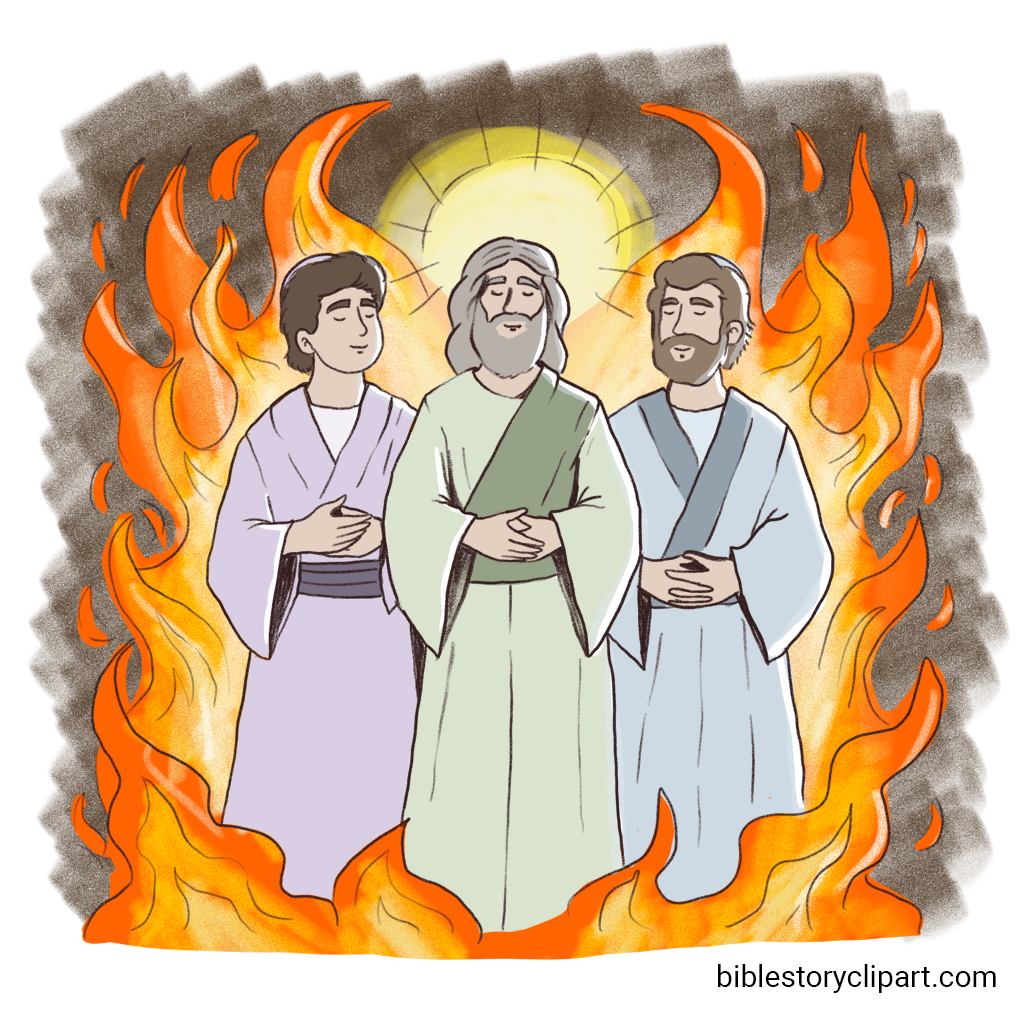
Therefore at that time certain Chaldeans came forward and maliciously accused the Jews. They declared to King Nebuchadnezzar, “O king, live forever! 10 You, O king, have made a decree, that every man who hears the sound of the horn, pipe, lyre, trigon, harp, bagpipe, and every kind of music, shall fall down and worship the golden image. 11 And whoever does not fall down and worship shall be cast into a burning fiery furnace. 12 There are certain Jews whom you have appointed over the affairs of the province of Babylon: Shadrach, Meshach, and Abednego. These men, O king, pay no attention to you; they do not serve your gods or worship the golden image that you have set up.”

13 Then Nebuchadnezzar in furious rage commanded that Shadrach, Meshach, and Abednego be brought. So they brought these men before the king. 14 Nebuchadnezzar answered and said to them, “Is it true, O Shadrach, Meshach, and Abednego, that you do not serve my gods or worship the golden image that I have set up? 15 Now if you are ready when you hear the sound of the horn, pipe, lyre, trigon, harp, bagpipe, and every kind of music, to fall down and worship the image that I have made, well and good. But if you do not worship, you shall immediately be cast into a burning fiery furnace. And who is the god who will deliver you out of my hands?”

16 Shadrach, Meshach, and Abednego answered and said to the king, “O Nebuchadnezzar, we have no need to answer you in this matter. 17 If this be so, our God whom we serve is able to deliver us from the burning fiery furnace, and he will deliver us out of your hand, O king. 18 But if not, be it known to you, O king, that we will not serve your gods or worship the golden image that you have set up.” – Daniel 3:8-18 ESV

This iconic story has been a staple of Sunday School classes for generations. Every child who grew up going to church heard about the exploits of Shadrach, Meshach, and Abednego in the fiery furnace. But in its telling, the story tends to take on the aura of a Grimm’s Fairy Tale. It becomes the fantastic recounting of three brave young men who proved their faith in God by standing up to the evil king and refusing to worship his false god. But their act of bravery didn’t come without cost. Their refusal to obey the king’s edict came with the penalty of death by fire in a blazing hot furnace. This macabre-sounding story is frightening even for adults, let alone children. But with the use of colorful cartoon-like pictures and a sanitized storyline, it has been used  to inspire young children to follow the example of its three brave characters.

Yet, is that the primary message behind the story of Shadrach, Meshach, and Abednego? So often, in an attempt to make the stories of the Bible more relevant and relatable, we focus on the lives of the characters they contain. We tell our children the story of Daniel in the lion’s den and challenge them to “dare to be a Daniel.” We recount the story of Joseph’s roller-coaster-like life in Egypt but focus on the reward he ultimately received for his faithfulness. We turn his life into a Horatio Alger, rags-to-riches story that portrays God as always ready to reward the patient and faithful. The not-so-subtle message becomes: If you do the right thing, there will always be a happy ending.

The stories of the Bible recount the lives of men and women just like you and me, but they were intended to be the primary focus of our attention. Yes, we can learn a lot about faith from the life of Abraham. We can discover what it means to be a man after God’s own heart by examining the life of David. The story of Shadrach, Meshach, and Abednego can inspire us to stand up for our convictions. But by making much of men, we tend to make little of God. By focusing on the exploits of the human characters in these stories we tend to lose sight of the One moving behind the scenes and orchestrating every aspect of the narrative.

From the first verses of its opening chapter, the Book of Daniel has been about God. The entire narrative began with a retelling of Nebuchadnezzar’s capture of the city of Jerusalem.

The Lord gave him victory over King Jehoiakim of Judah and permitted him to take some of the sacred objects from the Temple of God. So Nebuchadnezzar took them back to the land of Babylonia and placed them in the treasure-house of his god. – Daniel 1:2 NLT

The story begins with a reminder that God was in control and behind all that had happened. But He was not done. Just a few verses later, when Daniel refused to eat the king’s food, we read, “God had given the chief of staff both respect and affection for Daniel” (Daniel 1:9 NLT). As the story unfolds, we’re reminded that God continued to control the affairs of men, including those of the king and the four young Hebrew boys.

God gave these four young men an unusual aptitude for understanding every aspect of literature and wisdom. And God gave Daniel the special ability to interpret the meanings of visions and dreams. – Daniel 1:19 NLT

Chapter two records the story of Nebuchadnezzar’s disturbing dream and Daniel’s interpretation of it. But as the verse above makes clear, Daniel received this ability from the hand of God, and as the story reveals, God was the source behind Nebuchadnezzar’s dream.

“…there is a God in heaven who reveals secrets, and he has shown King Nebuchadnezzar what will happen in the future.” – Daniel 2:28 NLT

The dream, its interpretation, and its meaning were all the handiwork of God. Daniel was simply the instrument God used to accomplish His predetermined plan, and even Daniel recognized his subservient role in the whole affair.

“…it is not because I am wiser than anyone else that I know the secret of your dream, but because God wants you to understand what was in your heart.” – Daniel 2:30 NLT

After divulging the meaning of the dream, Daniel confessed, “The great God was showing the king what will happen in the future. The dream is true, and its meaning is certain” (Daniel 2:45 NLT). Even Nebuchadnezzar recognized the divine nature of the day’s events, declaring, “Truly, your God is the greatest of gods, the Lord over kings, a revealer of mysteries, for you have been able to reveal this secret” (Daniel 2:47 NLT).

When Daniel and his friends were rewarded with promotions, the story took a positive turn. Everything was looking up. God had revealed Himself in power and the pagan king had taken notice. Then chapter three opens up with Nebuchadnezzar’s decision to build a massive monument to his own glory and greatness. But it wasn’t enough that his statue loomed over the plains of Dura, he wanted all the citizens of his kingdom to bow before it. He demanded their unwavering allegiance in the form of abject worship, with death as the penalty for disobedience.

Don’t miss the message. The man who said, “Your God is the greatest of gods, the Lord over kings” was now demanding that he be worshiped like a god. He was declaring himself to be the greatest of gods. The king’s edict demanded all to “bow to the ground to worship King Nebuchadnezzar’s gold statue” (Daniel 3:5 NLT). This was nothing less than a declaration of war. Whether Nebuchadnezzar realized it or not, he was aligning himself against “the greatest of gods.” His statue was a bold and blatant statement of superiority and supremacy. But what God did next is surprising.

In the dream, God sent a massive bolder to destroy the statue. But in real life, God didn’t order a direct hit on the symbol of Nebuchadnezzar’s power. Instead, He delivered a distinctly different but no less powerful proof of His sovereignty, and Shadrach, Meshach, and Abednego would find themselves in the middle of the conflict between God and Nebuchadnezzar.

These men were not trying to make a statement. They had not made a pact to disobey the king’s edict and were not practicing a form of civil disobedience. They were simply doing what they always did, worshiping their God and living their lives in accordance with His will. But their actions were portrayed as evidence of insubordination. Driven by jealousy and hatred for these upstart Hebrews, some of the king’s Chaldean counselors leveled charges against them that were intended to result in death.

“…there are some Jews—Shadrach, Meshach, and Abednego—whom you have put in charge of the province of Babylon. They pay no attention to you, Your Majesty. They refuse to serve your gods and do not worship the gold statue you have set up.” – Daniel 3:12 NLT

Frustrated by this report, Nebuchadnezzar ordered that the men be brought before him. He repeated the conditions of his edict and warned them of the consequences of their disobedience.

“…if you refuse, you will be thrown immediately into the blazing furnace. And then what god will be able to rescue you from my power? – Daniel 3:15 NLT

That last line is critical to understanding the nature of the conflict taking place in this story. This is not about three men standing up for their convictions and facing off with an unjust and unrighteous king. It is about God proving His power and supremacy over the kingdoms of this world. God could have struck Nebuchadnezzar down. He could have ordered a plague to destroy the Chaldeans. But Nebuchadnezzar had issued a challenge. Not only had he erected a statue to declare his glory, but he had boldly asserted that his power was greater than that of God.

Caught in the middle of this conflict between a human king who believed himself to be a god and Yahweh, the greatest of gods, Shadrach, Meshach, and Abednego would have their faith tested. But the story is not about their faith; it is about the One on whom their faith relied. When confronted by the king and given a final ultimatum to bow down or die, they simply replied, “If we are thrown into the blazing furnace, the God whom we serve is able to save us. He will rescue us from your power, Your Majesty. But even if he doesn’t, we want to make it clear to you, Your Majesty, that we will never serve your gods or worship the gold statue you have set up” (Daniel 3:18 NLT).

Don’t miss the nature of their reply. They clearly see where the battle lines have been drawn. They know that this is a battle for sovereignty. The king had asserted his supremacy and declared his power over their lives. He believed that he held their future in his hands and could force their allegiance simply by threatening them with loss of life. But Shadrach, Meshach, and Abednego knew better because they knew their God was bigger. The king had power but he lacked true sovereignty. These young Hebrews believed that God was in control, despite the circumstances they faced. In their estimation, even the fiery furnace posed no real threat.

These young men were faith-filled because they believed their God to be faithful. In their youth, they had been exposed to the Psalms and the words of encouragement they bring.

In my distress I prayed to the Lord,
    and the Lord answered me and set me free.
The Lord is for me, so I will have no fear.
    What can mere people do to me?
Yes, the Lord is for me; he will help me.
    I will look in triumph at those who hate me.
It is better to take refuge in the Lord
    than to trust in people.
It is better to take refuge in the Lord
    than to trust in princes. – Psalm 118:5-9 NLT

And while they lived long before Jesus took on human flesh and dwelt among men, they displayed the very outlook that Jesus encouraged.

“Don’t be afraid of those who want to kill your body; they cannot touch your soul. Fear only God, who can destroy both soul and body in hell. – Matthew 10:28 NLT

The point of the story is not the size of their faith, but its source. These three young men were not super-saints or spiritual icons of virtue. They were ordinary men who believed in an extraordinary God who was all-knowing, all-powerful, and fully capable of delivering them. Their willingness to enter the furnace should not be viewed as a measurement of their faith but as a bold expression of their belief in the greatness of their God.

English Standard Version (ESV) The Holy Bible, English Standard Version. ESV® Permanent Text Edition® (2016). Copyright © 2001 by Crossway Bibles, a publishing ministry of Good News Publishers.

New Living Translation (NLT) Holy Bible, New Living Translation, copyright © 1996, 2004, 2015 by Tyndale House Foundation. Used by permission of Tyndale House Publishers Inc., Carol Stream, Illinois 60188. All rights reserved.

New English Translation (NET)NET Bible® copyright ©1996-2017 by Biblical Studies Press, L.L.C. http://netbible.com All rights reserved.

All-Powerful, All the Time

In the Book of Revelation, John records a vision he was given of the heavenly throne room.

Then I heard again what sounded like the shout of a vast crowd or the roar of mighty ocean waves or the crash of loud thunder:

“Praise the Lord!
    For the Lord our God, the Almighty, reigns.
Let us be glad and rejoice,
    and let us give honor to him.” – Revelation 19:6-7 NLT

The Greek word used to describe God in this passage is pantokratōr which is formed from two other Greek words: pas and kratos, which mean “all” and “powerful.” God is the all-powerful one, “he who holds sway over all things; the ruler of all” (Thayer’s Greek Lexicon). This idea of God’s supreme and unparalleled power is found throughout the Scriptures.

Then Job replied to the Lord:

“I know that you can do anything,
    and no one can stop you. ” – Job 42:1-2 NLT

The Lord merely spoke,
    and the heavens were created.
He breathed the word,
    and all the stars were born.
He assigned the sea its boundaries
    and locked the oceans in vast reservoirs.
Let the whole world fear the Lord,
    and let everyone stand in awe of him.
For when he spoke, the world began!
    It appeared at his command. Psalm 33:6-9 NLT

“And behold, your relative Elizabeth in her old age has also conceived a son, and this is the sixth month with her who was called barren. For nothing will be impossible with God.” – Luke 1:36-37 ESV

When we, as humans, attempt to discuss the power of God, we are at a distinct disadvantage. As finite creatures, we are well acquainted with personal limitations. We find it difficult to consider something to be all-anything. That little three-letter word “all” conveys the idea of wholeness or completeness and in our fallen world, little, if anything, is ever fully whole or complete. While we might say that a glass or bowl is all full, we know it will not remain that way permanently. Upon completing a task, we might proclaim, “All done.” But we fully know the finished task will likely need to be repeated at some point in the future.

Someone who claims to be all-in regarding a project or endeavor will have his commitment tested somewhere along the way. His assurance of whole-hearted engagement will likely waver, given enough time or the failure of his expectations being met.

We live in a world full of limitations. No one is truly all-knowing. They may know a great deal, but their knowledge is never complete. Someone may appear to have “all the money in the world,” but logic precludes the veracity of that statement. No one can literally possess all the world’s financial resources. And while someone might wield great power, no one is truly all-powerful. Even the world’s most powerful people experience limitations to their control and influence. In this competitive and highly contentious world, no one can ever gain all the power. And the same can be said of fame, money, or time.

Which brings us back to our all-powerful-all-the-time God. Theologians refer to this as God’s omnipotence. The word omnipotent comes from omni- meaning “all” and potent meaning “power.” When used of God’s power, the word “all” is meant to convey the complete and wholly undiminished nature of that power; it is without limits. It never diminishes in intensity. God does not grow tired. In fact, the psalmist states, “he who watches over Israel never slumbers or sleeps” (Psalm 121:4 NLT).

God isn’t just more powerful, extremely powerful, or simply powerful. He is all-powerful.

“The power of God is that ability and strength whereby He can bring to pass whatsoever He pleases, whatsoever His infinite wisdom may direct, and whatsoever the infinite purity of His will may resolve…”  – Stephen Charnock, Discourses Upon the Existence and Attributes of God, Volumes 1-2

Notice what Charnock says. God can bring to pass whatever He pleases. God’s power is directly tied to His will. Unlike man, God’s will is limited to wishful thinking. There is never a case when God desires something, but finds Himself lacking the power to make it happen. God has never had to say, “If I only I could….” There has never been an occasion when God was forced to sit back and watch His will go unfulfilled because of a lack of strength.

A. W. Pink states, “He who cannot do what he will and perform all his pleasure cannot be God. As God hath a will to resolve what He deems good, so has He power to execute His will” (A. W. Pink, The Attributes of God).

This idea of God’s unlimited power is essential for understanding and fully appreciating His transcendent nature. God is not a slightly improved or more powerful version of man. He is not a human on steroids but is the infinite Almighty God who spoke the universe into existence.

God’s power was not acquired, developed over time, and is not running out. C. H. Spurgeon put it this way: “God’s power is like Himself, self-existent, self-sustained. The mightiest of men cannot add so much as a shadow of increased power to the Omnipotent One.” The greatest earthly examples of power we can think of are all limited. Niagara Falls, while impressive, is not self-existent or self-sustaining; it has a source, or it would not exist. One day, it will cease to exist. Simply divert the headwaters that provide the source of its power, and the falls will become nothing more than exposed rocks and a dry river bed.

But because God’s power is self-existent, it cannot be diminished or diverted in any way. His power is unmatched in its intensity and irrepressible in its intent.

All the people of the earth are nothing compared to him. He does as he pleases among the angels of heaven and among the people of the earth. No one can stop him or say to him, “What do you mean by doing these things?” – Daniel 4:35 NLT

The LORD does whatever pleases him throughout all heaven and earth… – Psalm 135:5 NLT

It was Job who confessed to God, “I know that you can do anything, and no one can stop you” (Job 42:2 NLT). And Job argued with his well-meaning, but misinformed friends, “who can turn him back? Who will say to him, ‘What are you doing?’” (Job 9:12 ESV).

It was Lord Acton who wrote the oft-quoted line, “Power tends to corrupt, and absolute power corrupts absolutely. Great men are almost always bad men.” But that truism does not apply to God. Because He is holy, just, and righteous in all He does, God’s power cannot be corrupted – even though it is absolute. God is divine and not human, therefore, He is nothing like us, and cannot be measured according to our standards or evaluated based on our limited and sin-influenced perspective.

God is not a man, so he does not lie. He is not human, so he does not change his mind. Has he ever spoken and failed to act? Has he ever promised and not carried it through?
 – Numbers 23:19 NLT

God’s undiminished and non-constrainable power always accomplishes what He intends. God Himself stated, “My word that proceeds from My mouth will not return to Me empty, but it will accomplish what I please, and it will prosper where I send it” (Isaiah 55:11 BSB).

While we may not fully comprehend or appreciate the extent of God’s power, we all call upon it in our times of greatest need. We love the thought of the all-powerful God putting His unlimited resources at our beck and call. But while God makes His power accessible to us, it does not exist for our good pleasure. He is not our cosmic Genie-in-a-bottle or personal valet. God’s power exists to accomplish His will, not ours. When it comes to our reaction to and relationship with God’s power, A. W. Pink would have us maintain a delicate balance.

“Well may all tremble before such a God! To treat with impudence One who can crush us more easily than we can a moth, is a suicidal policy. To openly defy Him who is clothed with omnipotence, who can rend us in pieces or cast us into Hell any moment He pleases, is the very height of insanity.

“Well may the enlightened soul adore such a God! The wondrous and infinite perfections of such a Being call for fervent worship. If men of might and renown claim the admiration of the world, how much more should the power of the Almighty fill us with wonderment and homage.” – A. W. Pink, The Attributes of God

God’s sovereignty and power go hand in hand; they are inseparably linked and cannot exist independently. “To reign, God must have power, and to reign sovereignty, He must have all power” (A. W. Tozer, The Knowledge of the Holy). This all-mighty King rules over all He has made with perfect, undiminished power and while He can be opposed or resisted, He cannot be prevented from accomplishing His divine will.

This aspect of God’s nature should bring us comfort and cause us to rejoice. Our holy, righteous, just, and merciful God is fully capable of accomplishing His will for our lives. He is not limited in any way and cannot be deterred from carrying out His divine plans for His creation or His creatures. As the old song goes, “He’s got the whole world in His hands.”

“Let us affirm what the Bible declares. God is presently on His throne, ruling and reigning as He pleases, absolutely sovereign in His administration over all the works of creation. In no way relieving man of his responsibility to live by faith and obey the Word, God nevertheless remains the one and only true sovereign over heaven and earth.” – Steven J. Lawson, Made In Our Image

English Standard Version (ESV)
The Holy Bible, English Standard Version. ESV® Permanent Text Edition® (2016). Copyright © 2001 by Crossway Bibles, a publishing ministry of Good News Publishers.

New Living Translation (NLT)
Holy Bible, New Living Translation, copyright © 1996, 2004, 2015 by Tyndale House Foundation. Used by permission of Tyndale House Publishers Inc., Carol Stream, Illinois 60188. All rights reserved.

The Most Important Thing About You

What do you know about God? If someone asked you to describe your understanding of who God is and how He operates in the world, what would you tell them? It was A. W. Tozer who wrote, “What comes into our minds when we think about God is the most important thing about us” (A. W. Tozer, The Knowledge of the Holy). But far too often, we think far too little about God. Even when He comes to mind our thoughts about Him can be inaccurate or simply incomplete.
Tozer goes on to say, “It is impossible to keep our moral practices sound and our inward attitudes right while our idea of God is erroneous or inadequate. If we would bring back spiritual power to our lives, we must begin to think of God more nearly as He is” (A. W. Tozer, The Knowledge of the Holy).
So, the question before us is “What is the nature of our God?” This is not the kind of question one should take lightly because the answer will reveal much about an individual’s moral well-being. Our view of God is the lens through which we view and understand the world. Once again, Tozer provides insight into this matter.

“…no people has ever risen about its religion, and man’s spiritual history will positively demonstrate that no religion has ever been greater than its idea of God. Worship is pure or base as the worshiper entertains high or low thoughts of God.” (A. W. Tozer, The Knowledge of the Holy)

Determining our view of God is a worthy exercise that will pay dividends in the future. It will force us to face our errant ideas about the Almighty and bring them into alignment with what the Scriptures have to say about Him. Interestingly, God’s Word is one of the places where humanity is encouraged to question His identity and character.

To whom then will you liken God,
    or what likeness compare with him? Isaiah 40:18 ESV

“To whom will you liken me and make me equal, and compare me, that we may be alike?” – Isaiah 46:5 ESV

Who is like you, O LORD, among the gods? Who is like you, majestic in holiness, awesome in glorious deeds, doing wonders? – Exodus 15:11 ESV

Who is a God like you, pardoning iniquity and passing over transgression for the remnant of his inheritance? – Micah 7:18 ESV

If we’re honest, there is much about God of which we are ignorant or, perhaps, indifferent. Some of us have known Him for decades but, if put to the test, there would be little we could share that could give evidence that we knew Him intimately. So much of what we know about God is academic in nature, a compilation of disconnected bits of information that bear little resemblance to the one true God.

If I asked you if you knew the President of the United States, you would probably respond by telling me his name. If pressed, you could probably tell me the year he was elected, his political party affiliation, his wife’s name, and your personal assessment of his administration’s policies and programs. Your knowledge of him would have been gleaned from news reports, the op-ed section of the local paper, and from the opinions of others. You would have had no personal encounters with him. No one-on-one conversations would have taken place between the two of you. Any claim to truly know him would be a stretch of the imagination.

Sadly, it’s likely that the average Christian has more familiarity with the Commander-in-Chief of our nation than they do with God. Some of us spend far more time keeping up with the Kardashians than we do with the Creator God. We live in the information age, a time when access to knowledge about virtually any topic or individual is at our fingertips. And yet, we suffer from a lack of intimacy with and intelligence about God.

The goal of this series of posts is to help us get to know our God better. To do so, we will explore the attributes of God that He alone possesses. As the verses above so clearly state, our God is without equal and totally incomparable. He is not one among many; He is the solitary and sovereign God of the universe whose power, knowledge, and all-pervading presence are unparalleled and non-reproducible. God can be mimicked but never matched. He is, to put it mildly, one of a kind. Yet, how easy it is to treat Him with a familiarity that borders on contempt.

To know God. That was the divinely ordained objective when God created Adam and Eve in the garden. They were made so that they might enjoy unbroken fellowship and undiminished intimacy with Him. But sin changed all that. Because the first man and woman chose to disobey God, they were banned from His presence. They found themselves cast from the garden and operating in isolation far from the one who had made them. And with each succeeding generation, humanity moved further and further away from the garden and, at the same time, far from the presence of God.

But God still desires for men to know Him, not just cognitively but intimately and personally. As the apostle Paul points out, God has revealed Himself in the universe He created. He has placed signs of His presence and proofs of His character all around us. Yet, most of humanity has remained blind to the evidence and oblivious concerning the God to whom it points.

They know the truth about God because he has made it obvious to them. For ever since the world was created, people have seen the earth and sky. Through everything God made, they can clearly see his invisible qualities—his eternal power and divine nature. So they have no excuse for not knowing God.

Yes, they knew God, but they wouldn’t worship him as God or even give him thanks. And they began to think up foolish ideas of what God was like. As a result, their minds became dark and confused. Claiming to be wise, they instead became utter fools. And instead of worshiping the glorious, ever-living God, they worshiped idols made to look like mere people and birds and animals and reptiles. – Romans 1:19-23 NLT

Despite the sobering nature of Paul’s words, the prophet Jeremiah points out that God still longs for mankind to know Him, and he intimates that this relationship with God is not only possible but preferable.

This is what the Lord says:
“Don’t let the wise boast in their wisdom,
    or the powerful boast in their power,
    or the rich boast in their riches.
But those who wish to boast
    should boast in this alone:
that they truly know me and understand that I am the Lord
    who demonstrates unfailing love
    and who brings justice and righteousness to the earth,
and that I delight in these things.
    I, the Lord, have spoken!” – Jeremiah 9:23-24 NLT

God is knowable but He is also irreplicable. There is nothing in all creation that remotely resembles Him. Even men, who are made in the image of God, are not mini versions of God. We can reflect His glory but are incapable of sharing it.  Even in His thought processes, God remains distinctly different from humanity.

“My thoughts are nothing like your thoughts,” says the Lord.
    “And my ways are far beyond anything you could imagine.
For just as the heavens are higher than the earth,
    so my ways are higher than your ways
    and my thoughts higher than your thoughts.” – Isaiah 55:8-9 NLT

Yet, we tend to view God as little more than a slightly more powerful version of ourselves. Because of the finite nature of our minds, we are incapable of fully grasping the “otherness” of God. Unable to comprehend His transcendence, we try to transform the incomparable God into a new and improved version of ourselves. The psalmist alludes to this common misconception when he quotes God’s assessment of man’s dumbing down of His divine image.

“…you thought that I was one like yourself.” – Psalm 50:21 ESV

The French agnostic, Voltaire is reported to have said, “God created man in His own image, and man returned the favor.” And his rather sarcastic statement supports what Paul wrote in his letter to the Romans.

…they knew God, but they wouldn’t worship him as God or even give him thanks. And they began to think up foolish ideas of what God was like. As a result, their minds became dark and confused. Claiming to be wise, they instead became utter fools. And instead of worshiping the glorious, ever-living God, they worshiped idols made to look like mere people and birds and animals and reptiles. – Romans 1:21-23 NLT

Failure to know and recognize God for who He is creates a vacuum in the soul of man that must be filled. When we neglect a proper understanding of God, we end up with false views of His character. We fabricate our own version of Him, leaving us with an emasculated, impotent deity who looks nothing like the God of the Bible.

Psalm 97:9 describes God as “most high over all the earth” and as “exalted far above all gods.” He is transcendent. That simply means that He is totally distinct from all that He has made. He cannot be reproduced and there is nothing that remotely mirrors His likeness. Psalm 99:2 adds that God “is exalted over all the peoples.” Men are not mini-gods. Being made in His image does not infer that we resemble God. That is why Isaiah 40:18 asks the rhetorical question: “To whom then will you liken God, or what likeness compare with him?” The answer is “No one and nothing!” God alone is God.

God needs nothing. He has no lack or insufficiencies. He requires no complement or counterpart to complete Himself. He did not create humanity because He was lonely or needed companionship. Nothing was missing in God’s character; His being is whole and holy. The apostle John reminds us, “God is light, and in him is no darkness at all” (1 John 1:5 ESV). Timothy adds, “He alone is immortal and dwells in unapproachable light” (1 Timothy 6:16 BSB).

Yet, God has made Himself known to men. He has displayed His divine attributes through the universe He has made. We are surrounded by the evidence of His power, glory, wisdom, creativity, grace, mercy, and love. Our very existence is proof that He exists. Even man, with his vast knowledge and scientific discoveries, has been unable to explain the universe’s existence. Our most educated and well-reasoned theories are little more than shots in the dark.

In the book of Job, we have recorded the words of God as He confronts the arrogance and audacity of mere humans who question His will and His work.

“Who is this that questions my wisdom
    with such ignorant words?
Brace yourself like a man,
    because I have some questions for you,
    and you must answer them.

“Where were you when I laid the foundations of the earth?
    Tell me, if you know so much.
Who determined its dimensions
    and stretched out the surveying line?
What supports its foundations,
    and who laid its cornerstone
as the morning stars sang together
    and all the angels shouted for joy?

“Who kept the sea inside its boundaries
    as it burst from the womb,
and as I clothed it with clouds
    and wrapped it in thick darkness?
For I locked it behind barred gates,
    limiting its shores.
I said, ‘This far and no farther will you come.
    Here your proud waves must stop!’” – Job 38:2-11 NLT

Man has no business questioning God or trying to explain the existence of the universe apart from God. Everything, both the invisible and the visible, exists by the expressed will of God. He spoke and it came into being, and all that He made God reveals His glory and greatness. But that points out one of the most important aspects of God’s nature. He must reveal Himself to man to be known by man. Humanity cannot discover God on its own. Left to his own devices, no man would even attempt to find God. According to the apostle Paul, “no one seeks for God” (Romans 3:11 ESV), and his assessment echoes the words of David.

God looks down from heaven
    on the entire human race;
he looks to see if anyone is truly wise,
    if anyone seeks God.
But no, all have turned away;
    all have become corrupt. – Psalm 53:2-3 NLT

Amazingly enough, this transcendent, invisible, and unfathomable God has chosen to reveal Himself to man. And we will see more of His divine attributes on display as we continue our quest to know God better.

English Standard Version (ESV)
The Holy Bible, English Standard Version. ESV® Permanent Text Edition® (2016). Copyright © 2001 by Crossway Bibles, a publishing ministry of Good News Publishers.

New Living Translation (NLT)
Holy Bible, New Living Translation, copyright © 1996, 2004, 2015 by Tyndale House Foundation. Used by permission of Tyndale House Publishers Inc., Carol Stream, Illinois 60188. All rights reserved.

Learning to Trust God

1 And Hannah prayed and said,

“My heart exults in the Lord;
    my horn is exalted in the Lord.
My mouth derides my enemies,
    because I rejoice in your salvation.

“There is none holy like the Lord:
    for there is none besides you;
    there is no rock like our God.
Talk no more so very proudly,
    let not arrogance come from your mouth;
for the Lord is a God of knowledge,
    and by him actions are weighed.
The bows of the mighty are broken,
    but the feeble bind on strength.
Those who were full have hired themselves out for bread,
    but those who were hungry have ceased to hunger.
The barren has borne seven,
    but she who has many children is forlorn.
The Lord kills and brings to life;
    he brings down to Sheol and raises up.
The Lord makes poor and makes rich;
    he brings low and he exalts.
He raises up the poor from the dust;
    he lifts the needy from the ash heap
to make them sit with princes
    and inherit a seat of honor.
For the pillars of the earth are the Lord‘s,
    and on them he has set the world.

“He will guard the feet of his faithful ones,
    but the wicked shall be cut off in darkness,
    for not by might shall a man prevail.
10 The adversaries of the Lord shall be broken to pieces;
    against them he will thunder in heaven.
The Lord will judge the ends of the earth;
    he will give strength to his king
    and exalt the horn of his anointed.”

11 Then Elkanah went home to Ramah. And the boy was ministering to the Lord in the presence of Eli the priest. – 1 Samuel 2:1-11 ESV

Hannah had suffered from and struggled with barrenness. There must have been times when she wondered where God was as she endured this embarrassing and debilitating condition. She had to have had moments of doubt as she questioned God’s care for her. But ultimately, she took her concern to God, because she knew He was the only one who could do anything about it, and, in time, she learned that God was in control. He controls everything from the barren womb to the one who reigns in the throne room. He lifts up and He brings down. He humbles and He exalts. He gives life and He takes it away.

While this view of God may make us uncomfortable and raise all kinds of ethical and theological questions, it is the key to understanding the world in which we live. Some find this view distasteful and unsatisfactory. It paints God as some kind of an evil ogre who sits in heaven wreaking havoc on mankind, indiscriminately taking life and allowing injustice to take place. Their conclusion seems to be that if God is responsible for all those who rule, then He must be held responsible for all the tyrants, dictators, and corrupt despots who bring pain and suffering to so many.

The question is whether God causes evil, and the answer is no. All that God does is just and right. He is holy and righteous. He can do no wrong. He can commit no evil. But evil exists because sin entered into the world He had made. Man rebelled against God and the result has been a steady increase in sin, to the point where all looks lost and the world seems to be spinning out of control. But despite what we see, we must remember that God is still in control; He works behind the scenes to fulfill His divine plan in ways we cannot see or comprehend. What we see with our eyes may not make sense to us. It may seem unfair and unjust but we must always remember that our God is loving, just, merciful, gracious, and sovereignly working His plan – for our good and His own glory.

This chapter begins with a second and much longer prayer of Hannah. This time, she expresses joy rather than despair. Rather than begging God to show mercy and provide her with a son, she declares her gratitude for His miraculous answer to her previous prayer. She had made a request and God responded.

One would think this was a sad day in Hannah’s life. After all, she had waited so many years and suffered so much ridicule, and now that she had been blessed with a son, she had to give the most precious thing in her life to God. Because of her vow, she was required to leave her small child in the hands of others and simply walk away. While there is little doubt that Hannah’s heart was full of sadness, what she expressed to God reveals no regret, remorse, or unhappiness. Instead, she states, “My heart exults in the Lord; my horn is exalted in the Lord” (1 Samuel 2:1 ESV).

Having just placed her young son in Eli’s care, she rejoiced. She expressed joy in the Lord, thanking Him for what He had done. Not only had He given her a son, but God had “exalted her horn.” That unique expression doesn’t mean much to us in our modern cultural context but in an agrarian culture, the horn of an animal was a symbol of strength. An animal lifting up its horn was synonymous with power and virility. Hannah’s strength had been renewed by God. She was confident and content with her lot in life because God had blessed her. She had once been childless, but now she could rejoice because God had shown her favor. She was more than willing to keep her vow to God because He had saved her from her humiliation and allowed her to experience the joy of giving birth to a son.

In all of this, Hannah’s main takeaway was the uniqueness of her God. He was incomparable. Her God was not distant or disinterested in her problems. He cared for her greatly and took a personal interest in her life. He had taken her barrenness and turned it into a blessing. He had replaced her humiliation with hope. Yes, she had just given her son to God, but she did so because God had given her son to her. It was the least she could do.

Hannah viewed the Giver as greater than the gift, and she could do all this because she recognized the greatness of God. She knew Him to be holy, set apart, and without peer or comparison. Her God was her rock. The Hebrew word she uses is tsuwr and it refers to a rocky cliff where one can find shelter. For Hannah, God was a refuge and protector from her enemies. No more would she have to suffer ridicule and endure the shame of her barrenness. God had done the impossible for her. So, she shouts his praises.

“There is none holy like the Lord:
    for there is none besides you;
    there is no rock like our God.” – 1 Samuel 2:2 ESV

While she had just handed over her son to Eli,the priest, Hannah didn’t wallow in regret and sadness; instead, she rejoiced. She praised God and was more than willing to give back to the one who had given to her. God hadn’t just given her a son, He had given her hope, joy, strength, and a new capacity to face the future confidently because God was with her. He heard her and answered her when she called. As far as Hannah was concerned, her life and her son were both in good hands.

Hannah declares that “The Lord is a God of knowledge” (1 Samuel 2:3 ESV). What an interesting statement for Hannah to make, but it came from her own experience with Him. He had seen her distress, heard her cry for help, and had answered. Now Hannah expressed praise for all He had done, but also for who He was. Her God was all-knowing. Nothing escaped His notice. He saw all that was going on. He knew of Hannah’s plight. He was fully aware of her barrenness. He also knew of her ill-treatment at the hands of her husband’s second wife. The God to whom Hannah prayed was wise, caring, compassionate, and just. He cared for the humble and the hurting. He came alongside the hungry and the hopeless. How did Hannah know this? She had experienced it.

She was the recipient of God’s grace, mercy, and love. She had been downcast and He had lifted her up. She had been barren, but God had given her a son. She had cried out and God had answered.

This prayer is not a promise that God will right every wrong in our lifetime. It is not a guarantee that God will eliminate every problem we face. It is certainly not telling us that every barren woman who cries out to God will bear a child. But it is a sobering reminder that our God is sovereign; He knows all. He is fully aware of all that is going on in our lives.

If we are facing injustice or ill-treatment, God knows. If we are suffering from hunger or facing unemployment, God knows. If our spouse treats us with contempt, God knows. If our child is living in open rebellion against us and God, He knows. And while God’s answer may not come in the same way as it did for Hannah, He will answer us when we call out to Him. We can cry out and know He hears, sees, and cares for us. He has a plan in mind for us.

Hannah had no idea what role her son Samuel would play in the future affairs of the nation of Israel. She was clueless as to what was going to happen as a result of her dedication of Samuel to God. But she knew that God knew. God had told the people of Israel living in exile in Babylon, “For I know the plans I have for you, declares the LORD, plans for welfare and not for evil, to give you a future and a hope” (Jeremiah 29:11 ESV). Things looked bleak but God was in full control of their circumstances. In the same way, Hannah had learned to trust God for the less-than-ideal circumstances of her own life. She had discovered that He was a sovereign, just, all-powerful, merciful, and loving God. He can exalt the lowly, humble the prideful, bless the barren, knock the arrogant down to size, protect the weak, defeat the strong, and right wrongs.

The key to faith is believing these truths without necessarily having seen them or experienced them. It is to pray expectantly to God, hopefully waiting on His answer because we trust in His character. It is why Hannah cried out to God in the first place.

O Lord of hosts, if you will indeed look on the affliction of your servant and remember me and not forget your servant, but will give to your servant a son, then I will give him to the Lord all the days of his life, and no razor shall touch his head.”1 Samuel 1:11 ESV

She was appealing to God based on what she believed about Him. He looks on the affliction of His servants. He remembers and does not forget. He knows. He sees. He answers. He is just, righteous, good, and gracious.

It is interesting to note that this prayer contains NO petition. Hannah doesn’t ask for anything; she simply praises God for who He is. It is a prayer of thanksgiving for what He has done. It is an acknowledgment of His sovereignty and a statement of His character. While Hannah was grateful for the son God had so graciously given her, she would be going home without him. He belonged to God now. And yet, her prayer is one of joy, gratitude, and worship. Because the real gift she had received was the knowledge that God loved her and cared about her.

Rather than make her son the object of her worship, she focused her attention on the one who had made his birth possible. Too often we worship the gift rather than the Giver. We end up focusing on what we hope to get from God rather than on God Himself. Our desire for blessings from God can overshadow our worship of God. When faced with a difficulty or trial, it is enough to know that God knows. We can share our requests. We can make known our desires. But our faith grows as we learn to trust Him for the outcome. He knows what is best. He will do what is right. We can trust Him.

English Standard Version (ESV) The Holy Bible, English Standard Version. ESV® Permanent Text Edition® (2016). Copyright © 2001 by Crossway Bibles, a publishing ministry of Good News Publishers.

New Living Translation (NLT) Holy Bible, New Living Translation, copyright © 1996, 2004, 2015 by Tyndale House Foundation. Used by permission of Tyndale House Publishers Inc., Carol Stream, Illinois 60188. All rights reserved.

God Can’t Always Be Understood, But He Can Always Be Trusted

1 “Do you know when the mountain goats give birth?
    Do you observe the calving of the does?
Can you number the months that they fulfill,
    and do you know the time when they give birth,
when they crouch, bring forth their offspring,
    and are delivered of their young?
Their young ones become strong; they grow up in the open;
    they go out and do not return to them.

“Who has let the wild donkey go free?
    Who has loosed the bonds of the swift donkey,
to whom I have given the arid plain for his home
    and the salt land for his dwelling place?
He scorns the tumult of the city;
    he hears not the shouts of the driver.
He ranges the mountains as his pasture,
    and he searches after every green thing.

“Is the wild ox willing to serve you?
    Will he spend the night at your manger?
10 Can you bind him in the furrow with ropes,
    or will he harrow the valleys after you?
11 Will you depend on him because his strength is great,
    and will you leave to him your labor?
12 Do you have faith in him that he will return your grain
    and gather it to your threshing floor?

13 “The wings of the ostrich wave proudly,
    but are they the pinions and plumage of love?
14 For she leaves her eggs to the earth
    and lets them be warmed on the ground,
15 forgetting that a foot may crush them
    and that the wild beast may trample them.
16 She deals cruelly with her young, as if they were not hers;
    though her labor be in vain, yet she has no fear,
17 because God has made her forget wisdom
    and given her no share in understanding.
18 When she rouses herself to flee,
    she laughs at the horse and his rider.

19 “Do you give the horse his might?
    Do you clothe his neck with a mane?
20 Do you make him leap like the locust?
    His majestic snorting is terrifying.
21 He paws in the valley and exults in his strength;
    he goes out to meet the weapons.
22 He laughs at fear and is not dismayed;
    he does not turn back from the sword.
23 Upon him rattle the quiver,
    the flashing spear, and the javelin.
24 With fierceness and rage he swallows the ground;
    he cannot stand still at the sound of the trumpet.
25 When the trumpet sounds, he says ‘Aha!’
    He smells the battle from afar,
    the thunder of the captains, and the shouting.

26 “Is it by your understanding that the hawk soars
    and spreads his wings toward the south?
27 Is it at your command that the eagle mounts up
    and makes his nest on high?
28 On the rock he dwells and makes his home,
    on the rocky crag and stronghold.
29 From there he spies out the prey;
    his eyes behold it from far away.
30 His young ones suck up blood,
    and where the slain are, there is he.” – Job 39:1-30 ESV

In His continuing lecture of Job, God points out that there are things that take place in nature of which humanity is totally oblivious and ignorant. These everyday occurrences escape man’s notice and happen without his knowledge or consent. For instance, the beasts of the field give birth to their young at prescribed times and in places hidden from Job’s view. But God observes and even oversees it all. The point seems to be that there are many things in life of which Job is uninformed and, frankly, disinterested. Job doesn’t have questions about those kinds of things because he doesn’t consider them pertinent or important.

God points out the “freedom” of the wild donkey. These free-range undomesticated animals roamed the wilderness with no need of supervision or sustenance provided by humans. How were they able to survive? How did they manage to eke out an existence far from civilization and without the aid and control of a master? The obvious answer is that God manages their affairs and sees to their daily needs.

He gives food to the wild animals
    and feeds the young ravens when they cry. – Psalm 147:9 NLT

God wants Job to understand that nothing escapes His notice. God doesn’t share Job’s lack of vision or understanding. The Almighty knows all things and controls all things, so Job has no need to worry about the affairs of his own life. As the psalmist states, “How great is our Lord! His power is absolute! His understanding is beyond comprehension!” (Psalm 147:5 NLT).

Next, God asks Job to consider the wild ox. Does Job have the ability to domesticate such a powerful beast and bring it under submission to his will? Just because Job desires something doesn’t mean he will get his way. The message here seems simple enough. Job is guilty of trying to force his will on God. In a sense, he has been trying to tame God and force Him to “plow his field.” But if Job can’t control a wild beast of the field, how does he expect to get the all-powerful God to do his bidding?

God asks a pair of probing question designed to expose the absurdity of Job’s demands of Him.

“Given its strength, can you trust it?
    Can you leave and trust the ox to do your work?” – Job 39:11 NLT

Does Job really think God can be domesticated and coerced to serve the needs of mere men? Is the Creator-God able to be controlled by His own creation? The answer is a resounding, “No!” And yet Job has unwittingly tried to force his will on the Almighty.

With the next animal, God points out that not all things in life make sense. He asks Job to consider the ostrich. This strange-looking, oversized bird with the long neck and equally long legs appears to be the byproduct of a committee. It’s bizarre amalgam of seemingly disparate traits make it a walking contradiction. It is a bird with large wings and yet is incapable of flight. It makes no nest but, instead, lays its eggs on the ground where they can be warmed by the sun and exposed to vulnerable to predators. And those young who manage to survive, the ostrich mistreats.

“She is harsh toward her young,
    as if they were not her own.
    She doesn’t care if they die.” – Job 39:16 NLT

According to God, this was all part of His design for the ostrich. None of these character traits are flaws or mistakes. In fact, God indicates that the odd behavior of the ostrich is due to a lack of wisdom, which He factored into its design.

For God has deprived her of wisdom.
    He has given her no understanding. – Job 39:17 NLT

And yet, this gangly and ungainly animal is equipped with a built-in survival skill that allows it to outrun “the swiftest horse with its rider” (Job 39:18 NLT). The ostrich makes no sense but it is a byproduct of God’s creative imagination. And there are things about Job’s life that seem nonsensical and inexplicable but they are all part of God’s sovereign plan for his life. At this point, it’s as if Job has noticed that he has large flightless wings and he expresses his frustration with God’s design. But he fails to recognize that he has also been given powerful legs that provide him with a capacity to escape danger. Like the ostrich, Job lacks wisdom, but he hasn’t been left defenseless. If God can care for the seemingly hapless ostrich, He can handle the needs of the seemingly hopeless Job.

Now God turns Job’s attention to the horse. First, he sarcastically asks whether Job is responsible for the creation of this magnificent animal.

Have you given the horse its strength
    or clothed its neck with a flowing mane? – Job 39:19 NLT

Job can admire the horse but he can’t take credit for it. This majestic animal is powerful, bold, and fearless. It has been divinely equipped with great strength that produces both speed and agility, a perfect combination for use in battle. It is as if God designed the horse for warfare. Unlike the ostrich, the horse uses its speed to run into danger, not away from it.

“It paws the earth and rejoices in its strength
    when it charges out to battle.
It laughs at fear and is unafraid.
    It does not run from the sword.” – Job 39:21-22 NLT

The same God who made the ostrich also made the horse. Each is equipped with different physical and mental characteristics that reflect the wisdom of God. There are no mistakes. There is nothing about either animal that lies outside God’s sovereign will and intended purpose for them. And the same is true of Job. Nothing about his life is a mistake. There is a divine purpose behind every detail. In a way, God is letting Job know that he has been wonderfully made and designed with a purpose in mind. King David understood the remarkable nature of his own design and expressed his awe for God’s gracious gift of life.

You made all the delicate, inner parts of my body
    and knit me together in my mother’s womb.
Thank you for making me so wonderfully complex!
    Your workmanship is marvelous—how well I know it.
You watched me as I was being formed in utter seclusion,
    as I was woven together in the dark of the womb.
You saw me before I was born.
    Every day of my life was recorded in your book.
Every moment was laid out
    before a single day had passed. – Psalm 139:13-16 NLT

Finally, God directs Job’s eyes to the sky, where he can view the ways of the eagle and the hawk. Unlike the ostrich, these two birds of prey are designed for flight. Their wings enable them to soar among the clouds and make their nests in hidden places far from the threat of predators. These majestic birds are the hunters not the hunted. God has designed them for flight but there is far more to their aerial capabilities than meets the eye. It is this unique capacity that allows them to protect and provide for their young. Their powerful wings and keen sight are divine design features that set them apart from all the other birds of the air.

God wants Job to take notice of His attention to detail. There is nothing that God has left to chance and there are no mistakes or anomalies in His design. And as much as Job would like to debate that fact, God is conceding no ground and accepting no blame. There is so much Job does not know or understand. He and his four friends had been quick to spout their opinions and expose their ignorance. They thought they knew and understood God but they had a lot to learn. The God who made the beasts of the field and the birds of the air had also made them. His ways are not always understandable but His divine plan is flawless. While things may not always make sense, God can always be trusted.

No human wisdom or understanding or plan
    can stand against the Lord.

The horse is prepared for the day of battle,
    but the victory belongs to the Lord. – Proverbs 21:30-31 NLT

English Standard Version (ESV) The Holy Bible, English Standard Version. ESV® Permanent Text Edition® (2016). Copyright © 2001

New Living Translation (NLT) Holy Bible, New Living Translation, copyright © 1996, 2004, 2015 by Tyndale House Foundation. Used by permission of Tyndale House Publishers Inc., Carol Stream, Illinois 60188. All rights reserved.