Team Paul

Tychicus will tell you all about my activities. He is a beloved brother and faithful minister and fellow servant in the Lord. I have sent him to you for this very purpose, that you may know how we are and that he may encourage your hearts, and with him Onesimus, our faithful and beloved brother, who is one of you. They will tell you of everything that has taken place here.

10 Aristarchus my fellow prisoner greets you, and Mark the cousin of Barnabas (concerning whom you have received instructions—if he comes to you, welcome him), 11 and Jesus who is called Justus. These are the only men of the circumcision among my fellow workers for the kingdom of God, and they have been a comfort to me. 12 Epaphras, who is one of you, a servant of Christ Jesus, greets you, always struggling on your behalf in his prayers, that you may stand mature and fully assured in all the will of God. 13 For I bear him witness that he has worked hard for you and for those in Laodicea and in Hierapolis. 14 Luke the beloved physician greets you, as does Demas. 15 Give my greetings to the brothers at Laodicea, and to Nympha and the church in her house. 16 And when this letter has been read among you, have it also read in the church of the Laodiceans; and see that you also read the letter from Laodicea. 17 And say to Archippus, “See that you fulfill the ministry that you have received in the Lord.”

18 I, Paul, write this greeting with my own hand. Remember my chains. Grace be with you. Colossians 4:7-18 ESV

As Paul prepares to wrap up his letter to the Colossian church, he mentions the names of eight different men: Tychicus, Onesimus, Aristarchus, Jesus (Justus), Epaphras, Luke, Demas, and Archippus. Each had played a vital role in Paul’s life and ministry. Two of them, Tychicus and Onesimus, had been chosen by Paul to deliver the letter once he completed it. The first mention of Tychicus in the Scriptures is found in Acts 20, where Luke records his name, as well as that of Aristarchus, among those who accompanied Paul as he left Greece and made his way to Syria.

…he [Paul] decided to return through Macedonia. Sopater the Berean, son of Pyrrhus, accompanied him; and of the Thessalonians, Aristarchus and Secundus; and Gaius of Derbe, and Timothy; and the Asians, Tychicus and Trophimus. These went on ahead and were waiting for us at Troas, but we sailed away from Philippi after the days of Unleavened Bread, and in five days we came to them at Troas, where we stayed for seven days. – Acts 20:3-6 ESV

Tychicus, like the rest of these men, had become a disciple of Paul and had aided him in his ministry. In his letter to the Ephesians, Paul refers to Tychicus as his “beloved brother and faithful minister in the Lord” (Ephesians 6:21 ESV). Paul had instructed Tychicus to deliver his letter to the Ephesian believers and bring them up to speed on his current situation (Ephesians 6:22). And Paul had entrusted Tychicus with the same responsibility when it came to the congregation in Colossae.

Tychicus will tell you all about my activities. He is a beloved brother and faithful minister and fellow servant in the Lord. I have sent him to you for this very purpose, that you may know how we are and that he may encourage your hearts, and with him Onesimus, our faithful and beloved brother, who is one of you. They will tell you of everything that has taken place here. – Colossians 4:7-9 ESV

He was accompanied by Onesimus, another disciple of Paul who, at one time, had been a runaway slave. They had met in Rome, where Paul was imprisoned, and Onesimus was hiding from his former master, a man named Philemon. While it is unclear how Paul and Onesimus met, we do know that Paul had the privilege of leading Onesimus to Christ. After discipling his young friend, Paul determined to send Onesimus back to his master. What makes this situation rather strange is that Paul knew Onesimus’ master well. He was a man named Philemon, and the church in Colossae met in his home. Paul wrote a letter to Philemon, asking him to receive Onesimus back, not as a runaway slave, but as a brother in Christ.

I appeal to you to show kindness to my child, Onesimus. I became his father in the faith while here in prison. Onesimus hasn’t been of much use to you in the past, but now he is very useful to both of us. I am sending him back to you, and with him comes my own heart.

I wanted to keep him here with me while I am in these chains for preaching the Good News, and he would have helped me on your behalf. But I didn’t want to do anything without your consent. I wanted you to help because you were willing, not because you were forced. It seems you lost Onesimus for a little while so that you could have him back forever. He is no longer like a slave to you. He is more than a slave, for he is a beloved brother, especially to me. Now he will mean much more to you, both as a man and as a brother in the Lord. – Philemon 1:10-16 NLT

According to Colossians 4:9, Onesimus accompanied Tychicus back to Colossae. Tychicus was to deliver Onesimus and the letter from Paul to Philemon. While it is unclear how this reunion turned out, it seems likely that Philemon heeded Paul’s advice and treated Onesimus as a “beloved brother” (Philemon 1:16).

Paul also mentions Aristarchus, a Greek who hailed from the city of Thessalonica (Acts 20:4). Paul refers to Aristarchus as his “fellow prisoner” (Colossians 4:10), but it seems unlikely that Paul was inferring that Aristarchus was also under house arrest in Rome.  Paul used the term “fellow prisoner” when referring to several of his co-workers in the ministry.

Greet Andronicus and Junia, my kinsmen and my fellow prisoners. They are well known to the apostles, and they were in Christ before me. – Romans 16:7 ESV

Epaphras, my fellow prisoner in Christ Jesus, sends greetings to you, and so do Mark, Aristarchus, Demas, and Luke, my fellow workers. – Philemon 1:23-24 ESV

It appears that Paul used this term to refer to their shared captivity to the will of God. Paul opened up his letter to Philemon by describing himself as “a prisoner for Christ Jesus” (Philemon 1:1 ESV). He used the same phrase when writing to the church in Ephesus, another Gentile community.

I, Paul, a prisoner of Christ Jesus on behalf of you Gentiles—assuming that you have heard of the stewardship of God’s grace that was given to me for you… – Ephesians 3:1-2 ESV

Paul didn’t consider himself a prisoner of the Roman government but of Jesus Christ. His imprisonment was the result of faithfully fulfilling the will of Christ. He viewed these other men as fellow captives, who shared his commitment to carrying the good news of Jesus Christ to the Gentiles.

In a sense, Paul was name-dropping, providing his readers with a list of individuals whom they knew well and whose reputations would further enhance and support the content of Paul’s letter. The believers in Colossae had never met Paul, but they were probably familiar with his name and had heard about his miraculous salvation story and prolific ministry. However, he was a stranger to them, so Paul used the names of these men to assure the Colossians that his words could be trusted. Over time, the various churches had heard about Paul’s travels and the assistance he had received from various individuals, including John Mark and his cousin, Barnabas. That is why Paul mentions their names. John Mark had accompanied Paul on his first missionary journey, and Barnabas had been a part of the church since its earliest days in Jerusalem. Luke mentions his name in Acts 4.

Thus Joseph, who was also called by the apostles Barnabas (which means son of encouragement), a Levite, a native of Cyprus, sold a field that belonged to him and brought the money and laid it at the apostles’ feet. – Acts 4:36-37 ESV

Jesus Justus was one of several Jewish Christians (“men of the circumcision”) who made up Paul’s ethnically diverse ministerial team. Paul wanted the Colossians to know that when he wrote, “In this new life, it doesn’t matter if you are a Jew or a Gentile, circumcised or uncircumcised, barbaric, uncivilized, slave, or free” (Colossians 3:11 NLT), he meant it. Paul practiced what he preached. He was a non-discriminatory evangelist who truly believed, “Christ is all that matters, and he lives in all of us” ( Colossians 3:11 NLT).

Epaphras, a citizen of Colossae, had played a major role in the founding of the church there (Colossians 1:7), but he had left his hometown in order to minister alongside Paul. It seems that Paul had a small contingent of co-workers who had accompanied him to Rome and remained by his side while he was under house arrest and awaiting trial. This included Luke, the author of the gospel that bears his name and the Book of Acts. Luke was Paul’s “beloved physician” (Colossians 4:14 ESV) and remained by the apostle’s side throughout his confinement in Rome. Demas was also at Paul’s side in Rome, but the day would come when he would allow his love for the world to replace his commitment to Paul and the gospel ministry.

Demas, in love with this present world, has deserted me and gone to Thessalonica. – 2 Timothy 4:10 ESV
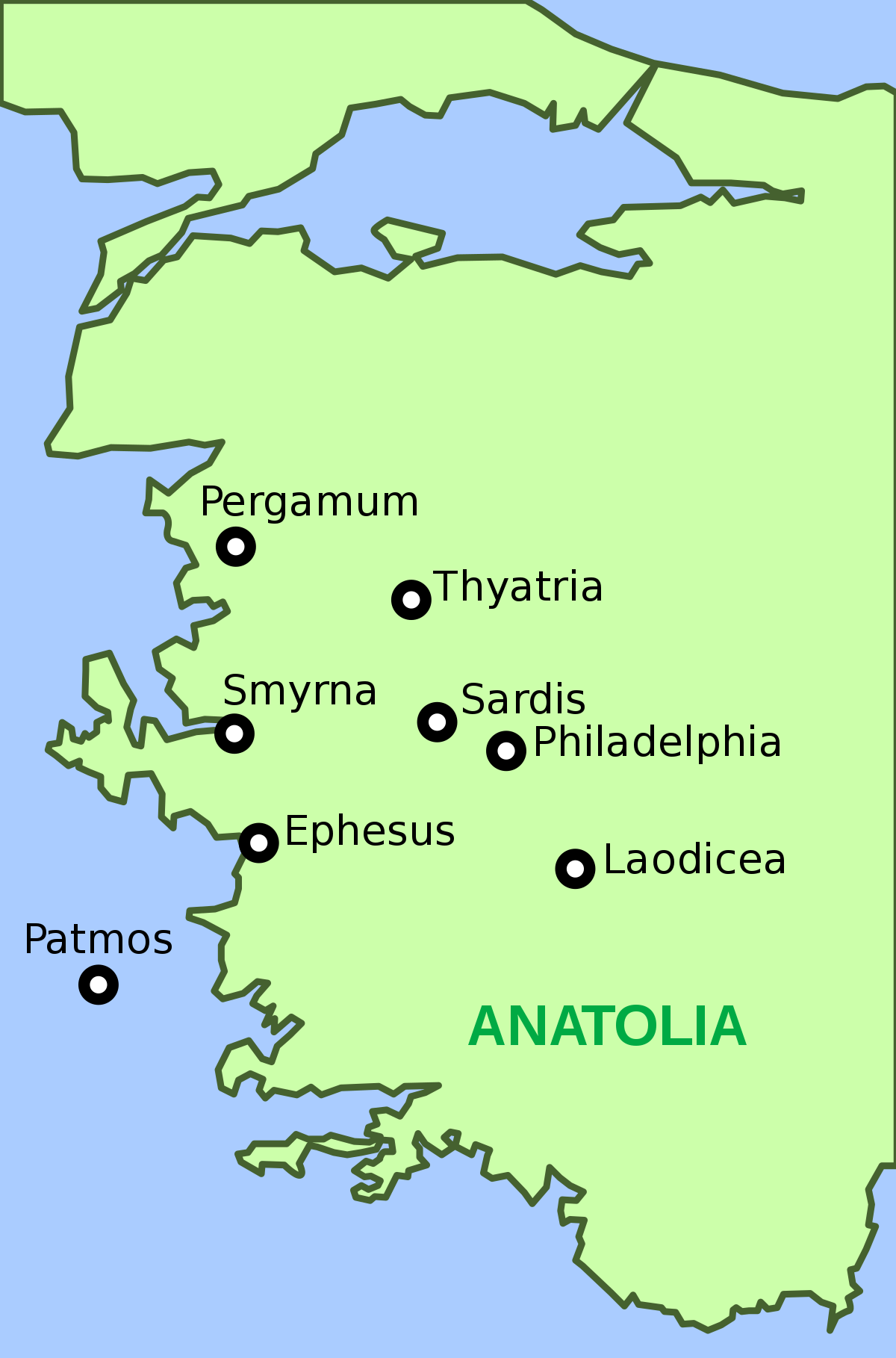
Paul closes out his letter by asking that it be shared with the church in Laodicea. Evidently, there was a letter he had written to the Laodicean congregation that he wished to be read to the Colossians as well. All of these congregations were in close proximity to one another, and the letters Paul wrote to them were intended to be shared among them.

The messages they contained were universal in nature and applicable to each community where local congregations attempted to live out their faith in hostile surroundings.  Remaining faithful in the midst of a fallen and often antagonistic world was not easy, and nobody knew that better than Paul. That is why he closes out his letter by calling on his children in the faith to “Remember my chains” (Colossians 4:18 ESV). 

Paul wanted them to know that he had been imprisoned because of the gospel. He was not oblivious to their situation but was well acquainted with the suffering that accompanied the Christian life. He rejoiced that God had deemed him worthy of the privilege of suffering as Christ had suffered on behalf of His body, the church.

I am glad when I suffer for you in my body, for I am participating in the sufferings of Christ that continue for his body, the church. – Colossians 1:24 NLT

His final words to Archippus were applicable to each member of the Colossians church.

“See that you fulfill the ministry that you have received in the Lord.” – Colossians 4:17 ESV

For Paul, faithful service and obedience to God’s will were the high-water marks of saving faith. He desired that every believer run the race to win, to fight as a good soldier of Jesus Christ, and to make every effort to present themselves “approved to God, an unashamed workman who accurately handles the word of truth” (2 Timothy 2:15 BSB).

Father, thank You for choosing Paul and transforming his life. You always do the unexpected and use the unworthy and unlikely to accomplish Your will. The list is long and includes Moses the murderer and David the adulterer as well as Peter the loudmouthed fishermen who denied Christ and lived to tell about it. You are in the transforming business and all You have to work with is broken clay pots (2 Corinthians 4:7). While each of us is unworthy of Your love and undeserving of Your grace, You have chosen to offer us Your gift of salvation and the indwelling presence of Your Spirit. That is what every individual mentioned in these verses had in common, and it is true of me as well. Now, help me to fulfill the ministry You have given me. I want to run the race well, fight fearlessly, serve faithfully, and love selflessly until the day You call me home or Your Son returns. Amen

English Standard Version (ESV)
The Holy Bible, English Standard Version. ESV® Permanent Text Edition® (2016). Copyright © 2001 by Crossway Bibles, a publishing ministry of Good News Publishers.

New Living Translation (NLT)
Holy Bible, New Living Translation, copyright © 1996, 2004, 2015 by Tyndale House Foundation. Used by permission of Tyndale House Publishers Inc., Carol Stream, Illinois 60188. All rights reserved.

Left Behind To Leave An Impression

21 Confident of your obedience, I write to you, knowing that you will do even more than I say. 22 At the same time, prepare a guest room for me, for I am hoping that through your prayers I will be graciously given to you.

23 Epaphras, my fellow prisoner in Christ Jesus, sends greetings to you, 24 and so do Mark, Aristarchus, Demas, and Luke, my fellow workers.

25 The grace of the Lord Jesus Christ be with your spirit. – Philemon 1:21-35 ESV

Paul’s use of the word “obedience” seems odd in light of the fact that this entire letter has been couched in terms of a request, not a command. Just a few verses earlier, Paul had admitted that he could have used his authority as an apostle to order Philemon to comply, but he refused to do so. He wanted this to be Philemon’s decision.

…though I am bold enough in Christ to command you to do what is required, yet for love’s sake I prefer to appeal to you… – Philemon 1:8 ESV

Because all of this revolved around a relationship, Paul had not wanted to dictate the terms of Philemon’s decision or to use coercion to force his hand. He knew that any healing between the two men would have to come from the heart and not the head.

I preferred to do nothing without your consent in order that your goodness might not be by compulsion but of your own accord. – Philemon 1:14 ESV

So, what prompted Paul to bring up obedience at this point in his letter, and why does he express such confidence that Philemon will do the right thing? I think it goes back to what Paul knew and believed about Philemon. He had every confidence that Philemon would respond positively and correctly because of his relationship with Jesus Christ. Remember what he said about his friend earlier in his letter: “I hear of your love and of the faith that you have toward the Lord Jesus and for all the saints” (Philemon 1:5  ESV).

Philemon had a track record of doing the right thing, and Paul was confident that his friend would face this latest test with the wisdom and strength of the indwelling Spirit of God. Philemon was not left to his own devices or relegated to operating according to his sinful flesh. He was a new creation with a new heart, and he had a supernatural power available to him that would enable him to respond with justice, mercy, grace, and love.

Paul’s confidence was in the power of God to reform the hearts of men. He knew that the reconciliation of these two men was God’s will and that He would equip Philemon with the strength to obey that will. Paul knew from personal experience that, because of the indwelling presence of the Holy Spirit, nothing was impossible. He confidently told the believers in Philippi,  “I can do all things through him who strengthens me” (Philippians 4:13 ESV).

His prayer for the believers in Ephesus had been that God would “from his glorious, unlimited resources…empower you with inner strength through his Spirit” (Ephesians 3:16 NLT). And Paul was confident that God would answer that prayer, boldly claiming, “Now all glory to God, who is able, through his mighty power at work within us, to accomplish infinitely more than we might ask or think” (Ephesians 3:20 NLT).

Paul believed that Philemon would obey the will of God because Paul believed in the power of God. His job had been to present the facts of the case to Philemon and then leave the result up to the Spirit of God. The resolution of the relationship between Philemon and Onesimus was going to have to be divinely empowered; it had to be a “God thing.” If Philemon tried to accomplish it in his own strength, he would fail. If he attempted to muster up the resolve to free Onesimus from slavery and treat him as a brother in Christ, only to please Paul, he would end up having regrets and harboring resentment over his financial losses.

If Philemon’s motivation to do the right thing came from an external source, his decision, no matter how righteous in nature, would be short-lived and wouldn’t last. But Paul had every confidence that God would work a miracle of heart-transformation between these two men. And, as a result, God would get the glory because the news of their reconciliation would spread. The paradigm-shifting precedence of Philemon emancipating his former slave and treating him as his social and spiritual equal would leave an indelible mark on the church and the community. And the only explanation would be the power of the gospel of Jesus Christ.

Paul rested in the knowledge that God would accomplish far more than even he could imagine. Philemon, under the influence of the Holy Spirit, would far exceed Paul’s words of counsel and his hopes for reconciliation.

He closes his letter by asking Philemon to prepare a room for him. He fully expected to be released from his house arrest at any moment and had every desire to visit his friends in Asia Minor. As always, Paul was grateful for the prayers of those who had been lifting up during his confinement in Rome. Never one to take the petitions of others lightly, Paul found great encouragement in the knowledge that his needs were coming before God’s throne in heaven, and he believed that God would answer those prayers.

Finally, Paul provides Philemon, Apphia, and Archippus with greetings from some of their mutual friends. He includes Epaphras, an evangelist whom Paul describes as “my fellow prisoner in Christ Jesus” (Philemon 1:23 ESV). This doesn’t mean that Epaphras was imprisoned with Paul in Rome, but that as a fellow minister of the gospel, he shared the same risks as Paul. He was “imprisoned” or held captive to his role as an ambassador and bondslave of Jesus Christ.

Paul adds the names of four other individuals and then closes his letter with the words, “The grace of the Lord Jesus Christ be with your spirit” (Philemon 1:21 ESV). It’s hard to imagine that Paul did not have in mind the words spoken to him by God regarding the empowering nature of His grace.

“My grace is sufficient for you, for my power is made perfect in weakness.” – 2 Corinthians 12:9 ESV

Paul knew from personal experience that God would supply all the power Philemon needed to do what he had been called to do. The power of God’s abundant grace would flow through Philemon and provide him with the ability to love his former slave Onesimus and treat him as a brother in Christ and a fellow heir of the Kingdom.

Father, this little vignette of the relationship between Philemon and Onesimus provides such a stark reminder of the power of the gospel. We tend to relegate salvation as nothing more than a get-out-of-jail-free card that guarantees us an eternity free from sin, judgment, and death. But You intended faith in Christ to have far more immediate consequences. In fact, Your Son said that He had come to earth so that we might have abundant life, right her,e, right now (John 10:10). He came to change lives in the present, not just the future. Our future glorification is the culminating point of a long process of sanctification that is slowly transforming us into the likeness of Jesus. When Jesus returned to Your side in heaven, He didn’t take His disciples with Him; He left them in the world. But on the night He was betrayed He asked You, “Now I am departing from the world; they are staying in this world, but I am coming to you. Holy Father, you have given me your name; now protect them by the power of your name so that they will be united just as we are” (John 17:11 NLT). 

Jesus, You knew how difficult life in this world could be, because You experienced it firsthand. So You told Your Father, “I’m not asking you to take them out of the world, but to keep them safe from the evil one. They do not belong to this world any more than I do. Make them holy by your truth; teach them your word, which is truth” (John 10:15-17 NLT). 

The disciples were left behind, and so were we. Yet, we have everything we need for living godly lives on this planet. Jesus did not leave us alone, but gave us His Holy Spirit to guide, protect, and empower us. Show us how we can model Christ-likeness more effectively in this world as we await His return. Help us to rely upon Your grace, walk in the Spirit’s strength, and love as we have been loved, so that the world will believe in the life-changing power of the gospel. Amen

English Standard Version (ESV)
The Holy Bible, English Standard Version. ESV® Permanent Text Edition® (2016). Copyright © 2001 by Crossway Bibles, a publishing ministry of Good News Publishers.

New Living Translation (NLT)
Holy Bible, New Living Translation, copyright © 1996, 2004, 2015 by Tyndale House Foundation. Used by permission of Tyndale House Publishers Inc., Carol Stream, Illinois 60188. All rights reserved.

Talk Is Cheap

17 So if you consider me your partner, receive him as you would receive me. 18 If he has wronged you at all, or owes you anything, charge that to my account. 19 I, Paul, write this with my own hand: I will repay it—to say nothing of your owing me even your own self. 20 Yes, brother, I want some benefit from you in the Lord. Refresh my heart in Christ. – Philemon 1:17-20 ESV

It’s quite easy to give advice to others. In fact, it comes naturally to most of us. Sharing our opinions and providing free counsel to our friends and family members just seem like good things to do. We can even back up our good intentions from the “Good Book.”

Where there is no guidance, a people falls,
    but in an abundance of counselors there is safety.
– Proverbs 11:14 ESV

But even the best counsel, motivated by the best intentions, doesn’t always produce the best outcomes. Telling someone what they should do, without providing them any hint as to how to do it, can be demoralizing and even damaging.

Paul was asking Philemon to accept his runaway slave back with open arms. Not only that, but he was also advising Philemon to treat Onesimus as a brother and not a slave. Everything Paul wrote to Philemon was biblically sound and spiritually appropriate; it was wise counsel coming from a godly and well-meaning friend. And yet, from Philemon’s perspective, it was all “easier said than done.” Paul, under house arrest in Rome and with plenty of time on his hands, could write Philemon a hundred letters full of godly advice on a wide range of topics, but at the end of the day, it was Philemon who would have to turn Paul’s rhetoric into reality, and that was not going to be easy.

Paul was quite clear in expressing how he expected Philemon to treat Onesimus.

So if you consider me your partner, welcome him as you would welcome me. – Philemon 1:17 NLT

Philemon was to show Onesimus the same courtesy and respect he would extend to Paul if he were to walk in the door. That was a tall order. Paul was asking Philemon to respond in a manner that was antithetical to logic and social protocol. For him to treat any slave with that kind of respect and honor would have been unheard of in civil society. Yet, Paul was asking him to extend this kind of courtesy to a runaway.

Remember, Paul told Philemon that Onesimus was “no longer like a slave to you” (Philemon 1:16 NLT). That was easy for Paul to say. But in Philemon’s social circle, everyone would have known that Onesimus was his slave, and that he had run away. When Onesimus returned, they would have expected Philemon to deal with him according to Roman law. To not do so would have set a dangerous precedent. If Philemon failed to punish Onesimus for running away, it might encourage other slaves to follow his example. Other slave owners in the community, and possibly in the church, would have viewed his kind and gracious treatment of Onesimus as unacceptable behavior.

Paul was fully aware of the gravity of his request of Philemon. He knew it would not be easy to follow, and it could also prove costly. Paul was cognizant of the fact that Onesimus represented a financial investment for Philemon. In the economic system of Rome, Onesimus had monetary value that was greater than his human worth. He was a commodity whose appraisal was based on his production capacity or resale value. So, when Paul asked Philemon to set Onesimus free, he was asking his friend to take a substantial hit to his bottom line.

But look closely at what Paul wrote next: “If he has wronged you at all, or owes you anything, charge that to my account” (Philemon 1:18 ESV). You might say that Paul was putting his money where his mouth was. He was backing up his wise words with the promise of action. Paul was personally investing himself in the process of reconciliation between these two men.

When Paul told Philemon, “charge that to my account,” he was essentially saying, “Impute Onesimus’ debt to me.” It was like saying, “put it on my tab.” Paul was committing himself to make up any financial liability Philemon might face as a result of following his advice. Paul was willingly putting skin in the game, and his model for this kind of selfless, sacrificial commitment was Jesus.

For God made Christ, who never sinned, to be the offering for our sin, so that we could be made right with God through Christ. – 2 Corinthians 5:21 NLT

Jesus came to earth so that He might reconcile sinful men to God, and in order to do so, He took on their sin debt. He bore their sins on the cross and died the death they deserved to die. And because those who place their faith in Christ enjoy a renewed relationship with God the Father, they have the capacity to view things from a totally new perspective. Consider Paul’s words to the believers in Corinth.

So we have stopped evaluating others from a human point of view. At one time we thought of Christ merely from a human point of view. How differently we know him now! This means that anyone who belongs to Christ has become a new person. The old life is gone; a new life has begun!

And all of this is a gift from God, who brought us back to himself through Christ. And God has given us this task of reconciling people to him. For God was in Christ, reconciling the world to himself, no longer counting people’s sins against them. And he gave us this wonderful message of reconciliation. – 2 Corinthians 5:16-19 NLT

Philemon and Onesimus had both been reconciled to God through the sacrificial death of Jesus on the cross. But Paul deeply desired to see Philemon and Onesimus reconciled to one another. They had both been set free from slavery to sin and death, and now they could live in newness of life together as brothers. And Paul was willing to invest himself in the process of reconciling their differences, even to the point of underwriting the financial debts of Onesimus.

Paul made his commitment clear, telling Philemon, “I will repay it” (Philemon 1:19 ESV), and Philemon knew he could trust Paul to keep his word. To further influence Philemon’s decision, Paul resorted to a bit of guilt-tripping, essentially saying, “You owe me.” This should not be viewed as a threat but as a gentle reminder that Philemon owed his new life in Christ to Paul’s ministry. Paul had risked a lot to bring the good news of Jesus Christ to Philemon’s community and, as a result, Philemon had been reconciled to God. By placing his faith in Jesus, Philemon’s debt had been paid in full.

Nothing would make Paul happier than to hear that Philemon and Onesimus had been reconciled, and he let Philemon know his decision to receive Onesimus as a brother in Christ would be all the payment he needed.

Yes, my brother, please do me this favor for the Lord’s sake. Give me this encouragement in Christ. – Philemon 1:20 NLT

Telling others what they ought to do is easy, but how willing are we to commit ourselves to help them follow our advice? What cost are we willing to pay to see that our wise words are followed? Paul was willing to put his money where his mouth was. What about you? Are you committed to walking alongside the ones with whom you freely share your counsel and dedicate your time and resources to see that they have what they need to succeed?

This reminds me of the story of the chicken and the pig. In debating the degree of their commitment to a typical breakfast of bacon and eggs, the chicken bragged about how some brave hen willingly made provision for the eggs. But the pig responded by pointing out that while the breakfast required the chicken’s participation, it demanded a pig’s total commitment.

Paul wasn’t content to provide wise counsel; he was totally committed to seeing that it was followed, regardless of the personal cost. Paul could have easily said to Philemon what he wrote to the believers in Philippi.

But I will rejoice even if I lose my life, pouring it out like a liquid offering to God, just like your faithful service is an offering to God. And I want all of you to share that joy. – Philippians 2:17 NLT

English Standard Version (ESV)
The Holy Bible, English Standard Version. ESV® Permanent Text Edition® (2016). Copyright © 2001 by Crossway Bibles, a publishing ministry of Good News Publishers.

New Living Translation (NLT)
Holy Bible, New Living Translation, copyright © 1996, 2004, 2015 by Tyndale House Foundation. Used by permission of Tyndale House Publishers Inc., Carol Stream, Illinois 60188. All rights reserved.

Freedom In Christ

12 I am sending him back to you, sending my very heart. 13 I would have been glad to keep him with me, in order that he might serve me on your behalf during my imprisonment for the gospel, 14 but I preferred to do nothing without your consent in order that your goodness might not be by compulsion but of your own accord. 15 For this perhaps is why he was parted from you for a while, that you might have him back forever, 16 no longer as a bondservant but more than a bondservant, as a beloved brother—especially to me, but how much more to you, both in the flesh and in the Lord. – Philemon 1:12-16 ESV

Paul was sending Onesimus back to Philemon, and Paul made it clear that this had not been an easy decision. In a sense, Paul was sending his very heart because he loved Onesimus as if he were his own son. This young man had come to mean a great deal to the apostle, and it must have grieved him deeply to think of Onesimus leaving his side. But Paul wanted to do the right thing; he knew that the rift between Onesimus and Philemon needed to be healed.

But as difficult as it was for Paul, stop and consider the feelings of Onesimus. They say there are two sides to every story, and in the case of Onesimus, we know next to nothing about how he came to be a slave, why he ran away, or what kind of conditions he had lived under while serving in Philemon’s house. But it seems likely that something motivated his decision to escape his condition as a slave. Perhaps it was nothing more than the natural human desire to be free.

It is fascinating to speculate about Onesimus’ backstory. Perhaps he had sold himself into servitude to pay back a debt he owed to Philemon, or he could have been born into slavery, the unfortunate son of enslaved parents. Then there’s the very real possibility that Onesimus had been a prisoner of war whom Philemon purchased from the slave market.

But regardless of how Onesimus came to be a slave or why he decided to run away, Paul somehow convinced him to return. What a fascinating conversation that must have been. Just imagine how long Paul must have wrestled with the idea before he ever brought it up with Onesimus. And then consider how Onesimus must have received Paul’s counsel to go back to Philemon and make things right.

There were great risks involved, and yet Onesimus had agreed to follow Paul’s advice, despite knowing that his return could result in his re-enslavement. Not only that, but he could also face severe legal repercussions for his actions. As a runaway slave, he could be beaten, sold, or even put to death. His fate would be in the hands of Philemon. But this young man had willingly chosen to take risks to do what he believed was the right thing.

In an attempt to prepare Philemon for the arrival of his former slave and newfound brother in Christ, Paul used an interesting tactic. He implied that all the while Onesimus had been ministering to him during his imprisonment in Rome, he had done so on Philemon’s behalf. And Paul states that he had been tempted to maintain this arrangement, but had not wanted to make that decision for Philemon.

I would have been glad to keep him with me, in order that he might serve me on your behalf during my imprisonment for the gospel, but I preferred to do nothing without your consent in order that your goodness might not be by compulsion but of your own accord. – Philemon 1:13-14 ESV

Interestingly enough, Paul seemed to view Onesimus as a gift from Philemon. And yet, the only way Paul could have known about the relationship between Onesimus and Philemon was because Onesimus had divulged it to him. At some point in their relationship, Onesimus revealed his status as a runaway slave. And when Paul heard the name of Onesimus’ master, he recognized God’s hand in it all. Philemon was a dear friend of Paul’s, and he had a slave who had run away and ended up in Rome, where he met Paul and came to faith in Christ. Paul knew that none of this was the result of happenstance, luck, kismet, or karma; it was the handiwork of God.

Paul tried to get Philemon to view these events from a divine perspective, stating, “It seems you lost Onesimus for a little while so that you could have him back forever” (Philemon 1:15 NLT). For Philemon, the loss of his slave had been nothing more than a financial setback; he had lost his property. But Paul reminded Philemon that his loss had actually resulted in great gain. He had lost a slave but was receiving back a brother in Christ.

He is no longer like a slave to you. He is more than a slave, for he is a beloved brother, especially to me. Now he will mean much more to you, both as a man and as a brother in the Lord. – Philemon 1:16 NLT

The young man who was about to walk through Philemon’s door was no longer his property, but a fellow member of the family of God. Onesimus wasn’t Philemon’s personal possession anymore. His life had been paid for by the blood of Jesus Christ.

At one point early in his earthly ministry, Jesus returned to Nazareth, where he entered the synagogue and read from the book of Isaiah.

“The Spirit of the Lord is upon me,
    because he has anointed me
    to proclaim good news to the poor.
He has sent me to proclaim liberty to the captives
    and recovering of sight to the blind,
    to set at liberty those who are oppressed,
to proclaim the year of the Lord’s favor.” – Luke 4:18-19 NLT

And having read this Messianic passage, Jesus handed the scroll back to the attendant and said, “The Scripture you’ve just heard has been fulfilled this very day!” (Luke 4:21 NLT). Jesus had come to proclaim liberty to the captives and to set at liberty those who are oppressed. Of course, He was speaking in terms of spiritual captivity to sin and death, and freedom from the oppression that comes with trying to earn favor with God through human effort. And that is exactly what Onesimus had experienced. He had been set free and, as Jesus had said, “if the Son sets you free, you are truly free” (John 8:36 NLT). 

That verse is found in the middle of a discourse by Jesus in which he was discussing the ability of the truth to set men free. In that same passage, He describes all those who sin as slaves.

“I tell you the truth, everyone who sins is a slave of sin. A slave is not a permanent member of the family, but a son is part of the family forever. So if the Son sets you free, you are truly free.” – John 8:35-36 NLT

Prior to coming to faith in Christ, Philemon had been a slave to sin, but he had been set free and now enjoyed status as a son of God. But the same thing was true of Onesimus. He had also been set free from slavery to sin and death and had become Philemon’s spiritual brother. So, why would Philemon continue to treat his brother as a slave?

Paul was asking both of these men to make difficult decisions. Onesimus had made his choice and was returning home. But Philemon still had a choice to make. How would he respond? What would he do when he saw Onesimus?

Jesus came to change the condition of the human heart. He died so that men might experience the life-transformative power of God, which not only restores fallen men to a right relationship with Himself but with one another.

“The supreme work of Christianity is to transform men, so that out of their transformed lives shall come the transformation of all social conditions, and the victories of righteousness and of love.” – G. Campbell Morgan, Living Messages of the Books of the Bible

Paul greatly desired that these two men, who both meant a great deal to him, would allow their faith in Christ to transform their relationship. Paul knew that their choice to live as brothers rather than as slave and master would be a testimony to the gospel’s power. And it would spread throughout the local congregation and into the community.

Father, what a wonderful reminder of the power fo the gospel to transform lives and relationships. Onesimus was returning as a runaway slave, but also as a forgiven, redeemed, and justified follower of Jesus Christ. His status as a slave had not changed, but his relationship with You had been restored. As a result, his relationship with Philemon would never be the same. But both men were going to have to wrestle with their past perspectives about what it means to be a free man. Philemon was going to have to accept his status as a bondservant of Christ and view his former slave as a brother, not a servant.. Onesimus was going to have to accept the reality that salvation had not changed his status as a slave. Legally, he still belonged to Philemon. And he too would have to look at his former master in a radically different way. Each man would have to die to his rights and serve the other selflessly and sacrificially. And what a testimony their redeemed relationship must have had on that community. That is what you have called all of us to experience., for the good of the body of Christ and the benefit of a lost world that needs to know that the gospel really is life changing. Amen

English Standard Version (ESV) The Holy Bible, English Standard Version. ESV® Permanent Text Edition® (2016). Copyright © 2001 by Crossway Bibles, a publishing ministry of Good News Publishers.

New Living Translation (NLT) Holy Bible, New Living Translation, copyright © 1996, 2004, 2015 by Tyndale House Foundation. Used by permission of Tyndale House Publishers Inc., Carol Stream, Illinois 60188. All rights reserved.

From One Slave to Another

Paul, a prisoner for Christ Jesus, and Timothy our brother,

To Philemon our beloved fellow worker and Apphia our sister and Archippus our fellow soldier, and the church in your house:

Grace to you and peace from God our Father and the Lord Jesus Christ. – Philemon 1:1-3 ESV

Paul’s letter to Philemon provides a fascinating glimpse into the culture of the 1st-Century. It is a somewhat uncomfortable read for 21st-Century Christians because it deals with a topic that most of us find reprehensible and off-putting: that of slavery. Yet, slavery was an everyday and unavoidable reality for those living in that part of the world at the beginning of the new millennium.

Slavery was ubiquitous throughout the Roman Empire. In fact, the inhabitants of the empire were comprised of two basic groups: Those who were free and those who were slaves. And an individual’s status as a slave usually had nothing to do with their race or ethnicity. Yes, many slaves were members of conquered people groups who represented a particular race, but they had not been enslaved for that reason. Their slavery was the result of war and conquest. Roman slaves included prisoners of war as well as those captured and sold by pirates. But it was not uncommon for Roman citizens to end up as slaves due to economic hard times. If someone was unable to pay a debt, indentured servitude was their most likely fate; they would work for their lender until their debt was paid in full.

Sadly, there were also cases where financially strapped families would raise money by selling their own children into slavery. It is estimated that 1 out of every 5 people living in the Roman Empire were slaves, and by the 1st-Century, the primary source of slaves was the children born to slaves. A child born to a female slave was also a slave, regardless of the status of the father.

With all that as background, Paul’s letter to Philemon should come into greater clarity. When reading the apostle’s comments concerning Onesimus, a runaway slave belonging to Philemon, it would be easy to question why Paul fails to condemn the practice of slavery outright. Why doesn’t he demand that Philemon set this young man free? What is preventing Paul from attacking the institution of slavery and exposing his friend’s obvious injustice toward his fellow man?

But we have to understand that Paul was not out to revolutionize the culture of his day through the radical overturn of the social fabric. He, like Jesus, was a revolutionary, but with an agenda focused on change in the human heart rather than in the political and civil structures of society. One gets a glimpse of Paul’s perspective on all of this in his first letter to the church in Corinth.

Yes, each of you should remain as you were when God called you. Are you a slave? Don’t let that worry you—but if you get a chance to be free, take it. And remember, if you were a slave when the Lord called you, you are now free in the Lord. And if you were free when the Lord called you, you are now a slave of Christ. God paid a high price for you, so don’t be enslaved by the world. Each of you, dear brothers and sisters, should remain as you were when God first called you. – 1 Corinthians 7:20-24 NLT

Paul was not encouraging insurrection among the slaves. Nor was he fomenting a spirit of revolution or sedition. He was calling for Christians, regardless of their social status, to adopt a radically different outlook on their identity. You get a sense of his agenda from reading his letter to the believers in Galatia, another Roman province.

There is no longer Jew or Gentile, slave or free, male and female. For you are all one in Christ Jesus. – Galatians 3:28 NLT

Paul encouraged the Colossian believers to focus on their unity in Christ, not on their social status or ethnic identity.

Put on your new nature, and be renewed as you learn to know your Creator and become like him. In this new life, it doesn’t matter if you are a Jew or a Gentile, circumcised or uncircumcised, barbaric, uncivilized, slave, or free. Christ is all that matters, and he lives in all of us.

Since God chose you to be the holy people he loves, you must clothe yourselves with tenderhearted mercy, kindness, humility, gentleness, and patience. – Colossians 3:10-12 NLT

So, as we begin our study of Paul’s letter to Philemon, it is essential to consider the social conditions of the day alongside the spiritual concerns that drove the apostle’s heart. Paul had no love affair with the institution of slavery, and the content of his letter contains neither a stinging condemnation nor a subtle condoning of it. Slavery is not the subject of this letter, but freedom in Christ and a love for our brothers and sisters in Christ is. So, it is best to read it from a 1st-Century perspective and with our ears tuned to hear Paul’s heart for the life-transformative power of the gospel.

As Paul opens up his letter, he identifies himself as “a prisoner for Christ Jesus” (Philemon 1:1 ESV). The Greek word he used is desmios, which means “one in bonds.” Paul was writing from Rome, where he was being held under house arrest while awaiting trial before the emperor. It is no coincidence that Paul used this terminology to introduce himself to his friend, Philemon. The rest of the letter will deal with another “prisoner,” or bondslave, named Onesimus, someone Philemon knew quite well. Interestingly enough, Paul and Onesimus were experiencing a somewhat ironic change in circumstances. Onesimus, the slave, was enjoying the life of a free man, while Paul, the Roman citizen, was experiencing the life of a captive.

But despite his incarceration, Paul considered himself a prisoner for Christ Jesus. It was while delivering the good news of Jesus’ death and resurrection that he was arrested. He was in Rome under house arrest for preaching the gospel. Paul was not a prisoner of war or a captive as a result of an unpaid debt. No, his imprisonment was on behalf of, and because of his faith in Jesus Christ, and Paul was perfectly content with his situation. In fact, he told the church in Philippi that he had learned to endure any circumstance that came his way, knowing that Christ would use it for his good and God’s glory.

I have learned how to be content with whatever I have. I know how to live on almost nothing or with everything. I have learned the secret of living in every situation, whether it is with a full stomach or empty, with plenty or little. For I can do everything through Christ, who gives me strength. – Philippians 4:11-13 NLT

Paul’s letter, while addressed primarily to Philemon, is intended for a much broader audience, including Apphia, Archippus, and the rest of the members of the church that met in Philemon’s home. It is clear that Philemon was a well-respected member of the local congregation in Colossae, and he played a major part in the church by providing his home as a meeting place for their worship services.

“Christian congregations were dependent upon the hospitality of wealthy members who could furnish their own houses for this purpose. This note then contains an indication of the social status of Philemon. In a large city there would be several such assemblies. Whether the church at Colossae had more than one place of assembly is not known. Probably they did.” – Hiebert, D. Edmond. Titus and Philemon

So, Philemon was a leader in the local fellowship and a person of influence. That’s likely why Paul addressed his letter directly to him. Paul knew that if he could help enlighten Philemon and change his heart, the rest of the congregation would be impacted. While this particular issue involved Philemon and his runaway slave, Paul realized it had far greater implications for the entire faith community.

Each of their relationships with one another was to be influenced by the Gospel. Their new natures, provided by the indwelling presence of the Holy Spirit, were to alter their conduct and attitudes. In another letter, written to the entire membership of the church in Colossae, Paul reminded them that they had been raised to new life with Christ and that their behavior should reflect that new life.

Put on your new nature, and be renewed as you learn to know your Creator and become like him. In this new life, it doesn’t matter if you are a Jew or a Gentile, circumcised or uncircumcised, barbaric, uncivilized, slave, or free. Christ is all that matters, and he lives in all of us.

Since God chose you to be the holy people he loves, you must clothe yourselves with tenderhearted mercy, kindness, humility, gentleness, and patience. Make allowance for each other’s faults, and forgive anyone who offends you. Remember, the Lord forgave you, so you must forgive others. Above all, clothe yourselves with love, which binds us all together in perfect harmony. And let the peace that comes from Christ rule in your hearts. For as members of one body you are called to live in peace. And always be thankful. – Colossians 3:10-15 NLT

As members of one body, whether slave or free, they were called to live in peace with one another. And Paul wraps up the salutation of his letter to Philemon with his heartfelt prayer for his friend and the members of the local fellowship in Colossae.

May God our Father and the Lord Jesus Christ give you grace and peace. – Philemon 1:3 ESV

Father, we make much out of our status and social standing. We tend to categorize people based on their career choice, educational background, economic standing, and appearance. We judge based on a long list of external criteria that fail to take into account the condition of the heart. But Paul knew that outward characteristics were an reliable tool for measuring a person’s spiritual health. In his day, it was common to mistake someone’s poverty as a sign of Your displeasure with them. In the same way, it was easy to mistake wealth as a sign of Your blessing on their lives. Whether we want to admit it or not, we tend to think the same way. It is so easy to assume that affluence is proof of Your pleasure. When things go well for us, we immediately conclude that we are on Your good side. But let anything bad happen and wonder what we’ve done to make You angry with us. As I read Paul’s letter to Philemon, I am reminded that You didn’t send Your Son to save the upper crust of society. Jesus didn’t come into the world to reach the elite and well-educated; He came to save sinners. That is a non-discriminatory category that includes people from all walks of life. In fact, it includes everyone for, as Paul said, “all have sinned and fall short of the glory of God” (Romans 3:23 ESV). Philemon may have been well-to-do and well-liked, but he was no better than Onesimus. At the foot of the cross, the ground is level and all forms of social stratification are removed. We all stand as sinners in need of a Savior. Thank you for the reminder that the only status that matters is our relationship with Jesus.   Amen

English Standard Version (ESV) The Holy Bible, English Standard Version. ESV® Permanent Text Edition® (2016). Copyright © 2001 by Crossway Bibles, a publishing ministry of Good News Publishers.

New Living Translation (NLT) Holy Bible, New Living Translation, copyright © 1996, 2004, 2015 by Tyndale House Foundation. Used by permission of Tyndale House Publishers Inc., Carol Stream, Illinois 60188. All rights reserved.

A Prisoner of Christ

Tychicus will tell you all about my activities. He is a beloved brother and faithful minister and fellow servant in the Lord. I have sent him to you for this very purpose, that you may know how we are and that he may encourage your hearts, and with him Onesimus, our faithful and beloved brother, who is one of you. They will tell you of everything that has taken place here.

10 Aristarchus my fellow prisoner greets you, and Mark the cousin of Barnabas (concerning whom you have received instructions—if he comes to you, welcome him), 11 and Jesus who is called Justus. These are the only men of the circumcision among my fellow workers for the kingdom of God, and they have been a comfort to me. 12 Epaphras, who is one of you, a servant of Christ Jesus, greets you, always struggling on your behalf in his prayers, that you may stand mature and fully assured in all the will of God. 13 For I bear him witness that he has worked hard for you and for those in Laodicea and in Hierapolis. 14 Luke the beloved physician greets you, as does Demas. 15 Give my greetings to the brothers at Laodicea, and to Nympha and the church in her house. 16 And when this letter has been read among you, have it also read in the church of the Laodiceans; and see that you also read the letter from Laodicea. 17 And say to Archippus, “See that you fulfill the ministry that you have received in the Lord.”

18 I, Paul, write this greeting with my own hand. Remember my chains. Grace be with you. Colossians 4:7-18 ESV

As Paul prepares to wrap up his letter to the Colossian church, he mentions the names of eight different men. Tychicus, Onesimus, Aristarchus, Jesus (Justus), Epaphras, Luke, Demas, and Archippus. Each of them had played a vital role in Paul’s life and ministry. Two of them, Tychicus and Onesimus, had been chosen by Paul to deliver the letter once he had completed it. The first mention of Tychicus in the Scriptures is found in Acts 20, where Luke records his name, as well as that of Aristarchus, among those who accompanied Paul as he left Greece and made his way to Syria.

…he [Paul] decided to return through Macedonia. Sopater the Berean, son of Pyrrhus, accompanied him; and of the Thessalonians, Aristarchus and Secundus; and Gaius of Derbe, and Timothy; and the Asians, Tychicus and Trophimus. These went on ahead and were waiting for us at Troas, but we sailed away from Philippi after the days of Unleavened Bread, and in five days we came to them at Troas, where we stayed for seven days. – Acts 20:3-6 ESV

Tychicus, like the rest of these men, had become a disciple of Paul and had aided him in his ministry. In his letter to the Ephesians, Paul refers to Tychicus as his “beloved brother and faithful minister in the Lord” (Ephesians 6:21 ESV). Paul had instructed Tychicus to deliver his letter to the Ephesian believers and bring them up to speed on his current situation (Ephesians 6:22). And Paul had entrusted Tychicus with the same responsibility when it came to the congregation in Colossae.

Tychicus will tell you all about my activities. He is a beloved brother and faithful minister and fellow servant in the Lord. I have sent him to you for this very purpose, that you may know how we are and that he may encourage your hearts, and with him Onesimus, our faithful and beloved brother, who is one of you. They will tell you of everything that has taken place here. – Colossians 4:7-9 ESV

He was accompanied by Onesimus, another disciple of Paul who, at one time, had been a runaway slave. Paul had befriended Onesimus in Rome, where Paul was imprisoned and the young man was hiding from his former master, a man named Philemon. while it is unclear how Paul and Onesimus met, we do know that Paul had the privilege of leading Onesimus to Christ. And after discipling his young friend for a period of time, he determined to send Onesimus back to his master. What makes this situation rather strange is that Paul knew Onesimus’ master well. He was a man named Philemon and the church in Colossae met in his home. Paul wrote a letter to Philemon, asking him to receive Onesimus back, not as a runaway slave, but as a brother in Christ.

I appeal to you to show kindness to my child, Onesimus. I became his father in the faith while here in prison. Onesimus hasn’t been of much use to you in the past, but now he is very useful to both of us. I am sending him back to you, and with him comes my own heart.

I wanted to keep him here with me while I am in these chains for preaching the Good News, and he would have helped me on your behalf. But I didn’t want to do anything without your consent. I wanted you to help because you were willing, not because you were forced. It seems you lost Onesimus for a little while so that you could have him back forever. He is no longer like a slave to you. He is more than a slave, for he is a beloved brother, especially to me. Now he will mean much more to you, both as a man and as a brother in the Lord. – Philemon 1:10-16 NLT

According to Colossian 4:9, Onesimus accompanied Tychicus back to Colossae. Tychicus was to deliver Onesimus and the letter from Paul to Philemon. We are not told how this reunion turned out, but it seems likely that Philemon heeded Paul’s advice and treated Onesimus as a “beloved brother” (Philemon 1:16).

Paul also mentions Aristarchus, a Greek who hailed from the city of Thessalonica (Acts 20:4). Paul refers to Aristarchus as his “fellow prisoner” (Colossians 4:10), but it seems unlikely that Paul was inferring that Aristarchus was also under house arrest in Rome.  Paul used the term “fellow prisoner” when referring to several of his co-workers in the ministry.

Greet Andronicus and Junia, my kinsmen and my fellow prisoners. They are well known to the apostles, and they were in Christ before me. – Romans 16:7 ESV

Epaphras, my fellow prisoner in Christ Jesus, sends greetings to you, and so do Mark, Aristarchus, Demas, and Luke, my fellow workers. – Philemon 1:23-24 ESV

It appears that Paul used this term to refer to their shared captivity to the will of God. Paul opened up his letter to Philemon by describing himself as “a prisoner for Christ Jesus” (Philemon 1:1 ESV). He used the same phrase when writing to the church in Ephesus, another Gentile community.

I, Paul, a prisoner of Christ Jesus on behalf of you Gentiles—assuming that you have heard of the stewardship of God’s grace that was given to me for you… – Ephesians 3:1-2 ESV

Paul didn’t consider himself a prisoner of the Roman government but of Jesus Christ. He was where he was because he had been faithfully fulfilling the will of Christ. And he viewed these other men as fellow captives, who shared his commitment to carrying the good news of Jesus Christ to the Gentiles.

In a sense, Paul was name-dropping, providing his readers with a list of individuals whom they knew well and whose reputations would further enhance and support the content of Paul’s letter. The believers in Colossae had never met Paul. They were probably familiar with his name and had likely heard about his miraculous salvation story and prolific ministry. But he was a stranger to them. Paul used the names of these men to assure the Colossians that his words could be trusted. Over time, the various churches had heard about the travels of Paul and the assistance he had received from various individuals, including John Mark and his cousin, Barnabas. That is why Paul mentions their names. John Mark had accompanied Paul on his first missionary journey. And Barnabas had been a part of the church since its earliest days in Jerusalem. Luke mentions his name in Acts 4.

Thus Joseph, who was also called by the apostles Barnabas (which means son of encouragement), a Levite, a native of Cyprus, sold a field that belonged to him and brought the money and laid it at the apostles’ feet. – Acts 4:36-37 ESV

Jesus Justus was one of several Jewish Christians (“men of the circumcision”) who made up Paul’s ethnically diverse ministerial team. Paul wanted the Colossians to know that when he wrote, “In this new life, it doesn’t matter if you are a Jew or a Gentile, circumcised or uncircumcised, barbaric, uncivilized, slave, or free” (Colossians 3:11 NLT), he meant it. Paul practiced what he preached.

Christ is all that matters, and he lives in all of us. – Colossians 3:11 NLT

Epaphras, a citizen of Colossae, had played a major role in the founding of the church there (Colossians 1:7). But he had left his hometown in order to minister alongside Paul. It seems that Paul had a small contingent of co-workers who had accompanied him to Rome and remained by his side while he was under house arrest and awaiting trial. This included Luke, the author of the gospel that bears his name as well as the book of Acts. Luke was Paul’s “beloved physician” (Colossians 4:14 ESV) and remained by the apostle’s side throughout his confinement in Rome. Demas was also at Paul’s side in Rome, but the day would come when he would allow his love for the world to replace his commitment to Paul and the gospel ministry.

Demas, in love with this present world, has deserted me and gone to Thessalonica. – 2 Timothy 4:10 ESV

Paul closes out his letter by asking that it be shared with the church in Laodicea. And evidently, there was a letter he had written to the Laocidean congregation that he wished to be read by the Colossians as well. All of these congregations were in close proximity to one another and the letters Paul wrote to them were intended to be shared among them. The messages they contained were universal in nature and applicable in every one of the communities where local congregations were attempting to live out their faith in hostile surroundings.  Remaining faithful in the midst of a fallen and often antagonistic world was not easy. And nobody knew that better than Paul. That is why he closes out his letter by calling on his children in the faith to “Remember my chains” (Colossians 4:18 ESV). He wanted them to know that he had been imprisoned because of the gospel. He was not oblivious to their situation but was well acquainted with the suffering that accompanied the Christian life. And he rejoiced in the fact that God had deemed him worthy of the privilege of suffering as Christ had suffered – on behalf of His body, the church.

I am glad when I suffer for you in my body, for I am participating in the sufferings of Christ that continue for his body, the church. – Colossians 1:24 NLT

English Standard Version (ESV) The Holy Bible, English Standard Version. ESV® Permanent Text Edition® (2016). Copyright © 2001 by Crossway Bibles, a publishing ministry of Good News Publishers.

New Living Translation (NLT) Holy Bible, New Living Translation, copyright © 1996, 2004, 2015 by Tyndale House Foundation. Used by permission of Tyndale House Publishers Inc., Carol Stream, Illinois 60188. All rights reserved.

New English Translation (NET)NET Bible® copyright ©1996-2017 by Biblical Studies Press, L.L.C. http://netbible.com All rights reserved.


Anything But PC

18 Servants, be subject to your masters with all respect, not only to the good and gentle but also to the unjust. 19 For this is a gracious thing, when, mindful of God, one endures sorrows while suffering unjustly. 20 For what credit is it if, when you sin and are beaten for it, you endure? But if when you do good and suffer for it you endure, this is a gracious thing in the sight of God. 1 Peter 2:18-20 ESV

Peter has encouraged his readers to view themselves “as people who are free” but also “as servants of God” (1 Peter 2:16 ESV). Because of their relationship with Christ, they had been set free from their old way of life. Through placing their faith in Christ, they had experienced the indwelling presence of the Holy Spirit and been made sons and daughters of God. But their new status as God’s children required that they not “slip back into” their old ways living (1 Peter 1:14 NLT). They were no longer slaves to their old desires and passions. The Spirit of God living within them was a source of life-transforming power that made it possible to live distinctively different lives. That is why Peter charged them “you must be holy in everything you do” (1 Peter 1:15 NLT).

Peter knew that they needed a timely reminder of their new life in Christ because the difficult conditions in which they were living had begun to cast doubt on the efficacy of the “good news.” Their faith in Christ had actually produced some unexpected negative consequences that probably left them wondering where the abundant life was that Jesus had promised (John 10:10). Much of their trouble stemmed from the harsh treatment they received at the hands of the Roman government. Nero was emperor at the time, and he was cracking down on this radical and subversive sect that followed the martyred Jewish Rabbi. Christianity had begun to spread throughout the Roman empire and he viewed the growing number of its adherents as a threat to his power. The Roman historian, Tacitus, provided a graphic and unflattering description of Nero’s egregious treatment of Christians.

“Covered with the skins of beasts, [Christians] were torn by dogs and perished, or were nailed to crosses, or were doomed to the flames and burnt, to serve as nightly illumination when daylight had expired.”

Yet, surprisingly, Peter encouraged the Christians to whom he wrote to “submit to all human authority—whether the king as head of state, or the officials he has appointed” (1 Peter 2:13-14 NLT), and all for the Lord’s sake. Peter knew this admonition would be difficult for his readers to accept and even harder to pull off. It’s likely that these very same individuals had heard of some of the saying of Jesus and wondered if Peter was offering a contradictory form of teaching. After all, it was Jesus who had said, “if the Son sets you free, you are truly free” (John 8:36 NLT). They had accepted the truth regarding Jesus and Jesus had said, “the truth will set you free” (John 8:32 NLT). So, why was Paul now telling them to submit to an ungodly Roman government that treated them as worse than slaves?

So, what exactly did Peter mean when he told them to “Live as people who are free, not using your freedom as a cover-up for evil, but living as servants of God” (1 Peter 2:16 ESV)? Were they slaves or freemen? The interesting thing is that Peter refers to them as “servants” of God. The Greek word is δοῦλος (doulos), which can be translated as servant, slave, or bondman. It was often used metaphorically to refer to “one who gives himself up wholly to another’s will.” In a sense, Peter was informing his readers that while they had been set free from slavery to sin, they had actually become slaves to God.

Their new relationship with God, made possible through the atoning work of Jesus Christ, had freed them from the condemnation of sin and death, but it had not released them from their worldly circumstances. They were still living under Roman rule. They were still surrounded by unbelieving friends and neighbors who viewed their faith as strange and even dangerous. They were still experiencing pain and suffering, just as they had before they came to faith in Christ and, in some cases, things had actually gotten worse. But now they answered to a different Master. They were free, but in a completely different sense. That is why Peter drops the non-PC directive, “You who are slaves must submit to your masters with all respect. Do what they tell you—not only if they are kind and reasonable, but even if they are cruel” (1 Peter 2:18 NLT).

This must have come across like a brick to the forehead. It would have been as shocking to them as it is to us living in the 21st-Century. How could Peter demand that slaves who had come to faith in Christ remain in their unjust and inhumane circumstances? Wouldn’t Jesus want them to experience the joy of physical as well as spiritual emancipation? And yet, what Peter was telling them was in keeping with the teaching of Paul.

Yes, each of you should remain as you were when God called you. Are you a slave? Don’t let that worry you—but if you get a chance to be free, take it. And remember, if you were a slave when the Lord called you, you are now free in the Lord. And if you were free when the Lord called you, you are now a slave of Christ. God paid a high price for you, so don’t be enslaved by the world. Each of you, dear brothers and sisters, should remain as you were when God first called you. – 1 Corinthians 7:20-24 NLT

What both of these men were trying to convey was that freedom in Christ had nothing to do with earthly circumstances. Jesus had not come to set people free from physical, financial, or societal forms of slavery. In Christ, an actual slave was just as free as his believing master. His social status as a slave had no bearing on his standing before God. That is why Paul wrote:

For you are all children of God through faith in Christ Jesus. And all who have been united with Christ in baptism have put on Christ, like putting on new clothes. There is no longer Jew or Gentile, slave or free, male and female. For you are all one in Christ Jesus. – Galatians 3:26-28 NLT

Earthly conditions and circumstances do nothing to change a believer’s relationship with God. He shows no partiality and offers His free gift of grace to all who will believe, whether they are enslaved or free. This is made clear in Paul’s letter to his friend, Philemon. It seems that Philemon had a slave named Onesimus who had run away. But in God’s providence, Onesimus had come into contact with Paul and come to faith in Christ. When Paul realized that Onesimus was actually Philemon’s runaway slave, he sent him back with a personal letter to his friend. In it, he pleaded that Philemon accept Onesimus back, not as a slave but as a brother in Christ.

It seems you lost Onesimus for a little while so that you could have him back forever. He is no longer like a slave to you. He is more than a slave, for he is a beloved brother, especially to me. Now he will mean much more to you, both as a man and as a brother in the Lord. – Philemon 1:15-16 NLT

Technically and legally, Onesimus was still a slave and Philemon had a legal right to discipline him for having run away. But Paul was stressing the change that had taken place in their relationship due to their common faith in Christ. Philemon and Onesimus were no longer to view themselves from the worldly perspective of master and slave, but as brothers in Christ. From the worldly point of view, nothing had changed. Onesimus was still a slave. But from God’s vantage point, the relationship between these two men had been radically and permanently transformed – forever.

Peter wanted his readers to understand that their faith in Christ was not meant to be a panacea for all their worldly problems. They would still face trials and tribulations. If they were a slave, they would still remain so even after coming to faith. If they were poor, their circumstances were not guaranteed to change just because they had accepted Christ as their Savior. Regardless of their earthly circumstances, they were children of God and heirs of the Kingdom of God. And nothing could change that. And Peter reminds them that “God is pleased when, conscious of his will, you patiently endure unjust treatment. Of course, you get no credit for being patient if you are beaten for doing wrong. But if you suffer for doing good and endure it patiently, God is pleased with you” (1 Peter 2:19-20 NLT).

As long as they lived on this earth, they were to seek to live holy lives, regardless of their particular circumstances. Whether slave or free, they each had an obligation to live in a manner worthy of the gospel that had transformed them into sons and daughters of God.

English Standard Version (ESV) The Holy Bible, English Standard Version. ESV® Permanent Text Edition® (2016). Copyright © 2001 by Crossway Bibles, a publishing ministry of Good News Publishers.

New Living Translation (NLT) Holy Bible, New Living Translation, copyright © 1996, 2004, 2015 by Tyndale House Foundation. Used by permission of Tyndale House Publishers Inc., Carol Stream, Illinois 60188. All rights reserved.

New English Translation (NET)NET Bible® copyright ©1996-2017 by Biblical Studies Press, L.L.C. http://netbible.com All rights reserved.


The Power to Obey

21 Confident of your obedience, I write to you, knowing that you will do even more than I say. 22 At the same time, prepare a guest room for me, for I am hoping that through your prayers I will be graciously given to you.

23 Epaphras, my fellow prisoner in Christ Jesus, sends greetings to you, 24 and so do Mark, Aristarchus, Demas, and Luke, my fellow workers.

25 The grace of the Lord Jesus Christ be with your spirit. – Philemon 1:21-35 ESV

Paul’s use of the word “obedience” seems odd in light of the fact that this entire letter has been couched in terms of a request. Just a few verses earlier, Paul had admitted that he could have used his authority as an apostle and simply issued a command to Philemon but he had refused to do so. He wanted this to be Philemon’s decision.

…though I am bold enough in Christ to command you to do what is required, yet for love’s sake I prefer to appeal to you… – Philemon 1:8 ESV

Because all of this revolved around a relationship, Paul had not wanted to dictate the terms of Philemon’s decision or to use coercion to force his hand. He knew that any healing between the two men would have to come from the heart and not the head.

I preferred to do nothing without your consent in order that your goodness might not be by compulsion but of your own accord. – Philemon 1:14 ESV

So, what prompts Paul to bring up obedience at this point in his letter? And why does he express such confidence that Philemon will do the right thing? I think it goes back to what Paul knew and believed about Philemon. He had every confidence that Philemon would respond positively and correctly because of his relationship with Jesus Christ. Remember what he said about his friend earlier in his letter: “I hear of your love and of the faith that you have toward the Lord Jesus and for all the saints” (Philemon 1:5  ESV).

Philemon had a track record of doing the right thing. And Paul was confident that his friend would face this latest test with the wisdom and strength of the indwelling Spirit of God. Philemon was not left to his own devices or relegated to operating according to his sinful flesh. He was a new creation. He had a new heart. He had a supernatural power available to him that would enable him to respond with justice, mercy, grace, and love.

Paul’s confidence was in the power of God to reform the hearts of men. He knew that the reconciliation of these two men was God’s will and that God would equip Philemon with the strength to obey that will. Paul knew from personal experience that, because of the indwelling presence of the Holy Spirit, nothing was impossible. He confidently told the believers in Philippi,  “I can do all things through him who strengthens me” (Philippians 4:13 ESV).

His prayer for the believers in Ephesus had been that God would “from his glorious, unlimited resources…empower you with inner strength through his Spirit” (Ephesians 3:16 NLT). And Paul had been confident that God would answer that prayer, boldly claiming, “Now all glory to God, who is able, through his mighty power at work within us, to accomplish infinitely more than we might ask or think” (Ephesians 3:20 NLT).

Paul believed that Philemon would obey the will of God because Paul believed in the power of God. His job had been to present the facts of the case to Philemon and then leave the result up to the Spirit of God. The resolution of the relationship between Philemon and Onesimus was going to have to be divinely empowered. It had to be a “God thing.” If Philemon tried to accomplish this in his own strength, he would fail. If he attempted to muster up the resolve to free Onesimus from slavery and treat him as a brother in Christ, only to please Paul, he would end up having regrets and harboring resentment over his financial losses.

If Philemon’s motivation to do the right thing came from an external source, his decision, no matter how righteous in nature, would be shortlived. It wouldn’t last. But Paul had every confidence that God was going to work a miracle of heart-transformation between these two men. And, as a result, God would get the glory. The news of their reconciliation would spread. The paradigm-shifting precedence of Philemon emancipating his former slave and treating him as his social and spiritual equal would leave an indelible mark on the community. And the only explanation would be the power of the Gospel of Jesus Christ.

And Paul rested in the knowledge that God would accomplish far more than even he could imagine. Philemon, under the influence of the Holy Spirit, would far exceed Paul’s words of counsel and his hopes for reconciliation.

He closes his letter by asking Philemon to prepare a room for him. He fully expected to be released from his house arrest at any moment and had every desire to visit his friends in Asia Minor. And, as always, Paul was grateful for the prayers of all those who had been praying for him during his confinement in Rome. Never one to take the petitions of others lightly, Paul found great encouragement in the knowledge that his needs were being lifted to God’s throne in heaven. And he believed that God would answer those prayers.

Finally, Paul provides Philemon, Apphia, and Archippus with greetings from some of their mutual friends. He includes Epaphras, an evangelist whom Paul describes as “my fellow prisoner in Christ Jesus” (Philemon 1:23 ESV). This doesn’t mean that Epaphras was imprisoned with Paul in Rome, but that as a fellow minister of the Gospel, he shared the risks that Paul did. He was “imprisoned” or held captive to his role as an ambassador of Jesus Christ.

Paul adds the names of four other individuals and then closes his letter with the words, “The grace of the Lord Jesus Christ be with your spirit” (Philemon 1:21 ESV). And it’s hard to imagine that Paul did not have in mind the words spoken to him by God regarding the empowering nature of His grace.

“My grace is sufficient for you, for my power is made perfect in weakness.” – 2 Corinthians 12:9 ESV

Philemon had all the power he needed to do all that God was calling him to do.

English Standard Version (ESV)
The Holy Bible, English Standard Version. ESV® Permanent Text Edition® (2016). Copyright © 2001 by Crossway Bibles, a publishing ministry of Good News Publishers.

New Living Translation (NLT)
Holy Bible, New Living Translation, copyright © 1996, 2004, 2015 by Tyndale House Foundation. Used by permission of Tyndale House Publishers Inc., Carol Stream, Illinois 60188. All rights reserved.

The Message (MSG)Copyright © 1993, 1994, 1995, 1996, 2000, 2001, 2002 by Eugene H. Peterson

The Cost of Giving Advice

17 So if you consider me your partner, receive him as you would receive me. 18 If he has wronged you at all, or owes you anything, charge that to my account. 19 I, Paul, write this with my own hand: I will repay it—to say nothing of your owing me even your own self. 20 Yes, brother, I want some benefit from you in the Lord. Refresh my heart in Christ. – Philemon 1:17-20 ESV

It’s quite easy to give advice to others. In fact, it comes naturally to most of us. Sharing our opinions and providing free counsel to our friends and family members just seem like good things to do. We can even back up our good intentions from the “Good Book.”

Where there is no guidance, a people falls, but in an abundance of counselors there is safety. – Proverbs 11:14 ESV

But even the best counsel, motivated by the best intentions, doesn’t always produce the best outcomes. Telling someone what they ought to do, without providing them any hint as to how to do it, can be demoralizing and even damaging.

Paul was asking Philemon to accept his runaway slave back with open arms. Not only that, but he was also advising Philemon to treat Onesimus as a brother and not as a slave. And everything Paul wrote to Philemon was biblically sound and spiritually appropriate. It was wise counsel coming from a godly and well-meaning friend. And yet, from Philemon’s perspective, it was all “easier said than done.” Paul, under house arrest in Rome and with plenty of time on his hands, could write Philemon a hundred letters full of godly advice on a wide range of topics, but at the end of the day, it was Philemon who would have to turn Paul’s rhetoric into reality. And that was not going to be easy.

And Paul was quite clear in expressing how he expected Philemon to treat Onesimus.

So if you consider me your partner, welcome him as you would welcome me. – Philemon 1:17 NLT

Philemon was to show Onesimus the same courtesy and respect he would extend to Paul if he were to walk in the door. That was a tall order. Paul was asking Philemon to respond in a manner that was antithetical to logic and social protocol. For him to treat any slave with that kind of respect and honor would have been unheard of in civil society. And yet, Paul was asking him to extend this kind of courtesy to a runaway. Remember, Paul told Philemon that Onesimus was “no longer like a slave to you” (Philemon 1:16 NLT). That was easy for Paul to say. But in Philemon’s social circle, everyone would have known that Onesimus was his slave. And when he returned, they would have expected Philemon to deal with him according to Roman law. To not do so would have set a dangerous precedent. If Philemon failed to punish Onesimus for running away, it might encourage other slaves to follow his example. Other slave owners in the community, and possibly in the church, would have viewed his kind and gracious treatment of Onesimus as unacceptable behavior.

And Paul was fully aware of the gravity of his request of Philemon. He knew his request would not be easy to follow, and it could also prove costly. Paul was cognizant of the fact that Onesimus represented a financial investment for Philemon. In the economic system of Rome, Onesimus had a monetary value that was greater than his human worth. He was a commodity whose appraisal was based on his production capacity or resale value. So, when Paul asked Philemon to set Onesimus free, he was asking his friend to take a substantial hit to his bottom line.

But look closely at what Paul wrote next: “If he has wronged you at all, or owes you anything, charge that to my account” (Philemon 1:18 ESV). You might say that Paul was putting his money where his mouth was. He was backing up his wise words with the promise of action. Paul was personally investing himself in the process of reconciliation between these two men.

When Paul told Philemon, “charge that to my account,” he was essentially saying “impute the debt of Onesimus to me.” It was like saying, “put it on my tab.” Paul was committing himself to make up any financial liability Philemon might face as a result of following his advice. Paul was willingly putting skin in the game. And Paul’s model for this kind of selfless and sacrificial commitment was Jesus.

For God made Christ, who never sinned, to be the offering for our sin, so that we could be made right with God through Christ. – 2 Corinthians 5:21 NLT

Jesus had come to earth so that He might reconcile sinful men to God. And in order to do so, He took on their debt. He bore their sins on the cross and died the death they deserved to die. And because those who place their faith in Christ enjoy a renewed relationship with God the Father, they have the capacity to view things from a totally new perspective. Consider Paul’s words to the believers in Corinth.

So we have stopped evaluating others from a human point of view. At one time we thought of Christ merely from a human point of view. How differently we know him now! This means that anyone who belongs to Christ has become a new person. The old life is gone; a new life has begun!

And all of this is a gift from God, who brought us back to himself through Christ. And God has given us this task of reconciling people to him. For God was in Christ, reconciling the world to himself, no longer counting people’s sins against them. And he gave us this wonderful message of reconciliation. – 2 Corinthians 5:16-19 NLT

Philemon and Onesimus had both been reconciled to God through the sacrificial death of Jesus on the cross. But Paul deeply desired to see Philemon and Onesimus reconciled to one another. They had both been set free from slavery to sin and death, and now they could live in newness of life together. And Paul was willing to invest himself in the process of reconciling their differences – even to the point of underwriting the financial debts of Onesimus.

And Paul made his commitment clear, telling Philemon, “I will repay it” (Philemon 1:19 ESV). And Philemon knew he could trust Paul to keep his word. And Paul added a little extra incentive for Philemon that basically stated, “You owe me.” This should not be viewed as a threat but as a gentle reminder that Philemon owed his new life in Christ to the ministry of Paul. He had sacrificed his life in order to bring the good news of Jesus Christ to Philemon’s community and, as a result, Philemon had been reconciled to God. By placing his faith in Jesus, Philemon’s debt had been paid in full.

Nothing would make Paul happier than to hear that Philemon and Onesimus had been reconciled. And he let Philemon know his decision to receive Onesimus as a brother in Christ would be all the payment he needed.

Yes, brother, I want some benefit from you in the Lord. Refresh my heart in Christ. – Philemon 1:20 ESV

Telling others what they ought to do is easy. But how willing are you to commit yourself to help them follow your advice? What cost are you willing to pay to see that your wise words are followed? Paul was willing to put his money where his mouth was. Are you? Are you committed to walking alongside the ones with whom you freely share your counsel and dedicate your time and resources to see that they have what they need to succeed?

This all reminds me of the story of the chicken and the pig. In debating the degree of their commitment to a typical breakfast of bacon and eggs, the chicken bragged about how some brave chicken willingly made provision for the eggs. But the pig responded by pointing out that while the breakfast required the chicken’s participation, it demanded a pig’s total commitment. Paul wasn’t content to simply wise counsel. He was totally committed to seeing that it was followed, regardless of the personal cost.

Paul could have easily said to Philemon what he wrote to the believers in Philippi.

But I will rejoice even if I lose my life, pouring it out like a liquid offering to God, just like your faithful service is an offering to God. And I want all of you to share that joy. – Philippians 2:17 NLT

English Standard Version (ESV)
The Holy Bible, English Standard Version. ESV® Permanent Text Edition® (2016). Copyright © 2001 by Crossway Bibles, a publishing ministry of Good News Publishers.

New Living Translation (NLT)
Holy Bible, New Living Translation, copyright © 1996, 2004, 2015 by Tyndale House Foundation. Used by permission of Tyndale House Publishers Inc., Carol Stream, Illinois 60188. All rights reserved.

The Message (MSG)Copyright © 1993, 1994, 1995, 1996, 2000, 2001, 2002 by Eugene H. Peterson

Free to Love One Another

12 I am sending him back to you, sending my very heart. 13 I would have been glad to keep him with me, in order that he might serve me on your behalf during my imprisonment for the gospel, 14 but I preferred to do nothing without your consent in order that your goodness might not be by compulsion but of your own accord. 15 For this perhaps is why he was parted from you for a while, that you might have him back forever, 16 no longer as a bondservant but more than a bondservant, as a beloved brother—especially to me, but how much more to you, both in the flesh and in the Lord. – Philemon 1:12-16 ESV

Paul was sending Onesimus back to Philemon. And Paul makes it clear that this had not been an easy decision. In a sense, Paul was sending his very heart. He loved Onesimus as if he was his own son. This young man had come to mean a great deal to the apostle and it must have grieved him deeply to think of him leaving his side. But Paul wanted to do the right thing. He knew that the rift between Onesimus and Philemon needed to be healed.

But as difficult as it was for Paul, stop and consider the feelings of Onesimus. They say there are two sides to every story, and in the case of Onesimus, we know next to nothing about how he came to be a slave, why he ran away, or what kind of conditions he had lived under while serving in Philemon’s house. But it seems likely that his decision to escape his condition as a slave was motivated by something. Perhaps it was nothing more than the natural human desire to be free.

It is fascinating to speculate on the back story of Onesimus. Perhaps he had sold himself into servitude in order to pay back a debt he owed to Philemon. Or he could have been born into his condition, the unfortunate son of slave parents. Then there’s the very real possibility that Onesimus had been a prisoner of war who Philemon purchased from the slave market.

But regardless of how Onesimus had come to be a slave or why he had decided to run away, Paul had somehow convinced him to return. What a fascinating conversation that must have been. Just imagine how long Paul must have wrestled with the idea before he ever brought it up with Onesimus. And then, consider how Onesimus must have received Paul’s counsel that he go back to Philemon and make things right.

There were great risks involved. And yet, Onesimus had agreed to follow Paul’s advice, despite knowing that his return could result in his re-enslavement. Not only that, but he could also face severe legal repercussions for his actions. As a runaway slave, he could be beaten, sold, or even put to death. His fate would be in the hands of Philemon. But this young man had willingly chosen to take the risks in order to do what he believed to be the right thing.

In an attempt to prepare Philemon for the arrival of his former slave and newfound brother in Christ, Paul uses an interesting tactic. He implies that all the while Onesimus had been ministering to him during his imprisonment in Rome, he had done so on Philemon’s behalf. And Paul states that he had been tempted to maintain this arrangement, but had not wanted to make that decision for Philemon.

I would have been glad to keep him with me, in order that he might serve me on your behalf during my imprisonment for the gospel, but I preferred to do nothing without your consent in order that your goodness might not be by compulsion but of your own accord. – Philemon 1:13-14 ESV

Interestingly enough, Paul seemed to view Onesimus as a gift from Philemon. And yet, the only way Paul could have known about the relationship between Onesimus and Philemon was because Onesimus had divulged it to him. At some point in their relationship, Onesimus had revealed his status as a runaway slave. And when Paul had heard the name of Onesimus’ master, Paul had recognized the hand of God in it all. Philemon was a dear friend of Paul’s. And Philemon had a slave who had run away and ended up in Rome, where he had met Paul and come to faith in Christ. Paul knew that none of this had been the result of happenstance, luck, kismet, or karma. It was the handiwork of God.

And Paul tried to get Philemon to view these events from a divine perspective, stating, “It seems you lost Onesimus for a little while so that you could have him back forever” (Philemon 1:15 NLT). For Philemon, the loss of his slave had been nothing more than a financial setback. He had lost his property. But Paul reminded Philemon that his loss had actually resulted in great gain. He had lost a slave but was receiving back a brother in Christ.

He is no longer like a slave to you. He is more than a slave, for he is a beloved brother, especially to me. Now he will mean much more to you, both as a man and as a brother in the Lord. – Philemon 1:16 NLT

The young man who was about to walk through Philemon’s door was no longer his property, but a fellow member of the family of God. Onesimus was no longer Philemon’s personal possession. His life had been paid for by the blood of Jesus Christ.

At one point, early in his earthly ministry, Jesus had returned to Nazareth, where he had entered the synagogue and read from the book of Isaiah.

“The Spirit of the Lord is upon me,
    because he has anointed me
    to proclaim good news to the poor.
He has sent me to proclaim liberty to the captives
    and recovering of sight to the blind,
    to set at liberty those who are oppressed,
to proclaim the year of the Lord’s favor.” – Luke 4:18-19 NLT

And having read this Messianic passage, Jesus handed the scroll back to the attendant and said, “The Scripture you’ve just heard has been fulfilled this very day!” (Luke 4:21 NLT). Jesus had come to proclaim liberty to the captives and to set at liberty those who are oppressed. Of course, He was speaking in terms of spiritual captivity to sin and death, and freedom from the oppression that comes with trying to earn favor with God through human effort. And that is exactly what Onesimus had experienced. He had been set free and, as Jesus had said, “if the Son sets you free, you are truly free” (John 8:36 NLT). 

That verse is found in the middle of a discourse by Jesus in which he was discussing the ability of the truth to set men free. And he describes all those who sin as slaves.

“I tell you the truth, everyone who sins is a slave of sin. A slave is not a permanent member of the family, but a son is part of the family forever. So if the Son sets you free, you are truly free.” – John 8:35-36 NLT

Prior to coming to faith in Christ, Philemon had been a slave to sin. But he had been set free and now enjoyed status as a son of God. But the same thing was true of Onesimus. He had also been set free from slavery to sin and death, and he had become Philemon’s spiritual brother. So, why would Philemon continue to treat his brother as a slave?

Paul was asking both of these men to make difficult decisions. Onesimus had made his choice and was returning home. But Philemon still had a choice to make. How would he respond? What would he do when he saw Onesimus?

Jesus came to change the condition of the human heart. He died so that men might experience the life-transformative power of God, that could not only restore fallen men to a right relationship with Himself but with one another.

“The supreme work of Christianity is to transform men, so that out of their transformed lives shall come the transformation of all social conditions, and the victories of righteousness and of love.” – G. Campbell Morgan, Living Messages of the Books of the Bible

Paul greatly desired that these two men, who both meant a great deal to him, would allow their faith in Christ to transform the relationship between them. Paul knew that their choice to live as brothers rather than as slave and master would be a testimony to the Gospel’s power. And it would spread throughout the local congregation and into the community.

English Standard Version (ESV)
The Holy Bible, English Standard Version. ESV® Permanent Text Edition® (2016). Copyright © 2001 by Crossway Bibles, a publishing ministry of Good News Publishers.

New Living Translation (NLT)
Holy Bible, New Living Translation, copyright © 1996, 2004, 2015 by Tyndale House Foundation. Used by permission of Tyndale House Publishers Inc., Carol Stream, Illinois 60188. All rights reserved.

The Message (MSG)Copyright © 1993, 1994, 1995, 1996, 2000, 2001, 2002 by Eugene H. Peterson