They Would Not Listen

1 In the twelfth year of Ahaz king of Judah, Hoshea the son of Elah began to reign in Samaria over Israel, and he reigned nine years. And he did what was evil in the sight of the LORD, yet not as the kings of Israel who were before him. Against him came up Shalmaneser king of Assyria. And Hoshea became his vassal and paid him tribute. But the king of Assyria found treachery in Hoshea, for he had sent messengers to So, king of Egypt, and offered no tribute to the king of Assyria, as he had done year by year. Therefore the king of Assyria shut him up and bound him in prison. Then the king of Assyria invaded all the land and came to Samaria, and for three years he besieged it.

In the ninth year of Hoshea, the king of Assyria captured Samaria, and he carried the Israelites away to Assyria and placed them in Halah, and on the Habor, the river of Gozan, and in the cities of the Medes.

And this occurred because the people of Israel had sinned against the LORD their God, who had brought them up out of the land of Egypt from under the hand of Pharaoh king of Egypt, and had feared other gods and walked in the customs of the nations whom the LORD drove out before the people of Israel, and in the customs that the kings of Israel had practiced. And the people of Israel did secretly against the LORD their God things that were not right. They built for themselves high places in all their towns, from watchtower to fortified city. 10 They set up for themselves pillars and Asherim on every high hill and under every green tree, 11 and there they made offerings on all the high places, as the nations did whom the LORD carried away before them. And they did wicked things, provoking the LORD to anger, 12 and they served idols, of which the LORD had said to them, “You shall not do this.” 13 Yet the LORD warned Israel and Judah by every prophet and every seer, saying, “Turn from your evil ways and keep my commandments and my statutes, in accordance with all the Law that I commanded your fathers, and that I sent to you by my servants the prophets.”

14 But they would not listen, but were stubborn, as their fathers had been, who did not believe in the LORD their God. 15 They despised his statutes and his covenant that he made with their fathers and the warnings that he gave them. They went after false idols and became false, and they followed the nations that were around them, concerning whom the LORD had commanded them that they should not do like them. 16 And they abandoned all the commandments of the LORD their God, and made for themselves metal images of two calves; and they made an Asherah and worshiped all the host of heaven and served Baal. 17 And they burned their sons and their daughters as offerings and used divination and omens and sold themselves to do evil in the sight of the LORD, provoking him to anger. 18 Therefore the LORD was very angry with Israel and removed them out of his sight. None was left but the tribe of Judah only. 2 Kings 17:1-18 ESV

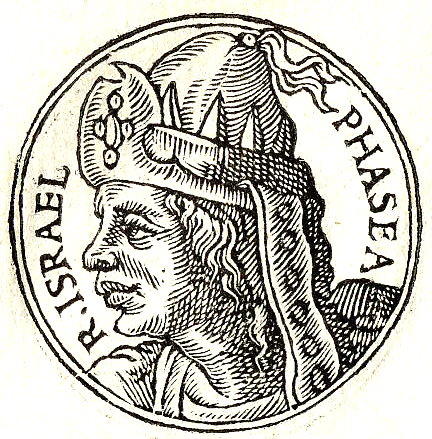
Chapter 17 marks the beginning of the end of the northern kingdom of Israel. It had been two centuries since God had divided Solomon’s domain in half and placed the ten northern tribes under the leadership of Jeroboam. Now, some 200 years later, God was about to bring judgment upon His disobedient children. It all takes place during the reign of Hoshea, who will have the not-so-pleasant privilege of serving as the last king of Israel. Like many of his predecessors, Hoshea had come to the throne by means of intrigue and insurrection. Under King Pekah’s leadership, Israel had suffered significant losses in terms of both land and lives. King Tiglath-Pileser of Assyria had conducted a relentless campaign of terror, eventually capturing “the towns of Ijon, Abel-beth-maacah, Janoah, Kedesh, and Hazor. He also conquered the regions of Gilead, Galilee, and all of Naphtali, and he took the people to Assyria as captives” (2 Kings 15:29 ESV). 

These actions left the nation in disarray and weakened Pekah’s hold on the throne of Israel. Hoshea took full advantage of the volatile conditions and launched a coup that resulted in Pekah’s assassination and his own ascension to the throne of Israel. But he had chosen a poor time to become king. The Assyrians had completely dominated and demoralized the Israelite army, leaving Hoshea with no choice but to become a vassal to King Tiglath-Pileser. He was nothing more than a puppet king, answering to the more powerful king of Assyria. But when Tiglath-Pileser was forced to return to Mesopotamia to address problems in his own land, Hoshea rebelled and declared Israel free of Assyrian rule. He stopped all tribute payments to Assyria and, to prevent further invasions, he formed an alliance with the Egyptians. Things appeared to be going in his favor.

Tiglath-Pileser eventually died and was replaced by his son, Shalmaneser. For two years, the new king of Assyria remained preoccupied with problems on the home front. But in 725 BC, he once again set his sights on the land of Philistia. One of the first things Shalmaneser did was order the arrest and imprisonment of the recalcitrant king of Israel. Hoshea was removed from the throne and placed in a prison cell, where he would wait out the fall of his kingdom. For three years, the Assyrians laid siege to the capital city of Samaria, and in 722 BC, it fell.

…in the ninth year of King Hoshea’s reign, Samaria fell, and the people of Israel were exiled to Assyria. They were settled in colonies in Halah, along the banks of the Habor River in Gozan, and in the cities of the Medes. – 2 Kings 17:6 NLT

But even worse than the fall of the capital was the capture and deportation of the people. They were forcibly removed from the land and taken as prisoners to Assyria. They were herded like animals and marched out of Israel, never to set foot in the land of promise again. And the author makes it painfully clear the reason behind their horrific fate.

This disaster came upon the people of Israel because they worshiped other gods. They sinned against the LORD their God, who had brought them safely out of Egypt and had rescued them from the power of Pharaoh, the king of Egypt. – 2 Kings 17:7 NLT

None of this should have come as a surprise because Yahweh had repeatedly warned them that they would face serious consequences if they chose to rebel against Him. Long before they had entered the land of Canaan, He had given them a detailed description of what would happen if they refused to remain faithful to their covenant commitment to Him. Moses pulled no punches when he outlined the devastating consequences of their rebellion to them.

“The LORD will exile you and your king to a nation unknown to you and your ancestors. There in exile you will worship gods of wood and stone! You will become an object of horror, ridicule, and mockery among all the nations to which the LORD sends you.” – Deuteronomy 28:36-37 NLT

“You will have sons and daughters, but you will lose them, for they will be led away into captivity.”Deuteronomy 28:41 NLT

“Just as the LORD has found great pleasure in causing you to prosper and multiply, the LORD will find pleasure in destroying you. You will be torn from the land you are about to enter and occupy. – Deuteronomy 28:63 NLT

And now, centuries later, the foreboding words of Moses had been fulfilled. God did what He had said He would do, and the author of 2 Kings puts all the blame on the people of Israel.

They had followed the practices of the pagan nations – vs 8

The people of Israel had also secretly done many things that were not pleasing to the LORD their God. – vs 9

They built pagan shrines for themselves – vs 9

They set up sacred pillars and Asherah poles – vs 10

They offered sacrifices on all the hilltops, just like the nations the LORD had driven from the land ahead of them – vs 11

Yes, they worshiped idols, despite the LORD’s specific and repeated warnings. – vs 12

And they had done all of this despite the repeated warnings of God’s prophets.

Again and again the LORD had sent his prophets and seers to warn both Israel and Judah: “Turn from all your evil ways. Obey my commands and decrees—the entire law that I commanded your ancestors to obey, and that I gave you through my servants the prophets.” – 2 Kings 17:13 NLT

But they had refused to listen. They rejected the prophets’ warnings and refused to believe that God would carry out His threat of judgment and destruction. In fact, the author states that “they despised all his warnings” (2 Kings 17:15 NLT). And it had all begun as soon as God had placed the ten northern tribes under the leadership of Jeroboam. In response to this tremendous responsibility given to him by God, Jeroboam had ordered the creation of two idols of gold made in the form of a calf. These false gods became the first of many that the people of Israel worshiped in place of Yahweh.

on the advice of his counselors, the king made two gold calves. He said to the people, “It is too much trouble for you to worship in Jerusalem. Look, Israel, these are the gods who brought you out of Egypt!”

He placed these calf idols in Bethel and in Dan—at either end of his kingdom. But this became a great sin, for the people worshiped the idols, traveling as far north as Dan to worship the one there. – 1 Kings 12:28-30 NLT

Centuries later, the spiritual state in Israel had not improved; it had actually worsened.

They set up an Asherah pole and worshiped Baal and all the forces of heaven. They even sacrificed their own sons and daughters in the fire. They consulted fortune-tellers and practiced sorcery and sold themselves to evil, arousing the LORD’s anger. – 2 Kings 17:16-17 NLT

King after king, generation after generation, the people of Israel would repeat the sins of their fathers. Meanwhile, the prophets of God repeated the warnings of Moses, calling the people to repent and return to their covenant commitment.

But the Israelites would not listen. They were as stubborn as their ancestors who had refused to believe in the LORD their God. – 2 Kings 17:14 NLT

So, God “swept them away from his presence” (2 Kings 17:18 NLT). In a sense, the ten northern tribes ceased to exist. Yes, even after the exile, many would remain in the land, but they would never have another king to rule over them. This remnant of God’s chosen people would live under the constant threat of enemy attack, and the former “land of promise” would become a place of hopelessness and heartache. The residual impact of the Assyrian invasion would be long-term and devastatingly difficult, just as God had warned.

Its armies will devour your livestock and crops, and you will be destroyed. They will leave you no grain, new wine, olive oil, calves, or lambs, and you will starve to death. – Deuteronomy 28:51 NLT

The people of God had turned their backs on Yahweh. Despite His many blessings and the constant demonstrations of His covenant faithfulness, they made a conscious decision to replace Him. He had warned them, but they had refused to listen. And now they were facing the consequences. Yahweh could be ignored, but He would not be mocked. They could refuse to heed His warnings, but they could not escape His judgment. The covenant commitment their ancestors made with Yahweh had been binding and irreversible. There was no excuse for their refusal to obey.

All the way back to their days in the wilderness after their deliverance from slavery in Egypt, the Israelites had eagerly agreed to keep their covenant commitment to Yahweh, not once but twice.

Then Moses went down to the people and repeated all the instructions and regulations the Lord had given him. All the people answered with one voice, “We will do everything the LORD has commanded. – Exodus 24:3 NLT

Then he took the Book of the Covenant and read it aloud to the people. Again they all responded, “We will do everything the LORD has commanded. We will obey. – Exodus 24:7 NLT

But “they despised his statutes and his covenant that he made with their fathers and the warnings that he gave them” (2 Kings 17:15 ESV). Rather than doing everything the LORD commanded, “they went after false idols and became false, and they followed the nations that were around them” (2 KINGS 17:15 ESV). Now, they were paying the price. 

English Standard Version (ESV) The Holy Bible, English Standard Version. ESV® Permanent Text Edition® (2016). Copyright © 2001 by Crossway Bibles, a publishing ministry of Good News Publishers.

New Living Translation (NLT) Holy Bible, New Living Translation, copyright © 1996, 2004, 2015 by Tyndale House Foundation. Used by permission of Tyndale House Publishers Inc., Carol Stream, Illinois 60188. All rights reserved.


The End Is Near

13 Shallum the son of Jabesh began to reign in the thirty-ninth year of Uzziah king of Judah, and he reigned one month in Samaria. 14 Then Menahem the son of Gadi came up from Tirzah and came to Samaria, and he struck down Shallum the son of Jabesh in Samaria and put him to death and reigned in his place. 15 Now the rest of the deeds of Shallum, and the conspiracy that he made, behold, they are written in the Book of the Chronicles of the Kings of Israel. 16 At that time Menahem sacked Tiphsah and all who were in it and its territory from Tirzah on, because they did not open it to him. Therefore he sacked it, and he ripped open all the women in it who were pregnant.

17 In the thirty-ninth year of Azariah king of Judah, Menahem the son of Gadi began to reign over Israel, and he reigned ten years in Samaria. 18 And he did what was evil in the sight of the LORD. He did not depart all his days from all the sins of Jeroboam the son of Nebat, which he made Israel to sin. 19 Pul the king of Assyria came against the land, and Menahem gave Pul a thousand talents of silver, that he might help him to confirm his hold on the royal power. 20 Menahem exacted the money from Israel, that is, from all the wealthy men, fifty shekels of silver from every man, to give to the king of Assyria. So the king of Assyria turned back and did not stay there in the land. 21 Now the rest of the deeds of Menahem and all that he did, are they not written in the Book of the Chronicles of the Kings of Israel? 22 And Menahem slept with his fathers, and Pekahiah his son reigned in his place.

23 In the fiftieth year of Azariah king of Judah, Pekahiah the son of Menahem began to reign over Israel in Samaria, and he reigned two years. 24 And he did what was evil in the sight of the LORD. He did not turn away from the sins of Jeroboam the son of Nebat, which he made Israel to sin. 25 And Pekah the son of Remaliah, his captain, conspired against him with fifty men of the people of Gilead, and struck him down in Samaria, in the citadel of the king’s house with Argob and Arieh; he put him to death and reigned in his place. 26 Now the rest of the deeds of Pekahiah and all that he did, behold, they are written in the Book of the Chronicles of the Kings of Israel.

27 In the fifty-second year of Azariah king of Judah, Pekah the son of Remaliah began to reign over Israel in Samaria, and he reigned twenty years. 28 And he did what was evil in the sight of the LORD. He did not depart from the sins of Jeroboam the son of Nebat, which he made Israel to sin.

29 In the days of Pekah king of Israel, Tiglath-pileser king of Assyria came and captured Ijon, Abel-beth-maacah, Janoah, Kedesh, Hazor, Gilead, and Galilee, all the land of Naphtali, and he carried the people captive to Assyria. 30 Then Hoshea the son of Elah made a conspiracy against Pekah the son of Remaliah and struck him down and put him to death and reigned in his place, in the twentieth year of Jotham the son of Uzziah. 31 Now the rest of the acts of Pekah and all that he did, behold, they are written in the Book of the Chronicles of the Kings of Israel. 2 Kings 15:13-31 ESV

During Azariah’s 52-year reign over the southern kingdom of Judah, things proved to be a bit more unstable north of the border. Israel was having difficulty keeping its kings alive. In just over 14 years, the ten northern tribes would go through six different kings, and all but one of them would be assassinated by their successors. It was a time marked by extreme political instability and worsening spiritual infidelity. Zechariah’s reign would be short-lived, lasting only six months before Shallum assassinated him and took his place on the throne. But Shallum would break Zechariah’s record for the shortest reign by surviving a single month before Menahem took his life and his throne.

According to the Jewish historian, Josephus, Menahem had been the commander-in-chief of Jeroboam II’s army. Evidently, Menahem had taken Shallum’s murder of Zechariah, the son of Jeroboam II, as an act of treason. So, he took matters into his own hands and executed the usurper to the throne in record time. Of course, Menahem chose to fill the vacancy left by Shallum’s untimely death by declaring himself king. But when some of Israel’s citizens refused to recognize his right to rule, he launched a brutal reprisal campaign against them.

Menahem destroyed the town of Tappuah and all the surrounding countryside as far as Tirzah, because its citizens refused to surrender the town. He killed the entire population and ripped open the pregnant women. – 2 Kings 15:16 NLT

It’s not surprising that the author describes Menahem’s ten-year reign as evil. He did nothing to restore the nation’s spiritual condition. Instead, he replicated the idolatrous ways of his predecessor, Jeroboam, the first king of the northern kingdom.

It was during Menahem’s less-than-stellar reign that the kingdom of Assyria first appeared on the scene. This up-and-coming nation would prove to be a constant source of trouble for both Israel and Judah. When the king of Assyria began to test his growing military might by launching raids into Israelite territory, Menahem determined that it was in his best interest to secure an alliance with this potent new threat to the region. So, he paid a substantial tribute to the Assyrians and funded it by exacting an exorbitant and highly unpopular tax on the wealthiest citizens of Israel. But his strategy appears to have worked.

…the king of Assyria turned from attacking Israel and did not stay in the land. – 2 Kings 15:20 NLT

But little did Menahem know that he was simply buying time. The Assyrians could be bought off, but they would not go away.

Menahem was succeeded by his son, Pekahiah, whose reign would last only two years. Pekahiah was eventually assassinated and replaced by Pekah, the son of the man who commanded his own army. And it was during Pekah’s 20-year, sin-stained reign that the Assyrians showed up again. Evidently, Pekah chose not to continue making tribute payments to the Assyrians, so King Tiglath-pileser ordered the resumption of raids into Israelite territory.

King Tiglath-pileser of Assyria attacked Israel again, and he captured the towns of Ijon, Abel-beth-maacah, Janoah, Kedesh, and Hazor. He also conquered the regions of Gilead, Galilee, and all of Naphtali, and he took the people to Assyria as captives. – 2 Kings 15:29 NLT

The scope and intensity of these raids are simply a foreshadowing of darker days to come. Long before the Israelites settled in the land of Canaan, God had warned them what would happen if they chose to be unfaithful by refusing to obey His commands.

“You will watch as your sons and daughters are taken away as slaves. Your heart will break for them, but you won’t be able to help them. A foreign nation you have never heard about will eat the crops you worked so hard to grow. You will suffer under constant oppression and harsh treatment. You will go mad because of all the tragedy you see around you.” – Deuteronomy 28:32-34 NLT

This was just the beginning. But Pekah did not recognize these devastating raids by the Assyrians as the judgment of God. Instead, he “did what was evil in the LORD’s sight. He refused to turn from the sins that Jeroboam son of Nebat had led Israel to commit” (2 Kings 15:28 NLT). And eventually, he suffered the same fate as his predecessor. After a 20-year reign, he too was assassinated. Israel’s constant harassment by the Assyrians eventually destabilized Pekah’s reign.

These costly raids and the enslavement of their fellow citizens led the people to grow increasingly more dissatisfied with Pekah’s leadership. Eventually, Hoshea, the son of Elah, took advantage of the unstable situation by instigating a successful coup against the king. He assassinated Pekah and took his place on the throne of Israel, but this latest regime change, like all those that had preceded it, made little difference. The people of Israel remained just as rebellious and unrepentant as ever, and the Assyrians grew increasingly powerful with each passing day. The handwriting was on the wall; it would not be long before God fulfilled His promise to bring curses upon the people of Israel for their unfaithfulness and disobedience.

During this time, Yahweh sent His prophets to warn the Israelites about their sinful behavior.

“The people of Israel have sinned again and again,
    and I will not let them go unpunished!
They sell honorable people for silver
    and poor people for a pair of sandals.
They trample helpless people in the dust
    and shove the oppressed out of the way.
Both father and son sleep with the same woman,
    corrupting my holy name.” – Amos 2:6-7 NLT

“From among all the families on the earth,
    I have been intimate with you alone.
That is why I must punish you
    for all your sins.” – Amos 3:2 NLT

“But now bring charges against Israel—your mother—
    for she is no longer my wife,
    and I am no longer her husband.
Tell her to remove the prostitute’s makeup from her face
    and the clothing that exposes her breasts.
Otherwise, I will strip her as naked
    as she was on the day she was born.
I will leave her to die of thirst,
    as in a dry and barren wilderness. – Hosea 2:2-3 NLT

They had been warned, but repeatedly refused to repent. Through intrigue and insurrection, the kings of Israel had led their people to sin against God, destabilizing the nation’s power and encouraging the people to forsake Yahweh. And the time was coming when God would repay them for their unfaithfulness. He would no longer allow His holy name to be desecrated by their constant disobedience of His commands and disregard for His will. They had failed to recognize and appreciate His faithfulness.

She doesn’t realize it was I who gave her everything she has—
    the grain, the new wine, the olive oil;
I even gave her silver and gold.
    But she gave all my gifts to Baal.” – Hosea 2:8 NLT

And they would pay dearly for their mistake.

English Standard Version (ESV) The Holy Bible, English Standard Version. ESV® Permanent Text Edition® (2016). Copyright © 2001 by Crossway Bibles, a publishing ministry of Good News Publishers.

New Living Translation (NLT) Holy Bible, New Living Translation, copyright © 1996, 2004, 2015 by Tyndale House Foundation. Used by permission of Tyndale House Publishers Inc., Carol Stream, Illinois 60188. All rights reserved.

The End Is In Sight

13 Shallum the son of Jabesh began to reign in the thirty-ninth year of Uzziah king of Judah, and he reigned one month in Samaria. 14 Then Menahem the son of Gadi came up from Tirzah and came to Samaria, and he struck down Shallum the son of Jabesh in Samaria and put him to death and reigned in his place. 15 Now the rest of the deeds of Shallum, and the conspiracy that he made, behold, they are written in the Book of the Chronicles of the Kings of Israel. 16 At that time Menahem sacked Tiphsah and all who were in it and its territory from Tirzah on, because they did not open it to him. Therefore he sacked it, and he ripped open all the women in it who were pregnant.

17 In the thirty-ninth year of Azariah king of Judah, Menahem the son of Gadi began to reign over Israel, and he reigned ten years in Samaria. 18 And he did what was evil in the sight of the Lord. He did not depart all his days from all the sins of Jeroboam the son of Nebat, which he made Israel to sin. 19 Pul the king of Assyria came against the land, and Menahem gave Pul a thousand talents of silver, that he might help him to confirm his hold on the royal power. 20 Menahem exacted the money from Israel, that is, from all the wealthy men, fifty shekels of silver from every man, to give to the king of Assyria. So the king of Assyria turned back and did not stay there in the land. 21 Now the rest of the deeds of Menahem and all that he did, are they not written in the Book of the Chronicles of the Kings of Israel? 22 And Menahem slept with his fathers, and Pekahiah his son reigned in his place.

23 In the fiftieth year of Azariah king of Judah, Pekahiah the son of Menahem began to reign over Israel in Samaria, and he reigned two years. 24 And he did what was evil in the sight of the Lord. He did not turn away from the sins of Jeroboam the son of Nebat, which he made Israel to sin. 25 And Pekah the son of Remaliah, his captain, conspired against him with fifty men of the people of Gilead, and struck him down in Samaria, in the citadel of the king’s house with Argob and Arieh; he put him to death and reigned in his place. 26 Now the rest of the deeds of Pekahiah and all that he did, behold, they are written in the Book of the Chronicles of the Kings of Israel.

27 In the fifty-second year of Azariah king of Judah, Pekah the son of Remaliah began to reign over Israel in Samaria, and he reigned twenty years. 28 And he did what was evil in the sight of the Lord. He did not depart from the sins of Jeroboam the son of Nebat, which he made Israel to sin.

29 In the days of Pekah king of Israel, Tiglath-pileser king of Assyria came and captured Ijon, Abel-beth-maacah, Janoah, Kedesh, Hazor, Gilead, and Galilee, all the land of Naphtali, and he carried the people captive to Assyria. 30 Then Hoshea the son of Elah made a conspiracy against Pekah the son of Remaliah and struck him down and put him to death and reigned in his place, in the twentieth year of Jotham the son of Uzziah. 31 Now the rest of the acts of Pekah and all that he did, behold, they are written in the Book of the Chronicles of the Kings of Israel. 2 Kings 15:13-31 ESV

During Azariah’s 52-year reign over the southern kingdom of Judah, things proved to be a bit more unstable north of the border. Israel was having a difficult time keeping its kings alive. In just over 14 years, the ten northern tribes would go through six different kings, and all but one of them would be assassinated by his successor. It was a time marked by extreme political instability and worsening spiritual infidelity. Zechariah’s reign would be short-lived, lasting only six months before Shallum assassinated him and took his place on the throne. But Shallum would break Zechariah’s record for the shortest reign by surviving a single month before Menahem took his life and his throne.

According to the Jewish historian, Josephus, Menahem had been the commander-in-chief of Jeroboam II’s army. Evidently, Menahem had taken Shallum’s murder of Zechariah, the son of Jeroboam II, as an act of treason. So, he took matters into his own hands and executed the usurper to the throne in record time. Of course, Menahem chose to fill the vacancy left by Shallum’s untimely death by declaring himself king. But when some of Israel’s citizens refused to recognize his right to rule, he launched a brutal reprisal against them.

Menahem destroyed the town of Tappuah and all the surrounding countryside as far as Tirzah, because its citizens refused to surrender the town. He killed the entire population and ripped open the pregnant women. – 2 Kings 15:16 NLT

It’s not surprising that the author describes Menahem’s ten-year reign as evil. He did nothing to restore the spiritual condition of the nation. Instead, he replicated the idolatrous ways of his predecessor, Jeroboam.

It was during Menahem’s less-than-stellar reign that the kingdom of Assyria first appeared on the scene. This up-and-coming nation would prove to be a constant source of trouble for both Israel and Judah. And when the king of Assyria began to test his growing military might by launching raids into Israelite territory, Menahem determined that it was in his best interest to secure an alliance with this powerful new threat to the region. So, he paid a substantial tribute to the Assyrians and funded it by exacting an exorbitant and highly unpopular tax on the wealthiest citizens of Israel. But his strategy appears to have worked.

…the king of Assyria turned from attacking Israel and did not stay in the land. – 2 Kings 15:20 NLT

But little did Menahem know that he was simply buying time. The Assyrians could be bought off, but they were not going away.

Menahem was succeeded by his son, Pekahiah, whose reign would last only two years. Pekahiah was eventually assassinated and replaced by Pekah, the son of the man who commanded his own army. And it was during Pekah’s 20-year, sin-stained reign that the Assyrians showed up again. Evidently, Pekah chose not to continue making tribute payments to the Assyrians, so King Tiglath-pileser ordered the resumption of raids into Israelite territory.

King Tiglath-pileser of Assyria attacked Israel again, and he captured the towns of Ijon, Abel-beth-maacah, Janoah, Kedesh, and Hazor. He also conquered the regions of Gilead, Galilee, and all of Naphtali, and he took the people to Assyria as captives. – 2 Kings 15:29 NLT

The scope and intensity of these raids are simply a foreshadowing of darker days to come. And long before the Israelites had settled in the land of Canaan, God had warned them what would happen if they chose to be unfaithful by refusing to obey His commands.

You will watch as your sons and daughters are taken away as slaves. Your heart will break for them, but you won’t be able to help them. A foreign nation you have never heard about will eat the crops you worked so hard to grow. You will suffer under constant oppression and harsh treatment. You will go mad because of all the tragedy you see around you. – Deuteronomy 28:32-34 NLT

This was just the beginning. But Pekah did not recognize these devastating raids by the Assyrians as the judgment of God. Instead, he “did what was evil in the Lord’s sight. He refused to turn from the sins that Jeroboam son of Nebat had led Israel to commit” (2 Kings 15:28 NLT). And eventually, he suffered the same fate as his predecessor. After a 20-year reign, he too was assassinated. Israel’s constant harassment by the Assyrians eventually destabilized Pekah’s reign.

These costly raids and the enslavement of their fellow citizens led the people to grow increasingly more dissatisfied with Pekah’s leadership. Eventually, Hoshea, the son of Elah, took advantage of the unstable situation by instigating a successful coup against the king. He assassinated Pekah and took his place on the throne of Israel. But this latest regime change, like all those that had preceded it, made little difference. The people of Israel remained just as rebellious and unrepentant as ever. And the Assyrians were growing increasingly more powerful with each passing day. The handwriting was on the wall. It would not be long before God fulfilled His promise to bring curses upon the people of Israel for their unfaithfulness and disobedience.

During this time, God had sent His prophets to warn the Israelites about their sinful behavior.

“The people of Israel have sinned again and again,
    and I will not let them go unpunished!
They sell honorable people for silver
    and poor people for a pair of sandals.
They trample helpless people in the dust
    and shove the oppressed out of the way.
Both father and son sleep with the same woman,
    corrupting my holy name.” – Amos 2:6-7 NLT

“From among all the families on the earth,
    I have been intimate with you alone.
That is why I must punish you
    for all your sins.” – Amos 3:2 NLT

“But now bring charges against Israel—your mother—
    for she is no longer my wife,
    and I am no longer her husband.
Tell her to remove the prostitute’s makeup from her face
    and the clothing that exposes her breasts.
Otherwise, I will strip her as naked
    as she was on the day she was born.
I will leave her to die of thirst,
    as in a dry and barren wilderness. – Hosea 2:2-3 NLT

They had been warned but they had repeatedly refused to repent. The kings of Israel had led their people to sin against God. Through intrigue and insurrection, these men had destabilized the nation’s power and then encouraged the people to forsake the one true God. And the time was coming when God would repay them for their unfaithfulness. He would no longer allow His holy name to be desecrated by their constant disobedience of His commands and disregard for His will. They had failed to recognize and appreciate His faithfulness.

She doesn’t realize it was I who gave her everything she has—
    the grain, the new wine, the olive oil;
I even gave her silver and gold.
    But she gave all my gifts to Baal.” – Hosea 2:8 NLT

And they would pay dearly for their mistake.

English Standard Version (ESV) The Holy Bible, English Standard Version. ESV® Permanent Text Edition® (2016). Copyright © 2001 by Crossway Bibles, a publishing ministry of Good News Publishers.

New Living Translation (NLT) Holy Bible, New Living Translation, copyright © 1996, 2004, 2015 by Tyndale House Foundation. Used by permission of Tyndale House Publishers Inc., Carol Stream, Illinois 60188. All rights reserved.
The Message (MSG)Copyright © 1993, 1994, 1995, 1996, 2000, 2001, 2002 by Eugene H. Peterson