Whoever Is Not With Me Is Against Me

26 “Your rowers have brought you out
into the high seas.
The east wind has wrecked you
in the heart of the seas.
27 Your riches, your wares, your merchandise,
your mariners and your pilots,
your caulkers, your dealers in merchandise,
and all your men of war who are in you,
with all your crew
that is in your midst,
sink into the heart of the seas
on the day of your fall.
28 At the sound of the cry of your pilots
the countryside shakes,
29 and down from their ships
come all who handle the oar.
The mariners and all the pilots of the sea
stand on the land
30 and shout aloud over you
and cry out bitterly.
They cast dust on their heads
and wallow in ashes;
31 they make themselves bald for you
and put sackcloth on their waist,
and they weep over you in bitterness of soul,
with bitter mourning.
32 In their wailing they raise a lamentation for you
and lament over you:
‘Who is like Tyre,
like one destroyed in the midst of the sea?
33 When your wares came from the seas,
you satisfied many peoples;
with your abundant wealth and merchandise
you enriched the kings of the earth.
34 Now you are wrecked by the seas,
in the depths of the waters;
your merchandise and all your crew in your midst
have sunk with you.
35 All the inhabitants of the coastlands
are appalled at you,
and the hair of their kings bristles with horror;
their faces are convulsed.
36 The merchants among the peoples hiss at you;
you have come to a dreadful end
and shall be no more forever.’”– Ezekiel 27:26-36 ESV

The second half of God’s funeral dirge for the fallen city of Tyre picks up the earlier refrain, dolefully chronicling its seemingly meteoric fall from grace. Its merchants had served as rowers on the ship of state, successfully navigating the city into the lucrative waters of global trade. But as they plied the waves of the Mediterranean in search of goods from distant lands like Africa, Spain, and Greece, they encountered a divinely ordained storm.

“A mighty eastern gale has wrecked you in the heart of the sea!” – Ezekiel 27:26 NLT

And sings the sorrowing details concerning this maelstrom from the hands of the Almighty.

“Everything is lost—
your riches and wares,
your sailors and pilots,
your ship builders, merchants, and warriors.
On the day of your ruin,
everyone on board sinks into the depths of the sea.” – Ezekiel 27:27 NLT

Tyre will become like a ship that goes down in a stormy sea. Everything and everyone on board will be lost as the waves of God’s wrath engulf the ship and render it unseaworthy and incapable of staying afloat.

I will bury you beneath the terrible waves of enemy attack. Great seas will swallow you. – Ezekiel 26:19 NLT

Ezekiel sings of the panic-stricken sailors crying out as their “ship” succumbs to the relentless battering of the waves and begins to break apart in the storm. Those on the shore will hear their screams of terror and mourn the loss of their friends and loved ones.

They cry aloud over you
and weep bitterly.
They throw dust on their heads
and roll in ashes.
They shave their heads in grief for you
and dress themselves in burlap.
They weep for you with bitter anguish
and deep mourning. – Ezekiel 27:30-31 NLT

The atmosphere is one of utter dismay as Tyre’s fellow merchants and business partners view the tragic scene taking place right in front of their eyes. They’re witnessing something unfathomable. In their minds, Tyre was virtually invincible, a perennial power in the region that had successfully sailed the sometimes stormy diplomatic seas for centuries. Tyre enjoyed strong relationships with powerful allies and was too well-connected to suffer defeat, even at the hands of the Babylonians. With their great wealth and profitable trading routes, they could negotiate their way out of any conflict. Or so they thought.

The funeral song God wrote has them singing their own mournful tune as they recall the glory days of Tyre and its epic demise.

“Was there ever such a city as Tyre,
now silent at the bottom of the sea?
The merchandise you traded
satisfied the desires of many nations.
Kings at the ends of the earth
were enriched by your trade.
Now you are a wrecked ship,
broken at the bottom of the sea.” – Ezekiel 27:32-34 NLT

At one time, Tyre had been the darling of the nations, providing them with much-needed goods from distant lands. Everyone had grown rich and prosperous through their relationship with this booming commercial empire. But God predicts their eventual and unavoidable fall. The once-great city will become like a ship-wrecked vessel lying at the bottom of the sea, its hold full of the priceless cargo that had helped to put it on the proverbial map of the world.

This sorrowful song brings to mind a more recent tune that recalls another ship lost at sea. It’s Gordon Lightfoot’s “The Wreck of the Edmund Fitzgerald.” Its doleful lyrics tell of the large freighter that sank in a violent storm on Lake Superior in 1975. In his inimitable style, Gordon Lightfoot chronicled the thoughts of a shocked nation as they considered the unlikely fate of this massive ship.

Does any one know where the love of God goesWhen the waves turn the minutes to hours?The searchers all say they’d have made Whitefish BayIf they’d put fifteen more miles behind herThey might have split up or they might have capsizedThey may have broke deep and took waterAnd all that remains is the faces and the namesOf the wives and the sons and the daughters – Gordon Lightfoot, The Wreck of the Edmund Fitzgerald lyrics © Warner Chappell Music, Inc.

Near-hurricane-force winds and waves up to 35-feet high brought about the demise of the Edmund Fitzgerald. But it was God Almighty who orchestrated the “sinking” of Tyre. God had warned them that they would pay dearly for their previous unjust treatment of His people, and when they deemed to rejoice over the fall of Judah, it would be the final straw.

“I will stop the music of your songs. No more will the sound of harps be heard among your people. I will make your island a bare rock, a place for fishermen to spread their nets. You will never be rebuilt, for I, the Lord, have spoken. Yes, the Sovereign Lord has spoken! – Ezekiel 26:13-14 NLT

“I will bring you to a terrible end, and you will exist no more. You will be looked for, but you will never again be found. I, the Sovereign Lord, have spoken!” – Ezekiel 26:21 NLT

Tyre’s fate was sealed because Jehovah Adonai (yᵊhōvâ ăḏōnāy) had ordained it. There was no escape. Its mighty ships, great wealth, defensive walls, and well-trained army would prove no match for the God of the universe. Once the citizens of this powerful Phoenician city decided to gloat over the fall of God’s people, they had a target on their backs. Their desire to pursue profit at all costs would cost them dearly. Their love affair with power, possessions, and influence would prove to be their undoing. And there is a timeless lesson to be learned from their fall.

“The record of Tyre has a peculiar relevance for our day, for those areas in which she excelled and was the envy of the entire ancient world are precisely the fields in which every modern nation seeks superiority. But Tyre has a message for our age, and it is that riches without God are unable to satisfy the heart of man and often keep many from dependence upon God. Has not this spirit invaded the church, and does it not pervade the lives of too many Christians?” – Charles Lee Feinberg, The Prophecy of Ezekiel

English Standard Version (ESV) The Holy Bible, English Standard Version. ESV® Permanent Text Edition® (2016). Copyright © 2001

New Living Translation (NLT) Holy Bible, New Living Translation, copyright © 1996, 2004, 2015 by Tyndale House Foundation. Used by permission of Tyndale House Publishers Inc., Carol Stream, Illinois 60188. All rights reserved.

How the Mighty Have Fallen

In the eleventh year, on the first day of the month, the word of the Lord came to me: “Son of man, because Tyre said concerning Jerusalem, ‘Aha, the gate of the peoples is broken; it has swung open to me. I shall be replenished, now that she is laid waste,’ therefore thus says the Lord God: Behold, I am against you, O Tyre, and will bring up many nations against you, as the sea brings up its waves. They shall destroy the walls of Tyre and break down her towers, and I will scrape her soil from her and make her a bare rock. She shall be in the midst of the sea a place for the spreading of nets, for I have spoken, declares the Lord God. And she shall become plunder for the nations, and her daughters on the mainland shall be killed by the sword. Then they will know that I am the Lord.

“For thus says the Lord God: Behold, I will bring against Tyre from the north Nebuchadnezzar king of Babylon, king of kings, with horses and chariots, and with horsemen and a host of many soldiers. He will kill with the sword your daughters on the mainland. He will set up a siege wall against you and throw up a mound against you, and raise a roof of shields against you. He will direct the shock of his battering rams against your walls, and with his axes he will break down your towers. 10 His horses will be so many that their dust will cover you. Your walls will shake at the noise of the horsemen and wagons and chariots, when he enters your gates as men enter a city that has been breached. 11 With the hoofs of his horses he will trample all your streets. He will kill your people with the sword, and your mighty pillars will fall to the ground. 12 They will plunder your riches and loot your merchandise. They will break down your walls and destroy your pleasant houses. Your stones and timber and soil they will cast into the midst of the waters. 13 And I will stop the music of your songs, and the sound of your lyres shall be heard no more. 14 I will make you a bare rock. You shall be a place for the spreading of nets. You shall never be rebuilt, for I am the Lord; I have spoken, declares the Lord God– Ezekiel 26:1-14 ESV

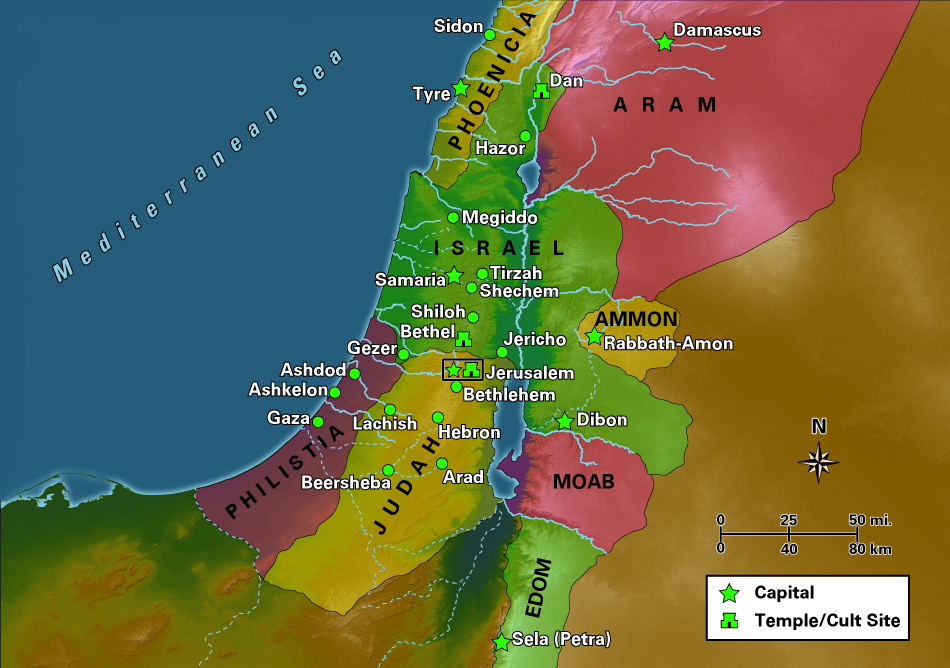
In this prophecy, God turns His attention north, focusing on the Phoenician city of Tyre, located on the northwestern coast of the Mediterranean Sea. Tyre was one of the oldest cities in the near east and was a profitable trading port, using its fleet of ships to transport goods from distant ports. The prophet, Isaiah, referred to Tyre as an “exultant city whose origin is from days of old” (Isaiah 23:7 ESV).

“Tyre became an important maritime city of the ancient Near East, being involved in great commercial and colonial enterprises throughout the Mediterranean area, the Red Sea, and the Indian Ocean. With the rise of Assyria to power, Tyre periodically submitted to Assyria’s lordship, paying tribute out of the abundance of her wealth (as in the cases of Esarhaddon and Ashurbanipal). Whenever possible, however, Tyre rebelled against the Assyrian power and withstood the Assyrian retribution in the security of its island fortress (as in the case of Sennacherib). As Assyria began to decline in strength, Tyre exerted her complete independence. Tyre was in this latter condition when these oracles were delivered.” – Ralph H. Alexander, Ezekiel

God delivers this divine oracle concerning Tyre “In the eleventh year, on the first day of the month” (Ezekiel 26:1 ESV). While there is much debate as to the exact timing of this message, it would seem that it refers to a date after the fall of Jerusalem. In the New Living Translation, verse one reads: “On February 3, during the twelfth year of King Jehoiachin’s captivity, this message came to me from the Lord.” 

This dating places the oracle at the time when Nebuchadnezzar first entered Jerusalem and took control of the city and the nation of Judah.

Then King Nebuchadnezzar of Babylon came to Jerusalem and captured it, and he bound Jehoiakim in bronze chains and led him away to Babylon. Nebuchadnezzar also took some of the treasures from the Temple of the Lord, and he placed them in his palace in Babylon. – 2 Chronicles  36:6-7 NLT

Nebuchadnezzar replaced the deposed Jehoiakim with his son, Jehoiachin, but his reign would only last three months.

In the spring of the year King Nebuchadnezzar took Jehoiachin to Babylon. Many treasures from the Temple of the Lord were also taken to Babylon at that time. And Nebuchadnezzar installed Jehoiachin’s uncle, Zedekiah, as the next king in Judah and Jerusalem. – 2 Chronicles 36:10 NLT

The Phoenicians rejoiced over the Babylonian seizure of Jerusalem because they viewed Judah as a threat to their trading business. While they controlled the sea routes, the Judahites controlled the lucrative land routes to the east. With Jerusalem’s fall, they hoped to profit from Babylon’s presence in the region. And there had been no love lost between Phoenicia and Judah over the years. The prophet, Joel, accuses them of plundering Judean cities and selling off citizens of Judah as slaves.

“What do you have against me, Tyre and Sidon and you cities of Philistia? Are you trying to take revenge on me? If you are, then watch out! I will strike swiftly and pay you back for everything you have done. You have taken my silver and gold and all my precious treasures, and have carried them off to your pagan temples. You have sold the people of Judah and Jerusalem to the Greeks, so they could take them far from their homeland. – Joel 3:4-6 NLT

This love-hate relationship between Tyre and Jerusalem was not going to end well for either city. Jerusalem was already under the threat of complete annihilation by the Babylonians, but Tyre believed itself to be immune from destruction. They had weathered the earlier Assyrian onslaught that brought an end to the northern kingdom of Israel, so they assumed they would enjoy a similar fate with the Babylonian invasion. But God had other plans for the Phoenicians and their well-fortified city.

I will bring many nations against you, like the waves of the sea crashing against your shoreline. They will destroy the walls of Tyre and tear down its towers. I will scrape away its soil and make it a bare rock! – Ezekiel 26:3-4 NLT

God promised to completely eradicate this island fortress, bringing successive waves of enemies against them, all in retaliation for their unjust treatment of His chosen people.

“The siege of Tyre by Nebuchadnezzar lasted for thirteen years (ca. 586-573 B.C.). Under King Ba’ali II, Tyre accepted Babylonian suzerainty and was ruled by ‘judges.’ However, when Babylonia declined in power, Tyre regained her independence once again. This brief freedom lasted till the second ‘wave’ of destruction brought her into submission to the Persians around 525 B.C. Tyre’s remaining history demonstrated the continuing ‘waves’ of conquerors: the resistance to Alexander the Great, eventuating in her collapse; her initial resistance to the Seleucid kingdom of Antiochus III, terminating in her becoming part of that kingdom; her submission to Rome; and her fall to the Saracens in the fourteenth century A.D., after which she never again regained any importance. God was faithful to bring the ‘many nations’ against Tyre in successive ‘waves’ of conquest.” – Ralph H. Alexander, Ezekiel

The prophet, Isaiah, pronounced another divine oracle against them, predicting their eventual fall from power and prominence.

Wail, you trading ships of Tarshish,
    for the harbor and houses of Tyre are gone!
The rumors you heard in Cyprus
    are all true.
Mourn in silence, you people of the coast
    and you merchants of Sidon.
Your traders crossed the sea,
   sailing over deep waters.
They brought you grain from Egypt
    and harvests from along the Nile.
You were the marketplace of the world.

But now you are put to shame, city of Sidon,
    for Tyre, the fortress of the sea, says,
“Now I am childless;
    I have no sons or daughters.”– Isaiah 23:1-4 NLT

God warns the prideful Phoenicians that their coastal fortress will suffer a similar fate as that of Jerusalem. It too will come under the relentless attack of King Nebuchadnezzar’s forces as they lay siege to its seemingly impenetrable walls.

From the north I will bring King Nebuchadnezzar of Babylon against Tyre. He is king of kings and brings his horses, chariots, charioteers, and great army. First he will destroy your mainland villages. Then he will attack you by building a siege wall, constructing a ramp, and raising a roof of shields against you. He will pound your walls with battering rams and demolish your towers with sledgehammers. The hooves of his horses will choke the city with dust, and the noise of the charioteers and chariot wheels will shake your walls as they storm through your broken gates. His horsemen will trample through every street in the city. They will butcher your people, and your strong pillars will topple. – Ezekiel 26:7-11 NLT

At this point in history, Tyre consisted of two sister cities. One was on the mainland and was connected to a second city located on an island in the Mediterranean Sea. They were connected by a narrow isthmus. The Babylonian forces would destroy the mainland city,  forcing the eventual surrender of the fortified city on the island.

God warns that Tyre will experience a devastating defeat that will leave the city destroyed and demoralized, never to rise to its former prominence again. When God states, “You shall never be rebuilt” (Ezekiel 26:14 ESV), He is not predicting that Tyre will no longer exist as a city but that it will never enjoy its former glory as an influential and powerful force in the region.

This city that had once gloated over its wealth would be plundered by the Babylonians. Its riches would be hauled away in carts, never to be seen again. Its fortified walls would be torn down, with the stones thrown into the sea. The lovely homes that lined its cobbled streets would become rubble and its former inhabitants would become lifeless corpses. Their fate is sealed because the sovereign Lord has declared it.

English Standard Version (ESV) The Holy Bible, English Standard Version. ESV® Permanent Text Edition® (2016). Copyright © 2001

New Living Translation (NLT) Holy Bible, New Living Translation, copyright © 1996, 2004, 2015 by Tyndale House Foundation. Used by permission of Tyndale House Publishers Inc., Carol Stream, Illinois 60188. All rights reserved.

When Men Play God

9 Thus says the Lord:

“For three transgressions of Tyre,
    and for four, I will not revoke the punishment,
because they delivered up a whole people to Edom,
    and did not remember the covenant of brotherhood.
10 So I will send a fire upon the wall of Tyre,
    and it shall devour her strongholds.” Amos 1:9-10 ESV

From Philistia in the south, Amos now moves up the coastline of the Mediterranean Sea, focusing the reader’s attention on the Phoenician city of Tyre. Tyre was an ancient coastal community that had been in existence long before the descendants of Abraham entered the land of Canaan. Due to their location along the Mediterranean coast, Tyre and its sister city of Sidon became commercial hubs for international trade. Tyre became wealthy and world-renowned for its purple dye. The prophet Isaiah referred to Tyre as “the fortress of the sea” (Isaiah23:4 NLT), most likely because of its impenetrable fortress perched atop the rocky coastline. While Phoenicia was a relatively small state within the region, it had tremendous influence over the lives of its inhabitants and the other nations around it. Isaiah goes to describe Tyre as “that great creator of kingdoms,” and he alludes to her significant financial influence by stating, “Her traders were all princes, her merchants were nobles” (Isaiah 23:8 NLT).

When the Israelites had entered the land of Canaan, God had awarded the tribe of Asher with the region of Phoenicia as part of its inheritance. But the book of Judges indicates that they failed to fully conquer or occupy the coastal communities, including the cities of Tyre and Sidon. When David ascended to the throne of Israel, he formed an alliance with Hiram king of Tyre, negotiating a trade agreement that brought “cedar timber and carpenters and stonemasons” (2 Samuel 5:11 NLT) to Jerusalem for the construction of his royal palace. When David’s son, Solomon, became king, he continued this symbiotic relationship, utilizing the shipping and trading capacities of his northern neighbor to access building materials for his many construction projects, including the temple.

At the end of twenty years, in which Solomon had built the two houses, the house of the Lord and the king’s house, and Hiram king of Tyre had supplied Solomon with cedar and cypress timber and gold, as much as he desired, King Solomon gave to Hiram twenty cities in the land of Galilee. – 1 Kings 9:10-11 ESV

Israel’s congenial relationship with Phoenicia continued, even after the split of the kingdom after the reign of Solomon. But it took a marked turn for the worse when Ahab become king of the northern tribe of Israel.

But Ahab son of Omri did what was evil in the Lord’s sight, even more than any of the kings before him. And as though it were not enough to follow the sinful example of Jeroboam, he married Jezebel, the daughter of King Ethbaal of the Sidonians, and he began to bow down in worship of Baal. First Ahab built a temple and an altar for Baal in Samaria. Then he set up an Asherah pole. He did more to provoke the anger of the Lord, the God of Israel, than any of the other kings of Israel before him. – 1 Kings 16:30-33 NLT

Like all the other nations that occupied the land of Canaan, the Phoenicians were pagan idolaters. And when King Ahab married Jezebel, he violated the expressed command of God that prohibited intermarriage with the nations living in the land of Canaan.

Make no treaties with them and show them no mercy. You must not intermarry with them. Do not let your daughters and sons marry their sons and daughters, for they will lead your children away from me to worship other gods. Then the anger of the LORD will burn against you, and he will quickly destroy you. This is what you must do. You must break down their pagan altars and shatter their sacred pillars. Cut down their Asherah poles and burn their idols. For you are a holy people, who belong to the LORD your God. Of all the people on earth, the LORD your God has chosen you to be his own special treasure. – Deuteronomy 7:2-6 NLT

And Ahab’s marriage to Jezebel would end up proving the truth behind God’s warning. She would have a strong and devastating influence over the spiritual direction of the nation.

But besides their love affair with false gods, it seems that the Phoenicians had another pressing problem: The pride and arrogance that stemmed from their great wealth and influence. And the prophet Ezekiel delivered a stinging indictment from God against the pride-filled king of Tyre.

“Son of man, give the prince of Tyre this message from the Sovereign Lord:

“In your great pride you claim, ‘I am a god!
    I sit on a divine throne in the heart of the sea.’
But you are only a man and not a god,
    though you boast that you are a god.
You regard yourself as wiser than Daniel
    and think no secret is hidden from you.
With your wisdom and understanding you have amassed great wealth—
    gold and silver for your treasuries.
Yes, your wisdom has made you very rich,
    and your riches have made you very proud.

“Therefore, this is what the Sovereign Lord says:
Because you think you are as wise as a god,
    I will now bring against you a foreign army,
    the terror of the nations.
They will draw their swords against your marvelous wisdom
    and defile your splendor!
They will bring you down to the pit,
    and you will die in the heart of the sea,
    pierced with many wounds.
Will you then boast, ‘I am a god!’
    to those who kill you?
To them you will be no god
    but merely a man!
You will die like an outcast
    at the hands of foreigners.
    I, the Sovereign Lord, have spoken!” – Ezekiel 28:2-10 NLT

According to Amos, the city of Tyre and, by extension, the nation of Phoenicia, was guilty of unfaithfulness. They had broken their covenantal relationship with the people of Israel.

They broke their treaty of brotherhood with Israel…” – Amos 1:9 NLT

Ever since the days of David and Solomon, the Phoenicians and Israelites had enjoyed a close and mutually beneficial relationship. But it would appear that the Phoenicians were little more than opportunists. At the end of the day, they were business people who entered into agreements and partnerships with other nations with their eyes focused on the bottom line. They were in it for what they could get out of it. Like all good capitalists, they measured success by looking at the return on their investment.

And it appears that they had found a way to profit from their southern neighbors by capturing and selling some of them as slaves to the Edomites. So, they were guilty of the same sin as the Philistines.

The Phoenicians were more interested in amassing wealth than in keeping their word. And they had found a way to take advantage of their peace agreements with Israel, surreptitiously selling out their partners to the highest bidder. And they thought they could get away with it. But God warned the king of Tyre, “you are only a man and not a god, though you boast that you are a god” (Ezekiel 28:2 NLT).

Yes, the king of Tyre had grown incredibly wealthy. And God acknowledges that “your wisdom has made you very rich” (Ezekiel 28:5 NLT). But God also warns that the king’s great wisdom and wealth did not make him a god. He could not do as he wished with the lives of God’s people.

It’s interesting to note that Jezebel made a marriage covenant with Ahab, the king of Israel. In essence, she married into the family of God. But she wanted nothing to do with the God of Israel. Instead, she promoted the worship of her false gods. And at one point she ordered the deaths of the prophets of Yahweh (1 Kings 18:13). But this prideful Phoenician princess would pay dearly for her sins. The book of 2 Kings describes her ignominious end.

When Jezebel, the queen mother, heard that Jehu had come to Jezreel, she painted her eyelids and fixed her hair and sat at a window. When Jehu entered the gate of the palace, she shouted at him, “Have you come in peace, you murderer? You’re just like Zimri, who murdered his master!”

Jehu looked up and saw her at the window and shouted, “Who is on my side?” And two or three eunuchs looked out at him. “Throw her down!” Jehu yelled. So they threw her out the window, and her blood spattered against the wall and on the horses. And Jehu trampled her body under his horses’ hooves. – 2 Kings 9:30-33 NLT

And, speaking on behalf of God, the prophet Amos describes an equally violent end to the people of Tyre.

So I will send down fire on the walls of Tyre,
    and all its fortresses will be destroyed. – Amos 1:10 NLT

Years later, long after the fall of the northern kingdom of Israel, Jerusalem would be invaded and destroyed by the Babylonians. And the opportunistic Phoenicians would take advantage of Judah’s demise. They would see the fall of Jerusalem as a chance to enrich themselves at Judah’s expense. But the prophet Ezekiel would warn them that such selfish behavior would prove costly.

“Son of man, Tyre has rejoiced over the fall of Jerusalem, saying, ‘Ha! She who was the gateway to the rich trade routes to the east has been broken, and I am the heir! Because she has been made desolate, I will become wealthy!’” – Ezekiel 26:2 NLT

The Phoenicians would attempt to profit from the situation, declaring themselves the self-appointed heirs of Judah’s lucrative trading business. But God had other plans in mind for the capitalistic and opportunistic Phoenicians.

Therefore, this is what the Sovereign Lord says: I am your enemy, O Tyre, and I will bring many nations against you, like the waves of the sea crashing against your shoreline. They will destroy the walls of Tyre and tear down its towers. I will scrape away its soil and make it a bare rock! It will be just a rock in the sea, a place for fishermen to spread their nets, for I have spoken, says the Sovereign Lord. Tyre will become the prey of many nations, and its mainland villages will be destroyed by the sword. Then they will know that I am the Lord. – Ezekiel 26:3-6 NLT

The Phoenicians made a pragmatic and rationalistic decision to violate their covenantal agreements with Israel and Judah. It seemed like the right thing to do. The numbers added up. The cost-benefits analysis made good business sense. But God let them know that their return on investment would have a dramatically different impact on their bottom line.

“They will plunder all your riches and merchandise and break down your walls. They will destroy your lovely homes and dump your stones and timbers and even your dust into the sea. I will stop the music of your songs. No more will the sound of harps be heard among your people. I will make your island a bare rock, a place for fishermen to spread their nets. You will never be rebuilt, for I, the Lord, have spoken. Yes, the Sovereign Lord has spoken!” – Ezekiel 26:12-14 NLT

English Standard Version (ESV) The Holy Bible, English Standard Version. ESV® Permanent Text Edition® (2016). Copyright © 2001 by Crossway Bibles, a publishing ministry of Good News Publishers.

New Living Translation (NLT) Holy Bible, New Living Translation, copyright © 1996, 2004, 2015 by Tyndale House Foundation. Used by permission of Tyndale House Publishers Inc., Carol Stream, Illinois 60188. All rights reserved.

The Message (MSG)Copyright © 1993, 1994, 1995, 1996, 2000, 2001, 2002 by Eugene H. Peterson

A Man of Divided Allegiance

10 At the end of twenty years, in which Solomon had built the two houses, the house of the Lord and the king’s house, 11 and Hiram king of Tyre had supplied Solomon with cedar and cypress timber and gold, as much as he desired, King Solomon gave to Hiram twenty cities in the land of Galilee. 12 But when Hiram came from Tyre to see the cities that Solomon had given him, they did not please him. 13 Therefore he said, “What kind of cities are these that you have given me, my brother?” So they are called the land of Cabul to this day. 14 Hiram had sent to the king 120 talents of gold.

15 And this is the account of the forced labor that King Solomon drafted to build the house of the Lord and his own house and the Millo and the wall of Jerusalem and Hazor and Megiddo and Gezer 16 (Pharaoh king of Egypt had gone up and captured Gezer and burned it with fire, and had killed the Canaanites who lived in the city, and had given it as dowry to his daughter, Solomon’s wife; 17 so Solomon rebuilt Gezer) and Lower Beth-horon 18 and Baalath and Tamar in the wilderness, in the land of Judah, 19 and all the store cities that Solomon had, and the cities for his chariots, and the cities for his horsemen, and whatever Solomon desired to build in Jerusalem, in Lebanon, and in all the land of his dominion. 20 All the people who were left of the Amorites, the Hittites, the Perizzites, the Hivites, and the Jebusites, who were not of the people of Israel— 21 their descendants who were left after them in the land, whom the people of Israel were unable to devote to destruction—these Solomon drafted to be slaves, and so they are to this day. 22 But of the people of Israel Solomon made no slaves. They were the soldiers, they were his officials, his commanders, his captains, his chariot commanders and his horsemen.

23 These were the chief officers who were over Solomon’s work: 550 who had charge of the people who carried on the work.

24 But Pharaoh’s daughter went up from the city of David to her own house that Solomon had built for her. Then he built the Millo.

25 Three times a year Solomon used to offer up burnt offerings and peace offerings on the altar that he built to the Lord, making offerings with it before the Lord. So he finished the house.

26 King Solomon built a fleet of ships at Ezion-geber, which is near Eloth on the shore of the Red Sea, in the land of Edom. 27 And Hiram sent with the fleet his servants, seamen who were familiar with the sea, together with the servants of Solomon. 28 And they went to Ophir and brought from there gold, 420 talents, and they brought it to King Solomon. 1 Kings 9:10-28 ESV

Solomon doesn’t realize it, but he is at the midway point of his 40-year reign. He has just completed the construction of the temple, his royal palaces, and all the buildings that will house his administrative offices.

With these projects behind him, Solomon turns his attention to other pressing matters. First, he makes an attempt to compensate King Hiram of Phoenicia for all the material and financial aid he had provided over the years. Early on in his reign, Solomon had made an agreement with Hiram that provided Solomon with all the lumber he needed for his many construction projects, while Hiram received much-needed grain and olive oil in return.

So Hiram supplied as much cedar and cypress timber as Solomon desired. In return, Solomon sent him an annual payment of 100,000 bushels of wheat for his household and 110,000 gallons of pure olive oil. – 1 Kings 5:10-11 NLT

This agreement had lasted for 20 years, and during that time, Solomon had compensated King Hiram for all the lumber and he had paid wages to all the Phoenician wood-workers who had helped with the various construction projects (1 Kings 5:6). But now that all the work was done, Solomon wanted to make a gesture of goodwill to his friend in Phoenicia. So, he gave Hiram 20 cities located in the land of Galilee along the border between Israel and Phoenicia. This appears to be a gracious act of generosity on Solomon’s part, but it quickly becomes apparent that his gift was a bit disingenuous. When Hiram personally inspected the cities Solomon had given him, his response reveals his deep disappointment.

“What kind of towns are these, my brother?” he asked. So Hiram called that area Cabul (which means “worthless”), as it is still known today. – 1 Kings 9:13 NLT

Evidently, these towns were located in a region of Galilee that was not conducive to agricultural production. Since Phoenicia occupied a narrow strip of land along the Mediterranean Sea, they were woefully deficient in arable farmland. That’s why Solomon’s compensation for the lumber had taken the form of grain and olive oil. At first glance, it would appear that Solomon had given them what they had always needed: Land on which to grow crops. But Hiram described Solomon’s gift as “Cabul,” a word that means “bound” or “sterile.” And while these 20 towns expanded the range of Hiram’s kingdom, they were essentially worthless. They provided no practical value. And what makes Solomon’s gift that much more egregious is that, over the years, Hiram had given Solomon 120 talents of gold. To put that in perspective, that’s nearly 5 tons of gold.

One could almost draw the conclusion that Solomon was somewhat of a Scrooge, a financial tightwad who was more than willing to spend money on himself, but was a bit stingy when it came to others. And it’s interesting to note that Solomon had given away land that had been part of the inheritance given by God to the people of Israel.

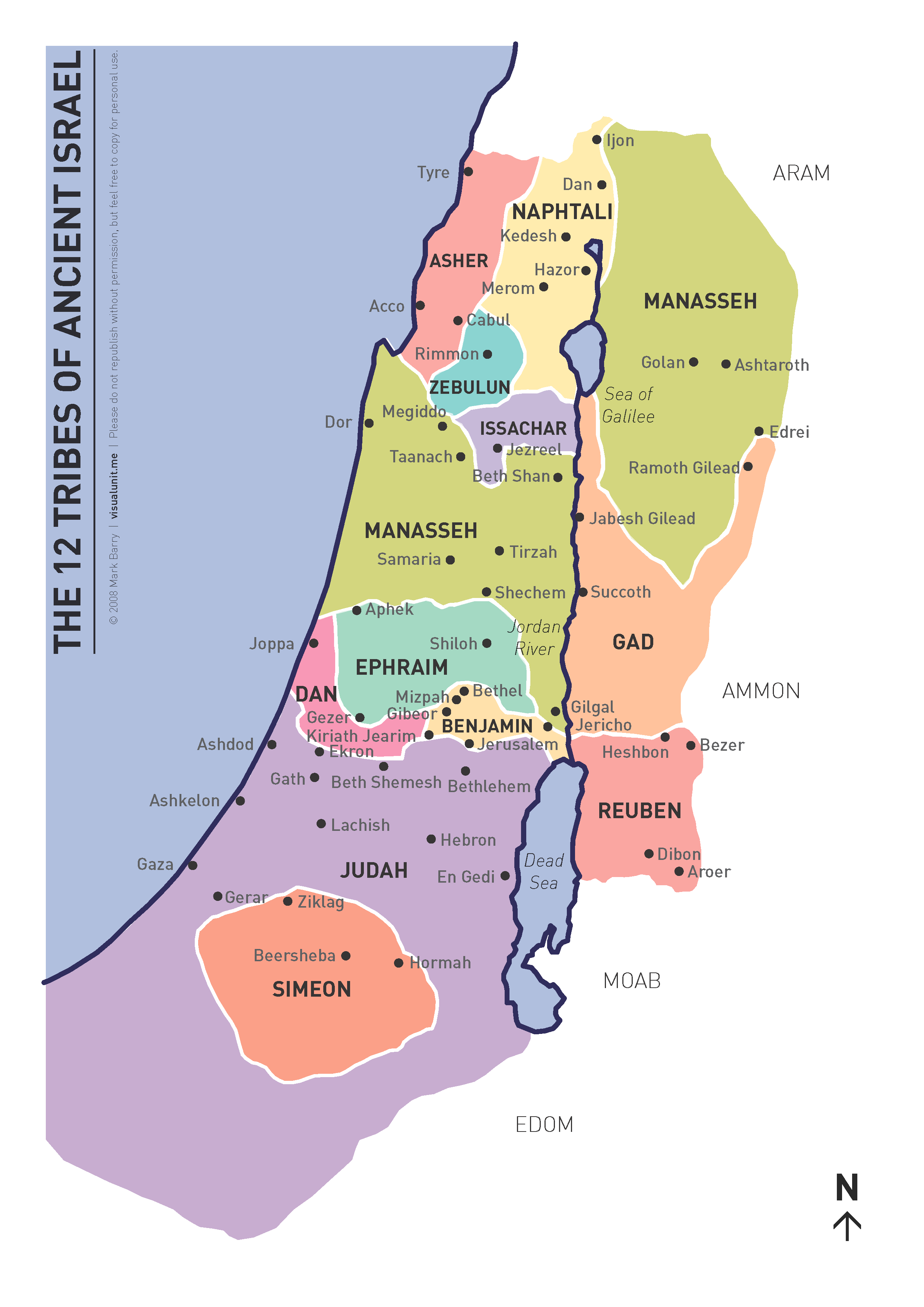
It’s most likely that the 20 towns were located in territory that had belonged to the tribes of Asher, Naphtali, and Zebulun. In awarding these cities to Hiram, Solomon was guilty of giving away land that belonged to the people of God. His willingness to give it away, coupled with Hiram’s poor assessment of it, reveals that it held no real value to Solomon.

One of the things that can be learned from studying the history of the Israelites is that every decision they made had long-term ramifications. The book of Judges reveals that, at one point, the tribes of Asher, Napthali, and Zebulun had been given the opportunity to conquer and occupy the land allotted to them by God, but they had failed.

The tribe of Zebulun failed to drive out the residents of Kitron and Nahalol, so the Canaanites continued to live among them. But the Canaanites were forced to work as slaves for the people of Zebulun.

The tribe of Asher failed to drive out the residents of Acco, Sidon, Ahlab, Aczib, Helbah, Aphik, and Rehob. Instead, the people of Asher moved in among the Canaanites, who controlled the land, for they failed to drive them out.

Likewise, the tribe of Naphtali failed to drive out the residents of Beth-shemesh and Beth-anath. Instead, they moved in among the Canaanites, who controlled the land. Nevertheless, the people of Beth-shemesh and Beth-anath were forced to work as slaves for the people of Naphtali. – Judges 1:30-33 NLT

One of the reasons the Phoenicians even existed was because of the failure of these three tribes to do what God had commanded them to do. As a result of their failure to drive out the inhabitants of the land, the Phoenicians occupied territory that was supposed to belong to the people of God. Now, Solomon had just awarded the Phoenicians with even more of Israel’s God-given inheritance.

Solomon’s main focus was the city of Jerusalem. Having willingly forfeited the cities located in the north, Solomon poured his time and energy into expanding his royal capital. To do so, Solomon enslaved thousands of non-Jews to work as laborers on his various rebuilding and enlargement projects. He conscripted Amorites, Hittites, Perizzites, Hivites, and Jebusites who were living in the land of Israel to provide slave labor for his ambitious expansion program. These people were used to extend the walls of Jerusalem, connecting the old City of David with the newer area surrounding the temple complex and the royal palaces and administrative headquarters. They “built towns as supply centers and constructed towns where his chariots and horses could be stationed” (1 Kings 9:19 NLT). Solomon was constructing a virtual theme park dedicated to his greatness; replete with palaces, terraces, stables for his many horses, and barracks for his growing army. 

And it’s important to remember that God had warned that His kings were not to refrain from certain actions.

The king must not build up a large stable of horses for himself… – Deuteronomy 17:16 NLT

The king must not take many wives for himself… – Deuteronomy 17:17 NLT

And he must not accumulate large amounts of wealth in silver and gold for himself… – Deuteronomy 17:17 NLT

Solomon was in violation of each of these commands. And while at this point, it appears that the daughter of Pharaoh was his only wife, it wouldn’t be long before he expanded his household greatly.

Now King Solomon loved many foreign women. Besides Pharaoh’s daughter, he married women from Moab, Ammon, Edom, Sidon, and from among the Hittites. The LORD had clearly instructed the people of Israel, “You must not marry them, because they will turn your hearts to their gods.” Yet Solomon insisted on loving them anyway. He had 700 wives of royal birth and 300 concubines. And in fact, they did turn his heart away from the LORD. – 1 Kings 11:1-3 NLT

Whether it was wives and concubines or horses and chariots, Solomon always seemed to be in building mode. Enough was never enough. He even built a fleet of boats and began an aggressive trading venture that netted him 16 tons of gold. For Solomon, bigger was always better. And yet, late in his life, Solomon would make a sad but telling admission.

I increased my possessions:
I built houses for myself;
I planted vineyards for myself.
I designed royal gardens and parks for myself,
and I planted all kinds of fruit trees in them.
I constructed pools of water for myself,
to irrigate my grove of flourishing trees.
I purchased male and female slaves,
and I owned slaves who were born in my house;
I also possessed more livestock—both herds and flocks—
than any of my predecessors in Jerusalem.
I also amassed silver and gold for myself,
as well as valuable treasures taken from kingdoms and provinces.
I acquired male singers and female singers for myself,
and what gives a man sensual delight—a harem of beautiful concubines.
So I was far wealthier than all my predecessors in Jerusalem,
yet I maintained my objectivity.
I did not restrain myself from getting whatever I wanted;
I did not deny myself anything that would bring me pleasure.
So all my accomplishments gave me joy;
this was my reward for all my effort.
Yet when I reflected on everything I had accomplished
and on all the effort that I had expended to accomplish it,
I concluded: “All these achievements and possessions are ultimately profitless—
like chasing the wind!
There is nothing gained from them on earth.” – Ecclesiastes 1:4-11 NLT

They say, “hindsight is 20-20,” and that would prove to be true in Solomon’s life. He would one day discover that his obsession with constant expansion, endless pleasure, and rampant materialism would never satisfy. But at the midway point of his reign, he didn’t know any better. So, he continued to try and balance his love for the things of this world with his love for God.  He kept accumulating material goods, while at the same time, offering sacrifices to God. Without even realizing it, he was worshiping two gods. Solomon was living out the very thing Jesus would later warn His disciples about.

“No one can serve two masters. For you will hate one and love the other; you will be devoted to one and despise the other. You cannot serve God and be enslaved to money.” – Matthew 6:24 NLT

English Standard Version (ESV) The Holy Bible, English Standard Version. ESV® Permanent Text Edition® (2016). Copyright © 2001 by Crossway Bibles, a publishing ministry of Good News Publishers.

New Living Translation (NLT) Holy Bible, New Living Translation, copyright © 1996, 2004, 2015 by Tyndale House Foundation. Used by permission of Tyndale House Publishers Inc., Carol Stream, Illinois 60188. All rights reserved.
The Message (MSG)Copyright © 1993, 1994, 1995, 1996, 2000, 2001, 2002 by Eugene H. Peterson

Just As He Had Planned It.

19 Now those who were scattered because of the persecution that arose over Stephen traveled as far as Phoenicia and Cyprus and Antioch, speaking the word to no one except Jews. 20 But there were some of them, men of Cyprus and Cyrene, who on coming to Antioch spoke to the Hellenists also, preaching the Lord Jesus. 21 And the hand of the Lord was with them, and a great number who believed turned to the Lord. 22 The report of this came to the ears of the church in Jerusalem, and they sent Barnabas to Antioch. 23 When he came and saw the grace of God, he was glad, and he exhorted them all to remain faithful to the Lord with steadfast purpose, 24 for he was a good man, full of the Holy Spirit and of faith. And a great many people were added to the Lord. 25 So Barnabas went to Tarsus to look for Saul, 26 and when he had found him, he brought him to Antioch. For a whole year they met with the church and taught a great many people. And in Antioch the disciples were first called Christians.

27 Now in these days prophets came down from Jerusalem to Antioch. 28 And one of them named Agabus stood up and foretold by the Spirit that there would be a great famine over all the world (this took place in the days of Claudius). 29 So the disciples determined, every one according to his ability, to send relief to the brothers living in Judea. 30 And they did so, sending it to the elders by the hand of Barnabas and Saul. Acts 11:19-30 ESV

In this section, Luke begins to introduce yet another phase of the church’s continuing spread and growth. Back in chapter eight, he had described one of the ramifications of Stephen’s martyrdom. It was the increased persecution of the church, in part, because of the efforts of Saul. Yet, in spite of the intensification of the persecution, he said, “the believers who were scattered preached the Good News about Jesus wherever they went” (Acts 8:4 NLT). Then, by way of example, he chronicled Philip’s trip to the region of Samaria and all that happened as a result. Here in chapter 11, Luke picks up where he left off, letting us know that the persecution of the church had resulted in a dispersion of the Christians well beyond Samaria. The believers who fled Jerusalem “traveled as far as Phoenicia and Cyprus and Antioch” (Acts 10:19 ESV). But then Luke adds a telling detail, revealing that these Jewish believers kept their efforts to share the gospel restricted to their own people: The Jews. He says that they spoke the word to no one but Jews. This is significant because he shares it immediately after detailing the dramatic outcome of Peter’s journey to Caesarea, where Gentiles came to faith and received the anointing of the Spirit of God just as the disciples had on the day of Pentecost. This provides us with an important insight into the early days of the church. As the church continued to grow and the gospel made its way outside the confines of Jerusalem and Judea, the effort developed multiple fronts, each seemingly with its own emphasis and distinct motivation. Those Jewish believers who escaped and made their way to Phoenicia, Cyprus and Antioch in Syria, were still under the impression that this new religion was little more than a new branch of reformed Judaism. It was a religion of Jews and for Jews. After all, Jesus had been a Jew and had claimed to be the long-awaited Jewish Messiah. So, it made sense that they would concentrate their efforts to share the gospel by focusing on fellow Jews. And, as Jews, the thought of sharing their new-found faith with a Gentile would never have crossed their minds. Remember, it had taken a vision and a word from God to get Peter to go to the home of Cornelius.

Cyprus, Phoenicia and Antioch were located hundreds of miles from Jerusalem and illustrate the ever-expanding reach of the gospel. Antioch, located in the region of Syria, was 300 miles from the city of Jerusalem and, at that time, would have been the third-largest city in the entire Roman empire. It was a bustling metropolis, made up of people from all walks of life and from all over the world. It is estimated that Antioch had a population of anywhere from 500,000 to 800,000 people, with a seventh of them being Jews. As a city, it had a reputation for decadence and its citizens’ love of pleasure. And yet, Antioch would become a major hub for Christianity in the coming years.

As the believing Jews made their ways to these various destinations, they faithfully shared the good news regarding Jesus Christ. Luke tells us that, in Antioch, they included Hellenistic Jews in their target audience. And he records that “a great number who believed turned to the Lord” (Acts 11:21 ESV). Even though they were restricting their outreach to Jews, God was blessing their efforts. And when news of what was happening in Antioch got back to the leadership of the church in Jerusalem, they sent Barnabas to check it out. When he arrived, Barnabas was greatly encouraged by what he saw and spent time exhorting those in the church there “to remain faithful to the Lord with steadfast purpose” (Acts 11:23 ESV). He knew that the days ahead would be difficult. It was not going to be easy to live out their new faith in the midst of a culture like that in Antioch. These people, as Jews, were already in the minority. Now, as believers, they were going to face further rejection by their own people. So, Barnabas felt compelled to strengthen the fledgling church by remaining with them for a prolonged period of time.  And knowing he would need help, he traveled to Tarsus to enlist Saul in his efforts. This would begin an important new phase in the God-ordained ministry of Saul. And it is essential that we recognize God’s sovereign hand at work in all these details. Stephen’s martyrdom had resulted in persecution and the dispersion of the church. It had also resulted in Saul’s intensified efforts in that persecution, after he approvingly watched the stoning of Stephen. And yet, the resurrected Jesus had confronted Saul as he made his way to Damascus to arrest and round up Christians and, as a result, Saul had undergone a dramatic conversion. And some three years later, when Saul had traveled to Jerusalem, it had been Barnabas who acted as his host and sponsor, introducing him to the apostles and explaining the dramatic details behind Saul’s conversion. Now, when the leaders in Jerusalem felt compelled to send a representative to Antioch to investigate all that was going on, they just so happened to choose Barnabas. This was anything but a case of happenstance or blind fate. It was the hand of God. Barnabas was chosen because God had ordained it. And his arrival in one of the largest, predominantly Gentile cities in the Roman empire was something God orchestrated. Now, he would have Saul working by his side, a man whom Jesus had chosen to be His witness to the Gentiles. It’s important that we recall the words spoken by Jesus to Ananias, commanding him to go lay hands on Saul immediately after his Damascus road experience:

“Go, for he is a chosen instrument of mine to carry my name before the Gentiles and kings and the children of Israel. – Romans 9:15 ESV

Here in this chapter, we see God instigating what will be another new front in the war against sin and death. He is putting one of His primary weapons into the battle, sending Saul into an environment where his gifts and abilities would be used by the Spirit of God to accomplish great things for the Kingdom. It had probably been close to nine years since Saul’s conversion, and during that time, he would have been growing in his faith and honing his Spirit-given abilities as a messenger of the gospel. God had been preparing Saul for this very occasion.
Luke records that Saul and Barnabas spent a year in Antioch; ministering, evangelizing, and growing the fledgling congregation there. Interestingly, Luke provides us with the insight that it was at this point in the timeline of the church that believers came to be known and referred to as Christians. This was most likely about ten years after Jesus’ death, burial and resurrection. A decade had passed and the church, formerly called “the way” was now known for the name of the One in whose name they believed and had placed their faith. This name is significant in that it contains three important characteristics. First of all, “Christ” is the Greek translation of Messiah. The Messiah was the Jewish Savior, promised by God in the Hebrew Scriptures. So, we have in the name “Christian”, an obvious link to the Jewish roots of Jesus. But Christ would become the primary name by which Gentiles would commonly refer to Jesus. It became like a second name for Him, much as we use it today. And the ending, “ians” is of a Latin derivation, the language of Rome and the predominate language of the empire. Luke’s inclusion of the seemingly insignificant fact that the name, “Christian” had become the primary means by which believers were described is more important than we might imagine. The faith was becoming universalized. It was making inroads into the various cultures of the day, and developing a reputation as a free-standing religion, separate and distinct from Judaism or any other pagan religion. It was slowly, but surely, becoming a fixture in the culture of the day.
Luke ends this chapter with what appears to be another interesting, and far from unimportant anecdote: A prophecy regarding an eminent worldwide famine. Once again, we have to look beyond the black and white nature of Luke’s reporting of Agabus’ prophecy. Why did Luke, under the inspiration of the Spirit, include this information at this point in his book? As we will see, this famine will play a significant part in the future of the church. And Luke provides some insight into how it will impact the ministry of Saul himself.
29 So the disciples determined, every one according to his ability, to send relief to the brothers living in Judea. 30 And they did so, sending it to the elders by the hand of Barnabas and Saul. – Acts 11:29-30 ESV
The church in Jerusalem would suffer greatly because of this famine. The Jews there, already suffering from persecution because of their faith, would find themselves living in relative poverty and barely able to exist. While there had been a time, in the early days of the church in Jerusalem, when the rich believers had been able to provide for the less-fortunate in their midst, after the arrival of the famine, that would no longer be possible. Now, the global church would provide for the needs of those in Jerusalem. And Saul would make it part of his life’s mission to raise funds from among the predominantly Gentile congregations to which he ministered, and to see that those resources made their way back to the church in Jerusalem. God would even use a famine to accomplish His will regarding the spread of the gospel and the unity of the church around the world. As it spread, God would see to it that it remained unified in its love and mission.
English Standard Version (ESV)
The Holy Bible, English Standard Version. ESV® Permanent Text Edition® (2016). Copyright © 2001

New Living Translation (NLT)
Holy Bible, New Living Translation, copyright © 1996, 2004, 2015 by Tyndale House Foundation. Used by permission of Tyndale House Publishers Inc., Carol Stream, Illinois 60188. All rights reserved.

The Message (MSG)  Copyright © 1993, 1994, 1995, 1996, 2000, 2001, 2002 by Eugene H. Peterson