With Eyes Wide Open

12 Since we have such a hope, we are very bold, 13 not like Moses, who would put a veil over his face so that the Israelites might not gaze at the outcome of what was being brought to an end. 14 But their minds were hardened. For to this day, when they read the old covenant, that same veil remains unlifted, because only through Christ is it taken away. 15 Yes, to this day whenever Moses is read a veil lies over their hearts. 16 But when one turns to the Lord, the veil is removed. 17 Now the Lord is the Spirit, and where the Spirit of the Lord is, there is freedom. 18 And we all, with unveiled face, beholding the glory of the Lord, are being transformed into the same image from one degree of glory to another. For this comes from the Lord who is the Spirit. – 2 Corinthians 3:12-18 ESV

In verses 7-11, Paul addressed the greater glory of the new covenant, as revealed by the indwelling Holy Spirit and His sanctifying ministry in the lives of believers. Rather than having to live up to a God-ordained code of conduct in our own strength, we have been given a new nature, made possible by the Holy Spirit’s presence within us. In his letter to the Romans, Paul explained just what man’s relationship with the old covenant had become due to the work of the Holy Spirit.

For God has done what the law, weakened by the flesh, could not do. By sending his own Son in the likeness of sinful flesh and for sin, he condemned sin in the flesh, in order that the righteous requirement of the law might be fulfilled in us, who walk not according to the flesh but according to the Spirit. – Romans 8:3-4 ESV

And Paul tells the Corinthians, “since we have such a hope, we are very bold” (2 Corinthians 3:12 ESV). Unlike the glory that shone from Moses’ face after having received the Ten Commandments from God on Mount Sinai, our glory is internal and eternal. The Holy Spirit is a permanent resident in the life of the believer, and His glory shines through us. The book of Exodus reveals that Moses was unaware that his face exuded the glory of God. He was oblivious to his outward transformation until others pointed it out.

When Moses came down Mount Sinai carrying the two stone tablets inscribed with the terms of the covenant, he wasn’t aware that his face had become radiant because he had spoken to the LORD. So when Aaron and the people of Israel saw the radiance of Moses’ face, they were afraid to come near him. – Exodus 34:29-30 ESV

When Moses realized that his radiant face terrified the people, he covered it with a veil. Moses records that “whenever he went into the Tent of Meeting to speak with the Lord, he would remove the veil until he came out again. Then he would give the people whatever instructions the Lord had given him, and the people of Israel would see the radiant glow of his face” (Exodus 34:33-35 NLT).

It seems that Moses initially veiled his face to diminish the people’s fear. But in time, his motive appears to have changed. His continued wearing of the veil went from protection to prevention. He was less worried about their fear than he was about their unfaithfulness. So, he prevented the people from seeing God’s glory because he deemed them unworthy. 

While the Old Testament does not record this fact, Paul states that the day came when the glory on Moses’ face began to fade; yet he continued to wear the veil. This left the people with the impression that nothing had changed. Yet Paul insists, “We are not like Moses, who put a veil over his face so the people of Israel would not see the glory, even though it was destined to fade away” (2 Corinthians 3:13 NLT). Paul seems to infer that the glory on Moses’ face was never intended to be permanent. As time passed, the people grew used to their leader’s glowing face. They even noticed that it had begun to fade. 

Their reaction to Moses’ fading countenance reflected their attitude toward the Mosaic Law. In the beginning, they treated it with awe and reverence, but over time their fear subsided, and their commitment to God’s Law waned.

Neither Moses nor Paul explains why the glory faded. Perhaps it reflects Moses’ own doubts about the Law’s efficacy. He was not seeing in the people the kind of life change he expected. Their fear of his glowing face did not translate into obedience to God’s commands. And while Moses continued to meet with Yahweh,  it appears that those encounters had a diminishing impact on Moses. Paul writes that the glory on Moses’ face was “destined to fade away” (2 Corinthians 3:13 NLT). It was never meant to be permanent and, as Paul insists, neither was the law.

The old covenant, like the glow on Moses’ face, was always meant to be temporary. It would not last and would one day be replaced by the new covenant and the permanent, indwelling power of the Holy Spirit.

Just as Moses covered his face with a veil, Paul says the minds of the Israelites were veiled so that their hearts were hardened and they were unable to see the truth. They believed the law was the key to their righteousness, even though they were incapable of obeying it. And it was their stubborn belief that the old covenant (the law) was the God-ordained means of being made right with Him that kept them from accepting Christ when He came. They refused to believe that He was the answer to their sin problem.

But the people’s minds were hardened, and to this day whenever the old covenant is being read, the same veil covers their minds so they cannot understand the truth. And this veil can be removed only by believing in Christ. Yes, even today when they read Moses’ writings, their hearts are covered with that veil, and they do not understand. – 2 Corinthians 3:14-15 ESV)

Their stubborn adherence to self-righteousness prevents them from accepting the righteousness made possible through the death of Jesus Christ. And yet, Paul repeatedly insists that obedience to the law was never intended as the path to justification before God.

Yet we know that a person is made right with God by faith in Jesus Christ, not by obeying the law. And we have believed in Christ Jesus, so that we might be made right with God because of our faith in Christ, not because we have obeyed the law. For no one will ever be made right with God by obeying the law. – Galatians 2:16 NLT

So it is clear that no one can be made right with God by trying to keep the law. For the Scriptures say, “It is through faith that a righteous person has life.” – Galatians 3:11 NLT

So we are made right with God through faith and not by obeying the law. – Romans 3:28 NLT

Paul tells the Corinthians, “whenever someone turns to the Lord, the veil is taken away” (2 Corinthians 3:16 NLT), and it is the Spirit of God that makes this possible. He opens the eyes of the spiritually blind, those with veiled hearts, and allows them to see the life-changing truth of the gospel. As a result, they “can see and reflect the glory of the Lord” (2 Corinthians 3:18a NLT). Like Moses, they can see the glory of God face-to-face and, not only that, they can reflect that glory to all those around them — a glory that will never fade.

As believers in Jesus Christ, we have access to God just as Moses did. We can enter into His presence at any time, day or night. Not only that, but He has also placed His presence within us in the form of the Holy Spirit. As a result, we are being transformed by this daily encounter with the divine, from one degree of glory to another, slowly, methodically, and persistently,

God is molding us into the likeness of His Son, and it is all because of His Spirit’s presence within us. There is no longer any law to live up to, but only the Spirit to whom we must submit. In his letter to the believers in Galatia, Paul explained the need for submission to the Spirit’s leading.

So I say, let the Holy Spirit guide your lives. Then you won’t be doing what your sinful nature craves. The sinful nature wants to do evil, which is just the opposite of what the Spirit wants. And the Spirit gives us desires that are the opposite of what the sinful nature desires. These two forces are constantly fighting each other, so you are not free to carry out your good intentions. But when you are directed by the Spirit, you are not under obligation to the law of Moses. – Galatians 5:16-18 NLT

The Holy Spirit is the one who gives us the capacity to say no to sin and yes to righteousness. He is the glory of God who resides in us and shines through us. He is constantly transforming us, and because He never leaves us, our ongoing transformation is guaranteed to never fade or falter.

Father, thank You for the gift of the Spirit. Without His indwelling presence, I would be just like Moses and the people of Israel, stuck trying to live up to Your holy standards in my own strength and doomed to failure. Rule-keeping is always onerous, but for some reason it feels like the right thing to do. I tend to like a list of do’s and don’t’s to keep because it allows me to keep score on my progress. But Paul makes it clear that I am incapable of living up to Your holy standards on my own. So, You graciously gave me the Holy Spirit as my advocate and helper. My ability to reflect Your glory isn’t up to me; it’s the work of Your Spirit within me. And now that my eyes are unveiled, I can see the law for what it is; a tool that reveals my sinfulness and reminds me of my need for the Spirit’s life-transforming power. Amen

English Standard Version (ESV) The Holy Bible, English Standard Version. ESV® Permanent Text Edition® (2016). Copyright © 2001 by Crossway Bibles, a publishing ministry of Good News Publishers.

New Living Translation (NLT) Holy Bible, New Living Translation, copyright © 1996, 2004, 2015 by Tyndale House Foundation. Used by permission of Tyndale House Publishers Inc., Carol Stream, Illinois 60188. All rights reserved.

Conduits of God’s Grace

1 Are we beginning to commend ourselves again? Or do we need, as some do, letters of recommendation to you, or from you? 2 You yourselves are our letter of recommendation, written on our hearts, to be known and read by all. 3 And you show that you are a letter from Christ delivered by us, written not with ink but with the Spirit of the living God, not on tablets of stone but on tablets of human hearts.

4 Such is the confidence that we have through Christ toward God. 5 Not that we are sufficient in ourselves to claim anything as coming from us, but our sufficiency is from God, 6 who has made us sufficient to be ministers of a new covenant, not of the letter but of the Spirit. For the letter kills, but the Spirit gives life. – 2 Corinthians 3:1-6 ESV

Paul ended the last chapter with the words, “You see, we are not like the many hucksters who preach for personal profit. We preach the word of God with sincerity and with Christ’s authority, knowing that God is watching us” (2 Corinthians 2:17 NLT).

He can’t help but feel frustrated at having to defend himself and his ministry again. In his first letter to the Corinthians, he found himself dealing with those who questioned his authority and apostleship. But as far as he was concerned, he only answered to God and no one else.

As for me, it matters very little how I might be evaluated by you or by any human authority. I don’t even trust my own judgment on this point. My conscience is clear, but that doesn’t prove I’m right. It is the Lord himself who will examine me and decide. – 1 Corinthians 4:3-4 NLT

Much of what Paul writes in this letter is not new information to the Corinthians; he has said it all before, in writing and in person. He wants them to know that he is not attempting to prove himself to them again. He doesn’t need a letter of recommendation, either from himself or anyone else, to affirm his status as an apostle of Jesus Christ. If they require proof of the effectiveness of his ministry, all they have to do is look at their own lives.

The only letter of recommendation we need is you yourselves. Your lives are a letter written in our hearts; everyone can read it and recognize our good work among you. Clearly, you are a letter from Christ showing the result of our ministry among you.– 2 Corinthians 3:2-3a NLT

Paul’s ministry was fruitful and had produced results. Lives had been changed. So, there should have been no reason for him to defend himself. The believers in Corinth were his letter of recommendation “written not with pen and ink, but with the Spirit of the living God…carved not on tablets of stone, but on human hearts” (2 Corinthians 3:3b NLT). There was no greater proof of the validity of Paul’s apostolic ministry than the transformed lives of those who made up the church in Corinth.

When Paul had first arrived in Corinth, he did not impress them with his oratory skills or blow them away with his eloquence and powers of persuasion. In fact, just the opposite was the case.

When I first came to you, dear brothers and sisters, I didn’t use lofty words and impressive wisdom to tell you God’s secret plan. For I decided that while I was with you I would forget everything except Jesus Christ, the one who was crucified. I came to you in weakness—timid and trembling. And my message and my preaching were very plain. Rather than using clever and persuasive speeches, I relied only on the power of the Holy Spirit. I did this so you would trust not in human wisdom but in the power of God. – 1 Corinthians 2:1-5 NLT

The establishment of the church in Corinth had been the work of the Holy Spirit, not Paul. He was simply a conduit through whom the Spirit had worked, making him an instrument in God’s hands. Paul could look at the changed lives of the people in Corinth and know with confidence that his work had been effective. He also knew that it had not been because of his own skills or abilities.

Not that we are sufficient in ourselves to claim anything as coming from us, but our sufficiency is from God, who has made us sufficient to be ministers of a new covenant. – 2 Corinthians 3:5-6a ESV

Any success Paul had enjoyed was the result of God’s power, not his own.

We are confident of all this because of our great trust in God through Christ. – 2 Corinthians 3:4 NLT

It is important to note that, while Paul viewed himself as a servant of God, he did not believe he was working for God so much as he was being used by God. He truly believed that God was working through him, not that he was helping God out. Sometimes we can easily begin to think that we are doing God a favor by serving Him. We can believe that we are doing all the work, while He sits back, eagerly watching and waiting to see what we will accomplish. But Paul knew that, without God’s power, all his efforts would have been in vain. God is not dependent upon us; it is the other way around. It was Paul who proudly proclaimed, “I can do all things through him who strengthens me” (Philippians 4:13 ESV). And it was God who said to Paul, “My grace is all you need. My power works best in weakness” (2 Corinthians 12:9 NLT).

Paul knew that it was the Spirit who gives life, and that only God can make the salvation of men possible. We have a role to play, but we must never forget that our role is that of servants of God. We are tools in His hands, empowered by His Spirit and obligated to do His will, His way. Paul emphasizes his understanding of his God-given role later on in this same letter.

And all of this is a gift from God, who brought us back to himself through Christ. And God has given us this task of reconciling people to him. For God was in Christ, reconciling the world to himself, no longer counting people’s sins against them. And he gave us this wonderful message of reconciliation. So we are Christ’s ambassadors; God is making his appeal through us. We speak for Christ when we plead, “Come back to God!” –2 Corinthians 5:18-20 NLT

We are conduits of God’s grace. We are PVC pipes carrying the life-giving message of the good news to those who are spiritually thirsty and starving. And we can be confident that God can and will use us as we make ourselves available to Him. Our weakness does not disqualify us; it makes us perfect candidates for God’s service.

God chose things the world considers foolish in order to shame those who think they are wise. And he chose things that are powerless to shame those who are powerful. God chose things despised by the world, things counted as nothing at all, and used them to bring to nothing what the world considers important. As a result, no one can ever boast in the presence of God. – 1 Corinthians 1:27-29 NLT

So, Paul writes, “If you want to boast, boast only about the Lord” (1 Corinthians 1:31 NLT). God can and will use you. Your value to Him begins with your recognition of your absolute dependence upon Him. Your greatest use by Him starts with your understanding that you are useless without Him. When we understand that God is the power behind our effectiveness, we can become confident conduits of His grace.

Father, thank You for choosing to use me, despite my sometimes over-self-confidence, pride, and arrogance. I am reminded that You don’t use me because You need me. My gifts, talents, and abilities are not assets to You; they are more often liabilities. I am nothing more than a conduit of Your grace and mercy; a means of distributing Your love and communicating Your redemptive message to all those who need to heat it. You chose me, filled me with Your Spirit, gave me access to Your power, and equipped me with a spiritual gift — all so that You might use me to reconcile the lost and build up the body of Christ. But I am more than just a servant to You; I am Your child. You love me and are patiently transforming me into the likeness of Your Son, Jesus Christ. And anything I accomplish in this life that has value or worth is because of You, not me. Amen

English Standard Version (ESV) The Holy Bible, English Standard Version. ESV® Permanent Text Edition® (2016). Copyright © 2001 by Crossway Bibles, a publishing ministry of Good News Publishers.

New Living Translation (NLT) Holy Bible, New Living Translation, copyright © 1996, 2004, 2015 by Tyndale House Foundation. Used by permission of Tyndale House Publishers Inc., Carol Stream, Illinois 60188. All rights reserved.

The Power of God

1 And I, when I came to you, brothers, did not come proclaiming to you the testimony of God with lofty speech or wisdom. 2 For I decided to know nothing among you except Jesus Christ and him crucified. 3 And I was with you in weakness and in fear and much trembling, 4 and my speech and my message were not in plausible words of wisdom, but in demonstration of the Spirit and of power, 5 so that your faith might not rest in the wisdom of men but in the power of God. – 1 Corinthians 2:1-5 ESV

As followers of Christ, we can be easily impressed and fall prey to persuasive words and convincing arguments. We find ourselves becoming fans of various teachers, preachers, and religious leaders. Style and charisma can become the primary criteria by which we judge a speaker. If we’re not careful, we can allow entertainment value to become the primary factor by which we critique a sermon, trumping biblical accuracy and spiritual efficacy. We can become fans of men rather than followers of Christ and elevate our desire for comfort over our need for conviction. Paul had warned his protegé Timothy, that the day was coming when this mindset would be de rigueur.

For a time is coming when people will no longer listen to sound and wholesome teaching. They will follow their own desires and will look for teachers who will tell them whatever their itching ears want to hear. – 2 Timothy 4:3 NLT

The situation in Corinth had probably not reached this point, but Paul saw a disturbing trend taking place. The believers there had allowed their personal preferences to become a point of division within the church. Some were claiming to be followers of Paul, while others sided with Cephas or Apollos. Evidently, the primary criteria behind their particular preferences had more to do with the messenger’s style than the content of their message. So Paul attempts to remind his readers that his initial ministry among them had been anything but impressive. He reflected back on that occasion, recalling that “my message and my preaching were very plain” (1 Corinthians 2:4a NLT).

Rather than delivering cleverly crafted sermons and powerfully persuasive arguments, Paul exhibited weakness, fear, and trembling. His oratory skills had been anything but impressive, but he had left an impression. His less-than-memorable delivery had made an impact because he kept the main thing the main thing. He states, “I decided that while I was with you I would forget everything except Jesus Christ, the one who was crucified.” (1 Corinthians 2:2 NLT). Paul wasn’t interested in fame or recognition, and he wasn’t out to build a personal following or win a popularity contest. He had gone to Corinth to share the testimony of God concerning His Son, Jesus Christ. And the message he shared had powerfully impacted the lives of the people of Corinth, but it had nothing to do with his powers of persuasion or way with words. 

What happened in Corinth had been the work of the Spirit of God. In fact, Paul admits that he “relied only on the power of the Holy Spirit” (1 Corinthians 2:4b NLT) when delivering the message Jesus had given him. Paul refused to take any credit for their salvation, but chose instead to promote the life-transforming power of the cross and the regenerating work of the Spirit of God. In his second letter to the Corinthians, Paul declared, “We are not like the many hucksters who preach for personal profit. We preach the word of God with sincerity and with Christ’s authority” (2 Corinthians 2:17 NLT). Paul’s primary goal was to preach Christ and the message of His crucifixion and resurrection. Later on in this same letter, Paul outlines exactly what he preached to them:

I passed on to you what was most important and what had also been passed on to me. Christ died for our sins, just as the Scriptures said. He was buried, and he was raised from the dead on the third day, just as the Scriptures said. He was seen by Peter and then by the Twelve. – 1 Corinthians 15:3-5 NLT

It was this message and their acceptance of it that had changed their lives. Their radical transformation had nothing to do with lofty speech or human wisdom because the message of the gospel was not man-made, but God-ordained. The power of the gospel lies not in the oratory skills of the messenger, but in the simple, life-altering truth of the message about the death, burial, and resurrection of Jesus. The gospel doesn’t need to be tricked out, spiced up, or improved upon. It doesn’t require bright lights, an impressive band, the latest technology, or an entertaining delivery to make it effective.

Of course, there is nothing wrong with presenting the gospel with excellence. A well-prepared sermon delivered engagingly can be an effective tool in delivering the good news about Jesus. It was Jim Rayburn, the founder of Young Life, who once said, “We believe it is sinful to bore kids with the gospel. Christ is the strongest, grandest, most attractive personality to ever grace the earth. But a careless messenger with the wrong method can reduce all this magnificence to the level of boredom …. It is a crime to bore anyone with the gospel.”

There is no doubt that a poorly prepared sermon can obscure the message of the gospel. But at the same time, an overly produced, entertainment-driven worship service can also overwhelm the simplicity of the life-altering message of salvation in Christ alone. It seems that Paul would have preferred the power of the Spirit of God over his own powers of persuasion. He had seen the life-impacting nature of the good news of Jesus Christ firsthand. For him, the faith of believers needed to rest “not in human wisdom but in the power of God” (1 Corinthians 2:5 NLT). The power of the gospel resides in the simple message of Christ crucified, not in the wisdom and eloquence of men.

Paul said, “We preach Christ crucified, a stumbling block to Jews and folly to Gentiles, but to those who are called, both Jews and Greeks, Christ the power of God and the wisdom of God” (1 Corinthians 1:23-24 ESV). There will always be those who balk at the message of the cross; they will see it as foolish and nonsensical. But there will also be those who find its message impactful and life-altering, and their transformed lives will give ample evidence that its power comes from God, not men.

Father, it is difficult to admit this, but You don’t really need our help. The power of the gospel lies not in our ability to deliver it persuasively and impactfully. We can’t argue anyone into the Kingdom of God. It is not our oratory skills that make the gospel attractive and acceptable; it is the life-transforming power of the Spirit of God. He alone can open blind eyes and soften hardened hearts. The power to transform lives comes from the message of Christ, not the messenger. Yet, You use our faltering speech and unimpressive delivery to carry the good news concerning Jesus to a lost and dying world. You allow us to present the gospel in all its simplicity, then the Spirit takes our inadequate words and uses them to turn sinners into saints. Salvation isn’t the result of human wisdom, clever arguments, or a persuasive presentation; it is Your work from beginning to end. Yet, You allow us to play a role in Your divine redemptive process. Help us remain faithful to play our part without feeling the need to take credit for the results. Amen

English Standard Version (ESV) The Holy Bible, English Standard Version. ESV® Permanent Text Edition® (2016). Copyright © 2001 by Crossway Bibles, a publishing ministry of Good News Publishers.

New Living Translation (NLT) Holy Bible, New Living Translation, copyright © 1996, 2004, 2015 by Tyndale House Foundation. Used by permission of Tyndale House Publishers Inc., Carol Stream, Illinois 60188. All rights reserved.

In Whom Do You Now Trust?

13 In the fourteenth year of King Hezekiah, Sennacherib king of Assyria came up against all the fortified cities of Judah and took them. 14 And Hezekiah king of Judah sent to the king of Assyria at Lachish, saying, “I have done wrong; withdraw from me. Whatever you impose on me I will bear.” And the king of Assyria required of Hezekiah king of Judah three hundred talents of silver and thirty talents of gold. 15 And Hezekiah gave him all the silver that was found in the house of the LORD and in the treasuries of the king’s house. 16 At that time Hezekiah stripped the gold from the doors of the temple of the LORD and from the doorposts that Hezekiah king of Judah had overlaid and gave it to the king of Assyria. 17 And the king of Assyria sent the Tartan, the Rab-saris, and the Rabshakeh with a great army from Lachish to King Hezekiah at Jerusalem. And they went up and came to Jerusalem. When they arrived, they came and stood by the conduit of the upper pool, which is on the highway to the Washer’s Field. 18 And when they called for the king, there came out to them Eliakim the son of Hilkiah, who was over the household, and Shebnah the secretary, and Joah the son of Asaph, the recorder.

19 And the Rabshakeh said to them, “Say to Hezekiah, ‘Thus says the great king, the king of Assyria: On what do you rest this trust of yours? 20 Do you think that mere words are strategy and power for war? In whom do you now trust, that you have rebelled against me? 21 Behold, you are trusting now in Egypt, that broken reed of a staff, which will pierce the hand of any man who leans on it. Such is Pharaoh king of Egypt to all who trust in him. 22 But if you say to me, “We trust in the LORD our God,” is it not he whose high places and altars Hezekiah has removed, saying to Judah and to Jerusalem, “You shall worship before this altar in Jerusalem”? 23 Come now, make a wager with my master the king of Assyria: I will give you two thousand horses, if you are able on your part to set riders on them. 24 How then can you repulse a single captain among the least of my master’s servants, when you trust in Egypt for chariots and for horsemen? 25 Moreover, is it without the LORD that I have come up against this place to destroy it? The LORD said to me, “Go up against this land and destroy it.”’”  – 2 Kings 18:13-25 ESV

King Hezekiah instituted a variety of reforms in Judah, including the restoration of the Temple of God and the reestablishment of the sacrificial system. He also reconsecrated the priestly order, challenging these men to recommit themselves to their God-ordained role as the spiritual leaders of Judah.

Not long after becoming king, Hezekiah had to deal with yet another long-neglected aspect of Judah’s worship: The annual celebration of Passover. He was informed that “the people had not been celebrating it in great numbers as required in the Law” (Deuteronomy 30:5 NLT). So, Hezekiah sent couriers throughout the kingdom of Judah with letters calling the people to gather in Jerusalem to celebrate the Passover.

“O people of Israel, return to the LORD, the God of Abraham, Isaac, and Israel, so that he will return to the few of us who have survived the conquest of the Assyrian kings. Do not be like your ancestors and relatives who abandoned the LORD, the God of their ancestors, and became an object of derision, as you yourselves can see. Do not be stubborn, as they were, but submit yourselves to the LORD. Come to his Temple, which he has set apart as holy forever. Worship the LORD your God so that his fierce anger will turn away from you.

“For if you return to the LORD, your relatives and your children will be treated mercifully by their captors, and they will be able to return to this land. For the LORD your God is gracious and merciful. If you return to him, he will not continue to turn his face from you.” – Deuteronomy 30:6-9 NLT

Some of the people responded in derision, refusing to gather for this sacred celebration. But the majority heeded Hezekiah’s call and “a huge crowd assembled at Jerusalem in midspring to celebrate the Festival of Unleavened Bread” (Deuteronomy 30:13 NLT). As a result, the Passover was reinstituted and the nation experienced a much-needed spiritual renewal.

The entire assembly of Judah rejoiced, including the priests, the Levites, all who came from the land of Israel, the foreigners who came to the festival, and all those who lived in Judah. There was great joy in the city, for Jerusalem had not seen a celebration like this one since the days of Solomon, King David’s son. Then the priests and Levites stood and blessed the people, and God heard their prayer from his holy dwelling in heaven. – Deuteronomy 30:25-27 NLT

Things were looking up in Judah. The nation’s spiritual condition was on an upward trajectory, but there was trouble on the horizon. It had been 21 years since the Assyrians conquered the northern kingdom of Israel. While Judah had been graciously spared, the Assyrians remained a constant threat in the region. This powerful enemy had a new king, Sennacherib, who reinvigorated his predecessor’s grand ambitions to conquer all of Palestine. Sennacherib had established a military base in Lachish, just 28 miles from the capital city of Jerusalem. This obvious threat to Judah’s sovereignty forced Hezekiah to join an alliance with Phoenicia, Philistia, and Egypt. But to demonstrate the futility of armed resistance, the Assyrians launched a series of raids in Judah that resulted in the easy capture of several well-fortified cities. This devastating turn of events forced Hezekiah to rethink his strategy and appeal to the mercy of Sennacherib.

King Hezekiah sent this message to the king of Assyria at Lachish: “I have done wrong. I will pay whatever tribute money you demand if you will only withdraw.” – 2 Kings 18:14 NLT

The year was 701 BC, and Hezekiah was in the 14th year of his reign. He had been a good and godly king, choosing to walk in the ways of David. Unlike many of his predecessors, Hezekiah had “remained faithful to the LORD in everything, and he carefully obeyed all the commands the LORD had given Moses” (2 Kings 18:6 NLT). As a result, “the LORD was with him, and Hezekiah was successful in everything he did” (2 Kings 18:7 NLT). And yet, he now found himself facing the very same threat that had brought about the fall of Israel. The Assyrians were just 28 miles away, and King Hezekiah had to open the royal treasury to raise a hefty ransom to protect the capital city of Jerusalem.

The king of Assyria then demanded a settlement of more than eleven tons of silver and one ton of gold. To gather this amount, King Hezekiah used all the silver stored in the Temple of the LORD and in the palace treasury. Hezekiah even stripped the gold from the doors of the LORD’s Temple and from the doorposts he had overlaid with gold, and he gave it all to the Assyrian king. – 2 Kings 18:14-16 NLT

To come up with this exorbitant ransom, Hezekiah was forced to desecrate the very Temple he had painstakingly restored. To pay off this pagan king, Hezekiah ordered that the house of God be stripped of its gold and silver. This decision must have pained Hezekiah greatly, but it appeared that he had no other choice. To make matters worse, his costly and compromising decision proved ineffective. Though Hezekiah had faithfully met the full terms of Sennacherib’s demands, the Assyrians still ended up besieging Jerusalem. A massive army marched from Lachish and “took up a position beside the aqueduct that feeds water into the upper pool, near the road leading to the field where cloth is washed” (2 Kings 18:17 NLT).

The army of Assyria gathered just outside the eastern walls of Jerusalem, where they set up camp in the Kidron Valley. Their intentions were clear. When Hezekiah was summoned by the representatives of King Sennacherib, he chose to send three emissaries to negotiate with the Assyrians; evidently, the 11 tons of silver and one ton of gold were not going to be enough. The Assyrians wanted more. King Sennacherib would not be satisfied until Jerusalem and all Judah were under his control and part of his ever-expanding global empire.

Despite all his reforms and ongoing efforts to renew Judah’s spiritual state, Hezekiah still faced the same dire prospects as the apostate kings of Israel. The Assyrians, who had destroyed Samaria 14 years earlier, were now camped outside the walls of Jerusalem. But unlike his contemporaries in the northern kingdom of Israel, King Hezekiah had been faithful to Yahweh. He had done all the right things.

Hezekiah trusted in the LORD, the God of Israel. There was no one like him among all the kings of Judah, either before or after his time. He remained faithful to the LORD in everything, and he carefully obeyed all the commands the LORD had given Moses. – 2 Kings 18:5-6 NLT

And yet, his kingdom was under siege. His royal city was being threatened by a pagan king with grand aspirations of global dominance. But this time, the Assyrians were going to find that they had overstepped their bounds and were facing a foe far more powerful than any they had ever encountered. Judah had a far greater ally than the Egyptians, Phoenicians, or Philistines. They had God Almighty on their side.

But Sennacherib’s spokesman would downplay all of these potential allies, even ridiculing any hope that their God would come to their aid.

“But perhaps you will say to me, ‘We are trusting in the LORD our God!’ But isn’t he the one who was insulted by Hezekiah? Didn’t Hezekiah tear down his shrines and altars and make everyone in Judah and Jerusalem worship only at the altar here in Jerusalem?” – 2 Kings 18:22 NLT

This pagan representative of King Sennacherib had no understanding of who Yahweh was or the kind of power He wielded. To the Assyrians, Yahweh was just one more god among many, and He would prove no less able to stand against their superior forces than any of the other gods of their conquered foes. In fact, this Assyrian emissary had wrongly assumed that Hezekiah must have offended the God of Judah when he had ordered the destruction of all the altars and shrines throughout the land. This foreign dignitary had drawn faulty conclusions about Hezekiah’s spiritual reforms. From his pagan perspective, Hezekiah was in a no-win situation. Judah’s military allies would prove hopeless and helpless, and their God would abandon them. He even insinuated that the Assyrians had been sent by the God of Judah to punish them.

“Do you think we have invaded your land without the Lord’s direction? The LORD himself told us, ‘Attack this land and destroy it!’” – 2 Kings 18:25 NLT

The situation looked bleak, and the words of the Assyrian emissary must have left Hezekiah’s spokesmen speechless and in a state of panic. What would they tell  Hezekiah? How in the world could the out-manned and ill-equipped forces of Judah stand against the superior forces of Assyria? But despite the boastful arrogance of Sennacherib’s spokesman, the people of Judah were about to discover that Yahweh had not abandoned them. The odds were not in their favor, but because of Hezekiah’s faithfulness, Yahweh was still on their side. He would fight for them and they could trust in Him.

English Standard Version (ESV) The Holy Bible, English Standard Version. ESV® Permanent Text Edition® (2016). Copyright © 2001 by Crossway Bibles, a publishing ministry of Good News Publishers.

New Living Translation (NLT) Holy Bible, New Living Translation, copyright © 1996, 2004, 2015 by Tyndale House Foundation. Used by permission of Tyndale House Publishers Inc., Carol Stream, Illinois 60188. All rights reserved.

All Is Well

8 One day Elisha went on to Shunem, where a wealthy woman lived, who urged him to eat some food. So whenever he passed that way, he would turn in there to eat food. 9 And she said to her husband, “Behold now, I know that this is a holy man of God who is continually passing our way. 10 Let us make a small room on the roof with walls and put there for him a bed, a table, a chair, and a lamp, so that whenever he comes to us, he can go in there.”

11 One day he came there, and he turned into the chamber and rested there. 12 And he said to Gehazi his servant, “Call this Shunammite.” When he had called her, she stood before him. 13 And he said to him, “Say now to her, ‘See, you have taken all this trouble for us; what is to be done for you? Would you have a word spoken on your behalf to the king or to the commander of the army?’” She answered, “I dwell among my own people.” 14 And he said, “What then is to be done for her?” Gehazi answered, “Well, she has no son, and her husband is old.” 15 He said, “Call her.” And when he had called her, she stood in the doorway. 16 And he said, “At this season, about this time next year, you shall embrace a son.” And she said, “No, my lord, O man of God; do not lie to your servant.” 17 But the woman conceived, and she bore a son about that time the following spring, as Elisha had said to her.

18 When the child had grown, he went out one day to his father among the reapers. 19 And he said to his father, “Oh, my head, my head!” The father said to his servant, “Carry him to his mother.” 20 And when he had lifted him and brought him to his mother, the child sat on her lap till noon, and then he died. 21 And she went up and laid him on the bed of the man of God and shut the door behind him and went out. 22 Then she called to her husband and said, “Send me one of the servants and one of the donkeys, that I may quickly go to the man of God and come back again.” 23 And he said, “Why will you go to him today? It is neither new moon nor Sabbath.” She said, “All is well.” 24 Then she saddled the donkey, and she said to her servant, “Urge the animal on; do not slacken the pace for me unless I tell you.” 25 So she set out and came to the man of God at Mount Carmel. – 2 Kings 4:8-25 ESV

When Elijah had been the prophet of God to Israel, his ministry seemed to focus on the royal household. Virtually all his interactions had been with King Ahab or his wife, Jezebel. While Elisha had begun his own prophetic ministry with a confrontation between himself and King Jehoram, he seems to have been a prophet to the people. In the last story, Elisha came to the aid of a recently widowed woman who was facing the prospect of having her two sons sold into slavery because of an unpaid debt. In a sense, this woman represented the nation of Israel. She had been left destitute by her husband, a former prophet of God. While alive, this man of God had incurred a sizeable debt, and had he made no plans for its repayment in the case of his death. In a real sense, the people of Israel found themselves spiritually destitute and owing an enormous debt to God Almighty. Their kings had taken advantage of God’s love and mercy, using His resources to fund their own profligate lifestyles. They had lived for the moment, never considering what would happen when God called their debt due. Jeroboam, Ahab, Ahaziah, and now Jehoram, all led the people into idolatry, leaving them with a debt they could not repay.

But Elisha had intervened on the widow’s behalf, providing her with a miracle that eliminated her debt, spared her sons, and met her needs for a long time to come. Through the actions of His faithful prophet, Yahweh revealed His love and concern for His covenant people. Now, the story shifts to yet another encounter between Elisha and a woman in need. But this time, the woman wasn’t even aware that she had a need.

For some unspecified reason, Elisha and his servant, Gehazi, made regular trips to the northern region of Israel that took them to the city of Shunem. In this city, Elisha made the acquaintance of a local woman who offered the prophet and his servant the use of her home so they could rest. Realizing that Elisha was a prophet of Yahweh, she showed him hospitality and even had her husband construct a room on the roof of their home where the two men could stay when they were in town.

Unlike the widow in the previous story, this woman was apparently wealthy and well taken care of. She had a husband and enjoyed a comfortable lifestyle. But she was also generous and willing to share what she had with others. The gracious hospitality she extended to the prophet of God reveals that, despite the apostasy all around her, she had maintained her dedication to Yahweh.

Desiring to thank the woman for her courtesy and care, Elisha sent his servant to inquire what they could do for her. He wanted to repay her for her kindness. But it’s interesting to note that he offered to speak a good word to the king or the commander of the army on her behalf. Why would the prophet of Yahweh offer to act as an intermediary between this woman and these two apostate leaders of Israel? Perhaps it was a test, designed to see if the woman was a faithful follower of Yahweh. Would his offer of access to the king pique her interest and reveal a self-aggrandizing side to her personality? Or, instead, would she ask the prophet of God to appeal to Yahweh on her behalf?

But the woman simply responded, “I dwell among my own people” (2 Kings 4:13 ESV). This rather cryptic-sounding statement was her way of saying, “I’m just fine. I’m well-taken care of and in need of nothing.”

Yet, Elisha somehow senses that her answer was not quite honest. She was hiding something. It was Gehazi who made the keen observation that she and her husband were childless. She had a husband and enjoyed a comfortable lifestyle, but Gehazi recognized that her husband was advanced in years, and she had no sons to carry on the family name.

While the woman in the previous story had been without a husband, she had been blessed with two sons. But the Shunnamite woman had a husband and no children. For the moment, the woman had no perceived need, but the day was coming when her husband would die with no male heirs to whom he could leave his land and estate. In that culture, the inheritance could not be passed on to the wife. So, without a son, she would be left with nothing. She didn’t realize it, but her predicament was far more precarious than she imagined.

So, Elisha called the woman in and informed her, “Next year at this time you will be holding a son in your arms!” (2 Kings 4:16 NLT). Her reaction to this news reveals that she had long ago given up hope of ever having a son.

“No, my lord!” she cried. “O man of God, don’t deceive me and get my hopes up like that.” – 2 Kings 4:16 NLT

When Elisha asked the woman what he could do for her, she had hidden her heart’s desire. She gave the impression that she had no need and was perfectly fine, but she had lied. Her heart longed for a son, but she had become convinced that her dream would never come true. So, she lived with a constant fear of the future. What would happen to her when her husband died? How would she survive?

But, once again, Elisha, operating on behalf of Yahweh, spoke a word of blessing over the woman, predicting that she would give birth to a son, and his words proved true. God performed a miracle and granted the woman her heart’s desire; she conceived and gave birth to a son. But the story doesn’t stop there. In the space of just a few verses, the author reveals that the storybook ending was about to take a dark turn. This precious gift from God was going to be suddenly and unexpectedly taken away.

One day, while visiting his father in the fields, the young boy complained of a headache. He was rushed home and, later that same day, he passed away in the arms of his mother. Every detail of this story makes the reader want to ask, “Why?” None of this makes sense. Why would God give this woman a son and then allow him to die? What good did it do for her to give birth to a son if he would never live long enough to become the heir? The woman was no better off than she had been before. If anything, her sorrow was only intensified by the loss of her long-awaited son.

But the actions of the woman reveal something about her faith. Upon her son’s death, she took the body and laid it on the prophet’s bed. Then she ordered her husband to saddle a donkey so she could fetch the prophet. At this point, it seems that the boy’s father was unaware that his son had died. For whatever reason, the woman chose to keep him in the dark, assuring him, “All is well” (2 Kings 4:23 ESV). Her son was dead, but she still had hope. She knew that the very same man who had predicted the birth of her son would know what to do. This time, rather than hide her need, she sought the one who could do something about it. And she found Elisha at Mount Carmel, the site of Elijah’s victory over the prophets of Baal.

The location where she found the prophet of God is vital because it provides the reader with a direct link to Elisha’s mentor, the prophet Elijah. The story of the wealthy woman from Shunem and the untimely death of her son is intended to recall the story of Elijah raising the dead son of the widow of Zarephath. Elijah had provided the impoverished widow and her young son with a miracle supply of oil and flour that would last until the drought in the land had ended. But this blessing was followed by what appeared to be a curse.

Some time later the woman’s son became sick. He grew worse and worse, and finally he died. Then she said to Elijah, “O man of God, what have you done to me? Have you come here to point out my sins and kill my son?” – 1 Kings 17:17-18 NLT

The distraught woman accused Elijah of taking the life of her son as judgment for her own sin. But the prophet “took the child’s body from her arms, carried him up the stairs to the room where he was staying, and laid the body on his bed. Then Elijah cried out to the LORD, ‘O Lord my God, why have you brought tragedy to this widow who has opened her home to me, causing her son to die?’” (1 Kings 17:19-20 NLT). Three times Elijah prayed over the child and “the Lord heard Elijah’s prayer, and the life of the child returned, and he revived!” (1 Kings 17:22 NLT). The woman’s response to this miraculous event was simple and yet profound. She stated, “Now I know for sure that you are a man of God, and that the LORD truly speaks through you” (1 Kings 17:24 NLT). 

The story from 1 Kings 17 is intended to inform the reader’s interpretation of the events found in 2 Kings 4. The death of the Shunnamite woman’s son should produce a sense of déjà vu, a feeling of having been here before. It is unclear whether the Shunnamite woman had heard the story of Elijah’s healing of the widow of Zarephath’s dead child, but the reader has. Therefore, there should be a growing sense of anticipation and expectation about what is about to happen. Yahweh is moving behind the scenes and is orchestrating the events with divine precision and perfect timing. The attentive reader can sense that something miraculous is about to happen because the need is dire, but Yahweh is great.

English Standard Version (ESV) The Holy Bible, English Standard Version. ESV® Permanent Text Edition® (2016). Copyright © 2001 by Crossway Bibles, a publishing ministry of Good News Publishers.

New Living Translation (NLT) Holy Bible, New Living Translation, copyright © 1996, 2004, 2015 by Tyndale House Foundation. Used by permission of Tyndale House Publishers Inc., Carol Stream, Illinois 60188. All rights reserved.

A Faithful Remnant

1 Now the wife of one of the sons of the prophets cried to Elisha, “Your servant my husband is dead, and you know that your servant feared the LORD, but the creditor has come to take my two children to be his slaves.” 2 And Elisha said to her, “What shall I do for you? Tell me; what have you in the house?” And she said, “Your servant has nothing in the house except a jar of oil.” 3 Then he said, “Go outside, borrow vessels from all your neighbors, empty vessels and not too few. 4 Then go in and shut the door behind yourself and your sons and pour into all these vessels. And when one is full, set it aside.” 5 So she went from him and shut the door behind herself and her sons. And as she poured they brought the vessels to her. 6 When the vessels were full, she said to her son, “Bring me another vessel.” And he said to her, “There is not another.” Then the oil stopped flowing. 7 She came and told the man of God, and he said, “Go, sell the oil and pay your debts, and you and your sons can live on the rest.” – 2 Kings 4:1-7 ESV

The author has made the corporate nature of Israel’s sin abundantly clear. While focusing most of his attention on the men who ruled over the northern and southern kingdoms of Israel, he also exposed the pervasive nature of the unfaithfulness and apostasy that infected the entire nation. As the kings of Israel continued to stubbornly pursue and promote the worship of false gods, the people willingly followed their lead. Yet, despite the ubiquitous presence of idolatry, a remnant of those who chose to remain faithful to Yahweh remained, and these faithful few found themselves constantly tempted to compromise their convictions and cave in to the pressure to conform. On those occasions when Yahweh was forced to pour out His divine judgment upon the nation, these same individuals suffered alongside their rebellious neighbors.

However, the author occasionally provides a glimpse into the lives of these spiritual holdouts, and when he does, they shine like stars in the darkness of Israel’s apostasy and rebellion. These somewhat rare sightings of the faithful few also provide a powerful reminder of God’s mercy and love. He knows His flock and is aware of those who still worship Him as the one true God despite the spiritual decline taking place all around them. Not only that, He is fully cognizant of their circumstances and always ready to care for them in their time of need.

Chapter four opens up with one such story, and it follows close on the heels of the account of Israel’s miraculous victory over the Moabites. God had graciously rescued the forces of Jehoram and Jehoshaphat after they had run out of water in the wilderness of Edom. The God of Abraham, Isaac, and Jacob had intervened on their behalf, refreshing them with water and then rewarding them with a decisive, yet undeserved, victory over the Moabites.

The prophet Elisha played a pivotal role in this memorable event, delivering the good news of God’s plan to rescue them from impending doom and grant them victory over their enemy. However, when the prophet returned home, he found himself facing yet another crisis, one much smaller in scale but just as serious in nature. He was approached by the wife of a fellow prophet whose husband had recently died, leaving her and her two young boys with no source of income. The creditors were already knocking at the door, demanding payment of her husband’s debts. If she failed to settle her accounts in full, her boys would become indentured servants, paying off the debt through years of forced labor.

This was a common practice in those days, even among the Israelites. Those who were unable to pay off their debts could become servants to their creditors, working off their indebtedness through labor. But God had provided regulations concerning these transactions.

“If you buy a Hebrew slave, he may serve for no more than six years. Set him free in the seventh year, and he will owe you nothing for his freedom. If he was single when he became your slave, he shall leave single. But if he was married before he became a slave, then his wife must be freed with him.” – Exodus 21:2-3 NLT

“If one of your fellow Israelites falls into poverty and is forced to sell himself to you, do not treat him as a slave. Treat him instead as a hired worker or as a temporary resident who lives with you, and he will serve you only until the Year of Jubilee. At that time he and his children will no longer be obligated to you, and they will return to their clans and go back to the land originally allotted to their ancestors. The people of Israel are my servants, whom I brought out of the land of Egypt, so they must never be sold as slaves. Show your fear of God by not treating them harshly.” – Leviticus 25:39-43 NLT

This widow found herself in a difficult situation, facing the potential loss of her two young sons, so she appealed to Elisha. We are given no insight into what she expected the prophet to do for her. Was she hoping he would intercede with her creditors and beg them for mercy? Did she think the prophet would pay off her debt? Even Elisha questioned her expectations.

“What can I do to help you? Tell me, what do you have in the house?” – 2 Kings 4:2 NLT

To the widow, this question must have sounded like a request for payment. She probably heard the prophet asking what she had to offer in return for his help, so she sadly reported, “Nothing at all, except a flask of olive oil” (2 Kings 4:2 NLT). Her circumstances were dire. She had nothing to offer the prophet and no way of paying off her debt. From her perspective, everything was hopeless, and her prospects for deliverance were bleak. Even if her sons became indentured servants, it would be years before their labor would pay off the debt, and, in the meantime, she would be left alone and with no means of financial support. It couldn’t get any worse.

But Elisha saw things from a different perspective. He had just witnessed his God provide water to a desert and rescue the army of an apostate, unbelieving king. He fully trusted that Yahweh could and would rescue this helpless widow in her time of need. So, Elisha instructed her to gather as many jars, containers, pots, and pans as she could find, even borrowing them from her neighbors. He wanted her to be aggressive in her efforts, instructing her to find “not too few” of these empty vessels. When she was done, she and her boys were to close the door to their house and then begin the process of pouring the olive oil from her near-empty flask into the various jugs and jars they had gathered.

So she did as she was told. Her sons kept bringing jars to her, and she filled one after another. Soon every container was full to the brim! – 2 Kings 4:5-6 NLT

At no point did the widow question Elisha’s instructions. Despite how strange his orders may have seemed, she and her boys faithfully did as they had been told, and a miracle took place right before their eyes. The oil in the jar somehow replenished itself and did not run out until the last jar had been filled. Imagine the excitement of those young boys as they brought jar after jar to their mother and observed as she filled them with the seemingly endless supply of oil. Soon, their entire house was filled with jars brimming with oil. When the supply of jars finally ran out, the oil stopped flowing. But not before God had miraculously filled every last vessel.

When the woman informed Elisha what had happened, he showed no sign of surprise, but simply told her to take the oil and sell it. She was to use the proceeds to settle her debt. But God didn’t just bring her indebtedness to zero; He gave her a surplus. Once the oil had been sold, she and her sons would have more than enough money to take care of their needs for a long time to come.

This story evokes another miracle that occurred between a prophet and a destitute widow. Elisha’s former mentor, Elijah, had a similar experience. After his victory over the prophets of Baal, Yahweh instructed Elijah, “Go and live in the village of Zarephath, near the city of Sidon. I have instructed a widow there to feed you” (1 Kings 17:9 NLT). When he arrived in Zarephath, the prophet asked the widow for some bread and a cup of water. But the woman replied, “I swear by the LORD your God that I don’t have a single piece of bread in the house. And I have only a handful of flour left in the jar and a little cooking oil in the bottom of the jug. I was just gathering a few sticks to cook this last meal, and then my son and I will die” (1 Kings 17:12 NLT).

Unfazed by her disappointing news, Elijah instructed the woman to take what flour and oil she had and bake him a small loaf of bread. Then he informed her, “Don’t be afraid! Go ahead and do just what you’ve said, but make a little bread for me first. Then use what’s left to prepare a meal for yourself and your son. For this is what the LORD, the God of Israel, says: There will always be flour and olive oil left in your containers until the time when the Lord sends rain and the crops grow again!” (1 Kings 17:13-14 NLT).

So she did as Elijah said, and she and Elijah and her family continued to eat for many days. There was always enough flour and olive oil left in the containers, just as the LORD had promised through Elijah. –1 Kings 17:15-16 NLT

This unnamed woman and the widow who followed Elisha’s instructions both represent the remnant of the faithful who lived all throughout the nation of Israel at that time. Despite all the apostasy and unfaithfulness, some still longed to have their needs met by the God of Abraham, Isaac, and Jacob. They refused to bow the knee to Baal and Asherah. They had resisted the temptation to compromise their convictions. In their time of need, Yahweh saw them and sent one of His prophets to minister to them. Neither woman knew what to expect, but shared their plight with the prophet of the one true God. They somehow knew that their only hope of rescue would be found in throwing themselves at the mercy of Yahweh, and He delivered.

While Israel had proven to be unfaithful to God, He continued to demonstrate His covenant faithfulness to them in both big and small ways. This story offers a glimpse into the merciful nature of God and His care and concern for those who are “the least of these” (Matthew 25:40).

“For the LORD your God is the God of gods and Lord of lords. He is the great God, the mighty and awesome God, who shows no partiality and cannot be bribed. He ensures that orphans and widows receive justice. He shows love to the foreigners living among you and gives them food and clothing.” – Deuteronomy 10:17-18 NLT

English Standard Version (ESV) The Holy Bible, English Standard Version. ESV® Permanent Text Edition® (2016). Copyright © 2001 by Crossway Bibles, a publishing ministry of Good News Publishers.

New Living Translation (NLT) Holy Bible, New Living Translation, copyright © 1996, 2004, 2015 by Tyndale House Foundation. Used by permission of Tyndale House Publishers Inc., Carol Stream, Illinois 60188. All rights reserved.
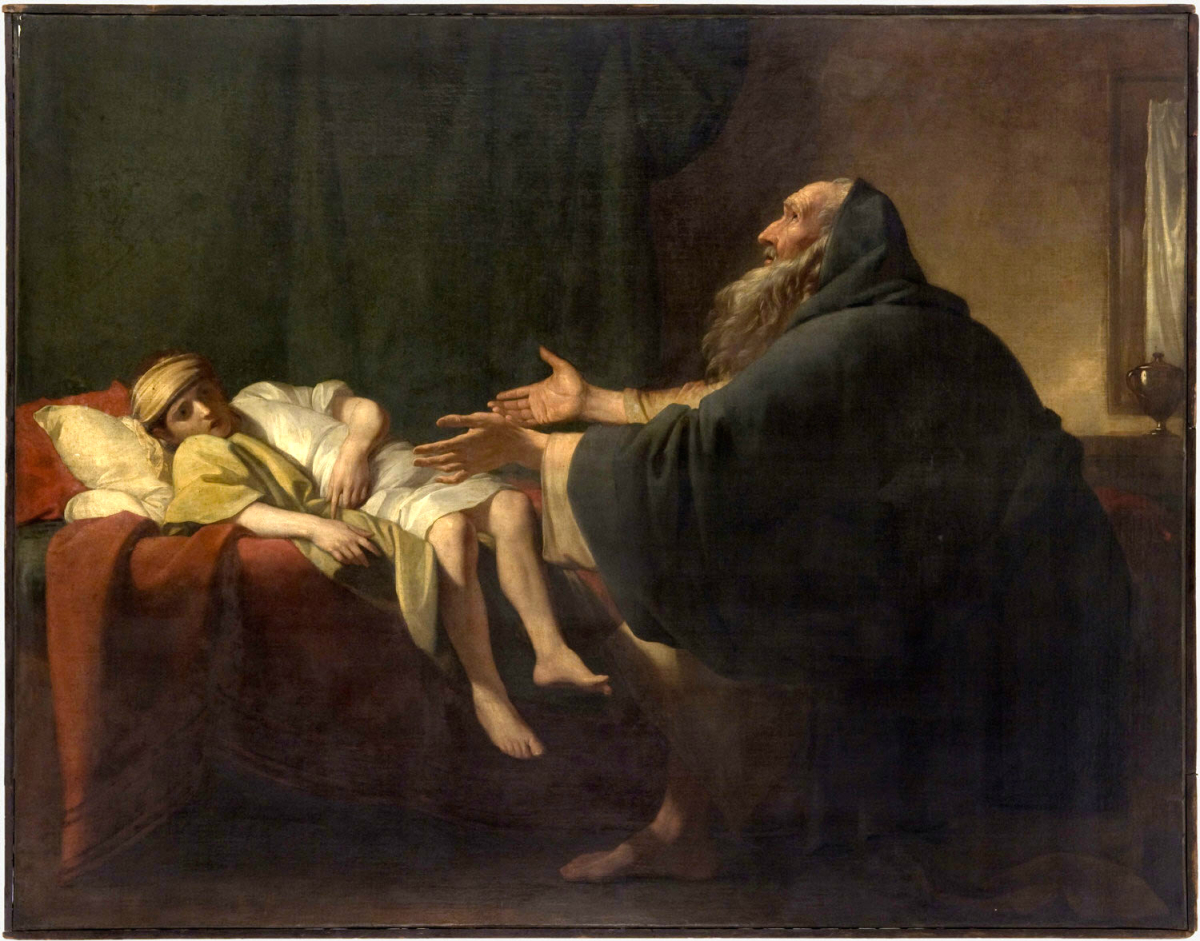
A New Sheriff In Town

1 Now when the LORD was about to take Elijah up to heaven by a whirlwind, Elijah and Elisha were on their way from Gilgal. 2 And Elijah said to Elisha, “Please stay here, for the LORD has sent me as far as Bethel.” But Elisha said, “As the LORD lives, and as you yourself live, I will not leave you.” So they went down to Bethel. 3 And the sons of the prophets who were in Bethel came out to Elisha and said to him, “Do you know that today the LORD will take away your master from over you?” And he said, “Yes, I know it; keep quiet.”

4 Elijah said to him, “Elisha, please stay here, for the LORD has sent me to Jericho.” But he said, “As the LORD lives, and as you yourself live, I will not leave you.” So they came to Jericho. 5 The sons of the prophets who were at Jericho drew near to Elisha and said to him, “Do you know that today the LORD will take away your master from over you?” And he answered, “Yes, I know it; keep quiet.”

6 Then Elijah said to him, “Please stay here, for the LORD has sent me to the Jordan.” But he said, “As the LORD lives, and as you yourself live, I will not leave you.” So the two of them went on. 7 Fifty men of the sons of the prophets also went and stood at some distance from them, as they both were standing by the Jordan. 8 Then Elijah took his cloak and rolled it up and struck the water, and the water was parted to the one side and to the other, till the two of them could go over on dry ground.

9 When they had crossed, Elijah said to Elisha, “Ask what I shall do for you, before I am taken from you.” And Elisha said, “Please let there be a double portion of your spirit on me.” 10 And he said, “You have asked a hard thing; yet, if you see me as I am being taken from you, it shall be so for you, but if you do not see me, it shall not be so.” 11 And as they still went on and talked, behold, chariots of fire and horses of fire separated the two of them. And Elijah went up by a whirlwind into heaven. 12 And Elisha saw it and he cried, “My father, my father! The chariots of Israel and its horsemen!” And he saw him no more.

Then he took hold of his own clothes and tore them in two pieces. 13 And he took up the cloak of Elijah that had fallen from him and went back and stood on the bank of the Jordan. 14 Then he took the cloak of Elijah that had fallen from him and struck the water, saying, “Where is the LORD, the God of Elijah?” And when he had struck the water, the water was parted to the one side and to the other, and Elisha went over. – 2 Kings 2:1-14 ESV

For years, the prophet Elijah had faithfully performed his role as God’s spokesman. He had been given the difficult assignment of prophesying on behalf of God during the reign of Ahab, Israel’s most vile and apostate king. To make matters worse, he had been forced to live with a bounty on his head, placed on him by the queen, Jezebel. She had sought to have him killed because he had executed 450 of the prophets to her false god, Baal.

Elijah stood as a beacon of light in the spiritual darkness that pervaded the northern kingdom. It was a land filled with apostasy and evil, where Yahweh had been replaced by the pagan gods of Jezebel. Ahab, the king, and Elijah, the prophet, had become spiritual enemies who each represented the polar extremes of God’s relationship with the people of Israel. Ahab was an ambitious schemer who had long ago abandoned his relationship with Yahweh. He operated according to his own agenda, living to satisfy his personal passions and desires. However, Elijah was a man of intense faith who took great risks to fulfill God’s will. He regularly stood opposed to the wickedness that permeated Israel, sometimes feeling as if he were the last man standing.

“I have been very jealous for the LORD, the God of hosts. For the people of Israel have forsaken your covenant, thrown down your altars, and killed your prophets with the sword, and I, even I only, am left, and they seek my life, to take it away.” – 1 Kings 19:10 ESV

But God had proven to Elijah that he was far from alone. Others had refused to bow the knee to Baal, including the young man, Elisha, whom God had chosen to be Elijah’s replacement. Now that Ahab was dead, God made it clear that Elijah’s assignment was complete. He had done his job, and now it was time for him to receive his reward. God was going to call him home.

But Elijah’s departure would be anything but normal. God had something spectacular in store for Elijah’s final day on earth, and it would serve as a sign of God’s approval of Elijah’s faithfulness. But this remarkable event would also provide Elisha with the proof he needed that his all-powerful God would be with him as he began his role as Elijah’s replacement.

It seems evident from the text that God had previously informed Elijah that this would be his last day, and He had told the prophet the nature of his departure.

…the LORD was about to take Elijah up to heaven by a whirlwind. – 2 Kings 2:1 ESV

However, Elijah did not seem to know precisely when or how this supernatural event would occur. He and Elisha began their journey in Gilgal, and three separate times, Elijah gave his young protégé the opportunity to remain behind. By offering Elisha the option of staying behind while he continued his God-ordained journey, Elijah was testing the depth of the young man’s commitment. Was Elisha willing to stand beside his mentor as he followed the path God had laid out before him? The answer seems apparent. Elisha repeatedly refused to abandon his mentor, saying, “As the LORD lives, and as you yourself live, I will not leave you” (2 Kings 2:2 ESV).

When they arrived in Bethel, Elisha was met by 50 prophets of Yahweh who questioned whether he knew about Elijah’s imminent departure. He assured them that he was well aware of what was about to happen and asked that they say nothing more about it. One can only imagine the fear and sadness that gripped Elisha as he considered the prospect of losing his friend and mentor. He was faced with the formidable task of filling the sandals of one of Israel’s greatest prophets, and he knew that the wickedness of Israel had not abated with Ahab’s death. Ahaziah had proven to be just as idolatrous and unfaithful as his father. When Ahaziah died after a short, two-year reign, his brother Jehoram became king, and he too followed in the footsteps of Ahab.

He did what was evil in the sight of the LORD, though not like his father and mother, for he put away the pillar of Baal that his father had made. Nevertheless, he clung to the sin of Jeroboam the son of Nebat, which he made Israel to sin; he did not depart from it. – 2 Kings 3:2-3 ESV

So, Elisha was fully aware that he would have his work cut out for him, and Elijah’s repeated suggestions for him to remain behind would have been extremely tempting. But he refused to compromise his convictions or renege on his commitment to stay by Elijah’s side. The two continued their journey from Bethel to Jericho, then on to the banks of the Jordan River. This circuitous route must have confused Elisha because it seemed to have them walking in circles. There appeared to be no clear destination in mind. Yet, Elisha stayed by Elijah’s side every step of the way.

When they arrived at the banks of the Jordan, “Elijah folded his cloak together and struck the water with it. The river divided, and the two of them went across on dry ground!” (2 Kings 2:8 ESV). Elijah’s cloak, like Moses’ staff, was a symbol of his God-given authority and power. Just as Moses used his staff to part the waters of the Red Sea, Elijah used his cloak to provide him and Elisha with a miraculous pathway through the waters of the Jordan. This display of supernatural power was meant to remind Elisha that he served a great God. But for the young prophet, it seems to have had a different impact. He appears to have focused on his own inadequacy and ill-preparedness for what lay ahead. So, when Elijah asked him what he could do for him before departing, Elisha asked for a double portion of his spirit. Whatever divine enablement Elijah possessed, Elisha wanted twice as much of it. This was not a power grab or a sign of greed on Elisha’s part; it was an admission of need. He felt inadequate for the job and didn’t believe he met Elijah’s standards. So, he asked for a double portion of Elijah’s spirit.

Elijah seemed to indicate that the young man’s request, while difficult, was tied to his faithfulness. As long as he remained committed to remaining by Elijah’s side, he would receive that for which he asked.

As they were walking along and talking, suddenly a chariot of fire appeared, drawn by horses of fire. It drove between the two men, separating them, and Elijah was carried by a whirlwind into heaven. – 2 Kings 2:11 NLT

Literally, out of nowhere, a fiery chariot appeared and separated the two men. This sudden and spectacular display of God’s power could have sent Elisha running for his life, but he remained where he was. As he stood watching this remarkable scene, Elisha cried out, “My father! My father! I see the chariots and charioteers of Israel!” (2 Kings 2:12 NLT). But as he stood distracted by the horses and chariots, Elijah was carried away by a whirlwind. God miraculously transported the great prophet into His presence.

When Elisha came to his senses, he realized what had happened. All that was left of his friend and mentor was his cloak. Elijah was gone, and Elisha was on his own. Or was he? As he made his way to the eastern shore of the Jordan, Elisha held the cloak of Elijah in his hand. As he stood facing the waters and the prospect of serving as the prophet of God, he cried out, “Where is the LORD, the God of Elijah?” (2 Kings 2:14 ESV). He knew that any hope he had of surviving his tenure as a prophet would require that he place his trust in the God of Elijah. He was going to need Yahweh’s presence and power to succeed. When he struck the water with Elijah’s cloak, the water parted, and he crossed over on dry ground. Elijah was gone, but Elijah’s God was still there.

The mantle had been passed. Elisha was the God-appointed heir to Elijah, and he possessed the cloak and the double portion of Elijah’s spirit. But, more importantly, he had access to the power of God. As Elisha walked across the dry riverbed, he had no idea what challenges he would face in the days ahead. But he knew beyond a shadow of a doubt that he was God’s chosen vessel to carry on Elijah’s work. Evil still reigned in Israel, darkness still pervaded the land, and the newly commissioned prophet would have his work cut out for him.

English Standard Version (ESV) The Holy Bible, English Standard Version. ESV® Permanent Text Edition® (2016). Copyright © 2001 by Crossway Bibles, a publishing ministry of Good News Publishers.

New Living Translation (NLT) Holy Bible, New Living Translation, copyright © 1996, 2004, 2015 by Tyndale House Foundation. Used by permission of Tyndale House Publishers Inc., Carol Stream, Illinois 60188. All rights reserved.

The Mysterious Ways of God

1 Ben-hadad the king of Syria gathered all his army together. Thirty-two kings were with him, and horses and chariots. And he went up and closed in on Samaria and fought against it. 2 And he sent messengers into the city to Ahab king of Israel and said to him, “Thus says Ben-hadad: 3 ‘Your silver and your gold are mine; your best wives and children also are mine.’” 4 And the king of Israel answered, “As you say, my lord, O king, I am yours, and all that I have.” 5 The messengers came again and said, “Thus says Ben-hadad: ‘I sent to you, saying, “Deliver to me your silver and your gold, your wives and your children.” 6 Nevertheless I will send my servants to you tomorrow about this time, and they shall search your house and the houses of your servants and lay hands on whatever pleases you and take it away.’”

7 Then the king of Israel called all the elders of the land and said, “Mark, now, and see how this man is seeking trouble, for he sent to me for my wives and my children, and for my silver and my gold, and I did not refuse him.” 8 And all the elders and all the people said to him, “Do not listen or consent.” 9 So he said to the messengers of Ben-hadad, “Tell my lord the king, ‘All that you first demanded of your servant I will do, but this thing I cannot do.’” And the messengers departed and brought him word again. 10 Ben-hadad sent to him and said, “The gods do so to me and more also, if the dust of Samaria shall suffice for handfuls for all the people who follow me.” 11 And the king of Israel answered, “Tell him, ‘Let not him who straps on his armor boast himself as he who takes it off.’” 12 When Ben-hadad heard this message as he was drinking with the kings in the booths, he said to his men, “Take your positions.” And they took their positions against the city. 

13 And behold, a prophet came near to Ahab king of Israel and said, “Thus says the LORD, Have you seen all this great multitude? Behold, I will give it into your hand this day, and you shall know that I am the LORD.” 14 And Ahab said, “By whom?” He said, “Thus says the LORD, By the servants of the governors of the districts.” Then he said, “Who shall begin the battle?” He answered, “You.” 15 Then he mustered the servants of the governors of the districts, and they were 232. And after them he mustered all the people of Israel, seven thousand. – 1 Kings 20:1-15 ESV

With the opening of chapter 20, both Elijah and Elisha, his newly commissioned replacement, suddenly disappear from the scene. Elijah will not be mentioned again until verse 17 of chapter 21. It would appear that he and his young protégé were busy fulfilling the command of God.

“Go, return on your way to the wilderness of Damascus. And when you arrive, you shall anoint Hazael to be king over Syria. And Jehu the son of Nimshi you shall anoint to be king over Israel, and Elisha the son of Shaphat of Abel-meholah you shall anoint to be prophet in your place.” – 1 Kings 19:15-16 ESV

After Elijah had cast his cloak on Elisha, the two of them must have spent a significant amount of time searching for Hazael and Jehu. They would have begun their journey in Abel-meholah, Elisha’s hometown, located about 25 miles south of the Sea of Galilee. As they made their way north to Damascus in Syria, the sovereign plan of God continued to unfold in the land of Israel. In his former state of disillusionment and despair, Elijah had thought he was the last living prophet in Israel, but he was about to be proven wrong. While he and Elisha were busy searching for the new kings of Syria and Israel, God would raise up other prophets to act as His spokesmen to King Ahab.

God’s miraculous defeat of Baal on Mount Carmel had left Ahab and Jezebel unfazed and unrepentant. The loss of their 450 prophets had not diminished their enthusiasm for their false god, and they had failed to acknowledge the sudden end of the three-and-a-half-year drought as a gracious act of God. This arrogant and prideful couple remained stubbornly opposed to the God of Israel. But just as the prophets of Baal had been no match for Yahweh, so Ahab and Jezebel would soon discover that their power and prominence would provide them no protection against the judgment of God.

With the end of the drought, the famine that had plagued the land slowly abated. But now, Ahab found himself facing a threat of a different sort. Any sense of relief he felt from the drought’s ending and Elijah’s sudden disappearance quickly faded when the Syrians laid siege to the capital city of Samaria. Surrounded and facing a confederation of forces that greatly outnumbered Israel’s army, Ahab found himself in a difficult situation. And the terms of surrender he received from King Ben-hadad made things far worse.

“Your silver and gold are mine, and so are your wives and the best of your children!” – 1 Kings 20:3 NLT

Operating from a position of weakness, Ahab was forced to agree to Ben-hadad’s terms but stubbornly refused to comply. Perhaps he was trying to buy time. But his delay only aggravated the problem, causing Ben-hadad to up the ante.

“I have already demanded that you give me your silver, gold, wives, and children. But about this time tomorrow I will send my officials to search your palace and the homes of your officials. They will take away everything you consider valuable!” – 1 Kings 20:5-6 NLT

Ahab had been able to survive the drought, living in luxury as his people suffered and died. But now, he was facing the loss of everything he held near and dear. Ben-hadad was threatening to steal Ahab’s glory, and for a man whose identity was derived from what he possessed, this message got his attention.

Ahab, desperate to preserve his status and prevent the loss of everything he considered of value, consulted his advisors. Threatened with the loss of their own children and personal wealth, these men convinced Ahab to reject  Ben-hadad’s demands and to refuse any further negotiations with the Syrians. They were desperate to prevent the Syrians from accessing the capital so they could plunder all their possessions. Eager to protect his personal domain, Ahab took their counsel and sent word to Ben-hadad. But his message was not well-received. Ben-hadad reacted with anger and issued his final word on the matter in the form of a vow.

“The gods do so to me and more also, if the dust of Samaria shall suffice for handfuls for all the people who follow me.” – 1 Kings 20:10 ESV

The words of Ben-hadad are eerily similar to those delivered by Queen Jezebel to Elijah after he had destroyed the 450 prophets of Baal. She, too, had made an oath to her false gods, swearing to kill Elijah or face their judgment.

“So may the gods do to me and more also, if I do not make your life as the life of one of them by this time tomorrow.” – 1 Kings 19:2 ESV

It’s interesting to note that Ben-hadad, a pagan, believed that his gods actually existed and were capable of giving him success in battle. Yet, Ahab, king over the chosen people of Yahweh, makes no mention of any gods whatsoever, including the gods of his wife. He was operating in his own strength and according to the wisdom of men. And he displays his arrogance and overconfidence in his response to Ben-hadad.

“A warrior putting on his sword for battle should not boast like a warrior who has already won.” – 1 Kings 20:11 NLT

As would be expected, Ben-hadad was infuriated by Ahab’s boastful message and ordered an immediate attack on the city. He was done negotiating with this pompous and prideful fool. As those reading this story, we fully expect and even hope that God will allow Ahab to get what he so justly deserves.

But God’s ways are not our ways. While we see the Syrians’ attack as the hand of God against wicked King Ahab, the author reveals that God has other plans altogether. As Ahab and the citizens of Samaria brace themselves for the coming attack, God sends a prophet with a message of hope.

“This is what the LORD says: Do you see all these enemy forces? Today I will hand them all over to you. Then you will know that I am the LORD.” – 1 Kings 20:13 NLT

This statement shocks and surprises us because it seems so unexpected and undeserved. Why would God do such a thing for an arrogant and egotistical man like Ahab? He was idolatrous and had led the entire nation of Israel into apostasy. Among all the kings of Israel, he was the epitome of wickedness and immorality. And yet, here was God giving him a message of divine deliverance.

Rather than dropping to his knees in humble repentance and gratitude for God’s gracious intervention, Ahab responds with a series of questions. First, he asks, “By whom?” He demanded details. Ahab wanted to know who would get the credit for the victory, and the prophet replied, “By the servants of the governors of the districts” (1 Kings 20:14 ESV). Much to Ahab’s disappointment, God was not going to use him as the means of delivering the decisive blow to the Syrians. That prompted Ahab to ask, “Who shall begin the battle?” (1 Kings 20:14 ESV). He desperately wanted to know if he would have any part to play in this divine deliverance. And, once again, to our surprise and dismay, God informs Ahab that he will have the privilege of putting God’s plan into play.

With God’s plan clearly articulated, Ahab set about putting the pieces together to make it happen.

Then he mustered the servants of the governors of the districts, and they were 232. And after them he mustered all the people of Israel, seven thousand. – 1 Kings 20:15 ESV

This verse should bring to mind the promise God had made just before He sent Elijah on his mission to anoint the future kings of Syria and Israel.

“I will preserve 7,000 others in Israel who have never bowed down to Baal or kissed him!” – 1 Kings 19:18 NLT

God had promised His reluctant prophet that He would raise up a remnant from among the apostate people of Israel, and He would use these faithful few to accomplish His will. Now God was using Ahab, the apostate king of Israel, to choose the 7,000 faithful whom God would use to defeat the Syrians in battle. Ahab would begin the battle, but he would not secure the victory. That privilege would fall to those who had not bowed down to Baal.

None of this was about Ahab. He was the king, but, in reality, he was nothing more than a bit player in God’s sovereign plan for the redemption and restoration of His people. Ahab may have worn the crown, but God was King over Israel. And while Ben-hadad’s superior numbers appeared to give him the advantage, God had the faithful few. He was going to bring about a great victory, using only those who had refused to bow their knees to Baal.

God was about to reveal His power through weakness, and He would do so through those whose presence was unknown but whose faith had remained unwavering. With God on their side, this faithful remnant would defeat the enemy, and their unexpected victory would bring great glory to Yahweh. In the Song of Moses recorded in the Book of Deuteronomy, we’re given an explanation for the kind of victory God was about to bring.

How could one person chase a thousand of them,
    and two people put ten thousand to flight,
unless their Rock had sold them,
    unless the LORD had given them up?
But the rock of our enemies is not like our Rock… – Deuteronomy 32:30-31 NLT

English Standard Version (ESV) The Holy Bible, English Standard Version. ESV® Permanent Text Edition® (2016). Copyright © 2001 by Crossway Bibles, a publishing ministry of Good News Publishers.

New Living Translation (NLT) Holy Bible, New Living Translation, copyright © 1996, 2004, 2015 by Tyndale House Foundation. Used by permission of Tyndale House Publishers Inc., Carol Stream, Illinois 60188. All rights reserved.

The Power to Revive and Restore

17 After this the son of the woman, the mistress of the house, became ill. And his illness was so severe that there was no breath left in him. 18 And she said to Elijah, “What have you against me, O man of God? You have come to me to bring my sin to remembrance and to cause the death of my son!” 19 And he said to her, “Give me your son.” And he took him from her arms and carried him up into the upper chamber where he lodged, and laid him on his own bed. 20 And he cried to the LORD, “O LORD my God, have you brought calamity even upon the widow with whom I sojourn, by killing her son?” 21 Then he stretched himself upon the child three times and cried to the LORD, “O LORD my God, let this child’s life come into him again.” 22 And the LORD listened to the voice of Elijah. And the life of the child came into him again, and he revived. 23 And Elijah took the child and brought him down from the upper chamber into the house and delivered him to his mother. And Elijah said, “See, your son lives.” 24 And the woman said to Elijah, “Now I know that you are a man of God, and that the word of the LORD in your mouth is truth.” – 1 Kings 17:17-24 ESV

God used Elijah to deliver His message of judgment against King Ahab and his foreign queen, Jezebel. In marrying this princess from Sidon, Ahab had also adopted her false god, Baal, and built a temple for its worship. He also erected a shrine to honor Asherah, the moon-goddess and supposed mother of this pagan deity. Angered by these blatant acts of rebellion and apostasy, God had sent Elijah to tell the royal couple that their kingdom would suffer under a great drought. Their disrespect and disregard for God had brought His discipline.

But after Elijah successfully delivered his message, God sent him away. He ended up at a cave, where God graciously and miraculously arranged for ravens to provide all the food he needed to survive. But eventually, Elijah became a victim of the very drought he predicted. Soon, the brook dried up, and the daily deliveries of bread and meat no longer appeared. So, God sent Elijah to the Sidonian town of Zarephath, where he took up residence with a poor widow and her son. She, too, was suffering from the effects of the drought. But, once again, Yahweh proved Himself to be the one true God by causing her meager supply of flour and oil to miraculously multiply and never run out.

In the midst of a drought and severe famine, she had more than enough to sustain herself, her son, and God’s prophet. Through it all, Elijah learned to trust God for all His needs. But even more importantly, Elijah discovered that his God was greater than the gods of Ahab and Jezebel. While Baal, the so-called fertility god, was powerless to stop the drought or reverse the effects of the famine, Yahweh turned “a handful of flour in a jar and a little oil in a jug” (1 Kings 17:12 ESV) into a never-ending food supply for Elijah and his gracious hostess.

Then suddenly, the story takes a dramatic turn for the worse. The woman’s young son dies unexpectedly. Faced with this devastating change in her circumstances, the woman vented all her anger and frustration on the prophet of God.

“O man of God, what have you done to me? Have you come here to point out my sins and kill my son?” – 1 Kings 17:18 NLT

It seems that the woman had falsely assumed that her son’s death was a form of divine retribution for a former sin she had committed. Perhaps by this time, Elijah had shared the details of his encounter with Ahab and Jezebel, explaining that he had been the one to predict the drought as a punishment for their sin. So, when her son suddenly died, she would have naturally reasoned that God was using the prophet to deliver yet another judgment for sin – that of her own.

But ignoring her despair-driven accusation, Elijah took the lifeless body of her son and placed it on his own bed. Then Elijah turned his attention to God. But notice the tone of His prayer. He seems to echo the words of the widow, passing the blame up the food chain and questioning the goodness and graciousness of God.

“O LORD my God, why have you brought tragedy to this widow who has opened her home to me, causing her son to die?” – 1 Kings 17:20 NLT

Elijah’s response reveals his firm belief that God is sovereign over all things, but he is perplexed and confused by the seeming injustice of it all. In his frustration, He accuses God of doing something wicked. The Hebrew word is rāʿaʿ, which is most often translated as “evil.” The boy’s death makes no sense to Elijah; it seems unnecessary and completely nonproductive. When Elijah first met the woman, she had been fully expecting her son to die of starvation because of the drought. But God had intervened and provided more than enough food to keep all three of them alive. So, to Elijah, the boy’s death seemed pointless and, if anything, it appeared to be an act of cruelty.

But while Elijah was having a difficult time understanding the ways of God, he remained convinced of the power of God. Three times, he lay across the dead body of the boy and cried out, “O LORD my God, please let this child’s life return to him” (1 Kings 17:21 NLT). And the fact that Elijah repeated this process three separate times demonstrates both his persistence and dependence upon God.

It’s important to consider that Elijah had no precedent on which to base his prayer. He was asking Yahweh to do the impossible – to raise a dead body back to life. There is no indication that Elijah had ever seen or heard of God doing such a thing. Elijah was not basing his request on some past miracle recorded in the Hebrew scriptures. The Pentateuch, the first five books of the Bible, contains no instance of God raising the dead back to life. So, Elijah was asking God to do something that had never been done before. His request was a tremendous act of faith.

In a classic example of understatement, the author simply records, “The LORD heard Elijah’s prayer, and the life of the child returned, and he revived!” (1 Kings 17:22 NLT). One can only imagine Elijah’s shock and surprise when the lifeless body of the boy was suddenly reanimated. Two times, nothing had happened. But on the third try, God chose to intervene and answer Elijah’s prayer. We’re not told why God didn’t answer Elijah’s prayer the first time. Perhaps it was a test of Elijah’s faith to see if he would continue to ask and believe even when his request went unanswered. But God had heard, and He ultimately answered, and in a truly remarkable way. Elijah’s unbridled excitement and enthusiasm were on display as he announced the news to the boy’s grieving mother.

“See, your son lives.” – 1 Kings 17:23 ESV

It would be easy to misread this statement and assume that Elijah is saying something like, “See, I told you so!” It almost appears as if he is chastising the woman for her lack of faith. But at no point in the story did Elijah tell the woman that her son would live. He had no way of knowing whether God would answer his prayer or not. At least two times, God failed to do so. But when God had finally provided the miracle for which Elijah was asking, the prophet couldn’t contain his enthusiasm. The New Living Translation provides a much more accurate rendering of Elijah’s response.

“Look!” he said. “Your son is alive!” – 1 Kings 17:23 NLT

No one was as shocked as Elijah, and his joy overflowed in a display of emotional celebration. He most likely walked into the room, carrying the boy in his arms, and then handed him over to the smothering embrace of his overjoyed mother. And, through tears mixed with laughter, the woman managed to express her gratitude to the prophet by declaring her belief in his God.

“Now I know for sure that you are a man of God, and that the LORD truly speaks through you.” – 1 Kings 17:24 NLT

While Yahweh had been keeping the widow and her son alive, she must have had her doubts about Elijah and his God. But now, as she clutched her resurrected son in her arms, she finally recognized and confessed the sovereignty of God and the authority of His prophet. Her son had been dead but was now alive. Her devastating loss had been miraculously reversed with the return of her son. Her sorrow had been turned to joy.

It is easy to overlook the fact that this miracle took place in an obscure village in the region of Sidon. While Jezebel had brought her false god from Sidon to the land of Israel, Elijah had brought the God of Israel to the land of Sidon. The arrival of Baal had been accompanied by drought and famine. But when Yahweh made His appearance in the pagan land of the Sidonians, He had turned a widow’s poverty into plenty and had replaced death with life. In doing so, He had proved Himself to be the one and only God of the universe.

And God intended this powerful lesson to prepare His prophet for all that was about to happen. Elijah didn’t know it yet, but the most significant test of his faith was in his future. After three years of a debilitating and devastating famine, God was going to send Elijah back to the land of Israel to go face-to-face with the king and queen and toe-to-toe with their false god. If Yahweh could revive the dead son of the Sidonian widow, He was powerful enough to restore the stagnant spiritual state of the people of Israel. But would Elijah continue to believe in Yahweh’s power when the odds were stacked against him and the forces of evil threatened his very existence? Only time would tell.

English Standard Version (ESV) The Holy Bible, English Standard Version. ESV® Permanent Text Edition® (2016). Copyright © 2001 by Crossway Bibles, a publishing ministry of Good News Publishers.

New Living Translation (NLT) Holy Bible, New Living Translation, copyright © 1996, 2004, 2015 by Tyndale House Foundation. Used by permission of Tyndale House Publishers Inc., Carol Stream, Illinois 60188. All rights reserved.

Drought, Doubt, and Deliverance

1 Now Elijah the Tishbite, of Tishbe in Gilead, said to Ahab, “As the LORD, the God of Israel, lives, before whom I stand, there shall be neither dew nor rain these years, except by my word.” 2 And the word of the LORD came to him: 3 “Depart from here and turn eastward and hide yourself by the brook Cherith, which is east of the Jordan. 4 You shall drink from the brook, and I have commanded the ravens to feed you there.” 5 So he went and did according to the word of the LORD. He went and lived by the brook Cherith that is east of the Jordan. 6 And the ravens brought him bread and meat in the morning, and bread and meat in the evening, and he drank from the brook. 7 And after a while the brook dried up, because there was no rain in the land.

8 Then the word of the LORD came to him, 9 “Arise, go to Zarephath, which belongs to Sidon, and dwell there. Behold, I have commanded a widow there to feed you.” 10 So he arose and went to Zarephath. And when he came to the gate of the city, behold, a widow was there gathering sticks. And he called to her and said, “Bring me a little water in a vessel, that I may drink.” 11 And as she was going to bring it, he called to her and said, “Bring me a morsel of bread in your hand.” 12 And she said, “As the LORD your God lives, I have nothing baked, only a handful of flour in a jar and a little oil in a jug. And now I am gathering a couple of sticks that I may go in and prepare it for myself and my son, that we may eat it and die.” 13 And Elijah said to her, “Do not fear; go and do as you have said. But first make me a little cake of it and bring it to me, and afterward make something for yourself and your son. 14 For thus says the LORD, the God of Israel, ‘The jar of flour shall not be spent, and the jug of oil shall not be empty, until the day that the LORD sends rain upon the earth.’” 15 And she went and did as Elijah said. And she and he and her household ate for many days. 16 The jar of flour was not spent, neither did the jug of oil become empty, according to the word of the LORD that he spoke by Elijah. – 1 Kings 17:1-16 ESV

Almost as if out of nowhere, a new character appears on the scene. His sudden and unexpected arrival seems intended to accentuate the divine nature of his mission. No background story or biographical information is provided, other than his name and the identity of his hometown.

His introduction into the narrative is timed to coincide with the rise to power of King Ahab and his Sidonian queen, Jezebel. With this new power couple ruling over the northern kingdom of Israel, the spiritual state of the ten northern tribes has reached an all-time low. The author ended chapter 16 with an unflattering description of their influence over the nation.

…he [Ahab] took for his wife Jezebel the daughter of Ethbaal king of the Sidonians, and went and served Baal and worshiped him. He erected an altar for Baal in the house of Baal, which he built in Samaria. And Ahab made an Asherah. Ahab did more to provoke the LORD, the God of Israel, to anger than all the kings of Israel who were before him. – 1 Kings 16:31-33 ESV

To claim that Ahab had managed to anger God more than any of his predecessors is a significant statement. He was following in the footsteps of some world-class, all-star-quality apostates. But when it came to wickedness and unfaithfulness, Ahab set the new gold standard. He became the proverbial poster boy for all that is wicked and ungodly, while his wife managed to earn herself a permanent spot in the spiritual hall of infamy.

In the middle of their sin-fueled and self-absorbed reign, God decides to deliver a message to them, utilizing an obscure and unknown man named Elijah. This will not be the first time God has sent a prophet to deliver a message to a wayward and rebellious king. When Jeroboam had made the fateful decision to replace Yahweh with his own false gods, an unnamed prophet appeared on the scene with a dire message for the king, and he demonstrated God’s anger by destroying one of the altars Jeroboam had dedicated to his false god. Later on, Jeroboam sent his wife to consult with another prophet of God, in hopes of getting a prognosis regarding his young son’s illness. But what he got was bad news. He was told that his son would die and that every one of his male heirs would face the same fate before they could inherit the throne. In other words, any hopes of establishing a dynasty would be destroyed.

As the seventh king to reign over the northern kingdom of Israel, Ahab would not be the first to receive a message from God. But, in his case, the prophet would play a more pronounced and prolonged role in his life. The sins of Ahab and his wife were so egregious that God made his prophet a permanent fixture in their kingdom.

Elijah’s very first encounter with the king and queen was far from favorable. He stood before this powerful couple and boldly proclaimed, “As the LORD, the God of Israel, lives, before whom I stand, there shall be neither dew nor rain these years, except by my word” (1 Kings 17:1 ESV). That took guts and a fair amount of faith. He was claiming to have the God-given authority to withhold rain from the kingdom of Israel. Any way you look at it, this had to come across as a less-than-veiled threat to Ahab and Jezebel. But before they had time to cut this arrogant upstart down to size, God gave him instructions to get out of town.

“Depart from here and turn eastward and hide yourself by the brook Cherith, which is east of the Jordan.” – 1 Kings 17:3 ES

Elijah had done his job, but now it was time for God to prepare him for the next phase of his assignment. Before sending his prophet back into the mouth of the lion’s den, God planned to equip him for what was to come. He was determined to make Elijah a faithful and obedient messenger, strong enough to handle all the vitriol and violence that was about to come his way. Standing up to Ahab and Jezebel was not going to be easy, so God graciously eased Elijah into his new role with a hands-on experience that would teach him to trust and obey.

While in God’s preparatory school for prophets, Elijah was miraculously fed and cared for; he received a twice-daily ration of bread and meat, delivered to his cave by ravens. And outside the cave was a ready source of clean, pure water. But in time, “the brook dried up, because there was no rain in the land” (1 Kings 17:7 ESV). In other words, Elijah’s prediction of drought had come true, and he suffered just like everyone else. Without rain, there was no harvest, so that meant there was no more bread or meat for the ravens to deliver. Elijah’s little oasis in the wilderness had become a death trap. So, God gave him new instructions.

“Go and live in the village of Zarephath, near the city of Sidon. I have instructed a widow there to feed you.” – 1 Kings 17:8 NLT

This would have been a long and arduous journey under normal conditions, but the presence of drought made it even more so. Interestingly, God sent Elijah to a city in the region of Sidon, the very kingdom over which Jezebel’s father was king. Elijah was being sent to the same place Ahab had acquired a queen and her false god, Baal. Zarephath lay between Tyre and Sidon, two of the most prominent Phoenician cities. But as the story makes clear, the drought had made its way all the way to the coast of the Mediterranean Sea.

God provided Elijah with scant details about what to do when he arrived in Zarephath. The prophet had no food and received no word from God regarding when and how it would come, if it did at all. So, when Elijah encountered a widow gathering sticks, he decided to throw himself on her mercy. He asked for a drink of water and a morsel of bread. But then he discovered that this woman’s state was worse than his own.

“I swear by the LORD your God that I don’t have a single piece of bread in the house. And I have only a handful of flour left in the jar and a little cooking oil in the bottom of the jug. I was just gathering a few sticks to cook this last meal, and then my son and I will die.” – 1 Kings 17:12 NLT

The drought had taken its toll, leaving the woman with no food with which to feed herself or her young son.  It shouldn’t be overlooked that Baal, the god of the Phoenicians, was considered a fertility god. He was the provider of bountiful blessings, whether in the form of crops or children. Yet, this woman was living in a drought and watching her young son starve to death. There was nothing bountiful taking place in Zarephath, and Jezebel’s god was nowhere to be found.

Then, God gave Elijah a message to deliver to the woman.

“Don’t be afraid! Go ahead and do just what you’ve said, but make a little bread for me first. Then use what’s left to prepare a meal for yourself and your son. For this is what the LORD, the God of Israel, says: There will always be flour and olive oil left in your containers until the time when the LORD sends rain and the crops grow again!” – 1 Kings 17:13-14 NLT

While the god of the Phoenicians had failed to provide, the God of Israel would meet her needs and preserve the lives of both her and her son. Even in a time of drought, God would miraculously provide flour and oil in abundance until He decided to open up the skies and end the drought.

The woman faithfully obeyed the word of the prophet, and “There was always enough flour and olive oil left in the containers, just as the LORD had promised through Elijah” (1 Kings 17:16 NLT). God graciously provided for this Sidonian widow and her son, and He continued to meet the needs of His prophet. But more importantly, God was teaching Elijah that He could be trusted. He was greater than the fertility god of the Phoenicians. He was more powerful than the false deity of Ahab and Jezebel. The brook may have dried up, but the resources of God remained unending and plentiful. The ravens may have stopped showing up, but the miracle-working power of God remained undiminished. Elijah was learning the vital truth that no circumstance is too difficult for Yahweh, and the days ahead would provide further confirmation of that fact.

English Standard Version (ESV) The Holy Bible, English Standard Version. ESV® Permanent Text Edition® (2016). Copyright © 2001 by Crossway Bibles, a publishing ministry of Good News Publishers.

New Living Translation (NLT) Holy Bible, New Living Translation, copyright © 1996, 2004, 2015 by Tyndale House Foundation. Used by permission of Tyndale House Publishers Inc., Carol Stream, Illinois 60188. All rights reserved.