The Gracious Gift of Faith

23 Now before faith came, we were held captive under the law, imprisoned until the coming faith would be revealed. 24 So then, the law was our guardian until Christ came, in order that we might be justified by faith. 25 But now that faith has come, we are no longer under a guardian, 26 for in Christ Jesus you are all sons of God, through faith. 27 For as many of you as were baptized into Christ have put on Christ. 28 There is neither Jew nor Greek, there is neither slave nor free, there is no male and female, for you are all one in Christ Jesus. 29 And if you are Christ’s, then you are Abraham’s offspring, heirs according to promise. – Galatians 3:23-29 ESV

There is an interesting thing going on in these verses. Paul is discussing faith and juxtaposing it against any kind of merit-based salvation. He contrasts the faith that is required to believe in Jesus and accept Him as your Savior with the false gospel of a works-based faith being taught by the Judaizers. But if we’re not careful, we could easily turn faith itself into a kind of works that is based on our own human effort. We could easily make salvation all about our faith and wrongfully conclude that it is still about us having to do something to merit salvation. That wrong assumption can lead to some false and very faulty outcomes.

If salvation is dependent upon the degree of our faith, it could result in a dangerous atmosphere of comparison and competition among believers. It is a natural human tendency to compare oneself with others. But when applied to salvation, this can produce a false sense of pride or an unhelpful attitude of unworthiness. When faith becomes the object rather than a means of salvation, we miss the point of God’s grace and mercy.  Comparing the amount or degree of our faith with other Christians is counterproductive and takes the focus off Christ’s fully sufficient sacrifice on our behalf.

Paul wrote, “God saved you by his grace when you believed. And you can’t take credit for this; it is a gift from God. Salvation is not a reward for the good things we have done, so none of us can boast about it” (Ephesians 2:8-9 NLT). This applies to our faith as well. Faith is not a self-produced commodity that we bring to the table. We don’t manufacture it and can’t make more of it. Yet, we wrestle with the size of our faith and wonder if it is large enough, strong enough, or sincere enough. But in verse 23, Paul states, “Now before faith came we were held captive under the law, imprisoned until the coming faith would be revealed.

Is Paul talking about the revealing of their faith? He tells them that they were being held prisoner under the law “until the coming faith would be revealed.” Is Paul saying that they were prisoners until they could muster enough faith to believe? Had the ball been in their court all along, and they just didn’t have enough faith?

More and more New Testament scholars have come to the conclusion that the faith Paul is talking about is the faith of Christ, not faith in Christ. When Paul says, “Now before faith came,” he is speaking of the faith of Christ, or better yet, the faithfulness of Christ. It was Christ’s faithfulness to God and His faith in God that qualified Him to be our sinless substitute on the cross. He was completely faithful to the law, and He never wavered in faith or doubted the plan of God for His life. He was obedient to the point of death. His faith in God was so great that He willingly gave His life, knowing that God would raise Him up three days later. It is the faith and faithfulness of Christ that set us free, not our own limited faith.

Look closely at verse 24: “Thus the law had become our guardian until Christ…” Our subjection to the law was in place until Christ came. He is the one who set us free. It is belief or faith in His faithfulness that is the point here. In verse 25, Paul says, “But now that faith has come, we are no longer under a guardian.” Now that Jesus has come and lived a perfect life of faith, faithfully keeping the law of God and obediently following the will of God, He has satisfied the just penalty that God had imposed on mankind.

Jesus has provided a way for us to be made right with God. We can be declared righteous, not based on anything we have done on our own, but simply by having faith in the faithfulness of Christ. We must believe that what He has done has been effective and requires nothing more from us. In verse 26, Paul writes, “For in Christ Jesus you are all sons of God through faith.” While our faith certainly plays a role, it is the object of our faith that must be the focus. It is the faithfulness of Christ that gives our faith its power. Paul seems to be saying that if the Galatian believers put their faith in the wrong thing – like circumcision – it will be ineffective.

What gives our faith its saving power is the faith of Christ, exhibited in His death on the cross. It is not the size, but the object of my faith that matters.

It is not the size, but the object of our faith that matters.

Prior to Christ’s coming, a Jew could put as much faith as he wanted in the hope that obedience to the law could save him, but it would never happen. The Pharisees had faith in the law. They had faith in their own ability to keep the law, but their faith was misplaced. They were making it all about them when Jesus told them that it had to be all about Him.

Our faith must rest in the faith and faithfulness of Christ. It is our belief in what He has done that saves us, not the size or sufficiency of our faith. Yet, this seems to fly in the face of a statement that Jesus made to His disciples after they were unable to cast out a demon from a young boy. The disappointed and disillusioned disciples asked, “Why could we not cast it out?” (Matthew 17:19 ESV), and Jesus replied, “Because of your little faith. For truly, I say to you, if you have faith like a grain of mustard seed, you will say to this mountain, ‘Move from here to there,’ and it will move, and nothing will be impossible for you” (Matthew 17:20 ESV). 

Is Jesus emphasizing their lack of faith? Is His point that their faith was too small? Matthew uses the Greek word apistia to describe the disciples’ faith. The letter “a” at the beginning of the word can be translated as “no.” The disciples had no faith or, to put it another way, they were wanting in faith. Earlier, Jesus had sent out His disciples with the following order: “Heal the sick, raise the dead, cleanse lepers, cast out demons” (Matthew 10:8 ESV). But when faced with the challenge of casting out the demon from the possessed boy, they failed. It had nothing to do with the size or quantity of their faith; it was all about their failure to recognize their need for the power that was only available from Jesus.

“The disciples were treating the gift of healing that Jesus had given them as a magical ability that worked regardless of their faith in Him. Now they learned that their power depended on proper response to revelation, namely, dependent confidence in Jesus to work through them to heal. Continual dependence on Jesus rather than simply belief in who He is constitutes strong faith.” – Thomas L. Constable, Notes on Matthew

Faith is not about self-effort, and saving faith is never self-produced. Human faith is a powerless faith. It cannot save because it is contaminated by a fallen, sin-prone nature. Jesus Himself stated, “No one can come to me unless the Father who sent me draws him” (John 6:44 ESV). Philippians 1:29 reveals that the ability to believe in Jesus has to be granted by God. It is a gracious gift bestowed on sinful men by a merciful, loving God. 

It was He who accomplished that which sets us free from the law. In verse 27, Paul tells us that we have been clothed in Christ. We now wear His righteousness, not our own. It is that fact on which we place our faith. I stand before God clothed in the righteousness of Christ, and do not have to depend on my feeble attempts to manufacture righteousness. Apart from Christ, all my best efforts are as filthy rags in God’s eyes (Isaiah 64:6). But thankfully, I don’t have to place faith in my efforts, but in the faithfulness of Christ alone. And even my faith is a gift from God, producing in me a capacity to see and hear the truth of the gospel and accept the gracious offer of new life through His Son.

Father, never let me mistakenly make all this about my faith. It is not the degree of my faith that counts, but the object of that faith. Don’t let me try and take credit for anything I do because it is all about what Christ has done for me. It is because He was faithful that I can even have faith. He has provided me an object in which to place my faith that can actually deliver the newness of life He made possible. Thank You Father for the gracious gift of faith. Nothing in my hands I bring, Simply to Thy cross I cling – by faith. Amen.

English Standard Version (ESV) The Holy Bible, English Standard Version. ESV® Permanent Text Edition® (2016). Copyright © 2001 by Crossway Bibles, a publishing ministry of Good News Publishers.

New Living Translation (NLT) Holy Bible, New Living Translation, copyright © 1996, 2004, 2015 by Tyndale House Foundation. Used by permission of Tyndale House Publishers Inc., Carol Stream, Illinois 60188. All rights reserved.

The Self-Delusion of “Self-Made” Men

1 Manasseh was twelve years old when he began to reign, and he reigned fifty-five years in Jerusalem. His mother’s name was Hephzibah. And he did what was evil in the sight of the LORD, according to the despicable practices of the nations whom the LORD drove out before the people of Israel. For he rebuilt the high places that Hezekiah his father had destroyed, and he erected altars for Baal and made an Asherah, as Ahab king of Israel had done, and worshiped all the host of heaven and served them. And he built altars in the house of the LORD, of which the LORD had said, “In Jerusalem will I put my name.” And he built altars for all the host of heaven in the two courts of the house of the LORD. And he burned his son as an offering and used fortune-telling and omens and dealt with mediums and with necromancers. He did much evil in the sight of the LORD, provoking him to anger. And the carved image of Asherah that he had made he set in the house of which the LORD said to David and to Solomon his son, “In this house, and in Jerusalem, which I have chosen out of all the tribes of Israel, I will put my name forever. And I will not cause the feet of Israel to wander anymore out of the land that I gave to their fathers, if only they will be careful to do according to all that I have commanded them, and according to all the Law that my servant Moses commanded them.” But they did not listen, and Manasseh led them astray to do more evil than the nations had done whom the LORD destroyed before the people of Israel.

10 And the LORD said by his servants the prophets, 11 “Because Manasseh king of Judah has committed these abominations and has done things more evil than all that the Amorites did, who were before him, and has made Judah also to sin with his idols, 12 therefore thus says the LORD, the God of Israel: Behold, I am bringing upon Jerusalem and Judah such disaster that the ears of everyone who hears of it will tingle. 13 And I will stretch over Jerusalem the measuring line of Samaria, and the plumb line of the house of Ahab, and I will wipe Jerusalem as one wipes a dish, wiping it and turning it upside down. 14 And I will forsake the remnant of my heritage and give them into the hand of their enemies, and they shall become a prey and a spoil to all their enemies, 15 because they have done what is evil in my sight and have provoked me to anger, since the day their fathers came out of Egypt, even to this day.” 2 Kings 21:1-15 ESV

When reading the opening lines of 2 Kings 21, an old proverb comes to mind that states: “All good things must come to an end.”

With the end of Hezekiah’s life, the fortunes of Israel took a decidedly dark turn for the worse. While Hezekiah was far from a perfect king, he had proved to be faithful to Yahweh, doing “what was right in the eyes of the LORD” (2 Kings 18:3 ESV). As a result, “the LORD was with him; wherever he went out, he prospered” (2 Kings 18:7 ESV). Hezekiah had been an ambitious reformer who attempted to restore and reinvigorate the worship of Yahweh in Judah. But the last 15 years of his reign, which were marked by peace and great prosperity, became fertile ground for Hezekiah’s pride to take root and grow. In time, he developed an unhealthy preoccupation with his own success and self-importance. 

Hezekiah was very wealthy and highly honored. He built special treasury buildings for his silver, gold, precious stones, and spices, and for his shields and other valuable items. He also constructed many storehouses for his grain, new wine, and olive oil; and he made many stalls for his cattle and pens for his flocks of sheep and goats. He built many towns and acquired vast flocks and herds, for God had given him great wealth. He blocked up the upper spring of Gihon and brought the water down through a tunnel to the west side of the City of David. And so he succeeded in everything he did. – 2 Chronicles 32:27-30 NLT

It is important to remember that those years of life and prosperity had been a gracious gift from God, in answer to Hezekiah’s humble prayer as he lay near death. God heard and restored his health, then granted him another 15 years of life. During the last 11 years, up until the day of his death in 686 BC, Hezekiah’s son, Manasseh, had served as his co-regent. But upon Hezekiah’s death, Manasseh assumed the burden and responsibilities of leadership as the king of Judah at the age of 23.

Manasseh had begun his co-regency at the young age of 12. So, for 11 years this young man had been able to serve alongside his father, learning valuable life lessons on everything from leadership and diplomacy to fiduciary responsibility and spiritual fidelity. But unfortunately, Manasseh was exposed to some of Hezekiah’s less flattering years in office. He served alongside his father at a time when Judah was prospering and Hezekiah was more interested in building his kingdom and reputation than in promoting the worship of Yahweh.

It appears quite obvious that Manasseh’s 11-year apprenticeship under his father’s tutelage failed to prepare him to be a godly king. His ascension to the throne ushered in one of the darkest periods in Judah’s long and tumultuous history, and his reign would reverse most, if not all, of the religious reforms his father had implemented. Virtually overnight, he radically transformed the kingdom of Judah into a spiritual wasteland by systematically rescinding all of his father’s earlier reforms.

He did what was evil in the LORD’s sight, following the detestable practices of the pagan nations that the LORD had driven from the land ahead of the Israelites. He rebuilt the pagan shrines his father, Hezekiah, had destroyed. He constructed altars for Baal and set up an Asherah pole, just as King Ahab of Israel had done. He also bowed before all the powers of the heavens and worshiped them. – 2 Kings 21:2-3 NLT

This ambitious young man seemed determined to eradicate all vestiges of Yahweh from the hearts and minds of the people. He erected altars to false gods inside the Temple, rendering it unholy and unfit for Yahweh’s presence. He encouraged the practice of sorcery and divination, and even promoted the use of human sacrifices as an acceptable form of worship, offering up his own son as a payment to his false god.

Everything he did was in direct violation of God’s commands and seemed to be part of a well-calculated plan to destroy all that his father had accomplished. He purposefully dismantled the spiritual legacy his father had left, but the text provides no explanation as to what prompted Manasseh’s actions. His mother is mentioned, but we know nothing about her or the role she may have played in his spiritual formation. However, it is painfully clear that while Manasseh inherited his father’s throne, he did not inherit his father’s love for Yahweh. In fact, he led the nation of Judah to “do even more evil than the pagan nations that the LORD had destroyed when the people of Israel entered the land” (2 Kings 21:9 NLT).

This young king led the nation of Judah in a wave of apostasy and spiritual infidelity that would have shocked the land’s former pagan occupants. During this period of spiritual decline, Yahweh used men like the prophet Jeremiah to communicate His displeasure and warn of His pending discipline for their egregious behavior.

“Go west and look in the land of Cyprus;
    go east and search through the land of Kedar.
Has anyone ever heard of anything
    as strange as this?
Has any nation ever traded its gods for new ones,
    even though they are not gods at all?
Yet my people have exchanged their glorious God
    for worthless idols!
The heavens are shocked at such a thing
    and shrink back in horror and dismay,”
    says the Lord.
“For my people have done two evil things:
They have abandoned me—
    the fountain of living water.
And they have dug for themselves cracked cisterns
    that can hold no water at all!” – Jeremiah 2:10-13 NLT

All that his father had spent years building, Manasseh painstakingly and systematically destroyed. But while Manasseh was busy dismantling the spiritual legacy bequeathed to him by his father, Yahweh was far from silent. The author of 2 Chronicles states that “The LORD spoke to Manasseh and his people, but they ignored all his warnings” (2 Chronicles 33:10 NLT). God didn’t sit idly by, watching in silence as the young king led an insurrection against His sovereign will and authority. He sent His prophets to warn the king and his compliant subjects that their insubordination would have dire consequences. Jeremiah would deliver a particularly stinging indictment against the people of Judah for their willing participation in Manasseh’s apostasy.

“I will send four kinds of destroyers against them,” says the LORD. “I will send the sword to kill, the dogs to drag away, the vultures to devour, and the wild animals to finish up what is left. Because of the wicked things Manasseh son of Hezekiah, king of Judah, did in Jerusalem, I will make my people an object of horror to all the kingdoms of the earth.” – Jeremiah 15:3-4 NLT

Jeremiah would go on to record God’s words concerning the capital city of Jerusalem, where Manasseh instigated his wicked and rebellious anti-reform measures.

“Who will feel sorry for you, Jerusalem?
    Who will weep for you?
    Who will even bother to ask how you are?
You have abandoned me
    and turned your back on me,”
    says the Lord.
“Therefore, I will raise my fist to destroy you.
    I am tired of always giving you another chance.” – Jeremiah 15:5-6 NLT

Yahweh declared Manasseh to be more wicked than the pagan nations who had previously occupied the land of Canaan before the arrival of the Israelites. This leader of God’s chosen people managed to out-sin the godless Amorites. Rather than follow in his father’s footsteps, Manasseh decided to emulate the behavior of Ahab, the infamous king of Israel who, with the help of his wife, Jezebel, led the northern kingdom into such depths of moral and spiritual decay that God eventually destroyed them. Now, under Manasseh’s leadership, Judah was headed down the very same path and facing a similar outcome.

I will judge Jerusalem by the same standard I used for Samaria and the same measure I used for the family of Ahab. I will wipe away the people of Jerusalem as one wipes a dish and turns it upside down.” – 2 Kings 21:13 NLT

Manasseh may have been the sovereign ruler over the kingdom of Judah, but he would soon discover that he was no match for the King of the universe. His ongoing disregard and disrespect for Yahweh would not be tolerated.  God would not be mocked, and those who refused to honor their covenant commitments would not go unpunished. Yahweh’s blunt assessment of Judah leaves no doubt concerning their guilt and well-deserved condemnation.

“…they have done great evil in my sight and have angered me ever since their ancestors came out of Egypt.” – 2 Kings 21:15 NLT

Manasseh believed that he had the freedom and authority to replace Yahweh. After all, he was king. But he was about to learn the same painful lesson that Yahweh taught to Ahab, Sennacherib, and so many other human kings: there is but one King over all the earth, and He alone decides who rules and reigns over its inhabitants. Manasseh served at God’s discretion, and he would soon discover that his ego was no match for God’s divine will. Years later, another pride-filled king would learn the same timeless lesson from the lips of another prophet of God. Years after the fall of Jerusalem at the hands of the Babylonians, the prophet Daniel would inform King Nebuchadnezzar, “the Most High rules over the kingdoms of the world. He gives them to anyone he chooses—even to the lowliest of people” (Daniel 4:17 NLT).

Neither Nebuchadnezzar nor Manasseh was a match for the Almighty. While they both allowed their power to go to their heads, it was Yahweh who ruled, and it was He who would determine the destiny of their dynasties.

English Standard Version (ESV) The Holy Bible, English Standard Version. ESV® Permanent Text Edition® (2016). Copyright © 2001 by Crossway Bibles, a publishing ministry of Good News Publishers.

New Living Translation (NLT) Holy Bible, New Living Translation, copyright © 1996, 2004, 2015 by Tyndale House Foundation. Used by permission of Tyndale House Publishers Inc., Carol Stream, Illinois 60188. All rights reserved.
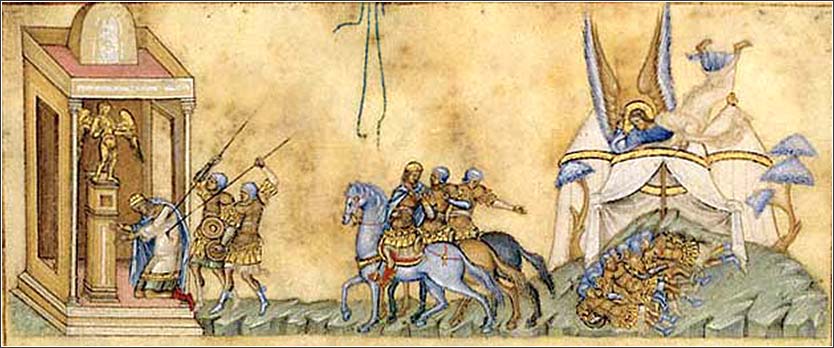
The Failure to Give God Glory

12 At that time Merodach-baladan the son of Baladan, king of Babylon, sent envoys with letters and a present to Hezekiah, for he heard that Hezekiah had been sick. 13 And Hezekiah welcomed them, and he showed them all his treasure house, the silver, the gold, the spices, the precious oil, his armory, all that was found in his storehouses. There was nothing in his house or in all his realm that Hezekiah did not show them. 14 Then Isaiah the prophet came to King Hezekiah, and said to him, “What did these men say? And from where did they come to you?” And Hezekiah said, “They have come from a far country, from Babylon.” 15 He said, “What have they seen in your house?” And Hezekiah answered, “They have seen all that is in my house; there is nothing in my storehouses that I did not show them.”

16 Then Isaiah said to Hezekiah, “Hear the word of the LORD: 17 Behold, the days are coming, when all that is in your house, and that which your fathers have stored up till this day, shall be carried to Babylon. Nothing shall be left, says the LORD. 18 And some of your own sons, who will come from you, whom you will father, shall be taken away, and they shall be eunuchs in the palace of the king of Babylon.” 19 Then Hezekiah said to Isaiah, “The word of the LORD that you have spoken is good.” For he thought, “Why not, if there will be peace and security in my days?”

20 The rest of the deeds of Hezekiah and all his might and how he made the pool and the conduit and brought water into the city, are they not written in the Book of the Chronicles of the Kings of Judah? 21 And Hezekiah slept with his fathers, and Manasseh his son reigned in his place. 2 Kings 20:12-21 ESV

Hezekiah shows the Babylonian messengers his treasures (2 Kings 20, 13). Wood engraving, published in 1886.

For whatever reason, the author of 2 Kings provides no details concerning Hezekiah’s reaction to his miraculous healing or to God’s gracious gift of 15 more years of life. This man had been near death and had been informed by the prophet of God that his days were numbered. He was deathly sick and helpless to do anything about his situation, so he cried out to Yahweh, and Yahweh responded by restoring his health and promising to extend his life and reign an additional 15 years. Yet, the author simply skips to the next story without providing any insight into Hezekiah’s response to this wonderful gift from God. However, the Book of 2 Chronicles reveals that the newly healed king responded with pride rather than humble gratitude.

Hezekiah did not respond appropriately to the kindness shown him, and he became proud. So the LORD’s anger came against him and against Judah and Jerusalem. – 2 Chronicles 32:25 NLT

Perhaps Hezekiah’s new lease on life went to his head. He had narrowly escaped the clutches of death and was back to full health. On top of that, the Assyrian menace had all but disappeared, his kingdom was secure, and he was enjoying an unprecedented period of peace and prosperity. But he failed to remember the one who had made it all possible, even neglecting to offer any form of sacrifice to express his thanks to Yahweh. This arrogant display of ingratitude brought God’s anger against the king, his capital, and the nation of Judah.

Once again, we’re the author provides little in the way of details. But while he fails to tell us what form God’s judgment took, he reveals that it had its intended effect.

Hezekiah humbled himself and repented of his pride, as did the people of Jerusalem. So the LORD’s anger did not fall on them during Hezekiah’s lifetime. – 2 Chronicles 32:26 NLT

God’s wrath was abated, but it seems that Hezekiah’s pride was not. News of Hezekiah’s illness had reached the palace of Merodach-baladan, the king of Babylon, who sent emissaries to visit him. By the time these men made the long trek from Babylon to Jerusalem, Hezekiah had been restored to health. Not only that, he took advantage of his new lease on life by ordering an extensive expansion of his personal portfolio.

Hezekiah was very wealthy and highly honored. He built special treasury buildings for his silver, gold, precious stones, and spices, and for his shields and other valuable items. He also constructed many storehouses for his grain, new wine, and olive oil; and he made many stalls for his cattle and pens for his flocks of sheep and goats. He built many towns and acquired vast flocks and herds, for God had given him great wealth. – 2 Chronicles 32:27-29 NLT

By the time the Babylonian emissaries arrived, Hezekiah was in fine form and his pride was on full display. Eager to impress his visitors with the extent of his wealth, he gave them a grand tour of the royal capital.

Hezekiah received the Babylonian envoys and showed them everything in his treasure-houses—the silver, the gold, the spices, and the aromatic oils. He also took them to see his armory and showed them everything in his royal treasuries! There was nothing in his palace or kingdom that Hezekiah did not show them. – 2 Kings 20:13 NLT

But to better understand what is going on here, we need to turn back to 2 Chronicles 32 for context. It would appear that King Hezekiah was not only enjoying renewed health but a revitalized kingdom with a reinvigorated economy. Things were booming in Judah.

Hezekiah had it all: health, wealth, and prosperity, and he was more than happy to display the full extent of his power and possessions to his foreign guests. But the author of 2 Chronicles reveals an important detail that must not be overlooked. The visiting Babylonian emissaries wanted to know “about the sign that had been done in the land” (2 Chronicles 32:31 ESV). Evidently, upon their arrival, they had been told how the king had been healed by God. Someone had likely shared with them about the miracle of the shadow reversing itself on the steps of Ahaz, and they were intrigued and eager to hear more. In other words, Hezekiah was being given a chance to brag about the power of Yahweh.

But the passage reveals that Yahweh knew what was in Hezekiah’s heart and left the pride-filled king to learn another painful lesson.

However, when ambassadors arrived from Babylon to ask about the remarkable events that had taken place in the land, God withdrew from Hezekiah in order to test him and to see what was really in his heart.2 Chronicles 32:31 NLT

God stood back and watched to see how Hezekiah would respond to this opportunity. Since Yahweh is all-knowing, the test was not for His benefit; He knew exactly what Hezekiah was going to do. The test was for Hezekiah’s benefit, and he would fail miserably.

Rather than declare the glory and goodness of Yahweh to his pagan guests, Hezekiah bragged about himself. He said nothing about his miraculous healing or of God’s promise to extend his reign an additional 15 years. He even fails to mention the miraculous sign. His entire exchange with these men was centered upon himself. Look closely at how the author describes Hezekiah’s actions:

…he showed them all his treasure house, the silver, the gold, the spices, the precious oil, his armory, all that was found in his storehouses. There was nothing in his house or in all his realm that Hezekiah did not show them. – 2 Kings 20:13 ESV

It was all about him. And when Isaiah the prophet confronts Hezekiah, the self-obsessed king doesn’t try to hide his ego-driven display of self-adulation.

“They have seen all that is in my house; there is nothing in my storehouses that I did not show them.” – 2 Kings 20:15 ESV

Not once does Hezekiah mention Yahweh. He doesn’t even acknowledge God as the source behind all his possessions or his recently extended life. With this incredible demonstration of self-worship, Hezekiah fails the test and reveals exactly what is in his heart. So, Isaiah delivered what should have been a devastating bit of bad news:

“Behold, the days are coming, when all that is in your house, and that which your fathers have stored up till this day, shall be carried to Babylon. Nothing shall be left, says the LORD.” – 2 Kings 20:17 ESV

And, as if that was not bad enough, Isaiah adds another element to God’s divine judgment against Hezekiah and Judah.

“…some of your own sons, who will come from you, whom you will father, shall be taken away, and they shall be eunuchs in the palace of the king of Babylon.” – 2 Kings 20:18 ESV

Shockingly, Hezekiah responds favorably to the prophet’s words. He isn’t even fazed by the news that his sons will be taken as captives and forced to become eunuchs in the court of the Babylonian king. He receives the news of Yahweh’s judgment as good news. But why? Because all Hezekiah really cared about was himself. Look closely at his response to Isaiah.

“At least there will be peace and security during my lifetime.” – 2 Kings 20:19 NLT

According to 2 Chronicles 32:27, “Hezekiah was very wealthy and highly honored.” He enjoyed great prestige, power, and a time of unprecedented peace, and as long as he was able to keep what he had, he was willing to sacrifice the future, even if it meant that his sons would suffer so that he could prosper.

What makes this story even more disheartening is the fact that, at one time, Hezekiah had penned a poem to Yahweh, expressing his gratitude for his healing. Immediately after receiving the news that God would graciously deliver him from death, Hezekiah took the time to put his thoughts in writing. Look closely at what he said:

LORD, your discipline is good,
    for it leads to life and health.
You restore my health
    and allow me to live!
Yes, this anguish was good for me,
    for you have rescued me from death
    and forgiven all my sins.
For the dead cannot praise you;
    they cannot raise their voices in praise.
Those who go down to the grave
    can no longer hope in your faithfulness.
Only the living can praise you as I do today.
    Each generation tells of your faithfulness to the next.
Think of it—the LORD is ready to heal me!
    I will sing his praises with instruments
every day of my life
    in the Temple of the LORD. – Isaiah 38:16-20 NLT

They say time heals all wounds. But in Hezekiah’s case, time became his enemy. The further he got away from his near-death experience and his miraculous healing by Yahweh, the more forgetful and ungrateful he became. His focus shifted from the goodness and greatness of God to his own power and possessions. He became self-obsessed and myopic in his outlook and, as a result, he lost sight of Yahweh’s glory and grandeur. And it would be the prophet Isaiah who would write his own poem concerning Yahweh, which should have served as a wake-up call to the pride-filled and self-possessed king of Judah.

The LORD is the everlasting God,
    the Creator of all the earth.
He never grows weak or weary.
    No one can measure the depths of his understanding.
He gives power to the weak
    and strength to the powerless.
Even youths will become weak and tired,
    and young men will fall in exhaustion.
But those who trust in the LORD will find new strength.
    They will soar high on wings like eagles.
They will run and not grow weary.
    They will walk and not faint. – Isaiah 40:28-31 NLT

Hezekiah failed the test. The God who extended his life removed His glorious presence and allowed the pompous, prideful king to revel in his own glory and set the stage for the nation’s demise.

English Standard Version (ESV) The Holy Bible, English Standard Version. ESV® Permanent Text Edition® (2016). Copyright © 2001 by Crossway Bibles, a publishing ministry of Good News Publishers.

New Living Translation (NLT) Holy Bible, New Living Translation, copyright © 1996, 2004, 2015 by Tyndale House Foundation. Used by permission of Tyndale House Publishers Inc., Carol Stream, Illinois 60188. All rights reserved.

The LORD Reigns Over All

20 Then Isaiah the son of Amoz sent to Hezekiah, saying, “Thus says the LORD, the God of Israel: Your prayer to me about Sennacherib king of Assyria I have heard. 21 This is the word that the LORD has spoken concerning him:

“She despises you, she scorns you—
    the virgin daughter of Zion;
she wags her head behind you—
    the daughter of Jerusalem.

22 “Whom have you mocked and reviled?
    Against whom have you raised your voice
and lifted your eyes to the heights?
    Against the Holy One of Israel!
23 By your messengers you have mocked the LORD,
    and you have said, ‘With my many chariots
I have gone up the heights of the mountains,
    to the far recesses of Lebanon;
I felled its tallest cedars,
    its choicest cypresses;
I entered its farthest lodging place,
    its most fruitful forest.
24 I dug wells
    and drank foreign waters,
and I dried up with the sole of my foot
    all the streams of Egypt.’

25 “Have you not heard
    that I determined it long ago?
I planned from days of old
    what now I bring to pass,
that you should turn fortified cities
    into heaps of ruins,
26 while their inhabitants, shorn of strength,
    are dismayed and confounded,
and have become like plants of the field
    and like tender grass,
like grass on the housetops,
    blighted before it is grown.

27 “But I know your sitting down
    and your going out and coming in,
    and your raging against me.
28 Because you have raged against me
    and your complacency has come into my ears,
I will put my hook in your nose
    and my bit in your mouth,
and I will turn you back on the way
    by which you came.

29 “And this shall be the sign for you: this year eat what grows of itself, and in the second year what springs of the same. Then in the third year sow and reap and plant vineyards, and eat their fruit. 30 And the surviving remnant of the house of Judah shall again take root downward and bear fruit upward. 31 For out of Jerusalem shall go a remnant, and out of Mount Zion a band of survivors. The zeal of the LORD will do this.

32 “Therefore thus says the LORD concerning the king of Assyria: He shall not come into this city or shoot an arrow there, or come before it with a shield or cast up a siege mound against it. 33 By the way that he came, by the same he shall return, and he shall not come into this city, declares the LORD. 34 For I will defend this city to save it, for my own sake and for the sake of my servant David.”

35 And that night the angel of the LORD went out and struck down 185,000 in the camp of the Assyrians. And when people arose early in the morning, behold, these were all dead bodies. 36 Then Sennacherib king of Assyria departed and went home and lived at Nineveh. 37 And as he was worshiping in the house of Nisroch his god, Adrammelech and Sharezer, his sons, struck him down with the sword and escaped into the land of Ararat. And Esarhaddon his son reigned in his place. 2 Kings 19:20-37 ESV

This is essentially the story of three kings. First, there is King Sennacherib, the sovereign ruler over the rapidly expanding Assyrian empire. He is the commander-in-chief of one of the most powerful armies on earth, and his ambitious plans for global conquest have met with little to no resistance. Kingdom after kingdom has fallen before his army, and now he has his sights set on the nation of Judah, where Hezekiah, the second king in our story, rules from his throne in Jerusalem. But King Hezekiah finds himself in the unenviable position of ruling over a city under siege. His capital city is surrounded by the Assyrian army, and he has been given an ultimatum to surrender or face annihilation.

Two kings. One is dressed in his royal robes and reveling in the indisputable reality of his own success. The other has discarded his regal attire for sackcloth and ashes, the garments of mourning. Sennacherib is a confident and self-assured king who sees no end to his plans for global conquest and domination. He is unstoppable, and it would appear that Hezekiah agrees with that assessment because he has turned to Yahweh for help. With his city completely surrounded and his allies nowhere to be seen, Hezekiah has called on the God of Judah to come to their aid.

“O LORD, God of Israel, you are enthroned between the mighty cherubim! You alone are God of all the kingdoms of the earth. You alone created the heavens and the earth. Bend down, O LORD, and listen! Open your eyes, O LORD, and see! Listen to Sennacherib’s words of defiance against the living God.” – 2 Kings 19:15-16 NLT

This penitent petition engages the attention of the third king in our story.  From His royal throne room in heaven, Yahweh heard the humble and contrite prayer of the king of Judah and immediately responded with an answer. The sovereign King of kings, who rules over all the kingdoms of the earth, sent a message to Hezekiah through His prophet Isaiah.

But this message, while delivered to King Hezekiah, was really directed at Sennacherib. Yahweh, the indisputable King of the universe, had a few choice words for the pompous and prideful potentate of Assyria. He warns the over-confident, land-grabbing king that his plans for Judah’s conquest will fail.

“The virgin daughter of Zion
    despises you and laughs at you.
The daughter of Jerusalem
    shakes her head in derision as you flee. – 2 Kings 19:21 NLT

Despite Sennacherib’s boastful claims, Jerusalem will remain pure and undefiled, her walls unbreached, and her population spared the indignities of conquest or capture. Yahweh wanted Sennacherib to know that the day was coming when the citizens of Jerusalem would rejoice and celebrate as the Assyrians abandoned their siege and disappeared over the horizon.

Sennacherib had made the fateful mistake of mocking the wrong deity, and Yahweh let him know that his derisive and disrespectful words were going to cost him. He had offended the Holy One of Israel and would soon suffer the consequences for his error. But first, God points out Sennacherib’s primary problem: His pride.

“By your messengers you have defied the LORD.
    You have said, ‘With my many chariots
I have conquered the highest mountains—
    yes, the remotest peaks of Lebanon.
I have cut down its tallest cedars
    and its finest cypress trees.
I have reached its farthest corners
    and explored its deepest forests.
I have dug wells in many foreign lands
    and refreshed myself with their water.
With the sole of my foot
    I stopped up all the rivers of Egypt!’” – 2 Kings 19:23-24 NLT

Sennacherib suffered from a terminal “I” condition. His unbridled success had gone to his head, and he had begun to believe that he was invincible and, in a sense, divine. By his own boastful admission, Sennacherib claimed that the kings of Assyria had defeated the gods of all their enemies.

“Have the gods of other nations rescued them—such nations as Gozan, Haran, Rezeph, and the people of Eden who were in Tel-assar? My predecessors destroyed them all! What happened to the king of Hamath and the king of Arpad? What happened to the kings of Sepharvaim, Hena, and Ivvah?” – 2 Kings 19:12-13 NLT

And he was convinced that Yahweh, the God of Judah, would fare no better than any of the other gods. But Sennacherib failed to understand that Yahweh was the sovereign ruler over all the nations of the world. The Assyrians’ rise to global dominance had been a part of God’s preordained plan. They were nothing more than instruments in His hands and actors in His divine drama that will one day culminate with the redemption and restoration of all creation.

Yahweh let Sennacherib know that he had no right to boast or brag; he could take no credit for any of his success. It had all been according to the sovereign will of the King of the universe. Although Sennacherib was a pagan and not a citizen of the chosen nation of Israel, God was sovereignly directing this unbeliever’s life to accomplish His divine will.

“I decided this long ago.
Long ago I planned it,
    and now I am making it happen.
I planned for you to crush fortified cities
    into heaps of rubble.
That is why their people have so little power
    and are so frightened and confused.
They are as weak as grass,
    as easily trampled as tender green shoots.
They are like grass sprouting on a housetop,
    scorched before it can grow lush and tall.” – 2 Kings 19:25-26 NLT

This message, while directed at Sennacherib, was meant to encourage Hezekiah. It was intended as a well-timed reminder to the king of Judah that his God was sovereign over all things. Regardless of the circumstances of life, the people of God could and should rest in the fact that their God reigns. Centuries later, when the nation of Judah fell to the Babylonians and a remnant of the people found themselves living in exile, the prophet Daniel expressed his firm belief in Yahweh’s sovereignty over all the affairs of human life.

“…the Most High rules over the kingdoms of the world. He gives them to anyone he chooses— even to the lowliest of people.” – Daniel 4:17 NLT

The psalmists shared Daniel’s optimistic and faith-filled perspective.

The LORD has established his throne in the heavens, and his kingdom rules over all.
 – Psalm 103:19 ESV

For the LORD Most High is awesome. He is the great King of all the earth. – Psalm 47:2 NLT

God reigns above the nations, sitting on his holy throne. – Psalm 47:8 NLT

For all the kings of the earth belong to God. – Psalm 47:9 NLT

The LORD reigns, let the earth rejoice; let the many coastlands be glad! – Psalm 97:1 ESV

The LORD reigns; let the peoples tremble! He sits enthroned upon the cherubim; let the earth quake! – Psalm 99:1 ESV

Yahweh wanted Hezekiah and Sennacherib to understand that they had nothing to do with their positions or power. Their very existence was God-ordained and orchestrated down to the last detail. Their kingdoms and crowns were fully attributable to God, and He had the divine right to remove them from power should He so choose, which is exactly what He warned Sennacherib was going to happen.

“I will put my hook in your nose
    and my bit in your mouth.
I will make you return
    by the same road on which you came.” – 2 Kings 19:28 NLT

Man’s plans must always give way to God’s sovereign will.

Many are the plans in the mind of a man, but it is the purpose of the LORD that will stand. – Proverbs 19:21 ESV

Sennacherib had ambitious plans for global dominance, but he would soon find that God’s plan superseded his own. And the King of the universe assured Hezekiah that He would protect Jerusalem and continue to provide for all their needs. Sennacherib and his forces would remain a threat for three more years, but God made it clear that “his armies will not enter Jerusalem. They will not even shoot an arrow at it” (2 Kings 19:32 NLT).

As a sign that He was in full control of the situation, God sent an angel who slaughtered 185,000 Assyrian soldiers in a single night. The next morning, the citizens of Jerusalem woke up to find the land outside the walls covered in corpses, but the rest of the Assyrian army was nowhere to be seen. The King of kings had displayed His sovereign power by sending a single angel to wreak havoc among the Assyrians.

When Sennacherib returned home, his days of glory and conquest came to an abrupt and ignominious end; he was assassinated by two of his own sons. As a further sign of Yahweh’s sovereignty and singularity as the King of kings, Sennacherib’s less-than-glorious death took place in the temple of his god.

The circumstances surrounding Sennacherib’s demise should not go unnoticed. As the vainglorious king of Assyria was safely ensconced in his capital and worshiping in the temple of his false god, the one true King chose to demonstrate His sovereign power over all the kingdoms of the earth. The Holy One of Israel proved yet again that He is “the great King of all the earth” (Psalm 47:2 NLT).

English Standard Version (ESV) The Holy Bible, English Standard Version. ESV® Permanent Text Edition® (2016). Copyright © 2001 by Crossway Bibles, a publishing ministry of Good News Publishers.

New Living Translation (NLT) Holy Bible, New Living Translation, copyright © 1996, 2004, 2015 by Tyndale House Foundation. Used by permission of Tyndale House Publishers Inc., Carol Stream, Illinois 60188. All rights reserved.

A Refusal to Repent

32 In the second year of Pekah the son of Remaliah, king of Israel, Jotham the son of Uzziah, king of Judah, began to reign. 33 He was twenty-five years old when he began to reign, and he reigned sixteen years in Jerusalem. His mother’s name was Jerusha the daughter of Zadok. 34 And he did what was right in the eyes of the LORD, according to all that his father Uzziah had done. 35 Nevertheless, the high places were not removed. The people still sacrificed and made offerings on the high places. He built the upper gate of the house of the LORD. 36 Now the rest of the acts of Jotham and all that he did, are they not written in the Book of the Chronicles of the Kings of Judah? 37 In those days the LORD began to send Rezin the king of Syria and Pekah the son of Remaliah against Judah. 38 Jotham slept with his fathers and was buried with his fathers in the city of David his father, and Ahaz his son reigned in his place.

1 In the seventeenth year of Pekah the son of Remaliah, Ahaz the son of Jotham, king of Judah, began to reign. Ahaz was twenty years old when he began to reign, and he reigned sixteen years in Jerusalem. And he did not do what was right in the eyes of the LORD his God, as his father David had done, but he walked in the way of the kings of Israel. He even burned his son as an offering, according to the despicable practices of the nations whom the LORD drove out before the people of Israel. And he sacrificed and made offerings on the high places and on the hills and under every green tree.

Then Rezin king of Syria and Pekah the son of Remaliah, king of Israel, came up to wage war on Jerusalem, and they besieged Ahaz but could not conquer him.2 Kings 15:32-16:5 ESV

In the northern kingdom of Israel, they were going through kings so quickly that the royal palace needed revolving doors to handle the high traffic volume. In just 14 years, they had been ruled by six different kings, most of whose reigns ended in assassination. But back in Judah, it was a different story. Azariah (Uzziah) had served as king for 52 years, and for the last 11 years of his reign, his son, Jotham, served as his co-regent. Their sharing of the kingly role was necessitated by Azariah’s contracting leprosy and being confined to his home. His disease required that he be quarantined, and made governance of the nation almost impossible. So, “Jotham the king’s son was over the household, governing the people of the land” (2 Kings 15:5 ESV). The sad reality is that Azariah’s condition was the direct result of his own pride and a decision to violate the Mosaic law. His disobedience incurred God’s divine wrath and judgment in the form of leprosy. But despite his condition, Azariah was able to continue ruling over the nation of Judah, with his son’s assistance. This also provided Jotham with on-the-job training that helped prepare him for the day when the monarchy would become his alone.

While the final 11 years of Azariah’s reign were marked by leprosy and forced isolation, he had been a good king. For the majority of his 52-year rule, he had done “what was right in the eyes of the LORD, according to all that his father Amaziah had done. He set himself to seek God in the days of Zechariah, who instructed him in the fear of God, and as long as he sought the LORD, God made him prosper” (2 Chronicles 26:4-5 ESV). And it seems that Azariah’s love for God was far more infectious than his disease because the author lets us know that Jotham “did what was right in the eyes of the LORD, according to all that his father Uzziah had done” (2 Kings 15:34 ESV).

But the author of 2 Chronicles adds an important detail that sheds light on the actions of this young 26-year-old king.

Jotham did what was pleasing in the LORD’s sight. He did everything his father, Uzziah, had done, except that Jotham did not sin by entering the Temple of the Lord. But the people continued in their corrupt ways. – 2 Chronicles 27:3 NLT

Jotham followed in his father’s spiritual footsteps but with one crucial exception. He “did not sin by entering the Temple of the LORD” (2 Chronicles 27:3 NLT). This is a reference to Uzziah’s unwise decision to enter “the LORD’s Temple to offer incense on the incense altar” (2 Chronicles 26:16 NET). This unauthorized action on Uzziah’s part was the direct result of his growing power and pride. 

He became very famous, for he received tremendous support and became powerful. But once he became powerful, his pride destroyed him. He disobeyed the LORD his God. – 2 Chronicles 26:15-16 NET

Uzziah believed he could do no wrong and took it upon himself to offer incense in the Temple, in direct violation of God’s law. He was the king and not a priest, so his actions were inappropriate. He was immediately confronted by a contingent of 81 priests.

“It is not proper for you, Uzziah, to offer incense to the LORD. That is the responsibility of the priests, the descendants of Aaron, who are consecrated to offer incense. Leave the sanctuary, for you have disobeyed and the LORD God will not honor you!” – 2 Chronicles 26:18 NET

But rather than heeding the priests’ counsel, Uzziah became angry. Still holding the incense censer in his hand, the king lashed out at his accusers.

While he was ranting and raving at the priests, a skin disease appeared on his forehead right there in front of the priests in the LORD’s temple near the incense altar.  When Azariah the high priest and the other priests looked at him, there was a skin disease on his forehead. They hurried him out of there; even the king himself wanted to leave quickly because the Lord had afflicted him. King Uzziah suffered from a skin disease until the day he died. He lived in separate quarters, afflicted by a skin disease and banned from the LORD’s temple. – 2 Chronicles 26:19-21 NET

One of the results of Uzziah’s contraction of this dreaded disease was that it rendered him unclean and, therefore, unable to enter the Temple of God. The book of Leviticus provides the specific command detailing the isolating aspect of the disease.

“Those who suffer from a serious skin disease must tear their clothing and leave their hair uncombed. They must cover their mouth and call out, ‘Unclean! Unclean!’ As long as the serious disease lasts, they will be ceremonially unclean. They must live in isolation in their place outside the camp. – Leviticus 13:45-46 NLT

It seems that Jotham was deeply influenced by his father’s actions and Yahweh’s response. The text states, “He did not, however, have the audacity to enter the temple” (2 Chronicles 27:3 NET).  His decision to avoid the Temple could have been out of resentment for God’s harsh treatment of his father or out of fear that he might suffer a similar fate. But it seems more likely that he was simply being overly cautious to avoid repeating his father’s mistake.

It’s interesting to note that Jotham “built the upper gate of the house of the LORD” (2 Kings 15:35 ESV). According to Thomas L. Constable, the upper gate was “an opening between the outer and inner courts on the north side of the temple near the altar of burnt offerings” (Dr. Thomas L. Constable, Notes on 1 Chronicles).  This becomes more relevant when you consider that Jotham’s father had been punished by God because he had “entered the Temple of the LORD to burn incense on the altar of incense” (2 Chronicles 26:16 ESV). In doing so, he assumed the role of the priest, in direct violation of God’s law. Now, his son had built a gate that made entrance into that area of the Temple more accessible than ever. Perhaps Jotham intended this construction project to be a not-so-subtle statement about his father’s actions and subsequent punishment.

While Jotham accomplished a variety of noteworthy renovation and expansion projects, he failed to remove the high places on which the people sacrificed to their false gods.  As a result, “the people still followed corrupt practices” (2 Chronicles 27:2 ESV). While he was busy renovating the Temple grounds dedicated to Yahweh, the people continued to worship idols. But for the most part, Jotham proved to be a faithful king who sought to honor God, and this brought about God’s blessings.

Jotham became mighty, because he ordered his ways before the LORD his God. – 2 Chronicles 27:6 ESV

Yet, these verses provide a glimpse of God’s coming judgment against the nation of Judah. While the southern kingdom had remained far more faithful than its northern neighbor, a growing wave of spiritual infidelity was spreading among its inhabitants. And Yahweh will respond to this unfaithfulness by allowing the nation of Judah to experience His disfavor in the form of foreign powers that will begin to harass and test them.

In those days the LORD began to send Rezin the king of Syria and Pekah the son of Remaliah against Judah. – 2 Kings 15:37 ESV

Eventually, Jotham died, and his son, Ahaz, took his place on the throne of Judah. But Ahaz did not share his father’s love for God. In fact, the author’s mention of God sending foreign powers against Judah foreshadows future judgment. The nation was about to take a dark turn. Under Ahaz’s reign, the spiritual fortunes of Judah would decline sharply. He would not continue the godly legacy of his father and grandfather. Instead, he would emulate and even eclipse the sins of the kings of Israel.

He did not do what was pleasing in the sight of the LORD his God, as his ancestor David had done. Instead, he followed the example of the kings of Israel, even sacrificing his own son in the fire. In this way, he followed the detestable practices of the pagan nations the LORD had driven from the land ahead of the Israelites. He offered sacrifices and burned incense at the pagan shrines and on the hills and under every green tree. – 2 Kings 2-4 NLT

Ahaz “walked in the ways of the kings of Israel” (2 Chronicles 28:2 ESV). And his decision to fully embrace the false gods of the Canaanites would cost him dearly. This was a man who became so committed to idolatry that he regularly “burned his sons as an offering” (2 Chronicles 28:2 ESV). He was willing to sacrifice the lives of his own children to win the favor of the gods. But while spilling the blood of his sons failed to garner the attention of his false deities, it did manage to bring down the judgment of Yahweh.

Because of all this, the LORD his God allowed the king of Aram [Syria] to defeat Ahaz and to exile large numbers of his people to Damascus. The armies of the king of Israel also defeated Ahaz and inflicted many casualties on his army. In a single day Pekah son of Remaliah, Israel’s king, killed 120,000 of Judah’s troops, all of them experienced warriors, because they had abandoned the LORD, the God of their ancestors. – 2 Chronicles 28:5-6 NLT

God would use the Syrians and the Israelites as His instruments of judgment against Ahaz and the people of Judah. But despite Ahaz’s blatant displays of unfaithfulness, Yahweh would not allow these outside forces to completely destroy Judah. The situation quickly became a recurring cycle of sin and judgment. Ahaz’s worship of his false gods would bring the judgment of Yahweh in the form of the Syrians and Israelites. These attacks would cause Ahaz to intensify his efforts to gain the favor of his many gods. His desperation to find a solution would produce further idolatry and result in additional judgment from God. But in his stubbornness, Ahaz never stopped to consider that repentance and a return to Yahweh might be the best answer to his problem.

Ahaz seems to have forgotten the promise that Yahweh made to Solomon on the day the newly completed Temple was dedicated. Yahweh warned that their failure to obey Him would bring judgment.

At times I might shut up the heavens so that no rain falls, or command grasshoppers to devour your crops, or send plagues among you. – 2 Chronicles 7:13 NLT

But He also assured them that repentance would bring restoration.

If my people who are called by my name will humble themselves and pray and seek my face and turn from their wicked ways, I will hear from heaven and will forgive their sins and restore their land.” – 2 Chronicles 7:14 NLT

He went on to warn of the dire consequences that would accompany their refusal to worship Him alone. If they chose to embrace the false gods of the Canaanites, they would pay dearly.

“But if you or your descendants abandon me and disobey the decrees and commands I have given you, and if you serve and worship other gods,  then I will uproot the people from this land that I have given them. I will reject this Temple that I have made holy to honor my name. I will make it an object of mockery and ridicule among the nations. And though this Temple is impressive now, all who pass by will be appalled. They will ask, ‘Why did the LORD do such terrible things to this land and to this Temple?’” – 2 Chronicles 7:19-21 NLT

Ahaz ignored Yahweh’s warnings and “sacrificed and made offerings on the high places and on the hills and under every green tree” (2 Kings 16:4 NLT). He went out of his way to offend Yahweh, flaunting his idolatrous behavior throughout the land of Judah, and even sacrificing his sons on the altars to his many false gods. But Yahweh would prove faithful to keep His word. Ahaz could ignore Yahweh’s warnings, but he would not escape the judgment to come.

English Standard Version (ESV) The Holy Bible, English Standard Version. ESV® Permanent Text Edition® (2016). Copyright © 2001 by Crossway Bibles, a publishing ministry of Good News Publishers.

New Living Translation (NLT) Holy Bible, New Living Translation, copyright © 1996, 2004, 2015 by Tyndale House Foundation. Used by permission of Tyndale House Publishers Inc., Carol Stream, Illinois 60188. All rights reserved.

The Prophet and the Profiteer

16 But he said, “As the LORD lives, before whom I stand, I will receive none.” And he urged him to take it, but he refused. 17 Then Naaman said, “If not, please let there be given to your servant two mule loads of earth, for from now on your servant will not offer burnt offering or sacrifice to any god but the LORD. 18 In this matter may the LORD pardon your servant: when my master goes into the house of Rimmon to worship there, leaning on my arm, and I bow myself in the house of Rimmon, when I bow myself in the house of Rimmon, the LORD pardon your servant in this matter.” 19 He said to him, “Go in peace.”

But when Naaman had gone from him a short distance, 20 Gehazi, the servant of Elisha the man of God, said, “See, my master has spared this Naaman the Syrian, in not accepting from his hand what he brought. As the LORD lives, I will run after him and get something from him.” 21 So Gehazi followed Naaman. And when Naaman saw someone running after him, he got down from the chariot to meet him and said, “Is all well?” 22 And he said, “All is well. My master has sent me to say, ‘There have just now come to me from the hill country of Ephraim two young men of the sons of the prophets. Please give them a talent of silver and two changes of clothing.’” 23 And Naaman said, “Be pleased to accept two talents.” And he urged him and tied up two talents of silver in two bags, with two changes of clothing, and laid them on two of his servants. And they carried them before Gehazi. 24 And when he came to the hill, he took them from their hand and put them in the house, and he sent the men away, and they departed. 25 He went in and stood before his master, and Elisha said to him, “Where have you been, Gehazi?” And he said, “Your servant went nowhere.” 26 But he said to him, “Did not my heart go when the man turned from his chariot to meet you? Was it a time to accept money and garments, olive orchards and vineyards, sheep and oxen, male servants and female servants? 27 Therefore the leprosy of Naaman shall cling to you and to your descendants forever.” So he went out from his presence a leper, like snow. 2 Kings 5:16-27 ESV

God’s miraculous healing of Naaman made a profound impact on him. His lifelong battle with leprosy had come to an end thanks to the healing power of Yahweh, the God of Israel. Naaman was blown away by the fact that a deity he didn’t even worship had been willing to cleanse him from his disease, and this gracious act and dramatic demonstration of power convinced Naaman that there were no gods but Yahweh. He recognized the God of Israel as the one true God and vowed to give up his worship of the gods of Syria.

From now on I will never again offer burnt offerings or sacrifices to any other god except the LORD.” – 2 Kings 5:17 NLT

Overjoyed by his newfound health, Naaman attempted to express his appreciation to Elisha by offering him gifts, but the prophet politely refused to take any kind of compensation for his role in Naaman’s healing. This led Naaman to make a rather strange request of Elisha.

“…please allow me to load two of my mules with earth from this place, and I will take it back home with me.” – 2 Kings 5:17 NLT

It appears that Naaman desired to transfer some of the soil from Samaria back to Syria so that he could worship Yahweh. It was a common belief among the pagans that the gods were geographically bound and ruled over specific regions of the earth. When Ben-hadad, the king of Syria, lost a decisive battle against Israel, his advisors convinced him that their defeat had been because they fought on Yahweh’s home turf.

“The Israelite gods are gods of the hills; that is why they won. But we can beat them easily on the plains.” – 1 Kings 20:23 NLT

The pagans believed the gods were confined to specific geographic areas, so Naaman hoped to bring some of the soil from Samaria back to Damascus to provide Yahweh a foothold in Syria and provide Naaman a place to worship Him. Elijah made no attempt to correct Naaman’s well-intentioned but misguided understanding of Yahweh. Instead, he allowed Naaman to load up his donkeys with dirt and then absolved him of any guilt for those times when he would have to join King Ben-hadad in the worship of the false god Rimmon.

At this point, the story takes a dramatic turn. Elisha had turned down Naaman’s generous offer of a gift as payment for his healing. But as Naaman prepared to leave, Elisha’s servant, Gehazi, decided to take advantage of the situation. Seeking an opportunity to profit personally from Naaman’s generosity, Gehazi caught up with the departing Syrian general and fabricated a tall tale that he hoped would result in a monetary windfall from the wealthy general.

“…my master has sent me to tell you that two young prophets from the hill country of Ephraim have just arrived. He would like 75 pounds of silver and two sets of clothing to give to them.”  – 2 Kings 5:22 NLT

Gehazi had been frustrated by Elisha’s rejection of Naaman’s generous offer. So, he concocted a plausible plan that would allow him to enrich himself at Naaman’s expense and without his master’s approval. To Gehazi’s surprise, Naaman doubled the size of his request, providing him with twice as much silver and two additional sets of clothes. Ecstatic over his apparent good fortune, Gehazi promptly hid the ill-gotten gain in his house.

But when Elisha confronted Gehazi about his recent whereabouts, the servant lied yet again. He attempted to deceive the prophet of God, but was shocked and dismayed to discover that Elisha knew exactly what had happened.

But Elisha asked him, “Don’t you realize that I was there in spirit when Naaman stepped down from his chariot to meet you? Is this the time to receive money and clothing, olive groves and vineyards, sheep and cattle, and male and female servants? – 2 Kings 5:26 NLT

Poor Gehazi had failed to consider that Elisha, as a prophet of God, could see through his little ruse. God had given Elisha a vision of Gehazi’s entire conversation with Naaman. He had seen and heard it all and knew all about the gifts hidden in Gehazi’s home. Elisha even revealed that he knew what had motivated Gehazi’s actions. The silver was only a means to an end. He had ambitious plans to become a prosperous landowner, complete with groves, vineyards, livestock, and a household full of slaves to serve his every need. Gehazi was not content to remain Elisha’s servant. He wanted more from life. But his discontentment revealed that he had no desire to follow in Elisha’s footsteps. At one time, Elisha had been the servant of Elijah. But when God decided to bring Elijah’s prophetic ministry to an end, He chose Elisha to be his replacement. It seems that Gehazi had no desire to be the next prophet of God. He had his own plans, and they did not include taking up Elisha’s mantel of leadership.

But Gehazi’s dreams of possessions, power, and prominence were about to become a living nightmare. Elisha delivered the devastating news that the gifts he received from Naaman would be accompanied by another unexpected surprise: Naaman’s leprosy.

“Because you have done this, you and your descendants will suffer from Naaman’s leprosy forever.” When Gehazi left the room, he was covered with leprosy; his skin was white as snow. – 2 Kings 5:27 NLT

Gehazi still had the silver and fine clothes that Naaman had given him. But his greed and blatant disregard for Yahweh had earned him a permanent reminder of God’s disfavor and judgment. Naaman returned home healed, whole, and ready to worship the God of Israel. But Gehazi would spend the rest of his life bearing the mark of Yahweh’s divine judgment. His ill-fated decision to profit from God’s power would have long-lasting implications, affecting his family for generations to come.

There is another powerful lesson to be learned from this story, and it comes from Jesus’s lips and is recorded in Luke’s gospel account. Jesus had returned to His hometown of Nazareth and was attending the local synagogue on the Sabbath. While there, He was invited to do the daily reading from the scroll. On this occasion, Jesus read from the book of Isaiah.

“The Spirit of the LORD is upon me,
    for he has anointed me to bring Good News to the poor.
He has sent me to proclaim that captives will be released,
    that the blind will see,
that the oppressed will be set free,
   and that the time of the LORD’s favor has come.” – Luke 4:18-19 NLT

Upon completing His reading, Jesus sat down and declared to those in the synagogue, “The Scripture you’ve just heard has been fulfilled this very day!” (Luke 4:21 NLT). This statement surprised them because He seemed to claim that He was the fulfillment of Isaiah’s prophecy concerning the long-awaited Messiah. They found it hard to imagine because they knew Jesus as the son of Joseph. He had grown up in their town, and there was no way that He could be the Messiah.

Jesus sensed their doubt and disbelief. He knew they would never accept Him as the Messiah unless He performed miracles that proved who He claimed to be. That’s when He told them, “No prophet is accepted in his own hometown” (Luke 4:24 NLT). Then Jesus reached back into Israel’s history and used Elijah and Elisha as evidence against His neighbors’ stubborn refusal to believe in Him. 

“But I tell you the truth, no prophet is accepted in his own hometown. Certainly there were many needy widows in Israel in Elijah’s time, when the heavens were closed for three and a half years, and a severe famine devastated the land. Yet Elijah was not sent to any of them. He was sent instead to a foreigner—a widow of Zarephath in the land of Sidon. And many in Israel had leprosy in the time of the prophet Elisha, but the only one healed was Naaman, a Syrian.” – Luke 4:24-27 NLT

Jesus reminds His Jewish audience that, back in their day, both Elijah and Elisha were used by God to minister to non-Jews. Elijah rescued the widow of Zarephath, a Sidonian woman suffering from the effects of a famine brought on by the people of Israel’s disobedience. And Elisha had healed a pagan, unbelieving Syrian general, cleansing him from leprosy and restoring him to full health. But it was Gehazi, the Jewish servant of the prophet of Yahweh, who found himself judged and condemned to suffer from leprosy for the rest of his life.

Jesus’ words made an impact on His listeners. They were offended by His inference that they were somehow undeserving of God’s mercy. He seemed to be saying that God would rather show mercy on Gentiles than waste His time with disbelieving Jews. They were so upset by Jesus’ words that they attempted to throw him off a nearby cliff. The story Jesus told about Elijah and Elisha had shamed them. They had never made that connection before, and they didn’t like it. In the midst of Israel’s rebellion against Yahweh, the prophets of God had been sent to the Gentiles. And now, Jesus was claiming to be the Son of God and the Messiah of Israel, but His fellow Jews were rejecting His message and ministry.

Hundreds of years later, the people of Israel remained just as stubborn and disobedient as they had been in the days of Elijah and Elisha. So, once again, God would take His offer of salvation and redemption to the Gentiles.

He came to his own, and his own people did not receive him. But to all who did receive him, who believed in his name, he gave the right to become children of God, who were born, not of blood nor of the will of the flesh nor of the will of man, but of God. – John 1:11-13 ESV

Jesus and Elisha knew that prophets weren’t called to profit from their profession. They had a God-ordained role to play and a divine message of reconciliation to deliver. They were not in it for personal gain or recognition. But Gehazi attempted to use the free gift of God’s grace to pad his pocketbook, and he paid dearly for it. Jesus warned His followers that while the gift of salvation was free, it came with a cost.

“If anyone would come after me, let him deny himself and take up his cross and follow me. For whoever would save his life will lose it, but whoever loses his life for my sake and the gospel’s will save it. For what does it profit a man to gain the whole world and forfeit his soul? For what can a man give in return for his soul?” – Mark 8:34-37 ESV

Elisha was a prophet of God. Gehazi tried to profit from God. One man was rewarded, while the other was judged.

English Standard Version (ESV) The Holy Bible, English Standard Version. ESV® Permanent Text Edition® (2016). Copyright © 2001 by Crossway Bibles, a publishing ministry of Good News Publishers.

New Living Translation (NLT) Holy Bible, New Living Translation, copyright © 1996, 2004, 2015 by Tyndale House Foundation. Used by permission of Tyndale House Publishers Inc., Carol Stream, Illinois 60188. All rights reserved.
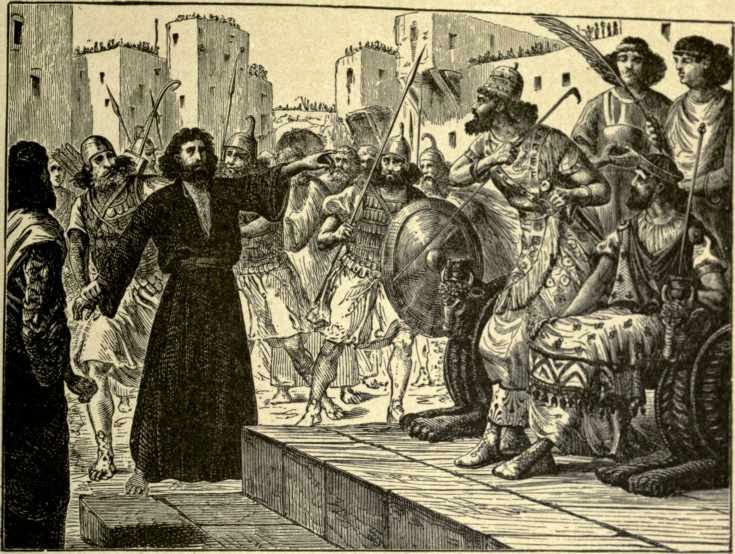
Failure to Feed the Flock of God

15 And when he had come to the king, the king said to him, “Micaiah, shall we go to Ramoth-gilead to battle, or shall we refrain?” And he answered him, “Go up and triumph; the LORD will give it into the hand of the king.” 16 But the king said to him, “How many times shall I make you swear that you speak to me nothing but the truth in the name of the LORD?” 17 And he said, “I saw all Israel scattered on the mountains, as sheep that have no shepherd. And the LORD said, ‘These have no master; let each return to his home in peace.’” 18 And the king of Israel said to Jehoshaphat, “Did I not tell you that he would not prophesy good concerning me, but evil?” 19 And Micaiah said, “Therefore hear the word of the LORD: I saw the LORD sitting on his throne, and all the host of heaven standing beside him on his right hand and on his left; 20 and the LORD said, ‘Who will entice Ahab, that he may go up and fall at Ramoth-gilead?’ And one said one thing, and another said another. 21 Then a spirit came forward and stood before the LORD, saying, ‘I will entice him.’ 22 And the LORD said to him, ‘By what means?’ And he said, ‘I will go out, and will be a lying spirit in the mouth of all his prophets.’ And he said, ‘You are to entice him, and you shall succeed; go out and do so.’ 23 Now therefore behold, the LORD has put a lying spirit in the mouth of all these your prophets; the LORD has declared disaster for you.”

24 Then Zedekiah the son of Chenaanah came near and struck Micaiah on the cheek and said, “How did the Spirit of the LORD go from me to speak to you?” 25 And Micaiah said, “Behold, you shall see on that day when you go into an inner chamber to hide yourself.” 26 And the king of Israel said, “Seize Micaiah, and take him back to Amon the governor of the city and to Joash the king’s son, 27 and say, ‘Thus says the king, “Put this fellow in prison and feed him meager rations of bread and water, until I come in peace.”’” 28 And Micaiah said, “If you return in peace, the LORD has not spoken by me.” And he said, “Hear, all you peoples!” 1 Kings 22:15-28 ESV

Imagine the scene. Micaiah, the prophet, has been forcibly dragged before King Ahab, who is seated on the dais with his guest, King Jehoshaphat of Judah. Surrounding the two potentates are 400 prophets of Baal, each taking turns declaring their version of the truth. For hours, they have been telling King Ahab exactly what he wants to hear: “Go up to Ramoth-gilead and triumph; the LORD will give it into the hand of the king” (1 Kings 22:12 ESV). One of them, a man named Zedekiah, had even crafted a pair of iron horns and used them as a prop to support his message to the king: “Thus says the LORD, ‘With these you shall push the Syrians until they are destroyed’” (1 Kings 22:11 ESV).

Then Micaiah shows up. Unlike the 400 yes-men who have been masquerading as spokesmen for the false god, Baal, Micaiah was a prophet of Yahweh. As such, he was obligated to speak only those words given to him by God. Which is precisely what Micaiah told the man who had come to fetch him.

As the LORD lives, what the LORD says to me, that I will speak.” – 1 Kings 22:14 ESV

Yet, when King Ahab asked Micaiah to reveal what his God thought about the planned attack of Ramoth-gilead, Micaiah simply repeated the words of the false prophets. He basically told the king, “Go for it!” But Ahab sensed the thinly veiled sarcasm behind Micaiah’s answer and demanded that he tell him the truth. Ahab knew from past experience that Micaiah and his God would oppose his plans. He had even revealed to King Jehoshaphat just how much he loathed Micaiah, telling him, “He never prophesies anything but trouble for me!” (1 Kings 22:8 NLT).

Micaiah knew that it really didn’t matter what he told Ahab, because the king would do as he wanted. Ahab’s stubbornness and arrogance would prevent him from hearing and heeding the message of Yahweh. But Micaiah shared it anyway.

“In a vision I saw all Israel scattered on the mountains, like sheep without a shepherd. And the LORD said, ‘Their master has been killed. Send them home in peace.’” – 1 Kings 22:17 NLT

Ahab was infuriated because Micaiah had just predicted Israel’s defeat and the king’s own death. But this less-than-encouraging message was just what Ahab had expected from the prophet of Yahweh. Just like Elijah, Micaiah proved to be a messenger of doom and gloom, bent on delivering nothing but bad news concerning Ahab’s kingly aspirations.

But Micaiah was not done. He next revealed how God had chosen to implement His plan for Ahab’s demise.

“Listen to what the LORD says! I saw the LORD sitting on his throne with all the armies of heaven around him, on his right and on his left. And the LORD said, ‘Who can entice Ahab to go into battle against Ramoth-gilead so he can be killed?’

“There were many suggestions, and finally a spirit approached the LORD and said, ‘I can do it!’

“‘How will you do this?’ the LORD asked.

“And the spirit replied, ‘I will go out and inspire all of Ahab’s prophets to speak lies.’

“‘You will succeed,’ said the LORD. ‘Go ahead and do it.’” – 1 Kings 22:19-22 NLT

Micaiah was given a vision of a conversation that took place in the throne room of God Almighty. In the vision, Yahweh is portrayed as a king surrounded by his advisors and his army. He is soliciting input from the heavenly host, asking for their counsel on the best way to get Ahab to proceed with his attack on Ramoth-gilead, which will result in his death. A spirit speaks up and offers to deceive the prophets of Baal by giving them a false message of victory. God approves the plan and sends the spirit on its way. Then Micaiah informs Ahab that this is precisely what has happened.

“So you see, the LORD has put a lying spirit in the mouths of all your prophets. For the LORD has pronounced your doom.” – 1 Kings 22:23 NLT

Amazingly, Micaiah tells Ahab the stark reality of all that had just transpired. The 400 prophets had unwittingly declared a lie, enticing Ahab to proceed with his plan to attack Ramoth-gilead and, inadvertently, bringing about his own demise. The identity of this “lying spirit” is unclear. Some view this as an angelic being who visited the king’s prophets and gave them a false message to deliver to the king. Others have determined this to have been a demonic spirit or Satan himself. But the text only indicates that this spirit was authorized by Yahweh to deceive the pseudo-prophets with a false message that would entice Ahab to attack Ramoth-gilead. Their answer, influenced by the spirit sent by Yahweh, was consistent and convincing.

“Yes, go right ahead! The LORD will give the king victory.” – 1 Kings 22:6 NLT 

Yet, even when Micaiah disclosed the truth to Ahab, the king stubbornly refused to give up his plan. He ordered Micaiah’s arrest and imprisonment and commanded that he be given nothing but bread and water until he had returned safely from his battle for Ramoth-gilead. But before being hauled off to prison, Micaiah made one final pronouncement to the king and all those who stood within earshot.

“If you return safely, it will mean that the LORD has not spoken through me!” Then he added to those standing around, “Everyone mark my words!” – 1 Kings 22:28 NLT

The problem with Ahab was not just his stubbornness and idolatry; it was his refusal to shepherd the people of Israel. All his self-centered acts of self-promotion had done irreparable damage to the nation of Israel. He had led the people into apostasy and idolatry, and, as a king over God’s chosen people, he would be held responsible for his failure to care for Yahweh’s flock. Hundreds of years later, the prophet Ezekiel would declare a foreboding message from God concerning all those kings who, like Ahab, had left the people of God like sheep without a shepherd.

Then this message came to me from the LORD: “Son of man, prophesy against the shepherds, the leaders of Israel. Give them this message from the Sovereign LORD: What sorrow awaits you shepherds who feed yourselves instead of your flocks. Shouldn’t shepherds feed their sheep? You drink the milk, wear the wool, and butcher the best animals, but you let your flocks starve. You have not taken care of the weak. You have not tended the sick or bound up the injured. You have not gone looking for those who have wandered away and are lost. Instead, you have ruled them with harshness and cruelty. So my sheep have been scattered without a shepherd, and they are easy prey for any wild animal. They have wandered through all the mountains and all the hills, across the face of the earth, yet no one has gone to search for them.” – Ezekiel 34:1-6 NLT

This motif of shepherdless sheep dates back to the time of Moses. When the great deliverer of Israel was nearing the end of his life, he appealed to God, asking Him to provide the people of Israel with a new shepherd.

Then Moses said to the LORD, “O LORD, you are the God who gives breath to all creatures. Please appoint a new man as leader for the community. Give them someone who will guide them wherever they go and will lead them into battle, so the community of the LORD will not be like sheep without a shepherd.” – Numbers 27:15-17 NLT

Centuries later, long after Ahab had died, Jesus appeared on the scene, offering His own assessment of the spiritual state of the people of Israel.

Jesus traveled through all the towns and villages of that area, teaching in the synagogues and announcing the Good News about the Kingdom. And he healed every kind of disease and illness. When he saw the crowds, he had compassion on them because they were confused and helpless, like sheep without a shepherd. – Matthew 9:35-36 NLT

The Good Shepherd couldn’t help but look at His own people and see them as shepherdless sheep, wandering about confused and helpless. For centuries, they had been misled and mistreated. Their political and spiritual leaders had used and abused them. Those who should have been feeding and caring for them had ended up taking advantage of them, following the example of Ahab. But Jesus arrived on the scene as the Son of David, emulating the example of the man after God’s own heart. Jesus was the quintessential shepherd, the Good Shepherd, who would lay down His life for the sheep. Jesus would shepherd the flock of God with care and compassion, just as His forefather did.

He [Gpd] chose David his servant
    and took him from the sheepfolds;
from following the nursing ewes he brought him
    to shepherd Jacob his people,
    Israel his inheritance.
With upright heart he shepherded them
    and guided them with his skillful hand. – Psalm 78:70-72 ESV

At the end of the day, Ahab’s most significant problem was that he was a lousy shepherd. His chief sin was that he had failed to care for God’s flock and had made his own needs a higher priority than the needs of the people. Like most of the kings of Israel and Judah, Ahab had abused his divinely ordained power and position, and he would have to answer to the Great Shepherd of Israel. But despite Ahab’s egocentric ambitions and his physical and spiritual mistreatment of those whom God had placed under his care, Yahweh would personally ensure that His chosen people received the care and compassion He had promised them.

He will feed his flock like a shepherd. He will carry the lambs in his arms, holding them close to his heart. He will gently lead the mother sheep with their young. – Isaiah 40:11 NLT

English Standard Version (ESV) The Holy Bible, English Standard Version. ESV® Permanent Text Edition® (2016). Copyright © 2001 by Crossway Bibles, a publishing ministry of Good News Publishers.

New Living Translation (NLT) Holy Bible, New Living Translation, copyright © 1996, 2004, 2015 by Tyndale House Foundation. Used by permission of Tyndale House Publishers Inc., Carol Stream, Illinois 60188. All rights reserved.

The Pernicious Problem of Pride

41 Now the rest of the acts of Solomon, and all that he did, and his wisdom, are they not written in the Book of the Acts of Solomon? 42 And the time that Solomon reigned in Jerusalem over all Israel was forty years. 43 And Solomon slept with his fathers and was buried in the city of David his father. And Rehoboam his son reigned in his place.

1 Rehoboam went to Shechem, for all Israel had come to Shechem to make him king. And as soon as Jeroboam the son of Nebat heard of it (for he was still in Egypt, where he had fled from King Solomon), then Jeroboam returned from Egypt. And they sent and called him, and Jeroboam and all the assembly of Israel came and said to Rehoboam, “Your father made our yoke heavy. Now therefore lighten the hard service of your father and his heavy yoke on us, and we will serve you.” He said to them, “Go away for three days, then come again to me.” So the people went away.

Then King Rehoboam took counsel with the old men, who had stood before Solomon his father while he was yet alive, saying, “How do you advise me to answer this people?” And they said to him, “If you will be a servant to this people today and serve them, and speak good words to them when you answer them, then they will be your servants forever.” But he abandoned the counsel that the old men gave him and took counsel with the young men who had grown up with him and stood before him. And he said to them, “What do you advise that we answer this people who have said to me, ‘Lighten the yoke that your father put on us’?” 10 And the young men who had grown up with him said to him, “Thus shall you speak to this people who said to you, ‘Your father made our yoke heavy, but you lighten it for us,’ thus shall you say to them, ‘My little finger is thicker than my father’s thighs. 11 And now, whereas my father laid on you a heavy yoke, I will add to your yoke. My father disciplined you with whips, but I will discipline you with scorpions.’”

12 So Jeroboam and all the people came to Rehoboam the third day, as the king said, “Come to me again the third day.” 13 And the king answered the people harshly, and forsaking the counsel that the old men had given him, 14 he spoke to them according to the counsel of the young men, saying, “My father made your yoke heavy, but I will add to your yoke. My father disciplined you with whips, but I will discipline you with scorpions.” 15 So the king did not listen to the people, for it was a turn of affairs brought about by the LORD that he might fulfill his word, which the LORD spoke by Ahijah the Shilonite to Jeroboam the son of Nebat. 1 Kings 11:41-12:15 ESV

As God had promised, Solomon was allowed to complete his reign with his kingdom still intact. But upon Solomon’s death, his son Rehoboam, who succeeded him to the throne, found himself facing a God-ordained crisis that would leave his kingdom divided and greatly diminished. It would be easy to sympathize with poor Rehoboam because he was utterly unaware of what was about to happen to him. The day of his coronation should have been one of the most joyous occasions of his life. He was inheriting the vast kingdom his father had established, along with all the wealth and riches that Solomon had accumulated over the last four decades. He was a lucky young man. But his fate was about to take a decidedly negative turn for the worse. Speaking through the prophet Ahijah, God had promised to divide the kingdom of Israel, awarding ten of the tribes to Jeroboam and leaving Rehoboam with only one.

For the sake of my servant David, the one whom I chose and who obeyed my commands and decrees, I will keep Solomon as leader for the rest of his life. But I will take the kingdom away from his son and give ten of the tribes to you. His son will have one tribe so that the descendants of David my servant will continue to reign, shining like a lamp in Jerusalem, the city I have chosen to be the place for my name.” – 1 Kings 11:34-36 NLT

But any sorrow one might feel for Rehoboam is quickly dispelled when his true nature is revealed as he attempts to handle his first official crisis as king. For some undisclosed reason, Rehoboam had decided to hold his coronation ceremony in the city of Shechem, located in the land that belonged to the tribe of Ephraim. His decision to hold this vital ceremony outside the city of Jerusalem may indicate that he was aware of the potential problem with Jeroboam. Solomon had likely warned Rehoboam about the possible threat from the Ephraimites.

Before his death, Solomon had become aware of the prediction that Ahijah the prophet had delivered concerning Jeroboam and attempted to have Jeroboam murdered. Jeroboam, who was an Ephraimite, had been assigned the task of supervising the conscripted labor force from among his own people. In performing his duties, he became aware of the heavy burden Solomon had placed upon the Ephraimites and other northern tribes. So, Rehoboam may have moved his coronation to Shechem in an attempt to placate and win over the disgruntled Ephraimites. But this ploy would prove unsuccessful.

From his place of exile in Egypt, Jeroboam heard the news that Solomon had died and returned to Israel, where he was promptly appointed the official spokesperson for the ten northern tribes. When Rehoboam arrived in Shechem for his coronation, he was met by a large contingent of the people who made an appeal through their appointed leader, Jeroboam.

“Your father was a hard master,” they said. “Lighten the harsh labor demands and heavy taxes that your father imposed on us. Then we will be your loyal subjects.” – 1 Kings 12:4 NLT

Notice that Jeroboam did not restate the words of the prophet. He did not boast about the promise God had made, declaring that he was going to be the next king over ten of the tribes of Israel. There were no threats of insurrection or insurgency. He simply expressed the people’s grievances and their desire to have the heavy burdens of labor and taxation alleviated.

This was a defining moment for Rehoboam. He could have seen this as an opportunity to unify the nation by demonstrating his intentions to be a fair and just king. Even though he was the son of Solomon, Rehoboam would have to win the favor and trust of the people. He was being given the opportunity to rectify some of his father’s less-than-stellar policies.

Having heard the people’s request, Rehoboam sent the people away, assuring them that he would take everything into consideration and return with a decision. As the son of Solomon, the man who compiled and edited an entire book of proverbial sayings, Rehoboam would have grown up hearing all the sage advice his father had gathered.

Where there is no guidance, a people falls, but in an abundance of counselors there is safety. – Proverbs 11:14 ESV

Without counsel plans fail, but with many advisers they succeed. – Proverbs 15:22 ESV

Plans are established by counsel; by wise guidance wage war. – Proverbs 20:18 ESV

Only with sound guidance should you wage war, and victory lies in a multitude of counselors. – Proverbs 24:6 BSB

So, it should come as no surprise that Rehoboam sought counsel. First, he “discussed the matter with the older men who had counseled his father” (1 Kings 12:6 NLT). These men advised Rehoboam that he could win over the people’s hearts by responding favorably to their request. He could forestall any potential unrest by demonstrating that he was, first and foremost, the servant of all the people. While Rehoboam was from the tribe of Judah, he was expected to serve as God’s shepherd over all the people. By making this concession, Rehoboam could avoid a rebellion and establish himself as a compassionate and caring king.

But Rehoboam didn’t like what he heard. The author flatly states, “Rehoboam rejected the advice of the older men and instead asked the opinion of the young men who had grown up with him and were now his advisers” (1 Kings 12:8 NLT). In doing so, Rehoboam lived out the truth revealed in the proverbs his father had so painstakingly collected.

The way of a fool is right in his own eyes, but a wise man listens to advice. – Proverbs 12:15 ESV

Listen to advice and accept instruction, that you may gain wisdom in the future. – Proverbs 19:20 ESV

Listen to instruction and be wise; do not ignore it. – Proverbs 8:33 BSB

Unlike his father, Rehoboam had not been given the gift of wisdom from God. He was young and inexperienced and in desperate need of wise counsel. But when he received it, he rejected it, choosing instead to seek out those who would tell him what he wanted to hear. Disliking the counsel of the older and wiser men, Rehoboam turned to his peers for advice, and they were more than eager to give it.

The young men replied, “This is what you should tell those complainers who want a lighter burden: ‘My little finger is thicker than my father’s waist! Yes, my father laid heavy burdens on you, but I’m going to make them even heavier! My father beat you with whips, but I will beat you with scorpions!’” – 1 Kings 12:10-11 NLT

These brash young men appealed to Rehoboam’s ego. They advised him to lay down the law and establish his reputation as a no-holds-barred disciplinarian who ruled with an iron fist. These young men knew Rehoboam well, and their advice was meant to appeal to his over-inflated ego and his desperate need to escape the shadow of his father’s reputation. In a demonstration of his inherent foolishness and pride, Rehoboam heeded the counsel of his peers and handed down his decision to the people. In doing so, he fulfilled the words of another of his father’s proverbs.

Those who trust their own insight are foolish, but anyone who walks in wisdom is safe. – Proverbs 28:26 NLT

Rather than humbly heeding the pleas of his people, Rehoboam listened to his own heart. However, the author reveals that this was all part of God’s sovereign will.

…it was a turn of affairs brought about by the LORD that he might fulfill his word. – 1 Kings 12:15 ESV

God didn’t force Rehoboam to do what he did. This stubborn and prideful young man simply acted according to his own sinful nature. However, in doing so, he fulfilled God’s will. Rehoboam’s decision would fuel the fire that would end up burning down his kingdom. In a foolish attempt to establish himself as a great king, Rehoboam unwittingly brought about the dismantling of the realm his father had built.

It seems likely that his more senior advisors would have responded to his fateful decision by quoting some of the proverbs his father had compiled. These sage counselors would have encouraged him to demonstrate humility rather than pride.

Pride leads to disgrace,
    but with humility comes wisdom. – Proverbs 11:2 NLT

Pride goes before destruction,
    and haughtiness before a fall. – Proverbs 16:18 ESV

Haughtiness goes before destruction;
    humility precedes honor. – Proverbs 18:12 NLT

Pride ends in humiliation,
    while humility brings honor. – Proverbs 29:23 NLT

Their own life experiences would have prompted them to beg Rehoboam to reconsider his unwise and potentially devastating decision. But Rehoboam’s mind was made up, and the fate of his kingdom was sealed. This sad state of affairs was a fulfillment of the warning God had given to Solomon. Because of Solomon’s unfaithfulness and refusal to repent of his spiritual infidelity, God did as He said He would do and split the kingdom, leaving Rehoboam with one tribe over which to rule. The days ahead would prove to be difficult as the heir to Solomon’s throne attempted to thwart God’s plan by winning back the ten disgruntled tribes through military force. His efforts would fail miserably, and the judgment of God would remain in effect for generations to come, all because one man failed to keep his covenant commitment to Yahweh.

English Standard Version (ESV) The Holy Bible, English Standard Version. ESV® Permanent Text Edition® (2016). Copyright © 2001 by Crossway Bibles, a publishing ministry of Good News Publishers.

New Living Translation (NLT) Holy Bible, New Living Translation, copyright © 1996, 2004, 2015 by Tyndale House Foundation. Used by permission of Tyndale House Publishers Inc., Carol Stream, Illinois 60188. All rights reserved.

Godly Wisdom Versus God-Like Wisdom

At Gibeon the LORD appeared to Solomon in a dream by night, and God said, “Ask what I shall give you.” And Solomon said, “You have shown great and steadfast love to your servant David my father, because he walked before you in faithfulness, in righteousness, and in uprightness of heart toward you. And you have kept for him this great and steadfast love and have given him a son to sit on his throne this day. And now, O LORD my God, you have made your servant king in place of David my father, although I am but a little child. I do not know how to go out or come in. And your servant is in the midst of your people whom you have chosen, a great people, too many to be numbered or counted for multitude. Give your servant therefore an understanding mind to govern your people, that I may discern between good and evil, for who is able to govern this your great people?”

10 It pleased the LORD that Solomon had asked this. 11 And God said to him, “Because you have asked this, and have not asked for yourself long life or riches or the life of your enemies, but have asked for yourself understanding to discern what is right, 12 behold, I now do according to your word. Behold, I give you a wise and discerning mind, so that none like you has been before you and none like you shall arise after you. 13 I give you also what you have not asked, both riches and honor, so that no other king shall compare with you, all your days. 14 And if you will walk in my ways, keeping my statutes and my commandments, as your father David walked, then I will lengthen your days.”

15 And Solomon awoke, and behold, it was a dream. Then he came to Jerusalem and stood before the ark of the covenant of the LORD, and offered up burnt offerings and peace offerings, and made a feast for all his servants. 1 Kings 3:5-15 ESV

Early in his reign, Solomon was a man who loved and honored Yahweh. His devotion to God shows up in the regular trips he made to Gibeon, where the tent or Tabernacle was located. There, he would offer burnt offerings to God, sometimes as many as 1,000 at a time. The divine regulations concerning these sacrifices are found in the book of Leviticus, where they are described as “a burnt offering, a gift of a soothing aroma to the LORD” (Leviticus 1:17 NET).

On one such occasion, after a day of offering unblemished sacrificial animals on the altar to Yahweh, Solomon went to bed that evening and had a dream. In his dream, he was visited by Yahweh, who made Solomon a gracious and magnanimous offer: “Tell me what I should give you” (1 Kings 3:5 NET).

Solomon had spared no expense when giving to God the thousands of unblemished animals from his royal flocks and herds. He had willingly offered the best of what he had as a way of expressing his gratitude and devotion to God. And now, God was offering to give Solomon a gift in return. As a reward for his faithful obedience, Solomon was granted a once-in-a-lifetime opportunity to ask for whatever he desired from God. He was being given carte blanche, a literal blank check from Yahweh, to name his own blessing. The God of the universe was opening up the doors to His royal treasuries and telling Solomon that he could have whatever he wanted.

The gravity of this moment should not be overlooked. In a sense, Solomon was being tested by God to reveal the true nature of his heart. He could ask God for anything, and his request would expose his hidden desires and priorities.

What would you do if faced with the same opportunity? How would you respond? Would you ask for wealth, power, popularity, good health, and a long life? The problem is that many of us already think of God as some kind of cosmic Genie-in-a-bottle, an all-powerful, divine being who exists to fulfill our wishes. We would relish the thought of being in Solomon’s sandals, faced with the chance to tell God our one request for Him to meet. But this was Solomon’s dream, and he didn’t hesitate for a second to give God his answer.

First, Solomon expressed his gratitude to God for all that He had already done.

“You showed great and faithful love to your servant my father, David, because he was honest and true and faithful to you. And you have continued to show this great and faithful love to him today by giving him a son to sit on his throne. – 1 Kings 3:6 NLT

Solomon was grateful for God’s faithfulness and unfailing love. He was well aware of the many ways in which God had blessed his father, David. Now, he was sitting on the throne of Israel because Yahweh had ordained it to be so. His newfound position of power and authority had been a gift from God. Solomon knew he had done nothing to deserve this honor. If anything, he felt ill-equipped and unprepared for such an important role.

“I am like a little child who doesn’t know his way around. And here I am in the midst of your own chosen people, a nation so great and numerous they cannot be counted!” – 1 Kings 3:7-8 NLT

When faced with a situation that could have easily exposed his greed and opportunism, Solomon displayed remarkable humility. His mind was not immediately filled with dreams of riches or glory. His first thoughts were not of a new royal wardrobe, a faster chariot, a bigger palace, or a larger kingdom. His mind focused on his inadequacy and inability to do the job he had been given by God. So, he asked Yahweh for the one thing he knew he lacked: Wisdom.

“Give me an understanding heart so that I can govern your people well and know the difference between right and wrong. For who by himself is able to govern this great people of yours?” – 1 Kings 3:9 NLT

Solomon already possessed unsurpassed power and tremendous wealth. He didn’t need more of either one. In the short time he had ruled over Israel, he realized that what he lacked was the wisdom to govern God’s people. It had been said of David that he shepherded the people of Israel with “integrity of heart” and “guided them with skillful hands” (Psalm 78:72 BSB). Solomon wanted to do the same thing, but knew he was deficient. He lacked the necessary qualities to govern wisely and well. So, he asked God to provide the missing ingredient, and God was pleased to do so. 

“Because you have asked for wisdom in governing my people with justice and have not asked for a long life or wealth or the death of your enemies—I will give you what you asked for! I will give you a wise and understanding heart such as no one else has had or ever will have!” – 1 Kings 3:11-12 NLT

In essence, God said, “Good answer!” He liked what He heard and was more than willing to give Solomon exactly what he had requested, and more.

“And I will also give you what you did not ask for—riches and fame! No other king in all the world will be compared to you for the rest of your life!” – 1 Kings 3:13 NLT

God blessed Solomon, first, by giving him what he needed most. God provided this newly crowned king with wisdom that would set him apart from every other ruler on the planet. Solomon would become world-renowned for his wisdom. Even today, he is often referred to as the wisest man who ever lived. However, God also gave Solomon more than he had requested, by promising to bless him with riches and fame. But those unrequested gifts would actually come as a result of Solomon’s wisdom. God didn’t suddenly fill Solomon’s royal treasuries with gold and silver. His net worth didn’t double overnight. His great wealth would be a byproduct of the wisdom given to him by God. One of the proverbs later collected and compiled by Solomon personifies the voice of wisdom, declaring its many residual benefits.

Riches and honor are with me,
    enduring wealth and righteousness. – Proverbs 8:18 ESV

Solomon would grow wealthy and become famous, but those were side benefits. The gift of wisdom, bestowed upon him by God, would enable Solomon to govern his kingdom according to divine principles. Every aspect of his decision-making was divinely influenced and inspired. As long as he relied on God, he would experience the blessings that accompany godly wisdom.

God gave Solomon very great wisdom and understanding, and knowledge as vast as the sands of the seashore. In fact, his wisdom exceeded that of all the wise men of the East and the wise men of Egypt. He was wiser than anyone else, including Ethan the Ezrahite and the sons of Mahol—Heman, Calcol, and Darda. His fame spread throughout all the surrounding nations. He composed some 3,000 proverbs and wrote 1,005 songs. He could speak with authority about all kinds of plants, from the great cedar of Lebanon to the tiny hyssop that grows from cracks in a wall. He could also speak about animals, birds, small creatures, and fish. And kings from every nation sent their ambassadors to listen to the wisdom of Solomon. – 1 Kings 4:29-34 NLT

Fame and fortune were not what Solomon asked for; wisdom was. Godly wisdom was the gift he received, and everything else flowed from it. As Proverbs 8 clearly states, the wisdom of God is of far greater value than any benefits it may yield.

Take my instruction instead of silver,
    and knowledge rather than choice gold,
for wisdom is better than jewels,
    and all that you may desire cannot compare with her. – Proverbs 8:10-11 ESV

It is interesting to note how Solomon worded his answer to Yahweh.

“Give your servant therefore an understanding mind to govern your people, that I may discern between good and evil…” – 1 Kings 3:9 ESV

This brings to mind the story of Adam and Eve in the garden. When God created the first couple, he placed them in the garden and gave them one prohibition.

“You may surely eat of every tree of the garden, but of the tree of the knowledge of good and evil you shall not eat, for in the day that you eat of it you shall surely die.” – Genesis 3:16-17 ESV

That one tree was off-limits, and consuming its fruit would result in death. Yet, it seems to have contained the very thing Solomon asked God for: The knowledge of good and evil. As the story goes, Eve later found herself in the garden, considering the tempting fruit of the forbidden tree. Suddenly, Satan, disguised as a serpent, appeared to her and encouraged her to eat what God had banned. When Eve articulated God’s warning of death if they ate the fruit, Satan countered, “You will not surely die. For God knows that when you eat of it your eyes will be opened, and you will be like God, knowing good and evil” (Genesis 3:4-5 ESV). 

Satan wasn’t offering the promise of godly wisdom; he was offering God-like wisdom. He was trying to get Eve to seek wisdom from the wrong source. Proverbs 2 states, “For the LORD gives wisdom; from his mouth come knowledge and understanding; he stores up sound wisdom for the upright” (Proverbs 2:6-7 ESV). Wisdom, at its core, is the knowledge of good and evil. It is the ability to understand the difference between right and wrong, as defined by God’s standards.  The knowledge of good and evil (wisdom) was never meant to come from any source other than God. But Satan wanted Adam and Eve to be the sole determiners of their moral standards. Rather than allow God to direct their moral trajectory, he wanted them to become moral free agents, choosing for themselves what was best. And when the first couple decided to “be as God,” they opened the door to sin, condemnation, and death. Thinking themselves to be wise, they became fools (Romans 1:22).

The Proverbs portray the outcome of Adam and Eve’s decision to choose God-like wisdom rather than godly wisdom. When they decided to become their own gods and determine their own standards for right and wrong, they discovered it produced a dangerous byproduct.

There is a way that seems right to a man, but its end is the way of death. – Proverbs 14:12 BSB

What sets Solomon’s request apart is his understanding that the knowledge of good and evil can only come from God. He knew that, on his own, he could not and would not make the right choices. Adam and Eve were lured by the fruit of self-determinism. They wanted to be the masters of their own fates, deciding for themselves how to live their lives. However, they failed to grasp the painful truth that the prophet Jeremiah later exposed.

The human heart is the most deceitful of all things, and desperately wicked. Who really knows how bad it is? – Jeremiah 17:9 NLT

Solomon was young and inexperienced, but he knew enough to know that he didn’t want to be “as God;” he wanted to have the wisdom of God. He was willing to let God determine what was right and wrong, and because he trusted God, he was blessed in ways he could have never imagined.

“I grant your request and give you a wise and discerning mind superior to that of anyone who has preceded or will succeed you.  Furthermore, I am giving you what you did not request—riches and honor so that you will be the greatest king of your generation. – 1 Kings 3:12-13 NLT

English Standard Version (ESV) The Holy Bible, English Standard Version. ESV® Permanent Text Edition® (2016). Copyright © 2001 by Crossway Bibles, a publishing ministry of Good News Publishers.

New Living Translation (NLT) Holy Bible, New Living Translation, copyright © 1996, 2004, 2015 by Tyndale House Foundation. Used by permission of Tyndale House Publishers Inc., Carol Stream, Illinois 60188. All rights reserved.

Give Thanks Where Thanks Is Due

Of David.

1 I give you thanks, O LORD, with my whole heart;
    before the gods I sing your praise;
I bow down toward your holy temple
    and give thanks to your name for your steadfast love and your faithfulness,
    for you have exalted above all things
    your name and your word.
On the day I called, you answered me;
    my strength of soul you increased.

All the kings of the earth shall give you thanks, O LORD,
    for they have heard the words of your mouth,
and they shall sing of the ways of the LORD,
    for great is the glory of the LORD.
For though the LORD is high, he regards the lowly,
    but the haughty he knows from afar.

Though I walk in the midst of trouble,
    you preserve my life;
you stretch out your hand against the wrath of my enemies,
    and your right hand delivers me.
The LORD will fulfill his purpose for me;
    your steadfast love, O LORD, endures forever.
    Do not forsake the work of your hands. – Psalm 138:1-8 ESV

There are times when I don’t even know myself. I do and say things that surprise even me. I can never be certain how I will react to a given situation. I may respond in calmness and patience one day, then explode in anger and impatience the next. I have a limited understanding of what motivates me and why I act the way I do. Sometimes words come out of my mouth that catch me off guard. I can be disappointed in my own response to people and circumstances. There are those moments when I can appear as a stranger – even to myself.

But God knows me. In fact, He knows me better than I know myself. David understood this prescient aspect of Yahweh’s character. He knew that God was all-knowing, all-powerful, and always present. He knew that God was always there, and that God knew every single detail of his life, including what he was thinking and what he was going to say, even before the words came out of his mouth. In the following psalm, also penned by David, he expresses his astonishment regarding Yahweh’s omnipotence.

O LORD, you have examined my heart
    and know everything about me.
You know when I sit down or stand up.
    You know my thoughts even when I’m far away.
You see me when I travel
    and when I rest at home.
    You know everything I do.
You know what I am going to say
    even before I say it, LORD. – Psalm 139:1-4 NLT

David also understood that God had a plan for his life and was orchestrating that plan every day.  From David’s perspective, things might not have always looked like God was in control, but he had learned to view his circumstances through the lens of Yahweh’s faithfulness.

Though I am surrounded by troubles,
    you will protect me from the anger of my enemies.
You reach out your hand,
    and the power of your right hand saves me. – Psalm 138:7 NLT

This psalm is a song of thanksgiving from a grateful God-follower. In reflecting on his life, David had seen ample reasons to give Yahweh praise for His unfailing goodness and grace.

I give you thanks, O LORD, with all my heart;
    I will sing your praises before the gods.
I bow before your holy Temple as I worship.
    I praise your name for your unfailing love and faithfulness;
for your promises are backed
    by all the honor of your name. – Psalm 138:1-2 NLT

David’s recollection of Yahweh’s faithfulness prompted him to declare his thankfulness in tangible ways. Despite being surrounded by nations that worshiped their false gods with equal enthusiasm, David was willing to sing Yahweh’s praises in their hearing. He wasn’t afraid of the pagans and their idols hearing his adoration and elevation of the one true God: Yahweh.

One of the ways David displayed his reverence for Yahweh was through worship. He made it a habit to come before the LORD, offering prayers, offerings, and sacrifices in His “holy temple.” At this point, the Temple was still an unrealized dream in David’s mind. He had desired to build a house for the LORD, but it would be his son Solomon who would construct the Temple. The Hebrew word David used is hêḵāl, and it can be translated as “sanctuary” or “palace.” When David moved the Ark of the Covenant into Jerusalem, he ordered that a tent be erected in which to house this focal point of the Israelites’ sacrificial system. It remained there until Solomon completed the construction of the permanent and more palatial Temple.

But David didn’t allow the humble nature of his hêḵāl to diminish the quality of his worship. He approached it as if it were the palace of the King and a holy sanctuary where the God of the universe chose to dwell among His people. It was to this hêḵāl that David went to pray to Yahweh, whom he found to be attentive and quick to answer.

As soon as I pray, you answer me;
   you encourage me by giving me strength.
– Psalm 138:3 NLT

One of the reasons David was willing to praise Yahweh “before the gods” (Psalm 138:1) was so that the kings who worshiped these false gods might understand that “the LORD is God; there is no other besides Him” (Isaiah 4:35 BSB). By singing Yahweh’s praises and verbally declaring His greatness, David hoped to influence those who placed their hope in non-existent, impotent figments of their imaginations. He envisioned a day when “all the kings of the earth” (Psalm 138:4) would give Yahweh thanks.

While David didn’t see this happen in his lifetime, his son Solomon did. The Book of 1 Kings records that Solomon’s fame spread throughout the known world, even reaching the throne room of the Queen of Sheba.

When the queen of Sheba heard of Solomon’s fame, which brought honor to the name of the LORD, she came to test him with hard questions. – 1 Kings 10:1 NLT

She had heard rumors of Solomon’s wisdom and wealth, but when she saw it all with her own eyes, she was blown away. The size of his kingdom, the beauty of his royal palace, and the opulence of the Temple to his God left her breathless, but not without words.

“Everything I heard in my country about your achievements and wisdom is true! I didn’t believe what was said until I arrived here and saw it with my own eyes. In fact, I had not heard the half of it! Your wisdom and prosperity are far beyond what I was told. How happy your people must be! What a privilege for your officials to stand here day after day, listening to your wisdom! Praise the LORD your God, who delights in you and has placed you on the throne of Israel. Because of the LORD’s eternal love for Israel, he has made you king so you can rule with justice and righteousness.” – 1 Kings 10:6-9 NLT

When she witnessed the splendor of Solomon’s kingdom, she praised Yahweh. She attributed Solomon’s success to his God. She even viewed Solomon’s reign as an expression of Yahweh’s love for His people. She sang “about the LORD’s ways, for the glory of the LORD is very great” (Psalm 138:5 NLT).

David knew he had been greatly blessed by Yahweh, and he wanted everyone to know about it. He was determined to sing Yahweh’s praises so everyone, from the lowliest peasant to the highest officials in the land, could understand that there is no one like the LORD.

But David provides a warning to all those who discover Yahweh’s superiority and supremacy.

Though the LORD is great, he cares for the humble,
    but he keeps his distance from the proud. – Psalm 138:6 NLT

This great God is no respecter of persons. “For God does not show favoritism” (Romans 2:11 NLT). He is not impressed by anyone’s credentials or accomplishments. In fact, according to James, “God opposes the proud but gives grace to the humble” (James 4:6 NLT). James expanded on this idea in the opening chapter of his letter.

Believers who are poor have something to boast about, for God has honored them. And those who are rich should boast that God has humbled them. They will fade away like a little flower in the field. The hot sun rises and the grass withers; the little flower droops and falls, and its beauty fades away. In the same way, the rich will fade away with all of their achievements. – James 1:9-11 NLT

David understood this aspect of Yahweh’s nature, having experienced both the blessings of Yahweh as a lowly shepherd and the righteous judgment of Yahweh as a mighty king. David had learned the invaluable truth that humility was a non-negotiable requirement for those who want to experience Yahweh’s presence and promises.

Even as a king, David had experienced many trials and setbacks. His crown did not immunize him from difficulty. His power and wealth could not inoculate him from suffering and sorrow. He had his fair share of enemies, problems, setbacks, roadblocks, disappointments, and moments of discouragement, but he had learned to lean on God.

You reach out your hand,
    and the power of your right hand saves me. – Psalm 138:7 NLT

A humble king is a blessed king because he is willing to submit himself to the one true King. He had learned the same great truth that James included in his letter: “Humble yourselves before the Lord, and he will lift you up in honor” (James 4:10 NLT).  Despite his apparent success, David had become increasingly dependent on the LORD. He didn’t allow his palace, power, and possessions to feed his pride and boost his ego. He understood that, without Yahweh, he was nothing, which prompted him to pray:

The LORD will work out his plans for my life—
    for your faithful love, O LORD, endures forever.
    Don’t abandon me, for you made me. – Psalm 138:8 NLT

Father, I want to become increasingly more dependent upon You., but not is some weak and passive sense. You have blessed me with gifts and abilities, and you expect me to use them — for Your glory. You have provided me with wisdom through Your Word and power through the presence of Your indwelling Holy Spirit, and You want me to put them to use. But I don’t ever want to become cocky or overconfident in what appears to be my own strength or capabilities. David knew he was nothing without You and I want to share his perspective. I want to sing Your praises for all to hear. I want them to know that I am completely reliant upon You because You have been incredibly gracious to me. Amen

English Standard Version (ESV) The Holy Bible, English Standard Version. ESV® Permanent Text Edition® (2016). Copyright © 2001 by Crossway Bibles, a publishing ministry of Good News Publishers.

New Living Translation (NLT) Holy Bible, New Living Translation, copyright © 1996, 2004, 2015 by Tyndale House Foundation. Used by permission of Tyndale House Publishers Inc., Carol Stream, Illinois 60188. All rights reserved.