The Goal of Godliness

¹ Since we have these promises, beloved, let us cleanse ourselves from every defilement of body and spirit, bringing holiness to completion in the fear of God. – 2 Corinthians 7:1 ESV

What promises? Paul has just quoted from several Old Testament passages containing the following promises from God:

I will walk among you and will be your God, and you shall be my people. – Leviticus 26:12 ESV

My dwelling place shall be with them, and I will be their God, and they shall be my people. – Ezekiel 37:27 ESV

I will be to him a father, and he shall be to me a son. – 2 Samuel 7:14 ESV

Now, with those promises in mind, he asks: what should our reaction be? How should we respond? Paul is reminding his readers that they, like the Old Testament ancestors, have been set apart by God. He has chosen them to be His people and graciously agreed to be their God. He has consecrated them and set them apart from the rest of the nations to be His own possession. As the children of God, they were to live separately and distinctively from the rest of the world; that does not mean that Christians are to live their lives in isolation or in some kind of segregated society, separated from the rest of the world. This is not a call to monastic isolationism, but to sanctification or holiness.

Paul expected the believers to whom he was writing to live in such a way that their behavior differentiated them from everyone else. In the garden on the night He was betrayed, Jesus prayed that His followers would be in the world but not of it.

I have given them your word. And the world hates them because they do not belong to the world, just as I do not belong to the world. I’m not asking you to take them out of the world, but to keep them safe from the evil one. They do not belong to this world any more than I do. Make them holy by your truth; teach them your word, which is truth. – John 17:14-17 NLT

The promise of citizenship in God’s Kingdom was to create in them a passion to live as who God had called them to be. They were His possession, and their lives were to reflect that unique privilege and totally undeserved position. They were to cleanse themselves from every defilement of body and spirit. Their former lives were like stained and soiled garments that required the removal of the impurities that accompanied their sinful flesh. Their old habits and sinful predilections had to be systematically and regularly done away with.

In his letter to the Thessalonians, Paul emphasized the essential nature of this ongoing cleansing of the believer’s life.

God’s will is for you to be holy, so stay away from all sexual sin. Then each of you will control his own body and live in holiness and honor—not in lustful passion like the pagans who do not know God and his ways. Never harm or cheat a Christian brother in this matter by violating his wife, for the Lord avenges all such sins, as we have solemnly warned you before. God has called us to live holy lives, not impure lives. – 1 Thessalonians 4:3-7 NLT

The privilege of sonship comes with responsibilities. As children of God, we are to behave in such a way that our lives honor our heavenly Father. Ongoing sin is not to be a defining characteristic of the child of God. Paul was not insinuating that Christians cannot or will not sin. He would have wholeheartedly agreed with the apostle John’s assessment.:

If we claim we have no sin, we are only fooling ourselves and not living in the truth. But if we confess our sins to him, he is faithful and just to forgive us our sins and to cleanse us from all wickedness. If we claim we have not sinned, we are calling God a liar and showing that his word has no place in our hearts. – 1 John 1:8-10 NLT

The presence of and potential for sin is not eliminated when we come to faith in Christ, but sin’s power over us is. We are set free from its control. The Holy Spirit’s presence within us provides us with the supernatural capacity to choose righteousness over unrighteousness. We can refuse to give in to the temptations that once captivated and controlled us. 

Paul’s point in all of this is that our salvation in Christ has a second step: our ongoing sanctification. Coming to faith in Christ is to be accompanied by our continuous transformation into His likeness. And it is as we cleanse ourselves from every defilement of body and spirit that we experience what Paul refers to as “bringing holiness to completion.” The goal of our salvation is our ultimate glorification by God, the day when He will complete the process of renewal and reformation of our lives by giving us a new, completely sanctified body. Sin will be completely eliminated, and our transformation into the likeness of Christ will be complete. John describes that day in the following way:

Dear friends, we are already God’s children, but he has not yet shown us what we will be like when Christ appears. But we do know that we will be like him, for we will see him as he really is. – 1 John 3:2 NLT

In the meantime, as we wait for that day, we are to strive toward holiness, and to accomplish that objective, we must put off our old sinful nature and put on our new nature. That requires us to allow the Holy Spirit to expose the sin in our lives so we can confess it and enjoy the forgiveness Christ paid for. We are to flee sin and pursue righteousness. Paul repeatedly called believers to pursue a life of radical reformation and holy living.

Run from sexual sin! No other sin so clearly affects the body as this one does. For sexual immorality is a sin against your own body. – 1 Corinthians 6:18 NLT

Run from anything that stimulates youthful lusts. Instead, pursue righteous living, faithfulness, love, and peace. Enjoy the companionship of those who call on the Lord with pure hearts. – 2 Timothy 2:22 NLT

…so run from all these evil things. Pursue righteousness and a godly life, along with faith, love, perseverance, and gentleness.1 Timothy 6:11 NLT

Therefore, if anyone cleanses himself from what is dishonorable, he will be a vessel for honorable use, set apart as holy, useful to the master of the house, ready for every good work. – 2 Timothy 2:21 ESV

So put to death the sinful, earthly things lurking within you. Have nothing to do with sexual immorality, impurity, lust, and evil desires. Don’t be greedy, for a greedy person is an idolater, worshiping the things of this world. – Colossians 3:5 NLT

If you have been called by God to be His child, live like it. If you know the joy of having your debt to God paid for and your sins forgiven because of Jesus’ death on the cross, your lifestyle should reflect your gratitude and your recognition that you are a new creation with a new capacity to pursue holiness rather than sinfulness.

A child’s behavior reflects back on their parents. In the same way, our behavior as sons and daughters of God reflects back on our heavenly Father. Our attitudes and actions should honor Him, and our behavior should glorify Him. It was Jesus who said, “Let your good deeds shine out for all to see, so that everyone will praise your heavenly Father” (Matthew 5:16 NLT). Peter echoed that sentiment when he wrote: “Be careful to live properly among your unbelieving neighbors. Then even if they accuse you of doing wrong, they will see your honorable behavior, and they will give honor to God when he judges the world” (1 Peter 2:12 NLT).

Pursue holiness, strive after righteousness, and make godliness your goal — all for the glory of God and the good of others.

Father, I fully believe that I have been imputed the righteousness of Christ. When You look at me, You see me through the purifying power of His blood. Yet, I know that sin remains a constant reality in my life. I wrestle with it daily. But I know it’s power over me has been broken because of Christ’s death, burial, and resurrection. Sin grip has lost its hold on me. But I need Your constant assistance in putting my old nature to death. Thank You for providing the Holy Spirit as my sin-slaying advocate who provides me with the power to pursue righteousness and to reject ungodliness. I don’t always listen to His prompting or avail myself of His power, but I am grateful that He never leaves me or forsakes me. He continually convicts and confronts me about my sin and graciously leads me back on the the right path. It’s an ongoing battle, but I know that one day, You will bring my holiness to completion. My future glorification is guaranteed because Your Son died, was buried, raised to life, and glorified. One day, He will return and finish what He began. In the meantime, give me the strength to live in this fallen world as a citizen of Your Kingdom. Amen

English Standard Version (ESV) The Holy Bible, English Standard Version. ESV® Permanent Text Edition® (2016). Copyright © 2001 by Crossway Bibles, a publishing ministry of Good News Publishers.

New Living Translation (NLT) Holy Bible, New Living Translation, copyright © 1996, 2004, 2015 by Tyndale House Foundation. Used by permission of Tyndale House Publishers Inc., Carol Stream, Illinois 60188. All rights reserved.

The Law and the Promise

15 To give a human example, brothers: even with a man-made covenant, no one annuls it or adds to it once it has been ratified. 16 Now the promises were made to Abraham and to his offspring. It does not say, “And to offsprings,” referring to many, but referring to one, “And to your offspring,” who is Christ. 17 This is what I mean: the law, which came 430 years afterward, does not annul a covenant previously ratified by God, so as to make the promise void. 18 For if the inheritance comes by the law, it no longer comes by promise; but God gave it to Abraham by a promise.

19 Why then the law? It was added because of transgressions, until the offspring should come to whom the promise had been made, and it was put in place through angels by an intermediary. 20 Now an intermediary implies more than one, but God is one.

21 Is the law then contrary to the promises of God? Certainly not! For if a law had been given that could give life, then righteousness would indeed be by the law. 22 But the Scripture imprisoned everything under sin, so that the promise by faith in Jesus Christ might be given to those who believe. – Galatians 3:15-22 ESV

From the very beginning, God intended for man to be made right with Him through a single individual who would somehow satisfy His just and holy demands. God had made a promise to Abraham that all the nations of the earth would be blessed through him. He had promised Abraham that his “seed” (singular), referring to a single individual, would be the source of this blessing. From the family tree of Abraham would come the Messiah, Jesus Christ, who would bless the nations with His provision of salvation through faith in His sacrificial death on the cross.

Paul makes it clear that this promise of the coming Messiah was given 430 years before the law was given at Mount Sinai, and the law did not replace the promise.

The agreement God made with Abraham could not be canceled 430 years later when God gave the law to Moses. God would be breaking his promise. – Galatians 3:17 NLT

In other words, if God suddenly replaced the promise with a requirement to keep the law, He would be changing the rules in mid-stream. Rather than the promise or covenant that was unilateral and unconditional, God would be substituting it with the law, placing impossible conditions on our ultimate salvation. But the covenant God made with Abraham did not include conditions. It was not dependent upon Abraham’s actions or behavior, but was purely based on the faithfulness of God.

So then why did God bother to give Moses and the people of Israel the law? Paul answers that question, making it clear that the law was never intended to save mankind. Paul explains its purpose when he writes, “It was given alongside the promise to show people their sins” (Galatians 3:19 NLT). He clarifies this thought in his letter to the Romans. “…it was the law that showed me my sin. I would never have known that coveting is wrong if the law had not said, ‘You must not covet.’ But sin used this command to arouse all kinds of coveting desires within me! If there were no law, sin would not have that power” (Romans 7:7-8 NLT).

The law was given to reveal what God’s holy and righteous requirements were. The law put in writing what God’s expectations of man were, and, by disclosing those expectations, it also revealed man’s limitations. The law showed mankind just how impossible it was to live up to God’s holy and exacting standards. When men tried to obey the law, it actually resulted in more sin, rather than less. Knowledge of God’s righteous requirements exposed man’s inherent desire to live in disobedience to them. Our own sinful natures rebelled against God’s law.

Basically, the law was intended to show us our desperate need for a Savior. Trying to obey the law showed men that they were incapable of saving themselves. They couldn’t live up to God’s standard, so God provided another way. He sent His own Son to live as a man and do what no other man had ever done: keep the law to perfection. Jesus became the fulfillment of the law. He was completely obedient to the law, resulting in a sinless life unworthy of condemnation. He kept the law and lived up to  God’s exacting standard. He fulfilled the requirement and, therefore, satisfied the just and righteous demands of God.

This leads Paul to ask, “Is there a conflict, then, between God’s law and God’s promises? Absolutely not! If the law could give us new life, we could be made right with God by obeying it. But the Scriptures declare that we are all prisoners of sin, so we receive God’s promise of freedom only by believing in Jesus Christ” (Galatians 3:21-22 NLT). Paul always takes it back to this one thought and undeniable truth: Man can’t save himself. He is incapable of living the kind of life God requires; he needs a Savior.

The law shows us our desperate need for a Savior.

For everyone has sinned; we all fall short of God’s glorious standard. Yet God, with undeserved kindness, declares that we are righteous. He did this through Christ Jesus when he freed us from the penalty of our sins. For God presented Jesus as the sacrifice for sin. People are made right with God when they believe that Jesus sacrificed his life, shedding his blood. – Romans 3:23-25 NLT

God gave the promise before He gave the law, and God fulfilled the promise because His Son fulfilled the law. We have nothing to add except our faith.

Father, I have no problem admitting or acknowledging my sinfulness. It is painfully clear to me. You have shown me my sin, but You have also revealed to me the solution., and it has nothing to do with my effort to stop sinning. It is solely based on the sacrificial death of Your Son in my place. You promised to bless all mankind and You have. You have provided a way to be made right with You and it has nothing to do with my ability to earn or deserve Your favor. It is all because of what Jesus Christ has done on my behalf. Thank You! Amen.

English Standard Version (ESV) The Holy Bible, English Standard Version. ESV® Permanent Text Edition® (2016). Copyright © 2001 by Crossway Bibles, a publishing ministry of Good News Publishers.

New Living Translation (NLT) Holy Bible, New Living Translation, copyright © 1996, 2004, 2015 by Tyndale House Foundation. Used by permission of Tyndale House Publishers Inc., Carol Stream, Illinois 60188. All rights reserved.
Sincere, But Insufficient

1 Josiah was eight years old when he began to reign, and he reigned thirty-one years in Jerusalem. His mother’s name was Jedidah the daughter of Adaiah of Bozkath. And he did what was right in the eyes of the LORD and walked in all the way of David his father, and he did not turn aside to the right or to the left.

3 In the eighteenth year of King Josiah, the king sent Shaphan the son of Azaliah, son of Meshullam, the secretary, to the house of the LORD, saying, “Go up to Hilkiah the high priest, that he may count the money that has been brought into the house of the LORD, which the keepers of the threshold have collected from the people. And let it be given into the hand of the workmen who have the oversight of the house of the LORD, and let them give it to the workmen who are at the house of the LORD, repairing the house (that is, to the carpenters, and to the builders, and to the masons), and let them use it for buying timber and quarried stone to repair the house. But no accounting shall be asked from them for the money that is delivered into their hand, for they deal honestly.”

And Hilkiah the high priest said to Shaphan the secretary, “I have found the Book of the Law in the house of the LORD.” And Hilkiah gave the book to Shaphan, and he read it. And Shaphan the secretary came to the king, and reported to the king, “Your servants have emptied out the money that was found in the house and have delivered it into the hand of the workmen who have the oversight of the house of the LORD.” 10 Then Shaphan the secretary told the king, “Hilkiah the priest has given me a book.” And Shaphan read it before the king.

11 When the king heard the words of the Book of the Law, he tore his clothes. 12 And the king commanded Hilkiah the priest, and Ahikam the son of Shaphan, and Achbor the son of Micaiah, and Shaphan the secretary, and Asaiah the king’s servant, saying, 13 “Go, inquire of the LORD for me, and for the people, and for all Judah, concerning the words of this book that has been found. For great is the wrath of the LORD that is kindled against us, because our fathers have not obeyed the words of this book, to do according to all that is written concerning us.”

14 So Hilkiah the priest, and Ahikam, and Achbor, and Shaphan, and Asaiah went to Huldah the prophetess, the wife of Shallum the son of Tikvah, son of Harhas, keeper of the wardrobe (now she lived in Jerusalem in the Second Quarter), and they talked with her. 15 And she said to them, “Thus says the LORD, the God of Israel: ‘Tell the man who sent you to me, 16 Thus says the LORD, Behold, I will bring disaster upon this place and upon its inhabitants, all the words of the book that the king of Judah has read. 17 Because they have forsaken me and have made offerings to other gods, that they might provoke me to anger with all the work of their hands, therefore my wrath will be kindled against this place, and it will not be quenched. 18 But to the king of Judah, who sent you to inquire of the LORD, thus shall you say to him, Thus says the LORD, the God of Israel: Regarding the words that you have heard, 19 because your heart was penitent, and you humbled yourself before the LORD, when you heard how I spoke against this place and against its inhabitants, that they should become a desolation and a curse, and you have torn your clothes and wept before me, I also have heard you, declares the LORD. 20 Therefore, behold, I will gather you to your fathers, and you shall be gathered to your grave in peace, and your eyes shall not see all the disaster that I will bring upon this place.’” And they brought back word to the king. – 2 Kings 22:1-20 ESV

Just as Manasseh had reversed all the reforms of his father, Hezekiah, so Josiah used his authority as king to overturn Manasseh’s ungodly and pagan-inspired initiatives. The young king began an aggressive campaign to restore the spiritual health of Judah.

At the age of 16, just eight years into his reign, he began to “seek the God of his ancestor David” (2 Chronicles 34:3 NLT). Then, at the ripe old age of 20, he launched a widespread effort “to purify Judah and Jerusalem, destroying all the pagan shrines, the Asherah poles, and the carved idols and cast images” (2 Chronicles 34:3 NLT). These reformation projects continued well into his reign. At the age of 26, Josiah turned his attention to the Temple of God. In the 18th year of his reign, he “appointed Shaphan son of Azaliah, Maaseiah the governor of Jerusalem, and Joah son of Joahaz, the royal historian, to repair the Temple of the Lord his God” (2 Chronicles 34:8 NLT).

Due to Manasseh’s efforts to promote idol worship in Judah, the Temple had fallen into a state of neglect and disrepair. The former glory of the house that Solomon built had been greatly diminished by Manasseh’s shameless actions. He had desecrated God’s house and defamed the LORD’s name by ordering the placing of altars to some of his false gods right in the Temple grounds.

…he built altars for all the host of heaven in the two courts of the house of the LORD. – 2 Kings 21:5 ESV

Manasseh failed to recognize that the Temple was intended as a symbol of God’s abiding presence. Inside the Holy of Holies, the sacred inner sanctum of the Temple, was the Ark of the Covenant, in which were kept a variety of items designed to remind Israel of God’s faithfulness and providential care.

Inside the Ark were a gold jar containing manna, Aaron’s staff that sprouted leaves, and the stone tablets of the covenant. – Hebrews 9:4 NLT

During Israel’s years wandering in the wilderness, God’s presence dwelt above the mercy seat, which sat atop the Ark of the Covenant. Whenever God commanded Israel to stop and set up camp, they would erect the Tabernacle, and then God’s shekinah glory would take up residence within the Holy of Holies. The Book of Exodus provides a description of this divine manifestation of God’s presence.

Then the cloud covered the Tabernacle, and the glory of the LORD filled the Tabernacle. Moses could no longer enter the Tabernacle because the cloud had settled down over it, and the glory of the LORD filled the Tabernacle.

Now whenever the cloud lifted from the Tabernacle, the people of Israel would set out on their journey, following it. But if the cloud did not rise, they remained where they were until it lifted. The cloud of the LORD hovered over the Tabernacle during the day, and at night fire glowed inside the cloud so the whole family of Israel could see it. This continued throughout all their journeys. – Isaiah 40:34-38 NLT

When Solomon built his magnificent Temple in Jerusalem, he ordered the Ark of the Covenant to be moved into the Holy of Holies. Yahweh had promised to bless the Temple with His presence as long as the people of Israel remained obedient to His commands.

“My name will be honored forever in this Temple and in Jerusalem—the city I have chosen from among all the tribes of Israel. If the Israelites will be careful to obey my commands—all the laws my servant Moses gave them—I will not send them into exile from this land that I gave their ancestors.” – 2 Kings 21:7-8 NLT

But by the time Josiah became king of Judah, the northern kingdom of Israel had already fallen to the Assyrians, due to their unfaithfulness to God. The southern kingdom of Judah had come close to experiencing the same fate, but Hezekiah had repented, prompting God to miraculously deliver them from defeat at the hands of the Assyrians. Yet, the spiritual state of Judah had been greatly diminished by the ungodly leadership of men like Manasseh. His son, Josiah, was forced to repair all the damage he had done to the kingdom and its relationship with God Almighty.

Not only had the nation of Judah failed to care for God’s Temple, but they also refused to keep the laws He had handed down to Moses. In doing so, they had unknowingly placed themselves in a dangerous predicament. God had promised to dwell among them and provide protection for them, but only as long as they obeyed all His commands. However, they had failed to do so, and their neglect of God’s Temple was further exacerbated by their neglect of God’s law.

But in the process of repairing the temple, Hilkiah the high priest made an important discovery.

“I have found the Book of the Law in the LORD’s Temple!” – 2 Kings 22:8 NLT

This is most likely a reference to the Torah or Pentateuch, the first five books of the Old Testament. Somewhere in the recesses of the Temple, Hilkiah ran across a scroll containing God’s history of His relationship with Israel and the commands He had passed on to them through Moses. When the contents of this scroll were read to King Josiah, he was immediately and dramatically impacted by what he heard. He recognized that they were in serious trouble because they had failed to keep their covenant commitment to God. He could restore the Temple, but the people were going to have to restore their devotion to God and their determination to live in obedience to His holy law.

So, Josiah gave instructions to his high priest and other officials, ordering them to seek the LORD’s instructions. Josiah knew that they deserved Yahweh’s wrath and judgment, so he sought to know how they were to make up for all the years of disobedience.

“Go to the Temple and speak to the LORD for me and for the people and for all Judah. Inquire about the words written in this scroll that has been found. For the LORD’s great anger is burning against us because our ancestors have not obeyed the words in this scroll. We have not been doing everything it says we must do.” – 2 Kings 22:13 NLT

These men returned with a disturbing message from Hilduh, a prophetess of Yahweh. She informed the king that, because of their years of disobedience, the nation of Judah was going to experience all the curses described in the book of Deuteronomy.

“This is what the LORD says: I am going to bring disaster on this city and its people. All the words written in the scroll that the king of Judah has read will come true. For my people have abandoned me and offered sacrifices to pagan gods, and I am very angry with them for everything they have done. My anger will burn against this place, and it will not be quenched.” – 2 Kings 22:16-17 NLT

This news must have devastated Josiah; he had faithfully done all he could do to stop the nation’s spiritual decline, but now he was being told that it was too little, too late. But there was a second part to Hilduh’s message. God had taken note of Josiah’s response to the first part of the message. Rather than react in anger or resentment, Josiah displayed a heart of sorrow marked by repentance.

“You were sorry and humbled yourself before the LORD when you heard what I said against this city and its people—that this land would be cursed and become desolate. You tore your clothing in despair and wept before me in repentance. And I have indeed heard you, says the LORD. So I will not send the promised disaster until after you have died and been buried in peace. You will not see the disaster I am going to bring on this city.’” – 2 Kings 22:19-20 NLT

God was going to reward Josiah’s repentance by exempting him from the coming judgment. God would still fulfill His promise to punish Judah for its insubordination and blatant immorality, but He would spare Josiah the pain of having to witness it. Josiah’s reform efforts, while sincere, had not resulted in the people’s repentance. Yahweh knew their hearts and understood that they would never fully abandon their false gods and return to Him. Like their northern neighbors, Judah would stubbornly cling to its many idols and continue to reject Yahweh as the one true God. They would pay dearly for their spiritual infidelity, but Josiah would be spared.

English Standard Version (ESV) The Holy Bible, English Standard Version. ESV® Permanent Text Edition® (2016). Copyright © 2001 by Crossway Bibles, a publishing ministry of Good News Publishers.

New Living Translation (NLT) Holy Bible, New Living Translation, copyright © 1996, 2004, 2015 by Tyndale House Foundation. Used by permission of Tyndale House Publishers Inc., Carol Stream, Illinois 60188. All rights reserved.

Meanwhile, Back In Judah

1 In the third year of Hoshea son of Elah, king of Israel, Hezekiah the son of Ahaz, king of Judah, began to reign. He was twenty-five years old when he began to reign, and he reigned twenty-nine years in Jerusalem. His mother’s name was Abi the daughter of Zechariah. And he did what was right in the eyes of the LORD, according to all that David his father had done. He removed the high places and broke the pillars and cut down the Asherah. And he broke in pieces the bronze serpent that Moses had made, for until those days the people of Israel had made offerings to it (it was called Nehushtan). He trusted in the LORD, the God of Israel, so that there was none like him among all the kings of Judah after him, nor among those who were before him. For he held fast to the LORD. He did not depart from following him, but kept the commandments that the LORD commanded Moses. And the LORD was with him; wherever he went out, he prospered. He rebelled against the king of Assyria and would not serve him. He struck down the Philistines as far as Gaza and its territory, from watchtower to fortified city.

In the fourth year of King Hezekiah, which was the seventh year of Hoshea son of Elah, king of Israel, Shalmaneser king of Assyria came up against Samaria and besieged it, 10 and at the end of three years he took it. In the sixth year of Hezekiah, which was the ninth year of Hoshea king of Israel, Samaria was taken. 11 The king of Assyria carried the Israelites away to Assyria and put them in Halah, and on the Habor, the river of Gozan, and in the cities of the Medes, 12 because they did not obey the voice of the LORD their God but transgressed his covenant, even all that Moses the servant of the Lord commanded. They neither listened nor obeyed. 2 Kings 18:1-12 ESV

Things were not going well in the northern kingdom of Israel. In the ninth year of King Hoshea’s reign, Samaria fell, and the people of Israel were exiled to Assyria; the land was soon occupied by foreigners resettled by King Shalmaneser. Soon, these pagan idolaters were assimilated by the Israelites who had been left behind. Marriages between the Israelites and these idolatrous outsiders produced a new wave of apostasy within the land of promise, and Yahweh was not pleased. When “the LORD sent lions among them, which killed some of them” (2 Kings 17:25 NLT), King Shalmaneser attempted to remedy the problem by sending a captured Israelite priest back to Israel with orders to instruct the people in the proper ways of worshiping Yahweh. But while this lone priest did as he was commanded, his effort proved futile because the polytheistic occupants of the land simply added Yahweh to their growing number of gods. And the author ends chapter 17 with the sad assessment, “So while these new residents worshiped the Lord, they also worshiped their idols. And to this day their descendants do the same” (2 Kings 17:41 NLT). 

But meanwhile, back in Judah, a new king had ascended the throne of David, who proved to be a welcome light in the darkness that had pervaded the land of promise for so long. In a rare statement of positivity, the author declares that Hezekiah “did what was pleasing in the LORD’s sight, just as his ancestor David had done” (2 Kings 18:3 NLT). This 25-year-old, newly appointed king wasted no time in implementing much-needed reforms within the kingdom of Judah.

He removed the pagan shrines, smashed the sacred pillars, and cut down the Asherah poles. He broke up the bronze serpent that Moses had made, because the people of Israel had been offering sacrifices to it. The bronze serpent was called Nehushtan. – 2 Kings 18:4 NLT

Hezekiah had his work cut out for him, and the nature of his reforms reflects the nation’s sad moral and spiritual state. The people of Judah had become so idolatrous that they seemed to turn everything into a false god. As proof of their seemingly uncontrollable urge to worship other gods, the author states that they had even begun to offer sacrifices to “the bronze serpent that Moses made” (2 Kings 18:4 NLT). When the people of Israel were making their way from Egypt to the land of Canaan, they grew impatient with the length of the journey and the suffering it entailed. In a fit of discontentment, they called out to Moses, “Why have you brought us out of Egypt to die here in the wilderness? There is nothing to eat here and nothing to drink. And we hate this horrible manna!” (Numbers 21:5 NLT). In response to their ingratitude and disrespect, “the LORD sent poisonous snakes among the people, and many were bitten and died” (Numbers 21:6 NLT).

This plague of poisonous serpents got their attention, and “the people came to Moses and cried out, ‘We have sinned by speaking against the LORD and against you. Pray that the Lord will take away the snakes.’ So Moses prayed for the people” (Numbers 21:7 NLT). And the LORD heard that prayer and gave Moses the following instructions:

“Make a replica of a poisonous snake and attach it to a pole. All who are bitten will live if they simply look at it!” – Numbers 21:8 NLT

Moses followed the LORD’s instructions, crafting a snake out of bronze and attaching it to a pole. “Then anyone who was bitten by a snake could look at the bronze snake and be healed!” (Numbers 21:9 NLT). But centuries later, this icon from Israel’s past had been turned into just another false god to be worshiped in place of Yahweh. They even gave it a name: Nehushtan. Rather than allowing this symbol from Israel’s past to serve as a reminder of Yahweh’s holiness, judgment, and gracious deliverance, they transformed it into a false god. 

This was the spiritual cesspool into which Hezekiah began his reign. But Yahweh had prepared this young man for just such a time. The author states, “Hezekiah trusted in the LORD, the God of Israel. There was no one like him among all the kings of Judah, either before or after his time” (2 Kings 18:5 NLT). He was the right man for the job and had come along at just the right time. As many of the citizens of the northern kingdom languished in captivity and their neighbors and friends wallowed in spiritual apathy and apostasy back in the land, Yahweh was using a newly appointed king to institute a series of reforms in Judah.

The author wastes no time in establishing the secret to Hezekiah’s success.

He remained faithful to the LORD in everything, and he carefully obeyed all the commands the LORD had given Moses. So the LORD was with him, and Hezekiah was successful in everything he did. He revolted against the king of Assyria and refused to pay him tribute. He also conquered the Philistines as far distant as Gaza and its territory, from their smallest outpost to their largest walled city. – 2 Kings 18:6-8 NLT 

The LORD was with him because, unlike most of his predecessors, Hezekiah remained faithful and obedient. He refused to turn his back on Yahweh and did everything in his power to call the people to repentance and revitalize their commitment to the one true God. He instituted a series of significant reforms, beginning with a restoration of the Temple itself and involving the recalcitrant Levitical priesthood.

“Listen to me, you Levites! Purify yourselves, and purify the Temple of the Lord, the God of your ancestors. Remove all the defiled things from the sanctuary. Our ancestors were unfaithful and did what was evil in the sight of the LORD our God. They abandoned the LORD and his dwelling place; they turned their backs on him. They also shut the doors to the Temple’s entry room, and they snuffed out the lamps. They stopped burning incense and presenting burnt offerings at the sanctuary of the God of Israel.” – 2 Chronicles 29:5-7 NLT

His pep talk to the priests motivated them into action and prompted a thorough physical and spiritual cleansing of the LORD’s house.

Then they began to cleanse the Temple of the Lord, just as the king had commanded. They were careful to follow all the Lord’s instructions in their work. The priests went into the sanctuary of the Temple of the Lord to cleanse it, and they took out to the Temple courtyard all the defiled things they found. – 2 Chronicles 29:15-16 NLT

With the Temple properly reconsecrated and purified, the once-neglected sacrificial system was restored, and the people brought so many offerings that “there were too few priests to prepare all the burnt offerings…There was an abundance of burnt offerings, along with the usual liquid offerings, and a great deal of fat from the many peace offerings (2 Chronicles 29:34, 35 NLT).

Hezekiah’s reign actually began four years before the fall of Samaria and the deportation of the people of Israel to Assyria. While King Hoshea of Israel had been busy paying tribute to King Shalmaneser of Assyria in a vain attempt to stave off further assaults and the possibility of total annihilation, Hezekiah “revolted against the king of Assyria and refused to pay him tribute” (2 Kings 18:7 NLT). Unfazed by the presence of this powerful enemy, Hezekiah set his sights on another perennial foe of Judah, the Philistines. He refused to allow the 800-pound gorilla in the room to distract him from his duties as the king of Judah, choosing instead to encourage his people to recommit themselves to the worship of Yahweh.

Six years into his reign, Samaria fell, and the northern kingdom became a vassal state of Assyria. Hezekiah was smart enough to know that King Shalmaneser was far from done and would soon turn his sights on Judah. But Hezekiah “remained faithful to the LORD in everything” (2 Kings 18:6 NLT). He had watched the fall of his northern neighbors and knew precisely what had caused their demise. For his part, he was going to do everything in his power to prevent the same thing from happening under his watch in the kingdom of Judah.

As the rest of 2 Kings 18 will reveal, Hezekiah was about to be tested in ways he could have never imagined. His faith in Yahweh was going to be stretched to the extreme as Sennacherib set in motion his plan to invade Judah.

After these things and these acts of faithfulness, Sennacherib king of Assyria came and invaded Judah and encamped against the fortified cities, thinking to win them for himself. – 2 Chronicles 32:1 NLT

Hezekiah had done all the right things, but that did not mean the enemy had gone away or lost interest in subjugating the people of Judah. When the Assyrian army showed up on Hezekiah’s doorstep, he would have a choice to make: Trust in the power and presence of Yahweh or allow the enemy to determine his next steps.

English Standard Version (ESV) The Holy Bible, English Standard Version. ESV® Permanent Text Edition® (2016). Copyright © 2001 by Crossway Bibles, a publishing ministry of Good News Publishers.

New Living Translation (NLT) Holy Bible, New Living Translation, copyright © 1996, 2004, 2015 by Tyndale House Foundation. Used by permission of Tyndale House Publishers Inc., Carol Stream, Illinois 60188. All rights reserved.

The Joy of Jerusalem

27 And at the dedication of the wall of Jerusalem they sought the Levites in all their places, to bring them to Jerusalem to celebrate the dedication with gladness, with thanksgivings and with singing, with cymbals, harps, and lyres. 28 And the sons of the singers gathered together from the district surrounding Jerusalem and from the villages of the Netophathites; 29 also from Beth-gilgal and from the region of Geba and Azmaveth, for the singers had built for themselves villages around Jerusalem. 30 And the priests and the Levites purified themselves, and they purified the people and the gates and the wall.

31 Then I brought the leaders of Judah up onto the wall and appointed two great choirs that gave thanks. One went to the south on the wall to the Dung Gate. 32 And after them went Hoshaiah and half of the leaders of Judah, 33 and Azariah, Ezra, Meshullam, 34 Judah, Benjamin, Shemaiah, and Jeremiah, 35 and certain of the priests’ sons with trumpets: Zechariah the son of Jonathan, son of Shemaiah, son of Mattaniah, son of Micaiah, son of Zaccur, son of Asaph; 36 and his relatives, Shemaiah, Azarel, Milalai, Gilalai, Maai, Nethanel, Judah, and Hanani, with the musical instruments of David the man of God. And Ezra the scribe went before them. 37 At the Fountain Gate they went up straight before them by the stairs of the city of David, at the ascent of the wall, above the house of David, to the Water Gate on the east.

38 The other choir of those who gave thanks went to the north, and I followed them with half of the people, on the wall, above the Tower of the Ovens, to the Broad Wall, 39 and above the Gate of Ephraim, and by the Gate of Yeshanah, and by the Fish Gate and the Tower of Hananel and the Tower of the Hundred, to the Sheep Gate; and they came to a halt at the Gate of the Guard. 40 So both choirs of those who gave thanks stood in the house of God, and I and half of the officials with me; 41 and the priests Eliakim, Maaseiah, Miniamin, Micaiah, Elioenai, Zechariah, and Hananiah, with trumpets; 42 and Maaseiah, Shemaiah, Eleazar, Uzzi, Jehohanan, Malchijah, Elam, and Ezer. And the singers sang with Jezrahiah as their leader. 43 And they offered great sacrifices that day and rejoiced, for God had made them rejoice with great joy; the women and children also rejoiced. And the joy of Jerusalem was heard far away.

44 On that day men were appointed over the storerooms, the contributions, the firstfruits, and the tithes, to gather into them the portions required by the Law for the priests and for the Levites according to the fields of the towns, for Judah rejoiced over the priests and the Levites who ministered. 45 And they performed the service of their God and the service of purification, as did the singers and the gatekeepers, according to the command of David and his son Solomon. 46 For long ago in the days of David and Asaph there were directors of the singers, and there were songs of praise and thanksgiving to God. 47 And all Israel in the days of Zerubbabel and in the days of Nehemiah gave the daily portions for the singers and the gatekeepers; and they set apart that which was for the Levites; and the Levites set apart that which was for the sons of Aaron. Nehemiah 12:27-47 ESV

 The joyous scene portrayed in these verses starkly contrasts the taunts of Sanballat and Tobiah recorded in Chapter 4. These two men were determined to undermine Nehemiah’s efforts to rebuild the walls, even resorting to biting sarcasm to demoralize the workers.

“What does this bunch of poor, feeble Jews think they’re doing? Do they think they can build the wall in a single day by just offering a few sacrifices? Do they actually think they can make something of stones from a rubbish heap—and charred ones at that?” – Nehemiah 4:2 NLT

Not to be outdone by his friend Sanballat, Tobiah added, “That stone wall would collapse if even a fox walked along the top of it!” (Nehemiah 4:3 NLT).

But both men were proven wrong. Not only had the wall been built, but it was sturdy enough to carry the weight of two choirs and a host of joyous celebrants who gathered for its dedication. Despite opposition and setbacks, the work had been completed and the day had come to thank God for making it all possible. This elaborate and meticulously staged ceremony was nothing less than a worship service designed to express gratitude to Yahweh for His goodness and greatness. He had kept His promise to return the people of Judah to their land and had divinely orchestrated the rebuilding of the city, its walls, and the Temple.

Years earlier, when the people were still reconstructing the Temple, God sent a message of hope through His prophet Zechariah.

“This is what the Lord of Heaven’s Armies says: My love for Mount Zion is passionate and strong; I am consumed with passion for Jerusalem!

“And now the Lord says: I am returning to Mount Zion, and I will live in Jerusalem. Then Jerusalem will be called the Faithful City; the mountain of the Lord of Heaven’s Armies will be called the Holy Mountain.

“This is what the Lord of Heaven’s Armies says: Once again old men and women will walk Jerusalem’s streets with their canes and will sit together in the city squares. And the streets of the city will be filled with boys and girls at play.

“This is what the Lord of Heaven’s Armies says: All this may seem impossible to you now, a small remnant of God’s people. But is it impossible for me? says the Lord of Heaven’s Armies.

“This is what the Lord of Heaven’s Armies says: You can be sure that I will rescue my people from the east and from the west. I will bring them home again to live safely in Jerusalem. They will be my people, and I will be faithful and just toward them as their God. – Zechariah 8:2-8 NLT

While Jerusalem remained relatively empty and more work needed to be done, this was a day of celebration. God had done the impossible. He had used a small remnant of former captives to complete a massive construction project in record time and against all odds. Nehemiah had provided the plan and oversight of the effort, but he knew God deserved all the glory. So, in preparation for the big day, he arranged for Levites from all over Judah to join him in Jerusalem for the dedication. This was going to be an all-hands-on-deck event requiring the presence of every priest and Levite to pull off. The day would feature music, singing, sacrifices, offerings, and a special dedication service.

It all began with a massive purification ceremony.

The priests and Levites first purified themselves; then they purified the people, the gates, and the wall. – Nehemiah 12:30 NLT

Nothing could be done until the priests and the people had been consecrated. The worship of Yahweh would be useless if the proper cleansing ceremonies were neglected. The sequence of the purification ceremony is vital. First, the priests had to be cleansed so they could enter into God’s presence as mediators. Once purified, they were able to perform the necessary rites to cleanse the people. Finally, they purified the recently completed gates and walls.

For God to show up, the people and the place needed to be cleansed from sin. In essence, this elaborate ceremony was designed to decontaminate Jerusalem so that God could dwell there once more. This entire purification process began in the Temple. Leviticus 4 describes the steps necessary to remove corruption from the priests, people, and places so that God could dwell in their midst.

“If the high priest sins, bringing guilt upon the entire community, he must give a sin offering for the sin he has committed. He must present to the Lord a young bull with no defects. He must bring the bull to the Lord at the entrance of the Tabernacle, lay his hand on the bull’s head, and slaughter it before the Lord. The high priest will then take some of the bull’s blood into the Tabernacle, dip his finger in the blood, and sprinkle it seven times before the Lord in front of the inner curtain of the sanctuary. The priest will then put some of the blood on the horns of the altar for fragrant incense that stands in the Lord’s presence inside the Tabernacle. He will pour out the rest of the bull’s blood at the base of the altar for burnt offerings at the entrance of the Tabernacle. Then the priest must remove all the fat of the bull to be offered as a sin offering. This includes all the fat around the internal organs, the two kidneys and the fat around them near the loins, and the long lobe of the liver. He must remove these along with the kidneys,  just as he does with cattle offered as a peace offering, and burn them on the altar of burnt offerings. But he must take whatever is left of the bull—its hide, meat, head, legs, internal organs, and dung—and carry it away to a place outside the camp that is ceremonially clean, the place where the ashes are dumped. There, on the ash heap, he will burn it on a wood fire.” – Leviticus 4:3-12 NLT

While the Temple is not mentioned in Nehemiah 12, no cleansing ceremony could have taken place without the above-mentioned step occurring first. Sin was a barrier to God’s presence and Nehemiah knew that both he and his people were guilty and in need of cleansing. The past two months had been difficult and filled with every opportunity to violate God’s commands. There is little doubt that some, if not all, of Paul’s list of sins of the flesh happened as they worked on the wall.

…sexual immorality, impurity, lustful pleasures, idolatry, sorcery, hostility, quarreling, jealousy, outbursts of anger, selfish ambition, dissension, division, envy, drunkenness, wild parties, and other sins like these. – Galatians 5:19-21 NLT

Tempers flared. Some escaped the drudgery through acts of sexual sin. Weary workers imbibed a bit too much alcohol at the end of the day to ease the pain and monotony of their labor. A lot can happen in two months. So, if the people wanted to enter into God’s presence and proclaim His goodness and greatness, they had to be cleansed. And because their sins infected anything and everything, the city and its walls also needed to be decontaminated.

Once all had been purified, the processional began. Nehemiah “led the leaders of Judah to the top of the wall and organized two large choirs to give thanks” (Nehemiah 12:31 NLT). These two groups began at the same place but then marched in opposite directions along the wall, singing and worshiping as they went. The plan was to meet again at a spot along the wall nearest the Temple.

The two choirs that were giving thanks then proceeded to the Temple of God, where they took their places. So did I, together with the group of leaders who were with me. We went together with the trumpet-playing priests—Eliakim, Maaseiah, Miniamin, Micaiah, Elioenai, Zechariah, and Hananiah—and the singers—Maaseiah, Shemaiah, Eleazar, Uzzi, Jehohanan, Malkijah, Elam, and Ezer. They played and sang loudly under the direction of Jezrahiah the choir director. – Nehemiah 12:40-42 NLT

What followed was a joyous and boisterous celebration, replete with sacrifices and loud singing. Nehemiah states that “the joy of Jerusalem was heard far away” (Nehemiah 12:43 ESV). Jerusalem was one big party as the people celebrated, sang, danced, and delighted in all Yahweh had done for them. The noise could be heard from miles around, and Sanballat and Tobiah must have been beside themselves with rage as they listened to the din rising from inside the newly constructed walls. Their worst fears had come true. The people of Judah had done the improbable and now they were celebrating their God who had made it all possible.

Inside the walls, the people were ecstatic. They could barely contain their joy as they considered what God had done. But it would have benefited them to consider the words spoken by God through Zechariah.

“For this is what the Lord of Heaven’s Armies says: I was determined to punish you when your ancestors angered me, and I did not change my mind, says the Lord of Heaven’s Armies. But now I am determined to bless Jerusalem and the people of Judah. So don’t be afraid. But this is what you must do: Tell the truth to each other. Render verdicts in your courts that are just and that lead to peace. Don’t scheme against each other. Stop your love of telling lies that you swear are the truth. I hate all these things, says the Lord.” – Zechariah 8:14-17 NLT

While the walls had been completed, their work was far from done. Jerusalem was once again a city and it would soon be populated with citizens. But one day of worship and celebration would not be enough. God wanted heart change. He expected His people to live set-apart lives every day of the year. As their ancestors had learned, the Temple, walls, and gates provided no protection from the wrath of God when His people refused to obey His commands. Whether they realized it or not, their most difficult days were ahead of them, not behind them.

English Standard Version (ESV)
The Holy Bible, English Standard Version. ESV® Permanent Text Edition® (2016). Copyright © 2001 by Crossway Bibles, a publishing ministry of Good News Publishers.

New Living Translation (NLT)
Holy Bible, New Living Translation, copyright © 1996, 2004, 2015 by Tyndale House Foundation. Used by permission of Tyndale House Publishers Inc., Carol Stream, Illinois 60188. All rights reserved.

Cleansing Is Always the Key to Blessing

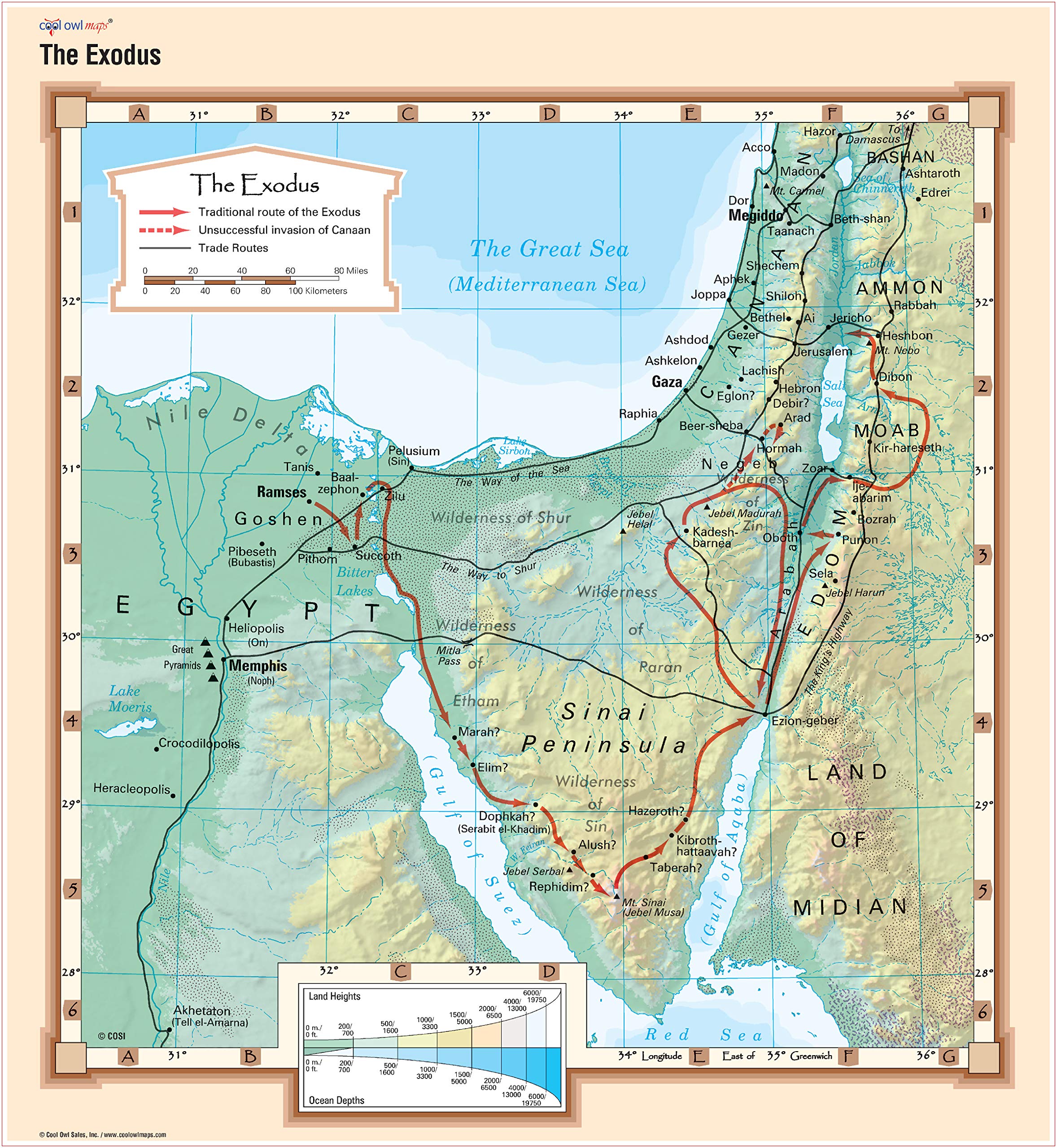
1 These are the stages of the people of Israel, when they went out of the land of Egypt by their companies under the leadership of Moses and Aaron. Moses wrote down their starting places, stage by stage, by command of the Lord, and these are their stages according to their starting places. They set out from Rameses in the first month, on the fifteenth day of the first month. On the day after the Passover, the people of Israel went out triumphantly in the sight of all the Egyptians, while the Egyptians were burying all their firstborn, whom the Lord had struck down among them. On their gods also the Lord executed judgments.

So the people of Israel set out from Rameses and camped at Succoth. And they set out from Succoth and camped at Etham, which is on the edge of the wilderness. And they set out from Etham and turned back to Pi-hahiroth, which is east of Baal-zephon, and they camped before Migdol. And they set out from before Hahiroth and passed through the midst of the sea into the wilderness, and they went a three days’ journey in the wilderness of Etham and camped at Marah. And they set out from Marah and came to Elim; at Elim there were twelve springs of water and seventy palm trees, and they camped there. 10 And they set out from Elim and camped by the Red Sea. 11 And they set out from the Red Sea and camped in the wilderness of Sin. 12 And they set out from the wilderness of Sin and camped at Dophkah. 13 And they set out from Dophkah and camped at Alush. 14 And they set out from Alush and camped at Rephidim, where there was no water for the people to drink. 15 And they set out from Rephidim and camped in the wilderness of Sinai. 16 And they set out from the wilderness of Sinai and camped at Kibroth-hattaavah. 17 And they set out from Kibroth-hattaavah and camped at Hazeroth. 18 And they set out from Hazeroth and camped at Rithmah. 19 And they set out from Rithmah and camped at Rimmon-perez. 20 And they set out from Rimmon-perez and camped at Libnah. 21 And they set out from Libnah and camped at Rissah. 22 And they set out from Rissah and camped at Kehelathah. 23 And they set out from Kehelathah and camped at Mount Shepher. 24 And they set out from Mount Shepher and camped at Haradah. 25 And they set out from Haradah and camped at Makheloth. 26 And they set out from Makheloth and camped at Tahath. 27 And they set out from Tahath and camped at Terah. 28 And they set out from Terah and camped at Mithkah. 29 And they set out from Mithkah and camped at Hashmonah. 30 And they set out from Hashmonah and camped at Moseroth. 31 And they set out from Moseroth and camped at Bene-jaakan. 32 And they set out from Bene-jaakan and camped at Hor-haggidgad. 33 And they set out from Hor-haggidgad and camped at Jotbathah. 34 And they set out from Jotbathah and camped at Abronah. 35 And they set out from Abronah and camped at Ezion-geber. 36 And they set out from Ezion-geber and camped in the wilderness of Zin (that is, Kadesh). 37 And they set out from Kadesh and camped at Mount Hor, on the edge of the land of Edom.

38 And Aaron the priest went up Mount Hor at the command of the Lord and died there, in the fortieth year after the people of Israel had come out of the land of Egypt, on the first day of the fifth month. 39 And Aaron was 123 years old when he died on Mount Hor.

40 And the Canaanite, the king of Arad, who lived in the Negeb in the land of Canaan, heard of the coming of the people of Israel.

41 And they set out from Mount Hor and camped at Zalmonah. 42 And they set out from Zalmonah and camped at Punon. 43 And they set out from Punon and camped at Oboth. 44 And they set out from Oboth and camped at Iye-abarim, in the territory of Moab. 45 And they set out from Iyim and camped at Dibon-gad. 46 And they set out from Dibon-gad and camped at Almon-diblathaim. 47 And they set out from Almon-diblathaim and camped in the mountains of Abarim, before Nebo. 48 And they set out from the mountains of Abarim and camped in the plains of Moab by the Jordan at Jericho; 49 they camped by the Jordan from Beth-jeshimoth as far as Abel-shittim in the plains of Moab.

50 And the Lord spoke to Moses in the plains of Moab by the Jordan at Jericho, saying, 51 “Speak to the people of Israel and say to them, When you pass over the Jordan into the land of Canaan, 52 then you shall drive out all the inhabitants of the land from before you and destroy all their figured stones and destroy all their metal images and demolish all their high places. 53 And you shall take possession of the land and settle in it, for I have given the land to you to possess it. 54 You shall inherit the land by lot according to your clans. To a large tribe you shall give a large inheritance, and to a small tribe you shall give a small inheritance. Wherever the lot falls for anyone, that shall be his. According to the tribes of your fathers you shall inherit. 55 But if you do not drive out the inhabitants of the land from before you, then those of them whom you let remain shall be as barbs in your eyes and thorns in your sides, and they shall trouble you in the land where you dwell. 56 And I will do to you as I thought to do to them.” Numbers 33:1-56 ESV

After doing to rapid-fire recounting of Israel’s trek from Egypt to the banks of the Jordan River, Moses prepares the people of God for their next big task. They are almost at the end of their four-decade-long journey, but they are far from done.  After more than 40 years in the wilderness, they stand on the eastern bank of the Jordan River waiting for God’s command to cross over and begin their conquest and occupation of the land of promise. The day they had long been waiting for had finally arrived. There had been a lengthy delay, but now it was time to enjoy what God had promised so long ago.

But as with most things associated with God, the blessing was tied to a requirement. He had one last instruction to give them before they took possession of the land, and it was a fairly significant one. They must drive out all the people who were living there. On top of that, they had to destroy all the idols and pagan shrines erected to the gods of the land. They were to smash every vestige of idol worship they found. In other words, God expected them to clean up before they settled down.

Sounds simple enough doesn’t it? But if you’re the least bit familiar with the story of the Israelites, they didn’t exactly follow God’s instructions to the letter; they took a few liberties. It’s almost as if the enemy (Satan) was standing there just as he had been in the garden of Eden, asking the question, “Surely, God has not said…”

I can just hear Satan whispering in their ears, “You don’t have to get rid of ALL the idols, just most of them.” Or maybe he worded his temptation this way: “You might want to leave one of the pagan shrines intact, just in case Yahweh doesn’t come through for you.”

As far as God’s command to rid the land of all its occupants, Satan probably did his best to convince the Israelites just how politically incorrect and insensitive this might appear to the rest of the people in the region. They probably thought to themselves, “We don’t want to get off on the wrong foot with our new neighbors, do we?”

And God seemed to know that the people would have second thoughts about His command, so He warned them what would happen if they failed to obey.

“But if you fail to drive out the people who live in the land, those who remain will be like splinters in your eyes and thorns in your sides. They will harass you in the land where you live. And I will do to you what I had planned to do to them.” – Numbers 33:55-56 NLT

“Disobey me,” God says, “and you will live to regret it.” This was not a suggestion, but a command. God expected them to follow His requirements without delay or deviation. He had a good reason for what He was asking them to do, and He knew exactly what would happen if they chose to disobey Him. If the Israelites failed to remove the land’s occupants, their enemies would become a constant threat and a thorn in their side. They would never learn to live amicably together. So, cleansing was critical for spiritual survival.

In his commentary on the Book of Numbers, Dr. Thomas Constable writes, “The repetition of ‘all’ (Numbers 33:52) stresses the importance of completely clearing the land of its inhabitants and their religious paraphernalia. God wanted to clean up the land spiritually and to make it a ‘holy land.’ The land was a gift from God to His first-born son, Israel (Numbers 33:53). God warned the Israelites what would happen to them if they were not completely obedient (Numbers 333:55-56). The Canaanites would be a constant source of irritation to them, and God would deal with His people as He planned to deal with the Canaanites.”

God wanted to purify the land spiritually and make it holy. That reminds me of what God wants to do with my life. He wants to clean it up spiritually and set it apart for His use. He is about removing anything in my life that might defile or defeat me. In essence, He wants to clean house.

But I tend to hang on to certain remnants of my past. I want to give the enemy some footholds in my life where he can live in peace. I want to maintain some of the idols that were there before God came to occupy the land because I find them comforting. They bring me a little bit of peace and assurance. But God wants to purge my life of any vestiges of the past. He wants to make all things new.

To receive all the blessings the promised land had to offer, the people were going to have to obey God fully. The same thing is true for us today. To enjoy all the blessings our new life in Christ offers, we must obey God fully. God makes this clear in His Word.

…throw off your old evil nature and your former way of life, which is rotten through and through, full of lust and deception. – Ephesians 4:22 NLT

Don’t lie to one another. You’re done with that old life. It’s like a filthy set of ill-fitting clothes you’ve stripped off and put in the fire. – Colossians 3:9 MSG

The night is almost gone; the day of salvation will soon be here. So don’t live in darkness. Get rid of your evil deeds. Shed them like dirty clothes. Clothe yourselves with the armor of right living, as those who live in the light. We should be decent and true in everything we do, so that everyone can approve of our behavior. Don’t participate in wild parties and getting drunk, or in adultery and immoral living, or in fighting and jealousy. But let the Lord Jesus Christ take control of you, and don’t think of ways to indulge your evil desires. – Romans 13:12-14 NLT

God was looking for a change in the lives of the Israelites. He wanted to purge and purify them, and that process began with a thorough cleansing of the land. His desire was to rid the landscape of their lives of any and all vestiges of the past.

Like the Israelites, we must take our set-apart status seriously.  We must remove all the idols and false gods that might draw us away from full reliance upon Him. If we do, we will be blessed. If we don’t, we will always find ourselves doing battle with past enemies and tempted to worship the false gods of our former life. Cleansing is always the key to blessing.

English Standard Version (ESV) The Holy Bible, English Standard Version. ESV® Permanent Text Edition® (2016). Copyright © 2001

New Living Translation (NLT) Holy Bible, New Living Translation, copyright © 1996, 2004, 2015 by Tyndale House Foundation. Used by permission of Tyndale House Publishers Inc., Carol Stream, Illinois 60188. All rights reserved.

Give Credit Where Credit Is Due

25 The Lord said to Moses, 26 “Take the count of the plunder that was taken, both of man and of beast, you and Eleazar the priest and the heads of the fathers’ houses of the congregation, 27 and divide the plunder into two parts between the warriors who went out to battle and all the congregation. 28 And levy for the Lord a tribute from the men of war who went out to battle, one out of five hundred, of the people and of the oxen and of the donkeys and of the flocks. 29 Take it from their half and give it to Eleazar the priest as a contribution to the Lord. 30 And from the people of Israel’s half you shall take one drawn out of every fifty, of the people, of the oxen, of the donkeys, and of the flocks, of all the cattle, and give them to the Levites who keep guard over the tabernacle of the Lord.” 31 And Moses and Eleazar the priest did as the Lord commanded Moses.

32 Now the plunder remaining of the spoil that the army took was 675,000 sheep, 33 72,000 cattle, 34 61,000 donkeys, 35 and 32,000 persons in all, women who had not known man by lying with him. 36 And the half, the portion of those who had gone out in the army, numbered 337,500 sheep, 37 and the Lord’s tribute of sheep was 675. 38 The cattle were 36,000, of which the Lord’s tribute was 72. 39 The donkeys were 30,500, of which the Lord’s tribute was 61. 40 The persons were 16,000, of which the Lord’s tribute was 32 persons. 41 And Moses gave the tribute, which was the contribution for the Lord, to Eleazar the priest, as the Lord commanded Moses.

42 From the people of Israel’s half, which Moses separated from that of the men who had served in the army— 43 now the congregation’s half was 337,500 sheep, 44 36,000 cattle, 45 and 30,500 donkeys, 46 and 16,000 persons— 47 from the people of Israel’s half Moses took one of every 50, both of persons and of beasts, and gave them to the Levites who kept guard over the tabernacle of the Lord, as the Lord commanded Moses.

48 Then the officers who were over the thousands of the army, the commanders of thousands and the commanders of hundreds, came near to Moses 49 and said to Moses, “Your servants have counted the men of war who are under our command, and there is not a man missing from us. 50 And we have brought the Lord’s offering, what each man found, articles of gold, armlets and bracelets, signet rings, earrings, and beads, to make atonement for ourselves before the Lord.” 51 And Moses and Eleazar the priest received from them the gold, all crafted articles. 52 And all the gold of the contribution that they presented to the Lord, from the commanders of thousands and the commanders of hundreds, was 16,750 shekels. 53 (The men in the army had each taken plunder for himself.) 54 And Moses and Eleazar the priest received the gold from the commanders of thousands and of hundreds, and brought it into the tent of meeting, as a memorial for the people of Israel before the Lord.  Numbers 31:25-54 ESV

There were 12,000 Israelite soldiers chosen to go into battle against the Midianites; 1,000 men from every tribe. That is a relatively small number when compared with the 601,730 men deemed battle-worthy according to the recent census taken by Moses. This small contingent of soldiers easily defeated their enemy and brought back an abundance of plunder from their raids of the towns and villages of the Midianites. And according to the military leaders, they had not lost a single man in the process.

“We, your servants, have accounted for all the men who went out to battle under our command; not one of us is missing! – Numbers 31:49 NLT

The mission had been a rousing success, and the bounty they had taken from the Midianites was substantial. But before anyone could enjoy the riches they had plundered, everyone and everything had to be ceremonially purified.

“Anything made of gold, silver, bronze, iron, tin, or lead—that is, all metals that do not burn—must be passed through fire in order to be made ceremonially pure. These metal objects must then be further purified with the water of purification. But everything that burns must be purified by the water alone. On the seventh day you must wash your clothes and be purified. Then you may return to the camp.” – Numbers 31:22-24 NLT

Moses warned the soldiers that they must also go through a purification ritual before they could enter the camp.

“…all of you who have killed anyone or touched a dead body must stay outside the camp for seven days. You must purify yourselves and your captives on the third and seventh days. Purify all your clothing, too, and everything made of leather, goat hair, or wood.” – Numbers 31:19-20 NLT

Contact with the enemy had rendered these men ceremonially impure, so they were required to go through a period of forced isolation and cleansing, along with all those taken captive during the mission. This was the process God had established and communicated to Moses back in chapter 19.

“All those who touch a dead human body will be ceremonially unclean for seven days. They must purify themselves on the third and seventh days with the water of purification; then they will be purified. But if they do not do this on the third and seventh days, they will continue to be unclean even after the seventh day. All those who touch a dead body and do not purify themselves in the proper way defile the Lord’s Tabernacle, and they will be cut off from the community of Israel. Since the water of purification was not sprinkled on them, their defilement continues. – Numbers 19:11-13 NLT

Once the men and their captives had completed the purification process, the booty was divided. The 12,000 combatants would receive their fair share of the reward, but those who remained behind would not be left out. This pattern of equity among those who went into battle and their brothers who remained behind would become a norm for the nation of Israel.

Centuries later, after a rousing victory over the Amalekites, King David encountered a problem among his soldiers. The ones who had assisted him in the battle were angry at having to share their plunder with those who had remained behind.

“They didn’t go with us, so they can’t have any of the plunder we recovered. Give them their wives and children, and tell them to be gone.” – 1 Samuel 30:22 NLT

These men wanted all the plunder for themselves. But David denied their selfish demands, saying: “No, my brothers! Don’t be selfish with what the Lord has given us. He has kept us safe and helped us defeat the band of raiders that attacked us. Who will listen when you talk like this? We share and share alike—those who go to battle and those who guard the equipment” (1 Samuel 23-24 NLT).

God had Moses establish a similar plan that required him to make a detailed list of all the plunder taken from the Midianites. Once that was done, Moses ordered that half the plunder be divided equally between the 12,000 men who had fought in the battle, while the other half was to be shared between the rest of the Israelites. But a portion of all the plunder was to be dedicated to God. From the soldier’s share 1/500th of all that was taken was to be given to the Lord.

“…one of every 500 of the prisoners and of the cattle, donkeys, sheep, and goats…” – Numbers 31:28 NLT

This share was to be placed under the care of Eleazar, the high priest, as an offering to the Lord, and the numbers are staggering. The Israelites dedicated 675 sheep and goats to God, along with 72 cattle, and 61 donkeys. The text also states that 32 virgin girls, taken as captives, were set aside for the Lord. It is likely that these young women became servants to the Levitical priests and assisted in the maintenance of the Tabernacle. Of the plunder given to the rest of the people, 1/50th of it was given to the Levites.

Moses took one of every fifty prisoners and animals and gave them to the Levites, who maintained the Lord’s Tabernacle. All this was done as the Lord had commanded Moses. – Numbers 31:47 NLT

There was one final offering presented to Yahweh. The military leaders who oversaw the battle came before Moses with an offering of atonement. Out of gratitude for God’s protection of their men, they brought a large number of gold armbands, bracelets, rings, earrings, and necklaces that the soldiers had taken as plunder. This would have been from the portion of the booty that belonged to the 12,000 soldiers. These men willingly gave up part of their reward as an offering to God.

“…we are presenting the items of gold we captured as an offering to the Lord from our share of the plunder—armbands, bracelets, rings, earrings, and necklaces. This will purify our lives before the Lord and make us right with him.” – Numbers 31:50 NLT

In essence, this was a ransom for the lives that God had graciously spared. Not one man had died in this expedition and the generals and captains were expressing their gratitude to God for His mercy and providential care.

This entire scenario paints a picture of how things were to unfold as the Israelites entered the land of Canaan. It served as a practice run in preparation for their future conquest of the promised land. There would be many more battles ahead, and every victory they enjoyed was to be recognized as the result of God’s grace and mercy. He would be going before them and fighting alongside them, and they were never to forget to render their thanksgiving to Him for His protection and provision.

Moses would repeatedly warn the people to take their relationship with God seriously. Without Him, they were nothing. He knew they would always face the temptation to take credit for their own success; a dangerous prospect that was to be avoided at all costs.

“Beware that in your plenty you do not forget the Lord your God and disobey his commands, regulations, and decrees that I am giving you today. For when you have become full and prosperous and have built fine homes to live in, and when your flocks and herds have become very large and your silver and gold have multiplied along with everything else, be careful!” – Deuteronomy 8:11-13 NLT

With every victory would come the temptation to glory in their success and celebrate their newfound wealth. But Moses wanted to remember that faithfulness was far more important than fame or financial success.

“Remember the Lord your God. He is the one who gives you power to be successful, in order to fulfill the covenant he confirmed to your ancestors with an oath.” – Deuteronomy 8:18 NLT

The Israelites had just experienced the providential hand of God. Their success over the Midianites had been His doing, not their own, and this amazing victory without the loss of a single Israelite soldier was the proof. They had learned the invaluable lesson that faith in God results in the presence and power of God. If they would only obey, they would experience even greater victories in the days ahead. But they were also learning that every successful battle was to be followed by a willing acknowledgment of God’s role as expressed by their faithful gifts of gratitude. God was going to go before them, and with each successive victory over their enemies, they would be expected to give credit where credit is due.

English Standard Version (ESV) The Holy Bible, English Standard Version. ESV® Permanent Text Edition® (2016). Copyright © 2001

New Living Translation (NLT) Holy Bible, New Living Translation, copyright © 1996, 2004, 2015 by Tyndale House Foundation. Used by permission of Tyndale House Publishers Inc., Carol Stream, Illinois 60188. All rights reserved.

Our Gracious God

1 Now the Lord spoke to Moses and to Aaron, saying, “This is the statute of the law that the Lord has commanded: Tell the people of Israel to bring you a red heifer without defect, in which there is no blemish, and on which a yoke has never come. And you shall give it to Eleazar the priest, and it shall be taken outside the camp and slaughtered before him. And Eleazar the priest shall take some of its blood with his finger, and sprinkle some of its blood toward the front of the tent of meeting seven times. And the heifer shall be burned in his sight. Its skin, its flesh, and its blood, with its dung, shall be burned. And the priest shall take cedarwood and hyssop and scarlet yarn, and throw them into the fire burning the heifer. Then the priest shall wash his clothes and bathe his body in water, and afterward he may come into the camp. But the priest shall be unclean until evening. The one who burns the heifer shall wash his clothes in water and bathe his body in water and shall be unclean until evening. And a man who is clean shall gather up the ashes of the heifer and deposit them outside the camp in a clean place. And they shall be kept for the water for impurity for the congregation of the people of Israel; it is a sin offering. 10 And the one who gathers the ashes of the heifer shall wash his clothes and be unclean until evening. And this shall be a perpetual statute for the people of Israel, and for the stranger who sojourns among them. Numbers 19:1-10 ESV

One of the things to keep in mind when reading these verses is the recent judgment that God had enacted upon the people of God. As a result of Korah’s rebellion, nearly 15,000 Israelites died from a plague that God had sent among the people. This large-scale pandemic had left the survivors with a massive clean-up task. The bodies of the fallen had to be gathered and properly buried, which rendered unclean all those who participated in the operation. Having come into contact with the bodies of the dead, these individuals would have been considered defiled and in need of purification, and God had already provided clear instructions regarding the treatment of the unclean.

“Command the people of Israel that they put out of the camp everyone who is leprous or has a discharge and everyone who is unclean through contact with the dead. You shall put out both male and female, putting them outside the camp, that they may not defile their camp, in the midst of which I dwell.” And the people of Israel did so, and put them outside the camp; as the Lord said to Moses, so the people of Israel did. – Numbers 5:2-4 ESV

Due to the sheer number of volunteers necessary to dispose of nearly 15,000 corpses, the Israelites would have needed a tent city to house all those who had become defiled and ceremonially unclean. So, God instituted a new command that would bring a quick resolution to the problem.

Tell the people of Israel to bring you a red heifer, a perfect animal that has no defects and has never been yoked to a plow. Give it to Eleazar the priest, and it will be taken outside the camp and slaughtered in his presence. Eleazar will take some of its blood on his finger and sprinkle it seven times toward the front of the Tabernacle.” – Numbers 19:2-4 NLT

This was to be a corporate endeavor, with the entire congregation participating, whether they were personally unclean or not. They were to choose a red heifer that was free from defects and had never been used to pull a plow. This means it would have been a highly valuable animal in the prime of health; they were not free to bring a maimed or diseased heifer. There was no option to offer an older, less valuable animal or one that was worn out by a lifetime of hard work. This sacrifice was going to cost them something.

The whole point of this ceremony was to protect the holiness of the Tabernacle. The deaths of the rebels would have ended up defiling the entire congregation, and their defilement posed a very real and present danger to the holiness of the Tabernacle itself. But the death of the heifer was not meant for atonement. In other words, its death was not intended to provide cleansing from sin but to purify from defilement.

Notice the detailed instructions God provided for Aaron. First, the animal was to be slaughtered and some of its blood was to be used for purification.

Eleazar will take some of its blood on his finger and sprinkle it seven times toward the front of the Tabernacle. – Numbers 19:4 NLT

Eleazar was one of the four sons of Aaron and served as a priest alongside his father and brothers. His job was to supervise the entire process, ensuring that the remains of the heifer were taken outside the camp and burned. As the body was cremated, Eleazar was to add a stick of cedar, a hyssop branch, and some scarlet yarn.

“Cedar wood was not as subject to decay as most other woods and so represented the continuance of life. It was also aromatic when burnt and was probably either the common brown-berried cedar or the Phoenician juniper. Hyssop stood for purification from corruption, and the priests used it to apply blood, as in the Passover ritual. Scarlet wool symbolized the strong vital energy connected with blood (cf. Lev. 14:6). All of these elements combined to signify all that strengthened life. The person in charge added these elements to the heifer ashes as the heifer was burning.” – Thomas L. Constable, Notes on Numbers

The leftover ashes were to be collected and kept in a specific location outside the camp. All those involved in the sacrifice of the heifer were required to go through a special purification process before they could return to the camp. The ashes were to be maintained for the future purification of any who became defiled through contact with the dead; the ashes were to be mixed with water and used as a purifying agent. The death of the innocent and unblemished heifer was required for the cleansing properties of the water to be effective. The ashes mixed with water would provide purification from defilement and restore the guilty to a state of holiness. They could once again enter the camp and enjoy access to the Tabernacle and all the rites associated with it.

While all the imagery in this passage is difficult for us to understand, and the burning of the red heifer seems rather strange to our modern sensibilities, the entire process provides a beautiful illustration of God’s patience, grace, and mercy. Even after all that the Israelites had done to offend Him, God provided a means for the guilty to receive forgiveness and the unclean to be purified from the devastating effects of sin and death. Korah’s rebellion had been a direct attack on God’s sovereignty, and the perpetrators had suffered the ultimate consequence for their efforts: Death. Their actions had not only left the people of Israel with a massive clean-up effort but also the problem of how to deal with a community-wide defilement. Sin always has consequences; it impacts and infects far more than the guilty party. Rectifying the negative ramifications of Korah’s actions was going to take time and would require the efforts of the entire community. But the very one whom Korah and his cohorts had chosen to disobey was the one who graciously provided a path to purification and restoration for the people of Israel. God intervened, yet again.

English Standard Version (ESV) The Holy Bible, English Standard Version. ESV® Permanent Text Edition® (2016). Copyright © 2001

New Living Translation (NLT) Holy Bible, New Living Translation, copyright © 1996, 2004, 2015 by Tyndale House Foundation. Used by permission of Tyndale House Publishers Inc., Carol Stream, Illinois 60188. All rights reserved.

God’s Hatred for Hidden Sin

11 And the Lord spoke to Moses, saying, 12 “Speak to the people of Israel, If any man’s wife goes astray and breaks faith with him, 13 if a man lies with her sexually, and it is hidden from the eyes of her husband, and she is undetected though she has defiled herself, and there is no witness against her, since she was not taken in the act, 14 and if the spirit of jealousy comes over him and he is jealous of his wife who has defiled herself, or if the spirit of jealousy comes over him and he is jealous of his wife, though she has not defiled herself, 15 then the man shall bring his wife to the priest and bring the offering required of her, a tenth of an ephah of barley flour. He shall pour no oil on it and put no frankincense on it, for it is a grain offering of jealousy, a grain offering of remembrance, bringing iniquity to remembrance.

16 “And the priest shall bring her near and set her before the Lord. 17 And the priest shall take holy water in an earthenware vessel and take some of the dust that is on the floor of the tabernacle and put it into the water. 18 And the priest shall set the woman before the Lord and unbind the hair of the woman’s head and place in her hands the grain offering of remembrance, which is the grain offering of jealousy. And in his hand the priest shall have the water of bitterness that brings the curse. 19 Then the priest shall make her take an oath, saying, ‘If no man has lain with you, and if you have not turned aside to uncleanness while you were under your husband’s authority, be free from this water of bitterness that brings the curse. 20 But if you have gone astray, though you are under your husband’s authority, and if you have defiled yourself, and some man other than your husband has lain with you, 21 then’ (let the priest make the woman take the oath of the curse, and say to the woman) ‘the Lord make you a curse and an oath among your people, when the Lord makes your thigh fall away and your body swell. 22 May this water that brings the curse pass into your bowels and make your womb swell and your thigh fall away.’ And the woman shall say, ‘Amen, Amen.’

23 “Then the priest shall write these curses in a book and wash them off into the water of bitterness. 24 And he shall make the woman drink the water of bitterness that brings the curse, and the water that brings the curse shall enter into her and cause bitter pain. 25 And the priest shall take the grain offering of jealousy out of the woman’s hand and shall wave the grain offering before the Lord and bring it to the altar. 26 And the priest shall take a handful of the grain offering, as its memorial portion, and burn it on the altar, and afterward shall make the woman drink the water. 27 And when he has made her drink the water, then, if she has defiled herself and has broken faith with her husband, the water that brings the curse shall enter into her and cause bitter pain, and her womb shall swell, and her thigh shall fall away, and the woman shall become a curse among her people. 28 But if the woman has not defiled herself and is clean, then she shall be free and shall conceive children.

29 “This is the law in cases of jealousy, when a wife, though under her husband’s authority, goes astray and defiles herself, 30 or when the spirit of jealousy comes over a man and he is jealous of his wife. Then he shall set the woman before the Lord, and the priest shall carry out for her all this law. 31 The man shall be free from iniquity, but the woman shall bear her iniquity.” Numbers 5:11-31 ESV

It was literally impossible for the Israelites to maintain their holiness and purity before God. Sin and sickness, both inevitable outcomes of living in a fallen world, were going to be a constant part of their lives. And because God dwelt in their midst, the ramifications of their sinfulness and sickness were serious. Disease and disobedience both separated the people from God. The very existence of disease was a direct result of sin’s entrance into the world.

Ultimately, disease and disobedience both lead to death. God gave Moses strict instructions about what to do with those who found themselves suffering from potentially contagious diseases; they were to be removed from the camp. This was not an indication that their illness was due to a specific sin they had committed, but a recognition that sickness was the inevitable byproduct of sin’s presence in the world. God expected His people to remain pure, both spiritually and physically, if they wanted to enter into His presence. But as always, God provided a means by which they could be restored to a right relationship with Him, despite sickness or sin.

In today’s passage, we see that God even expected the marriages of His people to be pure and above reproach. To our modern sensibilities, these verses contain some rather bizarre and somewhat disturbing counsel concerning marital unfaithfulness. But while it may be easy to fixate on the almost cultic nature of God’s instructions, it’s important that we not miss the motivation behind them.

God provided Moses with detailed instructions for determining whether a man’s wife was guilty of adultery. It’s interesting to note that in the “test” God provided, the hidden sin of the woman when revealed, would result in sickness. In this case, her sickness would be proof of her sin. It’s no coincidence that the resulting sickness attacked the very organs that had been used to commit the sin in the first place. There is much about this passage that is difficult to understand, but it is clear that God was dealing with sin among His chosen people in a powerful and pronounced way. This “test,” when witnessed by others, would prove to be an effective deterrent to further adultery in the camp.

In the closing part of chapter 6, God gave Moses a blessing to pronounce over the people.

The Lord bless you and keep you; the Lord make his face to shine upon you and be gracious to you; the Lord lift up his countenance upon you and give you peace. – Numbers 6:24-26 ESV

This simple, yet profound blessing reminds us that it was God’s ultimate desire to bless His people and one of the greatest blessings He could bestow on them was the guarantee of His abiding presence. But for God to remain within their midst, He had to deal justly and firmly with the sins committed by them. It was up to God to provide them with peace when their repeated sins and inevitable exposures to disease would leave them alienated from Him.

God alone is the instigator, arbiter, and maintainer of the relationship He has with mankind. It is He who seeks us and not the other way around. Left to our own devices, we will always seek a god of our own choosing, and we will tend to measure our relationship with that god based on our own performance and acts of self-righteousness.

Humanity has always lived under the delusion that life can be lived apart from the one true God. Even those who long for God, believe that He is little more than an objective to be pursued; a giver of gifts whose favor must be earned. They make God the means rather than the end. He becomes little more than a resource to get what they really want: peace, prosperity, contentment, happiness, fulfillment, and significance. This is why men tend to make gods out of anything that might offer them the hope of happiness or a better life.

But we can’t earn favor with God, and we can’t turn Him into some kind of divine lottery ticket that we hope will grant us our heart’s wildest desires. It was impossible for the people of Israel to live up to God’s exacting standards. They would and did continually fail. But God had provided a means of atoning for their inevitable sins and dealing with the inescapable reality of sickness. Sickness is difficult to hide. Skin disorders and diseases would inevitably reveal themselves to the rest of the faith community and, as soon as the sickness became apparent, it had to be dealt with. But sin can remain hidden for a long time, where it is unobserved and invisible to everyone around us. Sin is like cancer that can go undetected among the people of God, slowly spreading and infecting the body over time.

The passage in Numbers 6 contains some rather disturbing and difficult-to-understand directives for dealing with marital unfaithfulness. What God commands almost sounds like a form of witchcraft. It involves the mixing of strange potions and the incantation of curses. There are offerings made and mystical symptoms to be observed.

The whole thing comes across as something the pagan nations might practice. But this was the will of God for His people. It was a divinely ordained process for exposing sin in a marriage that could easily infect the entire faith community.

“Marital deceit is a matter of such seriousness that the truth must be discovered. It is harmful to the sanctity of the community at large, and destructive of one of the bases of community life.” – Philip J. Budd, Numbers

God takes sin seriously and He expected His children to do the same. There was no place for sinful activity among the people of God and yet He knew it would inevitably take place. That is why He established strict guidelines for exposing sin so that the people might continue to enjoy His abiding presence and power in their midst.

“. . . this particular case law is included here because it gives another illustration of God’s personal involvement in the restitution for the sin of the nation. Within God’s covenant with Israel, there could be no hidden sin among God’s people nor any hidden suspicion of sin.

“The law of jealousy shows that through the role of the priest, God was actively at work in the nation and that no sin of any sort could be tolerated among God’s holy people.” – John H. Sailhamer, “The Mosaic Law and the Theology of the Pentateuch.” Westminster Theological Journal 53 (Fall 1991):241-61.

Sin carries a cost. It promises joy and fulfillment but rarely delivers, and hidden sin is the most egregious and dangerous of all. It may lie undetected but its influence continues to spread throughout the body of Christ. We may fool all those around us, but our all-knowing, all-seeing God cannot be deceived or duped. And because He cares for His people, He will see that sin is exposed and expunged. Out of His deep desire to bless His children, God lovingly purifies their lives from the damaging effects of sin.

English Standard Version (ESV) The Holy Bible, English Standard Version. ESV® Permanent Text Edition® (2016). Copyright © 2001

New Living Translation (NLT) Holy Bible, New Living Translation, copyright © 1996, 2004, 2015 by Tyndale House Foundation. Used by permission of Tyndale House Publishers Inc., Carol Stream, Illinois 60188. All rights reserved.

New and Improved

1 TNow the point in what we are saying is this: we have such a high priest, one who is seated at the right hand of the throne of the Majesty in heaven, a minister in the holy places, in the true tent that the Lord set up, not man. For every high priest is appointed to offer gifts and sacrifices; thus it is necessary for this priest also to have something to offer. Now if he were on earth, he would not be a priest at all, since there are priests who offer gifts according to the law. They serve a copy and shadow of the heavenly things. For when Moses was about to erect the tent, he was instructed by God, saying, “See that you make everything according to the pattern that was shown you on the mountain.” But as it is, Christ has obtained a ministry that is as much more excellent than the old as the covenant he mediates is better, since it is enacted on better promises. For if that first covenant had been faultless, there would have been no occasion to look for a second. – Hebrews 8:1-7 ESV

A better covenant. A better high priest. A better ministry. A better promise. Everything about Jesus is better. To borrow from an age-old, tried, and true advertising slogan, you might say that everything about Jesus is “new and improved.” Jesus didn’t just provide man with one more option among many. No, He made possible the one and only means by which sinful men and women could be restored to a right relationship with God.

Unlike the priests who served in the Tabernacle in the wilderness and the Temple in Jerusalem, Jesus ministers in the divine Tabernacle of God located in heaven. His is not an earthly or temporal ministry, but a heavenly and eternal one. He is no longer offering up sacrifices to appease or propitiate God, because His death fully paid the penalty for sin and satisfied the just demands of a righteous God – once and for all.

In this first section of chapter eight, the author continues to establish Jesus as superior to all and everyone else. But he does so by contrasting the old covenant with the new covenant. In verses 22-28 of chapter seven, he pointed out that Jesus is “the guarantor of a better covenant.” This new covenant only requires one priest: Jesus. And what sets this new high priest apart is that He will never die or need to be replaced. Unlike Aaron and his successors, Jesus died but rose again. His earthly ministry ended in death but was followed by His resurrection and ascension. Now, He is seated at the right hand of God the Father and intercedes on behalf of all those who have placed their faith in Him as Savior.

Christ Jesus is the one who died—more than that, who was raised—who is at the right hand of God, who indeed is interceding for us. – Romans 8:34 ESV

The new covenant that Jesus inaugurated by the shedding of His blood on a Roman cross requires no more daily sacrifices for sin. Under the old covenant, the people of Israel were required to offer repeated sacrifices day after day and year after year because their sins never ceased and their atonement was never full or complete. They were in constant need of purification and forgiveness, “For it is impossible for the blood of bulls and goats to take away sins” (Hebrews 10:4 ESV).

Under the old covenant, the rituals and rites performed by Aaron and his sons were incapable of providing inner purification. They were primarily ceremonial in nature and dealt with the external problem of uncleanness or impurity.

For the gifts and sacrifices that the priests offer are not able to cleanse the consciences of the people who bring them. For that old system deals only with food and drink and various cleansing ceremonies—physical regulations that were in effect only until a better system could be established. – Hebrews 9:9-10 ESV

During the days of the Tabernacle and the Temple, the simple act of touching a forbidden object or eating one of many prohibited foods could render someone unclean and unworthy to enter God’s presence. Purification was necessary but the process only produced a temporary state of acceptability before God. It could do nothing to change the condition of the human heart. The entire process could only make the individual acceptable to God but could not produce a permanent state of righteousness.

So, something better was needed and God provided it. This better covenant administered by a better high priest had been part of God’s plan from the very beginning. All that came before it was intended to be a foreshadowing of something better to come. The Mosaic Law, the Tabernacle, and the sacrificial system were earthly representations of the heavenly realm.

Chapter eight discloses that the high priest of the new covenant sits at the right hand of God in a heavenly Tabernacle, not an earthly one. The Tabernacle in the wilderness was a replica of the real thing, what the author describes as “a copy and shadow of the heavenly things” (Hebrews 8:5 ESV).

And over the centuries, the millions of animal sacrifices offered in both the Tabernacle and the Temple in Jerusalem were simply foreshadowings of a better sacrifice to come.

For it is impossible for the blood of bulls and goats to take away sins. – Hebrews 10:4 ESV

They could provide temporary atonement or relief from sin’s condemnation but were not intended to offer a permanent fix. That is why the sacrifices were “continually offered every year” (Hebrews 10:1 ESV). In his gospel, Luke records the words Jesus spoke to His disciples on the night He shared His last Passover meal with them.

After supper he took another cup of wine and said, “This cup is the new covenant between God and his people – an agreement confirmed with my blood, which is poured out as a sacrifice for.” – Luke 22:20 NLT

With the death of Jesus, a new covenant was made between God and man. It replaced the old covenant. Why? Because it provided a better way for men to be made right with God. In fact, it provided the only way for men to be made right with God. Under the old covenant, the shedding of blood provided temporary relief from the condemnation of sin. But with His death, Jesus provided a permanent solution to man’s sin problem. Rather than sinful men having to try and earn a right standing with God through self-effort, Jesus provided the gift of His own righteousness. He took on man’s sin and, in exchange, gave the formerly condemned His righteousness in return. That is why Paul wrote, “For God made Christ, who never sinned, to be the offering for our sin, so that we could be made right with God through Christ” (2 Corinthians 5:21 NLT).

And Paul further elaborates on this point in his letter to the Romans.

The law of Moses was unable to save us because of the weakness of our sinful nature. So God did what the law could not do. He sent his own Son in a body like the bodies we sinners have. And in that body God declared an end to sin’s control over us by giving his Son as a sacrifice for our sins. He did this so that the just requirement of the law would be fully satisfied for us, who no longer follow our sinful nature but instead follow the Spirit. – Romans 8:3-4 NLT

In chapter nine, the author of Hebrews continues his elaboration on the point that Jesus was the better mediator of a better covenant.

Therefore he is the mediator of a new covenant, so that those who are called may receive the promised eternal inheritance, since a death has occurred that redeems them from the transgressions committed under the first covenant. – Hebrews 9:15 ESV

It was not that the old covenant was bad; it was simply that it was incomplete. It could reveal sin but could not remove it. It could display what righteousness looked like but was not able to produce righteousness in a man’s heart. It all pointed to something better to come. It was a foreshadowing of something greater to be revealed. It revealed man’s sinfulness so that he would understand his desperate need for a Savior.

It’s interesting to note that when Jesus walked this earth, He offered the following commentary on the spiritual state of man:

“Healthy people don’t need a doctor – sick people do. I have come to call not those who think they are righteous, but those who know they are sinners.” – Mark 2:17 NLT

His point? Those who think they are without sin and in no need of a Savior will never turn to Him. It is those who are “weary and carry heavy burdens” (Matthew 11:29) who will find rest for their souls. The apostle John wrote, “If we claim we have no sin, we are only fooling ourselves and not living in the truth” (1 John 1:8 NLT). To deny the presence of sin is to live a lie, and the apostle warns that it is tantamount to calling God a liar.

If we claim we have not sinned, we are calling God a liar and showing that his word has no place in our hearts. – 1 John 1:10 NLT

Jesus offers a better ministry as a better high priest and the mediator of a better covenant based on better promises. But to take advantage of it, men must recognize their sin and their desperate need for a Savior. They must desire something better. They must turn from the old covenant with its laws, rules, and regulations. They must give up the hope of achieving righteousness in their own effort and receive by faith the new covenant that Christ has made possible through His blood.

Therefore, if anyone is in Christ, he is a new creation. The old has passed away; behold, the new has come. – 2 Corinthians 5:17 ESV

English Standard Version (ESV) The Holy Bible, English Standard Version. ESV® Permanent Text Edition® (2016). Copyright © 2001

New Living Translation (NLT) Holy Bible, New Living Translation, copyright © 1996, 2004, 2015 by Tyndale House Foundation. Used by permission of Tyndale House Publishers Inc., Carol Stream, Illinois 60188. All rights reserved.