This Is the Lord’s Doing

1 And he began to speak to them in parables. “A man planted a vineyard and put a fence around it and dug a pit for the winepress and built a tower, and leased it to tenants and went into another country. 2 When the season came, he sent a servant to the tenants to get from them some of the fruit of the vineyard. 3 And they took him and beat him and sent him away empty-handed. 4 Again he sent to them another servant, and they struck him on the head and treated him shamefully. 5 And he sent another, and him they killed. And so with many others: some they beat, and some they killed. 6 He had still one other, a beloved son. Finally he sent him to them, saying, ‘They will respect my son.’ 7 But those tenants said to one another, ‘This is the heir. Come, let us kill him, and the inheritance will be ours.’ 8 And they took him and killed him and threw him out of the vineyard. 9 What will the owner of the vineyard do? He will come and destroy the tenants and give the vineyard to others. 10 Have you not read this Scripture:

“‘The stone that the builders rejected
    has become the cornerstone;
11 this was the Lord’s doing,
    and it is marvelous in our eyes’?”

12 And they were seeking to arrest him but feared the people, for they perceived that he had told the parable against them. So they left him and went away. – Mark 12:1-12 ESV

The chief priests, scribes, and elders of Israel had just confronted Jesus in the temple courtyard, demanding to know by what authority He had ransacked the place the day before. In an explosion of righteous indignation, Jesus had single-handedly destroyed their little money-making venture of selling sacrificial animals and currency exchange. The greed and graft of these religious leaders and their total disregard for the holiness of His Father’s house had been more than Jesus could stand. The fact that they had set up the entire operation in the Courtyard of the Gentiles infuriated Jesus even more.

Jesus’s actions proved costly for these men in more ways than one. The temporary shutdown of their sales operations hit their bottom line. But their egos suffered the greater loss. Jesus had directly challenged their authority and, in doing so, diminished their standing among the people. That’s what prompted them to confront Jesus about His arrogant display the day before. But Jesus refused to answer their question, instead reminding them that they had refused to accept John the Baptist’s authority as well. These self-righteous and self-appointed leaders of Israel had a habit of rejecting anyone who spoke on behalf of God. In their minds, Jesus had no authority to do what He did. They saw Him as nothing more than a rural Rabbi from the backwater town of Nazareth, with no education or credentials. He was not from a wealthy family and had no standing in their community.

But while Jesus refused to answer their question, He did take time to tell them a parable. In fact, according to Matthew’s gospel, Jesus told them several different parables, each meant to address their question about authority. But more importantly, these parables were designed to expose the religious leaders as rebels against God. Their refusal to accept Jesus was nothing less than a rejection of God Himself.

Jesus told this parable in the middle of the crowded temple courtyard, surrounded by foreign pilgrims who had come to Jerusalem for the Passover celebration. But His primary audience was the religious leaders who had arrogantly questioned His authority. Jesus began His parable by describing a man who planted a vineyard, complete with a winepress, protective fence, and watchtower. Once the vineyard was complete, the man rented it out to tenant farmers who were expected to cultivate and care for it. Since the landowner had paid for the vineyard, he expected to receive a share of the production and profits. But when he sent his servant to collect his portion of the first year’s harvest, the tenants beat the servant and sent him away empty-handed. So, the landowner sent a second servant, who was treated just as violently and shamefully. Unwilling to turn over any of the fruit of their labor, the rebellious tenants murdered the third servant the landowner sent. According to Jesus, this behavior went on for some time.

“Others he sent were either beaten or killed, until there was only one left—his son whom he loved dearly.” – Mark 12:5 NLT

By this time, Jesus had the crowd hooked; they were enthralled by His story and anxious to know the outcome. In their minds, they were debating what the landowner should do to the murderous tenants, and the thought of the man risking the life of his son would have been appalling to them. But, according to Jesus’ story, that’s exactly what the landowner did.

“The owner finally sent him, thinking, ‘Surely they will respect my son.’” – Mark 12:6 NLT

The people in the crowd likely gasped at the father’s blatant display of naivete. After all the evil tenants had done to his servants, how could this man be so blind as to think they would show his son any respect? Jesus’ audience knew exactly what was going to happen and probably wanted to scream at the landowner, “Don’t do it!” But as Jesus completed the story, their worst fears were realized.

“But the tenant farmers said to one another, ‘Here comes the heir to this estate. Let’s kill him and get the estate for ourselves!’ So they grabbed him and murdered him and threw his body out of the vineyard.” – Mark 12:7-8 NLT

Knowing His audience was shocked by the dark ending to His story, Jesus asked them, “What do you suppose the owner of the vineyard will do?” (Mark 12:9 NLT). Their minds had already gone there. Each of them would have considered what they would do as the landowner, and their thoughts included nothing about forgiveness or clemency. They focused on revenge and retribution, hoping the wicked tenants got exactly what they deserved. And, much to their relief, Jesus ends the story the way they hoped.

“I’ll tell you—he will come and kill those farmers and lease the vineyard to others.” – Mark 12:9 NLT

The bad guys lost, and justice prevailed. The story was sad, but it had a happy ending. Everything turned out okay, but the crowd failed to realize the story had a far deeper meaning. Jesus revealed the message’s deeper spiritual dimension by quoting Psalm 118:22-23.

“The stone that the builders rejected
    has become the cornerstone.
This is the Lord‘s doing;
    it is marvelous in our eyes.”

This rather abrupt shift in topic was intentional. Jesus quoted from the same Psalm that the crowds had quoted from during His triumphal entry.

Blessed is he who comes in the name of the Lord! – Psalm 118:26 ESV

That Psalm declares that the Messiah will come in the name of the Lord, but it also states that He will be rejected. Yet, it is all “the Lord’s doing.” It is all part of God’s plan. This rejected stone will become the cornerstone of a great house that will bring glory and honor to God. And not long after Jesus was rejected and crucified, Peter and John stood before the high priests, scribes, and elders of Israel, declaring, “This Jesus is the stone that was rejected by you, the builders, which has become the cornerstone” (Acts 4:11 ESV).

The same men who stood before Jesus in the Courtyard of the Gentiles would later hear two of His disciples say, “And there is salvation in no one else, for there is no other name under heaven given among men by which we must be saved” (Acts 4:12 ESV). Peter picks up this cornerstone theme in one of his later letters.

For it stands in Scripture:

“Behold, I am laying in Zion a stone,
    a cornerstone chosen and precious,
and whoever believes in him will not be put to shame.”

So the honor is for you who believe, but for those who do not believe,

“The stone that the builders rejected
    has become the cornerstone,”

and

“A stone of stumbling,
    and a rock of offense.” – 1 Peter 2:6-8 ESV

Jesus would be rejected by the religious leaders of Israel. Like the rebellious tenants in Jesus’ story, they would refuse to accept the Son the Father sent. They would treat the Son with disrespect, reject His authority, and claim His inheritance as their own. In the parable, the vineyard represents Israel, and the tenant farmers represent the leaders to whom God had assigned care of the land. Israel, represented by the land, was always intended as the Son’s inheritance; it did not belong to the leaders. They were merely its caretakers. But in their greed, they had treated Israel as their own, growing powerful and wealthy at the expense of God’s people.

The servants in the story represent the prophets God sent throughout the centuries, calling His people to repentance. But the leaders of Israel killed the prophets, refusing to relinquish their authority over the inheritance. Finally, God sent His Son. But they ended up rejecting Him as well, putting Him to death in an effort to steal His rightful inheritance.

But their efforts failed. They could kill the Son, but would never take what rightfully belonged to Him. The rejected stone became the most valued cornerstone of a grand temple made up of those who place their faith in Him. The apostle Paul reminds us that Jesus’ rejection has resulted in an incredible “building” made up of people from all walks of life and from every tribe, nation, and tongue.

Do you not know that you are God’s temple and that God’s Spirit dwells in you? If anyone destroys God’s temple, God will destroy him. For God’s temple is holy, and you are that temple. – 1 Corinthians 3:16-17 ESV

So then you are no longer strangers and aliens, but you are fellow citizens with the saints and members of the household of God, built on the foundation of the apostles and prophets, Christ Jesus himself being the cornerstone, in whom the whole structure, being joined together, grows into a holy temple in the Lord. In him you also are being built together into a dwelling place for God by the Spirit. – Ephesians 2:19-22 ESV

The high priests, scribes, and elders could reject Jesus’ authority, but they could not stop God’s redemptive plan.  As the psalmist stated, “This is the Lord’s doing, and it is wonderful to see” (Psalm 118:23 NLT).

English Standard Version (ESV) The Holy Bible, English Standard Version. ESV® Permanent Text Edition® (2016). Copyright © 2001 by Crossway Bibles, a publishing ministry of Good News Publishers.

New Living Translation (NLT) Holy Bible, New Living Translation, copyright © 1996, 2004, 2015 by Tyndale House Foundation. Used by permission of Tyndale House Publishers Inc., Carol Stream, Illinois 60188. All rights reserved.
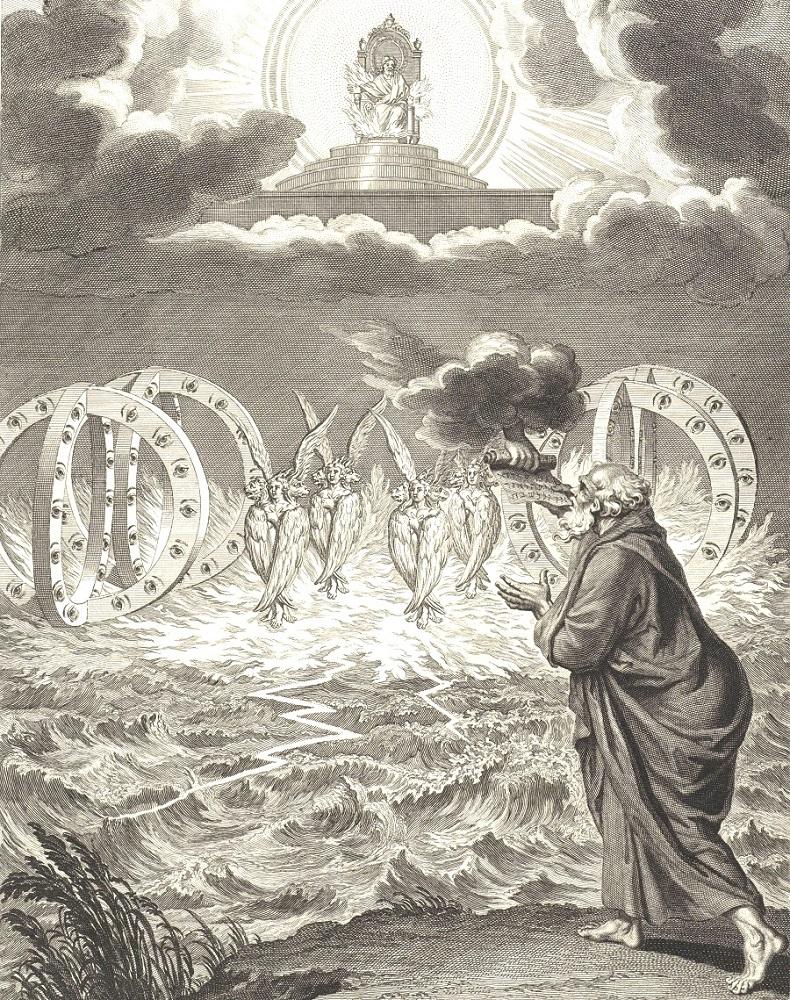
A Bitter-Sweet Assignment

1 And he said to me, “Son of man, stand on your feet, and I will speak with you.” 2 And as he spoke to me, the Spirit entered into me and set me on my feet, and I heard him speaking to me. 3 And he said to me, “Son of man, I send you to the people of Israel, to nations of rebels, who have rebelled against me. They and their fathers have transgressed against me to this very day. 4 The descendants also are impudent and stubborn: I send you to them, and you shall say to them, ‘Thus says the Lord God.’ 5 And whether they hear or refuse to hear (for they are a rebellious house) they will know that a prophet has been among them. 6 And you, son of man, be not afraid of them, nor be afraid of their words, though briers and thorns are with you and you sit on scorpions. Be not afraid of their words, nor be dismayed at their looks, for they are a rebellious house. 7 And you shall speak my words to them, whether they hear or refuse to hear, for they are a rebellious house.

8 “But you, son of man, hear what I say to you. Be not rebellious like that rebellious house; open your mouth and eat what I give you.” 9 And when I looked, behold, a hand was stretched out to me, and behold, a scroll of a book was in it. 10 And he spread it before me. And it had writing on the front and on the back, and there were written on it words of lamentation and mourning and woe.

1 And he said to me, “Son of man, eat whatever you find here. Eat this scroll, and go, speak to the house of Israel.” 2 So I opened my mouth, and he gave me this scroll to eat. 3 And he said to me, “Son of man, feed your belly with this scroll that I give you and fill your stomach with it.” Then I ate it, and it was in my mouth as sweet as honey. – Ezekiel 2:1-3:3 ESV

Ezekiel had been given a vision of God’s glory, and it left him face down on the ground in reverential fear and wonder. As this exiled young priest stood by the banks of the Kebar River in Babylon, the God of the universe made an unexpected and highly spectacular appearance.

Above this surface was something that looked like a throne made of blue lapis lazuli. And on this throne high above was a figure whose appearance resembled a man. From what appeared to be his waist up, he looked like gleaming amber, flickering like a fire. And from his waist down, he looked like a burning flame, shining with splendor. All around him was a glowing halo, like a rainbow shining in the clouds on a rainy day. This is what the glory of the Lord looked like to me. – Ezekiel 1:26-28 NLT

It is safe to assume that this was a once-in-a-lifetime experience for Ezekiel. He had never seen anything like this before, and to have the God of Abraham, Isaac, and Jacob appear to him in the remote recesses of the land of Babylon must have been a shock to his system. He was just a lowly priest who had been taken captive just like all the other residents of Jerusalem when the city had fallen to King Nebuchadnezzar’s forces.  Jehoiachin was the king of Judah at the time and, according to 2 Kings 12:9, “He did evil in the sight of the Lord as his ancestors had done.” Like most of his predecessors, Jehoiachin chose to use his royal power to promote idolatry that fostered unfaithfulness to God, and he suffered greatly for his refusal to honor the Almighty.

At that time the generals of King Nebuchadnezzar of Babylon marched to Jerusalem and besieged the city. King Nebuchadnezzar of Babylon came to the city while his generals were besieging it. King Jehoiachin of Judah, along with his mother, his servants, his officials, and his eunuchs surrendered to the king of Babylon. The king of Babylon, in the eighth year of his reign, took Jehoiachin prisoner. Nebuchadnezzar took from there all the riches in the treasuries of the Lord’s temple and of the royal palace. He removed all the gold items that King Solomon of Israel had made for the Lord’s temple, just as the Lord had warned. He deported all the residents of Jerusalem, including all the officials and all the soldiers (10,000 people in all). This included all the craftsmen and those who worked with metal. No one was left except for the poorest among the people of the land. – 2 Kings 12:10-14 NLT

Living amongst the exiled people of God, Ezekiel had firsthand experience with the apathy and complacency that had taken hold of them. A long way from home and no longer able to avail themselves of the temple and the sacrificial system, they had begun to lose interest in the things of God. Their circumstances had left them feeling abandoned by God and distraught over the far-from-ideal conditions of their captivity. With the passage of time, God had become out of sight, out of mind. They simply assumed He had turned His back on them and so, in time, they gave up hope and determined to make the most of their situation in Babylon.

But God had other plans that included appointing Ezekiel as the one who would deliver His message to the exiles. He had not forgotten about them. They had not been abandoned. Their exile had been intended to get their attention and to bring them to a point of repentance. Now, Ezekiel was going to be commissioned to serve as God’s spokesperson, delivering His call to repentance.

Having gotten Ezekiel’s full attention through the grand display of His glory, God delivered the details of his new assignment.

“I am sending you to the nation of Israel, a rebellious nation that has rebelled against me. They and their ancestors have been rebelling against me to this very day. They are a stubborn and hard-hearted people. But I am sending you to say to them, ‘This is what the Sovereign Lord says!’” – Ezekiel 2:3-4 NLT

God makes it painfully clear that Ezekiel’s new task would not be easy. He would have to deliver a message from God to a people who had a track record of stubbornness and insubordination. And God warns Ezekiel that his audience may not receive his message with open arms.

“And whether they listen or refuse to listen—for remember, they are rebels—at least they will know they have had a prophet among them.” – Ezekiel 2:5 NLT

There was no guarantee that Ezekiel would experience success. Despite the fact that he would be speaking the words of God, he had no way of knowing how the people would respond. In fact, God made it sound like his mission was doomed to certain failure.

What would you do if God called you to a task that He knew you were going to fail at? What if He even told you your efforts would be fruitless and non-productive? Most of us would bail. We would give up long before we got going. Because we’re wired with one thing in mind – success – and failure is not an acceptable alternative. But when Ezekiel got his marching orders from God, he was also given the not-so-great news that his ministry would be unsuccessful because his audience was going to be unresponsive.  God even told Ezekiel to expect threats and animosity. This was going to be one difficult job assignment.

In a sense, God was foreshadowing failure, but demanding obedience. Ezekiel’s success would not be measured by the number of callous, carnal Israelites he converted, but on his willingness to carry out God’s assignment faithfully, even in the face of rejection, ridicule, and poor results.

Even the message God gave Ezekiel to share was anything but good news. In his vision, Ezekiel was given a scroll that was covered with writing front and back, from edge to edge. It’s content?

“Funeral songs, words of sorrows, and pronouncements of doom.” – Ezekiel 2:9b NLT

It was a veritable compendium of bad news. So, not only would Ezekiel have a non-responsive audience, he was given an unappealing message. But God fully understood the foreboding nature of Ezekiel’s assignment, and he knew that Ezekiel was already wrestling with whether to follow through with His command. The young priest was afraid of how he and his message might be received by the people, but God encouraged him to have faith.

“Do not fear them or their words. Don’t be afraid even though their threats surround you like nettles and briars and stinging scorpions. Do not be dismayed by their dark scowls, even though they are rebels.” – Ezekiel 2:6 NLT

God was telling Ezekiel not to be frightened by the things they would threaten to do to him, the harsh words they might say about him, or the negative reaction they would inevitably have to him.

“Son of man, do not fear them or their words. Don’t be afraid even though their threats surround you like nettles and briers and stinging scorpions. Do not be dismayed by their dark scowls, even though they are rebels. You must give them my messages whether they listen or not. But they won’t listen, for they are completely rebellious!” – Ezekiel 2:6-7 NLT

Ezekiel was going to experience resistance. His message would not be well-received and the people would hold him responsible for its content. It was only a matter of time before they sought to kill the messenger. That’s why God warned Ezekiel to refrain from emulating the rebellious nature of his audience. He was not to reject God’s assignment just because it sounded difficult and more than a bit dangerous. God was open and above board as to the difficulty of the mission. He didn’t attempt to sugarcoat the assignment or paint a rosy picture of its outcome. Instead, God gave His newly appointed prophet all he would need to succeed.

“Son of man, listen to what I say to you. Do not join them in their rebellion. Open your mouth, and eat what I give you.” – Ezekiel 2:8 NLT

God held out a scroll, upon which were written lamentations, mourning, and woes. In other words, it was filled with bad news. The sheer volume of disheartening content was so great that it covered both sides of the scroll. God’s indictment against His people was great and He commanded Ezekiel to consume every last bit of it. He was to take it all in so that he might regurgitate it, word for word, to the disobedient people of God.

“Son of man, eat whatever you find here. Eat this scroll, and go, speak to the house of Israel.” – Ezekiel 3:1 ESV

But much to his surprise, Ezekiel found the less-than-appealing content of the scroll to be “sweet as honey.” (Ezekiel 3:3 ESV). There is a similar scene described in the book of Revelation. In it, the apostle John is given a vision of an angel who descends from heaven with a scroll in his hand. He presents the scroll to John and commands him to eat it.

“Yes, take it and eat it,” he said. “It will be sweet as honey in your mouth, but it will turn sour in your stomach!” So I took the small scroll from the hand of the angel, and I ate it! It was sweet in my mouth, but when I swallowed it, it turned sour in my stomach.

Then I was told, “You must prophesy again about many peoples, nations, languages, and kings.” – Revelation 10:9-11 NLT

Both John and Ezekiel would find the words of God to be both sweet and bitter. When the truth of God is consumed, it is pleasant and life-giving, but it can also result in conviction and condemnation.

For the word of God is alive and powerful. It is sharper than the sharpest two-edged sword, cutting between soul and spirit, between joint and marrow. It exposes our innermost thoughts and desires. – Hebrews 4:12 NLT

All Scripture is inspired by God and is useful to teach us what is true and to make us realize what is wrong in our lives. It corrects us when we are wrong and teaches us to do what is right. – 2 Timothy 3:16 NLT

For Ezekiel, consuming God’s word was sweet to the taste, but declaring it to the people would be a bitter experience. They would find it distasteful and difficult to swallow. But God was calling Ezekiel to be faithful and fearless in declaring its truth regardless of the outcome.

English Standard Version (ESV) The Holy Bible, English Standard Version. ESV® Permanent Text Edition® (2016). Copyright © 2001

New Living Translation (NLT) Holy Bible, New Living Translation, copyright © 1996, 2004, 2015 by Tyndale House Foundation. Used by permission of Tyndale House Publishers Inc., Carol Stream, Illinois 60188. All rights reserved.

Psalm 60 – Day 1

With God’s Help.

“With God’s help we will do mighty things, for he will trample down our foes.” – Psalm 60:12 NLT

I can’t imagine what it was like to have been king of the nation of Israel. While I’m sure the job had its perks, it also came with a significant number of headaches. Ruling any nation is difficult, but trying to lead a people group who happened to be the hand-picked possession of God Himself was no easy task. First, you had God for your employer. Forget about Congress, your cabinet, or even your constituents. At the end of the day, every action you took was being carefully critiqued by none other than God. Now that’s pressure. On top of that you had the unenviable task of trying to lead a people who greatly disliked being led. Leading the nation of Israel was like, as the phrase goes, trying to herd cats – nearly impossible. By God’s own opinion, these people were inherently stiff-necked, stubborn, rebellious, and had foreheads of iron. In other words, they were obstinate. And as the king of Israel you were free to make up your own rules as you went along. You were obligated to enforce the laws of God. Of course, some of Israel’s kings ignored that part and suffered the consequences. But for David, obeying God was a high priority and maintaining His laws, decrees and commands was job one.

Then there was the problem of Israel’s enemies, and there were a lot of them. This little land was literally surrounded on all sides by nations intent on their destruction. Philistines, Moabites, Ammonites, Aramaens, Edomites, Jebusites, and just about every other nation that existed at that time – both large and small. They all had it in for Israel and they were a constant threat to Israel’s existence. As king, David had to constantly be prepared to defend the kingdom, but also the reputation of God. And even though David was “a man after God’s own heart,” things didn’t always go his way. He didn’t always win every battle. His exploits didn’t always meet with success. And this Psalm was written with one of those times in mind. David opens up the Psalm describing what was an apparent defeat at the hands of his enemies. They had broken through his defenses. They had driven Israel back in defeat. And because David was so strongly dependent on God, he couldn’t help but wonder if all this was some kind of punishment from His hand. He viewed this latest military setback as coming from God. So he appealed to God for mercy. He begged God to rescue the nation from the hands of their enemies. “Now rescue your beloved people. Answer and save us by your power” (Psalm 60:5 NLT). David was a powerful warrior and a highly successful king, but he knew where his strength came from – God. One of David’s greatest fears was that God might ever reject him and remove His favor from him. He even asks God, “Have you rejected us, O God? Will you no longer march with our armies?” (Psalm 60:11 NLT). David knew the ramifications if that were ever to happen. He knew that their existence was solely based on the favor and power of God, not him. Without God, David was nothing, and he knew it. Without God, the nation of Israel was nothing, and David understood that sobering fact as well. So he calls out to God, “Oh, please help us against our enemies, for all human help is useless” (Psalm 60:11 NLT). David knew what we need to know. Without God’s help, we are helpless and hopeless. We are His people. He is our King. It is He who protects us, provides for us, gives us victory, keeps us safe, and meets all our needs. It is to Him we should turn in both the good times and the bad times. All human help is useless. Placing our hope in anyone or anything other than God will always prove dangerous and highly disappointing. We may win the battle, but we will end up losing the war. But David knew that “with God’s help we will do mighty things, for he will trample down our foes” (Psalm 60:12 NLT). Even this powerful king knew that he was nothing without the help of his all-powerful God.

Father, how ludicrous it is to think that I can somehow save myself. How silly for me to imagine that I can somehow come up with a plan to save myself from all the enemies I face every day. Without You I am nothing. I have no strength without You. I have no wisdom apart from You. I have no future unless You provide it. I have no hope other than You. But with Your help I will do mighty things! Amen

Ken Miller
Grow Pastor & Minister to Men
kenm@christchapelbc.org