The Will of God and the Ways of Men

28 Now the rest of the acts of Josiah and all that he did, are they not written in the Book of the Chronicles of the Kings of Judah? 29 In his days Pharaoh Neco king of Egypt went up to the king of Assyria to the river Euphrates. King Josiah went to meet him, and Pharaoh Neco killed him at Megiddo, as soon as he saw him. 30 And his servants carried him dead in a chariot from Megiddo and brought him to Jerusalem and buried him in his own tomb. And the people of the land took Jehoahaz the son of Josiah, and anointed him, and made him king in his father’s place.

31 Jehoahaz was twenty-three years old when he began to reign, and he reigned three months in Jerusalem. His mother’s name was Hamutal the daughter of Jeremiah of Libnah. 32 And he did what was evil in the sight of the LORD, according to all that his fathers had done. 33 And Pharaoh Neco put him in bonds at Riblah in the land of Hamath, that he might not reign in Jerusalem, and laid on the land a tribute of a hundred talents of silver and a talent of gold. 34 And Pharaoh Neco made Eliakim the son of Josiah king in the place of Josiah his father, and changed his name to Jehoiakim. But he took Jehoahaz away, and he came to Egypt and died there. 35 And Jehoiakim gave the silver and the gold to Pharaoh, but he taxed the land to give the money according to the command of Pharaoh. He exacted the silver and the gold of the people of the land, from everyone according to his assessment, to give it to Pharaoh Neco.

36 Jehoiakim was twenty-five years old when he began to reign, and he reigned eleven years in Jerusalem. His mother’s name was Zebidah the daughter of Pedaiah of Rumah. 37 And he did what was evil in the sight of the LORD, according to all that his fathers had done. 

1 In his days, Nebuchadnezzar king of Babylon came up, and Jehoiakim became his servant for three years. Then he turned and rebelled against him. And the LORD sent against him bands of the Chaldeans and bands of the Syrians and bands of the Moabites and bands of the Ammonites, and sent them against Judah to destroy it, according to the word of the LORD that he spoke by his servants the prophets. Surely this came upon Judah at the command of the LORD, to remove them out of his sight, for the sins of Manasseh, according to all that he had done, and also for the innocent blood that he had shed. For he filled Jerusalem with innocent blood, and the LORD would not pardon. – 2 Kings 23:28-24:4 ESV

In his ongoing attempt to redeem the spiritual soul of the nation, King Josiah had bitten off more than he could chew. His many reforms and his ongoing battle against idolatry and apostasy were more than enough to keep him busy. But as the king of a powerful nation, he also had the responsibility to keep abreast of all the military and political machinations taking place in the region. At this point in history, the Assyrians were still the dominant force in the region, but the Babylonians were beginning to exert a formidable influence. They were an up-and-coming superpower that posed a real threat to Assyria’s global empire.

Josiah received word that the Egyptian army was on its way to Carchemish on the Euphrates River, where they were to join Assyrian forces in a battle against the upstart Babylonians. For some reason, Josiah made the fateful decision to oppose this military alliance between Egypt and Assyria.

After Josiah had finished restoring the Temple, King Neco of Egypt led his army up from Egypt to do battle at Carchemish on the Euphrates River, and Josiah and his army marched out to fight him. But King Neco sent messengers to Josiah with this message:

“What do you want with me, king of Judah? I have no quarrel with you today! I am on my way to fight another nation, and God has told me to hurry! Do not interfere with God, who is with me, or he will destroy you.” – 2 Chronicles 23:20-21 NLT

Perhaps Josiah was hoping that the Babylonians would bring an end to Assyria’s longstanding stranglehold on the region. Long after the Assyrians had called off their siege of Jerusalem, they remained a constant threat to Judah. So, Josiah rallied his troops and intercepted the Egyptian army as it made its way to Carchemish. But King Neco, the Pharaoh of Egypt, warned Josiah not to interfere, claiming to have a divine mandate from God.

But Josiah refused to listen to Neco, to whom God had indeed spoken, and he would not turn back. Instead, he disguised himself and led his army into battle on the plain of Megiddo. – 2 Chronicles 23:22 NLT

Josiah refused to believe that Yahweh was behind this unholy alliance between the Egyptians and the Assyrians. He couldn’t see any reason why Yahweh would direct the pagan king of the Egyptians to join forces with the already powerful and deadly kingdom of Assyria. It made no sense. But Josiah failed to understand that Yahweh was orchestrating His sovereign will and raising up the nation of Babylon as His agent of judgment against Assyria for its role in the destruction of the northern kingdom of Israel. Josiah was also unaware that God was preparing to use Babylon to destroy the nation of Judah.
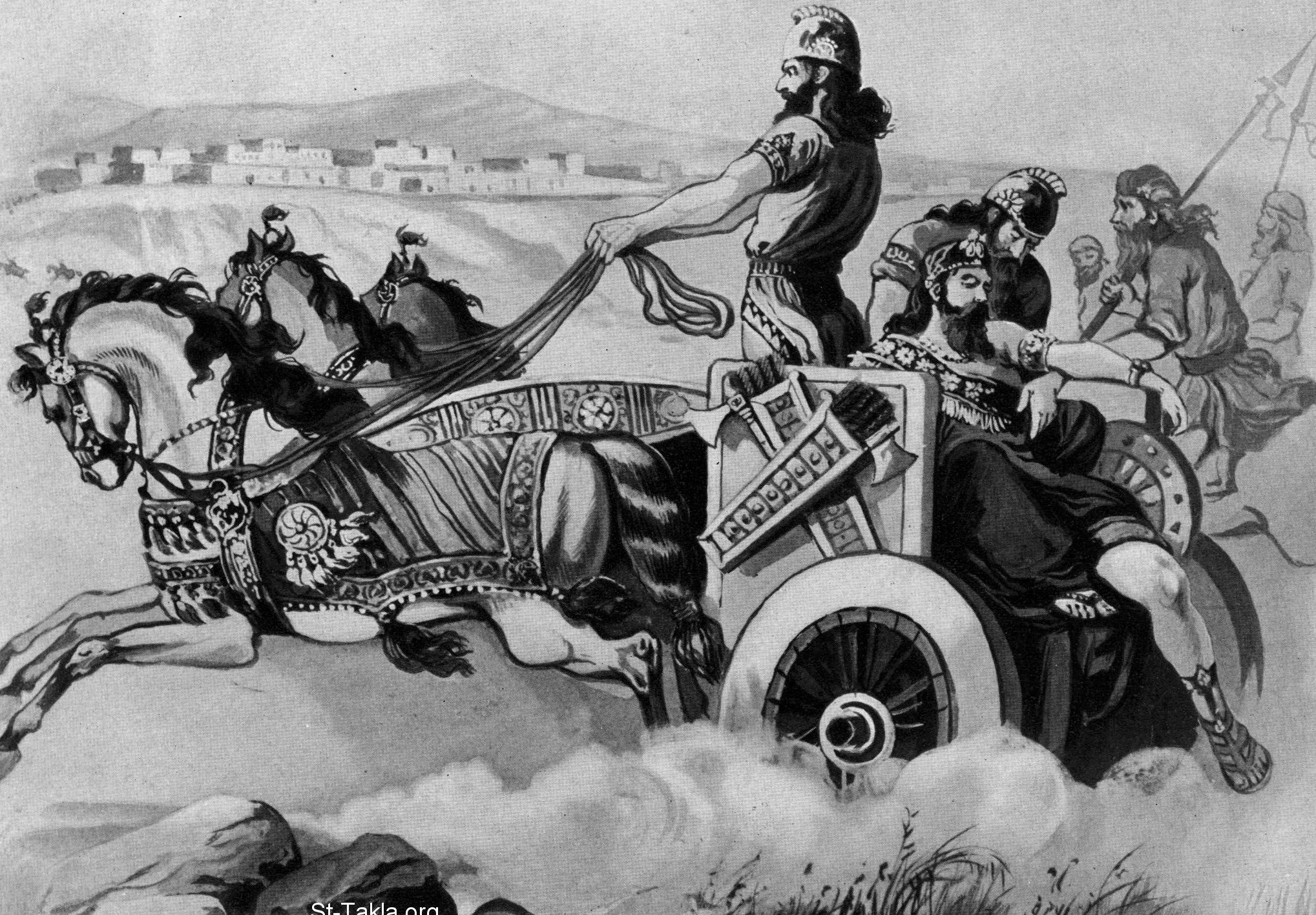
Ignorant of God’s plans, King Josiah decided to take matters into his own hands and led his troops into battle against the Egyptians. They intercepted the Egyptian army at a place called Megiddo, and in the ensuing battle, King Josiah was killed. The author of 2 Kings states that “Pharaoh Neco killed him at Megiddo, as soon as he saw him” (2 Kings 23:29 ESV). But in 2 Chronicles 35, we’re told that Josiah had disguised himself before going into battle. It seems that Josiah’s little ploy to hide his kingly identity failed. King Neco recognized Josiah instantly and ordered his death.

But the enemy archers hit King Josiah with their arrows and wounded him. He cried out to his men, “Take me from the battle, for I am badly wounded!” – 2 Chronicles 35:23 NLT

The wounded king was placed in another chariot and evacuated to the city of Jerusalem, where he died. After giving their fallen king a state funeral, the people chose Jehoahaz as his replacement. This choice seems a bit odd because Jehoahaz was Josiah’s middle son and, therefore, not the next in line to the throne. But it seems that the people were looking for a king who would bring back the old way of life to which they had grown accustomed. They missed the days of Manasseh and regretted all the reforms that Josiah had instituted in Judah. So, they chose the one son of Josiah who represented their best chance at bringing back the good old days. And it appears that they picked just the right man for the job becaise “he did what was evil in the LORD’s sight, just as his ancestors had done” (2 Kings 23:32 NLT).

But Jehoahaz’s reign would be short-lived. The people failed to take into account that King Neco might have something to say about who took Josiah’s place on the throne of Judah. Just three months into his reign, Jehoahaz was deposed by the Pharaoh and taken captive to Egypt, where he died. Neco filled the vacancy with Eliakim, the older brother of Jehoahaz, and changed his name to Jehoiakim. This young man became little more than a puppet king who was forced to make an annual tribute payment to the Egyptians. To do this, he imposed a debilitating tax on the people of Judah. The prophet provides a brief but sobering summary of the sad state of affairs in the southern kingdom of Judah after the death of Josiah.
Do not weep for the dead king or mourn his loss. Instead, weep for the captive king being led away! For he will never return to see his native land again.

For this is what the LORD says about Jehoahaz, who succeeded his father, King Josiah, and was taken away as a captive: “He will never return. He will die in a distant land and will never again see his own country.” – Jeremiah 22:10-12 NLT

With Josiah’s death, the period of reformation in Judah came to an abrupt end. He had been the heart and soul behind all the changes that had taken place, and, without him, the people quickly reverted to their old ways. Virtually overnight, the conditions in Judah took a dramatic turn for the worse. Judah was now a vassal state, ruled by a powerless king who answered to the Pharaoh of Egypt.

Josiah’s attempt to stop the Egyptians from joining forces with the Assyrians had failed. In 605 BC, just four years after Josiah’s death, these two armies were defeated by the Babylonians at the Battle of Carchemish. This unexpected victory by the Babylonians over the Egyptians and Assyrians proved to be a game-changing event in the history of the Middle East. It catapulted King Nebuchadnezzar of Babylon into the role of the most powerful ruler on earth. With his defeat of the Assyrians, Nebuchadnezzar took over all the lands they had conquered, dramatically increasing the size and influence of his empire.

Eventually, the Babylonians would wrest control of Judah from the hands of King Neco of Egypt, and Jehoiakim would find himself answering to yet another, more powerful, king. But Jehoiakim will try to resist his new overlord, refusing to submit to his authority. Like his father, Josiah, Jehoiakim will fail to see the sovereign hand of God behind all that is taking place. His outlook is short-sighted, and he will attempt to make the most of his less-than-ideal circumstances.

The prophet Jeremiah records God’s stinging condemnation of Jehoiakim’s arrogant and self-centered approach to leadership.

And the LORD says, “What sorrow awaits Jehoiakim,
    who builds his palace with forced labor.
He builds injustice into its walls,
    for he makes his neighbors work for nothing.
    He does not pay them for their labor.
He says, ‘I will build a magnificent palace
    with huge rooms and many windows.
I will panel it throughout with fragrant cedar
    and paint it a lovely red.’
But a beautiful cedar palace does not make a great king!
    Your father, Josiah, also had plenty to eat and drink.
But he was just and right in all his dealings.
    That is why God blessed him.
He gave justice and help to the poor and needy,
    and everything went well for him.
Isn’t that what it means to know me?”
    says the LORD.
“But you! You have eyes only for greed and dishonesty!
    You murder the innocent,
    oppress the poor, and reign ruthlessly.” – Jeremiah 22:13-17 NLT

Unlike his reform-minded father, Jehoiakim had no heart for Yahweh. He was a self-obsessed man who used his power and position to improve his own lot in life while allowing the nation of Judah to continue its slide into apostasy. When Neco was forced to abandon his hold on Judah, Jehoiakim saw it as an opportunity to assert his independence, but he failed to understand the gravity of his situation. He had no clue that Yahweh had divinely ordained Nebuchadnezzar and the Babylonians to bring judgment against the nation of Judah. In attempting to resist the Babylonians, Jehoiakim was actually opposing the sovereign will of God, and he would pay dearly for his obstinacy.

For three years, Yahweh sent the Babylonians, Arameans, Moabites, and Ammonites against the rebellious nation of Judah. And the author leaves no doubt as to the purpose behind these raids.

These disasters happened to Judah because of the LORD’s command. He had decided to banish Judah from his presence because of the many sins of Manasseh. – 2 Kings 24:3 NLT

Little did Jehoiakim know that he was facing the beginning of the end. The coming judgment of Judah was imminent and unavoidable.

English Standard Version (ESV) The Holy Bible, English Standard Version. ESV® Permanent Text Edition® (2016). Copyright © 2001 by Crossway Bibles, a publishing ministry of Good News Publishers.

New Living Translation (NLT) Holy Bible, New Living Translation, copyright © 1996, 2004, 2015 by Tyndale House Foundation. Used by permission of Tyndale House Publishers Inc., Carol Stream, Illinois 60188. All rights reserved.

Reformation 1.0

Then the king sent, and all the elders of Judah and Jerusalem were gathered to him. And the king went up to the house of the LORD, and with him all the men of Judah and all the inhabitants of Jerusalem and the priests and the prophets, all the people, both small and great. And he read in their hearing all the words of the Book of the Covenant that had been found in the house of the LORD. And the king stood by the pillar and made a covenant before the LORD, to walk after the LORD and to keep his commandments and his testimonies and his statutes with all his heart and all his soul, to perform the words of this covenant that were written in this book. And all the people joined in the covenant.

And the king commanded Hilkiah the high priest and the priests of the second order and the keepers of the threshold to bring out of the temple of the LORD all the vessels made for Baal, for Asherah, and for all the host of heaven. He burned them outside Jerusalem in the fields of the Kidron and carried their ashes to Bethel. And he deposed the priests whom the kings of Judah had ordained to make offerings in the high places at the cities of Judah and around Jerusalem; those also who burned incense to Baal, to the sun and the moon and the constellations and all the host of the heavens. And he brought out the Asherah from the house of the LORD, outside Jerusalem, to the brook Kidron, and burned it at the brook Kidron and beat it to dust and cast the dust of it upon the graves of the common people. And he broke down the houses of the male cult prostitutes who were in the house of the LORD, where the women wove hangings for the Asherah. And he brought all the priests out of the cities of Judah, and defiled the high places where the priests had made offerings, from Geba to Beersheba. And he broke down the high places of the gates that were at the entrance of the gate of Joshua the governor of the city, which were on one’s left at the gate of the city. However, the priests of the high places did not come up to the altar of the LORD in Jerusalem, but they ate unleavened bread among their brothers. 10 And he defiled Topheth, which is in the Valley of the Son of Hinnom, that no one might burn his son or his daughter as an offering to Molech. 11 And he removed the horses that the kings of Judah had dedicated to the sun, at the entrance to the house of the LORD, by the chamber of Nathan-melech the chamberlain, which was in the precincts. And he burned the chariots of the sun with fire. 12 And the altars on the roof of the upper chamber of Ahaz, which the kings of Judah had made, and the altars that Manasseh had made in the two courts of the house of the LORD, he pulled down and broke in pieces and cast the dust of them into the brook Kidron. 13 And the king defiled the high places that were east of Jerusalem, to the south of the mount of corruption, which Solomon the king of Israel had built for Ashtoreth the abomination of the Sidonians, and for Chemosh the abomination of Moab, and for Milcom the abomination of the Ammonites. 14 And he broke in pieces the pillars and cut down the Asherim and filled their places with the bones of men.

15 Moreover, the altar at Bethel, the high place erected by Jeroboam the son of Nebat, who made Israel to sin, that altar with the high place he pulled down and burned, reducing it to dust. He also burned the Asherah. 16 And as Josiah turned, he saw the tombs there on the mount. And he sent and took the bones out of the tombs and burned them on the altar and defiled it, according to the word of the LORD that the man of God proclaimed, who had predicted these things. 17 Then he said, “What is that monument that I see?” And the men of the city told him, “It is the tomb of the man of God who came from Judah and predicted these things that you have done against the altar at Bethel.” 18 And he said, “Let him be; let no man move his bones.” So they let his bones alone, with the bones of the prophet who came out of Samaria. 19 And Josiah removed all the shrines also of the high places that were in the cities of Samaria, which kings of Israel had made, provoking the LORD to anger. He did to them according to all that he had done at Bethel. 20 And he sacrificed all the priests of the high places who were there, on the altars, and burned human bones on them. Then he returned to Jerusalem. – 2 Kings 23:1-20 ESV

When it came to reforming and healing the deadly spiritual malaise in Judah, Josiah had his work cut out for him. And when reading the list of his reforms, it’s easy to focus on all the positive steps he took to course-correct Judah’s spiritual trajectory. But why was all of this necessary? How had things gotten so bad in Judah that the king was forced to commit all his time and resources to this spiritual reclamation project? The reader should be shocked and appalled by the abysmal condition of the nation’s faith community; the moral state of the people of Judah had reached an all-time low. And Josiah revealed the extent of their moral decline by reading to them portions of the rediscovered Book of the Covenant – the Pentateuch. It’s likely that his reading included this foundational and oft-repeated admonition from the original Ten Commandments.

“Do not make idols or set up carved images, or sacred pillars, or sculptured stones in your land so you may worship them. I am the LORD your God. You must keep my Sabbath days of rest and show reverence for my sanctuary. I am the LORD. – Leviticus 26:1-2 NLT

Josiah had already begun an aggressive temple renovation project designed to repair the long-neglected house of God. But these restoration efforts were more than cosmetic in nature. Josiah was having to purge and purify the sanctuary of God from the desecrating presence of altars to a litany of pagan idols. His predecessors had repeatedly displayed their disregard for God by defiling the temple that bore His name. They had turned God’s house into a veritable showroom for displaying all their false gods, and the sheer volume of these abominations is staggering.

Then the king instructed Hilkiah the high priest and the priests of the second rank and the Temple gatekeepers to remove from the LORD’s Temple all the articles that were used to worship Baal, Asherah, and all the powers of the heavens. – 2 Kings 23:4 NLT

The king removed the Asherah pole from the LORD’s Temple… – 2 Kings 23:6 NLT

He also tore down the living quarters of the male and female shrine prostitutes that were inside the Temple of the LORD – 2 Kings 23:7 NLT

He removed from the entrance of the LORD’s Temple the horse statues that the former kings of Judah had dedicated to the sun – 2 Kings 23:11 NLT

The king destroyed the altars that Manasseh had built in the two courtyards of the LORD’s Temple. – 2 Kings 23:12 NLT

Josiah was a busy man, and his reforms didn’t stop at the Temple. He was determined to do whatever was necessary to remove every last vestige of idolatry from the land of Judah. He ordered the destruction of all shrines or altars dedicated to false gods, and there were a lot of them. Pagan shrines and high places could be found throughout Judah, from the capital city of Jerusalem to Geba in the north and Beersheba in the south. Their ubiquitous presence required Josiah to launch an extensive seek-and-destroy mission that began in the Temple, extended to the valleys just out Jerusalem, and reached all the way to the northern territory of Israel.

While the northern kingdom of Israel had fallen to the Assyrians and the people had been taken captive, the shrines and altars to their false gods remained. So, Josiah sent special mobile demolition teams as far as Bethel to destroy the altar that Jeroboam had erected decades earlier.

The king also tore down the altar at Bethel—the pagan shrine that Jeroboam son of Nebat had made when he caused Israel to sin. He burned down the shrine and ground it to dust, and he burned the Asherah pole. – 2 Kings 23:15 NLT

This was in direct fulfillment of a centuries-old prophecy God declared against rebellious Jeroboam. After God had split the kingdom of Solomon in half, He had awarded the kingship of the ten northern tribes to Jeroboam, who displayed his loyalty and gratitude by erecting a golden calf in the city of Bethel. This newly appointed king of Israel repaid God by abandoning Him. So, God sent a young, unnamed prophet with a message.

“O altar, altar! This is what the LORD says: A child named Josiah will be born into the dynasty of David. On you he will sacrifice the priests from the pagan shrines who come here to burn incense, and human bones will be burned on you.” – 1 Kings 13:2 NLT

Now, hundreds of years later, the prophecy of God became a reality. Josiah tore down the altar dedicated to the golden calf and then had the ground desecrated by burning human bones on it.

Then Josiah turned around and noticed several tombs in the side of the hill. He ordered that the bones be brought out, and he burned them on the altar at Bethel to desecrate it. (This happened just as the LORD had promised through the man of God when Jeroboam stood beside the altar at the festival.) – 2 Kings 23:16 NLT

The scope of Josiah’s reformation initiative is truly staggering, and it reveals just how bad things had gotten in Judah. The sheer volume of false gods being worshiped by the people of Yahweh should leave us dumbfounded. There were shrines to Baal, Topheth, Ashtoreth, Chemosh, and Molech – just to name a few. But there also altars dedicated “to the sun, the moon, the constellations, and to all the powers of the heavens” (2 Kings 23:5 NLT), as well as horse and chariot statues dedicated to the sun (2 Kings 23:11).

Josiah was faced with a truly formidable task but he took it on with dedicated determination. He tore down, burned down, cut down, smashed, and desecrated the thousands of altars to the myriad of false gods that permeated the landscape and the hearts of the people of Judah. Josiah took his role seriously because he feared God greatly.

His reading of the Book the Covenant reminded him of the dire consequences facing the people of God if they failed to remain faithful to their covenant commitment. He was well aware of what had happened to the northern kingdom, and he knew that Judah was just as deserving of God’s judgment. They had been equally unfaithful and the evidence was everywhere. So, Josiah took it upon himself to cleanse the land of its idolatrous stain. But the greatest challenge he faced was turning the hearts of the people back to Yahweh. He could remove the idols from the land, but could he remove the spirit of idolatry from their hearts? Time would tell.

English Standard Version (ESV) The Holy Bible, English Standard Version. ESV® Permanent Text Edition® (2016). Copyright © 2001 by Crossway Bibles, a publishing ministry of Good News Publishers.

New Living Translation (NLT) Holy Bible, New Living Translation, copyright © 1996, 2004, 2015 by Tyndale House Foundation. Used by permission of Tyndale House Publishers Inc., Carol Stream, Illinois 60188. All rights reserved.

God’s Impeccable Timing

16 Moreover, Manasseh shed very much innocent blood, till he had filled Jerusalem from one end to another, besides the sin that he made Judah to sin so that they did what was evil in the sight of the LORD.

17 Now the rest of the acts of Manasseh and all that he did, and the sin that he committed, are they not written in the Book of the Chronicles of the Kings of Judah? 18 And Manasseh slept with his fathers and was buried in the garden of his house, in the garden of Uzza, and Amon his son reigned in his place.

19 Amon was twenty-two years old when he began to reign, and he reigned two years in Jerusalem. His mother’s name was Meshullemeth the daughter of Haruz of Jotbah. 20 And he did what was evil in the sight of the LORD, as Manasseh his father had done. 21 He walked in all the way in which his father walked and served the idols that his father served and worshiped them. 22 He abandoned the LORD, the God of his fathers, and did not walk in the way of the LORD. 23 And the servants of Amon conspired against him and put the king to death in his house. 24 But the people of the land struck down all those who had conspired against King Amon, and the people of the land made Josiah his son king in his place. 25 Now the rest of the acts of Amon that he did, are they not written in the Book of the Chronicles of the Kings of Judah? 26 And he was buried in his tomb in the garden of Uzza, and Josiah his son reigned in his place. 2 Kings 21:16-26 ESV

Manasseh seems to have been obsessed with overturning every one of the religious reforms his father had instituted in Judah. He systematically dismantled his father’s legacy of godly leadership, supplanting it with his own reign marked by moral decay and domestic terror. As the heir to his father’s throne, Manasseh did nothing to sustain or support his father’s policies or programs. Instead, he led the nation of Judah down a dark and dangerous path that ultimately led to the judgment of God. And his condemnation by God was well-deserved.

Manasseh also murdered many innocent people until Jerusalem was filled from one end to the other with innocent blood. This was in addition to the sin that he caused the people of Judah to commit, leading them to do evil in the LORD’s sight. – 2 Kings 21:16 NLT

Yet Yahweh continued to send His prophets, who called the wayward king to repent and restore the faith of the people. But the words of the prophets fell on deaf ears.

The LORD spoke to Manasseh and his people, but they ignored all his warnings. – 2 Chronicles 33:10 NLT

Their arrogant refusal to listen to Yahweh’s prophets led the Almighty to resort to brute force by sending His message of judgment in a much more persuasive form.

So the LORD sent the commanders of the Assyrian armies, and they took Manasseh prisoner. They put a ring through his nose, bound him in bronze chains, and led him away to Babylon. But while in deep distress, Manasseh sought the LORD his God and sincerely humbled himself before the God of his ancestors. And when he prayed, the LORD listened to him and was moved by his request. So the LORD brought Manasseh back to Jerusalem and to his kingdom. Then Manasseh finally realized that the LORD alone is God! – 2 Chronicles 33:11-13 NLT

Manasseh’s imprisonment and debasement by the Assyrians got his attention. In his miserable and hopeless condition, the formerly prideful king cried out to Yahweh, and the LORD graciously listened to his prayer and ended his exile in Babylon.

Manasseh was a changed man. Upon his return to Jerusalem, he began an aggressive campaign to reverse the downward spiritual decline he had helped to cause.

After this Manasseh rebuilt the outer wall of the City of David, from west of the Gihon Spring in the Kidron Valley to the Fish Gate, and continuing around the hill of Ophel. He built the wall very high. And he stationed his military officers in all of the fortified towns of Judah. Manasseh also removed the foreign gods and the idol from the LORD’s Temple. He tore down all the altars he had built on the hill where the Temple stood and all the altars that were in Jerusalem, and he dumped them outside the city. Then he restored the altar of the LORD and sacrificed peace offerings and thanksgiving offerings on it. He also encouraged the people of Judah to worship the LORD, the God of Israel. – 2 Chronicles 33:14-16 NLT

But, while his efforts were well-intentioned, they were only partially successful.

However, the people still sacrificed at the pagan shrines, though only to the LORD their God. – 2 Chronicles 33:17 NLT

He had helped to restore the worship of Yahweh, but the people remained strangely attached to the pagan shrines where they once worshiped the false gods of their enemies. They continued to frequent these unholy sites and desecrated the name of Yahweh by worshiping him in these unconsecrated locations. Manasseh’s reforms, while significant, couldn’t completely eradicate the years of damage he had done through his godless leadership. Before his humble return to God, Manasseh had “built pagan shrines and set up Asherah poles and idols” all over Judah (2 Chronicles 33:19 NLT). And because he failed to remove these physical sites where the people had regularly dishonored Yahweh, he allowed the roots of idolatry and apostasy to remain in the land of Judah.

Manasseh would leave this partially restored but highly unstable environment to his son. At the young age of 22, Amon ascended to the throne of his father and took over the reins of responsibility for a nation that wavered in the dangerous state between semi-faithfulness and outright rebellion. While Manasseh had ended his reign in repentance and made a concerted effort to restore the nation’s commitment to Yahweh, it proved to be too little, too late. His years of ungodly leadership and idolatrous behavior had negatively influenced his young son. So, when Amon became king, rather than continuing the reforms of his father, he returned the nation to the days of darkness that had marked the early years of Manasseh’s reign.

He did what was evil in the LORD’s sight, just as his father, Manasseh, had done. He worshiped and sacrificed to all the idols his father had made. But unlike his father, he did not humble himself before the LORD. Instead, Amon sinned even more. – 2 Chronicles 33:22-23 NLT

In less than two years, Amon managed to plunge Judah back into the dark ages of sin, idolatry, and moral instability. However, his chaotic and destructive reign abruptly ended with his assassination. His own disgruntled servants tried to take over Amon’s throne by taking his life, but their attempt at insurrection failed, and they were summarily executed.

With Amon’s abbreviated but sin-laced reign over, his eight-year-old son Josiah took his place. Everything about this succession plan has disaster written all over it. Josiah was just a child when he ascended to the throne, and he inherited a kingdom that was reeling from the effects of a failed coup attempt and a two-year campaign of state-enforced moral decline. Conditions in Judah could not have been worse and would have proven problematic for any newly crowned king. But Josiah was young and poorly prepared to step into such an unstable political and spiritual situation. Or was he?

A brief glimpse into 2 Chronicles 34 reveals that this innocent young boy was far better prepared than might be assumed. At the age of 16, Josiah would begin a passionate pursuit of God that would result in a revival within the land of Judah.

For in the eighth year of his reign, while he was yet a boy, he began to seek the God of David his father, and in the twelfth year he began to purge Judah and Jerusalem of the high places, the Asherim, and the carved and the metal images. – 2 Chronicles 34:3 NLT

Yahweh was at work behind the scenes, orchestrating events in such a way that Josiah would come to the throne at just the right time, equipped with a heart for the things of God. Despite his father’s less-than-ideal legacy, Josiah would prove to be a God-fearing king who began one of the most aggressive reform efforts ever seen in the nation of Judah. He was God’s man for the occasion.

English Standard Version (ESV) The Holy Bible, English Standard Version. ESV® Permanent Text Edition® (2016). Copyright © 2001 by Crossway Bibles, a publishing ministry of Good News Publishers.

New Living Translation (NLT) Holy Bible, New Living Translation, copyright © 1996, 2004, 2015 by Tyndale House Foundation. Used by permission of Tyndale House Publishers Inc., Carol Stream, Illinois 60188. All rights reserved.

The Original Reformation

Then the king sent, and all the elders of Judah and Jerusalem were gathered to him. And the king went up to the house of the Lord, and with him all the men of Judah and all the inhabitants of Jerusalem and the priests and the prophets, all the people, both small and great. And he read in their hearing all the words of the Book of the Covenant that had been found in the house of the Lord. And the king stood by the pillar and made a covenant before the Lord, to walk after the Lord and to keep his commandments and his testimonies and his statutes with all his heart and all his soul, to perform the words of this covenant that were written in this book. And all the people joined in the covenant.

And the king commanded Hilkiah the high priest and the priests of the second order and the keepers of the threshold to bring out of the temple of the Lord all the vessels made for Baal, for Asherah, and for all the host of heaven. He burned them outside Jerusalem in the fields of the Kidron and carried their ashes to Bethel. And he deposed the priests whom the kings of Judah had ordained to make offerings in the high places at the cities of Judah and around Jerusalem; those also who burned incense to Baal, to the sun and the moon and the constellations and all the host of the heavens. And he brought out the Asherah from the house of the Lord, outside Jerusalem, to the brook Kidron, and burned it at the brook Kidron and beat it to dust and cast the dust of it upon the graves of the common people. And he broke down the houses of the male cult prostitutes who were in the house of the Lord, where the women wove hangings for the Asherah. And he brought all the priests out of the cities of Judah, and defiled the high places where the priests had made offerings, from Geba to Beersheba. And he broke down the high places of the gates that were at the entrance of the gate of Joshua the governor of the city, which were on one’s left at the gate of the city. However, the priests of the high places did not come up to the altar of the Lord in Jerusalem, but they ate unleavened bread among their brothers. 10 And he defiled Topheth, which is in the Valley of the Son of Hinnom, that no one might burn his son or his daughter as an offering to Molech. 11 And he removed the horses that the kings of Judah had dedicated to the sun, at the entrance to the house of the Lord, by the chamber of Nathan-melech the chamberlain, which was in the precincts. And he burned the chariots of the sun with fire. 12 And the altars on the roof of the upper chamber of Ahaz, which the kings of Judah had made, and the altars that Manasseh had made in the two courts of the house of the Lord, he pulled down and broke in pieces and cast the dust of them into the brook Kidron. 13 And the king defiled the high places that were east of Jerusalem, to the south of the mount of corruption, which Solomon the king of Israel had built for Ashtoreth the abomination of the Sidonians, and for Chemosh the abomination of Moab, and for Milcom the abomination of the Ammonites. 14 And he broke in pieces the pillars and cut down the Asherim and filled their places with the bones of men.

15 Moreover, the altar at Bethel, the high place erected by Jeroboam the son of Nebat, who made Israel to sin, that altar with the high place he pulled down and burned, reducing it to dust. He also burned the Asherah. 16 And as Josiah turned, he saw the tombs there on the mount. And he sent and took the bones out of the tombs and burned them on the altar and defiled it, according to the word of the Lord that the man of God proclaimed, who had predicted these things. 17 Then he said, “What is that monument that I see?” And the men of the city told him, “It is the tomb of the man of God who came from Judah and predicted these things that you have done against the altar at Bethel.” 18 And he said, “Let him be; let no man move his bones.” So they let his bones alone, with the bones of the prophet who came out of Samaria. 19 And Josiah removed all the shrines also of the high places that were in the cities of Samaria, which kings of Israel had made, provoking the Lord to anger. He did to them according to all that he had done at Bethel. 20 And he sacrificed all the priests of the high places who were there, on the altars, and burned human bones on them. Then he returned to Jerusalem. – 2 Kings 23:1-20 ESV

When it came to reforming and healing the deadly spiritual malaise in Judah, Josiah had his work cut out for him. And when reading the list of his reforms, it’s easy to focus on all the positive steps he took to course-correct Judah’s spiritual trajectory. But why was all of this necessary? How had things gotten so bad in Judah that the king was forced to commit all his time and resources to this spiritual reclamation project? The reader should be shocked and appalled by the abysmal condition of the nation’s faith community. The moral state of the people of Judah had reached an all-time low. And Josiah revealed the extent of their moral decline by reading to them portions of the rediscovered Book of the Covenant – the Pentateuch. And it seems likely that his reading included this foundational and oft-repeated admonition from the original Ten Commandments.

“Do not make idols or set up carved images, or sacred pillars, or sculptured stones in your land so you may worship them. I am the Lord your God. You must keep my Sabbath days of rest and show reverence for my sanctuary. I am the Lord. – Leviticus 26:1-2 NLT

Josiah had already begun an aggressive temple renovation project designed to repair the long-neglected house of God. But these restoration efforts were more than cosmetic in nature. Josiah was having to purge and purify the sanctuary of God from the desecrating presence of altars to a litany of idols. His predecessors had repeatedly displayed their disregard for God by defiling the temple that bore His name. They had turned God’s house into a veritable showroom for displaying all their false gods, and the sheer volume of these abominations is staggering.

Then the king instructed Hilkiah the high priest and the priests of the second rank and the Temple gatekeepers to remove from the Lord’s Temple all the articles that were used to worship Baal, Asherah, and all the powers of the heavens. – 2 Kings 23:4 NLT

The king removed the Asherah pole from the Lord’s Temple… – 2 Kings 23:6 NLT

He also tore down the living quarters of the male and female shrine prostitutes that were inside the Temple of the Lord – 2 Kings 23:7 NLT

He removed from the entrance of the Lord’s Temple the horse statues that the former kings of Judah had dedicated to the sun – 2 Kings 23:11 NLT

The king destroyed the altars that Manasseh had built in the two courtyards of the Lord’s Temple. – 2 Kings 23:12 NLT

Josiah was a busy man, and his reforms didn’t stop at the temple. He was determined to do whatever it took to remove every last vestige of idolatry from the land of Judah. He ordered the destruction of every last shrine or altar dedicated to a false god, and there were a lot of them. Pagan shrines and high places could be found through Judah, from the capital city of Jerusalem to Geba in the north and Beersheba in the south. Their ubiquitous presence required Josiah to launch an extensive seek-and-destroy mission that began in the temple, extended to the valleys just out Jerusalem, and then reached all the way to the northern territory of Israel.

While the northern kingdom of Israel had fallen to the Assyrians and the people had been taken captive, the shrines and altars to their false gods remained. So, Josiah sent special demolition teams as far as Bethel to destroy the altar that Jeroboam had erected years earlier.

The king also tore down the altar at Bethel—the pagan shrine that Jeroboam son of Nebat had made when he caused Israel to sin. He burned down the shrine and ground it to dust, and he burned the Asherah pole. – 2 Kings 23:15 NLT

This was in direct fulfillment of a centuries-old prophecy declared by God against the rebellious Jeroboam. After God had split the kingdom of Solomon in half, He had awarded the kingship of the ten northern tribes oto Jeroboam. But Jeroboam had displayed his loyalty and gratitude by erecting a golden calf in the city of Bethel. This newly appointed king of Israel repaid God by abandoning Him. So, God sent a young, unnamed prophet with a message.

“O altar, altar! This is what the Lord says: A child named Josiah will be born into the dynasty of David. On you he will sacrifice the priests from the pagan shrines who come here to burn incense, and human bones will be burned on you.” – 1 Kings 13:2 NLT

Now, hundreds of years later, the prophecy of God became a reality. Josiah tore down the altar dedicated to the golden calf and then had the ground desecrated by burning human bones on it.

Then Josiah turned around and noticed several tombs in the side of the hill. He ordered that the bones be brought out, and he burned them on the altar at Bethel to desecrate it. (This happened just as the Lord had promised through the man of God when Jeroboam stood beside the altar at the festival.) – 2 Kings 23:16 NLT

The scope of Josiah’s reformation initiative is truly staggering, and it reveals just how bad things had gotten in Judah. The sheer volume of false gods being worshiped by the people of God should leave us dumbfounded. There were shrines to Baal, Topheth, Ashtoreth, Chemosh, and Molech – just to name a few. But there also altars dedicated “to the sun, the moon, the constellations, and to all the powers of the heavens” (2 Kings 23:5 NLT), as well as horse and chariot statues dedicated to the sun (2 Kings 23:11).

Josiah was faced with a truly formidable task but he took it on with dedicated determination. He tore down, burned down, cut down, smashed, and desecrated the thousands of altars to the myriad of false gods that permeated the landscape and the hearts of the people of Judah. Josiah took his role seriously because he feared God greatly. His reading of the Book the Covenant had reminded him of the dire consequences facing the people of God if they failed to remain faithful to their covenant commitment. He was well aware of what had happened to the northern kingdom, and he knew that Judah was just as deserving of God’s judgment. They had been equally unfaithful and the evidence was everywhere. So, Josiah took it upon himself to cleanse the land of its idolatrous stain. But the greatest challenge he faced was turning the hearts of the people back to Yahweh. He could remove the idols from the land, but could he remove the spirit of idolatry from their hearts? Time would tell.

English Standard Version (ESV) The Holy Bible, English Standard Version. ESV® Permanent Text Edition® (2016). Copyright © 2001 by Crossway Bibles, a publishing ministry of Good News Publishers.

New Living Translation (NLT) Holy Bible, New Living Translation, copyright © 1996, 2004, 2015 by Tyndale House Foundation. Used by permission of Tyndale House Publishers Inc., Carol Stream, Illinois 60188. All rights reserved.

The Message (MSG)Copyright © 1993, 1994, 1995, 1996, 2000, 2001, 2002 by Eugene H. Peterson

2 Kings 23-24, Ephesians 2

Redemption, Not Reform.

2 Kings 23-24, Ephesians 2

But God, being rich in mercy, because of the great love with which he loved us, even when we were dead in our trespasses, made us alive together with Christ—by grace you have been saved—and raised us up with him and seated us with him in the heavenly places in Christ Jesus, so that in the coming ages he might show the immeasurable riches of his grace in kindness toward us in Christ Jesus. – Ephesians 2:4-7 ESV

Josiah made a herculean effort to restore and reform the nation of Judah to a right relationship with God. Convicted by what he had read in the book of the Law, he began a series of sweeping reforms, all based on a renewed covenant with God pledging to “walk after the Lord and to keep his commandments and his testimonies and his statutes with all his heart and all his soul, to perform the words of this covenant that were written in this book” (2 Kings 23:3 ESV). And all the people vowed to join him in keeping the covenant. Josiah then began an aggressive and sweeping purging campaign, removing all the vestiges of idol worship from the land. And he had his work cut out for him. The kings of Judah had left a staggering number of idols, high places, altars and shrines to their false gods. Many of them were in the temple itself. There were cult prostitutes actually living in the temple. There were mediums, necromancers and household gods everywhere. There were altars and high places dedicated to a wide range of gods, including Baal, Molech, Ashtoreth, and more. It seems that everywhere he turned, there were shrines, altars, and idols erected to just about every false god imaginable. He even went so far as to remove the false gods erected by Jeroboam in Bethel. In other words, Josiah took pains to enter the land of Israel, which had already fallen to the Assyrians, and he removed the vestiges of idol worship that had led to their downfall. Josiah was thorough in his efforts. He even reinstituted the Passover, which had not been practiced since the time of the Judges. But all his efforts at reform did nothing to assuage the anger of God. It was too little, too late. “Still the Lord did not turn from the burning of his great wrath, by which his anger was kindled against Judah” (2 Kings 23:26 ESV).

What does this passage reveal about God?

God knew the hearts of His people. He knew that these reforms, in spite of all of Josiah’s efforts, were merely external changes. Not long after Josiah’s death, the wickedness would resurface and the idolatry would continue as before. Josiah’s own son, Jehoahaz, “did what was evil in the sight of the Lord” (2 Kings 23:32 ESV). God knew that all the external reforms in the world would not change their hearts. They were addicted to sin and incapable of changing their behavior. The reading of the book of the Law may have convicted them, but it could not transform them. They could remove all the idols, altars, high places, and shrines from the land, but they couldn’t remove the idolatry from their own hearts. The fall of Jerusalem and the coming captivity of the people of Judah was necessary. It was all part of God’s divine plan. “Surely this came upon Judah at the command of the Lord, to remove them out of his sight, for the sins of Manasseh, according to all that he had done … and the Lord would not pardon” (2 KIngs 24:3-4 ESV).

What does this passage reveal about man?

Man is incapable of truly reforming himself. Any efforts we make at change are always limited and short-lived. Any attempts we make at transforming our behavior in order to comply with God’s righteous standards will always fall short, because we can’t change our hearts. The prophet Jeremiah spoke of the condition of man’s heart and he didn’t paint a very pretty picture. “The heart is deceitful above all things, and desperately sick; who can understand it?” (Jeremiah 17:9 ESV). Jesus Himself echoed these same thoughts when He said, “For from within, out of the heart of man, come evil thoughts, sexual immorality, theft, murder, adultery, coveting, wickedness, deceit, sensuality, envy, slander, pride, foolishness. All these evil things come from within, and they defile a person” (Mark 7:21-23 ESV). Josiah meant well. He had every intention of reforming and restoring the land of Judah to faithfulness to God. He sincerely wanted to see every last idol removed and the people of God restored to a right relationship with Him. But God knew that nothing was really going to change. Their hearts were wicked. They didn’t truly love Him. He had warned them and pleaded with them to return to Him. He had sent His prophets over and over again, calling them to repentance, but they would not listen. They refused to change. Because they couldn’t. And God was not surprised.

How would I apply what I’ve read to my own life?

Rather than stand back and criticize the Israelites for their stubbornness and stupidity, I must constantly remind myself that I am no different than they were. I would have done the same thing if I had been in their sandals. I would have proven to be just as unfaithful and disobedient. The Bible makes it clear that all men stand guilty before God. “Surely there is not a righteous man on earth who does good and never sins” (Ecclesiastes 7:20 ESV). “They are corrupt, doing abominable iniquity; there is none who does good” (Psalm 53:1 ESV). “None is righteous, no, not one; no one understands; no one seeks for God. All have turned aside; together they have become worthless; no one does good, not even one” (Romans 3:10-12 ESV). Paul reminds me that even I was once “dead in the trespasses and sins in which you once walked, following the course of this world, following the prince of the power of the air, the spirit that is not at work in the sons of disobedience” (Ephesians 2:1-2 ESV). Even those of us who are believers in Jesus Christ, used to live “in the passions of our flesh, carrying out the desires of the body and the mind, and were by nature children of wrath, like the rest of mankind” (Ephesians 2:3 ESV). But here is the good news! “But God, being rich in mercy, because of the great love with which he loved us, even when we were dead in our trespasses, made us alive together with Christ—by grace you have been saved—and raised us up with him and seated us with him in the heavenly places in Christ Jesus, so that in the coming ages he might show the immeasurable riches of his grace in kindness toward us in Christ Jesus” (Ephesians 2:4-7 ESV). God showed us mercy and grace. He didn’t ask us to reform ourselves or correct our behavior before He would love us. He loved us while we were at our worst. He reconciled us to Himself through the death of His son, not through some form of self-reformation. We couldn’t have saved ourselves any more than the Jews of Josiah’s day could. There is a day coming when God will completely restore His people. He will reform their behavior, but He will do so by changing their hearts. He will do for them what they could never have done for themselves. “And I will give you a new heart, and a new spirit I will put within you. And I will remove the heart of stone from your flesh and give you a heart of flesh. And I will put my Spirit within you, and cause you to walk in my statutes and be careful to obey my rules. You shall dwell in the land that I gave to your fathers, and you shall be my people, and I will be your God. And I will deliver you from all your uncleannesses” (Ezekiel 36:26-29 ESV).

Father, You are a faithful, loving, gracious God. When we couldn’t do anything to save ourselves, You stepped in and provided salvation for us through Your own Son’s death. You did for us what we could never have done for ourselves. And one day, You are going to do for the people of Israel what they have never been able to do on their own. You are going to complete restore, renew, and reform them, from the inside out. You will reconcile them to Yourself and make them a people after Your own heart. Amen

Ken Miller
Grow Pastor & Minister to Men
kenm@christchapelbc.org

2 Kings 21-22, Ephesians 1

Light in the Darkness.

2 Kings 21-22, Ephesians 1

And he did what was right in the eyes of the Lord and walked in all the way of David his father, and he did not turn aside to the right or to the left. – 2 Kings 22:2 ESV

There is a depressing pattern in the book of 2 Kings. Repeatedly we read the words, “And he did what was evil in the sight of the Lord” (2 Kings 21:2 ESV). It seems that each successive king was predisposed to take the evil committed by his predecessor to an all-new low. The reigns of these men were marked by continued idolatry, rampant unfaithfulness, and a wholesale abandonment of the ways of God. Manasseh could have been the poster boy for poor leadership. He rebuilt the high places that his father had destroyed. He erected altars to Baal and Asherah poles. He even built altars to idols in the temple itself and sacrificed his own son as an offering to a false god. Manasseh led the people “to do more evil than the nations had done whom the Lord destroyed before the people of Israel” (2 Kings 21:9 ESV). And Manasseh was followed by his son, Amon, who proved to be just as wicked and rebellious. His reign would last only two years, and end with his murder at the hands of his own servants. But in the midst of all this darkness, a feint glimmer of light appeared in the form of Josiah, the son of Amon. It is as if God allows us to see that all is not lost. Not everyone has turned their back on Him. His people are not a completely lost cause. Amazingly, in spite of a heritage of wickedness and a family history of idolatry, Josiah manages to maintain a right relationship with God. Early in his reign, we see a marked difference in his leadership style. Rather than build high places and erect altars to false gods, Josiah begins an aggressive restoration campaign, beginning with the much-neglected temple. In the midst of the repairs, a copy of the Book of the Law is found. More than likely, this is referring to the book of Deuteronomy and its recovery was to have a significant impact on the life of Josiah.

What does this passage reveal about God?

Regardless of the efforts of a long line of kings to eliminate or simply dilute the worship of God, He continued to have an influence over their lives. While Manasseh was busy erecting idols to false gods in the temple, God had not forgotten His promise: “In this house, and in Jerusalem, which I have chosen out of all the tribes of Israel, I will put my name forever” (2 Kings 21:7 ESV). God had not yet abandoned His people. In spite of all their sin against Him, He had remained in their midst. He had remained faithful even though they had refused to keep His commands or live according to His laws. But the day was coming when God would no longer put up with Israel’s unfaithfulness. He warned Mannaseh, “I am bringing upon Jerusalem and Judah such disaster that the ears of everyone who hears of it will tingle” (2 Kings 21:12 ESV). “I will forsake the remnant of my heritage and give them into the hand of their enemies, and they shall become a prey and a spoil to all their enemies” (2 Kings 21:14 ESV). God would not tolerate their rebellion forever. It was a matter of the holiness of His own name. It was about His own reputation. God had placed His name on the city of Jerusalem and the temple itself. The one thing that set the people of Israel apart from all the other nations was the name of God – His reputation among the nations as revealed by His abiding presence and power among the Israelites. Rather than live for God and honor His name, the people of Israel had repeatedly discredited His name by their sinful actions. They had harmed His reputation by their immoral behavior. And the day was quickly approaching when God would say, “Enough is enough!”

What does this passage reveal about man?

But Josiah shows us that their is always hope. The darkness can never fully eliminate the light. This one man reminds us that repentance and restoration are always possible. But it requires a return to God. It necessitates a readiness to listen to the Word of God and a willingness to obey what it says. When Josiah heard the words of the book of Deuteronomy, he was was convicted. He became painfully aware of the sinfulness of the people of Israel and recognized that “great is the wrath of the Lord that is kindled against us, because our fathers have not obeyed the words of this book, to do according to all that is written concerning us” (2 Kings 22:13 ESV). But Josiah is not merely convicted, he is convinced to do something about it. He doesn’t just mourn their sin, he plans to make a difference. And while God makes it clear that His wrath is coming, He assures Josiah that he will not live to see the coming destruction of Jerusalem and the temple. He tells Josiah, “because your heart was penitent, and you humbled yourself before the Lord, when you heard how I spoke against this place and against its inhabitants, that they should become a desolation and a curse, and you have torn your clothes and wept before me, I have also heard you” (2 Kings 22:19 ESV). God told Josiah, “your eyes shall not see all the disaster I will bring upon this place” (2 Kings 22:20 ESV).

How would I apply what I’ve read to my own life?

Even though Josiah knew that his efforts would not prevent God’s coming destruction, he would still enact a series of reforms among the people of Israel. He would still attempt to make a difference and restore the reputation of God. When the book of Deuteronomy had been read to Josiah, he not heard the warnings of God’s curses and coming wrath, he heard of God’s promise of restoration. In the latter part of Deuteronomy, it states, “And when all these things come upon you, the blessing and the curse, which I have set before you, and you call them to mind among all the nations where the Lord your God has driven you, and return to the Lord your God, you and your children, and obey his voice in all that I command you today, with all your heart and with all your soul, then the Lord your God will restore your fortunes and have mercy on you, and he will gather you again from all the peoples where the Lord your God has scattered you” (Deuteronomy 30:1-3 ESV). The fate of Israel was sealed. Their unfaithfulness was going to bring God’s judgment. But God had promised that if they would only return to Him, He would restore them. Josiah had hope that his efforts at reformation might lead to their future restoration. He wanted to make sure that the people of Israel did not forget the Lord their God. He was going to do whatever it took to bring the light of God back among His people. Josiah had heard the Word of the Lord, and he wanted his people to live according to it. In his letter to the Ephesians, Paul writes, “Blessed be the God and Father of our Lord Jesus Christ, who has blessed us in Christ with every spiritual blessing in the heavenly places, even as he chose us in him before the foundation of the world, that we should be holy and blameless before him” (Ephesians 1:3-4 ESV). We too, have been called by God to be His chosen people. He has called us to live holy and blameless lives in the midst of the darkness that surrounds us. We are to bear His name as His children and uphold His reputation among the nations. We must recognize our distinctiveness as His heirs and live in such a way that He receives glory and honor by our actions. Like Josiah, we must constantly seek to restore our faith in God and allow Him to reform our behavior as we live according to His Word. As His Church, we are to shine as lights in the darkness, proving that the power and presence of God is real, and that His saving work is not yet done among men.

Father, I want to be a light for Your glory as I live in the darkness of this world. Don’t let me give in to the darkness and be overwhelmed by it, but allow me to shine brightly for Your sake and the reputation of Your name. You are far from done yet. Your divine plan is not yet fulfilled for this nation. May we continue to act as reformers and restorers for as long as You give us energy to do so. Amen

Ken Miller
Grow Pastor & Minister to Men
kenm@christchapelbc.org

2 Kings 11-12, Galatians 2

Partial Restoration.

2 Kings 11-12, Galatians 2

For through the law I died to the law, so that I might live to God.  I have been crucified with Christ. It is no longer I who live, but Christ who lives in me. And the life I now live in the flesh I live by faith in the Son of God, who loved me and gave himself for me. – Galatians 2:19-20 ESV

Every now and then, we get a feint glimmer of light shining in the darkness that seems to characterize the histories of Judah and Israel. The house of Ahab, the wickedness of Jezebel, and the ongoing dynasty of godless kings is occasionally broken by a single individual who provides a small degree of hope that things might change – that reformation and repentance might come to the people of God. But these moments of spiritual change and national restoration are short-lived and woefully incomplete. In the midst of all the murder, insurrection, and royal intrigue going on in these chapters, we are introduced to the story of Joash, a young boy who had to be hidden from his own grandmother in order to prevent her from killing him along with his siblings. Athaliah, the mother of King Ahaziah, upon learning of her son’s murder, decides to make herself the queen of Judah. To secure her reign, she has all the royal family murdered, but her grandson, Joash, is secreted away by the chief priest and hidden in the temple for six years. At the age of seven, he is crowned the king of Judah and given the responsibility to lead the people of God and attempt to restore them to a right relationship with Him. His reign starts off well, as they renew their covenant with God. They even “went to the house of Baal and tore it down; his altars and his images they broke in pieces, and they killed Mattan the priest of Baal before the altars” (2 Kings 11:18 ESV). Joash would reign over Judah for 40 years, and, for the most part, he would prove to be a good king who did what was right in the eyes of the Lord. Jehoiada, the chief priest, proved to be a worthy mentor. “Nevertheless, the high places were not taken away; the people continued to sacrifice and make offerings on the high places” (2 Kings 12:3 ESV). The temple, long neglected during the years when the people were worshiping Baal, was in desperate need of repairs. Funds had been set aside for that purpose, but after 23 long years, the priests had failed to spend a single cent on the repair of the temple. As a result, Joash had to intervene and give the money directly to the workers just to ensure that the work was done.

What does this passage reveal about God?

In chapters 11 and 12, there is no direct mention of God’s divine interaction in the events that took place. While we know He is sovereign and in control of all situations, it is interesting to note His perceived silence in all that goes on during the 40-year reign of Joash. Jehoiada, the priest, “made a covenant between the Lord and the king and people, that they should be the Lord’s people, and also between the king and the people” (2 Kings 11:17 ESV), but we do not hear anything from God Himself. The efforts of the people to destroy the house of Baal and eliminate the worship of this false god from their midst was admirable, but it appears to have been nothing more than an outward display of faithfulness. Their hearts were still not wholly dedicated to God. They continued to worship false gods and treat the one true God with contempt. As a result, God would allow the Syrians to besiege Jerusalem, prompting King Joash to raid the treasury of the temple and use the sacred gifts to pay off King Hazael. Rather than turn to God for help, they relied on the gifts that had been dedicated to God to buy their protection and safety. Unlike the great king, Solomon, Joash knows no peace during his reign. He is powerless against his enemies and seems to have no hope that God will intervene on his behalf. From what we know of God, He stood ready to help His people at any time, but He required that they return to Him and obey Him faithfully and completely. As long as they worshiped other gods they would find Him distant and unwilling to act on their behalf. Their attempts at reformation would prove inadequate and their redemption and restoration would be incomplete. Joash himself would end up murdered by his own servants.

What does this passage reveal about man?

The apostle Paul reminds us that self-reformation never measures up. It is impossible for man to redeem or reform himself. Joash put in a noble effort, but all his reforms proved inadequate. Regardless of the covenant he and the people made, they would find it impossible to remain faithful to their promises. Like all those who had come before them, they just couldn’t muster up the energy to keep their end of the covenant they had made with God. Paul writes, “yet we know that a person is not justified by works of the law, but through faith in Jesus Christ, so we also have believed in Christ Jesus, in order to be justified by faith in Christ and not by works of the law, because by works of the law no one will be justified” (Galatians 2:16 ESV). The Old Testament continually reveals man’s incapacity to live in obedience to God’s commands. Even the good intentions of some of the best people always fell short. Joash meant well, but he could not reform the nation or restore the people of Judah to a right relationship with God. Neither he or they had it in them. But Paul realized that it was through the law that he discovered his true nature as a transgressor of the law. His efforts to attempt to keep the law only revealed his incapacity to do so. Self reform was never going to accomplish what he needed. Any attempt by man to redeem or reform himself will always fail. Which is why God sent His Son to accomplish what no other man had been able to do. Paul makes it clear that if “righteousness were through the law, then Christ died for no purpose” (Galatians 2:21 ESV). If man could reform himself, Jesus never would have had to come and would have never needed to die. But He did.

How would I apply what I’ve read to my own life?

My attempt to live the godly life does come from my own self-effort. It comes from Christ. “I have been crucified with Christ. It is no longer I who live, but Christ who lives in me. And the life I now live in the flesh I live by faith in the Son of God, who loved me and gave himself for me” (Galatians 2:20 ESV). I cannot reform myself. I cannot change myself. I must rely on the grace of God and the power made possible through the indwelling Spirit of God. I must recognize that any reformation on my life is made possible by Christ’s death, His righteousness and God’s power. I must regularly remind myself that God not only saved me, He must sanctify and change me. I must regularly rely on His strength to do the impossible in my life. Like Joash, I will find myself confronted by the enemies of God, but I must trust in Him to deliver me. I must not attempt to bargain with the enemy or try to buy him off. God wants to give me complete victory over the enemy and reveal His power in my life. But I must continually realize my need for and dependence upon Him.

Father, self reform has never worked for me. Yet I keep trying to do it on my own. Help me to learn the invaluable lesson that the spiritual reformation of my life is a work of the Spirit accomplished through Your power. I must turn to You. I must rely on You. I must acknowledge my own human weakness and rely on Your divine power. Amen

Ken Miller
Grow Pastor & Minister to Men
kenm@christchapelbc.org