7 Tychicus will tell you all about my activities. He is a beloved brother and faithful minister and fellow servant in the Lord. 8 I have sent him to you for this very purpose, that you may know how we are and that he may encourage your hearts, 9 and with him Onesimus, our faithful and beloved brother, who is one of you. They will tell you of everything that has taken place here.
10 Aristarchus my fellow prisoner greets you, and Mark the cousin of Barnabas (concerning whom you have received instructions—if he comes to you, welcome him), 11 and Jesus who is called Justus. These are the only men of the circumcision among my fellow workers for the kingdom of God, and they have been a comfort to me. 12 Epaphras, who is one of you, a servant of Christ Jesus, greets you, always struggling on your behalf in his prayers, that you may stand mature and fully assured in all the will of God. 13 For I bear him witness that he has worked hard for you and for those in Laodicea and in Hierapolis. 14 Luke the beloved physician greets you, as does Demas. 15 Give my greetings to the brothers at Laodicea, and to Nympha and the church in her house. 16 And when this letter has been read among you, have it also read in the church of the Laodiceans; and see that you also read the letter from Laodicea. 17 And say to Archippus, “See that you fulfill the ministry that you have received in the Lord.”
18 I, Paul, write this greeting with my own hand. Remember my chains. Grace be with you. – Colossians 4:7-18 ESV
As Paul prepares to wrap up his letter to the Colossian church, he mentions the names of eight men: Tychicus, Onesimus, Aristarchus, Jesus (Justus), Epaphras, Luke, Demas, and Archippus. Each had played a vital role in Paul’s life and ministry. Two of them, Tychicus and Onesimus, were chosen by Paul to deliver the letter once he had completed it. The first mention of Tychicus in the Scriptures is found in Acts 20, where Luke records his name, as well as that of Aristarchus, among those who accompanied Paul as he left Greece and made his way to Syria.
…he [Paul] decided to return through Macedonia. Sopater the Berean, son of Pyrrhus, accompanied him; and of the Thessalonians, Aristarchus and Secundus; and Gaius of Derbe, and Timothy; and the Asians, Tychicus and Trophimus. These went on ahead and were waiting for us at Troas, but we sailed away from Philippi after the days of Unleavened Bread, and in five days we came to them at Troas, where we stayed for seven days. – Acts 20:3-6 ESV
Tychicus, like the rest of these men, had become a disciple of Paul and had aided him in his ministry. In his letter to the Ephesians, Paul refers to Tychicus as his “beloved brother and faithful minister in the Lord” (Ephesians 6:21 ESV). Paul had instructed Tychicus to deliver his letter to the Ephesian believers and bring them up to speed on his current situation (Ephesians 6:22). Paul had entrusted Tychicus with the same responsibility regarding the congregation in Colossae.
Tychicus will tell you all about my activities. He is a beloved brother and faithful minister and fellow servant in the Lord. I have sent him to you for this very purpose, that you may know how we are and that he may encourage your hearts, and with him Onesimus, our faithful and beloved brother, who is one of you. They will tell you of everything that has taken place here. – Colossians 4:7-9 ESV
He was accompanied by Onesimus, another disciple of Paul who, at one time, had been a runaway slave. Paul had befriended Onesimus in Rome, where Paul was imprisoned. The young man was hiding from his former master, Philemon. While it is unclear how Paul and Onesimus met, we know that Paul had the privilege of leading Onesimus to Christ. After discipling his young friend for a period of time, he determined to send Onesimus back to his master. What makes this situation rather strange is that Paul knew Onesimus’ master well. The church in Colossae met in Philemon’s home. Paul wrote a letter to Philemon, asking him to receive Onesimus back, not as a runaway slave, but as a brother in Christ.
I appeal to you to show kindness to my child, Onesimus. I became his father in the faith while here in prison. Onesimus hasn’t been of much use to you in the past, but now he is very useful to both of us. I am sending him back to you, and with him comes my own heart.
I wanted to keep him here with me while I am in these chains for preaching the Good News, and he would have helped me on your behalf. But I didn’t want to do anything without your consent. I wanted you to help because you were willing, not because you were forced. It seems you lost Onesimus for a little while so that you could have him back forever. He is no longer like a slave to you. He is more than a slave, for he is a beloved brother, especially to me. Now he will mean much more to you, both as a man and as a brother in the Lord. – Philemon 1:10-16 NLT
According to Colossian 4:9, Onesimus accompanied Tychicus back to Colossae. Tychicus was to deliver Onesimus and the letter from Paul to Philemon. We are not told how this reunion turned out, but it seems likely that Philemon heeded Paul’s advice and treated Onesimus as a “beloved brother” (Philemon 1:16).
Paul also mentions Aristarchus, a Greek who hailed from Thessalonica (Acts 20:4). Paul refers to Aristarchus as his “fellow prisoner” (Colossians 4:10), but it seems unlikely that Paul was inferring that Aristarchus was also under house arrest in Rome. Paul used the term “fellow prisoner” when referring to several of his co-workers in the ministry.
Greet Andronicus and Junia, my kinsmen and my fellow prisoners. They are well known to the apostles, and they were in Christ before me. – Romans 16:7 ESV
Epaphras, my fellow prisoner in Christ Jesus, sends greetings to you, and so do Mark, Aristarchus, Demas, and Luke, my fellow workers. – Philemon 1:23-24 ESV
Paul likely used this term to refer to their shared captivity to the will of God and their constant presence with him during his house arrest. Paul opened up his letter to Philemon by describing himself as “a prisoner for Christ Jesus” (Philemon 1:1 ESV). He used the exact phrase when writing to the church in Ephesus, another Gentile community.
I, Paul, a prisoner of Christ Jesus on behalf of you Gentiles—assuming that you have heard of the stewardship of God’s grace that was given to me for you… – Ephesians 3:1-2 ESV
Paul didn’t consider himself a prisoner of the Roman government but of Jesus Christ. He was where he was because he had faithfully fulfilled Christ’s will, and he viewed these other men as fellow captives who shared his commitment to carrying the good news of Jesus Christ to the Gentiles.
In a sense, Paul was name-dropping, providing his readers with a list of individuals they knew well and whose reputations would further enhance and support the content of his letter. The believers in Colossae had never met Paul face to face. They were familiar with his name and had likely heard about his miraculous salvation story and prolific ministry, but he was a stranger to them. Paul used the names of these men to assure the Colossians that his words could be trusted. Over time, the various churches heard about Paul’s travels and the assistance he received from various individuals, including John Mark and his cousin Barnabas. That is why Paul mentions their names. John Mark had accompanied Paul on his first missionary journey and Barnabas had been a part of the church since its earliest days in Jerusalem. Luke mentions his name in Acts 4.
Thus Joseph, who was also called by the apostles Barnabas (which means son of encouragement), a Levite, a native of Cyprus, sold a field that belonged to him and brought the money and laid it at the apostles’ feet. – Acts 4:36-37 ESV
Jesus Justus was one of several Jewish Christians (“men of the circumcision”) who made up Paul’s ethnically diverse ministerial team. When Paul wrote, “In this new life, it doesn’t matter if you are a Jew or a Gentile, circumcised or uncircumcised, barbaric, uncivilized, slave, or free” (Colossians 3:11 NLT), he meant it. The apostle to the Gentiles practiced what he preached, surrounding himself with men and women from every walk of life and ethnic background. They all shared a common faith in Christ..
Christ is all that matters, and he lives in all of us. – Colossians 3:11 NLT
Epaphras, a citizen of Colossae, had played a significant role in the church’s founding (Colossians 1:7), but he had left his hometown to minister alongside Paul. It seems that Paul had a small contingent of co-workers who accompanied him to Rome and remained by his side while he was under house arrest and awaiting trial. This included Luke, the author of the gospel that bears his name. Luke also wrote the Book of Acts and served as Paul’s “beloved physician” (Colossians 4:14 ESV). This faithful friend remained by the apostle’s side throughout his confinement in Rome. Demas was also at Paul’s side in Rome, but as Paul records in his second letter to Timothy, Demas later allowed his love for the world to replace his commitment to Paul and the gospel ministry.
Demas, in love with this present world, has deserted me and gone to Thessalonica. – 2 Timothy 4:10 ESV
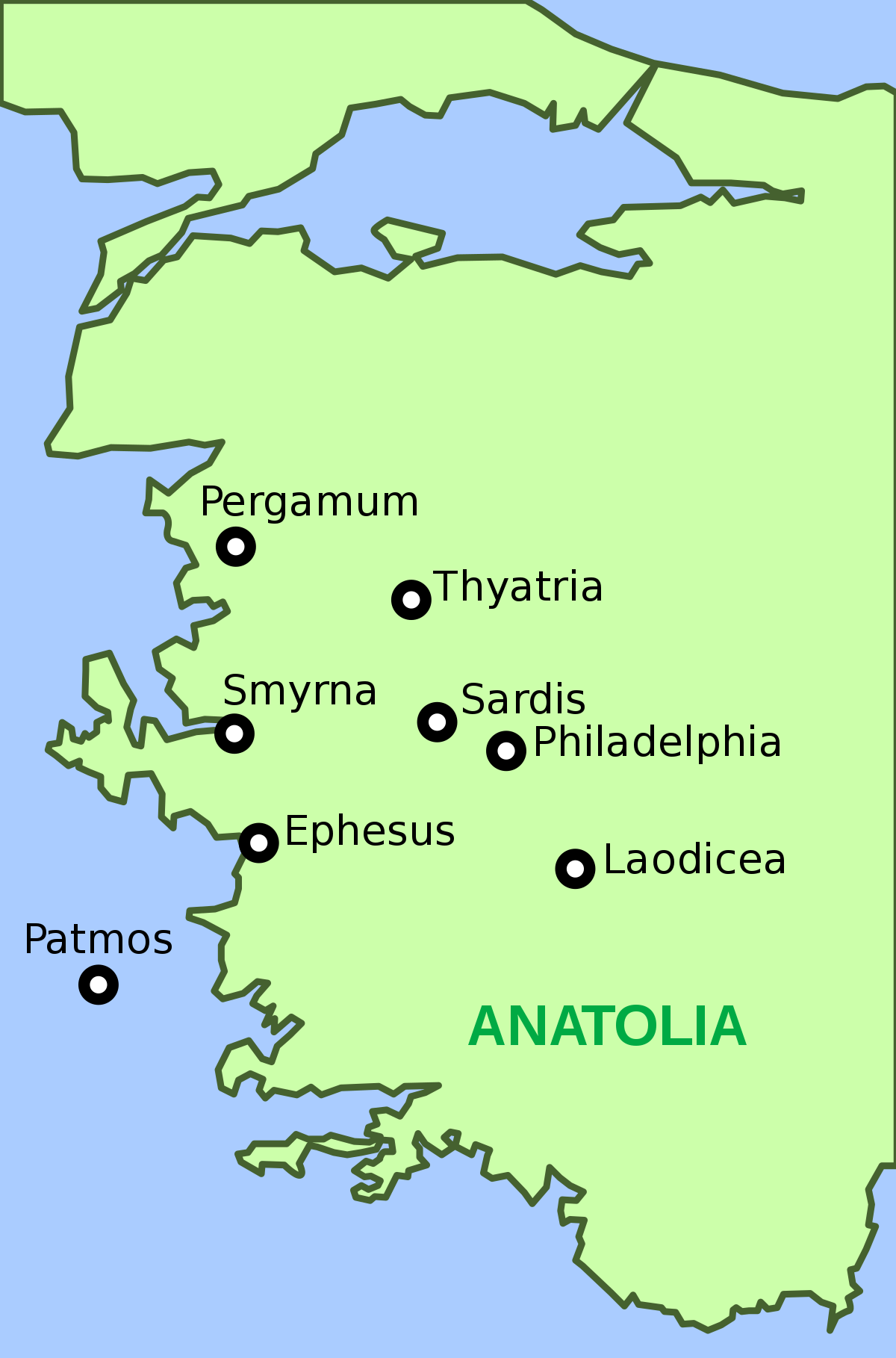 Paul closes out his letter by asking it be shared with the church in Laodicea. Evidently, there was a letter he wrote to the Laodicean congregation that he wished to be read by the Colossians as well. All of these congregations were near one another, and the letters Paul wrote to them were intended to be circulated among them. The messages they contained were universal and applicable in every one of the communities where local congregations were attempting to live out their faith in hostile surroundings. Remaining faithful in a fallen and often antagonistic world was difficult, and nobody knew that better than Paul. That is why he closed out his letter by calling his children in the faith to “Remember my chains” (Colossians 4:18 ESV). He wanted them to know he had been imprisoned because of the gospel. His own experience with suffering gave him a unique capacity to understand what the Colossians were experiencing. He was not oblivious to their situation but was well acquainted with the trials often accompanying Christian life. He rejoiced that God had deemed him worthy of the privilege of suffering as Christ had suffered – on behalf of His body, the church.
I am glad when I suffer for you in my body, for I am participating in the sufferings of Christ that continue for his body, the church. – Colossians 1:24 NLT
For Paul, the walk of faith was challenging but well worth the effort. He knew the Colossian believers were suffering persecution and wrestling with doubts because of the influence of false teachers. But he wanted them to remain firm in their faith and committed to the cause of Christ. Paul played the long game, concentrating on the promise of Christ’s return and the assurance of eternal life as the final reward.
I press on to possess that perfection for which Christ Jesus first possessed me. No, dear brothers and sisters, I have not achieved it, but I focus on this one thing: Forgetting the past and looking forward to what lies ahead, I press on to reach the end of the race and receive the heavenly prize for which God, through Christ Jesus, is calling us. – Philippians 3:12-14 NLT
English Standard Version (ESV) The Holy Bible, English Standard Version. ESV® Permanent Text Edition® (2016). Copyright © 2001 by Crossway Bibles, a publishing ministry of Good News Publishers.
New Living Translation (NLT) Holy Bible, New Living Translation, copyright © 1996, 2004, 2015 by Tyndale House Foundation. Used by permission of Tyndale House Publishers Inc., Carol Stream, Illinois 60188. All rights reserved.