They Believed God

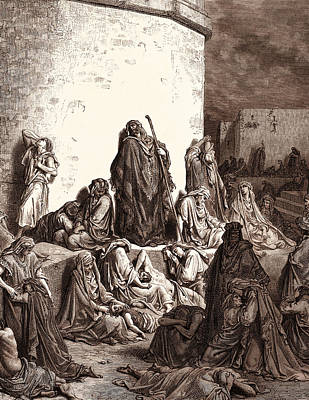
4 Jonah began to go into the city, going a day’s journey. And he called out, “Yet forty days, and Nineveh shall be overthrown!” 5 And the people of Nineveh believed God. They called for a fast and put on sackcloth, from the greatest of them to the least of them. – Jonah 3:4-5 ESV

Jonah arose and went to Nineveh. Those six simple words would have hit the author’s Jewish audience like a brick. The thought of the lone prophet of God entering the gates of the infamous city would have created in them a sense of fear and foreboding. The Assyrians had a well-deserved reputation for immorality, idolatry, and wanton cruelty. Their empire-building aspirations had been marked by incessant conquest and marred by violent savagery. During the ninth century to the end of the seventh century BC, they were an unstoppable military juggernaut that used the torture and executions of its conquered enemies as a powerful public relations tool. They eagerly promoted this less-than-flattering aspect of their success to create a sense of fear and subjugation among those nations that remained yet unconquered.

One of their kings, Ashurnashirpal II, referred to himself as the “trampler of all enemies…who defeated all his enemies [and] hung the corpses of his enemies on posts” (Albert Kirk Grayson, Assyrian Royal Inscriptions, Part 2: From Tiglath-pileser I to Ashuer-nasir-apli II, Wiesbadan, Term.: Otto Harrassowitz, 1976, p. 165). He proudly chronicles his treatment of the nobles of one city that had refused to surrender.

“I flayed as many nobles as had rebelled against me [and] draped their skins over the pile [of corpses]; some I spread out within the pile, some I erected on stakes upon the pile…I flayed many right through my land [and] draped their skins over the walls” (Grayson, p.124).

It was not uncommon for the Assyrians to behead and dismember their conquered foes. One particularly gruesome form of torture was their impaling of prisoners on wooden stakes. These gory displays were intended to be a macabre form of outdoor advertising, informing the remaining citizens of a conquered city to cooperate or face a similar fate.

But the Assyrians were more than cruel. They were idolatrous and immoral. And as the capital city of this godless nation, Nineveh would have been the epicenter of Assyrian power and perversion. The author describes Nineveh as “an exceedingly great city” (Jonah 3:3 ESV). In Hebrew, the phrase actually says, “a great city even in God’s sight.” The word translated as “exceedingly” in the ESV is actually ‘ĕlōhîm, which was most commonly used to refer to a god or divine being. Throughout the book of Jonah, the author substitutes the name ‘ĕlōhîm for Yahweh when speaking of God in association with the Gentiles. So, when he describes Nineveh as “great,” he is essentially saying that “Nineveh was a great metropolis belonging to God.” Another interpretation of this enigmatic phrase is “an important city for God’s purposes.”

It seems that the author wants us to know that Nineveh’s greatness has been sovereignly ordained. It is an allusion to God’s divine role in Assyria’s rapid rise to power and fame. They are divinely appointed instruments in His hands, created to accomplish His coming judgment against the rebellious people of Israel. And if this book was written after the fall of Israel to the Assyrians in 722 BC, then its readers would have clearly understood the author’s reference to Nineveh as belonging to God.

The greatness of Nineveh had been God’s doing. And this brings to mind another powerful and pride-filled king whom God would raise up as His instrument of judgment against the rebellious southern kingdom of Judah. King Nebuchadnezzar would eventually rise to power and use his Babylonian army to conquer the city of Jerusalem in 587 BC. But this very same king would end up taking credit for his success. At one point, he would stand on the balcony of his palace, pridefully surveying the work of his hands.

“Is not this great Babylon, which I have built by my mighty power as a royal residence and for the glory of my majesty?” – Daniel 4:30 ESV

But Nebuchadnezzar would learn an important, if not humbling, lesson. God told the arrogant king that he was about to lose his mind and his kingdom. He would suffer a sudden bout of insanity and be forced to live like a wild animal in the wilderness. And the prophet Daniel told the king that his condition would last “until you know that the Most High rules the kingdom of men and gives it to whom he will” (Daniel 4:32 ESV).

Nineveh and Babylon were “great” cities ruled over by “great” kings. But their domains and dominion were the sovereign work of God. And, whether he realized it or not, as Jonah walked through the gates of the “great” city of Nineveh, he wasn’t entering into enemy territory. He was walking into the realm of Yahweh. Nineveh did not belong to Sennacherib any more than Babylon belonged to Nebuchadnezzar. And while Ishtar was the primary god worshiped by the Ninevites, Yahweh was the one true God of the universe.

Just imagine this lone prophet of God walking through the streets of this massive metropolis declaring, “Yet forty days, and Nineveh shall be overthrown!” (Jonah 3:4 ESV). That took courage. He was delivering a divine ultimatum to the citizens of the most powerful nation on earth. Jonah’s little encounter with the fish had made a powerful impression. He was motivated and took to his task with a renewed sense of vigor. But despite his zeal and enthusiasm, it seems that Jonah was fixated on one thing: The destruction of Nineveh. The author only records one message coming from the lips of the prophet: “Yet forty days, and Nineveh shall be overthrown!” And Jonah was probably counting the days. He was hoping and praying that God would rain down judgment upon the wicked people of Nineveh.

Jonah had been given a message from God, but it seems that he might have misunderstood what God had in mind. The key to understanding his confusion is found in the Hebrew word translated as “overthrown.” While that is an acceptable meaning of the word hāp̄aḵ, it is more often translated as “turn” in the Hebrew scriptures. It conveys the idea of turning about or turning back. Or to put it another way, it can refer to conversion. What God was telling Jonah was that within 40 days, the people of Nineveh would turn to Him. But Jonah heard what he wanted to hear. To him, the meaning of God’s message was clear: The Ninevites were about to face the wrath of Yahweh. So, he eagerly and enthusiastically walked the streets of Nineveh, delivering God’s divine ultimatum.

But he was in for a shock. His message did get a reaction, but not the one he had been expecting. It is likely that Jonah had fully expected to be arrested and executed for his efforts. After all, he had spent days walking through the capital city declaring its pending destruction. It was only a matter of time before his message was conveyed to the authorities and his prophetic career came to an abrupt and less-than-pleasant end.

Yet, the author states, “the people of Nineveh believed God” (Jonah 3:5 ESV). What’s fascinating to consider is that nowhere in Jonah’s message does he seem to share the nature of their crime or the form of their pending punishment. There’s no indication that he provided them with a way to avert their “overthrow.” And the most glaring omission is his failure to mention the name of Yahweh. And yet, the people “believed God (ĕlōhîm).” Whether or not Jonah told them about God didn’t seem to matter. The Ninevites inherently understood that Yahweh, the God of the Israelites was sending them a message. And they heard that message and believed.

They called for a fast and put on sackcloth, from the greatest of them to the least of them. – Jonah 3:5 ESV

We can only imagine how this sudden and surprising reaction impacted Jonah. He must have been beside himself with frustration and anger. This was exactly what he feared would happen, and it’s what had motivated him to run away in the first place. He longed for judgment against his enemies but instead, God had shown grace, mercy, and love. Jonah had been hoping for their overthrow but, instead, God orchestrated their conversion. They believed and repented. And they exhibited their change of heart by entering a state of mourning. They knew they were guilty and deserving of God’s judgment, but He had graciously provided them with an opportunity to turn to Him.

Once again, this story would have conveyed a powerful and convicting message to its original readers. The Jews living in exile in Assyria would have understood that they were being exposed for their own stubbornness and refusal to turn to Him. God had given them ample opportunities to hear His calls of repentance and respond in humility and belief. But they had refused – time and time again. And yet, here were the pagan Ninevites, hearing the message of God’s prophet for the very first time and responding in belief and humble repentance. Centuries later, Jesus recognized the underlying message found in the book of Jonah and conveyed it to His Jewish audience.

“The men of Nineveh will rise up at the judgment with this generation and condemn it, for they repented at the preaching of Jonah, and behold, something greater than Jonah is here.” – Luke 11:32 ESV

Even in 1st-Century Israel, the people of God remained just as obstinate and unwilling to hear God’s message of repentance. Jesus, the greater Jonah, had appeared, declaring, “Repent, for the kingdom of heaven is at hand” (Matthew 3:2 ESV). But as the apostle John points out, Jesus “came to his own, and his own people did not receive him” (John 1:11 ESV). They refused to believe His message and rejected His offer of salvation. But John goes on to write, “to all who did receive him, who believed in his name, he gave the right to become children of God, who were born, not of blood nor of the will of the flesh nor of the will of man, but of God” (John 1:12-13 ESV).

Jesus’ message of the Kingdom would be heard by Gentiles and they would believe. But the majority of His Jewish brothers and sisters would continue to reject His offer and remain stubbornly unwilling to repent and believe.

English Standard Version (ESV) The Holy Bible, English Standard Version. ESV® Permanent Text Edition® (2016). Copyright © 2001 by Crossway Bibles, a publishing ministry of Good News Publishers.

New Living Translation (NLT) Holy Bible, New Living Translation, copyright © 1996, 2004, 2015 by Tyndale House Foundation. Used by permission of Tyndale House Publishers Inc., Carol Stream, Illinois 60188. All rights reserved.

The Message (MSG)Copyright © 1993, 1994, 1995, 1996, 2000, 2001, 2002 by Eugene H. Peterson

Men on Mission

7 And he called the twelve and began to send them out two by two, and gave them authority over the unclean spirits. 8 He charged them to take nothing for their journey except a staff—no bread, no bag, no money in their belts— 9 but to wear sandals and not put on two tunics. 10 And he said to them, “Whenever you enter a house, stay there until you depart from there. 11 And if any place will not receive you and they will not listen to you, when you leave, shake off the dust that is on your feet as a testimony against them.” 12 So they went out and proclaimed that people should repent. 13 And they cast out many demons and anointed with oil many who were sick and healed them. – Mark 6:7-13 ESV

In the closing half of verse 6, Mark reveals that Jesus “went about among the villages teaching.” At this point in His ministry, Jesus is concentrating His energies and efforts on the region of Galilee. Having been rejected by the citizens of His own hometown of Nazareth, Jesus has moved on, taking His message of the Kingdom to other towns and villages where He will find a more receptive audience.

In this section, Jesus, as Master and Teacher, begins to prepare His disciples for the role they will play when the time comes for Him to return to His Father’s side in heaven. These men had been hand-picked by God (John 17:6) and assigned to serve by Jesus’ side, but their greater contribution to the Kingdom would come after the Son’s eventual departure.

For some time now, they have been witnesses to the witnesses of Jesus. They have seen Him cast out demons, heal the sick, minister to the needy, display His power over the elements of nature, and confound the people with His preaching and parables. But now, they were going to become participants rather than spectators. These men were going to be given an opportunity to practice what Jesus has preached. Instead of standing in the background safely observing the ministry of Jesus, they will find themselves on the frontlines of the effort to declare the arrival of the kingdom of heaven. And to validate their message, they will be given unprecedented power to perform miracles, just like their Lord and Master.

Jesus chooses to send them out in pairs, most likely in keeping with the Old Testament teaching concerning witnesses. Since these men would be declaring the news regarding the kingdom’s arrival and the reality of Jesus as the long-awaited Messiah, a second witness would serve to validate that message. And Jesus knew that these men would need the strength and encouragement that comes with companionship.

Two people are better off than one, for they can help each other succeed. If one person falls, the other can reach out and help. But someone who falls alone is in real trouble. Likewise, two people lying close together can keep each other warm. But how can one be warm alone? A person standing alone can be attacked and defeated, but two can stand back-to-back and conquer. – Ecclesiastes 4:9-12 NLT

This entire enterprise was intended for the benefit of the disciples. While the nature of their message and ministry was vital, Jesus was giving them this assignment to prepare them. As He has been doing all along, Jesus is attempting to strengthen their faith. Despite their constant exposure to His teaching and their front-row seats to His amazing displays of power, they still struggled to comprehend His true identity. Even after witnessing Him calm the winds and waves on the Sea of Galilee, they had expressed their shock and displayed their uncertainty.

“Who then is this, that even the wind and the sea obey him?” – Mark 4:41 ESV

Jesus knew that His disciples remained unconvinced as to who He was. They wanted to believe He was the Messiah of Israel, but so much of what He said and did seemed to contradict their expectations and aspirations. They couldn’t deny His power and it was clear, from the crowds that followed Him wherever He went, that Jesus was growing in popularity. But His ongoing disputes with the religious leaders confused the disciples. How did He expect to unite the people and lead them in victory over the Romans if He continued to alienate the most powerful men in the nation?

But the disciples had much to learn about the Kingdom and the reign of the Messiah. They were going to have to repent of their preconceived ideas concerning God’s plans for His people. They had their own visions of the future and when Jesus did not do things the way they expected, they found themselves wrestling with doubt.

So, this brief mission on which they were being sent was meant to put them on the frontlines of the battle and bolster their belief in the identity of Jesus as the Son of God. As He prepared to send them, He gave them “authority over the unclean spirits” (Mark 6:8 ESV). They would find themselves possessing the very same power He had displayed and that had allowed Him to cast out the demons from the Gadarene demoniac (Mark 5:1-20). But, while they would have access to great power, they were to place themselves on the mercy and provision of God. Jesus instructed them to travel light and to trust God for all their needs.

He told them to take nothing for their journey except a walking stick—no food, no traveler’s bag, no money. He allowed them to wear sandals but not to take a change of clothes. – Mark 6:9 NLT

Matthew reveals that Jesus provided strict instructions regarding the destination of the disciples. They were to focus their efforts on the Jews and were prohibited from ministering among the Gentiles and Samaritans.

“Go nowhere among the Gentiles and enter no town of the Samaritans, but go rather to the lost sheep of the house of Israel. And proclaim as you go, saying, ‘The kingdom of heaven is at hand.’ Heal the sick, raise the dead, cleanse lepers, cast out demons.” – Matthew 9:5-8 ESV

Their message was clear. They were to declare the same news that John the Baptist had preached in the wilderness of Judea. It was the same message of the kingdom that Jesus had been spreading throughout Galilee. And to validate their message, they were given the power to perform the same kind of miracles that Jesus did. These signs and wonders would provide proof that their message was from God and that its content should be heard and heeded.

And, Jesus warns, if anyone should refuse to listen to their message, the disciples are to walk away. They are not to waste their time on those who reject the message of the kingdom and the call to repentance. He instructs them to “shake off the dust that is on your feet as a testimony against them” (Mark 6:11 ESV). This symbolic act was meant to condemn the unrepentant Jews as unbelieving, defiled, and subject to divine judgment. And Jesus knew that there would be plenty of Jews who would refuse to listen to His disciples. These men would experience the same level of rejection Jesus had encountered in Nazareth.

All of this is in keeping with the words of John found in the opening chapter of his gospel.

He came to his own, and his own people did not receive him. But to all who did receive him, who believed in his name, he gave the right to become children of God, who were born, not of blood nor of the will of the flesh nor of the will of man, but of God. – John 1:11-13 ESV

Sadly, all those Jews who believed themselves to be the children of God but who refused to accept Jesus as the Son of God would find themselves rejected by God.

Equipped with divine power and a clear message, the disciples made their way into the far reaches of Galilee. They called the people to repentance and “cast out many demons and anointed with oil many who were sick and healed them” (Mark 6:13 ESV). This brief but eventful venture would do wonders for the disciples’ confidence and go a long way in solidifying their faith in Jesus. It would provide them with a glimpse of the future when they would receive the Great Commission from their resurrected Lord and Savior. The day was coming when He would depart and turn over the ministry of the gospel to these very same men. And they would take the good news of Jesus to the ends of the earth. But for now, they were being given a taste of things to come.

English Standard Version (ESV) The Holy Bible, English Standard Version. ESV® Permanent Text Edition® (2016). Copyright © 2001 by Crossway Bibles, a publishing ministry of Good News Publishers.

New Living Translation (NLT) Holy Bible, New Living Translation, copyright © 1996, 2004, 2015 by Tyndale House Foundation. Used by permission of Tyndale House Publishers Inc., Carol Stream, Illinois 60188. All rights reserved.

The Message (MSG)Copyright © 1993, 1994, 1995, 1996, 2000, 2001, 2002 by Eugene H. Peterson
How Can You Believe?

37 And the Father who sent me has himself borne witness about me. His voice you have never heard, his form you have never seen, 38 and you do not have his word abiding in you, for you do not believe the one whom he has sent. 39 You search the Scriptures because you think that in them you have eternal life; and it is they that bear witness about me, 40 yet you refuse to come to me that you may have life. 41 I do not receive glory from people. 42 But I know that you do not have the love of God within you. 43 I have come in my Father’s name, and you do not receive me. If another comes in his own name, you will receive him. 44 How can you believe, when you receive glory from one another and do not seek the glory that comes from the only God? 45 Do not think that I will accuse you to the Father. There is one who accuses you: Moses, on whom you have set your hope. 46 For if you believed Moses, you would believe me; for he wrote of me. 47 But if you do not believe his writings, how will you believe my words?” – John 5:37-47 ESV

As the Son of God, Jesus had every right to stand in judgment of the Pharisees and Sadducees. Their rejection of Him was baseless because they had been given more than enough evidence to prove His identity. And, one of the primary pieces of evidence was to be found in the Hebrew scriptures, where the prophecies concerning the coming Messiah clearly pointed to Jesus as their fulfillment.

The men whom Jesus addressed were avid students of the Old Testament Scriptures and their familiarity with the many Messianic passages found there should have given them special insight into all that was happening right in front of them. Of all people, they should have recognized that Jesus was the one for whom they had long been waiting. But these men, like every Jew before them, had misread and misinterpreted these prophecies and had created a narrative concerning the Messiah that focused solely on His role as a conquering king and their political savior. They tended to ignore all the passages that pointed to the Messiah’s role as the suffering servant.

In his gospel, Luke records the moment when the recently resurrected Jesus appeared to His grieving disciples as they huddled together in a room somewhere in Jerusalem. Upon seeing Jesus, the disciples “stood there in disbelief, filled with joy and wonder” (Luke 24:41 NLT). But then Jesus spoke to them and what He had to say reveals a great deal about the blind ignorance and stubborn resistance of the Jewish religious leaders.

“When I was with you before, I told you that everything written about me in the law of Moses and the prophets and in the Psalms must be fulfilled.” Then he opened their minds to understand the Scriptures. And he said, “Yes, it was written long ago that the Messiah would suffer and die and rise from the dead on the third day. It was also written that this message would be proclaimed in the authority of his name to all the nations, beginning in Jerusalem: ‘There is forgiveness of sins for all who repent.’ You are witnesses of all these things.” – Luke 24:44-48 NLT

The Pharisees and Sadducees had missed all of this. They were not expecting a Messiah who would suffer and die and rise from the dead on the third day. And they had no desire for such a Messiah. And, as far as repentance for the forgiveness of sins, they had no need for that either. They considered themselves to be fully righteous because of their faithful adherence to the Mosaic law so, they had no need to repent and required no one to save them from their sins.

But these men, while familiar with the written word of God, were oblivious to the testimony of God found there. God had spoken through the men who had penned the Old Testament books. He had revealed the truth regarding His Son’s coming and yet, these religious leaders had failed to recognize the voice of God. And Jesus issues a stinging condemnation concerning them: “you do not have his message in your hearts, because you do not believe me—the one he sent to you” (John 5:38 NLT).

The Pharisees and Sadducees had a love affair with the Scriptures. They revered them and dedicated their lives to studying them. Jesus even admitted as much. 

“You search the Scriptures because you think they give you eternal life. But the Scriptures point to me! Yet you refuse to come to me to receive this life.” – John 5:39-40 NLT

They spent countless hours pouring over the Scriptures, seeking to know the key to eternal life. They were desperate to know what God required of them so that they might keep God’s law and earn their way into His eternal kingdom. Their incessant need to “search” the Scriptures was based on their fear that they might overlook a commandment and fail in their quest for righteousness. It’s interesting to note that their obsession with the law caused them to seek the opinion of Jesus. On one occasion, they came to Him, asking, “Teacher, which is the most important commandment in the law of Moses?” (Matthew 22:36 NLT). They had prioritized the commands of God, giving some higher priority than others. This way, they could concentrate their efforts on keeping the more important laws.

And Jesus had responded to their question by saying, “You must love the Lord your God with all your heart, all your soul, and all your mind.’ This is the first and greatest commandment” (Matthew 22:37-38 NLT).

In a sense, Jesus was accusing these men of loving the Scriptures more than they loved God. They were more concerned about discovering the laws they needed to keep in order to be deemed righteous by God than they were in loving and listening to God.

As Jesus continued His indictment of these pious religious leaders, He told them that He had no need of their approval or official sanctioning of His ministry.

“Your approval means nothing to me, because I know you don’t have God’s love within you.” – John 5:41-42 NLT

What a slap in the face this must have been to these prideful men. They considered themselves to be the spiritual elite of Israel, yet Jesus was accusing them of having no love for God. Even worse, He was inferring that God’s love was not within them. In his first epistle, John would later pen the following words of warning:

Do not love this world nor the things it offers you, for when you love the world, you do not have the love of the Father in you. For the world offers only a craving for physical pleasure, a craving for everything we see, and pride in our achievements and possessions. These are not from the Father, but are from this world. And this world is fading away, along with everything that people crave. But anyone who does what pleases God will live forever. – 1 John 2:15-17 NLT

John had learned a great deal from observing Jesus’ many encounters with the Pharisees and Sadducees. At one time, he would have revered these men as icons of virtue and examples of spiritual sophistication. But he had discovered the truth that they were nothing more than hypocrites who loved the praise of men more than they loved God. They put more value in their own achievements than they did in the words and works of God.

So, when Jesus appeared claiming to be the Son of God sent to do the will of God, they refused to hear what He had to say.

“For I have come to you in my Father’s name, and you have rejected me.” – John 5:43 NLT

Because they had no real understanding of who God was, they were incapable of recognizing His Son. Their concept of God was skewed. Their understanding of righteousness was flawed. Their thinking concerning salvation was totally works-based and, therefore, inaccurate. That is why John the Baptist came preaching a message of repentance. He had repeatedly proclaimed, “Repent, for the kingdom of heaven is at hand” (Matthew 3:2 ESV). And the Greek word that is translated “repent” literally means “to change one’s mind for better.” It carries the idea of a radical change of mindset. John the Baptist was calling the people to rethink everything they believed concerning God, the kingdom, salvation, and righteousness. These were not what they seemed to be. Their understanding of God’s redemptive plan was inaccurate and insufficient.

With the arrival of Jesus, the truth of God concerning the salvation of mankind had become visible and knowable. But to believe in Jesus as the Savior of the world, the Jews were going to have to repent or radically change their way of thinking. They were going to have to listen to what Jesus had to say because He was the living Word of God. And even Moses had predicted that this day would come. He had foretold of a future prophet would come in the name of the Lord. And He would have a message for the people of God that came directly from the mouth of God.

“The Lord your God will raise up for you a prophet like me from among your fellow Israelites. You must listen to him.” – Deuteronomy 18:15 NLT

“I will raise up a prophet like you from among their fellow Israelites. I will put my words in his mouth, and he will tell the people everything I command him. I will personally deal with anyone who will not listen to the messages the prophet proclaims on my behalf.” – Deuteronomy 18:18-19 NLT

The Pharisees and Sadducees would have been very familiar with the words of Moses. And Jesus infers that they would have placed their hopes in the promises expressed by Moses. But they refused to recognize Jesus as the very fulfillment of those promises.

“But since you don’t believe what he wrote, how will you believe what I say?” – John 5:47 NLT

It all boiled down to belief. They refused to believe the words of the prophets. Which means they failed to believe the testimony of God. And that resulted in their refusal to accept the words and the works of Jesus, the Son of God. They found it impossible to repent of their preconceived notions regarding God, sin, righteousness, and salvation. Their minds were set. Their belief system was firmly in place and nothing was going to change their way of thinking. Not even the Son of God.

English Standard Version (ESV) The Holy Bible, English Standard Version. ESV® Permanent Text Edition® (2016). Copyright © 2001 by Crossway Bibles, a publishing ministry of Good News Publishers.

New Living Translation (NLT)
Holy Bible, New Living Translation, copyright © 1996, 2004, 2015 by Tyndale House Foundation. Used by permission of Tyndale House Publishers Inc., Carol Stream, Illinois 60188. All rights reserved.

The Message (MSG)Copyright © 1993, 1994, 1995, 1996, 2000, 2001, 2002 by Eugene H. Peterson

No Comparison

19 And this is the testimony of John, when the Jews sent priests and Levites from Jerusalem to ask him, “Who are you?” 20 He confessed, and did not deny, but confessed, “I am not the Christ.” 21 And they asked him, “What then? Are you Elijah?” He said, “I am not.” “Are you the Prophet?” And he answered, “No.” 22 So they said to him, “Who are you? We need to give an answer to those who sent us. What do you say about yourself?” 23 He said, “I am the voice of one crying out in the wilderness, ‘Make straight the way of the Lord,’ as the prophet Isaiah said.”

24 (Now they had been sent from the Pharisees.) 25 They asked him, “Then why are you baptizing, if you are neither the Christ, nor Elijah, nor the Prophet?” 26 John answered them, “I baptize with water, but among you stands one you do not know, 27 even he who comes after me, the strap of whose sandal I am not worthy to untie.” 28 These things took place in Bethany across the Jordan, where John was baptizing. – John 1:19-28 ESV

Beginning with verse 19, John provides a more detailed introduction to the life and ministry of John the Baptist. He first alluded to this important character in verses 6-8.

There was a man sent from God, whose name was John. He came as a witness, to bear witness about the light, that all might believe through him. He was not the light, but came to bear witness about the light. – John 1:6-8 ESV

As John continues to establish the unique identity of Jesus as the God-man, he will use John the Baptist as a point of contrast. Like Jesus, John the Baptist was a man sent from God. But unlike Jesus, John the Baptist was just a man. He had been commissioned by God to prepare the way for the Messiah, by testifying to the people of Israel about His imminent arrival. The one for whom they had long waited had arrived. But as the text makes clear, John the Baptist was not the light. And John will confirm the contrast between the light and the witness to the light by using the testimony of the witness himself.

Unlike the three synoptic gospels, John’s gospel provides few details concerning John the Baptist’s ministry. He seems much more interested in using the testimony of John the Baptist concerning Jesus as proof of Jesus’ claim to be the Son of God and the son of man. Yet a bit of background into John the Baptist’s unique ministry and message can be helpful. So, Matthew provides some essential details concerning this rather strange character who had suddenly appeared on the scene in Judea.

In those days John the Baptist came preaching in the wilderness of Judea, “Repent, for the kingdom of heaven is at hand.” For this is he who was spoken of by the prophet Isaiah when he said,

“The voice of one crying in the wilderness:
‘Prepare the way of the Lord;
    make his paths straight.’”

Now John wore a garment of camel’s hair and a leather belt around his waist, and his food was locusts and wild honey. Then Jerusalem and all Judea and all the region about the Jordan were going out to him, and they were baptized by him in the river Jordan, confessing their sins. – Matthew 3:1-6 ESV

Luke records that the appearance of John the Baptist attracted large crowds of people who made their way to the Judean wilderness in order to be baptized by him. But there was tremendous speculation regarding his identity.

Everyone was expecting the Messiah to come soon, and they were eager to know whether John might be the Messiah. – Luke 3:15 NLT

As John the Baptist proclaimed the imminent arrival of the kingdom of heaven, the people couldn’t help but wonder if he was the Messiah. And John records that even the Jewish religious leaders were curious about this strange-looking individual who was proclaiming the arrival of the kingdom.

…the Jews sent priests and Levites from Jerusalem to ask him, “Who are you?” – John 1:19 ESV

Notice that John prefaces this exchange between John the Baptist and the religious leaders with the words: “And this is the testimony of John.”  What follows is the clear testimony from John the Baptist that clarifies the identity of the Christ (Greek: Messiah). First and foremost, John the Baptist wanted to squelch any rumors about himself.

He confessed, and did not deny, but confessed, “I am not the Christ.” – John 1:20 ESV

John the Baptist had come to witness, not be worshiped. He had no interest in passing himself off as the long-awaited Messiah. But if he was not the Christ, then who was he? And why had he suddenly appeared on the scene preaching about the coming kingdom? The religious leaders were perplexed and continued their questioning by asking if he was Elijah or the prophet.

Their first inquiry had to do with an Old Testament prophecy found in the book of Malachi.

“Behold, I will send you Elijah the prophet before the great and awesome day of the Lord comes. And he will turn the hearts of fathers to their children and the hearts of children to their fathers, lest I come and strike the land with a decree of utter destruction.” – Malachi 4:5-6 ESV

Based on this passage, the Jews expected the long-dead prophet, Elijah, to reappear and his arrival would signal the imminent arrival of the Messiah. But John the Baptist confession that he was not Elijah led the religious leaders to ask whether he was “the Prophet.”

As students of the Hebrew Scriptures, these men were well-versed in those passages that were associated with the coming Messiah. And they were familiar with the promise that God had made to the people of Israel during their days in the wilderness, prior to the arrival in the land of promise.

“The Lord your God will raise up for you a prophet like me from among you, from your brothers—it is to him you shall listen—just as you desired of the Lord your God at Horeb on the day of the assembly, when you said, ‘Let me not hear again the voice of the Lord my God or see this great fire any more, lest I die.’ And the Lord said to me, ‘They are right in what they have spoken. I will raise up for them a prophet like you from among their brothers. And I will put my words in his mouth, and he shall speak to them all that I command him.” – Deuteronomy 18:15-18 ESV

The Jews had long believed that the arrival of the Messiah would be accompanied by the return of Elijah and the appearance of the Prophet of God. And this threesome would usher in a period of great revival and renewal in Israel. They would lead the people of God and help reestablish the nation to its former glory. But John the Baptist denies being the Prophet.

John the Baptist’s inquisitors were perplexed and knew that they were going to have to give a report to their superiors back in Jerusalem. So, they simply asked John: “Who are you? We need to give an answer to those who sent us. What do you say about yourself?” (John 1:22 ESV). If he was not the Messiah, Elijah, or the Prophet, then who was he? And John the Baptist gives them the only answer he knows.

“I am the voice of one crying out in the wilderness, ‘Make straight the way of the Lord’” – John 1:23 ESV

Knowing that these men were highly knowledgeable of the Hebrew Scriptures, John the Baptist identifies himself by quoting from the writings of Isaiah. In doing so, he affirms that they were right in assuming that his arrival had something to do with the Messiah. He quotes from what the Jews considered to be Messianic passage and applies it to himself.

Comfort, comfort my people, says your God.
Speak tenderly to Jerusalem,
    and cry to her
that her warfare is ended,
    that her iniquity is pardoned,
that she has received from the Lord‘s hand
    double for all her sins.

A voice cries:
“In the wilderness prepare the way of the Lord;
    make straight in the desert a highway for our God.
Every valley shall be lifted up,
    and every mountain and hill be made low;
the uneven ground shall become level,
    and the rough places a plain.
And the glory of the Lord shall be revealed,
    and all flesh shall see it together,
    for the mouth of the Lord has spoken.” – Isaiah 40:1-5 ESV

John the Baptist was nothing more than a voice crying in the wilderness. He was the witness, testifying to the arrival of the glory of the Lord. He was not the Word but was simply the voice. He was not the Messiah but was the one who had been chosen to announce His arrival. And that led the religious leaders to ask the next logical question.

“Then why are you baptizing, if you are neither the Christ, nor Elijah, nor the Prophet?” – John 1:25 ESV

This was a question regarding authority. If John the Baptist was not the Messiah, Elijah, or the Prophet, he had no right or authority to baptize anyone. The Jews understood baptism to be reserved for ritual cleansing. So, why was this unknown and unqualified individual “proclaiming a baptism of repentance for the forgiveness of sins” (Luke 3:3 ESV)? The Jews, because they were God’s chosen people, believed they had no need for repentance. They viewed themselves as already in right standing with God by virtue of their status as descendants of Abraham and as heirs of the promise.

But Luke goes on to record that John the Baptist saw through the over-confident self-righteousness of his audience, and he delivered a stinging indictment against the religious leaders.

“Bear fruits in keeping with repentance. And do not begin to say to yourselves, ‘We have Abraham as our father.’ For I tell you, God is able from these stones to raise up children for Abraham. Even now the axe is laid to the root of the trees. Every tree therefore that does not bear good fruit is cut down and thrown into the fire.” – Luke 3:8-9 ESV

Their heritage was no guarantee of righteousness. And their identity as Jews was not going to preserve them from the coming wrath of God against all those who have sinned against Him. That is why John the Baptist had come on the scene preaching, “Repent, for the kingdom of heaven is at hand” (Matthew 3:2 ESV).

John confesses that his authority to baptize came from a source far superior to himself or the religious leaders of the Jews. And this supreme source was about to make Himself known.

“I baptize with water, but among you stands one you do not know, even he who comes after me, the strap of whose sandal I am not worthy to untie.” – John 1:2-27 ESV

John was just a man who baptized repentant people with physical water. But there was another one who would follow who had the authority to offer true cleansing from sin and the baptism of the Holy Spirit. The messenger was proclaiming the arrival of the Messiah.

“I baptize with water those who repent of their sins and turn to God. But someone is coming soon who is greater than I am—so much greater that I’m not worthy even to be his slave and carry his sandals. He will baptize you with the Holy Spirit and with fire.
” – Matthew 3:11 NLT

English Standard Version (ESV) The Holy Bible, English Standard Version. ESV® Permanent Text Edition® (2016). Copyright © 2001 by Crossway Bibles, a publishing ministry of Good News Publishers.

New Living Translation (NLT)
Holy Bible, New Living Translation, copyright © 1996, 2004, 2015 by Tyndale House Foundation. Used by permission of Tyndale House Publishers Inc., Carol Stream, Illinois 60188. All rights reserved.

The Message (MSG)Copyright © 1993, 1994, 1995, 1996, 2000, 2001, 2002 by Eugene H. Peterson

The Good, the Bad, and God

34 To crush underfoot
    all the prisoners of the earth,
35 to deny a man justice
    in the presence of the Most High,
36 to subvert a man in his lawsuit,
    the Lord does not approve.

37 Who has spoken and it came to pass,
    unless the Lord has commanded it?
38 Is it not from the mouth of the Most High
    that good and bad come?
39 Why should a living man complain,
    a man, about the punishment of his sins?

40 Let us test and examine our ways,
    and return to the Lord! – Lamentations 3:34-40 ESV

Jeremiah was painfully aware that the nation of Judah stood fully and justifiably condemned before God. They were guilty as charged and their fate had been ordained by the hand of God. It was the just and righteous punishment they so thoroughly deserved. And while God had graciously delayed His judgment for generations, He had not forgotten His promise to punish His chosen people for their rejection of Him. Their spiritual infidelity had become so pervasive that He could no longer allow them to defame His holy name through their unholy actions.

Jeremiah reminds his fellow citizens that God had not been blind to their behavior. He had seen it all. And He had grown tired of their blatant disregard for His holy law. They had long ago forgotten what it means to live in obedience to God’s law. The admonition delivered by Moses to the Israelites while they were still in the wilderness had been clear and compelling.

And now, Israel, what does the LORD your God require of you? He requires only that you fear the LORD your God, and live in a way that pleases him, and love him and serve him with all your heart and soul. And you must always obey the LORD’s commands and decrees that I am giving you today for your own good. – Deuteronomy 10:12-13 NLT

And yet, over the centuries, God’s people had failed to live in a way that pleased Him. They made it all about themselves. God became little more than a cosmic Genie in a bottle, whom the Israelites turned to when all else failed. They had long ago forgotten what it means to fear God, treating the Almighty as if He was just one more god in a long list of possible options. And over time, their outward behavior stood as evidence of their unbelief. Their actions condemned them.

And Jeremiah had spent years pointing out the glaring wickedness of their ways.

“Among my people are wicked men
who lie in wait for victims like a hunter hiding in a blind.
They continually set traps
to catch people.
Like a cage filled with birds,
their homes are filled with evil plots.
And now they are great and rich.
They are fat and sleek,
and there is no limit to their wicked deeds.
They refuse to provide justice to orphans
and deny the rights of the poor.
Should I not punish them for this?” says the Lord.
“Should I not avenge myself against such a nation?” – Jeremiah 5:26-29 NLT

And now, Jeremiah reminds his fellow sufferers that they had received the just recompense for their sins against God.

If people crush underfoot
all the prisoners of the land,
if they deprive others of their rights
in defiance of the Most High,
if they twist justice in the courts—
doesn’t the Lord see all these things? – Lamentations 3:34-36 NLT

They had lived their lives as if God was blind or oblivious to their actions. But now they knew that He had seen it all and He had held them accountable. Everything that had happened to them was the direct result of God’s sovereign will. It had not been a mistake. It had not been the result of poor timing, bad luck, or the fickleness of fate. It had been the providential plan of God Almighty.

Who can command things to happen
without the Lord’s permission?
Does not the Most High
send both calamity and good?
Then why should we, mere humans, complain
when we are punished for our sins? – Lamentations 3:37-39 NLT

The people of Judah couldn’t blame Nebuchadnezzar and the Babylonians for their problems. They had been little more than instruments in the hands of God. They had been His chosen means for delivering His divine judgment against a stubborn rebellious people. The people of Judah had been punished by God for their sins against Him. And they had no cause to complain.

For years, they had lived in a state of overconfidence, basking in the goodness of God’s blessings, while regularly disobeying His commands. They thought they were immune from judgment. As God’s chosen people, they lived with a false sense of security, wrongly assuming that they were divinely protected from harm. But disobedience always leads to discipline. They were wrong to assume that their unique relationship with God made them untouchable by God. If anything, God was holding them to a higher standard. He had expected them to live lives that were distinctively different from all the other nations around them.

But their behavior had brought shame to the name of God. Their actions reflected poorly on His character. As His children, they bore God’s name, but they had failed to live up to their calling as His sons and daughters. Now, they were suffering the consequences for their blatant disregard for His holiness.

“For I, the LORD, am the one who brought you up from the land of Egypt, that I might be your God. Therefore, you must be holy because I am holy.” – Leviticus 11:45 NLT

Their holiness was not an option. It had been God’s expectation from the moment He had chosen Abram out of Ur and promised to make of him a great nation. His descendants would be God’s chosen people, unique among all the nations of the earth. And their relationship with God, determined by His law and regulated by His sacrificial system, was to have set them apart as holy and wholly belonging to Him. But their lack of holiness had left a black eye on God’s character. And now they were suffering because of it.

So, Jeremiah calls them to examine their lives and to understand that their current circumstances were ordained by God and were for their own good.

…let us test and examine our ways.
Let us turn back to the Lord. – Lamentations 3:40 NLT

God had blessed them. Now, God was punishing them. But it was all for their good. And Jeremiah wanted them to learn the invaluable lesson that both the good and the bad come from the hand of God. And both are conditioned upon the love of God. He disciplines those whom He loves. But it is often difficult for us to recognize God’s love when it shows up as correction. It feels like anger. It comes across as rejection. But as Jeremiah stated earlier in this same chapter.

The faithful love of the Lord never ends!
    His mercies never cease.
Great is his faithfulness;
    his mercies begin afresh each morning. – Lamentations 3:22-23 NLT

As God’s children, we must learn to recognize His love in all the circumstances of life. From the good to the bad, the enjoyable to the painful, the indescribable to the inexplicable, God never falls out of love with us. And, like Job, we must learn to see that God’s love never fails, whether we fail to understand it or not.

“Should we accept only good things from the hand of God and never anything bad?” – Job 2:10 NLT

English Standard Version (ESV)
The Holy Bible, English Standard Version. ESV® Permanent Text Edition® (2016). Copyright © 2001 by Crossway Bibles, a publishing ministry of Good News Publishers.

New Living Translation (NLT)
Holy Bible, New Living Translation, copyright © 1996, 2004, 2015 by Tyndale House Foundation. Used by permission of Tyndale House Publishers Inc., Carol Stream, Illinois 60188. All rights reserved.

The Message (MSG)Copyright © 1993, 1994, 1995, 1996, 2000, 2001, 2002 by Eugene H. Peterson

Don’t Count God Out

20 Look, O Lord, and see!

    With whom have you dealt thus?
Should women eat the fruit of their womb,
    the children of their tender care?
Should priest and prophet be killed
    in the sanctuary of the Lord?

21 In the dust of the streets
    lie the young and the old;
my young women and my young men
    have fallen by the sword;
you have killed them in the day of your anger,
    slaughtering without pity.

22 You summoned as if to a festival day
    my terrors on every side,
and on the day of the anger of the Lord
    no one escaped or survived;
those whom I held and raised
    my enemy destroyed. – Lamentations 2:20-22 ESV

One of the things that make reading this book so difficult is trying to keep up with who is speaking at any given time. It can get confusing. We have already seen how Jeremiah allows the city of Jerusalem to voice its concerns, personifying the feelings of the people of Judah. But just as quickly, Jeremiah introduces his own perspective on the state of affairs. He is not an indifferent or disinterested party to all that is going on. He cared deeply about the people of Judah and had spent years begging them to repent and return to the Lord. On more than one occasion, Jeremiah had seen his task as a prophet of God to be overwhelming and disheartening. His words had fallen on deaf ears, with no one responding to his message.

My grief is beyond healing;
    my heart is broken.
Listen to the weeping of my people;
    it can be heard all across the land.
“Has the Lord abandoned Jerusalem?” the people ask.
    “Is her King no longer there?” – Jeremiah 8:18-19 NLT

I hurt with the hurt of my people.
    I mourn and am overcome with grief.
Is there no medicine in Gilead?
    Is there no physician there?
Why is there no healing
    for the wounds of my people? – Jeremiah 8:21-22 NLT

And earlier in chapter two of Lamentations, Jeremiah had given voice to his sorrow over Judah’s sorrowful condition.

What can I say for you, to what compare you,
    O daughter of Jerusalem?
What can I liken to you, that I may comfort you,
    O virgin daughter of Zion?
For your ruin is vast as the sea;
    who can heal you? – Lamentations 2:13 ESV

But in verse 20, there is a noticeable shift in the tone. In the previous three verses, Jeremiah had told the people that the fall of Judah had been the work of God. He had finally fulfilled His promise to bring judgment upon them for their rebellion against Him. And, as a result, Jeremiah begged the people of Judah to call out to God in repentance.

Cry aloud before the Lord,
    O walls of beautiful Jerusalem!
Let your tears flow like a river
    day and night.
Give yourselves no rest;
    give your eyes no relief. – Lamentations 2:18 NLT

But in verse 20 the dialogue takes on a more accusatory tone. The city of Jerusalem is once again pointing its finger at God and demanding answers to a series of condemning questions:

With whom have you dealt thus?
Should women eat the fruit of their womb, the children of their tender care?
Should priest and prophet be killed in the sanctuary of the Lord?

These words are filled with incredulity. The people of Judah can’t believe that their God would allow these kinds of atrocities to happen. Things had gotten so bad in Jerusalem that the people had been relegated to eating their own children just to survive. How could God allow His chosen people to suffer such degradation? Why would He permit the Babylonians to slaughter priests and prophets in His very own sanctuary? This was all inconceivable and unacceptable. Or was it?

God had told the people of Judah that their sinful behavior was going to result in judgment. There would be serious consequences if they continued to resist His calls to repentance. And not even the temple would save them from the wrath of God.

“‘Don’t be fooled into thinking that you will never suffer because the Temple is here. It’s a lie! Do you really think you can steal, murder, commit adultery, lie, and burn incense to Baal and all those other new gods of yours, and then come here and stand before me in my Temple and chant, “We are safe!”—only to go right back to all those evils again? Don’t you yourselves admit that this Temple, which bears my name, has become a den of thieves? Surely I see all the evil going on there. I, the Lord, have spoken!” – Jeremiah 7:8-11 NLT

But Jerusalem remains unbowed and unbroken. The people of Judah have learned nothing from their suffering. In fact, they cast all the blame on God and refuse to take any responsibility for their role in their own demise. The “innocents” lie in the streets – the young and the old, the young women and the young men. And the city points its finger in the face of God, shouting, “…you have killed them in the day of your anger, slaughtering without pity” (Lamentations 2:21 ESV).

This is a dangerous accusation. In essence, they are declaring God to be without compassion. He responded with unmitigated and uncontrolled anger. He was uncaring and unsympathetic, displaying a perverse sense of pleasure from the senseless slaughter of the young and the old. But this conclusion displays a woefully inaccurate understanding of God. God takes no delight in the punishment of the wicked. In fact, the prophet Ezekiel records God’s thoughts on the matter.

“Do you think that I like to see wicked people die? says the Sovereign LORD. Of course not! I want them to turn from their wicked ways and live.” – Ezekiel 18:23 NLT

“As surely as I live, says the Sovereign LORD, I take no pleasure in the death of wicked people. I only want them to turn from their wicked ways so they can live. Turn! Turn from your wickedness, O people of Israel! Why should you die?” – Ezekiel 33:11 NLT

God cared about the people of Judah and longed to restore them to a right relationship with Himself. But He could not overlook their rebellion forever. As a holy and righteous God, He was obligated by His own nature to deal with the rampant wickedness of His chosen people. But He had been extremely patient, holding off His judgment for generations, and providing His people with ample opportunity to repent and return to Him. Why? Because He is a compassionate and merciful God.

The LORD is compassionate and merciful, slow to get angry and filled with unfailing love. – Psalm 103:8

The LORD is gracious and righteous; our God is full of compassion. – Psalm 116:5 BSB

Yes, the people of Judah had suffered greatly. Their capital city had been destroyed. Many of their fellow citizens had been slaughtered or taken captive. Those who remained were left to endure lives of abject poverty and persecution. But God had not forgotten them. He had not abandoned them. And in the very next chapter, Jeremiah will speak up again, declaring the unwavering faithfulness of God even in the midst of pain and sorrow.

The faithful love of the Lord never ends!
    His mercies never cease.
Great is his faithfulness;
    his mercies begin afresh each morning.
I say to myself, “The Lord is my inheritance;
    therefore, I will hope in him!” – Lamentations 3:22-24 NLT

English Standard Version (ESV)
The Holy Bible, English Standard Version. ESV® Permanent Text Edition® (2016). Copyright © 2001 by Crossway Bibles, a publishing ministry of Good News Publishers.

New Living Translation (NLT)
Holy Bible, New Living Translation, copyright © 1996, 2004, 2015 by Tyndale House Foundation. Used by permission of Tyndale House Publishers Inc., Carol Stream, Illinois 60188. All rights reserved.

The Message (MSG)Copyright © 1993, 1994, 1995, 1996, 2000, 2001, 2002 by Eugene H. Peterson

Lord and King

41 Now while the Pharisees were gathered together, Jesus asked them a question, 42 saying, “What do you think about the Christ? Whose son is he?” They said to him, “The son of David.” 43 He said to them, “How is it then that David, in the Spirit, calls him Lord, saying,

44 “‘The Lord said to my Lord,
“Sit at my right hand,
    until I put your enemies under your feet”’?

45 If then David calls him Lord, how is he his son?” 46 And no one was able to answer him a word, nor from that day did anyone dare to ask him any more questions. –  Matthew 22:41-46 ESV

001-lost-sheep.jpg

We are quickly coming to the end of Matthew’s chronicle of the earthly ministry of Jesus. As we read through the events surrounding the last week of His life, we should begin to recognize that this is really about two kingdoms in conflict – the one the Pharisees and religious leaders had come to know, love and control; and the one that Jesus had come to establish. As John the Baptist began his ministry, paving the way for the coming of the Messiah, he had told the people of Israel, “Repent of your sins and turn to God, for the Kingdom of Heaven is near” (Matthew 3:2 NLT).

His call to repentance was not just an encouragement to change their behavior, it was a demand that they change their minds, their way of thinking. John was calling them to alter their preconceived notions about God, their concept of sin, the kingdom, the Messiah, and the means by which man can be restored to a right relationship with God. Repentance would require them to do an about-face concerning what they currently believed about all of those things. And that change of mind and heart would result in a change in behavior.

In the world into which Jesus came, the Jewish people had strong opinions about these matters, the byproduct of centuries of man-made decrees and religious doctrines and dogma. They thought they had God figured out and were convinced that they knew what they had to do to deal with sin. But they had grown callous to God and carefree about their own sin, justifying their actions and downplaying their own guilt. They put a lot of stock in their position as descendants of Abraham and in their unique status as God’s chosen people. But John the Baptist had come preaching a call to repentance. He had told them that the Kingdom of Heaven was close at hand. And Jesus came preaching that very same message, telling them, “Repent of your sins and turn to God, for the Kingdom of Heaven is near” (Matthew 4:17 NLT).

The Kingdom of Heaven was NEAR – in the form of the King of Heaven – Jesus Himself. This was a statement of authority and divine representation. Jesus was Emmanuel – God with us. He was the one true King. But the Jewish people failed to recognize Him as such.

Which brings us to today’s passage, where we see Jesus still sparring with the religious leaders of Israel. He had weathered a relentless gauntlet of questions from these men, as they attempted to expose and entrap Him. But this time Jesus turned the tables on them by requiring them to answer a question from Him. In doing so, He reveals some Messianic misconceptions on their part. He exposes their faulty views of who the Messiah would be and what He would do when He came.

Jesus asked them a very simple, yet revealing question: “What do you think about the Messiah? Whose son is he?” (Matthew 22:42a NLT). Jesus already knew what their response would be, and that answer would reveal a lot about their understanding of not only the Messiah but of His coming Kingdom.

“They replied, ‘He is the son of David.’” – Matthew 22:42b NLT

So, what does this answer tell us about their view of the Messiah? They believed the Messiah would be a descendant of David. But it also reveals that they viewed the Messiah’s kingdom would be of this earth and not heavenly in nature. In other words, they were anticipating a king just like David had been. They were expecting a ruler, a royal heir to David, who would wear his crown and sit on his throne, re-establishing Israel’s power in the region. They weren’t looking for a Savior from sin, but a deliverer from subjugation to Rome.

So, Jesus asked them a qualifying question: “How is it then that David, in the Spirit, calls him Lord, saying, ‘The Lord said to my Lord, “Sit at my right hand, until I put your enemies under your feet”’?” (Matthew 22:44 ESV).

At first glance, it sounds like Jesus is posing some kind of riddle or trick question. But He was quoting from a well-known Messianic passage found in Psalm 110:1. The Pharisees would have understood this passage as applying to the coming Messiah, or Davidic descendant. In fact, over the centuries, this psalm had been applied to each successive king in the Davidic dynasty and was used to refer to the ideal Davidic king. As a result, they would have been very familiar with the passage and its application to the coming Messiah. So, Jesus pointed out that in the psalm, David calls the Messiah his Lord.

If the coming Messiah was to be a “son” or descendant of David, the greatest king Israel had ever had, why would David call this man his “Lord?” To understand this question, you have to recognize that there are two different words used for “Lord” in Psalm 110. The first is Jehovah, a noun used to refer to God. It is the proper name of the God of Israel. The second word is adon, a noun that means “lord” or “master”. But when used in conjunction with Lord (Jehovah), it typically refers to God’s sovereignty or authority. So, you could read the line in Psalm 110 this way: The LORD (God) said to my (David’s) Lord (Messiah)…

The point Jesus was making was that David knew something about the Messiah that the Pharisees did not. That’s why Jesus asked them a further question: “Since David called the Messiah ‘my Lord,’ how can the Messiah be his son?” (Matthew 22:45 NLT). The Pharisees had a limited view of the Messiah. They believed He would be an earthly, physical, and fully human descendant of David, nothing more, nothing less. But Jesus’ point was that David seemed to know that the Messiah would be MORE than just a descendant. He would be divine and have God-given authority to rule and reign over God’s Kingdom. He would be David’s LORD and Master. He would be a divinely appointed ruler with power and authority far beyond anything David had known.

But the Pharisees couldn’t bring themselves to see or acknowledge this. Jesus was not what they were expecting and not what they wanted. He didn’t look like a king. He didn’t act like a king. And the Israelites wanted a king just like all the other nations. They wanted a king on their terms and according to their definition. It was the very same problem their ancestors had when they had demanded that the prophet Samuel appoint them a king like all the other nations.

They had rejected God as their King and, in response, God had given them Saul. Now, centuries later, they were demanding the same thing. But God was not going to give them another Saul. He was going to give them another David, an actual descendant of David, but a man greater than David had ever been. He would be the God-man, the Son of God, and the ultimate Savior of the world.

This whole exchange left the Pharisees stumped. For the first time, they had no response and no more questions. “And no one was able to answer him a word, nor from that day did anyone dare to ask him any more questions.” (Matthew 22:46 ESV).

This doesn’t mean they were giving up. They were simply changing their tactics. Their views had not changed. They remained unrepentant, refusing to change their minds about God, the Messiah, the Kingdom, and about their own sins. They refused to acknowledge Jesus as the Messiah. They stubbornly rejected any call to admit their own sin and their need for a Savior. They were not buying what Jesus was selling. And they would live to regret it.

English Standard Version (ESV)
The Holy Bible, English Standard Version. ESV® Permanent Text Edition® (2016). Copyright © 2001 by Crossway Bibles, a publishing ministry of Good News Publishers.

New Living Translation (NLT)
Holy Bible, New Living Translation, copyright © 1996, 2004, 2015 by Tyndale House Foundation. Used by permission of Tyndale House Publishers Inc., Carol Stream, Illinois 60188. All rights reserved.

The Message (MSG)Copyright © 1993, 1994, 1995, 1996, 2000, 2001, 2002 by Eugene H. Peterson

A Crisis of Identity

2 And he opened his mouth and taught them, saying:

3 “Blessed are the poor in spirit, for theirs is the kingdom of heaven.

4 “Blessed are those who mourn, for they shall be comforted.

5 “Blessed are the meek, for they shall inherit the earth.

6 “Blessed are those who hunger and thirst for righteousness, for they shall be satisfied.

7 “Blessed are the merciful, for they shall receive mercy.

8 “Blessed are the pure in heart, for they shall see God.

9 “Blessed are the peacemakers, for they shall be called sons of God.

10 “Blessed are those who are persecuted for righteousness’ sake, for theirs is the kingdom of heaven.

11 “Blessed are you when others revile you and persecute you and utter all kinds of evil against you falsely on my account. 12 Rejoice and be glad, for your reward is great in heaven, for so they persecuted the prophets who were before you.” – Matthew 5:2-12 ESV

Before we dig into what Jesus is saying in these verses, take a close look at the list of those whom He refers to as approved by God:
…the poor in spirit
…those who mourn
…the meek
…those who hunger and thirst for righteousness
…the merciful
…the pure in heart
…the peacemakers
…those persecuted for their righteousness
…those reviled, persecuted and slandered because of their association with Him

Now think about how His audience would have reacted to that list. Most, if not all, of those descriptions, would have been off-putting to his listeners. What would have been remotely attractive to these oppressed and, oftentimes, impoverished people about spiritual poverty? How in the world were they supposed to see mourning as a form of blessing from God? And within the culture and times during which they existed, meekness wasn’t exactly a handy asset. It got you nowhere and achieved nothing.

Then there’s his mention of hunger and thirst. For what was likely a crowd made up predominantly of farmers, shepherds, and other common laborers, the mention of hunger and thirst stirred up fairly negative connotations. They knew what it was like to suffer both and would not have viewed either as a blessing from God.

What about mercy? These were people living under the cruel and sometimes crushing rule of Rome. The Romans weren’t exactly known for being merciful, so what possible good could come out of showing mercy? And peacemaking wasn’t exactly an attractive option for Jesus’ listeners either. Peacemaking meant giving in and compromising with your enemy. Once again, the average Jew didn’t want peace with Rome, they wanted their destruction. For hundreds of years, ever since returning to the land of promise from captivity, the Jews had been without a king and at the mercy of virtually every nation that wanted to enslave them. They had become easy prey to anyone who wanted what they had. And the last thing they wanted was peace.

And how would they have reacted to His mention of purity of heart? For a people raised on the belief that a strict adherence to the Mosaic Law was their only hope, the idea of purity of heart would have been foreign. Theirs was a behavior-based society. You had to live up to certain rules, laws, and regulations. You had to keep the prescribed holy days, feasts, and festivals. You had to do what the law required. It was your outward actions that mattered most. The heart had nothing to do with it.

And then Jesus ends His list by bringing up persecution, reviling, and slander. In other words, He tells them that those who suffer for His sake will be approved by God. Now, would that have been great news to his listeners? Probably not. Persecution, reviling, and slander would have been the last things these people wanted to experience – for anybody’s sake.

Can you imagine the murmurs going through the crowd as Jesus spoke? Can’t you just see people in the crowd turning to one another with looks of confusion and even disgust? Who is this guy? What is He talking about? If He truly is a rabbi trying to attract followers, He isn’t getting off to a great start. Maybe He should give up public speaking and stick to doing miracles.

I believe there were many in the crowd that day who, after hearing Jesus’ opening remarks, began to have serious questions about not only His subject matter but His sanity. But He had their attention. And He was just getting started.

One of the things we must remember is that John the Baptist and Jesus both showed up on the scene preaching a message of repentance. “Repent, for the kingdom of heaven is at hand” (Matthew 4:17 ESV). The Greek word for “repent” is metanoeō and it means “to change one’s mind for the better.” It entailed changing how you believed about things. We tend to think of repentance as turning from our sins and heading in another direction. But before you can turn from your sins, you have to have a change of mind regarding your sins. For the Jews in Jesus’ audience, they were going to have to experience a change of mind about everything from the Law and works to the kingdom of God, and who was qualified to be a citizen of it. They were going to have to change their minds about what it meant to be approved by God. And they had been indoctrinated by hundreds of years of teaching that taught them that they were the chosen people of God. They were the descendants of Abraham. And to receive the blessings of God, they simply had to obey the commands of God. But Jesus called them to repent. And now He was giving them an explanation of just exactly what their repentance or change of mind should look like.

First, they should be marked by poverty of spirit, a personal knowledge of their own spiritual bankruptcy. For a people who prided themselves on their status as God’s chosen people, this would have been difficult to hear and comprehend. But Jesus was telling them that, in order to be approved by God, they would first have to become conscious of their own unworthiness before God. Jesus would later tell the Pharisees, who took great pride in their spirituality, “Healthy people don’t need a doctor – sick people do” (Matthew 9:12 NLT). It is not until we recognize our spiritual unworthiness that we will see our need for a Savior.

Jesus was telling them that, in order to be approved by God, they would first have to become conscious of their own unworthiness before God.

Next, Jesus mentions an attitude or mournfulness, a personal grief over personal sin. Paul will later refer to this as “godly grief.”

For godly grief produces a repentance that leads to salvation without regret, whereas worldly grief produces death. – 2 Corinthians 7:10 ESV

Our mournfulness stems from an awareness of our spiritual poverty. It is the emotional reaction to our impoverished standing before God. We react with sorrow, which leads us to salvation.

Jesus then mentions meekness, the controlled desire to see someone else’s interests advanced ahead of our own. Meekness is not weakness, it is a life of willing selflessness and sacrifice. It is the opposite of self-assertiveness and self-interest. In a world where everyone is out for themselves, Jesus was teaching that selflessness was what God was looking for in His people. And Jesus would go on to model this very characteristic throughout His life, all the way up to His selfless, sacrificial death on the cross.

Meekness is not weakness, it is life of willing selflessness and sacrifice. It is the opposite of self-assertiveness and self-interest.

When Jesus mentions a hunger and thirst for righteousness, he is speaking of having an insatiable desire for conformity to the will of God. Righteousness becomes the objective and our primary obsession. But righteousness on His terms, not ours. To hunger and thirst after righteousness is to desire a life lived in conformity to God’s will, not our own. It is a longing for life as He has planned it.

What about mercy? What is Jesus saying? Mercy is the gracious and generous response to the mercy we have received from God. We are to extend mercy to others because we have received mercy from God. And just as the mercy we received from Him was undeserved and unmerited, so we are to show mercy to those around us who have no right to it.

The Christian forgives because he has been forgiven; he forgives because he needs forgiveness. In precisely the same way, and for the same kind of reasons, the disciple of Jesus Christ is merciful. – D. A. Carson, Jesus’ Sermon on the Mount

What does Jesus mean by purity of heart? Is He calling for perfection? The prophet Jeremiah wrote, “The human heart is the most deceitful of all things, and desperately wicked. Who really knows how bad it is?” (Jeremiah 17:9 NLT). So how can we be pure of heart? But Jesus has something else in mind here. When Jesus was later asked what the greatest commandment was, He responded:

“You must love the Lord your God with all your heart, all your soul, and all your mind.” – Matthew 22:37 NLT

Purity of heart is not outward conformity to rules. The Greek word for “purity” is sometimes translated as “blameless.”  In the Old Testament, purity was associated with the idea of wholeness, completeness, or integrity. God called Abraham to walk before Him and to be blameless. We are to live our lives with integrity before God and man. It is a wholehearted seeking after God that impacts all of our life. No compartmentalization. No holding back.

Purity of heart is a wholehearted seeking after God that impacts all of our life. No compartmentalization. No holding back.

Again, the prophet, Jeremiah speaks of the heart.

“If you look for me wholeheartedly, you will find me. I will be found by you,” says the Lord. – Jeremiah 29:13-14 NLT

Jesus is calling for a wholehearted desire for God, not just a half-hearted attempt to keep His laws. Obedience is possible without love, but that is not what God requires or desires. In fact, later on in His ministry, Jesus would quote from the prophet, Isaiah, in order to make a point to the Pharisees and religious leaders.

“You hypocrites! Isaiah was right when he prophesied about you, for he wrote, ‘These people honor me with their lips, but their hearts are far from me. Their worship is a farce, for they teach man-made ideas as commands from God.’” – Matthew 15:7-9 NLT

Peacemaking is ultimately the desire for reconciliation between God and man. It has less to do with being at peace with those around me, than desiring that they have peace with God. And this desire will come from having been made right with God ourselves. The apostle Paul will later write, “Therefore, since we have been made right in God’s sight by faith, we have peace with God because of what Jesus Christ our Lord has done for us” (Romans 5:1 NLT). And he will go on to say, “For God was in Christ, reconciling the world to himself, no longer counting people’s sins against them. And he gave us this wonderful message of reconciliation” (2 Corinthians 5:19 NLT).

Peacemaking is ultimately the desire for reconciliation between God and man. It has less to do with being at peace with those around me, than desiring that they have peace with God.

We prove our status as sons of God by seeking what God desires: reconciliation between God and man. Once again, Paul provides us with insight into what Jesus is saying:

Never pay back evil with more evil. Do things in such a way that everyone can see you are honorable. Do all that you can to live in peace with everyone. Dear friends, never take revenge. Leave that to the righteous anger of God. – Romans 12:17-19 NLT

Finally, Jesus speaks of persecution, reviling, and slander. But His primary point is that those who are approved by God had a future focus that sees them through present suffering. Jesus would later tell His disciples:

“If the world hates you, remember that it hated me first. The world would love you as one of its own if you belonged to it, but you are no longer part of the world. I chose you to come out of the world, so it hates you.” – John 15:18-19 NLT

“I have told you all this so that you may have peace in me. Here on earth you will have many trials and sorrows. But take heart, because I have overcome the world.” – John 16:33 NLT

We can endure suffering in this life because we are confident of Jesus’ promises regarding the next life. As Paul reminds us, “Yet what we suffer now is nothing compared to the glory he will reveal to us later” (Romans 8:18 NLT).

All of this was difficult to hear and even harder to comprehend. Remember, these people were on the opposite side of the cross from us. Jesus had not yet died. He had not yet been resurrected. He was speaking of life made possible by His death, burial, and resurrection. He was describing a life available only through faith in His sacrificial death and empowered by His indwelling Holy Spirit. But He was preparing them for what was to come. It was not what they were expecting, but it was exactly what they needed.

English Standard Version (ESV)
The Holy Bible, English Standard Version. ESV® Permanent Text Edition® (2016). Copyright © 2001 by Crossway Bibles, a publishing ministry of Good News Publishers.

New Living Translation (NLT)
Holy Bible, New Living Translation, copyright © 1996, 2004, 2015 by Tyndale House Foundation. Used by permission of Tyndale House Publishers Inc., Carol Stream, Illinois 60188. All rights reserved.

The Message (MSG)Copyright © 1993, 1994, 1995, 1996, 2000, 2001, 2002 by Eugene H. Peterson

It’s All About God

1 “And when all these things come upon you, the blessing and the curse, which I have set before you, and you call them to mind among all the nations where the Lord your God has driven you, 2 and return to the Lord your God, you and your children, and obey his voice in all that I command you today, with all your heart and with all your soul, 3 then the Lord your God will restore your fortunes and have mercy on you, and he will gather you again from all the peoples where the Lord your God has scattered you. 4 If your outcasts are in the uttermost parts of heaven, from there the Lord your God will gather you, and from there he will take you. 5 And the Lord your God will bring you into the land that your fathers possessed, that you may possess it. And he will make you more prosperous and numerous than your fathers. 6 And the Lord your God will circumcise your heart and the heart of your offspring, so that you will love the Lord your God with all your heart and with all your soul, that you may live. 7 And the Lord your God will put all these curses on your foes and enemies who persecuted you. 8 And you shall again obey the voice of the Lord and keep all his commandments that I command you today. 9 The Lord your God will make you abundantly prosperous in all the work of your hand, in the fruit of your womb and in the fruit of your cattle and in the fruit of your ground. For the Lord will again take delight in prospering you, as he took delight in your fathers, 10 when you obey the voice of the Lord your God, to keep his commandments and his statutes that are written in this Book of the Law, when you turn to the Lord your God with all your heart and with all your soul.” – Deuteronomy 30:1-10 ESV

When studying a book like Deuteronomy, with its emphasis on the covenant and God’s expectations that the people of Israel know and keep the commands associated with that covenant, it is easy to place all the emphasis on man. After all, their future seems to be in their own hands. If they would simply keep the requirements of the law as God had commanded and as they had agreed to do, all would go well. They were the masters of their fate. Their decision to obey God’s law would bring blessing. Their choice to disobey would bring the curses of God.

And even a cursory study of Israel’s history would seem to indicate that they chose to take the latter path. After entering the land of promise, the general pattern of their corporate existence was that of disobedience and rebellion. Yes, there were moments when they adhered to God’s commands and experienced His blessings. But, for the most part, they proved to be far less compliant, earning themselves a reputation for unfaithfulness and a designation by God as an adulterous generation. And, eventually, all that God had warned them about happened. They ended up in captivity. It began with the split of the kingdom immediately after the reigh of King Solomon. His failure to remain faithful to God, evidenced by his construction of shrines to the false gods of his many wives, resulted in God dividing the once-powerful kingdom his father David had built.

The northern kingdom of Israel would be plagued by a long line of disobedient and idolatrous kings who would lead the nation into further rebellion against God. And, just as Moses had warned, the people would find themselves conquered and taken captive by the Assyrians.

The southern kingdom of Judah would take a bit longer to experience the same fate, but eventually, they too would suffer defeat at the hands of a foreign power. In their case, it would be the Babylonians, who would destroy the capital city of Jerusalem, demolish the temple, and haul the brightest and best of Judah back to Babylon as slaves.

That’s the less-than-flattering picture of Israel’s history, after they had conquered and possessed the land of Canaan. But in this chapter of Deuteronomy, Moses is still addressing them prior to their entrance into the land. And he tells them that, even if they should fail to obey God and one day find themselves living in captivity in a foreign land, they can still be restored. All they have to do is repent.

“…return to the Lord your God, you and your children, and obey his voice in all that I command you today, with all your heart and with all your soul…” – Deuteronomy 30:2 ESV

Once again, it would be easy to read this and put all the emphasis on the Israelites. All they had to do was repent and return to God. The ball would be in their court. The responsibility would be theirs. And Moses makes it clear what the outcome of their decision to repent will be:

“…then the Lord your God will restore your fortunes and have mercy on you, and he will gather you again from all the peoples where the Lord your God has scattered you.” – Deuteronomy 30:3 ESV

Repent and be restored. That seems to be the gist of what Moses is telling them. The reward for their repentance will be their return to the land of Canaan.

“…the Lord your God will gather you…” – Deuteronomy 30:4 ESV

“…the Lord your God will bring you into the land that your fathers possessed…” – Deuteronomy 30:5 ESV

But while a study of Israel’s history does reveal that they were eventually returned to the land of Canaan, it doesn’t seem to be because of a spirit of corporate repentance among the people. The books of Ezra and Nehemiah indicate that only a small remnant of the people was willing to make the journey back to Judah when given permission by the Persian king, Cyrus. The vast majority of the people made the decision to remain right where they were, choosing the comfort of captivity over the prospect of a long and arduous trip back to their homeland where they would find their capital city and temple in a state of ruins.

There was no corporate repentance and the people of Judah had in no way shown that they had returned to the Lord with all their hearts and souls. And yet, God graciously returned a remnant to the land.

And Moses went on to explain in great detail what else God would do for His rebellious and unrepentant people.

“…he will make you more prosperous and numerous than your fathers…” – Deuteronomy 30:5 ESV

“…the Lord your God will circumcise your heart and the heart of your offspring, so that you will love the Lord your God with all your heart and with all your soul, that you may live.” – Deuteronomy 30:6 ESV

“…the Lord your God will put all these curses on your foes and enemies who persecuted you.” – Deuteronomy 30:7 ESV

“The Lord your God will make you abundantly prosperous…” – Deuteronomy 30:9 ESV

“…the Lord will again take delight in prospering you…” – Deuteronomy 30:9 ESV

The emphasis is on what God will do for them. He is the main focus of this chapter. God will do for them what they could have never done for themselves. He will restore them to the land, not because they have displayed a heart of repentance, but because He is a faithful, covenant-keeping God. And don’t miss what the result of God’s faithfulness will be.

“…you shall again obey the voice of the Lord and keep all his commandments that I command you today.” – Deuteronomy 30:8 ESV

Their obedience will be the result of God’s work, not their own decision to repent and return. The truth is, the people of Israel have yet to repent and return to God. Even after He graciously orchestrated their release from captivity in Babylon and allowed them to enter the land of Canaan once again, they never fully returned to Him with all their hearts and souls. Yes, they eventually rebuilt the city of Jerusalem, restored the temple, and reinstituted the sacrificial system. But they remained a disobedient and rebellious nation for generations to come. Jesus would even say of the people of Israel:

“You hypocrites! Isaiah was right when he prophesied about you, for he wrote,

‘These people honor me with their lips,
    but their hearts are far from me.
Their worship is a farce,
    for they teach man-made ideas as commands from God.’” – Matthew 15:7-9 NLT

When Jesus showed up on the scene, the people of Israel were living in spiritual darkness. The apostle John describes Jesus as the light of the world who penetrated that darkness, but the “people loved the darkness rather than the light because their works were evil” (John 3:19 ESV). And despite Jesus’ offer of salvation, “his own people did not receive him” (John 1:11 ESV). In fact, they would be ones to demand His crucifixion and death. 

But God is not done with His people. And so much of what Moses is describing in chapter 30 of Deuteronomy has to do with God’s future restoration of the people of Israel. It has not yet taken place. They are still in a state of rebellion, exhibiting unrepentant hearts and a stubborn unwillingness to turn to Him as their sole source of help and hope. But the prophet Isaiah tells of a day, yet future, when God will change all that. One day He will redeem and restore His chosen people and return them to the land and reclaim them as His own. But it will all be the result of His divine mercy and grace.

“Therefore say to the house of Israel, Thus says the Lord God: It is not for your sake, O house of Israel, that I am about to act, but for the sake of my holy name, which you have profaned among the nations to which you came. And I will vindicate the holiness of my great name, which has been profaned among the nations, and which you have profaned among them. And the nations will know that I am the Lord, declares the Lord God, when through you I vindicate my holiness before their eyes. I will take you from the nations and gather you from all the countries and bring you into your own land. I will sprinkle clean water on you, and you shall be clean from all your uncleannesses, and from all your idols I will cleanse you. And I will give you a new heart, and a new spirit I will put within you. And I will remove the heart of stone from your flesh and give you a heart of flesh. And I will put my Spirit within you, and cause you to walk in my statutes and be careful to obey my rules. You shall dwell in the land that I gave to your fathers, and you shall be my people, and I will be your God.” – Ezekiel 36:22-28 ESV

It’s all about God. He is the faithful one. He is the covenant-keeping God who never fails to do what He has promised to do.

English Standard Version (ESV) The Holy Bible, English Standard Version. ESV® Permanent Text Edition® (2016). Copyright © 2001 by Crossway Bibles, a publishing ministry of Good News Publishers.

New Living Translation (NLT) Holy Bible, New Living Translation, copyright © 1996, 2004, 2015 by Tyndale House Foundation. Used by permission of Tyndale House Publishers Inc., Carol Stream, Illinois 60188. All rights reserved.

The Message (MSG) Copyright © 1993, 1994, 1995, 1996, 2000, 2001, 2002 by Eugene H. Peterson

The Just Judgment of God

4 Their appearance is like the appearance of horses,
    and like war horses they run.
5 As with the rumbling of chariots,
    they leap on the tops of the mountains,
like the crackling of a flame of fire
    devouring the stubble,
like a powerful army
    drawn up for battle.

6 Before them peoples are in anguish;
    all faces grow pale.
7 Like warriors they charge;
    like soldiers they scale the wall.
They march each on his way;
    they do not swerve from their paths.
8 They do not jostle one another;
    each marches in his path;
they burst through the weapons
    and are not halted.
9 They leap upon the city,
    they run upon the walls,
they climb up into the houses,
    they enter through the windows like a thief.

10 The earth quakes before them;
    the heavens tremble.
The sun and the moon are darkened,
    and the stars withdraw their shining.
11 The Lord utters his voice
    before his army,
for his camp is exceedingly great;
    he who executes his word is powerful.
For the day of the Lord is great and very awesome;
    who can endure it? – Joel 2:4-11 ESV

In these verses, Joel provides additional details concerning the coming day of the Lord. It will feature another invasion of alien forces, but this time it will not be locusts, but a foreign army. Yet, Joel uses imagery to describe this invading force that sounds eerily similar to the locust infestation the people of Judah had just endured. You can almost imagine the locusts “devouring the stubble” (Joel 2:5 ESV). His description of the enemy soldiers climbing “up into the houses” and entering “through the windows like a thief” must have brought back unsettling memories of the millions of disgusting locusts invading their villages and homes.

But this time, the enemy was going to be made up of men armed with swords, marching in endless columns, and riding in chariots of iron. And, like the locusts, they would be driven by a primal urge to devour and destroy everything in their path. And there is nothing anyone can do to stop them. Which is why Joel describes the people as being in a state of anguish with their faces white with fear. The armies of Judah will prove inadequate against this massive enemy onslaught. Any attempt to defend the city of Jerusalem will fail, as “they burst through the weapons and are not halted” (Joel 2:8 ESV). 

Joel is describing a scene that is meant to instill fear in the hearts of the people. And he purposefully uses language that is intended to remind his audience of all that they have just endured. But this judgment will be far greater in intensity, and the damage will far exceed the loss of grain and grapes. When the locusts had finally disappeared, they left behind a land devoid of crops. But when the invading army that shows up on the day of the Lord is finished, the land of Judah will be like a ghost town, free of human life. Those who are not slain by the sword will be taken captive.

And Joel wants his audience to know that this invasion will be God’s doing. The army that shows up will be His army, and they will be accomplishing His divine will.

The Lord is at the head of the column.
    He leads them with a shout.
This is his mighty army,
    and they follow his orders. – Joel 2:11 NLT

God had used similar language when addressing the people of Judah through the mouth of the prophet Jeremiah.

“…behold, I will send for all the tribes of the north, declares the LORD, and for Nebuchadnezzar the king of Babylon, my servant, and I will bring them against this land and its inhabitants, and against all these surrounding nations. I will devote them to destruction, and make them a horror, a hissing, and an everlasting desolation.” – Jeremiah 25:9 ESV

God is sovereign over all. And He is fully capable of using anything He has created to accomplish His will, including pagan armies and foreign dignitaries. In fact, the prophet Isaiah provides another message from God, where He warns Babylon of their coming destruction at the hands of yet another foreign power.

“Raise a signal flag on a bare hilltop.
    Call up an army against Babylon.
Wave your hand to encourage them
    as they march into the palaces of the high and mighty.
I, the Lord, have dedicated these soldiers for this task.
    Yes, I have called mighty warriors to express my anger,
    and they will rejoice when I am exalted.” – Isaiah 13:2-3 NLT

The sovereign God of the universe has the entire world at His disposal. He can accomplish His will by any means He deems necessary. And His use of unrighteous kings and ungodly armies does not make God unholy. His ways are always right, and His judgments are blameless. Even Daniel, one of the Jews who found himself living in exile in Babylon after the fall of the city of Jerusalem, commented on the righteousness of God in light of Judah’s rebellion against Him.

To you, O Lord, belongs righteousness, but to us open shame, as at this day, to the men of Judah, to the inhabitants of Jerusalem, and to all Israel, those who are near and those who are far away, in all the lands to which you have driven them, because of the treachery that they have committed against you. – Daniel 9:7 ESV

And the prophet Isaiah provides further insight into Judah’s treachery and God’s righteous response to it.

For they have rejected the law of the Lord of Heaven’s Armies;
    they have despised the word of the Holy One of Israel.
That is why the Lord’s anger burns against his people,
    and why he has raised his fist to crush them.
The mountains tremble,
    and the corpses of his people litter the streets like garbage.
But even then the Lord’s anger is not satisfied.
    His fist is still poised to strike! – Isaiah 5:24-25 NLT

And Isaiah goes on to describe how the Lord will mete out His anger against His rebellious children.

He will send a signal to distant nations far away
    and whistle to those at the ends of the earth.
    They will come racing toward Jerusalem.
They will not get tired or stumble.
    They will not stop for rest or sleep.
Not a belt will be loose,
    not a sandal strap broken.
Their arrows will be sharp
    and their bows ready for battle.
Sparks will fly from their horses’ hooves,
    and the wheels of their chariots will spin like a whirlwind.
They will roar like lions,
    like the strongest of lions.
Growling, they will pounce on their victims and carry them off,
    and no one will be there to rescue them.
They will roar over their victims on that day of destruction
    like the roaring of the sea.
If someone looks across the land,
    only darkness and distress will be seen;
    even the light will be darkened by clouds. – Isaiah 5:26-30 NLT

Because of their unholy behavior, God will use Judah’s unholy enemies to punish them. Like Adam and Eve banned from the garden due to their rejection of God’s word, the people of Judah would be expelled from the land of promise because they had rejected His law. He had set them apart as His own possession and had called them to live holy lives.

You must be holy because I, the LORD, am holy. I have set you apart from all other people to be my very own. – Leviticus 20:26 NLT

You have been set apart as holy to the LORD your God, and he has chosen you from all the nations of the earth to be his own special treasure. – Deuteronomy 14:2 NLT

But rather than living in a way that illustrated their status as God’s chosen people, they had chosen to assimilate with and follow the example of the pagan nations around them. They fell in love with the world. And their love affair with the world led them to conduct themselves like an unfaithful wife, giving their affection and attention to false gods.

So, God warns them of coming judgment. And it will come in two phases. There will be a more immediate judgment that shows up in the form of the Babylonian army. But there is another judgment that lies in the distant future and will take place at the end of the age. God knows His people. And as the sovereign God of the universe, He is well aware that they will continue to be unfaithful to Him. Which is why He has a future day of restoration planned for them.

But in the meantime, He is going to call them to repentance. He is going to offer them a second chance.

“Yet even now,” declares the Lord,
    “return to me with all your heart,
with fasting, with weeping, and with mourning;
   and rend your hearts and not your garments.”
Return to the Lord your God,
    for he is gracious and merciful,
slow to anger, and abounding in steadfast love;
    and he relents over disaster. – Joel 2:12-13 ESV

English Standard Version (ESV) The Holy Bible, English Standard Version. ESV® Permanent Text Edition® (2016). Copyright © 2001 by Crossway Bibles, a publishing ministry of Good News Publishers.

New Living Translation (NLT) Holy Bible, New Living Translation, copyright © 1996, 2004, 2015 by Tyndale House Foundation. Used by permission of Tyndale House Publishers Inc., Carol Stream, Illinois 60188. All rights reserved.

The Message (MSG) Copyright © 1993, 1994, 1995, 1996, 2000, 2001, 2002 by Eugene H. Peterson