Hope in the Lord

To the choirmaster. A Psalm of David.

1 In you, O Lord, do I take refuge;
    let me never be put to shame;
    in your righteousness deliver me!
Incline your ear to me;
    rescue me speedily!
Be a rock of refuge for me,
    a strong fortress to save me!

For you are my rock and my fortress;
    and for your name’s sake you lead me and guide me;
you take me out of the net they have hidden for me,
    for you are my refuge.
Into your hand I commit my spirit;
    you have redeemed me, O Lord, faithful God.

I hate those who pay regard to worthless idols,
    but I trust in the Lord.
I will rejoice and be glad in your steadfast love,
    because you have seen my affliction;
    you have known the distress of my soul,
and you have not delivered me into the hand of the enemy;
    you have set my feet in a broad place.

Be gracious to me, O Lord, for I am in distress;
    my eye is wasted from grief;
    my soul and my body also.
10 For my life is spent with sorrow,
    and my years with sighing;
my strength fails because of my iniquity,
    and my bones waste away.

11 Because of all my adversaries I have become a reproach,
    especially to my neighbors,
and an object of dread to my acquaintances;
    those who see me in the street flee from me.
12 I have been forgotten like one who is dead;
    I have become like a broken vessel.
13 For I hear the whispering of many—
    terror on every side!—
as they scheme together against me,
    as they plot to take my life.

14 But I trust in you, O Lord;
    I say, “You are my God.”
15 My times are in your hand;
    rescue me from the hand of my enemies and from my persecutors!
16 Make your face shine on your servant;
    save me in your steadfast love!
17 O Lord, let me not be put to shame,
    for I call upon you;
let the wicked be put to shame;
    let them go silently to Sheol.
18 Let the lying lips be mute,
    which speak insolently against the righteous
    in pride and contempt.

19 Oh, how abundant is your goodness,
    which you have stored up for those who fear you
and worked for those who take refuge in you,
    in the sight of the children of mankind!
20 In the cover of your presence you hide them
    from the plots of men;
you store them in your shelter
    from the strife of tongues.

21 Blessed be the Lord,
    for he has wondrously shown his steadfast love to me
    when I was in a besieged city.
22 I had said in my alarm,
    “I am cut off from your sight.”
But you heard the voice of my pleas for mercy
    when I cried to you for help.

23 Love the Lord, all you his saints!
    The Lord preserves the faithful
    but abundantly repays the one who acts in pride.
24 Be strong, and let your heart take courage,
    all you who wait for the Lord! Psalm 31:1-24 ESV

Why do we fear? Why do we worry and doubt? When we serve a mighty God who loves us like He does, what would ever cause us to distrust or doubt Him? The simple answer is that we are weak and sinful. In our limited understanding, we know of no one or nothing as strong as God is. We have no experience with anyone as reliable and trustworthy as He is. Yet, we tend to judge God based on human standards and our own limitations. If we truly believed God was all-powerful, all-knowing, and all-loving, would we fear and doubt dominate our lives like they do?

Over the course of his life, David had learned to turn his bouts with doubt into opportunities to see God display His power, grace, and mercy. He came to God for protection, salvation, and encouragement. He viewed God as his “rock of refuge” and “strong fortress” (Psalm 31:2 ESV). In times of trouble, David had learned to run to the One who could provide safety, comfort, guidance, and deliverance.

This Psalm seems to have been written amid a time of crisis. David found himself in the middle of a difficult season of life in which some sin he had committed had left him discouraged, despondent, and deeply depressed. He doesn’t elaborate on the circumstances or disclose the nature of his indiscretion, but he painfully describes his troubled emotional state.

Tears blur my eyes.
    My body and soul are withering away.
I am dying from grief;
    my years are shortened by sadness.
Sin has drained my strength;
    I am wasting away from within.
I am scorned by all my enemies
    and despised by my neighbors—
    even my friends are afraid to come near me. – Psalm 31:9-11 NLT

Whatever sin he committed left him feeling attacked from within and without. His guilt weighed heavy on his heart, and the scorn of his friends and enemies deepened his discouragement and despair. The rumor mill had generated all kinds of salacious gossip and motivated his enemies to take advantage of his diminished popularity and weakened position. He was vulnerable and feeling exposed.

But while David was feeling down and out, he didn’t feel abandoned by God. He knew he could find refuge and rest in the arms of his loving, faithful, and all-powerful God.

But I am trusting you, O Lord,
    saying, “You are my God!”
My future is in your hands.
    Rescue me from those who hunt me down relentlessly.
Let your favor shine on your servant.
    In your unfailing love, rescue me. – Psalm 31:14-16 NLT

David had learned that Yahweh was a reliable and trustworthy source of strength and sustenance to all those who feared Him and placed their trust in Him.

You hide them in the shelter of your presence,
    safe from those who conspire against them.
You shelter them in your presence,
    far from accusing tongues. – Psalm 31:20 NLT

David could praise God in the midst of the current storm because he had experienced Yahweh’s deliverance in the past. David used God’s track record of divine deliverance to bolster his faith.

He kept me safe when my city was under attack.
In panic I cried out,
    “I am cut off from the Lord!”
But you heard my cry for mercy
    and answered my call for help. – Psalm 31:21-22 NLT

Recalling God’s past actions helped to strengthen David’s resolve and led him to declare, “Be strong and courageous, all you who put your hope in the Lord!” (Psalm 31:24 NLT).

It seems that a big part of the journey for Christ’s followers is to learn to trust God more and to fear life less. In this Psalm, David seems to ebb back and forth between a strong confidence in God and a wavering doubt. He says, “Save me, for you do what is right” (Psalm 31:1 NLT). He calls God his rock and his fortress and talks of His unfailing love and mercy. But then, David seems to change tones because he faces the daily reality of living in a fallen world. He has to confront wickedness and the influence of sinful people who make it hard to live the life of faith. There is a constant battle between trusting God and living amid difficult circumstances, constantly attempting to shake our faith in Him.

Knowing and serving God does not guarantee us an easy road or a life free from difficulty. It promises us a God who loves us enough to care about what is happening to us and is powerful enough to do something about it. David seemed to know that from experience. Despite his difficulties, he turned to God. He knew where the source of his help and hope was to be found — in God alone. David states confidently, “But I am trusting you, O LORD, saying, ‘You are my God!’ My future is in your hands” (Psalm 31:14-15a NLT). All David had to do was remember the countless times God had rescued him before. God had proven Himself faithful in the past, and David knew God would prove Himself faithful in the future. He could be trusted because the Lord preserves the faithful.

Father, thank You that You can be trusted. And because You can be trusted, I can be brave and strong. May my courage increase daily as I learn to rely on and trust in You. May I increasingly learn to put my hope in You. Amen

English Standard Version (ESV) The Holy Bible, English Standard Version. ESV® Permanent Text Edition® (2016). Copyright © 2001 by Crossway Bibles, a publishing ministry of Good News Publishers.

New Living Translation (NLT) Holy Bible, New Living Translation, copyright © 1996, 2004, 2015 by Tyndale House Foundation. Used by permission of Tyndale House Publishers Inc., Carol Stream, Illinois 60188. All rights reserved.

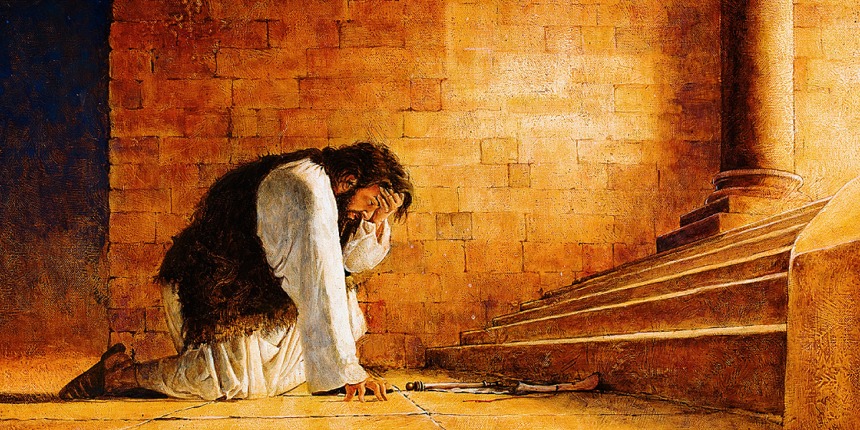
Deeply Dependent

A Psalm of David. A song at the dedication of the temple.

1 I will extol you, O Lord, for you have drawn me up
    and have not let my foes rejoice over me.
O Lord my God, I cried to you for help,
    and you have healed me.
O Lord, you have brought up my soul from Sheol;
    you restored me to life from among those who go down to the pit.

Sing praises to the Lord, O you his saints,
    and give thanks to his holy name.
For his anger is but for a moment,
    and his favor is for a lifetime.
Weeping may tarry for the night,
    but joy comes with the morning.

As for me, I said in my prosperity,
    “I shall never be moved.”
By your favor, O Lord,
    you made my mountain stand strong;
you hid your face;
    I was dismayed.

To you, O Lord, I cry,
    and to the Lord I plead for mercy:
“What profit is there in my death,
    if I go down to the pit?
Will the dust praise you?
    Will it tell of your faithfulness?
10 Hear, O Lord, and be merciful to me!
    O Lord, be my helper!”

11 You have turned for me my mourning into dancing;
    you have loosed my sackcloth
    and clothed me with gladness,
12 that my glory may sing your praise and not be silent.
    O Lord my God, I will give thanks to you forever! Psalm 30:1-12 ESV

David wrote this Psalm as a song to be sung at the dedication of the Temple – an event he would never live long enough to personally witness. But the words of this Psalm reflect David’s heart toward his God. He loved God and had a desire to worship and honor Him with his life. He recognized God’s hand in his life over the years and had a unique vantage point to look back and put his life in perspective. He could see the countless times God had rescued him from his enemies. He could recall the many times he had called out to God in sickness or weakness, and God had answered with healing and strength. There had even been occasions when David’s life hung in the balance, and God restored him.

You brought me up from the grave, O Lord.
    You kept me from falling into the pit of death. – Psalm 30:3 NLT

He remembered the many times in his life when his actions had angered God, but he also recalled how God quickly extended mercy whenever he repented.

For his anger lasts only a moment,
    but his favor lasts a lifetime!
Weeping may last through the night,
    but joy comes with the morning. – Psalm 30:5 NLT

David could vividly recall the sleepless nights when he was in tears because of hopelessness and helplessness. But morning always seemed to bring joy and a sense of peace because God was there.

Then there were those times when all was going well in David’s life. His world was trouble-free, and this idyllic state produced a false sense of security.

When I was prosperous, I said,
    “Nothing can stop me now!”
Your favor, O Lord, made me as secure as a mountain.
    Then you turned away from me, and I was shattered. – Psalm 30:6-7 NLT

In those moments, David tended to get cocky and begin to take himself a little too seriously. He became dangerously independent from God – an ever-present danger for God’s people. David could probably recall the words Moses spoke to the people of Israel as they prepared to enter the land of promise for the very first time.

“Beware that in your plenty you do not forget the Lord your God and disobey his commands, regulations, and decrees that I am giving you today. For when you have become full and prosperous and have built fine homes to live in, and when your flocks and herds have become very large and your silver and gold have multiplied along with everything else, be careful! Do not become proud at that time and forget the Lord your God…” – Deuteronomy 8:11-14 NLT

David knew he had been guilty of not heeding this warning. In the good times, he had tended to take credit for his successes and ignored his need for God’s power and provision. Bolstered by his achievements, David proudly proclaimed, “Nothing can stop me now!” He was invincible, or so he thought. In retrospect, David realized that it was only the favor of God that allowed him to prosper and thrive. If God ever removed His unmerited favor, David’s seeming successes would quickly become glaring failures. David spoke from personal experience, having repeatedly discovered the truth behind the Proverb: “Pride goes before destruction, and haughtiness before a fall” (Proverbs 16:18 NLT). In those moments, David cried out to God to protect him from self-destruction.

 I begged the Lord for mercy, saying,
“What will you gain if I die,
    if I sink into the grave?
Can my dust praise you?
    Can it tell of your faithfulness? – Psalm 30:8-9 NLT

Whenever we get brash and bold enough to believe that we don’t need God, He allows us to understand what that kind of life will look like. Prosperity without God’s presence is joyless, meaningless, and in the end, a waste of time. Success without God’s favor is like eating cotton candy; it tastes great but provides no long-term value for sustaining life.

At those moments when David realized he had begun to take himself too seriously and God too lightly, he repented and cried out for mercy. He begged God to forgive him and restore Him. “Hear me, LORD, and have mercy on me. Help me, O LORD” (Psalm 30:10 NLT). Those are words that our heavenly Father loves to hear from His children. He longs to be there for us, to help us, protect us, give us direction, and lovingly provide for us.

David knew from experience that God was always there to pick him up when he was down, to meet needs he couldn’t meet, to win battles he had no strength to fight, let alone win, and to forgive him when he repented. God is faithful in replacing our sadness with joy. All He asks is that we replace our independence with dependence and our self-sufficiency with a total reliance upon Him. When we do, we will be able to say along with David, ” O LORD my God, I will give you thanks forever!” (Psalm 30:12b NLT).

Father, forgive me for my arrogant independence. Far too often i want to live my life my way and take credit for the successes. But then I want to turn around and blame You for the failures. May I grow increasingly more aware of just how much I need You for everything in my life. And may I never forget that I can take no credit for anything good that happens in my life. It is all a result of Your good favor. Amen

English Standard Version (ESV) The Holy Bible, English Standard Version. ESV® Permanent Text Edition® (2016). Copyright © 2001 by Crossway Bibles, a publishing ministry of Good News Publishers.

New Living Translation (NLT) Holy Bible, New Living Translation, copyright © 1996, 2004, 2015 by Tyndale House Foundation. Used by permission of Tyndale House Publishers Inc., Carol Stream, Illinois 60188. All rights reserved.

Look to God

A Psalm of David.

1 To you, O Lord, I lift up my soul.
O my God, in you I trust;
    let me not be put to shame;
    let not my enemies exult over me.
Indeed, none who wait for you shall be put to shame;
    they shall be ashamed who are wantonly treacherous.

Make me to know your ways, O Lord;
    teach me your paths.
Lead me in your truth and teach me,
    for you are the God of my salvation;
    for you I wait all the day long.

Remember your mercy, O Lord, and your steadfast love,
    for they have been from of old.
Remember not the sins of my youth or my transgressions;
    according to your steadfast love remember me,
    for the sake of your goodness, O Lord!

Good and upright is the Lord;
    therefore he instructs sinners in the way.
He leads the humble in what is right,
    and teaches the humble his way.
10 All the paths of the Lord are steadfast love and faithfulness,
    for those who keep his covenant and his testimonies.

11 For your name’s sake, O Lord,
    pardon my guilt, for it is great.
12 Who is the man who fears the Lord?
    Him will he instruct in the way that he should choose.
13 His soul shall abide in well-being,
    and his offspring shall inherit the land.
14 The friendship of the Lord is for those who fear him,
    and he makes known to them his covenant.
15 My eyes are ever toward the Lord,
    for he will pluck my feet out of the net.

16 Turn to me and be gracious to me,
    for I am lonely and afflicted.
17 The troubles of my heart are enlarged;
    bring me out of my distresses.
18 Consider my affliction and my trouble,
    and forgive all my sins.

19 Consider how many are my foes,
    and with what violent hatred they hate me.
20 Oh, guard my soul, and deliver me!
    Let me not be put to shame, for I take refuge in you.
21 May integrity and uprightness preserve me,
    for I wait for you.

22 Redeem Israel, O God,
    out of all his troubles. Psalm 25:1-22 ESV

In this amazing Psalm, David repeatedly reminds us that there is only one place we are to look for help, hope, healing, deliverance, direction, instruction, inspiration, mercy, forgiveness, and love. Whether things are going great or life has taken a turn for the worse, David tells us that, from his experience, God is worth trusting. In fact, throughout this Psalm, David uses the Hebrew word qavah, which means “to wait for, hope for, and to look eagerly for.”

There is a sense of anticipation and expectation built into that word. This is not about hopeless resignation or a pessimistic determination that nothing else can be done. It is an eager expectation based on God’s reputation for righteousness, mercy, love, power, forgiveness, and salvation. David doesn’t just pray for God’s deliverance; he fully expects it.

No one who trusts in you will ever be disgraced – Psalm 25:3 NLT

you are the God who saves me. All day long I put my hope in you. – Psalm 25:5 NLT

you are merciful, O LORD. – Psalm 25:7 NLT

The Lord is good and does what is right; he shows the proper path to those who go astray. – Psalm 25:8 NLT

The Lord leads with unfailing love and faithfulness – Psalm 25:10 NLT

David had a long-term perspective. He did not let current circumstances cloud or influence his understanding of God’s faithful love and ability to deliver at just the right moment. He knew he could trust God to come through and deliver him from trouble. But he viewed God as more than just a divine deliverer. He had experienced God’s direction and guidance, providing him with a clear understanding of what path to take in life. David’s God didn’t just protect his life; He pointed out how to live a full and meaningful life.

David had grown to depend on God’s guidance, which is why he says, “show me the right path” (Psalm 25:4 NLT). He isn’t just asking God to point out the path but to make it known clearly and decisively so there’s no chance of taking a wrong turn. David asks God, “Lead me by your truth and teach me” (Psalm 25:5 NLT). The word translated as “lead” carries the idea of God showing David where to place each footstep along the way, and David knows that God’s direction comes from God’s Word.

David asks God to teach him. The Hebrew word lamad means to strike with a rod or to chastise. It was a word used when referring to the training or discipline of cattle. David invites God to train him, even if God has to use a little physical discipline. When was the last time you asked God to teach you and not spare the pain?

David could dare to make such a request because he knew that God was holy, just, righteous, and good. “The Lord is good and does what is right” (Psalm 25:8 NLT). He “leads with unfailing love and faithfulness” (Psalm 25:10 NLT). David knew that God always had his best interest in mind. Even in his darkest moments, David knew he could turn to God, and God would understand, empathize, rescue, restore, teach, guide, discipline, and love him through it all.

This Psalm reminds us that God is all-powerful, all-knowing, faithful, righteous, merciful, personal, forgiving, and worthy of our trust. David looked to God. He kept his eyes focused on God. But we live in a world filled with distractions and doubt-producing alternatives that try to substitute themselves as replacements for God. It is easy to focus our attention elsewhere. We can quickly look to someone or something else to bring us peace, escape from pain, hope, happiness, wisdom, and protection. But none of those things will deliver. None of them can provide what we’re looking for because they offer empty promises and always leave us with unfulfilled desires. Yet, God always delivers. He always comes through. He always shows up. So, David kept looking up.

My eyes are always on the Lord,
    for he rescues me from the traps of my enemies. – Psalm 25:15 NLT)

These are not the glass-half-full rants of a wide-eyed optimist. David could whine with the best of them. In fact, he declares his not-so-pleasant circumstances in no uncertain terms.

I am alone and in deep distress. My problems go from bad to worse. – Psalm 25:16-17 NLT

He asks God to feel his pain and see his trouble. He begs God to forgive his sins, especially those to which he may be blind. He doesn’t know why he’s suffering or what he has done to make his enemies despise him, but he knows his only hope is God.

Protect me! Rescue my life from them!
    Do not let me be disgraced, for in you I take refuge. – Psalm 25:20 NLT

When all is said and done, David must trust that God sees and knows the truth behind his circumstances. His all-knowing God will avenge him because he is a man of integrity and honesty. David is not claiming to be a man of moral perfection or sinlessness. He fully knows his capacity to commit sin and his need for God’s forgiveness. But he trusts that God knows the true nature of his heart and will not only forgive but vindicate him.

When things looked down, David looked up. He put his faith in God, believing that justice would be served, protection would be forthcoming, and restoration was inevitable. Where are you looking today? Why not look up and eagerly wait for God to show up? He is “a friend to those who fear him” (Psalm 25:14 NLT).

Father, this Psalm is so rich and jam-packed with insights into Your character. Make them come alive in my life and experience. I want to look to You, rely on You, rest in You, wait on You, and eagerly hope in You. Because You are my God and my friend. Amen

English Standard Version (ESV) The Holy Bible, English Standard Version. ESV® Permanent Text Edition® (2016). Copyright © 2001 by Crossway Bibles, a publishing ministry of Good News Publishers.

New Living Translation (NLT) Holy Bible, New Living Translation, copyright © 1996, 2004, 2015 by Tyndale House Foundation. Used by permission of Tyndale House Publishers Inc., Carol Stream, Illinois 60188. All rights reserved.

Waiting On God Is Well Worth It

To the choirmaster. Of David.

1 In the Lord I take refuge;
how can you say to my soul,
    “Flee like a bird to your mountain,
for behold, the wicked bend the bow;
    they have fitted their arrow to the string
    to shoot in the dark at the upright in heart;
if the foundations are destroyed,
    what can the righteous do?”

The Lord is in his holy temple;
    the Lord‘s throne is in heaven;
    his eyes see, his eyelids test the children of man.
The Lord tests the righteous,
    but his soul hates the wicked and the one who loves violence.
Let him rain coals on the wicked;
    fire and sulfur and a scorching wind shall be the portion of their cup.
For the Lord is righteous;
he loves righteous deeds;
    the upright shall behold his face. Psalm 11:1-7 ESV

This Psalm reflects what appears to have been a regularly occurring event in David’s life. He found himself under siege and suffering relentless attacks from his enemies. It is impossible to know what situation David had in mind when writing this Psalm, but a brief review of his personal history reveals a host of options. David was well-acquainted with conflict. As king, it came with the territory. He was also familiar with the free advice proffered by well-meaning friends during times of difficulty. For most people, tough times require tough decisions. The choices get boiled down to two options: Fight or flight.

When the enemy shows up, you can choose to stand your ground or head for the hills and live to fight another day. David could recall receiving advice that counseled the latter option.

“Fly like a bird to the mountains for safety!
The wicked are stringing their bows
    and fitting their arrows on the bowstrings.
They shoot from the shadows
    at those whose hearts are right.
The foundations of law and order have collapsed.
    What can the righteous do?” – Psalm 11:1-3 NLT

But David had learned that there was a better alternative.

I trust in the LORD for protection. – Psalm 11:1 NLT

In his lifetime, David had done a lot of running and hiding. When King Saul attempted to take his life, he escaped to the Judean wilderness where he hid in the caves with his band of mighty men (1 Samuel 22:1-5). On another occasion, he sought safety among the Philistines (1 Samuel 27), a decision he quickly regretted. The trust is that David spent much of his early life running and hiding. But during those days, while living as a man on the run, David learned that God was the most reliable source of refuge.

In Psalm 18, David records his heartfelt response to God’s power, protection, and provision during the most difficult days of his life.

I love you, Lord;
    you are my strength.
The Lord is my rock, my fortress, and my savior;
    my God is my rock, in whom I find protection.
He is my shield, the power that saves me,
    and my place of safety.
I called on the Lord, who is worthy of praise,
    and he saved me from my enemies. – Psalm 18:1-3 NLT

Throughout his life, both as a fugitive and a king, David knew what it was like to suffer adversity. The crown didn’t make him immune from difficulty. If anything, the royal robes came with a bullseye on the back that made David a tempting target for his enemies. But despite his many adversaries and a steady flow of adversity, David knew he could depend on God. No matter what happened, he could rest assured that God was aware and cared.

But the Lord is in his holy Temple;
    the Lord still rules from heaven.
He watches everyone closely,
    examining every person on earth. – Psalm 11:4 NLT

David knew God was all-knowing and all-powerful. Nothing escapes His notice, and no difficulty is too great for Him to handle. That is why David could say, “God’s way is perfect. All the Lord’s promises prove true. He is a shield for all who look to him for protection. For who is God except the Lord? Who but our God is a solid rock?” (Psalm 18:30-31 NLT). Time after time, God had proven Himself a trustworthy source of refuge and deliverance. From His vantage point in heaven, God looks down on mankind and sees every injustice and inequity. He examines the hearts of men and determines their innocence and guilt. In His roles as Judge of the universe, God metes out justice and mercy equitably and righteously — every time. We may not recognize His intervention or approve of His timing, but according to Scripture, “He is the Rock; his deeds are perfect. Everything he does is just and fair. He is a faithful God who does no wrong; how just and upright he is!” (Deuteronomy 32:4 NLT). David echoed that sentiment when he wrote, “His way is perfect” (Psalm 18:30 ESV).

Like David, we live in a world of uncertainty filled with seeming inequities and injustices. There appears to be nothing and no one we can count on any more. Politicians fail us, corporate leaders deceive us, friends disappoint us, and it seems as if everywhere we look someone is out to take advantage of us. But David knew he could trust God. He had learned from personal experience that Yahweh is holy, righteous, and just. David’s life was not free from difficulty. The crown on his head didn’t exempt him from trials. The oil Samuel used to anoint him as the next king of Israel hadn’t immunized him from difficulties. His life was filled with ups and downs, threats and coup attempts, battles and family squabbles, and a host of other conflicts.

But David found comfort in the realization that God sat enthroned on high where He could see all that was happening on earth. Yes, David felt the effects of living in a sinful world. He faced opposition, had his fair share of enemies, listened to threats, suffered injustice, and witnessed the attacks of the unjust against the just. From a human perspective, David could have days when he felt helpless and hopeless. There had been plenty of times when he asked himself, “What can the righteous do?” But he had learned to trust in God.

In the face of all that is going on around us and happening to us, what are those of us who love God supposed to do? David would encourage us to trust God. Because God is still on His throne. He is still in charge. He is wide awake and well aware of what is happening down here on earth. He sees and perceives. He doesn’t look on in stunned silence, helplessly witnessing the uncontrolled chaos. He sees and knows exactly what to do. His eyes are wide open and He looks into the hearts of ALL men, examining their motives and determining their fate. The Lord reminds us, “I have seen violence done to the helpless, and I have heard the groans of the poor. Now I will rise up to rescue them, as they have longed for me to do” (Psalm 12:5 NLT). God sees. God hears. God acts.

God is a just God who loves to do what is right. While everyone else is untrustworthy, undependable, and unreliable, God is faithful, trustworthy, and true. He is powerful enough to back up His words with action. Not only is God aware of injustice, but He is strong enough to do something about it.

We have to believe that God is aware of our circumstances. Even when all hope appears lost, we must rest in the reality that God has not turned His back on us. He sees. He knows. He loves. He despises wickedness and loves righteousness. He loves to do what is right. Everything about Him hates injustice and evil. When we look at what is happening in the world, it may appear that He is indifferent to it all, but we have to trust that one day God will set all things right. He may not do it in our time frame or even in our lifetime. We may not live to see it happen. But He WILL do what is right. Justice will be done. We can and must trust Him. Like David, we must seek refuge in Him and wait patiently for Him to enact justic. God sees. God knows. And one day, He WILL act.

Father, some days I feel overwhelmed by all that is going on around me. Sometimes I feel as if it is just me against the world. I begin to lose hope and despair starts to set in. But today You reminded me that I can trust You. You know every detail of my live and are well aware of what is happening to me and around me. You see. And You are going to act. I can trust You. Amen

English Standard Version (ESV) The Holy Bible, English Standard Version. ESV® Permanent Text Edition® (2016). Copyright © 2001 by Crossway Bibles, a publishing ministry of Good News Publishers.

New Living Translation (NLT) Holy Bible, New Living Translation, copyright © 1996, 2004, 2015 by Tyndale House Foundation. Used by permission of Tyndale House Publishers Inc., Carol Stream, Illinois 60188. All rights reserved.

The Case for Character Over Competence

14 And Sheba passed through all the tribes of Israel to Abel of Beth-maacah, and all the Bichrites assembled and followed him in. 15 And all the men who were with Joab came and besieged him in Abel of Beth-maacah. They cast up a mound against the city, and it stood against the rampart, and they were battering the wall to throw it down. 16 Then a wise woman called from the city, “Listen! Listen! Tell Joab, ‘Come here, that I may speak to you.’” 17 And he came near her, and the woman said, “Are you Joab?” He answered, “I am.” Then she said to him, “Listen to the words of your servant.” And he answered, “I am listening.” 18 Then she said, “They used to say in former times, ‘Let them but ask counsel at Abel,’ and so they settled a matter. 19 I am one of those who are peaceable and faithful in Israel. You seek to destroy a city that is a mother in Israel. Why will you swallow up the heritage of the Lord?” 20 Joab answered, “Far be it from me, far be it, that I should swallow up or destroy! 21 That is not true. But a man of the hill country of Ephraim, called Sheba the son of Bichri, has lifted up his hand against King David. Give up him alone, and I will withdraw from the city.” And the woman said to Joab, “Behold, his head shall be thrown to you over the wall.” 22 Then the woman went to all the people in her wisdom. And they cut off the head of Sheba the son of Bichri and threw it out to Joab. So he blew the trumpet, and they dispersed from the city, every man to his home. And Joab returned to Jerusalem to the king.

23 Now Joab was in command of all the army of Israel; and Benaiah the son of Jehoiada was in command of the Cherethites and the Pelethites; 24 and Adoram was in charge of the forced labor; and Jehoshaphat the son of Ahilud was the recorder; 25 and Sheva was secretary; and Zadok and Abiathar were priests; 26 and Ira the Jairite was also David’s priest. 2 Samuel 20:14-26 ESV

Finally, like a cool breeze on a hot summer day, we get a refreshing glimpse of true wisdom amid all the folly that filled the preceding chapters. Time after time, we have seen impulsiveness, anger, fear, and recrimination rule the day. Decisions have been made based on nothing more than raw emotion. Extremely intelligent people have made some very dumb choices. Godly individuals have made ungodly decisions, and the results have been death and destruction.

Joab has just brutally murdered Amasa, leaving his body lying in the middle of the road for all to see. Now he is besieging the city of Abel, in an attempt to capture Sheba, the instigator of yet another rebellion against David. Israelite forces have surrounded the city and erected siege walls against it. They are in the process of attempting to knock down the city’s walls, and the prospects of yet more bloodshed loom large. Then wisdom shows up.

Located where it is in the narrative of David’s life, this short little vignette provides a stark counterpoint to all that has taken place so far. In it, we are introduced to an unnamed woman from the city of Abel who is simply referred to as a “wise woman.” Other than that, we know nothing else about her. She is a resident of the besieged city and, like all her fellow citizens, she is forced to watch as David’s troops batter its walls. The fearful residents are at a loss as to the purpose of the siege because they remain unaware of Abel’s presence within their walls. There is no indication that anyone inside the city knew that an insurrectionist was hiding among them, so the presence of Israelite troops must have left them confused and concerned about their fate.

Outside the walls, Joab has made no attempt to parlay with the city officials to negotiate the handover of Sheba. Driven by the same emotions that led him to kill Absalom and Amasa, Joab is foolishly and stubbornly focused on one thing: The capture and death of Sheba. Obsessed with capturing Sheba and clearing his own name, Joab is willing to destroy an entire city filled with fellow Israelites. Nothing and no one is going to stand in his way.

Then wisdom showed up, in the form of a nameless woman who saw a serious problem and had the foresight to do something about it. As the city’s leaders stood by helplessly and hopelessly, this unidentified woman decided to act. She called out to Joab, asking for an opportunity to talk with him. During all the chaos and confusion surrounding the siege, she calmly called for a conversation, a chance to discuss what was going on and how they might avert a tragedy. Once she had Joab’s attention, she said to him:

“There used to be a saying, ‘If you want to settle an argument, ask advice at the town of Abel.’ I am one who is peace loving and faithful in Israel. But you are destroying an important town in Israel. Why do you want to devour what belongs to the Lord?” – 2 Samuel 20:18-19 NLT

She informs Joab that her hometown was once recognized as an important city in Israel and was renowned for its wisdom. She wants Joab to know that he is not attacking a foreign city filled with pagans; he is threatening the lives of his fellow Israelites. The woman describes herself as peace-loving and faithful, intentionally contrasting herself with Joab and his troops. She wants peace while Joab seems intent on devouring what belongs to God. Confused by Joab’s actions, she demands to know why he has chosen to attack her beloved city.

Like a scene from an action movie, the focus shifts to Joab, standing amid the rubble at the base of the city wall, adorned in his armor and surrounded by his fellow soldiers. In response to the woman’s question, Joab informs her of Sheba’s presence in their midst and of the crime for which he was guilty. This was apparently news to the woman and the rest of the people inside the city walls. They had no idea they were harboring a fugitive from justice. As soon as the woman discovered the cause of all their problems, she took action. Armed with the news of Sheba’s presence within their walls, the woman agreed to turn him over and then took the matter before the people of Abel.

What happens next is intriguing. It’s unlikely that this woman had the authority to speak on behalf of the entire community, so she must have consulted with the city officials to come up with their response to Joab’s demands. It seems that some doubted Joab’s integrity and worried that he would not keep his word. They were willing to seek out and turn over the fugitive Sheba, but they were not willing to open up their gates to do so. That would have provided Joab with easy access to their city and left them vulnerable to attack. So this wise woman negotiated a different response to Joab’s demands. She convinced the leaders of the city to cut off Sheba’s head and throw it over the wall.

Everyone in the city knew that the penalty for insurrection was death, so Sheba was a dead man walking. It was only a matter of time until he was executed for his crime, so they simply sped up the process and threw his severed head over the wall. Joab got what he had come for. The case was closed and their city gates remained tightly shut. If Joab was being honest and the death of Sheba was all he wanted, then justice had been served. Joab had the head of Sheba as proof that the guilty one had been dealt with effectively.

By keeping the city gates closed and throwing Sheba’s head over the wall, she protected the citizens inside and tested the reliability of Joab’s words. If, after having his demands met, Joab had failed to call off the siege, the woman would have exposed his deceit with a minimum of risk. Her decision to cut off Sheba’s head was a wise move on her part and it accomplished what she had set out to do: Deliver her city from further harm. Joab and his troops dispersed, leaving the residents of Abel unharmed. Her wise counsel spared the city and prevented Joab from committing yet another crime of passion.

What is interesting is how this section of the story is immediately followed by a seemingly out-of-place listing of David’s key administrative heads. You see the names of men like Joab, Benaiah, Adoniram, Jehoshaphat, Sheva, Zakok, Abiathar, and Ira. Among them are David’s military commander, the captain of his bodyguard, his royal historian, his court secretary, and priests.

These prominent men served as David’s inner circle, sitting on his royal cabinet and providing him with counsel. They were well-known and revered. They were powerful and influential. Their names and titles are mentioned, but nothing is said about their character. The appearance of their names at this point in the narrative is intended to serve as a counterpoint to the woman in the story. To this day, she remains unknown and unnamed, but she is remembered and recognized for her wisdom. It wasn’t who she was that mattered. It was what she was – she was a wise and well-respected woman whose godly character preserved the lives of her entire community. This “wise woman” was known for having the character quality of wisdom and she proved it by her behavior.

The men whose names are listed in the closing verses of this chapter are distinguished by their royal titles and the prestige of serving as the king’s advisors. But without wisdom, their positions and prominence would prove meaningless. Solomon, David’s son and the successor to his throne, was known for his wisdom. In the early days of his reign, Solomon asked God, “give your servant a discerning mind so he can make judicial decisions for your people and distinguish right from wrong. Otherwise no one is able to make judicial decisions for this great nation of yours” (1 Kings 3:9 NLT).

God granted Solomon’s request, stating, “Because you asked for the ability to make wise judicial decisions, and not for long life, or riches, or vengeance on your enemies, I grant your request and give you a wise and discerning mind superior to that of anyone who has preceded or will succeed you” (1 Kings 3:11-12 NLT). 

Years later, Solomon would pen these important words concerning wisdom.

For the Lord grants wisdom!
    From his mouth come knowledge and understanding.
He grants a treasure of common sense to the honest.
    He is a shield to those who walk with integrity.
He guards the paths of the just
    and protects those who are faithful to him.

Then you will understand what is right, just, and fair,
    and you will find the right way to go.
For wisdom will enter your heart,
    and knowledge will fill you with joy.
Wise choices will watch over you.
    Understanding will keep you safe. – Proverbs 2:6-11 NLT

It was the woman’s wisdom that diverted a tragedy. She had knowledge and understanding. She possessed common sense. She knew what was right, just, and fair. She discerned the right way to go and never turned back. Her wisdom kept her city safe and resulted in much joy. We can only imagine the celebration that took place inside the city walls of Abel that night after the siege was lifted and the troops had dispersed. Wisdom brought joy. This is why Solomon went on to say, “So follow the steps of the good, and stay on the paths of the righteous” (Proverbs 2:20 NLT).

David would have done well to surround himself with individuals like the wise woman from Abel. But he seems to have had a tendency to choose men who were untrustworthy and prone to foolishness. When it comes to leadership, character should always trump charisma and capabilities. It is not that qualifications are unimportant or should be ignored. But God is looking for more than competencies and credentials.

When God sent Samuel to the house of Jesse to find the next king of Israel, He told the prophet: “Don’t judge by his appearance or height, for I have rejected him. The LORD doesn’t see things the way you see them. People judge by outward appearance, but the LORD looks at the heart” (1 Samuel 16:7 NLT).

Wisdom is God-given and resides in the heart, not the brain. It involves far more than intellect. Some of the brightest people can be the greatest fools because the essence of foolishness is the rejection of God. It is to live as if God doesn’t exist or doesn’t matter. Paul describes the plight of those who, in their human intelligence, dismiss the existence of God or end up creating a god of their own choosing.

Yes, they knew God, but they wouldn’t worship him as God or even give him thanks. And they began to think up foolish ideas of what God was like. As a result, their minds became dark and confused. Claiming to be wise, they instead became utter fools. – Romans 1:21-22 NLT

Wisdom really works but it is only available to those who know God and fear Him – like the wise woman from Abel.

English Standard Version (ESV) The Holy Bible, English Standard Version. ESV® Permanent Text Edition® (2016). Copyright © 2001 by Crossway Bibles, a publishing ministry of Good News Publishers.

New Living Translation (NLT) Holy Bible, New Living Translation, copyright © 1996, 2004, 2015 by Tyndale House Foundation. Used by permission of Tyndale House Publishers Inc., Carol Stream, Illinois 60188. All rights reserved.

More Than We Deserve

16 And when he had taken him down, behold, they were spread abroad over all the land, eating and drinking and dancing, because of all the great spoil they had taken from the land of the Philistines and from the land of Judah. 17 And David struck them down from twilight until the evening of the next day, and not a man of them escaped, except four hundred young men, who mounted camels and fled. 18 David recovered all that the Amalekites had taken, and David rescued his two wives. 19 Nothing was missing, whether small or great, sons or daughters, spoil or anything that had been taken. David brought back all. 20 David also captured all the flocks and herds, and the people drove the livestock before him, and said, “This is David’s spoil.”

21 Then David came to the two hundred men who had been too exhausted to follow David, and who had been left at the brook Besor. And they went out to meet David and to meet the people who were with him. And when David came near to the people he greeted them. 22 Then all the wicked and worthless fellows among the men who had gone with David said, “Because they did not go with us, we will not give them any of the spoil that we have recovered, except that each man may lead away his wife and children, and depart.” 23 But David said, “You shall not do so, my brothers, with what the Lord has given us. He has preserved us and given into our hand the band that came against us. 24 Who would listen to you in this matter? For as his share is who goes down into the battle, so shall his share be who stays by the baggage. They shall share alike.” 25 And he made it a statute and a rule for Israel from that day forward to this day.

26 When David came to Ziklag, he sent part of the spoil to his friends, the elders of Judah, saying, “Here is a present for you from the spoil of the enemies of the Lord.” 27 It was for those in Bethel, in Ramoth of the Negeb, in Jattir, 28 in Aroer, in Siphmoth, in Eshtemoa, 29 in Racal, in the cities of the Jerahmeelites, in the cities of the Kenites, 30 in Hormah, in Bor-ashan, in Athach, 31 in Hebron, for all the places where David and his men had roamed. – 1 Samuel 30:16-31  ESV

This chapter marks a turning point in David’s life. He has been through a lot since his early days as a young shepherd boy, tending his father’s flocks. There had been his surprising anointing by the prophet, Samuel, followed by his unimaginable defeat of the Philistine champion, Goliath. Not long after that, he found himself serving as the court musician for Saul, the king of Israel. Then he was promoted to serve as Saul’s personal bodyguard and eventually to the role of a commander in the army of the Israelites.

But then everything went south when Saul became jealous of David’s growing popularity and suspicious of his ambitions. Fearful that David might set his sights on the throne, Saul began a relentless campaign to end his life. That led to David’s flight and the subsequent years of hiding in the wilderness and, eventually, to his escape to the safety of the land of Philistia, where he had been the last 16 months. But with the sack and plunder of his home base of Ziklag and the capture of his wives, along with the wives and children of all of his men, David hit an all-time low point in his life. With his city burned, his wives taken captive by the Amalekites, and his men threatening to stone him, David was facing one of the most difficult moments in his life. His future looked bleak and the prospects of rebounding from this latest setback looked dim.

His men had turned against him, the Philistines had rejected him, and Saul was still out to kill him. But at this critical juncture, David did what he should have done all along; he turned to God. It would have been easy to let his emotions get the better of him and set off in hot pursuit of the Amalekites but, instead, he sought the Lord’s help and received it. Using the Urim and Thummim from the high priest’s ephod, David received a green light from God to pursue the Amalekites.

With the help of a captured Amalekite servant, David learned the whereabouts of the Amalekite raiding party. As the enemy was busy celebrating the success of their raids, David and his men attacked. While 400 of the Amalekites escaped, the passage reveals that the rescue mission was a rousing success.

David got back everything the Amalekites had taken, and he rescued his two wives. Nothing was missing: small or great, son or daughter, nor anything else that had been taken. David brought everything back. He also recovered all the flocks and herds, and his men drove them ahead of the other livestock. – 1 Samuel 30:18-20 NLT

God gave David the victory. With the Lord’s help, they were able to free every single woman and child, and recover every single item that had been stolen, along with an abundance of livestock and loot that the Amalekites had taken from other plundered cities. By seeking God’s will and doing things God’s way, David experienced God’s blessing. No deception was necessary. No lies were required. He decided to do things God’s way and enjoyed unrivaled success and a joyful reunion with his family. To top it all off, David’s men went from threatening to stone him to offering him all of the plunder as his reward for saving their wives and children.

But what David did next reveals the life-transformative nature of this event. He returned to the 200 men who had remained behind, too exhausted to join the pursuit of the Amalekites. Not only did he reunite them with the wives and children, but he rewarded them with a share of the plunder. This act of generosity was not well received by all of David’s men. A group of “wicked and worthless fellows” responded in anger, demanding that the 200 stragglers be punished for failing to join the fight. They could have their wives and children back, but they had forfeited their right to serve in David’s army.

But David recognized that their victory had been God-given and that everyone, even those who stayed back and protected the baggage, were to enjoy the blessing God had provided. David knew this whole affair had been God’s doing. It was He who had given them success over their enemies. David knew he didn’t deserve what God had done. This entire mess had been of his own making, yet God had graciously responded in mercy, providing the successful return of their families and the unexpected blessing of plunder. David addressed his disgruntled companions, encouraging them to recognize the hand of God and to respond accordingly.

“No, my brothers! Don’t be selfish with what the Lord has given us. He has kept us safe and helped us defeat the band of raiders that attacked us. Who will listen when you talk like this? We share and share alike—those who go to battle and those who guard the equipment.” – 1 Samuel 30:23-24 NLT

David wanted everyone to share the joy of the moment and experience the material blessings that God had provided. He not only shared the plunder with his men but had a portion of it sent to the elders of Judah. As far as he was concerned, this had been God’s victory and it was only right to share it with all of God’s people.

This passage provides an important transition point in the story of David’s life. Yes, he is still persona non grata in Israel. He remains a fugitive, living on the run because Saul still seeks to end his life. But his transformation from shepherd boy to king is rapidly coming to an end. Saul remains on the throne, but God’s preparation for David to take his place is almost done. Saul’s demise and David’s rise were much nearer than either man knew.

God has a habit of revealing his abundant grace and mercy at the lowest points of our lives. But we should not be surprised that God appears at our points of crisis because it is in those moments that we tend to seek His help. When our capacity to solve our problems diminishes and our resources for self-preservation finally run out, we typically call out to God – and He hears. Not only that, He answers. When we reach out to God, He responds and rescues us.

This very same principle applies to our salvation. Paul reminds us of the gracious gift of redemption that God made available at our greatest moment of need.

God showed his great love for us by sending Christ to die for us while we were still sinners. – Romans 5:8 NLT

In the midst of our sin-saturated, self-centered, death-deserving hopelessness, God stepped in and did what only He could do. He saved us. He gave us victory over sin and death. He blessed us beyond our wildest imaginations, and we are to share that blessing with others, just as David shared the Amalekite plunder with his men and the elders of Judah.

Jesus told His disciples: “A new commandment I give to you, that you love one another: just as I have loved you, you also are to love one another. By this all people will know that you are my disciples, if you have love for one another” (John 13:34-35 ESV). Our salvation marks a turning point in our lives, when we moved from a life of selfishness and self-centeredness to a life of selflessness and love for others.

In many ways, the words of Paul to the church in Corinth reflect what we see displayed in the life of David in this passage. But they also apply to us. Like David, we have been reconciled to God and enjoy the blessing of His presence, power, and provision. As a result, we are to share the bounty of His love and undeserved favor with others. Our dependence upon God allows us to be generous to others because He is the source of all our needs.

This means that anyone who belongs to Christ has become a new person. The old life is gone; a new life has begun! And all of this is a gift from God, who brought us back to himself through Christ. And God has given us this task of reconciling people to him. For God was in Christ, reconciling the world to himself, no longer counting people’s sins against them. And he gave us this wonderful message of reconciliation. – 2 Corinthians 5:17-19 NLT

Like David, we have been reconciled to God. We have been given a second chance, a new lease on life. We have been spared from a fate worse than death: eternal separation from God. And as a result, we are to share the joys and blessings of our reconciliation with God with others.

English Standard Version (ESV) The Holy Bible, English Standard Version. ESV® Permanent Text Edition® (2016). Copyright © 2001 by Crossway Bibles, a publishing ministry of Good News Publishers.

New Living Translation (NLT) Holy Bible, New Living Translation, copyright © 1996, 2004, 2015 by Tyndale House Foundation. Used by permission of Tyndale House Publishers Inc., Carol Stream, Illinois 60188. All rights reserved.


When We Call Out, God Shows Up

And David said to Abiathar the priest, the son of Ahimelech, “Bring me the ephod.” So Abiathar brought the ephod to David. And David inquired of the Lord, “Shall I pursue after this band? Shall I overtake them?” He answered him, “Pursue, for you shall surely overtake and shall surely rescue.” So David set out, and the six hundred men who were with him, and they came to the brook Besor, where those who were left behind stayed. 10 But David pursued, he and four hundred men. Two hundred stayed behind, who were too exhausted to cross the brook Besor.

11 They found an Egyptian in the open country and brought him to David. And they gave him bread and he ate. They gave him water to drink, 12 and they gave him a piece of a cake of figs and two clusters of raisins. And when he had eaten, his spirit revived, for he had not eaten bread or drunk water for three days and three nights. 13 And David said to him, “To whom do you belong? And where are you from?” He said, “I am a young man of Egypt, servant to an Amalekite, and my master left me behind because I fell sick three days ago. 14 We had made a raid against the Negeb of the Cherethites and against that which belongs to Judah and against the Negeb of Caleb, and we burned Ziklag with fire.” 15 And David said to him, “Will you take me down to this band?” And he said, “Swear to me by God that you will not kill me or deliver me into the hands of my master, and I will take you down to this band.” – 1 Samuel 30:7-15  ESV

David had returned home to Ziklag to find it had been plundered and all the women and children taken captive by the Amalekites. With all that had happened over the last few days, David’s men were fed up with his leadership and threatened to stone him. Yet, in the middle of a potential revolt, “David drew strength from the Lord his God” (1 Samuel 30:7 NET). With his wives missing and his life threatened by his own men, David turned to God for help. This was not the first time David sought God’s will in a matter, but more recently, he had tended to make decisions without God’s input. That’s how he and his men ended up living in Ziklag, a city in the middle of Philistine territory. David had fled to Philistia to escape Saul’s ongoing pursuit. But there is no indication that David sought or received God’s approval to live among the enemies of Israel.

Yet, when the time came and David found himself between a rock and a hard place, he cried out and God heard. When he ran out of options and had no more tricks up his sleeve, he turned to God and found his heavenly Father to have a receptive ear and a heart willing to step into the mess David had created. All David had to do was reach the end of himself and cry out to the one who was willing and capable of doing something about his predicament: Jehovah.

There is something about despair that makes us more dependent upon God. Our moments of helplessness and hopelessness tend to drive us to God and play a big part in releasing His faithfulness. He is always ready, willing, and able to save His people, but it requires that we call out to Him. We are reminded of this fact in the story of God’s rescue of the people of Israel when they were living as slaves in Egypt.

Years passed, and the king of Egypt died. But the Israelites continued to groan under their burden of slavery. They cried out for help, and their cry rose up to God. God heard their groaning, and he remembered his covenant promise to Abraham, Isaac, and Jacob. He looked down on the people of Israel and knew it was time to act. – Exodus 2:23-25 NLT

I have certainly seen the oppression of my people in Egypt. I have heard their cries of distress because of their harsh slave drivers. Yes, I am aware of their suffering. – Exodus 3:7 NLT

I have seen. I have heard. I am aware.

Those three statements from God should create a sense of relief and calm in us as we recognize His care and concern for His people. Nothing happens in or around our lives that God does not see. When we cry out, He always hears, and there is nothing we can tell Him of which He is not fully aware. Our prayers are not meant to inform God of our predicament but to invite His involvement.

God knew what David was facing. He was completely aware of the problem David had created for himself and already had a plan in place to deal with it. So when David sought God’s guidance, he received it. Using the Urim and Thummim, which were kept in the high priest’s ephod, David sought God’s input, asking him two questions:

“Should I chase after this band of raiders? Will I catch them?” – 1 Samuel 30:8 NLT

First, David wanted to know if he was to pursue the Amalekites and secondly, if he did, would he find success in catching them. And God gave him the green light.

“Yes, go after them. You will surely recover everything that was taken from you!” – 1 Samuel 30:8 NLT

Not only would David catch them, but he would recover everything they took, including all the women, children, livestock, and loot they had plundered. God was going to bless David – despite David. God would rescue David from the pit he had dug for himself and assuage the anger and resentment of David’s men. All David had to do was draw strength from the Lord. He had to place his hope in and seek his help from the Jehovah.

This would be yet another valuable life lesson for David and contribute to his ongoing education regarding the power and presence of God. He would later turn what he  learned into beautiful words of praise.

But in my distress I cried out to the Lord;
    yes, I prayed to my God for help.
He heard me from his sanctuary;
    my cry to him reached his ears. – Psalm 18:6 NLT

The following words from Psalm 18 could have been penned as a direct result of this very circumstance in David’s life.

I chased my enemies and caught them;
    I did not stop until they were conquered.
I struck them down so they could not get up;
    they fell beneath my feet.
You have armed me with strength for the battle;
    you have subdued my enemies under my feet. – Psalm 18:37-39 NLT

God is always there when we call. The problem is that we don’t call on Him enough. We tend to try and solve our problems on our own. We tend to doubt that God can or will intervene on our behalf. Somehow we convince ourselves to believe that our solution will be just as effective as anything He comes up with. But when we finally reach the point where our circumstances cause us to give up and cry out, God hears and answers. And when He does, we end up singing His praises just like David did.

The Lord lives! Praise to my Rock!
    May the God of my salvation be exalted! – Psalm 18:46 NLT

God has a habit of showing up when we call out. He wants to rescue and redeem. He desires to shower His children with His blessings and poor out His grace and mercy on their behalf. David had tried living according to his own faulty plans; now he was ready to rely upon the Lord. God had a plan for David’s life and as soon as David let go of his agenda, God was ready to implement His.

“For I know the plans I have for you,” says the LORD. “They are plans for good and not for disaster, to give you a future and a hope. In those days when you pray, I will listen. If you look for me wholeheartedly, you will find me. I will be found by you,” says the LORD. – Jeremiah 29:11-14 NLT

English Standard Version (ESV) The Holy Bible, English Standard Version. ESV® Permanent Text Edition® (2016). Copyright © 2001 by Crossway Bibles, a publishing ministry of Good News Publishers.

New Living Translation (NLT) Holy Bible, New Living Translation, copyright © 1996, 2004, 2015 by Tyndale House Foundation. Used by permission of Tyndale House Publishers Inc., Carol Stream, Illinois 60188. All rights reserved.

The Battle is the Lord’s

1 In the days of Amraphel king of Shinar, Arioch king of Ellasar, Chedorlaomer king of Elam, and Tidal king of Goiim, these kings made war with Bera king of Sodom, Birsha king of Gomorrah, Shinab king of Admah, Shemeber king of Zeboiim, and the king of Bela (that is, Zoar). And all these joined forces in the Valley of Siddim (that is, the Salt Sea). Twelve years they had served Chedorlaomer, but in the thirteenth year they rebelled. In the fourteenth year Chedorlaomer and the kings who were with him came and defeated the Rephaim in Ashteroth-karnaim, the Zuzim in Ham, the Emim in Shaveh-kiriathaim, and the Horites in their hill country of Seir as far as El-paran on the border of the wilderness. Then they turned back and came to En-mishpat (that is, Kadesh) and defeated all the country of the Amalekites, and also the Amorites who were dwelling in Hazazon-tamar.

Then the king of Sodom, the king of Gomorrah, the king of Admah, the king of Zeboiim, and the king of Bela (that is, Zoar) went out, and they joined battle in the Valley of Siddim with Chedorlaomer king of Elam, Tidal king of Goiim, Amraphel king of Shinar, and Arioch king of Ellasar, four kings against five. 10 Now the Valley of Siddim was full of bitumen pits, and as the kings of Sodom and Gomorrah fled, some fell into them, and the rest fled to the hill country. 11 So the enemy took all the possessions of Sodom and Gomorrah, and all their provisions, and went their way. 12 They also took Lot, the son of Abram’s brother, who was dwelling in Sodom, and his possessions, and went their way.

13 Then one who had escaped came and told Abram the Hebrew, who was living by the oaks of Mamre the Amorite, brother of Eshcol and of Aner. These were allies of Abram. 14 When Abram heard that his kinsman had been taken captive, he led forth his trained men, born in his house, 318 of them, and went in pursuit as far as Dan. 15 And he divided his forces against them by night, he and his servants, and defeated them and pursued them to Hobah, north of Damascus. 16 Then he brought back all the possessions, and also brought back his kinsman Lot with his possessions, and the women and the people. Genesis 14:1-16 ESV

Abram and Lot have separated, with Lot taking up residence near the city of Sodom, while Abram continued his nomadic lifestyle, setting up a temporary camp by the oaks of Mamre in Hebron. But Abram’s separation from Lot would not last long. His nephew’s presence in the land would come back to haunt him.

This new season of Abram’s more independent life was going to be rocked by unexpected events that were outside of his control. What chapter 14 reveals is that Abram was far from alone in the land of Canaan. Up to this point in the narrative, there has been little mention of other nations, but the story recorded in this chapter will reveal that Abram has company and lots of it.

The chapter opens with news of a coalition of four kings whose nations lie outside the boundaries of Canaan. It’s difficult to determine with any certainty the exact locations of these ancient realms, but it seems that they each were located within the fertile crescent, an area known as the land of Shinar. It is important to recall that Shinar was the location of the tower of Babel (Genesis 11). It was there that God decided to confuse the language of the people who attempted to build a tower that would reach to the sky. As a result of the confusion caused by the proliferation of new languages, the region became known as “Babel,” a word that literally means “confusion.” This region would later bear the name of “Babylon” and play a vital role in the history of the Hebrew people.

These kings all hailed from the region of Mesopotamia that stretched from the northern tip of the Mediterranean Sea to the Persian Gulf.  One of these kings, Chedorlaomer, had earlier invaded southern Canaan and forced its occupants to become his vassals. The people living in Sodom, Gomorrah, Admah, Zeboiim, and Bela (Zoar), had found themselves subjugated to a foreign power for 13 long years. But at one point their kings had decided to throw off the yoke of this foreign oppressor. And their decision had forced King Chedorlaomer to form a coalition with three of his fellow kings from Mesopotamia and invade Canaan yet again.  

This entire scene is meant to display the interconnected nature of all that has gone on before. Every event that has happened up to this point is linked together in God’s plan. There are reasons for everything. And there are repercussions for every decision made by men and consequences for every act of a sovereign God. Nothing happens by chance. The ill-fated decision of the people to disobey God and construct a tower to glorify their own greatness had produced a myriad of nations that were dispersed across the earth. And the confusion created by their disparate languages would eventually turn into conflict.

In chapter 13, Moses recorded God’s reiteration of His promise to Abram.

“Lift up your eyes and look from the place where you are, northward and southward and eastward and westward, for all the land that you see I will give to you and to your offspring forever. – Genesis 13:14-15 ESV

And yet, here we have nine different kings vying for the right to control the land that God had given to Abram and his descendants. Ever since the gates to Eden had been slammed shut, mankind had been busy trying to grab up the remaining territory. Rather than steward that which belonged to God, they had been attempting to claim it as their own. Instead of acknowledging God as King, they had chosen to set up their own petty kingdoms here on earth. And here in this story, nine of these would-be gods were facing off in a battle of will and weapons, all in an effort to control what really belonged to God.

This coalition of four Mesopotamian kings slowly made their way south, defeating various clans, tribes, and nations along the way. They were successfully demonstrating their superior strength and telegraphing to the five kings of southern Canaan that their prospects for victory were dim. But refusing to consider surrender, the five kings joined forces and faced their enemy in the Valley of Siddim. Things did not go well. The tar pits that covered the valley floor proved to be their undoing. Many of the soldiers became mired in the sticky muck and were captured. As a result, the five kings were unable to put up a fight and their forces were easily defeated. And Moses provides a summary of this demoralizing debacle.

So the enemy took all the possessions of Sodom and Gomorrah, and all their provisions, and went their way. They also took Lot, the son of Abram’s brother, who was dwelling in Sodom, and his possessions, and went their way. – Genesis 14:11-12 ESV

What makes this rather brief recap of the battle stand out is its focus on Sodom and Gomorrah, and its mention of Lot, the nephew of Abram. If you recall, chapter 13 chronicled Lot’s decision to choose the well-watered lands near Zoar as the place to pasture his flocks. But he actually “settled among the cities of the valley and moved his tent as far as Sodom” (Genesis 13:12 ESV). This nephew of Abram made a determined choice to seek refuge among “the men of Sodom,” who “were wicked, great sinners against the Lord” (Genesis 13:13 ESV).

Somewhere along the way, Lot had given up his tent and sought shelter within the walls of Sodom. Moses makes it clear that he “was dwelling in Sodom” (Genesis 14:12 ESV). And that decision would prove to be far from wise. When the four Mesopotamian kings looted Sodom, Lot was taken captive along with all his possessions. He was enslaved.

But news of his capture eventually reached the ears of his uncle. Abram was about to discover that his separation from Lot had been anything but permanent. And his decision to give Lot his choice of the land as his own had probably been a mistake. Now, Abram had a decision to make. Would he intervene and rescue Lot from his predicament or allow him to suffer the consequences? Moses records that Abram spent no time deliberating over his decision.

When Abram heard that his kinsman had been taken captive, he led forth his trained men, born in his house, 318 of them, and went in pursuit as far as Dan. – Genesis 14:14 ESV

One can debate the wisdom of Abram’s decision, but there is an overwhelming sense of God’s sovereignty woven throughout this entire event. The actions of the five kings, while autonomous and self-determined, are actually the byproducts of God’s providential will. Nothing happens outside His control or in opposition to His predetermined plan. These events came as no surprise to God. They were simply part of the sovereign strategy He was orchestrating so that His will might be done “on earth as it is in heaven” (Matthew 6:10). What He had preordained was coming to fruition, just as He had planned.

Abram and his 318-man army went to battle against the coalition of kings and their superior forces, and he won. That outcome would have come as no surprise to Moses’ readership. They knew that, for them to exist as a people, Abram had to have won. His victory was assured because God had promised to make of him a great nation. And nothing was going to stand in the way of that promise being fulfilled. Whether the number of enemy kings was four or forty, it didn’t matter. Regardless of the size of the foe, God could give victory.

This story should bring to mind another battle fought by a servant of God against superior forces. Years later, Gideon, one of the judges of Israel, would find himself going up against the Midianites. He was outnumbered and outgunned. But much to Gideon’s surprise, God informed him that he had too many soldiers. In a series of bizarre events, God whittled down Gideon’s force until he only had 300 men left. And with that diminutive army, Gideon defeated the Midianites.

And, in a similar fashion, Abram defeated the five kings of Mesopotamia. His “surprising” victory allowed him to rescue Lot and bring back all the possessions that had been stolen. Lot had been redeemed by Abram. He didn’t deserve it and he hadn’t earned it. Abram simply extended unmerited mercy and grace to his young nephew. And this story provides a foreshadowing of another undeserved rescue that will take place in the lives of Abram’s descendants after another army from the north will invade Canaan and take God’s people captive. God will graciously and dramatically rescue them, returning them to the land and fulfilling the promise He had made to Abram.

This event is simply one of many illustrations of God’s goodness, grace, and sovereignty as displayed in the life of Abram. And there are many more to come.

English Standard Version (ESV) The Holy Bible, English Standard Version. ESV® Permanent Text Edition® (2016). Copyright © 2001 by Crossway Bibles, a publishing ministry of Good News Publishers.

New Living Translation (NLT) Holy Bible, New Living Translation, copyright © 1996, 2004, 2015 by Tyndale House Foundation. Used by permission of Tyndale House Publishers Inc., Carol Stream, Illinois 60188. All rights reserved.

New English Translation (NET)NET Bible® copyright ©1996-2017 by Biblical Studies Press, L.L.C. http://netbible.com All rights reserved.

You, O Lord, Are God Alone

1 As soon as King Hezekiah heard it, he tore his clothes and covered himself with sackcloth and went into the house of the Lord. And he sent Eliakim, who was over the household, and Shebna the secretary, and the senior priests, covered with sackcloth, to the prophet Isaiah the son of Amoz. They said to him, “Thus says Hezekiah, This day is a day of distress, of rebuke, and of disgrace; children have come to the point of birth, and there is no strength to bring them forth. It may be that the Lord your God heard all the words of the Rabshakeh, whom his master the king of Assyria has sent to mock the living God, and will rebuke the words that the Lord your God has heard; therefore lift up your prayer for the remnant that is left.” When the servants of King Hezekiah came to Isaiah, Isaiah said to them, “Say to your master, ‘Thus says the Lord: Do not be afraid because of the words that you have heard, with which the servants of the king of Assyria have reviled me. Behold, I will put a spirit in him, so that he shall hear a rumor and return to his own land, and I will make him fall by the sword in his own land.’”

The Rabshakeh returned, and found the king of Assyria fighting against Libnah, for he heard that the king had left Lachish. Now the king heard concerning Tirhakah king of Cush, “Behold, he has set out to fight against you.” So he sent messengers again to Hezekiah, saying, 10 “Thus shall you speak to Hezekiah king of Judah: ‘Do not let your God in whom you trust deceive you by promising that Jerusalem will not be given into the hand of the king of Assyria. 11 Behold, you have heard what the kings of Assyria have done to all lands, devoting them to destruction. And shall you be delivered? 12 Have the gods of the nations delivered them, the nations that my fathers destroyed, Gozan, Haran, Rezeph, and the people of Eden who were in Telassar? 13 Where is the king of Hamath, the king of Arpad, the king of the city of Sepharvaim, the king of Hena, or the king of Ivvah?’”

14 Hezekiah received the letter from the hand of the messengers and read it; and Hezekiah went up to the house of the Lord and spread it before the Lord. 15 And Hezekiah prayed before the Lord and said: “O Lord, the God of Israel, enthroned above the cherubim, you are the God, you alone, of all the kingdoms of the earth; you have made heaven and earth. 16 Incline your ear, O Lord, and hear; open your eyes, O Lord, and see; and hear the words of Sennacherib, which he has sent to mock the living God. 17 Truly, O Lord, the kings of Assyria have laid waste the nations and their lands 18 and have cast their gods into the fire, for they were not gods, but the work of men’s hands, wood and stone. Therefore they were destroyed. 19 So now, O Lord our God, save us, please, from his hand, that all the kingdoms of the earth may know that you, O Lord, are God alone.” 2 Kings 19:1-19 ESV

When King Hezekiah’s three emissaries returned with a report of all that the Rabshakeh had said, he was overwhelmed with grief. This self-absorbed and overly confident commander of Sennacherib’s army had ridiculed Hezekiah for placing any hope of rescue in Egypt. Pharaoh would prove to be an unreliable source of help against the much larger and better equipped Assyrian army. And Sennacherib’s cocky commander scoffed at any notion that the God of Judah would come to their aid. Speaking on behalf of his equally arrogant king, the Rabshakeh had boldly declared, “What god of any nation has ever been able to save its people from my power? So what makes you think that the Lord can rescue Jerusalem from me?” (2 Kings 18:35 NLT).

Demoralized by this devastating news, King Hezekiah immediately entered into a state of mourning and sought refuge and solace in the house of God. From there, he sent a  message to the prophet Isaiah.

“Today is a day of trouble, insults, and disgrace. It is like when a child is ready to be born, but the mother has no strength to deliver the baby. But perhaps the Lord your God has heard the Assyrian chief of staff, sent by the king to defy the living God, and will punish him for his words. Oh, pray for those of us who are left!” – 2 Kings 19:3-4 NLT

These were dark days for the nation of Judah, but Hezekiah held out hope that Yahweh would still come to their aid. From his vantage point within the walls of God’s house, Hezekiah must have recalled the prayer that Solomon had offered up to God when he had dedicated the newly constructed temple.

“If your people Israel are defeated by their enemies because they have sinned against you, and if they turn to you and acknowledge your name and pray to you here in this Temple, then hear from heaven and forgive the sin of your people Israel and return them to this land you gave their ancestors.” – 1 Kings 8:33-34 NLT

While Judah had not yet been defeated by the Assyrians, things were not looking good. Their massive army was camped outside the eastern walls and Hezekiah knew it was just a matter of time before the siege brought Jerusalem to its knees. But he still held out hope, turning to the prophet of God and begging him to seek Yahweh’s divine assistance. And the message he received from Isaiah must have sounded far-fetched and too good to be true.

“This is what the Lord says: Do not be disturbed by this blasphemous speech against me from the Assyrian king’s messengers. Listen! I myself will move against him, and the king will receive a message that he is needed at home. So he will return to his land, where I will have him killed with a sword.’” – 2 Kings 19:6-7 NLT

God had heard every boastful and blasphemous word the Rabshakeh had said. And Isaiah assured Hezekiah that he had nothing to fear because God had something in store for Sennacherib that would throw a major wrench into his global conquest plans. The great king of Assyria would suddenly find himself facing unexpected attacks on a number of fronts that would eventually force him to abandon his siege of Jerusalem. But even though Sennacherib had reallocated his forces to other battlefronts, he was not going to give up on his plan to conquer Jerusalem. So, he sent another message to King Hezekiah, demanding that he give up his Don Quixote-like quest for divine rescue. Sennacherib treated the God of Judah with contempt, declaring that He would prove just as powerless as all the other gods of all the other nations that had fallen to the Assyrians.

But Hezekiah took Sennacherib’s letter into the temple and spread it out before the Lord. Then he prayed, “O Lord, God of Israel, you are enthroned between the mighty cherubim! You alone are God of all the kingdoms of the earth. You alone created the heavens and the earth. Bend down, O Lord, and listen! Open your eyes, O Lord, and see! Listen to Sennacherib’s words of defiance against the living God” (2 Kings 19:15-16 NLT).

Hezekiah reminded Yahweh that all the other gods had failed because they were nothing more than the figments of man’s fertile imagination.

“They were not gods at all—only idols of wood and stone shaped by human hands. – 2 Kings 19:18 NLT

But Yahweh was the living God. He was the all-powerful creator God who had made the heavens and the earth. He was seated on His throne in heaven and fully capable of dealing with King Sennacherib and his seemingly unstoppable army. And Hezekiah called on Yahweh to intervene and demonstrate His sovereign power by rescuing His chosen people. And when the one true God does what no other god could do, delivering Judah from the hands of Sennacherib, all the nations of the earth will recognize “that you alone, O Lord, are God” (2 Kings 19:19 NLT). 

English Standard Version (ESV) The Holy Bible, English Standard Version. ESV® Permanent Text Edition® (2016). Copyright © 2001 by Crossway Bibles, a publishing ministry of Good News Publishers.

New Living Translation (NLT) Holy Bible, New Living Translation, copyright © 1996, 2004, 2015 by Tyndale House Foundation. Used by permission of Tyndale House Publishers Inc., Carol Stream, Illinois 60188. All rights reserved.

The Message (MSG)Copyright © 1993, 1994, 1995, 1996, 2000, 2001, 2002 by Eugene H. Peterson

When the Odds Are Against You

13 In the fourteenth year of King Hezekiah, Sennacherib king of Assyria came up against all the fortified cities of Judah and took them. 14 And Hezekiah king of Judah sent to the king of Assyria at Lachish, saying, “I have done wrong; withdraw from me. Whatever you impose on me I will bear.” And the king of Assyria required of Hezekiah king of Judah three hundred talents of silver and thirty talents of gold. 15 And Hezekiah gave him all the silver that was found in the house of the Lord and in the treasuries of the king’s house. 16 At that time Hezekiah stripped the gold from the doors of the temple of the Lord and from the doorposts that Hezekiah king of Judah had overlaid and gave it to the king of Assyria. 17 And the king of Assyria sent the Tartan, the Rab-saris, and the Rabshakeh with a great army from Lachish to King Hezekiah at Jerusalem. And they went up and came to Jerusalem. When they arrived, they came and stood by the conduit of the upper pool, which is on the highway to the Washer’s Field. 18 And when they called for the king, there came out to them Eliakim the son of Hilkiah, who was over the household, and Shebnah the secretary, and Joah the son of Asaph, the recorder.

19 And the Rabshakeh said to them, “Say to Hezekiah, ‘Thus says the great king, the king of Assyria: On what do you rest this trust of yours? 20 Do you think that mere words are strategy and power for war? In whom do you now trust, that you have rebelled against me? 21 Behold, you are trusting now in Egypt, that broken reed of a staff, which will pierce the hand of any man who leans on it. Such is Pharaoh king of Egypt to all who trust in him. 22 But if you say to me, “We trust in the Lord our God,” is it not he whose high places and altars Hezekiah has removed, saying to Judah and to Jerusalem, “You shall worship before this altar in Jerusalem”? 23 Come now, make a wager with my master the king of Assyria: I will give you two thousand horses, if you are able on your part to set riders on them. 24 How then can you repulse a single captain among the least of my master’s servants, when you trust in Egypt for chariots and for horsemen? 25 Moreover, is it without the Lord that I have come up against this place to destroy it? The Lord said to me, “Go up against this land and destroy it.”’”  2 Kings 18:13-25 ESV

King Hezekiah instituted a variety of reforms in Judah, including the restoration of the temple of God and the reinstitution of the sacrificial system. He also reconsecrated the priestly order, challenging these men to recommit themselves to their God-ordained role as the spiritual leaders of Judah.

Not long after becoming king, Hezekiah had to deal with yet another long-neglected aspect of Judah’s worship: The annual celebration of Passover. He was informed that “the people had not been celebrating it in great numbers as required in the Law” (Deuteronomy 30:5 NLT). So, Hezekiah sent couriers throughout the kingdom of Judah with letters calling the people to gather in Jerusalem to celebrate the Passover.

“O people of Israel, return to the Lord, the God of Abraham, Isaac, and Israel, so that he will return to the few of us who have survived the conquest of the Assyrian kings. Do not be like your ancestors and relatives who abandoned the Lord, the God of their ancestors, and became an object of derision, as you yourselves can see. Do not be stubborn, as they were, but submit yourselves to the Lord. Come to his Temple, which he has set apart as holy forever. Worship the Lord your God so that his fierce anger will turn away from you.

“For if you return to the Lord, your relatives and your children will be treated mercifully by their captors, and they will be able to return to this land. For the Lord your God is gracious and merciful. If you return to him, he will not continue to turn his face from you.” – Deuteronomy 30:6-9 NLT

Some of the people responded in derision, refusing to gather for this sacred celebration. But the majority of the people heeded Hezekiah’s call and “a huge crowd assembled at Jerusalem in midspring to celebrate the Festival of Unleavened Bread” (Deuteronomy 30:13 NLT). As a result, the Passover was reinstituted and the nation experienced a much-needed spiritual renewal.

The entire assembly of Judah rejoiced, including the priests, the Levites, all who came from the land of Israel, the foreigners who came to the festival, and all those who lived in Judah. There was great joy in the city, for Jerusalem had not seen a celebration like this one since the days of Solomon, King David’s son. Then the priests and Levites stood and blessed the people, and God heard their prayer from his holy dwelling in heaven. – Deuteronomy 30:25-27 NLT

Things were looking up in Judah. The nation’s spiritual condition was on an upward trajectory. But there was trouble on the horizon. It had been 21 years since the Assyrians had conquered the northern kingdom of Israel. And while Judah had been graciously spared, the Assyrians remained a constant threat in the region. This powerful enemy had a new king, Sennacherib, who reinvigorated his predecessor’s grand ambitions to conquer all of Palestine. Sennacherib had established a military base in Lachish, just 28 miles from the capital city of Jerusalem. This obvious threat to Judah’s sovereignty forced Hezekiah to join an alliance with Phoenicia, Philistia, and Egypt. But to demonstrate the futility of any armed resistance, the Assyrians launched a series of raids within Judah that resulted in the easy capture of a number of well-fortified cities. This devastating turn of events forced Hezekiah to rethink his strategy and appeal to the mercy of Sennacherib

King Hezekiah sent this message to the king of Assyria at Lachish: “I have done wrong. I will pay whatever tribute money you demand if you will only withdraw.” – 2 Kings 18:14 NLT

The year was 701 BC, and Hezekiah was in the 14th year of his reign. He had been a good and godly king, choosing to walk in the ways of David. Unlike many of his predecessors, Hezekiah had “remained faithful to the Lord in everything, and he carefully obeyed all the commands the Lord had given Moses” (2 Kings 18:6 NLT). As a result, “the Lord was with him, and Hezekiah was successful in everything he did” (2 Kings 18:7 NLT). And yet, here he was facing the very same threat that had brought about the fall of Israel. The Assyrians were just 28 miles away and King Hezekiah found himself having to open up the coffers of the royal treasury in order to raise a hefty ransom to protect the capital city of Jerusalem.

The king of Assyria then demanded a settlement of more than eleven tons of silver and one ton of gold. To gather this amount, King Hezekiah used all the silver stored in the Temple of the Lord and in the palace treasury. Hezekiah even stripped the gold from the doors of the Lord’s Temple and from the doorposts he had overlaid with gold, and he gave it all to the Assyrian king. – 2 Kings 18:14-16 NLT

To come up with this exorbitant ransom, Hezekiah was forced to desecrate the very temple he had painstakingly restored. To pay off this pagan king, Hezekiah ordered that the house of God be stripped of its gold and silver. This decision must have pained Hezekiah greatly. But it appeared that he had no other choice. And to make matters worse, his costly and compromising decision proved ineffective. Though Hezekiah had faithfully met the full terms of Sennacherib’s demands, the Assyrians still ended up besieging Jerusalem. A massive army marched from Lachish and “took up a position beside the aqueduct that feeds water into the upper pool, near the road leading to the field where cloth is washed” (2 Kings 18:17 NLT).

The army of Assyria gathered just outside the eastern walls of Jerusalem, where they set up camp in the Kidron Valley. Their intentions were clear. And when Hezekiah was summoned by the representatives of King Sennacherib, he chose to send three emissaries to negotiate with the Assyrians. Evidently, the 11 tons of silver and one ton of gold were not going to be enough. The Assyrians wanted more. King Sennacherib would not be satisfied until Jerusalem and all Judah were under his control and part of his ever-expanding global empire.

In spite of all his reforms and ongoing efforts to renew the spiritual state of Judah, Hezekiah still found himself facing the same fate as the apostate kings of Israel. The very same Assyrians who had destroyed Samaria 14 years earlier were now camped outside the walls of his own capital city. But unlike his contemporaries in Israel, King Hezekiah had been faithful to Yahweh. He had done all the right things.

Hezekiah trusted in the Lord, the God of Israel. There was no one like him among all the kings of Judah, either before or after his time. He remained faithful to the Lord in everything, and he carefully obeyed all the commands the Lord had given Moses. – 2 Kings 18:5-6 NLT

And yet, his kingdom was under siege. His royal city was being threatened by a pagan king with grand aspirations of global dominance. But this time, the Assyrians were going to find that they had overstepped their bounds and were facing a foe far more powerful than any they had ever encountered. Judah had a far greater ally than the Egyptians, Phoenicians, or Philistines. They had God Almighty on their side.

But Sennacherib’s spokesman would downplay all of these potential allies, even ridiculing any hope that the God of Judah would come to their aid.

“But perhaps you will say to me, ‘We are trusting in the Lord our God!’ But isn’t he the one who was insulted by Hezekiah? Didn’t Hezekiah tear down his shrines and altars and make everyone in Judah and Jerusalem worship only at the altar here in Jerusalem? – 2 Kings 18:22 NLT

This pagan representative of King Sennacherib had no understanding of who Yahweh was or the kind of power He wielded. To the Assyrians, Yahweh was just one more god among many, and He would prove no less able to stand against their superior forces as any of the other gods of their conquered foes. In fact, this Assyrian emissary had wrongly assumed that Hezekiah must have offended the God of Judah when he had ordered the destruction of all the altars and shrines throughout the land. From his pagan perspective, Hezekiah was in a no-win situation. Judah’s military allies would prove hopeless and helpless, and their God had turned against them. He even insinuated that the Assyrians had been sent by the God of Judah to punish them.

But while the situation looked bleak, Hezekiah was about to discover that his God had not abandoned them. The odds were not in Judah’s favor, but because of the faithfulness of Hezekiah, Judah would find that their God was going to respond favorably toward them.

English Standard Version (ESV) The Holy Bible, English Standard Version. ESV® Permanent Text Edition® (2016). Copyright © 2001 by Crossway Bibles, a publishing ministry of Good News Publishers.

New Living Translation (NLT) Holy Bible, New Living Translation, copyright © 1996, 2004, 2015 by Tyndale House Foundation. Used by permission of Tyndale House Publishers Inc., Carol Stream, Illinois 60188. All rights reserved.

The Message (MSG)Copyright © 1993, 1994, 1995, 1996, 2000, 2001, 2002 by Eugene H. Peterson