Dancing On the Edge

12 And it was told King David, “The Lord has blessed the household of Obed-edom and all that belongs to him, because of the ark of God.” So David went and brought up the ark of God from the house of Obed-edom to the city of David with rejoicing. 13 And when those who bore the ark of the Lord had gone six steps, he sacrificed an ox and a fattened animal. 14 And David danced before the Lord with all his might. And David was wearing a linen ephod. 15 So David and all the house of Israel brought up the ark of the Lord with shouting and with the sound of the horn.

16 As the ark of the Lord came into the city of David, Michal the daughter of Saul looked out of the window and saw King David leaping and dancing before the Lord, and she despised him in her heart. 17 And they brought in the ark of the Lord and set it in its place, inside the tent that David had pitched for it. And David offered burnt offerings and peace offerings before the Lord. 18 And when David had finished offering the burnt offerings and the peace offerings, he blessed the people in the name of the Lord of hosts 19 and distributed among all the people, the whole multitude of Israel, both men and women, a cake of bread, a portion of meat, and a cake of raisins to each one. Then all the people departed, each to his house.

20 And David returned to bless his household. But Michal the daughter of Saul came out to meet David and said, “How the king of Israel honored himself today, uncovering himself today before the eyes of his servants’ female servants, as one of the vulgar fellows shamelessly uncovers himself!” 21 And David said to Michal, “It was before the Lord, who chose me above your father and above all his house, to appoint me as prince over Israel, the people of the Lord—and I will celebrate before the Lord. 22 I will make myself yet more contemptible than this, and I will be abased in your eyes. But by the female servants of whom you have spoken, by them I shall be held in honor.” 23 And Michal the daughter of Saul had no child to the day of her death. – 2 Samuel 6:12-23 ESV

When David’s first attempt to bring the Ark of the Covenant into Jerusalem ended with the untimely death of Uzzah, he angrily ordered the ark to be left in the care of Obed-edom. But three months later, he had second thoughts when he received word that the house of Obed-edom had been blessed because of the presence of the ark. He immediately ordered a second attempt to move the ark into his new capital, and this time he did it God’s way.

The passage reads, “…when those who bore the ark of the Lord had gone six steps” (2 Samuel 6:12 ESV). This time, there was no cart, no oxen, and no alternative method of transport used. He moved the ark using God’s prescribed method. The book of First Chronicles provides the details.

David built houses for himself in the city of David. And he prepared a place for the ark of God and pitched a tent for it. Then David said that no one but the Levites may carry the ark of God, for the Lord had chosen them to carry the ark of the Lord and to minister to him forever. – 1 Chronicles 15:1-2 ESV

David had learned a painful but valuable lesson from his first attempt to move the Ark and, on this occasion, he made sure to enlist the aid of the Levites.

“You are the heads of the fathers’ houses of the Levites. Consecrate yourselves, you and your brothers, so that you may bring up the ark of the Lord, the God of Israel, to the place that I have prepared for it. Because you did not carry it the first time, the Lord our God broke out against us, because we did not seek him according to the rule.” So the priests and the Levites consecrated themselves to bring up the ark of the Lord, the God of Israel. And the Levites carried the ark of God on their shoulders with the poles, as Moses had commanded according to the word of the Lord. – 1 Chronicles 15:12-15 ESV

But the book of First Chronicles also provides us with an interesting insight into what David had been doing in the three months before his second attempt to move the ark. According to 1 Chronicles 15, “David built houses for himself in the city of David.” However, it is the previous chapter that provides the extent of David’s building efforts.

And Hiram king of Tyre sent messengers to David, and cedar trees, also masons and carpenters to build a house for him. And David knew that the Lord had established him as king over Israel, and that his kingdom was highly exalted for the sake of his people Israel.

And David took more wives in Jerusalem, and David fathered more sons and daughters. These are the names of the children born to him in Jerusalem: Shammua, Shobab, Nathan, Solomon, Ibhar, Elishua, Elpelet, Nogah, Nepheg, Japhia, Elishama, Beeliada and Eliphelet. – 1 Chronicles 14:1-7 ESV

David had been busy building his house in more ways than one. His efforts included construction and conception. He was building a palace and a legacy. But the second part of his building efforts was in direct violation of God’s commands concerning polygamy.

“The king must not take many wives for himself, because they will turn his heart away from the Lord.” – Deuteronomy 17:17 NLT

David had an inordinate attraction to women, and their presence proved to be a distraction and a constant source of trouble in his life.

But the other interesting insight gleaned from the Chronicles passage is that, while David built a brick-and-mortar house for himself, he simply “pitched a tent” for the Ark of the Covenant. He would later regret this oversight and voice his desire to build a great house for God (2 Samuel 7). But at this point in his reign, it appears that David was busy establishing and solidifying his rule with all the trappings of kingly success; at least, according to the worldly standards of his day.

But back to the story. David led the procession of Levites, priests, and musicians into the city of Jerusalem. For this momentous occasion, David donned a simple linen gown instead of his royal robes. This “ephod” was a garment modeled after the robes worn by the priests. In 1 Samuel 2:18, the young boy, Samuel, is described as wearing “a linen garment like that of a priest.” According to the Book of Exodus, the ephod consisted of “two pieces, front and back, joined at the shoulders with two shoulder-pieces” (Exodus 28:7 NLT). 

As a sign of humility, David set aside his royal robes and assumed the status of a worshiper. He even ordered the offering of sacrifices along the way, ensuring that this procession made it all the way to Jerusalem without incident. This was a joyous occasion and David set the tone by dancing before the Lord with all his might (2 Samuel 6:14). But not everyone was impressed by David’s actions.

…as the Ark of the Lord entered the City of David, Michal, the daughter of Saul, looked down from her window. When she saw King David leaping and dancing before the Lord, she was filled with contempt for him. – 2 Samuel 6:16 NLT

As the First Chronicles passage revealed, David had many wives, but Michal had the distinction of being his first. During his years of exile, David was forced to leave Michal behind and she ended up marrying another man. When David became king over the 11 tribes of Israel, he demanded that she be returned to him. Nothing is said of Michal’s feelings about being reunited with David, but her response to his very public display of unkingly behavior speaks volumes. The text states that “she despised him in her heart” (2 Samuel 6:16 ESV). No reason is given for her deep disdain for David. Was it his choice of attire? Did his dancing embarrass her? Perhaps she was angry that he was bringing the Ark of the Covenant into Jerusalem. It’s clear from 1 Samuel 19:11-16 that Michal kept an idol of a false god in their home. So, it could be that she resented David bringing in what she believed to be an idol to his God.

While the motivation behind her anger is unstated, her dissatisfaction is crystal clear.

“How distinguished the king of Israel looked today, shamelessly exposing himself to the servant girls like any vulgar person might do!” – 2 Samuel 6:20 NLT

She was disgusted with David’s embarrassing lack of decorum, and there was far more behind her anger and resentment toward David than just his choice of attire and dancing skills. Michal was a conflicted woman who was dealing with a great deal of emotional and psychological baggage. She had fallen in love with David when he was a young man serving in her father’s court. But when her father turned on David and he was forced to run for his life, she became an abandoned woman. During David’s years of exile, she was given to another man and started a new life. But when David ascended to the throne, she was forcibly taken from her husband and returned to David – only to find out that he had acquired many other wives.

Michal found herself living with her former husband and his growing harem of wives and their many children. This too may have added to Michal’s anger because it appears she was childless. which was not an attractive proposition for any woman in those days, especially the wife of the king. The text tells us that Michal would remain childless. Because of her hostile reaction to David, it appears he lost any affection he still held for her. Their marriage was essentially over at that point. She would remain one of his queens but she would no longer enjoy his favor or ever bear him a son.

It is impossible to read this story and not see the stark contrast between celebration and disintegration. David was building his kingdom while at the same time watching his relationship with Michal fall apart. He was constructing a house in which he would rule and reign, but he was also multiplying a household in direct violation of God’s commands. His many wives and their multitude of children would eventually bring disorder and destruction to his kingdom.

His worship of God is contrasted with his propensity to flaunt the will of God. This man after God’s own heart exhibits a strange mix of humility and pride. He was obsessed with establishing his image as a king, but also willing to humble himself before the God who had placed him on the throne. In David’s response to Michal, you get a subtle sense of his pride mixed with humility.

“I was dancing before the Lord, who chose me above your father and all his family! He appointed me as the leader of Israel, the people of the Lord, so I celebrate before the Lord. Yes, and I am willing to look even more foolish than this, even to be humiliated in my own eyes! But those servant girls you mentioned will indeed think I am distinguished!” – 2 Samuel 6:21-22 NLT

David knew that it was God who had made him king but he also enjoyed the fact that he was the king. He displays a subtle sense of superiority and pride in his statement. He had been chosen by God. He was the king. And while he was willing to humble himself before God, he was also counting on the fact that God was going to distinguish him as a king. Dancing and disdain. Pride and humility. Celebration and disintegration. Palaces and tents. Worship and wives. Blessings and barrenness. Burnt offerings and burned relationships.

This is a passage of contrasts, and David’s reign would be one of contradictions and conflicts. There would be times of great blessing and significance, but there would also be times of pain, sorrow, and disobedience. David was going to continue to learn the truth found in the words of Samuel, spoken to David’s predecessor.

“What is more pleasing to the LORD: your burnt offerings and sacrifices or your obedience to his voice? Listen! Obedience is better than sacrifice, and submission is better than offering the fat of rams.” – 1 Samuel 15:22 NLT

English Standard Version (ESV) The Holy Bible, English Standard Version. ESV® Permanent Text Edition® (2016). Copyright © 2001 by Crossway Bibles, a publishing ministry of Good News Publishers.

New Living Translation (NLT) Holy Bible, New Living Translation, copyright © 1996, 2004, 2015 by Tyndale House Foundation. Used by permission of Tyndale House Publishers Inc., Carol Stream, Illinois 60188. All rights reserved.
From Bitter to Better

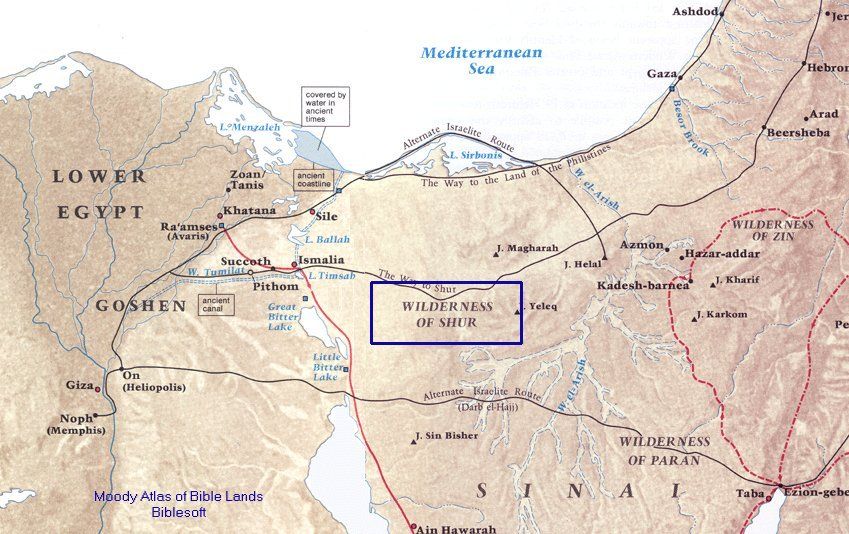
22 Then Moses made Israel set out from the Red Sea, and they went into the wilderness of Shur. They went three days in the wilderness and found no water. 23 When they came to Marah, they could not drink the water of Marah because it was bitter; therefore it was named Marah. 24 And the people grumbled against Moses, saying, “What shall we drink?” 25 And he cried to the Lord, and the Lord showed him a log, and he threw it into the water, and the water became sweet.

There the Lord made for them a statute and a rule, and there he tested them, 26 saying, “If you will diligently listen to the voice of the Lord your God, and do that which is right in his eyes, and give ear to his commandments and keep all his statutes, I will put none of the diseases on you that I put on the Egyptians, for I am the Lord, your healer.”

27 Then they came to Elim, where there were twelve springs of water and seventy palm trees, and they encamped there by the water. – Exodus 15:22-27 ESV

With their miraculous crossing of the Red Sea, the Israelites were putting a four-century-long season of their life behind them. As the waters of the sea closed behind them, it was as if God closed a lengthy chapter of their existence that had been marked by slavery and persecution. They must have issued a collective sigh of relief as they realized that their days of suffering had finally come to an end. For the first time in centuries, they were a free people and on their way to the land that God had promised as their inheritance. None of them had ever set foot in Canaan before. More than 400 years earlier, their patriarch, Jacob, had entered Egypt of his own free will, bringing along the 70 members of his clan so that they could find refuge from the global famine that had left the land of Canaan a virtual wasteland.

But now, Jacob’s descendants, whose numbers had greatly expanded during their time in Egypt, were returning to the land that he had left. The promise God had made to Abraham was coming true.

“Know for certain that your offspring will be sojourners in a land that is not theirs and will be servants there, and they will be afflicted for four hundred years. But I will bring judgment on the nation that they serve, and afterward they shall come out with great possessions. – Genesis 15:13-14 ESV

And God had reconfirmed that promise to Jacob as he and his family were making their way to Egypt.

“I am God, the God of your father. Do not be afraid to go down to Egypt, for there I will make you into a great nation. I myself will go down with you to Egypt, and I will also bring you up again, and Joseph’s hand shall close your eyes.” – Genesis 46:3-4 ESV

Jacob and his sons all died while living in Egypt. The only time his 12 sons returned to Canaan was in order to bury his body alongside those of Abraham and Isaac. But the brothers were unable to remain in Canaan because the famine had not yet ended. So, they returned to Egypt where they lived out their lifetimes in the land of Goshen.

But now, their numerous descendants were making the long journey home. But after their four-hundred-year stint in Egypt, the Israelites had grown accustomed to their surroundings. They had acclimated to the land and the ways of its people. Over time, they had forgotten the God of their fathers and adopted the Egyptian gods as their own. Canaan had become a distant memory and the promises of Yahweh had long been forgotten as each successive generation became increasingly more “Egyptianized.”

But all that was about to change. Their long-forgotten God had not forgotten them. He had just miraculously delivered them from bondage and was now leading them to their future home in Canaan. And as the scene of their emancipation and the Egyptian army’s annihilation faded into the distance, the people followed the pillar of cloud into the wilderness of Shur. Little did they know that this was going to be the beginning of a new chapter in their collective story. They were entering a new phase of their existence in which they would come to know and understand their “new” God. The ten plagues they had witnessed in Egypt had just been the opening act of His self-revelatory drama.

As they made their way to Canaan, they were going to get a steady dose of divine revelation as God displayed His glory and power. But He would also reveal the expectations He had for His chosen people. He had redeemed them for a reason. They had been set free so that they might live according to His will and display His glory and greatness to the rest of the nations.

The wilderness was to be their classroom, where they learned the painful truth about their own character and discovered the unflinching holiness and unwavering faithfulness of their God. And those lessons began immediately.

Just three days after leaving the Red Sea, they found themselves facing their first test in God’s school of spiritual enlightenment.

They traveled in this desert for three days without finding any water. When they came to the oasis of Marah, the water was too bitter to drink. – Exodus 15:22-23 NLT

Shur was not a desert as much as it was an open expanse of land, and water would have been a constant need for the Israelites. So, during their first three days of travel, the Israelites found no source of potable water. This would have been a serious concern for a group their size. How could they remain alive without water? They knew that their sizeable flocks and herds would quickly diminish if a viable source of water was not found soon.

This unexpected predicament caused the people to turn their anger against Moses. Just as they had done when they found themselves backed up against the sea with the Egyptian army bearing down on them, the people of Israel took out their fear and frustration on God’s appointed leader.

“What are we going to drink?” they demanded. – Exodus 15:24 NLT

And by this time, Moses must have been questioning why he ever agreed to lead this ungrateful and easily disgruntled band of hotheads. As God’s spokesman, he became the target of the people’s wrath. When they became unhappy with their circumstances, they took their complaints to Moses and his brother, Aaron. These two elderly men had shown up in Egypt with lofty promises of emancipation and relocation. They had declared themselves to be the official representatives of Yahweh, the God of Abraham, Isaac, and Jacob, and they had come to lead God’s people out of Egypt and back to the land of promise.

So, when things didn’t go well, the people held Moses and on as responsible. And when Moses felt the heat, he turned to God for help.

So Moses cried out to the Lord for help, and the Lord showed him a piece of wood. Moses threw it into the water, and this made the water good to drink. – Exodus 15:25 NLT

What’s important to note in this story is that there was water, but it was undrinkable. Their problem wasn’t a lack of something, but it was that the solution to their need was “bitter.” It was plentiful but undrinkable. It wasn’t that the water was non-existent but that it was worthless in its current condition. And this non-potable water contained a powerful lesson for the Israelites.

The Hebrew word translated as “bitter” is מַר (mar), which can also be translated as “angry” or “discontented.” Little did the Israelites know that the water was a symbol of their own spiritual condition. Despite all God had done to set them free from their bondage in Egypt, they were a bitter and discontented people. In a sense, they were unusable. Instead of displaying gratitude for all that God had done, they quickly resorted to anger and blame. And their blatant displays of dissatisfaction were evidence that their hearts were bitter and in need of change.

So, God took this opportunity to teach the Israelites a much-needed lesson on how He was going to transform the bitter condition of their hearts. He had Moses take a particular piece of wood and throw it into the bitter water. This act of faith on Moses’ part had an immediate effect, transforming the bitter, worthless water into a refreshing and live-giving source of sustenance for the people of God and all their livestock. The bitterness was removed.

Hundreds of years later, the prophet Ezekiel would record the following promise that God made to His people.

“I will give you a new heart, and I will put a new spirit in you. I will take out your stony, stubborn heart and give you a tender, responsive heart. And I will put my Spirit in you so that you will follow my decrees and be careful to obey my regulations.” – Ezekiel 3626-27 NLT

From the very beginning, God revealed His desire to transform the hearts of His people. Their real problem had never been slavery. They suffered from a heart condition that had left them bitter, angry, and discontented. Their 400-year separation from God had reduced them to a state of spiritual stagnation and impurity. They had become polluted by the culture and robbed of their ability to be a source of life to the nations around them. So, God was going to intervene and, over time, begin His miraculous plan of heart transformation.

One of the things that Moses makes clear is this event at Marah had been a test of their faithfulness. God wanted to know if they were going to trust Him or would they continue to display their distrust through bitter displays of discontentment and dissatisfaction. So, He had Moses give them a warning.

“If you will listen carefully to the voice of the Lord your God and do what is right in his sight, obeying his commands and keeping all his decrees, then I will not make you suffer any of the diseases I sent on the Egyptians; for I am the Lord who heals you.” – Exodus 15:26 NLT

God had used an ordinary piece of wood to transform bitter water into a life-giving source of sustenance. He had just proven, yet again, that He could meet all their needs. And all He was asking in return was that they live in obedience to His commands. If they did, they could expect to see more miraculous evidence of His provision, but they would also experience protection from His judgment. Obedience would bring blessing. Disobedience would result in curses. This would become a recurring theme in their relationship with God. He could both heal and hurt. He could bless and curse. And all He asked of His people was that they could trust and obey so that He could turn them into a life-giving source of sustenance to the nations of the world.

English Standard Version (ESV) The Holy Bible, English Standard Version. ESV® Permanent Text Edition® (2016). Copyright © 2001

New Living Translation (NLT) Holy Bible, New Living Translation, copyright © 1996, 2004, 2015 by Tyndale House Foundation. Used by permission of Tyndale House Publishers Inc., Carol Stream, Illinois 60188. All rights reserved.

Cultivating True Community

1 Do not boast about tomorrow,
    for you do not know what a day may bring.
Let another praise you, and not your own mouth;
    a stranger, and not your own lips.
A stone is heavy, and sand is weighty,
    but a fool’s provocation is heavier than both.
Wrath is cruel, anger is overwhelming,
    but who can stand before jealousy?
Better is open rebuke
    than hidden love.
Faithful are the wounds of a friend;
    profuse are the kisses of an enemy.
One who is full loathes honey,
    but to one who is hungry everything bitter is sweet.
Like a bird that strays from its nest
    is a man who strays from his home.
Oil and perfume make the heart glad,
    and the sweetness of a friend comes from his earnest counsel.
10 Do not forsake your friend and your father’s friend,
    and do not go to your brother’s house in the day of your calamity.
Better is a neighbor who is near
    than a brother who is far away.
11 Be wise, my son, and make my heart glad,
    that I may answer him who reproaches me.
12 The prudent sees danger and hides himself,
    but the simple go on and suffer for it.
13 Take a man’s garment when he has put up security for a stranger,
    and hold it in pledge when he puts up security for an adulteress.
– Proverbs 27:1-13 ESV

Let’s face it. Relationships are messy. Living with others can be difficult at times. But there is a huge advantage to living in true biblical community. And the Proverbs have a lot to say about the impact of wisdom and foolishness on our relationships. While we can attempt to isolate ourselves from interaction with others, no one lives in a vacuum. And, whether we like it or not, we will eventually end up dealing with people from all walks of life and from every conceivable background. Even a few fools will cross our path as we navigate our way through life.

But this chapter continues to differentiate between the wise and the foolish, describing how each displays certain characteristics – some to be emulated and others to be avoided.

When it comes to relationships, a fool is self-centered, myopic, and tends to only think about himself. He lives his life with a certain level of insensitivity and never thinks about how his words and actions will impact those around him. In fact, he doesn’t even care. Because of their self-focused manner of life, fools tend to think too highly of themselves and have a distorted view of reality. That’s why the wise person should heed the following advice.

Don’t brag about tomorrow,
    since you don’t know what the day will bring

Let someone else praise you, not your own mouth—
    a stranger, not your own lips. – Proverbs 27:1-2 NLT

Instead, a man or woman of wisdom should readily accept their responsibility to care about and for those around them, and they should live accordingly.

Fools tend to leave a wake of disrupted relationships in their path. They are relationship wreckers who allow resentment, anger, and jealousy to wreak havoc on all those around them.

A stone is heavy and sand is weighty,
    but the resentment caused by a fool is even heavier.

Anger is cruel, and wrath is like a flood,
    but jealousy is even more dangerous. – Proverbs 27:3-4 NLT

Those who care about community understand that words are powerful. They know that there will be times when words of encouragement are needed, but also times when a word of warning or rebuke is necessary. In a healthy relationship, to withhold a much-deserved rebuke is as wrong as refusing to express our love verbally.

An open rebuke
    is better than hidden love!Proverbs 27:5 NLT).

While correction and criticism are never easy to receive, a true friend will care enough about us to tell us the hard truth.

Wounds from a sincere friend
    are better than many kisses from an enemy.Proverbs 27:6 NLT)

Fools make a habit of telling others what they want to hear. They use flattery to win others over but never truly mean what they say. And while a fool will butter someone up by telling them how wonderful they are, they will overlook the faults that are preventing that person from being who God wants them to be. False flattery is deadly. It puffs us up and gives us a false sense of confidence and feeds our self-righteousness. But a true friend will tell us the truth, even if it hurts.

As iron sharpens iron,
    so a friend sharpens a friend. – Proverbs 27:17 NLT

Friendships should involve some friction but it should be productive and not destructive. As we rub up against one another in our relationships there should be a certain give-and-take that allows us to push, prod, and pull each other towards increased righteousness.

But if we are honest, we have to admit that many of our relationships are shallow and dishonest. We refuse to speak the truth into one another’s lives. We openly tolerate godlessness and flatter one another with words of kindness when what we really need is a swift kick in the pants and a dose of reality.

The heartfelt counsel of a friend
    is as sweet as perfume and incense. – Proverbs 27:9 NLT

Yet, many of us are afraid to play hardball in our relationships because we fear what others may say about how we live our lives. We’re afraid that if we critique someone else’s life, it will leave the door open for them to return the favor. And, most likely, they will. But we should welcome it.

The truth is, most of us have no idea what we’re really like. We can’t see our faults and weaknesses. Our foolish friends will leave us thinking we don’t have any. But a true friend will point them out in a loving, caring way, and help us take steps to correct them. They are able to see the true condition of our hearts, something we can’t do on our own. ”

As a face is reflected in water,
    so the heart reflects the real person.Proverbs 27:19 NLT

We need one another. We need real relationships that produce real-life change. True biblical community is messy. It involves transparency, accountability, honesty, humility, patience and love. It takes work, but it is worth it. Cultivating true community has long-term, real-life benefits.

Never abandon a friend—
    either yours or your father’s.
When disaster strikes, you won’t have to ask your brother for assistance.
    It’s better to go to a neighbor than to a brother who lives far away. – Proverbs 27:10 NLT

You never know when you will need the help or counsel of a true friend. Life is full of all kinds of surprises and, in times of difficulty, you want to be surrounded by those who can step in and help. But you’ll want to make sure you’ve surrounded yourself with wise friends and not fools.

A prudent person foresees danger and takes precautions.
    The simpleton goes blindly on and suffers the consequences. – Proverbs 27:12 NLT

Prepare for the inevitable setbacks in life and maintain ongoing relationships with people who can provide wise counsel when you need it. In times of difficulty, a few friends with wisdom are of far greater value than a host of fools who lack sense. Life is too short and relationships are too important to waste your time cultivating friendships with fools.

English Standard Version (ESV) The Holy Bible, English Standard Version. ESV® Permanent Text Edition® (2016). Copyright © 2001 by Crossway Bibles, a publishing ministry of Good News Publishers.

New Living Translation (NLT) Holy Bible, New Living Translation, copyright © 1996, 2004, 2015 by Tyndale House Foundation. Used by permission of Tyndale House Publishers Inc., Carol Stream, Illinois 60188. All rights reserved.

New English Translation (NET)NET Bible® copyright ©1996-2017 by Biblical Studies Press, L.L.C. http://netbible.com All rights reserved.

The High Cost of Getting Your Own Way

1 Now Naboth the Jezreelite had a vineyard in Jezreel, beside the palace of Ahab king of Samaria. And after this Ahab said to Naboth, “Give me your vineyard, that I may have it for a vegetable garden, because it is near my house, and I will give you a better vineyard for it; or, if it seems good to you, I will give you its value in money.” But Naboth said to Ahab, “The Lord forbid that I should give you the inheritance of my fathers.” And Ahab went into his house vexed and sullen because of what Naboth the Jezreelite had said to him, for he had said, “I will not give you the inheritance of my fathers.” And he lay down on his bed and turned away his face and would eat no food.

But Jezebel his wife came to him and said to him, “Why is your spirit so vexed that you eat no food?” And he said to her, “Because I spoke to Naboth the Jezreelite and said to him, ‘Give me your vineyard for money, or else, if it please you, I will give you another vineyard for it.’ And he answered, ‘I will not give you my vineyard.’” And Jezebel his wife said to him, “Do you now govern Israel? Arise and eat bread and let your heart be cheerful; I will give you the vineyard of Naboth the Jezreelite.”

So she wrote letters in Ahab’s name and sealed them with his seal, and she sent the letters to the elders and the leaders who lived with Naboth in his city. And she wrote in the letters, “Proclaim a fast, and set Naboth at the head of the people. 10 And set two worthless men opposite him, and let them bring a charge against him, saying, ‘You have cursed God and the king.’ Then take him out and stone him to death.” 11 And the men of his city, the elders and the leaders who lived in his city, did as Jezebel had sent word to them. As it was written in the letters that she had sent to them, 12 they proclaimed a fast and set Naboth at the head of the people. 13 And the two worthless men came in and sat opposite him. And the worthless men brought a charge against Naboth in the presence of the people, saying, “Naboth cursed God and the king.” So they took him outside the city and stoned him to death with stones. 14 Then they sent to Jezebel, saying, “Naboth has been stoned; he is dead.”

15 As soon as Jezebel heard that Naboth had been stoned and was dead, Jezebel said to Ahab, “Arise, take possession of the vineyard of Naboth the Jezreelite, which he refused to give you for money, for Naboth is not alive, but dead.” 16 And as soon as Ahab heard that Naboth was dead, Ahab arose to go down to the vineyard of Naboth the Jezreelite, to take possession of it. 1 Kings 21:1-16 ESV

Chapter 20 ended with the statement: And the king of Israel went to his house vexed and sullen and came to Samaria” (1 Kings 20:43 ESV). The author used two Hebrew words, sar and zāʿēp̄, to describe Ahab’s state of mind. And like most words in the Hebrew language, these two words carry a range of meanings. When we read that Ahab was “vexed and sullen,” it conjures up images of an unhappy child who is pouting because he didn’t get his way. But Ahab wasn’t just throwing himself a pity party; he was angry and resentful. And it’s easy to understand the intensity of his emotions when we consider the severity of God’s judgment. Ahab had chosen to spare the life of Ben-hadad so that he could sign a potentially lucrative treaty with him. But this decision was had not been God’s will, and Ahab would suffer greatly for it.

“Because you have let go out of your hand the man whom I had devoted to destruction, therefore your life shall be for his life, and your people for his people.” – 1 Kings 20:42 ESV

With that bit of bad news still ringing in his ears, Ahab had left the Valley of Aphek and returned to his palace in Samaria. When he arrived, he was in a dark mental state. The New English Translation describes him as “bitter and angry.” He deeply resented the punishment meted out to him by God. The Hebrew word sar conveys the idea of a stubborn, almost rebellious resistance to this God-ordained fate. And the word zāʿēp̄ lets the reader know that Ahab was wearing his emotions on his sleeve. His anger was visible. Since he couldn’t take out his anger on God, it spilled over onto all those around him. Even his neighbor, Naboth.

At some point after the victory over the Syrians, Ahab visited his summer palace in Jezreel. One day, while surveying the grounds of his palace, he noticed Naboth’s vineyard, which was located nearby. Seeing that this was fertile land, Ahab determined that it would make a fine spot to plant a garden for his palace. So, he approached Naboth with an offer.

“Since your vineyard is so convenient to my palace, I would like to buy it to use as a vegetable garden. I will give you a better vineyard in exchange, or if you prefer, I will pay you for it.” – 1 Kings 21:2 NLT

But Naboth politely turned down the king’s generous offer, explaining that the land on which the vineyard was located was part of his inheritance. According to Mosaic Law, the Israelites were forbidden to sell the land that God had given to them as their inheritance. The book of Leviticus outlined this divine prohibition against property transactions involving land dedicated to the various tribes of Israel.

“The land must never be sold on a permanent basis, for the land belongs to me. You are only foreigners and tenant farmers working for me.” – Leviticus 25:23 NLT

The book of Numbers provides further clarification concerning God’s ban on the transfer or sale of any of the land He had allotted to the 12 tribes.

The inheritance of the people of Israel shall not be transferred from one tribe to another, for every one of the people of Israel shall hold on to the inheritance of the tribe of his fathers. – Numbers 36:7 NLT

Naboth was simply obeying the law as given by God to Moses. He was legally prohibited from accepting Ahab’s offer. But none of this mattered to Ahab. And Naboth’s firm but polite response produced in Ahab the same effect as God’s earlier warning of judgment.

And Ahab went into his house vexed and sullen because of what Naboth the Jezreelite had said to him – 1 Kings 21:4 ESV

Ahab responded with bitterness and anger. But notice that his anger was not directed at Naboth but at what Naboth had said. When Naboth informed the king that he could not sell him the land, his justification had been based on the law of God. Once again, God had interfered with Ahab’s plans, and it left him a strong sense of resentment and frustration. His anger was with God and His constant intervention into his affairs. Ahab couldn’t even buy a vineyard without running into this ever-present God who seemed to stick His nose into everything. Denied his desire for a garden, Ahab allowed his anger to turn to depression and deep despondency, even refusing to eat.

Concerned about the deteriorating condition of her husband’s mental health, Jezebel asked Ahab for an explanation. But notice the brevity of his reply. Rather than give Jezebel the full context of his conversation with Naboth, he simply states that he made a fair offer that was summarily rebuffed. His recollection of what Naboth said is anything but accurate. He mentions nothing about God’s ban on the sale of tribal land. He simply states that Naboth refused his offer.

Frustrated by her husband’s sullen state and obvious lack of initiative, she accuses him of forgetting who he is and the kind of power he possesses. “Are you the king of Israel or not?” she asks him. From Jezebel’s perspective, Ahab had abdicated his divine rights as the king. He was the sovereign over all of Israel, and he had the power to do whatever he wanted to do. No one, including Naboth, had the right to stand in his way. And to prove it, she implemented a plan to put Naboth in his place and the vineyard in her husband’s possession.

This pagan queen, who had introduced the worship of Baal to the nation of Israel, hired false witnesses to accuse Naboth of cursing the God of Israel. These men were to show up at a fast, held in honor of Yahweh, and declare that Naboth had cursed both God and the king. And Jezebel had pre-arranged with the elders of Jezreel that they would immediately stone Naboth to death for this fictitious crime.

And everything went just as Jezebel had planned. Naboth was falsely accused and executed. When the elders of Jezreel informed Jezebel that Naboth was dead, she immediately shared the good news with Ahab.

“Arise, take possession of the vineyard of Naboth the Jezreelite, which he refused to give you for money, for Naboth is not alive, but dead.” – 1 Kings 21:15 ESV

Notice that Ahab asks for no explanations. He doesn’t ask his wife a single question concerning Naboth’s well-timed death. He simply got out of bed, put on his royal robes, and took possession of the land that would soon be his new garden. He got what he wanted and didn’t seem to care how it had happened. But Jezebel’s actions had only made things worse. She had falsely accused an innocent man and had orchestrated his unlawful execution. And she had still violated God’s law concerning the land inheritance. According to Mosaic Law, Naboth’s land would have passed on to his descendants. God had made it clear that the land He had given to the tribes as their inheritance was to remain within their possession.

“…give the following instructions to the people of Israel: If a man dies and has no son, then give his inheritance to his daughters. And if he has no daughter either, transfer his inheritance to his brothers. If he has no brothers, give his inheritance to his father’s brothers. But if his father has no brothers, give his inheritance to the nearest relative in his clan. This is a legal requirement for the people of Israel, just as the Lord commanded Moses.”  – Numbers 27:8-11 NLT

Jezebel’s murder of Naboth was wrong on every level. She had violated a range of divine decrees to get her husband what he wanted. Her blind ambition resulted in unconscionable behavior that would only exacerbate God’s judgment against her husband. Ahab had his vineyard. Jezebel had her husband back. But their joy would soon turn to sorrow. They had both gotten what they wanted, but their personal achievements would come with a high price. Ahab’s new garden, while free, would cost him dearly. And Jezebel’s plot to murder Naboth, while successful, would come with a hefty price tag for which she would pay dearly.

English Standard Version (ESV) The Holy Bible, English Standard Version. ESV® Permanent Text Edition® (2016). Copyright © 2001 by Crossway Bibles, a publishing ministry of Good News Publishers.

New Living Translation (NLT) Holy Bible, New Living Translation, copyright © 1996, 2004, 2015 by Tyndale House Foundation. Used by permission of Tyndale House Publishers Inc., Carol Stream, Illinois 60188. All rights reserved.

The Message (MSG)Copyright © 1993, 1994, 1995, 1996, 2000, 2001, 2002 by Eugene H. Peterson

Proverbs 17e

Correctly Handling Correction.

“A single rebuke does more for a person of understanding than a hundred lashes on the back of a fool.” – Proverbs 17:10 NLT

How do you handle correction? When someone critiques your work or criticizes your efforts, do you get mad, upset, frustrated, lash out, throw it back at them, or simply clam up and turn away in hurt and disappointment? None of us actually like to be corrected, but how we handle it says a lot about the condition of our heart and the degree of our wisdom. You see, a wise person, one who sees things from God’s perspective and attempts to live in obedience to and dependent upon God for all that he does – that person tends to see correction as beneficial and an opportunity to reflect on his life and learn from it. If correction makes us mad, it is usually due to pride and a reluctance to want to see any fault in our lives. We don’t like to have our faults exposed. We don’t like to have our shortcomings made known. We spend a lot of time erecting our facade of respectability and reliability, so when someone corrects or criticizes us, we can naturally react in anger and resentment. But the truly wise person is fully aware of his weaknesses, even when he can’t see them. He knows he is not perfect, but is a work in process – he is constantly being transformed by God through a slow, steady process that requires the revealing of sin so that it might be confessed and forgiven, and the “putting on” of his new nature, the very nature of Christ Himself.

Here’s a simple test. The next time someone critiques or criticizes you, watch your reaction. Do you get angry? Ask yourself why. Take time to determine the cause of your anger. Are you angry because they exposed a mistake and made you look bad? Are you upset because they made you look silly in front of your peers? The truth is, even if their criticism of you is unwarranted and undeserved, if you get angry, there is something being revealed in your life that you need to see and learn from. Criticism oftentimes reveals the condition of our heart. While the person may be exposing a flaw in something we said or did, our reaction to it is revealing a problem with the condition of our heart. Our anger, resentment, desire for revenge, or tendency to pull away in self-pity, all reflect a heart condition. A person of understanding has the capacity to learn from moments like this. He is able to assess and accept the criticism and learn from it. A fool simply gets mad gets even. In fact, this verse tells us that you could beat a fool or give him a whipping of a hundred lashes, and he still won’t learn anything. But a person of understanding will learn from a single word of correction.

Wise people are always learning. They’re always open to critique – in fact, they invite it. They know they are works in process and appreciate any help they can get that helps them see areas of weakness in their lives. They have the capacity to take even correction given in anger as potentially positive, because they view it as if from the very hand of God. This all reminds me of a an incident in the life of King David. His son, Absalom, had taken over his kingdom and David was escaping from Jerusalem in an attempt to save his own life. On his way, a man named Shimei, began throwing stones at David, cursing him and calling him a murderer. David’s men wanted to kill him, but David’s reaction was interesting. He said, “No! Leave him alone and let him curse, for the Lord has told him to do it. And perhaps the Lord will see that I am being wronged and will bless me because of these curses today” (2 Samuel 17:11-12 NLT). David took the words of this man as from the Lord Himself. He viewed the entire affair from a divine perspective. God was in control and God was fully aware of all that was going on. So David was content to let God teach him what he needed to learn through this situation.

How we handle criticism and correction reveals a lot about our relationship with the Lord. If the correction is accurate, we can learn from it. If it is wrong, and yet we still get angry, we can examine our reaction to it and see if there is something in our hearts that needs to be corrected. But either way, we can learn to correctly handle correction, and grow from it.

Father, help me learn to take correction well. Thank You that you are always exposing weaknesses in my life. I am always in need of correction. And I need to be open to critique. Otherwise, I can grow complacent or overly confident, seeing myself as better than I am. Amen.

Ken Miller

Grow Pastor & Minister to Men
kenm@christchapelbc.org

Proverbs 17c

Conflict Resolution.

“Love prospers when a fault is forgiven, but dwelling on it separates close friends.” – Proverbs 17:9 NLT

We’ve all seen it happen. Perhaps we’ve even had it happen to us. A close friendship dissolved over an unresolved issue. A disagreement that never was dealt with properly and which resulted in alienation, accusation, and acrimony. It happens to friendships and even the relationships between parents and children, brothers and sisters, and even Christ-followers. Many times these conflicts start with something fairly insignificant and small, but when left unresolved, they fester and grow, like an untreated wound. What began as a small things becomes a big thing because proper steps weren’t taken to begin with. A hurtful word or a painful action causes a crack to develop in a relationship. And when it is not addressed in a godly and timely manner, the enemy takes advantage of the situation and begins to pry and press on that crack in an effort to widen and worsen it. Jesus told us that the enemy comes “to steal, kill and destroy” (John 10:10). He wants to destroy our relationships, kill our friendships, and steal the benefits available to us through community. Satan hates love. It’s that simple. Yet Solomon reminds us that “love prospers when a fault is forgiven” (Proverbs 17:9 NLT). God is love and He desires that we live lives of love for Him and others. But it is impossible to love when we refuse to forgive. We are incapable of love if we demand our rights and hold on to all the bad things done to us. Our harboring of anger, resentment and bitterness to the other person does little to change or convict them, but it can end up destroying us – from the inside out. It produces a toxic blend of bitterness, anger, and resentment that becomes like a cancer in our system, eating us away internally and destroying us spiritually. Paul tells us, “Get rid of all bitterness, rage, anger, harsh words, and slander, as well as all types of evil behavior. Instead, be kind to each other, tenderhearted, forgiving one another, just as God through Christ has forgiven you” (Ephesians 4:31-32 NLT). We are to forgive in the same way we have been forgiven by God. No qualifications. No conditions. No grading on the curve. Just forgive. Is forgiving hard to do? You bet. Especially when someone refuses to admit that they were wrong or that they even hurt us. And even harder than forgiving is forgetting. We may feel like we’ve forgiven that person, but then the next time we see them we are reminded once again of all that they did to us. The memories resurface and the resentment bubbles to the surface once again. It’s normal and natural. But that’s when we need to turn it over to the Lord and ask for His help. Letting go of a wrong done to us is difficult, but no impossible. God would not have commanded us to forgive one another if was impossible. He has provided us with all the power we need to obey through the indwelling presence of His Holy Spirit. But we have to acknowledge our need for help and request His assistance. We have to confess our own anger, bitterness and unforgiving spirit and ask the Holy Spirit for the strength we need to give up and let go – whether the other party ever confesses their wrong or asks for our forgiveness. “Love prospers when a fault is forgiven” (Proverbs 17:9 NLT). It grows within us. It produces life instead of death. It thwarts the enemy’s attempts to drive a wedge between us and others. It reminds us of how much we have been forgiven by God. Life is too short to spend it bitter, angry, and resentful. Listen to these words from The Message paraphrase of 1 Corinthians 13.

Love never gives up.
Love cares more for others than for self.
Love doesn’t want what it doesn’t have.
Love doesn’t strut,
Doesn’t have a swelled head,
Doesn’t force itself on others,
Isn’t always “me first,”
Doesn’t fly off the handle,
Doesn’t keep score of the sins of others,
Doesn’t revel when others grovel,
Takes pleasure in the flowering of truth,
Puts up with anything,
Trusts God always,
Always looks for the best,
Never looks back,
But keeps going to the end.

Father, it is so easy to hold a grudge. It is so easy to get hurt and grow bitter by what others say or do to us. But You have called us to love. You have commanded us to forgive. And You have modeled it perfectly through the life of Your Son, Jesus Christ. Help me learn to let go of my grudges more quickly, forgive more readily, and love more willingly. Amen.

Ken Miller

Grow Pastor & Minister to Men
kenm@christchapelbc.org

Proverbs 27b

The Power of Praise.

“Fire tests the purity of silver and gold. But a person is tested by being praised.” – Proverbs 27:21 NLT

Praise is a powerful commodity. It should be used sparingly and wisely. Too much praise can cause pride. Too little praise can result in resentment and bitterness. Everyone needs to hear words of praise on occasion, but when it is given it must be sincere and well-deserved. False praise is nothing more than lying. Praising someone who has an addiction for praise can be destructive. Failing to praise someone who is deserving of praise is ultimately selfish and like stealing what is rightfully theirs.

The writer of Proverbs 27 knows the power of praise and warns us about it. Like fire, praise can do much good, but it can also be dangerous if treated flippantly or foolishly. He warns us against self-praise, which is basically bragging. Nobody likes to be around a braggart, yet we all do it at times. We want others to know our accomplishments and to be impressed with our exploits. Self-praise can be as simple as hanging all your diplomas on the wall of your office for everyone to see. If it is meant to impress, it is self-praise, and self-praise is never attractive. Self-praise can be as innocent as fishing for compliments by chumming the water with stories of your good deeds. It is manipulative and unattractive to watch. We are warned, “Let someone else praise you, not your own mouth – a stranger, not your own lips” (Proverbs 27:2 NLT). One of the hard realities of life is that the lack of praise we experience may be the result of us having done nothing praise-worthy. But it could also be that any praises we receive are meant for the ears of others. Those praising us may be telling our boss or supervisor. They may be praising us to their friends. We may not hear it, but we benefit from their praise just the same. If we HAVE to hear praise to benefit from it, our motivation needs to be questioned.

How we receive praise reveals much about us. “A person is tested by being praised” (Proverbs 27:21b NLT). In other words, if praise tends to make us proud and puffed up, it is exposing a heart problem. It is showing us that we have a character flaw. We crave praise. We are addicted to praise. We are motivated by praise. If we don’t receive it, we lose our motivation. It is like an actor who loses his love of acting because he fails to receive the applause he thinks he so richly deserves. At that point, he is acting for the applause, not because he loves to act. If we require the praise of others to make us do what God requires of us, we are doing it for the wrong reason. Doing good deeds in exchange for praise turns our efforts into nothing more than a job. Energy expended in exchange for pay. But we are to do good deeds out of the motivation to honor God. Our efforts are for His praise and glory, not our own. Any praise we receive is an extra-added bonus. It is to be like a sacrifice. Those who brought sacrifices to God did not receive applause from the crowd standing around them. Their effort was what was expected of them as servants of God.

But praise is not a sin. It is a vital part of doing life together as human beings. The key is that praise is something that is given. It is not to be sought. It is like a commodity we have that is to be shared with others, sparingly and wisely. Too much praise, like too much honey, can make the other person sick. Praising a child for anything and everything can end up making them proud, arrogant, and addicted to praise. When they grow up and don’t receive it, they will become angry, resentful, and begin to question their own self-worth. Too little praise can be destructive too. Withholding praise is nothing short of cruel. It is like refusing to pay an employee for a job well done. But for some of us words of praise are difficult to say. Maybe it’s because we failed to hear them as children. We are unaccustomed to hearing them. But words of encouragement can be a gift we give to those in need. They can be like water to a thirsty man – refreshing, reinvigorating, and re-energizing. It takes wisdom to know how to use praise effectively. False praise is disingenuous and deceitful. It’s nothing short of flattery designed to benefit the one giving it. False praise is ultimately self-centered.

Praise is powerful. It has the potential for both harm and for doing good. It is to be used wisely can carefully. It is not something to be sought, but to be given. The praises of men should never be our motivation. Seeking to please God is what should drive us, inspire us and motivate us. The praises of men, when given, are to be received humbly, gratefully and with an understanding that the one who really deserves credit for them is God.

Father, only You really deserve praise. Any good deeds I do are the result of Your Spirit within me, motivating and empowering me. Nothing I do that is worthy of praise is the result of my own self-effort. I can do nothing worthwhile without You. Help me to give praise rather than seek it. But help me to give praise sparingly and with a focus on the heart behind the effort. I want to praise others for what is motivating their behavior, not the behavior itself. Give me the capacity to use praise wisely. Amen.

Ken Miller

Grow Pastor & Minister to Men
kenm@christchapelbc.org