The Sole Simple Solution

1 Now I would remind you, brothers, of the gospel I preached to you, which you received, in which you stand, and by which you are being saved, if you hold fast to the word I preached to you—unless you believed in vain.

For I delivered to you as of first importance what I also received: that Christ died for our sins in accordance with the Scriptures, that he was buried, that he was raised on the third day in accordance with the Scriptures, and that he appeared to Cephas, then to the twelve. Then he appeared to more than five hundred brothers at one time, most of whom are still alive, though some have fallen asleep. Then he appeared to James, then to all the apostles. Last of all, as to one untimely born, he appeared also to me. For I am the least of the apostles, unworthy to be called an apostle, because I persecuted the church of God. 10 But by the grace of God I am what I am, and his grace toward me was not in vain. On the contrary, I worked harder than any of them, though it was not I, but the grace of God that is with me. 11 Whether then it was I or they, so we preach and so you believed. – 1 Corinthians 15:1-11 ESV

After spending three chapters on the issues surrounding the use of spiritual gifts, Paul now shifts his attention to what he says is “of first importance.” The Corinthians had lost sight of the overwhelming significance of their salvation made possible by the death, resurrection, and appearance of Christ. In other words, they had allowed the gospel and its life-changing message to take a back seat to what they believed was the more significant role of the spiritual gifts. So Paul reminds them of the gospel he preached to them.

It is the gospel message they received by grace, and that allows them to stand justified before God as His adopted children. It is the same gospel that makes possible their daily sanctification – their transformation into Christ-likeness. The spiritual gifts do not accomplish any of this for them. It is the gospel and the gospel alone that redeems, justifies, sanctifies, and guarantees our future glorification. The gospel encompasses the entirety of our salvation experience. And just to make sure they understand what he means by the gospel, Paul provides them with a summary statement that contains the key ingredients to its power and significance.

“Jesus died” – the death of Jesus is central to the gospel message. It was necessary for Jesus to die so that the penalty for our sins could be paid and God could be satisfied. Otherwise, we would still be guilty and under condemnation for our sins against God. But Jesus did die in our place. He took our sins upon Himself and suffered the death we deserved.

“according to the Scripture” – Jesus’ death was not happenstance or just a run of bad luck. It wasn’t the result of the Jewish leadership and their behind-the-scenes plotting against Jesus. It wasn’t even the result of Pilate’s orders or the Roman government’s power. It was preordained by God. The Old Testament prophets spoke of His death hundreds of years before it took place.

Surely he has borne our griefs
    and carried our sorrows;
yet we esteemed him stricken,
    smitten by God, and afflicted.
But he was pierced for our transgressions;
    he was crushed for our iniquities;
upon him was the chastisement that brought us peace,
    and with his wounds we are healed. – Isaiah 53:4-5 ESV

Jesus was sent by God to die. The penalty for mankind’s sins against God was death, and God, because He is just, required that the penalty be paid in full. But in a divine display of mercy, He provided His own Son as a substitute to satisfy the just and holy requirement for a sinless sacrifice. The author of the Book of Hebrews explains the need for this blood sacrifice.

…without the shedding of blood there is no forgiveness of sins. – Hebrews 9:22 ESV

“he was buried” – Jesus’ death was real; He did not swoon or pass out. He was not placed in the grave barely alive, only to later revive and escape. The Romans oversaw His burial and were convinced of His death. His burial paved the way for His resurrection. The rolling of the stone across the opening to His tomb and then sealed by the Roman guards convinced the disciples that their Messiah was dead and their hopes for a new kingdom were gone. They went into mourning and hiding. And the words of the two disciples whom Jesus encountered along the road after His resurrection reveal just how dejected they were.

He was a prophet who did powerful miracles, and he was a mighty teacher in the eyes of God and all the people. But our leading priests and other religious leaders handed him over to be condemned to death, and they crucified him. We had hoped he was the Messiah who had come to rescue Israel. This all happened three days ago.– Luke 24:19-21 NLT

“he was raised on the third day – Jesus was not a martyr; He was the Messiah, the anointed one of God, who died and was raised back to life through the power of the Holy Spirit. He was raised to new life and walked out of the tomb in His resurrected body, proving that He had accomplished what He had come to do and had satisfied the just demands of His Father in heaven. Just a few verses later in this chapter, Paul writes, “If Christ has not been raised, your faith is futile and you are still in your sins” (1 Corinthians 15:17 ESV). He follows that up with the good news that “In fact Christ has been raised from the dead, the firstfruits of those who have fallen asleep” (1 Corinthians 15:20 ESV). It is His resurrection that assures us of our future hope of eternal life and the glorification of these earthly bodies. The apostle John assures us, “We are God’s children now, and what we will be has not yet appeared; but we know that when he appears we shall be like him, because we shall see him as he is” (1 John 3:2 ESV).

“in accordance with the Scriptures” – Once again, the Scriptures predicted Christ’s death, but also His resurrection. The prophet Isaiah wrote:

Yet it was the will of the Lord to crush him;
    he has put him to grief;
when his soul makes an offering for guilt,
    he shall see his offspring; he shall prolong his days;
the will of the Lord shall prosper in his hand.
    Out of the anguish of his soul he shall see  and be satisfied;
by his knowledge shall the righteous one, my servant,
    make many to be accounted righteous,
    and he shall bear their iniquities. – Isaiah 53:10-11 ESV

He was crushed, but He was also resurrected and restored. His days were prolonged. As a result of His death and resurrection, many have been accounted as righteous.

“and that he appeared” – During the days after His resurrection, Jesus was seen by more than 500 people. His appearances to His disciples renewed their hopes and revived their commitment to follow Him. He gave them their marching orders, commissioning them to carry on His work and to take the gospel to the ends of the earth. He appeared to Paul on the road to Damascus, calling him from a life marked by persecution of the church to a new mission of taking the gospel to the Gentiles. Paul’s work and words were given to Him by the resurrected Christ. And he proved faithful to do what Christ had called him to do.

Jesus died, was buried, resurrected, and appeared. That is the heart of the gospel message. And when anyone accepts the reality of those facts, placing his or her faith in the saving work of Jesus Christ, they experience salvation. They are born again and given new life in Christ. Their sins are forgiven, they are given a new nature, and they are made children of God and heirs to the Kingdom of God. They stand before Him as righteous, not because of anything they have done or accomplished, but because of the blood of Christ.

Father, thank You for the gospel, the good news of new life found in the sacrifice of Your Son. But I thank You as well for the simplicity of the gospel’s message. You took a very difficult and impossible to solve problem and provided a simple solution. You sent Your Son as the substititionary atonement for the debt we owed. He died so would not have to. He paid the penalty for our sins and satisfied Your righteous judgment against us. And I am eternally grateful for the glorious gift of Your grace, mercy, and love. Amen

English Standard Version (ESV) The Holy Bible, English Standard Version. ESV® Permanent Text Edition® (2016). Copyright © 2001 by Crossway Bibles, a publishing ministry of Good News Publishers.

New Living Translation (NLT) Holy Bible, New Living Translation, copyright © 1996, 2004, 2015 by Tyndale House Foundation. Used by permission of Tyndale House Publishers Inc., Carol Stream, Illinois 60188. All rights reserved.

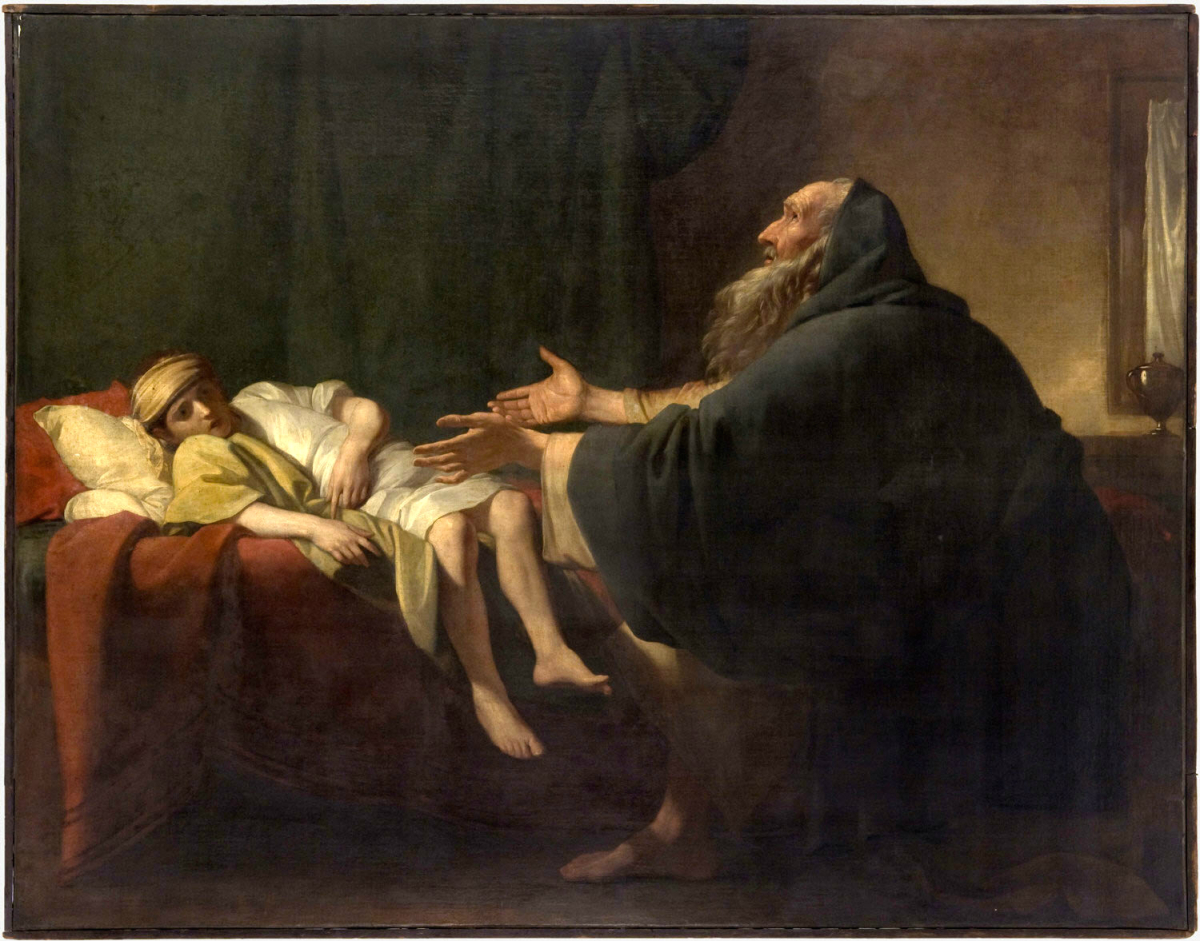
A Light in the Darkness

25 When the man of God saw her coming, he said to Gehazi his servant, “Look, there is the Shunammite. 26 Run at once to meet her and say to her, ‘Is all well with you? Is all well with your husband? Is all well with the child?’” And she answered, “All is well.” 27 And when she came to the mountain to the man of God, she caught hold of his feet. And Gehazi came to push her away. But the man of God said, “Leave her alone, for she is in bitter distress, and the LORD has hidden it from me and has not told me.” 28 Then she said, “Did I ask my lord for a son? Did I not say, ‘Do not deceive me?’” 29 He said to Gehazi, “Tie up your garment and take my staff in your hand and go. If you meet anyone, do not greet him, and if anyone greets you, do not reply. And lay my staff on the face of the child.” 30 Then the mother of the child said, “As the LORD lives and as you yourself live, I will not leave you.” So he arose and followed her. 31 Gehazi went on ahead and laid the staff on the face of the child, but there was no sound or sign of life. Therefore he returned to meet him and told him, “The child has not awakened.”

32 When Elisha came into the house, he saw the child lying dead on his bed. 33 So he went in and shut the door behind the two of them and prayed to the LORD. 34 Then he went up and lay on the child, putting his mouth on his mouth, his eyes on his eyes, and his hands on his hands. And as he stretched himself upon him, the flesh of the child became warm. 35 Then he got up again and walked once back and forth in the house, and went up and stretched himself upon him. The child sneezed seven times, and the child opened his eyes. 36 Then he summoned Gehazi and said, “Call this Shunammite.” So he called her. And when she came to him, he said, “Pick up your son.” 37 She came and fell at his feet, bowing to the ground. Then she picked up her son and went out. 2 Kings 4:25b-37 ESV

Oftentimes, when reading the stories contained in the Scriptures, we find ourselves trying to ascertain their meaning or attempting to discover some helpful point of application. We desperately search for some relevant truth that we might apply to our own lives. And while this is a worthy goal, our relentless quest for a personalized point of application can leave us missing the primary message of the passage. This can be especially true when we extract these stories from their surrounding context. When we attempt to turn the stories of the Bible into Sunday School lessons, we tend to rob them of their Scriptural context and meaning.

In reading the story of the Shunammite woman, it would be easy to focus our attention on the loss of her child and the faith she exhibited by seeking out the prophet. And while there are lessons to be learned from her actions, the author seems to have a far greater and more significant point of emphasis. This entire story takes place in the context of Israel’s ongoing apostasy. It is a time of spiritual darkness and moral apathy. The kings of Israel have consistently led the nation away from the worship of Yahweh by promoting their own replacement deities. From the golden calves erected by Jeroboam to the Canaanite gods promoted by Ahab and Jezebel, the people of Israel have had a host of idols from which to choose. But through it all, Yahweh has remained faithful and all-powerful, and He has continued to reveal Himself through His prophets. First, He spoke and exhibited His power through Elijah. Then, upon Elijah’s death, God revealed Himself through Elijah’s former servant, Elisha.

But the stories involving Elijah and Elisha are not intended to focus our attention on these two men; they are designed to draw our eye to the God who worked through them. They were messengers of Yahweh and human conduits of His grace, mercy, power, and, at times, His judgment. They were the human representatives of God Almighty, speaking and acting on His behalf, and displaying His divine attributes before the people.

So, when the Shunammite woman discovers her son is dead and seeks out the prophet of God, it is less a statement about her faith than it is about God’s invasion of the darkness of Israel. All that takes place in this story is intended to point to Yahweh, not the woman, Gehazi the servant, or Elisha the prophet. But because we’re human, we tend to focus all our attention on the human actors in the drama and, in doing so, we run the risk of minimizing the role of the lead actor in the play: God Himself.

If we isolate this story from its context, we miss out on all that the author has been trying to reveal about God. Earlier, in Chapter 17 of 1 Kings, the author told the story of Elijah and the widow of Zarephath. After his decisive victory over the 450 prophets of Baal, Elijah had been threatened with death by Queen Jezebel, so he ran for his life. But God intercepted His fearful prophet and sent him to the town of Zarephath in Sidon. There, Elijah met a poor widow who was gathering wood to cook a final meal for herself and her son. But Elijah performed a miracle, providing the woman with a seemingly endless supply of flour that would sustain their lives for a long time to come. Sound familiar? It should. A very similar scene occurred when Elisha encountered the prophet’s widow in 2 Kings 4. This woman was about to lose her boys to slavery because of an unpaid debt. She was destitute and down to her last jar of oil. But Elisha intervened and miraculously multiplied her oil so that she had enough to satisfy her debt and sustain her and her sons for years to come.

But the similarities don’t stop there. The feel-good story of the widow of Zarephath also contains a less-than-happy plot twist. Her young son died unexpectedly, and she confronted Elijah about this devastating turn of events.

“O man of God, what have you done to me? Have you come here to point out my sins and kill my son?” – 1 Kings 17:18 NLT

Even Elijah was at a loss to understand why this tragedy had occurred, and he expressed his exasperation to Yahweh.

“O LORD my God, why have you brought tragedy to this widow who has opened her home to me, causing her son to die?” – 1 Kings 17:20 NLT

But the point of the passage is not the woman’s anger or Elijah’s disappointment with God. It is the divine intervention of Yahweh.

And he stretched himself out over the child three times and cried out to the LORD, “O LORD my God, please let this child’s life return to him.” The LORD heard Elijah’s prayer, and the life of the child returned, and he revived! – 1 Kings 17:21-22 NLT

Remember, both Elijah and Elisha had been chosen by God to be the human vessels through whom He revealed Himself to the people of Israel. They were nothing more than men, but God had set them apart for His use. He spoke and acted through them and, oftentimes, despite them.

However, don’t miss the significant parallels that can be found in all of these stories. The Shunammite woman, like the widow of Zarephath, suddenly finds her joy interrupted by the death of her child, so she seeks out the prophet of God. This time, it’s Elisha, and she confronts him about this devastating turn of events. Her worst nightmare has come true.

“Did I ask you for a son, my lord? And didn’t I say, ‘Don’t deceive me and get my hopes up’?” – 2 Kings 4:28 NLT

She was justifiably angry, and her appearance caught Elisha off guard; he had been given no prior insight from God concerning the death of her child. Yahweh had not revealed the nature of her distress or provided the prophet a solution to remedy it. But once Elisha discovered what had happened, he acted promptly. This former servant of Elijah would have been intimately familiar with the story of the widow of Zarephath. Most likely, he had been there to witness the miraculous death-to-life transformation that had taken place.

So, fully trusting that God would intervene yet again, he commanded his servant to take his staff and lay it on the body of the dead child. But this “remedy” proved ineffective. That was not the way God was going to restore the boy’s life. He wanted Elisha to be personally and physically involved in the miracle. It was not that God could not or would not operate through a staff. He had done so before and could do so again – if He so chose. Consider all the miracles God performed through the staff of Moses. However, on this occasion, God was going to require that Elisha be intimately involved in delivering the miracle. Just as Elijah had “stretched himself out over the child” (1 Kings 17:21 NLT), so Elisha “lay down on the child’s body” (2 Kings 4:34 NLT). In both cases, these men acted as God’s hands-on representatives, illustrating His intimate concern for His people through their own physical touch and personal involvement.

In a sense, the God of the universe had required both Elijah and Elisha to have some skin in the game. They became active agents in delivering God’s miracle. However, neither of these men was intended to be the focus of the story or viewed as the source behind the miracle. They were simply instruments in the hands of God. Yet, their personal touch made the transcendent God more knowable and relatable. Through their intimate involvement, they made the care and concern of God tangible and visible. God chose to revive the lives of these two boys through the hands-on touch of His chosen prophets.

Once again, let us not overlook the overall context of Scripture. These two stories point to an even greater display of God’s love and intimacy that was to come. Centuries later, God would send His own Son as His anointed messenger, delivering a message of repentance and renewal to the rebellious people of Israel. Jesus would become the final prophet of God, who would make the power and presence of God known through His incarnation.

No one has ever seen God. But the unique One, who is himself God, is near to the Father’s heart. He has revealed God to us. – John 1:18 NLT

Not that anyone has ever seen the Father; only I, who was sent from God, have seen him.” – John 6:46 NLT

Christ is the visible image of the invisible God. – Colossians 1:15 NLT

Jesus was God in human flesh, delivering the divine message of redemption and spiritual rejuvenation. Like Elijah and Elisha, Jesus was required to personally engage with the nation of Israel. However, His involvement in restoring life to the spiritually dead nation would require a far greater price than either Elijah or Elisha had paid. Jesus was required to sacrifice His own life so that many might live. He stretched out His hands on a cruel Roman cross, paying the penalty for mankind’s sin by offering His own sinless life as a substitute for sinful humanity. He died so that we might live, and paid the ultimate price so that those who were dead in their trespasses and sins might experience new life and enjoy a new relationship with God.

Elijah and Elisha both restored life to dead children, but Jesus came to provide eternal life to those who were condemned to death for their sins. Neither of the women in these stories deserved to see their sons resurrected to life. They had done nothing to earn the miracle of new life for their boys. If anything, they stand as symbols of the spiritual state of the nation of Israel. One was rich while the other was poor. Yet, they both lived in a time of spiritual apathy and apostasy. Their sons represent the next generation of Israelites who would grow up under the death-producing influence of idolatry. Yet, Yahweh graciously broke through the darkness of Israel’s apostasy and delivered life to the dead, just as He would through His Son generations later.

Nevertheless, that time of darkness and despair will not go on forever. The land of Zebulun and Naphtali will be humbled, but there will be a time in the future when Galilee of the Gentiles, which lies along the road that runs between the Jordan and the sea, will be filled with glory.

The people who walk in darkness
    will see a great light.
For those who live in a land of deep darkness,
    a light will shine. – Isaiah 9:1-2 NLT

English Standard Version (ESV) The Holy Bible, English Standard Version. ESV® Permanent Text Edition® (2016). Copyright © 2001 by Crossway Bibles, a publishing ministry of Good News Publishers.

New Living Translation (NLT) Holy Bible, New Living Translation, copyright © 1996, 2004, 2015 by Tyndale House Foundation. Used by permission of Tyndale House Publishers Inc., Carol Stream, Illinois 60188. All rights reserved.

The Power to Revive and Restore

17 After this the son of the woman, the mistress of the house, became ill. And his illness was so severe that there was no breath left in him. 18 And she said to Elijah, “What have you against me, O man of God? You have come to me to bring my sin to remembrance and to cause the death of my son!” 19 And he said to her, “Give me your son.” And he took him from her arms and carried him up into the upper chamber where he lodged, and laid him on his own bed. 20 And he cried to the LORD, “O LORD my God, have you brought calamity even upon the widow with whom I sojourn, by killing her son?” 21 Then he stretched himself upon the child three times and cried to the LORD, “O LORD my God, let this child’s life come into him again.” 22 And the LORD listened to the voice of Elijah. And the life of the child came into him again, and he revived. 23 And Elijah took the child and brought him down from the upper chamber into the house and delivered him to his mother. And Elijah said, “See, your son lives.” 24 And the woman said to Elijah, “Now I know that you are a man of God, and that the word of the LORD in your mouth is truth.” 1 Kings 17:17-24 ESV

God used Elijah to deliver His message of judgment against King Ahab and his foreign queen, Jezebel. In marrying this princess from Sidon, Ahab had also adopted her false god, Baal, and built a temple for its worship. He also erected a shrine to honor Asherah, the moon-goddess and supposed mother of this pagan deity. Angered by these blatant acts of rebellion and apostasy, God had sent Elijah to tell the royal couple that their kingdom would suffer under a great drought. Their disrespect and disregard for God had brought His discipline.

But after Elijah successfully delivered his message, God sent him away. He ended up at a cave, where God graciously and miraculously arranged for ravens to provide all the food he needed to survive. But eventually, Elijah became a victim of the very drought he predicted. Soon, the brook dried up, and the daily deliveries of bread and meat no longer appeared. So, God sent Elijah to the Sidonian town of Zarephath, where he took up residence with a poor widow and her son. She, too, was suffering from the effects of the drought. But, once again, Yahweh proved Himself to be the one true God by causing her meager supply of flour and oil to miraculously multiply and never run out.

In the midst of a drought and severe famine, she had more than enough to sustain herself, her son, and God’s prophet. Through it all, Elijah learned to trust God for all His needs. But even more importantly, Elijah discovered that his God was greater than the gods of Ahab and Jezebel. While Baal, the so-called fertility god, was powerless to stop the drought or reverse the effects of the famine, Yahweh turned “a handful of flour in a jar and a little oil in a jug” (1 Kings 17:12 ESV) into a never-ending food supply for Elijah and his gracious hostess.

Then suddenly, the story takes a dramatic turn for the worse. The woman’s young son dies unexpectedly. Faced with this devastating change in her circumstances, the woman vented all her anger and frustration on the prophet of God.

“O man of God, what have you done to me? Have you come here to point out my sins and kill my son?” – 1 Kings 17:18 NLT

It seems that the woman had falsely assumed that her son’s death was a form of divine retribution for a former sin she had committed. Perhaps by this time, Elijah had shared the details of his encounter with Ahab and Jezebel, explaining that he had been the one to predict the drought as a punishment for their sin. So, when her son suddenly died, she would have naturally reasoned that God was using the prophet to deliver yet another judgment for sin – that of her own.

But ignoring her despair-driven accusation, Elijah took the lifeless body of her son and placed it on his own bed. Then Elijah turned his attention to God. But notice the tone of His prayer. He seems to echo the words of the widow, passing the blame up the food chain and questioning the goodness and graciousness of God.

“O LORD my God, why have you brought tragedy to this widow who has opened her home to me, causing her son to die?” – 1 Kings 17:20 NLT

Elijah’s response reveals his firm belief that God is sovereign over all things, but he is perplexed and confused by the seeming injustice of it all. In his frustration, He accuses God of doing something wicked. The Hebrew word is rāʿaʿ, which is most often translated as “evil.” The boy’s death makes no sense to Elijah; it seems unnecessary and completely nonproductive. When Elijah first met the woman, she had been fully expecting her son to die of starvation because of the drought. But God had intervened and provided more than enough food to keep all three of them alive. So, to Elijah, the boy’s death seemed pointless and, if anything, it appeared to be an act of cruelty.

But while Elijah was having a difficult time understanding the ways of God, he remained convinced of the power of God. Three times, he lay across the dead body of the boy and cried out, “O LORD my God, please let this child’s life return to him” (1 Kings 17:21 NLT). And the fact that Elijah repeated this process three separate times demonstrates both his persistence and dependence upon God.

It’s important to consider that Elijah had no precedent on which to base his prayer. He was asking Yahweh to do the impossible – to raise a dead body back to life. There is no indication that Elijah had ever seen or heard of God doing such a thing. Elijah was not basing his request on some past miracle recorded in the Hebrew scriptures. The Pentateuch, the first five books of the Bible, contains no instance of God raising the dead back to life. So, Elijah was asking God to do something that had never been done before. His request was a tremendous act of faith.

In a classic example of understatement, the author simply records, “The LORD heard Elijah’s prayer, and the life of the child returned, and he revived!” (1 Kings 17:22 NLT). One can only imagine Elijah’s shock and surprise when the lifeless body of the boy was suddenly reanimated. Two times, nothing had happened. But on the third try, God chose to intervene and answer Elijah’s prayer. We’re not told why God didn’t answer Elijah’s prayer the first time. Perhaps it was a test of Elijah’s faith to see if he would continue to ask and believe even when his request went unanswered. But God had heard, and He ultimately answered, and in a truly remarkable way. Elijah’s unbridled excitement and enthusiasm were on display as he announced the news to the boy’s grieving mother.

“See, your son lives.” – 1 Kings 17:23 ESV

It would be easy to misread this statement and assume that Elijah is saying something like, “See, I told you so!” It almost appears as if he is chastising the woman for her lack of faith. But at no point in the story did Elijah tell the woman that her son would live. He had no way of knowing whether God would answer his prayer or not. At least two times, God failed to do so. But when God had finally provided the miracle for which Elijah was asking, the prophet couldn’t contain his enthusiasm. The New Living Translation provides a much more accurate rendering of Elijah’s response.

“Look!” he said. “Your son is alive!” – 1 Kings 17:23 NLT

No one was as shocked as Elijah, and his joy overflowed in a display of emotional celebration. He most likely walked into the room, carrying the boy in his arms, and then handed him over to the smothering embrace of his overjoyed mother. And, through tears mixed with laughter, the woman managed to express her gratitude to the prophet by declaring her belief in his God.

“Now I know for sure that you are a man of God, and that the LORD truly speaks through you.” – 1 Kings 17:24 NLT

While Yahweh had been keeping the widow and her son alive, she must have had her doubts about Elijah and his God. But now, as she clutched her resurrected son in her arms, she finally recognized and confessed the sovereignty of God and the authority of His prophet. Her son had been dead but was now alive. Her devastating loss had been miraculously reversed with the return of her son. Her sorrow had been turned to joy.

It is easy to overlook the fact that this miracle took place in an obscure village in the region of Sidon. While Jezebel had brought her false god from Sidon to the land of Israel, Elijah had brought the God of Israel to the land of Sidon. The arrival of Baal had been accompanied by drought and famine. But when Yahweh made His appearance in the pagan land of the Sidonians, He had turned a widow’s poverty into plenty and had replaced death with life. In doing so, He had proved Himself to be the one and only God of the universe.

And God intended this powerful lesson to prepare His prophet for all that was about to happen. Elijah didn’t know it yet, but the most significant test of his faith was in his future. After three years of a debilitating and devastating famine, God was going to send Elijah back to the land of Israel to go face-to-face with the king and queen and toe-to-toe with their false god. If Yahweh could revive the dead son of the Sidonian widow, He was powerful enough to restore the stagnant spiritual state of the people of Israel. But would Elijah continue to believe in Yahweh’s power when the odds were stacked against him and the forces of evil threatened his very existence? Only time would tell.

English Standard Version (ESV) The Holy Bible, English Standard Version. ESV® Permanent Text Edition® (2016). Copyright © 2001 by Crossway Bibles, a publishing ministry of Good News Publishers.

New Living Translation (NLT) Holy Bible, New Living Translation, copyright © 1996, 2004, 2015 by Tyndale House Foundation. Used by permission of Tyndale House Publishers Inc., Carol Stream, Illinois 60188. All rights reserved.

The Present Hope of Future Glory

1 If then you have been raised with Christ, seek the things that are above, where Christ is, seated at the right hand of God. Set your minds on things that are above, not on things that are on earth. For you have died, and your life is hidden with Christ in God. When Christ who is your life appears, then you also will appear with him in glory.  Colossians 3:1-4 ESV

Paul’s opening statement in chapter three conveys an assumption that Paul has made regarding the members of the Colossian church. He is not questioning their salvation, but instead, he states that because they are believers, they must have a completely different perspective on life. The opening verse might be better translated as, “Since you have been raised with Christ, seek the things that are above…”

Their new relationship with God the Father, made possible by the atoning work of Jesus Christ, should give them an eternal rather than temporal outlook on life. Their hearts and minds should be focused on all that the death and resurrection of Jesus accomplished on their behalf. They were no longer citizens of this world. In fact, what Paul wrote to the believers in Philippi was true for them as well: “…we are citizens of heaven, where the Lord Jesus Christ lives. And we are eagerly waiting for him to return as our Savior” (Philippians 3:20 NLT).

Paul constantly encouraged Gentile believers to embrace their new identity as citizens of God’s eternal kingdom.

So now you Gentiles are no longer strangers and foreigners. You are citizens along with all of God’s holy people. You are members of God’s family. – Ephesians 2:19 NLT

No matter what their ethnic identity may have been, they were now members of God’s family and shared in the glorious inheritance reserved for all His children.

So you have not received a spirit that makes you fearful slaves. Instead, you received God’s Spirit when he adopted you as his own children. Now we call him, “Abba, Father.” For his Spirit joins with our spirit to affirm that we are God’s children. And since we are his children, we are his heirs. In fact, together with Christ we are heirs of God’s glory. – Romans 8:15-17 NLT

But Paul knew that the Colossian believers were struggling to accept and adapt to their new identities in Christ. Because of their earth-bound existence, they were prone to view life through the lens of the here and now. They were stuck on an earthly plane and having difficulty visualizing the spiritual benefits of their relationship with Christ. But Paul reminded them that their Lord and Savior was no longer on earth but was “seated at the right hand of God” (Colossians 3:1 ESV). He had returned to His Father’s side, from where He interceded on their behalf (Romans 8:34).

Paul’s mention of Jesus’ present location was meant to remind them that this world was not their final destination. Peter would have told them they were nothing more than “temporary residents and foreigners” in this world (1 Peter 2:11 NLT). According to what Jesus told His disciples, God had a far better destiny for His children.

“In my Father’s house are many rooms. If it were not so, would I have told you that I go to prepare a place for you? And if I go and prepare a place for you, I will come again and will take you to myself, that where I am you may be also.” – John 14:2-3 ESV

Peter described this place as “an inheritance that is imperishable, undefiled, and unfading” (1 Peter 1:4 ESV). The apostle John recorded in the Book of Revelation the vision he received of this future residence for God’s people.

And I saw the holy city, new Jerusalem, coming down out of heaven from God, prepared as a bride adorned for her husband. And I heard a loud voice from the throne saying, “Behold, the dwelling place of God is with man. He will dwell with them, and they will be his people, and God himself will be with them as their God. He will wipe away every tear from their eyes, and death shall be no more, neither shall there be mourning, nor crying, nor pain anymore, for the former things have passed away.” – Revelation 22:2-4 ESV

So, when Paul writes, “Set your minds on things that are above, not on things that are on earth” (Colossians 3:2 ESV), he is focusing their attention on the glorious future God has in store for them. They were not to confuse this present world and their current lives with the coming Kingdom of God. Like the apostle John, Paul wanted his readers to reject the temptation to live as if this world was their home.

Do not love this world nor the things it offers you, for when you love the world, you do not have the love of the Father in you. For the world offers only a craving for physical pleasure, a craving for everything we see, and pride in our achievements and possessions. These are not from the Father, but are from this world. And this world is fading away, along with everything that people crave. But anyone who does what pleases God will live forever. – 1 John 2:15-17 NLT

Paul knew how difficult it was to live in this world while maintaining a healthy distance from all its temptations and allures. That’s why he emphasized having a “heavenly” perspective that focused on the reality of the future. In a sense, Paul is describing the life of faith. The author of Hebrews defines faith as “the assurance of things hoped for, the conviction of things not seen” (Hebrews 11:1 ESV). To live in this life by faith is to maintain a future-focused perspective that believes in and waits on the final fulfillment of all the promises God has made.

And we believers also groan, even though we have the Holy Spirit within us as a foretaste of future glory, for we long for our bodies to be released from sin and suffering. We, too, wait with eager hope for the day when God will give us our full rights as his adopted children, including the new bodies he has promised us. We were given this hope when we were saved. (If we already have something, we don’t need to hope for it. But if we look forward to something we don’t yet have, we must wait patiently and confidently). – Romans 8:23-25 NLT

Paul constantly repeated this refrain to the various congregations he shepherded because he knew the cares and concerns of this world would weigh them down. The believers in Corinth faced a wide range of difficulties from within and without, and Paul encouraged them to keep their eyes focused on the prize.

So we don’t look at the troubles we can see now; rather, we fix our gaze on things that cannot be seen. For the things we see now will soon be gone, but the things we cannot see will last forever. – 2 Corinthians 4:18 NLT

So we are always of good courage. We know that while we are at home in the body we are away from the Lord, for we walk by faith, not by sight. – 2 Corinthians 5:6-7 NLT

Paul told the Colossians believers, “Your life is hidden with Christ in God” (Colossians 3:3 ESV). This rather enigmatic statement carries a profound truth that Paul thoroughly embraced and constantly taught. In his letter to the church in Rome, he expounded upon the profound nature of our union with Christ.

…have you forgotten that when we were joined with Christ Jesus in baptism, we joined him in his death? For we died and were buried with Christ by baptism. And just as Christ was raised from the dead by the glorious power of the Father, now we also may live new lives.

Since we have been united with him in his death, we will also be raised to life as he was. We know that our old sinful selves were crucified with Christ so that sin might lose its power in our lives. We are no longer slaves to sin. For when we died with Christ we were set free from the power of sin. And since we died with Christ, we know we will also live with him. – Romans 6:3-8 NLT

Paul wanted the believers in Colossae to know that Christ had not saved them, only to let them fend for themselves. His return to His Father’s side was not a form of abandonment. They were united with Him in His death and His resurrection. His death broke the chains of sin that had once held them trapped in a slave-like existence. They had died with Christ and were now united to Him in His resurrected state. That is why Paul could so boldly and joyfully state, “My old self has been crucified with Christ. It is no longer I who live, but Christ lives in me. So I live in this earthly body by trusting in the Son of God, who loved me and gave himself for me” (Galatians 2:20 NLT).

Paul states that Christians’ lives are “hidden with Christ in God” (Colossians 3:3 ESV). The Greek word is κρύπτω (kryptō), and it conveys the idea of concealment. He wants the Colossian believers to know that their lives are being preserved by Christ in heaven. In a mysterious and inexplicable sense, they were already seated by Christ’s side in heaven. Their destiny was assured, so while they were temporarily stuck on earth, they could live as if they were already citizens of God’s eternal kingdom. From a faith-based perspective, they were as good as there. Their sins were forgiven, their future resurrection was assured, and their eternal state was fully secure. All because of the matchless love of God in Christ.

…God is so rich in mercy, and he loved us so much, that even though we were dead because of our sins, he gave us life when he raised Christ from the dead. (It is only by God’s grace that you have been saved!) For he raised us from the dead along with Christ and seated us with him in the heavenly realms because we are united with Christ Jesus. – Ephesians 2:4-6 NLT

For Paul, there was always a tension between the now and the not yet. He had a future-focused faith that found confidence in the promise of his future glorification. He longed for the day when he would go to be with his Lord and Savior, but he lived with a determination to make the most of every opportunity to glorify Christ in this present life.

I will continue to be bold for Christ, as I have been in the past. And I trust that my life will bring honor to Christ, whether I live or die. For to me, living means living for Christ, and dying is even better. But if I live, I can do more fruitful work for Christ. So I really don’t know which is better. I’m torn between two desires: I long to go and be with Christ, which would be far better for me. But for your sakes, it is better that I continue to live. – Philippians 1:20-24 NLT

Paul was determined to live his earthly life in a way that pleased the Lord. His confidence in his future reward fueled his actions in this life. He lived with his eye on the prize but never lost sight of the mission. His unwavering belief in the coming Kingdom was the source of his strength, perseverance, and hope.

So we are always confident, even though we know that as long as we live in these bodies we are not at home with the Lord. For we live by believing and not by seeing. Yes, we are fully confident, and we would rather be away from these earthly bodies, for then we will be at home with the Lord. So whether we are here in this body or away from this body, our goal is to please him. For we must all stand before Christ to be judged. We will each receive whatever we deserve for the good or evil we have done in this earthly body. – 2 Corinthians 5:6-10 NLT

English Standard Version (ESV) The Holy Bible, English Standard Version. ESV® Permanent Text Edition® (2016). Copyright © 2001 by Crossway Bibles, a publishing ministry of Good News Publishers.

New Living Translation (NLT) Holy Bible, New Living Translation, copyright © 1996, 2004, 2015 by Tyndale House Foundation. Used by permission of Tyndale House Publishers Inc., Carol Stream, Illinois 60188. All rights reserved.

Jesus Is More Than Enough

See to it that no one takes you captive by philosophy and empty deceit, according to human tradition, according to the elemental spirits of the world, and not according to Christ. For in him the whole fullness of deity dwells bodily, 10 and you have been filled in him, who is the head of all rule and authority. 11 In him also you were circumcised with a circumcision made without hands, by putting off the body of the flesh, by the circumcision of Christ, 12 having been buried with him in baptism, in which you were also raised with him through faith in the powerful working of God, who raised him from the dead. 13 And you, who were dead in your trespasses and the uncircumcision of your flesh, God made alive together with him, having forgiven us all our trespasses, 14 by canceling the record of debt that stood against us with its legal demands. This he set aside, nailing it to the cross. 15 He disarmed the rulers and authorities and put them to open shame, by triumphing over them in him. Colossians 2:8-15 ESV

Paul now warms to his primary task: warning the Colossian believers about the dangers of the doctrinal heresy threatening their congregation. He has established the preeminence of Christ and emphasized the foundational nature of His divinity and humanity. Now Paul presents a stinging indictment of the false teachers, labeling their rhetoric concerning Jesus as nothing more than a purely human-based philosophy based on tradition and filled with empty deceit. Paul’s use of the term “philosophy” was not meant to refer to an academic or scientific study of thought but the teaching of “certain Jewish Christian ascetics, which busied itself with refined and speculative inquiries into the nature and classes of angels, into the ritual of the Mosaic law and the regulations of Jewish tradition respecting practical life” (The Online Bible: Outline of Biblical Usage).

Paul emphasized that the teaching infiltrating the Colossian church was purely speculative and not based on divine revelation. It was not according to or in keeping with the prophetic pronouncement concerning Christ in the Old Testament. Nor was it in line with Christ’s teachings concerning Himself. No, these men propagated false doctrines based on “the elemental spirits of the world” (Colossians 2:8 ESV). The word translated as “spirits” is στοιχεῖον (stoicheion), which might be better translated as “principles.” Paul seems to be juxtaposing Christ-centered teaching with worldly and man-centered teaching. According to Paul, the elemental or fundamental theories of a non-Christian, fallen world were insufficient to explain or guide the Christian life. The false teachers were attempting to use human reasoning to explain spiritual truths.

Paul addressed this lack of spiritual discernment in his first letter to the churches in Corinth. He informed his audience that the gospel’s message was impossible to discern without assistance from the Holy Spirit.

When we tell you these things, we do not use words that come from human wisdom. Instead, we speak words given to us by the Spirit, using the Spirit’s words to explain spiritual truths. But people who aren’t spiritual can’t receive these truths from God’s Spirit. It all sounds foolish to them and they can’t understand it, for only those who are spiritual can understand what the Spirit means. Those who are spiritual can evaluate all things, but they themselves cannot be evaluated by others. For,

“Who can know the Lord’s thoughts?
    Who knows enough to teach him?”

But we understand these things, for we have the mind of Christ. – 1 Corinthians 2:13-16 NLT

Paul explained that “the word of the cross is folly to those who are perishing, but to us who are being saved it is the power of God” (1 Corinthians 1:18 ESV). He followed up this statement by quoting Isaiah 29:14.

For it is written,

“I will destroy the wisdom of the wise,
and the discernment of the discerning I will thwart.”

Then Paul excoriated the false teachers and religious traditionalists of his day, exposing them as frauds and fools who pridefully rejected the message of the gospel.

Where is the one who is wise? Where is the scribe? Where is the debater of this age? Has not God made foolish the wisdom of the world? For since, in the wisdom of God, the world did not know God through wisdom, it pleased God through the folly of what we preach to save those who believe. For Jews demand signs and Greeks seek wisdom, but we preach Christ crucified, a stumbling block to Jews and folly to Gentiles, but to those who are called, both Jews and Greeks, Christ the power of God and the wisdom of God. For the foolishness of God is wiser than men, and the weakness of God is stronger than men. – 1 Corinthians 1:20-25 ESV

Some found the apostles’ teaching concerning Christ to be illogical and unacceptable. They found the idea that Jesus was the embodiment of divinity and humanity untenable and indefensible. For others, the belief in Jesus’ sacrificial death and resurrection was little more than wishful thinking or a fairy tale. But Paul refers to his teaching concerning Christ as the power and wisdom of God.

Paul considered the false teachers’ denial of Christ’s divinity a particularly egregious sin. That’s why he unapologetically stated, “In Christ lives all the fullness of God in a human body” (Colossians 2:9 ESV). This was a foundational truth concerning the doctrine of salvation, and without it, the validity of Christ’s substitutionary death was rendered impotent. The sinlessness of Christ was based on His divinity. He was the unblemished God-man who was “tempted as we are, yet without sin” (Hebrews 4:15 ESV).

For God made Christ, who never sinned, to be the offering for our sin, so that we could be made right with God through Christ. – 2 Corinthians 5:21 NLT

To deny Jesus’ deity was to invalidate His entire ministry. He was the sinless and fully righteous Son of God who took on human flesh so that He might do what no man had ever been able to do before: Jesus fully obeyed every one of the commands of God found in the Mosaic Law.

For God has done what the law, weakened by the flesh, could not do. By sending his own Son in the likeness of sinful flesh and for sin, he condemned sin in the flesh… – Romans 8:3 ESV

The deity and humanity of Christ were both non-negotiable aspects of His character. Jesus was fully divine and entirely human. He was not a phantom or a god masquerading as a man. Some taught that Jesus only appeared to be human, and this erroneous teaching led to a distorted understanding of Jesus’ death on the cross. If He wasn’t truly human, then His death was little more than theater — a clever form of play-acting that accomplished nothing. It would mean the substitutionary nature of His death was invalid. Not only that, if Jesus didn’t die, then there was no resurrection, and if there was no resurrection, then mankind has no hope.

if Christ has not been raised, then your faith is useless and you are still guilty of your sins. In that case, all who have died believing in Christ are lost! And if our hope in Christ is only for this life, we are more to be pitied than anyone in the world. – 1 Corinthians 15:17-19 NLT

Paul assures the Colossians believers that the resurrection of Jesus was real and that its implications for their lives were substantial.

…you were raised to new life because you trusted the mighty power of God, who raised Christ from the dead. – Colossians 2:12 NLT

He wanted them to understand that they needed nothing more than Christ. Despite the claims of the false teachers, the believers in Colossae did not miss anything from their spiritual experience. They had been filled with the fullness of Christ. The Spirit of Christ indwelled them, making the nature of Christ available to them. The righteousness of Christ had been imputed to them. Unlike the Judaizers, who taught that Gentiles needed to be circumcised to be fully saved, Paul emphasized a spiritual form of circumcision.

When you came to Christ, you were “circumcised,” but not by a physical procedure. Christ performed a spiritual circumcision—the cutting away of your sinful nature. – Colossians 2:11 NLT

This was the same thought Paul had shared with the believers in Rome.

For you are not a true Jew just because you were born of Jewish parents or because you have gone through the ceremony of circumcision. No, a true Jew is one whose heart is right with God. And true circumcision is not merely obeying the letter of the law; rather, it is a change of heart produced by the Spirit. And a person with a changed heart seeks praise from God, not from people. – Romans 2:28-29 NLT

Paul reminded the Colossians that, before encountering Christ, they had been spiritually dead because their “sinful nature was not yet cut away” (Colossians 2:13 NLT). But that problem had been taken care of by God.

God made you alive with Christ, for he forgave all our sins. He canceled the record of the charges against us and took it away by nailing it to the cross. – Colossians 2:13-14 NLT

In doing so, God “disarmed the rulers and authorities” (Colossians 2:15 ESV). This is most likely a reference to “the spiritual forces of evil in the heavenly places” (Ephesians 6:12 ESV). Paul describes them as “the cosmic powers over this present darkness” (Ephesians 6:12 ESV). In conquering sin and death on the cross, God effectively silenced Satan and his minions, voiding the accusations of guilt and shame they level against God’s people. In Revelation 12:10, Satan is described as the accuser of the brethren, “who accuses them day and night before our God.” But, because of the atoning nature of the cross, Satan’s accusations carry no weight. His weapons lack any power against the children of God. But, just as Paul warned the believers in Ephesus, the Colossians were to “Put on the whole armor of God, that you may be able to stand against the schemes of the devil” (Ephesians 6:11 ESV).

The false teachers were attempting to undermine the effectiveness of Christ’s death and resurrection by questioning its validity. These godless men were acting as pawns of the enemy by sowing doubts among the believers in Colossae. But Paul exposed their so-called truths as nothing more than cleverly disguised lies meant to deceive and destroy the faith of God’s people.

For Paul, the gospel was enough. No new teaching was required, and the power of the cross required no additional enhancement or improvement. As Paul told the believers in Corinth, the gospel’s message required no help from human reasoning and cleverly crafted rhetoric.

When I first came to you, dear brothers and sisters, I didn’t use lofty words and impressive wisdom to tell you God’s secret plan. For I decided that while I was with you I would forget everything except Jesus Christ, the one who was crucified.

Rather than using clever and persuasive speeches, I relied only on the power of the Holy Spirit. I did this so you would trust not in human wisdom but in the power of God. – 1 Corinthians 2:1-2, 4-5 NLT

English Standard Version (ESV) The Holy Bible, English Standard Version. ESV® Permanent Text Edition® (2016). Copyright © 2001 by Crossway Bibles, a publishing ministry of Good News Publishers.

New Living Translation (NLT) Holy Bible, New Living Translation, copyright © 1996, 2004, 2015 by Tyndale House Foundation. Used by permission of Tyndale House Publishers Inc., Carol Stream, Illinois 60188. All rights reserved.

The Marvelous Mystery of Spiritual Maturity

24 Now I rejoice in my sufferings for your sake, and in my flesh I am filling up what is lacking in Christ’s afflictions for the sake of his body, that is, the church, 25 of which I became a minister according to the stewardship from God that was given to me for you, to make the word of God fully known, 26 the mystery hidden for ages and generations but now revealed to his saints. 27 To them God chose to make known how great among the Gentiles are the riches of the glory of this mystery, which is Christ in you, the hope of glory. 28 Him we proclaim, warning everyone and teaching everyone with all wisdom, that we may present everyone mature in Christ. 29 For this I toil, struggling with all his energy that he powerfully works within me. – Colossians 1:24-29 ESV

As a faithful minister of the gospel of Jesus Christ, Paul often found his calling to be difficult and, at times, dangerous. In his letter to the Corinthian church, Paul described in excruciating detail some of the treatment he had received as a servant of Jesus.

I have worked harder, been put in prison more often, been whipped times without number, and faced death again and again. Five different times the Jewish leaders gave me thirty-nine lashes. Three times I was beaten with rods. Once I was stoned. Three times I was shipwrecked. Once I spent a whole night and a day adrift at sea. I have traveled on many long journeys. I have faced danger from rivers and from robbers. I have faced danger from my own people, the Jews, as well as from the Gentiles. I have faced danger in the cities, in the deserts, and on the seas. And I have faced danger from men who claim to be believers but are not. I have worked hard and long, enduring many sleepless nights. I have been hungry and thirsty and have often gone without food. I have shivered in the cold, without enough clothing to keep me warm. – 2 Corinthians 11:23-27 NLT

Yet, Paul was pleased to suffer for His Lord and Savior. He viewed the trials and tribulations that accompanied his mission to be in keeping with the suffering experienced by Christ as He carried out His own earthly mission. Paul was well-acquainted with the darker side of ministry life. In fact, he wrote his letter to the Colossians while under house arrest in Rome, where he awaited trial before the Emperor.

But when Paul penned his far-from-exhaustive list of trials to the Corinthians, he wasn’t complaining about his lot in life. He defended his right to be treated as a legitimate spokesman for Jesus Christ. Like His Savior, Paul had faced a barrage of persecutions and personal attacks, and, on top of all that, he had been forced to carry “the daily burden of my concern for all the churches” (2 Corinthians 11:28 NLT). He was a faithful shepherd and caretaker for the flock of Jesus Christ who took his role seriously and faced persecution joyfully.

I rejoice in my sufferings for your sake…” – Colossians 1:24 ESV

Paul saw his sufferings as an opportunity to experience in some small measure “Christ’s afflictions” (Colossians 1:24 ESV). He was eternally grateful for the pain that Jesus endured on his behalf so that he might be freed “from this life that is dominated by sin and death” (Romans 7:24 NLT). And Paul was more than willing to suffer “for the sake of his body, that is, the church” (Colossians 1:24 ESV). It was the least he could do.

Paul understood that he had been made a gospel minister and was responsible for sharing the good news of Jesus Christ with the Gentile world. His job, while far from easy, was accompanied by great joy because he was able to witness firsthand the transformative nature of the message of salvation. Paul states that his message to the Gentiles was a mystery to God’s chosen people, the Israelites. Their concept of the long-awaited Messiah did not include anyone outside the Jewish community unless they had converted to Judaism. They believed themselves to be God’s treasured possession because that is exactly how He had described them.

“Now if you will obey me and keep my covenant, you will be my own special treasure from among all the peoples on earth; for all the earth belongs to me. And you will be my kingdom of priests, my holy nation.’ This is the message you must give to the people of Israel.” – Exodus 19:5-6 NLT

Even Jesus’ 12 disciples found it difficult to watch Him minister to Samaritans, Syrophoenicians, and Romans. They had no category in their concept of the Messiah that accommodated a ministry to the Gentiles, and yet, Jesus told them, “I am the good shepherd; I know my own sheep, and they know me, just as my Father knows me and I know the Father. So I sacrifice my life for the sheep. I have other sheep, too, that are not in this sheepfold. I must bring them also. They will listen to my voice, and there will be one flock with one shepherd” (John 10:14-16 NLT).

This mystery of Gentile inclusion had remained hidden for generations and had not been revealed until after the death and resurrection of Jesus. Even on the day of Pentecost, when the Holy Spirit came upon the disciples, they began ministering to those who had gathered in Jerusalem for the annual feast. The crowd was made up of  “Jews, devout men from every nation under heaven” (Acts 2:5 ESV). Luke goes on to describe them as “Parthians and Medes and Elamites and residents of Mesopotamia, Judea and Cappadocia, Pontus and Asia, Phrygia and Pamphylia, Egypt and the parts of Libya belonging to Cyrene, and visitors from Rome, both Jews and proselytes, Cretans and Arabians” (Acts 2:9-11 ESV).

The crowd consisted of native Jews and converts to Judaism from a wide range of nations and ethnic groups. When they heard Peter’s gospel message, they responded en masse.

So those who received his word were baptized, and there were added that day about three thousand souls. – Acts 2:41 ESV

Many who had made the pilgrimage to Jerusalem for the feast of Pentecost would return to their native countries, carrying the gospel message with them. The apostle Paul would later join their forces and proclaim the good news of Jesus Christ throughout the Gentile world. On his missionary journeys, he would encounter converts to Christianity who had heard the message of salvation by faith alone in Christ alone from their converted friends and neighbors. As Paul later told the believers in Ephesus, the mystery of Gentiles being grafted into the family tree of Abraham had been revealed and was making an impact on the world.

God gave me the special responsibility of extending his grace to you Gentiles. As I briefly wrote earlier, God himself revealed his mysterious plan to me. As you read what I have written, you will understand my insight into this plan regarding Christ. God did not reveal it to previous generations, but now by his Spirit he has revealed it to his holy apostles and prophets. – Ephesians 3:2-5 NLT

God had always intended to redeem people from every tribe, nation, and tongue. His Son was the Messiah of Israel, but as God had promised Abraham, His offspring would bless the “nations.”

And I will make of you a great nation, and I will bless you and make your name great, so that you will be a blessing. I will bless those who bless you, and him who dishonors you I will curse, and in you all the families of the earth shall be blessed.” – Genesis 12:2-3 ESV

Jesus, a son of Abraham, fulfilled that promise. Although He was a Jew, Jesus came to offer salvation to all men, a fact that Paul expressed to the Gentile believers in Galatia.

Know then that it is those of faith who are the sons of Abraham. And the Scripture, foreseeing that God would justify the Gentiles by faith, preached the gospel beforehand to Abraham, saying, “In you shall all the nations be blessed.” So then, those who are of faith are blessed along with Abraham, the man of faith. – Galatians 3:9-11 ESV

It was through Jesus, a Jew, that the blessing of Abraham came to the Gentiles, so that they might receive the promised Spirit through faith (Galatians 3:14 ESV). Paul proudly declared that message of hope to the Gentile world and gladly endured suffering as he did so. He considered it his privilege and honor. Jesus had died to make salvation possible, so the least Paul could do was suffer to make it available and accessible.

He wanted the Colossian believers to know that their hope was based on the reality of the Spirit’s presence within them. Jesus had died, been raised to life, and was seated at the right hand of God the Father. But following His ascension, Jesus sent the Spirit of God to indwell His followers. In that sense, Jesus would not only be with them but in them.

“I will ask the Father, and he will give you another Advocate, who will never leave you. He is the Holy Spirit, who leads into all truth. The world cannot receive him, because it isn’t looking for him and doesn’t recognize him. But you know him, because he lives with you now and later will be in you.” – John 14:16-17 NLT

Paul’s mission was to proclaim this life-altering mystery of  “Christ in you, the hope of glory” (Colossians 1:28 ESV), and he did so, “struggling with all his energy,” knowing that “he powerfully works within me” (Colossians 1:29 ESV). His ministry and message were comprised of both warnings and teachings. There were dangers to be avoided and lessons to be learned. False teachers would attempt to undermine the hope of the gospel and diminish the witness of God’s people. Paul’s goal for the Colossian believers was nothing less than spiritual maturity. He would not settle for mediocrity or partial transformation. Since glorification was the ultimate goal of salvation, Paul remained committed to the ongoing sanctification of all those under his care. His lifelong objective was to one day be able to “present everyone mature in Christ” (Colossians 1:28 ESV). That lofty goal will not be achieved in the believer’s lifetime, but God has promised it will occur.

Dear friends, we are already God’s children, but he has not yet shown us what we will be like when Christ appears. But we do know that we will be like him, for we will see him as he really is. And all who have this eager expectation will keep themselves pure, just as he is pure. – 1 John 3:2-3 NLT

According to Paul, it is inevitable and unavoidable because it is the work of God.

And I am certain that God, who began the good work within you, will continue his work until it is finally finished on the day when Christ Jesus returns. – Philippians 1:6 NLT

Salvation was for Jews and Gentiles alike. This marvelous mystery was proclaimed gladly by Paul, who willingly endured suffering to do so. But for Paul, salvation was to be followed by the believer’s sanctification, their growth in Christlikeness. This was a non-optional requirement for all who believed in Jesus Christ as their Savior. It would not be easy, but it would be well worth the effort because the God-ordained result was their future glorification. That is why Paul worked hard and suffered well. One day, he would have the joy of presenting believers as “perfect in their relationship to Christ” (Colossians 1:28 NLT). They would stand before God in sinless perfection, having been transformed into the likeness of Jesus and accepted into the Father’s presence, “a chosen people, a royal priesthood, a holy nation, a people for God’s own possession, to proclaim the virtues of Him who called you out of darkness into His marvelous light” (1 Peter 2:9 BSB).

English Standard Version (ESV) The Holy Bible, English Standard Version. ESV® Permanent Text Edition® (2016). Copyright © 2001 by Crossway Bibles, a publishing ministry of Good News Publishers.

New Living Translation (NLT) Holy Bible, New Living Translation, copyright © 1996, 2004, 2015 by Tyndale House Foundation. Used by permission of Tyndale House Publishers Inc., Carol Stream, Illinois 60188. All rights reserved.

Faith, Hope, and Love

We always thank God, the Father of our Lord Jesus Christ, when we pray for you, since we heard of your faith in Christ Jesus and of the love that you have for all the saints, because of the hope laid up for you in heaven. Of this you have heard before in the word of the truth, the gospel, which has come to you, as indeed in the whole world it is bearing fruit and increasing—as it also does among you, since the day you heard it and understood the grace of God in truth, just as you learned it from Epaphras our beloved fellow servant. He is a faithful minister of Christ on your behalf and has made known to us your love in the Spirit. – Colossians 1:3-8 ESV

Paul describes the believers in Colossae using three of his favorite terms: Faith, hope, and love. He mentions their faith in Christ and their love for all the saints. He also indicates that these two qualities are based on the hope of future reward. They can love others because they have been loved by Christ.  They have a secure hope in the future salvation promised to them because of their faith in Jesus Christ. This triad of Christian character traits was near and dear to Paul’s heart. In fact, in his great “love chapter,” Paul summarizes his statements on love by writing, “Three things will last forever—faith, hope, and love—and the greatest of these is love” (1 Corinthians 13:13 NLT).

For Paul, faith, hope, and love were non-negotiable essentials of the Christian experience. In writing to the church in Corinth, he expressed his admiration for them and reminded them that God had blessed them with every spiritual gift.

God has enriched your church in every way—with all of your eloquent words and all of your knowledge. This confirms that what I told you about Christ is true. Now you have every spiritual gift you need as you eagerly wait for the return of our Lord Jesus Christ. – 1 Corinthians 1:5-7 NLT

Yet, despite their giftedness, the Corinthians were a divided church, bickering over who had the most impressive and important spiritual gifts. They had missed the whole point and were allowing the gifts that God had given them to create a hierarchy of spiritual elitism marked by pride and arrogance.

So, as Paul wrote to the fledgling church in Colossae, he emphasized the three characteristics essential to living the Christian life and honoring the name of Christ: Faith, hope, and love. Paul had used the same trifecta of godly qualities when addressing the believers in Thessalonica.

We give thanks to God always for all of you, constantly mentioning you in our prayers, remembering before our God and Father your work of faith and labor of love and steadfastness of hope in our Lord Jesus Christ. – 1 Thessalonians 1:2-3 ESV

In Paul’s theology, faith was an ongoing experience, not a one-time, once-for-all action that ushered in one’s salvation. While faith was essential for experiencing God’s saving grace as expressed through Christ’s sacrificial and substitutionary death on the cross, it did not stop at the point of salvation. Faith was to be a dynamic and ever-increasing quality in the believer’s life. Paul told the Corinthians believers that “we walk by faith, not by sight” (2 Corinthians 5:7 ESV). He commended the believers in Thessalonica for their ever-increasing faith.

We ought always to give thanks to God for you, brothers, as is right, because your faith is growing abundantly, and the love of every one of you for one another is increasing. – 2 Thessalonians 1:3 ESV

When speaking of his own life, Paul stated, “The life I now live in the flesh I live by faith in the Son of God, who loved me and gave himself for me” (Galatians 2:20 ESV). He no longer relied upon his own strength or his capacity to produce good works in the flesh, but instead, he trusted in the sanctifying work of Christ – by faith. He truly believed what he wrote to the church in Philippi: “I am sure of this, that he who began a good work in you will bring it to completion at the day of Jesus Christ” (Philippians 1:6 ESV).

For Paul, love was proof of a truly transformed life. According to the author of Hebrews, without faith, it is impossible to please God (Hebrews 11:6). But Paul would qualify that statement by adding, “If I have all faith, so as to remove mountains, but have not love, I am nothing” (1 Corinthians 13:1 ESV). Love for others provides demonstrable proof that we have been loved by God and that our hearts have been transformed by the indwelling presence of His Holy Spirit. As James so eloquently put it, faith that produces no tangible evidence is not really faith at all.

What good is it, my brothers, if someone says he has faith but does not have works? Can that faith save him? If a brother or sister is poorly clothed and lacking in daily food, and one of you says to them, “Go in peace, be warmed and filled,” without giving them the things needed for the body, what good is that? So also faith by itself, if it does not have works, is dead. – James 2:14-17 ESV

James was not inferring that we are saved by works, but he emphasized that saving faith produces godly fruit, such as love for those in need. The apostle John echoed that sentiment.

If anyone says, “I love God,” and hates his brother, he is a liar; for he who does not love his brother whom he has seen cannot love God whom he has not seen. – 1 John 4:20 ESV

According to Paul, both faith and love are founded upon the hope of our future glorification, promised to us by God and provided for us by the sacrificial death of Jesus Christ. The resurrection of Jesus was intended to provide us with proof that there is life after death; this world is not all there is. That is why Paul told the Corinthians, “I delivered to you as of first importance what I also received: that Christ died for our sins in accordance with the Scriptures, that he was buried, that he was raised on the third day in accordance with the Scriptures” (1 Corinthians 15:3-4 ESV).

Paul went on to stress the essential nature of Christ’s resurrection. If He is not risen from the dead, our faith has no meaning. It’s little more than a pipe dream.

But if there is no resurrection of the dead, then not even Christ has been raised. And if Christ has not been raised, then our preaching is in vain and your faith is in vain. – 1 Corinthians 15:13-14 ESV

And if Christ has not been raised, your faith is futile and you are still in your sins. Then those also who have fallen asleep in Christ have perished. If in Christ we have hope in this life only, we are of all people most to be pitied. – 1 Corinthians 15:17-19 ESV

Ultimately, our faith is in Jesus Christ’s resurrection because it assures us of our future hope of glorification. Paul went on to assure the Corinthians of the unwavering reliability of God’s plan for our future glorification.

…in a moment, in the twinkling of an eye, at the last trumpet. For the trumpet will sound, and the dead will be raised imperishable, and we shall be changed. For this perishable body must put on the imperishable, and this mortal body must put on immortality. When the perishable puts on the imperishable, and the mortal puts on immortality, then shall come to pass the saying that is written:

“Death is swallowed up in victory.”
“O death, where is your victory?
    O death, where is your sting?”  – 1 Corinthians 15:52-55 ESV

We live by faith in the present because we have hope for the future. The God who will fulfill all He has promised regarding the hereafter is fully capable of meeting all our needs in the here and now. And because we rest in His unfailing love for us, we can express that same love to all those around us, including our enemies.

Paul commends the Colossian believers because the gospel continues to bear fruit in their lives.

…it is bearing fruit and increasing—as it also does among you, since the day you heard it and understood the grace of God in truth… – Colossians 1:6 ESV

Their faith, hope, and love were anything but static. According to Paul, each of those characteristics was increasing daily and manifesting itself in their lives for the world to see. The missionary work of Epaphras had been productive, resulting in their salvation and ongoing sanctification. Now, Paul wanted the Colossians to know how proud he was of their perseverance and determination to continue to pursue faith, hope, and love – even amid the difficulties and distractions that come from living in a fallen world.

English Standard Version (ESV) The Holy Bible, English Standard Version. ESV® Permanent Text Edition® (2016). Copyright © 2001 by Crossway Bibles, a publishing ministry of Good News Publishers.

New Living Translation (NLT) Holy Bible, New Living Translation, copyright © 1996, 2004, 2015 by Tyndale House Foundation. Used by permission of Tyndale House Publishers Inc., Carol Stream, Illinois 60188. All rights reserved.

Believe!

“Let not your hearts be troubled. Believe in God; believe also in me. In my Father’s house are many rooms. If it were not so, would I have told you that I go to prepare a place for you? And if I go and prepare a place for you, I will come again and will take you to myself, that where I am you may be also. And you know the way to where I am going.” Thomas said to him, “Lord, we do not know where you are going. How can we know the way?” Jesus said to him, “I am the way, and the truth, and the life. No one comes to the Father except through me. If you had known me, you would have known my Father also. From now on you do know him and have seen him.”

Philip said to him, “Lord, show us the Father, and it is enough for us.” Jesus said to him, “Have I been with you so long, and you still do not know me, Philip? Whoever has seen me has seen the Father. How can you say, ‘Show us the Father’? 10 Do you not believe that I am in the Father and the Father is in me? The words that I say to you I do not speak on my own authority, but the Father who dwells in me does his works. 11 Believe me that I am in the Father and the Father is in me, or else believe on account of the works themselves.

12 “Truly, truly, I say to you, whoever believes in me will also do the works that I do; and greater works than these will he do, because I am going to the Father. 13 Whatever you ask in my name, this I will do, that the Father may be glorified in the Son. 14 If you ask me anything in my name, I will do it.” – John 14:1-14 ESV

The immediate context of these verses is the upper room in Jerusalem, where Jesus had just celebrated His last Passover Feast with His disciples. During the meal, Jesus shocked the disciples by washing their feet, a task reserved for household servants. In a display of mock humility, Peter tried to prevent Jesus from washing his feet, but Jesus informed Peter, “If I do not wash you, you have no share with me” (John 13:8 ESV). This prompted Peter to demand that Jesus wash his head and hands as well.

This strange exchange was followed by Jesus’ announcement that one of them would betray Him and that Peter would deny Him three times before the morning dawned. All of this troubling news was accompanied by Jesus’ confusing and disturbing pronouncement, “Little children, yet a little while I am with you. You will seek me, and just as I said to the Jews, so now I also say to you, ‘Where I am going you cannot come’” (John 13:33 ESV). Yet, the very next words out of His mouth seem out of place and contradictory.

“Let not your hearts be troubled. Believe in God; believe also in me.” – John 14:1 ESV

Everyone in the room that night was troubled, including Jesus (John 13:21). Jesus’ mind was filled with knowledge about all that would occur in the hours ahead. He had been aware of Judas’ betrayal. He knew that Peter, one of the members of His inner circle, would end up denying any knowledge of Him. He knew His disciples would all desert Him in His hour of greatest need. The crowds that had eagerly flocked to watch Him perform signs and wonders would abandon Him. And He was fully aware that the hours ahead would be filled with humiliation, insufferable pain, and the agony of the cross.

But what about the disciples? They were unaware of most of these details, but they were still reeling from all that Jesus had just told them. They were disturbed by the news that one of them would betray Him. But even when Judas left the upper room, they remained unsure as to what he was about to do. Yet their hearts were troubled because they knew something ominous was about to happen. They just couldn’t put their finger on what it was.

When Jesus announced His imminent departure, He added the disconcerting news that they would not be joining Him. After three years of constant companionship with them, He would abandon them. Yet He told them, “Don’t let your hearts be troubled.”

Peter must have taken this statement particularly hard. He had just been outed as the one who would deny Jesus. How was he supposed to be untroubled by this news? And was Jesus’ statement about belief aimed at him? Was Jesus insinuating that Peter lacked faith?

In His compassionate and caring way, Jesus attempted to encourage His dismayed and discouraged disciples. He knew they were struggling and, as the Good Shepherd, He cared deeply about their physical and spiritual well-being. His love for them was a primary factor behind His pending death for them.

“I am the good shepherd. The good shepherd sacrifices his life for the sheep. – John 10:11 NLT

“There is no greater love than to lay down one’s life for one’s friends.” – John 15:13 NLT

But in their greatest moment of confusion and consternation, Jesus encouraged them to believe. The darkness was closing in, but He remained the light of the world. While everything around them looked bleak and foreboding, He remained the same. He was still “the Christ, the Son of the living God” just as Peter had confessed Him to be (Matthew 16:16). He was still “the Messiah,” just as Andrew had announced to Peter three years earlier (John 1:43). And He was still “the Son of God” and “the King of Israel” as Nathanael had proclaimed (John 1:49).

But now, they were beginning to get a glimpse into His true mission. He had not come to set them free from Roman rule. His advent as the Son of God was not to set up His Kingdom on earth. He had come to offer His life as a ransom for many (Matthew 20:28), and the time had come for Him to fulfill His God-ordained mission.

There was so much they didn’t know or understand. But it is not as if Jesus had kept them in the dark about His future. In fact, Matthew records that immediately after Peter made His public confession that Jesus was “the Messiah, the Son of the living God” (Matthew 16:16 NLT), Jesus “began to tell his disciples plainly that it was necessary for him to go to Jerusalem, and that he would suffer many terrible things at the hands of the elders, the leading priests, and the teachers of religious law. He would be killed, but on the third day he would be raised from the dead” (Matthew 16:21 NLT).

And yet, the very same man who had boldly confessed Jesus to be the Messiah pulled Him aside and rebuked Him.

“Heaven forbid, Lord,” he said. “This will never happen to you!” – Matthew 16:22 NLT

Jesus’ plain words concerning His death left Peter stunned and appalled. It was not what he expected or wanted. It didn’t fit into his concept of the Messiah, so he simply rejected it. This was not the last time Jesus shared news of what would happen. Even as they had made their way to Jerusalem before His triumphal entry into the city, Jesus reiterated to His disciples all that was about to happen.

“Listen,” he said, “we’re going up to Jerusalem, where the Son of Man will be betrayed to the leading priests and the teachers of religious law. They will sentence him to die. Then they will hand him over to the Romans to be mocked, flogged with a whip, and crucified. But on the third day he will be raised from the dead.” – Matthew 20:18-19 NLT

He couldn’t have made it clearer. But they refused to accept what He had to say because His words were not what they wanted to hear. It is interesting to note that, immediately after Jesus made this announcement to His disciples, John’s own mother approached Jesus with a rather presumptuous request on behalf of John and his brother, James.

“In your Kingdom, please let my two sons sit in places of honor next to you, one on your right and the other on your left.” – Matthew 20:21 NLT

She obviously expected Jesus to set up an earthly kingdom and was hoping to convince Him to award her two sons with places of prominence in His administration. But Jesus informed her and her two sons who were standing right beside her, “You don’t know what you are asking! Are you able to drink from the bitter cup of suffering I am about to drink?” (Matthew 20:22 NLT). 

They had the timeline all wrong. They had been expecting a Messiah who would come as a conquering King. But Jesus had come to play the part of the suffering servant. Once again, Jesus made this aspect of His earthly ministry quite clear.

When the other 10 disciples had gotten wind of what the mother of James and John had done, they were furious. They all shared an expectation that they would play major roles in Jesus’ coming kingdom. But Jesus had news for them.

“You know that the rulers in this world lord it over their people, and officials flaunt their authority over those under them. But among you it will be different. Whoever wants to be a leader among you must be your servant, and whoever wants to be first among you must become your slave. For even the Son of Man came not to be served but to serve others and to give his life as a ransom for many.” – Matthew 20:25-28 NLT

Jesus had come to earth so that He could hang on a cross, not sit on a throne. He had taken on human flesh so that He might bear a crown of thorns, not one made of gold and precious stones. His incarnation had been so that He might suffer the humiliation of crucifixion, not the joy of His own inauguration as king. That time would come, but it would not be now.

Jesus wanted His disciples to know that they could still trust Him. Despite all that was happening around them, they could take Him at His word as the Son of God. And while much of what they had heard Him say had been less-than-encouraging, He wanted them to know there was good news. This dark cloud had a silver lining.

“In my Father’s house are many rooms. If it were not so, would I have told you that I go to prepare a place for you? And if I go and prepare a place for you, I will come again and will take you to myself, that where I am you may be also.” – John 14:2-3 ESV

Yes, Jesus would be leaving them, but for a very good reason. He would return to His Father’s side where He would begin preparations for the day when they would each join Him. When the time was right, He would return for His own.

Like so many of Jesus’ other statements, this one flew right over the heads of His disciples. It would only be after Jesus had died, resurrected, and returned to heaven, that the disciples would put all the pieces together and understand the significance of His words. With the coming of the Holy Spirit at Pentecost, John and the other 10 disciples received a divine capacity to comprehend all that Jesus had said and done in their three years with Him. For the first time, it all began to make sense.

But on that night in the upper room, when Jesus insinuated that they knew where He was going, Thomas confessed, “Lord, we do not know where you are going. How can we know the way?” (John 14:5 ESV). He was confused and concerned. How would they find Jesus if they didn’t know where He was going?

Then Jesus dropped the bombshell that destroyed all their preconceived notions concerning righteousness, salvation, forgiveness, and justification before God.

“I am the way, and the truth, and the life. No one comes to the Father except through me.” – John 14:6 ESV

He boldly and unequivocally proclaimed Himself to be the one and only source of access to God. And the pathway to the Father would pass through the shadow of the cross. Jesus assured His disciples that it was their ongoing belief in Him that would provide them with a permanent relationship with God. Verse seven might better be translated, “If you have known me, you will know my Father too” (John 14:7 NET). Since they have known Jesus, they most certainly have known and seen God. It was their belief in Jesus as the Son of God that made possible their access to and relationship with God. So, when Thomas had said they didn’t know the way, Jesus assured them He was wrong. They knew Him, and that was all they needed to know.

Continuing to believe in Jesus when they could no longer see Him would be essential to their ongoing faith journey. Once Jesus returned to the Father, their world would look markedly different. Their Rabbi, mentor, and friend would be gone, and their long-awaited Messiah would no longer be there to instruct and encourage them. The Kingdom they had expected would be spiritual rather than physical. There would be no victory over Rome. Instead, they would witness the unveiling of Jesus’ victory over sin and death as they spread the good news to the four corners of the earth.

After His resurrection, Jesus made many appearances to His disciples, but Thomas was never around when these events took place. So, he remained doubtful and even said, “Unless I see in his hands the mark of the nails, and place my finger into the mark of the nails, and place my hand into his side, I will never believe” (John 20:25 ESV). Despite the testimonies of his friends, Thomas remained doubtful about Jesus’ resurrection. So, when Thomas was given the privilege of seeing Jesus alive and well for the first time, he was shocked by what he saw. But he was equally stunned by what Jesus said.

“Put your finger here, and see my hands; and put out your hand, and place it in my side. Do not disbelieve, but believe.” – John 20:27 ESV

Blown away by this experience, Thomas could only say, “My Lord and my God!” (John 20:28 ESV). He believed and expressed that belief by declaring Jesus’ divinity. Suddenly, all that Jesus had said about Himself made sense to Thomas. Seeing his dead friend alive and well produced a renewed sense of belief and a revitalized faith in the future. Yet, Jesus responded to Thomas’ declaration with a gentle rebuke.

Jesus said to him, “Have you believed because you have seen me? Blessed are those who have not seen and yet have believed.” – John 20:29 ESV

Once Jesus returned to His Father’s side in heaven, there would be no more happy reunions and physical displays of His presence. That is why Jesus said, “Where I am going you cannot come” (John 13:33 ESV). But He added the promise of His return and the restoration of their relationship with Him.

“When everything is ready, I will come and get you, so that you will always be with me where I am. – John 14:3 NLT

Belief in His promised return is vital to living faithfully in His absence. That is why the apostle Peter stressed the need to focus on the future and to fix our eyes on the day when Jesus will return, and we will see Him face to face.

So be truly glad. There is wonderful joy ahead, even though you must endure many trials for a little while. These trials will show that your faith is genuine. It is being tested as fire tests and purifies gold—though your faith is far more precious than mere gold. So when your faith remains strong through many trials, it will bring you much praise and glory and honor on the day when Jesus Christ is revealed to the whole world.

You love him even though you have never seen him. Though you do not see him now, you trust him; and you rejoice with a glorious, inexpressible joy. The reward for trusting him will be the salvation of your souls. – 1 Peter 1:6-9 NLT

English Standard Version (ESV)
The Holy Bible, English Standard Version. ESV® Permanent Text Edition® (2016). Copyright © 2001 by Crossway Bibles, a publishing ministry of Good News Publishers.

New Living Translation (NLT)
Holy Bible, New Living Translation, copyright © 1996, 2004, 2015 by Tyndale House Foundation. Used by permission of Tyndale House Publishers Inc., Carol Stream, Illinois 60188. All rights reserved.

Ask!

19 Jesus knew that they wanted to ask him, so he said to them, “Is this what you are asking yourselves, what I meant by saying, ‘A little while and you will not see me, and again a little while and you will see me’? 20 Truly, truly, I say to you, you will weep and lament, but the world will rejoice. You will be sorrowful, but your sorrow will turn into joy. 21 When a woman is giving birth, she has sorrow because her hour has come, but when she has delivered the baby, she no longer remembers the anguish, for joy that a human being has been born into the world. 22 So also you have sorrow now, but I will see you again, and your hearts will rejoice, and no one will take your joy from you. 23 In that day you will ask nothing of me. Truly, truly, I say to you, whatever you ask of the Father in my name, he will give it to you. 24 Until now you have asked nothing in my name. Ask, and you will receive, that your joy may be full. John 16:19-24 ESV

Seven times in just four verses, John records Jesus using the phrase, “a little while.” It is the Greek word mikron, and it refers to a small or brief space of time. Jesus basically told His disciples that it would not be much longer before He would be gone. But then He followed up that bit of bad news by assuring them that, in no time at all, they would see Him again. Rather than finding Jesus’ words encouraging, the disciples became further confused and increasingly anxious. They had no idea what He was talking about. He seemed to be speaking in riddles that left them with more questions than answers. And, while Jesus had so much more He wanted to share with them, He knew they lacked the mental and emotional bandwidth to handle it.

Jesus, always alert and aware of what was going on in His disciples’ hearts, heard them discussing among themselves.

“What does he mean by ‘a little while’? We do not know what he is talking about.” – John 16:18 ESV

They were afraid to admit their ignorance to Jesus, so they polled one another, hoping that one of them might have a clue as to what He was talking about. But Jesus, knowing that they were dying for an explanation, graciously answered the question they were too scared to ask.

Their confusion revolved around that little Greek word, mikron. They wanted to know just how long “a little while” would be. In other words, they were focused on the length of time, rather than on the events themselves and their subsequent outcome. How long would it be before they could no longer see Jesus? How much time did they have left? And how long would they have to wait to see Him again?

These men were stuck on an earthly plane, unable to see behind the veil and incapable of understanding the spiritual dimension of the moment. Jesus had already told them all that would take place in Jerusalem, but they had failed to grasp the significance of His words.

“See, we are going up to Jerusalem. And the Son of Man will be delivered over to the chief priests and scribes, and they will condemn him to death and deliver him over to the Gentiles to be mocked and flogged and crucified, and he will be raised on the third day.” – Matthew 20:18-19 ESV

Just two days before the Passover Festival began, Jesus reiterated the details concerning His fate to His disciples.

“You know that after two days the Passover is coming, and the Son of Man will be delivered up to be crucified.” – Matthew 26:2 ESV

Later, on the Mount of Olives, just outside the walls of Jerusalem, Jesus added another new twist to the pending proceedings.

“You will all fall away because of me this night. For it is written, ‘I will strike the shepherd, and the sheep of the flock will be scattered.’ But after I am raised up, I will go before you to Galilee.” – Matthew 26:31-32 ESV

Jesus had spoken to them about His death and resurrection, but the news appears to have gone in one ear and out the other. It never fully registered with them. In fact, Matthew provides powerful proof that the disciples failed to comprehend what Jesus told them. It seems that immediately after Jesus had announced He would be delivered over to the chief priests and scribes, condemned to death, mocked, flogged, crucified, and raised on the third day, the mother of James and John approached Jesus with a request.

“Say that these two sons of mine are to sit, one at your right hand and one at your left, in your kingdom.” – Matthew 20:21 ESV

The text reveals that these two brothers were standing right next to their mother when she made this request on their behalf. They were hoping for positions of power and prominence in Jesus’ earthly kingdom. They believed Him to be the Messiah and fully expected Him to rule as the King of Israel from David’s throne in Jerusalem. Nothing of what Jesus had said to them about His death and resurrection had sunk in. Now, as He revealed to them that time was running out, and His death was at hand, they were still unable to get their minds around the epic nature of what was happening around them.

And Jesus told them that things would get worse before they got better.

I tell you the truth, you will weep and mourn over what is going to happen to me, but the world will rejoice. – John 16:20 NLT

The unbelieving world, comprised of the Jewish religious leaders and all those former followers of Jesus who had turned their backs on Him, would rejoice over His death. But all those who believed Him to be the Messiah would weep and mourn because His death would be proof that they had been wrong. Their hopes would be dashed. Their eager anticipation that their Savior had come would die alongside Jesus as He hung on the cross.

But Jesus gives them the good news: “You will grieve, but your grief will suddenly turn to wonderful joy” (John 16:21 NLT). Their sorrow would be real, but it would also be brief. It would only last “a little while.” Just when everything appeared dark and grim, something remarkable would take place and the words of Jesus would be fulfilled. 

“…the Son of Man…will be raised on the third day.” – Matthew 20:19 NLT

Just three days after being placed in a grave and written off as a failure and a fraud, Jesus would appear to His disciples. They would see Him again. And while the length of time is significant, it pales compared to the reality of the resurrection. For the disciples, those three days would feel like an eternity and be filled with fear, sorrow, confusion, and a growing sense of despair. All would look lost, and the future would appear bleak. But then, the impossible would happen, and their sorrow would turn to joy. They would discover the truth of the psalm written by King David.

Weeping may last through the night,
    but joy comes with the morning. – Psalm 30:5 NLT

Jesus doesn’t diminish the reality of their sorrow and suffering. Instead, He puts it into perspective by comparing it to a woman in labor. While giving birth, she suffers very real and intense pain. It is overwhelming and all-consuming. And while her labor may seem to last an eternity, it will all be over in “a little while.” And all the suffering will turn to overwhelming joy because it has resulted in the birth of a child.

“…her anguish gives way to joy because she has brought a new baby into the world.” – John 16:21 NLT

Jesus let His disciples know that what they were experiencing was natural, normal, and to be expected. But like the birth of a child, their suffering and sorrow would be turned into joy and celebration when they saw the miracle of “new birth” that God brought about through the resurrection of His Son.

“So you have sorrow now, but I will see you again; then you will rejoice, and no one can rob you of that joy.” – John 16:22 NLT

Not only would they witness the supernatural transformation of Jesus from death to life, but they would also experience a spectacular alteration in their relationship with God. Things would be radically different. With Jesus’ resurrection and ascension, the disciples would find themselves experiencing an intimacy with God the Father that they had never known before. With the help of the indwelling Holy Spirit, they could communicate directly with God. And Jesus informed them that even the nature of their questions would change.

“In that day you will ask nothing of me. Truly, truly, I say to you, whatever you ask of the Father in my name, he will give it to you.” – John 16:23 ESV

Up until this point, the disciples had aimed all kinds of questions at Jesus, and most of their inquiries had to do with points of clarification and explanation. They rarely, if ever, petitioned Jesus for anything, unless you include the request made by the mother of James and John. Jesus seemed to be saying that the very nature of their questions would change. They would be less self-focused and motivated by ignorance. With the Spirit’s assistance, their questions would align with God’s will and guarantee His gracious answer.

The disciples had been great at asking questions like, “When will all this happen? What sign will show us that these things are about to be fulfilled?” (Mark 13:4 ESV). They asked questions because they were looking for answers. But Jesus wanted them to know that, in the future, their questions would become less focused on receiving information and more desirous of asking for God’s will to be done. The Holy Spirit would provide them with all the insight and information they would need. So, they wouldn’t have to focus their questions on things they needed to know. Instead, they would ask God for things to further their task of making Him known.

Jesus points out the key difference between their current questioning and how they will ask it in the future.

“Until now you have asked nothing in my name. Ask, and you will receive, that your joy may be full.” – John 16:24 ESV

They will ask in His name. This means that they will ask according to the very character and nature of Jesus as the Son of God. They will make requests of God in the same way that Jesus did, in keeping with God’s will. John wrote of this Christlike attitude of petitioning the Father in a later letter he penned.

And this is the confidence that we have toward him, that if we ask anything according to his will he hears us. And if we know that he hears us in whatever we ask, we know that we have the requests that we have asked of him. – 1 John 5:14-15 NLT

All of their questions will be answered and all their requests will be in keeping with God’s will and guaranteed to come to fruition. As a result, their sorrow will be turned to joy. That is why Jesus promised His disciples, “Until now you have asked nothing in my name. Ask, and you will receive, that your joy may be full” (John 6:24 ESV). As His disciples, they could ask and receive, seek and find, and knock and find the door into God’s presence opened wide.

English Standard Version (ESV)
The Holy Bible, English Standard Version. ESV® Permanent Text Edition® (2016). Copyright © 2001 by Crossway Bibles, a publishing ministry of Good News Publishers.

New Living Translation (NLT)
Holy Bible, New Living Translation, copyright © 1996, 2004, 2015 by Tyndale House Foundation. Used by permission of Tyndale House Publishers Inc., Carol Stream, Illinois 60188. All rights reserved.

The Hope of Resurrection

1 “Man who is born of a woman
    is few of days and full of trouble.
He comes out like a flower and withers;
    he flees like a shadow and continues not.
And do you open your eyes on such a one
    and bring me into judgment with you?
Who can bring a clean thing out of an unclean?
    There is not one.
Since his days are determined,
    and the number of his months is with you,
    and you have appointed his limits that he cannot pass,
look away from him and leave him alone,
    that he may enjoy, like a hired hand, his day.

“For there is hope for a tree,
    if it be cut down, that it will sprout again,
    and that its shoots will not cease.
Though its root grow old in the earth,
    and its stump die in the soil,
yet at the scent of water it will bud
    and put out branches like a young plant.
10 But a man dies and is laid low;
    man breathes his last, and where is he?
11 As waters fail from a lake
    and a river wastes away and dries up,
12 so a man lies down and rises not again;
    till the heavens are no more he will not awake
    or be roused out of his sleep.
13 Oh that you would hide me in Sheol,
    that you would conceal me until your wrath be past,
    that you would appoint me a set time, and remember me!
14 If a man dies, shall he live again?
    All the days of my service I would wait,
    till my renewal should come.
15 You would call, and I would answer you;
    you would long for the work of your hands.
16 For then you would number my steps;
    you would not keep watch over my sin;
17 my transgression would be sealed up in a bag,
    and you would cover over my iniquity.

18 “But the mountain falls and crumbles away,
    and the rock is removed from its place;
19 the waters wear away the stones;
    the torrents wash away the soil of the earth;
    so you destroy the hope of man.
20 You prevail forever against him, and he passes;
    you change his countenance, and send him away.
21 His sons come to honor, and he does not know it;
    they are brought low, and he perceives it not.
22 He feels only the pain of his own body,
    and he mourns only for himself.” – Job 14:1-22 ESV

Job has reached the far-from-optimistic conclusion that life is short and then you die. Through the pain-clouded lens of his own life, he has determined that the time span from birth to death is a relatively short one and the period in between is filled with troubles of all kinds. But his dour assessment does not provide an accurate reflection of his own life. Up until recently, he had enjoyed a trouble-free existence, complete with wealth, good health, and a vibrant family life. He had been a respected member of the community and was considered “the greatest of all the people of the east” (Job 1:3 ESV). But then tragedy struck. In a series of bizarre disasters, Job endured the loss of his fortune, the deaths of his ten children, and the failure of his health. And the sheer emotional weight of these unexpected and unexplained losses led Job to reach his inaccurate but very heartfelt conclusion.

Because of all that had happened in his life, Job was having a difficult time remembering the “good old days.” His memory was clouded by his pain. His ability to recall the many years of blessing had been greatly diminished by the severity of his most recent losses. He was living in the moment and evaluating the success of his entire life through tear-stained eyes and a broken heart. We may judge his view as myopic and self-centered but his words were coming from a place of pain. That is what led him to be so brutally blunt with God.

You have decided the length of our lives.
    You know how many months we will live,
    and we are not given a minute longer.
So leave us alone and let us rest!
    We are like hired hands, so let us finish our work in peace. – Job 14:5-6 NLT

His unabashed honesty with God makes us uncomfortable. We can’t imagine getting away with that kind of in-your-face approach to God. Yet, there have probably been times when we have thought what Job dared to say. On those occasions, we felt the desire to shake our fists in the face of God and declare our dissatisfaction with His handling of our lives. But lacking the boldness of Job, we just kept our thoughts to ourselves and weathered the storm.

But Job wasn’t willing to back down or shut up. He felt like he had been backed into a corner and was being falsely attacked by his friends. His integrity was under assault. Not only had he lost everything near and dear to him, but he was being systematically robbed of his reputation. Still reeling from his most recent losses, Job was having to sit back and listen as his name was dragged through the mud by his supposed friends. And it was all too much for him to bear. That’s what drove him to take his case to God. That’s what emboldened him to say things that make us gasp in shock.

“I wish you would hide me in the grave
    and forget me there until your anger has passed.
    But mark your calendar to think of me again! – Job 14:13 NLT

Job was asking God to kill him. He would rather die than continue to endure the sorrow and suffering that marked his earthly existence. He saw no light at the end of the tunnel. There was no silver lining to the dark cloud that had settled over his life. He had lost all hope and was desperately pleading with God to intervene; to do something, anything to relieve his pain. Even death would be preferable to more despair.

In his monologue, Job reveals a rather embryonic and as-yet-incomplete understanding of the afterlife. He seems to believe in a life after death but is not quite sure what it entails. His mention of Sheol is a reference to the grave. He knows his life will end in death but is not certain of what will happen next. He hints at a belief in some kind of resurrection or release from Sheol or the grave.

“Can the dead live again?
    If so, this would give me hope through all my years of struggle,
    and I would eagerly await the release of death.” – Job 14:14 NLT

If he could be certain of life after death, he would have reason to hope. But for Job, death was like a door that opened into an unknown realm. He didn’t know what was beyond the threshold of death, so all he could do was focus his attention on this life. And from his vantage point, the future was far from bright.

Job wanted to believe in a resurrection from the dead. The concept was comforting and encouraging.

“You would call and I would answer,
    and you would yearn for me, your handiwork.
For then you would guard my steps,
    instead of watching for my sins.
My sins would be sealed in a pouch,
    and you would cover my guilt.” – Job 14:15-17 NLT

He envisioned God calling him from the grave and restoring him to life. He imagined his past sins being forgiven and forgotten by God as he began his new resurrected life in the presence of God. But then his pessimism kicks back in and he reverts to his old tried-and-true, dark-and-gloomy view of life.

“But instead, as mountains fall and crumble
    and as rocks fall from a cliff,
as water wears away the stones
    and floods wash away the soil,
    so you destroy people’s hope. – Job 14:18-19 NLT

Job couldn’t bring himself to see past the present. His world was relegated to the here and now, which kept him from believing in any kind of hereafter. With his myopic outlook on life, he couldn’t imagine a better tomorrow or the possibility of a blessed eternal state.

This poor man had reached rock bottom. He was depressed, distressed, disappointed, and totally devoid of all hope. His final statement in this morbid monologue reflects the depth of his despair.

“You always overpower them, and they pass from the scene.
    You disfigure them in death and send them away.
They never know if their children grow up in honor
    or sink to insignificance.
They suffer painfully;
    their life is full of trouble.” – Job 14:20-22 NLT

As far as Job could tell, death was a dead end. He had no assurance of a future resurrection, so he assumed the worst. For Job, death was a black hole from which he would lose all touch with this world. From his gloomy perspective, Job assumes that the dead can’t look back and see what happens to their loved ones. From their vantage point in Sheol, the dead don’t have access to this world. They can’t watch their grandchildren grow up. They don’t have the hope of looking back and seeing their loved ones carry on after their deaths. This sullen outlook about the future led Job to view his current circumstances with even greater despair.

Job saw the grave as his only escape from the pain of this life but, at the same time, it filled him with fear because he didn’t know what lay beyond death’s door. Job didn’t know what the apostle Paul knew. He wasn’t privy to the hope of eternal life through Jesus Christ. He was living on the other side of the cross. But as New Testament believers, we can find hope, assurance, and peace in the words that Paul penned.

But let me reveal to you a wonderful secret. We will not all die, but we will all be transformed! It will happen in a moment, in the blink of an eye, when the last trumpet is blown. For when the trumpet sounds, those who have died will be raised to live forever. And we who are living will also be transformed. For our dying bodies must be transformed into bodies that will never die; our mortal bodies must be transformed into immortal bodies.

Then, when our dying bodies have been transformed into bodies that will never die, this Scripture will be fulfilled:

“Death is swallowed up in victory.
O death, where is your victory?
    O death, where is your sting?”

For sin is the sting that results in death, and the law gives sin its power. But thank God! He gives us victory over sin and death through our Lord Jesus Christ. – 1 Corinthians 15:51-57 NLT

English Standard Version (ESV) The Holy Bible, English Standard Version. ESV® Permanent Text Edition® (2016). Copyright © 2001

New Living Translation (NLT) Holy Bible, New Living Translation, copyright © 1996, 2004, 2015 by Tyndale House Foundation. Used by permission of Tyndale House Publishers Inc., Carol Stream, Illinois 60188. All rights reserved.