The Price of God’s Presence

1 The Lord said to Moses, “Speak to the people of Israel, that they take for me a contribution. From every man whose heart moves him you shall receive the contribution for me. And this is the contribution that you shall receive from them: gold, silver, and bronze, blue and purple and scarlet yarns and fine twined linen, goats’ hair, tanned rams’ skins, goatskins, acacia wood, oil for the lamps, spices for the anointing oil and for the fragrant incense, onyx stones, and stones for setting, for the ephod and for the breastpiece. And let them make me a sanctuary, that I may dwell in their midst. Exactly as I show you concerning the pattern of the tabernacle, and of all its furniture, so you shall make it.” – Exodus 25:1-9 ESV

With the giving of the Law, God provided His people with clear guidelines for how they were to live their lives before Him. Now, beginning with chapter 25, God will give them His plan that will ensure His ongoing presence among them.

Ever since leaving Egypt, the people of Israel had grown accustomed to God’s presence in the form of the pillar of cloud by day and the pillar of fire by night. These two manifestations of God’s glory had led them from the Red Sea all the way to Mount Sinai. Then, upon their arrival in the wilderness of Sinai, God’s glory had taken up residence at the top of the mountain, in the form of a storm cloud. This atmospheric display of God’s glory, with its crashing thunder and flashes of lightning, had so intimidated the Israelites that they refused to draw near the mountain.

On the morning of the third day there were thunders and lightnings and a thick cloud on the mountain and a very loud trumpet blast, so that all the people in the camp trembled. – Exodus 19:16 ESV

Moses makes it clear that God was in the midst of the cloud.

The Lord came down on Mount Sinai, to the top of the mountain – Exodus 19:20 ESV

And God had explained to Moses why He had chosen to reveal Himself in this way.

“I am coming to you in a thick cloud, that the people may hear when I speak with you, and may also believe you forever.” – Exodus 19:9 ESV

And God had Moses place boundaries around the base of the mountain, to prevent them from coming anywhere near His divine presence, upon pain of death.

“…you shall set limits for the people all around, saying, ‘Take care not to go up into the mountain or touch the edge of it. Whoever touches the mountain shall be put to death. No hand shall touch him, but he shall be stoned or shot; whether beast or man, he shall not live.’” – Exodus 19:12-13 ESV

It was this holy, majestic, and all-powerful God who had just given them His Law. He was not to be trifled with. Rather, He was to be feared and obeyed. His glory was so great that it caused an entire mountain to tremble. His presence was so awesome that it could only be displayed by flashes of lightning and peals of thunder. Smoke and fire rose from the top of Mount Sinai as if it was an active volcano, but these fear-inducing displays of power were visual manifestations of God’s glorious presence.

The Israelite’s concept of God had been dramatically influenced by these supernatural climatic phenomena. God had been in the mobile pillar of cloud that had led them through the wilderness. He had been in the static storm cloud that for days had darkened the peak of Mount Sinai. But at this point in the narrative, God announces His plan to create a new place for His glory to dwell.

“Have the people of Israel build me a holy sanctuary so I can live among them. You must build this Tabernacle and its furnishings exactly according to the pattern I will show you. – Exodus 19:8-9 NLT

For the next seven chapters, God will His detailed plans for the construction of the Tabernacle. This new structure was to be a “sanctuary” (מִקְדָּשׁmiqdāš), a sacred or holy place, reserved solely for God’s use and to serve as His temporary dwelling place on earth. This unique structure was designed to be transportable so that the people of Israel could move it from place to place as they made their way to Canaan. It was to be the “tabernacle” ( מִשְׁכָּןmiškān) or dwelling place of God. In a sense, it was a large tent designed to accommodate the presence of Yahweh. When the Israelites broke camp, they were to dismantle God’s “tent” and move it to the next location. Once they arrived at their new camp, the first thing they were to do was to erect God’s tent and then place their own tents around it. It would become the focal point of their community.

But for now, God was giving His plans for its construction, and it would begin with each Israelite making a personal sacrifice to see that the Tabernacle became a reality. God was giving the details for its design, but the people would provide the resources for its construction.

“Tell the people of Israel to bring me their sacred offerings. Accept the contributions from all whose hearts are moved to offer them. – Exodus 25:2 NLT

These gifts were to be given voluntarily and not under some sense of obligation. They were to be heartfelt and not guilt-driven. It was important that the gifts reflect the attitude of the giver, demonstrating their willingness to place a higher priority on God’s glory than on their own financial security.

God was asking for a lot. The cost to construct this “tent” for God was going to be high and it would require a great deal of sacrifice on the part of God’s people. They were going to have to dig deep and give away the very best of what they had. Even by today’s standards, the list is staggering.

“…this is the contribution that you shall receive from them: gold, silver, and bronze, blue and purple and scarlet yarns and fine twined linen, goats’ hair, tanned rams’ skins, goatskins, acacia wood, oil for the lamps, spices for the anointing oil and for the fragrant incense, onyx stones, and stones for setting…” – Exodus 25:3-7 ESV

It’s important to remember that these people were former slaves who had left Egypt in a hurry. During their more than 400-year stay in Egypt, the Israelites had not been wealthy landowners and successful merchants, but they had made their living as shepherds. In the latter years of their Egyptian exile, they had been little more than indentured servants, working as an unpaid labor force for the Pharaoh. So, how were they supposed to come up with this formidable list of building materials? Where did God expect them to get these kinds of luxury items in the middle of the wilderness?

The truth is, God had already provided all the resources they would need. Years earlier, at the very same spot in the wilderness of Sinai, God had called Moses to be the deliverer of His people, and He had given His servant the following promise.

“I will give this people favor in the sight of the Egyptians; and when you go, you shall not go empty, but each woman shall ask of her neighbor, and any woman who lives in her house, for silver and gold jewelry, and for clothing. You shall put them on your sons and on your daughters. So you shall plunder the Egyptians.” – Exodus 3:21-22 ESV

And God kept that promise. Just before leaving the land of Egypt, Moses passed along God’s instructions to the Israelites.

The people of Israel had also done as Moses told them, for they had asked the Egyptians for silver and gold jewelry and for clothing. And the Lord had given the people favor in the sight of the Egyptians, so that they let them have what they asked. Thus they plundered the Egyptians. – Exodus 12:35-36 ESV

They literally stripped the Egyptians of their wealth – just by asking. And it seems that the Egyptians had been compelled to give up far more than just their silver, gold, and clothing. In their desperation to see the Israelites leave so that the deadly plagues would end, the Egyptians handed over everything of value. And this was all in keeping with the promise that God had made to Abraham hundreds of years earlier.

“Know for certain that your offspring will be sojourners in a land that is not theirs and will be servants there, and they will be afflicted for four hundred years. But I will bring judgment on the nation that they serve, and afterward they shall come out with great possessions.” – Genesis 15:13-14 ESV

So, when Moses unveiled the list of building materials required to construct God’s tent, the people didn’t panic or express disbelief. They gave – willingly and sacrificially.

All whose hearts were stirred and whose spirits were moved came and brought their sacred offerings to the Lord. They brought all the materials needed for the Tabernacle, for the performance of its rituals, and for the sacred garments. Both men and women came, all whose hearts were willing. They brought to the Lord their offerings of gold—brooches, earrings, rings from their fingers, and necklaces. They presented gold objects of every kind as a special offering to the Lord. All those who owned the following items willingly brought them: blue, purple, and scarlet thread; fine linen and goat hair for cloth; and tanned ram skins and fine goatskin leather. And all who had silver and bronze objects gave them as a sacred offering to the Lord. And those who had acacia wood brought it for use in the project.

All the women who were skilled in sewing and spinning prepared blue, purple, and scarlet thread, and fine linen cloth. All the women who were willing used their skills to spin the goat hair into yarn. The leaders brought onyx stones and the special gemstones to be set in the ephod and the priest’s chestpiece. They also brought spices and olive oil for the light, the anointing oil, and the fragrant incense. So the people of Israel—every man and woman who was eager to help in the work the Lord had given them through Moses—brought their gifts and gave them freely to the Lord. – Exodus 35:21-29 NLT

The people responded with eagerness and unselfishness. They freely gave up their most valued possessions so that God might dwell in their midst. The very materials they had been transporting through the wilderness in hopes of constructing their own future homes in Canaan, would become the resources for building the dwelling place of Yahweh. And little did they know at the time, that this “temporary” tent would serve as God’s house for nearly 500 years. It would not be until the reign of Solomon that a permanent Temple would be constructed to house the presence of God. Their gracious gifts of gold, silver, cloth, oil, and wood, all plundered from the Egyptians, would be transformed into a sacred structure to house the glory of their sovereign God and ensure His presence among them.

English Standard Version (ESV) The Holy Bible, English Standard Version. ESV® Permanent Text Edition® (2016). Copyright © 2001

New Living Translation (NLT) Holy Bible, New Living Translation, copyright © 1996, 2004, 2015 by Tyndale House Foundation. Used by permission of Tyndale House Publishers Inc., Carol Stream, Illinois 60188. All rights reserved.
Undeserved Grace. Unmerited Favor.

41 Adonijah and all the guests who were with him heard it as they finished feasting. And when Joab heard the sound of the trumpet, he said, “What does this uproar in the city mean?” 42 While he was still speaking, behold, Jonathan the son of Abiathar the priest came. And Adonijah said, “Come in, for you are a worthy man and bring good news.” 43 Jonathan answered Adonijah, “No, for our lord King David has made Solomon king, 44 and the king has sent with him Zadok the priest, Nathan the prophet, and Benaiah the son of Jehoiada, and the Cherethites and the Pelethites. And they had him ride on the king’s mule. 45 And Zadok the priest and Nathan the prophet have anointed him king at Gihon, and they have gone up from there rejoicing, so that the city is in an uproar. This is the noise that you have heard. 46 Solomon sits on the royal throne. 47 Moreover, the king’s servants came to congratulate our lord King David, saying, ‘May your God make the name of Solomon more famous than yours, and make his throne greater than your throne.’ And the king bowed himself on the bed. 48 And the king also said, ‘Blessed be the Lord, the God of Israel, who has granted someone to sit on my throne this day, my own eyes seeing it.’”

49 Then all the guests of Adonijah trembled and rose, and each went his own way. 50 And Adonijah feared Solomon. So he arose and went and took hold of the horns of the altar. 51 Then it was told Solomon, “Behold, Adonijah fears King Solomon, for behold, he has laid hold of the horns of the altar, saying, ‘Let King Solomon swear to me first that he will not put his servant to death with the sword.’” 52 And Solomon said, “If he will show himself a worthy man, not one of his hairs shall fall to the earth, but if wickedness is found in him, he shall die.” 53 So King Solomon sent, and they brought him down from the altar. And he came and paid homage to King Solomon, and Solomon said to him, “Go to your house.” – 1 Kings 1:41-53 ESV

As Solomon was being anointed the next king of Israel, his brother, Adonijah was just a few hundred yards away at En-rogel, throwing what he believed to be his own pre-coronation party. But just as they were finishing their festivities, the sound of a trumpet could be heard emanating from the city of David. Something of great significance was going on, and it was just a matter of time before the news of the events taking place in Jerusalem made its way to Adonijah and his rebel companions.

Suddenly, the son of Abiathar the priest burst into the room with a stunning and unexpected revelation that was going to take everyone by complete surprise, including Adonijah. But the self-assured and over-confident host of the party welcomed Abiathar with open arms, eager to hear what he had to say.

“Come in,” Adonijah said to him, you are a good man. You must have good news.” – 1 Kings 1:42 NLT

But what Jonathan had to tell them was anything but good news. In fact, it’s likely that this young man risked interrupting Adonijah’s invitation-only party because his father was one of the guests. Jonathan was fully aware of Adonijah’s plans to usurp David’s throne, and he knew his own father was complicit in the plot. So, he burst into the room, hoping to warn his father about the dramatic turn of events in Jerusalem.

“Our lord King David has just declared Solomon king! The king sent him down to Gihon Spring with Zadok the priest, Nathan the prophet, and Benaiah son of Jehoiada, protected by the king’s bodyguard. They had him ride on the king’s own mule, and Zadok and Nathan have anointed him at Gihon Spring as the new king. They have just returned, and the whole city is celebrating and rejoicing. That’s what all the noise is about.” – 1 Kings 1:43-45 NLT

It doesn’t take much creativity to imagine the impact these words had on the mood in the room. Jaws dropped in shock. Hearts, once merry and expectant, sank in fear. And wine glasses probably crashed to the floor as the shocked guests took in this devastating news. No one in the room had seen this coming, especially Adonijah. He had not factored this contingency into his planning. So, as Jonathan continued to report the late-breaking news from Jerusalem, a dark and foreboding cloud settled over the room.

“What’s more, Solomon is now sitting on the royal throne as king. And all the royal officials have gone to King David and congratulated him, saying, ‘May your God make Solomon’s fame even greater than your own, and may Solomon’s reign be even greater than yours!’” – 1 Kings 1:46-47 NLT

Everyone present was shaken to their core. They had each chosen to align themselves with Adonijah, in the vain hope that his coup would succeed and he would reward them handsomely for their commitment to his cause. But now, having heard the news from Jerusalem, they were having some serious second thoughts and overwhelming regrets. They had bet on the wrong team. They had risked everything in the hopes of a big return on their investment. But King David had just thrown a wrench into their plans, by crowning his son, Solomon, as the next king of Israel. And Jonathan revealed the final bit of news that must have hit Adonijah and his guests like a sucker punch to the gut. The king himself had pronounced a blessing on the whole proceedings. Unlike Adonijah, Solomon had not attempted a coup. He had been anointed the king of Israel by royal decree and with the full support of David

“Then the king bowed his head in worship as he lay in his bed, and he said, ‘Praise the Lord, the God of Israel, who today has chosen a successor to sit on my throne while I am still alive to see it.’” – 1 Kings 1:47-48 NLT

This last bit of news brought an abrupt and immediate end to the party. Any joy that had been in the room was long gone and the guests were quick to follow. They bailed on Adonijah, leaving him completely alone and with no other option than to seek refuge in the tabernacle. He knew he was a dead man. With his newly acquired authority as king, Solomon would be quick to execute all those who had played a part in this failed insurrection. So, Adonijah, in an attempt to save his life, entered the holy place within the sanctuary in the hopes that he might receive asylum from God Himself. He sought shelter at the altar, grabbing hold of its decorative horns and, in essence, offering himself as a sacrifice to God.

News soon reached Solomon that his half-brother had sought refuge in the tabernacle, where he was demanding clemency.

“Let King Solomon swear today that he will not kill me!” – 1 Kings 1:51 NLT

Amazingly, Solomon agreed to Adonijah’s demand, but with very clear conditions.

“If he proves himself to be loyal, not a hair on his head will be touched. But if he makes trouble, he will die.” – 1 Kings 1:52 NLT

Solomon would have been fully justified and well within his rights as king, if he had chosen to put Adonijah to death. But he decided to extend mercy instead. He absolved his brother of all guilt and allowed him to return to his home. Despite all that Adonijah had done to deny him his God-ordained right to the throne, Solomon sought restitution rather than revenge. He would inaugurate his reign with an act of unmerited favor, extending mercy and grace to the guilty and justifiably condemned.

English Standard Version (ESV) The Holy Bible, English Standard Version. ESV® Permanent Text Edition® (2016). Copyright © 2001 by Crossway Bibles, a publishing ministry of Good News Publishers.

New Living Translation (NLT) Holy Bible, New Living Translation, copyright © 1996, 2004, 2015 by Tyndale House Foundation. Used by permission of Tyndale House Publishers Inc., Carol Stream, Illinois 60188. All rights reserved.

The Message (MSG)Copyright © 1993, 1994, 1995, 1996, 2000, 2001, 2002 by Eugene H. Peterson

Here I Am. Send Me!

1 In the year that King Uzziah died I saw the Lord sitting upon a throne, high and lifted up; and the train of his robe filled the temple. Above him stood the seraphim. Each had six wings: with two he covered his face, and with two he covered his feet, and with two he flew. And one called to another and said:

“Holy, holy, holy is the Lord of hosts;
the whole earth is full of his glory!”

And the foundations of the thresholds shook at the voice of him who called, and the house was filled with smoke. And I said: “Woe is me! For I am lost; for I am a man of unclean lips, and I dwell in the midst of a people of unclean lips; for my eyes have seen the King, the Lord of hosts!”

Then one of the seraphim flew to me, having in his hand a burning coal that he had taken with tongs from the altar. And he touched my mouth and said: “Behold, this has touched your lips; your guilt is taken away, and your sin atoned for.”

And I heard the voice of the Lord saying, “Whom shall I send, and who will go for us?” Then I said, “Here I am! Send me.”– Isaiah 6:1-8 ESV

This chapter seems a bit out of place. It provides details concerning Isaiah’s divine call, but appears after the first five chapters, which contain a summary of Judah’s sin and God’s coming judgment. It would appear that Isaiah wanted to begin his book with a clear description of the state of affairs in Judah so that the people would understand the nature of his message to them. Now, in chapter six, he reveals that he is a messenger sent from God. He has received a commission from Yahweh Himself, and has been tasked with the responsibility to warn the people of Judah of what God has ordained, unless they repent and return to Him.

Isaiah prefaces this chapter by providing the date of his calling. It was in the year King Uzziah died. That would have been around 740 B.C. It’s interesting to note that King Uzziah was one of the few godly kings to reign in Judah since the split of the kingdom after Solomon’s reign. He reigned over Judah for 52 years, but like so many of the other kings of Judah, Uzziah failed to remain faithful to God. He enjoyed the blessings of God, but allowed them to go to his head.

But when he had become powerful, he also became proud, which led to his downfall. He sinned against the Lord his God by entering the sanctuary of the Lord’s Temple and personally burning incense on the incense altar. Azariah the high priest went in after him with eighty other priests of the Lord, all brave men. They confronted King Uzziah and said, “It is not for you, Uzziah, to burn incense to the Lord. That is the work of the priests alone, the descendants of Aaron who are set apart for this work. Get out of the sanctuary, for you have sinned. The Lord God will not honor you for this!” 2 Chronicles 26:16-18 NLT

Don’t miss the details concerning Uzziah’s sin. He had entered the sanctuary of the temple and burned incense on the altar of incense. In other words, he had taken on the role of the priest and, in doing so, had violated the law of God. He had committed the very same crime that had resulted in King Saul’s removal and replacement by David (1 Samuel 13:9).

When confronted by the high priest, Uzziah had reacted with rage, screaming at Azariah and the other priests. As a result of his actions, God struck him with leprosy. And the text tells us that he remained a leper until his death.

So King Uzziah had leprosy until the day he died. He lived in isolation in a separate house, for he was excluded from the Temple of the Lord. His son Jotham was put in charge of the royal palace, and he governed the people of the land. – 2 Chronicles 26:21 NLT

His God-ordained disease banned left him unclean and banned from ever entering the temple again. He spent the remaining years of his life in quarantine, secluded in a separate house and unable to govern the people of God.

And in the year of his death, Isaiah was given a vision by God. It is not coincidence that Isaiah saw God in His holy temple, the actual temple in heaven. He was given a glimpse into the actual Holy of Holies where God sits on the mercy seat. The author of Hebrews wrote of the existence of the true temple in heaven where God dwells.

That is why the Tabernacle and everything in it, which were copies of things in heaven, had to be purified by the blood of animals. But the real things in heaven had to be purified with far better sacrifices than the blood of animals.

For Christ did not enter into a holy place made with human hands, which was only a copy of the true one in heaven. He entered into heaven itself to appear now before God on our behalf. – Hebrews 9:23-24 NLT

The earthly temple was modeled after the heavenly one. And while Uzziah, in his pride, had entered into the earthly temple and offered unlawful sacrifices to God, Isaiah was allowed to see into the heavenly temple where God’s presence dwells. And he describes it in great detail.

I saw the Lord sitting upon a throne, high and lifted up; and the train of his robe filled the temple. – Isaiah 6:1 ESV

Isaiah, like John in the book of Revelation, was given the privilege of seeing God Almighty in all His glory. And Isaiah describes God as sitting on his throne, the mercy seat located in the Holy of Holies. We know this is the location of God’s throne because of Isaiah’s description of his immediate surroundings.

Above him stood the seraphim. Each had six wings: with two he covered his face, and with two he covered his feet, and with two he flew. – Isaiah 6:2 ESV

Over in the book of 1 Kings, we have a very similar description of the Holy of Holies in the temple Solomon constructed.

He made two cherubim of wild olive wood, each 15 feet tall, and placed them in the inner sanctuary. The wingspan of each of the cherubim was 15 feet, each wing being 7 1⁄2 feet long. The two cherubim were identical in shape and size; each was 15 feet tall. He placed them side by side in the inner sanctuary of the Temple. Their outspread wings reached from wall to wall, while their inner wings touched at the center of the room. He overlaid the two cherubim with gold. – 1 Kings 6:23-28 NLT

These two cherubim are not to be confused with the two that were located on the top of the ark of the covenant. Notice their size. They were 15-feet tall and on permanent display in the Holy of Holies. It was inbetween these two massive statues that the ark of the covenant was to be placed.

Then the priests carried the Ark of the LORD’s Covenant into the inner sanctuary of the Temple–the Most Holy Place–and placed it beneath the wings of the cherubim. – 1 Kings 8:6 NLT

But, while the cherubim in Solomon’s temple were lifeless statues, the two that Isaiah saw standing above the throne of God in heaven were living creatures. And they cried out, “Holy, holy, holy is the Lord of hosts; the whole earth is full of his glory!” (Isaiah 6:3 ESV). This is very similar to the scene John saw in his vision of the heavenly throne room.

And the four living creatures, each of them with six wings, are full of eyes all around and within, and day and night they never cease to say,

“Holy, holy, holy, is the Lord God Almighty,
who was and is and is to come!” – Revelation 4:8 ESV

In both visions, the emphasis is on the holiness of God. The whole earth is full of His glory. He is all-pervasive. Yes, He sits on His throne in the Holy of Holies, but He is not restricted in any way. God’s glory fills the entirety of His creation. And it is that fact that makes the sins of Judah so much more egregious. The reaction of Isaiah reveals that he fully understood the dramatic contrast between the holiness of his God and the sinfulness of his own people.

“Woe is me! For I am lost; for I am a man of unclean lips, and I dwell in the midst of a people of unclean lips; for my eyes have seen the King, the Lord of hosts!”  – Isaiah 6:5 ESV

He even saw himself as unworthy to stand before a perfectly holy and righteous God. Even his lips were contaminated by his sinfulness, making him unworthy to sing the praises of his God. And he was not alone. The entire population of Judah was marred by sin. Like Uzziah, who found himself covered with leprosy and banished from the temple, the people of Judah were covered by the guilt of sin and unwelcome in God’s presence. It was their sin that separated them from God. Their unrighteousness kept them from approaching the righteous King, the Lord of hosts.

But with Isaiah’s confession of guilt came cleansing and forgiveness. One of the cherubim touched his lips with a hot coal from the altar of incense and pronounced:

“Behold, this has touched your lips; your guilt is taken away, and your sin atoned for.” – Isaiah 6:7 ESV

The apostle John reminds us that this incredible opportunity is available to any and all who will simply confess their sins to God.

But if we confess our sins to him, he is faithful and just to forgive us our sins and to cleanse us from all wickedness. – 1 John 1:9 NLT

Isaiah required cleansing before he could act as God’s spokesperson. He needed to have his own sins forgiven before he could deliver God’s message to the people of Judah. We see this lived out in the life of Aaron, the original high priest, who, each year on the day of atonement had to offer sacrifices on his own behalf before he could intercede for the people of God.

Aaron shall present the bull as a sin offering for himself, and shall make atonement for himself and for his house. He shall kill the bull as a sin offering for himself. And he shall take a censer full of coals of fire from the altar before the Lord, and two handfuls of sweet incense beaten small, and he shall bring it inside the veil and put the incense on the fire before the Lord, that the cloud of the incense may cover the mercy seat that is over the testimony, so that he does not die. – Leviticus 16:11-13 ESV

Once cleansed from his own sins, Aaron could then offer sacrifices on behalf of the people. And, after having received cleansing for his sins, Isaiah was ready to serve as God’s messenger to His people.

And I heard the voice of the Lord saying, “Whom shall I send, and who will go for us?” Then I said, “Here I am! Send me.” – Isaiah 6:8 ESV

English Standard Version (ESV)

The Holy Bible, English Standard Version. ESV® Permanent Text Edition® (2016). Copyright © 2001 by Crossway Bibles, a publishing ministry of Good News Publishers.

New Living Translation (NLT)
Holy Bible, New Living Translation, copyright © 1996, 2004, 2015 by Tyndale House Foundation. Used by permission of Tyndale House Publishers Inc., Carol Stream, Illinois 60188. All rights reserved.

The Message (MSG)Copyright © 1993, 1994, 1995, 1996, 2000, 2001, 2002 by Eugene H. Peterson

Great and Amazing.

1 Then I saw another sign in heaven, great and amazing, seven angels with seven plagues, which are the last, for with them the wrath of God is finished.

And I saw what appeared to be a sea of glass mingled with fire—and also those who had conquered the beast and its image and the number of its name, standing beside the sea of glass with harps of God in their hands. And they sing the song of Moses, the servant of God, and the song of the Lamb, saying,

“Great and amazing are your deeds,
    O Lord God the Almighty!
Just and true are your ways,
    O King of the nations!
Who will not fear, O Lord,
    and glorify your name?
For you alone are holy.
    All nations will come
    and worship you,
for your righteous acts have been revealed.”

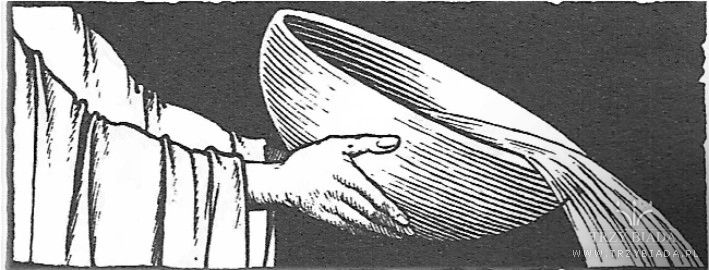
After this I looked, and the sanctuary of the tent of witness in heaven was opened, and out of the sanctuary came the seven angels with the seven plagues, clothed in pure, bright linen, with golden sashes around their chests. And one of the four living creatures gave to the seven angels seven golden bowls full of the wrath of God who lives forever and ever, and the sanctuary was filled with smoke from the glory of God and from his power, and no one could enter the sanctuary until the seven plagues of the seven angels were finished. Revelation 15:1-8 ESV

199-001When reading the book of Revelation, one can begin to feel as if the onslaught of judgments coming on earth and its inhabitants will never come to an end. It seems as if each new chapter brings with it yet more devastating news of unbelievable and unbearable trials that will befall mankind. But in these chapters, Even in this chapter, John is given yet another sign in heaven, one he describes as “great and amazing,” that will involves seven plagues. These are the seven bowl judgments. But John is informed that these will be “the last, for with them the wrath of God is finished” (Revelation 15:1 ESV). There is a certain finality to this vision. He is being provided with a much-needed reminder that there is an end coming to all of God’s judgments upon the earth. There will be a climax to all that John has seen and that will be the second coming of Jesus Christ. The seven seals, the seven trumpets and the seven bowl judgments are nothing more than a preface, preparing the way for return of the Son of God. And He will bring with Him the final phase of God’s judgments, completing that portion of the divine plan for the redemption and restoration of the world. Christ will return immediately after the seventh bowl has been poured out.

John is being given a much-needed reminder that this seemingly endless wave of judgments has not only an end, but a purpose. None of what he has witnessed has been indiscriminate or arbitrary in nature. These are not the actions of a petty and impetuous deity who simply enjoys taking out His anger on the weak and defenseless. These are the acts of a holy, righteous and sovereign God who is obligated by His very nature to deal with the insurrection raised against His rightful rule and reign. We have seen over and over again the unrepentant nature of those who find themselves suffering under His righteous anger. He brings well-deserved judgments upon them, but they refuse to repent and acknowledge Him as God. They stubbornly cling to their false god, willingly worshiping the Antichrist, giving to him the glory only God deserves. John has been shown the gracious and merciful nature of God as He provides 144,000 Jewish converts to Christ who spend their entire lives during the tribulation, spreading the good news regarding Jesus Christ and God’s offer of salvation made possible through Him. But the vast majority of the people of earth will refuse this offer. They will turn up their noses at God’s gracious gift, choosing to remain in open rebellion against Him, rather than humbly turn to Him in humble repentance and submission. So, the seven bowls will be poured out and the final judgments of God will be meted out. But His judgments, like His patience, have an end. As we have seen repeatedly, the number seven is the number of perfection or completion. Just as there were seven seals and seven trumpets, there are seven bowls containing seven plagues. They represent God’s perfect and complete judgment against mankind. This is not a case of overkill on God’s part. Everything He has done and will do is perfectly righteous, without fault and in keeping with His blameless character.

John sees a sea of glass, like the one he saw in chapter four, but this one is mixed with fire. The sea of glass, that extends before the throne of God, is meant to reflect the glory. of God. But here, John sees God’s glory mixed with fire, a symbol of judgment. The seven plagues are “are the last, for with them the wrath of God is finished.” You cannot separate God’s glory from His wrath and judgment. A holy and righteous God cannot and will not tolerate insurrection and insubordination on the part of those He has created. He is obligated by His very nature to deal with the blatant rebellion of mankind to His sovereign will.

For you are not a God who delights in wickedness;
    evil may not dwell with you.
The boastful shall not stand before your eyes;
    you hate all evildoers.
You destroy those who speak lies;
    the Lord abhors the bloodthirsty and deceitful man. – Psalm 5:4-6 ESV

God does not view man’s sin as simply an alternative lifestyle or a decision to take a different path than the one He prescribes. He knows that sin is not only rebellion against His will, but an act of self-destruction, leading to death, not life. And sin, like a communicable disease, is contagious and deadly. It spreads like a cancer, infecting everyone with whom it comes in contact. It damages and destroys, and there is no end to its destructive influence. So, God must act. He must eliminate sin once and for all, and John is being reminded that this is exactly what God is going to do.

John sees, standing beside the sea of glass, a crowd of individuals who most likely represent all those who will come to faith in Christ during the days of the tribulation and suffer martyr’s deaths as a result. They are described as having “conquered the beast and its image and the number of its name” (Revelation 15:2 ESV). Having refused to take the mark of the beast and worship the Antichrist, they were executed. But now, John sees them, holding harps in their hands and singing the song of Moses and the song of the Lamb. These are most likely two different songs, but both containing praise for God’s salvation and redemption. In Deuteronomy 32, we have recorded one of the songs of Moses which speaks of God’s power and deliverance of His people.

For the Lord will vindicate his people
    and have compassion on his servants,
when he sees that their power is gone
    and there is none remaining, bond or free. – Deuteronomy 32:36 ESV

“‘See now that I, even I, am he,
    and there is no god beside me;
I kill and I make alive;
    I wound and I heal;
    and there is none that can deliver out of my hand.’” – Deuteronomy 32:39 ESV

One of the things recorded in the song of Moses found in Deuteronomy 32 is the reminder that God is righteous and just.

“The Rock, his work is perfect,
    for all his ways are justice.
A God of faithfulness and without iniquity,
    just and upright is he. – Deuteronomy 32:4 ESV

He always does what is right. He never acts unjustly or reacts to His people undeservedly. And that is exactly the message John hears in the song being sung by the martyred saints.

“Great and amazing are your deeds,
    O Lord God the Almighty!
Just and true are your ways,
    O King of the nations.” – Revelation 15:3 ESV

These saints vindicate the actions of God, proclaiming His righteousness and ascribing to Him holiness. They sing, “your righteous acts have been revealed” (Revelation 15:4 ESV), an unapologetic defense of all that God has done and will do. All the world will ultimately come to fear and worship Him for who He is, because He alone is holy.

And then John sees the seven angels carrying the seven plagues, coming out of the sanctuary of God. This is yet another, not-so-subtle-reminder, that these judgments are coming from the very throne room of God in heaven. They are divinely ordained and ordered. And one of the four creatures, who stand around the throne of God, give each of the seven angels a golden bowl containing the “full of the wrath of God who lives forever and ever” (Revelation 15:7 ESV). It is a bit confusing that the angels are described as carrying the seven plagues, but are then given the seven bowls. And the bowls are described as holding the wrath of anger of God. As we will see in the very next chapter, the seven bowls will be means by which the plagues are poured out on the earth. So perhaps, what John is being shown is that the angels walked out of the sanctuary of God, holding the form of God’s judgment – the plagues – but were then given the means by which those judgments would come – by His anger. The plagues would flow forth, mixed with the anger or divine wrath of God. Again, the song of Moses, recorded in Deuteronomy 32, speaks of this wrath of God coming upon all those who stand opposed to Him.

“Rejoice with him, O heavens;
    bow down to him, all gods,
for he avenges the blood of his children
    and takes vengeance on his adversaries.
He repays those who hate him
    and cleanses his people’s land.” – Deuteronomy 32:43 ESV

God’s righteous anger will be “poured out” in the form of seven very real and very devastating plagues. The wrath of God will take concrete and recognizable form. And like the people of Egypt, who suffered from the plagues that God poured out on them, the people of the earth will know that God alone is God. They will unmistakably recognize the power of God Almighty as He makes His anger both felt and known. And John ends this chapter with the statement that “the sanctuary was filled with smoke from the glory of God and from his power, and no one could enter the sanctuary until the seven plagues of the seven angels were finished” (Revelation 15:8 ESV). Access to God is completely cut off until the full extent of His judgment on earth is complete. This is a vivid and sobering reminder of God’s holiness. He is not to be trifled with. He is not to be treated flippantly or contemptuously. The sanctuary in heaven will be off limits to all until the full extent of God’s wrath is poured out and the final portion of His judgments are meted out.

And in the very next chapter, John will see each of those seven bowls poured out on the earth and its inhabitants. The focus will turn from heaven back to earth. The final days of God’s judgment have come and the return of His Son is closer than ever before.

English Standard Version (ESV) The Holy Bible, English Standard Version. ESV® Permanent Text Edition® (2016). Copyright © 2001

New Living Translation (NLT) Holy Bible, New Living Translation, copyright © 1996, 2004, 2015 by Tyndale House Foundation. Used by permission of Tyndale House Publishers Inc., Carol Stream, Illinois 60188. All rights reserved.

The Message (MSG)  Copyright © 1993, 1994, 1995, 1996, 2000, 2001, 2002 by Eugene H. Peterson