Not What They Expected

40 When they heard these words, some of the people said, “This really is the Prophet.” 41 Others said, “This is the Christ.” But some said, “Is the Christ to come from Galilee? 42 Has not the Scripture said that the Christ comes from the offspring of David, and comes from Bethlehem, the village where David was?” 43 So there was a division among the people over him. 44 Some of them wanted to arrest him, but no one laid hands on him.

45 The officers then came to the chief priests and Pharisees, who said to them, “Why did you not bring him?” 46 The officers answered, “No one ever spoke like this man!” 47 The Pharisees answered them, “Have you also been deceived? 48 Have any of the authorities or the Pharisees believed in him? 49 But this crowd that does not know the law is accursed.” 50 Nicodemus, who had gone to him before, and who was one of them, said to them, 51 “Does our law judge a man without first giving him a hearing and learning what he does?” 52 They replied, “Are you from Galilee too? Search and see that no prophet arises from Galilee.” – John 7:40-52 ESV

When Jesus spoke, people listened. That doesn’t mean they always understood or liked what He had to say. In fact, His messages often left His audiences intrigued and incensed at the same time. And when Jesus taught in the temple courtyard, on the last day of the Feast of Booths, He made His usual impact on those who had gathered to hear Him. He had chosen His words carefully, taking advantage of the circumstances surrounding the water rite that was practiced each morning of the festival.

For six days, the people had watched the daily processional as the priests brought a golden bowl filled with water from the Pool of Siloam up to the temple courtyard. Once there, they would pour out the water, along with another bowl filled with wine, on the brazen altar, as the people recited Isaiah 55:1 and Isaiah 12:3: “Come, everyone who thirsts, come to the waters…With joy you will draw water from the wells of salvation.”

But on the seventh day of the feast, or what John refers to as “the great day,” this ritual required the priests to circle the brazen altar seven times before they poured out the water and wine. This ceremony was known as the Hoshana Rabbah, the great “HOSHIANA” (which translated is “save now”).

So, on that final day, when Jesus stood in the temple courtyard and proclaimed, “Anyone who is thirsty may come to me! Anyone who believes in me may come and drink! For the Scriptures declare, ‘Rivers of living water will flow from his heart’” (John 7:37-38 NLT), His words did not go unnoticed. John records:

When they heard these words, some of the people said, “This really is the Prophet.” Others said, “This is the Christ.” – John 7:40-41 ESV

They didn’t know what to make of Jesus. His miracles and messages intrigued them, causing them to wonder if He might be someone special. Of course, their natural tendency was to equate Him with one of the Old Testament prophecies concerning the Messiah or “the prophet” promised by Moses (Deuteronomy 18:15). They knew Jesus was special, but they weren’t exactly sure what to make of Him. So much of what He did and said seemed to contradict their preconceived ideas regarding the coming Messiah. He didn’t seem to fit the image of the one they were expecting. Jesus didn’t look like a conquering king or a powerful military figure who was going to lead the people of Israel in a victorious rebellion against the Roman. Some had a difficult time believing this itinerant Rabbi was actually their Messiah. After all, the prophets had made it clear that the Messiah would be a descendant of King David, even sharing his birthplace of Bethlehem. But, as far as they could tell, Jesus was from Galilee.

There was much about Jesus they didn’t know or understand. They were unaware of the details concerning His birth in Bethlehem. They knew nothing of His lineage as outlined in the other gospels, where He is listed as “the son of David” (Matthew 1:1; Luke 3:31). So, they ended up debating about who He was and what they were to do with Him.

…there was a division among the people over him. Some of them wanted to arrest him, but no one laid hands on him. – John 7:43-44 ESV

John continues to stress the divine nature of the timeline surrounding Jesus’ last days on earth. While John makes it clear that the circumstances surrounding Jesus are intensifying, he gives no indication that Jesus was worried or concerned. The religious leaders are growing increasingly more desperate to eliminate Jesus as a threat, but they are powerless to do anything. John even describes the frustration of the Sanhedrin when their guards return empty-handed, having failed to arrest Jesus as they had been ordered.

When the Temple guards returned without having arrested Jesus, the leading priests and Pharisees demanded, “Why didn’t you bring him in?” – John 7:45 NLT

And even the response of these men reveals the powerful impact Jesus had on all those who were exposed to His teaching.

“We have never heard anyone speak like this!” the guards responded. – John 7:46 NLT

They had been blown away by what they heard. But the religious leaders were appalled at their gullibility and failure to do their jobs. They ridicule these guards for being so easily deceived while bragging about their own refusal to be taken in by His lies. It was their superior knowledge of the law that kept them from falling prey to this blasphemous pretender. And they pronounce a curse on the people for their ignorance of and disregard for God’s law.

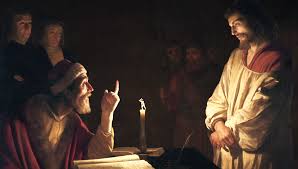
But it is at that point that John reintroduces Nicodemus. This Pharisee and member of the ruling council of Israel shows up a second time in John’s narrative. He first appeared in the middle of the night, seeking an impromptu and secret meeting with Jesus. His encounter with Jesus had left him confused and asking, “How can these things be?” (John 3:3:9 ESV). All Jesus’ talk about being born again and the Son of Man being lifted up had left Nicodemus perplexed. But it had given him plenty to think about. So, when his colleagues reacted so vehemently against Jesus, Nicodemus spoke up.

“Is it legal to convict a man before he is given a hearing?” – John 7:51 NLT

It seems clear that Nicodemus was more than curious about Jesus, and he couldn’t understand why his associates were so unwilling to give this man a proper hearing. What harm could it do to investigate Jesus’ claims more fully? But Nicodemus’ question was met with scorn and ridicule. His fellow members of the Sanhedrin, driven by blind hate for Jesus, turned their anger against him, demeaning him as no better than a lowly and ignorant Galilean.

“Are you from Galilee, too? Search the Scriptures and see for yourself—no prophet ever comes from Galilee!” – John 7:52 NLT

For all their supposed knowledge of the Scriptures, they were incredibly misinformed. Their pride in their ow Judean heritage and their hatred for Galileans blinded them to the truth of God’s Word. Both Jonah and Nahum had been prophets who hailed from Galilee. And now, they were faced with yet another messenger sent from God who was not what they were expecting. Jesus did not fit their preconceived notions regarding the Messiah, so they deemed Him a liar and a lunatic. They allowed their pride to get in the way. Their egos prevented them from recognizing the very one for whom they had been waiting. It was just as Jesus had said:

“You search the Scriptures because you think that in them you have eternal life; and it is they that bear witness about me, yet you refuse to come to me that you may have life.” – John 5:39-40 ESV

English Standard Version (ESV) The Holy Bible, English Standard Version. ESV® Permanent Text Edition® (2016). Copyright © 2001 by Crossway Bibles, a publishing ministry of Good News Publishers.

New Living Translation (NLT)
Holy Bible, New Living Translation, copyright © 1996, 2004, 2015 by Tyndale House Foundation. Used by permission of Tyndale House Publishers Inc., Carol Stream, Illinois 60188. All rights reserved.

The Message (MSG)Copyright © 1993, 1994, 1995, 1996, 2000, 2001, 2002 by Eugene H. Peterson

You Have No Idea!

25 Some of the people of Jerusalem therefore said, “Is not this the man whom they seek to kill? 26 And here he is, speaking openly, and they say nothing to him! Can it be that the authorities really know that this is the Christ? 27 But we know where this man comes from, and when the Christ appears, no one will know where he comes from.” 28 So Jesus proclaimed, as he taught in the temple, “You know me, and you know where I come from. But I have not come of my own accord. He who sent me is true, and him you do not know. 29 I know him, for I come from him, and he sent me.” 30 So they were seeking to arrest him, but no one laid a hand on him, because his hour had not yet come. 31 Yet many of the people believed in him. They said, “When the Christ appears, will he do more signs than this man has done?”– John 7:25-31 ESV

The confusion and consternation over Jesus continues. This itinerant Rabbi from Galilee was walking enigma. Because of His reputation for performing miraculous signs and wonders, He attracted large crowds wherever He went. But no one was quite sure who He was or what to make of Him. There had been ongoing debates regarding His identity, with some speculating that He was the prophet Moses had spoken about. Others questioned whether He might be the Messiah. And while many considered Him to be a good man, there were others who had concluded that He was a deceiver who was not to be trusted. And then there were the religious leaders who viewed Him as a deadly threat to the social fabric of the nation and so, they had implemented plans to have Him put to death.

The high priest and the other members of the Sanhedrin had intended for their plot against Jesus to remain a secret, but the news of their clandestine plan had leaked out. Yet, not everyone was aware of the growing conspiracy against Jesus. In fact, when He had announced that there was a plot to murder Him, the crowd had rejected His accusation, writing off His paranoia to demon possession.

The crowd replied, “You’re demon possessed! Who’s trying to kill you?”– John 7:20 NLT

Yet, for those who were aware of the Sanhedrin’s sinister plan to have Jesus killed, they couldn’t understand why these powerful men had taken no action. It was not as if they lacked the opportunity. Jesus had spent the day teaching in the temple courtyard and the Jewish religious leaders had done nothing to silence Him. He had even reiterated His blasphemous claim of having been been sent by God.

“My message is not my own; it comes from God who sent me. Anyone who wants to do the will of God will know whether my teaching is from God or is merely my own.” – John 7:16-17 NLT

Confused by the inaction of the religious leaders, some in the crowd began to speculate whether they had changed their minds.

“Could our leaders possibly believe that he is the Messiah?” – John 7:26 NLT

But they quickly discounted this idea because, in their minds, Jesus did not fit the criteria for being the Messiah. According to their understanding, the Messiah would simply show up on the scene, unannounced and with no indication as to His point of origin.

“When the Messiah comes, he will simply appear; no one will know where he comes from.” – John 7:27 NLT

This belief was common among the Jews but was ill-founded and in contradiction to the Scriptures. The prophet, Micah, had clearly indicated that the Messiah would hail from Bethlehem (Micah 5:2). In fact, just a few verses later, John records a debate that took place among the people concerning the birthplace of the Messiah. Some were arguing that Jesus could not be the Messiah because He was from the city of Nazareth in Galilee. Yet, the Scriptures had indicated that the Messiah would hail from Bethlehem, the birthplace of King David.

“For the Scriptures clearly state that the Messiah will be born of the royal line of David, in Bethlehem, the village where King David was born.” – John 7:42 NLT

They were unaware of Jesus’ birth in Bethlehem and simply assumed that He had been born in the same place where He had been raised: Nazareth in Galilee. As a result, they ruled out the possibility that He might be the Messiah.

But while the people were busy debating the birthplace of the Messiah, Jesus took the opportunity to reveal that they had a much greater problem. He accused them of not knowing God.

“Yes, you know me, and you know where I come from. But I’m not here on my own. The one who sent me is true, and you don’t know him. But I know him because I come from him, and he sent me to you.” – John 7:28-29 NLT

This bold statement by Jesus was meant to have an impact. He was standing in the temple courtyard, surrounded by faithful Jews, and accusing them of lacking knowledge of Yahweh, their God. They thought they knew who Jesus was and where He came from, but they were sorely mistaken. And it was all because they had a less-than-vibrant relationship with their Heavenly Father. Because they were ignorant of God, they were unable to recognize the Son of God.

Jesus knew that the people were the byproduct of their religious leaders. These men had failed to instill in the people a love for God and His Word. As a result, the common Jew suffered from a lack of biblical knowledge that made intimacy with God virtually impossible. That is why Jesus had been so harsh in His assessment of the Pharisees and teachers of religious law.

“You hypocrites! Isaiah was right when he prophesied about you, for he wrote, ‘These people honor me with their lips, but their hearts are far from me. Their worship is a farce, for they teach man-made ideas as commands from God.’” – Matthew 15:7-9 NLT

This had been a long-standing problem among the people of God, as is evidenced by Jesus quoting the words of His own Father, recorded by the prophet Isaiah hundreds of years earlier. Over the centuries, the people of Israel had made a habit of going through the motions when it came to their relationship with Yahweh. They put a lot of effort into keeping His laws but their hearts weren’t in it. Their obedience was motivated by fear rather than love.

And in time, they failed to recognize that the Scriptures, the sacrificial system, and the Mosaic law had all been meant to develop their knowledge of and love for God. But Jesus revealed that they had missed the point altogether and, as a result, had missed out on knowing Him.

“…the Father who sent Me has Himself testified about Me. You have never heard His voice nor seen His form, nor does His word abide in you, because you do not believe the One He sent.

You pore over the Scriptures because you presume that by them you possess eternal life. These are the very words that testify about Me, yet you refuse to come to Me to have life.” – John 5:37-40 BSB

The failure of the people to recognize Jesus as their Messiah was due to their lack of a vibrant relationship with God. They revered His written Word. They placed a high priority on trying to keep His commandments. They viewed the temple as a sign of God’s abiding presence but lived as if God was nowhere to be found. So, when the Messiah showed up, they had a difficult time seeing the resemblance between the Father and the Son.

One of the things that John has stressed throughout his gospel is the role Jesus played in manifesting or revealing His Heavenly Father. John the Baptist had testified, “No one has ever seen God. But the unique One, who is himself God, is near to the Father’s heart. He has revealed God to us” (John 1:18 NLT).

Later on in his gospel, John records the words that Jesus spoke the crowds who followed Him:

“…when you see me, you are seeing the one who sent me.” – John 12:45 NLT

And Jesus would announce to Phillip, “Anyone who has seen me has seen the Father!” (John 14:9 NLT). The apostle Paul explained how this could be true when he wrote, “Christ is the visible image of the invisible God” (Colossians 1:15 NLT). Jesus came to make God known and knowable. That is why He later declared, “I am the way, the truth, and the life. No one can come to the Father except through me. If you had really known me, you would know who my Father is. From now on, you do know him and have seen him!” (John 14:6-7 NLT).

The people were in a bind. They didn’t know God, so they lacked an understanding of the written word of God. And because they failed to comprehend God’s word, they were unable to recognize the Living Word when He showed up. It was their inability to recognize Jesus as the Messiah that prevented them from seeing the Father in all His glory. That is prompted Jesus to declare, “Since you don’t know who I am, you don’t know who my Father is. If you knew me, you would also know my Father” (John 8:19 NLT).

The results of this conversation were somewhat predictable. The religious leaders were incensed and increased their efforts to kill Jesus. And the people continued to debate the identity of Jesus, with some reaching the conclusion that He must be the Messiah because of the miracles He performed.

Many among the crowds at the Temple believed in him. “After all,” they said, “would you expect the Messiah to do more miraculous signs than this man has done?” – John 7:31 NLT

It wasn’t the testimony of God as revealed in the Scriptures that convinced them. It was the supernatural nature of Jesus’ miracles that led them to believe. But this would prove to be an inadequate basis for believing faith. In time, the miracles would stop. The outward signs of power that so appealed to them would be replaced by an outward display of weakness, as Jesus hung on the cross as a common criminal. His crucifixion would be the deal-breaker for his former followers. They never expected their Messiah to die. So, with His death, Jesus had proven His claims to be nothing but a lie. Or so they thought.

 English Standard Version (ESV) The Holy Bible, English Standard Version. ESV® Permanent Text Edition® (2016). Copyright © 2001 by Crossway Bibles, a publishing ministry of Good News Publishers.

New Living Translation (NLT)
Holy Bible, New Living Translation, copyright © 1996, 2004, 2015 by Tyndale House Foundation. Used by permission of Tyndale House Publishers Inc., Carol Stream, Illinois 60188. All rights reserved.

The Message (MSG)Copyright © 1993, 1994, 1995, 1996, 2000, 2001, 2002 by Eugene H. Peterson

Misplaced Judgment

11 The Jews were looking for him at the feast, and saying, “Where is he?” 12 And there was much muttering about him among the people. While some said, “He is a good man,” others said, “No, he is leading the people astray.” 13 Yet for fear of the Jews no one spoke openly of him.

14 About the middle of the feast Jesus went up into the temple and began teaching. 15 The Jews therefore marveled, saying, “How is it that this man has learning, when he has never studied?” 16 So Jesus answered them, “My teaching is not mine, but his who sent me. 17 If anyone’s will is to do God’s will, he will know whether the teaching is from God or whether I am speaking on my own authority. 18 The one who speaks on his own authority seeks his own glory; but the one who seeks the glory of him who sent him is true, and in him there is no falsehood. 19 Has not Moses given you the law? Yet none of you keeps the law. Why do you seek to kill me?” 20 The crowd answered, “You have a demon! Who is seeking to kill you?” 21 Jesus answered them, “I did one work, and you all marvel at it. 22 Moses gave you circumcision (not that it is from Moses, but from the fathers), and you circumcise a man on the Sabbath. 23 If on the Sabbath a man receives circumcision, so that the law of Moses may not be broken, are you angry with me because on the Sabbath I made a man’s whole body well? 24 Do not judge by appearances, but judge with right judgment.” – John 7:11-24 ESV

Jesus had delayed His journey to Jerusalem, refusing to travel alongside His half-brothers because they were only interested in seeing Him make a grand entrance into the city. They had tried to goad Him into putting on a display of His miracle-working power in Jerusalem and so that He might garner an even greater following.

“You can’t become famous if you hide like this! If you can do such wonderful things, show yourself to the world!” – John 7:4 NLT

But Jesus was only interested in being faithful, not famous. He was committed to doing the will of His Father and all that He said and did was in keeping with that will. Jesus was not out to make a name for Himself. Rather than seeking glory for Himself, He sought to bring glory to His Heavenly Father by doing His will.

“For I have come down from heaven, not to do my own will but the will of him who sent me.” – John 6:38 ESV

And Jesus knew that His Father’s will included not only His incarnation but His crucifixion. He had taken on human flesh so that He might give His life as a ransom for humanity. His miracles were not intended to make Him famous but to prove His identity as the Son of God. That is why He had no interest in the applause and accolades of men.

“I do not accept glory from men.” – John 5:41 BSB

He wasn’t out to build His own reputation or bolster His image among the people. Jesus knew that obedience to His Father’s will would bring Him far greater glory than this world had to offer.

“And though I have no wish to glorify myself, God is going to glorify me. He is the true judge.” – John 8:50 NLT

“If I want glory for myself, it doesn’t count. But it is my Father who will glorify me.” – John 8:54 NLT

But Jesus knew that His glorification would not happen until He had faithfully completed His God-ordained assignment. He was well aware that His days were numbered and that the growing animosity of the religious leaders would ultimately result in His death. That is why He said, “the Son of Man came not to be served but to serve others and to give his life as a ransom for many” (Matthew 20:28 NLT).

None of this was known to the Jewish religious leaders. They had no idea who Jesus was and so they were completely oblivious to the redemptive nature of His ministry. Yet, they had been waiting and watching for His arrival. Why? So they could put Him to death.

…the Jewish leaders tried all the harder to find a way to kill him. For he not only broke the Sabbath, he called God his Father, thereby making himself equal with God. – John 5:18 NLT

John reveals that the rumors concerning Jesus were all over the map. Some were willing to admit that He was a “good man,” while others labeled Him as “a fraud who deceives the people” (John 7:12 NLT). And anyone who might have held a high opinion of Jesus knew it was best to keep it to themselves or they could face the wrath of the Sanhedrin.

You would think that Jesus would have kept a low profile, remaining hidden from view and avoiding any unnecessary notoriety. But John states that Jesus made His way to the temple where He began to teach. Jesus was not fearful or timid. He didn’t let the hatred of the Jewish religious leaders prevent Him from speaking on behalf of His Heavenly Father. And as these men listened to Jesus speak, they were surprised and shocked by the depth of His understanding.

“How does he know so much when he hasn’t been trained?” – John 7:15 NLT

They perceived Jesus to be an uneducated rural Rabbi from Galilee. He had not trained with the prominent and well-respected teachers of the law such as Gamaliel. And yet, here He was speaking with a degree of wisdom and insight that was difficult to comprehend. What these men failed to understand was that Jesus was the Son of God and, as a result, all He said came directly from the lips of God Himself. Jesus would later state: “I don’t speak on my own authority. The Father who sent me has commanded me what to say and how to say it” (John 12:49 NLT).

And Jesus, knowing that the religious leaders were puzzled by His eloquence and depth of understanding, told them, “My message is not my own; it comes from God who sent me” (John 7:16 NLT). This statement would have added fuel to the fire, further inciting the Sanhedrin’s hatred for Him. Every time He claimed to have been sent by God, their desire to see Him eliminated increased exponentially.

But Jesus was far from done. Turning His attention to these prideful, arrogant men, Jesus boldly proclaimed, “Anyone who wants to do the will of God will know whether my teaching is from God or is merely my own” (John 7:17 NLT). These men prided themselves in doing God’s will. They considered themselves to be the consummate keepers of God’s law and therefore, icons of righteousness. But Jesus knew their hearts. He was fully aware that these men were glory-seeking self-promoters whose only interest was their own reputations.

Jesus was making a not-so-subtle comparison between Himself and these men when He stated, “Those who speak for themselves want glory only for themselves, but a person who seeks to honor the one who sent him speaks truth, not lies” (John 7:18 NLT). In the very next chapter, John records Jesus’ stinging indictment against these men, where He declares them to be the children of Satan.

“For you are the children of your father the devil, and you love to do the evil things he does. He was a murderer from the beginning. He has always hated the truth, because there is no truth in him. When he lies, it is consistent with his character; for he is a liar and the father of lies.” – John 8:44 NLT

Their desire for self-glorification was evidence of their relationship with Satan. From the very beginning, Satan’s plan has been to entice humanity to worship themselves rather than submit themselves to the worship of God. All the way back in the garden, He had convinced Eve to disobey God and eat of the fruit of the forbidden tree, telling her, “God knows that your eyes will be opened as soon as you eat it, and you will be like God, knowing both good and evil” (Genesis 3:5 NLT). Her desire to be like God led her to glorify herself rather than God. And the rest, as they say, is history.

And Jesus reveals that these men were following in the footsteps of Eve, choosing to glorify themselves rather than God. Jesus would later expose these well-respected leaders for their hypocrisy and deception.

“Everything they do is for show. On their arms they wear extra wide prayer boxes with Scripture verses inside, and they wear robes with extra long tassels. And they love to sit at the head table at banquets and in the seats of honor in the synagogues. They love to receive respectful greetings as they walk in the marketplaces, and to be called ‘Rabbi.’” – Matthew 23:5-7 NLT

And Jesus would admit that they while they were “the official interpreters of the law of Moses,” they were lousy at living up to its standards. This is why He warned the people, “So practice and obey whatever they tell you, but don’t follow their example” (Matthew 23:2-3 NLT).

John even records Jesus blasting these men for their refusal to obey the very law they prided themselves in keeping.

“Moses gave you the law, but none of you obeys it! In fact, you are trying to kill me.” – John 7:19 NLT

The crowds were confused by Jesus’ words because they had no idea that the Sanhedrin was planning His death. So, they simply thought Jesus had lost His mind or was possessed of a demon. But ignoring their comments, Jesus went to the heart of the matter: His supposed violation of the law. His healing of the paralyzed man had taken place on the Sabbath and had led the religious leaders to label Him as a law-breaker. But Jesus turns the tables on them, revealing the well-known fact that the Jews always circumcised male infants on the eighth day, even if that day fell on the Sabbath. So, if they were free to “break” one of God’s laws in order to keep another, why were they upset with Jesus?

He logically concludes, “For if the correct time for circumcising your son falls on the Sabbath, you go ahead and do it so as not to break the law of Moses. So why should you be angry with me for healing a man on the Sabbath?” (John 7:23 NLT).

They didn’t understand what Jesus was doing because they didn’t understand who Jesus was. Their perception was clouded by ignorance and jealousy. Because they refused to accept Jesus as the Son of God, they could not understand that He was doing the will of God, which gave Him the authority to supersede the law of God. But their judgment of Jesus was misplaced because their understanding of Jesus was mistaken.

 English Standard Version (ESV) The Holy Bible, English Standard Version. ESV® Permanent Text Edition® (2016). Copyright © 2001 by Crossway Bibles, a publishing ministry of Good News Publishers.

New Living Translation (NLT)
Holy Bible, New Living Translation, copyright © 1996, 2004, 2015 by Tyndale House Foundation. Used by permission of Tyndale House Publishers Inc., Carol Stream, Illinois 60188. All rights reserved.

The Message (MSG)Copyright © 1993, 1994, 1995, 1996, 2000, 2001, 2002 by Eugene H. Peterson

The Disbelief of Family and Foes

1 After this Jesus went about in Galilee. He would not go about in Judea, because the Jews were seeking to kill him. 2 Now the Jews’ Feast of Booths was at hand. 3 So his brothers said to him, “Leave here and go to Judea, that your disciples also may see the works you are doing. 4 For no one works in secret if he seeks to be known openly. If you do these things, show yourself to the world.” 5 For not even his brothers believed in him. 6 Jesus said to them, “My time has not yet come, but your time is always here. 7 The world cannot hate you, but it hates me because I testify about it that its works are evil. 8 You go up to the feast. I am not going up to this feast, for my time has not yet fully come.” 9 After saying this, he remained in Galilee.

10 But after his brothers had gone up to the feast, then he also went up, not publicly but in private. – John 7:1-10 ESV

In John’s gospel, Jerusalem appears to be ground-zero. While he dedicates a good portion of his narrative to events that took place outside of Judea, he repeatedly refocuses the reader’s attention back to the capital city. Jerusalem was the home of God’s house, the temple that had been reconstructed by Herod. It was where the annual feasts and festivals, prescribed by God to Moses, were celebrated. This celebrated city, while just a shadow of its former glory under the reigns of David and his son, Solomon, was still the epicenter of the Hebrew nation. It was home to the revered and feared Jewish religious council, the Sanhedrin. And it had become the focal point of the conflict between these well-established religious leaders and Jesus, whom they viewed as nothing more than a charlatan and a troublesome threat to their power and authority.

With the opening of chapter seven, John establishes the inherent danger the city of Jerusalem posed for Jesus. This was the very place where, in the early days of His ministry, Jesus had caused an uproar in the temple courtyard.

In the temple he found those who were selling oxen and sheep and pigeons, and the money-changers sitting there. And making a whip of cords, he drove them all out of the temple, with the sheep and oxen. And he poured out the coins of the money-changers and overturned their tables. – John 2:14-15 ESV

This emotional display had won Jesus no friends among the religious elite of Israel. They questioned His authority to do what He had done, and they began to view Him as nothing more than a showboating, attention-grabbing troublemaker from Galilee. This unknown Rabbi from Galilee had been drawing larger and larger crowds with His so-called miracles and ridiculous claims to be the Son of God. To the Pharisees and Sadducees, Jesus was a lunatic and possibly even demon-possessed. And He had clearly committed the sin of blasphemy by claiming equality with God.

This was why the Jews were seeking all the more to kill him, because not only was he breaking the Sabbath, but he was even calling God his own Father, making himself equal with God. – John 5:18 ESV

As John continues to chronicle the life and ministry of Jesus, he purposely builds the sense of tension between the Messiah of Israel and those who had set themselves up as the religious gatekeepers of the nation. And Jerusalem becomes center-stage for what will be the ultimate showdown between Jesus and these men. But as will be revealed, this conflict will prove to be a spiritual battle between Almighty God and Satan, the prince of this world.

As chapter seven opens, John reveals just how dangerous things had become for Jesus. Due to the growing animosity of the Sanhedrin, Jesus had determined to spend most of His time in Galilee, rather than in Judea because He knew they were out to kill Him. Jesus did not fear death, but He was simply sticking to the divine timeline given to Him by His Heavenly Father. It was just as He had told His mother at the wedding in Cana, “My hour has not yet come” (John 2:4 ESV).

John reveals that the “Feast of Booths was at hand” (John 7:2 ESV). This was one of three annual feasts that required the mandatory attendance of all Jewish males.

“Three times a year all your males shall appear before the Lord your God at the place that he will choose: at the Feast of Unleavened Bread, at the Feast of Weeks, and at the Feast of Booths. They shall not appear before the Lord empty-handed.” – Deuteronomy 16:16 ESV

But these festivals became annual pilgrimages for the Jews, drawing large crowds to Jerusalem. The Feast of Booths was to be a commemoration of God’s deliverance of the people of Israel from their captivity in Egypt and a joyous celebration of His provision and protection of them during their 40 years in the wilderness. And when they gathered in Jerusalem, they were not to come “empty-handed,” but they were to bring tithes and offerings to present to God.

The key theme of these opening verses is that of disbelief. It seems quite clear that the Jewish religious leaders did not believe in Jesus. They had even discounted His miracles by describing them as the work of Satan, not God (Matthew 12:24). But John adds another interesting group to the list of the unbelieving: The half-brothers of Jesus. These were men who had grown up in the same household with Jesus. They were intimately familiar with Him. And yet, they were not quite convinced that Jesus was who He claimed to be. In fact, at one point, they described His actions as those of a madman (Mark 3:21). Yet, in this case, they seem to be goading Jesus to use the Feast of Tabernacles as the opportunity to make a name for Himself.

“Leave here and go to Judea, where your followers can see your miracles! You can’t become famous if you hide like this! If you can do such wonderful things, show yourself to the world!” – John 7:3-4 ESV

It’s impossible to know the motivation behind their words. Were they sincere or merely being sarcastic? John doesn’t tell us. But he does make it clear that “not even his brothers believed in him” (John 7:5 ESV). It would appear that they were prompting Jesus to use the Feast of Booths as a platform for displaying His miraculous powers. He was wasting His time doing miracles in Galilee. If He wanted to be famous, He was going to have to go prime-time, and what better venue than Jerusalem during one of the most popular feasts of the year?

But Jesus responded to their goading by saying, “My time has not yet come…” (John 7:6 ESV). There is probably a double-meaning to His response. First of all, it was not yet time for Jesus to be “glorified.” They were wanting Him to put on a display of His glory by performing miracles in Jerusalem. But that time had not yet come. Jesus was on God’s schedule, not man’s. Their counsel was eerily similar to that of Satan when he had tempted Jesus in the wilderness (Matthew 4:1-10) He had attempted to get Jesus to display His glory ahead of schedule and out of keeping with God’s will.

But the second meaning behind His response was that it was not yet time for Him to attend the feast. Jesus told His brothers, “your time is always here. The world cannot hate you, but it hates me because I testify about it that its works are evil. You go up to the feast…” (John 7:6-8 ESV). They had nothing to fear. Because they did not believe Jesus to be the Messiah, they were not at risk. They could walk into Jerusalem unafraid and unmolested. But Jesus knew that He would receive a dramatically different welcome. So, He delayed His entry into Jerusalem. John makes that point clear in verse 10.

But after his brothers had gone up to the feast, then he also went up, not publicly but in private. – John 7:10 ESV

Jesus would be obedient and obey the law requiring all Jewish males to attend the feast. But He would not do so in a way that might jeopardize His mission. His half-brothers were wanting Jesus to make a “triumphal entry” into Jerusalem, to show up in a blaze of attention-getting miracles. But it was not yet time. Everything Jesus did was in keeping with His Father’s will and in fulfillment of Old Testament prophecy. And it all had to be done according to plan.

But central to these opening verses is the theme of disbelief. The Jewish leadership refused to believe in Jesus. But so did His own family members. And jealousy and pride were probably determining factors for both groups. The Pharisees and Sadducees were envious of Jesus’ popularity. They felt threatened by His growing fame and frustrated by their inability to discredit His claims. But there was likely a bit of jealousy and pride motivating Jesus’ own family members. Here was their older brother becoming a celebrity and they were left in the background, wondering just how famous their sibling would become and whether they would benefit from His meteoric rise to fame and fortune. But they did not believe in Him. They refused to accept Him as the Son of God and the Messiah of Israel. To both groups, Jesus was just a man. To the religious leaders, He was a man who posed a threat to their power and authority. To His half-brothers, Jesus was a man who offered them an opportunity to enjoy fame and possible fortune. But both groups failed to recognize who He was and what He had come to do.

English Standard Version (ESV) The Holy Bible, English Standard Version. ESV® Permanent Text Edition® (2016). Copyright © 2001 by Crossway Bibles, a publishing ministry of Good News Publishers.

New Living Translation (NLT)
Holy Bible, New Living Translation, copyright © 1996, 2004, 2015 by Tyndale House Foundation. Used by permission of Tyndale House Publishers Inc., Carol Stream, Illinois 60188. All rights reserved.

The Message (MSG)Copyright © 1993, 1994, 1995, 1996, 2000, 2001, 2002 by Eugene H. Peterson

Misguided Belief

23 Now when he was in Jerusalem at the Passover Feast, many believed in his name when they saw the signs that he was doing. 24 But Jesus on his part did not entrust himself to them, because he knew all people 25 and needed no one to bear witness about man, for he himself knew what was in man.

1 Now there was a man of the Pharisees named Nicodemus, a ruler of the Jews. 2 This man came to Jesus by night and said to him, “Rabbi, we know that you are a teacher come from God, for no one can do these signs that you do unless God is with him.” – John 2:23-3:2 ESV

As someone who seems obsessed with providing evidence for the identity of Jesus, John can be maddeningly stingy when it comes to the details. Even when describing Jesus’ cleansing of the temple, John cuts to the chase, providing the basic facts about what happened but leaving a great deal up to the reader’s imagination. He does the same thing in verse 23, where he makes an almost cursory allusion to the signs Jesus performed in Jerusalem.

Now when he was in Jerusalem at the Passover Feast, many believed in his name when they saw the signs that he was doing. – John 2:23 ESV

It’s difficult to read that verse without wanting to ask, “What signs?” But John appears to have no interest in explaining the nature of miracles Jesus performed. It’s not that the signs were unimportant to John because they will become the basis for what he describes in chapter three. It’s almost as if he assumes his audience is already familiar with the topic and he has more important matters to discuss.

The miracles performed by Jesus were an essential facet of His ministry, and, as John alludes to, they produced a certain measure of belief in Jesus. And that seems to be the primary point John wants to make. For John, the details concerning the signs Jesus did were irrelevant, but the belief they produced was not. It is likely that Jesus healed the lame, gave sight to the blind, and cast out demons. And when He did, the people marveled at His indisputable supernatural powers. Not only that, they believed in His name. But what does that mean? What was the nature of their belief and why does John state that their belief was in “the name” of Jesus?

To understand what’s going on, you have to go back to verse 20 of chapter one. The priests and Levites had sent a delegation to make inquiries about John the Baptist. His activities in the Judean wilderness had stirred up a lot of attention and resulted in much speculation as to his identity. And one of the first assumptions people made was that John the Baptist must be the long-awaited Messiah. This seems quite clear because when the delegation asked John the Baptist who he was, he declared, “I am not the Christ.” He knew what the people were saying about him. His call to repentance and his declaration that the kingdom of heaven was at hand had caused people to speculate that the Messiah had finally arrived.

Messiah-fever had begun to spread. And so had the news of Jesus’ miracle at Cana. So, when He had shown up in Jerusalem, cleansed the temple, and started performing miracles, the people believed in His name: Jesus Christ – Jesus the Messiah. Remember what Andrew told his brother Simon.

“We have found the Messiah” (which means “Christ”). – John 1:41 ESV

Philip had told Nathanael:

“We have found the very person Moses and the prophets wrote about! His name is Jesus, the son of Joseph from Nazareth.” – John 1:45 ESV

And upon meeting Jesus, Nathanael had confessed:

“Rabbi, you are the Son of God—the King of Israel!” – John 1:49 ESV

This news had spread. Word had gotten out that the Messiah had come. So, when Jesus performed signs and wonders, the people took it as evidence that He truly was the Messiah.

But John’s primary concern is in the object of their faith or belief. The people were believing Jesus to be the Messiah, but their understanding of what that meant would prove to be inaccurate. They were expecting the Messiah to be a conquering king and a mighty military leader like King David had been. They were looking for a deliverer, a political savior of sorts, who would lead them against the Roman occupying forces and set them free from the centuries-long misery of subjugation and suffering they had experienced since the Babylonian invasion.

And John points out that Jesus was aware of their misguided and misunderstood belief in Him.

But Jesus on his part did not entrust himself to them, because he knew all people and needed no one to bear witness about man, for he himself knew what was in man. – John 2:24 ESV

Jesus was not fooled by their expressions of faith. He knew their belief in Him was solely based on their deeply held desire that He deliver them from Roman rule. If they had their way, they would take Jesus by force and attempt to thrust Him into their preconceived idea of a super-savior. You see this same fanatical fervor in John’s account of Jesus’ miraculous feeding of the 5,000.

When the people saw the sign that he had done, they said, “This is indeed the Prophet who is to come into the world!”

Perceiving then that they were about to come and take him by force to make him king, Jesus withdrew again to the mountain by himself. – John 6:14-15 ESV

Jesus had not come to be their earthly king. He would lead no armies against the Romans. There would be no battles waged, rebellions launched, or earthly kingdom established – at least, not yet. And that is the point John is attempting to make.

Chapter three opens with an encounter between Jesus and a member of the Pharisees. This highly revered religious leader schedules a somewhat clandestine meeting with Jesus, choosing to meet with Him under the cover of darkness. Due to his prestigious role as a Pharisee and his standing within the community, he wants his meeting to remain a secret.

John is going to use this Pharisee to illustrate the stark difference between what the people believed about Jesus and what Jesus would reveal to be the true nature of His incarnation. Nicodemus, as a Pharisee, would have been well-educated and a student of the Hebrew scriptures, and would have been highly familiar with the many Messianic prophecies they contained. So, when he meets Jesus, he states his own belief that Jesus is a God-ordained messenger from God.

“Rabbi, we know that you are a teacher come from God, for no one can do these signs that you do unless God is with him.” – John 3:2 ESV

His use of the terms “rabbi” and “teacher” indicate his respect and professional admiration for Jesus. He admired Jesus for His obvious divine anointing. He was intrigued by Jesus’ works and words. But he also knew that any association with Jesus could prove detrimental to his role as a Pharisee. Even at this early stage in His earthly ministry, the Pharisees and other Jewish religious leaders were beginning to see Jesus as a potential threat. These men were members of the Sanhedrin, the Jewish religious council, that was comprised of the high priest and 70 members who represented the various sects within Judaism, including the Pharisees, Sadducees, Essenes, and Zealots.

They held sway over the people of Israel, functioning as a kind of supreme court or religious council. Their authority was second only to that of the Roman government. And they took exception to anyone who might attempt to disrupt or displace their sovereign rule over the people. Even the thought of a Messiah would have been threatening to their authority. Someone claiming to be the “chosen one” of God could cause all kinds of trouble, promoting political unrest, stirring up the common people, and, ultimately, angering the Roman government. And, if that happened, the Romans would step in, putting a swift end to any rebellion and holding the Sanhedrin responsible for allowing it to happen.

So, Nicodemus shows up at night, but his presence and his words indicate that he believes Jesus just might be the one for whom they have been waiting. Even he, as a member of the Pharisees, longs to see the Messiah. He greatly desires to see the kingdom of God reestablished on earth in the form of a revitalized Jewish state. But he is about to get a personal lesson from the Messiah Himself that will reveal just how misguided and misinformed he really was about God’s plans for Israel’s future.

English Standard Version (ESV) The Holy Bible, English Standard Version. ESV® Permanent Text Edition® (2016). Copyright © 2001 by Crossway Bibles, a publishing ministry of Good News Publishers.

New Living Translation (NLT)
Holy Bible, New Living Translation, copyright © 1996, 2004, 2015 by Tyndale House Foundation. Used by permission of Tyndale House Publishers Inc., Carol Stream, Illinois 60188. All rights reserved.

The Message (MSG)Copyright © 1993, 1994, 1995, 1996, 2000, 2001, 2002 by Eugene H. Peterson

I Am With You Always

11 While they were going, behold, some of the guard went into the city and told the chief priests all that had taken place. 12 And when they had assembled with the elders and taken counsel, they gave a sufficient sum of money to the soldiers 13 and said, “Tell people, ‘His disciples came by night and stole him away while we were asleep.’ 14 And if this comes to the governor’s ears, we will satisfy him and keep you out of trouble.” 15 So they took the money and did as they were directed. And this story has been spread among the Jews to this day.

16 Now the eleven disciples went to Galilee, to the mountain to which Jesus had directed them. 17 And when they saw him they worshiped him, but some doubted. 18 And Jesus came and said to them, “All authority in heaven and on earth has been given to me. 19 Go therefore and make disciples of all nations, baptizing them in the name of the Father and of the Son and of the Holy Spirit, 20 teaching them to observe all that I have commanded you. And behold, I am with you always, to the end of the age.” – Matthew 28:11-20 ESV

92845787.jpg

Of all the gospel authors, Matthew provides us with the most abbreviated version of the events surrounding Jesus’ last hours on earth. For whatever reason, he chose to leave out all the appearances Jesus made after His resurrection. We know from the accounts penned by John, Luke, and Mark, that Jesus appeared to His followers repeatedly during the hours between His resurrection and His ascension. There was the occasion when He had walked alongside the two distraught disciples on the road to Emmaus as they discussed the recent death of their master (Luke 24:13-32). Initially, they had been unable to recognize Jesus. But when they eventually realized they were talking with the resurrected Lord, they made a beeline to the room where the 10 disciples were gathered together, informing them of their encounter with Jesus.  And as they were sharing the exciting news, Jesus suddenly appeared among them (Luke 24:33-40).

John records that Thomas had not been in the room that day, and when his fellow disciples told him what had happened, he expressed his reservations. So, eight days later, Jesus revealed Himself to Thomas, telling him, “Do not disbelieve but believe” (John 20:27).

The apostle Paul provides a succinct summary of all of Jesus’ post-resurrection appearances.

He was seen by Peter and then by the Twelve. After that, he was seen by more than 500 of his followers at one time, most of whom are still alive, though some have died. Then he was seen by James and later by all the apostles. Last of all, as though I had been born at the wrong time, I also saw him. – 1 Corinthians 15:5-8 NLT

But Matthew chose to leave out all of this. Not only that, He doesn’t even mention the ascension of Jesus. Dr. Stanley Toussaint provides us with a compelling explanation for Matthew’s decision to leave out this seemingly vital part of the narrative.

The reason for Matthew’s diligence in approaching the resurrection in such an apologetic manner is evident since so much is dependent upon the resurrection of the Messiah. It authenticated His person. To the nation of Israel, His resurrection was the sign of the prophet Jonah (Matthew 12:38-49) attesting the fact that Jesus was the Messiah. The reason Matthew says nothing about the ascension is bound up in this point. If Jesus is the Messiah, then an account of the ascension is both unnecessary and self-evident to the Israelite. He would yet come in clouds of glory. What mattered to Matthew was that Jesus was Israel’s Messiah and the resurrection proved that fact; therefore he goes no further. – Toussaint, Stanley D. Behold the King: A Study of Matthew. Portland, Oreg.: Multnomah Press, 1980.

For Matthew, the resurrection said it all. If Jesus had been raised from the dead, which Matthew clearly believed, then His ascension would have been an undisputed fact. Matthew’s primary point was to prove the Messiahship of Jesus. That’s because, as a Jew, Matthew had written his gospel with a Jewish audience in mind. He had been out to prove that Jesus was the Messiah, the Son of God, and the Savior of the world. And, for him, the resurrection was clear evidence and conclusive proof of that claim.

The tomb was empty, and news of that reality had already begun to spread. In fact, the temple guards who had been tasked with protecting the tomb had already delivered their report of the missing body to Caiaphas, the high priest, and his father-in-law. The Jewish high council had placed these guards at the tomb of Jesus in order to prevent the disciples from stealing His body. The members of the Sanhedrin had been informed of Jesus’ bold and blasphemous claim that He would rise from the dead. So, they assumed His fanatical disciples, in a pathetic attempt to keep their little revolution alive, would try to steal the body of Jesus and declare Him to be alive.  Much to their surprise and chagrin, that is essentially what the guards reported. And Matthew records that the guards told the high priest “all that had taken place.” That would have included exactly what Matthew had reported.

…there was a great earthquake, for an angel of the Lord descended from heaven and came and rolled back the stone and sat on it. His appearance was like lightning, and his clothing white as snow. And for fear of him the guards trembled and became like dead men. – Matthew 28:2-4 ESV

These guards would have feared for their lives. They had failed in their assignment. The body they had been instructed to guard was no longer there. If anything, these men could have fabricated a lie that provided them with a plausible alibi. But instead, they told the truth – as crazy as it may have sounded. Not only had they failed to secure the tomb, but they had also fallen asleep on the job. So, they most likely told their bosses exactly what had happened in great detail.

But Matthew records that Caiaphas, after having heard the unwelcome news, assembled the rest of the high council. Amazingly, Caiaphas determined that the best strategy was to pay off the guards and spread the rumor that the disciples had stolen the body – the very thing he had hoped to prevent. It seems evident that he knew something else had taken place, and this decision was nothing more than a poor attempt at a coverup. The last thing he wanted was a rumor of Jesus’ resurrection spreading throughout the city.

And yet, that fact was Matthew’s primary point. Jesus was alive. He had risen from the dead, just as He had promised. He was the Messiah of Israel and the Savior of the world. Matthew had opened up his gospel with the encounter between Joseph and the angel.

“Joseph, son of David, do not fear to take Mary as your wife, for that which is conceived in her is from the Holy Spirit. She will bear a son, and you shall call his name Jesus, for he will save his people from their sins.” – Matthew 1:20-21 ESV

Matthew had followed that story with the one involving the arrival of the wise men, who had come in search of “he who has been born king of the Jews?” (Matthew 2:2 ESV).

Next, Matthew recorded Herod’s attempt to eliminate the infant Jesus as a threat by having all the male babies executed. He reported Jesus’ baptism by John the Baptist and the divine pronouncement from God, stating, “This is my beloved Son, with whom I am well pleased” (Matthew 3:17 ESV).

Matthew had been out to prove that Jesus was Immanuel, “God with us” (Matthew 1:23 ESV). And the resurrection of Jesus was the final, conclusive piece of evidence.

Jesus had directed His disciples to meet Him at a mountain in Galilee. We are not told which mountain, but it may have been the very place where Jesus had given His sermon on the mount recorded in Matthew 5-7. But regardless of the exact location of their place of rendezvous, Jesus appeared yet again to His followers. Matthew reports that while all 11 of the disciples worshiped Him, some still harbored doubts. He doesn’t explain what he meant by this. Did they doubt Jesus’ resurrection? That seems hard to imagine, based on the fact that He was standing right in front of them. Did they doubt that He was the Messiah? Perhaps. It could be that they were still harboring hopes that He would reveal Himself to be the King they had long hoped for.

The Greek word translated as “doubted” is edistasan, and it refers to a spirit of hesitation. It is likely that they were uncertain and fearful of all that was going on around them. They probably harbored concerns about the future. They were in unchartered waters. The events of the last few days were not what they had expected, and they had no idea what was going to happen next. What were Jesus’ plans? What would happen to them? The Sanhedrin had already proven just how far they would go to eliminate Jesus as a threat, and they were not going to give up easily.

But Jesus attempted to calm their fears and doubts by telling them, “All authority in heaven and on earth has been given to me” (Matthew 28:18 ESV). This statement was meant to assure His wavering, fear-focused disciples that He was in complete control of the situation. The very fact that He was standing before them, alive and well, was proof that He had authority from God Almighty. He had done what no other man had ever done before – He had conquered death and the grave. And they had no reason to fear.

But they did have work to do. And Jesus, according to His God-given authority, commissioned His followers to continue His work in His absence.

“Go therefore and make disciples of all nations, baptizing them in the name of the Father and of the Son and of the Holy Spirit, teaching them to observe all that I have commanded you. And behold, I am with you always, to the end of the age.” – Matthew 28:19-20 ESV

No more hiding. No more fearing. They were to boldly proclaim the good news of Jesus’ Messiahship. He was the Son of God. He was Immanuel, God with us. He was the King of the Jews and the Savior of the world. And that remarkable news was to be proclaimed throughout the world. While the temple guards and the Sanhedrin were busy spreading lies, the disciples were to spread the truth about the death-defeating, sin-forgiving power of the resurrected Savior.

And Jesus assured His followers that, though He was leaving, He would still be with them. This promise was fulfilled when the Holy Spirit came to dwell in them on the day of Pentecost. The Spirit would be their constant companion and source of divine power. And, while Jesus would soon depart and return to His Father’s side in heaven, the Spirit of God would remain with them all the days of their lives. And He will remain with all those who make up the body of Christ, the Church, until the end of the age.

English Standard Version (ESV)
The Holy Bible, English Standard Version. ESV® Permanent Text Edition® (2016). Copyright © 2001 by Crossway Bibles, a publishing ministry of Good News Publishers.

New Living Translation (NLT)
Holy Bible, New Living Translation, copyright © 1996, 2004, 2015 by Tyndale House Foundation. Used by permission of Tyndale House Publishers Inc., Carol Stream, Illinois 60188. All rights reserved.

The Message (MSG)Copyright © 1993, 1994, 1995, 1996, 2000, 2001, 2002 by Eugene H. Peterson

His Blood Be On Us!

24 So when Pilate saw that he was gaining nothing, but rather that a riot was beginning, he took water and washed his hands before the crowd, saying, “I am innocent of this man’s blood; see to it yourselves.” 25 And all the people answered, “His blood be on us and on our children!” 26 Then he released for them Barabbas, and having scourged Jesus, delivered him to be crucified.

27 Then the soldiers of the governor took Jesus into the governor’s headquarters, and they gathered the whole battalion before him. 28 And they stripped him and put a scarlet robe on him, 29 and twisting together a crown of thorns, they put it on his head and put a reed in his right hand. And kneeling before him, they mocked him, saying, “Hail, King of the Jews!” 30 And they spit on him and took the reed and struck him on the head. 31 And when they had mocked him, they stripped him of the robe and put his own clothes on him and led him away to crucify him. – Matthew 27:24-31 ESV

Jesus mockedPilate washed his hands of Jesus. He wanted nothing to do with the death of this innocent man, but because of the growing anger of the mob that had gathered outside his home, he gave in to their demands and turned Jesus over to be crucified. Yet, he made his position on the matter perfectly clear: “I am innocent of this man’s blood; see to it yourselves” (Matthew 27:24 ESV).

According to Luke’s account, Pilate had attempted to set Jesus free. His own wife had warned him not to have anything to do with putting Jesus to death because she had experienced disturbing dreams about him. Upon discovering that Jesus was a Galilean, Pilate sent Jesus to Herod so that he might examine him.

“…after examining him before you, behold, I did not find this man guilty of any of your charges against him. Neither did Herod, for he sent him back to us. Look, nothing deserving death has been done by him. I will therefore punish and release him.” – Luke 23:14-16 ESV

The people could have cared less about what Pilate or Herod thought. Their minds were made up. They wanted Jesus dead, and the continued to cry out, “Crucify, crucify him!” (Luke 23:21 ESV). And Luke records that, for the third and final time, Pilate had responded:

“Why? What evil has he done? I have found in him no guilt deserving death. I will therefore punish and release him.” – Luke 23:22 ESV

But the people would have none of it. They were not interested in the facts of the case. The guilt of Jesus had been established by the religious leaders, and that was enough for them. And Luke continues in his account:

But they were urgent, demanding with loud cries that he should be crucified. And their voices prevailed. So Pilate decided that their demand should be granted. – Luke 23:23-24 ESV

Fearing a riot, Pilate gave in to the demands of the people, and handed Jesus over to his guards to begin the process of His crucifixion. The people responded with what would be a prophetic statement that would seal their own fates, as well as those of their descendants, for generations to come.

“His blood be on us and on our children!” – Matthew 27:25 ESV

With this rashly spoken vow, these people unknowingly admitted their culpability for Jesus’ death and included their children and grandchildren in their guilt. Sometime later, after Jesus was resurrected and had ascended back into heaven, Peter would remind the high priest and the Sanhedrin:

“The God of our ancestors raised Jesus from the dead after you killed him by hanging him on a cross.” – Acts 5:30 ESV

Peter was simply restating what the crowd had declared. The blood of Jesus was on their hands. They would be held responsible by God for the death of His Son. And it would be because of their refusal to accept Jesus as their Messiah that God would turn to the Gentiles with the offer of salvation through His Son. The apostle Paul makes this fact perfectly clear in his letter to the Romans. But he also reminds us that, in spite of their blood-guilt, God was not yet done with Israel.

Did God’s people stumble and fall beyond recovery? Of course not! They were disobedient, so God made salvation available to the Gentiles. But he wanted his own people to become jealous and claim it for themselves. Now if the Gentiles were enriched because the people of Israel turned down God’s offer of salvation, think how much greater a blessing the world will share when they finally accept it. – Romans 11:11-12 NLT

And just in case we fail to understand the weight of Paul’s words, he adds:

What does all this mean? Even though the Gentiles were not trying to follow God’s standards, they were made right with God. And it was by faith that this took place. But the people of Israel, who tried so hard to get right with God by keeping the law, never succeeded. Why not? Because they were trying to get right with God by keeping the law instead of by trusting in him. They stumbled over the great rock in their path. God warned them of this in the Scriptures when he said,

“I am placing a stone in Jerusalem that makes people stumble,
    a rock that makes them fall.
But anyone who trusts in him
    will never be disgraced.” – Romans 9:30-33 NLT

The people of Israel had stumbled over Jesus. His arrival on the scene had left them disappointed and disillusioned. He was not the kind of Messiah they had been expecting, so they rejected Him. And their refusal to accept Him led to the gospel being sent to the Gentiles. But there is a day coming when God will refocus His divine will and His everlasting love on His chosen people, the Israelites. Paul goes on to state the unmistakable reality of that fact.

Some of the people of Israel have hard hearts, but this will last only until the full number of Gentiles comes to Christ. And so all Israel will be saved. As the Scriptures say,

“The one who rescues will come from Jerusalem,
    and he will turn Israel away from ungodliness.
And this is my covenant with them,
    that I will take away their sins.” – Romans 23:25-27 NLT

The crowd gathered outside Pilate’s residence had demanded the death of Jesus. They had rejected Him as their Messiah and demanded that a common criminal be released in His place. They would be complicit in the death of the Savior of the world. But it would be His death that made redemption possible for the world. Their rejection of Jesus made His offer of salvation available to the Gentile world. And since the day of Pentecost, when the church began, millions upon millions of Gentiles from all tribes, nations, and tongues, have come to faith in Jesus. But the day is coming when the full number of Gentiles that God has ordained for salvation will be complete. Then, He will turn His attention to Israel once again, extending His grace and mercy to a people responsible for the death of His own Son. The blood of Jesus, covering their heads as a sign of their guilt, will also be used by God to cleanse them from all unrighteousness. The one they crucified will be the one who will deem them fully justified.

But first, Jesus was going to have to suffer and die. And HIs suffering began at the hand of Pilate’s guards, who stripped Him, beat Him, and mocked Him by sarcastically proclaiming Him to be the king of the Jews. In this depressing scene, we see Jews and Gentiles alike rejecting the Savior of the world. They ridicule rather than revere Him. They spit in the face of the one who created them. They crush a hastily fabricated crown of thorns onto the head of the King of kings and Lord of lords. And in their ignorance, they jokingly, and prophetically cry out, “Hail, King of the Jews!”

Little did they know how true those words would prove to be. Jesus was the King of the Jews, and He was willingly laying down His life for His people. He was dying so that they might live. He was taking on their guilt and suffering the death they deserved so that they might receive His righteousness and God’s forgiveness. He was willingly shedding His blood so that the sins of mankind might be atoned for once and for all. The apostle John reminds us that “the blood of Jesus his Son cleanses us from all sin” (1 John 1:7 ESV).

And in the book of Revelation, John records a vision he was given into heaven during the days of the Great Tribulation.

After this I saw a vast crowd, too great to count, from every nation and tribe and people and language, standing in front of the throne and before the Lamb. They were clothed in white robes and held palm branches in their hands. And they were shouting with a great roar,

“Salvation comes from our God who sits on the throne and from the Lamb!” – Revelation 7:9-10 NLT

When John inquired as to who made up this vast crowd dressed in white, he was told:

“These are the ones who died in the great tribulation. They have washed their robes in the blood of the Lamb and made them white.” – Revelation 7:14 NLT

The precious blood of Jesus shed for the sins of men, will continue to provide atonement and salvation for generations to come, all the way up to the end. But when the crowd gathered outside Pilate’s home had boldly shouted, “His blood be on us and on our children!” they had no idea how prophetic their words would be. Because, as the author of Hebrews reminds us, “without the shedding of blood there is no forgiveness of sins” (Hebrews 9:22 ESV).

English Standard Version (ESV)
The Holy Bible, English Standard Version. ESV® Permanent Text Edition® (2016). Copyright © 2001 by Crossway Bibles, a publishing ministry of Good News Publishers.

New Living Translation (NLT)
Holy Bible, New Living Translation, copyright © 1996, 2004, 2015 by Tyndale House Foundation. Used by permission of Tyndale House Publishers Inc., Carol Stream, Illinois 60188. All rights reserved.

The Message (MSG)Copyright © 1993, 1994, 1995, 1996, 2000, 2001, 2002 by Eugene H. Peterson

Let Him Be Crucified!

11 Now Jesus stood before the governor, and the governor asked him, “Are you the King of the Jews?” Jesus said, “You have said so.” 12 But when he was accused by the chief priests and elders, he gave no answer. 13 Then Pilate said to him, “Do you not hear how many things they testify against you?” 14 But he gave him no answer, not even to a single charge, so that the governor was greatly amazed.

15 Now at the feast the governor was accustomed to release for the crowd any one prisoner whom they wanted. 16 And they had then a notorious prisoner called Barabbas. 17 So when they had gathered, Pilate said to them, “Whom do you want me to release for you: Barabbas, or Jesus who is called Christ?” 18 For he knew that it was out of envy that they had delivered him up. 19 Besides, while he was sitting on the judgment seat, his wife sent word to him, “Have nothing to do with that righteous man, for I have suffered much because of him today in a dream.” 20 Now the chief priests and the elders persuaded the crowd to ask for Barabbas and destroy Jesus. 21 The governor again said to them, “Which of the two do you want me to release for you?” And they said, “Barabbas.” 22 Pilate said to them, “Then what shall I do with Jesus who is called Christ?” They all said, “Let him be crucified!” 23 And he said, “Why? What evil has he done?” But they shouted all the more, “Let him be crucified!” – Matthew 27:11-23 ESV

Munkacsy_-_christ_before_pilateJudas had hung himself. The rest of the disciples were in hiding. Peter, in particular, was in a state of deep sorrow, having fulfilled Jesus’ prediction by denying Him on three separate occasions.
But Jesus was still in the custody of the high priest’s guards and on His way to Pilate, the Roman governor. The Jewish religious leaders were no fans of the Roman government, but they knew they needed Rome’s authority and legal jurisdiction in order to have Jesus put to death.

In his gospel account, John indicates that it was early in the morning when Jesus arrived at the governor’s residence. And Matthew records that the first thing the governor asked Jesus was, “Are you the King of the Jews?” (Matthew 27:11 ESV). This seems like an odd way for Pilate to start his interrogation of Jesus, but it reveals that he had been informed of the rumors concerning Jesus. He had most likely heard all the details concerning Jesus’ somewhat spectacular entry into Jerusalem a few days earlier and had been told about the shouts of the crowds who had greeted Him as He made His way into the city.

“Hosanna to the Son of David! Blessed is he who comes in the name of the Lord! Hosanna in the highest!” – Matthew 21:9 ESV

It would also seem apparent that the high priest and the members of the Sanhedrin had accused Jesus of claiming to be the king of the Jews. They knew their charge of blasphemy against Jesus would be of no interest to Pilate. But the threat of a possible insurrection against Herod, the Roman-appointed king of Israel, would have gotten Pilate’s attention. The Jews wanted Jesus dead because He had claimed to be the Son of God. But they knew the best way to get the Romans to sanction His death would be to portray Jesus as a dangerous radical and revolutionary, whose very presence was a threat to the Pax Romana, the Roman peace that allowed them to keep their vast empire under control.

John records that, when the Jews showed up at Pilate’s house with Jesus in tow, the governor had asked them what accusations they were bringing against Jesus. And they had replied, “If this man were not doing evil, we would not have delivered him over to you” (John 18:30 ESV). They wanted to paint Jesus as dangerous. And both Matthew and Mark make it clear that the Sanhedrin leveled many charges against Jesus. They were doing their best to destroy the reputation of Jesus and to give Pilate no other recourse than to sentence Him to death. And through it all, Jesus remained silent. He said nothing. He was not interested in self-defense, but in fulfilling the will of His Father.

Pilate, a seasoned and savvy political leader, saw through the motives of the Sanhedrin. Matthew records that “he knew that it was out of envy that they had delivered him up” (Matthew 27:18 ESV). It was the Jewish religious leaders who saw Jesus as a threat, not Rome. During His three years of ministry, Jesus had done nothing to engender the least bit of fear or paranoia on the part of Rome. He was not a rabble-rouser or trouble-maker. He had not promoted the overthrow of the Roman government. He had not encouraged dissent or preached revolutionary rhetoric aimed at overthrowing Herod or eliminating Roman rule. That was not His mission.

So Pilate, desiring to release the obviously innocent Jesus without having to make the decision himself, provided the Jews with a choice. During his tenure as governor, Pilate had created an annual act of goodwill that took place during the Jewish celebration of Passover. He would release to them a Jew being held in captivity by the Roman government. On this occasion, he offered them a choice between two individuals: Jesus or a notorious criminal named Barabas. According to Mark, this man was a murderer and an insurrectionist. And it seems apparent that Pilate believed the people would prefer to have Jesus released over this well-known and dangerous criminal. But he was wrong. Due to the insidious influence of the Sanhedrim, the crowd that had gathered outside Pilate’s home overwhelmingly expressed their choice of the murderer over the Messiah. They wanted Barabas released, not Jesus.

And when Pilate asked the crowd, “what shall I do with Jesus who is called Christ?” they responded, “Let him be crucified!” (Matthew 27:22 ESV).

Shocked at their response, Pilate asked, “Why? What evil has he done?” (Matthew 27:23 ESV). And again, the people shouted, “Let him be crucified!” The mob mentality fomented by the Jewish religious leaders overruled common sense and reason. Jesus was innocent of all charges brought against Him, but they did not care. Sensing the blood in the water, the feeding frenzy had begun. 

When Pilate had asked Jesus if He was the king of the Jews, He had simply replied, “You have said so” (Matthew 27:11 ESV). With those four words, Jesus confirmed His identity. He was the King of the Jews. But not in a sense that Pilate could have understood or in a way that the Jews could have anticipated. He was a King over a different kind of Kingdom. And He ruled with far more power and authority than Pilate could have ever imagined. Jesus would tell Pilate:

“My kingdom is not of this world. If my kingdom were of this world, my servants would have been fighting, that I might not be delivered over to the Jews. But my kingdom is not from the world.” – John 18:36 ESV

In these closing hours of Jesus’ life on earth, the topic of His kingship will come up repeatedly. He will even be mocked by the guards and given a purple robe and a crown of thorns to wear. These war-hardened legionnaires will bow down before Him, sarcastically shouting, “Hail, King of the Jews!” (Mark 15:18 ESV). When Jesus is nailed to the cross, Pilate will command that a placard be placed above His head, stating the nature of His crime. And it will read “King of the Jews.”

Jesus was and is the King of the Jews. And as the book of Revelation makes clear, He is the King of kings and Lord of lords (Revelation 19:16). Pilate was standing before the rightful King of Israel and the righteous ruler over all of creation. And it’s amazing to think that Pilate was more willing to wrestle with the reality of Jesus’ sovereignty than the Jewish religious leaders were. Pilate wanted to release Jesus. But the high priest and the Sanhedrin were adamant that He be put to death – all because they refused to accept His identity as their King and Lord.

The Jews would get their wish. Their arch-nemesis would meet an untimely end. But their relentless crusade to seek Jesus’ death and their successful efforts to secure Rome’s official sanctioning of it were all part of the sovereign will of God. Every aspect of this dark chronology was in fulfillment of the divine strategy. As Jesus had stated in the garden, “But this is all happening to fulfill the words of the prophets as recorded in the Scriptures” (Matthew 26:56 NLT).

English Standard Version (ESV)
The Holy Bible, English Standard Version. ESV® Permanent Text Edition® (2016). Copyright © 2001 by Crossway Bibles, a publishing ministry of Good News Publishers.

New Living Translation (NLT)
Holy Bible, New Living Translation, copyright © 1996, 2004, 2015 by Tyndale House Foundation. Used by permission of Tyndale House Publishers Inc., Carol Stream, Illinois 60188. All rights reserved.

The Message (MSG)Copyright © 1993, 1994, 1995, 1996, 2000, 2001, 2002 by Eugene H. Peterson

What Is Your Judgment?

 57 Then those who had seized Jesus led him to Caiaphas the high priest, where the scribes and the elders had gathered. 58 And Peter was following him at a distance, as far as the courtyard of the high priest, and going inside he sat with the guards to see the end. 59 Now the chief priests and the whole council were seeking false testimony against Jesus that they might put him to death, 60 but they found none, though many false witnesses came forward. At last two came forward 61 and said, “This man said, ‘I am able to destroy the temple of God, and to rebuild it in three days.’” 62 And the high priest stood up and said, “Have you no answer to make? What is it that these men testify against you?” 63 But Jesus remained silent. And the high priest said to him, “I adjure you by the living God, tell us if you are the Christ, the Son of God.” 64 Jesus said to him, “You have said so. But I tell you, from now on you will see the Son of Man seated at the right hand of Power and coming on the clouds of heaven.” 65 Then the high priest tore his robes and said, “He has uttered blasphemy. What further witnesses do we need? You have now heard his blasphemy. 66 What is your judgment?” They answered, “He deserves death.” 67 Then they spit in his face and struck him. And some slapped him, 68 saying, “Prophesy to us, you Christ! Who is it that struck you?” – Matthew 26:57-68 ESV

CaiphasJesus had been arrested and His disciples had fled into the night. Even Peter, the one who had earlier boasted, “Though they all fall away because of you, I will never fall away” (Matthew 26:33 ESV). Their fear had gotten the best of them and they had resigned themselves to the fact that it was all over. Matthew even records that Peter, having followed the guards who were taking Jesus to Caiaphas, the high priest, did so, “to see the end” (Matthew 26:58 ESV). It was all over. Their dreams of Jesus being their Messiah and the one who would sit on the throne of David had been dashed. Jesus was as good as a dead man and there was nothing Peter or any of the other disciples could do about it.

While they sought safety and solace in the dark, Jesus was dragged before Annas, the father-in-law of Caiaphas, the high priest. Annas had been the high priest at one time and still held sway over the Sanhedrin, the Jewish high council. It was Annas who questioned Jesus about His disciples and His teaching. And Jesus had responded:

“I have spoken openly to the world. I have always taught in synagogues and in the temple, where all Jews come together. I have said nothing in secret. Why do you ask me? Ask those who have heard me what I said to them; they know what I said.” – John 18:20-21 NLT

Taking Jesus’ statement as a sign of disrespect for Annas, one of the guards struck Him in the face. Then Jesus was hauled before Caiaphas.

It’s important to note that all of these gatherings took place at night and in secret. These men were not conducting a trial, but an inquisition. They had already determined the guilt of Jesus and were simply looking for concrete evidence or proof to justify their predetermined plan to have Him put to death. They had made their fateful decision immediately after Jesus had raised Lazarus from the dead. John records that, as a result of that miraculous event, “Many of the people who were with Mary believed in Jesus” (John 11:45 ESV). And when the Sanhedrin had gotten word of what Jesus had done, they were disturbed by the news, asking, “What are we going to do? This man certainly performs many miraculous signs. If we allow him to go on like this, soon everyone will believe in him. Then the Roman army will come and destroy both our Temple and our nation” (John 11:47-48 NLT). But it had been Caiaphas, the high priest, who had calmly laid out the solution to this vexing problem.

“You don’t know what you’re talking about! You don’t realize that it’s better for you that one man should die for the people than for the whole nation to be destroyed.” – John 11:49-50 NLT

So, by the time Jesus was dragged in front of the Sanhedrin, His fate had been sealed. The so-called trial was a sham. And these religious leaders, in an attempt to find proof against Jesus, resorted to hiring false witnesses. And as Matthew makes perfectly clear, their intent was to put Jesus to death. But because the Jews were forbidden by the Romans of practicing capital punishment, they would need proof that Jesus was a threat to national security and worthy of death. They would have to convince the Romans to do their dirty deed for them.

But the false witnesses proved to be no help at all. They couldn’t get their stories straight. But then, two came forward who remembered the words Jesus had spoken immediately after He had overturned the tables of the money changers in the temple. When Jesus had been asked by the religious leaders who had given Him the authority to do what He had done, He had responded, “Destroy this temple, and in three days I will raise it up” (John 2:19 NLT). And these two witnesses had been there. So, they related this incendiary statement to the high priest and the members of the high council.

Obviously, these two men had missed Jesus’ point. In his gospel account, John clarifies what Jesus had meant. “But when Jesus said ‘this temple,’ he meant his own body” (John 2:21 NLT).

Yet when Jesus was given an opportunity to respond to the testimony of these men, He didn’t clarify His meaning. He didn’t attempt to qualify His original statement. Matthew records that Jesus remained silent. Unlike His encounter with Annas, this time Jesus chose not to respond to Caiaphas. And His actions were in direct fulfillment of the prophecy of Isaiah.

He was oppressed and treated harshly, yet he never said a word. He was led like a lamb to the slaughter. And as a sheep is silent before the shearers, he did not open his mouth. – Isaiah 53:7 ESV

Jesus was not interested in defending Himself – either physically or verbally. This entire evening had been preordained by His heavenly Father, and Jesus was fully committed to doing what His Father had commanded Him to do.

“No one can take my life from me. I sacrifice it voluntarily. For I have the authority to lay it down when I want to and also to take it up again. For this is what my Father has commanded.” – John 10:18 NLT

But Caiaphas was not satisfied. He needed Jesus to commit blasphemy – to claim to be God. That was the evidence the high priest needed to justify the death of Jesus. So, he said to Jesus, “I adjure you by the living God, tell us if you are the Christ, the Son of God” (Matthew 26:63 ESV). This was not a case of Caiaphas expressing hope that Jesus was the Messiah, but a last desperate attempt to get Jesus to blaspheme by claiming to be God’s Son and, therefore, divine.

On an earlier trip to the city of Jerusalem, at the Feast of Dedication, and in the temple courtyard, Jesus had made the bold claim, “I and the Father are one” (John 10:30 ESV). That statement had incensed the Jews and they had taken up rocks to stone Him. But Jesus had expressed confusion, stating that He had performed many good works that proved He was from God. So, He asked, “for which of them are you going to stone me?” (john 10:32 ESV). And the people shouted, “It is not for a good work that we are going to stone you but for blasphemy, because you, being a man, make yourself God” (John 10:33 ESV).

That was what Caiaphas was looking for. He needed Jesus to verbally express His claim to be God. And in response to the high priest’s question, “are the Christ, the Son of God,” Jesus said, “You have said so. But I tell you, from now on you will see the Son of Man seated at the right hand of Power and coming on the clouds of heaven” (Matthew 26:64 ESV). The true meaning of this statement escaped the high priest and the members of the high council. But it was exactly what they had been waiting for. Accusing Jesus of blasphemy, Caiaphas asked the Sanhedrin for their verdict and they wasted no time in declaring their decision: “He deserves death.”

Think about that statement. From their earth-bound, sin-soaked perspective, they saw Jesus as the one deserving of death. And yet, as the Scriptures make perfectly clear, it was mankind that deserved death at the hands of a righteous, holy and just God.

For everyone has sinned; we all fall short of God’s glorious standard. – Romans 3:23 NLT

Surely there is not a righteous man on earth who does good and never sins. – Ecclesiastes 7:20 ESV

No one is righteous–not even one. – Romans 3:10 NLT

Only fools say in their hearts, “There is no God.” They are corrupt, and their actions are evil; not one of them does good! – Psalm 53:1 NLT

And Scripture tells us that the God-ordained penalty for man’s sin and unrighteousness is death.

…the wages of sin is death. – Romans 6:23 ESV

When Adam sinned, sin entered the world. Adam’s sin brought death, so death spread to everyone, for everyone sinned. – Romans 5:12 NLT

Yet, in spite of mankind’s guilt and the looming sentence of death, God chose to provide a way of escape, a plan of redemption that would make acquittal possible and righteousness available. God’s solution? The sacrificial death of His own Son.

…he was pierced for our rebellion, crushed for our sins. He was beaten so we could be whole. He was whipped so we could be healed. – Isaiah 53:5 NLT

…the LORD laid on him the sins of us all. – Isaiah 53:6 NLT

He personally carried our sins in his body on the cross so that we can be dead to sin and live for what is right. – 1 Peter 2:24 NLT

You were dead because of your sins and because your sinful nature was not yet cut away. Then God made you alive with Christ, for he forgave all our sins. He canceled the record of the charges against us and took it away by nailing it to the cross. – Colossians 3:13-14 NLT

Jesus did not deserve to die. We did. As did every man in the room that night. Yet, “God made Christ, who never sinned, to be the offering for our sin, so that we could be made right with God through Christ” (2 Corinthians 5:21 NLT). But rather than seeing Jesus as the Son of God and their Savior from sin, the members of the Sanhedrin spit on Him, slapped Him, and mocked Him. They abused the one who had come to save them. They ridiculed the only righteous man in the room. And it was all part of God’s plan.

English Standard Version (ESV)
The Holy Bible, English Standard Version. ESV® Permanent Text Edition® (2016). Copyright © 2001 by Crossway Bibles, a publishing ministry of Good News Publishers.

New Living Translation (NLT)
Holy Bible, New Living Translation, copyright © 1996, 2004, 2015 by Tyndale House Foundation. Used by permission of Tyndale House Publishers Inc., Carol Stream, Illinois 60188. All rights reserved.

The Message (MSG)Copyright © 1993, 1994, 1995, 1996, 2000, 2001, 2002 by Eugene H. Peterson

Guilty As Charged.

11 Now Jesus stood before the governor, and the governor asked him, “Are you the King of the Jews?” Jesus said, “You have said so.” 12 But when he was accused by the chief priests and elders, he gave no answer. 13 Then Pilate said to him, “Do you not hear how many things they testify against you?” 14 But he gave him no answer, not even to a single charge, so that the governor was greatly amazed.

15 Now at the feast the governor was accustomed to release for the crowd any one prisoner whom they wanted. 16 And they had then a notorious prisoner called Barabbas. 17 So when they had gathered, Pilate said to them, “Whom do you want me to release for you: Barabbas, or Jesus who is called Christ?” 18 For he knew that it was out of envy that they had delivered him up. 19 Besides, while he was sitting on the judgment seat, his wife sent word to him, “Have nothing to do with that righteous man, for I have suffered much because of him today in a dream.” 20 Now the chief priests and the elders persuaded the crowd to ask for Barabbas and destroy Jesus. 21 The governor again said to them, “Which of the two do you want me to release for you?” And they said, “Barabbas.” 22 Pilate said to them, “Then what shall I do with Jesus who is called Christ?” They all said, “Let him be crucified!” 23 And he said, “Why? What evil has he done?” But they shouted all the more, “Let him be crucified!” – Matthew 27:11-23 ESV

Munkacsy_-_christ_before_pilateJudas had hung himself. The rest of the disciples were in hiding. Peter, in particular, was in a state if deep sorrow, having denied Jesus three separate times, just as predicted.

But Jesus was still in the custody of the high priest’s guards and on His way to Pilate, the Roman governor. The Jewish religious leaders were no fans of the Roman government, but they knew they needed Rome’s authority and legal jurisdiction in order to put Jesus to death.

In his gospel account, John indicates that it was early in the morning when Jesus arrived at the governor’s residence. And Matthew records that the first thing the governor asked Jesus was, “Are you the King of the Jews?” (Matthew 27:11 ESV). This seems like an odd way to start his interrogation of Jesus, but it may be that Pilate had heard rumors concerning Jesus. He had most likely heard all the details concerning Jesus’ somewhat spectacular entry into Jerusalem a few days before and had been told about the shouts of the people who welcomed Him along the way..

“Hosanna to the Son of David! Blessed is he who comes in the name of the Lord! Hosanna in the highest!” – Matthew 21:9 ESV

It would also seem apparent that the high priest and the members of the Sanhedrin had accused Jesus of claiming to be the king of the Jews. They knew their charge of blasphemy against Jesus would be of no interest to Pilate. But the threat of a possible insurrection against Herod, the Roman-appointed king of Israel, would have gotten Pilate’s attention. The Jews wanted Jesus dead because He had claimed to be the Son of God. But they knew the best way to get the Romans to sanction His death would be to portray Jesus as a dangerous radical and revolutionary.

John records that, when the Jews showed up at Pilate’s house with Jesus in tow, he had asked them what accusations they were bringing against Jesus. And they had replied, “If this man were not doing evil, we would not have delivered him over to you” (John 18:30 ESV). They wanted to paint Jesus as dangerous. And both Matthew and Mark make it clear that the Sanhedrin leveled many charges against Jesus. They were doing their best to destroy the reputation of Jesus and to give Pilate no other recourse than to sentence Him to death. And through it all, Jesus remained silent. He said nothing. He was not interested in self-defense, but obedience to the will of His Father.

Pilate, a seasoned and savvy political leader, saw through the motives of the Sanhedrin. Matthew records that, “he knew that it was out of envy that they had delivered him up” (Matthew 27:18 ESV). It was the Jewish religious leaders who saw Jesus as a threat, not Rome. During His three years of ministry, Jesus had done nothing to warrant the least bit of fear or paranoia on the part of Rome. He was not a rabble-rouser or trouble-maker. He had not promoted the overthrow of the Roman government. He had not encouraged dissent or preached revolutionary rhetoric aimed at overthrowing Herod or eliminating Rome. 

So, Pilate, in an attempt to placate the anger of the religious leaders and release the obviously innocent Jesus, offered them what he thought would be a no-brainer of a choice. It seems that Pilate had created an annual act of good will that took place during the Jewish celebration of Passover. He would release to them a Jew, held in captivity by the Roman government. On this occasion, he offered them a choice between Jesus or a notorious criminal named, Barabas. According to Mark, this man was a murderer and an insurrectionist. And it seems apparent that Pilate believed the people would prefer to have Jesus released over this well-known criminal. But he was wrong. Due to the influence of the Sanhedrim, the crowd that had gathered outside Pilate’s home made their choice perfectly clear. They wanted Barabas released, not Jesus.

And when Pilate asked the crowd “what shall I do with Jesus who is called Christ?,” they responded, “Let him be crucified!” (Matthew 27:22 ESV).  Shocked at their response, Pilate asked, “Why? What evil has he done?” (Matthew 27:23 ESV). And again, the people shouted, “Let him be crucified!” Mob rule overruled common sense and reason. Jesus was innocent of all charges brought against Him, but they did not care. They sensed the blood in the water and the feeding frenzy had begun. 

Pilate had asked Jesus if He was the king of the Jews, and Jesus had simply stated, “You have said so” (Matthew 27:11 ESV). The words had come from the lips of the Roman governor, and Jesus simply confirmed them. He was the king of the Jews. But not in a sense that Pilate could have understood or in a way that the Jews could have anticipated. He was a king over a different kind of kingdom. And He ruled with far more power and authority than Pilate could have ever dreamed imaginable. Jesus would tell Pilate:

“My kingdom is not of this world. If my kingdom were of this world, my servants would have been fighting, that I might not be delivered over to the Jews. But my kingdom is not from the world.” – John 18:36 ESV

In these closing hours of Jesus’ life on earth, the topic of His kingship will come up repeatedly. He will even be mocked by the guards and given a purple robe and a crown of thorns to wear, as they bow down before Him, sarcastically shouting, “Hail, King of the Jews!” (Mark 15:18 ESV). When He is nailed to the cross, Pilate will have placed above His head, a placard that reads, “King of the Jews.”

Jesus was and is the King of the Jews. And as the book of Revelation makes clear, He is the King of kings and Lord of lords (Revelation 19:16). Pilate was standing before the rightful king of Israel and the right ruler over all of creation. And it’s amazing to think that Pilate was more willing to wrestle with the reality of Jesus’ sovereignty than the Jewish religious leaders were. Pilate wanted to release Jesus. But the high priest and the Sanhedrin wanted Him dead. Even though Jesus had committed no crime. He was guilty of nothing – except the charge of being King of the Jews. For that, He was guilty as charged.

English Standard Version (ESV)
The Holy Bible, English Standard Version. ESV® Permanent Text Edition® (2016). Copyright © 2001 by Crossway Bibles, a publishing ministry of Good News Publishers.

New Living Translation (NLT)
Holy Bible, New Living Translation, copyright © 1996, 2004, 2015 by Tyndale House Foundation. Used by permission of Tyndale House Publishers Inc., Carol Stream, Illinois 60188. All rights reserved.

The Message (MSG)Copyright © 1993, 1994, 1995, 1996, 2000, 2001, 2002 by Eugene H. Peterson