Conduits of God’s Grace

1 Are we beginning to commend ourselves again? Or do we need, as some do, letters of recommendation to you, or from you? You yourselves are our letter of recommendation, written on our hearts, to be known and read by all. And you show that you are a letter from Christ delivered by us, written not with ink but with the Spirit of the living God, not on tablets of stone but on tablets of human hearts.

Such is the confidence that we have through Christ toward God. Not that we are sufficient in ourselves to claim anything as coming from us, but our sufficiency is from God, who has made us sufficient to be ministers of a new covenant, not of the letter but of the Spirit. For the letter kills, but the Spirit gives life. 2 Corinthians 3:1-6 ESV

Paul ended the last chapter with the words, “You see, we are not like the many hucksters who preach for personal profit. We preach the word of God with sincerity and with Christ’s authority, knowing that God is watching us” (2 Corinthians 2:17 NLT).

He can’t help but feel frustrated at having to defend himself and his ministry again. In his first letter to the Corinthians, he found himself dealing with those who questioned his authority and apostleship. But as far as he was concerned, he only answered to God and no one else.

As for me, it matters very little how I might be evaluated by you or by any human authority. I don’t even trust my own judgment on this point. My conscience is clear, but that doesn’t prove I’m right. It is the Lord himself who will examine me and decide. – 1 Corinthians 4:3-4 NLT

Much of what Paul writes in this letter is not new information to the Corinthians; he has said it all before, in writing and in person. He wants them to know that he is not attempting to prove himself to them again. He doesn’t need a letter of recommendation, either from himself or anyone else, to affirm his status as an apostle of Jesus Christ. If they require proof of the effectiveness of his ministry, all they have to do is look at their own lives.

The only letter of recommendation we need is you yourselves. Your lives are a letter written in our hearts; everyone can read it and recognize our good work among you. Clearly, you are a letter from Christ showing the result of our ministry among you.– 2 Corinthians 3:2-3a NLT

Paul’s ministry was fruitful and had produced results. Lives had been changed. So, there should have been no reason for him to defend himself. The believers in Corinth were his letter of recommendation “written not with pen and ink, but with the Spirit of the living God…carved not on tablets of stone, but on human hearts” (2 Corinthians 3:3b NLT). There was no greater proof of the validity of Paul’s apostolic ministry than the transformed lives of those who made up the church in Corinth.

When Paul had first arrived in Corinth, he did not impress them with his oratory skills or blow them away with his eloquence and powers of persuasion. In fact, just the opposite was the case.

When I first came to you, dear brothers and sisters, I didn’t use lofty words and impressive wisdom to tell you God’s secret plan. For I decided that while I was with you I would forget everything except Jesus Christ, the one who was crucified. I came to you in weakness—timid and trembling. And my message and my preaching were very plain. Rather than using clever and persuasive speeches, I relied only on the power of the Holy Spirit. I did this so you would trust not in human wisdom but in the power of God. – 1 Corinthians 2:1-5 NLT

The establishment of the church in Corinth had been the work of the Holy Spirit, not Paul. He was simply a conduit through whom the Spirit had worked, making him an instrument in God’s hands. Paul could look at the changed lives of the people in Corinth and know with confidence that his work had been effective. He also knew that it had not been because of his own skills or abilities.

Not that we are sufficient in ourselves to claim anything as coming from us, but our sufficiency is from God, who has made us sufficient to be ministers of a new covenant. – 2 Corinthians 3:5-6a ESV

Any success Paul had enjoyed was the result of God’s power, not his own.

We are confident of all this because of our great trust in God through Christ. – 2 Corinthians 3:4 NLT

It is important to note that, while Paul viewed himself as a servant of God, he did not believe he was working for God so much as he was being used by God. He truly believed that God was working through him, not that he was helping God out. Sometimes we can easily begin to think that we are doing God a favor by serving Him. We can believe that we are doing all the work, while He sits back, eagerly watching and waiting to see what we will accomplish. But Paul knew that, without God’s power, all his efforts would have been in vain. God is not dependent upon us; it is the other way around. It was Paul who proudly proclaimed, “I can do all things through him who strengthens me” (Philippians 4:13 ESV). And it was God who said to Paul, “My grace is all you need. My power works best in weakness” (2 Corinthians 12:9 NLT).

Paul knew that it was the Spirit who gives life, and that only God can make the salvation of men possible. We have a role to play, but we must never forget that our role is that of servants of God. We are tools in His hands, empowered by His Spirit and obligated to do His will, His way. Paul emphasizes his understanding of his God-given role later on in this same letter.

And all of this is a gift from God, who brought us back to himself through Christ. And God has given us this task of reconciling people to him. For God was in Christ, reconciling the world to himself, no longer counting people’s sins against them. And he gave us this wonderful message of reconciliation. So we are Christ’s ambassadors; God is making his appeal through us. We speak for Christ when we plead, “Come back to God!” –2 Corinthians 5:18-20 NLT

We are conduits of God’s grace. We are PVC pipes carrying the life-giving message of the good news to those who are spiritually thirsty and starving. And we can be confident that God can and will use us as we make ourselves available to Him. Our weakness does not disqualify us; it makes us perfect candidates for God’s service.

God chose things the world considers foolish in order to shame those who think they are wise. And he chose things that are powerless to shame those who are powerful. God chose things despised by the world, things counted as nothing at all, and used them to bring to nothing what the world considers important. As a result, no one can ever boast in the presence of God. – 1 Corinthians 1:27-29 NLT

So, Paul writes, “If you want to boast, boast only about the Lord” (1 Corinthians 1:31 NLT). God can and will use you. Your value to Him begins with your recognition of your absolute dependence upon Him. Your greatest use by Him starts with your understanding that you are useless without Him. When we understand that God is the power behind our effectiveness, we can become confident conduits of His grace.

Father, thank You for choosing to use me, despite my sometimes over-self-confidence, pride, and arrogance. I am reminded that You don’t use me because You need me. My gifts, talents, and abilities are not assets to You; they are more often liabilities. I am nothing more than a conduit of Your grace and mercy; a means of distributing Your love and communicating Your redemptive message to all those who need to heat it. You chose me, filled me with Your Spirit, gave me access to Your power, and equipped me with a spiritual gift — all so that You might use me to reconcile the lost and build up the body of Christ. But I am more than just a servant to You; I am Your child. You love me and are patiently transforming me into the likeness of Your Son, Jesus Christ. And anything I accomplish in this life that has value or worth is because of You, not me. Amen

English Standard Version (ESV) The Holy Bible, English Standard Version. ESV® Permanent Text Edition® (2016). Copyright © 2001 by Crossway Bibles, a publishing ministry of Good News Publishers.

New Living Translation (NLT) Holy Bible, New Living Translation, copyright © 1996, 2004, 2015 by Tyndale House Foundation. Used by permission of Tyndale House Publishers Inc., Carol Stream, Illinois 60188. All rights reserved.

Deeply Dependent

A Psalm of David. A song at the dedication of the temple.

1 I will extol you, O Lord, for you have drawn me up
    and have not let my foes rejoice over me.
O Lord my God, I cried to you for help,
    and you have healed me.
O Lord, you have brought up my soul from Sheol;
    you restored me to life from among those who go down to the pit.

Sing praises to the Lord, O you his saints,
    and give thanks to his holy name.
For his anger is but for a moment,
    and his favor is for a lifetime.
Weeping may tarry for the night,
    but joy comes with the morning.

As for me, I said in my prosperity,
    “I shall never be moved.”
By your favor, O Lord,
    you made my mountain stand strong;
you hid your face;
    I was dismayed.

To you, O Lord, I cry,
    and to the Lord I plead for mercy:
“What profit is there in my death,
    if I go down to the pit?
Will the dust praise you?
    Will it tell of your faithfulness?
10 Hear, O Lord, and be merciful to me!
    O Lord, be my helper!”

11 You have turned for me my mourning into dancing;
    you have loosed my sackcloth
    and clothed me with gladness,
12 that my glory may sing your praise and not be silent.
    O Lord my God, I will give thanks to you forever! Psalm 30:1-12 ESV

David wrote this Psalm as a song to be sung at the dedication of the Temple – an event he would never live long enough to personally witness. But the words of this Psalm reflect David’s heart toward his God. He loved God and had a desire to worship and honor Him with his life. He recognized God’s hand in his life over the years and had a unique vantage point to look back and put his life in perspective. He could see the countless times God had rescued him from his enemies. He could recall the many times he had called out to God in sickness or weakness, and God had answered with healing and strength. There had even been occasions when David’s life hung in the balance, and God restored him.

You brought me up from the grave, O Lord.
    You kept me from falling into the pit of death. – Psalm 30:3 NLT

He remembered the many times in his life when his actions had angered God, but he also recalled how God quickly extended mercy whenever he repented.

For his anger lasts only a moment,
    but his favor lasts a lifetime!
Weeping may last through the night,
    but joy comes with the morning. – Psalm 30:5 NLT

David could vividly recall the sleepless nights when he was in tears because of hopelessness and helplessness. But morning always seemed to bring joy and a sense of peace because God was there.

Then there were those times when all was going well in David’s life. His world was trouble-free, and this idyllic state produced a false sense of security.

When I was prosperous, I said,
    “Nothing can stop me now!”
Your favor, O Lord, made me as secure as a mountain.
    Then you turned away from me, and I was shattered. – Psalm 30:6-7 NLT

In those moments, David tended to get cocky and begin to take himself a little too seriously. He became dangerously independent from God – an ever-present danger for God’s people. David could probably recall the words Moses spoke to the people of Israel as they prepared to enter the land of promise for the very first time.

“Beware that in your plenty you do not forget the Lord your God and disobey his commands, regulations, and decrees that I am giving you today. For when you have become full and prosperous and have built fine homes to live in, and when your flocks and herds have become very large and your silver and gold have multiplied along with everything else, be careful! Do not become proud at that time and forget the Lord your God…” – Deuteronomy 8:11-14 NLT

David knew he had been guilty of not heeding this warning. In the good times, he had tended to take credit for his successes and ignored his need for God’s power and provision. Bolstered by his achievements, David proudly proclaimed, “Nothing can stop me now!” He was invincible, or so he thought. In retrospect, David realized that it was only the favor of God that allowed him to prosper and thrive. If God ever removed His unmerited favor, David’s seeming successes would quickly become glaring failures. David spoke from personal experience, having repeatedly discovered the truth behind the Proverb: “Pride goes before destruction, and haughtiness before a fall” (Proverbs 16:18 NLT). In those moments, David cried out to God to protect him from self-destruction.

 I begged the Lord for mercy, saying,
“What will you gain if I die,
    if I sink into the grave?
Can my dust praise you?
    Can it tell of your faithfulness? – Psalm 30:8-9 NLT

Whenever we get brash and bold enough to believe that we don’t need God, He allows us to understand what that kind of life will look like. Prosperity without God’s presence is joyless, meaningless, and in the end, a waste of time. Success without God’s favor is like eating cotton candy; it tastes great but provides no long-term value for sustaining life.

At those moments when David realized he had begun to take himself too seriously and God too lightly, he repented and cried out for mercy. He begged God to forgive him and restore Him. “Hear me, LORD, and have mercy on me. Help me, O LORD” (Psalm 30:10 NLT). Those are words that our heavenly Father loves to hear from His children. He longs to be there for us, to help us, protect us, give us direction, and lovingly provide for us.

David knew from experience that God was always there to pick him up when he was down, to meet needs he couldn’t meet, to win battles he had no strength to fight, let alone win, and to forgive him when he repented. God is faithful in replacing our sadness with joy. All He asks is that we replace our independence with dependence and our self-sufficiency with a total reliance upon Him. When we do, we will be able to say along with David, ” O LORD my God, I will give you thanks forever!” (Psalm 30:12b NLT).

Father, forgive me for my arrogant independence. Far too often i want to live my life my way and take credit for the successes. But then I want to turn around and blame You for the failures. May I grow increasingly more aware of just how much I need You for everything in my life. And may I never forget that I can take no credit for anything good that happens in my life. It is all a result of Your good favor. Amen

English Standard Version (ESV) The Holy Bible, English Standard Version. ESV® Permanent Text Edition® (2016). Copyright © 2001 by Crossway Bibles, a publishing ministry of Good News Publishers.

New Living Translation (NLT) Holy Bible, New Living Translation, copyright © 1996, 2004, 2015 by Tyndale House Foundation. Used by permission of Tyndale House Publishers Inc., Carol Stream, Illinois 60188. All rights reserved.

The Comfort of Conceding God’s Control

1 Moreover, Ahithophel said to Absalom, “Let me choose twelve thousand men, and I will arise and pursue David tonight. I will come upon him while he is weary and discouraged and throw him into a panic, and all the people who are with him will flee. I will strike down only the king, and I will bring all the people back to you as a bride comes home to her husband. You seek the life of only one man, and all the people will be at peace.” And the advice seemed right in the eyes of Absalom and all the elders of Israel.

Then Absalom said, “Call Hushai the Archite also, and let us hear what he has to say.” And when Hushai came to Absalom, Absalom said to him, “Thus has Ahithophel spoken; shall we do as he says? If not, you speak.” Then Hushai said to Absalom, “This time the counsel that Ahithophel has given is not good.” Hushai said, “You know that your father and his men are mighty men, and that they are enraged, like a bear robbed of her cubs in the field. Besides, your father is expert in war; he will not spend the night with the people. Behold, even now he has hidden himself in one of the pits or in some other place. And as soon as some of the people fall at the first attack, whoever hears it will say, ‘There has been a slaughter among the people who follow Absalom.’ 10 Then even the valiant man, whose heart is like the heart of a lion, will utterly melt with fear, for all Israel knows that your father is a mighty man, and that those who are with him are valiant men. 11 But my counsel is that all Israel be gathered to you, from Dan to Beersheba, as the sand by the sea for multitude, and that you go to battle in person. 12 So we shall come upon him in some place where he is to be found, and we shall light upon him as the dew falls on the ground, and of him and all the men with him not one will be left. 13 If he withdraws into a city, then all Israel will bring ropes to that city, and we shall drag it into the valley, until not even a pebble is to be found there.” 14 And Absalom and all the men of Israel said, “The counsel of Hushai the Archite is better than the counsel of Ahithophel.” For the Lord had ordained to defeat the good counsel of Ahithophel so that the Lord might bring harm upon Absalom. 2 Samuel 17:1-14 ESV

It is impossible to discern the will of God unless He chooses to reveal it. All we can do is look at the external circumstances and wonder what it is that He is doing or whether He is doing anything at all. the apostle Paul told the believers in Rome, “Oh, how great are God’s riches and wisdom and knowledge! How impossible it is for us to understand his decisions and his ways!” (Romans 11:33 NLT). Solomon, David’s own son, would speak of the unfathomable ways of God in the book of Ecclesiastes.

He has made everything beautiful in its time. Also, he has put eternity into man’s heart, yet so that he cannot find out what God has done from the beginning to the end. – Ecclesiastes 3:11 NLT

Sometimes it is clear what God is doing. At other times, we find it difficult to even sense His presence. But the Bible paints a picture of God that shows Him intimately involved in His creation and with the lives of men. Because of our limited, earth-bound perspectives and our inability to see beyond the physical dimension in which we live, we fail to see God at work. Even when we sense He might be up to something, we question His ways. But He would have us remember:

“My thoughts are nothing like your thoughts,” says the Lord. “And my ways are far beyond anything you could imagine. For just as the heavens are higher than the earth, so my ways are higher than your ways and my thoughts higher than your thoughts.” – Isaiah 55:8-9 NLT

So when David found himself being forced to abandon the city of Jerusalem because of a military coup orchestrated by his own son, he had no idea what God was up to. He was left to wonder if God was punishing him and had chosen to give his kingdom to another. Or perhaps, God had something else in store. David couldn’t fully comprehend the nature of his circumstances but was willing to believe that God was behind all that was happening to him and around him. He had even sent Hushai, one of his personal counselors, back to the city of Jerusalem to act as a spy within the administration of Absalom. This decision, while apparently David’s idea, would be used by God to accomplish His will concerning Absalom.

Ahithophel, another one of David’s former advisors, had betrayed him and was serving as a counselor to Absalom, having helped plan the coup that displaced David as king. He had become a close confidant and advisor to Absalom. It was he who had given Absalom the advice to publicly humiliate David by sexually assaulting his ten concubines on the palace roof. But it is important to remember that this event had actually been foretold by God Himself. He had warned David that this very thing would happen, in exactly the manner it happened (2 Samuel 12:11-12). So Ahithopel’s advice to Absalom had actually been the will of God. The Almighty had used this unfaithful, wicked man to accomplish His will concerning David.

Now Ahithophel came to Absalom with yet more advice. But this time, God would choose to use another source to accomplish His will. Ahithophel most likely felt like he was on a roll. He had the new king’s ear and it was to his advantage to make sure David was eliminated as a possible threat. So he asked Absalom for permission to take 12,000 men and hunt down David while he was weak and weary. He swore to kill only David and promised Absalom, “Then you will be at peace with all the people” (2 Samuel 17:3 NLT).

But God had other plans. So, while Absalom had been pleased with the advice of Ahithophel, for some unexpected reason he decided to seek other counsel and turned to Hushai. Little did Absalom know that Hushai was actually a spy, having been sent by David with the following instructions: “Return to Jerusalem and tell Absalom, ‘I will now be your adviser, O king, just as I was your father’s adviser in the past.’ Then you can frustrate and counter Ahithophel’s advice” (2 Samuel 16:34 NLT).

Having Hushai secretly ensconced in Absalom’s court gave David a decided advantage by providing him with inside access to his son’s plans. But it was God who orchestrated the circumstances so that Hushai was allowed to influence Absalom and thwart the counsel of Ahithophel. The text makes it perfectly clear that this was all God’s doing

For the Lord had determined to defeat the counsel of Ahithophel, which really was the better plan, so that he could bring disaster on Absalom! – 2 Samuel 17:14 NLT

Where did Hushai get the idea for his plan? God. Where had Ahithophel gotten the idea for Absalom to do what he did to the ten concubines of David? God. The Lord had ordained all that had happened. He was behind the events taking place. Absalom’s takeover of the kingdom could not have happened without God’s permission. Even Ahithophel’s betrayal of David was all part of God’s plan. And yet, these very thoughts can cause a great deal of discomfort and confusion. They force us to wrestle with the idea of God either causing or allowing evil to happen. They leave us having to struggle with questions regarding the free will of man and the seeming fatalism involved in the sovereign will of God.

Did God cause Ahithophel to betray David? Was God behind Absalom’s plans to overthrow his father’s government? There are aspects regarding the will of God and how He brings it about that we will never fully understand. The ways of God are beyond our capacity to discern or understand. The capacity to comprehend how God accomplishes His will is far beyond what our finite minds can handle. Yet, just because we can’t understand or explain the ways of God does not mean we should refuse to acknowledge His involvement. Moses would have us remember this important reality concerning God:

He is the Rock; his deeds are perfect. Everything he does is just and fair. He is a faithful God who does no wrong; how just and upright he is! – Deuteronomy 32:4 NLT

We may not understand the ways of God and we may even find it difficult to approve of how He does things, but who are we to question God? As created beings, what right do we have to disagree with or disapprove of how the Creator works? The apostle Paul warns us, “Who are you, a mere human being, to argue with God? Should the thing that was created say to the one who created it, ‘Why have you made me like this?’” (Romans 9:20 NLT). The prophet Isaiah offers a similar warning:

“What sorrow awaits those who argue with their Creator. Does a clay pot argue with its maker? Does the clay dispute with the one who shapes it, saying, ‘Stop, you’re doing it wrong!’ Does the pot exclaim, ‘How clumsy can you be?’” – Isaiah 45:9 NLT

In our quest for autonomy and self-sufficiency, we have bought into the lie that we are somehow in control. We live by the words of the poet, William Ernest Henley, who wrote, “I am the master of my fate: I am the captain of my soul” (Invictus).  That is what led Absalom to do what he did. He had convinced himself to believe that he was a self-made man and in charge of his own future. But he failed to realize that it is God who directs the affairs of men. God does not cause men to sin, but He does use their sinful dispositions to accomplish His divine will. The prophet Isaiah provides us with yet more helpful insights into understanding how God works.

God would use the pagan King of Assyria to punish the rebellious nation of Israel. When the will of God was accomplished and the king was enjoying his victory, he would boast:

“By my own powerful arm I have done this.
    With my own shrewd wisdom I planned it.
I have broken down the defenses of nations
    and carried off their treasures.
    I have knocked down their kings like a bull.
I have robbed their nests of riches
    and gathered up kingdoms as a farmer gathers eggs.
No one can even flap a wing against me
    or utter a peep of protest.” Isaiah 10:13-14 NLT

The pompous and prideful Assyrian king would fail to recognize that there was someone greater behind his victory. Yet, the prophet would reveal the true source of the king’s success.

But can the ax boast greater power than the person who uses it?
    Is the saw greater than the person who saws?
Can a rod strike unless a hand moves it?
    Can a wooden cane walk by itself?
Therefore, the Lord, the Lord of Heaven’s Armies,
    will send a plague among Assyria’s proud troops,
    and a flaming fire will consume its glory.
The Lord, the Light of Israel, will be a fire;
    the Holy One will be a flame. – Isaiah 10:15-17 NLT

Our natural tendency is to want to elevate the power of man and to negate the sovereign will of God. Man’s innate desire to be his own god is what drives him to reject the power of God. Yet the story of David reminds us that our God is in control of all things and at all times. The Lord had ordained the events surrounding David’s life and He had a perfectly good reason for all that was happening. Neither David, Absalom, Ahithophel, nor Hushai were in control – God was.

For the Lord had determined to defeat the counsel of Ahithophel, which really was the better plan, so that he could bring disaster on Absalom! – 2 Samuel 17:14 NLT

English Standard Version (ESV) The Holy Bible, English Standard Version. ESV® Permanent Text Edition® (2016). Copyright © 2001 by Crossway Bibles, a publishing ministry of Good News Publishers.

New Living Translation (NLT) Holy Bible, New Living Translation, copyright © 1996, 2004, 2015 by Tyndale House Foundation. Used by permission of Tyndale House Publishers Inc., Carol Stream, Illinois 60188. All rights reserved.

Oh, the Tangled Webs We Weave

1 Now when David and his men came to Ziklag on the third day, the Amalekites had made a raid against the Negeb and against Ziklag. They had overcome Ziklag and burned it with fire and taken captive the women and all who were in it, both small and great. They killed no one, but carried them off and went their way. And when David and his men came to the city, they found it burned with fire, and their wives and sons and daughters taken captive. Then David and the people who were with him raised their voices and wept until they had no more strength to weep. David’s two wives also had been taken captive, Ahinoam of Jezreel and Abigail the widow of Nabal of Carmel. And David was greatly distressed, for the people spoke of stoning him, because all the people were bitter in soul, each for his sons and daughters. But David strengthened himself in the Lord his God. – 1 Samuel 30:1-6  ESV

In his epic poem, Marmion, Sir Walter Scott first penned the now-famous words: “Oh! What a tangled web we weave when first we practice to deceive.” No other story reflects the veracity of those words quite like the one recorded in 1 Samuel 30. In this chapter, David and his men return to their home base at Ziklag after having been sent home by King Achish. Undoubtedly, David felt relieved after having narrowly escaped going to war against his own people as an ally of the Philistines. For over a year, David had managed to convince the Philistine king that he and his men had been occupying their time in Ziklag by attacking the enemies of the Philistines. In reality, they had been raiding the enemies of Israel.

David never should have been in Philistia in the first place. He had received no direction from God to take his two wives along with all his men and their families and seek refuge among the dreaded Philistines. But he had, and now his life of deception came back to haunt him as he encountered a less-than-happy reception on his return home.

David and his men discovered that their town had been raided by Amalekites while they were away. Believing that their wives and children would be safe, David and his men had mustered for battle, under the pretense of aiding the Philistines in their war against the Israelites. It is doubtful that David would have raised his sword against Saul or his kindred. More likely, he and his men would have turned against the Philistines as soon as the battle started, but his presence on the battlefield would have exposed him to the wrath of Saul, his mortal enemy.

David’s rejection by the Philistines had been a godsend. He was given a divine reprieve by God and allowed to go home without having to risk his life and reputation in a battle between Israel and the Philistines. But what he found when he arrived home was devastating. Ziklag had been burned to the ground and every person in it had been taken captive by the Amalekites, including David’s two wives. But David was not the only one to suffer loss. Each of his men returned to find their families had been taken captive and they blamed David. It was all his fault.

It’s likely that these loyal servants of David had questioned the wisdom of his plan to hide among the Philistines. When David mustered them to join the Philistines in a battle against their own people, these same men must have grumbled and complained about David’s poor decision-making. But upon returning home and finding their loved ones missing, their frustration reached a breaking point. We’re told that “they wept until they could weep no more” (1 Samuel 30:4 NLT). Then their sadness turned to anger.

David was now in great danger because all his men were very bitter about losing their sons and daughters, and they began to talk of stoning him. – 1 Samuel 30:6 NLT

David had been in difficult circumstances before, but nothing quite like this. His two wives were gone, and his men wanted to stone him. Things could not have gotten much worse, and all of it was David’s doing. He had been the architect behind this fiasco. It had been his decision to seek refuge among the Philistines. It had been his idea to use his base in Ziklag to launch raids against the enemies of Israel. He may have fooled King Achish, but he obviously had not fooled the Amalekites. When they saw David and his men march off to battle, they took the opportunity to raid and sack Ziglag. This was payback for all the deadly raids conducted by David’s men in Amalekite territory. Chapter 27 records how David and his 600 fighting men had left a wake of destruction and death as they raided the villages of their enemies, including the Amalekites.

Now David and his men went up and made raids against the Geshurites, the Girzites, and the Amalekites, for these were the inhabitants of the land from of old, as far as Shur, to the land of Egypt. And David would strike the land and would leave neither man nor woman alive, but would take away the sheep, the oxen, the donkeys, the camels, and the garments, and come back to Achish. – 1 Samuel 27:8-9 ESV

In attacking the Geshurites, Girzites, and Amalekites, David had been carrying out the will of God. He was doing the very thing God had commanded the Israelites to do when He gave them the land of Canaan. Upon their entrance into the land God had promised as their inheritance, they were to completely destroy all the existing inhabitants. But why? Because God knew that if they failed to do so, the Israelites would succumb to the influence of these pagan nations. The inhabitants of Canaan were not only idolatrous and immoral but they were powerful. Their continued presence in the land would become a constant threat to Israel’s physical safety and spiritual purity. God’s command to eradicate them was to keep the Israelites from becoming like them. However, the Israelites failed to do what God commanded them to do.

But while David’s attacks against the Amalekites had been in line with God’s earlier command to cleanse the land of its pagan occupants, there is no indication that God commanded David to carry out his raids from the safety of his headquarters in Ziklag. David was attempting to do God’s will his own way. He had been trying to remain faithful to God while, at the same time, failing to trust God to keep him safe in the land of Judah. Like Abraham seeking relief from the famine by seeking refuge in Egypt, David discovered that making plans apart from God’s input always produces unsatisfactory and uncomfortable consequences.

Facing the loss of his two wives and the wrath of his 600 men, David could have allowed his emotions to get the best of him and marched off in an anger-infused search for the Amalekites. As a man of action, David must have been tempted to assuage his men’s anger by ordering an attack against their enemies but instead, it states that “David found strength in the Lord his God (1 Samuel 30:6 NLT).

This is a key moment in David’s life. During one of the most difficult moments of his life, David turned to God. The Hebrew word translated “strength” is chazaq and it carries the idea of encouragement or finding courage. Devastated by the news of his wives’ capture and facing a mutiny among his men, David found courage by turning to God. He had made a mess of his life, but he knew he could turn to God for strength, support, and the boldness he would need to handle the situation. With his men seeking to stone him, David sought solace and strength in God, and he would learn a valuable, life-changing lesson from this experience. This watershed moment in David’s life would have a lasting impact and instill in him a growing dependence upon God. Years later, that same Hebrew word, chazaq, would appear in some of David’s psalms.

Wait for the Lord;
    be strong [chazaq], and let your heart take courage;
    wait for the Lord! – Psalm 27:14 ESV

Be strong [chazaq], and let your heart take courage,
    all you who wait for the Lord! – Psalm 31:24 ESV

We can weave some very tangled webs in our lives. Like David, we have the unique capacity to get ourselves in all kinds of predicaments, through disobedience to God’s will or our stubborn insistence on self-sufficiency. It is so easy to leave God out of our decision-making and then wonder how things got so screwed up. But in those moments of confusion and weakness, we must follow David’s example. Rather than making matters worse by taking matters into our own hands, we must turn to God. We must recognize Him as our sole source of strength, comfort, encouragement, and courage.

David could have easily followed up one bad decision with another one. He could have begun scheming and planning, trying to figure out how to get himself out of the jam he had created. But instead, he turned to God. He found strength in the Lord his God. Despite all David’s mistakes and miscues, he knew he could depend upon God. David was confident that God would come through and prove Himself faithful yet again. Only God could untangle the web that David had weaved. David had chosen to rely upon deceit and deception rather than divine guidance and, yet, God would graciously clean up his mess and provide him with the courage he needed to face his fears and fight the battles ahead.

English Standard Version (ESV) The Holy Bible, English Standard Version. ESV® Permanent Text Edition® (2016). Copyright © 2001 by Crossway Bibles, a publishing ministry of Good News Publishers.

New Living Translation (NLT) Holy Bible, New Living Translation, copyright © 1996, 2004, 2015 by Tyndale House Foundation. Used by permission of Tyndale House Publishers Inc., Carol Stream, Illinois 60188. All rights reserved.

Between a Rock and a Hard Place

1 In those days the Philistines gathered their forces for war, to fight against Israel. And Achish said to David, “Understand that you and your men are to go out with me in the army.” David said to Achish, “Very well, you shall know what your servant can do.” And Achish said to David, “Very well, I will make you my bodyguard for life.”

Now Samuel had died, and all Israel had mourned for him and buried him in Ramah, his own city. And Saul had put the mediums and the necromancers out of the land. The Philistines assembled and came and encamped at Shunem. And Saul gathered all Israel, and they encamped at Gilboa. When Saul saw the army of the Philistines, he was afraid, and his heart trembled greatly. And when Saul inquired of the Lord, the Lord did not answer him, either by dreams, or by Urim, or by prophets. Then Saul said to his servants, “Seek out for me a woman who is a medium, that I may go to her and inquire of her.” And his servants said to him, “Behold, there is a medium at En-dor.” – 1 Samuel 28:1-7  ESV

The last few chapters have featured a series of repetitive encounters between Saul and David, providing a stark contrast between the lives of the two men. The back-and-forth nature of the narrative repeatedly shifts the focus from one man to the other, revealing aspects of their lives that set them apart. One minute we’re given a look into the life of David, and then the scene shifts to that of Saul. Sandwiched in between were two awkward face-to-face encounters between the two men in which David had been given the opportunity to take Saul’s life but refused to do so.

In this chapter, the two men appear together but not physically. The opening verses of the chapter provide a brief but sobering look into what happens when someone decides to disobey God and take matters into their own hands. While the author has gone out of his way to contrast David and Saul, this preface to chapter 28 appears to make both men responsible for the events about to unfold. Both men have created unnecessary and uncomfortable circumstances for themselves because they have chosen to disobey God.

David is living with the Philistines. Granted, his troops and their families occupy the city of Ziklag, in a more remote area within Philistia but they are still considered vassals or servants of the Philistine king, Achish. In fact, because of David’s deception, King Achish had the false impression that David and his 600 men were actually fighting against Israel on his behalf. Where would he have gotten such an idea? From David himself. Each time David and his troops went on a raid, they would attack the enemies of Israel. But when they returned, they would report to Achish that they had been raiding areas within Judah (1 Samuel 27:8-12). So Achish believed that David, because of Saul, had switched his loyalties and was now a faithful servant of the Philistines.

David must have considered himself some kind of genius. By moving to Philistia, he had escaped the constant pursuit of Saul and found a safe haven from which to continue his attacks against the enemies of Israel. David’s plan seems to have turned out well, but his reliance upon deception was about to blow up in his face because the inevitable happened. The Israelites declared war on the Philistines and King Achish demanded that David and his men accompany him in battle against the Israelites.

King Achish told David, “You and your men will be expected to join me in battle.” – 1 Samuel 28:1 NLT

The dream scenario David had created was about to turn into a nightmare. If he refused to fight alongside the Philistines, King Achish would question his loyalty and, perhaps, renege on his offer of hospitality and protection. Worse yet, the king might realize that David had been deceiving him all along and turn against him.

If David agrees to fight with the Philistines, he will be forced to attack his own people and forfeit any right to the crown of Israel. Maintaining his cover in Philistia would require David to be a traitor to his people. So, in the heat of the moment, David gave Achish an ambiguous commitment.

“Very well!” David agreed. “Now you will see for yourself what we can do. – 1 Samuel 28:2a NLT

David is forced to continue his deception of King Achish, delaying the inevitable decision he must make. The king assumes that he has David’s full support and allegiance and gives him a promotion.

Then Achish told David, “I will make you my personal bodyguard for life.” – 1 Samuel 28:2b NLT

David, who once served as the personal bodyguard of King Saul, now finds himself offering his services to the king of the Philistines (1 Samuel 22:14). Imagine David’s embarrassment at having to try and explain this promotion to his men. This was a predicament to end all predicaments. David was between a rock and a hard place and it was all his fault; he had no one to blame but himself.

What about Saul? He faced a war against the Philistines and was missing one of his best warriors and 600 of his most battle-hardened soldiers – all because he had chosen to make David and his men outlaws. His obsessive attempt to take David’s life had forced David to switch sides (or so Saul had concluded). In addition, Saul was operating without the aid of a prophet of God because Samuel was dead. To make matters worse, God had removed His Spirit from Saul, leaving him without divine direction. He was a king without a Sovereign to whom he could turn for help and guidance. But this didn’t prevent Saul from attempting to seek God’s help.

When Saul saw the vast Philistine army, he became frantic with fear. He asked the Lord what he should do, but the Lord refused to answer him, either by dreams or by sacred lots or by the prophets. – 1 Samuel 28:5-6 NLT

God had gone silent, the prophet was dead, David was AWOL, the Israelites were vastly outnumbered, and Saul was scared out of his wits. But this desperate situation had been of his own making. He is the one who disobeyed God and failed to wipe out the Amalekites. He is the one who refused to wait for the prophet and offered sacrifices to God in direct disobedience to the law of God. He is the one who refused to accept God’s decree for David to be the next king of Israel. Instead, he had repeatedly attempted to take David’s life. Now David had sided with the enemy and Saul was facing consequences that were a direct result of his disobedience and poor decision-making. Like David, Saul found himself between a rock and a hard place, and in a last-gasp attempt to solve his predicament, he would make one more ungodly decision he would live to regret.

Saul then said to his advisers, “Find a woman who is a medium, so I can go and ask her what to do.” – 1 Samuel 28:7 NLT

Because God refused to answer him, Saul decided to turn to a witch for help. His desperate need for guidance drove him to disobey the will of God. Saul knew what he was doing was wrong because God had clearly communicated His policies concerning witchcraft and the occult.

“If a person turns to mediums and necromancers, whoring after them, I will set my face against that person and will cut him off from among his people. – Leviticus 20:6 ESV

“There shall not be found among you anyone who burns his son or his daughter as an offering, anyone who practices divination or tells fortunes or interprets omens, or a sorcerer or a charmer or a medium or a necromancer or one who inquires of the dead,  for whoever does these things is an abomination to the Lord.” – Deuteronomy 18:10-12 ESV

Saul had even banned from the land of Israel “all mediums and those who consult the spirits of the dead” (1 Samuel 28:3 NLT). But, as Saul felt the walls closing in on him, he denied his own edict and disobeyed the command of God.

Saul then said to his advisers, “Find a woman who is a medium, so I can go and ask her what to do.”

His advisers replied, “There is a medium at Endor.” – 1 Samuel 28:7 NLT

Two men. Two different circumstances. But both found themselves in a predicament of their own making and all because of their disobedience to God. Rather than seeking and submitting to the will of God, they had determined to take matters into their own hands. Now they were faced with the consequences of their Godless decision making. Thomas L. Constable provides us with a sobering summary of what is going on here.

“This whole pericope illustrates that, when opposition from ungodly people persists, God’s people should continue to pray and trust Him for protection rather than taking matters into their own hands. If we initiate a plan without seeking God’s guidance, we may remove one source of aggravation and danger only to find ourselves in another. Such plans may result in some good, but they may also put us in situations where we find it even more tempting to disobey God (cf. Jacob). We should, instead, remember God’s promises (e.g., 1 Pet. 1:3-9; 2 Pet. 1;2-4) and pray for His guidance (cf. Phil. 4:6-7). – Dr. Thomas L. Constable, Notes on 1 Samuel, 2009 Edition

English Standard Version (ESV) The Holy Bible, English Standard Version. ESV® Permanent Text Edition® (2016). Copyright © 2001 by Crossway Bibles, a publishing ministry of Good News Publishers.

New Living Translation (NLT) Holy Bible, New Living Translation, copyright © 1996, 2004, 2015 by Tyndale House Foundation. Used by permission of Tyndale House Publishers Inc., Carol Stream, Illinois 60188. All rights reserved.

Well-Placed Hope

11 By faith Sarah herself received power to conceive, even when she was past the age, since she considered him faithful who had promised. 12 Therefore from one man, and him as good as dead, were born descendants as many as the stars of heaven and as many as the innumerable grains of sand by the seashore. – Hebrews 11:11-12 ESV

The line, “even when she was past the age” is a bit of an understatement. Sarah, Abraham’s wife, was way past the age of conception. She was almost 90 years old and, on top of that, she was barren. Genesis 18 records that  “Abraham and Sarah were old, advanced in years. The way of women had ceased to be with Sarah” (Genesis 18:11 ESV). In other words, her birthing days were well behind her.

Genesis also reveals that when Sarah and Abraham were given news from God that the would have a son, they both expressed doubt. When God told Abraham that he would become the father of a great nation, Abraham’s response was, “O Lord God, what will you give me, for I continue childless, and the heir of my house is Eliezer of Damascus?” (Genesis 15:2 ESV).

Abraham was painfully aware of his wife’s barrenness and could see no way that God could produce a great nation through a woman incapable of producing eggs capable of fertilization. The only solution to the problem that Abraham could see was to use one of his household servants as his heir.

Sarah’s solution was a bit more creative. She came up with the “brilliant” idea to give her Egyptian maidservant for Abraham to impregnate.

Behold now, the Lord has prevented me from bearing children. Go in to my servant; it may be that I shall obtain children by her.” – Genesis 16:2 ESV

And, like any red-blooded male, Abraham gladly took Sarah up on her offer. He offered no arguments or shared no reservations concerning her plan. Yet, God had wasn’t buying Sarah’ poorly conceived Plan B. Once again, He informed Abraham what He intended to do.

I will bless her [Sarah], and moreover, I will give you a son by her. I will bless her, and she shall become nations; kings of peoples shall come from her.” – Genesis 17:6 ESV

And what was Abraham’s response to God’s announcement? He laughed at the very though of something so obviously impossible and improbable. Basically, he questioned the viability of God’s plan a.

Shall a child be born to a man who is a hundred years old? Shall Sarah, who is ninety years old, bear a child? – Genesis 17:17 ESV

But God confirmed His promise and assured Abraham that the impossible really would happen. Sometime later, when God appeared to Abraham at the Oaks of Mamre, God gave him exciting news. “I will surely return to you about this time next year, and Sarah your wife shall have a son” (Genesis 18:10 ESV). And Sarah, eavesdropping at the door to the tent, “laughed to herself, saying, ‘After I am worn out, and my lord is old, shall I have pleasure?’” (Genesis 17:12 ESV).

Like her husband, Sarah had doubts, reservations, and a bit of a hard time seeing how any of this was going to happen. The circumstances surrounding her life seemed to strongly contradict what God was saying.

And yet, Hebrews says, “By faith Sarah herself received power to conceive.” This seems like a gross exaggeration of the facts. Both Abraham and Sarah laughed at the news of God’s plan. Both came up with alternative options, their plan B’s designed to help God out. And yet it says that Sarah had faith. I think the problem is that we tend to put the emphasis on Sarah’s faith, rather than the object of her faith. It says that by faith she received the power to conceive. All Sarah could do was trust the power of God. Her faith did not bring the power into existence or make the results of that power produce the intended results.

She had to stop trying to do things on her own and simply rest in the power of God’s promise. She had to take her eyes off the circumstances – her old age and barren condition – and trust God. It was by faith that Sarah had to wait for the miracle of conception and the fulfillment of God’s promise.

Remember how this chapter started out.

Now faith is the assurance of things hoped for, the conviction of things not seen. –  Genesis 11:1 ESV

Sarah had longed and hoped for a child for decades. She had desperately desired to have a baby but had been forced to give up on that dream because of her condition. But when God promised to give her and Abraham a child, she had one recourse: to take what God said by faith.

She was forced to trust God. She had tried doing things her way and it had terribly backfired. God was going to do what He had promised to do and He would notaccept any alternative solution, no matter how well-intentioned. Eleazar and Ishmael would not suffice. Adoption was not an option. Sarah was going to have to trust God. And so it says, “By faith Sarah herself received power to conceive.”

Sarah had to come to grips with the fact that God was faithful and rely on the truth that He was all-powerful. He had the character and the capacity to back up what He said. And it says she “considered him faithful who had promised.”

After all her conniving, doubting, whining, and self-sufficient planning, Sarah determined to trust God. She decided to put her faith in the one who had promised. And in God’s perfect timing, “The Lord visited Sarah as he had said, and the Lord did to Sarah as he had promised. And Sarah conceived and bore Abraham a son in his old age at the time of which God had spoken to him” (Genesis 21:1-2 ESV).

She placed her faith in God and He came through.

And Sarah said, ‘God has made laughter for me; everyone who hears will laugh over me.’ And she said, ‘Who would have said to Abraham that Sarah would nurse children? Yet I have borne him a son in his old age.’” – Genesis 21:6-7 ESV

Sarah’s faith did not make any of this happen. Her faith was simply a confidence and conviction that the one who promised it would happen had the power to make it happen. She put her hopes in His hands. She put her fears and doubts on His shoulders. She quit worrying and started believing. She stopped trying to take matters into her own hands and left them in the highly capable and powerful hands of God.

Our problem is not that we don’t believe what God has promised, it is that we somehow think He needs our help in bringing it about. Faith is about giving up and resting on God’s faithfulness and sufficiency. It is about reliance upon His power, instead of our own. It involves putting our hope in God rather than allowing the circumstances surrounding us to suck the hope out of us. Faith is less a commodity than it is a state of being. It is a place to which we come when we are ready to take God at His word and rest in the reality of His power to do what He has promised.

Therefore from one man [and woman], and him as good as dead, were born descendants as many as the stars of heaven and as many as the innumerable grains of sand by the seashore. – Hebrews 11:12 ESV

English Standard Version (ESV) The Holy Bible, English Standard Version. ESV® Permanent Text Edition® (2016). Copyright © 2001

New Living Translation (NLT) Holy Bible, New Living Translation, copyright © 1996, 2004, 2015 by Tyndale House Foundation. Used by permission of Tyndale House Publishers Inc., Carol Stream, Illinois 60188. All rights reserved.

The Feast of Booths

33 And the Lord spoke to Moses, saying, 34 “Speak to the people of Israel, saying, On the fifteenth day of this seventh month and for seven days is the Feast of Booths to the Lord. 35 On the first day shall be a holy convocation; you shall not do any ordinary work. 36 For seven days you shall present food offerings to the Lord. On the eighth day you shall hold a holy convocation and present a food offering to the Lord. It is a solemn assembly; you shall not do any ordinary work.

37 “These are the appointed feasts of the Lord, which you shall proclaim as times of holy convocation, for presenting to the Lord food offerings, burnt offerings and grain offerings, sacrifices and drink offerings, each on its proper day, 38 besides the Lord’The s Sabbaths and besides your gifts and besides all your vow offerings and besides all your freewill offerings, which you give to the Lord.

39 “On the fifteenth day of the seventh month, when you have gathered in the produce of the land, you shall celebrate the feast of the Lord seven days. On the first day shall be a solemn rest, and on the eighth day shall be a solemn rest. 40 And you shall take on the first day the fruit of splendid trees, branches of palm trees and boughs of leafy trees and willows of the brook, and you shall rejoice before the Lord your God seven days. 41 You shall celebrate it as a feast to the Lord for seven days in the year. It is a statute forever throughout your generations; you shall celebrate it in the seventh month. 42 You shall dwell in booths for seven days. All native Israelites shall dwell in booths, 43 that your generations may know that I made the people of Israel dwell in booths when I brought them out of the land of Egypt: I am the Lord your God.”

44 Thus Moses declared to the people of Israel the appointed feasts of the Lord. Leviticus 23:33-44 ESV


Five days after the Day of Atonement, on the 15th day of Tishri, the people of Israel were to celebrate the last of the seven feasts on Israel’s religious calendar. This feast goes by many names, including the Feast of Booths and the Feast of Tabernacles. Earlier in Israel’s history, it was known as the Festival of the Final Harvest (Exodus 23:16) or the Festival of Ingathering. Today it is known by its Hebrew name, Sukkot or Succoth, which can be translated as “booth” or “tabernacle,” and most often refers to a temporary shelter.

This seven-day-long festival came in the autumn, at the end of the harvest season, and was intended to be a time of thanksgiving and rejoicing. After months of laboring in the fields, orchards, and vineyards, the Israelites would have enjoyed the benefit of all their hard work. Their granaries would have been full. The threshing floors would have been busy. All the wine and olive presses would have been operating at full capacity. And it was at this time of fruitfulness and abundance that God called His people to spend seven days feasting and rejoicing in His presence.

“You shall keep the Feast of Booths seven days, when you have gathered in the produce from your threshing floor and your winepress. You shall rejoice in your feast, you and your son and your daughter, your male servant and your female servant, the Levite, the sojourner, the fatherless, and the widow who are within your towns. For seven days you shall keep the feast to the Lord your God at the place that the Lord will choose, because the Lord your God will bless you in all your produce and in all the work of your hands, so that you will be altogether joyful. – Deuteronomy 16:13-15 ESV

The Feast of Booths was one of three major holy days that required the Israelites to gather “at the place that the Lord will choose” (Deuteronomy 16:15 ESV). This is a reference not only to the Tabernacle but to the location within the land of Canaan where the Tabernacle would eventually reside. Once they conquered the land of Canaan, the Tabernacle would cease to be a temporary or portable structure. It would be set up as a permanent sanctuary to the Lord in the land that He had promised to His chosen people. After Joshua and the Israelites crossed the Jordan River and began their conquest of the land, they erected the Tabernacle in Gilgal, there it remained for seven years. Later, it was relocated to Shiloh, where it remained until the period of the Judges. In time, it was moved to Nob and Gibeon and then, during the reign of King David, it was moved to its final location in Jerusalem.

During the Feast of Booths, the Israelites were commanded to leave their homes and live in temporary shelters built within sight of the Tabernacle. These “booths” were to be constructed “from magnificent trees—palm fronds, boughs from leafy trees, and willows that grow by the streams” (Leviticus 23:40 NLT). Gathered from the lush and leafy trees that filled the land, these branches were to be used to make temporary shelters in which the Israelites would reside during the seven days of the festival.

God provides an explanation for this rather strange housing arrangement.

“This will remind each new generation of Israelites that I made their ancestors live in shelters when I rescued them from the land of Egypt. I am the Lord your God.” – Leviticus 23:43 NLT

One of the things God knew about His people was that they would be prone to self-sufficiency and forgetfulness. He would later remind them of their need to remember all that He had done for them.

“Remember how the Lord your God led you through the wilderness for these forty years, humbling you and testing you to prove your character, and to find out whether or not you would obey his commands. Yes, he humbled you by letting you go hungry and then feeding you with manna, a food previously unknown to you and your ancestors. He did it to teach you that people do not live by bread alone; rather, we live by every word that comes from the mouth of the Lord. For all these forty years your clothes didn’t wear out, and your feet didn’t blister or swell. Think about it: Just as a parent disciplines a child, the Lord your God disciplines you for your own good.” – Deuteronomy 8:2-5 NLT

He was leading them to “a land of wheat and barley; of grapevines, fig trees, and pomegranates; of olive oil and honey. It is a land where food is plentiful and nothing is lacking” (Deuteronomy 8:8-9 NLT). And this fruitful land, “of flowing streams and pools of water, with fountains and springs that gush out in the valleys and hills” (Deuteronomy 8:7 NLT) could prove to be a problem for God’s people if they were not careful. That’s why God warned them:

Beware that in your plenty you do not forget the Lord your God and disobey his commands, regulations, and decrees that I am giving you today. For when you have become full and prosperous and have built fine homes to live in, and when your flocks and herds have become very large and your silver and gold have multiplied along with everything else, be careful! Do not become proud at that time and forget the Lord your God…” – Deuteronomy 8:11-14 NLT

God knew that their success in the land would inflate their sense of self-worth and bolster their tendency toward self-sufficiency. And Moses reminded them that all the miraculous acts of provision and providence God did for them in the wilderness had been so they could never say in the future, “I have achieved this wealth with my own strength and energy” (Deuteronomy 8:17 NLT).

God wanted them to remember that He was their sole provider and protector. He was the one who gave them the land in the first place. It was He who caused the trees to bear fruit and the fields to yield grain. The rivers and streams that provided them with fresh water were gifts from Yahweh. Everything the Israelites would enjoy in the land of Canaan would be the result of God’s grace and mercy. And it is important to remember that this decree to celebrate the Feast of Booths came long before the people ever entered the land of Canaan. In fact, it would be more than four decades before the Israelites ever set foot in the promised land and enjoyed the fruits of its bounty.

But when they eventually did, God wanted them to be prepared to give Him thanks for all that He had done. Each day of the feast was to be marked by sacrifices and the book of Numbers provides the details concerning these elaborate and costly offerings. On the first day, they were to offer “thirteen bulls from the herd, two rams, fourteen male lambs a year old” (Numbers 29:13 ESV). These were to be accompanied by grain and drink offerings. On the second day, they were required to offer “twelve bulls from the herd, two rams, fourteen male lambs a year old without blemish” (Numbers 29:17 ESV). This pattern would continue over the next five days, with the number of bulls that were offered decreasing by one each day, until on the seventh day, they offered “seven bulls, two rams, fourteen male lambs a year old without blemish” (Numbers 29:32 ESV). In total, 70 bulls, 14 rams, 98 lambs, and 7 goats were to be sacrificed as burnt offerings to Yahweh.

It is important to note that this festival was inaugurated long before the Israelites entered the land of Canaan. In a time when they were living in tents and still eating manna and quail provided for them by God, they were expected to celebrate this festival that marked God’s bountiful provision. In doing so, the Israelites would be looking back on their time as slaves in Egypt, but they would also be looking forward to the day when they would enjoy all the blessings of the land of promise. Their God was good, gracious, and faithful to keep His promises. During a time when they owned no land to till, had no houses in which to live, or possessed no vineyards from which to harvest fruit or grapes, they were still expected to honor God for His faithfulness and abundant provision.

As Moses would later remind them, God had been abundantly faithful to them.

“Do not forget that he led you through the great and terrifying wilderness with its poisonous snakes and scorpions, where it was so hot and dry. He gave you water from the rock! He fed you with manna in the wilderness, a food unknown to your ancestors. He did this to humble you and test you for your own good.” – Deuteronomy 8:15-16 NLT

In the months and years ahead, the Israelites would continue to learn of the faithfulness of God. He would guide them and provide for them all during their days in the wilderness. Their shoes and clothes would not wear out. Their stomachs would never be empty. Their need for water would never go unmet. God would provide. But He expected them to honor His provision by giving Him the honor He was due. Right now, they needed Him and they knew it. But the day would come when they entered the land and they grew fat and happy because of its abundant provision for all their needs. They would forget their past and place all their hope for the future in their own ability to provide for themselves. But these feasts were intended to serve as powerful reminders of God’s power and provision. That is why Moses told them, “Remember the Lord your God. He is the one who gives you power to be successful” (Deuteronomy 8:18 NLT).

English Standard Version (ESV) The Holy Bible, English Standard Version. ESV® Permanent Text Edition® (2016). Copyright © 2001

New Living Translation (NLT) Holy Bible, New Living Translation, copyright © 1996, 2004, 2015 by Tyndale House Foundation. Used by permission of Tyndale House Publishers Inc., Carol Stream, Illinois 60188. All rights reserved.

Sight For the Blind

29 And as they went out of Jericho, a great crowd followed him. 30 And behold, there were two blind men sitting by the roadside, and when they heard that Jesus was passing by, they cried out, “Lord, have mercy on us, Son of David!” 31 The crowd rebuked them, telling them to be silent, but they cried out all the more, “Lord, have mercy on us, Son of David!” 32 And stopping, Jesus called them and said, “What do you want me to do for you?” 33 They said to him, “Lord, let our eyes be opened.” 34 And Jesus in pity touched their eyes, and immediately they recovered their sight and followed him. –  Matthew 20:29-34 ESV

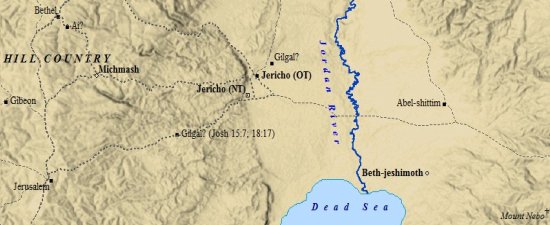
JerichoEarlyMtNebo.jpgJesus was on His way to Jerusalem where, as He has told His disciples, He would be betrayed, tried, and put to death by crucifixion. And yet, as Matthew records, the crowds continued to follow Him. They had no idea what was awaiting Jesus in Jerusalem. And even the disciples were having a difficult time accepting the truth of what Jesus had told them. The idea of Jesus being put on trial by the Jewish religious leaders sounded too far-fetched to consider. And the thought of Jesus being put to death was something they simply refused to believe.

But what’s important to notice in this short passage is that Jesus remained committed to meeting the needs of the people who crowded around him. He was not self-absorbed or throwing a pity party for himself. He was fully aware of all that awaited Him in Jerusalem and committed to carrying out the will of His heavenly Father. But that does not mean He had lost any of His compassion for the people.

On His way out of the city of Jericho, just to the east of Jerusalem, Jesus had an encounter with two blind men. Hearing the excited shouts of the crowd, these two men called out to Jesus, “Lord, have mercy on us, Son of David!”

There would have been many people on the road from Jericho to Jerusalem, as they made their way to the capital city for the celebration of Passover. In his gospel account, Mark provides us with the name of one of the men.

…as he was leaving Jericho with his disciples and a great crowd, Bartimaeus, a blind beggar, the son of Timaeus, was sitting by the roadside. – Mark 10:46 ESV

So, it is likely that both men were begging at the gate, taking advantage of the large number of pilgrims headed to Jerusalem, and hoping to benefit from their generosity. But upon hearing that Jesus was there, they cried out for mercy. Matthew records that the crowds rebuked the two men, demanding that they remain silent. It is likely that this somewhat rude response by the people was based on their belief that physical infirmities like blindness were the result of sin. Even the disciples shared this commonly held view. On one occasion, upon seeing a man who had been born since birth, they had asked Jesus, “why was this man born blind? Was it because of his own sins or his parents’ sins?” (John 9:2 NLT). Poverty and illness were seen as curses from God, poured out as a result of the individual’s sin. So, apparently, the crowds saw these men as deserving of their lot in life and with no right to beg Jesus for mercy or healing.

It should not escape our attention that these two men, while physically blind, were spiritually perceptive. They could see what so many others could not. Their spiritual vision was 20/20, allowing them to perceive Jesus as the Messiah, the Son of David. Sometime earlier, Jesus had spoken of the spiritual blindness of the people of Israel, quoting from the prophet Isaiah.

“You will indeed hear but never understand,
    and you will indeed see but never perceive.”
For this people’s heart has grown dull,
    and with their ears they can barely hear,
    and their eyes they have closed,
lest they should see with their eyes
    and hear with their ears
and understand with their heart
    and turn, and I would heal them. – Matthew 13:14-15 NLT

Out of the huge crowd of people making their way to Jerusalem, only these two sightless men were able to recognize the Messiah standing in their midst, and they appealed to Him for mercy. They were unashamed to admit their need for healing. And they were unapologetic and unwavering in their cry for mercy. They would not be silenced or denied a touch from the Messiah. And when Jesus asked them what He could do for them, they were very clear. “Lord, let our eyes be opened.”

They desired to have their physical sight restored. They were tired of being treated as second-class citizens, relegated to begging for their daily sustenance. They were fed up with the rumors and innuendos regarding their apparent spiritual poverty. They wanted to be healed. They desired to be whole. And “Jesus in pity touched their eyes, and immediately they recovered their sight and followed him” (Matthew 20:34 ESV).

While others looked down on them, Jesus showed them compassion. While His disciples probably considered themselves better than the two blind men, Jesus was willing to expend His time, attention, and power on behalf of these two undeserving men. He did for them what they could have never done for themselves. Their cry for mercy was heard and answered. They longed for healing and took their need to the only one who could do anything about it.

It’s significant that this healing took place as Jesus made His way to Jerusalem, where He would end up dying on a cross for the sins of man. On another occasion, Jesus had an encounter with a Pharisee named Nicodemus. One of the things Jesus told this religious leader was, “as Moses lifted up the bronze snake on a pole in the wilderness, so the Son of Man must be lifted up, so that everyone who believes in him will have eternal life” (John 3:14 NLT). Jesus was referring to a scene recorded in the Old Testament book of Numbers. During the days of the Israelites’ wandering in the wilderness, they became disenchanted with God and Moses, particularly as it concerned their diet. They were sick of the manna God had been providing. So, they complained to Moses.

“There is nothing to eat here and nothing to drink. And we hate this horrible manna!” – Numbers 21:5 NLT

In response to their need for sustenance, God had provided them with manna, a wafer-like substance that miraculously appeared on the ground each morning. But the people had grown tired of manna. And they showed disdain for His gracious provision by complaining about the monotony of their diet.  As a result, God “sent poisonous snakes among the people, and many were bitten and died” (Numbers 21:6 NLT). That got their attention. This time, rather than complaining, they begged Moses to intercede with God on their behalf.

“We have sinned by speaking against the Lord and against you. Pray that the Lord will take away the snakes.” – Numbers 21:7 NLT

They had a problem. And it was nothing they could fix on their own. They couldn’t stop the snakes from biting them. Their sin was resulting in their deaths. And they knew that only God could do something about the situation. So, God instructed Moses to make a bronze serpent and mount it on a pole.

“Make a replica of a poisonous snake and attach it to a pole. All who are bitten will live if they simply look at it!” – Numbers 21:8 NLT

And that’s exactly what Moses did. But notice God’s instructions to the people. Those who were bitten had to look at the image of the serpent, the very thing that was bringing God’s judgment upon them. They had to trust the word of God and do exactly as He said. Any hope they had for healing was based on their willingness to look and believe.

And Jesus had told Nicodemus, “as Moses lifted up the bronze snake on a pole in the wilderness, so the Son of Man must be lifted up, so that everyone who believes in him will have eternal life.”

When Jesus was nailed to the cross, His naked, beaten, and bloody body represented the punishment for the sins of mankind. He took on Himself what we deserved. He hung in our place. And when anyone looks to Him in faith, recognizing Him as their God-given sin substitute, they are healed from the deadly consequences of their sins. Peter expressed the substitutionary nature of Christ’s death this way:

He himself bore our sins in his body on the tree, that we might die to sin and live to righteousness. By his wounds you have been healed. – 1 Peter 2:24 ESV

But what does any of this have to do with the two blind men? Everything. When these two men heard that Jesus was nearby, they cried out to Him for help. They couldn’t see Jesus, but they could turn to Him for what they desired: The restoration of their sight.

These two sightless men received healing because they “looked” to Jesus. They placed their faith in who He was and what He could do, and as a result, they had their sight restored. But notice what Matthew says. He states that Jesus had pity on these men. While the crowds had tried to silence them, Jesus felt compassion for them and healed them. He did for them as they asked. He gave them the gift of sight.

Just days after this encounter, Jesus would hang on a cross, giving His life as a ransom for many. And, like the serpent on the staff in the wilderness, Jesus’ death would provide spiritual healing to all those who, in faith, look on Him and believe. Those who recognize their own spiritual blindness and helplessness and look to Him will find healing. But more than physical sight, they will receive eternal life.

Jesus was on His way to Jerusalem, where He would give His life as a ransom for many. And His death would be a litmus test, differentiating between those who recognized their sin and their need for a Savior, and those who stubbornly clung to their own self-righteousness and self-sufficiency. Jesus’ death would become a source of justification for some and judgment for others.

“For judgment I came into this world, that those who do not see may see, and those who see may become blind.” – John 9:39 ESV

The blind will look, believe, and see. But those who see will find themselves blinded to the reality of their sin and their need for a Savior.

English Standard Version (ESV)
The Holy Bible, English Standard Version. ESV® Permanent Text Edition® (2016). Copyright © 2001 by Crossway Bibles, a publishing ministry of Good News Publishers.

New Living Translation (NLT)
Holy Bible, New Living Translation, copyright © 1996, 2004, 2015 by Tyndale House Foundation. Used by permission of Tyndale House Publishers Inc., Carol Stream, Illinois 60188. All rights reserved.

The Message (MSG)Copyright © 1993, 1994, 1995, 1996, 2000, 2001, 2002 by Eugene H. Peterson

Day 16 – Mark 1:15; Luke 4:15; John 4:43-54

Believe!

Mark 1:15; Luke 4:15; John 4:43-54

“The time promised by God has come at last!” he announced, “The kingdom of God is near! Repent of your sins and believe the Good News!.” – Mark 1:15 NLT

As in the case of Jesus’ late night encounter with Nicodemus, the Pharisee, the word, “believe” plays a prominent role in today’s passages. Jesus has made His way to the region of Galilee. Luke tells us, “He taught regularly in their synagogues and was praised by everyone” (Luke 4:15 NLT). Mark tells us He was picking up John’s message that the kingdom of God was near, calling people to repentance and telling them to BELIEVE the Good news. Jesus was already beginning to gain a reputation. Word of His arrival in Jerusalem had begun to spread. His cleansing of the Temple and His confrontation with the religious leadership had everyone talking. Most certainly, news about His miracle in Cana when He turned ordinary water into wine had spread like wild fire. No doubt, news about what had just happened in the Samaritan village had gotten out and was met with mixed reviews. People weren’t really sure what to make of Jesus at this point. They were intrigued and attracted. Jesus was front-page news. He was the talk of the town.

So when He made His way back to Cana where He had turned the water into wine, he was met by a government official from the nearby town of Capernaum, on the northern shore of the Sea of Galilee. When this man had heard that Jesus was in the vicinity, he had walked nearly 20 miles to meet him. His motivation? A sick child. More than likely, was employed by the government of Herod. He would not have been a popular individual with most Jews. Herod was closely linked to the Romans and was despised by the Jews as a pawn under their control. So more than likely, this man was not exactly popular among the people of Galilee. Yet, he had a need and was attracted to Jesus. He begged Jesus to come to Capernaum and heal his son. Interestingly, there is no indication that Jesus had healed anyone up to this point. He had performed the miracle in Cana, but that was it. Something prompted this man, perhaps his desperation over his son’s illness, but he somehow knew that Jesus could help him.

Jesus responds to the man with an interesting question. “Will you never believe in me unless you see miraculous signs and wonders?” (John 4:48 NLT). I truly believe this was a rhetorical question on the part of Jesus. He knew the answer and it was, “No!” The miracles and signs performed by Jesus were going to be required to dispel the disbelieve of the people. This generation, much like their forefathers, had become stubborn and unbelieving. Their faith had grown faint and their expectations of God’s activity in their lives, dulled by time and God’s silence. But this man pleaded with Jesus, “Lord, please come now before my little boy dies” (John 4:49 NLT). He was desperate. He was needy. He was hurting. He had no other alternatives and had obviously exhausted all other options. When Jesus told him to go home and that his son would live, we’re told that the “man believed what Jesus said and started home” (John 4:50 NLT). All he needed was a word from Jesus and he was on his way. He believed. He took Jesus at His word. And before he could even get home, he was met on the way by his own servants who excitedly shared the news that his son’s fever had suddenly broken. A quick check of the facts revealed that his son’s sudden improvement in health came at just the time Jesus had said, “Your son will live.” When he got home and told his family and servants all that happened and explained why his son was better, John tells us “his entire household believed in Jesus” (John 4:53 NLT).

The amazing thing is that there would be those who saw Jesus perform miracle after miracle, heal person after person, even raise the dead, and still not believe in Him. This man’s belief was linked to need. He realized his desperate need for Jesus. Those who received healing from the hand of Jesus usually had no trouble believing in Jesus. They had been personally and intimately impacted by Him. They had met Him at a point of need and He had miraculously met their need, not based on their worth or merit, but purely based on the grace and mercy of Jesus. The same is true for us today. Our belief begins with the recognition of our need. We need Jesus. We are in a desperate place without Him. Our need must drive us to Him. We must give up all other options and acknowledge that only He can solve the problem we face. The woman at the well had a need. She was morally contaminated and spiritually thirsty. Jesus met her need and she believed. Thousands upon thousands of others would refuse to admit their need for Jesus and never believe in Him. Oh, they might be attracted to His miracles and intrigued by His words. But because of pride, self-righteousness, or fear of man, they would never come to the point of need that would drive them to Jesus exclaiming, “Lord, please!” What’s your greatest need today? Are you willing to bring it to Jesus and believe?

Jesus, there are so many things that keep us from You. Pride, arrogance, self-sufficiency, fear of man, and our own stubborn refusal to admit our need. We hate weakness, especially in ourselves. We refuse to confess our need for You. We want to think we can do it all ourselves. But need precedes belief. I will only believe in You as much as I recognize my need for You. Keep me needy. Amen.

Ken Miller

Grow Pastor & Minister to Men
kenm@christchapelbc.org