All For the Sake of the Gospel

19 For though I am free from all, I have made myself a servant to all, that I might win more of them. 20 To the Jews I became as a Jew, in order to win Jews. To those under the law I became as one under the law (though not being myself under the law) that I might win those under the law. 21 To those outside the law I became as one outside the law (not being outside the law of God but under the law of Christ) that I might win those outside the law. 22 To the weak I became weak, that I might win the weak. I have become all things to all people, that by all means I might save some. 23 I do it all for the sake of the gospel, that I may share with them in its blessings. 1 Corinthians 9:19-23 ESV

Paul knew his rights all too well, but he didn’t let his rights get in the way or become a hindrance to his God-given assignment to share the gospel. In fact, Paul says that he made himself a servant to all. The Greek word he uses is δουλόω (douloō), which means “to make a slave of” (“G1402 – douloō – Strong’s Greek Lexicon (KJV).” Blue Letter Bible. Web. 16 Aug, 2016. <https://www.blueletterbible.org).

Paul used the word in a metaphorical sense, indicating that he gave himself wholly to meet the needs of another, as in slave to his master. As far as Paul was concerned, he would rather consider himself a slave to everyone than to demand his rights or selfishly flaunt his freedoms in Christ. In fact, while he understood himself to be “free from all” — free from their judgment, criticism, demands, legalistic requirements, false accusations, and unrealistic expectations, he willingly chose to act as a servant to all. He even describes what he means by that. When he was with his fellow Jews, he lived like they did, even though he was free from having to do so. When in their company, he would keep the law out of a desire to win them to Christ. When he was with Gentiles, he would set aside the law of Moses, because they were not obligated to keep it (and neither was he). Instead, he would live under Christ’s law, the law of love.

Paul told the Galatians, “Bear one another’s burdens, and so fulfill the law of Christ” (Galatians 6:2 ESV). This is the exact opposite of how the Pharisees lived. Jesus said of them, “They crush people with unbearable religious demands and never lift a finger to ease the burden.” (Matthew 23:4 NLT).

Paul’s philosophy of ministry and life was simple: “When I am with those who are weak, I share their weakness, for I want to bring the weak to Christ. Yes, I try to find common ground with everyone, doing everything I can to save some” (1 Corinthians 9:22 NLT). His ultimate goal was their salvation. His freedoms took a back seat so that he might help them find freedom from sin and death through faith in Christ. Everything he did was for the sake of the gospel. To him, it was unacceptable to put his needs above anyone else, including the saved or the lost. He spent his life selflessly sacrificing himself and putting his needs and rights in second place. He describes the impact this attitude had on his life in his second letter to the Corinthians:

I know I sound like a madman, but I have served him far more! I have worked harder, been put in prison more often, been whipped times without number, and faced death again and again. Five different times the Jewish leaders gave me thirty-nine lashes. Three times I was beaten with rods. Once I was stoned. Three times I was shipwrecked. Once I spent a whole night and a day adrift at sea. I have traveled on many long journeys. I have faced danger from rivers and from robbers. I have faced danger from my own people, the Jews, as well as from the Gentiles. I have faced danger in the cities, in the deserts, and on the seas. And I have faced danger from men who claim to be believers but are not. I have worked hard and long, enduring many sleepless nights. I have been hungry and thirsty and have often gone without food. I have shivered in the cold, without enough clothing to keep me warm. – 2 Corinthians 11:23-27 NLT

Why was Paul willing to go through all of this? So that he might share the gospel with those who had not yet heard it. As he so clearly states, “I do it all for the sake of the gospel, that I may share with them in its blessings” (1 Corinthians 9:23 ESV).

He had experienced the blessings of the gospel firsthand and was not willing for anyone to miss out on hearing the same message that had radically transformed his life. While many Christians are highly appreciative of what the gospel has done for them, they are unwilling to share its life-changing message with others. They allow their rights and freedoms to get in the way and hinder them from telling others of the good news of Jesus Christ.

As Christians, we can develop the attitude that we have a right not to associate with those who don’t believe as we do. But Paul would ask us, “How can they call on him to save them unless they believe in him? And how can they believe in him if they have never heard about him? And how can they hear about him unless someone tells them?” (Romans 10:14 NLT).

We are not free to do as we please. We have an obligation, an assignment from God, to take the gospel to the ends of the earth. God has given us a divine task to perform, that of “reconciling people to him. For God was in Christ, reconciling the world to himself, no longer counting people’s sins against them. And he gave us this wonderful message of reconciliation. So we are Christ’s ambassadors; God is making his appeal through us. We speak for Christ when we plead, ‘Come back to God!’” (2 Corinthians 5:18-20 NLT).

We exist for the sake of the gospel. We sacrifice for the sake of the gospel. We die to self for the sake of the gospel. We give up our rights for the sake of the gospel. We forego our freedoms for the sake of the gospel. We do all things for the sake of the gospel. And for the soul-saving, life-transforming sake of a sin-enslaved world.

Father, I love the good news of the gospel because it radically transformed my life. But I have to admit that I tend to treat it like a secret that I refuse to disclose to others. I’m like a gospel horder, filling every area of my life with the blessings and benefits of salvation while others suffer spiritual starvation. I have been blessed so that I might be a blessing to others. I have been given spiritual sight so that I might lead the blind to the One who can open their eyes to the truth of the gospel. I am reminded of the words of Your Son: “You are the light of the world—like a city on a hilltop that cannot be hidden. No one lights a lamp and then puts it under a basket. Instead, a lamp is placed on a stand, where it gives light to everyone in the house. In the same way, let your good deeds shine out for all to see, so that everyone will praise your heavenly Father” (Matthew 5:14-16 NLT). I want to live my life with that kind of purpose and commitment. But I can only do it with Your help and the Spirit’s power. Show me how to do all things for the sake of the gospel and for Your glory. Amen

English Standard Version (ESV) The Holy Bible, English Standard Version. ESV® Permanent Text Edition® (2016). Copyright © 2001 by Crossway Bibles, a publishing ministry of Good News Publishers.

New Living Translation (NLT) Holy Bible, New Living Translation, copyright © 1996, 2004, 2015 by Tyndale House Foundation. Used by permission of Tyndale House Publishers Inc., Carol Stream, Illinois 60188. All rights reserved.

Walk In a Manner Worthy of God

For you remember, brothers, our labor and toil: we worked night and day, that we might not be a burden to any of you, while we proclaimed to you the gospel of God. 10 You are witnesses, and God also, how holy and righteous and blameless was our conduct toward you believers. 11 For you know how, like a father with his children, 12 we exhorted each one of you and encouraged you and charged you to walk in a manner worthy of God, who calls you into his own kingdom and glory. 1 Thessalonians 2:9-12 ESV

Paul has already compared his ministry among the Thessalonians to that of “a nursing mother taking care of her own children” (1 Thessalonians 2:8 ESV). He seemed to have no problem with mixing metaphors if it helped him drive home a point. In verse 7, Paul describes the manner of his and Silas’ ministry to that of children.

we were like children among you. – 1 Thessalonians 2:7 NLT

Some translations read, “we were gentle among you.” This is because there are two different variants of this sentence found in the earliest manuscripts. One has the word ēpioi, which means “gentle or mild.” The other has a very similar word, nēpioi, which can be translated as “little children.” It would seem that the second alternative is the one most likely intended because it fits with the flow of Paul’s logic. In the context of these verses, he transitions from comparing the spirit of his ministry to that of a little child to that of a nursing mother’s compassionate and sacrificial love. Then he ends with the paternal instincts of a father.

you know that we treated each of you as a father treats his own children. – 1 Thessalonians 2:11 NLT

By referring to themselves as “little children,” Paul was attempting to emphasize the innocence behind their motivation. They had been guileless and without deceit in preaching the gospel among the Thessalonians. Paul has already emphasized the integrity of their ministry by declaring “our appeal does not spring from error or impurity or any attempt to deceive” (1 Thessalonians 2:3 ESV).

It’s interesting to note how Jesus described one of His disciples, Nathanael, upon meeting him for the first time. “Behold, an Israelite indeed, in whom there is no deceit!” (John 1:47 ESV). The Greek word translated as “deceit” is dolos, and it refers to “cunning and craftiness.” It was used to refer to a pattern of hypocrisy or dishonesty in one’s thoughts or actions. Paul is emphasizing their guilelessness, the complete absence of any manipulative efforts to distort the truth or deceive the Thessalonians. Paul reminds them that he and Silas had gone out of their way to be a blessing and not a burden.

Don’t you remember, dear brothers and sisters, how hard we worked among you? Night and day we toiled to earn a living so that we would not be a burden to any of you as we preached God’s Good News to you. – 1 Thessalonians 2:9 NLT

As apostles of Christ, they could have expected and demanded remuneration for their efforts. When Jesus had sent out the 72 on their first missionary journey, He instructed them, “remain in the same house, eating and drinking what they provide, for the laborer deserves his wages” (Luke 10:7 ESV). Paul shared this same idea with Timothy.

Elders who do their work well should be respected and paid well, especially those who work hard at both preaching and teaching. For the Scripture says, “You must not muzzle an ox to keep it from eating as it treads out the grain.” And in another place, “Those who work deserve their pay!” – 1 Timothy 5:17-18 NLT

Both Jesus and Paul had taken the Mosaic law and applied it to the ministry of elders, preachers, teachers, and apostles.

“You must not muzzle an ox to keep it from eating as it treads out the grain. – Deuteronomy 25:4 ESV

They could have demanded payment for services rendered, but instead, they chose to pay their own way. They took nothing from the Thessalonians in return for their sharing of the gospel. Paul flatly denied any semblance of greed or avarice behind their efforts.

God is our witness that we were not pretending to be your friends just to get your money! – 1 Thessalonians 2:5 NLT

No, they had ministered out of a spirit of fatherly love, displaying a heartfelt concern for those under their care.

We pleaded with you, encouraged you, and urged you to live your lives in a way that God would consider worthy. – 1 Thessalonians 2:12 NLT

This parental point of view is something Paul talked about frequently. He told the believers in Corinth, “I am not writing these things to shame you, but to warn you as my beloved children” (1 Corinthians 4:14 NLT). He addressed the believers in Galatia with the same sense of parental care and concern. “Oh, my dear children! I feel as if I’m going through labor pains for you again, and they will continue until Christ is fully developed in your lives” (Galatians 4:19 NLT).

Paul was not interested in fame or fortune. His ministry was not a job or a means of earning a living; it was a divine calling, and Paul took it seriously. Like a loving parent, Paul sacrificed constantly, giving up his rights so that he could minister to the needs of those under his care. He had gone without sleep and had endured many trials and tribulations. In fact, he provided the believers in Corinth with a well-documented list of his “accomplishments” as an apostle of Jesus Christ and a father to the faithful.

I have worked harder, been put in prison more often, been whipped times without number, and faced death again and again. Five different times the Jewish leaders gave me thirty-nine lashes. Three times I was beaten with rods. Once I was stoned. Three times I was shipwrecked. Once I spent a whole night and a day adrift at sea. I have traveled on many long journeys. I have faced danger from rivers and from robbers. I have faced danger from my own people, the Jews, as well as from the Gentiles. I have faced danger in the cities, in the deserts, and on the seas. And I have faced danger from men who claim to be believers but are not. I have worked hard and long, enduring many sleepless nights. I have been hungry and thirsty and have often gone without food. I have shivered in the cold, without enough clothing to keep me warm.

Then, besides all this, I have the daily burden of my concern for all the churches. – 2 Corinthians 11:23-28 NLT

Paul wasn’t bragging; he was simply driving home the reality of his daily existence. It would be ludicrous for anyone to question Paul’s commitment to his calling or to accuse him of being in it only for what he could get out of it. Paul truly believed it when he said, “to live is Christ, and to die is gain” (Philippians 1:21 NLT). He was not afraid to give his life for the cause of the Kingdom and for the sake of the flock of Jesus Christ. He was happy to be able to serve God, sacrifice on behalf of Jesus, and share the good news of salvation to anyone who would hear. And he was willing to die while doing it.

But I will rejoice even if I lose my life, pouring it out like a liquid offering to God, just like your faithful service is an offering to God. And I want all of you to share that joy. – Philippians 2:17 NLT

Paul was content with his lot in life. He needed nothing. He didn’t crave the favor of men or desire an easier life. Fame and fortune had no appeal to him. He wasn’t in it for the money, and his preaching wasn’t a ploy to gain popularity or prestige. Paul did what he was called to do willingly, gladly, and contentedly. He explained his attitude in no uncertain terms to the believers in Philippi.

Not that I was ever in need, for I have learned how to be content with whatever I have. I know how to live on almost nothing or with everything. I have learned the secret of living in every situation, whether it is with a full stomach or empty, with plenty or little. – Philippians 4:11-12 NLT

For Paul, the objective was clear; he was to preach the gospel. And when anyone heard and accepted God’s gracious offer of salvation through faith alone in Christ alone, he came alongside them and lovingly guided them in their spiritual journey. Paul reminds the Thessalonian church of his efforts to do just that in their lives.

…we exhorted each one of you and encouraged you and charged you to walk in a manner worthy of God, who calls you into his own kingdom and glory. – 1 Thessalonians 2:12 ESV

As important as salvation was, Paul understood that sanctification was equally vital in the life of a believer. Salvation should result in transformation. Belief should impact behavior. An expression of faith in Christ should express itself in a life of dedication to Him, resulting in a radical change in both inward character and outward conduct.

Father, Your servant Paul was a model of dedication and determination. His commitment to the cause of Christ was unquestionable, but, at times, it can be a bit intimidating. His willingness to suffer while serving and his sold out attitude toward his calling seem so unattainable to me. I have a difficult time seeing myself modeling that same mindset. In fact, I find it all too easy to complain about my lot in life when everything I suffer for Your sake pales in comparison to the trials Paul faced. And he did so with joy, peace, contentment, and a satisfaction for getting to share in the sufferings of Christ. But You are not calling me to be like Paul. You are using the unique circumstances of my life to transform me into the likeness of Jesus. Paul was just a man like me. He was Your chosen instrument and You called and equipped him for the role You designed for him, and You are doing the same with me. You are sanctifiying me and it is a slow, steady process that involves suffering and sorrow, but also joy and delight. Help me to be a faithful committed servant as You mold me into the man You want me to be. Amen.

English Standard Version (ESV) The Holy Bible, English Standard Version. ESV® Permanent Text Edition® (2016). Copyright © 2001 by Crossway Bibles, a publishing ministry of Good News Publishers.

New Living Translation (NLT) Holy Bible, New Living Translation, copyright © 1996, 2004, 2015 by Tyndale House Foundation. Used by permission of Tyndale House Publishers Inc., Carol Stream, Illinois 60188. All rights reserved.

The Work of the Ministry

1 Paul, a servant of God and an apostle of Jesus Christ, for the sake of the faith of God’s elect and their knowledge of the truth, which accords with godliness, in hope of eternal life, which God, who never lies, promised before the ages began and at the proper time manifested in his word through the preaching with which I have been entrusted by the command of God our Savior;

To Titus, my true child in a common faith:

Grace and peace from God the Father and Christ Jesus our Savior. – Titus 1:1-4 ESV

As the title of this letter reflects, Paul was writing to Titus, another one of his young disciples in the faith. This letter, like the ones Paul wrote to Timothy, is intended to encourage and instruct Titus as he ministers on behalf of the gospel.

Paul had left Titus in Crete with the task of ministering to the faithful living there, and had given him orders to “put what remained into order, and appoint elders in every town as I directed you” (Titus 1:5 ESV). Now, Paul was writing to this young man with further words of encouragement and instruction. But Paul’s letter begins with a customary salutation or greeting. This was a common feature of most letters during that day. Unlike modern letters, where the sender signs their name at the end, ancient letters began with a formal introduction of the sender at the very beginning. All of Paul’s letters begin this way, with some featuring longer salutations than others. This is a particularly long one and is far more than a simple greeting or introduction. In it, Paul provides a summation of what he is going to be dealing with in the main content of his letter.

Paul begins with a dual description of himself as the servant of God and an apostle of Jesus Christ. Both are intended to establish Paul’s credentials as a minister of the gospel. He is, first of all and most importantly, a servant of God. The Greek word he used for servant is doulos and it refers to a bondservant or slave. Paul, as a former Pharisee, was well-versed in the Hebrew Scriptures and would have been very familiar with the use of the term, servant, in association with some of the great patriarchs of the Israelites.

Moses, David, and Elijah were each referred to as servants or slaves of God. This was a designation of honor, not infamy. Each of these men had been chosen by God for His role and, in essence, they belonged to Him. Yet, they viewed their subservient status to God as a privilege and not a burden. And Paul claimed to have that same kind of relationship with the God of Moses, David, and Elijah. Yahweh had hand-picked and commissioned Paul to accomplish His will on this earth. So, Paul understood that he served God and not man. It was to God he would ultimately have to answer for his life and ministry. His was a divine calling, complete with the authority and power that had been given to Him by God Himself.

Secondly, Paul states that he was an apostle of Jesus Christ. The Greek word is apostolos and it refers to a delegate, messenger, or one sent forth with orders (“G652 – apostolosStrong’s Greek Lexicon (KJV).” Blue Letter Bible). Paul was not only a chosen servant of God but he had also been delegated by Jesus Christ as His representative and had been given a very specific task to perform. The exact words of that commission recorded in the book of Acts. They are part of Paul’s testimony regarding his salvation experience on the road to Damascus.

“I am Jesus whom you are persecuting. But rise and stand upon your feet, for I have appeared to you for this purpose, to appoint you as a servant and witness to the things in which you have seen me and to those in which I will appear to you, delivering you from your people and from the Gentiles—to whom I am sending you to open their eyes, so that they may turn from darkness to light and from the power of Satan to God, that they may receive forgiveness of sins and a place among those who are sanctified by faith in me.” – Acts 26:15-18 ESV

Jesus had appointed Paul to be His servant, with the task of telling others all that he had seen and heard. Paul had been given the privilege of seeing the resurrected Christ. He would be anointed by Ananias and receive the indwelling power of the Holy Spirit. And Paul was to take this message to the Gentiles, opening their eyes to the good news of the gospel.

In the opening lines of his letter to Titus, Paul provides further clarification of the purpose behind his role as a servant of God and an apostle of Jesus Christ.

I have been sent to proclaim faith to those God has chosen and to teach them to know the truth that shows them how to live godly lives. – Titus 1:1 NLT

This point was important for Titus to hear because it applied to him as well. Paul had been sent to proclaim the message of salvation by faith in Christ so that all those whom God had chosen could hear it. And when those so chosen by God had placed their faith in Christ, Paul was obligated by God and His Son to teach them the truth, so that they might live godly lives. In other words, Paul had a dual responsibility: To play a role in the salvation of the lost, but also in the sanctification of the saved. And Titus shared that same responsibility.

As the opening line of this letter indicates, Paul had a firm belief in the doctrine of election. He uses the term, “God’s elect” in order to refer to those whom God has chosen to come to faith. The Greek word is eklektos and it means “picked out or chosen” (“G1588 – eklektosStrong’s Greek Lexicon (KJV).” Blue Letter Bible). In Paul’s understanding of the gospel, God was the acting agent behind salvation, leaving nothing up to chance. Just as God had chosen Paul for salvation, so He has pre-ordained all those who will come to faith in Christ.

Paul had played no role in his own salvation. He had not been seeking the resurrected Christ. In fact, he had been busy persecuting and eliminating all those who claimed to be followers of Christ. And yet, God had chosen him for salvation. And Paul strongly believed that fact was true for all who come to faith in Christ, past, present, or future.

The doctrine of divine election firmly establishes the believer’s eternal security. God has not left the believer’s assurance of salvation captive to changing feelings or faltering faith. Rather, the faithfulness of God demonstrated in his divine election secures the believer’s salvation in the will and purposes of God himself. – Thomas D. Lea and Hayne P. Griffin Jr., 1, 2 Timothy, Titus, p. 265

For Paul, salvation, godliness, and eternal life were all the work of God. None of them were possible apart from God. And all of them were pre-ordained and promised by God “before the ages began” (Titus 1:2 ESV). And Paul insists that the message regarding salvation, godliness, and eternal life was given at just the right time, through men like Paul, so that the elect might come to faith through the preaching of the good news. Paul wanted Titus to know that he was nothing more than a messenger and a means by which God would accomplish His preordained will concerning the elect.

Suffice it to say, Paul saw himself as a man with divine authority and a providential responsibility to spread the gospel so that others might come to faith in Christ. But Paul also believed that he had a divine commission to ensure that those very same individuals grew in godliness. And he wanted Titus to know that he shared this very same responsibility and calling. This young man, whom Paul saw as his child in the faith, was also carrying the heavy burden of ministering the gospel to the people of Crete, carrying on what Paul and others had begun. And in the rest of his letter to Titus, Paul will provide him with much-needed guidance and encouragement for the task that lay before him.

That’s why Paul extends to him “Grace and peace from God the Father and Christ Jesus our Savior” (Titus 1:4 ESV). Paul knew exactly what Titus was up against. The gospel ministry was anything but easy and Titus would need to be constantly reminded of his dependence upon the grace (charis) or unmerited favor of God.

grace: the merciful kindness by which God, exerting his holy influence upon souls, turns them to Christ, keeps, strengthens, increases them in Christian faith, knowledge, affection, and kindles them to the exercise of the Christian virtues. – Blue Letter Bible, Outline of Biblical Usage

Titus would know the peace of God only to the extent that he understood the grace of God. His effectiveness as a minister of the gospel would be directly tied to his reliance upon God’s power and his understanding of his role as a servant. And Paul wanted Titus to never lose sight of the fact that the greatest expression of God’s grace and mercy is found in “Christ Jesus our Savior.” It was God who graciously sent His Son to suffer in the place of undeserving sinners. This was a recurring theme in Paul’s letters.

But God, being rich in mercy, because of his great love with which he loved us, even though we were dead in offenses, made us alive together with Christ—by grace you are saved! – Ephesians 2:4-5 NLT

For by grace you are saved through faith, and this is not from yourselves, it is the gift of God; it is not from works, so that no one can boast. – Ephesians 2:8-9 NLT

It was not Titus’ job to save anyone. He was simply to point them to the Savior, the one who had already paid the penalty for their sins and guaranteed their hope of eternal life. Titus was a servant of God and an apostle of Jesus Christ, just like Paul. And, while he had a job to do, the work had already been accomplished by Jesus.

English Standard Version (ESV) The Holy Bible, English Standard Version. ESV® Permanent Text Edition® (2016). Copyright © 2001

New Living Translation (NLT) Holy Bible, New Living Translation, copyright © 1996, 2004, 2015 by Tyndale House Foundation. Used by permission of Tyndale House Publishers Inc., Carol Stream, Illinois 60188. All rights reserved.
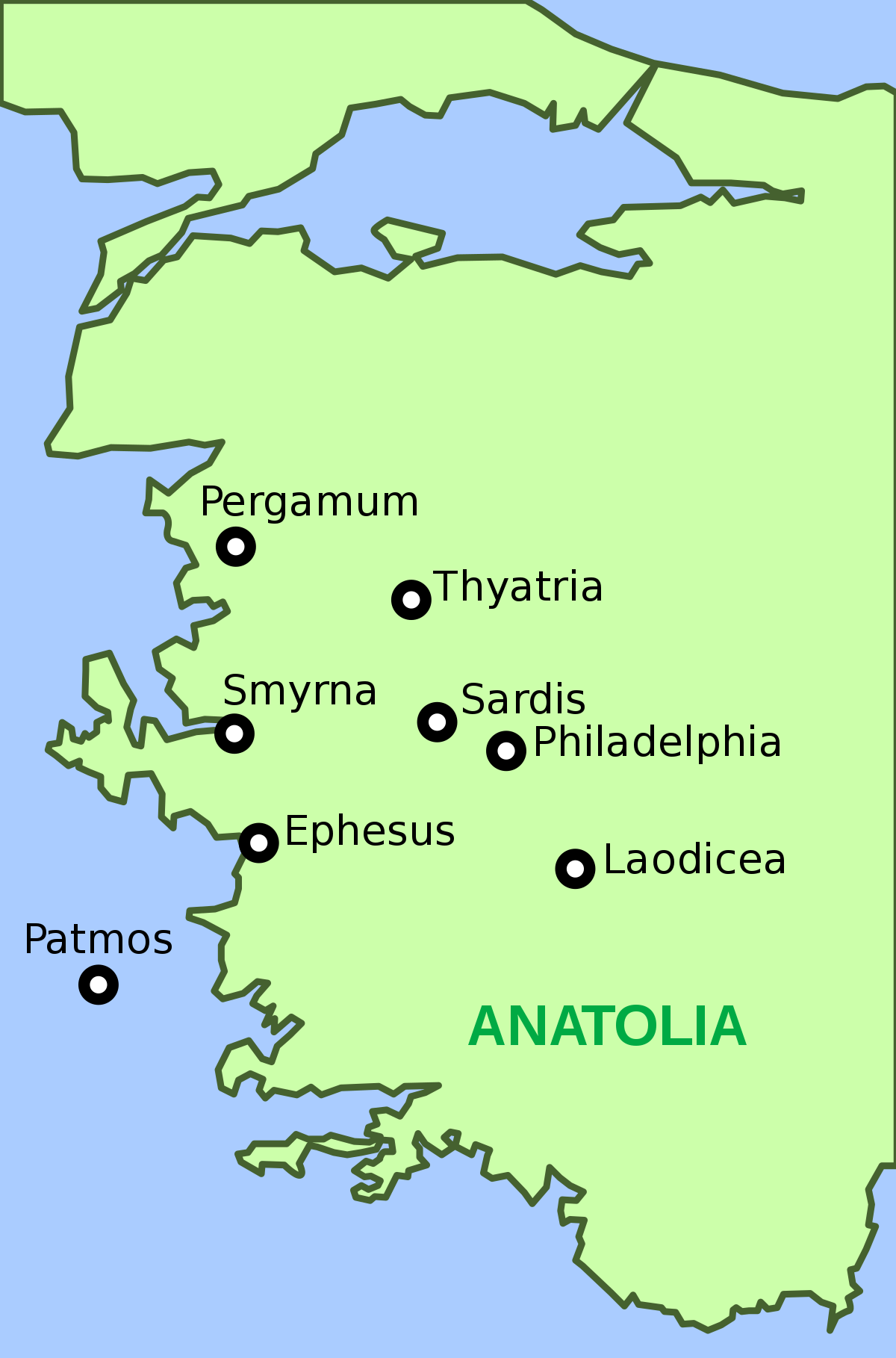
A Prisoner of Christ

Tychicus will tell you all about my activities. He is a beloved brother and faithful minister and fellow servant in the Lord. I have sent him to you for this very purpose, that you may know how we are and that he may encourage your hearts, and with him Onesimus, our faithful and beloved brother, who is one of you. They will tell you of everything that has taken place here.

10 Aristarchus my fellow prisoner greets you, and Mark the cousin of Barnabas (concerning whom you have received instructions—if he comes to you, welcome him), 11 and Jesus who is called Justus. These are the only men of the circumcision among my fellow workers for the kingdom of God, and they have been a comfort to me. 12 Epaphras, who is one of you, a servant of Christ Jesus, greets you, always struggling on your behalf in his prayers, that you may stand mature and fully assured in all the will of God. 13 For I bear him witness that he has worked hard for you and for those in Laodicea and in Hierapolis. 14 Luke the beloved physician greets you, as does Demas. 15 Give my greetings to the brothers at Laodicea, and to Nympha and the church in her house. 16 And when this letter has been read among you, have it also read in the church of the Laodiceans; and see that you also read the letter from Laodicea. 17 And say to Archippus, “See that you fulfill the ministry that you have received in the Lord.”

18 I, Paul, write this greeting with my own hand. Remember my chains. Grace be with you. Colossians 4:7-18 ESV

As Paul prepares to wrap up his letter to the Colossian church, he mentions the names of eight different men. Tychicus, Onesimus, Aristarchus, Jesus (Justus), Epaphras, Luke, Demas, and Archippus. Each of them had played a vital role in Paul’s life and ministry. Two of them, Tychicus and Onesimus, had been chosen by Paul to deliver the letter once he had completed it. The first mention of Tychicus in the Scriptures is found in Acts 20, where Luke records his name, as well as that of Aristarchus, among those who accompanied Paul as he left Greece and made his way to Syria.

…he [Paul] decided to return through Macedonia. Sopater the Berean, son of Pyrrhus, accompanied him; and of the Thessalonians, Aristarchus and Secundus; and Gaius of Derbe, and Timothy; and the Asians, Tychicus and Trophimus. These went on ahead and were waiting for us at Troas, but we sailed away from Philippi after the days of Unleavened Bread, and in five days we came to them at Troas, where we stayed for seven days. – Acts 20:3-6 ESV

Tychicus, like the rest of these men, had become a disciple of Paul and had aided him in his ministry. In his letter to the Ephesians, Paul refers to Tychicus as his “beloved brother and faithful minister in the Lord” (Ephesians 6:21 ESV). Paul had instructed Tychicus to deliver his letter to the Ephesian believers and bring them up to speed on his current situation (Ephesians 6:22). And Paul had entrusted Tychicus with the same responsibility when it came to the congregation in Colossae.

Tychicus will tell you all about my activities. He is a beloved brother and faithful minister and fellow servant in the Lord. I have sent him to you for this very purpose, that you may know how we are and that he may encourage your hearts, and with him Onesimus, our faithful and beloved brother, who is one of you. They will tell you of everything that has taken place here. – Colossians 4:7-9 ESV

He was accompanied by Onesimus, another disciple of Paul who, at one time, had been a runaway slave. Paul had befriended Onesimus in Rome, where Paul was imprisoned and the young man was hiding from his former master, a man named Philemon. while it is unclear how Paul and Onesimus met, we do know that Paul had the privilege of leading Onesimus to Christ. And after discipling his young friend for a period of time, he determined to send Onesimus back to his master. What makes this situation rather strange is that Paul knew Onesimus’ master well. He was a man named Philemon and the church in Colossae met in his home. Paul wrote a letter to Philemon, asking him to receive Onesimus back, not as a runaway slave, but as a brother in Christ.

I appeal to you to show kindness to my child, Onesimus. I became his father in the faith while here in prison. Onesimus hasn’t been of much use to you in the past, but now he is very useful to both of us. I am sending him back to you, and with him comes my own heart.

I wanted to keep him here with me while I am in these chains for preaching the Good News, and he would have helped me on your behalf. But I didn’t want to do anything without your consent. I wanted you to help because you were willing, not because you were forced. It seems you lost Onesimus for a little while so that you could have him back forever. He is no longer like a slave to you. He is more than a slave, for he is a beloved brother, especially to me. Now he will mean much more to you, both as a man and as a brother in the Lord. – Philemon 1:10-16 NLT

According to Colossian 4:9, Onesimus accompanied Tychicus back to Colossae. Tychicus was to deliver Onesimus and the letter from Paul to Philemon. We are not told how this reunion turned out, but it seems likely that Philemon heeded Paul’s advice and treated Onesimus as a “beloved brother” (Philemon 1:16).

Paul also mentions Aristarchus, a Greek who hailed from the city of Thessalonica (Acts 20:4). Paul refers to Aristarchus as his “fellow prisoner” (Colossians 4:10), but it seems unlikely that Paul was inferring that Aristarchus was also under house arrest in Rome.  Paul used the term “fellow prisoner” when referring to several of his co-workers in the ministry.

Greet Andronicus and Junia, my kinsmen and my fellow prisoners. They are well known to the apostles, and they were in Christ before me. – Romans 16:7 ESV

Epaphras, my fellow prisoner in Christ Jesus, sends greetings to you, and so do Mark, Aristarchus, Demas, and Luke, my fellow workers. – Philemon 1:23-24 ESV

It appears that Paul used this term to refer to their shared captivity to the will of God. Paul opened up his letter to Philemon by describing himself as “a prisoner for Christ Jesus” (Philemon 1:1 ESV). He used the same phrase when writing to the church in Ephesus, another Gentile community.

I, Paul, a prisoner of Christ Jesus on behalf of you Gentiles—assuming that you have heard of the stewardship of God’s grace that was given to me for you… – Ephesians 3:1-2 ESV

Paul didn’t consider himself a prisoner of the Roman government but of Jesus Christ. He was where he was because he had been faithfully fulfilling the will of Christ. And he viewed these other men as fellow captives, who shared his commitment to carrying the good news of Jesus Christ to the Gentiles.

In a sense, Paul was name-dropping, providing his readers with a list of individuals whom they knew well and whose reputations would further enhance and support the content of Paul’s letter. The believers in Colossae had never met Paul. They were probably familiar with his name and had likely heard about his miraculous salvation story and prolific ministry. But he was a stranger to them. Paul used the names of these men to assure the Colossians that his words could be trusted. Over time, the various churches had heard about the travels of Paul and the assistance he had received from various individuals, including John Mark and his cousin, Barnabas. That is why Paul mentions their names. John Mark had accompanied Paul on his first missionary journey. And Barnabas had been a part of the church since its earliest days in Jerusalem. Luke mentions his name in Acts 4.

Thus Joseph, who was also called by the apostles Barnabas (which means son of encouragement), a Levite, a native of Cyprus, sold a field that belonged to him and brought the money and laid it at the apostles’ feet. – Acts 4:36-37 ESV

Jesus Justus was one of several Jewish Christians (“men of the circumcision”) who made up Paul’s ethnically diverse ministerial team. Paul wanted the Colossians to know that when he wrote, “In this new life, it doesn’t matter if you are a Jew or a Gentile, circumcised or uncircumcised, barbaric, uncivilized, slave, or free” (Colossians 3:11 NLT), he meant it. Paul practiced what he preached.

Christ is all that matters, and he lives in all of us. – Colossians 3:11 NLT

Epaphras, a citizen of Colossae, had played a major role in the founding of the church there (Colossians 1:7). But he had left his hometown in order to minister alongside Paul. It seems that Paul had a small contingent of co-workers who had accompanied him to Rome and remained by his side while he was under house arrest and awaiting trial. This included Luke, the author of the gospel that bears his name as well as the book of Acts. Luke was Paul’s “beloved physician” (Colossians 4:14 ESV) and remained by the apostle’s side throughout his confinement in Rome. Demas was also at Paul’s side in Rome, but the day would come when he would allow his love for the world to replace his commitment to Paul and the gospel ministry.

Demas, in love with this present world, has deserted me and gone to Thessalonica. – 2 Timothy 4:10 ESV

Paul closes out his letter by asking that it be shared with the church in Laodicea. And evidently, there was a letter he had written to the Laocidean congregation that he wished to be read by the Colossians as well. All of these congregations were in close proximity to one another and the letters Paul wrote to them were intended to be shared among them. The messages they contained were universal in nature and applicable in every one of the communities where local congregations were attempting to live out their faith in hostile surroundings.  Remaining faithful in the midst of a fallen and often antagonistic world was not easy. And nobody knew that better than Paul. That is why he closes out his letter by calling on his children in the faith to “Remember my chains” (Colossians 4:18 ESV). He wanted them to know that he had been imprisoned because of the gospel. He was not oblivious to their situation but was well acquainted with the suffering that accompanied the Christian life. And he rejoiced in the fact that God had deemed him worthy of the privilege of suffering as Christ had suffered – on behalf of His body, the church.

I am glad when I suffer for you in my body, for I am participating in the sufferings of Christ that continue for his body, the church. – Colossians 1:24 NLT

English Standard Version (ESV) The Holy Bible, English Standard Version. ESV® Permanent Text Edition® (2016). Copyright © 2001 by Crossway Bibles, a publishing ministry of Good News Publishers.

New Living Translation (NLT) Holy Bible, New Living Translation, copyright © 1996, 2004, 2015 by Tyndale House Foundation. Used by permission of Tyndale House Publishers Inc., Carol Stream, Illinois 60188. All rights reserved.

New English Translation (NET)NET Bible® copyright ©1996-2017 by Biblical Studies Press, L.L.C. http://netbible.com All rights reserved.


You Can Mourn Now or Mourn Later

26 And as they led him away, they seized one Simon of Cyrene, who was coming in from the country, and laid on him the cross, to carry it behind Jesus. 27 And there followed him a great multitude of the people and of women who were mourning and lamenting for him. 28 But turning to them Jesus said, “Daughters of Jerusalem, do not weep for me, but weep for yourselves and for your children. 29 For behold, the days are coming when they will say, ‘Blessed are the barren and the wombs that never bore and the breasts that never nursed!’ 30 Then they will begin to say to the mountains, ‘Fall on us,’ and to the hills, ‘Cover us.’ 31 For if they do these things when the wood is green, what will happen when it is dry?”

32 Two others, who were criminals, were led away to be put to death with him. Luke 23:26-32 ESV

Jesus’ legal trials may have come to an end, but His physical trials were just about to begin. A condemned criminal had been allowed to walk free, while Jesus, an innocent man, was subjected to a range of violent physical and verbal abuse. Luke goes out of his way to record the overwhelming consensus of opinion that Jesus was an innocent man.

Then Pilate said to the chief priests and the crowds, “I find no guilt in this man.” – Luke 23:4 ESV

“…behold, I did not find this man guilty of any of your charges against him. Neither did Herod, for he sent him back to us. Look, nothing deserving death has been done by him.” – Luke 23:14-15 ESV

A third time he said to them, “Why? What evil has he done? I have found in him no guilt deserving death.  – Luke 23:22 ESV

“…this man has done nothing wrong.” – Luke 23:41 ESV

Now when the centurion saw what had taken place, he praised God, saying, “Certainly this man was innocent! – Luke 23:47 ESV

As soon as Pilate relented to the demands of the Jewish religious leaders and authorized the crucifixion of Jesus, the matter fell under the jurisdiction of the Roman soldiers. These hardened legionnaires were responsible for carrying out the governor’s orders by subjecting Jesus to the gruesome ordeal of crucifixion – the Roman government’s preferred form of capital punishment. But like a cat cruelly playing with a mouse before subjecting it to death, Pilate’s guards decided to subject Jesus to a range of degrading physical and emotional abuses. With the entire regiment looking on, “They stripped him and put a scarlet robe on him. They wove thorn branches into a crown and put it on his head, and they placed a reed stick in his right hand as a scepter. Then they knelt before him in mockery and taunted, ‘Hail! King of the Jews!’” (Matthew 27:29-29 NLT).

These men, having overheard the accusations leveled against Jesus, found it laughable that this powerless and unimpressive Jewish Rabbi would consider Himself to be a king. So, they ruthlessly and mercilessly mocked Jesus, with every cruelty they poured out intended to leave Him humiliated and degraded. And Matthew describes with painful clarity the unsparing nature of their torturous treatment of Jesus.

…they spit on him and grabbed the stick and struck him on the head with it. When they were finally tired of mocking him, they took off the robe and put his own clothes on him again. Then they led him away to be crucified. – Matthew 27:30-31 NLT

John provides the added detail that Pilate ordered Jesus to be flogged. This barbaric practice, also known as scourging, was an especially cruel and inhuman form of punishment that was designed to inflict extreme pain and hasten death. According to an article by Ian Tuttle published in National Review, “The Romans meted out whippings with particular zeal, inventing new tools to increase the misery: on the mild end, a flat leather strap; on the mortal end, long whips with, at their ends, balls of metal with protruding metal fragments or pieces of bone. It was not uncommon for the scourging that preceded a crucifixion to prove fatal” (https://www.nationalreview.com/2015/01/flogging-through-centuries-ian-tuttle/).

By the time Jesus left the Roman governor’s palace, He would have been in a severely weakened state, suffering from extreme pain and blood loss. Yet, as a condemned man, Jesus was expected to carry His own cross to the place of crucifixion. But it appears that the flogging had taken its toll on Jesus, leaving Him incapable of bearing the weight of the cross. So, the Romans conscripted a stranger from the crowd to assist Him. And as Jesus painfully navigated the final steps to the crucifixion site, He was followed by “a great multitude of the people and of women who were mourning and lamenting for him” (Luke 23:27 ESV).

But rather than thank them for their compassionate display of sorrow, Jesus turned to these individuals and gave them a sobering word of warning.

“Daughters of Jerusalem, don’t weep for me, but weep for yourselves and for your children. For the days are coming when they will say, ‘Fortunate indeed are the women who are childless, the wombs that have not borne a child and the breasts that have never nursed.’ People will beg the mountains, ‘Fall on us,’ and plead with the hills, ‘Bury us.’” – Luke 23:28-30 NLT

His words are similar to the ones He spoke to His disciples while they sat with Him on the Mount of Olives, just prior to His arrest in the garden.

“Then those in Judea must flee to the hills. A person out on the deck of a roof must not go down into the house to pack. A person out in the field must not return even to get a coat. How terrible it will be for pregnant women and for nursing mothers in those days. And pray that your flight will not be in winter or on the Sabbath. For there will be greater anguish than at any time since the world began. And it will never be so great again…“ – Matthew 24:16-21 NLT

In both cases, Jesus was speaking of future events. He was warning them that even darker days lie ahead, when the judgment of God will fall upon the world for its rejection of His Son. Those weeping at the sight of Jesus’ deplorable condition and mourning the thought of His pending death had no idea He was referring to events associated with the end of time. The book of Revelation describes a future day when God will reign down judgment upon the earth.

Then everyone—the kings of the earth, the rulers, the generals, the wealthy, the powerful, and every slave and free person—all hid themselves in the caves and among the rocks of the mountains. And they cried to the mountains and the rocks, “Fall on us and hide us from the face of the one who sits on the throne and from the wrath of the Lamb. For the great day of their wrath has come, and who is able to survive?” – Revelation 6:15-17 NLT

This was the day to which Jesus was referring. While His death would be the key to salvation and eternal life, it would also result in God’s wrath being poured out on all those who refused to accept HIs Son as Savior. And that would include many in Israel. God’s chosen people would refuse to accept God’s Son as their Messiah and King. In fact, they would participate in His execution, demanding that He be put to death. When He had entered Jerusalem just a few days earlier, the crowds had shouted, “Hosanna to the Son of David! Blessed is he who comes in the name of the Lord! Hosanna in the highest!” (Matthew 21:9 ESV). But those joyous shouts of adoration and acclimation had quickly turned to cries of “Crucify Him!” And one day, all those who have chosen to reject the King of kings and Lord of lords will suffer the consequences of their decision and mourn, not for Jesus, but for their own coming destruction.

But when Jesus arrived at the placed called Golgotha, He found himself joined by two other men, both criminals, who would be executed alongside Him, “one on either side, and Jesus between them” (John 19:18 ESV). This seemingly innocuous statement conjures up memories of the conversation Jesus had with James and John. On an earlier occasion, these two brothers had approached Jesus and asked, “Grant that one of us may sit at Your right hand and the other at Your left in Your glory” (Mark 10:37 BSB). And Jesus had responded to their presumptuous request by stating, You do not know what you are asking…Can you drink the cup I will drink, or be baptized with the baptism I will undergo?” (Mark 10:38 BSB).

Little did they know at the time, that the two places of prominence they had requested would not be royal thrones, but cruel Roman crosses. For Jesus, the cross was a place of honor. He had been chosen by God the Father to lay down His life, and it was something Jesus was prepared to do – willingly and gladly. Jesus had come to lay down His life for the sheep.

“…the Son of Man came not to be served but to serve others and to give his life as a ransom for many.” – Matthew 20:28 NLT

And that time had come.

English Standard Version (ESV) The Holy Bible, English Standard Version. ESV® Permanent Text Edition® (2016). Copyright © 2001 by Crossway Bibles, a publishing ministry of Good News Publishers.

New Living Translation (NLT) Holy Bible, New Living Translation, copyright © 1996, 2004, 2015 by Tyndale House Foundation. Used by permission of Tyndale House Publishers Inc., Carol Stream, Illinois 60188. All rights reserved.

The Message (MSG)Copyright © 1993, 1994, 1995, 1996, 2000, 2001, 2002 by Eugene H. Peterson

Bless, As You Have Been Blessed

12 “If your brother, a Hebrew man or a Hebrew woman, is sold to you, he shall serve you six years, and in the seventh year you shall let him go free from you. 13 And when you let him go free from you, you shall not let him go empty-handed. 14 You shall furnish him liberally out of your flock, out of your threshing floor, and out of your winepress. As the Lord your God has blessed you, you shall give to him. 15 You shall remember that you were a slave in the land of Egypt, and the Lord your God redeemed you; therefore I command you this today. 16 But if he says to you, ‘I will not go out from you,’ because he loves you and your household, since he is well-off with you, 17 then you shall take an awl, and put it through his ear into the door, and he shall be your slave forever. And to your female slave you shall do the same. 18 It shall not seem hard to you when you let him go free from you, for at half the cost of a hired worker he has served you six years. So the Lord your God will bless you in all that you do. – Deuteronomy 15:12-18 ESV

The people of God were supposed to stand out from all the rest of the nations living in and around the land of Canaan. Their unique status as God’s chosen people placed upon them an obligation to live according to His will for them and that will was all-inclusive, covering every aspect of their lives. God made no allowance for compartmentalization. In other words, He left no area of daily life untouched or outside the pervue of His divine decrees. Everything about them was to reflect their unparalleled relationship with Him. From God’s perspective they were to be “a kingdom of priests and a holy nation” (Exodus 19:6 ESV) and “a people holy to the LORD your God” (Deuteronomy 14:21 ESV).

In this passage, we see Moses dealing with a topic that causes some unease and uncertainty for our modern and more enlightened sensibilities. He addresses the issue of slavery. But it’s important that we grasp the cultural context and understand the true nature of the kind of slavery being discussed. It’s easy for us to read this text and use our contemporary understandings of slavery to define what Moses is talking about. We conjure up images of slave ships and innocent people being ripped from their homes and forced into servitude and bondage against their wills. And while that form of slavery was widespread during the time in which the book of Deuteronomy was written, Moses is dealing with something different altogether.

As was seen in the previous verses, God had made provision for the needy among the Israelites. He had given the nation a series of commands designed to provide ongiong care for those who were suffering from any form of physical or financial need. And Moses had told them, “there will never cease to be poor in the land. Therefore I command you, ‘You shall open wide your hand to your brother, to the needy and to the poor, in your land’” (Deuteronomy 15:11 ESV).

One of the primary means by which a destitute individual could seek relief was by willingly offering themselves as a servant to one of their fellow Hebrews. It was a matter of economics and a question of survival. The individual in need took the initiative, offering their services in exchange for food and shelter. That’s how Moses describes it:

“If a fellow Hebrew sells himself or herself to be your servant…” – Deuteronomy 15:12 NLT

This was not a case of forced slavery, but voluntary servitude. This system provided an opportunity for the financially prosperous to help their less-fortunate brothers and sisters. But, like all well-intentioned welfare programs, this one could easily be abused. So, God set up conditions and parameters to guide the Israelites in their practice of this essential community assistance program. Moses informed the people that this servant/master relationship was to be governed by the sabbatical year. After six years of continual service, the one who had sold themselves into slavery was to be released.

“If a fellow Hebrew sells himself or herself to be your servant and serves you for six years, in the seventh year you must set that servant free.” – Deuteronomy 15:12 NLT

The covenant or agreement made between the two parties was absolved by the sabbatical year. For six years they had enjoyed a mutually beneficial arrangement whereby the destitute individual was able to live in relative comfort while their benefactor enjoyed the benefit of relatively low-cost labor. And this business-like arrangement helped to curtail the number of needy families within the Israelite community.

Even when the time of release came, the master was to bless his servant with a gift. They were not to simply cancel the contract and send their former servant out on their own. To do so would have forced the servant back into their original condition of poverty. So, to prevent that from happening, God required the master to “bless” their departing servant with a gift.

“When you release a male servant, do not send him away empty-handed. Give him a generous farewell gift from your flock, your threshing floor, and your winepress. Share with him some of the bounty with which the Lord your God has blessed you.” – Deuteronomy 15:13-14 NLT

They were to bless their former servant as they had been blessed by God: graciously and generously. And Moses reminded them that they were still on the upside in this exchange because they had enjoyed six years of drastically reduced labor costs while the servant had been in their employ.

“You must not consider it a hardship when you release your servants. Remember that for six years they have given you services worth double the wages of hired workers…” – Deuteronomy 15:18 NLT

And God provided another vital condition to this master/servant relationship. If the sabbatical year arrived, the servant could voluntarily choose to remain with his master. After six years, they could determine that the arrangement they had was preferable to starting out on their own and, as a result, they could offer to extend the original agreement.

“But suppose your servant says, ‘I will not leave you,’ because he loves you and your family, and he has done well with you. In that case, take an awl and push it through his earlobe into the door. After that, he will be your servant for life. And do the same for your female servants.” – Deuteronomy 15:16-17 NLT

Again, it is essential that we understand that voluntary nature of this transaction. No one is being forced into slavery. It is a mutually beneficial arrangement based on love and the well-being of both parties.

Ultimately, God was concerned about the integrity of His name. He had set apart the entire nation of Israel – including every man, woman, and child. His call was not based on economic status, gender, age, or social standing. The entire nation belonged to Him and thåe manner in which they treated one another was going to reflect on Him – either positively or negatively. So, He provided a range of regulations and rules to govern their corporate behavior. Nothing was left out. There was no secular-sacred split. God refused to turn a blind eye to any area of their lives. He expected and demanded complete dedication from His people. Their actions and attitudes mattered. And each and every Israelite was to be considered as a vital part of the family of God.

English Standard Version (ESV) The Holy Bible, English Standard Version. ESV® Permanent Text Edition® (2016). Copyright © 2001 by Crossway Bibles, a publishing ministry of Good News Publishers.

New Living Translation (NLT) Holy Bible, New Living Translation, copyright © 1996, 2004, 2015 by Tyndale House Foundation. Used by permission of Tyndale House Publishers Inc., Carol Stream, Illinois 60188. All rights reserved.

The Message (MSG) Copyright © 1993, 1994, 1995, 1996, 2000, 2001, 2002 by Eugene H. Peterson


My Child in the Faith

1 Paul, a servant of God and an apostle of Jesus Christ, for the sake of the faith of God’s elect and their knowledge of the truth, which accords with godliness, in hope of eternal life, which God, who never lies, promised before the ages began, and at the proper time manifested in his word through the preaching with which I have been entrusted by the command of God our Savior;

To Titus, my true child in a common faith:

Grace and peace from God the Father and Christ Jesus our Savior. – Titus 1:1-4 ESV

This letter from Paul to Titus is one of several examples in Scripture of Paul’s personal correspondence. Unlike his pastoral epistles, written to local congregations, this letter was addressed to a single individual and was intended for his encouragement and instruction. Titus, like Timothy, was one of Paul young protégés or disciples. It is most likely that Paul had played a role in leading Titus to faith in Christ and he had chosen this young man to join him in his ministry of spreading the gospel and planting churches among the Gentiles. Titus, who was Greek, had been a part of Paul’s ministry for quite some time and had accompanied the apostle on one of his trips to Jerusalem.

Then after fourteen years I went up again to Jerusalem with Barnabas, taking Titus along with me. I went up because of a revelation and set before them (though privately before those who seemed influential) the gospel that I proclaim among the Gentiles, in order to make sure I was not running or had not run in vain. But even Titus, who was with me, was not forced to be circumcised, though he was a Greek. – Galatians 2:1-3 ESV

Titus had been a faithful companion to Paul on many of the apostle’s missionary journeys and had even delivered one of Paul’s letters of rebuke to the church in Corinth. Paul had great confidence in this young man. So, it is not surprising to find that, after visiting the island of Crete, Paul had left Titus behind with specific instructions and responsibilities.

This is why I left you in Crete, so that you might put what remained into order, and appoint elders in every town as I directed you. – Titus 1:5 ESV

We are not certain of Paul’s location when he penned this letter, but a widely held view is that he was in the city of Ephesus. He wrote this letter with the purpose of providing Titus with more details instructions regarding his responsibilities. The content of this letter, while personal in nature, is focused on the spiritual well-being of the fledgling congretations on the island. Paul knew Titus had his hands full and that his efforts to “put what remained in order” was not going to be easy. The believers in the churches on Crete were in the minority and lacking in godly leadership. In Paul’s absence, Titus had become the primary source of instruction and oversight. So, Paul was attempting to share with his young co-worker all his years of experience in planting and building churches.

When you consider that this was a personal letter, written to someone whom Paul knew extremely well, the situation appears somewhat formal and out of place. In fact, other than in his epistle to the Romans, this introduction is the longest found in any of all Paul’s letters. But its length and formality probably reflect Paul’s seriousness and his desire that Titus see his role with a certain sense of gravity. What Paul is sharing with Titus was not to be taken as mere human counsel, but the words of a servant of God and an apostle of Jesus Christ. Paul served on behalf of God and spoke as a messenger of Jesus Himself. The Greek word, apostolos, referred to a messenger or one sent forth with orders. Paul wanted Titus to receive his instructions as if they had come directly from the lips of Christ. And, as if to convey his humble attitude, Paul stressed his role as a servant, a doulos or bondslave of God.

It is likely that Paul wanted Titus to share this same attitude of selfless submission to the will of God and sober awareness of his role as a spokesman for Jesus Christ. In a sense, Titus was Paul’s personal representative on the island of Crete, acting in his place and wielding his authority among the local congregations.

Paul begins his letter with a reminder to Titus that their ministry was “for the sake of the faith of God’s elect and their knowledge of the truth” (Titus 1:1 ESV). And that their knowledge of the truth was intended not only for their salvation but their sanctification as well – their growth in godliness. And the focus of it all was the “hope of eternal life” which God had promised long ago through the prophets and had made possible through the death, burial, and resurrection of Jesus Christ. In a sense, Paul is reminding Titus that their job was to preach the gospel so that the lost might come to salvation. But it was also to ensure the sanctification of the saved – their growth in Christlikeness. And, finally, to make sure that Christians remain focused on the ultimate purpose behind their calling: Their future glorification and the promise of eternal life.

It is so easy to focus on any one of the three aspects of God’s plan of redemption while ignoring the other two. Some put all their energy and efforts into sharing the gospel while ignoring the need to grow those who come to faith in Christ. They lead others to a saving knowledge of Jesus Christ but never take the time and energy to see that these new believers grow up in their salvation. And these infants in Christ remain so, stuck on milk and unable to handle the meat of God’s Word (1 Corinthians 3:2).

There are others who place all their focus on discipleship, insisting that believers grow spiritually. If not careful, these individuals can make it all about the here-and-now, and fail to remember that this life is not all there is. Without a proper emphasis on the hope of eternal life, discipleship can become an endless quest for righteousness in this life, while failing to recognize that our glorification is unachievable this side of heaven.

And yet, there are those who can spend all their time thinking about eternity and lose sight of present reality. They end up being so heavenly minded they’re no earthly good. We must maintain a constant balance between our earthly existence and our heavenly future. Paul wrestled with maintaining this balance. He knew he had a responsibility to lead people to Christ and to make sure they grew in their knowledge of and relationship with Christ. But he also longed to be glorified and experience the joy of eternal life. He wrote of this internal struggle to the believers in Philippi.

I trust that my life will bring honor to Christ, whether I live or die. For to me, living means living for Christ, and dying is even better. But if I live, I can do more fruitful work for Christ. So I really don’t know which is better. I’m torn between two desires: I long to go and be with Christ, which would be far better for me. But for your sakes, it is better that I continue to live. – Philippians 1:20-24 NLT

With his lengthy introduction over, Paul addresses Titus with love and affection.

To Titus, my true child in a common faith – Titus 1:4 ESV

Titus was much more than a co-worker or ministry companion to Paul. He was like a son to Paul. And this letter will reflect Paul’s loving heart for his young friend and the believers to whom Titus had been given the responsibility to lead. This entire letter was written out of love. Paul had a shepherd’s heart and a deep desire to care for the flock over which God had given him responsibility. And Paul knew from experience that Titus had his work cut out for him. His task was not going to be an easy one. The building up of the body of Christ was a full-time job that came with few perks and even fewer expressions of gratitude.

Which is why Paul ended his greeting with the words: “May God the Father and Christ Jesus our Savior give you grace and peace” (Titus 1:4 NLT). Paul longed for Titus to experience the merciful kindness of God in his life. He knew that Titus was facing difficult days ahead and he would need God’s grace to survive and thrive. And Paul also desired that Titus know the peace that comes from serving God faithfully and selflessly. Even amid opposition and the likely obstinance of those under his care, Titus could experience the peace that comes from doing the will of God.

English Standard Version (ESV) The Holy Bible, English Standard Version. ESV® Permanent Text Edition® (2016). Copyright © 2001 by Crossway Bibles, a publishing ministry of Good News Publishers.s

New Living Translation (NLT) Holy Bible, New Living Translation, copyright © 1996, 2004, 2015 by Tyndale House Foundation. Used by permission of Tyndale House Publishers Inc., Carol Stream, Illinois 60188. All rights reserved.

The Message (MSG) Copyright © 1993, 1994, 1995, 1996, 2000, 2001, 2002 by Eugene H. Peterson

Walk By the Light of Your Fire

The Lord God has given me
    the tongue of those who are taught,
that I may know how to sustain with a word
    him who is weary.
Morning by morning he awakens;
    he awakens my ear
    to hear as those who are taught.
The Lord God has opened my ear,
    and I was not rebellious;
    I turned not backward.
I gave my back to those who strike,
    and my cheeks to those who pull out the beard;
I hid not my face
    from disgrace and spitting.

But the Lord God helps me;
    therefore I have not been disgraced;
therefore I have set my face like a flint,
    and I know that I shall not be put to shame.
    He who vindicates me is near.
Who will contend with me?
    Let us stand up together.
Who is my adversary?
    Let him come near to me.
Behold, the Lord God helps me;
    who will declare me guilty?
Behold, all of them will wear out like a garment;
    the moth will eat them up.

10 Who among you fears the Lord
    and obeys the voice of his servant?
Let him who walks in darkness
    and has no light
trust in the name of the Lord
    and rely on his God.
11 Behold, all you who kindle a fire,
    who equip yourselves with burning torches!
Walk by the light of your fire,
    and by the torches that you have kindled!
This you have from my hand:
    you shall lie down in torment. Isaiah 50:4-11 ESV

Judah’s sin against God will be answered by His well-justified judgment. He will punish them for their rebellion against Him and for their stubborn refusal to heed His calls to repent. One day, they will find themselves in captivity and blame God for their circumstances, accusing Him of abandonment. But God makes it clear that their captivity in Babylon will be because they left Him, not the other way around. In verse 1,  He tells them, “you were sold because of your sins.” He could have saved them from their fate, but when He called, “there no one to answer” (Isaiah 50:2 ESV). They had ignored His warnings and refused His pleas that they repent. 

Yet, God assures them that He has the power to deliver. He is the Creator-God, who spoke the universe into existence. There is nothing too difficult for Him. And, as if in response to God’s declaration of omnipotence and saving strength, verse 4 opens up with the voice of the servant of God, the Messiah.

Four times in eight verses, the servant refers to God as “the Sovereign Lord.” The Hebrew is ‘Adonay Yĕhovih and can be translated “Lord God.” In the Old Testament, the name, ‘Adonay is used only of God. It is a term of honor and respect, acknowledging Him as Lord or Sovereign over all. And the servant links it with the proper name for God, Jehovah. He is the Lord God, the Sovereign God who reigns and rules over all. And, as such, He deserves the obedience and worship of all.

The servant introduces himself as one who has the right to speak on behalf of God.

“The Lord God has given me
    the tongue of those who are taught.” – Isaiah 50:4 ESV

He describes himself as a disciple who has listened to the words of the Sovereign Lord and learned well.

“Morning by morning he wakens me
    and opens my understanding to his will.
The Sovereign Lord has spoken to me,
    and I have listened.” – Isaiah 50:4-5 NLT

Unlike the rebellious people of Judah, the Messiah has paid attention to the words of God, listening carefully to what He has to say and faithfully obeying His commands. And he boldly, but not boastfully claims, “I have not rebelled or turned away” (Isaiah 50:5 NLT). As proof of his willing obedience, the Messiah prophetically relates His treatment at the hands of men at his crucifixion.

“I offered my back to those who beat me
    and my cheeks to those who pulled out my beard.
I did not hide my face
    from mockery and spitting.” – Isaiah 50:6 NLT

The gospel accounts of Jesus’ trials reveal the truth behind these words.

Then they began to spit in Jesus’ face and beat him with their fists. And some slapped him… – Matthew 26:67 NLT

Then some of them began to spit at him, and they blindfolded him and beat him with their fists. “Prophesy to us,” they jeered. And the guards slapped him as they took him away. – Mark 14:65 NLT

The guards in charge of Jesus began mocking and beating him. – Luke 22:63 NLT

But, in spite of these harsh treatments at the hands of men, the Messiah will remain resolute in his determination to do the will of the Sovereign Lord.

“Because the Sovereign Lord helps me,
    I will not be disgraced.
Therefore, I have set my face like a stone,
    determined to do his will.
    And I know that I will not be put to shame.” – Isaiah 50:7 NLT

Don’t miss what is going on here. The Messiah is describing his harsh and unjustified treatment at the hands of sinful men. But he does not blame God or accuse Him of abandonment. He trusts in the sovereign will of his Father, resting in the knowledge that God has a plan in place for his life. And the less-than-satisfactory circumstances surrounding his life were part of that plan. What a dramatically different perspective than that of the people of Judah. They were blind to God’s plans for their future. All they could see was the suffering and humiliation of the moment.

Yet, the Messiah knew that, in spite of all that would happen to him, the Sovereign Lord would vindicate and rescue him. He boldly and confidently declares, “ the Lord God helps me” (Isaiah 50:9 ESV). His accusers and abusers will all pass away like a moth-eaten garment, but he will stand secure and blameless.

In a sense, the servant is expressing the words that should have flowed from the mouths of the people of Judah.

“All my enemies will be destroyed
    like old clothes that have been eaten by moths!” – Isiah 50:9 NLT

God was going to vindicate and avenge them on day as well. And He would do it through His servant, the Messiah. But the people of Judah refused to take the Sovereign Lord at His word. So, the Messiah calls out to them, begging them to listen to what he has to say. He wants them to follow his example and place their trust in God

“If you are walking in darkness,
    without a ray of light,
trust in the Lord
    and rely on your God.” – Isaiah 50:10 NLT

As Isaiah has made clear already, the day was coming when the spiritual darkness surrounding the people of Judah would be illuminated by a great light.

The people who walk in darkness
    will see a great light.
For those who live in a land of deep darkness,
    a light will shine. – Isaiah 9:2 NLT

And, in his gospel, Matthew makes it clear that Jesus was the fulfillment of this prophesy, when he quoted from it at the moment Jesus entered into the regions of Zebulun and Napthali in Galilee.

…so that what was spoken by the prophet Isaiah might be fulfilled:

“The land of Zebulun and the land of Naphtali,
    the way of the sea, beyond the Jordan, Galilee of the Gentiles—
the people dwelling in darkness
    have seen a great light,
and for those dwelling in the region and shadow of death,
    on them a light has dawned.” – Matthew 4:14-16 ESV

Jesus, the servant of God, would claim to be that light  – “the light of the world (John 8:12). And the apostle John described Jesus as not only the light, but the source of life.

In him was life, and the life was the light of men. The light shines in the darkness, and the darkness has not overcome it.” – John 1:4-5 ESV

And John would go on to declare that the light would shine in the darkness, but the people would reject the light, preferring instead to remain in spiritual darkness.

“…the light has come into the world, and people loved the darkness rather than the light because their works were evil. For everyone who does wicked things hates the light and does not come to the light, lest his works should be exposed. But whoever does what is true comes to the light, so that it may be clearly seen that his works have been carried out in God.” – John 3:19-21 ESV

The light came into the world, and he did so that he might expose the deadly nature of man’s sin and offer himself as the true source of life. But, for the most part,  the world would reject his offer. Instead, they would rely on their own dim lights, attempting to remove the darkness that surrounded them through self-effort and acts of self-righteousness. And the Messiah warns them of the futility of it all.

“But watch out, you who live in your own light
    and warm yourselves by your own fires.
This is the reward you will receive from me:
    You will soon fall down in great torment.” – Isaiah 50:11 NLT

Their lights would prove insufficient. Their acts of righteousness would fail to meet God’s exacting standards. Failure to accept God’s light would leave them in perpetual, everlasting darkness. But for all those who see God’s light and embrace it, the future would be markedly different, just as Jesus, the servant had promised.

“I am the light of the world. Whoever follows me will not walk in darkness, but will have the light of life.” – John 8:12 ESV

English Standard Version (ESV) The Holy Bible, English Standard Version. ESV® Permanent Text Edition® (2016). Copyright © 2001 by Crossway Bibles, a publishing ministry of Good News Publishers.

New Living Translation (NLT) Holy Bible, New Living Translation, copyright © 1996, 2004, 2015 by Tyndale House Foundation. Used by permission of Tyndale House Publishers Inc., Carol Stream, Illinois 60188. All rights reserved.

The Message (MSG) Copyright © 1993, 1994, 1995, 1996, 2000, 2001, 2002 by Eugene H. Peterson

The Suffering Servant and Victorious Savior

1 Listen to me, O coastlands,
    and give attention, you peoples from afar.
The Lord called me from the womb,
    from the body of my mother he named my name.
He made my mouth like a sharp sword;
    in the shadow of his hand he hid me;
he made me a polished arrow;
    in his quiver he hid me away.
And he said to me, “You are my servant,
    Israel, in whom I will be glorified.”[
But I said, “I have labored in vain;
    I have spent my strength for nothing and vanity;
yet surely my right is with the Lord,
    and my recompense with my God.”

And now the Lord says,
    he who formed me from the womb to be his servant,
to bring Jacob back to him;
    and that Israel might be gathered to him—
for I am honored in the eyes of the Lord,
    and my God has become my strength—
he says:
“It is too light a thing that you should be my servant
    to raise up the tribes of Jacob
    and to bring back the preserved of Israel;
I will make you as a light for the nations,
    that my salvation may reach to the end of the earth.”

Thus says the Lord,
    the Redeemer of Israel and his Holy One,
to one deeply despised, abhorred by the nation,
    the servant of rulers:
“Kings shall see and arise;
    princes, and they shall prostrate themselves;
because of the Lord, who is faithful,
    the Holy One of Israel, who has chosen you.” Isaiah 49:1-7 ESV

These opening verses of chapter 49 continue the theme of God’s redemption of Israel. The day was coming when He would use His servant, Cyrus, to release the people of Judah from their captivity in Babylon and allow them to return to the land of Canaan. At that time, a remnant of God’s people would experience their physical restoration to the land, the pleasure of occupying the rebuilt city of Jerusalem, and the joy of taking part in the revitalized sacrificial system in the restored temple. But this chapter reveals an even greater restoration that has yet to take place. And it will be the result of the efforts on another one of God’s servants.

The opening verses are spoken from the lips this as-yet-to-revealed individual, and he proclaims himself to the hand-picked servant of God.

“The Lord called me from the womb,
    from the body of my mother he named my name.” – Isaiah 49:1 ESV

This should recall the encounter between Joseph and the angel Gabriel, recorded in the Gospel of Matthew.

“Behold, the virgin shall conceive and bear a son,
and they shall call his name Immanuel” (which means, God with us). – Matthew 1:23 ESV

Gabriel had also met with Mary, long before she was pregnant, and informed of what was about to take place.

“Do not be afraid, Mary, for you have found favor with God. And behold, you will conceive in your womb and bear a son, and you shall call his name Jesus. He will be great and will be called the Son of the Most High. And the Lord God will give to him the throne of his father David, and he will reign over the house of Jacob forever, and of his kingdom there will be no end.” – Luke 1:30-33 ESV

And earlier in this book, Isaiah recorded details concerning the birth of this servant.

For to us a child is born, to us a son is given; and the government shall be upon his shoulder, and his name shall be called Wonderful Counselor, Mighty God, Everlasting Father, Prince of Peace. – Isaiah 9:6 ESV

And, in an interesting bit of self-disclosure, the servant refers to himself as Israel, claiming that God had referred to him in that way.

And he said to me, “You are my servant,
    Israel, in whom I will be glorified.” – Isaiah 49:3 ESV

Why would God call this servant, Israel. If, as the two gospels indicate, this servant is Jesus and His name was to be Immanuel, Wonderful Counselor, Mighty God, Everlasting Father, and Prince of Peace, why does God now refer to Him as Israel? It would seem that God saw Jesus as the embodiment of all that Israel should have been. Like Israel, Jesus would be, in a sense, the offspring of God. His earthly birth would make Him a Son of the Most High. But, unlike Israel, Jesus would prove to be perfectly obedient to His Father. Paul refers to His obedience when he writes, “being found in human form, he humbled himself by becoming obedient to the point of death, even death on a cross” (Philippians 2:8 ESV). Jesus did what Israel had failed to do. Remain faithful to God and obedient to all His commands.

Jesus would bring glory to God through His earthly life and ministry. He would do the will of God, proclaiming the gospel message and manifesting the power of God through His miracles and messages. But from all appearances, the ministry of Jesus would appear unfruitful and highly unsuccessful.

“But my work seems so useless!
    I have spent my strength for nothing and to no purpose.
Yet I leave it all in the Lord’s hand;
    I will trust God for my reward.” – Isaiah 49:4 NLT

And John confirms the seeming failure of Jesus’ earthly ministry.

He was in the world, and the world was made through him, yet the world did not know him. He came to his own, and his own people did not receive him. – John 1:10-11 ESV

But Jesus was God’s servant and, as such, He had a job to do. Just a few verses earlier, Isaiah recorded the agenda given by God to Jesus.

“Behold my servant, whom I uphold,
    my chosen, in whom my soul delights;
I have put my Spirit upon him;
    he will bring forth justice to the nations.
He will not cry aloud or lift up his voice,
    or make it heard in the street;
    a bruised reed he will not break,
    and a faintly burning wick he will not quench;
    he will faithfully bring forth justice.
He will not grow faint or be discouraged
    till he has established justice in the earth;
    and the coastlands wait for his law.” – Isaiah 42:1-5 ESV

This portion of Jesus’ ministry agenda has an as-yet-fulfilled aspect to it. He has not yet established His righteous rule on earth or ushered in perfect, undiluted justice. But the day is coming when He will.

And the servant reveals that His job description has been given to Him by God Himself, the very one who formed Him in Mary’s womb. Jesus took on human flesh for one reason only, to become the substitutionary atonement for the sins of mankind. He had to become a man in order that He might die on behalf of men. You might say that Jesus was born to die. But His death had a purpose: “to bring Jacob back to him [the Lord]; and that Israel might be gathered to him [the Lord]” (Isaiah 49:5 ESV). Paul reminds us that, “Christ died for us so that … we can live with him forever”(1 Thessalonians 5:10 NLT). But the redemption of lost Gentiles was only part of plan. Jesus also died so that His own people, the people of Israel, might be one day restored to a right relationship with their God. The servant makes it clear that His God-ordained purpose was to bring Jacob or Israel back to God. And in his letter to the Romans, Paul makes it clear that God will one day restore His chosen people to a right relationship to Him.

Some of the people of Israel have hard hearts, but this will last only until the full number of Gentiles comes to Christ. And so all Israel will be saved. As the Scriptures say,

“The one who rescues will come from Jerusalem,
    and he will turn Israel away from ungodliness.
And this is my covenant with them,
    that I will take away their sins.” – Romans 11:11:25-27 NLT

And all of this will be accomplished through the efforts of Jesus Christ on Israel’s behalf. He will “raise up the tribes of Jacob” and and “bring back the preserved of Israel” (Isaiah 49:6 ESV). And, not only that, Jesus will be “a light for the nations,” so that God’s plan of salvation “may reach to the end of the earth” (Isaiah 49:6 ESV).

But before any of this happens, Jesus would become “one deeply despised, abhorred by the nation, the servant of rulers” (Isaiah 49:7 ESV). He would be humiliated and rejected long before He experienced His glorification and restoration to His Father’s side. But the day is coming when Jesus returns and God paints a very different picture of that occasion.

“Kings shall see and arise;
    princes, and they shall prostrate themselves;
because of the Lord, who is faithful,
    the Holy One of Israel, who has chosen you.” – Isaiah 49:7 ESV

The servant will one day receive the same worship Isaiah describes as being given to God, because He is the Son of God, the Messiah and Savior of the world. He is the suffering servant who will become the conquering King.

“Let all the world look to me for salvation!
    For I am God; there is no other.
I have sworn by my own name;
    I have spoken the truth,
    and I will never go back on my word:
Every knee will bend to me,
    and every tongue will declare allegiance to me.”
The people will declare,
    “The Lord is the source of all my righteousness and strength.”
And all who were angry with him
    will come to him and be ashamed.
In the Lord all the generations of Israel will be justified,
    and in him they will boast. – Isaiah 45:22-25 NLT

English Standard Version (ESV) The Holy Bible, English Standard Version. ESV® Permanent Text Edition® (2016). Copyright © 2001 by Crossway Bibles, a publishing ministry of Good News Publishers.

New Living Translation (NLT) Holy Bible, New Living Translation, copyright © 1996, 2004, 2015 by Tyndale House Foundation. Used by permission of Tyndale House Publishers Inc., Carol Stream, Illinois 60188. All rights reserved.

The Message (MSG) Copyright © 1993, 1994, 1995, 1996, 2000, 2001, 2002 by Eugene H. Peterson

Behold My Servant

1 Behold my servant, whom I uphold,
    my chosen, in whom my soul delights;
I have put my Spirit upon him;
    he will bring forth justice to the nations.
He will not cry aloud or lift up his voice,
    or make it heard in the street;
a bruised reed he will not break,
    and a faintly burning wick he will not quench;
    he will faithfully bring forth justice.
He will not grow faint or be discouraged[
    till he has established justice in the earth;
    and the coastlands wait for his law.

Thus says God, the Lord,
    who created the heavens and stretched them out,
    who spread out the earth and what comes from it,
who gives breath to the people on it
    and spirit to those who walk in it:
“I am the Lord; I have called you[b] in righteousness;
    I will take you by the hand and keep you;
I will give you as a covenant for the people,
    a light for the nations,
    to open the eyes that are blind,
to bring out the prisoners from the dungeon,
    from the prison those who sit in darkness.
I am the Lord; that is my name;
    my glory I give to no other,
    nor my praise to carved idols.
Behold, the former things have come to pass,
    and new things I now declare;
before they spring forth
    I tell you of them.” –
Isaiah 42:1-9 NLT

God now attempts to turn the attention of the nations from their false gods to His servant. Unlike idols made by human hands, this individual brings delight to God. And while God also refers to King Nebuchadnezzar of Babylon as His servant, there is a marked difference between this pagan king and the one in whom God delights.

Now I have given all these lands into the hand of Nebuchadnezzar, the king of Babylon, my servant, and I have given him also the beasts of the field to serve him. – Jeremiah 27:6 NLT

First of all, this servant would have the Spirit of God upon him. He would operate under the power and influence of the Spirit. And, while Nebuchadnezzar would be used by God to bring judgment upon Judah, the servant will bring justice the nations.

There is a sense in which this description of the Servant/Savior points to Jesus at His first coming, but also alludes to aspects of His ministry that will be tied to His second coming. When Jesus came to the earth in human form, He did not do so with a lot of fanfare. He came quietly and rather obscurely. Most people alive at the time had no idea He had even been born. Mary and Joseph had been told of His coming and informed of His unique status as the Son of God and the Savior of the world. The angel Gabriel made this perfectly clear to Mary.

“You will conceive and give birth to a son, and you will name him Jesus. He will be very great and will be called the Son of the Most High. The Lord God will give him the throne of his ancestor David. And he will reign over Israel forever; his Kingdom will never end!” – Luke 1:31-32 NLT

Yet, apart from the wise men who saw the star signifying His birth, there were not many who made their way to Bethlehem to celebrate His birth. The shepherds were privileged to be among the few who saw the baby Jesus, but only because they were informed by the angels. For the most part, the birth of the Servant/Savior was a quiet affair.

And once Jesus began His earthly ministry, He turned His attention to the downtrodden and outcasts of the society. He met with prostitutes and tax collectors. He touched and healed the unclean, including lepers. He made it a habit of ministering to all those in society who were weary from life and spiritually worn out from carrying the heavy burdens that come with slavery to sin (Matthew 11:28).

He will not crush the weakest reed
    or put out a flickering candle.
– Isaiah 42:3 NLT

Instead, “He will bring justice to all who have been wronged” (Isaiah 42:3 NLT). And that is exactly what Christ did. He offered justice in the form of His sacrificial death on the cross. He provided a means by which the just and righteous wrath of God against the sins of man could be delivered without anyone having to die, but Himself. He became the substitutionary atonement for sinful man. And He did it for those who did not deserve it and had not earned it. We were little more than flimsy reeds and flickering candles, without any real worth or value, and totally incapable of saving ourselves.

God chose things the world considers foolish in order to shame those who think they are wise. And he chose things that are powerless to shame those who are powerful. God chose things despised by the world, things counted as nothing at all, and used them to bring to nothing what the world considers important. – 1 Corinthians 1:27-28 NLT

And during His earthly ministry, Jesus refused to give in or give up. He faced mounting opposition and repeated rejection by His own people.

He came into the very world he created, but the world didn’t recognize him. 1He came to his own people, and even they rejected him. – John 1:10-11 NLT

But Jesus was determined. He was out to finish the assignment given to Him by God the Father. Isaiah describes Him as not losing heart.

He will not falter or lose heart
    until justice prevails throughout the earth.
    Even distant lands beyond the sea will wait for his instruction
. – Isaiah 42:4 NLT

Jesus declared that His whole purpose for coming in the first place had been “to do the will of God who sent me, not to do my own will” (John 6:38 NLT). And as the tension between He and the Jewish religious leaders increased and the time for His death drew closer, He became all the more determined to complete His God-given task.

When the days drew near for him to be taken up, he set his face to go to Jerusalem. – Luke 9:51 ESV

Luke utilizes a line found in the fiftieth chapter of the book of Isaiah, reflecting the early church’s belief that Jesus was the fulfillment of Old Testament prophecy

Therefore, I have set my face like a stone, determined to do his will. And I know that I will not be put to shame. – Isaiah 50:7 NLT

But when Isaiah refers to a time when justice will prevail throughout the earth, he is clearly indicating a future period of time. Jesus’ birth, death and, resurrection have made it possible for sinful man to be made right with a holy God, but we do not yet live in an all-prevailing atmosphere of justice on this earth. Sin is still rampant. Injustice is alive and well. Impurity surrounds and even, at times, infects us. But there is a day coming when Jesus will return and He will make all things right. He will restore justice to the earth. He will rule in righteousness.

And God makes it clear that He was sending His servant, the Messiah, to do for the people of Israel what they had not been able to do for themselves. He would redeem and restore them.

“I, the Lord, have called you to demonstrate my righteousness.
    I will take you by the hand and guard you,
and I will give you to my people, Israel,
    as a symbol of my covenant with them.
And you will be a light to guide the nations.
    You will open the eyes of the blind.
You will free the captives from prison,
    releasing those who sit in dark dungeons.”
– Isaiah 42:6-7 NLT

Jesus even referred to this passage when He spoke in the synagogue in Nazareth.

“The Spirit of the Lord is upon me,
    for he has anointed me to bring Good News to the poor.
He has sent me to proclaim that captives will be released,
    that the blind will see,
that the oppressed will be set free,
   and that the time of the Lord’s favor has come. and that the time of the Lord’s favor has come.
” – Luke 4:18-19 NLT

Jesus did all of these things in His first coming. He did deliver good news to the spiritual impoverished. He did proclaim a way for the spiritually imprisoned to be released. He did restore sight to the spiritually blind. And for all those who placed their faith in Him, they were set free from the oppression caused by their death sentence.

But Jesus is far from done. He came, but He left. He rose from the dead and returned to His Father’s side, where, we are told, He intercedes on our behalf. But there is a day coming when He will return. And the full weight of this chapter will be felt as every aspect of its message is fulfilled in Christ.

And now, God returns to His original message, reminding the people of Judah that He is the one and only God. He alone knows the future and He has just told them what it will contain. But, more than just predicting the future, God assures them that He is one who will bring it about.

“I am the Lord; that is my name!
    I will not give my glory to anyone else,
    nor share my praise with carved idols.
Everything I prophesied has come true,
    and now I will prophesy again.
I will tell you the future before it happens.”
– Isaiah 42:9 NLT

The Servant did come. The Messiah came to earth and proclaimed the good news of the Kingdom of God. But He returned to His Father’s side, where He is waiting for a word from His Father to one day return for His bride, the Church, and then to make His second grand entrance into the world as the King of kings and Lord of lords. God has said it and He will accomplish it.

English Standard Version (ESV)
The Holy Bible, English Standard Version. ESV® Permanent Text Edition® (2016). Copyright © 2001 by Crossway Bibles, a publishing ministry of Good News Publishers.

New Living Translation (NLT)
Holy Bible, New Living Translation, copyright © 1996, 2004, 2015 by Tyndale House Foundation. Used by permission of Tyndale House Publishers Inc., Carol Stream, Illinois 60188. All rights reserved.

The Message (MSG)
Copyright © 1993, 1994, 1995, 1996, 2000, 2001, 2002 by Eugene H. Peterson