The Light of the Gospel

1 Therefore, having this ministry by the mercy of God, we do not lose heart. But we have renounced disgraceful, underhanded ways. We refuse to practice cunning or to tamper with God’s word, but by the open statement of the truth we would commend ourselves to everyone’s conscience in the sight of God. And even if our gospel is veiled, it is veiled to those who are perishing. In their case the god of this world has blinded the minds of the unbelievers, to keep them from seeing the light of the gospel of the glory of Christ, who is the image of God. For what we proclaim is not ourselves, but Jesus Christ as Lord, with ourselves as your servants for Jesus’ sake. For God, who said, “Let light shine out of darkness,” has shone in our hearts to give the light of the knowledge of the glory of God in the face of Jesus Christ. – 2 Corinthians 4:1-6 ESV

Paul viewed himself as a minister of the new covenant who had been commissioned by Jesus Christ to carry the message of the gospel, the good news that a right standing with God was available through faith in the death, burial, and resurrection of Jesus Christ. This new-and-improved message was not based on the old covenant of works or human effort. Men no longer had to vainly attempt to keep the Mosaic Law, trusting that their efforts would somehow measure up to God’s righteous standard and earn them favor in His sight. The author of Hebrews states that the old way has been replaced with a new and better way.

But now Jesus, our High Priest, has been given a ministry that is far superior to the old priesthood, for he is the one who mediates for us a far better covenant with God, based on better promises. If the first covenant had been faultless, there would have been no need for a second covenant to replace it. – Hebrews 8:6-7 NLT

Jesus is the one who guarantees this better covenant with God. – Hebrews 7:22 NLT

Paul didn’t lose heart when sharing this new and better covenant with the world, because he knew it was effective. It was the key to victory over sin and the means by which men could be made right with God, once and for all. So, in spite of opposition, rejection, persecution, and at times a seeming lack of success, he kept sharing. He felt no need to use deceitful tactics or underhanded means to trick people into believing the gospel. It could stand on its own because it was the truth of God and had proven capable of transforming the lives of countless individuals without Paul having to resort to human wisdom or his own personal powers of persuasion. In his first letter to the church in Corinth, Paul reminded them that his initial ministry to them wasn’t based on his rhetorical skills or human intellect.

I didn’t use lofty words and impressive wisdom to tell you God’s secret plan…Rather than using clever and persuasive speeches, I relied only on the power of the Holy Spirit. I did this so you would trust not in human wisdom but in the power of God. – 1 Corinthians 2:1, 4-5 NLT

There were likely those who heard the gospel as preached by Paul, Silas, Titus, and others, who remained unchanged. The problem was not with the gospel or the minister’s presentation skills, but with the recipients’ spiritual condition. Their unbelief was not just stubbornness or obstinacy; it was spiritual warfare.

Satan, who is the god of this world, has blinded the minds of those who don’t believe. They are unable to see the glorious light of the Good News. They don’t understand this message about the glory of Christ, who is the exact likeness of God. – 2 Corinthians 4:4 NLT

It is important to keep Paul’s use of the word “veiled” linked with his prior use of it in chapter 3. There, he had been talking about the old covenant as revealed under Moses, the covenant of law. And there were still Jews who were trying to gain favor with God through the keeping of the law.

But their minds were hardened. For to this day, when they read the old covenant, that same veil remains unlifted, because only through Christ is it taken away. Yes, to this day whenever Moses is read a veil lies over their hearts. – 2 Corinthians 3:14-15 ESV

When the Jews in Paul’s day read the books of the law, they were blinded by their own belief and expectation that they could somehow be made right with God through law-keeping. So they refused to accept Jesus as the mediator of a new and better covenant. In the case of non-Jews, Paul insists that they were blinded by Satan, the god of this world. He kept them deluded, distracted, and deceived.

Paul insists that their eyes must be opened to the truth in order to receive it. Their spiritual blindness must first be healed so that they can see the glory of God in the face of Christ. Paul knew exactly what he was talking about, because it had happened to him in his own conversion. The book of Luke recounts that fateful day when Paul came face-to-face with the resurrected Christ. As he made his way to Damascus, where he intended to persecute and arrest Christians, Paul (then known as Saul) was suddenly blinded by a light and heard the voice of Jesus Himself.

Saul rose from the ground, and although his eyes were opened, he saw nothing. So they led him by the hand and brought him into Damascus. And for three days he was without sight, and neither ate nor drank. – Acts 9:8-9 ESV

Jesus commanded Saul to go to the city of Damascus and await further instructions. God then sent a disciple named Ananias to minister to Saul.

So Ananias went and found Saul. He laid his hands on him and said, “Brother Saul, the Lord Jesus, who appeared to you on the road, has sent me so that you might regain your sight and be filled with the Holy Spirit.” Instantly something like scales fell from Saul’s eyes, and he regained his sight. Then he got up and was baptized. Afterward he ate some food and regained his strength. – Acts 9:17-19 NLT

Saul had been blinded by the light, but when the Holy Spirit came upon him, his physical sight was immediately restored along with his spiritual sight. He saw, for the first time in his life, the truth of the very gospel he had been trying to destroy. No longer blinded by the enemy, Paul placed his faith in the resurrected Jesus and was converted.

In chapter three of 2 Corinthians, Paul insists that it is the Holy Spirit who removes the veil from the spiritual eyes of the lost so that they might see and reflect the glory of the Lord.

But whenever someone turns to the Lord, the veil is taken away. For the Lord is the Spirit, and wherever the Spirit of the Lord is, there is freedom. So all of us who have had that veil removed can see and reflect the glory of the Lord. And the Lord—who is the Spirit—makes us more and more like him as we are changed into his glorious image. – 2 Corinthians 3:16-18 NLT

Like the blind man who was healed by Jesus, those who have their spiritual eyes opened by the Spirit of God can see and accept the truth of the gospel, and are able to say, “I was blind, and now I can see!” (John 9:25 NLT). That bright, holy light that blinded Paul on the road to Damascus is the same light of the glory of Christ that shines into the life of every unsaved person, eliminating the darkness of sin and illuminating them with the life-transforming hope of the gospel.

For God, who said, “Let there be light in the darkness,” has made this light shine in our hearts so we could know the glory of God that is seen in the face of Jesus Christ. 2 Corinthians 4:6 NLT

It is the regenerating work of the Holy Spirit that makes it possible for spiritually dead and sightless individuals to see the glory of God in the face of Jesus Christ. He opens their eyes so they can see the truth of the gospel message of hope, healing, and restoration.

Salvation is the work of God performed by the Spirit in the lives of the lost. It is not due to the persuasive power of men like Paul. Only God can restore sight to the blind. Only God can raise the spiritually dead back to life. Only God can remove the veil placed on the minds of unbelievers by Satan, allowing them to see “the light of the gospel of the glory of Christwho is the image of God” (2 Corinthians 4:4 ESV).

Father, more than six decades ago, You graciously opened my eyes and allowed me to see the glory of the gospel. Even as a young child, I was able to grasp its simplicity and accept the free gift of salvation made possible through the death, burial, and resurrection of Your sinless sin. There was much I did not understand, but my lack of knowledge did not prevent me from saying yes to Your gracious offer salvation through faith alone in Christ alone. It wasn’t the words of men or my own cognitive abilities that save me; it was enlightening power of the Spirit. And I will be forever grateful that You made the gospel accessible to a young boy living in Long Island, New York in 1962. And in all the years that have passed since that fateful day. the light of the gospel of the glory of Christ has continued to illuminate and transform my life in ways I never could have imagined. Amen

English Standard Version (ESV) The Holy Bible, English Standard Version. ESV® Permanent Text Edition® (2016). Copyright © 2001 by Crossway Bibles, a publishing ministry of Good News Publishers.

New Living Translation (NLT) Holy Bible, New Living Translation, copyright © 1996, 2004, 2015 by Tyndale House Foundation. Used by permission of Tyndale House Publishers Inc., Carol Stream, Illinois 60188. All rights reserved.

Eyes Wide Open

35 As he drew near to Jericho, a blind man was sitting by the roadside begging. 36 And hearing a crowd going by, he inquired what this meant. 37 They told him, “Jesus of Nazareth is passing by.” 38 And he cried out, “Jesus, Son of David, have mercy on me!” 39 And those who were in front rebuked him, telling him to be silent. But he cried out all the more, “Son of David, have mercy on me!” 40 And Jesus stopped and commanded him to be brought to him. And when he came near, he asked him, 41 “What do you want me to do for you?” He said, “Lord, let me recover my sight.” 42 And Jesus said to him, “Recover your sight; your faith has made you well.” 43 And immediately he recovered his sight and followed him, glorifying God. And all the people, when they saw it, gave praise to God.  Luke 18:35-43 ESV

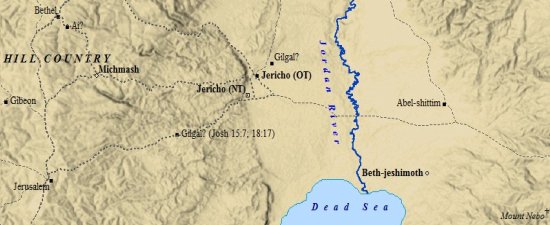
At this point in Luke’s chronology, Jesus is headed back toward Jerusalem. Jesus had already informed His disciples, “we are going up to Jerusalem, and everything that is written about the Son of Man by the prophets will be accomplished” (Luke 18:33 ESV). And now, Luke reveals that Jesus and His followers have reached the town of Jericho, located about 18 miles from Jerusalem in the southern region of Judea.

As usual, Jesus has a crowd of curious bystanders accompanying Him as he nears the city of Jericho. It seems likely that this group is made up of those who desire to be healed by Jesus, as well as those who are curious to see this famous miracle worker for themselves. News of His exploits in Galilee and the rumors concerning His identity as the Messiah have spread all throughout Galilee. So, once again, Jesus finds Himself in the unsolicited role of a celebrity.

As He nears the city of Jericho, the noise of the crowd garners the attention of a blind man who is begging by the side of the road. Before we look at what happens next, we have to deal with what appears to be the contradiction between Luke’s account of this story and those of Matthew and Mark. All three men include this encounter between Jesus and the blind man in their gospel accounts, but the details of the story are significantly different. For instance, Matthew indicates that there were two blind men, while Luke and Mark refer to only one. For some reason, Mark provides the name of the blind man while Luke does not. And while Luke seems to indicate that this story took place while Jesus was entering Jericho, Mark and Matthew describe it as taking place on His way out of the city.

This last issue seems simple enough to resolve. Luke states that Jesus’ encounter with the blind man took place “as he drew near to Jericho.” The Greek word carries the idea of proximity. In The New Living Translation, this verse reads, “As Jesus approached Jericho….”  Luke is not necessarily providing a timeline concerning Jesus’ arrival in Jericho. He is simply stating that Jesus was on a road that passed nearby the city. While in the region, Jesus could have been staying somewhere other than Jericho proper, and as He prepared to continue His journey to Jerusalem, He traveled on the road that passed by Jericho. He “drew near” in the sense that He had to pass by the city on His way to His final destination.

As to the number of blind men involved in the story, Matthew is the only gospel author who describes there being two. But this doesn’t have to be a problem. The accounts of Mark and Luke do not necessarily contradict Matthew’s telling of the story. Mark does not refute that there were two blind men, he simply focuses his attention on one, in particular, even providing us with his name. And Luke seems to follow Mark’s lead. The question is, how did Mark discover the name of this man? And the answer is revealed at the end of his account: “Instantly the man could see, and he followed Jesus down the road” (Mark 10:52 NLT). Matthew indicates that, upon receiving their sight, both men followed Jesus. But perhaps Bartimaeus was the only one of the two whose gratitude and determination to become a disciple of Jesus caught the attention of the disciples. This man, Bartimaeus, received healing from Jesus and was so moved by the gesture that he chose to commit himself to follow Jesus. Evidently, the other man whom Jesus healed eventually walked away, his sight restored but still blind to the identity of his benefactor.

But if we’re not careful, we can allow these so-called contradictions to distract us from the real point of the story. As Jesus and the clamoring crowd passed by the city, the noise they made attracted the attention of the two blind men. Unable to see what was happening around them, they were forced to ask someone to explain the source of all the commotion. They were told, “Jesus of Nazareth is passing by” (Luke 18:37 ESV). According to Matthew, upon hearing that the Rabbi from Nazareth was nearby, both men cried out for mercy.

“Lord, have mercy on us, Son of David!” – Matthew 20:30 ESV

The crowd, irritated by the shouts of the two men, told them to shut up. This should not be surprising because the Jews would have viewed the blindness of these men as a sign that they had committed a serious sin against God and were suffering His judgment. They would have viewed these men as undeserving of mercy and unworthy of any attention from Jesus. But Bartimaeus and his companion would not be stifled or denied. They continued to shout and beg that Jesus would extend them mercy. They had heard of His miraculous ability to restore sight to the blind and they desperately longed for His healing touch. When their cries reached the ears of Jesus, He stopped and addressed them:

“What do you want me to do for you?” – Matthew 20:32 NLT

This seems like a rather silly question for Jesus to ask. After all, it was obvious to everyone in the crowd that these men were blind. And Jesus was fully aware of their condition and what it was they were desiring Him to do. But it is important to remember that these two men had spent their entire lives begging for handouts. They had probably spent years sitting at the very same spot asking passersby for spare change or a morsel of food. They had been forced to live off of the generosity of others. But now, they had a chance to receive something far more significant that would radically change their lives forever. So, Jesus wanted them to state their request out loud so that everyone in the crowd could hear them. And Matthew indicates that they had no problem expressing their desire.

“Lord, let our eyes be opened.” – Matthew 20:33 ESV

Bartimaeus and his fellow beggar had no problem declaring their heartfelt hope for healing. They were not interested in money or a free meal. They desperately desired to have their sight restored because they knew it would change their lives forever. But this was the first time they had the opportunity to beg for healing rather than a handout. And Jesus did not disappoint.

Jesus in pity touched their eyes, and immediately they recovered their sight and followed him. – Matthew 20:34 ESV

Of course, Luke and Mark focus their attention on one of the men. Luke states that this one man, upon receiving his sight, “followed him, glorifying God” (Luke 18:43 ESV). Mark adds that Jesus told this man, “Go, for your faith has healed you” (Mark 10:52 NLT). These details seem to provide important clues as to Mark and Luke singling out Bartimaeus for special attention. As a result of his healing, He glorified God and Jesus indicates that it was his faith that resulted in his healing. This is similar to the account of Jesus’ healing of the ten lepers. While all ten men had their leprosy miraculously removed from their bodies, only one of them gave praise to God. And Jesus pointed out the difference between his healing and that of the other nine.

Was no one found to return and give praise to God except this foreigner?” And he said to him, “Rise and go your way; your faith has made you well.” – Luke 17:18-19 ESV

It’s also important to note that Luke adds another interesting detail concerning  Bartimaeus’ healing. He seems to indicate that Bartimaeus recovered his sight as a result of his faith. Jesus sensed something different in the tone of his request and pointed it out.

“Recover your sight; your faith has made you well.” And immediately he recovered his sight and followed him, glorifying God. And all the people, when they saw it, gave praise to God. – Luke 18:42-43 ESV

While both men evidently followed Jesus, only Bartimaeus did so based on a belief in who Jesus was. He somehow knew that Jesus was more than just a healer. It appears that Bartimaeus believed Jesus to be the Messiah and the Son of God, and his praise of God was not just an expression of gratitude for restored sight, but a declaration of joy over the arrival of the anointed one of Israel.

English Standard Version (ESV) The Holy Bible, English Standard Version. ESV® Permanent Text Edition® (2016). Copyright © 2001 by Crossway Bibles, a publishing ministry of Good News Publishers.

New Living Translation (NLT) Holy Bible, New Living Translation, copyright © 1996, 2004, 2015 by Tyndale House Foundation. Used by permission of Tyndale House Publishers Inc., Carol Stream, Illinois 60188. All rights reserved.
The Message (MSG)Copyright © 1993, 1994, 1995, 1996, 2000, 2001, 2002 by Eugene H. Peterson

Can’t You See?

46 And they came to Jericho. And as he was leaving Jericho with his disciples and a great crowd, Bartimaeus, a blind beggar, the son of Timaeus, was sitting by the roadside. 47 And when he heard that it was Jesus of Nazareth, he began to cry out and say, “Jesus, Son of David, have mercy on me!” 48 And many rebuked him, telling him to be silent. But he cried out all the more, “Son of David, have mercy on me!” 49 And Jesus stopped and said, “Call him.” And they called the blind man, saying to him, “Take heart. Get up; he is calling you.” 50 And throwing off his cloak, he sprang up and came to Jesus. 51 And Jesus said to him, “What do you want me to do for you?” And the blind man said to him, “Rabbi, let me recover my sight.” 52 And Jesus said to him, “Go your way; your faith has made you well.” And immediately he recovered his sight and followed him on the way. Mark 10:46-52 ESV

Jesus and the disciples continued their journey to Jerusalem. James and John must have been a bit demoralized because of the response they had received from Jesus. They had come to Him requesting that He grant them the right to sit on His right and His left in His new Kingdom. They were hoping for positions of power in His royal administration, but instead, they had received a lecture on servanthood. He had basically told them that the path to glory was through humility and sacrifice. Not exactly what they had hoped to hear.

The disciples were having a difficult time understanding all that Jesus was trying to tell them. They were suffering from spiritual blindness, an incapacity to comprehend all that was taking place around them. It seems that no matter what Jesus said or did, their spiritual eyesight remained darkened by doubt and false perceptions. And what happens next is meant to drive home their need for enlightenment.

As they continue they make their way through Jericho, Jesus and the 12 disciples encounter a blind beggar named Bartimaeus. Both Matthew and Luke provide their versions of the same event, but with slightly different details. Mark is the only one of the three who makes note of the beggar’s name, even telling us who his father was. Matthew reports that there were two blind beggars, while Mark and Luke only mention one. But the common link between each of their versions of this story is that it took place not long after Jesus had revealed for the third time that He was going to Jerusalem to die.

“Listen, we’re going up to Jerusalem, where all the predictions of the prophets concerning the Son of Man will come true. He will be handed over to the Romans, and he will be mocked, treated shamefully, and spit upon. They will flog him with a whip and kill him, but on the third day he will rise again.” – Luke 18:31-33 NLT

And all three gospel authors make note that the disciples were having a difficult time comprehending the significance of Jesus’ announcement.

But they didn’t understand any of this. The significance of his words was hidden from them, and they failed to grasp what he was talking about. – Luke 18:34 NLT

This was not the first time the disciples had struggled to understand the words of Jesus. Back in chapter 8, Mark records when tried to warn them about the leaven of the Pharisees. But while Jesus was talking about the pervasive and dangerous nature of the Pharisees’ teaching, the disciples misunderstood and thought He was upset with them because they had failed to bring bread. Which led Jesus to rebuke them for their hardness of heart.

“Why are you discussing the fact that you have no bread? Do you not yet perceive or understand? Are your hearts hardened? Having eyes do you not see, and having ears do you not hear? And do you not remember? When I broke the five loaves for the five thousand, how many baskets full of broken pieces did you take up?” –Mark 8:17-19 ESV

And on that occasion, Jesus had followed up their display of spiritual blindness with a miracle of healing. He just so happened to meet met a blind man in the town of Bethsaida, and Jesus healed him.

…he opened his eyes, his sight was restored, and he saw everything clearly. – Mark 8:25 ESV

Now, as Jesus entered Jericho, He has another “chance” encounter with yet another blind man. This is no mere coincidence. It is a divinely timed opportunity designed to provide the disciples with one more living object lesson. And almost as if to prove that this was a real story involving a real individual, Mark provides us with the man’s name: “Bartimaeus, a blind beggar, the son of Timaeus” (Mark 10:46 ESV). If any of Mark’s readers ever passed through Jericho, they could look the man up and hear his story firsthand.

But Bartimaeus, upon hearing that Jesus had come to Jericho, began to cry out, “Jesus, Son of David, have mercy on me!” (Mark 10:47 ESV). This physically blind man was able to “see” something about Jesus that many sighted individuals had failed to comprehend. He calls Jesus the Son of David, acknowledging His royal lineage and verifying His legal right to inherit the kingdom of His forefathers. The title “Son of David” was used to refer to the coming Messiah. This long-anticipated Savior of the nation of Israel was to be a descendant of King David, fulfilling the promise given to David by God.

“When your days are fulfilled and you lie down with your fathers, I will raise up your offspring after you, who shall come from your body, and I will establish his kingdom. He shall build a house for my name, and I will establish the throne of his kingdom forever.…And your house and your kingdom shall be made sure forever before me. Your throne shall be established forever.”2 Samuel 7:12-13, 16 ESV

While this prophecy was partially fulfilled with the reign of Solomon, his kingdom was far from everlasting. It ended in disappointment, as Solomon failed to remain faithful to God, worshiping the false gods of his many wives and concubines So, after Solomon’s death, God split the kingdom in two. And the vast majority of the kings who reigned over these two kingdoms would prove to be unfaithful as well. Eventually, God would punish both kingdoms by causing their defeat at the hands of their enemies and sending their people into exile.

But this blind man was able to see Jesus for who He really was. He understood Him to be the Messiah of Israel, the Son of David, and the rightful heir to the royal throne. And he cried out, begging that Jesus might show him mercy. But Mark records that “many rebuked him, telling him to be silent” (Mark 10:48 ESV). Luke indicates that it was “those who were in front” who tried to silence him, and it’s likely that this group included some of the disciples. I can imagine Peter being one of the first to try and muzzle this poor beggar. After all, Peter had been the one whom Jesus had blessed when He had rightfully confessed, “You are the Christ, the Son of the living God” (Matthew 16:16 ESV). Peter wasn’t about to share his glory with some disheveled and disabled beggar living in the middle of nowhere.

But Bartimaeus refused to be silenced. As they tried to stifle his cries, he simply called out all the louder. He would not allow this opportunity to pass him by. The Messiah was nearby and he longed to have his sight restored. So, when Jesus called for Bartimaeus, he responded as quickly as he could, despite his disability. Then Jesus asked the blind man appears to be a rather unnecessary question: “What do you want me to do for you?” (Mark 10:51 ESV).

Jesus did not ask this question because He was unaware of the nature of the man’s problem. He was providing Bartimaeus with an opportunity to express his desire and, by doing so, expose his faith. And Bartimaeus did not disappoint.

“Rabbi, let me recover my sight.” – Mark 10:51 ESV

Bartimaeus addressed Jesus as rhabbouni, which means “Lord and master.” He saw Jesus as the one who could restore his physical blindness. He longed to be able to see again and he knew that Jesus was his only hope. And Jesus did exactly what the man had hoped He would do. But before Jesus healed Bartimaeus, He gave him a command:

Go your way; your faith has made you well.” – Mark 10:52 ESV

The Greek word Mark uses is hypagō, and it means “to depart” or “to go away.” It is the same word Jesus used when speaking to Satan during His temptation in the wilderness. Jesus had told Sata to hypagō – “Be gone, Satan!” (Matthew 4:10 ESV).

Jesus had commanded Satan to leave, and Matthew records that “the devil left him” (Matthew 4:11 ESV). But when Jesus told Bartimaeus to “depart,” he did just the opposite. Mark reports that Bartimaeus “followed him on the way” (Mark 10:52 ESV). He had what he had longed for – the restoration of his sight. And at that point, he was able to go and do whatever he wanted to do. He could see. No longer hampered by blindness, Bartimaeus could have gone anywhere. But he chose to follow Jesus. Just imagine all the distractions that appeared before his eyes. For the first time in a long time, he could see the sun, the trees, and the long-forgotten faces of friends. And yet, when Jesus told him to go, Bartimaeus chose to follow.

Now, consider the disciples. They were also following Jesus to Jerusalem, but somewhat reluctantly. They were not thrilled by Jesus’ reports of what awaited Him in the royal city. They couldn’t see the benefit of going to Jerusalem if it meant that Jesus was to be arrested, tried, and killed. But Bartimaeus, his sight newly restored, got in line behind Jesus and gladly followed the one who had delivered his life from literal darkness.

And you can almost expect to turn to His disciples and ask them again, “Having eyes do you not see?” His journey to Jerusalem was necessary. It was part of God’s divine plan to bring healing to the nations. And in time, the disciples would have their eyes opened as well, allowing them to see the true nature of Jesus’ mission.

“The Spirit of the Lord is upon me,
    because he has anointed me
    to proclaim good news to the poor.
He has sent me to proclaim liberty to the captives
    and recovering of sight to the blind,
    to set at liberty those who are oppressed,
to proclaim the year of the Lord’s favor.” – Luke 4:18-19 ESV

English Standard Version (ESV) The Holy Bible, English Standard Version. ESV® Permanent Text Edition® (2016). Copyright © 2001 by Crossway Bibles, a publishing ministry of Good News Publishers.

New Living Translation (NLT) Holy Bible, New Living Translation, copyright © 1996, 2004, 2015 by Tyndale House Foundation. Used by permission of Tyndale House Publishers Inc., Carol Stream, Illinois 60188. All rights reserved.

The Message (MSG)Copyright © 1993, 1994, 1995, 1996, 2000, 2001, 2002 by Eugene H. Peterson

Sight For the Blind

29 And as they went out of Jericho, a great crowd followed him. 30 And behold, there were two blind men sitting by the roadside, and when they heard that Jesus was passing by, they cried out, “Lord, have mercy on us, Son of David!” 31 The crowd rebuked them, telling them to be silent, but they cried out all the more, “Lord, have mercy on us, Son of David!” 32 And stopping, Jesus called them and said, “What do you want me to do for you?” 33 They said to him, “Lord, let our eyes be opened.” 34 And Jesus in pity touched their eyes, and immediately they recovered their sight and followed him. –  Matthew 20:29-34 ESV

JerichoEarlyMtNebo.jpgJesus was on His way to Jerusalem where, as He has told His disciples, He would be betrayed, tried, and put to death by crucifixion. And yet, as Matthew records, the crowds continued to follow Him. They had no idea what was awaiting Jesus in Jerusalem. And even the disciples were having a difficult time accepting the truth of what Jesus had told them. The idea of Jesus being put on trial by the Jewish religious leaders sounded too far-fetched to consider. And the thought of Jesus being put to death was something they simply refused to believe.

But what’s important to notice in this short passage is that Jesus remained committed to meeting the needs of the people who crowded around him. He was not self-absorbed or throwing a pity party for himself. He was fully aware of all that awaited Him in Jerusalem and committed to carrying out the will of His heavenly Father. But that does not mean He had lost any of His compassion for the people.

On His way out of the city of Jericho, just to the east of Jerusalem, Jesus had an encounter with two blind men. Hearing the excited shouts of the crowd, these two men called out to Jesus, “Lord, have mercy on us, Son of David!”

There would have been many people on the road from Jericho to Jerusalem, as they made their way to the capital city for the celebration of Passover. In his gospel account, Mark provides us with the name of one of the men.

…as he was leaving Jericho with his disciples and a great crowd, Bartimaeus, a blind beggar, the son of Timaeus, was sitting by the roadside. – Mark 10:46 ESV

So, it is likely that both men were begging at the gate, taking advantage of the large number of pilgrims headed to Jerusalem, and hoping to benefit from their generosity. But upon hearing that Jesus was there, they cried out for mercy. Matthew records that the crowds rebuked the two men, demanding that they remain silent. It is likely that this somewhat rude response by the people was based on their belief that physical infirmities like blindness were the result of sin. Even the disciples shared this commonly held view. On one occasion, upon seeing a man who had been born since birth, they had asked Jesus, “why was this man born blind? Was it because of his own sins or his parents’ sins?” (John 9:2 NLT). Poverty and illness were seen as curses from God, poured out as a result of the individual’s sin. So, apparently, the crowds saw these men as deserving of their lot in life and with no right to beg Jesus for mercy or healing.

It should not escape our attention that these two men, while physically blind, were spiritually perceptive. They could see what so many others could not. Their spiritual vision was 20/20, allowing them to perceive Jesus as the Messiah, the Son of David. Sometime earlier, Jesus had spoken of the spiritual blindness of the people of Israel, quoting from the prophet Isaiah.

“You will indeed hear but never understand,
    and you will indeed see but never perceive.”
For this people’s heart has grown dull,
    and with their ears they can barely hear,
    and their eyes they have closed,
lest they should see with their eyes
    and hear with their ears
and understand with their heart
    and turn, and I would heal them. – Matthew 13:14-15 NLT

Out of the huge crowd of people making their way to Jerusalem, only these two sightless men were able to recognize the Messiah standing in their midst, and they appealed to Him for mercy. They were unashamed to admit their need for healing. And they were unapologetic and unwavering in their cry for mercy. They would not be silenced or denied a touch from the Messiah. And when Jesus asked them what He could do for them, they were very clear. “Lord, let our eyes be opened.”

They desired to have their physical sight restored. They were tired of being treated as second-class citizens, relegated to begging for their daily sustenance. They were fed up with the rumors and innuendos regarding their apparent spiritual poverty. They wanted to be healed. They desired to be whole. And “Jesus in pity touched their eyes, and immediately they recovered their sight and followed him” (Matthew 20:34 ESV).

While others looked down on them, Jesus showed them compassion. While His disciples probably considered themselves better than the two blind men, Jesus was willing to expend His time, attention, and power on behalf of these two undeserving men. He did for them what they could have never done for themselves. Their cry for mercy was heard and answered. They longed for healing and took their need to the only one who could do anything about it.

It’s significant that this healing took place as Jesus made His way to Jerusalem, where He would end up dying on a cross for the sins of man. On another occasion, Jesus had an encounter with a Pharisee named Nicodemus. One of the things Jesus told this religious leader was, “as Moses lifted up the bronze snake on a pole in the wilderness, so the Son of Man must be lifted up, so that everyone who believes in him will have eternal life” (John 3:14 NLT). Jesus was referring to a scene recorded in the Old Testament book of Numbers. During the days of the Israelites’ wandering in the wilderness, they became disenchanted with God and Moses, particularly as it concerned their diet. They were sick of the manna God had been providing. So, they complained to Moses.

“There is nothing to eat here and nothing to drink. And we hate this horrible manna!” – Numbers 21:5 NLT

In response to their need for sustenance, God had provided them with manna, a wafer-like substance that miraculously appeared on the ground each morning. But the people had grown tired of manna. And they showed disdain for His gracious provision by complaining about the monotony of their diet.  As a result, God “sent poisonous snakes among the people, and many were bitten and died” (Numbers 21:6 NLT). That got their attention. This time, rather than complaining, they begged Moses to intercede with God on their behalf.

“We have sinned by speaking against the Lord and against you. Pray that the Lord will take away the snakes.” – Numbers 21:7 NLT

They had a problem. And it was nothing they could fix on their own. They couldn’t stop the snakes from biting them. Their sin was resulting in their deaths. And they knew that only God could do something about the situation. So, God instructed Moses to make a bronze serpent and mount it on a pole.

“Make a replica of a poisonous snake and attach it to a pole. All who are bitten will live if they simply look at it!” – Numbers 21:8 NLT

And that’s exactly what Moses did. But notice God’s instructions to the people. Those who were bitten had to look at the image of the serpent, the very thing that was bringing God’s judgment upon them. They had to trust the word of God and do exactly as He said. Any hope they had for healing was based on their willingness to look and believe.

And Jesus had told Nicodemus, “as Moses lifted up the bronze snake on a pole in the wilderness, so the Son of Man must be lifted up, so that everyone who believes in him will have eternal life.”

When Jesus was nailed to the cross, His naked, beaten, and bloody body represented the punishment for the sins of mankind. He took on Himself what we deserved. He hung in our place. And when anyone looks to Him in faith, recognizing Him as their God-given sin substitute, they are healed from the deadly consequences of their sins. Peter expressed the substitutionary nature of Christ’s death this way:

He himself bore our sins in his body on the tree, that we might die to sin and live to righteousness. By his wounds you have been healed. – 1 Peter 2:24 ESV

But what does any of this have to do with the two blind men? Everything. When these two men heard that Jesus was nearby, they cried out to Him for help. They couldn’t see Jesus, but they could turn to Him for what they desired: The restoration of their sight.

These two sightless men received healing because they “looked” to Jesus. They placed their faith in who He was and what He could do, and as a result, they had their sight restored. But notice what Matthew says. He states that Jesus had pity on these men. While the crowds had tried to silence them, Jesus felt compassion for them and healed them. He did for them as they asked. He gave them the gift of sight.

Just days after this encounter, Jesus would hang on a cross, giving His life as a ransom for many. And, like the serpent on the staff in the wilderness, Jesus’ death would provide spiritual healing to all those who, in faith, look on Him and believe. Those who recognize their own spiritual blindness and helplessness and look to Him will find healing. But more than physical sight, they will receive eternal life.

Jesus was on His way to Jerusalem, where He would give His life as a ransom for many. And His death would be a litmus test, differentiating between those who recognized their sin and their need for a Savior, and those who stubbornly clung to their own self-righteousness and self-sufficiency. Jesus’ death would become a source of justification for some and judgment for others.

“For judgment I came into this world, that those who do not see may see, and those who see may become blind.” – John 9:39 ESV

The blind will look, believe, and see. But those who see will find themselves blinded to the reality of their sin and their need for a Savior.

English Standard Version (ESV)
The Holy Bible, English Standard Version. ESV® Permanent Text Edition® (2016). Copyright © 2001 by Crossway Bibles, a publishing ministry of Good News Publishers.

New Living Translation (NLT)
Holy Bible, New Living Translation, copyright © 1996, 2004, 2015 by Tyndale House Foundation. Used by permission of Tyndale House Publishers Inc., Carol Stream, Illinois 60188. All rights reserved.

The Message (MSG)Copyright © 1993, 1994, 1995, 1996, 2000, 2001, 2002 by Eugene H. Peterson

Sight to the Blind

27 And as Jesus passed on from there, two blind men followed him, crying aloud, “Have mercy on us, Son of David.” 28 When he entered the house, the blind men came to him, and Jesus said to them, “Do you believe that I am able to do this?” They said to him, “Yes, Lord.” 29 Then he touched their eyes, saying, “According to your faith be it done to you.” 30 And their eyes were opened. And Jesus sternly warned them, “See that no one knows about it.” 31 But they went away and spread his fame through all that district.

32 As they were going away, behold, a demon-oppressed man who was mute was brought to him. 33 And when the demon had been cast out, the mute man spoke. And the crowds marveled, saying, “Never was anything like this seen in Israel.” 34 But the Pharisees said, “He casts out demons by the prince of demons.” – Matthew 9:27-34 ESV

Matthew has been going out of his way to prove the authority of Jesus by weaving together a series of somewhat unrelated events, purposefully taking them out of their chronological order,  and rearranging them to bolster his claim that Jesus was the Messiah, the Son of God.

Here we have another example of Jesus demonstrating His power and authority through His miraculous healing of two blind men. The prophet Isaiah wrote of a future period of time when the blind would receive their sight.

Then the eyes of the blind shall be opened,
    and the ears of the deaf unstopped;
then shall the lame man leap like a deer,
    and the tongue of the mute sing for joy. – Isaiah 35:5-6 ESV

And Matthew is faithfully providing evidence meant to prove that the long-awaited day had arrived. Even Jesus would later acknowledge that He was the anointed one, the Messiah, for whom the Jews had been eagerly awaiting.  When John the Baptist ended up in prison, having been put there by King Herod, he sent his disciples to ask Jesus, “Are you the Messiah we’ve been expecting, or should we keep looking for someone else?” (Matthew 11:3 NLT). He was looking for confirmation because things were not working out quite like he had expected. He was receiving reports about all that Jesus was doing, but it must have contradicted his preconceived notions of how the Messiah would go about His business. So, he asked Jesus to clarify whether He really was, “The Lamb of God who takes away the sin of the world!” (John 1:29 NLT).

And Jesus patiently and graciously responded, “Go back to John and tell him what you have heard and seen—the blind see, the lame walk, those with leprosy are cured, the deaf hear, the dead are raised to life, and the Good News is being preached to the poor” (Matthew 11:4-5 NLT). Look at that list. Within the last two chapters, Matthew has covered almost every one of them. We’ve read how Jesus healed the paralyzed man so he could pick up his mat and walk. Jesus reached out and touched the man with leprosy, allowing him to walk away cleansed and whole. And, thanks to Jesus, the daughter of Jairus was literally raised from death back to life.

Later on, while visiting the synagogue in His hometown of Nazareth, Jesus would read the following verses from the 61st chapter of the book of Isaiah:

“The Spirit of the Lord is upon me,
because he has anointed me to proclaim good news to the poor.
He has sent me to proclaim release to the captives
and the regaining of sight to the blind,
to set free those who are oppressed,
to proclaim the year of the Lord’s favor.” – Luke 4:18-19 NLT

Then He would declare to those who had just heard Him read those words: ““Today this scripture has been fulfilled even as you heard it being read” (Luke 4:21 ESV). Those verses from Isaiah were well-known to the Jews and considered a prophetic passage concerning the coming Messiah. Jesus was claiming to be the fulfillment of those verses. He was the anointed one of God who came to proclaim good news to the poor, provide release to the captives, restore sight to the blind, and set the free the oppressed.

And Matthew gives us two more proofs that support the claims of Jesus. The first involves two blind men who follow Jesus, begging Him to show them mercy, and appealing to His status as the Son of David. They seemed to recognize Jesus as a descendant of King David, perhaps indicating their belief that He truly was the Messiah. They viewed Jesus as a man with authority and power. And it is likely that they had heard all the rumors concerning the other miracles Jesus had performed. So, they begged Jesus to show them mercy. They even followed Him into a nearby house, demonstrating their persistent and unrelenting desire for His help with their problem.

And, Jesus asked them a probing question: “Do you believe that I am able to do this?” (Matthew 9:28 ESV). While all they had asked for was mercy, Jesus knew what it was they really desired. They desperately wanted to be healed from their blindness. They longed to be released from the darkness that had become their uninvited and unwelcome companion.

It is likely that Jesus knew the answer before He asked. He had the unique capacity to understand the hearts of men and to ascertain the unspoken thoughts of their minds. So, it seems that He was providing these two men with the opportunity to express their internal faith in an outward way. Which they did by responding, “Yes, Lord” (Matthew 9:28). And Jesus acknowledged the veracity of their faith by declaring that their healing was a direct result of it. They had believed. Therefore, they were healed. Matthew simply states, “And their eyes were opened{ (Matthew 9:30 ESV).

No sooner had these two men walked out the door with their sight restored, another man entered the house, but he was far from alone. He was possessed by a demon whose presence had left the man unable to speak. Obviously, Jesus was well aware of the man’s problem and immediately addressed it by casting out the demon. And with the demon’s departure, the man’s capacity to speak returned. This miracle left the crowds exclaiming, “Never was anything like this seen in Israel” (Matthew 9:33 ESV).

They were blown away it all. They had just witnessed Isaiah 61 being lived out right before their eyes. The blind had just regained their sight, and the oppressed had just been set free. And Jesus had done it all. He had clearly demonstrated His Messiahship in tangible, life-altering ways. But while the people marveled, the religious leaders scoffed, writing off the miracles of Jesus as proof of His alliance with the Devil, not of His divinity. They accused Jesus of being in league with Satan himself, declaring, “He casts out demons by the prince of demons{ (Matthew 9:34 ESV). And this would not be the last time they issued that ridiculous assessment of Jesus’ power.

The two blind men couldn’t help but sing the praises of Jesus, in spite of His warning to keep the news of their healing to themselves. They wanted everyone to know what had happened. They had once been blind, but now they could see. But the Pharisees were singing a different tune, declaring that Jesus was a charlatan, a wolf in sheep’s clothing. In their minds, Jesus was in cahoots with the devil, trying to deceive the minds of men by performing seemingly miraculous healings that drew the crowds away from the real purveyors of truth: Themselves.

Yet, Jesus would later refer to the Pharisees as “blind guides leading the blind” (Matthew 15:14 NLT). And rather humorously, Jesus described the foolishness and futility of a blind man taking guidance from another blind man:  “…if one blind person guides another, they will both fall into a ditch” (Matthew 15:14 NLT).  While Jesus was busy restoring sight to those who couldn’t see, the Pharisees were foolishly trying to provide them with directions when they were blind themselves.

The Savior had come. The restorer of sight had arrived. The deliverer of captives was in their midst. And with every miracle Jesus performed, He provided further, unequivocal proof of who He was and what He had come to do.

English Standard Version (ESV) The Holy Bible, English Standard Version. ESV® Permanent Text Edition® (2016). Copyright © 2001 by Crossway Bibles, a publishing ministry of Good News Publishers.

New Living Translation (NLT)
Holy Bible, New Living Translation, copyright © 1996, 2004, 2015 by Tyndale House Foundation. Used by permission of Tyndale House Publishers Inc., Carol Stream, Illinois 60188. All rights reserved.

The Message (MSG)Copyright © 1993, 1994, 1995, 1996, 2000, 2001, 2002 by Eugene H. Peterson

But Now I See!

Therefore, having this ministry by the mercy of God, we do not lose heart. But we have renounced disgraceful, underhanded ways. We refuse to practice cunning or to tamper with God’s word, but by the open statement of the truth we would commend ourselves to everyone’s conscience in the sight of God. And even if our gospel is veiled, it is veiled to those who are perishing. In their case the god of this world has blinded the minds of the unbelievers, to keep them from seeing the light of the gospel of the glory of Christ, who is the image of God. For what we proclaim is not ourselves, but Jesus Christ as Lord, with ourselves as your servants for Jesus’ sake. For God, who said, “Let light shine out of darkness,” has shone in our hearts to give the light of the knowledge of the glory of God in the face of Jesus Christ. – 2 Corinthians 4:1-6 ESV

Paul viewed himself as a minister of the new covenant. He had been commissioned by Jesus Christ to carry the message of the gospel, the good news that a right standing with God was available through faith in the death, burial and resurrection of Jesus, the Messiah. It was not based on the old covenant of works or human effort. No longer did men have to vainly attempt to keep the Mosaic law, trusting that their efforts would somehow measure up to God’s righteous standard and earn them favor in His sight. That old way had been replaced with a new and better way. The author of Hebrews reminds us:

But now Jesus, our High Priest, has been given a ministry that is far superior to the old priesthood, for he is the one who mediates for us a far better covenant with God, based on better promises. If the first covenant had been faultless, there would have been no need for a second covenant to replace it. – Hebrews 8:6-7 NLT

Jesus is the one who guarantees this better covenant with God. – Hebrews 7:22 NLT

Paul didn’t lose heart in sharing this new and better covenant with the world, because he knew it was effective. It was the key to victory over sin and the means by which men could be make right with God – once and for all. So in spite of opposition, rejection, persecution and seeming lack of success at times, he kept sharing. He felt no need to use deceitful tactics or underhanded means by which to trick people into believing the gospel. There was no need. It could stand on its own because it was the truth of God and had proven itself fully capable of transforming the lives of countless individuals without Paul having to resort to human wisdom or his own personal powers of persuasion. In fact, in his first letter to the Corinthians, Paul reminded them, “I didn’t use lofty words and impressive wisdom to tell you God’s secret plan…Rather than using clever and persuasive speeches, I relied only on the power of the Holy Spirit. I did this so you would trust not in human wisdom but in the power of God” (1 Corinthians 2:1, 4-5 NLT).

There was no doubt that some who heard the gospel as preached by Paul, Silas, Titus and others, remained unchanged. The problem was not with the gospel or the presentation skills of the minister, but with the spiritual condition of the recipients. They were blind – “the god of this world has blinded the minds of the unbelievers, to keep them from seeing the light of the gospel of the glory of Christ, who is the image of God” (2 Corinthians 4:4 ESV). It is important to keep Paul’s use of the word “veiled” linked with his prior use of it in chapter 3. There he had been talking about the old covenant as revealed under Moses. It was the covenant of the law. And there were still Jews who were trying to gain favor with God through the keeping of the law.

But their minds were hardened. For to this day, when they read the old covenant, that same veil remains unlifted, because only through Christ is it taken away. Yes, to this day whenever Moses is read a veil lies over their hearts. – 2 Corinthians 3:14-15 ESV

When the Jews in Paul’s day read the books of the law, they were blinded by their own belief and expectation that they could somehow be made right with God through that old covenant. So they refused to accept Jesus as the mediator of a new and better covenant. And in the case of non-Jews, Paul insists that the were blinded by the god of this world – Satan.

Satan, who is the god of this world, has blinded the minds of those who don’t believe. They are unable to see the glorious light of the Good News. They don’t understand this message about the glory of Christ, who is the exact likeness of God. – 2 Corinthians 4:4 NLT

Their eyes must be opened to the truth in order to receive it. Their spiritual blindness must first be healed so that they can see the glory of God in the face of Christ. Paul knew exactly what he was talking about, because it was what had happened to him in his own conversion. He recounting of that fateful day is found in Acts 9 where he tells of coming face-to-face with the resurrection Christ. On the road to Damascus where he intended to persecute and arrest Christians, Paul (then known as Saul) was suddenly blinded by a light and heard the voice of Jesus Himself.

Saul rose from the ground, and although his eyes were opened, he saw nothing. So they led him by the hand and brought him into Damascus. And for three days he was without sight, and neither ate nor drank. – Acts 9:8-9 ESV

Jesus commanded Saul to go to the city of Damascus and await further instruction. God sent a disciple named Ananias to minister to Saul.

And laying his hands on him he said, “Brother Saul, the Lord Jesus who appeared to you on the road by which you came has sent me so that you may regain your sight and be filled with the Holy Spirit.” And immediately something like scales fell from his eyes, and he regained his sight. Then he rose and was baptized; and taking food, he was strengthened. – Acts 9:17-19 ESV

Saul had been blind, but when the Holy Spirit came upon him, his physical sight was immediately restored along with his spiritual sight. He was able to see for the first time in his life the truth of the very gospel he had been trying to destroy. He was converted. And in chapter three of 2nd Corinthians, Paul insists that it is the Holy Spirit who removes the veil from the spiritual eyes of the lost so that they might see and reflect the glory of the Lord.

But whenever someone turns to the Lord, the veil is taken away. For the Lord is the Spirit, and wherever the Spirit of the Lord is, there is freedom. So all of us who have had that veil removed can see and reflect the glory of the Lord. And the Lord—who is the Spirit—makes us more and more like him as we are changed into his glorious image. – 2 Corinthians 3:16-18 NLT

Like the blind man who had been healed by Jesus, those who have their spiritual eyes opened by the Spirit of God so that they can see and accept the truth of the gospel, are able to say, “I was blind, and now I can see!” (John 9:25 NLT). That bright, holy light that had blinded Paul on the road to Damascus is the same light of the glory of Christ that shines into the life of every unsaved person, eliminating the darkness of sin and illuminating their lives with the life-transforming hope of the gospel.

For God, who said, “Let light shine out of darkness,” has shone in our hearts to give the light of the knowledge of the glory of God in the face of Jesus Christ. – 2 Corinthians 4:6 ESV

It is the regenerating work of the Holy Spirit that makes it possible for spiritually dead and sightless individuals to see the glory of God in the face of Jesus Christ. He opens their eyes so they might see the truth of the gospel message of hope, healing and restoration. Salvation is the work of God as performed by the Spirit of God in the lives of the lost. It is not due to the persuasive power of men like Paul. Only God can restore sight to the blind. Only God can raise the spiritually dead back to life. Only God can remove the veil placed on the minds of unbelievers by Satan, allowing them to see “the light of the gospel of the glory of Christwho is the image of God” (2 Corinthians 4:4 ESV).


Empowered By the Spirit.

And when Jesus was baptized, immediately he went up from the water, and behold, the heavens were opened to him, and he saw the Spirit of God descending like a dove and coming to rest on him; and behold, a voice from heaven said, “This is my beloved Son, with whom I am well pleased.” – Matthew 3:16-17 ESV

As Jesus prepared to begin His earthly ministry, He inaugurated it with His own baptism. This was evidently a private affair with only Jesus and His cousin, John the Baptist present. John knew Jesus well, probably having grown up with Him, but he had not known that Jesus was to be the Messiah. It was he who said of Jesus,  “Look, the Lamb of God who takes away the sin of the world! This is the one about whom I said, ‘After me comes a man who is greater than I am, because he existed before me.’ I did not recognize him, but I came baptizing with water so that he could be revealed to Israel.” (John 1:29-31 NET). 

It is not quite clear when John came to fully comprehend the unique status of his cousin, but when Jesus came to him at the Jordan River asking to be baptized, John expressed his reluctance, saying, “I need to be baptized by you, and do you come to me?” (Matthew 3:14 ESV). Yet Jesus persuaded John to do as He had asked, saying, “Let it be so now, for thus it is fitting for us to fulfill all righteousness” (Matthew 3:15 ESV). The righteousness to which Jesus referred had nothing to do with Him receiving righteousness or being made righteous. He was simply stating that His baptism was in full keeping with the will of God. It would be an expression of obedience to God, as Jesus willingly submitted Himself to the will of God. And at the same time, it would validate the ministry of John the Baptist. 

John did as Jesus asked. “And when Jesus was baptized, immediately he went up from the water, and behold, the heavens were opened to him, and he saw the Spirit of God descending like a dove and coming to rest on him” (Matthew 3:16 ESV). Jesus’ obedience to His Father’s will was immediately followed by the anointing presence of the Holy Spirit and the confirming words of God, “This is my beloved Son, with whom I am well pleased” (Matthew 3:17 ESV). This event does not indicate that Jesus had somehow been lacking the Holy Spirit up until that moment. Matthew has already told us that Jesus was conceived by the Holy Spirit. The angel Gabriel had told Mary, “The Holy Spirit will come upon you, and the power of the Most High will overshadow you; therefore the child to be born will be called ‘holy – the Son of God’” (Luke 1:35 ESV). So Jesus was not receiving the Holy Spirit for the first time, but the Spirit’s arrival in the form of a visible dove was a confirmation of His public ministry. What He was about to do would be done in the power of God, and with the full authority and backing of God. Jesus would confirm this when He read from the scroll of the prophet Isaiah in the synagogue of His hometown of Nazareth. “The Spirit of the Lord is upon me, because he has anointed me to proclaim good news to the poor. He has sent me to proclaim liberty to the captives and recovering of sight to the blind, to set at liberty those who are oppressed, to proclaim the year of the Lord’s favor” (Luke 4:18-19 ESV).

God’s Spirit gave Jesus the power and authority to proclaim God’s message of good news. Time and time again, the Pharisees would question where Jesus got the authority to do the things He did. They wanted to know who had given Him the right to say the things He said. It was God. The Father had placed His Spirit upon Jesus, providing Him with the right, the power, and the divine authority to proclaim God’s message of good news. And we have that same right, privilege and authority. As followers of Jesus Christ, we have received the same Holy Spirit. Like the disciples at Pentecost, we have received fire from on high. We have been anointed with the Spirit of God so that we might fulfill the will of God. We didn’t receive the Holy Spirit so that we might enjoy happy, whole and trouble-free lives. We have been given a power and authority from God so that we might do exactly what Jesus did: Proclaim good news to the poor, liberty to the captives, recovery of sight to the blind, and offer liberty to all who are oppressed. It is our God-given, Spirit-empowered responsibility to proclaim the year of the Lord’s favor. We live in a unique time in history. We live in the dispensation of grace, when God is offering forgiveness of sins to any and all who will accept it. Jesus’ death on the cross and His Spirit-empowered resurrection to new life has made it possible for men and women to experience the grace of God in the form of the total forgiveness of their sin debt and the undeserved gift of Christ’s righteousness. But that gift would never have been made possible had Jesus not done what He had been commissioned and empowered to do. His obedience made possible man’s salvation. Throughout His life He willingly submitted Himself to the Spirit’s leading. Paul tells us, “he humbled himself by becoming obedient to the point of death, even death on a cross” (Colossians 2:8 ESV). All in order to fulfill the will of God in the power of God. And we must do the same. We must rely on God’s indwelling, empowering Spirit to give us the strength we need to fulfill the job we have been given to do. Each of us should be willing to say, “The Spirit of the Lord is upon me, because he has anointed me to proclaim good news to the poor, liberty to the captives, recovery of sight to the blind, and liberty for the oppressed.”

Isaiah 61-62, Revelation 14

A Glorious Future.

Isaiah 61-62, Revelation 14

I will greatly rejoice in the Lord; my soul shall exalt in my God, for he has clothed me with garments of salvation, he has covered me with the robe of righteousness…. Isaiah 61:10 ESV

At the time Isaiah was writing the words contained in his book, the nation of Israel was still facing the prospect of their fall at the hands of the Babylonians. God had already told them that they would be defeated, their city and temple destroyed, and the majority of their citizens taken into captivity. But God also told them about their glorious future. He spoke of a coming day of salvation, redemption and restoration. And while they would experience a partial fulfillment of this promise when they returned to the land under the leadership of Ezra, Nehemiah and Zerrubabel, there was a greater, yet future, fulfillment coming. The Holy Spirit inspired Isaiah to write of “the year of the Lord’s favor.” There was a time coming when the poor would receive good news, the brokenhearted would be comforted, the captives would be freed, and imprisoned would be released. These words of comfort spoke of something far greater than a physical salvation from poverty and imprisonment. When the people of Israel would eventually return to the land from captivity in Babylon, they would find themselves free from slavery to a foreign power, but they would still be captive to their own sin natures. They would still be spiritually impoverished, brokenhearted and imprisoned. God’s ultimate salvation was coming at a much-future date. Hundreds of years later, when Jesus Christ appeared at the synagogue in Nazareth, He was handed the scroll containing the writings of Isaiah. “And the scroll of the prophet Isaiah was given to him. He unrolled the scroll and found the place where it was written, ‘The Spirit of the Lord is upon me, because he has anointed me to proclaim good news to the poor. He has sent me to proclaim liberty to the captives and recovering of sight to the blind, to set at liberty those who are oppressed, to proclaim the year of the Lord’s favor’” (Luke 4:18-19 ESV). When Jesus came the first time, He offered salvation from the power of sin. He came to provide men release from captivity to the demands of their own sin natures. Yet, “He came to his own, and his own people did not receive him” (John 1:11 ESV). This came as no surprise to Jesus or to God the Father. The people of Israel’s rejection of Jesus as their Messiah was foreseen by God and was actually necessary in order to His Son to accomplish His divine mission. Jesus Himself told His disciples, “Have you never read in the Scriptures: ‘The stone that the builders rejected has become the cornerstone; this was the Lord’s doing, and it is marvelous in our eyes’?” (Matthew 21:42 ESV). He would go on to tell the Pharisees, the religious leaders of the people of Israel, “Therefore I tell you, the kingdom of God will be taken away from you and given to a people producing its fruits” (Matthew 21:43 ESV).

What does this passage reveal about God?

God has a plan. He is not reacting to events as they occur and coming up with on-the-spot decisions based on circumstances that have caught Him off guard and by surprise. As men, our plans are always subject to unforeseen and unexpected events that can complete derail our well-thought-out objectives. “Many are the plans in the mind of a man, but it is the purpose of the LORD that will stand” (Proverbs 19:21 ESV). God’s plans are unalterable. His will is immutable. Jesus came to die. That was God’s plan from the beginning. The rejection of His Son by His own people was not a monkey wrench thrown into the plans of God, but an integral and expected part of His overall strategy. But their rejection of the Messiah would not permanently remove them from God’s favor. Their refusal to accept God’s Anointed One would not cause God to forsake them. Instead, He promised them, “but you shall be called the priests of the Lord; they shall speak of you as the ministers of our God” (Isaiah 61:6 ESV). He would eventually cloth them in “garments of salvation” and “the robe of righteousness” (Isaiah 61:10). Paul wrote to the Gentile believers in Rome, “Lest you be wise in your own sight, I do not want you to be unaware of this mystery, brothers: a partial hardening has come upon Israel, until the fullness of the Gentiles has come in. And in this way all Israel will be saved, as it is written, ‘The Deliverer will come from Zion, he will banish ungodliness from Jacob’; and this will be my covenant with them when I take away their sins” (Romans 11:25-27 ESV). God has great plans in store for His people. God promises them, “You shall be a crown of beauty in the hand of the Lord, and a royal diadem in the hand of your God” (Isaiah 62:3 ESV). Not only that, they will go from being referred to as “forsaken” and “desolate” to being called “My delight is in her” (Isaiah 62:4). God is not done with Israel. He told Isaiah to remind them, “Tell the people of Israel, ‘Look, your Savior is coming. See, he brings his reward with him as he comes.’ They will be called ‘The Holy People’ and ‘The People Redeemed by the Lord.’ And Jerusalem will be known as ‘The Desirable Place’ and ‘The City No Longer Forsaken’” (Isaiah 62:11-12 NLT).

What does this passage reveal about man?

Israel did not deserve God’s favor. They had earned His wrath and deserved to suffer the consequences for their sins. And for many years, they would find themselves struggling under the discipline of the Lord. But they would also experience the unmerited favor of God. He faithfully restored them to their land. He preserved and protected them for generations. Yes, they would suffer under the rule of various nations. They would go for centuries without a king and experience the humiliation of the poverty and powerlessness that comes with  subjugation and servitude to more powerful nations. Even today, Israel finds itself surrounded by countless enemies who would love to see them wiped off the face of the earth. Even during the Great Tribulation to come, Satan will go out of His way to eliminate the people of Israel. He will wage an unrelenting war against the people of God, in the hopes of destroying them, and along with them, derailing the plans of God for them. And while the Jews continue to forsake Jesus Christ as their Messiah, God refuses to forsake them. Even during the period of the tribulation, God says He will raise up 144,000 Jews, redeeming them as His own and making them followers of Jesus Christ. “These have been redeemed from mankind as firstfruits for God and the Lamb, and in their mouth no lie was found, for they are blameless” (Revelation 14:5 ESV). These 144,000 redeemed Jews will come from every tribe of Israel. They will be witnesses of God’s salvation and of Jesus Christ as the Messiah of Israel. Through their testimony, a great many people, both Jews and Gentiles, will come to faith in Christ even during the dark days of the tribulation. Our faithful God has tremendous plans for His people. He has much in store for them. But as in Isaiah’s day, the danger for the people of God is that we would with a myopic perspective that prevents us from living with our eyes on the glorious future God has in store for us. How easy it is for us to take a look at our current circumstances and conclude we are “forsaken” and “desolate.” How important it is for us to always remember that God delights in us as His own. Our current conditions are not a reflection of God’s love, mercy, power or ultimate plans for us.

How would I apply what I’ve read to my own life?

The world in which we live is temporary. It was not meant to be our final destination. It’s current condition, marred by sin and filled with antagonism toward God, is a less-than-ideal place for us as God’s people. But we have been placed here by God for a reason. We have work to do. We are to live as His ambassadors and representatives, living as lights in the midst of darkness. We are people on a mission to spread the good news of Jesus Christ and model the redemptive work of God in the midst of a people living in spiritual poverty, captive to sin, and enslaved to the powers of this world. But even while we live out our lives on this planet, we are to keep our eyes firmly focused on our glorious future. This is not all there is. The pleasures of this world are but a shadow of what is to come. Any joys we experience in this life pale in comparison to what we will experience in the future God has in store for us. Our sufferings during this life, while real and sometimes devastating, won’t last forever. Paul reminds us, “For our present troubles are small and won’t last very long. Yet they produce for us a glory that vastly outweighs them and will last forever!” (2 Corinthians 4:17 NLT). He goes on to tell us, “So we don’t look at the troubles we can see now; rather, we fix our gaze on things that cannot be seen. For the things we see now will soon be gone, but the things we cannot see will last forever. For we know that when this earthly tent we live in is taken down (that is, when we die and leave this earthly body), we will have a house in heaven, an eternal body made for us by God himself and not by human hands” (2 Corinthians 4:18-5:1 NLT). What a glorious future God has in store for us. And He will bring it about – in His perfect time and according to His perfect plan.

Father, help me live with my eyes on the future. Help me to judge what I experience and see in this life through the lens of Your faithful, unfailing plan. You are not done yet. There is much in store for us as Your people. You have much yet to accomplish for the people of Israel. Thank You for reminding me of Your faithfulness and love. No matter what I see or experience in this life, I can rest in the fact that I have a glorious future in store for me. Amen

Ken Miller
Grow Pastor & Minister to Men
kenm@christchapelbc.org

Day 17 – Luke 4:16-30

Quite the Mood Swing.

Luke 4:16-30

“Everyone spoke well of him and was amazed by the gracious words that came from his lips … jumping up, they mobbed him and forced him the edge of the hill on which the town was built. They intended to push him over the cliff…” – Luke 4:22, 29 NLT

Jesus has made His way back to the village of Nazareth, His hometown. He is back among His neighbors and those who knew Him best. News of His travels and all that had happened in Jerusalem had probably made its way there. In fact, Luke tells us, “Reports about him spread quickly through the whole region” (Luke 4:14 NLT). So when Jesus arrived in town, He made His way to the synagogue on the Sabbath. He was invited to read from the Scriptures and the passage for that day was from the book of the prophet Isaiah. Jesus calmly read the words that those in His audience had heard many times before. But Jesus was going to instill them with significantly new meaning that day.

“The Spirit of the Lord is upon me,
for he has anointed me to bring Good News to the poor.
He has sent me to proclaim that captives will be released,
that the blind will see,
that the oppressed will be set free,
and that the time of the Lord’s favor has come.” – Luke 4:18-19 NLT

Nothing new here. That is, until Jesus sat down and announced, “The Scripture you’ve just heard has been fulfilled this very day!” (Luke 4:21 NLT). Amazingly, Jesus was claiming this passage to be about Him. The Spirit of the Lord was upon HIM. God had anointed HIM to bring Good News to the poor. HE had been sent to proclaim release to those in captivity. HE had been commissioned to bring sight to the blind and freedom to those being oppressed. HE was the manifestation of the Lord’s favor – He was the long-awaited Messiah. The people were amazed and a bit confused. They saw sitting before them, Jesus, the son of Mary and Joseph. They had watched Him grow up in their midst. He was one of them. He didn’t exactly fit their concept of what the Messiah would look like and, knowing His family history, they didn’t picture Him as possessing the qualities of leadership a king would require. They naturally ask, “How can this be? Isn’t this Joseph’s son?” (Luke 4:22 NLT).

Jesus knows what they’re thinking, not just what they’re saying. He knows they want Him to prove who He is by performing a few miracles in their midst. After all, He’s one of their own. He’s a hometown boy and they deserve to have Him do a few miracles for their benefit. But Jesus shocks them by His response. He tells them that the prophets of God were rarely ever received well by their own people. Sent by God as His mouthpieces to warn of coming judgment and call them to repentance, the prophets and their messages were rejected by the people. The same would prove true for Jesus, and He uses two stories from Jewish history to prove His point. One involved the prophet Elijah, who prophesied during a three-and-a-half year drought in Israel. The other story involves Elisha, also a prophet to Israel at another point in their history. The interesting thing is that both of these men, while prophets of God chosen to give the message of God to the people of God, were used to minister to non-Israelites. In both cases, there was a famine in the land, part of the judgment of God against the people of Israel for their stubborn refusal to honor His prophet and heed His call to repentance. Jesus reminds His listeners that Elijah was sent to the widow of Zarephathin Sidon, and Elijah was sent to Namaan, a leper from Syria. Both were Gentiles.

Jesus’ point was not missed on the people in the synagogue that day. They knew exactly what He was saying. Just as in the day of the prophets of old, the people of God were about to stubbornly refuse the God-anointed, God-appointed spokesman standing in their midst. Jesus was bringing Good News to the spiritually impoverished, release to the spiritually captive, sight to the spiritually blind, and freedom to the spiritually oppressed. But they would refuse to believe it or receive it, because they would refuse the messenger, just like their forefathers. And they react to Jesus in anger. Mob rule takes over as they force Jesus from the synagogue and to the edge of a nearby cliff where they intended to push Him to His death.

What had Jesus said that angered them so much? He had inferred that they were just as rebellious and sinful as their ancestors had ever been. He also suggested that God’s message and His messenger, the Messiah, because of their rebellion would end up focused on the Gentiles, their enemies. Yes, the time of the Lord’s favor had come, but it would not do them any good if they refused it. The Good News, release from captivity, restored sight, and freedom from oppression where useless unless they repented and accepted God’s assessment of their need and His solution to their problem. But Jesus, “passed right through the crowd and went on his way” (Luke 4:30 NLT). They had missed their opportunity.

Father, what a sober reminder of what takes place everyday among those we know who refuse to believe in the message of Good News regarding Jesus Christ. They stubbornly refuse to acknowledge their own sin and their desperate need for a Savior. But yet, those of us who know Jesus, can also refuse to believe in Him and trust Him to provide us with daily hope for our spiritual poverty, release from our spiritual captivity, sight in place of our spiritual blindness and freedom from the spiritual oppression in which we stubbornly live. Help us to turn to Your Son each and every day for salvation. Amen.

Ken Miller

Grow Pastor & Minister to Men
kenm@christchapelbc.org