The Danger of Self-Righteousness

13 He went out again beside the sea, and all the crowd was coming to him, and he was teaching them. 14 And as he passed by, he saw Levi the son of Alphaeus sitting at the tax booth, and he said to him, “Follow me.” And he rose and followed him.

15 And as he reclined at table in his house, many tax collectors and sinners were reclining with Jesus and his disciples, for there were many who followed him. 16 And the scribes of the Pharisees, when they saw that he was eating with sinners and tax collectors, said to his disciples, “Why does he eat with tax collectors and sinners?” 17 And when Jesus heard it, he said to them, “Those who are well have no need of a physician, but those who are sick. I came not to call the righteous, but sinners.” Mark 2:13-17 ESV

Jesus has just displayed His power and authority over the physical realm by healing the paralyzed man. But, more importantly, His astonishing ability to restore the man’s health was a demonstration of His God-given authority to forgive sin. As the Son of God, Jesus had come to earth in order to set men free from their slavery to sin and their condemnation of death. The formerly paralyzed man, while physically whole and forgiven, would still end up committing sins and face the ultimate penalty for doing so: physical death and eternal separation from God.

But Jesus had become a man so that He might serve as the substitutionary atonement, the ultimate sacrifice for the sins of mankind. His death on behalf of sinful humanity would satisfy the just and righteous wrath of God, and provide all those who placed their faith in His atoning work with a way to be restored to a right relationship with His Father. And, as a result of Jesus’ selfless sacrifice, they would enjoy forgiveness of all their sins – past, present, and future. The author of Hebrews describes it this way:

…he has appeared once for all at the end of the ages to put away sin by the sacrifice of himself. – Hebrews 9:26 ESV

And the psalmist provides us with a powerful reminder of the sin-forgiving power of the Son of God.

As far as the east is from the west, so far has He removed our transgressions from us.
 – Psalm 103:12 BSB

Mark transitions his narrative from the crowded confines of Simon and Andrew’s home to the shoreline of the Sea of Galilee. But will maintain his emphasis on Jesus’ power and authority to forgive sin, and continue to reveal the growing divide between Jesus and the religious authorities.

While walking along the seashore, Jesus continued to teach the crowds that continued to follow Him wherever He went. And as they made their way along the roadway that ran from Capernaum to Damascus and along the shore of the Sea of Galilee, they came across the tax booth of a man named Levi. This was not some chance encounter but a divinely-scheduled appointment. When Levi woke up that morning, he had no idea that his day would include a one-on-one meeting with the Messiah of Israel.

Luke describes Levi as a “tax collector” (Luke5:27). His chosen profession would have made Levi highly unpopular with his fellow Jews. He was an employee of Herod Antipas, the Roman-appointed puppet king of Israel. And his job was to collect all taxes having to do with trade and customs. Because Capernaum was located on a major trade route from Damascus, Levi would have been responsible for collecting export and import fees, sales and customs taxes, as well as tolls. But what made men like Levi particularly unpopular was their tendency to extort additional fees and surcharges from the fellow Jews. Tax collectors were seen as social pariahs who worked for the enemy and took advantage of their own people to line their pockets.

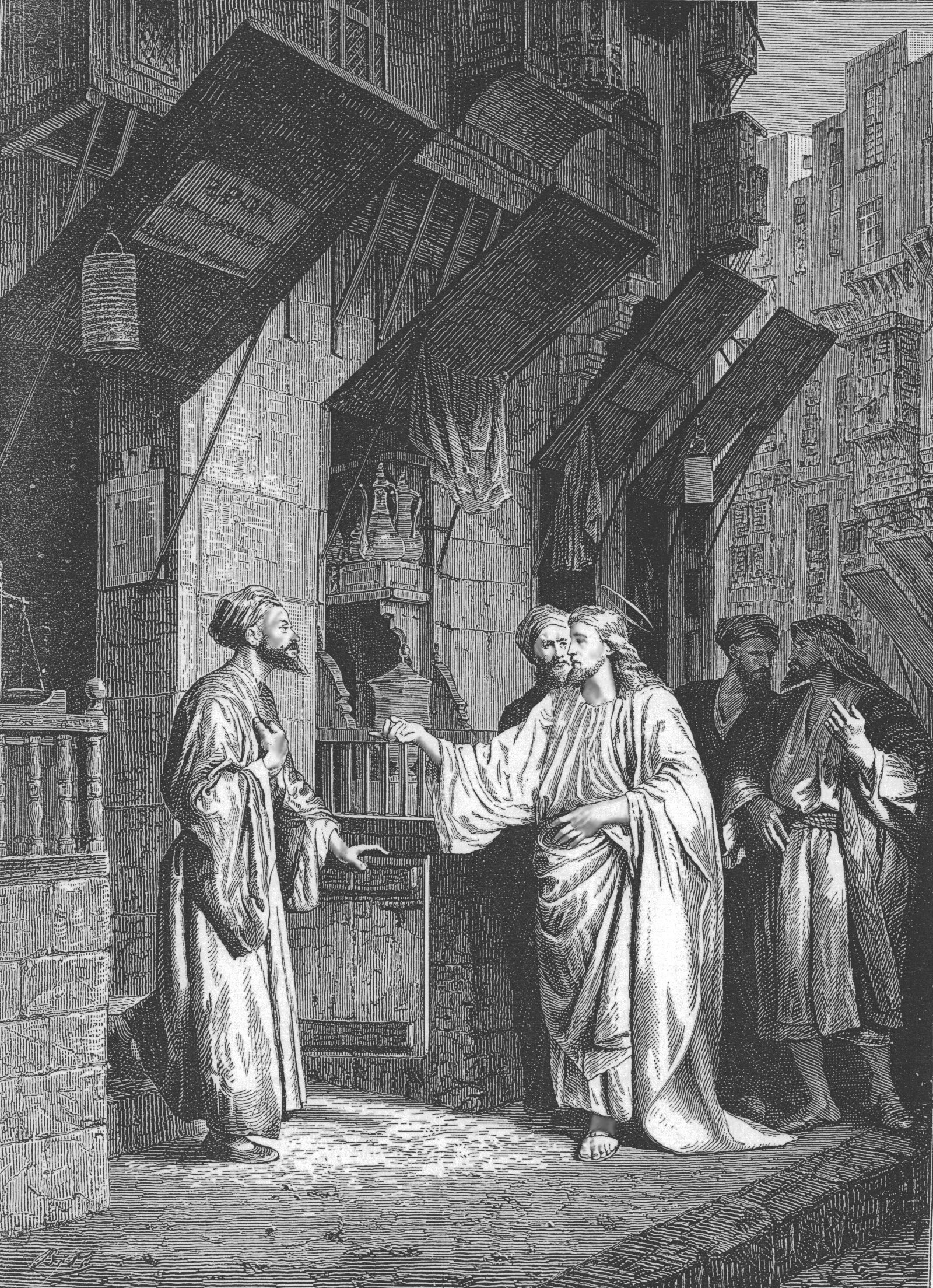
So, when Jesus issued Levi an invitation to follow Him, the Jews would have been shocked and appalled. In their minds, Levi was a traitor to his people and the epitome of a godless sinner. And to make matters even worse, Mark reveals that Jesus decided to share a meal with this social outcast. Luke records that Levi threw a party in Jesus’ honor and invited a large number of guests.

Levi made him a great feast in his house, and there was a large company of tax collectors and others reclining at table with them. – Luke 5:29 ESV

And Mark provides the added detail that “many tax collectors and sinners were reclining with Jesus and his disciples” (Mark 2:15 ESV). It seems that Levi was forced to invite his friends, who like him, were considered to be the dregs of the community.

Yet, Jesus accepted Levi’s invitation to dine at his house and willingly chose to associate with those whom the Jews considered as unclean and unacceptable. And Jesus’ actions did not go unnoticed.

But when the teachers of religious law who were Pharisees saw him eating with tax collectors and other sinners, they asked his disciples, “Why does he eat with such scum?” – Mark 2:16 NLT

They were shocked and disgusted by this shameless display of poor judgment on Jesus’ part. He should have known better. By entering Levi’s home and sharing a meal with this motley collection of sinners, Jesus had made He and His disciples ceremonially unclean. They had contaminated themselves.

There is a clear us-versus-them vibe going on. The Pharisees viewed themselves as righteous because of their meticulous adherence to both the written and oral laws of the Jews. They were the law-keepers and the law-enforcers. And, as far as they were concerned, Jesus had chosen to associate with the scum of the earth. By entering Levi’s home, Jesus had done the unthinkable and unforgivable.

The Pharisees had no compassion for people like Levi. They had no desire to reach out to those whom they considered sinners. They bore no sense of responsibility for the spiritual well-being less fortunate, whom they considered to be unworthy of mercy. In the minds of the Pharisees, it was the sin-prone common people who held back the nation of Israel and kept it from enjoying the full favor of God. To the self-righteous Pharisees, it was the sorry likes of Levi and his friends that kept Israel from being all that it could be. They were a blight on the nation and now, Jesus had clearly revealed His love for the unloveable and His heart for the irredeemable.

But Jesus knew exactly what was going on. He was fully aware of the disgust and distaste His actions had caused, and He chose to address the issue head-on.

“Those who are well have no need of a physician, but those who are sick. I came not to call the righteous, but sinners.” – Mark 2:17 ESV

With this simple statement, Jesus exposed the glaring difference between Himself and His accusers. They considered themselves to be spiritually healthy and whole. They were well and had no need of a Savior. But what they failed to understand was that their good deeds were of no value to God. As the prophet Isaiah had written hundreds of years earlier: “We are all infected and impure with sin. When we display our righteous deeds, they are nothing but filthy rags” (Isaiah 64:6 NLT).

Jesus was not impressed by the Pharisees and their outward displays of righteousness. He would later call them out for their hypocrisy and lack of compassion.

“…they don’t practice what they teach. They crush people with unbearable religious demands and never lift a finger to ease the burden.” – Matthew 23:3-4 NLT

“What sorrow awaits you teachers of religious law and you Pharisees. Hypocrites! For you shut the door of the Kingdom of Heaven in people’s faces. You won’t go in yourselves, and you don’t let others enter either. – Matthew 23:13 NLT

These men considered themselves to be the cream of the crop, the religious elite of Israel whose unblemished behavior guaranteed them a place in God’s kingdom. But Jesus let them know that their self-confidence was misplaced and mistaken. He had come to minister to the sick – those who recognized their spiritual malady and sought help. Like the paralyzed man, the tax collectors and sinners gathered in Levi’s home were in need of assistance. They knew they were sinners and were fully aware that they lacked what was necessary to “heal” themselves.

It was the apostle John who wrote, “If we confess our sins, he is faithful and just to forgive us our sins and to cleanse us from all unrighteousness” (1 John 1:9 ESV). The sinners reclining around the table with Jesus were just the kind of people Jesus came to save. They were sinners in need of a Savior. And if they would only confess their sin, they would know the joy of having their sins forgiven and their spiritual sickness healed.

But the Pharisees, riddled with pride and a misplaced sense of self-righteousness, were unable to see their need and unwilling to confess their sins. But their self-confidence would ultimately result in their own self-destruction. Their stubborn insistence that they were well would be their downfall. And the apostle Paul describes the dangerous path they had decided to take and the deadly destination to which it would lead.

Yes, they knew God, but they wouldn’t worship him as God or even give him thanks. And they began to think up foolish ideas of what God was like. As a result, their minds became dark and confused. Claiming to be wise, they instead became utter fools. – Romans 1:21-22 NLT

English Standard Version (ESV) The Holy Bible, English Standard Version. ESV® Permanent Text Edition® (2016). Copyright © 2001 by Crossway Bibles, a publishing ministry of Good News Publishers.

New Living Translation (NLT) Holy Bible, New Living Translation, copyright © 1996, 2004, 2015 by Tyndale House Foundation. Used by permission of Tyndale House Publishers Inc., Carol Stream, Illinois 60188. All rights reserved.

The Message (MSG)Copyright © 1993, 1994, 1995, 1996, 2000, 2001, 2002 by Eugene H. Peterson

Are We Also Blind?

24 So for the second time they called the man who had been blind and said to him, “Give glory to God. We know that this man is a sinner.” 25 He answered, “Whether he is a sinner I do not know. One thing I do know, that though I was blind, now I see.” 26 They said to him, “What did he do to you? How did he open your eyes?” 27 He answered them, “I have told you already, and you would not listen. Why do you want to hear it again? Do you also want to become his disciples?” 28 And they reviled him, saying, “You are his disciple, but we are disciples of Moses. 29 We know that God has spoken to Moses, but as for this man, we do not know where he comes from.” 30 The man answered, “Why, this is an amazing thing! You do not know where he comes from, and yet he opened my eyes. 31 We know that God does not listen to sinners, but if anyone is a worshiper of God and does his will, God listens to him. 32 Never since the world began has it been heard that anyone opened the eyes of a man born blind. 33 If this man were not from God, he could do nothing.” 34 They answered him, “You were born in utter sin, and would you teach us?” And they cast him out.

35 Jesus heard that they had cast him out, and having found him he said, “Do you believe in the Son of Man?” 36 He answered, “And who is he, sir, that I may believe in him?” 37 Jesus said to him, “You have seen him, and it is he who is speaking to you.” 38 He said, “Lord, I believe,” and he worshiped him. 39 Jesus said, “For judgment I came into this world, that those who do not see may see, and those who see may become blind.” 40 Some of the Pharisees near him heard these things, and said to him, “Are we also blind?” 41 Jesus said to them, “If you were blind, you would have no guilt; but now that you say, ‘We see,’ your guilt remains. John 9:24-41 ESV

The Pharisees were beside themselves in frustration and anger. Standing before them was a common street beggar, claiming to have had his congenital blindness miraculously healed by Jesus, their arch-nemesis. They had already threatened to excommunicate from the synagogue anyone who claimed Jesus to be the Messiah. And while this man had only proclaimed Jesus to be a prophet, they essentially accused him of blasphemy for having given glory to Jesus rather than God. They seriously doubted the veracity of this man’s story, but they still found him guilty of attributing to Jesus what only God could have done.

The formerly blind man was perplexed by their reasoning and their declaration that Jesus was nothing more than a sinner. Their logic made no sense to him. But in his simple way of thinking, it didn’t even matter. He responded, “Whether he is a sinner I do not know. One thing I do know, that though I was blind, now I see” (John 9:25 ESV).  All he knew for certain was that he used to blind, but now he could see. And it was all because of this man named Jesus.

Unable to coerce a confession out of the man, they resorted to further questioning, hoping to expose a hole in his story. But the man responded with a hint of exasperation mixed with sarcasm, “Look!…I told you once. Didn’t you listen? Why do you want to hear it again? Do you want to become his disciples, too?” (John 9:27 NLT). The content of his statement and the tone with which he said it produced an immediate and intense reaction from the Pharisees.

Then they cursed him and said, “You are his disciple, but we are disciples of Moses! We know God spoke to Moses, but we don’t even know where this man comes from.” – John 9:28-29 NLT

Their response revealed their complete disdain for Jesus and His followers. In their estimation, Jesus was a rogue Rabbi whose teachings contradicted those of Moses. In their minds, Jesus was nothing more than a Sabbath-breaker who associated with sinners. His miracles were the work of Satan, not Yahweh. And all His talk of being the Son of God was nothing less than blasphemy, a crime punishable by death.

But once again, this passage juxtaposes the light with the darkness. It contrasts those who are blind with those who have eyes to see. The Pharisees, so proud of their discipleship to Moses, had failed to understand that Moses wrote of Jesus’ coming. The great emancipator and law-giver had received a promise directly from God.

“I will raise up a prophet like you from among their fellow Israelites. I will put my words in his mouth, and he will tell the people everything I command him. I will personally deal with anyone who will not listen to the messages the prophet proclaims on my behalf.” – Deuteronomy 18:18-19 NLT

And Jesus was the fulfillment of that prophecy. But the Pharisees were too blind to see. They “loved the darkness rather than the light because their works were evil” (John 3:19 ESV). But the lowly beggar, who had received his sight from Jesus, saw the absurdity of their position.

“Why, that’s very strange!” the man replied. “He healed my eyes, and yet you don’t know where he comes from? We know that God doesn’t listen to sinners, but he is ready to hear those who worship him and do his will. Ever since the world began, no one has been able to open the eyes of someone born blind. If this man were not from God, he couldn’t have done it.” – John 9:30-33 NLT

It was as clear as day to him. There was no way that Jesus was a sinner. And it was idiotic to think that Jesus was able to do what He did without the full support and authority of God. You didn’t have to be a religious scholar to know that the giving of sight was an act of God. And because this man could now see, he knew that Jesus had the ear of God. But sadly, his message fell on the dear ears and sin-darkened hearts of the Pharisees, who angrily responded, “You were born in utter sin, and would you teach us?” (John 9:34 ESV). Who was he to lecture them? He was nothing more than a man who had been cursed to blindness because of sin. And with that, they banned him from the synagogue.

This was to become a common occurrence among those Jews who aligned themselves with Jesus. In fact, Jesus would later warn His disciples, “They will put you out of the synagogues. Indeed, the hour is coming when whoever kills you will think he is offering service to God. And they will do these things because they have not known the Father, nor me. But I have said these things to you, that when their hour comes you may remember that I told them to you” (John 16:2-4 ESV). The Jews, in their religious zeal, would end up persecuting all those who became followers of Jesus. The Book of Acts reveals that the apostle Paul, prior to his conversion, had been a Pharisee whose job it was to hunt down Christians. 

Meanwhile, Saul was uttering threats with every breath and was eager to kill the Lord’s followers. So he went to the high priest. He requested letters addressed to the synagogues in Damascus, asking for their cooperation in the arrest of any followers of the Way he found there. He wanted to bring them—both men and women—back to Jerusalem in chains. – Acts 9:1-2 NLT

It was going to become increasingly more dangerous to be a follower of Jesus. And His death and resurrection would not make it any easier. But this lowly beggar was about to have a second “chance” encounter with Jesus. The one who had healed him sought him out and asked, “Do you believe in the Son of Man?” (John 9:35 ESV).

From the overall context of the passage, it seems that this was the first time the man had actually seen Jesus with his own, newly restored, eyes. So, when Jesus spoke to him, he had no way of knowing that this was the same man who had healed him. He also had no idea that Jesus was referring to Himself as the Son of Man. Which is what led him to ask, “And who is he, sir, that I may believe in him?” Even with his restored sight, he was still spiritually blind to the reality of who Jesus was. He most likely understood that this stranger was referring to the man who had healed him, and he desired to know more about him. “You have seen him, and it is he who is speaking to you.”

And John states that, with this revelation from Jesus, the man expressed his belief and worshiped Him. It is at this point that Jesus reintroduces the metaphor of darkness and light.

“For judgment I came into this world, that those who do not see may see, and those who see may become blind.” – John 9:39 ESV

As the light of the world, Jesus judged the world by His very presence. He illuminated the darkness, but there were those who chose to remain in the darkness. They rejected the light and, in doing so, they judged themselves. They already stood condemned for their sins, and God had graciously sent His Son to provide them with atonement. But because they refused to “see” Jesus as the Son of God, they remained in their darkness. But those who “saw” and believed received forgiveness and freedom from condemnation.

The Pharisees, overhearing Jesus’ words, were offended by what He said, and objected to His inference that they were blind. But Jesus said their real problem was their belief that they had spiritual insight. They believed themselves to be enlightened and informed. But Jesus informed them, “If you were blind, you would have no guilt” (John 9:41 ESV). In other words, if they would only see and confess their blindness, they would receive sight. Jesus would later accuse these very same men of viewing themselves as in need of nothing He had to offer. They did not believe they were sinners, so they had no need for a Savior.

“Healthy people don’t need a doctor—sick people do.” – Matthew 9:12 NLT

English Standard Version (ESV) The Holy Bible, English Standard Version. ESV® Permanent Text Edition® (2016). Copyright © 2001 by Crossway Bibles, a publishing ministry of Good News Publishers.

New Living Translation (NLT) Holy Bible, New Living Translation, copyright © 1996, 2004, 2015 by Tyndale House Foundation. Used by permission of Tyndale House Publishers Inc., Carol Stream, Illinois 60188. All rights reserved.

The Message (MSG)Copyright © 1993, 1994, 1995, 1996, 2000, 2001, 2002 by Eugene H. Peterson

Disorderly Conduct

6 Now we command you, brothers, in the name of our Lord Jesus Christ, that you keep away from any brother who is walking in idleness and not in accord with the tradition that you received from us. For you yourselves know how you ought to imitate us, because we were not idle when we were with you, nor did we eat anyone’s bread without paying for it, but with toil and labor we worked night and day, that we might not be a burden to any of you. It was not because we do not have that right, but to give you in ourselves an example to imitate. 10 For even when we were with you, we would give you this command: If anyone is not willing to work, let him not eat. 2 Thessalonians 3:6-10 ESV

After making a personal request for their prayers on his behalf and expressing his desire that their hearts be directed “to the love of God and to the steadfastness of Christ” (2 Thessalonians 3:5 ESV), Paul shifts into apostle mode. He has one last issue he must address with the church in Thessalonica and it involves disorderly conduct. The Greek word Paul used is ataktōs and it could be used to refer to a soldier who was marching “out of ranks,” or out of step with his fellow soldiers and therefore, violating established military protocol.

But the word was also used to describe anyone who deviated from the prescribed order or rule of society. This could include immoral behavior, but it could also refer to any actions that were out of step with the societal norms of a community or group. In this case, Paul feels compelled to address a particular ataktōs taking place within the Thessalonian church, and it involves a “brother who is walking in idleness” (2 Thessalonians 3: 6 ESV). It seems likely that Paul is not referring to a particular individual, but to the spirit of idleness that must have become prevalent in the church. And rather than addressing the guilty offenders, Paul focuses his attention on the rest of the members of the church. He commands them, in the name of the Lord Jesus Christ, to avoid anyone who lives an undisciplined or disorderly life. Paul saw these people as a serious threat to the spiritual health of the body of Christ.

But why? What was it that these idle or undisciplined people were doing that was so dangerous that it required the rest of the church to avoid them like the plague? Part of the problem was that the actions of these people were “out of step” with the teachings of Paul and his companions. Paul accuses them of living their lives “not in accord with the tradition that you received from us” (2 Thessalonians 3:6 ESV). The word “tradition” is paradosis in the Greek and means “to give up” or “give over.” Paul and his fellow missionaries had “given over” clear instructions regarding the gospel and the Christian life, by word of mouth and in writing. They had taught the Thessalonians how to conduct their lives as followers of Christ, and these idle individuals were out of step with that instruction. They had heard it but were refusing to conduct to their lives according to it.

And Paul reminds the Thessalonians that he had not only taught them what to do, he had also modeled it in front of them.

For you know that you ought to imitate us. We were not idle when we were with you. We never accepted food from anyone without paying for it. We worked hard day and night so we would not be a burden to any of you. – 2 Thessalonians 3:7-8 NLT

With this statement, Paul seems to get to the heart of the matter. These idle members of the fellowship were freeloading off of the rest of the congregation, refusing to work, and expecting others to provide them with food to eat. They had become social parasites, depending upon the goodwill of their fellow church members, rather than using their God-given abilities to do their part. They were lazy. And Paul was not alone in his condemnation of such behavior. He was a student of the Hebrew Scriptures and knew what God’s Word had to say about the dangers of such a lifestyle.

Fools fold their idle hands, leading them to ruin. – Ecclesiastes 4:5 NLT

The hand of the diligent will rule, while the slothful will be put to forced labor. – Proverbs 12:24 ESV

Lazy people sleep soundly, but idleness leaves them hungry.– Proverbs 19:15 NLT

Those too lazy to plow in the right season will have no food at the harvest.– Proverbs 20:4 NLT

Paul understood that laziness was not just a personal problem. It was a drain on the community. But Paul was not suggesting that the church avoid the needs of the less fortunate or destitute. This was all about able-bodied individuals who were refusing to work with their hands and putting an unnecessary burden on the rest of the members of the faith community. As far as Paul was concerned, the idleness of these people was nothing less than godlessness, and according to the Scriptures, God has no intention of meeting the needs of the wicked.

The Lord will not let the godly go hungry, but he refuses to satisfy the craving of the wicked. Lazy people are soon poor – Proverbs 10:3-4 NLT

Even as a minister of the gospel, Paul had every right to expect and even demand payment for his services. In his first letter to the church in Corinth, Paul had defended his right to compensation as a minister of the gospel.

Don’t we have the right to live in your homes and share your meals?Or is it only Barnabas and I who have to work to support ourselves? What soldier has to pay his own expenses? What farmer plants a vineyard and doesn’t have the right to eat some of its fruit? What shepherd cares for a flock of sheep and isn’t allowed to drink some of the milk? – 1 Corinthians 9:4, 6-7 NLT

Paul went on to accuse the Corinthians of having a double standard because they were caring for the needs of some ministers, but not those of he and Barnabas.

If you support others who preach to you, shouldn’t we have an even greater right to be supported? But we have never used this right. We would rather put up with anything than be an obstacle to the Good News about Christ. – 1 Corinthians 9:12 NLT

For Paul, it was always about the integrity of the gospel message. He was not going to let anything stand in the way of spreading the good news concerning Jesus Christ. And he would rather pay his own way rather than run the risk of being accused of being in the ministry for personal gain.

And, he reminds the Thessalonians that when he was among them, he never accepted a meal without paying for it.

We never accepted food from anyone without paying for it. We worked hard day and night so we would not be a burden to any of you. – 2 Thessalonians 3:8 NLT

He certainly had a right to demand payment for services rendered, but he had refused to do so. And his example was meant to be followed. So, there was no excuse for the church to tolerate the damaging influence of the willingly idle and disorderly. In fact, when Paul had been in Thessalonica, he had warned them not to provide food for those who refused to work.

…we gave you this command: “Those unwilling to work will not get to eat.” – 2 Thessalonians 3:10 NLT

The body of Christ is meant to be an organism, a living community of like-minded individuals who each contribute to the well-being of the whole. There is no place for laziness or self-centeredness. And Paul wrote often about this communal aspect of the body of Christ, encouraging believers to do their God-given part to contribute to the spiritual and physical well-being of the whole faith community.

Just as our bodies have many parts and each part has a special function, so it is with Christ’s body. We are many parts of one body, and we all belong to each other. – Romans 12:4-5 NLT

And Paul made it clear that God placed every member in the body with a particular gift designed to minister to the rest of the members.

In his grace, God has given us different gifts for doing certain things well. So if God has given you the ability to prophesy, speak out with as much faith as God has given you. If your gift is serving others, serve them well. If you are a teacher, teach well. If your gift is to encourage others, be encouraging. If it is giving, give generously. If God has given you leadership ability, take the responsibility seriously. And if you have a gift for showing kindness to others, do it gladly. – Romans 12:6-8 NLT

As Paul told the believers in Corinth, “A spiritual gift is given to each of us so we can help each other” (1 Corinthians 12:7 NLT). So, there was no place for idleness or laziness in the body of Christ. These lazy, self-absorbed individuals were living out of step with God’s plans for the church. Rather than acting as Spirit-empowered contributors to the flock, they were acting as self-centered drains on the limited resources and patience of their fellow members. And Paul would not allow it to continue.

This was not new information for the Thessalonians. They were not hearing this teaching for the first time. Paul had addressed the issue of diligence and hard work in his first letter to them.

Make it your goal to live a quiet life, minding your own business and working with your hands, just as we instructed you before. Then people who are not believers will respect the way you live, and you will not need to depend on others. – 1 Thessalonians 4:11-12 NLT

There is no place for disorderly conduct within the body of Christ. And those who are guilty of it should be treated as social pariahs. Because the danger they pose to the faith community is real and the discredit their actions bring to the cause of Christ is undeniable. The church has no place for the lazy and disorderly. While the needy and lost are always welcome, those who come to faith in Christ but who refuse to live in keeping with the teachings of Christ are to be avoided at all costs. Because not to do so could cause irreparable damage to the body of Christ and the integrity of the gospel.

English Standard Version (ESV)
The Holy Bible, English Standard Version. ESV® Permanent Text Edition® (2016). Copyright © 2001 by Crossway Bibles, a publishing ministry of Good News Publishers.

New Living Translation (NLT)
Holy Bible, New Living Translation, copyright © 1996, 2004, 2015 by Tyndale House Foundation. Used by permission of Tyndale House Publishers Inc., Carol Stream, Illinois 60188. All rights reserved.

The Message (MSG)Copyright © 1993, 1994, 1995, 1996, 2000, 2001, 2002 by Eugene H. Peterson

The Great Parenthesis

32 As they went out, they found a man of Cyrene, Simon by name. They compelled this man to carry his cross. 33 And when they came to a place called Golgotha (which means Place of a Skull), 34 they offered him wine to drink, mixed with gall, but when he tasted it, he would not drink it. 35 And when they had crucified him, they divided his garments among them by casting lots. 36 Then they sat down and kept watch over him there. 37 And over his head they put the charge against him, which read, “This is Jesus, the King of the Jews.” 38 Then two robbers were crucified with him, one on the right and one on the left. 39 And those who passed by derided him, wagging their heads 40 and saying, “You who would destroy the temple and rebuild it in three days, save yourself! If you are the Son of God, come down from the cross.” 41 So also the chief priests, with the scribes and elders, mocked him, saying, 42 “He saved others; he cannot save himself. He is the King of Israel; let him come down now from the cross, and we will believe in him. 43 He trusts in God; let God deliver him now, if he desires him. For he said, ‘I am the Son of God.’” 44 And the robbers who were crucified with him also reviled him in the same way. – Matthew 27:32-44 ESV

Screen Shot 2018-10-18 at 9.10.59 AMThe crucifixion is a well-known and highly venerated part of Jesus’ earthly life. It is the fulcrum upon which the message of the Gospel balances. His sacrificial death on behalf of sinful mankind is what makes the Gospel good news. Had He not died, there would be no remission for sin. God’s righteous indignation for the rebellion of mankind against His sovereign rule would remain unsatisfied. The debt owed by sinful men to a holy and righteous God would remain unpaid. The penalty of death and subsequent separation from God for eternity would still loom large over the lives of every single human being, with no hope of a solution to their dilemma.
But Jesus died. And that scene, described by the gospel writers, has been illustrated in countless ways by a vast array of painters, sculptures, and artisans. And while most are familiar with the details surrounding this well-documented scene, there is one aspect that begs further examination and concentration. Matthew records, “two robbers were crucified with him, one on the right and one on the left” (Matthew 27:38 ESV). John puts it this way: “they crucified him, and with him two others, one on either side, and Jesus between them” (John 19:18 ESV).

It is fascinating to consider what these two statements reveal. While we’re familiar with the idea of Jesus being crucified alongside two common criminals, we probably haven’t given this dimension of His death much thought. After all, there is so much going on in the story that appears to be of greater importance. The deaths of these two unknown criminals appear to have no significance. Other than the conflicting statements each of them makes to Jesus while they are being crucified, these men seem to be little more than side notes in this grand drama.

And yet the gospel writers, under the inspiration of the Holy Spirit, make it a point to include these two men in their descriptions of Jesus’ death. And John makes it clear that they were crucified on either side of Jesus. In a sense, their crosses bracketed that of Jesus. And, as has been depicted in so many artistic renderings of the scene, John describes Jesus as hanging on the middle cross. Don’t overlook the scene as it is presented by the gospel writers. On either side of Jesus was a criminal, an unknown and unnamed individual whose guilt had warranted his execution. Each of them deserved to die. In fact, one of these men would freely admit their guilt and the appropriate nature of their executions.

“We are punished justly, for we are getting what our deeds deserve. But this man has done nothing wrong.” – Luke 23:41 ESV

Why is this important? It is because this scene depicts the sinless Son of God surrounded by two sinful men. He is innocent, while they are guilty. They are receiving the just punishment for their sins, while He is dying as a substitute for their sins and the sins of all mankind. In a sense, these two men form a kind of human parenthesis, with Jesus, the focal point of all human history, located between them.

One of the men, unrepentant and angry at his fate, shouts at Jesus, “Aren’t you the Messiah? Save yourself and us!” (Luke 23:39 ESV). While the other man, just as sinful and just as deserving of his death, cries out, “remember me when you come into your kingdom” (Luke 23:42 ESV). Two sinners, but two distinctly different responses to the Savior in their midst.

All three men were being executed for the crimes of which they had been accused. But one man, the one in the middle, was guiltless. The Jewish religious leaders had accused Him of blasphemy – of claiming to be the Son of God. Jesus had displayed the audacity and arrogance to declare Himself as divine. And they found His boasts unthinkable and unacceptable. 

But Jesus was the Son of God. He had been speaking truth, not blasphemy. He was innocent. Even the words inscribed on the sign attached to the cross of Jesus were intended to describe His crime: “This is Jesus, the King of the Jews.”

John records that the words on this placard had been placed there by the command of Pilate. And the charge it carried had been written in Aramaic, Latin, and Greek. The Jewish religious leaders had been incensed at the words inscribed on the sign and had demanded that Pilate have them altered. They wanted the statement amended to say, “This man said, I am King of the Jews” (John 19:21 ESV).

But Pilate had refused to change a thing. The sign remained, and the charge stuck. And of this particular charge, Jesus was guilty. He was the King of the Jews. He was guilty of being exactly who He had claimed to be all along. He was the Messiah of Israel, but His own people had rejected Him. He was the sovereign King of the nation of Israel, but they had refused to acknowledge Him as such. Just as the ancient Israelites had rejected God as their King and had demanded that He give them a king like all the other nations, the Jews of Jesus day had rejected the King of kings.

Three men, all accused of crimes. Two of them were guilty as charged, having broken the laws of the land. Their crimes were deserving of death, and they were simply receiving what the law required. But the man in the middle, Jesus of Nazareth, was only guilty of being who He claimed to be: The King of the Jews. He was dying because He was the Savior of the world. He was dying in order to save the world. He was sinless, and yet He would die a sinner’s death. He was completely blameless, and yet He would willingly take on the sins of mankind in order that the penalty for our sins could be marked “paid in full” by God.

He personally carried our sins in his body on the cross so that we can be dead to sin and live for what is right. By his wounds you are healed. – 1 Peter 2:24 NLT

God, in his grace, freely makes us right in his sight. He did this through Christ Jesus when he freed us from the penalty for our sins. For God presented Jesus as the sacrifice for sin. People are made right with God when they believe that Jesus sacrificed his life, shedding his blood. – Romans 3:24-25 NLT

It is no coincidence that as Jesus hung on the cross, He was bracketed by two guilty sinners who were experiencing the just punishment for their crimes. In-between them hung the Savior of the world. They both had access to Him. They could both see Him and hear the words He spoke. But one chose to curse and insult Him, while the other begged to be remembered by Him. In the midst of his pain and suffering, caused by his own sinful choices, this man called out to Jesus, and he received a response.

“Truly I tell you, today you will be with me in paradise.” – Luke 27:43 ESV

And that’s the way it has always been. The life of Jesus has always been bracketed by two parenthetical marks, in the form of two diametrically opposed responses made by equally guilty sinners. One sees Jesus as nothing more than a man, equally hopeless and helpless to do anything about the sinful condition of mankind. But the other sees the suffering, yet sinless Savior who has a kingdom and the power to restore life to all those who submit to His Lordship. Jesus came to the world, a place filled with darkness and mired in sin. He inserted Himself into the hopeless state that plagued mankind and provided a solution to man’s condition. And John puts it in terms that describe why Jesus’ death between two sinners forms the great parenthesis.

He came into the very world he created, but the world didn’t recognize him. He came to his own people, and even they rejected him. But to all who believed him and accepted him, he gave the right to become children of God. They are reborn—not with a physical birth resulting from human passion or plan, but a birth that comes from God. – John 1:10-13 NLT

English Standard Version (ESV)
The Holy Bible, English Standard Version. ESV® Permanent Text Edition® (2016). Copyright © 2001 by Crossway Bibles, a publishing ministry of Good News Publishers.

New Living Translation (NLT)
Holy Bible, New Living Translation, copyright © 1996, 2004, 2015 by Tyndale House Foundation. Used by permission of Tyndale House Publishers Inc., Carol Stream, Illinois 60188. All rights reserved.

The Message (MSG)Copyright © 1993, 1994, 1995, 1996, 2000, 2001, 2002 by Eugene H. Peterson

Sinners in Need of a Savior

As Jesus passed on from there, he saw a man called Matthew sitting at the tax booth, and he said to him, “Follow me.” And he rose and followed him.

10 And as Jesus reclined at table in the house, behold, many tax collectors and sinners came and were reclining with Jesus and his disciples. 11 And when the Pharisees saw this, they said to his disciples, “Why does your teacher eat with tax collectors and sinners?” 12 But when he heard it, he said, “Those who are well have no need of a physician, but those who are sick. 13 Go and learn what this means: ‘I desire mercy, and not sacrifice.’ For I came not to call the righteous, but sinners. – Matthew 9:9-13 ESV

Matthew has pieced together a series of events that provide evidence to support his contention that Jesus was the Son of God and the long-awaited Messiah of Israel. And the identity of Jesus was proven by His obvious authority over sickness, disease, demons, and the creative order. Jesus had both the power and authority to command the winds and waves, representing the natural world, as well as demons, who represent the spiritual realm. He was more than a mere man with a talent for oratory and the gift of healing. Every word He spoke carried weight and left all those who heard Him in a state of awe.

…the people were amazed at his teaching, for he spoke with authority.  – Luke 4:32 NLT

“We have never heard anyone speak like this!” – John 7:46 NLT

The disciples had witnessed Jesus calm a storm by speaking the words, “Peace! Be still!” (Mark 4:39 ESV), and that scene had left them amazed and confused as to just who Jesus really was.

…they were filled with great fear and said to one another, “Who then is this, that even the wind and the sea obey him?” – Mark 4:41 ESV

Now, Matthew chronicles yet another event in the life of Jesus that provides further evidence of His power and authority – this time, over men.

In these verses, Matthew retells the story of his own calling by Jesus, but he does so from the third-person perspective as if he is an outsider recalling a scene he has witnessed. His account, though personal in nature, differs little from those of Luke and Mark. They all describe Jesus coming into contact with Matthew at his place of business, where he served as a tax collector. His “office” was little more than a booth, located on the edge of the city where he collected taxes on trade goods. These taxes, collected on behalf of the Roman government, were a form of sales tax or customs duty, paid by the seller. Matthew would have had a contract with the Romans, most likely purchased at a high cost, that provided him with the authority to collect taxes within a specific geographic region. In order to recoup the cost of his contract, Matthew would have charged fees and commissions on all the taxes he collected, making him a social pariah among his fellow Jews. They would have viewed him as a sell-out to the Romans and a tool of the enemy. And yet, Jesus offered Matthew the same invitation He had extended to Peter, Andrew, James, and John: “Follow me.”

It’s interesting to note that both Mark and Luke record that Jesus “saw” Matthew. This seems to reflect a recognition on the part of Jesus. He saw Matthew and approached him. And yet, there is no dialogue between them. Jesus simply stated, “Follow me.” And all three gospel writers indicate that Matthew accepted the invitation. Luke adds the clarifying note: “leaving everything, he rose and followed him” (Luke 5:28 ESV).

Matthew wasn’t just taking a well-deserved break. Whether he fully realized it or not, he was making a complete break with his past, leaving everything he knew behind. By following Jesus, he was walking away from his booth, his business, and all the benefits and perks that came with his profession.

And both Mark and Luke record that the next thing Matthew did was host Jesus in his own home.

And Levi made him a great feast in his house, and there was a large company of tax collectors and others reclining at table with them. – Luke 5:29 ESV

And as he reclined at table in his house, many tax collectors and sinners were reclining with Jesus and his disciples, for there were many who followed him. – Mark 2:15 ESV

Matthew threw a party for Jesus, the disciples, and an assortment of other interesting guests. All three gospel writers make it clear that the room contained “tax collectors and sinners.” This term is meant to convey a message. The people with whom Jesus was willingly sharing a meal were considered social outcasts by the Jews. The term “sinners” was not a reference to anyone who had broken God’s laws. It was an expression commonly used by the Pharisees for anyone who broke their man-made rules of conduct. Matthew provides an illustration of these rules later on in his gospel.

Some Pharisees and teachers of religious law now arrived from Jerusalem to see Jesus. They asked him, “Why do your disciples disobey our age-old tradition? For they ignore our tradition of ceremonial hand washing before they eat.” – Matthew 15:1-2 NLT

Anyone who refused to live according to their exacting standards was considered a sinner. And Luke records another event in the life of Jesus, where He shared a meal with a Pharisee.

As Jesus was speaking, one of the Pharisees invited him home for a meal. So he went in and took his place at the table. His host was amazed to see that he sat down to eat without first performing the hand-washing ceremony required by Jewish custom. – Luke 11:37-38 NLT

And Jesus had some harsh words for these religious rule-keepers who burdened people with unnecessary and legalistic standards of righteousness that had nothing to do with God.

“…what sorrow also awaits you experts in religious law! For you crush people with unbearable religious demands, and you never lift a finger to ease the burden.” – Luke 11:46 NLT

But the Pharisees were just as appalled by Jesus’ behavior. In their eyes, He was nothing more than a sinner, who broke their laws by associating with the defiled and unclean. Which prompted them to ask His disciples, “Why does your teacher eat with tax collectors and sinners?” (Matthew 9:11 ESV). This question came from the scribes, the experts in religious law, whose man-made additions to the Mosaic Law had turned the righteous commands of God into a petty list of impossible tasks designed to make them look good. But, once again, Jesus had some condemning words for these men, describing their form of worship as “a farce, for they teach man-made ideas as commands from God” (Matthew 15:9 NLT).

The scribes and Pharisees viewed themselves as righteous. They considered themselves to be the true law-keepers, while everyone else was a sinner, including Jesus. And while they looked down their noses at tax collectors and sinners, they did nothing to help them improve their lot in life. Jesus accused them of crushing people with unbearable religious demands, never lifting a finger to ease the burden.

But Jesus answered their question. He explained His presence in the room that day, fully admitting that all those in His midst were indeed sinners. But He added that they were sinners in need of a Savior. And He had come to offer them a way to ease the burden they bore because of their sin. In fact, Jesus would later offer His “great invitation,” imploring sinners just like these to come to Him and find rest.

“Come to me, all of you who are weary and carry heavy burdens, and I will give you rest. Take my yoke upon you. Let me teach you, because I am humble and gentle at heart, and you will find rest for your souls. For my yoke is easy to bear, and the burden I give you is light.” – Matthew 11:28-30 NLT

Jesus was in His element that day. He was surrounded by those He came to save. And He made that point perfectly clear in His answer to the Pharisees and scribes.

“Those who are well have no need of a physician, but those who are sick. – Matthew 9:12 ESV

Jesus was not inferring that the religious leaders were righteous and in no need of salvation. He was condemning their false sense of confidence in their own righteousness. They only thought they were well and in no need of a physician. Jesus came to minister to those who were willing to recognize their own spiritual infirmity and their need for healing. Just as the leper, the Centurion’s servant, and Peter’s mother-in-law needed the healing touch of Jesus, so did the tax collectors and sinners in Matthew’s house. But their illness was spiritual in nature, not physical. They were sinners in need of a Savior. And while the Pharisees and scribes saw themselves as perfectly righteous before God, they too were spiritually sick.

The apostle Paul reminds us that every single individual on this planet is a sinner in need of a Savior and that those of us who have found healing in Christ are the beneficiaries of God’s grace and goodness.

Once you were dead because of your disobedience and your many sins. You used to live in sin, just like the rest of the world, obeying the devil—the commander of the powers in the unseen world. He is the spirit at work in the hearts of those who refuse to obey God. All of us used to live that way, following the passionate desires and inclinations of our sinful nature. By our very nature we were subject to God’s anger, just like everyone else.

But God is so rich in mercy, and he loved us so much, that even though we were dead because of our sins, he gave us life when he raised Christ from the dead. – Ephesians 2:1-5 NLT

Matthew and his dinner guests, as well as the disciples, the Pharisees and scribes, were all in need of a physician. Some recognized it, while others refused to admit their need and chose instead to see themselves as righteous in their own eyes. But Jesus warned them all, telling them, “I came not to call the righteous, but sinners” (Matthew 9:13 ESV).

Jesus had not come to earth so that He might round up all those who had perfectly obeyed the Mosaic law. Those people did not exist. His reference to mercy and sacrifice is meant to let the Pharisees know that law-keeping would not be the means by which people earn a righteous standing with God. It would be through the unmerited mercy extended to them by God through the sacrificial death of His Son. And the apostle Paul stresses that point in his letter to the Galatians.

Now it is evident that no one is justified before God by the law, for “The righteous shall live by faith.” – Galatians 3:11 ESV

All the “sacrifices” of the Pharisees would amount to nothing. Even their most righteous deeds were nothing more than filthy rags in the eyes of God. But the Great Physician was offering them healing from the spiritual infirmity by providing His Son as their Savior from sin. But as long as they arrogantly and errantly considered themselves to be righteous, they would never accept the free gift of salvation.

English Standard Version (ESV) The Holy Bible, English Standard Version. ESV® Permanent Text Edition® (2016). Copyright © 2001 by Crossway Bibles, a publishing ministry of Good News Publishers.

New Living Translation (NLT)
Holy Bible, New Living Translation, copyright © 1996, 2004, 2015 by Tyndale House Foundation. Used by permission of Tyndale House Publishers Inc., Carol Stream, Illinois 60188. All rights reserved.

The Message (MSG)Copyright © 1993, 1994, 1995, 1996, 2000, 2001, 2002 by Eugene H. Peterson

The Messiah Has Come!

1 In those days John the Baptist came preaching in the wilderness of Judea, “Repent, for the kingdom of heaven is at hand.” For this is he who was spoken of by the prophet Isaiah when he said,

“The voice of one crying in the wilderness:
‘Prepare the way of the Lord;
    make his paths straight.’”

Now John wore a garment of camel’s hair and a leather belt around his waist, and his food was locusts and wild honey. Then Jerusalem and all Judea and all the region about the Jordan were going out to him, and they were baptized by him in the river Jordan, confessing their sins.

But when he saw many of the Pharisees and Sadducees coming to his baptism, he said to them, “You brood of vipers! Who warned you to flee from the wrath to come? Bear fruit in keeping with repentance. And do not presume to say to yourselves, ‘We have Abraham as our father,’ for I tell you, God is able from these stones to raise up children for Abraham. 10 Even now the axe is laid to the root of the trees. Every tree therefore that does not bear good fruit is cut down and thrown into the fire.” – Matthew 3:1-10 ESV

Matthew has an agenda and he wastes no time on anything that will not support his overall objective. His primary interest is to establish Jesus as the Messiah of Israel, and so, after providing an abbreviated overview of Jesus’ birth, Matthew fast-forwards to His baptism and the beginning of His earthly ministry.

In keeping with his more truncated and sparse narrative style, Matthew provides little details regarding the relationship between Jesus and John the Baptist. Luke’s Gospel contains a much-more detailed account of this seminal character, providing information about his birth, unique lifestyle, and the nature of his God-given assignment to prepare the way for Jesus.

But Matthew eliminates all the background information regarding John the Baptist, introducing him into the narrative in a somewhat abrupt and jarring manner. Matthew fast-forwards from the news that Joseph, Mary, and Jesus had settled in Galilee and brings us to a future point in time when John was baptizing somewhere in the Judean wilderness. He makes no effort to explain who John was, but simply gives us a description of his work and his wardrobe.

John the Baptist came preaching in the wilderness of Judea – Matthew 3:1 ESV

John wore a garment of camel’s hair and a leather belt around his waist, and his food was locusts and wild honey. – Matthew 3:4 ESV

It’s fairly clear that Matthew saw John as a supporting character in the story. He was vital to the narrative but played a clearly subordinate role to that of Jesus. And John the Baptist had been fully comfortable with his secondary status, having recognized the divine nature of Jesus’ ministry and mission. The apostle John records the words that John the Baptist spoke to his disciples when they expressed concern that Jesus was also baptizing in the Jordan and drawing large crowds.

“You yourselves bear me witness, that I said, ‘I am not the Christ, but I have been sent before him.’ The one who has the bride is the bridegroom. The friend of the bridegroom, who stands and hears him, rejoices greatly at the bridegroom’s voice. Therefore this joy of mine is now complete. He must increase, but I must decrease.

He who comes from above is above all. He who is of the earth belongs to the earth and speaks in an earthly way. He who comes from heaven is above all.“ – John 3:28-31 ESV

Once again, Matthew sees the events surrounding the life of Jesus as fulfilling the words of Scripture. He refers to John the Baptist “preaching in the wilderness of Judea” and calling the people to “Repent, for the kingdom of heaven is at hand” (Matthew 3:1 ESV). And these actions by John were in direct fulfillment of a message delivered by Isaiah hundreds of years earlier.

A voice cries:
“In the wilderness prepare the way of the Lord;
    make straight in the desert a highway for our God.” – Isaiah 40:3 ESV

John had been sent by God to prepare the way for the coming Messiah. He had delivered his message of repentance, warning that the Kingdom of Heaven was near. The long-awaited Messiah was about to reveal Himself.

In his Gospel, Mark shares that John “appeared, baptizing in the wilderness and proclaiming a baptism of repentance for the forgiveness of sins” (Mark 1:4 ESV). But what was this “baptism of repentance?” What exactly were these people repenting of? And why was John attracting such large crowds?

Some of John’s attraction might be linked to his rather strange attire and bizarre lifestyle. Matthew describes him as wearing “a garment of camel’s hair and a leather belt around his waist” and subsisting off a diet of “locusts and wild honey” (Matthew 3:4 ESV). John’s attire linked him with the Old Testament prophet, Elijah (2 Kings 1:8). After the last Old Testament prophet spoke his final words, God went silent for 400-years. There were no prophets. There was no communication from God. And then, suddenly, John the Baptist shows up on the scene, bearing a striking resemblance to Elijah and reminding the people of the words spoken by God to the prophet, Micah, hundreds of years earlier.

“Behold, I will send you Elijah the prophet before the great and awesome day of the Lord comes. And he will turn the hearts of fathers to their children and the hearts of children to their fathers, lest I come and strike the land with a decree of utter destruction.” – Malachi 4:5-6 ESV

John was the fulfillment of this prophetic promise. He came in the spirit of Elijah, accomplishing the same prophetic ministry as his Old Testament predecessor. And God had promised Zechariah,  the father of John, that all of this would take place.

“Do not be afraid, Zechariah, for your prayer has been heard, and your wife Elizabeth will bear you a son, and you shall call his name John. And you will have joy and gladness, and many will rejoice at his birth, for he will be great before the Lord. And he must not drink wine or strong drink, and he will be filled with the Holy Spirit, even from his mother’s womb. And he will turn many of the children of Israel to the Lord their God, and he will go before him in the spirit and power of Elijah, to turn the hearts of the fathers to the children, and the disobedient to the wisdom of the just, to make ready for the Lord a people prepared.” – Luke 1:13-17 ESV

Once again, Matthew is establishing Jesus as the long-awaited Messiah of Israel. And John the Baptist was sent to prepare for his arrival by calling the people to repentance. But as we asked earlier, what kind of repentance? The Greek word for “repentance” is metanoeō and it means “to change one’s mind.” We tend to think of repentance as exclusively linked to behavior, but it has a much more robust and all-encompassing meaning. Repentance begins, first and foremost, in the mind, not the actions. John was calling the people of Israel to change their minds about everything. They were going to have to radically change their minds about God. They had developed a warped perspective about Yahweh that had allowed them to treat Him with a bit too much familiarity. They were going to have to change their minds regarding righteousness. They were living under the false impression that their status as descendants of Abraham and their relationship with the Mosaic Law made them righteous. But all of that was about to change. They were going to have to change their mind about sin and the means by which the sinner is made right with a holy God. The sacrificial system had never been intended to make anyone righteous.

Years later, the apostle Paul asked the question: “Why, then, was the law given?” and then he answered his own question: “It was given alongside the promise to show people their sins. But the law was designed to last only until the coming of the child who was promised” (Galatians 3:19 NLT). And now, here was John letting the people know that the child who was promised had arrived. He was now a 30-year-old man and, as John would later describe Him, “The Lamb of God who takes away the sin of the world!” (John 1:29 NLT).

But John’s ministry included proclamation and immersion. He baptized, which is how he got his nickname, John the Baptist. John was calling the people to prepare for spiritual restoration. The anointed one of God had arrived and they were going to have to confess their sins and prepare their hearts for what God had in store. Just as the prophet, Elijah, had called the Jews of his day to repentance, so was John. The Israelites were guilty of spiritual complacency and, at worst, apostasy. And God had graciously sent His messenger, John, to call them back.

But when John saw the religious leaders showing up to be baptized, he accused them of hypocrisy.

“You brood of vipers! Who warned you to flee from the wrath to come? Bear fruit in keeping with repentance.” – Matthew 3:8 ESV

They were simply going through the motions, attempting to align themselves with the large crowds that John was attracting. But John’s baptism was intended to reveal the heart of the one being baptized. It was a baptism of repentance, symbolizing a desire to be restored to a right relationship with God. But John saw through the charade of the Pharisees and Sadduccees. They were unrepentant because they saw no need for it. They viewed themselves as fully righteous and John knew that their false concept was based on their status as sons of Abraham. Which is why he stated:

Don’t just say to each other, ‘We’re safe, for we are descendants of Abraham.’ That means nothing, for I tell you, God can create children of Abraham from these very stones.” – Matthew 3:9 NLT

Not exactly PC-language. But John was out to prepare the people for the arrival of the Lamb of God, who alone can take away the sins of the world. The Pharisees and Sadduccees saw themselves as sinless and, therefore, in no need of a Savior. But John warns these self-righteous men that their lack of fruit in keeping with true righteousness was going to result in their removal.

“Even now the ax of God’s judgment is poised, ready to sever the roots of the trees. Yes, every tree that does not produce good fruit will be chopped down and thrown into the fire.” – Matthew 3:10 NLT

There was a change coming. The status quo that had existed in Israel for centuries was about to be rocked. With the arrival of Jesus, everything was about to change. The first would be last and the last would be first. The self-righteous were about to be exposed as unrighteous. The sinners of the world were about to be embraced by the Savior of the world. The weak would find new strength. The spiritually blind would gain their signt. The captives would be set free. And the lost would be found. Because the Messiah had come.

English Standard Version (ESV) The Holy Bible, English Standard Version. ESV® Permanent Text Edition® (2016). Copyright © 2001 by Crossway Bibles, a publishing ministry of Good News Publishers.

New Living Translation (NLT) Holy Bible, New Living Translation, copyright © 1996, 2004, 2015 by Tyndale House Foundation. Used by permission of Tyndale House Publishers Inc., Carol Stream, Illinois 60188. All rights reserved.
The Message (MSG) Copyright © 1993, 1994, 1995, 1996, 2000, 2001, 2002 by Eugene H. Peterson

Jesus Was Born

The book of the genealogy of Jesus Christ, the son of David, the son of Abraham.

Abraham was the father of Isaac, and Isaac the father of Jacob, and Jacob the father of Judah and his brothers, and Judah the father of Perez and Zerah by Tamar, and Perez the father of Hezron, and Hezron the father of Ram, and Ram the father of Amminadab, and Amminadab the father of Nahshon, and Nahshon the father of Salmon, and Salmon the father of Boaz by Rahab, and Boaz the father of Obed by Ruth, and Obed the father of Jesse, and Jesse the father of David the king.

And David was the father of Solomon by the wife of Uriah, and Solomon the father of Rehoboam, and Rehoboam the father of Abijah, and Abijah the father of Asaph, and Asaph the father of Jehoshaphat, and Jehoshaphat the father of Joram, and Joram the father of Uzziah, and Uzziah the father of Jotham, and Jotham the father of Ahaz, and Ahaz the father of Hezekiah, 10 and Hezekiah the father of Manasseh, and Manasseh the father of Amos, and Amos the father of Josiah, 11 and Josiah the father of Jechoniah and his brothers, at the time of the deportation to Babylon.

12 And after the deportation to Babylon: Jechoniah was the father of Shealtiel, and Shealtiel the father of Zerubbabel, 13 and Zerubbabel the father of Abiud, and Abiud the father of Eliakim, and Eliakim the father of Azor, 14 and Azor the father of Zadok, and Zadok the father of Achim, and Achim the father of Eliud, 15 and Eliud the father of Eleazar, and Eleazar the father of Matthan, and Matthan the father of Jacob, 16 and Jacob the father of Joseph the husband of Mary, of whom Jesus was born, who is called Christ.

17 So all the generations from Abraham to David were fourteen generations, and from David to the deportation to Babylon fourteen generations, and from the deportation to Babylon to the Christ fourteen generations. – Matthew 1:1-17 ESV

Today, we embark on a study of the Gospel of Matthew. This book is part of what is often referred to as the synoptic gospels, which also includes the accounts of Jesus’ life and ministry compiled by Mark and Luke. The term “synoptic” is derived from two Greek words, syn and opsesthai, which, when combined, provide the meaning, “to see together.” These three Gospels share a great many similarities but also provide us with distinctively different perspectives on the life of Jesus, as seen from the vantage points of the three authors. Two of them, Matthew and Mark, were disciples of Jesus; while Luke was a friend of the apostle Paul, who compiled his Gospel account for the benefit of an individual named Theophilus. In the opening paragraphs of his Gospel, Luke provides the purpose behind his compilation.

“…it seemed good to me also, having followed all things closely for some time past, to write an orderly account for you, most excellent Theophilus.” – Luke 1:3 ESV

Each of these men brought their own distinct personalities and insights to bear when writing their account of the life of Jesus. But each was also inspired by the Holy Spirit, who utilized their individual identities and skill sets to compile three contrasting, yet complementary portraits of the life of Jesus.

The Gospel of Matthew, as its name suggests, was written by the man who held the distinction of being one of the disciples of Jesus as well as one of the original 12 apostles. Some of the earliest Greek manuscripts of this book begin with the words, “kate Matthaion” which means “according to Matthew.”

The list of early church fathers who believed  Matthew to be the author of this book includes Clement of Rome, Polycarp, Justin Martyr, Clement of Alexandria, Tertullian, and Origen. Because of Matthew’s close relationship with Jesus, this book carried significant weight among the members of the early church. Matthew’s former occupation as a tax collector would have ensured that he was able to read and write. And the book of Matthew contains more references to money and finances than any of the other Gospel accounts.

Matthew’s account of his own calling by Jesus is short and sweet, providing little in the way of details. Written in the third-person, Matthew described his initial meeting with Jesus in a rather pedestrian manner.

As Jesus passed on from there, he saw a man called Matthew sitting at the tax booth, and he said to him, “Follow me.” And he rose and followed him. – Matthew 9:9 ESV

After making the decision to accept Jesus’ invitation to follow him, Matthew decided to return the favor by extending an invitation to Jesus and His other disciples to have dinner in his home.  And Matthew reveals some interesting insights into his own life when he records the details surrounding this rather eclectic dinner party.

Later, Matthew invited Jesus and his disciples to his home as dinner guests, along with many tax collectors and other disreputable sinners. But when the Pharisees saw this, they asked his disciples, “Why does your teacher eat with such scum?” – Matthew 9:10-11 NLT

As a tax collector, Matthew would have been considered persona non grata by his fellow Jews. As evidenced by the response of the Pharisees in Matthew’s story, a tax collector was considered the lowest of the low, comparable to the most disreputable sinner. To the Jews, a tax collector was little more than a stooge for the Roman government, collecting exorbitant taxes from his own people and lining his own by adding fees that amounted to little more than extortion. Matthew was likely a well-to-do individual who, though viewed as a pariah by his own people, was well-liked by the less religious and socially unacceptable. Which makes Jesus’ selection of Matthew that much more significant.

And when Jesus heard the judging comment from the lips of the Pharisees, He had responded by saying: “Healthy people don’t need a doctor—sick people do” (Matthew 9:12 NLT). This somewhat cryptic-sounding statement from Jesus was not as veiled as it may first appear. He was accusing the self-righteous Pharisees of misunderstanding the true state of their own hearts. They viewed themselves as spiritually superior to such people as the sinners who had gathered to dine at the home of a common tax collector. And, the believed, Jesus and His disciples had defiled themselves by choosing to associate with such scum. But as Jesus pointed out, He had come to save the spiritually sick, not those who viewed themselves as perfect specimens of righteousness.

It’s interesting to note that Matthew opens up his Gospel account with the genealogy of Jesus, in which he describes Jesus as the Son of David and the Son of Abraham. These are distinctively Jewish titles that link Jesus to the nation of Israel. Matthew is claiming Jesus to be a descendant of David and, therefore, a legal heir to the throne of Israel. But he also describes Jesus as the Son of Abraham, who was the patriarch of the Hebrew people.

In a sense, Matthew is presenting Jesus as the fulfillment of two promises made by God that are directly tied to the Jewish people. The first was made to Abraham. God had promised Abraham that He would bless him and that he would make him a blessing.

“…and in your offspring shall all the nations of the earth be blessed.” – Genesis 22:18 ESV

Somehow God would bless all the nations through the offspring or seed of this one man, Abraham. And the apostle Paul provides us with Spirit-inspired insight into what this promise meant.

Now the promises were made to Abraham and to his offspring. It does not say, “And to offsprings,” referring to many, but referring to one, “And to your offspring,” who is Christ. – Galatians 3:16 ESV

According to Matthew, Jesus was the fulfillment of this Old Testament promise to Abraham. And, when Matthew declared Jesus to be the Son of David, he was letting his readers know that Jesus fulfilled the promise God had made to David.

“When your days are fulfilled and you lie down with your fathers, I will raise up your offspring after you, who shall come from your body, and I will establish his kingdom.” – 2 Samuel 7:12 ESV

While this promise was partially fulfilled in Solomon, the son of David, it had a future aspect to it that would not be completed until the coming of Jesus. God went on to tell David, “your house and your kingdom shall be made sure forever before me. Your throne shall be established forever” (2 Samuel 7:16 ESV). But the day came when there were no more kings in Israel. The nation would go without a king for hundreds of years. And yet, God had told Solomon, “I will establish your royal throne over Israel forever, as I promised David your father, saying, ‘You shall not lack a man on the throne of Israel’” (1 Kings 9:5 ESV).

A major part behind Matthew’s purpose for writing his Gospel was to reveal Jesus as the rightful heir to the throne of Israel and the God-ordained fulfillment of God’s promise to bless all the nations of the earth. Both Gentiles and Jews would benefit from the arrival of Jesus on the scene.

Unlike Luke, Matthew begins his genealogy of Jesus with Abraham rather than Adam. He was interested in establishing Jesus’ Jewish heritage. The entire book of Matthew has a distinctively Jewish flavor to it. IT is not so much that Matthew was writing with a Jewish audience in mind, as much as he was trying to establish Jesus’ credentials to serve as the long-awaited Messiah of the Jewish people and as the Savior of the world.

It is interesting to note that Matthew closes out his genealogy by referring to Jesus as “the Christ,” the Greek word used to translate the Jewish word for Messiah, which means “anointed one.” This Greek appellation carries the full weight of the original Hebrew title of Messiah.

The Messiah is the same person as “the seed of the woman” (Genesis 3:15), “the seed of Abraham” (Genesis 22:18), the “Prophet like unto Moses” (Deuteronomy 18:15), “the priest after the order of Melchizedek” (Psalms 110:4), “the rod out of the stem of Jesse” (Isaiah 11:1 Isaiah 11:10), the “Immanuel,” the virgin’s son (Isaiah 7:14), “the branch of Jehovah” (Isaiah 4:2), and “the messenger of the covenant” (Malachi 3:1). This is he “of whom Moses in the law and the prophets did write.” – M. G. Easton M.A., D.D., Illustrated Bible Dictionary, Third Edition, published by Thomas Nelson. 1897. Public Domain. copy freely

As we will see in tomorrow’s post, this genealogy was intended to illustrate and accentuate Jesus’ claim to be the Messiah of the Jewish people and their rightful king. But, even more importantly, He was the God-appointed Savior of the world. In sending His Son in human flesh, God was revealing His divine plan to redeem and restore that which was damaged by the fall. So, Matthew reminds his readers: “Jesus was born, who is called Christ” (Matthew 1:16 ESV).
English Standard Version (ESV) The Holy Bible, English Standard Version. ESV® Permanent Text Edition® (2016). Copyright © 2001 by Crossway Bibles, a publishing ministry of Good News Publishers.
New Living Translation (NLT) Holy Bible, New Living Translation, copyright © 1996, 2004, 2015 by Tyndale House Foundation. Used by permission of Tyndale House Publishers Inc., Carol Stream, Illinois 60188. All rights reserved.
The Message (MSG) Copyright © 1993, 1994, 1995, 1996, 2000, 2001, 2002 by Eugene H. Peterson

The Goal of Godly Living

11 For the grace of God has appeared, bringing salvation for all people, 12 training us to renounce ungodliness and worldly passions, and to live self-controlled, upright, and godly lives in the present age, 13 waiting for our blessed hope, the appearing of the glory of our great God and Savior Jesus Christ, 14 who gave himself for us to redeem us from all lawlessness and to purify for himself a people for his own possession who are zealous for good works.

15 Declare these things; exhort and rebuke with all authority. Let no one disregard you. – Titus 2:11-15 ESV

Older, younger, male, female, Jew, Gentile, free, slave. Paul has addressed them all because the corporate body of Christ included them all. And it was essential that each of them understood their role as citizens of the Kingdom of God, responsible for living out their faith and accurately reflecting their status as His children.

Paul reminds Titus that “the grace of God has appeared” – a direct reference to the incarnation of Jesus. According to the gospel of John, “No one has ever seen God, but the one and only Son, who is Himself God and is at the Father’s side, has made Him known” (John 1:18 BSB). And Paul told the Colossians, “Christ is the visible image of the invisible God” (Colossians 1:15 NLT). Jesus was the tangible, visible expression of God’s grace or unmerited favor, showered on humanity in spite of our sinful, rebellious state.

When we were utterly helpless, Christ came at just the right time and died for us sinners… God showed his great love for us by sending Christ to die for us while we were still sinners. – Romans 6:6, 8 NLT

God’s grace entered space and time when the Son of God “emptied himself, by taking the form of a servant, being born in the likeness of men. And being found in human form, he humbled himself by becoming obedient to the point of death, even death on a cross” (Philippians 2:7-8 NLT). And the appearance of Jesus made the gracious gift of salvation available to any and all who would accept it.

And now He has revealed this grace through the appearing of our Savior, Christ Jesus, who has abolished death and illuminated the way to life and immortality through the gospel… – 2 Timothy 1:10 BSB

The grace of God is non-discriminatory and, as Paul puts it, brings salvation to all people, regardless of their age, race, gender, or cultural status. And when anyone places their faith in Jesus Christ, their relationship with God is changed forever, as they move from being God’s enemy to enjoying the privilege of being called His child. They become forgiven saints rather than condemned sinners. But Paul wants Titus to remember that the gift of salvation does far more than change one’s moral status before God. It provides a means for dramatically altering the believer’s behavior and character. And that has been the whole point of Paul’s letter up to this point.

The grace of God makes new life possible, not just in eternity, but right here and now. Paul emphasizes that the salvation provided by God through faith in Christ empowers the believer “to turn from godless living and sinful pleasures” (Titus 2:12 NLT). God not only declares us to be righteous, but He also provides us the means to live that way. And Paul wanted Titus to take his role as an instructor of God’s people seriously. He had a responsibility to teach those under his care what God expected of them. Their newfound status in Christ was not to be abused or misused. They were not free to live however they wanted to or to follow false teachings that contradicted the will of God.

Paul tasked Titus with the role of teaching the Cretans “to live self-controlled, upright, and godly lives in the present age” (Titus 2:12 ESV). There’s that word, “self-controlled” again. Paul will not let it go. He will not allow the believers on Crete to bring shame to the gospel by living lives that contradict the transformative nature of its message. Paul was all about practicality and Monday-morning relevance. He told the believers in Ephesus:

Do not get drunk on wine, which leads to reckless indiscretion. Instead, be filled with the Spirit. – Ephesians 5:18 BSB

For Paul, belief and behavior were inseparable. And while behavior and actions play no role in salvation, they should be the non-negotiable byproduct of our sanctification. It was James who wrote, “How can you show me your faith if you don’t have good deeds? I will show you my faith by my good deeds” (James 2:18 NLT). Our lives, declared righteous by God, should bear the fruit of righteousness.

But in order to live a godly life, one must “renounce ungodliness.” To put it plainly, a believer must deny himself anything that anti-godly. Paul told the believers in Philippi:

Fix your thoughts on what is true, and honorable, and right, and pure, and lovely, and admirable. Think about things that are excellent and worthy of praise. – Philippians 4:8 NLT

And he warned the believers in Ephesus:

Carefully determine what pleases the Lord. Take no part in the worthless deeds of evil and darkness; instead, expose them. It is shameful even to talk about the things that ungodly people do in secret. – Ephesians 5:10-12 NLT

But along with teaching believers to renounce ungodliness, Titus was to instruct them to renounce worldly passions. It would seem that worldly passions are the fruit that grows from the root of ungodliness. When we embrace anything that stands opposed to God, our lives will produce fruit that is unrighteous and reflects our love of the world. Which is why the apostle John warned:

Do not love this world nor the things it offers you, for when you love the world, you do not have the love of the Father in you. For the world offers only a craving for physical pleasure, a craving for everything we see, and pride in our achievements and possessions. These are not from the Father, but are from this world. And this world is fading away, along with everything that people crave. – 1 John 2:15-17 NLT

The believer’s life is to be marked by godliness, not godlessness. His behavior is to reflect the fruit of righteousness, not the works of the flesh. And one of the things that keep us focused on living Christ-like lives is to live with our eyes fixed on His return. The promise of eternity should provide us with a daily reminder that, as John says, this world is fading away. Falling in love with this world makes no sense when we have our hearts and minds fixed on the hope of future glory.

Paul reminds Titus that Jesus “gave himself for us to redeem us from all lawlessness and to purify for himself a people for his own possession who are zealous for good works” (Titus 2:14 ESV). He didn’t sacrifice His life so that we might continue to live as we did before. His death was meant to provide us with abundant life right here, right now. And the day is coming when He will return and fulfill His promise of eternal life. So, we are to live with the end in mind.

Godliness is not some future state reserved for us in heaven. It is available to all who are in Christ even as we live in this fallen world. Godliness is not only attainable, it is non-negotiable. It is to be the life-long goal of each and every child of God. And Paul consistently challenged his young sons in the faith to make present godliness their highest priority as they waited for the return of Christ.

But you, Timothy, are a man of God; so run from all these evil things. Pursue righteousness and a godly life, along with faith, love, perseverance, and gentleness. Fight the good fight for the true faith. Hold tightly to the eternal life to which God has called you… – 1 Timothy 6:11-12 NLT

English Standard Version (ESV) The Holy Bible, English Standard Version. ESV® Permanent Text Edition® (2016). Copyright © 2001 by Crossway Bibles, a publishing ministry of Good News Publishers.

New Living Translation (NLT) Holy Bible, New Living Translation, copyright © 1996, 2004, 2015 by Tyndale House Foundation. Used by permission of Tyndale House Publishers Inc., Carol Stream, Illinois 60188. All rights reserved.

The Message (MSG) Copyright © 1993, 1994, 1995, 1996, 2000, 2001, 2002 by Eugene H. Peterson

Blots and Blemishes.

10 Bold and willful, they do not tremble as they blaspheme the glorious ones, 11 whereas angels, though greater in might and power, do not pronounce a blasphemous judgment against them before the Lord. 12 But these, like irrational animals, creatures of instinct, born to be caught and destroyed, blaspheming about matters of which they are ignorant, will also be destroyed in their destruction, 13 suffering wrong as the wage for their wrongdoing. They count it pleasure to revel in the daytime. They are blots and blemishes, reveling in their deceptions, while they feast with you. 14 They have eyes full of adultery, insatiable for sin. They entice unsteady souls. They have hearts trained in greed. Accursed children! 15 Forsaking the right way, they have gone astray. They have followed the way of Balaam, the son of Beor, who loved gain from wrongdoing, 16 but was rebuked for his own transgression; a speechless donkey spoke with human voice and restrained the prophet’s madness. 2 Peter 2:10b-16 ESV

So, what is it that these false teachers are guilty of? What is their primary crime? For Peter, it was not one particular thing that indicted these individuals. It was a plethora of actions and attitudes that condemned them and set them up for the judgment of God. First of all, Peter describes them as “bold and willful”. They are daringly presumptuous, saying and doing things that are unheard of. They are arrogantly self-willed, doing what they do in order to please themselves, and not God. These individuals have no regard for the will of God, but do what will best benefit themselves. And they show no fear or apprehension when it comes to speaking disrespectfully of those things closely associated with God. The word Peter uses is doxa, and it can refer to that which belongs to God, such as His majesty or glory. These people have no reservations whatsoever, speaking words of dishonor and disrespect about those things that God considers holy and righteous. The vast majority of places this word is used in the New Testament, it is used to refer to the glory associated with God. While it can mean “angels”, it seems unlikely that this is what Peter is talking about. In fact, when referring to angels in these verses, he uses the Greek word, aggelos. While it is possible that these false teachers were denying the existence of angels, it seems much more likely that Peter is accusing these men of diminishing the glory of God by treating with disdain those truths associated with God and the gospel of Jesus Christ. Peter accuses them of “blaspheming about matters of which they are ignorant” (2 Peter 2:12 ESV). And yet, angels, who are much more powerful and majestic than these false teachers, do not dare to come before God and say a negative word against those whom God has created. They show restraint and do not dare step into God’s presence and utter disparaging words against these men – in spite of the fact that they are “ like irrational animals, creatures of instinct, born to be caught and destroyed” (2 Peter 2:12 ESV).

And it is not as if these people are guiltless and undeserving of judgment. Peter pulls no punches in describing their true nature.

13 Their destruction is their reward for the harm they have done. They love to indulge in evil pleasures in broad daylight. They are a disgrace and a stain among you. They delight in deception even as they eat with you in your fellowship meals. 14 They commit adultery with their eyes, and their desire for sin is never satisfied. – 2 Peter 2:13-14 NLT

They have done damage to the body of Christ and deserve the just judgment of God. Their very presence in the body of Christ has left an indelible mark. Peter describes them as spilos and mōmos, two Greek words that convey the stain and blemish they have caused to God’s reputation by sullying the holiness of His people. The Message paraphrases verses 13-14 as follows:

They’re so despicable and addicted to pleasure that they indulge in wild parties, carousing in broad daylight. They’re obsessed with adultery, compulsive in sin, seducing every vulnerable soul they come upon. Their specialty is greed, and they’re experts at it. Dead souls!

Not exactly a flattering description. And Peter is far from done. He compares them to an Old Testament character named Balaam. His story is covered in the book of Numbers. He was a pagan prophet and, therefore, a false prophet, who, Balak, king of Moab hired to curse the people of Israel. God, speaking to and through this false prophet, forbade him from issuing a curse against the people of God. And God did this on three separate occasions. But King Balak kept asking Balaam to curse the people and he had to keep turning the king down. But we learn from the New Testament writers, that Balaam tried to circumvent God’s express command not to curse Israel by giving Balak some helpful advice. He evidently told the king that if he could get the people of Israel to intermarry with the Moabites, they would end up worshiping the Moabite gods and practicing the ritual immorality associated with those gods. And it worked. Jesus, speaking to the apostle John on the island of Patmos, spoke of Balaam’s sin, using him as a representation of the sin of the church in Pergamum.

But I have a few things against you: you have some there who hold the teaching of Balaam, who taught Balak to put a stumbling block before the sons of Israel, so that they might eat food sacrificed to idols and practice sexual immorality. – Revelation 2:14 ESV

Balaam, like the false teachers in Peter’s day, knew that the people of God were susceptible to committing iniquity in the form of immoral behavior. If he could get them to break God’s law by worshiping false gods and committing immoral acts, they would prove to be a weaker enemy. They would lose the blessing of God. And that is exactly what the false teachers were doing that Peter is attempting to expose. They were tempting the people of God to sin against God. It had worked for Balaam, so why wouldn’t it work for them? This strategy is not new. It has been around along as Satan himself. And he is still implementing this tactic in an attempt to disqualify and defeat the people of God. The book of Numbers tells us that Balaam’s advice to Balak proved successful.

1 While the Israelites were camped at Acacia Grove, some of the men defiled themselves by having sexual relations with local Moabite women. These women invited them to attend sacrifices to their gods, so the Israelites feasted with them and worshiped the gods of Moab. In this way, Israel joined in the worship of Baal of Peor, causing the Lord’s anger to blaze against his people. – Numbers 25:1-3 NLT

Balaam didn’t have to curse Israel. In essence, they cursed themselves by giving in to the temptations of the Moabite women. It started out with false worship and ended with immoral behavior. And it resulted in God’s judgment against them.

God had made it perfectly clear to Balaam that he was not to do what Balak had requested. He was not to curse the people of God.

“You shall not go with them. You shall not curse the people, for they are blessed.” – Numbers 22:12 ESV

And Balaam listened to God. He informed Balak’s emissaries that he was not going to be able to return with them to Moab. He even turned down their very tempting offer of treasure. So, Balak sent even more emissaries, hoping to sweeten the pot and put even more pressure on Balaam. And this time, God gave him permission to go. But something interesting happened.

20 And God came to Balaam at night and said to him, “If the men have come to call you, rise, go with them; but only do what I tell you.” 21 So Balaam rose in the morning and saddled his donkey and went with the princes of Moab. – Numbers 22:20-21 ESV

Yet, the text tells us that God became angry with Balaam.

But God’s anger was kindled because he went, and the angel of the Lord took his stand in the way as his adversary. – Numbers 22:22 ESV

God knew Balaam’s heart. He knew full well that Balaam was going to because he planned to aid Balak and get the treasure he had offered. So God positioned an armed angel in the path. And while Balaam failed to see the angel, the donkey did not. And it drew back in fear, refusing to move forward. So, Balaam beat and cursed the donkey, attempting to make it proceed. But the donkey stubbornly refused. So, Balaam intensified his attack on the donkey, until something remarkable happened. The donkey spoke.

“Am I not your donkey, on which you have ridden all your life long to this day? Is it my habit to treat you this way?” – Numbers 22:30 ESV

Then, miraculously, Balaam’s eyes were opened and he was able to see the angel standing in front of him and he became deathly afraid.

32 And the angel of the Lord said to him, “Why have you struck your donkey these three times? Behold, I have come out to oppose you because your way is perverse before me. 33 The donkey saw me and turned aside before me these three times. If she had not turned aside from me, surely just now I would have killed you and let her live.” – Numbers 22:32-33 ESV

Balaam is convicted of his sin and confesses it to the angel, offering to return home instead of proceeding to Moab. The angel gives him permission to continue his journey, but reiterates that Balaam is only to say what God tells him to say. And yet, we know that somewhere along the way, Balaam disobeyed God and gave Balak advice that led to the men of Israel having sexual relationships with the women of Moab.

Peter compares the false teachers of his day with Balaam. They are liars. They are in it for themselves. They have no real concern for the people of God and no fear of disobeying the will of God. Balaam sought treasure. So did they. And while Balaam appeared to be doing the right thing, in his heart he was planning to do the wrong thing. So were the false teachers. And while Balaam got rebuked by a speechless donkey, the false teachers were being rebuked by an apostle of God – Peter. When all is said and done, the real sin of these people was that “They lure unstable people into sin, and they are well trained in greed” (2 Peter 2:14 NLT). They preyed on the spiritually weak and morally vulnerable. And they did it all for personal gain. And they were leaving the body of Christ stained and soiled by their efforts.


English Standard Version (ESV)
The Holy Bible, English Standard Version. ESV® Permanent Text Edition® (2016). Copyright © 2001 by Crossway Bibles, a publishing ministry of Good News Publishers.

New Living Translation (NLT)
Holy Bible, New Living Translation, copyright © 1996, 2004, 2015 by Tyndale House Foundation. Used by permission of Tyndale House Publishers Inc., Carol Stream, Illinois 60188. All rights reserved.

Copyright © 1993, 1994, 1995, 1996, 2000, 2001, 2002 by Eugene H. Peterson

2 Peter 1:16-21 ESV

Such Were Some Of You.

Or do you not know that the unrighteous will not inherit the kingdom of God? Do not be deceived: neither the sexually immoral, nor idolaters, nor adulterers, nor men who practice homosexuality, nor thieves, nor the greedy, nor drunkards, nor revilers, nor swindlers will inherit the kingdom of God. And such were some of you. But you were washed, you were sanctified, you were justified in the name of the Lord Jesus Christ and by the Spirit of our God. – 1 Corinthians 6:9-11 ESV

Throughout his letter so far, Paul has been emphasizing the kind of conduct or behavior that believers should model. Their unique status as children of God came with non-negotiable expectations that their life should reflect His character. They had been “called into fellowship with his son, Jesus Christ our Lord” (1 Corinthians 4:9 ESV), and had been given the Holy Spirit to live within them. And as Paul had mentioned in the opening of this letter, as the body of Christ, they lacked none of the spiritual gifts (1 Corinthians 1:7). All of these factors should have resulted in true life change, and it had. But they were still struggling with pride, jealousy, and a tendency to view life from their former perspective as unbelievers. Their new natures in Christ had not yet replaced their old tendencies. Which is what led them to settle their disputes in court rather than within the body of Christ. They were thinking more like pagans, than believers. Their focus was on this world instead of the next. They were motivated more by selfishness than selflessness. At this point, their faith in Christ was little more than an add-on, a convenient option that provided them with forgiveness of sins and eternal security, but did little to change the way they lived their lives in the here-and-now.

This is what leads Paul to remind them, “that the unrighteous will not inherit the kingdom of God” (1 Corinthians 6:9 ESV). He then describes the unrighteous as “Those who indulge in sexual sin, or who worship idols, or commit adultery, or are male prostitutes, or practice homosexuality, or are thieves, or greedy people, or drunkards, or are abusive, or cheat people” (1 Corinthians 6:9-10 NLT). These behaviors are characteristic of the lost. And this list should have resonated with the believers in Corinth, because Paul immediately reminds them, “And such were some of you” (1 Corinthians 6:11a ESV). Paul speaks in the past tense, emphasizing that this was their former condition. It was how they used to live. But something had happened. Their old way of life had been radically changed when they placed their faith in Christ. Paul tells them that as a result of God’s gracious gift of salvation made possible through His Son, “you were cleansed; you were made holy; you were made right with God by calling on the name of the Lord Jesus Christ and by the Spirit of our God” (1 Corinthians 6:11b NLT). Again, he uses the past tense, indicating that these things have already happened. They had been cleansed by God from their former sins, declared to be righteous before Him, and set apart by Him for His use. This is exactly what Paul had written to them in the opening chapter of his letter: “God has united you with Christ Jesus. For our benefit God made him to be wisdom itself. Christ made us right with God; he made us pure and holy, and he freed us from sin” (1 Corinthians 1:30 NLT).

But their salvation was not yet complete. God’s work in them was not finished. God had declared them to be righteous because of the shed blood of Jesus Christ, now they needed to live righteously. God had made them holy, setting them apart as His possession, now their lives needed to reflect their holy standing. He had cleansed them from sin, forever delivering from the penalty of death under which they had lived. But through His Holy Spirit, God had given them the capacity to live free from the power of sin in their daily lives. While they were still fully capable of greed, envy, idol worship, sexual immorality, theft, drunkenness and virtually any and all of the sins listed by Paul in these verses, these sins were no longer characteristic of who there were. They were sons and daughters of God. They had been redeemed. They were new creations. They had new natures. As Paul writes in his second letter to the Corinthians, “anyone who belongs to Christ has become a new person. The old life is gone; a new life has begun!” (2 Corinthians 5:17 NLT). This message of new life was a recurring them for Paul. He told to the believers in Rome, “For we died and were buried with Christ by baptism. And just as Christ was raised from the dead by the glorious power of the Father, now we also may live new lives” (Romans 6:4 NLT).

Salvation not only offers a future reward, it guarantees a real and radical transformation in the here-and-now. Our sanctification or growth in holiness is ongoing. We are constantly dying to our old way of life and being reformed into the likeness of Christ. And this will continue until, as Paul puts it, “Christ is formed in you” (Galatians 4:19 ESV). It will not stop until we are “mature in the Lord, measuring up to the full and complete standard of Christ” (Ephesians 4:13 NLT). And this transforming process will continue until we are glorified by God and given new bodies, free from sin and no longer held captive to the threat of death. The apostle John encourages us with these words: “Dear friends, we are already God’s children, but he has not yet shown us what we will be like when Christ appears. But we do know that we will be like him, for we will see him as he really is” (1 John 3:2 NLT). In the meantime, we have been given the privilege, power and responsibility to live our lives in keeping with our standing as God’s children. We are to lead lives worthy of our calling by God (Ephesians 4:1). We are to live in a way that honors and pleases God (Colossians 1:10). “So whether we are here in this body or away from this body, our goal is to please him” (2 Corinthians 5:9 NLT). We were once sinners. Now we are saints. But we must learn to live like what we are. Our lives must reflect the true nature of who we have become in Christ.