The Rock.

13 Now when Jesus came into the district of Caesarea Philippi, he asked his disciples, “Who do people say that the Son of Man is?” 14 And they said, “Some say John the Baptist, others say Elijah, and others Jeremiah or one of the prophets.” 15 He said to them, “But who do you say that I am?” 16 Simon Peter replied, “You are the Christ, the Son of the living God.” 17 And Jesus answered him, “Blessed are you, Simon Bar-Jonah! For flesh and blood has not revealed this to you, but my Father who is in heaven. 18 And I tell you, you are Peter, and on this rock I will build my church, and the gates of hell shall not prevail against it. 19 I will give you the keys of the kingdom of heaven, and whatever you bind on earth shall be bound in heaven, and whatever you loose on earth shall be loosed in heaven.” 20 Then he strictly charged the disciples to tell no one that he was the Christ. – Matthew 16:13-20 ESV

Caesarea Philippi

In this passage we see Jesus traveling as far north as He will ever go in His earthly ministry. He and the disciples journeyed all the way to Caesarea Philippi. At this remote location, far removed from the capital city of Jerusalem and beyond the reach of the Jewish religious leaders, Jesus isolated Himself with His disciples in order to prepare them for the events that were soo to take place. It would not be long before He began a return trip to Jerusalem, but this time it would be in order to sacrifice His life on behalf of sinful mankind.

It appears that one of the objectives behind this excursion to the very borders of Jewish influence was to get the disciples alone and allow them time to process all that they ahd seen and heard. From the moment they had answered the call to follow Jesus, they had been on a whirlwind journey marked by head-scratching messages and mind-blowing miracles. They had to have been confused by the confrontations between Jesus, a man they obviousl admired and the religious leaders, for whom they had deep respect. It had to have been disconcerting to see the Pharisees and Sadducees reject Jesus and to hear Jesus refer to these seemingly righteous men as hypocrites. It Jesus was the Messiah, as the disciples believed Him to be, why weren’t the religious leaders of Israel embracing Him with open arms?

Knowing that these men were wrestling with all kinds of questions and their own doubts about just who He was, Jesus removed some of the pressure by asking the disciples a fairly easy question:

“Who do people say that the Son of Man is?” – Matthew 16:13 ESV

And the disciples were more than happy to answer the question.

“Some say John the Baptist, others say Elijah, and others Jeremiah or one of the prophets.” – Matthew 16:14 ESV

There were a lot of opinions out there. And notice that each of the three options provided by the disciples involve men who were dead. John the Baptist was the most recently deceased, but all three were no longer living. This provides a glimpse into the mindset of the average Jew. They believed that the miracles performed by Jesus were best explained as the byproduct of a resurrected prophet. He was somebody great who had been raised back to life and been given supernatural powers. But notice that no one was claiming Jesus to be the Messiah. He was great, but not that great.

Then Jesus turned His attention to His disciples. He wanted to know what they thought.

“But who do you say that I am?” – Matthew 16:15 ESV

This was the more important question of the two. Jesus knew full well that there were very few of the Jewish people who were willing to recognize Him as their Messiah. They had been blown away by His miracles and left wondering at the authority behind His teaching and the radical nature of His words. But He didn’t seem to measure up to their preconceived notions of how the Messiah would appear and act.

It shouldn’t surprise us that Peter was the first to speak up. This would not have been uncommon. He was an outspoken and sometimes rash individual for whom tact was missing character trait. Peter was always quick to speak and sometimes His tendency to put his mouth in gear before His brain was engaged got him into trouble. But in this instance, Peter gave a commendable answer.

“You are the Christ, the Son of the living God.” – Matthew 16:16 ESV

This answer, while very familiar to us, stood in stark contrast to the common perceptions of the people. Peter boldly and unapologetically proclaimed Jesus to be the Messiah. The term “Christ” is the Greek equivalent of Messiah. So, Peter was unequivocally pronounced his believe that Jesus was exactly who He claimed to be. And, if you recall, John used very similiar words when he opened up his gospel account.

The book of the genealogy of Jesus Christ, the son of David, the son of Abraham. – Matthew 1:1 ESV

But Peter refers to Jesus as the Son of the living God, not the son of David. This was an acknowledgement of Jesus’ diety. He was not just a man who had been sent by God, He was the actual Son of God. In other words, He was divine.

This statement by Peter was remarkable and Jesus acknowledged it as so.

“Blessed are you, Simon Bar-Jonah! For flesh and blood has not revealed this to you, but my Father who is in heaven. – Matthew 16:17 ESV

In this statement, Jesus chose to refer to Peter in a manner that emphasized his humanity. He called him Simon Barjonas or Simon, son of John. And then Jesus revealed that Peter’s answer had not been the result of human wisdom or teaching, but because of insight provided by God Himself. God had opened Peter’s eyes and helped him recognize Jesus as the Messiah. Peter wasn’t smarter than the scribes and Pharisees. He wasn’t more spiritual than the Sadducees. He didn’t possess more discernment than the rest of his Jewish neighbors and friends. But God had made possible Peter’s astounding insight into Jesus’ true identity. Remember what Jesus had stated earlier in Matthew’s gospel:

“No one truly knows the Son except the Father…” – Matthew 11:27 NLT

And so, it must be God who reveals the identity of His Son.

“No one can come to me unless the Father who sent me draws him.” – John 6:44 ESV

“This is why I told you that no one can come to me unless it is granted him by the Father.” – John 6:65 ESV

Peter had been drawn to Jesus by God. And Peter had been convinced by God that Jesus was the Messiah. And it was this confession that led Jesus to say:

“And I tell you, you are Peter, and on this rock I will build my church, and the gates of hell shall not prevail against it.” – Matthew 16:18 ESV

Jesus used a play on words, referring to Peter’s name, which in Greek is Petros and means, “rock.” But He used another Greek word when He referred to “this rock.” It was the word petra. By choosing to use a different word, Jesus was placing the emphasis, not on Peter, but on Peter’s testimony. It was what Peter had said about Jesus that was critical. In other words, the church of Jesus Christ would be built upon the testimonies of those who expressed faith in Jesus as their Messiah and Savior. Contrary to what the Roman Catholic Church has taught for centuries, Jesus was not setting up a system of apostolic succession and establishing the office of the papacy. But the real “rock” in this passage is Jesus Himself. He is what Paul later refers to as the cornerstone of the church.

19 So then you are no longer strangers and aliens, but you are fellow citizens with the saints and members of the household of God, 20 built on the foundation of the apostles and prophets, Christ Jesus himself being the cornerstone, 21 in whom the whole structure, being joined together, grows into a holy temple in the Lord. – Ephesians 2:19-21 ESV

And Peter echoed that same sentiment.

For it stands in Scripture:

“Behold, I am laying in Zion a stone,
    a cornerstone chosen and precious,
and whoever believes in him will not be put to shame.”

So the honor is for you who believe, but for those who do not believe,

“The stone that the builders rejected
    has become the cornerstone…” – 1 Peter 2:6-7 ESV

Ultimately, the church is built upon the rock of Jesus Christ. He is our foundation and the one who holds all things together (Colossians 1:17). And to all those who build their lives on the solid rock of Jesus Christ, He promises to give “the keys of the kingdom of heaven” (Matthew 16:19 ESV). Jesus switched from talking about their present view of His identity, to the future nature of their authority. He was referring the the millennial kingdom, not the temporal period commonly referred to as the church age. There is a day coming when all those who are children of God will experience the full power and authority available to them as heirs of the kingdom of God. And Jesus clearly articulates the nature of that power and authority when He says, “whatever you bind on earth shall be bound in heaven, and whatever you loose on earth shall be loosed in heaven” (Matthew 16:19 ESV).

To a certain degree, the disciples were going to experience some of that power and authority in their earthly lives, as they proclaimed the good news and released people from captivity to sin and death. They would have God-given authority to cast out demons and heal the sick and the lame. But the greatest fulfillment of Jesus’ words are in the millennial kingdom to come, when Jesus will sit on the throne of David, ruling in righteousness and justice.

English Standard Version (ESV)
The Holy Bible, English Standard Version. ESV® Permanent Text Edition® (2016). Copyright © 2001 by Crossway Bibles, a publishing ministry of Good News Publishers.

New Living Translation (NLT)
Holy Bible, New Living Translation, copyright © 1996, 2004, 2015 by Tyndale House Foundation. Used by permission of Tyndale House Publishers Inc., Carol Stream, Illinois 60188. All rights reserved.
The Message (MSG)Copyright © 1993, 1994, 1995, 1996, 2000, 2001, 2002 by Eugene H. Peterson

Behold, the Son of Man.

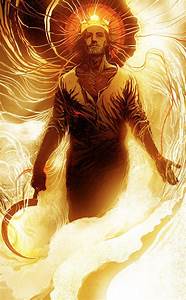
14 Then I looked, and behold, a white cloud, and seated on the cloud one like a son of man, with a golden crown on his head, and a sharp sickle in his hand. 15 And another angel came out of the temple, calling with a loud voice to him who sat on the cloud, “Put in your sickle, and reap, for the hour to reap has come, for the harvest of the earth is fully ripe.” 16 So he who sat on the cloud swung his sickle across the earth, and the earth was reaped.

17 Then another angel came out of the temple in heaven, and he too had a sharp sickle. 18 And another angel came out from the altar, the angel who has authority over the fire, and he called with a loud voice to the one who had the sharp sickle, “Put in your sickle and gather the clusters from the vine of the earth, for its grapes are ripe.” 19 So the angel swung his sickle across the earth and gathered the grape harvest of the earth and threw it into the great winepress of the wrath of God. 20 And the winepress was trodden outside the city, and blood flowed from the winepress, as high as a horse’s bridle, for 1,600 stadia. Revelation 14:14-20 ESV

Jesus with sickleOnce again, John uses the phrase, “Then I looked, and behold.” This signals another change in scene as well as another aspect of the coming judgment on the earth. John is given a vision of a white cloud on which sat “one like the son of man.” While John does not provide us with the identify of this individual, the title “son of man” is most typically used in Scripture as a title referring to Jesus’ humanity and also when speaking of his future rule over earth and its inhabitants. Daniel used the same title when referring to Jesus and His second coming.

13 “I saw in the night visions,

and behold, with the clouds of heaven
    there came one like a son of man,
and he came to the Ancient of Days
    and was presented before him.
14 And to him was given dominion
    and glory and a kingdom,
that all peoples, nations, and languages
    should serve him;
his dominion is an everlasting dominion,
    which shall not pass away,
and his kingdom one
    that shall not be destroyed. – Daniel 7:13-14 ESV

John had also described Jesus in this same way when he first saw Him in the vision of the heavenly throne room.

13 …and in the midst of the lampstands one like a son of man, clothed with a long robe and with a golden sash around his chest. 14 The hairs of his head were white, like white wool, like snow. His eyes were like a flame of fire, 15 his feet were like burnished bronze, refined in a furnace, and his voice was like the roar of many waters. 16 In his right hand he held seven stars, from his mouth came a sharp two-edged sword, and his face was like the sun shining in full strength. – Revelation 1:13-16 ESV

Jesus Himself used the same term when referring to His future return to the earth.

“When the Son of Man comes in his glory, and all the angels with him, then he will sit on his glorious throne. – Matthew 25:31 ESV

So, it is quite easy to deduce that the one John sees coming on the cloud is a representation of Jesus as He returns to the earth for the final time. He is described as wearing a golden crown (stephanos) which was typically awarded to victors. And He is carrying a sharp sickle, which is an instrument symbolic of judgment (Mark 4:29). Then John sees an angel coming out of the temple in heaven, calling out in a loud voice and telling Jesus that the time to reap or judge has come. The fact that the angel has come from the temple is an indication that this message is from God Himself. He is telling His Son that the harvest of the earth is “fully ripe.” It is more than ready. In a sense, the harvest is overly ripe and past due for harvest. The term “fully ripe” actually means “to wither away” and pictures fruit that has been on the vine too long. It is in a less-than-ideal state. So, God commands Jesus to begin His judgment of earth’s inhabitants. And John reveals describes seeing Jesus swing his sickle and the earth was reaped. The Greek word is therizō, and it infers that the harvest was “cut down.” It may be that this harvest, using the imagery of wheat or grain refers to the judgment of the unbelieving Gentiles. The second harvest, which John sees next, uses the imagery of grapes, a common symbol in the Old Testament of the people of Israel. So, it may represent that judging of unbelieving Jews. But both judgments or harvests take place at the end of the tribulation with the return of Christ.

John sees a second angel coming out of the temple in heaven and he too is carrying a sharp sickle. And yet a third angel, coming out from the alter in the temple, calls out to the second angel, commanding him to “Put in your sickle and gather the clusters from the vine of the earth, for its grapes are ripe” (Revelation 14:18 ESV). Once again, the fruit or harvest is described as ripe, but John uses a different Greek word, akmazō, which means “fully mature.” It describes grapes that are virtually bursting because of their fullness. It is another image describing the past due nature of mankind’s sin and rebellion. John is being given a preview of what is to come when Christ returns to the earth. As the Son of God, He will be given the authority to judge the unbelieving inhabitants of the earth. And, like overly ripe grapes, virtually bursting with the juice of their sin and rebellion, they will be gathered together and thrown into “the great winepress of the wrath of God” (Revelation 14:19 ESV). And the juice or blood of these unbelieving individuals will overflow the winepress to such an extent that it will be up to four-feet deep in some places. This imagery is shocking and difficult to comprehend. But it is meant to reveal that the judgment of God will be severe and sudden. And the prophet Joel used similar imagery to describe the final days of the tribulation.

12 Let the nations stir themselves up
    and come up to the Valley of Jehoshaphat;
for there I will sit to judge
    all the surrounding nations.

13 Put in the sickle,
    for the harvest is ripe.
Go in, tread,
    for the winepress is full.
The vats overflow,
    for their evil is great.

14 Multitudes, multitudes,
    in the valley of decision!
For the day of the Lord is near
    in the valley of decision. – Joel 3:12-14 ESV

The prophet Isaiah gave us a prophecy concerning this final judgment as well.

1 Who is this who comes from Edom,
    in crimsoned garments from Bozrah,
he who is splendid in his apparel,
    marching in the greatness of his strength?
“It is I, speaking in righteousness,
    mighty to save.”

Why is your apparel red,
    and your garments like his who treads in the winepress?

“I have trodden the winepress alone,
    and from the peoples no one was with me;
I trod them in my anger
    and trampled them in my wrath;
their lifeblood spattered on my garments,
    and stained all my apparel.
For the day of vengeance was in my heart,
    and my year of redemption had come.
I looked, but there was no one to help;
    I was appalled, but there was no one to uphold;
so my own arm brought me salvation,
    and my wrath upheld me.
I trampled down the peoples in my anger;
    I made them drunk in my wrath,
    and I poured out their lifeblood on the earth.” – Isaiah 63:1-6 ESV

The second coming of Christ will be marked by several major battles where countless millions will die. The enemies of God will resist His Son and refuse to acknowledge His rightful place as King. But He will defeat them. Later on in his book, John will describe yet another vision of Jesus, seated on a white horse and leading the host of heaven in a victory procession.

11 Then I saw heaven opened, and behold, a white horse! The one sitting on it is called Faithful and True, and in righteousness he judges and makes war. 12 His eyes are like a flame of fire, and on his head are many diadems, and he has a name written that no one knows but himself. 13 He is clothed in a robe dipped in blood, and the name by which he is called is The Word of God. 14 And the armies of heaven, arrayed in fine linen, white and pure, were following him on white horses. 15 From his mouth comes a sharp sword with which to strike down the nations, and he will rule them with a rod of iron. He will tread the winepress of the fury of the wrath of God the Almighty. 16 On his robe and on his thigh he has a name written, King of kings and Lord of lords. – Revelation 19:11-16 ESV

The son of man, Jesus Christ, the risen Lord and coming King, will one day reclaim His rightful place on David’s throne and rule the world in justice and righteousness. But first, He will judge the world, meting out the wrath of God on all those who have refused to honor Him as God. His Son will vindicate His name. The rebellion waged against God, attempted by all those who refused to worship Him as God, will be put down once and for all. John is being given a glimpse into the final days of God’s judgment, as His Son brings to a close the period of the tribulation, in preparation for the setting up of His millennial Kingdom on earth.


English Standard Version (ESV) The Holy Bible, English Standard Version. ESV® Permanent Text Edition® (2016). Copyright © 2001

New Living Translation (NLT) Holy Bible, New Living Translation, copyright © 1996, 2004, 2015 by Tyndale House Foundation. Used by permission of Tyndale House Publishers Inc., Carol Stream, Illinois 60188. All rights reserved.

The Message (MSG)  Copyright © 1993, 1994, 1995, 1996, 2000, 2001, 2002 by Eugene H. Peterson


Day 69 – Matthew 17:22-23; Mark 9:30-32; Luke 9:43-45

So What’s the Good News?

Matthew 17:22-23; Mark 9:30-32; Luke 9:43-45

“The Son of Man is going to be betrayed into the hand of his enemies. He will be killed, but on the third day he will be raised from the dead.” – Matthew 17:22-23 NLT

For the second time, Jesus reveals some very disheartening and confusing news to His disciples. He gets them alone and tells them that He is going to be betrayed and killed, but then He will be raised from the dead on the third day. Mark tells us that the disciples didn’t understand what Jesus was saying, but they were afraid to ask Him to explain Himself. Probably because they didn’t really want to know. Jesus had talked about this before, and they didn’t like it any better now than they had then. Luke tells us that the significance of Jesus’ statement was hidden from them. It would not make any sense until after Jesus had actually died and been raised from the dead. The significance of it all would never really hit them until they received the Holy Spirit at Pentecost. But that comes later in the story.

At this point, they were simply confused and saddened. They didn’t like what they were hearing. They didn’t want to think about it. It didn’t fit into their understanding of how things were supposed to work out. They were still thinking that Jesus was going to set up His kingdom on earth and that they would be ruling alongside Him as His faithful assistants. All this talk of betrayal and death was not what they wanted to hear. They didn’t even hear the part about Jesus being raised from the dead. Their attention turned off at the word “killed.” The reality was that God’s plan for Jesus didn’t mesh with their plan for Jesus. Their view of the Kingdom didn’t coincide with God’s view of the Kingdom. They were thinking temporal and earthly. Jesus was thinking eternal and spiritual. He came to set them free from the rule and tyranny of sin. They simply wanted Him to set them free from the rule and tyranny of Rome. God’s plan was so much bigger, grander, and comprehensive. But they couldn’t see it. They were blind to it. They were stuck in temporal mode. And the truth is, we can find ourselves in the exact same spot. Even though we live on the other side of the resurrection. We know it happened and we know why it had to happen. And yet we can still find ourselves struggling with God’s plan. It may be that we don’t particularly like this process called sanctification. We struggle with having to grow in Christ-likeness. It takes dedication, effort, obedience, trust, faith, and a total dependence on the mercy and grace of God. It is a slow and sometimes difficult process. It tends to reveal our weaknesses and exposes our sins. Which none of us like to see. Submitting to the Spirit’s authority in our lives is difficult for all of us. We have to daily die to our will and submit to His. We have to let go of our agendas and willingly follow His. Sometimes it seems that God requires of us things more than is fair. His plan for us seems uncomfortable and unattractive. We don’t like all the talk about taking up our crosses and dying to self. But that is part of the plan. It is God’s will. We have to learn to trust Him that He knows what is best for us. The disciples were learning the same thing. The idea of the death of Jesus was distasteful to them. They didn’t want to think about it. But it was essential if God’s redemptive plan was going to be fulfilled. Without His death, there would be no payment for sin and therefore, no forgiveness for sin. Without His death there would be no need for a resurrection, and without His resurrection, we would have no hope. We would still be in our sins and separated from God for eternity. God’s plan is not always easy to understand. It’s sometimes even harder to submit to. But we have to trust that He knows what He is going. He is not done yet. But He is always faithful and He is always right. No matter how it may appear to us.

Father, thank You for Your perfect plan. Forgive me for the many times I doubt it, fight it, reject it, or attempt to replace it with my own. You have always proven Yourself faithful and Your plan perfect. Help me trust You more. Amen.

Ken Miller

Grow Pastor & Minister to Men
kenm@christchapelbc.org