The Allure of Spiritual Syncretism

29 But every nation still made gods of its own and put them in the shrines of the high places that the Samaritans had made, every nation in the cities in which they lived. 30 The men of Babylon made Succoth-benoth, the men of Cuth made Nergal, the men of Hamath made Ashima, 31 and the Avvites made Nibhaz and Tartak; and the Sepharvites burned their children in the fire to Adrammelech and Anammelech, the gods of Sepharvaim. 32 They also feared the LORD and appointed from among themselves all sorts of people as priests of the high places, who sacrificed for them in the shrines of the high places. 33 So they feared the LORD but also served their own gods, after the manner of the nations from among whom they had been carried away.

34 To this day they do according to the former manner. They do not fear the LORD, and they do not follow the statutes or the rules or the law or the commandment that the LORD commanded the children of Jacob, whom he named Israel. 35 The LORD made a covenant with them and commanded them, “You shall not fear other gods or bow yourselves to them or serve them or sacrifice to them, 36 but you shall fear the LORD, who brought you out of the land of Egypt with great power and with an outstretched arm. You shall bow yourselves to him, and to him you shall sacrifice. 37 And the statutes and the rules and the law and the commandment that he wrote for you, you shall always be careful to do. You shall not fear other gods, 38 and you shall not forget the covenant that I have made with you. You shall not fear other gods, 39 but you shall fear the LORD your God, and he will deliver you out of the hand of all your enemies.” 40 However, they would not listen, but they did according to their former manner.

41 So these nations feared the LORD and also served their carved images. Their children did likewise, and their children’s children—as their fathers did, so they do to this day. 2 Kings 17:29-41 ESV

So they feared the Lord but also served their own gods.”
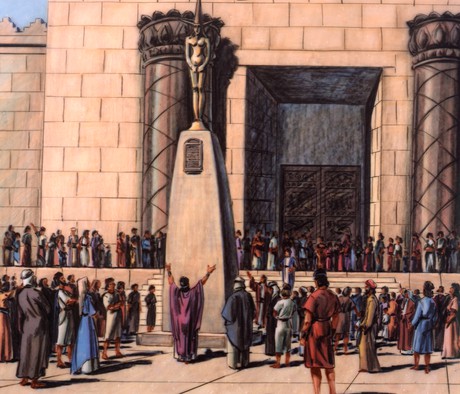
That phrase appears twice in the closing verses of chapter 17, and it aptly summarizes the spiritual state of the nation of Israel after it fell to the Assyrians. Many of its citizens had been captured and exiled to various locations in Assyria, and their vacancies were filled by people from other conquered nations who were forced to relocate to Israel and start new lives. This sudden influx of refugees from foreign countries turned Israel into a veritable melting pot and, ultimately, resulted in intermarriage between the remaining Jews and their new neighbors.

These newly transplanted inhabitants found themselves living in a foreign land where they didn’t understand the language or customs. They were strangers living in a strange place, but they found some comfort in the fact that many of their gods already had shrines dedicated to them in Israel. The ten northern tribes had been assimilating the gods of other nations for years. Under Jeroboam’s leadership, they had created their own gods, complete with temples and a priesthood. Under Ahab and Jezebel, they had adopted and promoted the worship of Baal and Asherah. And along the way, other kings of Israel had embraced the false gods of their foreign allies. So, the new arrivals to Israel found an atmosphere of religious tolerance and ecumenism.

Immediately after these foreign refugees arrived in Israel and took up residence in the abandoned cities of Samaria, they began worshiping their false gods. But the land on which they now lived belonged to Yahwah, and He took offense at their actions. He had set apart the land of Israel as holy and given to the descendants of Abraham as their inheritance. It was to have been a place where they lived in obedience to His will and worshiped Him alone. Their failure to do so led to their defeat and deportation at the hands of the Assyrians. However, their eviction from the land had not changed its sanctity or voided the covenant commitment God had made with His people. There was still a remnant of Jews living in the land of Israel, and He expected them to keep their end of the agreement they had made with Him.

So, when these foreigners began to worship their false gods on land that belonged to the one true God, they found themselves experiencing divine judgment.

But since these foreign settlers did not worship the LORD when they first arrived, the LORD sent lions among them, which killed some of them. – 2 Kings 17:25 NLT

As a result, the king of Assyria ordered that one of the exiled Israelite priests be sent back so that he might instruct the immigrants in the proper worship of Yahweh.

So one of the priests who had been exiled from Samaria returned to Bethel and taught the new residents how to worship the LORD. – 2 Kings 17:28 NLT

This highly pragmatic plan implemented by the king of Assyria was evidently successful. But while many of the new arrivals eagerly adopted Yahweh as their God, they added Him to their growing list of deities. He became just one more god to whom they offered sacrifices to win favor and good fortune.

These new residents worshiped the LORD, but they also appointed from among themselves all sorts of people as priests to offer sacrifices at their places of worship. And though they worshiped the LORD, they continued to follow their own gods according to the religious customs of the nations from which they came. – 2 Kings 17:32-33 NLT

With the sudden arrival of these various people groups, the religious landscape of Israel became ever more crowded and confused. Almost overnight, the idolatrous state of Israel exploded with new options and opportunities as the number of false gods continued to increase. The already tolerant and easily tempted Israelites found themselves surrounded by a virtual sea of new gods from which to choose.

Those from Babylon worshiped idols of their god Succoth-benoth. Those from Cuthah worshiped their god Nergal. And those from Hamath worshiped Ashima. The Avvites worshiped their gods Nibhaz and Tartak. And the people from Sepharvaim even burned their own children as sacrifices to their gods Adrammelech and Anammelech. – 2 Kings 17:30-31 NLT

The worship of Yahweh became increasingly more diluted and defused as a spirit of syncretism and religious pluralism spread over the land. The fall of Israel did not result in a spirit of repentance and religious reform among God’s people. In fact, His judgment of them was met by indifference and continued apostasy.

They continue to follow their former practices instead of truly worshiping the LORD and obeying the decrees, regulations, instructions, and commands he gave the descendants of Jacob, whose name he changed to Israel. – 2 Kings 17:34 NLT

There appears to be no remorse or repentance on the part of God’s people. Their neighbors had been taken captive and exiled to Assyria, but those who had been left behind remained just as committed to living in disobedience to God’s laws. And it seems that those who found themselves living as captives in Assyria were no less stubborn and unwilling to return to Yahweh. Yet when King Solomon dedicated the newly constructed Temple, he asked God to show mercy on His disobedient people, should they find themselves in exile and call out for help.

“If your people Israel are defeated by their enemies because they have sinned against you, and if they turn to you and acknowledge your name and pray to you here in this Temple, then hear from heaven and forgive the sin of your people Israel and return them to this land you gave their ancestors.” – 1 Kings 8:33-34 NLT

But they had failed to turn and acknowledge God’s name. They had refused to pray and ask for Yahweh’s forgiveness. Both those in exile and those living in the land of Israel continued to disobey His commands and violate His covenant agreement. And the author makes it clear that God took their disobedience seriously.

For the LORD had made a covenant with the descendants of Jacob and commanded them: “Do not worship any other gods or bow before them or serve them or offer sacrifices to them. But worship only the LORD, who brought you out of Egypt with great strength and a powerful arm. Bow down to him alone, and offer sacrifices only to him. Be careful at all times to obey the decrees, regulations, instructions, and commands that he wrote for you. You must not worship other gods. Do not forget the covenant I made with you, and do not worship other gods. You must worship only the LORD your God. He is the one who will rescue you from all your enemies.” – 2 Kings 17:35-39 NLT

They had no excuse. The remnant of Israelites still living in the land knew exactly what Yahweh expected of them, but they continued to reject His word and refused to repent. While the new residents were given instruction in the proper worship of Yahweh, they simply added Him to their long and growing list of god options. “While these new residents worshiped the LORD, they also worshiped their idols. And to this day their descendants do the same” (2 Kings 17:41 NLT).

This last verse is meant to convey a sense of inevitability and determinism. Nothing was going to change. They were fully committed to doing things their way, regardless of the circumstances or consequences. By the time Jesus appeared on the scene centuries later, the long-term implications of this syncretistic and overly tolerant religious mindset had resulted in the division between the Jews and the Samaritans. The foreigners transplanted into Israel by the king of Assyria eventually intermarried with the remaining Jewish population. These mixed marriages led to the assimilation of cultures and religions, producing a population known as the Samaritans. The Samaritans were considered to be half-breeds by the Jews of Jesus’ day and were treated as second-class citizens. They practiced a religion that combined the worship of Yahweh with aspects of paganism and idolatry. As the Samaritan woman confessed to Jesus, they even had their own place of worship, outside the confines of Jerusalem (John 4:20).

Chapter 17 of 2 Kings brings the story of the northern kingdom to a dramatic and somber close. At this point, part of the nation is living in exile in Assyria; the rest remain in the land but are marked by a spirit of spiritual syncretism and moral compromise. There will be no more kings to rule over the ten tribes. They will remain under God’s judgment and experience the curses He had warned would come should they choose to disobey. But the author will turn his attention back to the southern kingdom of Judah. For now, they remain free to follow God’s commands. But will they? The author provides a not-so-subtle hint of what lies in store for the people of Judah.

Because the LORD was very angry with Israel, he swept them away from his presence. Only the tribe of Judah remained in the land. But even the people of Judah refused to obey the commands of the LORD their God, for they followed the evil practices that Israel had introduced. – 2 Kings 17:18-19 NLT

The handwriting is on the wall, and the fate of the nation of Judah seems sealed by their stubborn refusal to learn anything from the fall of their northern neighbors. They had been eyewitnesses to the stark reality of Yahweh’s judgment and yet failed to make a much-needed course correction.

The prophet Jeremiah records Yahweh’s less-than-flattering assessment of the northern kingdom’s fall from grace and His prognosis for Judah’s future.

“Have you seen what fickle Israel has done? Like a wife who commits adultery, Israel has worshiped other gods on every hill and under every green tree. I thought, ‘After she has done all this, she will return to me.’ But she did not return, and her faithless sister Judah saw this. She saw that I divorced faithless Israel because of her adultery. But that treacherous sister Judah had no fear, and now she, too, has left me and given herself to prostitution. Israel treated it all so lightly—she thought nothing of committing adultery by worshiping idols made of wood and stone. So now the land has been polluted. But despite all this, her faithless sister Judah has never sincerely returned to me. She has only pretended to be sorry. I, the LORD, have spoken!” – Jeremiah 3:6-10 NLT

English Standard Version (ESV) The Holy Bible, English Standard Version. ESV® Permanent Text Edition® (2016). Copyright © 2001 by Crossway Bibles, a publishing ministry of Good News Publishers.

New Living Translation (NLT) Holy Bible, New Living Translation, copyright © 1996, 2004, 2015 by Tyndale House Foundation. Used by permission of Tyndale House Publishers Inc., Carol Stream, Illinois 60188. All rights reserved.

A Refusal to Repent

32 In the second year of Pekah the son of Remaliah, king of Israel, Jotham the son of Uzziah, king of Judah, began to reign. 33 He was twenty-five years old when he began to reign, and he reigned sixteen years in Jerusalem. His mother’s name was Jerusha the daughter of Zadok. 34 And he did what was right in the eyes of the LORD, according to all that his father Uzziah had done. 35 Nevertheless, the high places were not removed. The people still sacrificed and made offerings on the high places. He built the upper gate of the house of the LORD. 36 Now the rest of the acts of Jotham and all that he did, are they not written in the Book of the Chronicles of the Kings of Judah? 37 In those days the LORD began to send Rezin the king of Syria and Pekah the son of Remaliah against Judah. 38 Jotham slept with his fathers and was buried with his fathers in the city of David his father, and Ahaz his son reigned in his place.

1 In the seventeenth year of Pekah the son of Remaliah, Ahaz the son of Jotham, king of Judah, began to reign. Ahaz was twenty years old when he began to reign, and he reigned sixteen years in Jerusalem. And he did not do what was right in the eyes of the LORD his God, as his father David had done, but he walked in the way of the kings of Israel. He even burned his son as an offering, according to the despicable practices of the nations whom the LORD drove out before the people of Israel. And he sacrificed and made offerings on the high places and on the hills and under every green tree.

Then Rezin king of Syria and Pekah the son of Remaliah, king of Israel, came up to wage war on Jerusalem, and they besieged Ahaz but could not conquer him.2 Kings 15:32-16:5 ESV

In the northern kingdom of Israel, they were going through kings so quickly that the royal palace needed revolving doors to handle the high traffic volume. In just 14 years, they had been ruled by six different kings, most of whose reigns ended in assassination. But back in Judah, it was a different story. Azariah (Uzziah) had served as king for 52 years, and for the last 11 years of his reign, his son, Jotham, served as his co-regent. Their sharing of the kingly role was necessitated by Azariah’s contracting leprosy and being confined to his home. His disease required that he be quarantined, and made governance of the nation almost impossible. So, “Jotham the king’s son was over the household, governing the people of the land” (2 Kings 15:5 ESV). The sad reality is that Azariah’s condition was the direct result of his own pride and a decision to violate the Mosaic law. His disobedience incurred God’s divine wrath and judgment in the form of leprosy. But despite his condition, Azariah was able to continue ruling over the nation of Judah, with his son’s assistance. This also provided Jotham with on-the-job training that helped prepare him for the day when the monarchy would become his alone.

While the final 11 years of Azariah’s reign were marked by leprosy and forced isolation, he had been a good king. For the majority of his 52-year rule, he had done “what was right in the eyes of the LORD, according to all that his father Amaziah had done. He set himself to seek God in the days of Zechariah, who instructed him in the fear of God, and as long as he sought the LORD, God made him prosper” (2 Chronicles 26:4-5 ESV). And it seems that Azariah’s love for God was far more infectious than his disease because the author lets us know that Jotham “did what was right in the eyes of the LORD, according to all that his father Uzziah had done” (2 Kings 15:34 ESV).

But the author of 2 Chronicles adds an important detail that sheds light on the actions of this young 26-year-old king.

Jotham did what was pleasing in the LORD’s sight. He did everything his father, Uzziah, had done, except that Jotham did not sin by entering the Temple of the Lord. But the people continued in their corrupt ways. – 2 Chronicles 27:3 NLT

Jotham followed in his father’s spiritual footsteps but with one crucial exception. He “did not sin by entering the Temple of the LORD” (2 Chronicles 27:3 NLT). This is a reference to Uzziah’s unwise decision to enter “the LORD’s Temple to offer incense on the incense altar” (2 Chronicles 26:16 NET). This unauthorized action on Uzziah’s part was the direct result of his growing power and pride. 

He became very famous, for he received tremendous support and became powerful. But once he became powerful, his pride destroyed him. He disobeyed the LORD his God. – 2 Chronicles 26:15-16 NET

Uzziah believed he could do no wrong and took it upon himself to offer incense in the Temple, in direct violation of God’s law. He was the king and not a priest, so his actions were inappropriate. He was immediately confronted by a contingent of 81 priests.

“It is not proper for you, Uzziah, to offer incense to the LORD. That is the responsibility of the priests, the descendants of Aaron, who are consecrated to offer incense. Leave the sanctuary, for you have disobeyed and the LORD God will not honor you!” – 2 Chronicles 26:18 NET

But rather than heeding the priests’ counsel, Uzziah became angry. Still holding the incense censer in his hand, the king lashed out at his accusers.

While he was ranting and raving at the priests, a skin disease appeared on his forehead right there in front of the priests in the LORD’s temple near the incense altar.  When Azariah the high priest and the other priests looked at him, there was a skin disease on his forehead. They hurried him out of there; even the king himself wanted to leave quickly because the Lord had afflicted him. King Uzziah suffered from a skin disease until the day he died. He lived in separate quarters, afflicted by a skin disease and banned from the LORD’s temple. – 2 Chronicles 26:19-21 NET

One of the results of Uzziah’s contraction of this dreaded disease was that it rendered him unclean and, therefore, unable to enter the Temple of God. The book of Leviticus provides the specific command detailing the isolating aspect of the disease.

“Those who suffer from a serious skin disease must tear their clothing and leave their hair uncombed. They must cover their mouth and call out, ‘Unclean! Unclean!’ As long as the serious disease lasts, they will be ceremonially unclean. They must live in isolation in their place outside the camp. – Leviticus 13:45-46 NLT

It seems that Jotham was deeply influenced by his father’s actions and Yahweh’s response. The text states, “He did not, however, have the audacity to enter the temple” (2 Chronicles 27:3 NET).  His decision to avoid the Temple could have been out of resentment for God’s harsh treatment of his father or out of fear that he might suffer a similar fate. But it seems more likely that he was simply being overly cautious to avoid repeating his father’s mistake.

It’s interesting to note that Jotham “built the upper gate of the house of the LORD” (2 Kings 15:35 ESV). According to Thomas L. Constable, the upper gate was “an opening between the outer and inner courts on the north side of the temple near the altar of burnt offerings” (Dr. Thomas L. Constable, Notes on 1 Chronicles).  This becomes more relevant when you consider that Jotham’s father had been punished by God because he had “entered the Temple of the LORD to burn incense on the altar of incense” (2 Chronicles 26:16 ESV). In doing so, he assumed the role of the priest, in direct violation of God’s law. Now, his son had built a gate that made entrance into that area of the Temple more accessible than ever. Perhaps Jotham intended this construction project to be a not-so-subtle statement about his father’s actions and subsequent punishment.

While Jotham accomplished a variety of noteworthy renovation and expansion projects, he failed to remove the high places on which the people sacrificed to their false gods.  As a result, “the people still followed corrupt practices” (2 Chronicles 27:2 ESV). While he was busy renovating the Temple grounds dedicated to Yahweh, the people continued to worship idols. But for the most part, Jotham proved to be a faithful king who sought to honor God, and this brought about God’s blessings.

Jotham became mighty, because he ordered his ways before the LORD his God. – 2 Chronicles 27:6 ESV

Yet, these verses provide a glimpse of God’s coming judgment against the nation of Judah. While the southern kingdom had remained far more faithful than its northern neighbor, a growing wave of spiritual infidelity was spreading among its inhabitants. And Yahweh will respond to this unfaithfulness by allowing the nation of Judah to experience His disfavor in the form of foreign powers that will begin to harass and test them.

In those days the LORD began to send Rezin the king of Syria and Pekah the son of Remaliah against Judah. – 2 Kings 15:37 ESV

Eventually, Jotham died, and his son, Ahaz, took his place on the throne of Judah. But Ahaz did not share his father’s love for God. In fact, the author’s mention of God sending foreign powers against Judah foreshadows future judgment. The nation was about to take a dark turn. Under Ahaz’s reign, the spiritual fortunes of Judah would decline sharply. He would not continue the godly legacy of his father and grandfather. Instead, he would emulate and even eclipse the sins of the kings of Israel.

He did not do what was pleasing in the sight of the LORD his God, as his ancestor David had done. Instead, he followed the example of the kings of Israel, even sacrificing his own son in the fire. In this way, he followed the detestable practices of the pagan nations the LORD had driven from the land ahead of the Israelites. He offered sacrifices and burned incense at the pagan shrines and on the hills and under every green tree. – 2 Kings 2-4 NLT

Ahaz “walked in the ways of the kings of Israel” (2 Chronicles 28:2 ESV). And his decision to fully embrace the false gods of the Canaanites would cost him dearly. This was a man who became so committed to idolatry that he regularly “burned his sons as an offering” (2 Chronicles 28:2 ESV). He was willing to sacrifice the lives of his own children to win the favor of the gods. But while spilling the blood of his sons failed to garner the attention of his false deities, it did manage to bring down the judgment of Yahweh.

Because of all this, the LORD his God allowed the king of Aram [Syria] to defeat Ahaz and to exile large numbers of his people to Damascus. The armies of the king of Israel also defeated Ahaz and inflicted many casualties on his army. In a single day Pekah son of Remaliah, Israel’s king, killed 120,000 of Judah’s troops, all of them experienced warriors, because they had abandoned the LORD, the God of their ancestors. – 2 Chronicles 28:5-6 NLT

God would use the Syrians and the Israelites as His instruments of judgment against Ahaz and the people of Judah. But despite Ahaz’s blatant displays of unfaithfulness, Yahweh would not allow these outside forces to completely destroy Judah. The situation quickly became a recurring cycle of sin and judgment. Ahaz’s worship of his false gods would bring the judgment of Yahweh in the form of the Syrians and Israelites. These attacks would cause Ahaz to intensify his efforts to gain the favor of his many gods. His desperation to find a solution would produce further idolatry and result in additional judgment from God. But in his stubbornness, Ahaz never stopped to consider that repentance and a return to Yahweh might be the best answer to his problem.

Ahaz seems to have forgotten the promise that Yahweh made to Solomon on the day the newly completed Temple was dedicated. Yahweh warned that their failure to obey Him would bring judgment.

At times I might shut up the heavens so that no rain falls, or command grasshoppers to devour your crops, or send plagues among you. – 2 Chronicles 7:13 NLT

But He also assured them that repentance would bring restoration.

If my people who are called by my name will humble themselves and pray and seek my face and turn from their wicked ways, I will hear from heaven and will forgive their sins and restore their land.” – 2 Chronicles 7:14 NLT

He went on to warn of the dire consequences that would accompany their refusal to worship Him alone. If they chose to embrace the false gods of the Canaanites, they would pay dearly.

“But if you or your descendants abandon me and disobey the decrees and commands I have given you, and if you serve and worship other gods,  then I will uproot the people from this land that I have given them. I will reject this Temple that I have made holy to honor my name. I will make it an object of mockery and ridicule among the nations. And though this Temple is impressive now, all who pass by will be appalled. They will ask, ‘Why did the LORD do such terrible things to this land and to this Temple?’” – 2 Chronicles 7:19-21 NLT

Ahaz ignored Yahweh’s warnings and “sacrificed and made offerings on the high places and on the hills and under every green tree” (2 Kings 16:4 NLT). He went out of his way to offend Yahweh, flaunting his idolatrous behavior throughout the land of Judah, and even sacrificing his sons on the altars to his many false gods. But Yahweh would prove faithful to keep His word. Ahaz could ignore Yahweh’s warnings, but he would not escape the judgment to come.

English Standard Version (ESV) The Holy Bible, English Standard Version. ESV® Permanent Text Edition® (2016). Copyright © 2001 by Crossway Bibles, a publishing ministry of Good News Publishers.

New Living Translation (NLT) Holy Bible, New Living Translation, copyright © 1996, 2004, 2015 by Tyndale House Foundation. Used by permission of Tyndale House Publishers Inc., Carol Stream, Illinois 60188. All rights reserved.
A Legacy of Lousy Leadership

1 In the second year of Joash the son of Joahaz, king of Israel, Amaziah the son of Joash, king of Judah, began to reign. He was twenty-five years old when he began to reign, and he reigned twenty-nine years in Jerusalem. His mother’s name was Jehoaddin of Jerusalem. And he did what was right in the eyes of the LORD, yet not like David his father. He did in all things as Joash his father had done. But the high places were not removed; the people still sacrificed and made offerings on the high places. And as soon as the royal power was firmly in his hand, he struck down his servants who had struck down the king his father. But he did not put to death the children of the murderers, according to what is written in the Book of the Law of Moses, where the LORD commanded, “Fathers shall not be put to death because of their children, nor shall children be put to death because of their fathers. But each one shall die for his own sin.”

He struck down ten thousand Edomites in the Valley of Salt and took Sela by storm, and called it Joktheel, which is its name to this day.

Then Amaziah sent messengers to Jehoash the son of Jehoahaz, son of Jehu, king of Israel, saying, “Come, let us look one another in the face.” And Jehoash king of Israel sent word to Amaziah king of Judah, “A thistle on Lebanon sent to a cedar on Lebanon, saying, ‘Give your daughter to my son for a wife,’ and a wild beast of Lebanon passed by and trampled down the thistle. 10 You have indeed struck down Edom, and your heart has lifted you up. Be content with your glory, and stay at home, for why should you provoke trouble so that you fall, you and Judah with you?”

11 But Amaziah would not listen. So Jehoash king of Israel went up, and he and Amaziah king of Judah faced one another in battle at Beth-shemesh, which belongs to Judah. 12 And Judah was defeated by Israel, and every man fled to his home. 13 And Jehoash king of Israel captured Amaziah king of Judah, the son of Jehoash, son of Ahaziah, at Beth-shemesh, and came to Jerusalem and broke down the wall of Jerusalem for four hundred cubits, from the Ephraim Gate to the Corner Gate. 14 And he seized all the gold and silver, and all the vessels that were found in the house of the LORD and in the treasuries of the king’s house, also hostages, and he returned to Samaria.

15 Now the rest of the acts of Jehoash that he did, and his might, and how he fought with Amaziah king of Judah, are they not written in the Book of the Chronicles of the Kings of Israel? 16 And Jehoash slept with his fathers and was buried in Samaria with the kings of Israel, and Jeroboam his son reigned in his place.

17 Amaziah the son of Joash, king of Judah, lived fifteen years after the death of Jehoash son of Jehoahaz, king of Israel. 18 Now the rest of the deeds of Amaziah, are they not written in the Book of the Chronicles of the Kings of Judah? 19 And they made a conspiracy against him in Jerusalem, and he fled to Lachish. But they sent after him to Lachish and put him to death there. 20 And they brought him on horses; and he was buried in Jerusalem with his fathers in the city of David. 21 And all the people of Judah took Azariah, who was sixteen years old, and made him king instead of his father Amaziah. 22 He built Elath and restored it to Judah, after the king slept with his fathers. 2 Kings 14:1-22 ESV

When King Jehoash of Judah was assassinated by two of his own servants, his son Amaziah ascended to the throne. He was only 25 years old when he assumed leadership over the nation of Judah, and one of his first official acts as king was to avenge his father’s death by executing the guilty parties. But Amaziah showed self-restraint and an appreciation for the Mosaic Law by refusing to seek revenge against the families of those who had perpetrated this crime. He could have used his power to wipe out every last descendant of his father’s assassins, but he would have been in clear violation of the law God had given to Moses and the people of Israel.

Parents must not be put to death for the sins of their children, nor children for the sins of their parents. Those deserving to die must be put to death for their own crimes. – Deuteronomy 24:16 NLT

His knowledge of the law and his willingness to uphold it were strong indicators of his desire to follow Yahweh’s will.

But it would soon become evident that his dedication to God was impartial and incomplete.

Amaziah did what was pleasing in the LORD’s sight, but not like his ancestor David. Instead, he followed the example of his father, Joash. – 2 Kings 14:3 NLT

Amaziah was his father’s son and tended to replicate Joash’s half-hearted commitment to Yahweh rather than the whole-hearted dedication of his ancestor David. It was said of his father, “All his life Joash did what was pleasing in the LORD’s sight because Jehoiada the priest instructed him. Yet, even so, he did not destroy the pagan shrines, and the people still offered sacrifices and burned incense there” (2 Kings 12:2-3 NLT). As long as Jehoiada the priest remained alive, providing Joash with wise and godly counsel, the king did well. But upon the priest’s death, Jehoash began to listen to the advice of his princes, who encouraged him to introduce idolatry to Judah. With his permission, they “decided to abandon the Temple of the LORD, the God of their ancestors, and they worshiped Asherah poles and idols instead! ” (2 Chronicles 24:18 NLT).

And when God ordered Zechariah, the son of Jehoiada the priest, to deliver a message to Jehoash condemning his actions, the king had him stoned to death. And it was this act that led to his death by assassination. So, Amaziah tended to mimic his father’s leadership style, displaying a desire to follow Yahweh but failing to make it a top priority of his administration.

Amaziah did what was pleasing in the LORD’s sight, but not wholeheartedly. – 2 Chronicles 25:2 NLT

At one point during his reign, Amaziah took a census to determine the strength of his fighting force. In those days, nations didn’t always maintain standing armies; they relied on conscription. In the event of war, they would issue a draft calling upon all able-bodied men to defend their country. Amaziah’s census revealed that his army consisted of “300,000 select troops, twenty years old and older, all trained in the use of spear and shield” (2 Chronicles 25:5 NLT). Deeming this number to be insufficient, Amaziah ordered the hiring of “100,000 experienced fighting men from Israel” (2 Chronicles 25:6 NLT). He used his royal treasury to hire mercenaries, but God sent a prophet who warned him against trusting the Israelites.

“Your Majesty, do not hire troops from Israel, for the LORD is not with Israel. He will not help those people of Ephraim! If you let them go with your troops into battle, you will be defeated by the enemy no matter how well you fight. God will overthrow you, for he has the power to help you or to trip you up.”  – 2 Chronicles 25:7-8 NLT

Unlike his father, Amaziah listened to the prophet’s advice and dismissed the Israelite troops. These men returned to Israel, offended and infuriated by the king’s action. They would later seek their revenge by raiding and plundering towns belonging to Judah that lay along the border between their two countries. These raids resulted in the deaths of 3,000 Judean citizens. 

Meanwhile, Amaziah launched a campaign against the Edomites, who had revolted against Judean control in the region. His troops were victorious, killing 10,000 Edomites in the initial battle, and then slaughtering an additional 10,000 captives by throwing them off a cliff.  This decisive victory led Amaziah to set his sights on Israel. He determined that with his army and Yahweh’s help, he could defeat the Israelites in battle. So, he sent word to King Jehoash of Israel, issuing him a challenge to meet on the field of battle.

But there was a problem. Amaziah had not sought Yahweh’s counsel in the matter. In fact, his victory over the Edomites had actually angered Yahweh because Amaziah had made the fateful mistake of bringing back Edomite idols as part of the spoils of war.

When King Amaziah returned from slaughtering the Edomites, he brought with him idols taken from the people of Seir. He set them up as his own gods, bowed down in front of them, and offered sacrifices to them! This made the LORD very angry – 2 Chronicles 25:14-15 NLT

This prompted God to send another prophet with another word of warning to the king.

“Why do you turn to gods who could not even save their own people from you?” – 2 Chronicles 25:15 NLT

But this time, rather than heed the prophet’s warning, Amaziah threatened him.

“Since when have I made you the king’s counselor? Be quiet now before I have you killed!” – 2 Chronicles 25:16 NLT

The prophet, undeterred by the king’s threat, warned him that Yahweh would bring destruction upon Judah if he proceeded with his plans to do battle with Israel. But Amaziah rejected the word of the LORD, sending his challenge to King Jehoash of Israel. Even Jehoash tried to convince Amaziah that he had become a bit overconfident with his victory over the Edomites. By picking a fight with Israel, Amaziah was biting off far more than he could chew, and it would end in disaster for Judah. But Amaziah rejected the words of King Jehoash and sent his troops into battle against the Israelites, and the results were predictable.

Judah was routed by the army of Israel, and its army scattered and fled for home. King Jehoash of Israel captured Judah’s king, Amaziah son of Joash and grandson of Ahaziah, at Beth-shemesh. Then he marched to Jerusalem, where he demolished 600 feet of Jerusalem’s wall, from the Ephraim Gate to the Corner Gate. He carried off all the gold and silver and all the articles from the Temple of the LORD. He also seized the treasures from the royal palace, along with hostages, and then returned to Samaria. – 2 Kings 14:12-14 NLT

This devastating and humiliating defeat was the handiwork of God. Amaziah’s decision to bring back idols from Edom and set them up in Jerusalem reveals not only his unfaithfulness but his stupidity. After his defeat and capture, Amaziah must have heard the words of the prophet ringing in his ears: “Why do you turn to gods who could not even save their own people from you?”

He had bowed down to the false gods of Edom and, as a result, was punished severely by the one true God. Yet, even after this decisive defeat, Amaziah would go on to reign over Judah for an additional 15 years. And just as Amaziah had emulated his father’s life, he would end up replicating his death.

There was a conspiracy against Amaziah’s life in Jerusalem, and he fled to Lachish. But his enemies sent assassins after him, and they killed him there. They brought his body back to Jerusalem on a horse, and he was buried with his ancestors in the City of David. – 2 Kings 14:19-20 NLT

His 29-year reign ended with his assassination, and 2 Chronicles seems to indicate that his death was a direct result of his unfaithfulness. There were those in Jerusalem who blamed the loss to the Israelites on Amaziah’s decision to forsake Yahweh, so they had decided to take matters into their own hands.

After Amaziah turned away from the Lord, there was a conspiracy against his life in Jerusalem. – 2 Chronicles 25:27 NLT

Amaziah was murdered, given a royal funeral, and then replaced by his 16-year-old son, Uzziah. And while this young man would display a desire to follow Yahweh, his efforts at reform would be incomplete, so the saga of Judah’s spiritual decline would continue seemingly unabated.

he did what was right in the eyes of the LORD, according to all that his father Amaziah had done. Nevertheless, the high places were not taken away. The people still sacrificed and made offerings on the high places. – 2 Kings 15:3-4 ESV

English Standard Version (ESV) The Holy Bible, English Standard Version. ESV® Permanent Text Edition® (2016). Copyright © 2001 by Crossway Bibles, a publishing ministry of Good News Publishers.

New Living Translation (NLT) Holy Bible, New Living Translation, copyright © 1996, 2004, 2015 by Tyndale House Foundation. Used by permission of Tyndale House Publishers Inc., Carol Stream, Illinois 60188. All rights reserved.
The Curse of Low Expectations

10 In the thirty-seventh year of Joash king of Judah, Jehoash the son of Jehoahaz began to reign over Israel in Samaria, and he reigned sixteen years. 11 He also did what was evil in the sight of the LORD. He did not depart from all the sins of Jeroboam the son of Nebat, which he made Israel to sin, but he walked in them. 12 Now the rest of the acts of Joash and all that he did, and the might with which he fought against Amaziah king of Judah, are they not written in the Book of the Chronicles of the Kings of Israel? 13 So Joash slept with his fathers, and Jeroboam sat on his throne. And Joash was buried in Samaria with the kings of Israel.

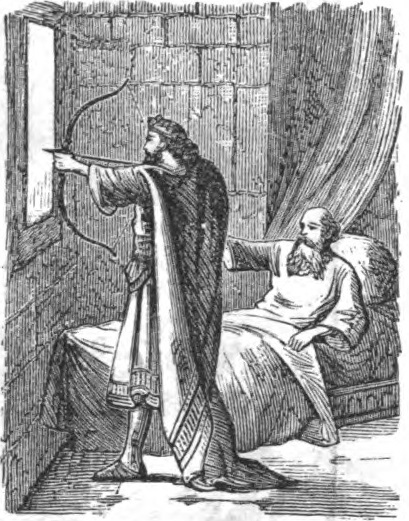
14 Now when Elisha had fallen sick with the illness of which he was to die, Joash king of Israel went down to him and wept before him, crying, “My father, my father! The chariots of Israel and its horsemen!” 15 And Elisha said to him, “Take a bow and arrows.” So he took a bow and arrows. 16 Then he said to the king of Israel, “Draw the bow,” and he drew it. And Elisha laid his hands on the king’s hands. 17 And he said, “Open the window eastward,” and he opened it. Then Elisha said, “Shoot,” and he shot. And he said, “The LORD‘s arrow of victory, the arrow of victory over Syria! For you shall fight the Syrians in Aphek until you have made an end of them.” 18 And he said, “Take the arrows,” and he took them. And he said to the king of Israel, “Strike the ground with them.” And he struck three times and stopped. 19 Then the man of God was angry with him and said, “You should have struck five or six times; then you would have struck down Syria until you had made an end of it, but now you will strike down Syria only three times.”

20 So Elisha died, and they buried him. Now bands of Moabites used to invade the land in the spring of the year. 21 And as a man was being buried, behold, a marauding band was seen and the man was thrown into the grave of Elisha, and as soon as the man touched the bones of Elisha, he revived and stood on his feet.

22 Now Hazael king of Syria oppressed Israel all the days of Jehoahaz. 23 But the LORD was gracious to them and had compassion on them, and he turned toward them, because of his covenant with Abraham, Isaac, and Jacob, and would not destroy them, nor has he cast them from his presence until now.

24 When Hazael king of Syria died, Ben-hadad his son became king in his place. 25 Then Jehoash the son of Jehoahaz took again from Ben-hadad the son of Hazael the cities that he had taken from Jehoahaz his father in war. Three times Joash defeated him and recovered the cities of Israel. 2 Kings 13:10-25 ESV

Keeping up with the revolving door of kings who reigned over Israel and Judah is hard enough as it is, but it becomes even more difficult when two kings with the same name end up ruling at the same time. That’s the case in this particular passage. Jehoash ascended to the throne of Israel after the death of his father, Jehoahaz, and it just so happened that the king of Judah bore the same name. It seems only fitting and a bit ironic that these two nations that shared the same predilection for idolatry and apostasy would end up with rulers who shared the same name. While their reigns would only intersect for a period of about two years, they shared more in common than their name. In the end, both men proved to be ungodly leaders who failed to lead their people back to the worship of Yahweh.

When Jehoash, the king of Judah, received a less-than-encouraging message from God, he ordered the stoning of the messenger. It just so happened that the man he executed was Zechariah, the son of Jehoiada the priest. This was the same Jehoiada who had saved the infant Jehoash from the hands of Queen Athaliah by providing him with sanctuary in the temple for six years. On Jehoash’s seventh birthday, Jehoiada had anointed him as the king of Judah. But years later, after Jehoiada’s death, Jehoash began to listen to the counsel of his ungodly advisors and ultimately forsake Yahweh. As a result, Judah suffered defeat at the hands of a much smaller Syrian force. He was wounded in the battle and, while recuperating from his injuries, he was assassinated by two of his own officials.

And the king of Israel, who bore the same name, shared a similar story of unfaithfulness and rebellion. The author sums up his 16-year reign with the words: “he did what was evil in the LORD’s sight. He refused to turn from the sins that Jeroboam son of Nebat had led Israel to commit” (2 Kings 13:11 NLT). He, too, forsook the LORD and led the people to continue their love affair with false gods. And it’s interesting to note that the heir to his throne was his son, Jeroboam II, whom he had named after the first king of the northern kingdom of Israel. His admiration for Jeroboam seems obvious but undeserved. After all, Jeroboam had been responsible for leading the Israelites into idolatry. When God split the nation of Israel in two after the reign of Solomon, He gave the ten northern tribes to Jeroboam as his kingdom. But Jeroboam responded to this gracious gift from God by erecting two golden calves and encouraging his people to forsake the worship of Yahweh. Yet Jehoash thought enough of this man to name his own son after him.

But sometime during his reign, Jehoash of Israel received word that the prophet Elisha was on his deathbed. Surprisingly, the king was grieved over this news and made a personal visit to see the dying prophet. While Jehoash was anything but a faithful worshiper of Yahweh, he knew that Elisha had great power and influence. This elderly prophet had proven time and time again that he spoke on behalf of God and was empowered by God. That’s why Jehoash greeted him with the somewhat cryptic statement: “My father, my father! The chariots of Israel and its horsemen!” (2 Kings 13:14 ESV). Evidently, Jehoash had heard the story of Elijah’s miraculous departure and Elisha’s role in it. Perhaps Elisha had shared with the king the details of that fateful day when God had used a whirlwind to take Elijah from the earth.

…as they still went on and talked, behold, chariots of fire and horses of fire separated the two of them. And Elijah went up by a whirlwind into heaven. And Elisha saw it and he cried, “My father, my father! The chariots of Israel and its horsemen!” And he saw him no more. – 2 Kings 2:11-12 ESV

This event followed Elisha’s request that Elijah give him a double portion of his spirit. He was to be Elijah’s replacement, and he felt ill-equipped for the task. It could be that King Jehoash hoped Elisha would pour out his spirit on him as well. He understood that Elisha possessed power and had direct access to Yahweh. With the prophet’s death, all of that might be lost. But rather than pour out his spirit on the apostate king, Elisha commanded him to take his bow and shoot an arrow out the window.

Elisha said, “Shoot,” and he shot. And he said, “The LORD‘s arrow of victory, the arrow of victory over Syria! For you shall fight the Syrians in Aphek until you have made an end of them.” – 2 Kings 13:17 ESV

Next, the prophet told the king to take his remaining arrows and strike the ground with them. Jehoash dutifully obeyed, but when he stopped after the third blow, Elisha responded in anger.

“You should have struck the ground five or six times!” he exclaimed. “Then you would have beaten Aram until it was entirely destroyed. Now you will be victorious only three times.” – 2 Kings 13:19 NLT

In a sense, Elisha had poured out his spirit on King Jehoash. He had placed his hands on those of the king and, together, they had shot the first arrow out the window. He then assured the king of his victory over the Syrians. But the extent of that victory would depend on Jehoash’s faith. By limiting the number of times he struck the ground, Jehoash was unwittingly revealing his lack of faith. The first arrow had symbolized the LORD’s victory over the Syrians. When Elisha had commanded Jehoash to take the remaining arrows and strike the ground, he should have done so until the prophet told him to stop. Each blow was meant to symbolize a victory over the enemy. But Jehoash had chosen to limit his expectations. In doing so, he inadvertently limited his chances of success over his enemy.

Having pronounced his last prophetic message, Elisha died. But the author relates a story that reveals one last miracle associated with the prophet of God. Sometime later, the body of a recently deceased man was inadvertently thrown into the cave containing Elisha’s bones. When the body of the dead man came into contact with Elisha’s remains, he was immediately restored to life. Amazingly, the author provides no further details about the story to indicate what happened to this newly resurrected man or how the story came to be known. But its inclusion in the narrative was meant to reveal that, though Elisha was dead,  Yahweh was alive and well. Elisha’s departure was not meant to be mistaken for God’s abandonment of Israel. He was still fully capable of restoring life to the lifeless. The all-powerful God of Israel used the bones of a dead prophet to restore life to a dead Israelite, a clear symbol of His desire to renew those among His chosen people who were marked by spiritual death.

The author reminds his readers that God remained faithful to His disobedient people, refusing to abandon them despite their constant rejection of Him.

the LORD was gracious and merciful to the people of Israel, and they were not totally destroyed. He pitied them because of his covenant with Abraham, Isaac, and Jacob. – 2 Kings 13:23 NLT

The author also reveals that Yahweh kept His word concerning the fate of the Syrians. Jehoash experienced three separate victories over his enemy, matching the exact number of times he struck the ground with his arrows — no more, no less. God allowed Jehoash to recover some of the territory stolen by the Syrians, but the fighting would continue throughout the rest of his reign. The sad reality is that the same God who raised a dead man back to life was fully capable of restoring a spiritually dead nation. Still, their continued stubbornness and lack of faithfulness would prevent them from experiencing the life-transformative power of Yahweh.

English Standard Version (ESV) The Holy Bible, English Standard Version. ESV® Permanent Text Edition® (2016). Copyright © 2001 by Crossway Bibles, a publishing ministry of Good News Publishers.

New Living Translation (NLT) Holy Bible, New Living Translation, copyright © 1996, 2004, 2015 by Tyndale House Foundation. Used by permission of Tyndale House Publishers Inc., Carol Stream, Illinois 60188. All rights reserved.

A Scarceness of Faithfulness

41 Jehoshaphat the son of Asa began to reign over Judah in the fourth year of Ahab king of Israel. 42 Jehoshaphat was thirty-five years old when he began to reign, and he reigned twenty-five years in Jerusalem. His mother’s name was Azubah the daughter of Shilhi. 43 He walked in all the way of Asa his father. He did not turn aside from it, doing what was right in the sight of the LORD. Yet the high places were not taken away, and the people still sacrificed and made offerings on the high places. 44 Jehoshaphat also made peace with the king of Israel.

45 Now the rest of the acts of Jehoshaphat, and his might that he showed, and how he warred, are they not written in the Book of the Chronicles of the Kings of Judah? 46 And from the land he exterminated the remnant of the male cult prostitutes who remained in the days of his father Asa.

47 There was no king in Edom; a deputy was king. 48 Jehoshaphat made ships of Tarshish to go to Ophir for gold, but they did not go, for the ships were wrecked at Ezion-geber. 49 Then Ahaziah the son of Ahab said to Jehoshaphat, “Let my servants go with your servants in the ships,” but Jehoshaphat was not willing. 50 And Jehoshaphat slept with his fathers and was buried with his fathers in the city of David his father, and Jehoram his son reigned in his place.

51 Ahaziah the son of Ahab began to reign over Israel in Samaria in the seventeenth year of Jehoshaphat king of Judah, and he reigned two years over Israel. 52 He did what was evil in the sight of the LORD and walked in the way of his father and in the way of his mother and in the way of Jeroboam the son of Nebat, who made Israel to sin. 53 He served Baal and worshiped him and provoked the LORD, the God of Israel, to anger in every way that his father had done. 1 Kings 22:41-53 ESV

Once again, the author shifts the focus of his narrative from Israel to Judah. With Ahab’s God-ordained demise, the northern kingdom of Israel found itself with a new ruler, Ahaziah, the son of Ahab. But in Judah, Jehoshaphat, who had survived the failed battle against Ramoth-gilead, continued his long reign over the southern kingdom. While Ahab’s exploits clearly portray him as the most wicked of all the kings of Israel, Jehoshaphat provides a refreshingly stark contrast. The author offers a brief, yet positive summary of his reign:  “Jehoshaphat was a good king, following the example of his father, Asa. He did what was pleasing in the LORD’s sight” (1 Kings 22:43 NLT).

Yet, two significant stains marred Jehoshaphat’s 25-year reign. First, while he remained committed to the worship of Yahweh, he failed to remove all the pagan shrines dedicated to the false gods of the Canaanites. As a result, the people continued to practice idolatry in direct violation of God’s command. Secondly, Jehoshaphat had made a treaty with Ahab, the king of Israel. Like his father before him, Jehoshaphat negotiated an alliance with a godless nation rather than placing his full hope and trust in Yahweh. In Asa’s case, he had chosen to align himself with Ben-hadad, the king of the Syrians, hoping he could protect Judah from the ongoing threat of Israelite aggression. But he had been reprimanded for placing his trust in someone other than God.

“Because you relied on the king of Syria, and did not rely on the LORD your God, the army of the king of Syria has escaped you. Were not the Ethiopians and the Libyans a huge army with very many chariots and horsemen? Yet because you relied on the LORD, he gave them into your hand. For the eyes of the LORD run to and fro throughout the whole earth, to give strong support to those whose heart is blameless toward him. You have done foolishly in this, for from now on you will have wars.” – 2 Chronicles 16:7-9 ESV

Now, his son, Jehoshaphat, was guilty of the same sin. In his case, he chose to work hand-in-hand with Ahab, the king of Israel. According to 2 Chronicles 19:1, Jehoshaphat made a marriage alliance with Israel, agreeing for his son, Jehoram, to marry Ahab’s daughter, Athaliah. This decision ultimately placed Jehoshaphat in an awkward position, forcing him to side with Ahab in his ill-fated battle against Ramoth-gilead. While Ahab lost his life in the fight, Jehoshaphat was able to return to the safety of Jerusalem, where he was immediately confronted by the prophet of God over his role in the whole affair.

“Should you help the wicked and love those who hate the LORD? Because of this, wrath has gone out against you from the LORD. Nevertheless, some good is found in you, for you destroyed the Asheroth out of the land, and have set your heart to seek God.” – 2 Chronicles 19:2-3 ESV

Despite these two rather egregious errors, Jehoshaphat was a good king who attempted to encourage the people of Judah to worship God. Early in his reign, he sent a contingent of officials, including Levites and priests, to all the cities of Judah, with instructions to teach the people the Book of the Law (2 Chronicles 17:7-9).

He also appointed judges in the land, instructing them to perform their duties with integrity and honesty, thereby providing the people with just and wise decisions.

“Always think carefully before pronouncing judgment. Remember that you do not judge to please people but to please the LORD. He will be with you when you render the verdict in each case. Fear the LORD and judge with integrity, for the LORD our God does not tolerate perverted justice, partiality, or the taking of bribes.” – 2 Chronicles 19:6-7 NLT

But sadly, the righteous reign of Jehoshaphat did not end well. Once again, he made an unholy and unwise alliance with the king of Israel — this time with Ahaziah, the son of Ahab. A more detailed explanation of this failed agreement is found in the book of 2 Chronicles.

Some time later King Jehoshaphat of Judah made an alliance with King Ahaziah of Israel, who was very wicked. Together they built a fleet of trading ships at the port of Ezion-geber. Then Eliezer son of Dodavahu from Mareshah prophesied against Jehoshaphat. He said, “Because you have allied yourself with King Ahaziah, the LORD will destroy your work.” So the ships met with disaster and never put out to sea. – 2 Chronicles 20:35-37 NLT

What makes Jehoshaphat’s decision so difficult to understand is that it came after God had provided Judah with a stunning victory over the Ammonites and Moabites. The people of Judah had found themselves outnumbered by their enemies, but God had given His assurance that He would fight for them, so they had no reason to fear.

“Listen, all you people of Judah and Jerusalem! Listen, King Jehoshaphat! This is what the LORD says: Do not be afraid! Don’t be discouraged by this mighty army, for the battle is not yours, but God’s. Tomorrow, march out against them. You will find them coming up through the ascent of Ziz at the end of the valley that opens into the wilderness of Jeruel. But you will not even need to fight. Take your positions; then stand still and watch the LORD’s victory. He is with you, O people of Judah and Jerusalem. Do not be afraid or discouraged. Go out against them tomorrow, for the LORD is with you!” – 2 Chronicles 20:15-17 NLT

And God had kept His word. Not only did He destroy their enemies, but he blessed the people of Judah with an abundance of unexpected wealth.

When Jehoshaphat and his people came to take their spoil, they found among them, in great numbers, goods, clothing, and precious things, which they took for themselves until they could carry no more. They were three days in taking the spoil, it was so much. – 2 Chronicles 20:25 ESV

Their God not only protected them, but He also provided for them. They lacked nothing as long as they placed their hope and trust in Yahweh. Yet, for some reason, Jehoshaphat chose to join Ahaziah in the construction of ships to bring back gold from Ophir. But those ships never made it to sea. They were destroyed before they could ever leave the port. Like his father before him, Jehoshaphat placed his trust in someone other than God and paid a high price for his mistake. And his unwise decision left a permanent stain on his legacy.

But as 2 Chronicles 17-19 reveals, there were many positive aspects to Jehoshaphat’s reign. All in all, he was a good king who loved Yahweh and tried to shepherd the people of Judah as his ancestor David had done. Yet, the same thing cannot be said of Ahaziah, the son of Ahab and the king of Israel. The author paints a rather bleak portrait of his short and sin-stained reign.

He did what was evil in the sight of the LORD and walked in the way of his father and in the way of his mother and in the way of Jeroboam the son of Nebat, who made Israel to sin. He served Baal and worshiped him and provoked the LORD, the God of Israel, to anger in every way that his father had done. – 2 Kings 22:52-53 ESV

As the old proverbial statement says, “The apple does not fall far from the tree.” Ahaziah emulated the ways of his father and continued to lead the ten northern tribes away from Yahweh. With the author’s less-than-flattering assessment of Ahaziah’s reign, the book of 1 Kings comes to an abrupt end. The two kingdoms continued the downward spiral that began with Solomon’s reign. While there were brief glimpses of faithfulness, for the most part, the nations of Israel and Judah remained plagued by infidelity and idolatry. Their kings were revealed to be flawed men who tended to use their God-given power to promote themselves and their own agendas rather than lovingly shepherd God’s flock according to His will. And that pattern will continue as the author begins the second half of his history of the divided kingdom.

English Standard Version (ESV) The Holy Bible, English Standard Version. ESV® Permanent Text Edition® (2016). Copyright © 2001 by Crossway Bibles, a publishing ministry of Good News Publishers.

New Living Translation (NLT) Holy Bible, New Living Translation, copyright © 1996, 2004, 2015 by Tyndale House Foundation. Used by permission of Tyndale House Publishers Inc., Carol Stream, Illinois 60188. All rights reserved.
Our Faithful God

1 Benjamin fathered Bela his firstborn, Ashbel the second, Aharah the third, Nohah the fourth, and Rapha the fifth. And Bela had sons: Addar, Gera, Abihud, Abishua, Naaman, Ahoah, Gera, Shephuphan, and Huram. These are the sons of Ehud (they were heads of fathers’ houses of the inhabitants of Geba, and they were carried into exile to Manahath): Naaman, Ahijah, and Gera, that is, Heglam, who fathered Uzza and Ahihud. And Shaharaim fathered sons in the country of Moab after he had sent away Hushim and Baara his wives. He fathered sons by Hodesh his wife: Jobab, Zibia, Mesha, Malcam, 10 Jeuz, Sachia, and Mirmah. These were his sons, heads of fathers’ houses. 11 He also fathered sons by Hushim: Abitub and Elpaal. 12 The sons of Elpaal: Eber, Misham, and Shemed, who built Ono and Lod with its towns, 13 and Beriah and Shema (they were heads of fathers’ houses of the inhabitants of Aijalon, who caused the inhabitants of Gath to flee); 14 and Ahio, Shashak, and Jeremoth. 15 Zebadiah, Arad, Eder, 16 Michael, Ishpah, and Joha were sons of Beriah. 17 Zebadiah, Meshullam, Hizki, Heber, 18 Ishmerai, Izliah, and Jobab were the sons of Elpaal. 19 Jakim, Zichri, Zabdi, 20 Elienai, Zillethai, Eliel, 21 Adaiah, Beraiah, and Shimrath were the sons of Shimei. 22 Ishpan, Eber, Eliel, 23 Abdon, Zichri, Hanan, 24 Hananiah, Elam, Anthothijah, 25 Iphdeiah, and Penuel were the sons of Shashak. 26 Shamsherai, Shehariah, Athaliah, 27 Jaareshiah, Elijah, and Zichri were the sons of Jeroham. 28 These were the heads of fathers’ houses, according to their generations, chief men. These lived in Jerusalem.

29 Jeiel the father of Gibeon lived in Gibeon, and the name of his wife was Maacah. 30 His firstborn son: Abdon, then Zur, Kish, Baal, Nadab, 31 Gedor, Ahio, Zecher, 32 and Mikloth (he fathered Shimeah). Now these also lived opposite their kinsmen in Jerusalem, with their kinsmen. 33 Ner was the father of Kish, Kish of Saul, Saul of Jonathan, Malchi-shua, Abinadab and Eshbaal; 34 and the son of Jonathan was Merib-baal; and Merib-baal was the father of Micah. 35 The sons of Micah: Pithon, Melech, Tarea, and Ahaz. 36 Ahaz fathered Jehoaddah, and Jehoaddah fathered Alemeth, Azmaveth, and Zimri. Zimri fathered Moza. 37 Moza fathered Binea; Raphah was his son, Eleasah his son, Azel his son. 38 Azel had six sons, and these are their names: Azrikam, Bocheru, Ishmael, Sheariah, Obadiah, and Hanan. All these were the sons of Azel. 39 The sons of Eshek his brother: Ulam his firstborn, Jeush the second, and Eliphelet the third. 40 The sons of Ulam were men who were mighty warriors, bowmen, having many sons and grandsons, 150. All these were Benjaminites. – 1 Chronicles 8:1-40 ESV

The chronicler touched on the tribe of Benjamin in chapter 7 (1 Chronicles 7:6-12), but here he expands on the genealogy of this small, yet significant tribe. It was from the tribe of Benjamin that the first king of Israel was chosen: King Saul. But his reign proved to be short-lived because he disobeyed God. This led the prophet Samuel to deliver a message from the Lord that outlined the punishment for Saul’s insubordination.

“You have made a foolish choice! You have not obeyed the commandment that the Lord your God gave you. Had you done that, the Lord would have established your kingdom over Israel forever. But now your kingdom will not continue. The Lord has sought out for himself a man who is loyal to him, and the Lord has appointed him to be leader over his people, for you have not obeyed what the Lord commanded you.” – 1 Samuel 13:13-14 NLT

Yet, despite Saul’s failure, the tribe of Benjamin played a vital role in Israel’s history. When the nation was divided in two at the end of Solomon’s reign, the southern kingdom of Judah was formed from the tribes of Judah and Benjamin. The remaining ten tribes split off to form the northern kingdom of Israel. This division would remain in place until the northern kingdom fell to the Assyrians in 722 B.C. It would not be until 586 B.C. that the southern kingdom of Judah met a similar fate when the Babylonians completed their years-long siege of Jerusalem and destroyed the city and its revered Temple. The entire nation of Judah, including the surrounding tribes of Benjamin, suffered under the hands of the Babylonians.

This genealogical list provides the names of Benjamin’s descendants, reminding the returned exiles that the nation has survived its punishment from God. Like all the other lists found in the opening chapters of 1 Chronicles, this one goes on and on and we know virtually nothing about the vast majority of the individuals listed. Each of their lives and all that they did are contained in a single name written on the pages of Scripture. But they each represent generations of Israelites who lived and walked on this earth, marrying, bearing sons and daughters, contributing to their communities, growing old and, eventually, dying.

Obviously, this list contains the names of some who remained faithful to God, but it also contains the names of those who walked away from Him, serving the false gods of the Canaanites and Ammonites. In the list of names found in chapter 8, we see the influence these false gods had on the people of Israel, as they evidently named their children after the pagan god, Baal.

Baal was the primary god of the Canaanites and Phoenicians. The word baal means “lord” and this god was believed to be “Lord” over fertility, ensuring his worshipers bountiful crops and fruitful wombs. Before the Israelites entered the land of Canaan, God had warned them to refrain from worshiping the false gods of the inhabitants (Deuteronomy 6:14-15). Yet, both the southern and northern kingdoms failed to heed God’s warning. They willingly adopted the gods of the Canaanites, including Baal. Even Solomon, the son of David, succumbed to the temptation to worship false gods.

He had 700 royal wives and 300 concubines; his wives had a powerful influence over him. When Solomon became old, his wives shifted his allegiance to other gods; he was not wholeheartedly devoted to the Lord his God, as his father David had been.  Solomon worshiped the Sidonian goddess Astarte and the detestable Ammonite god Milcom.  Solomon did evil in the Lord’s sight; he did not remain loyal to the Lord, as his father David had. – 1 Kings 11:3-6 NLT

In the genealogy of Benjamin are found the names of Baal, Eshbaal, and Merib-baal. These names reflect the heavy influence of Baal worship on the tribe of Judah. Merib-baal was the son of Jonathan, the son of King Saul, and the friend of David. This prince of Israel had given his son a name that would seem to indicate his worship of this false god.

These lists span the time from the arrival of the people of Israel to the Promised Land all the way to their return after their exile in Babylon. Generation after generation of Israelites are contained in these chapters, all compressed into a shortened list to remind the people of Israel of their heritage. The chronicler wants them to know their roots. He wants to assure them that they are still God’s people and can trace their roots all the way back to Adam. While much has happened over the generations, and the people of God have suffered much for their spiritual infidelity, God is not yet done with them. He has promises yet to be fulfilled.

The original readers of 1 Chronicles were living back in the land, having returned from exile in the land of Babylon. But they would have found themselves living in relative poverty. They had no king, no army, no power, and no reason for national pride. They would have been a weakened, feint shadow of their former selves. But God was not done with them yet!

The apostle Paul, writing to the believers living in Philippi, also encourages them to consider that God is not done with them yet.

And I am sure of this, that he who began a good work in you will bring it to completion at the day of Jesus Christ. – Philippians 1:6 ESV

As with the Israelites who had returned to the land of promise only to find that things were not quite what they had hoped or expected, the Philippian believers found themselves living out their faith in Christ in difficult surroundings. So, Paul encourages them to keep on loving, to be pure and blameless in their conduct, and to be filled with the fruit of righteousness – waiting for the day of Christ. Paul knew that God’s plan was not yet complete. He understood that there was more to come and that present circumstances were poor criteria for judging the faithfulness of God.

Paul himself wrote this letter while sitting in prison, most likely in Rome. He viewed his own situation from a divine perspective, describing it in extremely positive terms:

I want you to know, brothers, that what has happened to me has really served to advance the gospel,  so that it has become known throughout the whole imperial guard and to all the rest that my imprisonment is for Christ. – Philippians 1:12-13 ESV

He saw God’s hands all over his circumstances and even knew that others had “become confident in the Lord by my imprisonment” (Philippians 1:14 ESV). Paul knew that God was not done yet. He fully believed that there was a perfectly good reason for his imprisonment and he took full advantage of it to write his letter to the Philippians and to share the gospel.

I want you to know, brothers, that what has happened to me has really served to advance the gospel, so that is has become known throughout the whole imperial guard and to all the rest. – Philippians 1:12-13 ESV

Too often, we view our circumstances from a limited, earthly perspective. We fail to see God’s hand in it or understand God’s purpose behind it. The Jews who found themselves living back in the land of promise felt that the future was anything but promising. They were weak, powerless, confused, and without a king to lead them. They failed to recognize that God was in their midst. He had returned them to the land – miraculously. He had kept them alive – mercifully. He had overlooked their sins – patiently. And He would eventually send His own Son in fulfillment of His promise to David. He would send them their Messiah, the descendant of David, who would someday sit on the throne in Jerusalem. But the time was not yet right.

God’s plan was not yet ready to be unveiled. So it was easy for them to focus on their circumstances and lose hope. It was natural for them to question the goodness of God and wonder about the validity of His promises. We too can find ourselves struggling with the same thing today. Which is why Paul’s words are so powerful and appropriate.

Only let your manner of life be worthy of the gospel of Christ, so that whether I come and see you or am absent, I may hear of you that you are standing firm in one spirit, with one mind striving side by side for the faith of the gospel, and not frightened in anything by your opponents. – Philippians 1:27-28 ESV

The plan of God is far bigger than my current circumstances. My problems and perceived struggles are poor indicators of God’s sovereign will. Just because things get difficult does not mean God is out of control or has fallen out of love with me. He is working behind the scenes in ways I will never fully understand. Paul’s imprisonment was anything but easy. He faced a possible death sentence. And while he hoped for his eventual deliverance and freedom, he was willing to accept death if that was God’s will.

…it is my eager expectation and hope that I will not be at all ashamed, but that with full courage now as always Christ will be honored in my body, whether by life or by death. For to me to live is Christ, and to die is gain. – Philippians 1:20-21 ESV

The returned exiles to whom the chronicler wrote were wrestling with discouragement, fear, and doubt. They most likely questioned their decision to return to the land. Nothing was going as planned. Their future looked bleak and the prospects for success were dim. But God wanted them to know that His will was greater than their circumstances. Even their past failures and serial unfaithfulness could not stop God from being faithful to His promises.

Their history was spotty. Their ancestors were far from perfect. Yet, God had preserved the lines of each of Jacob’s sons. Their descendants had survived the exile and had returned to the land of promise. Even the sons of Baal, Eshbaal, and Merib-baal were welcome to enjoy the promises of God in the land of their inheritance. The past sins of their fathers would not prevent them from enjoying the present blessings of God.

English Standard Version (ESV)
The Holy Bible, English Standard Version. ESV® Permanent Text Edition® (2016). Copyright © 2001 by Crossway Bibles, a publishing ministry of Good News Publishers.

New Living Translation (NLT)
Holy Bible, New Living Translation, copyright © 1996, 2004, 2015 by Tyndale House Foundation. Used by permission of Tyndale House Publishers Inc., Carol Stream, Illinois 60188. All rights reserved.
Worse Than Sodom or Samaria

35 “Therefore, O prostitute, hear the word of the Lord: 36 Thus says the Lord God, Because your lust was poured out and your nakedness uncovered in your whorings with your lovers, and with all your abominable idols, and because of the blood of your children that you gave to them, 37 therefore, behold, I will gather all your lovers with whom you took pleasure, all those you loved and all those you hated. I will gather them against you from every side and will uncover your nakedness to them, that they may see all your nakedness. 38 And I will judge you as women who commit adultery and shed blood are judged, and bring upon you the blood of wrath and jealousy. 39 And I will give you into their hands, and they shall throw down your vaulted chamber and break down your lofty places. They shall strip you of your clothes and take your beautiful jewels and leave you naked and bare. 40 They shall bring up a crowd against you, and they shall stone you and cut you to pieces with their swords. 41 And they shall burn your houses and execute judgments upon you in the sight of many women. I will make you stop playing the whore, and you shall also give payment no more. 42 So will I satisfy my wrath on you, and my jealousy shall depart from you. I will be calm and will no more be angry. 43 Because you have not remembered the days of your youth, but have enraged me with all these things, therefore, behold, I have returned your deeds upon your head, declares the Lord God. Have you not committed lewdness in addition to all your abominations?

44 “Behold, everyone who uses proverbs will use this proverb about you: ‘Like mother, like daughter.’ 45 You are the daughter of your mother, who loathed her husband and her children; and you are the sister of your sisters, who loathed their husbands and their children. Your mother was a Hittite and your father an Amorite. 46 And your elder sister is Samaria, who lived with her daughters to the north of you; and your younger sister, who lived to the south of you, is Sodom with her daughters. 47 Not only did you walk in their ways and do according to their abominations; within a very little time you were more corrupt than they in all your ways. 48 As I live, declares the Lord God, your sister Sodom and her daughters have not done as you and your daughters have done. 49 Behold, this was the guilt of your sister Sodom: she and her daughters had pride, excess of food, and prosperous ease, but did not aid the poor and needy. 50 They were haughty and did an abomination before me. So I removed them, when I saw it. 51 Samaria has not committed half your sins. You have committed more abominations than they, and have made your sisters appear righteous by all the abominations that you have committed. 52 Bear your disgrace, you also, for you have intervened on behalf of your sisters. Because of your sins in which you acted more abominably than they, they are more in the right than you. So be ashamed, you also, and bear your disgrace, for you have made your sisters appear righteous. Ezekiel 16:35-52 ESV

In this chapter, God directs His righteous indignation at the city of Jerusalem, which stood as a symbol of the rebellious and unrepentant people of Judah. It was a well-fortified city featuring the magnificent architecture of the temple and Solomon’s former palace. Its many opulent homes were the pride of the wealthy and well-to-do, who went about their daily lives with an over-confident air of privilege and pretentiousness. Its massive stone walls and well-fortified gates provided an atmosphere of peace and security to the residents safely ensconced inside its impenetrable perimeter.

Ever since its founding by King David, Jerusalem had enjoyed a reputation for being the royal city of the thriving nation of Israel. During Solomon’s reign, it expanded its borders northward with the construction of the temple and the king’s palace compound. Solomon spared no expense in creating a royal city that was the envy of Israel’s enemies. It symbolized their prosperity and prominence as a nation.

But despite Jerusalem’s impressive appearance, all was not well within its walls. Even during the reign of Solomon, the practice of idolatry had become a pervasive problem, and he was personally responsible for its spread.

Now King Solomon loved many foreign women. Besides Pharaoh’s daughter, he married women from Moab, Ammon, Edom, Sidon, and from among the Hittites. The Lord had clearly instructed the people of Israel, “You must not marry them, because they will turn your hearts to their gods.” Yet Solomon insisted on loving them anyway. He had 700 wives of royal birth and 300 concubines. And in fact, they did turn his heart away from the Lord.

In Solomon’s old age, they turned his heart to worship other gods instead of being completely faithful to the Lord his God, as his father, David, had been. Solomon worshiped Ashtoreth, the goddess of the Sidonians, and Molech, the detestable god of the Ammonites. In this way, Solomon did what was evil in the Lord’s sight; he refused to follow the Lord completely, as his father, David, had done. – 1 Kings 11:1-6 NLT

Influenced by his many foreign wives, Solomon erected places of worship for their false gods all over Israel. He built a shrine to the Moabite god, Chemosh, on the Mount of Olives, just east of the magnificent temple he had constructed for Yahweh. He also authorized the creation of another shrine to Molech, the god of the Ammonites. At these pagan altars, the people burned incense and offered sacrifices to their false gods and, in doing so, they angered the one true God who had chosen them to be His prized possession. As a result, God determined to punish them by dividing Solomon’s kingdom in half.

The Lord was very angry with Solomon, for his heart had turned away from the Lord, the God of Israel, who had appeared to him twice. He had warned Solomon specifically about worshiping other gods, but Solomon did not listen to the Lord’s command. So now the Lord said to him, “Since you have not kept my covenant and have disobeyed my decrees, I will surely tear the kingdom away from you and give it to one of your servants.” – 1 Kings 11:9-11 NLT

Upon Solomon’s death, the kingdom of Israel was divided into two separate kingdoms, Israel in the north and Judah in the south. Ten tribes would form the northern kingdom and set up their capital in the city of Samaria, while the southern kingdom of Judah would consist of the tribes of Judah and Benjamin. They would maintain Jerusalem as their capital city. And this division would remain in place for centuries, with each kingdom featuring its own set of kings but sharing the common bond of spiritual unfaithfulness demonstrated by their shared passion for idolatry.

In 721 BC, the northern kingdom of Israel experienced God’s wrath in the form of the Assyrian invasion, which left their capital city of Samaria destroyed and their days as a nation brought to an abrupt and ignominious end.

Then the king of Assyria invaded the entire land, and for three years he besieged the city of Samaria. Finally, in the ninth year of King Hoshea’s reign, Samaria fell, and the people of Israel were exiled to Assyria. They were settled in colonies in Halah, along the banks of the Habor River in Gozan, and in the cities of the Medes.

This disaster came upon the people of Israel because they worshiped other gods. They sinned against the Lord their God, who had brought them safely out of Egypt and had rescued them from the power of Pharaoh, the king of Egypt. They had followed the practices of the pagan nations the Lord had driven from the land ahead of them, as well as the practices the kings of Israel had introduced. – 2 Kings 17: 5-8 NLT

And God warns Ezekiel that the very same fate awaits the rebellious citizens of the southern kingdom of Judah. As they huddled in the safe confines of the walled city of Jerusalem, they believed they were immune from attack. And they assumed that the presence of the temple would guarantee God’s protection. But they were mistaken and God lets Ezekiel know just how wrong they were.

“…this is what I am going to do. I will gather together all your allies—the lovers with whom you have sinned, both those you loved and those you hated—and I will strip you naked in front of them so they can stare at you.” – Ezekiel 16:37 NLT

They had tried to form alliances with the Babylonians, in the hopes that this powerful nation would become their savior. But instead, God would use their “lover” to destroy them.

They will knock down your pagan shrines and the altars to your idols. They will strip you and take your beautiful jewels, leaving you stark naked. They will band together in a mob to stone you and cut you up with swords. They will burn your homes and punish you in front of many women. – Ezekiel 16:39-41 NLT

God lets them know that what happened to their “sister” Samaria, was going to happen to them. They would suffer the same fate. In fact, God declares that the southern kingdom was guilty of greater sins than its sisters, Samaria and Sodom.

“Your older sister was Samaria, who lived with her daughters in the north. Your younger sister was Sodom, who lived with her daughters in the south. But you have not merely sinned as they did. You quickly surpassed them in corruption.” – Ezekiel 16:46-47 NLT

God explains that the ancient city of Sodom, which He had destroyed in the days of Abraham, had been guilty of “pride, gluttony, and laziness, while the poor and needy suffered outside her door” (Ezekiel 16:49 NLT). Yet the sins that brought about the complete annihilation of Sodom were nothing compared with the sins of Judah. And even the capital city of Samaria was a rank amateur in terms of sinfulness when stacked up to Jerusalem.

“Even Samaria did not commit half your sins. You have done far more detestable things than your sisters ever did. They seem righteous compared to you. Shame on you! Your sins are so terrible that you make your sisters seem righteous, even virtuous.” – Ezekiel 16:51-52 NLT

Not exactly a glowing endorsement of Judah’s spiritual state. In His estimation, nothing had changed, even since the days when Jerusalem had been occupied by pagans.

“Truly your mother was a Hittite and your father an Amorite.” – Ezekiel 16:45 NLT

Once occupied by idol-worshiping Canaanites, the tiny city of Jerusalem had undergone a remarkable physical transformation during the reigns of David and Solomon. They had turned this former Canaanite stronghold into an awe-inspiring symbol of Israel’s power and prominence. God had richly blessed David and Solomon, providing both men with great success. He had given David countless victories over his enemies. He had bestowed Solomon with great wealth and wisdom. But despite God’s gracious outpouring of unmerited blessings, the city remained a haven for false gods and a bastion of idolatry and unfaithfulness. But all that was about to change.

English Standard Version (ESV) The Holy Bible, English Standard Version. ESV® Permanent Text Edition® (2016). Copyright © 2001

New Living Translation (NLT) Holy Bible, New Living Translation, copyright © 1996, 2004, 2015 by Tyndale House Foundation. Used by permission of Tyndale House Publishers Inc., Carol Stream, Illinois 60188. All rights reserved.

A Spirit of Spiritual Syncretism

29 But every nation still made gods of its own and put them in the shrines of the high places that the Samaritans had made, every nation in the cities in which they lived. 30 The men of Babylon made Succoth-benoth, the men of Cuth made Nergal, the men of Hamath made Ashima, 31 and the Avvites made Nibhaz and Tartak; and the Sepharvites burned their children in the fire to Adrammelech and Anammelech, the gods of Sepharvaim. 32 They also feared the Lord and appointed from among themselves all sorts of people as priests of the high places, who sacrificed for them in the shrines of the high places. 33 So they feared the Lord but also served their own gods, after the manner of the nations from among whom they had been carried away.

34 To this day they do according to the former manner. They do not fear the Lord, and they do not follow the statutes or the rules or the law or the commandment that the Lord commanded the children of Jacob, whom he named Israel. 35 The Lord made a covenant with them and commanded them, “You shall not fear other gods or bow yourselves to them or serve them or sacrifice to them, 36 but you shall fear the Lord, who brought you out of the land of Egypt with great power and with an outstretched arm. You shall bow yourselves to him, and to him you shall sacrifice. 37 And the statutes and the rules and the law and the commandment that he wrote for you, you shall always be careful to do. You shall not fear other gods, 38 and you shall not forget the covenant that I have made with you. You shall not fear other gods, 39 but you shall fear the Lord your God, and he will deliver you out of the hand of all your enemies.” 40 However, they would not listen, but they did according to their former manner.

41 So these nations feared the Lord and also served their carved images. Their children did likewise, and their children’s children—as their fathers did, so they do to this day. 2 Kings 17:29-41 ESV

So they feared the Lord but also served their own gods.”

That phrase appears twice in the closing verses of chapter 17, and it aptly summarizes the spiritual state of the nation of Israel after its fall to the Assyrians. Many of its citizens had been captured and exiled to various locations in Assyria. Their vacancies were filled by people from other conquered nations who were forced to relocate to Israel and start new lives. This sudden influx of refugees from foreign countries turned Israel into a veritable melting pot and, ultimately, resulted in intermarriage between the Jews and their new neighbors.

These newly transplanted inhabitants found themselves living in a foreign land where they didn’t understand the language or customs. They were strangers living in a strange land, but they found some comfort in the fact that many of their gods already had shrines dedicated to them in Israel. The ten northern tribes had been assimilating the gods of other nations for years. Under Jeroboam’s leadership, they had created their own gods, complete with temples and priesthood. Under Ahab and Jezebel, they had adopted and promoted the worship of Baal and Asherah. And along the way, other kings of Israel had been embracing the false gods of their foreign allies. So, the new arrivals to Israel found an atmosphere of religious tolerance and ecumenism.

If you recall, immediately after these foreign refugees had arrived in Israel and taken up residence in the abandoned cities of Samaria, they began worshiping their false gods. The land on which they lived belonged to Yahwah, and He took offense at their actions. They were living on land that He had set apart as holy and given to the descendants of Abraham as their inheritance. It was to have been a place where they lived in obedience to His will and where they worshiped Him alone. Their failure to do so had resulted in their defeat and deportation. But their departure had not changed the sanctity of the land or voided the covenant commitment God had made with His people. There was still a remnant of Jews living in the land of Israel and He expected them to keep their end of the agreement they had made with Him.

So, when these foreigners began to worship their false gods on land that belonged to the one true God, they found themselves experiencing divine judgment.

But since these foreign settlers did not worship the Lord when they first arrived, the Lord sent lions among them, which killed some of them. – 2 Kings 17:25 NLT

As a result, the king of Assyria ordered that one of the exiled Israelite priests be sent back so that he might instruct the immigrants in the proper worship of Yahweh.

So one of the priests who had been exiled from Samaria returned to Bethel and taught the new residents how to worship the Lord. – 2 Kings 17:28 NLT

This highly pragmatic plan implemented by the king of Assyria was evidently successful. But while many of the new arrivals eagerly adopted Yahweh as their God, they simply added Him to their growing list of deities. He became just one more god to whom they offered their sacrifices in order to win favor and good fortune.

These new residents worshiped the Lord, but they also appointed from among themselves all sorts of people as priests to offer sacrifices at their places of worship. And though they worshiped the Lord, they continued to follow their own gods according to the religious customs of the nations from which they came. – 2 Kings 17:32-33 NLT

With the sudden arrival of these various people groups, the religious landscape of Israel became ever more crowded and confused. Almost overnight, the idolatrous state of Israel exploded with new options and opportunities as the number of false gods continued to increase. The already tolerant and easily tempted Israelites found themselves surrounded by a virtual sea of new gods from which to chose.

Those from Babylon worshiped idols of their god Succoth-benoth. Those from Cuthah worshiped their god Nergal. And those from Hamath worshiped Ashima. The Avvites worshiped their gods Nibhaz and Tartak. And the people from Sepharvaim even burned their own children as sacrifices to their gods Adrammelech and Anammelech. – 2 Kings 17:30-31 ESV

The worship of Yahweh became increasingly more diluted and defused as a spirit of syncretism and religious pluralism spread over the land. The fall of Israel did not result in a spirit of repentance and religious reform among God’s people. His judgment of them was met by indifference and continued apostasy.

They continue to follow their former practices instead of truly worshiping the Lord and obeying the decrees, regulations, instructions, and commands he gave the descendants of Jacob, whose name he changed to Israel. – 2 Kings 17:34 NLT

There appears to be no remorse or repentance on the part of God’s people. Their neighbors had been taken captive and exiled to Assyria, but they remain just as committed to living in disobedience to God’s laws. And it seems that those who found themselves living as captives in Assyria were no less stubborn and unwilling to return to Yahweh. And yet, when King Solomon had dedicated the newly constructed temple, he had asked God to show mercy on His disobedient people, should they find themselves in exile and call out for help.

“If your people Israel are defeated by their enemies because they have sinned against you, and if they turn to you and acknowledge your name and pray to you here in this Temple, then hear from heaven and forgive the sin of your people Israel and return them to this land you gave their ancestors.” – 1 Kings 8:33-34 NLT

But they hadn’t turned and acknowledged God’s name. They had not prayed and asked for God’s forgiveness. Both those in exile and those living in the land of Israel had continued to disobey God’s commands and violate His covenant agreement. And the author makes it clear that God was serious about His commands and His covenant.

For the Lord had made a covenant with the descendants of Jacob and commanded them: “Do not worship any other gods or bow before them or serve them or offer sacrifices to them. But worship only the Lord, who brought you out of Egypt with great strength and a powerful arm. Bow down to him alone, and offer sacrifices only to him. Be careful at all times to obey the decrees, regulations, instructions, and commands that he wrote for you. You must not worship other gods. Do not forget the covenant I made with you, and do not worship other gods. You must worship only the Lord your God. He is the one who will rescue you from all your enemies.” – 2 Kings 17:35-39 NLT

They had no excuse. The remnant of Israelites still living in the land knew exactly what God expected of them, but they continued to reject His word and refused to repent. And while the new residents were given instruction in the proper worship of Yahweh, they simply added Him to their long and growing list of god options.

So while these new residents worshiped the Lord, they also worshiped their idols. And to this day their descendants do the same. – 2 Kings 17:41 NLT

This last verse is meant to convey a sense of inevitability and determinism. Nothing was going to change. They were fully committed to doing things their way, regardless of the circumstances or consequences. And we know that by the time Jesus appeared on the scene, the long-term implications of this syncretistic and overly tolerant religious mindset had resulted in the division between the Jews and the Samaritans. The foreigners who were transplanted into Israel by the king of Assyria, ended up intermarrying with the remaining Jewish population. These mixed marriages brought about an assimilation of cultures and religions that produced a population that became known as the Samaritans. The Samaritans were considered to be half-breeds by the Jews of Jesus’ day and were treated as second-class citizens. They practiced a religion that combined the worship of Yahweh with aspects of paganism and idolatry. As the Samaritan confessed to Jesus, they even had their own place of worship, outside the confines of Jerusalem (John 4:20).

Chapter 17 of 2 Kings brings the story of the northern kingdom to a dramatic and somber close. Part of the nation is living in exile in Assyria. The rest remain in the land but are marked by a spirit of spiritual syncretism and moral compromise. There will be no more kings to rule over the ten tribes. They will remain under God’s judgment and experience the curses He had warned would come should they choose to disobey. But now, the author turns his attention back to the southern kingdom Judah. As of now, they remain free to follow the commands of God. But will they? The author provides a not-so-subtle hint as to what lies in store of the people of Judah.

Because the Lord was very angry with Israel, he swept them away from his presence. Only the tribe of Judah remained in the land. But even the people of Judah refused to obey the commands of the Lord their God, for they followed the evil practices that Israel had introduced. – 2 Kings 17:18-19 NLT

English Standard Version (ESV) The Holy Bible, English Standard Version. ESV® Permanent Text Edition® (2016). Copyright © 2001 by Crossway Bibles, a publishing ministry of Good News Publishers.

New Living Translation (NLT) Holy Bible, New Living Translation, copyright © 1996, 2004, 2015 by Tyndale House Foundation. Used by permission of Tyndale House Publishers Inc., Carol Stream, Illinois 60188. All rights reserved.

The Message (MSG)Copyright © 1993, 1994, 1995, 1996, 2000, 2001, 2002 by Eugene H. Peterson


The Infectiousness of Unfaithfulness

For this I will lament and wail;
    I will go stripped and naked;
I will make lamentation like the jackals,
    and mourning like the ostriches.
For her wound is incurable,
    and it has come to Judah;
it has reached to the gate of my people,
    to Jerusalem.

10 Tell it not in Gath;
    weep not at all;
in Beth-le-aphrah
    roll yourselves in the dust.
11 Pass on your way,
    inhabitants of Shaphir,
    in nakedness and shame;
the inhabitants of Zaanan
    do not come out;
the lamentation of Beth-ezel
    shall take away from you its standing place.
12 For the inhabitants of Maroth
    wait anxiously for good,
because disaster has come down from the Lord
    to the gate of Jerusalem.
13 Harness the steeds to the chariots,
    inhabitants of Lachish;
it was the beginning of sin
    to the daughter of Zion,
for in you were found
    the transgressions of Israel.
14 Therefore you shall give parting gifts
    to Moresheth-gath;
the houses of Achzib shall be a deceitful thing
    to the kings of Israel.
15 I will again bring a conqueror to you,
    inhabitants of Mareshah;
the glory of Israel
    shall come to Adullam.
16 Make yourselves bald and cut off your hair,
    for the children of your delight;
make yourselves as bald as the eagle,
    for they shall go from you into exile. Micah 1:8-16 ESV

Micah has a message from God Almighty that contains information regarding His chosen people, the descendants of Abraham. But Micah calls on all the people of the earth to hear what God has to say about the fate of the nation of Israel. Like a judge in a courtroom, God is going to deliver His indictment against the accused, and He wants everyone to hear the vindication of His actions.

He is judging His people for their sins. These are not the actions of some capricious deity who is arbitrarily meting out judgment upon innocent people. They stand before Him as guilty.

All this is for the transgression of Jacob
    and for the sins of the house of Israel.
What is the transgression of Jacob?
    Is it not Samaria?
And what is the high place of Judah?
    Is it not Jerusalem? – Micah 1:5 ESV

Here, Micah uses two different designations for the people of God because he is writing during the period of the divided kingdom. Originally, Israel had been one nation with a single capital, Jerusalem, where the king of Israel reigned over a unified kingdom. But during the reign of Solomon, the son of David, things had taken a decidedly dark turn. This young man, who had ascended to his father’s throne, had begun his reign by building a house for the Lord. He had spent seven years and a vast sum of money constructing this elaborate and ornate structure designed to serve as God’s temple.

The inner sanctuary he prepared in the innermost part of the house, to set there the ark of the covenant of the Lord. The inner sanctuary was twenty cubits long, twenty cubits wide, and twenty cubits high, and he overlaid it with pure gold. He also overlaid an altar of cedar. And Solomon overlaid the inside of the house with pure gold, and he drew chains of gold across, in front of the inner sanctuary, and overlaid it with gold. And he overlaid the whole house with gold, until all the house was finished. Also the whole altar that belonged to the inner sanctuary he overlaid with gold. – 1 Kings 6:19-22 ESV

Upon completion of the temple, Solomon went on to build himself a palace, spending 15 years and an exorbitant amount of money in the process. And sadly, 1 Kings 7:8 reveals that he also built a temple for one of his many wives.

His own house where he was to dwell, in the other court back of the hall, was of like workmanship. Solomon also made a house like this hall for Pharaoh’s daughter whom he had taken in marriage.

We know that Solomon went on to have 700 wives and 300 concubines. This was in direct violation of God’s law.

The king must not take many wives for himself, because they will turn his heart away from the LORD. And he must not accumulate large amounts of wealth in silver and gold for himself. – Deuteronomy 17:7 NLT

And it is clear that Solomon ignored God’s prohibition against excessive wealth.

So King Solomon became richer and wiser than any other king on earth. People from every nation came to consult him and to hear the wisdom God had given him. Year after year everyone who visited brought him gifts of silver and gold, clothing, weapons, spices, horses, and mules.

Solomon built up a huge force of chariots and horses. He had 1,400 chariots and 12,000 horses. He stationed some of them in the chariot cities and some near him in Jerusalem. The king made silver as plentiful in Jerusalem as stone. And valuable cedar timber was as common as the sycamore-fig trees that grow in the foothills of Judah. Solomon’s horses were imported from Egypt and from Cilicia… – 1 Kings 10:23-28 NLT

Solomon was obsessed with all the trappings of success that come with royal sovereignty. He enjoyed being the king and he used his great wealth and power to satisfy his every whim. According to his own testimony, Solomon spared no expense in meeting his every perceived need.

I also tried to find meaning by building huge homes for myself and by planting beautiful vineyards. I made gardens and parks, filling them with all kinds of fruit trees. I built reservoirs to collect the water to irrigate my many flourishing groves. I bought slaves, both men and women, and others were born into my household. I also owned large herds and flocks, more than any of the kings who had lived in Jerusalem before me. I collected great sums of silver and gold, the treasure of many kings and provinces. I hired wonderful singers, both men and women, and had many beautiful concubines. I had everything a man could desire!

So I became greater than all who had lived in Jerusalem before me, and my wisdom never failed me. Anything I wanted, I would take. I denied myself no pleasure. – Ecclesiastes 2:4-10 NLT

But Solomon’s greatest sin was his unfaithfulness to God. He allowed his uncontrolled desires to lead him away from the worship of the one true God. His physical passions ended up having spiritual ramifications.

Now King Solomon loved many foreign women. Besides Pharaoh’s daughter, he married women from Moab, Ammon, Edom, Sidon, and from among the Hittites. The LORD had clearly instructed the people of Israel, “You must not marry them, because they will turn your hearts to their gods.” Yet Solomon insisted on loving them anyway. He had 700 wives of royal birth and 300 concubines. And in fact, they did turn his heart away from the LORD. – 1 Kings 11:1-3 NLT

And, as a result of Solomon’s idolatry, God chose to split his kingdom in half. He raised up Jeroboam and made him king over the ten tribes located in the northern half of the kingdom. And God left no doubts as to the cause of the split.

For Solomon has abandoned me and worshiped Ashtoreth, the goddess of the Sidonians; Chemosh, the god of Moab; and Molech, the god of the Ammonites. He has not followed my ways and done what is pleasing in my sight. He has not obeyed my decrees and regulations as David his father did. – 1 Kings 11:33 NLT

Upon Solomon’s death, the nation of Israel found itself divided in two. Ten tribes formed the northern kingdom of Israel with their capital located in Samaria. The tribes of Judah and Benjamin formed the southern kingdom of Judah with its capital in Jerusalem. And over the years, these two kingdoms would find themselves ruled by a litany of different kings who, over time, led the people of God further and further away from Him. What Solomon had begun, they accelerated and exacerbated. And by the time Micah records the contents of his book, the overall spiritual outlook for the two kingdoms had grown decidedly dark.

And Micah describes his emotional state when considering the sad reality of the circumstances surrounding him.

Therefore, I will mourn and lament.
    I will walk around barefoot and naked.
I will howl like a jackal
    and moan like an owl.
For my people’s wound
    is too deep to heal.
It has reached into Judah,
    even to the gates of Jerusalem. – Micah 1:8-9 NLT

In these verses, Micah mentions a number of different cities, including Samaria, the capital of the northern kingdom of Israel. The sins of the ten northern tribes had infected the southern kingdom of Judah. The cancer of spiritual infidelity had spread all the way to the gates of Jerusalem. And in Micah’s lifetime, he would see the northern kingdom attacked and destroyed by the Assyrians. God would bring judgment against His people for their unrepentant rebellion against Him. And those same Assyrians would threaten the southern kingdom of Judah.

Micah weaves in the names of cities located in Judah, not far from his hometown of Moresheth. He warns the citizens of Beth-leaphrah, Shaphir, Zaanan, Beth-ezel, and Maroth to consider their fate. They will soon suffer the same fate as the cities in the northern kingdom. They are not immune from God’s judgment. They stand just as guilty before God and are doomed to endure the same tragic outcome.

They “anxiously wait for relief, but only bitterness awaits them as the Lord’s judgment reaches even to the gates of Jerusalem” (Micah 1:123 NLT). City after city will fall under the righteous wrath of God. These two kingdoms, which had once formed the dynastic legacy of King David, were now relegated to positions of powerlessness and helplessness in the face of their enemies. They could run, but they could not hide. They could try to wish it all away, but their sins had caught up with them. And Micah gives them a piece of advice that comes across as too little, too late.

Oh, people of Judah, shave your heads in sorrow,
    for the children you love will be snatched away.
Make yourselves as bald as a vulture,
    for your little ones will be exiled to distant lands. – Micah 1:16 NLT

They should have mourned over their sins generations ago. This problem was not a new one. Their sins were not an aberration or a recent development. The sins of the northern kingdom had grown progressively worse until God was ready to bring judgment against them in the form of the Assyrians. And the infectious nature of their sin had spread to the southern kingdom, leaving the tribes of Judah and Benjamin equally culpable and fully responsible for God’s judgment against them.

English Standard Version (ESV)
The Holy Bible, English Standard Version. ESV® Permanent Text Edition® (2016). Copyright © 2001 by Crossway Bibles, a publishing ministry of Good News Publishers.

New Living Translation (NLT)
Holy Bible, New Living Translation, copyright © 1996, 2004, 2015 by Tyndale House Foundation. Used by permission of Tyndale House Publishers Inc., Carol Stream, Illinois 60188. All rights reserved.

The Message (MSG)Copyright © 1993, 1994, 1995, 1996, 2000, 2001, 2002 by Eugene H. Peterson

The Faithful Few

Isaiah 65:8-16

There is a lot of bad news in the book of Isaiah. It is filled with indictments regarding the sins of the people of Judah. And it contains warnings concerning God’s pending judgment for those sins. God was not going to allow their unfaithfulness and disobedience to go unpunished. As the holy and righteous God, His character would not allow Him to do so. But as the book comes to a close, God has some good news to convey to His chosen people.

The cluster of grapes to which God refers in this passage is meant to represent Judah. It contains both good and bad grapes. And while the bad grapes were essentially good for nothing, God vows to protect entire cluster in order to spare the remnant of good grapes that contain “new wine.” While the entire nation was guilty of open rebellion against God, there were those who had remained faithful. So, God vows not to destroy them all. He will show great patience in dealing with His people, refusing to eliminate those who have remained His servants.

“I will not destroy all Israel.
    For I still have true servants there.” – Isaiah 65:8 NLT

The few who have remained true to God will be rewarded by Him, because they have chosen not to give into the pressure to compromise their faith in God. While all their friends and neighbors were worshiping false gods, these faithful few refused to turn their backs on God. And just to make sure that we know how difficult that choice was for them, God describes what they are up against. They are swimming against the prevailing current of their day. They are going against the popular perspective and risking everything to resist the moral sell-out of the majority. God speaks directly to the immoral majority:

“…the rest of you have forsaken the Lord
    and have forgotten his Temple,
and because you have prepared feasts to honor the god of Fate
    and have offered mixed wine to the god of Destiny…” – Isaiah 65:11 NLT

The crowd had long ago turned their backs on God, choosing to worship false gods with names like Gad, the Babylonian god of fortune, and Meni, the Babylonian god of fate or destiny. How ironic that these two gods were among the many idols the people of Jjudah worshiped. In doing so, they were displaying their hope that these false gods would somehow improve their fortunes and change their fate. While Yahweh had been pronouncing His coming judgment, the people of Judah were busy calling on gods whom they hoped would counter God’s will. But God throws cold water on their hopes for a positive outcome by telling them, “I will destine you to the sword” (Isaiah 65:12 ESV). He alone had control over their fortunes. He alone could determine their destiny. And it would not be pretty.

“…all of you shall bow down to the slaughter…” – Isaiah 65:12 ESV

Why? Because when God called, they had refused to answer. When He spoke, they had not listened. Their lives were marked by doing the exact opposite of what God had called them to do. It was a case of blatant disobedience, not innocent ignorance. They knew that what they were doing was in direct violation of God’s commands. But they did it anyway.

And, in verses 13-16, God describes the dramatic contrast between His treatment of the faithful remnant and the disobedient majority. His servants would eat, drink, rejoice, and sing songs of joy. But the rest would starve, thirst, be put to shame, and experience unimaginable sorrow. And the actions of the unfaithful majority would leave an indelible stain on the name and reputation of israel. Isaiah tells them:

Your name will be a curse word among my people,
    for the Sovereign Lord will destroy you
    and will call his true servants by another name. – Isaiah 65:15 NLT

But this is not the first time this promise has been made. Back in chapter 62, God had told them that the day was coming when he would call them by a new name.

For Zion’s sake I will not keep silent,
    and for Jerusalem’s sake I will not be quiet,
until her righteousness goes forth as brightness,
    and her salvation as a burning torch.
The nations shall see your righteousness,
    and all the kings your glory,
and you shall be called by a new name
    that the mouth of the Lord will give. – Isaiah 62:1-2 ESV

We are not told what that name will be. But the sinful actions of the people of Israel will leave their name unusable. If you recall, the name Israel was given to Jacob after he had wrestled with God, and that new name meant, “God prevails.” And God would later reinforce that name change, telling Jacob, “no longer shall your name be called Jacob, but Israel shall be your name” (Genesis 35:10 ESV). Then God followed up these words with a statement designed to provide proper gravity to this name change.

“I am God Almighty: be fruitful and multiply. A nation and a company of nations shall come from you, and kings shall come from your own body. The land that I gave to Abraham and Isaac I will give to you, and I will give the land to your offspring after you.” – Genesis 35:11-12 ESV

Now, generations later, God was letting the descendants of Jacob know that He was going to keep that promise. Even after the northern kingdom of Israel had been taken into captivity into Assyrian and the southern kingdom was exiled into Babylon, God promises that he will one day reunify His people, creating a single kingdom over which one King will rule.

“Behold, I will take the people of Israel from the nations among which they have gone, and will gather them from all around, and bring them to their own land. And I will make them one nation in the land, on the mountains of Israel. And one king shall be king over them all, and they shall be no longer two nations, and no longer divided into two kingdoms.” – Ezekiel 37:21-22 ESV

In His revelation to John, Jesus said, “The one who conquers, I will make him a pillar in the temple of my God. Never shall he go out of it, and I will write on him the name of my God, and the name of the city of my God, the new Jerusalem, which comes down from my God out of heaven, and my own new name” (Revelation 3:12 ESV). While Isaiah does not tell us what that name will be, Jeremiah does. He writes, “In that day Judah will be saved, and Jerusalem will live in safety. And this will be its name: ‘The Lord is Our Righteousness’” (Jeremiah 33:16 NLT). Jerusalem and all Israel will know what it is like to experience the righteousness of God, not only in their midst, but in their lives, community, and the world.

This will not be the old Jerusalem restored, but a brand new city that comes down from heaven. All will be new. In fact, we are told that God will create a new heaven and a new earth and John provides us with a description of it.

Then I saw a new heaven and a new earth, for the first heaven and the first earth had passed away, and the sea was no more. And I saw the holy city, new Jerusalem, coming down out of heaven from God, prepared as a bride adorned for her husband. And I heard a loud voice from the throne saying, “Behold, the dwelling place of God is with man. He will dwell with them, and they will be his people, and God himself will be with them as their God. He will wipe away every tear from their eyes, and death shall be no more, neither shall there be mourning, nor crying, nor pain anymore, for the former things have passed away.” – Revelation 21:1-4 ESV

A new heaven. A new earth. A new city. A new name for the redeemed and restored remnant of God. The day is coming when God will put aside His anger and forget the evil of earlier days. The faithful few will enjoy the forgiveness of God and the incredible blessing of having their hearts made pure and new.

English Standard Version (ESV) The Holy Bible, English Standard Version. ESV® Permanent Text Edition® (2016). Copyright © 2001 by Crossway Bibles, a publishing ministry of Good News Publishers.

New Living Translation (NLT) Holy Bible, New Living Translation, copyright © 1996, 2004, 2015 by Tyndale House Foundation. Used by permission of Tyndale House Publishers Inc., Carol Stream, Illinois 60188. All rights reserved.

The Message (MSG) Copyright © 1993, 1994, 1995, 1996, 2000, 2001, 2002 by Eugene H. Peterson