Whoever Is Not With Me Is Against Me

26 “Your rowers have brought you out
into the high seas.
The east wind has wrecked you
in the heart of the seas.
27 Your riches, your wares, your merchandise,
your mariners and your pilots,
your caulkers, your dealers in merchandise,
and all your men of war who are in you,
with all your crew
that is in your midst,
sink into the heart of the seas
on the day of your fall.
28 At the sound of the cry of your pilots
the countryside shakes,
29 and down from their ships
come all who handle the oar.
The mariners and all the pilots of the sea
stand on the land
30 and shout aloud over you
and cry out bitterly.
They cast dust on their heads
and wallow in ashes;
31 they make themselves bald for you
and put sackcloth on their waist,
and they weep over you in bitterness of soul,
with bitter mourning.
32 In their wailing they raise a lamentation for you
and lament over you:
‘Who is like Tyre,
like one destroyed in the midst of the sea?
33 When your wares came from the seas,
you satisfied many peoples;
with your abundant wealth and merchandise
you enriched the kings of the earth.
34 Now you are wrecked by the seas,
in the depths of the waters;
your merchandise and all your crew in your midst
have sunk with you.
35 All the inhabitants of the coastlands
are appalled at you,
and the hair of their kings bristles with horror;
their faces are convulsed.
36 The merchants among the peoples hiss at you;
you have come to a dreadful end
and shall be no more forever.’”– Ezekiel 27:26-36 ESV

The second half of God’s funeral dirge for the fallen city of Tyre picks up the earlier refrain, dolefully chronicling its seemingly meteoric fall from grace. Its merchants had served as rowers on the ship of state, successfully navigating the city into the lucrative waters of global trade. But as they plied the waves of the Mediterranean in search of goods from distant lands like Africa, Spain, and Greece, they encountered a divinely ordained storm.

“A mighty eastern gale has wrecked you in the heart of the sea!” – Ezekiel 27:26 NLT

And sings the sorrowing details concerning this maelstrom from the hands of the Almighty.

“Everything is lost—
your riches and wares,
your sailors and pilots,
your ship builders, merchants, and warriors.
On the day of your ruin,
everyone on board sinks into the depths of the sea.” – Ezekiel 27:27 NLT

Tyre will become like a ship that goes down in a stormy sea. Everything and everyone on board will be lost as the waves of God’s wrath engulf the ship and render it unseaworthy and incapable of staying afloat.

I will bury you beneath the terrible waves of enemy attack. Great seas will swallow you. – Ezekiel 26:19 NLT

Ezekiel sings of the panic-stricken sailors crying out as their “ship” succumbs to the relentless battering of the waves and begins to break apart in the storm. Those on the shore will hear their screams of terror and mourn the loss of their friends and loved ones.

They cry aloud over you
and weep bitterly.
They throw dust on their heads
and roll in ashes.
They shave their heads in grief for you
and dress themselves in burlap.
They weep for you with bitter anguish
and deep mourning. – Ezekiel 27:30-31 NLT

The atmosphere is one of utter dismay as Tyre’s fellow merchants and business partners view the tragic scene taking place right in front of their eyes. They’re witnessing something unfathomable. In their minds, Tyre was virtually invincible, a perennial power in the region that had successfully sailed the sometimes stormy diplomatic seas for centuries. Tyre enjoyed strong relationships with powerful allies and was too well-connected to suffer defeat, even at the hands of the Babylonians. With their great wealth and profitable trading routes, they could negotiate their way out of any conflict. Or so they thought.

The funeral song God wrote has them singing their own mournful tune as they recall the glory days of Tyre and its epic demise.

“Was there ever such a city as Tyre,
now silent at the bottom of the sea?
The merchandise you traded
satisfied the desires of many nations.
Kings at the ends of the earth
were enriched by your trade.
Now you are a wrecked ship,
broken at the bottom of the sea.” – Ezekiel 27:32-34 NLT

At one time, Tyre had been the darling of the nations, providing them with much-needed goods from distant lands. Everyone had grown rich and prosperous through their relationship with this booming commercial empire. But God predicts their eventual and unavoidable fall. The once-great city will become like a ship-wrecked vessel lying at the bottom of the sea, its hold full of the priceless cargo that had helped to put it on the proverbial map of the world.

This sorrowful song brings to mind a more recent tune that recalls another ship lost at sea. It’s Gordon Lightfoot’s “The Wreck of the Edmund Fitzgerald.” Its doleful lyrics tell of the large freighter that sank in a violent storm on Lake Superior in 1975. In his inimitable style, Gordon Lightfoot chronicled the thoughts of a shocked nation as they considered the unlikely fate of this massive ship.

Does any one know where the love of God goesWhen the waves turn the minutes to hours?The searchers all say they’d have made Whitefish BayIf they’d put fifteen more miles behind herThey might have split up or they might have capsizedThey may have broke deep and took waterAnd all that remains is the faces and the namesOf the wives and the sons and the daughters – Gordon Lightfoot, The Wreck of the Edmund Fitzgerald lyrics © Warner Chappell Music, Inc.

Near-hurricane-force winds and waves up to 35-feet high brought about the demise of the Edmund Fitzgerald. But it was God Almighty who orchestrated the “sinking” of Tyre. God had warned them that they would pay dearly for their previous unjust treatment of His people, and when they deemed to rejoice over the fall of Judah, it would be the final straw.

“I will stop the music of your songs. No more will the sound of harps be heard among your people. I will make your island a bare rock, a place for fishermen to spread their nets. You will never be rebuilt, for I, the Lord, have spoken. Yes, the Sovereign Lord has spoken! – Ezekiel 26:13-14 NLT

“I will bring you to a terrible end, and you will exist no more. You will be looked for, but you will never again be found. I, the Sovereign Lord, have spoken!” – Ezekiel 26:21 NLT

Tyre’s fate was sealed because Jehovah Adonai (yᵊhōvâ ăḏōnāy) had ordained it. There was no escape. Its mighty ships, great wealth, defensive walls, and well-trained army would prove no match for the God of the universe. Once the citizens of this powerful Phoenician city decided to gloat over the fall of God’s people, they had a target on their backs. Their desire to pursue profit at all costs would cost them dearly. Their love affair with power, possessions, and influence would prove to be their undoing. And there is a timeless lesson to be learned from their fall.

“The record of Tyre has a peculiar relevance for our day, for those areas in which she excelled and was the envy of the entire ancient world are precisely the fields in which every modern nation seeks superiority. But Tyre has a message for our age, and it is that riches without God are unable to satisfy the heart of man and often keep many from dependence upon God. Has not this spirit invaded the church, and does it not pervade the lives of too many Christians?” – Charles Lee Feinberg, The Prophecy of Ezekiel

English Standard Version (ESV) The Holy Bible, English Standard Version. ESV® Permanent Text Edition® (2016). Copyright © 2001

New Living Translation (NLT) Holy Bible, New Living Translation, copyright © 1996, 2004, 2015 by Tyndale House Foundation. Used by permission of Tyndale House Publishers Inc., Carol Stream, Illinois 60188. All rights reserved.
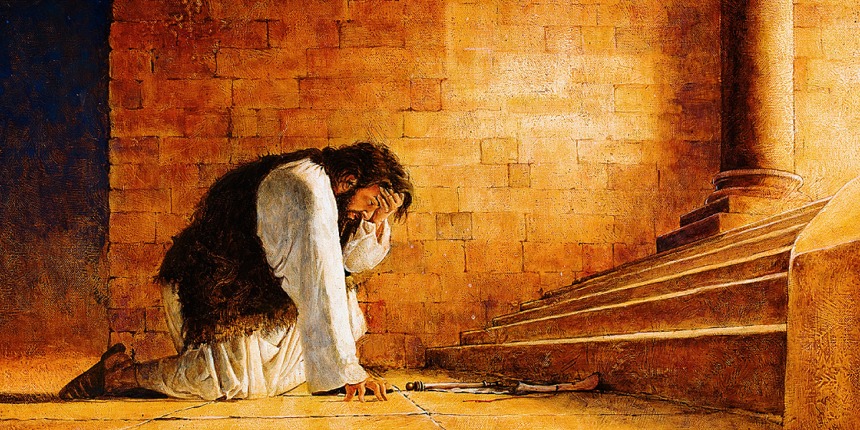
Enjoy It While You Can

1 The word of the Lord came to me: “Now you, son of man, raise a lamentation over Tyre, and say to Tyre, who dwells at the entrances to the sea, merchant of the peoples to many coastlands, thus says the Lord God:

“O Tyre, you have said,
    ‘I am perfect in beauty.’
Your borders are in the heart of the seas;
    your builders made perfect your beauty.
They made all your planks
    of fir trees from Senir;
they took a cedar from Lebanon
    to make a mast for you.
Of oaks of Bashan
    they made your oars;
they made your deck of pines
    from the coasts of Cyprus,
    inlaid with ivory.
Of fine embroidered linen from Egypt
    was your sail,
    serving as your banner;
blue and purple from the coasts of Elishah
    was your awning.
The inhabitants of Sidon and Arvad
    were your rowers;
your skilled men, O Tyre, were in you;
    they were your pilots.
The elders of Gebal and her skilled men were in you,
    caulking your seams;
all the ships of the sea with their mariners were in you
    to barter for your wares.

10 “Persia and Lud and Put were in your army as your men of war. They hung the shield and helmet in you; they gave you splendor. 11 Men of Arvad and Helech were on your walls all around, and men of Gamad were in your towers. They hung their shields on your walls all around; they made perfect your beauty.

12 “Tarshish did business with you because of your great wealth of every kind; silver, iron, tin, and lead they exchanged for your wares. 13 Javan, Tubal, and Meshech traded with you; they exchanged human beings and vessels of bronze for your merchandise. 14 From Beth-togarmah they exchanged horses, war horses, and mules for your wares. 15 The men of Dedan traded with you. Many coastlands were your own special markets; they brought you in payment ivory tusks and ebony. 16 Syria did business with you because of your abundant goods; they exchanged for your wares emeralds, purple, embroidered work, fine linen, coral, and ruby. 17 Judah and the land of Israel traded with you; they exchanged for your merchandise wheat of Minnith, meal, honey, oil, and balm. 18 Damascus did business with you for your abundant goods, because of your great wealth of every kind; wine of Helbon and wool of Sahar 19 and casks of wine from Uzal they exchanged for your wares; wrought iron, cassia, and calamus were bartered for your merchandise. 20 Dedan traded with you in saddlecloths for riding. 21 Arabia and all the princes of Kedar were your favored dealers in lambs, rams, and goats; in these they did business with you. 22 The traders of Sheba and Raamah traded with you; they exchanged for your wares the best of all kinds of spices and all precious stones and gold. 23 Haran, Canneh, Eden, traders of Sheba, Asshur, and Chilmad traded with you. 24 In your market these traded with you in choice garments, in clothes of blue and embroidered work, and in carpets of colored material, bound with cords and made secure. 25 The ships of Tarshish traveled for you with your merchandise. So you were filled and heavily laden in the heart of the seas. – Ezekiel 27:1-25 ESV

In this section, God personifies the city of Tyre as a successful merchant with an overinflated sense of self-worth and importance. This prosperous and cosmopolitan urban center is pictured as gloating over its prominence as a powerful hub of commerce to the world. Its fleet of trading vessels plied the waters of the Mediterranean, transporting goods from distant ports and lining the pockets of its already wealthy shipowners and tradesmen. But as God made clear in His earlier message to Ezekiel, the future prospects for this arrogant metropolis were far from encouraging. God was going to bring judgment and destruction upon Tyre and its neighboring communities.

Now, God commands Ezekiel to “sing a funeral song for Tyre” (Ezekiel 27:2 NLT). In essence, this chapter contains a mournful dirge that outlines the devastating prospects in store for this self-important Phoenician city. Like one of the stately ships that graced its port, Tyre was well-constructed and a beauty to behold.

“You boasted, O Tyre,
    ‘My beauty is perfect!’
You extended your boundaries into the sea.
    Your builders made your beauty perfect.
You were like a great ship
    built of the finest cypress from Senir.”  – Ezekiel 27:3-5 NLT

Tyre was like a finely crafted ship built from the finest wood and equipped with all the latest navigational technology of the day. It was a state-of-the-art city featuring first-class amenities and a wealthy patrician population. And they thought highly of their successful status as merchants to the world.

God gives a nod to Tyre’s international ties by mentioning cypress from Senir, cedar from Lebanon, oaks from Bashan, pine and ivory from the coasts of Cyprus, and the finest Egyptian linen. Goods from all around the known world found their way into the port of Tyre and onto its ships. Many of these exotic treasures graced the homes of the city’s elite and helped to fuel the meteoric rise of their financial fortunes. And the city itself became a cultural melting pot featuring people from virtually every ethnic origin. Even their army featured a multicultural blend of nations, being comprised of recruits from as far away as Mesopotamia and Africa. 

Merchants from Tashish, Greece, Tubal, and Meshech traded everything from human cargo to luxury items made from precious metals. In its busy marketplaces, a robust trade in horses, chariots, and mules was conducted. Along its crowded city streets, a virtual cornucopia of goods was available for purchase. The sights, sounds, and smells would have been all-pervasive and highly invigorating. Tyre was a happening place with a bright and prosperous future. 

Tyre’s connections were international in scope, featuring robust trading relationships with distant places like Damascus, Syria, Helbon, Zahar, Uzal, Dedan, Arabia, and Sheba. Even Judah and Israel had conducted business with Tyre, trading in agricultural commodities such as wheat, figs, honey, olive oil, and balm. And, as a result of this widespread and global marketplace, Tyre’s “island warehouse was filled to the brim!” (Ezekiel 27:25 NLT).

Yet, despite their prosperous fleet and bulging warehouses, the days ahead were going to feature anything but smooth water and overflowing inventory. Over and over again God has highlighted two indisputable facts: Tyre’s extreme wealth and God’s sovereignty. Tyre was a highly prosperous nation that benefited from diverse trade relationships with a variety of nations. They had taken advantage of their ideal location along the coast and had become a focal point along the trade routes of that day. They traded in everything from slaves to silver, wine to white wool, ivory to iron, and cloth to carpets. Their warehouses were filled to the brim and their ships were loaded with goods from all over the known world. They were rich, prosperous, and as a result, powerful. Their army was large and made up of mercenaries from around the world. And now, because Judah was suffering under the hand of God, the nation of Tyre was salivating at the chance to take over their trading relationships and prosper because of their demise.

But Tyre’s wealth was no match for God’s sovereignty. In fact, they were going to be destroyed by God as a reminder of His covenant relationship with the people of Israel and Judah. For the moment, God was punishing Israel, but He had still promised to restore them to the land. God was not about to let these foreign nations profit from Israel’s situation. He would keep the land for them and protect it in order that they might return when He deemed it appropriate.

The seven oracles found in this section of Ezekiel would have been words of hope to the exiled Israelites. In spite of their unfaithfulness, God was declaring His intentions to remain faithful to them, keeping the land safe for their eventual return. Tyre was wealthy and stood to profit from the fall of Jerusalem, but God was not going to let that happen. In fact, God was going to bring destruction on the nation of Tyre, eventually allowing them to suffer conquest and defeat at the hands of their own enemies.

Repeatedly, Ezekiel has written the words, “Yes, the Sovereign Lord has spoken!” None of the nations who stood opposed to Judah was any match for the power of Almighty God. No nation can stand against God. They may do so for a time, but the day is coming when God will bring judgment on all nations. China, Iraq, Iran, Russia, Cuba, South Korea, and yes, even America. God’s will is going to be done. And no nation will be able to stand against it. He is going to accomplish what He has promised and there is no power in the world that can prevent it. Our God is great, and He is in complete control of ALL things.

English Standard Version (ESV) The Holy Bible, English Standard Version. ESV® Permanent Text Edition® (2016). Copyright © 2001

New Living Translation (NLT) Holy Bible, New Living Translation, copyright © 1996, 2004, 2015 by Tyndale House Foundation. Used by permission of Tyndale House Publishers Inc., Carol Stream, Illinois 60188. All rights reserved.

You, O Lord, Are God Alone

1 As soon as King Hezekiah heard it, he tore his clothes and covered himself with sackcloth and went into the house of the Lord. And he sent Eliakim, who was over the household, and Shebna the secretary, and the senior priests, covered with sackcloth, to the prophet Isaiah the son of Amoz. They said to him, “Thus says Hezekiah, This day is a day of distress, of rebuke, and of disgrace; children have come to the point of birth, and there is no strength to bring them forth. It may be that the Lord your God heard all the words of the Rabshakeh, whom his master the king of Assyria has sent to mock the living God, and will rebuke the words that the Lord your God has heard; therefore lift up your prayer for the remnant that is left.” When the servants of King Hezekiah came to Isaiah, Isaiah said to them, “Say to your master, ‘Thus says the Lord: Do not be afraid because of the words that you have heard, with which the servants of the king of Assyria have reviled me. Behold, I will put a spirit in him, so that he shall hear a rumor and return to his own land, and I will make him fall by the sword in his own land.’”

The Rabshakeh returned, and found the king of Assyria fighting against Libnah, for he heard that the king had left Lachish. Now the king heard concerning Tirhakah king of Cush, “Behold, he has set out to fight against you.” So he sent messengers again to Hezekiah, saying, 10 “Thus shall you speak to Hezekiah king of Judah: ‘Do not let your God in whom you trust deceive you by promising that Jerusalem will not be given into the hand of the king of Assyria. 11 Behold, you have heard what the kings of Assyria have done to all lands, devoting them to destruction. And shall you be delivered? 12 Have the gods of the nations delivered them, the nations that my fathers destroyed, Gozan, Haran, Rezeph, and the people of Eden who were in Telassar? 13 Where is the king of Hamath, the king of Arpad, the king of the city of Sepharvaim, the king of Hena, or the king of Ivvah?’”

14 Hezekiah received the letter from the hand of the messengers and read it; and Hezekiah went up to the house of the Lord and spread it before the Lord. 15 And Hezekiah prayed before the Lord and said: “O Lord, the God of Israel, enthroned above the cherubim, you are the God, you alone, of all the kingdoms of the earth; you have made heaven and earth. 16 Incline your ear, O Lord, and hear; open your eyes, O Lord, and see; and hear the words of Sennacherib, which he has sent to mock the living God. 17 Truly, O Lord, the kings of Assyria have laid waste the nations and their lands 18 and have cast their gods into the fire, for they were not gods, but the work of men’s hands, wood and stone. Therefore they were destroyed. 19 So now, O Lord our God, save us, please, from his hand, that all the kingdoms of the earth may know that you, O Lord, are God alone.” 2 Kings 19:1-19 ESV

When King Hezekiah’s three emissaries returned with a report of all that the Rabshakeh had said, he was overwhelmed with grief. This self-absorbed and overly confident commander of Sennacherib’s army had ridiculed Hezekiah for placing any hope of rescue in Egypt. Pharaoh would prove to be an unreliable source of help against the much larger and better equipped Assyrian army. And Sennacherib’s cocky commander scoffed at any notion that the God of Judah would come to their aid. Speaking on behalf of his equally arrogant king, the Rabshakeh had boldly declared, “What god of any nation has ever been able to save its people from my power? So what makes you think that the Lord can rescue Jerusalem from me?” (2 Kings 18:35 NLT).

Demoralized by this devastating news, King Hezekiah immediately entered into a state of mourning and sought refuge and solace in the house of God. From there, he sent a  message to the prophet Isaiah.

“Today is a day of trouble, insults, and disgrace. It is like when a child is ready to be born, but the mother has no strength to deliver the baby. But perhaps the Lord your God has heard the Assyrian chief of staff, sent by the king to defy the living God, and will punish him for his words. Oh, pray for those of us who are left!” – 2 Kings 19:3-4 NLT

These were dark days for the nation of Judah, but Hezekiah held out hope that Yahweh would still come to their aid. From his vantage point within the walls of God’s house, Hezekiah must have recalled the prayer that Solomon had offered up to God when he had dedicated the newly constructed temple.

“If your people Israel are defeated by their enemies because they have sinned against you, and if they turn to you and acknowledge your name and pray to you here in this Temple, then hear from heaven and forgive the sin of your people Israel and return them to this land you gave their ancestors.” – 1 Kings 8:33-34 NLT

While Judah had not yet been defeated by the Assyrians, things were not looking good. Their massive army was camped outside the eastern walls and Hezekiah knew it was just a matter of time before the siege brought Jerusalem to its knees. But he still held out hope, turning to the prophet of God and begging him to seek Yahweh’s divine assistance. And the message he received from Isaiah must have sounded far-fetched and too good to be true.

“This is what the Lord says: Do not be disturbed by this blasphemous speech against me from the Assyrian king’s messengers. Listen! I myself will move against him, and the king will receive a message that he is needed at home. So he will return to his land, where I will have him killed with a sword.’” – 2 Kings 19:6-7 NLT

God had heard every boastful and blasphemous word the Rabshakeh had said. And Isaiah assured Hezekiah that he had nothing to fear because God had something in store for Sennacherib that would throw a major wrench into his global conquest plans. The great king of Assyria would suddenly find himself facing unexpected attacks on a number of fronts that would eventually force him to abandon his siege of Jerusalem. But even though Sennacherib had reallocated his forces to other battlefronts, he was not going to give up on his plan to conquer Jerusalem. So, he sent another message to King Hezekiah, demanding that he give up his Don Quixote-like quest for divine rescue. Sennacherib treated the God of Judah with contempt, declaring that He would prove just as powerless as all the other gods of all the other nations that had fallen to the Assyrians.

But Hezekiah took Sennacherib’s letter into the temple and spread it out before the Lord. Then he prayed, “O Lord, God of Israel, you are enthroned between the mighty cherubim! You alone are God of all the kingdoms of the earth. You alone created the heavens and the earth. Bend down, O Lord, and listen! Open your eyes, O Lord, and see! Listen to Sennacherib’s words of defiance against the living God” (2 Kings 19:15-16 NLT).

Hezekiah reminded Yahweh that all the other gods had failed because they were nothing more than the figments of man’s fertile imagination.

“They were not gods at all—only idols of wood and stone shaped by human hands. – 2 Kings 19:18 NLT

But Yahweh was the living God. He was the all-powerful creator God who had made the heavens and the earth. He was seated on His throne in heaven and fully capable of dealing with King Sennacherib and his seemingly unstoppable army. And Hezekiah called on Yahweh to intervene and demonstrate His sovereign power by rescuing His chosen people. And when the one true God does what no other god could do, delivering Judah from the hands of Sennacherib, all the nations of the earth will recognize “that you alone, O Lord, are God” (2 Kings 19:19 NLT). 

English Standard Version (ESV) The Holy Bible, English Standard Version. ESV® Permanent Text Edition® (2016). Copyright © 2001 by Crossway Bibles, a publishing ministry of Good News Publishers.

New Living Translation (NLT) Holy Bible, New Living Translation, copyright © 1996, 2004, 2015 by Tyndale House Foundation. Used by permission of Tyndale House Publishers Inc., Carol Stream, Illinois 60188. All rights reserved.

The Message (MSG)Copyright © 1993, 1994, 1995, 1996, 2000, 2001, 2002 by Eugene H. Peterson

Sovereign Lord!

23 When they were released, they went to their friends and reported what the chief priests and the elders had said to them. 24 And when they heard it, they lifted their voices together to God and said, “Sovereign Lord, who made the heaven and the earth and the sea and everything in them, 25 who through the mouth of our father David, your servant, said by the Holy Spirit,

“‘Why did the Gentiles rage,
    and the peoples plot in vain?
26 The kings of the earth set themselves,
    and the rulers were gathered together,
    against the Lord and against his Anointed’—

27 for truly in this city there were gathered together against your holy servant Jesus, whom you anointed, both Herod and Pontius Pilate, along with the Gentiles and the peoples of Israel, 28 to do whatever your hand and your plan had predestined to take place. 29 And now, Lord, look upon their threats and grant to your servants to continue to speak your word with all boldness, 30 while you stretch out your hand to heal, and signs and wonders are performed through the name of your holy servant Jesus.” 31 And when they had prayed, the place in which they were gathered together was shaken, and they were all filled with the Holy Spirit and continued to speak the word of God with boldness.  – Acts 4:23-31 ESV

After their stern warning from the Sanhedrin “not to speak or teach at all in the name of Jesus” (Acts 4:18 ESV), Peter and John returned to the rest of their friends and reported all that had happened. What happened next provides us with a significant insight into the spiritual transformation that had taken in the lives of the disciples on the day of Pentecost. Rather than responding in fear at the possible ramifications of the Sanhedrin’s warnings. the disciples seem to take the news quite calmly. And instead of breaking into a heated discussion about how they should respond to the threats of the council, they prayed. And what they prayed is significant and illuminating.

First, Luke is very specific in recording that they addressed God as “Sovereign Lord.” The Greek word is despotēs and it means “master, lord or sovereign ruler.” This was a title reserved for those who held positions of ultimate and unwavering power and authority. And the disciples recognized that the God to whom they were praying was the supreme Master, the sovereign, all-powerful Lord of the universe. They did not address God as Father, although in the model prayer Jesus had given them, He had taught them to do so. No, at this moment in time, facing the demands of the Sanhedrin to cease and desist, and under threats of possible retaliation if they did not, the disciples turned their attention to the sovereign nature of God Almighty. They address Him as the Creator of “the heaven and the earth and the sea and everything in them” (Acts 4:24 ESV). And then they quote from an Old Testament passage penned by King David.

“‘Why did the Gentiles rage,
    and the peoples plot in vain?
The kings of the earth set themselves,
    and the rulers were gathered together,
    against the Lord and against his Anointed’ – Acts 4:25-26 ESV

Notice that they attribute this passage to David, but clearly state that it had been given to the former king through the inspiration of the Holy Spirit. Psalm 2 had been written by David, but what he had written had been inspired by the Spirit of God. And the disciples recognized that it had been a prophetic reference to Jesus, the Messiah. The Holy Spirit had given the disciples new insight into the Scriptures, allowing them to see things they had never seen before. Immediately after His resurrection, Jesus had opened the eyes of a couple of disciples walking along the road to Emmaus and “beginning with Moses and all the Prophets, he interpreted to them in all the Scriptures the things concerning himself” (Luke 24:27 ESV). Now, the Holy Spirit was doing the same thing for the rest of the disciples. They are able to see that what David had written hundreds of years earlier had special application to them. The “rulers were gathered together against the Lord and his Anointed”. The Sanhedrin were raging and plotting, but because God is sovereign, the disciples realized they had nothing to fear. The Gentiles or Romans had played a part in Jesus’ death. The “kings of the earth” is a clear reference to King Herod, who had authorized the death of Jesus. And the reference to rulers covers Pontius Pilate, the high priest and all the religious authorities who had subjected Jesus to humiliating trials and physical beatings before His death. But all that they had done had been in vain. It had proved futile and had failed to stop the sovereign will of God. 

The disciples had seen the risen Lord. They had talked and ate with Him. They had received their commission from Him. They they heard Him promise to one day return for them. And finally, they had watched Him ascend into the sky in order to return to His rightful place at His Father’s side. So, they knew that all the Gentiles and the Jews had done had been for naught. Which meant that they had no reason to fear what the threats of the Sanhedrin.

The disciples were able to look back on all the events that had happened in Jerusalem surrounding the death of Jesus and recognize that it had all been the pre-planned work of God. They confess, “everything they did was determined beforehand according to your will” (Acts 4:28 NLT). It had been predestined and predetermined by God. All that the disciples had seen as an unmitigated disaster and as a heartbreaking end to their hopes of Jesus being the Messiah, had actually been the will of God. It had been part of His divine plan.

With all this in mind, it’s important to notice how their thoughts of God’s sovereignty influence what they ask of God. Notice that they don’t ask God to place a hedge of protection around them. They don’t request that He remove the threat that hovers over them. They don’t demand that He strike down the Sanhedrin. No, they pray for boldness. They realize He is in complete control of the circumstances, so they simply ask that He give them the strength to continue to do what He has called them to do.

29 “And now, O Lord, hear their threats, and give us, your servants, great boldness in preaching your word. 30 Stretch out your hand with healing power; may miraculous signs and wonders be done through the name of your holy servant Jesus.” – Acts 4:29-30 NLT

They fully recognized that their strength came from God. They realized that any power they had to heal or perform signs and wonders came from God. They were simply instruments in the Redeemer’s all-powerful hands. So, they asked Him for boldness or parrēsia, a Greek word that means “free and fearless confidence, cheerful courage, boldness, assurance” (Outline of Biblical Usage). They weren’t asking for relief from their problems, but for the resources they needed to continue doing His will. Jesus had set His face toward Jerusalem, willingly facing not only the threat of death, but its inevitable reality. Now, they were asking for the same bold determination to keep on keeping on, regardless of what the Gentiles, kings and rulers may say.

And Luke records, “when they had prayed, the place in which they were gathered together was shaken, and they were all filled with the Holy Spirit and continued to speak the word of God with boldness” (Acts 4:31 ESV). It is important that we note that what happened here was not another baptism of the Holy Spirit. They had received the Spirit in full at Pentecost. This “filling” is a reference to the Spirit’s control over them. This has less to do with the specific moment in time than with the ongoing control of the Spirit over them. Luke says, “they were all filled with the Holy Spirit and continued to speak the word of God with boldness.” They walked out of the room under the control of the Spirit, able to speak boldly and confidently, in direct answer to their prayer request. What they were able to do was the direct result of the Spirit of God. It was His control over them that allowed them to speak the words of God with boldness. Their efforts were not the result of human strength. They were sovereignly, spiritually equipped by God for the task He had given them.


English Standard Version (ESV)
The Holy Bible, English Standard Version. ESV® Permanent Text Edition® (2016). Copyright © 2001 by Crossway Bibles, a publishing ministry of Good News Publishers.

New Living Translation (NLT)
Holy Bible, New Living Translation, copyright © 1996, 2004, 2015 by Tyndale House Foundation. Used by permission of Tyndale House Publishers Inc., Carol Stream, Illinois 60188. All rights reserved.

The Message (MSG)  Copyright © 1993, 1994, 1995, 1996, 2000, 2001, 2002 by Eugene H. Peterson

Our Righteous King.

Your kingdom is an everlasting kingdom, and your dominion endures throughout all generations. [The Lord is faithful in all his words and kind in all his works.] The Lord upholds all who are falling and raises up all who are bowed down. The eyes of all look to you, and you give them their food in due season. You open your hand; you satisfy the desire of every living thing. The Lord is righteous in all his ways and kind in all his works. – Psalm 145:13-17 ESV

Psalm 145

When a king reigns, he does so over everyone in his kingdom. Even over those who reject him as their king. A good king provides protection for all. He is to enforce the laws of the kingdom over all, regardless of their status or economic standing. As a king, David knew these things well. He realized that his role as king, while accompanied by wonderful benefits, also came with formidable responsibilities. He couldn’t help but compare his own reign with that of God; and when he did, he realized that God’s Kingdom was far greater in scope and size. His responsibilities were far more extensive. David’s kingdom was tiny and insignificant in comparison. And yet, God was faithful in all His words and king in all His works. Everyone looked to Him to provide their food and fulfill their desires, whether they acknowledged Him as King or not. David recognized that it was God who opened His hand and satisfied the desires of every living thing. Speaking of His own heavenly Father, Jesus said, “For he makes his sun rise on the evil and on the good, and sends rain on the just and on the unjust” (Matthew 5:45 ESV). God is gracious and merciful to all. His grace is the favor He shows to those who don’t deserve it, which would include ALL mankind. His mercy is the incredible patience He shows to those who deserve His wrath. In spite of the fact that “all have sinned and fall short of the glory of God” (Roman 3:23 ESV), God has shown mercy. He has patiently put up with the sins of men over the centuries and even sacrificed His own Son in order to provide a way for men to be restored to a right relationship with Himself.

The Lord is righteous in all His ways and kind in all His works. Unlike human kings, God always does what is right. He always keeps His word. He doesn’t lie, deceive, renege on a promise, or act unjustly. We may not always understand His actions, but we can never question His integrity. He is righteous in all His ways. Sometimes is appears otherwise. Based on what we see happening around us, we can easily conclude that God is either indifferent or incapable of doing what needs to be done. It can appear as if the wicked are winning. The psalmist felt that way and cried out, “Rise up, O judge of the earth; repay to the proud what they deserve! O Lord, how long shall the wicked, how long shall the wicked exult?” (Psalm 94:2-3 ESV). Ethan the Ezrahite wrote, “How long, O Lord? Will you hide yourself forever? How long will your wrath burn like fire? Remember how short my time is! For what vanity you have created all the children of man!” (Psalm 89:46-47 ESV). There are times when it feels like God is either out of control or out of ear shot. It seems as if He is not listening to our pleas for help or seeing the gravity of our situation. But God is a righteous King. He is in complete control of the circumstances – all the time. Yes, it may appear as if the wicked are prospering and the unrighteous are getting all the breaks, but God knows exactly what He is doing. He is not fooled or duped by the ways of men. He knows men’s hearts. He knows that “there is none righteous, no not one” (Romans 3:10 ESV). No one deserves the benefits of rain or crops. No one has earned God’s favor through their acts of righteousness. The fact that any of us exist at all is a testimony to the enduring patience of God.

Paul makes a compelling argument concerning God’s righteous rule and gracious dealings with mankind. “But who are you, O man, to answer back to God? Will what is molded say to its molder, ‘Why have you made me like this?’ Has the potter no right over the clay, to make out of the same lump one vessel for honorable use and another for dishonorable use? What if God, desiring to show his wrath and to make known his power, has endured with much patience vessels of wrath prepared for destruction, in order to make known the riches of his glory for vessels of mercy, which he has prepared beforehand for glory— even us whom he has called, not from the Jews only but also from the Gentiles?” (Romans 9:20-24 ESV). Who are we to question God? What right do we have to doubt the actions of the Creator of the universe? The very fact that God allows the wicked to continue to exist is a reminder of His patience and remarkable love. The fact is, God has shown all of us mercy – He has not given us what we so richly deserve – condemnation and eternal separation from Him. Instead, He has graciously allowed some to enjoy the wonders of His grace and the benefits of His Son’s sacrificial death on the cross. “But God showed his great love for us by sending Christ to die for us while we were still sinners” (Romans 5:8 NLT).

Our King is a righteous, loving, gracious and merciful King. His ways are always just and right. His actions are unquestionably good and His decision are always proper and appropriate. We may not understand what He is doing. We may not even like what He is doing, but we can rest assured that it is always for the best. The Lord is righteous in all his ways and kind in all his works.

Sovereign God – Part II

Sovereign Lord, who made the heaven and the earth and the sea and everything in them, who through the mouth of our father David, your servant, said by the Holy Spirit, “Why did the Gentiles rage, and the peoples plot in vain? The kings of the earth set themselves, and the rulers were gathered together, against the Lord and against his Anointed” — for truly in this city there were gathered together against your holy servant Jesus, whom you anointed, both Herod and Pontius Pilate, along with the Gentiles and the peoples of Israel, to do whatever your hand and your plan had predestined to take place. And now, Lord, look upon their threats and grant to your servants to continue to speak your word with all boldness, while you stretch out your hand to heal, and signs and wonders are performed through the name of your holy servant Jesus. – Acts 4:24-30 ESV

Peter and John had been arrested by the high priest, Annas, given a stern warning to stop speaking in the name of Jesus, and then released. And upon returning to their fellow disciples, they offered a corporate prayer to the sovereign Lord. They recognized His divine oversight of any and all circumstances. They acknowledged His sovereign plan that had included the arrest, trials and, ultimately, the crucifixion of Jesus Christ. Even Herod and Pliate had been little more than pawns in the hand of God as He accomplished His will regarding the death of His own Son. So when Peter and John had been threatened by the high priest, they knew that even that was all part of God’s plan. Jesus had predicted it. Interestingly enough, they did not ask God to remove the threats or lighten their load. They asked God “to grant your servants to continue to speak your word with all boldness”. They didn’t ask for a change of circumstances, but for a change of attitude. They asked for boldness in place of fear, peace in place of anxiety, faith in place of doubt. They wanted God to work through their circumstances, not in spite of them. They knew that God was going to continue to do miracles, stretching out His hand to heal, and performing signs and wonders – all through the name of Jesus. Peter and John had healed a lame man, which is what had gotten them in trouble with the high priest to begin with. They knew that they had power at their disposal that would allow them to accomplish the impossible.

When interrogated by the high priest regarding and demanded to explain by whose power they had healed the man who had been lame since birth, Peter had boldly exclaimed, “you denied the Holy and Righteous One, and asked for a murderer to be granted to you, and you killed the Author of life, whom God raised from the dead. To this we are witnesses. And his name—by faith in his name—has made this man strong whom you see and know, and the faith that is through Jesus has given the man this perfect health in the presence of you all” (Acts 2:14-16 ESV). They had killed the Author of Life, and yet God had raised Him back to life. And as proof, Jesus had made possible the healing and perfect health of a man who had not taken a single step in his entire life. This was all the sovereign work of God. They had denied Jesus as the Messiah and the Son of God. They had attempted to destroy Him. But God had bigger plans. He had planned all along that His Son would die. His death at the hands of sinful men would be the key to mankind’s redemption. His sacrifice would pay for man’s sins and satisfy the righteous demands of a holy God. The penalty for sin was death. The payment required a sinless sacrifice. Only Jesus, the Son of God, met the requirements. Only Jesus could die a death that could propitiate or satisfy God’s demands and make possible forgiveness rather than condemnation.

It was this message that Peter, John and the disciples were commissioned to share. They had good news to share with all those who found themselves living in darkness and without hope. And all they asked for from God was the boldness to declare that message in the midst of threats, repeated rejection, increasing animosity and ongoing trials. They knew they were going to need strength. The threats of the high priest were real. The possibility of harm and even death was far from remote. But they knew they had a job to do. They had the answer to the world’s problems and the God-given obligation to share it. They had already seen God do great things. They had watched Him perform miracles. They had seen the resurrected Lord. They had experienced the filling of the Holy Spirit. Life for them could no longer be business as usual. The Savior had come. The Kingdom of God had drawn near. The battle for the souls of men had commenced and they viewed themselves as soldiers in the army of the Most High God. What a timely reminder for those of us living in this age. We live surrounded by darkness. The people with whom we associate each and every day are searching for hope and longing for healing, and we carry the Light of the world within us. What we so desperately need is boldness. What we should be praying for is strength to carry out our God-given task to act as salt and light, sharing the good news of Jesus Christ with any and all we meet. We will be hated. We will face rejection. Those things should not surprise us, but neither should they deter us. May our daily prayer be, “And now, Lord, look upon their threats and grant to your servants to continue to speak your word with all boldness.”