Blind Man’s Bluff

Now the rest of the deeds of Jehoiakim and all that he did, are they not written in the Book of the Chronicles of the Kings of Judah? So Jehoiakim slept with his fathers, and Jehoiachin his son reigned in his place. And the king of Egypt did not come again out of his land, for the king of Babylon had taken all that belonged to the king of Egypt from the Brook of Egypt to the river Euphrates.

Jehoiachin was eighteen years old when he became king, and he reigned three months in Jerusalem. His mother’s name was Nehushta the daughter of Elnathan of Jerusalem. And he did what was evil in the sight of the LORD, according to all that his father had done.

10 At that time the servants of Nebuchadnezzar king of Babylon came up to Jerusalem, and the city was besieged. 11 And Nebuchadnezzar king of Babylon came to the city while his servants were besieging it, 12 and Jehoiachin the king of Judah gave himself up to the king of Babylon, himself and his mother and his servants and his officials and his palace officials. The king of Babylon took him prisoner in the eighth year of his reign 13 and carried off all the treasures of the house of the LORD and the treasures of the king’s house, and cut in pieces all the vessels of gold in the Temple of the LORD, which Solomon king of Israel had made, as the LORD had foretold. 14 He carried away all Jerusalem and all the officials and all the mighty men of valor, 10,000 captives, and all the craftsmen and the smiths. None remained, except the poorest people of the land. 15 And he carried away Jehoiachin to Babylon. The king’s mother, the king’s wives, his officials, and the chief men of the land he took into captivity from Jerusalem to Babylon. 16 And the king of Babylon brought captive to Babylon all the men of valor, 7,000, and the craftsmen and the metal workers, 1,000, all of them strong and fit for war. 17 And the king of Babylon made Mattaniah, Jehoiachin’s uncle, king in his place, and changed his name to Zedekiah.

18 Zedekiah was twenty-one years old when he became king, and he reigned eleven years in Jerusalem. His mother’s name was Hamutal the daughter of Jeremiah of Libnah. 19 And he did what was evil in the sight of the LORD, according to all that Jehoiakim had done. 20 For because of the anger of the LORD it came to the point in Jerusalem and Judah that he cast them out from his presence.

And Zedekiah rebelled against the king of Babylon. – 2 Kings 24:5-20 ESV

Eliakim was the second son of Joash to sit on the throne of Judah. The reign of his younger brother, Jehoahaz, had only lasted three months before he was deposed and taken captive by Neco, the king of Egypt. He became the puppet-king of the Egyptians and was forced to pay an exorbitant annual tribute to secure his throne. He even faced the indignity of having his name changed to Jehoiakim. But the time came when his Egyptian overlords were displaced by the new bully on the block, the Babylonians. The army of King Nebuchadnezzar defeated the combined forces of the Assyrians and Egyptians at the Battle of Carchemish in 605 BC. This decisive victory dramatically altered the political landscape of the Middle East and set the stage for Judah’s eventual fall.

The Babylonians’ defeat of the Egyptians provided Jehoiakim with a brief reprieve, but it was not long before he found himself facing yet another Gentile superpower with aspirations of global dominance. Nebuchadnezzar eventually set his sights on Judah, and for three years, he forced Jehoiakim back into his familiar and just as unpleasant role as a vassal. For eight years of his 11-year reign, Jehoiakim had served as Pharaoh’s virtual slave. Now, after three more years of Babylonian oppression and control, he decided enough was enough and rebelled against King Nebuchadnezzar. But Jehoiakim failed to realize that this entire scenario was the handiwork of God Almighty. Yahweh had sovereignly appointed the Babylonians to be His agents of judgment against the rebellious nation of Judah. So, when Jehoiakim rebelled against Nebuchadnezzar, he was really attempting to resist the will of God.

Yahweh had repeatedly warned His rebellious people that their fate would be far from pleasant if they continued to reject His calls for repentance.

“Go back to King Zedekiah and tell him, ‘This is what the Lord, the God of Israel, says: I will make your weapons useless against the king of Babylon and the Babylonians who are outside your walls attacking you. In fact, I will bring your enemies right into the heart of this city. I myself will fight against you with a strong hand and a powerful arm, for I am very angry. You have made me furious! I will send a terrible plague upon this city, and both people and animals will die. And after all that, says the Lord, I will hand over King Zedekiah, his staff, and everyone else in the city who survives the disease, war, and famine. I will hand them over to King Nebuchadnezzar of Babylon and to their other enemies. He will slaughter them and show them no mercy, pity, or compassion.’ – Jeremiah 21:3-7 NLT

But despite Jeremiah’s dire predictions of Judah’s fall, the people of Judah remained unrepentant, and their leaders continued to doubt the reality of Yahweh’s sovereignty, until it was too late.

Then the LORD sent bands of Babylonian, Aramean, Moabite, and Ammonite raiders against Judah to destroy it, just as the LORD had promised through his prophets. These disasters happened to Judah because of the LORD’s command. He had decided to banish Judah from his presence because of the many sins of Manasseh… – 2 Kings 24:2-3 NLT

The fall of Judah was inevitable because God had ordained it, and there was nothing Jehoiakim could do to avoid or escape it. And eventually, God repaid Jehoiakim for his stubborn resistance to His will by allowing the Babylonians to capture the capital city of Jerusalem.

Then King Nebuchadnezzar of Babylon came to Jerusalem and captured it, and he bound Jehoiakim in bronze chains and led him away to Babylon. Nebuchadnezzar also took some of the treasures from the Temple of the Lord, and he placed them in his palace in Babylon. – 2 Chronicles 36:6-7 NLT

Jehoiakim, dethroned and disgraced, was replaced by his 18-year-old son, Jehoiachin. And just like his father and his uncle before him, “Jehoiachin did what was evil in the LORD’s sight” (2 Kings 24:9 NLT). Not only did Jehoiachin offend God by encouraging idolatry and apostasy, but he also attempted to resist God’s will by rebelling against the Babylonians whom God had sent. This forced Nebuchadnezzar to lay siege to the city of Jerusalem, which he eventually captured. With Jerusalem’s fall, Jehoiachin found himself without a capital city or a throne. He and the royal family were taken captive and deported to Babylon.

Then King Jehoiachin, along with the queen mother, his advisers, his commanders, and his officials, surrendered to the Babylonians. – 2 Kings 24:12 NLT

And none of this should have come as a shock to King Jehoiachin because God had warned that it would happen. He had repeatedly sent His prophets to deliver His message of impending destruction, but they would not listen. The prophet Jeremiah had given Jehoiachin’s father, Jehoiakim, a stark description of what God had planned for the nation of Judah.

“You made me furious by worshiping idols you made with your own hands, bringing on yourselves all the disasters you now suffer. And now the LORD of Heaven’s Armies says: Because you have not listened to me, I will gather together all the armies of the north under King Nebuchadnezzar of Babylon, whom I have appointed as my deputy. I will bring them all against this land and its people and against the surrounding nations. I will completely destroy you and make you an object of horror and contempt and a ruin forever. I will take away your happy singing and laughter. The joyful voices of bridegrooms and brides will no longer be heard. Your millstones will fall silent, and the lights in your homes will go out. This entire land will become a desolate wasteland. Israel and her neighboring lands will serve the king of Babylon for seventy years. – Jeremiah 25:7-11 NLT

And in the eighth year of Nebuchadnezzar’s reign, the prophecy of Jeremiah was fulfilled.

King Nebuchadnezzar took all of Jerusalem captive, including all the commanders and the best of the soldiers, craftsmen, and artisans—10,000 in all. Only the poorest people were left in the land. – 2 Kings 24:14 NLT

But this would prove to be just the beginning of the end. Over time, there would be far more people deported from the land of Judah to Babylon. Despite the fall of Jerusalem, the stubbornness of the people of Judah was not yet abated. Those who remained in the land still refused to bow their knees to Yahweh. And when Nebuchadnezzar placed Jehoiachin’s uncle, Mattaniah, on the throne, they seemed to assume that life would go on as usual. But when Nebuchadnezzar changed Mattaniah’s name to Zedekiah, the people should have realized that they were far from an independent nation. They were little more than slaves of a foreign power, and, in time, many of them would find themselves joining their exiled brothers and sisters in Babylon.

The people had a new king, and that king had a new name, but little else changed in the nation of Judah. They continued in their old rebellious ways, and Zedekiah proved to be just as evil as all those kings who had occupied the throne before him. The author of 2 Kings makes it painfully clear that their persistent and pervasive rebellion had finally brought upon them the righteous wrath of God.

These things happened because of the LORD’s anger against the people of Jerusalem and Judah, until he finally banished them from his presence and sent them into exile. – 2 Kings 24:20 NLT

But even Yahweh’s judgment failed to get the attention of the king and his people; they remained stubbornly unrepentant and persistently unfaithful, right to the bitter end.

Zedekiah was a hard and stubborn man, refusing to turn to the LORD, the God of Israel. Likewise, all the leaders of the priests and the people became more and more unfaithful. They followed all the pagan practices of the surrounding nations, desecrating the Temple of the LORD that had been consecrated in Jerusalem. – 2 Chronicles 36:13-14 NLT

Zedekiah had been given ample warning, but he refused to listen. The prophet Jeremiah had delivered to Zedekiah Yahweh’s very clear warnings.

“…you must submit to Babylon’s king and serve him; put your neck under Babylon’s yoke! I will punish any nation that refuses to be his slave, says the LORD. I will send war, famine, and disease upon that nation until Babylon has conquered it.” – Jeremiah 27:9 NLT

Jeremiah had even advised the king to submit to King Nebuchadnezzar as an agent of God Almighty.

“If you want to live, submit to the yoke of the king of Babylon and his people. Why do you insist on dying—you and your people? Why should you choose war, famine, and disease, which the LORD will bring against every nation that refuses to submit to Babylon’s king? Do not listen to the false prophets who keep telling you, ‘The king of Babylon will not conquer you.’ They are liars. This is what the LORD says: ‘I have not sent these prophets! They are telling you lies in my name, so I will drive you from this land. You will all die—you and all these prophets, too.’” – Jeremiah 27:12-15 NLT

But Zedekiah refused to heed the words of Yahweh’s prophet, and in the ninth year of his reign, the stubborn king of Judah would learn the painful lesson that resistance to the will of God never ends well.

English Standard Version (ESV) The Holy Bible, English Standard Version. ESV® Permanent Text Edition® (2016). Copyright © 2001 by Crossway Bibles, a publishing ministry of Good News Publishers.

New Living Translation (NLT) Holy Bible, New Living Translation, copyright © 1996, 2004, 2015 by Tyndale House Foundation. Used by permission of Tyndale House Publishers Inc., Carol Stream, Illinois 60188. All rights reserved.
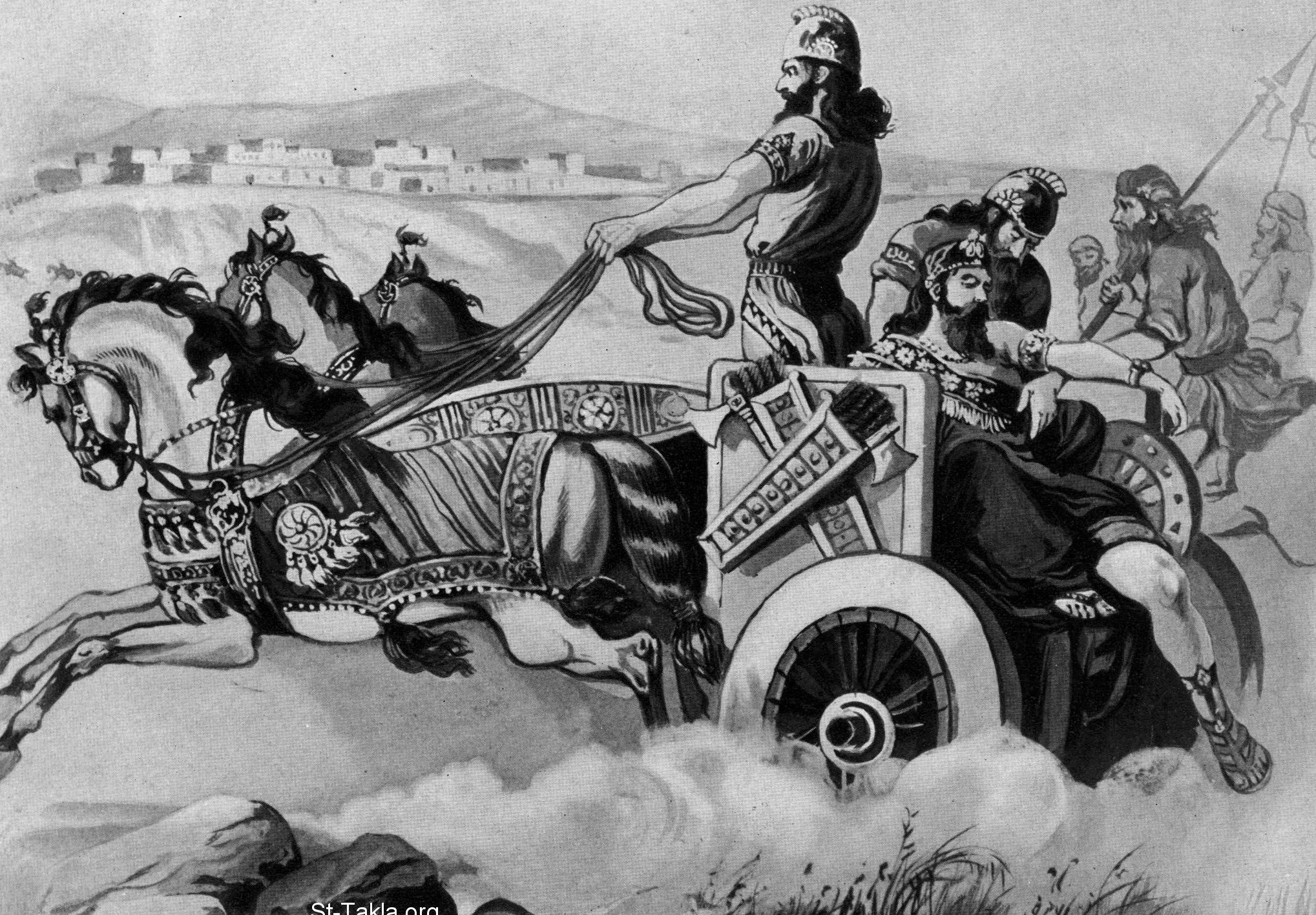

The Will of God and the Ways of Men

28 Now the rest of the acts of Josiah and all that he did, are they not written in the Book of the Chronicles of the Kings of Judah? 29 In his days Pharaoh Neco king of Egypt went up to the king of Assyria to the river Euphrates. King Josiah went to meet him, and Pharaoh Neco killed him at Megiddo, as soon as he saw him. 30 And his servants carried him dead in a chariot from Megiddo and brought him to Jerusalem and buried him in his own tomb. And the people of the land took Jehoahaz the son of Josiah, and anointed him, and made him king in his father’s place.

31 Jehoahaz was twenty-three years old when he began to reign, and he reigned three months in Jerusalem. His mother’s name was Hamutal the daughter of Jeremiah of Libnah. 32 And he did what was evil in the sight of the LORD, according to all that his fathers had done. 33 And Pharaoh Neco put him in bonds at Riblah in the land of Hamath, that he might not reign in Jerusalem, and laid on the land a tribute of a hundred talents of silver and a talent of gold. 34 And Pharaoh Neco made Eliakim the son of Josiah king in the place of Josiah his father, and changed his name to Jehoiakim. But he took Jehoahaz away, and he came to Egypt and died there. 35 And Jehoiakim gave the silver and the gold to Pharaoh, but he taxed the land to give the money according to the command of Pharaoh. He exacted the silver and the gold of the people of the land, from everyone according to his assessment, to give it to Pharaoh Neco.

36 Jehoiakim was twenty-five years old when he began to reign, and he reigned eleven years in Jerusalem. His mother’s name was Zebidah the daughter of Pedaiah of Rumah. 37 And he did what was evil in the sight of the LORD, according to all that his fathers had done. 

1 In his days, Nebuchadnezzar king of Babylon came up, and Jehoiakim became his servant for three years. Then he turned and rebelled against him. And the LORD sent against him bands of the Chaldeans and bands of the Syrians and bands of the Moabites and bands of the Ammonites, and sent them against Judah to destroy it, according to the word of the LORD that he spoke by his servants the prophets. Surely this came upon Judah at the command of the LORD, to remove them out of his sight, for the sins of Manasseh, according to all that he had done, and also for the innocent blood that he had shed. For he filled Jerusalem with innocent blood, and the LORD would not pardon. – 2 Kings 23:28-24:4 ESV

In his ongoing attempt to redeem the spiritual soul of the nation, King Josiah had bitten off more than he could chew. His many reforms and his ongoing battle against idolatry and apostasy were more than enough to keep him busy. But as the king of a powerful nation, he also had the responsibility to keep abreast of all the military and political machinations taking place in the region. At this point in history, the Assyrians were still the dominant force in the region, but the Babylonians were beginning to exert a formidable influence. They were an up-and-coming superpower that posed a real threat to Assyria’s global empire.

Josiah received word that the Egyptian army was on its way to Carchemish on the Euphrates River, where they were to join Assyrian forces in a battle against the upstart Babylonians. For some reason, Josiah made the fateful decision to oppose this military alliance between Egypt and Assyria.

After Josiah had finished restoring the Temple, King Neco of Egypt led his army up from Egypt to do battle at Carchemish on the Euphrates River, and Josiah and his army marched out to fight him. But King Neco sent messengers to Josiah with this message:

“What do you want with me, king of Judah? I have no quarrel with you today! I am on my way to fight another nation, and God has told me to hurry! Do not interfere with God, who is with me, or he will destroy you.” – 2 Chronicles 23:20-21 NLT

Perhaps Josiah was hoping that the Babylonians would bring an end to Assyria’s longstanding stranglehold on the region. Long after the Assyrians had called off their siege of Jerusalem, they remained a constant threat to Judah. So, Josiah rallied his troops and intercepted the Egyptian army as it made its way to Carchemish. But King Neco, the Pharaoh of Egypt, warned Josiah not to interfere, claiming to have a divine mandate from God.

But Josiah refused to listen to Neco, to whom God had indeed spoken, and he would not turn back. Instead, he disguised himself and led his army into battle on the plain of Megiddo. – 2 Chronicles 23:22 NLT

Josiah refused to believe that Yahweh was behind this unholy alliance between the Egyptians and the Assyrians. He couldn’t see any reason why Yahweh would direct the pagan king of the Egyptians to join forces with the already powerful and deadly kingdom of Assyria. It made no sense. But Josiah failed to understand that Yahweh was orchestrating His sovereign will and raising up the nation of Babylon as His agent of judgment against Assyria for its role in the destruction of the northern kingdom of Israel. Josiah was also unaware that God was preparing to use Babylon to destroy the nation of Judah.

Ignorant of God’s plans, King Josiah decided to take matters into his own hands and led his troops into battle against the Egyptians. They intercepted the Egyptian army at a place called Megiddo, and in the ensuing battle, King Josiah was killed. The author of 2 Kings states that “Pharaoh Neco killed him at Megiddo, as soon as he saw him” (2 Kings 23:29 ESV). But in 2 Chronicles 35, we’re told that Josiah had disguised himself before going into battle. It seems that Josiah’s little ploy to hide his kingly identity failed. King Neco recognized Josiah instantly and ordered his death.

But the enemy archers hit King Josiah with their arrows and wounded him. He cried out to his men, “Take me from the battle, for I am badly wounded!” – 2 Chronicles 35:23 NLT

The wounded king was placed in another chariot and evacuated to the city of Jerusalem, where he died. After giving their fallen king a state funeral, the people chose Jehoahaz as his replacement. This choice seems a bit odd because Jehoahaz was Josiah’s middle son and, therefore, not the next in line to the throne. But it seems that the people were looking for a king who would bring back the old way of life to which they had grown accustomed. They missed the days of Manasseh and regretted all the reforms that Josiah had instituted in Judah. So, they chose the one son of Josiah who represented their best chance at bringing back the good old days. And it appears that they picked just the right man for the job becaise “he did what was evil in the LORD’s sight, just as his ancestors had done” (2 Kings 23:32 NLT).

But Jehoahaz’s reign would be short-lived. The people failed to take into account that King Neco might have something to say about who took Josiah’s place on the throne of Judah. Just three months into his reign, Jehoahaz was deposed by the Pharaoh and taken captive to Egypt, where he died. Neco filled the vacancy with Eliakim, the older brother of Jehoahaz, and changed his name to Jehoiakim. This young man became little more than a puppet king who was forced to make an annual tribute payment to the Egyptians. To do this, he imposed a debilitating tax on the people of Judah. The prophet provides a brief but sobering summary of the sad state of affairs in the southern kingdom of Judah after the death of Josiah.

Do not weep for the dead king or mourn his loss. Instead, weep for the captive king being led away! For he will never return to see his native land again.

For this is what the LORD says about Jehoahaz, who succeeded his father, King Josiah, and was taken away as a captive: “He will never return. He will die in a distant land and will never again see his own country.” – Jeremiah 22:10-12 NLT

With Josiah’s death, the period of reformation in Judah came to an abrupt end. He had been the heart and soul behind all the changes that had taken place, and, without him, the people quickly reverted to their old ways. Virtually overnight, the conditions in Judah took a dramatic turn for the worse. Judah was now a vassal state, ruled by a powerless king who answered to the Pharaoh of Egypt.

Josiah’s attempt to stop the Egyptians from joining forces with the Assyrians had failed. In 605 BC, just four years after Josiah’s death, these two armies were defeated by the Babylonians at the Battle of Carchemish. This unexpected victory by the Babylonians over the Egyptians and Assyrians proved to be a game-changing event in the history of the Middle East. It catapulted King Nebuchadnezzar of Babylon into the role of the most powerful ruler on earth. With his defeat of the Assyrians, Nebuchadnezzar took over all the lands they had conquered, dramatically increasing the size and influence of his empire.

Eventually, the Babylonians would wrest control of Judah from the hands of King Neco of Egypt, and Jehoiakim would find himself answering to yet another, more powerful, king. But Jehoiakim will try to resist his new overlord, refusing to submit to his authority. Like his father, Josiah, Jehoiakim will fail to see the sovereign hand of God behind all that is taking place. His outlook is short-sighted, and he will attempt to make the most of his less-than-ideal circumstances.

The prophet Jeremiah records God’s stinging condemnation of Jehoiakim’s arrogant and self-centered approach to leadership.

And the LORD says, “What sorrow awaits Jehoiakim,
    who builds his palace with forced labor.
He builds injustice into its walls,
    for he makes his neighbors work for nothing.
    He does not pay them for their labor.
He says, ‘I will build a magnificent palace
    with huge rooms and many windows.
I will panel it throughout with fragrant cedar
    and paint it a lovely red.’
But a beautiful cedar palace does not make a great king!
    Your father, Josiah, also had plenty to eat and drink.
But he was just and right in all his dealings.
    That is why God blessed him.
He gave justice and help to the poor and needy,
    and everything went well for him.
Isn’t that what it means to know me?”
    says the LORD.
“But you! You have eyes only for greed and dishonesty!
    You murder the innocent,
    oppress the poor, and reign ruthlessly.” – Jeremiah 22:13-17 NLT

Unlike his reform-minded father, Jehoiakim had no heart for Yahweh. He was a self-obsessed man who used his power and position to improve his own lot in life while allowing the nation of Judah to continue its slide into apostasy. When Neco was forced to abandon his hold on Judah, Jehoiakim saw it as an opportunity to assert his independence, but he failed to understand the gravity of his situation. He had no clue that Yahweh had divinely ordained Nebuchadnezzar and the Babylonians to bring judgment against the nation of Judah. In attempting to resist the Babylonians, Jehoiakim was actually opposing the sovereign will of God, and he would pay dearly for his obstinacy.

For three years, Yahweh sent the Babylonians, Arameans, Moabites, and Ammonites against the rebellious nation of Judah. And the author leaves no doubt as to the purpose behind these raids.

These disasters happened to Judah because of the LORD’s command. He had decided to banish Judah from his presence because of the many sins of Manasseh. – 2 Kings 24:3 NLT

Little did Jehoiakim know that he was facing the beginning of the end. The coming judgment of Judah was imminent and unavoidable.

English Standard Version (ESV) The Holy Bible, English Standard Version. ESV® Permanent Text Edition® (2016). Copyright © 2001 by Crossway Bibles, a publishing ministry of Good News Publishers.

New Living Translation (NLT) Holy Bible, New Living Translation, copyright © 1996, 2004, 2015 by Tyndale House Foundation. Used by permission of Tyndale House Publishers Inc., Carol Stream, Illinois 60188. All rights reserved.
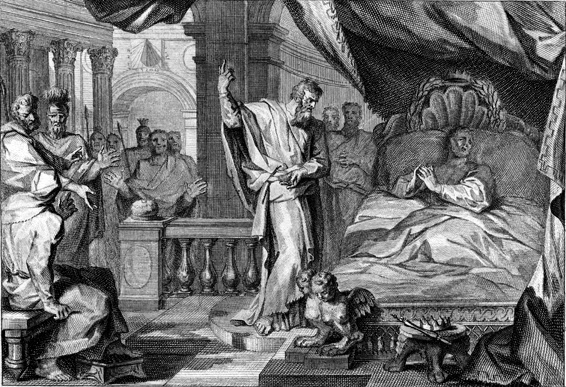
Nothing Is Too Difficult for God

1 In those days Hezekiah became sick and was at the point of death. And Isaiah the prophet the son of Amoz came to him and said to him, “Thus says the LORD, ‘Set your house in order, for you shall die; you shall not recover.’” Then Hezekiah turned his face to the wall and prayed to the LORD, saying, “Now, O LORD, please remember how I have walked before you in faithfulness and with a whole heart, and have done what is good in your sight.” And Hezekiah wept bitterly. And before Isaiah had gone out of the middle court, the word of the LORD came to him: “Turn back, and say to Hezekiah the leader of my people, Thus says the LORD, the God of David your father: I have heard your prayer; I have seen your tears. Behold, I will heal you. On the third day you shall go up to the house of the LORD, and I will add fifteen years to your life. I will deliver you and this city out of the hand of the king of Assyria, and I will defend this city for my own sake and for my servant David’s sake.” And Isaiah said, “Bring a cake of figs. And let them take and lay it on the boil, that he may recover.”

And Hezekiah said to Isaiah, “What shall be the sign that the LORD will heal me, and that I shall go up to the house of the LORD on the third day?” And Isaiah said, “This shall be the sign to you from the LORD, that the LORD will do the thing that he has promised: shall the shadow go forward ten steps, or go back ten steps?” 10 And Hezekiah answered, “It is an easy thing for the shadow to lengthen ten steps. Rather let the shadow go back ten steps.” 11 And Isaiah the prophet called to the LORD, and he brought the shadow back ten steps, by which it had gone down on the steps of Ahaz. 2 Kings 20:1-11 ESV

Hezekiah was a good man who remained faithful to Yahweh throughout his tenure as Judah’s king. This made him a rather rare commodity among the other kings of Judah and Israel. Most of these men displayed a passion for idols and a propensity for godless behavior that brought God’s judgment upon them. Many of Hezekiah’s peers and predecessors had been nothing more than apostate idol worshipers. Yet, the author of 2 Kings saved his most glowing assessment for King Hezekiah.

He trusted in the LORD, the God of Israel, so that there was none like him among all the kings of Judah after him, nor among those who were before him. – 2 Kings 18:5 ESV

Hezekiah had instituted a series of religious reforms in Judah that were meant to restore the people’s devotion to and confidence in Yahweh. He repaired and cleansed the Temple of God that had been allowed to fall into a state of disrepair. He reinstituted Temple worship by recommissioning the priests and Levites. He also called for the reinstatement of the Feast of Unleavened Bread and the celebration of Passover,  both of which had long been neglected. These annual celebrations had been commissioned by God and were intended to be reminders of God’s deliverance of the people of Israel from their captivity in Egypt. But when Hezekiah issued a royal decree that the nation of Judah gather in Jerusalem to re-commemorate these two God-ordained festivals, some of the people responded with derision and refused to attend. Many of those who did come to Jerusalem had failed to follow God’s requirements concerning purification.

Most of those who came from Ephraim, Manasseh, Issachar, and Zebulun had not purified themselves. But King Hezekiah prayed for them, and they were allowed to eat the Passover meal anyway, even though this was contrary to the requirements of the Law. For Hezekiah said, “May the LORD, who is good, pardon those who decide to follow the LORD, the God of their ancestors, even though they are not properly cleansed for the ceremony.” And the LORD listened to Hezekiah’s prayer and healed the people. – 2 Chronicles 30:18-20 NLT

Yet all of Hezekiah’s reforms and his determination to restore the nation’s dedication to Yahweh did not prevent him from encountering difficulties during his reign. His faithfulness to God did not inoculate his kingship from potential trials or guarantee him a trouble-free kingdom. In fact, even this godly and faithful king found himself having to deal with the threat of destruction at the hands of the Assyrians.

However, when the enemy showed up outside the gates of Jerusalem, Hezekiah didn’t rail against God, accusing the Almighty of having abandoned His people. The king didn’t waste time listing all of his reforms or recounting all his efforts to restore the worship of Yahweh to Judah. No, he simply prayed that God would intervene on their behalf, and He did. God had not prevented the enemy from showing up, but He did miraculously cause them to go away. In the midst of their greatest trial, when all looked hopeless and they found themselves helpless, Hezekiah and the people of Judah had their faith reinvigorated by the power and presence of God.

While God miraculously delivered His people from the threat of annihilation by the Assyrians, that was not the only difficulty Hezekiah faced. The author states that “in those days” or around the same time that the Assyrian threat was taking place, the king of Judah became deathly ill. Just when the kingdom was facing its most difficult trial, Hezekiah was given devastating news from the prophet of God: “Set your affairs in order, for you are going to die. You will not recover from this illness” (2 Kings 20:1 NLT).

Once again, Hezekiah didn’t respond in anger or resentment. He didn’t lash out at God in disappointment or hurl accusations of divine dereliction of duty. He simply prayed, turning his face to the wall and calling out to his God: “Remember, O LORD, how I have always been faithful to you and have served you single-mindedly, always doing what pleases you” (2 Kings 20:3 NLT). Then he simply wept. 

Hezekiah wasn’t bragging or boasting. He wasn’t insinuating that God was somehow obligated to heal him. He was simply asking that God not forget his efforts to remain faithful. Hezekiah did not ask to be restored; he begged to be remembered. Due to the nature of his illness and God’s decree that it was terminal, he probably had his eternal state in mind when asking God to remember him. He was hoping that he had done enough to earn God’s favor and to secure entrance into His Kingdom. But his cries for Yahweh’s mercy did not go unheard or unheeded. He received an immediate and encouraging response.

“I have heard your prayer and seen your tears. I will heal you, and three days from now you will get out of bed and go to the Temple of the LORD. I will add fifteen years to your life, and I will rescue you and this city from the king of Assyria. I will defend this city for my own honor and for the sake of my servant David.” – 2 Kings 20:5-6 NLT

God gave Hezekiah an additional 15 years to lead the people of Judah. On top of that, God assured Hezekiah that He would protect the city of Jerusalem from the Assyrian threat. He would miraculously eliminate the enemy outside the gates of the city and the illness inside Hezekiah’s body. And when the king asked Isaiah if he could provide any proof that these things would actually take place, God graciously obliged by providing a miracle.

he brought the shadow back ten steps, by which it had gone down on the steps of Ahaz. – 2 Kings 20:11 ESV

Evidently, right before the eyes of the king and all those in his royal bedroom, the sun appeared to reverse itself. The shadow that had advanced ten steps suddenly went in the opposite direction, in direct violation of natural order. God’s particular choice of this sign was intended to demonstrate His ability to do the impossible. If He could cause the shadow to reverse its course, He could also reverse the effects of Hezekiah’s illness and the outcome of the Assyrian siege.

Nothing is too difficult for God. The one who spoke light into existence (Genesis 1:3) could command it to do His bidding. The one who created the sun was fully capable of controlling its shadow. The one who gave Hezekiah life could prolong it. And the one who gave kings the authority to conceive and implement plans could easily redirect or reverse those plans to suit His sovereign will. The shadow reversed. The king was healed. The Assyrians gave up their siege of Jerusalem.

God graciously displayed His power over sickness, nature, and the nations of the world, and Hezekiah was given 15 more years to prove his faithfulness to Yahweh. But as will soon become evident, his new lease on life will produce some unexpected outcomes. The glory of his former faithfulness will see its shadow reversed as the king struggles with pride and the seductive influence of success.

English Standard Version (ESV) The Holy Bible, English Standard Version. ESV® Permanent Text Edition® (2016). Copyright © 2001 by Crossway Bibles, a publishing ministry of Good News Publishers.

New Living Translation (NLT) Holy Bible, New Living Translation, copyright © 1996, 2004, 2015 by Tyndale House Foundation. Used by permission of Tyndale House Publishers Inc., Carol Stream, Illinois 60188. All rights reserved.
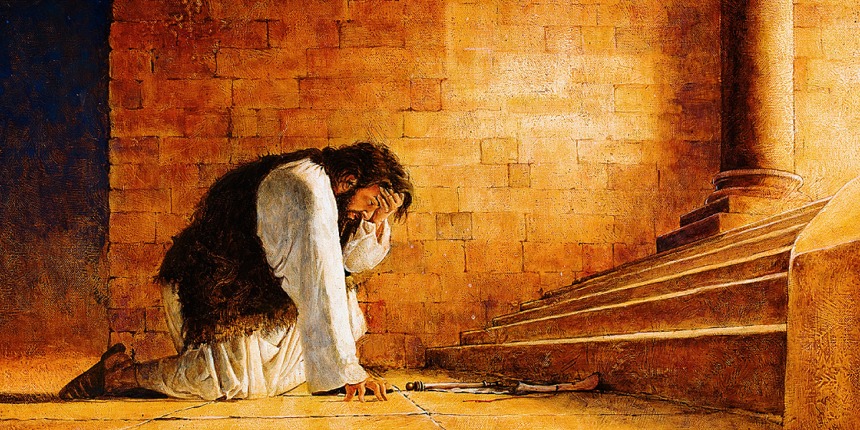
Faith in the Face of Fear

1 As soon as King Hezekiah heard it, he tore his clothes and covered himself with sackcloth and went into the house of the LORD. And he sent Eliakim, who was over the household, and Shebna the secretary, and the senior priests, covered with sackcloth, to the prophet Isaiah the son of Amoz. They said to him, “Thus says Hezekiah, This day is a day of distress, of rebuke, and of disgrace; children have come to the point of birth, and there is no strength to bring them forth. It may be that the LORD your God heard all the words of the Rabshakeh, whom his master the king of Assyria has sent to mock the living God, and will rebuke the words that the LORD your God has heard; therefore lift up your prayer for the remnant that is left.” When the servants of King Hezekiah came to Isaiah, Isaiah said to them, “Say to your master, ‘Thus says the LORD: Do not be afraid because of the words that you have heard, with which the servants of the king of Assyria have reviled me. Behold, I will put a spirit in him, so that he shall hear a rumor and return to his own land, and I will make him fall by the sword in his own land.’”

The Rabshakeh returned, and found the king of Assyria fighting against Libnah, for he heard that the king had left Lachish. Now the king heard concerning Tirhakah king of Cush, “Behold, he has set out to fight against you.” So he sent messengers again to Hezekiah, saying, 10 “Thus shall you speak to Hezekiah king of Judah: ‘Do not let your God in whom you trust deceive you by promising that Jerusalem will not be given into the hand of the king of Assyria. 11 Behold, you have heard what the kings of Assyria have done to all lands, devoting them to destruction. And shall you be delivered? 12 Have the gods of the nations delivered them, the nations that my fathers destroyed, Gozan, Haran, Rezeph, and the people of Eden who were in Telassar? 13 Where is the king of Hamath, the king of Arpad, the king of the city of Sepharvaim, the king of Hena, or the king of Ivvah?’”

14 Hezekiah received the letter from the hand of the messengers and read it; and Hezekiah went up to the house of the LORD and spread it before the LORD. 15 And Hezekiah prayed before the LORD and said: “O Lord, the God of Israel, enthroned above the cherubim, you are the God, you alone, of all the kingdoms of the earth; you have made heaven and earth. 16 Incline your ear, O LORD, and hear; open your eyes, O LORD, and see; and hear the words of Sennacherib, which he has sent to mock the living God. 17 Truly, O LORD, the kings of Assyria have laid waste the nations and their lands 18 and have cast their gods into the fire, for they were not gods, but the work of men’s hands, wood and stone. Therefore they were destroyed. 19 So now, O LORD our God, save us, please, from his hand, that all the kingdoms of the earth may know that you, O LORD, are God alone.” 2 Kings 19:1-19 ESV

When King Hezekiah’s three emissaries returned with the report of all that the Rabshakeh had said, he was overwhelmed with grief. The self-absorbed and overly confident commander of Sennacherib’s army had ridiculed Hezekiah for placing any hope of rescue in Egypt. He warned that Pharaoh would prove to be an unreliable source of help against the much larger and better-equipped Assyrian army. And Sennacherib’s cocky commander scoffed at any notion that the God of Judah would come to their aid. Speaking on behalf of his equally arrogant king, the Rabshakeh had boldly declared, “What god of any nation has ever been able to save its people from my power? So what makes you think that the LORD can rescue Jerusalem from me?” (2 Kings 18:35 NLT).

Demoralized by this devastating news, King Hezekiah immediately entered into a state of mourning and sought refuge and solace in the house of God. From there, he sent a message to the prophet Isaiah.

“Today is a day of trouble, insults, and disgrace. It is like when a child is ready to be born, but the mother has no strength to deliver the baby. But perhaps the LORD your God has heard the Assyrian chief of staff, sent by the king to defy the living God, and will punish him for his words. Oh, pray for those of us who are left!” – 2 Kings 19:3-4 NLT

These were dark days for the nation of Judah, but Hezekiah held out hope that Yahweh would still come to their aid. From his vantage point within the walls of God’s house, Hezekiah must have recalled the prayer that Solomon had offered up to God when he had dedicated the newly constructed temple.

“If your people Israel are defeated by their enemies because they have sinned against you, and if they turn to you and acknowledge your name and pray to you here in this Temple, then hear from heaven and forgive the sin of your people Israel and return them to this land you gave their ancestors.” – 1 Kings 8:33-34 NLT

While Judah had not yet been defeated by the Assyrians, things were not looking good. Their massive army was camped outside the eastern walls, and Hezekiah knew it was just a matter of time before the siege brought Jerusalem to its knees. But he still held out hope and turned to the prophet of God, begging him to seek Yahweh’s divine assistance. The message he received from Isaiah must have sounded far-fetched and too good to be true.

“This is what the LORD says: Do not be disturbed by this blasphemous speech against me from the Assyrian king’s messengers. Listen! I myself will move against him, and the king will receive a message that he is needed at home. So he will return to his land, where I will have him killed with a sword.’” – 2 Kings 19:6-7 NLT

Yahweh wanted Hezekiah to know that He had heard every boastful and blasphemous word the Rabshakeh had said. Isaiah assured Hezekiah that he had nothing to fear because God had something in store for Sennacherib that would throw a major wrench into his global conquest plans. The great king of Assyria would suddenly find himself facing unexpected attacks on several fronts that would eventually force him to abandon his siege of Jerusalem. And the author reveals that Yahweh’s promise was fulfilled.

Soon afterward King Sennacherib received word that King Tirhakah of Ethiopia was leading an army to fight against him. Before leaving to meet the attack, he sent messengers back to Hezekiah in Jerusalem – 2 Kings 19:9 NLT

IT didn’t take Yahweh long to set in motion His plans to distract Sennacherib from his assault on Judah. But while Sennacherib was forced to reallocate his forces to other battlefronts, he was not going to give up on his plan to conquer Jerusalem. So, he sent another message to King Hezekiah, demanding that he give up his Don Quixote-like quest for divine rescue. Sennacherib treated the God of Judah with contempt, declaring that He would prove just as powerless as all the other gods of all the other nations that had fallen to the Assyrians.

In a sense, Sennacherib was establishing himself as more powerful than all the gods. His success had gone to his head, further inflating his already swollen ego and causing him to have dangerous delusions of grandeur. Sennacherib warned Hezekiah that trusting in his God would prove futile; a painful lesson learned by every other king of every other nation that had tried to stand up to the Assyrian juggernaut.

“You know perfectly well what the kings of Assyria have done wherever they have gone. They have completely destroyed everyone who stood in their way! Why should you be any different? Have the gods of other nations rescued them…” – 2 Kings 19:11-12 NLT

Sennacherib was the latest in a long line of Assyrian kings who had defeated the gods and the armies of their enemies. This included Shalmaneser IV, who had initiated the three-year siege of Samaria, and Sargon II, who finally conquered the northern kingdom of Israel in 722 B.C. From Sennacherib’s perspective, his predecessors had easily vanquished the false gods of the Israelites, and he would do the same to Yahweh, the God of Judah.

But Hezekiah refused to give up hope. After receiving Sennacherib’s latest letter containing his final ultimatum, Hezekiah entered the Temple of Yahweh and placed it before the LORD. He began his prayer, “O LORD, God of Israel, you are enthroned between the mighty cherubim! You alone are God of all the kingdoms of the earth. You alone created the heavens and the earth. Bend down, O LORD, and listen! Open your eyes, O LORD, and see! Listen to Sennacherib’s words of defiance against the living God” (2 Kings 19:15-16 NLT). 

Like most prayers prayed by God’s anxious children, this one was informative in nature. Hezekiah presented Sennacherib’s letter to Yahweh like evidence before a judge in a trial. But Yahweh wasn’t uninformed or unaware of what was going on. The sovereign God of the universe didn’t need Hezekiah to bring Him up to speed on the latest news in Judah. He was well aware and already had a plan in place that would put Sennacherib in his place and save Judah from destruction. 

Yahweh didn’t need Hezekiah’s help to stay abreast of the situation in Jerusalem. What He needed was Hezekiah’s faith, and the beleaguered king didn’t disappoint. As Hezekiah continued to pray, he reminded Yahweh that all the other gods had failed because they were nothing more than the figments of man’s fertile imagination.

“…they have thrown the gods of these nations into the fire and burned them. But of course the Assyrians could destroy them! They were not gods at all—only idols of wood and stone shaped by human hands.” – 2 Kings 19:18 NLT

Hezekiah knew that Yahweh was the living and all-powerful creator God who had made the heavens and the earth. He was seated on His throne in heaven and fully capable of dealing with King Sennacherib and his seemingly unstoppable army. Despite the armies camped outside the walls of Jerusalem and the famine taking place inside, Hezekiah placed His trust in Yahweh and called on Him to intervene and demonstrate His sovereign power by rescuing His chosen people. He believed the one true God could do what the false gods had failed to do: deliver Judah from the hands of Sennacherib. His faith in Yahweh led Hezekiah to confidently pray, “all the kingdoms of the earth will know that you alone, O LORD, are God.” (2 Kings 19:19 NLT). 

English Standard Version (ESV) The Holy Bible, English Standard Version. ESV® Permanent Text Edition® (2016). Copyright © 2001 by Crossway Bibles, a publishing ministry of Good News Publishers.

New Living Translation (NLT) Holy Bible, New Living Translation, copyright © 1996, 2004, 2015 by Tyndale House Foundation. Used by permission of Tyndale House Publishers Inc., Carol Stream, Illinois 60188. All rights reserved.

When Zealousness Becomes Dangerous

1 Now Ahab had seventy sons in Samaria. So Jehu wrote letters and sent them to Samaria, to the rulers of the city, to the elders, and to the guardians of the sons of Ahab, saying, “Now then, as soon as this letter comes to you, seeing your master’s sons are with you, and there are with you chariots and horses, fortified cities also, and weapons, select the best and fittest of your master’s sons and set him on his father’s throne and fight for your master’s house.” But they were exceedingly afraid and said, “Behold, the two kings could not stand before him. How then can we stand?” So he who was over the palace, and he who was over the city, together with the elders and the guardians, sent to Jehu, saying, “We are your servants, and we will do all that you tell us. We will not make anyone king. Do whatever is good in your eyes.” Then he wrote to them a second letter, saying, “If you are on my side, and if you are ready to obey me, take the heads of your master’s sons and come to me at Jezreel tomorrow at this time.” Now the king’s sons, seventy persons, were with the great men of the city, who were bringing them up. And as soon as the letter came to them, they took the king’s sons and slaughtered them, seventy persons, and put their heads in baskets and sent them to him at Jezreel. When the messenger came and told him, “They have brought the heads of the king’s sons,” he said, “Lay them in two heaps at the entrance of the gate until the morning.” Then in the morning, when he went out, he stood and said to all the people, “You are innocent. It was I who conspired against my master and killed him, but who struck down all these? 10 Know then that there shall fall to the earth nothing of the word of the LORD, which the LORD spoke concerning the house of Ahab, for the LORD has done what he said by his servant Elijah.” 11 So Jehu struck down all who remained of the house of Ahab in Jezreel, all his great men and his close friends and his priests, until he left him none remaining.

12 Then he set out and went to Samaria. On the way, when he was at Beth-eked of the Shepherds, 13 Jehu met the relatives of Ahaziah king of Judah, and he said, “Who are you?” And they answered, “We are the relatives of Ahaziah, and we came down to visit the royal princes and the sons of the queen mother.” 14 He said, “Take them alive.” And they took them alive and slaughtered them at the pit of Beth-eked, forty-two persons, and he spared none of them.

15 And when he departed from there, he met Jehonadab the son of Rechab coming to meet him. And he greeted him and said to him, “Is your heart true to my heart as mine is to yours?” And Jehonadab answered, “It is.” Jehu said, “If it is, give me your hand.” So he gave him his hand. And Jehu took him up with him into the chariot. 16 And he said, “Come with me, and see my zeal for the LORD.” So he had him ride in his chariot. 17 And when he came to Samaria, he struck down all who remained to Ahab in Samaria, till he had wiped them out, according to the word of the LORD that he spoke to Elijah. 2 Kings 10:1-17 ESV

Jehu was methodical and ruthless in carrying out God’s judgment against the house of Ahab. After killing King Jehoram and ordering the execution of the queen-mother, Jezebel, he turned his attention to Ahab’s 70 male descendants. Jehu knew that as long as any of them remained alive, his hopes of consolidating the kingdom under his rule would be in jeopardy. These boys and young men were under the care and protection of royal guardians who served in Ahab’s administration. More than likely, these protectors of the royal protégés answered to Jezebel. But now that she was out of the picture, Jehu issued a challenge to these custodians of Ahab’s dynasty.

“…select the best qualified of your master’s sons to be your king, and prepare to fight for Ahab’s dynasty.” – 2 Kings 10:3 NLT

Jehu proposed that they do battle for control of the kingdom. He and his allies would go up against Ahab’s chosen heir and the forces of Israel, and whoever was left standing would become the next king of the northern kingdom. But his offer was quickly rejected. The elders and officials of Samaria recognized that Jehu had the upper hand and any attempt to defeat him in battle would be ill-advised and ill-fated.

So, these men informed Jehu that they had no intentions of protecting or promoting the heirs of Ahab. So, he demanded that they prove their loyalty by beheading all 70 of Ahab’s sons. The next day, the elders and officials of Samaria showed up in Jezreel and presented to Jehu their rather macabre coronation gift. He ordered that the 70 heads be placed in two piles beside the city gate, as a gruesome reminder of God’s divine judgment against the house of Ahab. No one who entered or exited the city of Jezreel could miss the message this hideous sight was meant to convey.

But the next morning, Jehu called the nervous citizens of Jezreel together. These people were caught in the middle of a violent, deadly transition of power. For more than 30 years, they had lived under the rule of Ahab and Jezebel, but almost overnight, their way of life had come to an abrupt end. They had witnessed the assassination of their king, the violent death of his mother, and the annihilation of every living male heir to the throne. They had no way of knowing what kind of king Jehu would be. So, in an effort to assuage their fear and apprehension, Jehu took full responsibility for the death of King Jehoram but then vowed that he would avenge the deaths of Ahab’s sons. This somewhat disingenuous display of righteous indignation was intended to win over the hearts of the people. But he failed to admit that he had been the one who ordered their executions. In his zeal to carry out God’s command, Jehu overstepped his authority. Rather than simply punishing the house of Ahab as God had ordered, Jehu used his newfound power to enact a bloody purging that spread far beyond his original assignment.

Jehu killed all who were left of Ahab’s relatives living in Jezreel and all his important officials, his personal friends, and his priests. So Ahab was left without a single survivor. – 2 Kings 10:11 NLT

We are not told the motivation behind Jehu’s actions, but we are given God’s response. In the book of Hosea, God provides a glimpse into His displeasure with Jehu’s overzealous and bloody purge. In the book’s opening verses, the prophet Hosea has just discovered that he is a new father. His wife, Gomer, a former prostitute, has given birth to a son. And God tells Hosea to name the boy Jezreel.

And the LORD said, “Name the child Jezreel, for I am about to punish King Jehu’s dynasty to avenge the murders he committed at Jezreel. In fact, I will bring an end to Israel’s independence. I will break its military power in the Jezreel Valley.” – Hosea 1:4-5 NLT

The entire book of Hosea is meant to display Israel’s unfaithfulness through the relationship between the prophet and his unfaithful wife. The name given to their son was meant to be a permanent reminder of Jehu’s ungodly actions that day in Jezreel. He had decided to do God’s will his way. By taking the lives of the elders and officials of Samaria, Jehu had overstepped his God-given authority. He had exceeded his role as an instrument of God’s judgment against the house of Ahab. As a result, innocent people died unnecessarily, and he would pay for his costly mistake.

In a sense, Jehu was obedient to God’s command. He had been anointed by the prophet of God and given the task of eliminating the house of Ahab, and he did as he had been told. He killed King Jehoram. He ordered the death of Jezebel. He orchestrated the executions of all of Ahab’s heirs. He had even taken it upon himself to kill King Ahaziah of Judah because he was the grandson of Jezebel. The tentacles of Jezebel’s influence had reached all the way into the southern kingdom, infecting Judah and its people.

At one point, Jehu had an unexpected encounter with some of Jezebel’s royal relatives from Judah. Unaware of all that had transpired in Israel, they were on their way to visit the queen-mother. But when Jehu discovered their identity, he ordered their immediate executions.

“We are relatives of King Ahaziah. We are going to visit the sons of King Ahab and the sons of the queen mother.”

“Take them alive!” Jehu shouted to his men. And they captured all forty-two of them and killed them at the well of Beth-eked. None of them escaped. – 2 Kings 10:14 NLT

His determination to eliminate every last vestige of Ahab’s influence was comprehensive and commendable; he left no stone unturned. This dedicated servant of God did what he had been anointed to do.

…he struck down all who remained to Ahab in Samaria, till he had wiped them out, according to the word of the LORD that he spoke to Elijah. – 2 Kings 10:17 ESV

But in carrying out God’s will, he had gone above and beyond his official commission, ordering the deaths of the innocent. While Jehu could justify his actions by claiming that the elders and officials had murdered the sons of Ahab, they had only done so because he had given them no other choice. Jehu had delegated to these men a responsibility that had been given to him alone. It was he who should have taken the lives of the 70 sons of Ahab. It had been his job to execute Jezebel. But he had ordered her death by commanding her servants to throw her down from the window of the palace. Jehu had used his newfound power and authority in ways God had not ordered or ordained, choosing to accomplish God’s will in his own way. And no amount of zeal, enthusiasm, or good intentions can justify disobedience.

Hundreds of years later, the apostle Paul would commend the nation of Israel for its enthusiasm toward the things of God. But he would also point out that their zeal was misplaced and misdirected. In their energetic effort to please God, they were actually living in disobedience to His will and in violation of His ways.

I know what enthusiasm they have for God, but it is misdirected zeal. For they don’t understand God’s way of making people right with himself. Refusing to accept God’s way, they cling to their own way of getting right with God by trying to keep the law. – Romans 10:2-3 NLT

Zeal is never an excuse for disobedience, and zealousness can become dangerous when carried out in opposition to God’s will. Doing the right thing in the wrong way or with the wrong motivation will never produce godly results. In his overzealous desire to establish and protect his fledgling reign, Jehu had gone too far. The newly crowned king’s misdirected zeal damaged Yahweh’s reputation, painting Him as a capricious and callous deity who approved of the slaughter of innocents. Jehu’s self-promoting additions to God’s original assignment were unwarranted and unnecessary. But his newfound power had gone to his head, causing him to overstep his God-ordained commission; to the detriment of Yahweh’s reputation and the well-being of the people of Israel.

English Standard Version (ESV) The Holy Bible, English Standard Version. ESV® Permanent Text Edition® (2016). Copyright © 2001 by Crossway Bibles, a publishing ministry of Good News Publishers.

New Living Translation (NLT) Holy Bible, New Living Translation, copyright © 1996, 2004, 2015 by Tyndale House Foundation. Used by permission of Tyndale House Publishers Inc., Carol Stream, Illinois 60188. All rights reserved.

Out With the Old

14 Thus Jehu the son of Jehoshaphat the son of Nimshi conspired against Joram. (Now Joram with all Israel had been on guard at Ramoth-gilead against Hazael king of Syria, 15 but King Joram had returned to be healed in Jezreel of the wounds that the Syrians had given him, when he fought with Hazael king of Syria.) So Jehu said, “If this is your decision, then let no one slip out of the city to go and tell the news in Jezreel.” 16 Then Jehu mounted his chariot and went to Jezreel, for Joram lay there. And Ahaziah king of Judah had come down to visit Joram.

17 Now the watchman was standing on the tower in Jezreel, and he saw the company of Jehu as he came and said, “I see a company.” And Joram said, “Take a horseman and send to meet them, and let him say, ‘Is it peace?’” 18 So a man on horseback went to meet him and said, “Thus says the king, ‘Is it peace?’” And Jehu said, “What do you have to do with peace? Turn around and ride behind me.” And the watchman reported, saying, “The messenger reached them, but he is not coming back.” 19 Then he sent out a second horseman, who came to them and said, “Thus the king has said, ‘Is it peace?’” And Jehu answered, “What do you have to do with peace? Turn around and ride behind me.” 20 Again the watchman reported, “He reached them, but he is not coming back. And the driving is like the driving of Jehu the son of Nimshi, for he drives furiously.”

21 Joram said, “Make ready.” And they made ready his chariot. Then Joram king of Israel and Ahaziah king of Judah set out, each in his chariot, and went to meet Jehu, and met him at the property of Naboth the Jezreelite. 22 And when Joram saw Jehu, he said, “Is it peace, Jehu?” He answered, “What peace can there be, so long as the whorings and the sorceries of your mother Jezebel are so many?” 23 Then Joram reined about and fled, saying to Ahaziah, “Treachery, O Ahaziah!” 24 And Jehu drew his bow with his full strength, and shot Joram between the shoulders, so that the arrow pierced his heart, and he sank in his chariot. 25 Jehu said to Bidkar his aide, “Take him up and throw him on the plot of ground belonging to Naboth the Jezreelite. For remember, when you and I rode side by side behind Ahab his father, how the LORD made this pronouncement against him: 26 ‘As surely as I saw yesterday the blood of Naboth and the blood of his sons—declares the LORD—I will repay you on this plot of ground.’ Now therefore take him up and throw him on the plot of ground, in accordance with the word of the LORD.”

27 When Ahaziah the king of Judah saw this, he fled in the direction of Beth-haggan. And Jehu pursued him and said, “Shoot him also.” And they shot him in the chariot at the ascent of Gur, which is by Ibleam. And he fled to Megiddo and died there. 28 His servants carried him in a chariot to Jerusalem, and buried him in his tomb with his fathers in the city of David.

29 In the eleventh year of Joram the son of Ahab, Ahaziah began to reign over Judah. 2 Kings 9:14-29 ESV

Once Jehu received the news that he was to be the next king of Israel, he wasted no time. Immediately after his anointing by the prophet of God, he departed Ramoth-gilead. He headed straight to the winter palace in Jezreel, where King Jehoram was recovering from the injuries he had suffered in his battle against the Syrians.

Jehu had the full support of his fellow generals, so he ordered them to secure the city of Ramoth-gilead and prevent anyone from escaping and leaking his plans to King Jehoram. Jehu mounted his chariot and, accompanied by a contingent of loyal troops, he made his way to Jezreel. Guards posted at the city’s watchtower spotted them at a distance and notified King Jehoram. Assuming it was his own troops returning from the battle against the Syrians, he sent out a messenger to meet them, anxious to know the outcome of the conflict. When the messenger rode out to greet the returning soldiers, he asked, “Is it peace?” But Jehu gave him a somewhat cryptic answer and commanded him to ride along with him to the city.

After sending out a second messenger who failed to return, Jehoram became even more anxious to know what had happened. So, despite his wounds, he ordered his chariot and rode out to meet the returning troops. He was accompanied by King Ahaziah of Judah, who had come to visit him as he recuperated in Jezreel. When the two kings intercepted Jehu, Jehoram asked him, “Is it peace?” But Jehu’s response was not what he had been expecting.

“How can there be peace as long as the idolatry and witchcraft of your mother, Jezebel, are all around us?” – 2 Kings 9:22 NLT

Jehu called out King Jehoram, accusing him of allowing his mother, Jezebel, to lead the nation of Israel into apostasy with her idolatry and witchcraft. Though Ahab was long gone, Jezebel still continued to wield a powerful and deadly influence over Israel. Not only had she promoted the worship of false gods, but she had also introduced occult practices that included the use of sorcery and incantations. And God had declared these things to be off-limits for the people of Israel.

“There shall not be found among you anyone who burns his son or his daughter as an offering, anyone who practices divination or tells fortunes or interprets omens, or a sorcerer or a charmer or a medium or a necromancer or one who inquires of the dead, for whoever does these things is an abomination to the LORD.” – Deuteronomy 18:10-12 ESV

Jehu’s mention of Jezebel indicates that he understood just how decisive her role had been in leading the nation away from Yahweh. Any attempt he made to eradicate the evil influence of Ahab and his descendants would have to include her. As long as Jezebel remained alive, the nation would never recover from its state of spiritual apathy and apostasy.

Suddenly, aware that his life was in danger, King Jehoram ordered his chariot driver to make a hasty retreat to the safety of the city. But they never made it. Jehu killed the escaping king with a well-placed arrow in his back. Then he ordered that Jehoram’s body be dumped on the land that used to belong to Naboth. This brings the story full circle, linking the sins of Ahab with those of his son, Jehoram. In 1 Kings 21, Jezebel had arranged to illegally confiscate Naboth’s vineyard so she could give it to Ahab. She had Naboth falsely accused and convicted of cursing God and the king. The result was that the innocent man was stoned to death on his very own land. Yahweh warned King Ahab, “In the place where dogs licked up the blood of Naboth shall dogs lick your own blood” (1 Kings 21:20 ESV). And he had pronounced a similar fate for Jezebel because of her role in the affair.

“The dogs shall eat Jezebel within the walls of Jezreel.” – 1 Kings 21:23 ESV

But Ahab had eventually repented of his role in Naboth’s death and, as a result, God chose to spare him.

“Because he has humbled himself before me, I will not bring the disaster in his days; but in his son’s days I will bring the disaster upon his house.” – 1 Kings 21:29 ESV

Now, years later, God was fulfilling His promise to bring disaster upon the house of Ahab. The blood of Jehoram, the son of Ahab and Jezebel, would be poured out on the very same spot where Naboth had been stoned to death. Jehu, who had served as one of King Ahab’s generals, was familiar with the whole sordid affair concerning Naboth. He had even been present when God issued His divine judgment against Ahab through the prophet Elijah.

“Take him up and throw him on the plot of ground belonging to Naboth the Jezreelite. For remember, when you and I rode side by side behind Ahab his father, how the LORD made this pronouncement against him: ‘As surely as I saw yesterday the blood of Naboth and the blood of his sons—declares the LORD—I will repay you on this plot of ground.’ Now therefore take him up and throw him on the plot of ground, in accordance with the word of the LORD.” – 2 Kings 9:25-26 ESV

In all of this, Jehu was acting as God’s hand of judgment against the house of Ahab. He had been anointed by God to deliver divine justice and cleanse the nation of Israel from the pervasive and pernicious influence of Ahab and Jezebel. God had had enough. The time had come to fulfill His pronouncement of judgment against the house of Ahab.

“Behold, I will bring disaster upon you. I will utterly burn you up, and will cut off from Ahab every male, bond or free, in Israel. And I will make your house like the house of Jeroboam the son of Nebat, and like the house of Baasha the son of Ahijah, for the anger to which you have provoked me, and because you have made Israel to sin.” – 1 Kings 21:21-22 ESV

The purge had begun. God was cleaning house. And even King Ahaziah of Judah would not escape the purifying judgment of the Almighty. As he attempted to escape, he was struck by an arrow and only made it as far as Megiddo before he died from his wound. Ahaziah had close familial ties to the house of Ahab. His mother, Athaliah, was the granddaughter of King Omri of Israel, and Ahaziah had married one of Ahab’s daughters.

He also walked in the way of the house of Ahab and did what was evil in the sight of the Lord, as the house of Ahab had done, for he was son-in-law to the house of Ahab. – 2 Kings 8:27 ESV

He was an unwise and wicked king who had aligned himself with one of the most infamous royal families in Israel’s sordid history, and he paid for his mistake with his life.

Because of Solomon’s disobedience, God divided Israel into two kingdoms. This had been His prescribed punishment for Solomon’s foray into idolatry during the latter years of his life and reign. But the kings of Israel and Judah had decided to take matters into their own hands, attempting to realign the two nations through treaties and marital alliances. But they had neglected to fix the primary problem that had caused God to divide them in the first place: Idolatry.

God was not interested in a reunited nation that remained spiritually rebellious. So, He sent Jehu to bring an abrupt end to the man-made alliance between Israel and Judah by killing their two kings. It was time to start over. But as we will see, Jehu had one last piece of unfinished business.

English Standard Version (ESV) The Holy Bible, English Standard Version. ESV® Permanent Text Edition® (2016). Copyright © 2001 by Crossway Bibles, a publishing ministry of Good News Publishers.

New Living Translation (NLT) Holy Bible, New Living Translation, copyright © 1996, 2004, 2015 by Tyndale House Foundation. Used by permission of Tyndale House Publishers Inc., Carol Stream, Illinois 60188. All rights reserved.
Anointed to Annihilate

1 Then Elisha the prophet called one of the sons of the prophets and said to him, “Tie up your garments, and take this flask of oil in your hand, and go to Ramoth-gilead. And when you arrive, look there for Jehu the son of Jehoshaphat, son of Nimshi. And go in and have him rise from among his fellows, and lead him to an inner chamber. Then take the flask of oil and pour it on his head and say, ‘Thus says the LORD, I anoint you king over Israel.’ Then open the door and flee; do not linger.”

So the young man, the servant of the prophet, went to Ramoth-gilead. And when he came, behold, the commanders of the army were in council. And he said, “I have a word for you, O commander.” And Jehu said, “To which of us all?” And he said, “To you, O commander.” So he arose and went into the house. And the young man poured the oil on his head, saying to him, “Thus says the LORD, the God of Israel, I anoint you king over the people of the LORD, over Israel. And you shall strike down the house of Ahab your master, so that I may avenge on Jezebel the blood of my servants the prophets, and the blood of all the servants of the LORD. For the whole house of Ahab shall perish, and I will cut off from Ahab every male, bond or free, in Israel. And I will make the house of Ahab like the house of Jeroboam the son of Nebat, and like the house of Baasha the son of Ahijah. 10 And the dogs shall eat Jezebel in the territory of Jezreel, and none shall bury her.” Then he opened the door and fled.

11 When Jehu came out to the servants of his master, they said to him, “Is all well? Why did this mad fellow come to you?” And he said to them, “You know the fellow and his talk.” 12 And they said, “That is not true; tell us now.” And he said, “Thus and so he spoke to me, saying, ‘Thus says the LORD, I anoint you king over Israel.’” 13 Then in haste every man of them took his garment and put it under him on the bare steps, and they blew the trumpet and proclaimed, “Jehu is king.” 2 Kings 9:1-13 ESV

In 1 Kings 19:15-16, we have the record of God’s final commission to Elijah, in which He gave the prophet three tasks. One of them was to anoint Hazael to be the next king of Syria. A second was to anoint Jehu as king of Israel. The third was to anoint Elisha as his own successor.

Elijah followed God’s instructions regarding Elisha, and, at this point in the story, the new prophet has thoroughly established himself as Elijah’s God-ordained replacement. It would also appear that Elijah kept God’s command concerning the anointing of Hazael. In 2 Kings 8, the author revealed the morbid details concerning Hazael’s ascension to the throne of Syria. While King Ben-hadad was weak and recovering from a recent illness, Hazael murdered him by suffocating him to death with a wet sheet. And the prophet Elisha had wept when he realized the deadly consequences for Israel that would accompany this man’s rise to power.

“Because I know the evil that you will do to the people of Israel. You will set on fire their fortresses, and you will kill their young men with the sword and dash in pieces their little ones and rip open their pregnant women.” – 2 Kings 8:12 ESV

But as 2 Kings 9 opens, it becomes apparent that there was one aspect of Elijah’s assignment he had neglected to complete. Either that, or he had chosen to pass on the responsibility to his successor. Jehu had not yet been anointed King of Israel. Jehoram, the son of Ahab and Jezebel, still occupied the throne and was continuing his parents’ legacy of apostasy and unfaithfulness. But the time had come for God’s prophecy concerning Ahab and his descendants to be fulfilled. He had warned Ahab that his stubborn determination to lead the people of Israel into idolatry would not go unpunished.

“So now the LORD says, ‘I will bring disaster on you and consume you. I will destroy every one of your male descendants, slave and free alike, anywhere in Israel! I am going to destroy your family as I did the family of Jeroboam son of Nebat and the family of Baasha son of Ahijah, for you have made me very angry and have led Israel into sin.’” – 1 Kings 21:21-22 NLT

God had used the prophet Elijah to deliver this message of impending destruction. He was not going to allow Ahab and Jezebel to go unpunished for their blatant disregard for His law or their arrogant dismissal of His sovereignty over Israel. God would do to them what He had done to Jeroboam and Baasha by completely wiping out their hopes for establishing a dynasty by destroying all their male descendants.  When considering the curse God leveled against Ahab, it is essential to compare it with the promise God made to King David.

“When your days are fulfilled and you lie down with your fathers, I will raise up your offspring after you, who shall come from your body, and I will establish his kingdom. He shall build a house for my name, and I will establish the throne of his kingdom forever. I will be to him a father, and he shall be to me a son. When he commits iniquity, I will discipline him with the rod of men, with the stripes of the sons of men, but my steadfast love will not depart from him, as I took it from Saul, whom I put away from before you. And your house and your kingdom shall be made sure forever before me. Your throne shall be established forever.’” – 2 Samuel 7:12-16 ESV

While Ahab, Jeroboam, and Baasha would see their dreams of establishing long-lasting dynasties come to an end, God promised David that his house and throne would endure forever. And God would fulfill this promise through the southern kingdom of Judah. Even though most of the kings who eventually ruled over Judah proved to be just as godless and wicked as the northern kings, God would keep His promise to secure the Davidic dynasty. And, as the New Testament reveals, He would do so through Jesus Christ, a descendant of David and the Messiah of Israel.

But God had something far less glorious in store for King Jehoram of Israel. As he sat in his summer palace in Jezreel, he had no idea that God was about to remove him from power and bring his father’s wicked legacy to an abrupt and permanent end.

Once again, it appears that Elijah never completed his assignment to anoint Jehu as the next king of Israel. So, Elisha was left with the responsibility of finalizing God’s three-part anointing plan. But even Elisha seems to have delegated this final job to an underling. He selected one of the prophets and gave him precise instructions: “Take this flask of olive oil with you. Go to Ramoth-gilead, and find Jehu son of Jehoshaphat, son of Nimshi. Call him into a private room away from his friends, and pour the oil over his head. Say to him, ‘This is what the LORD says: I anoint you to be the king over Israel.’ Then open the door and run for your life!” (2 Kings 9:1-3 NLT). That last sentence could not have left the young prophet feeling confident and encouraged as he made his way to Ramoth-gilead.

But even though Elijah passed the buck to Elisha, who in turn reassigned the responsibility to someone else, God’s will would be done. This young prophet, flask in hand, would be used to anoint Jehu as the divine instrument of God’s wrath against Ahab and his descendants.

When the prophet arrived in Ramoth-gilead, he found Jehu in a meeting with his fellow generals. He summoned Jehu into a private room, where he poured the oil on his head and informed the surprised general of his new position and commission.

“This is what the LORD, the God of Israel, says: I anoint you king over the LORD’s people, Israel. You are to destroy the family of Ahab, your master. In this way, I will avenge the murder of my prophets and all the LORD’s servants who were killed by Jezebel. The entire family of Ahab must be wiped out. I will destroy every one of his male descendants, slave and free alike, anywhere in Israel.” – 2 Kings 9:6-8 NLT

All of this was unexpected news to Jehu. There is no indication that he had been plotting Jehoram’s death and his own ascension to the throne. But the shocking news of his kingship had to have been overshadowed by the clear conditions associated with it. He was to completely wipe out every last male descendant of Ahab. Not only that, he was to see to it that Jezebel met her end as well.

Dogs will eat Ahab’s wife Jezebel at the plot of land in Jezreel, and no one will bury her.” – 2 Kings 9:10 NLT

God was commanding Jehu to launch an insurrection against the king and his family. As Jehu sat with oil running down his head and the prophet’s words racing through his brain, the king’s generals waited with curiosity on the other side of the door. Having completed his assignment, the prophet fled for his life, leaving Jehu to rejoin his fellow generals and face their questions about what had just happened. Despite the oil dripping from his head, he attempted to downplay his encounter with the prophet. But they sensed he was hiding something and pressed him for details.

Wisely choosing not to divulge all the specifics of his conversation with the prophet, Jehu simply stated, “He said to me, ‘This is what the LORD says: I have anointed you to be king over Israel’” (2 Kings 9:12 NLT). And, much to his relief and surprise, the reaction he received from his peers was positive and encouraging. 

Then they quickly spread out their cloaks on the bare steps and blew the ram’s horn, shouting, “Jehu is king!” – 2 Kings 9:13 NLT

His fellow generals declared their overwhelming support of his anointing as the next king of Israel. Of course, they weren’t aware of the second half of the prophet’s message concerning the complete annihilation of Ahab’s family. But at this point, they were entirely on board with Jehoram’s removal and Jehu’s rise to power. Some of their enthusiasm could have been the result of the king’s recent defeat against the Syrians at Ramoth-gilead. Jehoram had been wounded in the battle and was recuperating at Jezreel. These generals may have lost confidence in Jehoram’s leadership and welcomed the idea of a king with a military background. The Syrians remained a threat to the nation, and Jehoram had proven himself to be a less-than-reliable commander-in-chief.

But, as always, this was the sovereign hand of God orchestrating every single detail of the storyline so that His divine will might be accomplished. He had pledged to destroy Ahab’s dynasty, and now He was about to implement His plan to bring it about. And that plan would include Jehu, who found himself in the unexpected but vital role of the LORD’s anointed. Jehu had not earned the right to be the next king of Israel; God had sovereignly chosen him to be an instrument of judgment against the descendants of Ahab.

It is interesting to note that Jehu’s name means “Yahweh is He.” This obscure general had no track record of faithfulness to Yahweh, but as the prophet Samuel learned when he was looking for God’s replacement for King Saul, “The LORD doesn’t see things the way you see them. People judge by outward appearance, but the LORD looks at the heart” (1 Samuel 16:7 NLT). Yahweh was intimately aware of Jehu’s heart and knew he was the perfect man to carry out His plan of judgment against Ahab, Jezebel, and their descendants. As the next chapter will reveal, Jehu proved to be the right choice for the job because he carried out Yahweh’s will and set in motion a series of aggressive efforts to eradicate Baal worship from the land of Israel. 

Jehu destroyed every trace of Baal worship from Israel.2 Kings 10:28 NLT

Yahweh would use Jehu to remove the wicked influence of Jezebel and her false god, but his reformation efforts would be insufficient. As the next chapter reveals, “He did not, however, destroy the gold calves at Bethel and Dan, with which Jeroboam son of Nebat had caused Israel to sin” (2 Kings 10:29 NLT). Despite his radical reforms, the nation of Israel would remain apostate and idolatrous. But Yahweh would use this flawed and far-from-faithful man to accomplish His sovereign vow to repay Ahab for his wickedness.

English Standard Version (ESV) The Holy Bible, English Standard Version. ESV® Permanent Text Edition® (2016). Copyright © 2001 by Crossway Bibles, a publishing ministry of Good News Publishers.

New Living Translation (NLT) Holy Bible, New Living Translation, copyright © 1996, 2004, 2015 by Tyndale House Foundation. Used by permission of Tyndale House Publishers Inc., Carol Stream, Illinois 60188. All rights reserved.
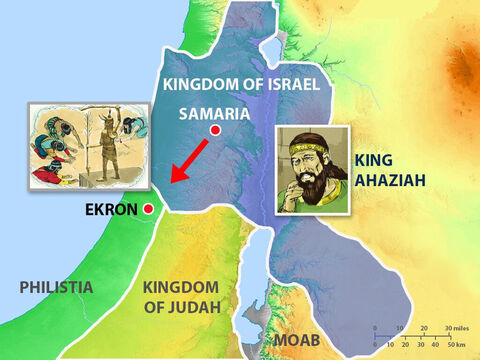
Yahweh Reigns

16 In the fifth year of Joram the son of Ahab, king of Israel, when Jehoshaphat was king of Judah, Jehoram the son of Jehoshaphat, king of Judah, began to reign. 17 He was thirty-two years old when he became king, and he reigned eight years in Jerusalem. 18 And he walked in the way of the kings of Israel, as the house of Ahab had done, for the daughter of Ahab was his wife. And he did what was evil in the sight of the LORD. 19 Yet the LORD was not willing to destroy Judah, for the sake of David his servant, since he promised to give a lamp to him and to his sons forever.

20 In his days Edom revolted from the rule of Judah and set up a king of their own. 21 Then Joram passed over to Zair with all his chariots and rose by night, and he and his chariot commanders struck the Edomites who had surrounded him, but his army fled home. 22 So Edom revolted from the rule of Judah to this day. Then Libnah revolted at the same time. 23 Now the rest of the acts of Joram, and all that he did, are they not written in the Book of the Chronicles of the Kings of Judah? 24 So Joram slept with his fathers and was buried with his fathers in the city of David, and Ahaziah his son reigned in his place.

25 In the twelfth year of Joram the son of Ahab, king of Israel, Ahaziah the son of Jehoram, king of Judah, began to reign. 26 Ahaziah was twenty-two years old when he began to reign, and he reigned one year in Jerusalem. His mother’s name was Athaliah; she was a granddaughter of Omri king of Israel. 27 He also walked in the way of the house of Ahab and did what was evil in the sight of the LORD, as the house of Ahab had done, for he was son-in-law to the house of Ahab.

28 He went with Joram the son of Ahab to make war against Hazael king of Syria at Ramoth-gilead, and the Syrians wounded Joram. 29 And King Joram returned to be healed in Jezreel of the wounds that the Syrians had given him at Ramah, when he fought against Hazael king of Syria. And Ahaziah the son of Jehoram king of Judah went down to see Joram the son of Ahab in Jezreel, because he was sick. 2 Kings 8:16-29 ESV

At this point in the narrative, the author provides a brief summary of the dynastic legacies of the two divided kingdoms. While much of his time has been spent on the interactions between the two prophets of God and the kings of Israel, he now provides an overview of the most recent lines of succession in both kingdoms.

Given the extended emphasis he has placed on the northern kingdom of Israel, the author seems compelled to step back and revisit the complex, overlapping nature of the two kingly lines. In 1 Kings 15, Jehoshaphat, the king of Judah, was first introduced. He had succeeded his father, Asa, to the throne. But from 1 Kings 16 to 2 Kings 8, the vast majority of the content focuses on the northern kingdom of Israel, detailing King Ahab’s rise to power, his wicked reign, and the long line of kings who followed him. However, the author wants his readers to know that things had not fared any better in the southern kingdom. While Jehoram ruled in Israel, a young man with the same name reigned in Judah. He was the son of Jehoshaphat, and he served for five years as his father’s coregent. He would rule for an additional eight years once the crown was his alone, but his reign would be marked by apostasy, just like the wicked kings of Israel.

Jehoram followed the example of the kings of Israel and was as wicked as King Ahab, for he had married one of Ahab’s daughters. So Jehoram did what was evil in the Lord’s sight. – 2 Kings 8:18 NLT

Jehoram had married into the ungodly and wicked family of King Ahab, taking as his wife Athaliah, a young woman who would prove to be just as evil as her mother, Jezebel. In fact, 2 Kings 11 will chronicle how she rose to power, crowning herself queen of Judah after slaughtering all her sons, who were legitimate heirs to the throne.

This woman had a powerful influence over Jehoram. His less-than-stellar choice of a marriage partner contributed to the downward spiral of his reign. Yet the author reminds his readers that a greater power was at work behind the scenes. Despite Jehoram’s wickedness and his stubborn refusal to honor the God of Abraham, Isaac, and Jacob, Yahweh was keeping the promise He had made to King David.

Yet the LORD was not willing to destroy Judah, for the sake of David his servant, since he promised to give a lamp to him and to his sons forever. – 2 Kings 8:19 ESV

Yahweh was faithfully preserving the line of David, not because they deserved it, but because He had a much longer-term plan to fulfill. That is what He had told David long before Solomon succeeded him to the throne.

“When your days are fulfilled and you lie down with your fathers, I will raise up your offspring after you, who shall come from your body, and I will establish his kingdom. He shall build a house for my name, and I will establish the throne of his kingdom forever. I will be to him a father, and he shall be to me a son. When he commits iniquity, I will discipline him with the rod of men, with the stripes of the sons of men, but my steadfast love will not depart from him, as I took it from Saul, whom I put away from before you. And your house and your kingdom shall be made sure forever before me. Your throne shall be established forever.” – 2 Samuel 7:12-16 ESV

This promise was partially fulfilled in Solomon, who would later build the temple of God in Jerusalem. But while he was blessed by God with great wisdom and wealth, in his later years, he proved to be unfaithful, succumbing to the influence of his many pagan wives and their false gods. It was because of his apostasy that God eventually split his kingdom in two, creating the northern kingdom of Israel and leaving Solomon’s son, Rehoboam, as king over the southern kingdom of Judah.

With each successive king of Judah, the problem seemed to worsen. Now Jehoram was king over Judah, and his apostasy deserved God’s divine judgment. But rather than destroy Jehoram, God graciously disciplined him by causing the neighboring nations of Edom and Libnah to revolt. His entire reign would be marked by warfare.

And the LORD stirred up against Jehoram the anger of the Philistines and of the Arabians who are near the Ethiopians. And they came up against Judah and invaded it and carried away all the possessions they found that belonged to the king’s house, and also his sons and his wives, so that no son was left to him except Jehoahaz, his youngest son. – 2 Chronicles 21:16-17 ESV

His final days in office would be excruciatingly painful due to a divinely ordained disease that eventually took his life.

…after all this the LORD struck him in his bowels with an incurable disease. In the course of time, at the end of two years, his bowels came out because of the disease, and he died in great agony. – 2 Chronicles 21:18-19 ESV

Upon his death, his son, Ahaziah, ascended to the throne. This 21-year-old king proved to be just as wicked as his father. “He also walked in the way of the house of Ahab and did what was evil in the sight of the Lord, as the house of Ahab had done” (2 Kings 8:27 ESV). But this should come as no surprise because he was the grandson of Ahab. Wickedness was in his DNA. The fact that his mother was Ahab’s daughter ensured that Ahaziah maintained a close, and ultimately deadly, relationship with the northern kingdom. He would join King Jehoram of Israel in an ill-fated attack on the Syrian stronghold of Ramoth-gilead. King Jehoram was eventually wounded in that battle and forced to return to Jezreel to recuperate. King Ahaziah would make a fateful decision to visit his uncle, but little did he know that this was part of God’s providential plan to bring an end to his wicked reign.

But it was ordained by God that the downfall of Ahaziah should come about through his going to visit Joram. – 2 Chronicles 22:7 ESV

God was in control. The kings of Israel and Judah could sit on their royal thrones, issue decrees, flaunt their power, and revel in their sovereign authority, but they were no match for Yahweh. Ultimately, their wickedness would come head-to-head with His holiness. Their rebellion would result in His judgment, because the sovereign will of Yahweh cannot be avoided or thwarted.

English Standard Version (ESV) The Holy Bible, English Standard Version. ESV® Permanent Text Edition® (2016). Copyright © 2001 by Crossway Bibles, a publishing ministry of Good News Publishers.

New Living Translation (NLT) Holy Bible, New Living Translation, copyright © 1996, 2004, 2015 by Tyndale House Foundation. Used by permission of Tyndale House Publishers Inc., Carol Stream, Illinois 60188. All rights reserved.
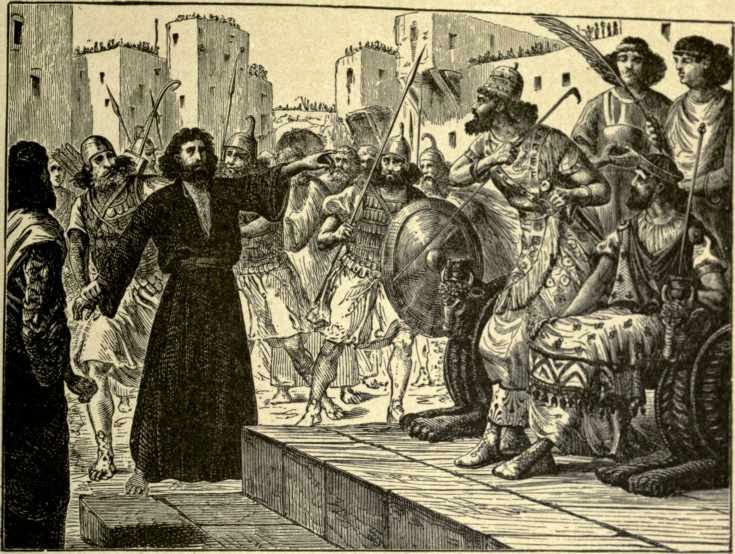
You Can Run, But You Can’t Hide

1 After the death of Ahab, Moab rebelled against Israel.

Now Ahaziah fell through the lattice in his upper chamber in Samaria, and lay sick; so he sent messengers, telling them, “Go, inquire of Baal-zebub, the god of Ekron, whether I shall recover from this sickness.” But the angel of the LORD said to Elijah the Tishbite, “Arise, go up to meet the messengers of the king of Samaria, and say to them, ‘Is it because there is no God in Israel that you are going to inquire of Baal-zebub, the god of Ekron? Now therefore thus says the LORD, You shall not come down from the bed to which you have gone up, but you shall surely die.’” So Elijah went.

The messengers returned to the king, and he said to them, “Why have you returned?” And they said to him, “There came a man to meet us, and said to us, ‘Go back to the king who sent you, and say to him, Thus says the LORD, Is it because there is no God in Israel that you are sending to inquire of Baal-zebub, the god of Ekron? Therefore you shall not come down from the bed to which you have gone up, but you shall surely die.’” He said to them, “What kind of man was he who came to meet you and told you these things?” They answered him, “He wore a garment of hair, with a belt of leather about his waist.” And he said, “It is Elijah the Tishbite.”

Then the king sent to him a captain of fifty men with his fifty. He went up to Elijah, who was sitting on the top of a hill, and said to him, “O man of God, the king says, ‘Come down.’” 10 But Elijah answered the captain of fifty, “If I am a man of God, let fire come down from heaven and consume you and your fifty.” Then fire came down from heaven and consumed him and his fifty.

11 Again the king sent to him another captain of fifty men with his fifty. And he answered and said to him, “O man of God, this is the king’s order, ‘Come down quickly!’” 12 But Elijah answered them, “If I am a man of God, let fire come down from heaven and consume you and your fifty.” Then the fire of God came down from heaven and consumed him and his fifty.

13 Again the king sent the captain of a third fifty with his fifty. And the third captain of fifty went up and came and fell on his knees before Elijah and entreated him, “O man of God, please let my life, and the life of these fifty servants of yours, be precious in your sight. 14 Behold, fire came down from heaven and consumed the two former captains of fifty men with their fifties, but now let my life be precious in your sight.” 15 Then the angel of the LORD said to Elijah, “Go down with him; do not be afraid of him.” So he arose and went down with him to the king 16 and said to him, “Thus says the LORD, ‘Because you have sent messengers to inquire of Baal-zebub, the god of Ekron—is it because there is no God in Israel to inquire of his word?—therefore you shall not come down from the bed to which you have gone up, but you shall surely die.’”

17 So he died according to the word of the LORD that Elijah had spoken. Jehoram became king in his place in the second year of Jehoram the son of Jehoshaphat, king of Judah, because Ahaziah had no son. 18 Now the rest of the acts of Ahaziah that he did, are they not written in the Book of the Chronicles of the Kings of Israel? 2 Kings 1:1-18 ESV

The Book of 2 Kings continues the chronicle of the kings of Judah and Israel. With Ahab’s death, his son Ahaziah ascended to the throne, and he proved to be cut from the same cloth. “He did what was evil in the sight of the Lord and walked in the way of his father and in the way of his mother…” (1 Kings 22:52 ESV). In other words, he was just as immoral and spiritually bankrupt as every other king who had ruled over the northern kingdom. He not only inherited his father’s kingdom but also his predilection for false gods.  “He served Baal and worshiped him and provoked the LORD, the God of Israel, to anger in every way that his father had done” (1 Kings 22:53 ESV). And, as the opening chapter of 2 Kings reveals, his penchant for idolatry would prove to be his undoing.

But before the author reveals the fate of Ahaziah, he opens the second half of his history of the kings of Israel and Judah with a somewhat parenthetical statement: “After the death of Ahab, Moab rebelled against Israel” (2 Kings 1:1 ESV). It seems that Ahab had been extracting a sizeable annual tribute from the Moabites, literally fleecing his smaller neighbor to the east. But upon Ahab’s death, King Mesha put an end to these debilitating payments. 

Now Mesha king of Moab was a sheep breeder, and he had to deliver to the king of Israel 100,000 lambs and the wool of 100,000 rams. But when Ahab died, the king of Moab rebelled against the king of Israel. – 2 Kings 3:4-5 ESV

Before the very outset of his reign, Ahaziah would find himself having to deal with the sins of his father. Ahab had been a harsh and uncaring king who made a lot of enemies along the way, and Ahaziah would have his hands full trying to manage the royal mess his father had left him.

But before Ahaziah had a chance to deal with the rebellious Moabites, he suffered a life-threatening fall that left him confined to his bed in the royal palace in Samaria. His injuries were severe enough that he was concerned about whether he would fully recover. So, he sent messengers to the temple of Baal-zebub, the god of Ekron, seeking a divine prediction concerning his fate. It had been Ahaziah’s parents who had introduced Baal worship to Israel, and he proved to be a faithful adherent to their false religion. In his time of suffering, he sought the counsel of Baal rather than Yahweh, the covenant God of Israel. While Baal worship was rampant throughout the northern kingdom, Ahaziah sent his messengers to Ekron, which was located on Israel’s eastern border with Philistia. Ekron was a renowned occult center, and it was far enough away from Samaria that the news of the king’s injuries might be kept a secret.

However, Ahaziah’s messengers never reached Ekron. They were met along the way by Elijah, the prophet of Yahweh. Ahab’s old nemesis appears on the scene once again, but this time, he has bad news for Ahab’s son. Elijah had received instructions from Yahweh, commanding him to intercept the king’s messengers and inform them of their master’s fate. Ahaziah was hoping to hear a positive word from Baal, but instead, he would receive bad news from the God of Israel.

“Is there no God in Israel? Why are you going to Baal-zebub, the god of Ekron, to ask whether the king will recover? Now, therefore, this is what the LORD says: You will never leave the bed you are lying on; you will surely die.” – 2 Kings 1:3-4 NLT

There is a hint of sarcasm in this message. Yahweh is chiding Ahaziah for sending his messengers all the way to Ekron to seek a word from his false god. Baal worship was rampant within the nation of Israel. There were shrines and high places dedicated to Baal and Asherah all over the northern kingdom. In fact, Ahaziah had access to a Baal temple that his father had built in the capital city of Samaria.

He [Ahab] erected an altar for Baal in the house of Baal, which he built in Samaria. – 1 Kings 15:32 ESV

And there were literally hundreds of priests and prophets who served on behalf of Baal. Yet, Ahaziah had sent his messengers on a field trip all the way to Ekron in hopes of hearing something from his god. Perhaps he had started his search for an answer at the local temple, but had come up empty-handed. This could have led him to his “long-distance-call” to Ekron.

When Ahaziah heard the less-than-positive pronouncement his messengers delivered, he grew suspicious. This was not the news he had been expecting. So, he asked for a description of the man who had predicted his pending death. As soon as he heard what the man looked like, his suspicions were confirmed; it was Elijah the Tishbite. As the son of Ahab and Jezebel, Ahaziah would have grown up hearing the stories of Elijah and his defeat of the prophets of Baal on Mount Carmel. He would have been very familiar with his mother’s intense hatred for this prophet of Yahweh. The ongoing battle of words and will between his father and Elijah would have taken place right in front of him. So, when he discovered that Elijah had once again interjected himself into Israel’s affairs, he sent guards to arrest him. But, just like the messengers he had sent to Ekron, the guards never made it to their destination.

As visible proof of his role as a spokesman for Yahweh, Elijah called down fire from heaven that wiped out all 50 men, including their captain. But this display of power made no impression on the stubborn and unrepentant Ahaziah. He simply sent another 50 guards who suffered the very same fate. The third commander recognized the divine nature of Elijah’s role and wisely chose to beg for mercy.

“O man of God, please spare my life and the lives of these, your fifty servants. See how the fire from heaven came down and destroyed the first two groups. But now please spare my life!” – 2 Kings 1:13-14 NLT

The angel of God intervened, instructing Elijah to spare the lives of these men and accompany them back to Samaria. When he arrived in the capital city, Elijah reiterated his earlier message, but this time, directly to Ahaziah. He confirmed that the king would not recover from his injuries. Ahaziah’s stubborn refusal to seek God even in his time of greatest need would come with a death sentence. His unjustified yet unwavering allegiance to Baal had sealed his fate. As always, the words of Elijah proved to be true.

So Ahaziah died, just as the LORD had promised through Elijah. – 2 Kings 1:17 NLT

Yet another king of Israel met an untimely but well-deserved end. The legacy of unfaithfulness, begun by Jeroboam, had been passed down from generation to generation, infecting each successive king and bringing the just and righteous judgment of God upon them. And because Ahaziah had no male heir to whom he could leave the throne, his brother Jehoram became king of Israel.

Ahaziah, like his predecessors, failed to recognize Yahweh as the one true God. He acted as if Yahweh no longer existed in Israel. But he had been proven wrong. Yahweh was still alive and well, and His power was undiminished. While Ahaziah refused to seek Yahweh’s face, he could not escape Yahweh’s sovereign will. The God of Israel could be ignored, but He would not go away.

Ahaziah had made the fateful mistake of rejecting the one true God. Like his father, Ahaziah had stubbornly refused to acknowledge the supremacy of Yahweh, choosing instead to act as if the God of Israel was non-existent and powerless. But as King David declared in one of his psalms, only a fool would dare deny Yahweh’s existence.

Only fools say in their hearts,
    “There is no God.”
They are corrupt, and their actions are evil;
    not one of them does good!

The LORD looks down from heaven
    on the entire human race;
he looks to see if anyone is truly wise,
    if anyone seeks God.
But no, all have turned away;
    all have become corrupt.
No one does good,
    not a single one!

Will those who do evil never learn?
    They eat up my people like bread
    and wouldn’t think of praying to the Lord.
Terror will grip them,
    for God is with those who obey him.
The wicked frustrate the plans of the oppressed,
    but the LORD will protect his people. – Psalm 14:1-6 NLT

Ahaziah tried to pretend that Yahweh didn’t exist, but he paid for his folly with his life.

English Standard Version (ESV) The Holy Bible, English Standard Version. ESV® Permanent Text Edition® (2016). Copyright © 2001 by Crossway Bibles, a publishing ministry of Good News Publishers.

New Living Translation (NLT) Holy Bible, New Living Translation, copyright © 1996, 2004, 2015 by Tyndale House Foundation. Used by permission of Tyndale House Publishers Inc., Carol Stream, Illinois 60188. All rights reserved.

Failure to Feed the Flock of God

15 And when he had come to the king, the king said to him, “Micaiah, shall we go to Ramoth-gilead to battle, or shall we refrain?” And he answered him, “Go up and triumph; the LORD will give it into the hand of the king.” 16 But the king said to him, “How many times shall I make you swear that you speak to me nothing but the truth in the name of the LORD?” 17 And he said, “I saw all Israel scattered on the mountains, as sheep that have no shepherd. And the LORD said, ‘These have no master; let each return to his home in peace.’” 18 And the king of Israel said to Jehoshaphat, “Did I not tell you that he would not prophesy good concerning me, but evil?” 19 And Micaiah said, “Therefore hear the word of the LORD: I saw the LORD sitting on his throne, and all the host of heaven standing beside him on his right hand and on his left; 20 and the LORD said, ‘Who will entice Ahab, that he may go up and fall at Ramoth-gilead?’ And one said one thing, and another said another. 21 Then a spirit came forward and stood before the LORD, saying, ‘I will entice him.’ 22 And the LORD said to him, ‘By what means?’ And he said, ‘I will go out, and will be a lying spirit in the mouth of all his prophets.’ And he said, ‘You are to entice him, and you shall succeed; go out and do so.’ 23 Now therefore behold, the LORD has put a lying spirit in the mouth of all these your prophets; the LORD has declared disaster for you.”

24 Then Zedekiah the son of Chenaanah came near and struck Micaiah on the cheek and said, “How did the Spirit of the LORD go from me to speak to you?” 25 And Micaiah said, “Behold, you shall see on that day when you go into an inner chamber to hide yourself.” 26 And the king of Israel said, “Seize Micaiah, and take him back to Amon the governor of the city and to Joash the king’s son, 27 and say, ‘Thus says the king, “Put this fellow in prison and feed him meager rations of bread and water, until I come in peace.”’” 28 And Micaiah said, “If you return in peace, the LORD has not spoken by me.” And he said, “Hear, all you peoples!” 1 Kings 22:15-28 ESV

Imagine the scene. Micaiah, the prophet, has been forcibly dragged before King Ahab, who is seated on the dais with his guest, King Jehoshaphat of Judah. Surrounding the two potentates are 400 prophets of Baal, each taking turns declaring their version of the truth. For hours, they have been telling King Ahab exactly what he wants to hear: “Go up to Ramoth-gilead and triumph; the LORD will give it into the hand of the king” (1 Kings 22:12 ESV). One of them, a man named Zedekiah, had even crafted a pair of iron horns and used them as a prop to support his message to the king: “Thus says the LORD, ‘With these you shall push the Syrians until they are destroyed’” (1 Kings 22:11 ESV).

Then Micaiah shows up. Unlike the 400 yes-men who have been masquerading as spokesmen for the false god, Baal, Micaiah was a prophet of Yahweh. As such, he was obligated to speak only those words given to him by God. Which is precisely what Micaiah told the man who had come to fetch him.

As the LORD lives, what the LORD says to me, that I will speak.” – 1 Kings 22:14 ESV

Yet, when King Ahab asked Micaiah to reveal what his God thought about the planned attack of Ramoth-gilead, Micaiah simply repeated the words of the false prophets. He basically told the king, “Go for it!” But Ahab sensed the thinly veiled sarcasm behind Micaiah’s answer and demanded that he tell him the truth. Ahab knew from past experience that Micaiah and his God would oppose his plans. He had even revealed to King Jehoshaphat just how much he loathed Micaiah, telling him, “He never prophesies anything but trouble for me!” (1 Kings 22:8 NLT).

Micaiah knew that it really didn’t matter what he told Ahab, because the king would do as he wanted. Ahab’s stubbornness and arrogance would prevent him from hearing and heeding the message of Yahweh. But Micaiah shared it anyway.

“In a vision I saw all Israel scattered on the mountains, like sheep without a shepherd. And the LORD said, ‘Their master has been killed. Send them home in peace.’” – 1 Kings 22:17 NLT

Ahab was infuriated because Micaiah had just predicted Israel’s defeat and the king’s own death. But this less-than-encouraging message was just what Ahab had expected from the prophet of Yahweh. Just like Elijah, Micaiah proved to be a messenger of doom and gloom, bent on delivering nothing but bad news concerning Ahab’s kingly aspirations.

But Micaiah was not done. He next revealed how God had chosen to implement His plan for Ahab’s demise.

“Listen to what the LORD says! I saw the LORD sitting on his throne with all the armies of heaven around him, on his right and on his left. And the LORD said, ‘Who can entice Ahab to go into battle against Ramoth-gilead so he can be killed?’

“There were many suggestions, and finally a spirit approached the LORD and said, ‘I can do it!’

“‘How will you do this?’ the LORD asked.

“And the spirit replied, ‘I will go out and inspire all of Ahab’s prophets to speak lies.’

“‘You will succeed,’ said the LORD. ‘Go ahead and do it.’” – 1 Kings 22:19-22 NLT

Micaiah was given a vision of a conversation that took place in the throne room of God Almighty. In the vision, Yahweh is portrayed as a king surrounded by his advisors and his army. He is soliciting input from the heavenly host, asking for their counsel on the best way to get Ahab to proceed with his attack on Ramoth-gilead, which will result in his death. A spirit speaks up and offers to deceive the prophets of Baal by giving them a false message of victory. God approves the plan and sends the spirit on its way. Then Micaiah informs Ahab that this is precisely what has happened.

“So you see, the LORD has put a lying spirit in the mouths of all your prophets. For the LORD has pronounced your doom.” – 1 Kings 22:23 NLT

Amazingly, Micaiah tells Ahab the stark reality of all that had just transpired. The 400 prophets had unwittingly declared a lie, enticing Ahab to proceed with his plan to attack Ramoth-gilead and, inadvertently, bringing about his own demise. The identity of this “lying spirit” is unclear. Some view this as an angelic being who visited the king’s prophets and gave them a false message to deliver to the king. Others have determined this to have been a demonic spirit or Satan himself. But the text only indicates that this spirit was authorized by Yahweh to deceive the pseudo-prophets with a false message that would entice Ahab to attack Ramoth-gilead. Their answer, influenced by the spirit sent by Yahweh, was consistent and convincing.

“Yes, go right ahead! The LORD will give the king victory.” – 1 Kings 22:6 NLT 

Yet, even when Micaiah disclosed the truth to Ahab, the king stubbornly refused to give up his plan. He ordered Micaiah’s arrest and imprisonment and commanded that he be given nothing but bread and water until he had returned safely from his battle for Ramoth-gilead. But before being hauled off to prison, Micaiah made one final pronouncement to the king and all those who stood within earshot.

“If you return safely, it will mean that the LORD has not spoken through me!” Then he added to those standing around, “Everyone mark my words!” – 1 Kings 22:28 NLT

The problem with Ahab was not just his stubbornness and idolatry; it was his refusal to shepherd the people of Israel. All his self-centered acts of self-promotion had done irreparable damage to the nation of Israel. He had led the people into apostasy and idolatry, and, as a king over God’s chosen people, he would be held responsible for his failure to care for Yahweh’s flock. Hundreds of years later, the prophet Ezekiel would declare a foreboding message from God concerning all those kings who, like Ahab, had left the people of God like sheep without a shepherd.

Then this message came to me from the LORD: “Son of man, prophesy against the shepherds, the leaders of Israel. Give them this message from the Sovereign LORD: What sorrow awaits you shepherds who feed yourselves instead of your flocks. Shouldn’t shepherds feed their sheep? You drink the milk, wear the wool, and butcher the best animals, but you let your flocks starve. You have not taken care of the weak. You have not tended the sick or bound up the injured. You have not gone looking for those who have wandered away and are lost. Instead, you have ruled them with harshness and cruelty. So my sheep have been scattered without a shepherd, and they are easy prey for any wild animal. They have wandered through all the mountains and all the hills, across the face of the earth, yet no one has gone to search for them.” – Ezekiel 34:1-6 NLT

This motif of shepherdless sheep dates back to the time of Moses. When the great deliverer of Israel was nearing the end of his life, he appealed to God, asking Him to provide the people of Israel with a new shepherd.

Then Moses said to the LORD, “O LORD, you are the God who gives breath to all creatures. Please appoint a new man as leader for the community. Give them someone who will guide them wherever they go and will lead them into battle, so the community of the LORD will not be like sheep without a shepherd.” – Numbers 27:15-17 NLT

Centuries later, long after Ahab had died, Jesus appeared on the scene, offering His own assessment of the spiritual state of the people of Israel.

Jesus traveled through all the towns and villages of that area, teaching in the synagogues and announcing the Good News about the Kingdom. And he healed every kind of disease and illness. When he saw the crowds, he had compassion on them because they were confused and helpless, like sheep without a shepherd. – Matthew 9:35-36 NLT

The Good Shepherd couldn’t help but look at His own people and see them as shepherdless sheep, wandering about confused and helpless. For centuries, they had been misled and mistreated. Their political and spiritual leaders had used and abused them. Those who should have been feeding and caring for them had ended up taking advantage of them, following the example of Ahab. But Jesus arrived on the scene as the Son of David, emulating the example of the man after God’s own heart. Jesus was the quintessential shepherd, the Good Shepherd, who would lay down His life for the sheep. Jesus would shepherd the flock of God with care and compassion, just as His forefather did.

He [Gpd] chose David his servant
    and took him from the sheepfolds;
from following the nursing ewes he brought him
    to shepherd Jacob his people,
    Israel his inheritance.
With upright heart he shepherded them
    and guided them with his skillful hand. – Psalm 78:70-72 ESV

At the end of the day, Ahab’s most significant problem was that he was a lousy shepherd. His chief sin was that he had failed to care for God’s flock and had made his own needs a higher priority than the needs of the people. Like most of the kings of Israel and Judah, Ahab had abused his divinely ordained power and position, and he would have to answer to the Great Shepherd of Israel. But despite Ahab’s egocentric ambitions and his physical and spiritual mistreatment of those whom God had placed under his care, Yahweh would personally ensure that His chosen people received the care and compassion He had promised them.

He will feed his flock like a shepherd. He will carry the lambs in his arms, holding them close to his heart. He will gently lead the mother sheep with their young. – Isaiah 40:11 NLT

English Standard Version (ESV) The Holy Bible, English Standard Version. ESV® Permanent Text Edition® (2016). Copyright © 2001 by Crossway Bibles, a publishing ministry of Good News Publishers.

New Living Translation (NLT) Holy Bible, New Living Translation, copyright © 1996, 2004, 2015 by Tyndale House Foundation. Used by permission of Tyndale House Publishers Inc., Carol Stream, Illinois 60188. All rights reserved.