Spiritual Complacency Can Lead to Apostasy

1 Therefore let us leave the elementary doctrine of Christ and go on to maturity, not laying again a foundation of repentance from dead works and of faith toward God, 2 and of instruction about washings, the laying on of hands, the resurrection of the dead, and eternal judgment. 3 And this we will do if God permits. 4 For it is impossible, in the case of those who have once been enlightened, who have tasted the heavenly gift, and have shared in the Holy Spirit, 5 and have tasted the goodness of the word of God and the powers of the age to come, 6 and then have fallen away, to restore them again to repentance, since they are crucifying once again the Son of God to their own harm and holding him up to contempt. 7 For land that has drunk the rain that often falls on it, and produces a crop useful to those for whose sake it is cultivated, receives a blessing from God. 8 But if it bears thorns and thistles, it is worthless and near to being cursed, and its end is to be burned.

9 Though we speak in this way, yet in your case, beloved, we feel sure of better things—things that belong to salvation. 10 For God is not unjust so as to overlook your work and the love that you have shown for his name in serving the saints, as you still do. 11 And we desire each one of you to show the same earnestness to have the full assurance of hope until the end, 12 so that you may not be sluggish, but imitators of those who through faith and patience inherit the promises. – Hebrews 6:1-12 ESV

Spiritual maturity is not the result of human effort, any more than our salvation was the result of anything we had done or deserved. When the writer tells us to “leave the elementary doctrine of Christ and go on to maturity,” the Greek word he uses is pherō and it has the idea of being carried along, like passengers in a boat. It is in the passive voice and so it does not convey the expenditure of effort as much as it promotes an attitude of reliance. We are to allow the Holy Spirit of God to move us by His power into further spiritual maturity.

That doesn’t diminish our responsibility or alleviate our need for effort, but it lets us know that the end result is the work of God and not man. The Holy Spirit indwells believers in order to assist them in their quest of becoming increasingly more like Christ. But clearly, there is an expectation that believers in Christ should grow up in their salvation. The recipients of this letter did not need further instructions on faith versus works or repentance from performance-based efforts to achieve a right standing with God. It was time to move on. It was time to grow up.

The author refers to washings, the laying on of hands, the resurrection of the dead, and eternal judgment. Each of these was a teaching or belief related to Judaism. They all had their counterpart in Christianity, but there was a need for the Jews to whom this letter was addressed to understand this foundational truth in a new way. Ritualistic washings, as practiced in Judaism, had been replaced by New Testament baptism – a one-time act that was symbolic in nature. The laying on of hands in Judaism was part of the sacrificial ritual, but it carried a new meaning in Christianity. The Jewish concept regarding the resurrection of the dead and eternal judgment had been expanded and carried a clearer connotation ever since Jesus’ death and resurrection. All of these doctrines, while considered elementary by the typical Jew, would have required additional insight and instruction for the believer. There was no room for resting on your laurels or relying on old truths.

The real issue here has to do with spiritual stagnancy, which can result in the believer regressing in their faith. Earlier in his letter, the author warned his readers “So we must listen very carefully to the truth we have heard, or we may drift away from it.” (Hebrews 2:1 NLT). He also told them, “Be careful then, dear brothers and sisters. Make sure that your own hearts are not evil and unbelieving, turning you away from the living God” (Hebrews 3:12 NLT).

He is clearly speaking to believers, those who had placed their faith in Jesus, but who ran the risk of regressing in their faith because they were not pressing on and moving forward spiritually. He knows the very real possibility of believers falling away and describes them as those who “have tasted the heavenly gift, and have shared in the Holy Spirit, and have tasted the goodness of the word of God and the powers of the age to come — and who then turn away from God” (Hebrews 6:4-6 NLT).

He warns that “it is impossible to bring such people back to repentance; by rejecting the Son of God, they themselves are nailing him to the cross once again and holding him up to public shame” (Hebrews 6:6 NLT). It would seem that the writer of Hebrews is dealing with extreme cases of apostasy when believers turn away from and reject Christ. He is not referring to what many of us call backsliding or periods of spiritual doubt. The seriousness of his warnings conveys the idea that he is dealing with cases of an extreme nature. His point seems to be that if you fail to grow, you will leave yourself open to apostasy. You will be vulnerable to false teaching and the possibility of turning away from the truth. This was not uncommon in the New Testament. Paul warned Timothy not to follow the example of two individuals who had wandered from the truth.

Avoid worthless, foolish talk that only leads to more godless behavior. This kind of talk spreads like cancer, as in the case of Hymenaeus and Philetus. They have left the path of truth, claiming that the resurrection of the dead has already occurred; in this way, they have turned some people away from the faith. – 2 Timothy 2:16-18 NLT

Paul also warned Timothy, “Now the Holy Spirit tells us clearly that in the last times some will turn away from the true faith; they will follow deceptive spirits and teachings that come from demons. These people are hypocrites and liars, and their consciences are dead” (1 Timothy 4:1-2 NLT). 

The author of Hebrews is legitimately concerned about the ongoing spiritual growth of his readers. Why? Because a lack of spiritual growth can have dangerous consequences. He is not saying that believers can lose their salvation. But the longer a believer wanders from the truth, the more difficult it will become for them to repent. And ultimately they will reach a point where they are living and acting as an unbeliever, and their return to Christ will appear as if His saving work was insufficient the first time. It will be like crucifying the living Lord all over again.

Apostasy makes a mockery of Christ’s sacrificial death on the cross. That is why we are commanded to grow. It is a non-optional expectation for all Christ-followers. But apostasy is the very real consequence of a life of spiritual complacency. Paul tells us that when the church is equipping its people and they are ministering to one another, the result will be the spiritual maturation of all the members. And spiritual growth serves as an antidote to apostasy and a protection against false teaching.

…we will no longer be immature like children. We won’t be tossed and blown about by every wind of new teaching. We will not be influenced when people try to trick us with lies so clever they sound like the truth. – Ephesians 4:14 NLT

According to the author of Hebrews, believers are to keep on growing in Christ-likeness, allowing the Spirit of God to use the Word of God to change them from the inside out. This divine process of transformation is meant to produce spiritual maturity and prevent spiritual complacency. But it requires the willful participation of each believer. That is why the author conveys his strong desire that each of his readers “show the same earnestness to have the full assurance of hope until the end” (Hebrews 6:11 ESV). He wanted them to remain committed to the hope found in their faith in Christ. Their eternal future was dependent upon the saving work of Jesus, not their own attempts to keep the law or practice the rites and rituals and Judaism.

When it comes to the Christian life, you are either moving forward or going backward. There is no middle ground or state of spiritual immobility. A stagnant faith is a dead faith. It lacks power and will eventually result in spiritual regression. But those believers who maintain their hope in the promises of God made possible through faith in Christ will find all the power they need to avoid spiritual complacency and the risk of apostasy.

Then you will not become spiritually dull and indifferent. Instead, you will follow the example of those who are going to inherit God’s promises because of their faith and endurance. – Hebrews 6:12 NLT

English Standard Version (ESV) The Holy Bible, English Standard Version. ESV® Permanent Text Edition® (2016). Copyright © 2001

New Living Translation (NLT) Holy Bible, New Living Translation, copyright © 1996, 2004, 2015 by Tyndale House Foundation. Used by permission of Tyndale House Publishers Inc., Carol Stream, Illinois 60188. All rights reserved.
It’s Time To Grow Up

11 About this we have much to say, and it is hard to explain, since you have become dull of hearing. 12 For though by this time you ought to be teachers, you need someone to teach you again the basic principles of the oracles of God. You need milk, not solid food, 13 for everyone who lives on milk is unskilled in the word of righteousness, since he is a child. 14 But solid food is for the mature, for those who have their powers of discernment trained by constant practice to distinguish good from evil. – Hebrews 5:11-14 ESV

The author of Hebrews admits that what he has been writing about is difficult to explain and just as difficult to understand. But it doesn’t help that his audience has “become dull of hearing.” The Greek word the author used literally means “slow” and was used in the figurative sense to refer to someone as “stupid.” The Hebrew believers to whom he wrote had become unaccustomed to hearing difficult doctrine and deeper truths.

These Christ-following Jews had begun to question their faith and were considering a return to their former way of life as Law-abiding Hebrews. But the author wants them to understand that they run the risk of abandoning the only true way of achieving a right standing with God. According to the apostle Paul, any attempt to return to a life of law-keeping would end in a curse, not righteousness.

…those who depend on the law to make them right with God are under his curse, for the Scriptures say, “Cursed is everyone who does not observe and obey all the commands that are written in God’s Book of the Law.” So it is clear that no one can be made right with God by trying to keep the law. For the Scriptures say, “It is through faith that a righteous person has life.” This way of faith is very different from the way of law, which says, “It is through obeying the law that a person has life.” – Galatians 3:10-12 NLT

…we know that a person is made right with God by faith in Jesus Christ, not by obeying the law. And we have believed in Christ Jesus, so that we might be made right with God because of our faith in Christ, not because we have obeyed the law. For no one will ever be made right with God by obeying the law. – Galatians 2:16 NLT

Righteousness cannot be earned; it must be received. It is a gift given to those who place their faith in the redemptive work that Jesus accomplished on the cross and through His resurrection. Once again, the apostle Paul, a former law-abiding Pharisee and a self-proclaimed “Hebrew of Hebrews” (Philippians 3:5) provided a stark distinction between the role of the law and the saving work of Jesus.

…no one can ever be made right with God by doing what the law commands. The law simply shows us how sinful we are.

But now God has shown us a way to be made right with him without keeping the requirements of the law, as was promised in the writings of Moses and the prophets long ago. We are made right with God by placing our faith in Jesus Christ. And this is true for everyone who believes, no matter who we are. – Romans 3:20-22 NLT

In his letter to the Hebrews, the author has been trying to remind his audience of the importance of their faith in Christ. The righteousness they had received was not available any other way. All his talk about Jesus’ sonship, deity, priesthood, suffering, sacrifice, and glory were designed to remind his readers of the righteousness that is found in Christ alone. He didn’t want them to fall back into their old habits of trying to gain a right standing with God through the keeping of the law. Their heritage as Hebrews, while a blessing, could become a curse if they let it lead them back into a works-based form of righteousness. Paul made it clear that this path was futile and a waste of time.

The law simply shows us how sinful we are. – Romans 3:20 NLT

The law could convict and condemn, but it couldn’t save because no one could keep all of God’s laws perfectly. That’s the whole reason God accompanied His law with the sacrificial system. He knew His people would fail to live up to His holy standards, so He provided them with a way of receiving forgiveness and atonement for their sins.

But the author of Hebrews knew that his readers had regressed. He told them, “you have gone back to needing milk” (Hebrews 5:12 NET). Their lack of knowledge regarding the things about which he had been writing revealed that they were “unskilled in the word of righteousness” (Hebrews 5:13 ESV). They were tempted to fall back on the old truths associated with Moses, the Law, temple worship, and all that was associated with their old way of life.

Their problem was that they had not progressed in their faith. They were like infants who had failed to move on to adolescence and were still surviving on milk rather than moving on to solid food. They had become stuck in their spiritual maturation process, remaining in a state of perpetual infancy and dependency upon “the basic principles of the oracles of God” (Hebrews 5:12 ESV). As a result, they stopped learning and growing in their faith, and their lack of progression had led to regression.

For the Christian, there really is no middle ground. You are either growing in maturity or you are regressing. These people had known the Lord long enough that they should have been ready to teach others, but instead, they were unprepared and unequipped for the job. They were stuck on the basics and were unskilled when it came to the message regarding the righteousness found in Christ alone. They knew the elementary truths of the faith, such as how one is saved, but they had failed to go deeper in their knowledge. Peter provided his readers with this word of encouragement:

Like newborn babies, you must crave pure spiritual milk so that you will grow into a full experience of salvation. Cry out for this nourishment. – 1 Peter 2:2 NLT

In his second letter, Peter writes, “you must grow in the grace and knowledge of our Lord and Savior Jesus Christ” (2 Peter 3:18 NLT). There is no place for stagnancy or complacency in the life of a believer. As we grow in Christ, we become increasingly aware of the value of the gift of righteousness we have received. We become increasingly more cognizant of our sin and just how great a salvation we have received. Spiritual growth requires spiritual food. We must develop a hunger for the deeper truths found in God’s Word and we must rely upon His Spirit to make those truths understandable and applicable to our lives. We can’t remain on spiritual pablum and expect to grow in maturity. The old adage “Jesus loves me this I know for the Bible tells me so” is true, but it is not a sufficient source of spiritual sustenance for the growing Christian.

There comes a time in all of our lives when we must become givers, not just receivers. The author of Hebrews scolded his audience, telling them, “by this time you ought to be teachers” (Hebrews 5:12 ESV), but they were still having to be spoon-fed. They had become comfortably content with their current status as believers in Christ. But one of the non-negotiable realities regarding faith in Christ is the fact that God expects His children to grow. Again, the apostle Peter provides some strong words regarding this matter.

Supplement your faith with a generous provision of moral excellence, and moral excellence with knowledge, and knowledge with self-control, and self-control with patient endurance, and patient endurance with godliness, and godliness with brotherly affection, and brotherly affection with love for everyone. The more you grow like this, the more productive and useful you will be in your knowledge of our Lord Jesus Christ. But those who fail to develop in this way are shortsighted or blind, forgetting that they have been cleansed from their old sins. – 2 Peter 1:5-9 NLT

Coming to faith in Christ should result in our growing increasingly more like Him in character. The apostle Paul told the believers in Ephesus that God had provided leaders for the church whose primary responsibility was to equip the members of the body of Christ so that they could build up one another in the faith. And then he told them…

This will continue until we all come to such unity in our faith and knowledge of God’s Son that we will be mature in the Lord, measuring up to the full and complete standard of Christ. Then we will no longer be immature like children. We won’t be tossed and blown about by every wind of new teaching. We will not be influenced when people try to trick us with lies so clever they sound like the truth. Instead, we will speak the truth in love, growing in every way more and more like Christ, who is the head of his body, the church. – Ephesians 4:13-15 NLT

Spiritual maturity is not a solo sport; it is a group activity. We grow in Christ-likeness as we share with one another, as we encourage one another, and as we use our spiritual gifts on behalf of one another. As we grow in our knowledge of God’s Word, we receive insight into His will. As we share what we are learning with others, they are encouraged and our faith is strengthened. Growth requires interaction with others. Isolation is deadly to spiritual maturity. Complacency is as well. The message of righteousness is not just that we have been made right with God through faith in Christ, but that we are being made righteous in our attitudes and actions as we grow up in our salvation and in our dependence upon the body of Christ.

English Standard Version (ESV) The Holy Bible, English Standard Version. ESV® Permanent Text Edition® (2016). Copyright © 2001

New Living Translation (NLT) Holy Bible, New Living Translation, copyright © 1996, 2004, 2015 by Tyndale House Foundation. Used by permission of Tyndale House Publishers Inc., Carol Stream, Illinois 60188. All rights reserved.

Grieving Rather Than Growing

25 Therefore, having put away falsehood, let each one of you speak the truth with his neighbor, for we are members one of another. 26 Be angry and do not sin; do not let the sun go down on your anger, 27 and give no opportunity to the devil. 28 Let the thief no longer steal, but rather let him labor, doing honest work with his own hands, so that he may have something to share with anyone in need. 29 Let no corrupting talk come out of your mouths, but only such as is good for building up, as fits the occasion, that it may give grace to those who hear. 30 And do not grieve the Holy Spirit of God, by whom you were sealed for the day of redemption. 31 Let all bitterness and wrath and anger and clamor and slander be put away from you, along with all malice. 32 Be kind to one another, tenderhearted, forgiving one another, as God in Christ forgave you. – Ephesians 4:25-32 ESV

Paul wanted the Ephesians believers to live in the present and not the past. They were to embrace their new identity in Christ and to to consider the deceptions and lies that had characterized their former lives as dead and discarded. Those things had been “put away” (apotithēmi) or “cast off,” and replaced by the truth of the gospel. And because they had been equipped by the apostles,  prophets, evangelists, pastors, and teachers God had provided, they were able to build up the body of Christ by speaking the truth in love (Ephesians 5:11-15).

As members of the body of Christ, they were to dwell together in a spirit of mutual love that was based on the reality of the life-transforming power of the indwelling Holy Spirit. Their lives were to be characterized by truth and not lies. There was no place in the family of God for deception or falsehood. Christianity was not to be a competitive sport or a comparative religion where spiritual  status was measured by merit or social standing. It was to be a community of undeserving recipients of God’s grace, who had been filled with His Spirit, and equipped with spiritual gifts intended for the good of whole body.

He makes the whole body fit together perfectly. As each part does its own special work, it helps the other parts grow, so that the whole body is healthy and growing and full of love. – Ephesians 4:16 NLT

What Paul describes in verses 25-32 is a lifestyle of radical change. The characteristics that marked their old lives were to be done away with. Lying, anger, stealing, and abusive language had no place within the body of Christ. And the Ephesians were not the only congregation to have received that message from Paul. He penned the very same sentiment to the believers in Colossae.

But now is the time to get rid of anger, rage, malicious behavior, slander, and dirty language. Don’t lie to each other, for you have stripped off your old sinful nature and all its wicked deeds. Put on your new nature, and be renewed as you learn to know your Creator and become like him. – Colossians 3:8-10 NLT

Paul used comparative language to make his point to the Ephesian church. Rather than lie, they were to tell the truth. Instead of allowing anger to consume them, they were to resolve their disagreements quickly. Those who had once made a living from theft were to earn their way and share their resources with others. Foul and hurtful language was to be replaced with words that were helpful and encouraging. Again, Paul was calling them to do an about-face, to make a radical change in their behavior that reflected the revolutionary alteration God had made to their nature.

For Paul, a believer whose life failed to reflect the change brought about by the saving work of Jesus Christ was an anomaly and an unacceptable probability. That is why he continually stressed his expectation of tangible transformation in the lives of those to whom he ministered. .

Is there any encouragement from belonging to Christ? Any comfort from his love? Any fellowship together in the Spirit? Are your hearts tender and compassionate? Then make me truly happy by agreeing wholeheartedly with each other, loving one another, and working together with one mind and purpose.

Don’t be selfish; don’t try to impress others. Be humble, thinking of others as better than yourselves. Don’t look out only for your own interests, but take an interest in others, too. – Philippians 2:1-4 NLT

According to Paul, not only would failure to experience life transformation result in a lack of fruit and effectiveness, it would also end up bringing sorrow to the Spirit of God.

…do not grieve the Holy Spirit of God, by whom you were sealed for the day of redemption. – Ephesians 4:30 ESV

One of the primary roles of the Holy Spirit is to empower and equip the believer for a life of godliness. It is the Spirit who makes possible the believer’s sanctification or growth in Christ-likeness. So, when a believer fails to experience or exhibit life change, it grieves (lypeō) or saddens the Spirit of God. His greatest desire is to continually transform the believer into the image of Christ. The Spirit is a permanent resident in the life of every believer and will accompany them all the way to their ultimate glorification. He acts as God’s seal of approval, ensuring that the believer’s future status as a citizen of the coming kingdom is assured. Or, as Paul put it to the church in Corinth, the Holy Spirit is our guarantee of all that is to come.

It is God who enables us, along with you, to stand firm for Christ. He has commissioned us, and he has identified us as his own by placing the Holy Spirit in our hearts as the first installment that guarantees everything he has promised us. – 2 Corinthians 1:21-22 NLT

…we want to put on our new bodies so that these dying bodies will be swallowed up by life. God himself has prepared us for this, and as a guarantee he has given us his Holy Spirit. – 2 Corinthians 5;4-5 NLT

And Paul shared this incredible news with the Ephesians as well.

The Spirit is God’s guarantee that he will give us the inheritance he promised and that he has purchased us to be his own people. He did this so we would praise and glorify him. – Ephesians 1:14 NLT

That’s why Paul insists that the Spirit would be grieved by their failure to submit to His  life-transforming power. While glorification is the ultimate outcome of the believer’s faith in Christ, God wants to begin the process in this life. That’s why Paul insists that their present conduct should reflect a hope in the promise of their future state. They have the Spirit of God within them and the power of God available to them. So, their lives should reflect that reality even now. Paul would have fully agreed with the words of the apostle Peter:

By his divine power, God has given us everything we need for living a godly life. We have received all of this by coming to know him, the one who called us to himself by means of his marvelous glory and excellence. – 2 Peter 1:3 NLT

English Standard Version (ESV) The Holy Bible, English Standard Version. ESV® Permanent Text Edition® (2016). Copyright © 2001 by Crossway Bibles, a publishing ministry of Good News Publishers.

New Living Translation (NLT) Holy Bible, New Living Translation, copyright © 1996, 2004, 2015 by Tyndale House Foundation. Used by permission of Tyndale House Publishers Inc., Carol Stream, Illinois 60188. All rights reserved.

New English Translation (NET)NET Bible® copyright ©1996-2017 by Biblical Studies Press, L.L.C. http://netbible.com All rights reserved.


Live Like Who You Are

17 Now this I say and testify in the Lord, that you must no longer walk as the Gentiles do, in the futility of their minds. 18 They are darkened in their understanding, alienated from the life of God because of the ignorance that is in them, due to their hardness of heart. 19 They have become callous and have given themselves up to sensuality, greedy to practice every kind of impurity. 20 But that is not the way you learned Christ!— 21 assuming that you have heard about him and were taught in him, as the truth is in Jesus, 22 to put off your old self, which belongs to your former manner of life and is corrupt through deceitful desires, 23 and to be renewed in the spirit of your minds, 24 and to put on the new self, created after the likeness of God in true righteousness and holiness. – Ephesians 4:17-24 ESV

Paul has made perfectly clear his expectation of the Ephesian believers. They were to “grow up in every way into him who is the head, into Christ” (Ephesians 4:15 ESV). He was demanding that they display the kind of maturity that accompanies faith in Christ. Through the efforts of faithful apostles, prophets, evangelists, shepherds and teachers, they had been equipped to do the work of the ministry (Ephesians 4:11). And they were to busy about “building up the body of Christ” (Ephesians 4:12 ESV), so that  each of them might increase in maturity and no longer respond like gullible and easily manipulated children.

And this led Paul to call the Ephesians to put their pasts behind them. They were no longer to live according to their former standards or reflect their old way of life.

Live no longer as the Gentiles do, for they are hopelessly confused. – Ephesians 4:17 NLT

Here, Paul is referring to those who outside the family of God. His use of the term, “Gentiles” is meant to include all those who have failed to place their faith in Christ. Many within the congregation to which Paul was writing were actually Gentiles or non-Jews. But his point was that even those who were considered Gentiles before coming to faith in Christ, were now members of God’s family. They had been adopted as His sons and daughters and were His beloved children. And, as such, they were expected to live out their new identity as rightful heirs of the kingdom of God.

Paul was declaring that their new relationship with God should reflect a new allegiance that manifested itself in a new form of behavior. And the apostle Peter promoted this radical change in lifestyle as well.

So you must live as God’s obedient children. Don’t slip back into your old ways of living to satisfy your own desires. You didn’t know any better then. But now you must be holy in everything you do, just as God who chose you is holy. – 1 Peter 1:14-15 NLT

Notice the words that Paul uses to describe their former state as non-believers: Futile, darkened, alienated, ignorant, hardhearted, callous, sensual, greedy, and impure. Not exactly a flattering list of characteristics. But Paul isn’t emphasizing visible manifestations of outward behavior. He is stressing a way of life that begins in the heart and  flows out in tangible expressions of life change.

There is a link between verse 1 and verse 17 of chapter four. In both verses, Paul uses the Greek word peripateō, which can mean “to walk” or “to live one’s life.” In verse one, Paul urged the Ephesians to “walk (peripateō) in a manner worthy of the calling to which you have been called.” Then, in verse 17, he states, “you must no longer walk (peripateō) as the Gentiles do, in the futility of their minds.”

Essentially, Paul was telling the Ephesians that it was impossible to do both at the same time. You can’t simultaneously lead a life worthy of your calling and live hopelessly confused like the Gentiles do. It had to be one way or the other, and it was time for the Ephesians to make up their mind which way would characterize their lives. There was a real temptation for those Gentiles within the church in Ephesus to fall back into their old way of living. They were constantly surrounded by friends and family members outside the body of Christ whose behavior reflected their former lifestyle. And it was very tempting to look back on their pre-conversion life and view it through rose-colored glasses. But Paul wants them to see their past as what it was: Dark and far from hopeful. He reminds them that their lost neighbors are hopeless and helpless, trapped in an endless cycle of sin with no way of escape.

Their minds are full of darkness; they wander far from the life God gives because they have closed their minds and hardened their hearts against him. They have no sense of shame. They live for lustful pleasure and eagerly practice every kind of impurity. – Ephesians 4:18-19 NLT

But the Ephesians knew better. Their eyes had been opened to the truth and their hardened hearts had been softened by the regenerating work of the Spirit of God.

…he saved us, not because of works done by us in righteousness, but according to his own mercy, by the washing of regeneration and renewal of the Holy Spirit, whom he poured out on us richly through Jesus Christ our Savior… – Titus 3:5-6 NLT

They had been transformed from sinners into saints, from enemies of God into His beloved sons and daughters. And they were no longer trapped in darkness and blinded to reality of their own sin and their desperate need for a Savior.

…he has rescued us from the kingdom of darkness and transferred us into the Kingdom of his dear Son, who purchased our freedom and forgave our sins. – Colossians 1:13-14 NLT

So, in keeping with their new status as God’s children, Paul commands them to “throw off your old sinful nature and your former way of life, which is corrupted by lust and deception” (Ephesians 4:22 NLT). They were to treat their former way of life like an old filthy garment and discard it. But removal of their old nature was not enough. It needed to be replaced with something better.

Put on your new nature, created to be like God—truly righteous and holy. – Ephesians 4:24 NLT

And Paul expands on this spiritual wardrobe change in his letter to the church in Colossae.

So put to death the sinful, earthly things lurking within you. Have nothing to do with sexual immorality, impurity, lust, and evil desires. Don’t be greedy, for a greedy person is an idolater, worshiping the things of this world. Because of these sins, the anger of God is coming. You used to do these things when your life was still part of this world. But now is the time to get rid of anger, rage, malicious behavior, slander, and dirty language.Don’t lie to each other, for you have stripped off your old sinful nature and all its wicked deeds. Put on your new nature, and be renewed as you learn to know your Creator and become like him. – Colossians 3:5-10 NLT

Out with the old, in with the new. That’s the gist of Paul is saying. The new lifestyle that God had made possible through the death, burial, and resurrection of His Son was to be far from business-as-usual. By redeeming the Ephesians believers, God had spared them from the judgment to come. Their sins had been forgiven and their eternal life had been secured for them by Christ. And the indwelling presence of the Spirit of God was meant to act as a guarantee that God’s future promises would be fulfilled just as He had said. That’s why Paul encourages the Ephesians to “let the Spirit renew your thoughts and attitudes” (Ephesians 4:23 NLT). Their ongoing transformation would be the work of the Spirit of God, not just the result of their own human effort.

When Paul speaks of putting off and putting on, he is not suggesting that the individual  believer has control over their own sanctification. He is not laying the heavy weight of spiritual maturity on the shoulders of the saints. But he is suggesting that they have a role to play. They must willingly submit to the Spirit’s leading as He lovingly guides their steps. That is why Paul used that Greek word, peripateō when addressing the believer’s relationship with the Spirit of God.

But I say, walk (peripateō) by the Spirit, and you will not gratify the desires of the flesh.   – Galatians 5:16 ESV

In other words, the believer is to live their life in accordance with the Spirit’s leading. And Paul goes on to explain how every Christian has a daily to choice to either live according to the desires of their old nature or in obedience to the Spirit of God.

The sinful nature wants to do evil, which is just the opposite of what the Spirit wants. And the Spirit gives us desires that are the opposite of what the sinful nature desires. These two forces are constantly fighting each other… – Galatians 5:17 NLT

By submitting to the Spirit, the believer experiences the ongoing renovation of their thoughts and attitudes. They see things differently. They think about things in a whole new way. Their perspective changes. Their outlook on life takes on a whole new light because they no longer live shrouded in a veil of darkness. They are new creations and they should act like. They have new natures and their lives should reflect that reality. They are sons and daughters of God and their lives should bring glory to their heavenly Father.

English Standard Version (ESV) The Holy Bible, English Standard Version. ESV® Permanent Text Edition® (2016). Copyright © 2001 by Crossway Bibles, a publishing ministry of Good News Publishers.

New Living Translation (NLT) Holy Bible, New Living Translation, copyright © 1996, 2004, 2015 by Tyndale House Foundation. Used by permission of Tyndale House Publishers Inc., Carol Stream, Illinois 60188. All rights reserved.

New English Translation (NET)NET Bible® copyright ©1996-2017 by Biblical Studies Press, L.L.C. http://netbible.com All rights reserved.


Live Like Who You Are

5 Put to death therefore what is earthly in you: sexual immorality, impurity, passion, evil desire, and covetousness, which is idolatry. 6 On account of these the wrath of God is coming. 7 In these you too once walked, when you were living in them. 8 But now you must put them all away: anger, wrath, malice, slander, and obscene talk from your mouth. 9 Do not lie to one another, seeing that you have put off the old self with its practices 10 and have put on the new self, which is being renewed in knowledge after the image of its creator. 11 Here there is not Greek and Jew, circumcised and uncircumcised, barbarian, Scythian, slave, free; but Christ is all, and in all. – Colossians 3:5-11 ESV

How were the believers in Colossae supposed to set their minds on things that are above, not on things that are on earth? Was Paul suggesting that they be so heavenly-minded that they were no earthly good? Paul has just challenged them to adopt a Christ-focused perspective that highlights the eternal aspect of their relationship with Him. Christ is seated at the right hand of His Father in heaven, and one day He will return. His presence at His Father’s side demonstrates that He successfully completed His initial earthly mission. The apostle Peter spoke of Jesus’ exaltation when he addressed the crowds at Pentecost.

“God raised Jesus from the dead, and we are all witnesses of this. Now he is exalted to the place of highest honor in heaven, at God’s right hand. And the Father, as he had promised, gave him the Holy Spirit to pour out upon us…” – Acts 2:32-33 NLT

Jesus’ death was efficacious or effective. It accomplished the will of His heavenly Father and requires no supplemental aids or add-ons to increase its efficacy. And Paul assured the believers in Rome that, because Jesus died and rose again, they would enjoy eternal life with Him.

We are sure of this because Christ was raised from the dead, and he will never die again. Death no longer has any power over him. When he died, he died once to break the power of sin. But now that he lives, he lives for the glory of God. So you also should consider yourselves to be dead to the power of sin and alive to God through Christ Jesus. – Romans 6:9-11 NLT

Paul picks up the same them with the believers in Colossae. He wants them to live according to their new status as spiritually transformed and adopted children of God. Jesus didn’t die so that they might have their best life now but so that they might enjoy glorified life forever. But Paul knew that this future-focused mindset was difficult to maintain while living in the present. That’s why he provides them with some practical guidance for navigating life in a fallen world. He is expanding the theme he began back in chapter two.

Therefore, as you received Christ Jesus the Lord, so walk in him, rooted and built up in him and established in the faith… – Colossians 2:6-7 ESV

For Paul, it was always about faith. He firmly believed and persistently taught that faith was the means by which we are saved and sanctified. And Jesus Christ is to be the sole focus of that faith. It is through Christ that we have access to the Father. It is because of Christ that we have the assurance of eternal life. It is thanks to Christ that we have the indwelling presence of the Spirit of God. And look closely at what Paul told the Roman believers: “consider yourselves to be dead to the power of sin and alive to God through Christ Jesus” (Romans 6:11 NLT).

Their union with Christ equipped them with unprecedented power to live godly lives – even in the ungodly environment of Rome. And the same thing was true for the Colossian Christians. Paul has already told them, “You have died with Christ, and he has set you free from the spiritual powers of this world. So why do you keep on following the rules of the world…” (Colossians 2:20 NLT).

Paul was constantly admonishing believers for their tendency to regress in their faith. They seemed to have no problem believing that Jesus could save them but they had difficulty trusting that He could keep them saved. So, they kept reverting to their old lifestyles based on human effort and self-righteousness.

So now that you know God (or should I say, now that God knows you), why do you want to go back again and become slaves once more to the weak and useless spiritual principles of this world? – Galatians 4:9 NLT

Paul was calling for complete separation from and dependence upon the things of this world. If Jesus was to be the believer’s sole source of salvation and sustenance, why were they continually turning to the world for satisfaction, fulfillment, significance, and hope? Their actions were in direct conflict with their calling and expressed commitment to Jesus Christ. Their behavior was not accurately reflecting their belief in a transformed life. That is why Paul demands that they do an about-face, turning their backs on their former way of life and seeking things above.

So put to death the sinful, earthly things lurking within you. Have nothing to do with sexual immorality, impurity, lust, and evil desires. Don’t be greedy, for a greedy person is an idolater, worshiping the things of this world. – Colossians 3:5 NLT

Paul was well aware of the fact that his flock in Colossae was struggling with the ongoing presence of their sinful natures. And Paul was not exempt from this internal battle between godliness and wickedness. In his letter to the Romans, he divulged his own struggle with indwelling sin.

I have discovered this principle of life—that when I want to do what is right, I inevitably do what is wrong. I love God’s law with all my heart. But there is another power within me that is at war with my mind. This power makes me a slave to the sin that is still within me. Oh, what a miserable person I am! Who will free me from this life that is dominated by sin and death? – Romans 7:21-24 NLT

But Paul answered his own pleading question, joyfully declaring, “Thank God! The answer is in Jesus Christ our Lord” (Romans 7:25 NLT). The solution to the problem of indwelling sin is Jesus. Because of Jesus, we have been given the gift of the Holy Spirit, who empowers us to say no to sin and yes to God. His divine presence provides us with all we need to put to death the sinful, earthly things lurking within us. That is why Paul told the Galatian church, “So I say, let the Holy Spirit guide your lives. Then you won’t be doing what your sinful nature craves” (Galatians 5:16 NLT). Then he went on to say, “Those who belong to Christ Jesus have nailed the passions and desires of their sinful nature to his cross and crucified them there” (Galatians 5:24 NLT).

Because of their relationship with Christ, their former sinful habits had been nailed to the cross with Him. But every believer knows how easy it is to breathe life into those old, dead habits and “resurrect” them once again. So, Paul demands that they “put to death” those things. But how? Is he suggesting that this is an ongoing, daily action? Is it the fate of every Christian to live their entire earthly life in a daily struggle to put to death sin? The answer is found in the grammar of Paul’s statement. When he states, “put to death,” he uses the Aorist Active Imperative (AAM) tense. The action described by the verb indicates that it is a past event. It has already taken place. Paul is stating that our old sinful habits have already been put to death – on the cross. So, we must constantly return them to their rightful place – on the cross. Our present action is based on a past reality.

The action Paul is commanding is to be the natural result of belief. If we truly believe that Jesus “canceled the record of the charges against us and took it away by nailing it to the cross” (Colossians 2:14 NLT), then we should confidently return those sinful habits right where they belong: to the cross. They are dead to us. They no longer possess power over us. but Paul has to remind the Colossians that their new life in Christ was meant to reflect a new way of living.

You used to do these things when your life was still part of this world. But now is the time to get rid of anger, rage, malicious behavior, slander, and dirty language. – Colossians 3:7-8 NLT

They had been cleansed by the blood of Jesus Christ. They had clothed in His righteousness. But, metaphorically,  they were constantly going back to the closet of sin and picking out old, soiled garments to wear. That’s why Paul had to remind them that they had “put off the old self with its practices” (Colossians 3:9 ESV) and had “put on the new self, which is being renewed in knowledge after the image of its creator” (Colossians 3:10 ESV). But that past action required constant repeating in the present. They were guilty of reaching back into the closet and selecting one of their old, comfortably-fitting sins to wear out in public. 

Paul is describing the ongoing nature of sanctification or spiritual growth. The Christian life is not meant to be static or stagnant. Once saved, always saved doesn’t mean that there is no ongoing transformation that takes place in the believer’s life. Peter indicates that believers are to “grow into a full experience of salvation” (1 Peter 2:2 NLT). Paul told the Ephesians that they were to be “growing in every way more and more like Christ” (Ephesians 4:15 NLT).

Growth in Christlikeness is non-optional for the believer. One of the primary roles of the Holy Spirit is to assist Christians in their knowledge of Christ and their ongoing transformation into His likeness. And this transformation is for all believers, regardless of their ethnic or cultural background. Each is to individually experience the Spirit’s transformative power so that, together, we might reflect that nature of Christ and bring glory to God the Father.

…you yourselves like living stones are being built up as a spiritual house, to be a holy priesthood, to offer spiritual sacrifices acceptable to God through Jesus Christ. – 1 Peter 2:5 ESV

English Standard Version (ESV) The Holy Bible, English Standard Version. ESV® Permanent Text Edition® (2016). Copyright © 2001 by Crossway Bibles, a publishing ministry of Good News Publishers.

New Living Translation (NLT) Holy Bible, New Living Translation, copyright © 1996, 2004, 2015 by Tyndale House Foundation. Used by permission of Tyndale House Publishers Inc., Carol Stream, Illinois 60188. All rights reserved.

New English Translation (NET)NET Bible® copyright ©1996-2017 by Biblical Studies Press, L.L.C. http://netbible.com All rights reserved.


You Can Doubt God, But Never Discount Him

1 This is now the second letter that I am writing to you, beloved. In both of them I am stirring up your sincere mind by way of reminder, 2 that you should remember the predictions of the holy prophets and the commandment of the Lord and Savior through your apostles, 3 knowing this first of all, that scoffers will come in the last days with scoffing, following their own sinful desires. 4 They will say, “Where is the promise of his coming? For ever since the fathers fell asleep, all things are continuing as they were from the beginning of creation.” 5 For they deliberately overlook this fact, that the heavens existed long ago, and the earth was formed out of water and through water by the word of God, 6 and that by means of these the world that then existed was deluged with water and perished. 7 But by the same word the heavens and earth that now exist are stored up for fire, being kept until the day of judgment and destruction of the ungodly. – 2 Peter 3:1-7 ESV

Peter feared that the “destructive heresies” (2 Peter 2:1 ESV) of the false teachers would take their toll on those who were spiritually immature. He even declared that these men “entice unsteady souls” (2 Peter 2:14 ESV) and lead them down a path of destruction. Driven by greed and the need for power and influence, these false teachers will say anything that might entrap the weak-willed and spiritually vulnerable.

With an appeal to twisted sexual desires, they lure back into sin those who have barely escaped from a lifestyle of deception. – 2 Peter 2:18 NLT

Peter seems to indicate that the ones most susceptible to these attacks will be the newly saved. They lack the spiritual maturity and strength to withstand the assaults on their faith that will come in the form of deceptively alluring lies. And, as a result, they will find themselves being lured back into their old ways of life, marked by slavery to sin rather than freedom in Christ.

…when people escape from the wickedness of the world by knowing our Lord and Savior Jesus Christ and then get tangled up and enslaved by sin again, they are worse off than before. – 2 Peter 2:20 NLT

Peter used two old and probably well-known proverbs to describe such people.

“The dog returns to its own vomit, and the sow, after washing herself, returns to wallow in the mire.” – 2 Peter 2:22 ESV

These two visual metaphors were meant to be vivid reminders of the unacceptable nature of spiritual apostasy. Peter wanted his readers to be appalled at the thought of falling away from the faith. He compared it to a dog eating its own vomit – a thoroughly disgusting image that was meant to illustrate just how unacceptable it was for a believer to become enslaved by sin again.

The author of Hebrews describes how difficult it can be for a fallen believer to return once again to faith. It is not impossible, but it is highly improbable.

For it is impossible to bring back to repentance those who were once enlightened—those who have experienced the good things of heaven and shared in the Holy Spirit, who have tasted the goodness of the word of God and the power of the age to come— and who then turn away from God. It is impossible to bring such people back to repentance; by rejecting the Son of God, they themselves are nailing him to the cross once again and holding him up to public shame. – Hebrews 6:4-6 NLT

Peter and James are not suggesting that believers who are enticed to return to their old sinful ways have lost their salvation. But they are clearly stating that it is possible for an immature Christ-follower to be lured back into their pre-conversion state of slavery to sin. The potential for “backsliding” was an ever-present reality for every follower of Christ, and this is why the apostles so strongly promoted the need for ongoing sanctification.

So put to death the sinful, earthly things lurking within you. Have nothing to do with sexual immorality, impurity, lust, and evil desires. Don’t be greedy, for a greedy person is an idolater, worshiping the things of this world. Because of these sins, the anger of God is coming. You used to do these things when your life was still part of this world. But now is the time to get rid of anger, rage, malicious behavior, slander, and dirty language. Don’t lie to each other, for you have stripped off your old sinful nature and all its wicked deeds. Put on your new nature, and be renewed as you learn to know your Creator and become like him. – Colossians 3:5-10 NLT

Failure to put off the old and put on the new would eventually result in spiritual regression, not spiritual transformation. It would be like a cleanly washed sow returning to the mud and the mire. Unaccustomed to the value of cleanliness, a pig will return to its old familiar and comfortable habits. It’s only natural. And the same thing is true of a believer who fails to supplement his faith with moral excellence, knowledge, self-control, patient endurance, godliness, brotherly affection, and love (2 Peter 1:5-7).

There is no place for complacency in the life of a believer. The Christian life is not intended to be static or stagnant. Growth is expected and intended as a sign of spiritual health and well-being. The presence of the Holy Spirit within the life of a believer is intended to result in heart transformation that produces behavior modification. But the believer who fails to make progress will eventually regress. The constant presence of their old sin nature will lead them to return to the “vomit” of their former life. And though cleansed by the blood of Jesus Christ, they will find themselves covered in the muck and mire of sin once again.

All of this is why Peter makes such a big deal out of the false teachers. He knows they will find a ready and willing audience, and he also knows that some within the congregations to whom he was writing would follow the way of the dog and the pig. So, as he opens up the next section of his letter, he reminds his readers that this is the second time he has had to write them. In his former letter, he spent a great deal of time teaching them about the difference between their current suffering and their future inheritance. He knew that they were undergoing difficult trials because of their faith in Christ. But he also knew that they could live with great expectation because they had “a priceless inheritance—an inheritance that is kept in heaven for you, pure and undefiled, beyond the reach of change and decay” (1 Peter1:4 NLT).

Peter had wanted them to know that, despite all that was happening to them in this life, they could rejoice because God had something incredible in store for them in the next life.

So be truly glad. There is wonderful joy ahead, even though you must endure many trials for a little while. These trials will show that your faith is genuine. It is being tested as fire tests and purifies gold—though your faith is far more precious than mere gold. So when your faith remains strong through many trials, it will bring you much praise and glory and honor on the day when Jesus Christ is revealed to the whole world. – 1 Peter 1:6-7 NLT

And Peter had told them that the prophets of written about this coming salvation, even though they couldn’t fully comprehend its meaning or significance.

They wondered what time or situation the Spirit of Christ within them was talking about when he told them in advance about Christ’s suffering and his great glory afterward. – 1 Peter 1:11 NLT

But their inability to understand the scope of God’s promises did nothing to invalidate the reliability of God’s word. Those men had written under the inspiration of God’s Spirit, declaring the truth concerning God’s redemptive plan – a plan that included the glorious inheritance to which Peter had referred in his first letter. That’s why Peter wrote in his second letter: “I want you to remember what the holy prophets said long ago and what our Lord and Savior commanded through your apostles” (2 Peter 3:2 NLT). He was taking them back to those promises penned by the prophets and then declared by him and his fellow apostles. Peter and his companions had come to understand that Jesus was the fulfillment of the Old Testament prophecies concerning the Messiah and that there was far more to His kingship than a temporal reign in the city of David. Jesus had come to do something far more spectacular than return Israel to power and prominence. He had come to redeem fallen mankind and to one day restore all creation to its former glory. 

And yet, there were false teachers who were questioning the truth of God’s Word as proclaimed by the prophets and contradicting the teachings the apostles had received from Christ Himself. Peter continued to warn that “in the last days scoffers will come, mocking the truth and following their own desires” (2 Peter 3:3 NLT). And he provided a specific example of how they will question the writings of the prophets and the words of the apostles. They will say:

“What happened to the promise that Jesus is coming again? From before the times of our ancestors, everything has remained the same since the world was first created.” – 2 Peter 3:4 NLT

Notice the subtlety of their line of questioning. The apostles had been teaching that the writings of the Old Testament prophets had clearly proclaimed the second coming of Jesus. But these false teachers were arguing that everything remained just as it was when those men had penned their words. Nothing had changed. Jesus had not returned and, by inference, they were suggesting that He never would. The false teachers were propagating a form of deism. They believed that God existed but that He did not involve Himself in the daily affairs of man. In their estimation, Jesus had been nothing more than a godly man whose good life could be emulated. But He had not been God in human flesh who sacrificed His life for sinful mankind.

In essence, the false teachers were accusing the apostles of lying and twisting the words of the prophets. They were suggesting that Peter and his companions had fabricated the whole God-in-human-flesh idea and had made up the story of Jesus’ resurrection. These arrogant men were denying the teachings of the apostles but, more than that, they were calling into question the veracity of God’s Word. Peter boldly declares:

They deliberately forget that God made the heavens long ago by the word of his command, and he brought the earth out from the water and surrounded it with water. Then he used the water to destroy the ancient world with a mighty flood. – 2 Peter 3:5-6 NLT

Whether they believed it or not, God had intervened in the affairs of the world before, and He would do so again. While the false teachers would go on questioning divine intervention and future judgment, it did nothing to alter the reality of either one – a point that Peter made perfectly clear.

…by the same word, the present heavens and earth have been stored up for fire. They are being kept for the day of judgment, when ungodly people will be destroyed. – 2 Peter 3:7 NLT

Just because they had not yet witnessed the second coming of Jesus did not mean it was a figment of the apostles’ imaginations. It was easy for them to point out that Jesus had not yet returned. But Peter attempted to keep their focus on the promises of God. If God said it, He could be trusted to do it. It didn’t matter whether these men believed God or not. God was not hindered by their lack of faith. He was in no way hampered by their doubts about His sovereignty and providential power. God had judged the world before and He would do so again. And, according to Peter, the false teachers were “being kept for the day of judgment, when ungodly people will be destroyed” (2 Peter 3:7 NLT).

English Standard Version (ESV) The Holy Bible, English Standard Version. ESV® Permanent Text Edition® (2016). Copyright © 2001 by Crossway Bibles, a publishing ministry of Good News Publishers.

New Living Translation (NLT) Holy Bible, New Living Translation, copyright © 1996, 2004, 2015 by Tyndale House Foundation. Used by permission of Tyndale House Publishers Inc., Carol Stream, Illinois 60188. All rights reserved.

New English Translation (NET)NET Bible® copyright ©1996-2017 by Biblical Studies Press, L.L.C. http://netbible.com All rights reserved.

Put Off and Drink Up!

1 So put away all malice and all deceit and hypocrisy and envy and all slander. 2 Like newborn infants, long for the pure spiritual milk, that by it you may grow up into salvation— 3 if indeed you have tasted that the Lord is good. – 1 Peter 2:1-3 ESV

In light of the fact that his readers had been “born again to a living hope through the resurrection of Jesus Christ from the dead” (1 Peter 1:3 ESV), and called to be holy just as God is holy (1 Peter 1:15), Peter expected them to live lives in keeping with their status as God’s chosen people. As sons and daughters of God, their behavior was to reflect the character of their Heavenly Father. God had paid an extremely high price to ransom them from the empty life they had inherited from their ancestors (1 Peter 1:18). He had sent His Son to die on their behalf. On the cross, the sinless Savior had offered up His life as the unblemished Lamb, providing them with forgiveness of sins and a guarantee of “a priceless inheritance—an inheritance that is kept in heaven for you, pure and undefiled, beyond the reach of change and decay” (1 Peter 1:4 NLT).

But the recipients of Peter’s letter were wrestling with the realities of living in a culture that stood opposed to everything in which they believed. Their minds filled with doubt and despair as they struggled to reconcile their circumstances with their faith. The “good news” they had so eagerly embraced had resulted in some far-from-great outcomes. And while many of their trials were external in nature, they were also suffering from unexpected internal battles that left them demoralized and even doubting their salvation. Peter referred to these inner temptations as “worldly desires that wage war against your very souls” (1 Peter 2:11 NLT).

These inner and outer battles were beginning to take their toll. The congregation to whom Peter wrote was experiencing a sense of disappointment and despair. When they had placed their faith in Jesus Christ, they had done so with an expectation that the good news would produce positive results. But now, they were having to endure unprecedented and unexpected troubles on both an individual and corporate level. That’s why Peter went out of his way to assure them of the unwavering faithfulness of God’s promises because they were backed by the reliability of God’s Word.

…you have been born again, but not to a life that will quickly end. Your new life will last forever because it comes from the eternal, living word of God. – 1 Peter 1:23 NLT

Regardless of what was happening around them, they could count on God. He would do His part and fulfill every promise He had made. But they had their part to play as well. Peter encouraged them to stay focused and fix their hope on God and the reliability of His redemptive plan.

…prepare your minds for action and exercise self-control. Put all your hope in the gracious salvation that will come to you when Jesus Christ is revealed to the world. – 1 Peter 1:13 NLT

But they were not to be content with waiting on the return of Christ and their eventual glorification. They were to take positive, tangible steps that would set them apart as God’s chosen people – His “temporary residents and foreigners” living in exile on earth (1 Peter 2:11 NLT). So he provided them with a formidable and seemingly impossible challenge:

…get rid of all evil behavior. Be done with all deceit, hypocrisy, jealousy, and all unkind speech. – 1 Peter 2:1 NLT

The apostle Paul gave a similar admonition to the believers in Ephesus.

Get rid of all bitterness, rage, anger, harsh words, and slander, as well as all types of evil behavior. – Ephesians 4:31 NLT

And he would provide the believers in Colossae with a slightly abridged version of the same list of off-limit behaviors.

…get rid of anger, rage, malicious behavior, slander, and dirty language. Don’t lie to each other, for you have stripped off your old sinful nature and all its wicked deeds. – Colossians 3:8-9 NLT

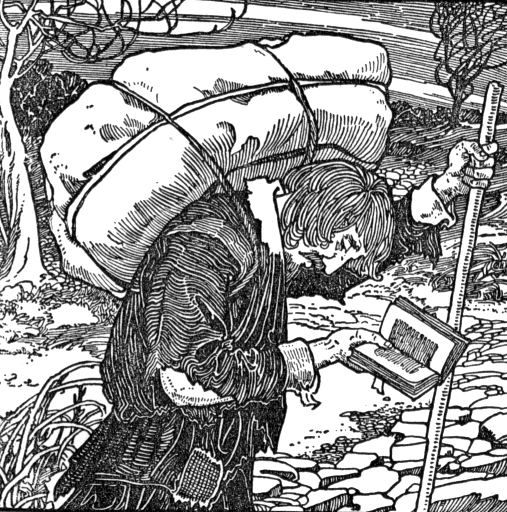
Both Peter and Paul were advising their readers to put aside” or cast off those things that might hinder their spiritual walk. They were to be viewed as unnecessary burdens that weigh down and encumber one’s spiritual journey. Like the character, Christian, in John Bunyan’s classic tale, The Pilgrim’s Progress, believers too often journey through life still bearing heavy loads that were meant to be discarded when they came to faith in Christ. Peter describes these burdens as “evil behavior” and then gets specific by mentioning deceit, hypocrisy, jealousy, and unkind speech. These particular behaviors are attitudes and actions that can do serious and irreparable damage to a church. They can destroy and sense of community and stand in direct opposition to the “brotherly love” Peter mentioned in chapter 1.

Once again, Paul used similar language to encourage the Ephesian believers to put off the old and put on the new.

…put off your old self, which belongs to your former manner of life and is corrupt through deceitful desires, and to be renewed in the spirit of your minds, and to put on the new self, created after the likeness of God in true righteousness and holiness. – Ephesians 4:22-24 ESV

Their new life in Christ should be accompanied by new attitudes and desires. Peter puts it in the terms of “cravings.”

Like newborn babies, you must crave pure spiritual milk… – 1 Peter 2:2 NLT

Peter’s use of the image of a hungry infant longing for milk is powerful. It conveys the ideas of dependency and desire. In using it, he portrays his readers as innocent, helpless, and totally reliant upon the care of another. Since they had been “born again to a living hope” (1 Peter 1:3 ESV) “through the living and abiding word of God” (1 Peter 1:23 ESV), their lives depended upon the ongoing provision of their Heavenly Father. He had brought about their new birth and He would sustain their new spiritual life. But for them to grow, they would need to crave or long for the right form of nutrition. And contained in Peter’s admonition is the idea that they must develop a taste for the pure spiritual milk of God’s Word. Even newborn babies instinctively learn to appreciate the benefits of their mother’s milk. In time, they develop an understanding that there is only one source that can satisfy their hunger. And the same should be true of every believer concerning the spiritual benefits of God’s Word.

Initially, a baby has no awareness of the nutritional value of milk. He simply eats because he’s hungry. But in time, his body begins to benefit from the nutrients it receives through each feeding, and  it grows – slowly and, sometimes, imperceptibly. And Peter promises that a steady diet of God’s Word results in a believer’s spiritual growth.

…by it you may grow up into salvation… – 1 Peter 2:2 ESV

In Peter’s mind, spiritual growth in the life of the believer was as natural as the physical growth of an infant. It was a normal sign of healthy maturity.  He even picked up on this same theme in his second letter.

…grow in the grace and knowledge of our Lord and Savior Jesus Christ… – 2 Peter 3:18 ESV

Peter’s reference to the milk of God’s Word is not meant to suggest a simpler, easy-to-digest diet of spiritual pablum. In other words, this is not intended as an indictment of their spiritual status. This passage is sometimes linked to the following statement from the apostle Paul written to the church in Corinth.

Dear brothers and sisters, when I was with you I couldn’t talk to you as I would to spiritual people. I had to talk as though you belonged to this world or as though you were infants in Christ. I had to feed you with milk, not with solid food, because you weren’t ready for anything stronger. And you still aren’t ready, for you are still controlled by your sinful nature. – 1 Corinthians 3:1-3 NLT

Paul was criticizing the believer in Corinth for their lack of spiritual growth. They had not grown or matured in their faith. Their desire for the “meatier” things of God”s Word had never developed. But that is not what Peter is suggesting. He is not exposing a lock of spiritual growth among his audience. He is simply encouraging them to live their lives in total dependence upon the soul-nourishing milk of God’s Word.

Peter’s goal for his audience was their ongoing spiritual maturity, fueled by constant feeding on the truth of Scripture and the promises of God it contains. At their salvation, they had gotten a taste of God’s goodness. Now, it was time to drink in all the goodness that God’s imperishable seed could provide.

English Standard Version (ESV) The Holy Bible, English Standard Version. ESV® Permanent Text Edition® (2016). Copyright © 2001 by Crossway Bibles, a publishing ministry of Good News Publishers.

New Living Translation (NLT) Holy Bible, New Living Translation, copyright © 1996, 2004, 2015 by Tyndale House Foundation. Used by permission of Tyndale House Publishers Inc., Carol Stream, Illinois 60188. All rights reserved.

New English Translation (NET)NET Bible® copyright ©1996-2017 by Biblical Studies Press, L.L.C. http://netbible.com All rights reserved.


Standing on the Promises

14 Remind them of these things, and charge them before God not to quarrel about words, which does no good, but only ruins the hearers. 15 Do your best to present yourself to God as one approved, a worker who has no need to be ashamed, rightly handling the word of truth. 16 But avoid irreverent babble, for it will lead people into more and more ungodliness, 17 and their talk will spread like gangrene. Among them are Hymenaeus and Philetus, 18 who have swerved from the truth, saying that the resurrection has already happened. They are upsetting the faith of some. 19 But God’s firm foundation stands, bearing this seal: “The Lord knows those who are his,” and, “Let everyone who names the name of the Lord depart from iniquity.” – 2 Timothy 2:14-19 ESV

Paul wasn’t afraid to name names and call out individuals for their unfaithfulness or failure to remain committed to the cause of Christ. First, he mentions Phygelus and Hermogenes, two individuals who abandoned him in Asia. Now he brings up another pair, Hymenaeus and Philetus, whom he accuses of “swerving from the truth” (2 Timothy 2:18 ESV). These individuals taught that the resurrection had already taken place, which caused confusion and doubt among the faithful.

Paul’s mention of Hymenaeus and Philetus was intended to provide Timothy a concrete example of what he meant by “irreverent babble” or quarreling about words. Paul had just instructed Timothy to take what he had been taught and “teach these truths to other trustworthy people who will be able to pass them on to others” (2 Timothy 2:2 NLT).

One of Timothy’s primary responsibilities as a minister of the gospel was to provide those under his care with sound instruction and a Christ-like model to follow. Because the body of Christ was still in its infancy, it suffered a serious leadership void, and many people were ignorant about spiritual matters. Those who had come to faith in Christ knew little beyond their original understanding of the gospel message. They had eagerly embraced Paul’s message of salvation by grace alone through faith alone in Christ alone, but beyond that, they had little knowledge of what living out their faith in Christ should look like in daily life. Many expected their salvation experience to bring a trouble-free, blessing-filled life because of their newfound relationship with Yahweh. Yet, instead, they found themselves suffering persecution, facing difficulties, and discovering that the Christian life was not a walk in the park.

To make matters worse, some had taken it upon themselves to serve as teachers, providing “instruction” in spiritual matters that left their students more confused than comforted. Conflicting messages and competing opinions were causing discord in the church, with people “fighting over words” (2 Timothy 2:14 NLT), and Paul deemed these arguments useless because they produced nothing of value.

Amid the confusion and competing agendas, Timothy was to be a source of sound teaching, “rightly handling the word of truth” and providing those under his care with accurate information about spiritual matters. That meant Timothy had to stick to the script; he was not free to ad-lib or add to the teaching he had received from Paul. When it came to the gospel, there was no place for conjecture or personal opinion. For Paul, the gospel was about more than the message of salvation; it included the whole divine process of redemption, from salvation to sanctification, and ended with the believer’s glorification.

…those whom He predestined, these also He called; and whom He called, these also He justified; and whom He justified, these also He glorified. – Romans 8:30 BSB

I am certain that God, who began the good work within you, will continue his work until it is finally finished on the day when Christ Jesus returns. – Philippians 1:6 NLT

Like the apostle Peter, Paul expected every believer to “grow into a full experience of salvation” (1 Peter 2:2 NLT). He told the believers in Ephesus “to grow up in every way into him who is the head, into Christ” (Ephesians 4:15 ESV). Salvation was to result in sanctification or ongoing spiritual maturity, which will ultimately culminate in the believer’s glorification or final transformation into the likeness of Christ.

Paul expected Timothy to teach these truths faithfully and accurately. If he did, Timothy would have no reason to be ashamed, and time would vindicate the veracity of his message. But those who “teach man-made ideas as commands from God” (Matthew 15:9 NLT) will eventually be exposed as fakes and frauds, guilty of “worthless, foolish talk that only leads to more godless behavior” (2 Timothy 2:16 NLT).

Paul describes this false, man-made teaching as a disease that can spread throughout the body of Christ with deadly consequences. He uses Hymenaeus and Philetus as examples of those who propagate such lies. Out of ignorance, these two men had drawn erroneous conclusions regarding Paul’s teaching about the resurrection of the dead. They claimed this future event had already taken place. Not understanding the true nature of the resurrection, they had over-simplified and spiritualized it, falsely assuming that they were already experiencing it. It’s likely they used Paul’s words to the Romans to justify their conclusion.

We were buried therefore with him by baptism into death, in order that, just as Christ was raised from the dead by the glory of the Father, we too might walk in newness of life.

For if we have been united with him in a death like his, we shall certainly be united with him in a resurrection like his….Now if we have died with Christ, we believe that we will also live with him. – Romans 6:4-5, 8 ESV

Paul had even told Timothy, “If we have died with him, we will also live with him” (2 Timothy 2:11 ESV). So these men assumed the resurrected life referred to the “newness of life” Paul referred to. This teaching was leaving believers with the false impression that all the promises associated with the resurrection of the dead were to be expected in this life, not the one to come, and this claim left the suffering and persecuted believers in Ephesus confused and concerned.

This is why Paul told Timothy, “If we die with him, we will also live with him. If we endure hardship, we will reign with him” (2 Timothy 2:11-12 NLT). He called this a trustworthy statement, a promise supported by the full weight of God’s glory and goodness. To support his claim that God could be trusted to complete what He began and fulfill all that He has promised, Paul turned to the Hebrew Scriptures, citing two Old Testament passages.

God’s truth stands firm like a foundation stone with this inscription: “The Lord knows those who are his,” and “All who belong to the Lord must turn away from evil.” – 2 Timothy 2:19 NLT

Paraphrasing Numbers 16:6 and Numbers 16:26, Paul illustrated the timeless nature of God’s promises; He always does what He says He will do. God’s words have an eternal quality, spanning the centuries and assuring all who hear and obey them that He is trustworthy and true.

Despite the teaching of men like Hymenaeus and Philetus, the believers in Ephesus had no reason to doubt their salvation. Just because things weren’t turning out like they expected, they had no cause for fear or doubt; the Lord knows those who are His. They could rest in the promise that they would remain firmly held in the loving grasp of God all the way to the end. Their only responsibility was to turn away from evil. They didn’t have to strive to remain saved, and they weren’t under obligation to continually earn their right standing with God through additional good works. They simply needed to live out their salvation in daily life, allowing the Spirit of God to produce fruit in their lives through His power, not their own.

English Standard Version (ESV)
The Holy Bible, English Standard Version. ESV® Permanent Text Edition® (2016). Copyright © 2001 by Crossway Bibles, a publishing ministry of Good News Publishers.

New Living Translation (NLT)
Holy Bible, New Living Translation, copyright © 1996, 2004, 2015 by Tyndale House Foundation. Used by permission of Tyndale House Publishers Inc., Carol Stream, Illinois 60188. All rights reserved.

The Message (MSG)Copyright © 1993, 1994, 1995, 1996, 2000, 2001, 2002 by Eugene H. Peterson

A Holy Calling

8 Therefore do not be ashamed of the testimony about our Lord, nor of me his prisoner, but share in suffering for the gospel by the power of God, 9 who saved us and called us to a holy calling, not because of our works but because of his own purpose and grace, which he gave us in Christ Jesus before the ages began, 10 and which now has been manifested through the appearing of our Savior Christ Jesus, who abolished death and brought life and immortality to light through the gospel, 11 for which I was appointed a preacher and apostle and teacher, 12 which is why I suffer as I do. But I am not ashamed, for I know whom I have believed, and I am convinced that he is able to guard until that day what has been entrusted to me. – 2 Timothy 1:8-12 ESV

Paul’s letter to Timothy, while personal in nature, is global in its scope and impact. Originally written with Timothy in mind, Paul’s words are applicable and appropriate for any child of God who understands their calling as an ambassador and servant of Christ. The decision by the early church fathers to include this letter in the canon of Scripture is evidence of their belief that it was Spirit-inspired and, therefore, its message was intended for a larger audience than one.

In a way, Timothy serves as a model or representative for the rest of the body of Christ. He was a relatively new believer who was privileged to have the apostle Paul as his personal mentor and spiritual guide. And although it seems clear that Timothy was commissioned for the gospel ministry and had received spiritual gifts commensurate with that responsibility, the instructions he received from Paul apply to each and every Christ-follower.

If we read this letter with the perspective that we’re eavesdropping on a personal conversation between two close friends, we will the vital truths contained in it. Paul’s admonitions and instructions, while directed at Timothy, have a much broader application intended for a much larger audience. They span the boundaries of time and continue to speak to all those who share Timothy’s “sincere faith” (2 Timothy 1:5 ESV) and who desire to “fan into flame the gift of God” (2 Timothy 1:6 ESV).

Paul issued the same challenge to all Christ-followers: “imitate me, just as I imitate Christ.” (1 Corinthians 11:1 NLT). He intended his life to be a model of Christlikeness and he expected every believer to be mentored by his example. So, when Paul declares himself to be an ambassador for Christ entrusted with “the message of reconciliation” (2 Corinthians 5:19 ESV), there is a sense in which he expects all followers of Christ to share in that responsibility. When he tells the Corinthian believers, “we are ambassadors for Christ, God making his appeal through us” (2 Corinthians 5:20 ESV), he is including them as fellow ambassadors whom he expected to share the same divine invitation: “be reconciled to God” (2 Corinthians 5:20 ESV).

There is a sense in which all believers are being mentored by Paul as they read his letters and allow the Holy Spirit to apply God’s truth to their hearts. We are to read Paul’s words to Timothy with an eager expectation that we will discover personal applications that will radically alter the spiritual trajectory of our lives.

So, when Paul tells Timothy, “do not be ashamed of the testimony about our Lord” (2 Timothy 1:8 ESV), his words apply to us. As believers, we should never find ourselves ashamed to tell others about God’s message of reconciliation made possible through faith in Christ. Paul knew that Timothy was having a difficult time reconciling the imprisonment of his mentor. He was probably having to field difficult questions from the believers in Ephesus who wondered what they could expect if the apostle Paul had been imprisoned for his faith. How could that be part of God’s divine plan? Would they be next? And Paul knew that Timothy was probably embarrassed by his mentor’s untimely and inexplicable confinement and struggling to explain what was going on.

But rather than making excuses for his predicament, Paul invited Timothy to “share in suffering for the gospel by the power of God” (2 Timothy 1:8 ESV). Paul wasn’t ashamed of his imprisonment. He viewed it as a privilege and something to be understood as good rather than bad.

I take pleasure in my weaknesses, and in the insults, hardships, persecutions, and troubles that I suffer for Christ. For when I am weak, then I am strong. – 2 Corinthians 12:10 NLT

And Paul saw his life as exemplary rather than as some kind of anomaly. He even pleaded with the believers in Corinth to see every aspect of his life as worthy of emulation – highlighting the good along with the seemingly bad.

…we commend ourselves in every way: by great endurance, in afflictions, hardships, calamities, beatings, imprisonments, riots, labors, sleepless nights, hunger; by purity, knowledge, patience, kindness, the Holy Spirit, genuine love; by truthful speech, and the power of God; with the weapons of righteousness for the right hand and for the left; through honor and dishonor, through slander and praise. We are treated as impostors, and yet are true; as unknown, and yet well known; as dying, and behold, we live; as punished, and yet not killed; as sorrowful, yet always rejoicing; as poor, yet making many rich; as having nothing, yet possessing everything. – 2 Corinthians 6:4-10 ESV

And, in his letter to the church at Philippi, Paul reminded them that suffering for Christ was to be expected because they were all caught up in a spiritual war.

For it has been granted to you that for the sake of Christ you should not only believe in him but also suffer for his sake, engaged in the same conflict that you saw I had and now hear that I still have. – Philippians 1:29-30 ESV

And the apostle Peter shared Paul’s recognition that suffering was a non-negotiable aspect of the Christian life.

Stay alert! Watch out for your great enemy, the devil. He prowls around like a roaring lion, looking for someone to devour. Stand firm against him, and be strong in your faith. Remember that your family of believers all over the world is going through the same kind of suffering you are.

In his kindness God called you to share in his eternal glory by means of Christ Jesus. So after you have suffered a little while, he will restore, support, and strengthen you, and he will place you on a firm foundation. – 1 Peter 5:8-10 NLT

So, Paul reminds Timothy (and by extension, us) that he had been saved and “to a holy calling” (2 Timothy 1:9 ESV). Timothy had been set apart by God for a divine purpose and, like Paul, had a responsibility to live up to his calling. Paul acknowledged his own appointment as “a preacher and apostle and teacher” (2 Timothy 1:11 ESV). And he knew that calling was the reason for his imprisonment. That’s why he could “take pleasure” in it. He knew he was doing exactly what he had been commissioned to do and if his faithful carrying out of his job resulted in suffering, he saw himself as sharing in the sufferings of Christ. He was simply getting a small taste of what His Savior endured on his behalf.

And Paul found no shame in his imprisonment. In fact, he boldly proclaimed, “I am not ashamed, for I know whom I have believed, and I am convinced that he is able to guard until that day what has been entrusted to me” (2 Timothy 1:12 ESV). Despite his less-than-ideal circumstances, Paul remained confident in the faith he had placed in Christ. The presence of difficulties had not caused his faith to waver or his trust in Jesus’ saving work to diminish. Paul was not looking for heaven on earth. He didn’t expect his belief in Christ to result in a trouble-free life marked by health, wealth, and prosperity.

He knew that the salvation Christ died to provide was eternal in nature, not temporal. Jesus had not sacrificed Himself so that Paul could live a comfortable, pain-free life in the here-and-now. He died so that Paul, Timothy, and every other individual who placed their faith in Him could one day experience an eternity free from sin, pain, suffering, and sorrow.  As Jesus Himself said, “Here on earth you will have many trials and sorrows. But take heart, because I have overcome the world” (John 16:33 NLT).

English Standard Version (ESV)
The Holy Bible, English Standard Version. ESV® Permanent Text Edition® (2016). Copyright © 2001 by Crossway Bibles, a publishing ministry of Good News Publishers.

New Living Translation (NLT)
Holy Bible, New Living Translation, copyright © 1996, 2004, 2015 by Tyndale House Foundation. Used by permission of Tyndale House Publishers Inc., Carol Stream, Illinois 60188. All rights reserved.

The Message (MSG)Copyright © 1993, 1994, 1995, 1996, 2000, 2001, 2002 by Eugene H. Peterson

Never Give Up On Growing Up

23 Now may the God of peace himself sanctify you completely, and may your whole spirit and soul and body be kept blameless at the coming of our Lord Jesus Christ. 24 He who calls you is faithful; he will surely do it.

25 Brothers, pray for us.

26 Greet all the brothers with a holy kiss.

27 I put you under oath before the Lord to have this letter read to all the brothers.

28 The grace of our Lord Jesus Christ be with you. – 1 Thessalonians 5:23-28 ESV

Like Peter and the other apostles, Paul had a strong expectation that the believers to whom he wrote would grow up in their salvation (1 Peter 2:2). Spiritual immaturity or stagnancy in their faith was unacceptable. He told the believers in Colossae that his preaching of Christ was intended to bring about salvation and sanctification.

Him we proclaim, warning everyone and teaching everyone with all wisdom, that we may present everyone mature in Christ. – Colossians 1:28 ESV

In his letter to the church in Ephesus, he told them that his responsibility as an apostle was to “to equip God’s people to do his work and build up the church, the body of Christ” (Ephesians 4:12 NLT). And then he added that this work of building up the body of Christ had a lofty end goal or objective:

This will continue until we all come to such unity in our faith and knowledge of God’s Son that we will be mature in the Lord, measuring up to the full and complete standard of Christ. – Ephesians 4:13 NLT

The work would never be done. Full spiritual maturity would never be achieved – at least, not in this lifetime. And Paul expressed to the Galatians his intention to keep pouring into them until they bore the likeness of Christ.

Oh, my dear children! I feel as if I’m going through labor pains for you again, and they will continue until Christ is fully developed in your lives. – Galatians 4:19 NLT

You might say that Paul was a man possessed. He could not bear the thought of any believer failing to experience the fulness of salvation offered to them in Jesus Christ. And this included their sanctification, the divine process by which believers are transformed into the likeness of Christ through the power of God’s indwelling Spirit.

So, as he begins to wrap up his letter to the believers in Thessalonica, Paul let’s them know of his desire for their holiness. It was his life’s passion and his constant prayer to God on their behalf.

Now may the God of peace himself make you completely holy… – 1 Thessalonians 5:23 NET

Paul knew that spiritual maturity was the work of God, not men. That does not mean we do not play a part, but that the work of sanctification is impossible without divine assistance. Paul has already told the Thessalonians that their sanctification was God’s will for them (1 Thessalonians 4:3), but now he reminds them that it is also God’s work. Only God can transform sinners into saints. Only He can replace their hearts of stone with hearts of flesh (Ezekiel 36:26).  Only He can radically alter their old natures, transforming them into new creations (2 Corinthians 5:17).

That is why Paul was constantly asking God to do what only He could do to bring about the spiritual maturity of His children.

I pray for you constantly, asking God, the glorious Father of our Lord Jesus Christ, to give you spiritual wisdom and insight so that you might grow in your knowledge of God. I pray that your hearts will be flooded with light so that you can understand the confident hope he has given to those he called—his holy people who are his rich and glorious inheritance. – Ephesians 1:16-18 NLT

Only God has the power to save and sanctify. And only God is capable of securing the spirits, souls, and bodies of His saints, so that they might remain “blameless until our Lord Jesus Christ comes again” (1 Thessalonians 5:23 NLT). By his use of the word “blameless,” Paul is not suggesting the possibility of achieving a state of sinless perfection in this life. He is simply reiterating a point he had made earlier in his letter. Their ability to one day stand before God “without fault” or “free from blame” would be the work of God.

May he…make your hearts strong, blameless, and holy as you stand before God our Father when our Lord Jesus comes again with all his holy people. – 1 Thessalonians 3:13 NLT

The ability to maintain a life marked by righteousness and holiness is a gift from God, just as salvation is. No one can save themselves and no one can preserve their saved state through self-effort. It is the work of God. And Paul assures the Thessalonians that God can be trusted to do what only He can do.

God will make this happen, for he who calls you is faithful. – 1 Thessalonians 5:24 NLT

God could be counted on to do His part. But they had a role to play as well. Paul has made that point perfectly clear throughout his letter. They would need to maintain their commitment to “serve the living and true God” (1 Thessalonians 1:9 ESV). They must continue to “walk in a manner worthy of God” (1 Thessalonians 2:12 ESV). He expected to hear that they were “standing fast in the Lord” (1 Thessalonians 3:8 ESV). And they could not afford to let up on their commitment to “live in holiness and honor—not in lustful passion like the pagans” (1 Thessalonians 4:4 ESV).

Their sanctification was a joint effort, powered by God, but requiring their willing and eager participation. If God’s will was their sanctification, they were going to have to adopt His will as their very own. It was essential that they make Christlikeness their primary passion and lifelong objective. And there was to be no goal less than full maturity in Christ. This meant that their sanctification would not be complete until they died and went to be with the Lord, or they lived long enough to see Him return at the Rapture for His church. Either way, the commitment to spiritual maturity and their ongoing transformation into the likeness of Christ was to remain their highest priority.

The apostle Peter reminds us that, because of our faith in Christ, we have been given all that we need to live godly lives. We lack nothing.

By his divine power, God has given us everything we need for living a godly life. We have received all of this by coming to know him, the one who called us to himself by means of his marvelous glory and excellence. And because of his glory and excellence, he has given us great and precious promises. These are the promises that enable you to share his divine nature and escape the world’s corruption caused by human desires. – 1 Peter 1:3-4 NLT

And the apostle John provides us with further assurance of our completed transformation into the likeness of Christ.

…we are already God’s children, but he has not yet shown us what we will be like when Christ appears. But we do know that we will be like him, for we will see him as he really is. – 1 John 3:2 NLT

Paul closes his letter with a request. He asks the Thessalonians for their prayers of intercession on the behalf of himself and the rest of his ministry partners. The work of sharing the Gospel required divine assistance. Paul coveted their prayer because he knew that he was in the midst of a spiritual battle “against evil rulers and authorities of the unseen world, against mighty powers in this dark world, and against evil spirits in the heavenly places” (Ephesians 6:12 NLT).

Finally, Paul asks that they express his love to all the members of the congregation and to make sure that his letter is read to everyone. And then he closes with a final blessing, asking that the grace of the Lord Jesus Christ be upon them. For Paul, the unmerited favor of God was a truly remarkable gift that never ceased to amaze and delight him. It was the key to salvation, sanctification and, ultimately, the glorification of all believers.

English Standard Version (ESV)
The Holy Bible, English Standard Version. ESV® Permanent Text Edition® (2016). Copyright © 2001 by Crossway Bibles, a publishing ministry of Good News Publishers.

New Living Translation (NLT)
Holy Bible, New Living Translation, copyright © 1996, 2004, 2015 by Tyndale House Foundation. Used by permission of Tyndale House Publishers Inc., Carol Stream, Illinois 60188. All rights reserved.

The Message (MSG)Copyright © 1993, 1994, 1995, 1996, 2000, 2001, 2002 by Eugene H. Peterson