Sheep in Need of a Shepherd

A Psalm of David.

1 The Lord is my shepherd; I shall not want.
2     He makes me lie down in green pastures.
He leads me beside still waters.
3     He restores my soul.
He leads me in paths of righteousness
    for his name’s sake.

4 Even though I walk through the valley of the shadow of death,
    I will fear no evil,
for you are with me;
    your rod and your staff,
    they comfort me.

5 You prepare a table before me
    in the presence of my enemies;
you anoint my head with oil;
    my cup overflows.
6 Surely goodness and mercy shall follow me
    all the days of my life,
and I shall dwell in the house of the Lord
    forever. – Psalm 23:1-6 ESV

What do you say about what is arguably the most well-known and popular Psalm of all? The 23rd Psalm is probably the most familiar of all the Psalms for believers and non-believers alike. The words of this Psalm have been printed on plaques and coffee mugs, illustrated in paintings, and explained in countless books. It is short and simple, yet the real message escapes most of us because we don’t live in an agrarian society. The imagery of sheep and shepherds escapes us. So its message, while visually interesting, can become obscure because the relationship between a shepherd and his sheep seems rather pedestrian and simplistic to us. How hard can it be to care for sheep? They appear relatively docile and far from demanding, but it’s fascinating that God regularly used the sheep metaphor when speaking of His people.

In Matthew 10:6, Jesus referred to the Jews as the “lost sheep of the house of Israel.” Reminiscent of Psalm 23, in the Book of Ezekiel, God refers to the people of Israel as His sheep.

“I myself will tend my sheep and give them a place to lie down in peace, says the Sovereign Lord. I will search for my lost ones who strayed away, and I will bring them safely home again. I will bandage the injured and strengthen the weak. But I will destroy those who are fat and powerful. I will feed them, yes—feed them justice!” – Ezekiel 34:15-16 NLT

Earlier in that same chapter, God refers to His people as sheep again, saying, “They have wandered through all the mountains and all the hills, across the face of the earth, yet no one has gone to search for them” (Ezekiel 34:6 NLT).

God saw His people as sheep, and Jesus referred to Himself as the Good Shepherd. Why? What is the point behind this analogy of sheep and shepherds? The key is found in the words used in Psalm 23. David chose his words carefully, and each carries significance. He speaks of need, rest, leading, renewal, guidance, fear, protection, and comfort. He paints a picture of total dependency as opposed to self-sufficiency. Sheep are not meant to defend and care for themselves. They are inherently dumb animals who wander easily and are prone to a herd mentality. Unlike deer, they do not readily sense impending danger. They lack any means of self-defense. They have no horns or sharp teeth and are not known for their speed. In essence, they are defenseless against attack. Not only that, but they are also gullible and easily led astray. When grazing, sheep can become so consumed with their meal that they ignore the dangers surrounding them. So, God’s choice of this imagery is intentional and not intended to be flattering.

Isaiah provides a perfect picture of how God views us.

All of us, like sheep, have strayed away.
    We have left God’s paths to follow our own. – Isaiah 53:6 NLT

At one time, we were like wandering, ignorant, and stubborn sheep. We had lost our way. We had wandered off the path and gotten lost. We were defenseless, helpless, and hopeless. The prophet Isaiah went on to prophesy that God had a solution for those lost sheep:

Yet the Lord laid on him
    the sins of us all.

He was oppressed and treated harshly,
    yet he never said a word.
He was led like a lamb to the slaughter.
    And as a sheep is silent before the shearers,
    he did not open his mouth.
Unjustly condemned,
    he was led away. – Isaiah 53:6b-8a NLT

God’s solution for lost, wandering sheep was the Good Shepherd. Peter reminds us, “Once you were like sheep who wandered away. But now you have turned to your Shepherd, the Guardian of your souls” (1 Peter 2:25 NLT).

God is our Shepherd. Jesus is our Good Shepherd. We are their sheep. We are needy, prone to wander, inherently restless, lacking in strength, defenseless, directionless, and hopeless if left to our own devices. But God leads us, loves us, guides us, protects us, comforts us, feeds us, and heals us. He sent His Son to die for us because we couldn’t save ourselves. His Son became a sheep just like us so that He could be the sacrificial lamb that satisfied the just demands of a holy, righteous God. He died so that we might live.

The key to understanding the 23rd Psalm is to embrace our role as sheep and our total dependency on God for everything. David understood that concept long before the Good Shepherd appeared on the scene. He knew that mankind exists and has a future because of God’s goodness and unfailing love. Without Him, we are nothing.

That is why David was willing to submit himself to the Shepherd. Even the Shepherd’s loving discipline was preferable to a life without Him. David gladly embraced the loving correction of God’s rod and staff because He knew it was in his best interest. The Shepherd knows what is best for His sheep.

In the last two verses of his Psalm, David shifts away from the sheep and shepherd motif, describing God as a gracious host who welcomes HIs guests to a fantastic banquet in His palace.

You prepare a feast for me
    in the presence of my enemies.
You honor me by anointing my head with oil.
    My cup overflows with blessings.
Surely your goodness and unfailing love will pursue me
    all the days of my life,
and I will live in the house of the Lord
    forever. – Psalm 23:5-6 NLT

David envisioned himself moving from the life of a lowly sheep in the pasture to the honored guest at an elaborate banquet. This shift in emphasis and location mirrored David’s own life. He could recall the words of God relayed by the prophet Samuel near the end of his long and productive life.

“I took you from tending sheep in the pasture and selected you to be the leader of my people Israel. I have been with you wherever you have gone, and I have destroyed all your enemies before your eyes. Now I will make your name as famous as anyone who has ever lived on the earth!” – 2 Samuel 7:8-9 NLT

David had experienced the life of a shepherd and was intimately familiar with sheep. But he also knew what it was like to wear the royal robes of the king and experience all the trappings of success. But understood that all his accomplishments had been the work of God. He was not a self-made man. He could take no credit for his success. David knew his greatest claim to fame was his relationship with God. Even as the most powerful man in the kingdom of Israel, he knew he was completely dependent upon his loving Shepherd.

Most of us find dependence difficult, and learning to rely on God is not easy. We have convinced ourselves that self-sufficiency is a virtue. But sheep rely on their shepherd. They trust their shepherd, listen to their shepherd, follow their shepherd, and depend on their shepherd for everything. And as a result, they are blessed.

Father, give me a sheep-like attitude. Let me continually die to my stubborn need for self-sufficiency and learn to live in total dependence upon You. You are my Shepherd. Your Son is my Good Shepherd. All my needs are met in You. Amen

English Standard Version (ESV) The Holy Bible, English Standard Version. ESV® Permanent Text Edition® (2016). Copyright © 2001 by Crossway Bibles, a publishing ministry of Good News Publishers.

New Living Translation (NLT) Holy Bible, New Living Translation, copyright © 1996, 2004, 2015 by Tyndale House Foundation. Used by permission of Tyndale House Publishers Inc., Carol Stream, Illinois 60188. All rights reserved.
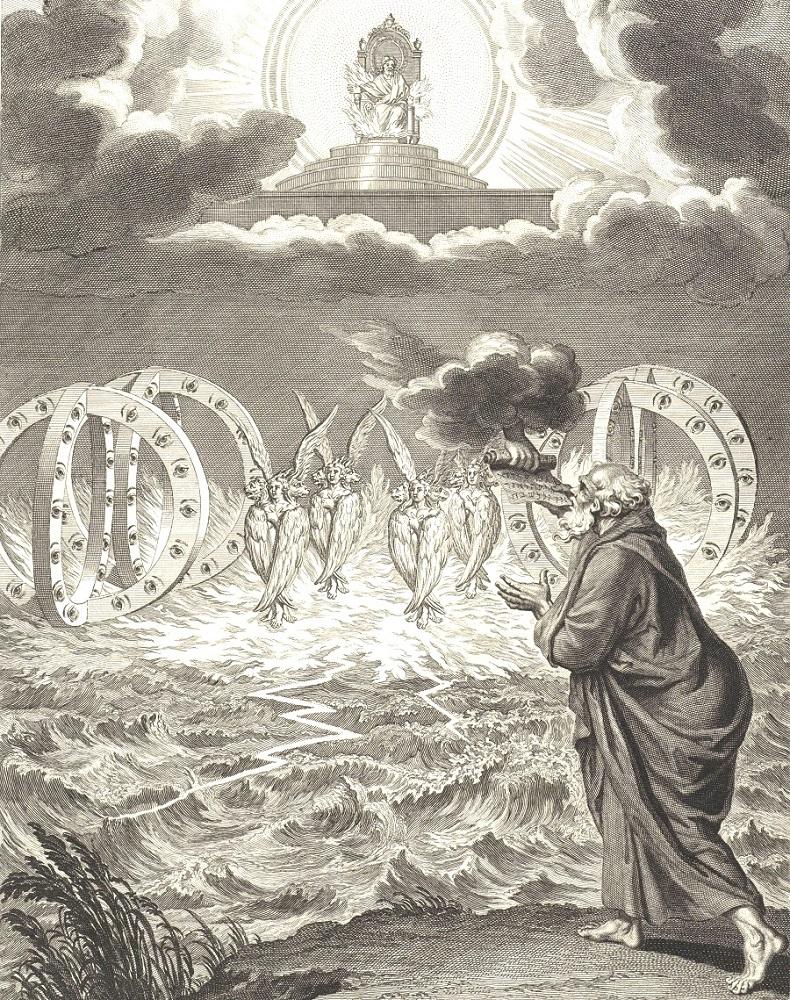
A Difficult Calling

4 And he said to me, “Son of man, go to the house of Israel and speak with my words to them. 5 For you are not sent to a people of foreign speech and a hard language, but to the house of Israel— 6 not to many peoples of foreign speech and a hard language, whose words you cannot understand. Surely, if I sent you to such, they would listen to you. 7 But the house of Israel will not be willing to listen to you, for they are not willing to listen to me: because all the house of Israel have a hard forehead and a stubborn heart. 8 Behold, I have made your face as hard as their faces, and your forehead as hard as their foreheads. 9 Like emery harder than flint have I made your forehead. Fear them not, nor be dismayed at their looks, for they are a rebellious house.” 10 Moreover, he said to me, “Son of man, all my words that I shall speak to you receive in your heart, and hear with your ears. 11 And go to the exiles, to your people, and speak to them and say to them, ‘Thus says the Lord God,’ whether they hear or refuse to hear.”

12 Then the Spirit lifted me up, and I heard behind me the voice of a great earthquake: “Blessed be the glory of the Lord from its place!” 13 It was the sound of the wings of the living creatures as they touched one another, and the sound of the wheels beside them, and the sound of a great earthquake. 14 The Spirit lifted me up and took me away, and I went in bitterness in the heat of my spirit, the hand of the Lord being strong upon me. 15 And I came to the exiles at Tel-abib, who were dwelling by the Chebar canal, and I sat where they were dwelling. And I sat there overwhelmed among them seven days. – Ezekiel 3:4-15 ESV

After consuming the scroll that God had given him, Ezekiel was commanded to regurgitate its content to his fellow captives living in the land of Babylon. While the message contained in the scroll was filled with words of “lamentation and mourning and woe” (Ezekiel 2:10 ESV), Ezekiel found it to taste “as sweet as honey” (Ezekiel 3:3 ESV). Ezekiel had discovered the truth behind the psalm.

How sweet are your words to my taste, sweeter than honey to my mouth! – Psalm 119:103 ESV).

And the prophet Jeremiah also learned to develop a hunger and delight for the word of the Lord.

Your words were found, and I ate them, and your words became to me a joy and the delight of my heart, for I am called by your name, O LORD, God of hosts. – Jeremiah 15:16 ESV

God’s Word may be difficult to hear but, when obeyed, it always proves to be a delight to the soul because it is filled with wisdom and truth. Ezekiel had feasted on the Word of God and found it to be both pleasant and filling. But the difficulty would come when he tried to share that message with his fellow exiles. This young priest-turned-prophet was going to have to share what he had learned with the rest of the Jews living along the Kebar River in Babylon, and God warned him that they would not be a receptive audience.

“…the people of Israel won’t listen to you any more than they listen to me! For the whole lot of them are hard-hearted and stubborn.” – Ezekiel 3:7 NLT

The Almighty God had chosen to reveal Himself to Ezekiel in the middle of a Judaen refuge camp in the land of Babylon, and He had delivered to Ezekiel a message that was intended solely for the people of God. The words contained on the scroll had been directed at His chosen people and not the Babylonians. God was not above delivering words of warning to foreign countries. He had used Isaiah to pronounce a powerful message of future destruction to the Babylonians.

Babylon, the most glorious of kingdoms,
    the flower of Chaldean pride,
will be devastated like Sodom and Gomorrah
    when God destroyed them.
Babylon will never be inhabited again.
    It will remain empty for generation after generation.
Nomads will refuse to camp there,
    and shepherds will not bed down their sheep. – Isaiah 13:19-20 NLT

But the message God had given Ezekiel was for the people of Judah alone. And God seems to infer that Ezekiel’s task would have been much easier if his audience was made up of foreigners who spoke a completely different language.

I am not sending you to a foreign people whose language you cannot understand. 6 No, I am not sending you to people with strange and difficult speech. If I did, they would listen! – Ezekiel 3:5 NLT

The problem Ezekiel was going to encounter would not be that of a language barrier. No, his audience would hear and understand every word he said, but their stubborn and sin-hardened hearts would prevent them from responding in repentance. The same words that Ezekiel found to be as sweet as honey would be bitter and distasteful to the rebellious people of God.

But Ezekiel was not to be afraid or disheartened. In fact, God declared that he would be divinely equipped for the task. The people of Israel would meet their match in Ezekiel.

“I have made you as obstinate and hard-hearted as they are. I have made your forehead as hard as the hardest rock! So don’t be afraid of them or fear their angry looks, even though they are rebels.” – Ezekiel 3:8-9 NLT

God was going to equip Ezekiel with a supernatural source of stamina and determination that would allow him to stay strong even in the face of repeated rejection and the evident failure of his mission. God knew that there would be days when Ezekiel felt as if his task was ill-fated and his ministry was doomed to defeat. He would be tempted to throw in the towel and abandon his mission. That’s why God encouraged him to take time and meditate on the words he was about to deliver. He was to think long and hard about the content of God’s message long before he began to deliver it.

“Son of man, let all my words sink deep into your own heart first. Listen to them carefully for yourself. Then go to your people in exile and say to them, ‘This is what the Sovereign Lord says!’ Do this whether they listen to you or not.” – Ezekiel 3:10-11 NLT

Ezekiel was to be more than just a conduit through which the words of God flowed. He had been commanded to ingest the words of God so that they might flow from his heart and not just his lips. It was essential that the messenger believe the words of the message and trust the One who had delivered it. God wanted Ezekiel to learn the truth found in Psalm 119.

I will meditate on your precepts
    and fix my eyes on your ways.
I will delight in your statutes;
    I will not forget your word. – Psalm 119:15-16 ESV

The Lord knew that Ezekiel would need endurance in the days ahead. The ministry to which he was being called would prove difficult and disheartening. His message would fall on deaf ears. His calls to repentance would be rejected. And the psalmist seemed to have presaged Ezekiel’s pending predicament.

My soul longs for your salvation;
    I hope in your word.
My eyes long for your promise;
    I ask, “When will you comfort me?”
For I have become like a wineskin in the smoke,
    yet I have not forgotten your statutes.
How long must your servant endure?
    When will you judge those who persecute me?
The insolent have dug pitfalls for me;
    they do not live according to your law.
All your commandments are sure;
    they persecute me with falsehood; help me!
They have almost made an end of me on earth,
    but I have not forsaken your precepts.
In your steadfast love give me life,
    that I may keep the testimonies of your mouth. – Psalm 119:81-88 ESV

And, as if to provide Ezekiel with one more tangible form of encouragement, God allowed him to hear a thunderous proclamation from heaven.

“Blessed be the glory of the Lord from its place!” – Ezekiel 3:12 ESV

The entire vision Ezekiel had been given the privilege of seeing had been a dramatic display of God’s glory, and now a voice from heaven confirmed it. And Ezekiel saw and heard the wings of the four living creatures flapping in unison and the wheels within wheels turning as the glory of God began to move. This was not a static scene in which Ezekiel could remain and worship the glory of God forever. He had a job to do. And the Spirit of God lifted Ezekiel up and took him away. The vision had ended but his mission had just begun, and Ezekiel expressed his dismay by stating, “I went in bitterness and turmoil” (Ezekiel 3:14a NLT). He was struggling with doubt and fear. The mission before him was overwhelming and he felt underqualified for the task. And yet, he declared, “the Lord’s hold on me was strong” (Ezekiel 3:14b NLT).

Ezekiel had received a commission from God Almighty, and while he wrestled with doubt and feelings of inadequacy, he could not resist the calling. He must obey. So, with the vision completed, Ezekiel returned to his mission field among the exiles from Judah. And for seven days, he continued to struggle with an overwhelming sense of fear and foreboding as he contemplated his new assignment. His life had been radically altered by God and he would no longer be able to enjoy the same relationship he had once had with his friends and neighbors. He had been set apart by God and his life would never be the same.

English Standard Version (ESV) The Holy Bible, English Standard Version. ESV® Permanent Text Edition® (2016). Copyright © 2001

New Living Translation (NLT) Holy Bible, New Living Translation, copyright © 1996, 2004, 2015 by Tyndale House Foundation. Used by permission of Tyndale House Publishers Inc., Carol Stream, Illinois 60188. All rights reserved.

A Bitter-Sweet Assignment

1 And he said to me, “Son of man, stand on your feet, and I will speak with you.” 2 And as he spoke to me, the Spirit entered into me and set me on my feet, and I heard him speaking to me. 3 And he said to me, “Son of man, I send you to the people of Israel, to nations of rebels, who have rebelled against me. They and their fathers have transgressed against me to this very day. 4 The descendants also are impudent and stubborn: I send you to them, and you shall say to them, ‘Thus says the Lord God.’ 5 And whether they hear or refuse to hear (for they are a rebellious house) they will know that a prophet has been among them. 6 And you, son of man, be not afraid of them, nor be afraid of their words, though briers and thorns are with you and you sit on scorpions. Be not afraid of their words, nor be dismayed at their looks, for they are a rebellious house. 7 And you shall speak my words to them, whether they hear or refuse to hear, for they are a rebellious house.

8 “But you, son of man, hear what I say to you. Be not rebellious like that rebellious house; open your mouth and eat what I give you.” 9 And when I looked, behold, a hand was stretched out to me, and behold, a scroll of a book was in it. 10 And he spread it before me. And it had writing on the front and on the back, and there were written on it words of lamentation and mourning and woe.

1 And he said to me, “Son of man, eat whatever you find here. Eat this scroll, and go, speak to the house of Israel.” 2 So I opened my mouth, and he gave me this scroll to eat. 3 And he said to me, “Son of man, feed your belly with this scroll that I give you and fill your stomach with it.” Then I ate it, and it was in my mouth as sweet as honey. – Ezekiel 2:1-3:3 ESV

Ezekiel had been given a vision of God’s glory, and it left him face down on the ground in reverential fear and wonder. As this exiled young priest stood by the banks of the Kebar River in Babylon, the God of the universe made an unexpected and highly spectacular appearance.

Above this surface was something that looked like a throne made of blue lapis lazuli. And on this throne high above was a figure whose appearance resembled a man. From what appeared to be his waist up, he looked like gleaming amber, flickering like a fire. And from his waist down, he looked like a burning flame, shining with splendor. All around him was a glowing halo, like a rainbow shining in the clouds on a rainy day. This is what the glory of the Lord looked like to me. – Ezekiel 1:26-28 NLT

It is safe to assume that this was a once-in-a-lifetime experience for Ezekiel. He had never seen anything like this before, and to have the God of Abraham, Isaac, and Jacob appear to him in the remote recesses of the land of Babylon must have been a shock to his system. He was just a lowly priest who had been taken captive just like all the other residents of Jerusalem when the city had fallen to King Nebuchadnezzar’s forces.  Jehoiachin was the king of Judah at the time and, according to 2 Kings 12:9, “He did evil in the sight of the Lord as his ancestors had done.” Like most of his predecessors, Jehoiachin chose to use his royal power to promote idolatry that fostered unfaithfulness to God, and he suffered greatly for his refusal to honor the Almighty.

At that time the generals of King Nebuchadnezzar of Babylon marched to Jerusalem and besieged the city. King Nebuchadnezzar of Babylon came to the city while his generals were besieging it. King Jehoiachin of Judah, along with his mother, his servants, his officials, and his eunuchs surrendered to the king of Babylon. The king of Babylon, in the eighth year of his reign, took Jehoiachin prisoner. Nebuchadnezzar took from there all the riches in the treasuries of the Lord’s temple and of the royal palace. He removed all the gold items that King Solomon of Israel had made for the Lord’s temple, just as the Lord had warned. He deported all the residents of Jerusalem, including all the officials and all the soldiers (10,000 people in all). This included all the craftsmen and those who worked with metal. No one was left except for the poorest among the people of the land. – 2 Kings 12:10-14 NLT

Living amongst the exiled people of God, Ezekiel had firsthand experience with the apathy and complacency that had taken hold of them. A long way from home and no longer able to avail themselves of the temple and the sacrificial system, they had begun to lose interest in the things of God. Their circumstances had left them feeling abandoned by God and distraught over the far-from-ideal conditions of their captivity. With the passage of time, God had become out of sight, out of mind. They simply assumed He had turned His back on them and so, in time, they gave up hope and determined to make the most of their situation in Babylon.

But God had other plans that included appointing Ezekiel as the one who would deliver His message to the exiles. He had not forgotten about them. They had not been abandoned. Their exile had been intended to get their attention and to bring them to a point of repentance. Now, Ezekiel was going to be commissioned to serve as God’s spokesperson, delivering His call to repentance.

Having gotten Ezekiel’s full attention through the grand display of His glory, God delivered the details of his new assignment.

“I am sending you to the nation of Israel, a rebellious nation that has rebelled against me. They and their ancestors have been rebelling against me to this very day. They are a stubborn and hard-hearted people. But I am sending you to say to them, ‘This is what the Sovereign Lord says!’” – Ezekiel 2:3-4 NLT

God makes it painfully clear that Ezekiel’s new task would not be easy. He would have to deliver a message from God to a people who had a track record of stubbornness and insubordination. And God warns Ezekiel that his audience may not receive his message with open arms.

“And whether they listen or refuse to listen—for remember, they are rebels—at least they will know they have had a prophet among them.” – Ezekiel 2:5 NLT

There was no guarantee that Ezekiel would experience success. Despite the fact that he would be speaking the words of God, he had no way of knowing how the people would respond. In fact, God made it sound like his mission was doomed to certain failure.

What would you do if God called you to a task that He knew you were going to fail at? What if He even told you your efforts would be fruitless and non-productive? Most of us would bail. We would give up long before we got going. Because we’re wired with one thing in mind – success – and failure is not an acceptable alternative. But when Ezekiel got his marching orders from God, he was also given the not-so-great news that his ministry would be unsuccessful because his audience was going to be unresponsive.  God even told Ezekiel to expect threats and animosity. This was going to be one difficult job assignment.

In a sense, God was foreshadowing failure, but demanding obedience. Ezekiel’s success would not be measured by the number of callous, carnal Israelites he converted, but on his willingness to carry out God’s assignment faithfully, even in the face of rejection, ridicule, and poor results.

Even the message God gave Ezekiel to share was anything but good news. In his vision, Ezekiel was given a scroll that was covered with writing front and back, from edge to edge. It’s content?

“Funeral songs, words of sorrows, and pronouncements of doom.” – Ezekiel 2:9b NLT

It was a veritable compendium of bad news. So, not only would Ezekiel have a non-responsive audience, he was given an unappealing message. But God fully understood the foreboding nature of Ezekiel’s assignment, and he knew that Ezekiel was already wrestling with whether to follow through with His command. The young priest was afraid of how he and his message might be received by the people, but God encouraged him to have faith.

“Do not fear them or their words. Don’t be afraid even though their threats surround you like nettles and briars and stinging scorpions. Do not be dismayed by their dark scowls, even though they are rebels.” – Ezekiel 2:6 NLT

God was telling Ezekiel not to be frightened by the things they would threaten to do to him, the harsh words they might say about him, or the negative reaction they would inevitably have to him.

“Son of man, do not fear them or their words. Don’t be afraid even though their threats surround you like nettles and briers and stinging scorpions. Do not be dismayed by their dark scowls, even though they are rebels. You must give them my messages whether they listen or not. But they won’t listen, for they are completely rebellious!” – Ezekiel 2:6-7 NLT

Ezekiel was going to experience resistance. His message would not be well-received and the people would hold him responsible for its content. It was only a matter of time before they sought to kill the messenger. That’s why God warned Ezekiel to refrain from emulating the rebellious nature of his audience. He was not to reject God’s assignment just because it sounded difficult and more than a bit dangerous. God was open and above board as to the difficulty of the mission. He didn’t attempt to sugarcoat the assignment or paint a rosy picture of its outcome. Instead, God gave His newly appointed prophet all he would need to succeed.

“Son of man, listen to what I say to you. Do not join them in their rebellion. Open your mouth, and eat what I give you.” – Ezekiel 2:8 NLT

God held out a scroll, upon which were written lamentations, mourning, and woes. In other words, it was filled with bad news. The sheer volume of disheartening content was so great that it covered both sides of the scroll. God’s indictment against His people was great and He commanded Ezekiel to consume every last bit of it. He was to take it all in so that he might regurgitate it, word for word, to the disobedient people of God.

“Son of man, eat whatever you find here. Eat this scroll, and go, speak to the house of Israel.” – Ezekiel 3:1 ESV

But much to his surprise, Ezekiel found the less-than-appealing content of the scroll to be “sweet as honey.” (Ezekiel 3:3 ESV). There is a similar scene described in the book of Revelation. In it, the apostle John is given a vision of an angel who descends from heaven with a scroll in his hand. He presents the scroll to John and commands him to eat it.

“Yes, take it and eat it,” he said. “It will be sweet as honey in your mouth, but it will turn sour in your stomach!” So I took the small scroll from the hand of the angel, and I ate it! It was sweet in my mouth, but when I swallowed it, it turned sour in my stomach.

Then I was told, “You must prophesy again about many peoples, nations, languages, and kings.” – Revelation 10:9-11 NLT

Both John and Ezekiel would find the words of God to be both sweet and bitter. When the truth of God is consumed, it is pleasant and life-giving, but it can also result in conviction and condemnation.

For the word of God is alive and powerful. It is sharper than the sharpest two-edged sword, cutting between soul and spirit, between joint and marrow. It exposes our innermost thoughts and desires. – Hebrews 4:12 NLT

All Scripture is inspired by God and is useful to teach us what is true and to make us realize what is wrong in our lives. It corrects us when we are wrong and teaches us to do what is right. – 2 Timothy 3:16 NLT

For Ezekiel, consuming God’s word was sweet to the taste, but declaring it to the people would be a bitter experience. They would find it distasteful and difficult to swallow. But God was calling Ezekiel to be faithful and fearless in declaring its truth regardless of the outcome.

English Standard Version (ESV) The Holy Bible, English Standard Version. ESV® Permanent Text Edition® (2016). Copyright © 2001

New Living Translation (NLT) Holy Bible, New Living Translation, copyright © 1996, 2004, 2015 by Tyndale House Foundation. Used by permission of Tyndale House Publishers Inc., Carol Stream, Illinois 60188. All rights reserved.

The Path to Paradise

18 A hot-tempered man stirs up strife,
    but he who is slow to anger quiets contention.
19 The way of a sluggard is like a hedge of thorns,
    but the path of the upright is a level highway.
20 A wise son makes a glad father,
    but a foolish man despises his mother.
21 Folly is a joy to him who lacks sense,
    but a man of understanding walks straight ahead.
22 Without counsel plans fail,
    but with many advisers they succeed.
23 To make an apt answer is a joy to a man,
    and a word in season, how good it is!
24 The path of life leads upward for the prudent,
    that he may turn away from Sheol beneath.
25 The Lord tears down the house of the proud
    but maintains the widow’s boundaries.
26 The thoughts of the wicked are an abomination to the Lord,
    but gracious words are pure.
27 Whoever is greedy for unjust gain troubles his own household,
    but he who hates bribes will live.
28 The heart of the righteous ponders how to answer,
    but the mouth of the wicked pours out evil things.
29 The Lord is far from the wicked,
    but he hears the prayer of the righteous.
30 The light of the eyes rejoices the heart,
    and good news refreshes the bones.
31 The ear that listens to life-giving reproof
    will dwell among the wise.
32 Whoever ignores instruction despises himself,
    but he who listens to reproof gains intelligence.
33 The fear of the Lord is instruction in wisdom,
    and humility comes before honor. 
– Proverbs 15:18-33 ESV

Uncontrolled anger, relational damage, self-inflicted trouble, parental disappointment, greed, godless words, unrighteous behavior, and abandonment by God. These are the sad and inevitable characteristics of the one who chooses to take the path of the fool. It looks so appealing and yet, according to Solomon, it doesn’t end well. The fool is like a car careening down a steep street without a driver. It makes plenty of headway but leaves a wake of destruction in its path as it does so. In the same way, fools tend to wreak havoc wherever they go. Their lifestyle is not only self-destructive, but it ends up doing inestimable damage to so many others along the way. And they don’t seem to care.

…foolish children despise their mother. – Proverbs 15:20 NLT

They don’t literally despise their mothers. But their self-destructive actions end up bringing sorrow and hurt to those who love and care about them. A mother who is forced to stand back and watch as her foolish son self-implodes can’t help but feel hurt and saddened by the experience. This is a regular theme in Proverbs.

…a foolish child brings grief to a mother. – Proverbs 10:1 NLT

It is painful to be the parent of a fool… – Proverbs 17:21 NLT

Foolish children bring grief to their father
and bitterness to the one who gave them birth. – Proverbs 17:25 NLT

The fool ends up developing so many disabling and self-destructive habits that the path of his life becomes virtually impassable and, getting to where he longs to be, becomes almost impossible.

The way of a sluggard is like a hedge of thorns… – Proverbs 15:19 ESV

Because the fool lacks godly wisdom, he ends up trying to navigate life without a map. He has no instructions and, therefore, no way of knowing which path to take. So, he chooses his own destination and ends up determining his own fate.

Fools think their own way is right… – Proverbs 12:15 NLT

There is a path before each person that seems right, but it ends in death. – Proverbs 16:25 NLT

A fool is incapable of seeing that his path of choice leads to a dead end. From his perspective, he’s making progress but he doesn’t realize until it’s too late that his final destination is unexpectedly unpleasant.

In contrast, the wise individual finds their life’s journey to be far more pleasant and free from roadblocks.

…the path of the upright is an open highway. – Proverbs 15:19 NLT

Solomon is not suggesting that the wise are guaranteed the promise of a trouble-free life. Walking with God is not always easy. The road of righteousness can also have its potholes and pitfalls. But its final destination is certain. It ultimately leads to a pleasant place that God has prepared for all those who faithfully follow His divine directions. Yet, Solomon points out that a fool lacks the discernment to realize his path is a dead end.

Foolishness brings joy to those with no sense… – Proverbs 15: 21 NLT

They say, “Ignorance is bliss.” There is a certain degree of truth to that maxim. The saying, “What you don’t know can’t hurt you” is partially true. Not knowing what lies at the end of the path can be a good thing – for a while. The journey itself can actually be quite enjoyable but eventually, reality will set in. But along the way, the fool can have the time of their life. It can feel like a non-stop party as they make unscheduled stops and take unexpected detours to see all the tempting sights. But Solomon reminds us that “a sensible person stays on the right path” (Proverbs 15:21 NLT).

The fool, never realizing that they’re lost and headed in the wrong direction, refuses to ask for directions.

Plans go wrong for lack of advice… – Proverbs 15:22 NLT

They’re too arrogant and self-assured to seek counsel. Even if they realize they’re lost, they can’t bring themselves to admit it. So, they stubbornly stay on the path they’ve chosen for themselves, refusing the input of others and further ensuring their eventual failure. And Solomon provides a not-so-subtle hint as to the far-from-pleasant outcome of their ways.

The path of life leads upward for the wise;
    they leave the grave behind. – Proverbs 15:24 NLT

The choice is either life or death. It’s as simple as that. And what determines one from the other is wisdom. And wisdom begins with a healthy reverence for God and His ways. What the fool fails to realize, to his own detriment, is that He has God as his enemy.

The Lord tears down the house of the proud… – Proverbs 15:25 NLT

The Lord detests evil plans… – Proverbs 15:26 NLT

The Lord is far from the wicked… – Proverbs 15:29 NLT

This is serious business. Foolishness is not some kind of alternative lifestyle that is harmless and free from ramifications. Solomon is not describing some innocent free spirit who is simply trying to live life on his own terms. He is revealing the ultimate outcome of all those who refuse to honor God and live according to His righteous commands. The fool is a synonym for the godless. Solomon’s own father, King David, described the fool this way:

Only fools say in their hearts, “There is no God.” They are corrupt, and their actions are evil; not one of them does good! – Psalm 14:1 NLT

Fools are actually arrogant and, ultimately, atheistic in their outlook. They live as if God doesn’t even exist. They know His commands but refuse to obey them because they have determined He has no power over them. The psalmist put it this way:

The wicked are too proud to seek God.
    They seem to think that God is dead.
Yet they succeed in everything they do.
    They do not see your punishment awaiting them.
    They sneer at all their enemies.
They think, “Nothing bad will ever happen to us!
    We will be free of trouble forever!” – Psalm 10:4-6 NLT

They live in a state of perpetual denial, dismissing the reality of God and denying the deadly fate that lies at the end of their chosen path.

The wicked think, “God isn’t watching us!
    He has closed his eyes and won’t even see what we do!” – Proverbs 10:11 NLT

But oh, how wrong they are. God does see, and He does repay the wicked for their ways. He does mete out justice upon the fool. Those who spurn the Lord may appear to enjoy a modicum of success but their days of fun and games are numbered. One day, they will have to answer for their choices. And Solomon warns that all those who reject the loving discipline of God will come to regret their decision.

If you reject discipline, you only harm yourself;
    but if you listen to correction, you grow in understanding. – Proverbs 15:32 NLT

According to Solomon, “Fear of the Lord teaches wisdom…” (Proverbs 15:33 NLT), and wisdom results in a lifestyle that is life-preserving, joy-filled, other-oriented, and God-honoring. The fool is perfectly free to choose his own path, but he cannot determine his own destiny. That is up to God. But the one who chooses the way of the wise finds himself on the highway that leads to godliness and holiness.

The path of life leads upward for the wise… – Proverbs 15:24 NLT

That life will have its ups and downs and peaks and valleys, but the trajectory is always upwards. It leads to a final destination that features joy, fulfillment, satisfaction, contentment, peace, and an unbroken, never-ending relationship with the God of the universe. And that’s a path only a fool would avoid.
English Standard Version (ESV) The Holy Bible, English Standard Version. ESV® Permanent Text Edition® (2016). Copyright © 2001 by Crossway Bibles, a publishing ministry of Good News Publishers.

New Living Translation (NLT) Holy Bible, New Living Translation, copyright © 1996, 2004, 2015 by Tyndale House Foundation. Used by permission of Tyndale House Publishers Inc., Carol Stream, Illinois 60188. All rights reserved.

New English Translation (NET)NET Bible® copyright ©1996-2017 by Biblical Studies Press, L.L.C. http://netbible.com All rights reserved.

Where Do You Turn?

1 “Ah, stubborn children,” declares the Lord,
“who carry out a plan, but not mine,
and who make an alliance, but not of my Spirit,
    that they may add sin to sin;
2 who set out to go down to Egypt,
    without asking for my direction,
to take refuge in the protection of Pharaoh
    and to seek shelter in the shadow of Egypt!
3 Therefore shall the protection of Pharaoh turn to your shame,
    and the shelter in the shadow of Egypt to your humiliation.
4 For though his officials are at Zoan
    and his envoys reach Hanes,
5 everyone comes to shame
    through a people that cannot profit them,
that brings neither help nor profit,
    but shame and disgrace.”

6 An oracle on the beasts of the Negeb.

Through a land of trouble and anguish,
    from where come the lioness and the lion,
    the adder and the flying fiery serpent,
they carry their riches on the backs of donkeys,
    and their treasures on the humps of camels,
    to a people that cannot profit them.
7 Egypt’s help is worthless and empty;
    therefore I have called her
    “Rahab who sits still.” – Isaiah 30:1-7 ESV

As God’s chosen people, the nation of Judah was to have one source of protection and provision: God. He had promised to meet all their needs and to protect them from all their enemies. Long before they ever arrived in the land of Canaan, God had told them:

“If you fully obey the Lord your God and carefully keep all his commands that I am giving you today, the Lord your God will set you high above all the nations of the world. You will experience all these blessings if you obey the Lord your God:

Your towns and your fields
    will be blessed.
Your children and your crops
    will be blessed.
The offspring of your herds and flocks
    will be blessed.
Your fruit baskets and breadboards
    will be blessed.
Wherever you go and whatever you do,
    you will be blessed.

“The Lord will conquer your enemies when they attack you. They will attack you from one direction, but they will scatter from you in seven!

“The Lord will guarantee a blessing on everything you do and will fill your storehouses with grain. The Lord your God will bless you in the land he is giving you.” – Deuteronomy 28:1-8 NLT

But this promise was conditional. It required that the people of God obey His commands and worship Him alone. And years later, when Solomon dedicated the temple in Jerusalem, God had reminded them what would happen if they failed to remain faithful to Him.

“But if you or your descendants abandon me and disobey the commands and decrees I have given you, and if you serve and worship other gods, then I will uproot Israel from this land that I have given them. I will reject this Temple that I have made holy to honor my name. I will make Israel an object of mockery and ridicule among the nations.” – 1 Kings 9:6-7 NLT

And God made it perfectly clear to Solomon and the people of Israel that the fall of Jerusalem would be their own fault – for having abandoned Yahweh as their God, and their sole source of provision and protection.

“And though this Temple is impressive now, all who pass by will be appalled and will gasp in horror. They will ask, ‘Why did the Lord do such terrible things to this land and to this Temple?’

“And the answer will be, ‘Because his people abandoned the Lord their God, who brought their ancestors out of Egypt, and they worshiped other gods instead and bowed down to them. That is why the Lord has brought all these disasters on them.’” – 1 Kings 9:8-9 NLT

So, at this point in the book of Isaiah, we are looking at a time, long after Solomon had dedicated the temple when the nation of Israel had been divided in two because of Solomon’s failure to remain faithful to God. The southern kingdom of Judah was under intense pressure from foreign enemies and was turning its gaze to Egypt as a potential source of help and hope. They were making peace overtures to the very nation from which God had freed them from slavery generations earlier.

But God calls them exactly what they were: Stubborn children, and He used a word typically referring to dumb, untrainable oxen. It carries with it the idea of rebellion. Like an ox that refused to get into the yoke and plow, the people of Judah were refusing to do what God had called them to do. They consistently resisted His efforts to teach and train them. So, God warns them:

“What sorrow awaits my rebellious children,”
    says the Lord.
“You make plans that are contrary to mine.
    You make alliances not directed by my Spirit,
    thus piling up your sins.” – Isaiah 30:1 NLT

God had not told them to turn to Egypt. He had not given them permission to make an alliance with Pharaoh. And their efforts to do so would prove to be more fuel on the fire of His judgment against them.

“For without consulting me,
    you have gone down to Egypt for help.
You have put your trust in Pharaoh’s protection.
    You have tried to hide in his shade.” – Isaiah 30:2 NLT

This is the crux of the matter. They were refusing to seek God’s counsel, and they were rejecting God’s promise of provision and protection. Rather than trust God, they were putting all their hope in Pharaoh. But they were going to find him to be a lousy replacement for God.

“But by trusting Pharaoh, you will be humiliated,
    and by depending on him, you will be disgraced.” – Isaiah 30:3 NLT

Their plans were not going to produce the results for which they were hoping. Rather than help, they would experience humiliation. In the place of deliverance, they would find disgrace. The nation of Egypt was powerful, and its borders stretched from Zoan in the north to Hanes in the south. But Pharaoh and his mighty army would prove no match for the Lord of Hosts. And God destroys any lingering hopes the people of Judah might have that their plans will succeed.

“all who trust in him will be ashamed.
    He will not help you.
    Instead, he will disgrace you.” – Isaiah 30:5 NLT

Israel's route.jpg

With their failure well established, Isaiah now provides the people of Judah with a visual description of the Judean emissaries’ trip to Egypt to deliver payment for their assistance. The route described is remarkably similar to the one that the people of Israel took when they left Egypt under Moses’ leadership centuries earlier. In order to escape detection by the Assyrians, the caravan would wind its way south, through the Negeb, “a land of trouble and anguish” (Isaiah 30:6 ESV).

But this time, they would not be accompanied by God or enjoy His protection. They would encounter an unforgiving desert, occupied by lions and venomous snakes. Their donkeys and camels would be weighed down with riches and treasures intended as payment for Pharaoh’s help. They would be paying dearly for their stubborn refusal to obey God. Their rebellion against Him would end up costing them. And the worst part was the cost to benefit ratio was going to be minimal.

“All this, and Egypt will give you nothing in return.
   Egypt’s promises are worthless!” – Isaiah 30:6-7 NLT

The imagery here is powerful. The people of Judah were going backwards. They are pictured as returning to the very place from which God had delivered them. They were regressing rather than progressing. Their former deliverance from Egypt was not taking the form of a vain hope of deliverance by Egypt.

And God sarcastically refers to Egypt, using a fairly cryptic monicker: “Rahab who sits still” (Isaiah 30:7 ESV). There is much debate as to what this phrase actually means and how it should be translated. The name “Rahab” is used elsewhere in Scripture to refer to Egypt (Psalm 87:4). But the Hebrew word rahav is also used in the Old Testament to refer to a mythical sea monster, the symbol of chaos. That’s why the New Living Translation reads “the Harmless Dragon.” Egypt is described as being shebeth, idle or inactive. Rather than stepping into the situation and providing Judah with assistance, the nation of Egypt is shown to be completely still, providing no help whatsoever. This entire transaction between Judah and Egypt will prove to be an expensive boondoggle that produces none of their hoped-for results.

What a sad and sobering lesson. And yet, as 21st-Century Christians, we can fail to learn anything from this dark moment in the life of the nation of Judah. It is so easy to miss the similarities between our lives and theirs. While we may not face invasion from a foreign power, we are under spiritual attack each and every day of our lives. The apostle Paul would have us remember:

We are human, but we don’t wage war as humans do. We use God’s mighty weapons, not worldly weapons, to knock down the strongholds of human reasoning and to destroy false arguments. We destroy every proud obstacle that keeps people from knowing God. We capture their rebellious thoughts and teach them to obey Christ. – 2 Corinthians 10:3-5 NLT

Notice what Paul says. We are to use God’s weapons, not worldly ones. And our battle is against human reasoning and false arguments. Because we are under the constant temptation to use human wisdom to solve spiritual problems. We too easily find ourselves listening to false arguments that prompt us to turn to something or someone other than God. But we are to take those thoughts captive and teach them to obey what Christ would have us do. Turning to Egypt rather than God will never produce the desired results. Placing our faith in something other than God will always prove empty and futile. But God is always faithful. He is there when we call. He responds when we cry out. He not only wants to rescue us, He has the power to do so.

English Standard Version (ESV)
The Holy Bible, English Standard Version. ESV® Permanent Text Edition® (2016). Copyright © 2001 by Crossway Bibles, a publishing ministry of Good News Publishers.

New Living Translation (NLT)
Holy Bible, New Living Translation, copyright © 1996, 2004, 2015 by Tyndale House Foundation. Used by permission of Tyndale House Publishers Inc., Carol Stream, Illinois 60188. All rights reserved.

The Message (MSG)
Copyright © 1993, 1994, 1995, 1996, 2000, 2001, 2002 by Eugene H. Peterson

Valley of Vision.

1 The oracle concerning the valley of vision.

What do you mean that you have gone up,
    all of you, to the housetops,
2 you who are full of shoutings,
    tumultuous city, exultant town?
Your slain are not slain with the sword
    or dead in battle.
3 All your leaders have fled together;
    without the bow they were captured.
All of you who were found were captured,
    though they had fled far away.
4 Therefore I said:
“Look away from me;
    let me weep bitter tears;
do not labor to comfort me
    concerning the destruction of the daughter of my people.”

5 For the Lord God of hosts has a day
    of tumult and trampling and confusion
    in the valley of vision,
a battering down of walls
    and a shouting to the mountains.
6 And Elam bore the quiver
    with chariots and horsemen,
    and Kir uncovered the shield.
7 Your choicest valleys were full of chariots,
    and the horsemen took their stand at the gates.
8 He has taken away the covering of Judah.

In that day you looked to the weapons of the House of the Forest, 9 and you saw that the breaches of the city of David were many. You collected the waters of the lower pool, 10 and you counted the houses of Jerusalem, and you broke down the houses to fortify the wall. 11 You made a reservoir between the two walls for the water of the old pool. But you did not look to him who did it, or see him who planned it long ago.

12 In that day the Lord God of hosts
    called for weeping and mourning,
    for baldness and wearing sackcloth;
13 and behold, joy and gladness,
    killing oxen and slaughtering sheep,
    eating flesh and drinking wine.
“Let us eat and drink,
    for tomorrow we die.”
14 The Lord of hosts has revealed himself in my ears:
“Surely this iniquity will not be atoned for you until you die,”
    says the Lord God of hosts. – Isaiah 22:1-14 ESV

3d-map-israelGod has spent a great deal of time addressing the nations surrounding Judah. Now, He turns His attention to His chosen people and, particularly, their capital city of Jerusalem. In this chapter, God delivers yet another oracle, this one aimed at the City of David, the place where Solomon’s Temple was located. This impressive structure poised prominently on the Temple Mount, was to have been the heart and soul of the nation. It was there that God had promised to meet with His people, providing them with the sacrificial system as a means of receiving atonement for their sins. But when construction of the temple had been completed, and Solomon had dedicated it to the Lord, he had received a very pointed message from God.

“I have heard your prayer and your petition. I have set this Temple apart to be holy—this place you have built where my name will be honored forever. I will always watch over it, for it is dear to my heart.

“As for you, if you will follow me with integrity and godliness, as David your father did, obeying all my commands, decrees, and regulations, then I will establish the throne of your dynasty over Israel forever. For I made this promise to your father, David: ‘One of your descendants will always sit on the throne of Israel.’

“But if you or your descendants abandon me and disobey the commands and decrees I have given you, and if you serve and worship other gods, then I will uproot Israel from this land that I have given them. I will reject this Temple that I have made holy to honor my name. I will make Israel an object of mockery and ridicule among the nations. And though this Temple is impressive now, all who pass by will be appalled and will gasp in horror. They will ask, ‘Why did the Lord do such terrible things to this land and to this Temple?’

“And the answer will be, ‘Because his people abandoned the Lord their God, who brought their ancestors out of Egypt, and they worshiped other gods instead and bowed down to them. That is why the Lord has brought all these disasters on them.’” – 1 Kings 9:3-9 NLT

But Solomon had failed to keep his part of the covenant. He had not walked with integrity and godliness. Instead, he had surrounded himself with countless foreign wives, in direct violation of God’s commands, and had ended up worshiping their false gods. As a result, God had divided his kingdom in half, allowing the ten northern tribes to form the nation of Israel. The tribes of Judah, Benjamin and Levi, remained in the south as the nation of Judah.

And this oracle begins to address the coming destruction that God had promised would happen if His people abandoned Him and disobeyed His commands and decrees.

God opens the oracle by referring to Jerusalem as the “Valley of Vision.” This designation, while somewhat cryptic to our western ears, would have been very clear to Isaiah’s original audience. Jerusalem sat on what is known as Mount Zion. Zion was originally an ancient Jebusite fortress that David conquered and took possession of, eventually creating the city of Jerusalem. He constructed a royal palace there, and Zion/Jerusalem became the seat of power in Israel’s kingdom. In Psalm 2:6, God refers to Zion as His “holy hill.” Psalm 48 gives a further description of Zion’s status as God’s city.

How great is the Lord,
    how deserving of praise,
in the city of our God,
    which sits on his holy mountain!
It is high and magnificent;
    the whole earth rejoices to see it!
Mount Zion, the holy mountain,
    is the city of the great King!
God himself is in Jerusalem’s towers,
    revealing himself as its defender. – Psalm 48:1-3 NLT

And yet, in this oracle, God refers to Jerusalem, which sat on and was synonymous with Zion, as the “Valley of Vision.” The Hebrew word for “valley” is gay’ and conjures up images of a low, flat region, just the opposite of how the psalmist describe it. No longer a “holy mountain,” Jerusalem is fated to become a valley – an image of its coming humiliation and degradation. It will be the place where God’s vision or prophetic pronouncements will be fulfilled.

And the oracle describes the people of Jerusalem as running for their lives, in an attempt to escape the swords of their enemies. But while some will manage to escape, only to become fugitives living in foreign lands, many will find themselves captured. And there will be many who die, but not as a result of battle. They will die of starvation because of a long, drawn-out siege.

Isaiah describes his reaction to this future judgment on the city of Jerusalem.

“Leave me alone to weep;
    do not try to comfort me.
Let me cry for my people
    as I watch them being destroyed.” – Isaiah 22:4 NLT

As a prophet of God, he knows that this outcome, while inevitable and inescapable, is still avoidable – if only the people will repent and return to God. But the very fact that God is speaking this oracle against Jerusalem reveals that the people will not listen to Isaiah’s warnings. They will not give up their wicked and rebellious ways. And the oracle makes it clear that this future day of judgment will come at the hands of God Himself.

Oh, what a day of crushing defeat!
    What a day of confusion and terror
brought by the Lord, the Lord of Heaven’s Armies,
    upon the Valley of Vision!
The walls of Jerusalem have been broken,
    and cries of death echo from the mountainsides. – Isaiah 22:5 NLT

God describes a scene of chaos. The enemy’s chariots fill the valleys surrounding Jerusalem. They storm the gates and attempt to destroy the city’s fortifications. The people inside the walls busy themselves tearing down their own homes to repair the breaches made in the walls. They gather their weapons and attempt to ration their water supply, in hopes of surviving the siege. But Isaiah levels a serious charge against the people of Judah.

But you never ask for help from the One who did all this.
    You never considered the One who planned this long ago. – Isaiah 22:11 NLT

In the midst of all the suffering and threats of pending destruction, the people will party rather than repent. They will operate under the fatalistic assumption that all is lost and, rather than turn to God, they will turn to self-gratification.

…you dance and play;
    you slaughter cattle and kill sheep.
    You feast on meat and drink wine.

You say, “Let’s feast and drink,
    for tomorrow we die!” – Isaiah 22:13 NLT

Not exactly the reaction God was looking for.

At that time the Lord, the Lord of Heaven’s Armies,
    called you to weep and mourn.
He told you to shave your heads in sorrow for your sins
   and to wear clothes of burlap to show your remorse. – Isaiah 22:12 NLT

God’s judgment was intended to bring repentance. It was meant as a wake-up call for His people, to jar them from their spiritual lethargy and moral stupor. But they would fail to listen. They would prefer to revel and die than repent and live. So, Isaiah delivers a powerful statement concerning the danger of unbelief.

“Till the day you die, you will never be forgiven for this sin.” That is the judgment of the Lord, the Lord of Heaven’s Armies. – Isaiah 22:14 NLT

Persistent refusal to believe and trust in God is deadly. It is the unforgivable sin. The people of Judah were faced with a decision, trust in themselves or trust in God. Turn to pagan nations for help or turn to God for salvation. But if they refused to repent and place their hope and trust in God Almighty, they would never experience His salvation.

English Standard Version (ESV)
The Holy Bible, English Standard Version. ESV® Permanent Text Edition® (2016). Copyright © 2001 by Crossway Bibles, a publishing ministry of Good News Publishers.

New Living Translation (NLT)
Holy Bible, New Living Translation, copyright © 1996, 2004, 2015 by Tyndale House Foundation. Used by permission of Tyndale House Publishers Inc., Carol Stream, Illinois 60188. All rights reserved.

The Message (MSG)
Copyright © 1993, 1994, 1995, 1996, 2000, 2001, 2002 by Eugene H. Peterson

The Light of the Lord.

1 The word that Isaiah the son of Amoz saw concerning Judah and Jerusalem.

2 It shall come to pass in the latter days
    that the mountain of the house of the Lord
shall be established as the highest of the mountains,
    and shall be lifted up above the hills;
and all the nations shall flow to it,
3     and many peoples shall come, and say:
“Come, let us go up to the mountain of the Lord,
    to the house of the God of Jacob,
that he may teach us his ways
    and that we may walk in his paths.”
For out of Zion shall go forth the law,
    and the word of the Lord from Jerusalem.
4 He shall judge between the nations,
    and shall decide disputes for many peoples;
and they shall beat their swords into plowshares,
    and their spears into pruning hooks;
nation shall not lift up sword against nation,
    neither shall they learn war anymore.

5 O house of Jacob,
    come, let us walk
    in the light of the Lord. – Isaiah 2:1-5 ESV

In the opening chapter of the book of Isaiah, we have God’s stinging indictment against His people, particularly, the southern kingdom of Judah. He has pulled no punches in describing their sinful state and outlining the degree of their guilt. And from the loftiest leader to the poorest peasant, all were equally culpable for His divine wrath. They had forsaken Him, the one true God, and given their time, attention, and trust to a plethora of false gods.

But that’s not what God had intended. He had chosen them to be His own possession. He had set apart the people of Israel, the descendants of Abraham, to be His own. Not because they had earned or deserved it, but because of His grace, love and mercy. God had made that point perfectly clear to them through His servant, Moses.

“The Lord did not set his heart on you and choose you because you were more numerous than other nations, for you were the smallest of all nations! Rather, it was simply that the Lord loves you, and he was keeping the oath he had sworn to your ancestors. That is why the Lord rescued you with such a strong hand from your slavery and from the oppressive hand of Pharaoh, king of Egypt.” – Deuteronomy 7:7-8 NLT

And here, in the book of Isaiah, God will remind His people how things should have been. His choice of them had been accompanied by great plans for them. The opening verses of chapter 2 are prophetic in nature, describing an as-yet-future reality for Israel. The events described in these verses have not yet taken place. But they are evidence of God’s preferred future for His people. This is what He has always intended for them. Look closely at what it says.

…It shall come to pass in the latter days
    that the mountain of the house of the Lord
shall be established as the highest of the mountains,
    and shall be lifted up above the hills…
– vs 2

This is clearly a reference to Mount Zion, the mountain on which the city of Jerusalem is located. This is an indication of Jerusalem’s future global significance, not its topographical elevation. It has to do with status, not height.  Because the day was coming when Jerusalem would become a spiritual mecca, attracting people from all over the world.

…all the nations shall flow to it,
   and many peoples shall come… – vs 3

And these pilgrims will make their way to the capital city of Judah in order to seek the God of the Abraham, Isaac and Jacob. Non-Jews from all over the world will make their way to the city of David so they might learn the ways of Yahweh.

“Come, let us go up to the mountain of the Lord,
    to the house of the God of Jacob,
that he may teach us his ways
    and that we may walk in his paths.” – vs 3

It’s quite clear that this is a picture of some future day in time, because this has not yet happened. Yes, we can see a partial fulfillment of it in 1 Kings, where we are told that “people of all nations came to hear the wisdom of Solomon, and from all the kings of the earth, who had heard of his wisdom” (1 Kings 4:34 ESV). But they were there to hear the wisdom of Solomon, not to learn the ways of Yahweh. What we have here in Isaiah is a picture of God’s preferred future for His people. It is what He desires for them, and what He intends to do on behalf of them.

The New English Translation renders the last part of verse 3 this way:

For Zion will be the center for moral instruction;
the Lord will issue edicts from Jerusalem… – vs 3

The nations will flock to Judah and Jerusalem in order to learn what God expects and demands. There they will find Jesus, the Son of God and Savior of the world, sitting on the throne of David in Jerusalem. He will be the long-awaited king who will rule in righteousness over the whole earth for a period of 1,000 years. And every decree He issues will be right. Every decision He renders will be just. And Satan, the great deceiver, will be imprisoned throughout this 1,000 year period, eliminating his influence over the people of the world (Revelation 20:1-3). Righteousness will reign, both literally and figuratively. And as the King and Judge over the world, Jesus “shall judge between the nations, and shall decide disputes for many peoples” (Isaiah 2:4 ESV).

And the world will enjoy a time of unprecedented peace for the very first time in its long and bloody history.

…and they shall beat their swords into plowshares,
    and their spears into pruning hooks;
nation shall not lift up sword against nation,
    neither shall they learn war anymore. – vs 4

It doesn’t take a biblical scholar to recognize that this has not yet happened. We live in a time marked by civil unrest and constant war. The announcement of global conflicts are a ubiquitous part of the daily news cycle. Peace is constantly discussed, but rarely achieved. But God lets the people of Judah know that the day is coming when He will restore peace to the world.

But at the point at which Isaiah was penning these words, this was all wishful thinking. It was far from the daily reality of life in the Judah. But it reveals the heart of God for the people of God. It is what He intends to do for them so, it is what He desires for them. Which is why verse 5 states:

O house of Jacob,
    come, let us walk
    in the light of the Lord.

It is a call to repentance. It’s a divine invitation to return to God and to once again walk in the light of His will as revealed in His Word. But the apostle John paints a vivid and starkly realistic picture of the state of the world, both then and now.

“And this is the judgment: the light has come into the world, and people loved the darkness rather than the light because their works were evil. For everyone who does wicked things hates the light and does not come to the light, lest his works should be exposed. But whoever does what is true comes to the light, so that it may be clearly seen that his works have been carried out in God.” – John 3:19-21 ESV

Thousands of years later, long after the book of Isaiah had been written, God sent His Son into the world to expose the sins of the world. He was a light shining in the darkness.

In him was life, and the life was the light of men. The light shines in the darkness… – John 1:4 ESV

But the people of God, the Israelites, refused to accept the light of God.

The true light, which gives light to everyone, was coming into the world. He was in the world, and the world was made through him, yet the world did not know him. He came to his own, and his own people did not receive him. – John 1:9-11 ESV

They preferred the darkness over the light. They chose disobedience to God over acceptance of the Son of God. Even centuries after Isaiah penned his book, the people of God were still refusing the light of God. The long-anticipated Messiah had finally showed up on the scene and they had rejected Him.

In fact, it’s interesting to note one of the indictments God leveled against the nation of Judah.

Your princes are rebels
    and companions of thieves. – Isaiah 1:22

Fast-forward to the trial of Jesus before Pilate. When the Roman governor gave the Jews the choice between having Jesus released or a convicted thief, they had shouted, “Give us Barabas!” And when Pilate asked what they wanted him to do with Jesus, they had demanded, “Crucify him!” Time had not improved Israel’s attitude toward God and the light. They were still predisposed to prefer the darkness. And the rest of the book of Isaiah will feature the persistent and mercy-filled call of God for them to repent. He longed to forgive and restore them. He would have preferred not to have to punish them. But they would prove to be stubborn lot. His call would fall on deaf ears. His offer of restoration would encounter stiff opposition.

But in spite of them, God has a preferred future in store for them. He will one day do for them what they don’t deserve. And they will walk in the light of the Lord.

English Standard Version (ESV)
The Holy Bible, English Standard Version. ESV® Permanent Text Edition® (2016). Copyright © 2001 by Crossway Bibles, a publishing ministry of Good News Publishers.

New Living Translation (NLT)
Holy Bible, New Living Translation, copyright © 1996, 2004, 2015 by Tyndale House Foundation. Used by permission of Tyndale House Publishers Inc., Carol Stream, Illinois 60188. All rights reserved.

The Message (MSG)Copyright © 1993, 1994, 1995, 1996, 2000, 2001, 2002 by Eugene H. Peterson

Too Stubborn to Listen.

Now when the Chaldean army had withdrawn from Jerusalem at the approach of Pharaoh’s army, Jeremiah set out from Jerusalem to go to the land of Benjamin to receive his portion there among the people. When he was at the Benjamin Gate, a sentry there named Irijah the son of Shelemiah, son of Hananiah, seized Jeremiah the prophet, saying, “You are deserting to the Chaldeans.” And Jeremiah said, “It is a lie; I am not deserting to the Chaldeans.” But Irijah would not listen to him, and seized Jeremiah and brought him to the officials. And the officials were enraged at Jeremiah, and they beat him and imprisoned him in the house of Jonathan the secretary, for it had been made a prison.

When Jeremiah had come to the dungeon cells and remained there many days, King Zedekiah sent for him and received him. The king questioned him secretly in his house and said, “Is there any word from the Lord?” Jeremiah said, “There is.” Then he said, “You shall be delivered into the hand of the king of Babylon.” Jeremiah also said to King Zedekiah, “What wrong have I done to you or your servants or this people, that you have put me in prison? Where are your prophets who prophesied to you, saying, ‘The king of Babylon will not come against you and against this land’? Now hear, please, O my lord the king: let my humble plea come before you and do not send me back to the house of Jonathan the secretary, lest I die there.” So King Zedekiah gave orders, and they committed Jeremiah to the court of the guard. And a loaf of bread was given him daily from the bakers’ street, until all the bread of the city was gone. So Jeremiah remained in the court of the guard. – Jeremiah 37:11-21 ESV

Verse 5 of this chapter tells us that there was a brief respite in the siege against Jerusalem when the Babylonians abandoned their camps outside the walls in order to deal with a threat from the Egyptians. During this break in the action, Jeremiah made an attempt to leave the city in order to conduct some personal business in the nearby area belonging to the tribe of Benjamin. But as Jeremiah tried to leave the city, he was recognized by one of the guards and accused of trying to defect to the Babylonians. Obviously, Jeremiah was well known in Jerusalem. He had a reputation and it was not a good one. He was the prophet who was always prophesying doom and gloom. He was not well-liked or appreciated by the people. And even the sentry, a man named Irijah, thought Jeremiah was up to no good. His accusation that Jeremiah was defecting to the Babylonians was essentially a charge of treason. And Irijah probably remembered the words of Jeremiah, spoken to the people of Jerusalem, and assumed that Jeremiah was taking advantage of the lifting of the siege to escape the coming destruction.

“Everyone who stays in Jerusalem will die from war, famine, or disease, but those who go out and surrender to the Babylonians will live. Their reward will be life!” – Jeremiah 22:9 NLT

In the very next chapter, we will see the officials of the city accuse Jeremiah of treason.

“Sir, this man must die! That kind of talk will undermine the morale of the few fighting men we have left, as well as that of all the people. This man is a traitor!” – Jeremiah 38:4 NLT

And the “kind of talk” they refer to are the words of Jeremiah encouraging the people to leave the city and surrender to the Babylonians.

“This is what the Lord says: ‘Everyone who stays in Jerusalem will die from war, famine, or disease, but those who surrender to the Babylonians will live. Their reward will be life. They will live!’” – Jeremiah 38:2 NLT

So, it seems that Irijah had every right to suspect Jeremiah’s intentions. And while Jeremiah would vehemently deny the accusation, he was arrested and dragged before the city officials. They were incensed and had Jeremiah flogged and imprisoned. This is a markedly different reaction from the city officials than the one they had when Baruch read the scroll containing the words of God recorded back in chapter six. On that occasion, they had responded positively. In fact, they had told Baruch and Jeremiah to hide. And when they had brought the scroll to King Jehoiakim and he had burned it, they pleaded with him to stop. But something had changed. At this point in the story, they are fed up with Jeremiah. There is a new king and the intensity of the Babylonian siege has everybody on edge. So, when they get the change to take out some of their frustration and anger on Jeremiah, they do so. He was eventually moved to a dungeon cell, where he remained for many days.

Some time later, King Zedekiah sends for Jeremiah and asks him an interesting question: “Do you have any messages from the Lord?” (Jeremiah 37:17 NLT). This is an interesting question. What was Zedekiah expecting Jeremiah to say? For several decades not, Jeremiah had said the same things over and over. His messages had not changed. His words of warning from God had not varied one iota. So, what was Zedekiah thinking the prophet was going to say? Did he really believe that throwing Jeremiah in prison was going to force him to give an upbeat message, rather than a negative one. Was brute force and intimidation against God’s prophet going to change the will of God? We aren’t told what the motivation behind Zedekiah’s question was, but we can assume that he was looking for good news. Yet, he would be disappointed, once again.

Jeremiah’s news was short and sweet: “You will be defeated by the king of Babylon” (Jeremiah 37:17 NLT). Probably not what Zedekiah was hoping to hear. But Jeremiah told him the truth. He could have lied and told the king that all would be well. Jeremiah could have told Zedekiah what he wanted to hear and been freed for doing so. But he would not lie. He could not bring himself to speak anything but what he had heard from God.

He did have a question for the king though. He wanted to know why he was being held a prisoner. He had committed no crime. All he had done was prophecy truth. In fact, he challenged the king to compare the words of Jeremiah with those of the false prophets who had been saying that all would be well. What was right? Who had been telling the truth? The siege engines were just outside the walls. The signs of famine, disease and death were everywhere. Jeremiah’s predictions had come true, signifying that they were from God. So, the only thing Jeremiah could be accused of was speaking the truth. And Jeremiah pleads with the king not to put him back in the dungeon for fear that he would die there. Zedekiah agrees to move Jeremiah from the dungeon, but still keeps him a prisoner, placing him in “the courtyard of the guard in the royal palace” (Jeremiah 37:21 NLT), and ordering that he be fed as long as any bread remained available in the city. It seems that Zedekiah still feared that Jeremiah might attempt to run away, so he kept him under lock and key. He was going to make sure that Jeremiah was there to experience every single aspect of the prophecies he had delivered against the city of Jerusalem.

Zedekiah was looking for a way to get out of this terrible jam. He had been placed on the throne by Nebuchadnezzar. And as soon as he was made king, he had gone out of his way to rebel against Babylon. He attempted to make an alliance with Egypt, which is why the Babylonians had temporarily lifted their siege. They were off dealing with a potential threat from the Egyptians. But it wouldn’t last. The Egyptians would run and the Babylonians would return. And yet, Zedekiah kept looking for ways to change the outcome. He kept hoping for a way out of the predicament they were in. But rather than repent, he kept scheming. Instead of returning to God in humility, he kept searching for ways to escape God’s wrath. Zedekiah represents all those who have heard the call of God, but refuse to heed it. He is that stubborn, hard-headed individual who knows what God requires, but is determined to find another way. He has been offered mercy from God if he will only do what God says. He doesn’t want to do thing God’s way. He has a mind of his own. His will takes precedence over God’s will. He thinks he knows what is best. But he will be proved dramatically wrong. His stubbornness will be his downfall. His refusal to submit to God will result in his humiliation before Nebuchadnezzar.

Pride goes before destruction, and haughtiness before a fall. – Proverbs 16:18 NLT

Pride leads to disgrace, but with humility comes wisdom. – Proverbs 11:2 NLT

Haughtiness goes before destruction; humility precedes honor. – Proverbs 18:12 NLT

Pride ends in humiliation, while humility brings honor. – Proverbs 29:23 NLT

English Standard Version (ESV)
The Holy Bible, English Standard Version. ESV® Permanent Text Edition® (2016). Copyright © 2001 by Crossway Bibles, a publishing ministry of Good News Publishers.

New Living Translation (NLT)
Holy Bible, New Living Translation, copyright © 1996, 2004, 2015 by Tyndale House Foundation. Used by permission of Tyndale House Publishers Inc., Carol Stream, Illinois 60188. All rights reserved.

Copyright © 1993, 1994, 1995, 1996, 2000, 2001, 2002 by Eugene H. Peterson≠≠

The Folly of Fools.

So they went into the court to the king, having put the scroll in the chamber of Elishama the secretary, and they reported all the words to the king. Then the king sent Jehudi to get the scroll, and he took it from the chamber of Elishama the secretary. And Jehudi read it to the king and all the officials who stood beside the king. It was the ninth month, and the king was sitting in the winter house, and there was a fire burning in the fire pot before him. As Jehudi read three or four columns, the king would cut them off with a knife and throw them into the fire in the fire pot, until the entire scroll was consumed in the fire that was in the fire pot. Yet neither the king nor any of his servants who heard all these words was afraid, nor did they tear their garments. Even when Elnathan and Delaiah and Gemariah urged the king not to burn the scroll, he would not listen to them. And the king commanded Jerahmeel the king’s son and Seraiah the son of Azriel and Shelemiah the son of Abdeel to seize Baruch the secretary and Jeremiah the prophet, but the Lord hid them. – Jeremiah 36:20-26 ESV

This section of chapter 36 provides a sharp contrast between Jehoiakim, the current king of Judah, and that of Josiah, his father. During the reign of Josiah, when the scroll containing the law of God was found during renovation work on the temple, he had reacted quite differently to its reading.

Then Shaphan the scribe told the king, “Hilkiah the priest has given me a scroll.” Shaphan read it out loud before the king. When the king heard the words of the law scroll, he tore his clothes. – 2 Kings 22:10-11 NLT

Then the king sent, and all the elders of Judah and Jerusalem were gathered to him. And the king went up to the house of the Lord, and with him all the men of Judah and all the inhabitants of Jerusalem and the priests and the prophets, all the people, both small and great. And he read in their hearing all the words of the Book of the Covenant that had been found in the house of the Lord. And the king stood by the pillar and made a covenant before the Lord, to walk after the Lord and to keep his commandments and his testimonies and his statutes with all his heart and all his soul, to perform the words of this covenant that were written in this book. And all the people joined in the covenant. – 2 Kings 23:1-3 NLT

Quite a difference. Josiah had received the word of God with fear and reverence. He had recognized the sins of the people and understood the gravity of their rebellion against God. And he took full responsibility for it.

But what about Jehoiakim? How did he respond when he heard the words of God as spoken to Jeremiah the prophet and recorded by Baruch?

Each time Jehudi finished reading three or four columns, the king took a knife and cut off that section of the scroll. He then threw it into the fire, section by section, until the whole scroll was burned up. – Jeremiah 36:23 NLT

Arrogantly and fearlessly, he personally burned the scroll containing the words of God – piece by piece – until it was completely destroyed. And he did this even as Elnathan, Delaiah, and Gemariah begged him to stop. But the king and his advisors were completely unmoved by the warnings of God contained in the scroll. Slowly but surely, the king threw them in the fire, to be consumed, and to illustrate his disdain for them. And the text makes it very clear that, “Neither the king nor his attendants showed any signs of fear or repentance at what they heard” (Jeremiah 36:24 NLT).

The fear of the LORD is the beginning of wisdom, and the knowledge of the Holy One is insight. – Proverbs 9:10 ESV

The fear of the LORD is the beginning of knowledge; fools despise wisdom and instruction. – Proverbs 1:7 ESV

The fool says in his heart, “There is no God.” They are corrupt, they do abominable deeds; there is none who does good. – Psalm 14:1 ESV

These verses provide a vivid description of what is going on in the winter room of the palace as Jehoiakim slowly destroys the words of God found on the scroll. He has no fear of God. He is a fool. And, in reality, he is acting as if there is not God. But he was not alone. The prophet Ezekiel was given a vision by God, in which he was able to see hidden things going on in Judah, that no one was aware of, but God.

“Son of man, have you seen what the elders of the house of Israel are doing in the dark, each in his room of pictures? For they say, ‘The Lord does not see us, the Lord has forsaken the land.’” – Ezekiel 8:12 NLT

The elders of the people were guilty of committing sins against God, in secret, and justifying their actions because they believed that God was unable to see them. In essence, they were acting as if there was no God. They were fools. They were acting just like the wicked described in Psalm 10: “The wicked think, “God isn’t watching us! He has closed his eyes and won’t even see what we do!” You see this attitude reflected throughout the psalms, revealing a disturbing trend among God’s people.

“The Lord isn’t looking,” they say,
    “and besides, the God of Israel doesn’t care.” – Psalm 94:7 NLT

But they were wrong. Their assessment of God’s sovereignty and omniscience was way off the mark. And God lets them know it.

Think again, you fools!
    When will you finally catch on?
Is he deaf—the one who made your ears?
    Is he blind—the one who formed your eyes?
He punishes the nations—won’t he also punish you?
    He knows everything—doesn’t he also know what you are doing?
The Lord knows people’s thoughts;
    he knows they are worthless! – Psalm 94:8-11 NLT

God was watching as Jehoiakim threw the pieces of the scroll on the fire. As each section containing the words of God was consumed, God’s righteous anger intensified. And the fate of Judah became more permanently sealed. Rather than repent, Jehoiakim sent men to arrest Jeremiah and Baruch. Not content with the destruction of the scroll, he wanted to get his hands on the ones who had produced it. He thought that, by eliminating Jeremiah, his problems would be over. He wrongly assumed that his nemesis was a man, but in reality, Jehoiakim was choosing to do battle with the Lord of Hosts, God Almighty. And that was a battle he was not going to win. He could refuse to listen to the words of God. He could even burn them in a fire. He could attempt to eliminate the prophet of God. But he could not make God go away. And none of his efforts would alter the plan of God one iota.

Think about it, you rebels!
Remember what I accomplished in antiquity!
Truly I am God, I have no peer;
I am God, and there is none like me,
who announces the end from the beginning
and reveals beforehand what has not yet occurred,
who says, ‘My plan will be realized,
I will accomplish what I desire,’
who summons an eagle from the east,
from a distant land, one who carries out my plan.
Yes, I have decreed,
yes, I will bring it to pass;
I have formulated a plan,
yes, I will carry it out. – Isaiah 46:8-11 NLT

Jehoiakim was a king. He had a palace. He had some semblance of power and authority. He could strike fear into the hearts of men. But he was not God. He was no match for God. While he could burn a scroll in a fire, God could consume an entire nation with a single word. He could bring destruction in the form of the Babylonians and reduce Jehoiakim’s palace and capital to ashes. But in his pride, Jehoiakim acted as if God didn’t exist. In his foolishness, he assumed God didn’t see and, even if He did, He wouldn’t act. He was wrong. Dead wrong. And God was about to let him know just how wrong he was.

English Standard Version (ESV)
The Holy Bible, English Standard Version. ESV® Permanent Text Edition® (2016). Copyright © 2001 by Crossway Bibles, a publishing ministry of Good News Publishers.

New Living Translation (NLT)
Holy Bible, New Living Translation, copyright © 1996, 2004, 2015 by Tyndale House Foundation. Used by permission of Tyndale House Publishers Inc., Carol Stream, Illinois 60188. All rights reserved.

Copyright © 1993, 1994, 1995, 1996, 2000, 2001, 2002 by Eugene H. Peterson≠≠

Changed by God.

Then the word of the Lord came to Jonah the second time, saying, “Arise, go to Nineveh, that great city, and call out against it the message that I tell you.” So Jonah arose and went to Nineveh, according to the word of the Lord. Now Nineveh was an exceedingly great city, three days’ journey in breadth. Jonah began to go into the city, going a day’s journey. And he called out, “Yet forty days, and Nineveh shall be overthrown!” And the people of Nineveh believed God. They called for a fast and put on sackcloth, from the greatest of them to the least of them. – Jonah 3:1-5 ESV

God gave Jonah a second chance. And He appeared to Jonah a second time and gave him a second commission. But it’s interesting to compare the content of those two commissions. In chapter one, we read that God said, “Arise, go to Nineveh, that great city, and call out against it, for their evil has come up before me” (Jonah 1:2 ESV). The second time, God said, “Arise, go to Nineveh, that great city, and call out against it the message that I tell you” (Jonah 3:2 ESV). This time, God evidently gave Jonah the exact message He wanted conveyed. We are not told what that message was, but the words that Jonah used are recorded for us: “Yet forty days, and Nineveh shall be overthrown!” (Jonah 3:4 ESV). Was that the message God had given Jonah or had he taken liberties with the wording? We don’t know for certain. But it’s interesting to note that the word, “overthrown” is the Hebrew word, haphak and it can mean to overthrow, upturn, turn or transform. It is the same word used in the book of Genesis in the account of the destruction of Sodom and Gomorrah.

Then the Lord rained on Sodom and Gomorrah sulfur and fire from the Lord out of heaven. And he overthrew those cities, and all the valley, and all the inhabitants of the cities, and what grew on the ground. – Genesis 19:24-25 ESV

God transformed those two wicked cities by complete destroying them. He turned them into rubble. And I have a feeling that when Jonah gave his message to the people of Nineveh, that is exactly what he was hoping the outcome would be for them. He probably enjoyed walking through the streets of Nineveh, telling them their city was going to be transformed into a heap of rubble. Calling down God’s judgment and wrath on a city full of sinful pagans came easy to Jonah. But what Jonah didn’t seem to understand was that the overthrow or upturning of Nineveh was going to be dramatically different than that of Sodom and Gomorrah. There was not going to be any sulfur and fire. There would not be any death and destruction. Jonah was in for a surprise.

The text simply tells us, “And the people of Nineveh believed God” (Jonah 3:5 ESV). We’re told that they immediately “called for a fast and put on sackcloth, from the greatest of them to the least of them” (Jonah 3:5 ESV). What was it they believed? They heard the word of warning from God regarding their eminent destruction and they believed it to be true. Now, it is important to note that the message Jonah preached contained no specifics. He provided them with no details regarding what it was they had done to deserve their overthrow. He pointed out no specific sins or acts of wickedness. And there was no call to repentance or demand from God that they turn from their wicked ways. All Jonah had said was that their overthrow was coming in 40 days.

Compare the message of Jonah with that of the prophet, Jeremiah:

Be appalled, O heavens, at this;
    be shocked, be utterly desolate,
declares the Lord,
for my people have committed two evils:
they have forsaken me,
    the fountain of living waters,
and hewed out cisterns for themselves,
    broken cisterns that can hold no water. – Jeremiah 2:12-13 ESV

God had been very specific regarding the sins of Israel. We find them outlined in great detail throughout chapters two and three of the book of Jeremiah. But God also had Jeremiah call them to repentance.

“Return, faithless Israel,
declares the Lord.
I will not look on you in anger,
    for I am merciful,
declares the Lord;
I will not be angry forever.
Only acknowledge your guilt,
    that you rebelled against the Lord your God
and scattered your favors among foreigners under every green tree,
    and that you have not obeyed my voice,
declares the Lord.” – Jeremiah 3:12-13 ESV

God offered them a chance to repent of their sins and to return to Him. He would show them mercy and grant them forgiveness. But we see no such offer in the message of Jonah. He simply warned them of their coming destruction. But they believed that what he said was true and they put on sack cloth and ashes – from the greatest of them to the least of them. They had no guarantee that God would spare them if they did so. They had been offered no mercy. They had been given no hope of a reprieve. But they were a religious people. They had their own gods and knew that their only hope was if they could somehow satisfy the deity who was angry with them. And since Jonah was a Hebrew and spoke for the Hebrew God, they did they only thing they knew to do: They mourned and called out to Him. And we will see that this attitude of repentance will permeate the entire society, all the way to the royal palace. Even the king would hear the words of Jonah and believe.

But let’s go back to the book of Jeremiah and God’s indictment against the people of Israel. Here were the people of God, who had rebelled against Him and were being called to repent of their sins and return to Him. And this was not the first time God had sent a prophet to warn them of their coming destruction and call them to repentance. In fact, earlier in the book of Jeremiah, God exposes their track record of stubbornness and gives Jonah his assignment:

“From the day that your fathers came out of the land of Egypt to this day, I have persistently sent all my servants the prophets to them, day after day. Yet they did not listen to me or incline their ear, but stiffened their neck. They did worse than their fathers.

“So you shall speak all these words to them, but they will not listen to you. You shall call to them, but they will not answer you. And you shall say to them, ‘This is the nation that did not obey the voice of the Lord their God, and did not accept discipline; truth has perished; it is cut off from their lips.’” – Jeremiah 7:25-28 ESV

What an interesting contrast. Here you have Jonah, the Hebrew prophet, who initially refused to obey God’s command and take His message to the people of Nineveh, finally doing what God had called Him to do. And the people of Nineveh hear his words and believe. They take God at His word and realize that their destruction is eminent. No mercy offered. No hope of reprieve. Yet they mourn and call out to God. Unlike the stiff-necked people of God, they bow their knees to Yahweh and beg for His mercy.

Which takes us back to that Hebrew word, haphak. Remember, it can mean to overthrow, but also to turn or transform. In the book of Exodus, it is the word used to describe the rod of Aaron turning into a snake or the water of the Nile turning into blood. In the book of Deuteronomy, it is used to speak of God turning the curse of Balaam into a blessing. It is a word that speaks of transformation or change. And that is exactly what we see happening in Nineveh. Jonah thought the transformation was going to come in the form of destruction, but instead, it came in the form of repentance. The great and powerful city of Nineveh was brought to its knees. The pagan people of Nineveh were calling out to the God of the Hebrews. What a radical change. What a transformation.

In the book of 1 Samuel, we are told the story of how God called Saul to be the first king of Israel. In chapter 10, he is anointed with oil by the prophet, Samuel, and commissioned to be king. And then it says, “When he turned his back to leave Samuel, God gave him another heart” (1 Samuel 10:9 ESV). The word “gave” is the same Hebrew word, haphak. God transformed Saul. He gave him a new heart.

One of the things Jonah seems to have overlooked, was the power of God to transform. God can overthrow a people in any of a number of ways. He can destroy them or He can redeem them. He can turn them to dust or He can turn their hearts to Himself. He is sovereign and all-powerful. Jonah was looking for destruction. But God was planning something completely different. A pagan, sinful and doomed people heard a message of judgment and they were changed. Rather than reject the message and kill the messenger, like the Israelites had done so many times, they bowed their knees to God. And as we will see, their transformation didn’t stop there.


English Standard Version (ESV)
The Holy Bible, English Standard Version. ESV® Permanent Text Edition® (2016). Copyright © 2001 by Crossway Bibles, a publishing ministry of Good News Publishers.

New Living Translation (NLT)
Holy Bible, New Living Translation, copyright © 1996, 2004, 2015 by Tyndale House Foundation. Used by permission of Tyndale House Publishers Inc., Carol Stream, Illinois 60188. All rights reserved.

The Message (MSG)Copyright © 1993, 1994, 1995, 1996, 2000, 2001, 2002 by Eugene H. Peterson