The Folly of Forsaking God

17 At that time Hazael king of Syria went up and fought against Gath and took it. But when Hazael set his face to go up against Jerusalem, 18 Jehoash king of Judah took all the sacred gifts that Jehoshaphat and Jehoram and Ahaziah his fathers, the kings of Judah, had dedicated, and his own sacred gifts, and all the gold that was found in the treasuries of the house of the Lord and of the king’s house, and sent these to Hazael king of Syria. Then Hazael went away from Jerusalem.

19 Now the rest of the acts of Joash and all that he did, are they not written in the Book of the Chronicles of the Kings of Judah? 20 His servants arose and made a conspiracy and struck down Joash in the house of Millo, on the way that goes down to Silla. 21 It was Jozacar the son of Shimeath and Jehozabad the son of Shomer, his servants, who struck him down, so that he died. And they buried him with his fathers in the city of David, and Amaziah his son reigned in his place. – 2 Kings 12:17-21 ESV

With the death of Jehoiada the priest, King Jehoash became like a ship without a rudder. His former mentor and father figure had been a stabilizing factor in his life, and his departure left the king directionless and vulnerable to the influence of others. The book of 2 Chronicles tells us that not long after Jehoiada’s death, “the leaders of Judah came and bowed before King Joash and persuaded him to listen to their advice. They decided to abandon the Temple of the Lord, the God of their ancestors, and they worshiped Asherah poles and idols instead! Because of this sin, divine anger fell on Judah and Jerusalem” (2 Chronicles 24:17-18 NLT). And though God sent prophets who called the nation to repentance, the people refused to listen. And King Jehoash led the way in rejecting the messengers of Yahweh.

God placed His Spirit upon Zechariah, the son of Jehoiada, who gave a stinging indictment against the nation.

“This is what God says: Why do you disobey the Lord’s commands and keep yourselves from prospering? You have abandoned the Lord, and now he has abandoned you!” – 2 Chronicles 24:20 NLT

But his words fell on deaf ears and hard hearts. Rather than call the people to repentance, King Jehoash repaid his former mentor, Jehoiada, by having his son stoned to death in the temple courtyard. And as Zechariah died, he cried out, “May the Lord see what they are doing and avenge my death!” (2 Chronicles 24:22 NLT).

And this curse from the lips of God’s dying prophet would come to fruition. God would avenge the death of Zechariah and He would do it through the pagan nation of Syria. For years, the Syrians had been harassing the northern kingdom of Israel. All the while Jehoash had been king in Judah, his counterpart in Israel had been waging an ongoing war against the Syrians. King Jehoahaz had ascended to the throne of his father, Jehu, and had picked up where his father had left off, doing “what was evil in the sight of the Lord and followed the sins of Jeroboam the son of Nebat” (2 Kings 13:2 ESV). As a result, God “gave them continually into the hand of Hazael king of Syria and into the hand of Ben-hadad the son of Hazael” (2 Kings 13:3 ESV). This continued throughout the reign of King Jehoahaz.
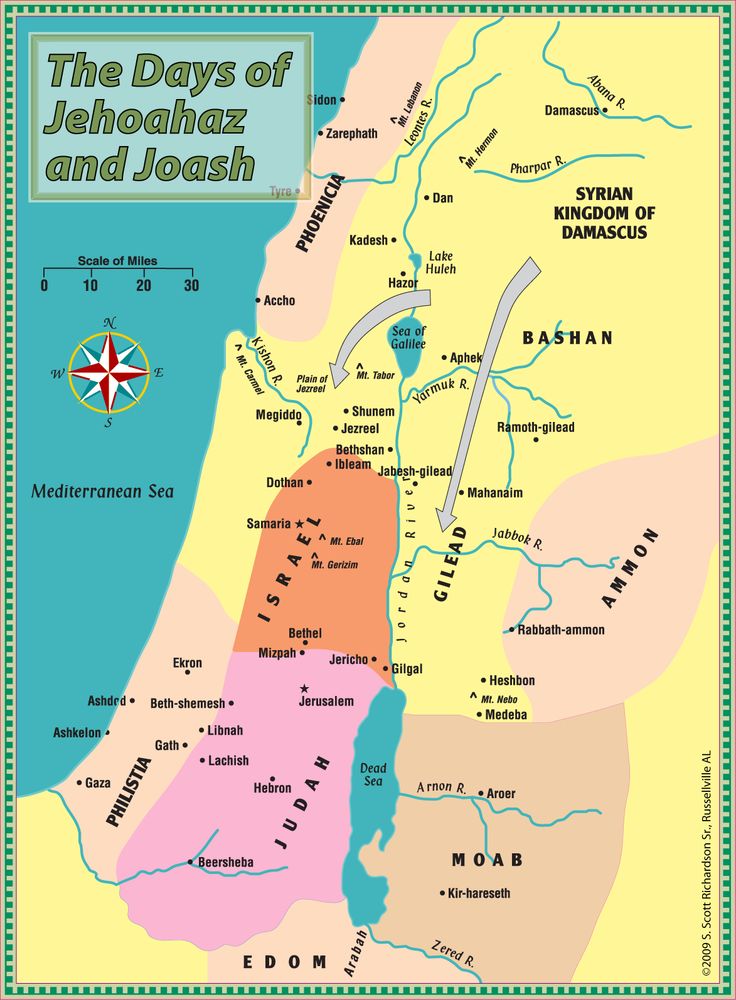
But now, God was going to use the Syrians to punish the rebellious and unrepentant nation of Judah. King Hazael took his campaign of terror further south, moving along the coast of the Mediterranean, and eventually capturing the city of Gath, deep within Judean territory. Then he set sights on Jerusalem. In the spring of the year, Hazael and his army attacked the capital city, “and destroyed all the princes of the people from among the people and sent all their spoil to the king of Damascus” (2 Chronicles 24:23 ESV). And the chronicler goes on to reveal that this victory was God-ordained.

Though the army of the Syrians had come with few men, the Lord delivered into their hand a very great army, because Judah had forsaken the Lord, the God of their fathers. Thus they executed judgment on Joash. – 2 Chronicles 24:24 ESV

The attack left Jehoash wounded. And in desperation, the king decided to do whatever had to do to keep Hazael from capturing the city. So, he stripped bare the temple treasury, sending all the sacred items and the gold to Hazael as a form of ransom.

Jehoash king of Judah took all the sacred gifts that Jehoshaphat and Jehoram and Ahaziah his fathers, the kings of Judah, had dedicated, and his own sacred gifts, and all the gold that was found in the treasuries of the house of the Lord and of the king’s house, and sent these to Hazael king of Syria. Then Hazael went away from Jerusalem. – 2 Kings 12:18 ESV

Rather than turn to God for help, Jehoash took what belonged to God and used it to buy off the enemy. And his plan seemed to work. Hazael took the treasure and left. But Jehoash’s troubles were far from over. Still suffering from the wounds he had received in the attack on Jerusalem, Jehoash was in a vulnerable state. His treasury was bankrupt and he was a physically broken man. And it seems that some of his officials recognized that Judah’s recent defeat at the hands of the Syrians had something to do with Jehoash’s decision to kill Zechariah. The curse uttered by the dying prophet had come true. So, they decided to eliminate the cause of all their troubles.

…his own officials plotted to kill him for murdering the son of Jehoiada the priest. They assassinated him as he lay in bed. – 2 Chronicles 24:25 NLT

The author of 2 Kings even provides us the names of the two conspirators.

The assassins were Jozacar son of Shimeath and Jehozabad son of Shomer—both trusted advisers. – 2 Kings 12:21 NLT

These men would have had easy access to the king. He trusted them. They had become replacements for Jehoiada, providing the king with counsel, and acting as his mentors. But unlike the former priest, these men had no love for Jehoash. They viewed him as a plague upon the nation and determined that his removal might placate God and prevent further judgment. Their actions were the work of God. And it’s interesting to note that these two men were actually foreigners. One was the son of an Ammonite woman, and the other was the son of a Moabite woman. This reference to their birth mothers is significant and it links the events in this chapter all the way back to the book of Genesis.

In chapter 19 of the book of Genesis, there is the account of God’s rescue of Lot and his daughters from the wicked city of Sodom. Lot was the nephew of Abraham who had made a decision to settle in fertile valleys of the Jordan. But it wasn’t long before he “moved his tent as far as Sodom” (Genesis 13:12 ESV). This proved to be a problem, because “the men of Sodom were wicked, great sinners against the Lord” (Genesis 13:12 ESV). Eventually, Lot relocated his family inside the walls of the city of Sodom. When God determined to destroy Sodom and its neighboring city of Gomorrah for their wickedness, Abraham convinced God to spare Lot and his daughters. But once they were rescued by the angels of God, Lot’s daughters revealed the negative influence of their time spent in Sodom. Fearful that they will never find husbands, they come up with a plan to get their father drunk and commit incest with him, all under the guise of prolonging their father’s lineage. Their mother was dead and their father had no sons. So, in their minds, this was the only way of preserving the family line. But their sinful decision would produce a less-than-ideal outcome.

…both of Lot’s daughters became pregnant by their own father. When the older daughter gave birth to a son, she named him Moab. He became the ancestor of the nation now known as the Moabites. When the younger daughter gave birth to a son, she named him Ben-ammi. He became the ancestor of the nation now known as the Ammonites. – Genesis 19:36 NLT

The Ammonites and Moabites, while distant relatives of the Israelites, were pagan nations that worshiped false gods. And it’s no coincidence that the men who plotted and carried out the assassination of Jehoash had ties to these two nations. God had used the Syrians to inflict judgment upon Judah. Now, He used an Ammonite and a Moabite to bring death to the rebellious and unrepentant Jehoash.

God had preserved and protected Jehoash, allowing him to find sanctuary in the temple and receive instruction from Jehoiada the priest. But when his godly mentor had died, Jehoash was exposed for what he really was – just another king who refused to acknowledge God as the one true Sovereign. Jehoash had started out so well but ended poorly. He had chosen to forsake God and listen to the advice of men. Rather than heed the warnings of God’s prophet, Jehoash had put him to death. And instead of placing his trust in Yahweh, Jehoash had attempted to buy his way out of trouble, using the treasure of God in a failed attempt to escape the judgment of God. And he died trying.

Joash was buried with his ancestors in the City of David. Then his son Amaziah became the next king. – 2 Kings 12:21 NLT

English Standard Version (ESV) The Holy Bible, English Standard Version. ESV® Permanent Text Edition® (2016). Copyright © 2001 by Crossway Bibles, a publishing ministry of Good News Publishers.

New Living Translation (NLT) Holy Bible, New Living Translation, copyright © 1996, 2004, 2015 by Tyndale House Foundation. Used by permission of Tyndale House Publishers Inc., Carol Stream, Illinois 60188. All rights reserved.

The Message (MSG)Copyright © 1993, 1994, 1995, 1996, 2000, 2001, 2002 by Eugene H. Peterson


A Day of Good News

3 Now there were four men who were lepers at the entrance to the gate. And they said to one another, “Why are we sitting here until we die? 4 If we say, ‘Let us enter the city,’ the famine is in the city, and we shall die there. And if we sit here, we die also. So now come, let us go over to the camp of the Syrians. If they spare our lives we shall live, and if they kill us we shall but die.” 5 So they arose at twilight to go to the camp of the Syrians. But when they came to the edge of the camp of the Syrians, behold, there was no one there. 6 For the Lord had made the army of the Syrians hear the sound of chariots and of horses, the sound of a great army, so that they said to one another, “Behold, the king of Israel has hired against us the kings of the Hittites and the kings of Egypt to come against us.” 7 So they fled away in the twilight and abandoned their tents, their horses, and their donkeys, leaving the camp as it was, and fled for their lives. 8 And when these lepers came to the edge of the camp, they went into a tent and ate and drank, and they carried off silver and gold and clothing and went and hid them. Then they came back and entered another tent and carried off things from it and went and hid them.

9 Then they said to one another, “We are not doing right. This day is a day of good news. If we are silent and wait until the morning light, punishment will overtake us. Now therefore come; let us go and tell the king’s household.” 10 So they came and called to the gatekeepers of the city and told them, “We came to the camp of the Syrians, and behold, there was no one to be seen or heard there, nothing but the horses tied and the donkeys tied and the tents as they were.” 11 Then the gatekeepers called out, and it was told within the king’s household. 12 And the king rose in the night and said to his servants, “I will tell you what the Syrians have done to us. They know that we are hungry. Therefore they have gone out of the camp to hide themselves in the open country, thinking, ‘When they come out of the city, we shall take them alive and get into the city.’” 13 And one of his servants said, “Let some men take five of the remaining horses, seeing that those who are left here will fare like the whole multitude of Israel who have already perished. Let us send and see.” 14 So they took two horsemen, and the king sent them after the army of the Syrians, saying, “Go and see.” 15 So they went after them as far as the Jordan, and behold, all the way was littered with garments and equipment that the Syrians had thrown away in their haste. And the messengers returned and told the king.

16 Then the people went out and plundered the camp of the Syrians. So a seah of fine flour was sold for a shekel, and two seahs of barley for a shekel, according to the word of the Lord. 17 Now the king had appointed the captain on whose hand he leaned to have charge of the gate. And the people trampled him in the gate, so that he died, as the man of God had said when the king came down to him. 18 For when the man of God had said to the king, “Two seahs of barley shall be sold for a shekel, and a seah of fine flour for a shekel, about this time tomorrow in the gate of Samaria,” 19 the captain had answered the man of God, “If the Lord himself should make windows in heaven, could such a thing be?” And he had said, “You shall see it with your own eyes, but you shall not eat of it.” 20 And so it happened to him, for the people trampled him in the gate and he died. – 2 Kings 7:3-20 ESV

A protracted siege by the Syrians had left the royal city of Samaria in dire straits. The people inside the walls were starving to death due to the lack of food and some had even resorted to cannibalism, eating their own children to survive. Jehoram, the king of Israel, was powerless to do anything about the situation. He recognized that this was some form of punishment from the hand of Yahweh, but he refused to repent of his apostasy and idolatry. Defenseless against the Syrians and completely powerless to thwart the divine wrath of Yahweh, Jehoram turned his anger and frustration against the prophet Elisha.

Jehoram knew that Elisha was somehow to blame for the devastating conditions in Samaria. And he fully expected the prophet to bring nothing but bad news regarding the ultimate outcome of the siege. But to his surprise, Elisha predicted a dramatic and virtually instantaneous reversal of fortunes.

“By this time tomorrow in the markets of Samaria, six quarts of choice flour will cost only one piece of silver, and twelve quarts of barley grain will cost only one piece of silver.” – 2 Kings 7:1 NLT

Elisha informed the king that within 24 hours, the conditions within the walls of Samaria would improve so dramatically that it would be as if the siege never took place. But Elisha provided no explanation as to how this remarkable transformation would take place. And at least one individual responded to his words with doubt and derision.

The officer assisting the king said to the man of God, “That couldn’t happen even if the Lord opened the windows of heaven!” – 2 Kings 7:2 NLT

The author then transitions his story from the doubting officer to four lepers who sat at the gate of the city. Because of their disease, these men were social outcasts whose survival was based on the generosity of others. They were forced to beg for handouts in order to survive. And the siege had made their circumstances worse than ever. Their appearance in the story at this particular point in time is purely intentional. In a sense, they serve as proxies for the entire nation of Israel. Their disease reflects the spiritual state of God’s people. And their abject state of hopelessness and helplessness is meant to mirror the plight of all those who have abandoned Yahweh.

As they sat at the gate of the city, these four men assessed their situation and determined to do something about it. They could stay where they were and starve to death, or they could risk entering the Syrian camp and placing themselves at the mercy of the enemy. So, sometime before sunrise, they made their fateful decision and walked the short distance from the walls of Samaria to the Syrian encampment. Fully expecting to encounter a Syrian sentry somewhere along the way, they were surprised to find that they were able to walk into the camp uninhibited and unaccosted. The place was a virtual ghost town with not a single Syrian sight. It was as if the entire Syrian army had just evaporated into thin air, leaving behind all their tents, equipment,  and provisions, including mass quantities of food and wine. These four starving lepers found themselves living in a dream come true. Suddenly and unexpectedly, these men who had spent their entire lives begging for food, found themselves surrounded by a seemingly endless supply of delicious delicacies and fine wines.

…they went into one tent after another, eating and drinking wine; and they carried off silver and gold and clothing and hid it. – 2 Kings 7:8 NLT

Like kids let loose in a candy store, they greedily stuffed their faces and their pockets. They had no idea what had happened to the Syrians, and they didn’t seem to care. Their minds were focused on the perpetual feast in front of them and all the silver and gold that had been left for them. Little did they know that their good fortune had been an act of God.

For the Lord had caused the Aramean army to hear the clatter of speeding chariots and the galloping of horses and the sounds of a great army approaching. – 2 Kings 7:6 NLT

Sometime before the lepers had made their decision to enter the Syrian camp, God had performed a miracle. He had caused the Syrians to hear what sounded like a large army headed their way. They immediately concluded that the Israelites had somehow gotten word to their allies and help was on the way.

“The king of Israel has hired the Hittites and Egyptians to attack us!” they cried to one another. So they panicked and ran into the night, abandoning their tents, horses, donkeys, and everything else, as they fled for their lives. – 2 Kings 7:6-7 NLT

There were no Hittites or Egyptians. There were no chariots or horses. It had all been a divine ruse. And when the four lepers finally stopped pillaging long enough to consider the incredible nature of what they were witnessing, they had second thoughts.

“This is not right. This is a day of good news, and we aren’t sharing it with anyone! If we wait until morning, some calamity will certainly fall upon us. Come on, let’s go back and tell the people at the palace.” – 2 Kings 7:9 NLT

But when their good news reached the ears of King Jehoram, he reacted with derision. He saw it as nothing more than a clever ploy by the Syrians to lure the Israelite troops out of the safety of the city. It was all too good to be true. Jehoram could not bring himself to believe that victory could come that easily. There was no way that the long-standing siege could end without a fight and the fall of the city. So, he sent scouts to verify the report of the lepers, and they discovered “a trail of clothing and equipment that the Arameans had thrown away in their mad rush to escape” (2 Kings 7:15 NLT).

It was true. The Syrians were gone and the siege was over. But not only that, the Syrian camp was filled with more than enough food to feed the citizens of the city. And when the Israelites had finished plundering the camp, the conditions within the walls of Samaria were instantaneously reversed.

Then the people of Samaria rushed out and plundered the Aramean camp. So it was true that six quarts of choice flour were sold that day for one piece of silver, and twelve quarts of barley grain were sold for one piece of silver, just as the Lord had promised. – 2 Kings 7:16 NLT

And the author makes sure that we understand the nature of this amazing turn of events.

…everything happened exactly as the man of God had predicted. – 2 Kings 7:17 NLT

God had intervened on behalf of His disobedient children. He had graciously and mercifully delivered them from their enemy and rescued them from imminent death. Overnight, the four lepers had experienced a dramatic shift in their fortunes. They not only had full stomachs but they had hidden enough treasure to transform themselves from paupers to princes. And the people of Samaria were blessed with food they didn’t deserve and riches they had not earned. Their good and gracious God had lovingly spared them – one more time.

But the one man who had expressed doubt concerning God’s ability to deliver His people would find himself suffering a different fate. Elisha had warned him, “You will see it happen with your own eyes, but you won’t be able to eat any of it!” (2 Kings 7:2 NLT). And when the starving masses flowed out of the city to plunder the Syrian camp, this man was crushed to death. He never lived long enough to see what God had done. And not one morsel of the fine Syrian cuisine or one drop of their wine ever touched his lips. He had doubted the power of God and suffered the consequences. The day of good news turned out to be very bad news for him.

English Standard Version (ESV) The Holy Bible, English Standard Version. ESV® Permanent Text Edition® (2016). Copyright © 2001 by Crossway Bibles, a publishing ministry of Good News Publishers.

New Living Translation (NLT) Holy Bible, New Living Translation, copyright © 1996, 2004, 2015 by Tyndale House Foundation. Used by permission of Tyndale House Publishers Inc., Carol Stream, Illinois 60188. All rights reserved.

The Message (MSG)Copyright © 1993, 1994, 1995, 1996, 2000, 2001, 2002 by Eugene H. Peterson
The Pressure to Compromise Your Convictions

1 For three years Syria and Israel continued without war. 2 But in the third year Jehoshaphat the king of Judah came down to the king of Israel. 3 And the king of Israel said to his servants, “Do you know that Ramoth-gilead belongs to us, and we keep quiet and do not take it out of the hand of the king of Syria?” 4 And he said to Jehoshaphat, “Will you go with me to battle at Ramoth-gilead?” And Jehoshaphat said to the king of Israel, “I am as you are, my people as your people, my horses as your horses.”

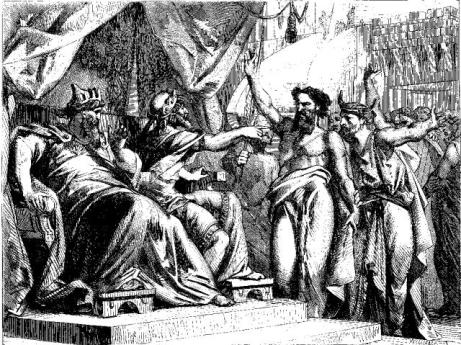
5 And Jehoshaphat said to the king of Israel, “Inquire first for the word of the Lord.” 6 Then the king of Israel gathered the prophets together, about four hundred men, and said to them, “Shall I go to battle against Ramoth-gilead, or shall I refrain?” And they said, “Go up, for the Lord will give it into the hand of the king.” 7 But Jehoshaphat said, “Is there not here another prophet of the Lord of whom we may inquire?” 8 And the king of Israel said to Jehoshaphat, “There is yet one man by whom we may inquire of the Lord, Micaiah the son of Imlah, but I hate him, for he never prophesies good concerning me, but evil.” And Jehoshaphat said, “Let not the king say so.” 9 Then the king of Israel summoned an officer and said, “Bring quickly Micaiah the son of Imlah.” 10 Now the king of Israel and Jehoshaphat the king of Judah were sitting on their thrones, arrayed in their robes, at the threshing floor at the entrance of the gate of Samaria, and all the prophets were prophesying before them. 11 And Zedekiah the son of Chenaanah made for himself horns of iron and said, “Thus says the Lord, ‘With these you shall push the Syrians until they are destroyed.’” 12 And all the prophets prophesied so and said, “Go up to Ramoth-gilead and triumph; the Lord will give it into the hand of the king.”

13 And the messenger who went to summon Micaiah said to him, “Behold, the words of the prophets with one accord are favorable to the king. Let your word be like the word of one of them, and speak favorably.” 14 But Micaiah said, “As the Lord lives, what the Lord says to me, that I will speak.” – 1 Kings 22:1-14 ESV

King Ahab had been placed under a curse from God for having spared the life of Ben-hadad, the king of Syria. Rather than obey God’s command to put his enemy to death, Ahab had chosen to sign a peace treaty with him that would allow Israel to profit from Syria’s lucrative trading business. Yet, despite the judgment leveled against him by God, Ahab’s decision seems to have produced positive results.

The treaty that Ahab had brokered produced three years of peace and prosperity between the two nations. Israel and Syria had become allies and trading partners. According to an inscription on an Assyrian tablet discovered in 1861, Ahab and Ben-hadad had been part of a 12-nation confederation that faced Emperor Shalmaneser and the Assyrians in the battle of Qarqar in 853 BC. So, while God had decreed that Ahab’s dynasty would come to an end with his death, the king of Israel continued to enjoy a small measure of success. And his insatiable desire for glory and self-aggrandizement would eventually drive him to jeopardize his peaceful and prosperous relationship with Syria.

During the time in which Ahab had been on the throne of Israel, Jehoshaphat had become the king of Judah. He had succeeded his father, Asa. And according to the book of 2 Chronicles, Jehoshaphat had proven to be a good king.

The Lord was with Jehoshaphat, because he walked in the earlier ways of his father David. He did not seek the Baals, but sought the God of his father and walked in his commandments, and not according to the practices of Israel. Therefore the Lord established the kingdom in his hand. And all Judah brought tribute to Jehoshaphat, and he had great riches and honor. His heart was courageous in the ways of the Lord. And furthermore, he took the high places and the Asherim out of Judah. – 2 Chronicles 17:3-6 ESV

Because Jehoshaphat chose to remove all the false gods and restore the worship of the one true God, his reign was blessed, and the southern kingdom of Judah became a powerful force in the region. But Jehoshaphat, like his father before him, made the mistake of placing his trust in the Syrians. When King Baasha of Israel had begun to build a fortified city on the border between Israel and Judah, King Asa had sought the help of Ben-hadad and the Syrians. Asa “took silver and gold from the treasures of the house of the Lord and the king’s house and sent them to Ben-hadad king of Syria” (2 Chronicles 16:2 ESV). He used these funds to convince Ben-hadad to break his covenant with Israel and join forces with him. His ploy worked, and Baasha stopped construction on his military outpost. But God condemned Asa for his alliance with Ben-hadad, warning that Judah would face non-stop war during the rest of his reign. Rather than trust God, Asa had placed his hope in a foreign king who worshiped false gods.

And while his son Jehoshaphat would prove to be faithful to God, he would also make an alliance with an ungodly, idol-worshiping king.

Now Jehoshaphat had great riches and honor, and he made a marriage alliance with Ahab. After some years he went down to Ahab in Samaria. And Ahab killed an abundance of sheep and oxen for him and for the people who were with him, and induced him to go up against Ramoth-gilead. – 2 Chronicles 18:1-2 ESV

This marital alliance ended up putting Jehoshaphat in an awkward situation. While visiting Israel’s capital city of Samaria, Jehoshaphat was presented with an official request from Ahab for military assistance in recapturing the city of Ramoth-gilead from the Syrians. It galled Ahab that the Syrians had stolen a city that had once belonged to Israel, and nothing had been done about it.

“Do you know that Ramoth-gilead belongs to us, and we keep quiet and do not take it out of the hand of the king of Syria?” – 1 Kings 22:3 ESV

So, he called on Jehoshaphat to help him right this apparent wrong. And Jehoshaphat quickly and readily agreed.

“I am as you are, my people as your people, my horses as your horses.” – 1 Kings 22:4 ESV

But Jehoshaphat, anxious to remain obedient to God, asked Ahab to seek the Lord’s counsel. And it’s important to understand that Jehoshaphat wanted to know what the “Lord” (Yahweh) would have them do. But when Ahab commissioned his 400 prophets to seek the will of the gods, they came back with the answer:

“Go up, for the Lord (ăḏōnāy) will give it into the hand of the king.” – 1 Kings 22:6 ESV

These men do not mention the name of Yahweh, and Jehoshaphat seems to have immediately recognized that these were false prophets who had been seeking the will of their false god. So, he asked Ahab if there were no prophets of the one true God left in Israel. And Ahab confessed that there was one, a man named Micaiah, who he hated with a passion.

“He never prophesies anything but trouble for me!” – 1 Kings 22:8 NLT

Micaiah never told Ahab what he wanted to hear, so the king avoided him like the plague. But Jehoshaphat insisted that Micaiah be consulted before any action was taken against the Syrians.  So, reluctantly, Ahab sent someone to fetch his least-favorite prophet. In the meantime, his 400 false prophets bombarded Jehoshaphat with their cheery predictions of success.

“Go up to Ramoth-gilead and triumph; the Lord will give it into the hand of the king.” – 1 Kings 22:12 ESV

We’re not told how long it took for Micaiah to be located and brought to Samaria. But during the delay, Jehoshaphat found himself pressured to listen to the false prophets and throw in his lot with Ahab. The temptation to compromise his convictions was great. He could have easily given in and listened to the popular opinions of the crowd, but instead, Jehoshaphat waited to hear a word from Yahweh.

Even Micaiah found himself pressured to follow the party line. The messenger who located him delivered a not-so-subtle warning that there was only one answer King Ahab wanted to hear.

“Look, all the prophets are promising victory for the king. Be sure that you agree with them and promise success.” – 1 Kings 22: 13 NLT

But Micaiah would not be bullied into submission. He knew how much Ahab hated him, and he would be risking his life to disobey a direct order from the king. But his allegiance to Yahweh was greater than his fear of Ahab. So, he told the messenger, “As surely as the Lord lives, I will say only what the Lord tells me to say” (1 Kings 22:14 NLT).

That must have been a long and awkward trip back to Samaria for the messenger. He probably feared for his own life because he knew the prophet would give the king bad news. Everyone who worked for Ahab and all the people who lived in Israel knew that their king had no love affair with Yahweh. He had spent his entire reign promoting the worship of false gods like Baal and Asherah. And he had done everything he could do to ignore and even eliminate the prophets of God. Ahab knew exactly what Micaiah was going to say when he showed up, and it would not be what he wanted to hear. Ahab needed Jehoshaphat’s help, and he knew that Jehoshaphat’s God would stand opposed to his ambitious plans to recapture Ramoth-gilead. Ahab didn’t want to hear from God because he was not willing to do the will of God.

English Standard Version (ESV) The Holy Bible, English Standard Version. ESV® Permanent Text Edition® (2016). Copyright © 2001 by Crossway Bibles, a publishing ministry of Good News Publishers.

New Living Translation (NLT) Holy Bible, New Living Translation, copyright © 1996, 2004, 2015 by Tyndale House Foundation. Used by permission of Tyndale House Publishers Inc., Carol Stream, Illinois 60188. All rights reserved.

The Message (MSG)Copyright © 1993, 1994, 1995, 1996, 2000, 2001, 2002 by Eugene H. Peterson