An Alien and Undeserved Righteousness

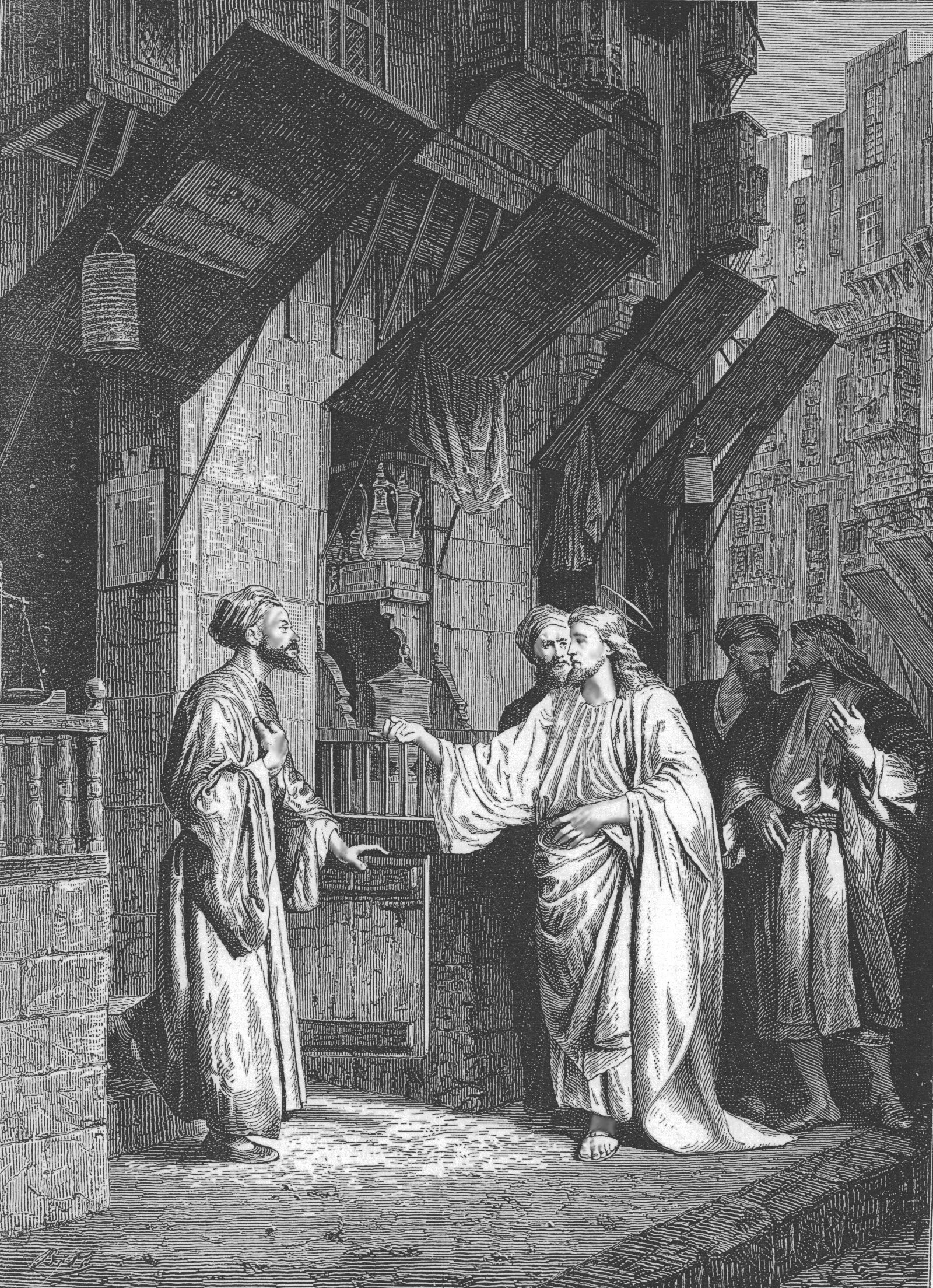
He also told this parable to some who trusted in themselves that they were righteous, and treated others with contempt: 10 “Two men went up into the temple to pray, one a Pharisee and the other a tax collector. 11 The Pharisee, standing by himself, prayed thus: ‘God, I thank you that I am not like other men, extortioners, unjust, adulterers, or even like this tax collector. 12 I fast twice a week; I give tithes of all that I get.’ 13 But the tax collector, standing far off, would not even lift up his eyes to heaven, but beat his breast, saying, ‘God, be merciful to me, a sinner!’ 14 I tell you, this man went down to his house justified, rather than the other. For everyone who exalts himself will be humbled, but the one who humbles himself will be exalted.” – Luke 18:9-14 ESV

With His telling of the parable of the unrighteous judge, it appears that Jesus was taking a bit of a diversion from discussing the shortcomings of the Pharisees. But in many ways, the parable was just another in a long line of stinging indictments of these self-righteous men who had made a god out of their religion. While Jesus has begun to focus His attention on His disciples in an attempt to prepare them for what lies ahead, He has not stopped exposing the arrogant and uncaring nature of the Pharisees and their fellow religious leaders.

In His previous parable, Jesus told the story of “a judge who neither feared God nor respected man” (Luke 18:2 ESV). This man, by virtue of his role, was meant to be an unbiased arbiter, settling disputes between two parties. But how could he do so if he “neither feared God nor respected man?” And this man’s presence in the story was meant to reflect the attitude of the Jewish religious leaders. According to Jesus, they were guilty of the same thing. And by using the term “judge,” Jesus was not offering them a compliment. The Outline of Biblical Usage describes a judge as “one who passes or arrogates to himself, judgment on anything.”

The Pharisees were quick to judge, condemning others for their lack of religious zeal and their failure to keep all the man-made rules and regulations they had appended to the Mosaic Law. At one point Jesus had delivered a strong word of warning against these men.

“…what sorrow also awaits you experts in religious law! For you crush people with unbearable religious demands, and you never lift a finger to ease the burden.” – Luke 11:46 NLT

They had become self-appointed judges of the people who feared no repercussions from God. In fact, they actually thought they were doing God a favor by holding the people to such high moral and ethical standards. But like the widow in the parable, the poor and disenfranchised of Israel were longing for justice. They were seeking a judge who would act righteously and deliver justice on their behalf.

Consider closely verse 9 of this chapter. Luke records that Jesus “told this parable to some who trusted in themselves that they were righteous, and treated others with contempt” (Luke 18:9 ESV). It seems obvious that Jesus was focusing His attention of the Pharisees who were still lingering on the edges of the crowd that followed Him. Despite all He had said against them, they had not gone anywhere. But Jesus was not just addressing the Pharisees. Their longstanding attitude of spiritual superiority and self-righteousness had infected others.  They had gone out of their way to teach their flawed philosophy of religion to others, something for which Jesus held them accountable.

“What sorrow awaits you teachers of religious law and you Pharisees. Hypocrites! For you cross land and sea to make one convert, and then you turn that person into twice the child of hell you yourselves are!” – Matthew 23:15 NLT

As far as Jesus was concerned, self-righteousness was a dangerous and deadly heresy that led people to rely on their own efforts and merits to earn favor with God. It was a dead-end street that eventually terminated with eternal separation from God. As the prophet Isaiah wrote: “We are all infected and impure with sin. When we display our righteous deeds, they are nothing but filthy rags” (Isaiah 64:6 NLT). The apostle Paul would later quote from the psalms in order to convey the same universal and inescapable reality:

“No one is righteous—
    not even one.
No one is truly wise;
    no one is seeking God.
All have turned away;
    all have become useless.
No one does good,
    not a single one.” – Romans 3:10-12 NLT

Self-righteousness is the greatest form of blasphemy because the one who practices it sets himself up as God. He elevates himself to the place of the Almighty, determining his eternal state based on his own biased judgment, rather than that of God. Anyone who believes he has earned a right standing before God has diminished the deadly nature of sin and devalued the righteous standards of God.

There is no way to get around the fact that in order for anyone to consider themselves to be righteous based on their own efforts, they must lower God’s standard for holiness. Which is really diminishing the holiness of God Himself, because He is the ultimate standard by which we are judged. So, rather than using God as the gold standard for holiness, men begin to compare themselves with one another. According to the apostle Paul, this horizontal matrix for measuring holiness is not only flawed but foolish.

…we wouldn’t dare say that we are as wonderful as these other men who tell you how important they are! But they are only comparing themselves with each other, using themselves as the standard of measurement. How ignorant! – 2 Corinthians 10:12 NLT

So, in His parable, Jesus relates the story of two men who have gone to the temple in Jerusalem to pray. One was a Pharisee, an icon of religious rectitude. The other was a tax collector, who represented the spiritual dregs of society. Yet, Jesus places both men in the temple courtyard where they are praying to God. But that is where the similarities end. Jesus portrays the Pharisee as a self-consumed man with an over-inflated sense of self-worth. He stands in the temple courtyard and boldly prays:

“‘I thank you, God, that I am not like other people—cheaters, sinners, adulterers. I’m certainly not like that tax collector! I fast twice a week, and I give you a tenth of my income.” – Luke 18:11-12 NLT

His words are the epitome of arrogance and pride. In a blatant display of self-righteous self-congratulation, he declares his moral superiority to the God of the universe. And he does so by comparing himself to the tax collector who is standing nearby. To the Pharisee, the differences between the two men could not be more obvious. Based on his religious zeal and faithful adherence to the smallest requirement of the law, he holds the moral high ground. He has earned the right to be heard by God.

Yet, Jesus quickly moves the focus from the fictional Pharisee to the tax collector, who “stood at a distance and dared not even lift his eyes to heaven as he prayed. Instead, he beat his chest in sorrow…” (Luke 18:13 NLT). In starks contrast to the Pharisee, the tax collector epitomizes humility and a high degree of self-awareness. He knows exactly what he is and what he justly deserves.

“O God, be merciful to me, for I am a sinner.” – Luke 18:13 NLT

Fully aware that his sin separates him from a holy God, this man pleads for mercy. He confesses his sinful state and, in a sense, places himself at the mercy of the court. He is more than willing to let the Judge decide his fate but he longs for justice coupled with mercy and forgiveness.

And then, Jesus dropped the bombshell:

I tell you, this sinner, not the Pharisee, returned home justified before God.” – Luke 18:14 NLT

Don’t miss the significance of Jesus’ statement. He is declaring that the tax collector, a self-admitted sinner, is declared to be righteous by God. This is a judicial act by which God, in His sovereign authority, deems the unrighteous to be righteous in His eyes. The apostle Paul would expand on this marvelous thought in his letter to the believers in Rome.

But now God has shown us a way to be made right with him without keeping the requirements of the law, as was promised in the writings of Moses and the prophets long ago. We are made right with God by placing our faith in Jesus Christ. And this is true for everyone who believes, no matter who we are.

For everyone has sinned; we all fall short of God’s glorious standard. Yet God, in his grace, freely makes us right in his sight. He did this through Christ Jesus when he freed us from the penalty for our sins. For God presented Jesus as the sacrifice for sin. People are made right with God when they believe that Jesus sacrificed his life, shedding his blood. – Romans 3:21-25 NLT

Jesus was hinting at a reality to come. He was going to go to the cross and offer Himself as the sinless substitute for sinful mankind. And all those who were willing to recognize and confess their sins and place their faith in Him would be imputed His righteousness as a gift from God. Jesus would take on their sin and, in exchange, they would receive His righteousness. But this “great exchange” begins with the sinner’s willingness to confess his desperate need for a Savior. Like the widow who needed a judge to settle her case, sinners are dependent upon the Judge of the universe to rule in their favor. Not based on their own merit, but according to His mercy and grace.

The apostle Paul, who in his former life was a dedicated and zealous Pharisee, offered his radically altered understanding of how one is made right with God.

I no longer count on my own righteousness through obeying the law; rather, I become righteous through faith in Christ. For God’s way of making us right with himself depends on faith. – Philippians 3:9 NLT

At one time, Paul would have been that self-righteous Pharisee standing in the courtyard singing his own praises. But, mercifully, Jesus had appeared to him on the road to Damascus, blinding his eyes, but helping him see for the first time the sin that separated him from a holy God. He went from being a self-righteous Pharisee facing an eternity separated from God to a self-confessing sinner who received the righteousness of Christ and the assurance of eternal life.

So, Jesus wrapped up His little parable with the sobering statement:

“…those who exalt themselves will be humbled, and those who humble themselves will be exalted.” – Luke 18:14 NLT

The apostle Peter would reiterate the words of Jesus in his first letter:

“God opposes the proud but gives grace to the humble.”

So humble yourselves under the mighty power of God, and at the right time he will lift you up in honor. – 1 Peter 5:5-6 NLT

English Standard Version (ESV) The Holy Bible, English Standard Version. ESV® Permanent Text Edition® (2016). Copyright © 2001 by Crossway Bibles, a publishing ministry of Good News Publishers.

New Living Translation (NLT) Holy Bible, New Living Translation, copyright © 1996, 2004, 2015 by Tyndale House Foundation. Used by permission of Tyndale House Publishers Inc., Carol Stream, Illinois 60188. All rights reserved.
The Message (MSG)Copyright © 1993, 1994, 1995, 1996, 2000, 2001, 2002 by Eugene H. Peterson

Sinners in Need of a Savior

As Jesus passed on from there, he saw a man called Matthew sitting at the tax booth, and he said to him, “Follow me.” And he rose and followed him.

10 And as Jesus reclined at table in the house, behold, many tax collectors and sinners came and were reclining with Jesus and his disciples. 11 And when the Pharisees saw this, they said to his disciples, “Why does your teacher eat with tax collectors and sinners?” 12 But when he heard it, he said, “Those who are well have no need of a physician, but those who are sick. 13 Go and learn what this means: ‘I desire mercy, and not sacrifice.’ For I came not to call the righteous, but sinners. – Matthew 9:9-13 ESV

Matthew has pieced together a series of events that provide evidence to support his contention that Jesus was the Son of God and the long-awaited Messiah of Israel. And the identity of Jesus was proven by His obvious authority over sickness, disease, demons, and the creative order. Jesus had both the power and authority to command the winds and waves, representing the natural world, as well as demons, who represent the spiritual realm. He was more than a mere man with a talent for oratory and the gift of healing. Every word He spoke carried weight and left all those who heard Him in a state of awe.

…the people were amazed at his teaching, for he spoke with authority.  – Luke 4:32 NLT

“We have never heard anyone speak like this!” – John 7:46 NLT

The disciples had witnessed Jesus calm a storm by speaking the words, “Peace! Be still!” (Mark 4:39 ESV), and that scene had left them amazed and confused as to just who Jesus really was.

…they were filled with great fear and said to one another, “Who then is this, that even the wind and the sea obey him?” – Mark 4:41 ESV

Now, Matthew chronicles yet another event in the life of Jesus that provides further evidence of His power and authority – this time, over men.

In these verses, Matthew retells the story of his own calling by Jesus, but he does so from the third-person perspective as if he is an outsider recalling a scene he has witnessed. His account, though personal in nature, differs little from those of Luke and Mark. They all describe Jesus coming into contact with Matthew at his place of business, where he served as a tax collector. His “office” was little more than a booth, located on the edge of the city where he collected taxes on trade goods. These taxes, collected on behalf of the Roman government, were a form of sales tax or customs duty, paid by the seller. Matthew would have had a contract with the Romans, most likely purchased at a high cost, that provided him with the authority to collect taxes within a specific geographic region. In order to recoup the cost of his contract, Matthew would have charged fees and commissions on all the taxes he collected, making him a social pariah among his fellow Jews. They would have viewed him as a sell-out to the Romans and a tool of the enemy. And yet, Jesus offered Matthew the same invitation He had extended to Peter, Andrew, James, and John: “Follow me.”

It’s interesting to note that both Mark and Luke record that Jesus “saw” Matthew. This seems to reflect a recognition on the part of Jesus. He saw Matthew and approached him. And yet, there is no dialogue between them. Jesus simply stated, “Follow me.” And all three gospel writers indicate that Matthew accepted the invitation. Luke adds the clarifying note: “leaving everything, he rose and followed him” (Luke 5:28 ESV).

Matthew wasn’t just taking a well-deserved break. Whether he fully realized it or not, he was making a complete break with his past, leaving everything he knew behind. By following Jesus, he was walking away from his booth, his business, and all the benefits and perks that came with his profession.

And both Mark and Luke record that the next thing Matthew did was host Jesus in his own home.

And Levi made him a great feast in his house, and there was a large company of tax collectors and others reclining at table with them. – Luke 5:29 ESV

And as he reclined at table in his house, many tax collectors and sinners were reclining with Jesus and his disciples, for there were many who followed him. – Mark 2:15 ESV

Matthew threw a party for Jesus, the disciples, and an assortment of other interesting guests. All three gospel writers make it clear that the room contained “tax collectors and sinners.” This term is meant to convey a message. The people with whom Jesus was willingly sharing a meal were considered social outcasts by the Jews. The term “sinners” was not a reference to anyone who had broken God’s laws. It was an expression commonly used by the Pharisees for anyone who broke their man-made rules of conduct. Matthew provides an illustration of these rules later on in his gospel.

Some Pharisees and teachers of religious law now arrived from Jerusalem to see Jesus. They asked him, “Why do your disciples disobey our age-old tradition? For they ignore our tradition of ceremonial hand washing before they eat.” – Matthew 15:1-2 NLT

Anyone who refused to live according to their exacting standards was considered a sinner. And Luke records another event in the life of Jesus, where He shared a meal with a Pharisee.

As Jesus was speaking, one of the Pharisees invited him home for a meal. So he went in and took his place at the table. His host was amazed to see that he sat down to eat without first performing the hand-washing ceremony required by Jewish custom. – Luke 11:37-38 NLT

And Jesus had some harsh words for these religious rule-keepers who burdened people with unnecessary and legalistic standards of righteousness that had nothing to do with God.

“…what sorrow also awaits you experts in religious law! For you crush people with unbearable religious demands, and you never lift a finger to ease the burden.” – Luke 11:46 NLT

But the Pharisees were just as appalled by Jesus’ behavior. In their eyes, He was nothing more than a sinner, who broke their laws by associating with the defiled and unclean. Which prompted them to ask His disciples, “Why does your teacher eat with tax collectors and sinners?” (Matthew 9:11 ESV). This question came from the scribes, the experts in religious law, whose man-made additions to the Mosaic Law had turned the righteous commands of God into a petty list of impossible tasks designed to make them look good. But, once again, Jesus had some condemning words for these men, describing their form of worship as “a farce, for they teach man-made ideas as commands from God” (Matthew 15:9 NLT).

The scribes and Pharisees viewed themselves as righteous. They considered themselves to be the true law-keepers, while everyone else was a sinner, including Jesus. And while they looked down their noses at tax collectors and sinners, they did nothing to help them improve their lot in life. Jesus accused them of crushing people with unbearable religious demands, never lifting a finger to ease the burden.

But Jesus answered their question. He explained His presence in the room that day, fully admitting that all those in His midst were indeed sinners. But He added that they were sinners in need of a Savior. And He had come to offer them a way to ease the burden they bore because of their sin. In fact, Jesus would later offer His “great invitation,” imploring sinners just like these to come to Him and find rest.

“Come to me, all of you who are weary and carry heavy burdens, and I will give you rest. Take my yoke upon you. Let me teach you, because I am humble and gentle at heart, and you will find rest for your souls. For my yoke is easy to bear, and the burden I give you is light.” – Matthew 11:28-30 NLT

Jesus was in His element that day. He was surrounded by those He came to save. And He made that point perfectly clear in His answer to the Pharisees and scribes.

“Those who are well have no need of a physician, but those who are sick. – Matthew 9:12 ESV

Jesus was not inferring that the religious leaders were righteous and in no need of salvation. He was condemning their false sense of confidence in their own righteousness. They only thought they were well and in no need of a physician. Jesus came to minister to those who were willing to recognize their own spiritual infirmity and their need for healing. Just as the leper, the Centurion’s servant, and Peter’s mother-in-law needed the healing touch of Jesus, so did the tax collectors and sinners in Matthew’s house. But their illness was spiritual in nature, not physical. They were sinners in need of a Savior. And while the Pharisees and scribes saw themselves as perfectly righteous before God, they too were spiritually sick.

The apostle Paul reminds us that every single individual on this planet is a sinner in need of a Savior and that those of us who have found healing in Christ are the beneficiaries of God’s grace and goodness.

Once you were dead because of your disobedience and your many sins. You used to live in sin, just like the rest of the world, obeying the devil—the commander of the powers in the unseen world. He is the spirit at work in the hearts of those who refuse to obey God. All of us used to live that way, following the passionate desires and inclinations of our sinful nature. By our very nature we were subject to God’s anger, just like everyone else.

But God is so rich in mercy, and he loved us so much, that even though we were dead because of our sins, he gave us life when he raised Christ from the dead. – Ephesians 2:1-5 NLT

Matthew and his dinner guests, as well as the disciples, the Pharisees and scribes, were all in need of a physician. Some recognized it, while others refused to admit their need and chose instead to see themselves as righteous in their own eyes. But Jesus warned them all, telling them, “I came not to call the righteous, but sinners” (Matthew 9:13 ESV).

Jesus had not come to earth so that He might round up all those who had perfectly obeyed the Mosaic law. Those people did not exist. His reference to mercy and sacrifice is meant to let the Pharisees know that law-keeping would not be the means by which people earn a righteous standing with God. It would be through the unmerited mercy extended to them by God through the sacrificial death of His Son. And the apostle Paul stresses that point in his letter to the Galatians.

Now it is evident that no one is justified before God by the law, for “The righteous shall live by faith.” – Galatians 3:11 ESV

All the “sacrifices” of the Pharisees would amount to nothing. Even their most righteous deeds were nothing more than filthy rags in the eyes of God. But the Great Physician was offering them healing from the spiritual infirmity by providing His Son as their Savior from sin. But as long as they arrogantly and errantly considered themselves to be righteous, they would never accept the free gift of salvation.

English Standard Version (ESV) The Holy Bible, English Standard Version. ESV® Permanent Text Edition® (2016). Copyright © 2001 by Crossway Bibles, a publishing ministry of Good News Publishers.

New Living Translation (NLT)
Holy Bible, New Living Translation, copyright © 1996, 2004, 2015 by Tyndale House Foundation. Used by permission of Tyndale House Publishers Inc., Carol Stream, Illinois 60188. All rights reserved.

The Message (MSG)Copyright © 1993, 1994, 1995, 1996, 2000, 2001, 2002 by Eugene H. Peterson

An Apostolic Smackdown.

But when Cephas came to Antioch, I opposed him to his face, because he stood condemned. For before certain men came from James, he was eating with the Gentiles; but when they came he drew back and separated himself, fearing the circumcision party. And the rest of the Jews acted hypocritically along with him, so that even Barnabas was led astray by their hypocrisy. But when I saw that their conduct was not in step with the truth of the gospel, I said to Cephas before them all, “If you, though a Jew, live like a Gentile and not like a Jew, how can you force the Gentiles to live like Jews?” – Galatians 2:11-14 ESV

When Paul had left Jerusalem, he had done so on good terms, having received “the right hand of fellowship” (Galatians 2:9 ESV) from his fellow apostles: Peter, James and John. But when Peter came to Antioch to get a first-hand look at Paul’s ministry, it didn’t take long before a confrontation took place between the two men. Upon his arrival, Peter was interfacing and even eating with the Gentile believers in the church in Antioch. But when a group of believing Jews arrived from Jerusalem who were of the opinion that Gentiles must be circumcised before they were truly Christians, Peter succumbed to peer pressure. Paul accused him of hypocrisy, because he drew back and separated himself from the Gentiles. The Greek word Paul uses carries a powerful punch. It is same word used by Luke when writing of an incident in Ephesus when Paul had been preaching in the synagogue there. He had been doing so for three months and had seen many come to Christ. The Luke records, “But when some became stubborn and continued in unbelief, speaking evil of the Way before the congregation, he withdrew from them and took the disciples with him” (Acts 19:9 ESV). He separated himself from them because of their unbelief. It seems that Paul is accusing Peter of treating the Gentile Christians as unbelievers because of the pressure he felt from the Judaizers. His behavior had radically changed when the Jews from Jerusalem had arrived in town. And his actions had negatively influence the Jewish Christians in Antioch to follow his lead. Even Barnabas, Paul’s companion in ministry there, had been led astray by Peter’s actions. Suddenly, there was an unhealthy and uncalled for division in the church. And Paul would not tolerate it.

Paul made a very condemning assessment, saying, “their conduct was not in step with the truth of the gospel” (Galatians 2:14 ESV). Their decision to separate themselves from the Gentiles Christians because they had not been circumcised was unwarranted and not in keeping with the message of the gospel. There was no requirement of circumcision tied to the message of the good news. There was no missing “next step” that had to be taken in order for these Gentiles to be fully saved or deemed legitimate Christians. And the idea that there were somehow Jewish Christians and Gentile (incomplete) Christians was in direct opposition to the message of the gospel. Rather than unity, the message of the Judaizers was causing division.

A little later on in this same letter, Paul writes of the unifying nature of the gospel.

So then, the law was our guardian until Christ came, in order that we might be justified by faith. But now that faith has come, we are no longer under a guardian, for in Christ Jesus you are all sons of God, through faith. For as many of you as were baptized into Christ have put on Christ. There is neither Jew nor Greek, there is neither slave nor free, there is no male and female, for you are all one in Christ Jesus. And if you are Christ’s, then you are Abraham’s offspring, heirs according to promise. – Galatians 3:24-29 ESV

Peter’s actions were divisive. Whether he meant to or not, he gave the impression that the Gentile Christians were somehow deficient in their justification before God. His decision to distance himself from them was based on the teachings of men, not the law of Moses. In fact, in the book of Acts, Luke records the encounter between Peter and Cornelius, a Roman Centurion who was “a devout man who feared God” (Acts 10:2 ESV). God had spoken to Peter in a vision and commanded him to go to Cornelius. In his vision, Peter had seen “the heavens opened and something like a great sheet descending, being let down by its four corners upon the earth. In it were all kinds of animals and reptiles and birds of the air. And there came a voice to him: ‘Rise, Peter; kill and eat’” (Acts 10:11-13 ESV). Appalled at the very thought, Peter had refused. But God commanded him a second time to eat, and then said, “What God has made clean, do not call common” (Acts 10:15 ESV). When Peter woke up from the vision, he obeyed God and went to see Cornelius and said to him:

“You yourselves know how unlawful it is for a Jew to associate with or to visit anyone of another nation, but God has shown me that I should not call any person common or unclean. So when I was sent for, I came without objection. I ask then why you sent for me.” – Acts 10:28-29 ESV

It is interesting to note that the unlawfulness to which Peter referred had nothing to do with the law of Moses. According to the Benson Commentary, the term, “anyone of another nation” refers to “A stranger, and an uncircumcised Gentile. This was not made unlawful by the law of God, but by the precepts of their wise men, which they looked upon to be no less obliging. They did not indeed forbid them to converse with Gentiles, in the way of traffic or worldly business, but to eat with them. With such scorn did the Jews look upon the Gentiles” (Benson Commentary on the Old and New Testaments).

Peter’s aversion to the Gentiles was based on man-made rules and regulations. And it is important to remember that Jesus, a practicing Jew and keeper of the law of Moses, ate with tax collectors and sinners, a practice for which He was derided by the Pharisees. In doing so, He was breaking their laws, not the law of God. And so, when Peter allowed the pressure from the Judaizers to cause him to pull away from the Gentile believers in Antioch, he was violating the very message God had given him in his vision: “I should not call any person common or unclean.”

Peter was wrong and he deserved to be confronted for his behavior. Paul, never one to pull any punches, was more than willing to call his brother on the carpet and demand that he rethink his actions. The gospel was too important. The unity of the church, too vital.


Day 25 – Matthew 9:9-13; Mark 2:13-17; Luke 5:27-32

The Danger of Self-Righteousness.

Matthew 9:9-13; Mark 2:13-17; Luke 5:27-32

Jesus answered them, “Healthy people don’t need a doctor—sick people do. I have come to call not those who think they are righteous, but those who know they are sinners and need to repent.” – Luke 5:31 NLT

Jesus never was one to mince words. Especially when it came to His views about the religious leaders of His day. At times, He could be brutally blunt and painfully honest. Not out of meanness, but because He wished to expose the hypocrisy and dangerous precedence they were setting for the people. They represented everything that was wrong with religious and the pursuit of a relationship with God in His day. They were prideful, arrogant, self-centered, and amazingly self-righteous. In other words, they had convinced themselves that their own efforts were their ticket to a right relationship with God. They had earned favor with Him by keeping all the rules. But what they had failed to understand was that God’s standard of measurement was not based on human effort, but the condition of the heart. And theirs were wicked.

You see time after time in the Gospels where these men confronted Jesus about His actions. They condemned Him for His words and railed on Him for His propensity to associate with those whom they considered unworthy, unclean, and unrighteous. They had established themselves as the gold standard and nobody else could measure up. They despised the common people as spiritually and morally worthless. They saw people like Matthew, a tax collector, as no better than a common prostitute. They looked down their noses at those who they considered second-class citizens from a spiritual perspective. When they saw Jesus having dinner with Matthew and his fellow tax collectors, they “complained to his disciples, ‘Why do you eat and drink with tax collectors and ‘sinners’?'” (Luke 5:30 NLT). In their minds, it made no sense for the “righteous” to associate with the “unrighteous.” Obviously, Jesus was not of their caliber, because He didn’t have the spiritual astuteness to know a sinner when He saw one.

But Jesus’ response to them is simple, yet profound. He calmly says, “Healthy people don’t need a doctor – sick people do. I have come to call not those who think they are righteous, but those who know they are sinful and need to repent” (Luke 5:31 NLT). In those few words, Jesus paints a vivid picture of their problem. He also clarifies the biggest difference between His view of how to attain righteousness and theirs. Their problem was that they refused to acknowledge their own sin. They saw themselves as already righteous and in no need of a “doctor.” They had no need of a Savior, because they were saving themselves. Theirs was a self-manufactured form of righteousness. As you read the Gospels, you can’t help but notice that the common people, especially those who were social outcast because of their lifestyles, moral choices, or health issues, were the ones who seemed to flock to Jesus. Why? Because they knew their need and understood their helplessness of hopelessness. They knew they were sinners and didn’t know what to do about it. The morally corrupt could no more save themselves than the lame, blind, deaf and dumb could heal themselves. So they flocked to Jesus. And many of them believed in Him. But the Pharisees, mired in their self-righteousness, couldn’t bring themselves to admit their own need. They refused to acknowledge their sin and confess their need for a Savior. And that sense of religious pride and self-righteousness still exists today. Even among Christ-followers. We can easily measure our worth based on our own self-effort. We can convince ourselves that we are somehow pleasing to God because of all that we do for God. We work hard at fixing ourselves through self-effort and behavior modification, failing to realize that our problem is beyond our capacity to remedy. We have a heart condition that can only be healed by Jesus.

The real point of Jesus’ message in this passage is that He came to call those who KNOW they are sinners and who know they NEED to repent. They know they need to change, but they don’t know how. So they turn to Jesus. They abandon self-effort and any attempts at self-righteousness and place their hope in Him. And He does for them what they could never have done for themselves. He supplies them with a righteousness that is not of their own making, but His. He takes their sin and replaces it with His righteousness. But it all begins with an awareness of need, an acknowledgement that you’re sick and need healing.

Father, self-righteousness can creep up so easily in my life. I find myself trying to earn favor with You on a regular basis. I also find it easy to think that I am better than I am based on some self-established standard of conduct. Never let me lose sight of my own susceptibility to sin and my daily need for the Savior. Without Him, my spiritual immune system is an easy target for the sin that so easily infects this world. But thank You that Your Son came to heal the sick like me.  Amen.

Ken Miller

Grow Pastor & Minister to Men
kenm@christchapelbc.org