Blinded by the Blessings

14 Now the weight of gold that came to Solomon in one year was 666 talents of gold, 15 besides that which came from the explorers and from the business of the merchants, and from all the kings of the west and from the governors of the land. 16 King Solomon made 200 large shields of beaten gold; 600 shekels of gold went into each shield. 17 And he made 300 shields of beaten gold; three minas of gold went into each shield. And the king put them in the House of the Forest of Lebanon. 18 The king also made a great ivory throne and overlaid it with the finest gold. 19 The throne had six steps, and the throne had a round top, and on each side of the seat were armrests and two lions standing beside the armrests, 20 while twelve lions stood there, one on each end of a step on the six steps. The like of it was never made in any kingdom. 21 All King Solomon’s drinking vessels were of gold, and all the vessels of the House of the Forest of Lebanon were of pure gold. None were of silver; silver was not considered as anything in the days of Solomon. 22 For the king had a fleet of ships of Tarshish at sea with the fleet of Hiram. Once every three years the fleet of ships of Tarshish used to come bringing gold, silver, ivory, apes, and peacocks.

23 Thus King Solomon excelled all the kings of the earth in riches and in wisdom. 24 And the whole earth sought the presence of Solomon to hear his wisdom, which God had put into his mind. 25 Every one of them brought his present, articles of silver and gold, garments, myrrh, spices, horses, and mules, so much year by year.

26 And Solomon gathered together chariots and horsemen. He had 1,400 chariots and 12,000 horsemen, whom he stationed in the chariot cities and with the king in Jerusalem. 27 And the king made silver as common in Jerusalem as stone, and he made cedar as plentiful as the sycamore of the Shephelah. 28 And Solomon’s import of horses was from Egypt and Kue, and the king’s traders received them from Kue at a price. 29 A chariot could be imported from Egypt for 600 shekels of silver and a horse for 150, and so through the king’s traders they were exported to all the kings of the Hittites and the kings of Syria. 1 Kings 10:14-29 ESV

Up to this point in his narrative of Solomon’s reign, the author of 1 Kings seems to have spent far more time describing Solomon’s vast wealth than providing evidence of his great wisdom. He has only offered one concrete example where Solomon utilized his God-given gift of wisdom to settle a dispute between two prostitutes who were fighting over legal custody of a newborn baby (1 Kings 3:16-28). There have been several allusions to Solomon’s wisdom, such as the statement made by the Queen of Sheba.

“Everything I heard in my country about your achievements and wisdom is true! I didn’t believe what was said until I arrived here and saw it with my own eyes. In fact, I had not heard the half of it! Your wisdom and prosperity are far beyond what I was told. – 1 Kings 10:6-7 NLT

However, it appears that the author has intentionally placed more emphasis on Solomon’s rapidly expanding financial portfolio. God had promised to bless Solomon with riches and honor (1 Kings 3:13), and it is evident that He had kept His word. In just a single year, nearly 25 tons of gold were added to Solomon’s treasury. That’s a staggering figure, but it represents only a fraction of the revenue that flowed into the kingdom each year. Income from his many business ventures, tributes paid by vassal states, and gifts from various kings and dignitaries further enhanced his annual revenue. His proverbial cup was running over.

People from every nation came to consult him and to hear the wisdom God had given him. Year after year everyone who visited brought him gifts of silver and gold, clothing, weapons, spices, horses, and mules. – 1 Kings 10:24-25 NLT

As a result, “King Solomon became richer and wiser than any other king on earth” (1 Kings 10:23 NLT). It seems that his wisdom and wealth shared a symbiotic relationship. Both were gifts that had been made possible by God. Yet, like all God-given gifts, the real test lies in how they are utilized. Both wisdom and wealth can be misused and abused. Any gift from God can be used for ungodly purposes. It seems that Solomon allowed his wisdom and wealth to become a distraction. Somewhere along the way, he had lost sight of the divine purpose for his gifts — to govern the people of Israel with justice (1 Kings 3:11). He began to repurpose his wisdom and riches in a vain search for meaning in life. He would later write of his growing disenchantment with the pursuit of pleasure and prosperity.

I became greater than all who had lived in Jerusalem before me, and my wisdom never failed me. Anything I wanted, I would take. I denied myself no pleasure. I even found great pleasure in hard work, a reward for all my labors. But as I looked at everything I had worked so hard to accomplish, it was all so meaningless—like chasing the wind. There was nothing really worthwhile anywhere. – Ecclesiastes 2:9-11 NLT

Notice how many times Solomon uses the personal pronoun “I.” He had become totally self-consumed, focusing all his attention on what he could gain from what he had been given. Even his God-given wisdom became little more than a tool for trying to decipher the mysteries of life. While he understood wisdom’s inherent value, it wasn’t long before he came to despise this valuable gift from God.

Yet I saw that the wise and the foolish share the same fate. Both will die. So I said to myself, “Since I will end up the same as the fool, what’s the value of all my wisdom? This is all so meaningless!” For the wise and the foolish both die. The wise will not be remembered any longer than the fool. In the days to come, both will be forgotten.

So I came to hate life because everything done here under the sun is so troubling. Everything is meaningless—like chasing the wind. – Ecclesiastes 3:14-17 NLT

Twenty years after ascending to the throne of his father, David, Solomon was experiencing unparalleled success. He had the Midas touch. It seems that everything he touched turned to literal gold. In fact, gold was so prevalent in his kingdom that “silver was considered worthless in Solomon’s day” (1 Kings 10:21 NLT).

Solomon had built his own fleet of ships, which returned every three years with their holds full of additional treasures, including “gold, silver, ivory, apes, and peacocks” (1 Kings 10:22 NLT). He had amassed “a huge force of chariots and horses. He had 1,400 chariots and 12,000 horses” ( 1 Kings 10:26 NLT). And many of those horses had been imported from as far away as Egypt.

All of these descriptions of Solomon’s incredible wealth must be placed within the context of the commands God had given concerning those who would serve as kings over His people.

“The king must not build up a large stable of horses for himself or send his people to Egypt to buy horses, for the Lord has told you, ‘You must never return to Egypt.’ The king must not take many wives for himself, because they will turn his heart away from the Lord. And he must not accumulate large amounts of wealth in silver and gold for himself.” – Deuteronomy 17:16-17 NLT

God had blessed Solomon with unparalleled resources, but Solomon used them in ways that were contradictory to God’s will. His misuse of God’s gracious gift was in clear violation of God’s command. Solomon’s wealth had never been intended to feed his ego or fulfill his wildest dreams. It was meant to enable him to provide the people of Israel with proper care and protection. While accumulating chariots and horses may have sounded like a good strategy for ensuring Israel’s national security, it was in direct violation of God’s will. Solomon’s own father had written about the futility of placing one’s hope in such things.

Now I know that the LORD saves his anointed;
he will answer him from his holy heaven
with the saving might of his right hand.
Some trust in chariots and some in horses,
but we trust in the name of the LORD our God.
They collapse and fall,
but we rise and stand upright. – Psalm 20:6-8 NLT

Solomon appears to have been preoccupied with the outward trappings of royalty. He had built for himself an opulent palace, where exquisite meals were served on golden plates and the finest wine was served in golden goblets. Oppulence was prevalent in Solomon’s kingdom. He spared no expense, spending vast sums of money on frivolous things like decorative shields made of gold and a one-of-a-kind royal throne of incomparable value

Then the king made a huge throne, decorated with ivory and overlaid with fine gold. The throne had six steps and a rounded back. There were armrests on both sides of the seat, and the figure of a lion stood on each side of the throne. There were also twelve other lions, one standing on each end of the six steps. No other throne in all the world could be compared with it! – 1 Kings 10:18-20 NLT

Solomon looked like a king and lived like one. He had all the trappings of success and, from the outsider’s perspective, was living the dream. Yet, the day would come when Solomon finally recognized that he had confused the gift with the Giver.

Those who love money will never have enough. How meaningless to think that wealth brings true happiness! The more you have, the more people come to help you spend it. So what good is wealth—except perhaps to watch it slip through your fingers! – Ecclesiastes 10-11 NLT

The wisdom and wealth given to him by God had never been intended to fulfill his every self-centered desire or satiate his relentless need for self-satisfaction. Solomon had been anointed and blessed so that he might lead the nation of Israel into a period of peace, prosperity, and faithful service to God. Solomon had started out well, even asking God for the capacity to lead the people of Israel with wisdom and discernment.

“Give me an understanding heart so that I can govern your people well and know the difference between right and wrong. For who by himself is able to govern this great people of yours?” – 1 Kings 3:9 NLT

But somewhere along the way, Solomon let the blessings of God go to his head. He had allowed the gifts to take precedence over the Giver and, in doing so, turned the blessings of God into a curse. His insatiable appetite for success and significance would turn his heart away from God. His relentless pursuit of pleasure and personal comfort would distract him from fulfilling his God-given purpose. Yahweh had set him on the throne to promote godliness and faithfulness among the people of Israel.

“…if you will follow me with integrity and godliness, as David your father did, obeying all my commands, decrees, and regulations, then I will establish the throne of your dynasty over Israel forever.” – 1 Kings 9:4-5 NLT

But God’s promise to extend the Davidic dynasty came with a crucial conditional clause.

“But if you or your descendants abandon me and disobey the commands and decrees I have given you, and if you serve and worship other gods, then I will uproot Israel from this land that I have given them. I will reject this Temple that I have made holy to honor my name. I will make Israel an object of mockery and ridicule among the nations. – 1 Kings 9:6-7 NLT

And as the next chapter unfolds, the outcome of Solomon’s pursuit of pleasure, prosperity, and prestige will become painfully apparent. He would have been wise to heed the words of Moses, spoken to the Israelites as they prepared to enter the land of Canaan.

“Remember the LORD your God. He is the one who gives you power to be successful, in order to fulfill the covenant he confirmed to your ancestors with an oath. But I assure you of this: If you ever forget the LORD your God and follow other gods, worshiping and bowing down to them, you will certainly be destroyed.  – Deuteronomy 8:18-19 NLT

English Standard Version (ESV) The Holy Bible, English Standard Version. ESV® Permanent Text Edition® (2016). Copyright © 2001 by Crossway Bibles, a publishing ministry of Good News Publishers.

New Living Translation (NLT) Holy Bible, New Living Translation, copyright © 1996, 2004, 2015 by Tyndale House Foundation. Used by permission of Tyndale House Publishers Inc., Carol Stream, Illinois 60188. All rights reserved.

No Greater Gift Than God

1 Now when the queen of Sheba heard of the fame of Solomon concerning the name of the LORD, she came to test him with hard questions. She came to Jerusalem with a very great retinue, with camels bearing spices and very much gold and precious stones. And when she came to Solomon, she told him all that was on her mind. And Solomon answered all her questions; there was nothing hidden from the king that he could not explain to her. And when the queen of Sheba had seen all the wisdom of Solomon, the house that he had built, the food of his table, the seating of his officials, and the attendance of his servants, their clothing, his cupbearers, and his burnt offerings that he offered at the house of the LORD, there was no more breath in her.

And she said to the king, “The report was true that I heard in my own land of your words and of your wisdom, but I did not believe the reports until I came and my own eyes had seen it. And behold, the half was not told me. Your wisdom and prosperity surpass the report that I heard. Happy are your men! Happy are your servants, who continually stand before you and hear your wisdom! Blessed be the LORD your God, who has delighted in you and set you on the throne of Israel! Because the LORD loved Israel forever, he has made you king, that you may execute justice and righteousness.” 10 Then she gave the king 120 talents of gold, and a very great quantity of spices and precious stones. Never again came such an abundance of spices as these that the queen of Sheba gave to King Solomon.

11 Moreover, the fleet of Hiram, which brought gold from Ophir, brought from Ophir a very great amount of almug wood and precious stones. 12 And the king made of the almug wood supports for the house of the LORD and for the king’s house, also lyres and harps for the singers. No such almug wood has come or been seen to this day.

13 And King Solomon gave to the queen of Sheba all that she desired, whatever she asked besides what was given her by the bounty of King Solomon. So she turned and went back to her own land with her servants. 1 Kings 10:1-13 ESV

In the two decades that Solomon had served as king of Israel, the news of his incomparable wisdom, vast wealth, and rapidly expanding kingdom had spread throughout the known world (1 Kings 4:31). News of his skills as a composer, author, horticulturist, and biologist further enhanced his already mythical reputation as the wisest man who ever lived. Intrigued by what they heard, kings and dignitaries from other nations sent their emissaries to Jerusalem to see if all the rumors about him were true.

…kings from every nation sent their ambassadors to listen to the wisdom of Solomon. – 1 Kings 4:34 NLT

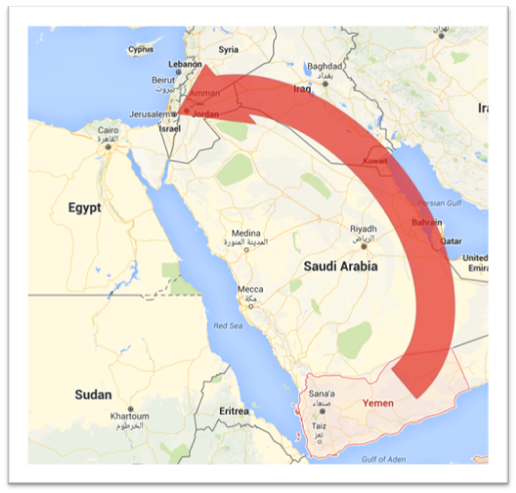
The author of 1 Kings provides an extended example of one such visit. On this occasion, the Queen of Sheba undertook the long and arduous journey to Jerusalem to witness the wisdom of Solomon firsthand. The kingdom of Sheba was located approximately 1,200 miles away, on the southwestern corner of the Arabian Peninsula, in the region now known as Yemen. The queen traveled with a large royal retinue and brought with her a vast amount of spices, gold, and precious stones. It appears that the real purpose of her trip was to secure an alliance between her nation and the rapidly expanding kingdom of Solomon. From its location at the confluence of the Sea of Aden and the Red Sea, the kingdom of Sheba had been able to expand its dominance of the spice and incense trade in that region of the world. A peaceful alliance with a powerful nation like Israel would only further enhance and protect their future prospects.

Upon her arrival, the queen was given a personal appointment with Solomon, where she was able to satisfy her curiosity about his wisdom and wealth. This interrogation was most likely meant to assess the validity of Solomon’s reputation, but was also intended to reassure the queen whether a treaty with Israel would be beneficial. In the end, she was left breathless by her encounter with Solomon.

…when the queen of Sheba had seen all the wisdom of Solomon, the house that he had built, the food of his table, the seating of his officials, and the attendance of his servants, their clothing, his cupbearers, and his burnt offerings that he offered at the house of the LORD, there was no more breath in her. – 1 Kings 10:4-5 ESV

She was blown away by what she saw and heard, and confessed that the reality of Solomon’s wisdom and the greatness of his kingdom far exceeded the rumors and her own expectations.

“Everything I heard in my country about your achievements and wisdom is true! I didn’t believe what was said until I arrived here and saw it with my own eyes. In fact, I had not heard the half of it! Your wisdom and prosperity are far beyond what I was told. – 1 Kings 10:6-7 NLT

The inclusion of this personal, third-party assessment of Solomon’s greatness was meant to validate all that the author had written up to this point. Her testimony was intended to prove that all the descriptions concerning Solomon’s wisdom and the wealth of his kingdom were far from rhetorical flourishes or hyperbole. It was all true.

And this pagan queen affirmed the divine nature of Solomon’s reign, deeming the people of Israel as the fortunate recipients of their God’s love because He had chosen to make this just and righteous man their king.

“Praise the LORD your God, who delights in you and has placed you on the throne of Israel. Because of the LORD’s eternal love for Israel, he has made you king so you can rule with justice and righteousness.” – 1 Kings 10:9 NLT

In a way, the inclusion of this statement was meant to remind the Hebrew readers of this book that their nation had been blessed by God. His sovereign decision to anoint Solomon as David’s successor was a divine act of love and mercy because He had given them a wise, just, and righteous king to rule over them. After decades spent conquering the nations of Canaan and fighting ongoing battles with the Philistines, God had blessed the people of Israel with a time of peace and prosperity.

Saul’s reign had ended in failure and disappointment. David’s reign had been marked by war and bloodshed. Now Solomon was leading them into a period of unprecedented expansion, prosperity, and peace. This was meant to be a golden age for the nation of Israel.

And, almost as further proof of God’s blessing on the nation, the author records that the queen of Sheba gifted Solomon with “9,000 pounds of gold, great quantities of spices, and precious jewels” (1 Kings 10:10 NLT). The blessings just kept coming. Solomon’s great wealth continued to grow. And all of this was in keeping with the promise that God had made to Solomon.

“Because you have asked for wisdom in governing my people with justice and have not asked for a long life or wealth or the death of your enemies—I will give you what you asked for! I will give you a wise and understanding heart such as no one else has had or ever will have! And I will also give you what you did not ask for—riches and fame! No other king in all the world will be compared to you for the rest of your life!” – 1 Kings 3:11-13 NLT

However, it’s essential to recall that God’s promise came with a condition.

“…if you follow me and obey my decrees and my commands as your father, David, did, I will give you a long life.” – 1 Kings 3:14 NLT

That vital caveat must not be overlooked, and its presence constantly lingers behind the scenes portrayed in Chapter 10. God was faithfully keeping the promise He had made to Solomon, blessing him with riches and fame beyond his wildest imagination. However, the unspoken question that looms over this entire narrative is whether Solomon, in the midst of his growing wealth and notoriety, will be able to remain faithful to God. As his fame and fortune continue to increase, will he allow the blessings of God to become substitutes for God, distracting his attention and diverting his love?

Almost as an aside, the author reveals another example of God’s blessings on Solomon. He notes that Hiram, the king of Tyre, continued to shower Solomon with incredible gifts of great value.

Hiram’s ships brought gold from Ophir, and they also brought rich cargoes of red sandalwood and precious jewels. – 1 Kings 10:11 NLT

Without having to lift a finger, Solomon’s immense wealth was growing by the minute. God was using these pagan potentates to expand Solomon’s already extensive net worth. But would Solomon view these gifts as the gracious provision of God, meant to underwrite the divine initiatives He had in mind for the nation of Israel? Or would Solomon allow his growing wealth to fund a lifestyle of excess and dissipation? The answer to those questions can be found in the writings of Solomon himself.

Those who love money will never have enough. How meaningless to think that wealth brings true happiness! The more you have, the more people come to help you spend it. So what good is wealth—except perhaps to watch it slip through your fingers! – Ecclesiastes 5:10-11 NLT

Solomon would eventually discover that even the blessings of God become disappointing and disillusioning when they become substitutes for Him. The Book of Ecclesiastes chronicles his growing love affair with materialism and hedonism. Over time, he allowed his fame and riches, graciously bestowed upon him by God, to distract him from his worship of and commitment to God.

I became greater than all who had lived in Jerusalem before me, and my wisdom never failed me. Anything I wanted, I would take. I denied myself no pleasure. I even found great pleasure in hard work, a reward for all my labors. But as I looked at everything I had worked so hard to accomplish, it was all so meaningless—like chasing the wind. There was nothing really worthwhile anywhere. – Ecclesiastes 2:9-11 NLT

However, at this point in the story, Solomon appears to recognize that his blessed lifestyle has come from the gracious hand of God. He has not yet succumbed to the temptation to make the gifts of higher value than the Giver. The pessimism of unbridled prosperity and the endless pursuit of insatiable pleasure would eventually set in. But for now, Solomon was content to graciously accept his blessings as gifts from Yahweh.

As for the queen of Sheba, having been exposed to the visual evidence of God’s goodness, she returned to her kingdom more convinced than ever of Solomon’s greatness. The signs of Yahweh’s presence, pleasure, and provision were inescapable. But for Solomon, the blessings of God would prove to be a distraction, filling his royal treasuries with great wealth and his heart with dangerous thoughts about his own self-importance. Possessions, power, pleasure, and prominence can be gifts from God that quickly turn into weapons of self-destruction. Jesus Himself had much to say about the dangers of the love of money and the

“Don’t store up treasures here on earth, where moths eat them and rust destroys them, and where thieves break in and steal. Store your treasures in heaven, where moths and rust cannot destroy, and thieves do not break in and steal. Wherever your treasure is, there the desires of your heart will also be. – Matthew 6:19-21 NLT

“No one can serve two masters. For you will hate one and love the other; you will be devoted to one and despise the other. You cannot serve God and be enslaved to money. – Matthew 6:24 NLT

“Beware! Guard against every kind of greed. Life is not measured by how much you own.” – Luke 12:15 NLT

“The seed that fell among the thorns represents others who hear God’s word, but all too quickly the message is crowded out by the worries of this life, the lure of wealth, and the desire for other things, so no fruit is produced. – Mark 4:18-19 NLT

The queen of Sheba had been enamored with Solomon’s wealth and wisdom. But would Solomon allow those divine gifts to replace his love for the Giver?

English Standard Version (ESV) The Holy Bible, English Standard Version. ESV® Permanent Text Edition® (2016). Copyright © 2001 by Crossway Bibles, a publishing ministry of Good News Publishers.

New Living Translation (NLT) Holy Bible, New Living Translation, copyright © 1996, 2004, 2015 by Tyndale House Foundation. Used by permission of Tyndale House Publishers Inc., Carol Stream, Illinois 60188. All rights reserved.

Godly Wisdom Versus God-Like Wisdom

At Gibeon the LORD appeared to Solomon in a dream by night, and God said, “Ask what I shall give you.” And Solomon said, “You have shown great and steadfast love to your servant David my father, because he walked before you in faithfulness, in righteousness, and in uprightness of heart toward you. And you have kept for him this great and steadfast love and have given him a son to sit on his throne this day. And now, O LORD my God, you have made your servant king in place of David my father, although I am but a little child. I do not know how to go out or come in. And your servant is in the midst of your people whom you have chosen, a great people, too many to be numbered or counted for multitude. Give your servant therefore an understanding mind to govern your people, that I may discern between good and evil, for who is able to govern this your great people?”

10 It pleased the LORD that Solomon had asked this. 11 And God said to him, “Because you have asked this, and have not asked for yourself long life or riches or the life of your enemies, but have asked for yourself understanding to discern what is right, 12 behold, I now do according to your word. Behold, I give you a wise and discerning mind, so that none like you has been before you and none like you shall arise after you. 13 I give you also what you have not asked, both riches and honor, so that no other king shall compare with you, all your days. 14 And if you will walk in my ways, keeping my statutes and my commandments, as your father David walked, then I will lengthen your days.”

15 And Solomon awoke, and behold, it was a dream. Then he came to Jerusalem and stood before the ark of the covenant of the LORD, and offered up burnt offerings and peace offerings, and made a feast for all his servants. 1 Kings 3:5-15 ESV

Early in his reign, Solomon was a man who loved and honored Yahweh. His devotion to God shows up in the regular trips he made to Gibeon, where the tent or Tabernacle was located. There, he would offer burnt offerings to God, sometimes as many as 1,000 at a time. The divine regulations concerning these sacrifices are found in the book of Leviticus, where they are described as “a burnt offering, a gift of a soothing aroma to the LORD” (Leviticus 1:17 NET).

On one such occasion, after a day of offering unblemished sacrificial animals on the altar to Yahweh, Solomon went to bed that evening and had a dream. In his dream, he was visited by Yahweh, who made Solomon a gracious and magnanimous offer: “Tell me what I should give you” (1 Kings 3:5 NET).

Solomon had spared no expense when giving to God the thousands of unblemished animals from his royal flocks and herds. He had willingly offered the best of what he had as a way of expressing his gratitude and devotion to God. And now, God was offering to give Solomon a gift in return. As a reward for his faithful obedience, Solomon was granted a once-in-a-lifetime opportunity to ask for whatever he desired from God. He was being given carte blanche, a literal blank check from Yahweh, to name his own blessing. The God of the universe was opening up the doors to His royal treasuries and telling Solomon that he could have whatever he wanted.

The gravity of this moment should not be overlooked. In a sense, Solomon was being tested by God to reveal the true nature of his heart. He could ask God for anything, and his request would expose his hidden desires and priorities.

What would you do if faced with the same opportunity? How would you respond? Would you ask for wealth, power, popularity, good health, and a long life? The problem is that many of us already think of God as some kind of cosmic Genie-in-a-bottle, an all-powerful, divine being who exists to fulfill our wishes. We would relish the thought of being in Solomon’s sandals, faced with the chance to tell God our one request for Him to meet. But this was Solomon’s dream, and he didn’t hesitate for a second to give God his answer.

First, Solomon expressed his gratitude to God for all that He had already done.

“You showed great and faithful love to your servant my father, David, because he was honest and true and faithful to you. And you have continued to show this great and faithful love to him today by giving him a son to sit on his throne. – 1 Kings 3:6 NLT

Solomon was grateful for God’s faithfulness and unfailing love. He was well aware of the many ways in which God had blessed his father, David. Now, he was sitting on the throne of Israel because Yahweh had ordained it to be so. His newfound position of power and authority had been a gift from God. Solomon knew he had done nothing to deserve this honor. If anything, he felt ill-equipped and unprepared for such an important role.

“I am like a little child who doesn’t know his way around. And here I am in the midst of your own chosen people, a nation so great and numerous they cannot be counted!” – 1 Kings 3:7-8 NLT

When faced with a situation that could have easily exposed his greed and opportunism, Solomon displayed remarkable humility. His mind was not immediately filled with dreams of riches or glory. His first thoughts were not of a new royal wardrobe, a faster chariot, a bigger palace, or a larger kingdom. His mind focused on his inadequacy and inability to do the job he had been given by God. So, he asked Yahweh for the one thing he knew he lacked: Wisdom.

“Give me an understanding heart so that I can govern your people well and know the difference between right and wrong. For who by himself is able to govern this great people of yours?” – 1 Kings 3:9 NLT

Solomon already possessed unsurpassed power and tremendous wealth. He didn’t need more of either one. In the short time he had ruled over Israel, he realized that what he lacked was the wisdom to govern God’s people. It had been said of David that he shepherded the people of Israel with “integrity of heart” and “guided them with skillful hands” (Psalm 78:72 BSB). Solomon wanted to do the same thing, but knew he was deficient. He lacked the necessary qualities to govern wisely and well. So, he asked God to provide the missing ingredient, and God was pleased to do so. 

“Because you have asked for wisdom in governing my people with justice and have not asked for a long life or wealth or the death of your enemies—I will give you what you asked for! I will give you a wise and understanding heart such as no one else has had or ever will have!” – 1 Kings 3:11-12 NLT

In essence, God said, “Good answer!” He liked what He heard and was more than willing to give Solomon exactly what he had requested, and more.

“And I will also give you what you did not ask for—riches and fame! No other king in all the world will be compared to you for the rest of your life!” – 1 Kings 3:13 NLT

God blessed Solomon, first, by giving him what he needed most. God provided this newly crowned king with wisdom that would set him apart from every other ruler on the planet. Solomon would become world-renowned for his wisdom. Even today, he is often referred to as the wisest man who ever lived. However, God also gave Solomon more than he had requested, by promising to bless him with riches and fame. But those unrequested gifts would actually come as a result of Solomon’s wisdom. God didn’t suddenly fill Solomon’s royal treasuries with gold and silver. His net worth didn’t double overnight. His great wealth would be a byproduct of the wisdom given to him by God. One of the proverbs later collected and compiled by Solomon personifies the voice of wisdom, declaring its many residual benefits.

Riches and honor are with me,
    enduring wealth and righteousness. – Proverbs 8:18 ESV

Solomon would grow wealthy and become famous, but those were side benefits. The gift of wisdom, bestowed upon him by God, would enable Solomon to govern his kingdom according to divine principles. Every aspect of his decision-making was divinely influenced and inspired. As long as he relied on God, he would experience the blessings that accompany godly wisdom.

God gave Solomon very great wisdom and understanding, and knowledge as vast as the sands of the seashore. In fact, his wisdom exceeded that of all the wise men of the East and the wise men of Egypt. He was wiser than anyone else, including Ethan the Ezrahite and the sons of Mahol—Heman, Calcol, and Darda. His fame spread throughout all the surrounding nations. He composed some 3,000 proverbs and wrote 1,005 songs. He could speak with authority about all kinds of plants, from the great cedar of Lebanon to the tiny hyssop that grows from cracks in a wall. He could also speak about animals, birds, small creatures, and fish. And kings from every nation sent their ambassadors to listen to the wisdom of Solomon. – 1 Kings 4:29-34 NLT

Fame and fortune were not what Solomon asked for; wisdom was. Godly wisdom was the gift he received, and everything else flowed from it. As Proverbs 8 clearly states, the wisdom of God is of far greater value than any benefits it may yield.

Take my instruction instead of silver,
    and knowledge rather than choice gold,
for wisdom is better than jewels,
    and all that you may desire cannot compare with her. – Proverbs 8:10-11 ESV

It is interesting to note how Solomon worded his answer to Yahweh.

“Give your servant therefore an understanding mind to govern your people, that I may discern between good and evil…” – 1 Kings 3:9 ESV

This brings to mind the story of Adam and Eve in the garden. When God created the first couple, he placed them in the garden and gave them one prohibition.

“You may surely eat of every tree of the garden, but of the tree of the knowledge of good and evil you shall not eat, for in the day that you eat of it you shall surely die.” – Genesis 3:16-17 ESV

That one tree was off-limits, and consuming its fruit would result in death. Yet, it seems to have contained the very thing Solomon asked God for: The knowledge of good and evil. As the story goes, Eve later found herself in the garden, considering the tempting fruit of the forbidden tree. Suddenly, Satan, disguised as a serpent, appeared to her and encouraged her to eat what God had banned. When Eve articulated God’s warning of death if they ate the fruit, Satan countered, “You will not surely die. For God knows that when you eat of it your eyes will be opened, and you will be like God, knowing good and evil” (Genesis 3:4-5 ESV). 

Satan wasn’t offering the promise of godly wisdom; he was offering God-like wisdom. He was trying to get Eve to seek wisdom from the wrong source. Proverbs 2 states, “For the LORD gives wisdom; from his mouth come knowledge and understanding; he stores up sound wisdom for the upright” (Proverbs 2:6-7 ESV). Wisdom, at its core, is the knowledge of good and evil. It is the ability to understand the difference between right and wrong, as defined by God’s standards.  The knowledge of good and evil (wisdom) was never meant to come from any source other than God. But Satan wanted Adam and Eve to be the sole determiners of their moral standards. Rather than allow God to direct their moral trajectory, he wanted them to become moral free agents, choosing for themselves what was best. And when the first couple decided to “be as God,” they opened the door to sin, condemnation, and death. Thinking themselves to be wise, they became fools (Romans 1:22).

The Proverbs portray the outcome of Adam and Eve’s decision to choose God-like wisdom rather than godly wisdom. When they decided to become their own gods and determine their own standards for right and wrong, they discovered it produced a dangerous byproduct.

There is a way that seems right to a man, but its end is the way of death. – Proverbs 14:12 BSB

What sets Solomon’s request apart is his understanding that the knowledge of good and evil can only come from God. He knew that, on his own, he could not and would not make the right choices. Adam and Eve were lured by the fruit of self-determinism. They wanted to be the masters of their own fates, deciding for themselves how to live their lives. However, they failed to grasp the painful truth that the prophet Jeremiah later exposed.

The human heart is the most deceitful of all things, and desperately wicked. Who really knows how bad it is? – Jeremiah 17:9 NLT

Solomon was young and inexperienced, but he knew enough to know that he didn’t want to be “as God;” he wanted to have the wisdom of God. He was willing to let God determine what was right and wrong, and because he trusted God, he was blessed in ways he could have never imagined.

“I grant your request and give you a wise and discerning mind superior to that of anyone who has preceded or will succeed you.  Furthermore, I am giving you what you did not request—riches and honor so that you will be the greatest king of your generation. – 1 Kings 3:12-13 NLT

English Standard Version (ESV) The Holy Bible, English Standard Version. ESV® Permanent Text Edition® (2016). Copyright © 2001 by Crossway Bibles, a publishing ministry of Good News Publishers.

New Living Translation (NLT) Holy Bible, New Living Translation, copyright © 1996, 2004, 2015 by Tyndale House Foundation. Used by permission of Tyndale House Publishers Inc., Carol Stream, Illinois 60188. All rights reserved.

The Inexplicable Ways of God

1 These are the sons of Israel: Reuben, Simeon, Levi, Judah, Issachar, Zebulun, Dan, Joseph, Benjamin, Naphtali, Gad, and Asher. The sons of Judah: Er, Onan and Shelah; these three Bath-shua the Canaanite bore to him. Now Er, Judah’s firstborn, was evil in the sight of the Lord, and he put him to death. His daughter-in-law Tamar also bore him Perez and Zerah. Judah had five sons in all.

The sons of Perez: Hezron and Hamul. The sons of Zerah: Zimri, Ethan, Heman, Calcol, and Dara, five in all. The son of Carmi: Achan, the troubler of Israel, who broke faith in the matter of the devoted thing; and Ethan’s son was Azariah.

The sons of Hezron that were born to him: Jerahmeel, Ram, and Chelubai. 10 Ram fathered Amminadab, and Amminadab fathered Nahshon, prince of the sons of Judah. 11 Nahshon fathered Salmon, Salmon fathered Boaz, 12 Boaz fathered Obed, Obed fathered Jesse. 13 Jesse fathered Eliab his firstborn, Abinadab the second, Shimea the third, 14 Nethanel the fourth, Raddai the fifth, 15 Ozem the sixth, David the seventh. 16 And their sisters were Zeruiah and Abigail. The sons of Zeruiah: Abishai, Joab, and Asahel, three. 17 Abigail bore Amasa, and the father of Amasa was Jether the Ishmaelite.

18 Caleb the son of Hezron fathered children by his wife Azubah, and by Jerioth; and these were her sons: Jesher, Shobab, and Ardon. 19 When Azubah died, Caleb married Ephrath, who bore him Hur. 20 Hur fathered Uri, and Uri fathered Bezalel.

21 Afterward Hezron went in to the daughter of Machir the father of Gilead, whom he married when he was sixty years old, and she bore him Segub. 22 And Segub fathered Jair, who had twenty-three cities in the land of Gilead. 23 But Geshur and Aram took from them Havvoth-jair, Kenath, and its villages, sixty towns. All these were descendants of Machir, the father of Gilead. 24 After the death of Hezron, Caleb went in to Ephrathah, the wife of Hezron his father, and she bore him Ashhur, the father of Tekoa.

25 The sons of Jerahmeel, the firstborn of Hezron: Ram, his firstborn, Bunah, Oren, Ozem, and Ahijah. 26 Jerahmeel also had another wife, whose name was Atarah; she was the mother of Onam. 27 The sons of Ram, the firstborn of Jerahmeel: Maaz, Jamin, and Eker. 28 The sons of Onam: Shammai and Jada. The sons of Shammai: Nadab and Abishur. 29 The name of Abishur’s wife was Abihail, and she bore him Ahban and Molid. 30 The sons of Nadab: Seled and Appaim; and Seled died childless. 31 The son of Appaim: Ishi. The son of Ishi: Sheshan. The son of Sheshan: Ahlai. 32 The sons of Jada, Shammai’s brother: Jether and Jonathan; and Jether died childless. 33 The sons of Jonathan: Peleth and Zaza. These were the descendants of Jerahmeel. 34 Now Sheshan had no sons, only daughters, but Sheshan had an Egyptian slave whose name was Jarha. 35 So Sheshan gave his daughter in marriage to Jarha his slave, and she bore him Attai. 36 Attai fathered Nathan, and Nathan fathered Zabad. 37 Zabad fathered Ephlal, and Ephlal fathered Obed. 38 Obed fathered Jehu, and Jehu fathered Azariah. 39 Azariah fathered Helez, and Helez fathered Eleasah. 40 Eleasah fathered Sismai, and Sismai fathered Shallum. 41 Shallum fathered Jekamiah, and Jekamiah fathered Elishama.

42 The sons of Caleb the brother of Jerahmeel: Mareshah his firstborn, who fathered Ziph. The son of Mareshah: Hebron. 43 The sons of Hebron: Korah, Tappuah, Rekem and Shema. 44 Shema fathered Raham, the father of Jorkeam; and Rekem fathered Shammai. 45 The son of Shammai: Maon; and Maon fathered Beth-zur. 46 Ephah also, Caleb’s concubine, bore Haran, Moza, and Gazez; and Haran fathered Gazez. 47 The sons of Jahdai: Regem, Jotham, Geshan, Pelet, Ephah, and Shaaph. 48 Maacah, Caleb’’s concubine, bore Sheber and Tirhanah. 49 She also bore Shaaph the father of Madmannah, Sheva the father of Machbenah and the father of Gibea; and the daughter of Caleb was Achsah. 50 These were the descendants of Caleb.

The sons of Hur the firstborn of Ephrathah: Shobal the father of Kiriath-jearim, 51 Salma, the father of Bethlehem, and Hareph the father of Beth-gader. 52 Shobal the father of Kiriath-jearim had other sons: Haroeh, half of the Menuhoth. 53 And the clans of Kiriath-jearim: the Ithrites, the Puthites, the Shumathites, and the Mishraites; from these came the Zorathites and the Eshtaolites. 54 The sons of Salma: Bethlehem, the Netophathites, Atroth-beth-joab and half of the Manahathites, the Zorites. 55 The clans also of the scribes who lived at Jabez: the Tirathites, the Shimeathites and the Sucathites. These are the Kenites who came from Hammath, the father of the house of Rechab. – 1 Chronicles 2:1-55 ESV

Once again, the chronicler provides us with another lengthy genealogical record filled with meaningless names and mind-numbing details about who beget who. Yet, this list contains more than a few names that should be familiar even to a contemporary reader. He begins with the sons of Isaac: Reuben, Simeon, Levi, Judah, Issachar, Zebulun, Dan, Joseph, Benjamin, Naphtali, Gad, and Asher. From these men came the 12 tribes of Israel, and their descendants were the ones to who this book was written. Every individual to whom this genealogical record was read would have been a proud member of one of the tribes of Israel and an heir of the promise that God had made to their forefather, Jacob.

God blessed him, saying, “Your name is Jacob, but you will not be called Jacob any longer. From now on your name will be Israel.” So God renamed him Israel.

Then God said, “I am El-Shaddai—‘God Almighty.’ Be fruitful and multiply. You will become a great nation, even many nations. Kings will be among your descendants! And I will give you the land I once gave to Abraham and Isaac. Yes, I will give it to you and your descendants after you.” – Genesis 35:10-12 NLT

As this motley group of Israelites stood in the land of Israel, faced with the prospect of trying to rebuild their former nation and reestablish their ownership of the land, they needed a reminder of their covenant relationship with God. But there is something even more important that the author wants his readers to know. In detailing the lineage of Israel (Jacob), he begins with Judah rather than Reuben, the firstborn. Then he brings up a rather unflattering episode in the life of Judah by reminding his readers that Judah had a son named Er, who “was evil in the sight of the Lord, and he put him to death” (1 Chronicles 2:3 ESV).

Why would the author begin with this less-than-encouraging recounting of Er’s death? If we turn to the Genesis account of this story, we get little in the way of details regarding Er’s sin.

In the course of time, Judah arranged for his firstborn son, Er, to marry a young woman named Tamar. But Er was a wicked man in the Lord’s sight, so the Lord took his life. – Genesis 38:6-7 NLT

It seems likely that this brief aside was intended to emphasize God’s disdain for wickedness of any kind. He hated evil and was quick to purge it from among His people. The original audience of this book would have had firsthand experience with God’s hatred for sin because they had spent 70 years living in exile as a result of their rebellion against Him. So, this one-line note was probably intended as a not-so-subtle reminder to the Israelites that if they wanted to experience God’s blessings in the land,  they would need to avoid wickedness and live in obedience to God’s commands.

After briefly recognizing Er’s sin, the author describes the births of Perez and Zerah, the twin sons born to Isaac and Tamar. But even this more uplifting historical note comes with its own set of uncomfortable and unflattering baggage and is tied directly to the death of Er.

Then Judah said to Er’s brother Onan, “Go and marry Tamar, as our law requires of the brother of a man who has died. You must produce an heir for your brother.”

But Onan was not willing to have a child who would not be his own heir. So whenever he had intercourse with his brother’s wife, he spilled the semen on the ground. This prevented her from having a child who would belong to his brother. But the Lord considered it evil for Onan to deny a child to his dead brother. So the Lord took Onan’s life, too. – Genesis 38:8-10 NLT

 Tamar, the wife of Er, found herself a grieving widow for the second time. Jacob, who had lost two sons, was at a loss as to what to do with Tamar. According to the Genesis account, he was afraid that Tamar might be cursed. He was obligated to care for his daughter-in-law and the practice of levirate marriage was common in his day. This ancient code of conduct required the unmarried brother of a deceased man to take his widow as a bride. This would provide an heir for the deceased brother, keeping his lineage alive and assuring the widow and her offspring of an inheritance.

But, fearing the loss of yet another son, Jacob came up with a plan to send Tamar away with the promise that he would reward her with marriage to his son, Shelah.

“Go back to your parents’ home and remain a widow until my son Shelah is old enough to marry you.” (But Judah didn’t really intend to do this because he was afraid Shelah would also die, like his two brothers.) So Tamar went back to live in her father’s home. – Genesis 38:11 NLT

Jacob had no intention of following through with his commitment. Instead, he hoped that Tamar would return home and allow her family to provide for her needs. But as the story goes, Tamar did not forget Jacob’s promise and grew impatient with the constant delays. When Shelah came of age, no marriage arrangements were made. So, she took matters into her own hands and came up with a plan to rectify the injustice Jacob had done to her. To make a long story short, Tamar got even with Jacob.

Tamar was aware that Shelah had grown up, but no arrangements had been made for her to come and marry him. So she changed out of her widow’s clothing and covered herself with a veil to disguise herself. Then she sat beside the road at the entrance to the village of Enaim, which is on the road to Timnah. Judah noticed her and thought she was a prostitute, since she had covered her face. So he stopped and propositioned her. “Let me have sex with you,” he said, not realizing that she was his own daughter-in-law. – Genesis 38:14-16 NLT

Through a series of convoluted events, Jacob unwittingly slept with Tamar and she became pregnant. When he became aware that he had committed incest with his own daughter-in-law, he exclaimed, “She is more righteous than I am, because I didn’t arrange for her to marry my son Shelah” (Genesis 38:26 NLT). He took Tamar as his wife but never had sexual relations with her again. He also adopted her two sons as his own. But the story doesn’t end there. Perez went on to have a son named Hezron (verse 5). Hezron would grow up and father three sons, one of whom was named Ram.

The sons of Hezron were Jerahmeel, Ram, and Caleb.

Ram was the father of Amminadab.
Amminadab was the father of Nahshon, a leader of Judah.
Nahshon was the father of Salmon.
Salmon was the father of Boaz.
Boaz was the father of Obed.
Obed was the father of Jesse. – 1 Chronicles 2:9-12 NLT

Jesse would go on to sire seven sons, the last of whom was David. The Book of Ruth includes a very similar genealogical record that outlines the line from Perez to David.

This is the genealogical record of their ancestor Perez:

Perez was the father of Hezron.
Hezron was the father of Ram.
Ram was the father of Amminadab.
Amminadab was the father of Nahshon.
Nahshon was the father of Salmon.
Salmon was the father of Boaz.
Boaz was the father of Obed.
Obed was the father of Jesse.
Jesse was the father of David. – Ruth 4:18-22 NLT

The stories of Er, Onan, Ruth, and Tamar are meant to remind the people of Israel that their existence was not the byproduct of fate or blind luck. They are part of a long legacy that was the result of divine oversight and sovereign planning. They weren’t just any nation, they were the chosen people of God and the heirs of His promises. Their return to the land had been God’s doing, just as their exile to Babylon had been part of His overall will for their lives. And He was not yet done.

“One of the major themes of Chronicles is that the Davidic dynasty would be the instrument through which God promised that salvation and blessing would come to Israel and through Israel to the whole world. The final Davidic king, Jesus Christ, was the last Adam (1 Cor. 15:45) as well as the Person who would fulfill the Abrahamic and Davidic Covenants completely.” – Thomas L. Constable, Study Notes of 1 Chronicles

The rest of the chapter traces the other sons born to Hezron. This lengthy list of unknown individuals provides a more in-depth description of the sons of Judah born through the line of Perez.

“These obscure names connected with the tribe of Judah are listed for an important general reason. Most of the returning exiles in the general time Chronicles was written were connected to the tribe of Judah.” – David Guzik, Enduring Word Commentary of 1 Chronicles

According to Ezra 1:5, those who returned from exile in Babylon were primarily members of the tribe of Judah.

Then God stirred the hearts of the priests and Levites and the leaders of the tribes of Judah and Benjamin to go to Jerusalem to rebuild the Temple of the Lord. – Ezra 1:5 NLT

That is why the chronicler spends so much time unpacking the lineage of the tribe of Judah. He wants his readers to understand that they are part of a rich heritage that goes all the way back to Perez. Despite the dark blots on their family tree, God has blessed them and returned them to the land. He has sovereignly arranged for their release from captivity and their safe travel back to the land of Judah. This ragtag group of former slaves will be used to rebuild the Temple and the walls of Jerusalem. They will reinstate the sacrificial system and repopulate the land with more of their kind. This was going to be a new beginning and God had plans in store for them that were far beyond anything they could imagine.

English Standard Version (ESV)
The Holy Bible, English Standard Version. ESV® Permanent Text Edition® (2016). Copyright © 2001 by Crossway Bibles, a publishing ministry of Good News Publishers.

New Living Translation (NLT)
Holy Bible, New Living Translation, copyright © 1996, 2004, 2015 by Tyndale House Foundation. Used by permission of Tyndale House Publishers Inc., Carol Stream, Illinois 60188. All rights reserved.

We’re In This Together

1 The heads of the fathers’ houses of the clan of the people of Gilead the son of Machir, son of Manasseh, from the clans of the people of Joseph, came near and spoke before Moses and before the chiefs, the heads of the fathers’ houses of the people of Israel. They said, “The Lord commanded my lord to give the land for inheritance by lot to the people of Israel, and my lord was commanded by the Lord to give the inheritance of Zelophehad our brother to his daughters. But if they are married to any of the sons of the other tribes of the people of Israel, then their inheritance will be taken from the inheritance of our fathers and added to the inheritance of the tribe into which they marry. So it will be taken away from the lot of our inheritance. And when the jubilee of the people of Israel comes, then their inheritance will be added to the inheritance of the tribe into which they marry, and their inheritance will be taken from the inheritance of the tribe of our fathers.”

And Moses commanded the people of Israel according to the word of the Lord, saying, “The tribe of the people of Joseph is right. This is what the Lord commands concerning the daughters of Zelophehad: ‘Let them marry whom they think best, only they shall marry within the clan of the tribe of their father. The inheritance of the people of Israel shall not be transferred from one tribe to another, for every one of the people of Israel shall hold on to the inheritance of the tribe of his fathers. And every daughter who possesses an inheritance in any tribe of the people of Israel shall be wife to one of the clan of the tribe of her father, so that every one of the people of Israel may possess the inheritance of his fathers. So no inheritance shall be transferred from one tribe to another, for each of the tribes of the people of Israel shall hold on to its own inheritance.’”

10 The daughters of Zelophehad did as the Lord commanded Moses, 11 for Mahlah, Tirzah, Hoglah, Milcah, and Noah, the daughters of Zelophehad, were married to sons of their father’s brothers. 12 They were married into the clans of the people of Manasseh the son of Joseph, and their inheritance remained in the tribe of their father’s clan.

13 These are the commandments and the rules that the Lord commanded through Moses to the people of Israel in the plains of Moab by the Jordan at Jericho. Numbers 36:1-13 ESV

The Book of Numbers ends on a rather strange and anticlimactic note. As the people prepare to enter Canaan and begin their long-awaited conquest of the land and its inhabitants, Moses is forced to reconsider a problem he has already addressed. In chapter 27, Moses recounted the story of the three daughters of Zelophehad, a member of the tribe of Manasseh. These three unmarried women approached Moses with a dilemma; their father had died without any sons to inherit his portion of the land. As unmarried women, they were prohibited from serving as heirs to their father’s estate, which meant that they would receive no land allotment in Canaan. So, they had taken their problem to Moses for recourse.

Why should the name of our father disappear from his clan just because he had no sons? Give us property along with the rest of our relatives.” – Numbers 27:4 NLT

Moses had determined their request to be legitimate and decided in their favor.

“The claim of the daughters of Zelophehad is legitimate. You must give them a grant of land along with their father’s relatives. Assign them the property that would have been given to their father.” – Numbers 27:7 NLT

But the problem was not over. As the day fast approached when Israel would enter the land and begin its conquest, the rest of the members of the tribe of Manasseh raised a concern about Moses’ previous decision.

“Sir, the Lord instructed you to divide the land by sacred lot among the people of Israel. You were told by the Lord to give the grant of land owned by our brother Zelophehad to his daughters. But if they marry men from another tribe, their grants of land will go with them to the tribe into which they marry. In this way, the total area of our tribal land will be reduced.” – Numbers 36:2-3 NLT

They had spotted a potential flaw in Moses’ plan. According to custom, if any of these women ended up marrying a man outside the tribe of Manasseh, their land allotment would automatically become the possession of her new husband. Married women were not allowed to retain land ownership rights. And to make matters worse, in the year of Jubilee, the land would become the permanent possession of the husband’s tribe.

“…when the Year of Jubilee comes, their portion of land will be added to that of the new tribe, causing it to be lost forever to our ancestral tribe.” – Numbers 36:4 NLT

God had already given the people of Israel His commands concerning the Year of Jubilee.

“…you must count off seven Sabbath years, seven sets of seven years, adding up to forty-nine years in all. Then on the Day of Atonement in the fiftieth year, blow the ram’s horn loud and long throughout the land. Set this year apart as holy, a time to proclaim freedom throughout the land for all who live there. It will be a jubilee year for you, when each of you may return to the land that belonged to your ancestors and return to your own clan. – Leviticus 25:8-10 NLT

Every 50 years, the Israelites were commanded to conduct a year-long celebration of redemption. All prisoners and captives were to be set free, all slaves released, all debts forgiven, and all property returned to its original owners.

“In the jubilee year, the land must be returned to the original owners so they can return to their family land.” – Leviticus 25:28 NLT

But the tribe of Manasseh brought up a potential problem to Moses. Since these women were going to inherit the land of their father upon his death, what would prevent them from marrying a man from another tribe and then the land transferring ownership from one tribe to another? In other words, what would happen if the heiress to her father’s property married someone from a different tribe? In that case, the land of their father would become the property of another tribe, and the tribal allotments would become intermixed and confused. Not only that, one tribe’s land allotment would decrease while another tribe’s property expanded. This would set a dangerous precedence, leading tribes to marry outside their clans to gain additional land rights.

God had a solution to this problem. But this chapter raises another interesting question: Why did God have Moses end the Book of Numbers with this story? Why does the entire book conclude with a story about the daughters of Zelophehad? I think it has to do with a couple of things. First of all, the Book of Numbers is about the future. From its very outset, it has been a history of the people of Israel and their journey from Egypt to the Promised Land. But the real focus was not on the past or the present; the theme of the book is Israel’s future.

As the book closes, the concern behind the question raised by the tribe of Manasseh is about the future. They seem to understand that this problem has long-term implications. The land they are all inheriting is not just for those who are living at that time but for future generations. There is a not-yet aspect to this matter that causes them to be concerned and speak up.

The other issue is that this was not about the individual. While it was wonderful news that the daughters of Zelophehad would be able to inherit the land of their father, ultimately, it wasn’t about them; it wasn’t even about their tribe. It was about the people of God, and God’s concern was for the corporate well-being of His people. If these women had been allowed to marry whomever they wanted to, the divinely ordained land allotment could have been permanently altered with dramatic consequences for the future. One tribe could have ended up with a greater share of the land, resulting in bitter jealousy and fighting between the tribes. So God devised a plan by which the daughters were free to marry but within certain constraints. They had to marry someone from within their own tribe, and this new proviso would apply for all subsequent cases.

This concern for the corporate good is foreign to those of us living in a world marked by rampant individualism and ruled by a philosophy of self-centeredness. We have been trained to make everything about ourselves and are hardwired to do whatever is best for the individual. The thought of sacrificing for the team is unheard of these days because everyone is out for their own good. Even famous athletes model a lifestyle of self-promotion and self-preservation. Business owners display little concern for the needs of their employees or customers. Marriages tend to be contractual agreements between two parties that are driven by self-interest and a what’s-in-it-for-me attitude.

But in the story found in chapter 36 of Numbers, God reminds us that it isn’t all about us; it’s about the community of faith. While we are to live in the moment, we are to keep our eyes focused on the future. If not, we will develop a live-for-the-moment mentality that sacrifices the future for the pleasures of today. The daughters of Zelophehad weren’t willing to do that. They did just as Moses directed them. They obeyed because they understood that God had their best interests and the interests of the people of God in mind. Rather than debate or disagree with Moses’ decision, demanding their personal right to marry whomever they wished, they willingly focused their eyes on the future.

This future-focused, for-the-great-good mentality is exactly what God expects from every one of His children. The world doesn’t revolve around me and the focus of life isn’t to be all about me and my personal happiness. It’s all about the people of God and the future God has prepared for us. Any sacrifice God calls me to make is for the good of the team. The apostle wrote to the believers in Philippi, calling them to share this same mindset.

Do nothing from selfish ambition or conceit, but in humility count others more significant than yourselves. Let each of you look not only to his own interests, but also to the interests of others. – Philippians 2:3-4 ESV

He gave similar words of advice to the believers in Rome.

Let love be genuine. Abhor what is evil; hold fast to what is good. Love one another with brotherly affection. Outdo one another in showing honor. – Romans 12:9-10 ESV

When writing to the church in Colossae, Paul greatly expanded the scope of his counsel by describing the need for a selfless atmosphere of mutual love and sacrifice among God’s people.

Put on then, as God’s chosen ones, holy and beloved, compassionate hearts, kindness, humility, meekness, and patience, bearing with one another and, if one has a complaint against another, forgiving each other; as the Lord has forgiven you, so you also must forgive. And above all these put on love, which binds everything together in perfect harmony. And let the peace of Christ rule in your hearts, to which indeed you were called in one body. And be thankful. Let the word of Christ dwell in you richly, teaching and admonishing one another in all wisdom, singing psalms and hymns and spiritual songs, with thankfulness in your hearts to God. And whatever you do, in word or deed, do everything in the name of the Lord Jesus, giving thanks to God the Father through him. – Colossians 3:12-17 ESV

The book of Numbers ends with the statement: “These are the commands and regulations that the Lord gave to the people of Israel through Moses while they were camped on the plains of Moab beside the Jordan River, across from Jericho” (Numbers 36:13 NLT).

Moses’ emphasis is on the future. The people of God are on the wrong side of the river and their inheritance lies on the other side. But before they crossed over and began their conquest of the land, God had given them all the instructions they would need to guarantee success and assure them of a bright and blessed future. This was going to be a family affair, requiring solidarity and a commitment to the common cause.

While there would be 12 tribes involved in the conquest of Canaan, each with its own list of competing claims, they were expected to enter the land of promise with a unified front and a long-term commitment to the good of the community. Together, they represented the chosen people of God, and it would be together that they experienced His blessings and the fulfillment of the promise He had made to them. This rather short and strange ending to a lengthy book reflects the sentiment of a prayer that Jesus prayed in the Garden of Gethsemane on the night He was betrayed. As He prepared Himself for the agony of the cross, Jesus lifted up all those who would become His followers and His prayer reflects His deep desire for their unity.

“I am praying not only for these disciples but also for all who will ever believe in me through their message. I pray that they will all be one, just as you and I are one—as you are in me, Father, and I am in you. And may they be in us so that the world will believe you sent me. I have given them the glory you gave me, so they may be one as we are one. I am in them and you are in me. May they experience such perfect unity that the world will know that you sent me and that you love them as much as you love me.” – John 17:20-23 NLT

English Standard Version (ESV) The Holy Bible, English Standard Version. ESV® Permanent Text Edition® (2016). Copyright © 2001

New Living Translation (NLT) Holy Bible, New Living Translation, copyright © 1996, 2004, 2015 by Tyndale House Foundation. Used by permission of Tyndale House Publishers Inc., Carol Stream, Illinois 60188. All rights reserved.

Lessons from the Land of Uz

1 There was a man in the land of Uz whose name was Job, and that man was blameless and upright, one who feared God and turned away from evil. There were born to him seven sons and three daughters. He possessed 7,000 sheep, 3,000 camels, 500 yoke of oxen, and 500 female donkeys, and very many servants, so that this man was the greatest of all the people of the east. His sons used to go and hold a feast in the house of each one on his day, and they would send and invite their three sisters to eat and drink with them. And when the days of the feast had run their course, Job would send and consecrate them, and he would rise early in the morning and offer burnt offerings according to the number of them all. For Job said, “It may be that my children have sinned, and cursed God in their hearts.” Thus Job did continually. – Job 1:1-5 ESV

This book contains the story of a man named Job; a rather obscure individual whose life would have passed on with little fanfare and no recollection in the collective human memory, except for the fateful events of his life recorded by an unnamed writer and eventually included in the canon of Scripture. In a sense, Job represents every man, with his life serving as a living lesson on the sometimes inexplicable and often unexpected ways of God.

While the book bears his name, Job is not intended to be the hero of the story it contains. All of the events recorded by the author revolve around the life of Job but the primary focus of the book’s message is on God. He is the real point of the story. Verse 7 of the opening chapter introduces us to the LORD (Yᵊhōvâ), better known to us as Jehovah. He is the same God worshiped by Abraham, Isaac, and Jacob, which has led many scholars to believe that this book was written sometime during the patriarchal period. There is no clear consensus regarding the dating of this book or its authorship, but its inclusion in the canon of Scripture provides ample evidence of its divine inspiration and the reliability of the message it contains. It is not a work of fiction or a cleverly crafted tale from the mind of a superstitious individual living in a less enlightened age.

“God inspired this book to reveal answers to questions that arise from God’s nature and His ways with human beings. Specifically, what is the basis on which God deals with people?” – Thomas L. Constable, Notes on Job: 2023 Edition

Job is described as an inhabitant of the land of Uz. While there is no consensus on the exact location of Uz, the Book of Lamentations associates it with the land of Edom.

Rejoice and be glad, O daughter of Edom,
    you who dwell in the land of Uz – Lamentations 4:21 ESV

Most likely, Uz was located somewhere south of the Dead Sea. In this somewhat inhospitable region of the Middle East, Job had managed to establish for himself a very comfortable lifestyle. He was a successful man who had a large family, plenty of assets, and a glowing reputation among his neighbors and peers. He was well-off and well-liked.

Not only that, Job was “blameless and upright, one who feared God and turned away from evil” (Job 1:1 ESV). This glowing assessment of Job is not intended as flattery or a ringing endorsement of his spotless spiritual qualifications. Like any other man, Job was born with a sin nature and a built-in propensity to pursue his own will and to act as his own god. But somewhere along the way, Job had been introduced to Jehovah, the one true God, and become an ardent follower and God-fearer. Job was neither sinless nor perfectly righteous, but he was faithful.

Job is described as “blameless,” a Hebrew word (tām) that means “sound, whole, or complete.” He was a man of integrity and spiritual maturity. The idea of “wholeness” is meant to convey a sense of completeness. Job didn’t live a compartmentalized life. There were no areas of his life that he had deemed off-limits to God. His entire life was an open book and every facet of his daily experience was lived out in full view of his all-knowing God. This is the same idea that God conveyed to Abraham when he was 90 years old.

“I am God Almighty; walk before me, and be blameless (tām)…” – Genesis 17:1 ESV

Abraham was being ordered to “walk” or to conduct his life with the constant awareness that God was watching. He was to live with integrity or wholeness, never withholding or attempting to conceal any part of his life from God. And that was the way Job had lived his life.

It seems quite clear that the author wants his readers to understand that Job was well-off, both spiritually and materially. He had seven sons and three daughters, a sign of God’s blessings.

Children are a gift from the Lord;
    they are a reward from him.
Children born to a young man
    are like arrows in a warrior’s hands.
How joyful is the man whose quiver is full of them! – Psalm 127:3-5 NLT

Not only did Job have a quiver full of arrows, but he also had fields full of flocks and herds. He was a wealthy man; “in fact, the richest person in that entire area” (Job 1:3 NLT). Job had a reputation for godliness and, because of his extensive wealth, would have been viewed as a man who had been greatly blessed by God. In that day and age, wealth was considered to be practical proof that a man was living in a way that pleased God. His assets were viewed as rewards for a life well-lived.

The blessing of the Lord makes rich,
    and he adds no sorrow with it. – Proverbs 10:22 ESV

Even Moses reminded the people of Israel that wealth and success were the purview of God Almighty.

“You shall remember the LORD your God, for it is he who gives you power to get wealth, that he may confirm his covenant that he swore to your fathers…” – Deuteronomy 8:18 ESV

So, Job is portrayed as a poster boy of God’s pleasure, and his prosperity is provided as proof. This man was so well-off that his seven sons took turns hosting elaborate and expensive parties in their homes to which they invited all their siblings.

Job’s sons would take turns preparing feasts in their homes, and they would also invite their three sisters to celebrate with them. – Job 1:4 NLT

It seems that this recurring feast cycle was always ended by Job offering a sacrifice to “purify his children” (Job 1:5 NLT). Perhaps that was a father’s attempt to remedy any debauchery or immorality that may have taken place during the seven days of feasting and festivities. Job cared about the spiritual well-being of his children and acted as a priest for his family, ensuring that any sins they may have committed were properly atoned for.

“Perhaps my children have sinned and have cursed God in their hearts.” – Job 1:5 NLT

This was a man who cared. He had a deep and abiding love for God and a desire to see that his children remained faithful to Jehovah all their lives. He was not willing to let his affluence negatively influence his children to live lives of excess and immorality.

Here is a man who had it all: Wealth, material possessions, a lovely family, and a vibrant relationship with his God. But these opening verses are meant to be the preface for all that comes next. The reader is given a glimpse into the life of a man who was living a storybook life. In a way, Job’s circumstances are meant to create a certain sense of jealousy or envy. It’s as if we’re reading a headline story about someone who just won the national lottery. It’s difficult to read these five verses and not want to picture yourself in Job’s sandals. What would it be like to have those kinds of resources at your disposal? How would it feel to be revered for your spiritual life and envied for your material success? There is little doubt that Job had plenty of friends and neighbors who outwardly conveyed their love and respect for him, while at the same time harboring deep and resentful feelings of jealousy and anger. There were likely those who wished his trouble-free world would come crashing down around him.

That’s where the rest of the story comes in. Unbelievable tragedy was about to rock Job’s righteous and all’s-right-with-the-world life. This faithful servant of God would suddenly find himself wrestling with an unexpected and seemingly unwarranted wave of tragic circumstances that would leave his head spinning and his world turned upside down. And worse yet, his long-held views of God would be tested like never before.

Everything he knew about his God was about to be challenged. How would he feel about Jehovah when the blessings were taken away? What would his response be when the seeming incongruities of life disrupted his once-perfect world? How would his faith hold up when it appears as if his faithful God failed to show up? The story of Job is the story of all those who choose to follow God in a fallen world.

“The book of Job deals essentially with man’s relationship with God, centering on two questions. The first question is, Why does man worship God? . . .

“The second question is, How will man react to God when God seems unconcerned about his problems?” – Roy B. Zuck, “A Theology of the Wisdom Books and the Song of Songs,” in A Biblical Theology of the Old Testament

The stage is set. The protagonist has been introduced. But the rest of the players wait in the wings and the rest of the story waits to be revealed.

English Standard Version (ESV) The Holy Bible, English Standard Version. ESV® Permanent Text Edition® (2016). Copyright © 2001

New Living Translation (NLT) Holy Bible, New Living Translation, copyright © 1996, 2004, 2015 by Tyndale House Foundation. Used by permission of Tyndale House Publishers Inc., Carol Stream, Illinois 60188. All rights reserved.

Don’t Forget to Remember

And the Lord spoke to Moses, saying, 10 “Speak to the people of Israel and say to them, When you come into the land that I give you and reap its harvest, you shall bring the sheaf of the firstfruits of your harvest to the priest, 11 and he shall wave the sheaf before the Lord, so that you may be accepted. On the day after the Sabbath the priest shall wave it. 12 And on the day when you wave the sheaf, you shall offer a male lamb a year old without blemish as a burnt offering to the Lord. 13 And the grain offering with it shall be two tenths of an ephah of fine flour mixed with oil, a food offering to the Lord with a pleasing aroma, and the drink offering with it shall be of wine, a fourth of a hin. 14 And you shall eat neither bread nor grain parched or fresh until this same day, until you have brought the offering of your God: it is a statute forever throughout your generations in all your dwellings.Leviticus 23:9-14 ESV

God adds another element to His list of sacred days and observances, but this one would not go into effect until the people occupied the land of Canaan. This celebration was known as firstfruits, which in Hebrew (רֵאשִׁיתrē’šîṯ) translates as “beginning, first, or best.” It was to be held in the early spring at the beginning of the grain harvest, on Nissan 16, the third day after Passover, and the second day of the Feast of Unleavened Bread. According to the book of Deuteronomy, the feast of firstfruits was intended to commence after the Israelites had brought in their first official harvest in the land God had promised as their inheritance.

“When you enter the land the Lord your God is giving you as a special possession and you have conquered it and settled there, put some of the first produce from each crop you harvest into a basket and bring it to the designated place of worship—the place the Lord your God chooses for his name to be honored.” – Deuteronomy 26:1-2 NLT

God had promised to give them a land of fruitfulness and abundance. In his call of Moses, God had described the land in glowing terms:

“So I have come down to rescue them from the power of the Egyptians and lead them out of Egypt into their own fertile and spacious land. It is a land flowing with milk and honey—the land where the Canaanites, Hittites, Amorites, Perizzites, Hivites, and Jebusites now live.” – Exodus 3:8 NLT

Now, from their vantage point at the base of Mount Sinai, the Israelites were being reminded by God that the land of Canaan would one day be theirs. Despite all the setbacks and difficulties they had faced up to this point, He was still going to honor His commitment to give them the land of Canaan as their inheritance. And when they got there, He expected them to express their gratitude for His goodness.

When they brought the first produce from each crop they had harvested, they were to present it to the priest at the Tabernacle and declare, “With this gift I acknowledge to the Lord your God that I have entered the land he swore to our ancestors he would give us” (Deuteronomy 26:3 NLT). The gift was meant to serve as proof of the fact that God had kept His word and that the land was just as He said it would be. In other words, God was faithful and the land was fruitful.

As part of the ceremony, the Israelites were to recount how God had miraculously delivered them from bondage in Egypt and delivered them to Canaan.

“You must then say in the presence of the Lord your God, ‘My ancestor Jacob was a wandering Aramean who went to live as a foreigner in Egypt. His family arrived few in number, but in Egypt they became a large and mighty nation. When the Egyptians oppressed and humiliated us by making us their slaves, we cried out to the Lord, the God of our ancestors. He heard our cries and saw our hardship, toil, and oppression. So the Lord brought us out of Egypt with a strong hand and powerful arm, with overwhelming terror, and with miraculous signs and wonders. He brought us to this place and gave us this land flowing with milk and honey! And now, O Lord, I have brought you the first portion of the harvest you have given me from the ground.’” – Deuteronomy 26:5-10 NLT

The gift of firstfruits was meant to be an expression of thanksgiving, but also an acknowledgment of God’s sovereignty over all things. Not only did they belong to Him but so did the land in which they lived and all the produce it provided. By giving to God the best of what the land had given them, they were declaring their allegiance to Him. Their fruitfulness had been the result of God’s faithfulness.

As part of the ceremony, the Israelites would place their gift before the Lord, then bow down and worship Him. Only after celebrating the goodness and graciousness of God could the people rejoice in the bounty of the harvest He had given them.

Afterward you may go and celebrate because of all the good things the Lord your God has given to you and your household.” – Deuteronomy 26:11 NLT

The Leviticus passage adds another vital element to the ceremony. The Israelites were also to bring a sheaf of grain gathered from the first harvest in the land. What is interesting to note is that the Israelites were forbidden to eat “any bread or roasted grain or fresh kernels on that day until you bring this offering to your God” (Leviticus 23:14 NLT). As they presented the best of their grain to God, they would be in the midst of a fast. It was not until they had demonstrated their gratefulness to God and given Him the best of all that they had gathered that they could break their fast and enjoy the blessings He had bestowed upon them. God had to come first.

Along with these offerings, the Israelites were to sacrifice a one-year-old unblemished lamb as well as a burnt offering. This was accompanied by a grain offering consisting of four quarts of choice flour moistened with olive oil. The lamb and the grain offering were burned on the altar and the smoke would rise as “a pleasing aroma to the Lord” (Leviticus 23:13 NLT). The final part of the ceremony was “one quart of wine as a liquid offering” (Leviticus 23:13 NLT). In a sense, the people were serving God a sacred “meal” to celebrate all that He had done for them. It was a visible expression of thanksgiving to their divine provider and protector.

The real purpose behind this ceremony was to remind the people of Israel that they were completely dependent upon God at all times. Even in the midst of fruitfulness, they were expected to maintain their faithfulness to God and never allow His gracious gifts to distract from their reliance upon Him. In fact, Moses would later warn the Israelites of the dangers the bounty of Canaan would present.

“When you have eaten your fill, be sure to praise the Lord your God for the good land he has given you. But that is the time to be careful! Beware that in your plenty you do not forget the Lord your God and disobey his commands, regulations, and decrees that I am giving you today. For when you have become full and prosperous and have built fine homes to live in, and when your flocks and herds have become very large and your silver and gold have multiplied along with everything else, be careful! Do not become proud at that time and forget the Lord your God, who rescued you from slavery in the land of Egypt.” – Deuteronomy 8:10-14 NLT

If they weren’t careful, God’s blessings could actually become a curse. The fruitfulness of the land could end up making the Israelites self-sufficient rather than God-dependent. As their crops grew, their flocks expanded, and their fortunes improved, they might be tempted to see themselves as the masters of their own fates. The real threat they faced in the promised land was not the Canaanites but spiritual apathy brought on by physical prosperity.

Moses would go on to warn the people of the dual perils of affluence and forgetfulness.

“Do not forget that he led you through the great and terrifying wilderness with its poisonous snakes and scorpions, where it was so hot and dry. He gave you water from the rock! He fed you with manna in the wilderness, a food unknown to your ancestors. He did this to humble you and test you for your own good. He did all this so you would never say to yourself, ‘I have achieved this wealth with my own strength and energy.’” – Deuteronomy 8:15-17 NLT

Forgetfulness would be a real and present danger. If they weren’t careful, their wilderness experience and God’s miraculous provision all along the way could become a fading memory. Once they arrived in Canaan and got settled in their new homes, their success in the land could produce gratefulness and a greater dependence upon God or it could result in an unhealthy sense of self-reliance. That’s why Moses warned them: “Remember the Lord your God. He is the one who gives you power to be successful, in order to fulfill the covenant he confirmed to your ancestors with an oath” (Deuteronomy 8:18 NLT).

God’s blessings were intended to produce greater dependence upon Him. By giving God the firstfruits of their harvest, the Israelites would be acknowledging their reliance upon Him. He had blessed them with freedom, and soon He would bless them with land, houses, fields, flocks, and vineyards. Their days as slaves and nomadic wanderers would be far behind them. But that would become the greatest test of their allegiance to God. Forgetfulness would lead to ungratefulness and ungratefulness would eventually result in unfaithfulness.

English Standard Version (ESV) The Holy Bible, English Standard Version. ESV® Permanent Text Edition® (2016). Copyright © 2001

New Living Translation (NLT) Holy Bible, New Living Translation, copyright © 1996, 2004, 2015 by Tyndale House Foundation. Used by permission of Tyndale House Publishers Inc., Carol Stream, Illinois 60188. All rights reserved.

And In This Corner…

22 The same night he arose and took his two wives, his two female servants, and his eleven children, and crossed the ford of the Jabbok. 23 He took them and sent them across the stream, and everything else that he had. 24 And Jacob was left alone. And a man wrestled with him until the breaking of the day. 25 When the man saw that he did not prevail against Jacob, he touched his hip socket, and Jacob’s hip was put out of joint as he wrestled with him. 26 Then he said, “Let me go, for the day has broken.” But Jacob said, “I will not let you go unless you bless me.” 27 And he said to him, “What is your name?” And he said, “Jacob.” 28 Then he said, “Your name shall no longer be called Jacob, but Israel, for you have striven with God and with men, and have prevailed.” 29 Then Jacob asked him, “Please tell me your name.” But he said, “Why is it that you ask my name?” And there he blessed him. 30 So Jacob called the name of the place Peniel, saying, “For I have seen God face to face, and yet my life has been delivered.” 31 The sun rose upon him as he passed Penuel, limping because of his hip. 32 Therefore to this day the people of Israel do not eat the sinew of the thigh that is on the hip socket, because he touched the socket of Jacob’s hip on the sinew of the thigh.  Genesis 32:22-32 ESV

Jacob has sent his gifts on ahead, hoping their arrival will persuade Esau to forgive and forget all the injustices and inequities Jacob had committed against him. But it will take time for the gifts to arrive and for Jacob to hear how effective his attempt to bribe his brother had been. In the meantime, Jacob took one more precautionary step. He relocated his two wives, his concubines, and his 11 sons on the other side of the Jabbok River. His intention was to use the river as a natural barrier, providing his family with an extra measure of separation and safety should Esau reject his gifts and come seeking revenge.

After sequestering his family on the far side of the river, Jacob returned to the other shore alone, and waited to face his fate. And the text paints a rather sobering and sorrowful picture when it states, “Jacob was left alone” (Genesis 32:24 ESV). He was left to do battle with his inner demons, wrestling over his past indiscretions and second-guessing the many times he had attempted to determine the outcome of his life by doing things his own way.

But Jacob quickly discovered that he was far from alone. Moses indicates that “a man wrestled with him until the breaking of the day” (Genesis 32:24 ESV). This unnamed intruder assaulted the weary and worried Jacob, forcing himself to fight for his life. And the two contestants seem to have been equally matched, until Jacob’s opponent delivered a debilitating blow. Moses indicates that “Jacob’s hip was put out of joint as he [the man] wrestled with him” (Genesis 32:25 ESV). The Hebrew word translated as “touched” is נָגַע (nāḡaʿ), and it can also mean “to strike.” This injury left Jacob incapacitated and unable to continue the fight, but he would not let go of his assailant.

But the stubborn and ever-opportunistic Jacob refused to give in, demanding that his opponent provide him with a blessing. He held on for dear life and declared, “I will not let you go unless you bless me” (Genesis 32:27 ESV).

While it’s unclear whether Jacob had somehow determined the identity of his opponent, it’s readily apparent that he was not willing to walk away empty handed. While the other man had won, Jacob demanded a consolation prize, in the form of a blessing. Jacob doesn’t elaborate, so we have no idea what kind of blessing he had in mind. But he had fought long and hard and felt he deserved something for all his effort. His demand for a blessing recalls the words of his brother, Esau, spoken after he discovered that Jacob had stolen his blessing.

“Oh my father, what about me? Bless me, too!” – Genesis 27:34 NLT

All his life, Jacob had been wrestling with someone over something. It had begun in the womb with his twin brother and that conflict had carried over into their adult lives. Jacob had also wrestled with Laban, his father-in-law. And, according to the prophet, Hosea, Jacob had spent his entire life wrestling with God.

Now the Lord is bringing charges against Judah.
    He is about to punish Jacob for all his deceitful ways,
    and pay him back for all he has done.
Even in the womb,
    Jacob struggled with his brother;
when he became a man,
    he even fought with God.
Yes, he wrestled with the angel and won.
    He wept and pleaded for a blessing from him.
There at Bethel he met God face to face,
    and God spoke to him – Hosea 12:2-4 NLT

There seems to have been no point in Jacob’s life when he thought he had been blessed by God. Despite all of God’s promises and the content of the blessing he had tricked his father into giving to him, Jacob was still doubtful about his future. And as he stood all alone on the far shore of the Jabbok River, waiting to see if his brother would come with open arms or with a sword in his hand. Jacob was still fighting for the blessing he already possessed. It was his father, Isaac, who had declared:

May God Almighty bless you and give you many children. And may your descendants multiply and become many nations! May God pass on to you and your descendants the blessings he promised to Abraham. May you own this land where you are now living as a foreigner, for God gave this land to Abraham.” – Genesis 28:3-4 NLT

But sadly, Jacob still didn’t feel blessed. He was scared and doubtful about his future. He was operating in a vacuum, with no confidence as to what his brother might do or how his life might pan out. And this was in spite of all that God had promised to do.

“I am the Lord, the God of your grandfather Abraham, and the God of your father, Isaac. The ground you are lying on belongs to you. I am giving it to you and your descendants. Your descendants will be as numerous as the dust of the earth! They will spread out in all directions—to the west and the east, to the north and the south. And all the families of the earth will be blessed through you and your descendants. What’s more, I am with you, and I will protect you wherever you go. One day I will bring you back to this land. I will not leave you until I have finished giving you everything I have promised you.” – Genesis 28:13-15 NLT

But instead of reprimanding Jacob for his doubt, God changed his name.

“From now on you will be called Israel, because you have fought with God and with men and have won.” – Genesis 32:28 NLT

The name, Israel, actually can mean “strives with God” or “God fights.” This new designation was meant to signal a change in Jacob’s identity and to reaffirm his God-ordained destiny. Jacob had fought with God and God had fought back – and won. His will would be done. Despite all of Jacob’s clever machinations and attempts to manipulate his own fate, God had been in control all along.

It seems that Jacob had his suspicions about the identity of his more powerful opponent, and so he attempted to get confirmation by asking for his name. But his question was answered with a question: “Why do you want to know my name?” (Genesis 32:29 NLT). There should have been no doubt in Jacob’s mind. He had just gone toe-to-toe with God and had lived to tell about it. And he went on to acknowledge this amazing reality, by naming the place “Peniel (which means ‘face of God’), for he said, ‘I have seen God face to face, yet my life has been spared’” (Genesis 32:30 NLT).

In one corner stood the conniving and manipulative trickster, Jacob. In the other stood the angel of God, representing the all-powerful and all-knowing God of the universe. It was an epic mismatch, but God graciously allowed Jacob to prevail. Despite the fact that Jacob had spent his entire life fighting with God, the Almighty still allowed him to have the upper hand in this battle. Not because he had earned it or deserved it, but simply because God was preparing to bless the nations of the world through Israel – both the man and the nation.

English Standard Version (ESV) The Holy Bible, English Standard Version. ESV® Permanent Text Edition® (2016). Copyright © 2001 by Crossway Bibles, a publishing ministry of Good News Publishers.

New Living Translation (NLT) Holy Bible, New Living Translation, copyright © 1996, 2004, 2015 by Tyndale House Foundation. Used by permission of Tyndale House Publishers Inc., Carol Stream, Illinois 60188. All rights reserved.

New English Translation (NET)NET Bible® copyright ©1996-2017 by Biblical Studies Press, L.L.C. http://netbible.com All rights reserved.

The God of the Speckled, Spotted, and Flawed

25 As soon as Rachel had borne Joseph, Jacob said to Laban, “Send me away, that I may go to my own home and country. 26 Give me my wives and my children for whom I have served you, that I may go, for you know the service that I have given you.” 27 But Laban said to him, “If I have found favor in your sight, I have learned by divination that the Lord has blessed me because of you. 28 Name your wages, and I will give it.” 29 Jacob said to him, “You yourself know how I have served you, and how your livestock has fared with me. 30 For you had little before I came, and it has increased abundantly, and the Lord has blessed you wherever I turned. But now when shall I provide for my own household also?” 31 He said, “What shall I give you?” Jacob said, “You shall not give me anything. If you will do this for me, I will again pasture your flock and keep it: 32 let me pass through all your flock today, removing from it every speckled and spotted sheep and every black lamb, and the spotted and speckled among the goats, and they shall be my wages. 33 So my honesty will answer for me later, when you come to look into my wages with you. Every one that is not speckled and spotted among the goats and black among the lambs, if found with me, shall be counted stolen.” 34 Laban said, “Good! Let it be as you have said.” 35 But that day Laban removed the male goats that were striped and spotted, and all the female goats that were speckled and spotted, every one that had white on it, and every lamb that was black, and put them in the charge of his sons. 36 And he set a distance of three days’ journey between himself and Jacob, and Jacob pastured the rest of Laban’s flock.

37 Then Jacob took fresh sticks of poplar and almond and plane trees, and peeled white streaks in them, exposing the white of the sticks. 38 He set the sticks that he had peeled in front of the flocks in the troughs, that is, the watering places, where the flocks came to drink. And since they bred when they came to drink, 39 the flocks bred in front of the sticks and so the flocks brought forth striped, speckled, and spotted. 40 And Jacob separated the lambs and set the faces of the flocks toward the striped and all the black in the flock of Laban. He put his own droves apart and did not put them with Laban’s flock. 41 Whenever the stronger of the flock were breeding, Jacob would lay the sticks in the troughs before the eyes of the flock, that they might breed among the sticks, 42 but for the feebler of the flock he would not lay them there. So the feebler would be Laban’s, and the stronger Jacob’s. 43 Thus the man increased greatly and had large flocks, female servants and male servants, and camels and donkeys.  Genesis 30:25-43 ESV

Years earlier, when Jacob had left Beersheba in search of a wife, God had made promised to remain with him. In a vision, God had declared to him, “I am with you and will keep you wherever you go, and will bring you back to this land. For I will not leave you until I have done what I have promised you.” And the story that Moses records clearly reveals how God had been keeping that promise. Jacob had left home as an unmarried man and now he had two wives, an equal number of concubines, and 11 sons. But even Jacob knew that it was time for him to come out from under his father-in-law’s control and return home. He had spent the last 14 years earning the right to marry Rachel and now, after a long delay, she had delivered him a son.

But leaving his father-in-law’s employment would prove to be more difficult than he thought. Laban was resistant to letting go of his two daughters, 11 grandsons, and hard-working son-in-law. He even admitted to Jacob, “I have become wealthy, for the Lord has blessed me because of you” (Genesis 30:27 NLT). It’s difficult to decipher whether Laban was sincere or simply trying to persuade Jacob that his stay in Haran had been a “God thing.” There is no indication that Laban was a religious man or that he worshiped Yahweh. But he knew that Jacob, like his grandfather, Abraham, was committed to God. So, he tried to persuade Jacob that God had ordained his time in Haran. This was true, but it is not clear that Laban had received that message directly from God.

God’s involvement in the entire affair is without question. He had promised to remain with Jacob and bring him back safely to Canaan. In the meantime, God had been protecting Jacob, turning Laban’s deception into a blessing. While Laban had deceived Jacob into marrying Leah, it had resulted in eight of his 11 sons, including Joseph, who would later play an instrumental role in the preservation of Jacob’s family. God had been at work, providing for Jacob’s needs and protecting his life.

The day came when Jacob knew it was time to go. There is no indication that he received a message from God, but it seems that he had finally grown tired of living under another man’s roof and control. So, he approached Laban and said, “Please release me so I can go home to my own country. Let me take my wives and children, for I have earned them by serving you, and let me be on my way. You certainly know how hard I have worked for you” (Genesis 30:25-26 NLT).

It seems that Laban believed Jacob was upset about the way he had been treated and was looking for some kind of compensation for all his labor. For more than 14 years, he had been little more than a slave to Laban and helped make him a wealthy man. And Laban was not ready to give up this valuable resource, so he told Jacob to name his price. What would it take to get him to stay? And Jacob acknowledged that he felt slighted by Laban.

“You know how hard I’ve worked for you, and how your flocks and herds have grown under my care. You had little indeed before I came, but your wealth has increased enormously. The Lord has blessed you through everything I’ve done. But now, what about me? When can I start providing for my own family?” – Genesis 30:29-30 NLT

But Jacob wasn’t interested in staying. He was ready to leaven Haran and Laban behind. Yet, he decided to take Laban up on his offer and proposed a suitable form of compensation.

“Don’t give me anything. Just do this one thing, and I’ll continue to tend and watch over your flocks. Let me inspect your flocks today and remove all the sheep and goats that are speckled or spotted, along with all the black sheep. Give these to me as my wages. – Genesis 30:31-32 NLT

Jacob asked to be paid in sheep. He proposed that he be allowed to take all the non-white sheep from among Laban’s flocks. The spotted and dark-colored sheep would have been in the minority, leaving Laban with a greater number of pure white sheep which were of greater value. In a sense, Jacob was asking to receive the dregs of Laban’s flocks.

The always wily Laban agreed to Jacob’s offer, but immediately took measures to protect his assets. Before Jacob could have a chance to make his selection, Laban ordered his sons to remove all the spotted and speckled sheep from among his flocks and take them 3-days journey away. He cheated Jacob again. And it seems obvious that Jacob would have seen through this charade. But rather than complain, he took decided to give Laban a taste of his own medicine. What happens next is difficult to explain. Jacob’s actions seem to be based more on superstition and folklore than anything else.

He came up with a rather strange plan that involved the use of “fresh sticks of poplar and almond and plane trees” (Genesis 30:37 ESV). He then peeled off strips of the bark, revealing the lighter-colored interior. “Then he placed these peeled branches in the watering troughs where the flocks came to drink, for that was where they mated” (Genesis 30:38 NLT). What happens next is inexplicable. It seems that when the sheep mated “in front of the white-streaked branches, they gave birth to young that were streaked, speckled, and spotted” (Genesis 30:39 NLT).

There is no scientific explanation for what occurred. It’s likely that Jacob was utilizing what was nothing more than an old wive’s tale. But for some unknown reason, it worked. As the sheep mated, they produced spotted and speckled lambs. When mating season came around again, Jacob reintroduced these spotted sheep into the flock and the result was more of the same. Over time, he used Laban’s non-spotted sheep to produce a flock that was predominantly spotted, speckled and black. And, as if to add insult to injury, Jacob removed all the weak and feeble sheep when it came time to mate, ensuring that all the lambs that were born were healthy and disease-free. And Moses states that Jacob’s rather strange process produced outstanding results.

As a result, Jacob became very wealthy, with large flocks of sheep and goats, female and male servants, and many camels and donkeys. – Genesis 30:43 NLT

This entire process and the results it produced would have required multiple seasons. So, it extended Jacob’s stay but helped transform him into a wealthy and influential man. He was able to parley his sheep-mating venture into a lucrative business that allowed him to buy servants, camels, and donkeys. He would be returning to Canaan as a very rich man.

But, as always, this story is meant to highlight the sovereign power of God. The only explanation for Jacob’s success is Yahweh. Throwing black and white tree branches into the watering troughs at mating time had nothing to do with anything. Jacob may have been convinced that his efforts had produced the outcome he enjoyed, but it was all the handiwork of God. Jacob could attempt to take credit for his own success, but Moses would have his readers understand that God was the actual hero of the story. What had taken place was a miracle. It was no different than when Moses used a staff to part the water of the Red Sea. God used something common and ordinary to do the uncommon and extraordinary. And in a way, the imagery of the speckled and spotted sheep is a fitting metaphor for the people of Israel. God was going to set apart the small, insignificant, and flawed family of Jacob in order to produce a mighty nation. He would take what others considered to be the rejects and transform them into “a kingdom of priests and a holy nation” (Exodus 19:6 ESV). But that is a story for another day.

English Standard Version (ESV) The Holy Bible, English Standard Version. ESV® Permanent Text Edition® (2016). Copyright © 2001 by Crossway Bibles, a publishing ministry of Good News Publishers.

New Living Translation (NLT) Holy Bible, New Living Translation, copyright © 1996, 2004, 2015 by Tyndale House Foundation. Used by permission of Tyndale House Publishers Inc., Carol Stream, Illinois 60188. All rights reserved.

New English Translation (NET)NET Bible® copyright ©1996-2017 by Biblical Studies Press, L.L.C. http://netbible.com All rights reserved.

Like Father, Like Son

So Isaac settled in Gerar. When the men of the place asked him about his wife, he said, “She is my sister,” for he feared to say, “My wife,” thinking, “lest the men of the place should kill me because of Rebekah,” because she was attractive in appearance. When he had been there a long time, Abimelech king of the Philistines looked out of a window and saw Isaac laughing with Rebekah his wife. So Abimelech called Isaac and said, “Behold, she is your wife. How then could you say, ‘She is my sister’?” Isaac said to him, “Because I thought, ‘Lest I die because of her.’” 10 Abimelech said, “What is this you have done to us? One of the people might easily have lain with your wife, and you would have brought guilt upon us.” 11 So Abimelech warned all the people, saying, “Whoever touches this man or his wife shall surely be put to death.”

12 And Isaac sowed in that land and reaped in the same year a hundredfold. The Lord blessed him, 13 and the man became rich, and gained more and more until he became very wealthy. 14 He had possessions of flocks and herds and many servants, so that the Philistines envied him. 15 (Now the Philistines had stopped and filled with earth all the wells that his father’s servants had dug in the days of Abraham his father.) 16 And Abimelech said to Isaac, “Go away from us, for you are much mightier than we.” Genesis 26:6-16 ESV

Isaac and his family are facing a severe famine in the land of Canaan. And this is not the first time that God has allowed the land of promise to withhold its bounty. Nearly two centuries earlier, another famine had come upon the land of Canaan. Isaac’s father, Abraham, had been only 75-years-old at the time and was a new arrival to the land, having been called by God out of Haran in Mesopotamia. Yet, while God had promised to give Abraham the land of Canaan as his inheritance, a severe famine forced Abraham to seek refuge in Egypt.

Now there was a famine in the land. So Abram went down to Egypt to sojourn there, for the famine was severe in the land. – Genesis 12:10 ESV

Hundreds of years later, when Isaac found himself facing similar circumstances, God warned him to avoid Egypt like the plague.

“Do not go down to Egypt; dwell in the land of which I shall tell you. Sojourn in this land, and I will be with you and will bless you, for to you and to your offspring I will give all these lands, and I will establish the oath that I swore to Abraham your father. – Genesis 26:2-3 ESV

Abraham was dead and gone, but as this passage will reveal, his influence still lingered over his family. And God knew that Isaac would be prone to follow in the footsteps of his father. There is little doubt that Abraham had told his son about his fateful trip to Egypt and all that occurred there. His decision to seek food and shelter in Egypt had not been his primary mistake. It was the unwise decision he made once he had crossed the border.

When he was about to enter Egypt, he said to Sarai his wife, “I know that you are a woman beautiful in appearance, and when the Egyptians see you, they will say, ‘This is his wife.’ Then they will kill me, but they will let you live. Say you are my sister, that it may go well with me because of you, and that my life may be spared for your sake.” – Genesis 12:11-13 ESV

Finding himself a stranger in Egypt, Abraham had feared for his own life, and so he convinced his wife to hide their marital status. He hoped that by having Sarah claim to be his sister, which technically she was, the Egyptians would not kill him so they could have his beautiful wife. But his plan had backfired. The Pharaoh himself had decided to add Sarah as a concubine in his harem, leaving Abraham very much alive, but also very much alone. But God had intervened, sparing Sarah from humiliation at the hands of Pharaoh, and returning her to Abraham’s side.

So, Isaac’s warning from God that he avoid Egypt at all costs makes more sense with that story in mind. But there is another story from Abraham’s past that factors into this account. While Isaac had been forbidden by God to seek shelter in Egypt, Moses makes it clear that “Isaac went to Gerar to Abimelech king of the Philistines” (Genesis 26:1 ESV). This should sound eerily familiar.

Years earlier, Abraham had also journeyed to the land of Gerar. And, as he had done in Egypt, he begged Sarah to introduce herself as his sister. He had learned little from his close call with Pharaoh and was still having a difficult time believing that God could protect him from his enemies. So, upon their arrival in Gerar, Sarah had once again faithfully followed her husband’s counsel, and the next thing she knew, she was in the harem of King Abimelech. And as before, God intervened and protected Sarah.

God came to Abimelech in a dream by night and said to him, “Behold, you are a dead man because of the woman whom you have taken, for she is a man’s wife.” – Genesis 20:3 ESV

Sarah was returned to Abraham, along with many sheep, oxen, and male and female servants. The relieved Abimelech showered Abraham with gifts, including 1,000 pieces of silver. The unbelieving and distrustful Abraham had walked away a wealthy man, just as he had done in Egypt. And perhaps it was this silver lining on the dark cloud of Abraham’s behavior that attracted Isaac and prompted him to mirror his father’s behavior. Because that is exactly what he did.

So Isaac settled in Gerar. When the men of the place asked him about his wife, he said, “She is my sister,” for he feared to say, “My wife,” thinking, “lest the men of the place should kill me because of Rebekah,” because she was attractive in appearance. – Genesis 26:6-7 ESV

His little ploy seems to have worked because a great deal of time passed and no one attempted to add Rebekah to their harem. And because no one suspected them to be husband and wife, there had been no threats on Isaac’s life. But in time, their little charade was exposed.

When he had been there a long time, Abimelech king of the Philistines looked out of a window and saw Isaac laughing with Rebekah his wife. – Genesis 26:8 ESV

There is far more here than meets the eye. Isaac and Rebekah were doing far more than sharing an innocent laugh together. The NET Bible Study Notes explains:

The Hebrew word מְצַחֵק (mtsakheq), from the root צָחַק (tsakhaq, “laugh”), forms a sound play with the name “Isaac” right before it. Here it depicts an action, probably caressing or fondling, that indicated immediately that Rebekah was Isaac’s wife, not his sister. Isaac’s deception made a mockery of God’s covenantal promise. Ignoring God’s promise to protect and bless him, Isaac lied to protect himself and acted in bad faith to the men of Gerar.

As he had done some 70-90 years earlier, Abimelech proved to be more righteous than Abraham or Isaac. He had done more to protect the wives of these two men than they had. And when he discovered the lie that Isaac and Rebekah had been living and considered the consequences it could have brought upon his people, Abimelech confronted Isaac and warned his people to avoid Rebekah or face death.

“What is this you have done to us? One of the people might easily have lain with your wife, and you would have brought guilt upon us.” So Abimelech warned all the people, saying, “Whoever touches this man or his wife shall surely be put to death.” – Genesis 26:10-11 ESV

One of the difficult things to understand about these stories is how God repeatedly blessed Abraham and Isaac even in the midst of their unfaithful actions. Moses reveals that Isaac’s lies and deception were seemingly rewarded by God.

And Isaac sowed in that land and reaped in the same year a hundredfold. The Lord blessed him, and the man became rich, and gained more and more until he became very wealthy. He had possessions of flocks and herds and many servants, so that the Philistines envied him. – Genesis 26:12-14 ESV

But these blessings were not a result of Isaac’s actions. They were the fulfillment of God’s covenant promise to Abraham. God was blessing Isaac in spite of his behavior, not because of it. God had told Abraham, “I will bless you and make your name great, so that you will be a blessing” (Genesis 12:2 ESV). God had made a self-binding agreement with Abraham, declaring His intentions to establish an everlasting covenant between Himself and Abraham’s descendants.

“I will make you exceedingly fruitful, and I will make you into nations, and kings shall come from you. And I will establish my covenant between me and you and your offspring after you throughout their generations for an everlasting covenant, to be God to you and to your offspring after you.” – Genesis 17:6-7 ESV

And Isaac was destined to play a role in God’s fulfillment of His covenant promise. After Abraham had shown his willingness to obey God and sacrifice Isaac, his only son, God had reiterated His promise.

“…because you have done this and have not withheld your son, your only son, I will surely bless you, and I will surely multiply your offspring as the stars of heaven and as the sand that is on the seashore. And your offspring shall possess the gate of his enemies, and in your offspring shall all the nations of the earth be blessed, because you have obeyed my voice.” – Genesis 26:16-18 ESV

Now, years later, the adult Isaac stood back and watched as God poured out His covenant blessings, despite all that he had done to deserve God’s judgment and wrath. And while he was blessed by God, he also found himself despised by the occupants of the land. As they watched him prosper at their expense, they decided to treat him as persona non grata and cast him from their land. Even they could see that Isaac was under some kind of divine protection. He was living under a charm and they were jealous of his supernatural and inexplicable success.

But as God continued to bless Isaac, He was also preparing him for what was to come. There would be yet another famine in the land, and the days ahead would be full of conflict and constant relocation, as Isaac and his family continued the same nomadic lifestyle that Abraham had endured. God was blessing Isaac so that he might one day be a blessing. God was separating Isaac so that, one day, his descendants might become the set-apart people of God. And through Isaac would come another Son who would mirror the nature of His Father. He would become the offspring of Abraham who would bring the blessing of God to the nations.

English Standard Version (ESV) The Holy Bible, English Standard Version. ESV® Permanent Text Edition® (2016). Copyright © 2001 by Crossway Bibles, a publishing ministry of Good News Publishers.

New Living Translation (NLT) Holy Bible, New Living Translation, copyright © 1996, 2004, 2015 by Tyndale House Foundation. Used by permission of Tyndale House Publishers Inc., Carol Stream, Illinois 60188. All rights reserved.

New English Translation (NET)NET Bible® copyright ©1996-2017 by Biblical Studies Press, L.L.C. http://netbible.com All rights reserved.