Rejoice and Be Glad

11 “Blessed are you when others revile you and persecute you and utter all kinds of evil against you falsely on my account. 12 Rejoice and be glad, for your reward is great in heaven, for so they persecuted the prophets who were before you.” –  Matthew 5:11-12 ESV

This command, given at the beginning of Jesus’ Sermon on the Mount, must have sounded strange to His Jewish audience. He had already dropped eight other truth bombs on them that, to their Jewish sensibilities, would have made little sense and offered little in the way of comfort or hope.

Blessed are the poor in spirit, for theirs is the kingdom of heaven.” – vs 3

Blessed are those who mourn, for they shall be comforted.” – vs 4

Blessed are the meek, for they shall inherit the earth.” – vs 5

Blessed are those who hunger and thirst for righteousness, for they shall be satisfied.” – vs 6

Blessed are the merciful, for they shall receive mercy.” – vs 7

Blessed are the pure in heart, for they shall see God.” – vs 8

Blessed are the peacemakers, for they shall be called sons of God.” – vs 9

Blessed are those who are persecuted for righteousness’ sake, for theirs is the kingdom of heaven.” – vs 10

Each of these sentences contains a non sequitur, a statement that does not follow logically from or is not clearly related to anything previously said. Jesus was relating entrance into the Kingdom of Heaven with attitudes or actions that seemed antithetical to the Jewish way of thinking. For the average Jew, meekness was viewed as a weakness, not an attribute to be admired. Poverty in any form, whether spiritual or physical was seen as a curse, not a blessing. Mourning was associated with suffering and was to be avoided at all costs. As an overtaxed and oppressed people, the Jews were all too familiar with hunger and thirst and saw no connection between those dreaded conditions and righteousness. In their role as unwilling subjects of the Roman Empire, mercy was something they longed for but rarely received. So, the thought of extending mercy to others was not a high priority for them. They would have viewed purity of heart as impossible because they knew what the Scriptures said.

The Lord looks down from heaven
    on the entire human race;
he looks to see if anyone is truly wise,
    if anyone seeks God.
But no, all have turned away;
    all have become corrupt.
No one does good,
    not a single one! – Psalm 14:2-3 NLT

Surely there is not a righteous man on earth who does good and never sins. – Ecclesiastes 7:20 ESV

“The human heart is the most deceitful of all things, and desperately wicked. Who really knows how bad it is?” – Jeremiah 17:9 NLT

For the Jews in Jesus’ audience, peace was in short supply. As long as the Romans ruled over Palestine and dictated every aspect of their lives, there would be no peace. For them, the concept of peace was closely associated with a lack of trials and troubles. It was less an attitude than it was a condition of existence. So, the only way they could envision the presence of peace would be through war with and victory over the Romans. The thought of being persecuted for being righteous was nonsensical and unattractive. Righteousness was meant to bring blessings from God, but Jesus associated those blessings with persecution.

The entire opening sequence of Jesus’ message was a rapid-fire barrage of mind-blowing statements that linked the Kingdom of Heaven with ideas the Jews found far from attractive. Then Jesus ended the prologue to His sermon with a command to rejoice about all of it.

“God blesses you when people mock you and persecute you and lie about you and say all sorts of evil things against you because you are my followers. Be happy about it! Be very glad! For a great reward awaits you in heaven. And remember, the ancient prophets were persecuted in the same way. – Matthew 5:11-12 NLT

Why would Jesus command them to rejoice when being persecuted, mocked, and slandered? What blessings could come from suffering those kinds of indignities? The Greek word translated as “blessed” in this passage is makarios, and it conveys the idea of being fortunate or well-off because of God’s favor of God. But to the Jews, the blessings of God were always associated with abundance and riches, not poverty, deprivation, and persecution. Yet, Jesus was commanding them to “be happy about it!” 

It is important to remember that Jesus always spoke with His 12 disciples in mind. His messages were primarily aimed at those men who had chosen to leave everything behind and follow Him. They had committed their lives to serving as His disciples (mathētēs – learner, pupil). So, while everyone on the hillside that day heard what Jesus had to say, His words were intended for His 12 students, who would have also struggled with the content of His message.

At this early stage of Jesus’ ministry, these men were unaware of the true nature of His coming. They had suspicions that He was the long-awaited Messiah, but they had no idea that His ministry would be accompanied by poverty, suffering, persecution, sorrow, hunger, thirst, and, ultimately, death. Over the next three years, they would see Him model meekness, mercy, and purity of heart. They would witness Him pursuing peace with all men, including Gentiles, tax collectors, prostitutes, and even Romans. In time, they would watch as their Rabbi, teacher, and friend was persecuted despite living a righteous, God-honoring life.

Jesus would later warn His disciples to expect the same treatment.

“If the world hates you, remember that it hated me first. The world would love you as one of its own if you belonged to it, but you are no longer part of the world. I chose you to come out of the world, so it hates you. Do you remember what I told you? ‘A slave is not greater than the master.’ Since they persecuted me, naturally they will persecute you. And if they had listened to me, they would listen to you. They will do all this to you because of me, for they have rejected the one who sent me. – John 15:18-21 NLT

Yet, Jesus expected His disciples to rejoice and be glad when they faced reviling, persecution, and slander when serving on His behalf. But what was to be the focus of their rejoicing? Was it their suffering? Jesus made it clear when He said, “Rejoice and be glad, for your reward is great in heaven” (Matthew 12 ESV). They were to keep their eye on the prize, that future award that awaited them in heaven.

Later in His ministry, Jesus sent 72 of His followers “two by two, into every town and place where he himself was about to go” (Luke 10:1 ESV). When they returned, they joyfully reported, “Lord, even the demons are subject to us in your name!” (Luke 10:17 ESV). But Jesus somewhat burst their bubble when He redicted the focus of their joy. 

“Behold, I have given you authority to tread on serpents and scorpions, and over all the power of the enemy, and nothing shall hurt you. Nevertheless, do not rejoice in this, that the spirits are subject to you, but rejoice that your names are written in heaven.” – Luke 10:19-20 ESV

Long after Jesus was crucified, resurrected, and ascended, the apostle Peter continued this theme of rejoicing in the reward to come.

Blessed be the God and Father of our Lord Jesus Christ! According to his great mercy, he has caused us to be born again to a living hope through the resurrection of Jesus Christ from the dead, to an inheritance that is imperishable, undefiled, and unfading, kept in heaven for you, who by God’s power are being guarded through faith for a salvation ready to be revealed in the last time. In this you rejoice, though now for a little while, if necessary, you have been grieved by various trials, so that the tested genuineness of your faith—more precious than gold that perishes though it is tested by fire—may be found to result in praise and glory and honor at the revelation of Jesus Christ. – 1 Peter 1:3-7 ESV

Beloved, do not be surprised at the fiery trial when it comes upon you to test you, as though something strange were happening to you. But rejoice insofar as you share Christ’s sufferings, that you may also rejoice and be glad when his glory is revealed. If you are insulted for the name of Christ, you are blessed, because the Spirit of glory and of God rests upon you. 1 Peter 4:12-13 ESV

James also promoted a future-oriented perspective that focused not on the trials themselves but on the glorious outcome they would produce.

Count it all joy, my brothers, when you meet trials of various kinds, for you know that the testing of your faith produces steadfastness. And let steadfastness have its full effect, that you may be perfect and complete, lacking in nothing. James 1:1-4 ESV

Paul was also a proponent of living with the end in mind. He told the believers in Colossae to keep their focus on the final phase of God’s redemptive plan when Jesus returns to earth to establish His Kingdom.

Since you have been raised to new life with Christ, set your sights on the realities of heaven, where Christ sits in the place of honor at God’s right hand. Think about the things of heaven, not the things of earth. For you died to this life, and your real life is hidden with Christ in God. And when Christ, who is your life, is revealed to the whole world, you will share in all his glory. – Colossians 3:1-4 NLT

The 12 disciples expected Jesus to set up His Kingdom the first time He came, and nothing would have brought them more joy than to watch Him destroy the Roman occupiers and put Israel back on the map politically and militarily. But He was operating on a different timeline. Their hopes of a restored earthly kingdom would come in time, but not before their King suffered, died, and was raised back to life. Even after His resurrection, the disciples wondered if that was the sign He was about to inaugurate His Kingdom.

“Lord, has the time come for you to free Israel and restore our kingdom?” – Acts 1:6 NLT

But Jesus told them that the next phase of the plan would require work on their part. They had a job to do before the Kingdom would come.

“The Father alone has the authority to set those dates and times, and they are not for you to know. But you will receive power when the Holy Spirit comes upon you. And you will be my witnesses, telling people about me everywhere—in Jerusalem, throughout Judea, in Samaria, and to the ends of the earth.” – Acts 1:7-8 NLT

And while they waited, they would suffer just as He did. But they could rejoice because He promised to return one day and take them to be with Him.

“Don’t let your hearts be troubled. Trust in God, and trust also in me. There is more than enough room in my Father’s home. If this were not so, would I have told you that I am going to prepare a place for you? When everything is ready, I will come and get you, so that you will always be with me where I am. – John 14:1-3 NLT

“I am leaving you with a gift—peace of mind and heart. And the peace I give is a gift the world cannot give. So don’t be troubled or afraid. Remember what I told you: I am going away, but I will come back to you again. – John 14:27-28 NLT

So, disciples of Jesus can rejoice and be glad because their future is secure. Even in the face of trials, difficulties, and persecution, Christ’s followers can find peace and motivation to rejoice in whatever comes their way in this life because the Kingdom is coming.

English Standard Version (ESV)
The Holy Bible, English Standard Version. ESV® Permanent Text Edition® (2016). Copyright © 2001 by Crossway Bibles, a publishing ministry of Good News Publishers.

New Living Translation (NLT)
Holy Bible, New Living Translation, copyright © 1996, 2004, 2015 by Tyndale House Foundation. Used by permission of Tyndale House Publishers Inc., Carol Stream, Illinois 60188. All rights reserved.

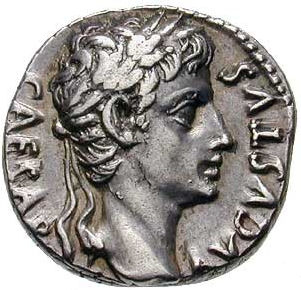
Render Unto Caesar

15 Then the Pharisees went and plotted how to entangle him in his words. 16 And they sent their disciples to him, along with the Herodians, saying, “Teacher, we know that you are true and teach the way of God truthfully, and you do not care about anyone’s opinion, for you are not swayed by appearances 17 Tell us, then, what you think. Is it lawful to pay taxes to Caesar, or not?” 18 But Jesus, aware of their malice, said, “Why put me to the test, you hypocrites? 19 Show me the coin for the tax.” And they brought him a denarius 20 And Jesus said to them, “Whose likeness and inscription is this?” 21 They said, “Caesar’s.” Then he said to them, “Therefore render to Caesar the things that are Caesar’s, and to God the things that are God’s.” 22 When they heard it, they marveled. And they left him and went away. –  Matthew 22:15-22 ESV

render_unto_caesar1.jpg

It’s probably safe to say that none of us actually enjoy paying our taxes. We see it as a necessary evil and a burdensome obligation. We do it because it’s required by law and carries stiff penalties for those who fail to comply. Throughout history, taxation has had a long and less-than-popular reputation. Even in Jesus’ day, the topic of taxes was a hot topic among the population of ancient Palestine.

The Romans levied heavy taxes on the Jews, and the Jewish tax collectors added their own exorbitant fees. Then there was the Temple tax that every Jew had to pay, which, in actuality, was used to support the lavish lifestyles of the priests themselves. These men lived in luxury while the average Jew struggled to make ends meet.

In his book, The Message and the Kingdom, Richard Horsley describes the elegant lifestyles enjoyed by these government-appointed tax collectors.

“…impressive archeological remains of their Jerusalem residences show how elegant their lifestyle had become. In spacious structures unhesitantly dubbed ‘mansions’ by the archeologists who uncovered them in the 1970’s, we can get a glimpse of a lavish life in mosaic floored reception rooms and dining rooms with elaborate painted and carved stucco wall decorations and with a wealth of fine tableware, glassware, carved stone table tops, and other interior furnishings and elegant peristyles.” – Richard Horsley, The Message and the Kingdom

This staggering combination of tax obligations was overwhelming to the Jewish people, making everyday life unbearable and the very mention of taxes intolerable. Palestine was a veritable powder keg waiting to ignite, and, according to the Jewish historian Josephus, the Romans’ refusal to lessen the tax burdens was the eventual cause of the Jewish War and the Siege of Jerusalem in 70 AD.

The Roman taxation of Palestine was a hot-button topic among the Jews, the religious leaders used it in an attempt to put Jesus on the spot. They were always looking for an opportunity to incite Jesus into saying something that might violate their own laws or portray Him as a political threat to the Roman occupiers. They were certain that it was only a matter of time before He said something that got Him into trouble with the people or with the Roman authorities. If they could get Him to say something the people would disagree with, He would lose His popularity and His growing following. If they could trick Him into saying something that could be taken as divisive or revolutionary by the Romans, then they could enlist the government’s aid in getting rid of Him. So they sent some “spies pretending to be honest men” (Luke 20:20 NLT).

In other words, they didn’t come dressed as priests, Pharisees, or religious leaders. They disguised themselves as average Jews, hoping to blend in with the crowd and catch Jesus off-guard and unprepared. Their question was well-planned and had a clear motivation behind it. “They tried to get Jesus to say something that could be reported to the Roman governor so he would arrest Jesus” (Luke 20:20 NLT). After attempting to butter Him up with false flattery, they asked their question: “Tell us, then, what you think. Is it lawful to pay taxes to Caesar, or not?” (Matthew 22:17 ESV).

Render-Unto-CaesarBut Matthew makes it clear that Jesus saw through their ruse. He knew they were trying to trick Him and even accused them of hypocrisy. But despite His awareness of their less-than-sincere motives, He chose to answer their question. He asked for a Roman coin, which would have carried the image of Caesar, a fact that He got them to verify. Then He told them, “Therefore render to Caesar the things that are Caesar’s, and to God the things that are God’s” (Matthew 22:21 ESV).

The simple interpretation of this passage would be that Jesus was encouraging civil obedience. The people of God must be good citizens and set the right example, even in the case of a corrupt and oppressive government. But there appears to be a much more significant point to Jesus’ statement.

Interestingly, he emphasized Caesar’s image on the coin. The Roman emperor was considered a god by his own people. So, Jesus told them to give back to Caesar the coin bearing his image. It was stamped with his likeness and, therefore, belonged to him. But Jesus also stated that they were to give to God what belonged to God. Don’t miss Jesus’ logic.

In the book of Genesis, we read, “So God created human beings in his own image. In the image of God he created them; male and female he created them” (Genesis 1:27 NLT). Every good Jew would have known this story and understood what Jesus was saying. Men and women are made in the image of God. In a sense, they are stamped with His likeness, therefore, they belong to Him.

Jesus taught that people should give themselves to God and His kingdom instead of worrying about the temporal things of this world, like money and taxes. In His Sermon on the Mount, Jesus said, “So don’t worry about these things, saying, ‘What will we eat? What will we drink? What will we wear?’ These things dominate the thoughts of unbelievers, but your heavenly Father already knows all your needs. Seek the Kingdom of God above all else, and live righteously, and he will give you everything you need” (Matthew 6:31-33 NLT). For the average Jew, paying taxes to Caesar was a burden because it made it difficult to afford the necessities of life, like food and clothing. Yet, Jesus told them not to worry about those kinds of things because their Heavenly Father was fully capable of providing all that they needed. He had done it for their ancestors as they wandered in the wilderness, providing them with water from a rock, quail they could easily catch with their hands, and Manna that miraculously appeared each day with the morning dew.

The Romans and high taxes weren’t the problem. It was the people’s failure to honor and revere God. They saw themselves as victims rather than as citizens of the Kingdom of God. The Romans could levy taxes on the Jew’s property and possessions, but they could not touch their identity as the image-bearers of God and His chosen people. They had been handpicked by God and redeemed out of slavery in Egypt. They were His people – His prized possession. He had told them, “For you are a holy people, who belong to the LORD your God. Of all the people on earth, the LORD your God has chosen you to be his own special treasure” (Deuteronomy 7:6 NLT).

These people had been oppressed and burdened before, and God had rescued them. And while, in Jesus’ day, they were suffering oppression under Roman rule, it had far less to do with taxes than it did with sin. God wanted to rescue and redeem them from slavery to sin and death, which is why He had sent His Son. But their minds were elsewhere. They saw their burdens as earthly, not spiritual. They wanted a Messiah to rescue them from the taxes and tyranny of the Romans. But Jesus had come to rescue them from a life enslaved to sin and the death sentence that came with it.

Jesus wanted these people to give God what was rightfully His – their lives. He wanted them to turn over their lives to the very one who could save them. Jesus stood before them as the Son of God and their Messiah. He was the solution to their problem, but they failed to recognize Him as such. Jesus had not come to foment insurrection, but to provide salvation. He had not come to lead a revolt against Rome, but to provide restoration with God. His was a spiritual revolution, not an earthly one. And He subtly reminded His listeners that God, in whose image they were made, required what was due Him. Just as Caesar would punish any and all who refused to pay his mandatory tax, God would punish all those who refused to give Him what rightfully belonged to Him.

God had warned the people of Israel what would happen if they failed to render unto Him what was rightfully His. “Understand, therefore, that the Lord your God is indeed God. He is the faithful God who keeps his covenant for a thousand generations and lavishes his unfailing love on those who love him and obey his commands. But he does not hesitate to punish and destroy those who reject him” (Deuteronomy 7:9-10 NLT).

The last part of verse 21 reflects what Jesus had been trying to convey.

“…give to God what belongs to God.” – Matthew 22:21 NLTIf

If Caesar wanted his coins back, return them to him. But it was God alone who deserved man’s respect and honor. Because we bear His image, we belong to Him. And Jesus was demanding that the people of Israel give God what was rightfully His: Their lives and their unwavering devotion.

At the heart of this entire exchange is man’s love affair with money and materialism. In His Sermon on the Mount, Jesus warned about the dangers of a divided love.

“Don’t store up treasures here on earth, where moths eat them and rust destroys them, and where thieves break in and steal. Store your treasures in heaven, where moths and rust cannot destroy, and thieves do not break in and steal. Wherever your treasure is, there the desires of your heart will also be. – Matthew 6:19-21 NLT

He knew that the people were inordinately tied to the treasures of this world and, as a result, they had a divided allegiance. So, He warned them:

“No one can serve two masters. For you will hate one and love the other; you will be devoted to one and despise the other. You cannot serve God and be enslaved to money. – Matthew 6:24 NLT

The religious leaders of Israel were enslaved to money, materialism, power, and prestige. They may have faithfully worshiped at the altar of Yahweh, but the real focus of their devotion and desire was earthly treasures. They did not love the Roman government but were willing to do business with the enemy because they benefited greatly from the relationship. Their greatest fear was that Jesus would disrupt their symbiotic and self-serving relationship with the Romans. They had a bird’s nest on the ground, and this upstart Rabbi from Nazareth threatened to destroy it all. That’s why Caiaphas, the high priest, would later tell his fellow members of the Sanhedrin that Jesus’ death was preferable to the nation’s demise at the hands of the Romans.

“You don’t realize that it’s better for you that one man should die for the people than for the whole nation to be destroyed.” – John 11:50 NLT

Caiaphas was out to preserve the status quo, and if it required the death of one man, then it would be well worth it. But what Caiaphas failed to realize was that his words were really prophetic.

He did not say this on his own; as high priest at that time he was led to prophesy that Jesus would die for the entire nation. And not only for that nation, but to bring together and unite all the children of God scattered around the world. – John 11:51-52 NLT

As “the image of the invisible God” (Colossians 1:15), Jesus would eventually give back to God what was rightfully His. He would sacrifice His own life on behalf of sinful mankind and satisfy the just demands of a holy God by offering His body as the ultimate tribute. Through the willing sacrifice of His life, Jesus would render unto God what was rightfully His.

For in him all the fullness of God was pleased to dwell, and through him to reconcile to himself all things, whether on earth or in heaven, making peace by the blood of his cross. – Colossians 1:19-20 NLT

Jesus’ command to “render unto Caesar” is accompanied by an even more important imperative: “Give to God what belongs to God.” That is the heart of His answer and the message He desires every true disciple to hear. Those who place their faith in Jesus become God’s treasured possession. Not only were they made in His image but they were redeemed out of slavery to death and sin.

God bought you with a high price. So you must honor God with your body. – 1 Corinthians 6:20 NLT

For you know that God paid a ransom to save you from the empty life you inherited from your ancestors. And it was not paid with mere gold or silver, which lose their value. It was the precious blood of Christ, the sinless, spotless Lamb of God. – 1 Peter 1:18-19 NLT

God sacrificed His Son so that sinners could receive forgiveness, redemption, and righteousness. But this gracious gift comes with a “tax” or obligation to render unto God what is rightfully His: Our allegiance and willing obedience to bear His image to the world. Paul provided Titus with a powerful reminder of what it means to give to God what is rightfully His.

…we are instructed to turn from godless living and sinful pleasures. We should live in this evil world with wisdom, righteousness, and devotion to God, while we look forward with hope to that wonderful day when the glory of our great God and Savior, Jesus Christ, will be revealed. He gave his life to free us from every kind of sin, to cleanse us, and to make us his very own people, totally committed to doing good deeds.

You must teach these things and encourage the believers to do them. – Titus 2:12-15 NLT

English Standard Version (ESV)
The Holy Bible, English Standard Version. ESV® Permanent Text Edition® (2016). Copyright © 2001 by Crossway Bibles, a publishing ministry of Good News Publishers.

New Living Translation (NLT)
Holy Bible, New Living Translation, copyright © 1996, 2004, 2015 by Tyndale House Foundation. Used by permission of Tyndale House Publishers Inc., Carol Stream, Illinois 60188. All rights reserved.

Do Unto Others

“Ask, and it will be given to you; seek, and you will find; knock, and it will be opened to you. For everyone who asks receives, and the one who seeks finds, and to the one who knocks it will be opened. Or which one of you, if his son asks him for bread, will give him a stone? 10 Or if he asks for a fish, will give him a serpent? 11 If you then, who are evil, know how to give good gifts to your children, how much more will your Father who is in heaven give good things to those who ask him!

12  “So whatever you wish that others would do to you, do also to them, for this is the Law and the Prophets.” – Matthew 7:7-12 ESV

Verse 12 contains what has come to be known as “The Golden Rule.” It is most commonly recited as “Do unto others as you would have them do unto you.” This moral principle is sometimes referred to as the ethics of reciprocity. But Jesus’ original statement is contained within the context of His Sermon on the Mount and is addressed to a large gathering of Jews who have been attracted to His messages and miracles. So, it is essential to keep verse 12 within the context of Jesus’s message. It is not intended to be an isolated principle or a moral maxim for regulating behavior. This “rule” is intended to describe the lifestyle of the true disciple of Jesus.

Sitting in the crowd that day were His 12 disciples, the men who would spend three years sitting under His tutelage and absorbing all He had to say. The sermon He preached on the hillside was intended primarily for them. It was a primer on all that was to come due to His earthly ministry, eventual death, and resurrection. They believed Jesus to be the long-awaited Messiah and expected Him to set up His earthly Kingdom. They did not yet understand that He had not come to rule and reign but to suffer and die. And His death would pave the way for them to carry out every aspect of His sermon and fulfill every command it contained.

In His message, Jesus addressed all those who desired to be blessed or approved by God, which would have included every person in His audience. He wanted His predominantly Jewish audience to understand that their relationship with God was based on something other than their adherence to the Mosaic Law. Jesus was not discounting the law but simply exposing its inability to make anyone truly righteous in God’s eyes. 

Yet, Jesus told His eager listeners, “Keep on asking, and you will receive what you ask for. Keep on seeking, and you will find. Keep on knocking, and the door will be opened to you” (Matthew 7:7 NLT). To them, this must have sounded like a list of obligations or duties they must perform. But Jesus described an intimate relationship with God the Father that provides His children with constant access to His presence. With three simple words: ask, seek, and knock, He was letting them know that all who are approved by God will enjoy a special relationship with Him that will be far greater than any earthly relationship they have known.

Some try to interpret these verses as evangelistic, turning them into an invitation to salvation. But if kept in their context, it is clear that these verses are not inviting anyone into a saving relationship with Jesus. Instead, they encourage those already approved by God because of their faith in Christ to take advantage of their newfound relationship with Him.

For everyone who asks, receives. Everyone who seeks finds. And to everyone who knocks, the door will be opened.” – Matthew 7:9 NLT

We can ask of God and receive from Him, seek Him and find Him, and knock, and He will open the door to us. Gone are the days of trying to gain access to God’s presence through vain attempts to keep the law. There is no longer any need to try to win God’s approval and get His attention through human effort or achievement.

These verses tie directly back to the opening lines of Jesus’ sermon. Those who are approved by God, even the poor in spirit, will be citizens of God’s kingdom. Though they will experience days of mourning in this life, they will receive comfort from God. And their willing submission to the will of God for their lives will garner them the earth as their inheritance. When they hunger and thirst for the righteousness of God, they will be completely satisfied. When they choose to show mercy to others, they will continue to receive mercy from God. And their purity of heart will allow them to see God in their lives. When they seek to be at peace with men and introduce them to the means to have peace with God, they will be recognized as the sons of God. And finally, any persecution they face in this life because of their faith will be well worth it, because they have been guaranteed a place in God’s kingdom.

All of this helps to provide context for Jesus’ recitation of “The Golden Rule.” He wasn’t giving behavioral advice or a principle for improving human relationships. Verse 12 is essentially a summation of all that Jesus has said, and acts as a bookend to verse 17 of chapter five:

“Do not think that I have come to abolish the Law or the Prophets; I have not come to abolish them but to fulfill them.

These two verses comprise what is known as an inclusio, bracketing all that is contained between them and forming a single unit of thought. The over-arching theme has been Jesus’ treatment of the Law and the Prophets or the Old Testament revelation. Here, in verse 12, Jesus brings His thoughts to a conclusion, summarizing all that He has said in one succinct and simple statement: So whatever you wish that others would do to you, do also to them. This is the law of love, and it supersedes and fully expresses all that was written in the law. Paul summarizes it well:

Owe no one anything, except to love each other, for the one who loves another has fulfilled the law. For the commandments, “You shall not commit adultery, You shall not murder, You shall not steal, You shall not covet,” and any other commandment, are summed up in this word: “You shall love your neighbor as yourself.” Love does no wrong to a neighbor; therefore love is the fulfilling of the law. – Romans 13:8-10 ESV

He simplified it, even more, when he wrote to the believers in Galatia:

For the whole law can be summed up in this one command: “Love your neighbor as yourself.” – Galatians 5:14 NLT

And not long before Jesus went to the cross, He told His disciples So now I am giving you a new commandment: Love each other. Just as I have loved you, you should love each other. Your love for one another will prove to the world that you are my disciples (John 13:34-35 NLT).

In our sinful, self-centered state, it would be easy to draw a faulty conclusion from His words that allows us to focus on what we want from others. In other words, if we want our back scratched, we will reluctantly scratch someone else’s back, expecting them to do the same to us in return. Our seemingly gracious actions would be selfishly motivated. The Book of James contains a powerful warning against this interpretation of verse 12.

If you really fulfill the royal law according to the Scripture, “You shall love your neighbor as yourself,” you are doing well. But if you show partiality, you are committing sin and are convicted by the law as transgressors. For whoever keeps the whole law but fails in one point has become guilty of all of it. – James 2:8-10

James specifically mentions one law in particular: The royal law. Then, to ensure they understood what he meant, he quoted the law for them.

“You shall love your neighbor as yourself…” – James 2:8 ESV

In His Sermon on the Mount, Jesus affirmed this “royal law” when He stated, “Do to others whatever you would like them to do to you. This is the essence of all that is taught in the law and the prophets” (Matthew 7:12 NLT). Jesus was not recommending the practice of preferential treatment to get a preferred response. He was promoting the practice of equity and selfless love. We are not to love based on what we get out of it. Christlike love is not a form of quid pro quo where our love becomes reciprocal in nature. It is not a you-scratch-my-back-and-I’ll-scratch-your-back kind of equation. Yet the practice of partiality is almost always selfish and self-centered. 

But that is not the kind of love Jesus is talking about. He refers to a selfless kind of love that expects and demands nothing in return. It is focused on giving, not getting. The apostle Paul warned against turning the law of love into a self-centered mechanism to get what you want.

So if there is any encouragement in Christ, any comfort from love, any participation in the Spirit, any affection and sympathy, complete my joy by being of the same mind, having the same love, being in full accord and of one mind. Do nothing from selfish ambition or conceit, but in humility count others more significant than yourselves. Let each of you look not only to his own interests, but also to the interests of others. – Philippians 2:1-4 ESV

No one enjoys being hated, so why would we choose to hate others? There is no joy in being taken advantage of, so why would we treat someone else that way? If the idea of someone having an affair with your spouse offends you, it should also prevent you from ever considering doing the same thing to someone else. Jesus’ statement is intended to be other-focused, not self-centered. He was telling the Jews in His audience that the law was essentially about loving God and loving others, not themselves. Those who end up as citizens of His Kingdom will love as He loves. They will do as Jesus did, which Paul sums up in his letter to the Philippians:

Have this mind among yourselves, which is yours in Christ Jesus, who, though he was in the form of God, did not count equality with God a thing to be grasped, but emptied himself, by taking the form of a servant, being born in the likeness of men. And being found in human form, he humbled himself by becoming obedient to the point of death, even death on a cross. – Philippians 2:5-8 ESV

Jesus knew that the life of love and self-sacrifice to which He called His audience would not be easy. He was fully aware that His words were difficult to hear and that what He had been commanding them to do was impossible to pull off. The crowds who followed Jesus to the hillside in Galilee had been attracted by His miracles. They were enamored by His ability to heal the sick and cast out demons. There was something attractive about this man who could do the impossible. But now, they were hearing that He expected the impossible of them.

If they wanted to be part of God’s Kingdom, they would have to live radically different lives. Their status as descendants of Abraham was not going to be enough. Their adherence to man-made laws and religious rules could not win them favor with God. But faith in Jesus as their Saviour would radically alter their behavior and restore their relationship with God. It would allow them to ”do unto others” with a selflessness that mirrors that of Jesus. Jesus was not calling His disciples to practice partiality or to live with a what’s-in-it-for-me mentality. He was commanding them to love as they had been loved. The Golden Rule is nothing more than a summation of the law. Jesus put it this way: “Just as I have loved you, you also are to love one another” (John 13:34 ESV).

Love is the ultimate expression of all the Law of Moses. To not commit adultery requires love for the other person and their spouse. It is difficult, if not impossible, to murder another person if you love them as Christ loved you. To steal something that belongs to someone else reveals a hatred and disdain for that person, but we are called to love them. Love sacrifices and gives rather than takes. Love protects and defends rather than hurts. Love is the driving force behind all of the law. Paul reminds us that all of the laws are summed up in this one commandment: “Love your neighbor as yourself.” Love does NO wrong to others. So one who loves as God intended, fulfills the law of God.

English Standard Version (ESV)
The Holy Bible, English Standard Version. ESV® Permanent Text Edition® (2016). Copyright © 2001 by Crossway Bibles, a publishing ministry of Good News Publishers.

New Living Translation (NLT)
Holy Bible, New Living Translation, copyright © 1996, 2004, 2015 by Tyndale House Foundation. Used by permission of Tyndale House Publishers Inc., Carol Stream, Illinois 60188. All rights reserved.

Let Your Light Shine

14 “You are the light of the world. A city set on a hill cannot be hidden. 15 Nor do people light a lamp and put it under a basket, but on a stand, and it gives light to all in the house. 16 In the same way, let your light shine before others, so that they may see your good works and give glory to your Father who is in heaven.” – Matthew 5:15-16 ESV

Some of Jesus’ first commands were given during His Sermon on the Mount in the early days of His earthly ministry. In His sermon, Jesus addressed a large crowd of Jews, including His disciples. His message was meant to shock and surprise His Hebrew audience, as He frequently referenced the Mosaic Law and demanded a form of righteousness that excelled that of the scribes and Pharisees (Matthew 5:20). His words were difficult to understand and impossible to apply. His commands to exhibit a superior brand of righteousness were inconceivable to people who already found adherence to the 613 ordinances in the Mosaic Law an unachievable standard to keep.

The Israelites in His audience knew they were the chosen people of God. In fact, they took great pride in their status as His set-apart people. Over the centuries, He had repeatedly pointed out the unique privilege they enjoyed as His covenant people.

“I am the Lord; I have called you in righteousness;
    I will take you by the hand and keep you;
I will give you as a covenant for the people,
    a light for the nations,
   to open the eyes that are blind,
to bring out the prisoners from the dungeon,
    from the prison those who sit in darkness.” – Isaiah 42:6-7 ESV

“It is too light a thing that you should be my servant
    to raise up the tribes of Jacob
    and to bring back the preserved of Israel;
I will make you as a light for the nations,
    that my salvation may reach to the end of the earth.” – Isaiah 49:6 ESV

Arise, shine, for your light has come,
    and the glory of the Lord has risen upon you.
For behold, darkness shall cover the earth,
    and thick darkness the peoples;
but the Lord will arise upon you,
    and his glory will be seen upon you.
And nations shall come to your light,
    and kings to the brightness of your rising. – Isaiah 60:1-3 ESV

The Jews, God’s chosen people in the Old Testament, were to have been an example to the rest of the nations. They were to act as lights to the blind and to provide freedom to those living in captivity to sin. But they failed. Instead, they chose to live like the nations around them. Rather than influencing the world, they became infected by it. Instead of modeling godliness, they mirrored worldliness.

Those who gathered to listen to Jesus’ words were primarily from the working class. They were peasants, farmers, shepherds, craftsmen, fishermen, homemakers, and widows. They were looked down on by their own religious leaders, who viewed them as irreligious law-breakers whose unrighteous behavior forestalled the Messiah’s coming. Yet, Jesus demanded more from them, not less. He reminded them of their status as God-ordained world influencers. Jesus didn’t say, “You should be the light of the world;” He said “You are!” (Matthew 5:14 ESV). But their radiance had dimmed because of their inability to live up to God’s exacting standards. Rather than demonstrating faith and obedience through their adherence to the Law, they treated God’s sacrificial system as a kind of get-out-of-jail-free card. They knew if they sinned, they could get forgiveness. But to make matters worse, the nation of Israel had a track record of apostasy and spiritual adultery that God found unforgivable.

“Has any nation ever traded its gods for new ones,
    even though they are not gods at all?
Yet my people have exchanged their glorious God
    for worthless idols!
The heavens are shocked at such a thing
    and shrink back in horror and dismay,”
    says the Lord.  – Jeremiah 2:11-12 NLT

So, when Jesus commanded them to let their lights shine, He knew was dropping a truth bomb on His unsuspecting audience that they would both convict and confuse them. He was demanding that they come out of their period of prolonged darkness and shine as lights in a sin-cloaked world. But He knew His words would be impossible to keep without divine help. They would be no more successful at keeping this command than they had been at obeying the 613 regulations found in the Mosaic Law.

The key to keeping all the commands found in the Sermon on the Mount would be the death and resurrection of Jesus. Only by belief in His substitutionary death on the cross and His miraculous restoration to life would they be able to “shine out for all to see” (Matthew 5:16 NLT). It would be His incarnation, crucifixion, and resurrection that provided the means for the Jews in His audience to become the lights they were meant to be.

The apostle John, who had a front-row seat to the Sermon on the Mount, later wrote, “In the beginning was the Word, and the Word was with God, and the Word was God. He was in the beginning with God. All things were made through him, and without him was not any thing made that was made. In him was life, and the life was the light of men. The light shines in the darkness, and the darkness has not overcome it” (John 1:1-5 ESV).

Jesus was the light and He came to illuminate the darkness that pervaded the hearts of men, including the chosen people of God. But John goes on to say, “He came to his own, and his own people did not receive him” (John 1:12 ESV). Many of those who heard His message that day would refuse to believe His words or accept His offer of salvation through faith in Him alone. They would continue to try to earn God’s favor through rule-keeping and sacrifice. Yet, John points out that the alternative Jesus offered was far more preferable and profitable. 

But to all who did receive him, who believed in his name, he gave the right to become children of God. – John 1:12 ESV

The command to be lights shining in the darkness applies to all those who have placed their faith in Christ. Light penetrates and permeates. Light illuminates and eliminates the darkness. Just as physical light has a transformative nature, so does the Light of the world. Jesus said, “I am the light of the world. Whoever follows me will not walk in darkness, but will have the light of life” (John 8:12 ESV).

Those who have placed their faith in Jesus Christ have had the darkness of their lives penetrated by the Light. They have been given the Spirit of God, resident within them, to enlighten and empower them to live in such a way that their lives make a difference. But to have an illuminating impact on the world requires that the Light have its full influence. The apostle John wrote: “The darkness is disappearing, and the true light is already shining” (1 John 2:8 NLT). This is a statement of fact. The Light of Christ shines in the lives of those who call themselves His disciples, and they have the responsibility and capability to illuminate and eliminate the darkness that pervades the world.

As light increases and spreads, darkness diminishes and fades. Yet, it would be easy to look at the world and conclude that the darkness is winning. Evil appears to be increasing. But could the problem be that we, as children of light, have allowed the darkness to overtake the light in our own lives? Are our lamps too feeble? Is our faith too small? Is our light too weak to penetrate the darkness around us? 

Paul gives us words of encouragement. The night has advanced toward dawn; the day is near. So then we must lay aside the works of darkness, and put on the weapons of light” (Romans 13:12 ESV). We must live with the realization that the light wins. The darkness loses. There is a movement of God going on that is transforming the world from darkness to light. We may not be able to see it. We may not feel it. But as soon as Jesus entered the world, the light of God penetrated the darkness and began to spread. We have a responsibility to make the light of Christ our highest priority. To do so, we must refuse to love the darkness more than the light. We must choose to live as children of the light, fanning the flame of faith through regular time in the Word, fellowship with other believers, and a reliance upon the Spirit of God for strength, wisdom, and exposure of any darkness that remains in our lives. The darkness in our lives should be diminishing with each passing day. The light – the righteousness and holiness of God – should be increasing.

Everywhere we go, our lives should provide light in the darkness. Our actions should be proof of the transforming power of God made available through Jesus Christ. When Jesus commissioned Paul to take His offer of salvation to the Gentiles, He said, “I am sending you to open their eyes so that they turn  from darkness to light and from the power of Satan to God, so that they may receive forgiveness of sins and a share among those who are sanctified by faith in me. (Acts 26:17-18 ESV).

So, not only is the light in our lives to be increasing, slowly and steadily eliminating the last vestiges of darkness; but it is to be emanating from us into the darkness surrounding us.

For God, who said, “Let light shine out of darkness,” has shone in our hearts to give the light of the knowledge of the glory of God in the face of Jesus Christ. But we have this treasure in jars of clay, to show that the surpassing power belongs to God and not to us. – 2 Corinthians 4:6-7 ESV

We have the light of God within us, and that light should be increasing in intensity and influence. It should be shining through all the cracks and flaws in our lives, revealing the power of God at work within us. When people look at us, they will still see clay jars; flawed, cracked, and seemingly without value. But they should also see God’s light shining through us and out of us to all those around us.

We now have this light shining in our hearts, but we ourselves are like fragile clay jars containing this great treasure. This makes it clear that our great power is from God, not from ourselves. – 2 Corinthians 4:7 NLT

We are simply receptacles of His glory. We are the conduits of His life-changing, darkness-diminishing light. As the children’s song says, “This little light of mine, I’m gonna let it shine! Let it shine, let it shine, let it shine!” But we must never forget that our ability to illuminate others and eliminate darkness is not self-produced, but a by-product of walking in the light. So, let your light (the Light of Christ) shine.

English Standard Version (ESV)
The Holy Bible, English Standard Version. ESV® Permanent Text Edition® (2016). Copyright © 2001 by Crossway Bibles, a publishing ministry of Good News Publishers.

New Living Translation (NLT)
Holy Bible, New Living Translation, copyright © 1996, 2004, 2015 by Tyndale House Foundation. Used by permission of Tyndale House Publishers Inc., Carol Stream, Illinois 60188. All rights reserved.

Abide In Me

1 “I am the true vine, and my Father is the vinedresser. Every branch in me that does not bear fruit he takes away, and every branch that does bear fruit he prunes, that it may bear more fruit. Already you are clean because of the word that I have spoken to you. Abide in me, and I in you. As the branch cannot bear fruit by itself, unless it abides in the vine, neither can you, unless you abide in me. I am the vine; you are the branches. Whoever abides in me and I in him, he it is that bears much fruit, for apart from me you can do nothing. – John 15:1-5 ESV

By this my Father is glorified, that you bear much fruit and so prove to be my disciples. As the Father has loved me, so have I loved you. Abide in my love. 10 If you keep my commandments, you will abide in my love, just as I have kept my Father’s commandments and abide in his love. – John 15:8-10 ESV

The context of this command is essential for understanding its meaning. Jesus and His disciples have departed the upper room where they shared the Passover meal together. He is resolute in His determination to keep His providentially preordained rendezvous with the cross and death prepared for Him by His Heavenly Father. But the 11 remaining disciples are still trying to get their heads around all that Jesus has revealed to them. Even as they make their way into the night, He continues to expand their understanding and prepare them for what lies ahead.

This passage is part of Jesus’ ongoing farewell discourse and provides one of the most powerful descriptions of what it means to experience eternal life with God through the Son. Jesus borrows from the familiar imagery of the vineyard to create an extended metaphor designed to convey the non-negotiable dependency His followers must have on Him. As a result of His death, burial, and resurrection, these men will no longer be independently minded followers; they will be totally reliant reflections of God’s glory as expressed through His Son.

Over three years, these men had expressed their allegiance to Jesus by choosing to follow Him and sacrifice all else on behalf of Him. They had given up their careers, left their families, exposed themselves to ridicule, gone hungry, suffered life-threatening storms at sea, traveled countless miles, and listened to more lessons than they could even remember. They were dedicated men who loved Jesus greatly. On several occasions, they had even expressed their willingness to lay down their lives for Him. But Jesus knew that the key to their continued faithfulness and fruitfulness would be through His death and resurrection. The very thing they feared the most would be the one thing that would transform their lives and transcend all their expectations of greatness and glory.

So much of what Jesus has taught His disciples has escaped them, and His continued discussions regarding His death frightened and frustrated them. They couldn’t understand why He had to die. They couldn’t bear the thought that He was going to leave them. But Jesus had told them that His death would prove to be life-giving and fruit-bearing.

“Now the time has come for the Son of Man to enter into his glory. I tell you the truth, unless a kernel of wheat is planted in the soil and dies, it remains alone. But its death will produce many new kernels—a plentiful harvest of new lives. Those who love their life in this world will lose it. Those who care nothing for their life in this world will keep it for eternity. Anyone who wants to serve me must follow me, because my servants must be where I am. And the Father will honor anyone who serves me.” – John 12:23-26 NLT

Extending this earlier discussion of death, life, and fruitfulness, Jesus declares, “I am the true vine, and my Father is the vinedresser” (John 15:1 ESV). This will be the last of His “I am” statements and, with it, Jesus conveys to His disciples that everything is about to change, including their relationship with Him.

The imagery of the vine would have been very familiar to the disciples, not just because they lived in an agrarian culture where vines were ubiquitous, but because the vine was a symbol of Israel’s relationship with God. Every time they passed by the temple in Jerusalem, they would have seen the golden vines that adorned its walls. But according to the prophets, the nation of Israel, planted by God to produce abundant fruit, ended up producing wild grapes.

Let me sing for my beloved
    my love song concerning his vineyard:
My beloved had a vineyard
    on a very fertile hill.
He dug it and cleared it of stones,
    and planted it with choice vines;
he built a watchtower in the midst of it,
    and hewed out a wine vat in it;
and he looked for it to yield grapes,
    but it yielded wild grapes. – Isaiah 5:1-2 ESV

And Isaiah made it painfully clear that this lovingly cultivated vine that produced less-than-quality fruit represented the people of God.

For the vineyard of the Lord of hosts
    is the house of Israel,
and the men of Judah
    are his pleasant planting;
and he looked for justice,
    but behold, bloodshed;
for righteousness,
    but behold, an outcry! – Isaiah 5:7 ESV

Now, Jesus was declaring Himself to be the vine. In doing so, He let His disciples know that He had replaced Israel as the sole source of fruitfulness. He would be the fulfillment of all that Israel should have been. His life would yield abundant fruit and bring glory to God.

Israel had failed to remain faithful and refused to keep their preferred status as God’s chosen people, choosing instead to worship false gods. The prophet Jeremiah declared to them God’s displeasure.

“But I was the one who planted you,
    choosing a vine of the purest stock—the very best.
    How did you grow into this corrupt wild vine?” – Jeremiah 2:21 NLT

With this final “I am” statement, Jesus lets His disciples know that He is the true vine. He has been faithful and fully obedient to the will of God, the vinedresser. He had been “planted” by God with a purpose in mind: to bear much fruit. And by sacrificing His life, He would fulfill that purpose by producing a “plentiful harvest of new lives” (John 12:24 NLT).

The most amazing aspect of Jesus’ fruit-bearing ministry is the vital role His disciples would play. They would become the branches through which His life-giving, fruit-bearing ministry would flow. But it would require constant abiding on their part. The key to their role in producing fruit would be their ongoing dependence upon the vine.

The Greek word for “abide” is menō and it means “to remain, tarry, not to depart, to be held, kept, continually.”It is the same word the apostle John used in describing a true disciple’s relationship with Jesus.

Whoever says “I know him” but does not keep his commandments is a liar, and the truth is not in him, but whoever keeps his word, in him truly the love of God is perfected. By this we may know that we are in him: whoever says he abides in him ought to walk in the same way in which he walked. – 1 John 2:4-6 ESV

And now, little children, abide in him, so that when he appears we may have confidence and not shrink from him in shame at his coming. If you know that he is righteous, you may be sure that everyone who practices righteousness has been born of him. – 1 John 2:28-29 ESV

John associates abiding with actions. There is a symbiotic relationship between the vine and the branch characterized by closeness and interdependence. Notice his emphasis on walking as Jesus walked and practicing righteousness just as Jesus did. Abiding can sometimes be confused with resting. But while rest can be a byproduct of abiding, it is not the primary goal. A branch “rests” in the vine in that it relies on the vine to produce the grapes it bears. It doesn’t strain to be fruitful. It doesn’t grow weary in the process of bearing fruit.

Jesus extended an invitation to follow Him that promised rest for the weary but in the context of work.

“Come to me, all of you who are weary and carry heavy burdens, and I will give you rest. Take my yoke upon you. Let me teach you, because I am humble and gentle at heart, and you will find rest for your souls. For my yoke is easy to bear, and the burden I give you is light.” – Matthew 11:28-30 NLT

He extends His invitation to those who are worn out from bearing the weight of trying to produce the fruit of righteousness on their own. They have exhausted themselves with their futile attempts to earn favor with God through self-effort. But notice that Jesus invites them into a shared work relationship characterized by the yoke. Jesus’ offer of salvation is not the promise of an extended vacation or a trouble-free life. The life of a disciple is characterized by effort and demonstrated by action. Jesus told His disciples to “go and make disciples” (Matthew 28:19 NLT). They had work to do and effort would be required. But He promised to be with them.

“And be sure of this: I am with you always, even to the end of the age.” – Matthew 28:20 NLT

Jesus utilizes the imagery of the vine and the branch to convey this shared work relationship between Him and the disciple. The goal is fruitfulness. But fruitfulness cannot take place without fruit-bearing. In other words, the vine is dependent upon the branches to make the fruit possible. Abiding is the process by which the branch becomes productive and beneficial.

It is important to remember that Jesus is addressing the 11 disciples who have chosen to remain with Him. They are walking with Him as He makes His way across the Kidron Valley from the city of Jerusalem to the Garden of Gethsemane. These men represent all those who have placed their faith and hope in Jesus. But Jesus is revealing that the real key to their future fruitfulness and faithfulness will be the indwelling presence of the Spirit of God. As a result of His coming death, resurrection, and ascension, they will find themselves the recipients of the gift of the Holy Spirit. He will permanently attach them to the vine, allowing them to play a vital role in the fruit-bearing plans of God.

The emphasis in this passage is on fruitfulness, not fruitlessness. It is on the vinedresser’s purpose to reap a harvest of fruit through the vine and its branches. Jesus was not threatening His disciples with a loss of salvation. He was simply conveying that their future relationship with Him would be all about fruit-bearing. To not bear fruit would be illogical and unacceptable. The very fact that He describes God as the vinedresser who “prunes” the branches so they can bear even more fruit reinforces His point.

He calls His disciples to remain or abide in Him.

“Remain in me, and I will remain in you. For a branch cannot produce fruit if it is severed from the vine, and you cannot be fruitful unless you remain in me.” – John 15:4 NLT

This had immediate application, as the disciples faced the uncertainty of the circumstances surrounding them. Jesus knew that the next few hours were going to be trying and He was calling them to remain faithful and to continue believing in who He was. In a sense, they were about to be pruned, as God cut away all their preconceived notions regarding the Messiah. In just a matter of hours, all their lofty hopes and aspirations that Jesus would establish His Kingdom on earth would be shattered. But Jesus pleads with them to remain.

From the other gospel accounts, we know that the disciples would end up deserting Jesus. When the authorities came to arrest Jesus, they fled into the night. But there is a sense in which they remained. They stayed nearby. They stayed together. They maintained a faint flicker of hope as they faced an unknown and uncertain future.

But Jesus was assuring them that their days of fruitfulness were not over. He would still use them to do great things. But the primary lesson they were going to learn from it all was their total reliance upon Jesus for all things. Without Him, they could do nothing. They could produce no fruit apart from Him, and their lives after His return to heaven would be marked by complete dependence upon Him.

Even today, the disciple’s life is one of waiting, working, resting, cooperating, and relying on the “Vine” to produce the fruit that the “Vinedresser” longs to see.

English Standard Version (ESV)
The Holy Bible, English Standard Version. ESV® Permanent Text Edition® (2016). Copyright © 2001 by Crossway Bibles, a publishing ministry of Good News Publishers.

New Living Translation (NLT)
Holy Bible, New Living Translation, copyright © 1996, 2004, 2015 by Tyndale House Foundation. Used by permission of Tyndale House Publishers Inc., Carol Stream, Illinois 60188. All rights reserved.

Keep My Commandments

15 “If you love me, you will keep my commandments. And I will ask the Father, and he will give you another Helper, to be with you forever, 17 even the Spirit of truth, whom the world cannot receive, because it neither sees him nor knows him. You know him, for he dwells with you and will be in you.

18 “I will not leave you as orphans; I will come to you. 19 Yet a little while and the world will see me no more, but you will see me. Because I live, you also will live. 20 In that day you will know that I am in my Father, and you in me, and I in you. 21 Whoever has my commandments and keeps them, he it is who loves me. And he who loves me will be loved by my Father, and I will love him and manifest myself to him.” 22 Judas (not Iscariot) said to him, “Lord, how is it that you will manifest yourself to us, and not to the world?” 23 Jesus answered him, “If anyone loves me, he will keep my word, and my Father will love him, and we will come to him and make our home with him. 24 Whoever does not love me does not keep my words. And the word that you hear is not mine but the Father’s who sent me. – John 14:15-24 ESV

In His Great Commission, Jesus told His disciples to “go and make disciples of all the nations” (Matthew 28:19 NLT). Their mission was to spread the good news regarding salvation by grace alone through faith alone in Christ alone. Their three-year stint under Jesus’ leadership and their witness of His death, resurrection, and ascension would make their propagation of this news believable and effective. However, an important and often overlooked aspect of Jesus’ marching orders for them was His command to teach these future disciples to obey all the commands He had given them. That would require their recollection of those commands and their faithful communication of them. But none of this would matter if they failed to demand the careful observance of Jesus’ commands.

During His earthly ministry, Jesus placed a high priority on obedience and He used Himself as an example. He repeatedly discussed His willingness to obey the will of His Heavenly Father.

“I have loved you even as the Father has loved me. Remain in my love. When you obey my commandments, you remain in my love, just as I obey my Father’s commandments and remain in his love.” – John 15:9-10 NLT

I can do nothing on my own. I judge as God tells me. Therefore, my judgment is just, because I carry out the will of the one who sent me, not my own will. – John 5:30 NLT

For I have come down from heaven to do the will of God who sent me, not to do my own will. – John 6:38 NLT

I don’t speak on my own authority. The Father who sent me has commanded me what to say and how to say it. And I know his commands lead to eternal life; so I say whatever the Father tells me to say.” – John 12:49-50 NLT

“He who sent Me is with Me. He has not left Me alone, because I always do what pleases Him.” – John 8:29 BSB

Jesus was an obedient Son who willingly kept all of His Father’s commands. This is not just a reference to Jesus’ faithful adherence to the Mosaic Law, something no other man had been able to do. It has to do with His obedience to the specific will the Father had ordained Him to carry out. That is why Jesus said, “I have come down from heaven, not to do my own will but the will of him who sent me” (John 6:38 ESV). He found delight in doing the will of His Father.

“My food is to do the will of him who sent me and to accomplish his work.” – John 4:34 ESV

His Father’s will included carrying out the preordained plan He had been given as well as listening to and communicating the messages He had received.

“I have not spoken on My own, but the Father who sent Me has commanded Me what to say and how to say it.  And I know that His command leads to eternal life. So I speak exactly what the Father has told Me to say.” – John 12:49-50 BSB

Jesus stayed in constant communication with the Father, spending long periods alone with Him in prayer. But there was another aspect to the Father’s will for Jesus that involved the ultimate act of obedience. The prophet Isaiah describes it this way:

It was the will of the LORD to crush him; he has put him to grief; when his soul makes an offering for guilt, he shall see his offspring; he shall prolong his days; the will of the LORD shall prosper in his hand. – Isaiah 53:10 ESV

The apostle Paul used similar language when he utilizing Jesus’ humble obedience to the Father’s will as an example for all believers.

Have this mind among yourselves, which is yours in Christ Jesus, who, though he was in the form of God, did not count equality with God a thing to be grasped, but emptied himself, by taking the form of a servant, being born in the likeness of men. And being found in human form, he humbled himself by becoming obedient to the point of death, even death on a cross. – Philippians 2:5-8 ESV

The author of Hebrews quotes Jesus as saying to His Father, “Behold, I have come to do your will” (Hebrews 10:9 ESV) and then he elaborates on the significance of Jesus’ fulfillment of the Father’s will.

And by that will we have been sanctified through the offering of the body of Jesus Christ once for all. – Hebrews 10:9-10 ESV

So, when Jesus commanded His disciples to teach future disciples to obey His commands, He was really demanding their observance of His Father’s will and expecting them to use His life as a model for their behavior. He obeyed and so should they. All He taught and said came directly from His Father, so their observance of and obedience to these commands was an act of submission to the Father’s will, not His own.

Obedience doesn’t make someone a disciple, it provides evidence the Holy Spirit has made them a new creation (2 Corinthians 5:17). He has indwelled them and reproduced His fruit through them (Galatians 5:22-23). The passion and the power to obey come from a source other than the self. This is in line with the message God delivered to the people of Israel, guaranteeing them a supernatural transformation of their wills and dispositions, so that they might obey Him.

“I will give you a new heart, and I will put a new spirit in you. I will take out your stony, stubborn heart and give you a tender, responsive heart. And I will put my Spirit in you so that you will follow my decrees and be careful to obey my regulations. – Ezekiel 36:26-27 ESV

The capacity to keep the commandments of Christ comes from within and is the byproduct of the Spirit’s transformative power. So, when Jesus commands obedience, He is not demanding the impossible or expecting His disciples to live perfectly sinless lives; He is describing the natural outflow of a true disciple’s life. The apostle Peter put it this way:

By his divine power, God has given us everything we need for living a godly life. We have received all of this by coming to know him, the one who called us to himself by means of his marvelous glory and excellence. And because of his glory and excellence, he has given us great and precious promises. These are the promises that enable you to share his divine nature and escape the world’s corruption caused by human desires. – 2 Peter 1:3-4 NLT

The disciples were to teach Christ’s commands so that everyone knew the codes of conduct He required. These commands were to be universal and applicable to all believers in every generation. No exemptions. No exceptions.

The kind of obedience the disciples were to teach was to be Christ-emulating and God-honoring. As John Piper put it, “the kind of obedience Jesus commands moves from the inside (where the value of Jesus is savored) to the outside (where the value of Jesus is shown)” (John, Piper, All That Jesus Commanded: Life According to the Gospels).

In His Sermon on the Mount, Jesus encouraged His audience to use their actions as a form of worship to God.

“Let your good deeds shine out for all to see, so that everyone will praise your heavenly Father.” – Matthew 5:16 NLT

Ultimately, the goal of obedience is not to earn favor with God but to bring Him glory by displaying our new natures and demonstrating our adoption into His family as His redeemed sons and daughters. As the Son of God, Jesus held a deep place in His heart for His Father. His greatest joy was to bring glory to His Father by carrying out His will. In His High Priestly prayer, Jesus told His Father, “I brought glory to you here on earth by completing the work you gave me to do” (John 17:4 NLT). After His death and resurrection, Jesus expected His disciples to carry on His ministry of reconciling a lost world to God, but He also expected them to glorify God by observing all that He commanded them to do.

Obedience. Faithfulness. Christ-likeness. Spirit-filled living. It all brings glory to the Father by emulating the life of the Son.

English Standard Version (ESV)
The Holy Bible, English Standard Version. ESV® Permanent Text Edition® (2016). Copyright © 2001 by Crossway Bibles, a publishing ministry of Good News Publishers.

New Living Translation (NLT)
Holy Bible, New Living Translation, copyright © 1996, 2004, 2015 by Tyndale House Foundation. Used by permission of Tyndale House Publishers Inc., Carol Stream, Illinois 60188. All rights reserved.

Take Up Your Cross and Follow Me

24 Then Jesus told his disciples, “If anyone would come after me, let him deny himself and take up his cross and follow me. 25 For whoever would save his life will lose it, but whoever loses his life for my sake will find it. 26 For what will it profit a man if he gains the whole world and forfeits his soul? Or what shall a man give in return for his soul?” – Matthew 16:24-26 ESV

23 And he said to all, “If anyone would come after me, let him deny himself and take up his cross daily and follow me. 24 For whoever would save his life will lose it, but whoever loses his life for my sake will save it. 25 For what does it profit a man if he gains the whole world and loses or forfeits himself? 26 For whoever is ashamed of me and of my words, of him will the Son of Man be ashamed when he comes in his glory and the glory of the Father and of the holy angels.” – Luke 9:24-26 ESV

24 “Truly, truly, I say to you, unless a grain of wheat falls into the earth and dies, it remains alone; but if it dies, it bears much fruit. 25 Whoever loves his life loses it, and whoever hates his life in this world will keep it for eternal life. 26 If anyone serves me, he must follow me; and where I am, there will my servant be also. If anyone serves me, the Father will honor him.” – John 12:24-26 ESV

Jesus told His followers to “make disciples of all nations” (Matthew 28:19 ESV). The phrase “make disciples” comes from the single Greek verb mathēteuō. which can also be translated as “to teach, instruct, or to disciple.” Jesus was not expecting His followers to literally “make” or manufacture disciples but to teach all who chose to accept His message of salvation. That is why Jesus went on to instruct His disciples to teach those individuals all the commands He had spoken in His earthly ministry.

The 12 men whom Jesus called were commonly referred to as His “disciples,” from a related Greek word, mathētēs, which is a noun and describes “a learner” or “pupil.” James, Andrew, Peter, John, and all the others had accepted Jesus’ invitation to follow Him.

While walking by the Sea of Galilee, he saw two brothers, Simon (who is called Peter) and Andrew his brother, casting a net into the sea, for they were fishermen. And he said to them, “Follow me, and I will make you fishers of men.” Immediately they left their nets and followed him. And going on from there he saw two other brothers, James the son of Zebedee and John his brother, in the boat with Zebedee their father, mending their nets, and he called them. Immediately they left the boat and their father and followed him. – Matthew 4:18-22 ESV

After this he went out and saw a tax collector named Levi, sitting at the tax booth. And he said to him, “Follow me.” 28 And leaving everything, he rose and followed him. – Luke 5:27-28 ESV

At a word from Jesus, these men willingly abandoned their former lives and committed themselves to becoming His disciples or students. They each made the fateful decision to spend their lives learning from this itinerant Rabbi named Jesus. They knew little about Him or His ministry but were willing to walk away from their families, friends, and their primary means of livelihood just to hear what He had to say.

In one sense, a disciple is a follower, but for Jesus, following was not enough. He expected His disciples to learn and grow. During His earthly ministry, Jesus had hundreds, if not thousands, of followers. They were attracted by His miracles and enamored with His teachings. But as time went on, the lessons Jesus delivered became increasingly more complex and difficult to understand. As the time of His death drew closer, the more intense and seemingly obscure his teachings became. At one point, He told His followers, “I am the bread of life; whoever comes to me shall not hunger, and whoever believes in me shall never thirst…I have come down from heaven, not to do my own will but the will of him who sent me” (John 6:35, 38 ESV). The Jewish religious leaders in the crowd took exception with His claim to have come down from heaven, stating, “Is not this Jesus, the son of Joseph, whose father and mother we know? How does he now say, ‘I have come down from heaven’?” (John 6:42 ESV). They were following Him but were unreceptive to His teaching.

Discerning their unbelief, Jesus upped the ante and proclaimed, “I am the living bread that came down from heaven. If anyone eats of this bread, he will live forever. And the bread that I will give for the life of the world is my flesh” (John 6:51 ESV). This rather cryptic and confusing comment left the religious leaders further perplexed and put out. Jesus went on to talk about eating His flesh and drinking His blood, imagery that repulsed His critics and confused His disciples. One of the 12 responded, “This is a hard saying; who can listen to it?” (John 6:60 ESV). But rather than rebuking His disciples, Jesus explained that His words were “spirit and life” (John 6:63 ESV). There were things they did not yet understand and their views of Him were clouded by false expectations and faulty concepts concerning His mission. They believed Him to be the Messiah but were confused by the nature of His ministry and messages. He was not acting like a Messiah. His ministry lacked the hallmarks of a revolutionary, Rome-conquering mission that would put the kingdom of Israel back on the map. Jesus knew that some of His “followers” were having second thoughts and said, “There are some of you who do not believe” (John 6:64 ESV). The 12 remained by His side, but “many of his disciples turned back and no longer walked with him” (John 6:66 ESV).

Following Jesus requires commitment. It entails a willingness to listen, learn, and grow even when the lessons make no sense or the circumstances surrounding His calling don’t turn out as expected. Jesus later used a parable to describe the fickle nature of those who follow Him but eventually turn away. He spoke of four different types of soil on which the “seed” of the gospel falls.

“The seed on the rocky soil represents those who hear the message and immediately receive it with joy. But since they don’t have deep roots, they don’t last long. They fall away as soon as they have problems or are persecuted for believing God’s word.” – Matthew 16:20-21 NLT

Failure to establish roots results in no nourishment. The seed sprouts but there are no nutrients to feed and foster growth. Roots imply commitment and a desire to grow. It is a picture of reliance upon the life-giving nature of Jesus’ message. He later told His disciples, “Remain in me, and I will remain in you. For a branch cannot produce fruit if it is severed from the vine, and you cannot be fruitful unless you remain in me. Yes, I am the vine; you are the branches. Those who remain in me, and I in them, will produce much fruit. For apart from me you can do nothing” (John 15:4-5 NLT).

Jesus went on to describe a second type of soil that initially appears to benefit from the sowing of the seed but produces no fruit.

“The seed that fell among the thorns represents those who hear God’s word, but all too quickly the message is crowded out by the worries of this life and the lure of wealth, so no fruit is produced.” – Matthew 16:22 NLT

Faithful-looking followers can end up being fickle and fruitless. Their initial enthusiasm for the gospel can wain as the distractions of life increase and Christ’s call to commitment becomes more difficult. But according to Jesus, true disciples produce fruit.

“When you produce much fruit, you are my true disciples. This brings great glory to my Father.” – John 15:8 NLT

Jesus would later tell His 12 disciples, “I chose you. I appointed you to go and produce lasting fruit, so that the Father will give you whatever you ask for, using my name” (John 15:16 NLT). That is what it means to make disciples. The goal is fruitfulness and faithfulness, not simply a growing number of followers. Disciples are committed. Disciples continue to learn. Disciples keep abiding in Christ even when the going gets tough and the trials of life make it difficult to hold on.

Being a disciple of Christ is not easy. That is why Jesus said, “If anyone would come after me, let him deny himself and take up his cross and follow me” (Matthew 16:24 ESV). It requires sacrifice, self-denial, and the daily putting to death of the old self. Paul put it this way:

My old self has been crucified with Christ. It is no longer I who live, but Christ lives in me. So I live in this earthly body by trusting in the Son of God, who loved me and gave himself for me. – Galatians 2:20 NLT

He told the disciples in the local church in Galatia that their lives should bear the fruit of the Spirit, but to do so they would need to recognize that their former sinful natures had been crucified with Christ on the cross.

Those who belong to Christ Jesus have nailed the passions and desires of their sinful nature to his cross and crucified them there. – Galatians 5:24 NLT

After Jesus’ resurrection and ascension, the disciples would grow to understand that their decision to follow Jesus must be accompanied by a willingness to commit to die to self and live for Christ. But as they lived, they would face the very real possibility of dying on His behalf. This is something Jesus warned them about.

“Truly, truly, I say to you, unless a grain of wheat falls into the earth and dies, it remains alone; but if it dies, it bears much fruit. Whoever loves his life loses it, and whoever hates his life in this world will keep it for eternal life. If anyone serves me, he must follow me; and where I am, there will my servant be also. If anyone serves me, the Father will honor him. – John 12:24-26 ESV

During His days on earth, Jesus repeatedly foreshadowed the days when His disciples would suffer as He did, facing ridicule and rejection but with the knowledge that their reward in heaven would be great.

“What blessings await you when people hate you and exclude you and mock you and curse you as evil because you follow the Son of Man. When that happens, be happy! Yes, leap for joy! For a great reward awaits you in heaven. And remember, their ancestors treated the ancient prophets that same way.” – Luke 6:22-23 NLT

Most of the Old Testament prophets delivered their messages to unrepentant audiences who not only refused to listen and learn but chose to kill the messenger. Yet these men carried out their assignments obediently and resolutely, even when facing the threat of martyrdom.

Discipleship requires commitment and a willingness to walk a path that is often unpleasant and unattractive to most people. It can be a lonely experience because few are willing to pass that way. There’s an old adage that states, “When the going gets tough, the tough get going.” But followers tend to give up or simply get out of Dodge when the going gets tough. When the heat gets turned up, they head for the exits.  Jesus described the path of discipleship as a “narrow way” that is rife with difficulties but that leads to life.

“You can enter God’s Kingdom only through the narrow gate. The highway to hell is broad, and its gate is wide for the many who choose that way. But the gateway to life is very narrow and the road is difficult, and only a few ever find it.” – Matthew 7:13-14 NLT

A more contemporary and equally familiar adage comes to mind: No pain, no gain. While there is a cost to discipleship, it is well worth any sacrifice we might have to make. Jesus made this point clear when He addressed a somewhat boastful pronouncement from Peter. The disciples had just witnessed Jesus’ interaction with a young man who wanted to know what he needed to do to gain eternal life. Jesus, knowing that the young man was wealthy, stated, “Go and sell all your possessions and give the money to the poor, and you will have treasure in heaven. Then come, follow me” (Mark 10:21 NLT). Hearing Jesus’ words, “the man’s face fell, and he went away sad, for he had many possessions” (Mark 10:22 NLT).

Perplexed by this exchange, Peter spoke up and self-righteously declared, “We’ve given up everything to follow you” (Mark 10:28 NLT). Peter had watched the wealthy young man let material possessions keep him from following Jesus and he wanted to remind the LORD that he had sold out to be a Christ follower. But while Jesus agreed, He gave Peter a powerful lesson in spiritual economics, proclaiming that Peter’s return on investment would be greater than he could ever imagine. Whatever he sacrificed in this life would be repaid in full in this life and in the life to come.

“Yes,” Jesus replied, “and I assure you that everyone who has given up house or brothers or sisters or mother or father or children or property, for my sake and for the Good News, will receive now in return a hundred times as many houses, brothers, sisters, mothers, children, and property—along with persecution. And in the world to come that person will have eternal life. – Mark 10:29-30 NLT

Peter and the rest of the disciples were now part of a much larger family consisting of people from all walks of life who shared a mutual relationship with God as their Father. And, one day, they would all enjoy the ultimate reward of eternal life and unbroken fellowship with their Savior and their Heavenly Father.

Discipleship is costly but priceless in terms of its long-term benefits.

English Standard Version (ESV)
The Holy Bible, English Standard Version. ESV® Permanent Text Edition® (2016). Copyright © 2001 by Crossway Bibles, a publishing ministry of Good News Publishers.

New Living Translation (NLT)
Holy Bible, New Living Translation, copyright © 1996, 2004, 2015 by Tyndale House Foundation. Used by permission of Tyndale House Publishers Inc., Carol Stream, Illinois 60188. All rights reserved.

The Commands of Christ

16 Now the eleven disciples went to Galilee, to the mountain to which Jesus had directed them. 17 And when they saw him they worshiped him, but some doubted. 18 And Jesus came and said to them, “All authority in heaven and on earth has been given to me. 19 Go therefore and make disciples of all nations, baptizing them in the name of the Father and of the Son and of the Holy Spirit, 20 teaching them to observe all that I have commanded you. And behold, I am with you always, to the end of the age.” – Matthew 28:16-20 ESV

This post begins a new series on the many commands Jesus gave His disciples and, by extension, His future followers during His earthly ministry. In the last conversation He had with His disciples before His ascension, He gave them the following instructions:

But you will receive power when the Holy Spirit has come upon you, and you will be my witnesses in Jerusalem and in all Judea and Samaria, and to the end of the earth.” – Acts 1:8 ESV

His disciples were still reeling from the events of the last 40 days. It had all begun with His crucifixion and death, followed three days later by the shocking and unbelievable news that He had risen from the dead. Some of His female followers were the first to discover the news of the empty tomb and report it the 11 disciples.

So they rushed back from the tomb to tell his eleven disciples—and everyone else—what had happened. It was Mary Magdalene, Joanna, Mary the mother of James, and several other women who told the apostles what had happened. But the story sounded like nonsense to the men, so they didn’t believe it. However, Peter jumped up and ran to the tomb to look. Stooping, he peered in and saw the empty linen wrappings; then he went home again, wondering what had happened. – Luke 24:9-12 NLT

It was Mary Magdalene who was privileged to have the first encounter with Jesus after His resurrection. It appears that she was the first of the women to reach the tomb and when she saw the massive stone had been rolled away, she looked into the tomb and saw two angels peering back at her. Seeing that the body of Jesus was missing, she cried out, “They have taken away my Lord, and I do not know where they have laid him (John 20:13 ESV). When she turned to leave, she encountered a man whom she believed to be the caretaker of the garden in which Jesus had been buried. When the man spoke her name, Mary immediately realized it was Jesus and wrapped her arms around Him with joy and relief. But Jesus interrupted their reunion with a command:

“Do not cling to me, for I have not yet ascended to the Father; but go to my brothers and say to them, ‘I am ascending to my Father and your Father, to my God and your God.’” Mary Magdalene went and announced to the disciples, “I have seen the Lord”—and that he had said these things to her. – John 20:17-18 ESV

Over the next 40 days, Jesus made numerous appearances to His disciples, providing them with comfort and encouragement as they slowly reconciled the reality of His resurrection. They found it difficult to comprehend all that had happened, even though Jesus had warned them repeatedly.

From then on Jesus began to tell his disciples plainly that it was necessary for him to go to Jerusalem, and that he would suffer many terrible things at the hands of the elders, the leading priests, and the teachers of religious law. He would be killed, but on the third day he would be raised from the dead. – Matthew 16:21 NLT

“The Son of Man must suffer many terrible things,” he said. “He will be rejected by the elders, the leading priests, and the teachers of religious law. He will be killed, but on the third day he will be raised from the dead.” – Luke 9:22 NLT

“The Son of Man is going to be betrayed into the hands of his enemies. He will be killed, but three days later he will rise from the dead.” – Mark 9:31 NLT

Yet, Mark adds that none of the disciples were able to grasp the meaning of Jesus’ words.

They didn’t understand what he was saying, however, and they were afraid to ask him what he meant. – Mark 9:32 NLT

It would be forty days after His resurrection that Jesus met with His disciples on the Mount of Olives and enlightened them as to the meaning of all that had taken place.

“When I was with you before, I told you that everything written about me in the law of Moses and the prophets and in the Psalms must be fulfilled.” Then he opened their minds to understand the Scriptures. And he said, “Yes, it was written long ago that the Messiah would suffer and die and rise from the dead on the third day. It was also written that this message would be proclaimed in the authority of his name to all the nations, beginning in Jerusalem: ‘There is forgiveness of sins for all who repent.’ You are witnesses of all these things.” – Luke 24:44-48 NLT

Jesus gave them a crash course in Christology, opening their eyes to the meaning of Old Testament passages that pointed to His birth, life, death, and resurrection. He was the fulfillment of all that was written in the Law and the Prophets, the culmination of God’s promise of redemption and restoration for sinful mankind. And they were to tell the world all that they learned in that brief but enlightening information dump. But there was one more thing Jesus shared with them that fateful day. Not only were they to serve as eye-witnesses to His death and resurrection, but they were to ensure that His commands were disseminated and explained to all His future followers.

“Teach these new disciples to obey all the commands I have given you. – Matthew 28:20 NLT

This portion of the Great Commission often gets overlooked or ignored. Jesus’ command to “make disciples of all the nations” (Matthew 28:19 NLT) and baptize them is very familiar and, over the centuries, has been faithfully obeyed. But has the Church been as effective in teaching the commands of Christ? Better yet, has the Church taught and demanded obedience to the commands of Christ?

During His earthly ministry, Jesus spoke “as one who had authority, and not as the scribes” (Mark 1:22 ESV). When He taught in the synagogue at Capernaum, the audience was “astonished at his teaching, for his word possessed authority” (Luke 4:32 ESV). When they witnessed Him heal a demon-possessed man “they were all amazed and said to one another, ‘What is this word? For with authority and power he commands the unclean spirits, and they come out!’” (Luke 4:36  ESV).

The four gospel accounts contain the authoritative and life-changing messages Jesus delivered during His earthly ministry. Jesus explained the source of His words when He said, “I don’t speak on my own authority. The Father who sent me has commanded me what to say and how to say it. And I know his commands lead to eternal life; so I say whatever the Father tells me to say” (John 12:49-50 NLT). His words were not those of a man, but the divine decrees of Almighty God.

“My message is not my own; it comes from God who sent me. Anyone who wants to do the will of God will know whether my teaching is from God or is merely my own. – John 7:16-17 NLT

“The words I say to you, I do not speak on My own. Instead, it is the Father dwelling in Me, performing His works.” – John 14:10 BSB

“…everything I have learned from My Father I have made known to you.” – John 15:15 BSB

I say only what I have heard from the one who sent me, and he is completely truthful.” – John 8:26 NLT

Jesus didn’t just communicate the word of God, He was the Word of God. As the apostle John points out in the opening lines of his gospel account, “In the beginning was the Word, and the Word was with God, and the Word was God” (John 1:1 ESV). To clarify the identity of this “Word,” John expands on his description.

…the Word became flesh and dwelt among us, and we have seen his glory, glory as of the only Son from the Father, full of grace and truth. (John bore witness about him, and cried out, “This was he of whom I said, ‘He who comes after me ranks before me, because he was before me.’”) For from his fullness we have all received, grace upon grace. For the law was given through Moses; grace and truth came through Jesus Christ. No one has ever seen God; the only God, who is at the Father’s side, he has made him known. – John 1:14-18 ESV

Grace and truth came through Jesus Christ, and that truth came in the form of His messages and teachings. He displayed the grace of God as He communicated the loving mercy of God made available through His life and, ultimately, His death and resurrection.

When we were utterly helpless, Christ came at just the right time and died for us sinners. Now, most people would not be willing to die for an upright person, though someone might perhaps be willing to die for a person who is especially good. But God showed his great love for us by sending Christ to die for us while we were still sinners. – Romans 5:6-8 NLT

It’s interesting to note that Jesus didn’t just leave His disciples with the Good News to share, but He also commanded them to teach His commandments. And not just teach them but to expect their observance. Coming to faith in Christ and enjoying the benefits of salvation by faith alone in Christ alone must be followed by an understanding of His commands and a willingness to obey them. Jesus told His disciples, “If you love me, you will keep my commandments” (John 14:145 ESV). He went on to tell them, “Whoever has my commandments and keeps them, he it is who loves me. And he who loves me will be loved by my Father, and I will love him and manifest myself to him” (John 14:21 ESV).

The apostle John later expanded on this profound statement from Jesus, providing insight into what it means to obey the commands God delivered through His Son.

…we can be sure that we know him if we obey his commandments. If someone claims, “I know God,” but doesn’t obey God’s commandments, that person is a liar and is not living in the truth. But those who obey God’s word truly show how completely they love him. That is how we know we are living in him. Those who say they live in God should live their lives as Jesus did. – 1 John 2:3-6 NLT

So, when Jesus prepared to depart this earth and return to His Father’s side, He commanded His disciples to take what He had taught them and share it with all those who placed their hope and trust in Him. His teachings and commands were to be shared and explained. His words recorded in the gospels were to be taken to the four corners of the world and taught to His the future sheep of His growing flock.

Over the next week and months, the number of Jesus’ commands may surprise you. The variety and volume of His commands reflect the depth of His teachings and the expectations He has for our life transformation. His commands are not arbitrary or optional. They are not a form of self-effort designed to earn favor with the Father. They are the outward expression of the inward change that has taken place in our lives because of the sanctifying work of the indwelling Holy Spirit. The apostle John described it this way.

But those who obey God’s word truly show how completely they love him. That is how we know we are living in him. Those who say they live in God should live their lives as Jesus did. – 1 John 2:5-6 NLT

To do as Jesus commanded is to live as Jesus lived – in harmony with the Father’s will and as proof of His redemption of our lives.

English Standard Version (ESV)
The Holy Bible, English Standard Version. ESV® Permanent Text Edition® (2016). Copyright © 2001 by Crossway Bibles, a publishing ministry of Good News Publishers.

New Living Translation (NLT)
Holy Bible, New Living Translation, copyright © 1996, 2004, 2015 by Tyndale House Foundation. Used by permission of Tyndale House Publishers Inc., Carol Stream, Illinois 60188. All rights reserved.