No Greater Gift Than God

1 Now when the queen of Sheba heard of the fame of Solomon concerning the name of the LORD, she came to test him with hard questions. She came to Jerusalem with a very great retinue, with camels bearing spices and very much gold and precious stones. And when she came to Solomon, she told him all that was on her mind. And Solomon answered all her questions; there was nothing hidden from the king that he could not explain to her. And when the queen of Sheba had seen all the wisdom of Solomon, the house that he had built, the food of his table, the seating of his officials, and the attendance of his servants, their clothing, his cupbearers, and his burnt offerings that he offered at the house of the LORD, there was no more breath in her.

And she said to the king, “The report was true that I heard in my own land of your words and of your wisdom, but I did not believe the reports until I came and my own eyes had seen it. And behold, the half was not told me. Your wisdom and prosperity surpass the report that I heard. Happy are your men! Happy are your servants, who continually stand before you and hear your wisdom! Blessed be the LORD your God, who has delighted in you and set you on the throne of Israel! Because the LORD loved Israel forever, he has made you king, that you may execute justice and righteousness.” 10 Then she gave the king 120 talents of gold, and a very great quantity of spices and precious stones. Never again came such an abundance of spices as these that the queen of Sheba gave to King Solomon.

11 Moreover, the fleet of Hiram, which brought gold from Ophir, brought from Ophir a very great amount of almug wood and precious stones. 12 And the king made of the almug wood supports for the house of the LORD and for the king’s house, also lyres and harps for the singers. No such almug wood has come or been seen to this day.

13 And King Solomon gave to the queen of Sheba all that she desired, whatever she asked besides what was given her by the bounty of King Solomon. So she turned and went back to her own land with her servants. 1 Kings 10:1-13 ESV

In the two decades that Solomon had served as king of Israel, the news of his incomparable wisdom, vast wealth, and rapidly expanding kingdom had spread throughout the known world (1 Kings 4:31). News of his skills as a composer, author, horticulturist, and biologist further enhanced his already mythical reputation as the wisest man who ever lived. Intrigued by what they heard, kings and dignitaries from other nations sent their emissaries to Jerusalem to see if all the rumors about him were true.

…kings from every nation sent their ambassadors to listen to the wisdom of Solomon. – 1 Kings 4:34 NLT

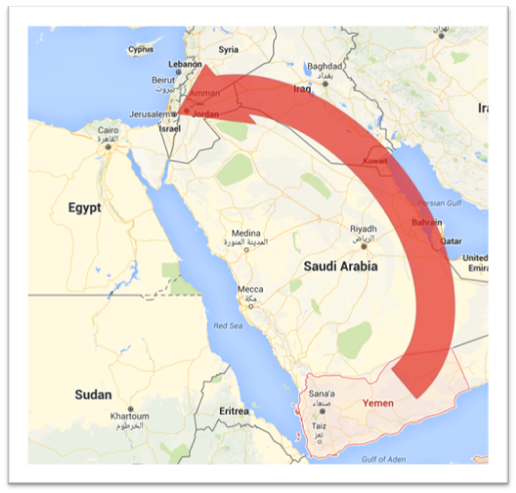
The author of 1 Kings provides an extended example of one such visit. On this occasion, the Queen of Sheba undertook the long and arduous journey to Jerusalem to witness the wisdom of Solomon firsthand. The kingdom of Sheba was located approximately 1,200 miles away, on the southwestern corner of the Arabian Peninsula, in the region now known as Yemen. The queen traveled with a large royal retinue and brought with her a vast amount of spices, gold, and precious stones. It appears that the real purpose of her trip was to secure an alliance between her nation and the rapidly expanding kingdom of Solomon. From its location at the confluence of the Sea of Aden and the Red Sea, the kingdom of Sheba had been able to expand its dominance of the spice and incense trade in that region of the world. A peaceful alliance with a powerful nation like Israel would only further enhance and protect their future prospects.

Upon her arrival, the queen was given a personal appointment with Solomon, where she was able to satisfy her curiosity about his wisdom and wealth. This interrogation was most likely meant to assess the validity of Solomon’s reputation, but was also intended to reassure the queen whether a treaty with Israel would be beneficial. In the end, she was left breathless by her encounter with Solomon.

…when the queen of Sheba had seen all the wisdom of Solomon, the house that he had built, the food of his table, the seating of his officials, and the attendance of his servants, their clothing, his cupbearers, and his burnt offerings that he offered at the house of the LORD, there was no more breath in her. – 1 Kings 10:4-5 ESV

She was blown away by what she saw and heard, and confessed that the reality of Solomon’s wisdom and the greatness of his kingdom far exceeded the rumors and her own expectations.

“Everything I heard in my country about your achievements and wisdom is true! I didn’t believe what was said until I arrived here and saw it with my own eyes. In fact, I had not heard the half of it! Your wisdom and prosperity are far beyond what I was told. – 1 Kings 10:6-7 NLT

The inclusion of this personal, third-party assessment of Solomon’s greatness was meant to validate all that the author had written up to this point. Her testimony was intended to prove that all the descriptions concerning Solomon’s wisdom and the wealth of his kingdom were far from rhetorical flourishes or hyperbole. It was all true.

And this pagan queen affirmed the divine nature of Solomon’s reign, deeming the people of Israel as the fortunate recipients of their God’s love because He had chosen to make this just and righteous man their king.

“Praise the LORD your God, who delights in you and has placed you on the throne of Israel. Because of the LORD’s eternal love for Israel, he has made you king so you can rule with justice and righteousness.” – 1 Kings 10:9 NLT

In a way, the inclusion of this statement was meant to remind the Hebrew readers of this book that their nation had been blessed by God. His sovereign decision to anoint Solomon as David’s successor was a divine act of love and mercy because He had given them a wise, just, and righteous king to rule over them. After decades spent conquering the nations of Canaan and fighting ongoing battles with the Philistines, God had blessed the people of Israel with a time of peace and prosperity.

Saul’s reign had ended in failure and disappointment. David’s reign had been marked by war and bloodshed. Now Solomon was leading them into a period of unprecedented expansion, prosperity, and peace. This was meant to be a golden age for the nation of Israel.

And, almost as further proof of God’s blessing on the nation, the author records that the queen of Sheba gifted Solomon with “9,000 pounds of gold, great quantities of spices, and precious jewels” (1 Kings 10:10 NLT). The blessings just kept coming. Solomon’s great wealth continued to grow. And all of this was in keeping with the promise that God had made to Solomon.

“Because you have asked for wisdom in governing my people with justice and have not asked for a long life or wealth or the death of your enemies—I will give you what you asked for! I will give you a wise and understanding heart such as no one else has had or ever will have! And I will also give you what you did not ask for—riches and fame! No other king in all the world will be compared to you for the rest of your life!” – 1 Kings 3:11-13 NLT

However, it’s essential to recall that God’s promise came with a condition.

“…if you follow me and obey my decrees and my commands as your father, David, did, I will give you a long life.” – 1 Kings 3:14 NLT

That vital caveat must not be overlooked, and its presence constantly lingers behind the scenes portrayed in Chapter 10. God was faithfully keeping the promise He had made to Solomon, blessing him with riches and fame beyond his wildest imagination. However, the unspoken question that looms over this entire narrative is whether Solomon, in the midst of his growing wealth and notoriety, will be able to remain faithful to God. As his fame and fortune continue to increase, will he allow the blessings of God to become substitutes for God, distracting his attention and diverting his love?

Almost as an aside, the author reveals another example of God’s blessings on Solomon. He notes that Hiram, the king of Tyre, continued to shower Solomon with incredible gifts of great value.

Hiram’s ships brought gold from Ophir, and they also brought rich cargoes of red sandalwood and precious jewels. – 1 Kings 10:11 NLT

Without having to lift a finger, Solomon’s immense wealth was growing by the minute. God was using these pagan potentates to expand Solomon’s already extensive net worth. But would Solomon view these gifts as the gracious provision of God, meant to underwrite the divine initiatives He had in mind for the nation of Israel? Or would Solomon allow his growing wealth to fund a lifestyle of excess and dissipation? The answer to those questions can be found in the writings of Solomon himself.

Those who love money will never have enough. How meaningless to think that wealth brings true happiness! The more you have, the more people come to help you spend it. So what good is wealth—except perhaps to watch it slip through your fingers! – Ecclesiastes 5:10-11 NLT

Solomon would eventually discover that even the blessings of God become disappointing and disillusioning when they become substitutes for Him. The Book of Ecclesiastes chronicles his growing love affair with materialism and hedonism. Over time, he allowed his fame and riches, graciously bestowed upon him by God, to distract him from his worship of and commitment to God.

I became greater than all who had lived in Jerusalem before me, and my wisdom never failed me. Anything I wanted, I would take. I denied myself no pleasure. I even found great pleasure in hard work, a reward for all my labors. But as I looked at everything I had worked so hard to accomplish, it was all so meaningless—like chasing the wind. There was nothing really worthwhile anywhere. – Ecclesiastes 2:9-11 NLT

However, at this point in the story, Solomon appears to recognize that his blessed lifestyle has come from the gracious hand of God. He has not yet succumbed to the temptation to make the gifts of higher value than the Giver. The pessimism of unbridled prosperity and the endless pursuit of insatiable pleasure would eventually set in. But for now, Solomon was content to graciously accept his blessings as gifts from Yahweh.

As for the queen of Sheba, having been exposed to the visual evidence of God’s goodness, she returned to her kingdom more convinced than ever of Solomon’s greatness. The signs of Yahweh’s presence, pleasure, and provision were inescapable. But for Solomon, the blessings of God would prove to be a distraction, filling his royal treasuries with great wealth and his heart with dangerous thoughts about his own self-importance. Possessions, power, pleasure, and prominence can be gifts from God that quickly turn into weapons of self-destruction. Jesus Himself had much to say about the dangers of the love of money and the

“Don’t store up treasures here on earth, where moths eat them and rust destroys them, and where thieves break in and steal. Store your treasures in heaven, where moths and rust cannot destroy, and thieves do not break in and steal. Wherever your treasure is, there the desires of your heart will also be. – Matthew 6:19-21 NLT

“No one can serve two masters. For you will hate one and love the other; you will be devoted to one and despise the other. You cannot serve God and be enslaved to money. – Matthew 6:24 NLT

“Beware! Guard against every kind of greed. Life is not measured by how much you own.” – Luke 12:15 NLT

“The seed that fell among the thorns represents others who hear God’s word, but all too quickly the message is crowded out by the worries of this life, the lure of wealth, and the desire for other things, so no fruit is produced. – Mark 4:18-19 NLT

The queen of Sheba had been enamored with Solomon’s wealth and wisdom. But would Solomon allow those divine gifts to replace his love for the Giver?

English Standard Version (ESV) The Holy Bible, English Standard Version. ESV® Permanent Text Edition® (2016). Copyright © 2001 by Crossway Bibles, a publishing ministry of Good News Publishers.

New Living Translation (NLT) Holy Bible, New Living Translation, copyright © 1996, 2004, 2015 by Tyndale House Foundation. Used by permission of Tyndale House Publishers Inc., Carol Stream, Illinois 60188. All rights reserved.

A Light to Our Path

Mem

97 Oh how I love your law!
    It is my meditation all the day.
98 Your commandment makes me wiser than my enemies,
    for it is ever with me.
99 I have more understanding than all my teachers,
    for your testimonies are my meditation.
100 I understand more than the aged,
    for I keep your precepts.
101 I hold back my feet from every evil way,
    in order to keep your word.
102 I do not turn aside from your rules,
    for you have taught me.
103 How sweet are your words to my taste,
    sweeter than honey to my mouth!
104 Through your precepts I get understanding;
    therefore I hate every false way.

Nun

105 Your word is a lamp to my feet
    and a light to my path.
106 I have sworn an oath and confirmed it,
    to keep your righteous rules.
107 I am severely afflicted;
    give me life, O LORD, according to your word!
108 Accept my freewill offerings of praise, O LORD,
    and teach me your rules.
109 I hold my life in my hand continually,
    but I do not forget your law.
110 The wicked have laid a snare for me,
    but I do not stray from your precepts.
111 Your testimonies are my heritage forever,
    for they are the joy of my heart.
112 I incline my heart to perform your statutes
    forever, to the end.

Samekh

113 I hate the double-minded,
    but I love your law.
114 You are my hiding place and my shield;
    I hope in your word.
115 Depart from me, you evildoers,
    that I may keep the commandments of my God.
116 Uphold me according to your promise, that I may live,
    and let me not be put to shame in my hope!
117 Hold me up, that I may be safe
    and have regard for your statutes continually!
118 You spurn all who go astray from your statutes,
    for their cunning is in vain.
119 All the wicked of the earth you discard like dross,
    therefore I love your testimonies.
120 My flesh trembles for fear of you,
    and I am afraid of your judgments. Psalm 119:97-120 ESV

The psalmist isn’t adept at concealing his emotions. You might say he wears them on his sleeve, and they flow freely from his mouth. Whether he is discussing his suffering or declaring his affection for his sovereign LORD, he is blunt, bold, and unapologetic.

Oh how I love your law! – vs 97

How sweet are your words to my taste,
    sweeter than honey to my mouth! – vs 103

I am severely afflicted. – vs 107

The wicked have laid a snare for me. – vs 110

Your testimonies…are the joy of my heart. – vs 111

I love your law. – vs 113

I love your testimonies. – vs 119

This is a man of deep emotions who has found his relationship with Yahweh to be a roller-coaster existence full of ups and downs and twists and turns. Things haven’t always turned out how he expected, and his life has not always been easy or explicable. Yet, he has found Yahweh to be a consistent presence and a constant source of hope and help in the good and bad times. Yahweh has always been there because He is faithful, trustworthy, and a covenant-keeping God who keeps His word and fulfills all His promises.

When the psalmist considers all of Yahweh’s revealed word as revealed in the Hebrew Scriptures, he is encouraged and energized by the wisdom and insight they contain. Through his study and application of God’s law, he discovered it to be not just a codified list of moral and ethical rules of conduct, but an expression of Yahweh’s character and life-transformative power.

When he took the time to meditate on God’s commands, he became wiser than his enemies. He gained an advantage over his adversaries by deeply reflecting on the insights found in God’s commands rather than simply obeying them. The wisdom permeating God’s law gave him a new perspective and a greater understanding of God’s will. In time, his knowledge of God’s revealed will and ways surpassed that of his teachers. This is not a prideful boast on his part, but a testimony to the life-transforming power of God’s word.

The psalmist confessed, “Your commandments give me understanding” (Psalm 119:104 NLT), and that understanding produced life change.

I have refused to walk on any evil path,
    so that I may remain obedient to your word. – Psalm 119:101 NLT

Your commandments give me understanding;
    no wonder I hate every false way of life. – Psalm 119:104 NLT

No wonder I love to obey your laws! – Psalm 119:119 NLT

He hadn’t just committed God’s laws to memory and attempted to keep them; he had been transformed by them. Once he understood God’s heart behind them, they became a source of hope (vs 114), his treasure and delight (vs 111), and sweeter than honey (vs 103). They were pleasant rather than onerous because they became more than rules to keep; they were expressions of God’s manifold wisdom.

When the psalmist states, “Your word is a lamp to guide my feet and a light for my path” (Psalm 119:105 NLT), he confessed the power of God’s word to change the trajectory of his life. In a world marred by spiritual darkness and an age before the advent of electricity, light was more than a luxury; it was a necessity. For the psalmist, the illuminating power of God’s word was just as vital as an oil lamp to light one’s path in the darkness. He had discovered that the Scriptures, including the Mosaic Law, the writings of the prophets, and the historical books, were indispensable for navigating life. These Spirit-inspired works were the revelation of God and provided invaluable insight into His character and His redemptive plan for sinful humanity. 

When the psalmist read God’s word, it dispelled the darkness around him because “God is light, and there is no darkness in him at all” (1 John 1:5 NLT). He discovered the truth found in Psalm 27:1: “The Lord is my light and my salvation—so why should I be afraid?” He understood what Isaiah the prophet meant when he wrote: “The LORD your God will be your everlasting light, and your God will be your glory” (Isaiah 60:19 NLT) and “Let us walk in the light of the LORD” (Isaiah 2:5 NLT).

God’s word could not only reveal the right path to take, but also illuminate the way. In keeping God’s commands, the psalmist understood he was walking with the LORD. The light of God’s word was pointing the way and guiding his steps. The Scriptures are a form of God’s presence. In His word, He has revealed Himself to mankind. As we study and meditate on His revealed word, we see more of Him. We get a glimpse into His nature and insights into His divine character. The stories of the Bible reveal His glory, power, and holiness, as well as His grace, mercy, compassion, and forgiveness. 

It is interesting to note that when God gave Moses the instructions for making the Ark of the Covenant, He also commanded what was to go inside it. According to the Book of Hebrews, “This ark contained the gold jar of manna, Aaron’s staff that had budded, and the stone tablets of the covenant” (Hebrews 9:4 NLT). The manna served as a constant reminder of God’s power to provide for all their needs. Aaron’s staff symbolized God’s power to deliver because it was used to part the waters of the Red Sea. It also served as a sign of God’s blessing on the Levitical priesthood. The stone tablets were engraved with the Ten Commandments, a black and white testimony to God’s irrefutable requirement of holiness among His people. 

You shall be holy, for I the Lord your God am holy.” – Leviticus 19:2 ESV 

It was over the Ark of the Covenant that the glory of God was said to dwell. His Shekinah glory, in the form of a pillar of cloud and a pillar of fire, hovered over the Mercy Seat that served as the lid of the Ark of the Covenant. It was that glorious presence of God that led the people of Israel during their years wandering through the wilderness.

The LORD went ahead of them. He guided them during the day with a pillar of cloud, and he provided light at night with a pillar of fire. This allowed them to travel by day or by night. And the LORD did not remove the pillar of cloud or pillar of fire from its place in front of the people. – Exodus 13:21-22 NLT

In the same way, God’s word guides and directs His people today, just as it did the psalmist. His word reveals His will, displays His character, demonstrates His power, and gives evidence of His gracious provision. The psalmist had learned to trust in God’s word and rely upon His unchanging character. It directed and sustained him, encouraged and enlightened him, and convicted and comforted him. That is why he could say, “You are my refuge and my shield; your word is my source of hope” (Psalm 119:114 NLT).

Father, Your word is far more than an ancient book filled with stories from the past. It is a revelation of who You are and how You interface with those You have made in Your likeness. It is a constant reminder of Your power, holiness, and greatness. It provides insight into humanity’s sinfulness and declares its well-deserved declaration of judgment. But Your word also reveals Your plan of redemption. It displays Your patience, compassion, and longsuffering nature. In Your word, we see your holy expectations of mankind as well as Your gracious provision of a sacrificial system and, ultimately, the unblemished Lamb of God who takes away the sins of the world (John 1:29). I want to love Your word because it reveals Your love for us. I want to obey Your word because it expresses Your righteous will for us. Like the pillar of cloud and the pillar of fire, Your word guides, directs, illuminates, and illustrates Your presence among us. Help me keep my eyes fixed on Your word because it reveals who You are and all that You are doing. Amen.

English Standard Version (ESV) The Holy Bible, English Standard Version. ESV® Permanent Text Edition® (2016). Copyright © 2001 by Crossway Bibles, a publishing ministry of Good News Publishers.

New Living Translation (NLT) Holy Bible, New Living Translation, copyright © 1996, 2004, 2015 by Tyndale House Foundation. Used by permission of Tyndale House Publishers Inc., Carol Stream, Illinois 60188. All rights reserved.
Bless the LORD

Of David.

1 Bless the LORD, O my soul,
    and all that is within me,
    bless his holy name!
Bless the LORD, O my soul,
    and forget not all his benefits,
who forgives all your iniquity,
    who heals all your diseases,
who redeems your life from the pit,
    who crowns you with steadfast love and mercy,
who satisfies you with good
    so that your youth is renewed like the eagle’s.

The LORD works righteousness
    and justice for all who are oppressed.
He made known his ways to Moses,
    his acts to the people of Israel.
The LORD is merciful and gracious,
    slow to anger and abounding in steadfast love.
He will not always chide,
    nor will he keep his anger forever.
10 He does not deal with us according to our sins,
    nor repay us according to our iniquities.
11 For as high as the heavens are above the earth,
    so great is his steadfast love toward those who fear him;
12 as far as the east is from the west,
    so far does he remove our transgressions from us.
13 As a father shows compassion to his children,
    so the LORD shows compassion to those who fear him.
14 For he knows our frame;
    he remembers that we are dust.

15 As for man, his days are like grass;
    he flourishes like a flower of the field;
16 for the wind passes over it, and it is gone,
    and its place knows it no more.
17 But the steadfast love of the LORD is from everlasting to everlasting on those who fear him,
    and his righteousness to children’s children,
18 to those who keep his covenant
    and remember to do his commandments.
19 The LORD has established his throne in the heavens,
    and his kingdom rules over all.

20 Bless the LORD, O you his angels,
    you mighty ones who do his word,
    obeying the voice of his word!
21 Bless the LORD, all his hosts,
    his ministers, who do his will!
22 Bless the LORD, all his works,
    in all places of his dominion.
Bless the LORD, O my soul! Psalm 103:1-22 ESV

Gratefulness to God begins with an awareness of all He has done for us. Failure to recognize God’s activity in our lives makes it extremely unlikely that we will be grateful. It’s hard to praise Him for all He has done if we remain oblivious to His activity in our lives. In this psalm, David is purposefully recalling and acknowledging the LORD’s gracious involvement and declares his intent to “never forget the good things he does for me” (Psalm 103:2b NLT). Then he goes on to list all those “good things:”

  • He forgives all my sins
  • He heals all my diseases
  • He redeems me from death
  • He crowns me with love and tender mercies
  • He fills my life with good things
  • He renews my youth
  • He gives righteousness and justice
  • He is compassionate and merciful
  • He is slow to get angry
  • He is filled with unfailing love
  • He will not constantly accuse us
  • He doesn’t remain angry with us forever
  • He doesn’t punish us for all our sins
  • He doesn’t deal harshly with us, as we deserve
  • He shows us unfailing love that is immeasurable and unlimited
  • He has removed our sins as far as the east is from the west
  • He treats us like a father would his children
  • He is tender and compassionate
  • He knows and understands our weaknesses
  • His love for us remains forever
  • He rules over everything

This rather extensive list is not unique to David. All of these “good things” are available to us as His children, and are just as true of my relationship with God as they were of David. The problem is that we don’t tend to think about them. Instead, we dwell on the things we believe God has failed to do for us. We concentrate on all the unanswered prayers and unmet expectations. We may have some specific need we want God to address, but in our estimation, He has failed to adequately deal with it. In the meantime, we fail to recognize and appreciate the unfailing love, mercy, forgiveness, and grace He extends to us daily, like clockwork.

One of the most amazing realizations David expresses in this Psalm is found in verse 10. The NET Bible translates it this way:

He does not deal with us as our sins deserve;
he does not repay us as our misdeeds deserve. – Psalm 103:10 NLT

This is another way of looking at God’s incredible mercy and grace. You see, mercy is God not giving you what you deserve (withheld punishment), and grace is God giving you what you don’t deserve (unmerited favor). David understood that, due to our sin, God had every right to deal with us harshly, but He chose to show mercy instead. Rather than give us what we deserve, God showers us with His unmerited grace. Until we come to grips with the reality of that statement, we will never properly praise God for who He is and what He has done.

Christ’s death on the cross is the ultimate expression of God’s love and grace. His death made our forgiveness possible. The sacrifice of His Son allowed God to withhold our punishment because, in dying in our place, Christ paid our debt in full. The righteous wrath of God was satisfied once and for all. As a result, God removed our sins “as far as the east is from the west” (Psalm 103:12 ESV). We no longer stand before God as guilty and condemned, but as forgiven and redeemed. Despite our past sinful actions, God now sees us as righteous and holy. The apostle Paul understood the magnitude of this gracious act of God.

So now there is no condemnation for those who belong to Christ Jesus. And because you belong to him, the power of the life-giving Spirit has freed you from the power of sin that leads to death. – Romans 8:1-2 NLT

So if we think about it, we have just as much to be grateful for as David did – even more. We have enjoyed the benefit of Christ’s sacrificial, substitutionary death on the cross. So, like David, we should be able to say, “Let all that I am praise the Lord; with my whole heart, I will praise his holy name” (Psalm 103:1 NLT).

Father, the good things You have done for me are real and deserving of my gratitude and praise. I should be praising You for who You are and all that You have done and continue to do on a daily basis. Open my eyes and help me see Your activity in and around my life. Give me an increasing awareness of Your grace and mercy so that I will praise You more. Amen

English Standard Version (ESV) The Holy Bible, English Standard Version. ESV® Permanent Text Edition® (2016). Copyright © 2001 by Crossway Bibles, a publishing ministry of Good News Publishers.

New Living Translation (NLT) Holy Bible, New Living Translation, copyright © 1996, 2004, 2015 by Tyndale House Foundation. Used by permission of Tyndale House Publishers Inc., Carol Stream, Illinois 60188. All rights reserved.

What’s God Done For Your Lately?

To the choirmaster. A Song. A Psalm.

1 Shout for joy to God, all the earth;
    sing the glory of his name;
    give to him glorious praise!
Say to God, “How awesome are your deeds!
    So great is your power that your enemies come cringing to you.
All the earth worships you
    and sings praises to you;
    they sing praises to your name.” Selah

Come and see what God has done:
    he is awesome in his deeds toward the children of man.
He turned the sea into dry land;
    they passed through the river on foot.
There did we rejoice in him,
    who rules by his might forever,
whose eyes keep watch on the nations—
    let not the rebellious exalt themselves. Selah

Bless our God, O peoples;
    let the sound of his praise be heard,
who has kept our soul among the living
    and has not let our feet slip.
10 For you, O God, have tested us;
    you have tried us as silver is tried.
11 You brought us into the net;
    you laid a crushing burden on our backs;
12 you let men ride over our heads;
    we went through fire and through water;
yet you have brought us out to a place of abundance.

13 I will come into your house with burnt offerings;
    I will perform my vows to you,
14 that which my lips uttered
    and my mouth promised when I was in trouble.
15 I will offer to you burnt offerings of fattened animals,
    with the smoke of the sacrifice of rams;
I will make an offering of bulls and goats. Selah

16 Come and hear, all you who fear God,
    and I will tell what he has done for my soul.
17 I cried to him with my mouth,
    and high praise was on my tongue.
18 If I had cherished iniquity in my heart,
    the Lord would not have listened.
19 But truly God has listened;
    he has attended to the voice of my prayer.

20 Blessed be God,
    because he has not rejected my prayer
    or removed his steadfast love from me! Psalm 66:1-20 ESV

What has God done for you lately? That should be an easy question for any Christ-follower to answer because the reality is that God is acting on our behalf in countless ways each and every day. But the sad truth is that we sometimes fail to see His activity in our lives. His seeming unavailability or absence can result in our failure to ask for His assistance or to expect His intervention So, we go it alone. We muddle on through life attempting to take on all our problems on our own and ignoring the availability of His power, grace, and mercy.

For many of us, our testimony is a dusty, faded photograph that captures an event that happened sometime in the distant past. It was momentous, life-changing, and an unforgettable experience, but it is still a fading memory. Much time has passed since our conversion experience, and we have lived more years than we would like to remember. Life has been filled with ups and downs, and, hopefully, we have grown in our knowledge and understanding of God. But if someone walked up and asked us what God had done for us lately, what would we have to say? How would we answer?

It would have been a simple question for David, and he would have had a ready response. He said, “Come and listen, all you who fear God, and I will tell you what he did for me” (Psalm 66:16 NLT). David had a story to tell, a recollection to recount of what God had done in his life. And as we have worked our way through the Psalms of David, we have seen plenty of proof that David had ample stories to share of God’s goodness, grace, mercy, power, and provision. God was actively involved in David’s life. His response to the question, “What has God done for you lately?” would probably have been, “How much time do you have?”

In this psalm, David discusses the glory of God’s name.

Shout joyful praises to God, all the earth!
   Sing about the glory of his name! – Psalm 66:1-12 NLT

He expresses how glorious God is.

How awesome are your deeds! – Psalm 66:3 NLT

He invites others to “Come and see what our God has done, what awesome miracles he performs for people!” (Psalm 66:5 NLT). David recounts what God has done in the past for His people, but he also shares the more personal and up-to-date accounts of God’s activities in his own life. And that is the story most people want and need to hear.

A lost and dying world is looking for a living, active God who is engaged daily with those who worship Him. Our salvation story is significant, but God didn’t stop saving us at conversion. He is still redeeming, rescuing, refining, and restoring us each and every day of our lives. He is disciplining, teaching, and constantly forgiving us. He is leading, directing, healing, and patiently molding us into the likeness of His Son.

Like David, we should be able to say, “Come and see what our God has done, what awesome miracles he performs for people!” (Psalm 66:5 NLT). Yes, we can recount the biblical stories of God’s deliverance of the Israelites from their captivity in Egypt. We can regale others with the miraculous account of how He parted the waters of the Red Sea and allowed His people to escape their Egyptian pursuers. Most of us can recite the pertinent details about the battle of Jericho, David’s defeat of Goliath, or the thrilling account of Daniel in the lion’s den. We can provide ample evidence of God’s former acts of deliverance in the lives of others, but are we able to answer the question, “What has God done for you lately?”

David could say, “I cried out to him for help” (Psalm 66:17 NLT), and testify that “God did listen! He paid attention to my prayer” (Psalm 66:19 NLT). David wasn’t willing to live a vicarious faith, depending solely upon the stories of God’s activities in the lives of others. He wanted an up-close-and-personal relationship with God, filled with his own testimonies of divine deliverance, mercy, and grace. Most of David’s psalms are his recollections of what God has done for him. 

David never discounted or dismissed the stories of God’s past actions in the lives of His chosen people. Those well-worn tales of God’s deliverance were essential to his understanding of God’s character. But David was unwilling to settle for a God who lived in the ancient past. He needed an up-to-date, here-when-you-need-Him God whose presence and power were personal and palpable. David was willing to offer sacrifices to God for His well-documented actions on behalf of His people, but he was looking for more. He fully expected God to show up in his own life, giving him ample reasons to offer praise and a personal testimony to God’s presence and power.

We are each proof of God’s presence. Our daily lives should provide evidence of His love, grace, mercy, power, forgiveness, and, ultimately, of His existence. God is not silent or relegated to stories from the past. His power has not waned, and His miracles have not ceased. His capacity to intervene on behalf of His people has not diminished. So, what has He done for you lately? Like David, may we say, “Come and listen, all you who fear God, and I will tell you what he did for me.”

Father, You have given me ample stories to tell of Your presence in my life. Forgive me for not telling others. You have proven Yourself faithful to me time and time again, but I don’t always pass that news along to those around me. Place in me a growing desire to sing Your praises to all those willing to listen. Create in me a desire to talk You up on a consistent basis. May I become increasingly more a satisfied customer – the best advertising of Your power, presence and provision. Amen

English Standard Version (ESV) The Holy Bible, English Standard Version. ESV® Permanent Text Edition® (2016). Copyright © 2001 by Crossway Bibles, a publishing ministry of Good News Publishers.

New Living Translation (NLT) Holy Bible, New Living Translation, copyright © 1996, 2004, 2015 by Tyndale House Foundation. Used by permission of Tyndale House Publishers Inc., Carol Stream, Illinois 60188. All rights reserved.

When Circumstances Make Us Circumspect

To the choirmaster. A Maskil of the Sons of Korah.

1 O God, we have heard with our ears,
    our fathers have told us,
what deeds you performed in their days,
    in the days of old:
you with your own hand drove out the nations,
    but them you planted;
you afflicted the peoples,
    but them you set free;
for not by their own sword did they win the land,
    nor did their own arm save them,
but your right hand and your arm,
    and the light of your face,
    for you delighted in them.

You are my King, O God;
    ordain salvation for Jacob!
Through you we push down our foes;
    through your name we tread down those who rise up against us.
For not in my bow do I trust,
    nor can my sword save me.
But you have saved us from our foes
    and have put to shame those who hate us.
In God we have boasted continually,
    and we will give thanks to your name forever. Selah

But you have rejected us and disgraced us
    and have not gone out with our armies.
10 You have made us turn back from the foe,
    and those who hate us have gotten spoil.
11 You have made us like sheep for slaughter
    and have scattered us among the nations.
12 You have sold your people for a trifle,
    demanding no high price for them.
13 You have made us the taunt of our neighbors,
    the derision and scorn of those around us.
14 You have made us a byword among the nations,
    a laughingstock among the peoples.
15 All day long my disgrace is before me,
    and shame has covered my face
16 at the sound of the taunter and reviler,
    at the sight of the enemy and the avenger.

17 All this has come upon us,
    though we have not forgotten you,
    and we have not been false to your covenant.
18 Our heart has not turned back,
    nor have our steps departed from your way;
19 yet you have broken us in the place of jackals
    and covered us with the shadow of death.
20 If we had forgotten the name of our God
    or spread out our hands to a foreign god,
21 would not God discover this?
    For he knows the secrets of the heart.
22 Yet for your sake we are killed all the day long;
    we are regarded as sheep to be slaughtered.

23 Awake! Why are you sleeping, O Lord?
    Rouse yourself! Do not reject us forever!
24 Why do you hide your face?
    Why do you forget our affliction and oppression?
25 For our soul is bowed down to the dust;
    our belly clings to the ground.
26 Rise up; come to our help!
    Redeem us for the sake of your steadfast love! Psalm 44:1-26 ESV

Things don’t always go as expected. As God’s people, there is no guarantee that our lives will be trouble-free or exempt from difficulty. The truth is, bad things happen to good people. That is the primary theme of this psalm of lament.

Written by one of the sons of Korah, this psalm begins with a stirring tribute to God’s past faithfulness to His people. The opening lines record how God miraculously delivered the land of Canaan to the people of Israel under the leadership of Joshua.

You drove out the pagan nations by your power
    and gave all the land to our ancestors.
You crushed their enemies
    and set our ancestors free. – Psalm 44:2 NLT

Every Hebrew child grew up hearing about the exciting exploits of Joshua as he led the people of Israel in their conquest of Canaan. They could recite the details of the battle at Jericho, where the “walls came tumblin’ down.” These stories were part of the collective imagination of Israel, passed down from generation to generation to remind them of God’s power and promise-keeping nature. The psalmist freely admits, “We have heard it with our own ears—our ancestors have told us of all you did in their day, in days long ago” (Psalm 44:1 NLT).

These stories had been recorded for posterity in the books of Joshua and Judges, providing proof that God had fulfilled the promise he made to the people of Israel long before they set foot in the land of Canaan.

“I will send my terror ahead of you and create panic among all the people whose lands you invade. I will make all your enemies turn and run. I will send terror ahead of you to drive out the Hivites, Canaanites, and Hittites. But I will not drive them out in a single year, because the land would become desolate and the wild animals would multiply and threaten you. I will drive them out a little at a time until your population has increased enough to take possession of the land. And I will fix your boundaries from the Red Sea to the Mediterranean Sea, and from the eastern wilderness to the Euphrates River. I will hand over to you the people now living in the land, and you will drive them out ahead of you. – Exodus 23:27-31 NLT

God had kept His word, fulfilling His promise to provide His chosen people with a land of their own. The former slaves had become the masters of their own domain, thanks to God’s gracious intervention in their lives. Their conquest of the land had not been the result of their superior military might; it had been God’s doing, something the psalmist openly acknowledges.

They did not conquer the land with their swords;
    it was not their own strong arm that gave them victory.
It was your right hand and strong arm
    and the blinding light from your face that helped them,
    for you loved them. – Psalm 44:3 NLT

Seeming to speak on behalf of the king, the psalmist proclaims God’s sovereignty and the nation’s continued dependency upon His power for their survival. In the centuries since Joshua led the people across the Jordan River into Canaan, the Israelites remained reliant upon God’s strength for their protection and continued existence.

Only by your power can we push back our enemies;
    only in your name can we trample our foes. – Psalm 44:5 NLT

But something had happened that caused the psalmist to question God’s faithfulness. A national tragedy had left the people wondering whether God had turned His back on them. An unnamed enemy had humiliated the Israelites in battle, leaving them confused and conflicted and questioning the cause of their unexpected defeat. From all appearances, they had trusted in God, and He had let them down.

But now you have tossed us aside in dishonor.
    You no longer lead our armies to battle.
You make us retreat from our enemies
    and allow those who hate us to plunder our land. – Psalm 44:9-10 NLT

None of this made sense. The psalmist can think of no sin that would have warranted the devastating loss they had suffered. From his perspective, the nation remained faithful to God and undeserving of their humiliating defeat at the hands of their enemy.

All this has happened though we have not forgotten you.
    We have not violated your covenant.
Our hearts have not deserted you.
    We have not strayed from your path. – Psalm 44:17-18 NLT

There was no sin to confess or repent of. The psalmist can think of no instance of corporate immorality or iniquity that would have warranted such an obvious act of divine punishment. This loss had God’s hands all over it. It appeared to be a clear case of God’s judgment, but it seemed to lack justification. They had done nothing wrong. This led the psalmist to accuse God of punishing them unjustly.

You have covered us with darkness and death. – Psalm 44:19 NLT

He knew God to be all-wise and all-knowing. There was nothing that escaped His notice or went undetected. If they were guilty of unfaithfulness or idolatry, God would know it because He is omniscient. Yet, as far as the psalmist could tell, their corporate calamity had been God’s doing — whether deserved or not.

Yet because of you we are killed all day long; we are treated like sheep at the slaughtering block. – Psalm 44:22 NET

The psalmist boldly declares his belief that their tragedy was God’s doing. He could think of no other logical explanation and this led him to beg God to relent and restore His people.

Wake up, O Lord! Why do you sleep?
    Get up! Do not reject us forever.
Why do you look the other way?
    Why do you ignore our suffering and oppression? – Psalm 44:23-24 NLT

This psalm reflects the earth-bound, limited perspective of all believers. We are temporal creatures attempting to understand the ways of God in a fallen world where things don’t always make sense. The presence of evil and the experience of pain and suffering it can produce can leave us doubting God’s goodness and questioning His justice. We somehow expect that our faith in Him should exempt us from the trials and tribulations that others suffer.

Yet, the apostle Paul reminded the Christians in Corinth that trials and tribulations were to be expected in this life.

That is why we never give up. Though our bodies are dying, our spirits are being renewed every day. For our present troubles are small and won’t last very long. Yet they produce for us a glory that vastly outweighs them and will last forever! So we don’t look at the troubles we can see now; rather, we fix our gaze on things that cannot be seen. For the things we see now will soon be gone, but the things we cannot see will last forever. – 2 Corinthians 4:16-18 NLT

The Israelites were not exempt from difficulty, and neither were the Corinthians. Life can be hard. Suffering is an ever-present reality for believers and non-believers alike. Paul was well acquainted with that fact, having endured his own fair share of difficulties. He provided the believers in Corinth with a short list of some of his undeserved troubles while serving as an apostle of Jesus Christ.

I have worked harder, been put in prison more often, been whipped times without number, and faced death again and again.  Five different times the Jewish leaders gave me thirty-nine lashes. Three times I was beaten with rods. Once I was stoned. Three times I was shipwrecked. Once I spent a whole night and a day adrift at sea. I have traveled on many long journeys. I have faced danger from rivers and from robbers. I have faced danger from my own people, the Jews, as well as from the Gentiles. I have faced danger in the cities, in the deserts, and on the seas. And I have faced danger from men who claim to be believers but are not. I have worked hard and long, enduring many sleepless nights. I have been hungry and thirsty and have often gone without food. I have shivered in the cold, without enough clothing to keep me warm. – 2 Corinthians 11:23-27 NLT

Paul wasn’t complaining or bragging; he simply reminded his readers that no one is immune from suffering. Jesus Himself suffered and died as part of His faithful adherence to His Father’s will. He was falsely accused, viciously abused, and crucified on a Roman cross, though He was innocent of any crime and completely free from sin.

Paul wrote to Christians living in Rome, reminding them their circumstances were a lousy barometer of God’s love and faithfulness. These new believers were living in the capital city of the Roman Empire and under constant threats from a hostile government that had played a major role in the death of their Lord and Savior. Persecution and suffering were a daily reality but were never to be seen as a lack of God’s love for them.

Can anything ever separate us from Christ’s love? Does it mean he no longer loves us if we have trouble or calamity, or are persecuted, or hungry, or destitute, or in danger, or threatened with death? (As the Scriptures say, “For your sake we are killed every day; we are being slaughtered like sheep.”) No, despite all these things, overwhelming victory is ours through Christ, who loved us. – Romans 8:35-37 NLT

Notice that Paul quotes Psalm 44:22. He turns the psalmist’s lament into a statement of praise. Rather than blame God for any suffering we may have to endure, Paul suggests we see it as an opportunity to praise Him for His goodness and grace. He has a plan for us, and He can use every aspect of our lives on this earth to glorify Himself — even through tragedy, heartache, and suffering. That is why Paul told the Corinthians believers to view their present suffering as an opportunity to see God work.

We now have this light shining in our hearts, but we ourselves are like fragile clay jars containing this great treasure. This makes it clear that our great power is from God, not from ourselves.

We are pressed on every side by troubles, but we are not crushed. We are perplexed, but not driven to despair. We are hunted down, but never abandoned by God. We get knocked down, but we are not destroyed. Through suffering, our bodies continue to share in the death of Jesus so that the life of Jesus may also be seen in our bodies. – 2 Corinthians 4:7-10 NLT

Father, it’s so easy to let the circumstances of life become the barometer by which I measure Your faithfulness and love. When things are going well in my life, I tend to view You positively. But if one thing goes wrong, I rant and rail about Your apparent disinterest and seeming distance from my life. I judge Your love based on the physical conditions of my life. But You are always loving, faithful, and quick to reveal Yourself — even in the darkest moments of my life. Give me the ability to see You clearly even when life doesn’t make sense. Your plan is perfect and Your love for me is unwavering. I know I can trust You, but sometimes life causes me to doubt. Keep me focused on Your faithfulness so I won’t let the seeming failures of life distract and defeat me. Amen

English Standard Version (ESV) The Holy Bible, English Standard Version. ESV® Permanent Text Edition® (2016). Copyright © 2001 by Crossway Bibles, a publishing ministry of Good News Publishers.

New Living Translation (NLT) Holy Bible, New Living Translation, copyright © 1996, 2004, 2015 by Tyndale House Foundation. Used by permission of Tyndale House Publishers Inc., Carol Stream, Illinois 60188. All rights reserved.

The Goodness of God

Of David, when he changed his behavior before Abimelech, so that he drove him out, and he went away.

1 I will bless the LORD at all times;
    his praise shall continually be in my mouth.
My soul makes its boast in the LORD;
    let the humble hear and be glad.
Oh, magnify the LORD with me,
    and let us exalt his name together!

I sought the LORD, and he answered me
    and delivered me from all my fears.
Those who look to him are radiant,
    and their faces shall never be ashamed.
This poor man cried, and the LORD heard him
    and saved him out of all his troubles.
The angel of the LORD encamps
    around those who fear him, and delivers them.

Oh, taste and see that the LORD is good!
    Blessed is the man who takes refuge in him!
Oh, fear the LORD, you his saints,
    for those who fear him have no lack!
10 The young lions suffer want and hunger;
    but those who seek the LORD lack no good thing.

11 Come, O children, listen to me;
    I will teach you the fear of the LORD.
12 What man is there who desires life
    and loves many days, that he may see good?
13 Keep your tongue from evil
    and your lips from speaking deceit.
14 Turn away from evil and do good;
    seek peace and pursue it.

15 The eyes of the LORD are toward the righteous
    and his ears toward their cry.
16 The face of the LORD is against those who do evil,
    to cut off the memory of them from the earth.
17 When the righteous cry for help, the LORD hears
    and delivers them out of all their troubles.
18 The LORD is near to the brokenhearted
    and saves the crushed in spirit.

19 Many are the afflictions of the righteous,
    but the LORD delivers him out of them all.
20 He keeps all his bones;
    not one of them is broken.
21 Affliction will slay the wicked,
    and those who hate the righteous will be condemned.
22 The LORD redeems the life of his servants;
    none of those who take refuge in him will be condemned. Psalm 34:1-22 ESV

The goodness of God. We read about it, hear sermons about it, and are encouraged to believe in it. But the truth is, sometimes doubts about God’s goodness set in when trouble shows up. We may find it easy to sing, “God is so good,” but in times of trouble, we question the validity of that statement. We wonder whether God will come through for us. We waffle and waver in our belief that God has our best interest at heart, and then we try to take care of the problem on our own.

David had moments like this, and Psalm 34 was written after such an experience. He found himself at odds with King Saul. Things were so bad that the king had tried to kill David with his own hands. Then, when the king’s own son, Jonathan, questioned his actions, Saul tried to kill him as well. So, David was forced to run from Saul and go into hiding. This was a difficult time because he had to leave everything he knew and loved behind. Doubt and confusion plagued David as he considered his unexpected circumstances. He had been anointed by Samuel the prophet to be the next king of Israel, and God had given him a great victory over Goliath, the Philistine warrior. In recognition of his defeat of Goliath, Saul made him a member of his court, where David gained a reputation as a mighty warrior. He even married the king’s daughter and became best friends with his son. Now, he was running for his life. None of this must have made sense to David. He must have questioned the goodness of God.

In his fear and panic, David sought refuge from Saul in the city of Gath, the hometown of Goliath, the Philistine he had killed with his sling and a stone. It’s unclear what David was thinking when he made this less-than-ideal decision, but it reveals the depth of his despair and fear of Saul. The Book of 1 Samuel provides the details behind David’s arrival in the Philistine stronghold.

So David escaped from Saul and went to King Achish of Gath. But the officers of Achish were unhappy about his being there. “Isn’t this David, the king of the land?” they asked. “Isn’t he the one the people honor with dances, singing,

‘Saul has killed his thousands,
    and David his ten thousands’?”

David heard these comments and was very afraid of what King Achish of Gath might do to him. So he pretended to be insane, scratching on doors and drooling down his beard.

Finally, King Achish said to his men, “Must you bring me a madman? We already have enough of them around here! Why should I let someone like this be my guest? – 1 Samuel 21:10-15 NLT

David knew he was in trouble, so to save himself, he devised the idea of feigning insanity. His ploy was effective because the king of Gath allowed David to leave unharmed. David ended up hiding in a cave in the wilderness, where he was joined by his family and other disenchanted and disenfranchised individuals who were chaffing under the reign of King Saul. It was sometime during this period of David’s life that he penned Psalm 34.

At this challenging moment of his life, David exhibited doubts about the goodness of God. He allowed his circumstances to influence his belief in God’s inherent goodness and unfailing love. Even though he had been chosen by God and anointed as Saul’s successor, David had a hard time comprehending any good coming out of all that was happening to him. He could not see the hand of God behind the difficulties he was experiencing. So he panicked and came up with his own plan. But David would learn that God is good – all the time.

It is only through our experiences that we truly discover the goodness of God. As a result of his experience in Gath, David would discover that “The righteous person faces many troubles, but the LORD comes to the rescue each time” (Psalm 34:19 NLT). This wasn’t pious-sounding rhetoric but the words of a man who had experienced the truth of this statement in his own life. This difficult situation proved to be life-changing and faith-building, leaving David a changed man with a dramatically altered outlook on God’s goodness.

I will praise the LORD at all times.
    I will constantly speak his praises. – Psalm 34:4 NLT

In my desperation I prayed, and the LORD listened;
    he saved me from all my troubles. – Psalm 34:6 NLT

Taste and see that the LORD is good.
    Oh, the joys of those who take refuge in him! – Psalm 34:8 NLT

The LORD hears his people when they call to him for help.
    He rescues them from all their troubles. – Psalm 34:17 NLT

Those are the words of a man who has discovered the truth about God’s goodness. He is not speculating or trying to convince himself that God might show up; he has seen the goodness and greatness of God in real time and can’t help but sing about it.

I will praise the Lord at all times.
    I will constantly speak his praises.
I will boast only in the Lord;
    let all who are helpless take heart.
Come, let us tell of the Lord’s greatness;
    let us exalt his name together. – Psalm 34:1-3 NLT

David would have plenty of times in his life when things would make no sense. There would be more than a few occasions when he found himself under attack, overwhelmed, out of his league, and down on his luck. But he would learn to trust God and endeavor to share this life-changing lesson with others.

Fear the LORD, you his godly people,
    for those who fear him will have all they need.
Even strong young lions sometimes go hungry,
    but those who trust in the LORD will lack no good thing. – Psalm 34:9-10 NLT

David’s fateful trip to Gath had threatened his life, but it also ended up strengthening his reliance upon God. His unwise decision put him in a dangerous predicament, but it also gave God a chance to prove His goodness and power to provide for His own.

David was learning to rely on God’s goodness. No matter what he encountered along the way, he knew God would hear his cries for help and rescue him out of trouble. God would meet all his needs regardless of what was happening to him. This assurance in God’s goodness led David to write:

The righteous person faces many troubles,
    but the LORD comes to the rescue each time.
For the LORD protects the bones of the righteous;
    not one of them is broken! – Psalm 34:19-20 NLT

Through life’s experiences, David learned the reality and reliability of God’s goodness.

Father, You are good. You have never shown Yourself to be otherwise in my life. There have been plenty of times when I have doubted it and, like David, I have come up with my own solution to my problems. But my plans always prove to be a bad substitute for Your goodness. Continue to teach me to trust You regardless of what I see happening around me or to me. Troubles are going to come, but so is help, because You are good. Amen

English Standard Version (ESV) The Holy Bible, English Standard Version. ESV® Permanent Text Edition® (2016). Copyright © 2001 by Crossway Bibles, a publishing ministry of Good News Publishers.

New Living Translation (NLT) Holy Bible, New Living Translation, copyright © 1996, 2004, 2015 by Tyndale House Foundation. Used by permission of Tyndale House Publishers Inc., Carol Stream, Illinois 60188. All rights reserved.

When Things Look Down, Look Up

A Psalm of David, when he fled from Absalom his son.

1 O Lord, how many are my foes!
    Many are rising against me;
many are saying of my soul,
    “There is no salvation for him in God.” Selah

But you, O Lord, are a shield about me,
    my glory, and the lifter of my head.
I cried aloud to the Lord,
    and he answered me from his holy hill. Selah

I lay down and slept;
    I woke again, for the Lord sustained me.
I will not be afraid of many thousands of people
    who have set themselves against me all around.

Arise, O Lord!
    Save me, O my God!
For you strike all my enemies on the cheek;
    you break the teeth of the wicked.

Salvation belongs to the Lord;
    your blessing be on your people! Selah Psalm 3:1-8 ESV

While Psalm 2 addressed the issue of foreign adversaries standing opposed to God’s anointed king, this Psalm portrays a more intimate and internal threat. David has had to abandon Jerusalem and his throne because his son, Absalom, has taken over his kingdom. The details of this tragic event are recorded in the Book of 2 Samuel.

Absalom had recently returned from Geshur, where he had been living in exile after having killed his half-brother, Amnon. The sordid details of this story paint a less-than-pleasant picture of David’s homelife and parenting skills. He had a large and rapidly growing family because of his many wives. These marriages were in direct violation of God’s command.

The king must not take many wives for himself, because they will turn his heart away from the Lord. – Deuteronomy 17:17 NLT

While David had managed to remain faithful to Yahweh, his large blended family was anything but a picture of domestic bliss. His violation of God’s command produced a series of unfortunate events that ultimately led to the events recorded in Psalm 3. Chapter 13 of 2 Samuel 13 records Amnon’s lust-fueled rape of his half-sister Tamar. This violent act went unpunished by David, leaving Tamar in a state of mourning over the loss of her virginity. She was damaged goods and, in that culture, would likely remain unmarried the rest of her life. When her brother Absalom saw that their father was not going to deal with Amnon’s crime, he took matters into his own hands and arranged for Amnon’s death. This crime also went unpunished by David. Rather than stepping up and meting out justice, David remained silent and allowed Absalom to escape to Geshur.

In time, David allowed his exiled son to return, but refused to restore their relationship. In time, Absalom became embittered by his father’s passive-aggressive behavior. David’s avoidance of his son only fueled Absalom’s disrespect and resentment for him. Eventually, Absalom devised a plan to steal the throne from his father. Through a series of clever ploys, Absalom managed to win the hearts of the people and pull off a bloodless coup that forced David to abandon Jerusalem and concede the kingdom to his son.

Psalm 3 was written as all this was going on. So, David was going through some significantly trying circumstances. He had lost everything, including his kingdom, the love of his own son, and the respect of his people. His world had been turned upside down. To make matters worse, his enemies used this collapse of David’s fortunes to torment him. They accused God of having abandoned His anointed kind.

“God will never rescue him!” – Psalm 3:2 NLT

Even as David fled the capital, he was confronted by a man named Shimei, who took the opportunity to berate the fallen king and accuse him of getting what he so richly deserved.

As King David came to Bahurim, a man came out of the village cursing them. It was Shimei son of Gera, from the same clan as Saul’s family. He threw stones at the king and the king’s officers and all the mighty warriors who surrounded him. “Get out of here, you murderer, you scoundrel!” he shouted at David. “The Lord is paying you back for all the bloodshed in Saul’s clan. You stole his throne, and now the Lord has given it to your son Absalom. At last you will taste some of your own medicine, for you are a murderer!” – 2 Samuel 16:5-8 NLT

These were dark days for David, but this Psalm reveals his understanding of God’s faithfulness. Despite all that had transpired, David maintained a confidence in God that came from personal experience. He knew his God was a shield about him – a form of protection from attack. No matter how bad things got, David knew God would preserve and protect him.

But you, O Lord, are a shield around me;
    you are my glory, the one who holds my head high.
I cried out to the Lord,
    and he answered me from his holy mountain. – Psalm 3:3-4 NLT

As a warrior, David used his familiarity with the tools of his trade to describe the faithfulness of God. Yahweh was as reliable as the shield a soldier used in battle to protect himself from certain death. David viewed God as his greatest defense because he knew that his life existed for God’s glory. He had been called and commissioned by God. His reign had been God’s idea and only He could give David honor in the sight of others. David may have lost his throne, but he knew he was in God’s hands. Others may have lost their respect for David, but he knew that ultimately any honor he received was from God and not from his position or possessions. God gave David’s life “weight.” In other words, it was David’s relationship with God that gave his life value – not his job, title, or resume. That is why David could sleep well at night, even when his world seemed to be falling apart.

I lay down and slept,
    yet I woke up in safety,
    for the Lord was watching over me.
I am not afraid of ten thousand enemies
    who surround me on every side. – Psalm 3:5-6 NLT

Despite his losses, David maintained his confidence in God. He knew that God cared for him and was fully capable of rescuing him. His circumstances did not alter his understanding of God. Yes, he had run away from his own son. He had abandoned his throne and was hiding in the wilderness. But David knew that God was the lifter of heads. The Almighty could revive David’s fortunes and even restore him to the throne – if that was His will. That is why David expressed his confidence in God even as he abandoned the city to his son.

“If the Lord sees fit, he will bring me back to see the Ark and the Tabernacle again. But if he is through with me, then let him do what seems best to him.” – 2 Samuel 15:25 NLT

David knew his God. He had faith in his God. He could rest in his God. He had confidence in his God. So, he cried out to his God. Then he waited. David was not going to let circumstances determine His view of God. A bad day would not alter his understanding of the goodness of God. Unexpected and unwelcome events should never cause the believer to doubt the power or presence of God. Instead, life’s adversities should cause us to turn to Him for help, hope, and healing. Cry out. He answers.

Victory comes from you, O Lord.
    May you bless your people. – Psalm 3:8 NLT

Father, give me the confidence of David. Give me a view of you that is not determined by my circumstances. Help me to see Your faithfulness in the midst of difficulty. Help me to trust You even when things seem out of control, unfair, and difficult to understand. You are my shield, glory, and the lifter of my head. Amen

English Standard Version (ESV) The Holy Bible, English Standard Version. ESV® Permanent Text Edition® (2016). Copyright © 2001 by Crossway Bibles, a publishing ministry of Good News Publishers.

New Living Translation (NLT) Holy Bible, New Living Translation, copyright © 1996, 2004, 2015 by Tyndale House Foundation. Used by permission of Tyndale House Publishers Inc., Carol Stream, Illinois 60188. All rights reserved.

God of the Impossible

1 The oracle of the word of the LORD is against the land of Hadrach
    and Damascus is its resting place.
For the Lord has an eye on mankind
    and on all the tribes of Israel,
and on Hamath also, which borders on it,
    Tyre and Sidon, though they are very wise.
Tyre has built herself a rampart
    and heaped up silver like dust,
    and fine gold like the mud of the streets.
But behold, the Lord will strip her of her possessions
    and strike down her power on the sea,
    and she shall be devoured by fire.

Ashkelon shall see it, and be afraid;
    Gaza too, and shall writhe in anguish;
    Ekron also, because its hopes are confounded.
The king shall perish from Gaza;
    Ashkelon shall be uninhabited;
a mixed people shall dwell in Ashdod,
    and I will cut off the pride of Philistia.
I will take away its blood from its mouth,
    and its abominations from between its teeth;
it too shall be a remnant for our God;
    it shall be like a clan in Judah,
    and Ekron shall be like the Jebusites.
Then I will encamp at my house as a guard,
    so that none shall march to and fro;
no oppressor shall again march over them,
    for now I see with my own eyes. – Zechariah 9:1-8 ESV

Yahweh now delivers an oracle to Zechariah. The Hebrew word translated as “oracle” is maśśā’, which means “to lift up” or “to bear up.” Figuratively, it could refer to a pronouncement or prophecy that had a “burden” or “weight” associated with it. In this case, Yahweh is predicting the coming destruction of Israel’s many enemies. At the same time, He is announcing the coming of Israel’s long-awaited King and Messiah. The first eight verses paint a bleak and inescapable future for the nations that have stood opposed to Israel’s well-being for centuries. Zechariah is informed that each of these pagan nations will suffer the consequences for their treatment of God’s chosen people.

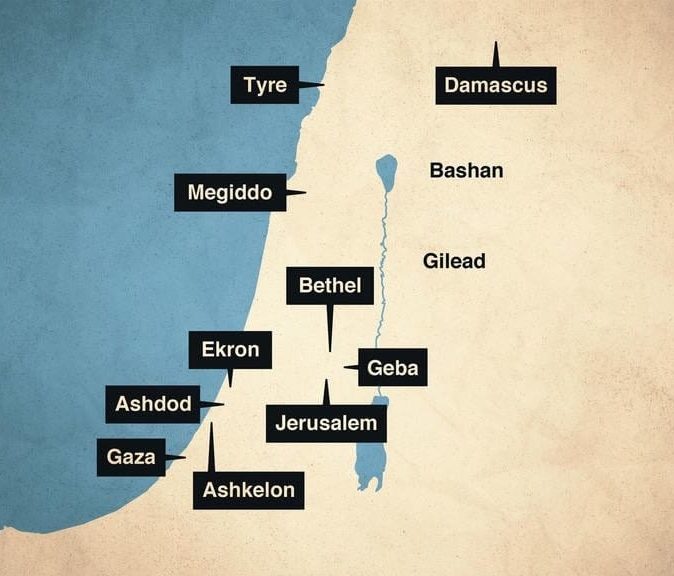
Yahweh lists a variety of cities surrounding Jerusalem, from Damascus in the north to Ashkelon in the south. He begins His list in the north in the region known as Hadrach, but He focuses His oracle on the city of Damascus. From there, Yahweh moves south, listing the names of additional doomed cities as He makes His way to Ashdod, Ashkelon, and Gaza. This north-to-south route is significant because it mirrors the path the Assyrians and Babylonians took when they conquered Israel and Judah. Earlier prophets had predicted the coming destruction of the northern and southern kingdoms by these two nations, a fate ordained by God for His people’s continued rebellion against Him.

“But I have stirred up a leader who will approach from the north.
From the east he will call on my name.
I will give him victory over kings and princes.
He will trample them as a potter treads on clay. – Isaiah 41:25 NLT

“Yes,” the Lord said, “for terror from the north will boil out on the people of this land. Listen! I am calling the armies of the kingdoms of the north to come to Jerusalem. I, the Lord, have spoken!

“They will set their thrones
at the gates of the city.
They will attack its walls
and all the other towns of Judah.
I will pronounce judgment
on my people for all their evil—
for deserting me and burning incense to other gods.
Yes, they worship idols made with their own hands! – Jeremiah 1:14-16 NLT

“This is what the Sovereign Lord says: From the north I will bring King Nebuchadnezzar of Babylon against Tyre. He is king of kings and brings his horses, chariots, charioteers, and great army. First he will destroy your mainland villages. Then he will attack you by building a siege wall, constructing a ramp, and raising a roof of shields against you.He will pound your walls with battering rams and demolish your towers with sledgehammers. The hooves of his horses will choke the city with dust, and the noise of the charioteers and chariot wheels will shake your walls as they storm through your broken gates. His horsemen will trample through every street in the city. They will butcher your people, and your strong pillars will topple. – Ezekiel 7:7-11 NLT

Yahweh is announcing His intention to take the same path of destruction to mete out judgment upon the enemies of His people. He will begin in the north with Damascus and work His way down the coast to the land of the Philistines.

This prophecy was partially fulfilled in 333 B.C. when Alexander the Great passed through the region on his way to Egypt. He focused his attention on the coastal cities, destroying all ports used by the Achaemenid Empire but leaving the Jews relatively undisturbed. Alexander’s march to the south left many of these same cities destroyed but they would eventually rise from the ashes and continue their mistreatment of the people of Israel. What Yahweh has in store for them will be far more destructive and permanent than anything they suffered at the hands of the Greeks.

The English Standard Version translates verse 1 as “the LORD has an eye on mankind and on all the tribes of Israel.” While it is obvious that the all-knowing, all-seeing Yahweh is always watching over the affairs of men, most translators render this verse differently.

…the eyes of humanity, including all the tribes of Israel, are on the LORD. – NLT

…the eyes of men and of all the tribes of Israel are upon the LORD. – BSB

…for the eyes of mankind, especially of all the tribes of Israel, are toward the LORD. – NASB

This human-based perspective is important because it indicates that all will know and understand that this future judgment is the work of Yahweh. Everyone will comprehend the divine nature of the destruction. This won’t be the work of some world super-power, it will be the hand of Adonai, the LORD of Hosts.

the Lord will strip away Tyre’s possessions
and hurl its fortifications into the sea,
and it will be burned to the ground.– Zechariah 9:4 NLT

The city of Ashkelon will see Tyre fall
and will be filled with fear.
Gaza will shake with terror,
as will Ekron, for their hopes will be dashed.
Gaza’s king will be killed,
and Ashkelon will be deserted.– Zechariah 9:4 NLT

These powerful, wealthy, and influential cities will suffer fear, humiliation, and elimination at the hands of Israel’s God. Their wealth will do them no good. Their armies will be impotent and unable to defend them. The once-great Philistine empire that had plagued the people of Israel for centuries would fall, never to rise again. The oracle even predicts the conversion of any Philistines who manage to make it out alive.

Then the surviving Philistines will worship our God
    and become like a clan in Judah.
The Philistines of Ekron will join my people,
    as the ancient Jebusites once did. – Zechariah 9:7 NLT

The content of this oracle must have been difficult for Zechariah to get his head around. It was good news but it all sounded so far-fetched and impossible. It didn’t get any more believable when God claimed, “I will guard my Temple and protect it from invading armies. I am watching closely to ensure that no more foreign oppressors overrun my people’s land” (Zechariah 9:8 NLT).

God was telling Zechariah incredible news regarding Israel’s future. Not only will Israel be restored, Jerusalem rebuilt, and the Temple completed, but the people of Israel will prosper, filling the land, and serving Him faithfully. Things were going to be radically different. Instead of punishing His people as He had done in the past, God was going to bless them abundantly and restore them to favor. This news had to be difficult for Zechariah to comprehend as he looked around at a partially completed foundation on the Temple, the broken-down walls, and the demoralized remnant who struggled to fulfill the task God had given them due to the scope of the project and the presence of opposition. Yet, Yahweh had assured Zechariah that He was the God of the impossible.

“This is what the Lord of Heaven’s Armies says: All this may seem impossible to you now, a small remnant of God’s people. But is it impossible for me? says the Lord of Heaven’s Armies.” – Zechariah 8:6 NLT

It’s as if God said, “I know this doesn’t look so good right now, but don’t judge Me based on what you see.” Yahweh wanted Zechariah to focus on His promises, not the pressing problems that seemed to never go away.

Yahweh knew that Zechariah and the beleaguered people of Judah were struggling to keep the faith. They were growing weary and questioning whether all their hard work would be worth it. So, God pointed them to the future. He predicted a brighter tomorrow that was beyond their powers of comprehension. But He had proven Himself faithful in the past and could be trusted to fulfill His plans for the future.

Yet, God’s people have always struggled with doubt and the inability to take God at His word. Even today, those who claim to believe in an all-powerful, promise-keeping God, find themselves wondering where He is and what He is doing. They take a look at their current circumstances and make sweeping judgments regarding everything from God’s faithfulness and presence to His love and power. When things don’t go well, God’s people automatically assume that He is either angry or oblivious to their needs. He is upset and punishing them. He is out of touch and ignorant of them. Their prayers don’t get answered, so they conclude He does not hear or does not care.

In time, their view of life begins to influence their view of God. In a sense, Yahweh tells Zechariah, “I know this all seems impossible to you right now. After all, there’s just a handful of you and the job is far from complete. BUT THIS ISN’T ABOUT YOU!”

The point of it all was that God could do the impossible. He knew what was going on and was well aware of the situation taking place in Jerusalem. He had a full grasp of the facts regarding the status of the Temple, the presence of opposition, the size of the workforce, and the condition of their hearts. Which explains the depth and detail of His message to Zechariah.

He told Zechariah, “Be strong and finish the task!” (Zechariah 8:9 NLT) and “Don’t be afraid. Be strong, and get on with rebuilding the Temple” (Zechariah 8:13 NLT). It wasn’t about their strength and ability to get things done, it was about their faith and trust in a God who could do ANYTHING. They just needed to do what He had called them to do and leave the rest up to Him. God had returned them to the promised land, provided a royal edict to secure their work, and secured the funds to pay for the entire restoration project. He had done His part but they had failed to complete theirs. It was far too easy for them to look at their relative lack of success and the overwhelming size of the task and become disillusioned.

The same thing can be true of us. We get overwhelmed by circumstances and begin to feel we are in over our heads. We start to wonder if God is with us at all. But whenever we think it’s all up to us, we miss the point. Nothing is impossible for God. There is nothing He can’t handle. There is nothing we face that is outside of His sovereign control and divine will. Like Zechariah and the people of Judah, we must constantly remind ourselves that nothing is impossible for God. That’s the message we need to hear. There is nothing that He can’t do. There is not a single circumstance that is out of His ability or power to handle. And not only that, but nothing is impossible for God. That’s the message of the Bible. It is all about God, not us. It is about His power, His will, His promises, His faithfulness, His salvation, His Kingdom, and His ability to finish what He has begun and restore what is broken. Nothing is impossible for Him.

English Standard Version (ESV)
The Holy Bible, English Standard Version. ESV® Permanent Text Edition® (2016). Copyright © 2001 by Crossway Bibles, a publishing ministry of Good News Publishers.

New Living Translation (NLT)
Holy Bible, New Living Translation, copyright © 1996, 2004, 2015 by Tyndale House Foundation. Used by permission of Tyndale House Publishers Inc., Carol Stream, Illinois 60188. All rights reserved.

The Goodness of God

The goodness of God is not a topic most of us are familiar with or find easy to describe. But it is an essential aspect of God’s character that we tend to give less attention to because of His more impressive-sounding attributes like omnipotence, omniscience, and omnipresence. In our English vernacular, the word “good” sounds a bit underachieving – as in “good, better, best.” To describe something as merely “good” sounds like you’re disappointed or settling for less than the ideal. To describe a meal as being “good” isn’t exactly a ringing endorsement.

But when the Scriptures describe God as being good, they are not qualifying His character or comparing Him with anyone or anything else. They are declaring the incomparable kindness, grace, mercy, and goodwill He showers on mankind.

No one is good except God alone.– Luke 18:19 ESV

Taste and see that the Lord is good.
    Oh, the joys of those who take refuge in him! – Psalm 34:8 NLT

For the Lord is good.
    His unfailing love continues forever,
    and his faithfulness continues to each generation. Psalm 100:5 NLT

God is good and His goodness shows up in the form of unfailing love.

Surely your goodness and unfailing love will pursue me all the days of my life, and I will live in the house of the LORD forever. – Psalm 23:6 LT

When David wrote this psalm, he chose to describe God as “good” and used the Hebrew word ṭôḇ (towb). Like many other Hebrew words, this one is rich in meaning. It can be used to refer to something as excellent or the best of the best. It was commonly used to refer to the moral excellence of a person or thing, and it was often used as an antonym for evil (ra’). God is totally and completely good, having no semblance of evil in His character. John described God this way: “God is light, and in him is no darkness at all” (1 John 1:5 ESV).

So, the statement “God is good” also speaks of His moral excellence and His complete lack of evil. He is fully righteous, holy, and just in all His ways. As David put it, “The LORD is righteous in everything he does; he is filled with kindness” (Psalm 145:17 NLT). To say that God is good means that He always acts in accordance with what is right, true, and good.

God’s way is perfect.
    All the Lord’s promises prove true. – Psalm 18:30 NLT

Everything about God is good.

You are good and do only good… – Psalm 119:68 NLT

All of His actions are motivated and empowered by His goodness. Unlike man, God does not have to work at being good. At no time can God be accused of doing anything “bad” and, therefore, He requires no one to demand that He “be good.” We may not like what God does, but as fallen creatures, we have no right to question His motives or methods.

“He is originally good, good of Himself, which nothing else is; for all creatures are good only by participation and communication from God. He is essentially good; not only good, but goodness itself: the creature’s good is a super-added quality, in God it is His essence. He is infinitely good; the creature’s good is but a drop, but in God there in an infinite ocean or gathering together of good. He is eternally and immutably good, for He cannot be less good than He is; as there can be no addition made to Him, so no subtraction from Him.” – Thomas Manton, Works of Thomas Manton, Vol. VII

God’s inherent goodness is essential to who He is. Consider what it would be like to worship an all-powerful deity who lacked the attribute of goodness. In ancient times, this was exactly the situation in which many pagan nations found themselves. Their kings were powerful and vengeful. They were mighty but lacking in mercy. They were great but not good. Power, devoid of goodness, results in despotism. Sadly, these same pagan people groups found themselves worshiping false gods that carried the same attributes. Any goodness their gods showed was fickle, fleeting, and the result of human effort. But that is not the case with God. A. W. Tozer reminds us that the one true God “is no respecter of persons but makes His sun to shine on the evil as well as on the good, and sends His rain on the just and on the unjust” (A. W. Tozer, The Knowledge of the Holy).

The goodness of God goes hand in hand with His power. It is His goodness that allows us to rest in His strength, knowing that He will never use it in a way that is unjust or unrighteous. We may not always like what He does, but the knowledge of His goodness provides us with the assurance that His actions are always right and righteous. While we may not understand His ways, we can trust that His goodness permeates all that He does. There is never a moment when God’s actions are tainted by evil. His intentions and conduct are always good, all the time.

To put it simply, evil is the absence of goodness. It is whatever God is not. When we sin, we are acting in opposition to and in rebellion against the expressed will of God. We are willingly choosing to commit wickedness rather than goodness. Which is exactly what Adam and Eve did in the garden.

When God completed each phase of His creation of the universe, He stated, “It is good.” But when He had made man and woman, He “saw everything that he had made, and behold, it was very good” (Genesis 1:31 ESV). Why? Because He “created man in his own image, in the image of God he created him; male and female he created them” (Genesis 1:27 ESV). They were the apex of His creative order, designed to be summa cum laude, that which is of highest distinction and worth.

This first man and woman enjoyed the goodness of God, as evidenced by the rest of His creation. They had access to the beauty of the garden. They could satisfy their hunger by eating fruit from any of the trees He had provided (except one). And they could enjoy unbroken fellowship with the one who had made them. But then, sin entered the equation. The evil one tempted them to reject God’s goodness, convincing them that his way was better than God’s. He lied, deceiving them into believing God was holding out on them. He painted God as a cosmic killjoy, withholding from them something they desired and deserved. To convince Adam and Eve to take the bait, he contradicted the very words of God.

“You won’t die!” the serpent replied to the woman. “God knows that your eyes will be opened as soon as you eat it, and you will be like God, knowing both good and evil.” – Genesis 3:4-5 NLT

Don’t miss that last line. He promised them the capacity to know both “good and evil” – towb and ra’. Up to that point, they had enjoyed only the former, the goodness of God as evidenced by His “good” creation. What Satan was promising them was knowledge of the absence of God. They were about to find out what it was like to live in opposition to and separation from God. After having eaten the forbidden fruit, “the man and his wife hid themselves from the presence of the Lord God” (Genesis 3:8 ESV), and it was just a matter of time before “the Lord God sent him out from the garden of Eden to work the ground from which he was taken. He drove out the couple, and at the east of the garden of Eden, he placed the cherubim and a flaming sword that turned every way to guard the way to the tree of life” (Genesis 3:24-25 ESV).

The goodness of God is the key to life. Sin separates man from God, eliminating access to His presence and resulting in an absence of His goodness. Just a few chapters later in the book of Genesis, we see the sad, but inevitable outcome of a life lived apart from the goodness of God.

The LORD observed the extent of human wickedness on the earth, and he saw that everything they thought or imagined was consistently and totally evil. – Genesis 6:5 NLT

But we can’t blame God for the sorry state of man’s condition, and it would be wrong to assume that God’s character was somehow tarnished by humanity’s fall from grace. God’s goodness is not diminished just because man’s wickedness flourished. A. W. Pink warns us not to describe the presence of evil as a deficiency in God’s goodness.

“Nor can the benevolence of God be justly called into question because there is suffering and sorrow in the world. If man sins against the goodness of God, if he despises “the riches of His goodness and forbearance and longsuffering,” and after the hardness and impenitence of his heart treasurest up unto himself wrath against the day of wrath (Rom 2:4,5), who is to blame but himself? Would God be ‘good’ if He punished not those who ill-use His blessings, abuse His benevolence, and trample His mercies beneath their feet? It will be no reflection upon God’s goodness, but rather the brightest exemplification of it, when He shall rid the earth of those who have broken His laws, defied His authority, mocked His messengers, scorned His Son, and persecuted those for whom He died.” – A. W. Tozer, The Attributes of God

The amazing thing about God’s goodness is that He did not choose to abandon mankind altogether. His goodness, exhibited by His boundless grace and mercy, explains our continued existence. We do not deserve to be here. We have done nothing to earn His favor or to avoid His righteous anger against our sin and open rebellion against Him. Like Adam and Eve, all of us have chosen to listen to the lies of the enemy and yet, God has “overlooked people’s ignorance about these things, but now he commands everyone everywhere to repent of their sins and turn to him” (Acts 17:30 NLT).

The apostle Paul reminds us of God’s goodness and men’s wickedness.

“None is righteous, no, not one;
   no one understands;
    no one seeks for God.
All have turned aside; together they have become worthless;
    no one does good,
    not even one.”
“Their throat is an open grave;
    they use their tongues to deceive.”
“The venom of asps is under their lips.”
   “Their mouth is full of curses and bitterness.”
“Their feet are swift to shed blood;
   in their paths are ruin and misery,
and the way of peace they have not known.”
   “There is no fear of God before their eyes.” – Romans 3:10-18 NLT

But man’s wickedness is counterbalanced by God’s goodness.

…for all have sinned and fall short of the glory of God, and are justified by his grace as a gift, through the redemption that is in Christ Jesus, whom God put forward as a propitiation by his blood, to be received by faith. This was to show God’s righteousness, because in his divine forbearance he had passed over former sins. It was to show his righteousness at the present time, so that he might be just and the justifier of the one who has faith in Jesus. – Romans 3:23-26 ESV

God’s goodness included His plan to send His Son as the payment for mankind’s sin. That is why He was able to put up with man’s rebellion for so long. He knew what was coming. His good and gracious sovereign plan had always included the sacrifice of His Son so that mankind might once again experience His goodness. And the proper response to His goodness is gratefulness.

“Gratitude is the return justly required from the objects of His beneficence.” – A. W. Pink, The Attributes of God

English Standard Version (ESV)
The Holy Bible, English Standard Version. ESV® Permanent Text Edition® (2016). Copyright © 2001 by Crossway Bibles, a publishing ministry of Good News Publishers.

New Living Translation (NLT)
Holy Bible, New Living Translation, copyright © 1996, 2004, 2015 by Tyndale House Foundation. Used by permission of Tyndale House Publishers Inc., Carol Stream, Illinois 60188. All rights reserved.

A Preview of Coming Attractions

1 The Lord spoke to Moses, saying, “Speak to the people of Israel and say to them, When you come into the land you are to inhabit, which I am giving you, and you offer to the Lord from the herd or from the flock a food offering or a burnt offering or a sacrifice, to fulfill a vow or as a freewill offering or at your appointed feasts, to make a pleasing aroma to the Lord, then he who brings his offering shall offer to the Lord a grain offering of a tenth of an ephah of fine flour, mixed with a quarter of a hin of oil; and you shall offer with the burnt offering, or for the sacrifice, a quarter of a hin of wine for the drink offering for each lamb. Or for a ram, you shall offer for a grain offering two tenths of an ephah of fine flour mixed with a third of a hin of oil. And for the drink offering you shall offer a third of a hin of wine, a pleasing aroma to the Lord. And when you offer a bull as a burnt offering or sacrifice, to fulfill a vow or for peace offerings to the Lord, then one shall offer with the bull a grain offering of three tenths of an ephah of fine flour, mixed with half a hin of oil. 10 And you shall offer for the drink offering half a hin of wine, as a food offering, a pleasing aroma to the Lord.

11 “Thus it shall be done for each bull or ram, or for each lamb or young goat. 12 As many as you offer, so shall you do with each one, as many as there are. 13 Every native Israelite shall do these things in this way, in offering a food offering, with a pleasing aroma to the Lord. 14 And if a stranger is sojourning with you, or anyone is living permanently among you, and he wishes to offer a food offering, with a pleasing aroma to the Lord, he shall do as you do. 15 For the assembly, there shall be one statute for you and for the stranger who sojourns with you, a statute forever throughout your generations. You and the sojourner shall be alike before the Lord. 16 One law and one rule shall be for you and for the stranger who sojourns with you.”

17 The Lord spoke to Moses, saying, 18 “Speak to the people of Israel and say to them, When you come into the land to which I bring you 19 and when you eat of the bread of the land, you shall present a contribution to the Lord. 20 Of the first of your dough you shall present a loaf as a contribution; like a contribution from the threshing floor, so shall you present it. 21 Some of the first of your dough you shall give to the Lord as a contribution throughout your generations. Numbers 15:1-21 ESV

Even though God had condemned an entire generation of Israelites to wander in the wilderness for 40 years as punishment for their rebellion, He would not abandon them. The Lord would continue to guide them, provide for and protect them, and even give them further instructions regarding their eventual occupation of the land of Canaan. While that generation would never experience the joy of crossing over the Jordan and experiencing God’s rest, their children would. And God used the four-decade-long detour through the wilderness as a training opportunity for the next generation of Israelites, providing them with detailed instructions for their eventual entrance into the land of promise.

Though the adult population had allowed the fear-laden advice of the ten spies to deter them from keeping God’s command to enter and conquer the land of Canaan, God refused to renege on His promise. He remained committed to the covenant He had made with Abraham and assured Moses that the offspring of the rebellious generation would inherit the land.

But God made it perfectly clear that the adults in the room had blown their chance.

“…not one of these people will ever enter that land. They have all seen my glorious presence and the miraculous signs I performed both in Egypt and in the wilderness, but again and again they have tested me by refusing to listen to my voice. They will never even see the land I swore to give their ancestors. None of those who have treated me with contempt will ever see it.” – Numbers 14:22-23 NLT

Yet, despite their blatant display of disobedience, He would not hold the children responsible for the sins of their parents. During the 40-year delay, things would continue just as they had since the Israelites departed Egypt. The tabernacle would remain in the center of the camp with the Shekinah glory of God located above the mercy seat in the Holy of Holies. The sacrificial system would continue just as God had prescribed it on Mount Sinai. Sacrifices would be offered and sins atoned for. Life would go on as it had before. And each year, children would be born into the Israelite community and members of the older generation would die off. There would be a slow but steady changing of the guard as the infants grew into adolescents who eventually became adults.

And God provided Moses with the assurance that a new group of Israelites would eventually enter the land.

“Give the following instructions to the people of Israel. When you finally settle in the land I am giving you, you will offer special gifts as a pleasing aroma to the Lord. – Numbers 15:2-3 NLT

The faces and names of the people would change, but the covenant would be fulfilled. And this message from God must have been a painful reminder to the older generation that their disobedience had been costly. They would never have the joy of crossing the Jordan River into the land of promise with their children and grandchildren. Their lives would end in death in the wilderness. They were close but yet so far. Canaan was within reach but completely off-limits because they refused to obey God.

This chapter contains additional instructions regarding the sacrificial system and it focuses on the changes God would require once they entered the new land. It is interesting to note that this addendum includes additional sacrifices involving grain, oil, and wine. When the next generation finally enters the land, they will be required to supplement their meat offerings with “a grain offering of two quarts of choice flour mixed with one quart of olive oil” (Numbers 15:4 NLT). And for each lamb offered, they would add “one quart of wine as a liquid offering” (Numbers 15:5 NLT).

This appears to be a reference to the fruitfulness of the land of Canaan. When the spies returned from their expedition within the borders of Canaan, they reported that it was “a land flowing with milk and honey” (Numbers 13:27 NLT). It was so rich and bountiful that the spies produced “a single cluster of grapes so large that it took two of them to carry it on a pole between them! They also brought back samples of the pomegranates and figs” (Numbers 13:23 NLT).

In the book of Deuteronomy, Moses describes just how bountiful the land of promise would be.

“The LORD your God will soon bring you into the land he swore to give you when he made a vow to your ancestors Abraham, Isaac, and Jacob. It is a land with large, prosperous cities that you did not build. The houses will be richly stocked with goods you did not produce. You will draw water from cisterns you did not dig, and you will eat from vineyards and olive trees you did not plant.” – Deuteronomy 6:10-11 NLT

For people who were living in the wilderness, surviving off of manna and quail, this description must have been highly attractive. The prospect of enjoying the comforts of a real house instead of the cramped confines of a tent would have been difficult to imagine. Ever since leaving Egypt, they had eaten no fruit, raised no crops, baked no bread, or enjoyed any of the comforts of “home.” They were nomads wandering through a godforsaken wilderness.

But God assured them that upon entering the land of promise, all that would change. They would have plenty of grain, oil, and wine. So much so, that these bountiful resources would become a part of the sacrificial system. According to the book of Exodus, the Israelites had left Egypt with “great flocks and herds of livestock” (Exodus 12:38 NLT). So, they had no shortage of animals to use for their required sacrifices, even in the wilderness. But they had no access to grain, oil, and wine. The only bread they had to eat was in the form of the manna which God miraculously provided. Since there were few olive trees or vineyards in the wilderness, oil and wine were in short supply. But things would be different in Canaan.

This entire passage is meant to emphasize God’s faithfulness and to assure the Israelites of His unfailing commitment to providing for all their needs. Their response to His faithfulness was to be one of gratitude, expressed through the offering of meat, grain, oil, and wine. These gifts were intended to honor God for His goodness and grace, and together produced “a pleasing aroma to the Lord” (Numbers 15:3). These detailed instructions for the grain and drink offerings were meant to ensure the Israelites that their time in the land would be marked by blessing and abundance. God would care for them and they would be expected to express their thanks through the giving of offerings.

It’s important to remember that these instructions were given before the people entered the land when they had no access to the oil, grain, and wine. But God was assuring them that the day would come when the bounty of the land would become readily available. In fact, He was guaranteeing its availability.

“When you arrive in the land where I am taking you, and you eat the crops that grow there, you must set some aside as a sacred offering to the Lord. Present a cake from the first of the flour you grind, and set it aside as a sacred offering, as you do with the first grain from the threshing floor. Throughout the generations to come, you are to present a sacred offering to the Lord each year from the first of your ground flour.” – Numbers 15:18-21 NLT

To the rebellious generation who had decided that the conquest of Canaan was impossible, this word from God must have been difficult to hear. They must have been filled with regret as they considered the ramifications of their fateful decision to disobey God. Not only would they fail to enter the land, but they would never enjoy its fruit or experience the joy of standing alongside their children and grandchildren as they offered God gifts of gratitude for its bounty.

But God underscores His own faithfulness when He states that these offerings will take place “throughout the generations to come” (Numbers 15:21 NLT). The next generation will conquer and occupy the land. The land will provide for all their needs. And the people will be expected to offer up their thanks to God for His goodness and graciousness – for generations to come.

These instructions were given as the people were about to begin the 40-year sentencing handed down by God. For the next four decades, they would wander in the wilderness as punishment for their refusal to obey God, and they would never get the opportunity to obey any of these sacrificial requirements. So, they would need to pass on these instructions to their children, grandchildren, and all those who would be born over the next 40 years. The guilty and condemned were required to prepare their offspring to respond appropriately to God’s future blessings. While this generation had blown their opportunity to enter God’s rest and experience His blessings, they could help prepare their progeny to respond to God’s blessings with gratefulness and faithfulness.

English Standard Version (ESV) The Holy Bible, English Standard Version. ESV® Permanent Text Edition® (2016). Copyright © 2001

New Living Translation (NLT) Holy Bible, New Living Translation, copyright © 1996, 2004, 2015 by Tyndale House Foundation. Used by permission of Tyndale House Publishers Inc., Carol Stream, Illinois 60188. All rights reserved.