Impactful, But Not Impressive.

And I, when I came to you, brothers, did not come proclaiming to you the testimony of God with lofty speech or wisdom. For I decided to know nothing among you except Jesus Christ and him crucified. And I was with you in weakness and in fear and much trembling, and my speech and my message were not in plausible words of wisdom, but in demonstration of the Spirit and of power, so that your faith might not rest in the wisdom of men but in the power of God. – 1 Corinthians 2:1-5 ESV

As followers of Christ, we can be easily impressed. We can fall prey to persuasive words and convincing arguments. We can find ourselves becoming fans of various teachers, preachers, and religious leaders. Style and charisma can become the primary criteria by which we judge a speaker. If we’re not careful, we can allow entertainment value to become the primary factor by which we critique a sermon – trumping biblical accuracy or spiritual efficacy. We can become fans of men rather than followers of Christ. We can elevate our desire for comfort over our need for conviction. Paul had warned Timothy that the day was coming when this would be exactly what would happen.

For a time is coming when people will no longer listen to sound and wholesome teaching. They will follow their own desires and will look for teachers who will tell them whatever their itching ears want to hear. – 2 Timothy 4:3 NLT

The situation in Corinth had probably not reached this point, but Paul saw that there was a disturbing trend taking place. The believers there had allowed their personal preferences to become a point of division within the church. Some were claiming to be followers of Paul, others of Cephas or Apollos. And evidently, the primary criteria behind their particular preferences had more to do with the style of the messenger than the content of their message. So Paul attempts to remind his readers that his initial ministry among them had been anything but impressive. He reflected back on that occasion, recalling that “my message and my preaching were very plain” (1 Corinthians 2:4a NLT). Rather than delivering cleverly worded sermons and powerfully persuasive arguments, Paul exhibited weakness, fear and trembling. He had been anything but impressive. But he had made an impact. Why? He provides the answer. “For I decided to know nothing among you except Jesus Christ and him crucified” (1 Corinthians 2:2 ESV). Paul wasn’t interested in fame or recognition. He wasn’t out to build a personal following or win a popularity contest. He had gone to Corinth in order to share the testimony of God concerning His Son, Jesus Christ. And the message he shared had made an impact on the lives of the people of Corinth. But not because of Paul’s oratory skills or well-articulated arguments.

What had happened in Corinth as a result of Paul’s initial visit had been the work of the Spirit of God. “in demonstration of the Spirit and of power” (1 Corinthians 2:4b ESV). It had had nothing to do with Paul’s powers of persuasion. Their radical life change had been the result of the message of the cross and the regenerating work of the Spirit of God. In his second letter to the Corinthians, Paul pointed out that “we are not, like so many, peddlers of God’s word, but as men of sincerity, as commissioned by God, in the sight of God we speak in Christ” (2 Corinthians 2:17 ESV). Paul’s primary goal had been to preach Christ and the message of His crucifixion and resurrection. Later on in this same letter, Paul outlines exactly what he preached to them:

For I delivered to you as of first importance what I also received: that Christ died for our sins in accordance with the Scriptures, that he was buried, that he was raised on the third day in accordance with the Scriptures, and that he appeared to Cephas, then to the twelve. – 1 Corinthians 15:3-5 ESV

It was this message and their acceptance of it, that had changed their lives. It had had nothing to do with lofty speech or human wisdom. The message of the gospel was not man-made, but God-ordained. The power of the gospel lies not in the oratory skills of the messenger, but in the simple, life-altering truth of the message. The gospel doesn’t need to be tricked out, spiced up, or improved upon. It doesn’t need better music surrounding it, brighter lights or the latest technology to help it, or an entertaining delivery to improve it. Of course, it is a sin to bore anyone with the gospel. It was Jim Rayburn, the founder of Young Life who once said, “We believe it is sinful to bore kids with the gospel. Christ is the strongest, grandest, most attractive personality to ever grace the earth. But a careless messenger with the wrong method can reduce all this magnificence to the level of boredom …. It is a crime to bore anyone with the gospel.”

There is no doubt that a poorly prepared sermon can obscure the message of the gospel. But at the same time, an overly produced, entertainment-driven worship service can also overwhelm the simplicity of the life-altering message of salvation in Christ alone. It seems that Paul would have preferred the power of the Spirit of God over his own powers of persuasion. He had seen the life-impacting nature of the good news of Jesus Christ firsthand. For him, it was essential that the faith of believers rest “not in human wisdom but in the power of God” (1 Corinthians 2:5 NLT). The power of the gospel resides in the simple message of Christ crucified, not in the wisdom and eloquence of men. Paul said, “we preach Christ crucified, a stumbling block to Jews and folly to Gentiles, but to those who are called, both Jews and Greeks, Christ the power of God and the wisdom of God” (1 Corinthians 1:23-24 ESV). There will always be those who balk at the message of the cross. They will see it as foolish and nonsensical. But there will also be those who find its message impactful and life-altering, and their transformed lives will give ample evidence that its power comes from God, not men.
No Other View.

You were running well. Who hindered you from obeying the truth? This persuasion is not from him who calls you. A little leaven leavens the whole lump. I have confidence in the Lord that you will take no other view, and the one who is troubling you will bear the penalty, whoever he is. But if I, brothers, still preach circumcision, why am I still being persecuted? In that case the offense of the cross has been removed. I wish those who unsettle you would emasculate themselves! – Galatians 5:7-12 ESV

Paul took this issue very seriously. As far as he was concerned, it had little to do with the rite of circumcision itself, but it had everything to do with the integrity of the gospel. God had sent His Son as the one and only means for mankind’s salvation. His sacrificial death on the cross was God’s sole solution to man’s sin problem. God had never intended the law to save men, but to condemn them of their sins. The law revealed the holiness and righteousness that God demanded in a non-negotiable, hand-written form. It left no grey areas or anything up to man’s imagination. But man, in his sinful condition, was totally incapable of keeping the law, and this was no surprise to God. His plan all along had been for His Son to take on human flesh, in order that He might keep the law perfectly, and become the sinless substitute and unblemished sacrifice for the sins of mankind. Jesus, the sinless Son of God, died on behalf of sinful men, and His death provided the only means by which men might be restored to a right relationship with God. Paul wrote to the Romans, “for all have sinned and fall short of the glory of God, and are justified by his grace as a gift, through the redemption that is in Christ Jesus, whom God put forward as a propitiation by his blood, to be received by faith” (Romans 3:23-25 ESV).

Anything and anyone that interfered with that message was considered an enemy by Paul. He didn’t suffer false teachers lightly. He would not tolerate those who preached a different version of God’s gospel. That is why he started out this letter to the Galatians with very strong words concerning those who were amending the gospel of God.

I am astonished that you are so quickly deserting him who called you in the grace of Christ and are turning to a different gospel—not that there is another one, but there are some who trouble you and want to distort the gospel of Christ. But even if we or an angel from heaven should preach to you a gospel contrary to the one we preached to you, let him be accursed. As we have said before, so now I say again: If anyone is preaching to you a gospel contrary to the one you received, let him be accursed. – Galatians 1:6-9 ESV

In today’s passage, Paul commends his readers for running the race well, but then accuses them of allowing others to knock them off course. They had accepted Christ by faith and were living the Christian life in faith, but had run into an obstacle along the way. The Greek word Paul used was ἀνακόπτω (anakoptō) and it refers to something having its progress hindered, held back or checked in some way. The Judaizers, who were demanding that the Gentile converts in Galatia be circumcised, were actually hindering them from obeying the truth as found in the gospel. They were adding unnecessary requirements. And Paul made it clear that these new rules were not from God. “This persuasion is not from him who calls you” (Galatians 5:8 ESV). And the real danger of this kind of teaching was that it would soon permeate every aspect of their faith, causing them to walk away from the grace offered by God and back into the legalism of the law. Which is what Paul seems to be saying when he writes, “A little leaven leavens the whole lump.” This kind of false teaching would become like an uncontrolled cancer spreading through the church in Galatia and robbing them of the freedom they had found in Christ.

But Paul expressed his confidence that the Galatian believers would reject this false teaching and remain faithful to the life of faith.And he assured them that, regardless of what others might have said, he was not a proponent of circumcision. Yes, he had encouraged Timothy to be circumcised, but that was a different case altogether. Timothy, a young disciple of Paul’s, had a Jewish mother who had become a believer, but his father was Greek. In the book of Acts we read, “Paul wanted Timothy to accompany him, and he took him and circumcised him because of the Jews who were in those places, for they all knew that his father was a Greek” (Acts 16:3 ESV). It had nothing to do with Timothy’s salvation, but with his ministry to the Jews. Paul knew that they would never listen to an uncircumcised Gentile, so he encouraged Timothy to undergo circumcision to make him acceptable to the Jews and provide him a platform to share the gospel with them.

Evidently, the false teachers in Galatia had been saying that Paul was also a proponent of circumcision, most likely using the story of Timothy as evidence. But Paul denies that charge and asks why he is still being persecuted by the Judaizers if they are all on the same page. No, Paul was adamantly opposed to these men and he made his position clear. For Paul, the very nature of the cross was an offense to the legalists. Jesus’ death had removed any vestige of self-righteousness or the possibility of justification by works. The cross symbolized Jesus’ once-for-all-time payment for the sins of mankind. Nothing more was necessary. But for the legalists, this party of the circumcision, the cross was not enough, so Paul had some harsh words for them. He compared them to the pagan priests who practiced ritual castration as part of their worship, and he wished that they would do the same to themselves. Paul was not necessarily wishing physical harm on these individuals, but was merely expressing his desire that they be cut off from the local fellowship of believers. He saw them as a real danger to the spiritual health of the church. In his letter to the church in Philippi, Paul had similarly harsh words regarding these types of individuals:

Look out for the dogs, look out for the evildoers, look out for those who mutilate the flesh. For we are the circumcision, who worship by the Spirit of God and glory in Christ Jesus and put no confidence in the flesh. – Philippians 3:2-3 ESV

In our desire to be tolerant, we sometimes run the risk of allowing dangerously false doctrines to infiltrate the church. But when it came to the doctrine of salvation, Paul was anything but accommodating. He would not accept alternative views. He would not abide by those who offered a different version of the gospel. For Paul, there was only one means of salvation and it was by faith alone in Christ alone. And if anyone preached a different gospel, Paul called them out. And we should do the same. It is NOT true that all roads lead to the top of the mountain. It is false to believe that there are other ways for men to be made right with God. Jesus Himself said,  “I am the way, and the truth, and the life. No one comes to the Father except through me” (John 14:6 ESV). Those who would add to or take away from the simple message of faith in Christ alone are not to be tolerated. Their false messages are not to be winked at or taken lightly. Our view is to be that there is no other view. There is no other gospel. There is no other means by which men might be restored to a right relationship with God. There is one hope for mankind: The simple, soul-saving, sin-slaying, justifying, sanctifying gospel of faith in Christ alone.

One nation under God.

For he himself is our peace, who has made us both one and has broken down in his flesh the dividing wall of hostility by abolishing the law of commandments expressed in ordinances, that he might create in himself one new man in place of the two, so making peace, and might reconcile us both to God in one body through the cross, thereby killing the hostility. And he came and preached peace to you who were far off and peace to those who were near. For through him we both have access in one Spirit to the Father. So then you are no longer strangers and aliens, but you are fellow citizens with the saints and members of the household of God, built on the foundation of the apostles and prophets, Christ Jesus himself being the cornerstone, in whom the whole structure, being joined together, grows into a holy temple in the Lord. In him you also are being built together into a dwelling place for God by the Spirit. – Ephesians 2:14-22 ESV

To truly understand this passage, one must first grasp the nature of the relationship between Jews and Gentiles in Paul’s world. There was a long and deep-seated animosity between the two groups. To put it bluntly, Jews despised Gentiles. They viewed them with contempt and rarely, if ever, associated with them on any level. The Jews viewed themselves as the chosen people of God; everyone else was considered a Gentile, an outsider, and destined to God’s wrath and punishment.

It was forbidden for a Jew to marry a Gentile, and in the rare cases it did happen, the family of the Jewish son or daughter would consider their child as dead, even holding their funeral to mark the day. Paul has just told the Gentile converts in the church in Ephesus, “remember that you were at that time separated from Christ, alienated from the commonwealth of Israel and strangers to the covenants of promise, having no hope and without God in the world” (Ephesians 2:12 ESV). Jesus, the Christ (the Greek word for Messiah), had been promised to the Jews and had been born as a Jew.

However, the Gentiles had been born outside the commonwealth of Israel, with no access to the covenant promises made to the people of God. So not only were they disdained by the Israelites, but they were also considered to be without hope and without God in the world. But Paul reminded that Jesus had changed all that.

But now in Christ Jesus you who once were far off have been brought near by the blood of Christ. – Ephesians 2:13 ESV

The great chasm that separated the Gentiles from the Jews was closed by Jesus. He had made it possible for them to have hope and a relationship with God. But amazingly, Jesus had not just reconciled the Gentiles with God, but He had also reconciled them to the Jewish believers in their congregation. They were now one.

For Christ himself has brought peace to us. He united Jews and Gentiles into one people when, in his own body on the cross, he broke down the wall of hostility that separated us. – Ephesians 2:14 NLT

When God called Abraham and promised to make of him a great nation, that was the beginning of the Jewish people. God separated them out from the rest of the nations of the world. He took one man and his barren wife and miraculously gave them descendants “beyond number, like the stars in the sky and the sand on the seashore” (Genesis 22:17 NLT). God chose them as His own and revealed Himself in ways He had never done before with any other people group.

He rescued them from captivity in Egypt. He led them through the wilderness and met all their needs along the way. He gave them His law. He provided them the land of Canaan as their homeland just as He had promised Abraham. He fought and won battles on their behalf. He gave them prophets to speak to them. He provided kings to lead them and appointed priests to minister to them. And, as His chosen people, they were to be a light to the Gentiles, a visible example of what it looks like when men live in obedience and submission to God.

But they failed. They couldn’t keep God’s law and were incapable of remaining faithful to Him. They repeatedly rebelled and wandered from the truth of God, seeking after false gods and the fulfillment of their own selfish desires. And as a result, God punished them by sending them into exile. He disciplined His chosen people, but He also redeemed them from slavery again and returned them to the Land of Promise. But things would never be quite the same. They would never have another king or enjoy the peace and prosperity of David’s and Solomon’s reigns.

Then God sent His Son, the Messiah. After centuries of waiting, the long-awaited One arrived on the scene. But John records what happened. “He came to his own, and his own people did not receive him” (John 1:11 ESV). Jesus, the Son of God and the descendant of King David, was rejected by His own people. Instead of crowning Him as King, they demanded His crucifixion. But it was all part of God’s redemptive plan for mankind.

With His death, Jesus “broke down the wall of hostility that separated us” (Ephesians 2:14 NLT). The law had separated Jews from Gentiles, but it had also separated Jews from God. They could not keep the law. Instead, it exposed their sinfulness and condemned their lack of faithfulness to God.

But Jesus removed the barrier. He reconciled both Jew and Gentile to God “in one body through the cross” (Ephesians 2:16 ESV). He made it possible for men to be restored to God and to one another. Paul claimed that Jesus “brought this Good News of peace to you Gentiles who were far away from him, and peace to the Jews who were near” (Ephesians 2:17 NLT). The very same message of redemption was preached to all men, regardless of their ethnicity or religion. Restoration and reconciliation with God would be the same for both. As Paul stated earlier, it was to be by faith in the death, burial, and resurrection of Jesus Christ.

For by grace you have been saved through faith. And this is not your own doing; it is the gift of God, not a result of works, so that no one may boast. – Ephesians 2:8-9 ESV

Now, believing Jews and Gentiles were one. There was to be no more alienation, separation, animosity, pr hostility. As a result of their shared faith in Jesus Christ, they had become “fellow citizens with the saints and members of the household of God” (Ephesians 2:19 ESV).

The church, the body of Christ, had been God’s plan all along. It was always His intention to redeem men and women from every tribe, nation, and tongue. That is why He told Abraham that He would make him the father of many “nations,” not just the Hebrew nation. He had also told Abraham that through him all the nations of the earth would be blessed (Genesis 22:18), and that promise was fulfilled in Christ.

In him you also are being built together into a dwelling place for God by the Spirit. – Ephesians 2:22 ESV

Together, we form the people of God, reconciled to Him through a common faith in His Son, and living in the shared power of His Spirit. One nation under God.

An Unpopular, Yet Unwavering Message.

See with what large letters I am writing to you with my own hand. It is those who want to make a good showing in the flesh who would force you to be circumcised, and only in order that they may not be persecuted for the cross of Christ. For even those who are circumcised do not themselves keep the law, but they desire to have you circumcised that they may boast in your flesh. But far be it from me to boast except in the cross of our Lord Jesus Christ, by which the world has been crucified to me, and I to the world. For neither circumcision counts for anything, nor uncircumcision, but a new creation. And as for all who walk by this rule, peace and mercy be upon them, and upon the Israel of God. From now on let no one cause me trouble, for I bear on my body the marks of Jesus. The grace of our Lord Jesus Christ be with your spirit, brothers. Amen. – Galatians 6:11-18 ESV

The fear of man. It has always been a real-life, everyday problem for believers and non-believers alike. Everyone fears being rejected, disliked, misunderstood or mistreated for their views. Our deep-seated desire for attention and affection sometimes drives us to do and say things that go against what we believe. We don’t want to be the odd man out. Peer pressure is a powerful force in every person’s life, and Paul knew that. He was fully aware that following Christ put a target on the back of every believer. Bearing the cross of Christ was a costly endeavor that often brings His followers rejection and ridicule. Paul had experienced this first-hand. But as he closed out his letter to the Galatian believers, he pointed out that the party of the circumcision, those individual who were demanding that all Gentile converts undergo the Jewish rite of circumcision in order to validate their salvation, were doing so out of fear of man. These Judaizers, Jews who confessed to be followers of Christ, were preaching their message out of fear of rejection by their fellow Jews. They also feared being persecuted and ridiculed for putting all their hope and faith in the cross of Christ alone. To do so would require them to reject their dependence upon the law and their reliance upon their own self-effort to justify themselves before God.

But Paul pointed out the absurdity of their logic. “Those who are trying to force you to be circumcised want to look good to others. They don’t want to be persecuted for teaching that the cross of Christ alone can save. And even those who advocate circumcision don’t keep the whole law themselves. They only want you to be circumcised so they can boast about it and claim you as their disciples.” (Galatians 6:12-13 NLT). They cared more about what others thought of them than they did what God would think about their actions. This was man-pleasing at its ugliest. Paul knew that their message had a deadly side-effect to it that would lead people away from the saving knowledge of faith in Christ alone. For Paul, the message of salvation was found in Christ alone by faith alone. It had nothing to do with works or human effort. It could not be earned. It was a grace gift provided by God Almighty Himself. Which is why Paul appended to the end of his letter, in his own weak and scrawling hand, “But far be it from me to boast except in the cross of our Lord Jesus Christ” (Galatians 6:14 ESV). Paul wasn’t going to boast about his Hebrew heritage; his resume as a Pharisee; his education under Gamaliel, the great Hebrew rabbi; or even his missionary exploits. At one point he confessed, “But whatever I am now, it is all because God poured out his special favor on me – and not without results” (1 Corinthians 15:10 NLT).  Paul had been transformed by the saving work of Jesus Christ. His efforts on behalf of the gospel were the result of the Spirit within him, not himself.

The primary issue threatening the Galatians believers was that of circumcision. But Paul said, “It doesn’t matter whether we have been circumcised or not. What counts is whether we have been transformed into a new creation by faith in the saving work of Jesus Christ” (Galatians 6:15 NLT). This rule or principle, regarding the efficacy of the gospel, was one that would bring peace and mercy to all who lived by it. Giving in to the false message of the Judaizers would result in guilt, shame, and a never-ending attempt to win favor with God through self-effort. Paul found that choice appalling. He also wanted his readers to know that he was anything but a man-pleaser. He had suffered greatly in his effort to bring the good news of Jesus Christ to the Gentile world. He had the physical and emotional scars to prove it. He closed his letter with the words, “I bear on my body the scars that show I belong to Jesus” (Galatians 6:17 NLT).

The message of faith in Christ is a difficult one for people to understand and even harder to accept. It sounds absurd. The story of God taking on human flesh, dying on a cross and being raised from the dead sound crazy to most who hear it. Yet for Paul, it was the truth because he had seen it transform his life and the lives of thousands of others. The gospel was not just a message, but a powerful force for change in the world in which he lived. He believed in it wholeheartedly and preached it unapologetically. As he told the believers in Rome, living under the persecution of the Roman government, “For I am not ashamed of the gospel, for it is the power of God for salvation to everyone who believes, to the Jew first and also to the Greek” (Romans 1:16 ESV). Paul was not ashamed of the gospel because he believed in the power of the gospel. He was willing to suffer ridicule and rejection at the hands of men because he had placed his hope and trust in the promises of God. And he wanted every believer in Christ to know the joy of living with their faith placed firmly in the saving work of Jesus Christ and the future redemption promised to them by God. Their hope was never to waver from the simple message of salvation by grace alone through faith alone in Christ alone.


God’s Unbreakable Promise.

To give a human example, brothers: even with a man-made covenant, no one annuls it or adds to it once it has been ratified. Now the promises were made to Abraham and to his offspring. It does not say, “And to offsprings,” referring to many, but referring to one, “And to your offspring,” who is Christ. This is what I mean: the law, which came 430 years afterward, does not annul a covenant previously ratified by God, so as to make the promise void. For if the inheritance comes by the law, it no longer comes by promise; but God gave it to Abraham by a promise. – Galatians 3:15-18 ESV

As a former Pharisee, Paul had a scholarly understanding of the Old Testament. But it was after his conversion, when he had received the indwelling Holy Spirit, that Paul truly began to understand that the Old Testament was a foreshadowing of the coming Messiah, Jesus Christ. Post-conversion, his comprehension of the Scriptures was both magnified and clarified. Familiar passages took on a whole new meaning when he was able to view to view them through the lens of the gospel. In the case of Genesis 13:15 and 17:8, where Moses records God’s covenant to Abraham, Paul exegetes these all-too-familiar passages by revealing that through them, God had been promising the coming of Christ. He was the “seed” or “offspring” through whom all the nations would be blessed. God’s promise to Abraham would ultimately be fulfilled through Jesus. But what is Paul’s point in bringing this new interpretation or understanding of God’s promise to light? He was attempting to answer the argument that the Mosaic law, which came after the giving of the promise by God to Abraham, somehow superceded or supplanted it.

On the contrary, Paul argues, God had made a binding covenant with Abraham and his “offspring.” That God-ordained covenant could not be nullified or broken. It was a unilateral covenant, made by God and could only be annulled by God. But Paul argues that at no point did God revoke or replace the covenant, even when He had given Moses the law some 430 years afterwards. In fact, Paul points out, the inheritance tied to the promise of God could be received only through the promise of God. It was not accessible any other way, especially not through the keeping of the law. And the inheritance of which Paul speaks is tied directly to the idea of justification by faith. This was the crux of the problem taking place among the Galatian believers. They were being told that their justification was tied to the keeping of the law, most specifically to God’s command regarding circumcision. In other words, they were being sold a bill of goods that promised them a right standing before God through law-keeping and self-effort, not faith in Christ alone.

Paul wrote to the Colossian believers:

May you be strengthened with all power, according to his glorious might, for all endurance and patience with joy, giving thanks to the Father, who has qualified you to share in the inheritance of the saints in light. He has delivered us from the domain of darkness and transferred us to the kingdom of his beloved Son, in whom we have redemption, the forgiveness of sins. – Colossians 1:11-14 ESV

He prayed for the Ephesian…

that the God of our Lord Jesus Christ, the Father of glory, may give you the Spirit of wisdom and of revelation in the knowledge of him, having the eyes of your hearts enlightened, that you may know what is the hope to which he has called you, what are the riches of his glorious inheritance in the saints… – Ephesians 1:17-18 ESV

For Paul, the promise of God made to Abraham and fulfilled in Christ, was all about the wonderful reality of a restored relationship with God, for both Jews and Gentiles. And this incredible gift was only available through faith in the finished work of Jesus Christ. It could not be attained through self-effort. Paul went on to tell the Ephesian believers that he wanted them to understand

what is the immeasurable greatness of his power toward us who believe, according to the working of his great might that he worked in Christ when he raised him from the dead and seated him at his right hand in the heavenly places… – Ephesians 1:19-20 ESV

Our salvation, justification, sanctification and glorification are all tied to the work of Christ on our behalf. Our righteousness comes from Christ. Our right standing before God is as a result of His shed blood. Our future inheritance is tied His sacrificial death on the cross. All that we are and all that we hope to have is based on the finished work of Christ. And for that we have much to be grateful.

Protecting the Gospel’s Purity.

Then after fourteen years I went up again to Jerusalem with Barnabas, taking Titus along with me. I went up because of a revelation and set before them (though privately before those who seemed influential) the gospel that I proclaim among the Gentiles, in order to make sure I was not running or had not run in vain. But even Titus, who was with me, was not forced to be circumcised, though he was a Greek. Yet because of false brothers secretly brought in—who slipped in to spy out our freedom that we have in Christ Jesus, so that they might bring us into slavery—to them we did not yield in submission even for a moment, so that the truth of the gospel might be preserved for you. And from those who seemed to be influential (what they were makes no difference to me; God shows no partiality)—those, I say, who seemed influential added nothing to me. On the contrary, when they saw that I had been entrusted with the gospel to the uncircumcised, just as Peter had been entrusted with the gospel to the circumcised (for he who worked through Peter for his apostolic ministry to the circumcised worked also through me for mine to the Gentiles), and when James and Cephas and John, who seemed to be pillars, perceived the grace that was given to me, they gave the right hand of fellowship to Barnabas and me, that we should go to the Gentiles and they to the circumcised. Only, they asked us to remember the poor, the very thing I was eager to do. – Galatians 2:1-10 ESV

As Paul continued his defense of his apostolic ministry and message, he related how he had been actively ministering the gospel among the Gentiles for another 15 years before he would return to Jerusalem. Paul records that he and Barnabas made the trip together. According to Luke’s account in the book of Acts, Paul had been helping Barnabas minister to the Gentiles in Antioch. Luke gives us some important insight into what had been happening. It seems that after the stoning of Stephen in Jerusalem, many of the followers of Christ, fearing for their own lives, fled for their safety. Luke tells us, “And there arose on that day a great persecution against the church in Jerusalem, and they were all scattered throughout the regions of Judea and Samaria, except the apostles” (Luke 8:1 ESV). Paul, up until his conversion, had played a major role in that persecution, and Luke goes on to say that it resulted in believers moving even further away from Judea.

Now those who were scattered because of the persecution that arose over Stephen traveled as far as Phoenicia and Cyprus and Antioch, speaking the word to no one except Jews. But there were some of them, men of Cyprus and Cyrene, who on coming to Antioch spoke to the Hellenists also, preaching the Lord Jesus. And the hand of the Lord was with them, and a great number who believed turned to the Lord. The report of this came to the ears of the church in Jerusalem, and they sent Barnabas to Antioch. When he came and saw the grace of God, he was glad, and he exhorted them all to remain faithful to the Lord with steadfast purpose, for he was a good man, full of the Holy Spirit and of faith. And a great many people were added to the Lord. – Acts 11:19-24 ESV

That is when Barnabas, knowing of Paul’s ministry to Gentiles, decided to pick him up and enlist him in the ministry going on in Antioch. Not long after that, Paul would return with Barnabas to Jerusalem in order to report all that he had seen. More than likely, Barnabas wanted Paul there as an expert witness.

But Paul makes it clear that he returned to Jerusalem because of a vision he had received from God, not because of the invitation of Barnabas. It would seem that God wanted this matter of the conversion of the Gentiles made a top priority in the growing church. It was essential that all of the apostles be on the same page regarding how these newly converted Gentiles were to be handled. There were still some who were expecting them to be circumcised and even keep many of the Jewish rules and rituals. Paul’s ministry to the Gentiles had been hounded by a group of individuals who were demanding that all Gentile converts be circumcised in order to validate their salvation. Paul had vigorously opposes this teaching as a distortion of the gospel message, exposing it for what it was: a blatant contradiction to the message of faith in Christ alone.

These opening verses in chapter two are Paul’s attempt to let his readers know that he had been willing to stand up to even the apostles, Peter, James and John. He had not been starry eyed or awestruck by his meeting with these men. If anything, Paul saw them himself as their equals. They had each received their commission from Jesus Himself. He clearly stated his purpose for going to Jerusalem: “to make sure I was not running or had not run in vain”  (Galatians 2:2 ESV). Paul had no doubts about the accuracy of his message, but he was very concerned that if those who were demanding circumcision of the Gentiles were not stopped, the purity of the gospel would be damaged. He was preaching salvation as made possible by the grace of God alone through faith in Christ alone. No kinds of works were necessary. Adding a requirement of circumcision would undermine that message and add an unnecessary barrier or roadblock to the path of salvation. So his trip to Jerusalem was intended to defend his God-given message and convince his peers that his ministry to the Gentiles was valid and his message was complete, needing nothing more added to it.

As Paul would tell the believers in Rome, circumcision was a matter of the heart, not the flesh. “For no one is a Jew who is merely one outwardly, nor is circumcision outward and physical. But a Jew is one inwardly, and circumcision is a matter of the heart, by the Spirit, not by the letter. His praise is not from man but from God” (Romans 2:28-29 ESV). While circumcision had been a God-given sign or seal of the unique relationship the people of Israel had with Him, Paul argued that the indwelling Holy Spirit was God’s  new seal of approval. Paul told the Gentile believers in Ephesus, “In him you also, when you heard the word of truth, the gospel of your salvation, and believed in him, were sealed with the promised Holy Spirit” (Ephesians 1:13 ESV).

Man has always been obsessed with the idea that there is something he must do to earn a right standing before God. We are wired to believe that we must work our way into God’s good graces, but the beauty of the gospel is that everything has been done for us. There is nothing for us to add to the equation. It is Jesus plus nothing. So that no one can boast or brag. Salvation is the work of God, from beginning to end. As the great old hymn, Rock of Ages, says…

Nothing in my hand I bring,
simply to the cross I cling.

.

False Teachers = False Hope.

These are waterless springs and mists driven by a storm. For them the gloom of utter darkness has been reserved. For, speaking loud boasts of folly, they entice by sensual passions of the flesh those who are barely escaping from those who live in error. They promise them freedom, but they themselves are slaves of corruption. For whatever overcomes a person, to that he is enslaved. For if, after they have escaped the defilements of the world through the knowledge of our Lord and Savior Jesus Christ, they are again entangled in them and overcome, the last state has become worse for them than the first. For it would have been better for them never to have known the way of righteousness than after knowing it to turn back from the holy commandment delivered to them. What the true proverb says has happened to them: “The dog returns to its own vomit, and the sow, after washing herself, returns to wallow in the mire.” – 2 Peter 2:17-22 ESV

Peter is not yet done castigating the false teachers who were wreaking havoc in the local churches to whom he was writing. You can tell by the tone of his words that he is angry and unwilling to tolerate the damage these individuals are doing. Like Jude, he uses imagery from nature to describe just how valueless they are. He calls the waterless springs. It sounds like an oxymoron, a contradiction in terms. What is a spring that has no water? Is it still a spring? These people promise refreshment with their false teaching, but never deliver on their word. Like a dried up spring, they are incapable of doing so. Peter refers to them as mists driven by a storm. Once again, they seem to offer much-needed refreshment, but are completely susceptible to “every wind of doctrine” (Ephesians 4:14).

Jude used similar descriptions for false teachers, calling them “waterless clouds, swept along by winds; fruitless trees in late autumn, twice dead, uprooted; wild waves of the sea, casting up the foam of their own shame; wandering stars, for whom the gloom of utter darkness has been reserved” (Jude 1:12-13 ESV). They are highly promising, extremely appealing, and pleasant sounding, but they bring no value to the table. Which is why both Peter and Jude say their judgment is going to be severe. They are misleading the people of God and they will one day pay for what they have done. Peter says, “For them the gloom of utter darkness has been reserved” (2 Peter 2:7 ESV). Jude says virtually the same thing: “for whom the gloom of utter darkness has been reserved forever” (Jude 1:13 ESV). Jesus had similarly harsh words for the Pharisees in His day. “Woe to you, scribes and Pharisees, hypocrites! For you travel across sea and land to make a single proselyte, and when he becomes a proselyte, you make him twice as much a child of hell as yourselves” (Matthew 23:15 ESV). False teaching is not to be taken lightly. And yet, in our day it is rampant. There are countless individuals speaking and writing today whose words do not conform with the teaching of Jesus and His apostles. They claim to be speaking on behalf of God and presenting the truth of God. But their words are false. They are teaching destructive heresies. They are contradicting the words of Jesus and the Word of God. And yet there are many who gladly listen to their words and buy into what they are teaching. Warren Wiersbe describes them well.

“The average person does not know how to listen to and analyze the kind of propaganda that pours out of the mouths and printing presses of the apostates. Many people cannot tell the difference between a religious huckster and a sincere servant of Jesus Christ.” – Warren W. Wiersbe, The Bible Exposition Commentary

The problem with false teachers is that they use just enough truth to give their message credibility, but they mix in their own opinions and dilute it with erroneous assumptions and assertions. They mention the gospel, but it ends up being a different gospel. They speak of Jesus, but He ends up as little more than a caricature or loose characterization of the Jesus we know from the gospels. They deny the reality of hell. They downplay the judgment of God. They refuse to talk about sin, and in doing so, they accommodate and encourage immorality. They emphasize the here and now over the hereafter. They promote the good life over the life of righteousness. Their words comfort but never convict. They downplay the role of suffering in the life of the believer and accentuate the blessings of God in the form of earthly possessions and personal pleasure.

These people are slaves to their false doctrine. Their denial of judgment and refusal to acknowledge the reality of hell do not make either one of them go away. These people have to remain committed to their false teaching and end up being enslaved to a futile way of life that never delivers what the claim in promises.

In the last three verses of this chapter, Peter makes a very strong statement regarding these individuals. He claims that they had heard the truth of the gospel. “For if, after they have escaped the defilements of the world through the knowledge of our Lord and Savior Jesus Christ…” (2 Peter 2:20a ESV).  This does not necessarily mean they placed their faith in the truth of the gospel and became followers of Christ. They had heard the good news regarding Jesus and His offer of salvation. In that sense, they had heard the means by which they might escape the defilements of the world. But they had not believed. They had become enamored with the gospel, but not changed by it. In fact, it would seem that they developed their own version of the gospel and began to teach their own rendition of the truth and, as a result they found themselves  “again entangled in them [the defilements of the world] and overcome, the last state has become worse for them than the first” (2 Peter 2:20b ESV).

They had heard the good news of salvation through faith in Jesus Christ, but they had rejected it. And they were worse off than they had been before. Now they were guilty of misleading people by claiming to speak on behalf of God. They were willfully and deliberately twisting the truth of God for personal gain. Peter says, “it would have been better for them never to have known the way of righteousness than after knowing it to turn back from the holy commandment delivered to them” (2 Peter 2:21 ESV). They were without excuse. And Peter uses a couple of proverbs familiar to his audience to describe the fate of these false teachers. “‘A dog returns to its vomit.’ And another says, ‘A washed pig returns to the mud’” (2 Peter 2:22 ESV). They had been offered the hope of eternal life and the promise of forgiveness of sin. They had been told about the only means of being made right with God and yet, they had rejected it and returned to their old way of life.

C. S. Lewis describes the fate of these false teachers well:

It would seem that our Lord finds our desires not too strong, but too weak. We are half-hearted creatures, fooling about with drink and sex and ambition when infinite joy is offered us, like an ignorant child who wants to go on making mud pies in the slum because he cannot imagine what is mean by the offer of a holiday at the sea. We are far too easily pleased. ― C. S. Lewis, The Weight of Glory, and Other Addresses

We will always be able to find teachers who will tickle our ears and tell us what we want to hear. We will always be tempted to find our satisfaction in this life. But false teachers offer false hope. They teach half-truths that are easily embraced by half-hearted individuals. Gullibility in the life of the believer is dangerous. We don’t ever have to fear losing our salvation, but we do need to recognize that the abundant life promised by Jesus can be squandered and the joy He came to bring can be lost – if we allow the lies of false teachers to replace the truth of the gospel.

Honor the Emperor.

Be subject for the Lord’s sake to every human institution, whether it be to the emperor as supreme, or to governors as sent by him to punish those who do evil and to praise those who do good. For this is the will of God, that by doing good you should put to silence the ignorance of foolish people. Live as people who are free, not using your freedom as a cover-up for evil, but living as servants of God. Honor everyone. Love the brotherhood. Fear God. Honor the emperor. – 1 Peter 2:13-17 ESV

In verses 9-12, Peter provided his readers with some indicative statements regarding their new status in Christ. He matter-of-factly stated some realities that applied to them as followers of Christ. He told them that they were a chosen race, a royal priesthood, a holy nation and God’s possession. They were sojourners and exiles living in this land on temporary assignment. They had received the undeserved mercy of God. They were God’s people and He was their God. So, what should their response be? How should they react to this news? This is where Peter began to list out some imperatives or commands that illustrate how their status as children of God should impact the way they live. First of all they were to abstain from the passions of the flesh. In other words, they were not to live as they had before, giving in to and satisfying their sinful desires. Instead they were to conduct themselves among the lost around them in an honorable and righteous way. Their actions were to bring glory to God because it was the Spirit of God within them that made it possible for them to live set apart from and distinctively different from those who did not know Christ.

But there was more. Peter provided even more imperatives to give shoe leather to their faith. He told them, “Be subject for the Lord’s sake to every human institution, whether it be to the emperor as supreme, or to governors” (1 Peter 2:13-14 ESV). Keep in mind, these people were living in a Roman province, under the authority of the most powerful government of that age. His readers were living in Pontus, Galatia, Cappadocia, Asia and Bithynia, all located in northern Asia Minor. As his letter reveals, the churches in this regions were experiencing persecution. And under future Roman rulers like Nero, the intensity of the persecution against Christians would increase dramatically. And yet, here is Peter telling his readers to “be subject to” those in authority over them. His words sound very familiar to those Paul wrote to the believers living in Rome.

Let every person be subject to the governing authorities. For there is no authority except from God, and those that exist have been instituted by God. Therefore whoever resists the authorities resists what God has appointed, and those who resist will incur judgment. For rulers are not a terror to good conduct, but to bad. Would you have no fear of the one who is in authority? Then do what is good, and you will receive his approval, for he is God’s servant for your good. – Romans 13:1-4 ESV

Paul told Timothy,

First of all, then, I urge that supplications, prayers, intercessions, and thanksgivings be made for all people, for kings and all who are in high positions, that we may lead a peaceful and quiet life, godly and dignified in every way. This is good, and it is pleasing in the sight of God our Savior… – 1 Timothy 2:1-3 ESV

Paul gave a similar admonishion to Titus,

Remind them to be submissive to rulers and authorities, to be obedient, to be ready for every good work, to speak evil of no one, to avoid quarreling, to be gentle, and to show perfect courtesy toward all people. – Titus 3:1-2 ESV

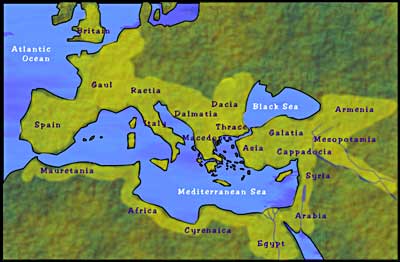
Peter told his readers that there was no authority except from God. In fact, he said that they had been instituted by God. Government was and is a God-ordained institution. A properly run government should provide peace and stability so that the gospel can spread unhindered. And it is interesting to note that the amazing spread of the gospel and the incredibly rapid growth of Christianity in the first and second centuries took place primarily under the age of Roman rule. Rome had established the Pax Romana or Roman Pax RomanaPeace and it lasted from roughly 27 B.C. to 180 A.D. Rome’s territory spread all the way  from Spain to Israel, into Africa and Egypt and even as far as Britain. They brought peace and a certain amount of stability to the world. Their intricate network of roads made travel not only easier, but safer. It was during this time that Paul was able to travel all throughout the Roman world sharing the good news of Jesus Christ. Yes, the Roman government could be highly corrupt. Their presence in any land could be heavy handed and at times, oppressive. They ruled with an iron fist. They taxed their subjects mercilessly. They brought their polytheistic religion wherever they went. And yet, they tended to be surprisingly tolerant of the religious faiths of their subjects.

With all that in mind, the words of Peter take on a whole new degree of significance. He told his readers to be subject to the Roman authorities “for the Lord’s sake.” They were to view their submission to Rome as submission to God. It was a matter of trusting in God’s sovereign will and His ability to use even pagan governments to accomplish His divine plan. The Old Testament is filled with examples of God using Pharaoh in Egypt to provide the people of Israel with protection and provision, and then using that same authority to display His power and supremacy over man-made institutions. God used Nebuchadnezzar to punish disobedient Judah. He used Cyrus, the king of Persia to fund the return of the Jewish exiles to the promised land. He did the same thing with Artaxerxes. The lesson learned from these stories is that God is in control. He is sovereign over all, including governments and political leaders.

We have to approach those in authority with an attitude that they have been placed their by God. That doesn’t mean they are godly. Rome certainly wasn’t. But God has us where we are, living during a specific time frame for a reason. Peter told his readers to “live as people who are free, not using your freedom as a cover-up for evil” (1 Peter 2:16 ESV). They were to “Honor everyone. Love the brotherhood. Fear God. Honor the emperor” (1 Peter 2:17 ESV). Christians should make the best citizens, even though we are actually citizens of another Kingdom. Of all people, we should be the most respectful and obedient, treating those in authority over us as servants of God. If our government is evil or corrupt, we are to trust that God knows and He will deal with them justly and appropriately. If our government provides us with a modicum of peace and tranquility, we are to thank God for it and use our freedom to spread the gospel.

Ultimately, we must recognize the fact that God is our King. Everyone else works for Him and under Him. And one day they will all answer to Him. So when we submit to those in authority over us, we are really submitting to God. When we honor the emperor, we are honoring God as our ultimate, supreme authority.

A One-Track Mind.

This is the reason why I have so often been hindered from coming to you. But now, since I no longer have any room for work in these regions, and since I have longed for many years to come to you, I hope to see you in passing as I go to Spain, and to be helped on my journey there by you, once I have enjoyed your company for a while. At present, however, I am going to Jerusalem bringing aid to the saints. For Macedonia and Achaia have been pleased to make some contribution for the poor among the saints at Jerusalem. For they were pleased to do it, and indeed they owe it to them. For if the Gentiles have come to share in their spiritual blessings, they ought also to be of service to them in material blessings. When therefore I have completed this and have delivered to them what has been collected, I will leave for Spain by way of you.  I know that when I come to you I will come in the fullness of the blessing of Christ. I appeal to you, brothers, by our Lord Jesus Christ and by the love of the Spirit, to strive together with me in your prayers to God on my behalf, that I may be delivered from the unbelievers in Judea, and that my service for Jerusalem may be acceptable to the saints, so that by God’s will I may come to you with joy and be refreshed in your company. May the God of peace be with you all. Amen.  – Romans 15:22-33 ESV

Paul had just said, “I make it my ambition to preach the gospel, not where Christ has already been named, lest I build on someone else’s foundation” (Romans 15:20 ESV). Now he tells them that he hopes to see them, but only in passing as he makes his way to Spain. Paul was a starter, not a builder. Yet his many letters, that comprise most of the New Testament canon, prove that he cared deeply about the ongoing maturity of the body of Christ. He wanted to see believers grow, but more than anything else, he wanted to see the lost come to faith in Christ. So he was always looking for fertile fields in which to sow the seeds of the gospel. Paul took the charge of Jesus seriously: “The harvest is great, but the workers are few. So pray to the Lord who is in charge of the harvest; ask him to send more workers into his fields” (Luke 10:2 NLT). Paul knew that there were those who would do the sowing and those who would reap the harvest, and his job was to plant so that others might come along and water the new seeds of faith so that they would grow into full maturity. That is exactly what he told the Corinthian believers when he heard that they were dividing themselves between those who claimed to be his followers and those who claimed to follow of Apollos.

After all, who is Apollos? Who is Paul? We are only God’s servants through whom you believed the Good News. Each of us did the work the Lord gave us. I planted the seed in your hearts, and Apollos watered it, but it was God who made it grow. It’s not important who does the planting, or who does the watering. What’s important is that God makes the seed grow. The one who plants and the one who waters work together with the same purpose. And both will be rewarded for their own hard work. For we are both God’s workers. And you are God’s field. You are God’s building. – 1 Corinthians 3:5-9 NLT

Paul wasn’t looking for glory or trying to establish a name for himself. He simply wanted to preach the good news of Jesus Christ to as many people in as many places as he possibly could. But he also cared deeply about the discipleship of those who came to faith in Christ. He had a passion for the reputation of the body of Christ and all the congregations he had helped to plant. He was concerned about the unity of the body and the acceptance of his Gentile brothers and sisters in Christ by the church in Jerusalem. He wanted them to be one. When he discovered the division taking place in Corinth, he wrote, “I appeal to you, dear brothers and sisters, by the authority of our Lord Jesus Christ, to live in harmony with each other. Let there be no divisions in the church. Rather, be of one mind, united in thought and purpose” (1 Corinthians 1:10 NLT). Paul wanted to see the body of Christ prove its love by ministering to itself selflessly and lovingly, regardless of location. So he told the believers in Rome that he would try to come to them as soon as he finished his task of taking an offering collected from all the churches to “the poor among the saints in Jerusalem.” He reminded his Gentile readers that since they “have shared in the Jews’ spiritual blessings, they owe it to the Jews to share with them their material blessings” (Romans 15:27 NLT). The Jewish believers in Jerusalem were suffering and Paul wanted to see the Gentile believers play a part in ministering to them. Paul’s goal was unity and impartiality.

Our desire is not that others might be relieved while you are hard pressed, but that there might be equality. At the present time your plenty will supply what they need, so that in turn their plenty will supply what you need. The goal is equality, as it is written: “The one who gathered much did not have too much, and the one who gathered little did not have too little.” – 2 Corinthians 8:13-15 NLT

Paul’s mission was not just to make converts, but to establish a strong and vibrant church, made up of those who understood the grace of God and were willing to extend that grace to others. For Paul, being saved was not the end. He was concerned that those who were saved lived in keeping with their salvation. They were to be new creations, exhibiting the characteristics of Christ, living in submission to the Spirit and expressing the love of God to all those around them. And as verse 31 indicates, he was under constant attack for his unfailing commitment to the cause of Christ. His mission was not an easy one. His ministry was far from trouble-free. He traveled far, suffered much, failed often, but never lost sight of his mission: “to preach the Good News where the name of Christ has never been heard” (Romans 15:20 NLT). 

Welcome One Another.

For I tell you that Christ became a servant to the circumcised to show God’s truthfulness, in order to confirm the promises given to the patriarchs, and in order that the Gentiles might glorify God for his mercy. As it is written, “Therefore I will praise you among the Gentiles, and sing to your name.” And again it is said, “Rejoice, O Gentiles, with his people.” And again, “Praise the Lord, all you Gentiles, and let all the peoples extol him.” And again Isaiah says, “The root of Jesse will come, even he who arises to rule the Gentiles; in him will the Gentiles hope.” May the God of hope fill you with all joy and peace in believing, so that by the power of the Holy Spirit you may abound in hope. – Romans 15:8-13 ESV

“Christ did not please himself,” Paul wrote back in verse three. No, Paul reminds us, “Christ became a servant to the circumcised to show God’s truthfulness, in order to confirm the promises given to the patriarchs, and in order that the Gentiles might glorify God for his mercy” (Romans 15:8-9 ESV). As Paul sums up his admonitions and encouragements for unity between the members of the body of Christ, he uses Christ Himself as the example to follow. While it is true that Jesus came to the Jews, having been born into the line of Judah as a descendant of David, His intent from the very beginning was to make salvation available to Jews and Gentiles.  Jesus was the fulfillment of the promise made by God to Abraham: “and through your offspring all nations on earth will be blessed” (Genesis 28:18 NIV). In his letter to the Galatians, Paul clarifies the meaning of this promise. “Now the promises were made to Abraham and to his offspring. It does not say, ‘And to offsprings,’ referring to many, but referring to one, ‘And to your offspring,’ who is Christ” (Galatians 3:16 ESV). Jesus was the means by which God was going to bless all the nations of the earth, and that includes the Gentiles. “Know then that it is those of faith who are the sons of Abraham. And the Scripture, foreseeing that God would justify the Gentiles by faith, preached the gospel beforehand to Abraham, saying, ‘In you shall all the nations be blessed’” (Galatians 3:7-8 ESV).

God’s intent all along had been to make salvation available to all people groups, not just the Jews. Paul’s missionary journeys to the Gentiles was not God’s plan B. He didn’t come up with an alternative plan when the Jews failed to accept His Son as their Messiah. And Paul makes this perfectly clear by quoting from four Old Testament passages that predicted that the Gentiles would respond to God’s offer of grace and mercy:

For this I will praise you, O Lord, among the nations, and sing praises to your name. – 2 Samuel 22:50 ESV

Rejoice, O nations, with His people… – Deuteronomy 32:43 NASB

Praise the Lord, all nations! Extol him, all peoples! – Psalm 117:1 ESV

In that day the Root of Jesse will stand as a banner for the peoples; the nations will rally to him, and his resting place will be glorious. – Isaiah 11:10 NIV

The Hebrew word used in these passages for “nations” is gowy and it usually refers to non-Hebrew people or Gentiles. That is why Paul replaces it with the Greek word, ethnos, which refers to pagans, Gentiles or the people of foreign nations who did not worship the one true God.  God’s promise to Abraham that He would bless all the nations (Gentiles) of the earth through Abraham’s offspring was fulfilled in Jesus. He became the sole sacrifice for the sins of men, Jews and Gentiles alike. Jesus told Nicodemus, the Pharisee, “For God so loved the world, that he gave his only Son, that whoever believes in him should not perish but have eternal life. For God did not send his Son into the world to condemn the world, but in order that the world might be saved through him” (John 3:16-17 ESV). The apostle John reminds us, “See how very much our Father loves us, for he calls us his children, and that is what we are!” (1 John 3:1 NLT). Those of us who would be considered Gentiles have been extended the mercy and grace of God made possible through the sacrificial death of Jesus Christ. And Paul tells us, “therefore welcome one another as Christ has welcomed you, for the glory of God” (Romans 15:7 ESV). We have been included. We have been welcomed into God’s family. Not because we deserved it. Not because we had earned it. In fact, Paul makes the truth of our amazing status quite clear: “You were his enemies, separated from him by your evil thoughts and actions. Yet now he has reconciled you to himself through the death of Christ in his physical body. As a result, he has brought you into his own presence, and you are holy and blameless as you stand before him without a single fault” (Colossians 1:21-22 NLT).  And the apostle Peter confirms Paul’s words:  “But you are a chosen race, a royal priesthood, a holy nation, a people for his own possession, that you may proclaim the excellencies of him who called you out of darkness into his marvelous light. Once you were not a people, but now you are God’s people; once you had not received mercy, but now you have received mercy” (1 Peter 2:9-10 ESV).

So we are to welcome or receive one another in the same way that we have been welcomed by Christ – with open arms, no pre-conditions, no requirements based on good behavior, and while we are still sinners. Our unity doesn’t require unanimity.  We don’t always have to agree. We won’t always see eye to eye. We will have our differences, but we will always share our common unity in Christ. “For everyone has sinned; we all fall short of God’s glorious standard. Yet God, with undeserved kindness, declares that we are righteous” (Romans 3:23-24 NLT).