Drinking the Kool-Aid of Self-Confidence

17 But if you call yourself a Jew and rely on the law and boast in God 18 and know his will and approve what is excellent, because you are instructed from the law; 19 and if you are sure that you yourself are a guide to the blind, a light to those who are in darkness, 20 an instructor of the foolish, a teacher of children, having in the law the embodiment of knowledge and truth— 21 you then who teach others, do you not teach yourself? While you preach against stealing, do you steal? 22 You who say that one must not commit adultery, do you commit adultery? You who abhor idols, do you rob temples? 23 You who boast in the law dishonor God by breaking the law. 24 For, as it is written, “The name of God is blasphemed among the Gentiles because of you.” – Romans 2:17-24 ESV

As a Jew, Paul had no qualms addressing the faults and failures of his Jewish brothers and sisters. As a former Pharisee, he a passionate student of the Hebrew Scriptures. On one occasion, having been arrested in Jerusalem and accused of speaking out against the Jewish people and the Temple, Paul addressed the crowd and said, “I am a Jew, born in Tarsus, a city in Cilicia, and I was brought up and educated here in Jerusalem under Gamaliel. As his student, I was carefully trained in our Jewish laws and customs. I became very zealous to honor God in everything I did, just like all of you today” (Acts 22:3 NLT).

In his letter to the believers in Philippi, Paul gave his bona fides as a card-carrying Hebrew by stating, “I was circumcised when I was eight days old. I am a pure-blooded citizen of Israel and a member of the tribe of Benjamin — a real Hebrew if there ever was one! I was a member of the Pharisees, who demand the strictest obedience to the Jewish law. I was so zealous that I harshly persecuted the church. And as for righteousness, I obeyed the law without fault” (Philippians 3:5-6 NLT).

So Paul knew what he was talking about when he addressed the attitudes and spiritual status of the Jewish people. Which is why he was able to say, “[you] rely on the law and boast in God and know his will and approve what is excellent, because you are instructed from the law” (Romans 2:17-18 ESV).

The Jews had a certain degree of pride in their hearts when it came to their special designation as God’s chosen people. But this pride led to an arrogance and boastful certainty that they were above the fray, free from judgment, and immune to God’s wrath. But Paul has already warned them that, “according to my gospel, God judges the secrets of men by Christ Jesus” (Romans 2:16 ESV)

Yes, they were God’s chosen people. They enjoyed a unique relationship with Him, had been given His law, and had been provided with the sacrificial system. They could even brag about having the Temple, where God’s presence dwelt. But Paul makes it clear that all of that was not enough.

They relied on God, boasted about their relationship with Him, knew His will as revealed in the law, and even taught others to obey it. They saw themselves as guides to the blind, lights to those in darkness, instructors of the foolish, and teachers of children. But the problem was that they were hypocrites who failed to live up to their own standards. They demanded strict adherence to the law they themselves were incapable of keeping.

In the Septuagint, the Greek translation of the Hebrew Scriptures, Isaiah 52:5 reads, “On account of you my name is continually blasphemed among the Gentiles.” Over the centuries, the actions of the Jews revealed their blatant disregard for God and His law. They were guilty of rebellion and unfaithfulness to His will and ways. They boasted in the law, but dishonored God by regularly violating it. So, as Paul said, they were without excuse. Their extensive knowledge of God failed to produce obedience. Centuries earlier, God had accused the people of Israel of their blatant hypocrisy.

“These people say they are mine. They honor me with their lips, but their hearts are far from me. And their worship of me is nothing but man-made rules learned by rote.” – Isaiah 29:13 NLT

Even Jesus quoted this same passage when addressing the Pharisees of His day.

So for the sake of your tradition you have made void the word of God. You hypocrites! Well did Isaiah prophesy of you, when he said:This people honors me with their lips, but their heart is far from me; in vain do they worship me, teaching as doctrines the commandments of men.’” – Matthew 15:6-9 ESV

Knowledge can be a wonderful thing, and the knowledge of God can be life-transformative. Knowing God’s Word can be beneficial to life, but there is a huge difference between knowing and doing. It was James who wrote, “But don’t just listen to God’s word. You must do what it says. Otherwise, you are only fooling yourselves” (James 1:25 NLT).

Knowing the law of God is useless if you fail to keep it. Having an encyclopedic understanding of God is worthless if you choose to ignore His will. The Jews were putting their hope and trust in their pedigree and counting on their ethnic identity as Jews. But Paul wanted them to know that their knowledge of God and their awareness of His law only made them more responsible and culpable. Despite their pedigree as God’s chosen people, they stood before Him guilty of disobedience and spiritual infidelity. They were going to have to relinquish their reliance on their lineage and place their trust in Christ.

During his ministry, John the Baptist confronted the Jewish religious leaders who showed up at the Jordan River requesting that he baptize them, and His response was anything but tactful.

when he saw many of the Pharisees and Sadducees coming to his baptism, he said to them, “You brood of vipers! Who warned you to flee from the wrath to come? Bear fruit in keeping with repentance. And do not presume to say to yourselves, ‘We have Abraham as our father,’ for I tell you, God is able from these stones to raise up children for Abraham.” – Matthew 3:7-9 ESV

Their confidence in their heritage had produced in them a false sense of superiority and a misguided confidence in their relationship with God. But just a few verses later, Paul dismantles their over-inflated sense of self-worth and spiritual superiority.

For you are not a true Jew just because you were born of Jewish parents or because you have gone through the ceremony of circumcision. No, a true Jew is one whose heart is right with God. And true circumcision is not merely obeying the letter of the law; rather, it is a change of heart produced by the Spirit. And a person with a changed heart seeks praise from God, not from people. – Romans 2:28-29 NLT

In his letter to the Philippians, Paul followed up his impressive curriculum vitae with a stark assessment of his former confidence in his Hebrew heritage.

“I once thought these things were valuable, but now I consider them worthless because of what Christ has done. Yes, everything else is worthless when compared with the infinite value of knowing Christ Jesus my Lord. For his sake I have discarded everything else, counting it all as garbage, so that I could gain Christ.” – Philippians 3:7-8 NLT

There is only one thing worth knowing, and that is Jesus Christ as your Savior. It is an awareness of our own sin and our desperate need for a Savior that really counts. Every other form of knowledge is useless and worthless.

Father, in a way, I can sometimes place far too much emphasis on who I am and what I have accomplished. I can look back on my life and see all that I have done for You and begin to think that I have somehow earned my right to be called Your Son. But when pride and self-confidence cloud my thinking, I lose sight of the fact that You adopted me into Your family. I was chosen by You, but not because I deserved it. You made me Your child, despite my sin and rebellion. You graciously gave me a seat at Your table and adorned me with righteousness, purely out of love, and not because of merit. Paul was trying to get his fellow Jews to see that their lineage and heritage meant nothing is they failed to obey God. Their on-again-off-again adherence to Your law was never going to earn Your favor or guarantee their future relationship with You. They were sinners in need of a Savior, but were having a difficult time acknowledging that fact. Enamored with their status as Your chosen people, they failed to understand that, having been set apart by You, their behavior was to set them apart from all the other nations. They were to live distinctively different lives. But confident in their status as Your treasured possession, they compromised their convictions and fell from grace. How easy it is to lose sight of our dependence upon You. Never let me drink the Kool-Aid of self-confidence and forget that “everything else is worthless when compared with the infinite value of knowing Christ Jesus my Lord.” Amen

English Standard Version (ESV) The Holy Bible, English Standard Version. ESV® Permanent Text Edition® (2016). Copyright © 2001 by Crossway Bibles, a publishing ministry of Good News Publishers.

New Living Translation (NLT) Holy Bible, New Living Translation, copyright © 1996, 2004, 2015 by Tyndale House Foundation. Used by permission of Tyndale House Publishers Inc., Carol Stream, Illinois 60188. All rights reserved.22

The End is Near

1 In the third year of the reign of King Belshazzar a vision appeared to me, Daniel, after that which appeared to me at the first. And I saw in the vision; and when I saw, I was in Susa the citadel, which is in the province of Elam. And I saw in the vision, and I was at the Ulai canal. I raised my eyes and saw, and behold, a ram standing on the bank of the canal. It had two horns, and both horns were high, but one was higher than the other, and the higher one came up last. I saw the ram charging westward and northward and southward. No beast could stand before him, and there was no one who could rescue from his power. He did as he pleased and became great.

As I was considering, behold, a male goat came from the west across the face of the whole earth, without touching the ground. And the goat had a conspicuous horn between his eyes. He came to the ram with the two horns, which I had seen standing on the bank of the canal, and he ran at him in his powerful wrath. I saw him come close to the ram, and he was enraged against him and struck the ram and broke his two horns. And the ram had no power to stand before him, but he cast him down to the ground and trampled on him. And there was no one who could rescue the ram from his power. Then the goat became exceedingly great, but when he was strong, the great horn was broken, and instead of it there came up four conspicuous horns toward the four winds of heaven.

Out of one of them came a little horn, which grew exceedingly great toward the south, toward the east, and toward the glorious land. 10 It grew great, even to the host of heaven. And some of the host and some of the stars it threw down to the ground and trampled on them. 11 It became great, even as great as the Prince of the host. And the regular burnt offering was taken away from him, and the place of his sanctuary was overthrown. 12 And a host will be given over to it together with the regular burnt offering because of transgression, and it will throw truth to the ground, and it will act and prosper. 13 Then I heard a holy one speaking, and another holy one said to the one who spoke, “For how long is the vision concerning the regular burnt offering, the transgression that makes desolate, and the giving over of the sanctuary and host to be trampled underfoot?” 14 And he said to me, “For 2,300 evenings and mornings. Then the sanctuary shall be restored to its rightful state.”

15 When I, Daniel, had seen the vision, I sought to understand it. And behold, there stood before me one having the appearance of a man. 16 And I heard a man’s voice between the banks of the Ulai, and it called, “Gabriel, make this man understand the vision.” 17 So he came near where I stood. And when he came, I was frightened and fell on my face. But he said to me, “Understand, O son of man, that the vision is for the time of the end.”

18 And when he had spoken to me, I fell into a deep sleep with my face to the ground. But he touched me and made me stand up. 19 He said, “Behold, I will make known to you what shall be at the latter end of the indignation, for it refers to the appointed time of the end. 20 As for the ram that you saw with the two horns, these are the kings of Media and Persia. 21 And the goat[d] is the king of Greece. And the great horn between his eyes is the first king. 22 As for the horn that was broken, in place of which four others arose, four kingdoms shall arise from his[e] nation, but not with his power. 23 And at the latter end of their kingdom, when the transgressors have reached their limit, a king of bold face, one who understands riddles, shall arise. 24 His power shall be great—but not by his own power; and he shall cause fearful destruction and shall succeed in what he does, and destroy mighty men and the people who are the saints. 25 By his cunning he shall make deceit prosper under his hand, and in his own mind he shall become great. Without warning he shall destroy many. And he shall even rise up against the Prince of princes, and he shall be broken—but by no human hand. 26 The vision of the evenings and the mornings that has been told is true, but seal up the vision, for it refers to many days from now.”

27 And I, Daniel, was overcome and lay sick for some days. Then I rose and went about the king’s business, but I was appalled by the vision and did not understand it. – Daniel 8:1-27 ESV

It seems that Daniel not only interprets dreams, he has them, and the dream he has in chapter seven was a doozy. It was full of bizarre beasts, big horns and little ones, violent wars, and other disturbing imagery. His dream included signs of the not-so-distant future and a time that has yet to happen even in our day. Ultimately, his dream was about the end times; he was given a glimpse of the time of the Tribulation and the coming of the Antichrist. But more importantly, Daniel was given a view of the coming of the Son of Man; the return of Christ to reign over His Kingdom the earth. The term, “Son of Man” was Jesus’ favorite designation for Himself. He preferred it over the more common term “Messiah,” because to most Jews that simply indicated a human deliverer sent by God. By referring to Himself as the Son of Man, He claimed the role of the one predicted in Daniel’s dream. He was the coming God-man. He would one day be “given authority, honor and sovereignty over all the nations of the world, so that people of every race and nation and language would obey him” (Daniel 7:14 NLT). His coming kingdom would be an earthly, not just spiritual, kingdom. And it would last forever.

Of all the beings revealed in this dream of Daniels, the most significant one is that of the Son of Man. He is not described in detail. We do not get a good idea of what He looks like. The other beasts are described in frightening detail. But with the Son of Man, the emphasis is more on what He will do than what He looks like. Jesus Christ, the Son of Man, will destroy the Antichrist and the nations he gathers to rebel against God Almighty. Christ will use His God-given authority to destroy the enemies of God and usher in a new age of perfect peace.

“Then I saw heaven opened, and a white horse was standing there. Its rider was named Faithful and True, for he judges fairly and wages a righteous war. His eyes were like flames of fire, and on his head were many crowns. A name was written on him that no one understood except himself. He wore a robe dipped in blood, and his title was the Word of God. The armies of heaven, dressed in the finest of pure white linen, followed him on white horses. From his mouth came a sharp sword to strike down the nations. He will rule them with an iron rod. He will release the fierce wrath of God, the Almighty, like juice flowing from a winepress. On his robe at his thigh was written this title: King of all kings and Lord of all lords.” – Revelation 19:11-16 NLT

We may not fully understand who the other beasts represent, but we do know that the Son of Man is Jesus Christ, the Son of God. He is going to return to Earth one day to finish His work and establish His Kingdom once and for all. His rule will be eternal – it will never end. And unlike the nations represented in Daniel’s dream, the Son of Man’s Kingdom will be everlasting.

As chapter seven closes and chapter eight begins, there is a change in the narrative and its emphasis. First, the text converts from Aramaic to Hebrew and the emphasis shifts from “the times of the Gentiles” to the future fate of the Israelites, the chosen people of God.

Daniel and his fellow exiles lived in a spiritually tumultuous time. The land of Israel had been raped and pillaged and its people taken captive to foreign lands. Daniel was one of tens of thousands of individuals who had been living in Babylon for decades. Their homeland was miles away. Their Temple, the dwelling place of their God, lay in shambles. It was a period of spiritual darkness filled with questions about the future. What was God going to do with His people? Would He keep His covenant promise and restore them to the land?

In chapter seven, God gave Daniel a look into the distant future, at the end of the age. He let Daniel know what would happen long after Daniel was gone. But that does not answer a lot of Daniel’s more immediate concerns. Then he has a second vision recorded in chapter eight.

In this vision, Daniel was given a closer look at future events. There are similarities and parallels to his first vision but the focus seems to be on the period between when Daniel lived and the second coming of Christ. Daniel is living within the kingdom of Neo-Babylonia. The glory days of this once-powerful empire are quickly coming to an end. This dream occurs two years after his earlier vision recorded in chapter seven.

In this vision, he is transported to Susa, the capital of the Persian Empire, located about 200 miles east of Babylon. In his vision he sees a goat and a ram. The ram was the guardian spirit of the Persian Empire. The goat represents Greece, and its single, prominent horn represents Alexander the Great, who would sweep into that area of the world and wipe out the Medo-Persian Empire. Alexander the Great would die in his thirties and his kingdom would divide into four parts led by four different generals. Out of one of these would come Antiochus IV (Epiphanes), who would wage a relentless war on the people of Israel, overthrowing the High Priest, looting the Temple, and replacing the worship of God with a form of Greek worship. The daily sacrifices would come to a halt after he desecrates the Temple and, in his vision, Daniel is told that this would go on for seven years.

Each of these prophetic promises came about just as Daniel saw them in his vision. This speaks of God’s omniscience, His all-knowing nature. He doesn’t just helplessly watch the future unfold like the rest of us; He knows it before it happens. In fact, He orchestrates events so that they happen just as He said they would. This is why God was able to reveal to Daniel in amazing detail events that had yet to take place. And these events were foreshadowings of what Daniel had seen in chapter eight.

What is amazing is the detail with which these events occurred. In December of 168 B.C., Antiochus returned from a defeat at the hands of the Romans and, in frustration, sent 20,000 of his troops to seize Jerusalem on the Sabbath. Having overtaken the Temple, he erected an idol of Zeus and desecrated the altar of the Temple by sacrificing swine on it. This idol became known to the Jews as “the abomination of desolation.” All of this was a precursor to events that will take place in the end times. At that time, the Antichrist will erect an image of himself and command that everyone, including Jews, worship it. As bad as that time will be, it will also serve as a kind of alarm clock, telling mankind that the second coming of Christ is imminent.

Now, dear brothers and sisters, let us clarify some things about the coming of our Lord Jesus Christ and how we will be gathered to meet him. Don’t be so easily shaken or alarmed by those who say that the day of the Lord has already begun. Don’t believe them, even if they claim to have had a spiritual vision, a revelation, or a letter supposedly from us. Don’t be fooled by what they say. For that day will not come until there is a great rebellion against God and the man of lawlessness is revealed—the one who brings destruction. He will exalt himself and defy everything that people call god and every object of worship. He will even sit in the temple of God, claiming that he himself is God. – 2 Thessalonians 2:1-4 NLT

But those events will be the preface for one even greater and more significant one: the second coming of Christ. He will return just as He promised, and just as the events of Daniel’s vision took place with painstaking accuracy, so will the events associated with the end times. The Tribulation will come. The Antichrist will rise to power. And Jesus Christ will come again, do battle with the enemies of God, and establish His Kingdom on Earth..

English Standard Version (ESV) The Holy Bible, English Standard Version. ESV® Permanent Text Edition® (2016). Copyright © 2001 by Crossway Bibles, a publishing ministry of Good News Publishers.

New Living Translation (NLT) Holy Bible, New Living Translation, copyright © 1996, 2004, 2015 by Tyndale House Foundation. Used by permission of Tyndale House Publishers Inc., Carol Stream, Illinois 60188. All rights reserved.

New English Translation (NET)NET Bible® copyright ©1996-2017 by Biblical Studies Press, L.L.C. http://netbible.com All rights reserved.

A Case of Contrasts

22 At that time the Feast of Dedication took place at Jerusalem. It was winter, 23 and Jesus was walking in the temple, in the colonnade of Solomon. 24 So the Jews gathered around him and said to him, “How long will you keep us in suspense? If you are the Christ, tell us plainly.” 25 Jesus answered them, “I told you, and you do not believe. The works that I do in my Father’s name bear witness about me, 26 but you do not believe because you are not among my sheep. 27 My sheep hear my voice, and I know them, and they follow me. 28 I give them eternal life, and they will never perish, and no one will snatch them out of my hand. 29 My Father, who has given them to me, is greater than all, and no one is able to snatch them out of the Father’s hand. 30 I and the Father are one.”

31 The Jews picked up stones again to stone him. John 10:22-31 ESV

Sometime after His lesson on the Good Shepherd, during the annual celebration of the Feast of Dedication, Jesus returned to the temple complex. But this time He made His way to Solomon’s Colonnade, an area located on the east side of the Court of the Gentiles. This roofed, but open-sided “porch” was reserved for the Gentiles, who were prohibited from entering the temple proper.

Jesus’ decision to mingle with the Gentiles is significant. Earlier, when He had described Himself to the Jews as the Good Shepherd, He had told them, “I have other sheep that are not of this fold. I must bring them also, and they will listen to my voice. So there will be one flock, one shepherd” (John 10:16 ESV). Jesus was informing them that His offer of eternal life was not reserved for the Jews alone. There were those outside the flock of Israel who would hear His voice and willingly received the gift of salvation He had come to make available. This was the same message He had conveyed to the Samaritan woman.

“the hour is coming when neither on this mountain nor in Jerusalem will you worship the Father. You worship what you do not know; we worship what we know, for salvation is from the Jews. But the hour is coming, and is now here, when the true worshipers will worship the Father in spirit and truth, for the Father is seeking such people to worship him.” – John 4:21-23 ESV

The Samaritan woman, a non-Jew, but a believer in Yahweh, had raised the issue of whether the Samaritans or the Jews worshiped God in the right place. The Samaritans worshiped Him at Mount Gerizim, while the Jews viewed the temple in Jerusalem as the proper place of worship. But Jesus informed her that this argument was about to become irrelevant. With His coming, the means and the method of worship would change. It would have little to do with the right place, and everything to do with worshiping God in the right way. And He was that way.

“I am the way, and the truth, and the life. No one comes to the Father except through me.” – John 14:6 ESV

Whether you were a Jew or a Samaritan, the only way you could truly worship God would be through faith in His Son. And Jesus’ offer of salvation would be available to all, regardless of their ethnic or religious background.

So, in Solomon’s Colonnade, surrounded by Gentiles, Jesus finds Himself accosted by the Jewish leaders once again. They somewhat sarcastically ask Him: “How long will you keep us in suspense? If you are the Christ, tell us plainly” (John 10:24 ESV). They want to hear Jesus openly declare Himself to be the Messiah. But they chose an interesting place to have Him do it. They are standing within the Court of the Gentiles and it has not escaped them that Jesus has chosen to associate Himself with non-Jews. Perhaps they were goading Him to announce Himself as the Jewish Messiah in this particular setting because it would make Him look like a fool.

It’s impossible for us to know the motivation behind their actions, but it seems clear that Jesus was fully aware of what they were up to. He responds to their question by returning to His discussion of the sheep and the shepherd.

“I told you, and you do not believe. The works that I do in my Father’s name bear witness about me, but you do not believe because you are not among my sheep.” – John 10:25-26 ESV

Jesus had not hidden anything from them. He had repeatedly declared Himself to be the Son of God, sent from heaven to offer the gift of eternal life to all who would believe in Him. But these men had refused to believe. Why? Because they were not among His sheep. They were Jews but they were not included in His flock. When He spoke, they did not recognize His voice.

“My sheep hear my voice, and I know them, and they follow me. I give them eternal life, and they will never perish, and no one will snatch them out of my hand.” – John 10:27-28 ESV

Again, don’t miss the context. Jesus has willingly placed Himself in the company of Gentiles, on the one day of the year when the Jews celebrated the Feast of Dedication or what is now known as Hanukkah. This was a feast that was begun in the intertestamental period in order to celebrate the Maccabean revolt that drove the Syrians (the Gentiles) out of Israel. The temple had to be cleansed and rededicated because Antiochus Epiphanes, the Syrian King, had desecrated it by sacrificing swine on the temple altar as a tribute to the god Zeus. This pagan king further humiliated the Jews by forcing them to offer sacrifices to the Syrian gods and to eat the flesh of pigs. It was a spiritual low point for the people of Israel, and the Jewish historian Josephus describes the joy the people experienced by celebrating their release from Syrian oppression.

And from that time to the present we observe this festival, which we call the festival of Lights, giving this name to it, I think, from the fact that the right to worship appeared to us at a time when we hardly dared hope for it. – Josephus, Jewish Antiquities

At the festival of Lights, the light of the world stood among the Gentiles and declared Himself to be the Jewish Messiah. What an amazing moment, filled with seeming contradictions and contrasts. On the day when the Jews celebrated their deliverance from pagan oppression, Jesus, the Jewish Messiah, stood among the Gentiles and offered the gift of eternal life – freedom from the condemnation of sin and death. He stood among the unclean, offering Himself as a way for all men, both Jew and Gentile, to be made pure before God. And Jesus described this gift of eternal life as irrevocable.

“My Father, who has given them to me, is greater than all, and no one is able to snatch them out of the Father’s hand. I and the Father are one.” – John 10:29-30 ESV

Those who placed their faith in Him would never experience a loss of their salvation. Their gift of freedom from sin could never be revoked. Their promise of life eternal could never be lost. But for the Jews, their temple would be desecrated and destroyed yet again. In 70 A.D., the Romans would lay siege to Jerusalem and completely demolish the temple, burning it to the ground.

Jesus would later foretell of this coming day.

As Jesus was leaving the Temple grounds, his disciples pointed out to him the various Temple buildings. But he responded, “Do you see all these buildings? I tell you the truth, they will be completely demolished. Not one stone will be left on top of another!” – Matthew 24:1-2 NLT

The Jews put a high priority on the temple. It was there that they offered sacrifices to God. It was in the Holy of Holies that the glory of God was said to dwell above the Mercy Seat on top of the Ark of the Covenant. The temple was their key to their continued access to God. It was through the sacrificial system, which was relegated to the temple grounds, that they could receive atonement for their sins. But the day was coming when the temple would be destroyed and, with it, the means of offering sacrifices for sin and receiving atonement from God.

And yet, here was the Messiah, the Son of God, offering Himself as the sole source of salvation from sin and death. It was as He had told Nicodemus.

Whoever believes in him is not condemned, but whoever does not believe is condemned already, because he has not believed in the name of the only Son of God. – John 3:18 ESV

And the reaction of the Jewish leaders speaks volumes. John says they “picked up stones again to stone him” (John 10:31 ESV). He was not their Christ or Messiah. They refused to believe His claim to be the Son of God. He was the Good Shepherd, but they were not His sheep. And they stood condemned. The Light of the world had come, but they “loved the darkness rather than the light because their works were evil” (John 3:19 ESV). During the celebration of the Festival of Lights, these men remained trapped in the darkness of their own sin.

English Standard Version (ESV) The Holy Bible, English Standard Version. ESV® Permanent Text Edition® (2016). Copyright © 2001 by Crossway Bibles, a publishing ministry of Good News Publishers.

New Living Translation (NLT) Holy Bible, New Living Translation, copyright © 1996, 2004, 2015 by Tyndale House Foundation. Used by permission of Tyndale House Publishers Inc., Carol Stream, Illinois 60188. All rights reserved.

The Message (MSG)Copyright © 1993, 1994, 1995, 1996, 2000, 2001, 2002 by Eugene H. Peterson

Children of the Devil

42 Jesus said to them, “If God were your Father, you would love me, for I came from God and I am here. I came not of my own accord, but he sent me. 43 Why do you not understand what I say? It is because you cannot bear to hear my word. 44 You are of your father the devil, and your will is to do your father’s desires. He was a murderer from the beginning, and does not stand in the truth, because there is no truth in him. When he lies, he speaks out of his own character, for he is a liar and the father of lies. 45 But because I tell the truth, you do not believe me. 46 Which one of you convicts me of sin? If I tell the truth, why do you not believe me? 47 Whoever is of God hears the words of God. The reason why you do not hear them is that you are not of God.” 

48 The Jews answered him, “Are we not right in saying that you are a Samaritan and have a demon?” 49 Jesus answered, “I do not have a demon, but I honor my Father, and you dishonor me. 50 Yet I do not seek my own glory; there is One who seeks it, and he is the judge.” John 8:42-50 ESV

Jesus has proclaimed Himself to be “the light of the world” (John 8:12) and, as we see in this section of John’s Gospel, His very presence is exposing the darkness around Him. His words have the same impact as a bright light being turned on in a darkened room, revealing what has always been present but hidden from view. The true nature of His critics is being put on display for everyone to see. And Jesus, functioning as the bright light of God’s truth, is contrasting His claim to godly Sonship with theirs. He has repeatedly professed to be the Son of God. He has boldly proclaimed God to be His Father. And now, He is blaming the Jewish leader’s hatred for Him on the fact that God is not their Father.

“If God were your Father, you would love me, because I have come to you from God. I am not here on my own, but he sent me. Why can’t you understand what I am saying? It’s because you can’t even hear me!” – John 8:42-43 NLT

It seems fairly obvious that Jesus wasn’t out to win over His critics. He wasn’t using persuasive words and flattering rhetoric in the hopes of defusing their anger and bringing them over to His side. The Light of the World is exposing the darkness of their hearts and revealing the true nature of their problem. They lack a relationship with God. And their unwillingness to accept Jesus as the Son of God is because they don’t know the one who sent Him.

This entire conversation has been focused on the topic of sonship. Back in verse 16, John records Jesus’ claim to have been sent by the Father. To this, the Jews asked, “Where is your father?” And Jesus responded, “Since you don’t know who I am, you don’t know who my Father is. If you knew me, you would also know my Father” (John 8:19 NLT).

Jesus continued to proclaim His divine pedigree and to defend His authority to speak on behalf of God.

For I say only what I have heard from the one who sent me, and he is completely truthful.” – John 8:26 NLT

But John made it clear that the Jews “still didn’t understand that he was talking about his Father” (John 8:27 NLT). Now, Jesus makes the bold accusation that His critics don’t know the Son because they don’t know the Father. And, as if that was not harsh enough, Jesus adds another politically incorrect point to His argument.

“For you are the children of your father the devil, and you love to do the evil things he does. He was a murderer from the beginning. He has always hated the truth, because there is no truth in him. When he lies, it is consistent with his character; for he is a liar and the father of lies.” – John 8:44 NLT

One can only imagine the look on the disciples’ faces as they listened to what Jesus said. They would have been shocked by the divisive nature of His words and questioned the wisdom of making such an offensive statement to the religious leaders of Israel. What was He thinking? How could He possibly hope to win over His enemies if He was going to publicly humiliate them?

But Jesus wasn’t out to win friends and influence enemies. He was only interested in exposing lies and revealing the truth. With this bold accusation, Jesus clearly and succinctly described the nature of mankind’s dilemma. The entire world was under the influence and power of the enemy. Even the Jews, the chosen people of God, were guilty of living in rebellion to God and in league with Satan. While the people of Israel could claim to be the descendants of Abraham and the children of God, their behavior revealed a different reality. Their actions toward Jesus reflected a disregard for the truth as revealed in God’s Word. The prophets had declared the coming of the Messiah but, when He showed up, the people had rejected Him.

Jesus describes Satan as a murderer and a liar, who stood opposed to the truth of God. There was a source for the intense hatred of Jesus that the religious leaders harbored in their hearts. There was a reason they could not bring themselves to accept the truth of what He said. And it was Satan himself.

Jesus came to bring life, but Satan had a long track record of destroying life. In fact, Jesus will later state that “The thief comes only to steal and kill and destroy. I came that they may have life and have it abundantly” (John 10:10 ESV). And because Satan’s only desire is to steal, kill, and destroy, his “children” will follow his example, eventually demanding the death of the Son of God. Their shouts of “crucify Him, crucify Him!” will echo through the streets of Jerusalem as they demand the extinguishing of the Light of the World.

Because Satan is the father of lies, his children inherit his love for deception and falsehood. Their ears are tuned to hear and accept lies rather than the truth, which is why the words of Jesus make no sense to them.  It is the true nature of their paternity that explains their glaring obstinancy. And it led Jesus to say of them, “when I tell the truth, you just naturally don’t believe me!” (John 8:45 NLT).

Their actions are a reflection of their paternity. Jesus is saying that they behave just like their father, Satan. Like him, they prefer death to life, darkness to light, and lies to truth. Jesus came to shine the light of God’s glory into the darkness of the world, “but people loved the darkness more than the light, for their actions were evil” (John 3:19 NLT). Jesus came to give life to the spiritually dead, but many would choose to remain in slavery to sin rather than accept the freedom offered by the Son of God. Jesus proclaimed Himself to be the way, the truth, and the life – the only means of access to the Father, but the majority of His listeners would reject His offer and listen to the lies of the enemy.

John opened up his Gospel with the radical pronouncement regarding the invasion of the darkness of this world by the light of life.

The one who is the true light, who gives light to everyone, was coming into the world.

He came into the very world he created, but the world didn’t recognize him. He came to his own people, and even they rejected him. But to all who believed him and accepted him, he gave the right to become children of God. They are reborn—not with a physical birth resulting from human passion or plan, but a birth that comes from God. – John 1:9-13 NLT

Jesus came to offer life to the spiritually dead, to illuminate the darkness of a sin-cloaked world, and to declare the truth of God’s grace and mercy that would be made available through His own death and resurrection. But, as John makes painfully clear, the Jews who heard Jesus speak that day in the temple treasury couldn’t accept what He had to say. Rather than embracing the truth, walking into the light, and rejoicing in His offer of life, the Jews angrily proclaimed, “You Samaritan devil! Didn’t we say all along that you were possessed by a demon?” (John 8:48 NLT).

They declared “the truth” to be a liar. They accused the holy one, sent from God, to be a half-breed and an outcast from the family of Israel. And they labeled Jesus, who was filled with the glory of God, to be possessed of a demon. But Jesus was willing to leave the results up to God. He would be the final judge as to who was right. Jesus didn’t need their acceptance or require that they agree with Him. He simply wanted to accomplish His Father’s will by faithfully completing the assignment He had been given. Jesus would continue to be the light, the life, and the truth – all the way to the end. And all to the glory of God the Father.

English Standard Version (ESV) The Holy Bible, English Standard Version. ESV® Permanent Text Edition® (2016). Copyright © 2001 by Crossway Bibles, a publishing ministry of Good News Publishers.

New Living Translation (NLT)
Holy Bible, New Living Translation, copyright © 1996, 2004, 2015 by Tyndale House Foundation. Used by permission of Tyndale House Publishers Inc., Carol Stream, Illinois 60188. All rights reserved.

The Message (MSG)Copyright © 1993, 1994, 1995, 1996, 2000, 2001, 2002 by Eugene H. Peterson

The Holy One of God

67 So Jesus said to the twelve, “Do you want to go away as well?” 68 Simon Peter answered him, “Lord, to whom shall we go? You have the words of eternal life, 69 and we have believed, and have come to know, that you are the Holy One of God.” 70 Jesus answered them, “Did I not choose you, the twelve? And yet one of you is a devil.” 71 He spoke of Judas the son of Simon Iscariot, for he, one of the twelve, was going to betray him. John 6:60-66 ESV

Jesus’ discourse in the synagogue at Capernaum had left His listeners confused, disturbed, and even angry. And John indicates that when Jesus had finished “many of his disciples turned back and no longer walked with him” (John 6:59 ESV). This comment by John regarding Jesus’ disciples is not a reference to the 12 men Jesus had chosen to follow Him. This was how John differentiated between the people who followed Jesus because of His miracles and “the Jews” who refused to believe that Jesus was anyone special.

The first group believed Jesus had supernatural powers, just as the Old Testament prophets had. Which is why some thought he might be a prophet sent from God. Others strongly considered the possibility that He might be the long-awaited Messiah. But none of them would have believed that He was God in human flesh. Yet, throughout His brief, but impactful, speech in the synagogue, Jesus had repeatedly claimed to have been sent to earth by God, His Father.

“For I have come down from heaven, not to do my own will but the will of him who sent me.” – John 6:38 ESV

While Jesus’ invitation to eat His flesh and drink His blood had left the people scratching their heads in confusion, it was His claim to have God as His Father that turned many of them from followers into scoffers.

“As the living Father sent me, and I live because of the Father, so whoever feeds on me, he also will live because of me.” – John 6:57 ESV

He was boldly claiming to be divine, having been sent by God, and in possession of the key to eternal life. This was too much for some of His followers to handle. So, they walked away. But none of this surprised Him. Before they made their decision to leave, Jesus informed them that He already knew their state of unbelief.

“But there are some of you who do not believe.” – John 6:64 ESV

And John adds the note: “For Jesus knew from the beginning who those were who did not believe, and who it was who would betray him” (John 6:64 ESV). Jesus knew who His true disciples were. And as John indicates, Jesus even knew that there was one among the 12 disciples who would prove to be a betrayer and not a believer.

Anyone could follow Jesus, but only those who were called by God and empowered by the Spirit of God would see Jesus for who He truly was. That is why Jesus had said, “The Spirit alone gives eternal life. Human effort accomplishes nothing. And the very words I have spoken to you are spirit and life” (John 6:63 ESV). Without the regenerating work of the Spirit, no one could understand and accept the words coming from the lips of Jesus.

Jesus had come to offer Himself as the bread of life, destined to provide spiritual nourishment to those with a hunger for righteousness. He came to pour out His blood so that those who thirsted for righteousness might be satisfied. Many in the crowd that day had come to see a miracle. They had hoped Jesus would provide them with another free meal. Their minds were stuck on material things. Their hopes were focused on worldly matters. If they believed Jesus to be the Messiah, it was only because they were longing that He might set them free from Roman oppression. They were looking for a human savior who would provide them with temporal relief from their physical suffering, whether that meant subjugation to Rome, hunger, disease, illness, or poverty.

But Jesus had come to offer them eternal life. He had made that point perfectly clear.

Do not work for the food that perishes, but for the food that endures to eternal life, which the Son of Man will give to you.” – John 6:27 ESV

For the bread of God is he who comes down from heaven and gives life to the world.” – John 6:33 ESV

“For this is the will of my Father, that everyone who looks on the Son and believes in him should have eternal life…” – John 6:40 ESV

Truly, truly, I say to you, whoever believes has eternal life. – John 6:47 ESV

“I am the living bread that came down from heaven. If anyone eats of this bread, he will live forever. – John 6:51 ESV

But the crowds could not understand what Jesus was saying. His offer of eternal life made no sense to them because they refused to believe that He was the Son of God. It was His divinity that made His offer of eternity possible. It was because He was the Son of God that He could make the offer of eternal life because He was the author of life.

He was in the beginning with God. All things were made through him, and without him was not any thing made that was made. In him was life, and the life was the light of men. – John 1:2-4 ESV

John began his gospel with the presentation of Jesus as the Son of God and the co-creator of the world. As part of the Godhead, Jesus had played an integral role in the creation of all life on earth. So now, Jesus was claiming to be God and in full possession of the divine power to not only bestow temporal life but eternal life on all those whom God gives Him. In the preceding chapter, Jesus made the bold claim:

For as the Father raises the dead and gives them life, so also the Son gives life to whom he will.” – John 6:21 ESV

The Jews believed that God had the power to raise the dead. But only God possessed that kind of supernatural power. And yet, here was Jesus claiming to have the very same capacity to bestow life, not just on the physically dead, but on the spiritually dead. And this claim was more than some of His followers could handle, so they walked away.

But as the crowds dispersed, Jesus turned to His 12 disciples and asked them a probing question: “Do you want to go away as well?” (John 6:67 ESV). The structure of the sentence in the Greek reveals that Jesus was not in doubt about their commitment, but that He was seeking their confirmation of that commitment. He wanted to hear from their own lips what He knew to be true in their hearts. And Peter spoke for the group when he said, “Lord, to whom shall we go? You have the words of eternal life, and we have believed, and have come to know, that you are the Holy One of God” (John 6:68-69 ESV).

With these words, Peter was acknowledging that he and his fellow disciples believed all that Jesus had said concerning Himself. They had heard what He had said concerning eternal life and believed His words to be true. He was the Holy One of God, having been sent from heaven with the words of eternal life. But there was still much that Peter and his companions did not understand concerning Jesus. In fact, it would be some time before Peter made a second confession regarding Jesus. On that occasion, Jesus asked His disciples who the people considered Him to be, and they had responded, “Some say John the Baptist, others say Elijah, and others Jeremiah or one of the prophets” (Matthew 16:14 ESV). But when Jesus had asked them “But who do you say that I am?”, Peter had spoken up and said, “You are the Christ, the Son of the living God” (Matthew 16:16 ESV). 

At that moment, Peter had expressed his belief that Jesus was the Messiah and, not only that, the Son of God. And Jesus revealed that this epiphany on Peter’s part had been made possible by God.

“For flesh and blood has not revealed this to you, but my Father who is in heaven.” – Matthew 16:17 ESV

The truth is, the disciples were on a journey of discovery. Their understanding of who Jesus was would continue to expand with each passing day. But they would tend to view Jesus through their own particular lens of understanding. They couldn’t help but bring their own personal perspectives and longings to bear. While they recognized and believed that Jesus had “words of eternal life,” they were still longing for Him to set up His kingdom in this life. They were hanging their hopes on Him being the Messiah and that He would one day reveal Himself to the world and restore Israel to its former glory. That is what would later prompt James and John to approach Jesus and ask Him to do them a favor.

“When you sit on your glorious throne, we want to sit in places of honor next to you, one on your right and the other on your left.” – Mark 10:37 NLT

They were looking for places of honor in what they believed would be His earthly kingdom. But Jesus warned them that He would have to drink the “bitter cup of suffering” before His kingdom could be established. He would have to die before He could reign. He would need to suffer before He could be glorified. And Jesus foreshadowed their own suffering, which would take place after His ascension and they began their ministry on His behalf.

“You will indeed drink from my bitter cup and be baptized with my baptism of suffering” – Mark 10:39 NLT 

There was much that would have to happen before the Kingdom would come in all its glory. And Jesus warned that even among the 12, there was one who did not share Peter’s belief that He was the Holy One of God.

“Did I not choose you, the twelve? And yet one of you is a devil.” He spoke of Judas the son of Simon Iscariot, for he, one of the twelve, was going to betray him. – John 6:70-71 ESV

Little did Peter know that Jesus would have to be betrayed. The Holy One of God would have to be brutally crucified. In order for the Son of God to be the Savior of the world, He would have to allow His body to be broken and His blood to be spilled, so that some may have eternal life.

English Standard Version (ESV) The Holy Bible, English Standard Version. ESV® Permanent Text Edition® (2016). Copyright © 2001 by Crossway Bibles, a publishing ministry of Good News Publishers.

New Living Translation (NLT)
Holy Bible, New Living Translation, copyright © 1996, 2004, 2015 by Tyndale House Foundation. Used by permission of Tyndale House Publishers Inc., Carol Stream, Illinois 60188. All rights reserved.

The Message (MSG)Copyright © 1993, 1994, 1995, 1996, 2000, 2001, 2002 by Eugene H. Peterson

A Standing Invitation

1 And again Jesus spoke to them in parables, saying, “The kingdom of heaven may be compared to a king who gave a wedding feast for his son, and sent his servants to call those who were invited to the wedding feast, but they would not come. Again he sent other servants, saying, ‘Tell those who are invited, “See, I have prepared my dinner, my oxen and my fat calves have been slaughtered, and everything is ready. Come to the wedding feast.”’ But they paid no attention and went off, one to his farm, another to his business, while the rest seized his servants, treated them shamefully, and killed them. The king was angry, and he sent his troops and destroyed those murderers and burned their city. Then he said to his servants, ‘The wedding feast is ready, but those invited were not worthy. Go therefore to the main roads and invite to the wedding feast as many as you find.’ 10 And those servants went out into the roads and gathered all whom they found, both bad and good. So the wedding hall was filled with guests.

11 “But when the king came in to look at the guests, he saw there a man who had no wedding garment. 12 And he said to him, ‘Friend, how did you get in here without a wedding garment?’ And he was speechless. 13 Then the king said to the attendants, ‘Bind him hand and foot and cast him into the outer darkness. In that place there will be weeping and gnashing of teeth.’ 14 For many are called, but few are chosen.” –  Matthew 22:1-14 ESV

wedding feast

In this, the final of the three parables Jesus shared on this occasion, He told the story of a king who prepared a wedding feast for his son. When the great day arrived, the king sent his servants to escort all the invited guests to the festivities. But, shockingly, all those who had received the king’s gracious invitation refused to come. So, he sent additional servants, equipped with details concerning the elegant and elaborate feast awaiting them.

“Look! The feast I have prepared for you is ready. My oxen and fattened cattle have been slaughtered, and everything is ready. Come to the wedding banquet.” – Matthew 22:4 NLT

They were told that the king had prepared this feast with them in mind, and he had spared no expense. This was going to be an unforgettable, once-in-a-lifetime event that they would long remember. But each of those who had received the king’s personal invitation to this very special occasion chose to ignore his kind offer. Instead, they gave lame excuses, stating they had other, seemingly more important things to do with their time. They showed no interest in the king, his son, or the feast that had been prepared on their behalf.

But it gets worse. Jesus described some of the invited guests showing their disdain for the king by verbally and physically abusing his servants, and even putting them to death. Obviously, they had never heard the age-old maxim, “Don’t kill the messenger.” Their violent treatment of the innocent servants of the king revealed their attitude toward him as their sovereign. They showed him no respect and refused to extend to him the honor associated with his title. They displayed no fear that the king, the father of the groom, might seek retribution. Their actions revealed a total disregard for the king’s position and power.

But they were in for a big surprise. Upon hearing of the murder of his servants, the king ordered his army to seek out and destroy these people, burning their town as recompense for their ungrateful and unrighteous actions. He accused them of being murderers and treated them accordingly. And the king made it clear that their actions had exposed their inherent unworthiness to be guests at the wedding feast of his son.

“The wedding feast is ready, but those invited were not worthy.” – Matthew 22:8 ESV

Their actions had disqualified them. But it wasn’t the fact that they had murdered the king’s servants. It was that they had refused his gracious and repeated invitation to be guests at his son’s wedding feast. They had placed no value on the king’s decision to include them as his guests to this invitation-only event.

By now, Jesus’ intent behind this parable should be clear. He was telling His disciples about the coming kingdom of God. The king in the parable represents God, the Father. The king’s son is Jesus. The wedding feast is the Marriage Supper of the Lamb, a future event described in Revelation 19.

Let us rejoice and exult
    and give him the glory,
for the marriage of the Lamb has come,
    and his Bride has made herself ready;
it was granted her to clothe herself
    with fine linen, bright and pure”—

for the fine linen is the righteous deeds of the saints.

And the angel said to me, “Write this: Blessed are those who are invited to the marriage supper of the Lamb.” – Revelation 19:7-9 ESV

The guests who had received invitations to the wedding feast but who had refused to attend are meant to represent the nation of Israel. God had extended His invitation to the Jewish people, sending His Son to proclaim the coming of the kingdom of heaven. But as John records in his gospel, “He came to his own, and his own people did not receive him” (John 1:11 ESV). Not only that, God had sent His prophets, years in advance of Jesus’ incarnation, and they had proclaimed the future coming of the Messiah. The Jewish people had been “invited” by the servants of God to be His guests at His Son’s great wedding feast. But the Jewish people had rejected the words of the prophets, even putting some of them to death. Jesus would later declare His sorrow over Israel’s rejection of Him.

“O Jerusalem, Jerusalem, the city that kills the prophets and stones those who are sent to it! How often would I have gathered your children together as a hen gathers her brood under her wings, and you were not willing.” – Matthew 23:37 ESV

In the parable, Jesus described the king’s decision to extend his invitation to others. He sent his servants to invite anyone they found – “both bad and good” – to fill the banquet hall for his son’s wedding. In other words, the king opened up the invitation to anyone and everyone. The chosen ones had refused his kind offer and been deemed unworthy, so now the king was providing an open invitation to any and all.

And it seems that many of those whom the servants found were unlikely candidates to receive an invitation to an event of this magnitude. The king even supplied them with the proper clothes to wear to a wedding. Having not been part of the original group invited to the wedding feast, they would have had no time to prepare for the occasion. So, the king provided everything they needed: The invitation that provided them with entrance into the feast and the proper attire to wear to an event held in the king’s palace.

And the king’s gracious provision of garments should not be overlooked because Jesus points out that, in spite of the king’s gracious provision of clothing fit for a wedding, one man had the audacity to show up improperly dressed. He had failed to put on the elegant clothes he had been given by the king, and, as a result, he was promptly bound and thrown out. He was denied entrance to the feast. The invitation alone proved insufficient. He was expected to come properly attired for an occasion of this magnitude.

So what’s the point? God had invited the nation of Israel into His kingdom. Over the centuries, He had sent His messengers, the prophets, to the Jewish people, with His call to repent, but they had refused God’s messengers, rejecting and even killing them. So, through this parable, Jesus reveals that God, the king, was going to deal harshly with all those who had received a personal invitation to His Son’s wedding feast. Even the Jews of Jesus’ day were going to reject Him as Messiah, effectively refusing the Father’s gracious invitation to join Him at the Marriage Supper of the Lamb.

As a result, the invitation would be extended to the “both bad and good,” a clear reference to the Gentiles. The refusal of the Jews would cause God to open up the doors to the feast to those outside the Jewish community. He would even provide these formerly uninvited guests with the proper “attire” for a wedding.

Through His upcoming death on the cross, Jesus would clothe those who believed in Him with His own righteousness. He would replace their rags of sin with the white garments of righteousness, making them acceptable before God the Father. But if anyone tries to enter God’s Kingdom clothed in their own righteousness, they will be rejected. As the prophet Isaiah so aptly put it, “We are all infected and impure with sin. When we display our righteous deeds, they are nothing but filthy rags” (Isaiah 64:6 NLT). An invitation to the feast is not enough. You must come appropriately attired, dressed in clothing provided by the Father of the Groom: Wearing the righteousness of Christ.

I will greatly rejoice in the Lord;
    my soul shall exult in my God,
for he has clothed me with the garments of salvation;
    he has covered me with the robe of righteousness – Isaiah 61:10 ESV

The nation of Israel had received a personal invitation from God to enter into His kingdom, but they had refused. They had rejected the message of the prophets, even killing some of them for speaking the truth of God. And while many of the Jews had seemingly accepted the message of John the Baptist, even undergoing the ritual of baptism meant to symbolize their repentance, they would eventually reject Jesus as “the Lamb of God who takes away the sin of the world!” (John 1:29 NLT).

All of this ties into the issue of authority. Remember, that is what the Pharisees had asked Jesus.

By what authority are you doing these things, and who gave you this authority?” – Matthew 21:23 ESV

Jesus had authority as the Son of God. He was the Son of the King and the rightful heir to the throne. And the message of the prophets concerning the coming Messiah was fulfilled in Him. But that raises additional questions: Is Jesus Christ the authority in your life? Do you hear what He says and obey it? Have you accepted His invitation, or are you too busy, too good, or too smart to buy into something so hard to believe? Does the way you live your life reveal that you sometimes question whether Jesus has authority over your life? Do you refuse to put on the righteousness He has provided because you prefer your life just the way it is?

Jesus not only wants to be the Savior, but He also wants to be your King. He wants to rule and reign in your life. He wants to lead you and direct you. He wants you to worship and obey Him. He wants you to live in submission to Him. Because He loves You, and He alone knows what is best for you. He is a gracious, loving, merciful, righteous King who longs to provide for and protect His people.

English Standard Version (ESV)
The Holy Bible, English Standard Version. ESV® Permanent Text Edition® (2016). Copyright © 2001 by Crossway Bibles, a publishing ministry of Good News Publishers.

New Living Translation (NLT)
Holy Bible, New Living Translation, copyright © 1996, 2004, 2015 by Tyndale House Foundation. Used by permission of Tyndale House Publishers Inc., Carol Stream, Illinois 60188. All rights reserved.

The Message (MSG)Copyright © 1993, 1994, 1995, 1996, 2000, 2001, 2002 by Eugene H. Peterson

The Mystery of the Kingdom

1 That same day Jesus went out of the house and sat beside the sea. And great crowds gathered about him, so that he got into a boat and sat down. And the whole crowd stood on the beach. And he told them many things in parables, saying: “A sower went out to sow. And as he sowed, some seeds fell along the path, and the birds came and devoured them. Other seeds fell on rocky ground, where they did not have much soil, and immediately they sprang up, since they had no depth of soil, but when the sun rose they were scorched. And since they had no root, they withered away. Other seeds fell among thorns, and the thorns grew up and choked them. Other seeds fell on good soil and produced grain, some a hundredfold, some sixty, some thirty. He who has ears, let him hear.”

10 Then the disciples came and said to him, “Why do you speak to them in parables?” 11 And he answered them, “To you it has been given to know the secrets of the kingdom of heaven, but to them it has not been given. 12 For to the one who has, more will be given, and he will have an abundance, but from the one who has not, even what he has will be taken away. 13 This is why I speak to them in parables, because seeing they do not see, and hearing they do not hear, nor do they understand. 14 Indeed, in their case the prophecy of Isaiah is fulfilled that says:

“‘“You will indeed hear but never understand,
    and you will indeed see but never perceive.”
15 For this people’s heart has grown dull,
    and with their ears they can barely hear,
    and their eyes they have closed,
lest they should see with their eyes
    and hear with their ears
and understand with their heart
    and turn, and I would heal them.’

16 But blessed are your eyes, for they see, and your ears, for they hear. 17 For truly, I say to you, many prophets and righteous people longed to see what you see, and did not see it, and to hear what you hear, and did not hear it.” – Matthew 13:1-17 ESV

Jesus had begun His public ministry by declaring, “Repent, for the kingdom of heaven is at hand” (Matthew 4:17 ESV). But as the opposition of the religious leaders intensified, He began to speak of the coming kingdom using more cryptic language. While His message remained unchanged, He did alter the means by which He communicated the nature of His coming kingdom. Specifically, He began to utilize parables on an increasing basis. This was not a teaching style unique to Jesus, and it would not be the first time He used parables to teach spiritual truths. But, as Matthew records in chapter 13, the parables of Jesus begin to focus in on new details concerning the coming kingdom.

As had been stated before, chapter 12 marks a watershed moment in the ministry of Jesus. Up until that point, Jesus had focused His ministry on the nation of Israel. When sending out His disciples on their first missionary journey, He had instructed them:

“Go nowhere among the Gentiles and enter no town of the Samaritans, but go rather to the lost sheep of the house of Israel. And proclaim as you go, saying, ‘The kingdom of heaven is at hand.’ – Matthew 10:5-7 ESV

But the message of the kingdom would be rejected by the majority of the Jews who heard it. While the people who witnessed the miracles of Jesus were awed by what they had seen, they could not bring themselves to believe He was the Messiah. Jesus even condemned the predominantly Jewish cities of Chorazin, Bethsaida, and Capernaum, for their unrepentant hearts, as evidenced by their refusal to accept Him as their Messiah.

Jesus had to deal with centuries-worth of misperception and misinterpretation on the part of the Jewish people when it came to the coming Messiah. Their expectations of this long-awaited king of Israel were unfulfilled in Jesus. He was not what they had been looking or hoping for. He had no army. And while His miracles were impressive, He did nothing to indicate that He was going to overthrow the Romans and restore Israel to power and prominence. Jesus didn’t even have the backing of the nation’s religious leadership. How could He be the Messiah? How would He ever be able to set up His kingdom without backing from the Pharisees, Sadduccees, Essenes, and other religious and political parties of Israel?

With all that said, the crowds following Jesus did not diminish in size. They continued to show up in great numbers, attracted by His miracles and intrigued by His message.

And great crowds gathered about him, so that he got into a boat and sat down. And the whole crowd stood on the beach. – Matthew 13:2 ESV

But it had become clear that they were not going to accept Him as who He claimed to be. Belief in Him was the missing factor in the relationship the people of Israel had with Him. They were intrigued by Jesus but were not willing to place their faith in Him. But, in spite of Jesus’ reference to them as an evil generation, the crowds continued to show up.

So, that same day, with the crowds gathered on the seashore, Jesus entered a boat and began to teach them. And Matthew adds the important detail: “And he told them many things in parables.” Again, this is not the first time Jesus used parables to teach, but it does signal an overall shift in His strategy. A parable was a common teaching tool that utilized comparison in order to drive home an important lesson. A parable was a simple story that contained imagery familiar to the audience but was intended to teach a deeper spiritual truth.

In this case, Jesus used the imagery of sowing seeds, something His audience would have readily understood. But as this chapter unfolds, it will become apparent that the message behind His parable escaped those in His audience, including His disciples. His closest followers will end up asking Jesus, “Why do you speak to them in parables? (Matthew 13:10 ESV).

In a sense, they were asking Jesus why He didn’t just say what He wanted to say. They were curious as to why He chose to utilize parables as His primary means of communication. So, Jesus explained to them the purpose behind His chosen teaching style.

He replied, “You are permitted to understand the secrets of the Kingdom of Heaven, but others are not. To those who listen to my teaching, more understanding will be given, and they will have an abundance of knowledge. But for those who are not listening, even what little understanding they have will be taken away from them. That is why I use these parables…” – Matthew 13:11-13 NLT

Simply put, His parables contained the secrets of the Kingdom of Heaven. Jesus was revealing truth that had previously been hidden. He was providing enlightenment about God’s Kingdom that the people of Israel had missed. In fact, He told His disciples that “many prophets and righteous people longed to see what you see, and did not see it, and to hear what you hear, and did not hear it” (Matthew 13:17 ESV).

While the Old Testament Scriptures were full of promises concerning the Messiah, the people of Israel had failed to fully understand who He would be and what He would do when He came. Their understanding of the Messiah’s reign was that of an earthly kingdom, like that of David and Solomon. They had been looking for a king who would set up His kingdom in Jerusalem and revive Israel’s glorious past.

Jesus was letting His disciples know that the expectations of the people were not wrong, but only premature. A day was coming when He would establish His Kingdom in Jerusalem and rule from the throne of David, all in keeping with the promises of God made to David. But first, the people would reject Him as their Messiah. And it would be their rejection of Him that would lead to His crucifixion by them. Their refusal to accept their Messiah and King would result in the Gospel being taken to the Gentiles. And Jesus pointed out that their refusal of Him was in fulfillment of Old Testament prophecy.

“This fulfills the prophecy of Isaiah that says,

‘When you hear what I say,
    you will not understand.
When you see what I do,
    you will not comprehend.
For the hearts of these people are hardened,
    and their ears cannot hear,
and they have closed their eyes—
    so their eyes cannot see,
and their ears cannot hear,
    and their hearts cannot understand,
and they cannot turn to me
    and let me heal them.’” – Matthew 13:14-15 NLT

But Jesus will go on to explain the meaning of His parables to His disciples. Because of their belief in Him, He will reveal the truth contained in His messages.

“For to the one who has, more will be given, and he will have an abundance.” – Matthew 13:12 ESV

These men had been called by Jesus and given a chance to sit under His teaching. Each of them had answered His call and left behind their former lives in a display of faith. They didn’t fully understand who He was and were still wrestling with their own expectations and the seeming incongruities of Jesus‘ actions. But they were willingly walking with Him, even in the face of growing opposition. And Jesus promised that, because of their faith, they would be given even more insight into the secrets of the Kingdom of Heaven.

The key was their faith. Yes, it was small at times. They regularly wrestled with unbelief and doubt. But they remained by His side, eagerly listening and learning, watching and waiting to see what their Messiah was going to do. And over time, Jesus would continue to provide them with enlightenment and insight into the true nature of His Kingdom. And Jesus will reveal to them the hidden message contained in the parable of the soils. He won’t leave them hanging or left wondering about its meaning. And, over time, they will grow to understand more fully who He is and what He has come to do.

English Standard Version (ESV)
The Holy Bible, English Standard Version. ESV® Permanent Text Edition® (2016). Copyright © 2001 by Crossway Bibles, a publishing ministry of Good News Publishers.

New Living Translation (NLT)
Holy Bible, New Living Translation, copyright © 1996, 2004, 2015 by Tyndale House Foundation. Used by permission of Tyndale House Publishers Inc., Carol Stream, Illinois 60188. All rights reserved.

The Message (MSG)Copyright © 1993, 1994, 1995, 1996, 2000, 2001, 2002 by Eugene H. Peterson

You Had Your Chance

20 Then he began to denounce the cities where most of his mighty works had been done, because they did not repent. 21 “Woe to you, Chorazin! Woe to you, Bethsaida! For if the mighty works done in you had been done in Tyre and Sidon, they would have repented long ago in sackcloth and ashes. 22 But I tell you, it will be more bearable on the day of judgment for Tyre and Sidon than for you. 23 And you, Capernaum, will you be exalted to heaven? You will be brought down to Hades. For if the mighty works done in you had been done in Sodom, it would have remained until this day. 24 But I tell you that it will be more tolerable on the day of judgment for the land of Sodom than for you.” – Matthew 11:20-24 ESV

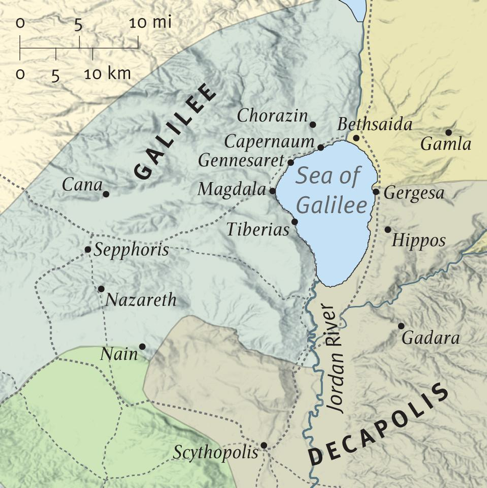
The cities of Chorazin, Bethsaida, and Capernaum were located on the northern shore of the Sea of Galilee, and they hold the unenviable distinction of having been condemned and cursed by Jesus Himself. But why? What possessed Jesus to issue His stinging statements against these Galilean cities, and why did He choose to do it at this time in His ministry?

Matthew provides a partial answer when he records that these three cities were “where most of his [Jesus] mighty works had been done” (Matthew 11:20 ESV). In other words, Jesus had done a great many miracles in the vicinity of these cities, but, in spite of personally witnessing the power of Jesus on display, the residents of these cities “did not repent” (Matthew 11:20 ESV). They had been eye-witnesses to the miraculous nature of Jesus’ ministry, and they had heard the message of repentance uttered by John the Baptist and Jesus Himself. But they had refused to accept that call, choosing instead to display a stubborn resistance to the message accompanying the miracles of Jesus. They loved what their eyes were seeing, but rejected what their ears were hearing.

These verses mark a watershed moment in the life and ministry of Jesus. Up to this point, He has spent most of His time ministering in and around this region of Israel. His base of operations had been located in the city of Capernaum. He had preached His sermon on the mount not far from there. The miracle of the feeding of the 5,000 took place not far from Bethsaida. The people living in and around these three cities had been privileged to witness His works and hear His words but had failed to grasp the truth that Jesus was the Messiah.

These verses provide a link back to Jesus’ commissioning of the 12 disciples found in chapter 10. Just prior to sending them out on their first missionary journey, Jesus had told them:

“Go nowhere among the Gentiles and enter no town of the Samaritans, but go rather to the lost sheep of the house of Israel. And proclaim as you go, saying, ‘The kingdom of heaven is at hand.’ Heal the sick, raise the dead, cleanse lepers, cast out demons.” – Matthew 10:5-8 ESV

Not only had Jesus limited their ministry to the Jews, but He had told them to focus their attention on those who would receive them and their message.

“And whatever town or village you enter, find out who is worthy in it and stay there until you depart. As you enter the house, greet it.  And if the house is worthy, let your peace come upon it, but if it is not worthy, let your peace return to you. And if anyone will not receive you or listen to your words, shake off the dust from your feet when you leave that house or town. Truly, I say to you, it will be more bearable on the day of judgment for the land of Sodom and Gomorrah than for that town.” – Matthew 10:11-15 ESV

Notice what Jesus told His disciples. If the residents of a city or home refused to receive them or listen to their words, they were to “shake off the dust” from their feet.

To shake the dust off represented, on one level, shaking off the uncleanness from one’s feet. At another level, however, it is similar to a prophetic sign, representing the termination of all fellowship with those individuals or localities that have rejected the messengers along with their message of the coming kingdom of heaven. This in essence constitutes a sign of eschatological judgment, as confirmed in the following verse. (NET Bible study notes)

Accepting the miracles performed by the disciples while rejecting their call to repentance would be unacceptable. Physical restoration without spiritual regeneration would not be enough. As Jesus later told the Pharisee, Nicodemus:  “Truly, truly, I say to you, unless one is born again he cannot see the kingdom of God” (John 3:3 ESV).

Jesus makes it clear that repentance is key to any hope of spiritual regeneration. They must change their minds and embrace their need of a Savior. Their status as God’s chosen people would not be enough to save them. Their confident assumption that their Hebrew heritage was enough was going to have to change. But Jesus knew that wasn’t going to happen. In fact, He asserts that the predominantly Gentile cities of Tyre and Sidon would fare better on the day of judgment than these three Jewish communities. Jesus had gone out of His way to take the message of the kingdom to His own people. He performed the majority of His miracles in their presence. He displayed His power among them and declared the coming of His kingdom to them. But they refused to listen. And just to make sure His audience understood the severity of His words, Jesus compared them to the infamous city of Sodom. According to Jesus, the wicked inhabitants of Sodom would have repented if they been seen only a fraction of the mighty works of God done among the cities of Chorazin, Bethsaida, and Capernaum.

Jesus would eventually remove Himself from Galilee and make His way to Tyre and Sidon (see Mark 7:24). He would perform miracles there, including casting out a demon from a young Gentile girl whose mother was a Syrophoenician. Mark records that when the woman begged Jesus to help her, He responded, “Let the children be fed first, for it is not right to take the children’s bread and throw it to the dogs” (Mark 7:27 ESV). But the woman, nonplussed by His response, simply said, “Yes, Lord; yet even the dogs under the table eat the children’s crumbs” (Mark 7:28 ESV).

And, amazed by the woman’s faith, Jesus told the woman, “For this statement you may go your way; the demon has left your daughter” (Mark 7:29 ESV). The woman believed, and her daughter was healed. She did not defend her status or become offended that Jesus had compared her to a dog. She simply expressed her belief that, in spite of her lowly status as a non-Jew, Jesus would extend mercy and grace to her. And He did.

One of the things that Jesus was looking for from those to whom He ministered was a recognition of their need. That is why He tended to minister to those who came to them with their disabilities, pains, brokenness, and extreme sense of unworthiness. That is why Jesus had said:

“Healthy people don’t need a doctor – sick people do. I have come to call not those who think they are righteous, but those who know they are sinners.” – Mark 2:17 NLT

A major aspect of repentance is the acknowledgment of sin and the need for salvation – a salvation outside of oneself. The people who came to Jesus for physical healing did so because they had either exhausted all other avenues or their ailment was beyond the scope of human help. They were forced to turn to Jesus in the hope that He could do something about their problem. But the same would be true for those who suffered from the disease and destruction caused by sin. That is why Jesus would offer what has become known as the Great Invitation, which we will cover tomorrow,

“Come to me, all of you who are weary and carry heavy burdens, and I will give you rest.” – Matthew 11:28 NLT

The city of Capernaum was filled with God-fearing Jews who believed they were the chosen people of God and so, in no need of a Savior. But Jesus asked them rhetorically, “will you be exalted to heaven?” And, just in case they failed to understand that the question was rhetorical, He clarified the answer for them.

“You will be brought down to Hades. For if the mighty works done in you had been done in Sodom, it would have remained until this day.” – Matthew 11:23 ESV

They would end up rejecting His message and His offer of salvation. And the result would be judgment and eternal punishment. Their refusal to accept Him as Messiah would have dire consequences. They would remain unrepentant and sadly, unforgiven.

And from this moment on, Jesus would begin to take His message to the Gentiles. He had come to His own, but His own had rejected Him (John 1:11). So, now He would expand His ministry and message to those outside the household of Israel.

English Standard Version (ESV) The Holy Bible, English Standard Version. ESV® Permanent Text Edition® (2016). Copyright © 2001 by Crossway Bibles, a publishing ministry of Good News Publishers.

New Living Translation (NLT)
Holy Bible, New Living Translation, copyright © 1996, 2004, 2015 by Tyndale House Foundation. Used by permission of Tyndale House Publishers Inc., Carol Stream, Illinois 60188. All rights reserved.

The Message (MSG)Copyright © 1993, 1994, 1995, 1996, 2000, 2001, 2002 by Eugene H. Peterson

Satan’s Last Gasp.

Now war arose in heaven, Michael and his angels fighting against the dragon. And the dragon and his angels fought back, but he was defeated, and there was no longer any place for them in heaven. And the great dragon was thrown down, that ancient serpent, who is called the devil and Satan, the deceiver of the whole world—he was thrown down to the earth, and his angels were thrown down with him. 10 And I heard a loud voice in heaven, saying, “Now the salvation and the power and the kingdom of our God and the authority of his Christ have come, for the accuser of our brothers has been thrown down, who accuses them day and night before our God. 11 And they have conquered him by the blood of the Lamb and by the word of their testimony, for they loved not their lives even unto death. 12 Therefore, rejoice, O heavens and you who dwell in them! But woe to you, O earth and sea, for the devil has come down to you in great wrath, because he knows that his time is short!”

13 And when the dragon saw that he had been thrown down to the earth, he pursued the woman who had given birth to the male child. 14 But the woman was given the two wings of the great eagle so that she might fly from the serpent into the wilderness, to the place where she is to be nourished for a time, and times, and half a time. 15 The serpent poured water like a river out of his mouth after the woman, to sweep her away with a flood. 16 But the earth came to the help of the woman, and the earth opened its mouth and swallowed the river that the dragon had poured from his mouth. 17 Then the dragon became furious with the woman and went off to make war on the rest of her offspring, on those who keep the commandments of God and hold to the testimony of Jesus. And he stood on the sand of the sea. Revelation 12:7-17 ESV

There is a common misconception regarding Satan, that when he rebelled against God, he was cast out of heaven and relegated to earth. From there, he no longer had access into God’s presence. And yet, as these verses make clear, one of Satan’s titles is “the accuser of the brethren.” The name, Devil, literally means “accuser.” And we know from Scripture, that Satan has had and continues to have, access to God’s presence, where he hurls false accusations against God’s people. The prophet, Zechariah, was given a vision of just such a scene.

Be silent, all flesh, before the Lord, for he has roused himself from his holy dwelling. Then he showed me Joshua the high priest standing before the angel of the Lord, and Satan standing at his right hand to accuse him. – Zechariah 2:13-3:1 ESV

The book of Job records a time when Satan was called to appear before God with all the other angels.

Now there was a day when the sons of God came to present themselves before the Lord, and Satan also came among them. The Lord said to Satan, “From where have you come?” Satan answered the Lord and said, “From going to and fro on the earth, and from walking up and down on it.” – Job 1:6-7 ESV

It was at that time, Satan raised doubts before God concerning the righteousness of Job.

Then Satan answered the Lord and said, “Does Job fear God for no reason? 10 Have you not put a hedge around him and his house and all that he has, on every side? You have blessed the work of his hands, and his possessions have increased in the land. 11 But stretch out your hand and touch all that he has, and he will curse you to your face.” – Job 1:9-11 ESV

Then the author of Job says quite plainly, “So Satan went out from the presence of the Lord” (Job 1:12 ESV). And, after having taken all of Job’s property and killedll of his children, Satan was allowed to come back into God’s presence, where he leveled additional charges against Job.

This is an important detail regarding Satan and his character, if we are going to understand what we read in this chapter. It will explain how a battle could take place between Satan, the demonic forces under his control and the forces of heaven. And that is exactly what John sees in this portion of his vision. He is given a never-before-seen look at an as-yet-to-happen event. Near the end of the great tribulation, the last 3-1/2 years of the period of tribulation, an epic battle will take place in heaven, between the heavenly forces of God and the forces of Satan. This will be the final battle in the long-standing war that has been taking place in the heavenly realm. The apostle Paul describes the nature of this war in no uncertain terms.

For we do not wrestle against flesh and blood, but against the rulers, against the authorities, against the cosmic powers over this present darkness, against the spiritual forces of evil in the heavenly places. – Ephesians 6:12 ESV

There has been a battle waging in the heavenly realms ever since the fall. But the day is coming when Satan and his forces will be defeated once and for all, then cast out of heaven for good. Jesus Himself spoke of this very day.

The time for judging this world has come, when Satan, the ruler of this world, will be cast out. – John 12:31 NLT

And that is the very scene John is allowed to witness. And accompanying Satan’s defeat and his expulsion from heaven, was the announcement: “Now the salvation and the power and the kingdom of our God and the authority of his Christ have come, for the accuser of our brothers has been thrown down, who accuses them day and night before our God” (Revelation 12:10 ESV). This event signals the second coming of Christ and moves the battle from the heavenly realm to earth. That is where the final defeat of Satan will take place. This will be a time for rejoicing in heaven, but on earth, the news of Satan’s fall will not be good news. In fact, John hears a voice from heaven, saying, “woe to you, O earth and sea, for the devil has come down to you in great wrath, because he knows that his time is short!” (Revelation 12:12 ESV). Satan will see his fall as the beginning of the end. His name, Satan, means “adversary” and he will retain that role to the bitter end. He will never stop opposing God and attempting to overthrow the rule and reign of God.

And one of the first things Satan will do as a result of his defeat and fall will be to intensify his attack on the people of God, the nation of Israel.

…he pursued the woman who had given birth to the male child. – Revelation 12:13 ESV

But John is told that Israel will be protected by God, “for a time, and times, and half a time.” This formula works out to be a year + 2 years + 1/2 year for a total of 3-1/2 years. This is a reference to the second half of the tribulation period, when Israel will be hidden by God and provided with a place of safety, protecting them from the attacks of Satan and his forces, both heavenly and earthly. The intensity of Satan’s vengeance against Israel will be great. And Jesus warned His disciples about this day:

16 then let those who are in Judea flee to the mountains. 17 Let the one who is on the housetop not go down to take what is in his house, 18 and let the one who is in the field not turn back to take his cloak. 19 And alas for women who are pregnant and for those who are nursing infants in those days! 20 Pray that your flight may not be in winter or on a Sabbath. 21 For then there will be great tribulation, such as has not been from the beginning of the world until now, no, and never will be. – Matthew 24:16-21 ESV

Some will flee to the mountains where they will find shelter. But many will remain in Jerusalem. The prophet Zechariah makes this clear.

For I will gather all the nations against Jerusalem to battle, and the city shall be taken and the houses plundered and the women raped. Half of the city shall go out into exile, but the rest of the people shall not be cut off from the city. – Zechariah 14:2 ESV

God is going to preserve a remnant of His people, because He has plans for them. He will preserve and protect them, keeping them safe from the attacks of Satan and his forces.

In the whole land, declares the Lord,
    two thirds shall be cut off and perish,
    and one third shall be left alive.
And I will put this third into the fire,
    and refine them as one refines silver,
    and test them as gold is tested.
They will call upon my name,
    and I will answer them.
I will say, ‘They are my people’;
    and they will say, ‘The Lord is my God.’” – Zechariah 13:8-9 ESV

In order for the return of Christ to take place, there must be a remnant of the people of God still alive on the earth, who will call out for Him for deliverance. But before they reach the point where they will call out to Jesus in desperation and despair, they will feel the full weight of Satan’s wrath. He is described as pouring “water like a river out of his mouth after the woman, to sweep her away with a flood” (Revelation 12:15 ESV). Whether this is a literal flood or figurative language describing a torrent of evil acts disseminated upon the people of Israel, we do not know. But whatever it is, it will fail. God will use the earth itself to protect his people, and Satan’s inability to destroy this remnant will leave him furious and force him to focus his wrath on “the rest of her offspring.” And we are given an explanation as to just who this group is: “those who keep the commandments of God and hold to the testimony of Jesus” (Revelation 12:17 ESV). These are Jews who come to faith during the tribulation, which includes the 144,000 first mentioned in Revelation 7. There will be additional Jews who become believers during the second half of the tribulation, and it is against these individuals that Satan will turn his attention and focus his wrath.

The chapter ends with an image of Satan standing on the sand of the sea. We know this is a reference to Satan, because the very first verse in the very next chapter opens up by stating: “And I saw a beast rising out of the sea” (Revelation 13:1 ESV). Satan is pictured as standing poised on the edge of the sea, awaiting the arrival of the beast. And we will discover more details about this individual as John’s vision continues in chapter 13.

But this chapter sets up all that is to come. Satan, still adamantly and stubbornly defiant, will exhaust all his energies and resources in his attempt to thwart God’s plans. In spite of his defeat at the hands of Michael and the heavenly forces, Satan will continue his ill-fated efforts to prevent the return of Christ and to destroy the people of God. He will not give up. And as the days of the great tribulation come to a close, his efforts will only intensify. Like a trapped animal, he will lash out with greater fury and anger. But his days are numbered. His fate is sealed. His full and final defeat is certain. God is in complete control of the circumstances.

English Standard Version (ESV) The Holy Bible, English Standard Version. ESV® Permanent Text Edition® (2016). Copyright © 2001

New Living Translation (NLT) Holy Bible, New Living Translation, copyright © 1996, 2004, 2015 by Tyndale House Foundation. Used by permission of Tyndale House Publishers Inc., Carol Stream, Illinois 60188. All rights reserved.

The Message (MSG)  Copyright © 1993, 1994, 1995, 1996, 2000, 2001, 2002 by Eugene H. Peterson


God’s Marvelous Mercy.

As regards the gospel, they are enemies for your sake. But as regards election, they are beloved for the sake of their forefathers. For the gifts and the calling of God are irrevocable. For just as you were at one time disobedient to God but now have received mercy because of their disobedience, so they too have now been disobedient in order that by the mercy shown to you they also may now receive mercy. For God has consigned all to disobedience, that he may have mercy on all. – Romans 11:28-32 ESV

This is a fascinating and difficult passage. It presents us with a somewhat confusing picture of God’s grace that could easily leave us accusing Him of injustice. For the time being, the Jews are experiencing “a partial hardening” until “the fullness of the Gentiles has come in” (Romans 11: 25 ESV). While Israel had been seeking righteousness, a right relationship with God, they had been going about it the wrong way, by attempting to keep the law in their own human strength. And when the true path to righteousness was revealed, Jesus Christ, they rejected Him. So, “God gave them a spirit of stupor, eyes that would not see and ears that would not hear, down to this very day” (Romans 11:8 ESV). But God did not cause their hardening or spiritual callousness. He simply allowed their hearts to go where they were naturally bent to go. He did not intervene. He did not extend mercy. And if we conclude that God’s treatment of the Jews was  unfair or unjust, we misunderstand mercy. Mercy is not required by God. By definition, mercy is a gift, not a requirement. Justice is required. Mercy is non-justice. In other words, when God determines to extend mercy to anyone, He is choosing NOT to enact justice, or to give them what they truly deserve. We see over and over again in Scripture God extending mercy to the people of Israel. Repeatedly, they turned their backs on Him and proved unfaithful as His people. As a result, they deserved His justice, His righteous, holy sentence of just punishment. But instead, God graciously chose to show them mercy, His undeserved kindness, goodness, favor and compassion. And to do so is God’s prerogative. “For God said to Moses, ‘I will show mercy to anyone I choose, and I will show compassion to anyone I choose’” (Romans 9:15 NLT). When God shows mercy, we have no cause to complain or to cry foul. What should amaze us is that God, in His patience and love, chooses to show anyone mercy. Because mercy is never deserved. It is never earned. Paul has made it clear that all men deserve God’s justice: “for all have sinned and fall short of the glory of God” (Romans 3:23 ESV) and “the wages of sin is death” (Romans 6:23 ESV). So if God chooses to extend His mercy to some, can we accuse Him of injustice? Paul would say, “No!”

“What shall we say then? Is there injustice on God’s part? By no means! For he says to Moses, ‘I will have mercy on whom I have mercy, and I will have compassion on whom I have compassion.’ So then it depends not on human will or exertion, but on God, who has mercy.” – Romans 9:14-16 ESV

Which brings us back to our passage. As it pertained to the gospel, the good news regarding salvation through Christ, the Jews were essentially enemies of God, Paul contends. Their rejection of the Jesus as their Messiah had opened the door for the gospel to be preached to the Gentiles. But when it comes to God’s sovereign election or choosing of the nation of Israel, they are still beloved in His eyes. At this point, it would appear that Paul is now talking about the future state of Israel as a nation or a people. It would not appear that he is referring to individual Jews or individual Gentiles in these verses. At one time in history, the Gentile nations had been apart from God. They were separated from Him because of their sin. Paul puts it this way: “Don’t forget that you Gentiles used to be outsiders. You were called ‘uncircumcised heathens’ by the Jews, who were proud of their circumcision, even though it affected only their bodies and not their hearts. In those days you were living apart from Christ. You were excluded from citizenship among the people of Israel, and you did not know the covenant promises God had made to them. You lived in this world without God and without hope” (Ephesians 2:11-12 NLT). But Paul says that something changed all that. “But now you have been united with Christ Jesus. Once you were far away from God, but now you have been brought near to him through the blood of Christ” (Ephesians 2:13 NLT). Notice that he addresses them as a whole, as Gentiles. This does not mean that ALL Gentiles have come to faith in Christ, but that the Gentile nations have now been shown the mercy of God.

The same will be true for the nation of Israel. While they are currently experiencing a hardness of heart and a spiritual callousness toward God and His offer of salvation through His Son, the day is coming when God will show them mercy just as He has done for the Gentiles. “For just as you [the Gentiles] were at one time disobedient to God but now have received mercy because of their [the Jews] disobedience, so they too have now been disobedient in order that by the mercy shown to you they also may now receive mercy” (Romans 11:30 ESV). In other words, Paul wants us to understand that this is not a case of Gentiles replacing Jews as God’s favored people. This is about God extending mercy to those to whom He sovereignly chooses. God’s mercy knows no prejudice. He is an equal-opportunity mercy provider. “For God has consigned all to disobedience, that he may have mercy on all” (Romans 11:32 ESV). Again, this does not mean that all will be saved, but that all share a common state of disobedience and alienation from God, and if He does not choose to show mercy, none will be saved – either Jew or Gentile.

Israel’s rejection of the Messiah did not put them beyond God’s mercy. His inclusion of the Gentiles was not a sign of His exclusion of the Jews. It is a matter of timing. Right now, during the period of the Gentiles, His focus is on bringing the full number of those from among the Gentiles to faith in His Son. Then He will turn His attention to the nation of Israel. Yes, this is all hard for us to understand. It is difficult to comprehend why God does things the way He does. But Paul will clarify that for us in the closing verses of this chapter.