The End

And then the lawless one will be revealed, whom the Lord Jesus will kill with the breath of his mouth and bring to nothing by the appearance of his coming. The coming of the lawless one is by the activity of Satan with all power and false signs and wonders, 10 and with all wicked deception for those who are perishing, because they refused to love the truth and so be saved. 11 Therefore God sends them a strong delusion, so that they may believe what is false, 12 in order that all may be condemned who did not believe the truth but had pleasure in unrighteousness. 2 Thessalonians 2:8-12 ESV

Helping Christ-followers understand the events surrounding the end times was important to Paul because he knew that knowledge would dramatically influence the way they lived their lives in the present. Without a firm grasp on the divine timeline of the last days, believers in every age would find themselves easy prey to every false doctrine and spurious opinion that came along. Even Jesus warned that there would be those who showed up claiming to be the Messiah.

“Don’t let anyone mislead you, for many will come in my name, claiming, ‘I am the Messiah.’ They will deceive many.” – Matthew 24:4 NLT

Without a well-developed understanding of God’s plans for those final days, people will be susceptible to the claims of false teachers and self-proclaimed prophets. Jesus warned His disciples, “Many false prophets will appear and will deceive many people. Sin will be rampant everywhere, and the love of many will grow cold” (Matthew 24:11-12 NLT).

So, when Paul heard that false teachers were causing angst and anxiety among the Thessalonians by declaring the day of the Lord had already begun, he felt strongly compelled to correct their error. Paul’s use of “the day of the Lord” references a future period of time that will include the Tribulation, the Second Coming, the Millennial Kingdom, and the Great White Throne Judgment. According to Paul, the Rapture of the church will be the event that sets all of these things in motion. With the removal of all believers from the earth, the restraining influence of the church will create a moral and spiritual vacuum that will allow wickedness to spread like wildfire.

In verse 7, Paul refers to an individual who acts as a restraining influence on evil and prevents the coming of “the man of lawlessness…the son of destruction” (2 Thessalonians 2:3 ESV).

For the mystery of lawlessness is already at work. Only he who now restrains it will do so until he is out of the way. – 2 Thessalonians 2:7 ESV

This “restrainer” is the Holy Spirit, who inhabits the church and every believer. With the Rapture of the church, all believers living at that time will be “caught up” to meet the Lord in the air (1 Thessalonians 4:17). They will receive their glorified bodies and return to heaven with Christ. With their departure, the primary means by which the Holy Spirit restrains wickedness in the world will be gone. Whether we realize it or not, the presence of Spirit-filled Christians on this planet plays a powerful role in holding back the forces of darkness. Jesus stated, “You are the light of the world…” (Matthew 5:14 ESV), but with the Rapture of the church, the light will be removed, allowing the darkness to envelop the world as never before.

That is why this period of time is called the Tribulation. It will be a literal seven-year span of time that inaugurates the day of the Lord and will be accompanied by cataclysmic events and divine judgments that will be unprecedented in their intensity. Jesus described it in rather stark terms.

“…there will be greater anguish than at any time since the world began. And it will never be so great again. In fact, unless that time of calamity is shortened, not a single person will survive.” – Matthew 24:21-22 NLT

There is no doubt that evil was running rampant in Paul’s day. In fact, he said, “the mystery of lawlessness is already at work” (2 Thessalonians 2:7 ESV). The New Living Translation puts it this way: “this lawlessness is already at work secretly.” The apostle John describes much of the false teaching that was infiltrating the church as “the spirit of the Antichrist.”

…if someone claims to be a prophet and does not acknowledge the truth about Jesus, that person is not from God. Such a person has the spirit of the Antichrist, which you heard is coming into the world and indeed is already here. – 1 John 4:3 NLT

The evil influence of this “man of lawlessness” was already alive and well in the 1st century. While the actual Antichrist will not appear until the day of the Lord, the “spirit’ of this Satan-inspired world leader is alive and well in every generation. He will be a tool of Satan, and the enemy has never had a shortage of willing pawns to carry out his plans. But the Antichrist’s arrival and meteoric rise to power will provide Satan with a powerful ally in his quest to thwart the will of God. In the book of Revelation, John provides details concerning his vision of the Antichrist, describing him as “the beast” who receives his power and authority from “the dragon” (Satan).

…to it the dragon gave his power and his throne and great authority.…and the whole earth marveled as they followed the beast. And they worshiped the dragon, for he had given his authority to the beast, and they worshiped the beast, saying, “Who is like the beast, and who can fight against it?” – Revelation 13:2, 3-4 ESV

While there will be a literal, real-life Antichrist who rules and reigns during the Tribulation, the spirit or attitude of the Antichrist has always been around. Paul warned Timothy that the last days would be filled with apostasy and a level of rebellion like nothing the world has ever witnessed before.

…in the last days there will be very difficult times. For people will love only themselves and their money. They will be boastful and proud, scoffing at God, disobedient to their parents, and ungrateful. They will consider nothing sacred. They will be unloving and unforgiving; they will slander others and have no self-control. They will be cruel and hate what is good. They will betray their friends, be reckless, be puffed up with pride, and love pleasure rather than God. They will act religious, but they will reject the power that could make them godly. – 2 Timothy 3:1-5 NLT

Even though Paul is describing the last days, he warns Timothy to “Stay away from people like that!” (2 Timothy 3:5 NLT). Why? Because those kinds of people can be found in every generation. However, in the last days, they will represent the majority of people on earth, and they will eagerly take part in what Paul describes as the “rebellion” (2 Thessalonians 2:3). The Greek word is apostasia, from which we get our English word, “apostasy.” It means, “a falling away” or “a defection from the truth.” Remember what Paul told Timothy: the people living in the last days “will act religious, but they will reject the power that could make them godly” (2 Timothy 3:5 NLT).

Paul describes Antichrist’s powerful influence over the world during the last days.

This man will come to do the work of Satan with counterfeit power and signs and miracles. He will use every kind of evil deception to fool those on their way to destruction, because they refuse to love and accept the truth that would save them. – 2 Thessalonians 2:9-10 NLT

John adds his own description of Antichrist’s reign of terror.

Then the beast was allowed to speak great blasphemies against God. And he was given authority to do whatever he wanted for forty-two months. And he spoke terrible words of blasphemy against God, slandering his name and his dwelling—that is, those who dwell in heaven. And the beast was allowed to wage war against God’s holy people and to conquer them. And he was given authority to rule over every tribe and people and language and nation. And all the people who belong to this world worshiped the beast. – Revelation 13:5-8 NLT

Notice John’s mention of worship. Paul told Timothy, “They will act religious, but they will reject the power that could make them godly.” Those living in the last days will worship Antichrist, who will slander the name of God and set himself up as a replacement for God. Paul describes him as one “who opposes and exalts himself against every so-called god or object of worship, so that he takes his seat in the temple of God, proclaiming himself to be God” (2 Thessalonians 2:4 ESV).

The prophet Daniel was also given a vision of this future world leader.

…a fierce king, a master of intrigue, will rise to power. He will become very strong, but not by his own power. He will cause a shocking amount of destruction and succeed in everything he does. He will destroy powerful leaders and devastate the holy people. He will be a master of deception and will become arrogant; he will destroy many without warning. – Daniel 8:23-25 NLT

In the Book of Revelation, John describes the creation of an idol, made to represent the Antichrist, which will be set up in the temple of God. The false prophet, the Antichrist’s second lieutenant, “was allowed to give breath to the image of the beast, so that the image of the beast might even speak and might cause those who would not worship the image of the beast to be slain” (Revelation 13:15 ESV).

These will not be ordinary, run-of-the-mill days. As Jesus said, they will feature “greater anguish than at any time since the world began” (Matthew 24:21 NLT). And Paul indicates that those days will be marked by a level of deception and spiritual delusion like nothing the world has ever seen before. People will “refuse to love and accept the truth that would save them” (2 Thessalonians 2:10 NLT). As a result, “God will cause them to be greatly deceived, and they will believe these lies” (2 Thessalonians 2:11 NLT).

During the Great Tribulation, the second half of the seven years of tribulation, God will bring a wave of unprecedented judgments upon the world. He will reveal Himself through a series of cataclysmic plagues and meteorological catastrophes. And while those who endure these judgments will recognize His hand behind them, they will still refuse to repent of their sins and turn to Him.

But the people who did not die in these plagues still refused to repent of their evil deeds and turn to God. They continued to worship demons and idols made of gold, silver, bronze, stone, and wood—idols that can neither see nor hear nor walk! And they did not repent of their murders or their witchcraft or their sexual immorality or their thefts. – Revelation 9:20-21 NLT

As Paul sadly states, “they will be condemned for enjoying evil rather than believing the truth” (2 Thessalonians 2:12 NLT).

The end times will be marked by rampant rebellion and a level of spiritual blindness like nothing we have ever seen before. Even while recognizing the hand of God behind their suffering, those living in those difficult days will shake their fists in His face and choose to endure His divine punishment rather than admit to the truth of their own sin and their need for a Savior.

Father, it’s difficult to imagine the things that Paul describes in this letter. They sound far-fetched and like something out of a fairy tale. Yet, he is describing reality and warning us of things to come. They provide a sobering reminder of Your hatred of sin and Your sovereign control over everything that happens on this planet. The “end” is not questionable or up for debate. You have preordained all things and will accomplish Your will for mankind and Your creation according to Your perfect timeline. While we don’t have to worry about the Great Tribulation, because we won’t be here when it happens, we should care about all those “who are perishing, because they refused to love the truth and so be saved” (2 Thessalonians 2:10 ESV). Your judgment of mankind is coming. And we are to be Your ambassadors on this earth, making use of every moment to warn the lost, “Come back to God!” (2 Corinthians 5:17 NLT). Give us a love for all those who stand condemned so that we might do everything in our power to share the truth on Your grace and mercy made possible through faith in Christ. Amen.

English Standard Version (ESV) The Holy Bible, English Standard Version. ESV® Permanent Text Edition® (2016). Copyright © 2001 by Crossway Bibles, a publishing ministry of Good News Publishers.

New Living Translation (NLT) Holy Bible, New Living Translation, copyright © 1996, 2004, 2015 by Tyndale House Foundation. Used by permission of Tyndale House Publishers Inc., Carol Stream, Illinois 60188. All rights reserved.

The Day of the Lord

1 Now concerning the times and the seasons, brothers, you have no need to have anything written to you. For you yourselves are fully aware that the day of the Lord will come like a thief in the night. While people are saying, “There is peace and security,” then sudden destruction will come upon them as labor pains come upon a pregnant woman, and they will not escape. But you are not in darkness, brothers, for that day to surprise you like a thief. For you are all children of light, children of the day. We are not of the night or of the darkness. So then let us not sleep, as others do, but let us keep awake and be sober. For those who sleep, sleep at night, and those who get drunk, are drunk at night. But since we belong to the day, let us be sober, having put on the breastplate of faith and love, and for a helmet the hope of salvation. For God has not destined us for wrath, but to obtain salvation through our Lord Jesus Christ, 10 who died for us so that whether we are awake or asleep we might live with him. 11 Therefore encourage one another and build one another up, just as you are doing. 1 Thessalonians 5:1-11 ESV

As chapter five opens, Paul shifts his focus from the Rapture, the end-times event when the church will be “caught up” to meet the Lord in the air, to the “day of the Lord.” Though closely related and timed to happen in sequence, these are two separate events, and Paul treats them as such. The Rapture of the church will usher in the Tribulation, a literal seven-year period of intense judgment upon the earth. With the church removed, God will turn His attention to the lost who will make up the entire population of the planet, including His original chosen people, the nation of Israel. Prophetically, the “day of the Lord” begins with the Tribulation, includes Christ’s Second Coming at the end of the seven years, and concludes with the Millennium, the 1,000-year reign of Christ on earth.

Having encouraged the Thessalonians about the fate of their deceased brothers and sisters in Christ, Paul now addresses the living rather than the dead. He wants them to have a well-developed understanding of the sequence of events that will make up the end times. He has already addressed the Rapture, and with that reality firmly fixed in their minds, the Thessalonians should have nothing to fear regarding the day of the Lord. Yes, it “will come like a thief in the night” (1 Thessalonians 5:2 ESV), unexpectedly and surprisingly. Jesus also warned His disciples about the sudden and unexpected nature of this end-times event.

“But watch yourselves lest your hearts be weighed down with dissipation and drunkenness and cares of this life, and that day come upon you suddenly like a trap. For it will come upon all who dwell on the face of the whole earth. But stay awake at all times, praying that you may have strength to escape all these things that are going to take place, and to stand before the Son of Man.” – Luke 21:34-36 ESV

Jesus was not suggesting that His disciples would live to see that day. Obviously, none of them did. He also did not teach that believers would experience the day of the Lord. But notice that He does suggest that they pray for “strength to escape all these things” so that they might “stand before the Son of Man” (Luke 21:36 ESV). Jesus was encouraging His disciples and all true believers to live soberly and alertly, eagerly anticipating His return for the church (the Rapture). He assures them that those who remain in Him will “escape all these things that are going to take place.”

But Paul describes a drastically different fate for all those who are alive when the day of the Lord begins: “sudden destruction will come upon them as labor pains come upon a pregnant woman, and they will not escape” (1 Thessalonians 5:3 ESV). Living with a false sense of peace and security, they will be entirely caught by surprise at the sudden and unexpected nature of God’s judgment. The prophets provide sobering details about the extent of the wrath God will pour out on sinful humanity in those days.

For see, the day of the Lord is coming—
    the terrible day of his fury and fierce anger.
The land will be made desolate,
    and all the sinners destroyed with it.
The heavens will be black above them;
    the stars will give no light.
The sun will be dark when it rises,
    and the moon will provide no light.

“I, the Lord, will punish the world for its evil
    and the wicked for their sin.
I will crush the arrogance of the proud
    and humble the pride of the mighty.” – Isaiah 13:0-11 NLT

“That terrible day of the Lord is near.
    Swiftly it comes—
a day of bitter tears,
    a day when even strong men will cry out.
It will be a day when the Lord’s anger is poured out—
    a day of terrible distress and anguish,
a day of ruin and desolation,
    a day of darkness and gloom,
a day of clouds and blackness,
    a day of trumpet calls and battle cries. – Zephaniah 1:14-16 NLT

Even Jesus described the devastating nature of God’s judgment.

“For then there will be great tribulation, such as has not been from the beginning of the world until now, no, and never will be.” – Matthew 24:21 ESV

But Paul is telling the Thessalonians that they have no reason to fear those dark days, not because they will die long before the events occur, but because, as followers of Christ, they will be protected and preserved from judgment.

For God has not destined us for wrath, but to obtain salvation through our Lord Jesus Christ – 1 Thessalonians 5:9 ESV

The period of the Tribulation is intended as a divine judgment against sinful mankind. With the church removed at the Rapture, the remaining population of the earth will be made up solely of unbelievers. As Jesus indicated, the divine judgment God will bring upon them will be unlike anything anyone has ever seen. The Book of Revelation outlines the nature of these catastrophic judgments.

…hail and fire mixed with blood were thrown down on the earth. One-third of the earth was set on fire, one-third of the trees were burned, and all the green grass was burned. – Revelation 8:7 NLT

…a great mountain of fire was thrown into the sea. One-third of the water in the sea became blood, one-third of all things living in the sea died, and one-third of all the ships on the sea were destroyed. – Revelation 8:8-9 NLT

a great star fell from the sky, burning like a torch. It fell on one-third of the rivers and on the springs of water. The name of the star was Bitterness. It made one-third of the water bitter, and many people died from drinking the bitter water. – Revelation 8:10-11 NLT

…and one-third of the sun was struck, and one-third of the moon, and one-third of the stars, and they became dark. And one-third of the day was dark, and also one-third of the night. – Revelation 8:12-13 NLT

In the chronicle of his divinely inspired vision, John describes days marked by darkness, disease, intense suffering, unprecedented meteorological events, devastating natural disasters, and demonic activity. John leaves no doubt as to the intensity of these judgments and their impact on the inhabitants of the world.

In those days people will seek death but will not find it. They will long to die, but death will flee from them! – Revelation 9:6 NLT

They will be days marked by darkness, literally and figuratively. But Paul reminds his readers:

But you are not in darkness, brothers, for that day to surprise you like a thief. For you are all children of light, children of the day. We are not of the night or of the darkness. – 1 Thessalonians 5:4-5 ESV

The judgments of the Tribulation are not for Christ-followers; they are reserved for all those who have rejected God’s offer of salvation through faith alone in Christ alone. Yet, God in His mercy will make His offer of salvation available to those living during the Tribulation. John describes 144,000 Jews who will come to faith in Christ and become witnesses during the days of the Tribulation (Revelation 7:1-8). As a result of their evangelistic efforts, many will turn to Christ, even amid all the pain and suffering.

John describes seeing “a great multitude that no one could number, from every nation, from all tribes and peoples and languages, standing before the throne and before the Lamb, clothed in white robes, with palm branches in their hands, and crying out with a loud voice, ‘Salvation belongs to our God who sits on the throne, and to the Lamb!’” (Revelation 7:9-10 ESV). When he inquires who these people are, he is told, “These are the ones coming out of the great tribulation. They have washed their robes and made them white in the blood of the Lamb” (Revelation 7:14 ESV).

Even while pouring out His wrath on rebellious mankind, God will extend mercy to those who accept His gracious offer of salvation. But for believers on this side of the Rapture, there is no need to fear the coming wrath of God. However, Paul warns that we are not to live with misplaced confidence. He warns the Thessalonians, “let us not sleep, as others do, but let us keep awake and be sober” (1 Thessalonians 5:6 ESV). They were to live with keen awareness and sober-minded seriousness about their new life in Christ. Paul reminds them, “You are all children of light, children of the day. We are not of the night or of the darkness” (1 Thessalonians 5:5 ESV). This is the same message Paul gave to the church in Colossae.

For he has rescued us from the kingdom of darkness and transferred us into the Kingdom of his dear Son, who purchased our freedom and forgave our sins. – Colossians 1:13-14 NLT

And the believers in Ephesus were not left out.

Carefully determine what pleases the Lord. Take no part in the worthless deeds of evil and darkness; instead, expose them. It is shameful even to talk about the things that ungodly people do in secret. But their evil intentions will be exposed when the light shines on them, for the light makes everything visible. This is why it is said,

“Awake, O sleeper, rise up from the dead, and Christ will give you light.” – Ephesians 5:10-14 NLT

As children of light who have been transferred into the Kingdom of Christ, we face a different outcome. We are not destined for the day of the Lord and the judgment of God. That is why Paul reminds provides the following reminder to his Thessalonians brothers and sisters.

We belong to the day, let us be sober, having put on the breastplate of faith and love, and for a helmet the hope of salvation. – 1 Thessalonians 5:8 ESV

We have the resources necessary to live godly lives and the assurance of our future glorification. There is no reason to fear death or to worry about ever having to face God’s judgment.

Christ died for us so that, whether we are dead or alive when he returns, we can live with him forever. So encourage each other and build each other up, just as you are already doing. – 1 Thessalonians 5:10-11 NLT

Father, we have no reason to fear Your future judgment because Your Son paid the price for our sins. As Paul put it, “So now there is no condemnation for those who belong to Christ Jesus” (Romans 8:1 NLT). We are children of the light who will escape the darkness of those days because Your Son has promised to return for His bride, the church. But we do need to recognize the reality of that future day of judgment. While we have nothing to fear, there are countless millions who remain enslaved by sin and destined to endure Your well-deserved judgment. Give us a boldness to share the good news that has changed our lives. Fill us with a passion to tell the story of Christ’s death, burial, and resurrection to all those who stand condemned and in need of a Savior. Sear the words of Paul on our hearts and minds. “Everyone who calls on the name of the Lord will be saved. But how can they call on him to save them unless they believe in him? And how can they believe in him if they have never heard about him? And how can they hear about him unless someone tells them? And how will anyone go and tell them without being sent? That is why the Scriptures say, “How beautiful are the feet of messengers who bring good news!” (Romans 10:14-15 NLT).

English Standard Version (ESV) The Holy Bible, English Standard Version. ESV® Permanent Text Edition® (2016). Copyright © 2001 by Crossway Bibles, a publishing ministry of Good News Publishers.

New Living Translation (NLT) Holy Bible, New Living Translation, copyright © 1996, 2004, 2015 by Tyndale House Foundation. Used by permission of Tyndale House Publishers Inc., Carol Stream, Illinois 60188. All rights reserved.

Sincere, But Insufficient

1 Josiah was eight years old when he began to reign, and he reigned thirty-one years in Jerusalem. His mother’s name was Jedidah the daughter of Adaiah of Bozkath. And he did what was right in the eyes of the LORD and walked in all the way of David his father, and he did not turn aside to the right or to the left.

3 In the eighteenth year of King Josiah, the king sent Shaphan the son of Azaliah, son of Meshullam, the secretary, to the house of the LORD, saying, “Go up to Hilkiah the high priest, that he may count the money that has been brought into the house of the LORD, which the keepers of the threshold have collected from the people. And let it be given into the hand of the workmen who have the oversight of the house of the LORD, and let them give it to the workmen who are at the house of the LORD, repairing the house (that is, to the carpenters, and to the builders, and to the masons), and let them use it for buying timber and quarried stone to repair the house. But no accounting shall be asked from them for the money that is delivered into their hand, for they deal honestly.”

And Hilkiah the high priest said to Shaphan the secretary, “I have found the Book of the Law in the house of the LORD.” And Hilkiah gave the book to Shaphan, and he read it. And Shaphan the secretary came to the king, and reported to the king, “Your servants have emptied out the money that was found in the house and have delivered it into the hand of the workmen who have the oversight of the house of the LORD.” 10 Then Shaphan the secretary told the king, “Hilkiah the priest has given me a book.” And Shaphan read it before the king.

11 When the king heard the words of the Book of the Law, he tore his clothes. 12 And the king commanded Hilkiah the priest, and Ahikam the son of Shaphan, and Achbor the son of Micaiah, and Shaphan the secretary, and Asaiah the king’s servant, saying, 13 “Go, inquire of the LORD for me, and for the people, and for all Judah, concerning the words of this book that has been found. For great is the wrath of the LORD that is kindled against us, because our fathers have not obeyed the words of this book, to do according to all that is written concerning us.”

14 So Hilkiah the priest, and Ahikam, and Achbor, and Shaphan, and Asaiah went to Huldah the prophetess, the wife of Shallum the son of Tikvah, son of Harhas, keeper of the wardrobe (now she lived in Jerusalem in the Second Quarter), and they talked with her. 15 And she said to them, “Thus says the LORD, the God of Israel: ‘Tell the man who sent you to me, 16 Thus says the LORD, Behold, I will bring disaster upon this place and upon its inhabitants, all the words of the book that the king of Judah has read. 17 Because they have forsaken me and have made offerings to other gods, that they might provoke me to anger with all the work of their hands, therefore my wrath will be kindled against this place, and it will not be quenched. 18 But to the king of Judah, who sent you to inquire of the LORD, thus shall you say to him, Thus says the LORD, the God of Israel: Regarding the words that you have heard, 19 because your heart was penitent, and you humbled yourself before the LORD, when you heard how I spoke against this place and against its inhabitants, that they should become a desolation and a curse, and you have torn your clothes and wept before me, I also have heard you, declares the LORD. 20 Therefore, behold, I will gather you to your fathers, and you shall be gathered to your grave in peace, and your eyes shall not see all the disaster that I will bring upon this place.’” And they brought back word to the king. – 2 Kings 22:1-20 ESV

Just as Manasseh had reversed all the reforms of his father, Hezekiah, so Josiah used his authority as king to overturn Manasseh’s ungodly and pagan-inspired initiatives. The young king began an aggressive campaign to restore the spiritual health of Judah.

At the age of 16, just eight years into his reign, he began to “seek the God of his ancestor David” (2 Chronicles 34:3 NLT). Then, at the ripe old age of 20, he launched a widespread effort “to purify Judah and Jerusalem, destroying all the pagan shrines, the Asherah poles, and the carved idols and cast images” (2 Chronicles 34:3 NLT). These reformation projects continued well into his reign. At the age of 26, Josiah turned his attention to the Temple of God. In the 18th year of his reign, he “appointed Shaphan son of Azaliah, Maaseiah the governor of Jerusalem, and Joah son of Joahaz, the royal historian, to repair the Temple of the Lord his God” (2 Chronicles 34:8 NLT).

Due to Manasseh’s efforts to promote idol worship in Judah, the Temple had fallen into a state of neglect and disrepair. The former glory of the house that Solomon built had been greatly diminished by Manasseh’s shameless actions. He had desecrated God’s house and defamed the LORD’s name by ordering the placing of altars to some of his false gods right in the Temple grounds.

…he built altars for all the host of heaven in the two courts of the house of the LORD. – 2 Kings 21:5 ESV

Manasseh failed to recognize that the Temple was intended as a symbol of God’s abiding presence. Inside the Holy of Holies, the sacred inner sanctum of the Temple, was the Ark of the Covenant, in which were kept a variety of items designed to remind Israel of God’s faithfulness and providential care.

Inside the Ark were a gold jar containing manna, Aaron’s staff that sprouted leaves, and the stone tablets of the covenant. – Hebrews 9:4 NLT

During Israel’s years wandering in the wilderness, God’s presence dwelt above the mercy seat, which sat atop the Ark of the Covenant. Whenever God commanded Israel to stop and set up camp, they would erect the Tabernacle, and then God’s shekinah glory would take up residence within the Holy of Holies. The Book of Exodus provides a description of this divine manifestation of God’s presence.

Then the cloud covered the Tabernacle, and the glory of the LORD filled the Tabernacle. Moses could no longer enter the Tabernacle because the cloud had settled down over it, and the glory of the LORD filled the Tabernacle.

Now whenever the cloud lifted from the Tabernacle, the people of Israel would set out on their journey, following it. But if the cloud did not rise, they remained where they were until it lifted. The cloud of the LORD hovered over the Tabernacle during the day, and at night fire glowed inside the cloud so the whole family of Israel could see it. This continued throughout all their journeys. – Isaiah 40:34-38 NLT

When Solomon built his magnificent Temple in Jerusalem, he ordered the Ark of the Covenant to be moved into the Holy of Holies. Yahweh had promised to bless the Temple with His presence as long as the people of Israel remained obedient to His commands.

“My name will be honored forever in this Temple and in Jerusalem—the city I have chosen from among all the tribes of Israel. If the Israelites will be careful to obey my commands—all the laws my servant Moses gave them—I will not send them into exile from this land that I gave their ancestors.” – 2 Kings 21:7-8 NLT

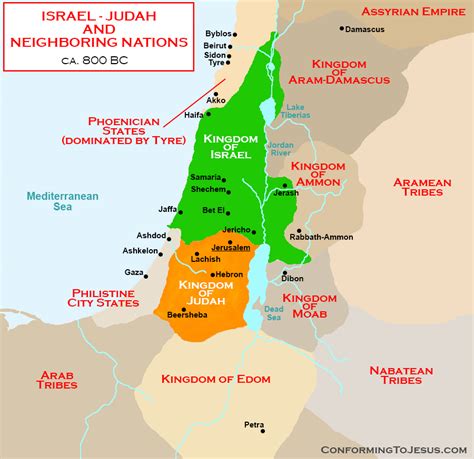
But by the time Josiah became king of Judah, the northern kingdom of Israel had already fallen to the Assyrians, due to their unfaithfulness to God. The southern kingdom of Judah had come close to experiencing the same fate, but Hezekiah had repented, prompting God to miraculously deliver them from defeat at the hands of the Assyrians. Yet, the spiritual state of Judah had been greatly diminished by the ungodly leadership of men like Manasseh. His son, Josiah, was forced to repair all the damage he had done to the kingdom and its relationship with God Almighty.

Not only had the nation of Judah failed to care for God’s Temple, but they also refused to keep the laws He had handed down to Moses. In doing so, they had unknowingly placed themselves in a dangerous predicament. God had promised to dwell among them and provide protection for them, but only as long as they obeyed all His commands. However, they had failed to do so, and their neglect of God’s Temple was further exacerbated by their neglect of God’s law.

But in the process of repairing the temple, Hilkiah the high priest made an important discovery.

“I have found the Book of the Law in the LORD’s Temple!” – 2 Kings 22:8 NLT

This is most likely a reference to the Torah or Pentateuch, the first five books of the Old Testament. Somewhere in the recesses of the Temple, Hilkiah ran across a scroll containing God’s history of His relationship with Israel and the commands He had passed on to them through Moses. When the contents of this scroll were read to King Josiah, he was immediately and dramatically impacted by what he heard. He recognized that they were in serious trouble because they had failed to keep their covenant commitment to God. He could restore the Temple, but the people were going to have to restore their devotion to God and their determination to live in obedience to His holy law.

So, Josiah gave instructions to his high priest and other officials, ordering them to seek the LORD’s instructions. Josiah knew that they deserved Yahweh’s wrath and judgment, so he sought to know how they were to make up for all the years of disobedience.

“Go to the Temple and speak to the LORD for me and for the people and for all Judah. Inquire about the words written in this scroll that has been found. For the LORD’s great anger is burning against us because our ancestors have not obeyed the words in this scroll. We have not been doing everything it says we must do.” – 2 Kings 22:13 NLT

These men returned with a disturbing message from Hilduh, a prophetess of Yahweh. She informed the king that, because of their years of disobedience, the nation of Judah was going to experience all the curses described in the book of Deuteronomy.

“This is what the LORD says: I am going to bring disaster on this city and its people. All the words written in the scroll that the king of Judah has read will come true. For my people have abandoned me and offered sacrifices to pagan gods, and I am very angry with them for everything they have done. My anger will burn against this place, and it will not be quenched.” – 2 Kings 22:16-17 NLT

This news must have devastated Josiah; he had faithfully done all he could do to stop the nation’s spiritual decline, but now he was being told that it was too little, too late. But there was a second part to Hilduh’s message. God had taken note of Josiah’s response to the first part of the message. Rather than react in anger or resentment, Josiah displayed a heart of sorrow marked by repentance.

“You were sorry and humbled yourself before the LORD when you heard what I said against this city and its people—that this land would be cursed and become desolate. You tore your clothing in despair and wept before me in repentance. And I have indeed heard you, says the LORD. So I will not send the promised disaster until after you have died and been buried in peace. You will not see the disaster I am going to bring on this city.’” – 2 Kings 22:19-20 NLT

God was going to reward Josiah’s repentance by exempting him from the coming judgment. God would still fulfill His promise to punish Judah for its insubordination and blatant immorality, but He would spare Josiah the pain of having to witness it. Josiah’s reform efforts, while sincere, had not resulted in the people’s repentance. Yahweh knew their hearts and understood that they would never fully abandon their false gods and return to Him. Like their northern neighbors, Judah would stubbornly cling to its many idols and continue to reject Yahweh as the one true God. They would pay dearly for their spiritual infidelity, but Josiah would be spared.

English Standard Version (ESV) The Holy Bible, English Standard Version. ESV® Permanent Text Edition® (2016). Copyright © 2001 by Crossway Bibles, a publishing ministry of Good News Publishers.

New Living Translation (NLT) Holy Bible, New Living Translation, copyright © 1996, 2004, 2015 by Tyndale House Foundation. Used by permission of Tyndale House Publishers Inc., Carol Stream, Illinois 60188. All rights reserved.

The Allure of Spiritual Syncretism

29 But every nation still made gods of its own and put them in the shrines of the high places that the Samaritans had made, every nation in the cities in which they lived. 30 The men of Babylon made Succoth-benoth, the men of Cuth made Nergal, the men of Hamath made Ashima, 31 and the Avvites made Nibhaz and Tartak; and the Sepharvites burned their children in the fire to Adrammelech and Anammelech, the gods of Sepharvaim. 32 They also feared the LORD and appointed from among themselves all sorts of people as priests of the high places, who sacrificed for them in the shrines of the high places. 33 So they feared the LORD but also served their own gods, after the manner of the nations from among whom they had been carried away.

34 To this day they do according to the former manner. They do not fear the LORD, and they do not follow the statutes or the rules or the law or the commandment that the LORD commanded the children of Jacob, whom he named Israel. 35 The LORD made a covenant with them and commanded them, “You shall not fear other gods or bow yourselves to them or serve them or sacrifice to them, 36 but you shall fear the LORD, who brought you out of the land of Egypt with great power and with an outstretched arm. You shall bow yourselves to him, and to him you shall sacrifice. 37 And the statutes and the rules and the law and the commandment that he wrote for you, you shall always be careful to do. You shall not fear other gods, 38 and you shall not forget the covenant that I have made with you. You shall not fear other gods, 39 but you shall fear the LORD your God, and he will deliver you out of the hand of all your enemies.” 40 However, they would not listen, but they did according to their former manner.

41 So these nations feared the LORD and also served their carved images. Their children did likewise, and their children’s children—as their fathers did, so they do to this day. 2 Kings 17:29-41 ESV

So they feared the Lord but also served their own gods.”

That phrase appears twice in the closing verses of chapter 17, and it aptly summarizes the spiritual state of the nation of Israel after it fell to the Assyrians. Many of its citizens had been captured and exiled to various locations in Assyria, and their vacancies were filled by people from other conquered nations who were forced to relocate to Israel and start new lives. This sudden influx of refugees from foreign countries turned Israel into a veritable melting pot and, ultimately, resulted in intermarriage between the remaining Jews and their new neighbors.

These newly transplanted inhabitants found themselves living in a foreign land where they didn’t understand the language or customs. They were strangers living in a strange place, but they found some comfort in the fact that many of their gods already had shrines dedicated to them in Israel. The ten northern tribes had been assimilating the gods of other nations for years. Under Jeroboam’s leadership, they had created their own gods, complete with temples and a priesthood. Under Ahab and Jezebel, they had adopted and promoted the worship of Baal and Asherah. And along the way, other kings of Israel had embraced the false gods of their foreign allies. So, the new arrivals to Israel found an atmosphere of religious tolerance and ecumenism.

Immediately after these foreign refugees arrived in Israel and took up residence in the abandoned cities of Samaria, they began worshiping their false gods. But the land on which they now lived belonged to Yahwah, and He took offense at their actions. He had set apart the land of Israel as holy and given to the descendants of Abraham as their inheritance. It was to have been a place where they lived in obedience to His will and worshiped Him alone. Their failure to do so led to their defeat and deportation at the hands of the Assyrians. However, their eviction from the land had not changed its sanctity or voided the covenant commitment God had made with His people. There was still a remnant of Jews living in the land of Israel, and He expected them to keep their end of the agreement they had made with Him.

So, when these foreigners began to worship their false gods on land that belonged to the one true God, they found themselves experiencing divine judgment.

But since these foreign settlers did not worship the LORD when they first arrived, the LORD sent lions among them, which killed some of them. – 2 Kings 17:25 NLT

As a result, the king of Assyria ordered that one of the exiled Israelite priests be sent back so that he might instruct the immigrants in the proper worship of Yahweh.

So one of the priests who had been exiled from Samaria returned to Bethel and taught the new residents how to worship the LORD. – 2 Kings 17:28 NLT

This highly pragmatic plan implemented by the king of Assyria was evidently successful. But while many of the new arrivals eagerly adopted Yahweh as their God, they added Him to their growing list of deities. He became just one more god to whom they offered sacrifices to win favor and good fortune.

These new residents worshiped the LORD, but they also appointed from among themselves all sorts of people as priests to offer sacrifices at their places of worship. And though they worshiped the LORD, they continued to follow their own gods according to the religious customs of the nations from which they came. – 2 Kings 17:32-33 NLT

With the sudden arrival of these various people groups, the religious landscape of Israel became ever more crowded and confused. Almost overnight, the idolatrous state of Israel exploded with new options and opportunities as the number of false gods continued to increase. The already tolerant and easily tempted Israelites found themselves surrounded by a virtual sea of new gods from which to choose.

Those from Babylon worshiped idols of their god Succoth-benoth. Those from Cuthah worshiped their god Nergal. And those from Hamath worshiped Ashima. The Avvites worshiped their gods Nibhaz and Tartak. And the people from Sepharvaim even burned their own children as sacrifices to their gods Adrammelech and Anammelech. – 2 Kings 17:30-31 NLT

The worship of Yahweh became increasingly more diluted and defused as a spirit of syncretism and religious pluralism spread over the land. The fall of Israel did not result in a spirit of repentance and religious reform among God’s people. In fact, His judgment of them was met by indifference and continued apostasy.

They continue to follow their former practices instead of truly worshiping the LORD and obeying the decrees, regulations, instructions, and commands he gave the descendants of Jacob, whose name he changed to Israel. – 2 Kings 17:34 NLT

There appears to be no remorse or repentance on the part of God’s people. Their neighbors had been taken captive and exiled to Assyria, but those who had been left behind remained just as committed to living in disobedience to God’s laws. And it seems that those who found themselves living as captives in Assyria were no less stubborn and unwilling to return to Yahweh. Yet when King Solomon dedicated the newly constructed Temple, he asked God to show mercy on His disobedient people, should they find themselves in exile and call out for help.

“If your people Israel are defeated by their enemies because they have sinned against you, and if they turn to you and acknowledge your name and pray to you here in this Temple, then hear from heaven and forgive the sin of your people Israel and return them to this land you gave their ancestors.” – 1 Kings 8:33-34 NLT

But they had failed to turn and acknowledge God’s name. They had refused to pray and ask for Yahweh’s forgiveness. Both those in exile and those living in the land of Israel continued to disobey His commands and violate His covenant agreement. And the author makes it clear that God took their disobedience seriously.

For the LORD had made a covenant with the descendants of Jacob and commanded them: “Do not worship any other gods or bow before them or serve them or offer sacrifices to them. But worship only the LORD, who brought you out of Egypt with great strength and a powerful arm. Bow down to him alone, and offer sacrifices only to him. Be careful at all times to obey the decrees, regulations, instructions, and commands that he wrote for you. You must not worship other gods. Do not forget the covenant I made with you, and do not worship other gods. You must worship only the LORD your God. He is the one who will rescue you from all your enemies.” – 2 Kings 17:35-39 NLT

They had no excuse. The remnant of Israelites still living in the land knew exactly what Yahweh expected of them, but they continued to reject His word and refused to repent. While the new residents were given instruction in the proper worship of Yahweh, they simply added Him to their long and growing list of god options. “While these new residents worshiped the LORD, they also worshiped their idols. And to this day their descendants do the same” (2 Kings 17:41 NLT).

This last verse is meant to convey a sense of inevitability and determinism. Nothing was going to change. They were fully committed to doing things their way, regardless of the circumstances or consequences. By the time Jesus appeared on the scene centuries later, the long-term implications of this syncretistic and overly tolerant religious mindset had resulted in the division between the Jews and the Samaritans. The foreigners transplanted into Israel by the king of Assyria eventually intermarried with the remaining Jewish population. These mixed marriages led to the assimilation of cultures and religions, producing a population known as the Samaritans. The Samaritans were considered to be half-breeds by the Jews of Jesus’ day and were treated as second-class citizens. They practiced a religion that combined the worship of Yahweh with aspects of paganism and idolatry. As the Samaritan woman confessed to Jesus, they even had their own place of worship, outside the confines of Jerusalem (John 4:20).

Chapter 17 of 2 Kings brings the story of the northern kingdom to a dramatic and somber close. At this point, part of the nation is living in exile in Assyria; the rest remain in the land but are marked by a spirit of spiritual syncretism and moral compromise. There will be no more kings to rule over the ten tribes. They will remain under God’s judgment and experience the curses He had warned would come should they choose to disobey. But the author will turn his attention back to the southern kingdom of Judah. For now, they remain free to follow God’s commands. But will they? The author provides a not-so-subtle hint of what lies in store for the people of Judah.

Because the LORD was very angry with Israel, he swept them away from his presence. Only the tribe of Judah remained in the land. But even the people of Judah refused to obey the commands of the LORD their God, for they followed the evil practices that Israel had introduced. – 2 Kings 17:18-19 NLT

The handwriting is on the wall, and the fate of the nation of Judah seems sealed by their stubborn refusal to learn anything from the fall of their northern neighbors. They had been eyewitnesses to the stark reality of Yahweh’s judgment and yet failed to make a much-needed course correction.

The prophet Jeremiah records Yahweh’s less-than-flattering assessment of the northern kingdom’s fall from grace and His prognosis for Judah’s future.

“Have you seen what fickle Israel has done? Like a wife who commits adultery, Israel has worshiped other gods on every hill and under every green tree. I thought, ‘After she has done all this, she will return to me.’ But she did not return, and her faithless sister Judah saw this. She saw that I divorced faithless Israel because of her adultery. But that treacherous sister Judah had no fear, and now she, too, has left me and given herself to prostitution. Israel treated it all so lightly—she thought nothing of committing adultery by worshiping idols made of wood and stone. So now the land has been polluted. But despite all this, her faithless sister Judah has never sincerely returned to me. She has only pretended to be sorry. I, the LORD, have spoken!” – Jeremiah 3:6-10 NLT

English Standard Version (ESV) The Holy Bible, English Standard Version. ESV® Permanent Text Edition® (2016). Copyright © 2001 by Crossway Bibles, a publishing ministry of Good News Publishers.

New Living Translation (NLT) Holy Bible, New Living Translation, copyright © 1996, 2004, 2015 by Tyndale House Foundation. Used by permission of Tyndale House Publishers Inc., Carol Stream, Illinois 60188. All rights reserved.

They Would Not Listen

1 In the twelfth year of Ahaz king of Judah, Hoshea the son of Elah began to reign in Samaria over Israel, and he reigned nine years. And he did what was evil in the sight of the LORD, yet not as the kings of Israel who were before him. Against him came up Shalmaneser king of Assyria. And Hoshea became his vassal and paid him tribute. But the king of Assyria found treachery in Hoshea, for he had sent messengers to So, king of Egypt, and offered no tribute to the king of Assyria, as he had done year by year. Therefore the king of Assyria shut him up and bound him in prison. Then the king of Assyria invaded all the land and came to Samaria, and for three years he besieged it.

In the ninth year of Hoshea, the king of Assyria captured Samaria, and he carried the Israelites away to Assyria and placed them in Halah, and on the Habor, the river of Gozan, and in the cities of the Medes.

And this occurred because the people of Israel had sinned against the LORD their God, who had brought them up out of the land of Egypt from under the hand of Pharaoh king of Egypt, and had feared other gods and walked in the customs of the nations whom the LORD drove out before the people of Israel, and in the customs that the kings of Israel had practiced. And the people of Israel did secretly against the LORD their God things that were not right. They built for themselves high places in all their towns, from watchtower to fortified city. 10 They set up for themselves pillars and Asherim on every high hill and under every green tree, 11 and there they made offerings on all the high places, as the nations did whom the LORD carried away before them. And they did wicked things, provoking the LORD to anger, 12 and they served idols, of which the LORD had said to them, “You shall not do this.” 13 Yet the LORD warned Israel and Judah by every prophet and every seer, saying, “Turn from your evil ways and keep my commandments and my statutes, in accordance with all the Law that I commanded your fathers, and that I sent to you by my servants the prophets.”

14 But they would not listen, but were stubborn, as their fathers had been, who did not believe in the LORD their God. 15 They despised his statutes and his covenant that he made with their fathers and the warnings that he gave them. They went after false idols and became false, and they followed the nations that were around them, concerning whom the LORD had commanded them that they should not do like them. 16 And they abandoned all the commandments of the LORD their God, and made for themselves metal images of two calves; and they made an Asherah and worshiped all the host of heaven and served Baal. 17 And they burned their sons and their daughters as offerings and used divination and omens and sold themselves to do evil in the sight of the LORD, provoking him to anger. 18 Therefore the LORD was very angry with Israel and removed them out of his sight. None was left but the tribe of Judah only. 2 Kings 17:1-18 ESV

Chapter 17 marks the beginning of the end of the northern kingdom of Israel. It had been two centuries since God had divided Solomon’s domain in half and placed the ten northern tribes under the leadership of Jeroboam. Now, some 200 years later, God was about to bring judgment upon His disobedient children. It all takes place during the reign of Hoshea, who will have the not-so-pleasant privilege of serving as the last king of Israel. Like many of his predecessors, Hoshea had come to the throne by means of intrigue and insurrection. Under King Pekah’s leadership, Israel had suffered significant losses in terms of both land and lives. King Tiglath-Pileser of Assyria had conducted a relentless campaign of terror, eventually capturing “the towns of Ijon, Abel-beth-maacah, Janoah, Kedesh, and Hazor. He also conquered the regions of Gilead, Galilee, and all of Naphtali, and he took the people to Assyria as captives” (2 Kings 15:29 ESV). 

These actions left the nation in disarray and weakened Pekah’s hold on the throne of Israel. Hoshea took full advantage of the volatile conditions and launched a coup that resulted in Pekah’s assassination and his own ascension to the throne of Israel. But he had chosen a poor time to become king. The Assyrians had completely dominated and demoralized the Israelite army, leaving Hoshea with no choice but to become a vassal to King Tiglath-Pileser. He was nothing more than a puppet king, answering to the more powerful king of Assyria. But when Tiglath-Pileser was forced to return to Mesopotamia to address problems in his own land, Hoshea rebelled and declared Israel free of Assyrian rule. He stopped all tribute payments to Assyria and, to prevent further invasions, he formed an alliance with the Egyptians. Things appeared to be going in his favor.

Tiglath-Pileser eventually died and was replaced by his son, Shalmaneser. For two years, the new king of Assyria remained preoccupied with problems on the home front. But in 725 BC, he once again set his sights on the land of Philistia. One of the first things Shalmaneser did was order the arrest and imprisonment of the recalcitrant king of Israel. Hoshea was removed from the throne and placed in a prison cell, where he would wait out the fall of his kingdom. For three years, the Assyrians laid siege to the capital city of Samaria, and in 722 BC, it fell.

…in the ninth year of King Hoshea’s reign, Samaria fell, and the people of Israel were exiled to Assyria. They were settled in colonies in Halah, along the banks of the Habor River in Gozan, and in the cities of the Medes. – 2 Kings 17:6 NLT

But even worse than the fall of the capital was the capture and deportation of the people. They were forcibly removed from the land and taken as prisoners to Assyria. They were herded like animals and marched out of Israel, never to set foot in the land of promise again. And the author makes it painfully clear the reason behind their horrific fate.

This disaster came upon the people of Israel because they worshiped other gods. They sinned against the LORD their God, who had brought them safely out of Egypt and had rescued them from the power of Pharaoh, the king of Egypt. – 2 Kings 17:7 NLT

None of this should have come as a surprise because Yahweh had repeatedly warned them that they would face serious consequences if they chose to rebel against Him. Long before they had entered the land of Canaan, He had given them a detailed description of what would happen if they refused to remain faithful to their covenant commitment to Him. Moses pulled no punches when he outlined the devastating consequences of their rebellion to them.

“The LORD will exile you and your king to a nation unknown to you and your ancestors. There in exile you will worship gods of wood and stone! You will become an object of horror, ridicule, and mockery among all the nations to which the LORD sends you.” – Deuteronomy 28:36-37 NLT

“You will have sons and daughters, but you will lose them, for they will be led away into captivity.”Deuteronomy 28:41 NLT

“Just as the LORD has found great pleasure in causing you to prosper and multiply, the LORD will find pleasure in destroying you. You will be torn from the land you are about to enter and occupy. – Deuteronomy 28:63 NLT

And now, centuries later, the foreboding words of Moses had been fulfilled. God did what He had said He would do, and the author of 2 Kings puts all the blame on the people of Israel.

They had followed the practices of the pagan nations – vs 8

The people of Israel had also secretly done many things that were not pleasing to the LORD their God. – vs 9

They built pagan shrines for themselves – vs 9

They set up sacred pillars and Asherah poles – vs 10

They offered sacrifices on all the hilltops, just like the nations the LORD had driven from the land ahead of them – vs 11

Yes, they worshiped idols, despite the LORD’s specific and repeated warnings. – vs 12

And they had done all of this despite the repeated warnings of God’s prophets.

Again and again the LORD had sent his prophets and seers to warn both Israel and Judah: “Turn from all your evil ways. Obey my commands and decrees—the entire law that I commanded your ancestors to obey, and that I gave you through my servants the prophets.” – 2 Kings 17:13 NLT

But they had refused to listen. They rejected the prophets’ warnings and refused to believe that God would carry out His threat of judgment and destruction. In fact, the author states that “they despised all his warnings” (2 Kings 17:15 NLT). And it had all begun as soon as God had placed the ten northern tribes under the leadership of Jeroboam. In response to this tremendous responsibility given to him by God, Jeroboam had ordered the creation of two idols of gold made in the form of a calf. These false gods became the first of many that the people of Israel worshiped in place of Yahweh.

on the advice of his counselors, the king made two gold calves. He said to the people, “It is too much trouble for you to worship in Jerusalem. Look, Israel, these are the gods who brought you out of Egypt!”

He placed these calf idols in Bethel and in Dan—at either end of his kingdom. But this became a great sin, for the people worshiped the idols, traveling as far north as Dan to worship the one there. – 1 Kings 12:28-30 NLT

Centuries later, the spiritual state in Israel had not improved; it had actually worsened.

They set up an Asherah pole and worshiped Baal and all the forces of heaven. They even sacrificed their own sons and daughters in the fire. They consulted fortune-tellers and practiced sorcery and sold themselves to evil, arousing the LORD’s anger. – 2 Kings 17:16-17 NLT

King after king, generation after generation, the people of Israel would repeat the sins of their fathers. Meanwhile, the prophets of God repeated the warnings of Moses, calling the people to repent and return to their covenant commitment.

But the Israelites would not listen. They were as stubborn as their ancestors who had refused to believe in the LORD their God. – 2 Kings 17:14 NLT

So, God “swept them away from his presence” (2 Kings 17:18 NLT). In a sense, the ten northern tribes ceased to exist. Yes, even after the exile, many would remain in the land, but they would never have another king to rule over them. This remnant of God’s chosen people would live under the constant threat of enemy attack, and the former “land of promise” would become a place of hopelessness and heartache. The residual impact of the Assyrian invasion would be long-term and devastatingly difficult, just as God had warned.

Its armies will devour your livestock and crops, and you will be destroyed. They will leave you no grain, new wine, olive oil, calves, or lambs, and you will starve to death. – Deuteronomy 28:51 NLT

The people of God had turned their backs on Yahweh. Despite His many blessings and the constant demonstrations of His covenant faithfulness, they made a conscious decision to replace Him. He had warned them, but they had refused to listen. And now they were facing the consequences. Yahweh could be ignored, but He would not be mocked. They could refuse to heed His warnings, but they could not escape His judgment. The covenant commitment their ancestors made with Yahweh had been binding and irreversible. There was no excuse for their refusal to obey.

All the way back to their days in the wilderness after their deliverance from slavery in Egypt, the Israelites had eagerly agreed to keep their covenant commitment to Yahweh, not once but twice.

Then Moses went down to the people and repeated all the instructions and regulations the Lord had given him. All the people answered with one voice, “We will do everything the LORD has commanded. – Exodus 24:3 NLT

Then he took the Book of the Covenant and read it aloud to the people. Again they all responded, “We will do everything the LORD has commanded. We will obey. – Exodus 24:7 NLT

But “they despised his statutes and his covenant that he made with their fathers and the warnings that he gave them” (2 Kings 17:15 ESV). Rather than doing everything the LORD commanded, “they went after false idols and became false, and they followed the nations that were around them” (2 KINGS 17:15 ESV). Now, they were paying the price. 

English Standard Version (ESV) The Holy Bible, English Standard Version. ESV® Permanent Text Edition® (2016). Copyright © 2001 by Crossway Bibles, a publishing ministry of Good News Publishers.

New Living Translation (NLT) Holy Bible, New Living Translation, copyright © 1996, 2004, 2015 by Tyndale House Foundation. Used by permission of Tyndale House Publishers Inc., Carol Stream, Illinois 60188. All rights reserved.

A Legacy of Apostasy

25 Nadab the son of Jeroboam began to reign over Israel in the second year of Asa king of Judah, and he reigned over Israel two years. 26 He did what was evil in the sight of the LORD and walked in the way of his father, and in his sin which he made Israel to sin.

27 Baasha the son of Ahijah, of the house of Issachar, conspired against him. And Baasha struck him down at Gibbethon, which belonged to the Philistines, for Nadab and all Israel were laying siege to Gibbethon. 28 So Baasha killed him in the third year of Asa king of Judah and reigned in his place. 29 And as soon as he was king, he killed all the house of Jeroboam. He left to the house of Jeroboam not one that breathed, until he had destroyed it, according to the word of the LORD that he spoke by his servant Ahijah the Shilonite. 30 It was for the sins of Jeroboam that he sinned and that he made Israel to sin, and because of the anger to which he provoked the LORD, the God of Israel.

31 Now the rest of the acts of Nadab and all that he did, are they not written in the Book of the Chronicles of the Kings of Israel? 32 And there was war between Asa and Baasha king of Israel all their days.

33 In the third year of Asa king of Judah, Baasha the son of Ahijah began to reign over all Israel at Tirzah, and he reigned twenty-four years. 34 He did what was evil in the sight of the LORD and walked in the way of Jeroboam and in his sin which he made Israel to sin. – 1 Kings 15:25-34

You have to go back to Chapter 14 to pick up the story of Jeroboam’s reign over the northern kingdom of Israel, his eventual death, and the ascension of his son Nadab to the throne.

Now the rest of the acts of Jeroboam, how he warred and how he reigned, behold, they are written in the Book of the Chronicles of the Kings of Israel. And the time that Jeroboam reigned was twenty-two years. And he slept with his fathers, and Nadab his son reigned in his place. – 1 Kings 14:19-20 ESV

This matter-of-fact synopsis of his two-decades-long reign doesn’t tell the whole story. Since the inception of his kingship, Jeroboam had led the people of the ten northern tribes to abandon Yahweh for the false gods he had created. He had set up golden calf idols in the cities of Dan and Bethel and made his own priesthood to offer sacrifices on behalf of the people. Fearing that the Israelites would return to Jerusalem in Judah to worship at the Temple of Yahweh, Jeroboam had instituted his own religion featuring his substitute gods. Yahweh had condemned this egregious act of apostasy and issued a decree of judgment against Jeroboam, delivered by the prophet Ahijah.

Thus says the LORD, the God of Israel: “Because I exalted you from among the people and made you leader over my people Israel and tore the kingdom away from the house of David and gave it to you, and yet you have not been like my servant David, who kept my commandments and followed me with all his heart, doing only that which was right in my eyes, but you have done evil above all who were before you and have gone and made for yourself other gods and metal images, provoking me to anger, and have cast me behind your back, therefore behold, I will bring harm upon the house of Jeroboam and will cut off from Jeroboam every male, both bond and free in Israel, and will burn up the house of Jeroboam, as a man burns up dung until it is all gone. Anyone belonging to Jeroboam who dies in the city the dogs shall eat, and anyone who dies in the open country the birds of the heavens shall eat, for the LORD has spoken it.”’ Arise therefore, go to your house. When your feet enter the city, the child shall die. And all Israel shall mourn for him and bury him, for he only of Jeroboam shall come to the grave, because in him there is found something pleasing to the LORD, the God of Israel, in the house of Jeroboam. Moreover, the LORD will raise up for himself a king over Israel who shall cut off the house of Jeroboam today. – 1 Kings 14:7-14 ESV

Jeroboam had sent his wife to seek the prophet’s assistance and was hoping that Ahijah might provide insight into his son’s illness. But the news he received was far from encouraging. The prophet disclosed that Abijah would die, and his words were fulfilled. Upon arriving home, Jeroboam’s wife found that Abijah had died and “all Israel buried him and mourned for him, according to the word of the Lord, which he spoke by his servant Ahijah the prophet” (1 Kings 14:18 ESV).

With Abijah’s death, Jeroboam’s son Nadab was destined to succeed his father to the throne. But his reign was short-lived and marked by the same excesses as Jeroboam’s. The apple had not fallen far from the tree.

He did what was evil in the sight of the LORD and walked in the way of his father, and in his sin which he made Israel to sin. – 1 Kings 15:26 ESV

Jeroboam had taught his son well, and, evidently, the death of his brother had little impact on Nadab. It seems unlikely that Nadab was uninformed as to the circumstances surrounding Abijah’s death. The pronouncement made by the prophet could not have gone unnoticed in the royal household. Yet, Nadab chose to make no course corrections regarding his father’s ill-fated obsession with idolatry. He carried on Jeroboam’s legacy and, in so doing, helped fulfill the prophet’s prediction.

Two years into his reign, Nadab was leading the northern tribes into battle against the Philistines. Nadab likely sought the aid of his false gods before launching his raid against the Philistine town of Gibbethon. However, they proved to be far from helpful, as Nadab was assassinated by one of his own men, a man named Baasha from the tribe of Issachar. The prophet had warned Jeroboam that his sins would have repercussions. 

“…the LORD will raise up a king over Israel who will destroy the family of Jeroboam. – 1 Kings 14:14 NLT

And it was only going to get worse. After crowning himself king, Baasha conducted a campaign to completely eradicate all members of Jeroboam’s family.

He immediately slaughtered all the descendants of King Jeroboam, so that not one of the royal family was left, just as the LORD had promised concerning Jeroboam by the prophet Ahijah from Shiloh. – 1 Kings 15:29 NLT

It is unlikely that Nadab knew he was acting in the interests of Yahweh. He was unaware that he was an instrument in the hands of God, carrying out divinely decreed judgments against Jeroboam for his apostasy. But the author makes it clear that Nadab’s actions were God-ordained.

This was done because Jeroboam had provoked the anger of the LORD, the God of Israel, by the sins he had committed and the sins he had led Israel to commit. – 1 Kings 15:30 NLT

Having wiped out the royal family of Jeroboam, Baasha went on to reign for 24 years. As the text indicates, he conducted an ongoing campaign against King Asa and the southern kingdom of Judah. His hatred for his southern kinsmen never abated, and his idolatrous behavior never diminished. Instead, “he did what was evil in the Lord’s sight and followed the example of Jeroboam, continuing the sins that Jeroboam had led Israel to commit” (1 Kings 15:34 NLT).

Yet, Yahweh used this idolatrous and murderous man to accomplish His divine will regarding Jeroboam. Baasha meted out the justice of Yahweh on the kinsmen of Jeroboam, but never recognized his own guilt and culpability for perpetuating the dangerous practice of idolatry. He failed to connect the dots and grasp the connection between Jeroboam’s unfaithfulness and Yahweh’s judgment. In fact, he had no idea that he was serving as Yahweh’s agent of judgment but did what he did for selfish and self-serving reasons. He had no intention of removing the idols and high places that  dotted the landscape of the northern kingdom. At no point did he call the people of Israel to repentance or encourage them to renew their commitment to Yahweh.

Under his leadership, the downward spiritual spiral of the ten northern tribes ran unchecked, and his unabashed apostasy would result in Yahweh’s judgment upon his house. He too, would not go unpunished for his rebellious and idolatrous behavior.

King Baasha serves as the perfect foil to Judah’s King Asa. It was said of Asa, the great-grandson of King Solomon, that he “did what was pleasing in the LORD’s sight, as his ancestor David had done” (1 Kings 15:11 NLT). And yet, Baasha “did what was evil in the Lord’s sight and followed the example of Jeroboam, continuing the sins that Jeroboam had led Israel to commit” (1 Kings 15:34 NLT).

Two men, both serving as kings over the people of God, but who exhibited two completely different mindsets when it came to the worship of God. One was faithful, while the other was disobedient. Asa attempted to do the right thing and promote the worship of Yahweh, while Baasha perpetuated the destructive habits of his predecessors. And this pattern of disobedience would continue from one royal administration to another.

Kings would come and go in Israel with God pouring out His divine judgment on each successive monarchy. Yet, they would refuse to repent and return to Him in humility and submission. Yahweh was trying to get their attention but their unbridled pride and arrogance prevented them from hearing His message and heeding His warning. And the outcome was far from pretty.

English Standard Version (ESV) The Holy Bible, English Standard Version. ESV® Permanent Text Edition® (2016). Copyright © 2001 by Crossway Bibles, a publishing ministry of Good News Publishers.

New Living Translation (NLT) Holy Bible, New Living Translation, copyright © 1996, 2004, 2015 by Tyndale House Foundation. Used by permission of Tyndale House Publishers Inc., Carol Stream, Illinois 60188. All rights reserved.

God’s Will Would Be Done

26 Jeroboam the son of Nebat, an Ephraimite of Zeredah, a servant of Solomon, whose mother’s name was Zeruah, a widow, also lifted up his hand against the king. 27 And this was the reason why he lifted up his hand against the king. Solomon built the Millo, and closed up the breach of the city of David his father. 28 The man Jeroboam was very able, and when Solomon saw that the young man was industrious he gave him charge over all the forced labor of the house of Joseph. 29 And at that time, when Jeroboam went out of Jerusalem, the prophet Ahijah the Shilonite found him on the road. Now Ahijah had dressed himself in a new garment, and the two of them were alone in the open country. 30 Then Ahijah laid hold of the new garment that was on him, and tore it into twelve pieces. 31 And he said to Jeroboam, “Take for yourself ten pieces, for thus says the LORD, the God of Israel, ‘Behold, I am about to tear the kingdom from the hand of Solomon and will give you ten tribes 32 (but he shall have one tribe, for the sake of my servant David and for the sake of Jerusalem, the city that I have chosen out of all the tribes of Israel), 33 because they have forsaken me and worshiped Ashtoreth the goddess of the Sidonians, Chemosh the god of Moab, and Milcom the god of the Ammonites, and they have not walked in my ways, doing what is right in my sight and keeping my statutes and my rules, as David his father did. 34 Nevertheless, I will not take the whole kingdom out of his hand, but I will make him ruler all the days of his life, for the sake of David my servant whom I chose, who kept my commandments and my statutes. 35 But I will take the kingdom out of his son’s hand and will give it to you, ten tribes. 36 Yet to his son I will give one tribe, that David my servant may always have a lamp before me in Jerusalem, the city where I have chosen to put my name. 37 And I will take you, and you shall reign over all that your soul desires, and you shall be king over Israel. 38 And if you will listen to all that I command you, and will walk in my ways, and do what is right in my eyes by keeping my statutes and my commandments, as David my servant did, I will be with you and will build you a sure house, as I built for David, and I will give Israel to you. 39 And I will afflict the offspring of David because of this, but not forever.’” 40 Solomon sought therefore to kill Jeroboam. But Jeroboam arose and fled into Egypt, to Shishak king of Egypt, and was in Egypt until the death of Solomon. 1 Kings 11:26-40 ESV

Despite all his wisdom, Solomon had made some serious errors in judgment, not the least of which was his decision to violate many of God’s commands. He had chosen to disobey God by amassing for himself stables full of thousands of horses and a harem filled with a thousand wives and concubines. On top of that, he had filled his treasury with vast quantities of gold and silver — all in direct violation of God’s commands (Deuteronomy 17:16-17).

Solomon had also managed to fulfill all the dire predictions the prophet Samuel had conveyed to the people of Israel when they demanded “a king to judge us like all the other nations have” (1 Samuel 8:5 NLT). Long before David or Solomon reigned over Israel, God had been their sovereign King. But the day came when the people grew tired of being governed by the judges and prophets whom God had placed over them. They preferred to have a leader who looked and acted like the kings of their enemies. In demanding a human king, they actually rejected the righteous rule of God over their lives. So, God gave them their wish but warned them of the consequences.

These will be the ways of the king who will reign over you: he will take your sons and appoint them to his chariots and to be his horsemen and to run before his chariots. And he will appoint for himself commanders of thousands and commanders of fifties, and some to plow his ground and to reap his harvest, and to make his implements of war and the equipment of his chariots. He will take your daughters to be perfumers and cooks and bakersHe will take your male servants and female servants and the best of your young men and your donkeys, and put them to his work. – 1 Samuel 8:11-13, 16 ESV

Solomon was guilty of all of the above. He had conscripted large numbers of his own people to serve as laborers on his many building projects. Solomon had used his power as king to force the people of Israel to do his bidding. There’s little doubt that the citizens of Solomon’s realm grew resentful of the involuntary nature of their role in building his kingdom and fame. Verse 26 introduces a man named Jeroboam, from the tribe of Ephraim, one of the largest of the northern tribes. It just so happened that Jeroboam was the son of one of Solomon’s former officials. At some point, Solomon took note of this young man, whose father had recently died. Recognizing a certain degree of leadership ability in Jeroboam, Solomon decided to put him on his payroll.

Jeroboam was a very capable young man, and when Solomon saw how industrious he was, he put him in charge of the labor force from the tribes of Ephraim and Manasseh, the descendants of Joseph. – 1 Kings 11:28 NLT

But notice that Solomon expected Jeroboam to supervise the laborers who had been conscripted from his own tribe. This unique responsibility exposed Jeroboam to the less-than-ideal conditions under which his fellow tribesmen were forced to serve King Solomon. It should come as no surprise that Jeroboam began to build up resentment over what he observed day after day. This scenario bears a striking resemblance to one involving the famous Hebrew patriarch, Moses. The great deliverer of Israel had been born in Egypt during a time when the people of Israel were suffering great persecution at the hands of Pharaoh, the king of Egypt.

…the Egyptians made the Israelites their slaves. They appointed brutal slave drivers over them, hoping to wear them down with crushing labor. They forced them to build the cities of Pithom and Rameses as supply centers for the king.the Egyptians worked the people of Israel without mercy. They made their lives bitter, forcing them to mix mortar and make bricks and do all the work in the fields. They were ruthless in all their demands. – Exodus 1:11, 13-14 NLT

However, even under these harsh conditions, the people of Israel continued to increase in number, prompting Pharaoh to devise a plan to significantly reduce their numbers.

Then Pharaoh, the king of Egypt, gave this order to the Hebrew midwives, Shiphrah and Puah: “When you help the Hebrew women as they give birth, watch as they deliver. If the baby is a boy, kill him; if it is a girl, let her live.” – Exodus 1:15-16 NLT

He instituted a policy of ethnic cleansing meant to diminish any future possibility of the Israelites staging a revolt. But in the midst of this horrible circumstance, God raised up Israel’s future deliverer. Moses, who was an infant at the time and a target of Pharaoh’s edict, was miraculously spared and ended up being adopted into Pharaoh’s household. He would be raised as an Egyptian, living in the royal palace and enjoying all the benefits of his position as the adopted grandson of Pharaoh. But one day, as an adult, Moses would be given an up-close and personal exposure to the plight of his own people.

Many years later, when Moses had grown up, he went out to visit his own people, the Hebrews, and he saw how hard they were forced to work. During his visit, he saw an Egyptian beating one of his fellow Hebrews. After looking in all directions to make sure no one was watching, Moses killed the Egyptian and hid the body in the sand. – Exodus 2: 11-12 NLT

Despite his high standing in Pharaoh’s household, Moses’ rash action brought down the full wrath of his grandfather. He became a wanted man and was forced to flee for his life, eventually settling as an exile in the land of Midian. It was while living in the wilderness of Midian that Moses had a personal encounter with God and received his commission as Israel’s future deliverer.

Moses had seen the mistreatment of his people and taken matters into his own hands. But God was going to use Moses’ misapplied empathy and compassion in a far more effective way – all so that His divine will might be fulfilled.

In the case of Jeroboam, he was given a similar commission from God. But rather than a visit from God in the form of a burning bush, Jeroboam was confronted by a prophet of God.

One day as Jeroboam was leaving Jerusalem, the prophet Ahijah from Shiloh met him along the way. Ahijah was wearing a new cloak. The two of them were alone in a field, and Ahijah took hold of the new cloak he was wearing and tore it into twelve pieces. Then he said to Jeroboam, “Take ten of these pieces, for this is what the LORD, the God of Israel, says: ‘I am about to tear the kingdom from the hand of Solomon, and I will give ten of the tribes to you!’” – 1 Kings 11:29-31 NLT

Like Moses, Jeroboam received a direct commission from Yahweh. In a sense, he, too, would become a deliverer of his people. God was going to use Jeroboam to deliver the tribe of Ephraim, along with nine other northern tribes, from their subjugation under Solomon’s rule. As Moses was used by God to punish the wicked Egyptians, Jeroboam would become God’s chosen instrument for delivering judgment upon Solomon for his many acts of unfaithfulness and disobedience.

Much to his shock and surprise, Jeroboam was informed that God was going to divide Solomon’s vast kingdom in half and install him as the new king over ten of the tribes. God was painfully specific when delineating His reasons for this dramatic shift in the nation’s fortunes.

“For Solomon has abandoned me and worshiped Ashtoreth, the goddess of the Sidonians; Chemosh, the god of Moab; and Molech, the god of the Ammonites. He has not followed my ways and done what is pleasing in my sight. He has not obeyed my decrees and regulations as David his father did.” – 1 Kings 11:33 NLT

Yet, God also revealed His intentions to allow Solomon to complete his reign over an undivided kingdom. But at Solomon’s death, his son would inherit a kingdom that consisted of a single tribe, that of Judah.

“His son will have one tribe so that the descendants of David my servant will continue to reign, shining like a lamp in Jerusalem, the city I have chosen to be the place for my name.” – 1 Kings 11:36 NLT

Despite Solomon’s unfaithfulness, God remained faithful, vowing to keep the covenant He had made with David. He would preserve a remnant of Solomon’s kingdom so that one day He might fulfill the promise concerning the future king who would reign on David’s throne for perpetuity.

“And your house and your kingdom shall be made sure forever before me. Your throne shall be established forever.” – 2 Samuel 7:16 ESV

God had future plans in store for the rebellious nation of Israel. But for now, He was determined to punish Solomon for his repeated acts of unfaithfulness. He provided Jeroboam with the same arrangements He had made with Solomon. If Jeroboam remained committed to the word and the will of God, he would enjoy God’s blessings.

“I will place you on the throne of Israel, and you will rule over all that your heart desires. If you listen to what I tell you and follow my ways and do whatever I consider to be right, and if you obey my decrees and commands, as my servant David did, then I will always be with you. I will establish an enduring dynasty for you as I did for David, and I will give Israel to you. – 1 Kings 11:37-38 NLT

Because 1 Kings is a book of history, it will just be a matter of time before we know whether Jeroboam lived up to God’s expectations. Yet, regardless of what Solomon had done or whatever Jeroboam would end up doing, God’s will would be done. All His promises would be kept and His plan would be fulfilled in its entirety.

But when Solomon heard about the message spoken by the prophet, he tried to thwart Yahweh’s will. He set out to eliminate any threat by having Jeroboam murdered. But Jeroboam escaped to Egypt, where he remained in exile until the death of Solomon. It’s interesting to note that Moses had fled from Egypt to escape the wrath of Pharaoh. Now, Jeroboam was fleeing to Egypt in an attempt to escape the wrath of Solomon. But, like Moses, Jeroboam would one day return and complete the assignment Yahweh had given him.

English Standard Version (ESV) The Holy Bible, English Standard Version. ESV® Permanent Text Edition® (2016). Copyright © 2001 by Crossway Bibles, a publishing ministry of Good News Publishers.

New Living Translation (NLT) Holy Bible, New Living Translation, copyright © 1996, 2004, 2015 by Tyndale House Foundation. Used by permission of Tyndale House Publishers Inc., Carol Stream, Illinois 60188. All rights reserved.

No Peace for the Wicked

And the LORD was angry with Solomon, because his heart had turned away from the LORD, the God of Israel, who had appeared to him twice 10 and had commanded him concerning this thing, that he should not go after other gods. But he did not keep what the LORD commanded. 11 Therefore the LORD said to Solomon, “Since this has been your practice and you have not kept my covenant and my statutes that I have commanded you, I will surely tear the kingdom from you and will give it to your servant. 12 Yet for the sake of David your father I will not do it in your days, but I will tear it out of the hand of your son. 13 However, I will not tear away all the kingdom, but I will give one tribe to your son, for the sake of David my servant and for the sake of Jerusalem that I have chosen.”

14 And the LORD raised up an adversary against Solomon, Hadad the Edomite. He was of the royal house in Edom. 15 For when David was in Edom, and Joab the commander of the army went up to bury the slain, he struck down every male in Edom 16 (for Joab and all Israel remained there six months, until he had cut off every male in Edom). 17 But Hadad fled to Egypt, together with certain Edomites of his father’s servants, Hadad still being a little child. 18 They set out from Midian and came to Paran and took men with them from Paran and came to Egypt, to Pharaoh king of Egypt, who gave him a house and assigned him an allowance of food and gave him land. 19 And Hadad found great favor in the sight of Pharaoh, so that he gave him in marriage the sister of his own wife, the sister of Tahpenes the queen. 20 And the sister of Tahpenes bore him Genubath his son, whom Tahpenes weaned in Pharaoh’s house. And Genubath was in Pharaoh’s house among the sons of Pharaoh. 21 But when Hadad heard in Egypt that David slept with his fathers and that Joab the commander of the army was dead, Hadad said to Pharaoh, “Let me depart, that I may go to my own country.” 22 But Pharaoh said to him, “What have you lacked with me that you are now seeking to go to your own country?” And he said to him, “Only let me depart.”

23 God also raised up as an adversary to him, Rezon the son of Eliada, who had fled from his master Hadadezer king of Zobah. 24 And he gathered men about him and became leader of a marauding band, after the killing by David. And they went to Damascus and lived there and made him king in Damascus. 25 He was an adversary of Israel all the days of Solomon, doing harm as Hadad did. And he loathed Israel and reigned over Syria. 1 Kings 11:9-25 ESV

Solomon’s name is derived from the Hebrew word shalowm, which means “peace,” and Solomon lived up to his name, delivering to his people an unprecedented time of peace and tranquility.

Solomon’s dominion extended over all the kingdoms west of the Euphrates River, from Tiphsah to Gaza. And there was peace on all his borders. During the lifetime of Solomon, all of Judah and Israel lived in peace and safety. – 1 Kings 4:24-25 NLT

While Solomon used his great wealth to purchase thousands of horses and chariots to equip his army, his investment proved unwise and unnecessary because there were no enemies to fight. He had managed to secure the peace through carefully negotiated treaties with the surrounding nations and through marital alliances with princesses from Moab, Ammon, Edom, Sidon, and among the Hittites.

However, those very same women ultimately turned Solomon’s heart away from the Lord. By choosing to align himself with these pagan princesses, Solomon exposed himself to the false gods of their home nations. Driven by his own lust for sensual pleasure, Solomon compromised his convictions and disobeyed the command of God.

“You shall not enter into marriage with them, neither shall they with you, for surely they will turn away your heart after their gods.” – 1 Kings 11:2 ESV

To say that Solomon was obsessed with women is not an exaggeration. He had managed to accumulate for himself 700 wives of royal birth, in direct violation of God’s word. The text reveals that Solomon “clung to these in love” (1 Kings 11:2 ESV). The image conveyed in the Hebrew is that Solomon was clinging to these women, like a child with a toy he refuses to give up. The Hebrew word for “love” in this passage is ‘ahab, and in the context, it carries a somewhat negative connotation.  The author appears to portray Solomon as driven by lustful, sensual motives that blinded him to the dangers of his actions. This man had the financial resources and the power to deny himself nothing his heart desired. He was like an addict with full access to his drug of choice. Solomon loved women, and he had more than 700 wives and 300 concubines to satisfy his seemingly insatiable sexual desires.

In an attempt to please his many wives, Solomon constructed altars and shrines to the various gods they worshipped.

On the Mount of Olives, east of Jerusalem, he even built a pagan shrine for Chemosh, the detestable god of Moab, and another for Molech, the detestable god of the Ammonites. Solomon built such shrines for all his foreign wives to use for burning incense and sacrificing to their gods. – 1 Kings 11:7-8 NLT

This undertaking proved costly to Solomon, and not just financially. Just as he had invested his financial resources to build a Temple to the one true God, he poured money and human resources into the construction of worship sites dedicated to the false gods of his many wives. The presence of these ubiquitous shrines became a source of temptation to the people of Israel, causing them to turn their backs on Yahweh.

God had promised to give Solomon wealth and fame, but now he was using the financial blessings of God to promote the worship of false gods. His determination to placate his wives’ religious convictions did not go unnoticed by Yahweh. God delivered a stinging rebuke to Solomon, informing him that his disobedience would have dire consequences.

“Since you have not kept my covenant and have disobeyed my decrees, I will surely tear the kingdom away from you and give it to one of your servants.” – 1 Kings 11:11 NLT

God had chosen Solomon to be the next king of Israel, following in the footsteps of his father, David. But Solomon had “refused to follow the LORD completely, as his father, David, had done” (1 Kings 11:6 NLT). Unlike David, Solomon failed to remain faithful to God. He had a divided allegiance, allowing his love for God to become diluted by his love of the world and his lust for sensual pleasures. So, God threatened to bring judgment upon Solomon by dividing his kingdom in half. The vast empire that Solomon had spent so much time, energy, and money building would be reduced to a fraction of its former glory. Not only that, the peace that Israel enjoyed would be disrupted by the arrival of “adversaries” — enemies sent by God to punish His disobedient king and people.

Out of His respect for David, God graciously allowed Solomon to complete his reign with his kingdom intact. It would be Solomon’s son who would have to suffer the consequences of his father’s sin. But, in the meantime, Solomon would have to endure the unpleasant prospect of war. The text clearly states that “the LORD raised up Hadad the Edomite, a member of Edom’s royal family, to be Solomon’s adversary” (1 Kings 11:14 NLT). This was a sovereign act of God. Hadad was chosen by God to be an instrument of His judgment against Solomon.

Hadad was a member of the Edomite royal family who had been living in exile in Egypt ever since David’s forces had conquered and occupied their land.

So David became even more famous when he returned from destroying 18,000 Edomites in the Valley of Salt. He placed army garrisons throughout Edom, and all the Edomites became David’s subjects. In fact, the LORD made David victorious wherever he went. – 2 Samuel 8:13-14 NLT

In an attempt to explain Hadad’s animosity toward Solomon, the author reveals that “Hadad and a few of his father’s royal officials escaped and headed for Egypt” (1 Kings 11:17 NLT). Joab, the commanding general over David’s armies, had remained in Edom with a contingent of troops, orchestrating a clean-up operation. They spent six months methodically and systematically eradicating every last male among the Edomites.

Having fled to Egypt for refuge, Hadad found himself welcomed by Pharaoh with open arms. He was even allowed to marry the queen’s sister. This very brief history of Hadad’s time in Egypt mirrors that of Moses. The one who would become the eventual deliverer of Israel had been born in Egypt, during a perilous time when Pharaoh had ordered the deaths of all the male children of the Hebrews. However, Moses had been miraculously delivered and ultimately became a member of Pharaoh’s household. And this young man was eventually used by God to rescue His people from their enslavement in Egypt.

Yet, in Hadad’s case, he was an Edomite who had fled to Egypt for refuge and would be used by God, not to deliver the people of Israel, but to punish them. He would return to the land of promise to bring judgment, not blessing. He would be used by God to deliver punishment, not peace, and he would not be alone in his role as God’s agent of judgment. God would also raise up Rezon, son of Eliada.

While Hadad represented the Edomites in the south, Rezon would rally the northern enemies of Israel. Essentially, God was creating a pincer movement designed to envelop the Israelites from two sides. Solomon was going to find himself surrounded by adversaries, and these two men would use their intense hatred for David and the people of Israel to fuel their ongoing and unrelenting harassment of Solomon.

Rezon was Israel’s bitter adversary for the rest of Solomon’s reign, and he made trouble, just as Hadad did. Rezon hated Israel intensely and continued to reign in Aram. – 1 Kings 11:25 NLT

Solomon’s “love” for his many wives had led him to disobey God. His unbridled lust had influenced him to make unwise decisions that resulted in ungodly behavior. And now, he was going to pay the consequences. Solomon, the king whose name meant “peace”  (shalom), would have his fairytale existence disrupted by external threats that would impact his bottom line and sow doubt and distrust among his people. The glory days were over. Solomon’s decision to disobey Yahweh came with a high price that would leave him with regrets and fill him with remorse. He would later record his thoughts in the Book of Ecclesiastes.

When you vow a vow to God, do not delay paying it, for he has no pleasure in fools. Pay what you vow. It is better that you should not vow than that you should vow and not pay. Let not your mouth lead you into sin, and do not say before the messenger that it was a mistake. Why should God be angry at your voice and destroy the work of your hands? For when dreams increase and words grow many, there is vanity; but God is the one you must fear. – Ecclesiastes 5:4-7 ESV

Solomon failed to keep his vow to Yahweh and suffered the consequences, but he learned a valuable lesson from his mistake that he chose to share for posterity.

The end of the matter; all has been heard. Fear God and keep his commandments, for this is the whole duty of man. For God will bring every deed into judgment, with every secret thing, whether good or evil. – Ecclesiastes 12:13-14 ESV

English Standard Version (ESV) The Holy Bible, English Standard Version. ESV® Permanent Text Edition® (2016). Copyright © 2001 by Crossway Bibles, a publishing ministry of Good News Publishers.

New Living Translation (NLT) Holy Bible, New Living Translation, copyright © 1996, 2004, 2015 by Tyndale House Foundation. Used by permission of Tyndale House Publishers Inc., Carol Stream, Illinois 60188. All rights reserved.

Too Little, Too Late

26 And the Lord spoke to Moses and to Aaron, saying, 27 “How long shall this wicked congregation grumble against me? I have heard the grumblings of the people of Israel, which they grumble against me. 28 Say to them, ‘As I live, declares the Lord, what you have said in my hearing I will do to you: 29 your dead bodies shall fall in this wilderness, and of all your number, listed in the census from twenty years old and upward, who have grumbled against me, 30 not one shall come into the land where I swore that I would make you dwell, except Caleb the son of Jephunneh and Joshua the son of Nun. 31 But your little ones, who you said would become a prey, I will bring in, and they shall know the land that you have rejected. 32 But as for you, your dead bodies shall fall in this wilderness. 33 And your children shall be shepherds in the wilderness forty years and shall suffer for your faithlessness, until the last of your dead bodies lies in the wilderness. 34 According to the number of the days in which you spied out the land, forty days, a year for each day, you shall bear your iniquity forty years, and you shall know my displeasure.’ 35 I, the Lord, have spoken. Surely this will I do to all this wicked congregation who are gathered together against me: in this wilderness they shall come to a full end, and there they shall die.”

36 And the men whom Moses sent to spy out the land, who returned and made all the congregation grumble against him by bringing up a bad report about the land— 37 the men who brought up a bad report of the land—died by plague before the Lord. 38 Of those men who went to spy out the land, only Joshua the son of Nun and Caleb the son of Jephunneh remained alive.

39 When Moses told these words to all the people of Israel, the people mourned greatly. 40 And they rose early in the morning and went up to the heights of the hill country, saying, “Here we are. We will go up to the place that the Lord has promised, for we have sinned.” 41 But Moses said, “Why now are you transgressing the command of the Lord, when that will not succeed? 42 Do not go up, for the Lord is not among you, lest you be struck down before your enemies. 43 For there the Amalekites and the Canaanites are facing you, and you shall fall by the sword. Because you have turned back from following the Lord, the Lord will not be with you.” 44 But they presumed to go up to the heights of the hill country, although neither the ark of the covenant of the Lord nor Moses departed out of the camp. 45 Then the Amalekites and the Canaanites who lived in that hill country came down and defeated them and pursued them, even to Hormah.  Numbers 14:26-45 ESV

God essentially told the Israelites that the worst-case scenario they had conjured up in their minds was going to take place. Their greatest fears were going to become reality. In an attempt to rationalize their rebellion against Moses’ leadership, they had predicted a foreboding future if they stayed where they were.

“Would that we had died in the land of Egypt! Or would that we had died in this wilderness! Why is the Lord bringing us into this land, to fall by the sword? Our wives and our little ones will become a prey. – Numbers 14:2-3 ESV

And God let them know that their projections of doom and gloom would come true.

“As surely as I live, declares the Lord, I will do to you the very things I heard you say. You will all drop dead in this wilderness! Because you complained against me, every one of you who is twenty years old or older and was included in the registration will die. You will not enter and occupy the land I swore to give you. – Numbers 14:28-30 NLT

As punishment for their rebellion, God revealed their fate. They would not be returning to Egypt and they would never enter the land of promise. Instead, they would spend the next four decades wandering in the wilderness. During that time, the entire first generation of Israelites would die of natural causes as they wandered just outside the border of Canaan. They wouldn’t have to worry about dying in battle because they would never make it to the promised land. No, their deaths would be from old age as they spent the next 40 years living a nomadic and pointless lifestyle; a year for every day the 12 spies had spent in Canaan.

There would be no supernatural cosmological display of fire and brimstone to consume the wicked. The ground wouldn’t open up and swallow all those who were guilty. In fact, for the next 40 years, God would continue to provide for their physical needs; providing them with manna, quail, and fresh drinking water. Despite their rebellious actions, God was not going to abandon or annihilate them. His presence would remain with them. The Tabernacle would be available to them for worship and sacrifice. They would continue to tend their flocks and herds, raise their children, and live out their days in relative peace and security. But they would never enter the land that God had promised as their inheritance.

“Not one of you from this wicked generation will live to see the good land I swore to give your ancestors.” – Deuteronomy 1:25 NLT

Canaan was to have been their final destination. It was a rich and fertile land, just as the spies had reported, and even before God had brought a single plague against Egypt, He had promised to lead the descendants of Jacob to their new homeland.

“I have promised to rescue you from your oppression in Egypt. I will lead you to a land flowing with milk and honey—the land where the Canaanites, Hittites, Amorites, Perizzites, Hivites, and Jebusites now live.” – Exodus 3:17 NLT

But as a result of their stubborn refusal to trust God, they would spend 40 long years living on the wrong side of the border of Canaan. In time, one by one, they would succumb to old age and die, and their bodies would be buried in the barren wastelands of the wilderness. The stiff punishment for their rebellion led the author of Hebrews to use it as a warning to a new generation of Jews who had been offered another promise of future inheritance by God.

“Today when you hear his voice,
    don’t harden your hearts
as Israel did when they rebelled,
    when they tested me in the wilderness.
There your ancestors tested and tried my patience,
    even though they saw my miracles for forty years.
So I was angry with them, and I said,
‘Their hearts always turn away from me.
    They refuse to do what I tell them.’
So in my anger I took an oath:
    ‘They will never enter my place of rest.’” – Hebrews 3:7-11 NLT

Canaan was to have been their place of rest. That doesn’t mean Canaan was going to be a stress-free environment, devoid of difficulties. The spies had been right; there were enemies in the land and the Israelites would have to do battle with each of them if they wanted to make the land their own. But God had promised them victory. He was going to use the Israelites to purge the land of all the wickedness, immorality, and godlessness that had filled it since their departure more than 430 years earlier.

Yet, rather than obeying God and trusting Him to give them victory over the inhabitants of Canaan, the Israelites ended up making an enemy of God.

“Because your men explored the land for forty days, you must wander in the wilderness for forty years—a year for each day, suffering the consequences of your sins. Then you will discover what it is like to have me for an enemy.” – Numbers 14:34 NLT

What makes this story so painful and impactful is that it involves the people of God. These were His chosen ones whom He had redeemed out of slavery in Egypt. He had graciously offered them freedom and a permanent homeland of their own where they could enjoy His presence, power, and provision. Yet, because the conquest of the land appeared to be a more difficult undertaking than they had imagined, they turned their back on God’s gracious offer. Once again, the author of Hebrews emphasizes the disbelieving nature of God’s chosen people.

And who was it who rebelled against God, even though they heard his voice? Wasn’t it the people Moses led out of Egypt? And who made God angry for forty years? Wasn’t it the people who sinned, whose corpses lay in the wilderness? And to whom was God speaking when he took an oath that they would never enter his rest? Wasn’t it the people who disobeyed him? So we see that because of their unbelief they were not able to enter his rest. – Hebrews 3:16-19 NLT

And he warns his fellow Jews to learn from their ancestors’ mistakes.

Be careful then, dear brothers and sisters. Make sure that your own hearts are not evil and unbelieving, turning you away from the living God. For if we are faithful to the end, trusting God just as firmly as when we first believed, we will share in all that belongs to Christ. – Hebrews 3:12, 14 NLT

God’s promise of rest required obedience. The land was theirs, but they would have to do battle to take full possession of it. A non-negotiable prerequisite for occupying the land was the cleansing of all its impurities, and that would require hard work and faith. Any effort they put forth would have to be based on their belief that God would go before them and provide them with victory. But for the Israelites, a long march back to Egypt and the promise of certain enslavement were more appealing than the risk of obeying the will of God. As a result, they would never enter His rest.

And, as for the ten spies who convinced the people to rebel against God, they faced a more immediate and unpleasant outcome for their role.

The ten men Moses had sent to explore the land—the ones who incited rebellion against the Lord with their bad report—were struck dead with a plague before the Lord. – Numbers 14:36-37 NLT

God had not changed His mind. His promise to provide an inheritance for the descendants of Abraham, Isaac, and Jacob remained just as firm as ever. But there would be some who would never get to enjoy it; they had forfeited that right.

But when the people heard the news of God’s judgment against them, they were grieved and attempted to change God’s mind by feigning repentance and declaring their rejuvenated willingness to march into Canaan.

“We realize that we have sinned, but now we are ready to enter the land the Lord has promised us.” – Numbers 14:40 NLT

But it was too little, too late. Moses even warned them that they were only making matters worse by attempting to escape God’s judgment through their faux display of faithfulness. After watching the ten spies die from a plague, the people were suddenly motivated to obey God’s command and march into Canaan. They were suggesting immediate entrance into the land, even though that was not what God had ordered. They thought a show of enthusiasm might temper God’s anger. But Moses warned them against making such an ill-fated decision.

“Why are you now disobeying the Lord’s orders to return to the wilderness? It won’t work. Do not go up into the land now. You will only be crushed by your enemies because the Lord is not with you. When you face the Amalekites and Canaanites in battle, you will be slaughtered. The Lord will abandon you because you have abandoned the Lord.” – Numbers 14:41-43 NLT

But stubborn as always, the people rejected Moses’ counsel and attempted to enter Canaan – without God’s approval or help – and they failed miserably. They had forfeited their right to the inheritance. The land would never be theirs and they would never enjoy the rest that God had promised. The apostle Paul provides a powerful application of this story for those who long to enter the eternal rest that comes through faith in Christ.

I don’t want you to forget, dear brothers and sisters, about our ancestors in the wilderness long ago. All of them were guided by a cloud that moved ahead of them, and all of them walked through the sea on dry ground. In the cloud and in the sea, all of them were baptized as followers of Moses. All of them ate the same spiritual food, and all of them drank the same spiritual water. For they drank from the spiritual rock that traveled with them, and that rock was Christ. Yet God was not pleased with most of them, and their bodies were scattered in the wilderness.

These things happened as a warning to us, so that we would not crave evil things as they did, or worship idols as some of them did. – 1 Corinthians 10:1-7 NLT

The Israelites had experienced the power and presence of God. He had defeated their Egyptian overlords and delivered them from captivity. He had led them, fed them, protected them, and provided for them. But when it came time to enter the land, they had rebelled against Him. And when Moses warned them against taking matters into their own hands by entering the land without God’s blessing or presence, they rebelled yet again.

But the people defiantly pushed ahead toward the hill country, even though neither Moses nor the Ark of the Lord’s Covenant left the camp. Then the Amalekites and the Canaanites who lived in those hills came down and attacked them and chased them back as far as Hormah. – Numbers 14:44-45 NLT

They attempted to do God’s will without God’s permission and power, and they failed miserably. They thought they could correct their former act of disobedience with an enthusiastic but unsanctioned assault on the enemies of God. But without His permission and presence, their efforts proved powerless.

English Standard Version (ESV) The Holy Bible, English Standard Version. ESV® Permanent Text Edition® (2016). Copyright © 2001

New Living Translation (NLT) Holy Bible, New Living Translation, copyright © 1996, 2004, 2015 by Tyndale House Foundation. Used by permission of Tyndale House Publishers Inc., Carol Stream, Illinois 60188. All rights reserved.

A One-Dimensional View of God

1 “My spirit is broken; my days are extinct;
    the graveyard is ready for me.
Surely there are mockers about me,
    and my eye dwells on their provocation.

“Lay down a pledge for me with you;
    who is there who will put up security for me?
Since you have closed their hearts to understanding,
    therefore you will not let them triumph.
He who informs against his friends to get a share of their property—
    the eyes of his children will fail.

“He has made me a byword of the peoples,
    and I am one before whom men spit.
My eye has grown dim from vexation,
    and all my members are like a shadow.
The upright are appalled at this,
    and the innocent stirs himself up against the godless.
Yet the righteous holds to his way,
    and he who has clean hands grows stronger and stronger.
10 But you, come on again, all of you,
    and I shall not find a wise man among you.
11 My days are past; my plans are broken off,
    the desires of my heart.
12 They make night into day:
    ‘The light,’ they say, ‘is near to the darkness.’
13 If I hope for Sheol as my house,
    if I make my bed in darkness,
14 if I say to the pit, ‘You are my father,’
    and to the worm, ‘My mother,’ or ‘My sister,’
15 where then is my hope?
    Who will see my hope?
16 Will it go down to the bars of Sheol?
    Shall we descend together into the dust?” – Job 17:1-16 ESV

In this section of Job’s speech, he inadvertently shifts from talking to God directly to addressing Him in the third person. It is as if he is addressing two different audiences at once. One moment, he seems to be speaking directly to God:

“You must defend my innocence, O God,
    since no one else will stand up for me. – Job 17:3 NLT

In the next breath, he addresses an unseen audience to whom he vents his frustration about Eliphaz, Bildad, and Zophar.

“God has made a mockery of me among the people;
    they spit in my face. – Job 17:6 NLT

Then he suddenly directs his attention back to his three accusers.

“As for all of you, come back with a better argument,
    though I still won’t find a wise man among you. – Job 17:10 NLT

It’s almost as if Job sees himself on trial in a courtroom. He is standing before God, who serves as the judge, his three friends make up the prosecution, and his neighbors act as a jury of his peers. Job finds himself on the witness stand, responding to the accusations of his guilt, and attempting to sway the judge and jury of his innocence.

In his hopeless and impoverished state, Job pleads with God to put up the money for his bond.

“Lay down a pledge for me with you;
    who is there who will put up security for me?” – Job 17:3 ESV

In the legal system of that day, each litigant was required to post a bond that would help cover the expense of the trial. At the end of the trial, the losing party would forfeit whatever collateral they had pledged. But Job was destitute and had lost all his worldly possessions, so he had no cash or collateral on hand. Job’s unusual request for a pledge from “the judge” was his way of letting God know that he felt like he was on trial. There was no literal courtroom with a jury and a judge sitting on a dais. But from Job’s perspective, his entire life had turned into a courtroom drama with himself as the defendant and God acting as his judge.

What complicated matters for Job was that the judge was also the cause of all his troubles. Since Job believed in the sovereignty of God, he could reach no other conclusion than that the Almighty was the moving force behind all that had happened in his life. At no time does Job blame Satan or anyone else for his problems. He inherently knows that God is the ruler over all the universe and nothing happens without His consent or causation.

So, in this “trial” of his life, Job finds himself in a rather awkward position, having to defend himself against his “assailant” who also serves as his judge. And, in a way, Job must also rely on God to act as his defense attorney because he has no one else to whom he can turn or trust. This rather unconventional trial causes Job to make statements that seem contradictory and confusing.

While he expresses anger with the unwarranted attacks of his friends, Job holds God responsible.

“You have closed their minds to understanding,
    but do not let them triumph.
They betray their friends for their own advantage…” – Job 17:5 NLT

Yet, he wants the judge to punish his friends for their actions.

“… so let their children faint with hunger. – Job 17:5 b NLT

Job couldn’t help but hold God accountable. After all, he believed His all-powerful God to be in control of all things at all times. So, he reasoned that his difficulties could have no explanation other than God. And his undeserved and inexplicable troubles were having a negative impact on those around him.

“God has made a mockery of me among the people;
    they spit in my face.
My eyes are swollen with weeping,
    and I am but a shadow of my former self.
The virtuous are horrified when they see me.
    The innocent rise up against the ungodly. – Job 17:6-8 NLT

Those who once looked up to Job as an icon of integrity and virtue now cross to the other side of the street when they see him. They avoid him like the plague. Those who once revered Job for his righteousness are now horrified by his apparent wickedness and join the mob that assails him as ungodly. He has become a social pariah and an outcast in his own community. He has no family, home, or friends. He is alone and desperate for someone to come to his aid and defense, so he calls on his God.

My days are over.
    My hopes have disappeared.
    My heart’s desires are broken. – Job 17:11 NLT

These are the cries of a broken man. He is not using hyperbole or overexaggerated rhetoric to intensify his suffering. He is not shedding crocodile tears or putting on a performance to gain the sympathy of the judge and jury. Job is at the end of his emotional tether, crying out for someone to step in and deliver him from the never-ending nightmare that has become his life.

What frustrates Job is how his friends use their words to twist reality. Their clever speeches paint a false picture of what is really going on.

“These men say that night is day;
    they claim that the darkness is light. – Job 17:12 NLT

Their statements contradict the truth. In a sense, Job accuses them of lying in order to state their case against him. Their words, cleverly spoken, are nothing but fabrications and half-truths that portray Job as a wicked man who fully deserves all that is happening. But Job knows that they are wrong. Yet, the only hope he has left is death. The only way he sees this nightmare ending is with the termination of his life.

“If I hope for Sheol as my house,
    if I make my bed in darkness,
if I say to the pit, ‘You are my father,’
    and to the worm, ‘My mother,’ or ‘My sister,’
where then is my hope? – Job 17:13-15 ESV

But in his heart, he knows that death will not bring deliverance. The loss of his life will not restore his reputation, bring back his dead children, or renew the joy he once had. With no clear idea of what lay beyond the grave, Job could not imagine death as the preferred solution to his problem. That is what led him to take his case to God.

He is pleading with God to come up with another plan. He asks the judge to pronounce a verdict that will vindicate him and restore him – in this life. Job doesn’t want to die, but if the future holds more suffering, he sees it as his only way out. However, he believed that God had the power and authority to step in and change the course of his life. If God had caused it all, He could also bring it to an end.

But Job had a one-dimensional view of God. He had somehow reached the conclusion that a good God gives nothing but good gifts to his good children. If Job was convinced of his own righteousness, then he believed himself to be deserving of God’s goodness. In a sense, he had turned God into a cosmic slot machine, a kind of divine genie in the sky who doles out good things to His good children. But this seems to contradict what Job stated back in chapter two.

Shall we receive good from God, and shall we not receive evil?”  Job 2:10 ESV

Yet, time has a way of altering our perspective. The longer Job had to dwell on and in his misery, the more uncertain he became about his earlier statement. He had been willing to accept the evil as long as it was immediately followed up by a proportionate amount of good. But when more trouble came his way and the floodgates of God’s goodness didn’t open up as expected, Job began to have second thoughts. He began to question the goodness of God. Things hadn’t turned out as he anticipated and his one-dimensional view of God was leaving him conflicted and confused. Where were his rewards? When was God going to show up and pour out all His blessings again? But Job had much to learn about God and his own unworthiness.

English Standard Version (ESV) The Holy Bible, English Standard Version. ESV® Permanent Text Edition® (2016). Copyright © 2001

New Living Translation (NLT) Holy Bible, New Living Translation, copyright © 1996, 2004, 2015 by Tyndale House Foundation. Used by permission of Tyndale House Publishers Inc., Carol Stream, Illinois 60188. All rights reserved.