New King – Same Old Story

15 In the twenty-seventh year of Asa king of Judah, Zimri reigned seven days in Tirzah. Now the troops were encamped against Gibbethon, which belonged to the Philistines, 16 and the troops who were encamped heard it said, “Zimri has conspired, and he has killed the king.” Therefore all Israel made Omri, the commander of the army, king over Israel that day in the camp. 17 So Omri went up from Gibbethon, and all Israel with him, and they besieged Tirzah. 18 And when Zimri saw that the city was taken, he went into the citadel of the king’s house and burned the king’s house over him with fire and died, 19 because of his sins that he committed, doing evil in the sight of the LORD, walking in the way of Jeroboam, and for his sin which he committed, making Israel to sin. 20 Now the rest of the acts of Zimri, and the conspiracy that he made, are they not written in the Book of the Chronicles of the Kings of Israel?

21 Then the people of Israel were divided into two parts. Half of the people followed Tibni the son of Ginath, to make him king, and half followed Omri. 22 But the people who followed Omri overcame the people who followed Tibni the son of Ginath. So Tibni died, and Omri became king. 23 In the thirty-first year of Asa king of Judah, Omri began to reign over Israel, and he reigned for twelve years; six years he reigned in Tirzah. 24 He bought the hill of Samaria from Shemer for two talents of silver, and he fortified the hill and called the name of the city that he built Samaria, after the name of Shemer, the owner of the hill.

25 Omri did what was evil in the sight of the LORD, and did more evil than all who were before him. 26 For he walked in all the way of Jeroboam the son of Nebat, and in the sins that he made Israel to sin, provoking the LORD, the God of Israel, to anger by their idols. 27 Now the rest of the acts of Omri that he did, and the might that he showed, are they not written in the Book of the Chronicles of the Kings of Israel? 28 And Omri slept with his fathers and was buried in Samaria, and Ahab his son reigned in his place. 1 Kings 16:15-28 ESV

Zimri’s time in the spotlight was short-lived. This former chariot commander in Israel’s army had murdered King Elah and declared himself the new sovereign over the ten tribes of the northern kingdom. But his reign would last only seven days. Word of his seemingly successful coup attempt reached his fellow soldiers, who were encamped against the Philistines at a place called Gibbethon. Upon hearing of King Elah’s death, the troops threw their support behind Omri, who was the commander of the armies of Israel. They rejected Zimri’s claim to be king and, instead, nominated his superior officer as the obvious choice to replace Elah. Zimri may have caused the vacancy on the throne, but Omri would be the one to fill it.

Within days of seizing the throne from Elah and having secured his victory by liquidating every member of the king’s household, Zimri was safely ensconced in Tirzah, the former king’s capital. But one day he woke up to find that the city was being besieged, not by Philistines or some other foreign power, but by Omri and the rest of the Israelite army. Just seven days into his reign, Zimri had managed to instigate a civil war for which he was both outmanned and unprepared. Stealing the throne had been easy, but retaining it was going to be far more complicated than he could have imagined.

Recognizing the futility of the situation, Zimri chose to take his own life rather than surrender. He knew that Omri would order his execution for the murder of Elah, and he likely knew Omri had his own kingly aspirations. So, Zimri locked himself in the citadel of the king’s palace and burned the entire structure to the ground. In doing so, he controlled his own fate and managed to rob Omri of a palace from which to rule. If he couldn’t sit on the throne in Tirzah, neither would Omri.

But the author makes it clear that while Zimri had taken his own life, it had still been a case of divine judgment for his sins against God.

…he, too, had done what was evil in the LORD’s sight. He followed the example of Jeroboam in all the sins he had committed and led Israel to commit. – 1 Kings 16:19 NLT

When Zimri had entered Tirzah just days earlier, any thought of suicide would have been the last thing to enter his mind. He was focused on the future and dreaming of his newfound power and prestige. After all, he was the self-made king, the supreme ruler over all of Israel. As he sat on his throne in Tirzah, his mind would have been filled with thoughts of success and not suicide. But had he read the proverbs collected by Israel’s former king, Solomon, he would have understood that his plans were irrelevant if they stood in opposition to the will of God.

You can make many plans, but the LORD’s purpose will prevail. – Proverbs 19:21 NLT

We can make our plans, but the LORD determines our steps. – Proverbs 16:9 NLT

Zimri had plans for greatness, but he died in the smoldering rubble of the palace he had stolen through deceit and treachery. God had used this ambitious and self-consumed man to punish Elah for his wickedness, but He would not allow Zimri to benefit from his actions. His reign lasted exactly one week, then ended as quickly as it had begun.

But the sad state of affairs in Israel was far from over. While Omri had managed to seize the capital and secure the crown for himself, the nation was about to enter a time of division and disunity. Just as God had split Solomon’s kingdom in half, Omri would find himself ruling over a divided nation.

But now the people of Israel were split into two factions. Half the people tried to make Tibni son of Ginath their king, while the other half supported Omri. – 1 Kings 16:21 NLT

When Omri received the news that Zimri had killed King Elah, he had been leading his troops against the Philistines, the dreaded enemies of Israel. But now, as the king of Israel, he found himself going to war against his own people. A civil war had broken out, and Omni was forced to lead his troops in battle against the supporters of his rival, Tibni. The nation was divided, and rather than throwing their collective allegiance behind God Almighty, they chose sides and put their hopes in two extremely flawed and fallible men.
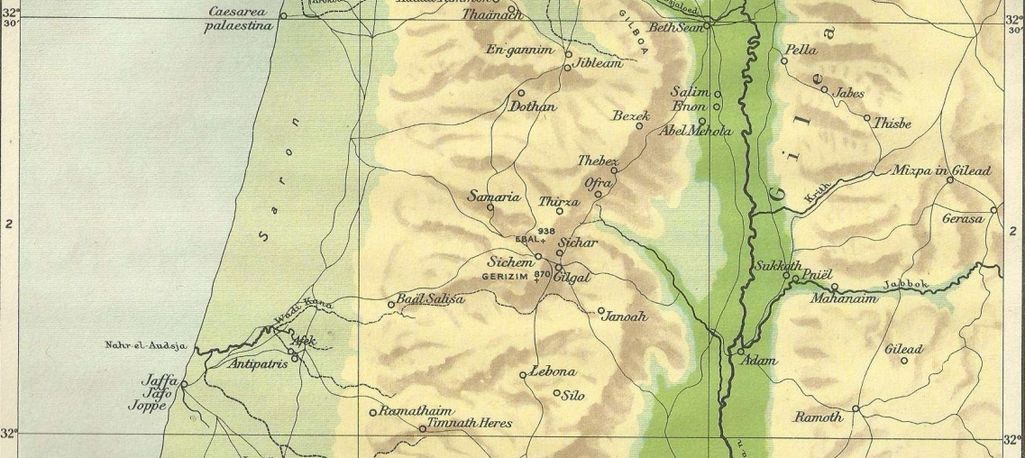
Omri eventually defeated Tibni and his forces, securing his place as the king of Israel. Half of the dozen years he ruled over Israel were spent in Tirzah, the former capital of King Elah. But Omri dreamed of establishing his own royal city from which to rule over the ten tribes of Israel. So, he found a favorable spot just west of Tirzah and purchased the land from a man named Shemer. In time, he built a fortified palace on the elevated portion of the land and named his new capital Samaria.

While the author doesn’t seem to treat this change in the location of the capital city with much importance, his mention of it is meant to foreshadow things to come. Omri would end up establishing a dynasty that would rule over Israel for an extended period of time. His newly established capital would become the focal point for Israel’s continuing spiritual decline and the epicenter of the nation’s eventual destruction.

The author chooses to summarize Omri’s 12-year reign in less-than-flattering terms.

Omri did what was evil in the sight of the LORD, and did more evil than all who were before him. – 1 Kings 16:25 ESV

Israel had a new king and a brand new capital, but they continued to suffer from the same old problem. Omri, like Jeroboam and Nadab before him, failed to use his divinely ordained power as king to lead the people back to God. Instead, he fostered the spirit of spiritual adultery and apostasy. Under his leadership, “the people provoked the anger of the LORD, the God of Israel, with their worthless idols” (1 Kings 16:21 NLT). 

On paper, Omri proved to be a highly accomplished and effective king. His 12 years on the throne of Israel were marked by military victories and peace negotiations with the enemies of Israel. He defeated the Moabites and brokered a treaty with Ethbaal, king of Tyre and Sidon, and this last act would prove to have long-lasting implications. As part of the treaty negotiations, Omri approved a marriage alliance between his son, Ahab, and Ethbaal’s daughter, Jezebel, and those two names will come up again.

While Omri appeared to be having success, he was actually operating outside the revealed will of God. His decisions were made without divine input and in direct violation of God’s commands. Hundreds of years earlier, Moses had warned the people of Israel about their interactions with the nations living in the land of Canaan.

When the LORD your God hands these nations over to you and you conquer them, you must completely destroy them. Make no treaties with them and show them no mercy. You must not intermarry with them. Do not let your daughters and sons marry their sons and daughters, for they will lead your children away from me to worship other gods. Then the anger of the LORD will burn against you, and he will quickly destroy you. – Deuteronomy 7:2-4 NLT

Like his predecessors, Omri was doing things according to his own plan. But as the proverbs warn, “You can make many plans, but the LORD’s purpose will prevail” (Proverbs 19:21 NLT). Omri’s ambitions to expand his kingdom at any cost would actually lead to the eventual fall of the nation. In his hopes of building Israel into a formidable force in the region, he was actually contributing to its downfall. His refusal to shepherd the people of God back to the fold of God would eventually result in their destruction at the hands of God.

English Standard Version (ESV) The Holy Bible, English Standard Version. ESV® Permanent Text Edition® (2016). Copyright © 2001 by Crossway Bibles, a publishing ministry of Good News Publishers.

New Living Translation (NLT) Holy Bible, New Living Translation, copyright © 1996, 2004, 2015 by Tyndale House Foundation. Used by permission of Tyndale House Publishers Inc., Carol Stream, Illinois 60188. All rights reserved.

Where There’s a Will, There’s God’s Way

1 Then David said in his heart, “Now I shall perish one day by the hand of Saul. There is nothing better for me than that I should escape to the land of the Philistines. Then Saul will despair of seeking me any longer within the borders of Israel, and I shall escape out of his hand.” So David arose and went over, he and the six hundred men who were with him, to Achish the son of Maoch, king of Gath. And David lived with Achish at Gath, he and his men, every man with his household, and David with his two wives, Ahinoam of Jezreel, and Abigail of Carmel, Nabal’s widow. And when it was told Saul that David had fled to Gath, he no longer sought him.

Then David said to Achish, “If I have found favor in your eyes, let a place be given me in one of the country towns, that I may dwell there. For why should your servant dwell in the royal city with you?” So that day Achish gave him Ziklag. Therefore Ziklag has belonged to the kings of Judah to this day. And the number of the days that David lived in the country of the Philistines was a year and four months.

Now David and his men went up and made raids against the Geshurites, the Girzites, and the Amalekites, for these were the inhabitants of the land from of old, as far as Shur, to the land of Egypt. And David would strike the land and would leave neither man nor woman alive, but would take away the sheep, the oxen, the donkeys, the camels, and the garments, and come back to Achish. 10 When Achish asked, “Where have you made a raid today?” David would say, “Against the Negeb of Judah,” or, “Against the Negeb of the Jerahmeelites,” or, “Against the Negeb of the Kenites.” 11 And David would leave neither man nor woman alive to bring news to Gath, thinking, “lest they should tell about us and say, ‘So David has done.’” Such was his custom all the while he lived in the country of the Philistines. 12 And Achish trusted David, thinking, “He has made himself an utter stench to his people Israel; therefore he shall always be my servant.” – 1 Samuel 27:1-12  ESV

David was human. He was a flesh-and-blood man who had a sinful nature like anyone else and had to constantly struggle with his own inner fears, feelings of doubt, and the nagging questions regarding his fate. David loved God and wanted to be obedient to His will but he was also driven by an innate desire to stay alive. And the longer his feud with Saul continued, the more he must have struggled to believe that God would make him king one day.

This chapter provides a glimpse into one of David’s weaker moments. The text never mentions God and at no time is David shown to be seeking the will of God. In fact, it would appear that David’s decision to find refuge in the land of the Philistines was made without any input from God. He might have received well-meaning advice from his men but his choice to seek refuge among the Philistines does not appear to be God-ordained. It seems unlikely that God would have instructed David to return to Gath, the very place where he had been forced to feign madness just to save his life (1 Samuel 21:10-14). That far-from-flattering moment in David’s life had been a poor decision and an unmitigated disaster that almost ended in his death.

Yet, in an attempt to escape the wrath of King Saul, David makes the same mistake again and heads to the land of the Philistines. Not only that, he returns to Gath, the scene of his earlier episode of humiliation and near-death. But it’s easy to understand the logic behind David’s decision. He reasoned, “Someday Saul is going to get me. The best thing I can do is escape to the Philistines. Then Saul will stop hunting for me in Israelite territory, and I will finally be safe” (1 Samuel 27:1 NLT).

It all made sense to David because he was convinced that Saul would never stop pursuing him. There was no safe place for him to hide within the land of Judah so seeking refuge from Israel’s mortal enemy seemed like the only logical decision to make. But, once again, David would find that his human intelligence was no match for God’s wisdom. Yet, despite David’s best-laid plans, God would prove Himself to be sovereign and in complete control of every aspect of his life. David would discover the truth of the proverb: “Many are the plans in the mind of a man, but it is the purpose of the Lord that will stand” (Proverbs 19:21 ESV).

David’s last journey into Philistine territory, recorded in chapter 21, nearly got him killed. To escape the pursuit of Saul, David showed up in Gath, seeking refuge from Achish, the king of the Philistines. It just so happened that David was carrying the sword of Goliath, the Philistine champion he had defeated in battle. When the Philistine officers questioned the wisdom of providing sanctuary to David and hinted to the king that he would be better off dead, David “pretended to be insane, scratching on doors and drooling down his beard” (1 Samuel 21:13 NLT). Unwilling to kill a lunatic, Achish allowed David to escape with his life.

Now, years later, David once again seeks refuge among the Philistines. His doubt and fear cloud his thinking and erase from his memory all that happened the last time he attempted to use this particular strategy.

This time, David is welcomed by Achish with open arms and even given his own city, Ziklag, within the territory of the Philistines. David relocates his 600 men and their families to their new base complete with houses, walls, and protection from Saul. This would have been a welcome upgrade from the caves they had been hiding in for so long.

While living in the land of the Philistines, David employed a strategy that allowed him to go out and attack the enemies of Israel, of which there were many. The text mentions the Geshurites, the Girzites, and the Amalekites. All of these nations occupied the land of Canaan and were part of the people groups that God had commanded Joshua and the people of Israel to completely remove from the land when they occupied it. The Book of Joshua reveals how dismally they failed at keeping this command.

But the Jebusites, the inhabitants of Jerusalem, the people of Judah could not drive out, so the Jebusites dwell with the people of Judah at Jerusalem to this day. – Joshua 15:63 ESV

However, they did not drive out the Canaanites who lived in Gezer, so the Canaanites have lived in the midst of Ephraim to this day but have been made to do forced labor. – Joshua 16:10 ESV

Yet the people of Manasseh could not take possession of those cities, but the Canaanites persisted in dwelling in that land. – Joshua 17:12 ESV

Their unwillingness or inability to drive out the inhabitants of the land left them with a constant threat of war and the ongoing temptation to commit idolatry. These nations would prove to be a constant source of temptation and trouble. So David used his new headquarters in Ziklag as an outpost from which he sent raiding parties against these enemies of Israel. His strategy included the complete annihilation of every man, woman, and child so no word of his genocide could reach the ears of Achish.

This clandestine military operation allowed David to attack Israel’s enemies from the safe confines of Philistia. When returning from these excursions, David covered up his activities by lying to King Achish.

When Achish asked, “Where have you made a raid today?” David would say, “Against the Negeb of Judah,” or, “Against the Negeb of the Jerahmeelites,” or, “Against the Negeb of the Kenites.” – 1 Samuel 27:10 ESV

David wanted Achish to believe that his forays were directed at the enemies of Philistia. But it was all a matter of subterfuge and sleight of hand.

So what do we do with all of this? David appears to have gone to the land of the Philistines, seemingly without God’s permission. Yet, while he was there, he continued to fight the enemies of Israel, clearing the promised land of the nations that Joshua and the people of Israel had failed to remove. But to do what he did, David lied to King Achish. Everything he did while living in Ziklag was based on deception. So was he within the will of God? Was he doing what God would have him do? The text doesn’t provide an answer but the next chapter will reveal how David’s plan eventually placed him in a difficult and potentially deadly position. It would seem that David’s decision to seek refuge among the Philistines was not the will of God, but it did not thwart or derail the plan of God. The Proverbs have much to say about our plans and God’s will.

We can make our plans, but the Lord determines our steps. – Proverbs 16:9 NLT

The Lord directs our steps, so why try to understand everything along the way? – Proverbs 20:24 NLT

The prophet, Jeremiah, prayed these powerful, self-disclosing words to the Lord:

I know, O Lord, that the way of man is not in himself,
that it is not in man who walks to direct his steps.
Correct me, O Lord, but in justice;
not in your anger, lest you bring me to nothing. – Jeremiah 10:23-24 ESV

Years later, even David would pen these words:

The Lord directs the steps of the godly.
    He delights in every detail of their lives.
Though they stumble, they will never fall,
    for the Lord holds them by the hand. – Psalm 37:23-24 NLT

We can’t thwart God’s plan, but we can certainly cause ourselves a great deal of pain and suffering when we attempt to replace his plan with our own. We can unnecessarily complicate our lives by introducing detours that are not part of His divine will for us. Abraham and Sarah came up with the idea to use Hagar as a means to fulfill God’s promise to give them a child. But in doing so, they were attempting to do God’s will man’s way. Saul tried to seek God’s aid by offering sacrifices to him but he failed to do it God’s way. He mistakenly took on the role of the priest and brought down God’s wrath rather than His blessing. Peter tried to dissuade Jesus from fulfilling God’s will that He die, by forbidding Him to do so. But Jesus accused Peter of siding with the enemy by seeking the will of Satan rather than that of God.

We must refrain from letting our will take precedence over God’s. We can’t improve or impede God’s will for our lives, but we can certainly make the path more difficult that He has laid out for us. Like a driver who refuses to use his GPS, we can wander off the prescribed course and find ourselves seemingly lost and delayed in our journey. But God continues to recalculate the directions for our life, graciously providing us with another way to reach the destination He has in store for us. Thankfully, many are the plans in the mind of a man, but it is the purpose of the Lord that will stand.

English Standard Version (ESV) The Holy Bible, English Standard Version. ESV® Permanent Text Edition® (2016). Copyright © 2001 by Crossway Bibles, a publishing ministry of Good News Publishers.

New Living Translation (NLT) Holy Bible, New Living Translation, copyright © 1996, 2004, 2015 by Tyndale House Foundation. Used by permission of Tyndale House Publishers Inc., Carol Stream, Illinois 60188. All rights reserved.

Man Rages and God Laughs

13 And Balak said to him, “Please come with me to another place, from which you may see them. You shall see only a fraction of them and shall not see them all. Then curse them for me from there.” 14 And he took him to the field of Zophim, to the top of Pisgah, and built seven altars and offered a bull and a ram on each altar. 15 Balaam said to Balak, “Stand here beside your burnt offering, while I meet the Lord over there.” 16 And the Lord met Balaam and put a word in his mouth and said, “Return to Balak, and thus shall you speak.” 17 And he came to him, and behold, he was standing beside his burnt offering, and the princes of Moab with him. And Balak said to him, “What has the Lord spoken?” 18 And Balaam took up his discourse and said,

“Rise, Balak, and hear;
    give ear to me, O son of Zippor:
19 God is not man, that he should lie,
    or a son of man, that he should change his mind.
Has he said, and will he not do it?
    Or has he spoken, and will he not fulfill it?
20 Behold, I received a command to bless:
    he has blessed, and I cannot revoke it.
21 He has not beheld misfortune in Jacob,
    nor has he seen trouble in Israel.
The Lord their God is with them,
    and the shout of a king is among them.
22 God brings them out of Egypt
    and is for them like the horns of the wild ox.
23 For there is no enchantment against Jacob,
    no divination against Israel;
now it shall be said of Jacob and Israel,
    ‘What has God wrought!’
24 Behold, a people! As a lioness it rises up
    and as a lion it lifts itself;
it does not lie down until it has devoured the prey
    and drunk the blood of the slain.”

25 And Balak said to Balaam, “Do not curse them at all, and do not bless them at all.” 26 But Balaam answered Balak, “Did I not tell you, ‘All that the Lord says, that I must do’?” Numbers 23:13-26 ESV

Balak was doggedly determined in his efforts to have the Israelites cursed. And he seems to have believed that Balaam’s reluctance to do so was based on fear of their overwhelming numbers. After all, from his earlier vantage point, Balaam had stressed the size of the Israelite camp.

“I see them from the cliff tops;
    I watch them from the hills.
I see a people who live by themselves,
    set apart from other nations.
Who can count Jacob’s descendants, as numerous as dust?
    Who can count even a fourth of Israel’s people?” – Numbers 23:9-10 NLT

So, Balak suggested a change of venue where Balaam’s view of the Israelite encampment might be somewhat restricted. Perhaps if the seer saw fewer Israelites he would be less wary of issuing a curse on them.

“Please come with me to another place, from which you may see them. You shall see only a fraction of them and shall not see them all. Then curse them for me from there.” – Numbers 23:13 NLT

Balak’s desperation was at an all-time high, and he was willing to do anything to ensure that his hired diviner carried out his assignment. He even built seven more altars and sacrificed an additional seven bulls in the hopes that this location might create the right environment for Balaam to conjure up a devastating curse on the enemy camp. But, once again, Balaam informed the king that he would have to consult Jehovah, the God of the Israelites.

“Stand here by your burnt offerings while I go over there to meet the Lord.” – Numbers 23: 15 NLT

By this point, Balaam knew that he would be a fool to do anything that angered Israel’s God. It wasn’t the size of Israel’s camp that scared Balaam; it was the power of their God. Yet, there seems to be a part of Balaam that hoped he could convince Jehovah to change His mind. Why else would he agree to offer additional sacrifices and call on Jehovah yet again? He must have harbored hopes that this time would be different.

“Balaam is constantly shifting, prevaricating, equivocating, changing—he is himself the prime example of the distinction between God and man.” – Ronald B. Allen, “Numbers.” In Genesis—Numbers. Vol. 2 of The Expositor’s Bible Commentary

But, unlike Balaam, God would prove to be unchanging in His covenant commitment to Israel. He was not fickle or easily swayed to change His mind. So, when Balaam heard from God a second time, the message he received was aimed directly at Balak and it contained a stern lesson concerning God’s faithfulness and His commitment to bless His chosen people. There was nothing Balaam or Balak could do to alter His plans for the nation of Israel.

First, God had Balaam teach Balaam the doctrine of divine immutability.

“Rise up, Balak, and listen!
    Hear me, son of Zippor.
God is not a man, so he does not lie.
    He is not human, so he does not change his mind.
Has he ever spoken and failed to act?
    Has he ever promised and not carried it through? – Numbers 23:18-19 NLT

Jehovah was not anything like the false gods that Balak worshiped. He wasn’t a human on steroids, a mere man with supernatural powers and a flawed character. Israel’s God was otherworldly and without equal. He could not be bought off, coerced, or expected to do anything that would violate His divine will.

And Balaam delivered the less-than-encouraging news that there was nothing he could do to thwart God’s plans for Israel.

“God has blessed, and I cannot reverse it!
No misfortune is in his plan for Jacob;
    no trouble is in store for Israel.
For the Lord their God is with them;
    he has been proclaimed their king.” – Numbers 23:20-21 NLT

This not-so-subtle point was aimed directly at Balak. God was letting this inconsequential king know he was no match for the one true King. Balak was outclassed and out of his league. His paltry army and insignificant kingdom were up against the God of the universe and the odds were totally against him. And Balaam was forced to admit that his parlor tricks would be of no use against the all-powerful God of Israel.

“God brought them out of Egypt;
    for them he is as strong as a wild ox.
No curse can touch Jacob;
    no magic has any power against Israel.” – Numbers 23:22-23 NLT

Whether Balaam realized it or not, he was echoing the failures of the Egyptian magicians who had tried to replicate the supernatural miracles of Moses.

So Moses and Aaron did just as the Lord had commanded them. When Aaron raised his hand and struck the ground with his staff, gnats infested the entire land, covering the Egyptians and their animals. All the dust in the land of Egypt turned into gnats. Pharaoh’s magicians tried to do the same thing with their secret arts, but this time they failed. – Exodus 8:17-18 NLT

Magicians and magistrates are powerless against Jehovah. Human kings and kingdoms have no hope of victory against the King of kings. And the psalmist pointed out the futility of attempting to wage war against the Almighty.

Why do the nations rage
    and the peoples plot in vain?
The kings of the earth set themselves,
    and the rulers take counsel together,
    against the Lord and against his Anointed, saying,
“Let us burst their bonds apart
    and cast away their cords from us.”

He who sits in the heavens laughs;
    the Lord holds them in derision.
Then he will speak to them in his wrath,
    and terrify them in his fury, saying,
“As for me, I have set my King
    on Zion, my holy hill.” – Psalm 2:1-6 ESV

The King on Zion had one last bit of bad news for the king of Moab. And this final part of the message must have left Balak on the verge of depression.

“For now it will be said of Jacob,
    ‘What wonders God has done for Israel!’
These people rise up like a lioness,
    like a majestic lion rousing itself.
They refuse to rest
    until they have feasted on prey,
    drinking the blood of the slaughtered!” – Numbers 23:23-24 NLT

Desperate to find a silver lining on this dark cloud of depressing news, Balak pleaded with Balaam, “if you won’t curse them, at least don’t bless them!” (Numbers 23:25 NLT). He was grasping for any semblance of hope among all the doom and gloom of Balaam’s latest message. But, once again, the hapless sage was forced to confess his powerlessness to do anything that would conflict with God’s will.

“Didn’t I tell you that I can do only what the Lord tells me?” – Numbers 23:26 NLT

But it will become evident that Balak was just as unchanging and immutable as Jehovah. Unwilling to take no for an answer, the stubborn potentate would try one last time to convince Balaam to curse the Israelites. It was his only hope. But his stubbornness would prove to be no match for God’s covenant faithfulness.

English Standard Version (ESV) The Holy Bible, English Standard Version. ESV® Permanent Text Edition® (2016). Copyright © 2001

New Living Translation (NLT) Holy Bible, New Living Translation, copyright © 1996, 2004, 2015 by Tyndale House Foundation. Used by permission of Tyndale House Publishers Inc., Carol Stream, Illinois 60188. All rights reserved.

God’s Will Always Wins Out

41 Now Esau hated Jacob because of the blessing with which his father had blessed him, and Esau said to himself, “The days of mourning for my father are approaching; then I will kill my brother Jacob.” 42 But the words of Esau her older son were told to Rebekah. So she sent and called Jacob her younger son and said to him, “Behold, your brother Esau comforts himself about you by planning to kill you. 43 Now therefore, my son, obey my voice. Arise, flee to Laban my brother in Haran 44 and stay with him a while, until your brother’s fury turns away— 45 until your brother’s anger turns away from you, and he forgets what you have done to him. Then I will send and bring you from there. Why should I be bereft of you both in one day?”

46 Then Rebekah said to Isaac, “I loathe my life because of the Hittite women. If Jacob marries one of the Hittite women like these, one of the women of the land, what good will my life be to me?”

1 Then Isaac called Jacob and blessed him and directed him, “You must not take a wife from the Canaanite women. Arise, go to Paddan-aram to the house of Bethuel your mother’s father, and take as your wife from there one of the daughters of Laban your mother’s brother. God Almighty bless you and make you fruitful and multiply you, that you may become a company of peoples. May he give the blessing of Abraham to you and to your offspring with you, that you may take possession of the land of your sojournings that God gave to Abraham!” Thus Isaac sent Jacob away. And he went to Paddan-aram, to Laban, the son of Bethuel the Aramean, the brother of Rebekah, Jacob’s and Esau’s mother. Genesis 27:41-28:5 ESV

Rebekah got exactly what she wished for, and much more than she could have ever imagined. She had helped her favorite son swindle the blessing from his older brother. Now Jacob had it all – the birthright and the blessing – making him the legal heir to his father’s inheritance and the next in line to rule over their clan. He was destined to be a wealthy and powerful man. On top of that, with his mother’s help, he had managed to become the sole beneficiary of the covenant that God had made with his grandfather, Abraham. But what Rebekah failed to consider was the reaction of Esau. It is as if she thought he would take all of this lying down. But she was in for an unpleasant surprise.

Esau was furious, and rightfully so. In a sense, he had been cursed, and he was partly to blame. Years earlier, he had willingly sold his birthright to Jacob for a bowl of stew. He had allowed his immediate physical appetites to make an impulsive decision that would have long-term ramifications. Now, his future had taken another hit because his own brother and mother had stolen the blessing that had been rightfully his as the firstborn son. He had nothing to look forward to except the prospect of living in his brother’s shadow for the rest of his life.

What nobody in this story seems to recognize is the hand of God working behind the scenes to accomplish His divine will. They seemed to believe that they were operating as fully autonomous free agents without any responsibility to answer to God for their actions. At no point does anyone seek God’s input or approval for their decisions. Driven by their emotions and depending upon their own wisdom, each decision they make only seems to make matter worse. And yet, Moses would have his readers understand that this soap-opera-like story is actually an illustration of how God’s sovereignty and man’s autonomy interact in daily life. Rebekah, Isaac, Jacob, and Esau are each making independent decisions, but the ultimate outcome is in the hands of Almighty God. According to Scripture, the will of God cannot be thwarted by the plans of men.

Many are the plans in the mind of a man, but it is the purpose of the LORD that will stand. – Proverbs 19:21 ESV

The heart of man plans his way, but the LORD establishes his steps. – Proverbs 16:9 ESV

A man’s steps are from the LORD, so how can anyone understand his own way? – Proverbs 20:24 BSB

Angered over his most recent loss, Esau made plans to murder his brother. Frightened over the news that Jacob’s life was in danger, Rebekah made plans to protect him. Distraught over the prospect of Jacob marrying a Hittite woman, Isaac made plans to send him to Haran. Everyone was making plans for the future, but no one realized that it was God who was establishing their steps. This was all according to His divine will.

But these people were not operating like mindless automatons, helplessly and unwilling fulfilling God’s relentless will. No, they were each doing exactly what they wanted to do. God was not forcing or coercing them against their wills. But He was sovereignly and providentially orchestrating the outcome of their decisions. What they meant for evil, God would use for good. Esau’s evil intentions to kill his brother would be used by God to send Jacob away from the smothering influence of his mother. Rebekah’s manipulative attempt to promote the prospects of her favorite son would actually result in his blessing by God.

Yet, while God was turning their evil into good, He would still hold them accountable for their actions. They would each suffer the consequences for the decisions they made without God’s input or blessing. In a sense, God was going to redeem their unrighteous behavior in order to produce a fully righteous outcome.

Rebekah seems to have been caught off guard by Esau’s over-the-top reaction to his loss. So, when she caught wind that he planned to kill Jacob, she was forced to come up with yet another plan to protect her favorite son. She immediately called Jacob and shared with him her latest and greatest idea.

“Look, your brother Esau is planning to get revenge by killing you. Now then, my son, do what I say. Run away immediately to my brother Laban in Haran. Live with him for a little while until your brother’s rage subsides. Stay there until your brother’s anger against you subsides and he forgets what you did to him. Then I’ll send someone to bring you back from there. Why should I lose both of you in one day?” – Genesis 27:42-45 NET

She realized her relationship with Esau was dead in the water. There was no way she was going to mitigate the damage she had done. So, the best thing she could do was keep Esau from murdering Jacob. It’s obvious that she took Esau’s threat seriously because she was willing to send Jacob away. And she was able to convince the somewhat oblivious Isaac to agree to her plan by portraying it as a quest to find Jacob a bride. Neither she nor Isaac had been thrilled by Esau’s decision to marry two Hittite women (Genesis 26:34). In fact, Moses states that these marriages “caused Isaac and Rebekah great anxiety” (Genesis 26:35 NET). 

So, Rebekah convinced Isaac to send Jacob back to her hometown of Haran so that he might search for a bride from among her brother’s family. This plan pleased Isaac because that had been how his father had found Rebekah for him. So, Isaac agreed to send Jacob back to Haran so that he might find a wife. But neither Isaac nor Rebekah had any idea just how long this separation was going to last. She seemed to believe that, with Jacob out of the way, Esau’s anger would quickly subside. So, she assured Jacob that his exile in Haran would only be “for a little while” (Genesis 27:44 NET).

Once again, Esau is going to find himself as the odd-man-out. He would wake up one day to find that his plans for killing his brother had been thwarted by his conniving mother, and his father, Isaac, had been complicit in the whole affair.

In rather short order, Jacob found himself on his way to Mesopotamia with instructions to find a wife among his grandfather’s relatives.

“You must not marry any of these Canaanite women. Instead, go at once to Paddan-aram, to the house of your grandfather Bethuel, and marry one of your uncle Laban’s daughters.” – Genesis 28:1-2 NLT

Isaac views this trip in a totally positive light, believing that his son will return with a bride who will help Jacob fulfill the conditions contained in the divine covenant. He even reiterates the terms of the covenant, putting them in the form of a blessing.

“May God Almighty bless you and give you many children. And may your descendants multiply and become many nations! May God pass on to you and your descendants the blessings he promised to Abraham. May you own this land where you are now living as a foreigner, for God gave this land to Abraham.” – Genesis 28:3-4 NLT

Rebekah must have smiled as she heard these words. It was all she had ever wanted for Jacob. But Esau must have fumed as he stood back and watched his younger brother ride away with his birthright, his blessing, and his father’s best wishes for a prosperous future.

Isaac, Rebekah, and Esau stood and watched as Jacob and his caravan rode off into the distance. And little did they know that 20 years would pass before they saw him again. There are those who believe that Rebekah never saw Jacob again. The timing of her death is not mentioned in Scripture, but neither is her reunion with Jacob. It seems that her plan to promote her younger son over his brother had worked, but it came at a great cost. The boy she loved so dearly would be taken from her and she would never live to meet his wife or see the birth of her grandchildren. Her days would be marked by pain and regret, as she was forced to consider the cost of her actions. It’s likely that her relationship with Esau was beyond repair. In her misguided effort to protect the one thing she loved more than anything else in the world, she had actually ended up losing it. But God was working behind the scenes and He had great plans for Jacob. The days ahead would be difficult. The next two decades would be filled with pain and sorrow. And Jacob, the deceiver, would find himself getting an unexpected and unpleasant dose of his own medicine – all for his own good and God’s glory.

English Standard Version (ESV) The Holy Bible, English Standard Version. ESV® Permanent Text Edition® (2016). Copyright © 2001 by Crossway Bibles, a publishing ministry of Good News Publishers.

New Living Translation (NLT) Holy Bible, New Living Translation, copyright © 1996, 2004, 2015 by Tyndale House Foundation. Used by permission of Tyndale House Publishers Inc., Carol Stream, Illinois 60188. All rights reserved.

New English Translation (NET)NET Bible® copyright ©1996-2017 by Biblical Studies Press, L.L.C. http://netbible.com All rights reserved.

Planning Without God Results in Godless Outcomes.

But when Johanan the son of Kareah and all the leaders of the forces with him heard of all the evil that Ishmael the son of Nethaniah had done, they took all their men and went to fight against Ishmael the son of Nethaniah. They came upon him at the great pool that is in Gibeon. And when all the people who were with Ishmael saw Johanan the son of Kareah and all the leaders of the forces with him, they rejoiced. So all the people whom Ishmael had carried away captive from Mizpah turned around and came back, and went to Johanan the son of Kareah. But Ishmael the son of Nethaniah escaped from Johanan with eight men, and went to the Ammonites. Then Johanan the son of Kareah and all the leaders of the forces with him took from Mizpah all the rest of the people whom he had recovered from Ishmael the son of Nethaniah, after he had struck down Gedaliah the son of Ahikam—soldiers, women, children, and eunuchs, whom Johanan brought back from Gibeon. And they went and stayed at Geruth Chimham near Bethlehem, intending to go to Egypt because of the Chaldeans. For they were afraid of them, because Ishmael the son of Nethaniah had struck down Gedaliah the son of Ahikam, whom the king of Babylon had made governor over the land. Jeremiah 41:11-18 ESV

If you recall, at the close of chapter 40, there was an encounter between Gedaliah, the newly appointed governor of Judah and Johanan son of Kareah. Johanan and some other military leaders had come to warn Gedaliah of a plot on his life.

“Did you know that Baalis, king of Ammon, has sent Ishmael son of Nethaniah to assassinate you?” But Gedaliah refused to believe them. – Jeremiah 40:14 NLT

Johanan warned and Gedaliah ignored. And within days, Gedaliah was dead, murdered by Ishmael. But Johanan, rather than simply walk away with an I-told-you-so attitude, decides to avenge the death of Gedaliah and rescue all those Ishmael had taken captive. Johanan and his troops catch up to Ishmael at a watering spot near the town of Gibeon. We’re not told why Ishmael took this route, and it was not exactly a direct route to Ammon, where he was headed. But regardless of his motivation, Ishmael’s plans took him to Gibeon, where Johanah and his troops surprised them. Immediately, the people who had been taken captive by Ishmael turn on him and begin fighting alongside Johanan and his men. In the midst of all the chaos, Ishmael and eight of his men escape. But Johanan sets the captives free and takes them with him “to the village of Geruth-kimham near Bethlehem, where they prepared to leave for Egypt” (Jeremiah 41:17 NLT).

This last statement is significant. Johanan had already made plans for he and his troops to escape to Egypt. And now, he decides to have the recently rescued citizens of Mizpah join them. But where did he get this idea from? Why had he determined to make his way to Egypt? It would seem that he feared what King Nebuchadnezzar would do when he found out that the governor he had appointed over Judah had been murdered, along with some Babylonian soldiers. Johanan knew that the king of Babylon was not going to look kindly on this act of abject rebellion against his authority. So, rather than wait around to see what Nebuchadnezzar might do, Johanan decided to seek refuge from Egypt, a supposed ally of Judah. But notice what is missing. There is no indication that Johanan received a word from God to go to Egypt. This does not appear to be a divinely ordained plan. And any plan that lacks God’s blessing is ultimately doomed to failure.

This brings to mind another journey to Egypt made by Abraham and his wife, Sarah. There little trip was due to a famine in the land of Canaan. Abraham made the call to leave Canaan and journey to Egypt where they might find food and water. But again, there is no indication that God had given His blessing on this trip. And it ended up with Sarah nearly being guilty of have adultery with the the Pharaoh. It was only because God struck Pharaoh and his household with disease that this whole affair didn’t end up being a total disaster. Pharaoh discovered that Sarah was Abraham’s wife and angrily confronted Abraham for deceiving him. But rather than kill Abraham, he returns his wife to him and expels them from Egypt.

What about David? Do you recall the time he was attempting to escape from King Saul and decided to escape to Gath? This whole story has a what-were-you-thinking aspect to it. Gath was the hometown of Goliath, the great warrior who David had killed. And to top it all off, David had stopped at the city of Nob to get food and provisions. While there, he had taken the sword of Goliath that was stored there for safe keeping. This was the very same sword David had used to cut off the head of Goliath. So, David, the killer of the Philistine champion, shows up in Goliath’s hometown, wearing Goliath’s sword on his belt. And the Philistines can’t believe their eyes. The Philistine military commanders are highly suspicious.

But the officers of Achish were unhappy about his being there. “Isn’t this David, the king of the land?” they asked. “Isn’t he the one the people honor with dances, singing,

‘Saul has killed his thousands, and David his ten thousands’?” – 1 Samuel 21:11 NLT

Waking up to his senses, David immediately realized the stupidity of his decision and came up with the desperate idea to feign insanity – literally.

David heard these comments and was very afraid of what King Achish of Gath might do to him. So he pretended to be insane, scratching on doors and drooling down his beard. – 1 Samuel 21:12-13 NLT

It worked. They let David go. But his trip almost cost him his life. And his stop in Nob would end up resulting in the deaths of the priests who lived there. When King Saul caught wind that they had assisted David in his escape he had them slaughtered.

So Doeg the Edomite turned on them and killed them that day, eighty-five priests in all, still wearing their priestly garments. Then he went to Nob, the town of the priests, and killed the priests’ families—men and women, children and babies—and all the cattle, donkeys, sheep, and goats. – 1 Samuel 22:18-19 NLT

None of this had been God’s plan. He had never sanctioned this little trip to Gath with a side stop in Nob. And because it was out of His will, it ended up resulting in needless suffering and death.

So, here we have Johanan leading a group of people to Egypt. He has not received a direct word from God. He has not heard anything from the prophet of God. It appears that he made his decision based on nothing more than fear and human reason – the very same motivating factors behind Abraham’s trip to Egypt and David’s journey to Gath. Making plans apart from God’s will can be life-threatening; not just to us, but to all those around us. But we all have a nasty way of coming up with our own Egypts and Gaths. We find ourselves in trouble and then start looking for somewhere to run or hide. We look for a way out, a way of escape. But unless that way comes from the Lord, it will always end up creating problems, not solving them. Now, you might say that Abraham ended up leaving Egypt loaded with gifts from Pharaoh. The passage in Genesis clearly states:

So Abram’s wife was taken into the household of Pharaoh, and he did treat Abram well on account of her. Abram received sheep and cattle, male donkeys, male servants, female servants, female donkeys, and camels. – Genesis 12:15-16 NLT

And when Abraham left Egypt, it clearly tells us:

Pharaoh gave his men orders about Abram, and so they expelled him, along with his wife and all his possessions. – Genesis 12:20 NLT

Abraham left wealthier than he had arrived. And the very next chapter reinforces this idea.

So Abram went up from Egypt into the Negev. He took his wife and all his possessions with him, as well as Lot. (Now Abram was very wealthy in livestock, silver, and gold.)…

Now Lot, who was traveling with Abram, also had flocks, herds, and tents. But the land could not support them while they were living side by side. Because their possessions were so great, they were not able to live alongside one another. So there were quarrels between Abram’s herdsmen and Lot’s herdsmen. – Genesis 13:1-2, 5-7 NLT

What appears to be good fortune as a result of his non-God-sanctioned trip to Egypt, turned out to be nothing but a headache over time. The “blessings” he got for heading to Egypt without God’s approval would prove to be curses. His abundance of flocks led to disunity between he and his nephew Lot. And when he gave Lot the first choice of land to occupy so they could part ways, Lot took the best land. Then, before long, Lot ended up moving to Sodom. And, eventually, Abraham would be forced to rescue Lot when he was captured along with the other citizens of Sodom. All because Abraham had gone to Egypt, lied to Pharaoh, and received an extravagant dowry from Pharaoh so he could have Sarah as his wife. Our best plans apart from God’s blessing and direction are futile and will prove fruitless. And Johanan’s plan would prove to be no less so.

English Standard Version (ESV)
The Holy Bible, English Standard Version. ESV® Permanent Text Edition® (2016). Copyright © 2001 by Crossway Bibles, a publishing ministry of Good News Publishers.

New Living Translation (NLT)
Holy Bible, New Living Translation, copyright © 1996, 2004, 2015 by Tyndale House Foundation. Used by permission of Tyndale House Publishers Inc., Carol Stream, Illinois 60188. All rights reserved.

Copyright © 1993, 1994, 1995, 1996, 2000, 2001, 2002 by Eugene H. Peterson

Opportunity Versus Authority.

When Saul returned from following the Philistines, he was told, “Behold, David is in the wilderness of Engedi.” Then Saul took three thousand chosen men out of all Israel and went to seek David and his men in front of the Wildgoats’ Rocks. And he came to the sheepfolds by the way, where there was a cave, and Saul went in to relieve himself. Now David and his men were sitting in the innermost parts of the cave. And the men of David said to him, “Here is the day of which the Lord said to you, ‘Behold, I will give your enemy into your hand, and you shall do to him as it shall seem good to you.’” Then David arose and stealthily cut off a corner of Saul’s robe. And afterward David’s heart struck him, because he had cut off a corner of Saul’s robe. He said to his men, “The Lord forbid that I should do this thing to my lord, the Lord’s anointed, to put out my hand against him, seeing he is the Lord’s anointed.” So David persuaded his men with these words and did not permit them to attack Saul. And Saul rose up and left the cave and went on his way.

Afterward David also arose and went out of the cave, and called after Saul, “My lord the king!” And when Saul looked behind him, David bowed with his face to the earth and paid homage. And David said to Saul, “Why do you listen to the words of men who say, ‘Behold, David seeks your harm’? Behold, this day your eyes have seen how the Lord gave you today into my hand in the cave. And some told me to kill you, but I spared you. I said, ‘I will not put out my hand against my lord, for he is the Lord‘s anointed.’” – 1 Samuel 24:1-10 ESV

Distracted by the surprise attack by the Philistines, Saul was forced to call of his pursuit of David, allowing him time to escape to the wilderness of Engedi. But it was not long before Saul was back on the war path, accompanied by 3,000 highly trained soldiers. His mission: Capture and kill David. But chapter 24 is going to provide a striking contrast between Saul, the current king of Israel, and David, the God-appointed king- elect of Israel. Time and time again we have read of Saul’s relentless pursuit of David and his obsessive compulsion to take his life. Now we will see the tables turned. This time around, David will have the chance to take matters into his own hands and eliminate the threat of Saul once and for all.

As David and his men were hiding in one of the caves in the wilderness of Engedi, Saul entered, seemingly alone, and placing himself in a very vulnerable position. Little did he know that the very man he pursued was there in the darkness watching his every move. And when David’s men saw Saul walk into their hideout, they spied what they believed to be a God-ordained opportunity.

“Now’s your opportunity!” David’s men whispered to him. “Today the Lord is telling you, ‘I will certainly put your enemy into your power, to do with as you wish.’” 1 Samuel 24:4 NLT

Their assessment of the situation was quick and incredibly clear – at least to them. God had obviously sent Saul into the cave for the sole purpose of David taking his life. What else could it be? The timing was perfect. Saul was alone. He was defenseless. Of all the caves in the wilderness of Engedi, he had chosen this one. What else could it be but a divinely ordained opportunity for David to out an end to this nightmare?

There was only one problem: Nowhere in the text does it indicate that God had given His permission for David or anyone else to take the life of Saul. Regardless of the picture-perfect circumstances and the seemingly divine nature of the opportunity, what was missing was the divine authority for David to lift a finger against Saul.

But David, emboldened by the advice of his men, crept forward and in the darkness of the cave, sliced off a section of Saul’s robe. He had chosen to spare Saul’s life, but his action was intended to send a deliberate and crystal-clear message to Saul that he could cut his reign short at any time. What David did was an act of rebellion, and he soon had second thoughts. The text tells us:

But then David’s conscience began bothering him because he had cut Saul’s robe. He said to his men, “The Lord forbid that I should do this to my lord the king. I shouldn’t attack the Lord’s anointed one, for the Lord himself has chosen him.” So David restrained his men and did not let them kill Saul. – 1 Samuel 24:5-7 NLT

His action had been presumptuous and without divine authority. God had not given him permission to take matters into his own hands. Earlier, when Jonathan had told David, “You shall be king over Israel” (1 Samuel 23:17 ESV), those words must have registered in David’s mind and given him the confidence to believe that God had anointed him to be the next king of Israel. But God had not told David when or how his reign would come about. Saul was still the king. Technically, he was the anointed sovereign over the nation of Israel. Saul had been chosen by God, and at no time had God given David permission to take his life in order to speed up the process of his coronation. David was susceptible to the same thing we all face as followers of God: To believe that the end justifies the means. It was far too easy for David to assume that if he was to be the next king, then getting rid of the current king must be part of God’s plan. But God had not disclosed to David the means by which He was going to bring about the transition of power from one man to the next. That was God’s concern, not David’s.

The Scriptures are full of warnings about confusing our plans with those of God.

Many are the plans in the mind of a man, but it is the purpose of the LORD that will stand.
 – Proverbs 19:21 ESV

We can make our plans, but the LORD determines our steps. – Proverbs 16:9 NLT

We can make our own plans, but the LORD gives the right answer. – Proverbs 16:1 NLT

LORD, we know that people do not control their own destiny. It is not in their power to determine what will happen to them. – Jeremiah 10:23 NET Bible

David had no shortage of well-meaning friends providing well-intended advice. But what he really needed was a word from God. The opportunity may have looked right, but without God’s approval, the outcome was going to turn out all wrong. It is interesting to note that David would eventually admit to Saul, “the Lord gave you today into my hand in the cave” (1 Samuel 24:10 ESV). This is not an admission on David’s part that he believed God had given him permission to kill Saul. He was simply saying that this encounter had not been a coincidence. He had been put to the test by God. And David’s own men had made that test even more difficult by counseling David to take Saul’s life. But he didn’t. David even saw his cutting off of the section of Saul’s robe as an act unsanctioned by God. He had overstepped his bounds.

Opportunity means nothing without God-given authority. In fact, there is an interesting side story that involves Saul himself. In the early days of his reign, when he had been king for only two years, he found himself besieged by the Philistines. He was outnumbered. He had 3,000 men, but was facing 6,000 Philistine cavalry, 30,000 chariots and infantry “as the sand which is on the seashore in multitude” (1 Samuel 13:5 ESV). Needless to say, his troops were terrified. In fact, the passage tells us:

When the men of Israel saw that they were in danger (for the people were distressed), then the people hid in caves, in thickets, in rocks, in holes, and in pits. And some of the Hebrews crossed over the Jordan to the land of Gad and Gilead. – 1 Samuel 24:6-7 ESV

Here’s the point. Saul had been instructed by Samuel the prophet to wait in Gilgal for seven days. When the seven days passed and the prophet was nowhere to be found, Saul took matters into his own hands. He was facing a formidable foe with demoralized troops. Saul seized the opportunity. He commanded his servants, “‘Bring a burnt offering and peace offerings here to me.’ And he offered the burnt offering. Now it happened, as soon as he had finished presenting the burnt offering, that Samuel came” (1 Samuel 13:9-10 ESV). Saul thought that he had done the right thing. They were in trouble. The prophet wasn’t there. Somebody needed to offer a sacrifice to God before the battle ensued. But while Saul had the opportunity, he did not have the authority. And he would have to suffer the consequences for his disobedience.

When confronted by Samuel, Saul explained, “‘The Philistines will now come down on me at Gilgal, and I have not made supplication to the Lord.’ Therefore I felt compelled, and offered a burnt offering” (1 Samuel 13:12 ESV). Saul’s compulsion was not to be confused with God’s permission. His urge to do something was situation-induced and self-authorized. And as a result, his offering brought God’s wrath, not blessing. Acting on behalf of God, but without the permission of God, is a sign of disobedience, not faithfulness. God had a plan. Saul got impatient. He took matters into his own hands. But just because an opportunity presents itself does not mean God is in it or has given His permission for it. God’s will can only be done God’s way. Opportunity without authority will almost always result in calamity.


English Standard Version (ESV)
The Holy Bible, English Standard Version. ESV® Permanent Text Edition® (2016). Copyright © 2001 by Crossway Bibles, a publishing ministry of Good News Publishers.

New Living Translation (NLT)
Holy Bible, New Living Translation, copyright © 1996, 2004, 2015 by Tyndale House Foundation. Used by permission of Tyndale House Publishers Inc., Carol Stream, Illinois 60188. All rights reserved.

The Message (MSG)Copyright © 1993, 1994, 1995, 1996, 2000, 2001, 2002 by Eugene H. Peterson

Divine Payback.

And on the second day, as they were drinking wine after the feast, the king again said to Esther, “What is your wish, Queen Esther? It shall be granted you. And what is your request? Even to the half of my kingdom, it shall be fulfilled.” Then Queen Esther answered, “If I have found favor in your sight, O king, and if it please the king, let my life be granted me for my wish, and my people for my request. For we have been sold, I and my people, to be destroyed, to be killed, and to be annihilated. If we had been sold merely as slaves, men and women, I would have been silent, for our affliction is not to be compared with the loss to the king.” Then King Ahasuerus said to Queen Esther, “Who is he, and where is he, who has dared to do this?” And Esther said, “A foe and enemy! This wicked Haman!” Then Haman was terrified before the king and the queen. – Esther 7:2-6 ESV

Queen Esther has prepared her second feast for the king and Haman. She is ready to reveal the next phase of her plan to seek the rescue of her people. And while God is not mentioned, we know that Esther spent several days fasting and praying in order to seek the will and blessing of God before she did anything. All of her efforts appear to be part of a well-though-out strategy to trap Haman in his underhanded plot to destroy the people of God. When given a second chance by the king to make her request made known, Esther wastes no time. She reveals to the king the nefarious plan of Haman in all its gory details. Based on the way that the king responds to this news, it would appear that he had no idea that Haman intended to have the Jews slaughtered. Either he had not read the decree upon which Haman had set his seal, or he had misunderstood Haman’s intent.

Back in chapter three we have a record of Haman’s initial request to the king:

There is a certain people scattered abroad and dispersed among the peoples in all the provinces of your kingdom. Their laws are different from those of every other people, and they do not keep the king’s laws, so that it is not to the king’s profit to tolerate them. If it please the king, let it be decreed that they be destroyed – Esther 3:8-9 ESV

Haman conveniently left out the fact that the “certain people” to which he referred were the Jews. And the king had simply given Haman his signet ring and the authority to draft the decree in his own words and to send it throughout the kingdom.

It was written in the name of King Ahasuerus and sealed with the king’s signet ring. Letters were sent by couriers to all the king’s provinces with instruction to destroy, to kill, and to annihilate all Jews, young and old, women and children, in one day, the thirteenth day of the twelfth month, which is the month of Adar, and to plunder their goods. – Esther 3:12-13 ESV

Now that decision was coming back to haunt the king and Haman. Esther drops the bombshell news that her people were the ones who were going to be destroyed as a result of Haman’s decree. “If I have found favor in your sight, O king, and if it please the king, let my life be granted me for my wish, and my people for my request. For we have been sold, I and my people, to be destroyed, to be killed, and to be annihilated. If we had been sold merely as slaves, men and women, I would have been silent, for our affliction is not to be compared with the loss to the king” (Esther 7:3-4 ESV). She uses the exact words found in the original decree, describing with precision just what was going to happen in less than a year’s time. It would appear that she never mentions that she and her people are Jews. She leaves that detail out, and for the king, it didn’t seem to matter. All he had to know was that his queen and her people were the objects of Haman’s hatred and a scheme to eliminate them. Haman had had no idea that Esther was a Jew when he issued the decree. This all was coming as a shock to him. And he was slowly watching his life pass before his eyes. What had started out as an ego-boosting feast given in his honor, was quickly turning into a nightmare.

When the king demanded to know who was behind this plot against the queen’s life, she blurted out, “A foe and enemy! This wicked Haman!” She left no doubt in the king’s mind as to what kind of man Haman really was. He was an adversary to the king. He was out to kill the king’s chosen queen and to wipe out every trace of her people from the kingdom. And Esther wisely stroked the king’s ego by confessing that had Haman simply plotted to sell her people into slavery, she wouldn’t have bothered the king with such trifling news. But this was genocide. And she insinuates that Haman had been including her in his plot all along.

As you can well imagine, Haman watched all this take place in disbelief and horror. His words and intent were being twisted. He had no idea the queen was a Jew. He had only been seeking revenge on Mordecai and his people. Now he was being accused of personally plotting the queen’s assassination. And we know what happened to the two men who had been plotting to kill the king. They were hung. So Haman is scared out of his sense. And the text matter-of-factly states, “Then Haman was terrified before the king and the queen” (Esther 7:6 ESV).

Haman was having a terrible, horrible, no good, very bad day. His world was crashing down around his head. All his dreams and visions of grandeur were evaporating before his eyes. He was experiencing a day of accounting. Payment for sins was coming due. His runaway pride was resulting in his own downfall. As the Proverbs so aptly state, “Be assured, an evil person will not go unpunished, but the offspring of the righteous will be delivered” (Proverbs 11:21 ESV). In His divine timing, God had chosen to bring Haman’s plans to an abrupt and painful end. And Haman had every reason to be afraid.

The Lord says, “Am I not storing up these things, sealing them away in my treasury? I will take revenge; I will pay them back. In due time their feet will slip. Their day of disaster will arrive, and their destiny will overtake them.” – Deuteronomy 32:34-35 NLT