Trusting God When It Doesn’t Make Sense

To the choirmaster. A Psalm of the Sons of Korah.

1 Hear this, all peoples!
    Give ear, all inhabitants of the world,
both low and high,
    rich and poor together!
My mouth shall speak wisdom;
    the meditation of my heart shall be understanding.
I will incline my ear to a proverb;
    I will solve my riddle to the music of the lyre.

Why should I fear in times of trouble,
    when the iniquity of those who cheat me surrounds me,
those who trust in their wealth
    and boast of the abundance of their riches?
Truly no man can ransom another,
    or give to God the price of his life,
for the ransom of their life is costly
    and can never suffice,
that he should live on forever
    and never see the pit.

10 For he sees that even the wise die;
    the fool and the stupid alike must perish
    and leave their wealth to others.
11 Their graves are their homes forever,
    their dwelling places to all generations,
    though they called lands by their own names.
12 Man in his pomp will not remain;
    he is like the beasts that perish.

13 This is the path of those who have foolish confidence;
    yet after them people approve of their boasts. Selah
14 Like sheep they are appointed for Sheol;
    death shall be their shepherd,
and the upright shall rule over them in the morning.
    Their form shall be consumed in Sheol, with no place to dwell.
15 But God will ransom my soul from the power of Sheol,
    for he will receive me. Selah

16 Be not afraid when a man becomes rich,
    when the glory of his house increases.
17 For when he dies he will carry nothing away;
    his glory will not go down after him.
18 For though, while he lives, he counts himself blessed
    —and though you get praise when you do well for yourself—
19 his soul will go to the generation of his fathers,
    who will never again see light.
20 Man in his pomp yet without understanding is like the beasts that perish. Psalm 49:1-20 ESV

This psalm is an honest response to one of the most common concerns expressed by the godly in every generation. Why do the wicked prosper while the righteous seem to suffer? This seeming incongruity on God’s part has always puzzled His people, often causing them to question His justice. The author of Psalm 73 voiced the frustration of the faithful as he conveyed inequitable success of the godless.

I envied the proud
    when I saw them prosper despite their wickedness.
They seem to live such painless lives;
    their bodies are so healthy and strong.
They don’t have troubles like other people;
    they’re not plagued with problems like everyone else. – Psalm 73:3-5 NLT

He goes on to express the impact this inequity has on God’s people.

And so the people are dismayed and confused,
    drinking in all their words.
“What does God know?” they ask.
    “Does the Most High even know what’s happening?”
Look at these wicked people—
    enjoying a life of ease while their riches multiply. – Psalm 73:10-12 NLT

This is exactly the problem the author of Psalm 49 is addressing, but he comes at it from an eternal perspective. Rather than focusing on the temporal success of the wicked, he points out the promise of future reward for the righteous. He approaches the whole matter from God’s all-knowing, all-seeing vantage point. Yahweh is not blind to the actions of the unrighteous, and He is not guilty of injustice or inequity. Things are not always as they seem. So, inspired by the wisdom of the proverbs, the psalmist calls on all people to listen to his counsel.

Listen to this, all you people!
    Pay attention, everyone in the world!
High and low,
    rich and poor—listen!
For my words are wise,
    and my thoughts are filled with insight. – Psalm 49:1-3 NLT

Rather than rail against God for His apparent mishandling of earthly affairs, the psalmist sought to take a more long-term perspective. While it may appear that the wicked grow wealthy as they purposefully disregard God’s law and abuse His people, their affluence will have no influence on their eternal state. They will never make enough money to pay for their sins or ransom their way out of judgment.

Why should I fear when trouble comes,
    when enemies surround me?
They trust in their wealth
    and boast of great riches.
Yet they cannot redeem themselves from death
    by paying a ransom to God.
Redemption does not come so easily,
    for no one can ever pay enough
to live forever
    and never see the grave. – Psalm 49:5-9 NLT

The psalmist repeatedly brings up the topic of Sheol, or the grave, because he is attempting to shift the focus to the fate of the wicked. Death is inevitable and unavoidable. This life can be fleeting and fickle, with some enjoying experiencing joy and material success while others suffer great sorrow and the pains of poverty. But in the end, they all suffer the same fate: Death.

King Solomon was the wisest man who ever lived and he enjoyed all the perks that came with his role as king. He was wealthy, powerful, well-educated, and surrounded by all the pleasures money could buy, but he had learned that money was an unreliable source of satisfaction and provided no protection from the grave.

Those who love money will never have enough. How meaningless to think that wealth brings true happiness! The more you have, the more people come to help you spend it. So what good is wealth—except perhaps to watch it slip through your fingers! – Ecclesiastes 5:10-11 NLT

There is another serious problem I have seen under the sun. Hoarding riches harms the saver. Money is put into risky investments that turn sour, and everything is lost. In the end, there is nothing left to pass on to one’s children. We all come to the end of our lives as naked and empty-handed as on the day we were born. We can’t take our riches with us. – Ecclesiastes 5:13-15 NLT

A rich man may use his money to build a beautiful mausoleum to contain his remains, but his wealth can’t stave off death. That is precisely the point the psalmist is trying to make.

Those who are wise must finally die,
    just like the foolish and senseless,
    leaving all their wealth behind.
The grave is their eternal home,
    where they will stay forever.
They may name their estates after themselves,
   but their fame will not last.
    They will die, just like animals.
This is the fate of fools,
    though they are remembered as being wise. – Psalm 49:10-13 NLT

It doesn’t matter if you’re wise, foolish, wealthy, impoverished, famous, or faceless — everyone faces the same fate. With this rather somber and depressing thought in mind, the psalmist drives home his primary point. He will rest in God’s sovereign protection and provision.

Like sheep, they are led to the grave,
    where death will be their shepherd.
In the morning the godly will rule over them.
    Their bodies will rot in the grave,
    far from their grand estates.
But as for me, God will redeem my life.
    He will snatch me from the power of the grave. – Psalm 49:14-15 NLT

The wicked, like all mankind, will eventually face death. Their bodies will rot in the grave while others spend their hard-earned wealth and enjoy the fruits of their earthly labor. And when they are gone, there will still be righteous, God-fearing people who remain behind. Verses 14 and 15 are sometimes construed as the psalmist’s belief in some form of afterlife. But at this point in their history, the Israelites did not have a fully formed theology of heaven, hell, and the eternal state. Their concept of life beyond the grave was a work in process that had yet fully developed.

“It is possible that the psalmist is looking at ultimate eschatological realities, anticipating his own resurrection and a time when the righteous, not the rich, will rule on earth. However, it is more likely that the ascendancy of the righteous refers to their vindication in this life, a well-attested theme in the Psalter, especially in the wisdom psalms (see, e.g., Pss. 1, 34, 37, and 112, as well as the discussion above). In this case verse 15 refers to God’s preserving the psalmist through ‘evil days’ (cf. v. 5) by keeping him from premature, violent death at the hands of the oppressive rich and from the calamity that overtakes them. ‘Morning’ (v. 14), which brings to mind the dawning of a new day after a night of darkness, aptly symbolizes the cessation of these ‘evil days.’“ – Robert B. Chisholm, Jr. – “A Theology of the Psalms.” In A Biblical Theology of the Old Testament

It’s unlikely that the psalmist is expressing his belief in a place called heaven or declaring his hope in an eternal abode beyond the grave. He is simply stating His trust in God’s sovereign will over the affairs of life. He knows that he, too, will one day face death, but he trusts that his days are numbered by God and that nothing will happen to him until his God-ordained hour comes.

The emphasis of his song is not on the hope of heaven but on the inevitability of death. Everyone dies — from the wealthiest and wisest to the impoverished and ignorant. Death is the great leveler. But the righteous have God on their side. He watches over them and protects them. He preserves their lives even when they are confronted by the unfair and unjust actions of the wicked. So, he concludes:

So don’t be dismayed when the wicked grow rich
    and their homes become ever more splendid.
For when they die, they take nothing with them.
    Their wealth will not follow them into the grave.
In this life they consider themselves fortunate
    and are applauded for their success. – Psalm 49:16-18 NLT

Don’t waste your time envying them or longing to be like them. Don’t get fooled by their apparent success and seeming avoidance of God’s judgment. Death will come for them just as it does for everyone else. The Jews did believe that death was not the end, but it was not a well-formed or fully developed doctrine at this time. The psalmist is not trying to encourage hope in the afterlife; he is trying to remind his fellow Hebrews to trust God in this life. In a sense, he is saying, “Don’t judge a book by its cover.” The wealthy wicked may seem blessed and free from pain and suffering, but death is the inevitable judgment for all mankind. Death, as the apostle Paul put it, is “the wages of sin” (Romans 6:23 NLT). Death entered the world because of sin, and only God can preserve and protect His people from the penalty of death. In the psalmist’s day, they believed God could delay death for His righteous ones.

But it wasn’t until the coming of Christ that the concept of a permanent escape from sin’s penalty became a reality. With His death and resurrection, Jesus paid the penalty for mankind’s sin debt. Death still occurs. The righteous must still face the inescapable reality of the finality of life. But the apostle Paul reminds us that there is hope beyond the grave because of the atoning work of Jesus.

But let me reveal to you a wonderful secret. We will not all die, but we will all be transformed! It will happen in a moment, in the blink of an eye, when the last trumpet is blown. For when the trumpet sounds, those who have died will be raised to live forever. And we who are living will also be transformed. For our dying bodies must be transformed into bodies that will never die; our mortal bodies must be transformed into immortal bodies.

Then, when our dying bodies have been transformed into bodies that will never die, this Scripture will be fulfilled:

“Death is swallowed up in victory.
O death, where is your victory?
    O death, where is your sting?”

For sin is the sting that results in death, and the law gives sin its power. But thank God! He gives us victory over sin and death through our Lord Jesus Christ. – 1 Corinthians 15:51-57 NLT

The psalmist had no concept of this great truth, but he encouraged his audience to sing God’s praises nonetheless. He believed in the goodness and greatness of God in this life, even though he had no fully developed doctrine of the next life. He was willing to trust God in the here and now, even when it didn’t make sense. Death is the great equalizer, but God determines each man’s fate. As David confessed in Psalm 139, God knew his birth date and death date before he was even born.

You saw me before I was born.
    Every day of my life was recorded in your book.
Every moment was laid out
    before a single day had passed. – Psalm 139:16 NLT

So, don’t worry. Don’t be jealous. Don’t allow the apparent success of the unrighteous weigh you down or cause you to doubt God’s goodness. He is in control, and your life is in His all-powerful hands.

Father, I needed to hear this today. We live in a world where nothing seems to make sense. It seems like the wicked get rewarded while the righteous are forced to suffer in obscurity and face ridicule for our faith in You. It’s so easy to allow jealousy, envy, fear, and doubt to creep in and destroy my confidence. But this psalm reminds me that You are in control — at all times. I know things the psalmist didn’t know. I have been exposed to the truth of the gospel and the hope of eternal life through Jesus Christ. I know where I’m going when I die, yet I still struggle with fears, doubts, and questions about the seeming lack of justice in this life. Help me stay focused on Your faithfulness and sovereignty. You are not done yet. Your plan has not yet been completed, but it will be. Thank you for this timely reminder.. Amen

English Standard Version (ESV) The Holy Bible, English Standard Version. ESV® Permanent Text Edition® (2016). Copyright © 2001 by Crossway Bibles, a publishing ministry of Good News Publishers.

New Living Translation (NLT) Holy Bible, New Living Translation, copyright © 1996, 2004, 2015 by Tyndale House Foundation. Used by permission of Tyndale House Publishers Inc., Carol Stream, Illinois 60188. All rights reserved.
Look to God

A Psalm of David.

1 To you, O Lord, I lift up my soul.
O my God, in you I trust;
    let me not be put to shame;
    let not my enemies exult over me.
Indeed, none who wait for you shall be put to shame;
    they shall be ashamed who are wantonly treacherous.

Make me to know your ways, O Lord;
    teach me your paths.
Lead me in your truth and teach me,
    for you are the God of my salvation;
    for you I wait all the day long.

Remember your mercy, O Lord, and your steadfast love,
    for they have been from of old.
Remember not the sins of my youth or my transgressions;
    according to your steadfast love remember me,
    for the sake of your goodness, O Lord!

Good and upright is the Lord;
    therefore he instructs sinners in the way.
He leads the humble in what is right,
    and teaches the humble his way.
10 All the paths of the Lord are steadfast love and faithfulness,
    for those who keep his covenant and his testimonies.

11 For your name’s sake, O Lord,
    pardon my guilt, for it is great.
12 Who is the man who fears the Lord?
    Him will he instruct in the way that he should choose.
13 His soul shall abide in well-being,
    and his offspring shall inherit the land.
14 The friendship of the Lord is for those who fear him,
    and he makes known to them his covenant.
15 My eyes are ever toward the Lord,
    for he will pluck my feet out of the net.

16 Turn to me and be gracious to me,
    for I am lonely and afflicted.
17 The troubles of my heart are enlarged;
    bring me out of my distresses.
18 Consider my affliction and my trouble,
    and forgive all my sins.

19 Consider how many are my foes,
    and with what violent hatred they hate me.
20 Oh, guard my soul, and deliver me!
    Let me not be put to shame, for I take refuge in you.
21 May integrity and uprightness preserve me,
    for I wait for you.

22 Redeem Israel, O God,
    out of all his troubles. Psalm 25:1-22 ESV

In this amazing Psalm, David repeatedly reminds us that there is only one place we are to look for help, hope, healing, deliverance, direction, instruction, inspiration, mercy, forgiveness, and love. Whether things are going great or life has taken a turn for the worse, David tells us that, from his experience, God is worth trusting. In fact, throughout this Psalm, David uses the Hebrew word qavah, which means “to wait for, hope for, and to look eagerly for.”

There is a sense of anticipation and expectation built into that word. This is not about hopeless resignation or a pessimistic determination that nothing else can be done. It is an eager expectation based on God’s reputation for righteousness, mercy, love, power, forgiveness, and salvation. David doesn’t just pray for God’s deliverance; he fully expects it.

No one who trusts in you will ever be disgraced – Psalm 25:3 NLT

you are the God who saves me. All day long I put my hope in you. – Psalm 25:5 NLT

you are merciful, O LORD. – Psalm 25:7 NLT

The Lord is good and does what is right; he shows the proper path to those who go astray. – Psalm 25:8 NLT

The Lord leads with unfailing love and faithfulness – Psalm 25:10 NLT

David had a long-term perspective. He did not let current circumstances cloud or influence his understanding of God’s faithful love and ability to deliver at just the right moment. He knew he could trust God to come through and deliver him from trouble. But he viewed God as more than just a divine deliverer. He had experienced God’s direction and guidance, providing him with a clear understanding of what path to take in life. David’s God didn’t just protect his life; He pointed out how to live a full and meaningful life.

David had grown to depend on God’s guidance, which is why he says, “show me the right path” (Psalm 25:4 NLT). He isn’t just asking God to point out the path but to make it known clearly and decisively so there’s no chance of taking a wrong turn. David asks God, “Lead me by your truth and teach me” (Psalm 25:5 NLT). The word translated as “lead” carries the idea of God showing David where to place each footstep along the way, and David knows that God’s direction comes from God’s Word.

David asks God to teach him. The Hebrew word lamad means to strike with a rod or to chastise. It was a word used when referring to the training or discipline of cattle. David invites God to train him, even if God has to use a little physical discipline. When was the last time you asked God to teach you and not spare the pain?

David could dare to make such a request because he knew that God was holy, just, righteous, and good. “The Lord is good and does what is right” (Psalm 25:8 NLT). He “leads with unfailing love and faithfulness” (Psalm 25:10 NLT). David knew that God always had his best interest in mind. Even in his darkest moments, David knew he could turn to God, and God would understand, empathize, rescue, restore, teach, guide, discipline, and love him through it all.

This Psalm reminds us that God is all-powerful, all-knowing, faithful, righteous, merciful, personal, forgiving, and worthy of our trust. David looked to God. He kept his eyes focused on God. But we live in a world filled with distractions and doubt-producing alternatives that try to substitute themselves as replacements for God. It is easy to focus our attention elsewhere. We can quickly look to someone or something else to bring us peace, escape from pain, hope, happiness, wisdom, and protection. But none of those things will deliver. None of them can provide what we’re looking for because they offer empty promises and always leave us with unfulfilled desires. Yet, God always delivers. He always comes through. He always shows up. So, David kept looking up.

My eyes are always on the Lord,
    for he rescues me from the traps of my enemies. – Psalm 25:15 NLT)

These are not the glass-half-full rants of a wide-eyed optimist. David could whine with the best of them. In fact, he declares his not-so-pleasant circumstances in no uncertain terms.

I am alone and in deep distress. My problems go from bad to worse. – Psalm 25:16-17 NLT

He asks God to feel his pain and see his trouble. He begs God to forgive his sins, especially those to which he may be blind. He doesn’t know why he’s suffering or what he has done to make his enemies despise him, but he knows his only hope is God.

Protect me! Rescue my life from them!
    Do not let me be disgraced, for in you I take refuge. – Psalm 25:20 NLT

When all is said and done, David must trust that God sees and knows the truth behind his circumstances. His all-knowing God will avenge him because he is a man of integrity and honesty. David is not claiming to be a man of moral perfection or sinlessness. He fully knows his capacity to commit sin and his need for God’s forgiveness. But he trusts that God knows the true nature of his heart and will not only forgive but vindicate him.

When things looked down, David looked up. He put his faith in God, believing that justice would be served, protection would be forthcoming, and restoration was inevitable. Where are you looking today? Why not look up and eagerly wait for God to show up? He is “a friend to those who fear him” (Psalm 25:14 NLT).

Father, this Psalm is so rich and jam-packed with insights into Your character. Make them come alive in my life and experience. I want to look to You, rely on You, rest in You, wait on You, and eagerly hope in You. Because You are my God and my friend. Amen

English Standard Version (ESV) The Holy Bible, English Standard Version. ESV® Permanent Text Edition® (2016). Copyright © 2001 by Crossway Bibles, a publishing ministry of Good News Publishers.

New Living Translation (NLT) Holy Bible, New Living Translation, copyright © 1996, 2004, 2015 by Tyndale House Foundation. Used by permission of Tyndale House Publishers Inc., Carol Stream, Illinois 60188. All rights reserved.

Fools and the Faithless

To the choirmaster. Of David.

1 The fool says in his heart, “There is no God.”
    They are corrupt, they do abominable deeds;
    there is none who does good.

The Lord looks down from heaven on the children of man,
    to see if there are any who understand,
    who seek after God.

They have all turned aside; together they have become corrupt;
    there is none who does good,
    not even one.

Have they no knowledge, all the evildoers
    who eat up my people as they eat bread
    and do not call upon the Lord?

There they are in great terror,
    for God is with the generation of the righteous.
You would shame the plans of the poor,
    but the Lord is his refuge.

Oh, that salvation for Israel would come out of Zion!
    When the Lord restores the fortunes of his people,
    let Jacob rejoice, let Israel be glad. Psalm 14:1-7 ESV

This Psalm is virtually a mirror copy of Psalm 53. Both are attributed to David and their slight variations may indicate that they were penned at different times in David’s life. They reflect David’s somewhat pessimistic yet thoroughly accurate outlook on humanity. From his unique vantage point as king, he views the world through the eyes of a God-appointed authority figure who must deal with people from all walks of life. He has the citizens over which he rules and the nations with whom he must broker peace agreements or do battle. In his role as king, David was admired by some and hated by others. He was looked up to and depended upon by his people, but there were always those who conspired to take him down. Every day, he witnessed the best and worst of humanity and his assessment was less than flattering.

The Lord looks down from heaven
    on the entire human race;
he looks to see if anyone is truly wise,
    if anyone seeks God.
But no, all have turned away;
    all have become corrupt.
No one does good,
    not a single one! – Psalm 14:2-3 NLT

For David, there were two types of people in the world: Fools and the faithless. According to David, the fool was marked by a rejection of God.

Only fools say in their hearts,
    “There is no God.” – Psalm 14:1 NLT

David used the Hebrew word, nāḇāl, which refers to someone who is senseless and has no perception of ethical and religious claims. Their lack of common sense and moral awareness of divine authority causes them to live depraved and self-consumed lives. David describes them as corrupt and prone to committing acts of evil all the time. Nothing they do is good or godly.

This is the most dangerous type of fool because they are stubborn and unteachable. A stubborn fool rejects God and His ways. He is self-confident and closed-minded and serves as his own god, freely gratifying his sinful nature. His goal is to entice others into following his ways. Only God can reprove a stubborn fool.

But while David doesn’t classify all men as fools, he does suggest that they all act foolishly. According to him, no one is wise or seeks after God. The Almighty scans humanity for any sign of wisdom or insight, to see if anybody really wants to worship and obey Him. And His conclusion? Every single person has rebelled against Him. As a race, they are morally filthy. Nobody does what God wants them to do. Not a single soul!

That’s a bleak assessment by any standard. But David was an avid student of humanity, and he had seen the best and worst that men have to offer. His conclusion was that fools and the faithless were everywhere. There were some who lived as if God didn’t exist and others who claimed belief in God but whose behavior didn’t measure up. Either way, they harmed God’s people and damaged His reputation. For David, that was unacceptable and worthy of God’s judgment.

Despite his pessimistic outlook, David maintained his faith in God. He knew that God was aware of the conditions on earth and would deal with the fools and the faithless in a just and timely manner. While these individuals chose to reject God’s existence or presence, David believed that God would not allow them to get away with their behavior indefinitely.

Terror will grip them,
    for God is with those who obey him.
The wicked frustrate the plans of the oppressed,
    but the Lord will protect his people. – Psalm 14:5-6 NLT

The world is full of fools – those individuals who act and live as if there is no God. Even those who claim to know Him act as if He doesn’t care about what they do or is too powerless to do anything about it. Then some just refuse to believe in Him altogether. These people “are corrupt, and their actions are evil; not one of them does good!” (Psalm 14:1 NLT). From God’s perspective, man is inherently wicked and in open rebellion against Him. Yet God is still reaching out to man, offering His mercy and forgiveness. He will ultimately be forced to punish all those who refuse to accept His offer of new life through His Son, but until then, He keeps providing opportunities for them to repent and return to Him.

While the world is a less-than-ideal place, full of people obsessed with their own agendas, consumed by their own importance, and controlled by their sinful natures, David gives us a glimpse of God’s goodness as he reminds us that God is always there, even amid all the evil that surrounds us. David put it this way in Psalm 54:

But God is my helper.
    The Lord keeps me alive! – Psalm 54:4 NLT

David appealed to God’s power and placed himself at God’s mercy to rescue him from his enemies. Those who care nothing for God were making David’s life miserable, but he knew he could call out to God, and not only would his prayer be heard, but it would be answered.

David had seen the goodness of God time and time again in his life, delivering him from troubles and trials, and rescuing him from every conceivable kind of predicament. While he firmly believes that “no one does good, not a single one,” David knows that God can and does do good for those who love Him. That is why he boldly states, “the Lord will protect his people” (Psalm 14:6 NLT). Despite his negative view of humanity, David had a deep and abiding trust in God’s divinity. He knew that God was the one true King who ruled over the universe. Nothing escaped God’s notice. The fools and the faithless all have to answer to the sovereign God who reigns in justice and truth.

So David ends his Psalm with a prayer of hopeful anticipation.

Oh, that salvation for Israel would come out of Zion!
    When the Lord restores the fortunes of his people,
    let Jacob rejoice, let Israel be glad. – Psalm 14:7 NLT

All that God does is good, even when He has to deal with those who are bad. God is just and righteous, and can be trusted to do the right thing at the right time – each and every time. He never does wrong. He is just in all His actions towards men. He never punishes unjustly or unfairly. because He is good and gracious. It doesn’t matter whether men reject Him, ignore Him, or attempt to deny His existence. God remains good even when things appear bad.

Father, we live in a world that is sick and dying. It is filled with people who refuse to love and serve You. Many refuse to even believe in You. And yet, You remain good. You continue to make the sun shine on all men, showering them with Your common grace. You make the crops grow, the rain to fall, and the air breathable. You constantly offer the free gift of grace available through Your Son. And You care for Your own, providing them with a listening ear and a powerful hand to rescue and restore them. You are indeed a good God. Amen

English Standard Version (ESV) The Holy Bible, English Standard Version. ESV® Permanent Text Edition® (2016). Copyright © 2001 by Crossway Bibles, a publishing ministry of Good News Publishers.

New Living Translation (NLT) Holy Bible, New Living Translation, copyright © 1996, 2004, 2015 by Tyndale House Foundation. Used by permission of Tyndale House Publishers Inc., Carol Stream, Illinois 60188. All rights reserved.

Rejoice and Be Glad

11 “Blessed are you when others revile you and persecute you and utter all kinds of evil against you falsely on my account. 12 Rejoice and be glad, for your reward is great in heaven, for so they persecuted the prophets who were before you.” –  Matthew 5:11-12 ESV

This command, given at the beginning of Jesus’ Sermon on the Mount, must have sounded strange to His Jewish audience. He had already dropped eight other truth bombs on them that, to their Jewish sensibilities, would have made little sense and offered little in the way of comfort or hope.

Blessed are the poor in spirit, for theirs is the kingdom of heaven.” – vs 3

Blessed are those who mourn, for they shall be comforted.” – vs 4

Blessed are the meek, for they shall inherit the earth.” – vs 5

Blessed are those who hunger and thirst for righteousness, for they shall be satisfied.” – vs 6

Blessed are the merciful, for they shall receive mercy.” – vs 7

Blessed are the pure in heart, for they shall see God.” – vs 8

Blessed are the peacemakers, for they shall be called sons of God.” – vs 9

Blessed are those who are persecuted for righteousness’ sake, for theirs is the kingdom of heaven.” – vs 10

Each of these sentences contains a non sequitur, a statement that does not follow logically from or is not clearly related to anything previously said. Jesus was relating entrance into the Kingdom of Heaven with attitudes or actions that seemed antithetical to the Jewish way of thinking. For the average Jew, meekness was viewed as a weakness, not an attribute to be admired. Poverty in any form, whether spiritual or physical was seen as a curse, not a blessing. Mourning was associated with suffering and was to be avoided at all costs. As an overtaxed and oppressed people, the Jews were all too familiar with hunger and thirst and saw no connection between those dreaded conditions and righteousness. In their role as unwilling subjects of the Roman Empire, mercy was something they longed for but rarely received. So, the thought of extending mercy to others was not a high priority for them. They would have viewed purity of heart as impossible because they knew what the Scriptures said.

The Lord looks down from heaven
    on the entire human race;
he looks to see if anyone is truly wise,
    if anyone seeks God.
But no, all have turned away;
    all have become corrupt.
No one does good,
    not a single one! – Psalm 14:2-3 NLT

Surely there is not a righteous man on earth who does good and never sins. – Ecclesiastes 7:20 ESV

“The human heart is the most deceitful of all things, and desperately wicked. Who really knows how bad it is?” – Jeremiah 17:9 NLT

For the Jews in Jesus’ audience, peace was in short supply. As long as the Romans ruled over Palestine and dictated every aspect of their lives, there would be no peace. For them, the concept of peace was closely associated with a lack of trials and troubles. It was less an attitude than it was a condition of existence. So, the only way they could envision the presence of peace would be through war with and victory over the Romans. The thought of being persecuted for being righteous was nonsensical and unattractive. Righteousness was meant to bring blessings from God, but Jesus associated those blessings with persecution.

The entire opening sequence of Jesus’ message was a rapid-fire barrage of mind-blowing statements that linked the Kingdom of Heaven with ideas the Jews found far from attractive. Then Jesus ended the prologue to His sermon with a command to rejoice about all of it.

“God blesses you when people mock you and persecute you and lie about you and say all sorts of evil things against you because you are my followers. Be happy about it! Be very glad! For a great reward awaits you in heaven. And remember, the ancient prophets were persecuted in the same way. – Matthew 5:11-12 NLT

Why would Jesus command them to rejoice when being persecuted, mocked, and slandered? What blessings could come from suffering those kinds of indignities? The Greek word translated as “blessed” in this passage is makarios, and it conveys the idea of being fortunate or well-off because of God’s favor of God. But to the Jews, the blessings of God were always associated with abundance and riches, not poverty, deprivation, and persecution. Yet, Jesus was commanding them to “be happy about it!” 

It is important to remember that Jesus always spoke with His 12 disciples in mind. His messages were primarily aimed at those men who had chosen to leave everything behind and follow Him. They had committed their lives to serving as His disciples (mathētēs – learner, pupil). So, while everyone on the hillside that day heard what Jesus had to say, His words were intended for His 12 students, who would have also struggled with the content of His message.

At this early stage of Jesus’ ministry, these men were unaware of the true nature of His coming. They had suspicions that He was the long-awaited Messiah, but they had no idea that His ministry would be accompanied by poverty, suffering, persecution, sorrow, hunger, thirst, and, ultimately, death. Over the next three years, they would see Him model meekness, mercy, and purity of heart. They would witness Him pursuing peace with all men, including Gentiles, tax collectors, prostitutes, and even Romans. In time, they would watch as their Rabbi, teacher, and friend was persecuted despite living a righteous, God-honoring life.

Jesus would later warn His disciples to expect the same treatment.

“If the world hates you, remember that it hated me first. The world would love you as one of its own if you belonged to it, but you are no longer part of the world. I chose you to come out of the world, so it hates you. Do you remember what I told you? ‘A slave is not greater than the master.’ Since they persecuted me, naturally they will persecute you. And if they had listened to me, they would listen to you. They will do all this to you because of me, for they have rejected the one who sent me. – John 15:18-21 NLT

Yet, Jesus expected His disciples to rejoice and be glad when they faced reviling, persecution, and slander when serving on His behalf. But what was to be the focus of their rejoicing? Was it their suffering? Jesus made it clear when He said, “Rejoice and be glad, for your reward is great in heaven” (Matthew 12 ESV). They were to keep their eye on the prize, that future award that awaited them in heaven.

Later in His ministry, Jesus sent 72 of His followers “two by two, into every town and place where he himself was about to go” (Luke 10:1 ESV). When they returned, they joyfully reported, “Lord, even the demons are subject to us in your name!” (Luke 10:17 ESV). But Jesus somewhat burst their bubble when He redicted the focus of their joy. 

“Behold, I have given you authority to tread on serpents and scorpions, and over all the power of the enemy, and nothing shall hurt you. Nevertheless, do not rejoice in this, that the spirits are subject to you, but rejoice that your names are written in heaven.” – Luke 10:19-20 ESV

Long after Jesus was crucified, resurrected, and ascended, the apostle Peter continued this theme of rejoicing in the reward to come.

Blessed be the God and Father of our Lord Jesus Christ! According to his great mercy, he has caused us to be born again to a living hope through the resurrection of Jesus Christ from the dead, to an inheritance that is imperishable, undefiled, and unfading, kept in heaven for you, who by God’s power are being guarded through faith for a salvation ready to be revealed in the last time. In this you rejoice, though now for a little while, if necessary, you have been grieved by various trials, so that the tested genuineness of your faith—more precious than gold that perishes though it is tested by fire—may be found to result in praise and glory and honor at the revelation of Jesus Christ. – 1 Peter 1:3-7 ESV

Beloved, do not be surprised at the fiery trial when it comes upon you to test you, as though something strange were happening to you. But rejoice insofar as you share Christ’s sufferings, that you may also rejoice and be glad when his glory is revealed. If you are insulted for the name of Christ, you are blessed, because the Spirit of glory and of God rests upon you. 1 Peter 4:12-13 ESV

James also promoted a future-oriented perspective that focused not on the trials themselves but on the glorious outcome they would produce.

Count it all joy, my brothers, when you meet trials of various kinds, for you know that the testing of your faith produces steadfastness. And let steadfastness have its full effect, that you may be perfect and complete, lacking in nothing. James 1:1-4 ESV

Paul was also a proponent of living with the end in mind. He told the believers in Colossae to keep their focus on the final phase of God’s redemptive plan when Jesus returns to earth to establish His Kingdom.

Since you have been raised to new life with Christ, set your sights on the realities of heaven, where Christ sits in the place of honor at God’s right hand. Think about the things of heaven, not the things of earth. For you died to this life, and your real life is hidden with Christ in God. And when Christ, who is your life, is revealed to the whole world, you will share in all his glory. – Colossians 3:1-4 NLT

The 12 disciples expected Jesus to set up His Kingdom the first time He came, and nothing would have brought them more joy than to watch Him destroy the Roman occupiers and put Israel back on the map politically and militarily. But He was operating on a different timeline. Their hopes of a restored earthly kingdom would come in time, but not before their King suffered, died, and was raised back to life. Even after His resurrection, the disciples wondered if that was the sign He was about to inaugurate His Kingdom.

“Lord, has the time come for you to free Israel and restore our kingdom?” – Acts 1:6 NLT

But Jesus told them that the next phase of the plan would require work on their part. They had a job to do before the Kingdom would come.

“The Father alone has the authority to set those dates and times, and they are not for you to know. But you will receive power when the Holy Spirit comes upon you. And you will be my witnesses, telling people about me everywhere—in Jerusalem, throughout Judea, in Samaria, and to the ends of the earth.” – Acts 1:7-8 NLT

And while they waited, they would suffer just as He did. But they could rejoice because He promised to return one day and take them to be with Him.

“Don’t let your hearts be troubled. Trust in God, and trust also in me. There is more than enough room in my Father’s home. If this were not so, would I have told you that I am going to prepare a place for you? When everything is ready, I will come and get you, so that you will always be with me where I am. – John 14:1-3 NLT

“I am leaving you with a gift—peace of mind and heart. And the peace I give is a gift the world cannot give. So don’t be troubled or afraid. Remember what I told you: I am going away, but I will come back to you again. – John 14:27-28 NLT

So, disciples of Jesus can rejoice and be glad because their future is secure. Even in the face of trials, difficulties, and persecution, Christ’s followers can find peace and motivation to rejoice in whatever comes their way in this life because the Kingdom is coming.

English Standard Version (ESV)
The Holy Bible, English Standard Version. ESV® Permanent Text Edition® (2016). Copyright © 2001 by Crossway Bibles, a publishing ministry of Good News Publishers.

New Living Translation (NLT)
Holy Bible, New Living Translation, copyright © 1996, 2004, 2015 by Tyndale House Foundation. Used by permission of Tyndale House Publishers Inc., Carol Stream, Illinois 60188. All rights reserved.

I Have Returned

On the twenty-fourth day of the eleventh month, which is the month of Shebat, in the second year of Darius, the word of the Lord came to the prophet Zechariah, the son of Berechiah, son of Iddo, saying, “I saw in the night, and behold, a man riding on a red horse! He was standing among the myrtle trees in the glen, and behind him were red, sorrel, and white horses. Then I said, ‘What are these, my lord?’ The angel who talked with me said to me, ‘I will show you what they are.’ 10 So the man who was standing among the myrtle trees answered, ‘These are they whom the Lord has sent to patrol the earth.’ 11 And they answered the angel of the LORD who was standing among the myrtle trees, and said, ‘We have patrolled the earth, and behold, all the earth remains at rest.’ 12 Then the angel of the LORD said, ‘O LORD of hosts, how long will you have no mercy on Jerusalem and the cities of Judah, against which you have been angry these seventy years?’ 13 And the LORD answered gracious and comforting words to the angel who talked with me. 14 So the angel who talked with me said to me, ‘Cry out, Thus says the LORD of hosts: I am exceedingly jealous for Jerusalem and for Zion. 15 And I am exceedingly angry with the nations that are at ease; for while I was angry but a little, they furthered the disaster. 16 Therefore, thus says the LORD, I have returned to Jerusalem with mercy; my house shall be built in it, declares the LORD of hosts, and the measuring line shall be stretched out over Jerusalem. 17 Cry out again, Thus says the LORD of hosts: My cities shall again overflow with prosperity, and the LORD will again comfort Zion and again choose Jerusalem.’” Zechariah 1:7-17 ESV

Zechariah, which means “Yahweh remembers,” was common among the Jews but perfectly suits the author of this book that bears his name. As a post-exilic prophet, Zechariah receives a message from Yawheh intended to encourage the generation of Jews who have returned to Judah from their exile in Babylon. Despite all the 70 years of captivity their fathers and mothers endured, this remnant of Israelites has not been forgotten by God. The LORD of Hosts had graciously restored them to the land and was calling them to repent and renew their covenant commitment to Him.

Part of the message Zechariah will deliver is God’s call to complete the rebuilding of the Temple. But while this task will be completed in Zechariah’s lifetime, much of what he has to say to the citizens of Judah involves the distant future. This book is primarily eschatological in nature, dealing with events that neither Zechariah nor his readers will ever see. One such event is described in Chapter 12.

Watch, for the day of the Lord is coming when your possessions will be plundered right in front of you! I will gather all the nations to fight against Jerusalem. The city will be taken, the houses looted, and the women raped. Half the population will be taken into captivity, and the rest will be left among the ruins of the city.

Then the Lord will go out to fight against those nations, as he has fought in times past. On that day his feet will stand on the Mount of Olives, east of Jerusalem. And the Mount of Olives will split apart, making a wide valley running from east to west. Half the mountain will move toward the north and half toward the south. You will flee through this valley, for it will reach across to Azal. Yes, you will flee as you did from the earthquake in the days of King Uzziah of Judah. Then the Lord my God will come, and all his holy ones with him. – Zechariah 12:1-5 NLT

The Book of Zechariah contains numerous references to the end-time fate of the nation of Israel and the role of a divine redeemer who rescues and restores them to prominence and favor with God. As the returned exiles labored to rebuild the Temple destroyed by the Babylonians, Zechariah and his fellow prophet, Haggai, were commissioned by God to encourage the demoralized people of Judah to complete the Temple. But their primary message was that of future blessing.

“For this is what the Lord of Heaven’s Armies says: In just a little while I will again shake the heavens and the earth, the oceans and the dry land. I will shake all the nations, and the treasures of all the nations will be brought to this Temple. I will fill this place with glory, says the Lord of Heaven’s Armies. The silver is mine, and the gold is mine, says the Lord of Heaven’s Armies. The future glory of this Temple will be greater than its past glory, says the Lord of Heaven’s Armies. And in this place I will bring peace. I, the Lord of Heaven’s Armies, have spoken!” – Haggai 2:5-9 NLT

God had plans for the people of Judah that extended beyond their immediate context and far into the future.

“Particularly prominent in the book is the Messianic element. With the exception of Isaiah, there is no other prophet whose book contains such a wealth and variety of this element, not only in proportion to the total amount of material offered, but also as a sum total of passages.” – H. C. Leupold, Exposition of Zechariah

For Zechariah, these messages came on a single night in the form of eight apocalyptic visions. These rather bizarre and disturbing dreams gave Zechariah a glimpse into the distant future and were meant to assure the struggling people of Judah that God had not forgotten them. He had plans for the future of Jerusalem that were far beyond anything they could have imagined. Their job was to rebuild the Temple. God would do the rest.

Three months after his commission, Zechariah received the first of his eight visions from God. In the darkness of night, an angel visited Zechariah. As Zechariah and his divine guest talked, he saw a vision of a man seated upon a horse among a grove of evergreen trees. This rider was accompanied by others who sat upon horses of varying colors. Curious to know the meaning of this vision, Zechariah asked his angelic messenger for an explanation, but the answer came from one of the riders. He claimed they had been sent by God to “patrol the earth” (Zechariah 1:10). The other riders spoke up and declared that they had faithfully completed their assignment.

“We have been patrolling the earth, and the whole earth is at peace.” – Zechariah 1:11 NLT

This message must have sounded strange to Zechariah. He was living among the returned exiles in the devastated remains of Jerusalem. The walls around the city were little more than rubble. All the homes remained uninhabitable. Despite their return to the land, the people of Judah remained the unwilling servants of the Persian empire. And they were surrounded by hostile nations that constantly thwarted their efforts to rebuild and repopulate Jerusalem. From Zechariah’s perspective, the world was anything but peaceful.

Even the angel seemed to contradict the optimistic report of the riders.

“O LORD of Heaven’s Armies, for seventy years now you have been angry with Jerusalem and the towns of Judah. How long until you again show mercy to them?” – Zechariah 1:12 NLT

His prayer echoed the sentiments of the people. They continued to labor at rebuilding the Temple, but the work was slow, tedious, wearying, and seemingly unfruitful. The deck was stacked against them and their joy at returning to the land of promise had been anything but promising. The future looked bleak. They had no king, no army, a city with no walls or residential housing, and the ever-present threat of future invasion by Persia or some other world superpower.

But Zechariah heard Yahweh speak “kind and comforting words to the angel” (Zechariah 1:13 NLT). God reassured His angelic messenger and told him to deliver an assignment to Zechariah.

“Shout this message for all to hear: ‘This is what the LORD of Heaven’s Armies says: My love for Jerusalem and Mount Zion is passionate and strong. But I am very angry with the other nations that are now enjoying peace and security. I was only a little angry with my people, but the nations inflicted harm on them far beyond my intentions.

“‘Therefore, this is what the LORD says: I have returned to show mercy to Jerusalem. My Temple will be rebuilt, says the LORD of Heaven’s Armies, and measurements will be taken for the reconstruction of Jerusalem. – Zechariah 1:14-16 NLT

The mounted horsemen appear to represent the host of heaven. They are angelic warriors who patrol the earth and ensure that God’s will is carried out. They appeared to Zechariah to let him know that all was well because God was in control. Despite the Babylonians and Persians, the LORD of Hosts remained in power and was ready to extend mercy to His people by assisting them in rebuilding their city and the Temple.

The Jews would complete the Temple five years later (Nehemiah 7:4), but it would be another 71 years before the city walls were restored (Nehemiah 11:1). Yet, God kept His word. It would be a slow and plodding process but, eventually, the city of Jerusalem would be restored.

Zechariah was to deliver this message of hope to the disheartened people of Judah. He had heard the words of the riders, declaring a time of peace. He had received God’s promise that the work on the Temple and the rebuilding of Jerusalem would not be in vain. The LORD of Hosts was on their side. Yahweh was no longer angry and was ready to bless them once again. God had not forgotten them. He had also not forgotten the role the Assyrians and Babylonians had played in the demise of His chosen people. He assured Zechariah that these nations would pay dearly for their wanton destruction of Israel and Judah. While they had served as His instruments of judgment on the disobedient people of God, the Babylonians and Assyrians did not have to be coerced to carry out their duties. They did their jobs willingly and with great pleasure. Now it was time for divine payback.

But as the visions will reveal, God had far more in store for His chosen people than a Temple that was a shadow of its former glory and a wall hastily built in 52 days. He was looking to make Jerusalem the greatest city on earth and restore the people of God to power and prominence under a King who would reign in righteousness and bring peace to the world.

English Standard Version (ESV)
The Holy Bible, English Standard Version. ESV® Permanent Text Edition® (2016). Copyright © 2001 by Crossway Bibles, a publishing ministry of Good News Publishers.

New Living Translation (NLT)
Holy Bible, New Living Translation, copyright © 1996, 2004, 2015 by Tyndale House Foundation. Used by permission of Tyndale House Publishers Inc., Carol Stream, Illinois 60188. All rights reserved.

Doom, Gloom, and Hope

The vision of Obadiah.

Thus says the Lord God concerning Edom:
We have heard a report from the Lord,
    and a messenger has been sent among the nations:
“Rise up! Let us rise against her for battle!”
Behold, I will make you small among the nations;
    you shall be utterly despised.
The pride of your heart has deceived you,
    you who live in the clefts of the rock,
    in your lofty dwelling,
who say in your heart,
    “Who will bring me down to the ground?”
Though you soar aloft like the eagle,
    though your nest is set among the stars,
    from there I will bring you down,
declares the Lord.” Obadiah 1:1-4 ESV

This book is part of a larger collection of prophetic writings called the Minor Prophets. This designation was meant to highlight the shorter length of the books when compared with the “Major Prophets.” While shorter in length, these books carry no less weight and their authors are no less significant than their more wordy counterparts.

Much scholarship has been conducted over the years to ascertain the identity of the book’s author. The name Obadiah was common among the Hebrews and the Old Testament refers to 13 different characters by this name. Despite the efforts of biblical scholars and historians, no consensus has been reached regarding the identity of the author, making it virtually impossible to determine when the book was written.

“This shortest book in the Old Testament, consisting of only twenty-one verses, bears the distinction of being the most difficult of all the prophecies to date.” – Gleason L. Archer Jr., A Survey of Old Testament Introduction

All we know about the unidentified author of this rather diminutive book is that his name meant “Worshiper of Yahweh” or “Servant of Yahweh.” He was a faithful follower of the God of Abraham, Isaac, and Jacob who received a divine commission to deliver a message to God’s people. But the message he was given did not address the people of Israel or Judah. Instead, it dealt with the nation of Edom, which was comprised of distant relatives of the Israelites. The Edomites were descendants of Esau, the firstborn son of Isaac and the twin brother of Jacob. Esau was the grandson of Abraham, the patriarch of the Hebrew people.

The story of Jacob and Esau as recorded in the Book of Genesis, is a tale filled with deceit, envy, hatred, and division. These twin brothers were born to Isaac and Rebekah. Esau, who came out of the womb first, was the rightful heir to all that Isaac owned. But through a series of events, Esau forfeited his birthright for a bowl of stew, then helplessly watched as his brother deceived their father and stole the blessing of the firstborn. Having been robbed of all that was rightfully his, Esau set out to kill his brother. But Rebekah intervened and sent Jacob away. Years later, the brothers were reunited and the feud between them was settled. But Esau ended up relocating to a region just south of the Dead Sea on the border of what would become the land of Israel.

Centuries later, the descendants of Jacob, now known as the Israelites, were making their way from Egypt to the land that God had promised as their inheritance (the inheritance that had rightfully belonged to Esau). But it has always been God’s plan for Jacob to receive the inheritance. In fact, when the boys were still in the womb, God informed Rebekah, “Two nations are in your womb, and two peoples from within you shall be divided; the one shall be stronger than the other, the older shall serve the younger” (Genesis 25:23 ESV).

In God’s sovereign plan, it had always been Jacob, the second-born, who would receive the blessing and the inheritance. It was Jacob whose name would later be changed to Israel. It was Jacob who would move his small family to Egypt to escape the famine in the land of Canaan. It was Jacob’s son, Joseph, who would rise to power and prominence in Egypt and provide food and shelter to his family. It was the descendants of Jacob (Israel) who would be delivered from their captivity in Egypt and led by Moses to their new home in Canaan.

But on their way to their promised inheritance, they encountered difficulty from their distant relatives, the Edomites. This unfortunate event is recorded in the Book of Numbers.

Moses sent messengers from Kadesh to the king of Edom: “Thus says your brother Israel: You know all the hardship that we have met: how our fathers went down to Egypt, and we lived in Egypt a long time. And the Egyptians dealt harshly with us and our fathers. And when we cried to the Lord, he heard our voice and sent an angel and brought us out of Egypt. And here we are in Kadesh, a city on the edge of your territory. Please let us pass through your land. We will not pass through field or vineyard, or drink water from a well. We will go along the King’s Highway. We will not turn aside to the right hand or to the left until we have passed through your territory.” But Edom said to him, “You shall not pass through, lest I come out with the sword against you.”  – Numbers 20:14-18 ESV

Long before this confrontation took place, God had given the Israelites strict instructions regarding any future encounter with their distant relatives.

“You will pass through the country belonging to your relatives the Edomites, the descendants of Esau, who live in Seir. The Edomites will feel threatened, so be careful. Do not bother them, for I have given them all the hill country around Mount Seir as their property, and I will not give you even one square foot of their land. If you need food to eat or water to drink, pay them for it. For the Lord your God has blessed you in everything you have done.” – Deuteronomy 2:4-7 NLT

The Israelites had been forbidden to take land from their relatives. Yet, when they asked for permission to pass through the land of Edom, the descendants of Esau treated them with disrespect and disdain. Their shared bloodline made no difference. And, as time passed, the Edomites and Israelites would remain sworn enemies.

When Israel finally conquered and occupied the land of Canaan, their first king, Saul, would face ongoing opposition from the Edomites. So would his successor, David( 1 Samuel 14:47, 2 Samuel 8:14, 1 Kings 9:26). Years later, when Jehoshaphat was king of Judah, the Edomites joined forces with the Moabites and Ammonites to attack Judah (2 Chronicles 20:1-27). The Edomites would also rebel against King Jehoram of Judah (2 Kings 8:16-22). Eventually, they would be defeated by King Amaziah of Judah (2 Kings 14:9-11) but their subjugation to the people of Israel would end with their attack on Judah during the reign of King Ahaz (2 Chronicles 28:17).

This love-hate relationship between the Israelites and Edomites went on for centuries. By the time of Obadiah, the Edomites had proven to be a perpetual thorn in the side of God’s chosen people. The message given to Obadiah was addressed to the kingdom of Edom but intended for the ears of the people of Judah. God wanted them to know He would deal with the Edomites justly and effectively. He was well aware of their past actions and would punish them appropriately.

God had bad news for the people of Edom. A prideful people who lived in virtually impregnable conditions in the cliffs south of the Dead Sea, they were about to experience the humbling discipline of God. He was going to breach their defenses (Vs 2-4), plunder their treasure (Vs 5-7), and destroy their leadership (Vs 8-9). But while most of the book of Obadiah seems to be words of warning against the people of Edom, it was written to the people of Judah. This book was meant to be a word of encouragement to the people of God about His sovereign rule and reign over their lives, circumstances, and future.

God was not unaware of or indifferent to the condition of the people of Judah. He knew what was going on and was fully aware of the events taking place around them. This included the behavior of such nations as Edom. It may have appeared to the people of God that He was unsympathetic or preoccupied elsewhere during their times of difficulty, but nothing could have been further from the truth. He was not only aware, He was in control, and He had a plan. The message to Obadiah was one of hope for the people of God because He was about to act on their behalf. He would right all the wrongs, defend the helpless, and keep His covenant promises.

It may get worse before it gets better, but IT WILL get better – much better. Nations like Edom will not be able to stand against the wrath of God. When Christ returns to Earth the second time, He will wage war against the nations that have aligned themselves against God and His people.

It is interesting to note that when Jesus came to earth as a baby, Herod the Great, an Edomite, tried to have Him destroyed when he put to death all the Jewish boys under the age of two. The animosity of the Edomites for the people of God had not abated, even in Jesus’ day. But Herod failed and the plan of God would succeeded.

Even today, there are nations trying to destroy the people of God – the nation of Israel. Jerusalem itself is a battleground of contention and strife between Muslims and Jews. The Palestinians and Iranians would love to see Israel completely eliminated from the face of the earth. But God is their protector. He will not allow that to happen. He is in control and will finish what He began with the people of Israel. He is going to fulfill every promise He has ever made to them. Obadiah is a reminder to us all that God is in control. He knows what is going on around us. He knows our hurts, cares, and concerns, and He has a plan. He will ultimately right every wrong, destroy every one of His enemies, and restore righteousness to the earth. Even amid all the doom and gloom, we can have hope – because our God lives!

English Standard Version (ESV)
The Holy Bible, English Standard Version. ESV® Permanent Text Edition® (2016). Copyright © 2001 by Crossway Bibles, a publishing ministry of Good News Publishers.

New Living Translation (NLT)
Holy Bible, New Living Translation, copyright © 1996, 2004, 2015 by Tyndale House Foundation. Used by permission of Tyndale House Publishers Inc., Carol Stream, Illinois 60188. All rights reserved.

The Message (MSG)Copyright © 1993, 1994, 1995, 1996, 2000, 2001, 2002 by Eugene H. Peterson

If a Tree Falls In the Forest…

10 The visions of my head as I lay in bed were these: I saw, and behold, a tree in the midst of the earth, and its height was great. 11 The tree grew and became strong, and its top reached to heaven, and it was visible to the end of the whole earth. 12 Its leaves were beautiful and its fruit abundant, and in it was food for all. The beasts of the field found shade under it, and the birds of the heavens lived in its branches, and all flesh was fed from it.

13 “I saw in the visions of my head as I lay in bed, and behold, a watcher, a holy one, came down from heaven. 14 He proclaimed aloud and said thus: ‘Chop down the tree and lop off its branches, strip off its leaves and scatter its fruit. Let the beasts flee from under it and the birds from its branches. 15 But leave the stump of its roots in the earth, bound with a band of iron and bronze, amid the tender grass of the field. Let him be wet with the dew of heaven. Let his portion be with the beasts in the grass of the earth. 16 Let his mind be changed from a man’s, and let a beast’s mind be given to him; and let seven periods of time pass over him. 17 The sentence is by the decree of the watchers, the decision by the word of the holy ones, to the end that the living may know that the Most High rules the kingdom of men and gives it to whom he will and sets over it the lowliest of men.’ 18 This dream I, King Nebuchadnezzar, saw. And you, O Belteshazzar, tell me the interpretation, because all the wise men of my kingdom are not able to make known to me the interpretation, but you are able, for the spirit of the holy gods is in you.” – Daniel 4:10-18 ESV

On this occasion, Nebuchadnezzar shares the content of his dream with Daniel. When Nebuchadnezzar experienced his first disturbing dream, Daniel was forced to reveal its content and meaning (Daniel 2). This dream, like the first, left the king disturbed, frightened, and anxious to know what the imagery symbolized. But in recounting the details of the dream to Daniel, Nebuchadnezzar appears to have already reached his own conclusion about its meaning.

It didn’t take a soothsayer or fortune-teller to inform Nebuchadnezzar that the dream was about him. He seems to have already surmised that the tree featured in his vision was somehow meant to represent him and his kingdom. It would have been difficult to miss the symbolism and its less-than-encouraging message. The dream starts out well, as a large, healthy tree suddenly appears in the middle of the earth. This fully grown tree then began to grow ever larger, “reaching high into the heavens for all the world to see” (Daniel 4:11 NLT). So far, so good.

At this point in the dream, Nebuchadnezzar must have viewed the lush, healthy tree as an apt symbol of his own ever-expanding kingdom. After all, the tree was fruitful and beneficial to all those around it.

“It had fresh green leaves, and it was loaded with fruit for all to eat. Wild animals lived in its shade, and birds nested in its branches. All the world was fed from this tree.” – Daniel 4:14 NLT

Nebuchadnezzar would have enjoyed this part of the dream, viewing the imagery as justification and validation for his quest for global domination. He was doing the world a favor. The expansion of his kingdom had been a good thing, delivering peace and prosperity to the nations of the world. At least, that’s the way he would have seen it. But his dream doesn’t reflect the real outcome of his campaign to become the world’s reigning superpower: death, devastation, and destruction.

Nebuchadnezzar had long ago convinced himself that his conquests had been the right thing to do. After all, he had benefited greatly from his invasion of foreign lands and the subjugation of innocent people. His kingdom flourished and its melting pot of citizens lived in relative peace and harmony. The early portion of the dream seems to have confirmed the king’s sanitized view of his quest for global ascendency.

Then the dream takes a dark turn with the appearance of a “watcher.” This Aramaic term refers to one who stays awake to keep watch. Every kingdom had men who served as watchmen on the walls and played an important role as an early warning defense system, protecting the nation from threats. But in his dream, Nebuchadnezzar recognized this watcher as “a holy one, coming down from heaven” (Daniel 4:13 NLT). This was some kind of divine being who delivered a very disturbing message, transforming the king’s dream into a nightmare.

“Cut down the tree and lop off its branches!
    Shake off its leaves and scatter its fruit! – Daniel 4:14 NLT

This would have been when the king’s heart rate increased and his blood pressure spiked. The message was not what he wanted or expected to hear. This was some kind of divine decree, ordering the tree’s immediate destruction. Nothing about this message could be viewed as encouraging or uplifting. No amount of spin could make it sound beneficial or positive. Nebuchadnezzar knew full well that this message did not bode well for him or his kingdom. What made his dream so frightening was its rather obvious meaning. Nebuchadnezzar wasn’t looking for Daniel to provide an interpretation as much as clarification. He knew something was coming but he had no way of knowing what to expect. That is what frightened him most.

As Nebuchadnezzar continued to relay the specifics of the dream, he noted that the watcher gave further instructions to an invisible and unidentifiable audience. These unseen agents of destruction were ordered to chase away all the birds and animals and then cut down the tree, leaving only a stump. The entire scene was to be transformed from one of peace and tranquility to one of chaos and destruction. Then the limbless, fruitless stump was to be “bound with a band of iron and bronze and surrounded by tender grass” (Daniel 4:15 NLT).

That’s when the watcher’s message takes a sudden and disturbing twist. He shifts from talking about a defoliated tree and begins referring to an unidentified man.

“Now let him be drenched with the dew of heaven,
    and let him live with the wild animals among the plants of the field.
For seven periods of time,
    let him have the mind of a wild animal
    instead of the mind of a human.” – Daniel 4:15-16 NLT

This obviously caught the king’s attention. He no longer had to doubt whether the tree represented him or his kingdom; it was now perfectly and painfully clear. But what did it mean? What was the watcher describing and how would it turn out?

The dream ends without a clear resolution. The watcher simply states that the dream is of a heavenly origin and has a divine purpose: “that the living may know that the Most High rules the kingdom of men and gives it to whom he will and sets over it the lowliest of men” (Daniel 4:17 ESV). That part the king understood. But what did the rest of the dream mean? He must have assumed he was the man in the dream, but he had no idea what the watcher’s words meant. That’s where Daniel was to come in, so the king concluded his recounting of his dream with a desperate plea to his trusted counselor.

“‘Belteshazzar, that was the dream that I, King Nebuchadnezzar, had. Now tell me what it means, for none of the wise men of my kingdom can do so. But you can tell me because the spirit of the holy gods is in you.’ – Daniel 4:18 NLT

The stage was set and the expectations were high. Once again, Daniel found himself in the unenviable position of having to deliver not-so-good news to the most powerful man in the world. But Daniel would step up to the challenge and provide the message God had for the prideful and fear-filled king.

English Standard Version (ESV) The Holy Bible, English Standard Version. ESV® Permanent Text Edition® (2016). Copyright © 2001 by Crossway Bibles, a publishing ministry of Good News Publishers.

New Living Translation (NLT) Holy Bible, New Living Translation, copyright © 1996, 2004, 2015 by Tyndale House Foundation. Used by permission of Tyndale House Publishers Inc., Carol Stream, Illinois 60188. All rights reserved.

New English Translation (NET)NET Bible® copyright ©1996-2017 by Biblical Studies Press, L.L.C. http://netbible.com All rights reserved.

Who Is the God Who Will Deliver You?

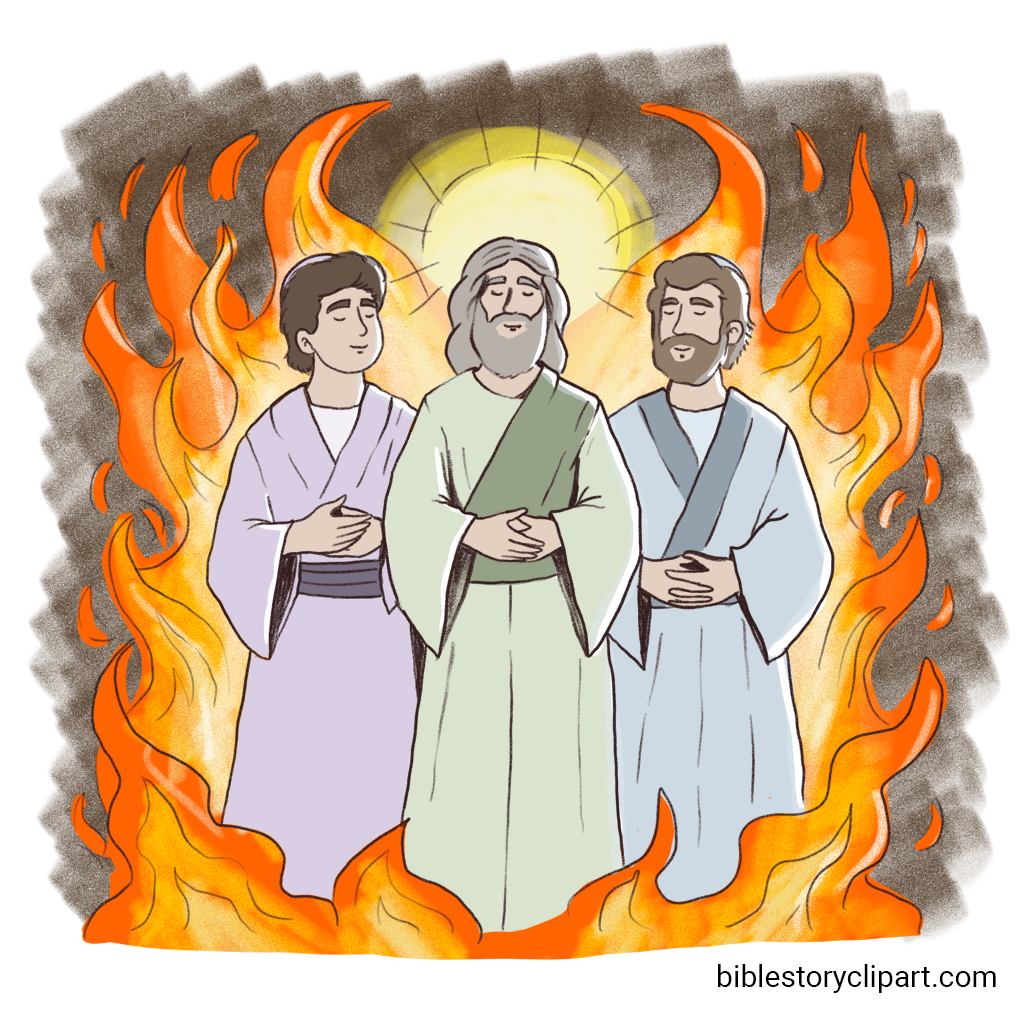
Therefore at that time certain Chaldeans came forward and maliciously accused the Jews. They declared to King Nebuchadnezzar, “O king, live forever! 10 You, O king, have made a decree, that every man who hears the sound of the horn, pipe, lyre, trigon, harp, bagpipe, and every kind of music, shall fall down and worship the golden image. 11 And whoever does not fall down and worship shall be cast into a burning fiery furnace. 12 There are certain Jews whom you have appointed over the affairs of the province of Babylon: Shadrach, Meshach, and Abednego. These men, O king, pay no attention to you; they do not serve your gods or worship the golden image that you have set up.”

13 Then Nebuchadnezzar in furious rage commanded that Shadrach, Meshach, and Abednego be brought. So they brought these men before the king. 14 Nebuchadnezzar answered and said to them, “Is it true, O Shadrach, Meshach, and Abednego, that you do not serve my gods or worship the golden image that I have set up? 15 Now if you are ready when you hear the sound of the horn, pipe, lyre, trigon, harp, bagpipe, and every kind of music, to fall down and worship the image that I have made, well and good. But if you do not worship, you shall immediately be cast into a burning fiery furnace. And who is the god who will deliver you out of my hands?”

16 Shadrach, Meshach, and Abednego answered and said to the king, “O Nebuchadnezzar, we have no need to answer you in this matter. 17 If this be so, our God whom we serve is able to deliver us from the burning fiery furnace, and he will deliver us out of your hand, O king. 18 But if not, be it known to you, O king, that we will not serve your gods or worship the golden image that you have set up.” – Daniel 3:8-18 ESV

This iconic story has been a staple of Sunday School classes for generations. Every child who grew up going to church heard about the exploits of Shadrach, Meshach, and Abednego in the fiery furnace. But in its telling, the story tends to take on the aura of a Grimm’s Fairy Tale. It becomes the fantastic recounting of three brave young men who proved their faith in God by standing up to the evil king and refusing to worship his false god. But their act of bravery didn’t come without cost. Their refusal to obey the king’s edict came with the penalty of death by fire in a blazing hot furnace. This macabre-sounding story is frightening even for adults, let alone children. But with the use of colorful cartoon-like pictures and a sanitized storyline, it has been used  to inspire young children to follow the example of its three brave characters.

Yet, is that the primary message behind the story of Shadrach, Meshach, and Abednego? So often, in an attempt to make the stories of the Bible more relevant and relatable, we focus on the lives of the characters they contain. We tell our children the story of Daniel in the lion’s den and challenge them to “dare to be a Daniel.” We recount the story of Joseph’s roller-coaster-like life in Egypt but focus on the reward he ultimately received for his faithfulness. We turn his life into a Horatio Alger, rags-to-riches story that portrays God as always ready to reward the patient and faithful. The not-so-subtle message becomes: If you do the right thing, there will always be a happy ending.

The stories of the Bible recount the lives of men and women just like you and me, but they were intended to be the primary focus of our attention. Yes, we can learn a lot about faith from the life of Abraham. We can discover what it means to be a man after God’s own heart by examining the life of David. The story of Shadrach, Meshach, and Abednego can inspire us to stand up for our convictions. But by making much of men, we tend to make little of God. By focusing on the exploits of the human characters in these stories we tend to lose sight of the One moving behind the scenes and orchestrating every aspect of the narrative.

From the first verses of its opening chapter, the Book of Daniel has been about God. The entire narrative began with a retelling of Nebuchadnezzar’s capture of the city of Jerusalem.

The Lord gave him victory over King Jehoiakim of Judah and permitted him to take some of the sacred objects from the Temple of God. So Nebuchadnezzar took them back to the land of Babylonia and placed them in the treasure-house of his god. – Daniel 1:2 NLT

The story begins with a reminder that God was in control and behind all that had happened. But He was not done. Just a few verses later, when Daniel refused to eat the king’s food, we read, “God had given the chief of staff both respect and affection for Daniel” (Daniel 1:9 NLT). As the story unfolds, we’re reminded that God continued to control the affairs of men, including those of the king and the four young Hebrew boys.

God gave these four young men an unusual aptitude for understanding every aspect of literature and wisdom. And God gave Daniel the special ability to interpret the meanings of visions and dreams. – Daniel 1:19 NLT

Chapter two records the story of Nebuchadnezzar’s disturbing dream and Daniel’s interpretation of it. But as the verse above makes clear, Daniel received this ability from the hand of God, and as the story reveals, God was the source behind Nebuchadnezzar’s dream.

“…there is a God in heaven who reveals secrets, and he has shown King Nebuchadnezzar what will happen in the future.” – Daniel 2:28 NLT

The dream, its interpretation, and its meaning were all the handiwork of God. Daniel was simply the instrument God used to accomplish His predetermined plan, and even Daniel recognized his subservient role in the whole affair.

“…it is not because I am wiser than anyone else that I know the secret of your dream, but because God wants you to understand what was in your heart.” – Daniel 2:30 NLT

After divulging the meaning of the dream, Daniel confessed, “The great God was showing the king what will happen in the future. The dream is true, and its meaning is certain” (Daniel 2:45 NLT). Even Nebuchadnezzar recognized the divine nature of the day’s events, declaring, “Truly, your God is the greatest of gods, the Lord over kings, a revealer of mysteries, for you have been able to reveal this secret” (Daniel 2:47 NLT).

When Daniel and his friends were rewarded with promotions, the story took a positive turn. Everything was looking up. God had revealed Himself in power and the pagan king had taken notice. Then chapter three opens up with Nebuchadnezzar’s decision to build a massive monument to his own glory and greatness. But it wasn’t enough that his statue loomed over the plains of Dura, he wanted all the citizens of his kingdom to bow before it. He demanded their unwavering allegiance in the form of abject worship, with death as the penalty for disobedience.

Don’t miss the message. The man who said, “Your God is the greatest of gods, the Lord over kings” was now demanding that he be worshiped like a god. He was declaring himself to be the greatest of gods. The king’s edict demanded all to “bow to the ground to worship King Nebuchadnezzar’s gold statue” (Daniel 3:5 NLT). This was nothing less than a declaration of war. Whether Nebuchadnezzar realized it or not, he was aligning himself against “the greatest of gods.” His statue was a bold and blatant statement of superiority and supremacy. But what God did next is surprising.

In the dream, God sent a massive bolder to destroy the statue. But in real life, God didn’t order a direct hit on the symbol of Nebuchadnezzar’s power. Instead, He delivered a distinctly different but no less powerful proof of His sovereignty, and Shadrach, Meshach, and Abednego would find themselves in the middle of the conflict between God and Nebuchadnezzar.

These men were not trying to make a statement. They had not made a pact to disobey the king’s edict and were not practicing a form of civil disobedience. They were simply doing what they always did, worshiping their God and living their lives in accordance with His will. But their actions were portrayed as evidence of insubordination. Driven by jealousy and hatred for these upstart Hebrews, some of the king’s Chaldean counselors leveled charges against them that were intended to result in death.

“…there are some Jews—Shadrach, Meshach, and Abednego—whom you have put in charge of the province of Babylon. They pay no attention to you, Your Majesty. They refuse to serve your gods and do not worship the gold statue you have set up.” – Daniel 3:12 NLT

Frustrated by this report, Nebuchadnezzar ordered that the men be brought before him. He repeated the conditions of his edict and warned them of the consequences of their disobedience.

“…if you refuse, you will be thrown immediately into the blazing furnace. And then what god will be able to rescue you from my power? – Daniel 3:15 NLT

That last line is critical to understanding the nature of the conflict taking place in this story. This is not about three men standing up for their convictions and facing off with an unjust and unrighteous king. It is about God proving His power and supremacy over the kingdoms of this world. God could have struck Nebuchadnezzar down. He could have ordered a plague to destroy the Chaldeans. But Nebuchadnezzar had issued a challenge. Not only had he erected a statue to declare his glory, but he had boldly asserted that his power was greater than that of God.

Caught in the middle of this conflict between a human king who believed himself to be a god and Yahweh, the greatest of gods, Shadrach, Meshach, and Abednego would have their faith tested. But the story is not about their faith; it is about the One on whom their faith relied. When confronted by the king and given a final ultimatum to bow down or die, they simply replied, “If we are thrown into the blazing furnace, the God whom we serve is able to save us. He will rescue us from your power, Your Majesty. But even if he doesn’t, we want to make it clear to you, Your Majesty, that we will never serve your gods or worship the gold statue you have set up” (Daniel 3:18 NLT).

Don’t miss the nature of their reply. They clearly see where the battle lines have been drawn. They know that this is a battle for sovereignty. The king had asserted his supremacy and declared his power over their lives. He believed that he held their future in his hands and could force their allegiance simply by threatening them with loss of life. But Shadrach, Meshach, and Abednego knew better because they knew their God was bigger. The king had power but he lacked true sovereignty. These young Hebrews believed that God was in control, despite the circumstances they faced. In their estimation, even the fiery furnace posed no real threat.

These young men were faith-filled because they believed their God to be faithful. In their youth, they had been exposed to the Psalms and the words of encouragement they bring.

In my distress I prayed to the Lord,
    and the Lord answered me and set me free.
The Lord is for me, so I will have no fear.
    What can mere people do to me?
Yes, the Lord is for me; he will help me.
    I will look in triumph at those who hate me.
It is better to take refuge in the Lord
    than to trust in people.
It is better to take refuge in the Lord
    than to trust in princes. – Psalm 118:5-9 NLT

And while they lived long before Jesus took on human flesh and dwelt among men, they displayed the very outlook that Jesus encouraged.

“Don’t be afraid of those who want to kill your body; they cannot touch your soul. Fear only God, who can destroy both soul and body in hell. – Matthew 10:28 NLT

The point of the story is not the size of their faith, but its source. These three young men were not super-saints or spiritual icons of virtue. They were ordinary men who believed in an extraordinary God who was all-knowing, all-powerful, and fully capable of delivering them. Their willingness to enter the furnace should not be viewed as a measurement of their faith but as a bold expression of their belief in the greatness of their God.

English Standard Version (ESV) The Holy Bible, English Standard Version. ESV® Permanent Text Edition® (2016). Copyright © 2001 by Crossway Bibles, a publishing ministry of Good News Publishers.

New Living Translation (NLT) Holy Bible, New Living Translation, copyright © 1996, 2004, 2015 by Tyndale House Foundation. Used by permission of Tyndale House Publishers Inc., Carol Stream, Illinois 60188. All rights reserved.

New English Translation (NET)NET Bible® copyright ©1996-2017 by Biblical Studies Press, L.L.C. http://netbible.com All rights reserved.

Consider the Source

46 Then King Nebuchadnezzar fell upon his face and paid homage to Daniel, and commanded that an offering and incense be offered up to him. 47 The king answered and said to Daniel, “Truly, your God is God of gods and Lord of kings, and a revealer of mysteries, for you have been able to reveal this mystery.” 48 Then the king gave Daniel high honors and many great gifts, and made him ruler over the whole province of Babylon and chief prefect over all the wise men of Babylon. 49 Daniel made a request of the king, and he appointed Shadrach, Meshach, and Abednego over the affairs of the province of Babylon. But Daniel remained at the king’s court. – Daniel 2:46-49 ESV

After revealing the meaning of the king’s dream, Daniel confidently asserted, “A great God has made known to the king what shall be after this. The dream is certain, and its interpretation sure” (Daniel 2:45 ESV). The young man took the opportunity to promote the superiority of his God and the certainty of the vision and its message. Despite any aspersions the magicians, sorcerers, and Chaldeans might cast his way,  Daniel wanted Nebuchadnezzar to know that his words could be trusted because their source was divine. Unlike the gods of Babylon, Daniel’s God was all-knowing and all-powerful. He could “predict” the future because He was already aware of it. He knew it in advance. According to the Book of Isaiah, the God of Israel operates outside the limits of time and space. He is transcendent and eternal, having no beginning or end.

“Do not forget this! Keep it in mind!
    Remember this, you guilty ones.
Remember the things I have done in the past.
    For I alone am God!
    I am God, and there is none like me.
Only I can tell you the future
    before it even happens.
Everything I plan will come to pass,
    for I do whatever I wish. – Isaiah 46:8-10 NLT

As a well-educated Hebrew, Daniel would have been familiar with the Psalms of David. In them, David acknowledged his own awareness of God’s omniscience.

O Lord, you have examined my heart
    and know everything about me.
You know when I sit down or stand up.
    You know my thoughts even when I’m far away.
You see me when I travel
    and when I rest at home.
    You know everything I do.
You know what I am going to say
    even before I say it, Lord.
You go before me and follow me.
    You place your hand of blessing on my head.
Such knowledge is too wonderful for me,
    too great for me to understand!.
– Psalm 139:1-6 NLT

Nebuchadnezzar’s dream had not been the result of a poorly prepared meal or indigestion; it was the handiwork of God. It was He who created its content and orchestrated its timing. Because God was involved, it was more than a dream; it was prophetic. God used Nebuchadnezzar’s own political aspirations and dreams of world domination as the stage on which to reveal His own message of dominion. The vision was simply how God communicated His plans for Nebuchadnezzar’s kingdom and the future of the world. The God of the universe was letting this power-obsessed king know that his authority was limited and his kingdom was temporary.

In a real sense, the interpretation of the dream was less for Nebuchadnezzar’s benefit than it was for Daniel, his friends, and the people of Israel. God wanted His people to know that He was in charge. It was His plans that would be carried out, not those of Nebuchadnezzar. God held the fates of Daniel, Shadrach, Meshach, and Abednego in His hands. They were not the helpless pawns of the Babylonian king. Their deportation had been God’s doing. Their recent graduations from the king’s training program had been God’s will. Daniel’s capacity to interpret dreams and visions was a gift from God.

No one in the room, including Daniel, understood the import of the interpretation. God provided little in the way of details. Even to this day, scholars debate the nature of the kingdoms represented by the statue. There is even disagreement about the dream’s climactic ending as biblical scholars continue to debate the nature of the everlasting kingdom to come.

The whole point of the dream and its interpretation was to accentuate the will and sovereignty of God. Daniel and his friends needed to know that their God was in complete control of all that was going on in their lives, the world, and the future. Kingdoms come and go, but God is eternal. The plans of men are powerless before the will of God. The gods of this world are no match for the God of Abraham, Isaac, and Jacob.

Once again, the writings of King David must have brought comfort and encouragement to Daniel and his companions as they attempted to acclimate themselves to their new surroundings.

In times of trouble, may the Lord answer your cry.
    May the name of the God of Jacob keep you safe from all harm.
May he send you help from his sanctuary
    and strengthen you from Jerusalem.
May he remember all your gifts
    and look favorably on your burnt offerings. Interlude

May he grant your heart’s desires
    and make all your plans succeed.
May we shout for joy when we hear of your victory
    and raise a victory banner in the name of our God.
May the Lord answer all your prayers.

Now I know that the Lord rescues his anointed king.
    He will answer him from his holy heaven
    and rescue him by his great power.
Some nations boast of their chariots and horses,
    but we boast in the name of the Lord our God.
Those nations will fall down and collapse,
    but we will rise up and stand firm.

Give victory to our king, O Lord!
    Answer our cry for help.Psalm 20:1-9 NLT

Nebuchadnezzar was powerful but he was far from invincible. He could threaten his wise men with death but he couldn’t preserve his own kingdom from collapse. He could make plans to conquer the world but was incapable of controlling his own subconscious mind. He could not prevent his dreams of world domination from turning into nightmares of future devastation.

Daniel’s Spirit-induced interpretation reflects the non-negotiable reality of God’s sovereignty over the affairs of men and the future of mankind. Again, the words of the Psalms would have provided Daniel with comfort and security as he faced the threat of execution. He would have been reminded that, ultimately, all kings and kingdoms stand opposed to God. But God will have the last laugh.

Why are the nations so angry?
    Why do they waste their time with futile plans?
The kings of the earth prepare for battle;
    the rulers plot together
against the Lord
    and against his anointed one.
“Let us break their chains,” they cry,
    “and free ourselves from slavery to God.”

But the one who rules in heaven laughs.
    The Lord scoffs at them.
Then in anger he rebukes them,
    terrifying them with his fierce fury.
For the Lord declares, “I have placed my chosen king on the throne
    in Jerusalem, on my holy mountain.” – Psalm 2:1-6 NLT

Daniel and his friends had nothing to fear; their God was in complete control. But they weren’t the only ones who received an unforgettable lesson in Yahweh’s sovereignty.  The king was blown away by the entire experience and displayed his awe by bowing down before Daniel and worshiping him. The significance of that scene should not be overlooked. The most powerful man in the world was kneeling before a young man who was a member of a conquered and subjugated nation. It is unlikely that Nebuchadnezzar treated his magicians, sorcerers, and Chaldeans with the same respect. But the king revealed the motivation behind his genuflection.

“Truly, your God is the greatest of gods, the Lord over kings, a revealer of mysteries, for you have been able to reveal this secret.” – Daniel 2:47 NLT

He knew that Daniel was nothing more than the spokesman for “the greatest of gods.” But he also knew that Daniel had access to a deity who was preeminent and all-powerful. Daniel’s God was worthy of reverence and, as his messenger, Daniel was deserving of honor.

Then the king appointed Daniel to a high position and gave him many valuable gifts. He made Daniel ruler over the whole province of Babylon, as well as chief over all his wise men. – Daniel 2:48 NLT

It’s telling to note that Daniel’s first official act in his new capacity was to request a promotion for each of his friends. He recognized that God had blessed him with the king’s favor and he used it, not to his own advantage, but to secure the future of his companions. By seeing that his friends were elevated alongside him, Daniel ensured that he would have not only their companionship but also their spiritual support. He was living out the truth found in the Book of Ecclesiastes.

A person standing alone can be attacked and defeated, but two can stand back-to-back and conquer. Three are even better, for a triple-braided cord is not easily broken. – Ecclesiastes 4:12 NLT

English Standard Version (ESV) The Holy Bible, English Standard Version. ESV® Permanent Text Edition® (2016). Copyright © 2001 by Crossway Bibles, a publishing ministry of Good News Publishers.

New Living Translation (NLT) Holy Bible, New Living Translation, copyright © 1996, 2004, 2015 by Tyndale House Foundation. Used by permission of Tyndale House Publishers Inc., Carol Stream, Illinois 60188. All rights reserved.

New English Translation (NET)NET Bible® copyright ©1996-2017 by Biblical Studies Press, L.L.C. http://netbible.com All rights reserved.

A Dream Come True (Soon)

31 “You saw, O king, and behold, a great image. This image, mighty and of exceeding brightness, stood before you, and its appearance was frightening. 32 The head of this image was of fine gold, its chest and arms of silver, its middle and thighs of bronze, 33 its legs of iron, its feet partly of iron and partly of clay. 34 As you looked, a stone was cut out by no human hand, and it struck the image on its feet of iron and clay, and broke them in pieces. 35 Then the iron, the clay, the bronze, the silver, and the gold, all together were broken in pieces, and became like the chaff of the summer threshing floors; and the wind carried them away, so that not a trace of them could be found. But the stone that struck the image became a great mountain and filled the whole earth.

36 “This was the dream. Now we will tell the king its interpretation. 37 You, O king, the king of kings, to whom the God of heaven has given the kingdom, the power, and the might, and the glory, 38 and into whose hand he has given, wherever they dwell, the children of man, the beasts of the field, and the birds of the heavens, making you rule over them all—you are the head of gold. 39 Another kingdom inferior to you shall arise after you, and yet a third kingdom of bronze, which shall rule over all the earth. 40 And there shall be a fourth kingdom, strong as iron, because iron breaks to pieces and shatters all things. And like iron that crushes, it shall break and crush all these. 41 And as you saw the feet and toes, partly of potter’s clay and partly of iron, it shall be a divided kingdom, but some of the firmness of iron shall be in it, just as you saw iron mixed with the soft clay. 42 And as the toes of the feet were partly iron and partly clay, so the kingdom shall be partly strong and partly brittle. 43 As you saw the iron mixed with soft clay, so they will mix with one another in marriage, but they will not hold together, just as iron does not mix with clay. 44 And in the days of those kings the God of heaven will set up a kingdom that shall never be destroyed, nor shall the kingdom be left to another people. It shall break in pieces all these kingdoms and bring them to an end, and it shall stand forever, 45 just as you saw that a stone was cut from a mountain by no human hand, and that it broke in pieces the iron, the bronze, the clay, the silver, and the gold. A great God has made known to the king what shall be after this. The dream is certain, and its interpretation sure.” – Daniel 2:31-45 ESV

The tension in the room must have been palpable. Nebuchadnezzar sat in rapt silence as Daniel described the details of his dream. The magicians, conjurers, and Chaldeans listened in shocked silence as this young Hebrew pulled off a feat they had deemed impossible. Shadrach, Meshach, and Abednego watched as their friend stood before the king and his court, unveiling the message he had received from Yahweh.

And everyone in the room must have been surprised at the nature of the dream. It was probably not what they expected. Daniel described a massive statue of a man comprised of gold, silver, bronze, iron, and clay. He acknowledges that the statue’s visage had been frightening and confusing to the king but never fully discloses why. It seems unlikely that the statue’s composite makeup left the king trembling. Even the statue’s destruction by a massive bolder should not have caused the kind of fear and anxiety the king experienced. The only logical conclusion is that the king recognized his image on the face of the statue. The golden head bore his own likeness.

In his dream, Nebuchadnezzar had been given a vision of the future. As Daniel proceeds to interpret the meaning of the dream, he will disclose that the golden head of the massive statue represents the kingdom of Babylon.

“Your Majesty, you are the greatest of kings. The God of heaven has given you sovereignty, power, strength, and honor. He has made you the ruler over all the inhabited world and has put even the wild animals and birds under your control. You are the head of gold.” – Daniel 2:37-38 NLT

While Nebuchadnezzar’s initial glimpse of the statue might have produced feelings of pride, its destruction by the bolder was unexpected and frightening. There is no way he could have taken this disturbing scene as anything but a bad omen that presaged his death. But Daniel wanted the king to know that there was more to the vision than a prediction of his own demise. God was disclosing future events that would extend far beyond Nebuchadnezzar’s reign or Babylon’s 15 minutes of fame.

The composite nature of the statue is significant and, as Daniel discloses, it provides a visual representation of the future that moves from top to bottom. The head represents the reigning kingdom of the world: Babylon. Comprised of solid gold, it symbolizes the wealth and opulence of Nebuchadnezzar’s kingdom as well as its global dominance.  Much to Nebuchadnezzar’s surprise, Daniel announces that the Babylonian kingdom will be shortlived and ultimately be replaced by a larger but inferior kingdom. The statue’s chest and arms, crafted from silver, are larger than the head but of lesser value. They represent a nation that will rise and replace the Babylonians, only to find themselves supplanted by a still more inferior kingdom as reflected by the statue’s bronze belly and thighs. Moving down the statue’s length, Daniel describes its legs of iron, symbolizing yet one more kingdom to come. The fifth and final kingdom is represented by the feet of clay and iron.

In Nebuchadnezzar’s dream, this strange compilation of body parts was suddenly destroyed by “a rock…cut from a mountain, but not by human hands” – Daniel 2:34 NLT). This massive stone struck the feet of the statue, causing the entire structure to collapse and disintegrate into a cloud of fine dust from the impact.

Daniel’s description of this one-of-a-kind statue was exactly what Nebuchadnezzar had seen in his dream, but its meaning remained a mystery. Apart from Daniel, no one in the room had any idea what the imagery was meant to convey. But there was far more going on than Nebuchadnezzar could ever imagine. Little did he know that his vast and formidable kingdom would be temporary in nature. Babylon would be a relative blip on the radar screen of human history. It would come and go, only to be replaced by yet another kingdom whose moment in the spotlight of history would fade and be forgotten.

Despite Nebuchadnezzar’s recent and highly successful world-domination tour, his kingdom would not last. The kingdoms of men are temporary and those who rule over them are destined to death and obscurity. The statue was that of a man, symbolizing the earthly rule of human kings.

“The figure of a man was employed here because God wished to make known what would transpire during man’s day, the ages in which mortal man ruled the earth. Here, in one panoramic sweep, the whole history of human civilization is spread before us, from the days of Nebuchadnezzar to the end of time.” – Charles L. Feinberg, Daniel: The Kingdom of the Lord

Long before the Babylons invaded Judah and took Daniel and his companions captive, God had warned the kings of Edom, Moab, Ammon, Tyre, and Sidon that they too would suffer defeat at the hands of Nebuchadnezzar.

“Now I will give your countries to King Nebuchadnezzar of Babylon, who is my servant. I have put everything, even the wild animals, under his control. All the nations will serve him, his son, and his grandson until his time is up.” – Jeremiahs 27:6-7 ESV

Notice that God predicted the short-lived nature of Nebuchadnezzar’s dynasty. It would eventually come to an end, “Then many nations and great kings will conquer and rule over Babylon” (Jeremiah 27:7 ESV). That is exactly what the statue was meant to convey. 

“Nebuchadnezzar ruled about 45 years (605-560 B.C.), and his empire only lasted another 21 years. Nebuchadnezzar’s father, Nabopolassar, founded the Neo-Babylon Empire in 627 B.C., and it fell to the Persians in 539 B.C. So it existed for only 88 years.” – Thomas L. Constable, Notes of Daniel

But what Daniel had unveiled was far more than the end of Nebuchadnezzar’s kingdom; he was making known God’s plan for the end of the age. In a highly compressed timeline, God showed the rise and fall of the kingdoms of this world. There is much debate as to which kingdoms are symbolized by the multifaceted statue, but the general consensus is that the chest and arms represent the Medo-Persian Empire under Cyrus the Great, while the belly and thighs represent Greece under Alexander the Great. The legs of iron are believed to stand for Rome. But this once mighty kingdom, which ruled the world of Jesus’ day, eventually fell due to its weakened condition (feet of clay and iron). While the mighty Roman Empire lasted for half a century, it too was destined to end.

But the world did not end with the fall of Rome. Other kingdoms have come and gone. Nations have risen to power only to disappear from the scene and become relegated to the pages of history. But Daniel prophecies about a future kingdom that will develop behind the scenes while these world powers are still large and in charge. Each of these unnamed kingdoms is meant to represent the kingdoms of this world. They are temporary at best and no match for the kingdom to come.

During the reigns of those kings, the God of heaven will set up a kingdom that will never be destroyed or conquered. It will crush all these kingdoms into nothingness, and it will stand forever. – Daniel 2:44 NLT

While he is unaware of the full meaning of his interpretation, Daniel is communicating events that will happen with the return of Christ. The nations of this world will continue to vie for power and dominance, but none will be able to stand against the King of kings and Lord of lords when He returns to establish His eternal kingdom on earth.

The Book of Revelation reveals the final battle between Jesus and Satan, the prince of this world who will lead one final revolt in an attempt to overthrow the Kingdom of God.

Then I saw heaven opened, and a white horse was standing there. Its rider was named Faithful and True, for he judges fairly and wages a righteous war. His eyes were like flames of fire, and on his head were many crowns. A name was written on him that no one understood except himself. He wore a robe dipped in blood, and his title was the Word of God. The armies of heaven, dressed in the finest of pure white linen, followed him on white horses. From his mouth came a sharp sword to strike down the nations. He will rule them with an iron rod. He will release the fierce wrath of God, the Almighty, like juice flowing from a winepress. On his robe at his thigh was written this title: King of all kings and Lord of all lords.

Then I saw the beast and the kings of the world and their armies gathered together to fight against the one sitting on the horse and his army. And the beast was captured, and with him the false prophet who did mighty miracles on behalf of the beast—miracles that deceived all who had accepted the mark of the beast and who worshiped his statue. Both the beast and his false prophet were thrown alive into the fiery lake of burning sulfur. Their entire army was killed by the sharp sword that came from the mouth of the one riding the white horse. And the vultures all gorged themselves on the dead bodies. – Revelation 19:11-16, 19-21 ESV

Little did Daniel or Nebuchadnezzar understand that God had just revealed the entire timeline of human history through a dream. His plan for the people of Israel, Daniel and his friends, Nebuchadnezzar and his kingdom, and the future fate of the world was in place and working its way to completion, all according to God’s perfect timeline.

English Standard Version (ESV) The Holy Bible, English Standard Version. ESV® Permanent Text Edition® (2016). Copyright © 2001 by Crossway Bibles, a publishing ministry of Good News Publishers.

New Living Translation (NLT) Holy Bible, New Living Translation, copyright © 1996, 2004, 2015 by Tyndale House Foundation. Used by permission of Tyndale House Publishers Inc., Carol Stream, Illinois 60188. All rights reserved.

New English Translation (NET)NET Bible® copyright ©1996-2017 by Biblical Studies Press, L.L.C. http://netbible.com All rights reserved.