God’s Will Would Be Done

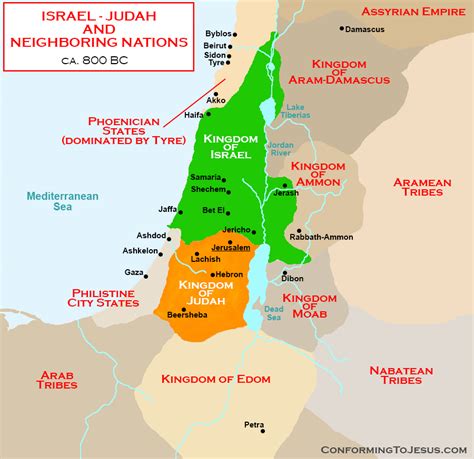
26 Jeroboam the son of Nebat, an Ephraimite of Zeredah, a servant of Solomon, whose mother’s name was Zeruah, a widow, also lifted up his hand against the king. 27 And this was the reason why he lifted up his hand against the king. Solomon built the Millo, and closed up the breach of the city of David his father. 28 The man Jeroboam was very able, and when Solomon saw that the young man was industrious he gave him charge over all the forced labor of the house of Joseph. 29 And at that time, when Jeroboam went out of Jerusalem, the prophet Ahijah the Shilonite found him on the road. Now Ahijah had dressed himself in a new garment, and the two of them were alone in the open country. 30 Then Ahijah laid hold of the new garment that was on him, and tore it into twelve pieces. 31 And he said to Jeroboam, “Take for yourself ten pieces, for thus says the LORD, the God of Israel, ‘Behold, I am about to tear the kingdom from the hand of Solomon and will give you ten tribes 32 (but he shall have one tribe, for the sake of my servant David and for the sake of Jerusalem, the city that I have chosen out of all the tribes of Israel), 33 because they have forsaken me and worshiped Ashtoreth the goddess of the Sidonians, Chemosh the god of Moab, and Milcom the god of the Ammonites, and they have not walked in my ways, doing what is right in my sight and keeping my statutes and my rules, as David his father did. 34 Nevertheless, I will not take the whole kingdom out of his hand, but I will make him ruler all the days of his life, for the sake of David my servant whom I chose, who kept my commandments and my statutes. 35 But I will take the kingdom out of his son’s hand and will give it to you, ten tribes. 36 Yet to his son I will give one tribe, that David my servant may always have a lamp before me in Jerusalem, the city where I have chosen to put my name. 37 And I will take you, and you shall reign over all that your soul desires, and you shall be king over Israel. 38 And if you will listen to all that I command you, and will walk in my ways, and do what is right in my eyes by keeping my statutes and my commandments, as David my servant did, I will be with you and will build you a sure house, as I built for David, and I will give Israel to you. 39 And I will afflict the offspring of David because of this, but not forever.’” 40 Solomon sought therefore to kill Jeroboam. But Jeroboam arose and fled into Egypt, to Shishak king of Egypt, and was in Egypt until the death of Solomon. 1 Kings 11:26-40 ESV

Despite all his wisdom, Solomon had made some serious errors in judgment, not the least of which was his decision to violate many of God’s commands. He had chosen to disobey God by amassing for himself stables full of thousands of horses and a harem filled with a thousand wives and concubines. On top of that, he had filled his treasury with vast quantities of gold and silver — all in direct violation of God’s commands (Deuteronomy 17:16-17).

Solomon had also managed to fulfill all the dire predictions the prophet Samuel had conveyed to the people of Israel when they demanded “a king to judge us like all the other nations have” (1 Samuel 8:5 NLT). Long before David or Solomon reigned over Israel, God had been their sovereign King. But the day came when the people grew tired of being governed by the judges and prophets whom God had placed over them. They preferred to have a leader who looked and acted like the kings of their enemies. In demanding a human king, they actually rejected the righteous rule of God over their lives. So, God gave them their wish but warned them of the consequences.

These will be the ways of the king who will reign over you: he will take your sons and appoint them to his chariots and to be his horsemen and to run before his chariots. And he will appoint for himself commanders of thousands and commanders of fifties, and some to plow his ground and to reap his harvest, and to make his implements of war and the equipment of his chariots. He will take your daughters to be perfumers and cooks and bakersHe will take your male servants and female servants and the best of your young men and your donkeys, and put them to his work. – 1 Samuel 8:11-13, 16 ESV

Solomon was guilty of all of the above. He had conscripted large numbers of his own people to serve as laborers on his many building projects. Solomon had used his power as king to force the people of Israel to do his bidding. There’s little doubt that the citizens of Solomon’s realm grew resentful of the involuntary nature of their role in building his kingdom and fame. Verse 26 introduces a man named Jeroboam, from the tribe of Ephraim, one of the largest of the northern tribes. It just so happened that Jeroboam was the son of one of Solomon’s former officials. At some point, Solomon took note of this young man, whose father had recently died. Recognizing a certain degree of leadership ability in Jeroboam, Solomon decided to put him on his payroll.

Jeroboam was a very capable young man, and when Solomon saw how industrious he was, he put him in charge of the labor force from the tribes of Ephraim and Manasseh, the descendants of Joseph. – 1 Kings 11:28 NLT

But notice that Solomon expected Jeroboam to supervise the laborers who had been conscripted from his own tribe. This unique responsibility exposed Jeroboam to the less-than-ideal conditions under which his fellow tribesmen were forced to serve King Solomon. It should come as no surprise that Jeroboam began to build up resentment over what he observed day after day. This scenario bears a striking resemblance to one involving the famous Hebrew patriarch, Moses. The great deliverer of Israel had been born in Egypt during a time when the people of Israel were suffering great persecution at the hands of Pharaoh, the king of Egypt.

…the Egyptians made the Israelites their slaves. They appointed brutal slave drivers over them, hoping to wear them down with crushing labor. They forced them to build the cities of Pithom and Rameses as supply centers for the king.the Egyptians worked the people of Israel without mercy. They made their lives bitter, forcing them to mix mortar and make bricks and do all the work in the fields. They were ruthless in all their demands. – Exodus 1:11, 13-14 NLT

However, even under these harsh conditions, the people of Israel continued to increase in number, prompting Pharaoh to devise a plan to significantly reduce their numbers.

Then Pharaoh, the king of Egypt, gave this order to the Hebrew midwives, Shiphrah and Puah: “When you help the Hebrew women as they give birth, watch as they deliver. If the baby is a boy, kill him; if it is a girl, let her live.” – Exodus 1:15-16 NLT

He instituted a policy of ethnic cleansing meant to diminish any future possibility of the Israelites staging a revolt. But in the midst of this horrible circumstance, God raised up Israel’s future deliverer. Moses, who was an infant at the time and a target of Pharaoh’s edict, was miraculously spared and ended up being adopted into Pharaoh’s household. He would be raised as an Egyptian, living in the royal palace and enjoying all the benefits of his position as the adopted grandson of Pharaoh. But one day, as an adult, Moses would be given an up-close and personal exposure to the plight of his own people.

Many years later, when Moses had grown up, he went out to visit his own people, the Hebrews, and he saw how hard they were forced to work. During his visit, he saw an Egyptian beating one of his fellow Hebrews. After looking in all directions to make sure no one was watching, Moses killed the Egyptian and hid the body in the sand. – Exodus 2: 11-12 NLT

Despite his high standing in Pharaoh’s household, Moses’ rash action brought down the full wrath of his grandfather. He became a wanted man and was forced to flee for his life, eventually settling as an exile in the land of Midian. It was while living in the wilderness of Midian that Moses had a personal encounter with God and received his commission as Israel’s future deliverer.

Moses had seen the mistreatment of his people and taken matters into his own hands. But God was going to use Moses’ misapplied empathy and compassion in a far more effective way – all so that His divine will might be fulfilled.

In the case of Jeroboam, he was given a similar commission from God. But rather than a visit from God in the form of a burning bush, Jeroboam was confronted by a prophet of God.

One day as Jeroboam was leaving Jerusalem, the prophet Ahijah from Shiloh met him along the way. Ahijah was wearing a new cloak. The two of them were alone in a field, and Ahijah took hold of the new cloak he was wearing and tore it into twelve pieces. Then he said to Jeroboam, “Take ten of these pieces, for this is what the LORD, the God of Israel, says: ‘I am about to tear the kingdom from the hand of Solomon, and I will give ten of the tribes to you!’” – 1 Kings 11:29-31 NLT

Like Moses, Jeroboam received a direct commission from Yahweh. In a sense, he, too, would become a deliverer of his people. God was going to use Jeroboam to deliver the tribe of Ephraim, along with nine other northern tribes, from their subjugation under Solomon’s rule. As Moses was used by God to punish the wicked Egyptians, Jeroboam would become God’s chosen instrument for delivering judgment upon Solomon for his many acts of unfaithfulness and disobedience.

Much to his shock and surprise, Jeroboam was informed that God was going to divide Solomon’s vast kingdom in half and install him as the new king over ten of the tribes. God was painfully specific when delineating His reasons for this dramatic shift in the nation’s fortunes.

“For Solomon has abandoned me and worshiped Ashtoreth, the goddess of the Sidonians; Chemosh, the god of Moab; and Molech, the god of the Ammonites. He has not followed my ways and done what is pleasing in my sight. He has not obeyed my decrees and regulations as David his father did.” – 1 Kings 11:33 NLT

Yet, God also revealed His intentions to allow Solomon to complete his reign over an undivided kingdom. But at Solomon’s death, his son would inherit a kingdom that consisted of a single tribe, that of Judah.

“His son will have one tribe so that the descendants of David my servant will continue to reign, shining like a lamp in Jerusalem, the city I have chosen to be the place for my name.” – 1 Kings 11:36 NLT

Despite Solomon’s unfaithfulness, God remained faithful, vowing to keep the covenant He had made with David. He would preserve a remnant of Solomon’s kingdom so that one day He might fulfill the promise concerning the future king who would reign on David’s throne for perpetuity.

“And your house and your kingdom shall be made sure forever before me. Your throne shall be established forever.” – 2 Samuel 7:16 ESV

God had future plans in store for the rebellious nation of Israel. But for now, He was determined to punish Solomon for his repeated acts of unfaithfulness. He provided Jeroboam with the same arrangements He had made with Solomon. If Jeroboam remained committed to the word and the will of God, he would enjoy God’s blessings.

“I will place you on the throne of Israel, and you will rule over all that your heart desires. If you listen to what I tell you and follow my ways and do whatever I consider to be right, and if you obey my decrees and commands, as my servant David did, then I will always be with you. I will establish an enduring dynasty for you as I did for David, and I will give Israel to you. – 1 Kings 11:37-38 NLT

Because 1 Kings is a book of history, it will just be a matter of time before we know whether Jeroboam lived up to God’s expectations. Yet, regardless of what Solomon had done or whatever Jeroboam would end up doing, God’s will would be done. All His promises would be kept and His plan would be fulfilled in its entirety.

But when Solomon heard about the message spoken by the prophet, he tried to thwart Yahweh’s will. He set out to eliminate any threat by having Jeroboam murdered. But Jeroboam escaped to Egypt, where he remained in exile until the death of Solomon. It’s interesting to note that Moses had fled from Egypt to escape the wrath of Pharaoh. Now, Jeroboam was fleeing to Egypt in an attempt to escape the wrath of Solomon. But, like Moses, Jeroboam would one day return and complete the assignment Yahweh had given him.

English Standard Version (ESV) The Holy Bible, English Standard Version. ESV® Permanent Text Edition® (2016). Copyright © 2001 by Crossway Bibles, a publishing ministry of Good News Publishers.

New Living Translation (NLT) Holy Bible, New Living Translation, copyright © 1996, 2004, 2015 by Tyndale House Foundation. Used by permission of Tyndale House Publishers Inc., Carol Stream, Illinois 60188. All rights reserved.

Putting Godly Wisdom to Good Use

1 King Solomon was king over all Israel, and these were his high officials: Azariah the son of Zadok was the priest; Elihoreph and Ahijah the sons of Shisha were secretaries; Jehoshaphat the son of Ahilud was recorder; Benaiah the son of Jehoiada was in command of the army; Zadok and Abiathar were priests; Azariah the son of Nathan was over the officers; Zabud the son of Nathan was priest and king’s friend; Ahishar was in charge of the palace; and Adoniram the son of Abda was in charge of the forced labor.

Solomon had twelve officers over all Israel, who provided food for the king and his household. Each man had to make provision for one month in the year. These were their names: Ben-hur, in the hill country of Ephraim; Ben-deker, in Makaz, Shaalbim, Beth-shemesh, and Elonbeth-hanan; 10 Ben-hesed, in Arubboth (to him belonged Socoh and all the land of Hepher); 11 Ben-abinadab, in all Naphath-dor (he had Taphath the daughter of Solomon as his wife); 12 Baana the son of Ahilud, in Taanach, Megiddo, and all Beth-shean that is beside Zarethan below Jezreel, and from Beth-shean to Abel-meholah, as far as the other side of Jokmeam; 13 Ben-geber, in Ramoth-gilead (he had the villages of Jair the son of Manasseh, which are in Gilead, and he had the region of Argob, which is in Bashan, sixty great cities with walls and bronze bars); 14 Ahinadab the son of Iddo, in Mahanaim; 15 Ahimaaz, in Naphtali (he had taken Basemath the daughter of Solomon as his wife); 16 Baana the son of Hushai, in Asher and Bealoth; 17 Jehoshaphat the son of Paruah, in Issachar; 18 Shimei the son of Ela, in Benjamin; 19 Geber the son of Uri, in the land of Gilead, the country of Sihon king of the Amorites and of Og king of Bashan. And there was one governor who was over the land. 1 Kings 1:1-19 ESV

Through his record of Solomon’s deft handling of the dispute between the two prostitutes, the author has provided an example of Solomon’s Spirit-imbued wisdom. Solomon would put that wisdom to use in various ways, including the formation of his royal administration. His father’s death had left him as the sovereign authority over a large nation with a sizeable population spread over a vast area. To understand the nature of Solomon’s actions, as outlined in this passage, it is essential to recall the historical context that led to the establishment of the royal position in Israel.

Until the day Saul had been anointed the first king of Israel, the nation had functioned as a loose coalition of 12 tribes, with God as their King and sovereign. Israel was a theocracy. The tribes, while varying in size, each maintained independent control over the land they had been allotted by God. As the priestly tribe, the Levites were not given any land; instead, they were allocated cities within the territories of the other 11 tribes.

When the tribes first entered the land of Canaan, they had to defeat the existing inhabitants before they could occupy the land that had been awarded to them by God. To achieve this, the tribes formed alliances with one another, fighting side by side until they could settle in their respective territories. Once this task was accomplished, the tribes tended to operate independently of one another. There was no centralized governing body or system of government in place to provide guidance or regulate behavior. Over time, each of the tribes began to drift away from God and adopt the pagan practices of the land’s former inhabitants. They began worshiping false gods, a decision that forced Yahweh to judge them for their disobedience and unfaithfulness.

…the anger of the LORD was kindled against Israel, and he gave them over to plunderers, who plundered them. And he sold them into the hand of their surrounding enemies, so that they could no longer withstand their enemies. – Judges 2:14 ESV

This led to a period in which God governed the tribes through the administration of judges. These judges were comprised of a diverse and disparate group of individuals sent by God to deliver His disobedient people from their enemies and call them back into fellowship with Him.

Whenever the LORD raised up judges for them, the LORD was with the judge, and he saved them from the hand of their enemies all the days of the judge. For the LORD was moved to pity by their groaning because of those who afflicted and oppressed them. – Judges 2:18 ESV

This arrangement persisted for hundreds of years, until the day when the people demanded that God give them a king.

“Now appoint for us a king to judge us like all the nations.” – 1 Samuel 8:5 ESV

Samuel, who had been God’s official spokesman and the last of the judges, was offended by their demand; he took it as a personal slight. But God told him, “Obey the voice of the people in all that they say to you, for they have not rejected you, but they have rejected me from being king over them” (1 Samuel 8:7 ESV).

During their years as a confederation of independent tribes, Yahweh had been functioning as their sovereign authority. He had been their King. But as Samuel grew older and his two sons proved to be wicked, the people demanded a change in leadership. They wanted a human king, which meant they would be ruled over by a fallen, sin-prone man whose actions would have devastating implications. God had Samuel warn the Israelites of the consequences of their request.

“This is how a king will reign over you,” Samuel said. “The king will draft your sons and assign them to his chariots and his charioteers, making them run before his chariots. Some will be generals and captains in his army, some will be forced to plow in his fields and harvest his crops, and some will make his weapons and chariot equipment. The king will take your daughters from you and force them to cook and bake and make perfumes for him. He will take away the best of your fields and vineyards and olive groves and give them to his own officials. He will take a tenth of your grain and your grape harvest and distribute it among his officers and attendants. He will take your male and female slaves and demand the finest of your cattle and donkeys for his own use. He will demand a tenth of your flocks, and you will be his slaves. When that day comes, you will beg for relief from this king you are demanding, but then the LORD will not help you.” – 1 Samuel 8:11-18 NLT

They demanded a flesh-and-blood king, but God warned them that they would end up regretting their wish. But they refused to take God seriously and reiterated their demand for a king.

“Even so, we still want a king,” they said. “We want to be like the nations around us. Our king will judge us and lead us into battle.” – 1 Samuel 8:19-20 NLT

So, God gave them Saul, who was precisely what they had been looking for, a tall, good-looking man who had all the outward characteristics of a king.

Saul was the most handsome man in Israel—head and shoulders taller than anyone else in the land. – 1 Samuel 9:2 NLT

Saul looked like a king, and after receiving his anointing by Samuel, he gave all the indications that he would rule wisely and effectively. But, in time, his true nature revealed itself. He would prove to be headstrong and stubbornly disobedient, refusing to rule according to God’s will. So, God was forced to remove him as king over Israel.

“I am sorry that I ever made Saul king, for he has not been loyal to me and has refused to obey my command.” – 1 Samuel 15:11 NLT

When faced with the prospect of his removal, Saul attempted to assuage God by begging His forgiveness, but it was too little, too late. Samuel had to break the news to Saul that his refusal to obey God was unforgivable and his kingship was irredeemable.

“What is more pleasing to the LORD:
    your burnt offerings and sacrifices
    or your obedience to his voice?
Listen! Obedience is better than sacrifice,
    and submission is better than offering the fat of rams.
Rebellion is as sinful as witchcraft,
    and stubbornness as bad as worshiping idols.
So because you have rejected the command of the LORD,
    he has rejected you asking.” – 1 Samuel 15:22-23 NLT

To make matters worse, Samuel told Saul that God had already chosen his replacement.

“The LORD has torn the kingdom of Israel from you today and has given it to someone else—one who is better than you. – 1 Samuel 15:28 NLT

God had shown the people what happens when they get what their hearts’ desire. He gave them a king who resembled the rulers of other nations. Now, they were going to see what a king looked like whose heart beat fast for God. God even warned Samuel that when looking for Saul’s replacement, he could not allow himself to be swayed by outward appearances. He had to look beneath the surface – at the heart.

“Do not look on his appearance or on the height of his stature, because I have rejected him. For the LORD sees not as man sees: man looks on the outward appearance, but the LORD looks on the heart.” – 1 Samuel 16:7 NLT

This wasn’t a beauty contest. It had nothing to do with good looks, pedigree, charisma, or natural abilities. Samuel was to look for a godly man, not just a good man. And God had already decided who that man would be.

the LORD has sought out a man after his own heart. The LORD has already appointed him to be the leader of his people. – 1 Samuel 13:14 NLT

God chose David to be the next king. He wasn’t a perfect man, and he would prove to be anything but an ideal king. But he had a heart for God. He attempted to live his life in obedience to God, and God chose to make Solomon his successor. Early in his reign, Solomon also revealed himself to be a man after God’s own heart. He was faithful to Yahweh and attempted to operate his kingdom in submission to Yahweh’s will. He utilized his God-given wisdom to establish a royal administration that provided structure and stability, enabling the nation to thrive. This entire section of Chapter 4, with its list of difficult-to-pronounce names and obscure titles, is meant to reveal how Solomon utilized his divinely ordained wisdom to establish a system of government that would enable him to rule justly and righteously over the people of God.

Solomon did not take his responsibilities lightly or use his kingly powers selfishly. He ruled with wisdom and discernment, and the end result was that “Judah and Israel were as many as the sand by the sea. They ate and drank and were happy” (1 Kings 4:20 ESV). 

Solomon was demonstrating the truth of one of the proverbs he later recorded.

Without wise leadership, a nation falls; there is safety in having many advisers. – Proverbs 11:14 NLT

Solomon surrounded himself with wise and capable men who shared his vision of building a strong kingdom that operated under Yahweh’s divine authority. These verses detail Solomon’s plans to establish a centralized government, operating out of the capital city of Jerusalem. He was replacing the former system of independent tribal authority and creating a more streamlined and responsive means of governance and administration. Under David’s leadership, Israel had become a large nation with millions of inhabitants spread across a vast and extensive region. Solomon instituted a system of taxation and oversight to fund his royal administration.

“. . . this was a radical and decisive step, and that not only because it imposed upon the people an unprecedented burden. It meant that the old tribal system, already increasingly of vestigial significance, had been, as far as its political functioning was concerned, virtually abolished. In place of twelve tribes caring in turn for the central shrine were twelve districts taxed for the support of Solomon’s court!” – John Bright,
A History of Israel

But despite the burden these taxes placed on the people, they were content because their personal needs were met.

…they had plenty to eat and drink and were happy. – 1 Kings 4:20 NLT

English Standard Version (ESV) The Holy Bible, English Standard Version. ESV® Permanent Text Edition® (2016). Copyright © 2001 by Crossway Bibles, a publishing ministry of Good News Publishers.

New Living Translation (NLT) Holy Bible, New Living Translation, copyright © 1996, 2004, 2015 by Tyndale House Foundation. Used by permission of Tyndale House Publishers Inc., Carol Stream, Illinois 60188. All rights reserved.

The Gift of the Land.

The allotment for the tribe of the people of Judah according to their clans reached southward to the boundary of Edom, to the wilderness of Zin at the farthest south. And their south boundary ran from the end of the Salt Sea, from the bay that faces southward. It goes out southward of the ascent of Akrabbim, passes along to Zin, and goes up south of Kadesh-barnea, along by Hezron, up to Addar, turns about to Karka, passes along to Azmon, goes out by the Brook of Egypt, and comes to its end at the sea. This shall be your south boundary. And the east boundary is the Salt Sea, to the mouth of the Jordan. And the boundary on the north side runs from the bay of the sea at the mouth of the Jordan. And the boundary goes up to Beth-hoglah and passes along north of Beth-arabah. And the boundary goes up to the stone of Bohan the son of Reuben. And the boundary goes up to Debir from the Valley of Achor, and so northward, turning toward Gilgal, which is opposite the ascent of Adummim, which is on the south side of the valley. And the boundary passes along to the waters of En-shemesh and ends at En-rogel. Then the boundary goes up by the Valley of the Son of Hinnom at the southern shoulder of the Jebusite (that is, Jerusalem). And the boundary goes up to the top of the mountain that lies over against the Valley of Hinnom, on the west, at the northern end of the Valley of Rephaim. Then the boundary extends from the top of the mountain to the spring of the waters of Nephtoah, and from there to the cities of Mount Ephron. Then the boundary bends around to Baalah (that is, Kiriath-jearim). 10 And the boundary circles west of Baalah to Mount Seir, passes along to the northern shoulder of Mount Jearim (that is, Chesalon), and goes down to Beth-shemesh and passes along by Timnah. 11 The boundary goes out to the shoulder of the hill north of Ekron, then the boundary bends around to Shikkeron and passes along to Mount Baalah and goes out to Jabneel. Then the boundary comes to an end at the sea. 12 And the west boundary was the Great Sea with its coastline. This is the boundary around the people of Judah according to their clans.

13 According to the commandment of the Lord to Joshua, he gave to Caleb the son of Jephunneh a portion among the people of Judah, Kiriath-arba, that is, Hebron (Arba was the father of Anak). 14 And Caleb drove out from there the three sons of Anak, Sheshai and Ahiman and Talmai, the descendants of Anak. 15 And he went up from there against the inhabitants of Debir. Now the name of Debir formerly was Kiriath-sepher. 16 And Caleb said, “Whoever strikes Kiriath-sepher and captures it, to him will I give Achsah my daughter as wife.” 17 And Othniel the son of Kenaz, the brother of Caleb, captured it. And he gave him Achsah his daughter as wife. 18 When she came to him, she urged him to ask her father for a field. And she got off her donkey, and Caleb said to her, “What do you want?” 19 She said to him, “Give me a blessing. Since you have given me the land of the Negeb, give me also springs of water.” And he gave her the upper springs and the lower springs. Joshua 15:1-19 ESV

judahJudah was the largest of the 12 tribes and this may have been the reason its territory within the promised land was the first to be determined. As chapter 14 revealed, Caleb, a member of the tribe of Judah, was given the city of Hebron in recognition for his faithful service to and faith in God. He and Joshua had been the only two of the twelve spies who had believed that God could deliver the land to the people of Israel in spite of the presence of powerful enemies. The city of Hebron was located within the boundaries of what would be the tribe of Judah’s inheritance.

We are not told how the boundaries of the lands awarded to the various tribes was determined. But the passage provides detailed information regarding the specific geographic markers that would form the boundaries of Judah’s territory. The Dead Sea would form Judah’s eastern border. Verses 5-11 establish Judah’s northern boundary, with very specific details concerning where its territory begins and ends. This was important, because it would prevent future debates or disagreements from taking place between the tribes over their allotments and the cities found within them. The Mediterranean Sea would represent Judah’s western border.

Within these vast boundaries, the clans of Judah would be expected to complete the task of conquering and eliminating any and all of the current inhabitants. They were to capture the cities and make them their own. And Caleb, who had been awarded the city of Hebron, did his part.

And Caleb drove out from there the three sons of Anak, Sheshai and Ahiman and Talmai, the descendants of Anak. – Joshua 15:14 ESV

But Caleb didn’t stop there. He also attacked Debir and offered a special prize – the hand of his daughter in marriage – to anyone who captured the city. His own brother, Othniel, was the one who ended up garnering the reward. And Othniel would go on to become one of the judges of Israel (Judges 3:9). These two men appear to be highlighted in this passage because they provide examples of faithfulness and obedience to the will of God. They did what God had commanded all the people of Israel to do. They finished what the forces of Israel had begun, continuing the process of spiritual and moral cleansing of the land. The Canaanites were far from eradicated and it was going to take every single tribe and every member of those tribes to faithfully obey God and trust Him for the strength they would need to continue to possess the land by dispossessing its inhabitants.

Even Achsah, Caleb’s daughter, recognized that this land was a symbol of God’s promise made to Abraham, and she wanted her own part of it. While she had been given to Othniel as little more than a prize, she was not willing to go unrewarded herself. So, she requested that her father give her a portion of the land in the form of a spring.

“Give me a blessing. Since you have given me the land of the Negeb, give me also springs of water.” – Joshua 15:19 ESV).

And Caleb honored her request. The land and everything in it was of great value to the people of Israel. It represented their inheritance. Property would become a primary sign of wealth and affluence among the people of Israel. But the land given to the tribes by God was to remain within their clans. It was not theirs to sell or trade. God had made it clear that they were little more than stewards of the land, because it belonged to Him.

“The land shall not be sold in perpetuity, for the land is mine. For you are strangers and sojourners with me. – Leviticus 25:23 ESV

Actually, God had provided a provision by which the land could be sold, but He had placed very stringent restrictions and conditions on such sales.

25 “If your brother becomes poor and sells part of his property, then his nearest redeemer shall come and redeem what his brother has sold. 26 If a man has no one to redeem it and then himself becomes prosperous and finds sufficient means to redeem it, 27 let him calculate the years since he sold it and pay back the balance to the man to whom he sold it, and then return to his property. 28 But if he does not have sufficient means to recover it, then what he sold shall remain in the hand of the buyer until the year of jubilee. In the jubilee it shall be released, and he shall return to his property. – Leviticus 25:25-28 ESV

God had established what was known as The Year of Jubilee. Every 50 years, the land would be restored to its original owners. This was God’s plan for maintaining the original boundaries established between the tribes.

“You shall count seven weeks of years, seven times seven years, so that the time of the seven weeks of years shall give you forty-nine years. Then you shall sound the loud trumpet on the tenth day of the seventh month. On the Day of Atonement you shall sound the trumpet throughout all your land. 10 And you shall consecrate the fiftieth year, and proclaim liberty throughout the land to all its inhabitants. It shall be a jubilee for you, when each of you shall return to his property and each of you shall return to his clan. 11 That fiftieth year shall be a jubilee for you; in it you shall neither sow nor reap what grows of itself nor gather the grapes from the undressed vines. 12 For it is a jubilee. It shall be holy to you. You may eat the produce of the field.” – Leviticus 25:8-12 ESV

God knew His people well. He realized that they would be prone to take what He had given them and use it to prosper themselves. They would take what was rightfully His and attempt to profit from it in ways He never intended. The land was a gift from God, intended to provide for the people of God. It was not to be a bartering chip used to line their own pockets or to pay off debts. So, every 50 years, God required the mandatory release of any and all liens, deeds of ownership, and records of sale. The land returned to its original owners and was kept within the allotment as prescribed by God.

And God assured the people of Israel that obedience to His laws concerning the land would bring with it a blessing. They were to faithfully adhere to His commands and, in doing so, He would faithfully ensure their future prosperity and peace.

17 You shall not wrong one another, but you shall fear your God, for I am the Lord your God. 18 “Therefore you shall do my statutes and keep my rules and perform them, and then you will dwell in the land securely. 19 The land will yield its fruit, and you will eat your fill and dwell in it securely.” – Leviticus 25:17-19 ESV

The land was a symbol of God’s love and covenant faithfulness. It was through the land that God intended to bless His people, using it to provide for all their physical needs. The land would be their source of food, water, shelter, protection and identity. But they were not to worship the land. They were never supposed to place a higher priority and value on the land than they did on God. The gift was never to take precedence over the Giver.

English Standard Version (ESV) The Holy Bible, English Standard Version. ESV® Permanent Text Edition® (2016). Copyright © 2001

New Living Translation (NLT) Holy Bible, New Living Translation, copyright © 1996, 2004, 2015 by Tyndale House Foundation. Used by permission of Tyndale House Publishers Inc., Carol Stream, Illinois 60188. All rights reserved.

The Message (MSG)  Copyright © 1993, 1994, 1995, 1996, 2000, 2001, 2002 by Eugene H. Peterson