Applying Divine Doctrine Without Divine Authorization

20 “Because he knew no contentment in his belly,
    he will not let anything in which he delights escape him.
21 There was nothing left after he had eaten;
    therefore his prosperity will not endure.
22 In the fullness of his sufficiency he will be in distress;
    the hand of everyone in misery will come against him.
23 To fill his belly to the full,
    God will send his burning anger against him
    and rain it upon him into his body.
24 He will flee from an iron weapon;
    a bronze arrow will strike him through.
25 It is drawn forth and comes out of his body;
    the glittering point comes out of his gallbladder;
    terrors come upon him.
26 Utter darkness is laid up for his treasures;
    a fire not fanned will devour him;
    what is left in his tent will be consumed.
27 The heavens will reveal his iniquity,
    and the earth will rise up against him.
28 The possessions of his house will be carried away,
    dragged off in the day of God’s wrath.
29 This is the wicked man’s portion from God,
    the heritage decreed for him by God.” – Job 20:20-29 ESV

The longer Zophar talks, the darker his rhetoric becomes. He is on a roll and believes he has Job on the ropes. According to Zophar, not only is Job wicked and ungodly, but he is greedy and a glutton whose voracious appetite for evil will destroy him. It is somewhat shocking to remember that this man was supposed to be Job’s friend and had shown up in Uz with the intent of providing comfort and support. But when Job refused to accept the dark and condemning assessment of his situation from his three “comforters,” they turned on him. His defiant resistance to their calls for confession and repentance was met with resentment and incredulity. Zophar and his companions couldn’t believe their ears. How could this miserable wretch of a man dare to contradict their words of wisdom?

In his frustration with Job, Zophar resorts to blame and belittlement. He compares Job to a self-indulgent glutton who can’t control his appetite and ends up eating himself out of house and home.

“Nothing is left after they finish gorging themselves.
    Therefore, their prosperity will not endure.” – Job 20:21 NLT

To Zophar, Job is nothing more than a money-hungry, thrill-seeking, materialistic, and hedonistic fool who has reaped the results of his out-of-control lifestyle. His assessment of Job sounds similar to Paul’s description of the “enemies of the cross” who had infiltrated the church in Philippi.

They are headed for destruction. Their god is their appetite, they brag about shameful things, and they think only about this life here on earth. – Philippians 3:19 NLT

But the problem with Zophar’s less-than-flattering assessment of Job is that it directly contradicts what God had to say about His faithful servant.

“Have you noticed my servant Job? He is the finest man in all the earth. He is blameless—a man of complete integrity. He fears God and stays away from evil.” – Job 1:8 NLT

It seems obvious that Zophar had not sought or received insight from God on Job’s situation. He was simply making judgments based on external circumstances and his personal opinion. He is right in stressing God’s hatred for sin and the inevitable judgment that awaits those who refuse to repent. But his quick-to-judge mentality had placed him in a precarious position, where he found himself falsely accusing the Lord’s anointed and spouting accusations and opinions that were anything but godly.

But in his over-confident zeal, Zophar charged full steam ahead, barraging his poor victim with further insults disguised as insights. He even resorts to praying for Job’s eventual destruction by God.

“May God give them a bellyful of trouble.
    May God rain down his anger upon them.” – Job 20:23 NLT

Of course, he’s kind enough not to address Job by name but his intentions are clear, and the not-so-subtle message didn’t escape Job. It would have been difficult to miss what Zophar was inferring by his graphic depiction of an arrow piercing human flesh and dripping with blood.

“When they try to escape an iron weapon,
    a bronze-tipped arrow will pierce them.
The arrow is pulled from their back,
    and the arrowhead glistens with blood.” – Job 20:24-25 NLT

According to Zophar, the archer is God and the victim is Job. God, the righteous warrior, has rained down his anger on the wicked and well-deserving Job. There was nowhere Job could run from God’s wrath. He could continue to deny his guilt but God would eventually expose him for what he really was: a guilty and unrepentant sinner.

But again, Zophar is attempting to apply truth based on false assumptions. While much of what he says is accurate, he has mistakenly misapplied the doctrine concerning God’s judgment. There is nothing wrong with his portrayal of God as a vengeful judge who metes out wrath on the wicked. The Scriptures fully support Zophar’s understanding of divine judgment upon those who perpetrate evil.

For the wicked will be destroyed,
    but those who trust in the Lord will possess the land.

Soon the wicked will disappear.
    Though you look for them, they will be gone. – Psalm 37:9-10 NLT

The wicked plot against the godly;
    they snarl at them in defiance.
But the Lord just laughs,
    for he sees their day of judgment coming. – Psalm 37:12-13 NLT

Though the wicked sprout like weeds
    and evildoers flourish,
    they will be destroyed forever. – Psalm 92:7 NLT

The problem was how Zophar had assumed the worst when it came to Job’s predicament. He wrongly assessed Job’s fall as evidence of wickedness and proof of God’s displeasure. From what he could gather, Job had screwed up and God had rained down His righteous anger in just retribution.

But he was wrong.

Zophar didn’t have all the facts, so he ended up making wrong assumptions and drawing faulty conclusions. He spoke with self-assumed certainty and an over-confident assurance in his own assessment of the facts.

But he was wrong; categorically and catastrophically wrong.

Yet, he got one thing right. He boldly claimed, “The heavens will reveal their guilt, and the earth will testify against them” (Job 20:27 NLT). That one statement drips with truth and reflects the reality that only God knows the hearts of men and only He is authorized to stand in judgment as to their guilt or innocence.

The one thing Zophar, Bildad, and Eliphaz got consistently right was their call to repentance. All men are required to come to God, confessing their sins and repenting of their open rebellion against His righteous rule and reign. But where these three men got off the rails was in their assumption of Job’s wickedness and their assertion that all of Job’s pain and suffering was the handiwork of God.

“Was Zophar correct in his assessment of the wicked person’s fate? He was correct in saying that God judges sin, but he was wrong in claiming that God’s judgment always takes place during our earthly lifetime. He was also inaccurate in saying that Job was the type of person he described.” – Dr. Thomas L. Constable, Notes on Job

Zophar was right when he stated, “This is the reward that God gives the wicked. It is the inheritance decreed by God” (Job 20:29 NLT), but he was wrong in applying it to Job. The doctrines of God are righteous, just, and true, but they must be wielded carefully and judiciously. They should never be used as hammers to beat down the defenseless or to win a war of words with an opponent.

Paul told his young protégé, Timothy, “Be a good worker, one who does not need to be ashamed and who correctly explains the word of truth. Avoid worthless, foolish talk that only leads to more godless behavior” (2 Timothy 2:15-16 NLT). Knowing doctrine is not enough; you also have to know when and how to apply it. Paul also told Timothy that an overseer or leader in the church “must be able to teach” (1 Timothy 3:2 NLT). That phrase carries the idea that a godly leader must be equipped “to teach God’s Word with skill.”

Verses quoted out of context, doctrines used as weapons, and godly truths misappropriated and misapplied are all to be avoided like the plague. Zophar was a veritable fountain of doctrine but he had used it to deluge Job and leave him drowning in despair. If only Zophar had understood that God’s Word, rightly divided, was fully capable of exposing and excising sin. It alone can reveal the condition of the heart and bring about either conviction or comfort. As the author of Hebrews so eloquently put it, “…the word of God is alive and powerful. It is sharper than the sharpest two-edged sword, cutting between soul and spirit, between joint and marrow. It exposes our innermost thoughts and desires” (Hebrews 4:12 NLT).

But before you dare to speak on behalf of God, it pays to have heard from God. These men had chosen to address Job’s circumstances as self-appointed spokesmen for God. but they had failed to seek the will of God. Their arrogant appropriation of divine doctrine without divine authorization placed them in dangerous company. Without knowing it, they had become false prophets guilty of propagating false messages from God, and this is not something God takes lightly.

“I have not sent these prophets,
    yet they run around claiming to speak for me.
I have given them no message,
    yet they go on prophesying.
If they had stood before me and listened to me,
    they would have spoken my words,
and they would have turned my people
    from their evil ways and deeds. – Jeremiah 23:21-22 NLT

English Standard Version (ESV) The Holy Bible, English Standard Version. ESV® Permanent Text Edition® (2016). Copyright © 2001

New Living Translation (NLT) Holy Bible, New Living Translation, copyright © 1996, 2004, 2015 by Tyndale House Foundation. Used by permission of Tyndale House Publishers Inc., Carol Stream, Illinois 60188. All rights reserved.
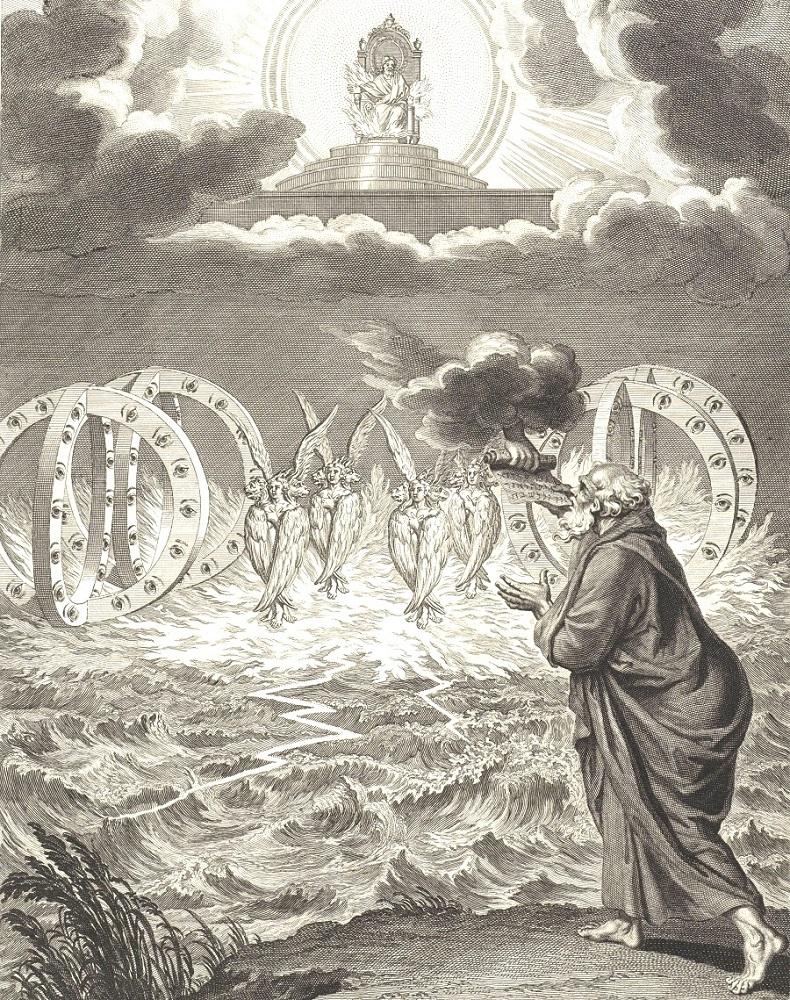
A Difficult Calling

And he said to me, “Son of man, go to the house of Israel and speak with my words to them. For you are not sent to a people of foreign speech and a hard language, but to the house of Israel— not to many peoples of foreign speech and a hard language, whose words you cannot understand. Surely, if I sent you to such, they would listen to you. But the house of Israel will not be willing to listen to you, for they are not willing to listen to me: because all the house of Israel have a hard forehead and a stubborn heart. Behold, I have made your face as hard as their faces, and your forehead as hard as their foreheads. Like emery harder than flint have I made your forehead. Fear them not, nor be dismayed at their looks, for they are a rebellious house.” 10 Moreover, he said to me, “Son of man, all my words that I shall speak to you receive in your heart, and hear with your ears. 11 And go to the exiles, to your people, and speak to them and say to them, ‘Thus says the Lord God,’ whether they hear or refuse to hear.”

12 Then the Spirit lifted me up, and I heard behind me the voice of a great earthquake: “Blessed be the glory of the Lord from its place!” 13 It was the sound of the wings of the living creatures as they touched one another, and the sound of the wheels beside them, and the sound of a great earthquake. 14 The Spirit lifted me up and took me away, and I went in bitterness in the heat of my spirit, the hand of the Lord being strong upon me. 15 And I came to the exiles at Tel-abib, who were dwelling by the Chebar canal, and I sat where they were dwelling. And I sat there overwhelmed among them seven days. – Ezekiel 3:4-15 ESV

After consuming the scroll that God had given him, Ezekiel was commanded to regurgitate its content to his fellow captives living in the land of Babylon. While the message contained in the scroll was filled with words of “lamentation and mourning and woe” (Ezekiel 2:10 ESV), Ezekiel found it to taste “as sweet as honey” (Ezekiel 3:3 ESV). Ezekiel had discovered the truth behind the psalm.

How sweet are your words to my taste, sweeter than honey to my mouth! – Psalm 119:103 ESV).

And the prophet Jeremiah also learned to develop a hunger and delight for the word of the Lord.

Your words were found, and I ate them, and your words became to me a joy and the delight of my heart, for I am called by your name, O LORD, God of hosts. – Jeremiah 15:16 ESV

God’s Word may be difficult to hear but, when obeyed, it always proves to be a delight to the soul because it is filled with wisdom and truth. Ezekiel had feasted on the Word of God and found it to be both pleasant and filling. But the difficulty would come when he tried to share that message with his fellow exiles. This young priest-turned-prophet was going to have to share what he had learned with the rest of the Jews living along the Kebar River in Babylon, and God warned him that they would not be a receptive audience.

“…the people of Israel won’t listen to you any more than they listen to me! For the whole lot of them are hard-hearted and stubborn.” – Ezekiel 3:7 NLT

The Almighty God had chosen to reveal Himself to Ezekiel in the middle of a Judaen refuge camp in the land of Babylon, and He had delivered to Ezekiel a message that was intended solely for the people of God. The words contained on the scroll had been directed at His chosen people and not the Babylonians. God was not above delivering words of warning to foreign countries. He had used Isaiah to pronounce a powerful message of future destruction to the Babylonians.

Babylon, the most glorious of kingdoms,
    the flower of Chaldean pride,
will be devastated like Sodom and Gomorrah
    when God destroyed them.
Babylon will never be inhabited again.
    It will remain empty for generation after generation.
Nomads will refuse to camp there,
    and shepherds will not bed down their sheep. – Isaiah 13:19-20 NLT

But the message God had given Ezekiel was for the people of Judah alone. And God seems to infer that Ezekiel’s task would have been much easier if his audience was made up of foreigners who spoke a completely different language.

I am not sending you to a foreign people whose language you cannot understand. No, I am not sending you to people with strange and difficult speech. If I did, they would listen! – Ezekiel 3:5 NLT

The problem Ezekiel was going to encounter would not be that of a language barrier. No, his audience would hear and understand every word he said, but their stubborn and sin-hardened hearts would prevent them from responding in repentance. The same words that Ezekiel found to be as sweet as honey would be bitter and distasteful to the rebellious people of God.

But Ezekiel was not to be afraid or disheartened. In fact, God declared that he would be divinely equipped for the task. The people of Israel would meet their match in Ezekiel.

“I have made you as obstinate and hard-hearted as they are. I have made your forehead as hard as the hardest rock! So don’t be afraid of them or fear their angry looks, even though they are rebels.” – Ezekiel 3:8-9 NLT

God was going to equip Ezekiel with a supernatural source of stamina and determination that would allow him to stay strong even in the face of repeated rejection and the evident failure of his mission. God knew that there would be days when Ezekiel felt as if his task was ill-fated and his ministry was doomed to defeat. He would be tempted to throw in the towel and abandon his mission. That’s why God encouraged him to take time and meditate on the words he was about to deliver. He was to think long and hard about the content of God’s message long before he began to deliver it.

“Son of man, let all my words sink deep into your own heart first. Listen to them carefully for yourself. Then go to your people in exile and say to them, ‘This is what the Sovereign Lord says!’ Do this whether they listen to you or not.” – Ezekiel 3:10-11 NLT

Ezekiel was to be more than just a conduit through which the words of God flowed. He had been commanded to ingest the words of God so that they might flow from his heart and not just his lips. It was essential that the messenger believe the words of the message and trust the One who had delivered it. God wanted Ezekiel to learn the truth found in Psalm 119.

I will meditate on your precepts
    and fix my eyes on your ways.
I will delight in your statutes;
    I will not forget your word. – Psalm 119:15-16 ESV

The Lord knew that Ezekiel would need endurance in the days ahead. The ministry to which he was being called would prove difficult and disheartening. His message would fall on deaf ears. His calls to repentance would be rejected. And the psalmist seemed to have presaged Ezekiel’s pending predicament.

My soul longs for your salvation;
    I hope in your word.
My eyes long for your promise;
    I ask, “When will you comfort me?”
For I have become like a wineskin in the smoke,
    yet I have not forgotten your statutes.
How long must your servant endure?
    When will you judge those who persecute me?
The insolent have dug pitfalls for me;
    they do not live according to your law.
All your commandments are sure;
    they persecute me with falsehood; help me!
They have almost made an end of me on earth,
    but I have not forsaken your precepts.
In your steadfast love give me life,
    that I may keep the testimonies of your mouth. – Psalm 119:81-88 ESV

And, as if to provide Ezekiel with one more tangible form of encouragement, God allowed him to hear a thunderous proclamation from heaven.

“Blessed be the glory of the Lord from its place!” – Ezekiel 3:12 ESV

The entire vision Ezekiel had been given the privilege of seeing had been a dramatic display of God’s glory, and now a voice from heaven confirmed it. And Ezekiel saw and heard the wings of the four living creatures flapping in unison and the wheels within wheels turning as the glory of God began to move. This was not a static scene in which Ezekiel could remain and worship the glory of God forever. He had a job to do. And the Spirit of God lifted Ezekiel up and took him away. The vision had ended but his mission had just begun, and Ezekiel expressed his dismay by stating, “I went in bitterness and turmoil” (Ezekiel 3:14a NLT). He was struggling with doubt and fear. The mission before him was overwhelming and he felt underqualified for the task. And yet, he declared, “the Lord’s hold on me was strong” (Ezekiel 3:14b NLT).

Ezekiel had received a commission from God Almighty, and while he wrestled with doubt and feelings of inadequacy, he could not resist the calling. He must obey. So, with the vision completed, Ezekiel returned to his mission field among the exiles from Judah. And for seven days, he continued to struggle with an overwhelming sense of fear and foreboding as he contemplated his new assignment. His life had been radically altered by God and he would no longer be able to enjoy the same relationship he had once had with his friends and neighbors. He had been set apart by God and his life would never be the same.

English Standard Version (ESV) The Holy Bible, English Standard Version. ESV® Permanent Text Edition® (2016). Copyright © 2001

New Living Translation (NLT) Holy Bible, New Living Translation, copyright © 1996, 2004, 2015 by Tyndale House Foundation. Used by permission of Tyndale House Publishers Inc., Carol Stream, Illinois 60188. All rights reserved.

A Bitter-Sweet Assignment

1 And he said to me, “Son of man, stand on your feet, and I will speak with you.” And as he spoke to me, the Spirit entered into me and set me on my feet, and I heard him speaking to me. And he said to me, “Son of man, I send you to the people of Israel, to nations of rebels, who have rebelled against me. They and their fathers have transgressed against me to this very day. The descendants also are impudent and stubborn: I send you to them, and you shall say to them, ‘Thus says the Lord God.’ And whether they hear or refuse to hear (for they are a rebellious house) they will know that a prophet has been among them. And you, son of man, be not afraid of them, nor be afraid of their words, though briers and thorns are with you and you sit on scorpions. Be not afraid of their words, nor be dismayed at their looks, for they are a rebellious house. And you shall speak my words to them, whether they hear or refuse to hear, for they are a rebellious house.

“But you, son of man, hear what I say to you. Be not rebellious like that rebellious house; open your mouth and eat what I give you.” And when I looked, behold, a hand was stretched out to me, and behold, a scroll of a book was in it. 10 And he spread it before me. And it had writing on the front and on the back, and there were written on it words of lamentation and mourning and woe.

1 And he said to me, “Son of man, eat whatever you find here. Eat this scroll, and go, speak to the house of Israel.” So I opened my mouth, and he gave me this scroll to eat. And he said to me, “Son of man, feed your belly with this scroll that I give you and fill your stomach with it.” Then I ate it, and it was in my mouth as sweet as honey. – Ezekiel 2:1-3:3 ESV

Ezekiel had been given a vision of God’s glory, and it left him face down on the ground in reverential fear and wonder. As this exiled young priest stood by the banks of the Kebar River in Babylon, the God of the universe made an unexpected and highly spectacular appearance.

Above this surface was something that looked like a throne made of blue lapis lazuli. And on this throne high above was a figure whose appearance resembled a man. From what appeared to be his waist up, he looked like gleaming amber, flickering like a fire. And from his waist down, he looked like a burning flame, shining with splendor. All around him was a glowing halo, like a rainbow shining in the clouds on a rainy day. This is what the glory of the Lord looked like to me. – Ezekiel 1:26-28 NLT

It is safe to assume that this was a once-in-a-lifetime experience for Ezekiel. He had never seen anything like this before, and to have the God of Abraham, Isaac, and Jacob appear to him in the remote recesses of the land of Babylon must have been a shock to his system. He was just a lowly priest who had been taken captive just like all the other residents of Jerusalem when the city had fallen to King Nebuchadnezzar’s forces.  Jehoiachin was the king of Judah at the time and, according to 2 Kings 12:9, “He did evil in the sight of the Lord as his ancestors had done.” Like most of his predecessors, Jehoiachin chose to use his royal power to promote idolatry that fostered unfaithfulness to God, and he suffered greatly for his refusal to honor the Almighty.

At that time the generals of King Nebuchadnezzar of Babylon marched to Jerusalem and besieged the city. King Nebuchadnezzar of Babylon came to the city while his generals were besieging it. King Jehoiachin of Judah, along with his mother, his servants, his officials, and his eunuchs surrendered to the king of Babylon. The king of Babylon, in the eighth year of his reign, took Jehoiachin prisoner. Nebuchadnezzar took from there all the riches in the treasuries of the Lord’s temple and of the royal palace. He removed all the gold items that King Solomon of Israel had made for the Lord’s temple, just as the Lord had warned. He deported all the residents of Jerusalem, including all the officials and all the soldiers (10,000 people in all). This included all the craftsmen and those who worked with metal. No one was left except for the poorest among the people of the land. – 2 Kings 12:10-14 NLT

Living amongst the exiled people of God, Ezekiel had firsthand experience with the apathy and complacency that had taken hold of them. A long way from home and no longer able to avail themselves of the temple and the sacrificial system, they had begun to lose interest in the things of God. Their circumstances had left them feeling abandoned by God and distraught over the far-from-ideal conditions of their captivity. With the passage of time, God had become out of sight, out of mind. They simply assumed He had turned His back on them and so, in time, they gave up hope and determined to make the most of their situation in Babylon.

But God had other plans that included appointing Ezekiel as the one who would deliver His message to the exiles. He had not forgotten about them. They had not been abandoned. Their exile had been intended to get their attention and to bring them to a point of repentance. Now, Ezekiel was going to be commissioned to serve as God’s spokesperson, delivering His call to repentance.

Having gotten Ezekiel’s full attention through the grand display of His glory, God delivered the details of his new assignment.

“I am sending you to the nation of Israel, a rebellious nation that has rebelled against me. They and their ancestors have been rebelling against me to this very day. They are a stubborn and hard-hearted people. But I am sending you to say to them, ‘This is what the Sovereign Lord says!’” – Ezekiel 2:3-4 NLT

God makes it painfully clear that Ezekiel’s new task would not be easy. He would have to deliver a message from God to a people who had a track record of stubbornness and insubordination. And God warns Ezekiel that his audience may not receive his message with open arms.

“And whether they listen or refuse to listen—for remember, they are rebels—at least they will know they have had a prophet among them.” – Ezekiel 2:5 NLT

There was no guarantee that Ezekiel would experience success. Despite the fact that he would be speaking the words of God, he had no way of knowing how the people would respond. In fact, God made it sound like his mission was doomed to certain failure.

What would you do if God called you to a task that He knew you were going to fail at? What if He even told you your efforts would be fruitless and non-productive? Most of us would bail. We would give up long before we got going. Because we’re wired with one thing in mind – success – and failure is not an acceptable alternative. But when Ezekiel got his marching orders from God, he was also given the not-so-great news that his ministry would be unsuccessful because his audience was going to be unresponsive.  God even told Ezekiel to expect threats and animosity. This was going to be one difficult job assignment.

In a sense, God was foreshadowing failure, but demanding obedience. Ezekiel’s success would not be measured by the number of callous, carnal Israelites he converted, but on his willingness to carry out God’s assignment faithfully, even in the face of rejection, ridicule, and poor results.

Even the message God gave Ezekiel to share was anything but good news. In his vision, Ezekiel was given a scroll that was covered with writing front and back, from edge to edge. It’s content?

“Funeral songs, words of sorrows, and pronouncements of doom.” – Ezekiel 2:9b NLT

It was a veritable compendium of bad news. So, not only would Ezekiel have a non-responsive audience, he was given an unappealing message. But God fully understood the foreboding nature of Ezekiel’s assignment, and he knew that Ezekiel was already wrestling with whether to follow through with His command. The young priest was afraid of how he and his message might be received by the people, but God encouraged him to have faith.

“Do not fear them or their words. Don’t be afraid even though their threats surround you like nettles and briars and stinging scorpions. Do not be dismayed by their dark scowls, even though they are rebels.” – Ezekiel 2:6 NLT

God was telling Ezekiel not to be frightened by the things they would threaten to do to him, the harsh words they might say about him, or the negative reaction they would inevitably have to him.

“Son of man, do not fear them or their words. Don’t be afraid even though their threats surround you like nettles and briers and stinging scorpions. Do not be dismayed by their dark scowls, even though they are rebels. You must give them my messages whether they listen or not. But they won’t listen, for they are completely rebellious!” – Ezekiel 2:6-7 NLT

Ezekiel was going to experience resistance. His message would not be well-received and the people would hold him responsible for its content. It was only a matter of time before they sought to kill the messenger. That’s why God warned Ezekiel to refrain from emulating the rebellious nature of his audience. He was not to reject God’s assignment just because it sounded difficult and more than a bit dangerous. God was open and above board as to the difficulty of the mission. He didn’t attempt to sugarcoat the assignment or paint a rosy picture of its outcome. Instead, God gave His newly appointed prophet all he would need to succeed.

“Son of man, listen to what I say to you. Do not join them in their rebellion. Open your mouth, and eat what I give you.” – Ezekiel 2:8 NLT

God held out a scroll, upon which were written lamentations, mourning, and woes. In other words, it was filled with bad news. The sheer volume of disheartening content was so great that it covered both sides of the scroll. God’s indictment against His people was great and He commanded Ezekiel to consume every last bit of it. He was to take it all in so that he might regurgitate it, word for word, to the disobedient people of God.

“Son of man, eat whatever you find here. Eat this scroll, and go, speak to the house of Israel.” – Ezekiel 3:1 ESV

But much to his surprise, Ezekiel found the less-than-appealing content of the scroll to be “sweet as honey.” (Ezekiel 3:3 ESV). There is a similar scene described in the book of Revelation. In it, the apostle John is given a vision of an angel who descends from heaven with a scroll in his hand. He presents the scroll to John and commands him to eat it.

“Yes, take it and eat it,” he said. “It will be sweet as honey in your mouth, but it will turn sour in your stomach!” So I took the small scroll from the hand of the angel, and I ate it! It was sweet in my mouth, but when I swallowed it, it turned sour in my stomach.

Then I was told, “You must prophesy again about many peoples, nations, languages, and kings.” – Revelation 10:9-11 NLT

Both John and Ezekiel would find the words of God to be both sweet and bitter. When the truth of God is consumed, it is pleasant and life-giving, but it can also result in conviction and condemnation.

For the word of God is alive and powerful. It is sharper than the sharpest two-edged sword, cutting between soul and spirit, between joint and marrow. It exposes our innermost thoughts and desires. – Hebrews 4:12 NLT

All Scripture is inspired by God and is useful to teach us what is true and to make us realize what is wrong in our lives. It corrects us when we are wrong and teaches us to do what is right. – 2 Timothy 3:16 NLT

For Ezekiel, consuming God’s word was sweet to the taste, but declaring it to the people would be a bitter experience. They would find it distasteful and difficult to swallow. But God was calling Ezekiel to be faithful and fearless in declaring its truth regardless of the outcome.

English Standard Version (ESV) The Holy Bible, English Standard Version. ESV® Permanent Text Edition® (2016). Copyright © 2001

New Living Translation (NLT) Holy Bible, New Living Translation, copyright © 1996, 2004, 2015 by Tyndale House Foundation. Used by permission of Tyndale House Publishers Inc., Carol Stream, Illinois 60188. All rights reserved.

The Wisdom of Experience

1 My son, be attentive to my wisdom;
    incline your ear to my understanding,
that you may keep discretion,
    and your lips may guard knowledge.
For the lips of a forbidden woman drip honey,
    and her speech is smoother than oil,
but in the end she is bitter as wormwood,
    sharp as a two-edged sword.
Her feet go down to death;
    her steps follow the path to Sheol;
she does not ponder the path of life;
    her ways wander, and she does not know it.

And now, O sons, listen to me,
    and do not depart from the words of my mouth.
Keep your way far from her,
    and do not go near the door of her house,
lest you give your honor to others
    and your years to the merciless,
10 lest strangers take their fill of your strength,
    and your labors go to the house of a foreigner,
11 and at the end of your life you groan,
    when your flesh and body are consumed,
12 and you say, “How I hated discipline,
    and my heart despised reproof!
13 I did not listen to the voice of my teachers
    or incline my ear to my instructors.
14 I am at the brink of utter ruin
    in the assembled congregation.”

15 Drink water from your own cistern,
    flowing water from your own well.
16 Should your springs be scattered abroad,
    streams of water in the streets?
17 Let them be for yourself alone,
    and not for strangers with you.
18 Let your fountain be blessed,
    and rejoice in the wife of your youth,
19     a lovely deer, a graceful doe.
Let her breasts fill you at all times with delight;
    be intoxicated always in her love.
20 Why should you be intoxicated, my son, with a forbidden woman
    and embrace the bosom of an adulteress?
21 For a man’s ways are before the eyes of the Lord,
    and he ponders all his paths.
22 The iniquities of the wicked ensnare him,
    and he is held fast in the cords of his sin.
23 He dies for lack of discipline,
    and because of his great folly he is led astray. – Proverbs 5:1-23 ESV

This sounds like strange, if not hypocritical, advice coming from a man who had 700 wives and 300 concubines (1 Kings 11:3). It would appear that wise sayings weren’t the only things that Solomon made a habit of collecting. This king with the overactive libido had an eye for the ladies. So, it seems a bit disingenuous for Solomon to be giving his sons a lecture on avoiding the “forbidden woman.” How could he presume that he was the right man to give counsel not to “drink water from your own cistern” (Proverbs 5:15 ESV).

Yet, Solomon was the perfect person to be passing on his life experiences to his as-yet-unmarried sons. He wasn’t simply spouting pious-sounding platitudes he had discovered along the way, but he was sharing the painful life lessons he had been forced to learn as a result of his own pride and stupidity. Verses 12-13 are actually Solomon’s personal testimony.

“How I hated discipline,
    and my heart despised reproof!
I did not listen to the voice of my teachers
    or incline my ear to my instructors.”

Solomon is offering up a painful confession. And yet, Solomon’s admission would not have been news to his boys. In fact, it is likely that, while they all shared Solomon as their father, they each had a different mother. They suffered from no delusions that their father was a one-woman man. Each knew that their dad had been less-than-faithful to their own mother. And the older they became and the more knowledge they gained about the Word of God, they would have known that their father’s actions were out of step with the will of God.

Now King Solomon loved many foreign women. Besides Pharaoh’s daughter, he married women from Moab, Ammon, Edom, Sidon, and from among the Hittites. The LORD had clearly instructed the people of Israel, “You must not marry them, because they will turn your hearts to their gods.” Yet Solomon insisted on loving them anyway. He had 700 wives of royal birth and 300 concubines. And in fact, they did turn his heart away from the LORD.

In Solomon’s old age, they turned his heart to worship other gods instead of being completely faithful to the LORD his God, as his father, David, had been. – 1 Kings 11:1-4 ESV

Somewhere along the way, Solomon had made the decision to violate the command of God. His personal preferences and passions took precedence over God’s will. He would have been very familiar with God’s command concerning the kings of Israel.

The king must not take many wives for himself, because they will turn his heart away from the LORD. – Deuteronomy 17:17 NLT

But Solomon had decided that he knew best and he began to fill his home and his harem with beautiful women, collecting them like treasures to showcase his power and prestige.

But over in Proverbs 14:12 we read, “There is a way that seems right to a man, but in the end it leads to death.” That phrase “in the end” seems to pop up on a regular basis in the Proverbs. It refers to a day of accountability, not necessarily the day of the judgment of the Lord, but of a day of consequence. Every action has an outcome. Every path we take in life has a destination or an end. If a young man or woman chooses a life of immorality, it will have an outcome, and probably not the one they were expecting. Sin never does.

Solomon is speaking from experience when he states, “the lips of an immoral woman are as sweet as honey, and her mouth is smoother than oil – in the end she is as bitter as poison” (Proverbs 14:3-4 NLT). He knew what he was talking about and he wanted his sons to know that what appears to be tempting and tantalizing doesn’t always turn out quite as advertised.

One of the characteristics of foolishness or a lack of godly wisdom is the inability to foresee consequences. We are either oblivious to them or simple choose to ignore them. But more than likely, it is just a case of ignorance. A child touches a hot stove because they don’t know any better. They are ignorant of the consequences. But there comes a time in all of our lives when we become aware of the consequences of sin and still stubbornly continue to commit them. We think those consequences won’t apply to us. We refuse to consider “the end.” We choose to live in the pleasure of the moment, putting off any thought of the consequences, or simply refusing to believe there will be any negative ramifications for our actions. But to think that way is not only foolish, it’s deadly. We can end up losing everything – our honor, all we’ve achieved in life, the fruit of all our labor, the blessings of God, and the love and respect of those we once held dear. Like Solomon, we will find ourselves sadly looking back at our actions and saying, “How I hated discipline! If only I had not ignored all the warnings! Oh, why didn’t I listen to my teachers? Why didn’t I pay attention to my instructors? I have come to the brink of utter ruin, and now I must face public disgrace” (Proverbs 5:12-14 NLT).

In the end, you will have regrets because the path you chose had consequences. But nobody thinks about the potential consequences when facing the alluring temptation of sin – except the godly. But obviously, Solomon is an example of the godly man who took his eyes off the Lord and began to seek satisfaction and significance somewhere else. It began with the allure of the forbidden fruit of many wives, but it wasn’t long before that sin produced an even greater one: the worship of their false gods. Solomon’s lust for women turned into a loss of love for God.

Sin is so tempting, and it’s allure is real, making it a constant problem for men and women alike. And while Solomon wrote his proverbs a long time ago, some things never change. We still need to hear his words of wisdom and warning. He spends an entire Proverb warning his sons against the dangers of the immoral woman or prostitute. It was a problem then and it remains a problem today. Promiscuity is alive and well, and it may be even more acceptable today than ever before. The increase in casual sex and a growing comfortableness and complacency with sex outside the confines of marriage make this message particularly timely for our sex-saturated society. Solomon’s warning to his sons was necessary in his day and it is needed in ours as well. But it sounds so antiquated and puritanical! At least that’s what many in our society would say. But it is a warning against the lies of all temptations. Satan is the father of lies and the great deceiver. He loves to package his product in such a way that it hides the dangers within. He is the master of manipulation and deception, creating the allusion of pleasure, but all the while hiding the true consequences. The prostitute is a perfect illustration of his methodologies. She is attractive, flattering, enticing, and appeals to man’s basic instincts. She knows man’s weakness and aims right for it. The apostle John warned us, “For the world offers only a craving for physical pleasure, a craving for everything we see, and pride in our achievements and possessions” (1 John 2:16 NLT).

That is Satan’s strategy. Everything he offers is designed to appeal to what we crave and desire, to fulfill our insatiable need for pleasure, and to satisfy our hunger for significance. A prostitute goes out of her way to make her “client” feel wanted, important, and significant. She offers to provide him with physical and emotional pleasure and to satisfy all his needs. But in the end, “her feet go down to death.” Like all sin, the consequences are dangerous and deadly. It never delivers as promised. It is the ultimate in false advertising, yet we fall prey to it each and every day in so many ways. We take the bait and suffer the consequences of broken marriages, unfulfilled expectations, destroyed reputations, and shattered lives.

So what’s the solution? Wisdom, wise counsel, and discernment. Solomon warns his sons in graphic detail of the dangers facing them. He doesn’t sugarcoat or ignore it. He paints a vivid and compelling picture of the dangers of sin. He talks openly about the consequences. He wanted them to know the truth and he was willing for his sons to learn from his own mistakes.

Our congregations need to hear the truth. The enemy is filling their minds with lies day after day, and he has more resources available than ever before. The media provides him with a constant venue for propagating his lies and distributing his message of falsehood. We need to speak truth. We need to share the wisdom of God’s Word. We need to promote the non-negotiable requirement of living according to God’s way – unapologetically and boldly. The dangers are real. The consequences are devastating. Wisdom, wise counsel, and discernment are needed more than ever before.

English Standard Version (ESV) The Holy Bible, English Standard Version. ESV® Permanent Text Edition® (2016). Copyright © 2001 by Crossway Bibles, a publishing ministry of Good News Publishers.

New Living Translation (NLT) Holy Bible, New Living Translation, copyright © 1996, 2004, 2015 by Tyndale House Foundation. Used by permission of Tyndale House Publishers Inc., Carol Stream, Illinois 60188. All rights reserved.

New English Translation (NET)NET Bible® copyright ©1996-2017 by Biblical Studies Press, L.L.C. http://netbible.com All rights reserved.


The Short Journey from Doubt to Disobedience

1 Now the serpent was more crafty than any other beast of the field that the Lord God had made.

He said to the woman, “Did God actually say, ‘You shall not eat of any tree in the garden’?” And the woman said to the serpent, “We may eat of the fruit of the trees in the garden, but God said, ‘You shall not eat of the fruit of the tree that is in the midst of the garden, neither shall you touch it, lest you die.’” But the serpent said to the woman, “You will not surely die. For God knows that when you eat of it your eyes will be opened, and you will be like God, knowing good and evil.” So when the woman saw that the tree was good for food, and that it was a delight to the eyes, and that the tree was to be desired to make one wise, she took of its fruit and ate, and she also gave some to her husband who was with her, and he ate. Then the eyes of both were opened, and they knew that they were naked. And they sewed fig leaves together and made themselves loincloths. Genesis 3:1-7 ESV

With the opening of chapter three, the story takes a sudden and decidedly dark turn. The preceding chapter ended with the first marriage ceremony, officiated over by God Himself, as He joined together as “one flesh,” the man and woman He had created. It had been an idyllic scene, as Adam welcomed his new wife.

“At last!” the man exclaimed.

“This one is bone from my bone,
    and flesh from my flesh!
She will be called ‘woman,’
    because she was taken from ‘man.’” – Genesis 2:25 NLT

And Moses ended that chapter by noting that “the man and his wife were both naked, but they felt no shame” (Genesis 2:25 NLT). They enjoyed a relationship built on innocence, transparency, and complete trust. They were just as God had intended them to be and, together, they enjoyed the bountiful and beautiful environment He had prepared for them. Yet, their state of unadulterated innocence and intimacy was about to change – forever.

One day, as Eve walked in the garden, she was confronted by one of the other “living creatures.“ In a scene straight out of a Harry Potter novel, Eve is confronted by a beautiful and particularly beguiling serpent. Surprisingly, Eve does not seem to be shocked at the creature’s capacity to speak. Due to her recent arrival on the scene, Eve may have not yet interacted with any of the other animals, so she would have been unaware that the capacity of speech was solely restricted to humans. The fact that the serpent spoke to her does not seem to surprise her. But the words that come from the mouth of the serpent will have life-altering implications.

It is interesting to note the wordplay that takes place between verse 25 of chapter two and verse 1 of chapter three. In Hebrew, the word for “naked” is עָרוֹם (ʿārôm), and the word used to describe the craftiness of the serpent is עָרוּם (ʿārûm). Moses, writing under the inspiration of the Holy Spirit, uses these two words to differentiate between Eve, the innocent protagonist, and the serpent, the clever and cunning antagonist. The serpent is going to make a full-frontal assault on the child-like innocence and inexperience of Eve.

But before preceding, we have to address the issue of the serpent’s identity. Was this just another snake in the garden? It would seem that the answer is no. This serpent displayed the capacity to reason and speak. Moses describes it as being “more crafty than any other beast of the field that the Lord God had made” (Genesis 3:1 ESV). This statement could indicate that the serpent was not one of God’s creations. Then where did it come from? Most biblical scholars agree that the serpent was a manifestation of Satan himself. The prophet Ezekiel describes Satan as being in Eden.

You were in Eden, the garden of God;
    every precious stone was your covering,
sardius, topaz, and diamond,
    beryl, onyx, and jasper,
sapphire, emerald, and carbuncle;
    and crafted in gold were your settings
    and your engravings.
On the day that you were created
    they were prepared.
You were an anointed guardian cherub.
    I placed you; you were on the holy mountain of God;
    in the midst of the stones of fire you walked.
You were blameless in your ways
    from the day you were created,
    till unrighteousness was found in you. – Ezekiel 28:13-15 ESV

And Ezekiel describes the ignominious fall of this “anointed guardian cherub” who had been “full of wisdom and perfect in beauty” (Ezekiel 28:12 ESV).

Your heart was proud because of your beauty;
    you corrupted your wisdom for the sake of your splendor.
I cast you to the ground;
    I exposed you before kings,
    to feast their eyes on you. – Ezekiel 28:17 ESV

And the prophet Isaiah provides further insights into Satan’s epic fall from grace.

“How you are fallen from heaven,
    O Day Star, son of Dawn!
How you are cut down to the ground,
    you who laid the nations low!
You said in your heart,
    ‘I will ascend to heaven;
above the stars of God
    I will set my throne on high;
I will sit on the mount of assembly
    in the far reaches of the north;
I will ascend above the heights of the clouds;
    I will make myself like the Most High.’” – Isaiah 14:12-14 ESV

Satan, desiring to be as God, had led an angelic insurrection against the Almighty. But his attempt to overthrow and replace God had failed and he was cast down to earth. In the book of Revelation, John provides an apt description of this former ministering angel. He refers to him as “that ancient serpent, who is called the devil and Satan, the deceiver of the whole world” (Revelation 12:9 ESV). Jesus described Satan as “a murderer from the beginning” (John 8:44 ESV). With this statement, Jesus seems to indicate Satan’s role in the fall. He played the part of the deceiver, using lies and half-truths to persuade Adam and Eve to rebel against God. And Jesus went on to explain that Satan “does not stand in the truth, because there is no truth in him. When he lies, he speaks out of his own character, for he is a liar and the father of lies” (John 8:44 ESV).

It seems clear that the serpent was merely a tool, a deceptive prop in the hands of Satan. It could be that Satan even disguised himself in the guise of a serpent in order to infiltrate the garden and catch the unsuspecting Eve off guard. The apostle Paul, when calling the false teachers who were deceiving local congregations, he described them as “deceitful workman, disguising themselves as apostles of Christ” (2 Corinthians 11:13 ESV). Then, he went on to explain the source of their deception.

And no wonder, for even Satan disguises himself as an angel of light. So it is no surprise if his servants, also, disguise themselves as servants of righteousness. Their end will correspond to their deeds. – 2 Corinthians 11:14-15 ESV

It doesn’t require a stretch of the imagination to consider Satan as disguising himself as a serpent. In that form, he was able to approach Eve and raise questions about the integrity and trustworthiness of God. He may have been cast down, but he had not yet given up his desire to replace God. This time, he chose to attack God’s chosen image-bearers in an effort to dissuade them from the kingdom mandate they had been given. And his weapon of choice was deceit, designed to produce doubt, which would eventually lead to disobedience. He began his conversation with Eve by asking a cleverly worded question:

“Did God actually say, ‘You shall not eat of any tree in the garden’?” – Genesis 2:1 ESV

He was testing her knowledge and understanding of God’s command concerning the trees of the garden. But he was also subtly encouraging Eve to doubt the integrity of God’s word.

But Eve calmly responded, “We may eat of the fruit of the trees in the garden, but God said, ‘You shall not eat of the fruit of the tree that is in the midst of the garden, neither shall you touch it, lest you die’” (Genesis 3:2-3 ESV). But Eve exposed her ignorance of God’s command by adding the inaccurate prohibition against touching the tree. Her answer was only partially correct, and this opened the door to Satan’s next salvo.

“You will not surely die. For God knows that when you eat of it your eyes will be opened, and you will be like God, knowing good and evil.” – Genesis 3:4-5 ESV

With this one statement, Satan planted the seeds of doubt that would soon spring forth into full-grown disobedience. He blatantly refuted the word of God by declaring that eating the fruit of the forbidden tree would result in life, not death. He insinuated to Even that God was holding out on them. The Almighty was trying to prevent them from experiencing all that they were meant to be. He asserted that if they actually disobeyed God and ate of the tree of the knowledge of good and evil, they would be like God. In other words, the fruit would give them the capacity to determine right from wrong. They would become autonomous and self-governing. In a sense, they would be like God in that they would be able to determine what was best for themselves. They would no longer have to live by God’s restrictive and repressive rules.

Satan portrayed God as the deceiver. He turned the tables and cast God as the villain in the story. It was Yahweh who was keeping them from enjoying their well-deserved freedom and right to self-determination.

And Eve quickly succumbed to Satan’s tempting ploy. Moses states that “the woman saw that the tree was good for food, and that it was a delight to the eyes, and that the tree was to be desired to make one wise” (Genesis 3:6 ESV). She immediately experienced what the apostle John would later describe as “a craving for physical pleasure, a craving for everything we see, and pride in our achievements and possessions” (1 John 2:16 NLT). She fell in love with the fruit and all that it could offer. And she ate. She gave in to the temptation. Not only that, she shared the forbidden fruit with her husband. Yes, Adam was there. He had been the entire time. He had heard the entire conversation between Eve and the serpent and had never spoken up. It had been to Adam that God had given the original warning concerning the tree.

And the Lord God commanded the man, saying, “You may surely eat of every tree of the garden, but of the tree of the knowledge of good and evil you shall not eat, for in the day that you eat of it you shall surely die.” – Genesis 2:16-17 ESV

He knew exactly what God had said and should have refuted the lies of the serpent. But, instead, Adam followed his wife’s lead and accepted her offer of the fruit. He too, doubted God’s word and made the fateful decision to disobey God’s command. And the rest, they say, is history. Moses sadly states, “the eyes of both were opened, and they knew that they were naked” (Genesis 3:7 ESV). They got exactly what the serpent had promised: Their eyes were opened. But what they saw disturbed them. Rather looking on one another’s innocence, they viewed themselves in the guise of guilt. They had sinned and they knew it. And they immediately tried to cover their nakedness and hide themselves from the all-seeing eyes of God.  

English Standard Version (ESV) The Holy Bible, English Standard Version. ESV® Permanent Text Edition® (2016). Copyright © 2001 by Crossway Bibles, a publishing ministry of Good News Publishers.

New Living Translation (NLT) Holy Bible, New Living Translation, copyright © 1996, 2004, 2015 by Tyndale House Foundation. Used by permission of Tyndale House Publishers Inc., Carol Stream, Illinois 60188. All rights reserved.

New English Translation (NET)NET Bible® copyright ©1996-2017 by Biblical Studies Press, L.L.C. http://netbible.com All rights reserved.

You Have No Idea!

25 Some of the people of Jerusalem therefore said, “Is not this the man whom they seek to kill? 26 And here he is, speaking openly, and they say nothing to him! Can it be that the authorities really know that this is the Christ? 27 But we know where this man comes from, and when the Christ appears, no one will know where he comes from.” 28 So Jesus proclaimed, as he taught in the temple, “You know me, and you know where I come from. But I have not come of my own accord. He who sent me is true, and him you do not know. 29 I know him, for I come from him, and he sent me.” 30 So they were seeking to arrest him, but no one laid a hand on him, because his hour had not yet come. 31 Yet many of the people believed in him. They said, “When the Christ appears, will he do more signs than this man has done?”John 7:25-31 ESV

The confusion and consternation over Jesus continues. This itinerant Rabbi from Galilee was walking enigma. Because of His reputation for performing miraculous signs and wonders, He attracted large crowds wherever He went. But no one was quite sure who He was or what to make of Him. There had been ongoing debates regarding His identity, with some speculating that He was the prophet Moses had spoken about. Others questioned whether He might be the Messiah. And while many considered Him to be a good man, there were others who had concluded that He was a deceiver who was not to be trusted. And then there were the religious leaders who viewed Him as a deadly threat to the social fabric of the nation and so, they had implemented plans to have Him put to death.

The high priest and the other members of the Sanhedrin had intended for their plot against Jesus to remain a secret, but the news of their clandestine plan had leaked out. Yet, not everyone was aware of the growing conspiracy against Jesus. In fact, when He had announced that there was a plot to murder Him, the crowd had rejected His accusation, writing off His paranoia to demon possession.

The crowd replied, “You’re demon possessed! Who’s trying to kill you?”– John 7:20 NLT

Yet, for those who were aware of the Sanhedrin’s sinister plan to have Jesus killed, they couldn’t understand why these powerful men had taken no action. It was not as if they lacked the opportunity. Jesus had spent the day teaching in the temple courtyard and the Jewish religious leaders had done nothing to silence Him. He had even reiterated His blasphemous claim of having been been sent by God.

My message is not my own; it comes from God who sent me. Anyone who wants to do the will of God will know whether my teaching is from God or is merely my own. – John 7:16-17 NLT

Confused by the inaction of the religious leaders, some in the crowd began to speculate whether they had changed their minds.

“Could our leaders possibly believe that he is the Messiah?” – John 7:26 NLT

But they quickly discounted this idea because, in their minds, Jesus did not fit the criteria for being the Messiah. According to their understanding, the Messiah would simply show up on the scene, unannounced and with no indication as to His point of origin.

When the Messiah comes, he will simply appear; no one will know where he comes from. – John 7:27 NLT

This belief was common among the Jews but was ill-founded and in contradiction to the Scriptures. The prophet, Micah, had clearly indicated that the Messiah would hail from Bethlehem (Micah 5:2). In fact, just a few verses later, John records a debate that took place among the people concerning the birthplace of the Messiah. Some were arguing that Jesus could not be the Messiah because He was from the city of Nazareth in Galilee. Yet, the Scriptures had indicated that the Messiah would hail from Bethlehem, the birthplace of King David.

“For the Scriptures clearly state that the Messiah will be born of the royal line of David, in Bethlehem, the village where King David was born.” – John 7:42 NLT

They were unaware of Jesus’ birth in Bethlehem and simply assumed that He had been born in the same place where He had been raised: Nazareth in Galilee. As a result, they ruled out the possibility that He might be the Messiah.

But while the people were busy debating the birthplace of the Messiah, Jesus took the opportunity to reveal that they had a much greater problem. He accused them of not knowing God.

“Yes, you know me, and you know where I come from. But I’m not here on my own. The one who sent me is true, and you don’t know him. But I know him because I come from him, and he sent me to you.” – John 7:28-29 NLT

This bold statement by Jesus was meant to have an impact. He was standing in the temple courtyard, surrounded by faithful Jews, and accusing them of lacking knowledge of Yahweh, their God. They thought they knew who Jesus was and where He came from, but they were sorely mistaken. And it was all because they had a less-than-vibrant relationship with their Heavenly Father. Because they were ignorant of God, they were unable to recognize the Son of God.

Jesus knew that the people were the byproduct of their religious leaders. These men had failed to instill in the people a love for God and His Word. As a result, the common Jew suffered from a lack of biblical knowledge that made intimacy with God virtually impossible. That is why Jesus had been so harsh in His assessment of the Pharisees and teachers of religious law.

“You hypocrites! Isaiah was right when he prophesied about you, for he wrote, ‘These people honor me with their lips, but their hearts are far from me. Their worship is a farce, for they teach man-made ideas as commands from God.’” – Matthew 15:7-9 NLT

This had been a long-standing problem among the people of God, as is evidenced by Jesus quoting the words of His own Father, recorded by the prophet Isaiah hundreds of years earlier. Over the centuries, the people of Israel had made a habit of going through the motions when it came to their relationship with Yahweh. They put a lot of effort into keeping His laws but their hearts weren’t in it. Their obedience was motivated by fear rather than love.

And in time, they failed to recognize that the Scriptures, the sacrificial system, and the Mosaic law had all been meant to develop their knowledge of and love for God. But Jesus revealed that they had missed the point altogether and, as a result, had missed out on knowing Him.

“…the Father who sent Me has Himself testified about Me. You have never heard His voice nor seen His form, nor does His word abide in you, because you do not believe the One He sent.

You pore over the Scriptures because you presume that by them you possess eternal life. These are the very words that testify about Me, yet you refuse to come to Me to have life.” – John 5:37-40 BSB

The failure of the people to recognize Jesus as their Messiah was due to their lack of a vibrant relationship with God. They revered His written Word. They placed a high priority on trying to keep His commandments. They viewed the temple as a sign of God’s abiding presence but lived as if God was nowhere to be found. So, when the Messiah showed up, they had a difficult time seeing the resemblance between the Father and the Son.

One of the things that John has stressed throughout his gospel is the role Jesus played in manifesting or revealing His Heavenly Father. John the Baptist had testified, “No one has ever seen God. But the unique One, who is himself God, is near to the Father’s heart. He has revealed God to us” (John 1:18 NLT).

Later on in his gospel, John records the words that Jesus spoke the crowds who followed Him:

“…when you see me, you are seeing the one who sent me.” – John 12:45 NLT

And Jesus would announce to Phillip, “Anyone who has seen me has seen the Father!” (John 14:9 NLT). The apostle Paul explained how this could be true when he wrote, “Christ is the visible image of the invisible God” (Colossians 1:15 NLT). Jesus came to make God known and knowable. That is why He later declared, “I am the way, the truth, and the life. No one can come to the Father except through me. If you had really known me, you would know who my Father is. From now on, you do know him and have seen him!” (John 14:6-7 NLT).

The people were in a bind. They didn’t know God, so they lacked an understanding of the written word of God. And because they failed to comprehend God’s word, they were unable to recognize the Living Word when He showed up. It was their inability to recognize Jesus as the Messiah that prevented them from seeing the Father in all His glory. That is prompted Jesus to declare, “Since you don’t know who I am, you don’t know who my Father is. If you knew me, you would also know my Father” (John 8:19 NLT).

The results of this conversation were somewhat predictable. The religious leaders were incensed and increased their efforts to kill Jesus. And the people continued to debate the identity of Jesus, with some reaching the conclusion that He must be the Messiah because of the miracles He performed.

Many among the crowds at the Temple believed in him. “After all,” they said, “would you expect the Messiah to do more miraculous signs than this man has done?” – John 7:31 NLT

It wasn’t the testimony of God as revealed in the Scriptures that convinced them. It was the supernatural nature of Jesus’ miracles that led them to believe. But this would prove to be an inadequate basis for believing faith. In time, the miracles would stop. The outward signs of power that so appealed to them would be replaced by an outward display of weakness, as Jesus hung on the cross as a common criminal. His crucifixion would be the deal-breaker for his former followers. They never expected their Messiah to die. So, with His death, Jesus had proven His claims to be nothing but a lie. Or so they thought.

 English Standard Version (ESV) The Holy Bible, English Standard Version. ESV® Permanent Text Edition® (2016). Copyright © 2001 by Crossway Bibles, a publishing ministry of Good News Publishers.

New Living Translation (NLT)
Holy Bible, New Living Translation, copyright © 1996, 2004, 2015 by Tyndale House Foundation. Used by permission of Tyndale House Publishers Inc., Carol Stream, Illinois 60188. All rights reserved.

The Message (MSG)Copyright © 1993, 1994, 1995, 1996, 2000, 2001, 2002 by Eugene H. Peterson

The Man Believed the Word

46 So he came again to Cana in Galilee, where he had made the water wine. And at Capernaum there was an official whose son was ill. 47 When this man heard that Jesus had come from Judea to Galilee, he went to him and asked him to come down and heal his son, for he was at the point of death. 48 So Jesus said to him, “Unless you see signs and wonders you will not believe.” 49 The official said to him, “Sir, come down before my child dies.” 50 Jesus said to him, “Go; your son will live.” The man believed the word that Jesus spoke to him and went on his way. 51 As he was going down, his servants met him and told him that his son was recovering. 52 So he asked them the hour when he began to get better, and they said to him, “Yesterday at the seventh hour the fever left him.” 53 The father knew that was the hour when Jesus had said to him, “Your son will live.” And he himself believed, and all his household. 54 This was now the second sign that Jesus did when he had come from Judea to Galilee. – John 4:46-54 ESV

After their two-day, unplanned stopover in Samaria, Jesus and His disciples left for the northern region of Galilee. He did so, in spite of the popular proverb He had quoted to His disciples: “a prophet has no honor in his own hometown” (John 4:44 ESV). Jesus was returning to Galilee, but He made His way to Cana, rather than His own hometown of Nazareth. He returned to the scene of His first miracle, where He had turned the water into wine.

In verse 45, John indicates that Jesus received a warm welcome in Galilee because many of the people had been eyewitnesses to the signs He had performed in Jerusalem during the Feast of Passover. With this reference to Jesus’ signs, John provides a link back to the miracle performed at the wedding feast in Cana. While the guests at the feast had no idea that Jesus had transformed ordinary water into wine, His disciples were fully aware of what had transpired.

This, the first of his signs, Jesus did at Cana in Galilee, and manifested his glory. And his disciples believed in him. – John 2:11 ESV

And when Jesus had gone on to perform additional signs in Jerusalem during the Passover festival, John records, “many believed in his name when they saw the signs that he was doing” (John 2:23 ESV).

The basis for their belief was the nature of the miraculous signs Jesus performed. And John makes it clear that the warm reception Jesus received in Galilee was due to “all that he had done in Jerusalem” (John 4:45 ESV). They too were attracted to and enamored by the miracles of Jesus. And His reputation as a miracle worker was spreading rapidly throughout all Israel. Which sets up the next encounter Jesus will experience.

While in Cana, Jesus received a visit from an unnamed government official who came seeking healing for his deathly-ill son. While we know little about this man, it is likely that he was a Jew who was in the employment of Herod Antipas, the unofficial “king” of the Jews, appointed by the Romans. This distraught father had made the 13-mile journey from Capernaum to Cana in the hopes that he could convince Jesus to return with him and heal his son.

But this man’s impassioned plea for help was met with what a somewhat caustic response from Jesus.

“Unless you see signs and wonders you will not believe.” – John 4:48 ESV

While it is unclear in our English translation, Jesus used the plural pronoun “you,” indicating that His comment was aimed at the Jewish people. Their belief in Him was fickle and focused solely on His ability to entertain them with His supernatural miracles. They loved the idea of a miracle-working Messiah. But Jesus had made it clear to Nicodemus that the key to eternal life was to believe in Him, not just the miracles He performed.

“Whoever believes in him is not condemned, but whoever does not believe is condemned already, because he has not believed in the name of the only Son of God.” – John 3:18 ESV

They were believing in the miracle-performing reputation of Jesus, but not in the name of Jesus. It was not enough that He came declaring Himself to be the Son of God. They needed proof. They demanded signs. And the apostle Paul would later condemn his own people for their stubborn refusal to acknowledge the greatest sign ever given that proved the deity of Jesus.

Since God in his wisdom saw to it that the world would never know him through human wisdom, he has used our foolish preaching to save those who believe. It is foolish to the Jews, who ask for signs from heaven. And it is foolish to the Greeks, who seek human wisdom. So when we preach that Christ was crucified, the Jews are offended and the Gentiles say it’s all nonsense. – 1 Corinthians 1:21-23 NLT

Undeterred by the seeming slight from Jesus, the desperate father begged Jesus to come to Capernaum and heal his son before it was too late. He was running out of time. His son was at death’s door and they still had a 13-mile journey ahead of them. If only he could get Jesus to agree to accompany him back to Capernaum, there might still be a chance that his son could live.

And Jesus answered the man’s impassioned plea with the simple response, “Go; your son will live” (John 4:50 ESV). On that matter-of-fact statement from the lips of Jesus, the official “believed what Jesus said and started home” (John 4:50 NLT). He didn’t argue. He didn’t continue to plead with Jesus to come with him. He simply turned and began the 13-mile return trip home – believing the words of Jesus. No sign. No miracle. No proof.

The belief this man exhibited was of a different sort that those in Cana who believed because of the signs Jesus had performed in Jerusalem. It stood in stark contrast to the belief of Jesus’ disciples which had been based on His ability to turn water into wine. This man had believed the words of Jesus. And this distinction is significant. It brings to mind the testimony of God Himself, spoken at the baptism of Jesus.

“This is my Son, my Chosen One; listen to him! – Luke 9:35 ESV

The Jews were enamored by the works of Jesus but they refused to listen to His words. As long as He kept performing miracles, they kept believing, but that belief was misplaced. They were so busy seeking a sign, that they missed the Savior.

Later on in his gospel, John records the words of Jesus declaring the divine origin of His message.

“For I have not spoken on my own authority, but the Father who sent me has himself given me a commandment—what to say and what to speak.” – John 12:49 ESV

And this was not the first time Jesus had claimed His words to be divinely inspired and spoken on behalf of His heavenly Father.

“My teaching is not mine, but his who sent me. If anyone’s will is to do God’s will, he will know whether the teaching is from God or whether I am speaking on my own authority. – John 7:16-17 ESV

The people should have been listening to the words of Jesus, but they were too busy focusing their attention on the works of Jesus. And with their obsession over His miracles, they were missing the meat of His message.

“Do you not believe that I am in the Father and the Father is in me? The words that I say to you I do not speak on my own authority, but the Father who dwells in me does his works. Believe me that I am in the Father and the Father is in me, or else believe on account of the works themselves.” –  John 14:10-11 ESV

In a sense, Jesus was stating that there were two sources of belief: His miracles or His message. But the truest form of belief was to receive the words of Jesus as the words of God because He spoke as God. And Jesus went on to assure His disciples that they too would go on to perform miracles and signs.

Truly, truly, I say to you, whoever believes in me will also do the works that I do; and greater works than these will he do, because I am going to the Father. Whatever you ask in my name, this I will do, that the Father may be glorified in the Son. If you ask me anything in my name, I will do it.” – John 14:12-13 ESV

Their ability to perform miracles would be based on their belief in Him and who He claimed to be. He was the Son of God and had the full authority of God to share His power with those who placed their faith in Him.

John’s entire gospel is focused on the divinity of Jesus. He is declaring the divine Sonship of Jesus and providing indisputable proof that this Rabbi from Nazareth was indeed who He claimed to be: The Son of God and the Savior of the world.

And as further evidence of Jesus’ deity, John describes the scene that took place when the father ran into his servants on his way home. They met him alone the way with the good news that “his son was alive and well” (John 4:51 NLT). And when the father asked at what time his son had begun to improve, he was told, “Yesterday afternoon at one o’clock his fever suddenly disappeared!” (John 4:52 NLT). And John closes his account with the following words:

Then the father realized that that was the very time Jesus had told him, “Your son will live.” And he and his entire household believed in Jesus. – John 4:53 NLT

When Jesus had said, “Your son will live,” the man had taken Him at His word and headed home. Now, he received confirmation that His faith had been rewarded. His son was well. Jesus had spoken, the man had believed, and his son had been healed. But notice how John ends this story with the words, “he and his entire household believed in Jesus.”

Their belief was not in the miracle but in the one who had spoken the miracle into existence. They believed in Jesus. Their faith was not focused on the healing of their family member. It was directed at the one who spoke with the authority of God.

English Standard Version (ESV) The Holy Bible, English Standard Version. ESV® Permanent Text Edition® (2016). Copyright © 2001 by Crossway Bibles, a publishing ministry of Good News Publishers.

New Living Translation (NLT)
Holy Bible, New Living Translation, copyright © 1996, 2004, 2015 by Tyndale House Foundation. Used by permission of Tyndale House Publishers Inc., Carol Stream, Illinois 60188. All rights reserved.

The Message (MSG)Copyright © 1993, 1994, 1995, 1996, 2000, 2001, 2002 by Eugene H. Peterson

God Is True

31 He who comes from above is above all. He who is of the earth belongs to the earth and speaks in an earthly way. He who comes from heaven is above all. 32 He bears witness to what he has seen and heard, yet no one receives his testimony. 33 Whoever receives his testimony sets his seal to this, that God is true. 34 For he whom God has sent utters the words of God, for he gives the Spirit without measure. 35 The Father loves the Son and has given all things into his hand. 36 Whoever believes in the Son has eternal life; whoever does not obey the Son shall not see life, but the wrath of God remains on him. – John 3:31-36 ESV

These closing verses of chapter 3 act as a kind of closing statement that summarizes all that has taken place since the initial encounter between Jesus and Nicodemus. It appears that the apostle John is the one providing this summary, in an attempt to reinforce his overarching theme of Jesus’ divine nature. John takes various aspects of the chapter 3 chronology and uses them to support his premise that Jesus was the Christ, the Messiah of Israel.

John the Baptist had clearly stated, “I am not the Christ, but I have been sent before him” (John 3:28 ESV). He knew his role as the precursor to the coming Messiah. And with the Messiah’s arrival, John the Baptist knew that his role would naturally diminish.

“He must increase, but I must decrease.” – John 3:30 ESV

He would be little more than a friend of the bridegroom, a spectator watching as his friend took center stage. And John the Baptist found great joy in accepting his diminished importance because the one for whom the nation had long waited had finally appeared.

And John points out that the appearance of the Messiah was not an everyday occurrence. He had come “from above.” The Greek word John used is anōthen, and it is the very same word Jesus used when speaking to Nicodemus about the new birth.

“Truly, truly, I say to you, unless one is born again he cannot see the kingdom of God.” – John 3:3 ESV

Jesus had been trying to let Nicodemus know that entrance into the kingdom of God would require something other than physical birth into the family of Israel. It would require a spiritual birth – from above. That’s why Jesus informed Nicodemus, “That which is born of the flesh is flesh, and that which is born of the Spirit is spirit” (John 3:6 ESV). Entrance into God’s eternal kingdom was going to require that all men be “born of the Spirit” (John 3:8 ESV), and Jesus had come to make that possible.

John goes on to emphasize Jesus’ divine nature by dispelling the long-held belief among the Jews that the Messiah would simply be a man, after the likeness of King David. Their expectation was like that of their ancient ancestors, who had demanded of the prophet Samuel, “Give us a king to judge us like all the other nations have” (1 Samuel 8:5 NLT).

Even after centuries of lousy leadership under a long line of human kings, the Israelites were still hoping for someone to show up who would follow in the footsteps of David. But John is emphasizing that Jesus, the Messiah, was from above and not of the earth. He had not only been sent by God, but He was actually God in human flesh. This further supports the opening statement of John’s gospel: “In the beginning was the Word, and the Word was with God, and the Word was God” (John 1:1 ESV).

Two times in verse 31, John asserts that “He who comes from heaven is above all” (John 3:31 ESV). In other words, Jesus, because of His divinity, is superior to anything and everyone that is of this earth. He is the Word of God. He speaks on behalf of God and as God, and “He bears witness to what he has seen and heard” (John 3:32 ESV). Jesus was revealing divine truth, received directly from the throne room of God in heaven. He was not a mere mortal speaking man-made words, but He was the Son of God speaking the words of God. He would later claim: “The words that I say to you I do not speak on my own authority, but the Father who dwells in me does his works” (John 14:10 ESV).  And Jesus would later expand on His divine authority to speak His Father’s words.

“For I have not spoken on my own authority, but the Father who sent me has himself given me a commandment—what to say and what to speak. And I know that his commandment is eternal life. What I say, therefore, I say as the Father has told me.” – John 12:49-50 ESV

And yet, John sadly notes that “no one receives his testimony” (John 3:32 ESV). Jesus was the incarnate Word of God, speaking on behalf of His Heavenly Father. And the gist of His message was the gracious offer of eternal life that would be made available through His death and resurrection. But the people did not believe His testimony. They refused to accept that He spoke for God.

But John counted himself among the few who had chosen to believe the testimony of Jesus. And, writing long after the resurrection and ascension of Jesus, and having experienced the coming of the Holy Spirit at Pentecost, John’s early belief in Jesus had been fully justified and proven well-founded. That is why he was able to say, “Whoever receives his testimony sets his seal to this, that God is true” (John 3:33 ESV).

Verse 34 seems to be John’s personal testimony that his belief in Jesus had resulted in his anointing by the Holy Spirit.

For he whom God has sent utters the words of God, for he gives the Spirit without measure. – John 3:34 ESV

The indwelling presence of the Spirit was all the proof John needed to believe that Jesus had been sent by God and had spoken on His behalf. John remembered the promise that Jesus had made to His disciples.

“I tell you the truth, anyone who believes in me will do the same works I have done, and even greater works, because I am going to be with the Father.” – John 14:12 NLT

Jesus rather obliquely refers to His ascension, indicating that His departure would be necessary in order for the Spirit of God to come. And just a few verses later, John records the further promise of Jesus that would be the key to accomplishing greater works than He had done.

“And I will ask the Father, and he will give you another Advocate, who will never leave you. He is the Holy Spirit, who leads into all truth.” – John 14:16 NLT

For John, this was all about authority. Jesus had been sent by God. He spoke on behalf of God. And all that He said was the truth of God. John is trying to get his readers to understand that Jesus was divine, which is why he states, “The Father loves the Son and has given all things into his hand” (John 3:35 ESV). Jesus possessed divine authority over the wind, waves, disease, and demons. His word was greater than that of kings, religious councils, or political parties. God loved Jesus so much that He imbued Him with all His divine authority. And Jesus would later tell His followers that they would experience that same love of God and have access to the full authority of God.

“When I am raised to life again, you will know that I am in my Father, and you are in me, and I am in you. Those who accept my commandments and obey them are the ones who love me. And because they love me, my Father will love them. And I will love them and reveal myself to each of them.” – John 14:20-21 NLT

Having received the indwelling power of the Holy Spirit, John was fully convinced that Jesus was exactly who He had claimed to be. John knew the full extent of God’s love because He had been filled with God’s Spirit, just as Jesus had promised. God the Father and God the Son had taken up permanent residence in John’s life in the form of indwelling Holy Spirit (John 14:23). And it had all begun when John had believed that Jesus was the Messiah, the Son of God sent from above. So, he reminds his readers that it all begins with belief.

Whoever believes in the Son has eternal life; whoever does not obey the Son shall not see life, but the wrath of God remains on him. – John 3:36 ESV

His emphasis is on eternal life, which will be experienced within the coming kingdom of God. Jesus had not come to set up an earthly kingdom. He had not come to sit on a throne but to die on a cross. He had come “to give his life as a ransom for many” (Mark 10:45 NLT). And John had witnessed that selfless, sacrificial act with his own eyes. He had seen Jesus crucified and buried. But he had also seen Him in His resurrected state and had stood by as Jesus ascended back into heaven where He was restored to His rightful place at His Father’s side.

John wants his readers to believe. He wants them to have the same remarkable experience he has had. And he warns them that, if they refuse to believe, they will remain under the righteous wrath of God. There was only one way to escape God’s pending judgment and that was through faith in Jesus Christ, His Son.

“For God so loved the world, that he gave his only Son, that whoever believes in him should not perish but have eternal life.” – John 3:16 ESV

English Standard Version (ESV) The Holy Bible, English Standard Version. ESV® Permanent Text Edition® (2016). Copyright © 2001 by Crossway Bibles, a publishing ministry of Good News Publishers.

New Living Translation (NLT)
Holy Bible, New Living Translation, copyright © 1996, 2004, 2015 by Tyndale House Foundation. Used by permission of Tyndale House Publishers Inc., Carol Stream, Illinois 60188. All rights reserved.

The Message (MSG)Copyright © 1993, 1994, 1995, 1996, 2000, 2001, 2002 by Eugene H. Peterson

Salvation, Suffering, and Scripture

10 You, however, have followed my teaching, my conduct, my aim in life, my faith, my patience, my love, my steadfastness, 11 my persecutions and sufferings that happened to me at Antioch, at Iconium, and at Lystra—which persecutions I endured; yet from them all the Lord rescued me. 12 Indeed, all who desire to live a godly life in Christ Jesus will be persecuted, 13 while evil people and impostors will go on from bad to worse, deceiving and being deceived. 14 But as for you, continue in what you have learned and have firmly believed, knowing from whom you learned it 15 and how from childhood you have been acquainted with the sacred writings, which are able to make you wise for salvation through faith in Christ Jesus. 16 All Scripture is breathed out by God and profitable for teaching, for reproof, for correction, and for training in righteousness, 17 that the man of God may be complete, equipped for every good work. 2 Timothy 3:10-17 ESV

Timothy found himself surrounded by false teachers and foolish people whose lack of spiritual discernment caused them to accept their heresy as truth. But Paul was not going to allow his young disciple to lose hope or to abandon his ministry objectives. Timothy still had work to do. The gospel must be preached, new believers must be educated in the teachings of Christ, the truth of God’s Word must be defended, and the promises of God must be believed. At all costs.

If Timothy needed encouragement or an example to follow, he need only look to the life of Paul, his mentor, and friend. After all, Paul was writing this letter while confined to prison in Rome. And the sole reason he was there was because of his faith in Christ and his commitment to preaching the gospel. He had been falsely accused by those who opposed his message and despised him so much that they would do anything to see him eliminated. A group of 40 Jews had even made a pact, sealed by an oath, that they would not eat until they had personally assassinated Paul.

The next morning a group of Jews got together and bound themselves with an oath not to eat or drink until they had killed Paul. There were more than forty of them in the conspiracy. They went to the leading priests and elders and told them, “We have bound ourselves with an oath to eat nothing until we have killed Paul. So you and the high council should ask the commander to bring Paul back to the council again. Pretend you want to examine his case more fully. We will kill him on the way.” – Acts 23:12-15 NLT

So, just in case his memory had lapsed, Paul provided Timothy with a sobering reminder of his own ministry experience. It had been anything but easy. From the moment he had received his commission as an apostle, Paul had found himself encountering opposition and having to face persecutions and sufferings. But he had done so with patience, faith, love, and steadfastness. This is not a display of arrogant pride or boasting on Paul’s part. He is simply reminding Timothy of what he had already witnessed with his own eyes. Paul recounts three different occasions when he had suffered persecution for doing what he had been called to do. The first took place in Antioch of Pisidia.

It was there that Paul and Barnabas preached the gospel of Jesus Christ in the synagogues and saw a great many people come to faith.

Many Jews and devout converts to Judaism followed Paul and Barnabas, and the two men urged them to continue to rely on the grace of God. – Acts 13:43 NLT

But they also met with increasing opposition on the part of the Jews.

But when some of the Jews saw the crowds, they were jealous; so they slandered Paul and argued against whatever he said. – Acts 13:45 NLT

And it wasn’t long before their jealousy and slander turned to acts of physical violence.

Then the Jews stirred up the influential religious women and the leaders of the city, and they incited a mob against Paul and Barnabas and ran them out of town. – Acts 13:50 NLT

Having been railroaded out of Antioch by the Jews, Paul and Barnabas made their way to Iconium. But as Luke records in the book of Acts, things did not improve.

The same thing happened in Iconium. Paul and Barnabas went to the Jewish synagogue and preached with such power that a great number of both Jews and Greeks became believers. Some of the Jews, however, spurned God’s message and poisoned the minds of the Gentiles against Paul and Barnabas. But the apostles stayed there a long time, preaching boldly about the grace of the Lord. And the Lord proved their message was true by giving them power to do miraculous signs and wonders. But the people of the town were divided in their opinion about them. Some sided with the Jews, and some with the apostles.

Then a mob of Gentiles and Jews, along with their leaders, decided to attack and stone them. When the apostles learned of it, they fled to the region of Lycaonia—to the towns of Lystra and Derbe and the surrounding area. And there they preached the Good News. – Acts 14:1-7 NLT

But things had taken a rather odd and nearly deadly turn in Lystra. Their miraculous healing of a crippled man had caused the inhabitants of Lystra to mistake them for gods in human form. They had even tried to offer sacrifices to Paul and Barnabas, declaring them to be the Greek gods, Zeus and Hermes. But Paul had taken the opportunity to declare the good news, calling their audience to “turn from these worthless things and turn to the living God” (Acts 14:15 NLT).

But the crowds had remained undeterred by Paul’s words, still convinced that they must be gods. And then, a contingent of Jews from Antioch and Iconium had shown up, whose accusations against Paul and Barnabas had transformed the adoring crowd from worshipers to executioners.

Then some Jews arrived from Antioch and Iconium and won the crowds to their side. They stoned Paul and dragged him out of town, thinking he was dead. But as the believers gathered around him, he got up and went back into the town. The next day he left with Barnabas for Derbe. – Acts 14:19-20 NLT

And Paul reminds Timothy, “You know all about how I was persecuted in Antioch, Iconium, and Lystra—but the Lord rescued me from all of it” (2 Timothy 3:11 NLT). Paul had miraculously walked away from his own stoning, making his way to Derbe, where he had continued to faithfully proclaim the good news of Jesus Christ. Then, according to Luke, Paul and Barnabas had retraced their steps, returning to the very cities where they had faced opposition and Paul had been stoned and left for dead.

After preaching the Good News in Derbe and making many disciples, Paul and Barnabas returned to Lystra, Iconium, and Antioch of Pisidia, where they strengthened the believers. They encouraged them to continue in the faith, reminding them that we must suffer many hardships to enter the Kingdom of God. – Acts 14:21-22 NLT

The inhabitants of these three cities must have been shocked when Paul and Barnabas showed back up. But no one would have been more surprised than those who had placed their faith in Christ as a result of the teaching of these two men. They had probably assumed they would never see Paul and Barnabas again. But not only did they return, they provided a living lesson in what it means to suffer on behalf of Christ. It is likely that Paul still displayed the cuts and bruises from his stoning in Lystra.

And Paul reminds Timothy of the message he had delivered to the faithful in Lystra, Iconium, and Antioch: “everyone who wants to live a godly life in Christ Jesus will suffer persecution” (2 Timothy 3:12 NLT).

The reality of the Christian life is that the godly will suffer while the ungodly will appear to prosper. False teachers will continue to deceive and mislead the innocent and immature. The wicked will appear to get away with their ungodly behavior, even flourishing, while those who follow Christ find themselves facing trials and difficulties of all kinds.

But Paul encourages Timothy to remain faithful at all costs, reminding him to consider the history of his own conversion and calling. Timothy had been raised by a godly mother and grandmother who had saturated his life with the Scriptures. And that immersion in the Old Testament had prepared Timothy to understand the truth regarding Jesus and His claim to be the Messiah of Israel.

You have been taught the holy Scriptures from childhood, and they have given you the wisdom to receive the salvation that comes by trusting in Christ Jesus. – 2 Timothy 3:15 NLT

Timothy knew that Jesus had been the fulfillment of all the Messianic passages found in the Hebrew Scriptures. He was the Son of David and the long-awaited Messiah. And He was Timothy’s Savior. And just as the Scriptures had prophesied Jesus’ first coming, they revealed that Jesus would one day come again. That’s why Paul reminds Timothy to keep trusting God’s written Word because it reveals the truth concerning His Living Word.

All Scripture is inspired by God and is useful to teach us what is true and to make us realize what is wrong in our lives. It corrects us when we are wrong and teaches us to do what is right. God uses it to prepare and equip his people to do every good work. – Acts 3:16-17 NLT

Things were not going to be easy. Living the Christian life was not going to be a walk in the park. But Paul wanted Timothy to know that he could endure whatever came his way because he could trust in the Word of God. It had the power to instruct, discipline, encourage, and equip God’s people. It was divinely inspired and, therefore, spiritually empowered to help every believer not only survive but thrive. Salvation, suffering, and Scripture are three non-negotiables in the life of the believer. Saving faith will result in suffering. It comes with the territory. But Scripture, which reveals the redemptive plan of God made possible through faith in Christ, also provides everything we need to live Christlike lives as we await His Son’s return.

English Standard Version (ESV)
The Holy Bible, English Standard Version. ESV® Permanent Text Edition® (2016). Copyright © 2001 by Crossway Bibles, a publishing ministry of Good News Publishers.

New Living Translation (NLT)
Holy Bible, New Living Translation, copyright © 1996, 2004, 2015 by Tyndale House Foundation. Used by permission of Tyndale House Publishers Inc., Carol Stream, Illinois 60188. All rights reserved.

The Message (MSG)Copyright © 1993, 1994, 1995, 1996, 2000, 2001, 2002 by Eugene H. Peterson

Trust God

12 Who has measured the waters in the hollow of his hand
    and marked off the heavens with a span,
enclosed the dust of the earth in a measure
    and weighed the mountains in scales
    and the hills in a balance?
13 Who has measured the Spirit of the Lord,
    or what man shows him his counsel?
14 Whom did he consult,
    and who made him understand?
Who taught him the path of justice,
    and taught him knowledge,
    and showed him the way of understanding?
15 Behold, the nations are like a drop from a bucket,
    and are accounted as the dust on the scales;
    behold, he takes up the coastlands like fine dust.
16 Lebanon would not suffice for fuel,
    nor are its beasts enough for a burnt offering.
17 All the nations are as nothing before him,
    they are accounted by him as less than nothing and emptiness.

18 To whom then will you liken God,
    or what likeness compare with him?
19 An idol! A craftsman casts it,
    and a goldsmith overlays it with gold
    and casts for it silver chains.
20 He who is too impoverished for an offering
    chooses wood that will not rot;
he seeks out a skillful craftsman
    to set up an idol that will not move.

21 Do you not know? Do you not hear?
    Has it not been told you from the beginning?
    Have you not understood from the foundations of the earth?
22 It is he who sits above the circle of the earth,
    and its inhabitants are like grasshoppers;
who stretches out the heavens like a curtain,
    and spreads them like a tent to dwell in;
23 who brings princes to nothing,
    and makes the rulers of the earth as emptiness.

24 Scarcely are they planted, scarcely sown,
    scarcely has their stem taken root in the earth,
when he blows on them, and they wither,
    and the tempest carries them off like stubble.

25 To whom then will you compare me,
    that I should be like him? says the Holy One.
26 Lift up your eyes on high and see:
    who created these?
He who brings out their host by number,
    calling them all by name;
by the greatness of his might
    and because he is strong in power,
    not one is missing.

27 Why do you say, O Jacob,
    and speak, O Israel,
“My way is hidden from the Lord,
    and my right is disregarded by my God”?
28 Have you not known? Have you not heard?
The Lord is the everlasting God,
    the Creator of the ends of the earth.
He does not faint or grow weary;
    his understanding is unsearchable.
29 He gives power to the faint,
    and to him who has no might he increases strength.
30 Even youths shall faint and be weary,
    and young men shall fall exhausted;
31 but they who wait for the Lord shall renew their strength;
    they shall mount up with wings like eagles;
they shall run and not be weary;
    they shall walk and not faint. – Isaiah 40:12-31 ESV

This chapter opened with the words, “Comfort, comfort my people.” And the next ten verses revealed the form that comfort would take. God was going to intervene on behalf of Judah. Isaiah was given a vision of a future day in which the Lord God will appear in glory and might.

Yes, the Sovereign Lord is coming in power.
    He will rule with a powerful arm.
    See, he brings his reward with him as he comes. – Isaiah 40:10 NLT

God will one day come as Shepherd of Israel, carrying his lambs in His arms and “holding them close to his heart” (Isaiah 40:11 NLT). But how can the people of Judah know for certain that all of this will take place? What assurance do they have that this future revelation of God’s glory and deliverance will happen? Isaiah has already provided an answer to these questions. It is because “the mouth of the Lord has spoken” (Isaiah 40:5 ESV). He is trustworthy and true, and His word is as immutable as His holy character.

But God knows that the people of Judah have their doubts. They are still obsessed with God’s declaration that the city of Jerusalem is going to fall to the Babylonians. So, any news of God’s future redemption sounds a bit hollow and too good to be true. The immediate prospect of defeat carries far more weight with them than any promise of future restoration. So, God addresses their apprehension with a series of 13 questions. And these queries from God are meant to reveal His greatness and the everlasting nature of His nature. God is eternal. He stands outside of space and time. Which is why He speaks of future events as if they have already happened. He is without equal and beyond comparison, and Isaiah stresses His incomparability with three rhetorical questions:

Who else has held the oceans in his hand?

Who has measured off the heavens with his fingers?

Who else knows the weight of the earth or has weighed the mountains and hills on a scale?  

The answer to all three questions is the same: No one. There is no one else like God. He doesn’t need advice or instruction. He doesn’t require anyone else to tell Him what is right or wrong. Compared with God, the “the nations of the world are but a drop in the bucket” (Isaiah 40:15 NLT). Like dust on a scale, they are infinitesimal and inconsequential. Their weight or glory doesn’t even register. In contrast, God’s glory is so great and His power, so beyond comparison, “He picks up the whole earth as though it were a grain of sand” (Isaiah 40:15 NLT). To put it bluntly, “The nations of the world are worth nothing to him. In his eyes, they count for less than nothing—mere emptiness and froth” (Isaiah 40:17 NLT).

This series of questions is reminiscent of an exchange that took place between God Almighty and His servant Job. After having lost virtually everything near and dear to him, including his children, his wealth and his health, Job was confused by the dire nature of his circumstances. He questioned the nature of his suffering and defended his own righteousness before God. In a sense, he expressed his doubts concerning God’s justice. And God responded with a series of questions for Job that contrasted His own character with that of Job’s. For two chapters, God bombards Job with a series of questions designed to juxtapose God’s glorious deity with Job’s humanity.

“Where were you when I laid the foundations of the earth?
    Tell me, if you know so much. – Job 38:4 NLT

“Do you know where the gates of death are located?
    Have you seen the gates of utter gloom?
Do you realize the extent of the earth?
    Tell me about it if you know!” – Job 38:17-18 NLT

“Can you shout to the clouds
    and make it rain?
Can you make lightning appear
    and cause it to strike as you direct? – Job 38:34-35 NLT

And two chapters later, God wraps up his inquisition of Job with the stinging words:

“Do you still want to argue with the Almighty?
    You are God’s critic, but do you have the answers?” – Job 40:2 NLT

This was all about a mere man questioning the integrity of the God of the universe. Job may not have liked his circumstances, but that gave him no right to doubt the goodness or greatness of God. Which is what led God to ask:

“Will you discredit my justice
    and condemn me just to prove you are right?
Are you as strong as God?
    Can you thunder with a voice like his? – Job 40:8-9 NLT

There is no situation that provides justification for man’s questioning of God’s integrity. Our first reaction, when faced with difficult circumstances, is to measure God’s character by human standards. We tend to analyze His actions by using our own flawed sense of right and wrong. But Isaiah asks, “To whom can you compare God? What image can you find to resemble him?” (Isaiah 40:18 NLT). God is not a man so He cannot be judged like one. And He is not a false god, made by human hands. He is uncreated. He has no maker. And He owes no one an answer or explanation for His actions.

So, God repeats Isaiah’s previous question:

“To whom will you compare me?
    Who is my equal?” asks the Holy One. – Isaiah 40:25 NLT 

And the answer remains: No one.

Yet, God knows that His people still have their doubts about Him. So, He confronts them with the real issue behind their refusal to believe His word.

“O Jacob, how can you say the Lord does not see your troubles?
    O Israel, how can you say God ignores your rights? – Isaiah 40:27 NLT

There were convinced that God was blind to their current circumstances. Not only that, they were questioning God’s integrity by accusing Him of ignoring their rights. In essence, they were labeling God as unjust and unrighteous. They were measuring God by their circumstances, rather than viewing their circumstances through the lens of God’s character. So, Isaiah gave them a much-needed reminder of how just and righteous, good and gracious God is.

He gives power to the weak
    and strength to the powerless.
Even youths will become weak and tired,
    and young men will fall in exhaustion. – Isaiah 40:29-30 NLT

Notice the circumstances in which God reveals His power and strength. It is in the midst of our weakness and powerlessness. It is when we are tired and exhausted that God tends to show up in all His glory. God told the apostle Paul, “My power works best in weakness” and Paul responded by saying, “So now I am glad to boast about my weaknesses, so that the power of Christ can work through me. That’s why I take pleasure in my weaknesses, and in the insults, hardships, persecutions, and troubles that I suffer for Christ. For when I am weak, then I am strong” (2 Corinthians 12:9-10 NLT).

How could Paul take pleasure in weakness? It was because he trusted God. He knew from experience that God tended to show up when things were looking down. God’s power was best manifested when Paul’s weakness was on full display. Which is why Isaiah reminded the people of Judah:

But those who trust in the Lord will find new strength.
    They will soar high on wings like eagles.
They will run and not grow weary.
    They will walk and not faint. – Isaiah 40:31 NLT

Trust is the greatest antidote to trials. Relying on the incomparable, unquenchable power of God when our strength is gone is the key to surviving and thriving in this world. But we must trust what He has said. We must not question His word or doubt His integrity.

God is not man, that he should lie, or a son of man, that he should change his mind. Has he said, and will he not do it? Or has he spoken, and will he not fulfill it? – Numbers 23:19 ESV

English Standard Version (ESV)
The Holy Bible, English Standard Version. ESV® Permanent Text Edition® (2016). Copyright © 2001 by Crossway Bibles, a publishing ministry of Good News Publishers.

New Living Translation (NLT)
Holy Bible, New Living Translation, copyright © 1996, 2004, 2015 by Tyndale House Foundation. Used by permission of Tyndale House Publishers Inc., Carol Stream, Illinois 60188. All rights reserved.

The Message (MSG)
Copyright © 1993, 1994, 1995, 1996, 2000, 2001, 2002 by Eugene H. Peterson