Praying God’s Will

Continue steadfastly in prayer, being watchful in it with thanksgiving. At the same time, pray also for us, that God may open to us a door for the word, to declare the mystery of Christ, on account of which I am in prison— that I may make it clear, which is how I ought to speak.

Walk in wisdom toward outsiders, making the best use of the time. Let your speech always be gracious, seasoned with salt, so that you may know how you ought to answer each person. Colossians 4:2-6 ESV

Paul has emphasized the relationships between believers. He encouraged them to “make allowance for each other’s faults, and forgive anyone who offends you” (Colossians 3:13 NLT). They were to patiently and lovingly respond to one another as brothers and sisters in Christ, forgiving as they had been forgiven and seeking to promote an atmosphere of Christlike peace and harmony.

Now, Paul calls on the Colossian believers to make prayer a high priority. This wasn’t just pious-sounding rhetoric for Paul; it was how he lived his life. Paul practiced what he preached. He opened his letter with several statements concerning the ongoing prayers that he and Timothy prayed on behalf of the Colossian church.

We always pray for you, and we give thanks to God, the Father of our Lord Jesus Christ. – Colossians 1:3 NLT

…we have not stopped praying for you since we first heard about you. We ask God to give you complete knowledge of his will and to give you spiritual wisdom and understanding. – Colossians 1:9 NLT

We also pray that you will be strengthened with all his glorious power so you will have all the endurance and patience you need. – Colossians 1:11 NLT

Prayer was a vital part of Paul’s ministry. With responsibility for the spiritual well-being of so many congregations spread over such a large geographic area, it was virtually impossible for Paul to make personal visits to all the churches. Plus, he was currently under house arrest in Rome. So, he utilized prayer to call on the power of God to protect and provide for his far-flung flocks. Paul understood the efficacy and necessity of prayer and considered it the most vital resource a Christian could cultivate in their lives. The author of Hebrews, whom many believe to have been Paul, wrote, “Let us then approach the throne of grace with confidence, so that we may receive mercy and find grace to help us in our time of need” (Hebrews 4:16 BSB). Paul wrote something similar in his letter to the church in Ephesus.

Because of Christ and our faith in him, we can now come boldly and confidently into God’s presence. – Ephesians 3:12 NLT

Paul was committed to cultivating the interpersonal relationships of the Colossians believers. He wanted them to live out their Spirit-transformed lives by displaying Christlike behavior toward one another. But he also desired that the Colossians maintain a healthy and ongoing dialogue with their heavenly Father. For Paul, prayer was the primary way for believers to express their dependence upon God. He viewed it as far more than a means of getting what we want from God. Prayer was a way for the believer to align their will with the Father’s. It was to be an ongoing form of two-way communication between the Heavenly Father and His child. Through prayer, petitions could be shared, and directions could be received. For Paul, prayer expressed faith and displayed the believer’s dependence upon and trust in God. It was a privilege provided by a gracious God who allowed His children to call upon Him anytime. It was to be a delight, not a duty.

Paul was familiar with the proverbs that promoted the efficacy of prayer.

The sacrifice of the wicked is an abomination to the LORD, but the prayer of the upright is acceptable to him. – Proverbs 15:8 ESV

The LORD is far from the wicked, but he hears the prayer of the righteous. – Proverbs 15:29 ESV

He would have taken seriously the words of King David concerning God and the prayers of His people.

The Lord is near to all who call on him,
    to all who call on him in truth.
He fulfills the desire of those who fear him;
    he also hears their cry and saves them. – Psalm 145:18-19 NLT

And he would have concurred with the words of James.

Therefore confess your sins to each other and pray for each other so that you may be healed. The prayer of a righteous man has great power to prevail. – James 5:16 BSB

So, Paul begins to close out his letter to the Colossians by emphasizing prayer. He urges them to devote themselves to prayer and warns them to be “watchful” (grēgoreō), a word that carries the idea of being alert and ready to see how God will answer their prayers. And when God does answer, they are to express their gratitude for His gracious intercession. Prayer requires faith but not blind, aimless faith. Prayer has God as its object, and therefore, answers to prayer should come as no surprise. Prayer and thanksgiving should go hand in hand because God is faithful and longs to fulfill the desires of His people.

That’s why Paul asks the Colossians to pray for him. He understood the power of prayer and was not ashamed to request their prayers on his behalf. But Paul was specific in terms of his prayer requests. He wanted them to pray that God would open up additional opportunities for him and Timothy to share the good news concerning Christ. At first glance, this seems like an unnecessary prayer. If the spread of the gospel was God’s will, He didn’t need to be coerced or cajoled into opening up new opportunities for unbelievers to hear the news of salvation. According to Paul’s letter to Timothy, God “desires all people to be saved and to come to the knowledge of the truth” (1 Timothy 2:4 ESV). So, why was it essential that the Colossians pray this prayer on Paul’s behalf?

It seems that Paul wanted them to pray in accordance with God’s revealed will. It was clearly God’s will for many to be saved, and the Colossians had the opportunity to align themselves with God by praying for His will to be accomplished. In doing so, they would set their minds on things that are above, not on things that are on earth (Colossians 3:2). They would be praying in accordance with God’s revealed will.

What makes Paul’s prayer request even more fascinating is that he shared it while under house arrest in Rome. He didn’t ask them to pray for his release. He didn’t covet their prayers for protection or provision. They would have known about his predicament, so by focusing their attention on the spread of the gospel, Paul was helping them to understand that God’s will trumped his own. If God deemed it necessary for Paul to be released for the gospel to be spread, He would make it happen. But Paul’s prayer request was selfless in nature. He wanted the good news to go out and God to get the glory.

Paul also wrote a letter to the believers in Philippi while imprisoned in Rome. Rather than requesting prayer for his release, he declared God’s sovereign will concerning his imprisonment.

I want you to know, my dear brothers and sisters, that everything that has happened to me here has helped to spread the Good News. For everyone here, including the whole palace guard, knows that I am in chains because of Christ. And because of my imprisonment, most of the believers here have gained confidence and boldly speak God’s message without fear. – Philippians 1:12-14 NLT

Paul went on to express the tension he felt regarding his ongoing imprisonment and possible death and the thought of release and continued ministry.

For I fully expect and hope that I will never be ashamed, but that I will continue to be bold for Christ, as I have been in the past. And I trust that my life will bring honor to Christ, whether I live or die. For to me, living means living for Christ, and dying is even better. But if I live, I can do more fruitful work for Christ. So I really don’t know which is better. I’m torn between two desires: I long to go and be with Christ, which would be far better for me. But for your sakes, it is better that I continue to live. – Philippians 1:20-24 NLT

Paul longed to be with Jesus, but he was also committed to the work for which he had been commissioned by Jesus. So, for Paul, it boiled down to the will of God. The gospel must go out, and if God wanted Paul to be an ongoing participant in that mission, God would orchestrate his release. And if God should set Paul free, he asked that the Colossians pray for him to have clarity when proclaiming the message of the gospel.

He reminds them that they, too, must live out their faith, constantly mindful of its impact on “those who are not believers” (Colossians 4:5 NLT). As they prayed for God’s will to be done, they must also live their lives in keeping with God’s will for them. They must be salt and light. They must live wisely and circumspectly, always recognizing their role as Christ’s ambassadors on earth. That is why Paul encourages them, “Let your conversation be gracious and attractive so that you will have the right response for everyone” (Colossians 4:6 NLT). Their words were just as crucial as their works. Their daily interactions with the unsaved would be vital to the continued spread of the gospel. And their patience and loving treatment of one another would go a long way in demonstrating the life-changing nature of the good news.

In a sense, Paul is encouraging his flock in Colossae to practice the model prayer that Jesus gave His disciples.

“Your kingdom come, your will be done, on earth as it is in heaven.” – Matthew 6:10 ESV

Their petitions and actions were to reflect the will of God. They were to pray and behave in ways that revealed their identity as sons and daughters of God. They were to focus their desires on the continued spread of the gospel so that others might be restored to a right relationship with God.

English Standard Version (ESV) The Holy Bible, English Standard Version. ESV® Permanent Text Edition® (2016). Copyright © 2001 by Crossway Bibles, a publishing ministry of Good News Publishers.

New Living Translation (NLT) Holy Bible, New Living Translation, copyright © 1996, 2004, 2015 by Tyndale House Foundation. Used by permission of Tyndale House Publishers Inc., Carol Stream, Illinois 60188. All rights reserved.
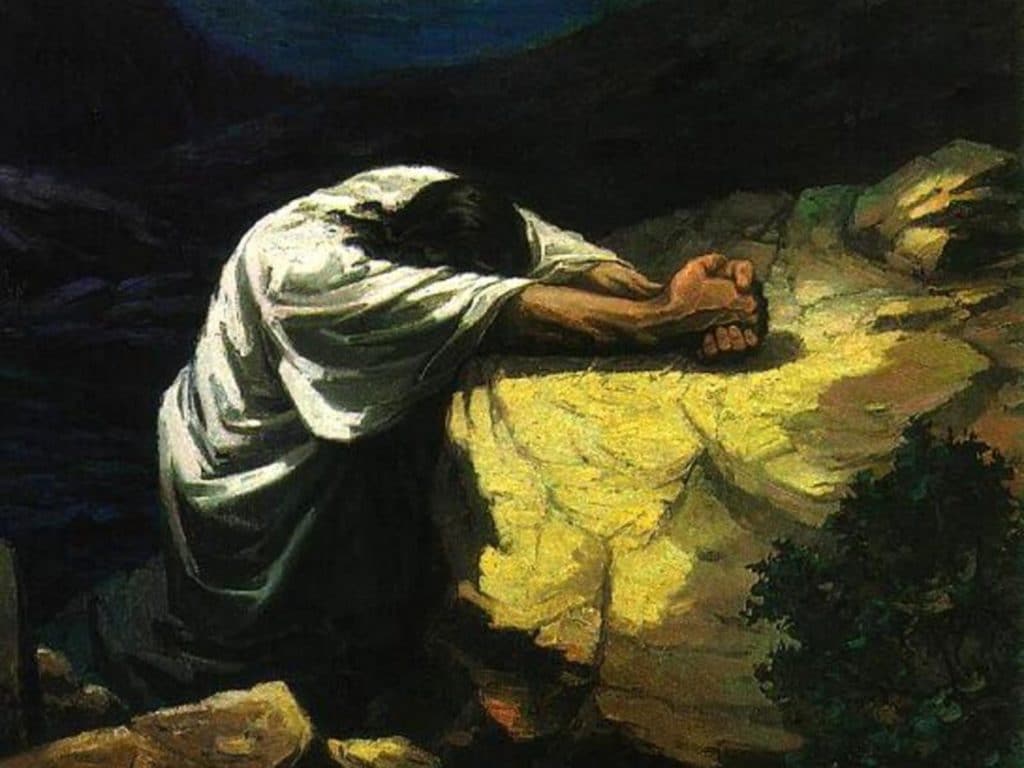
Your Will Be Done

36 Then Jesus went with them to a place called Gethsemane, and he said to his disciples, “Sit here, while I go over there and pray.” 37 And taking with him Peter and the two sons of Zebedee, he began to be sorrowful and troubled. 38 Then he said to them, “My soul is very sorrowful, even to death; remain here, and watch with me.” 39 And going a little farther he fell on his face and prayed, saying, “My Father, if it be possible, let this cup pass from me; nevertheless, not as I will, but as you will.” 40 And he came to the disciples and found them sleeping. And he said to Peter, “So, could you not watch with me one hour? 41 Watch and pray that you may not enter into temptation. The spirit indeed is willing, but the flesh is weak.” 42 Again, for the second time, he went away and prayed, “My Father, if this cannot pass unless I drink it, your will be done.” 43 And again he came and found them sleeping, for their eyes were heavy. 44 So, leaving them again, he went away and prayed for the third time, saying the same words again. 45 Then he came to the disciples and said to them, “Sleep and take your rest later on. See, the hour is at hand, and the Son of Man is betrayed into the hands of sinners. 46 Rise, let us be going; see, my betrayer is at hand.” – Matthew 26:36-46 ESV

agony-in-the-garden-1-1024x768.jpgHaving completed the Passover meal, Jesus and His disciples made their way through the city of Jerusalem, out the eastern gate, and onto the Mount of Olives. They stopped at a place called Gethsemane, which means “an olive press.” Here, Jesus took three of His disciples, Peter, James and John, and found a secluded place where He could pray. These are the same three men who had accompanied Him and been eyewitnesses to His transfiguration. But on this occasion, rather than seeing Jesus in His glorified state, they would watch as He agonized over His coming trials.

Jesus described to them His state of mind: “My soul is very sorrowful, even to death” (Matthew 26:38 ESV). His emotional state was one of deep and overwhelming sadness over what was about to happen. His sorrow alone was enough to kill Him. But what was it that caused such a drastic state of deep melancholy in Jesus? Was He afraid to die? Did He regret His decision to sacrifice Himself on behalf of sinful mankind? Was He having second thoughts? The text, along with the words and actions of Jesus, provide us with the answers.

Matthew relates that Jesus went off by Himself and immediately fell on His face before His Father in a state of prayer. He pleaded, “My Father, if it be possible, let this cup pass from me” (Matthew 26:39 ESV).

One of the things this passage reveals is the human side of Jesus’ nature. He was 100 percent God, but also 100 percent human – a state often referred to as the hypostatic union. At His incarnation, Jesus, the eternal, second person of the Trinity, became the God-man. His assumption of a human nature was essential to the role He would play as the Savior of mankind. The author of Hebrews explains:

Because God’s children are human beings – made of flesh and blood – the Son also became flesh and blood. For only as a human being could he die, and only by dying could he break the power of the devil, who had the power of death. – Hebrews 2:14 NLT

The apostle Paul would put it this way:

[God] sent his own Son in a body like the bodies we sinners have. And in that body God declared an end to sin’s control over us by giving his Son as a sacrifice for our sins. – Romans 8:3 NLT

Jesus never relinquished any of His divine attributes, but, in becoming a man, He combined His human and divine natures into one person. And as a man, Jesus felt pain, experienced hunger, grew tired, and, as we will see, became susceptible to death.

In His humanity, Jesus knew that what He was about to endure would be excruciatingly painful. He would be scourged mercilessly with a flagellum, a whip featuring multiple leather strands, each weighted with lead balls or pieces of bone. He would be beaten, spit upon, slapped, and degraded. And eventually, He would be nailed to a wooden cross and left to die by exposure and suffocation. Jesus’ human nature was repulsed by the prospect of facing such a painful and gruesome death. He longed for another way, a plan B.

But, in His divinity, He knew that this was all part of His Father’s sovereign will. This is why He stated, “nevertheless, not as I will, but as you will” (Matthew 26:39 ESV).

But there is a second explanation behind Jesus’ intense sorrow and His cry for an alternative plan. He was fully aware that, upon the cross, He would be taking on the sin debt of the entire world. He who never committed a single sin would bear the full brunt of God’s wrath against all the sins of men for all time.

For God made Christ, who never sinned, to be the offering for our sin, so that we could be made right with God through Christ. – 2 Corinthians 5:21 NLT

Sin separates mankind from God. And Jesus knew that when He took on the sin debt of mankind, He would become separated from His Father for the first time in all of eternity. Their fellowship would be broken. And, in His divine nature, that prospect was unfathomable and unthinkable to Jesus. Yet again, He knew it was all part of God’s plan and, therefore, necessary.

Jesus longed for this “cup of wrath” to pass. If you recall, back in chapter 20, Matthew recorded an encounter between Jesus and the mother of James and John, the two brothers who were with Him in Gethsemane that night. She had asked Jesus to allow her two sons to sit on His right and on His left when He established His kingdom on earth. But Jesus had responded to her two sons, “You don’t know what you are asking! Are you able to drink from the bitter cup of suffering I am about to drink?” (Matthew 20:22 NLT).

Only He was worthy to suffer for the sins of mankind. He alone could meet God’s demanding criteria for an acceptable sacrifice – an unblemished, sinless Lamb.

And it’s interesting to note that when Jesus stopped to check on Peter, James, and John, He had found them asleep. While He had been agonizing over His coming death, these three were obviously unconcerned with and unsympathetic to His pain. They slept while Jesus wept. And Jesus made an interesting observation, stating, “The spirit indeed is willing, but the flesh is weak” (Matthew 26:41 ESV). This was most likely aimed at Peter, who had been the one who had vehemently denied Jesus prediction that they would all bail on Him in His time of greatest need.

“Though they all fall away because of you, I will never fall away.” – Matthew 26:33 ESV).

And yet, here was Peter finding it difficult even to stay awake while His master suffered under the weight of His pending death.

Three separate times Jesus expressed His feelings to His heavenly Father, and three times He communicated His willingness to do His Father’s will. He was committed. Every ounce of His humanity longed to escape what was to come, but His divinity provided the strength He needed to do what He had been called to do.

In his commentary on the book of Matthew, D.A. Carson writes:

“In the first garden ‘Not your will but mine’ changed Paradise to desert and brought man from Eden to Gethsemane. Now ‘Not my will but yours’ brings anguish to the man who prays it but transforms the desert into the kingdom and brings man from Gethsemane to the gates of glory.” – D.A. Carson, Matthew, p. 545.

Jesus was willing to face the fate God had planned for Him because He trusted His heavenly Father. He knew there was no other way. Salvation was only possible through His obedient submission to the sovereign will of God the Father. And the hour had come for Him to begin His journey from Gethsemane to Golgotha. Having finished His prayer time with the Father, Jesus turned to His disciples and said, “the hour is at hand, and the Son of Man is betrayed into the hands of sinners” (Matthew 26:45 ESV).

Judas was on his way, bringing with him the guards of the high priest. The darkness of that night was about to deepen as the forces of evil began their ill-fated attempt to snuff out the Light of the world. But as John would later write:

The light shines in the darkness, and the darkness can never extinguish it. – John 1:5 NLT

God’s light came into the world, but people loved the darkness more than the light, for their actions were evil. All who do evil hate the light and refuse to go near it for fear their sins will be exposed. But those who do what is right come to the light so others can see that they are doing what God wants. – John 3:19-21 NLT

Jesus would end up buried in the darkness of a borrowed tomb. His life would be forcefully taken from Him, but as He had predicted, it would be on His terms.

“No one can take my life from me. I sacrifice it voluntarily. For I have the authority to lay it down when I want to and also to take it up again. For this is what my Father has commanded.” – John 10:18 NLT

Jesus lived to do the will of His Father. And He died in obedience to the will of His Father. When Jesus had stated, “I and the Father are one” (John 10:30 ESV), He had meant it. Their wills were united, and their love for sinful mankind was unified around the sole solution to man’s problem: The sacrificial death of the sinless Son of God.

English Standard Version (ESV)
The Holy Bible, English Standard Version. ESV® Permanent Text Edition® (2016). Copyright © 2001 by Crossway Bibles, a publishing ministry of Good News Publishers.

New Living Translation (NLT)
Holy Bible, New Living Translation, copyright © 1996, 2004, 2015 by Tyndale House Foundation. Used by permission of Tyndale House Publishers Inc., Carol Stream, Illinois 60188. All rights reserved.

The Message (MSG)Copyright © 1993, 1994, 1995, 1996, 2000, 2001, 2002 by Eugene H. Peterson

Faithful In the Face of Death.

36 Then Jesus went with them to a place called Gethsemane, and he said to his disciples, “Sit here, while I go over there and pray.” 37 And taking with him Peter and the two sons of Zebedee, he began to be sorrowful and troubled. 38 Then he said to them, “My soul is very sorrowful, even to death; remain here, and watch with me.” 39 And going a little farther he fell on his face and prayed, saying, “My Father, if it be possible, let this cup pass from me; nevertheless, not as I will, but as you will.” 40 And he came to the disciples and found them sleeping. And he said to Peter, “So, could you not watch with me one hour? 41 Watch and pray that you may not enter into temptation. The spirit indeed is willing, but the flesh is weak.” 42 Again, for the second time, he went away and prayed, “My Father, if this cannot pass unless I drink it, your will be done.” 43 And again he came and found them sleeping, for their eyes were heavy. 44 So, leaving them again, he went away and prayed for the third time, saying the same words again. 45 Then he came to the disciples and said to them, “Sleep and take your rest later on. See, the hour is at hand, and the Son of Man is betrayed into the hands of sinners. 46 Rise, let us be going; see, my betrayer is at hand.” – Matthew 26:36-46 ESV

agony-in-the-garden-1-1024x768.jpgHaving completed the Passover meal, Jesus and His disciples made their way through the city of Jerusalem, out the eastern gate, and onto the Mount of Olives. They stopped at a place called Gethsemane, which means “an olive press.” Here, Jesus took three of His disciples, Peter, James and John, and found a secluded place where He could pray. These are the same three men who had accompanied Him and been eyewitnesses to His transfiguration. But on this occasion, rather than seeing Jesus in His glorified state, they would watch as He agonized over His coming trials.

Jesus described to them His state of mind: “My soul is very sorrowful, even to death” (Matthew 26:38 ESV). His emotional state was one of deep and overwhelming sadness over what was about to happen. His sorrow alone was enough to kill Him. But what was it that caused such a drastic state of deep melancholy in Jesus? Was He afraid to die? Did He regret His decision to sacrifice Himself on behalf of sinful mankind? Was He having second thoughts? The text, along with the words and actions of Jesus, provide us with the answers.

Matthew relates that Jesus went off by Himself and immediately fell on His face before His Father in a state of prayer. He pleaded, “My Father, if it be possible, let this cup pass from me” (Matthew 26:39 ESV).

One of the things this passage reveals is the human side of Jesus’ nature. He was 100 percent God, but also 100 percent human – a state often referred to as the hypostatic union. At His incarnation, Jesus, the eternal, second person of the Trinity, became the God-man. His assumption of a human nature was essential to the role He would play as the Savior of mankind. The author of Hebrews explains:

Because God’s children are human beings – made of flesh and blood – the Son also became flesh and blood. For only as a human being could he die, and only by dying could he break the power of the devil, who had the power of death. – Hebrews 2:14 NLT

The apostle Paul would put it this way:

[God] sent his own Son in a body like the bodies we sinners have. And in that body God declared an end to sin’s control over us by giving his Son as a sacrifice for our sins. – Romans 8:3 NLT

Jesus never relinquished any of His divine attributes, but, in becoming a man, He combined His human and divine natures into one person. And as a man, Jesus felt pain, experienced hunger, grew tired, and, as we will see, became susceptible to death.

In His humanity, Jesus knew that what He was about to endure would be excruciatingly painful. He would be scourged mercilessly with a flagellum, a whip featuring multiple leather strands, each weighted with lead balls or pieces of bone. He would be beaten, spit upon, slapped, and degraded. And eventually, He would be nailed to a wooden cross and left to die by exposure and suffocation. Jesus’ human nature was repulsed by the prospect of facing such a painful and gruesome death. He longed for another way, a plan B.

But, in His divinity, He knew that this was all part of His Father’s sovereign will. This is why He stated, “nevertheless, not as I will, but as you will” (Matthew 26:39 ESV).

But there is a second explanation behind Jesus’ intense sorrow and His cry for an alternative plan. He was fully aware that, upon the cross, He would be taking on the sin debt of the entire world. He who never committed a single sin would bear the full brunt of God’s wrath against all the sins of men for all time.

For God made Christ, who never sinned, to be the offering for our sin, so that we could be made right with God through Christ. – 2 Corinthians 5:21 NLT

Sin separates mankind from God. And Jesus knew that when He took on the sin debt of mankind, He would become separated from His Father for the first time in all of eternity. Their fellowship would be broken. And, in His divine nature, that prospect was unfathomable and unthinkable to Jesus. Yet again, He knew it was all part of God’s plan and, therefore, necessary.

Jesus longed for this “cup of wrath” to pass. If you recall, back in chapter 20, Matthew recorded an encounter between Jesus and the mother of James and John, the two brothers who were with Him in Gethsemane that night. She had asked Jesus to allow her two sons to sit on His right and on His left when He established His kingdom on earth. But Jesus had responded to her two sons, “You don’t know what you are asking! Are you able to drink from the bitter cup of suffering I am about to drink?” (Matthew 20:22 NLT).

Only He was worthy to suffer for the sins of mankind. He alone could meet God’s demanding criteria for an acceptable sacrifice – an unblemished, sinless Lamb.

And it’s interesting to note that when Jesus stopped to check on Peter, James, and John, He had found them asleep. While He had been agonizing over His coming death, these three were obviously unconcerned with and unsympathetic to His pain. They slept while Jesus wept. And Jesus made an interesting observation, stating, “The spirit indeed is willing, but the flesh is weak” (Matthew 26:41 ESV). This was most likely aimed at Peter, who had been the one who had vehemently denied Jesus prediction that they would all bail on Him in His time of greatest need.

“Though they all fall away because of you, I will never fall away.” – Matthew 26:33 ESV).

And yet, here was Peter finding it difficult even to stay awake while His master suffered under the weight of His pending death.

Three separate times Jesus expressed His feelings to His heavenly Father, and three times He communicated His willingness to do His Father’s will. He was committed. Every ounce of His humanity longed to escape what was to come, but His divinity provided the strength He needed to do what He had been called to do.

In his commentary on the book of Matthew, D.A. Carson writes:

“In the first garden ‘Not your will but mine’ changed Paradise to desert and brought man from Eden to Gethsemane. Now ‘Not my will but yours’ brings anguish to the man who prays it but transforms the desert into the kingdom and brings man from Gethsemane to the gates of glory.” – D.A. Carson, Matthew, p. 545.

Jesus was willing to face the fate God had planned for Him because He trusted His heavenly Father. He knew there was no other way. Salvation was only possible through His obedient submission to the sovereign will of God the Father. And the hour had come for Him to begin His journey from Gethsemane to Golgotha. Having finished His prayer time with the Father, Jesus turned to His disciples and said, “the hour is at hand, and the Son of Man is betrayed into the hands of sinners” (Matthew 26:45 ESV).

Judas was on his way, bringing with him the guards of the high priest. The darkness of that night was about to deepen as the forces of evil began their ill-fated attempt to snuff out the Light of the world. But as John would later write:

The light shines in the darkness, and the darkness can never extinguish it. – John 1:5 NLT

God’s light came into the world, but people loved the darkness more than the light, for their actions were evil. All who do evil hate the light and refuse to go near it for fear their sins will be exposed. But those who do what is right come to the light so others can see that they are doing what God wants. – John 3:19-21 NLT

Jesus would end up buried in the darkness of a borrowed tomb. His life would be forcefully taken from Him, but as He had predicted, it would be on His terms.

“No one can take my life from me. I sacrifice it voluntarily. For I have the authority to lay it down when I want to and also to take it up again. For this is what my Father has commanded.” – John 10:18 NLT

Jesus lived to do the will of His Father. And He died in obedience to the will of His Father. When Jesus had stated, “I and the Father are one” (John 10:30 ESV), He had meant it. Their wills were united, and their love for sinful mankind was unified around the sole solution to man’s problem: The sacrificial death of the sinless Son of God.

English Standard Version (ESV)
The Holy Bible, English Standard Version. ESV® Permanent Text Edition® (2016). Copyright © 2001 by Crossway Bibles, a publishing ministry of Good News Publishers.

New Living Translation (NLT)
Holy Bible, New Living Translation, copyright © 1996, 2004, 2015 by Tyndale House Foundation. Used by permission of Tyndale House Publishers Inc., Carol Stream, Illinois 60188. All rights reserved.

The Message (MSG)Copyright © 1993, 1994, 1995, 1996, 2000, 2001, 2002 by Eugene H. Peterson