Passing the Baton

1 This letter is from Paul, an apostle of Christ Jesus, appointed by the command of God our Savior and Christ Jesus, who gives us hope.

I am writing to Timothy, my true son in the faith.

May God the Father and Christ Jesus our Lord give you grace, mercy, and peace. – 1 Timothy 1:1-2 ESV

Timothy was Paul’s disciple. Paul evidently led him to the Lord during one of his missionary travels to Lystra. During Paul’s second missionary journey, Timothy accompanied him to Troas, Philippi, Berea, Thessalonica, Athens, and Corinth. Timothy also accompanied Paul on his third missionary journey to Ephesus and was later sent by Paul to minister on his own in the region of Macedonia. When Paul was under house arrest in Rome, Timothy visited him there. He was well-traveled and well-respected by Paul, having earned the apostle’s trust.

He was ministering in Ephesus when he received this first letter from Paul. Timothy had evidently written Paul, sharing his desire to rejoin him and accompany him on his travels. But Paul would break the news to Timothy that he was needed right where he was. In fact, verse 3 tells us that when Paul and Timothy went to Ephesus on that third missionary journey, Paul went on to Macedonia, leaving Timothy behind with a job to do.

When I left for Macedonia, I urged you to stay there in Ephesus and stop those whose teaching is contrary to the truth. – 1 Timothy 1:3 NLT

By this time, churches were being established all over that area of the world. The gospel was spreading fast, and people were coming to faith in Christ at an incredible rate. The problem was that too few men were equipped to minister to the large number of churches springing up. Infant believers were everywhere, and no one was there to instruct and care for them because there was a paucity of spiritually mature leaders.

Despite his zeal and high capacity for work, Paul couldn’t do it all. Much of his time had been spent in prison or under house arrest. He couldn’t be everywhere at once, and no seminaries existed to prepare the next generation of pastors and teachers. No organized strategy existed to raise up and equip elders for the local churches. Yet there seemed to be no shortage of false teachers and ill-informed individuals with potentially destructive viewpoints on a wide range of topics. So, Paul turned to Timothy. Yes, he was young and inexperienced, but he was needed. Knowing this young man was probably feeling a bit overwhelmed by the task at hand, Paul reminded him of the true purpose of all biblical instruction.

The purpose of my instruction is that all believers would be filled with love that comes from a pure heart, a clear conscience, and genuine faith. – 1 Timothy 1:5 NLT

Paul’s letters to Timothy have less to do with teaching doctrine than with defending it; the content is practical, not theological. Paul wants Timothy to know how to encourage the believers in Ephesus toward true life change, marked by a love that manifests itself in daily life. Paul is looking for practical expressions of love, and he knows there are three things that will prevent that from happening in any believer’s life: an impure heart, a conscience burdened by shame, and a lack of trust in God.

These are the basics, and they trump a head full of theology and doctrine every time. But Paul warns Timothy, “Some people have missed this whole point. They have turned away from these things and spend their time in meaningless discussions” (1 Timothy 1:6 NLT).

Somewhere along the way, they became obsessed with things that did not result in increased faith and love. Debating had replaced serving, and controversy had become more popular than showing mercy and expressing love to one another. Paul had warned the elders in Ephesus, “some men from your own group will rise up and distort the truth in order to draw a following: (Acts 20:30 NLT). He went on to say that these “false teachers, like vicious wolves, will come in among you after I leave, not sparing the flock” (Acts 20:29 NLT).

The main problem seemed to revolve around incorrect teaching regarding the law of Moses. Some were presenting their interpretations of the law and its application to believers’ lives, and their teaching was wreaking havoc on the church’s health. Their focus was not on increasing the love and faith of God’s people, but on being seen as experts on the topic at hand.

Paul told Timothy, “they want to be known as teachers of the law of Moses, but they don’t know what they are talking about, even though they speak so confidently” (1 Timothy 1:7 NLT). These individuals were cocky and confident, assured that their view was the right one. But all this discussion and debate was causing confusion and conflict within the church. Paul reminded Timothy that love should be the primary motivation for any teacher of God’s Word. Teaching that does not edify and instruction that does not increase faith are misapplied and miss the point. Debating doctrine is useless if it fails to foster more love for God and others. If “godly” instruction doesn’t produce increased devotion to and dependence on God, it’s a waste of time.

That is why the church at Ephesus needed Timothy, and the church today needs men and women who understand that increasing the love and faith of God’s people is the primary responsibility of those who teach God’s Word. Knowledge alone is not enough; it produces pride. Doctrine by itself is insufficient; it can become sterile and little more than head knowledge. Theology, even that which is sound and biblically based, is incomplete if it does not result in more love and greater faith.

Paul warned the believers in Corinth that their obsession with spiritual gifts was worthless and unwarranted if it was devoid of love.

If I could speak all the languages of earth and of angels, but didn’t love others, I would only be a noisy gong or a clanging cymbal. If I had the gift of prophecy, and if I understood all of God’s secret plans and possessed all knowledge, and if I had such faith that I could move mountains, but didn’t love others, I would be nothing. – 1 Corinthians 13:1-2 NLT

Paul needed assistance, so he turned to his young protégé, Timothy. This relatively inexperienced young man was a work in progress, but he represented the next generation of spiritual leadership for the rapidly growing church. Paul knew that the future health of the body of Christ would require new leadership; one man could not keep up with the explosive growth of the gospel. Too many fledgling congregations were popping up all over the place, and there were not enough qualified men to lead them. So, Paul took it upon himself to train and prepare the next wave of missionaries and pastors who would minister to the flock of Jesus Christ.

Father, here we are two millennium later and the gospel is still spreading across the planet because faithful men and women have continued to raise up the next generation of leaders. The kind of godly discipleship Paul modeled has been carried on by countless individuals who have poured into the lives of young people, training them to do the work of the ministry faithfully and fearlessly. Over the years, You have used godly men to challenge and teach me. Their lives of faithful service encouraged me and their love for Your Word inspired me. And You have given me that same desire to pour into the lives of others. I teach because I have been taught. I share because someone shared with me. I am reminded of the words of the Psalmist: “We will tell the next generation about the glorious deeds of the Lord, about his power and his mighty wonders” (Psalm 78:4 NLT). We have work to do because there are still so many who have not heard the gospel. But we must equip and prepare the next generation of leaders to know Your Word and to rely on Your strength. The spread of the gospel will continue to be unstoppable, but only as long as it is based on truth, accompanied by love, and fueled by faith in You. Amen. 

English Standard Version (ESV) The Holy Bible, English Standard Version. ESV® Permanent Text Edition® (2016). Copyright © 2001 by Crossway Bibles, a publishing ministry of Good News Publishers.

New Living Translation (NLT) Holy Bible, New Living Translation, copyright © 1996, 2004, 2015 by Tyndale House Foundation. Used by permission of Tyndale House Publishers Inc., Carol Stream, Illinois 60188. All rights reserved.

Raising Up Righteous Reinforcements

19 I hope in the Lord Jesus to send Timothy to you soon, so that I too may be cheered by news of you. 20 For I have no one like him, who will be genuinely concerned for your welfare. 21 For they all seek their own interests, not those of Jesus Christ. 22 But you know Timothy’s proven worth, how as a son with a father he has served with me in the gospel. 23 I hope therefore to send him just as soon as I see how it will go with me, 24 and I trust in the Lord that shortly I myself will come also.

25 I have thought it necessary to send to you Epaphroditus my brother and fellow worker and fellow soldier, and your messenger and minister to my need, 26 for he has been longing for you all and has been distressed because you heard that he was ill. 27 Indeed he was ill, near to death. But God had mercy on him, and not only on him but on me also, lest I should have sorrow upon sorrow. 28 I am the more eager to send him, therefore, that you may rejoice at seeing him again, and that I may be less anxious. 29 So receive him in the Lord with all joy, and honor such men, 30 for he nearly died for the work of Christ, risking his life to complete what was lacking in your service to me. – Philippians 2:19-30 ESV

Suddenly and somewhat surprisingly, Paul brings up two individuals who, at first glance, seem to have no relationship whatsoever with the church there. On closer examination, it becomes clear that both Timothy and Epaphroditus were well-known to the believers in Philippi. Epaphroditus was actually a resident of the city and a member of the local congregation. He had been sent by the church to Rome, where he ended up ministering to Paul during his time under house arrest. Paul calls him “your messenger and minister to my need” (Philippians 2:25 ESV). Later on, in chapter 4, Paul refers to the gifts that Epaphroditus had brought with him on behalf of the church in Philippi. Evidently, Epaphroditus had personally delivered Paul’s letter, having been sent back to Philippi after his recovery from a life-threatening illness.

As far as Timothy is concerned, he had been with Paul and Silas when they first arrived in Philippi on their missionary journey. The Book of Acts reveals that Paul had met Timothy when visiting the cities of Lystra and Derby.

Paul came also to Derbe and to Lystra. A disciple was there, named Timothy, the son of a Jewish woman who was a believer, but his father was a Greek. He was well spoken of by the brothers at Lystra and Iconium. Paul wanted Timothy to accompany him, and he took him and circumcised him because of the Jews who were in those places, for they all knew that his father was a Greek. – Acts 16:1-3 ESV

Paul informed the church in Philippi that he intended to send Timothy to them as his personal representative with instructions to return with a report concerning the conditions among the Philippians believers.

I hope in the Lord Jesus to send Timothy to you soon, so that I too may be cheered by news of you. Philippians 2:19 ESV

But why does Paul bring up these two young men at this point in his letter? What was his reasoning for switching from a very personal call to the body of Christ in Philippi to live in unity and humility in a city filled with intense darkness and twisted moral standards?

I believe there are two things at work here. First, Paul wants his brothers and sisters to know that he is thinking about them and that, even in his absence, he is sending others to assist them in their faith journey. He is not abandoning them.

But there is another and somewhat more subtle point being made here. Paul is using these two young men as examples for the flock in Philippi. Paul has been talking about the task of the church working out its salvation with fear and trembling. He has been calling them to live lives marked by blamelessness and innocence. Now he brings up these two men he has come to know and love.

In these verses, Paul gives a glimpse into the lives of Timothy and Epaphroditus, both of whom meant a great deal to him. They were his brothers in Christ and his fellow workers in the mission to which God had called him. These two men, while not household names to most of us, were icons of spiritual virtue in Paul’s mind. He couldn’t have survived without them, and he commends them to the believers in Philippi as men whom they could not only trust but emulate. Both were likely younger men than Paul, but that didn’t stop him from praising their value and virtues as men of God.

Paul described Timothy as a one-of-a-kind individual who showed genuine care for the people in Philippi. He didn’t view his efforts on their behalf as work but legitimately cared for their spiritual and emotional needs, as well as their physical well-being. Paul then describes what appears to be a consistent problem among leadership within the early church at that time. “All the others care only for themselves and not for what matters to Jesus Christ” (Philippians 2:21 NLT). I don’t think Paul was intimating that there was no one else who cared in Philippi, but that there was a prevailing presence of self-centeredness among many within the church, especially among the leadership. Sadly, It was a rare thing to find a believer who put the interests of Christ before his own, but Timothy was such a man. Timothy had served Paul well and had become like a son to him. Paul even referred to Timothy as “my true son in the faith” (1 Timothy 1:2 NLT). He was a faithful, loving, reliable, and godly young man who modeled Christ-likeness and ministered faithfully alongside Paul even in his darkest moments. He was a man of integrity with the heart of a shepherd.

Paul describes Epaphroditus as “a true brother, co-worker, and fellow soldier” (Philippians 2:25 NLT). Paul was making a personal sacrifice by sending Epaphroditus back to Philippi but he knew his friends and fellow believers back home were anxious to see him. As much as Paul had enjoyed Epaphroditus’ companionship in Rome, he was more concerned that this kind and generous young man return home so that he might put to rest any concerns over his physical well-being. The 800-mile trip home would have been a long one, taking anywhere from six weeks to two months. That means Paul would have gone without the encouraging presence of Epaphroditus for a prolonged period of time.

Paul encourages the believers in Philippi to “welcome him with Christian love and with great joy, and give him the honor that people like him deserve” (Philippians 2:29 NLT). Obviously, Paul thought highly of Epaphroditus. This young man had risked his life for the cause of Christ, all to serve Paul while he was imprisoned in Rome.

Paul appreciated and valued men like Timothy and Epaphroditus because they exemplified the unity and selflessness necessary for the gospel message to spread to the four corners of the earth. When reading the Book of Acts or Paul’s own letters, it is easy to conclude that he was a loner with an independent streak. Yet Paul never operated alone; he always had at least one ministry partner and was constantly pouring his life into young men like Timothy and Epaphroditus. Paul knew he couldn’t accomplish the ministry without the help of others, especially at this point in his life. While living in Rome, he was under house arrest, unable to travel, and restricted from ministering to the various churches he had helped plant around the world. He had to depend on faithful men like Timothy and Epaphroditus to be his hands, feet, eyes, and voice; delivering his messages and expressing his love for the body of Christ.

The church today needs men and women of character like Timothy and Epaphroditus. There is a shortage of reliable, faithful, loving, and selfless individuals who are willing to put the needs of the body of Christ ahead of their own. Paul knew that men like Timothy were going to be constantly tempted to compromise their character, and the same thing is true in our day. That’s why Paul provided his young protégé with the following commission:

But you, Timothy, are a man of God; so run from all these evil things. Pursue righteousness and a godly life, along with faith, love, perseverance, and gentleness. Fight the good fight for the true faith. Hold tightly to the eternal life to which God has called you, which you have confessed so well before many witnesses. – 1 Timothy 6:11-12 NLT

The church still needs men and women who have that same attitude and focus. The body of Christ needs to raise up and recognize those kinds of leaders, both men and women, who are willing to risk their reputations, careers, comfort, and even their lives for the cause of Christ. While men like Paul were vital to the church in those early days, the spread of the Gospel was dependent upon individuals like Timothy and Epaphroditus for its long-term survival and success. They were the faithful foot soldiers in the battle for the gospel, and we need more like them today.

English Standard Version (ESV) The Holy Bible, English Standard Version. ESV® Permanent Text Edition® (2016). Copyright © 2001 by Crossway Bibles, a publishing ministry of Good News Publishers.

New Living Translation (NLT) Holy Bible, New Living Translation, copyright © 1996, 2004, 2015 by Tyndale House Foundation. Used by permission of Tyndale House Publishers Inc., Carol Stream, Illinois 60188. All rights reserved.

The Message (MSG) Copyright © 1993, 1994, 1995, 1996, 2000, 2001, 2002 by Eugene H. Peterson

Boot Camp for the Coming Battle

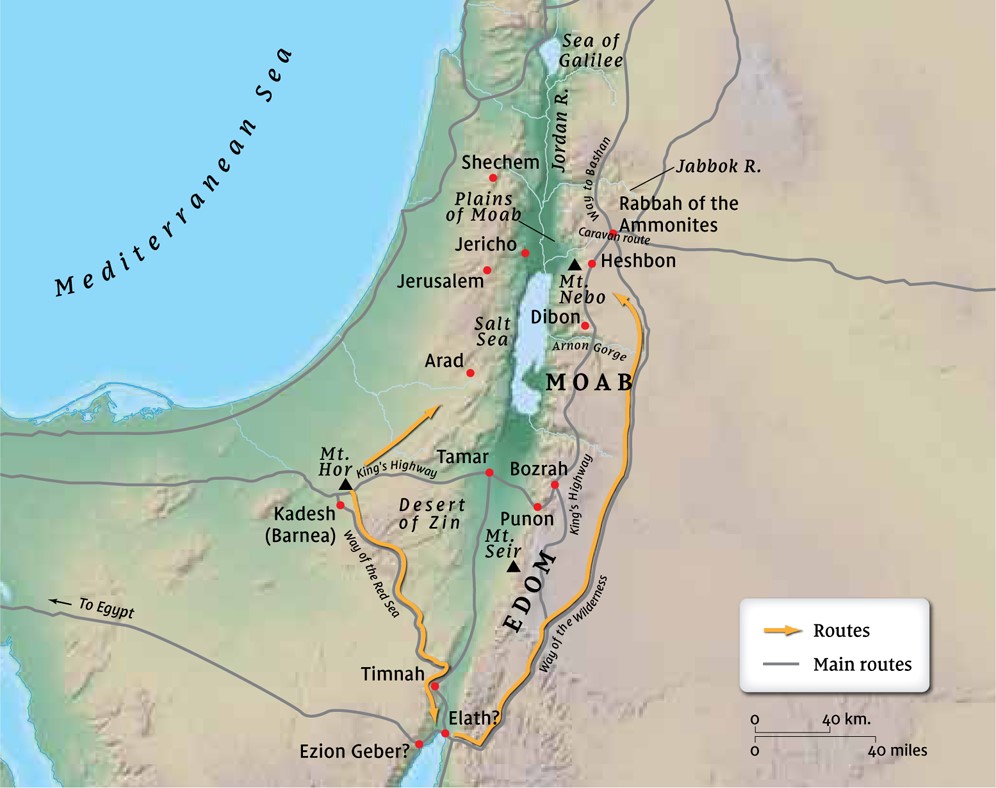
21 Then Israel sent messengers to Sihon king of the Amorites, saying, 22 “Let me pass through your land. We will not turn aside into field or vineyard. We will not drink the water of a well. We will go by the King’s Highway until we have passed through your territory.” 23 But Sihon would not allow Israel to pass through his territory. He gathered all his people together and went out against Israel to the wilderness and came to Jahaz and fought against Israel. 24 And Israel defeated him with the edge of the sword and took possession of his land from the Arnon to the Jabbok, as far as to the Ammonites, for the border of the Ammonites was strong. 25 And Israel took all these cities, and Israel settled in all the cities of the Amorites, in Heshbon, and in all its villages. 26 For Heshbon was the city of Sihon the king of the Amorites, who had fought against the former king of Moab and taken all his land out of his hand, as far as the Arnon. 27 Therefore the ballad singers say,

“Come to Heshbon, let it be built;
    let the city of Sihon be established.
28 For fire came out from Heshbon,
    flame from the city of Sihon.
It devoured Ar of Moab,
    and swallowed[f] the heights of the Arnon.
29 Woe to you, O Moab!
    You are undone, O people of Chemosh!
He has made his sons fugitives,
    and his daughters captives,
    to an Amorite king, Sihon.
30 So we overthrew them;
    Heshbon, as far as Dibon, perished;
    and we laid waste as far as Nophah;
    fire spread as far as Medeba.”

31 Thus Israel lived in the land of the Amorites. 32 And Moses sent to spy out Jazer, and they captured its villages and dispossessed the Amorites who were there. 33 Then they turned and went up by the way to Bashan. And Og the king of Bashan came out against them, he and all his people, to battle at Edrei. 34 But the Lord said to Moses, “Do not fear him, for I have given him into your hand, and all his people, and his land. And you shall do to him as you did to Sihon king of the Amorites, who lived at Heshbon.” 35 So they defeated him and his sons and all his people, until he had no survivor left. And they possessed his land. Numbers 21:21-35 ESV

This is the Numbers’ version of the story of Israel’s unfortunate confrontation with the Sihon, the king of the Amorites. It’s also recorded in Deuteronomy 2, but in this rendition, Moses reveals that “Israel settled in all the cities of the Amorites, in Heshbon, and in all its villages” (Numbers 21:25 ESV). Not only did they conquer the Amorites, but they confiscated their cities and villages and moved into them. For the first time since leaving Egypt 39 years earlier, the Israelites found themselves living in real houses and enjoying all the amenities of a semi-settled existence.

On this occasion, they refused to walk away from a fight as they had in Edom because the territory of the Amorites provided the only access point to the land of promise. The Amorites were attempting to block the Israelites’ way to their inheritance. And while Moses tried to reason with Sihon, he soon discovered that brute force would be the only negotiating tool that got the king’s attention.

God provided the Israelites with a decisive victory over the Amorites, and Moses makes it clear that the land Israel conquered and confiscated had originally belonged to the Moabites. This is significant because, according to Deuteronomy 2, God had commanded the Israelites to avoid any conflict with the Moabites and had forbidden them from attempting to occupy any of their land. The territory of the Moabites was off-limits and under a divine ban.

“Do not bother the Moabites, the descendants of Lot, or start a war with them. I have given them Ar as their property, and I will not give you any of their land.” – Deuteronomy 2:9 NLT

But it appears that God provided Moses with a special dispensation regarding these cities and villages because Sihon had stolen them from the Moabites. These lands had transferred hands and, technically, no longer belonged to the Moabites.

Heshbon had been the capital of King Sihon of the Amorites. He had defeated a former Moabite king and seized all his land as far as the Arnon River. – Numbers 21:26 NLT

This transfer of ownership officially rendered the land open for conquest and occupation. But Moses points out that the Israelites went as far as the border of the Ammonites and no further. This is because the Israelites had been forbidden from taking any land belonging to the Ammonites or Moabites. These two people groups were the descendants of the two sons born to Lot through his incestuous relationship with his own daughters (Genesis 19:34-38).

But God had been explicit when issuing His prohibition about Moabite and Ammonite land.

“Do not bother the Moabites, the descendants of Lot, or start a war with them. I have given them Ar as their property, and I will not give you any of their land.” – Deuteronomy 2:9 NLT

“Today you will cross the border of Moab at Ar and enter the land of the Ammonites, the descendants of Lot. But do not bother them or start a war with them. I have given the land of Ammon to them as their property, and I will not give you any of their land.” – Deuteronomy 19:18-19 NLT

The land occupied by the Moabites and Ammonites was not part of the inheritance God had promised to Abraham. So, there was really no need for Israel to get comfortable on this side of the river. Their land lay to the west and would be theirs soon enough.

But for the time being, God allowed them to live in the cities and villages they had taken from the Amorites. And Moses relates the lyrics of a so-called “Song of Heshbon,” a ballad that had been composed by the Amorites commemorating Sihon’s defeat of the Moabites.

“Come to Heshbon and let it be rebuilt!
    Let the city of Sihon be restored.
A fire flamed forth from Heshbon,
    a blaze from the city of Sihon.
It burned the city of Ar in Moab;
    it destroyed the rulers of the Arnon heights.
What sorrow awaits you, O people of Moab!
    You are finished, O worshipers of Chemosh!
Chemosh has left his sons as refugees,
    his daughters as captives of Sihon, the Amorite king.
We have utterly destroyed them,
    from Heshbon to Dibon.
We have completely wiped them out
    as far away as Nophah and Medeba.” – Numbers 21:27-29 NLT

This little ditty provided justification for Israel’s occupation of the former Moabite cities because they had originally been stolen and occupied by the Amorites. So, technically, Israel had not violated God’s decree.

Notice that Moses is very specific with his wording.

Thus Israel lived in the land of the Amorites.” – Numbers 21:31 ESV

And God allowed Israel to continue their conquest of additional Amorite-occupied land. He also provided them with decisive victories over the kingdom of Bashan.

“So the Lord our God handed King Og and all his people over to us, and we killed them all. Not a single person survived. We conquered all sixty of his towns—the entire Argob region in his kingdom of Bashan. Not a single town escaped our conquest. These towns were all fortified with high walls and barred gates. We also took many unwalled villages at the same time. We completely destroyed the kingdom of Bashan, just as we had destroyed King Sihon of Heshbon. We destroyed all the people in every town we conquered—men, women, and children alike. But we kept all the livestock for ourselves and took plunder from all the towns. – Deuteronomy 3:3-7 NLT

Israel’s wandering days were over. And with these battles, God was giving them on-the-job training, preparing them for the day when they crossed over the Jordan River and began their conquest of the land of Canaan. These victories on the east side of the Jordan were less about land acquisition than they were about providing the Israelites with much-needed military experience. They were learning how to conduct urban warfare. They were developing tactical strategies and honing their skills as warriors. And their access to well-fortified cities provided them with protection from their growing list of enemies. Until God gave them their marching orders to cross the Jordan, they would live on the east side and fine-tune their fighting skills.

English Standard Version (ESV) The Holy Bible, English Standard Version. ESV® Permanent Text Edition® (2016). Copyright © 2001

New Living Translation (NLT) Holy Bible, New Living Translation, copyright © 1996, 2004, 2015 by Tyndale House Foundation. Used by permission of Tyndale House Publishers Inc., Carol Stream, Illinois 60188. All rights reserved.

Godly Homes.

Children, obey your parents in the Lord, for this is right. “Honor your father and mother” (this is the first commandment with a promise), “that it may go well with you and that you may live long in the land.” Fathers, do not provoke your children to anger, but bring them up in the discipline and instruction of the Lord. – Ephesians 6:1-4 ESV

One of the most important things for us to keep in mind when considering Paul’s call for believers to submit to one another out of reverence for Christ, is that it is impossible to do without the power of the Holy Spirit. Yes, you could pull it off in your own power for a season, but it wouldn’t be long before your old sin nature raised its ugly head, causing pride and self-centeredness to take center stage again. For wives to submit to their husbands and husbands to sacrificially love their wives, the Holy Spirit is a non-negotiable necessity. He alone can provide us with the fruit we will need to “walk as children of light (for the fruit of light is found in all that is good and right and true” (Ephesians 5:8 ESV).

Here in chapter six, Paul now draws our attention to yet another relationship in which the fruit of the Holy Spirit will be essential. He calls for children to obey their parents. The Greek word Paul uses carries the idea of listening and obeying. It infers the sense of submitting to the God-given authority of one’s parents and the obedience rendered to them is to be “in the Lord,” which is another way of saying “out of reverence for Christ” (Ephesians 5:21 ESV). Just as wives are to submit to their husbands “as to the Lord,” children are to obey their parents with an awareness that they are really submitting to the will of God for their lives. Now, this is going to be very difficult for young children to comprehend. And even after a child comes to faith in Christ, they will have difficulty understanding what it means to obey in the Lord. That is where the careful, patient, and persistent training of godly parents comes in. Even very young children are naturally prone toward disobedience. Their wills develop quickly and their innate desires to do what they want show up very early on in their development. Obedience is not natural to children. They may not initially know that they are being disobedient, but their natural drive toward self-autonomy will cause them to choose their will over that of their parents.

In these first three verses, Paul seems to be addressing two different phases of childhood, starting with young children and moving up to adult children. After commanding children to obey, Paul reaches back into the Mosaic law and quotes the fifth commandment: “Honor your father and your mother, that your days may be long in the land that the Lord your God is giving you” (Exodus 20:12 ESV). And he provides a side note that says, “this is the first commandment with a promise” (Ephesians 6:2 ESV). Rather than obedience, Paul calls for honor. The word “honor” carries with it the idea of reverence and veneration. In the Hebrew, it is kabad and it actually means “heaviness” or “weight.” There should be a weightiness or significance given by adult children to the God-given role of their parents in their lives. While young children will not be capable of grasping the significance of this concept, older children, especially adult children can and should. It is interesting to note that in Deuteronomy 6, Moses told the people of Israel, “Now this is the commandment — the statutes and the rules — that the Lord your God commanded me to teach you, that you may do them in the land to which you are going over, to possess it, that you may fear the Lord your God, you and your son and your son’s son, by keeping all his statutes and his commandments, which I command you, all the days of your life, and that your days may be long” (Deuteronomy 6:1-2 ESV). Moses was calling the people of God to obedience, so that their days would be long in the land. Then Moses went on to give them the motivating factor that should be behind their obedience to God:

You shall love the Lord your God with all your heart and with all your soul and with all your might. And these words that I command you today shall be on your heart. You shall teach them diligently to your children, and shall talk of them when you sit in your house, and when you walk by the way, and when you lie down, and when you rise. You shall bind them as a sign on your hand, and they shall be as frontlets between your eyes. You shall write them on the doorposts of your house and on your gates. – Deuteronomy 6:5-9 ESV

Verse five contains the great shema. This is what Jesus would later say is the greatest commandment. Love is to be the primary motivating factor behind obedience to God. And Paul seems to be saying that, ultimately, love should be behind the obedience of children to their parents and the honor they give them in their later years. But for this to happen, Moses said that parents were to teach their children diligently. They were to talk about the things of God all the time. Obedience to God was to be a constant topic in the home. And parents were to be the primary source for instruction and illustration of what that obedience was to look like.

Which is why Paul addresses fathers. In God’s economy, fathers are held to a higher standard by God. They are responsible for the spiritual well-being of their household. So Paul warns fathers about provoking or exasperating their children. Nothing will frustrate a child more than inconsistency in the life of a father. His behavior toward and in front of his children will have a dramatic impact on their spiritual well-being. Hypocrisy in parents is one of the greatest negative influences on the life of a child. Fathers who say one thing and do another end up frustrating and confusing their children. Fathers who demand one set of standards for their children while living outside of those standards themselves, will end up causing anger and resentment in their children. Which is why Paul says, “Fathers, don’t provoke your children to anger” (Ephesians 6:4 ESV). Another surprising cause of anger within children is a lack of discipline. Children need boundaries. They require supervision and discipline in their lives. This will require training on the part of the parents, and the father is ultimately responsible. A father who is overly strict or heavy handed in his discipline will end up exasperating his children. But a father who is lax and lazy in providing his children with loving discipline and godly instruction, will also provoke his children to anger. That is why Paul tells fathers to bring up their children in the discipline and instruction of the Lord. The goal of all believing parents should be to raise godly children. While we can’t cause our children to come to faith in Christ, we can provide an environment in which the truth of the gospel can be lived out in their sight and the love of God can be modeled in their lives.

1 Timothy 4:6-16

The Exemplary Life.

1 Timothy 4:6-16

Be an example to all believers in what you say, in the way you live, in your love, your faith, and your purity. – 1 Timothy 4:12 NLT

Our lives are meant to make a difference. But not in the way that the world would have us believe. In this age, the sign of significance is measured in assets, popularity, job title, income, the neighborhood we live in, the kind of car we drive, or even the number of friends we have on Facebook. We live to impress. We exist to consume. We long to make a different in the world, but the terms by which we measure the success of our contribution can be shallow and exceedingly temporal. Paul would have Timothy use a different standard. He wanted this young man to keep his eyes focused on what really mattered, so he gave him a few basic tips to living a life that truly makes a difference.

First, he tells him to teach. Paul wanted Timothy to take what he was learning and share it with those all around him. Knowledge that is never shared is wasted. Wisdom that is never passed on to others ends up being selfish and senseless. Paul’s letter to Timothy wasn’t meant for him alone. Paul’s intention was that Timothy teach the truths contained within it to those under his care. He told him to “explain these things to the brothers and sisters.” He challenged him to “teach these things and insist that everyone learn them.” The truths of God’s Word are meant to be shared, not horded. We are to pass on what we learn.

Secondly, Timothy was to train. And Paul was quite specific when it came to the kind of training he was talking about. Paul said, “train yourself to be godly.” The Greek word Paul uses is gymnazō and it means “to exercise vigorously, in any way, either the body or the mind.” It is the word from which we get gymnasium. Paul was expecting Timothy to put effort into his pursuit of the spiritual life. Godliness is to be our goal in life, not material success, financial reward, physical health, or personal fulfillment. Paul reminds Timothy that he will receive far greater benefits from the pursuit of a healthy and vibrant spiritual life than he ever will from getting into better shape. Godliness has both temporal and eternal ramifications for the life of the believer. We benefit in the here-and-now as well as the hereafter.

Third, Paul tells Timothy to typify what a believer looks like. He was to be an example of godliness to those around him – in every area of his life. In the way he lived, in his love, his faith, and through a life of purity. Purity includes sexual purity and integrity of heart. The Christian life is to be a holistic life – with no compartmentalization. In other words, there are no hidden or secret areas where the light of God’s transformative power does not shine. Timothy’s godliness was to touch every area of his life and it was to be a clear model of Christ-likeness to all those around him. And Timothy’s young age was to have nothing to do with it. Godliness is ageless. It has nothing to do with the number of years we spend on this planet. But it has everything to do with the amount of time we spend in the Word, with the Lord, and submitted to the Holy Spirit. Godliness is to be lived out for other to see.

Paul gives Timothy one final charge: “Give your complete attention to these matters. Throw yourself into your tasks so that everyone will see your progress. Keep a close watch on how you live and on your teaching. Stay true to what is right for the sake of your own salvation and the salvation of those who hear you” (1 Timothy 4:15-16 NLT). Timothy was to teach others, train himself and typify the life of a believer. And he was to throw his entire energy into making this a reality in his life. The Christian life is not to be a half-hearted life. It’s a full-time job that requires our constant attention. We have to regularly examine how we’re doing and assess our spiritual well-being. There is no room for complacency or contentment with the status quo. There will be constant distractions along the way. We will be tempted to become satisfied with where we are and how far we’ve come. But Paul warned Timothy that the goal will not be realized on this earth. Our salvation will be consummated in heaven, not here. This life is not to be all there is. This world is not out home – we’re just passing through on our way to somewhere better. Our salvation awaits our glorification. That is our ultimate goal and objective. That’s why Paul told Timothy to train himself for godliness. Eventually, our godliness will be complete. We will be done with all the training. We will be finished with the race and done with all the exercise. John reminds us, “Dear friends, we are already God’s children, but he has not yet shown us what we will be like when Christ appears. But we do know that we will be like him, for we will see him as he really is” (1 John 3:2 NLT). That day is coming. But in the meantime, we are to teach, train and typify. So let’s get busy!

Father, give us focus. Help us to not lose sight of the goal – our godliness. It is so easy to let the things of this earth distract and derail us doing what You have called us to do. We need to be about teaching Your truth, training ourselves for godliness and typifying for the world around us what a true Christian looks like. May we take these tasks seriously. May we pursue them diligently – until You call us home or Your Son returns. Amen.

Ken Miller
Grow Pastor & Minister to Men
kenm@christchapelbc.org