A Change For the Better

51 Behold! I tell you a mystery. We shall not all sleep, but we shall all be changed, 52 in a moment, in the twinkling of an eye, at the last trumpet. For the trumpet will sound, and the dead will be raised imperishable, and we shall be changed. 53 For this perishable body must put on the imperishable, and this mortal body must put on immortality. 54 When the perishable puts on the imperishable, and the mortal puts on immortality, then shall come to pass the saying that is written:

“Death is swallowed up in victory.”
55 “O death, where is your victory?
    O death, where is your sting?”

56 The sting of death is sin, and the power of sin is the law. 57 But thanks be to God, who gives us the victory through our Lord Jesus Christ.

58 Therefore, my beloved brothers, be steadfast, immovable, always abounding in the work of the Lord, knowing that in the Lord your labor is not in vain. – 1 Corinthians 15:51-58 ESV

Paul lived with a sense of eminence and an eager anticipation of the Lord’s return. He fully expected to be alive when Jesus returned for His bride, the church. This attitude of expectation, coupled with his strong belief in the resurrection of the body, is what drove him to live his life to please God and make the most of the time he had on this earth. When the Son returned, which Paul believed would be soon, he wanted to be doing the will of God. So he told the Corinthians, “Therefore, my beloved brothers, be steadfast, immovable, always abounding in the work of the Lord, knowing that in the Lord your labor is not in vain” (1 Corinthians 15:58 ESV).

All that he discusses in these closing verses of Chapter 15 concerns what he calls “a mystery,” which remains hidden from view, unrevealed, and unknown as to the day of its occurrence. No one knows the day of the Lord’s return. But just because we are ignorant of its timing does not mean we should doubt its validity. The events surrounding that day, including the resurrection of our bodies, though mysterious and unknown in exactly how they will occur, are to be believed and eagerly anticipated. Paul says that not every believer will undergo death; some will be alive and well when the Lord returns. And both the living and the dead will experience the resurrection of their earthly bodies.

Paul does not explain how this will happen because he doesn’t know. He simply reveals that it will happen unquestionably and instantaneously, “in a moment, in the twinkling of an eye” (1 Corinthians 15:52 ESV). He says, “the dead will be raised imperishable” and those who are alive on that day, “shall be changed” (1 Corinthians 15:52 ESV). Both groups will receive their new spiritual bodies, made in “the image of the man of heaven” (1 Corinthians 15:49b ESV).

The apostle John informs us, “Dear friends, we are already God’s children, but he has not yet shown us what we will be like when Christ appears. But we do know that we will be like him, for we will see him as he really is” (1 John 3:2 NLT). Instantaneously, we will all undergo a miraculous transformation, receiving our new resurrected bodies, created by God for our new home and designed to exist for eternity.

For our dying bodies must be transformed into bodies that will never die; our mortal bodies must be transformed into immortal bodies. – 1 Corinthians 15:53 NLT

And when that happens, Paul says, it will be a slap in the face to death. Death is the wage or payment for a life of sin (Romans 6:23). When sin entered the world at the fall, it brought with it death.

When Adam sinned, sin entered the world. Adam’s sin brought death, so death spread to everyone, for everyone sinned. – Romans 5:12 NLT

For the sin of this one man, Adam, caused death to rule over many. But even greater is God’s wonderful grace and his gift of righteousness, for all who receive it will live in triumph over sin and death through this one man, Jesus Christ. – Romans 5:17 NLT

Because of Jesus, death has lost its sting, meaning it no longer has its power over us. Those who have placed their faith in Jesus no longer need to fear death. That does not mean that we are immune to death; even believers die. But the real “sting” of death, its power to separate men from their God, is no longer valid. All men die, but not all men will experience eternal separation from God. At death, those who have placed their faith in His Son will find themselves immediately transferred into the presence of God the Father. Paul alludes to this reality in his second letter to the Corinthians:

So we are always of good courage. We know that while we are at home in the body we are away from the Lord, for we walk by faith, not by sight. Yes, we are of good courage, and we would rather be away from the body and at home with the Lord. – 2 Corinthians 5:6-8 ESV

Well-versed in the Old Testament, Paul paraphrases Hosea 13:14 and uses it to taunt death. Because of Jesus, death’s power over us has been broken. It is like a toothless, declawed lion, intimidating and with a scary roar, but devoid of any real power to do us harm.

But Paul’s real message seems to be that the future assurance of the Lord’s return and the certainty of the resurrection of our bodies should embolden us to live godly lives as we wait. We are to remain “steadfast, immovable, always abounding in the work of the Lord” (1 Corinthians 15:538 ESV).

Rather than wasting our time arguing over spiritual gifts and debating who follows whom, we need to share the good news of Jesus Christ with the lost and extend the love of God to our brothers and sisters in Christ. Rather than worrying about death, we need to focus on living for God and making the most of every moment He gives us on this earth. We are His servants and exist for His glory. He has called us to do His will and to spread the message of salvation made possible through His Son’s death on the cross.

But now you are free from the power of sin and have become slaves of God. Now you do those things that lead to holiness and result in eternal life. For the wages of sin is death, but the free gift of God is eternal life through Christ Jesus our Lord. – Romans 6:22-23 NLT

Father, thank You for this much-needed reminder that Your Son is going to return some day. But we’re not to sit around waiting for the eventuality of that day; we are to be busy doing the work He gave us to do. We are to be disciple-makers who carry on His ministry of reconciliation. We are to be good-new bearers, spreading the message of salvation by faith alone in Christ alone to the ends of the earth. His return should serve as our motivation, because it reminds us that His work is not done. He has yet to establish His earthly Kingdom, but He will. And when He returns to do so, we will receive our glorified bodies and finally escape the sting of death. But that is not to be our sole motivation. Our ministry on this earth should be in response to Your gracious love and in obedience to His commission. I want to be a faithful steward (1 Corinthians 4:1-2), carrying out Your will to my final breath or until Your Son returns. Amen

English Standard Version (ESV) The Holy Bible, English Standard Version. ESV® Permanent Text Edition® (2016). Copyright © 2001 by Crossway Bibles, a publishing ministry of Good News Publishers.

New Living Translation (NLT) Holy Bible, New Living Translation, copyright © 1996, 2004, 2015 by Tyndale House Foundation. Used by permission of Tyndale House Publishers Inc., Carol Stream, Illinois 60188. All rights reserved.
Faith Is the Victory

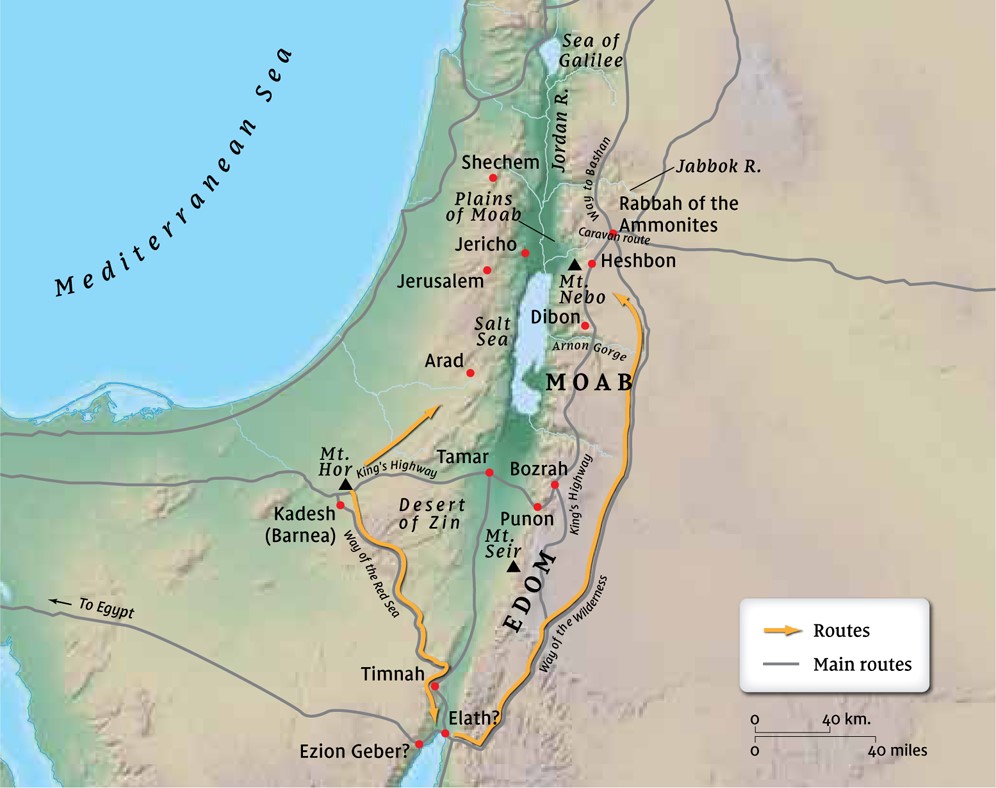
1 When the Canaanite, the king of Arad, who lived in the Negeb, heard that Israel was coming by the way of Atharim, he fought against Israel, and took some of them captive. 2 And Israel vowed a vow to the Lord and said, “If you will indeed give this people into my hand, then I will devote their cities to destruction.” 3 And the Lord heeded the voice of Israel and gave over the Canaanites, and they devoted them and their cities to destruction. So the name of the place was called Hormah.

4 From Mount Hor they set out by the way to the Red Sea, to go around the land of Edom. And the people became impatient on the way. 5 And the people spoke against God and against Moses, “Why have you brought us up out of Egypt to die in the wilderness? For there is no food and no water, and we loathe this worthless food.” 6 Then the Lord sent fiery serpents among the people, and they bit the people, so that many people of Israel died. 7 And the people came to Moses and said, “We have sinned, for we have spoken against the Lord and against you. Pray to the Lord, that he take away the serpents from us.” So Moses prayed for the people. 8 And the Lord said to Moses, “Make a fiery serpent and set it on a pole, and everyone who is bitten, when he sees it, shall live.” 9 So Moses made a bronze serpent and set it on a pole. And if a serpent bit anyone, he would look at the bronze serpent and live. – Numbers 21:1-9 ESV

One of the things the Israelites seemed to quickly forget was that their presence in the wilderness was their own fault. God had led them from Egypt to the edge of the land of promise 40 years earlier, but they had decided that entrance into the land was way too risky. The 12 spies they had in to reconnoiter the land had returned with a conflicting report concerning conditions in Canaan.

“We entered the land you sent us to explore, and it is indeed a bountiful country—a land flowing with milk and honey. Here is the kind of fruit it produces. But the people living there are powerful, and their towns are large and fortified. We even saw giants there, the descendants of Anak!” – Numbers 13:27-28 ESV

The second half of their report left the Israelites dejected and demoralized. Despite the news that this land was fertile and filled with abundant fruit, the presence of “giants” was too much for the Israelites. And the spies fed their doubts and anxieties by confirming their worst fears.

“We can’t go up against them! They are stronger than we are!” So they spread this bad report about the land among the Israelites: “The land we traveled through and explored will devour anyone who goes to live there. All the people we saw were huge. We even saw giants there, the descendants of Anak. Next to them we felt like grasshoppers, and that’s what they thought, too!” – Numbers 13:31-33 ESV

These rumors succeeded in convincing the Israelites that God’s promise of victory over their enemies was impossible. Rather than enter the land and risk certain death, they decided it would make more sense to return to Egypt. This bit of twisted logic earned them the wrath of God. He made the fateful decision to allow that entire generation to spend the rest of their lives wandering aimlessly in the wilderness until none of them was left. They would not be allowed to enter Canaan or return to Egypt. Instead, they would spend the remaining days of their lives in a kind of existential limbo that lasted four decades.

During that time, both Miriam and Aaron died. Many of their friends and family members succumbed to the effects of old age and illness. And they all discovered that life in the wilderness was no picnic. Their persistent presence near the borders of Canaan had attracted the attention of the land’s occupants. These nations had heard the rumors about this massive host of people who had escaped from Egypt and were headed their way. It is likely that they knew the Israelites to be the descendants of Jacob and were afraid that they would be looking to find a place to live. This was a migrant problem of epic proportions. The thought of two million-plus Israelites invading their borders caused these nations to react with fear and brute force.

The last chapter revealed that the Edomites sent a large army to dissuade the Israelites from attempting to pass through their land. They wanted nothing to do with them. And now, “The Canaanite king of Arad, who lived in the Negev, heard that the Israelites were approaching on the road through Atharim. So he attacked the Israelites and took some of them as prisoners” (Numbers 21:2 NLT). Nothing was going well for the Israelites. As a nation, they were persona non grata. They had no home and were finding the nations outside the borders of Canaan to be just as dangerous as the “giants“ they had refused to confront. Their refusal to enter the land had come with serious repercussions.

Yet, there is one glimmer of hope in this dark period of Israel’s existence. Their self-inflicted troubles caused them to call out to God. When some of their people were captured by the forces of the king of Arad, the Israelites begged God to come to their aid. And what’s interesting to note is that these very same people who had seen the odds in Canaan as insurmountable were suddenly ready to take on all comers. They even made a vow to completely annihilate the opposition if God would come to their aid.

“If you will hand these people over to us, we will completely destroy all their towns.” – Numbers 21:2 NLT

What makes this even more fascinating is that the Israelites had been here before. Thirty-eight years earlier, after having refused to enter the land of Canaan the first time, God had sentenced them to their life of wandering in the wilderness. In response to this death sentence from God, they quickly changed their minds and decided to enter the land after all. But Moses warned them that it was too late.

“Why are you now disobeying the Lord’s orders to return to the wilderness? It won’t work. Do not go up into the land now. You will only be crushed by your enemies because the Lord is not with you. When you face the Amalekites and Canaanites in battle, you will be slaughtered. The Lord will abandon you because you have abandoned the Lord.” – Numbers 14:41-43 NLT

But the people refused to listen, and “defiantly pushed ahead toward the hill country, even though neither Moses nor the Ark of the Lord’s Covenant left the camp” (Numbers 14:44 NLT). The result was a rout. The Israelites were soundly defeated because they attempted to take on their enemies without God’s permission or help.

Now, 38 years later, they decided to seek God’s assistance, and He “heard the Israelites’ request and gave them victory over the Canaanites. The Israelites completely destroyed them and their towns” (Numbers 22:3 NLT). Amazingly, what they had feared was impossible four decades earlier, was actually quite easy when they did it God’s way. Their victory was assured when they chose to seek God’s permission and assistance.

But even after that exhilarating display of God’s power, they quickly reverted to their old habit of complaining about their lot in life. While they had enjoyed a great victory, they were not allowed to occupy the towns they had conquered. Instead, they had to backtrack to Mount Hor and then travel further south and east in order to skirt the borders of Edom. They had gotten a taste of success, but still found themselves cursed to wander through the wilderness. Those conquered cities and villages were not theirs to occupy.

And as the people made the long trek around Edom, the thrill of victory soon gave way to the agony of defeat and despair.

…the people grew impatient with the long journey, and they began to speak against God and Moses. “Why have you brought us out of Egypt to die here in the wilderness?” they complained. “There is nothing to eat here and nothing to drink. And we hate this horrible manna!” – Numbers 21:4-5 NLT

The incessant wandering they had brought on themselves soon led to discontentment and dissidence with God’s will. They were not happy with the way things were going and they let Moses know. And God let them have it. He sent a plague of poisonous snakes among them, and soon the bodies of the dead began to pile up. And suddenly, the people were singing a different tune.

“We have sinned by speaking against the Lord and against you. Pray that the Lord will take away the snakes.” – Numbers 21:7 NLT

God’s judgment produced a confession. The people repented of their sin and begged Moses to intercede on their behalf and ask God to remove the curse of the snakes. And when Moses sought God, he was given the following instructions.

“Make a replica of a poisonous snake and attach it to a pole. All who are bitten will live if they simply look at it!” – Numbers 21:8 NLT

This rather strange command makes it appear as if God was asking Moses to make an idol. But the serpent on a stick was not meant to be worshiped. It was intended to be a test of their faith.

God did not answer their request to remove the snakes. In fact, He indicated that the snakes would continue to do what He had sent them to do. They would keep inflicting pain, suffering, and death upon the Israelites as punishment for their ingratitude and dishonor of His holiness. What God did was create a rather bizarre plan for receiving deliverance over certain death. When bitten, all the people had to do was look at the serpent on the pole and they would be healed. But that simple glance would require faith.

God did not remove the penalty for their sins. They would still be bitten by the snakes. But now they had a means of receiving life rather than death. The bite of the snake would no longer prove deadly. But the secret to receiving life rather than death was faith – the belief that God could and would heal. And that faith required the one who had been bitten to look their death sentence in the face. They had to turn their eyes to the pole and see their condemnation on public display. And if they refused, they would die.

And the apostle John would later record the words of Jesus where He stated that this entire scene in the wilderness was meant to foreshadow His coming and His substitutionary death on the cross.

…the Son of Man has come down from heaven. And as Moses lifted up the bronze snake on a pole in the wilderness, so the Son of Man must be lifted up, so that everyone who believes in him will have eternal life. – John 3:13-15 NLT

When a sinner looks at the cross, he sees the wrath of God poured out on the sins of mankind. Jesus was not the cause of our death but the means of our victory over it. He bore our sins so that we might not have to pay for them with our own lives. And that is exactly what the apostle Paul told the believers in Corinth.

God made Him who knew no sin to be sin on our behalf, so that in Him we might become the righteousness of God. – 2 Corinthians 5:21 BSB

And Peter would state the same blessed hope.

He himself bore our sins in his body on the tree, that we might die to sin and live to righteousness. By his wounds you have been healed. – 1 Peter 2:24 ESV

And the key to victory over death is faith. One must “believe in Him” to be saved. The Israelites had only to look at the serpent on the pole to be saved from death. And all those under the death sentence that comes as a result of sin need only look at the cross of Christ to receive life everlasting.

It should be noted that this entire scene began with the people complaining about the manna that God had graciously given as a source of life. Their ingratitude was met with God’s judgment. They had refused His offer of the bread of life and faced the sting of death. And the only means of salvation would be faith in His mercy and grace.

“The bread is a picture of Jesus; as the Bread of Heaven he is the proper nourisher of his people. The bronze snake is a picture of Jesus, who became sin for us as he hung on that awful tree. The manna had to be eaten. The snake had to be seen. The commands of Scripture are for doing. The manna was no good if left to rot. The metal snake would not avail if none looked at it. The manna and the snake are twin aspects of the grace of God.” – Ronald B. Allen, “Numbers.” In Genesis—Numbers. Vol. 2 of The Expositor’s Bible Commentary

English Standard Version (ESV) The Holy Bible, English Standard Version. ESV® Permanent Text Edition® (2016). Copyright © 2001

New Living Translation (NLT) Holy Bible, New Living Translation, copyright © 1996, 2004, 2015 by Tyndale House Foundation. Used by permission of Tyndale House Publishers Inc., Carol Stream, Illinois 60188. All rights reserved.

Victory Over Death

1 Now after the Sabbath, toward the dawn of the first day of the week, Mary Magdalene and the other Mary went to see the tomb. 2 And behold, there was a great earthquake, for an angel of the Lord descended from heaven and came and rolled back the stone and sat on it. 3 His appearance was like lightning, and his clothing white as snow. 4 And for fear of him the guards trembled and became like dead men. 5 But the angel said to the women, “Do not be afraid, for I know that you seek Jesus who was crucified. 6 He is not here, for he has risen, as he said. Come, see the place where he lay. 7 Then go quickly and tell his disciples that he has risen from the dead, and behold, he is going before you to Galilee; there you will see him. See, I have told you.” 8 So they departed quickly from the tomb with fear and great joy, and ran to tell his disciples. 9 And behold, Jesus met them and said, “Greetings!” And they came up and took hold of his feet and worshiped him. 10 Then Jesus said to them, “Do not be afraid; go and tell my brothers to go to Galilee, and there they will see me.” – Matthew 28:1-10 ESV

37997-cross-sunrise-facebook.800w.tn

Early on Sunday morning, Mary, the mother of Jesus, Mary Magdalene, and Salome made their way to the tomb where the body of Jesus had been placed. In his gospel, Mark dispels any thought that they expected to find an empty tomb and a risen Lord. He indicates that they had “bought spices, so that they might go and anoint him” (Mark 16:1 ESV). In the frenetic moments after Jesus’ death, no one had been able to properly prepare His body for burial. So, these women made their way to the tomb with that end in mind. And they even discussed who they could get to roll away the stone so they could access the body of Jesus. They were fully expecting to find a dead man, not a risen Savior.

But they were in for a surprise. When they arrived at the tomb, they would witness a life-altering, world-changing event of truly epic proportions. And their sober and somber expectations would be radically realigned by what they saw.

As they walked up to the tomb, burial spices in hand, the ground shook violently, and an angel descended from heaven. This divine emissary promptly rolled away the massive stone that had sealed the tomb’s entrance, breaking the seal placed on it by Pilate (Matthew 27:64-66).

The angel’s supernatural strength and dazzling appearance left the guards in a state of shock. Matthew describes them as becoming ‘“like dead men.” They had been tasked with preventing the followers of Jesus from stealing His body, something the Jewish religious leaders feared they would do so that they might claim He had raised from the dead. But rather than a rag-tag group of Galilean disciples, these battle-hardened soldiers were confronted by an agent of God Almighty.

The three women, having witnessed this remarkable event, still made their way into the tomb and were perplexed to find it empty (Luke 24:3-4). The body was gone. Luke records that the angel who rolled away the stone was accompanied by a second angel. And these two heavenly beings confronted the women, asking them, “Why do you seek the living among the dead?” (Luke 24:5 ESV). But they didn’t wait for an answer. Instead, they informed the women, “He is not here, but has risen” (Luke 24:6 ESV).

They had come seeking and expecting to find a dead man. But, to their shock and surprise, they were informed that the one they sought was alive. This entire encounter must have left the women dealing with a strange mixture of elation and confusion. Could it be true? Was Jesus really alive? For Mary, this news must have been too good to be true. But the angels didn’t give the women time to dwell on the shocking nature of the news. They commanded them, “go quickly and tell his disciples that he has risen from the dead, and behold, he is going before you to Galilee; there you will see him. See, I have told you” (Matthew 28:7 ESV).

And they did as they were told, and Matthew reports that they did so “with fear and great joy” (Matthew 28:8 ESV).

As if this news was not enough to elevate their endorphin levels and raise their heart rates, their journey to tell the disciples was interrupted by a personal encounter with Jesus Himself. Matthew records that “Jesus met them and said, ‘Greetings!’” (Matthew 28:9 ESV). This totally unexpected reunion with their formerly deceased friend and master was too much for them. All they could do was bow down and worship Him. And Jesus calmed their fears, telling them to take the news of His resurrection to His disciples and to request that they meet Him in Galilee.

When reading the various gospel accounts of this event, there seem to be contradictions. Was there one angel or two? Did Mary arrive at the tomb on her own or with the other two women? But by piecing the various gospel accounts together, you arrive at a credible chronology that provides an accurate accounting of the order of events.

First, Luke records that Mary Magdalene, Mary, the mother of James, and Salome started for the tomb (Luke 23:55-24:1). When they arrived, they found the stone rolled away (Luke 24:2-9). According to John’s account, Mary Magdaline was the first to arrive at the tomb and find it empty. She ran to tell the disciples the news (John 20:1-2). It was Mary, the mother of James, who arrived next and encountered the angel (Matthew 28:1-2). She ran back to tell the other women who were bringing the spices they had prepared to anoint the body of Jesus.

In the meantime, Peter and John arrived on the scene, discovered the tomb empty, just as Mary Magdalene had said, and then they departed (John 20:3-10). The disciples had evidently outrun Mary Magdalene, because she returned weeping, still unaware that Jesus was alive. All she had known was that the tomb had been empty. But she sees the two angels and then Jesus (John 20:11-18), who told her to tell the disciples (John 20:17-18). According to Luke’s account, Mary, the mother of James, returned with the women (Luke 24:1-4), sees the two angels, and hears their message (Luke 24:5; Mark 16:5; Matthew 28:6-8). It was while they were on their way to find the disciples that these women had their encounter with the risen Christ (Matthew 28:9-10).

What an incredible morning! What a shocking sequence of events. None of these people had expected this to happen, even though Jesus had repeatedly told them He would rise again on the third day. He had tried to assure them that His death would be followed by His resurrection, but that part of the story had never registered with them. Until now.

He was alive. As the angel had said, “He is not here, for he has risen.” The tomb was empty. The Savior was alive and well, and they had seen Him. The one whom they had watched die a brutal death on the cross, just three days earlier, was fully alive. The women had touched His feet. They had heard Him speak. And He had promised to meet them in Galilee. All of this beyond their wildest imaginations. Their sorrow had been suddenly turned to joy. Their weeping had turned to laughter. Their disappointment and disillusionment had turned to hope and happiness.

Jesus had won a stunning victory over death. He had conquered the grave. And His actions would leave His enemy, Satan, reeling from the shock of it all. The high priest and the Sanhedrin would refuse to believe it. But it was true. He was alive. And, as the apostle Paul reminds us, that irrefutable news is good news to all those who place their faith in Jesus Christ.

“Death is swallowed up in victory. O death, where is your victory? O death, where is your sting?” For sin is the sting that results in death, and the law gives sin its power. But thank God! He gives us victory over sin and death through our Lord Jesus Christ. – 1 Corinthians 15:54-57 NLT

English Standard Version (ESV)
The Holy Bible, English Standard Version. ESV® Permanent Text Edition® (2016). Copyright © 2001 by Crossway Bibles, a publishing ministry of Good News Publishers.

New Living Translation (NLT)
Holy Bible, New Living Translation, copyright © 1996, 2004, 2015 by Tyndale House Foundation. Used by permission of Tyndale House Publishers Inc., Carol Stream, Illinois 60188. All rights reserved.

The Message (MSG)Copyright © 1993, 1994, 1995, 1996, 2000, 2001, 2002 by Eugene H. Peterson

Power Over Death.

45 Now from the sixth hour there was darkness over all the land until the ninth hour. 46 And about the ninth hour Jesus cried out with a loud voice, saying, “Eli, Eli, lema sabachthani?” that is, “My God, my God, why have you forsaken me?” 47 And some of the bystanders, hearing it, said, “This man is calling Elijah.” 48 And one of them at once ran and took a sponge, filled it with sour wine, and put it on a reed and gave it to him to drink. 49 But the others said, “Wait, let us see whether Elijah will come to save him.” 50 And Jesus cried out again with a loud voice and yielded up his spirit.

51 And behold, the curtain of the temple was torn in two, from top to bottom. And the earth shook, and the rocks were split. 52 The tombs also were opened. And many bodies of the saints who had fallen asleep were raised, 53 and coming out of the tombs after his resurrection they went into the holy city and appeared to many. 54 When the centurion and those who were with him, keeping watch over Jesus, saw the earthquake and what took place, they were filled with awe and said, “Truly this was the Son of God!” – Matthew 27:45-54 ESV

Jesus on cross

Jesus hung on the cross, a battered and bruised man, struggling desperately and agonizingly for His next breath. His body was racked with pain. His eyes were filled with blood and the salt from His own sweat. And surrounding Him was a crowd of people who relentlessly mocked Him. Even the chief priest and his fellow members of the religious high council cast insults at Jesus, shouting, “He is the King of Israel; let him come down now from the cross, and we will believe in him” (Matthew 27:42 ESV). They found great delight in disparaging the claim of Jesus to be the Son of God, saying, “He trusts in God; let God deliver him now, if he desires him. For he said, ‘I am the Son of God’” (Matthew 27:43 ESV). Even one of the criminals being crucified alongside Jesus got into the act, demanding of jesus, “Are you not the Christ? Save yourself and us!” (Luke 23:39 ESV). 

But at Noon, the shouting stopped. The sky grew dark. Luke described it this way: “the sun’s light failed” (Luke 23:45 ESV). And that darkness would pervade the whole land for three full hours. It is reminiscent of the darkness that God brought on the land of Egypt by the hand of Moses during the days before the Exodus. 

“Stretch out your hand toward heaven, that there may be darkness over the land of Egypt, a darkness to be felt.” So Moses stretched out his hand toward heaven, and there was pitch darkness in all the land of Egypt three days. They did not see one another, nor did anyone rise from his place for three days. – Exodus 10:21-23 ESV

This darkness was palpable and supernatural. It was out of the ordinary and inexplicable. And no one could ignore or avoid it. The light was gone.

One can’t help but think of the words of John, found in his gospel, and written long after the death of Jesus.

In him was life, and the life was the light of men. The light shines in the darkness, and the darkness has not overcome it. – John 1:4-5 ESV

At that moment, on the hill outside the walls of Jerusalem, it would have appeared as if the darkness had overcome the Light. Certainly, the disciples and all those who had followed Jesus and placed their hope in His claim to be the Messiah, would have seen the darkness as a sign of defeat. The end had come. But John went on to record what was really taking place.

The true light, which gives light to everyone, was coming into the world. He was in the world, and the world was made through him, yet the world did not know him. He came to his own, and his own people did not receive him. – John 1:9-11 ESV

Jesus was being rejected by His own. And the darkness was like a physical manifestation of that rejection, revealing the true spiritual condition of the nation of Israel.

And this is the judgment: the light has come into the world, and people loved the darkness rather than the light because their works were evil. For everyone who does wicked things hates the light and does not come to the light, lest his works should be exposed. – John 3:19-20 ESV

After three hours of stifling darkness had passed, Jesus broke the silence by shouting, “My God, my God, why have you forsaken me?” (Matthew 27:46 ESV). Jesus was taking on the sins of mankind, bearing the full brunt of God’s righteous indignation and just judgment. And in doing so, He found Himself separated from His heavenly Father for the first time in all eternity. Jesus bore the weight of the sins of the world. As Paul so eloquently put it: “For our sake he [God] made him to be sin who knew no sin, so that in him we might become the righteousness of God” (2 Corinthians 5:21 ESV).

At that moment, as He hung on the cross, Jesus was alone. He felt forsaken and abandoned by all, even by His heavenly Father. God was pouring out on His own Son the righteous wrath He was obligated by His holiness to dispense. The wages of sin is death. And God was offering His own Son as payment for the sins of men.

Jesus made one final statement from the cross, as He cried out, “Father, into your hands I commit my spirit!” (Luke 23:46 ESV). Then, He took one final breath and died.

At that moment, when all appeared lost and it looked like the forces of the enemy had won the day, some incredible things took place. Jesus had died, but the action was far from over. Matthew records:

And behold, the curtain of the temple was torn in two, from top to bottom. And the earth shook, and the rocks were split. The tombs also were opened. And many bodies of the saints who had fallen asleep were raised, and coming out of the tombs after his resurrection they went into the holy city and appeared to many. – Matthew 27:51-53 ESV

The death of Jesus was accompanied by incredible, inexplicable phenomena. There was an earthquake. The thick curtain in the temple that barred entrance into the Holy of Holies, was split in two, from top to bottom. And, by far the most bizarre of all events, was the opening of the tombs and the resurrection of the dead saints. As can be imagined, there is much debate and speculation about this particular event. But it is interesting that Matthew provides us with little or no detail. It would seem that the earthquake was responsible for the opening up of the tombs. But the text seems to indicate that the bodies contained within those tombs did not resurrected until Jesus did three days later. And, just as Jesus appeared to His disciples in His resurrected form, so did these people. We are not told who they were or whether they remained alive. Was their resurrection temporary or permanent? Matthew doesn’t tell us. But it seems likely that these people, like Lazarus, whom Jesus had raised from the dead, were merely resuscitated or brought back to life. They did not have resurrected, glorified bodies like Jesus had. Like Lazarus, they would die a second time.

But you can imagine the shock and surprise on all those who ran into these once dead saints in the streets of Jerusalem. The death of Jesus, while marking the end of His earthly life, was far from the end of His ministry. Even in death, He displayed His power over death. And the apostle Paul reminds us:

You were dead because of your sins and because your sinful nature was not yet cut away. Then God made you alive with Christ, for he forgave all our sins. He canceled the record of the charges against us and took it away by nailing it to the cross. In this way, he disarmed the spiritual rulers and authorities. He shamed them publicly by his victory over them on the cross. – Colossians 2:13-15 NLT

The people mocked. The soldiers cast their insults. The religious leaders sneered and gloated over their defeat of Jesus. But even in death, Jesus had the last laugh. He shamed them publicly by his victory over them on the cross. And Matthew records that one solitary Roman centurion saw all that had happened and exclaimed, “Truly this was the Son of God!” (Matthew 27:54 ESV). Even in death, Jesus made an impression. This hardened Roman soldier was moved by what He saw and expressed a recognition in the deity of Jesus. His statement is not necessarily an expression of faith or belief in Jesus as his Savior. But it is interesting that the very first person to clearly articulate the deity of Jesus after His death was a Gentile and a Roman. The religious leaders were probably long gone. We hear no words spoken from Jesus’ disciples. But whether he realized the import of his words, this Roman centurion was the first to declare Jesus to be exactly who He always claimed to be: The Son of God.

English Standard Version (ESV)
The Holy Bible, English Standard Version. ESV® Permanent Text Edition® (2016). Copyright © 2001 by Crossway Bibles, a publishing ministry of Good News Publishers.

New Living Translation (NLT)
Holy Bible, New Living Translation, copyright © 1996, 2004, 2015 by Tyndale House Foundation. Used by permission of Tyndale House Publishers Inc., Carol Stream, Illinois 60188. All rights reserved.

The Message (MSG)Copyright © 1993, 1994, 1995, 1996, 2000, 2001, 2002 by Eugene H. Peterson

Death to Death.

Behold! I tell you a mystery. We shall not all sleep, but we shall all be changed, in a moment, in the twinkling of an eye, at the last trumpet. For the trumpet will sound, and the dead will be raised imperishable, and we shall be changed. For this perishable body must put on the imperishable, and this mortal body must put on immortality. When the perishable puts on the imperishable, and the mortal puts on immortality, then shall come to pass the saying that is written:

“Death is swallowed up in victory.”
“O death, where is your victory? O death, where is your sting?”

The sting of death is sin, and the power of sin is the law. But thanks be to God, who gives us the victory through our Lord Jesus Christ.

Therefore, my beloved brothers, be steadfast, immovable, always abounding in the work of the Lord, knowing that in the Lord your labor is not in vain. – 1 Corinthians 15:51-58 ESV

Paul lived with a sense of eminence, an eager expectation and anticipation of the Lord’s return. He fully expected to be alive when Jesus returned for His bride, the church. This attitude of expectation, coupled with his strong belief in the resurrection of the body, is what drove him to live his life to please God and make the most of the time he had on this earth. He wanted to be doing the will of God when His Son returned. And he told the Corinthians, “Therefore, my beloved brothers, be steadfast, immovable, always abounding in the work of the Lord, knowing that in the Lord your labor is not in vain” (1 Corinthians 15:58 ESV).

All that he talks about in these closing verses of chapter 15 concerns, as he calls it, “a mystery.” It has been hidden from view, remaining unrevealed and unknown as to the day of its occurrence. No one knows the day of the Lord’s return. But just because we are ignorant of the timing of His return does not mean we should doubt its validity. And the events surrounding that day, including the resurrection of our bodies, while mysterious and unknown as to exactly how they will occur, are to be believed and eagerly anticipated. Paul says that not every believer is going to die. Some will be alive and well when the Lord returns. And both the living and the dead will experience the resurrection of their earthly bodies. Paul does not explain how this will happen, because he does not know. He simply reveals that it will happen unquestionably and instantaneously – “in a moment, in the twinkling of an eye” (1 Corinthians 15:52 ESV). He says, “the dead will be raised imperishable” and those who are alive on that day, “shall be changed.” Both groups will receive their new spiritual bodies, made in “the image of the man of heaven” (1 Corinthians 15:49b ESV). The apostle John tells us, “Dear friends, we are already God’s children, but he has not yet shown us what we will be like when Christ appears. But we do know that we will be like him, for we will see him as he really is” (1 John 3:2 NLT). Instantaneously, we will all undergo a miraculous transformation, receiving our new resurrected bodies, made for our new home and designed by God to exist for eternity. “For our dying bodies must be transformed into bodies that will never die; our mortal bodies must be transformed into immortal bodies” (1 Corinthians 15:53 NLT). And when that happens, Paul says, it will be a slap in the face to death. Death is the wage or payment for a life of sin (Romans 6:23). When sin entered the world at the fall, it brought with it death.

When Adam sinned, sin entered the world. Adam’s sin brought death, so death spread to everyone, for everyone sinned. – Romans 5:12 NLT

For the sin of this one man, Adam, caused death to rule over many. But even greater is God’s wonderful grace and his gift of righteousness, for all who receive it will live in triumph over sin and death through this one man, Jesus Christ. – Romans 5:17 NLT

Because of Jesus, death has lost its sting, its power over us. Those who have placed their faith in Jesus no longer need to fear death. That does not mean that we are immune from death. Even believers die. But the real “sting” of death, its power to separate men from their God, is no longer valid. All men die, but not all men will experience eternal separation from God. Those who have placed their faith in His Son, at death, find themselves immediately transferred into the presence of God the Father. Paul alludes to this reality in his second letter to the Corinthians:

So we are always of good courage. We know that while we are at home in the body we are away from the Lord, for we walk by faith, not by sight. Yes, we are of good courage, and we would rather be away from the body and at home with the Lord. – 2 Corinthians 5:6-8 ESV

Well-versed in the Old Testament, Paul paraphrases Hosea 13:14, and uses it to taunt death. Because of Jesus, it no longer has any power over us. It is like a toothless, declawed lion – intimidating and with a scary roar, but devoid of any real power to do us harm.

But the real message Paul seems to be trying to convey is that the future assurance the Lord’s return and the certainty of the resurrection of our bodies should embolden us to live godly lives here and now. We are to remain “steadfast, immovable, always abounding in the work of the Lord.” Rather than wasting our time arguing about spiritual gifts and debating over who follows who, we need to be sharing the good news of Jesus Christ with the lost and the love of God with our brothers and sisters in Christ. Rather than worrying about death, we need to concentrate on living for God, making the most of every moment He gives us on this earth. We exist for His glory. We are His servants, called by Him to do His will and to spread the message of salvation made possible through His Son’s death on the cross.

But now you are free from the power of sin and have become slaves of God. Now you do those things that lead to holiness and result in eternal life. For the wages of sin is death, but the free gift of God is eternal life through Christ Jesus our Lord. – Romans 6:22-23 NLT

1 Kings 1-2, 1 Corinthians 15

The Ultimate Victory.

1 Kings 1-2, 1 Corinthians 15

The sting of death is sin, and the power of sin is the law. But thanks be to God, who gives us the victory through our Lord Jesus Christ. – 1 Corinthians 15:56-57 ESV

Ultimately, David had to die. Death is the eventual and unavoidable outcome for all men. David had reigned as king of Israel for 40 years, but that reign had to come to an end. And even as David prepared to pass from the scene, the soap-opera-like atmosphere continued to take place all around him. His son, Adonijah followed the example of his late brother, Absalom, and determined to make himself the next king of Israel. Sin continued to raise its ugly head in the household of David, resulting in an eventual confrontation between David’s two sins, Adonijah and Solomon. To prevent Adonijah from splitting the kingdom, David has Solomon anointed his successor and transfers the kingdom over to him. But the influence of sin continues to impact the lives of those who will outlive David. Solomon eventually is forced to have Adonijah executed because he poses a continual threat to his kingdom. Solomon also has Joab, the former commander of David’s army, executed for having taken the lives of two innocent men. Shemei, the man who cursed David as he was fleeing Jerusalem after Absalom had taken over his kingdom, is eventually executed for having violated his house arrest. Sin and death continue to rule and reign even after David has disappeared off the scene.

What does this passage reveal about God?

Sin is a constant reality for all of us on this planet. David experienced it. His son Solomon would soon recognize its undeniable influence not only over his kingdom, but his own life. God, who had created mankind to have an intimate, uninterrupted relationship with Himself, knew that sin would continue to cause chaos, confusion and destroy any chance of men having a right relationship with their Creator. But God had a plan. He had a solution to the problem of sin. David was simply a conduit through whom God would eventually bring a descendant who would conquer mankind’s greatest enemies: sin and death. David had been a mighty warrior, but he could never defeat the sin in his own life and he was totally incapable of conquering death. His son, Solomon, would be one of the wisest men who ever lived, but he would still find himself susceptible to sin and prone to living in broken fellowship with God. Paul told the Corinthians, “I tell you this, brothers: flesh and blood cannot inherit the kingdom of God, nor does the perishable inherit the imperishable” (1 Corinthians 15:50 ESV). Man, in his natural state, is infected by sin and, therefore, so contaminated that he is unworthy to live in the presence of God. Just as Adonijah could not live as a citizen in Solomon’s kingdom, no man can be allowed to live in God’s kingdom. Our sin and propensity for insurrection make us unworthy and unacceptable.

What does this passage reveal about man?

David was a man after God’s own heart, but he still struggled with sin. He still failed to successfully live up to God’s righteous standards. His son, Solomon, was filled with wisdom, but he wasn’t smart enough to escape the influence of sin over his life. His disobedience and rebellion would eventually result in God’s division of the kingdom. Man’s only hope was going to come in the form of regeneration and resurrection. Man had to be completely renewed from within. He required a new nature, not a slightly improved version of the old one. God would have to give man a new heart and place a new spirit within him. God’s solution to man’s problem was a Savior. He sent His own Son to solve the sin problem by having Him live a sinless life in perfect obedience to the righteous commands of the Law. Jesus did what no man had ever done before – live without sin. His sinlessness made Him an acceptable sacrifice and substitute for man. Someone had to pay for the sins of mankind, and that someone had to be sinless. Jesus met the criteria and He gave His life so that God’s righteous judgment might be satisfied. God had to deal justly with the sin and rebellion of men. He couldn’t just overlook it or ignore it. Jesus had to die. Paul states it clearly. “…that Christ died for our sins in accordance with the Scriptures, that he was buried, that he was raised on the third day in accordance with the Scriptures, and that he appeared…” (1 Corinthians 15:3-5 ESV). Christ’s death was not enough. If all He had done was died, then He would simply have been a martyr. But Jesus died and was given back His life by God the Father. He was restored to life, proving that He was not just another man whose life ended in death. He actually conquered death. He proved that God was more powerful than death itself. Peter said of Jesus, “But God knew what would happen, and his prearranged plan was carried out when Jesus was betrayed. With the help of lawless Gentiles, you nailed him to a cross and killed him. But God released him from the horrors of death and raised him back to life, for death could not keep him in its grip” (Acts 2:23-24 NLT).

How would I apply what I’ve read to my own life?

David’s death didn’t change anything. The world he left behind was just as screwed up as when he lived in it. His sons would continue to feud and fight over the kingdom he left behind. Sin would still influence and infect daily life. But the death of Jesus accomplished something incredible. It not only provided me with forgiveness of sin and payment for my penalty. It guarantees me eternal life. I no longer need to fear death. Physical death will eventually come to all. But eternal death, or permanent separation from God the Father, is not something I ever need to fear again. Because Jesus was raised again to new life, I will be given new life as well. “Behold! I tell you a mystery. We shall not all sleep, but we shall all be changed,  in a moment, in the twinkling of an eye, at the last trumpet. For the trumpet will sound, and the dead will be raised imperishable, and we shall be changed. For this perishable body must put on the imperishable, and this mortal body must put on immortality.  When the perishable puts on the imperishable, and the mortal puts on immortality, then shall come to pass the saying that is written: ‘Death is swallowed up in victory. O death, where is your victory? O death, where is your sting?’” (1 Corinthians 15:51-55 ESV). There is a day coming when I will leave this sin-filled world behind. I will leave my sinful nature behind. I will be renewed, regenerated and remade in the likeness of Christ. My sin nature will be done away with. This old body will be replaced with a new, spiritual body that will no longer be susceptible to sin, sickness, or death. “Thanks be to God, who gives us the victory through our Lord Jesus Christ” (1 Corinthians 15:57 ESV).

Father, thank You that I no longer need to fear death. There is a future for me and it is because Your Son has made it possible. I am undeserving of it, but I am grateful for it. Help me live my life on this earth with my focus fixed on the reality of heaven. This life is not all there is. There is more to come and it has been guaranteed by the death, burial and resurrection of Your Son. Amen

Ken Miller
Grow Pastor & Minister to Men
kenm@christchapelbc.org

Day 89 – John 11

Good and Angry.

John 11

When Jesus saw her weeping and saw the other people wailing with her, a deep anger welled up withing him, and he was deeply troubled. – John 11:33 NLT

Chapter 11 of the Book of John contains the well-known and often recounted story of Jesus’ miraculous raising of Lazarus from the dead. This was  a watershed moment in the life of Jesus and was going to set up a dramatic shift in emphasis for His ministry. The end was drawing near. Jesus knows that He is entering the last part of His mission as God’s servant. He has one last thing to do before that mission is accomplished and it will require Him to go to Jerusalem one last time. It there that He will be betrayed into the hands of His enemies, be beaten, mocked, unjustly tried, and undeservedly crucified. The event recorded by John will help set up all that is to come in the days ahead. It will help explain much of what we see happen as Jesus enters into Jerusalem for the Passover celebration. But we must look closely if we want to see some of more hidden or difficult messages contained in this story. While the raising of Lazarus from the dead is spectacular and worthy of our wonder and attention, there is so much more going on that is often overlooked.

Lazarus was the brother of Mary and Martha. They were friends of Jesus and He had been in their home on other occasions (Luke 10:38). They lived in the village of Bethany, which was about two miles outside the city Gates of Jerusalem. This village and, more than likely, their home, would become Jesus’ base of operations during the final week of His life. During the Festival of Passover, which was coming up in just a few days, Jesus would return to Bethany each evening after having visited in Jerusalem all day. The path from Jerusalem to Bethany would have taken He and His disciples through the Mount of Olives on the east side of the city. This would become an important venue in the days ahead.

Jesus received an urgent message from Mary and Martha that their brother Lazarus was sick. They begged Jesus to come to His aid, believing that if He came, Lazarus could be healed by Jesus. But interestingly, upon hearing the news, Jesus delayed His departure for an additional two days. Then He informed His disciples that it was time to return to the region of Judea. Jesus and the disciples had been ministering in the region east of Judea called Perea. When they heard Jesus say it was time to return to Judea, they tried to talk Him out of it, because just days earlier the people of Judea were ready to stone Jesus to death. But Jesus waves off their concern, knowing it is necessary for Him to go. He also had a reason for His delay. Jesus knew full well that Lazarus would have died by the time they arrived. He even told the disciples so. “Lazarus is dead. And for your sakes, I’m glad I wasn’t there, for now you will really believe. Come, let’s go see him” (John 11:14-15 NLT).

When they arrived, they found the entire village in a state of mourning. Mary and Martha were beside themselves with sadness and could not process why Jesus had not come sooner. He could have saved their brother, but now it was too late. While they believed in Jesus’ power, they didn’t think He could do anything about their brother’s death. What happens next is significant. I’m not referring to the raising of Lazarus from the dead. It was what John tells us just before that miraculous moment. Jesus saw the tears and agony of Mary, and looked at the other people sadly mourning the death of their friend Lazarus, and “a deep anger welled up within him” (John 11:33 NLT). While some translations simply say that Jesus “groaned in His spirit” and was “deeply troubled,” I think there is far more going on here. The New Living Translation gives what I believe to be a far better feel for what is really going on. Jesus wasn’t just troubled, He was angry. The word used here in the Greek is from a root word that means to “snort with anger.” Jesus is not just sad, He is angry. Why? Jesus knew that Lazarus would be dead, so I don’t think He is upset about that. His anger seems to be related to the tears, agony, sorrow and sadness He sees displayed before Him. Death has brought that about. And death is the direct result of sin. Jesus is having to watch the byproduct of the very thing He came to eliminate and eradicate: Sin and its residual effects. I believe Jesus is angry at the devastating impact sin brought on the world that He Himself had created. Jesus is watching people who have had to live with the reality and permanency of death all their lives. But He had come to change all that. Which is what He told Mary when He arrived on the scene. “I am the resurrection and the life. Anyone who believes in me will live, even after dying. Everyone who lives in me and believes in me will never ever die” (John 11:25-26 NLT).

Jesus wept when He arrived at the tomb. But why? He knew He was going to raise Lazarus to life again, so why would He be crying? Was it simply out of sympathy for the people? I don’t think so. He knew their sadness would be turned to joy in just a matter of minutes. Once again, I believe Jesus is angry and upset because of the dominion death had over the lives of those He came to save. He knew that in that crowd that day were countless people who would never believe in Him and as a result, would never receive everlasting life. Death would end in their eternal separation from God the Father. John says that Jesus was still angry when he arrived at the tomb. He was good and angry. He was going to give Satan and death a small glimpse of what was about to come in the days ahead. He would raise Lazarus to life. But in just a short period of time, God the Father would raise Jesus to new life, conquering sin and death once and for all. Paul reminds us of what Jesus’ death and resurrection accomplished: “O death, where is your victory? O death, where is your sting?For sin is the sting that results in death, and the law gives sin its power. But thank God! He gives us victory over sin and death through our Lord Jesus Christ” (1 Corinthians 15:55-57 NLT). This moment at the graveside of Lazarus was a galvanizing moment for Jesus – not that He needed anything to encourage His obedience to the will of His Father. But He would leave the town of Bethany more focused than ever at the task at hand. News of this event would spread like wildfire. Many people believed in Jesus because of what they witnessed. But when the leading priests and Pharisees caught wind of what happened, they began to plot Jesus’ death more vigorously than ever.

Jesus’ anger at sin and death would soon culminate with His own death on the cross. He would defeat sin and death by taking all the sins of mankind on Himself and dying a sacrificial death on the cross – once for all. Jesus was good and angry, and it would result in good news for mankind.

Jesus, You had a right to be angry that day. You were watching the devastating effects of sin on the very ones You had created. You were having to watch what sin had done to those whom You loved. But You did something about it. You dealt with it. You conquered sin and defeated death once and for all. And I think You that I am the beneficiary of Your righteous anger.  Amen.

Ken Miller
Grow Pastor & Minister to Men
kenm@christchapelbc.org